
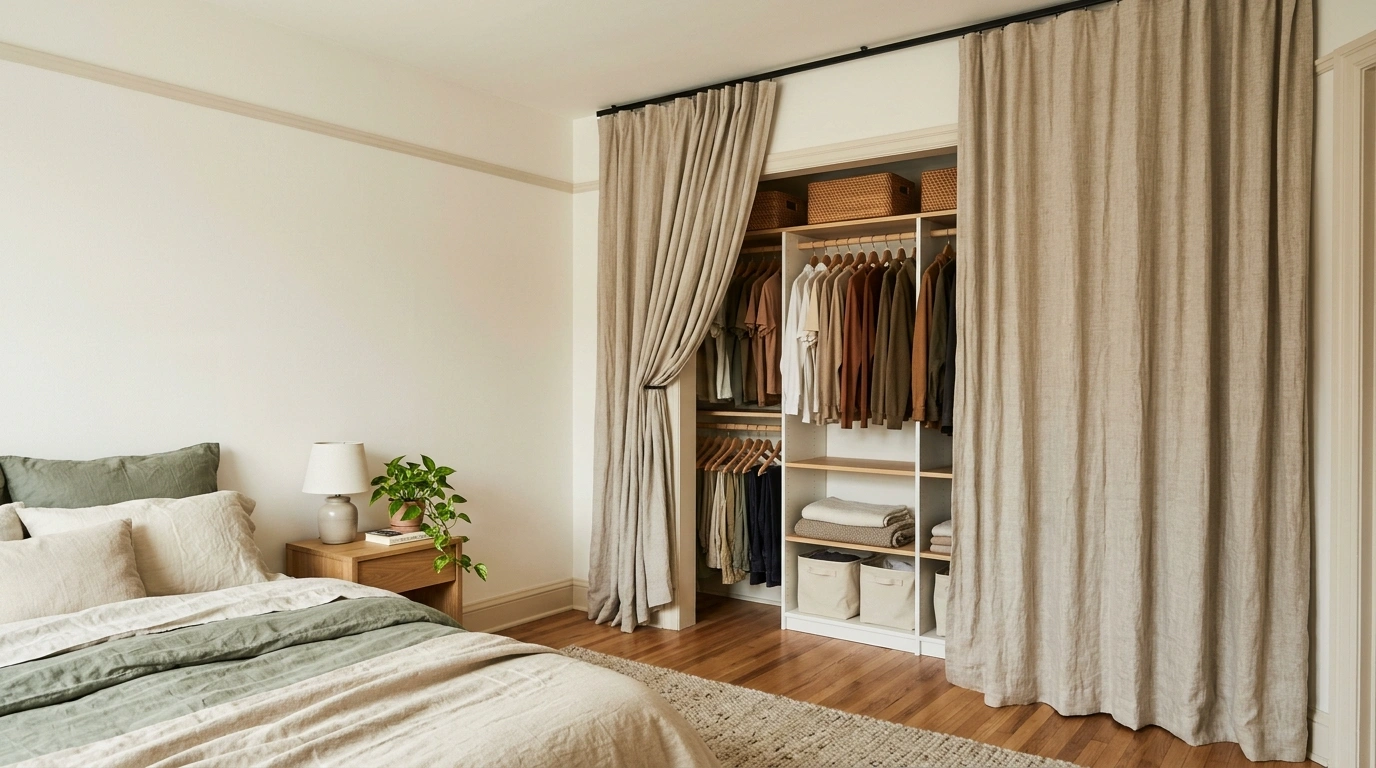
An open closet can make an otherwise gorgeous bedroom look like laundry day has declared permanent residency. Clothes spill into view, mismatched hangers steal the spotlight, and that carefully styled bed suddenly looks like it’s been hired to distract everyone from the chaos three feet away.
Fortunately, closet doors aren’t the only way to make a bedroom feel finished. Curtains, sliding panels, woven screens, and even cleverly positioned decorative surfaces can conceal an open wardrobe without requiring a major renovation.
The secret is choosing a covering that belongs in the room. Natural linen works beautifully with pale wood and relaxed bedding, while velvet gives a darker bedroom some serious drama. Architectural panels can make a plain closet look custom-built, and freestanding screens offer flexibility when permanent changes aren’t an option.
Randomly hanging whatever fabric was on sale isn’t quite the design revolution people hope for. The ideas below focus on complete bedroom designs, practical everyday access, and materials that make the entire room look intentional.
THE CLOSET COVER-UP CHECK
Before hiding the closet, hide the evidence.
An open closet can ruin an otherwise gorgeous bedroom faster than a neon motivational sign. Before hanging the first curtain in sight, check three things. A decorating hack that creates three new problems is just bad decision-making with better lighting.
ROOM TO MOVE
Measure first. Regret less.
Check the bed, drawers, and walking space before installing anything. Curtains that get trapped behind furniture every morning aren’t a design feature. They’re a daily argument.
CLOSET CHAOS
Know what you’re hiding.
Sheer fabric softens the view. It doesn’t magically conceal a wardrobe that looks like laundry day won a fight. Choose the level of coverage the actual mess requires.
EVERYDAY ACCESS
Cute is not enough.
A closet used six times a day needs a covering that moves easily. If opening it requires two hands, a knee, and a small prayer, rethink the plan.
THE RULE: The best cover-up looks intentional when the closet is closed and remains practical when the outfit crisis inevitably begins.
Ways to Cover a Closet Without Doors
Cozy Brown Curtains in a Hallway Closet
Rich rust-brown curtains bring instant warmth and depth to a narrow hallway closet, turning a plain storage nook into a striking design feature. Pair the heavy fabric with crisp white walls, herringbone wood flooring, and a delicate black curtain rod for a polished, intentional look.
The deep color anchors the corner while keeping the contents entirely hidden from view. A continuous track or slim rod allows the fabric to gather into neat, generous folds that soften the hard angles of the surrounding architecture.
Keep the styling nearby minimal—perhaps a simple framed black-and-white print—so the entryway feels curated rather than cluttered. It is an effortless way to upgrade a transition space without committing to a full renovation.
Natural Linen Curtains With a Ceiling-Mounted Track
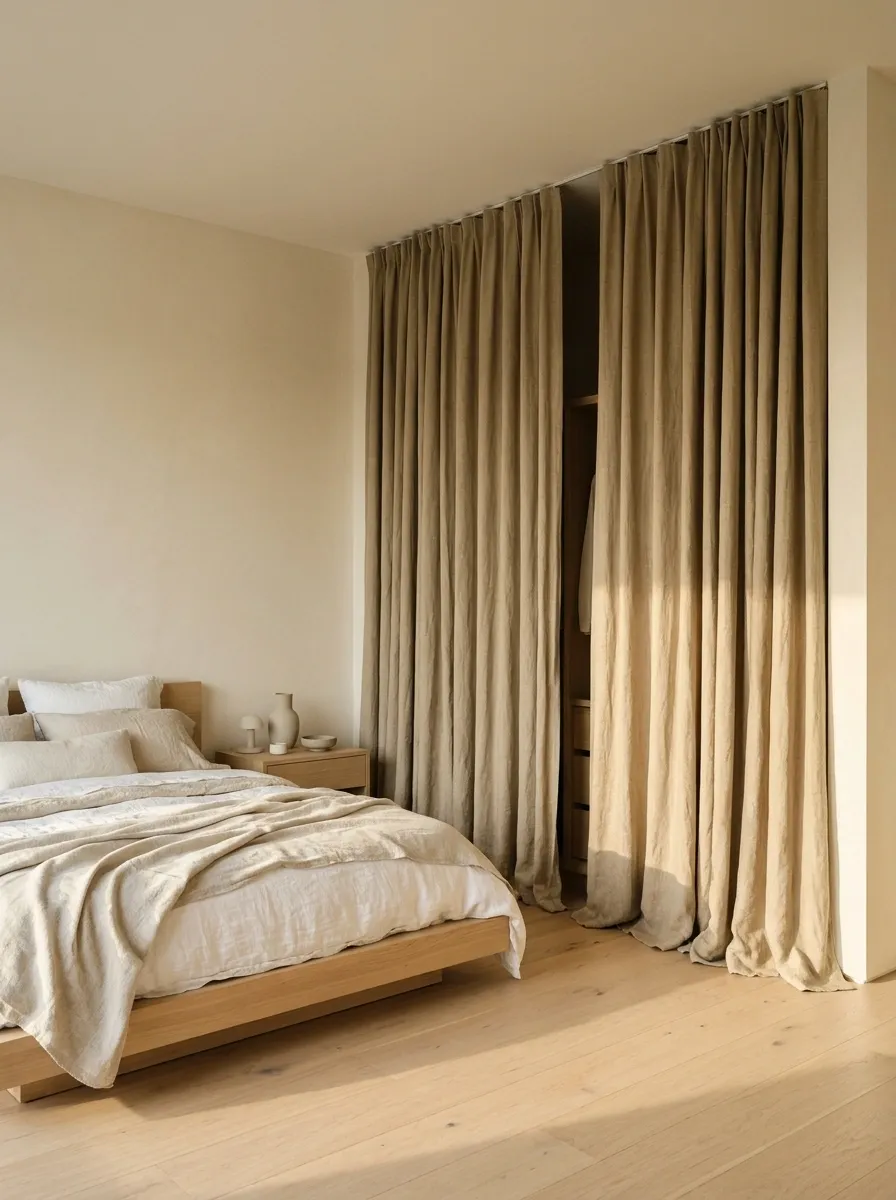
Full-length linen curtains make an open closet feel like part of the room instead of a storage area that accidentally got a starring role. Picture warm ivory walls, pale oak furniture, soft white bedding, and natural linen panels falling from a discreet ceiling track to just above the floor.
The beauty lies in the proportions. Generous fabric folds look far more intentional than two skinny panels stretched across a wide opening.
Choose curtains close to the wall color for a quieter finish, or use warm flax linen to introduce subtle contrast. A ceiling track also creates a clean vertical line, especially when the closet opening sits close to the ceiling.
One warning: skimpy curtains on a wide closet look less boutique hotel and more dressing room at a discount shop. Fullness matters.
THE LINEN FORMULA
Soft folds. Clean lines.
Use a concealed ceiling track, generous fabric width, and a floor-skimming hem to create one continuous visual backdrop.
Best fabric
Washed linen or a linen blend
Best palette
Ivory, flax, warm beige
Curved Track Curtains in a Soft Bedroom
A curved ceiling track wrapped in warm brass lets soft cream curtains create a dedicated dressing zone right inside the bedroom. Pair the neutral fabric with textured beige bedding, warm wood accents, and a glowing arch mirror to complete the boutique-hotel vibe.
The curved arrangement gently defines the sleeping and changing areas, adding a layer of architectural interest to an otherwise simple corner. String lights threaded along the track introduce a soft, ambient glow that makes the entire room feel inviting and serene.
Choose a heavyweight fabric with plenty of fullness so the drapes hang gracefully without looking stretched thin. Just remember to leave enough clearance for the mirror and stool so your morning routine remains entirely functional.
Dramatic Velvet Curtains in a Boutique-Style Bedroom
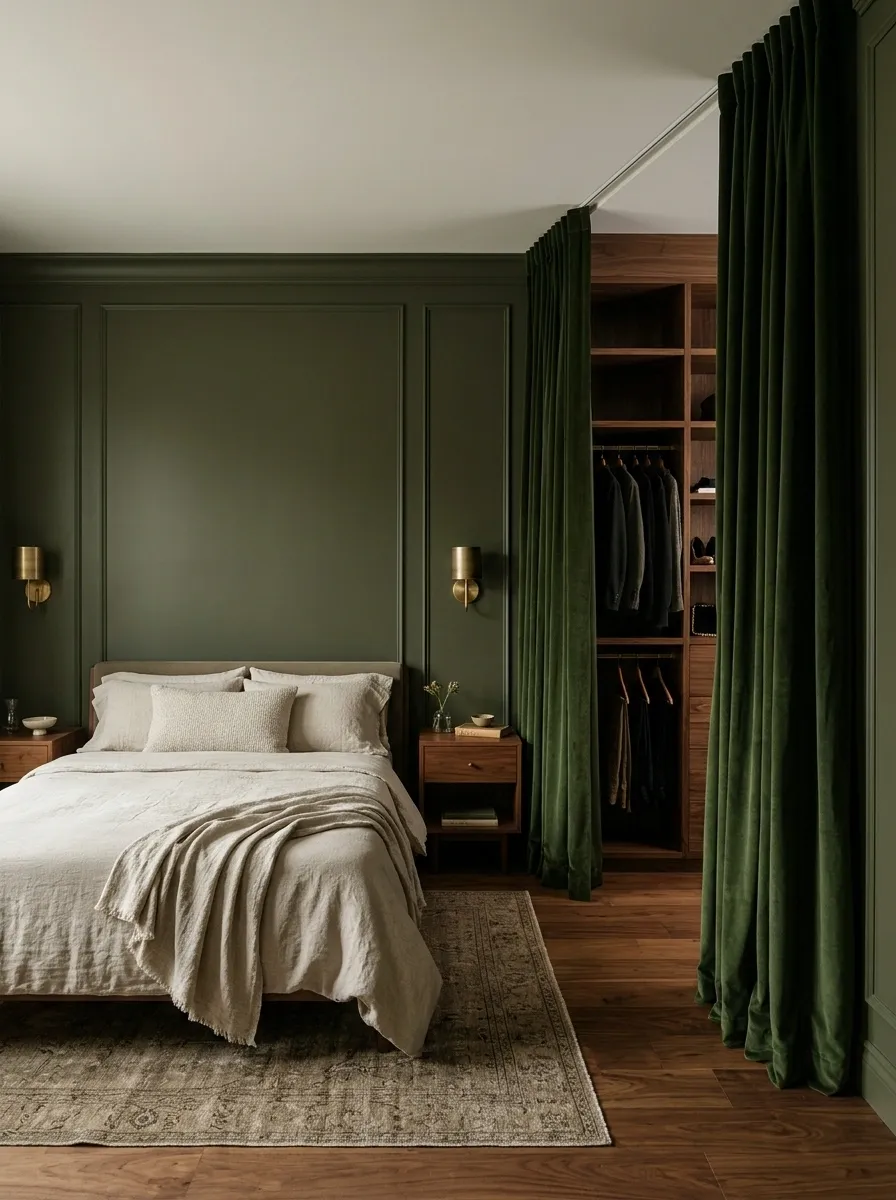
Deep olive walls, walnut nightstands, brushed brass lighting, and thick velvet curtains turn a plain closet opening into a dramatic part of the bedroom. Choose forest green, tobacco brown, deep burgundy, or muted charcoal, depending on the room’s existing palette.
The heavy fabric frames the storage area like a theatrical backdrop, while its texture adds depth to otherwise flat walls. Pair it with simpler bedding and restrained accessories so the room feels rich rather than overloaded.
This look works especially well when the closet occupies a large wall that needs visual weight. A discreet track keeps the top edge neat, while enough space beside the opening lets the panels stack without swallowing a nightstand.
The only rule is to commit. Velvet beside a dozen competing patterns can turn sophisticated drama into a costume department.
Open Walk-In Closet With a Warm Wood Partition
A custom wooden divider separates an open walk-in wardrobe from the sleeping area, giving the room a structured, architectural layout. Pair the warm walnut tones with sleek black ceiling tracks, neutral bedding, and soft recessed lighting to keep the space feeling open and airy.
The partial partition defines the boundary between rest and storage without blocking the natural flow of light. Keeping the wardrobe shelves neatly arranged ensures the visible clothing adds a curated splash of color rather than visual clutter.
Opt for understated bedside lighting and a minimalist vanity to let the clean lines of the wooden divider shine. It is a sophisticated approach for anyone who loves the luxury of an open closet but still appreciates a hint of separation from the bed.
Classic Striped Curtains in a Cottage Bedroom
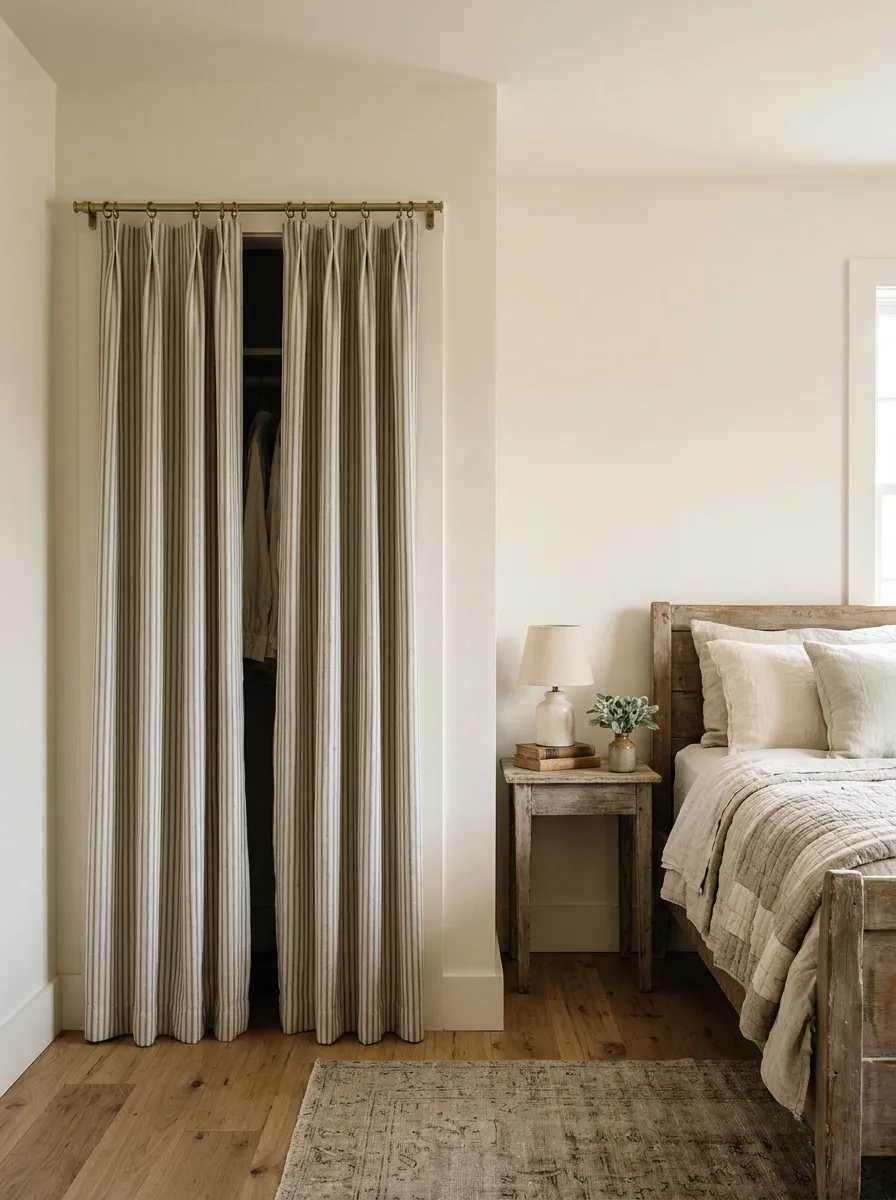
Narrow ticking stripes bring a traditional cottage feel to an open closet, especially when paired with cream walls, a weathered wooden bed, quilted bedding, and simple bedside lamps. Choose soft blue and ivory, faded sage and cream, or muted brown and natural white.
The stripes create a subtle sense of structure across the closet opening. They also work well alongside small floral prints, provided the colors share a common thread.
Keep the curtain hardware understated. A dark iron rod gives the room a farmhouse edge, while aged brass feels a little softer and more traditional.
This arrangement is ideal for bedrooms where solid neutral curtains would feel too plain. Just avoid mixing oversized florals, bold stripes, and several unrelated colors. The cottage look is charming; a fabric showroom having an identity crisis is not.
PATTERN NOTES
One stripe. One supporting print.
Let the curtain provide the strongest repeat. Smaller florals or quiet checks can join in without turning every surface into a shouting match.
Muted blue, warm ivory, natural wood
Sliding Glass Doors and Wooden Slats
Light wood-framed glass sliding doors paired with a slatted privacy screen create a stunning Japanese-inspired partition for a bedroom wardrobe. Combine the warm oak frames with muted green pillows, botanical bedding, and soft neutral tones for a deeply calming aesthetic.
The glass panes keep the room feeling spacious while offering a subtle hint of what is stored inside, and the decorative slats add gorgeous texture to the headboard wall. It is a brilliant way to divide a compact space without sacrificing precious floor area.
Keep the surrounding decor restrained so the woodwork and delicate patterns remain the hero of the room. A single statement pendant light nearby will tie the whole nature-infused look together beautifully.
Tailored Roman Shade Across a Shallow Closet
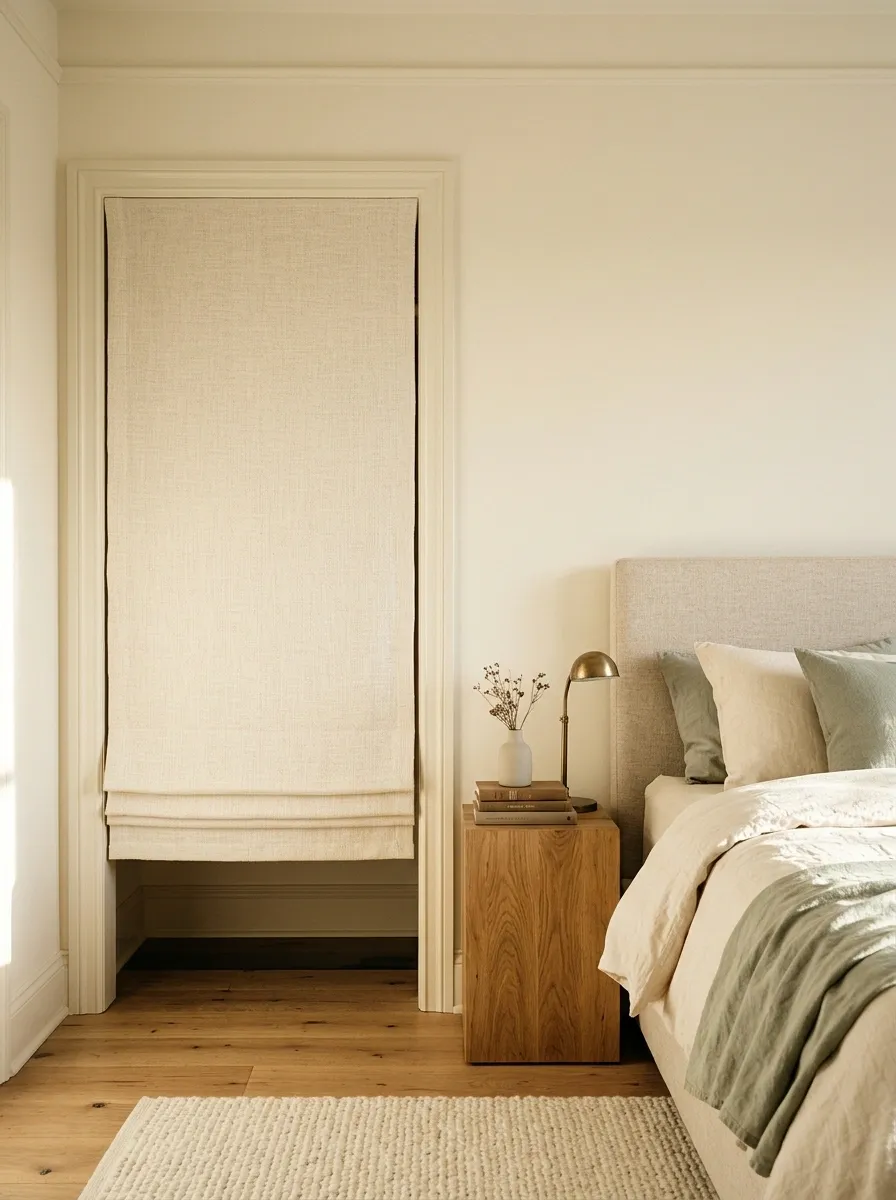
A tailored Roman shade brings structure to a shallow closet, especially in a guest bedroom where every inch of wall space matters. Picture warm cream walls, a simple upholstered bed, oak bedside tables, and a neatly fitted fabric shade that folds into crisp horizontal layers when raised.
Unlike long curtains, the shade stays within the closet opening. That means no fabric pooling on the floor, catching on nearby furniture, or becoming an unofficial dust collector.
Choose a subtle woven fabric in oatmeal, muted sage, or warm ivory. A small geometric pattern can also work when the rest of the room is fairly quiet.
The important detail is the mounting arrangement. The shade needs enough clearance to operate freely, and the headrail must be suitable for the opening.
A standard decorative shade isn’t automatically designed to span a wide closet.
A CLEANER CLOSET FRONT
Fold upward. Stay out of the way.
Illustrative folded-panel layout
Why it works
The covering stays contained within the opening rather than spreading across the wall.
Check before buying
Opening width, mounting depth, lifting clearance, and the shade’s rated span.
Sliding Cane Panels in an Airy Organic-Modern Bedroom
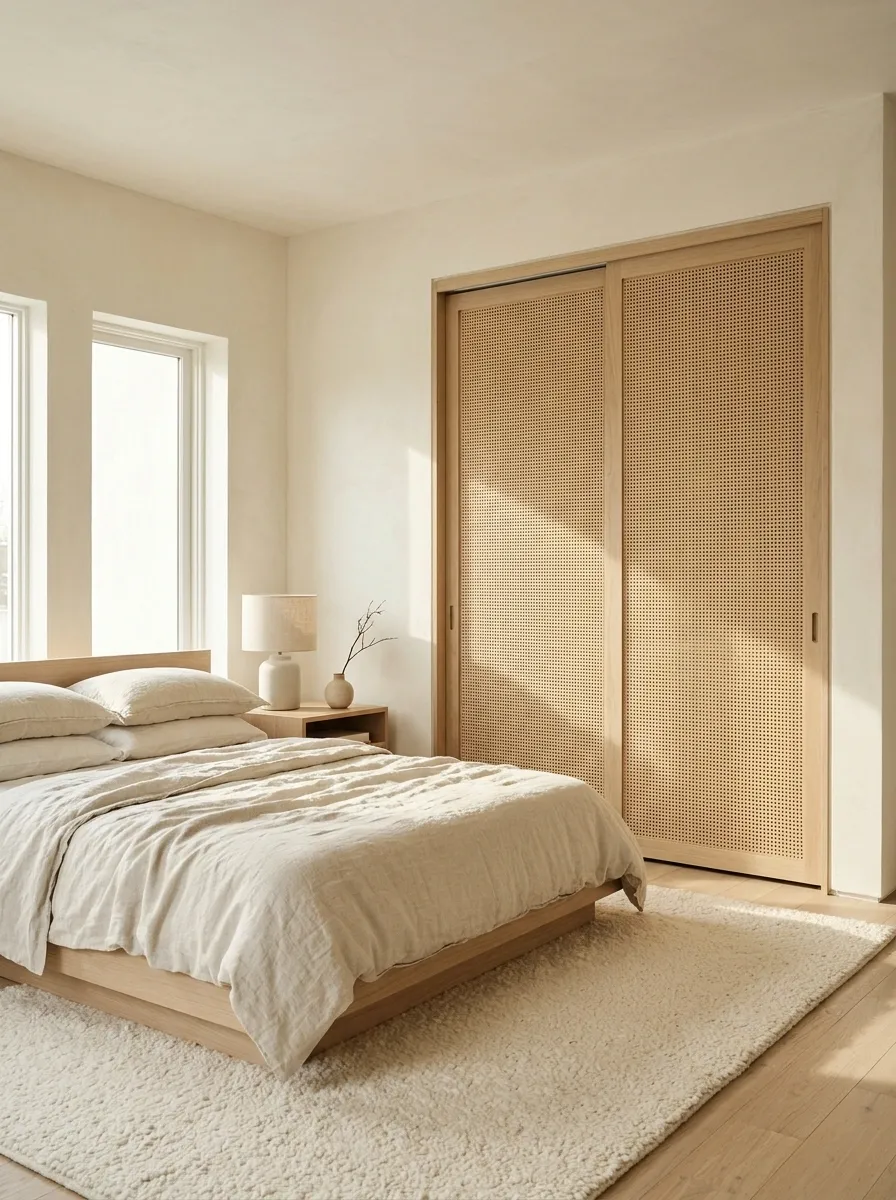
Cane panels make an open closet look like an intentional feature in an organic-modern bedroom. Pair pale oak framing with woven inserts, creamy walls, a textured rug, and low-profile furniture.
The result feels warmer than a flat painted panel without adding another collection of decorative objects.
Sliding panels are particularly useful when the closet sits close to the bed or a narrow walkway. Unlike hinged doors, they don’t swing into the room, although the panels will overlap when the closet is open.
The weave deserves attention. Fine cane creates a delicate pattern, while chunkier rattan reads more casual and substantial. Neither automatically provides complete privacy, so the closet’s contents still need some organization.
A neatly arranged wardrobe behind cane looks intentional. A rainbow of plastic hangers and bulging shopping bags behind it? The weave isn’t a witness protection program.
The frame sets the mood.
Keep the frame simple and let the woven surface provide the detail.
Fine cane
A delicate pattern that suits lighter furniture and restrained styling.
Chunkier weave
A stronger texture that works with substantial wood furniture and earthy finishes.
Don’t skip: Check panel overlap and closet depth before choosing a sliding system.
Fluted Glass Sliding Panels in a Contemporary Bedroom
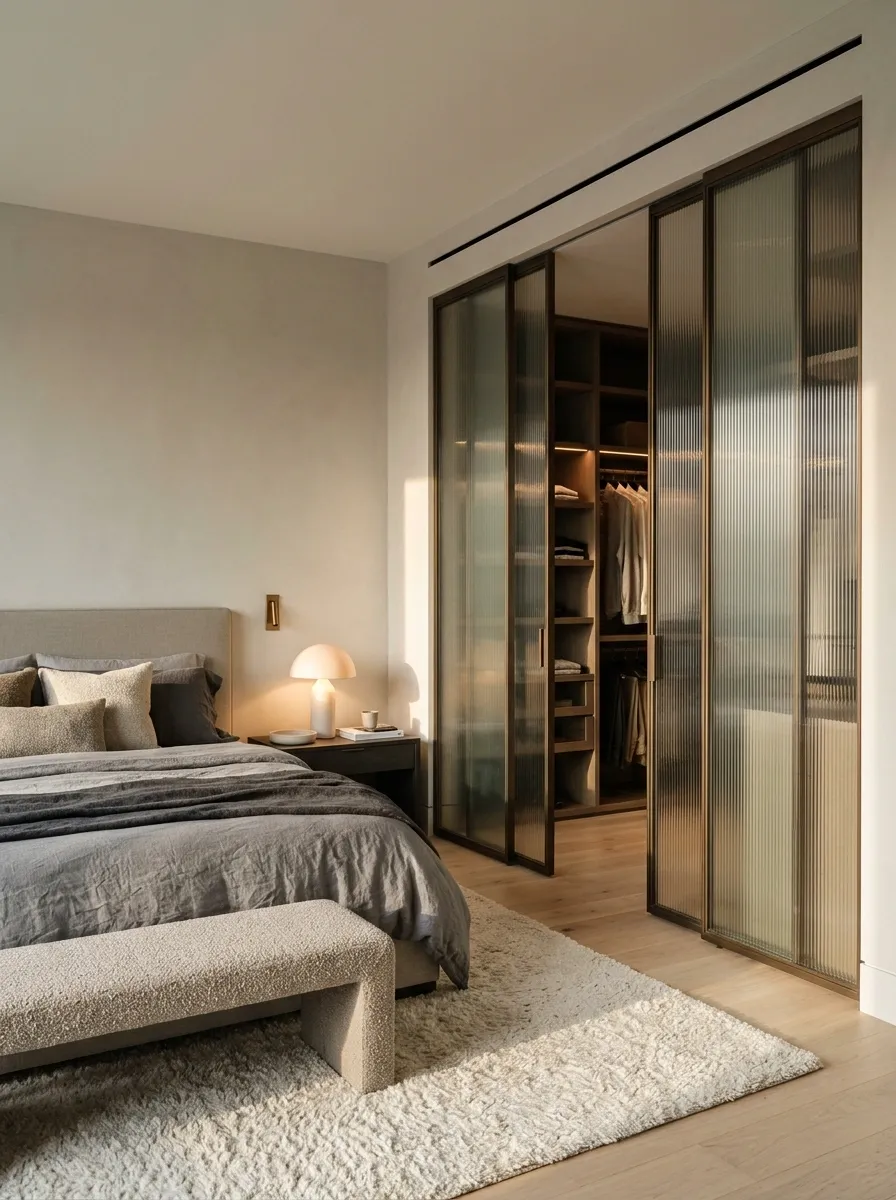
Reeded or fluted glass gives a closet opening a polished, architectural finish. Slim dark-bronze frames, pale oak flooring, soft gray bedding, and a sculptural bedside light create a contemporary bedroom that feels considered without looking sterile.
The textured glass blurs the view of clothing and shelves while allowing some light through. It offers a lighter visual effect than solid panels, making it useful where a bulky wardrobe wall would feel too imposing.
Frame color changes the result. Black creates sharper contrast, bronze feels warmer, and slim natural-metal framing keeps the composition restrained.
One important distinction: fluted glass is not automatically opaque. Its ability to obscure the closet depends on the glass, lighting, and viewing angle. Backlighting can make contents more visible, so keep that in mind before declaring the laundry situation officially classified.
GLASS WITHOUT THE GUESSWORK
Blurred isn’t the same as hidden.
Textured glass
Softens shapes and details, but may still reveal silhouettes.
Opaque panel
Conceals contents more reliably when full visual privacy is the priority.
Before installing: Confirm that the track can support the panel weight and that the system suits the width of the opening.
Vertical Wood-Slat Panels in a Warm Minimalist Bedroom
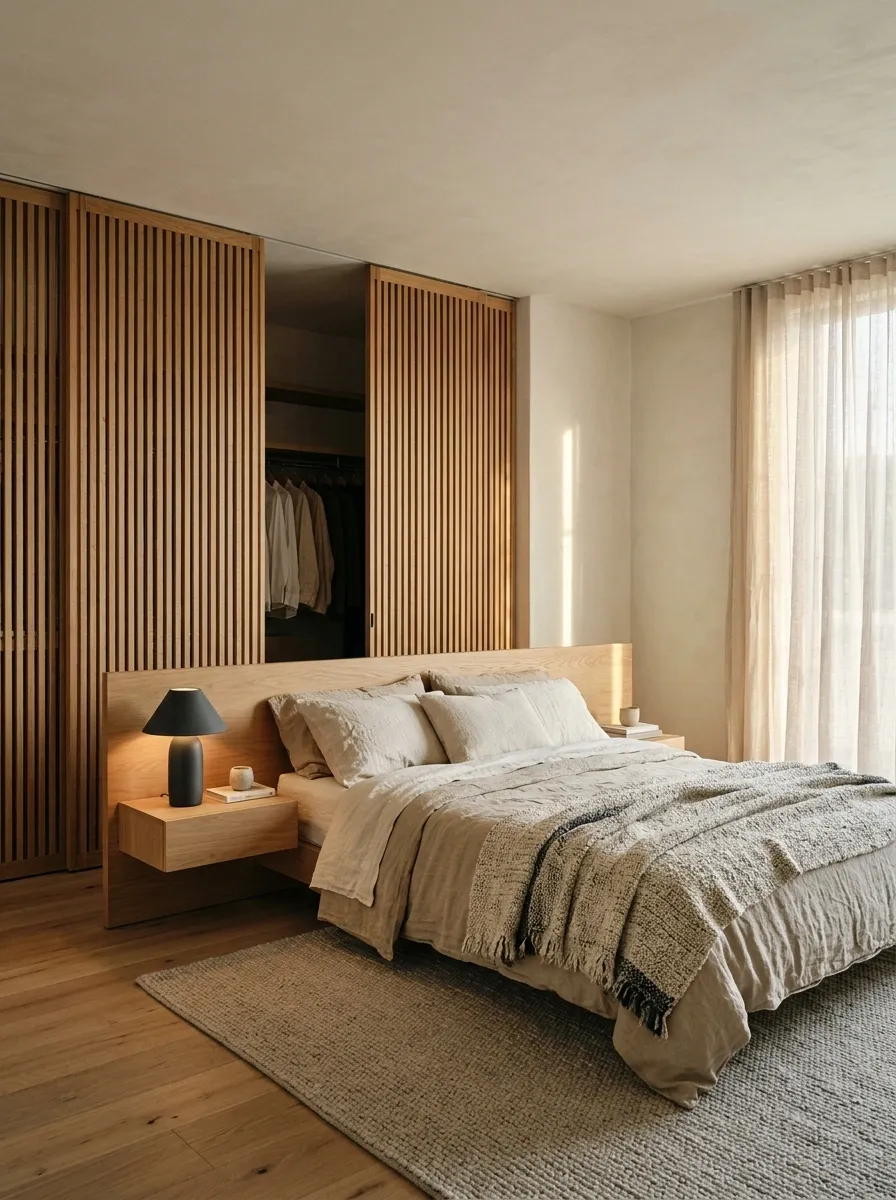
Vertical oak slats bring architectural rhythm to an open closet. In a warm minimalist bedroom, the slatted panels can extend across the storage opening and visually connect with an oak headboard, floating nightstands, or matching wall trim.
Keep the surrounding finishes quiet: chalky ivory walls, neutral bedding, and a charcoal accent lamp give the wood room to stand out. A concealed sliding arrangement maintains the clean lines while allowing access to the wardrobe.
The spacing between the slats changes both the appearance and the amount of visibility through the panels. Tighter spacing tends to create a more continuous surface, while wider gaps reveal more of the closet behind it.
This look requires a little restraint. Slats on the closet, slats on the ceiling, slats on every wall? At some point, the bedroom starts looking like an expensive sauna.
Spacing changes everything.
The slatted surface can feel airy or almost solid, depending on the gaps and what sits behind it.
Wider gaps
More open visually, with less concealment.
Tighter gaps
A denser appearance with more visual screening.
The practical detail: decorative slats do not automatically create a privacy panel. Pair them with an appropriate backing or secondary covering when needed.
Upholstered Fabric Panels in a Soft Transitional Bedroom
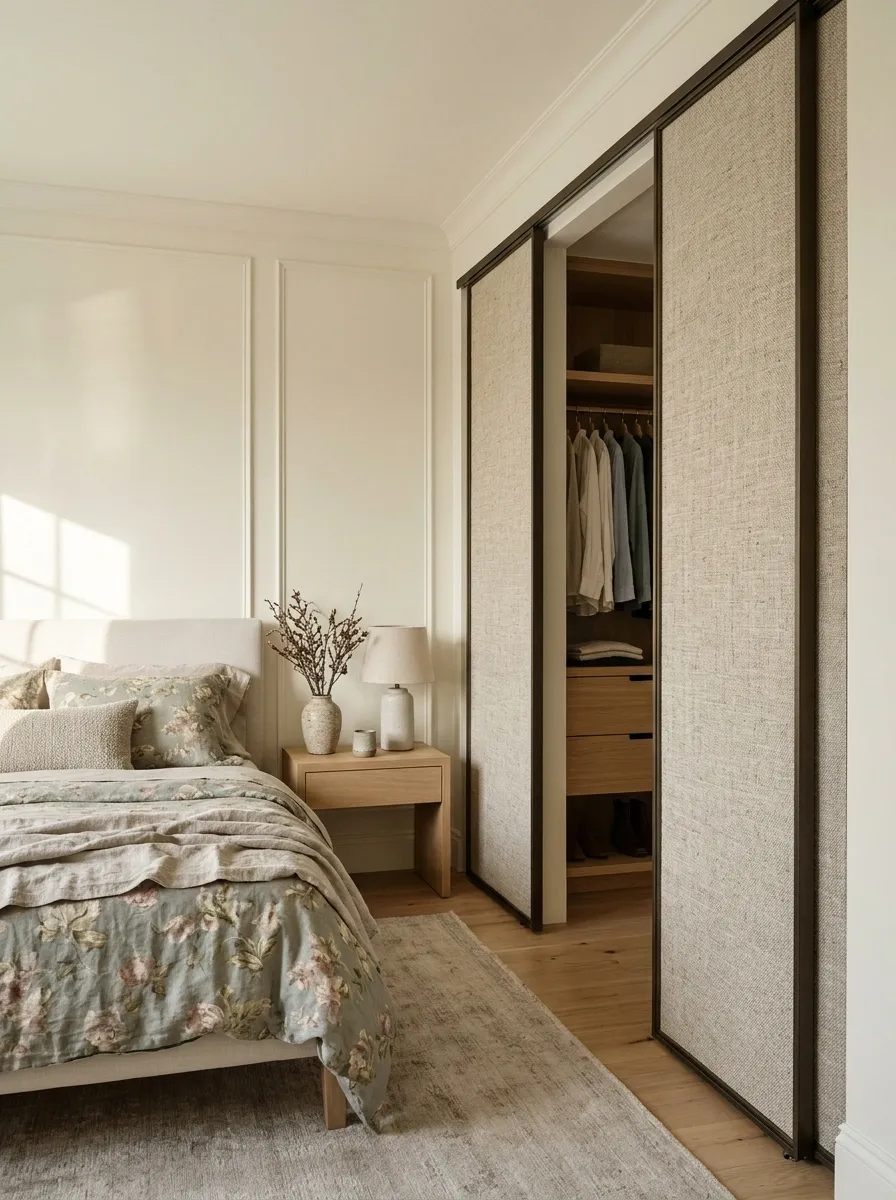
Fabric-covered panels bring a bedroom’s textiles into the closet design without requiring every surface to match. Picture a pale upholstered headboard, muted floral bedding, warm ivory walls, and slim framed panels covered in oatmeal or dusty sage fabric.
The frames create clean boundaries around the soft material, giving the closet a more finished appearance than fabric simply stretched across a rod. A subtle woven texture keeps the look interesting, while a small-scale pattern can connect the panels to nearby bedding or curtains.
This treatment works best when the fabric adds a supporting layer rather than introducing an entirely new color story. Repeating one secondary shade from the bedding is usually enough.
The construction needs attention, too. The panels must be stable, easy to move, and appropriately supported for their size. Beautiful fabric is lovely, but a sagging panel is basically a decorative cry for help.
FABRIC PAIRING NOTES
Coordinate. Don’t copy everything.
Oatmeal weave
Quiet texture
Dusty sage
Muted color
Dusty rose
Soft contrast
The easy formula: Pair one dominant bedroom neutral with one repeated accent color and a different, complementary texture. Matching every fabric is optional. Looking like a coordinated room is the actual assignment.
A Curved Ceiling Track for a Corner Closet
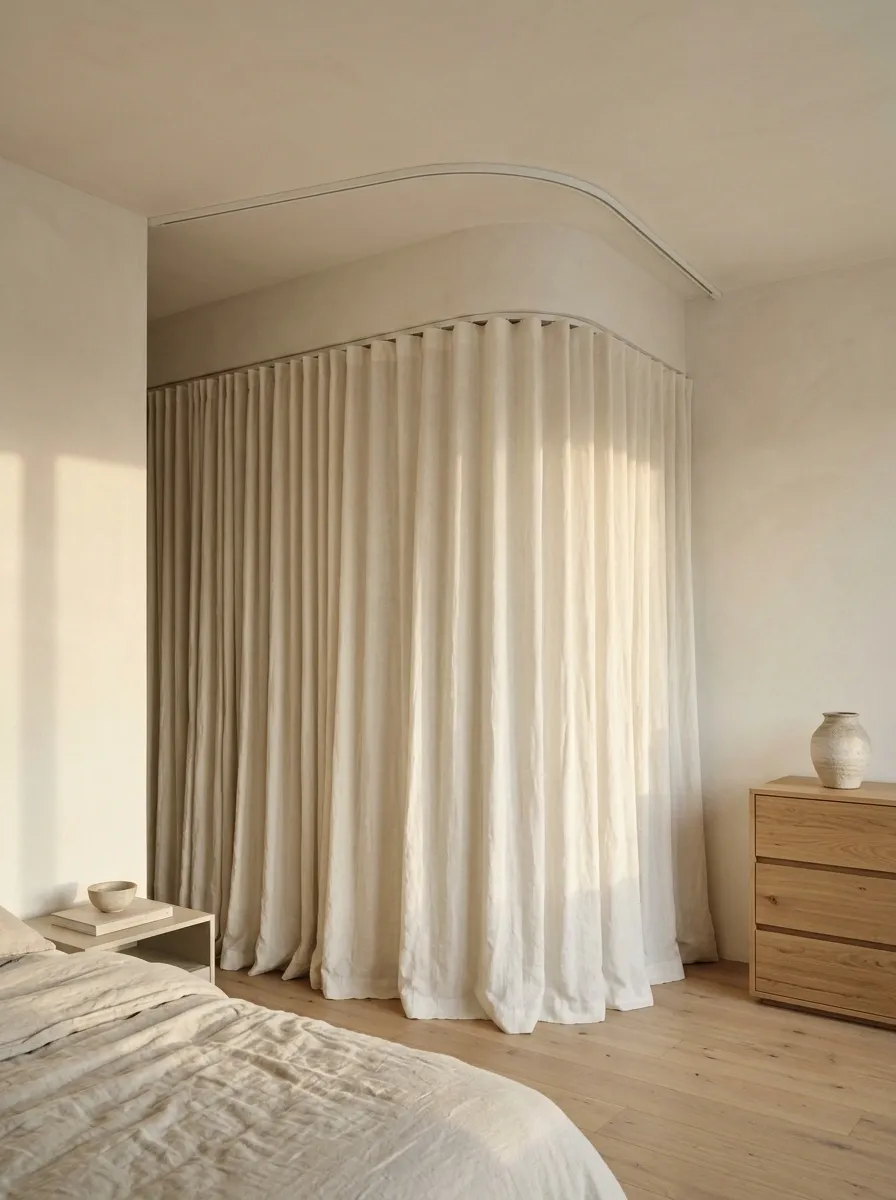
Corner closets can be surprisingly annoying to cover. Two curtain panels may collide, leave an ugly gap, or bunch up in exactly the place where the room already feels cramped.
A curved ceiling track solves the visual problem by allowing the fabric to follow the shape of the opening.
In a bedroom with warm white walls, a compact oak dresser, and a window nearby, floor-length ivory curtains can wrap around the corner and create one continuous, soft backdrop. The result feels planned rather than like someone improvised a solution five minutes before guests arrived.
The track needs to follow the actual closet geometry, and the curtains need enough room to travel without snagging on furniture. Check how the fabric stacks when fully open, particularly if the closet sits beside a bedside table or narrow walkway.
Keep the curtain color close to the surrounding walls if the goal is to make the corner visually disappear. The fabric should solve the awkward architecture, not put a spotlight on it.
CORNER CLOSET PLANNING
Follow the corner, not the frustration.
Measure the route.
Check the corner angle, track mounting points, and the full path the curtain needs to follow.
Check the landing space.
The open curtain needs somewhere to stack without blocking drawers or the walkway.
A flexible track is useful only when it’s compatible with the opening and mounting surface. Bending random hardware into submission is not a renovation strategy.
Blackout Drapery for a Shared Bedroom
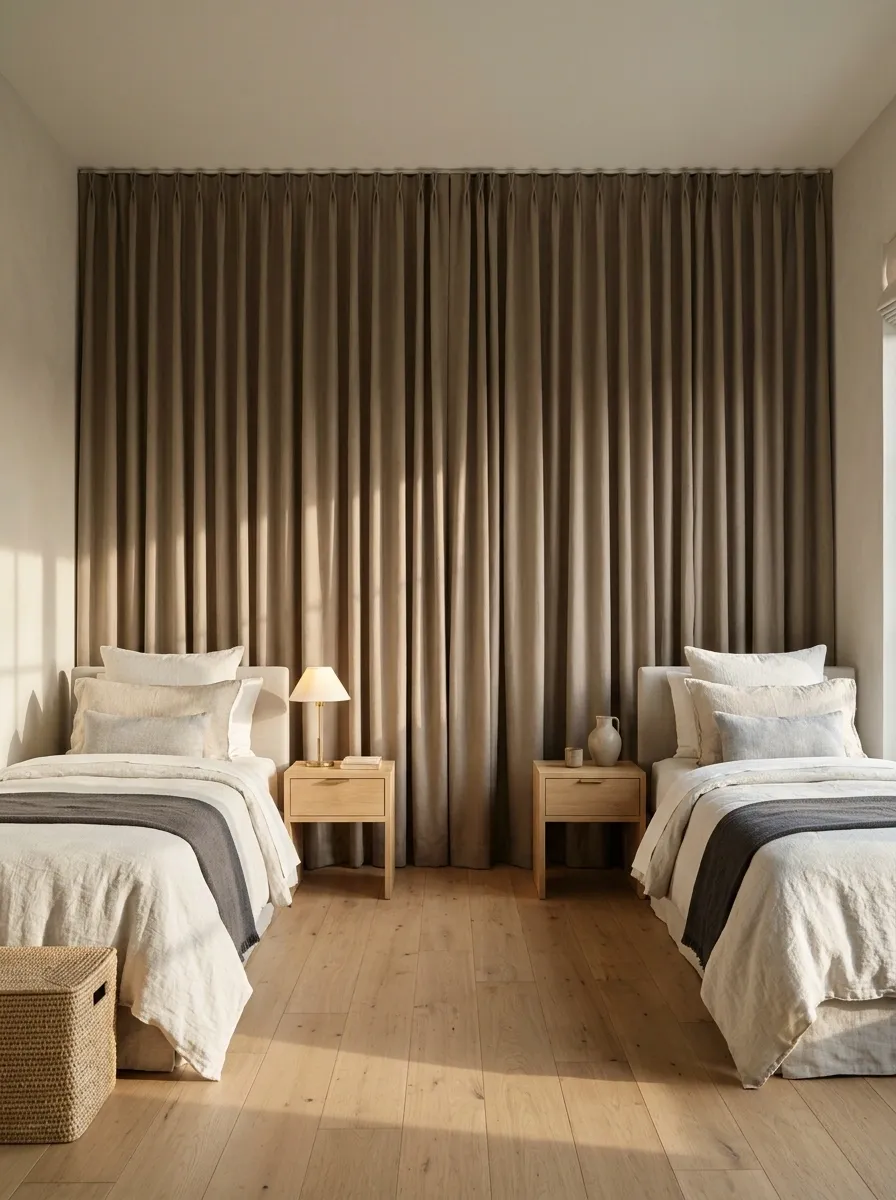
A shared bedroom often has to accommodate different routines, limited storage, and an assortment of belongings that somehow multiply overnight. Heavy drapery conceals the closet and gives the room a more unified appearance, particularly when the fabric coordinates with the main bedding or wall color.
Picture a room with two single beds, matching bedside lamps, pale neutral walls, and a full-width curtain in charcoal, deep olive, or warm taupe. The fabric gives the closet wall visual weight while reducing the amount of clothing and storage clutter on display.
Blackout fabric is helpful when light blocking is also a priority, but it isn’t automatically the best choice for every closet. Heavy panels need sturdy, suitable hardware and enough room to stack when open. They can also make a small bedroom feel darker if the rest of the palette is already deep.
Keep the surrounding furniture simple, and the curtain can define the room without becoming another bulky feature. Privacy, storage concealment, and light control are separate jobs, so decide which ones matter most before choosing the fabric.
THREE DIFFERENT JOBS
Choose the fabric for the actual problem.
The sensible choice balances coverage with the room’s proportions. A closet curtain should not require its own furniture rearrangement every morning.
A Textile Tapestry as a Bohemian Closet Screen
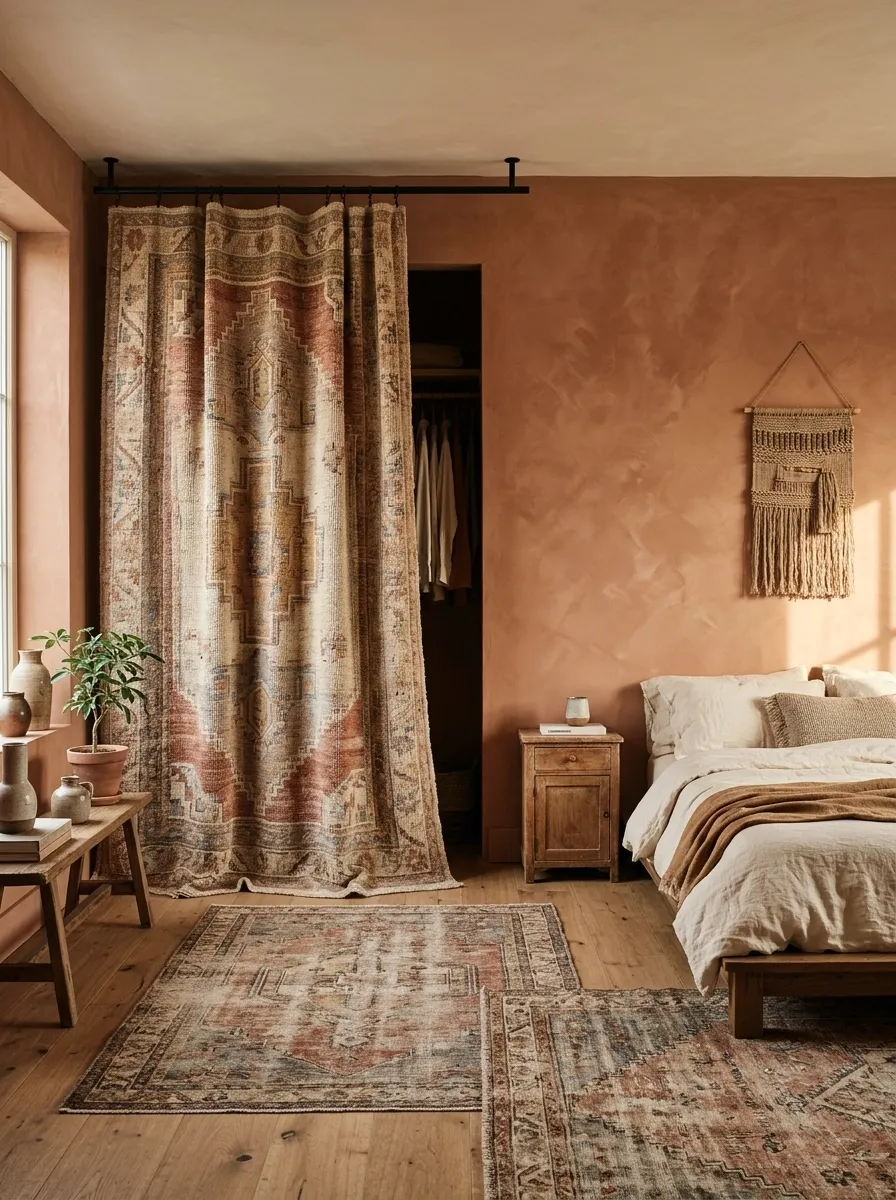
A large tapestry can cover an open closet while bringing pattern, color, and texture into a bohemian bedroom. Think terracotta walls, vintage wooden furniture, layered rugs, and a woven wall hanging with muted rust, cream, ochre, and faded blue.
The fabric gives the closet a decorative role rather than treating it like an embarrassing secret.
The trick is choosing a textile with enough visual weight to anchor the wall. A large-scale geometric pattern or handwoven design can work well when the surrounding bedding and furniture are relatively restrained.
Mounting matters here. A tapestry attached to a suitable top rail or another secure hanging system is easier to move aside than fabric attached with improvised adhesive strips. The installation should support the textile’s weight and allow regular access to the closet.
Also, a decorative tapestry doesn’t automatically conceal everything behind it. Thin fabrics may reveal silhouettes when daylight hits them from the wrong angle, so check the material against the actual closet before committing.
THE BOHEMIAN BALANCE
Let the tapestry be the loud one.
LEAD
Pattern
A large textile with a clear visual rhythm.
SUPPORT
Texture
Natural wood, a woven rug, or plain linen.
REST
Neutrals
Quieter bedding and uncomplicated furniture.
Decorating rule: Repeating one or two colors from the tapestry around the room creates cohesion. Every accessory does not need to audition for the same starring role.
A Wooden Bead Curtain for an Open, Expressive Closet
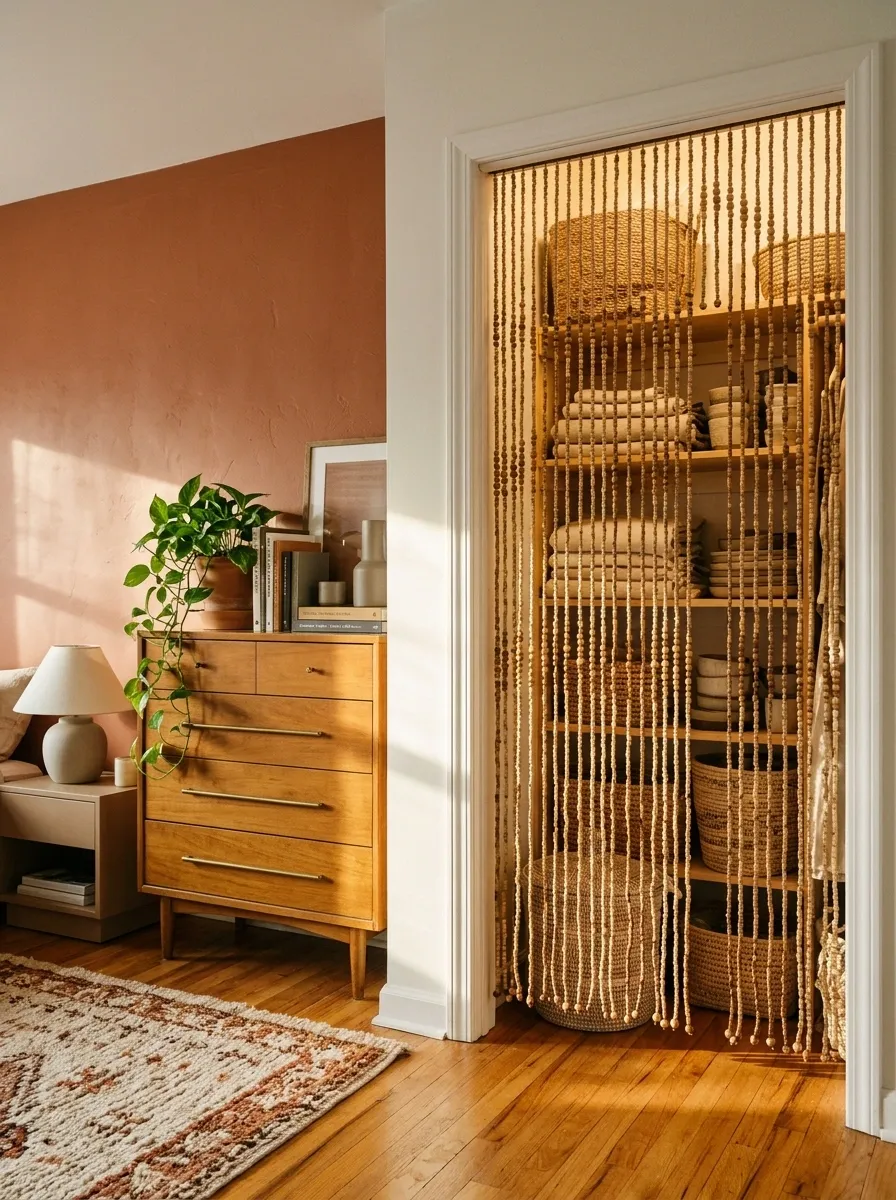
Wooden bead curtains give a closet opening a relaxed, slightly retro personality. They work particularly well in eclectic bedrooms with terracotta accents, vintage furniture, warm wood flooring, and a mix of tactile materials.
Choose natural wood beads for a quiet, earthy look, or a combination of wood and muted colored beads when the room already embraces a more playful palette.
The individual strands create movement and break up the view into the closet without creating a solid wall. This approach has an important limitation: the closet stays visible through the gaps.
Bead curtains are better suited to wardrobes with orderly shelves and coordinated storage than spaces overflowing with clothes, bags, and random boxes.
They also need to hang securely and remain clear of furniture and walking routes. In a home with young children or pets, consider whether loose strands and small components are suitable for the setting.
The look can be charming, but it won’t pass as complete concealment. It’s a visual filter, not a witness protection program for your laundry.
HONEST EXPECTATIONS
Pretty screening. Not full concealment.
Works well when:
The closet is reasonably organized and a decorative boundary is enough.
Think twice when:
Complete concealment, privacy, or a clean uninterrupted surface is the goal.
The beads are the detail, not the storage solution. A little organizing behind them will do more for the finished look than buying twice as many strands.
A Folding Screen Positioned in Front of the Closet
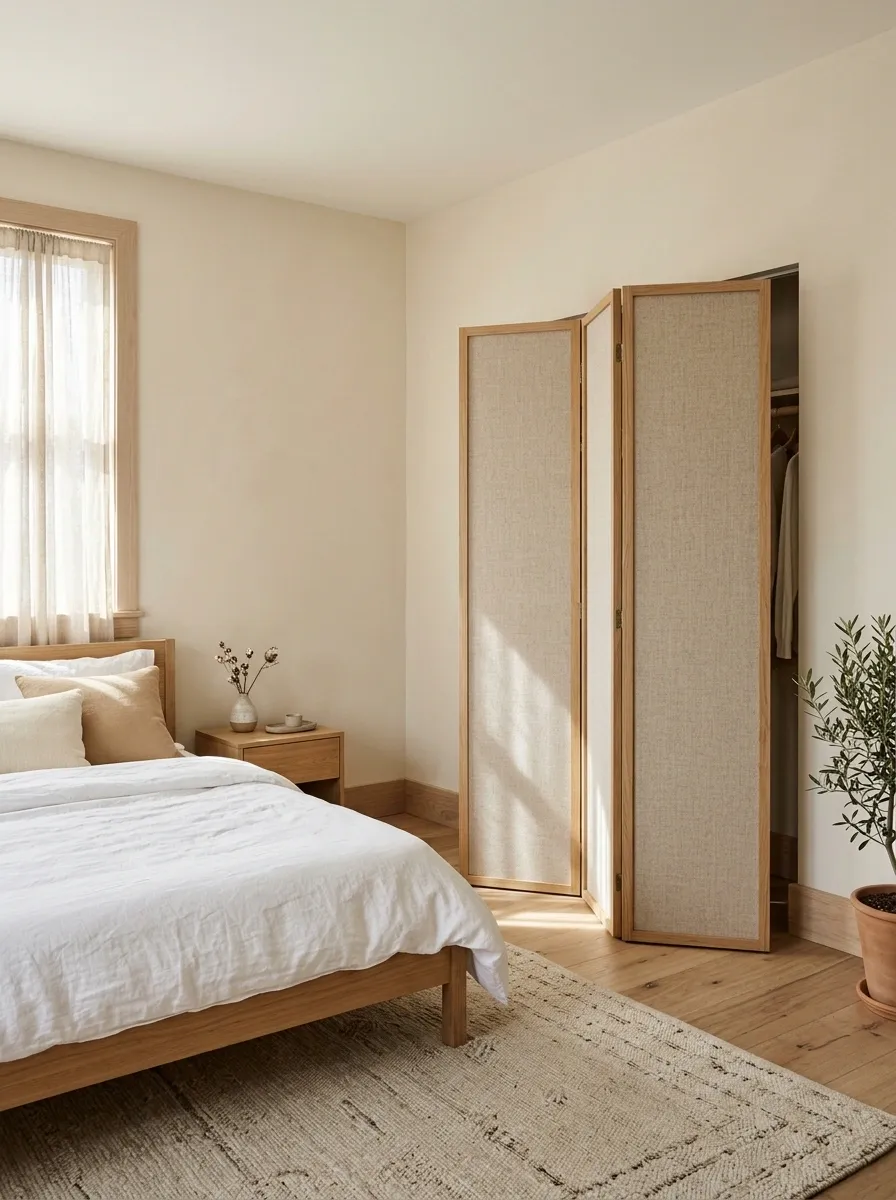
A freestanding folding screen can conceal an open closet without permanent mounting. In a rental bedroom, a three-panel screen with a slim oak frame and linen-like inserts creates a separate visual layer in front of the wardrobe.
Pair it with neutral walls, a simple bed, and a compact bedside table so the screen looks like a deliberate part of the layout. A textured or woven insert adds detail without forcing another bold pattern into the room.
The main advantage is flexibility. The screen can move when the closet needs full access, and it can be relocated when the room layout changes.
But it takes up floor space, and the panels must stand securely without obstructing the route between the bed and the door.
Measure the entire footprint before purchasing. A screen that looks slim online can make a small bedroom feel like an obstacle course once unfolded.
And if the wardrobe sits in a narrow walkway, a freestanding screen may be the wrong tool entirely. Renting doesn’t mean every problem needs another piece of furniture.
CHECK THE FOOTPRINT
Freestanding doesn’t mean space-free.
Closet opening
Allow for the screen’s actual footprint
Measure
Screen width, depth when folded, and the space it occupies when open.
Protect circulation
Keep the route to the bed, closet, and bedroom door clear.
Best move: test the proposed screen dimensions with cardboard or tape on the floor before buying. Discovering that the bedroom has no room left after checkout is a deeply avoidable plot twist.
A Shoji-Inspired Screen in a Serene Bedroom
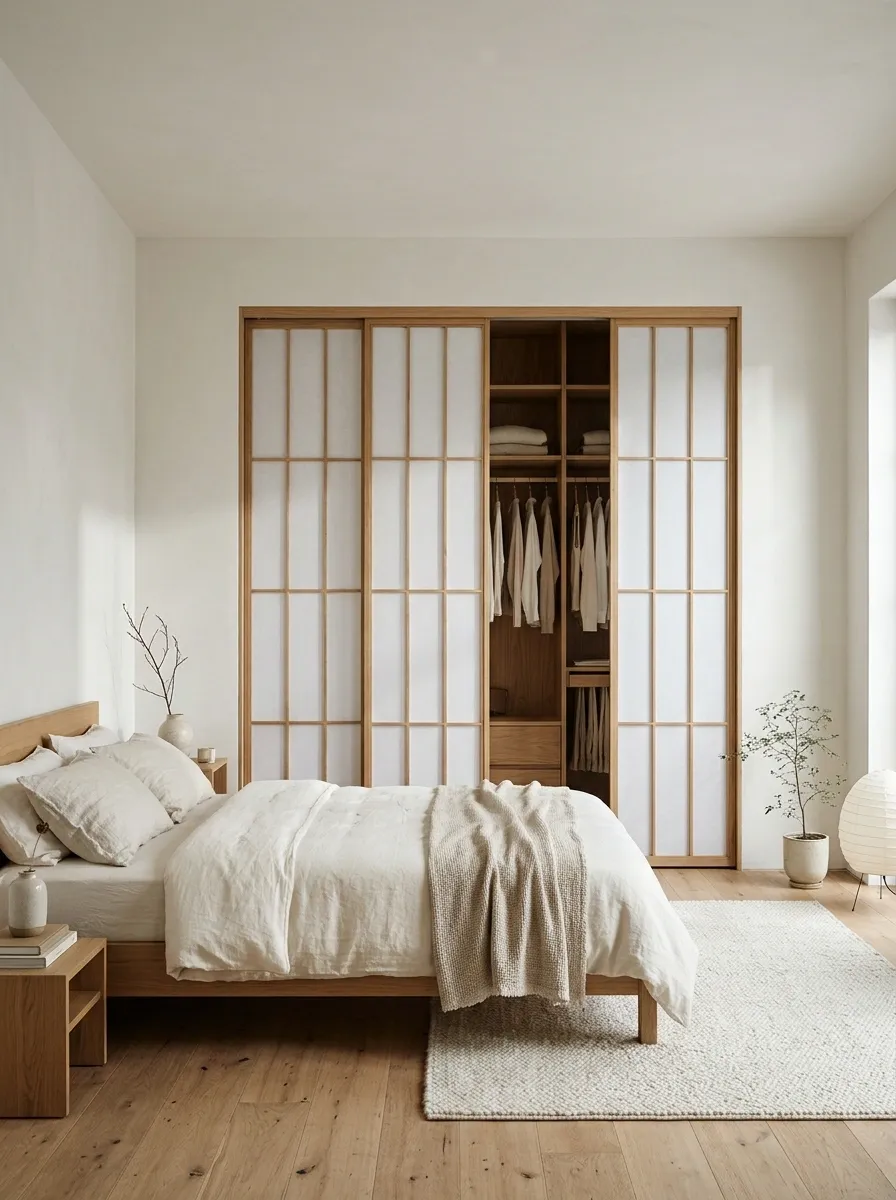
A shoji-inspired screen gives an open closet a lighter, more architectural appearance than a solid wardrobe panel. Picture warm oak flooring, low wooden furniture, ivory bedding, and slender timber frames filled with translucent white inserts across the closet opening.
The grid creates a clean rhythm, while the pale panels soften the view into the wardrobe. Keep the surrounding decor simple so the screen remains the defining feature rather than one more thing competing for attention.
This design works particularly well in small bedrooms where heavy curtains might feel bulky. A sliding or folding screen can preserve access, provided the chosen system fits the opening and has enough clearance to operate.
Traditional shoji screens use delicate materials that may not stand up to rough daily use. For a closet covering, choose a durable modern interpretation with suitable framing and inserts.
The goal is calm, not a bedroom that looks like it was assembled entirely from rice paper and good intentions.
THE QUIET INTERIOR FORMULA
Light, lines, and nothing shouting.
Illustrative screen grid
Frame
Use slim, consistent timber lines for a restrained architectural finish.
Infill
Choose a durable translucent material suited to daily movement and the required level of concealment.
Keep it balanced: Let the screen provide the pattern. Plain bedding and warm wood finishes will stop the room from becoming a grid enthusiast’s fever dream.
Wall-Colored Curtains for a Nearly Invisible Closet
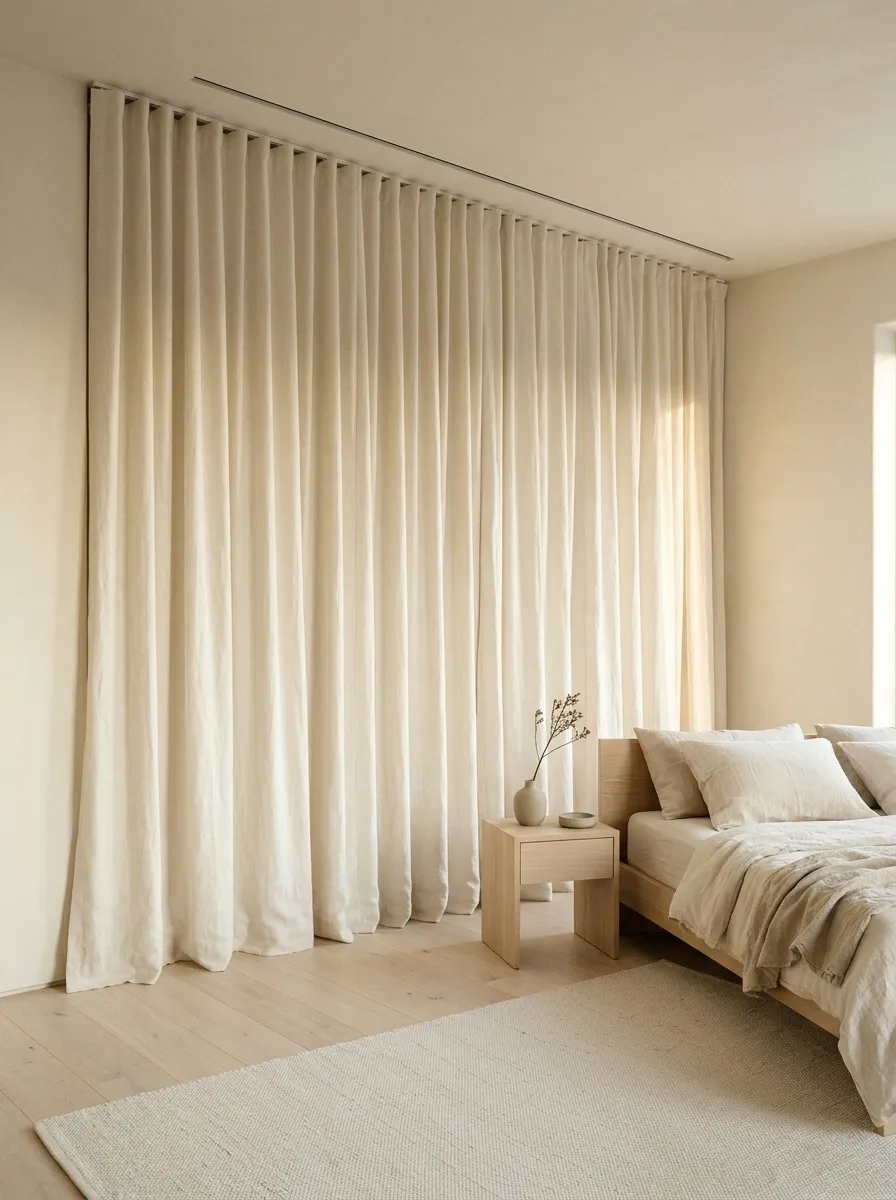
Sometimes the best closet covering is the one nobody notices. Curtains in a shade that closely matches the walls can make a large closet opening visually recede, leaving the bed, artwork, or window as the room’s main focal point.
In a quiet bedroom with warm white walls, pale flooring, simple furniture, and understated bedding, wall-colored curtains create an uninterrupted backdrop. Subtle fabric texture keeps the surface from looking completely flat, while discreet ceiling hardware preserves the clean lines.
The trick is matching the undertone. A creamy wall paired with cool gray curtains can look strangely mismatched even when both are technically neutral. Compare the fabric against the wall in daylight and evening lighting before purchasing.
This treatment works especially well when the closet takes up a large portion of the room’s visual field. It reduces contrast without requiring custom cabinetry or elaborate architectural panels.
No dramatic tassels, contrasting tiebacks, or decorative curtain rod with the personality of a chandelier. The entire point is for the closet to mind its business.
THE LOW-CONTRAST APPROACH
Make the closet blend into the background.
WALL COLOR
Warm ivory
CURTAIN FABRIC
Matching undertone, subtle texture
The useful detail: Match the undertone, not just the general color name. Two fabrics both called “ivory” can disagree with each other like relatives at a holiday dinner.
Vintage Wooden Shutters in a Farmhouse Bedroom
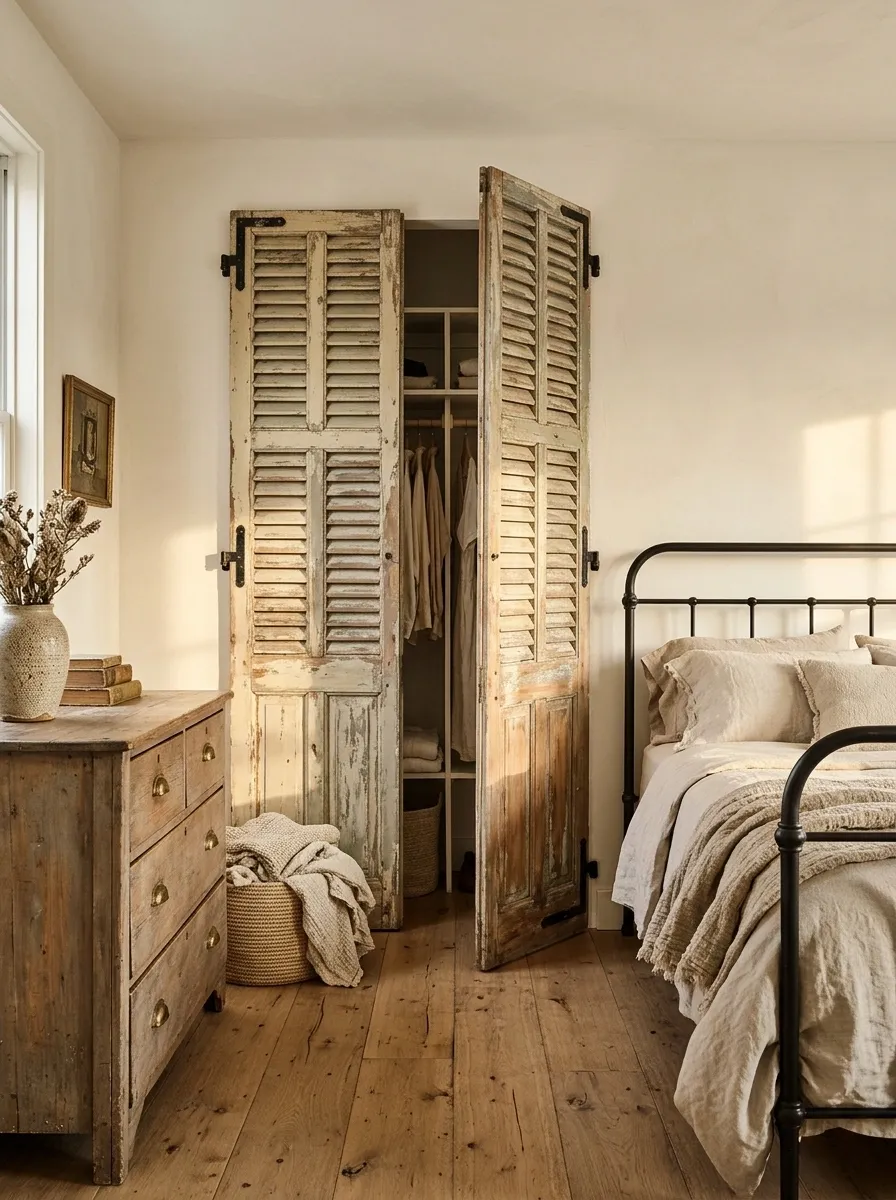
Reclaimed wooden shutters can give an open closet a distinctive farmhouse finish. Pair aged wood with creamy walls, a simple iron bed, natural linen bedding, and a vintage chest to create a room that feels collected over time rather than ordered as one matching set.
The shutters add texture and structure, while their worn finish supplies enough visual character to make a plain closet opening interesting. Keep the surrounding finishes restrained so the weathered wood remains the focal point.
Before using reclaimed shutters, check their condition carefully. Loose louvers, splintered edges, old paint, and unstable frames need attention before the panels become a regularly handled closet covering.
Older finishes may require additional assessment, particularly when their age and composition are unknown.
The opening also determines whether shutters can work. Hinged panels require swing clearance, while sliding or folding arrangements need appropriate hardware and enough room to move.
A little wear gives vintage shutters charm. A panel shedding paint onto freshly washed clothes is not “authentic farmhouse character.” It’s a maintenance issue with excellent public relations.
THE RECLAIMED-WOOD CHECK
Patina is charming. Loose parts aren’t.
Surface
Inspect old paint, splinters, rough edges, and signs of deterioration.
Structure
Check the frame, hinges, louvers, and mounting points for stability.
Movement
Confirm that the installed panels can open without striking nearby furniture.
The best finish preserves the wood’s character while making the covering stable, clean, and practical for everyday use.
Painted Louvered Panels in a Breezy Cottage Bedroom
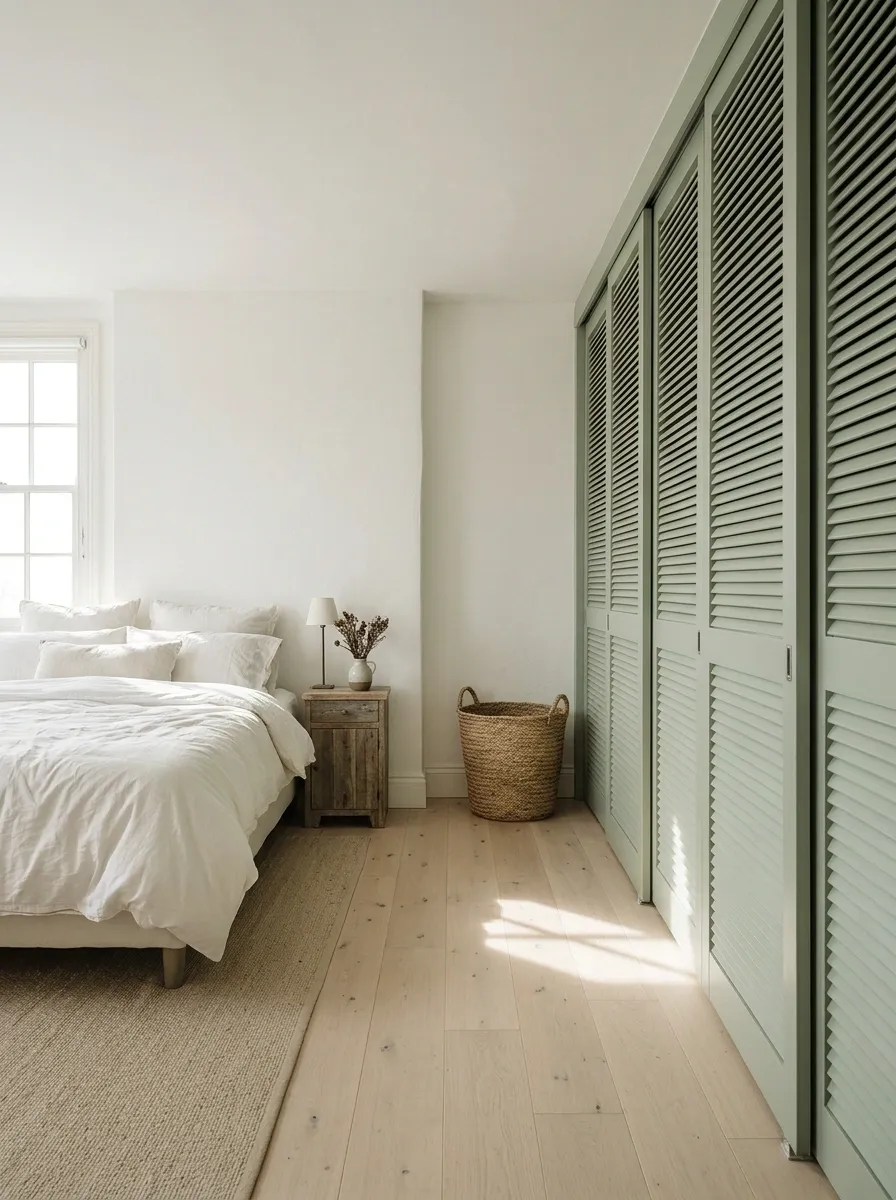
Painted louvered panels bring a familiar architectural detail to an open closet. Soft sage, warm white, or muted blue works particularly well with simple cottage furniture, cotton bedding, natural baskets, and pale wood flooring.
The horizontal louvers create a repeated pattern that feels airy without the softness of curtains. A matching wall color makes the panels subtle, while a contrasting shade turns the closet into a deliberate feature.
Louvered panels can allow some air to pass through, but they also leave sightlines between the slats. They shouldn’t be treated as a fully opaque screen, especially when the closet contains colorful clothes or storage supplies.
Consider the finish as well. A smooth, carefully painted surface reads more contemporary, while lightly distressed paint suits a more traditional farmhouse room. The panel arrangement matters just as much as the color: mismatched widths or uneven gaps can make the installation look improvised.
This style has enough visual detail on its own. Pair it with uncomplicated bedding and a few natural textures instead of giving every surface a new pattern to manage.
COTTAGE FINISH NOTES
The paint sets the personality.
Muted sage
Natural and relaxed beside oak and ivory.
Warm white
Quiet and classic against creamy walls.
Dusty blue
A cooler accent for a lighter cottage palette.
One practical note: If full concealment matters, choose a backing or a different panel style. Louvers provide ventilation and texture, not magic.
Choosing the Right Closet Covering
The best solution depends on how the closet is used and how much space the room can spare. Curtains are usually the simplest way to soften an opening, while sliding panels create a more architectural finish.
Freestanding screens offer flexibility but consume floor space. Woven materials add texture but may leave the contents partly visible, and solid panels provide more complete concealment when properly fitted.
Before buying anything, measure the opening, check the clearance around nearby furniture, and decide whether privacy, light control, appearance, or convenience matters most.
A good closet covering should make the room feel more finished without making everyday life more complicated.
Save your favorite designs now so you can compare materials, colors, and layouts when it’s time to give that open closet the makeover it deserves.