
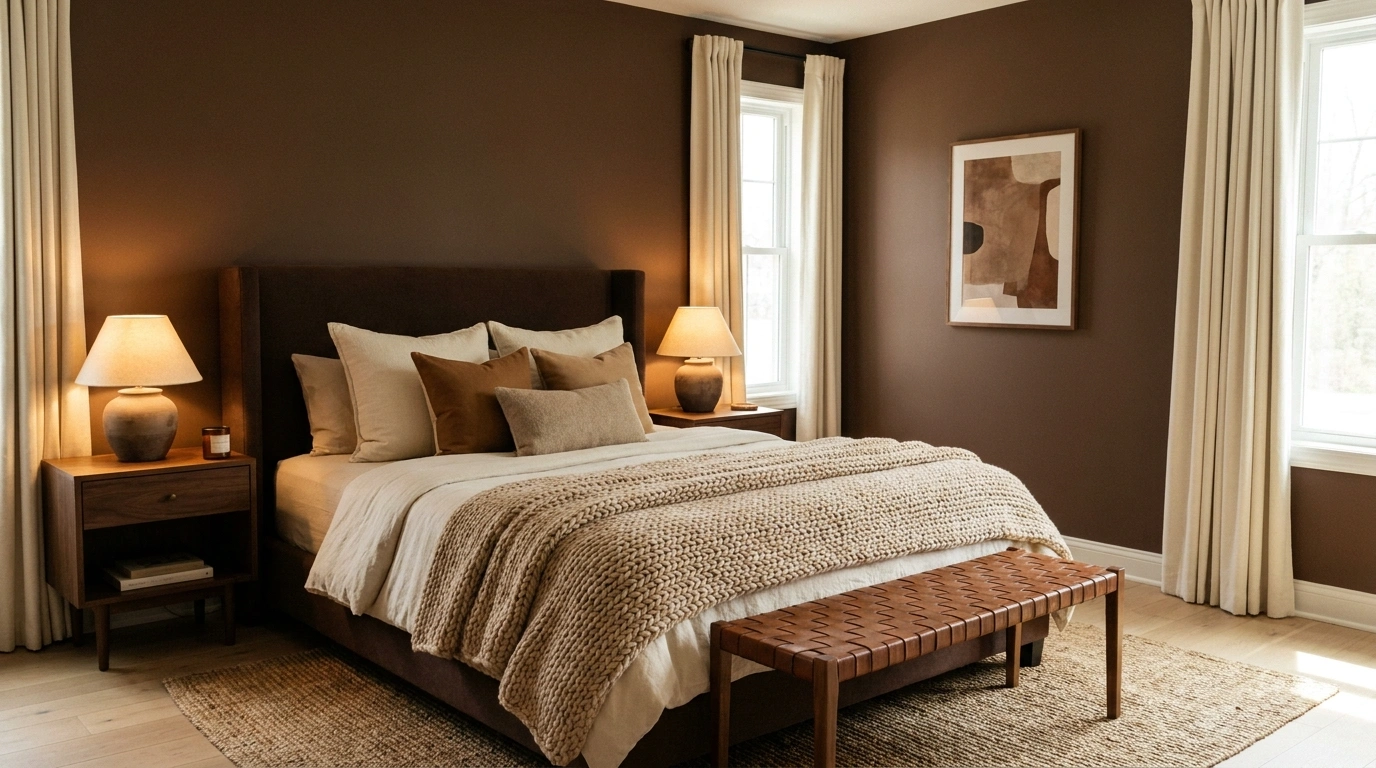
Chocolate brown can make a bedroom feel sophisticated, warm, romantic, or wonderfully dramatic. It can also make the entire room look like someone spilled a giant cup of cocoa and decided to call it a design choice.
The difference comes down to how the color is used. A chocolate headboard against ivory bedding creates a completely different effect from dark brown walls, walnut furniture, and layered espresso fabrics. Add dusty pink, olive green, terracotta, or warm stone, and the possibilities become much more interesting.
Chocolate Brown Bedroom Ideas
Classic Brown Walls With Framed Art and Textured Layers
Rich brown walls set a sophisticated tone, while framed black-and-white artwork, crisp white bedding, and a chunky knit throw create a balanced and inviting space. The dark backdrop makes the light pillows and bedding stand out effortlessly, giving the room a polished look without feeling overly formal. A patterned area rug ties the whole scheme together, adding warmth and softness underfoot.
The key to this setup is letting the dark walls do the heavy lifting while keeping the textiles light and tactile. A mix of smooth sheets, structured pillows, and a heavy textured blanket prevents the dark palette from feeling flat. Keep the surrounding decor minimal so the bed remains the undisputed focal point of the room.
The detail worth copying: Hang a trio of coordinated black-and-white prints right above the headboard to break up a dark wall with classic symmetry.
Warm Chocolate Accent Wall With Ivory Linen and Natural Oak
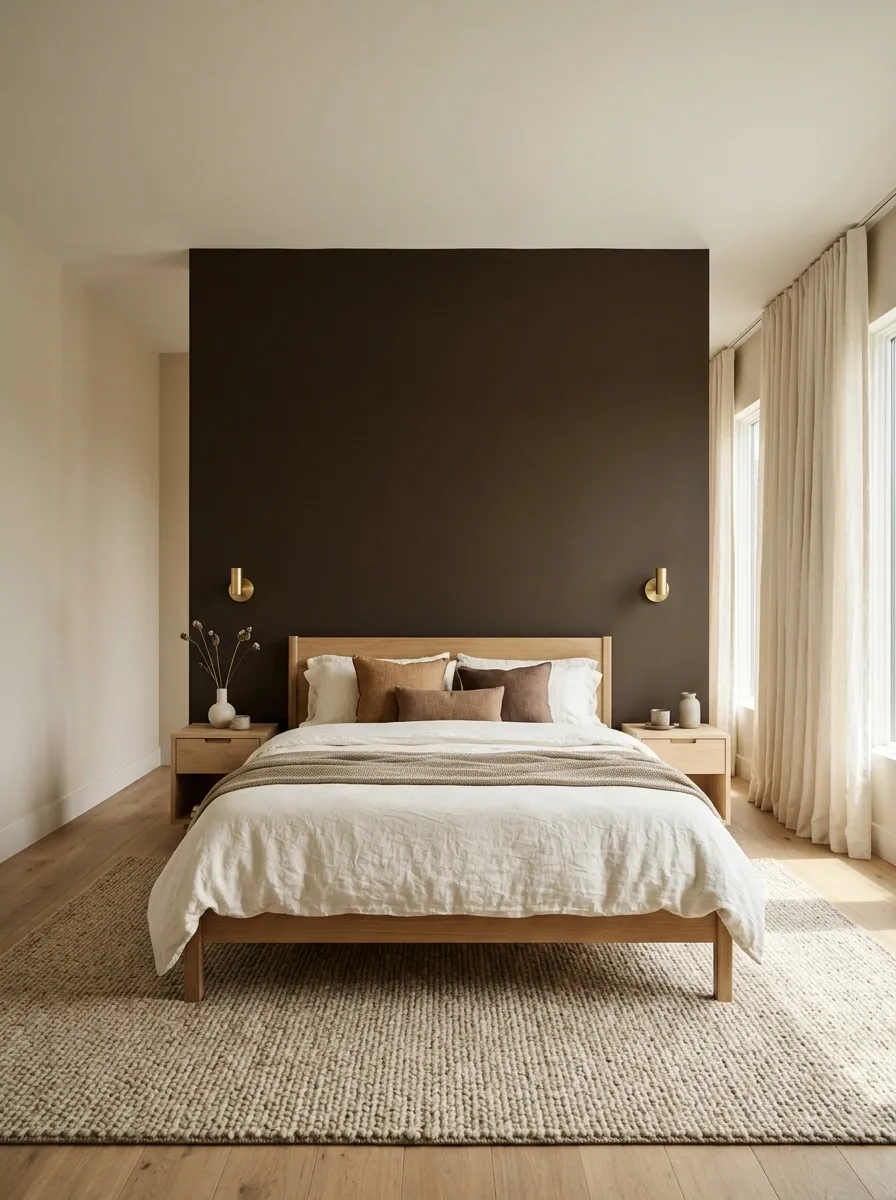
A deep chocolate wall anchors the bed, while ivory linen, pale oak, and warm beige keep the rest of the room light.
The strongest version uses a matte brown wall behind a simple upholstered or timber bed. Pale oak nightstands sit on either side, with understated wall lights, full-length curtains, and a thick beige rug bringing the major pieces together.
A few caramel or cocoa cushions can connect the wall to the bed without turning the bedding into a color-matching exercise.
This composition works because the darkest color has a clear job: creating a backdrop. Keep neighboring walls lighter and let the wood grain show.
The detail worth copying: Repeat the brown in a few small places, then let ivory and oak handle the breathing room.
Room to breathe.
Feature wall
Furniture and warmth
Small accents
Moody Paneled Walls With Burl Wood Nightstands
Dark brown paneled walls meet a curved caramel upholstered bed, burled wood nightstands, and moody botanical art for an atmosphere of pure luxury. The rich monochromatic tones wrap around the room like a cocoon, making the space feel intensely cozy and intentionally designed. Slim black lamps and bronze accents add subtle gleam without disrupting the serene mood.
Material variation keeps this deep palette from disappearing into the shadows. The smooth upholstery contrasts beautifully with the intricate grain of the burl wood and the soft sheen of the velvet bedding. Layering different shades of chocolate and caramel gives the monochromatic look incredible depth.
The detail worth copying: Pair a textured botanical wall hanging with matching accent pillows to bridge the gap between rich wood tones and soft fabrics.
Fully Color-Drenched Chocolate Brown Bedroom
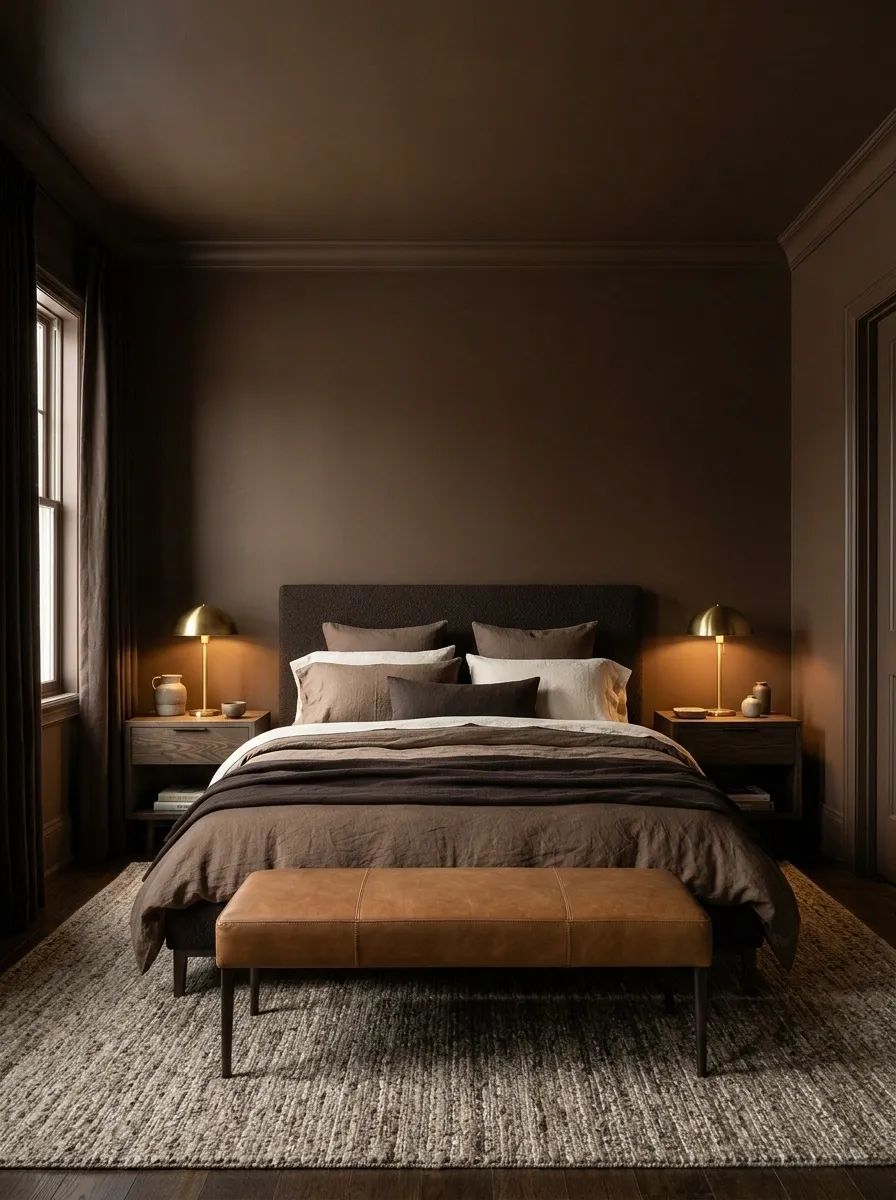
Chocolate brown covers the walls, ceiling, and trim, creating a rich cocoon around a low bed dressed in layered mocha and espresso fabrics.
The bed can feature a dark upholstered headboard, while matching brown walls and trim make the architecture feel deliberate. A caramel bench, warm bedside lamps, and cream-colored sheets give the eye a few places to rest.
Subtle differences between matte paint, soft bedding, and wood furniture are essential. A dark room needs variation, not just more darkness.
Make sure the lighting works after sunset, especially if the room has small windows or limited daylight.
The detail worth copying: Use the darkest brown on the architecture, then build lighter coffee and caramel tones into the bed and furniture.
Different depths.
Tailored Chocolate Walls With Matching Boucle Bench
Chocolate brown walls featuring classic picture frame molding pair with an off-white upholstered bed, a matching textured bench, and warm wood nightstands. The architectural paneling adds instant character, providing a refined backdrop for the clean-lined furniture and layered bedding. Soft lighting from wall sconces casts a gentle glow across the dark surface.
This design succeeds by balancing heavy, saturated walls with lighter, textural furniture pieces. The creamy bouclé bench at the foot of the bed lightens the heavier tones of the room while offering a cozy spot to land. Keeping the artwork subtle ensures the beautiful wall details remain the star of the show.
The detail worth copying: Use picture frame molding on dark walls to create architectural depth, then anchor the space with a light-colored upholstered bed and bench.
Hotel-Inspired Bedroom With a Chocolate Headboard and Crisp White Bedding
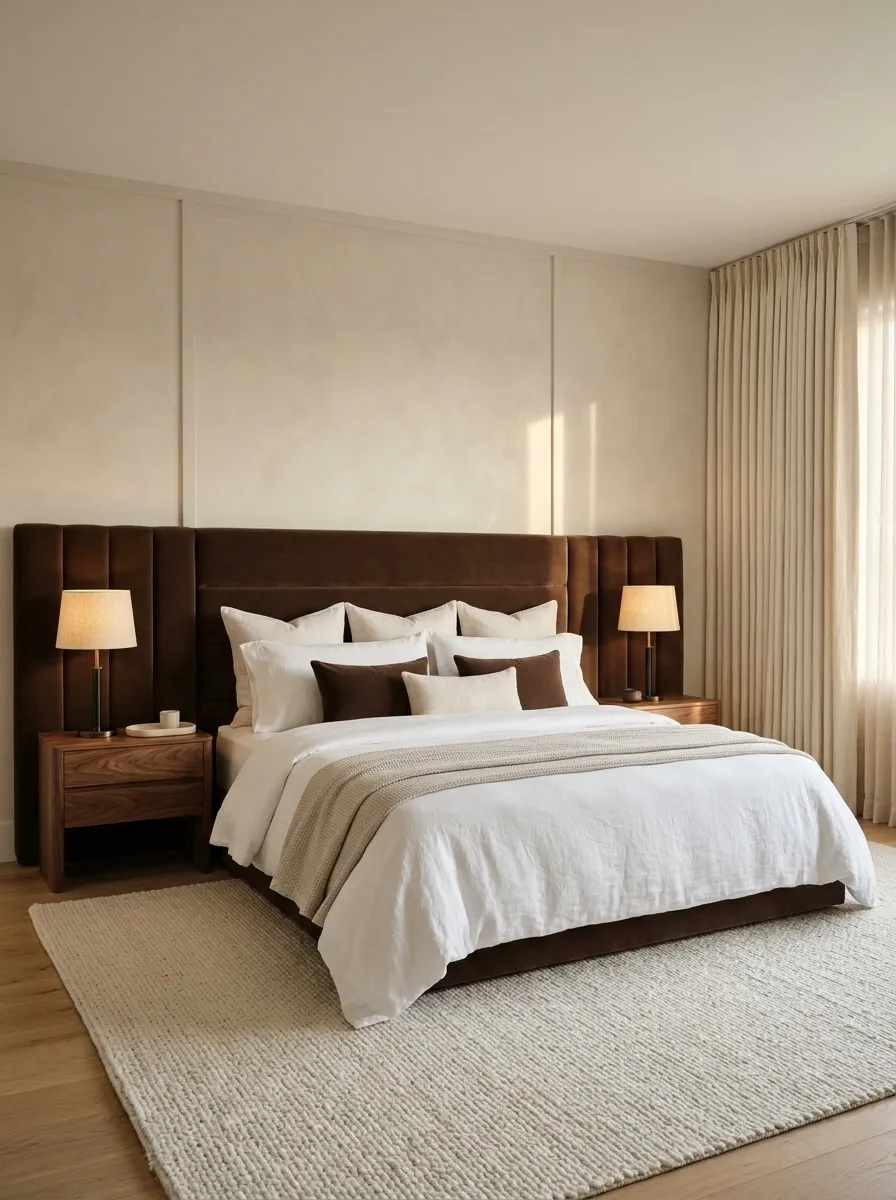
A wide chocolate-brown headboard anchors crisp white bedding, symmetrical walnut nightstands, and matching bedside lights.
The appeal comes from proportion rather than decoration. A generously sized headboard fills the wall behind the bed, while white sheets and a softly textured duvet keep the sleeping area bright.
Matching nightstands establish visual balance, and warm metal or fabric-shaded lamps add softness without turning the bedside tables into accessory museums.
Full-length curtains and a restrained rug complete the composition. The result feels polished, but it doesn’t need a chandelier the size of a small vehicle to prove the point.
The detail worth copying: Align the headboard, nightstands, and bedside lighting so the whole bed wall reads as one intentional arrangement.
table
table
Dramatic Canopy Bed With Statement Chandelier
A dark wood canopy bed commands attention against deep brown paneled walls, topped by a cascading white statement chandelier and flanked by symmetrical wood nightstands. The grand scale of the four-poster frame creates a dramatic silhouette, while crisp white bedding and soft cream benches keep the lower half of the room feeling fresh and grounded.
Proportion and contrast are everything in a dramatic space like this. The soaring white chandelier draws the eye upward, balancing the heavy dark tones of the walls and bed frame. Keeping the surrounding decor restrained allows the striking architecture of the canopy bed to shine.
The detail worth copying: Suspend a large, sculptural white chandelier from a dark ceiling to create a stunning focal point that breaks up the monochromatic envelope.
Organic Modern Bedroom With Chocolate Upholstery and Natural Stone
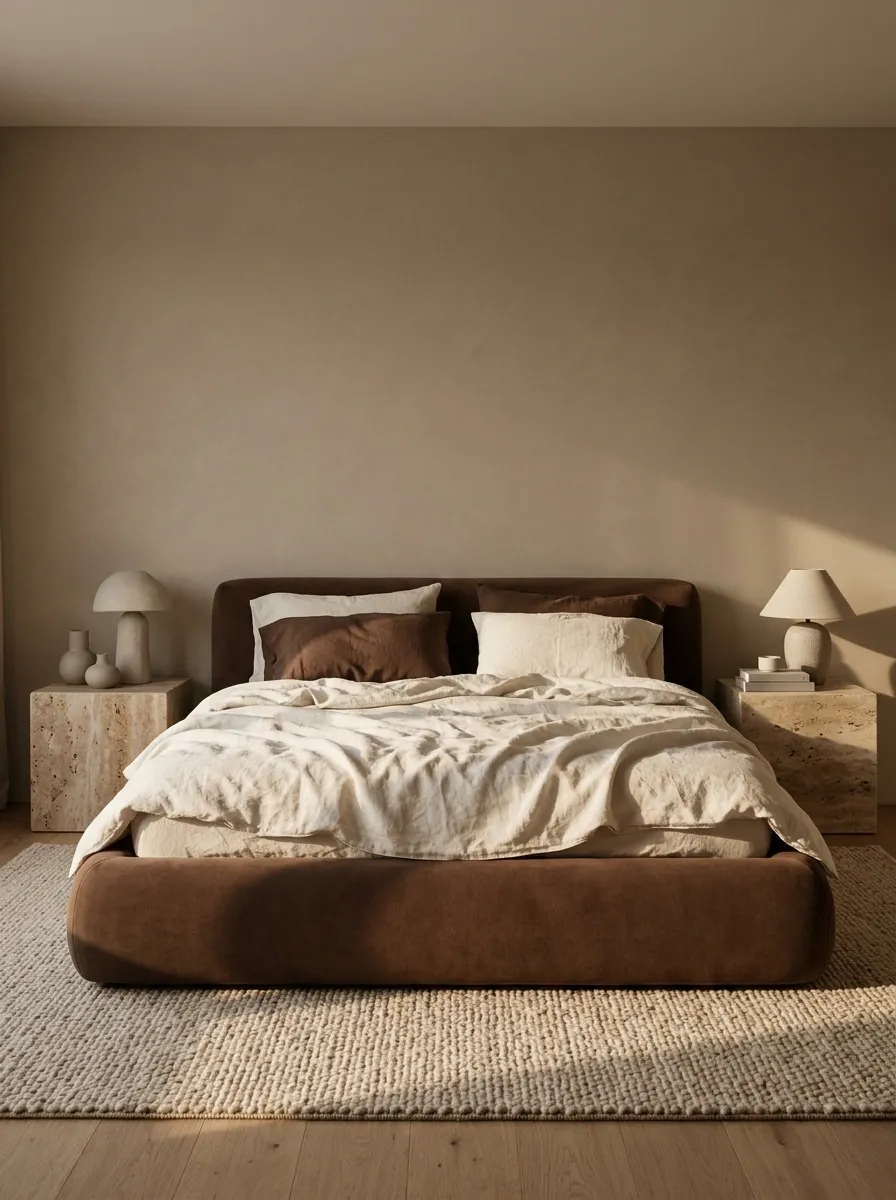
A chocolate upholstered bed sits against warm mushroom walls, accompanied by travertine nightstands, rumpled ivory linen, and sculptural lighting.
This room relies on material contrast instead of strong patterns. The bed contributes a soft, substantial shape, the stone adds quiet visual interest, and the linen keeps everything from looking too formal.
A thick wool rug grounds the furniture, while rounded bedside pieces soften the strong lines of the bed.
Keep the wall finish matte and the furniture shapes simple. Highly polished surfaces and lots of shiny accessories would pull this room in a completely different direction. Even the fanciest bedroom doesn’t need every surface trying to get noticed.
The detail worth copying: Mix several visibly different textures within the same warm palette so the room has depth without needing more colors.
Mid-Century Bedroom With Walnut Paneling and Caramel Upholstery
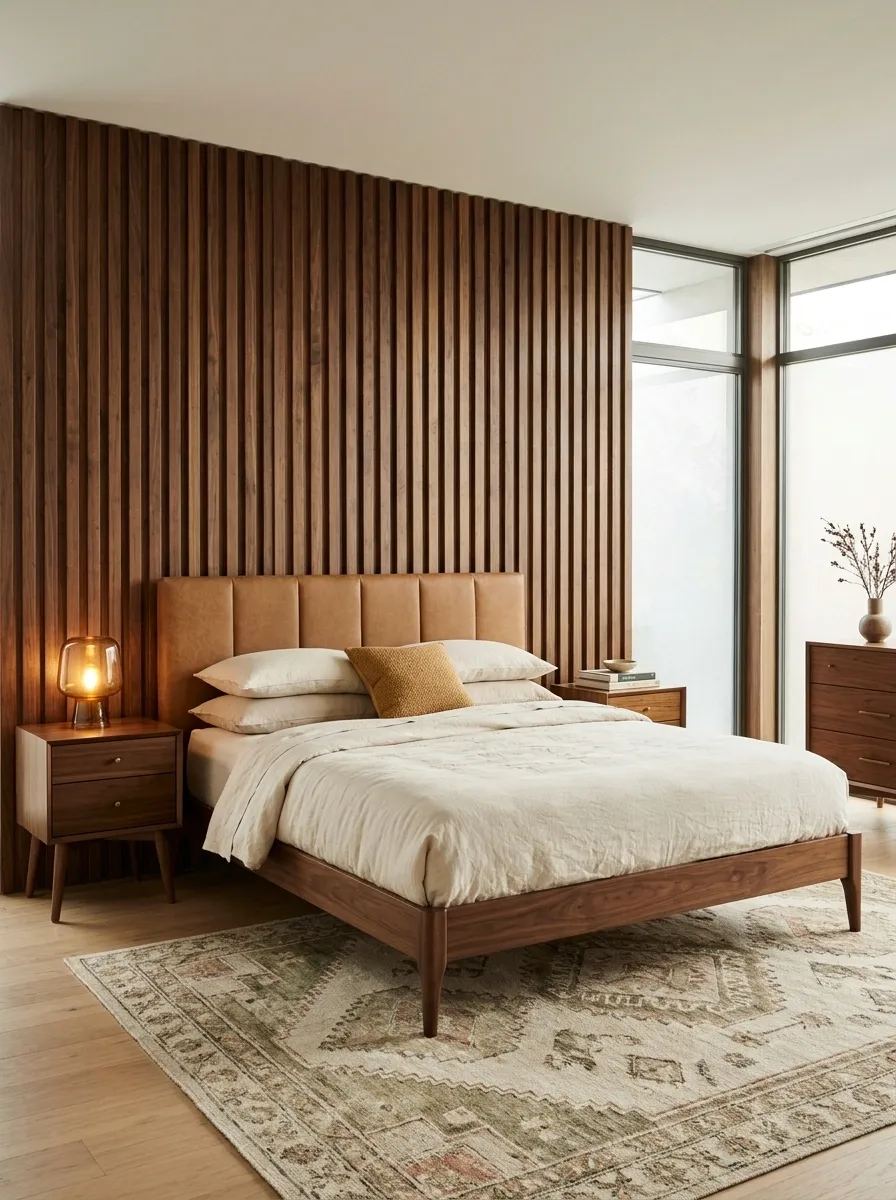
A walnut feature wall, low platform bed, caramel headboard, and tapered furniture legs give this bedroom its mid-century character.
The woodwork sets the visual rhythm, so the remaining pieces can be more restrained. A vintage-inspired geometric rug introduces pattern, while an ochre cushion or amber glass lamp adds a smaller note of color.
Keep the bedding cream or light beige to separate the bed from the darker wood wall.
The important distinction is the furniture silhouette. Low, horizontal shapes and tapered legs make this look different from a traditional brown bedroom with tall furniture and heavy curtains. Adding a dozen retro accessories would only distract from the architecture.
The detail worth copying: Repeat the walnut in the wall and at least one piece of furniture, then use caramel upholstery to bridge the darker wood and pale bedding.
Wall and furniture
Headboard upholstery
Bedding and rug
One or two accents
Romantic Chocolate Bedroom With Dusty Blush and Antique Brass
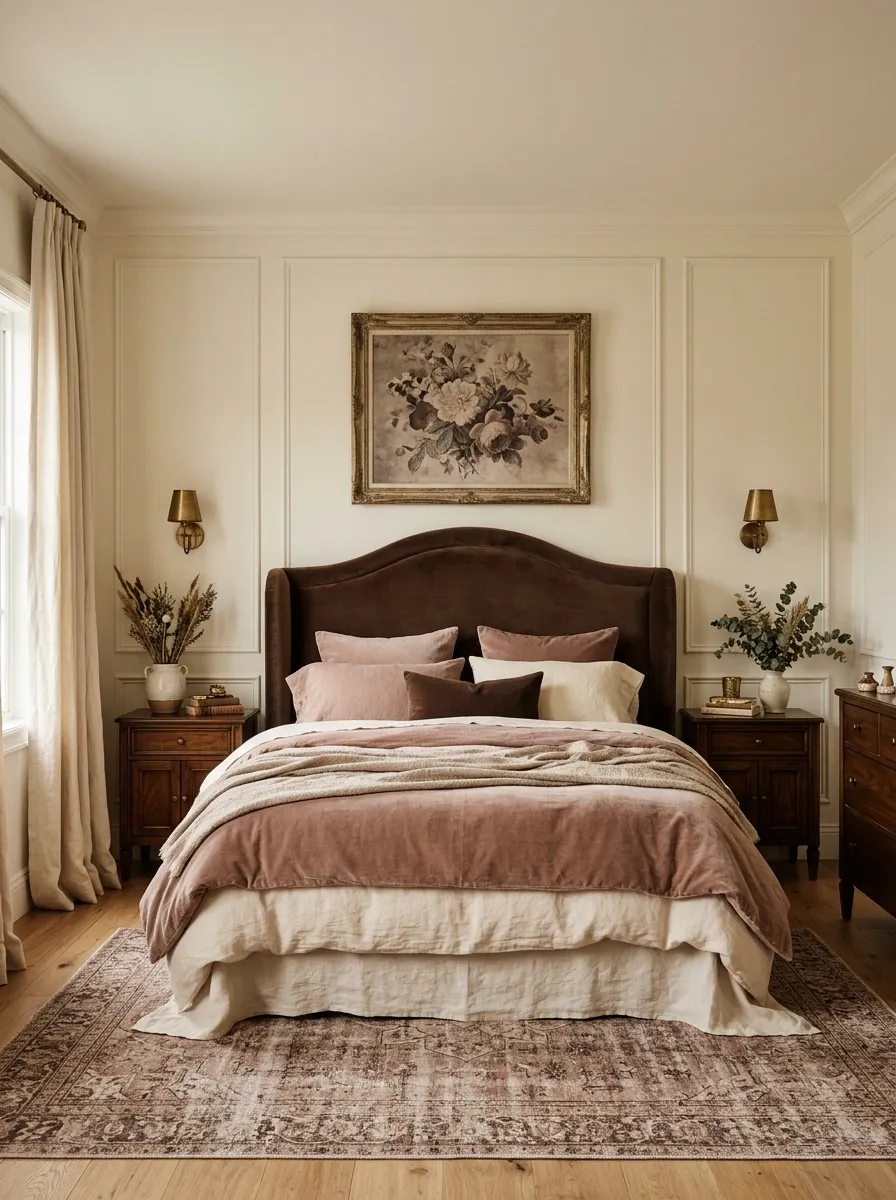
A chocolate velvet headboard, dusty pink bedding, antique brass lighting, and traditional walnut furniture create a bedroom that feels romantic without looking like a teenage Valentine’s Day display.
The curved headboard softens the darker palette, while blush sheets and warm cream curtains lighten the bed. A muted floral print above the headboard adds a little history, and aged brass lamps bring a warm glow after sunset.
Choose a faded traditional rug rather than a bright pink one. The room needs layered color, not a giant bottle of strawberry milk.
This concept works especially well with warm wood floors and softly painted walls. Keep the pink dusty and muted so the brown remains the anchor.
The detail worth copying: Let blush appear in the bedding and artwork, while chocolate brown carries the larger visual weight.
Earthy Bohemian Bedroom With Chocolate Brown and Terracotta
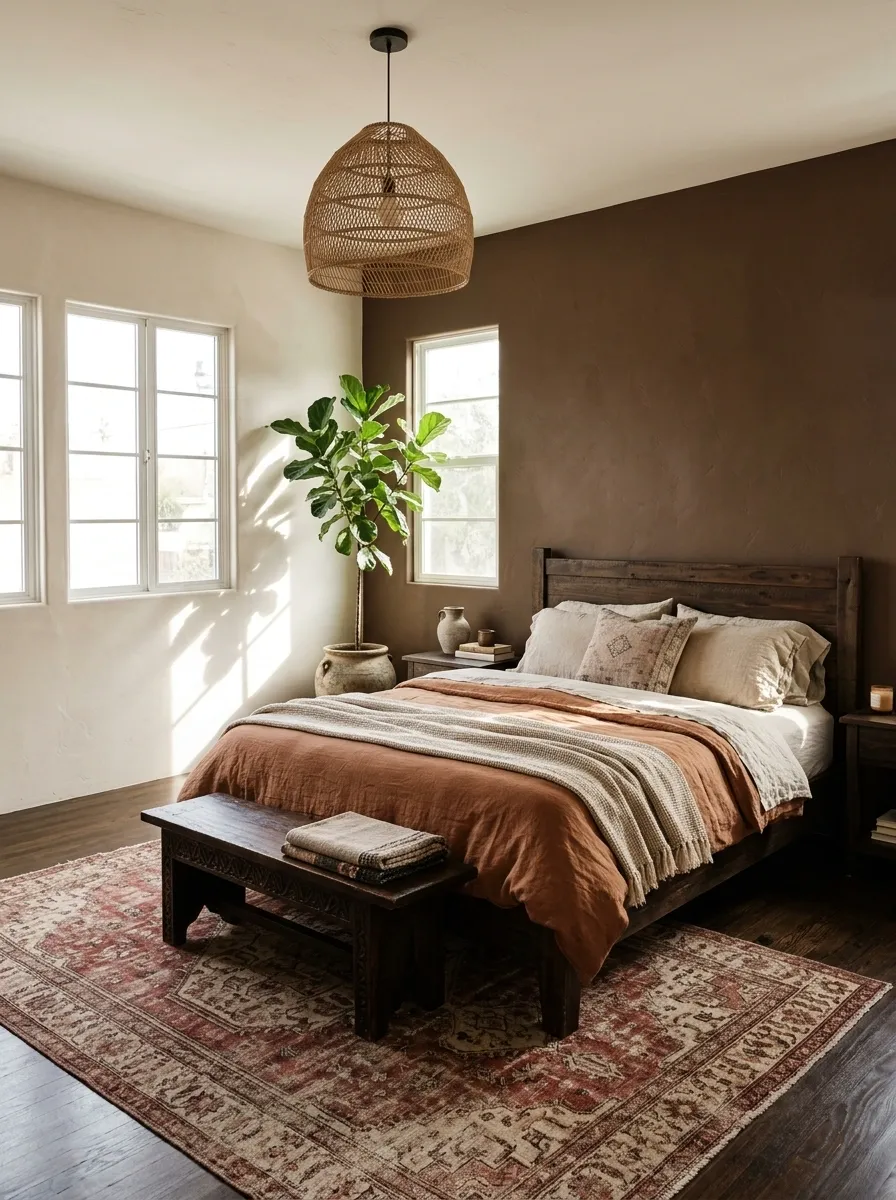
A dark wooden bed sits among terracotta bedding, a faded patterned rug, woven pendant lighting, and richly textured natural fabrics.
This bedroom feels collected rather than perfectly matched. The chocolate bed gives the room a sturdy foundation, rust-colored bedding brings warmth, and a patterned kilim introduces smaller touches of cream, muted red, and brown.
A woven pendant adds texture overhead, while a carved wood stool or low bench gives the arrangement an informal finish. One leafy plant is enough to soften a bare corner without turning the bedroom into an indoor jungle documentary.
Keep the larger pieces grounded in earthy shades and let the textiles provide most of the pattern.
The detail worth copying: Combine one dominant rug pattern with quieter bedding and a few smaller textile accents. Every fabric doesn’t need its own competing personality.
Botanical Bedroom With Chocolate Brown, Olive Green, and Walnut
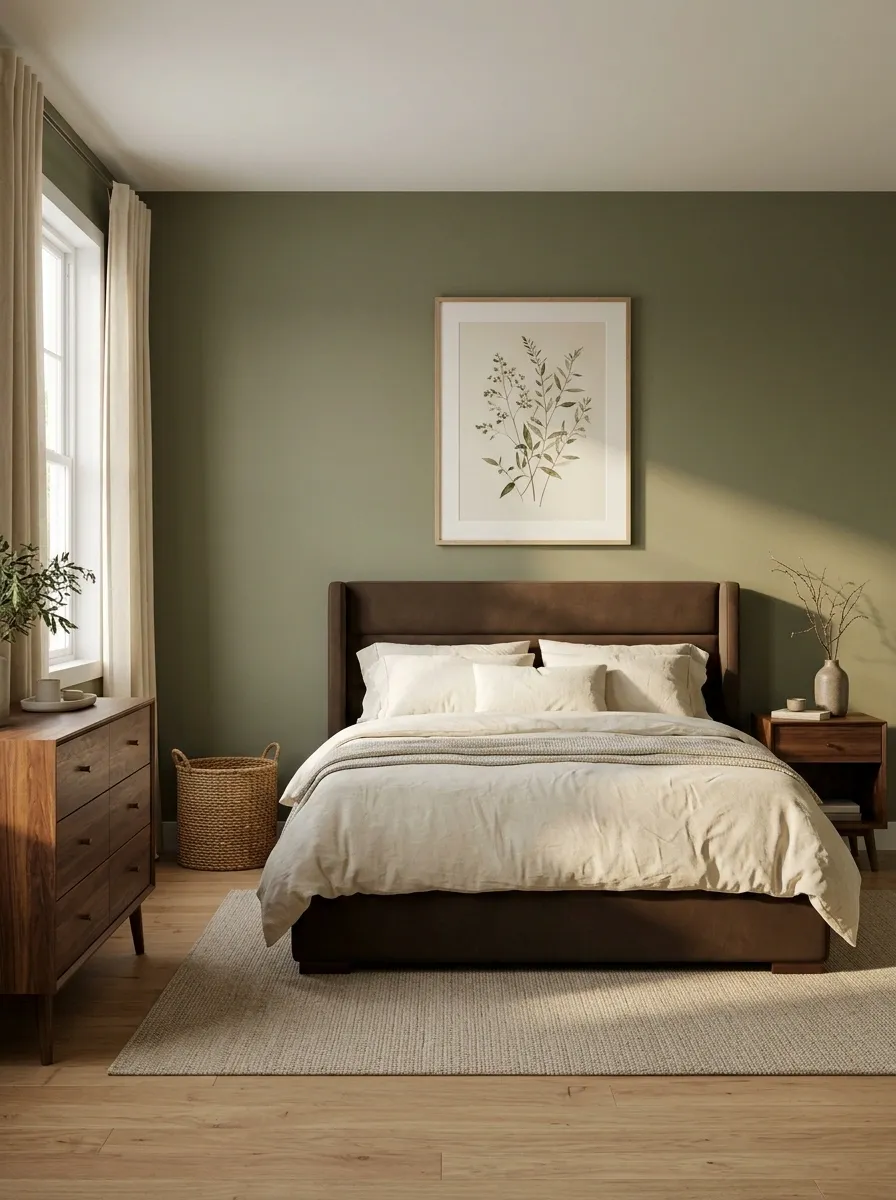
Muted olive walls frame a chocolate upholstered bed, walnut furniture, botanical artwork, and ivory linen.
Olive and chocolate make an excellent pairing because both colors have an earthy depth, but they don’t need to match exactly. Use green across the walls, then bring brown into the bed and darker wood furniture.
Ivory bedding gives the eye a break, while a large botanical print or a single substantial plant connects the palette to the natural world.
This version is more colorful than a neutral bedroom but less dramatic than a fully dark one. It works particularly well with oak or walnut floors and simple curtains in flax or warm cream.
Skip the green cushions, green vase, green throw, and green everything else. The color already made its point.
The detail worth copying: Use olive as the surrounding color and chocolate as the main furniture anchor, with ivory separating the two.
Contemporary Chocolate Bedroom With Midnight Blue Accents
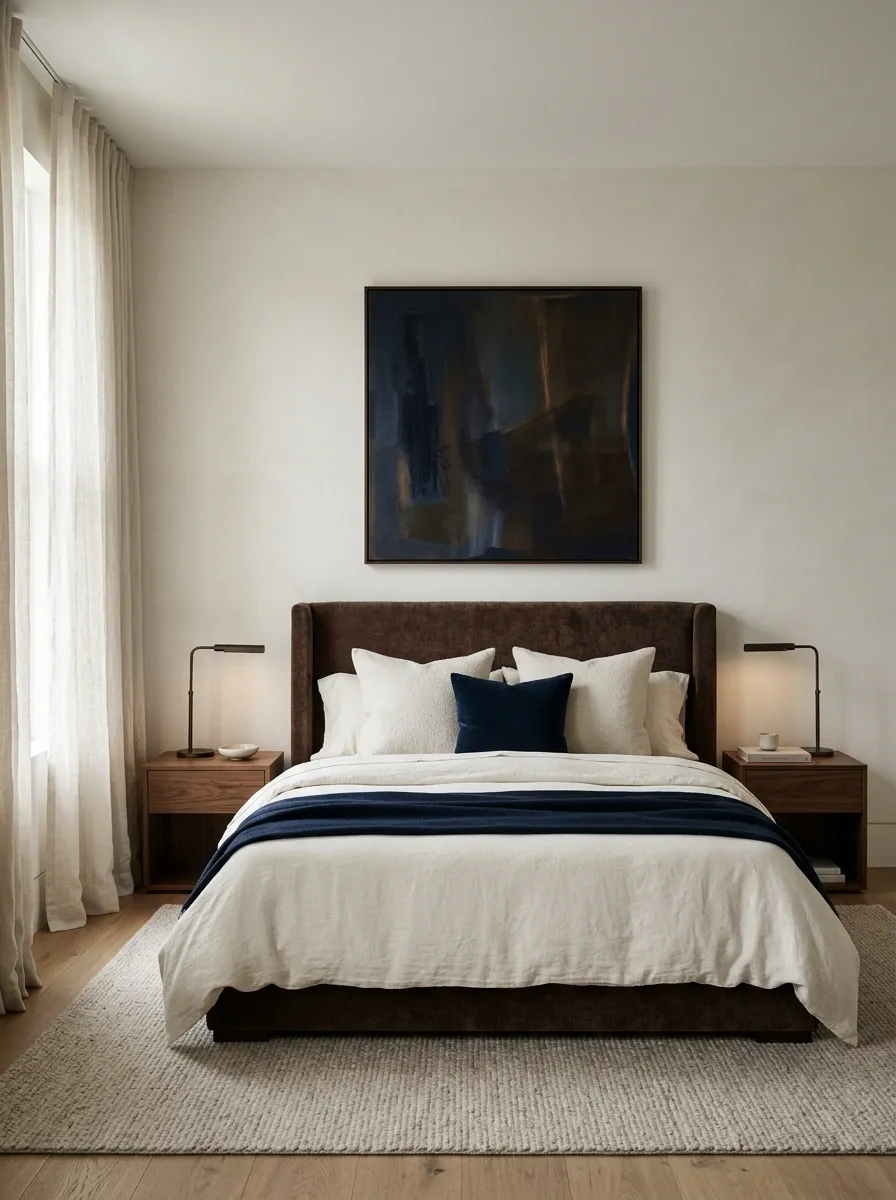
A chocolate upholstered headboard, midnight-blue accent fabrics, walnut bedside furniture, and crisp ivory bedding create a darker contemporary bedroom without relying on black everywhere.
The secret is controlling how much blue enters the composition. A midnight-blue cushion, a folded throw, and one abstract artwork can provide enough contrast against the brown.
Walnut furniture adds warmth between the two colors, while ivory sheets stop the room from feeling too heavy. Slim brass or dark bronze bedside lighting completes the look without introducing another dominant color.
This approach suits bedrooms with clean furniture lines and uncluttered surfaces. It also gives a useful alternative to the usual brown-and-beige combination.
The detail worth copying: Keep chocolate as the main anchor, use navy selectively, and leave the bedding light enough to separate the two.
Blue adds the edge.
Art Deco Bedroom With Chocolate Walls and Oxblood Velvet
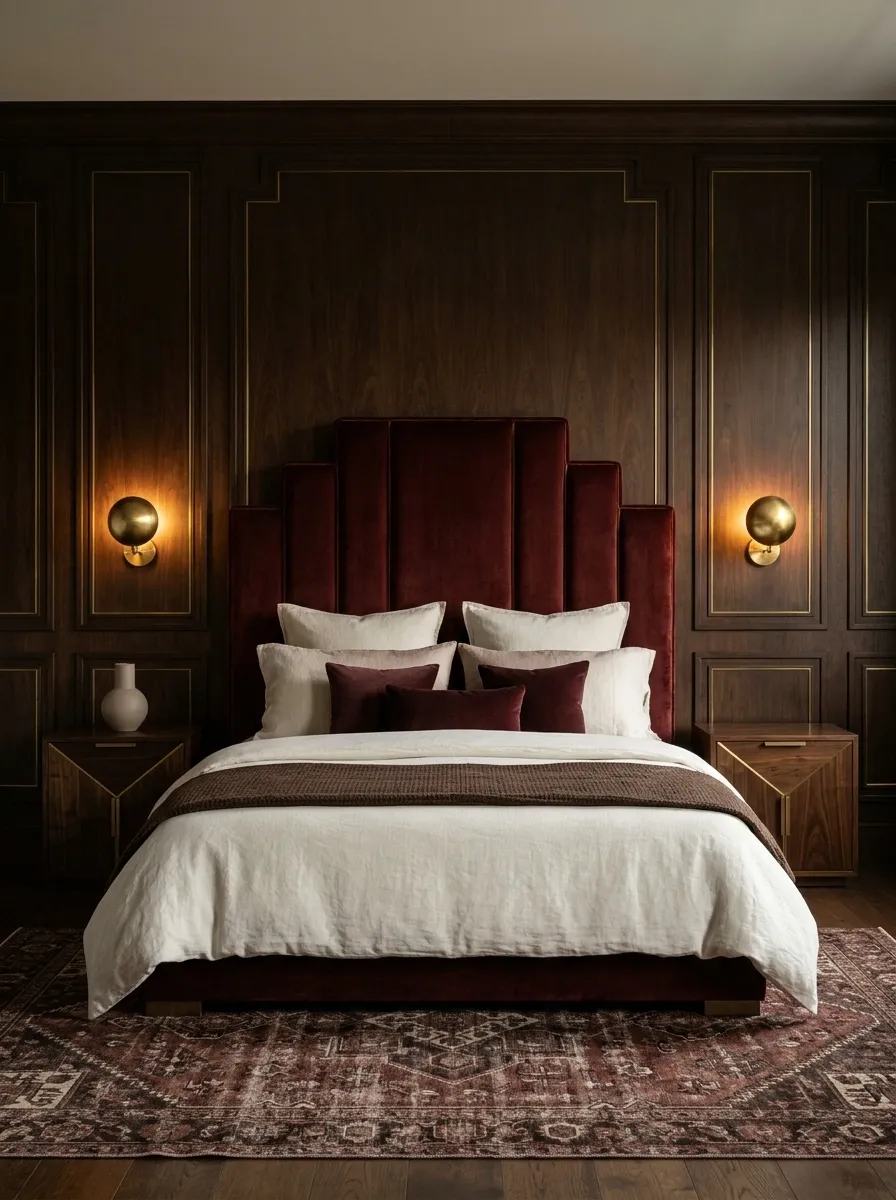
Deep chocolate wall panels frame an oxblood velvet headboard, sculptural brass lighting, geometric furniture, and a richly patterned rug.
This is the more theatrical direction. The brown walls make a strong backdrop, while burgundy upholstery introduces another deep color with a different undertone.
Brass globe sconces and inlaid bedside tables give the room its Art Deco character, and a geometric rug reinforces the architectural lines without overwhelming the bed.
Keep the artwork and bedside accessories restrained so the paneling, velvet, and lighting can establish the mood. A little ivory in the bedding separates the dark headboard from the rest of the room.
Drama is good. A bedroom that looks like a vintage casino lobby is a different assignment.
The detail worth copying: Repeat a few architectural lines through paneling, bedside furniture, and lighting placement rather than adding more decorative objects.
Retro Bedroom With Chocolate Brown and Mustard Ochre
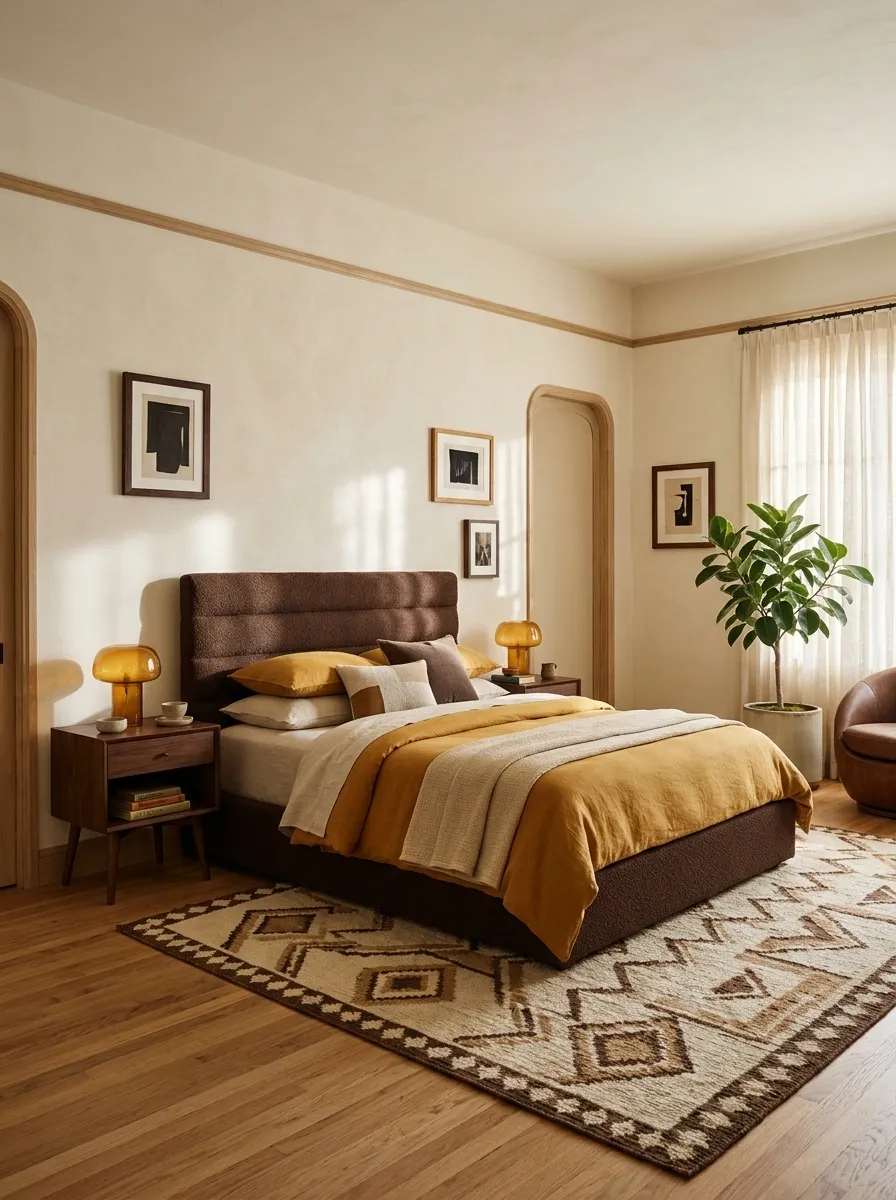
A chocolate-brown bed and walnut furniture meet mustard bedding, amber glass lighting, and warm cream walls for a bedroom with a distinctly retro personality.
Mustard brings an energetic contrast to brown without making the room feel cold. Use it on the duvet or a folded coverlet, then repeat a little ochre in the artwork or a bedside lamp.
A vintage geometric rug and rounded furniture shapes strengthen the retro mood, while cream walls keep the stronger colors from crowding each other.
The important part is restraint. A large mustard bedspread already makes a statement, so the curtains, rug, and remaining bedding can stay quieter. The goal is a room with character, not a 1970s time capsule that charges rent.
The detail worth copying: Pair one generous ochre surface with dark brown furniture and plenty of warm cream.
Small Chocolate Brown Bedroom With Pale Walls and Space-Saving Furniture
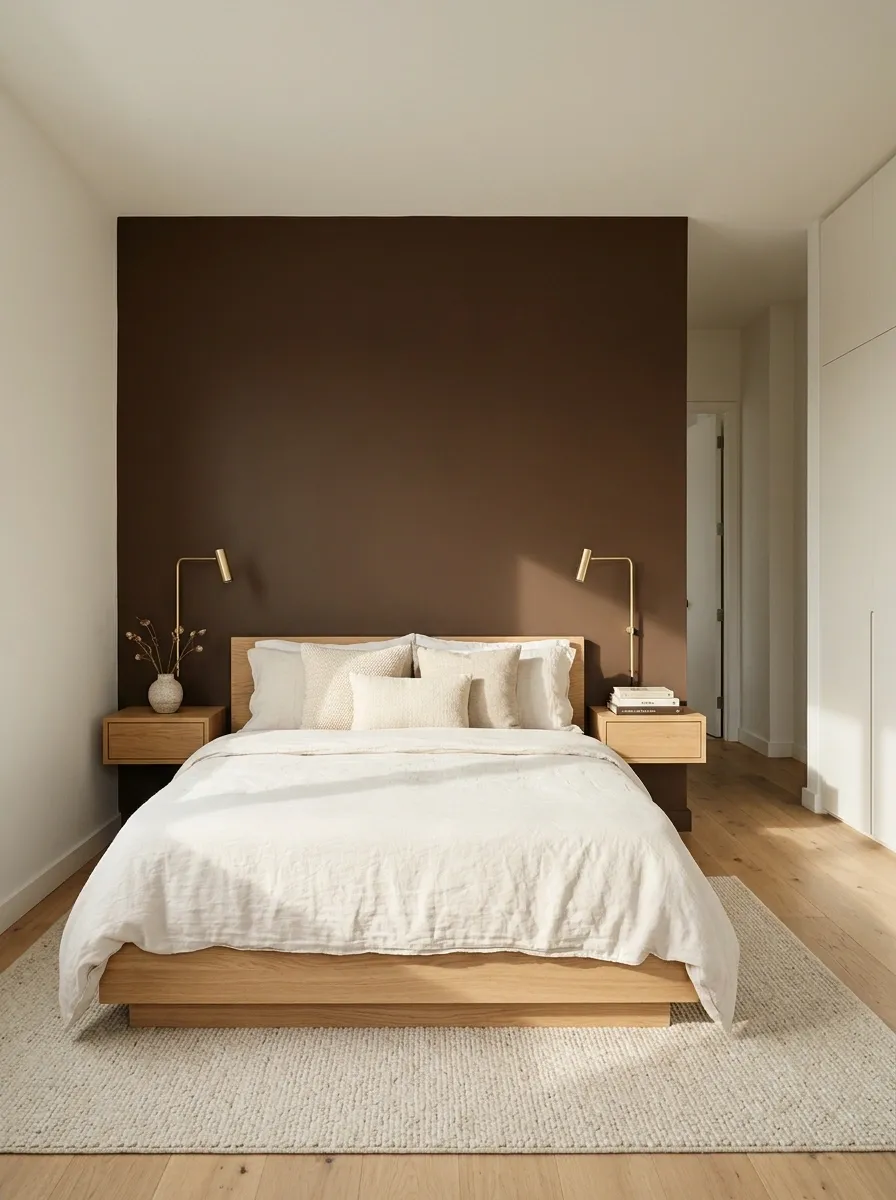
A chocolate-brown headboard wall gives a small bedroom depth, while pale surrounding walls, floating nightstands, and clear floor space keep the layout from feeling cramped.
In a compact room, brown works best when its placement is deliberate. Concentrate it behind the bed rather than painting every wall by default.
Choose slim bedside shelves, wall-mounted reading lights, and a rug that extends beyond the bed just enough to soften the floor. Pale bedding creates a clean break between the dark wall and the furniture.
The layout matters as much as the palette. Leave a comfortable route to the door and wardrobe, and avoid oversized nightstands that turn getting into bed into an obstacle course.
The detail worth copying: Keep the darkest color behind the bed and protect the walking space around it.
and pale
bedding
Renter-Friendly Bedroom With Chocolate Bedding and Movable Furniture
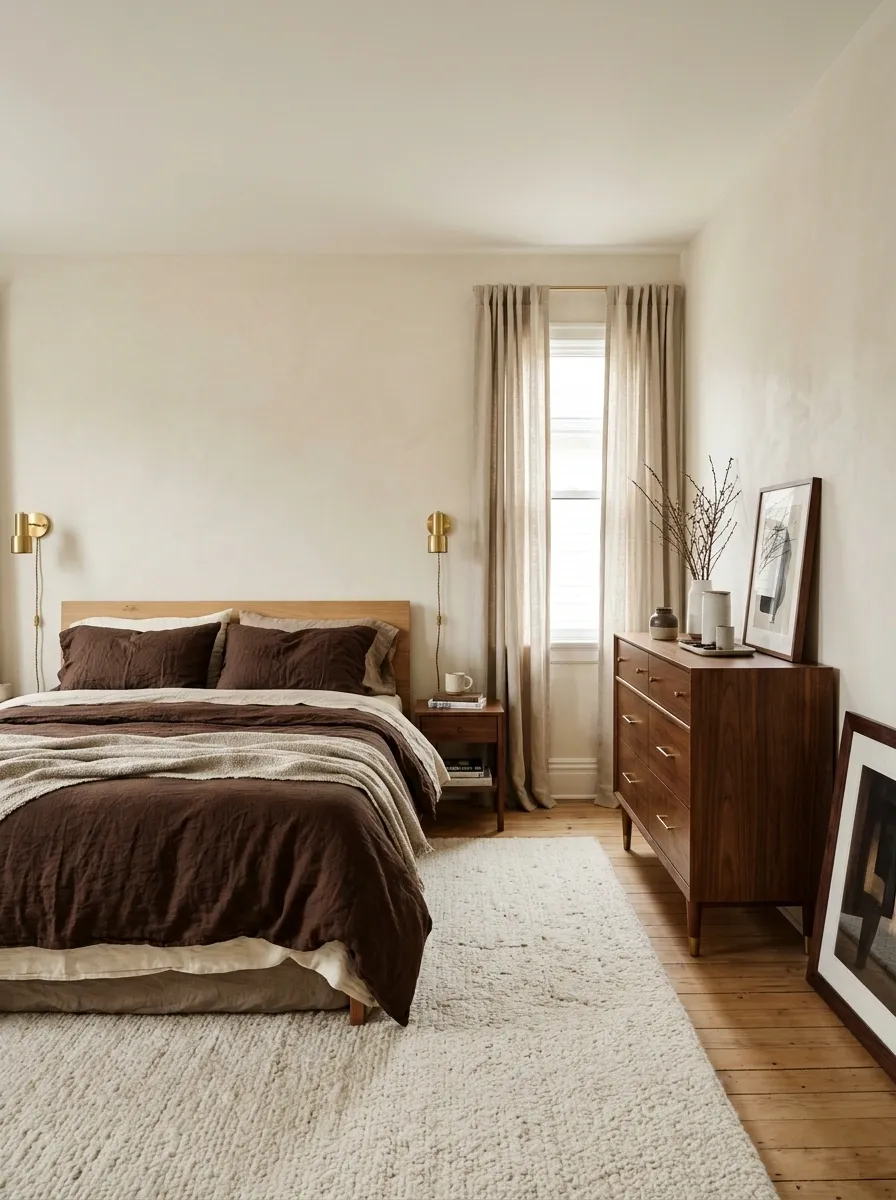
Chocolate bedding sets the palette against warm ivory walls, a freestanding walnut dresser, leaning artwork, and plug-in bedside lighting.
This design gets its impact from movable pieces instead of permanent changes. A textured brown duvet cover becomes the focal point, while a vintage dresser, neutral curtains, and a cream rug create a layered finish.
Framed artwork can rest securely on a suitable shelf or be hung using landlord-approved methods. Plug-in lights bring a softer glow without requiring new wiring.
The advantage is flexibility. If the room changes or the lease ends, most of the design can move with it. Just don’t mistake renter-friendly for an excuse to put every purchase in the cart.
The detail worth copying: Build the look around bedding, lighting, rugs, and furniture that can move without renovations.
Freestanding walnut dresser
Plug-in bedside lighting
Removable or leaning artwork
Cream rug and curtains
Attic Bedroom With Chocolate Upholstery and Built-In Eaves Storage
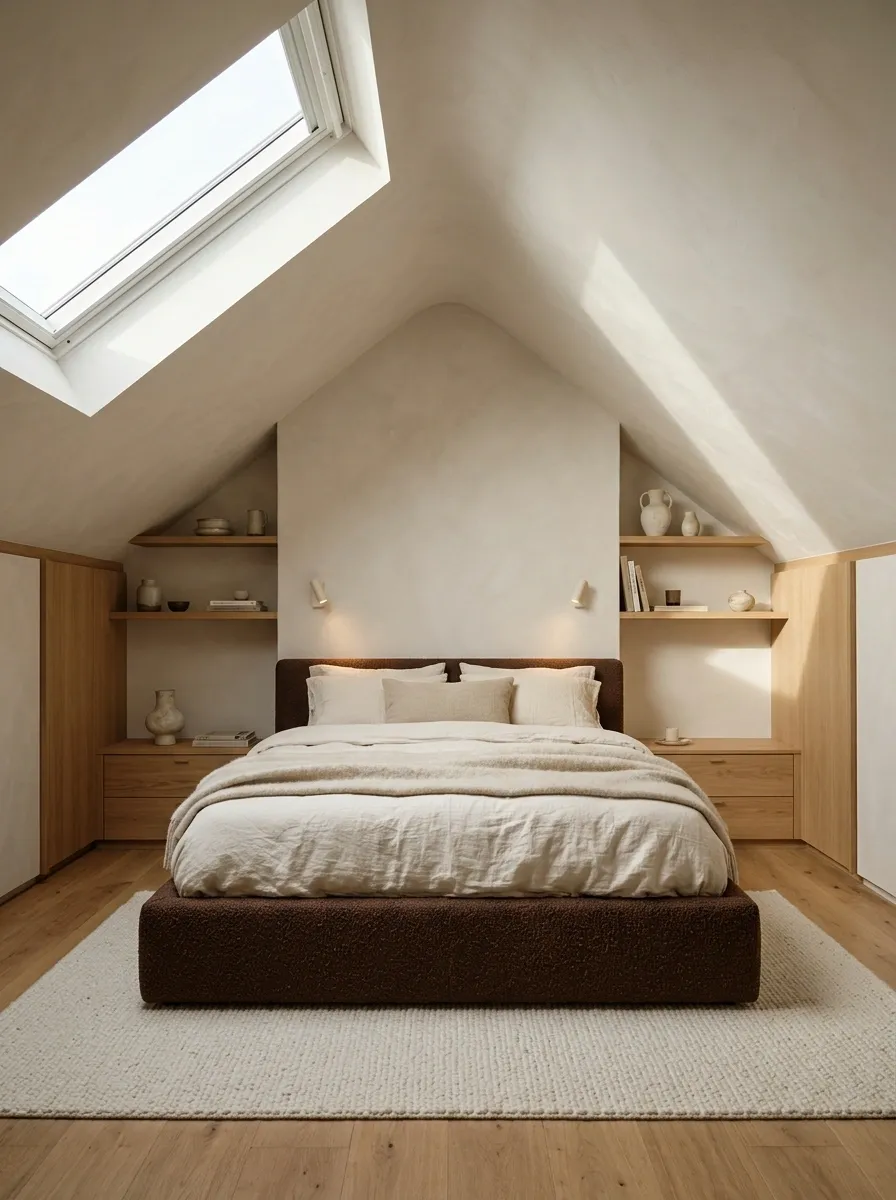
A low chocolate-brown bed sits beneath a sloped ceiling, with fitted eaves storage, pale plaster walls, oak details, and a skylight bringing daylight into the room.
An attic bedroom has a built-in design feature before a single piece of furniture arrives: the roofline. Rather than fighting it with tall wardrobes or an oversized headboard, keep the bed where there’s enough headroom and use low storage beneath the eaves.
Chocolate upholstery gives the sleeping area weight, while pale walls prevent the sloping ceiling from feeling too oppressive. Oak shelves and cream bedding carry warmth through the space.
Wall-mounted lights can free up bedside surfaces, provided their position works for reading and doesn’t interfere with the roof angle.
The detail worth copying: Match furniture height to the roofline and use low built-ins where standing height is limited.
Industrial Loft Bedroom With Chocolate Leather and Exposed Brick
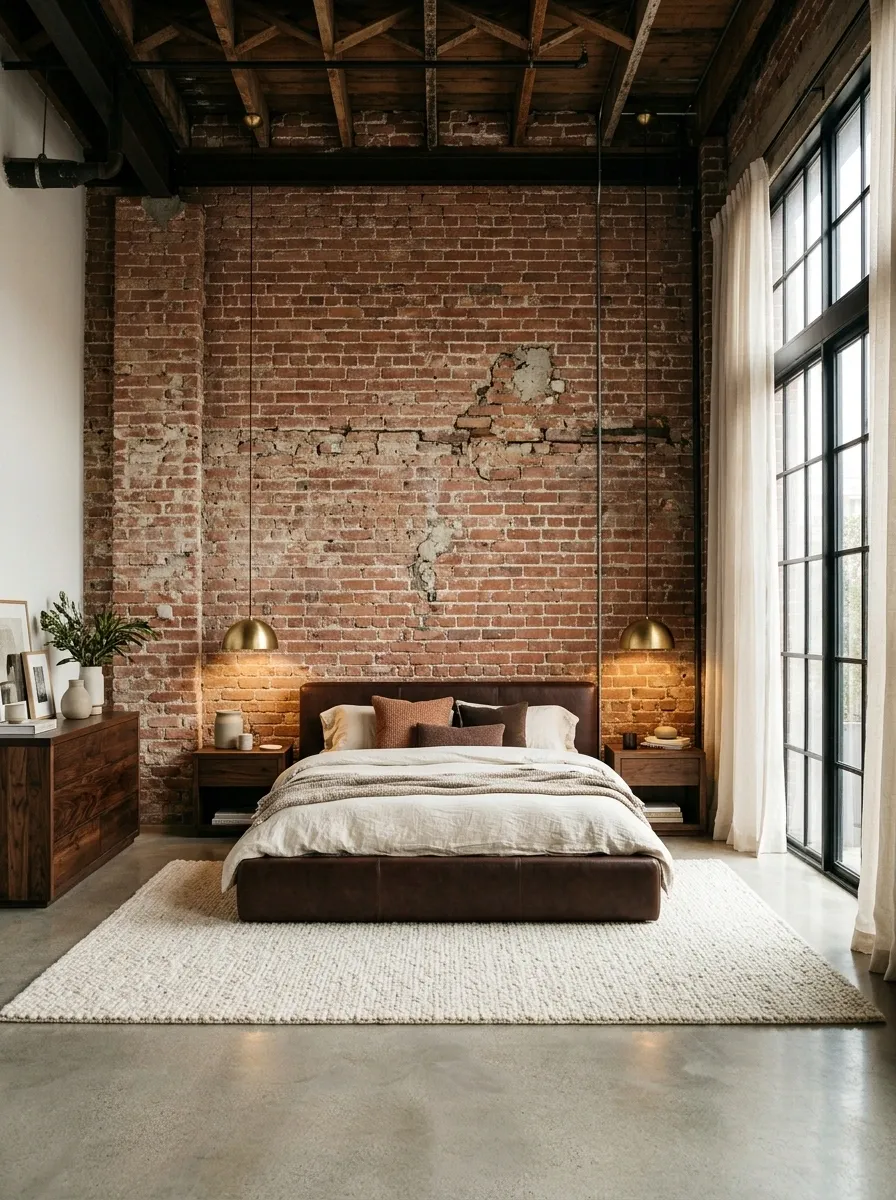
A chocolate leather bed sits against exposed brick, black steel windows, and dark timber furniture, with a concrete floor and warm pendants completing the loft-inspired room.
The design leans into materials with visible character. The brick wall supplies texture, the leather bed brings a smoother brown surface, and black-framed windows emphasize the room’s architectural lines.
Dark wood nightstands and warm lighting connect the harder finishes, while pale bedding and soft curtains keep the space from feeling cold.
A large rug can define the sleeping area and add comfort underfoot, particularly over concrete or other hard flooring. Avoid filling the room with distressed metal signs and faux factory accessories. The architecture already made the industrial point.
The detail worth copying: Pair rough architectural finishes with soft textiles and one substantial brown furniture piece.
Modern Farmhouse Bedroom With a Dark Wood Bed and Rust Plaid
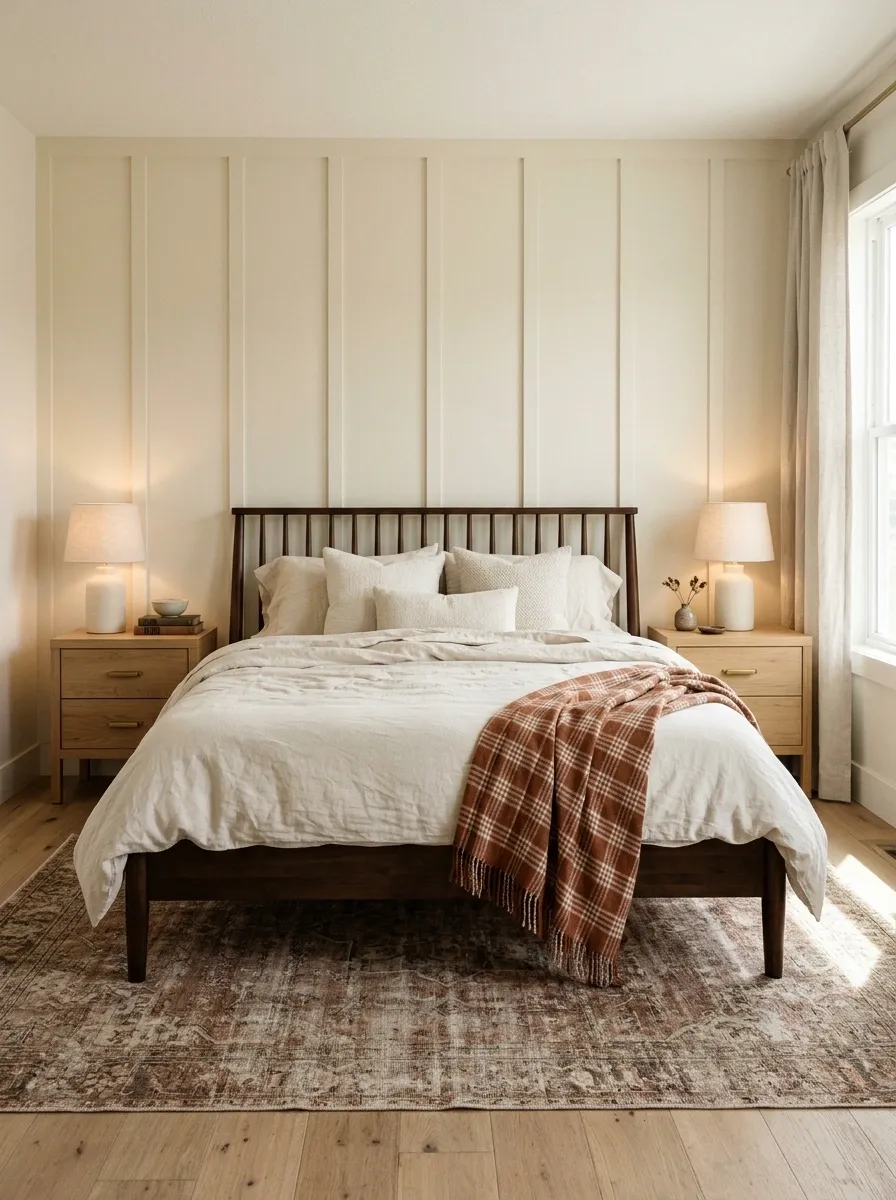
A dark stained spindle bed stands against warm cream paneling, with rust plaid bedding, a faded vintage rug, and simple ceramic bedside lamps.
The spindle bed brings traditional character, while the cream wall keeps the dark wood from dominating the room. A rust-colored throw adds warmth, and a faded patterned rug makes the furniture feel established rather than freshly unpacked from a matching bedroom set.
Choose natural cotton bedding and simple wood nightstands to keep the composition relaxed.
The farmhouse style works best when the materials do the talking. Too many distressed signs, artificial antiques, and decorative words on the wall can make the room look like a gift shop with a bed in it.
The detail worth copying: Pair the traditional bed frame with one restrained plaid textile and a faded rug instead of filling every surface with farmhouse decor.
Relaxed finishes.
Plain bedding for breathing room
Rust plaid for warmth
Faded rug for a collected finish
Japandi Bedroom With Smoked Walnut and Chocolate Linen
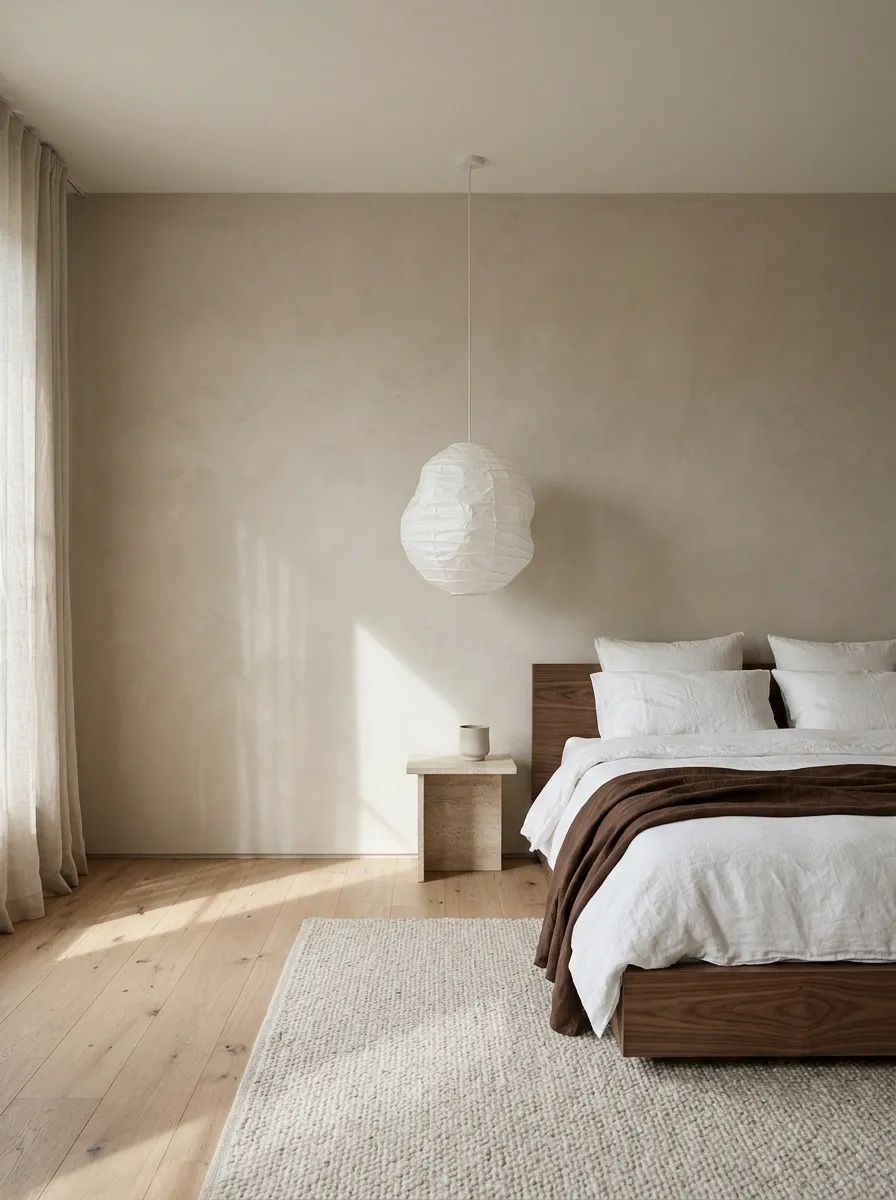
A low smoked-walnut platform bed, mushroom plaster walls, chocolate linen, a small stone bedside table, and a sculptural paper pendant create a restrained bedroom.
Unlike the darker, decorative concepts, this room relies on empty space. The low furniture keeps the visual line close to the floor, while a chocolate throw connects the bedding to the smoked walnut frame.
A small stone table and softly textured rug introduce material variation without adding more furniture.
This look needs editing more than shopping. Leave the walls mostly clear, keep bedside objects limited to what is actually useful, and allow the textures to carry the interest.
A minimalist bedroom loses its point very quickly when every empty corner becomes an excuse to buy another decorative object.
The detail worth copying: Keep the bed low, the palette tonal, and the floor area open enough for the architecture to remain visible.
French Country Bedroom With Antique Brown Furniture and Floral Wallpaper
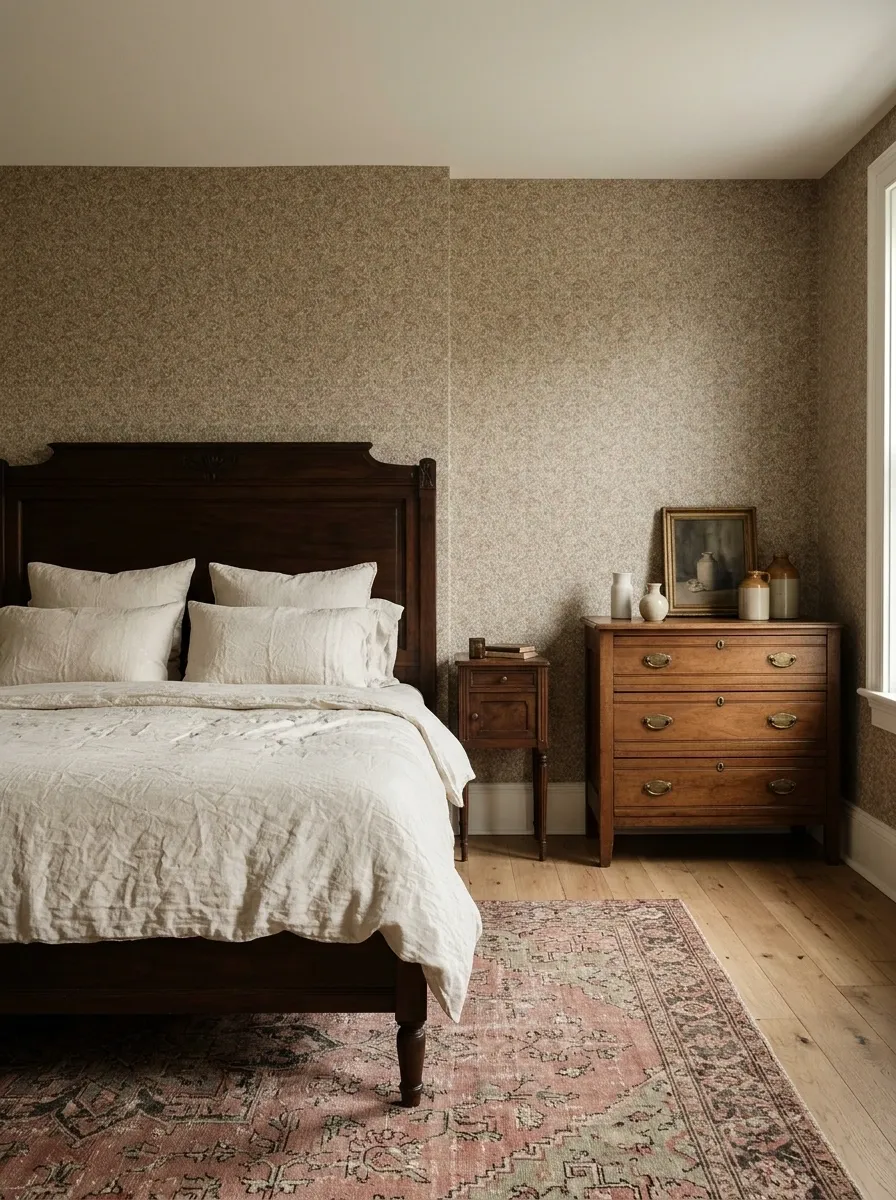
An antique dark walnut bed sits against muted floral wallpaper, with creamy linen, a faded traditional rug, and an old-fashioned dresser.
This bedroom has more pattern and historical character than the simpler brown concepts. The walnut bed gives the room its weight, while the wallpaper adds a softer, intricate background.
Cream bedding prevents the floral print from becoming overwhelming, and a faded rug introduces another layer without demanding equal attention.
The furniture should look substantial, not artificially distressed. A few genuine vintage pieces or well-made traditional reproductions will create a more believable effect than a room full of faux antiques.
The aim is an interior that feels collected over time, not purchased in one afternoon under the influence of a period drama.
The detail worth copying: Let the wallpaper supply the fine pattern and keep the bedding relatively plain to establish a clear hierarchy.
Refined Luxury Bedroom With Chocolate Upholstery, Walnut, and Travertine
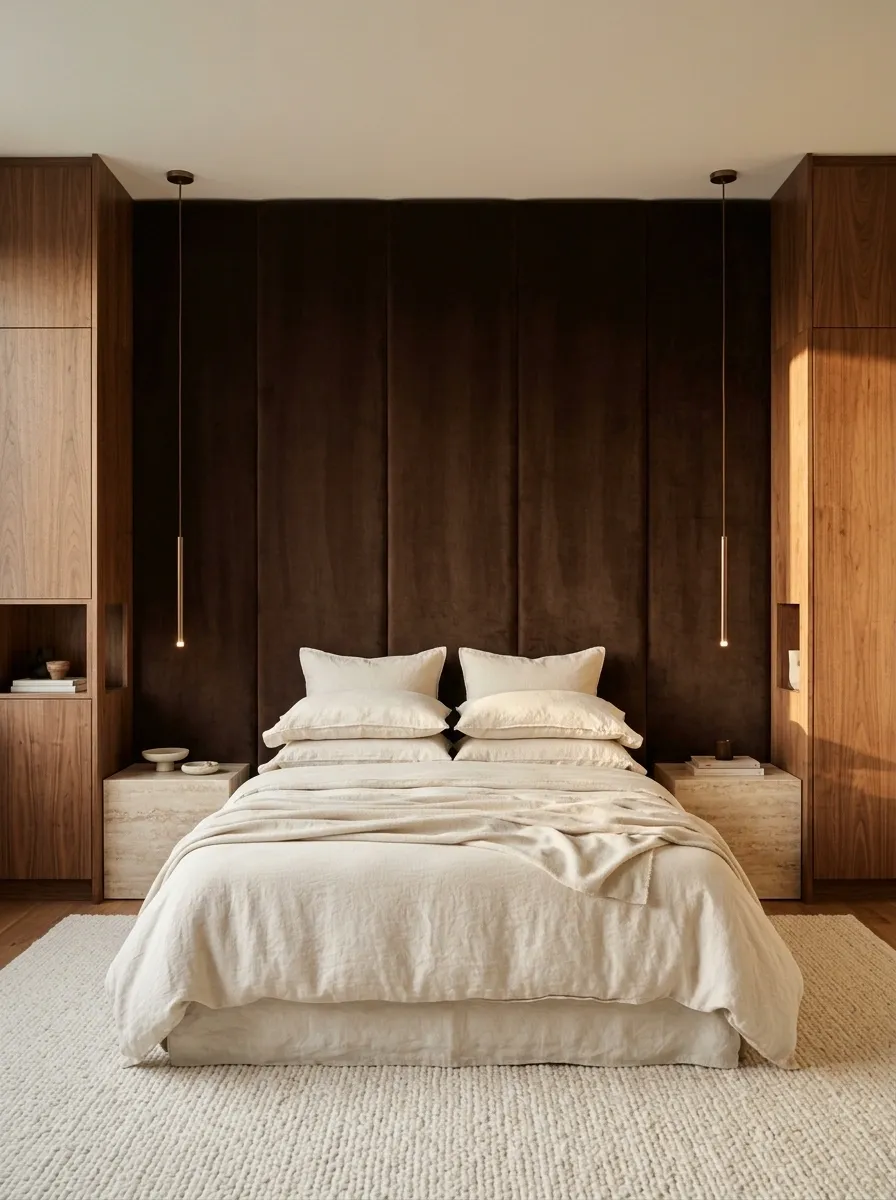
A tall chocolate upholstered headboard wall meets walnut cabinetry, pale travertine nightstands, bronze pendants, and a large ivory rug.
This composition feels luxurious because the major surfaces relate to one another. The upholstered headboard softens the wall behind the bed, walnut cabinetry adds warmth, and travertine introduces a quieter natural pattern.
Bronze pendants give the bedside area definition without filling it with lamps and accessories. Pale bedding and a generous rug balance the darker built-in elements.
The key is scale. A broad headboard wall needs bedside furniture with enough visual presence, while the lighting should sit comfortably within the proportions of the bed.
Quality materials already provide plenty to look at. No one needs a bedside table holding fourteen objects to prove the room has been decorated.
The detail worth copying: Build the room around a few large, complementary materials instead of relying on lots of small decorative finishes.
Four-Poster Bedroom With Chocolate Wood and Sheer Canopy Curtains
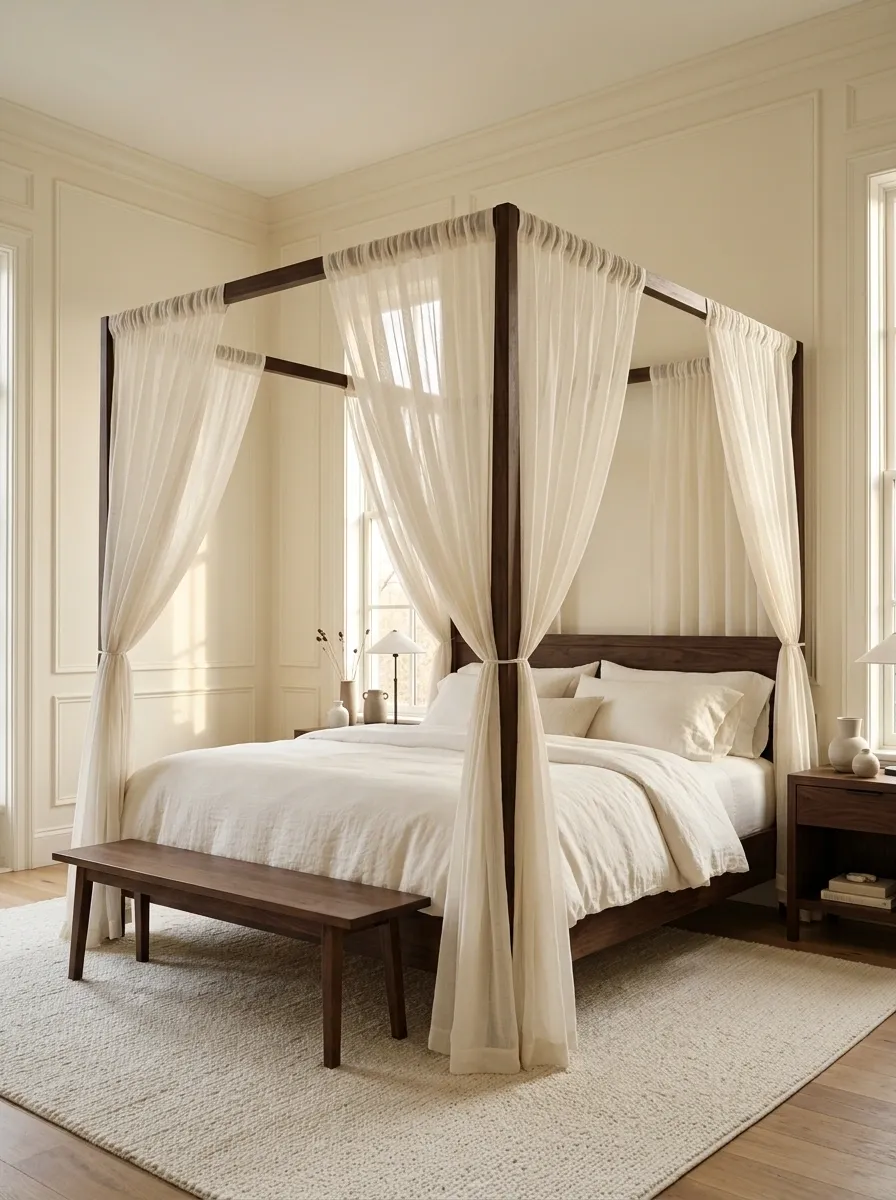
A dark walnut four-poster bed creates the main architectural feature, with sheer ivory curtains, warm cream walls, chocolate accents, and an understated bench.
The frame gives the room a strong silhouette, while the sheer fabric softens its edges without hiding the structure. Ivory bedding keeps the sleeping area bright, and matching wood tones connect the bed to the surrounding furniture.
This design feels romantic without relying on a wall of florals or a dozen decorative pillows. The canopy itself creates the visual interest, so the rest of the room can stay relatively simple.
Measure the room height and bed clearance carefully before choosing a four-poster frame. A dramatic bed is less appealing when it dominates every inch of a small room.
The detail worth copying: Let the canopy define the room, then keep the surrounding walls, bedding, and furniture visually quiet.
Check ceiling height, curtain clearance, bedside access, and space for making the bed.
Unexpected Color Pairing With Chocolate Brown and Muted Lavender
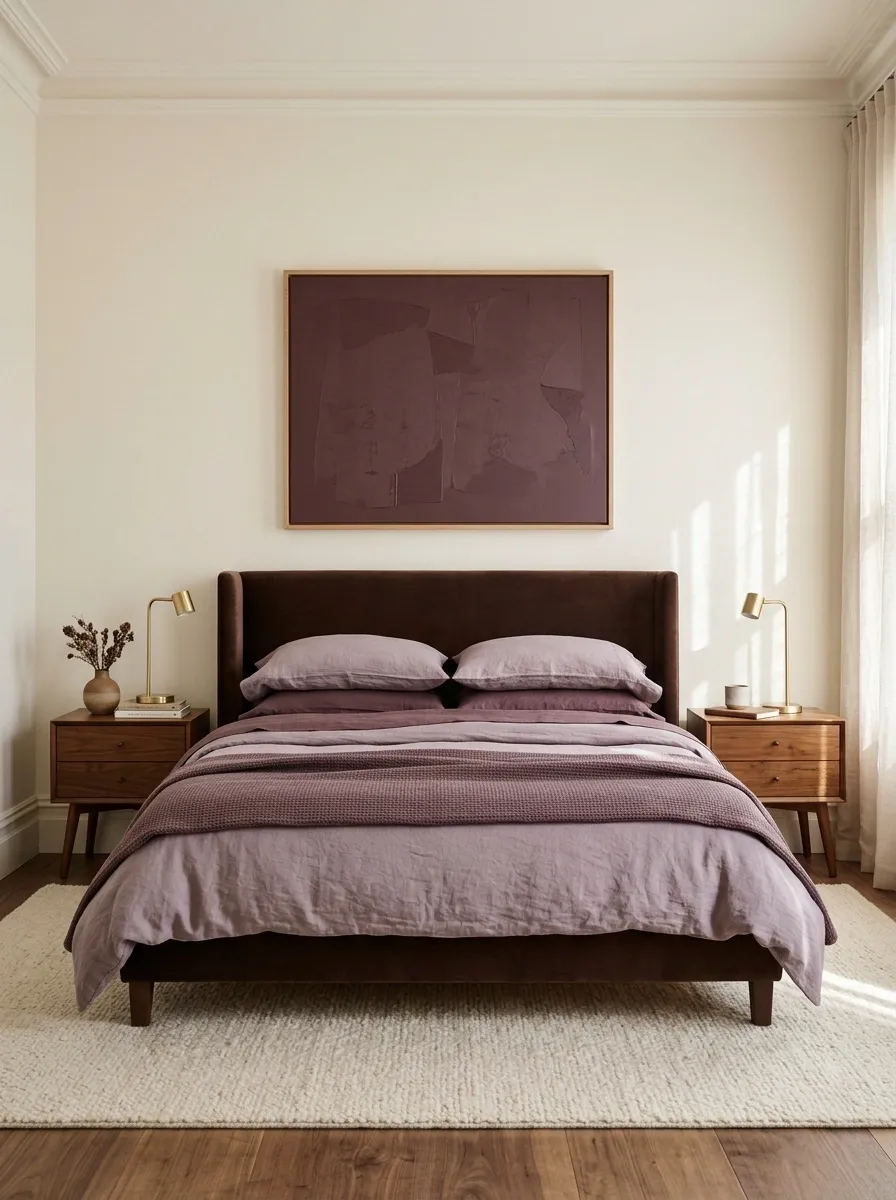
A chocolate upholstered bed anchors muted lavender bedding, plum-toned artwork, warm ivory walls, and walnut furniture.
The cool lavender brings contrast to the rich brown without the stronger formality of navy or burgundy. Keep the lavender dusty rather than sugary, and use it mainly across the bedding and one or two decorative elements.
Warm ivory walls help connect the cooler accents to the brown furniture. Walnut nightstands provide continuity, while simple lighting prevents the unusual pairing from becoming overly decorative.
This is an appealing direction for a contemporary bedroom that needs a little color but doesn’t want a predictable beige palette.
The detail worth copying: Use lavender as a focused cool accent against a larger foundation of chocolate, walnut, and warm ivory.
Muted lavender introduces a cooler color.
Warm ivory bridges the two.
Walnut furniture keeps the palette grounded.
Architectural Minimalist Bedroom With Chocolate Brown and Matte Black
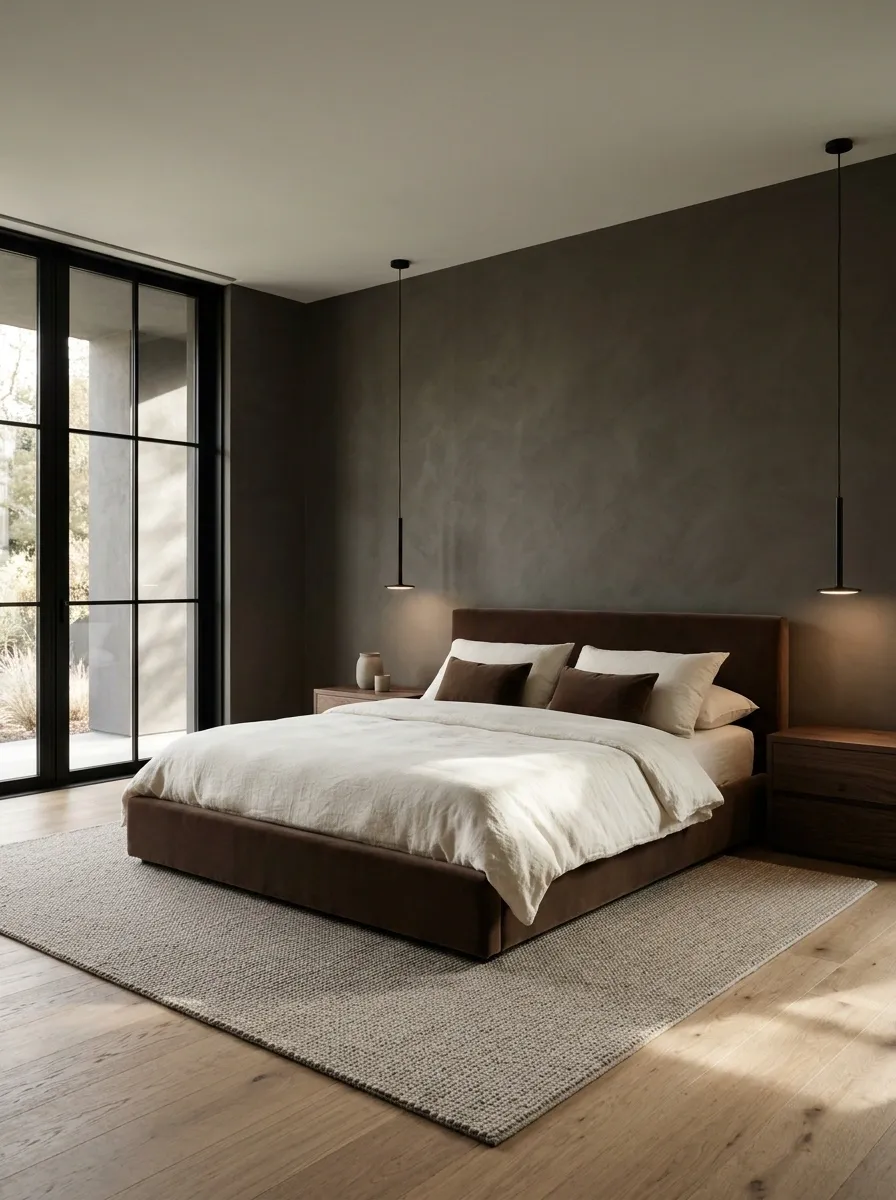
Smooth plaster walls, a chocolate upholstered bed, black-framed windows, matte black pendants, and dark walnut nightstands create a clean-lined architectural composition.
The black accents make the design feel sharper than the Japandi bedroom, while the chocolate upholstery prevents the room from becoming too stark. Ivory bedding creates a strong light area around the bed, and walnut furniture introduces a little warmth between the darker finishes.
Keep the furniture shapes simple and the surfaces uncluttered. A plain rug can soften the flooring without competing with the architecture.
The distinction is important: this room relies on strong outlines and controlled contrast, not the raw brick and concrete of an industrial loft.
The detail worth copying: Use black for defined architectural accents and let chocolate brown provide the softer, larger visual anchor.
Library-Inspired Bedroom With Chocolate Bookcases and a Reading Corner
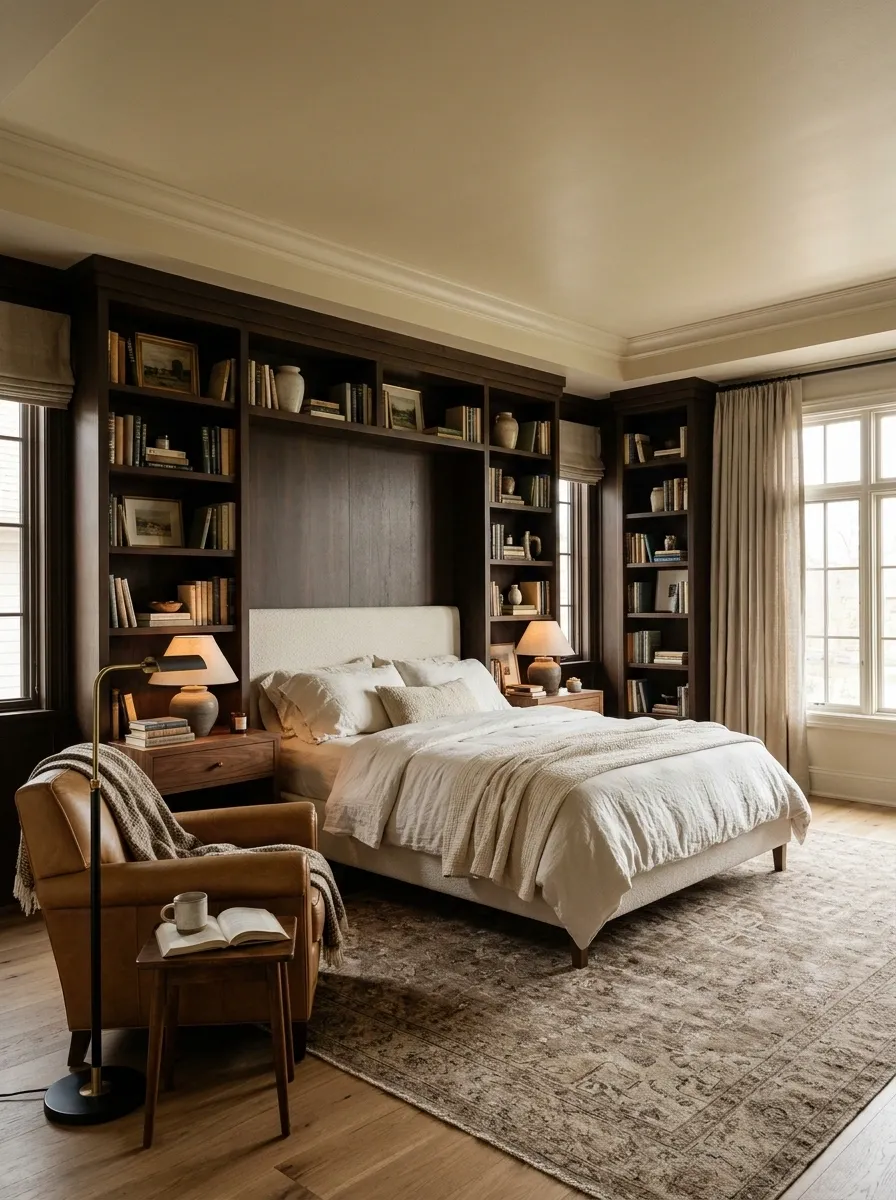
Chocolate built-in bookcases frame the sleeping area, while a lighter upholstered bed, walnut nightstands, a camel leather reading chair, and a floor lamp create two related zones.
Books and framed art supply character, while the lighter bed keeps the room from becoming one continuous dark wall.
The reading corner makes this design different from a conventional bedroom with a bookcase pushed against one wall. The chair, light, and small side table create a distinct place to sit without interrupting the sleeping area’s layout.
Leave enough clearance to walk around the bed and access the bookcases comfortably. Built-ins look impressive, but a beautiful room isn’t much use if reaching a book requires squeezing past furniture every night.
The detail worth copying: Use the same chocolate finish to connect the sleeping and reading areas, then differentiate them through furniture and lighting.
ART
BUILT-IN STORAGE
Making Chocolate Brown Work in a Real Bedroom
Chocolate brown doesn’t need a complete room makeover to make an impact. The most convincing designs start with one clear decision: a dark bed wall, a walnut frame, rich bedding, or a fully enveloping color scheme.
From there, the surrounding materials should support that direction. Warm ivory keeps dark rooms from feeling heavy, natural wood introduces grain and variation, and accent colors bring personality when they’re used with intention.
Before buying anything, look at the room as a whole. Consider daylight, wall color, furniture size, walking space, and the lighting you’ll use at night. Those details matter more than collecting a dozen accessories in slightly different shades of brown.
Save the designs that match the room’s architecture and the mood you’re after. A chocolate brown bedroom looks most convincing when the colors, materials, and furniture feel like they belong together, not when every trend has been invited to the same party.