
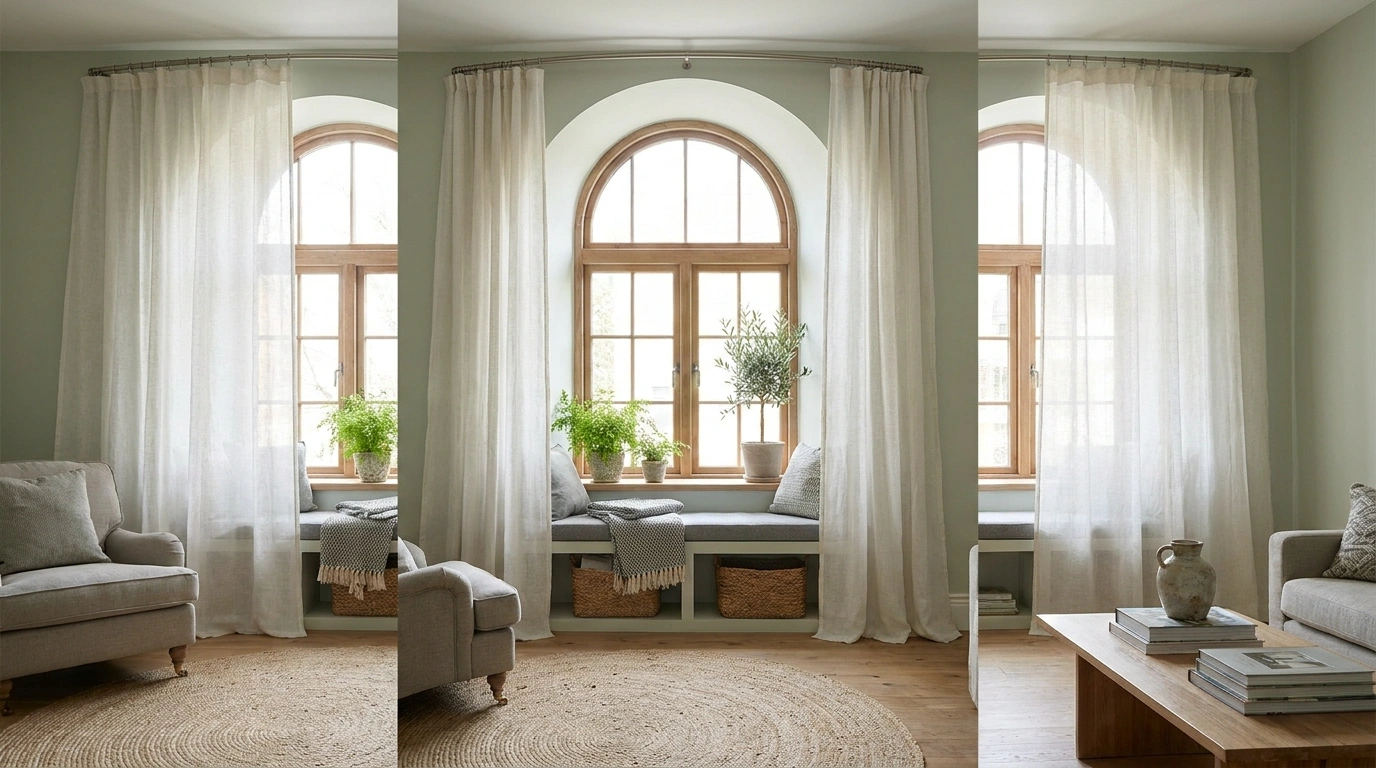
Somewhere between admiring an arched window and ordering curtains, people decide the curve needs to disappear behind a straight rectangle of fabric. The architectural feature becomes a rumor. An expensive one, usually.
An arch already gives a room a shape worth noticing. Decorating it is less about adding drama and more about deciding what the room actually needs: privacy, glare control, softness, darkness for sleep, or simply a better relationship between the window and the furniture underneath.
Those needs don’t all have the same solution. A high living-room arch can stay mostly exposed. A bedroom window facing the street needs more than an elegant gesture toward privacy. And a radiator below the sill is not going to relocate itself because the curtains look better pooled.
Work Out What the Covering Must Actually Do
Before choosing a heading style, check where views into the room occur, when glare arrives, and how dark you need the space to become. Also locate handles, vents, and any heat source.
A decorative panel and a functional blind are different purchases. Expecting one to impersonate the other is how a bedroom acquires lovely curtains and a permanent sunrise appointment.
Ways to Dress and Furnish an Arched Window
Full-Height Linen Curtains Above a Freestanding Arch
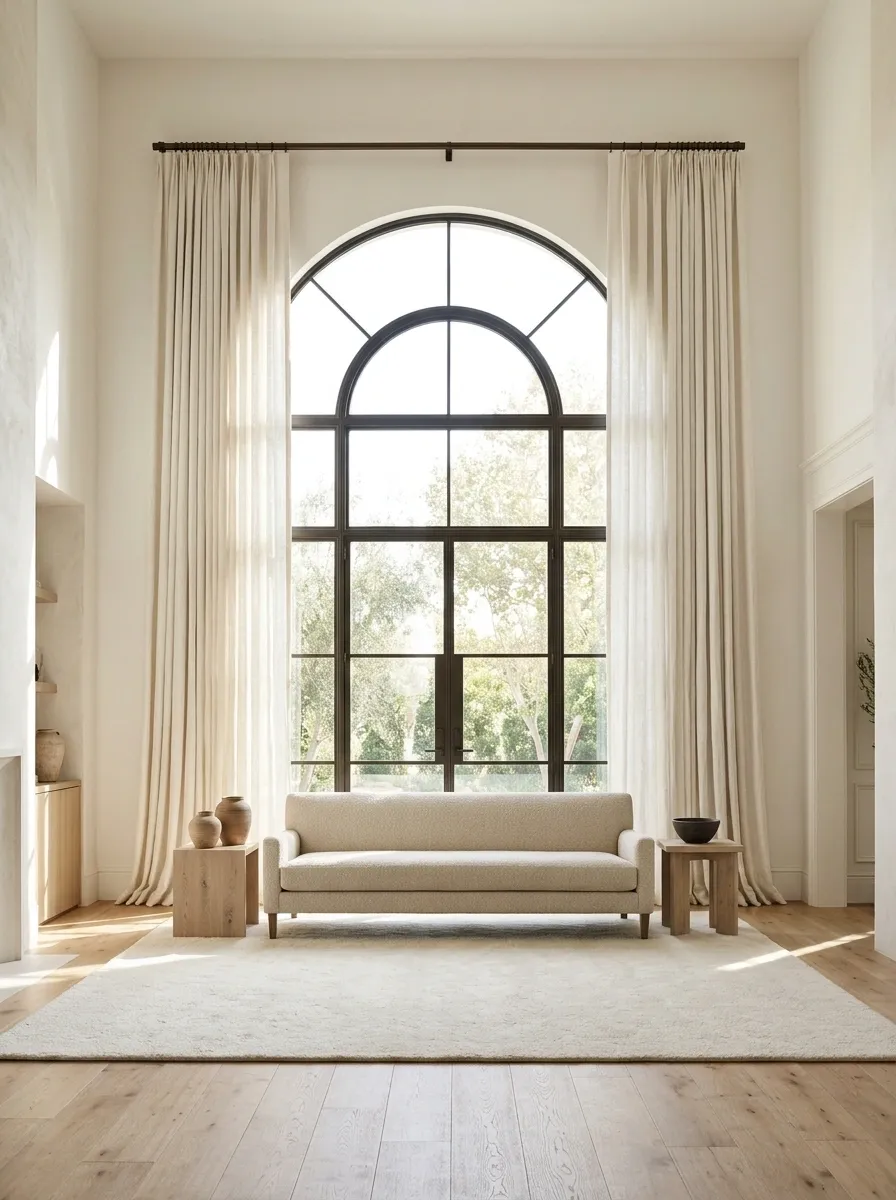
Mount a straight curtain pole above the arch, wide enough for linen panels to gather beyond the main glazing. Pair the window with a low sofa, a pale rug, and simple side tables so the curve remains visible through the room rather than trapped behind furniture.
The higher pole makes the whole opening feel part of a generous wall. It also requires enough wall and fixing support above the arch. Keep the curtains off nearby heat sources and operating hardware. Full height should look considered, not like fabric has escaped down the wall.
Measure the fabric stack: gathered curtains need wall space beyond the glass.
Roman Blind Below the Curve in a Breakfast Nook
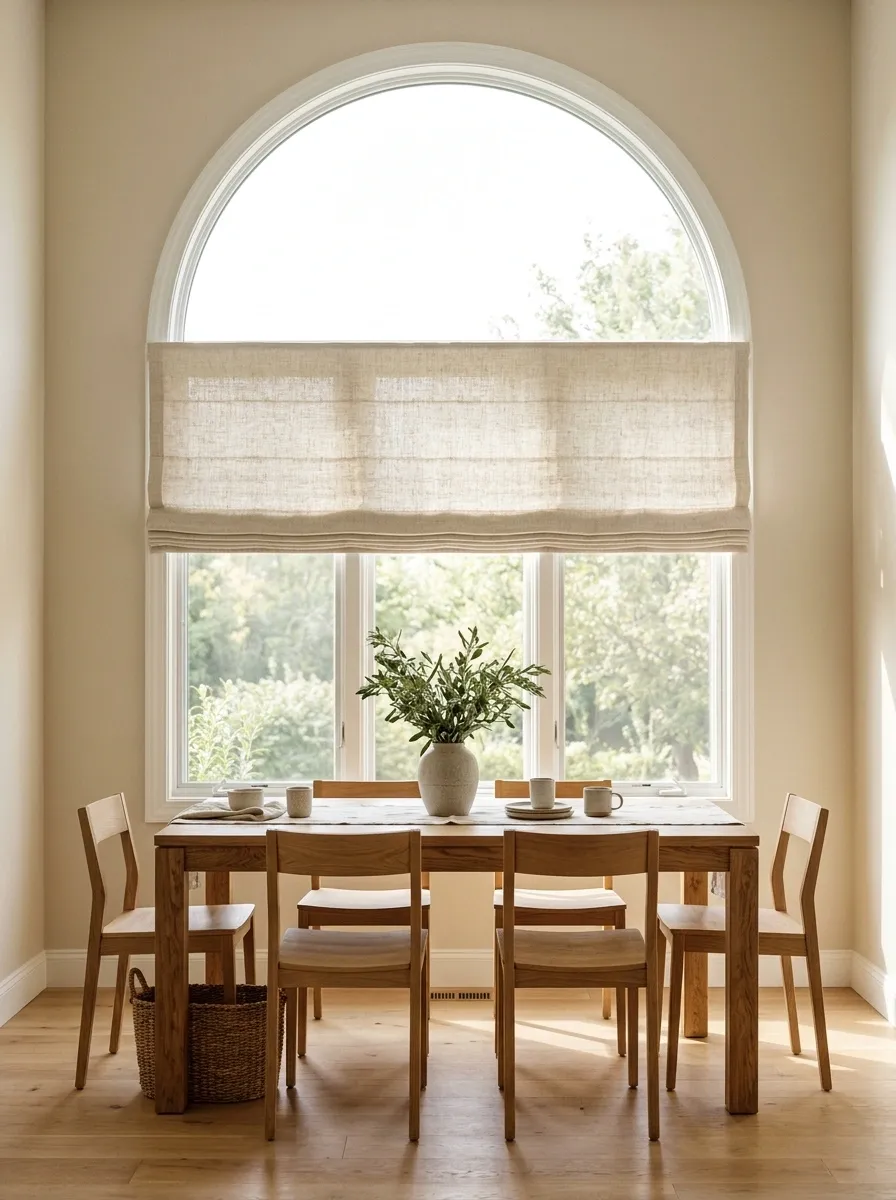
Fit a Roman blind across the straight lower portion, leaving the curved top uncovered. A timber table, simple chairs, and a warm wall color give the breakfast nook enough substance without crowding the opening.
This approach separates glare control at table height from daylight above. It won’t provide darkness across the whole window, which is fine for many eating spaces. Choose fabric that suits the kitchen’s maintenance demands and position the blind clear of handles. The uncovered arch gets to be an architectural feature instead of a complicated custom blind order.
Shaped Shutters in a Street-Facing Living Room
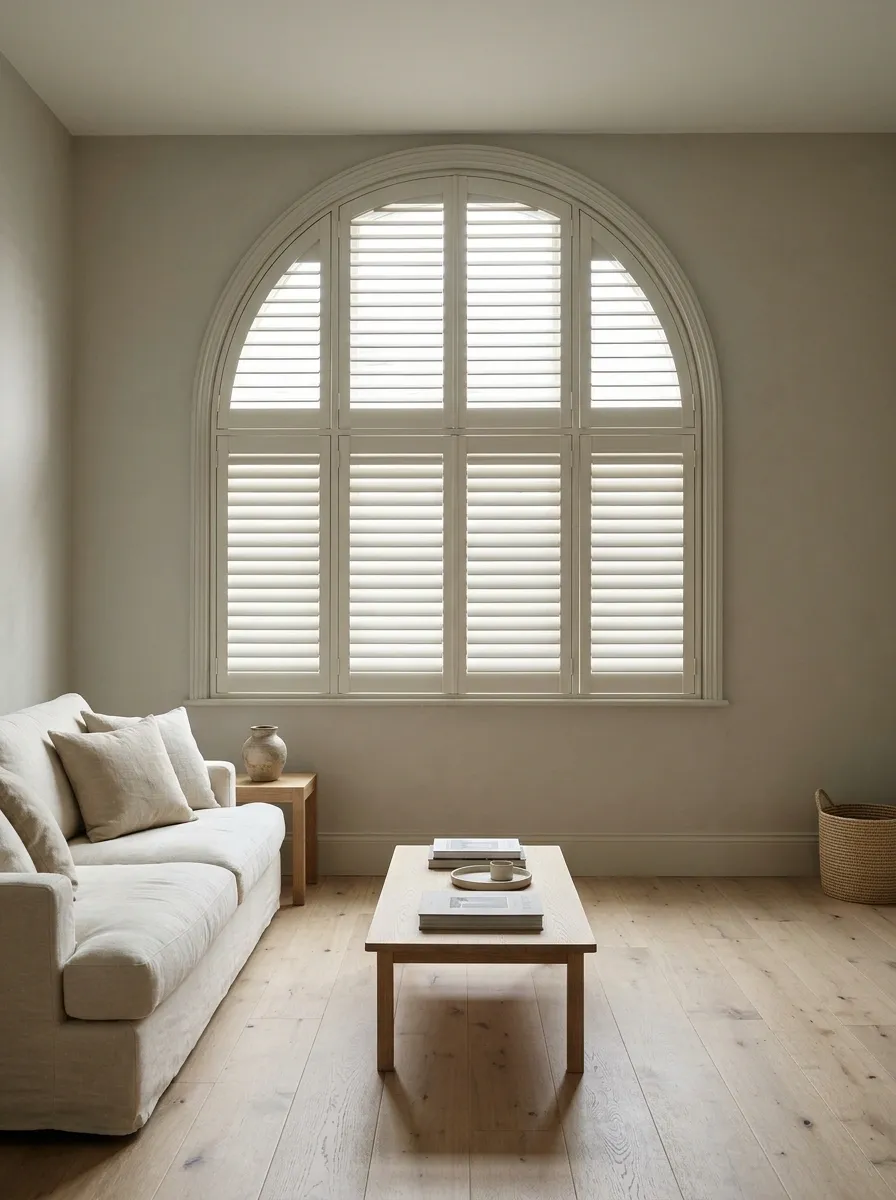
Custom-shaped shutters follow the arch, with lower sections arranged for privacy and upper sections admitting light as the system allows. Keep the surrounding living room quiet: a comfortable sofa, plain walls, and timber accents are enough.
The shutters need to suit the exact opening and its operation. Check how they fold, where panels park, and whether the arrangement obstructs ventilation or required access. A beautifully shaped shutter that stops the window opening is a remarkably polished inconvenience. Let the joinery supply the detail rather than adding a second ornate frame around it.
Confirm panel travel, handle access, ventilation, and the remaining view before approving the shape.
Bare Arch Above a Built-In Reading Seat
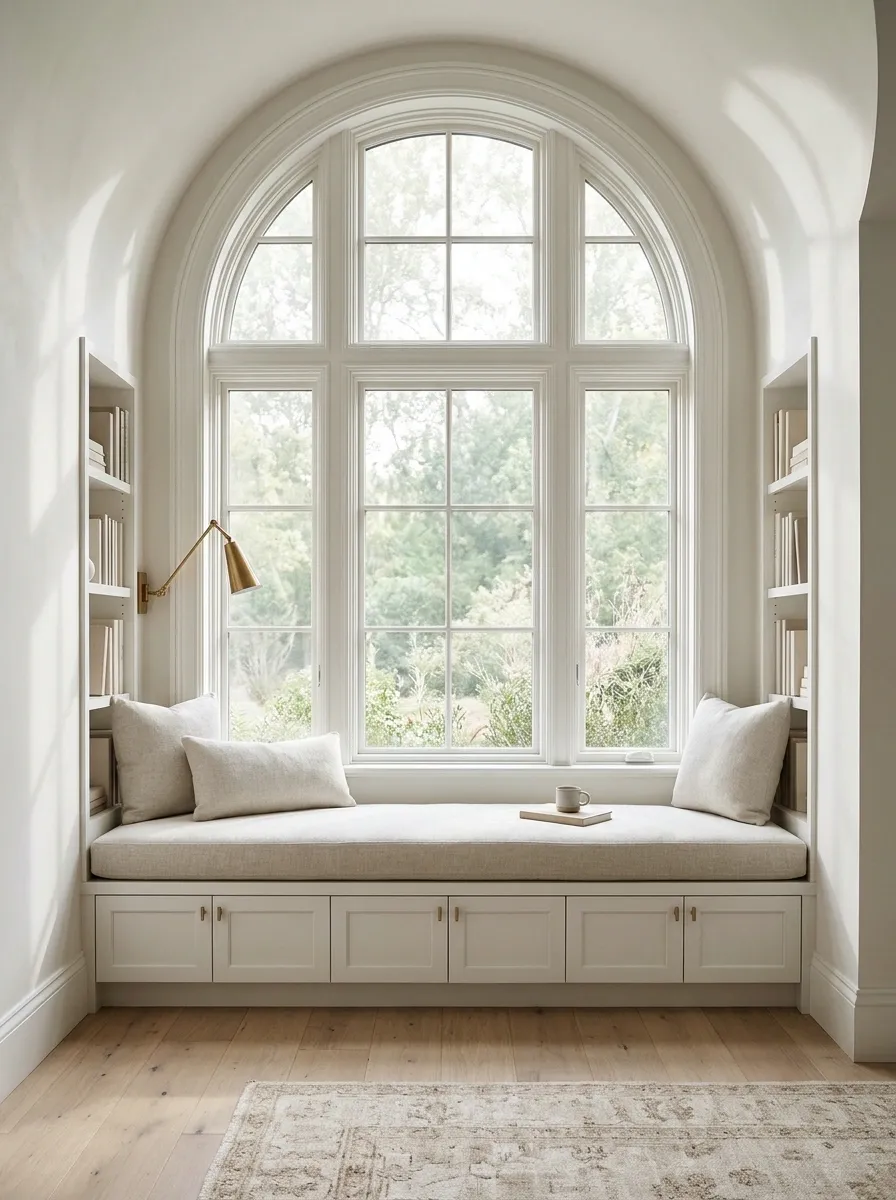
Leave the arch largely uncovered where privacy and glare allow, and build the setting around a comfortable window seat. Low shelves, plain cushions, and a reachable reading light give the corner a reason to exist beyond admiring the joinery.
The seat needs real depth and back support, not a cushion precariously balanced on a sill. Preserve window operation and any required escape access, and consider safety where children use the space. Keep the upholstery quiet. The window already has a curve; it doesn’t need a supporting cast of scallops and novelty cushions.
Back support, foot position, reading light, window access. Then choose the cushion fabric.
Wall-Colored Drapes Around a Bedroom Arch
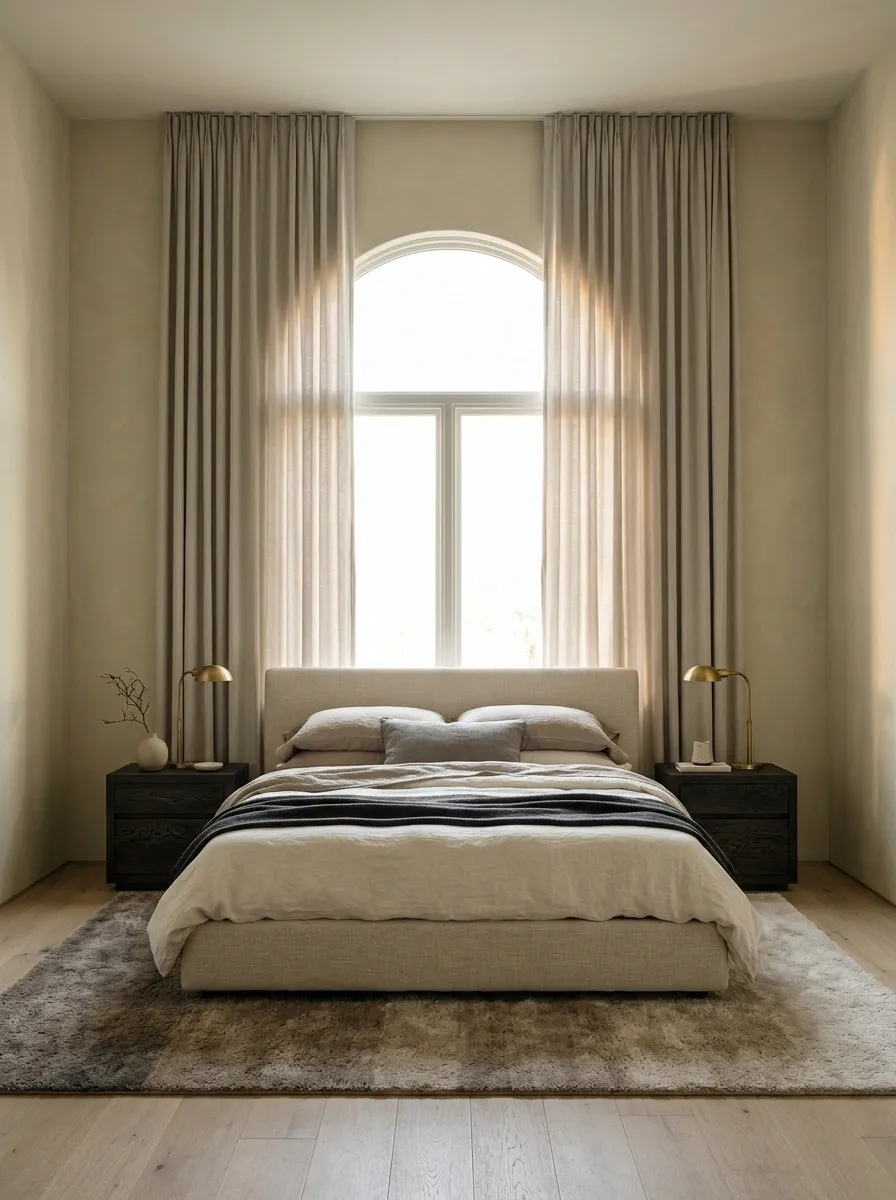
Choose curtains close to the wall color and mount them above the full opening. A simple upholstered bed and dark bedside tables keep the bedroom grounded, while the curtains form a quiet envelope when closed.
Use lining and installation appropriate to the level of darkness you want. Matching the wall color reduces visual interruption; it does not magically close light gaps. Check the top and side edges as well as the fabric itself. A bedroom shouldn’t require you to develop a philosophical acceptance of daylight because the curtain sample felt luxurious.
Wall-matched fabric softens the perimeter.
Lining and edge coverage determine the light control.
Dark-Painted Arch With Pale Walls and a Low Console
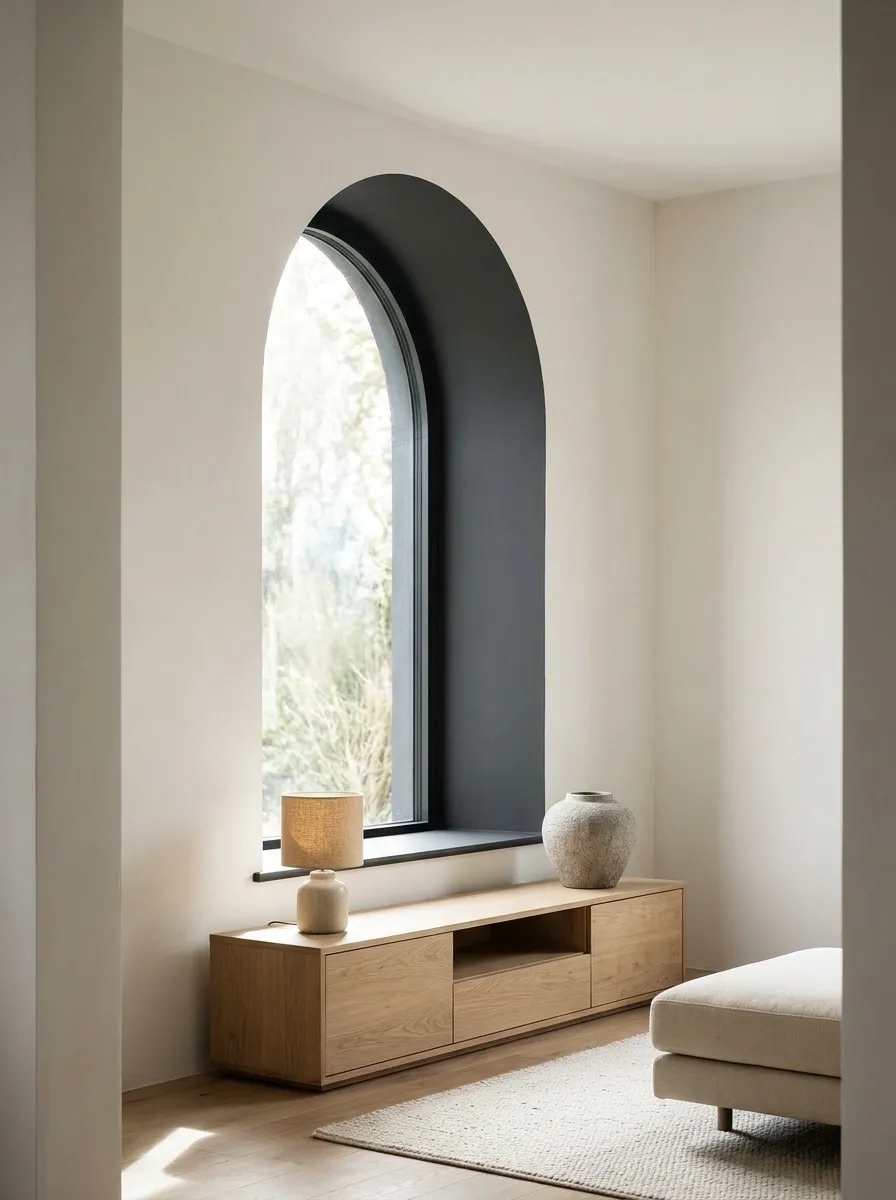
Paint suitable interior frame surfaces a deep brown or charcoal, keeping the walls pale and the console below the sill. A restrained table lamp and one substantial object give the console a purpose without climbing into the glazing.
The dark frame makes the curve clear, so extra decorative trim usually adds little. Check the frame material and finish requirements before painting, and leave seals and operating parts clear. A low console should help the window remain visible from across the room. If the lamp blocks most of the arch, choose a smaller lamp, not a larger justification.
Check the console and lamp from the room entrance, not just while standing beside them.
Café Curtain Across a Kitchen Arch
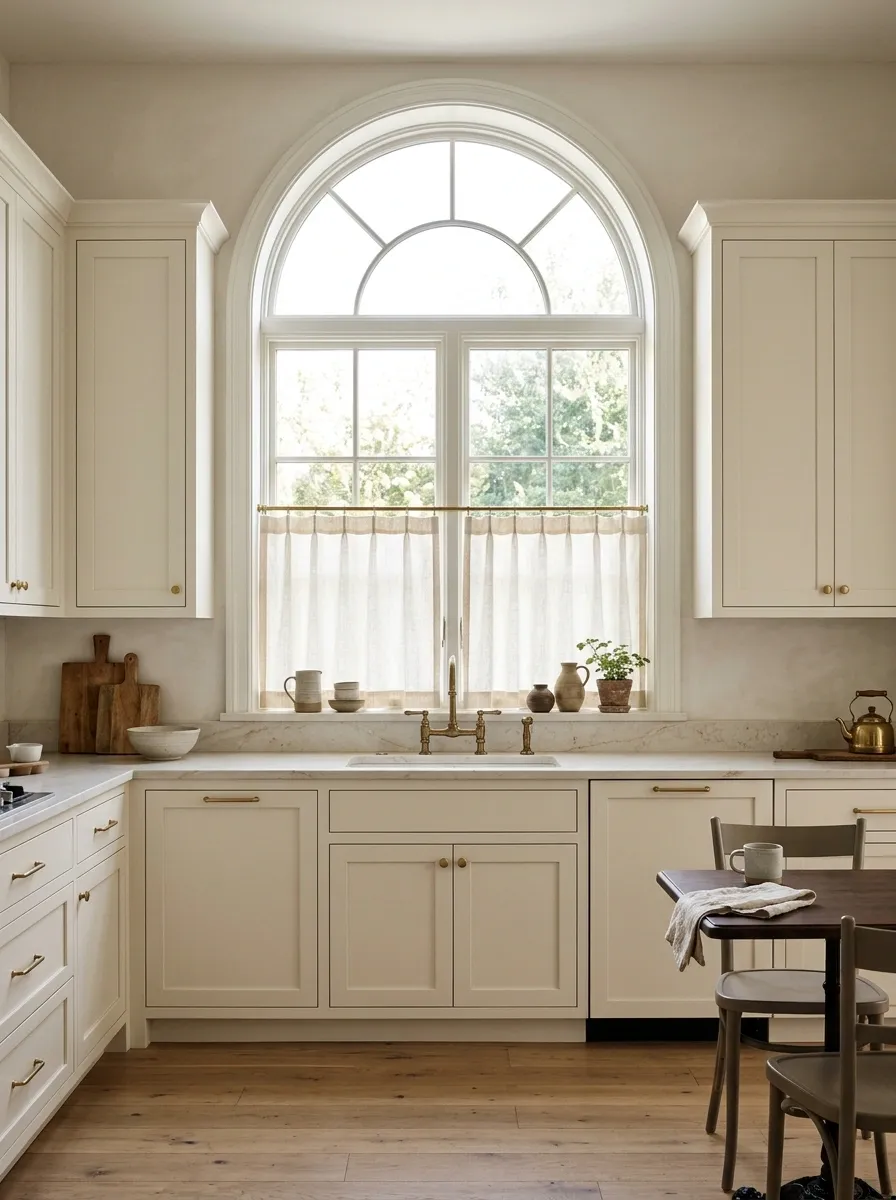
A simple café curtain covers the lower kitchen glazing while leaving the arch open. Pair it with plain cabinet fronts, a clear sill, and a small breakfast table so the fabric feels domestic without turning the kitchen into a lace museum.
Choose a suitable washable textile and keep it away from cooking hazards and direct splashing. Privacy depends on the view angle, especially from nearby upper levels. Check it after dark too. The upper curve may be lovely, but it is still transparent; architecture has never been particularly interested in keeping your washing-up routine confidential.
Will a lower curtain provide enough privacy?
Check street level, neighboring upper windows, and nighttime interior lighting. The uncovered arch remains a sightline.
Twin Arched Windows With a Shared Curtain Pole
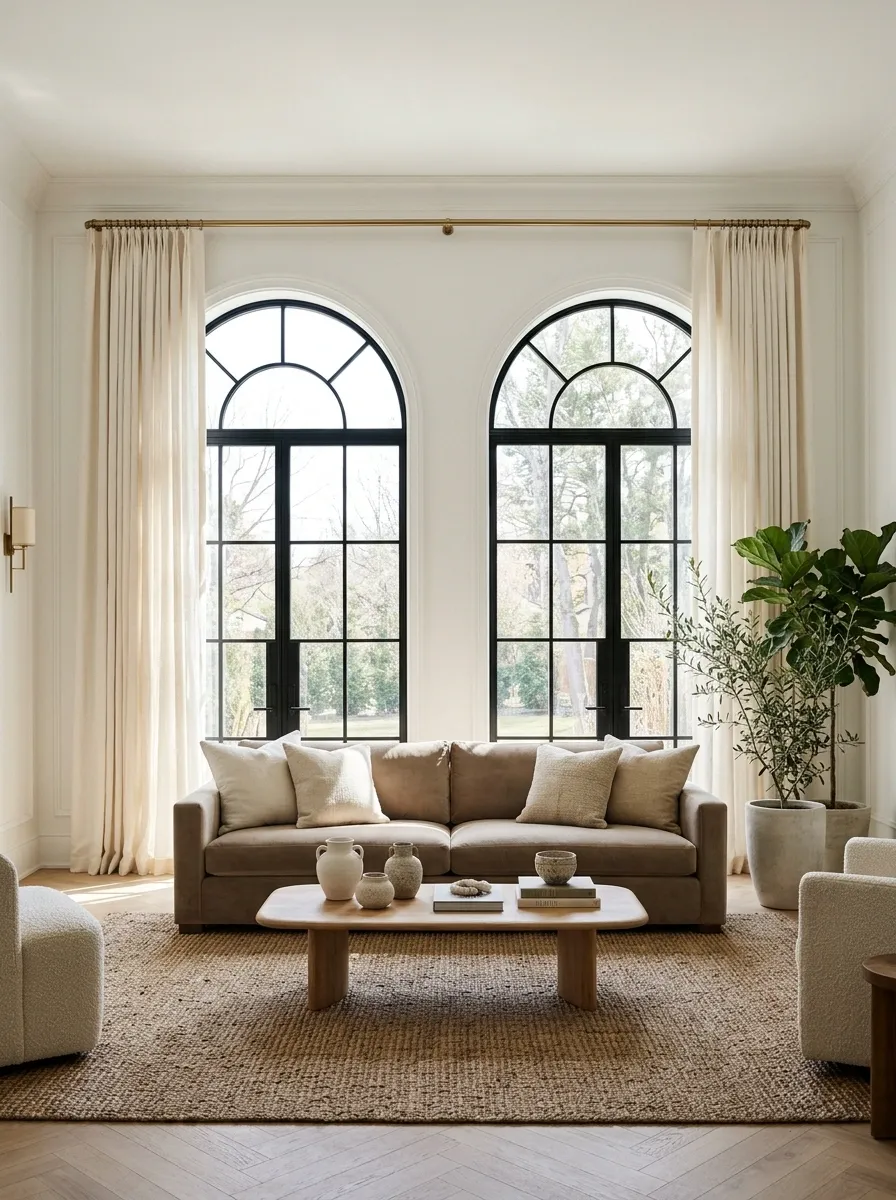
Use one continuous pole above paired arches, with panels arranged to frame both openings as a group. A broad sofa or centered dining table gives the room a shared axis, while plain walls keep the repeated curves readable.
The space between windows matters. Don’t force a fabric stack into a narrow pier if it blocks glass or looks pinched. Consider panels at the outer edges, with any central fabric chosen for an actual function. Treat the pair as related architecture rather than two independent windows each demanding a complete curtain wardrobe.
Review the center pier before deciding where panels gather.
Arched Bathroom Window With Purpose-Made Privacy Glazing
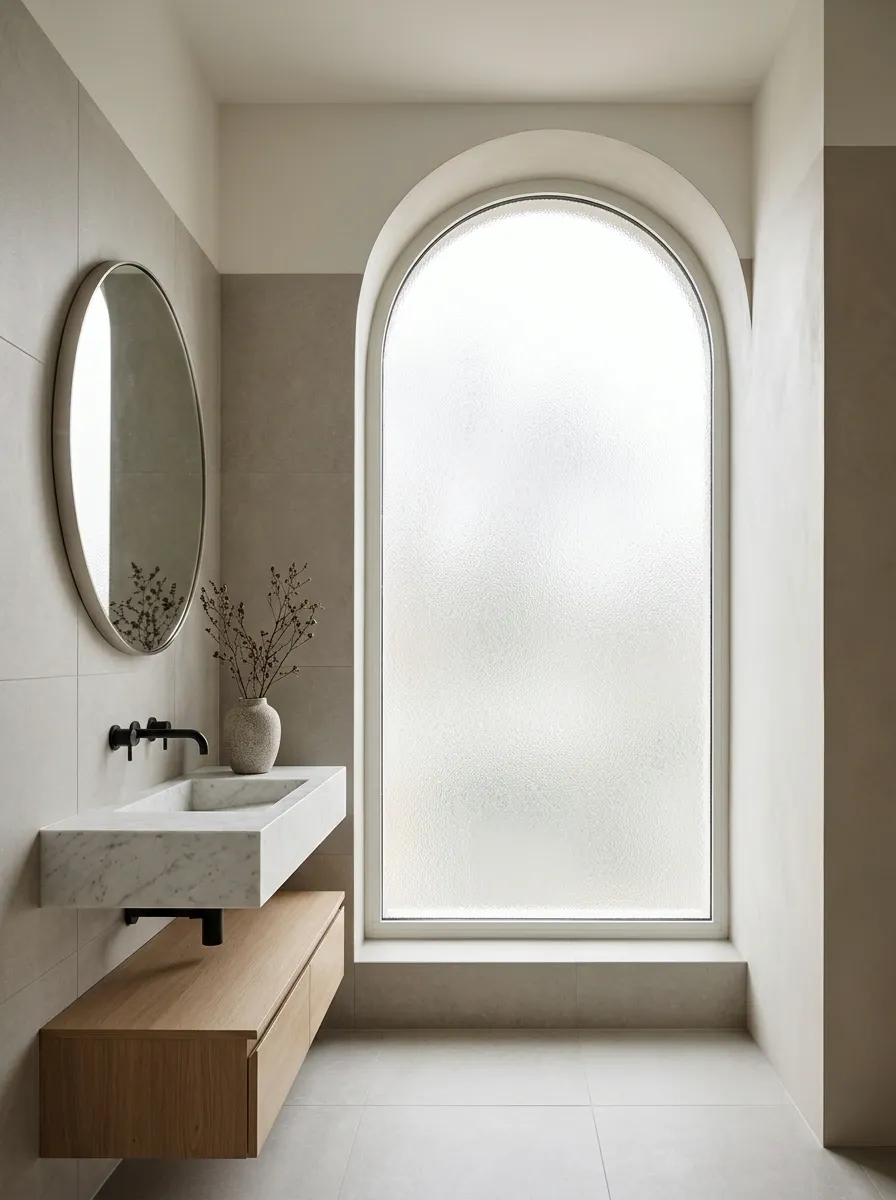
Let a bathroom arch remain visible by resolving privacy at the glazing, using a suitable product for the window and setting. A plain basin, simple tile, and restrained mirror keep the room focused on the architecture rather than layers of window fabric.
Specify the privacy solution around actual exposure and window requirements. A decorative film or textured surface may still show silhouettes, and compatibility varies with glazing. Check the view under nighttime lighting before assuming the job is done. Keeping fabric out of a damp corner is useful; leaving privacy to wishful thinking is less useful.
View the lit bathroom from relevant outside positions, while preserving safe access and respecting neighboring property.
Soft Sheers Around a Garden-Facing Dining Arch
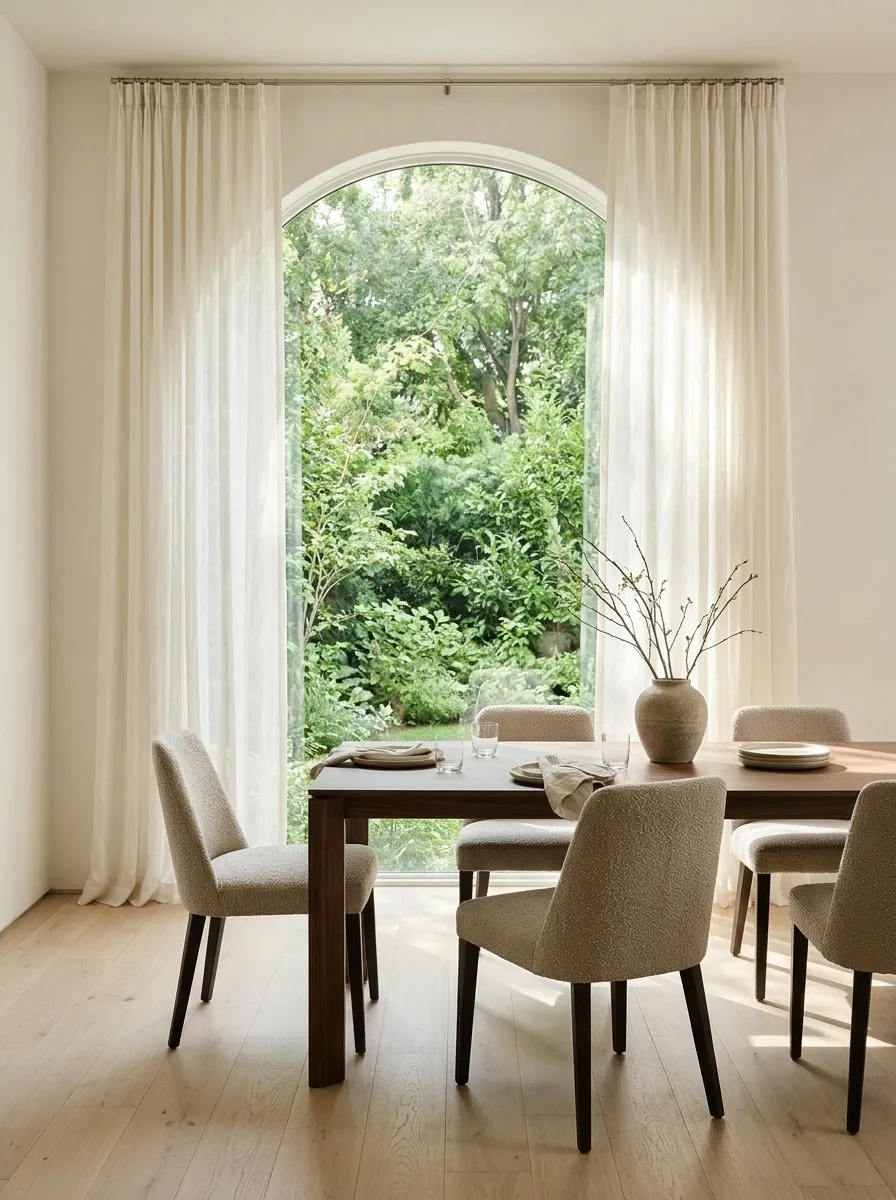
Light sheers soften a garden-facing arch, with a simple dining table and upholstered chairs taking the foreground. Keep the fabric gathered beyond the useful view and choose plain finishes around the window so the garden remains part of the room.
Sheers are for softness and filtered light here, not guaranteed privacy or darkness. Let the table position determine how much fabric can occupy the corners without catching chair backs. Heavy pooling beside a busy dining seat is a glamorous way to create a cleaning problem. A neat hem usually has a more promising future.
Pull the chairs out.
Curtain clearance needs to work during dinner, not only when every chair is pushed under the table.
Shallow Arched Recess With an Inside-Mounted Lower Blind
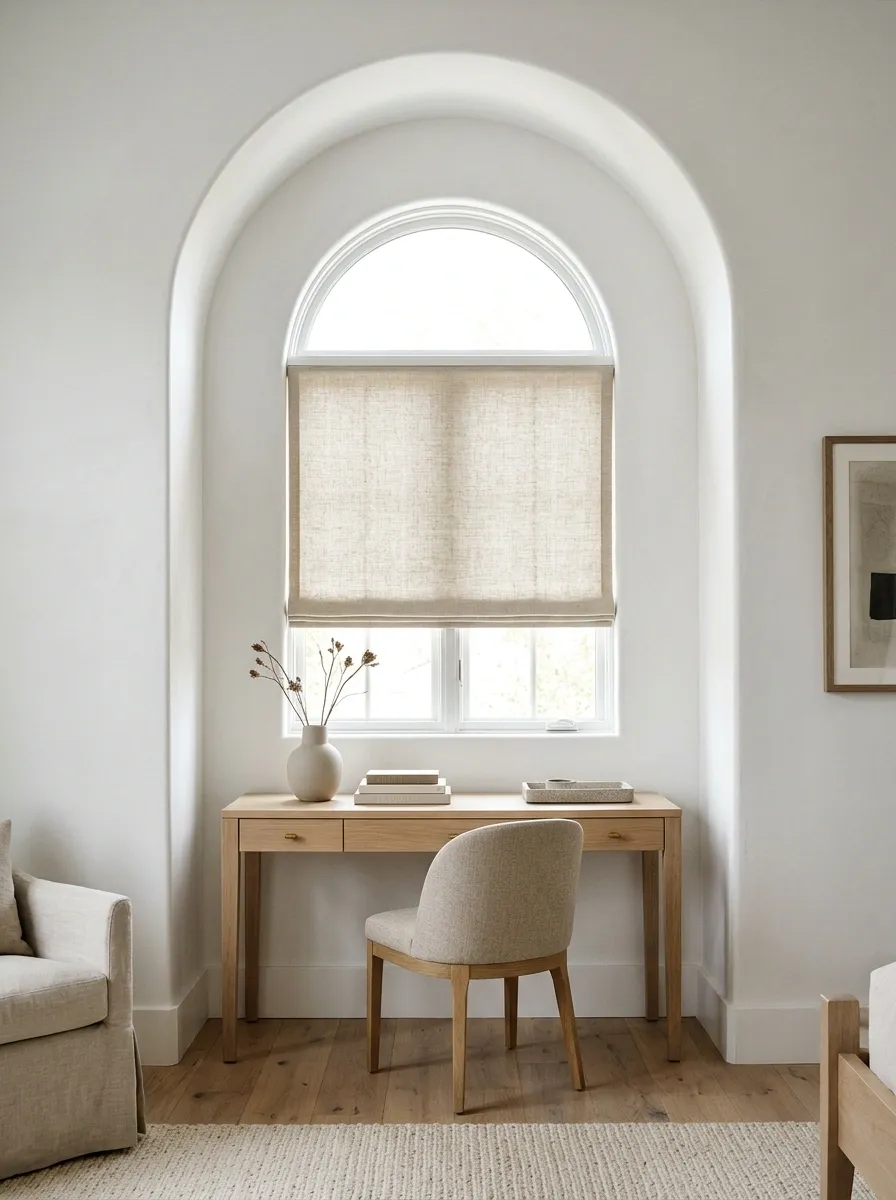
Keep a shallow recess crisp with a blind fitted to the straight section, leaving the curved plaster edge exposed. A narrow desk or console below works better than deep cabinetry that crowds the wall. Use a simple finish so the recess reads clearly.
Confirm there’s enough depth for the chosen blind and its hardware before ordering. Handles can occupy the very space the neat product diagram pretends is empty. If the recess can’t accommodate the fitting, choose another mounting position. The best window treatment is one that opens without a small mechanical argument.
Recess depth minus handles and operating clearance determines the usable fitting space.
Deep Arch With a Planting Ledge and Plain Side Panels
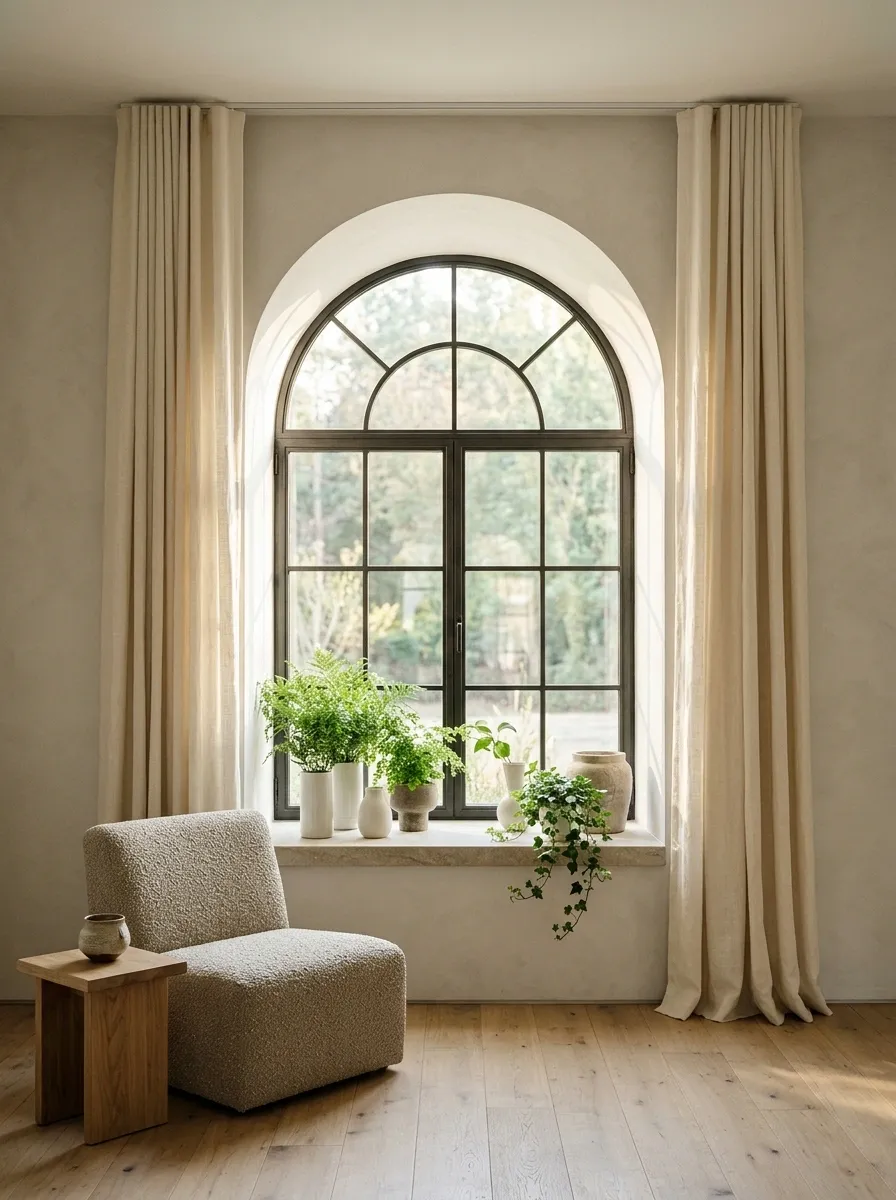
Use a deep sill for a restrained group of plants, with plain side curtains framing the opening. A low chair and small table create a proper sitting area nearby, while the rest of the wall stays uncluttered.
Choose plants for the actual light and protect the sill from watering damage. Keep enough space to reach window handles without dismantling a small botanical exhibition. The plants should emphasize the depth of the recess, not hide its curve. Group them to one side if a full row makes every maintenance task feel like stage management.
Leave a clear hand route to the handles and a safe way to water without dripping onto curtains.
Tall Stairwell Arch With an Uncovered Upper Curve
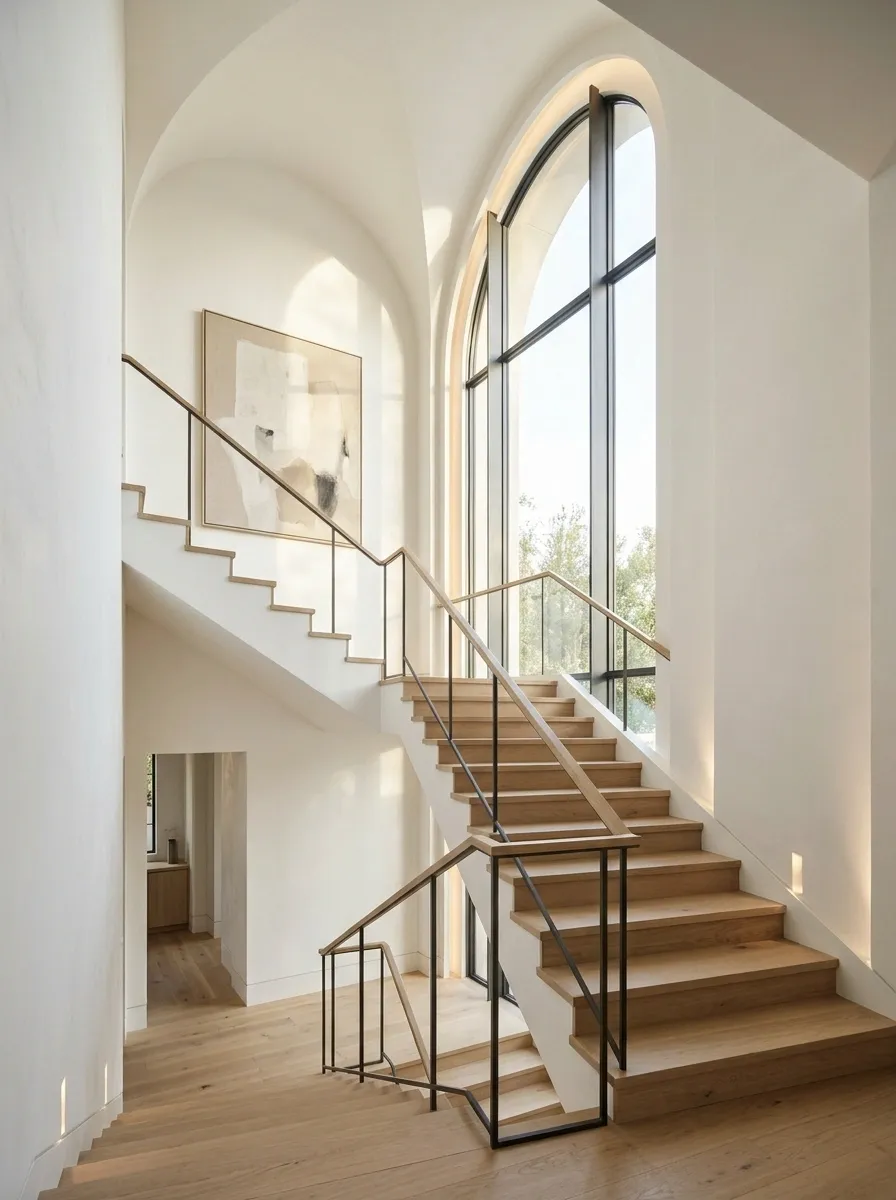
A stairwell arch can stay mostly uncovered where privacy permits, with simple wall color and restrained lighting drawing attention to its height. Keep nearby artwork below or beside the opening rather than filling every scrap of wall.
The decorating decision needs a maintenance plan. Choose any covering or operating system with access and safe use in mind; leaning over a stair void to adjust fabric is not an acceptable household ritual. Let the window’s vertical scale provide drama. The stairwell doesn’t need a hanging ornament attempting to compete with the architecture.
Resolve safe access for cleaning, operation, and replacement before choosing a hard-to-reach treatment.
Arched French Doors With Wide-Gathering Curtains
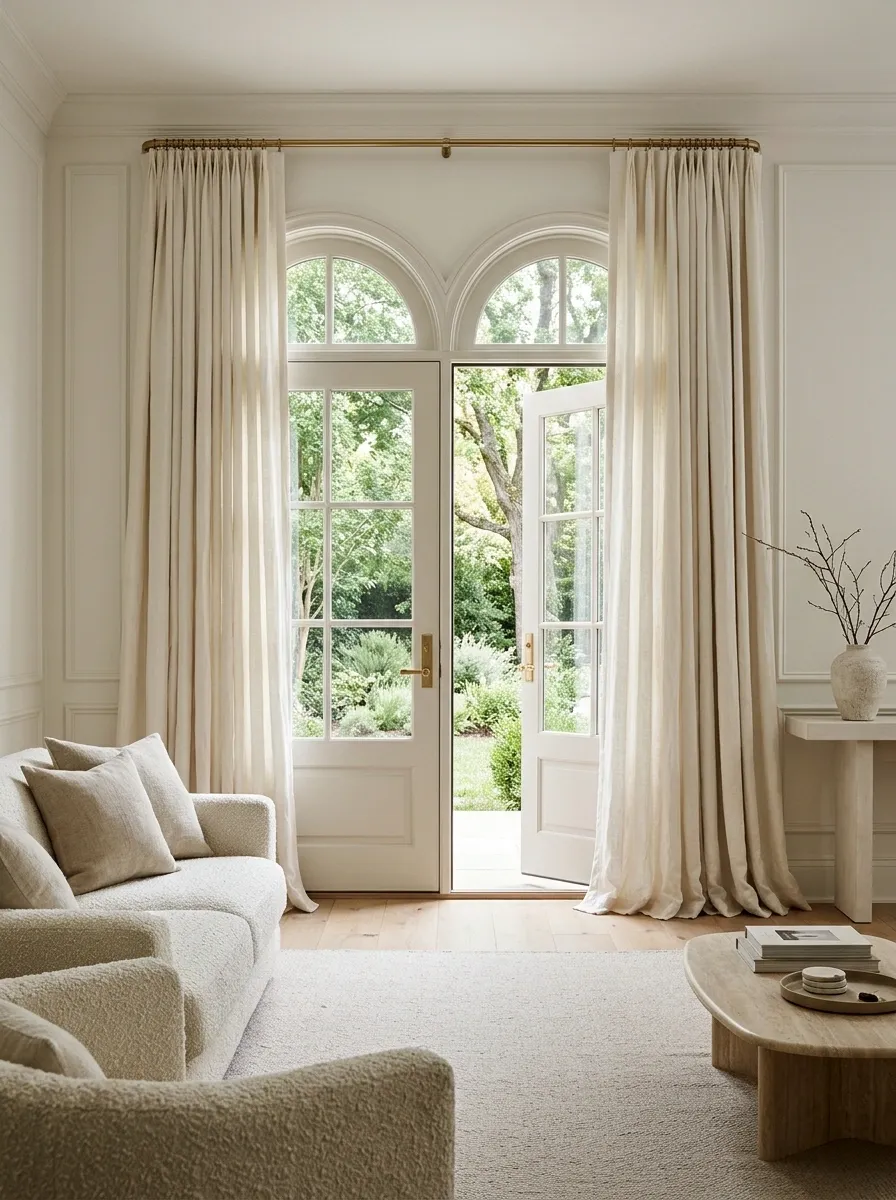
Frame arched French doors with curtains that gather clear of both the glazing and the door leaves. A simple rug and low seating make the opening feel connected to the room, while the curtains provide softness along the solid wall sections.
Plot the doors fully open before deciding where fabric belongs. Handles, hinges, and floor-level movement all affect the usable curtain position. Keep the hem neat and avoid placing a chair in the gathering zone. A garden door should lead to the garden, rather than to a brief wrestling match with several meters of linen.
Mark leaf and handle travel.
Mark the gathered fabric separately.
Arched Bay With Separate Treatments for Each Opening
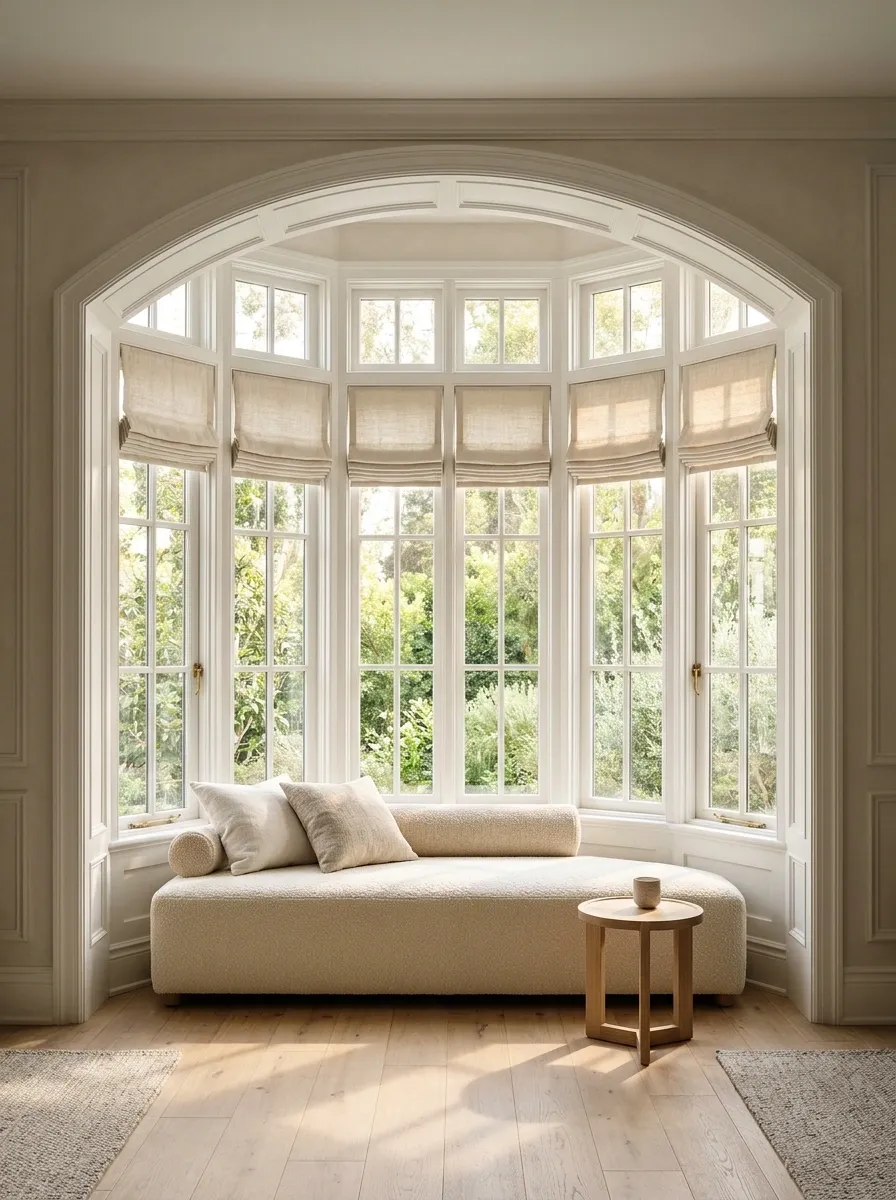
Give each window within an arched bay its own suitable blind or panel arrangement, with a small table or curved seat occupying the bay only where movement allows. Repeat fabric across the openings so the architecture feels connected.
A bay is several angles pretending to be one straightforward curtain job. Measure every opening and check how adjacent treatments meet when raised or gathered. Avoid cramming a heavy panel into each corner. The shared fabric can supply continuity while the fittings respond individually to the window geometry. Practical consistency matters more than forcing identical hardware where it doesn’t fit.
Repeat the fabric. Respect the angles.
Measure each bay opening independently and test neighboring hardware in its open position.
Tonal Painted Arch Above a Plain Window Seat
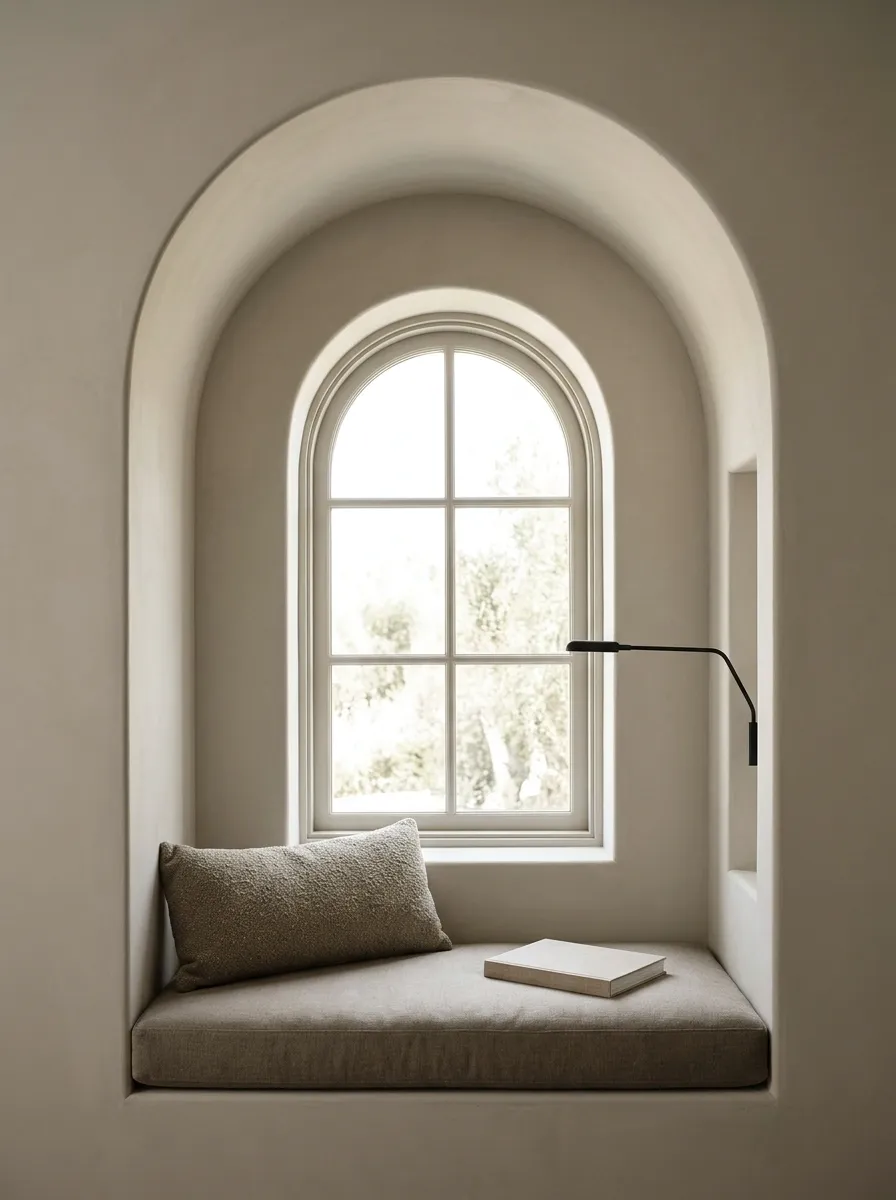
Paint the frame and surrounding recess in a tone close to the wall, then use a plain upholstered seat beneath it. A small reading lamp and simple cushion introduce enough texture without interrupting the curve.
Tonal paint is useful when the arch is already prominent and the room needs calm. It reduces contrast rather than erasing the shape. Choose paint suitable for each surface and preserve working parts. The seat fabric can carry a slightly deeper version of the same color, giving the corner an identity without adding another pattern for everyone to negotiate.
Wall, frame, and seat can share a color family while differing in tone and texture.
Decorative Glass Arch With a Restrained Lower Shade
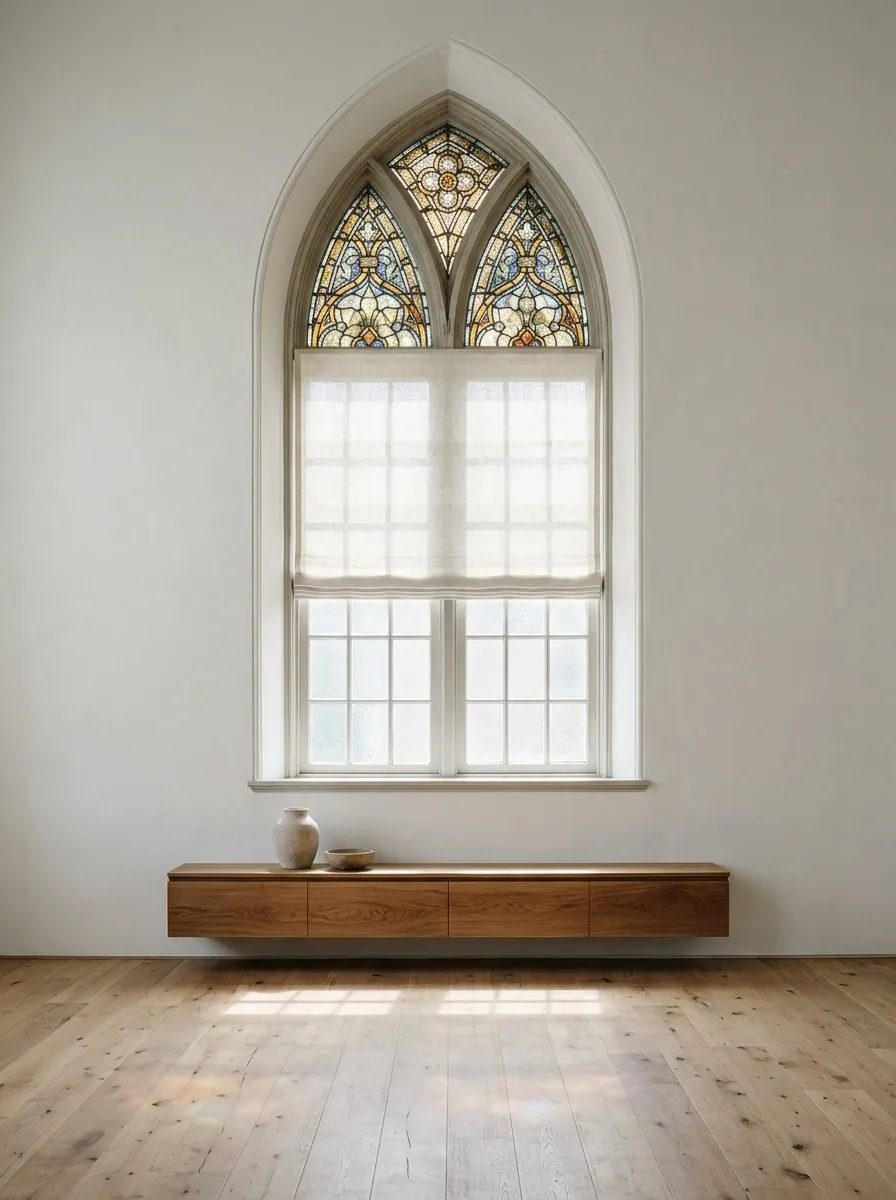
Where an arch contains decorative glass worth preserving, keep the curved section exposed and place a simple shade below it if needed. Plain walls, low furniture, and limited nearby artwork give the glass enough space to register.
Avoid competing with the glass through another busy window fabric. Check its condition and seek appropriate advice before altering older glazing or its supports. The lower covering should solve the practical issue, not attempt to improve the artwork above. Sometimes the most useful decorating decision is resisting the urge to add your own enthusiastic contribution.
Review glass condition, fixing positions, and shade travel without drilling into decorative elements.
Simple Valance Above an Arch in a Traditional Bedroom
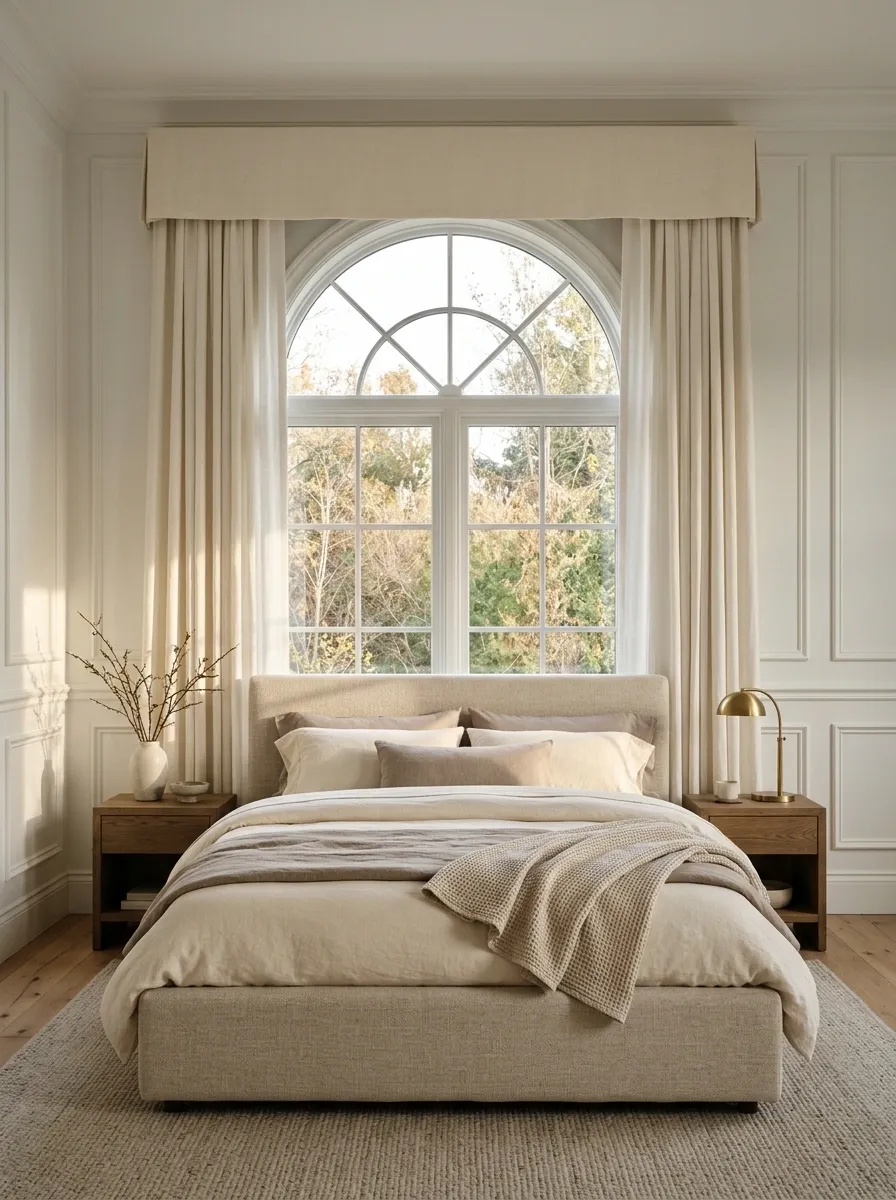
A restrained valance can conceal the curtain hardware above an arched opening, with plain side panels and an upholstered bed completing a traditional room. Keep the fabric quiet enough that the arch remains apparent when the curtains open.
The valance should sit high enough to avoid slicing through the curve. Too much depth turns it into a lid on the window. Use its structure to tidy the installation, not to introduce a second architectural spectacle. If the bed already has a patterned headboard, a plain valance will usually have better manners than another large print.
Check the lower edge: the valance should clear the arch’s highest point rather than bisect it.
Arch Above a Desk With a Separate Glare-Control Layer
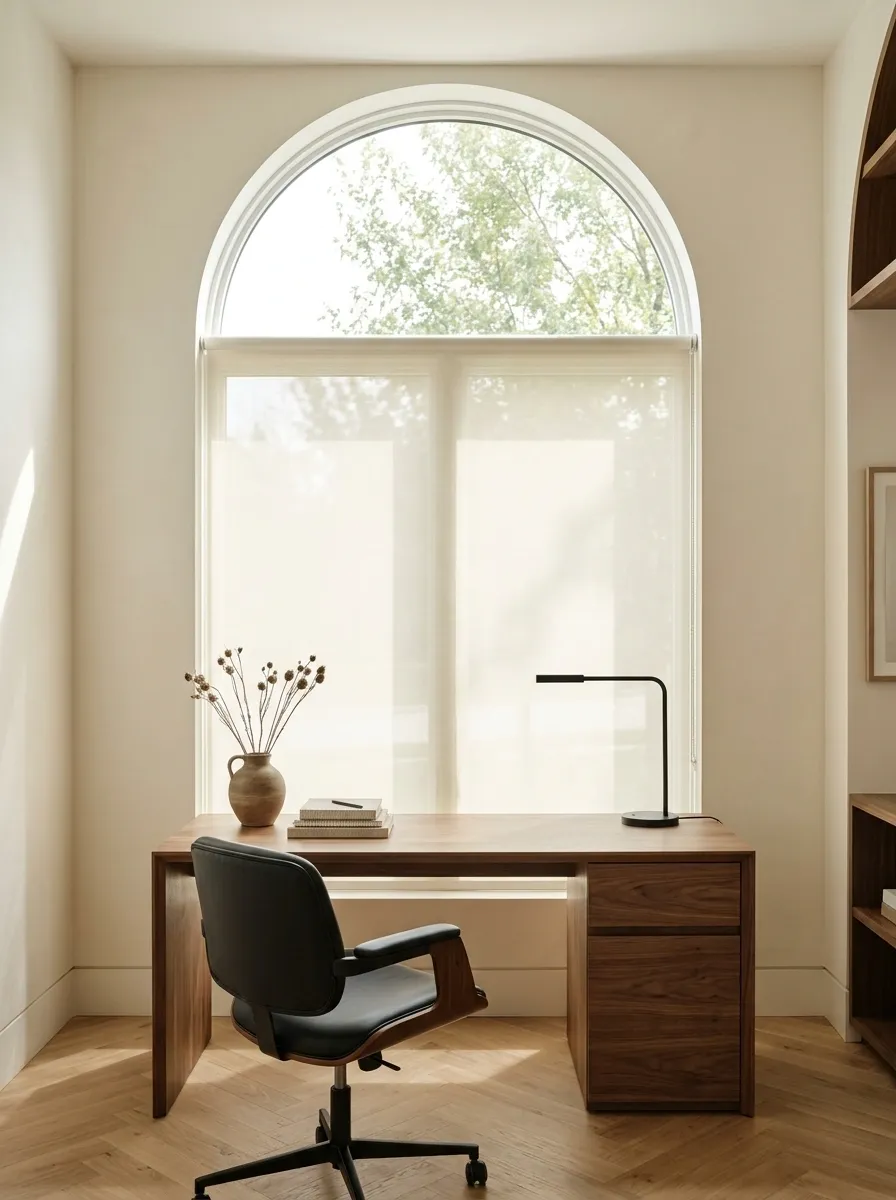
Place a desk beneath or near an arch, then specify a covering for the light that actually reaches the screen. Keep the upper curve visible where possible, with a simple task lamp and closed desk storage preventing the window wall from becoming busy.
Face the desk according to glare, access, and working comfort rather than symmetry alone. A centered desk can be a terrible work position if the screen spends the day reflecting the sky. Use an adjustable lower blind where suitable and leave enough room to operate it without climbing over the monitor.
Place the screen temporarily and check reflections when you’ll actually use the desk.
Curved Curtain Track Following a Generous Arch
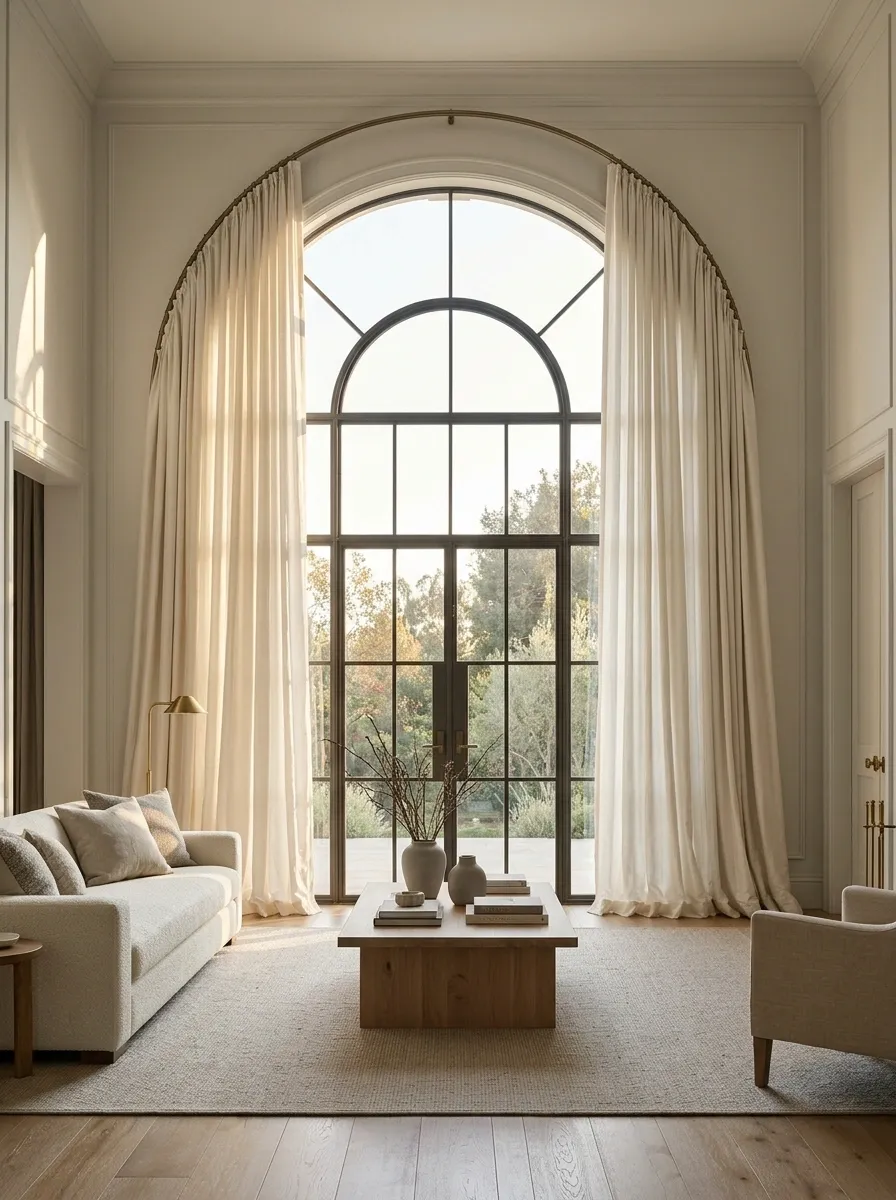
A purpose-made curved track can follow a generous arch, giving a tall opening a continuous fabric outline. Keep surrounding furniture simple and allow enough wall space for the chosen curtain arrangement to operate without bunching awkwardly.
This is a specialist fitting decision rather than a pole bent optimistically on a weekend. Confirm how the treatment opens, where fabric gathers, and what access remains to the window. The curve should look convincing both open and closed. A clever installation that works only in its favorite position is less clever than the invoice suggests.
Ask the fitter to explain the operating sequence.
Where do the curtains gather? Can the window open fully? Can you reach the controls comfortably?
Arched Window With Interior Drapes Behind a Pelmet Wall
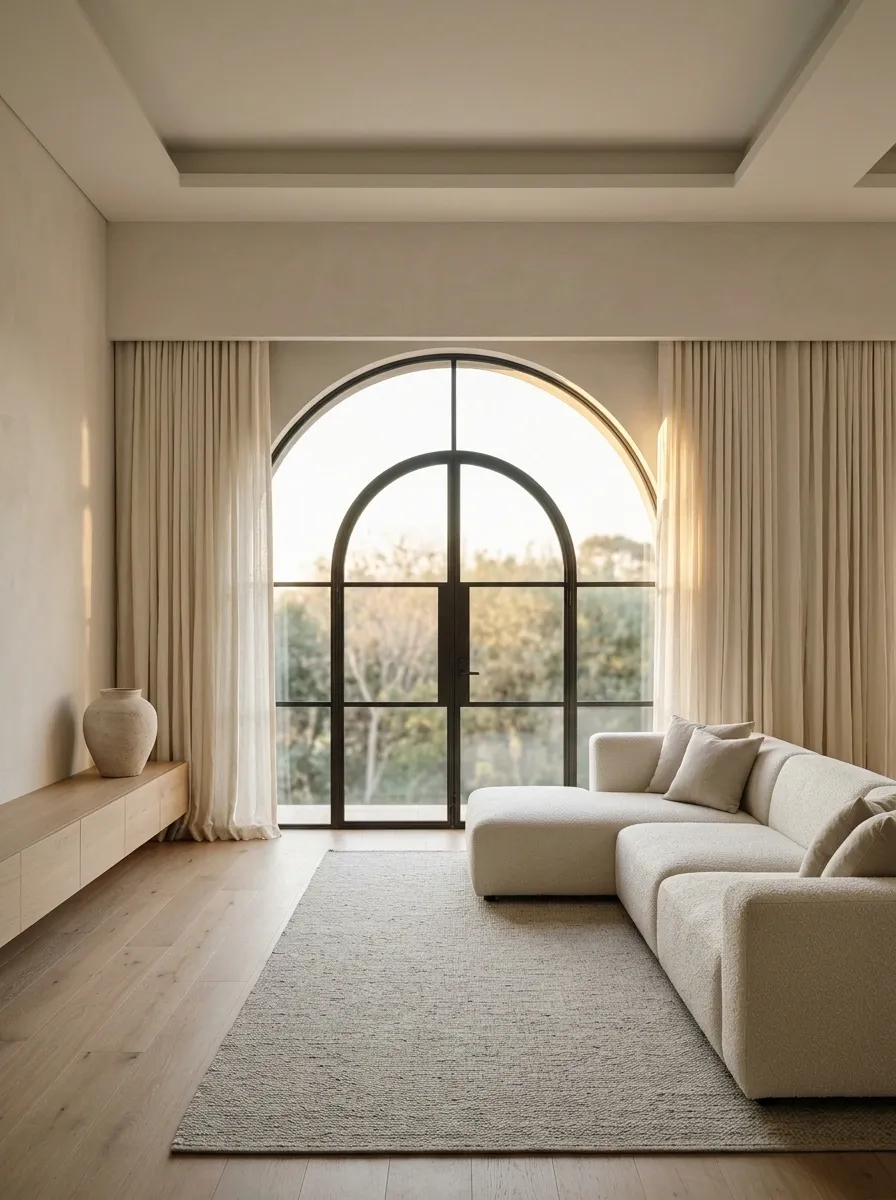
In a room being renovated, a carefully planned pelmet zone can hide a straight track above the arch. Plain full-height curtains, a low sofa, and a restrained rug keep the room calm when closed and architectural when open.
Build the concealment around the actual track, fabric stack, and maintenance access. A slot too tight for the curtains is not minimalism; it’s a future repair appointment. Keep the surrounding ceiling detail simple so the hidden hardware remains genuinely discreet. This suits a coordinated renovation better than a last-minute decorative box stuck above an already crowded opening.
Leave room to operate, remove, and service the track and curtains.
Small Arch With a Single Side-Gathering Panel
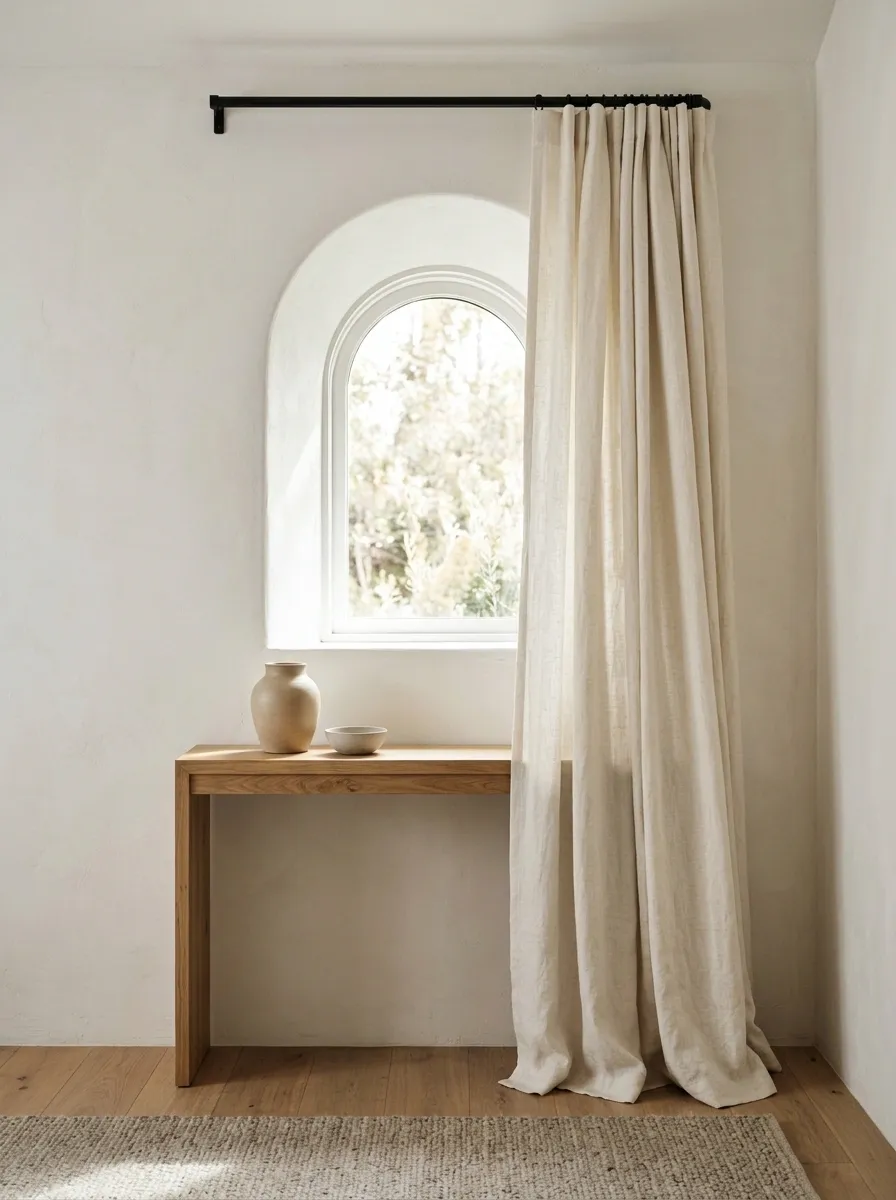
A small arch can use a single curtain panel gathered to the roomier side, paired with a narrow console or low chair below. Plain fabric and a simple pole prevent the small opening from being overwhelmed by symmetrical stacks it cannot accommodate.
The gathered side should be chosen around the wall, not a rule that windows must look perfectly balanced. Check the panel’s coverage when closed and its bulk when open. One well-placed curtain can be more convincing than two cramped ones, particularly when the window sits close to a corner. Symmetry is a tool, not a landlord.
High Arch Above a Door With Plain Lower Curtains
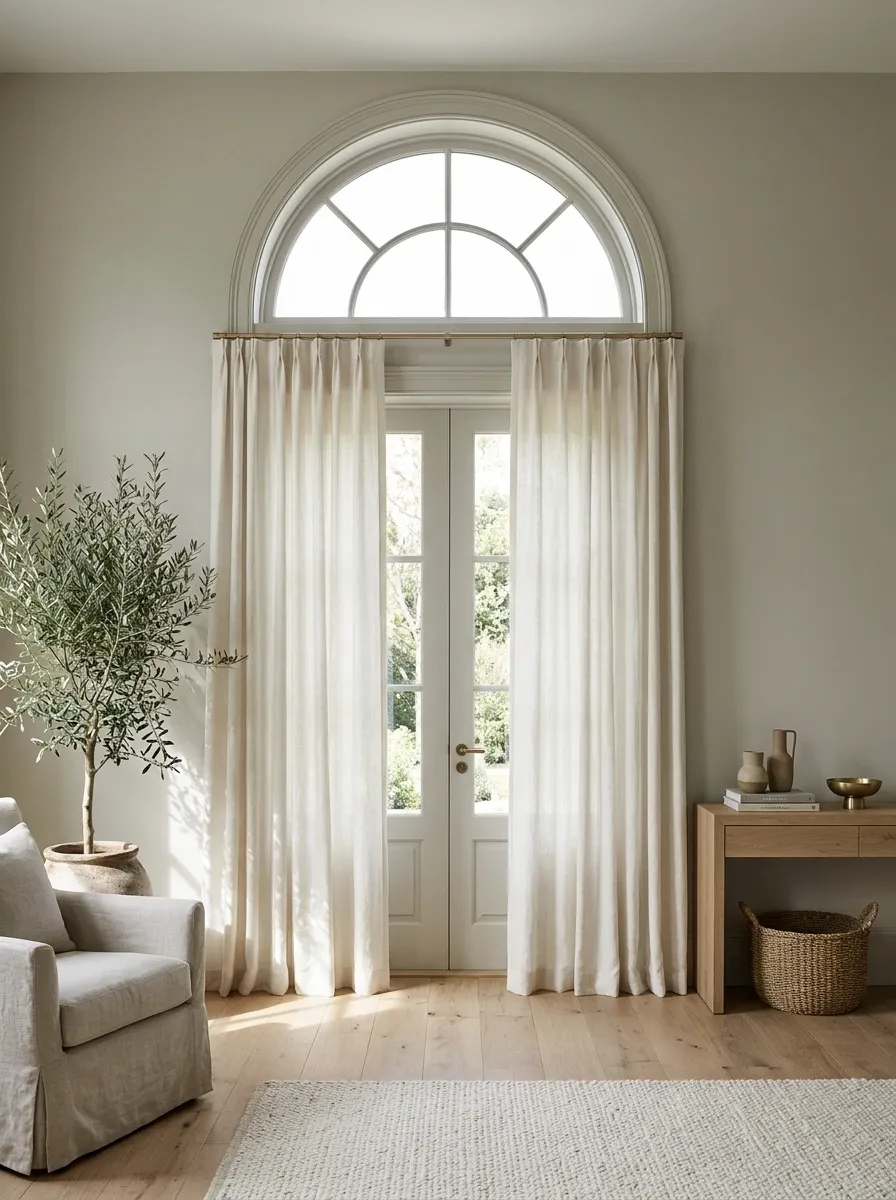
When the curve sits above a doorway or tall glazed opening, let the upper arch remain visually separate while lower curtains handle the main eye-level view. Simple furniture and a quiet wall color make the arrangement feel like a deliberate response to the architecture.
Confirm that leaving the upper section exposed suits your privacy and darkness needs. It isn’t a universal bedroom solution. The lower track should relate to an existing horizontal division where possible, rather than drawing an arbitrary line across glass. The building has already supplied useful geometry; borrowing it is usually wiser than inventing more.
Align lower coverings with a real transom or frame line when the opening allows it.
Rental Arch With a Freestanding Furnished Corner

Keep the window treatment modest and approved, then make the arch part of a furnished corner through a low chair, rug, and small table. A portable lamp adds evening usefulness without changing the frame or introducing elaborate hardware.
This approach is useful when the lease limits permanent work. Choose any privacy product only after checking surface compatibility and permission. Don’t improvise adhesives over seals or hang heavy curtains from unsuitable supports. The furniture can give the corner character while the covering does a straightforward job. You don’t need to rebuild a window to acknowledge that it has a nice shape.
- Portable character
- Chair, rug, side table, lamp.
- Check before changing
- Fixings, films, paint, and frame attachments.
Arched Window With a Low Bookcase and an Open Sill
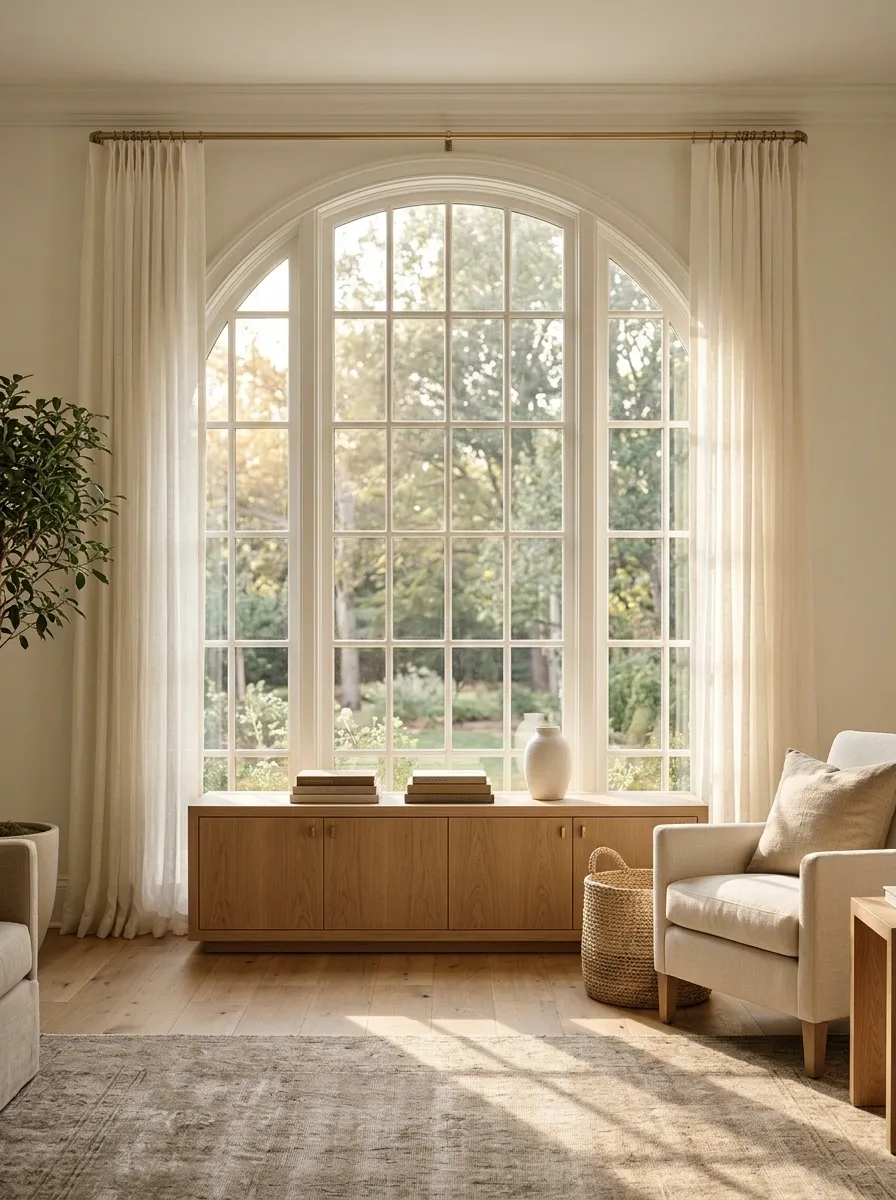
A low bookcase beneath the window gives the wall a useful base without hiding the arch. Keep the sill clear, add a nearby reading chair, and use a simple shade or side curtains according to the room’s needs.
The bookcase should remain below the useful glazing and clear of vents or heat sources. Avoid turning the top into another shelf of tall objects. The point is to give the window a grounded setting, not to stage a book-and-vase barricade. A few horizontal stacks can sit comfortably below a curve when most of the opening remains visible.
Include books and display objects in the height check, not just the empty cabinet.
The Curve Doesn’t Need More Competition
Walk into the room and notice what you see first. If it’s a curtain stack, a tall lamp, or an overfilled sill, remove the obstruction before adding another decorative detail. The arch already gives you a strong shape. Your job is to make the room useful around it.