
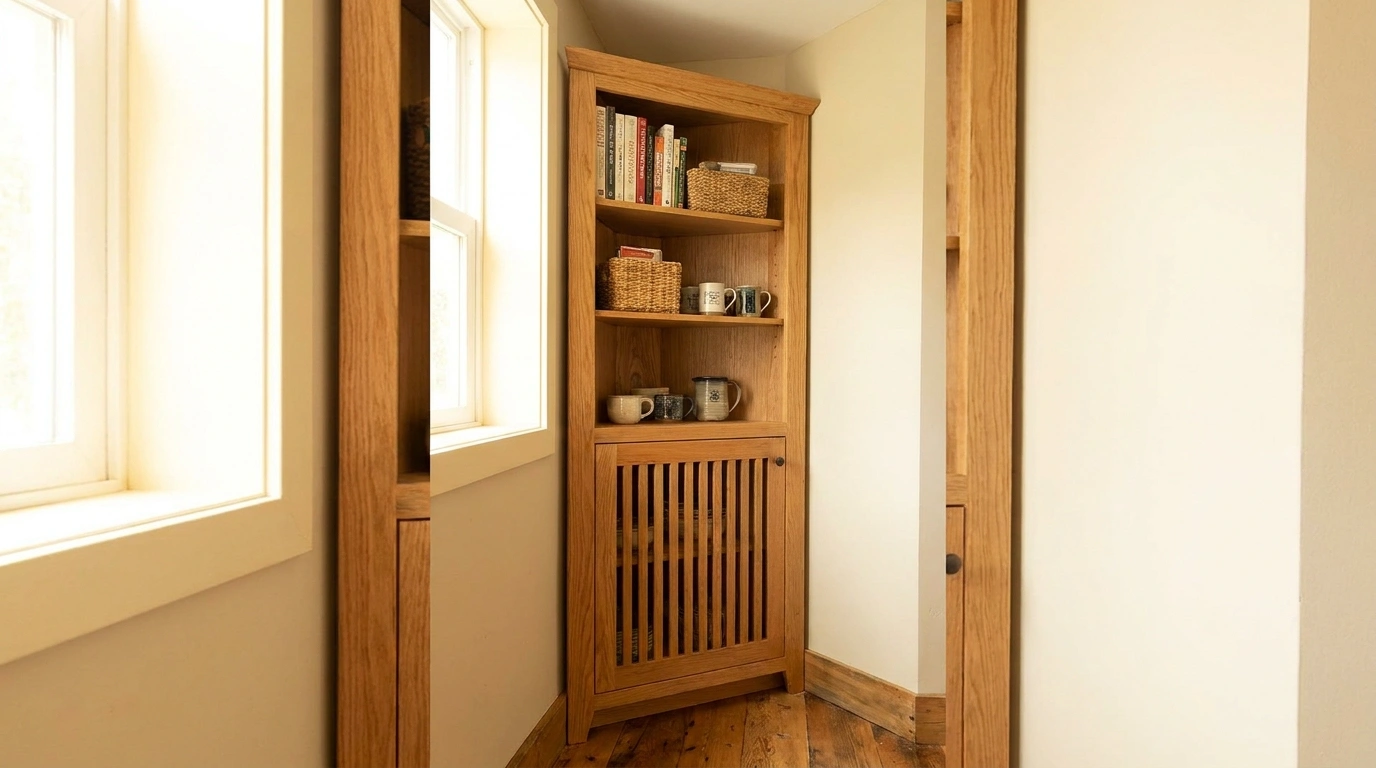
Put a mixing bowl into a bad corner cabinet and, in principle, it still exists. In practice, retrieving it may involve removing a saucepan, two lids, a roasting tray, and your remaining patience.
That isn’t generous storage. It’s an obstacle course with doors.
Some corners deserve specialist hardware. Others work better with drawers beside a deliberately unused void, a diagonal front, or a shallow cabinet serving a different side. Custom joinery can help, but adding more shelves to an inaccessible space is just multiplying the problem neatly.
Start with the objects. Then choose the access route. The cabinet can look impressive after it has proved capable of returning your belongings.
Measure the Cabinet Open
Include doors, handles, adjacent drawers, appliances, skirting, and the space occupied by someone using the cabinet. Hardware also has load and installation requirements that belong in the design from the beginning.
A corner isn’t solved because the front closes flush. Closing is the easy part.
Corner Storage Concepts With an Exit Strategy
Drawer Banks Beside a Deliberately Closed Corner
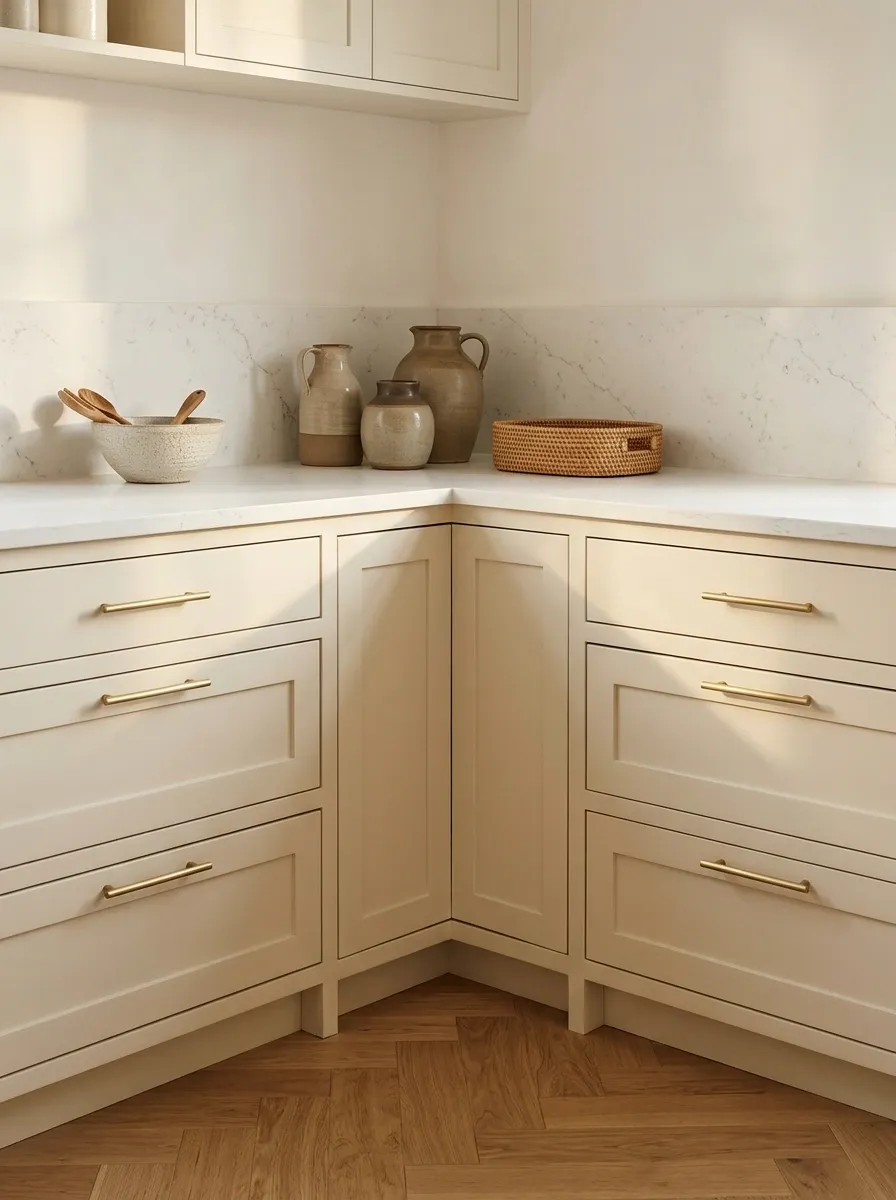
Use accessible drawer banks on both sides of a corner and allow a planned void where the two runs meet. Consistent fronts and a continuous counter make the kitchen feel ordered, while cookware lives in drawers you can actually open.
Yes, some volume remains unused. That can be a better trade than paying for complex access to space that stores little conveniently. Compare usable drawer storage and hardware costs before deciding. A hidden void isn’t automatically wasteful; a cabinet full of things nobody can reach is merely waste wearing a door.
Frequent cookware and utensils.
Accept a smaller inaccessible zone to improve everyday use.
A Diagonal-Front Pantry With Shallow Internal Shelves
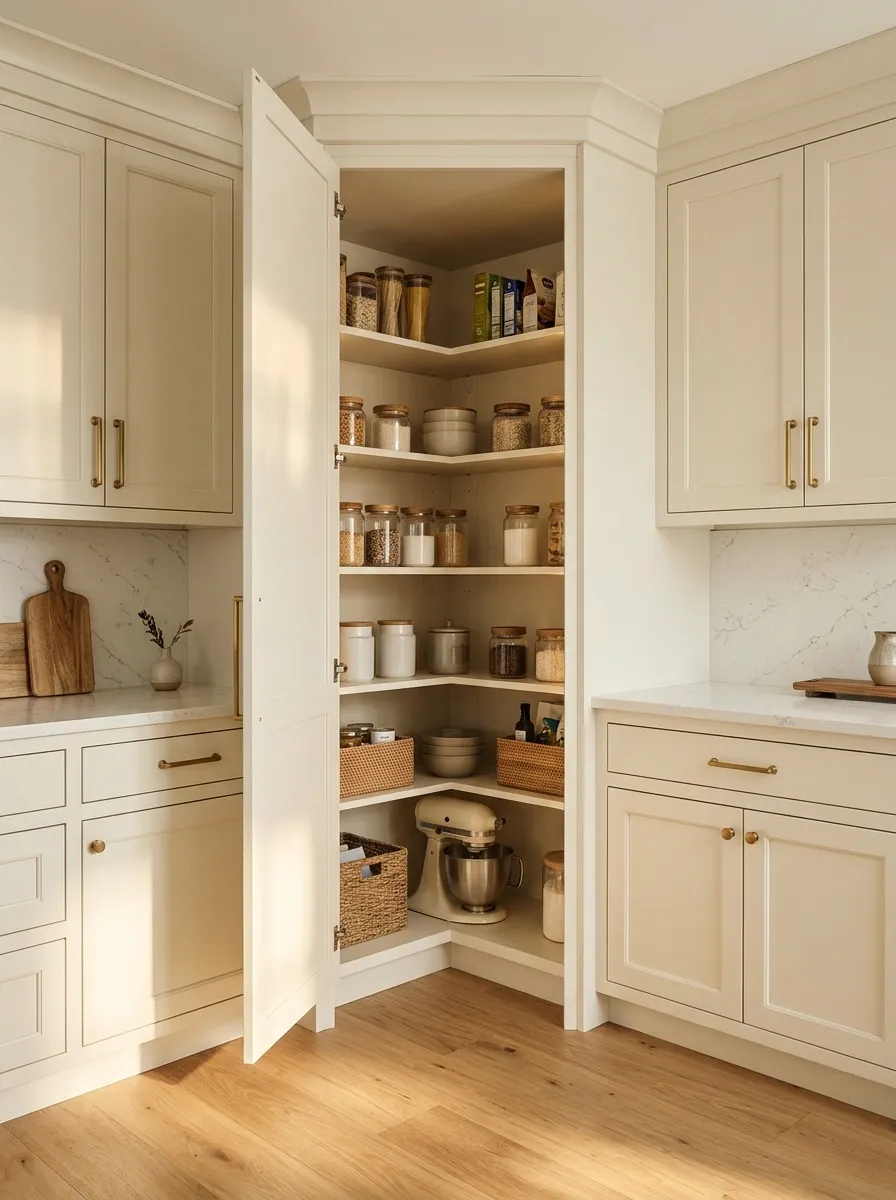
A diagonal pantry front can give an inside corner a broad entrance, with shallow shelves arranged around the sides. Keep the surrounding cabinetry simple and use the pantry’s height for grouped dry goods rather than one deep pile.
The diagonal front consumes floor area, so check the kitchen passage before committing. Inside, prioritize visibility and reachable depth. Tall storage isn’t generous if the back shelf has become a remote province. Use the deepest position for larger occasional items only where access remains sensible, and keep everyday ingredients near the opening.
Shallow visible shelves suit daily ingredients. A deep back corner needs a specific retrievable object.
A Rotating Shelf Cabinet for Bulky Cookware
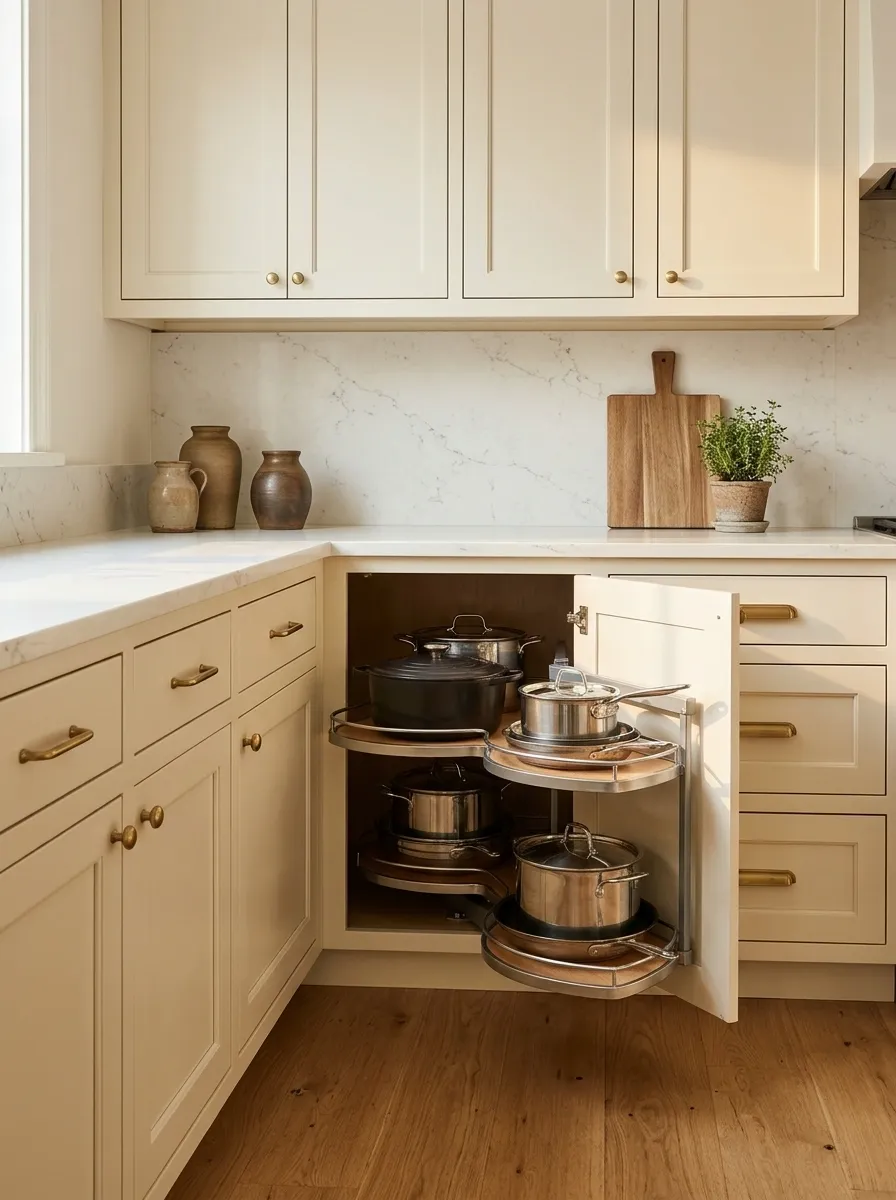
A suitable rotating shelf system can make an L-shaped base cabinet useful for bulky cookware. Plain doors and a clear counter above keep the mechanism from dictating the kitchen’s appearance.
Choose the cabinet and hardware together, with the shelf shape, rotation, loading, and door action understood before installation. Check the height of your actual pans and their handles. Round shelves don’t automatically create room for every awkward object. If a handle catches every time the shelf turns, the storage has become a slow-motion demonstration of why dimensions matter.
Will your pans fit through the rotation?
Measure handles, lid height, shelf spacing, and the opening path, then compare them with the exact hardware specification.
A Shallow Corner Wall Cabinet for Glassware
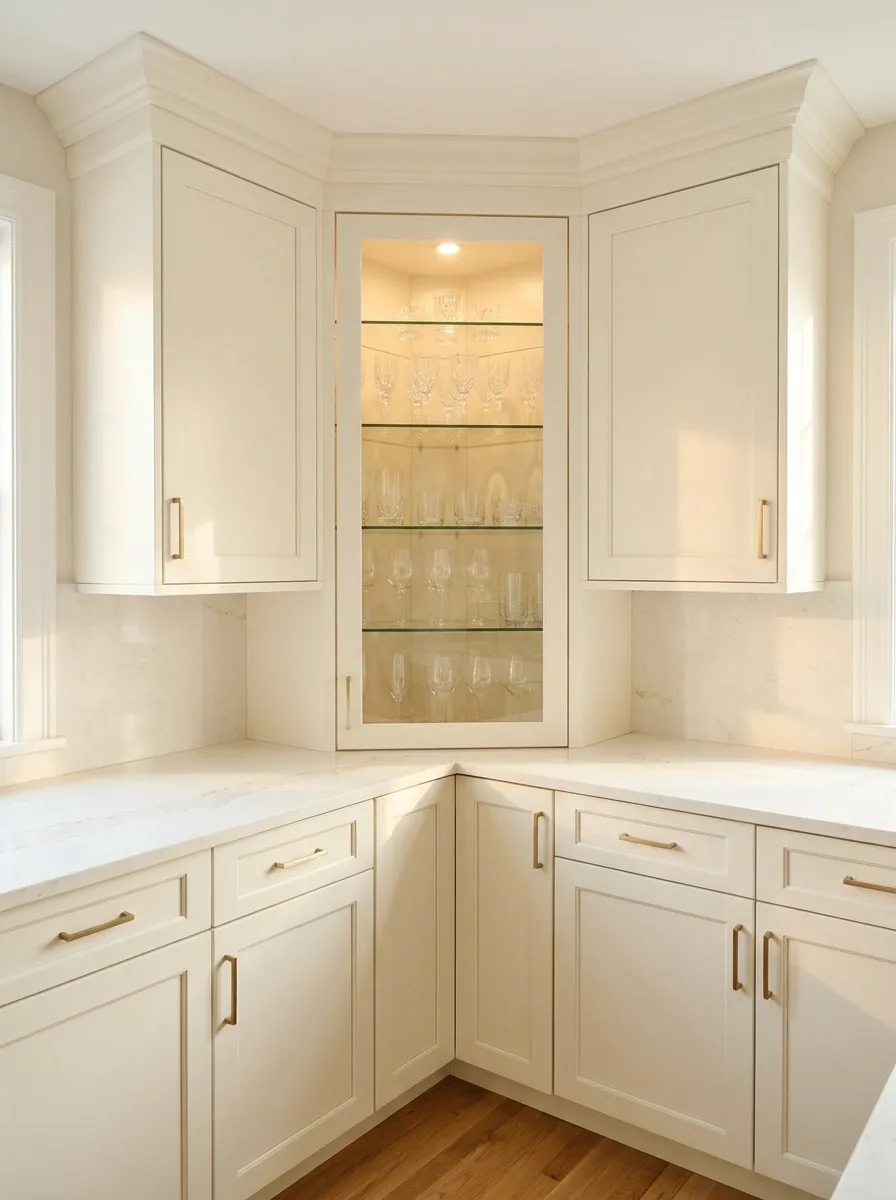
Use a shallow angled wall cabinet for glassware, with a simple front and interior shelves sized around the objects. Keep the lower counter open so the corner doesn’t become a tower of cabinetry above a cluttered appliance pile.
Shallower shelves make it easier to see and retrieve glasses without reaching into a deep upper recess. Check door travel near adjacent cabinets and lighting. Keep heavy items lower where practical, and choose suitable installation support. A glass cabinet should display or store objects you use, not become an elevated archive requiring a ceremonial ladder visit.
Include hand clearance above the tallest everyday glass, not just the glass height itself.
A Corner Appliance Cupboard With a Clear Work Surface
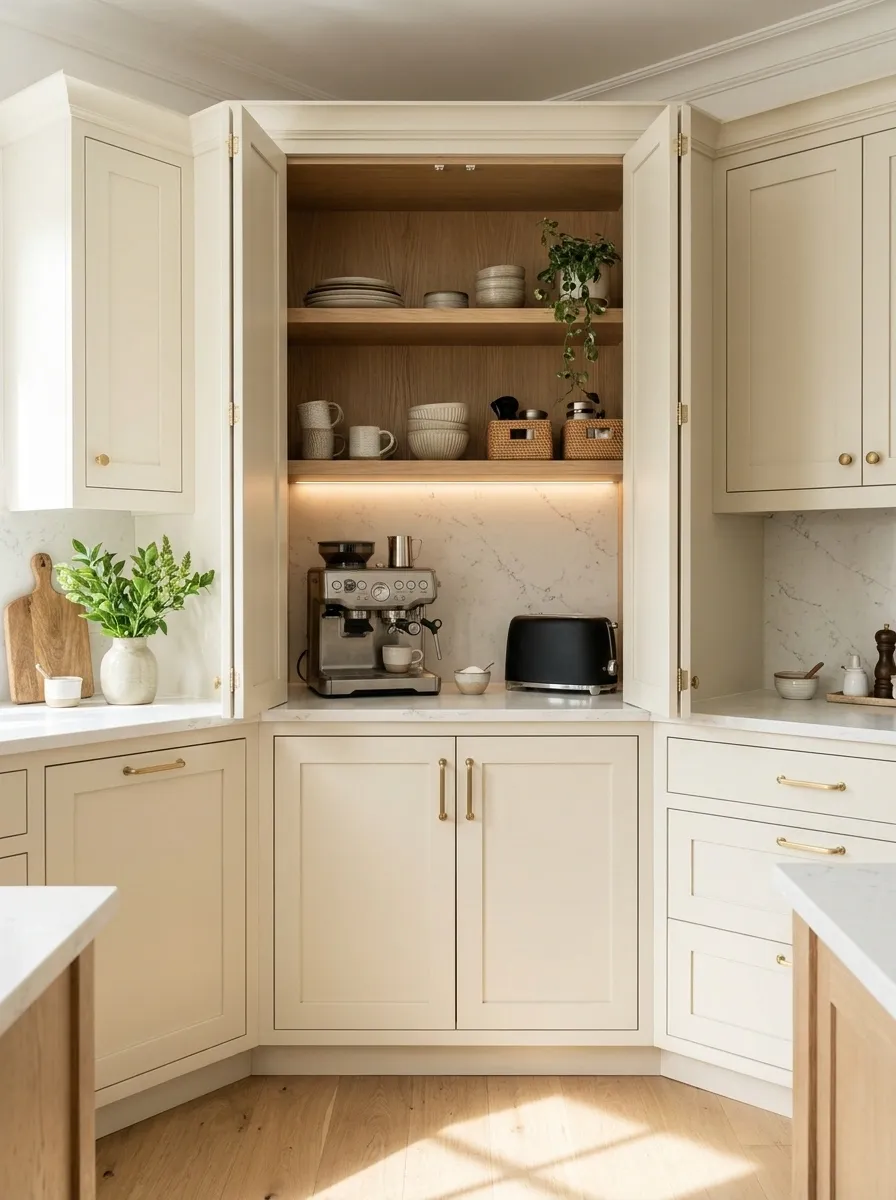
An appliance cupboard can occupy a deep counter corner, with doors that open fully away from the working area. Keep daily appliances on a suitable counter surface and use upper shelves only for related accessories.
Plan power, ventilation, heat, and appliance operation according to the products involved. A door does not make every appliance safe to run inside a small enclosure. Keep the work surface clear enough to move equipment where needed. The cupboard should simplify breakfast, not conceal a tangle of cords and a toaster performing in unsuitable conditions.
Check each appliance’s heat, ventilation, clearance, and power requirements before designing the enclosure.
Corner Drawers With a V-Shaped Front
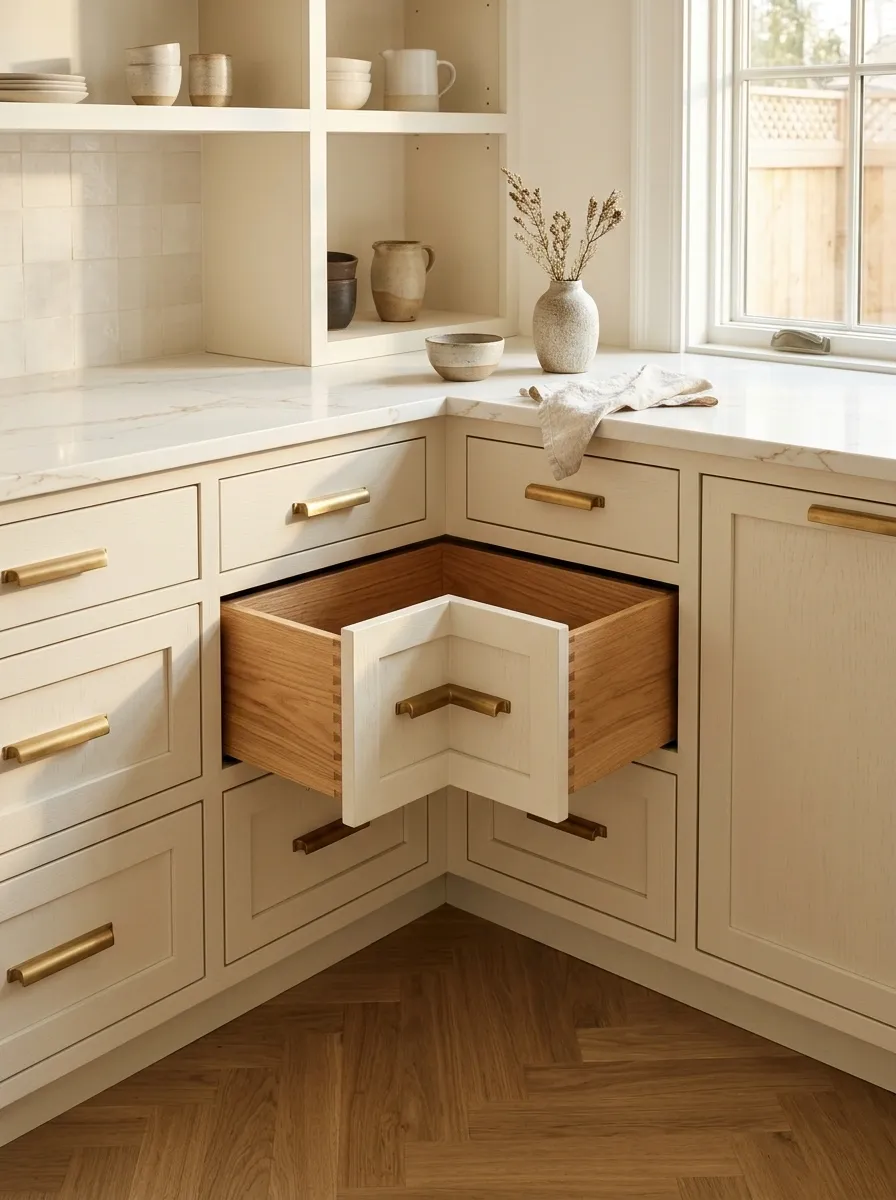
Purpose-made corner drawers can turn an inside angle into accessible storage, with a V-shaped front continuing the kitchen’s cabinet lines. Use the drawers for objects that fit their actual shape, not an imaginary rectangular interior.
The fitting and carcass need specialist planning, and the adjacent runs must allow the drawers to travel cleanly. Compare useful internal area with alternative drawer layouts before choosing. The unusual front can be attractive, but novelty is not storage capacity. A clever-looking drawer still has to hold the things that currently annoy you.
Place outlines of your intended contents within the usable drawer dimensions before approving the front.
A Low Corner Cabinet Beneath a Window
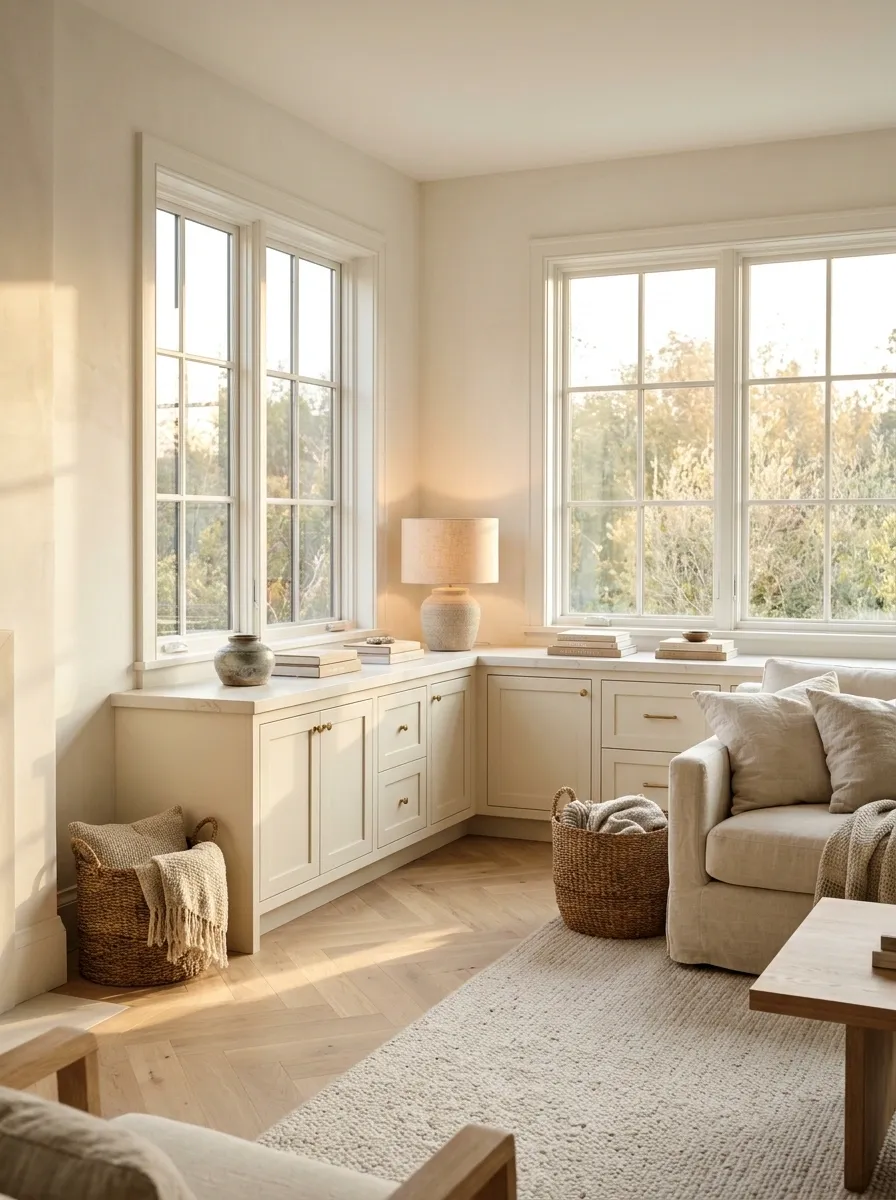
A low cabinet can connect two walls beneath a corner window, with closed fronts and a clear top preserving the light. Use it for linen, table supplies, or household objects that suit the available shelf depth.
Keep window operation, ventilation, heat sources, and required access clear. The top shouldn’t become a forest of tall ornaments that defeats the reason for keeping the cabinet low. Check the interior corner before deciding on shelves; access from separate doors may be more useful than one deep opening. The window gets daylight, and your belongings get an exit route.
The finished height includes lamps, books, and decor, not just the cabinet carcass.
A Tall Entry Corner Cabinet With a Bag Niche
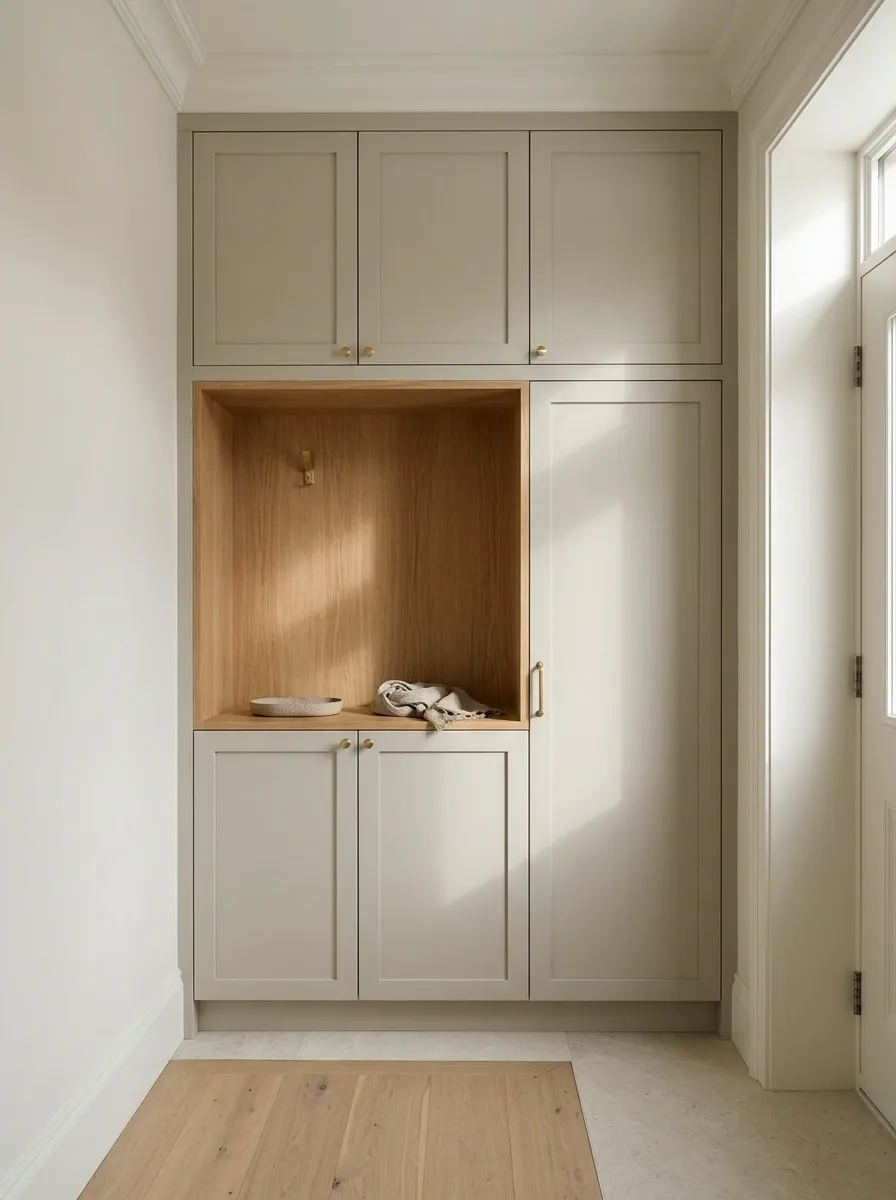
A tall cupboard can use an entry corner for coats and shoes, with a small open niche at hand height for a daily bag. Plain doors keep the hallway quiet while a timber-lined niche gives the cabinet a clear landing point.
Plan the interior around actual coat depth, shoe access, and the bag’s handles. Deep corner storage should serve occasional items rather than the keys needed every morning. Keep the door and drawer travel clear of the entrance. A hallway cabinet that blocks the front door has misunderstood its role with impressive confidence.
- Front and reachable
- Daily bag, coat, shoes.
- Deeper corner
- Occasional supplies with a clear retrieval plan.
An Under-Stair Corner With Pull-Out Compartments
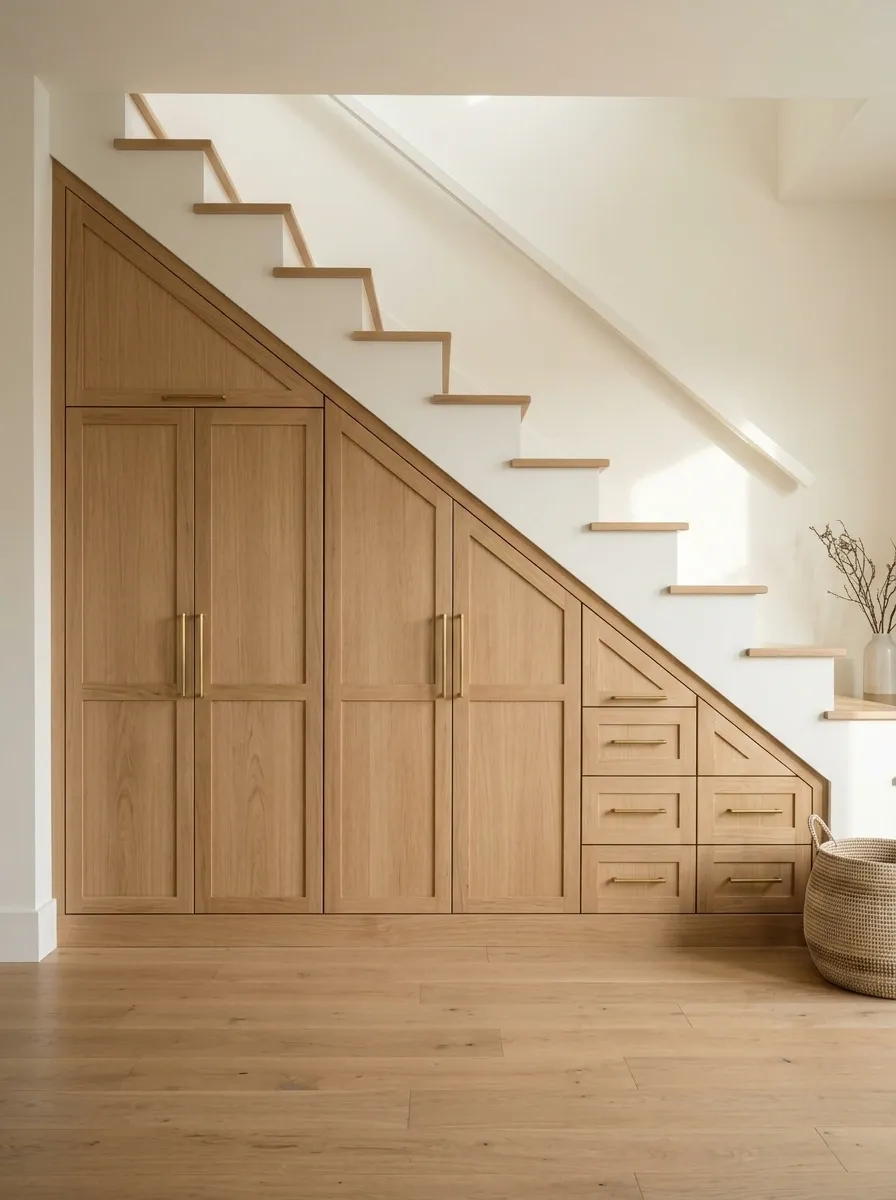
Pull-out compartments can bring storage out from an under-stair corner, with fronts following the slope and a clear floor area in front. Use taller sections for hanging or bulky objects and lower sections for smaller grouped supplies.
The geometry needs careful measuring, including headroom, structural elements, services, and the loaded travel of each unit. Don’t divide the slope into decorative triangles without deciding what belongs inside. The point is accessible storage, not a joinery puzzle that stores one umbrella beautifully and everything else with resentment.
Taller section: bulky storage and full access.
A Bedroom Corner Wardrobe With a Dressing Niche
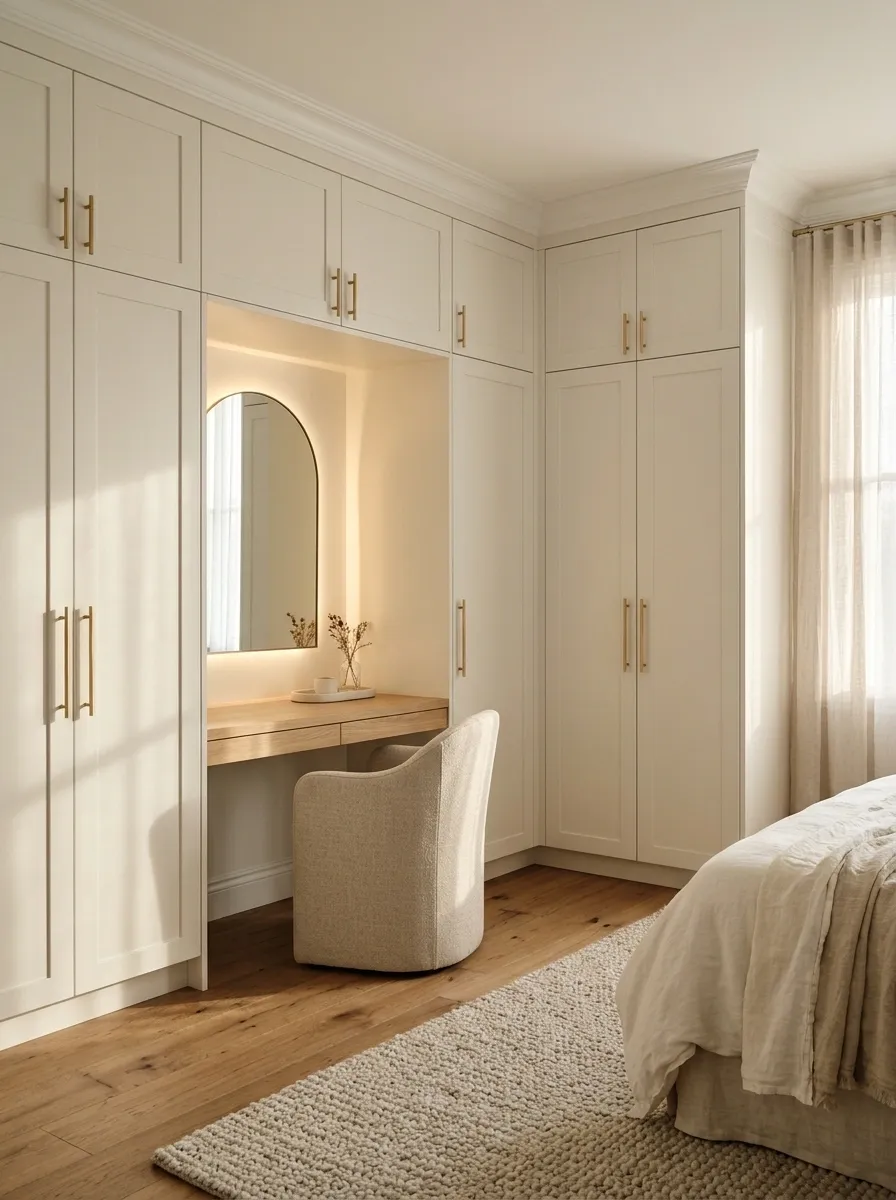
A corner wardrobe can use the deeper angle for storage while a small dressing niche occupies the accessible front. Plain doors and a simple mirror make the whole wall feel connected, with lighting positioned for actual dressing.
The niche needs knee space and a place for the chair when unused. Plan wardrobe door travel around that seat rather than hoping the chair will develop the habit of moving itself. Keep daily clothing near the easiest opening and avoid burying folded items in the deepest corner. Useful storage has a hierarchy, even if the exterior looks completely calm.
Hanging and door clearance.
Knee space, chair travel, and face lighting.
A Home Office Corner With Shallow Upper Cabinets
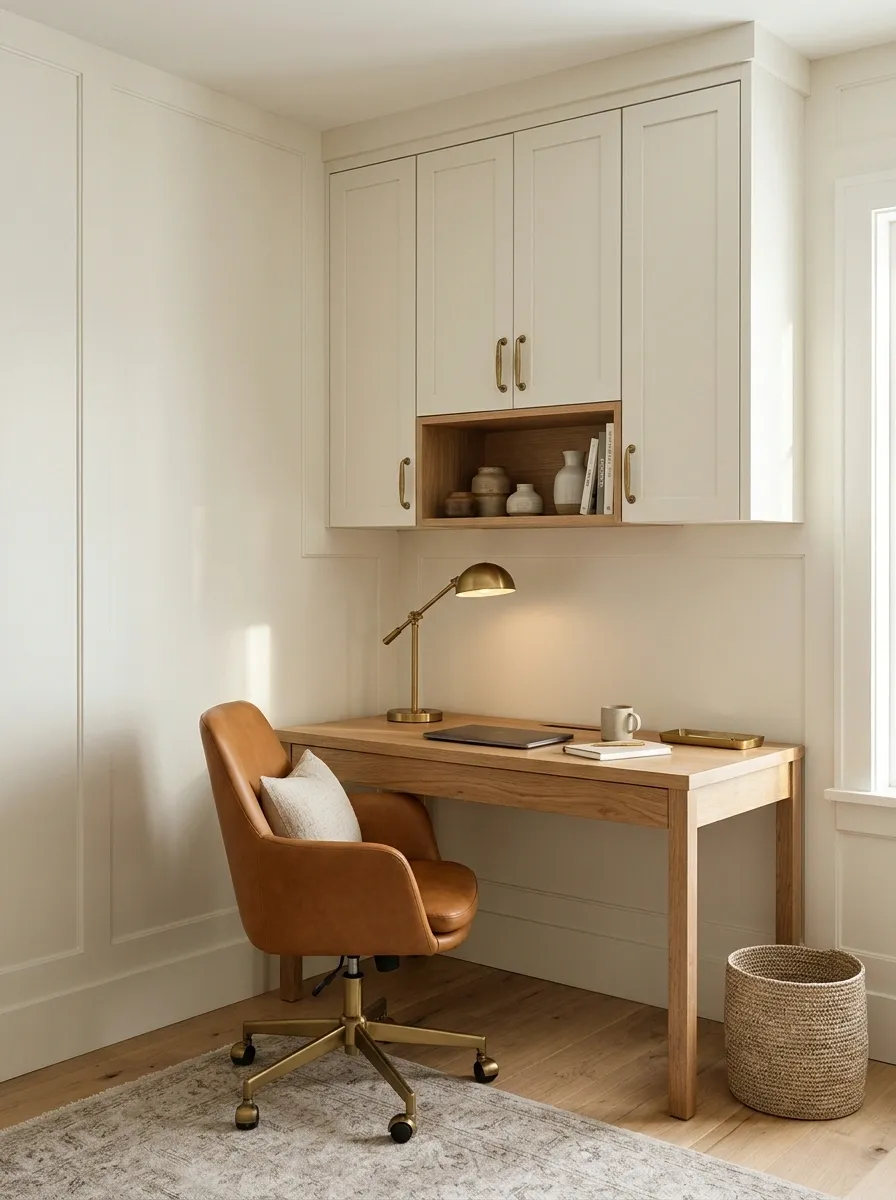
Use shallow upper cabinets around a corner desk, keeping the work surface open and the lowest shelves reachable. Closed fronts contain office supplies, while a small open shelf can hold the objects you genuinely reach for.
Check head clearance and lighting at the desk before lowering cabinets to gain more storage. The corner should support work, not hover over the screen like a looming administrative problem. Keep heavy equipment in suitable lower storage where practical, and plan cables behind the desk. A tidy exterior isn’t enough if every connection is tangled inside a cupboard.
Check screen position, task lighting, head movement, and comfortable reach.
A Bathroom Corner Tower for Folded Linen
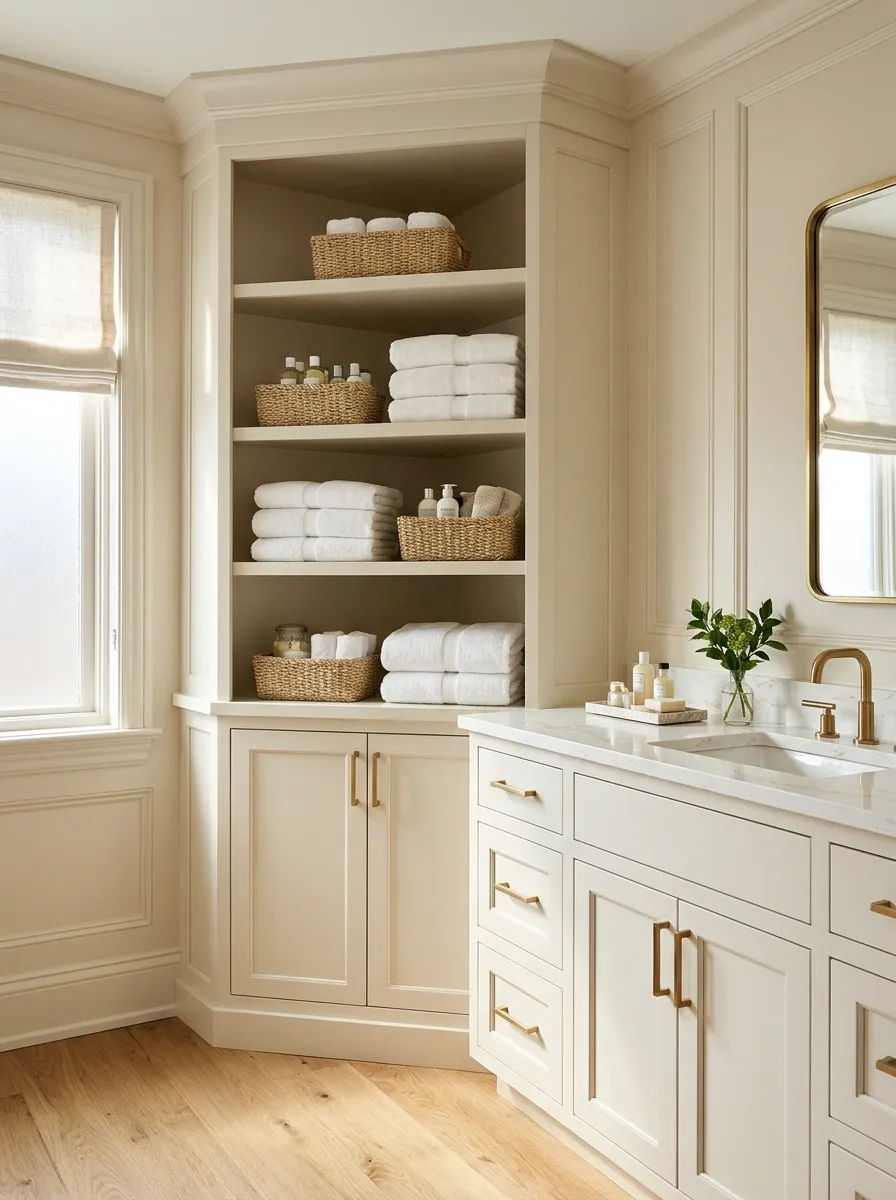
A shallow corner tower can hold folded towels beside a plain vanity, with closed lower storage and modest open shelves above. Keep it out of the direct splash area and use finishes suitable for the bathroom conditions.
Size shelves around the way towels are actually folded. Deep triangular shelves can hide small supplies surprisingly efficiently, which is not a compliment. Use grouped containers for toiletries and keep frequently used items near the opening. The cabinet should relieve the vanity surface rather than become another place where bottles wait in several increasingly inaccessible rows.
Does the shelf suit your towel fold?
Measure a normal folded stack, including room to lift it without removing the shelf above.
A Corner Media Cabinet With Ventilated Equipment Storage
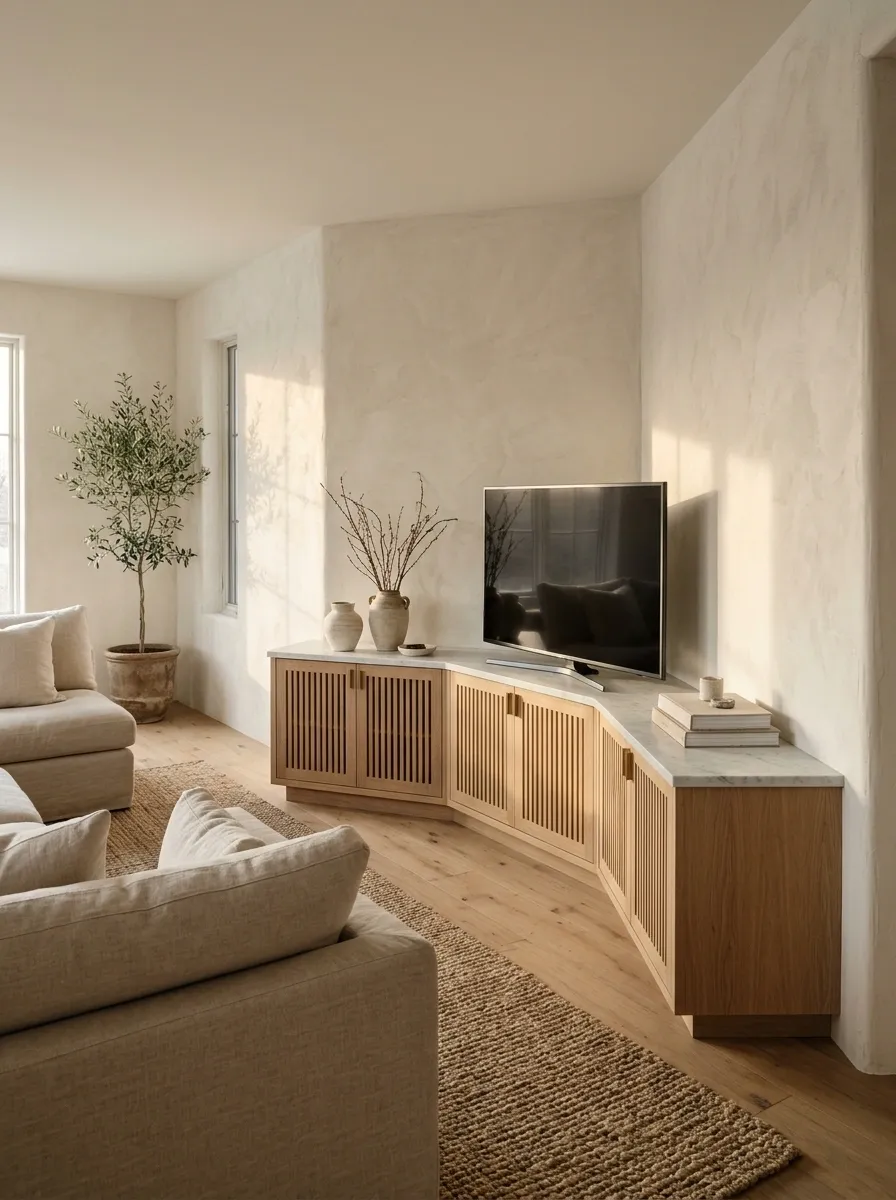
A low corner media cabinet can angle a screen toward the seating, with closed storage handling equipment and a simple top keeping the outline clean. Use the side sections for shallow supplies rather than making the whole interior one deep recess.
Plan ventilation, power, cable routes, and access according to the equipment. A closed door does not make heat disappear, however tidy the front looks. Check the viewing angle from the actual sofa before choosing the cabinet depth. The furniture should support the room’s use, not force everyone to sit diagonally because the corner seemed convenient.
Ventilation, power, cable access, and service space belong in the cabinet drawing.
A Laundry Corner With a Full-Height Cleaning Cupboard
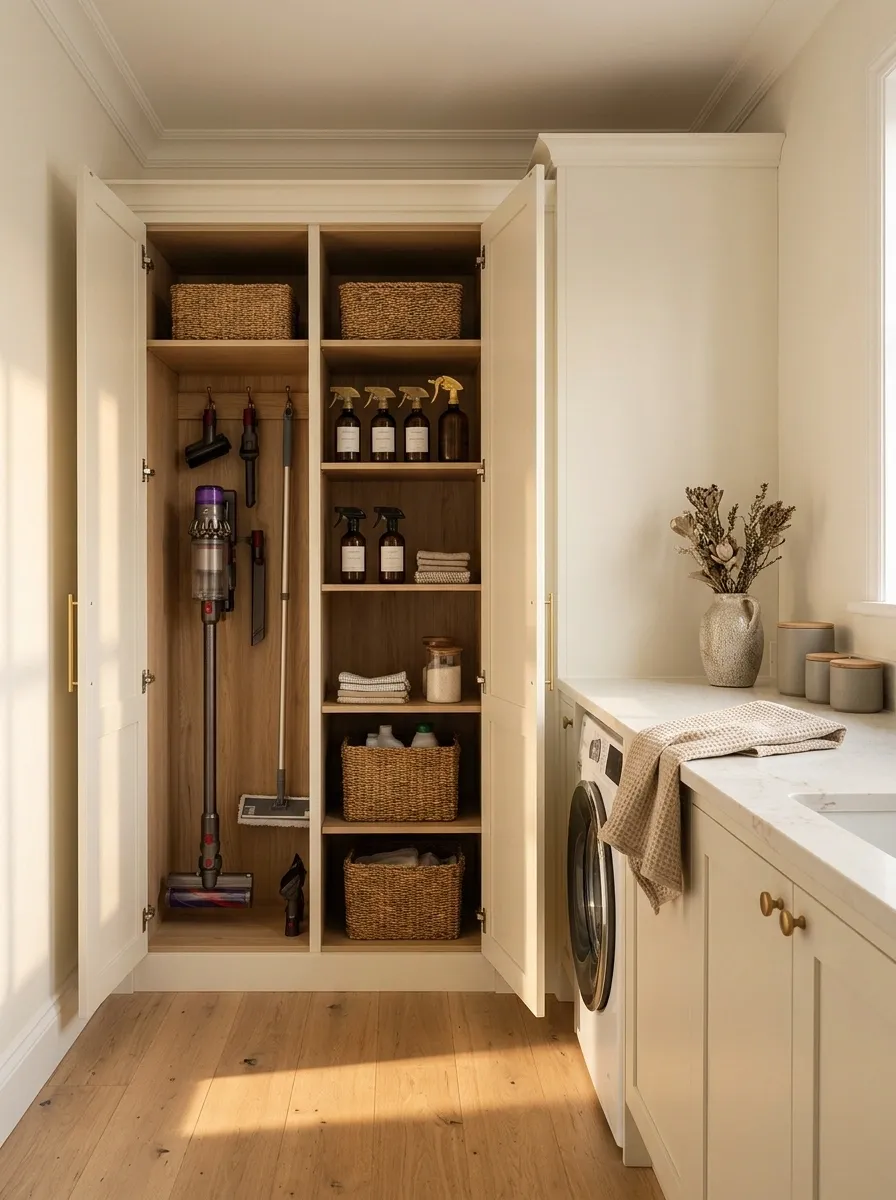
A full-height cupboard can turn a laundry corner into organized cleaning storage, with a tall compartment for long tools and shallow shelves for supplies. Keep the adjacent folding surface clear and the cabinet fronts simple.
Measure the vacuum, mop, and other tools before deciding the internal divisions. Include handles, hoses, and the space needed to lift things out. Store products appropriately and preserve any appliance or service access nearby. A cupboard designed around imaginary perfectly straight tools will be disappointed by the equipment already living in your house.
Tools with their handles and hoses.
Appropriately stored supplies, visible at the front.
A Dining Corner With a Diagonal Glass-Front Cabinet
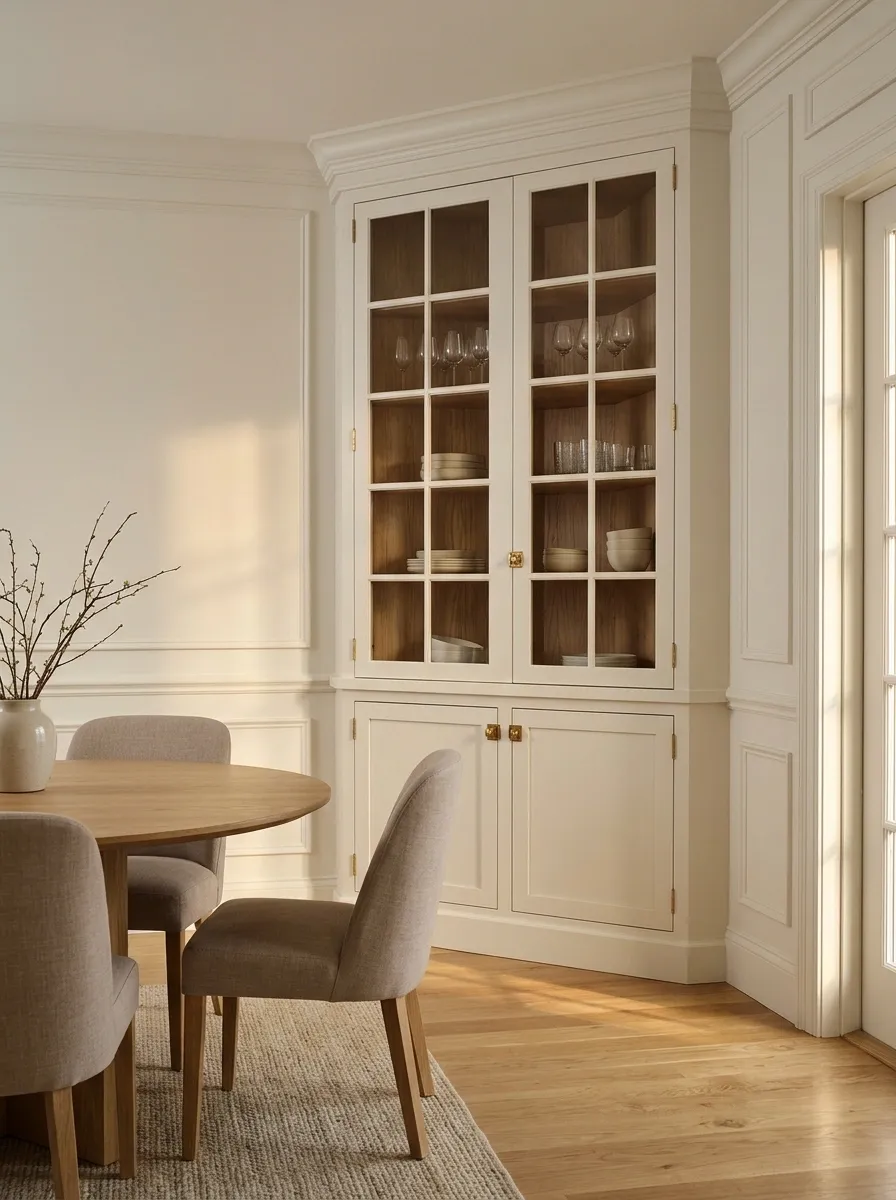
A diagonal glass-front cabinet can give a dining-room corner a deliberate display setting, with closed lower storage for table supplies. Keep the adjacent walls plain and use the cabinet for a restrained set of glassware or dishes.
The diagonal front should leave enough room around the table and chairs. Check the doors with a chair pulled out, not only when everything is tucked away. Display doesn’t excuse inaccessible shelves. Put the pieces you use at an easy height and leave enough room between them for hands, rather than arranging a fragile obstacle course behind glass.
Pull out the nearest chair and open the cabinet. Both actions need space at the same time.
A Kitchen Corner With Open Shelves Above Closed Base Storage
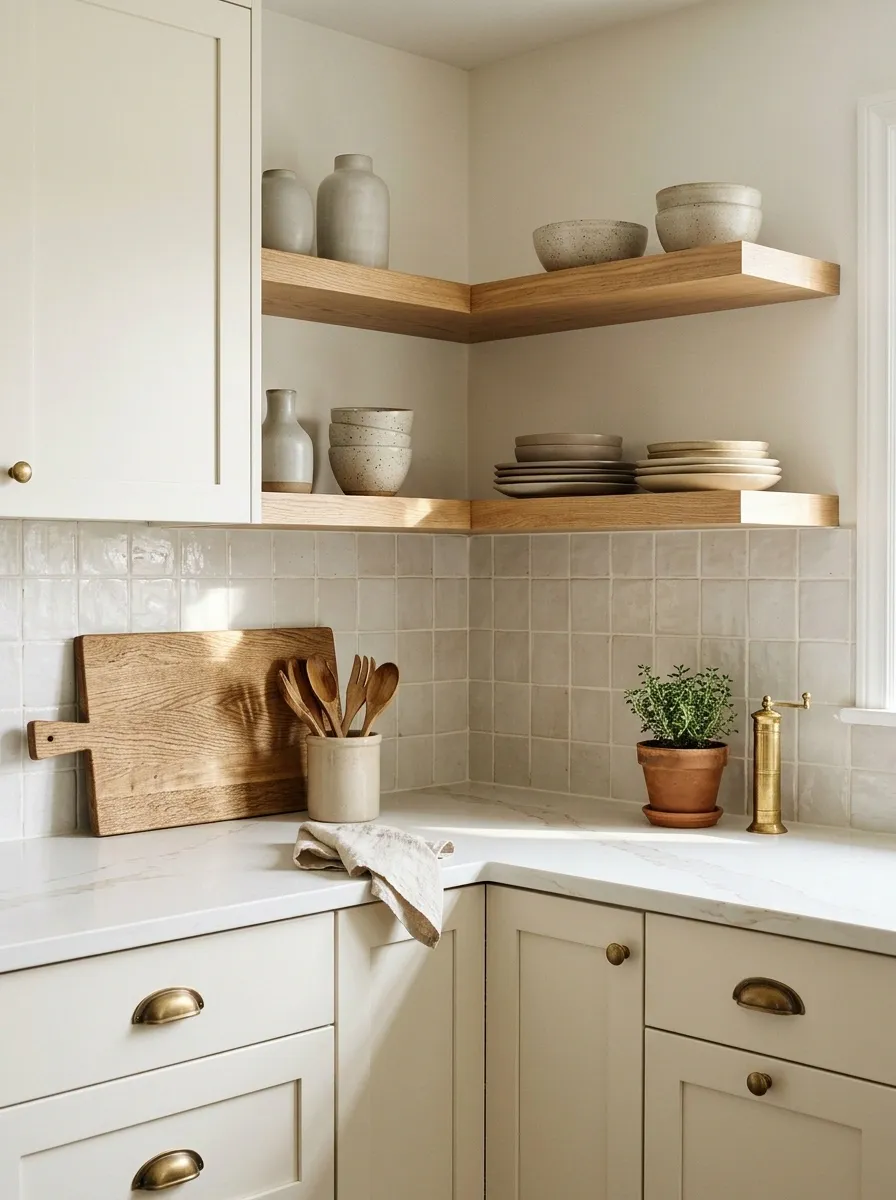
Keep the lower corner closed and use restrained open shelves above for a few daily items. A plain splashback and consistent cabinet finish make the arrangement feel connected, while the open upper section prevents a small kitchen from becoming too heavy.
Open shelving should have a manageable job. Store objects suited to the location and keep cooking exposure in mind. The deep base still needs a sensible access plan, whether that means specialist hardware or occasional storage. Removing an upper door doesn’t solve the entire corner; it simply gives one part a different role.
An Irregular Alcove Cabinet With a Straight Front
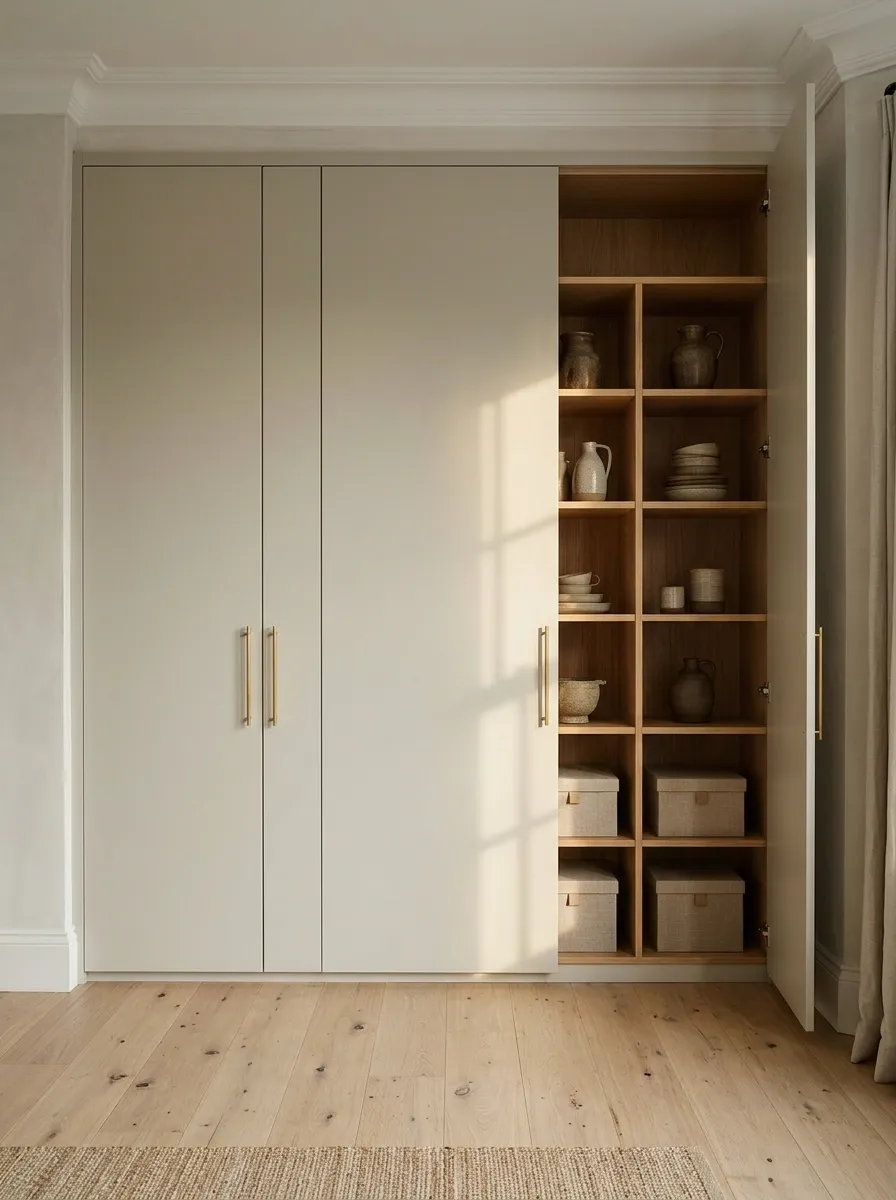
Build a straight cabinet front across an irregular alcove, letting the interior respond to the wall’s uneven depth. Plain doors make the room feel calmer, while internal shelves can be sized for the changing space behind them.
The fitting needs accurate site measurements and allowance for walls that aren’t square. Use the shallow zones for small items and the deeper section for a specific larger object. Don’t force uniform shelves merely because they look tidier on a drawing. The exterior can be simple while the interior admits that the building has its own eccentric opinions.
Straight front. Honest interior.
Map the actual depth behind each door and assign contents before fixing shelf positions.
A Bench Cabinet That Turns an Entry Corner
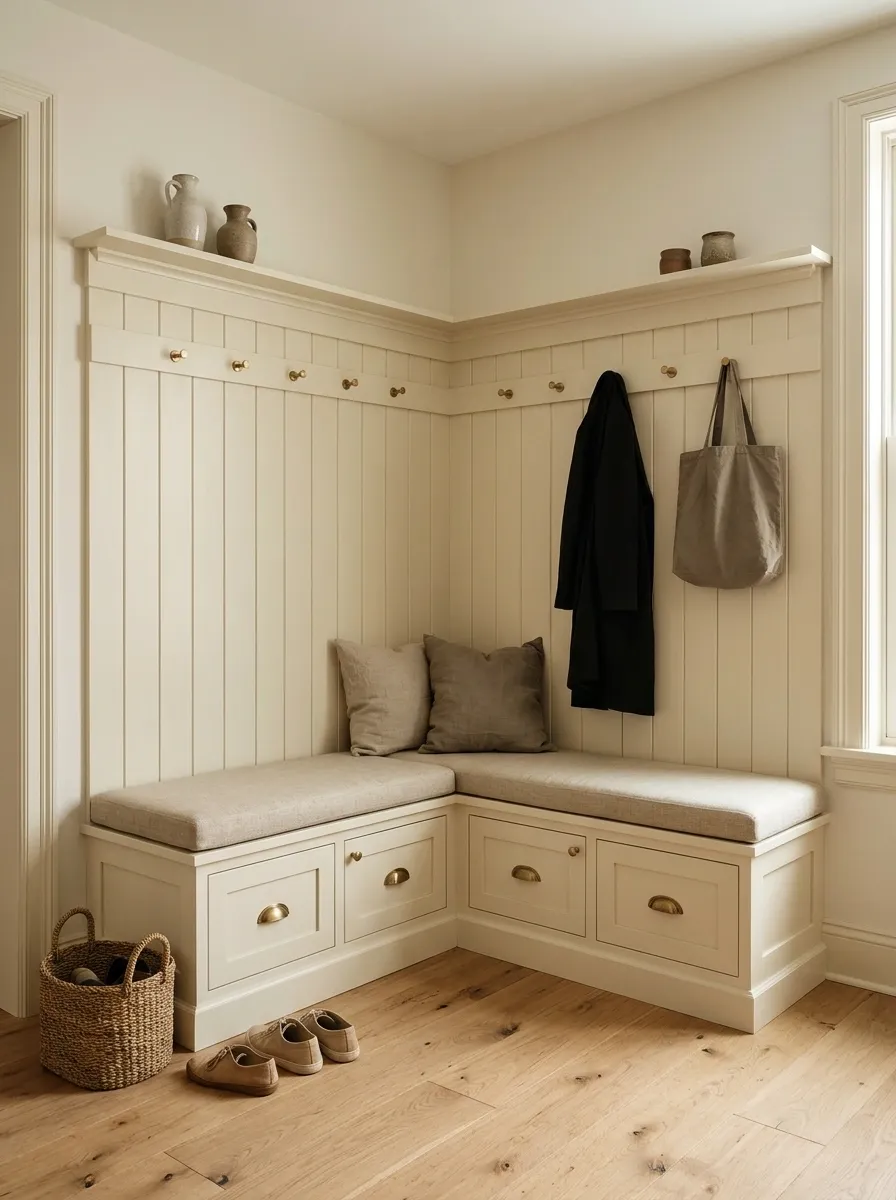
An L-shaped bench cabinet can connect two entry walls, with access arranged from separate front sections. Use a plain seat and restrained hooks on the return wall so coats don’t overwhelm the sitting area.
Decide how the inner corner opens before adding a cushion. A hinged lid needs lifting room, while front doors need a clear floor. Keep daily shoes near the easiest access and use the deeper zone for occasional items only. The bench should make changing shoes comfortable, not require you to rearrange the seating whenever someone needs a scarf.
A Craft Corner With Pull-Out Project Trays
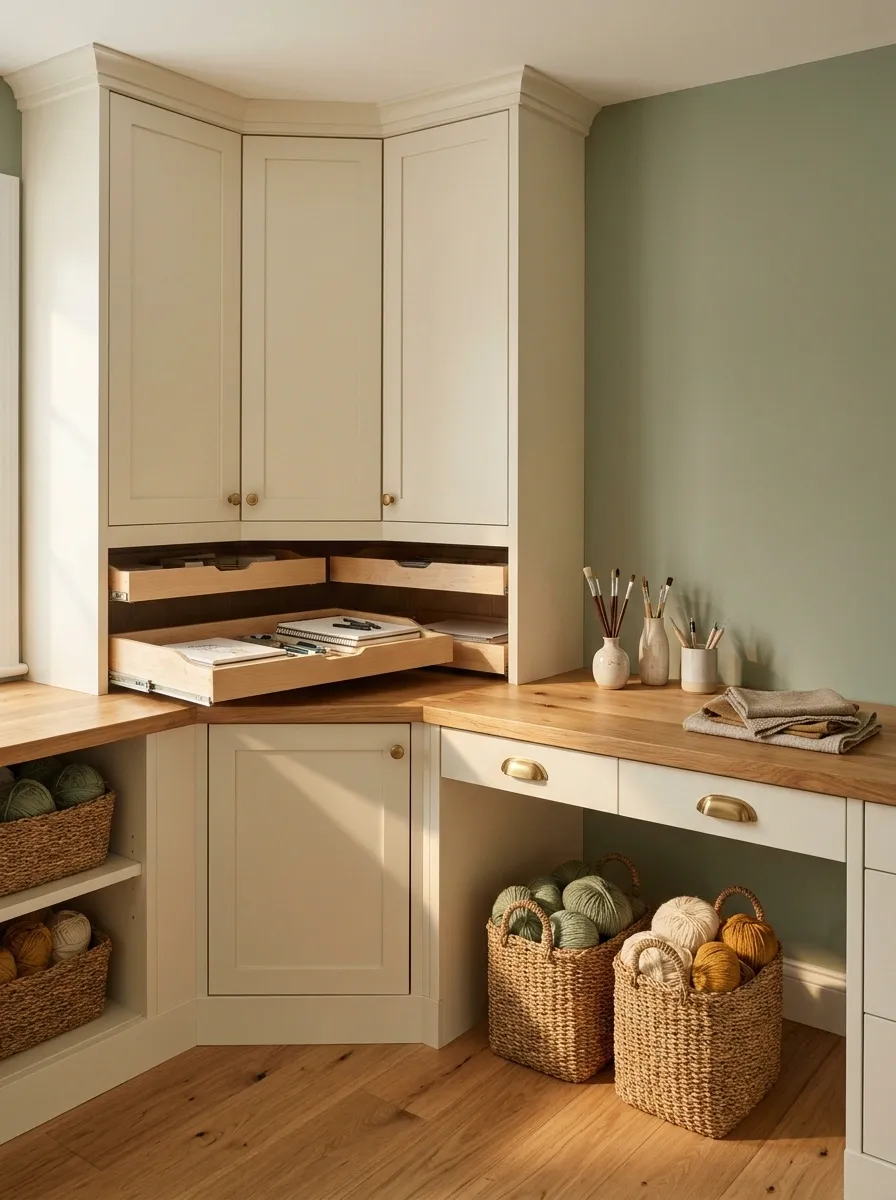
A corner craft cabinet can use shallow pull-out trays to keep unfinished projects together, with closed upper storage for supplies. A clear work surface beside it gives the trays somewhere to land when opened.
Size the trays around real projects and check their loaded weight against the hardware requirements. Deep shelves filled with small containers look organized until the one required box is at the back. Keep frequently used tools close to the opening and bulk supplies elsewhere. The cabinet should protect ongoing work without turning every craft session into an excavation.
Give each project a contained surface and reserve nearby space to set it down without unpacking it.
A Corner Cupboard With Removable Storage Bins
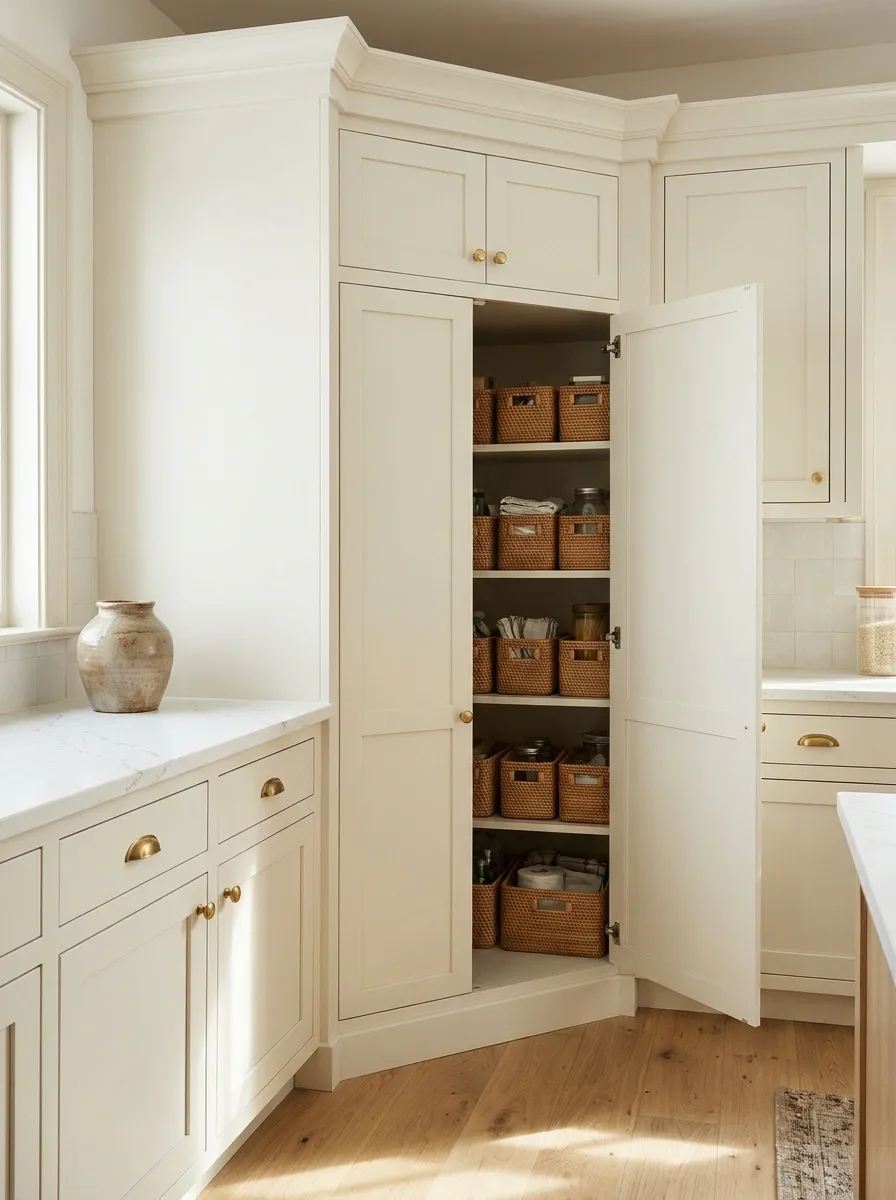
A straightforward corner cupboard can work better with a small set of removable bins than with many loose items. Keep the front plain and use the interior for grouped occasional supplies rather than daily essentials.
Each bin needs to fit through the door and be comfortable to lift when loaded. Labels help only if you can see them without emptying the cabinet. Avoid stacking heavy bins in the deepest position. This is a modest solution for a modest storage job, which is often more useful than expensive hardware installed to retrieve things you barely use.
Door clearance, lifting weight, label visibility, and somewhere to place it all matter.
A Sloping-Ceiling Corner With Low Drawers and an Open Top
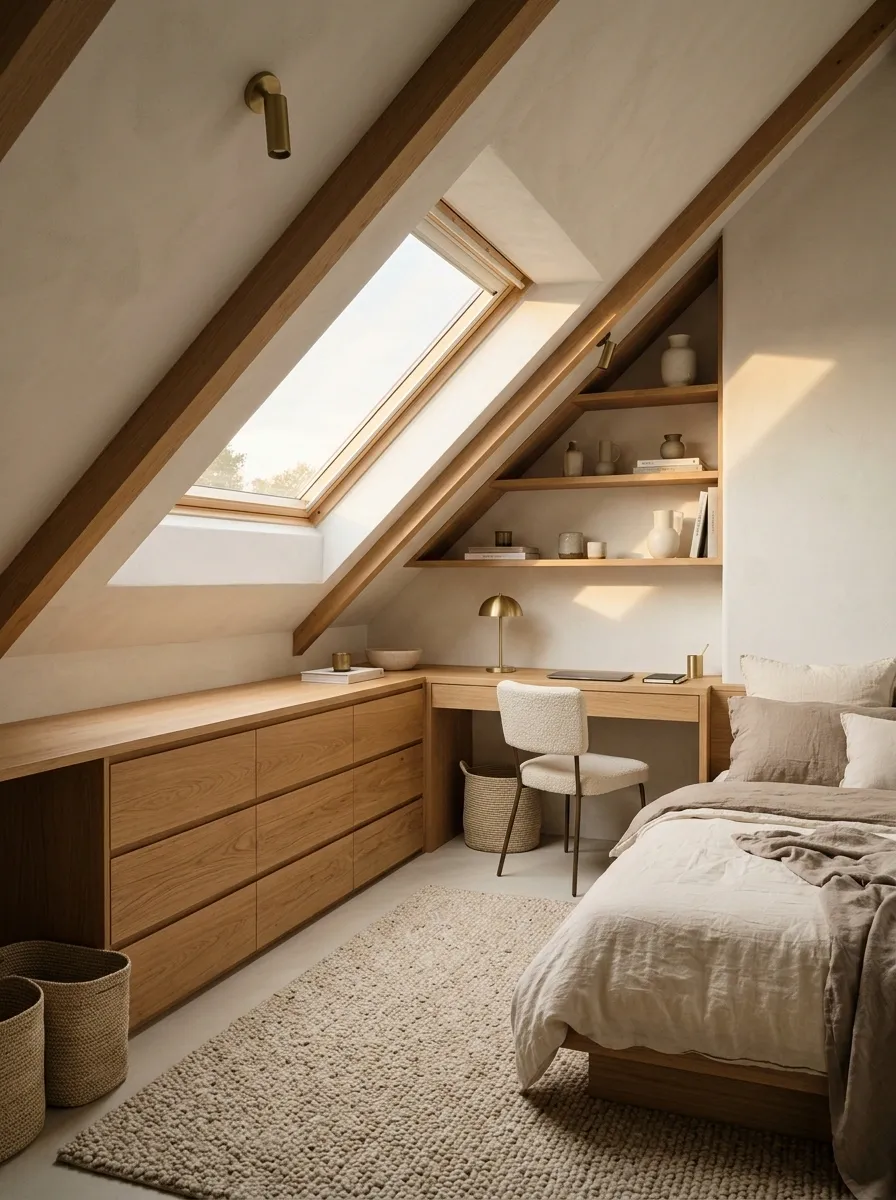
Use low drawers beneath a sloping ceiling and leave the upper corner open rather than forcing a tall cupboard into the roofline. A continuous top and simple finish make the storage feel built into the architecture.
Check headroom where someone stands to use the drawers, not just the cabinet height. The deepest roof section can remain unused if reaching it would be awkward. This is especially useful in bedrooms or attic studies where low storage can replace several freestanding pieces. The roof has already imposed enough geometry; the joinery doesn’t need to add a second puzzle.
Check standing headroom in front of the open drawers.
A Corner Book Cabinet With Shallow Shelves on Both Walls
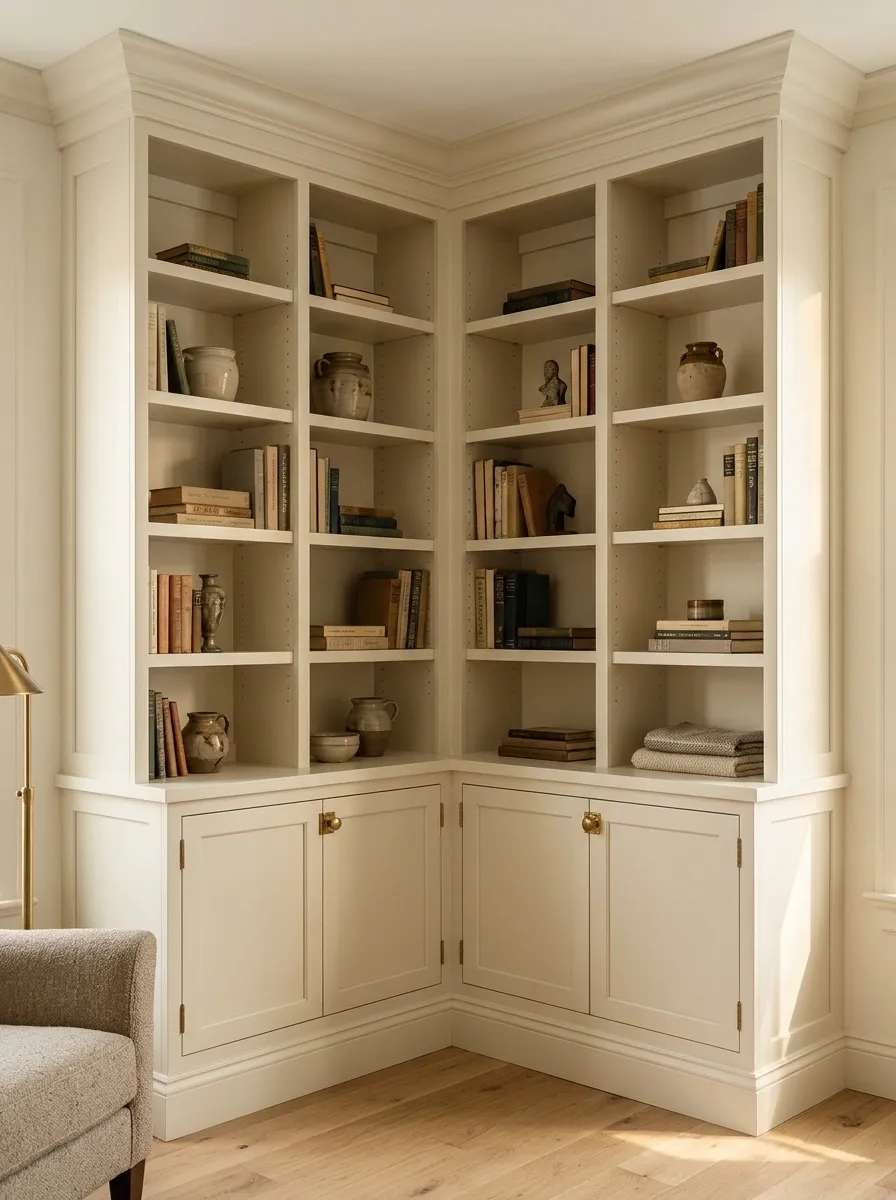
Two shallow book cabinets can meet at a corner without creating one enormous deep unit. Use consistent shelf lines and closed lower sections, leaving the junction simple and reachable.
Plan which cabinet continues into the corner and how the other terminates. Books don’t need a triangular cave behind them. Keep shelf depth suited to the collection and fix the units appropriately. A little deliberate negative space at the junction can look more considered than squeezing in a decorative corner shelf that holds one object nobody particularly likes but everyone feels obliged to dust.
Shallow book storage can make a corner more useful than a deep cabinet with impressive empty volume.
Keep the Space You Can Use
Take the objects intended for the cabinet and measure them. Include handles, lids, cables, folded stacks, and the hand space needed to remove them. Then compare the access options before approving the fronts.
A specialist mechanism can be excellent. So can a shallow cupboard, a different opening direction, or an intentionally unused void. The right answer is the one that returns your belongings without a minor household expedition.
Save the cabinet concept that solves your actual retrieval problem. There is no prize for owning the deepest corner if everything useful is trapped at the back.