
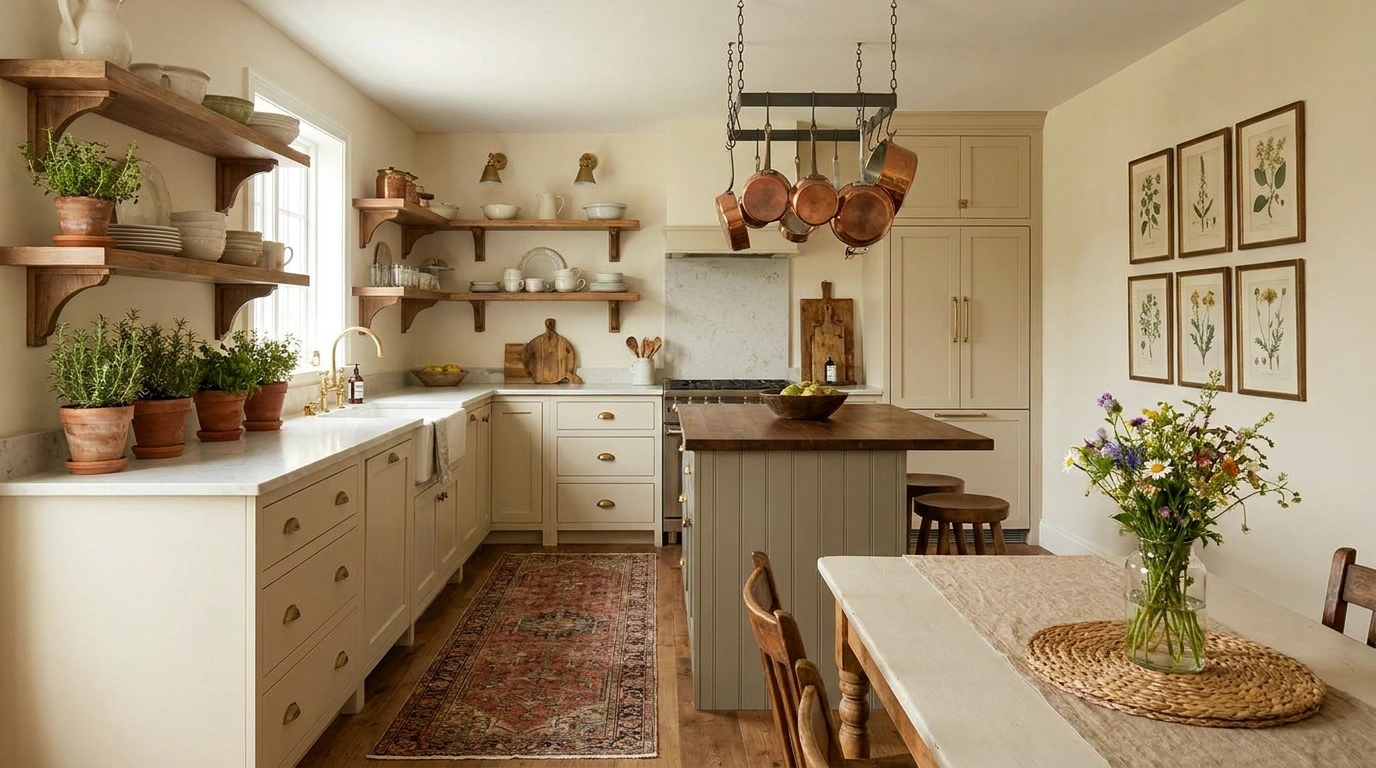
Your kitchen may have perfectly good cupboards and the visual energy of a rental listing photographed during a power cut. Those are different problems, although renovation marketing would be delighted if you confused them.
Before ordering replacements, look at what is actually dating the room. Sometimes it is the orange lighting. Sometimes it is the busy wallpaper competing with a busy countertop. Sometimes every horizontal surface has become a small appliance dealership.
An older kitchen can keep its wood cabinets, familiar layout, and slightly imperfect floor while gaining a clearer, more current look. Put your effort into the parts you see together, then deal with the details that make everyday use irritating.
Make a Keep, Repair, and Change List
Make the first list by condition and usefulness:
- Keep: sound pieces that work.
- Repair: sticking drawers, damaged finishes, and loose fittings.
- Change: elements that clash with the room or fail to do their job.
Photograph the kitchen from the doorway and view it without zooming in. That is a useful test of where your money will show. A new soap dispenser cannot negotiate peace between three competing wall finishes.
Updates That Give an Older Kitchen a Clearer Direction
Replace Fussy Handles With a Consistent Shape
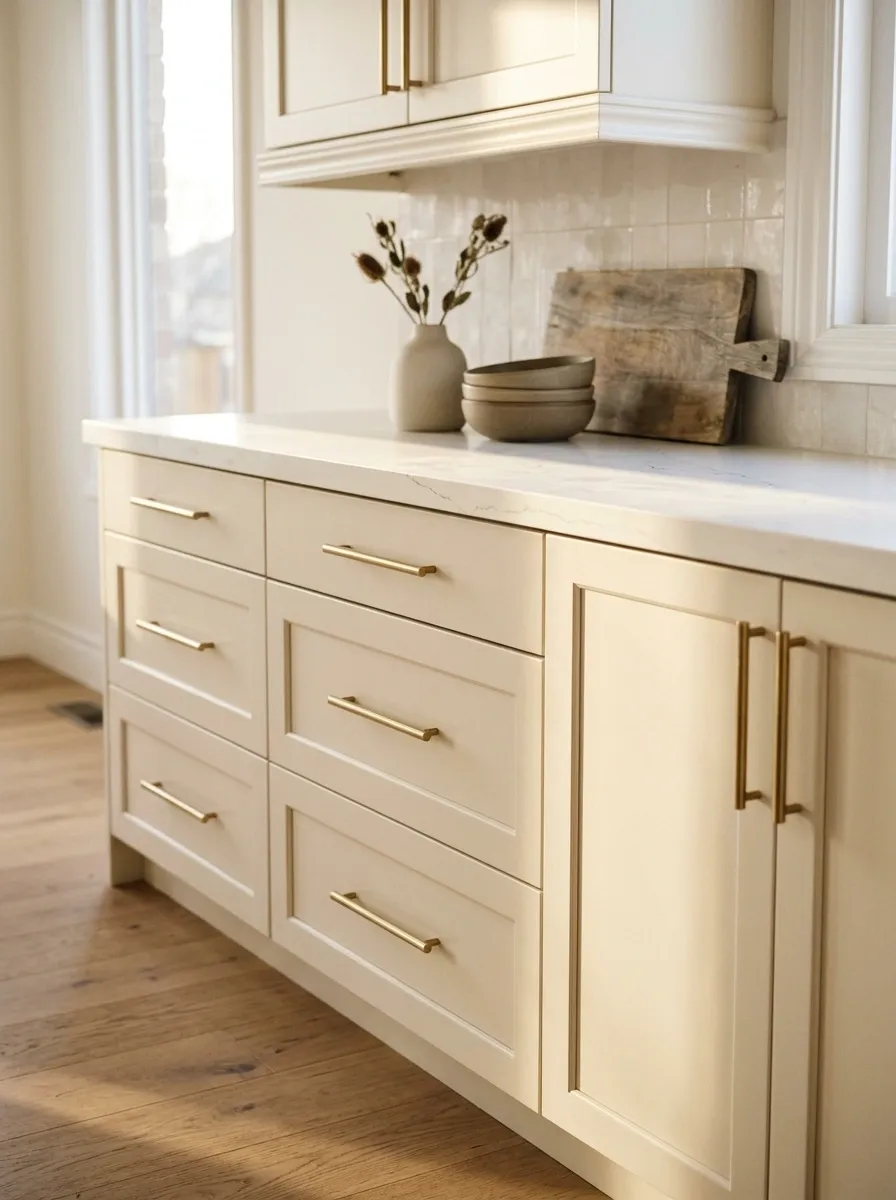
Changing ornate handles for a simpler pull can make old doors look less busy. Measure the distance between existing screw holes before buying; the finish you love is not much help if every drawer requires a new repair job.
Test a sample on both an upper door and a lower drawer:
- Check that your fingers fit comfortably.
- Open adjacent doors fully.
- Look at the finish beside the existing hinges and appliances.
Brushed metal, dark bronze, and painted finishes can all work. Consistency matters more than collecting the finish currently receiving the most social media attention.
Existing hole spacing.
Grip and door clearance.
Give the Backsplash One Job
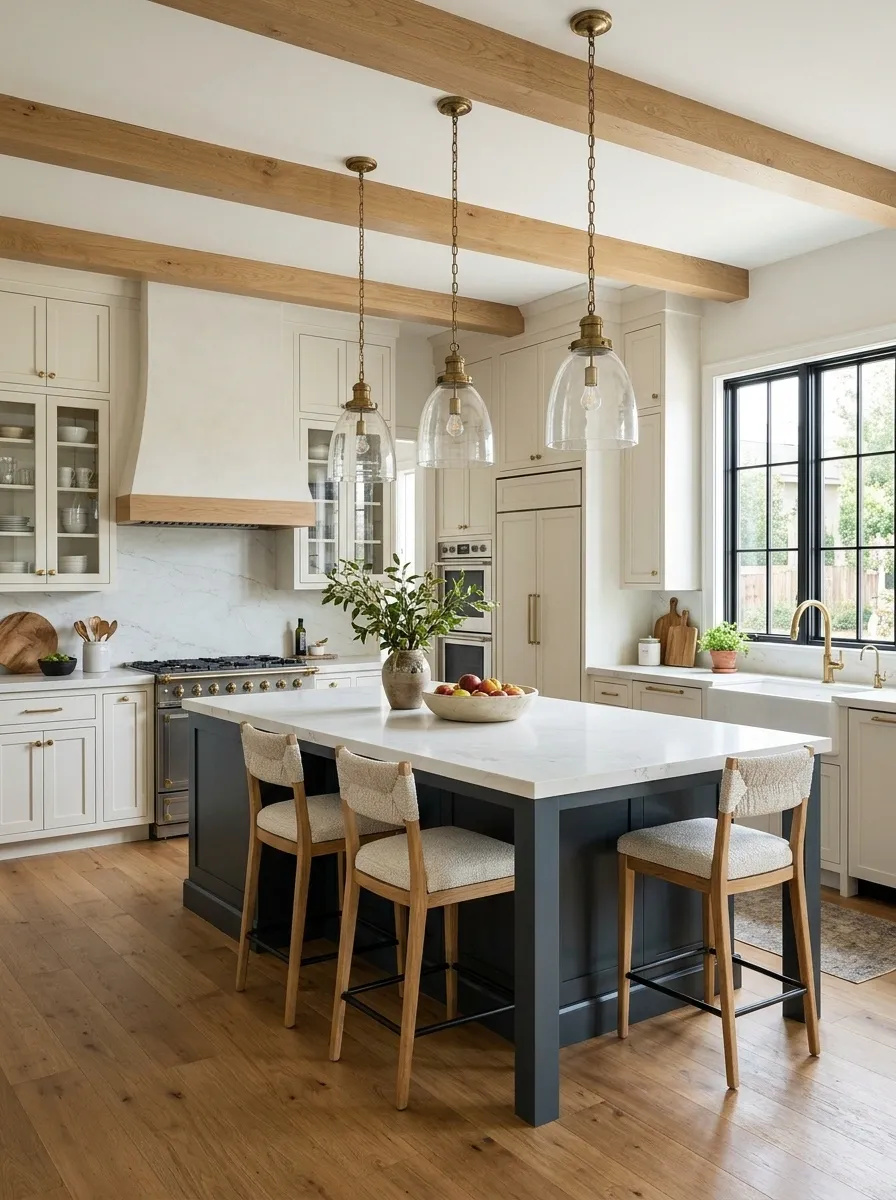
A backsplash can connect the countertop and cabinets without becoming the loudest resident. A simple tile shape in a related tone often suits an older kitchen better than another small-scale pattern.
If replacement is beyond the current budget, simplify the surrounding wall and accessories first. Any adhesive covering needs a suitable, sound substrate and explicit approval for its location, particularly around cooking heat and water. A decorative panel is not automatically a compliant backsplash. Read the product and appliance requirements before treating the word “peel” as a construction specification.
Paint Only the Cabinets That Need It
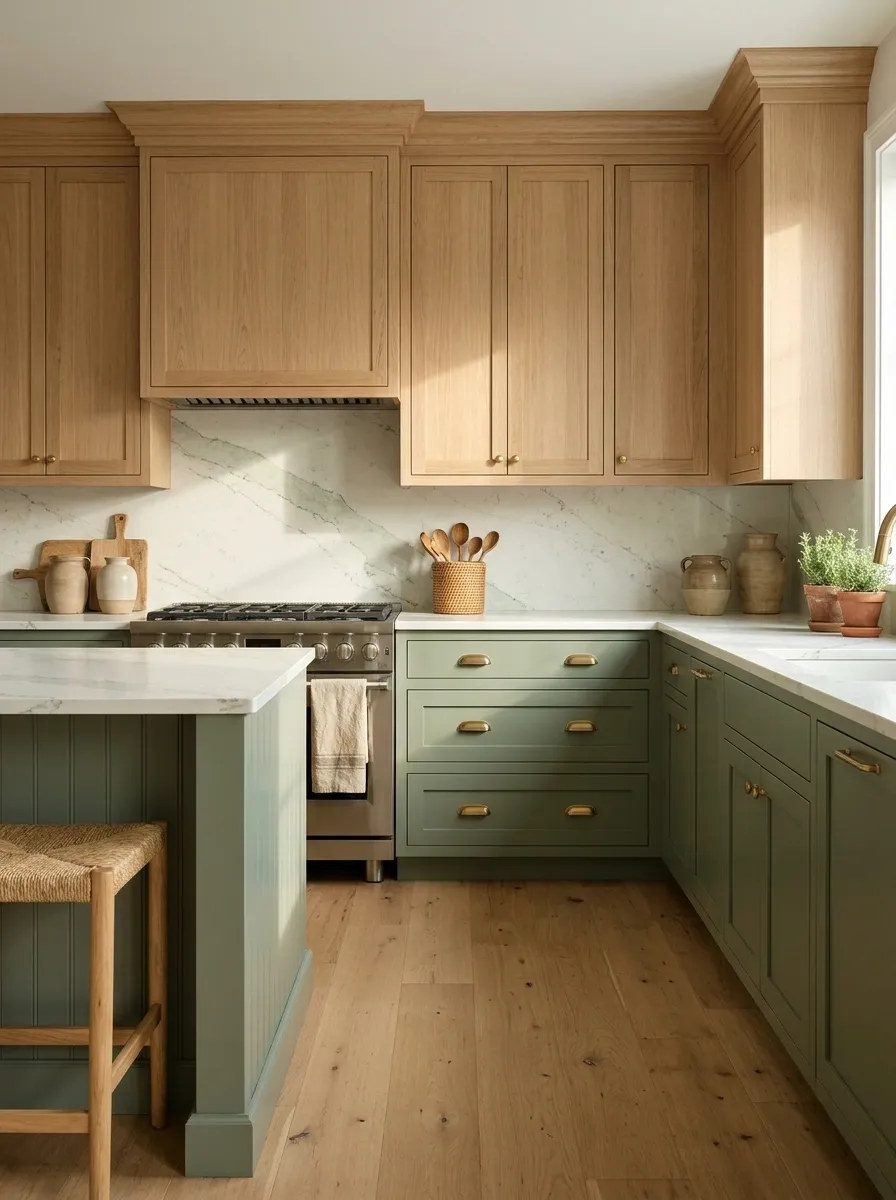
A painted island or lower run can change the room without covering every piece of wood. Choose a color connected to the floor or counter so the new finish feels part of the kitchen.
First identify the cabinet material and coating condition. Cleaning, primer, preparation, and the paint system must suit that surface; Dulux’s cabinet guidance discusses those material-dependent choices. Respect the specified curing time. Dry to the touch does not mean ready for a saucepan attack. This is a staged project, not a guaranteed Sunday-afternoon transformation.
Retained wood above. Muted color below. A shared counter between them.
Retire the Decorative Clutter Above the Cabinets
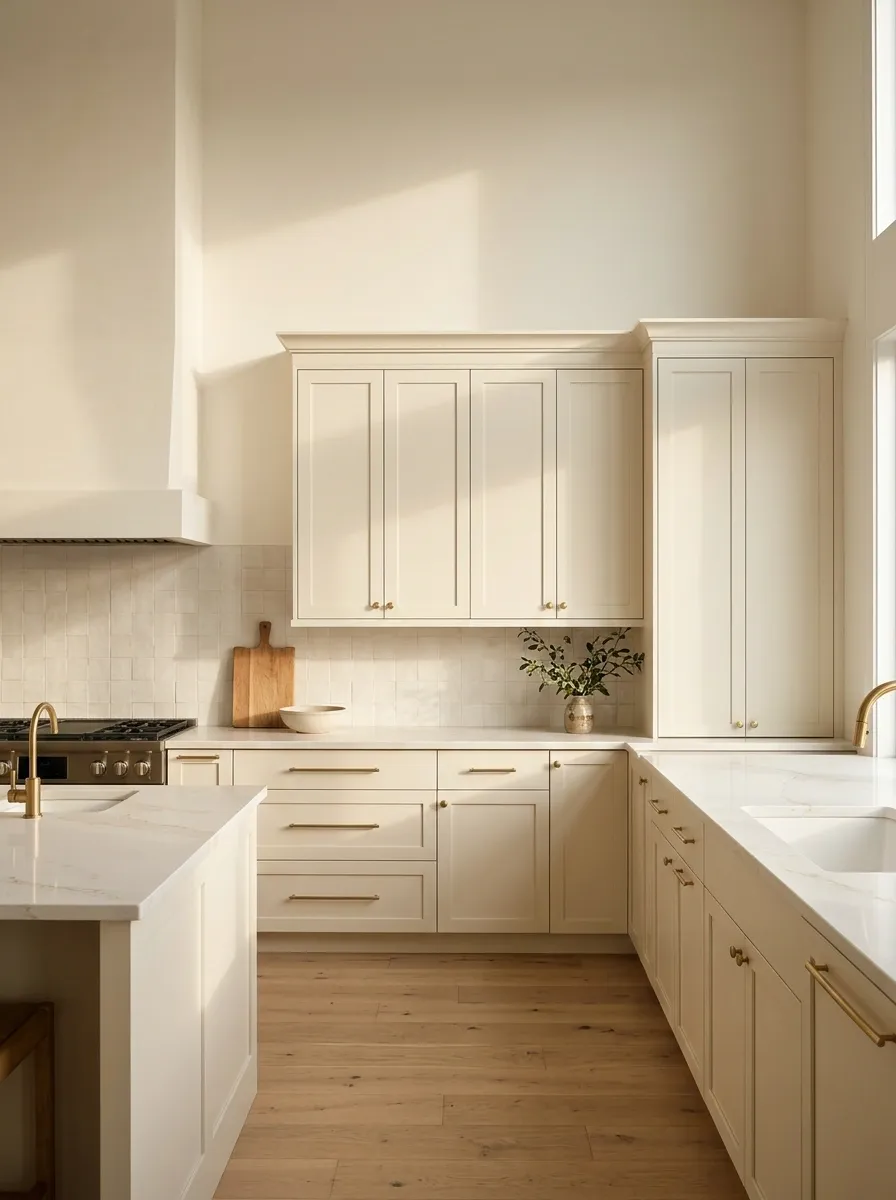
Artificial ivy and a row of dusty baskets can add a lot of visual weight to the top of a room. Remove the collection and look at the kitchen again before putting anything back.
If the gap is awkward, let it remain a quiet painted space for now. A proper enclosure is a separate joinery decision that must account for ventilation and access where relevant. You do not need to solve a small visual gap by creating a permanent ledge for objects nobody wants to clean.
Take everything down. Clean. Reassess before replacing anything.
Coordinate the Light You Already Have
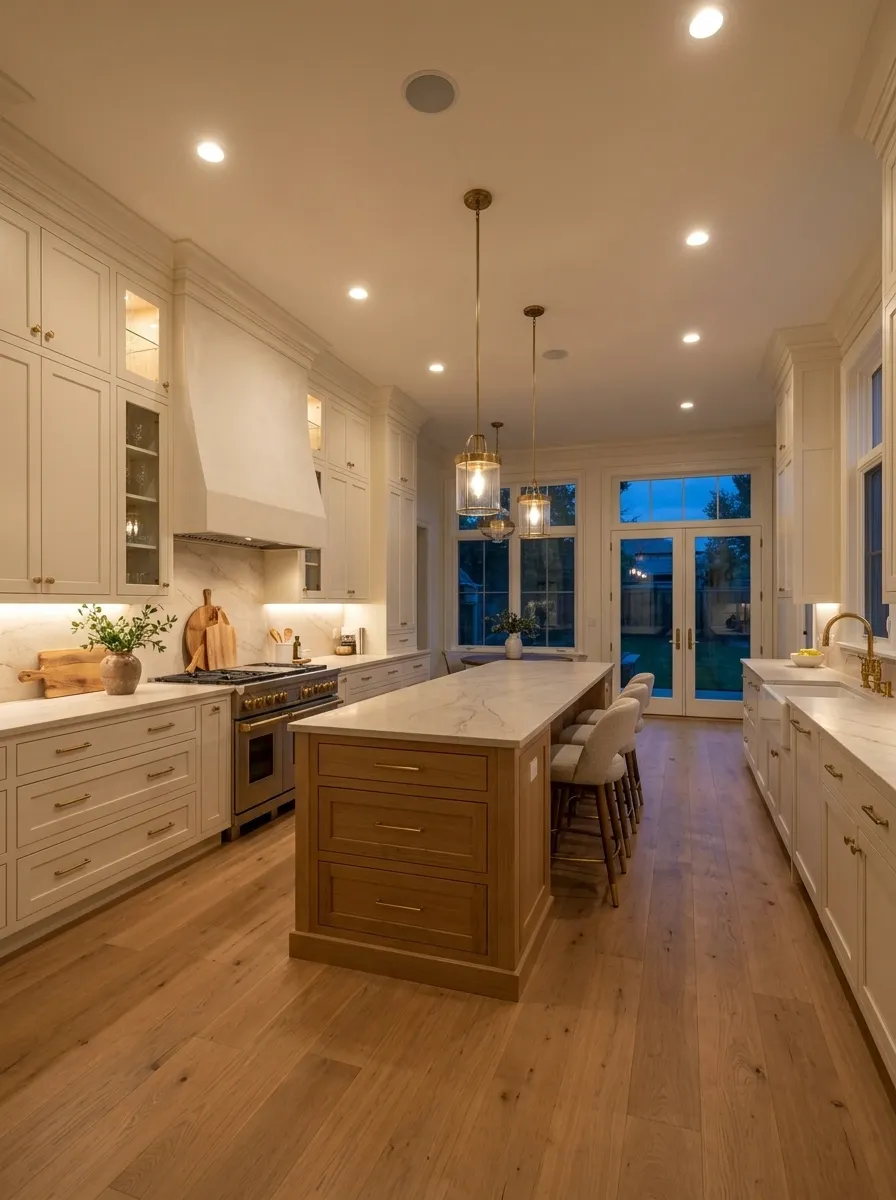
Different bulb colors can make one side of a kitchen look creamy and the other look clinical. Where the fixtures allow it, use compatible bulbs with a consistent color appearance and useful light output.
Then assess work areas after dark. A handsome ceiling fitting does not guarantee that the counter under a wall cabinet is visible. Supplemental task lighting should suit the location and have safely managed cables; permanent electrical work belongs with a qualified installer. Good lighting makes the room easier to cook in, which is a fairly convincing modernization strategy.
Give each light a job
Coordinate compatible bulbs and check the whole room.
Look at the preparation surface after dark.
Use suitable fittings and safely managed power.
Give Small Appliances an Actual Parking Plan
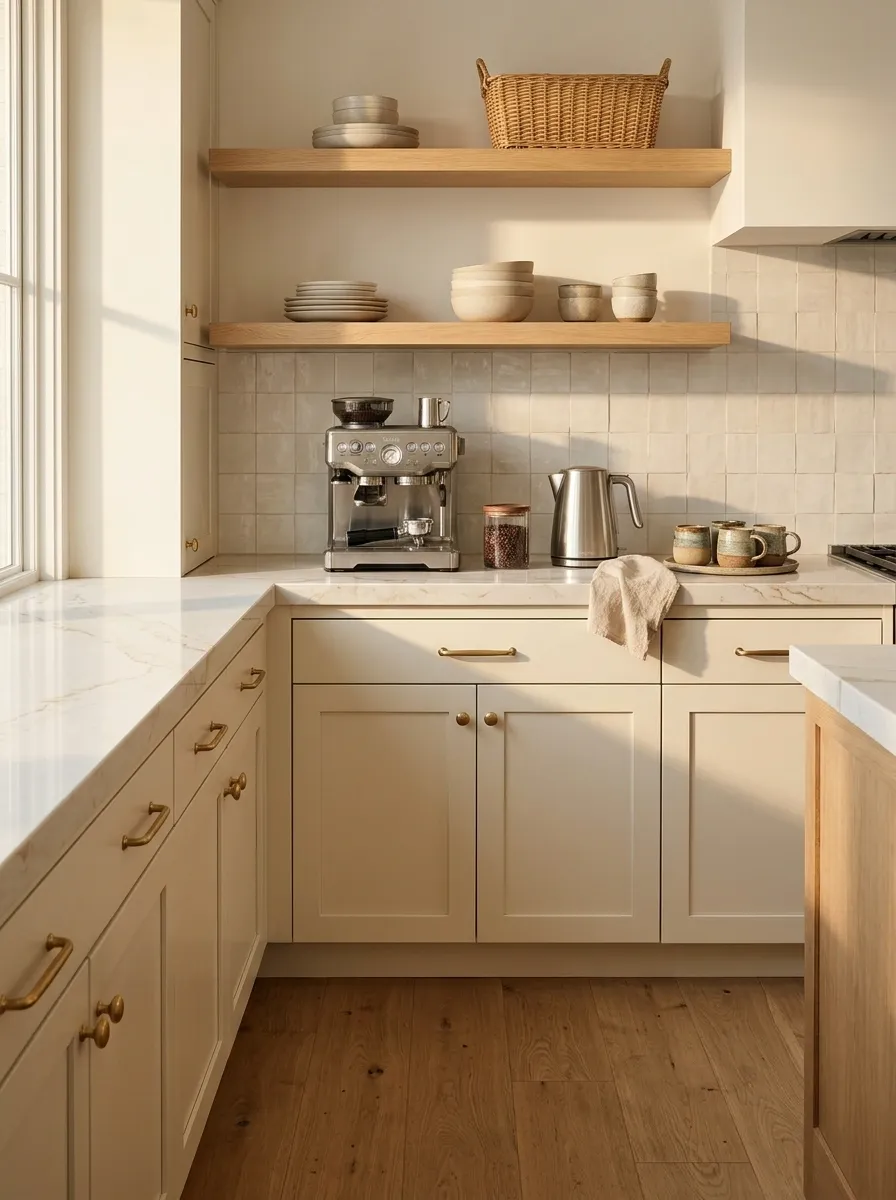
Keep the items you use daily within easy reach and store occasional appliances where you can retrieve them safely. Group the kettle or coffee maker near its supplies, while preserving a useful stretch of preparation space.
Do not operate heat-producing appliances inside an ordinary closed cupboard. Follow their clearance and ventilation instructions. The aim is a kitchen that works when breakfast happens, not a mysteriously empty counter maintained by moving the toaster to the floor before photographs. Leave room for cords without draping them across the sink or hob.
| Daily appliances | Safe, reachable station with the needed supplies. |
|---|---|
| Occasional appliances | Accessible storage that leaves preparation space clear. |
| During use | Respect ventilation, heat, water, and cord requirements. |
Simplify the Window Treatment
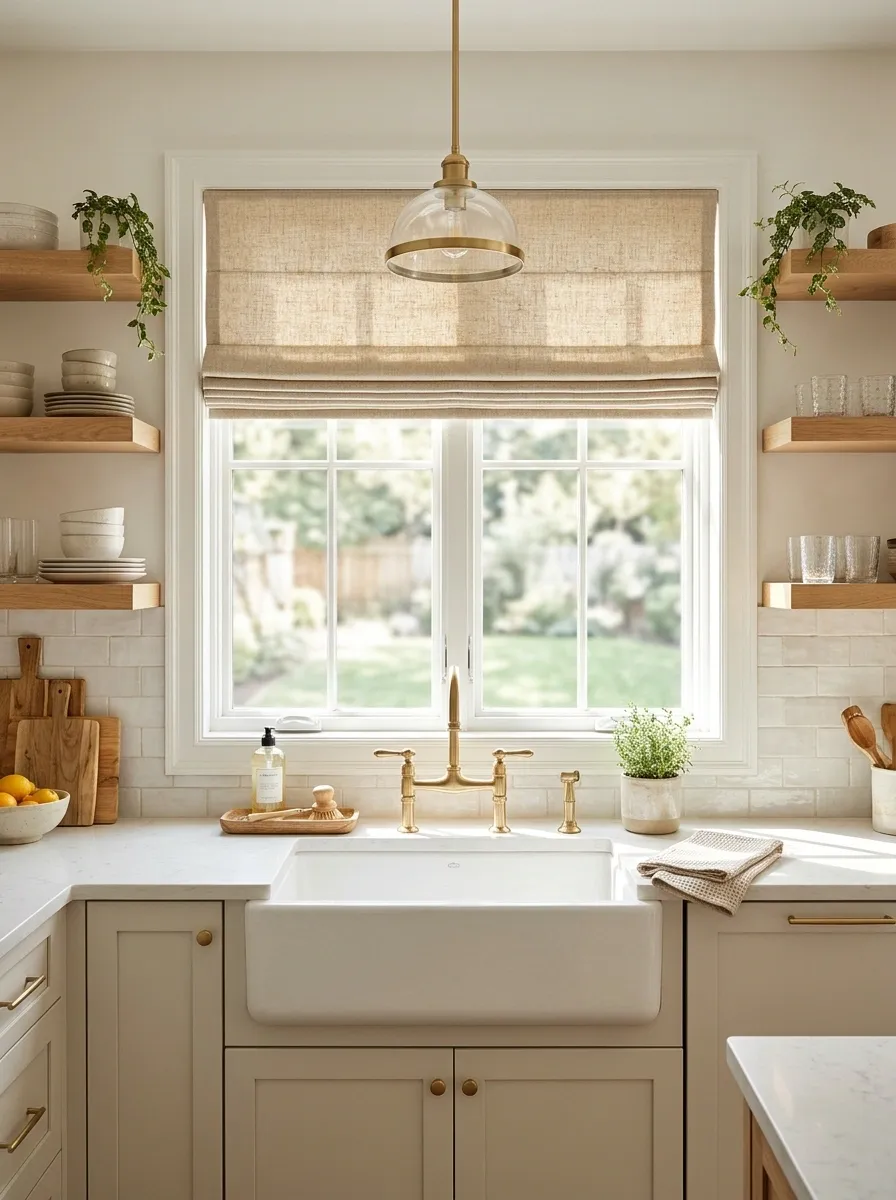
A bulky valance can make an otherwise ordinary window feel much older than the cabinets. A neat washable blind or a simple curtain can reveal more of the frame and reduce the number of competing fabrics.
Choose the treatment around four practical needs:
- Privacy when the room is lit at night.
- Control of uncomfortable glare.
- Realistic cleaning.
- Appropriate distance from cooking equipment.
Follow the product’s cord-safety requirements. If the window is directly over a splash-prone sink, a complicated fabric arrangement may become a laundry assignment. There are more enjoyable ways to spend a weekend than handwashing decorative swags above the draining board.
Privacy, daylight, washable materials, and safe clearance.
Refresh the Eating Area as a Complete Group
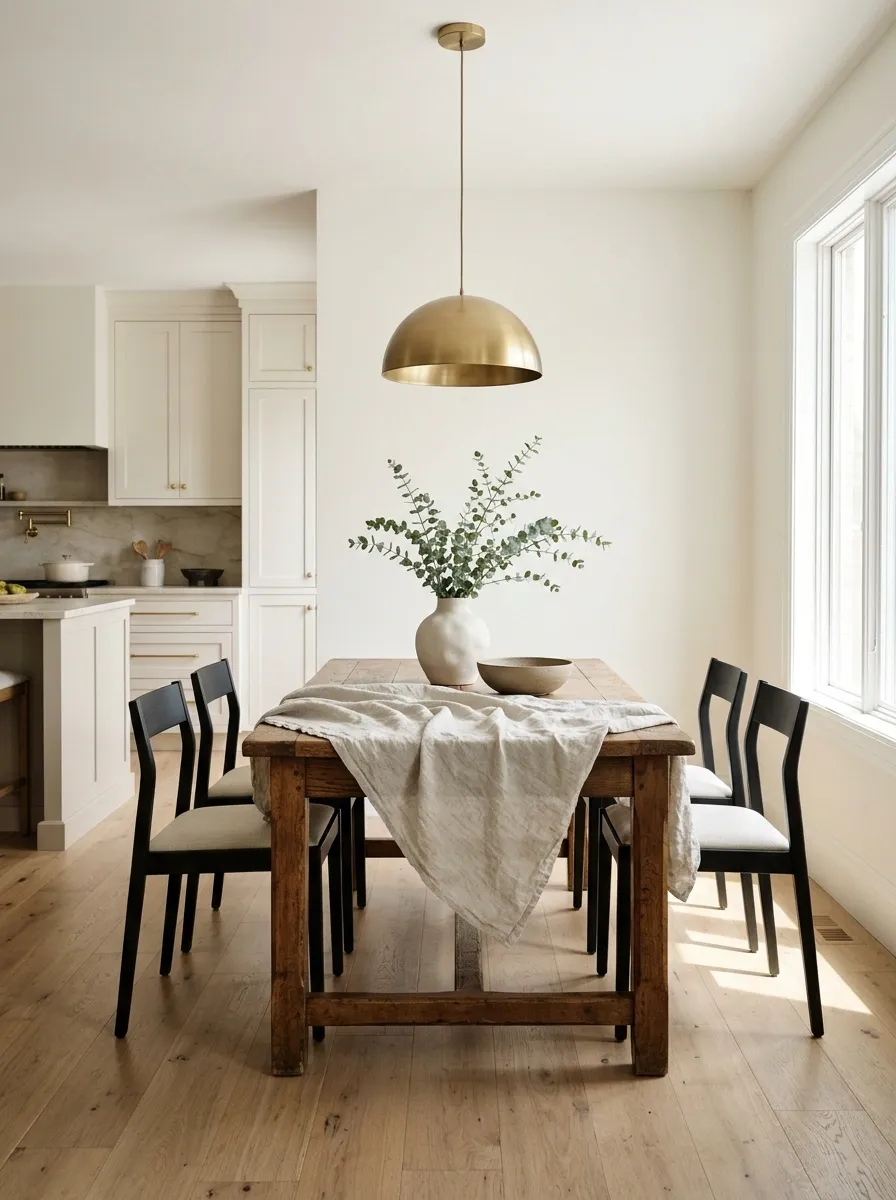
An old kitchen table can feel current with simpler chairs, a quieter table covering, and a light fitting that relates to the room. Start by removing anything that blocks seats from sliding back.
Mixing old and new works when the scale makes sense. A huge upholstered chair at a tiny table is still a huge chair, even if the upholstery is fabulous. Keep one main material or color relationship across the group. That lets the retained table feel chosen rather than stranded among unrelated replacements.
Let the Floor Be the Quiet Element
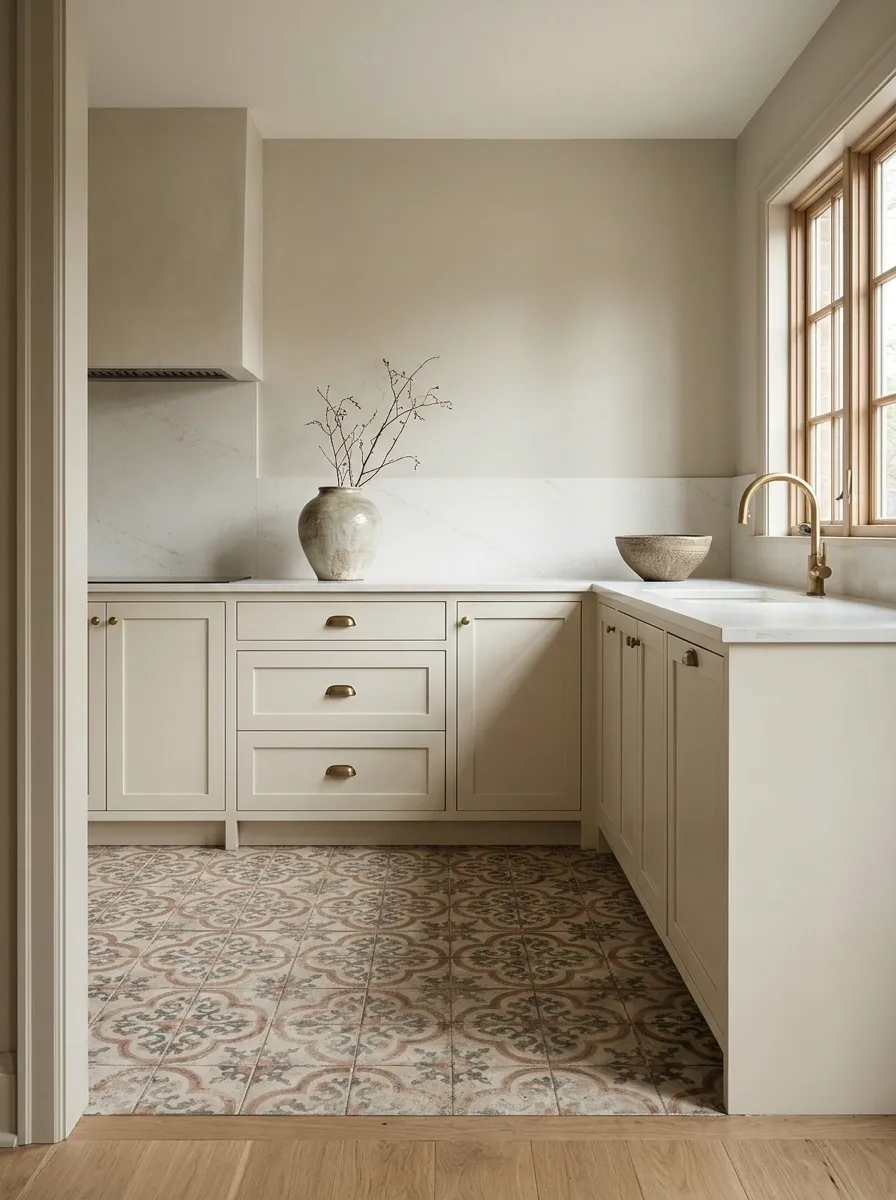
If the existing floor is sound but strongly patterned, avoid adding another busy pattern directly above it. Plain cabinet fronts and restrained walls can reduce the overall commotion without touching a tile.
If replacement is needed, check substrate condition, door clearance, appliance access, and moisture suitability before picking the finish. Do not cover unexplained damage or disturb suspect older flooring casually. A continuous, compatible surface may help a small kitchen feel more cohesive, but its installation matters more than how convincing the product sample looks on a desk.
Give it plain neighbors: calmer walls, simpler textiles, fewer countertop objects.
Remove Decorative Pieces That Interrupt the Cabinet Line
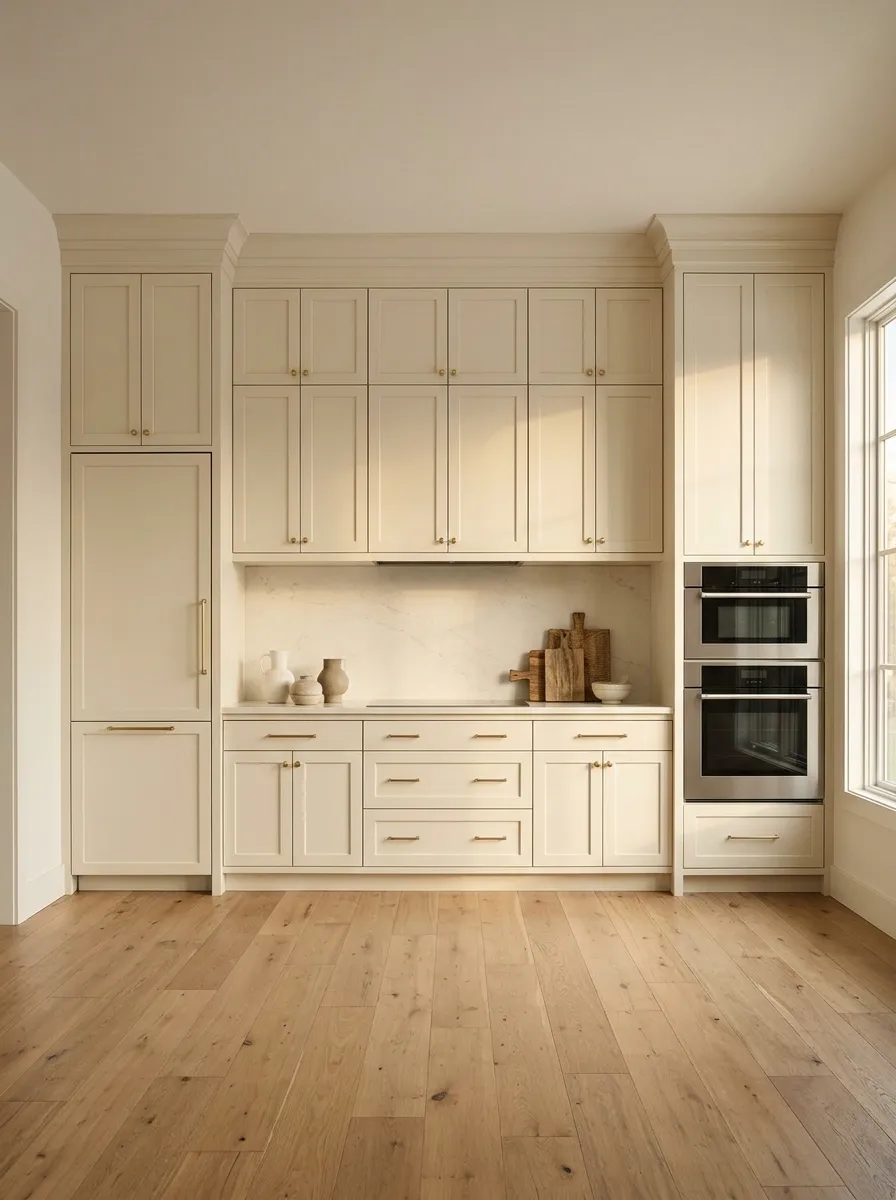
A removable fabric curtain, oversized door ornament, or collection of signs can fragment an otherwise serviceable cabinet run. Take down the extras and see whether the existing fronts already have enough character.
Keep useful handles and sound doors. Structural trim, appliance housings, and built-in components need assessment before alteration. The low-effort version is editing decoration, not attacking the cabinets with a saw because someone on a video said “just.” A cleaner outline often brings more benefit than another fashionable accessory placed in front of it.
Use Open Storage Sparingly
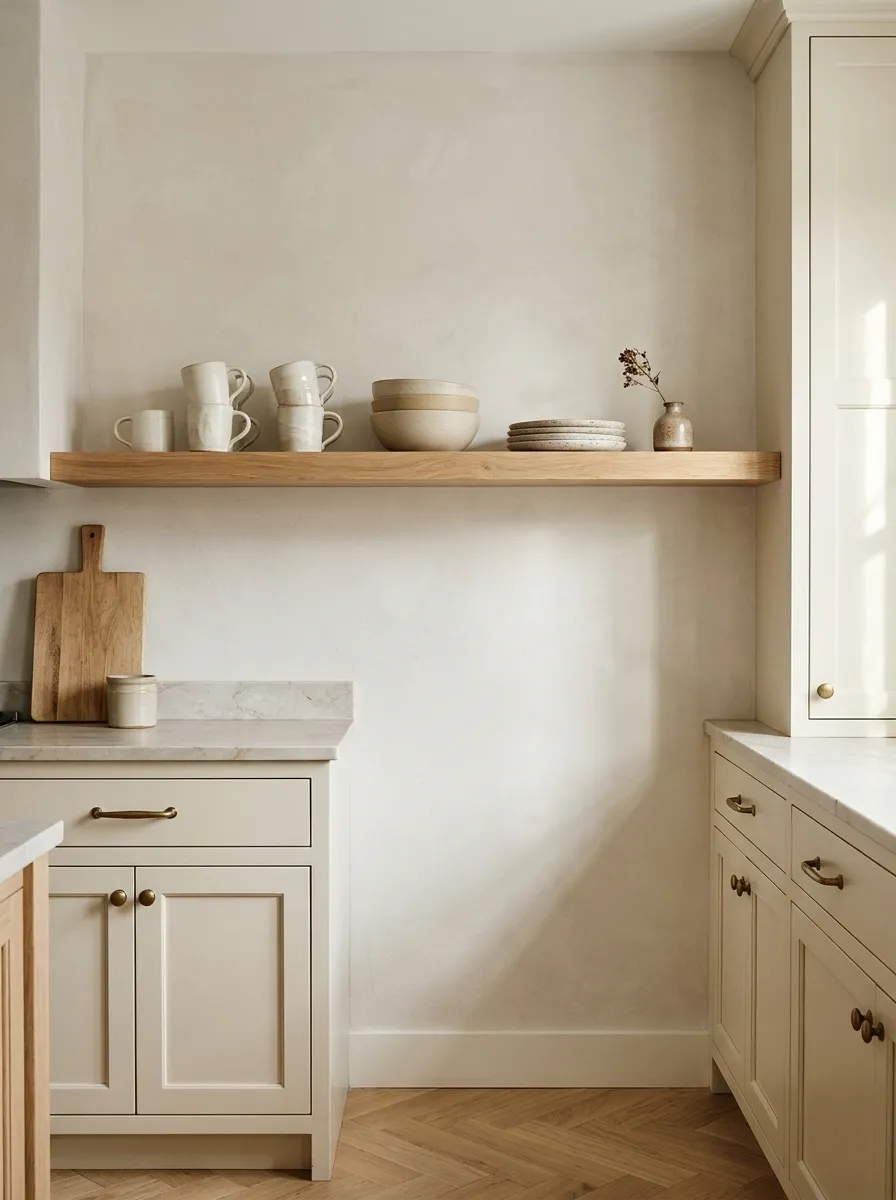
A small existing shelf can hold everyday mugs or a few regularly used bowls. Keep the rest of the kitchen’s storage doing its less glamorous job behind closed doors.
If you remove a cabinet door, check the interior finish and hinge holes before assuming the result will look finished. Open shelves need appropriate support and sensible loading. They also need cleaning. An entire wall of exposed dishes is a lifestyle decision, not a free shortcut to modern design. Start with one practical group and see whether you enjoy maintaining it.
Frequently used pieces earn the space. Rarely used clutter stays stored.
Reduce the Number of Finishes in View
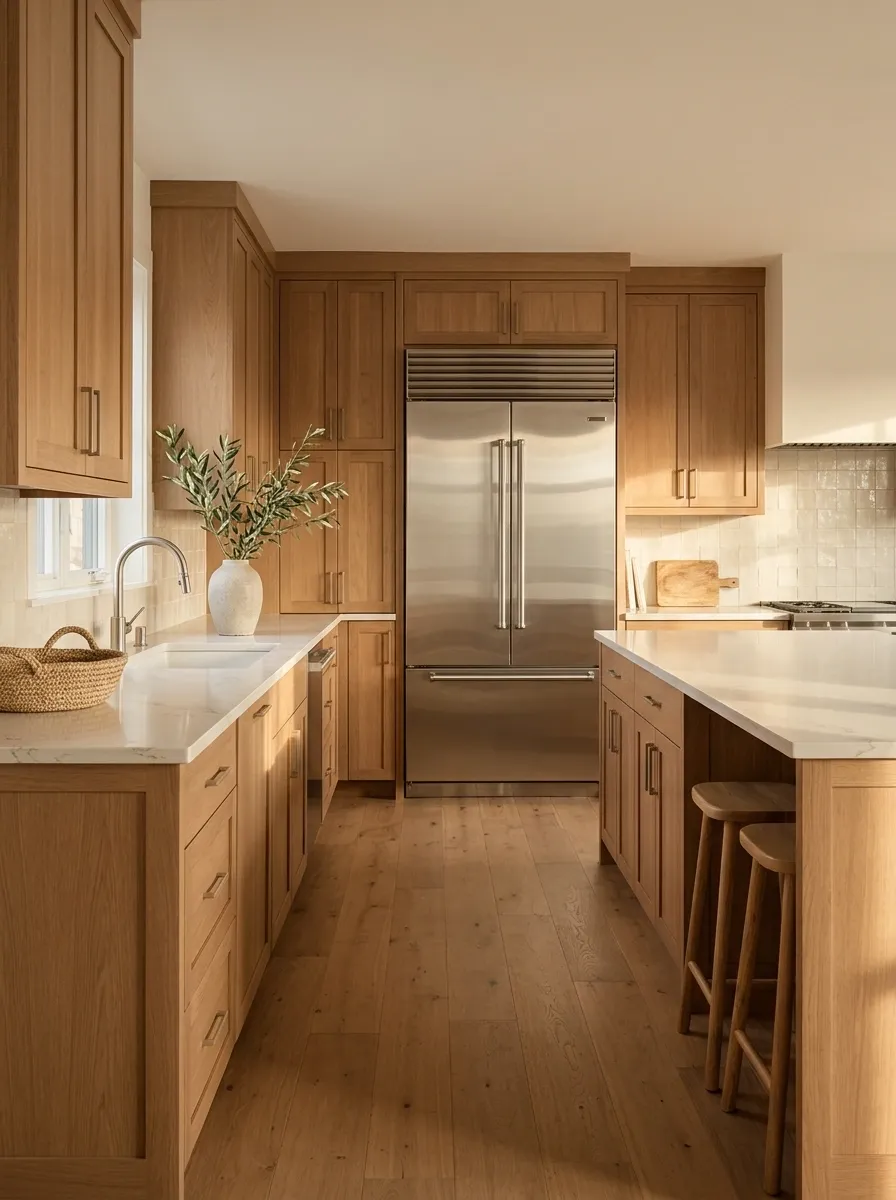
You can keep an older stainless appliance and warm wood cabinets without adding black, copper, chrome, brass, and rose gold in every accessory. Choose a small supporting palette and repeat it where it helps.
That does not require replacing every functional fitting. Move or remove the easy distractions first: utensil pots, towel colors, countertop baskets, and surplus trays. A deliberate mixture usually has a recognizable pattern. A random mixture often resembles a clearance shelf that has been granted its own postcode.
Give the Sink Area a Finished Routine
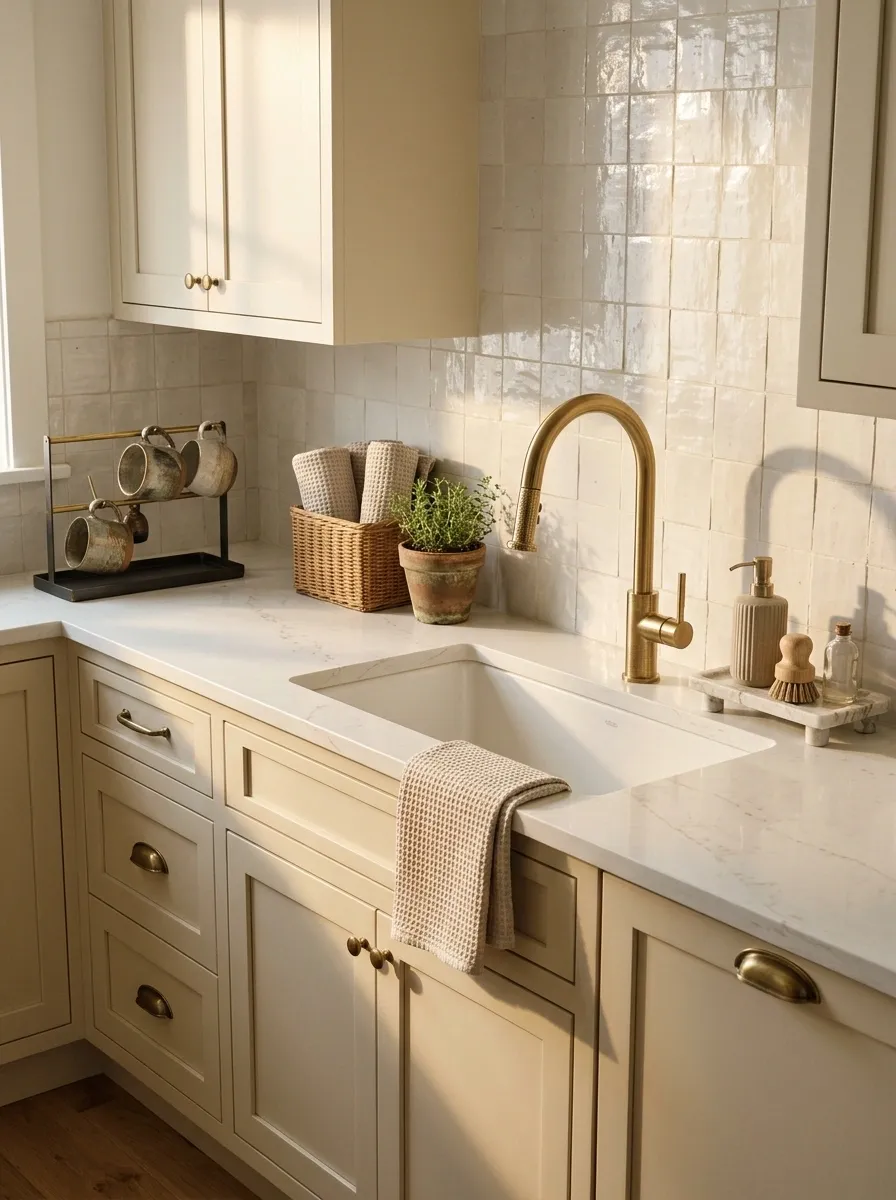
A modern-looking kitchen can still have a draining rack. Choose one that fits the available space and group soap and cleaning tools so the counter remains usable.
Keep damp items able to dry and follow surface-care directions beneath trays or mats. Moving everything into an attractive basket is unhelpful if it creates a permanently wet patch. Use the sink area for a normal day before buying more organizers. The correct arrangement should survive washing a pan, filling the kettle, and someone leaving a spoon in the wrong place.
Wash. Drain. Dry. Store. Leave room for each part.
Complete One Visible Zone Before Starting Another
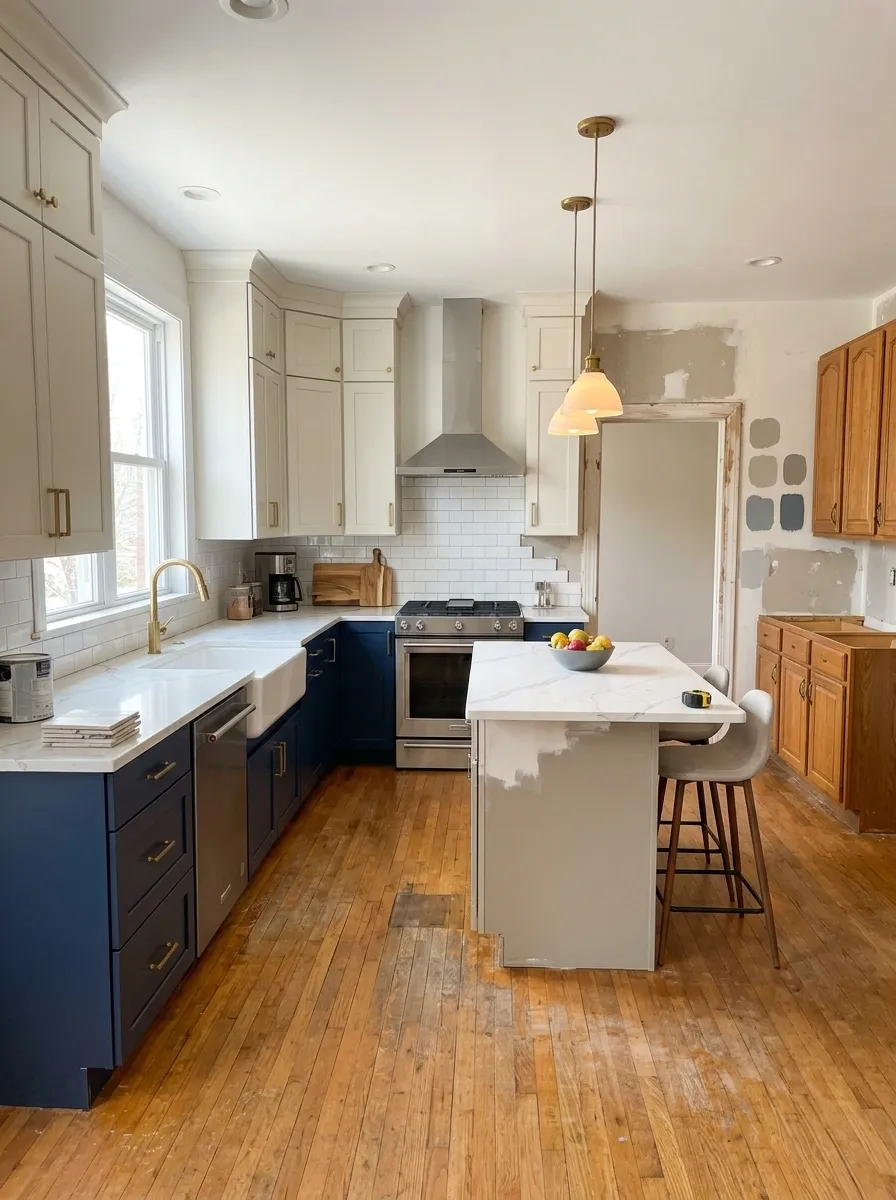
Finish a wall, cabinet run, or breakfast corner so you can judge the direction in the actual room. A completed zone tells you more than a pile of samples and half-fitted handles.
Take a new doorway photograph and compare it with the first. If the room already looks calmer, stop and live with it. An older kitchen does not need every possible upgrade simply because the shopping tab is open. Spend the remaining money on the problem that still bothers you during cooking, rather than the one a retailer has just suggested.
Then decide whether the next change is still necessary.
Use Simpler Replacement Doors on Sound Cabinet Frames
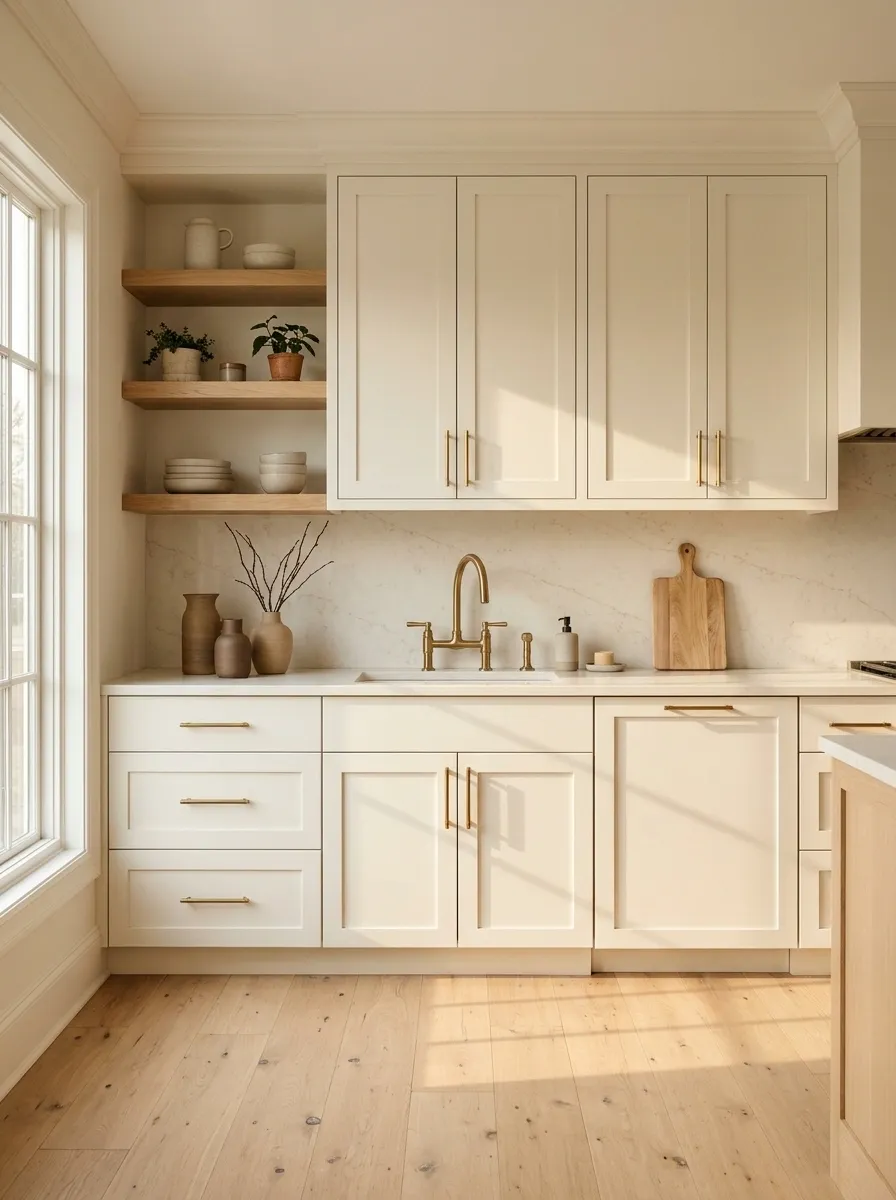
If the cabinet boxes are sound but the doors dominate the room, compatible replacement fronts may be worth pricing before replacing everything. A flatter profile can change the appearance while retaining a layout that already works.
Have dimensions, hinge compatibility, drawer construction, and frame condition checked first. Include exposed cabinet sides and finishing pieces in the plan so the new doors do not look pasted onto an unrelated kitchen. This is a joinery project with real fitting requirements, rather than a universal weekend shortcut. Keep the useful structure only when it is actually useful.
Sound frames and a layout that works.
Door sizes, hinges, drawers, and exposed sides.
Make the Refrigerator Front Visually Quieter
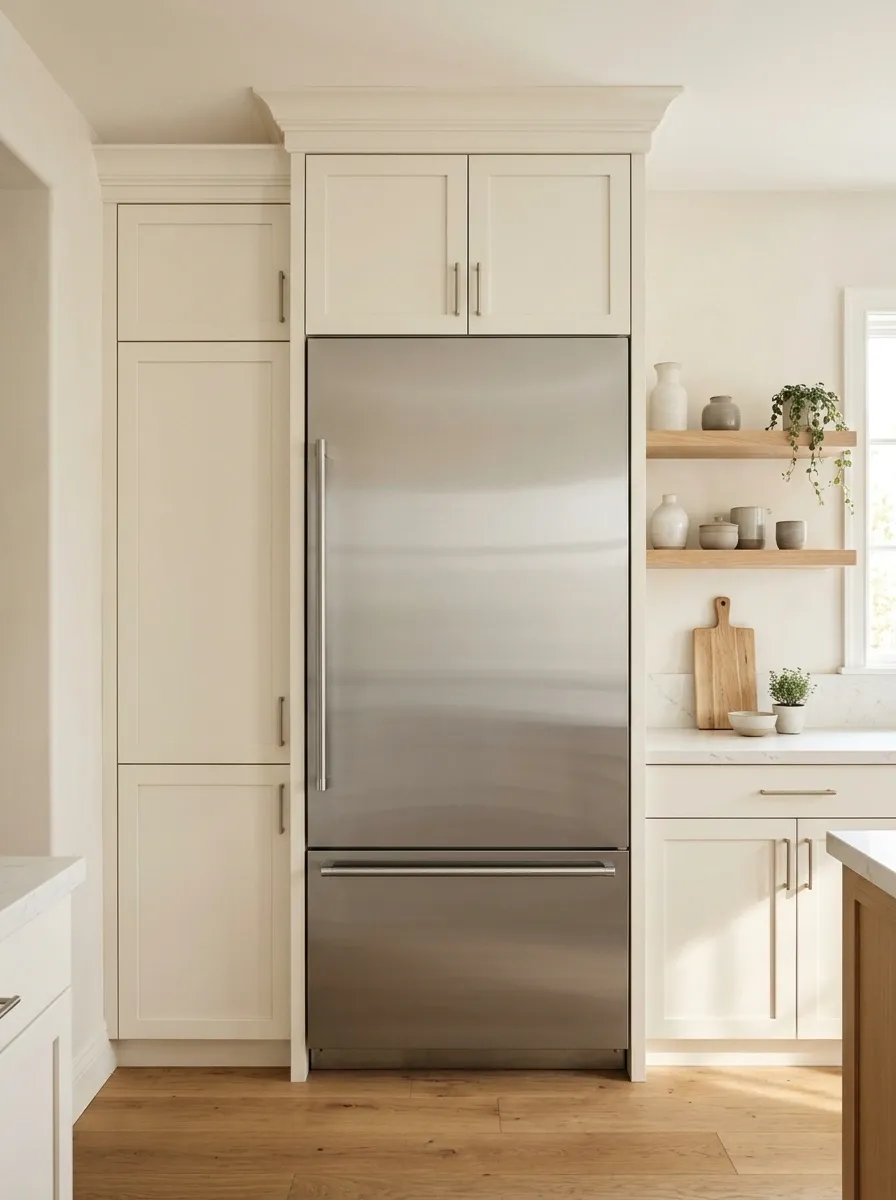
A refrigerator covered with papers, magnets, receipts, and expired invitations can make a kitchen feel busier than the cabinets do. Move current reminders to one dedicated board or folder and clear everything that no longer needs action.
Keep useful information accessible rather than relocating it to a drawer nobody opens. Clean the appliance using its approved care method and leave ventilation and seals unobstructed. A tidy exterior will not change the fridge model, but it can remove a surprisingly loud patch from the main view. The electricity bill does not require a permanent exhibition space.
| Keep visible | Only reminders that genuinely need attention. |
|---|---|
| Move elsewhere | Expired paperwork and unrelated collections. |
Choose One Useful Wall Display Instead of Several Small Signs
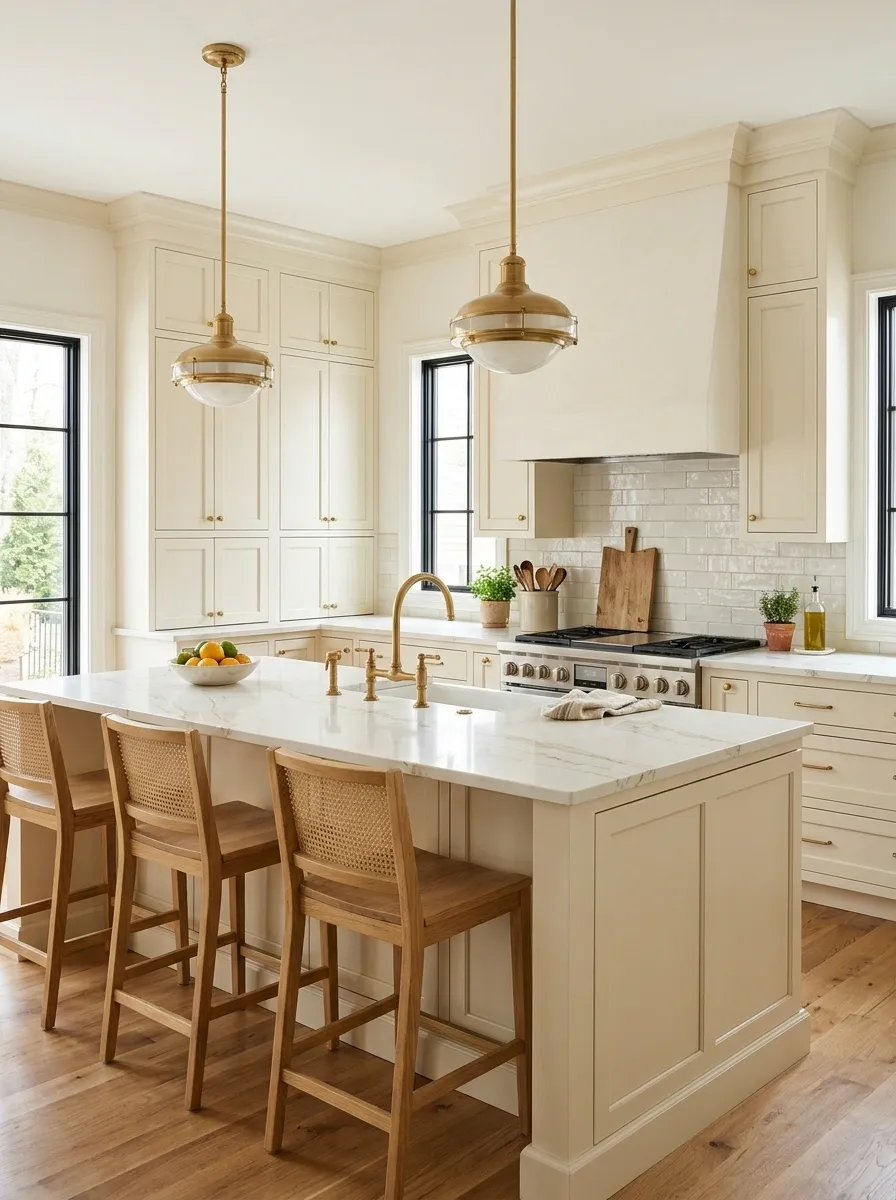
Replace a scattered collection of kitchen slogans with one substantial artwork, a simple clock, or a useful noticeboard. Choose the position around cabinets, splash zones, and the view from the doorway.
A larger piece can give the eye somewhere to settle without increasing the number of objects in the room. Keep the frame and material appropriate to the location, and use suitable mounting. You probably do not need written confirmation that the kitchen is where people eat. The table, oven, and steadily disappearing biscuits have already provided convincing evidence.
Art, a clock, or a genuinely useful board.
Clear of splashes, heat, and cabinet movement.
Tuck Peninsula Seating Beneath the Counter
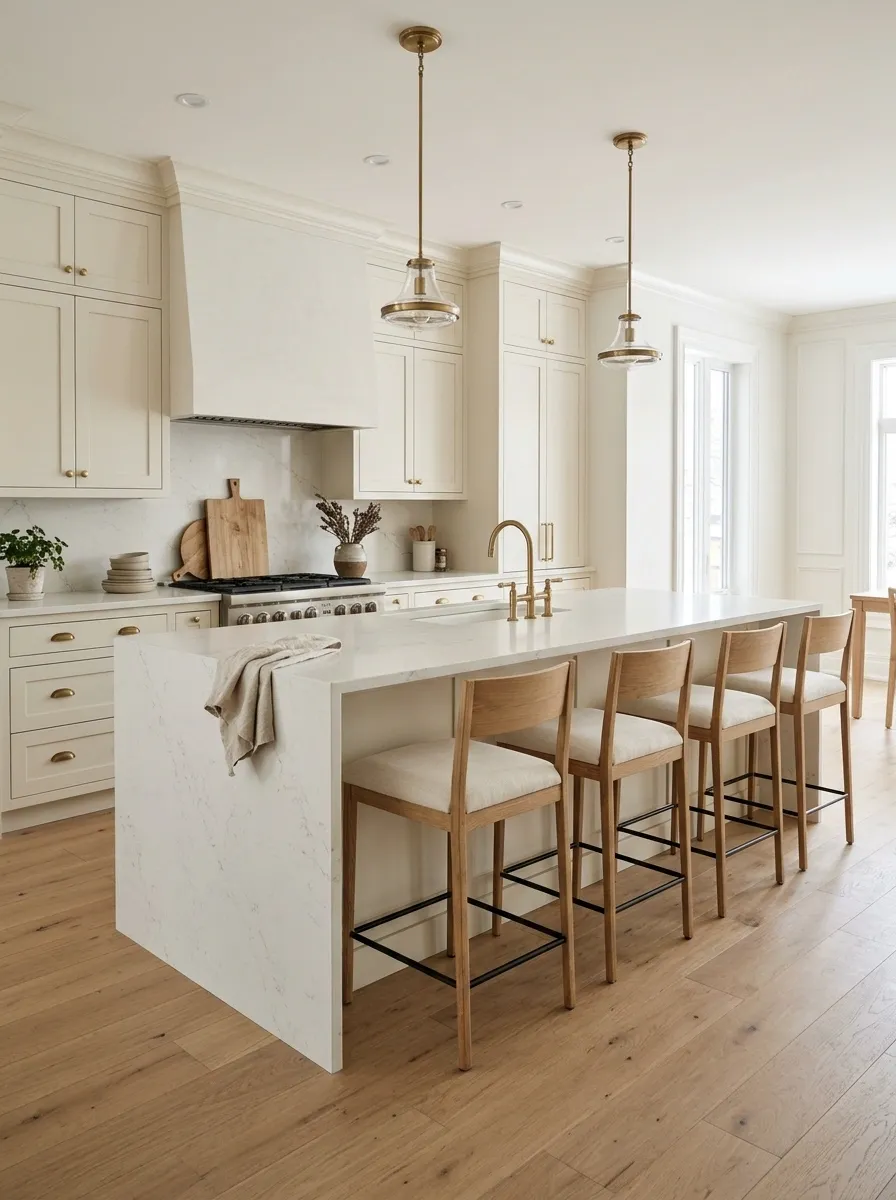
If your kitchen has a seating overhang, stools that fit fully beneath it can make the room look less crowded. Measure the usable height and knee space before selecting the seat.
Check that the stool is stable, comfortable, and compatible with the counter height. Leave circulation space behind anyone sitting there. A slimmer back or simpler frame may suit a busy older kitchen, but comfort still matters. Modernizing the seating should not require everyone to eat breakfast with their knees pressed into cabinetry as a demonstration of commitment to minimalism.
Give Recycling a Proper Home
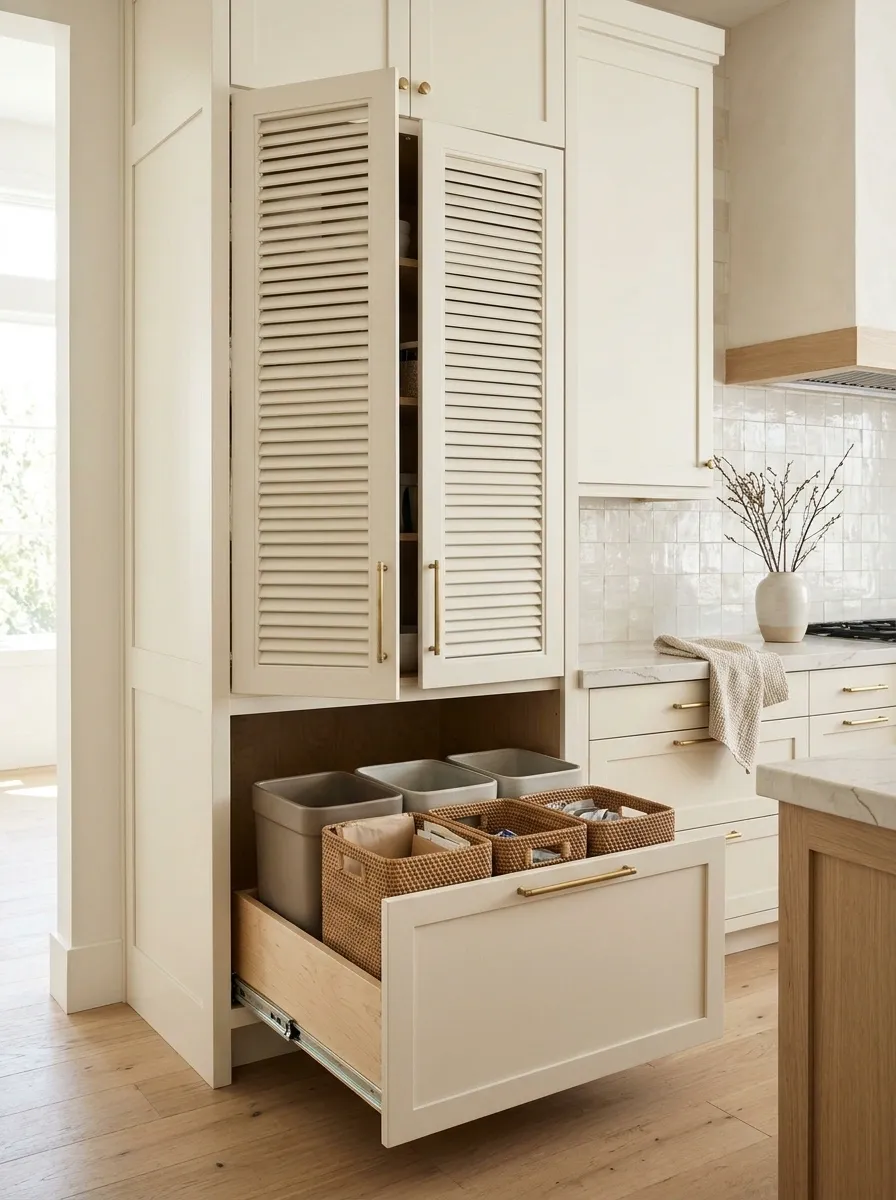
An overflowing collection of bags and boxes can make even a freshly painted kitchen feel unfinished. Use appropriately sized sorting containers in a reachable cabinet, utility area, or suitable freestanding station.
Choose the arrangement around your local collection rules and how frequently you empty it. Keep doors and walkways clear, and make the containers straightforward to clean. A closed unit can look calmer, but only if the contents fit. Hiding a chaotic pile behind a narrow door simply gives the problem a surprise-release mechanism. Test a normal week’s volume before buying the final containers.
Follow the collection system you actually use.
Allow for realistic volume between emptying days.
Coordinate the Countertop Edge With Any Planned Replacement
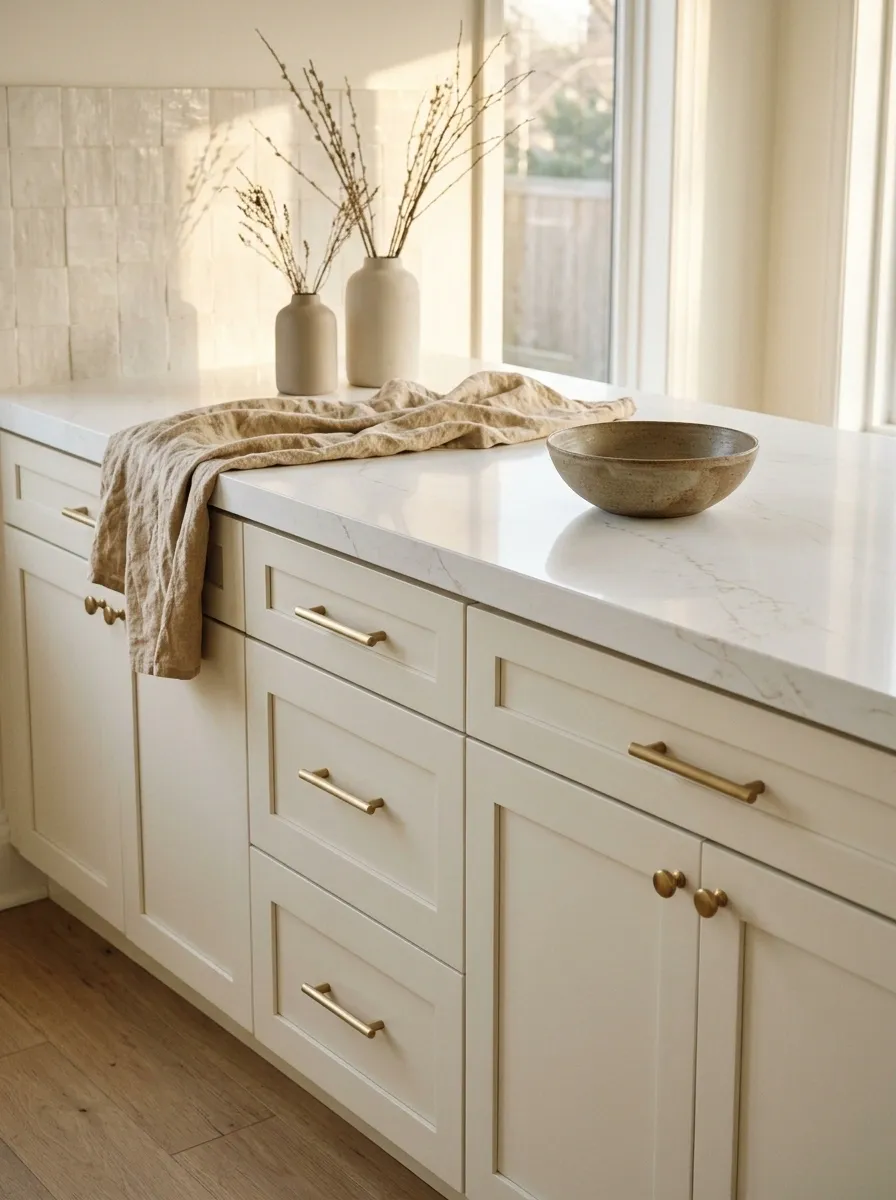
If the counter already needs replacing, compare edge profiles as well as surface colors. A straightforward edge can suit simple cabinets and make the whole run feel more current.
Ask the supplier how the chosen material handles joins, unsupported areas, cutouts, and the existing cabinetry. Include the sink and appliance fit in the assessment. This is not a reason to replace a sound counter purely for a fashionable outline. It is a detail worth deciding when replacement is necessary, before a large invoice arrives with a decorative edge you never actually liked.
Surface color, edge profile, joins, and cabinet finish.
Sink, appliances, supports, and existing cabinet condition.
Create a Pantry Interior You Can Actually Navigate
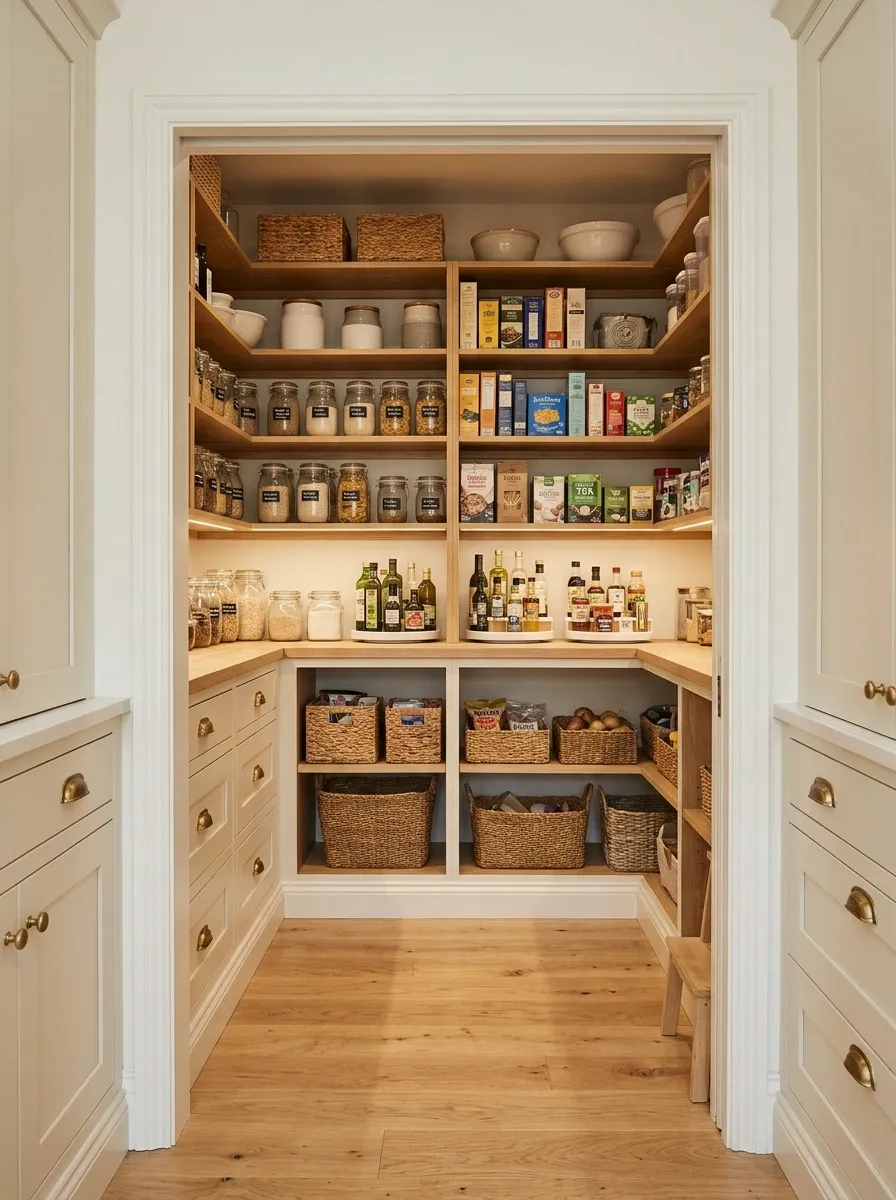
A pantry that opens easily and reveals usable shelves makes an older kitchen feel better organized. Group food by how you cook, keep labels visible, and place frequently used items within comfortable reach.
Use containers only where they serve a clear purpose. Keep product identity, allergen information, and storage instructions available where relevant. You do not need to decant every item into matching vessels. Finding the rice quickly is a stronger result than discovering you now own three beautiful jars containing substances whose identity depends on optimistic memory.
Bring a Freestanding Larder Into the Main Color Scheme
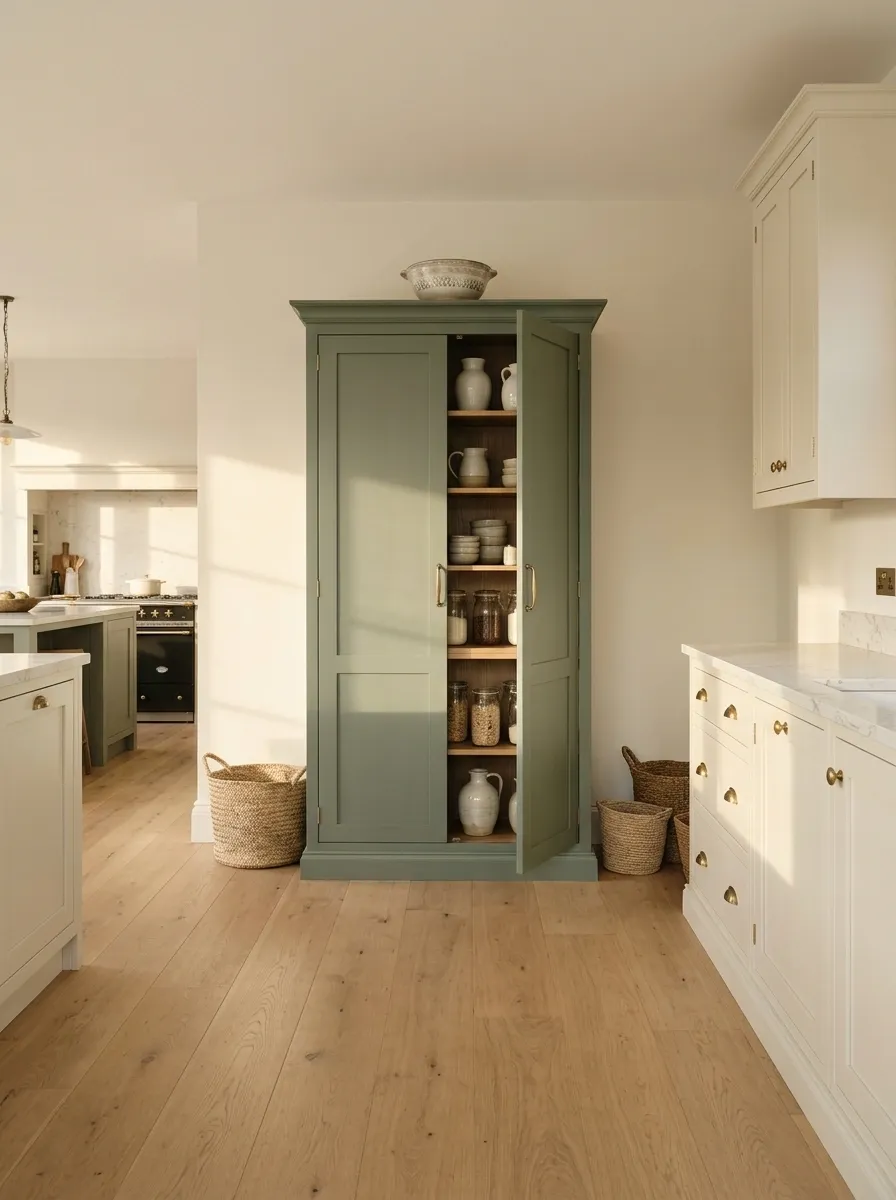
A separate cupboard can look intentionally part of the kitchen when its finish relates to the existing doors or walls. A muted green, warm neutral, or retained timber can work depending on the surrounding materials.
Check delivery access, door swings, anchoring, and the cabinet’s intended use. Keep the top simple and the interior organized around useful supplies. A freestanding piece can add character to a room of fitted cabinets. It should still leave enough floor to cross the kitchen without turning sideways and privately regretting the antique-shop visit.
Connect the finish to a wall or cabinet color.
Delivery access, opening space, and appropriate anchoring.
Trade Tiny Decorative Accessories for Fewer Useful Pieces
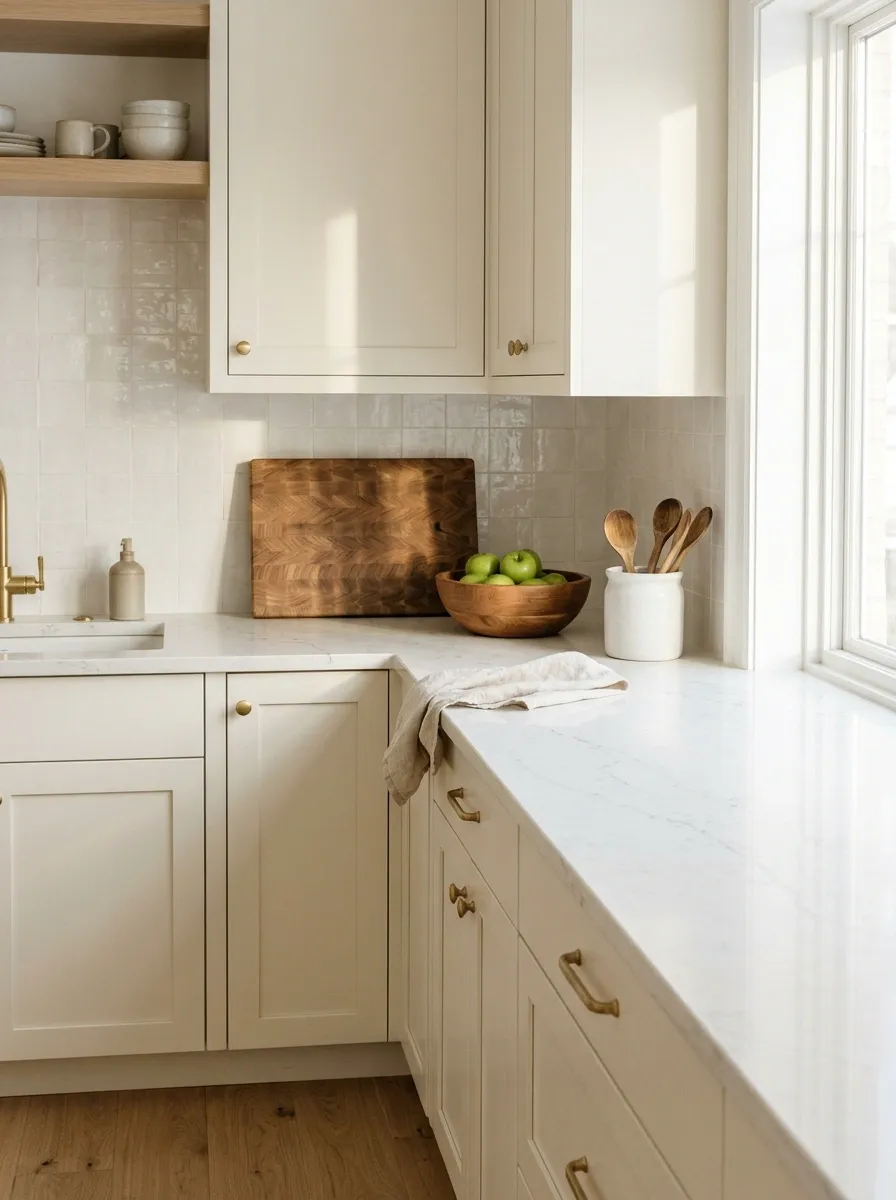
A solid fruit bowl, a well-sized utensil pot, and a useful board can give a counter a clear rhythm. Choose the pieces for their real tasks and leave adequate preparation space between them.
Let one material repeat, such as timber or plain ceramic, rather than matching every object precisely. Move occasional decorative pieces elsewhere if they make cleaning awkward. This is the finishing layer after practical problems are addressed. Buying a more sophisticated pepper mill will not modernize the room single-handedly, although the pepper mill industry would understandably enjoy that interpretation.
| Useful pieces | Fruit bowl, utensil storage, and a suitable board. |
|---|---|
| Useful space | Keep a real preparation area between the objects. |
Cook Dinner Before Making the Next List
Once the first changes are finished, use the kitchen normally. Watch where you put things, where you cannot see, and which drawer still makes you mutter.
Those observations can set the next budget. A room that looks fresher but remains awkward needs a practical adjustment. A room that works well and finally feels pleasant might simply be finished for now.
For older painted surfaces, identify possible hazards before sanding, drilling, or stripping. In the US, the EPA’s lead-safe renovation guidance is particularly relevant to homes built before 1978; other locations have their own building histories and requirements. Cosmetic ambition is no reason to skip proper assessment.