
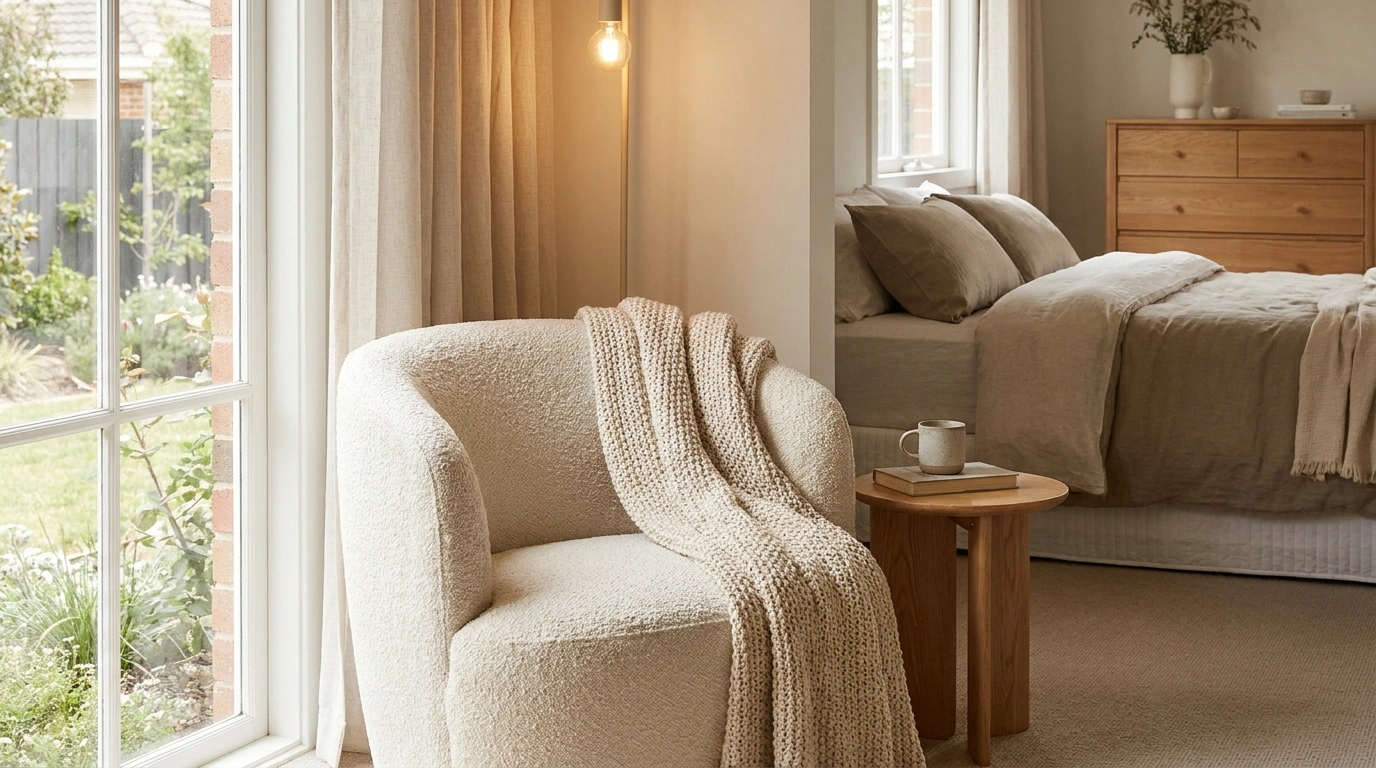
Somewhere between “a lovely place to read” and the third abandoned cardigan, the bedroom chair usually receives a promotion to unpaid wardrobe assistant.
That does not mean a chair is a bad idea. It means the chair needs an actual job and enough space to perform it. A reading seat needs light. A dressing chair needs to be near the clothes. A place to put your shoes on should not require climbing over the bed first.
Choose the position before the upholstery. Then decide whether the room needs something upright, something generous, or something small enough to leave the wardrobe doors on speaking terms with the furniture.
Test the Footprint With the Chair in Use
Mark the chair’s full footprint, including angled legs and projecting arms. Then allow for:
- Walking up to the seat.
- Sitting down and standing up.
- Opening nearby drawers and doors.
- Reaching a table or lamp.
A chair that technically fits can still make the room awkward. Your floor plan needs to accommodate a person, not just an attractive product outline.
Chairs That Belong in a Bedroom
A Slipper Chair at the Foot of the Bed
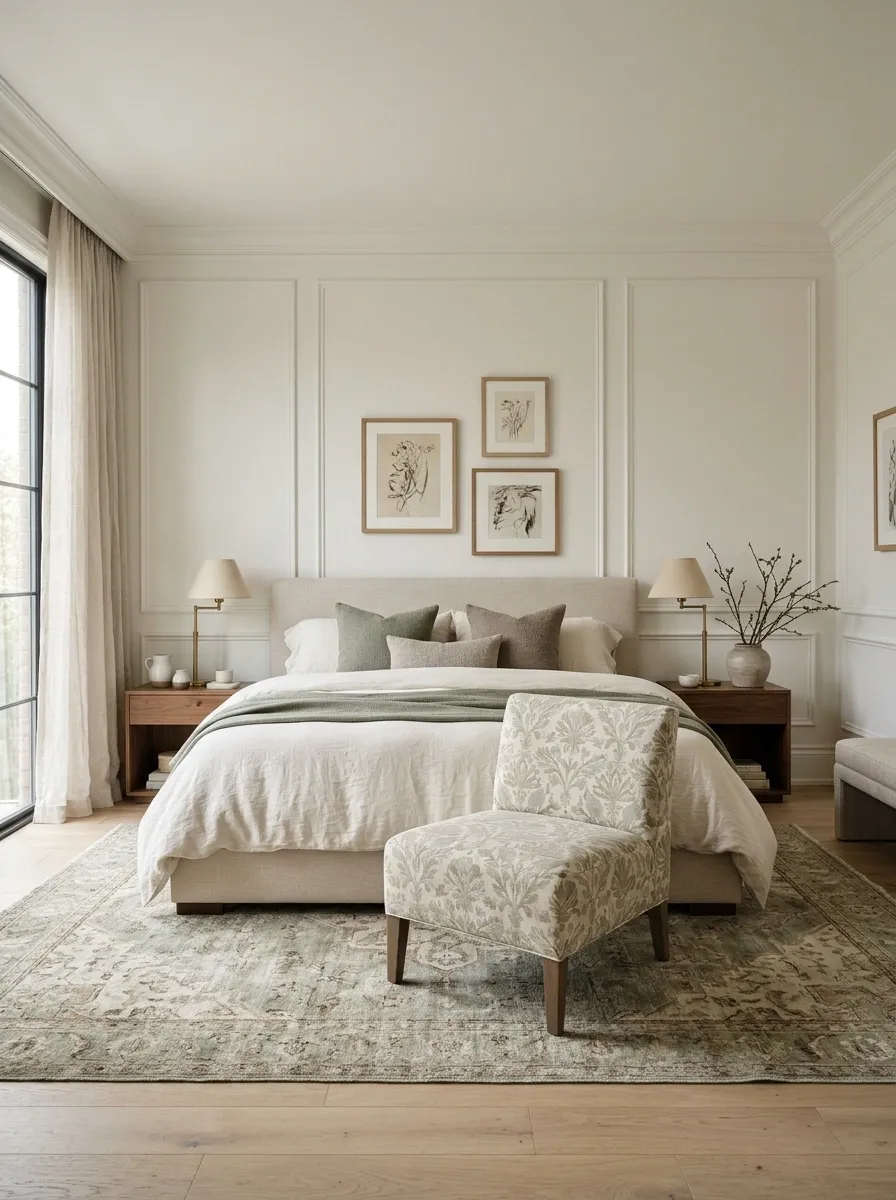
An armless slipper chair provides a dressing seat without the width of a conventional armchair. It works at the foot of a bed when a comfortable walking route remains.
Check its height against the bed and any storage drawers. A patterned fabric can enliven plain bedding, while a solid fabric suits a busier room. Give discarded clothes another home before the chair develops its inevitable secondary career.
A Woven Chair in a Light, Airy Corner
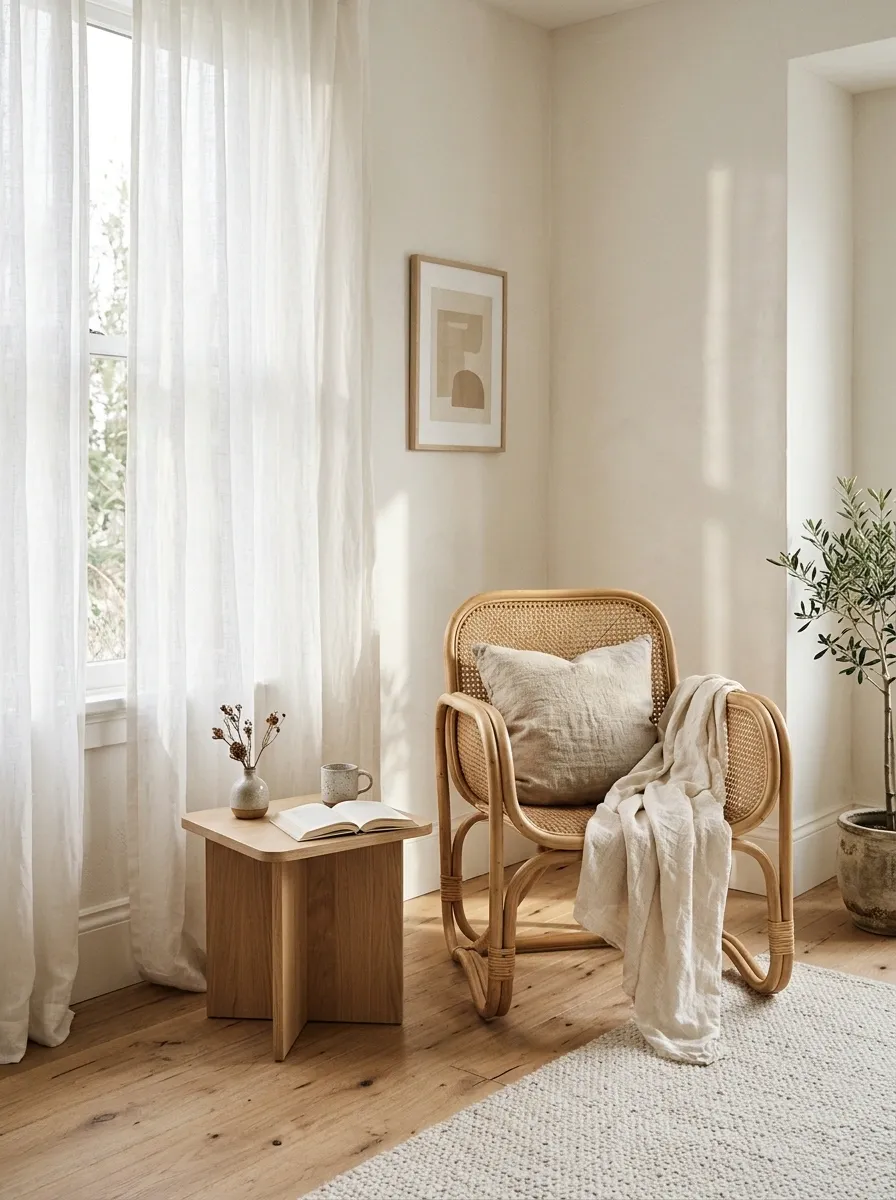
A woven chair brings texture without creating a large upholstered block. Pair it with plain curtains and a small timber table.
Choose a piece designed for daily seating and inspect its frame and woven surface, particularly when buying secondhand. Add a suitable cushion if needed. An open structure can look lighter, but the legs still occupy floor space. See-through furniture has not negotiated an exemption from physics.
An Upholstered Swivel Chair for a Shared Corner
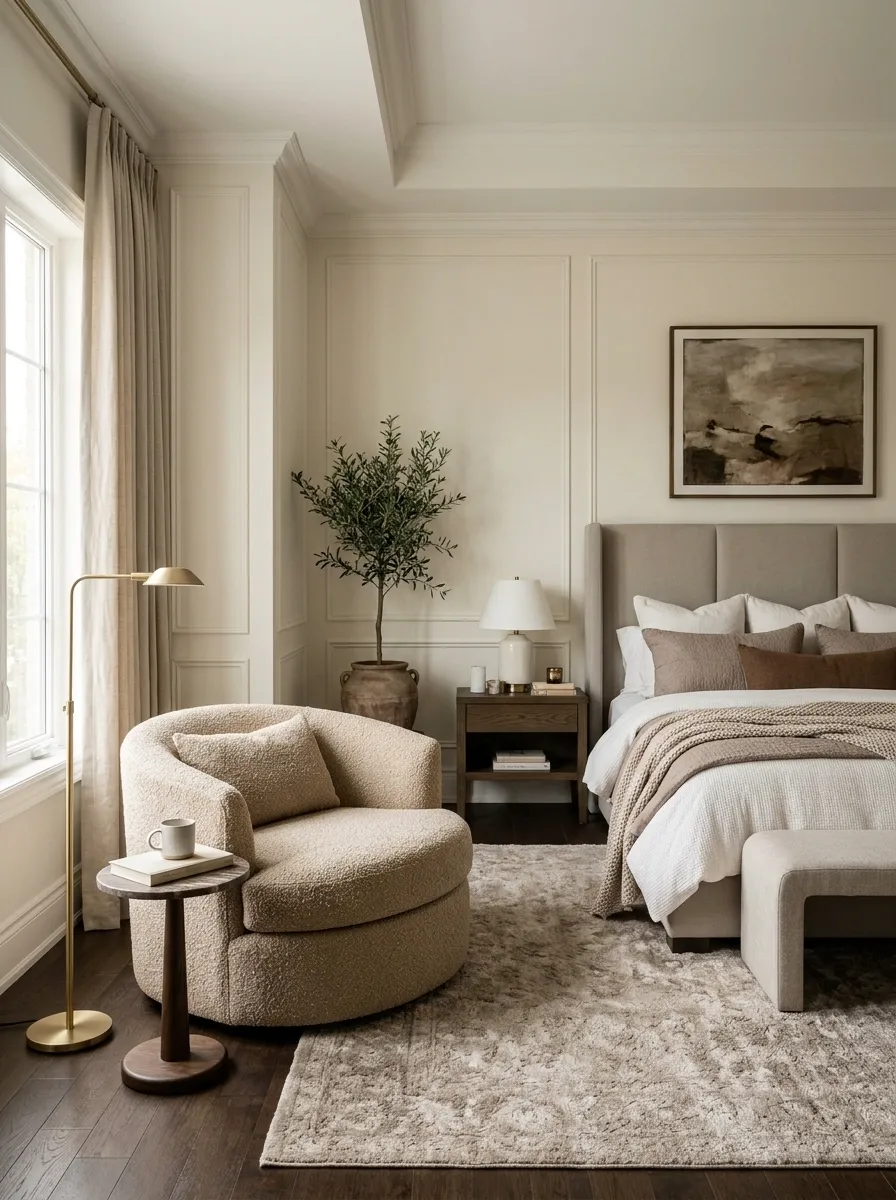
A swivel chair can turn between a window and the room, making one corner useful for reading and conversation.
Test its complete movement before placing it near curtains or a bedside table. A rounded back softens a simple bed frame, while textured upholstery adds interest without another pattern. The chair should turn comfortably without collecting fabric or clipping furniture on every rotation. That is movement, not a recurring household incident.
A Timber Dressing Chair Near the Wardrobe
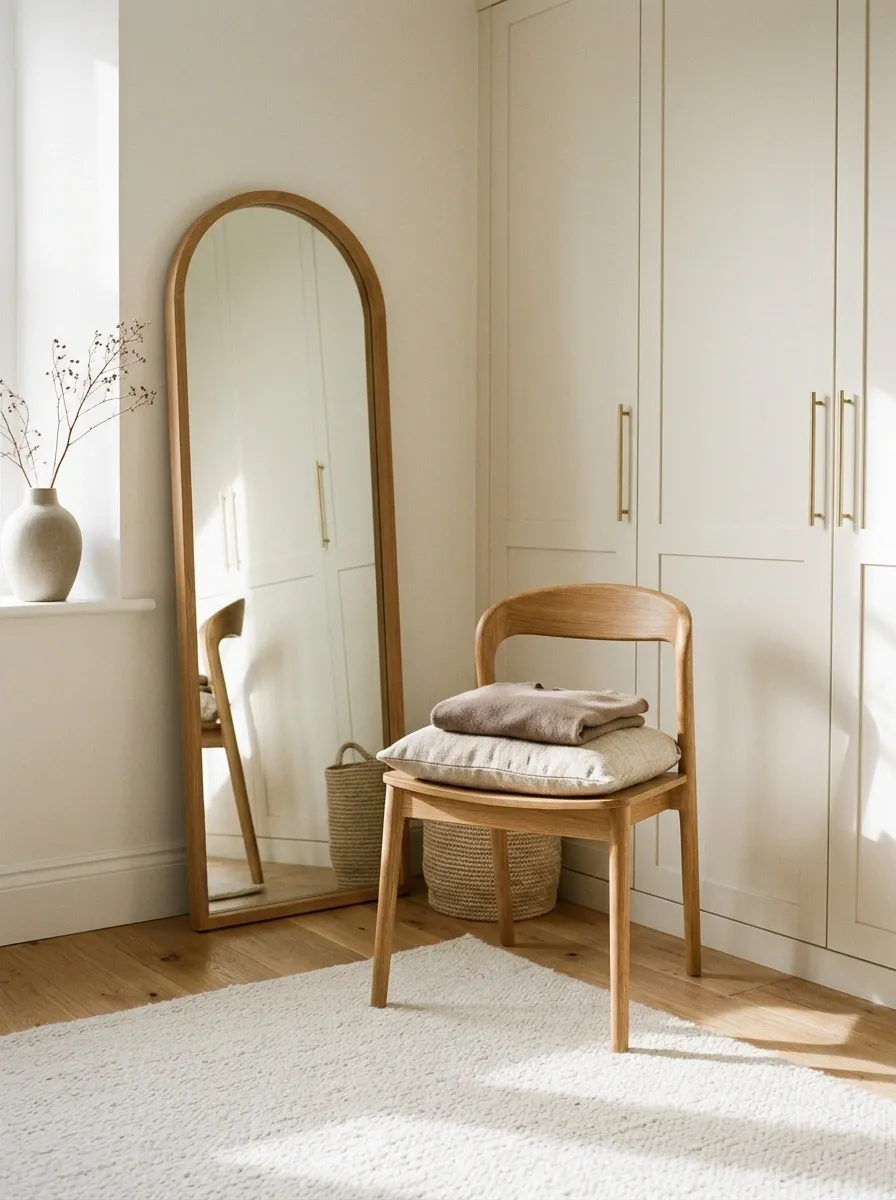
A simple wooden chair suits a room where the main task is putting on socks, choosing clothes, or setting out tomorrow’s outfit. Put it beside the wardrobe opening.
A shaped back and removable seat cushion can improve comfort without adding bulk. Repeat the timber tone in a small detail if useful, but avoid forcing a complete furniture-suite match. The chair needs to earn its place during an ordinary morning.
Chair beside the wardrobe · mirror nearby · doors free to open.
A Small Velvet Chair in an Otherwise Plain Room
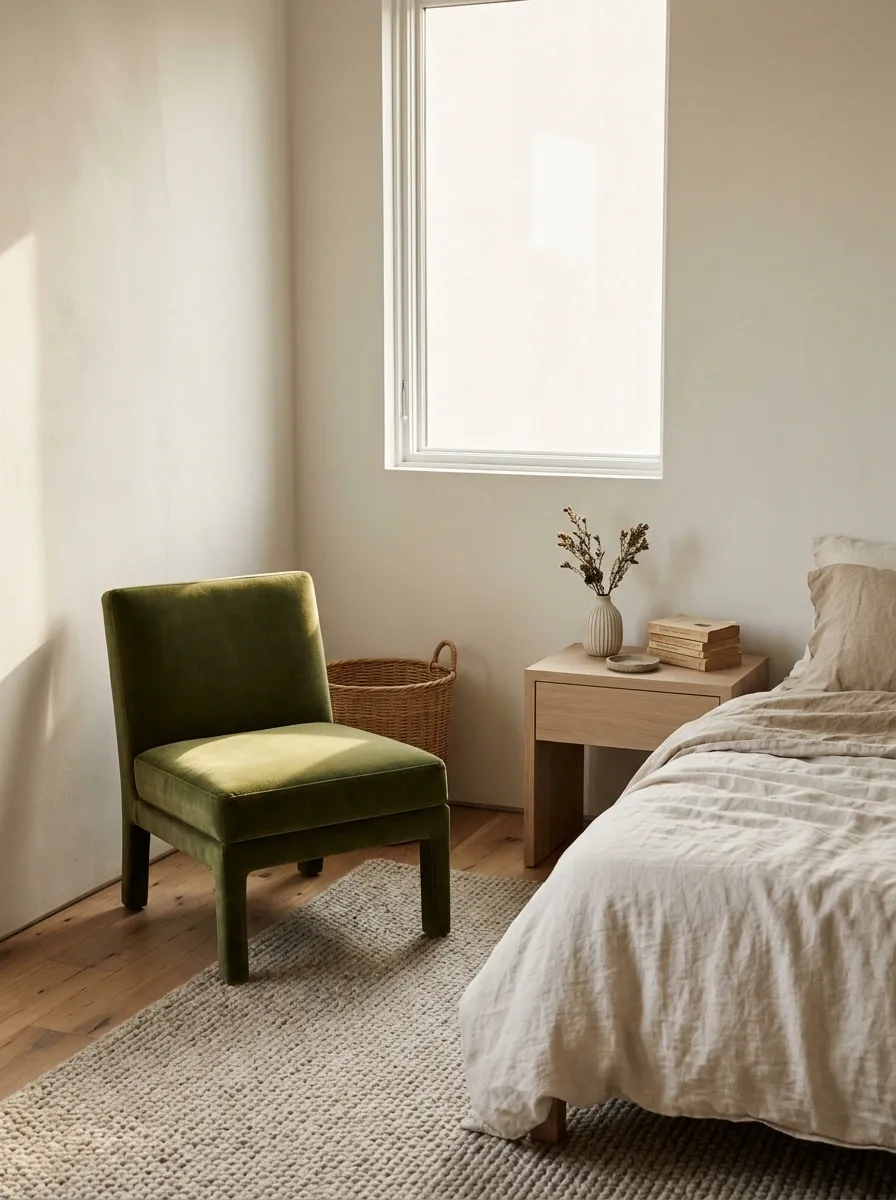
Velvet gives a quiet bedroom a richer focal point. Moss, tobacco, muted rose, or deep blue can work against an established neutral palette.
Keep the shape relatively simple and inspect how the pile changes in your lighting. Check cleaning requirements before choosing a pale finish. The chair should tolerate use without requiring an elaborate protective ritual whenever someone approaches wearing ordinary trousers.
A Chair-and-Ottoman Pair for Longer Evenings
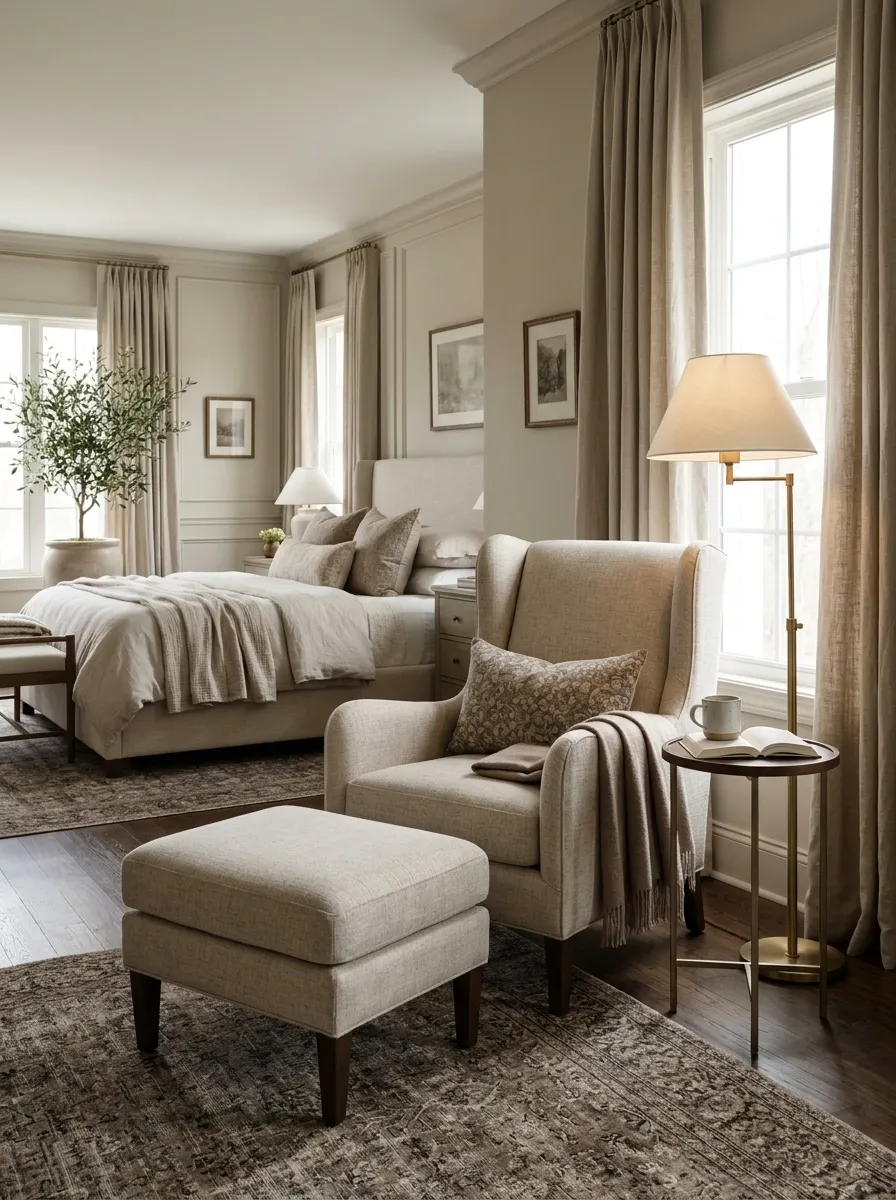
A supportive chair with a separate ottoman creates a relaxed reading arrangement. Unlike a fixed chaise, the footrest can move when you need the floor.
Check that its height feels comfortable with the chair. Leave nearby drawers accessible and keep the walking route clear. Position the drink table beside the seat, where you can reach it without leaning across the ottoman and gambling with hot tea.
A Window-Side Chair With Space for the Curtains
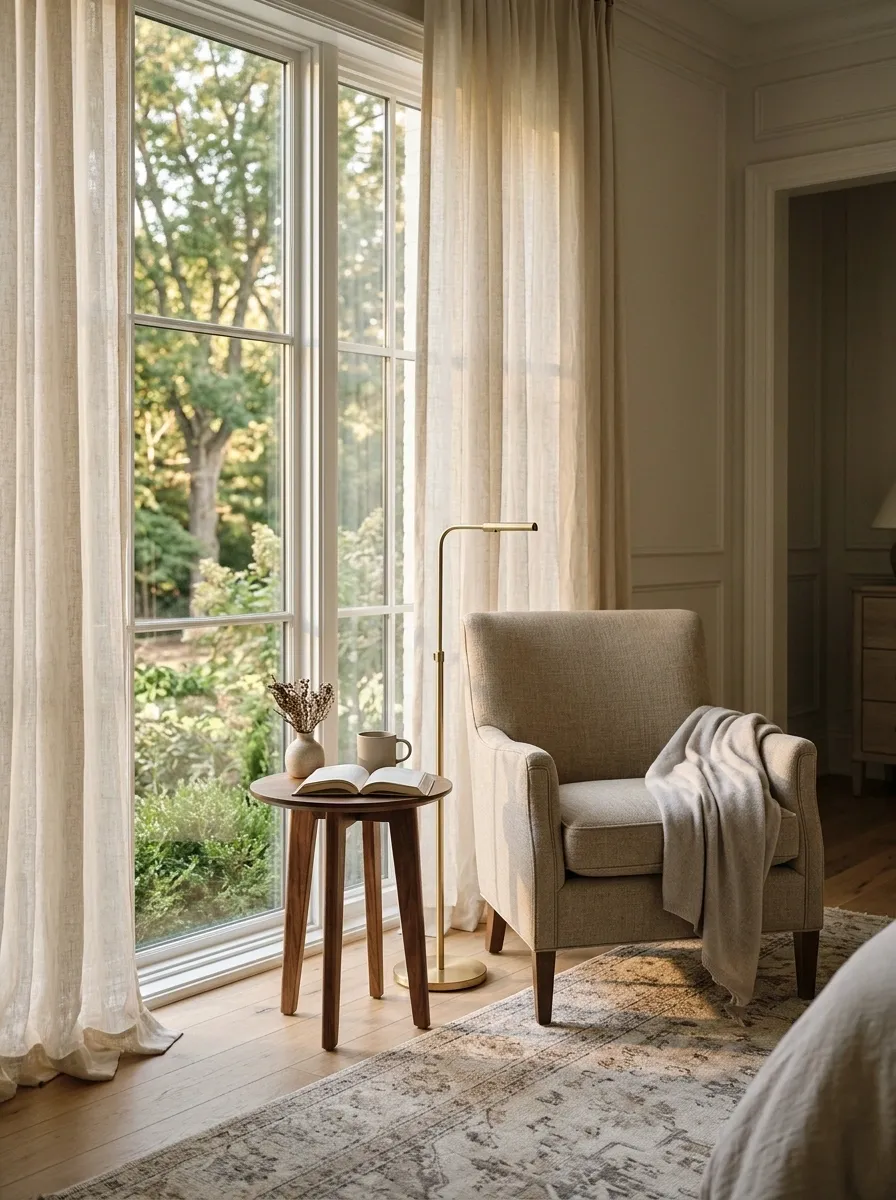
A chair near a window can make morning light part of the room’s routine. Angle it toward the view or into the room according to how you sit.
Leave curtains free to move and preserve window, heater, and ventilation access. Consider sunlight exposure when choosing upholstery. A small table can hold a book without occupying the sill. The window should continue behaving like a window after the furniture arrives.
Curtains move, openings remain accessible, and heat clearances stay intact.
A Patterned Chair That Repeats One Bedroom Color
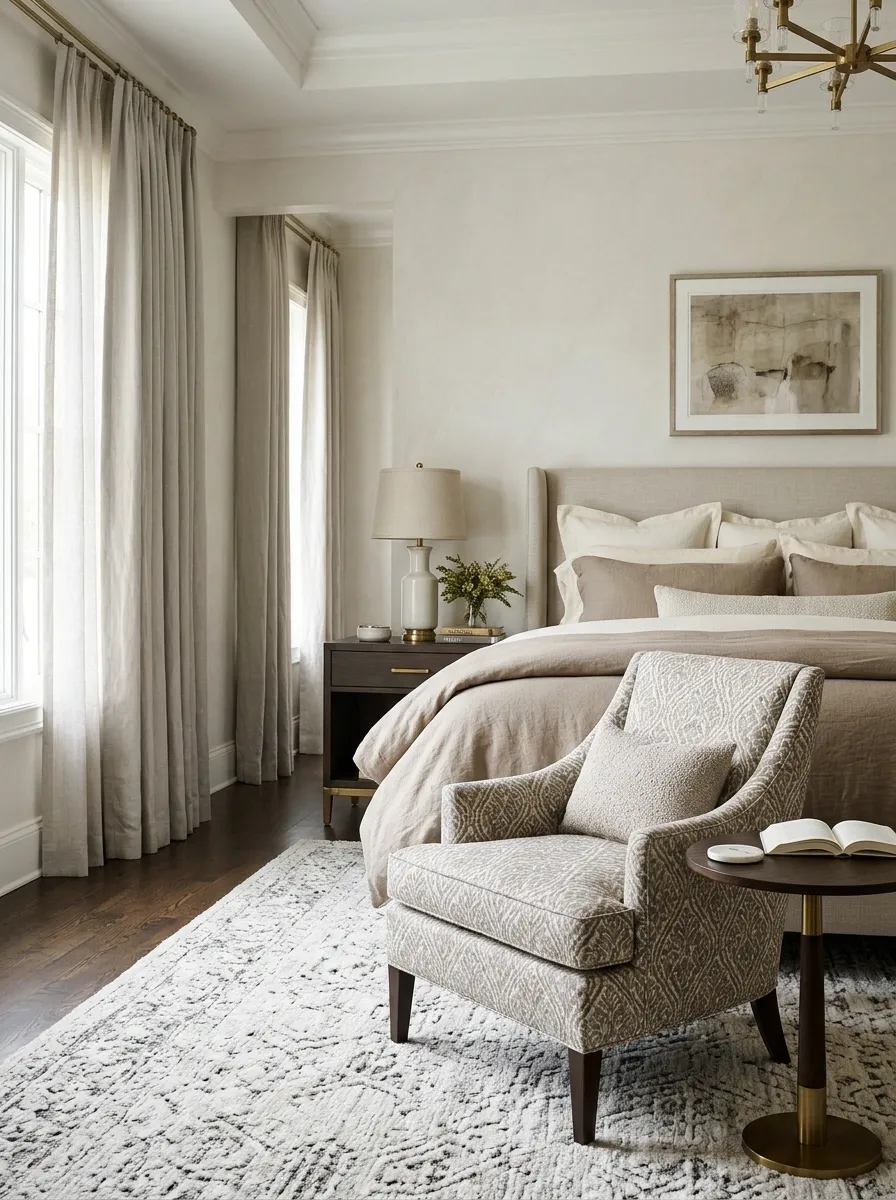
A patterned chair can connect plain bedding and walls when the fabric repeats a color already present. Let the remaining shades introduce variety.
Check the pattern across the chair’s actual shape. Large motifs can disappear over a curved back, while smaller repeats may read more clearly. Put samples beside curtains and bedding before ordering. Separately attractive fabrics can become an exhausting committee once introduced in the same room.
A Clean-Lined Chair in a Modern Wood Bedroom
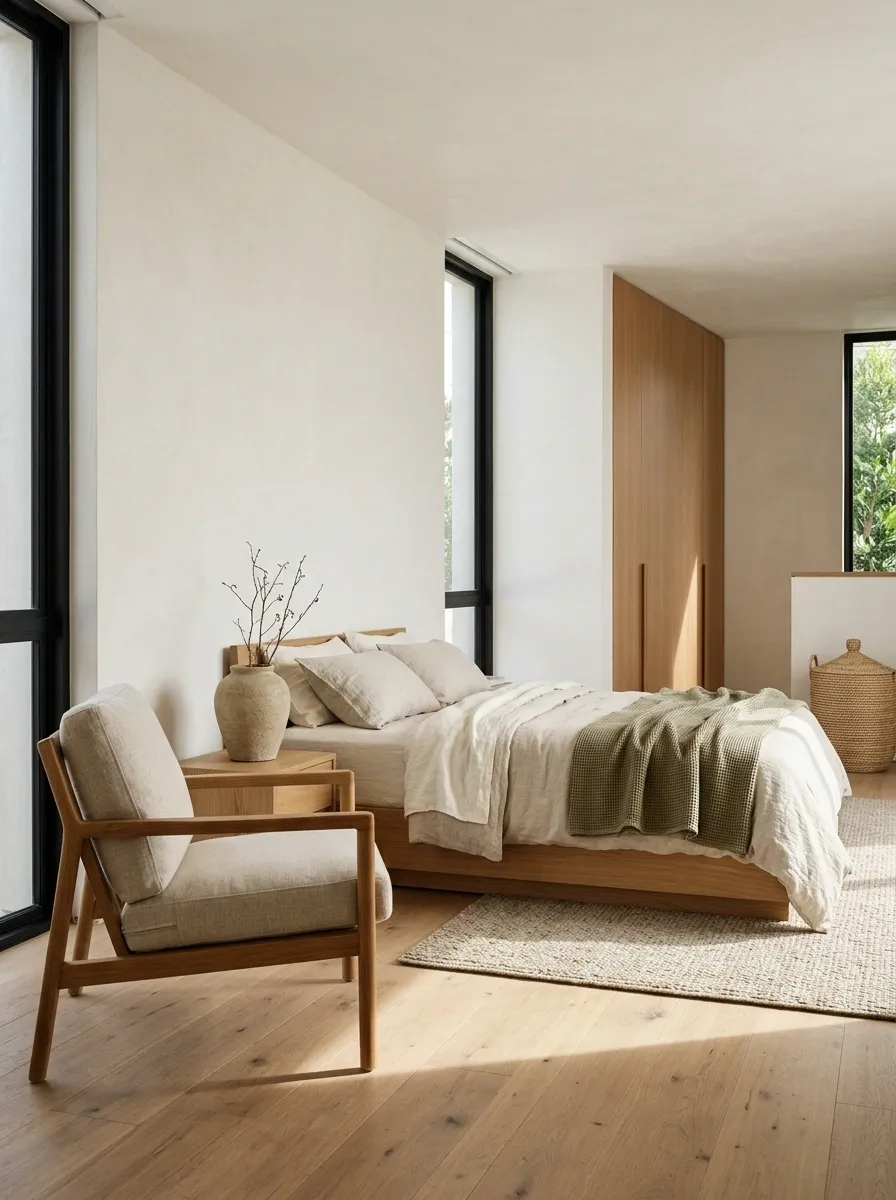
A visible timber frame with simple upholstered pads works beside a platform bed or plain wardrobe. Choose related undertones rather than identical finishes.
Use upholstery to soften the arrangement: oatmeal, olive, cream, or warm gray can work depending on the floor.
Test the back angle and seat depth carefully. Some handsome architectural chairs remain more enthusiastic about being admired than supporting someone through several chapters.
A Petite Chair Beside a Vanity
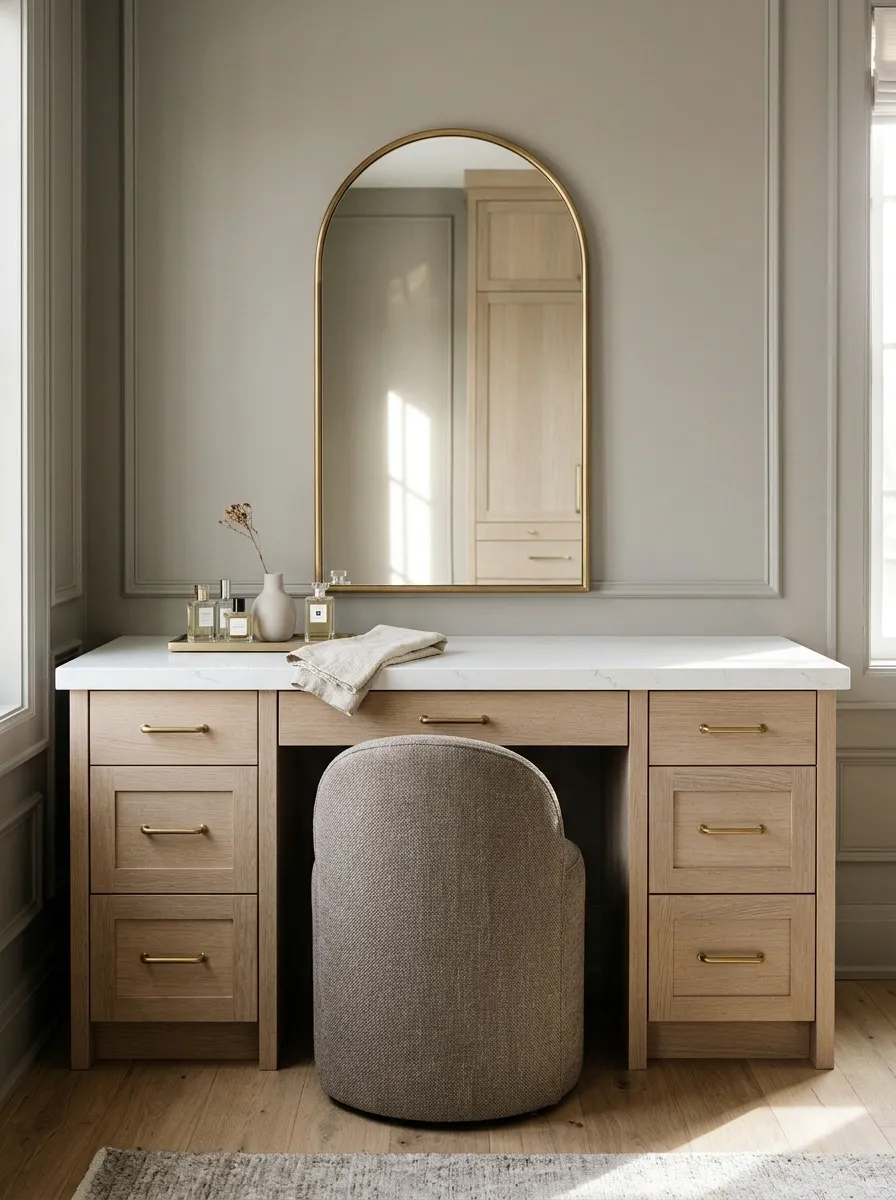
A compact chair with a supportive back can make a vanity more comfortable than a decorative stool. Measure the usable opening beneath the table, including drawers and any apron.
Check that the seat slides in and leaves comfortable legroom. Arms are helpful only when they fit. Choose upholstery suited to cosmetics and hair products; delicate cream fabric beside an open foundation bottle creates suspense nobody particularly needs.
| Measure below | Tabletop apron and drawers |
|---|---|
| Measure between | Legs, arms, and usable seat space |
A Substantial Chair in a Large, Sparse Bedroom

A generous armchair can help a large bedroom feel occupied. Give it a useful table and light rather than scattering little pieces around the perimeter.
Connect the upholstery to the bed through color while allowing the silhouette to differ. A larger room often benefits from a few complete arrangements. It does not automatically need more furniture everywhere simply because there is space to continue shopping.
Generous chair + useful table + inviting light.
A Flexible Occasional Chair in a Guest Bedroom
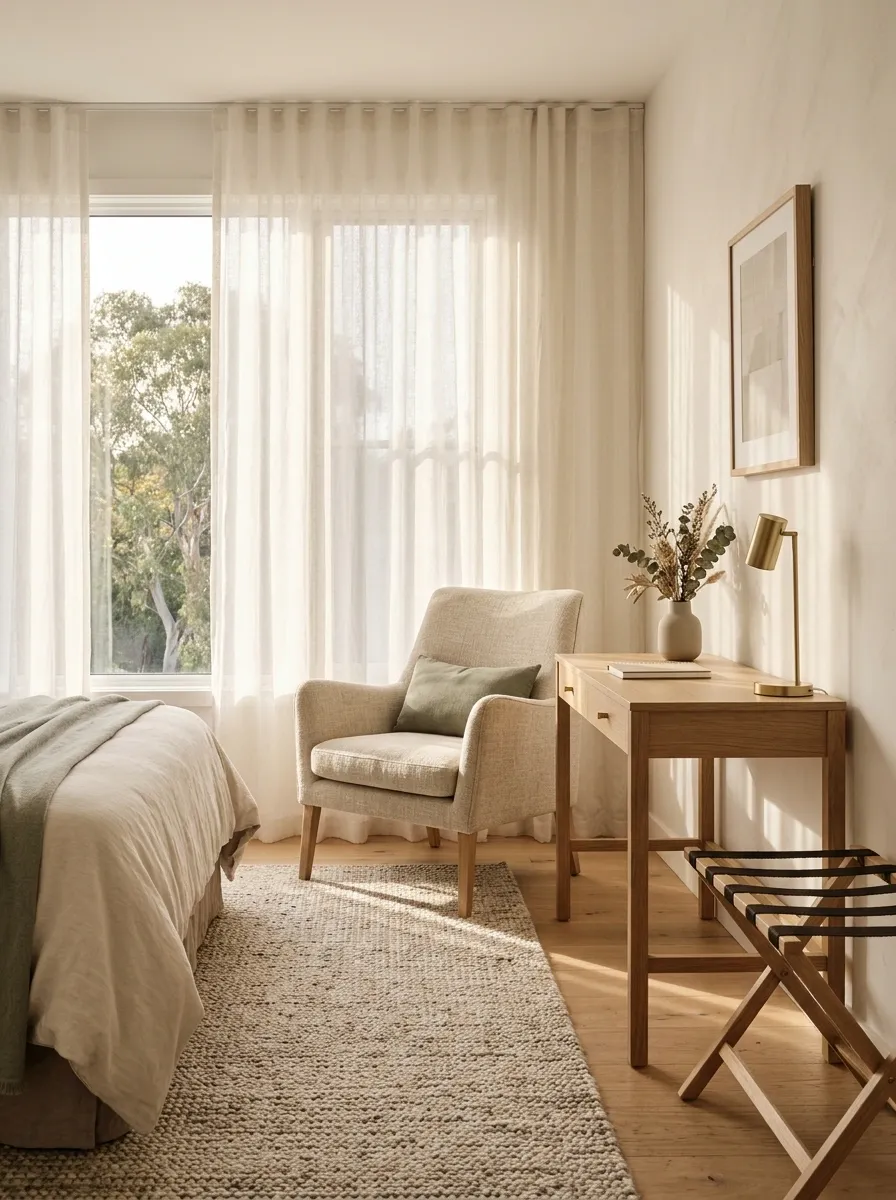
A lightweight, sturdy chair can serve a desk, sit near a suitcase stand, or move beside the window. Choose a shape that is easy to lift and reposition.
If it doubles as a desk chair, check its working height and comfort. Leave the seat clear before visitors arrive and provide another place for belongings. Guests should not have to remove a decorative cushion collection before answering an email.
A Quiet Chair in the Room’s Strongest Color
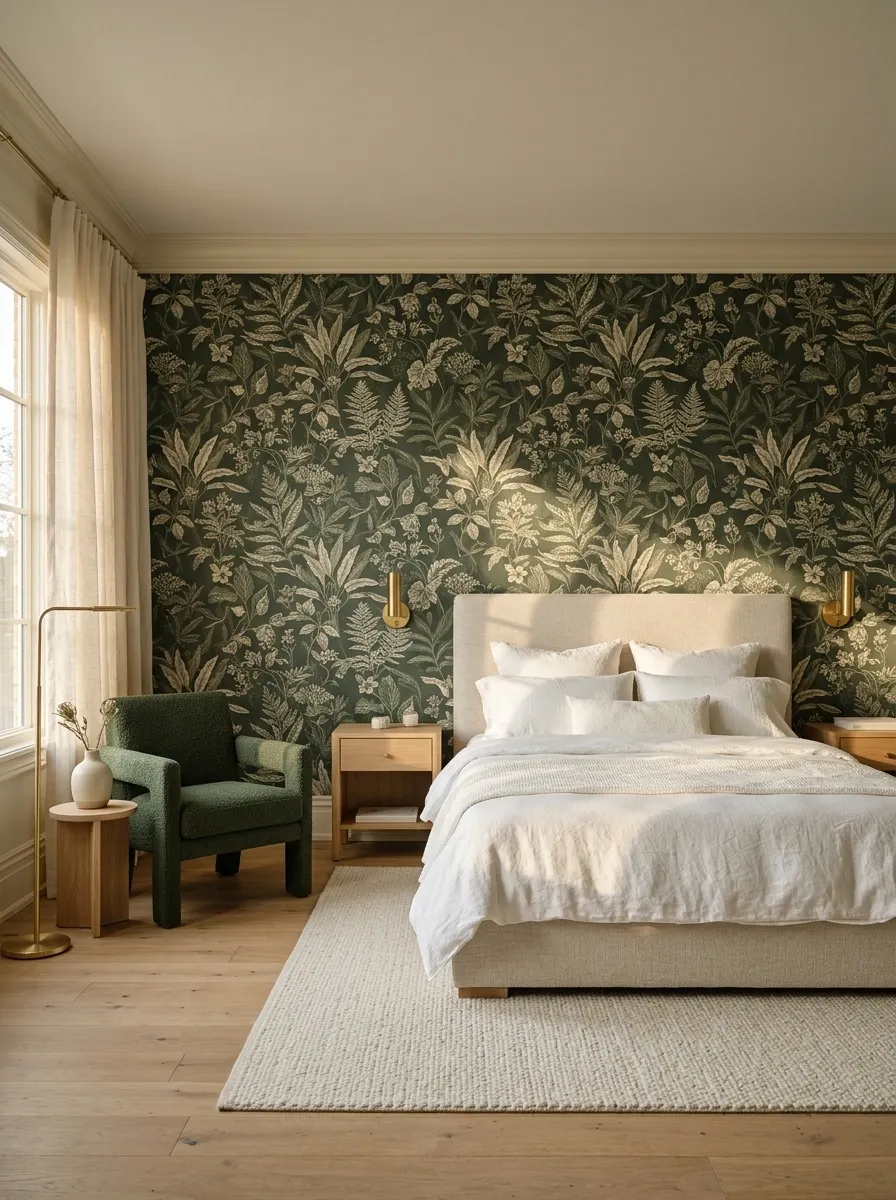
When wallpaper or an elaborate bed already leads the room, choose a plain chair in a color drawn from that feature.
A straightforward silhouette and textured solid fabric create a connection without adding another competing focal point. Keep the neighboring table restrained. Supporting furniture can do an excellent job without demanding separate lighting and a more dramatic backdrop every time someone enters.
Repeat its color through a simpler chair.
A Wingback Chair With a Simple Bed
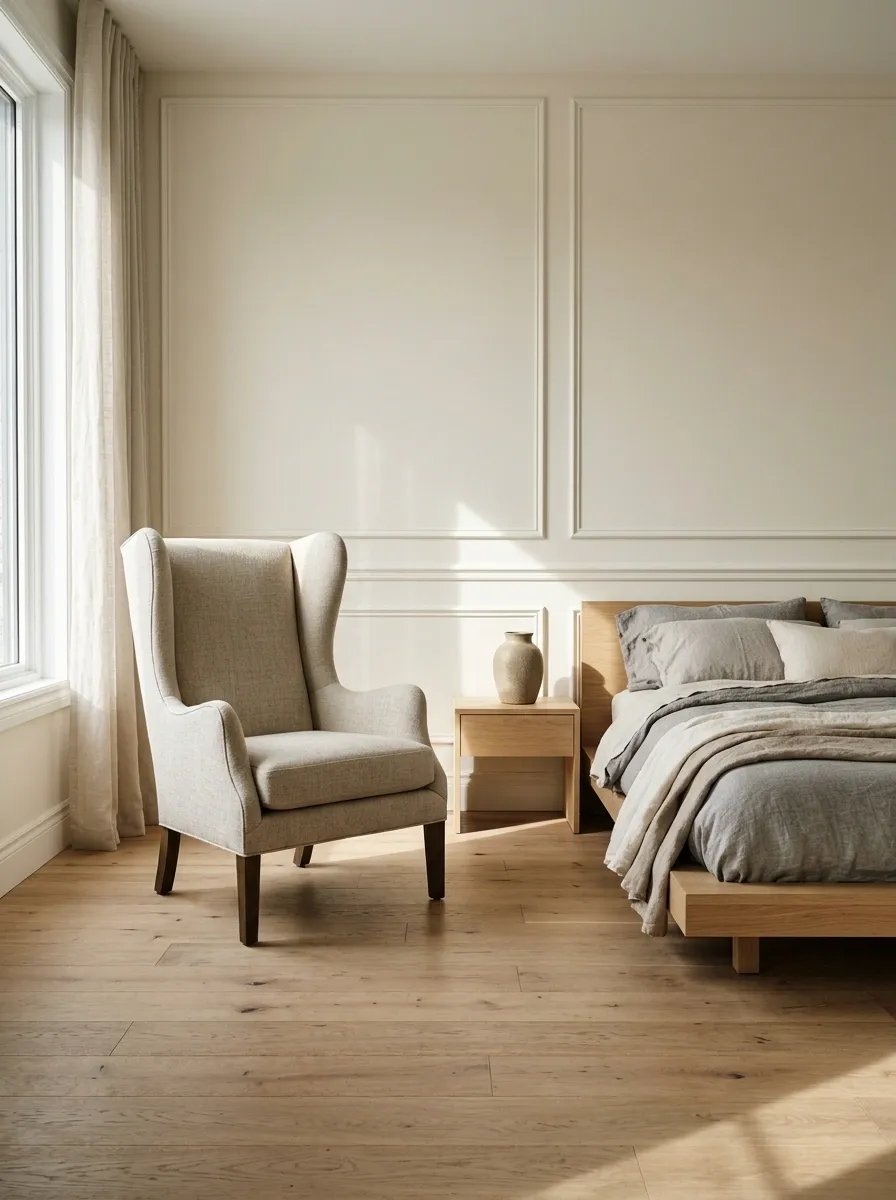
A wingback chair gives a plain bedroom a strong silhouette. Use restrained fabric and leave a clear approach beside the table.
Check the back height against the room. A tall chair can look reassuring in a generous space and imposing beside a low bed in a compact one. Let it be the principal upholstered feature instead of adding another elaborate piece simply to keep it company.
Simple bed, restrained fabric, and enough floor around the chair.
A Rocking Chair With Enough Room to Move
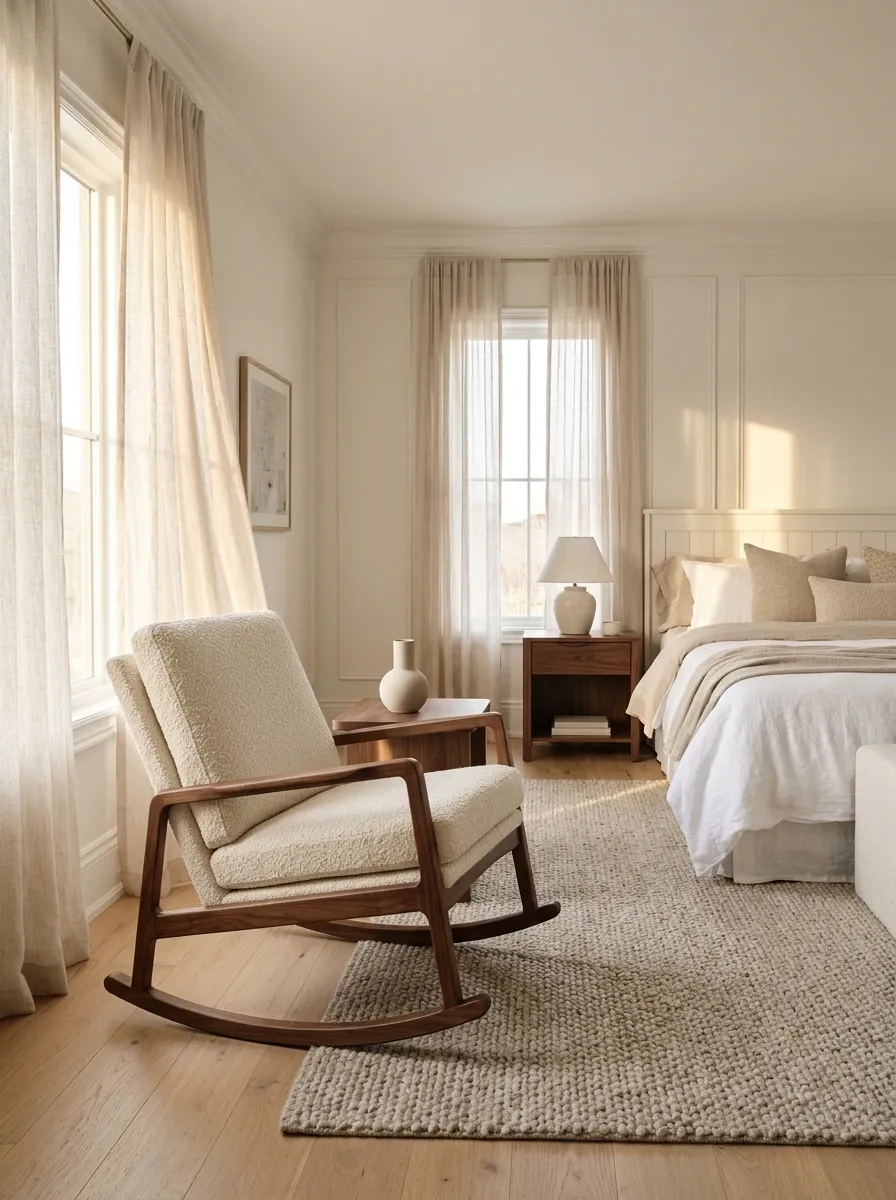
A rocking chair can suit a quiet corner when you enjoy the movement and have room for its full travel.
Check the runners behind the seat and keep curtains, cables, tables, and passing feet clear. Use a stable model appropriate to the household. The calming effect diminishes considerably when every backward movement threatens a lamp, a wall, or somebody’s toes.
A Leather Chair Beside Textured Bedding
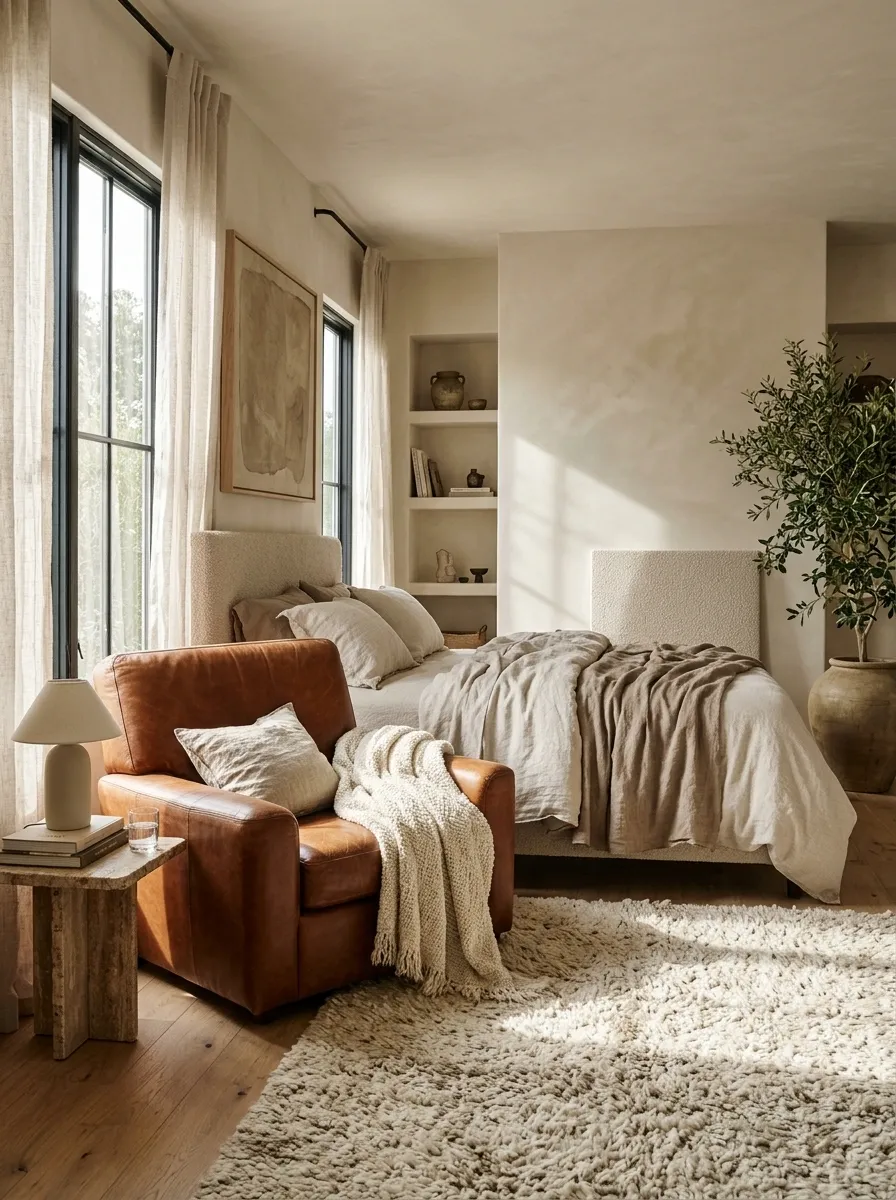
Leather introduces a different surface into a bedroom filled with cotton, linen, or wool. Cognac or dark brown can feel warm beside pale walls and plain timber furniture.
Check the finish’s care requirements and how the seat feels in the room’s conditions. Add a throw if useful, but leave some leather visible. Otherwise, you have purchased an expensive structural support system for a blanket.
A Bouclé Chair in a Calm Tonal Bedroom

Bouclé adds texture to a cream, stone, or warm gray palette. A simple rounded shape lets the fabric remain the main detail.
Inspect samples and cleaning instructions, considering pets, clothing fasteners, and everyday wear. A tonal bedroom benefits from texture, but the material still needs to suit the household. “Looks soft” is a promising introduction rather than a complete practical assessment.
Keep the palette related and check everyday fabric care.
Two Small Chairs in a Spacious Bedroom
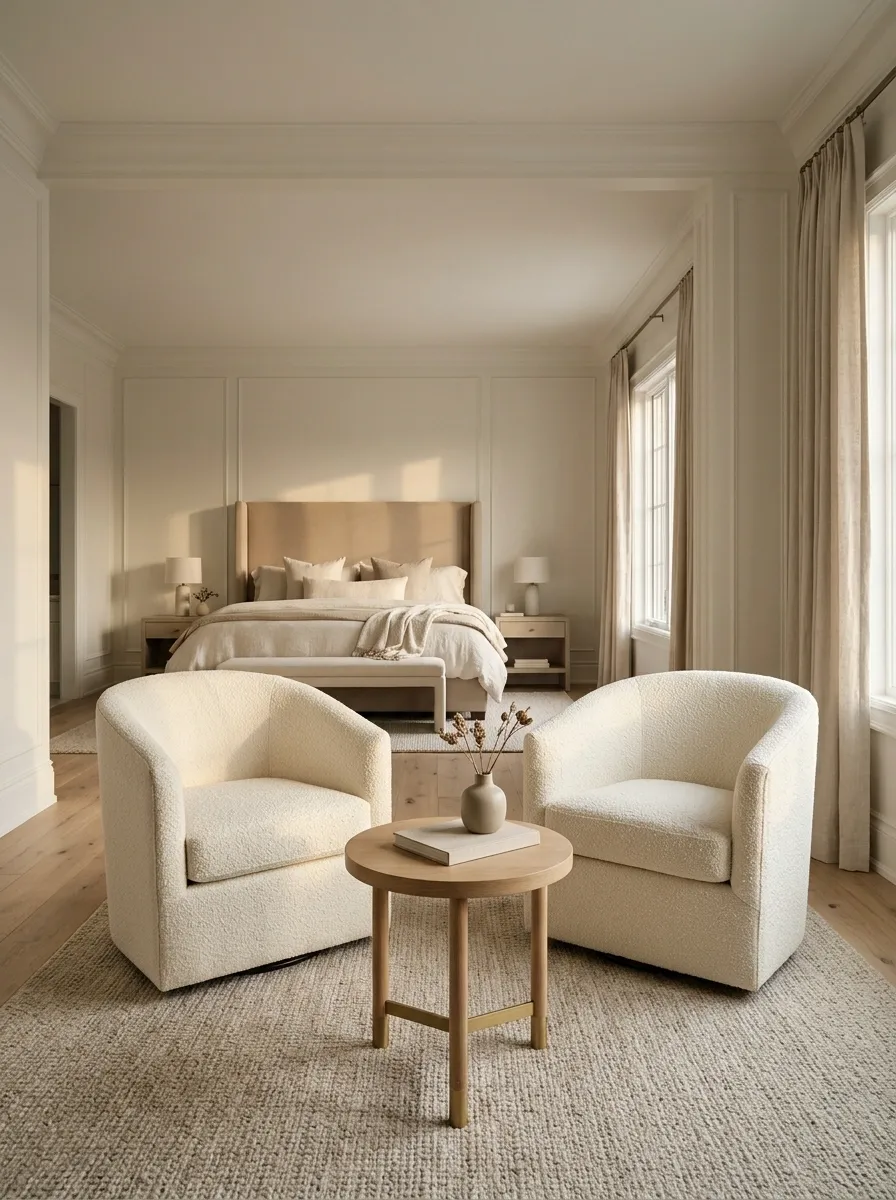
A pair of compact chairs can create a conversation area beyond the sleeping zone. Angle them toward each other with a reachable table.
Keep the group clear of the bed’s main approach. Matching upholstery gives a quieter result; related fabrics allow more variation. Test the arrangement with an actual conversation before adding more pieces. Sitting areas rarely improve when the table becomes too large to reach around.
A Reclining Chair With a Clear Extension Zone

Measure a recliner fully extended, following its operating and wall-clearance instructions. Include any power supply in a safe cable plan.
Keep moving mechanisms clear and preserve a route to the bed. A compact upright appearance can be misleading once the footrest opens. Comfort becomes less appealing when the chair establishes a toll road through the bedroom every evening.
A Small Folding Chair in a Multipurpose Bedroom
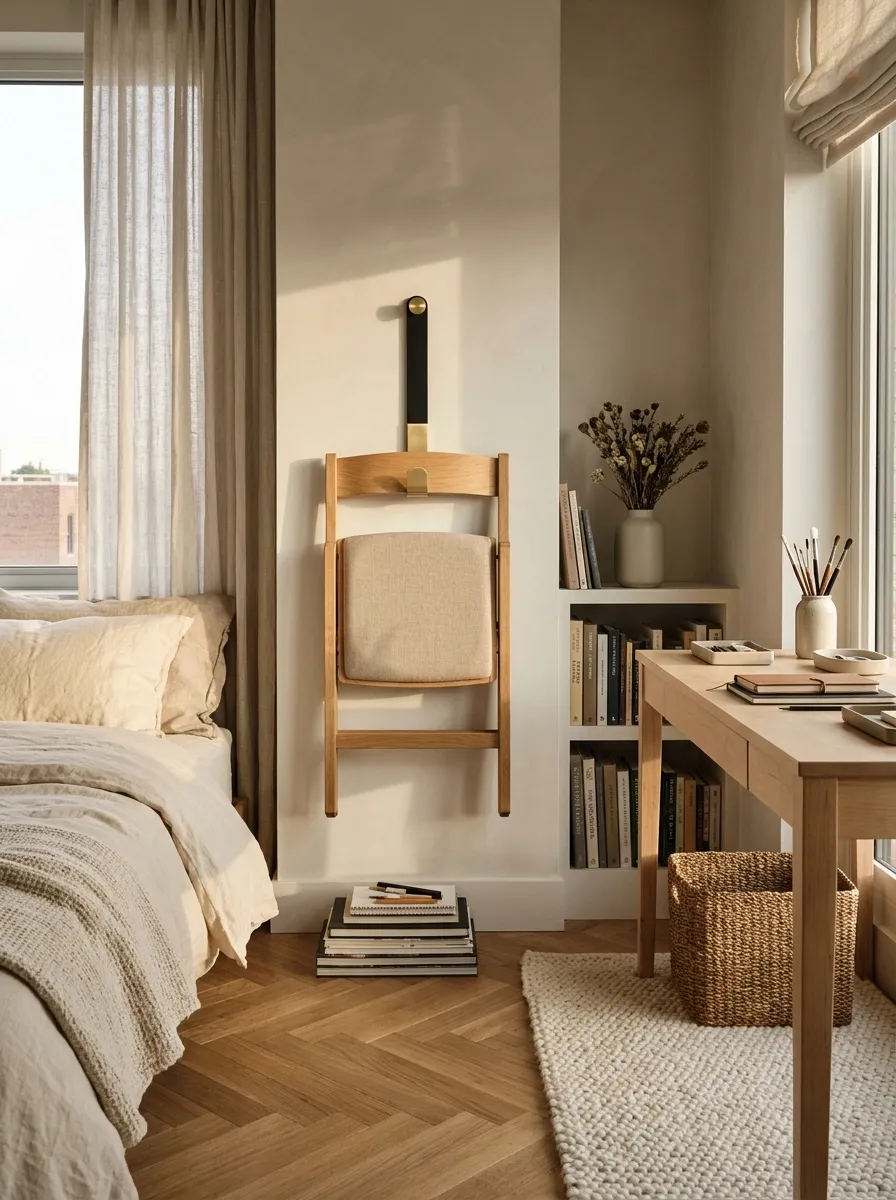
A sturdy folding chair provides occasional seating in a bedroom used for hobbies or work. Choose an appropriate load rating and secure locking mechanism.
Give it a safe folded storage position and add a suitable seat pad if needed. This is flexible extra seating, particularly useful when the floor must clear afterward. For nightly reading, however, a more supportive permanent chair may make better sense.
Stable and locked.
Secure and out of the route.
A Chair Beside a Low Bookcase
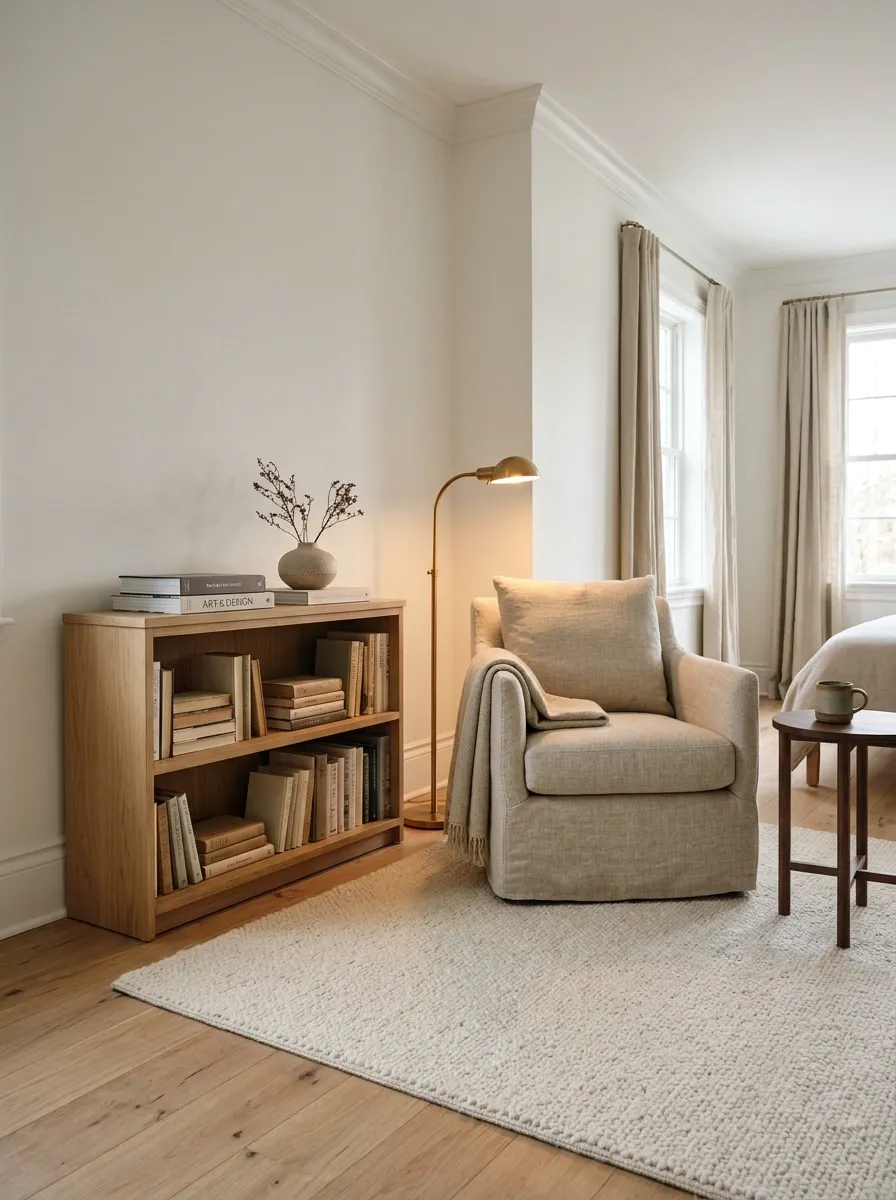
A chair beside a low bookcase makes the reading purpose obvious. Keep current books reachable and add suitable light.
Follow the bookcase’s stability and loading instructions, leaving room to retrieve books without moving the seat. Keep its top useful rather than crowded. Reaching for the next chapter should not require negotiating a candle collection and a fragile ceramic horse.
Reachable books, secure shelves, and a clear table surface.
A Low-Back Chair Beneath a Sloping Ceiling

A low-back chair can fit visually under an attic slope while keeping the room open. Check headroom while sitting, rising, and approaching from the side.
The back height alone tells only part of the story. Your head travels through a larger area when you stand. Keep the upholstery simple if the roof already supplies visual interest, and avoid turning sitting down into an introductory agility test.
A Black Accent Chair in a Pale Bedroom
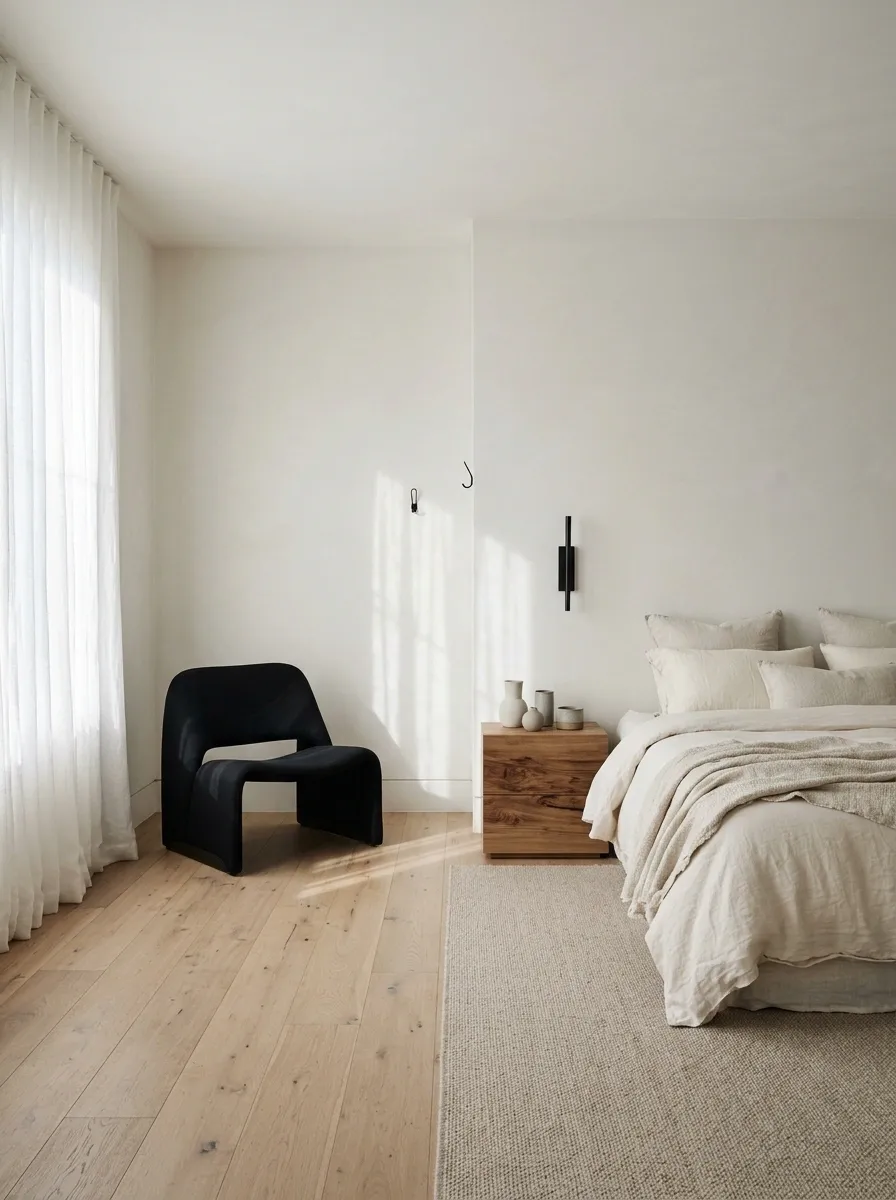
A black or very dark chair gives pale bedding and natural timber a clear point of contrast. Choose an interesting but proportionate shape.
Repeat the dark tone in a small existing detail if that connects the room. Keep the remaining palette restrained. Strong color cannot make an oversized chair stop blocking the wardrobe, so complete the floor-space test before falling for the dramatic silhouette.
Give the Cardigans Somewhere Else to Live
Before the chair arrives, add the hook, hamper, or wardrobe space that handles your usual clothing pile. Otherwise, you have bought the same problem in better upholstery.
Then use the chair. Read in it, put your shoes on, and sit down while deciding what to wear. If its position makes those moments easier, it has earned its corner.