
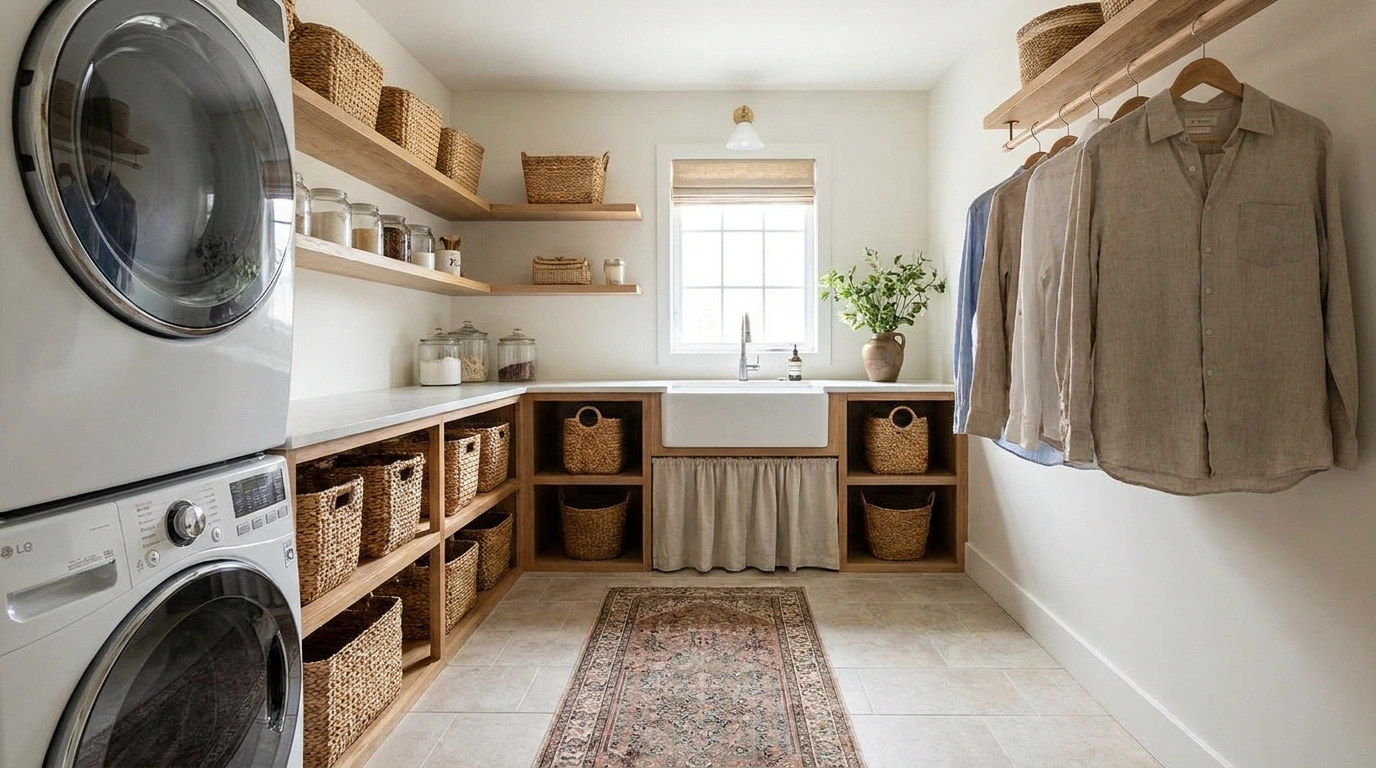
The detergent is balancing on the washing machine. Spare hangers are tangled together. A basket of clean towels has become a permanent member of the household.
You can improve this without installing a wall of cabinets. Open shelves, freestanding furniture, hanging storage, and a better routine can give the room structure.
Start with the journey through a load of washing. Laundry is repetitive enough without unnecessary choreography.
Map the Appliances Before Adding Storage
Use appliance instructions to establish clearances, ventilation, stacking requirements, and service access. Keep shutoffs, outlets, filters, and dryer venting accessible.
Measure with doors open and baskets in use. Shelves and furniture must work around the machines’ requirements rather than compete with them.
Cabinet-Free Arrangements That Handle the Whole Job
A Wall Shelf Above a Clear Sorting Surface
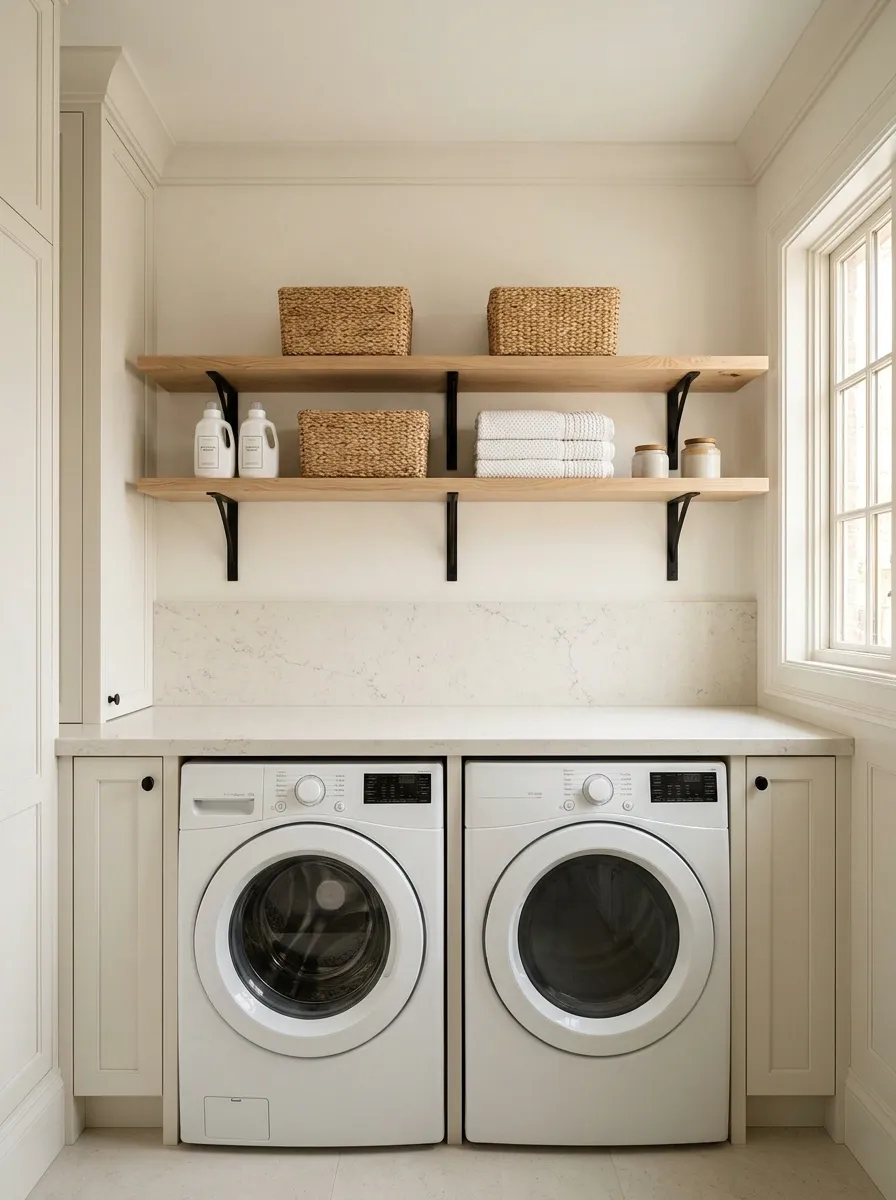
A properly supported shelf can hold supplies while a separate suitable surface handles folding. Set the height around comfortable reach and appliance requirements.
Keep heavy supplies low and protect clean clothing from possible product spills. Retain labels and secure hazardous items appropriately. Open storage can look orderly without giving detergent an anonymous glass jar and a small identity crisis.
A Freestanding Shelving Unit Beside the Machines
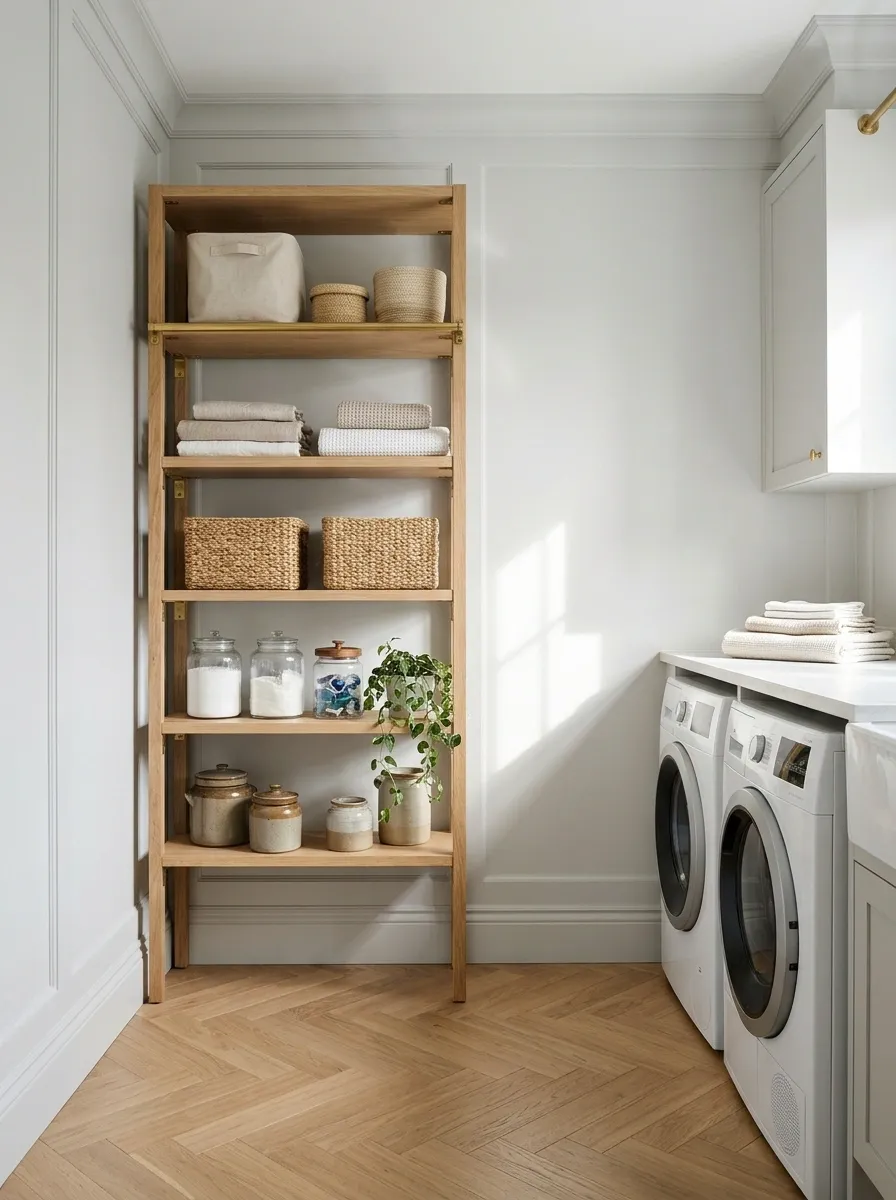
Choose a unit suited to the room conditions and place it where shelves remain usable with machine doors open.
Follow anchoring and load instructions. Keep heavier items low and lighter supplies higher. Test reaching the back before filling everything. A narrow unit that fits beside an appliance may still be awkward enough to make every detergent retrieval a small expedition.
| Low | Heavier supplies |
|---|---|
| Reachable | Everyday items |
| High | Light occasional storage |
A Narrow Cart for Supplies You Actually Use
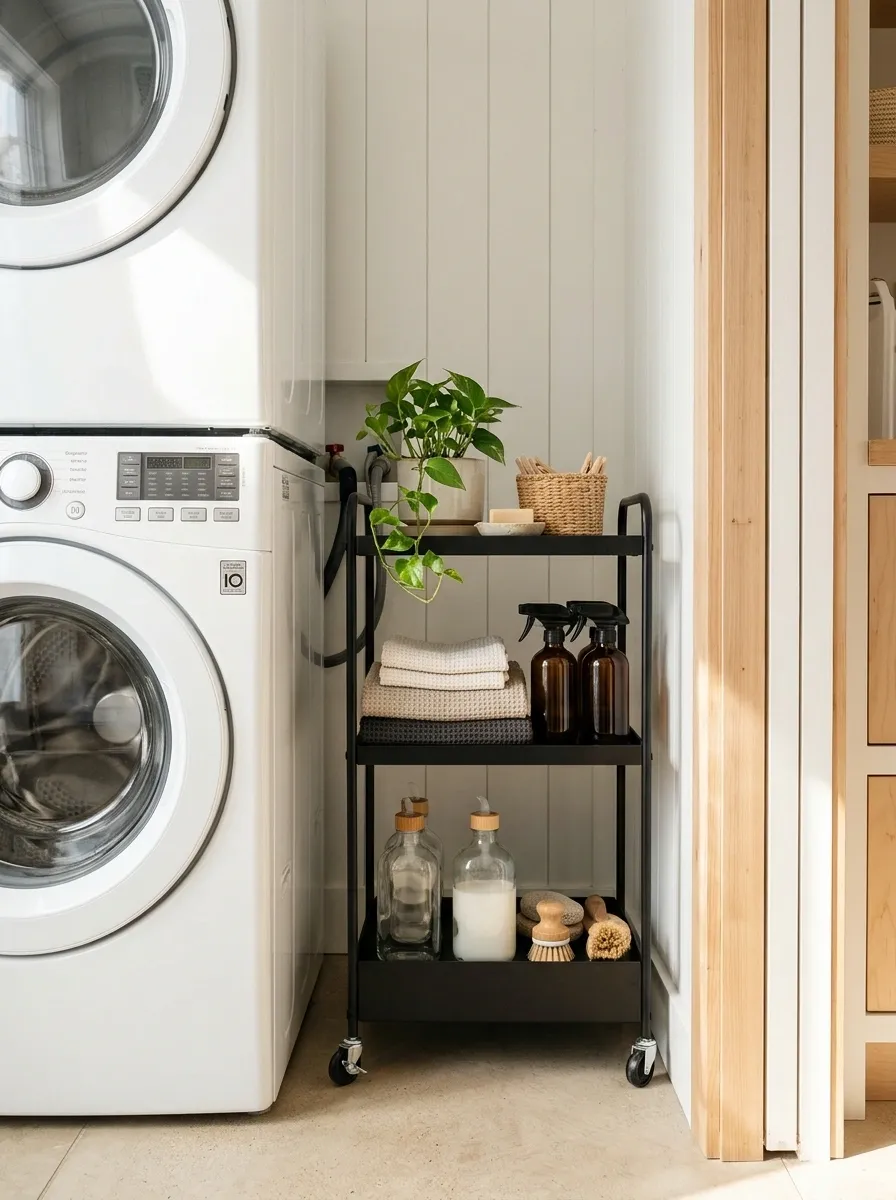
A rolling cart can fit beside a machine when it preserves specified clearances and stays away from hoses, cords, and vents.
Check stability, wheel movement, and shelf width. Load heavier items low and secure products appropriately. Pull it out during the test. A cart requiring extraction equipment to leave its gap is technically movable and practically a wall.
A Rail for Hangers Above a Dedicated Dry Area
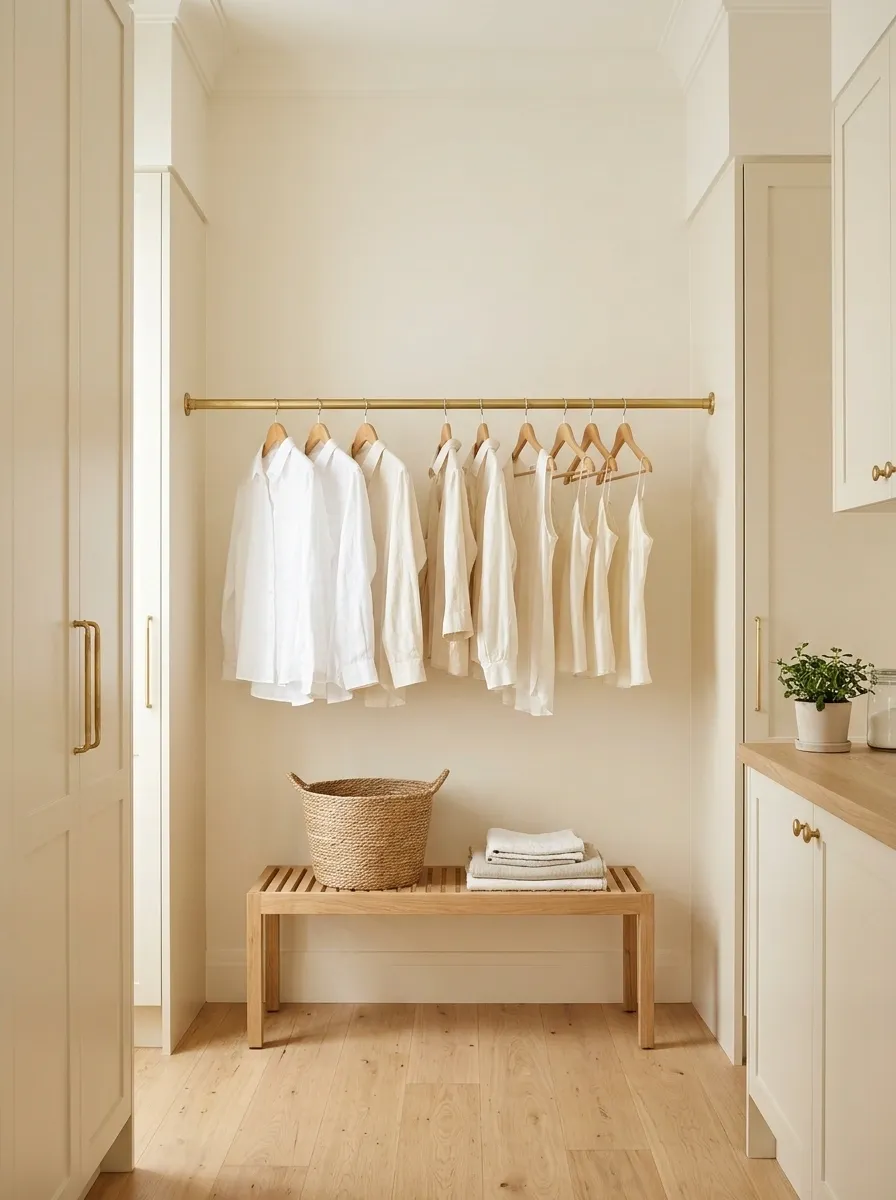
A properly installed rail can organize hangers and support suitable garments within its load rating.
Keep clothing clear of controls and ventilation. Wet items need adequate separation and room conditions that support drying. Allow enough height for the garments. A shirt folded around a shelf halfway down is receiving a compromised version of the air-drying experience.
Clear below, separate between, and ventilated around.
A Peg Rail for Light Everyday Tools
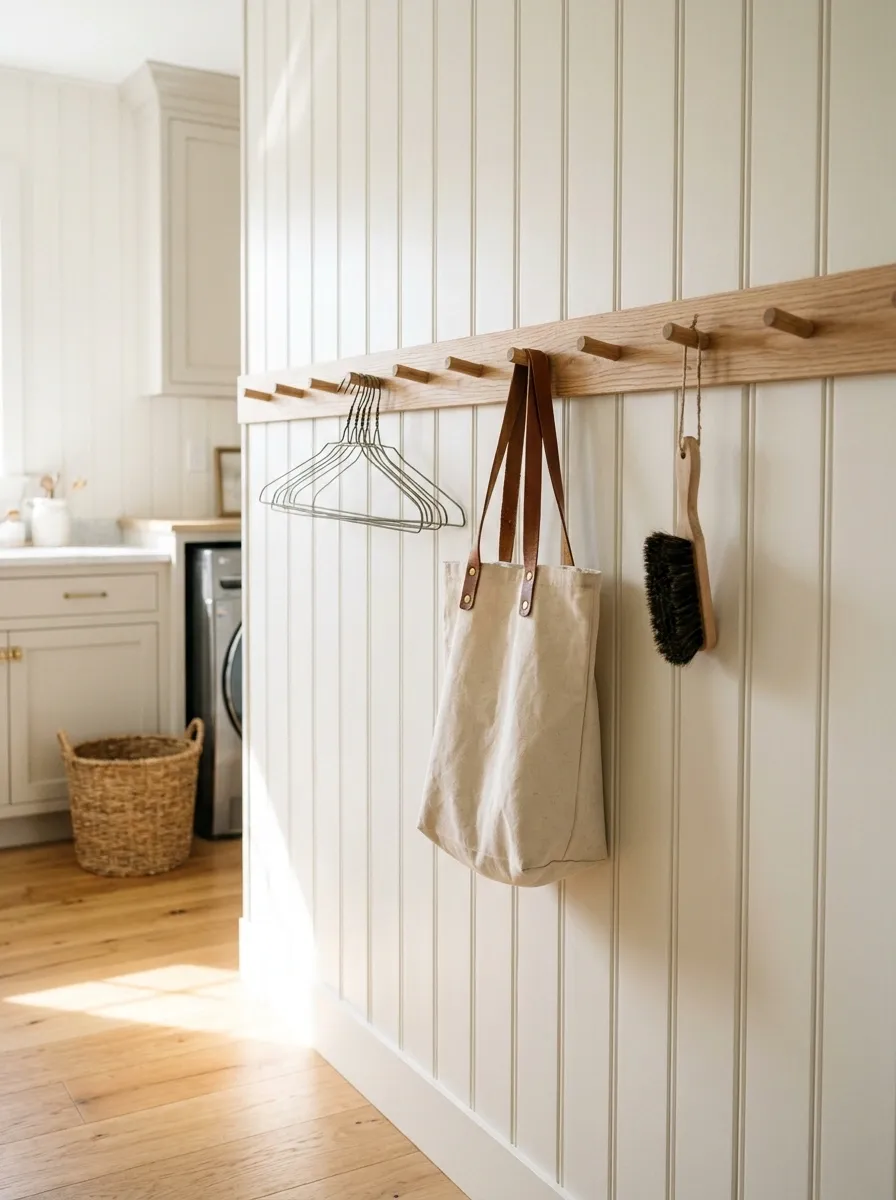
A peg rail keeps empty hangers, laundry bags, or a small brush visible and reachable.
Use suitable fixings for the wall and expected load, keeping projecting items outside the walking route. Leave some pegs available. Filling every hook may create a vertical version of the floor pile, which is progress in altitude rather than usefulness.
Hangers · laundry bag · small brush.
A Folding Table That Leaves the Room Usable
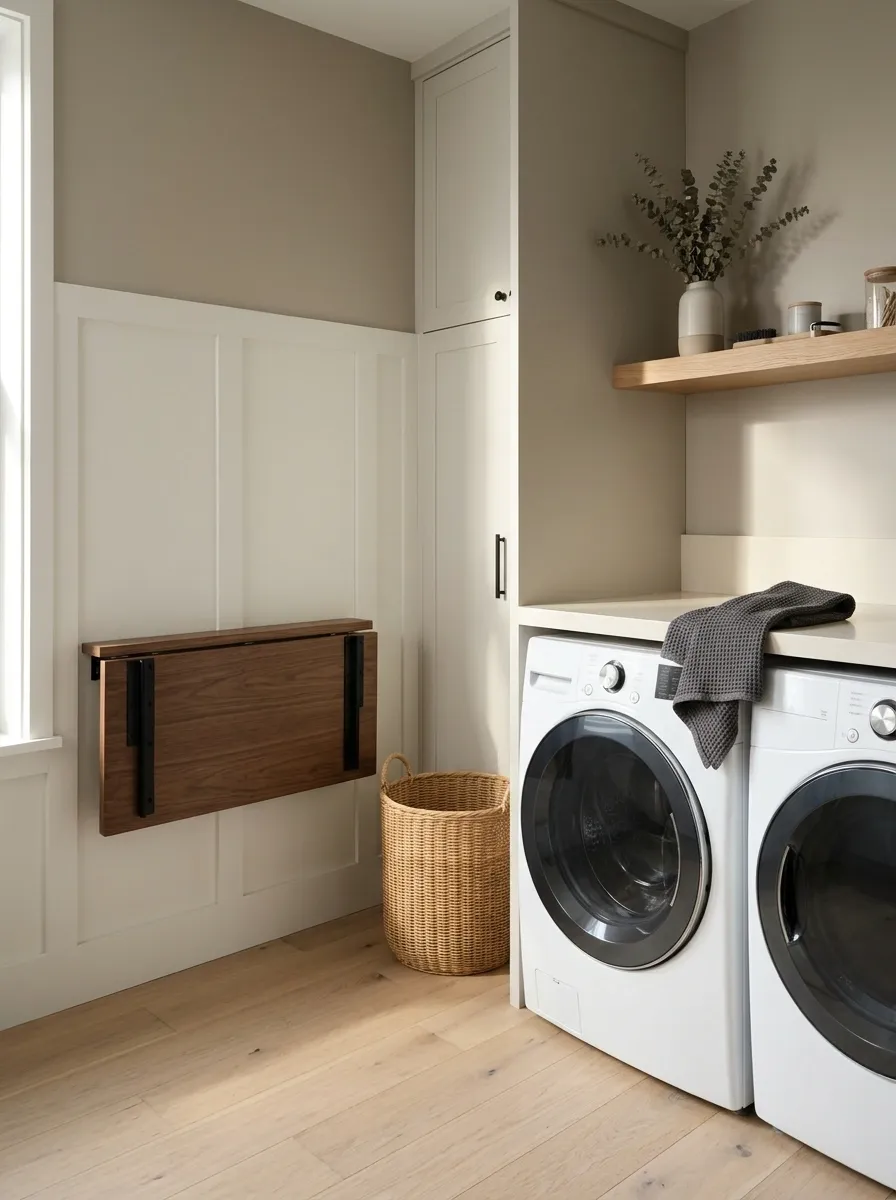
A stable folding table can provide a work surface where a permanent counter would crowd the room. Check working height and circulation.
Give it a secure stored position outside doors and appliance access. Test setup before buying. If unfolding the station takes longer than folding the clothing, the routine probably needs fewer moving parts.
Stable and comfortable.
Secure and clear.
A Freestanding Towel Ladder for Dry Textiles
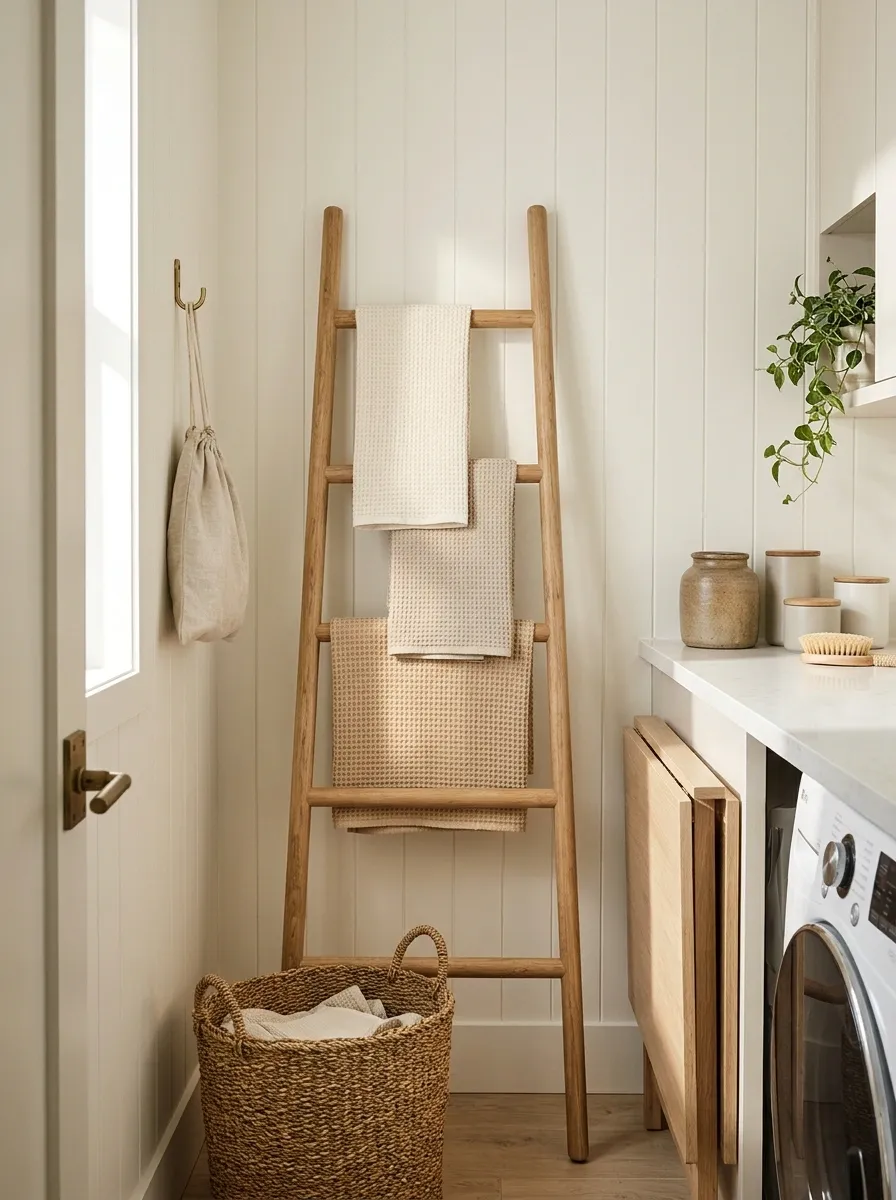
A stable ladder-style rack can hold dry towels or light cloths where bulky furniture will not fit.
Choose a product intended for the task and secure it as instructed. Keep it outside door swings, heat clearances, and maintenance zones. It earns its place when access improves without making the route through the room a coordination test.
Preserve doors, appliance clearances, and service access.
An Over-Door Organizer That Still Lets the Door Close
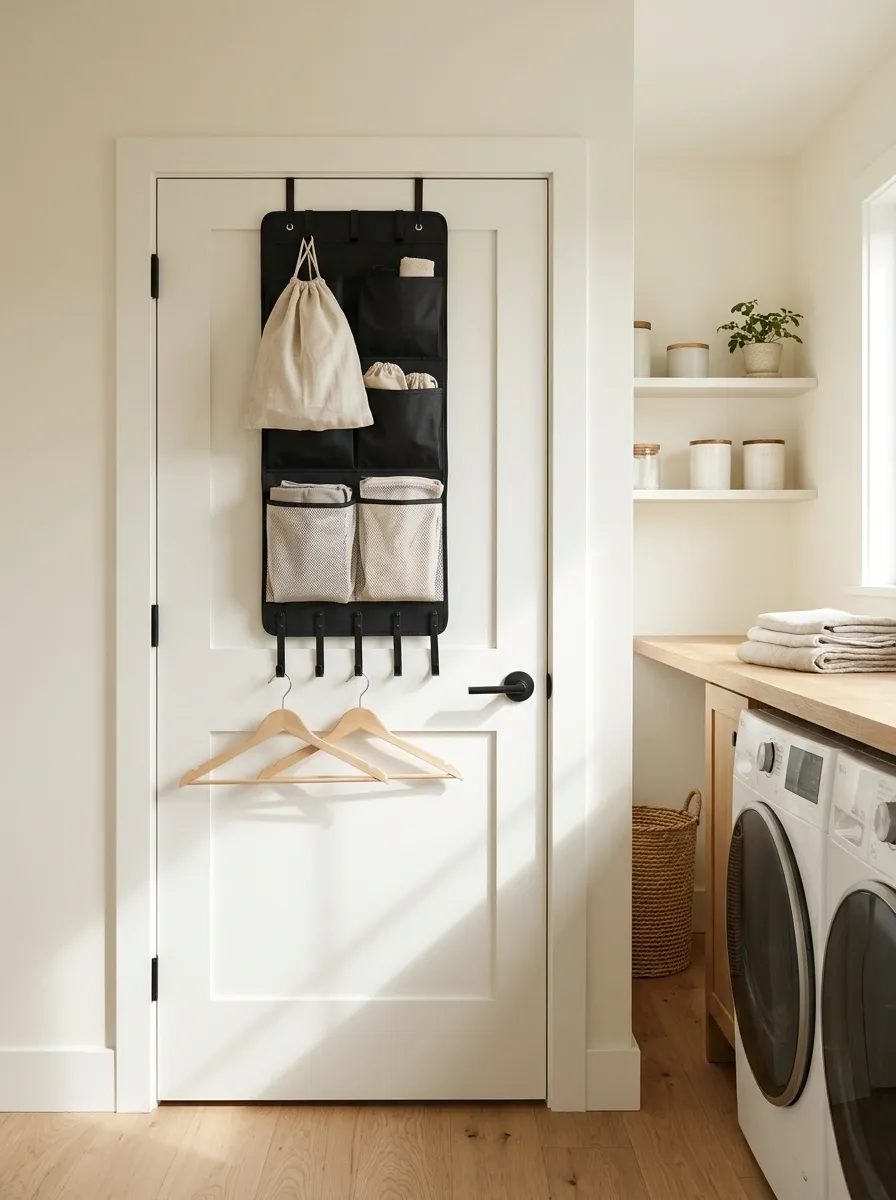
A compatible organizer can hold lightweight accessories when wall space is limited. Check bracket thickness, loading, and door clearance.
Do not obstruct latches or specialized door components. Some doors are unsuitable for these accessories. Close the door repeatedly during the test. Storage that prevents normal closing has applied for a larger problem than the one it was hired to solve.
One Wall Color That Makes Mixed Storage Feel Related
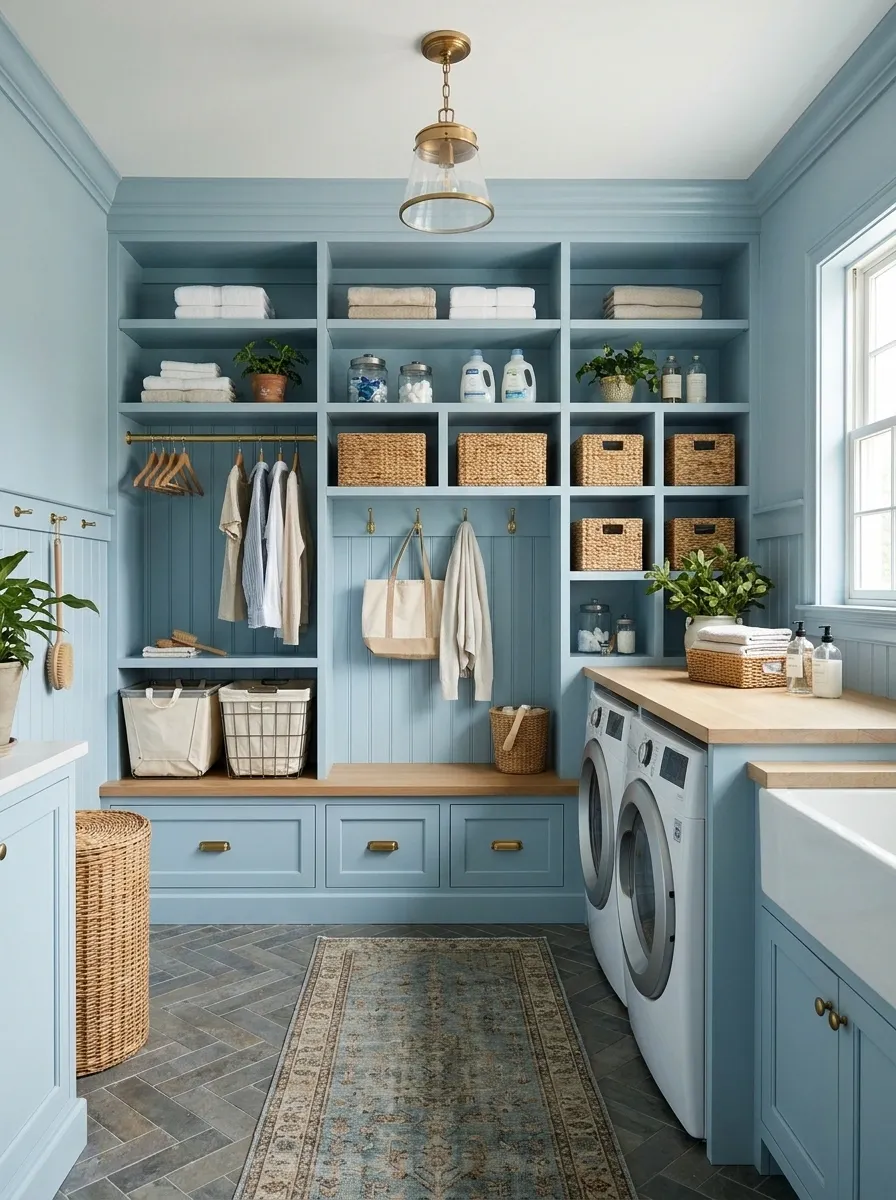
A consistent wall color can connect different shelves, baskets, and carts. Pale blue, warm white, muted green, or stone provide a common background.
Choose a finish suited to the surfaces and conditions. Repeat one material where useful, but keep practical pieces even when they differ. The room needs a relationship, not a contract requiring every item to come from one collection.
A Portable Putting-Away Basket Instead of More Storage
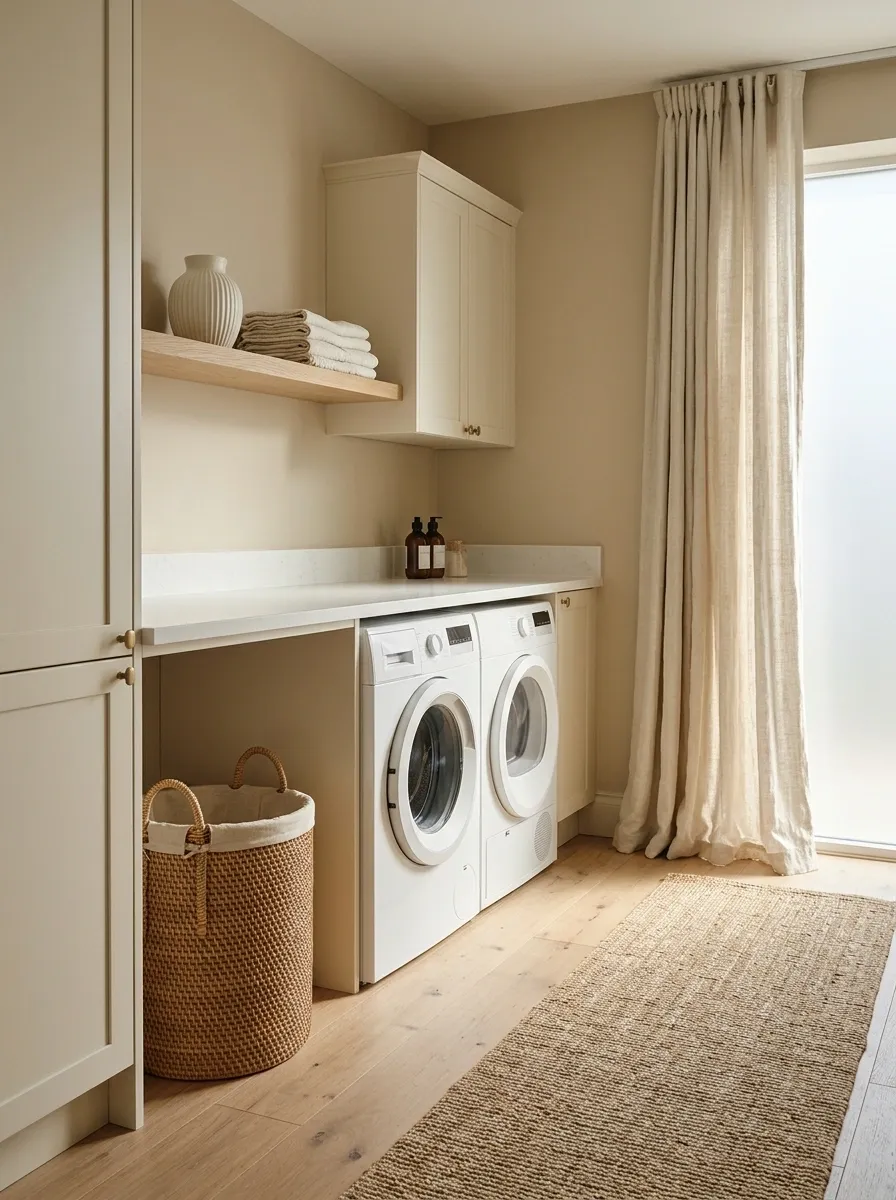
Sometimes clean clothing occupies space because it never leaves. Keep a manageable portable basket for finished laundry and build the return trip into the routine.
Give it a parking position clear of machine doors. Empty it, then return it ready for another load. The room should process clothing instead of becoming a permanent destination for everything that survived washing.
Fold, carry, put away, return the empty basket.
Stacked Appliances With an Open Storage Bay Beside Them
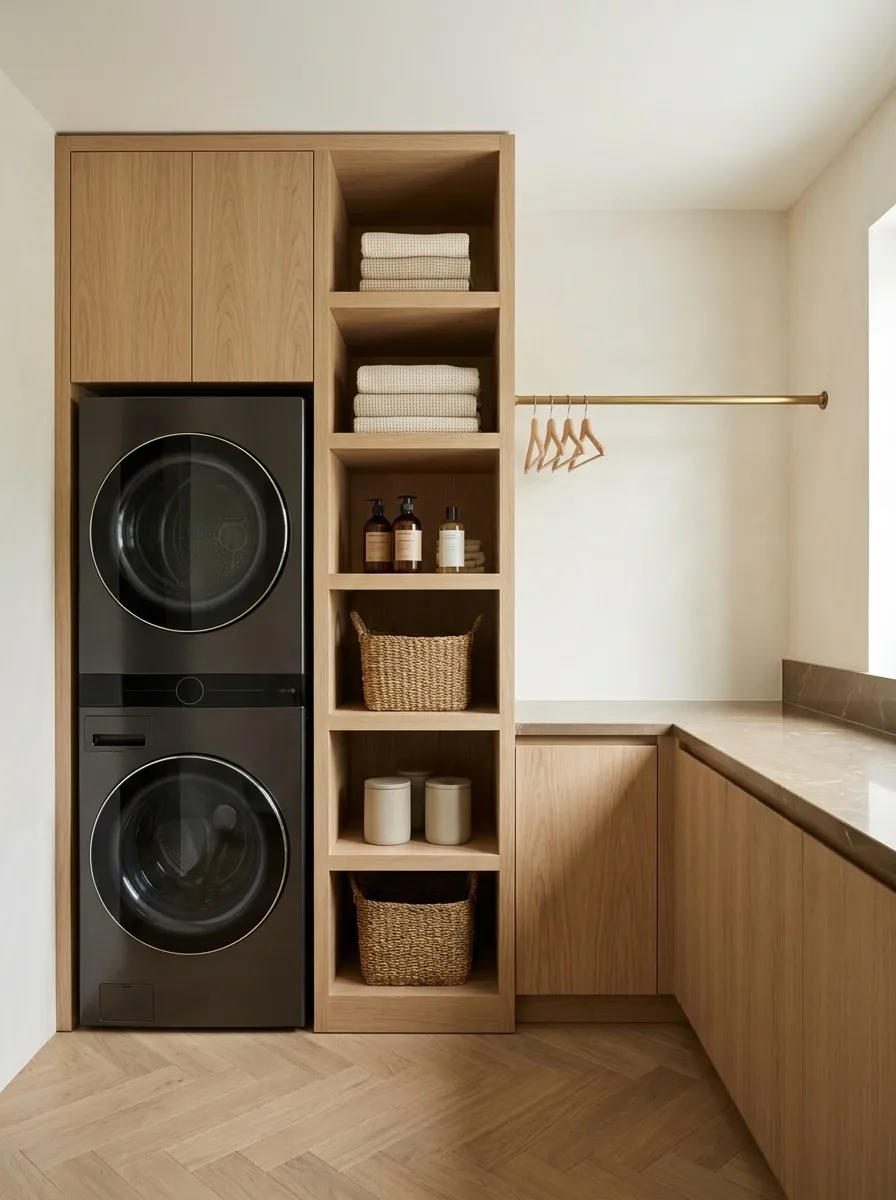
An approved stacking arrangement can release space for adjacent shelves in a suitable room. Use the manufacturer’s specified combination, kit, and installation requirements.
Check control reach and both doors in use. Store heavy items low. Extra shelving provides limited consolation if reaching the dryer controls now feels like applying for a climbing qualification.
An Ironing-Board Holder With Space to Lift the Board Out
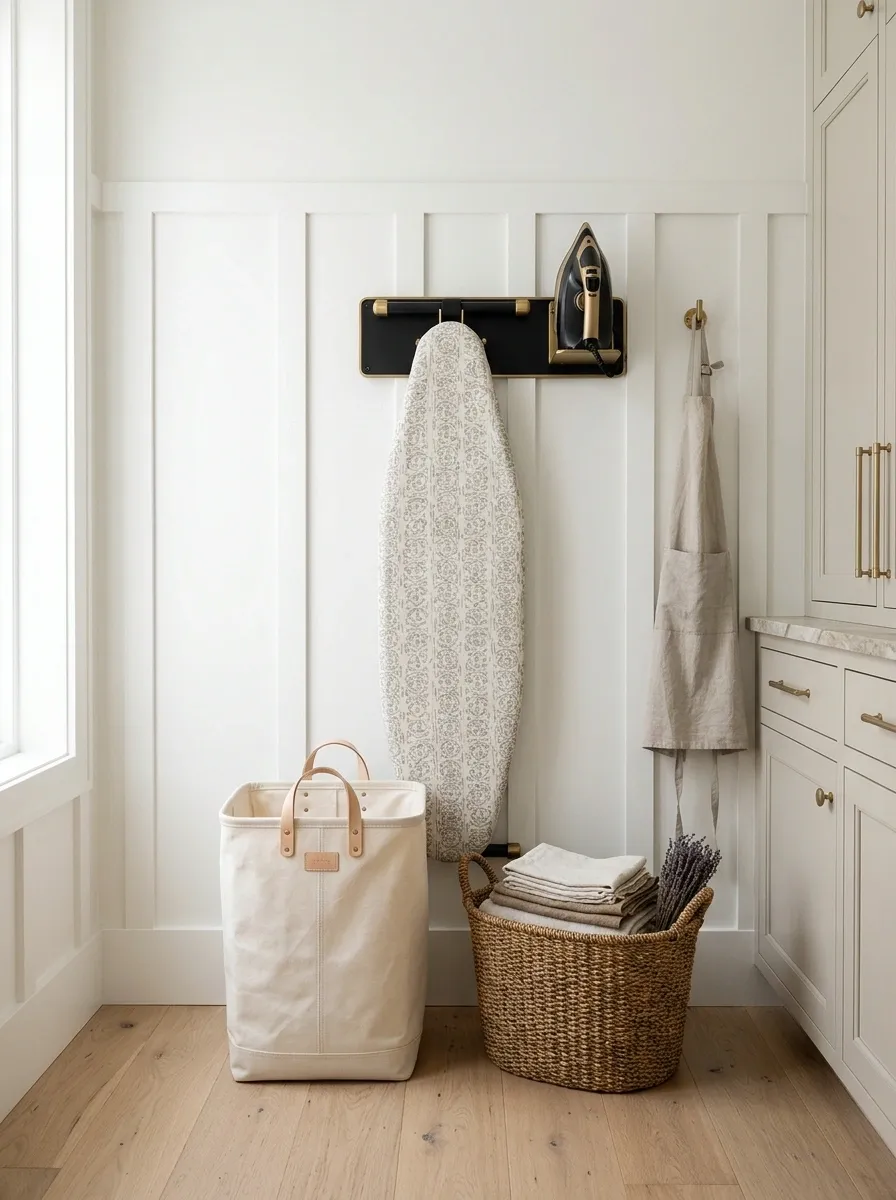
A suitable holder keeps an ironing board off the floor. Measure the board and the lifting movement needed for removal.
Install for the intended load. Store the iron safely according to instructions and let it cool first. Avoid hanging the board where it catches shoulders; that merely changes the altitude of the original obstruction.
Secure holder, managed cord, and a cooled iron in suitable storage.
A Freestanding Island in a Larger Laundry Room
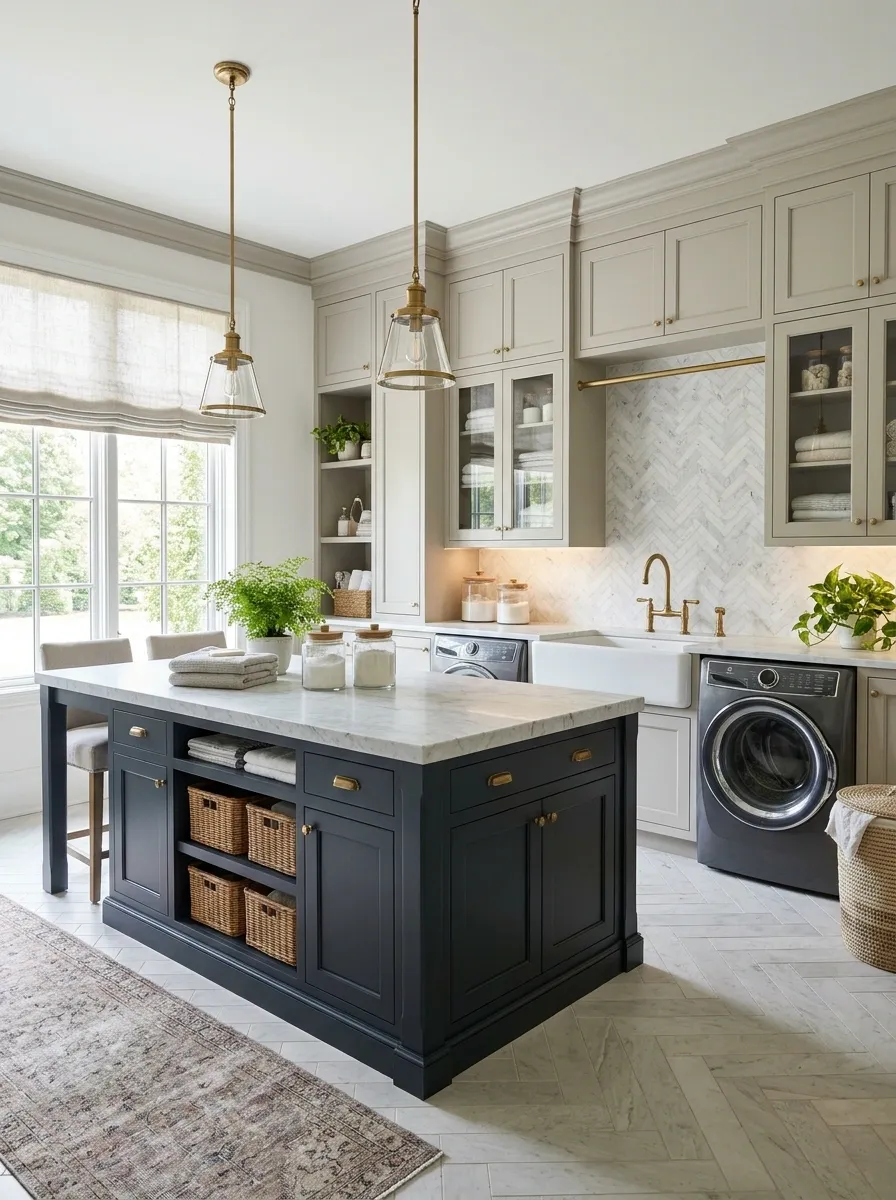
A sturdy worktable creates a central folding station where the room has adequate width. Measure circulation with baskets and machine doors in use.
Keep the lower area accessible rather than permanently overfilled. A comfortable work height matters more than decorative details. Large laundry rooms can have circulation problems too; they simply acquire more furniture before anyone notices.
A Screen That Separates the Laundry View When Appliances Are Idle
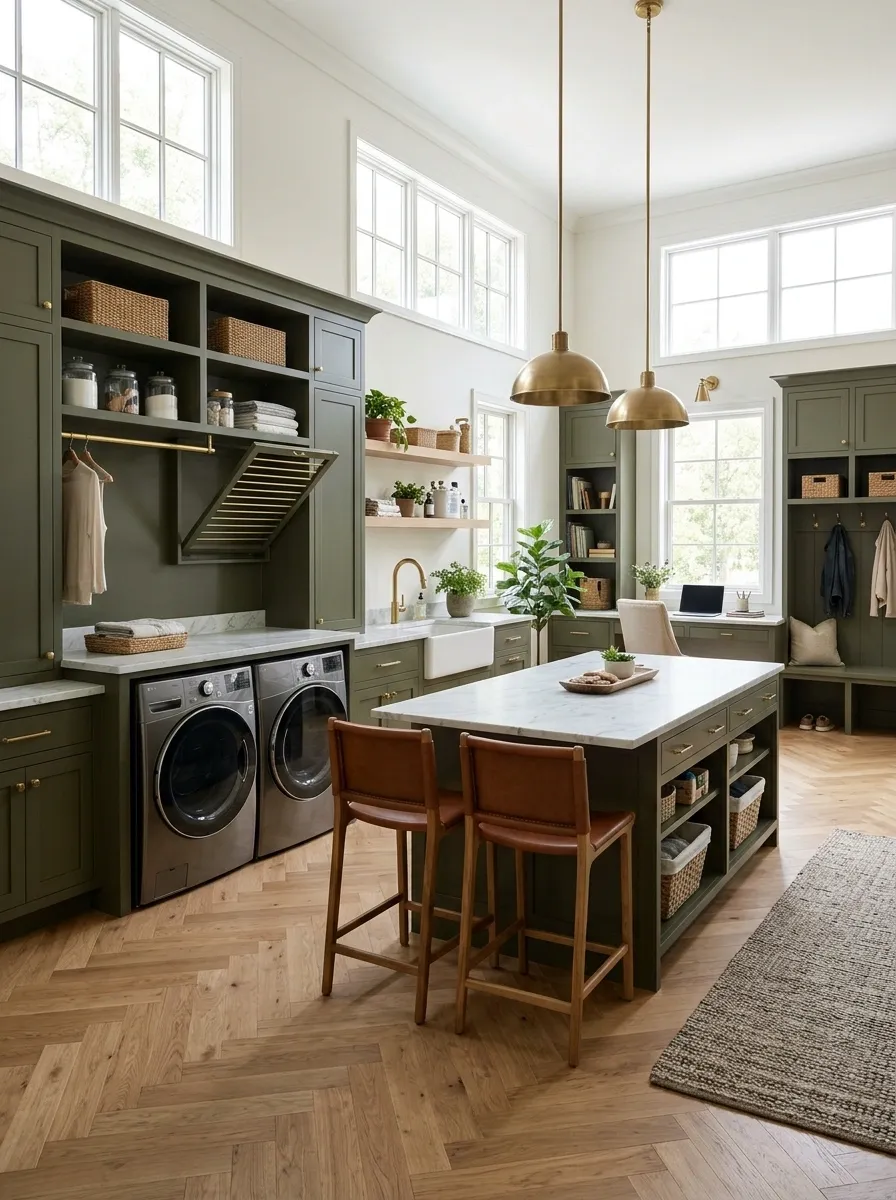
A suitable stable screen can soften the view of an open laundry area in a multipurpose room.
Preserve required clearances, ventilation, and access, moving it away when appliance instructions require. Give it a safe storage position. Starting a wash should not resemble opening a backstage corridor through folding panels and an inconveniently parked drying rack.
Safe stability, appliance clearances, and easy movement.
Separate Open Storage Zones in a Bathroom-Laundry Combination
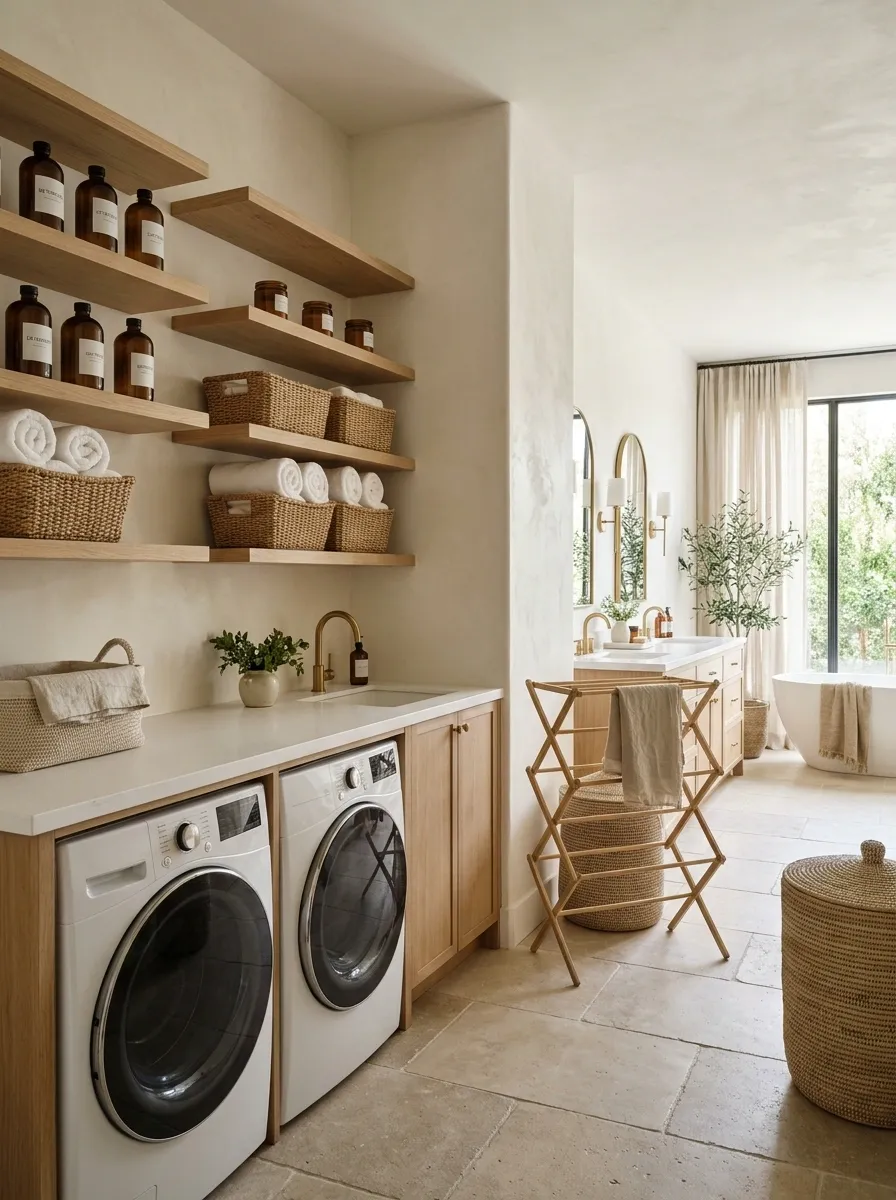
Assign separate storage to bathing and laundry tasks. Put towels in a dry position and products in secure labeled storage away from splashes.
Work around the approved appliance and electrical arrangement. Choose finishes for the conditions. A toothbrush should not have to negotiate with stain remover for shelf space simply because the room has two jobs and no cabinets.
Run a Load Before Adding Another Shelf
Notice unnecessary movements and awkward reaches. Adjust those first.
Labeled bottles, practical baskets, and an honest drying rack are allowed to remain visible. When supplies are accessible and finished clothing leaves the room, you have achieved more than a wall of matching containers ever promised.