
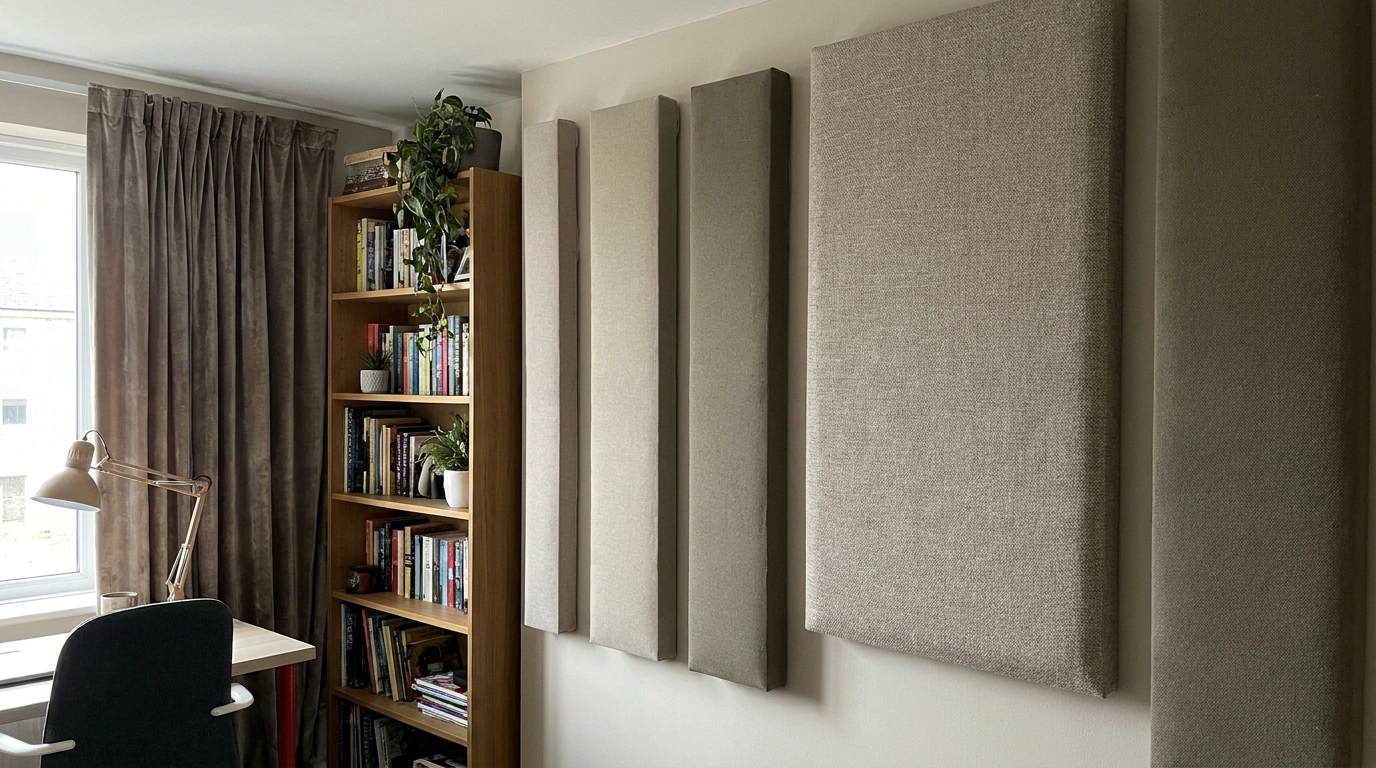
You can hear the television next door. You search for a solution. The internet offers foam squares, egg cartons, a blanket, and the cheerful suggestion that a bookcase will apparently solve acoustics.
Some inexpensive changes can help. They just solve different problems.
Before spending anything, separate sound coming through the building from sound bouncing around your room. Sound isolation addresses transmission between spaces. Absorption reduces reflections within a space. A room can sound less echoey while the neighbor’s television remains just as audible. (Acoustical Surfaces’ explanation)
The economical approach is to identify the weak path, make the least disruptive appropriate change, and check the result before buying the next thing.
Match the Fix to What You Hear
| What you notice | First thing to investigate | A purchase that may miss the problem |
|---|---|---|
| Speech clearer beside a door | Door gaps or a corridor path | Foam on an unrelated wall |
| Noise concentrated near a window | Window condition and perimeter | A rug across the room |
| Echo during your own calls | Reflections inside your room | A new wall lining alone |
| Bass or vibration across several surfaces | Source and structural paths | Thin decorative felt |
| Noise across an entire lightweight partition | Wall assembly and other paths | Paint marketed as a dramatic cure |
Locate the Loudest Path Before Treating the Whole Wall

Move around your own room while the usual noise is present. Compare the middle of the wall, the room edges, the door, and the window. Keep a short note of where the sound seems strongest and what kind of sound it is.
This is not a laboratory test, and it will not reveal every structural path. It can still stop you spending the budget on the wrong surface. Do not dismantle electrical fittings or building elements to investigate.
Compare locations before choosing materials
Record the noise type, timing, and strongest apparent location.
Check Whether the Noise Travels Around the Wall
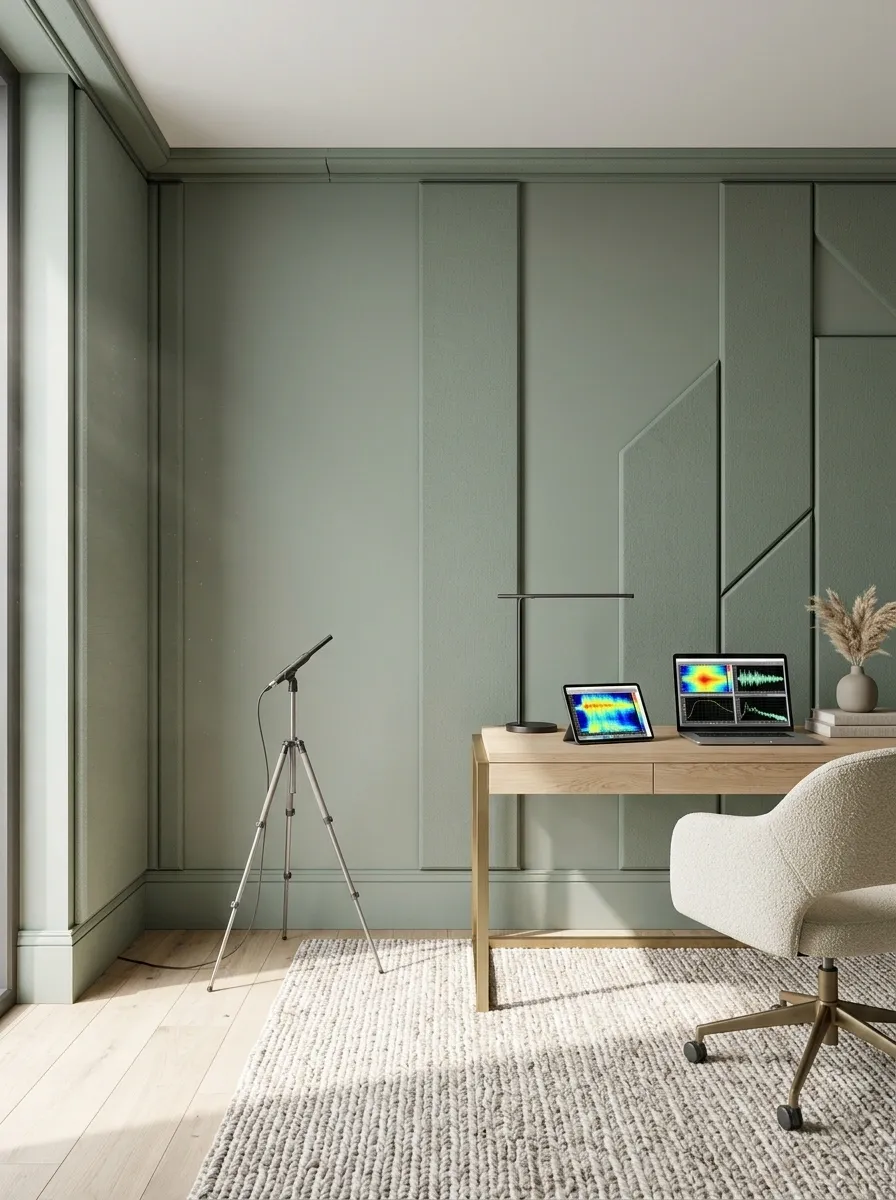
A separating wall is only one possible route. Sound can also travel through adjoining floors, ceilings, and connections. This is called flanking transmission.
The National Research Council Canada distinguishes direct transmission through the separating assembly from flanking transmission through other paths. That is why upgrading one wall does not guarantee the result you expect. (NRC explanation of sound paths)
Pause before a large purchase: if the noise remains strong near several room boundaries, a professional diagnosis may be more economical than treating the wrong wall repeatedly.
Reduce the Source Where You Have Control

If the sound originates in your household, start there.
- Move a speaker away from the shared boundary where practical.
- Lower unnecessary volume, particularly bass.
- Replace a rattling or loose component with an appropriate repair.
- Agree on quieter times for the loudest activities.
These changes do not rebuild the wall. They can reduce the demand placed on it and cost less than a trolley full of acoustic products. For equipment vibration, use isolation products specified for the equipment rather than improvising unstable supports.
Check one change at a time: otherwise, you will not know what helped.
Low-Cost Repairs Worth Investigating
Repair Appropriate Gaps With the Correct Materials
Unsealed gaps can undermine a sound-control assembly. Appropriate acoustic sealants are designed for specified joints and systems; USG’s technical guidance emphasizes sealing as part of sound-rated construction. (USG acoustic-sealant guidance)
Identify the gap and construction before choosing a product. Do not seal required ventilation, drainage, movement joints, or unknown service openings. Fire-rated assemblies and penetrations need compatible approved details, not whichever tube of caulk is already in the drawer.
| Ordinary-looking gap | Sensible next step |
|---|---|
| Wall perimeter separation | Establish cause and suitable repair |
| Gap around a service penetration | Ask the appropriate professional |
| Electrical fitting | Leave electrical work to a qualified person |
| Required vent | Keep it functional; investigate an appropriate acoustic design |
Address a Door Path Instead of Decorating the Wall
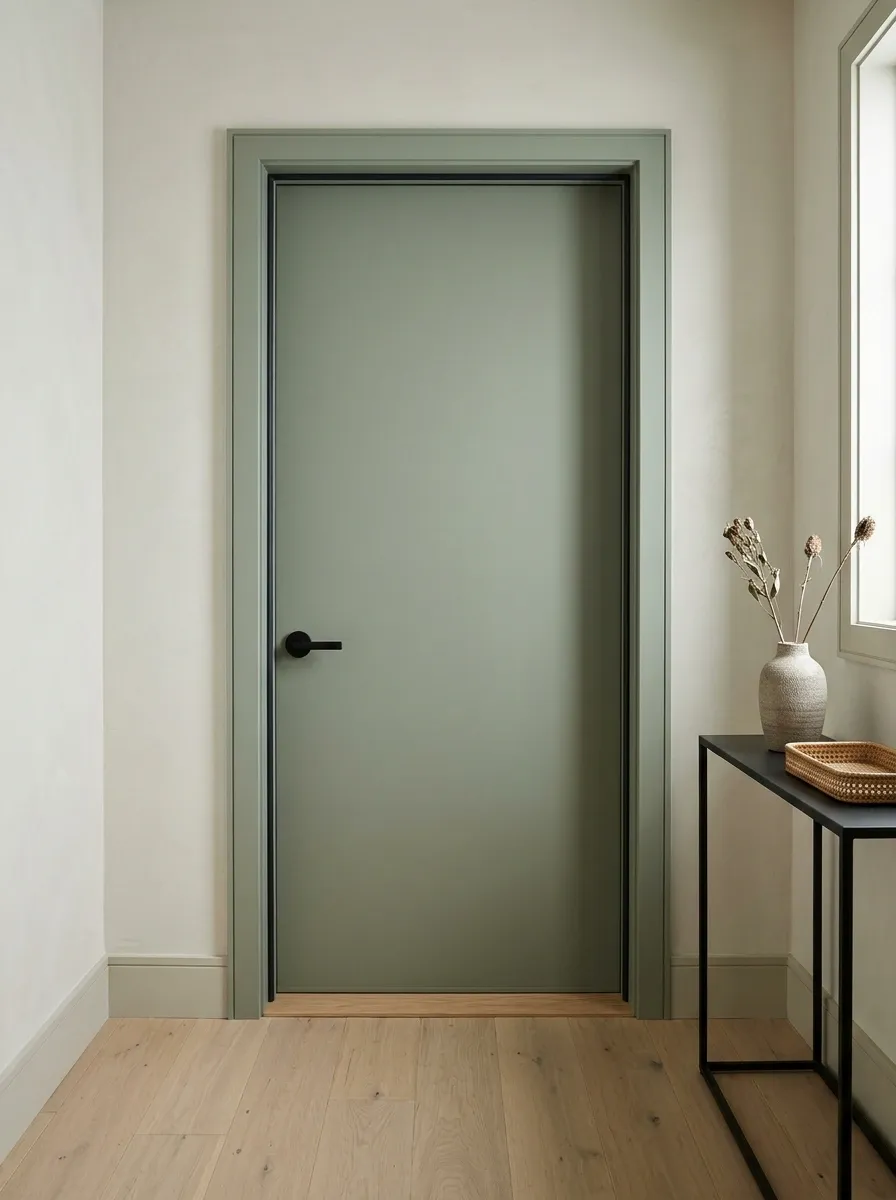
If noise is entering through the corridor, the door assembly may deserve attention before the wall does.
Ask about compatible perimeter seals and threshold treatment for that door. Check closing, accessibility, ventilation, and fire or smoke requirements before changing anything. A required door undercut is not automatically spare space waiting to be filled.
For a rental or shared building, resolve the permitted repair with the responsible party. Start with the specific complaint and observed path rather than requesting an undefined room soundproofing project.
Review the whole opening
Perimeter
Threshold
Any treatment must preserve the door’s required functions.
Have a Noisy Window Opening Assessed

Where the window is the clear weak point, check its condition and fit before buying wall coverings.
A repair to the opening or a professionally designed secondary-glazing solution may be relevant, but suitability depends on the window, ventilation, escape requirements, and building. Do not block an opening permanently with an improvised panel. Curtains may improve room comfort, but they do not turn an ordinary window into a high-isolation assembly.
Budget question: is the money being spent on the path where sound actually enters?
Know What Soft Furnishings Can Do
Use Rugs and Upholstery to Reduce an Echoey Room

If the room sounds harsh during conversation or calls, adding appropriate absorptive surfaces can help the internal acoustic environment.
Try the furnishings you need anyway: a rug, upholstered seating, or curtains suited to the room. Do not overcrowd the space purely for acoustics. You still have to live there, and moving sideways between six surplus chairs is a fairly committed response to echo.
The distinction remains important: a less reflective room is not the same as a sound-isolated wall.
Improve the sound you make in the space
Choose Acoustic Panels for the Right Reason

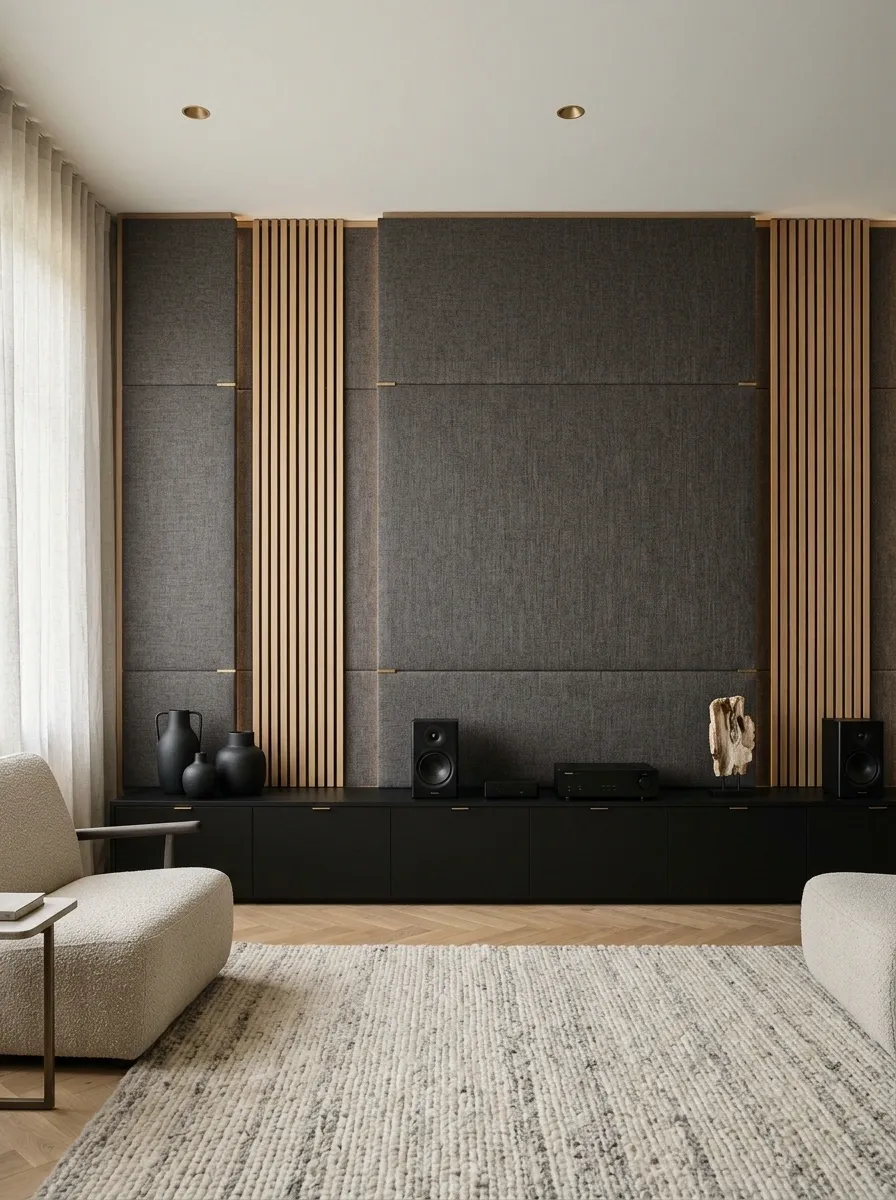
Acoustic panels can be useful when their absorption performance and placement suit the room. A decorative product calling itself acoustic is not enough information.
Look for relevant test data, suitable materials, installation instructions, and mounting that supports the loaded weight. Do not leave loose insulation exposed or improvise an unsafe fabric assembly. The room’s appearance matters, but so does what is behind the attractive cover.
| Product information | What it helps you judge |
|---|---|
| Absorption data | Suitability for room treatment |
| Installation method | Placement and mounting needs |
| Material information | Suitability for the occupied space |
| Intended application | Whether it addresses your problem |
Read Blanket Claims Carefully
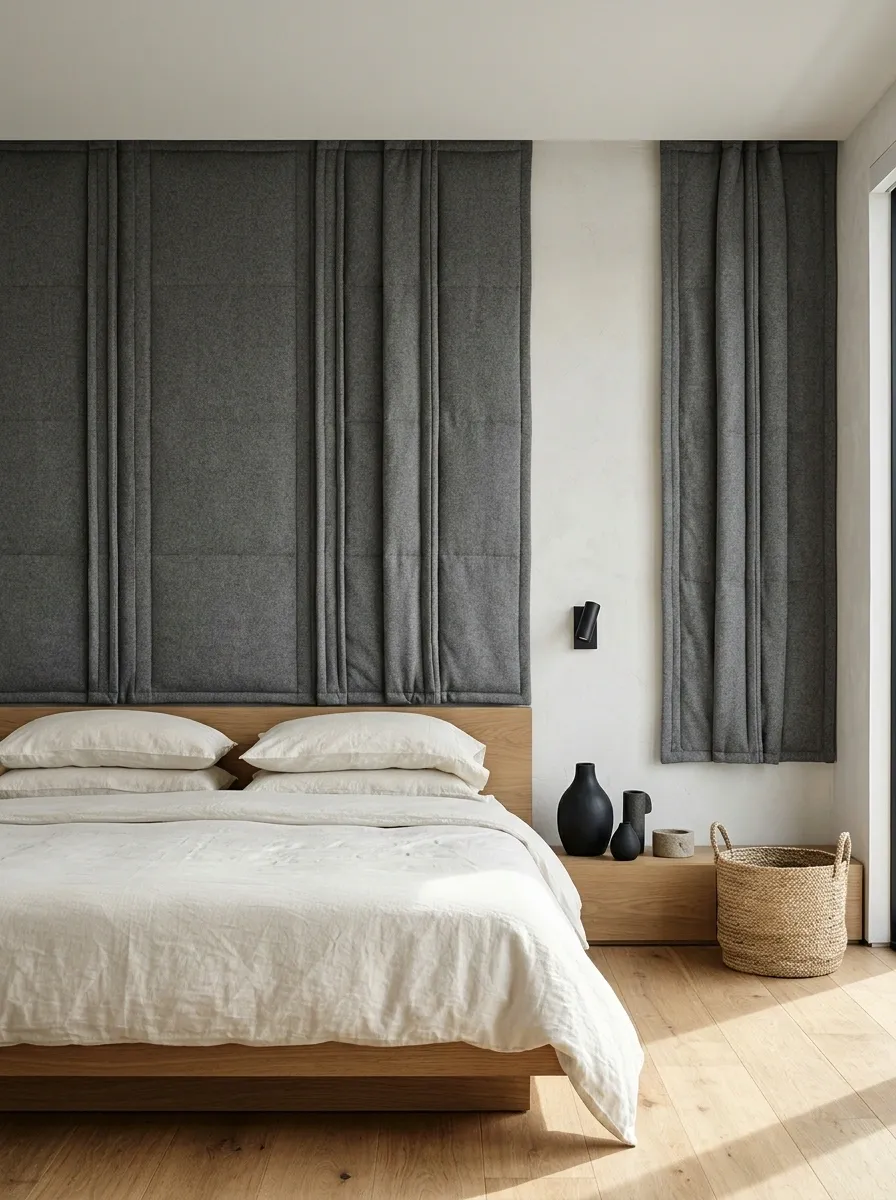
Some acoustic blankets are primarily absorbers. Other specialized products combine absorption with a dense barrier layer.
Those are different products, with different installation requirements. A loose blanket pinned to a wall does not reproduce a tested barrier assembly. Acoustical Surfaces, for example, distinguishes a combined barrier-and-absorber construction in its technical product description. (Example of a combined acoustic blanket)
Before buying: establish whether you need echo control or transmission reduction, then ask for evidence relevant to that use.
Rearrange Furniture for Comfort, Not a Guaranteed Barrier

Moving a desk or bed away from the noisiest part of the room can make the space more usable.
You can also use the furnishings you already own to reduce bare reflective areas. What you should not do is assume a bookcase creates a predictable replacement for a sound-rated wall. Keep furniture safely secured where required, preserve ventilation, and avoid crowding a damp wall.
Free trial: change the position of the activity you care about—sleeping, reading, working—before buying a new furniture piece as an acoustic treatment.
When the Wall Itself Needs Work
Ask for a Complete Wall-Upgrade Specification
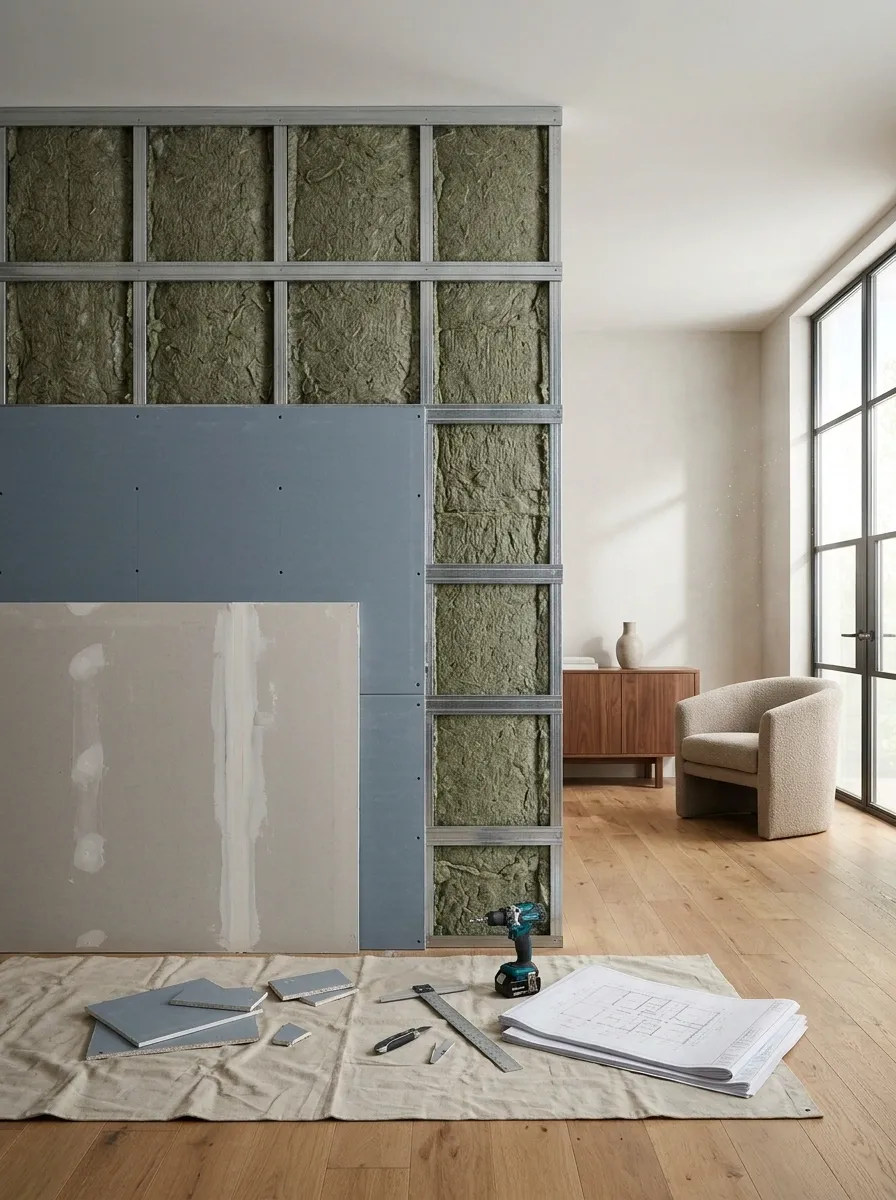
If the partition is the main path, genuine improvement may require construction rather than decor.
Wall systems can use additional mass, cavity absorption, and appropriately designed separation to reduce transmission. The components work as an assembly. ROCKWOOL describes the importance of wall configuration and separation, while USG documents tested assemblies and detailing. (ROCKWOOL wall principles, USG acoustical assemblies)
Ask a qualified contractor to specify the entire solution, including edges, penetrations, services, and flanking paths. Extra board alone is not a universal recipe.
Each detail affects the result
This is a planning diagram, not a construction detail.
Do Not Buy an STC Number Without Its Assembly
Sound Transmission Class is useful, but a laboratory wall rating does not promise the same result in your room.
Ask which complete assembly was tested and how its conditions relate to the proposed work. The NRC’s distinction between direct wall transmission and apparent performance including flanking paths is especially relevant here. A single impressive number on a material advertisement cannot describe every route through your building.
Ask the installer: what improvement is realistic for the particular noise, construction, and available budget?
Treat Bass and Structure-Borne Noise as a Different Challenge

Low-frequency noise and vibration can demand more extensive source control and construction changes than a modest airborne-speech problem.
Do not keep adding thin wall treatments in the hope that the next layer will finally solve it. Seek a diagnosis when the noise is persistent or spreads through several surfaces. Ask for a staged plan so you can understand which work addresses which path.
| Warning sign | Better response |
|---|---|
| Bass remains after decorative treatments | Reassess the transmission path |
| Vibration seems widespread | Investigate source and structure |
| No clear improvement after a targeted repair | Stop and review before spending again |
A Budget Order That Makes Sense
Start with observation and source changes. Next, repair the relevant defects using appropriate methods. Add absorption if the room itself is echoey. If meaningful isolation still requires wall work, compare complete proposals.
Skip purchases justified only by words such as soundproof, studio, or professional. Ordinary paint, wallpaper, and egg cartons are not credible substitutes for a properly designed separating assembly. Thin foam may have an absorption use; that does not make it a universal wall barrier.
Check the Result Before the Next Purchase

Compare under similar conditions: similar source level, same listening position, same door and window state. Note what changed rather than declaring victory because the room feels newly decorated.
For significant projects, ask about appropriate professional testing. A phone app may help you keep rough personal notes, but it does not establish certified assembly performance.
A good stopping point: the room supports the activity you needed it for, and further work would cost more than the remaining problem justifies.
You do not need an entirely silent room to make a worthwhile improvement. You do need a fix aimed at the noise you actually have.