
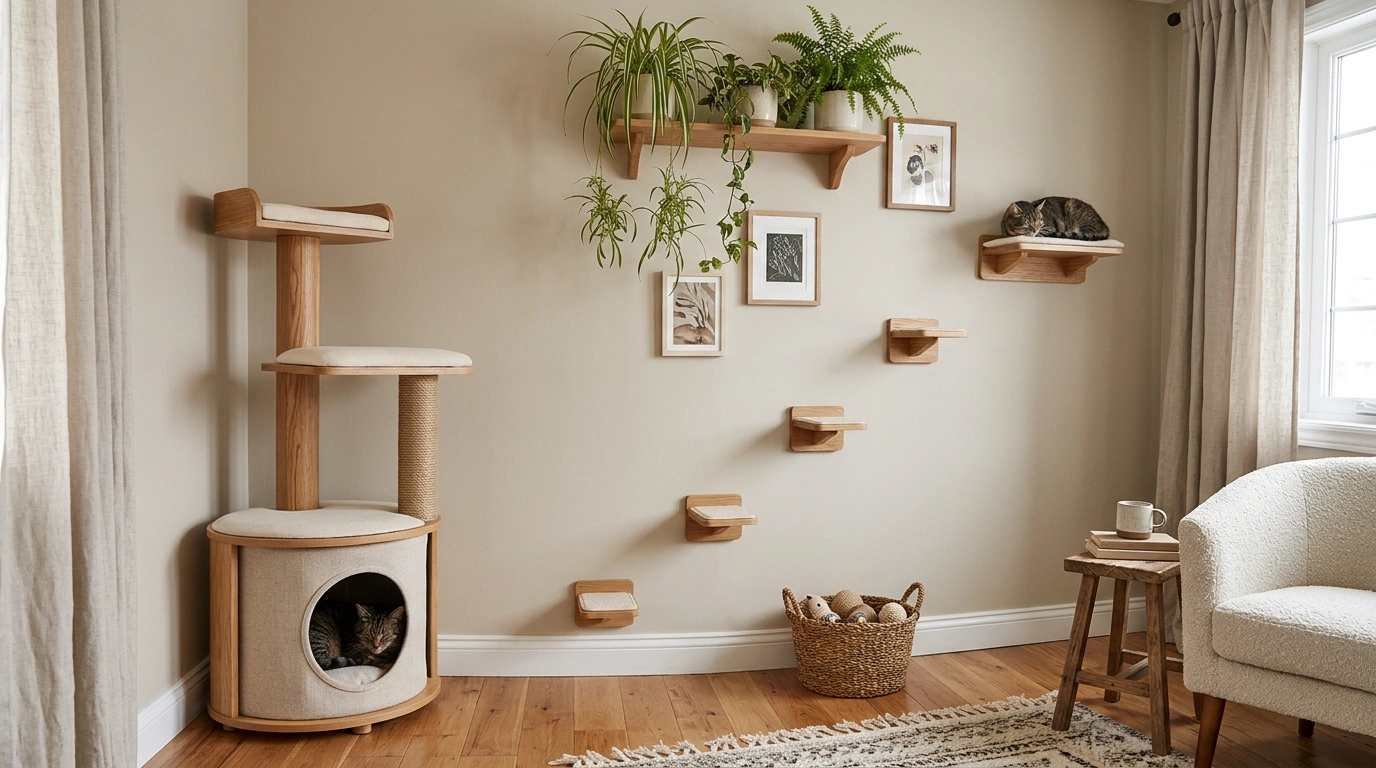
Your cat already has opinions about the best corner. They may have expressed them by sleeping on your laptop, scratching one particular chair, or occupying the box that briefly contained an expensive bed.
Use that information.
A good cat corner supports something the cat wants to do: hide, watch, scratch, rest, or play. It does not have to combine the entire animal’s life into one decorative station. Keep food, water, and toileting resources appropriately separated and spread resources around a multi-cat home rather than making one corner the only destination. (Cats Protection home setup guidance)
Choose stable furniture and equipment suited to your cat’s size and abilities. Secure raised structures correctly, keep escape and household hazards in mind, and let the cat choose whether to use the setup. The cushion can match the curtains; the cat is under no obligation to appreciate that achievement.
Cat Corner Ideas
A Dedicated Balcony Lounging Zone
A thoughtful balcony setup can transform a narrow walkway into an engaging observational deck for your cat.
Choose properly secured installations and weather-resistant surfaces that blend seamlessly with your interior style. Keep planting choices safe and maintain clear pathways around the cozy seating.
The result is a harmonious retreat where both you and your cat can enjoy the afternoon light together.
A Secure Window-Watching Perch
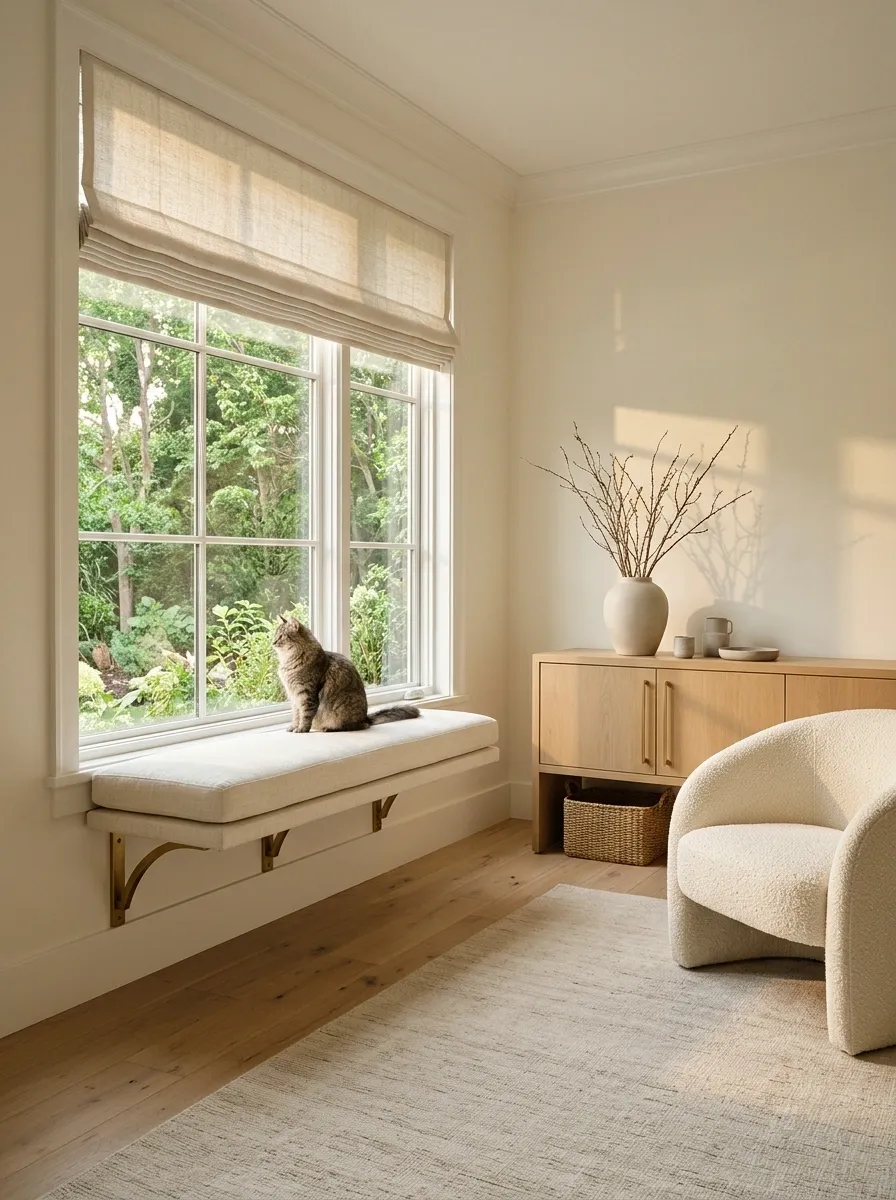
A suitable perch near a window can give your cat a place to observe the outside world.
Choose a properly supported design and an access route your cat can manage. Keep blind cords out of reach and the window secure; ordinary insect screens are not a reason to assume an opening is cat-safe. Make the resting surface practical to clean and leave the surrounding area uncluttered.
A Cozy Staircase Nook
Utilizing the awkward empty space beneath your stairs creates an inviting burrow that feels secure and protected.
Choose soft, supportive bedding and ensure the lighting is gentle rather than harsh. Keep the entryways unobstructed so your cat can retreat or emerge effortlessly at any moment.
This clever architectural repurposing proves that functional pet zones can enhance your home’s aesthetic rather than cluttering it.
A Covered Bed in a Quiet Corner
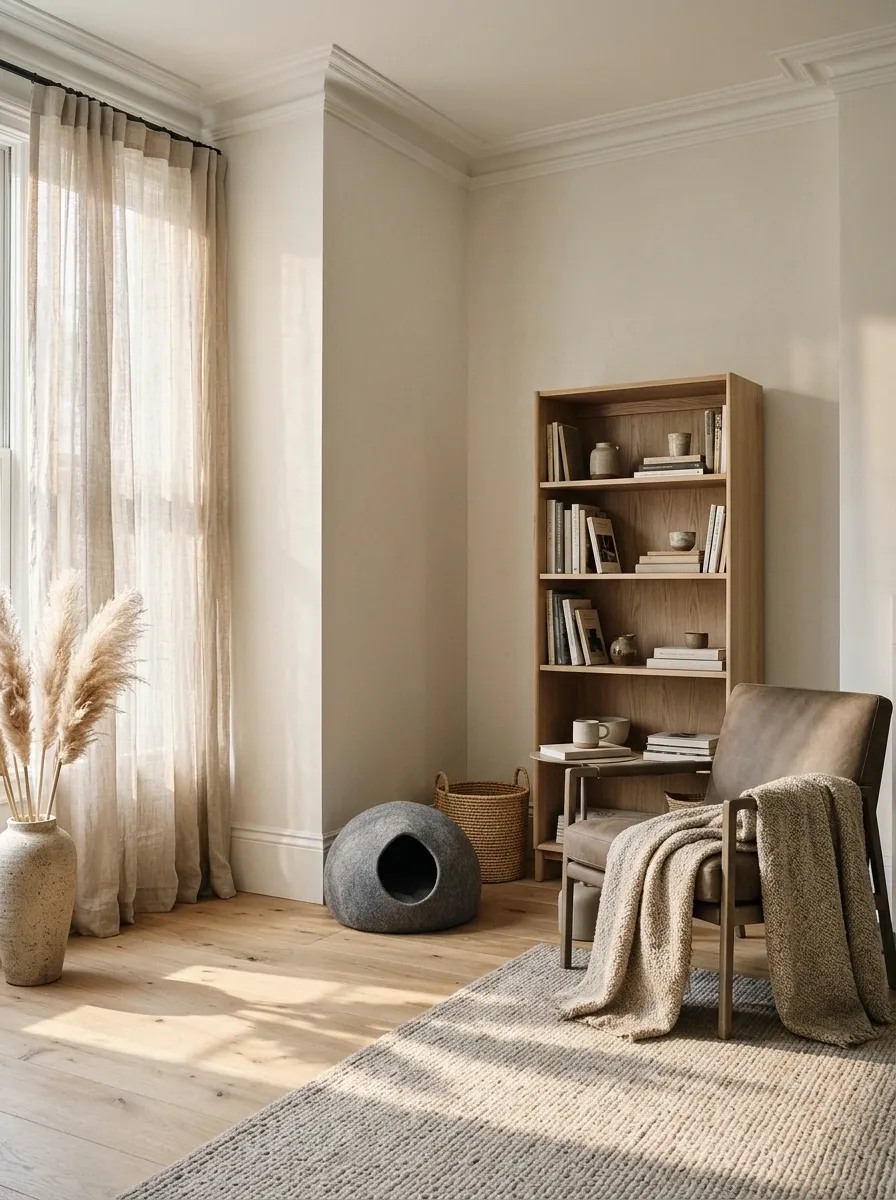
A suitable covered bed can offer retreat without taking much floor space.
Place it somewhere the cat can enter and leave without being repeatedly disturbed. Keep the opening clear and avoid surrounding it with activity just because the room looks balanced that way. RSPCA guidance includes safe hiding places as an important part of a cat’s home. (Cat environment guidance)
| Choose for the cat | Choose for the room |
|---|---|
| Easy entry and a quiet position | A manageable footprint |
| Suitable size and cleaning | A restrained fabric tone |
A Multi-Level Cat Villa
A grand multi-tier structure offers endless opportunities for climbing, resting, and surveying the household from above.
Choose a sturdy, well-balanced design with wide steps and comfortable enclosed spaces for napping. Keep surrounding areas tidy and integrate natural elements like potted plants to soften the overall footprint.
This dedicated architectural centerpiece satisfies your cat’s natural instincts while serving as a charming focal point in the room.
A Vertical Scratching Station Beside the Chosen Furniture
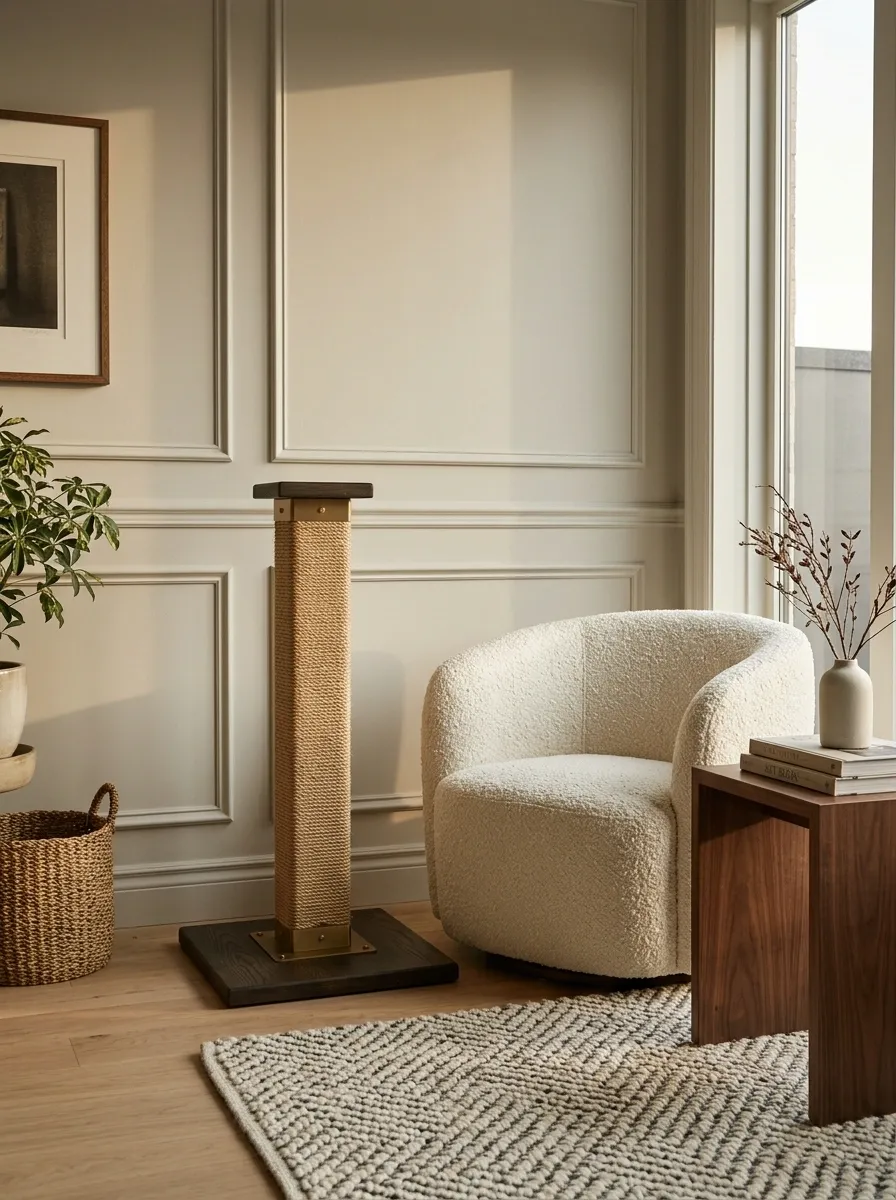
If your cat repeatedly scratches near a particular seat, an appropriate scratching option in that area may be more useful than one hidden across the room.
Choose a stable design and suitable surface, allowing the cat to use it comfortably. Keep it outside the human walking route. The aim is an appealing resource, not a decorative post whose main quality is being unobtrusive.
Observe first: position, orientation, and preferred texture can be more useful clues than the color of the upholstery.
An Integrated Wall Climbing Grid
A modular wall installation provides varied scratching and lounging surfaces while preserving valuable floor space.
Choose a durable, natural material that stands up to daily use and arrange the curved modules to suit your cat’s climbing habits. Keep the surrounding walls clean and uncluttered to let the textured design stand out.
This smart space-saving solution turns vertical walls into an engaging playground without disrupting your contemporary decor.
A Horizontal Scratcher in a Defined Floor Nook
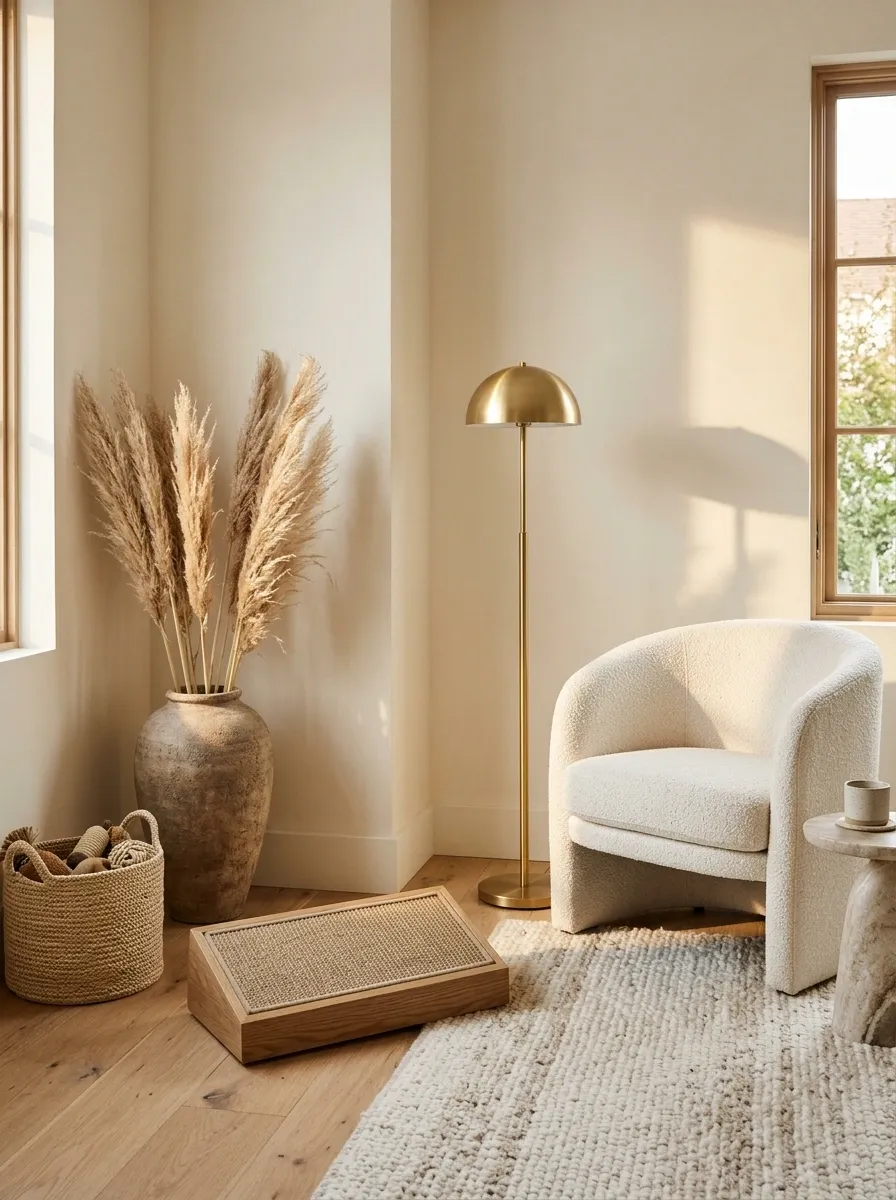
Some cats enjoy horizontal scratching surfaces. A designated nook can keep the object from looking like loose packaging on the floor.
Use a stable, suitable scratcher and give it enough clear space for use. Choose a removable or replaceable design where practical, and tidy the debris as needed. Keep it visible and accessible rather than sliding it underneath furniture whenever guests arrive.
A Properly Installed Wall-Shelf Route
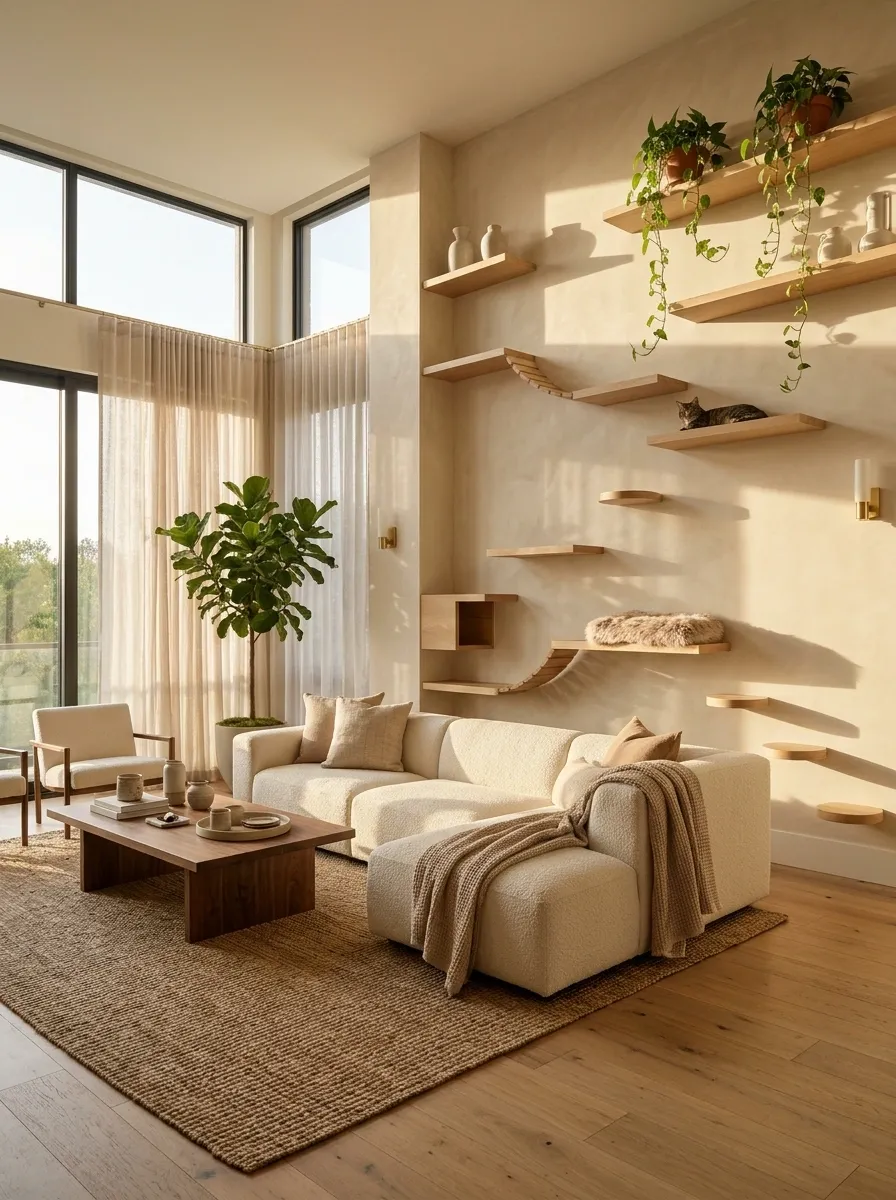
A shelf route can use vertical space where the cat’s abilities and the room allow it.
Plan the full journey:
- Suitable components and load-rated fixings.
- Usable landings.
- A manageable route down.
- A location away from household hazards.
Ordinary decorative shelves do not become cat equipment because their arrangement looks athletic.
Design from the cat’s movement, not from a symmetrical arrangement of rectangles.
A Low, Easy-Access Resting Spot
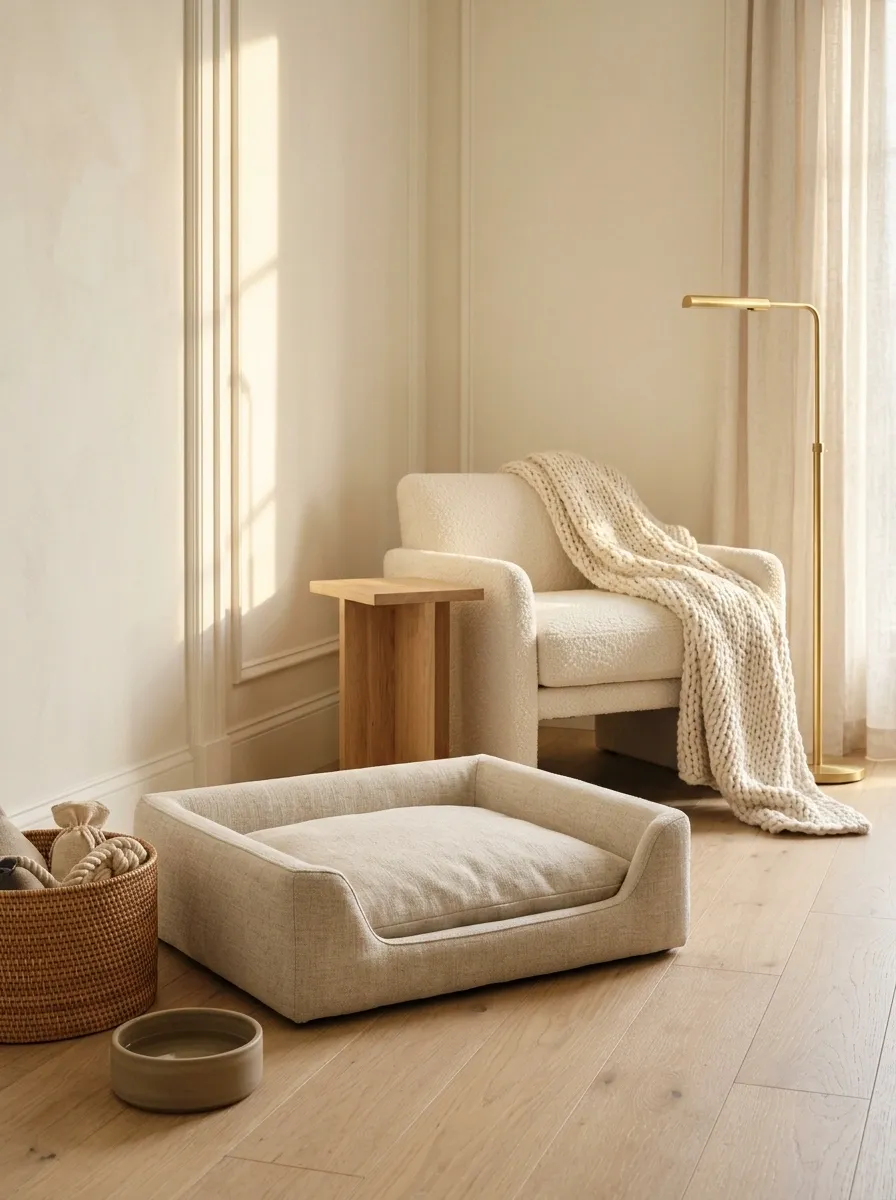
A cat that prefers staying close to the floor may enjoy a comfortable low bed more than a tall structure.
Keep the approach clear and choose a surface suited to the cat’s needs. Avoid making access depend on a jump merely to preserve the look of the corner. If movement or behavior has changed unexpectedly, seek veterinary advice rather than treating a new reluctance as a decorating preference.
A Retreat Beneath an Open Console
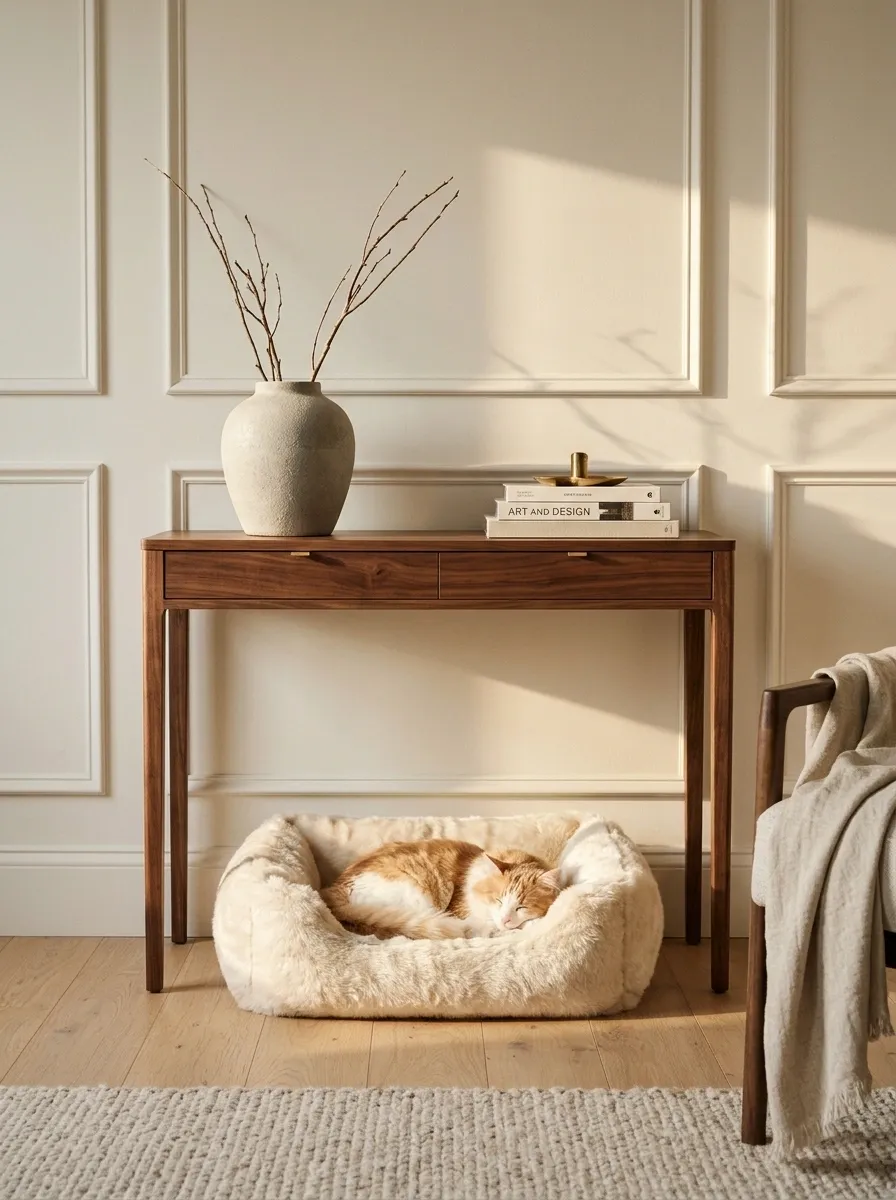
The space below a suitable console can hold a bed or hiding option while the furniture above remains useful.
Check stability, headroom, access, and the risk of objects falling from above. Keep the console top restrained and do not add trailing cords or unstable ornaments. The lower space should remain available rather than becoming overflow storage around the cat.
| Above | Below |
|---|---|
| Stable, restrained furniture use | A clear resting space |
| No dangling hazards | Easy entry and exit |
A Companion Bed Beside the Home-Office Desk
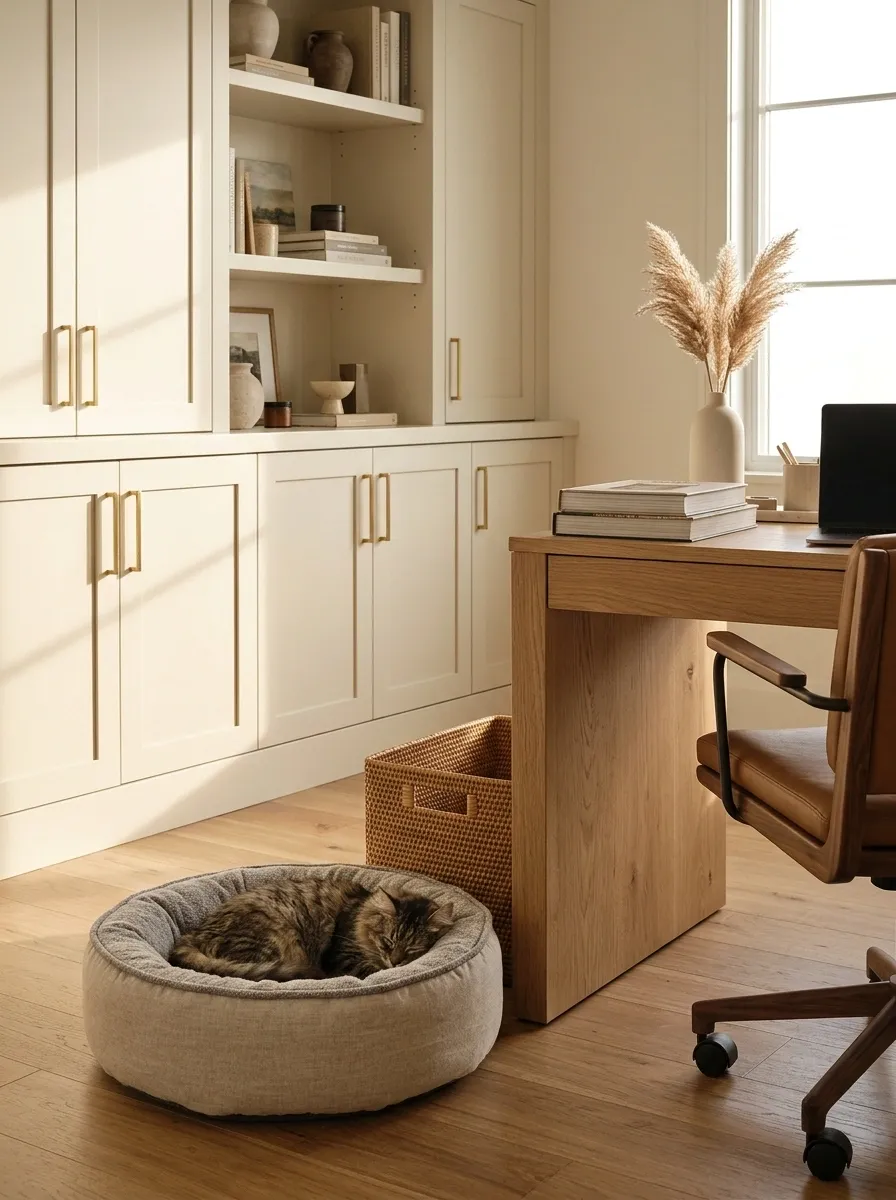
The cat may want to be near you, not specifically on the keyboard.
Try a suitable bed or familiar resting option beside the desk, outside chair movement and clear of cables and equipment heat. Let the cat see you if that seems to be the attraction.
Start simply. Replacing a familiar cardboard box with elaborate furniture may be your preference rather than theirs.
A Living-Room Corner With a Shared Material Palette
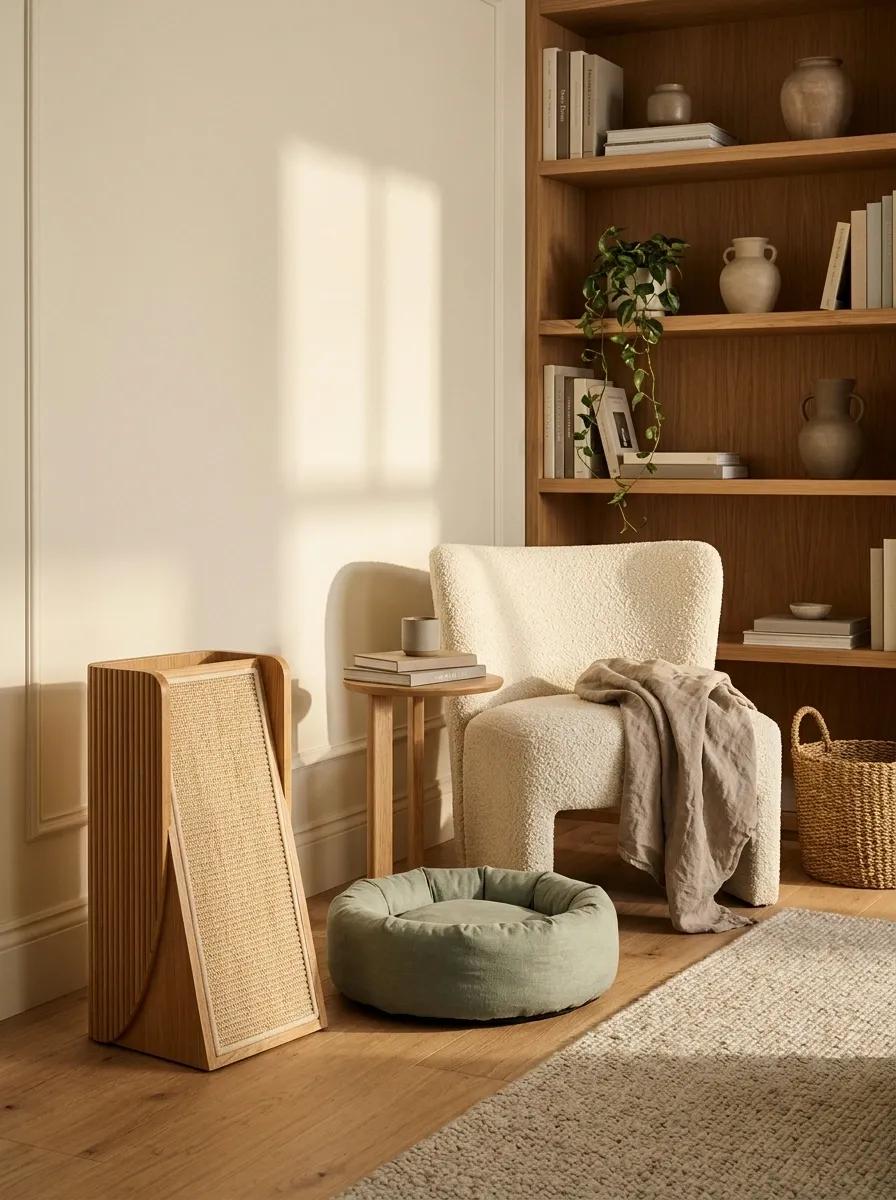
Choose a cat bed or suitable scratcher that relates to an existing room material, such as timber, muted fabric, or a woven texture.
Let that connection do the visual work. You do not need to disguise the object’s purpose. A cat resource can belong in the living room without pretending to be an abstract sculpture that mysteriously sheds cardboard.
Keep function visible: attractive cat furniture still needs to be stable, usable, and easy to maintain.
A Compact Cat Tree With a Real Footprint
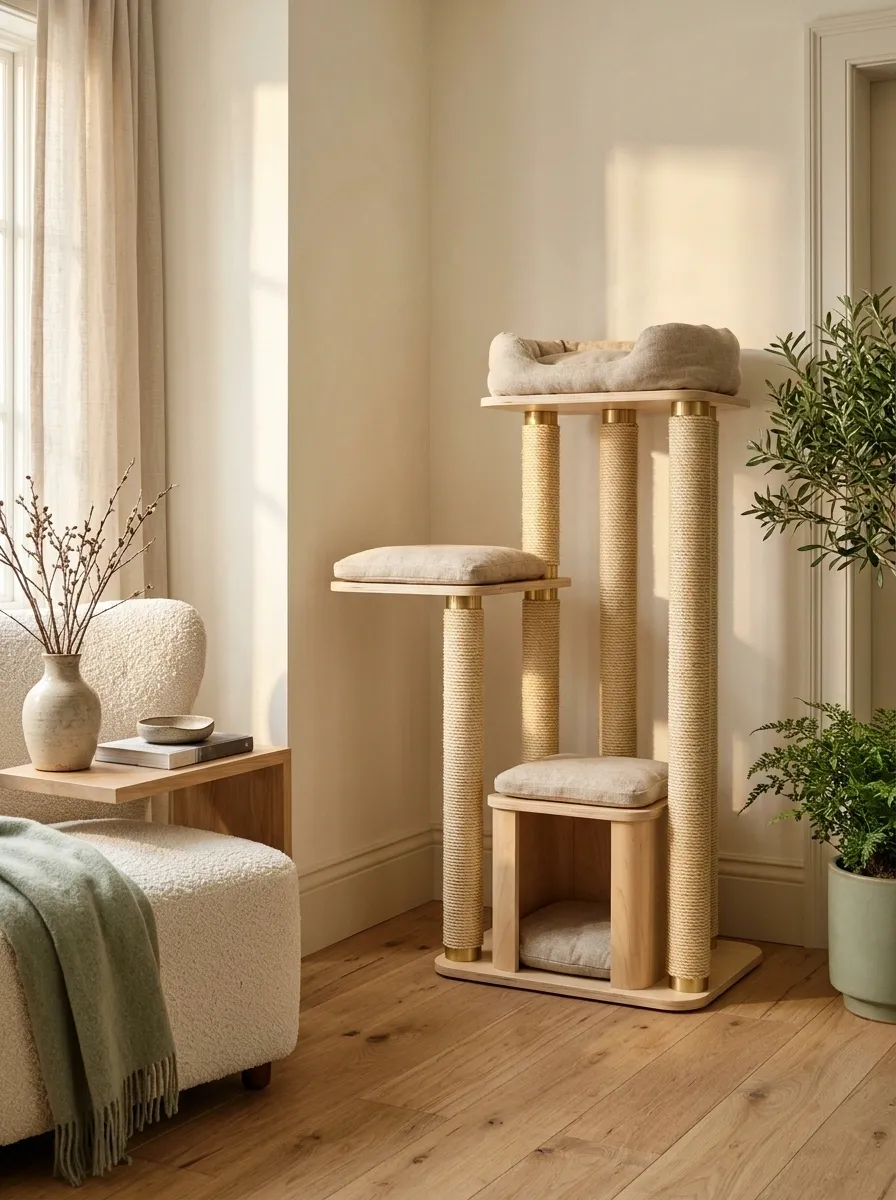
A compact tree can fit a corner well when its base, height, and anchoring suit the room and cat.
Check usable platform size rather than only overall dimensions. Keep landings clear and follow installation instructions. A tall narrow object is not automatically space-saving if it needs a much larger area for safe use.
A Timber Cat Structure That Echoes the Furniture
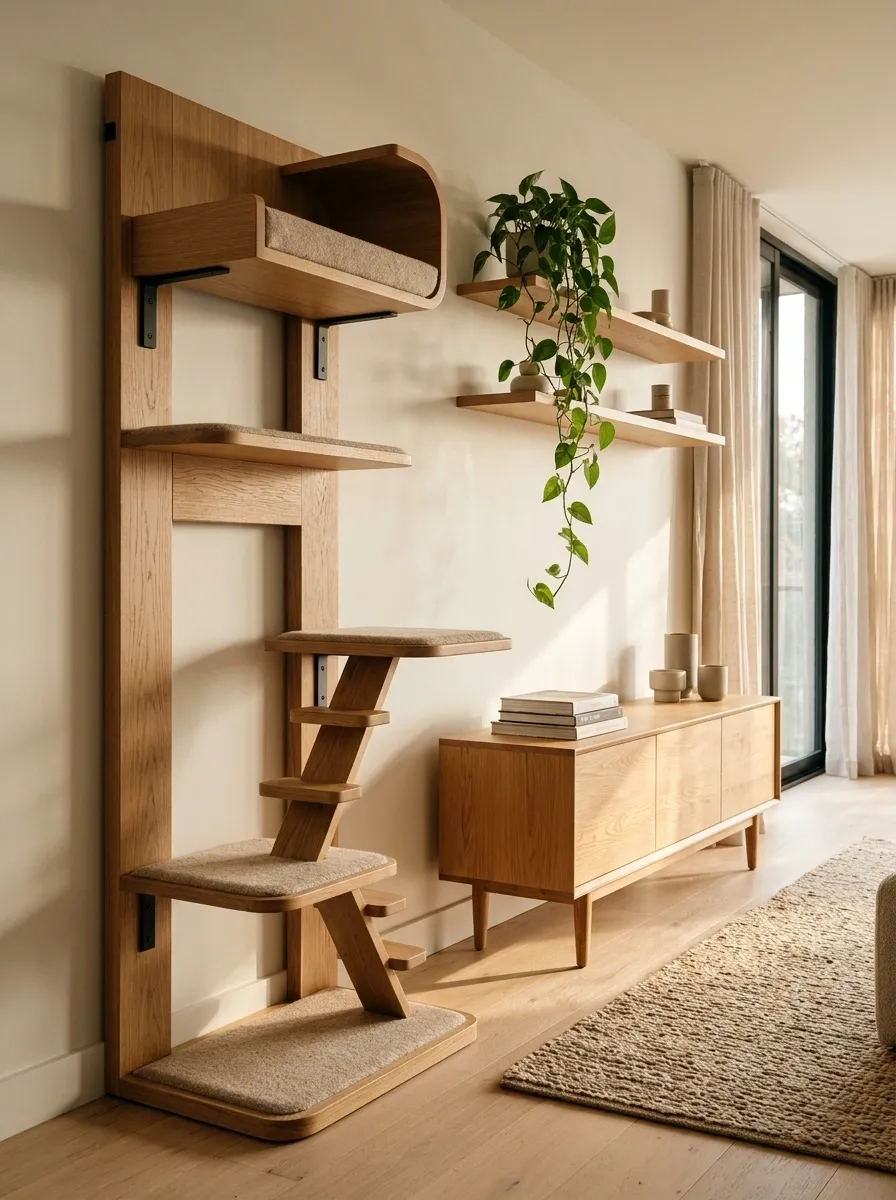
A purpose-designed timber structure can connect visually with a room’s shelving or tables.
Choose it around the cat’s use first, including surfaces, edges, access, and stability. Keep the finish appropriate to the product and household. The shared material can make the corner feel coherent without forcing the cat’s space to match every furniture leg.
Useful visual link: one repeated timber tone, with practical resting surfaces left intact.
A Door-Safe Alcove Retreat
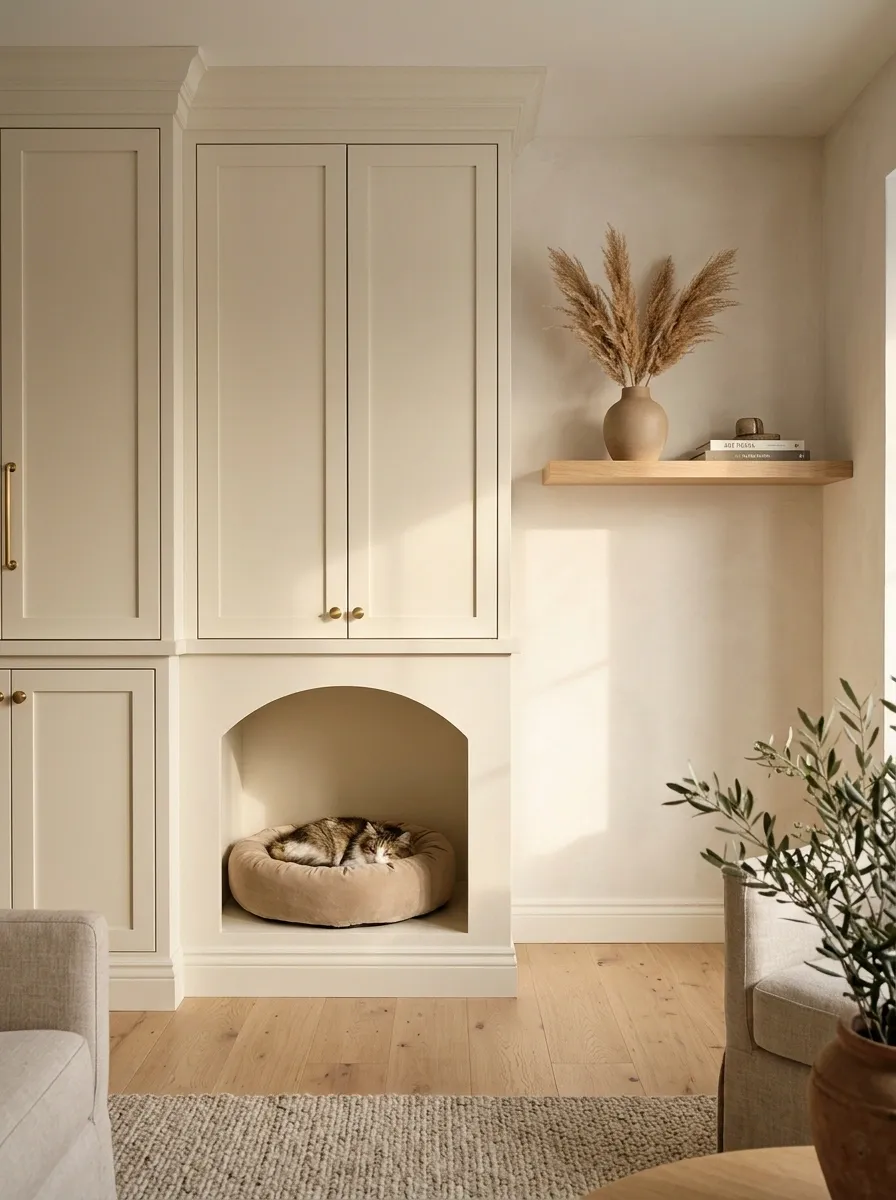
An existing alcove can provide a quiet bed location if the cat cannot be trapped by a closing door or moving furniture.
Keep the space ventilated, accessible, and free from unsuitable storage. Do not tuck the bed into a cupboard that someone may shut without noticing. A retreat needs to remain the cat’s choice to enter and leave.
A Bed at the End of a Suitable Bench
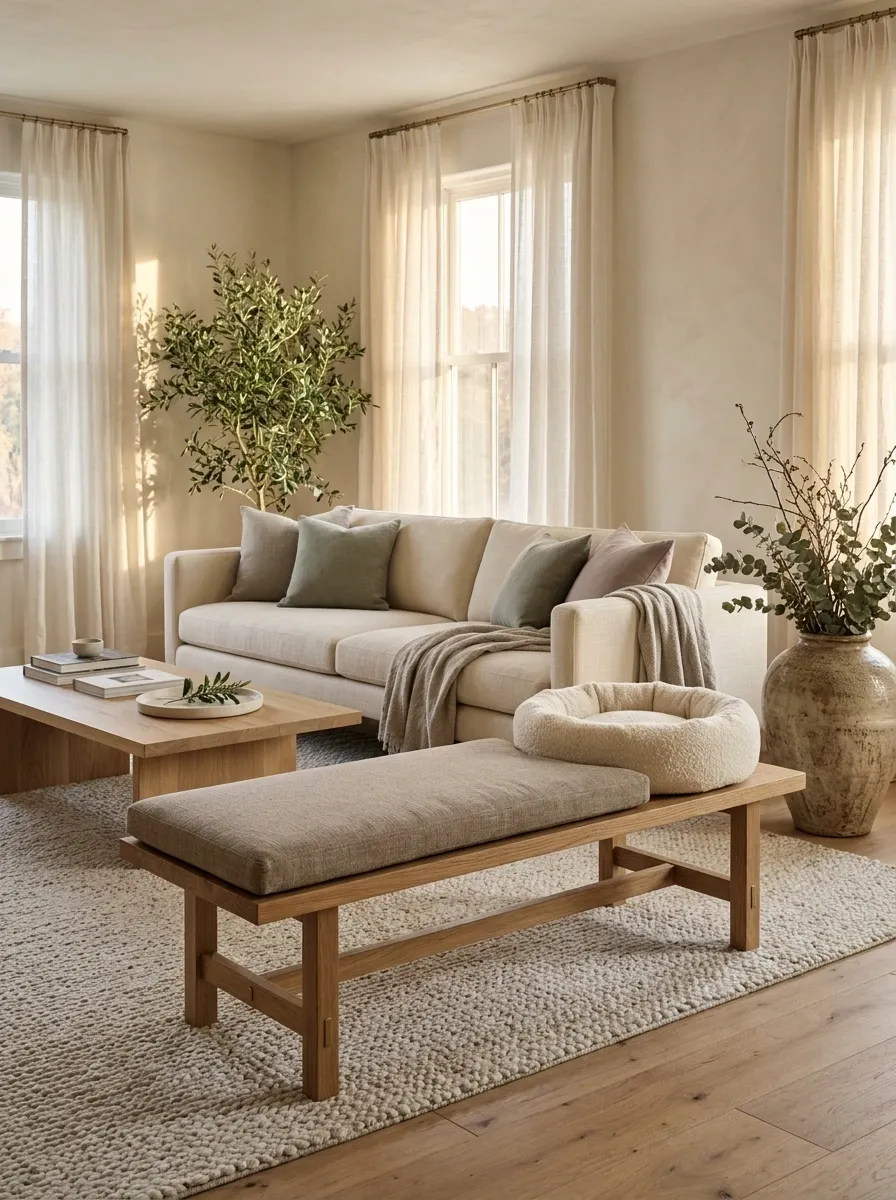
A broad, stable bench may support a resting area if it is designed for the placement and your cat can access it safely.
Keep the bed from sliding and leave the surrounding space clear. Check that the bench is not part of a busy dressing or entry routine that repeatedly disturbs the cat. A visually convenient spot is not necessarily a peaceful one.
| Check the furniture | Check the routine |
|---|---|
| Stability and secure surface | How often people use it |
| Suitable access | Whether the cat gets undisturbed rest |
A Bay-Window Resting Area
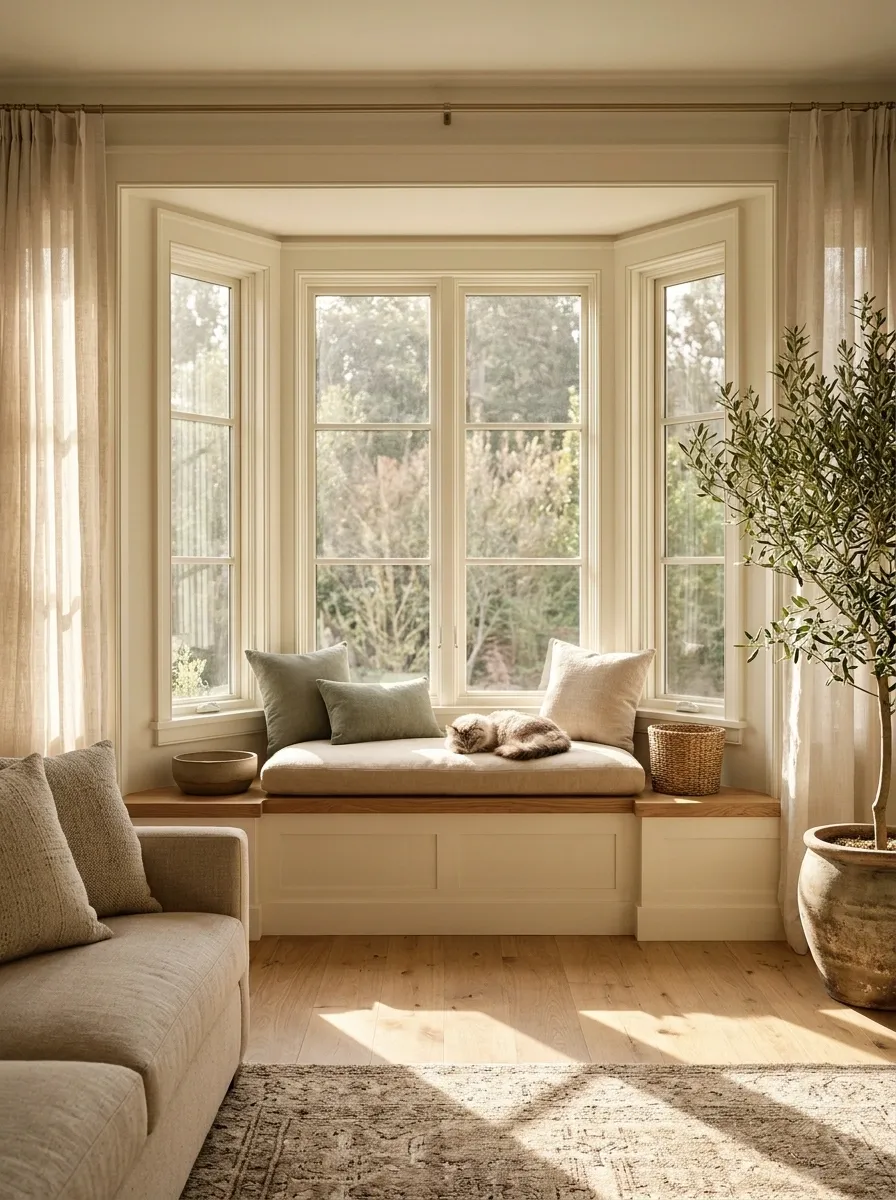
A suitable bay can offer more room than a narrow perch, particularly for a cat that likes changing position.
Keep windows secure, cords controlled, and surfaces stable. Allow a shaded or alternative resting option elsewhere rather than assuming the sunny position is comfortable all day. Make cushions easy to remove and clean without dismantling the entire window arrangement.
A Separate Water Corner
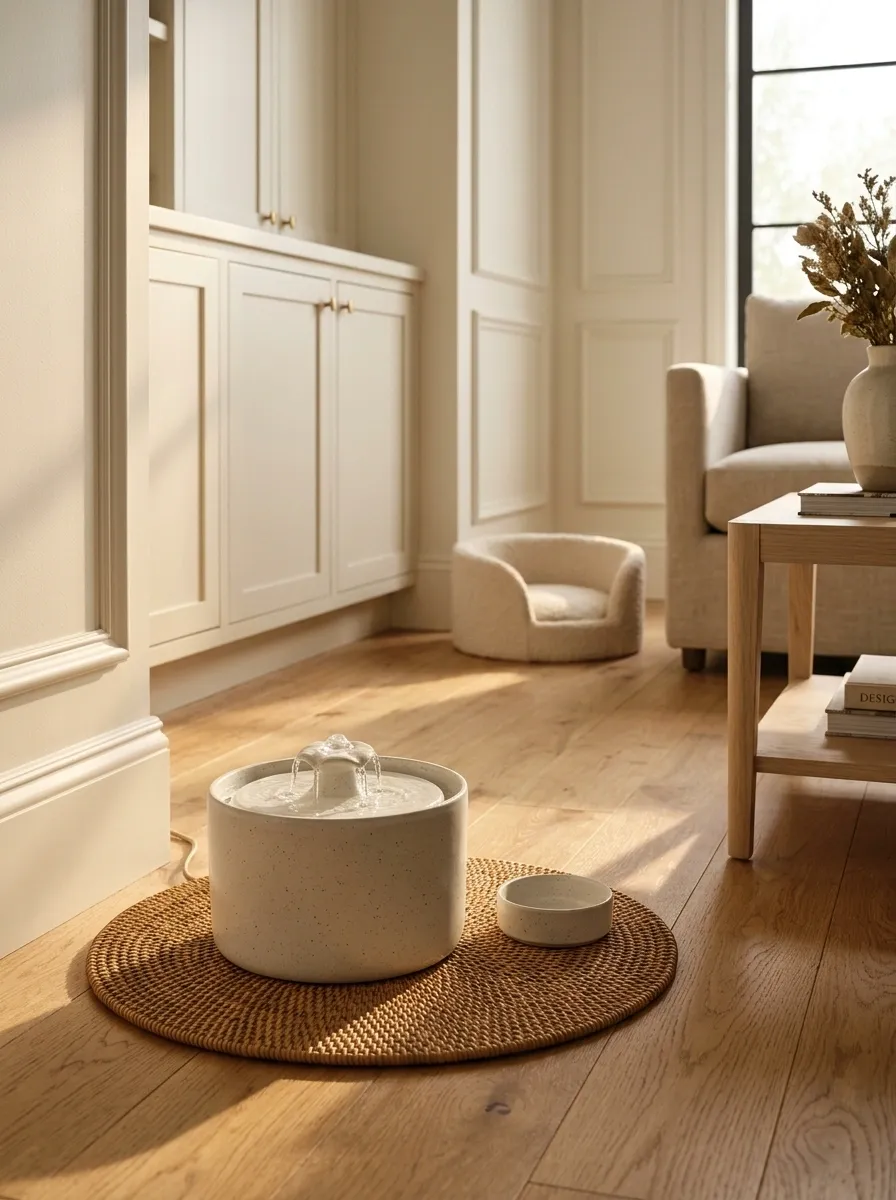
A quiet water location can have a clear, stable place in the room without being attached to the feeding or litter setup.
Choose suitable bowls or equipment and keep the area clean. If using a fountain, follow its electrical, cleaning, and placement guidance. Protect the floor without creating a slippery or awkward edge. The corner’s role can be simple: comfortable access to water.
Keep it a water area, not a tightly packed combination of every cat resource.
A Feeding Corner With a Practical Cleaning Surface
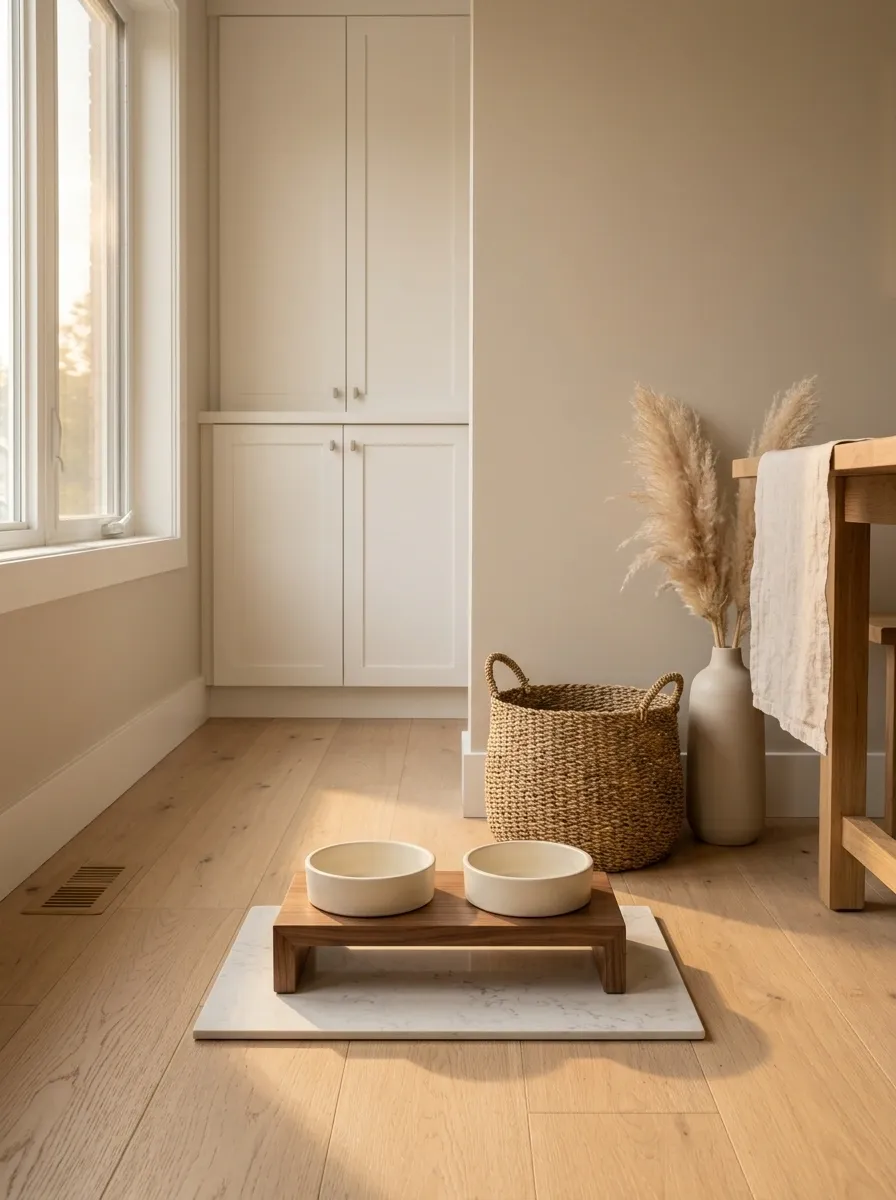
A feeding area can feel considered with a stable bowl position and suitable floor protection.
Choose the location around the cat’s access and household routine, away from toileting resources and appropriately separate from water. In a multi-cat home, avoid assuming every cat wants to eat together in one narrow corner. Plan individual access rather than a decorative communal dining arrangement.
A Supervised Puzzle-Play Spot
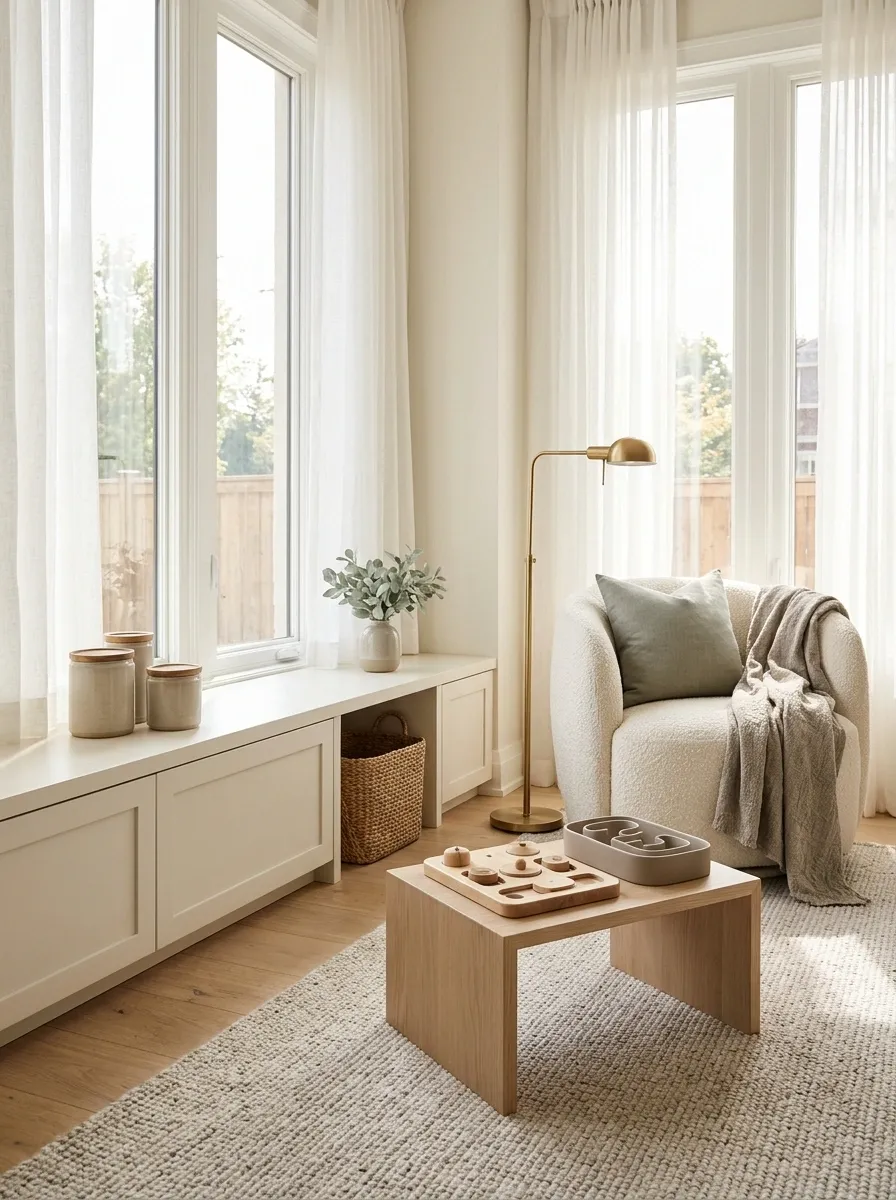
A clear corner can hold appropriate puzzle feeding or interactive play activities when they suit your cat.
Choose equipment for the individual animal and follow its instructions. Keep small or string-like items managed safely rather than leaving every toy available unattended. Store the activity after use if that is appropriate. The corner can change function instead of permanently displaying all the entertainment equipment.
| During use | After use |
|---|---|
| Clear space and suitable supervision | Appropriate storage |
| Equipment the cat can manage | A tidy, usable room |
A Toy-Rotation Basket Near the Play Area
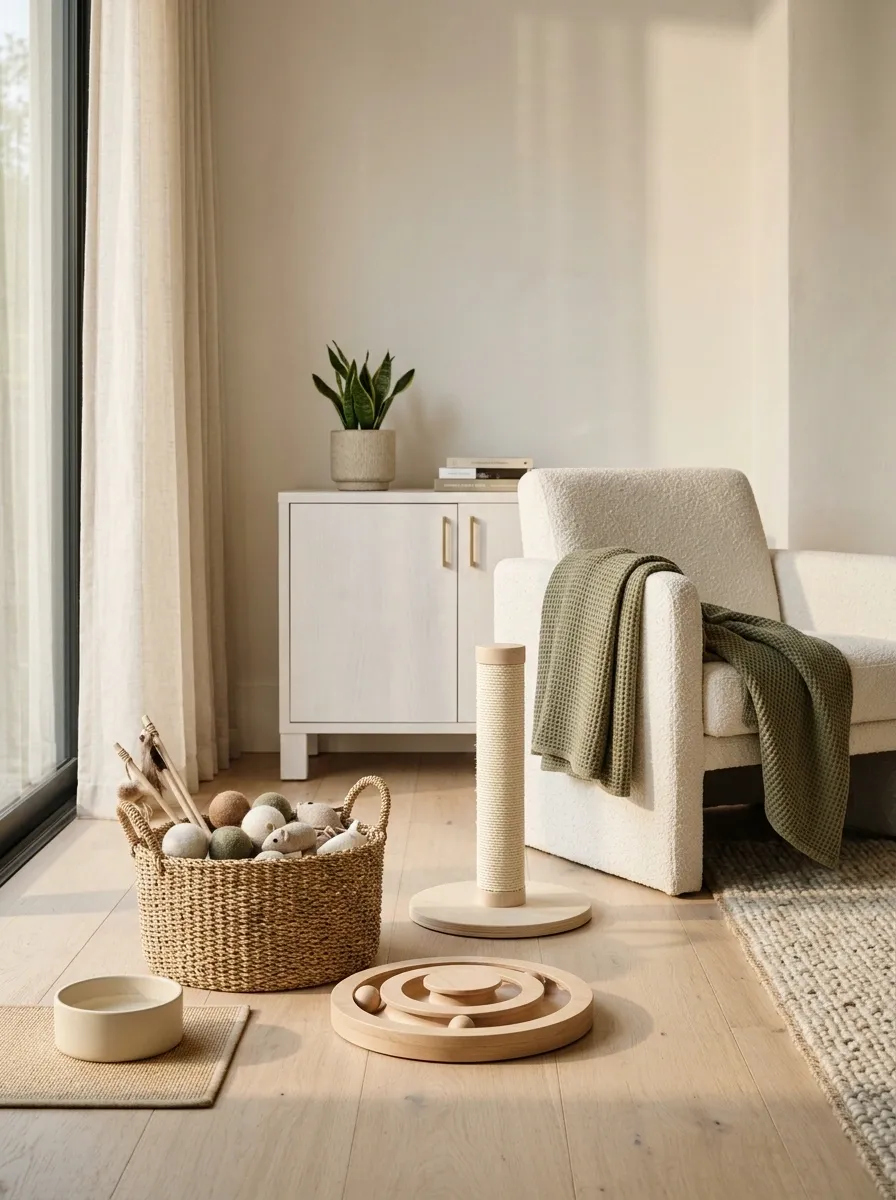
A suitable open storage container can keep the room from looking as though a tiny soft-furnishing shop has exploded.
Keep hazardous or supervision-only items stored appropriately and choose a container without trapping or snagging risks. Rotate suitable toys based on what your cat uses. A smaller, useful selection is easier to manage than a large pile of forgotten objects.
A Familiar Carrier Left as an Accessible Resting Option
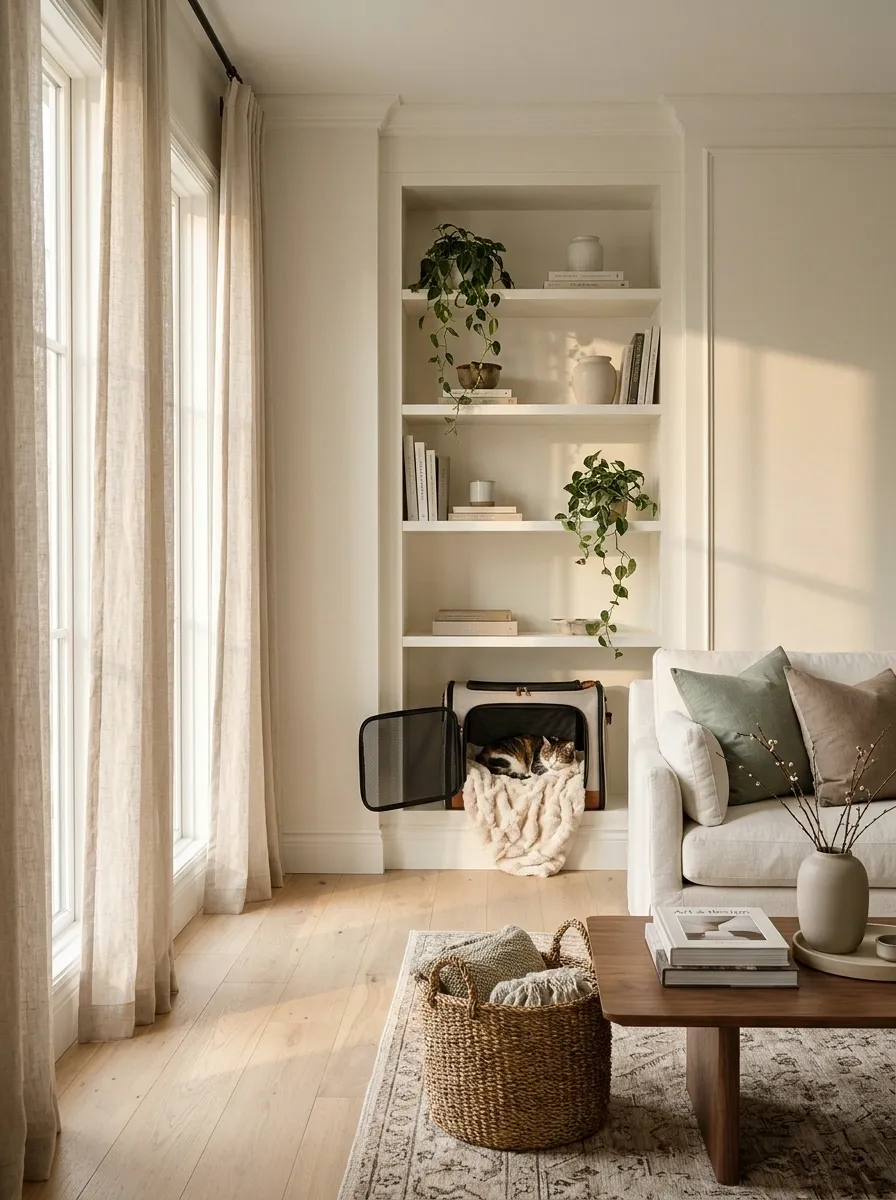
A suitable carrier can be part of the room rather than an object that appears only before an unwelcome trip.
Follow the carrier’s instructions, keep it stable and safely open, and offer appropriate familiar bedding if your cat likes it. Do not force the cat to use it as a bed. The aim is a freely available option in a quiet position.
Let the cat decide: familiarity develops through ordinary access, not compulsory demonstrations of how pleasant the carrier is.
Separate Retreats for Cats Sharing a Room
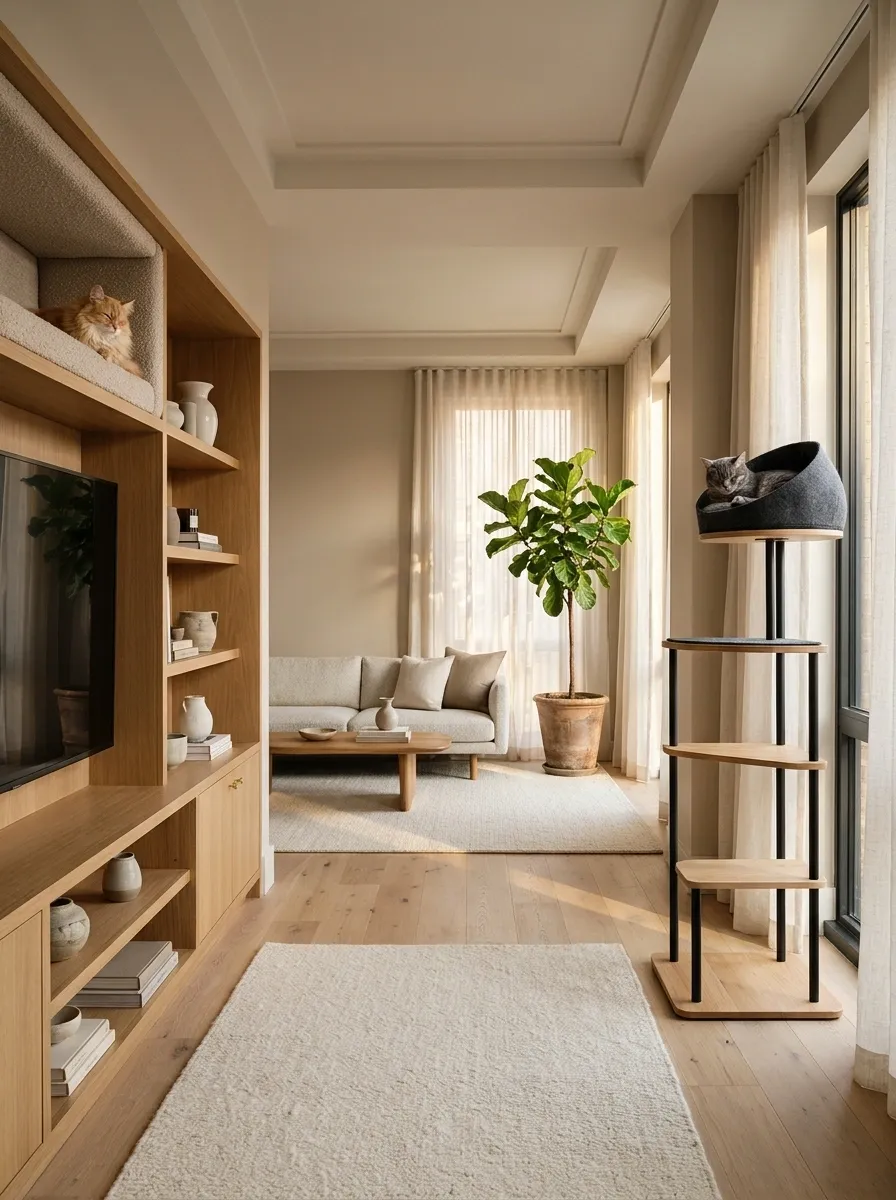
In a multi-cat home, a single attractive corner should not become the only resting or hiding option.
Provide choices in different suitable positions with usable access routes. Watch whether one cat blocks another’s approach. The room can look coordinated while the cats have separate places; matching beds side by side do not automatically create a shared preference.
A Quiet Evening Bed Away From Busy Equipment
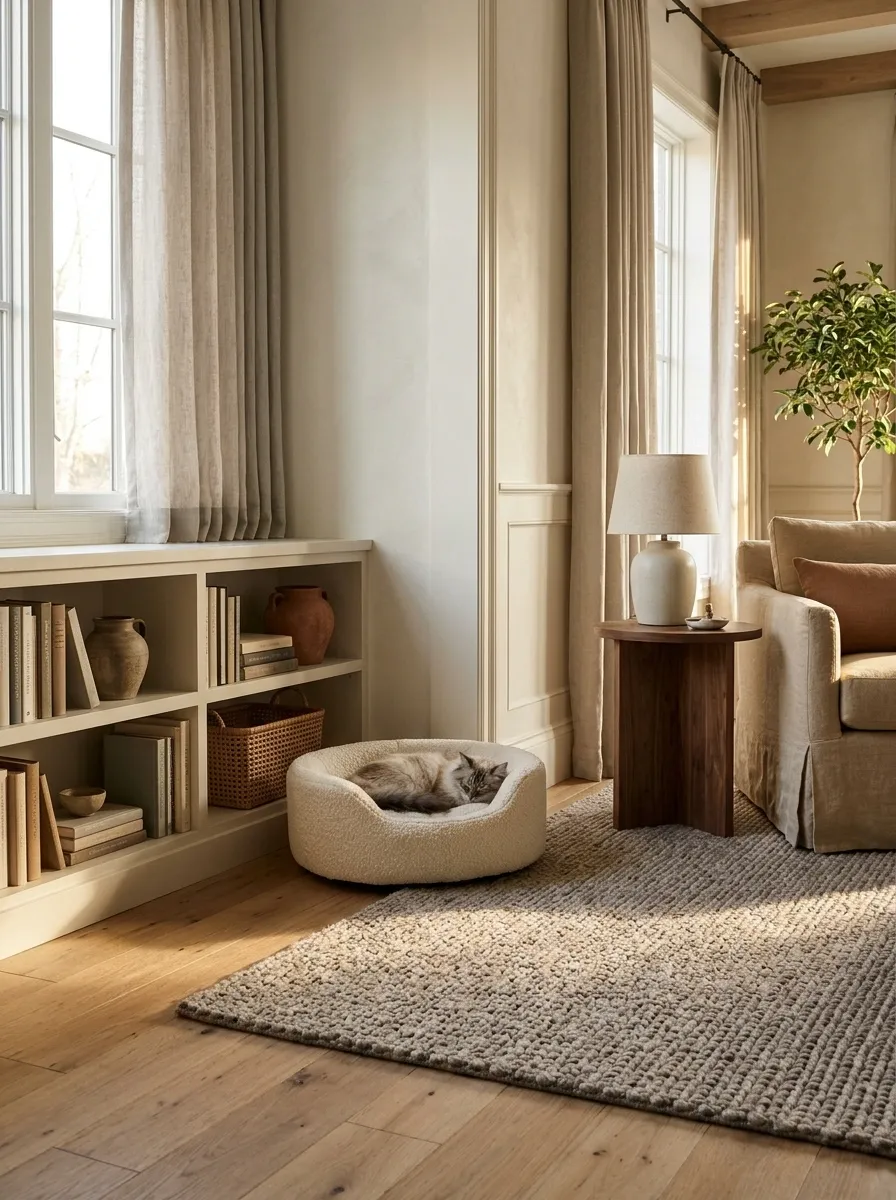
Choose a resting corner away from repeatedly moving chairs, loud appliances, and unsuitable heat sources.
Keep the surface comfortable and the approach clear. Use the room’s actual evening routine as the guide: a peaceful-looking corner beside a machine that starts every night may not remain peaceful. Observe where the cat already settles when the house quiets down.
Watch the routine before moving the furniture. The cat may already have identified the best location.
A Renter-Friendly Freestanding Setup
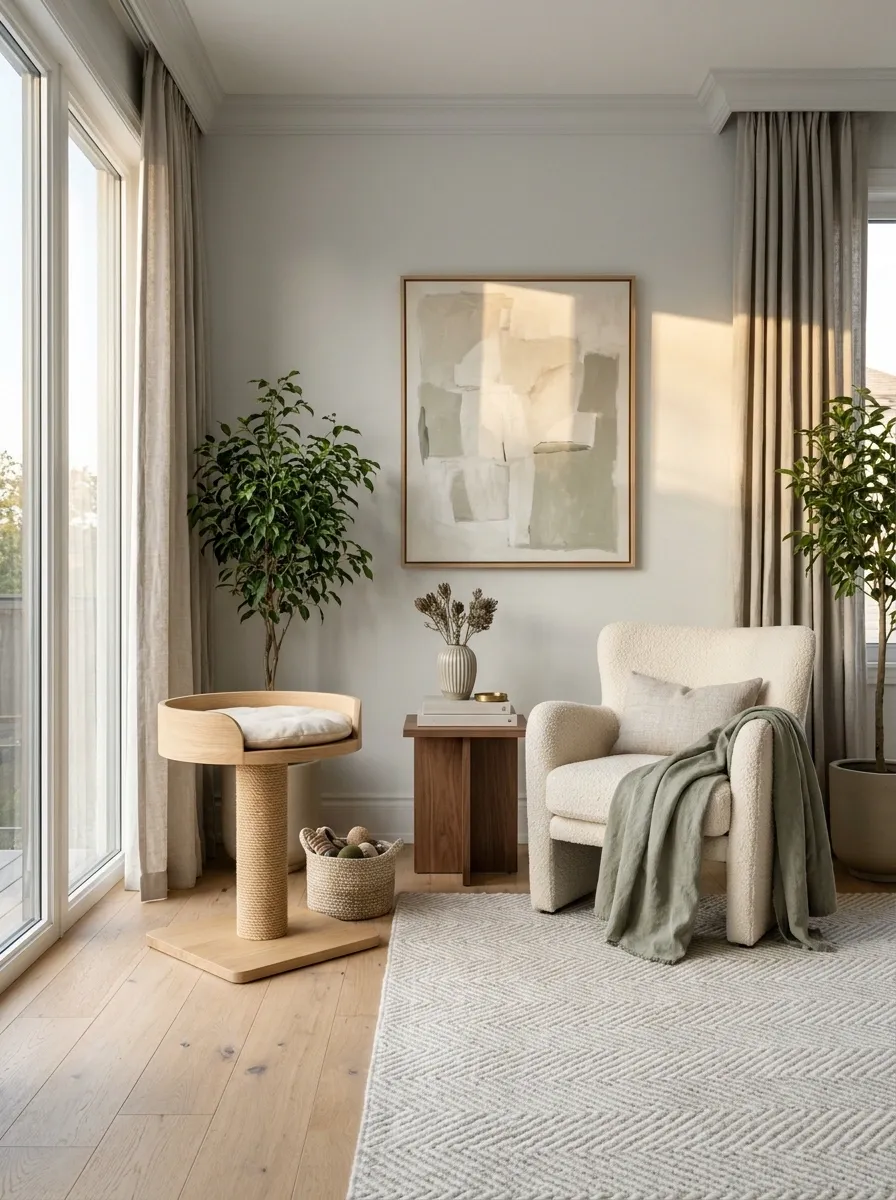
A suitable freestanding bed or scratcher can work where permanent wall installation is not permitted.
Choose the product for stability and follow any anchoring requirements; freestanding does not mean safe without setup. Avoid substituting weak removable attachments for required fixings. A lower, stable arrangement may be the better choice when the walls cannot support the installation you wanted.
A Grooming-Supplies Nook Beside Your Own Chair
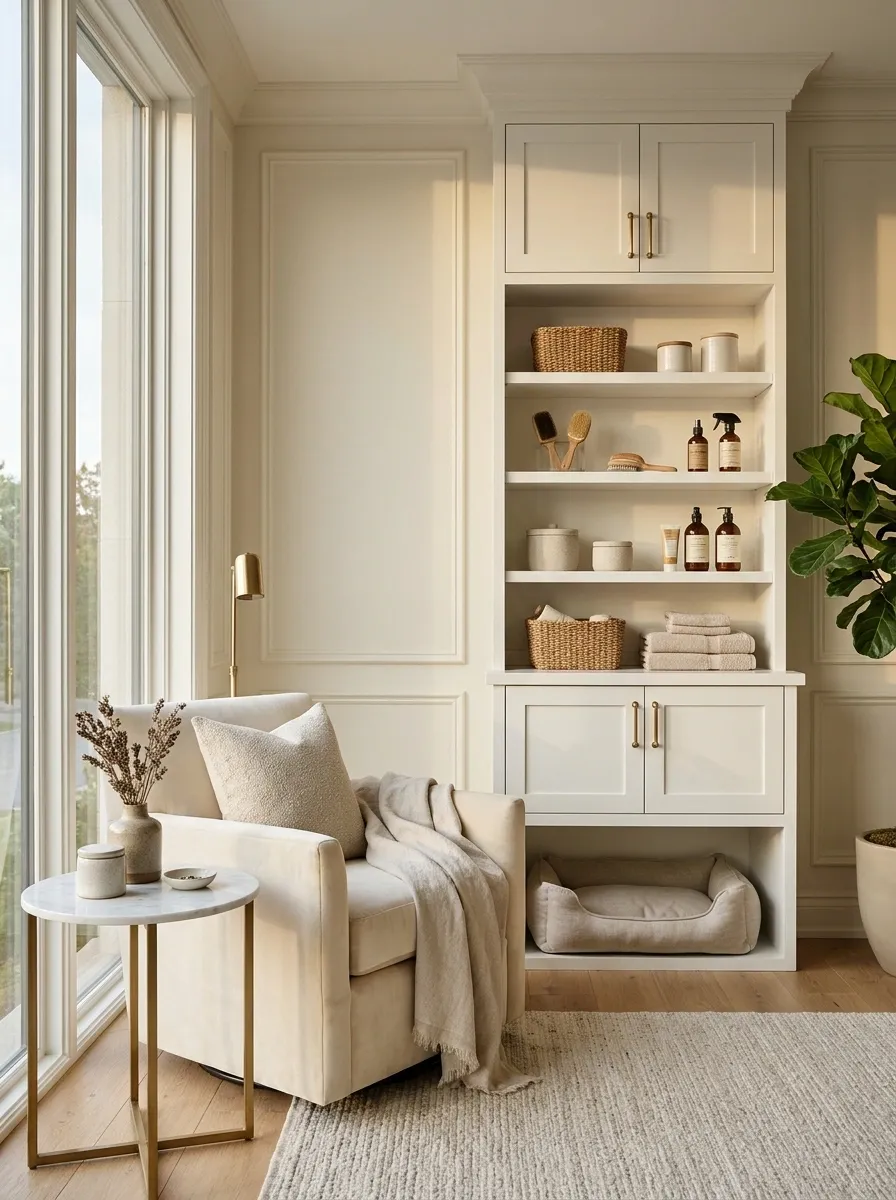
Keep appropriate grooming supplies in a defined, secure place near a comfortable chair if that supports your cat’s routine.
The supplies need not sit in the cat’s bed or hiding area. Keep tools and products stored safely, and approach grooming according to the cat’s needs and tolerance. The corner can support care without becoming a place where the cat expects to be restrained whenever it rests.
| Store nearby | Preserve elsewhere |
|---|---|
| Suitable supplies, safely contained | Undisturbed resting and hiding choices |
| A clean, practical setup | The cat’s ability to leave |
A Corner You Can Clean Without Moving Everything
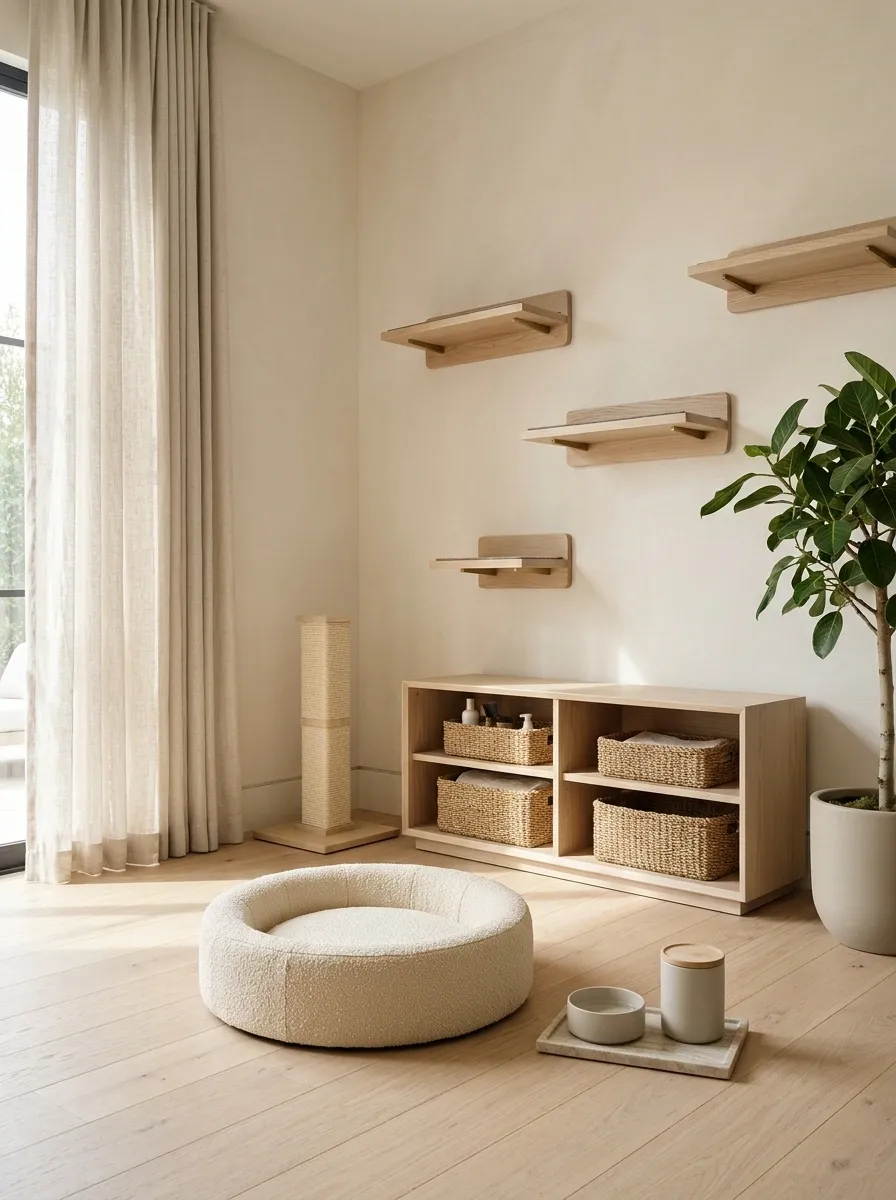
Choose washable or appropriately cleanable surfaces and leave enough access around the furniture.
Keep spare covers or cleaning supplies stored safely nearby if useful. The room will feel more settled when routine care is easy. A beautiful setup that requires dismantling three shelves to vacuum underneath has a rather limited future.
An Improved Version of the Corner Your Cat Already Chose
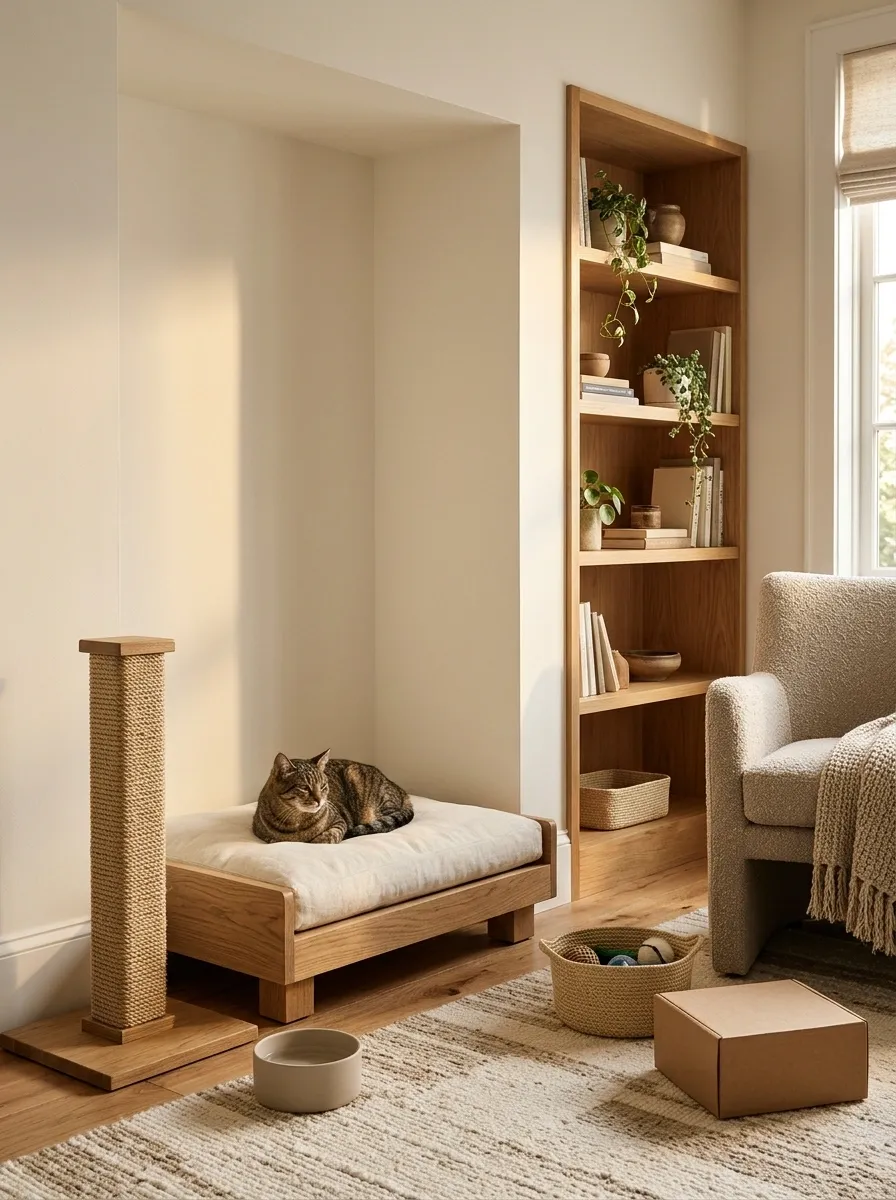
Start with the existing favorite and make a modest improvement: a stable resting surface, a suitable scratcher nearby, or fewer interruptions.
Change gradually and watch the response. You may discover the winning design includes an ordinary box. That is not a failure of taste. A cat corner has succeeded when the cat uses it comfortably, not when every object belongs to the same collection.
Keep the favorite if it works: useful familiarity is worth more than a perfect visual match.
Leave room for choice. The most attractive setup is still only one option in a home that should support the cat throughout the day.