
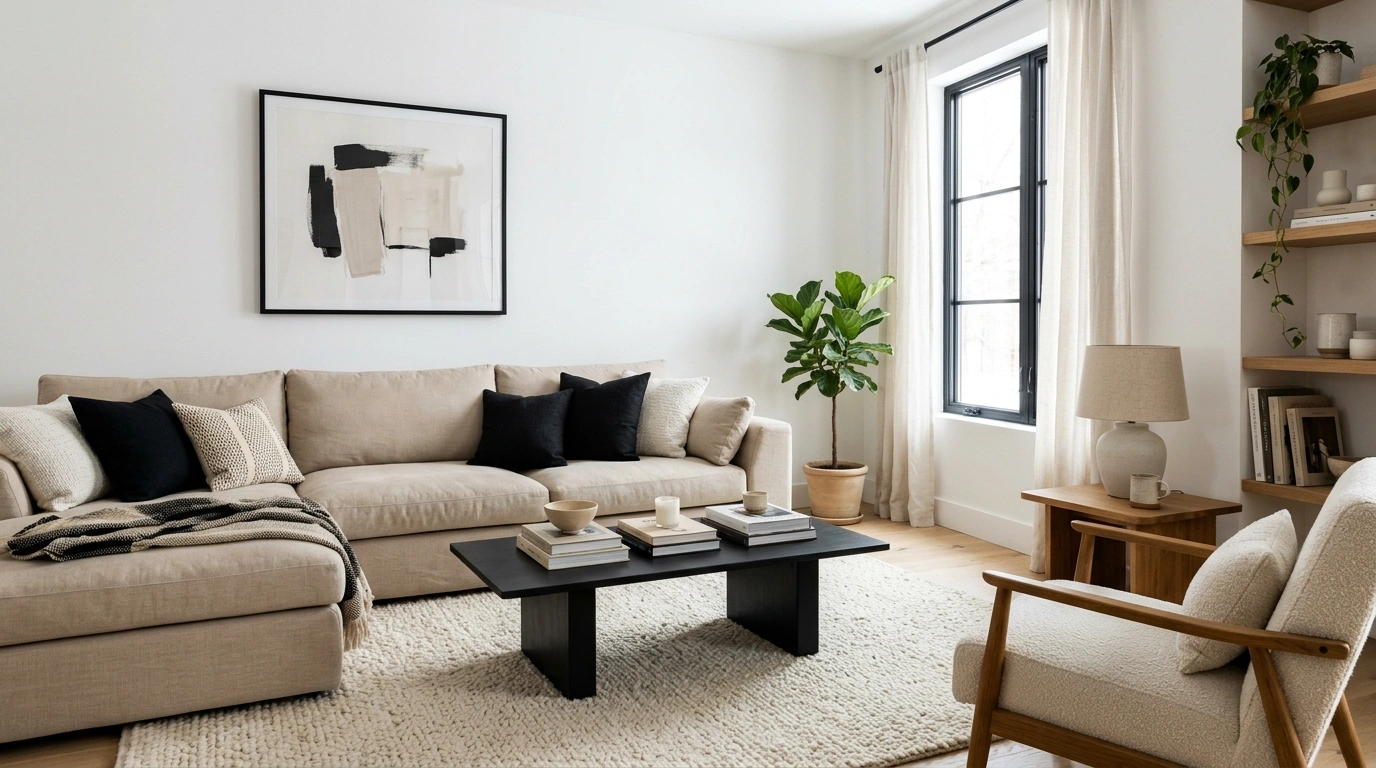
Beige does the softening. Black supplies the outline. White gives the eye a pause.
The room becomes interesting when those roles change from one surface to another. A black sofa creates a different atmosphere from a black lamp; white upholstery behaves differently from a white wall. You are arranging visual weight, not collecting objects in approved colors.
Start with the largest pieces you intend to keep. Then decide where the dark shape belongs and where texture can keep the lighter tones from becoming flat. The palette is restrained; the room does not have to be.
Black, Beige and White Color Combos
A Beige Sofa Between White Walls and a Black Table
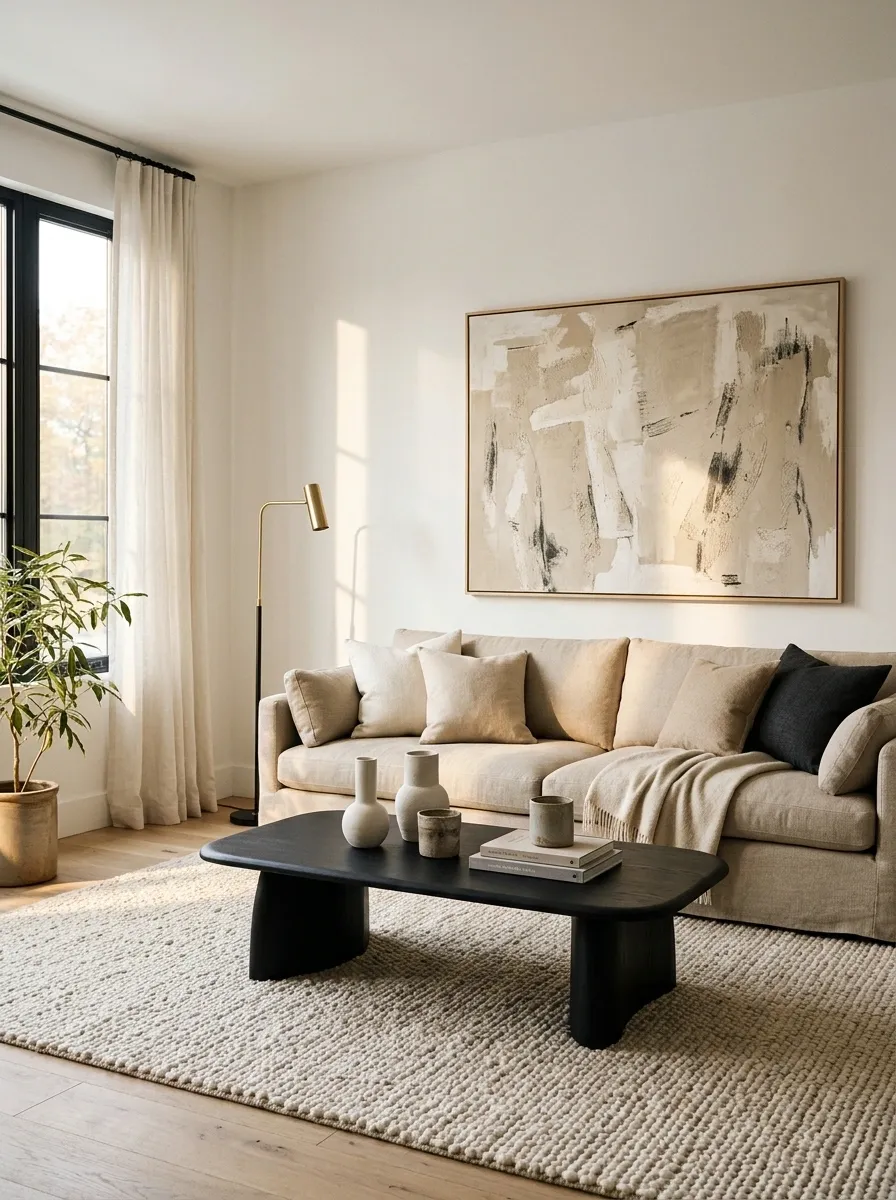
This is a useful starting arrangement when the sofa already carries the room’s warmth.
Keep the wall white related to the upholstery and choose a black table with a shape that suits the seating. The table gives the pale group definition without requiring black furniture everywhere. A textured rug can connect the surfaces while leaving the sofa’s outline clear.
A Black Sofa on a Generous Beige Rug
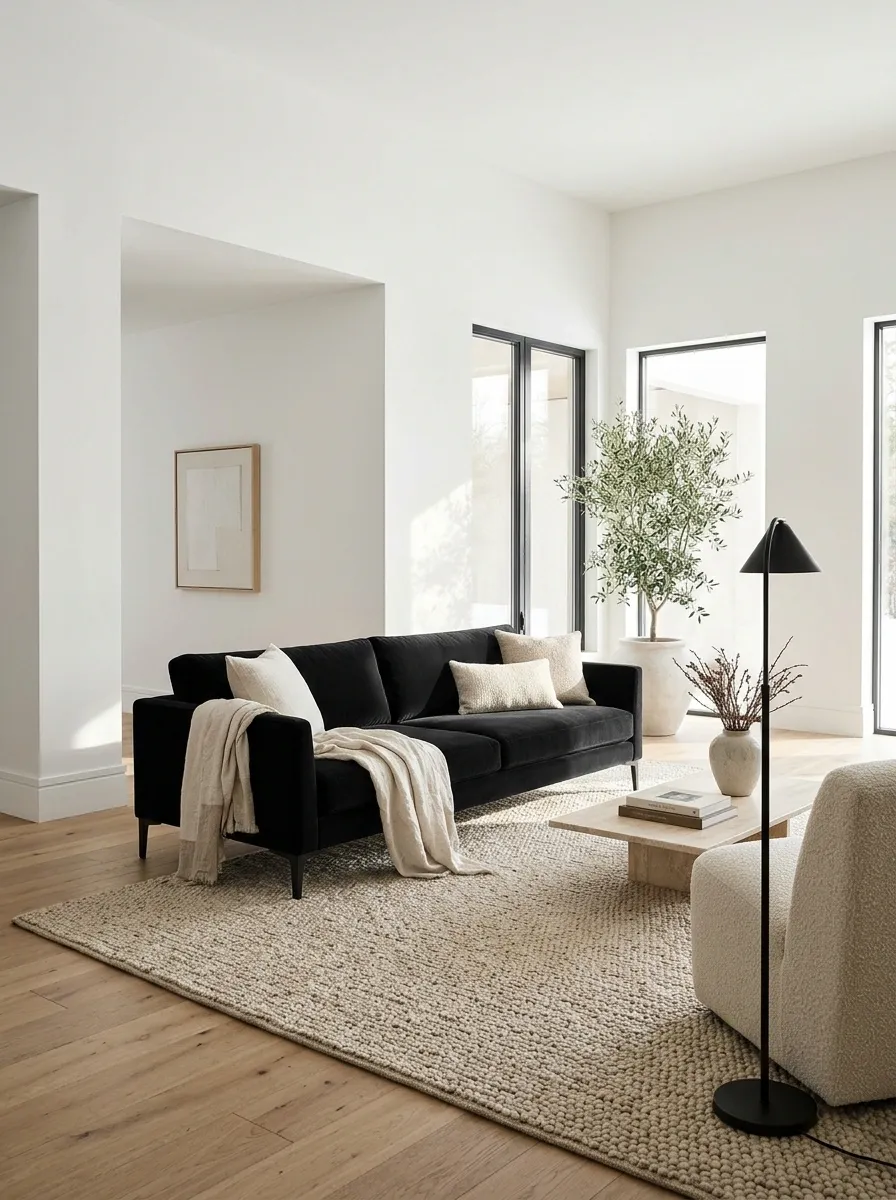
A beige rug can give a black sofa a warmer setting than a stark white floor or rug alone.
Choose the rug around the seating footprint and practical care needs. Keep the walls lighter if you want the black upholstery to remain the main dark shape. A few pale textiles can soften the seat without hiding the reason you chose black.
| Dark anchor | Warm supporting field | Light background |
|---|---|---|
| Black sofa | Beige rug | White walls |
White Upholstery With Beige Curtains
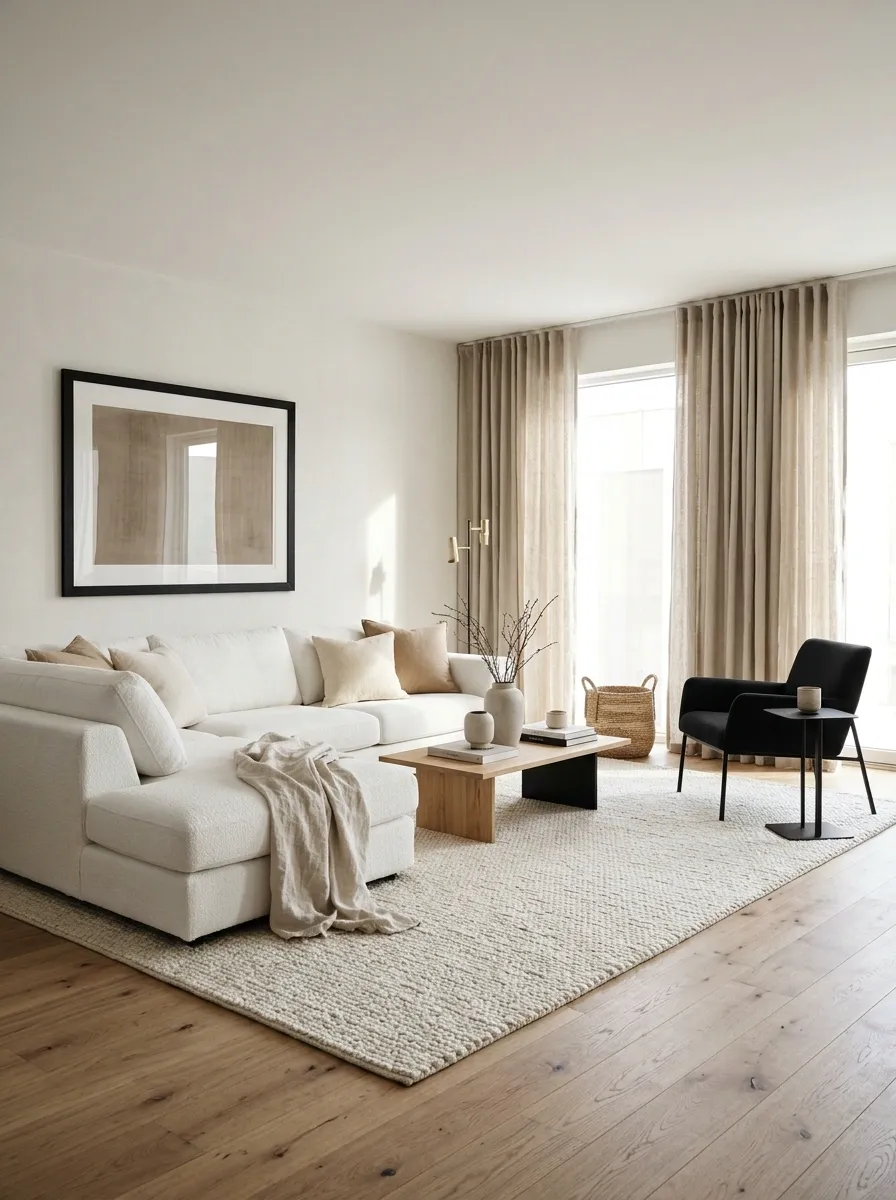
White seating can feel less severe when beige curtains give the room a warmer perimeter.
Choose upholstery and care requirements appropriate to the household. Use black in a clear, limited role such as a chair, table, or substantial frame. The curtains can supply softness without needing to match the sofa’s undertone exactly, but compare the actual fabrics together.
Useful distinction: white is the seating color, beige is the surrounding warmth, and black is the definition.
Beige Walls With White Trim and Dark Furniture
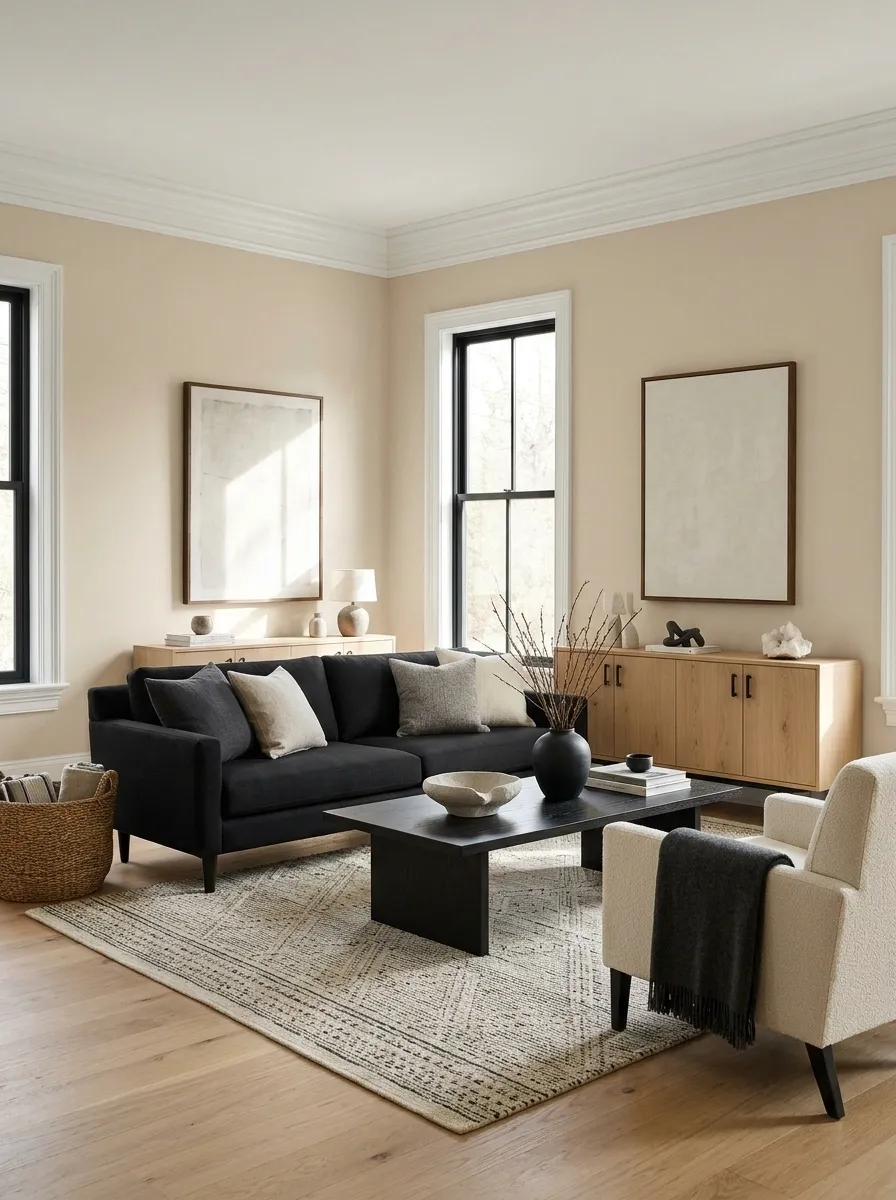
If the walls are already beige, make that part of the plan rather than treating it as something to apologize for.
Choose a white trim relationship that works with the existing undertone, then use dark furniture for contrast. Keep the furniture shapes restrained if the trim is detailed. The room can feel intentional without repainting every surface first.
A Black Feature Wall Behind Beige Seating
A dark wall can make beige upholstery read clearly and give the room a strong focal area.
Test the finish and color in the room before committing. Keep the remaining surfaces related and allow some white to provide separation. The black wall should connect to the furniture arrangement, not simply occupy whichever wall was easiest to paint.
Check from the main seats: the wall is part of the view you will actually live with.
Textured White Walls With Plain Beige Fabric
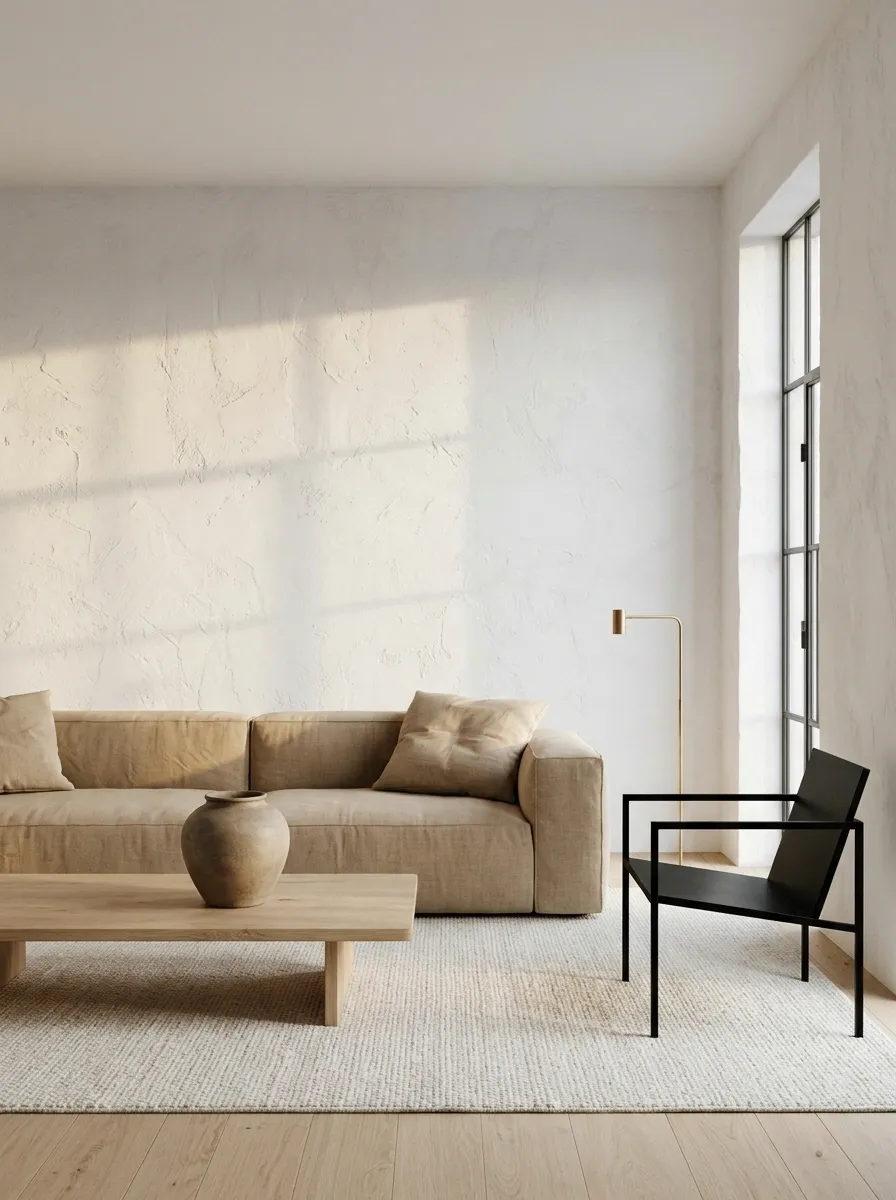
Where the room already has suitable texture, let it provide detail beside simpler upholstery.
Keep the beige fabric plain enough that the wall surface remains readable. Add black through a well-defined object rather than a scatter of small accessories. The palette gains depth from the contrast between surfaces, not from introducing another decorative motif.
A Black-and-White Striped Rug Beneath Beige Seating
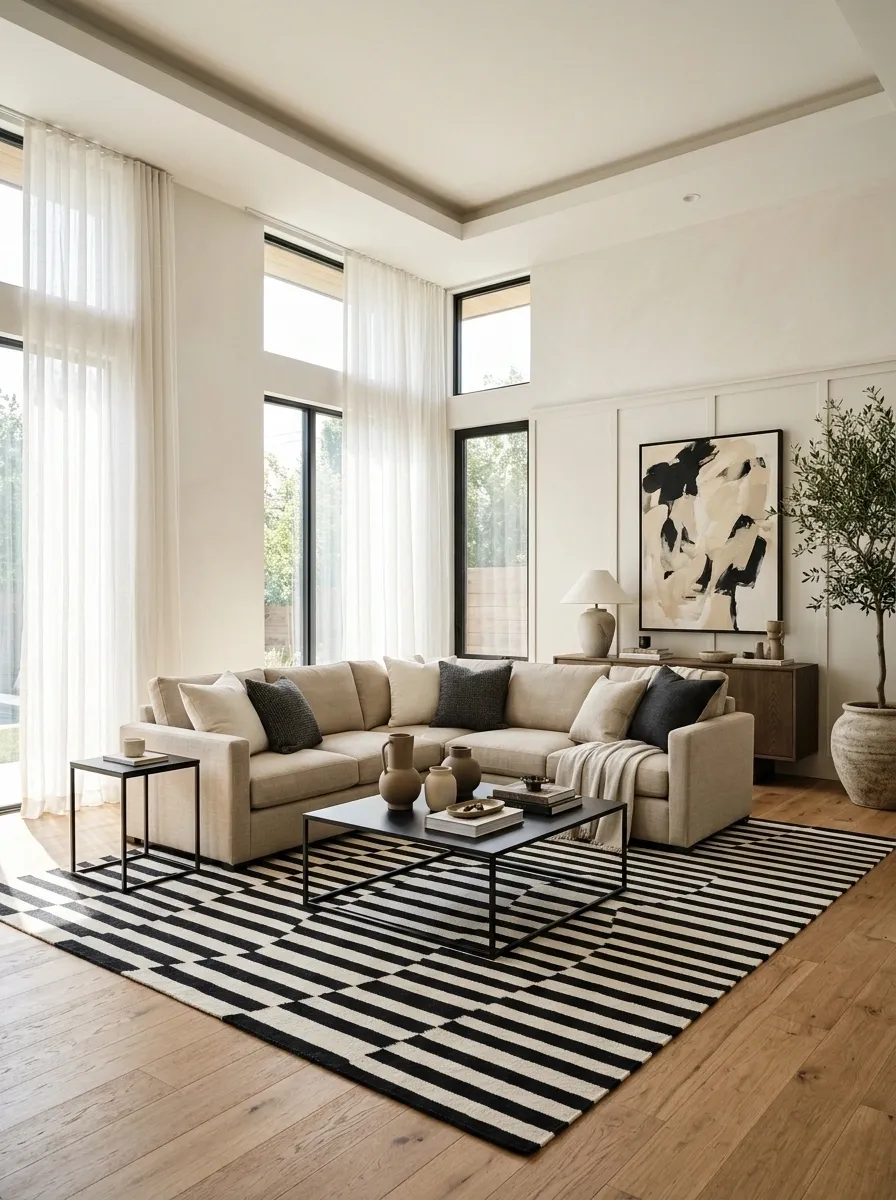
A striped rug can make a beige seating group feel more graphic without changing the furniture.
Choose the stripe scale around the room and keep neighboring patterns quieter. Check how the rug relates to the furniture legs and main walking routes. A bold rug needs enough visible area to read as a deliberate surface rather than a small busy patch between tables.
| Let the rug lead | Keep simpler |
|---|---|
| Direction and contrast | Cushions and curtains |
| A clear shared footprint | Small patterned objects |
A Beige Rug With a Black Border
A dark border can define the seating area while the center stays warm and quiet.
Choose the rug size for the furnishing group rather than the empty floor. The border should remain visible enough to register, not vanish entirely beneath the sofa. White walls or a pale table can keep the overall arrangement from feeling too heavy.
Large Black-and-White Art on a Beige Wall
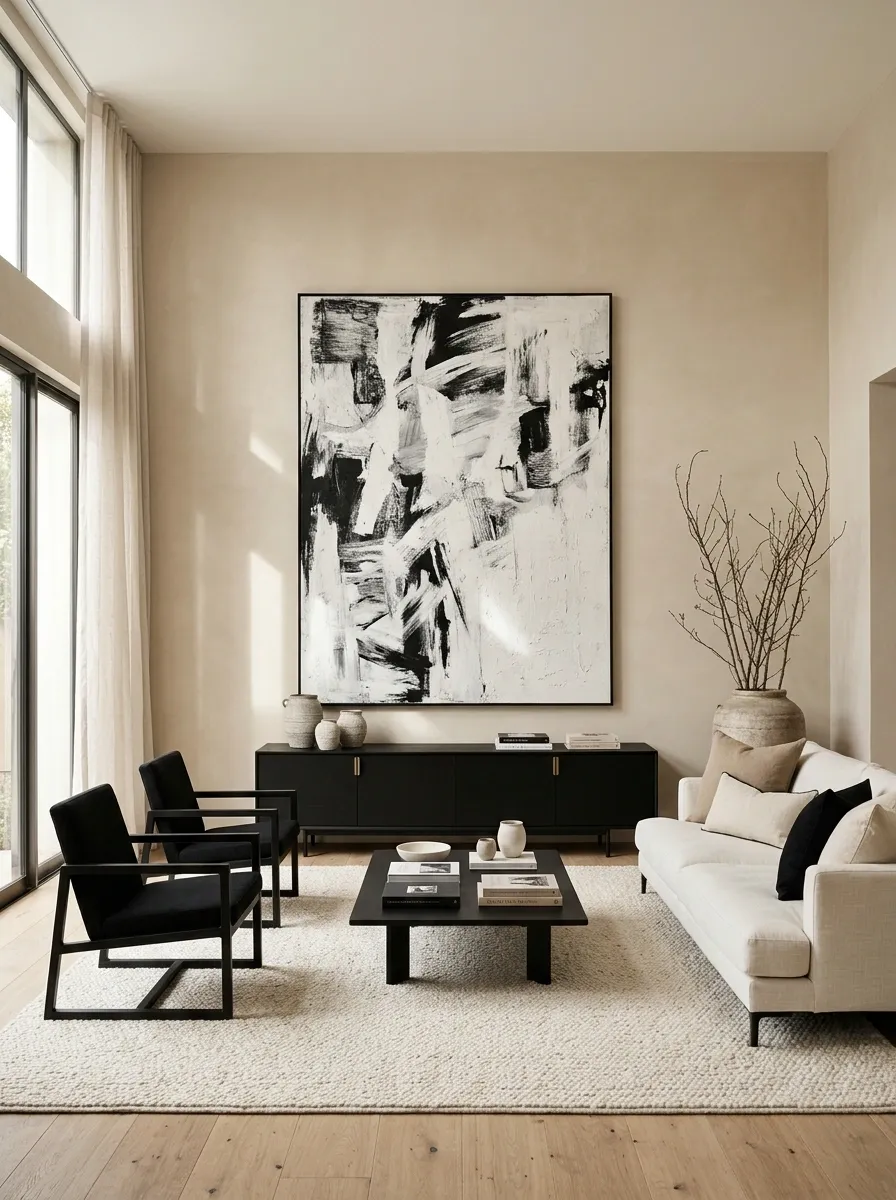
A substantial monochrome artwork can give beige walls a sharper identity.
Choose a subject and scale that work from the doorway, then keep the frame relationship clear. You do not need to build an entire gallery to make the palette convincing. One strong piece can connect black furniture or hardware with the lighter room.
Keep the subject personal: a meaningful photograph or artwork is more satisfying than a generic print selected only for its colors.
White Built-Ins With a Dark Interior Detail
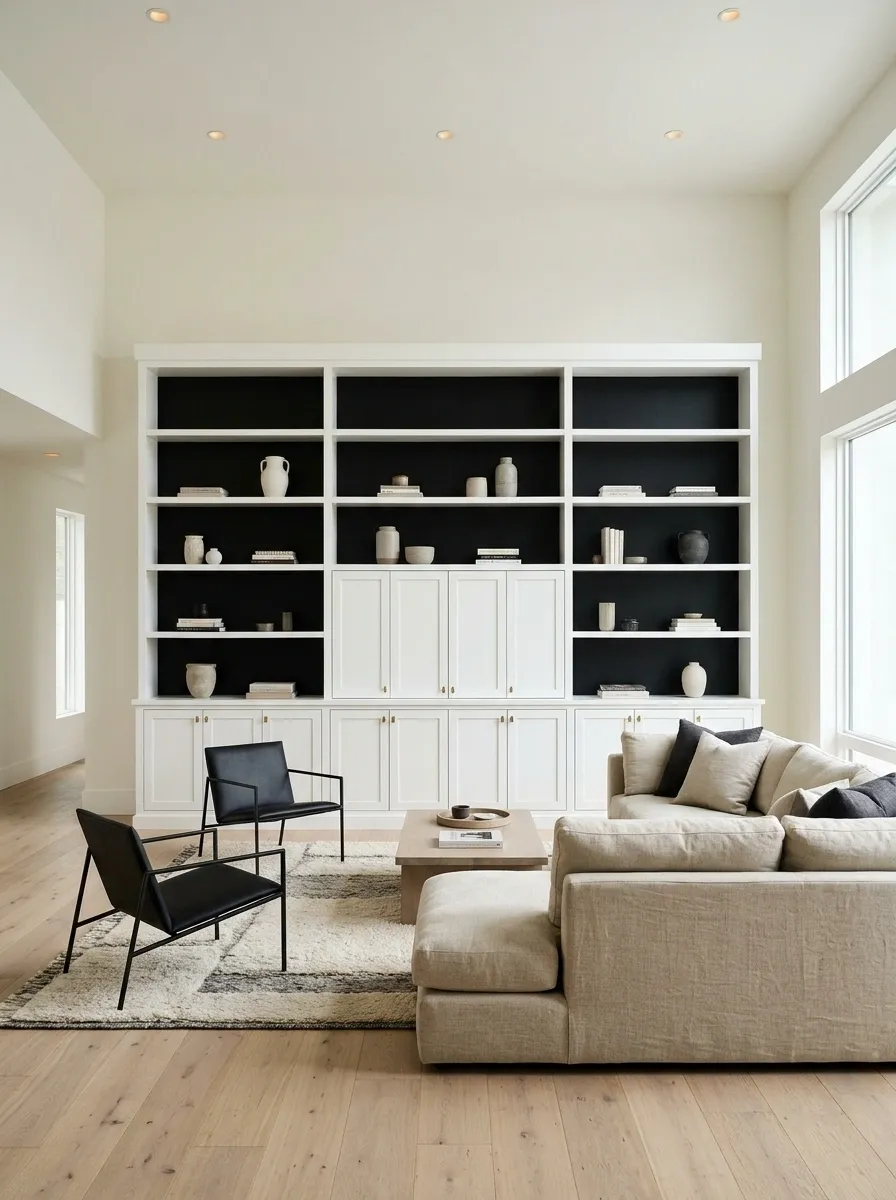
White shelving or cabinetry can feel more defined with a suitable black or off-black interior section.
Keep the displayed objects restrained and let beige appear through upholstery or a few substantial pieces. Plan lighting and equipment requirements appropriately where relevant. The shelves should still function rather than becoming an installation nobody is allowed to touch.
A Round Black Table Beside Softer Upholstery
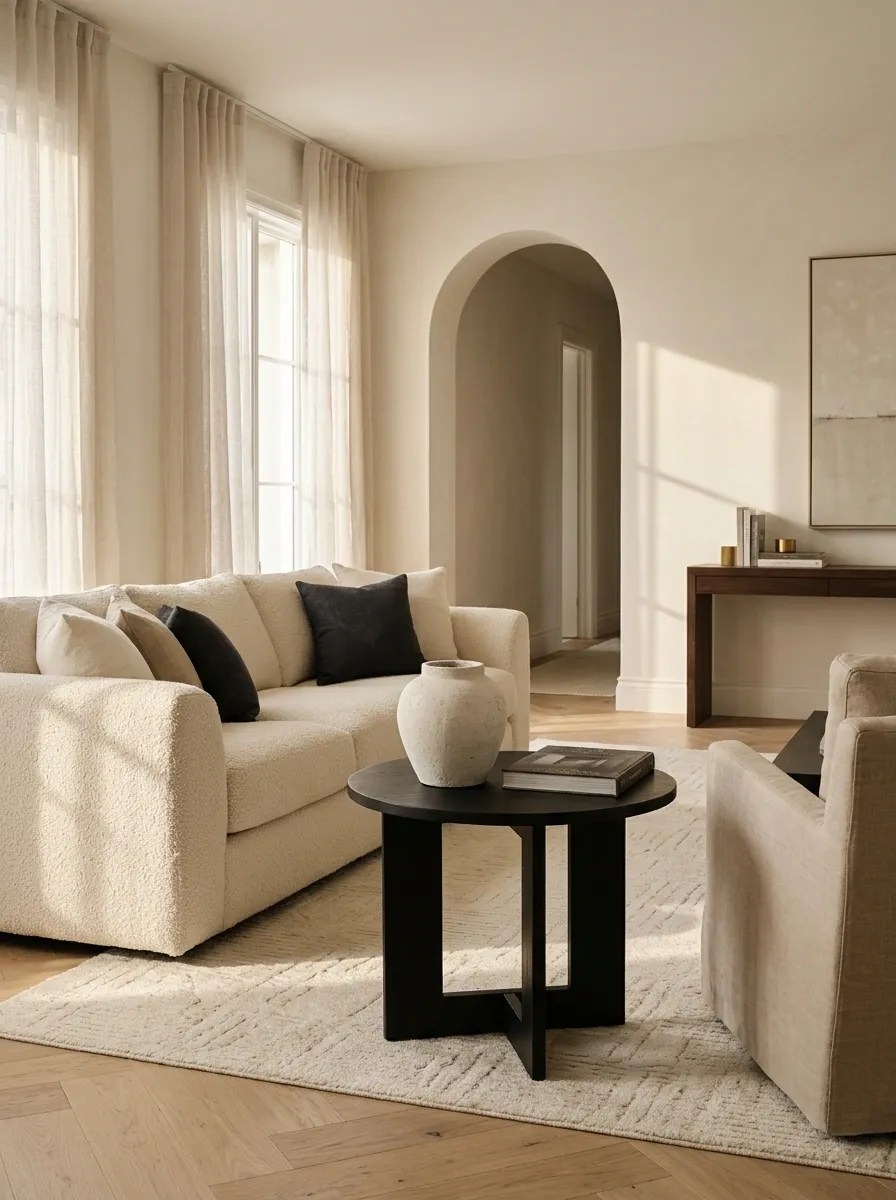
A round table can provide a strong dark shape without introducing more angular lines.
Choose its scale around reach and movement. Beige or white upholstery can soften the setting while the table remains visually distinct. Keep the tabletop usable; covering the dark surface with many small pale objects weakens the shape that made it useful in the first place.
Check the occupied layout: table access and legroom matter more than its position in an empty-room photograph.
A Black Bookcase With Pale Objects and Open Space
A black bookcase can act as an anchor where the rest of the room is light.
Use suitable secure furniture and keep some intervals clear so the structure remains visible. Books, white ceramics, and beige-toned objects can supply variation without a new accent color. Avoid filling every shelf with the same-sized item; the room needs rhythm, not a stock display.
A Soft-Contrast Checked Textile
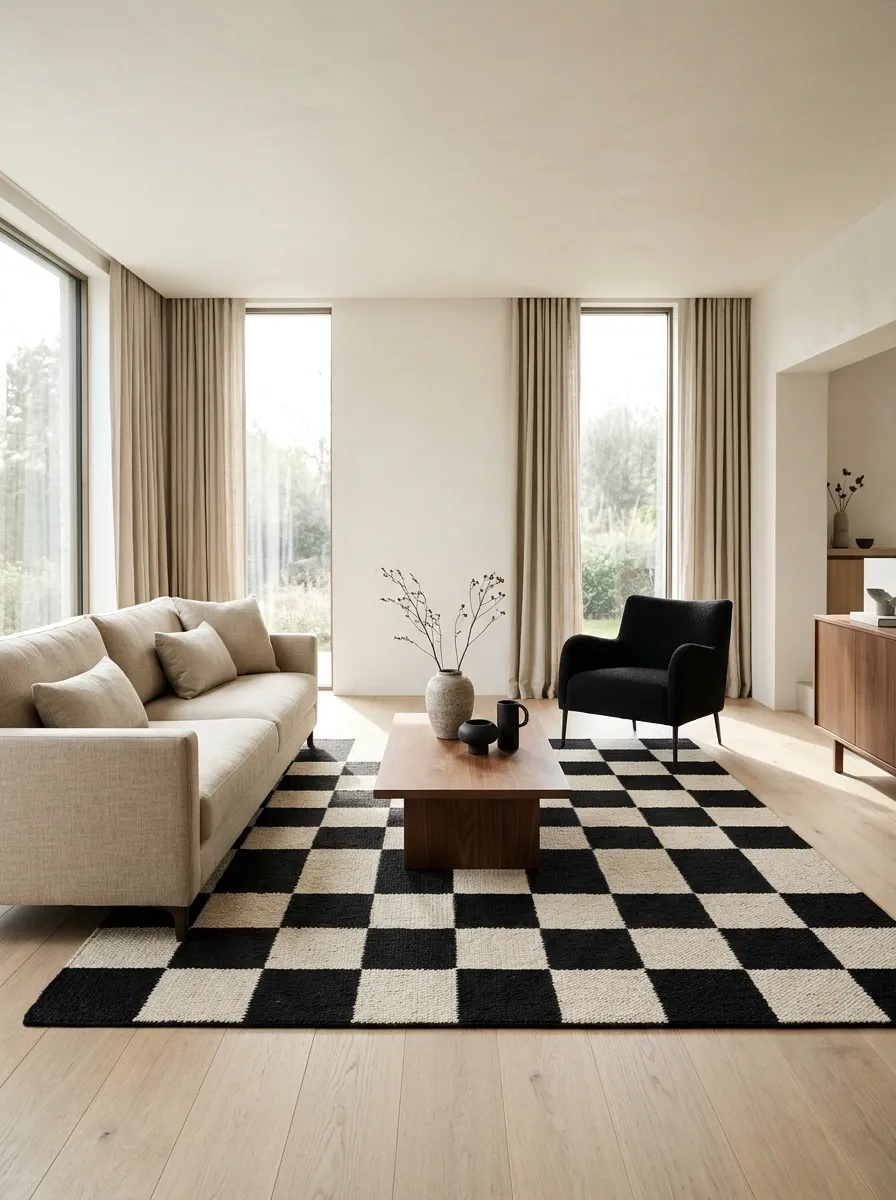
A black-and-cream or beige-and-black check can bring pattern into a restrained room.
Use it in one significant textile, such as a rug or suitable upholstered chair, rather than repeating it everywhere. Choose a scale that relates to the room. Let the surrounding plain fabric provide a pause so the check remains deliberate rather than visually tiring.
| Patterned emphasis | Plain supporting area |
|---|---|
| Rug or chair | Main sofa |
| One clear check scale | Curtains and larger background |
A Dark Architectural Feature With Pale Furniture
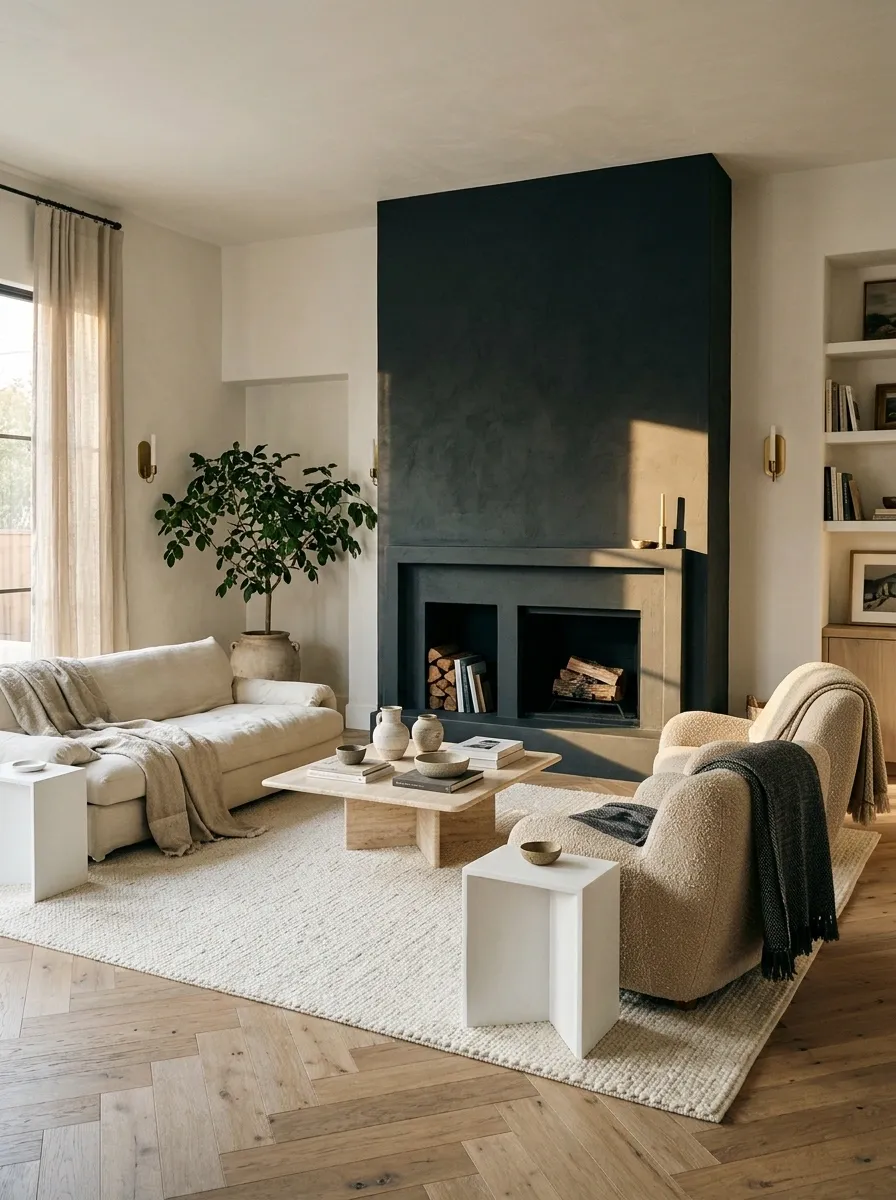
If the room contains a suitable dark-painted architectural feature, let it anchor the pale seating.
Keep the treatment appropriate to the construction and any equipment requirements. Beige upholstery supplies warmth while white surfaces provide separation. The furniture should relate to the feature without forcing every object into a symmetrical arrangement.
Beige Main Seating With One Black Accent Chair
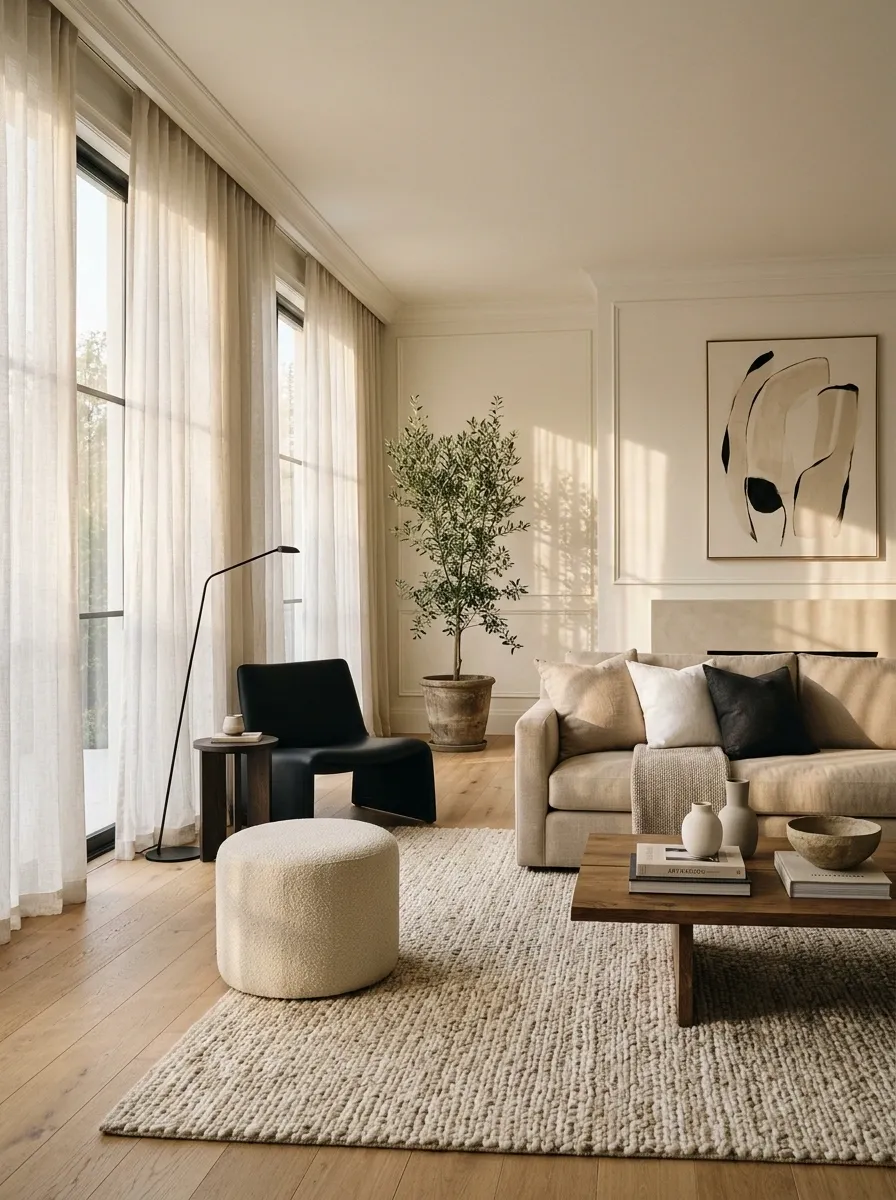
Give the black chair a real reason to be there.
It might join the conversation group or form a reading place with a useful table and light. Choose comfort and proportion alongside the color.
A pale textured element nearby can connect the chair to the seating. An awkward spare chair in the corner is not improved by its excellent compliance with the palette.
Give the chair a job: a view, a table, and suitable light make it part of the room.
White Seating With a Broad Beige Background
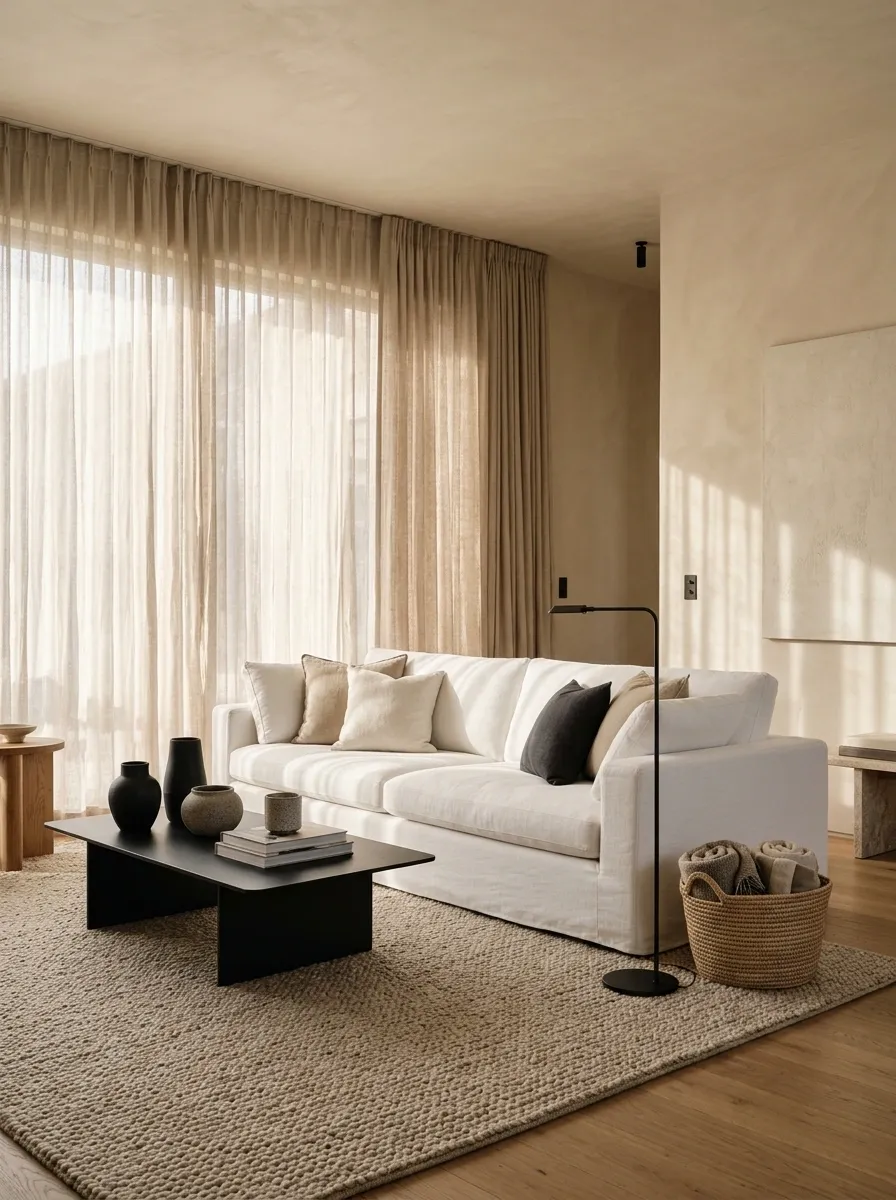
A beige curtain wall, rug, or suitable painted surface can make white upholstery feel grounded.
Keep the beige substantial enough to be visible, then use black in a restrained structural role. This avoids the feeling of a nearly white room with one random tan cushion. The warmth should live in a surface large enough to influence the composition.
Tall Beige Curtains as Vertical Columns
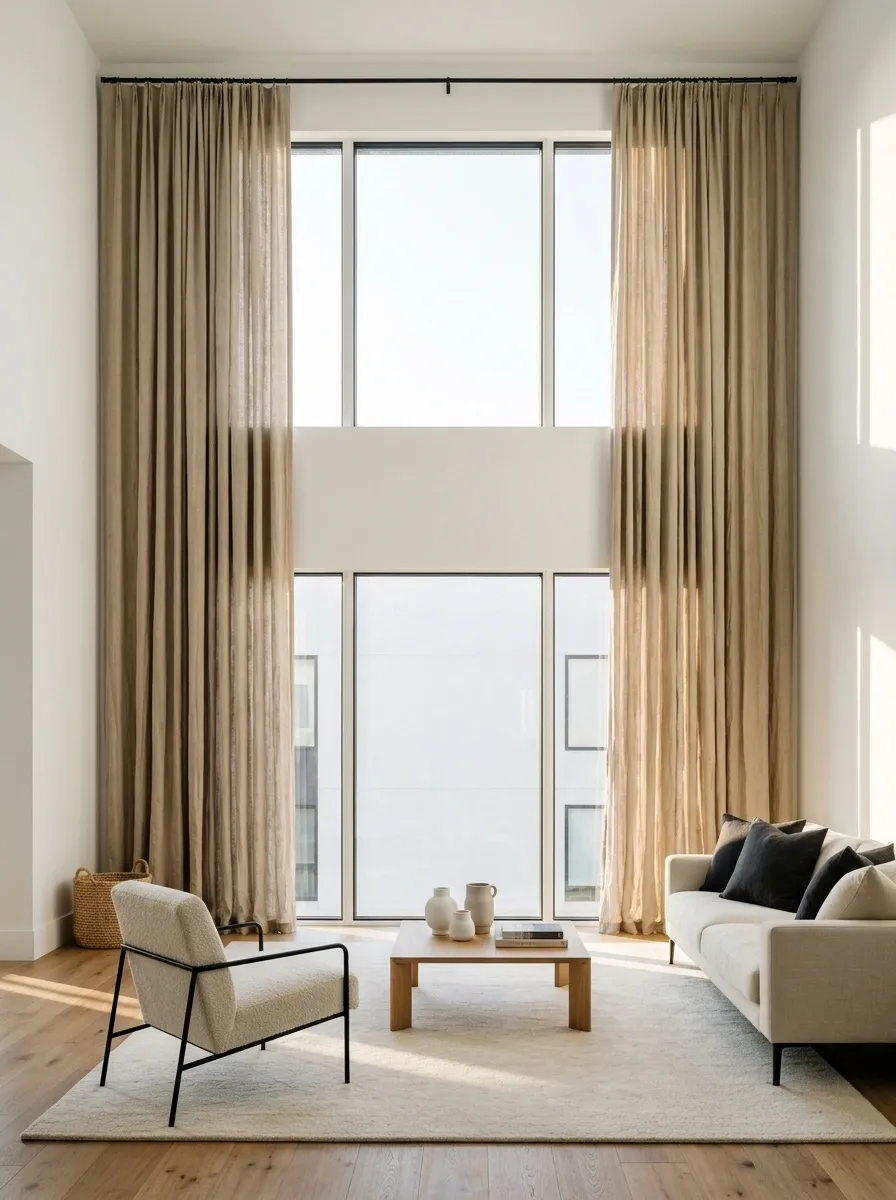
Curtains can organize the window wall while supplying a warm fabric texture.
Choose the treatment around the actual window, room conditions, and operation. Keep fabric clear of heating and required access. Black curtain hardware or a nearby dark frame can add definition, while white walls keep the window group from becoming too heavy.
| Beige contributes | Black contributes | White contributes |
|---|---|---|
| Fabric weight and warmth | A fine structural edge | Space around the treatment |
Existing Black Window Frames With Softer Furniture
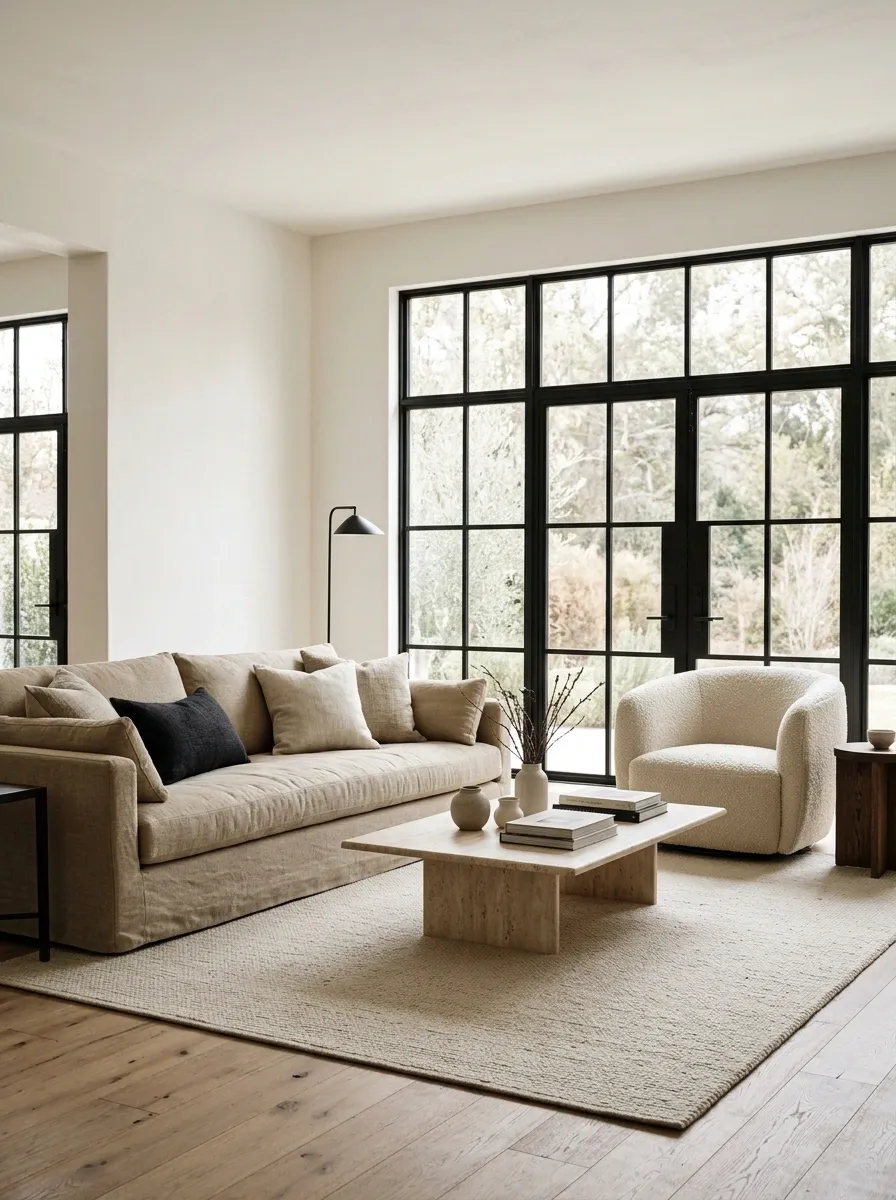
If the windows already provide black lines, count them as part of the palette before adding more dark objects.
Use beige upholstery and a suitable white wall treatment to balance the frame. Keep the window view relatively clear. You may find the room needs fewer black accessories than expected because the architecture is already supplying the outline.
A Warm Beige Ceiling With Lighter Walls
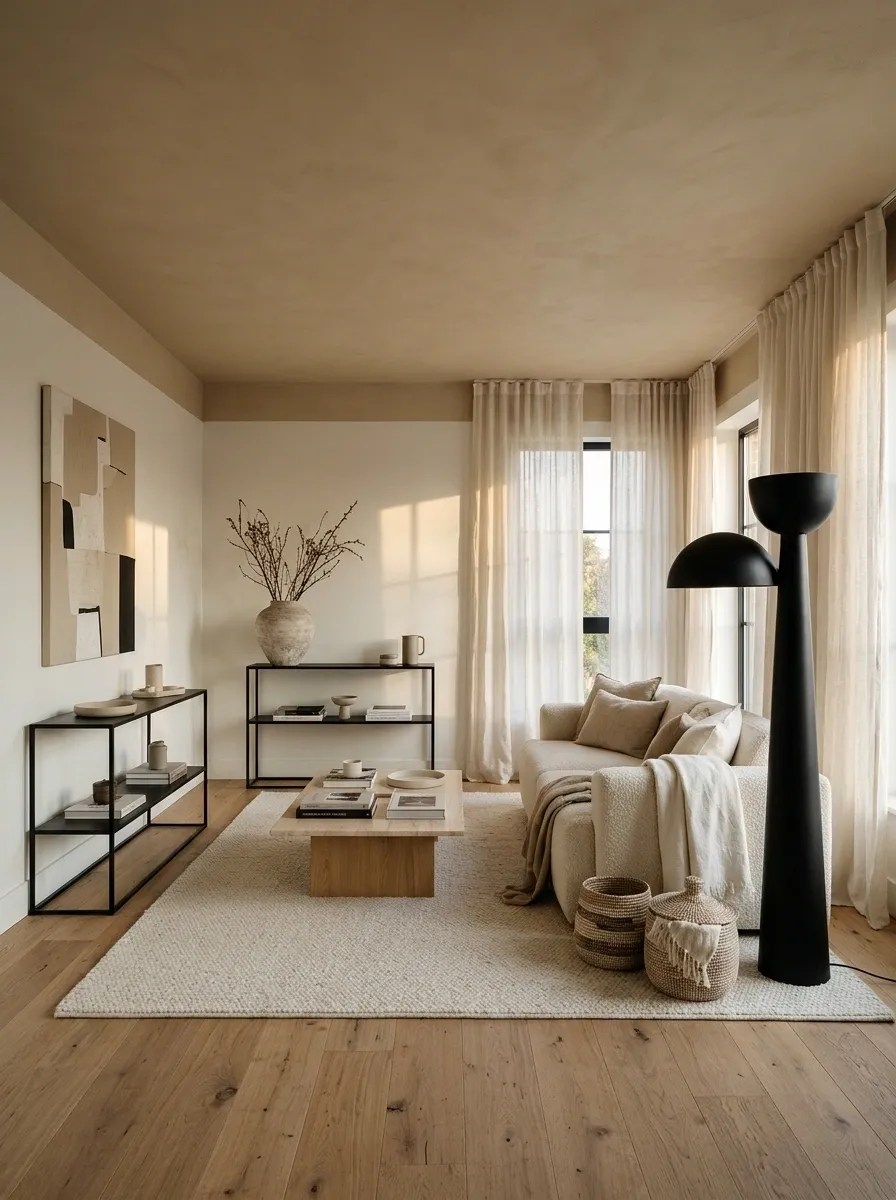
A suitable beige ceiling color can give the room a more enveloping feel while white walls remain lighter.
Test the color and finish in the actual room, including evening lighting. Keep black furniture or a fixture as a clear anchor below. This is a more involved color move than changing cushions, so judge the full composition before painting.
Sample overhead if feasible: a color viewed on a vertical board is not the same experience as seeing it across the ceiling.
One Palette Across Separate Living-Room Zones
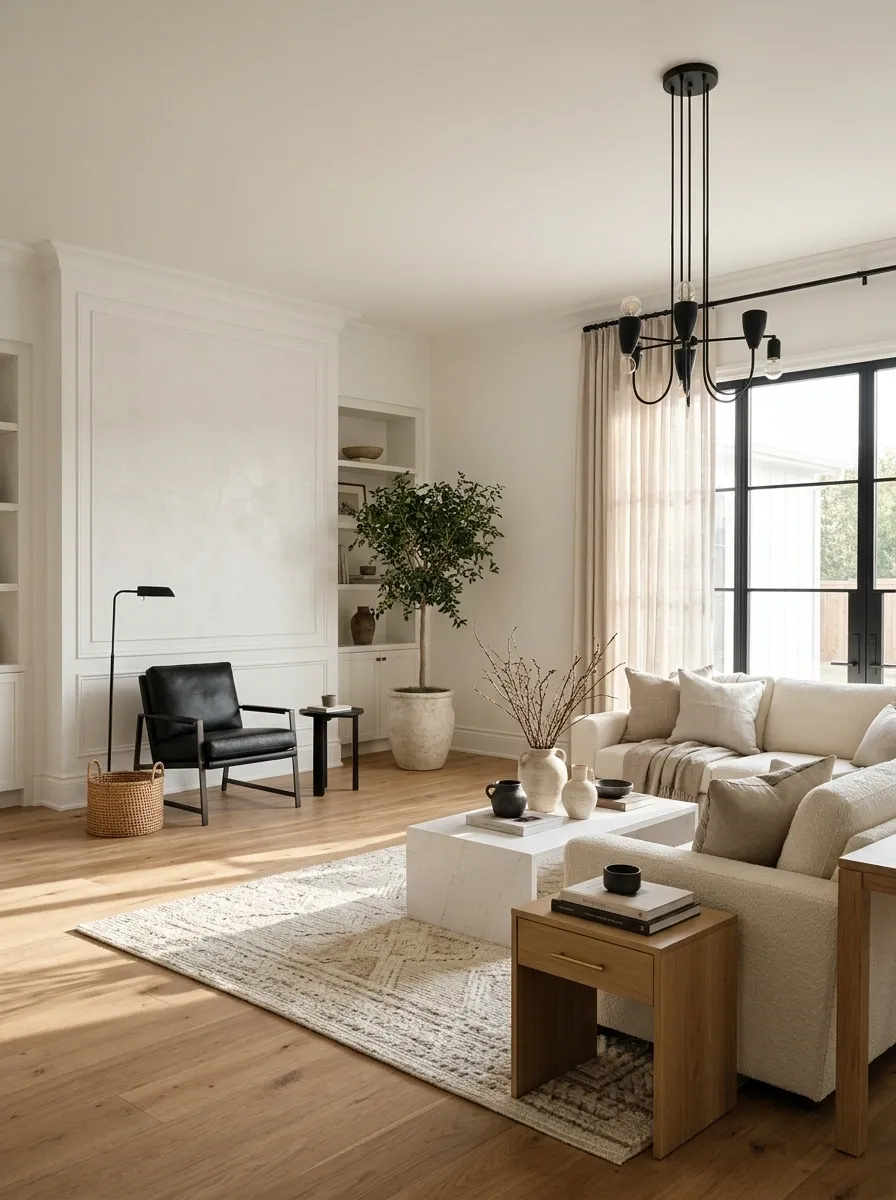
In a larger room, beige, black, and white can connect a reading corner with the main seating area.
Vary the proportions rather than duplicating the same furniture arrangement. One area might be beige-led with black lighting; another might have a black chair against a white wall. The repeated materials make the zones related while their functions remain distinct.
A Small Room With Black Kept to Clear Shapes
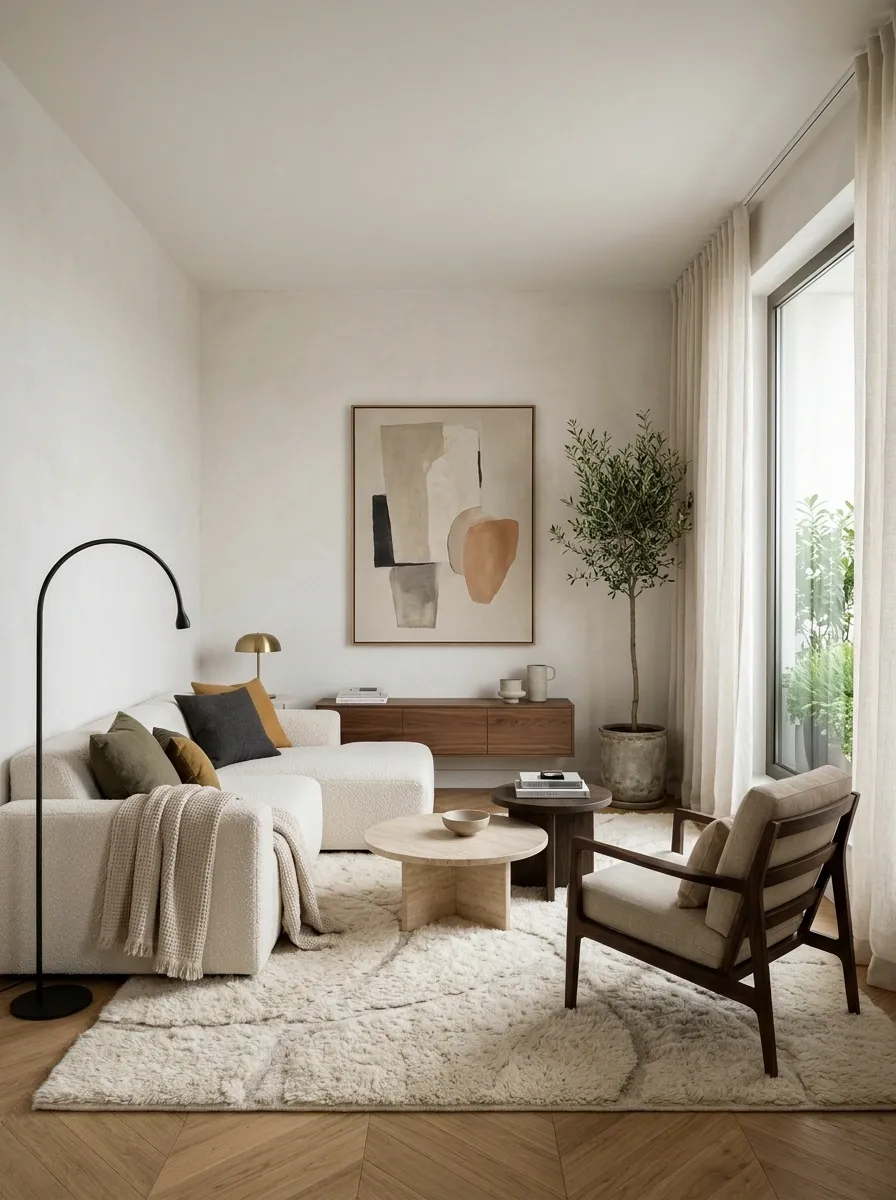
In a compact room, use black where its shape can be read rather than distributing many small dark objects.
A table, chair, or substantial frame can be enough. Let white and beige carry the larger surrounding surfaces. This is about visual clarity, not a rule that small rooms cannot contain dark color. Choose the balance that works with the actual light and furnishings.
Edit the little things first: fewer scattered accents can make the palette feel more coherent.
A Low-Light Room With More Distinct Surface Contrast
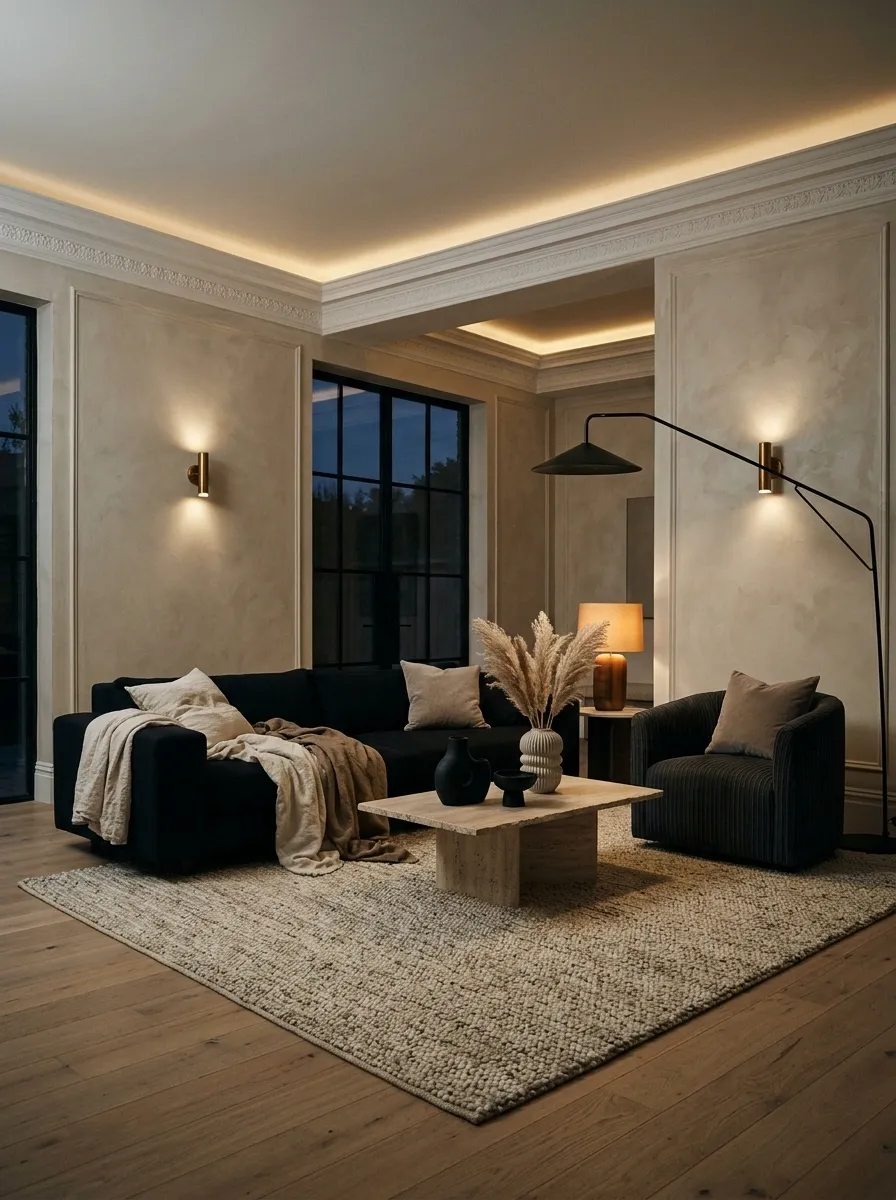
If the room receives limited daylight, compare the pale surfaces carefully instead of assuming every beige and white will work together.
Use texture and clear differences in depth to keep the room from becoming indistinct. Add suitable layered lighting for real use. Black can remain part of the composition, but its position should be chosen with the evening room in mind.
A Family Living Room With Practical Neutral Upholstery
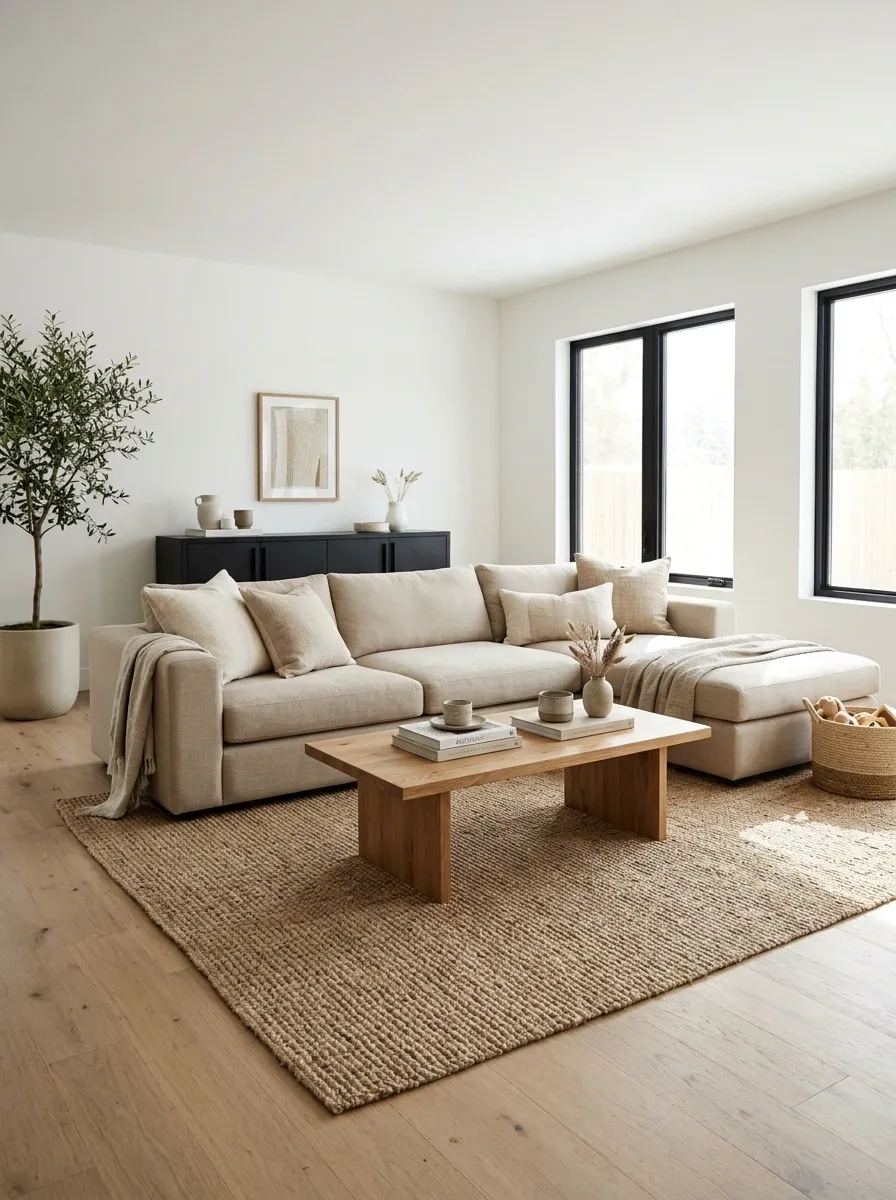
Choose the main upholstery around the household’s use and care needs, then build the palette around it.
Beige fabric, a black storage piece, and white walls can feel composed without requiring delicate furniture. Keep washable or appropriately maintainable textiles where useful. The room becomes more inviting when people can sit, play, and put down ordinary belongings without feeling they have damaged the concept.
| Start with | Then choose |
|---|---|
| Practical seating | Related beige and white tones |
| Useful storage | A clear black shape |
A Rental Room That Uses the Existing Beige
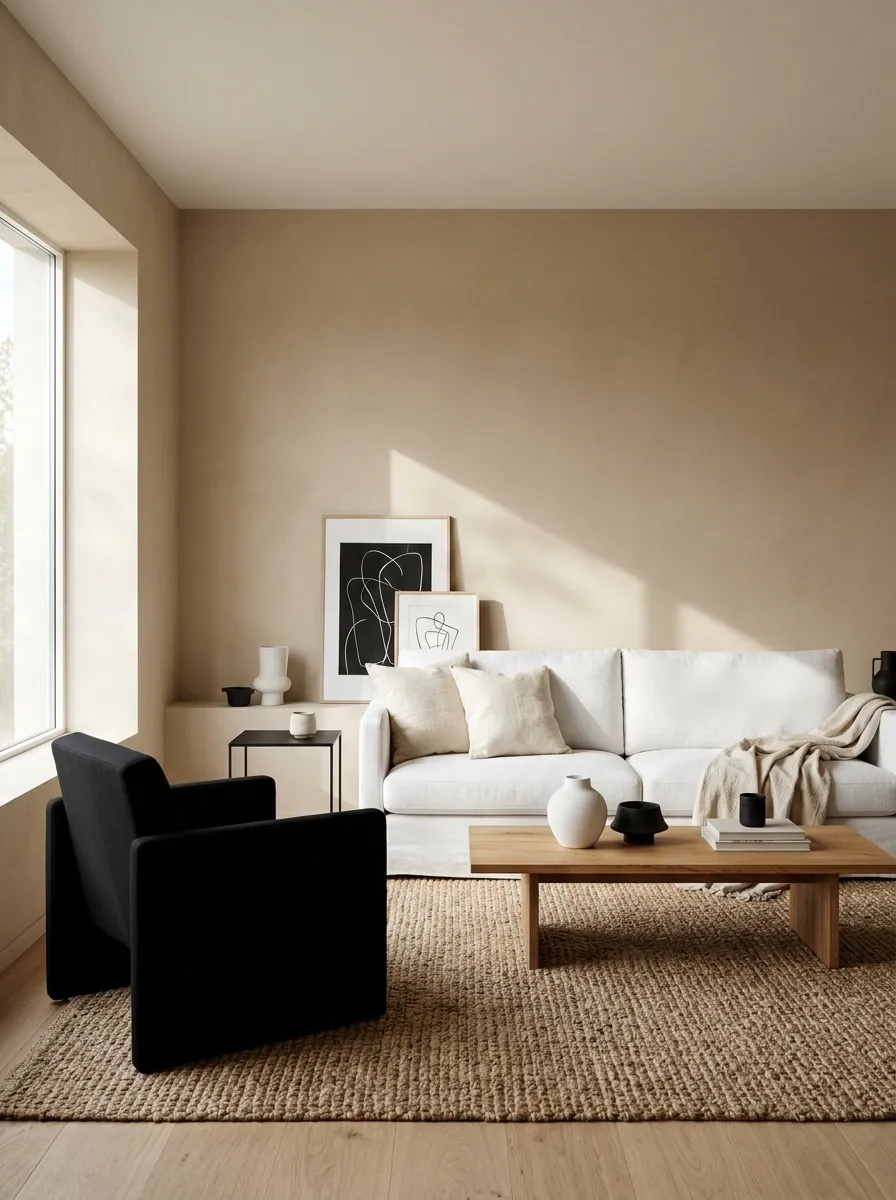
Keep the existing beige in the plan.
Then choose the links that the room needs:
- Suitable freestanding black furniture.
- White textiles or artwork.
- One repeated material or line.
Check permissions for mounting or changes. A few clear relationships can connect the room without disguising its entire starting point.
A Mix of Old and New Pieces in the Same Palette
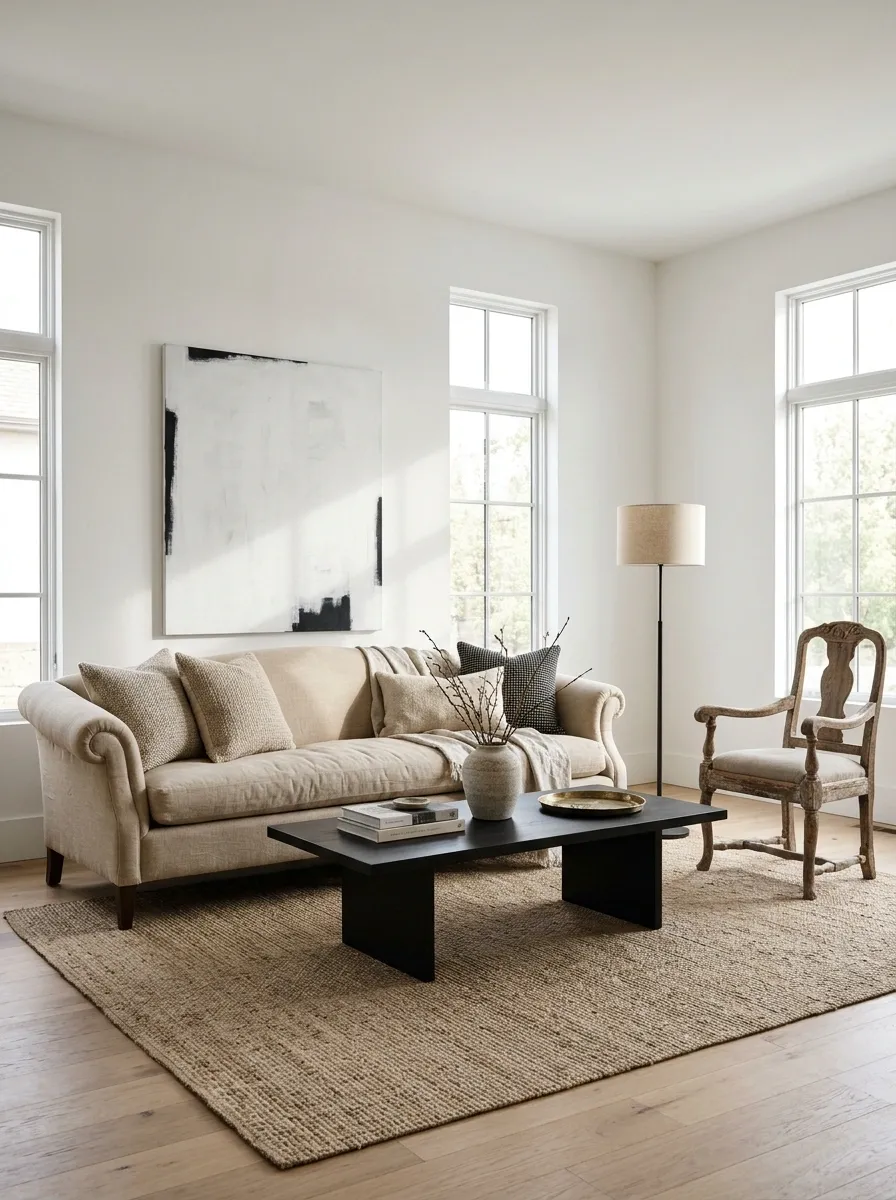
An older beige upholstered piece can sit comfortably with a contemporary black table and white artwork or walls.
Look for related scale and useful functions rather than matching periods. Keep the older material visible if you value its character. The palette can provide continuity while the shapes tell different stories.
Keep one convincing connection: proportion, material tone, or repeated line can matter more than identical style.
The room does not need another accent color if the surfaces, scale, and placement already make it interesting. Let beige, black, and white perform different jobs, and leave enough space for the furniture to be used normally.