
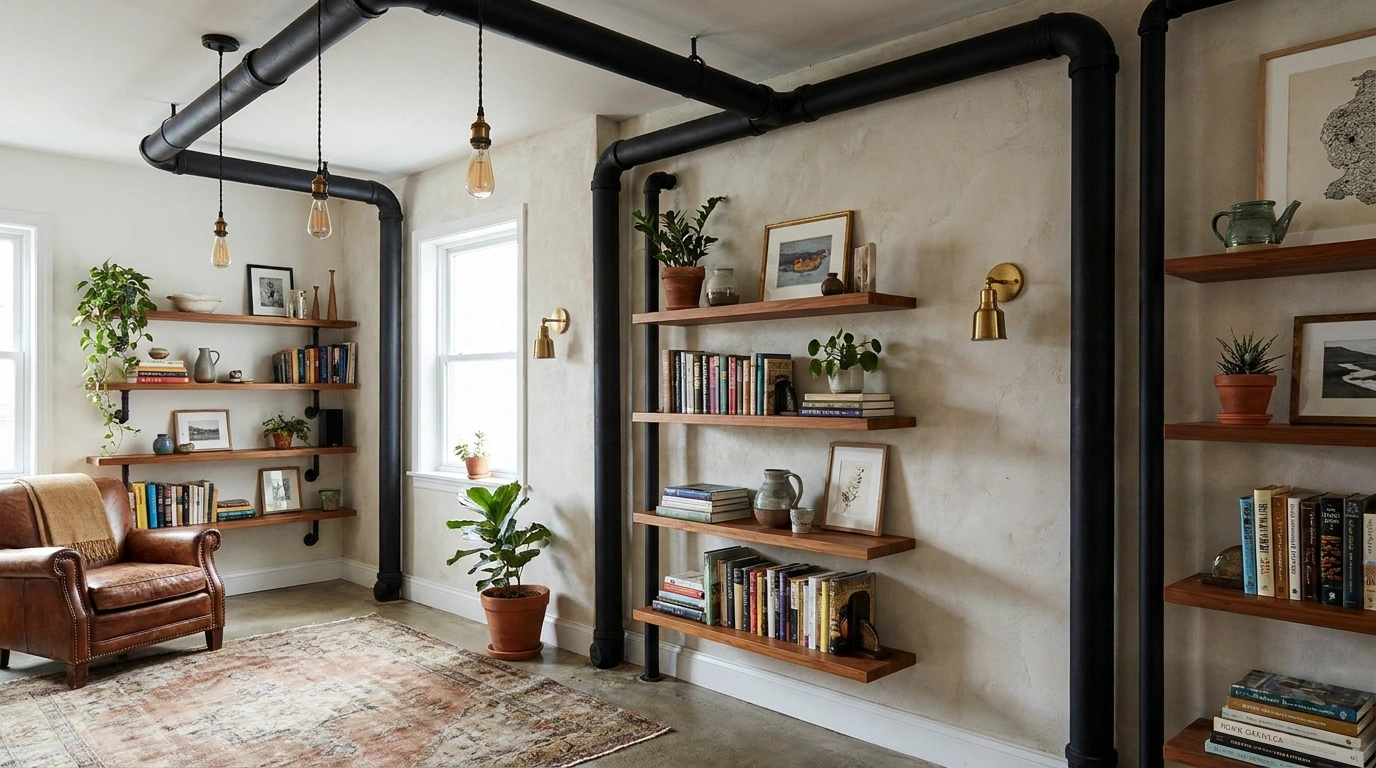
The pipe was there before the sofa, before the paint samples, and probably before anyone asked whether it looked nice. It has tenure.
You can still make the room feel considered. Sometimes that means letting a handsome metal pipe stay visible. Sometimes it means giving the eye a better place to land. Building an elaborate disguise around every bend usually creates a second problem with its own maintenance requirements.
Identify the service first: water, heating, gas, drainage, and electrical conduit are not interchangeable decorating materials. Keep valves and inspection points accessible. Get approval before painting or enclosing anything, and leave unidentified old insulation undisturbed; HSE notes that asbestos can occur in pipe insulation.
Decorating Ideas That Work With the Pipes You Have
Let a Vertical Pipe Become the Edge of a Color Block
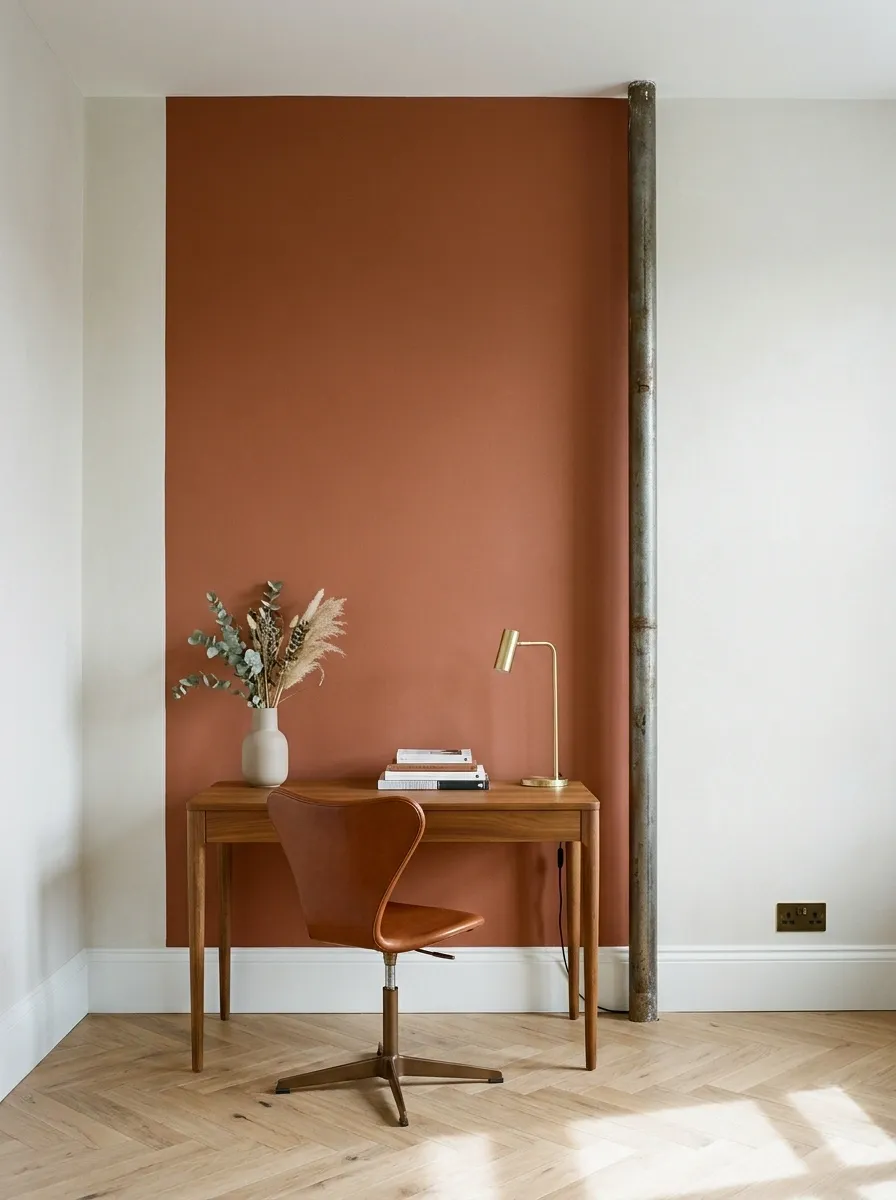
Paint a broad wall panel beside a vertical pipe, using the pipe’s position as the panel’s visual boundary. A clay-colored rectangle behind a desk can make an inconvenient line look connected to the room’s geometry.
The color belongs on the wall; the pipe can remain untouched. Carry the panel down to the skirting rather than stopping awkwardly above it.
Keep furniture within that painted zone, with space for cleaning and service. A desk halfway inside the block and halfway outside tends to look like it arrived during an argument.
A wall panel with a clear boundary
Desk centered within the painted area
The wall treatment creates the relationship; nothing is attached to the pipe. Conceptual relationship only; confirm service-specific clearances, suitable materials, and maintenance access.
Match the Wall to the Pipe’s Existing Color
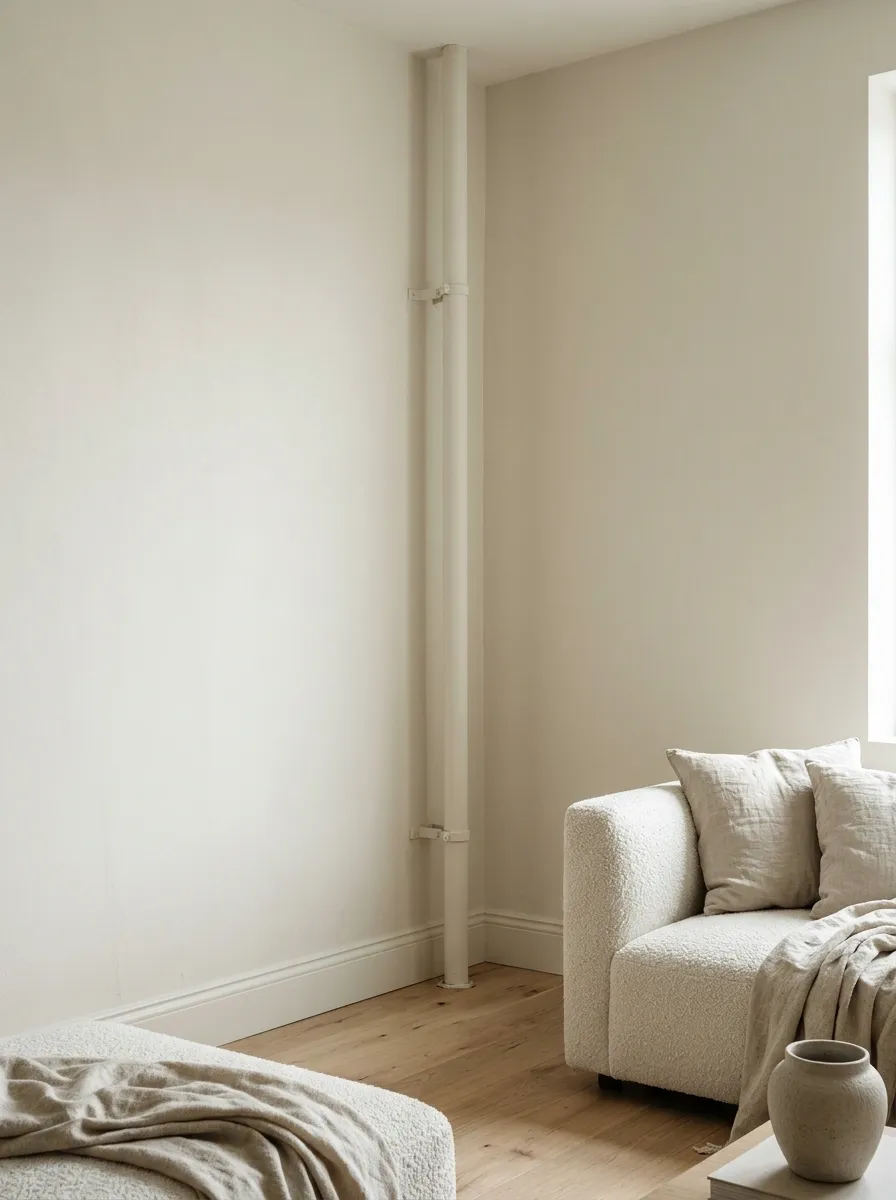
A white service pipe against a dark wall advertises every elbow. Bringing the wall closer to its existing color can soften the contrast without altering the pipe itself.
This is useful for renters who can repaint but cannot modify fixtures. Test a wall sample beside the actual pipe: a creamy white wall can make a cool white pipe appear unexpectedly blue.
You do not need a laboratory match. A small difference often looks quieter than a dramatic contrast, particularly when the surrounding trim belongs to the same general color family.
Try first: Place a large painted sample behind the pipe before committing to the entire wall.
Give a Black Pipe a Graphic Partner
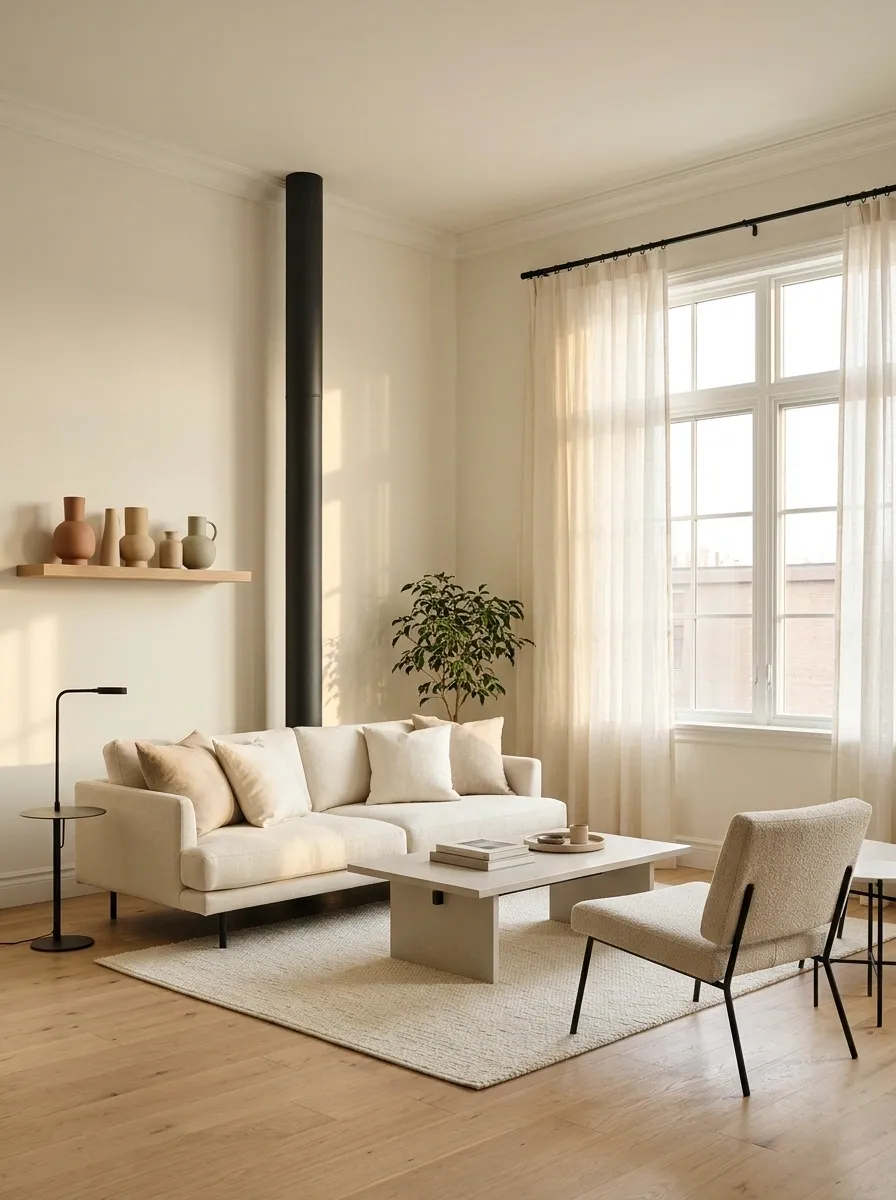
A dark pipe can sit comfortably with a thin black curtain rod or dark furniture legs. The eye reads those lines together, making the pipe less of a solitary announcement.
Choose partners with a similar visual weight. A slim pipe does not require a huge industrial shelving system to justify its existence.
This approach is especially useful in a mostly pale room where the pipe already stands out. Add a few deliberate dark outlines at normal eye level so all the contrast is no longer concentrated in one corner.
| Existing feature | Useful echo |
|---|---|
| Slender vertical pipe | Thin lamp stem |
| Dark overhead run | Simple dark curtain rod |
| Short dark fittings | Small furniture hardware |
Build a Reading Corner Beside the Pipe
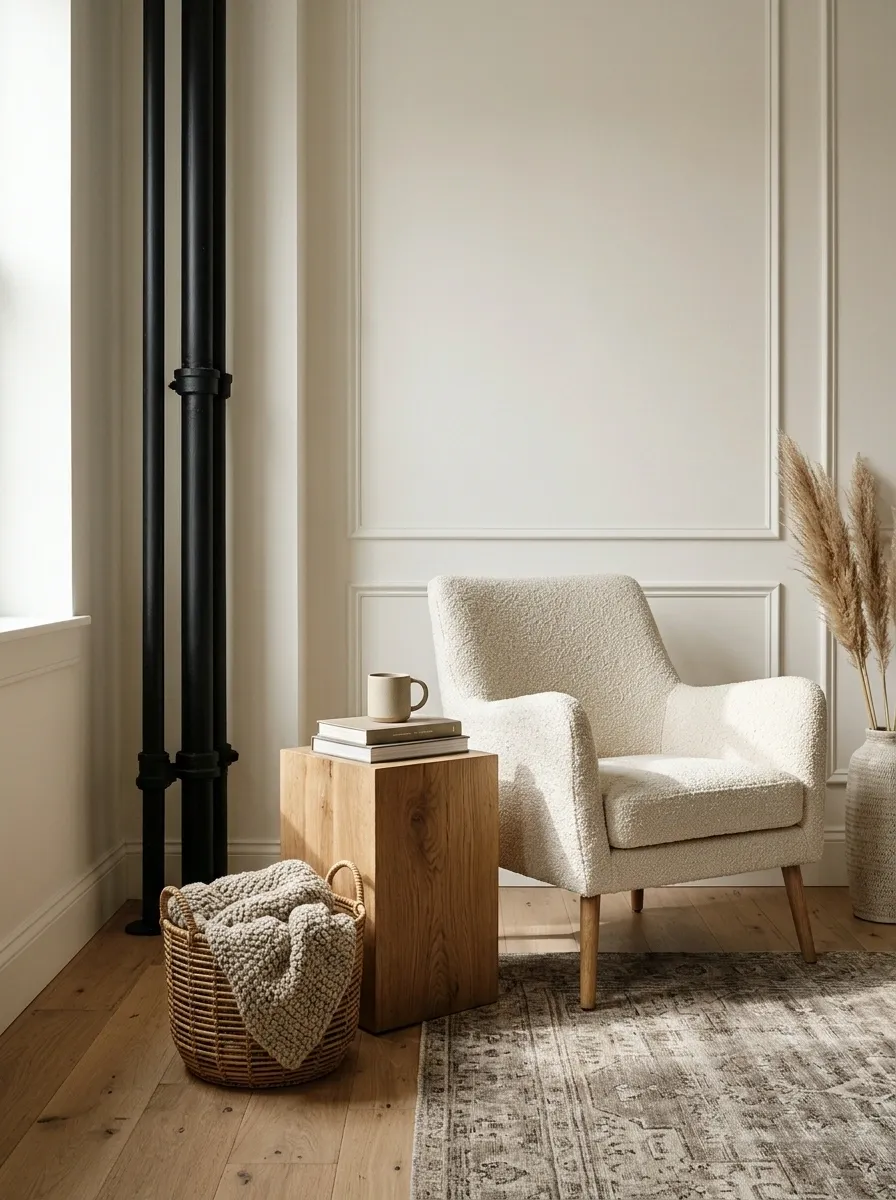
The corner can become about reading instead of plumbing geography. Give it the things a reader needs:
- A comfortable chair.
- A table within easy reach.
- Light positioned for the page.
Those useful pieces create the destination.
Position the chair so its back and arms do not touch the service. Leave access behind it where needed, and keep upholstery well away from anything that becomes hot.
Choose a chair you can move without a team briefing. If accessing a valve involves dismantling the reading nook, you have designed a mildly hostile obstacle course.
Align Art With the Nearby Furniture
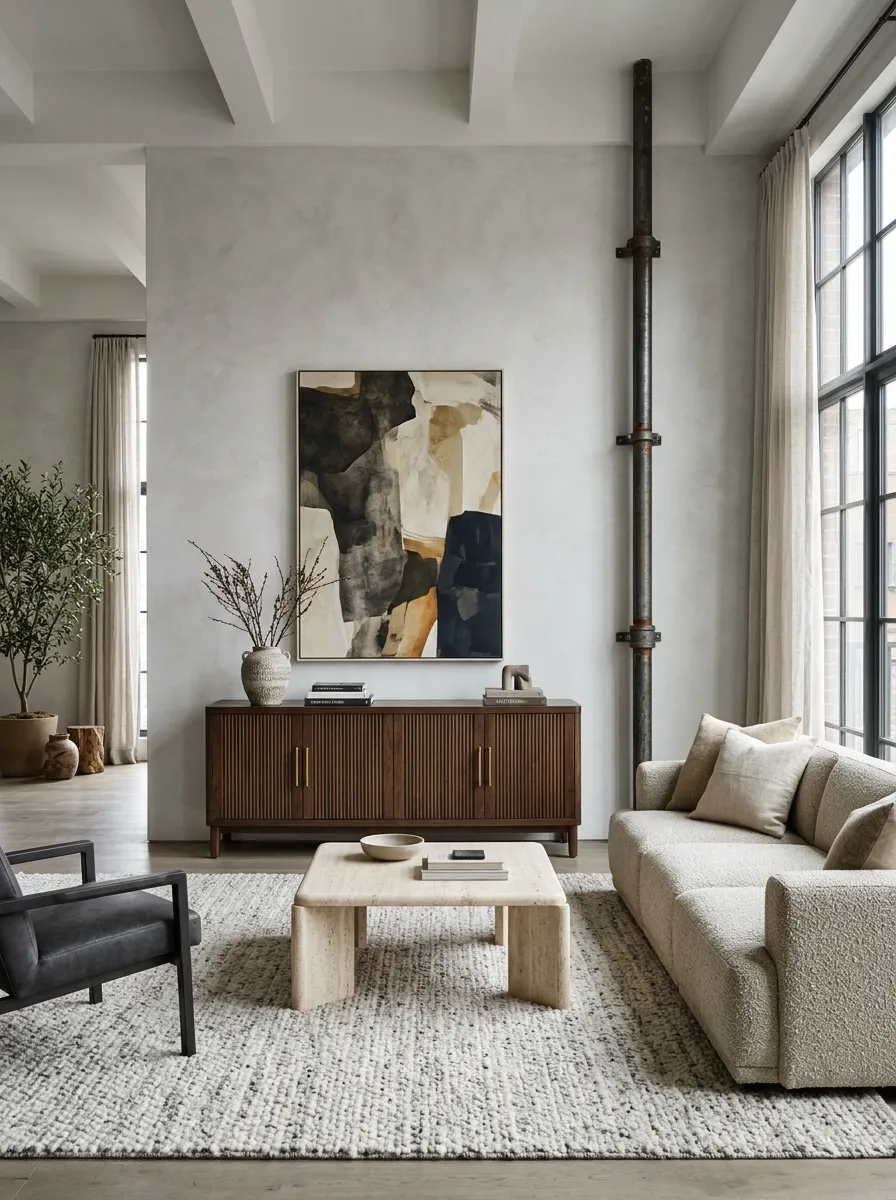
Center the art on the furniture.
Even when the pipe makes the remaining wall space unequal, a substantial piece over the console or sideboard can look settled. Centering everything on the full wall may pull the display away from the furniture it should relate to.
Use paper templates to compare the two alignments from the doorway. The furniture-centered arrangement often reads more calmly.
Keep drilling away from service routes and use appropriate fixings. The artwork can acknowledge an asymmetrical wall without turning the pipe into the central axis of your entire decorating life.
Alignment check: Judge the art and furniture as a pair, then check their relationship to the pipe.
Keep the Ceiling and Overhead Services Visually Related
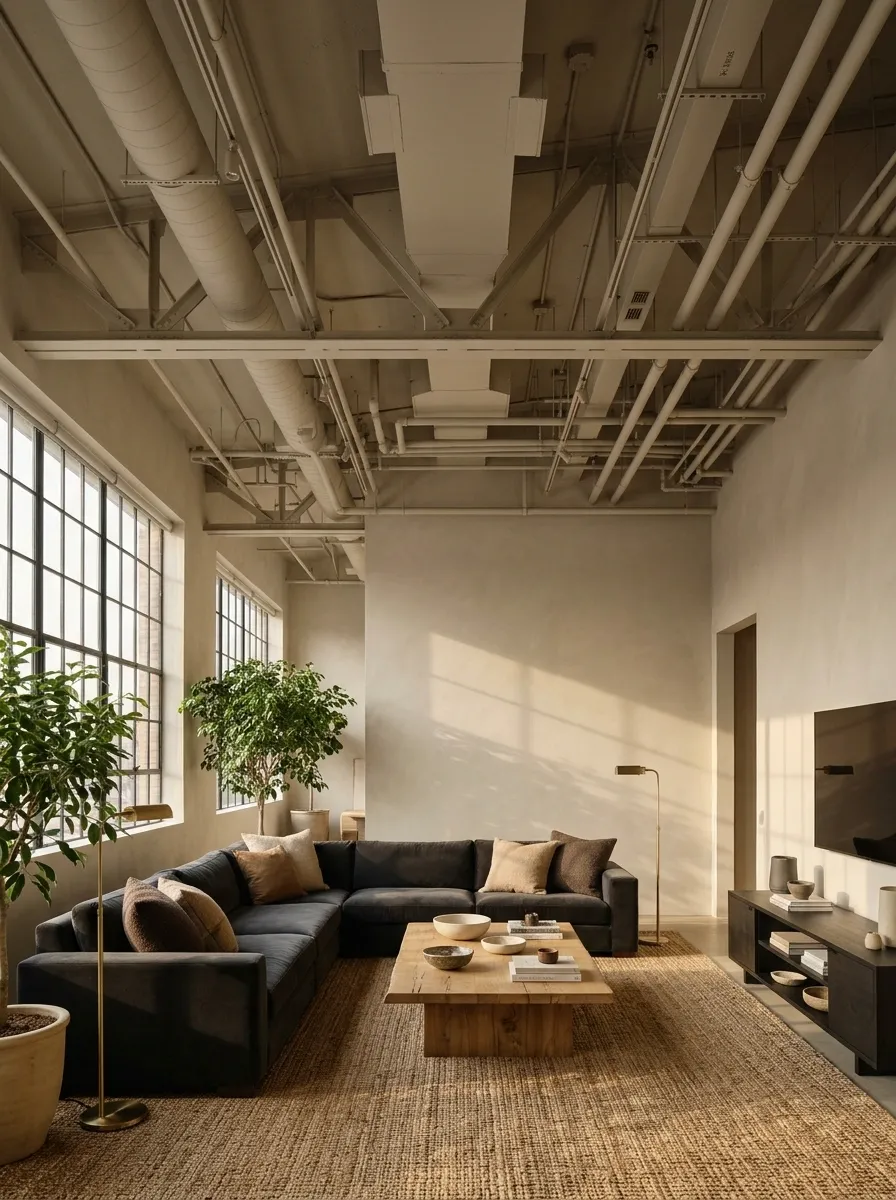
An overhead run can feel less fragmented when the ceiling and permitted service finishes occupy a similar color range. Start by changing the ceiling color around existing services rather than assuming everything above your head can be sprayed.
Sprinklers, detectors, labels, insulation, and specialist coatings need their intended function preserved. Arrange professional advice before any service painting.
A soft stone ceiling can also connect exposed services to masonry or concrete elsewhere. The result should feel considered from normal standing height, not just attractive in a carefully cropped photograph.
Ceiling rule: Identify every overhead component before deciding what may be painted.
Position an Open Bookcase Beside the Run
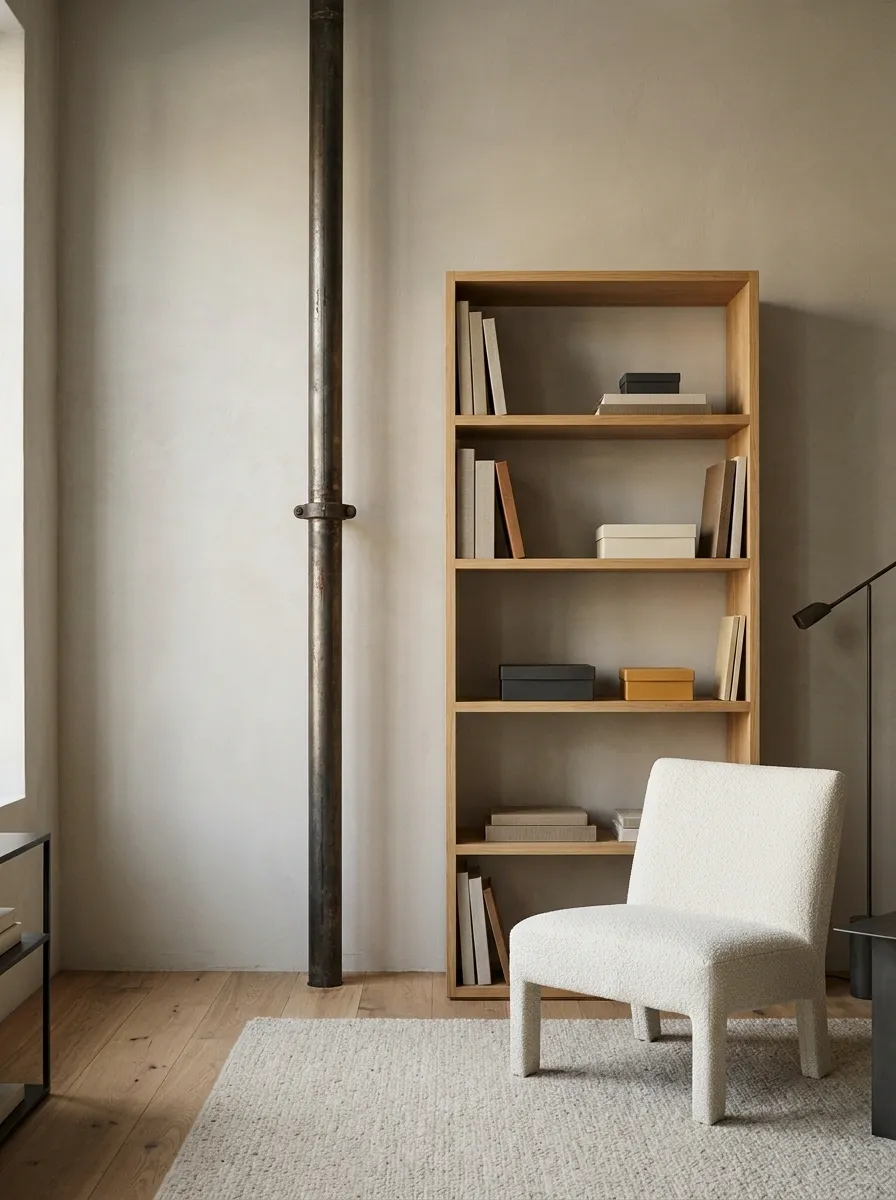
A bookcase can give an exposed vertical pipe a neighboring shape, particularly on a wall that otherwise feels empty. Use the bookcase as a parallel element rather than pushing it across the service.
Keep the required space for access and any heat clearance. Anchor tall furniture appropriately, checking the wall for concealed services before fixing.
Leave the pipe-side shelves relatively simple. A few larger books or boxes make a clearer composition than twenty tiny ornaments auditioning for the same square inch.
Parallel shapes, separate jobs
Independent bookcase alongside
Keep the bookcase and its fixings separate from the service. Conceptual relationship only; confirm service-specific clearances, suitable materials, and maintenance access.
Use a Long Runner to Lead Past Low Pipework
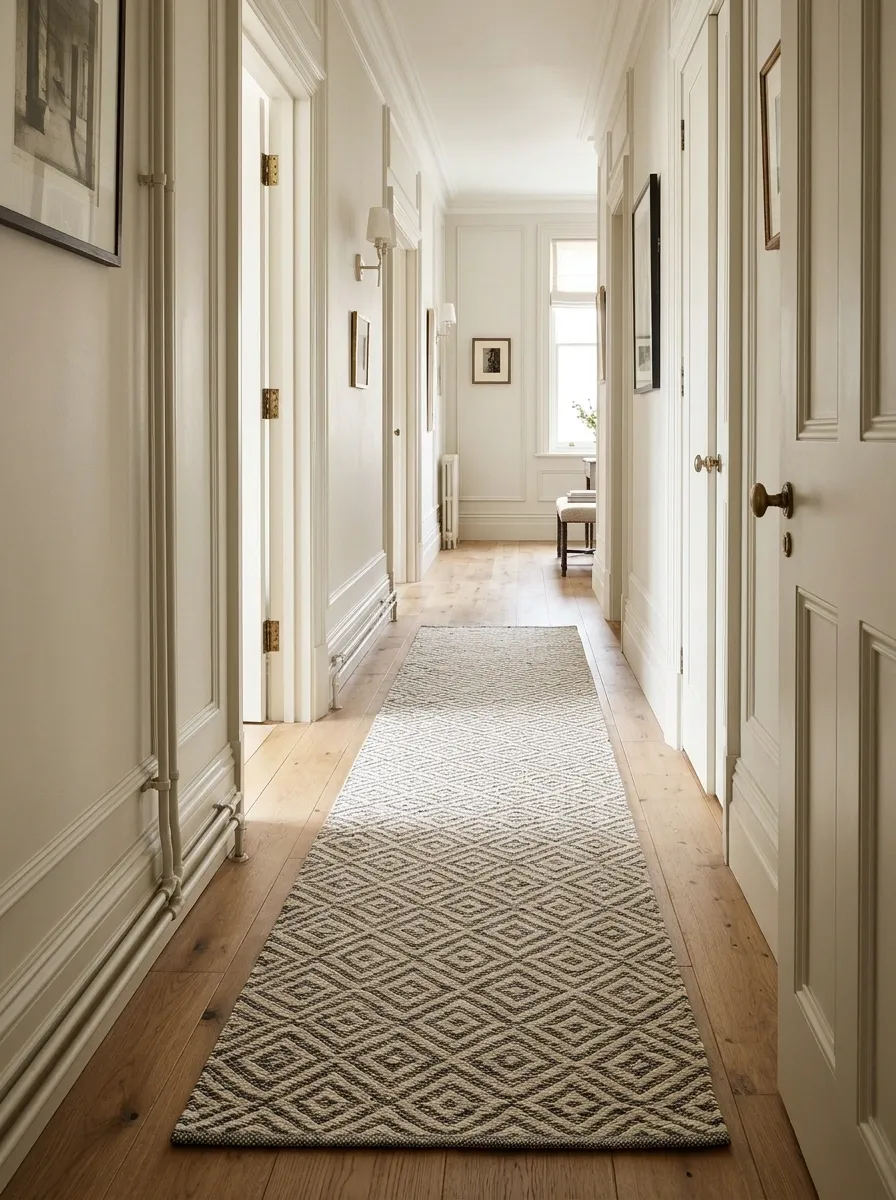
When pipes run along the base of a hallway wall, a runner can pull attention along the route instead of toward the wall edge.
Choose a size that sits flat and leaves doors moving freely. It should not curl against pipe clips, overlap hot surfaces, or hide places you need to inspect.
A medium-scale pattern is often more forgiving than a narrow border trying to follow every architectural irregularity. Secure the rug appropriately for the flooring so the new focal point does not become the household’s leading trip hazard.
| Look for | Avoid |
|---|---|
| Flat, secure edges | Curling corners |
| A clear walking route | Rugs pushed into fittings |
| A balanced pattern | A border that highlights every kink |
Give an Approved Boxed Run the Same Finish as the Joinery
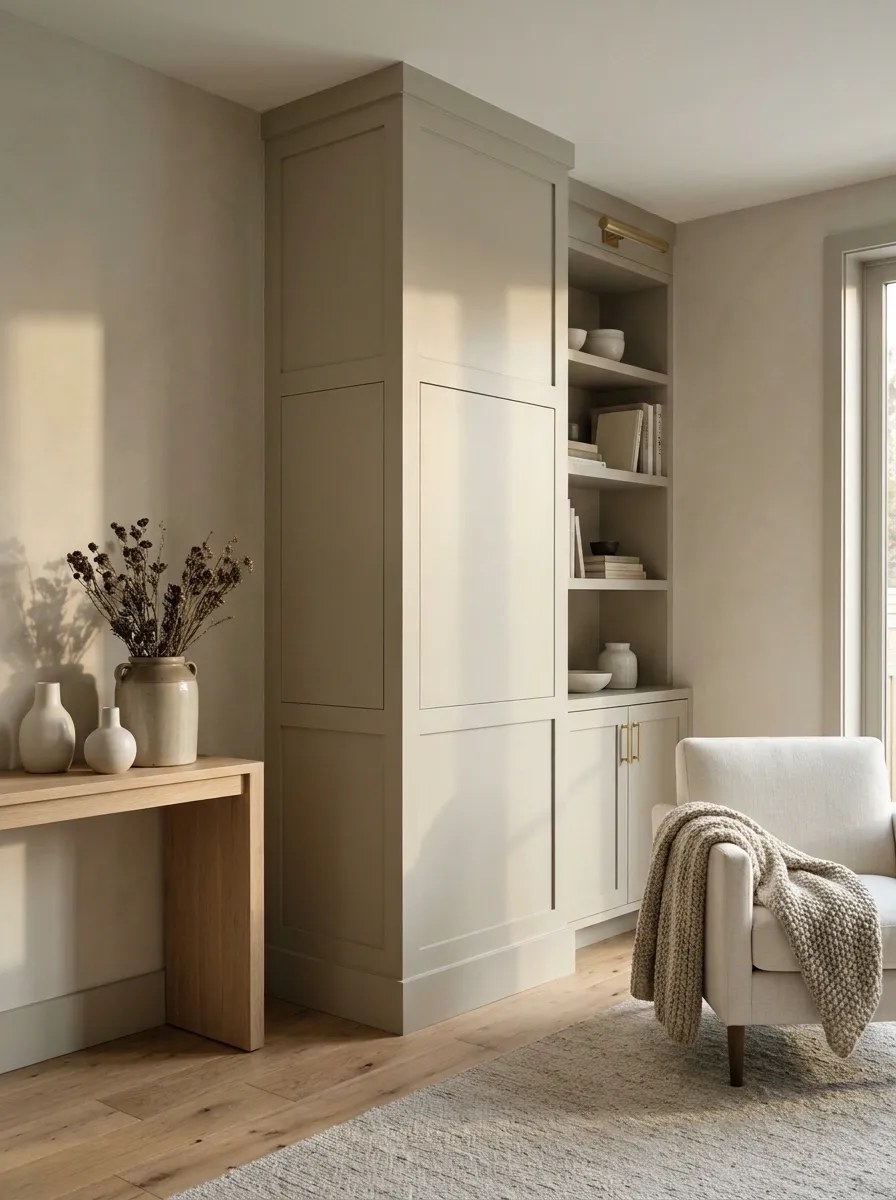
Where a professional confirms enclosure is appropriate, finish the removable boxing like adjacent cabinetry or wall trim. Matching profiles and paint can make the addition read as part of the architecture.
Plan access before deciding where decorative seams will go. A panel that opens without damage is more useful than a seamless enclosure requiring a saw.
Keep the enclosure proportionate. Expanding a narrow service run into an enormous fake column can make the room feel smaller while preserving absolutely none of the pipe’s original honesty.
Put a Large Mirror on the Adjacent Wall
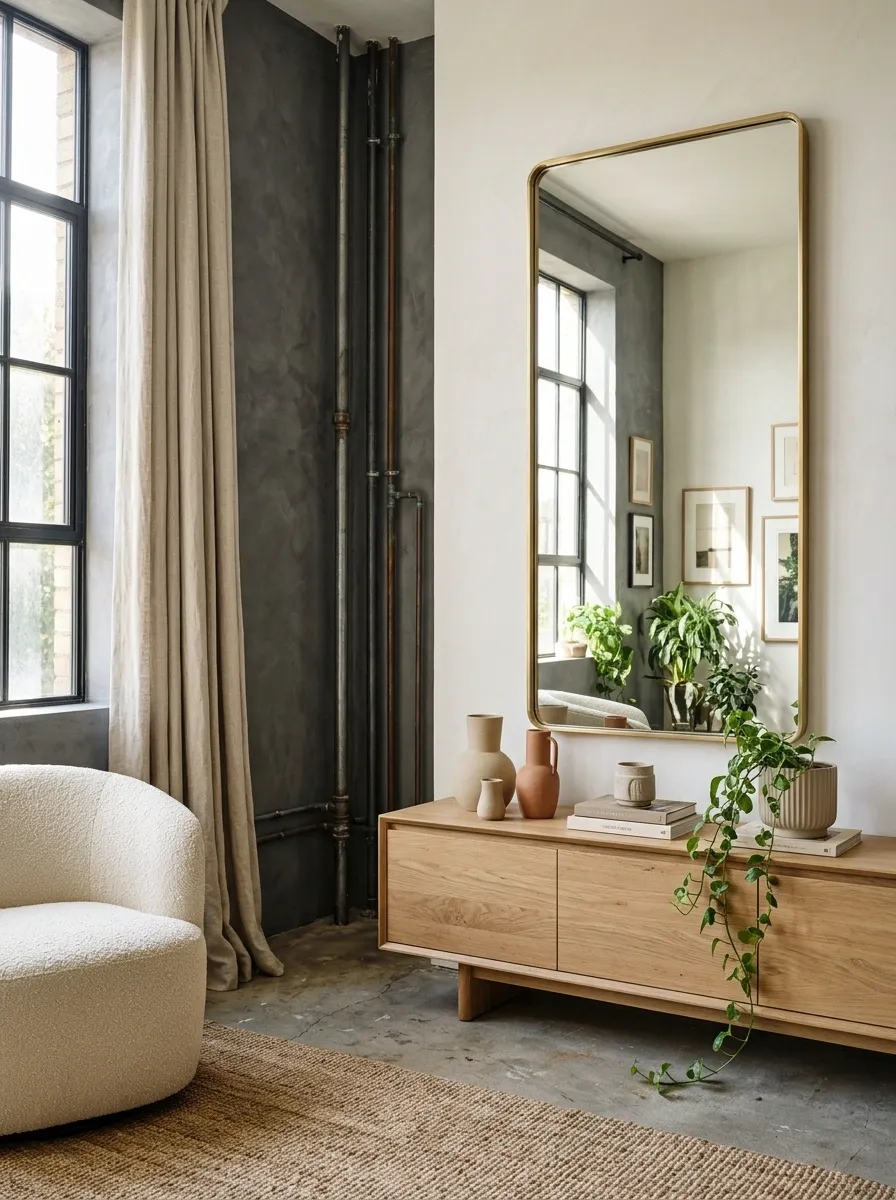
A mirror can introduce light and visual depth beside a busy service wall. Position it to reflect a pleasant part of the room rather than simply doubling the pipes.
Check the reflection from the main seat as well as the doorway. The view changes more than people expect.
Use a securely mounted mirror in a scale that suits the furniture below it. An oversized mirror leaning casually beside a service valve may look relaxed, but relaxed is not a mounting method.
Reflection test: Hold a smaller mirror at the intended position and inspect what appears from the room’s main viewpoints.
Let Real Brick Carry the Industrial Character
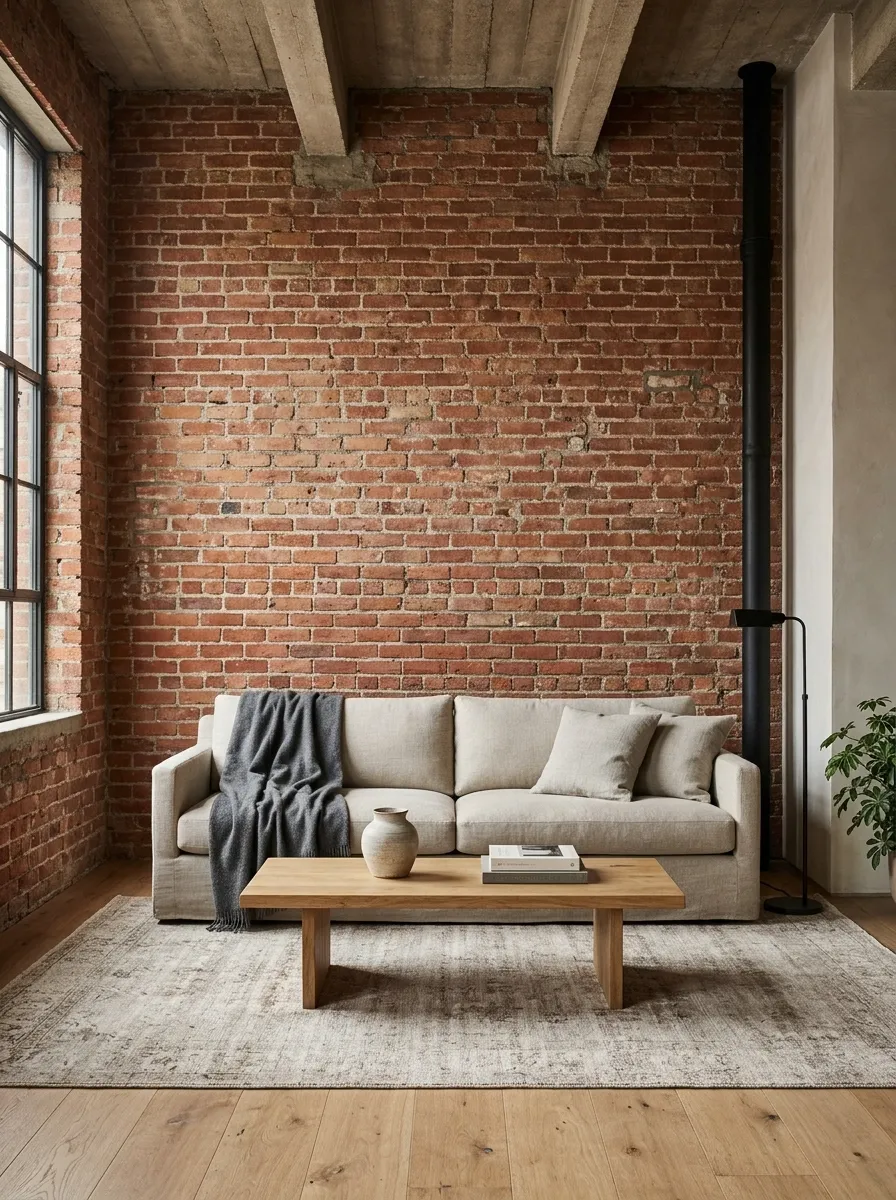
Exposed brick and visible metal can belong together without a collection of factory-themed accessories. Use the texture already present, then soften the room with comfortable furniture and restrained fabrics.
Have deteriorating masonry or damp assessed before decorating around it. Do not treat staining beside a pipe as charming patina until its cause is understood.
A plain linen sofa and a substantial rug can do more for the room than decorative gears. The pipe already supplies the industrial reference; nobody needs a sign explaining the concept.
Add a Freestanding Plant on the Other Side
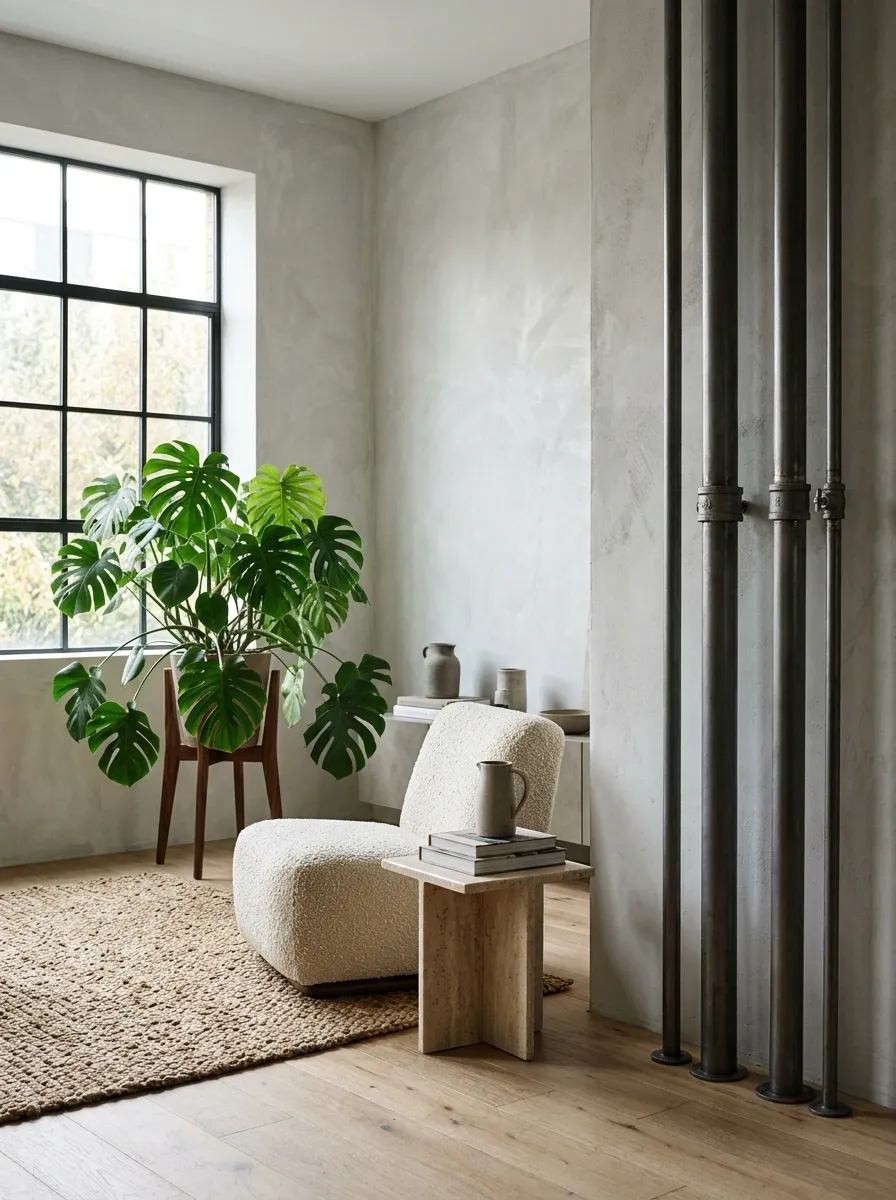
A plant can balance the hard line of a pipe with an organic silhouette. Place the pot on an independent stand, with foliage clear of hot surfaces, valves, and service access.
Choose the location for the plant’s actual light requirements. A gloomy corner does not become suitable because the pot matches.
Keep watering practical, with a stable waterproof container. Do not train vines up active pipework or hang planters from it; the plant needs support designed for plants, which is a remarkably reasonable arrangement.
Plant placement: Separate stand, suitable light, clear pipe access, contained watering.
Turn the Nearby Alcove Into a Small Desk Zone
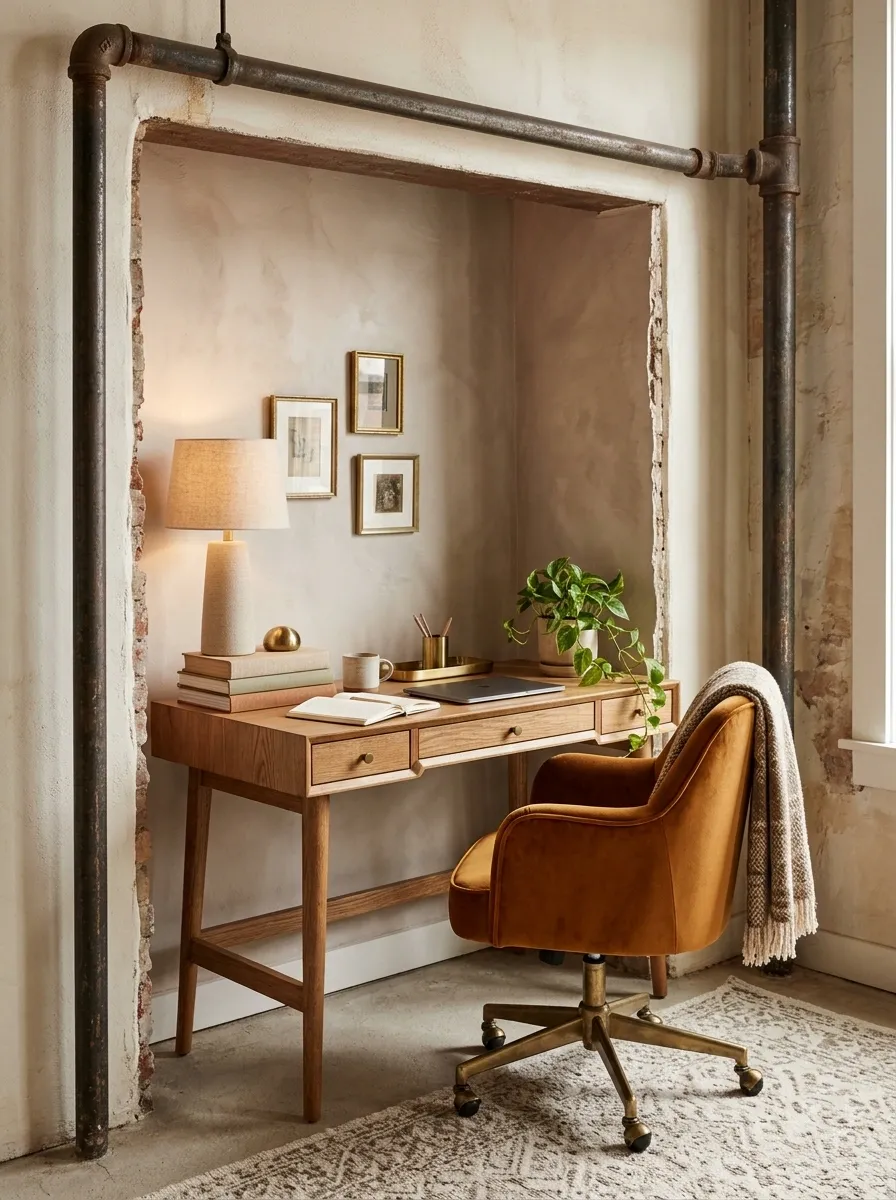
A pipe near the edge of an alcove can help define the limit of a compact workspace. Position a freestanding desk within the usable width and keep its cables organized independently.
Measure the chair’s pulled-out position, not just the desk footprint. A workspace that fits only when nobody sits there is technically storage.
Use wall color or a pinboard to establish the work area. Check service locations before wall fixing, and keep hot or otherwise unsuitable pipework away from knees, bags, and electrical equipment.
Use Curtains to Soften the Opposite Side of the Room
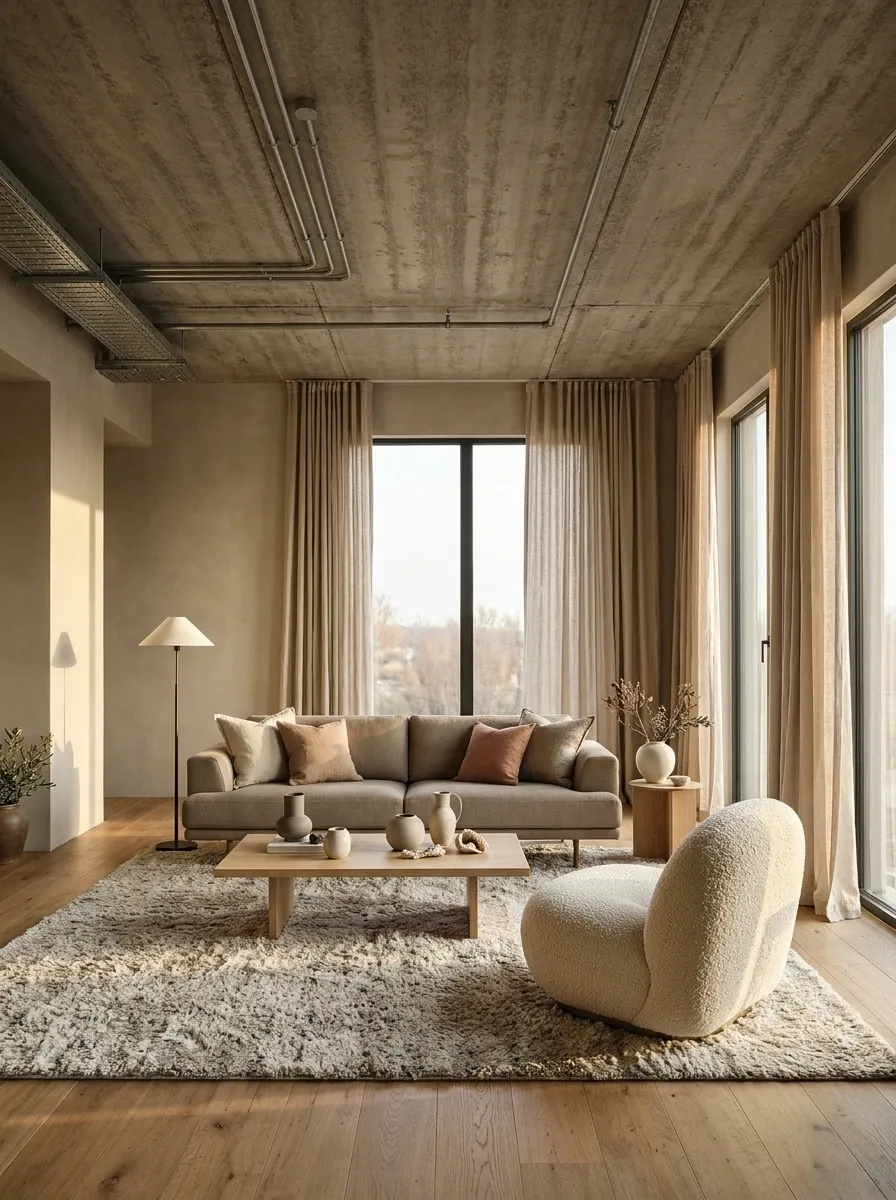
You can balance a hard service wall without adding anything beside it. Full, well-fitted window curtains elsewhere in the room introduce softness and a larger visual gesture.
Keep curtains at their own window and away from hot pipes or equipment. Do not drape fabric over a service run as a shortcut.
Choose the fabric by daylight and privacy needs, then echo its color in a cushion or rug. This makes the whole room feel more complete, reducing the pipe’s ability to dominate by default.
| Hard feature | Soft counterweight |
|---|---|
| Visible metal lines | Full window curtains |
| Concrete ceiling | Textured rug |
| Angular fittings | Rounded upholstered chair |
Echo a Horizontal Pipe With a Long Picture Ledge
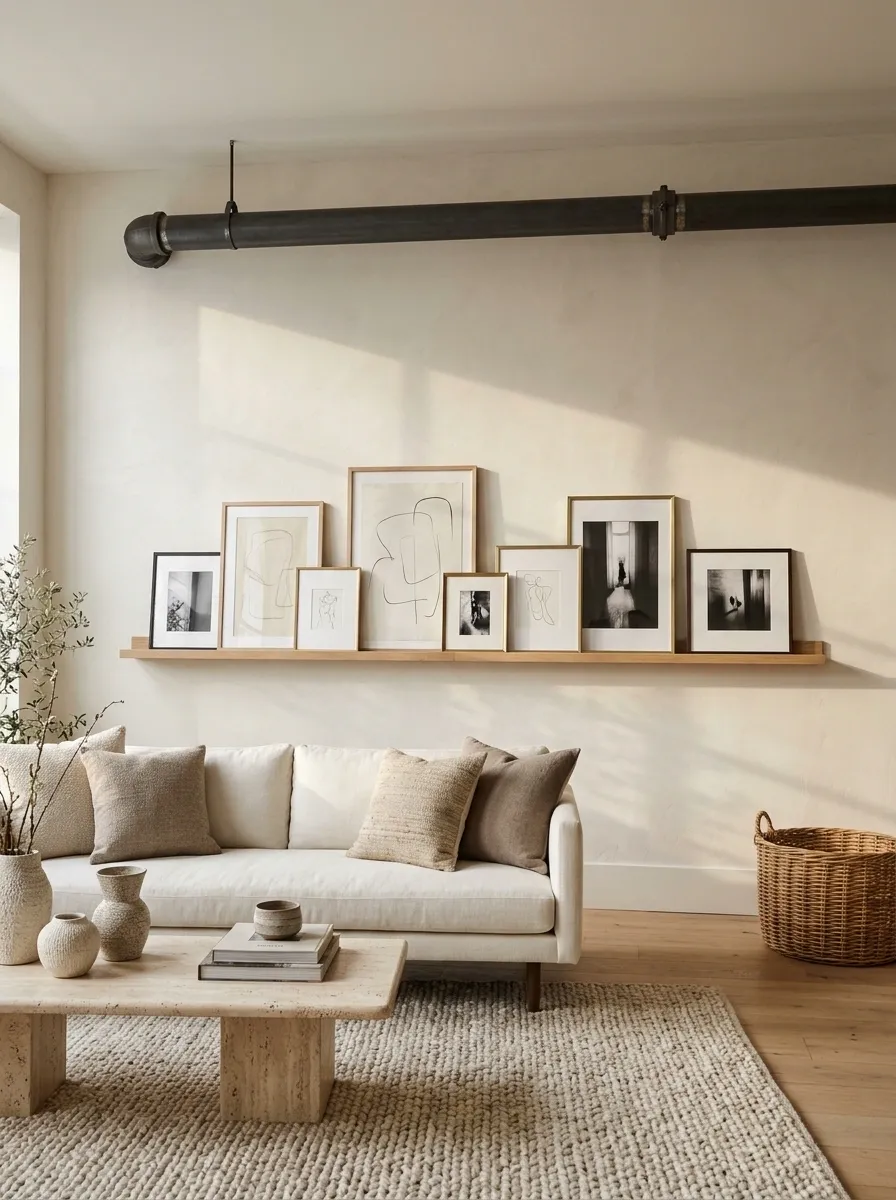
An independently mounted picture ledge on an adjacent clear wall can repeat a horizontal service line. Keep the ledge in the room’s normal display zone rather than forcing it to sit at pipe height.
Use a few overlapping pieces with different proportions. They create a deliberate horizontal composition that gives the eye another route.
Check for concealed services before fixing, and never use the pipe itself as a shelf bracket. Its day job already matters rather more than holding a framed holiday photograph.
Put the Strongest Color in the Seating Area
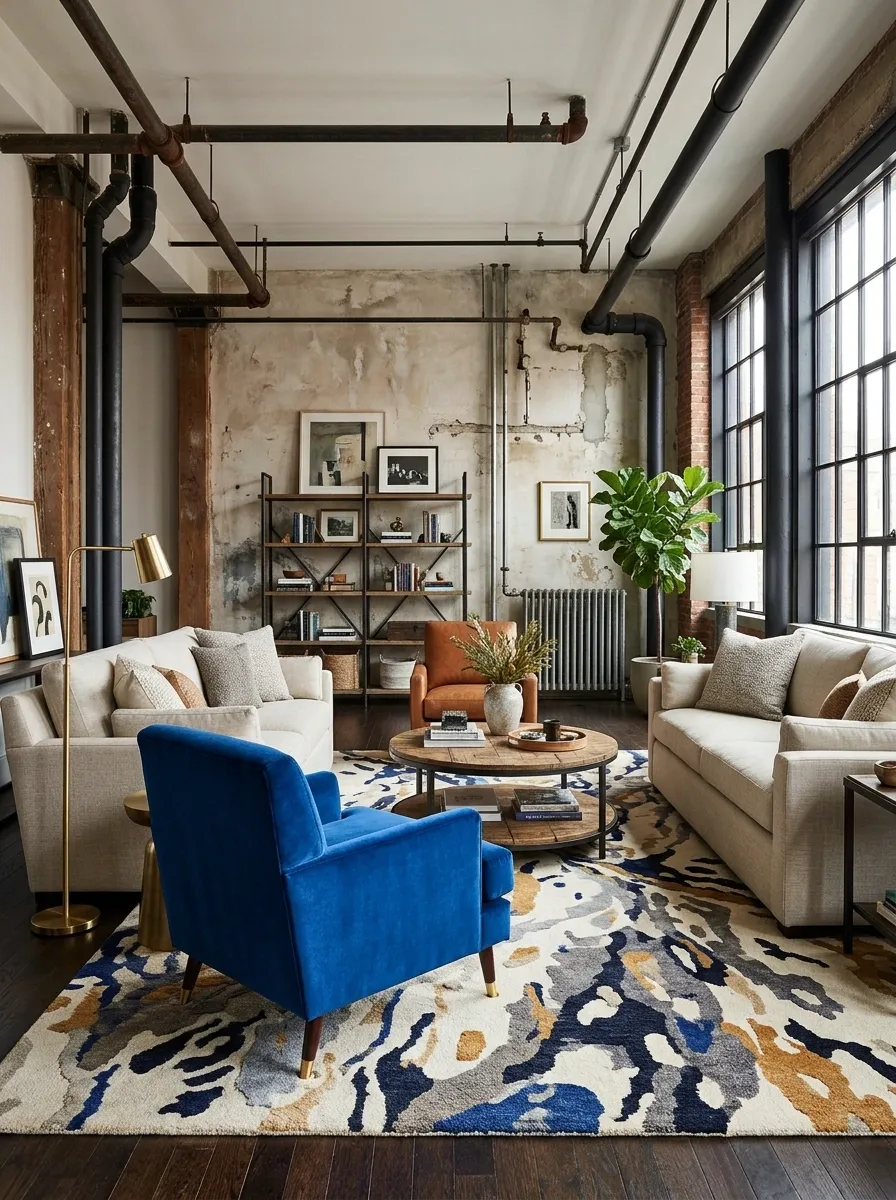
A vivid chair or large rug can shift attention away from an awkward run. Give that color enough presence to register from the doorway rather than scattering tiny accents everywhere.
Choose a hue that relates to something you already own: a painting, patterned cushion, or much-loved fabric.
Keep the service wall comparatively quiet. You are creating a more interesting room, not trying to win a visual shouting contest against a piece of infrastructure. One confident focal point is usually more convincing than a dozen distractions.
Low-commitment trial: Drape a colored throw over the intended chair before buying a new piece.
Design Storage Around the Access Point
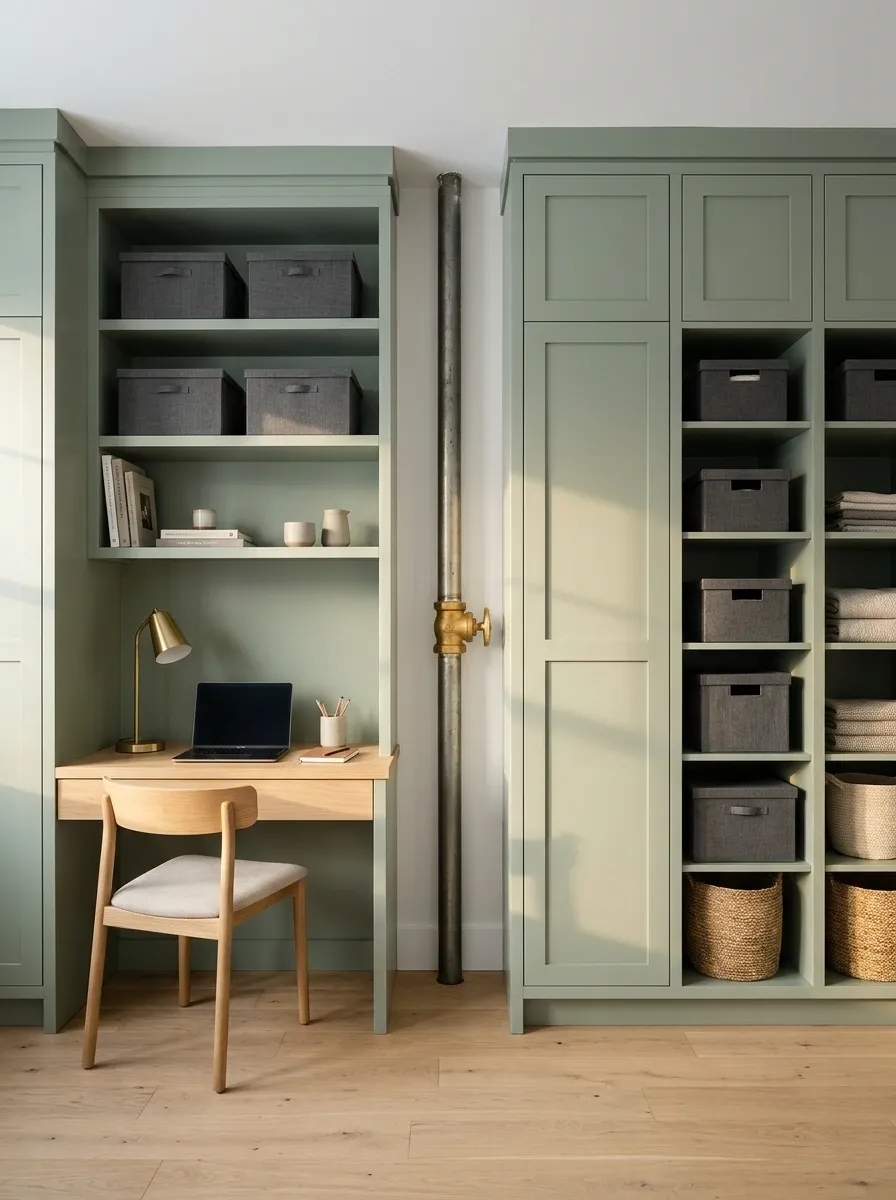
A visible valve or cleanout can dictate a useful break in storage. Put independent storage to either side and leave the service area deliberately clear.
Use matching boxes or cabinet finishes to make the surrounding pieces read together. The gap then looks planned rather than forgotten.
Have the required access confirmed before purchasing furniture. A narrow decorative gap may let you see a valve without letting anyone operate or replace it. Visibility and workable access are different things, however optimistic the furniture listing sounds.
Storage stops where access begins
Independent storage on the clear wall
Confirm the working space required for the actual fitting. Conceptual relationship only; confirm service-specific clearances, suitable materials, and maintenance access.
Give an Awkward Junction a Calm Background
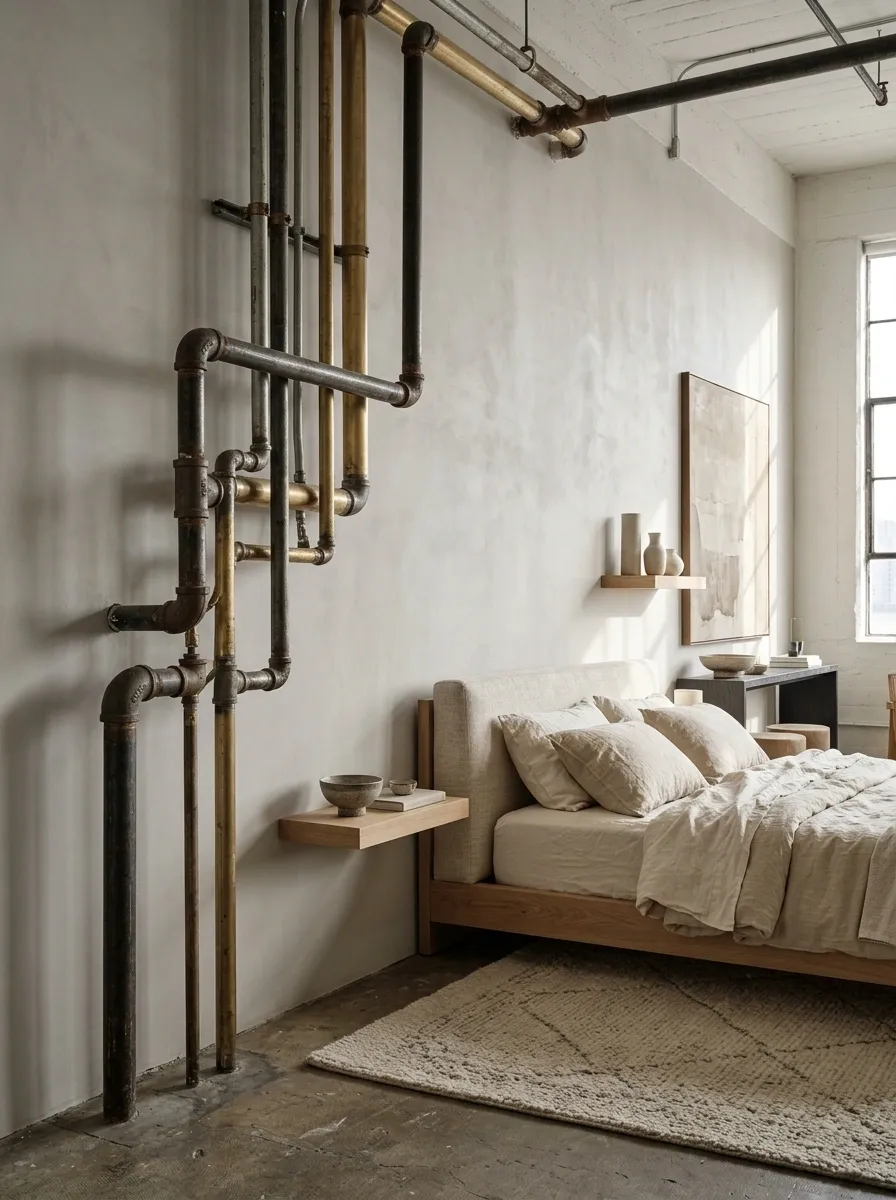
Where several pipes turn or meet, resist adding a busy pattern directly behind them. A plain wall surface can make the same junction feel considerably less chaotic.
Move decorative detail to a neighboring area with fewer interruptions. That might be a textured rug, an upholstered headboard, or art over a console.
This is particularly useful when the pipes differ in diameter or finish. You do not have to make every component match; reducing the competing wall detail can make their existing arrangement easier to live with.
Edit before buying: Remove small wall decorations around the junction and reassess the view.
Carry Existing Wood Tones Toward the Pipe Wall
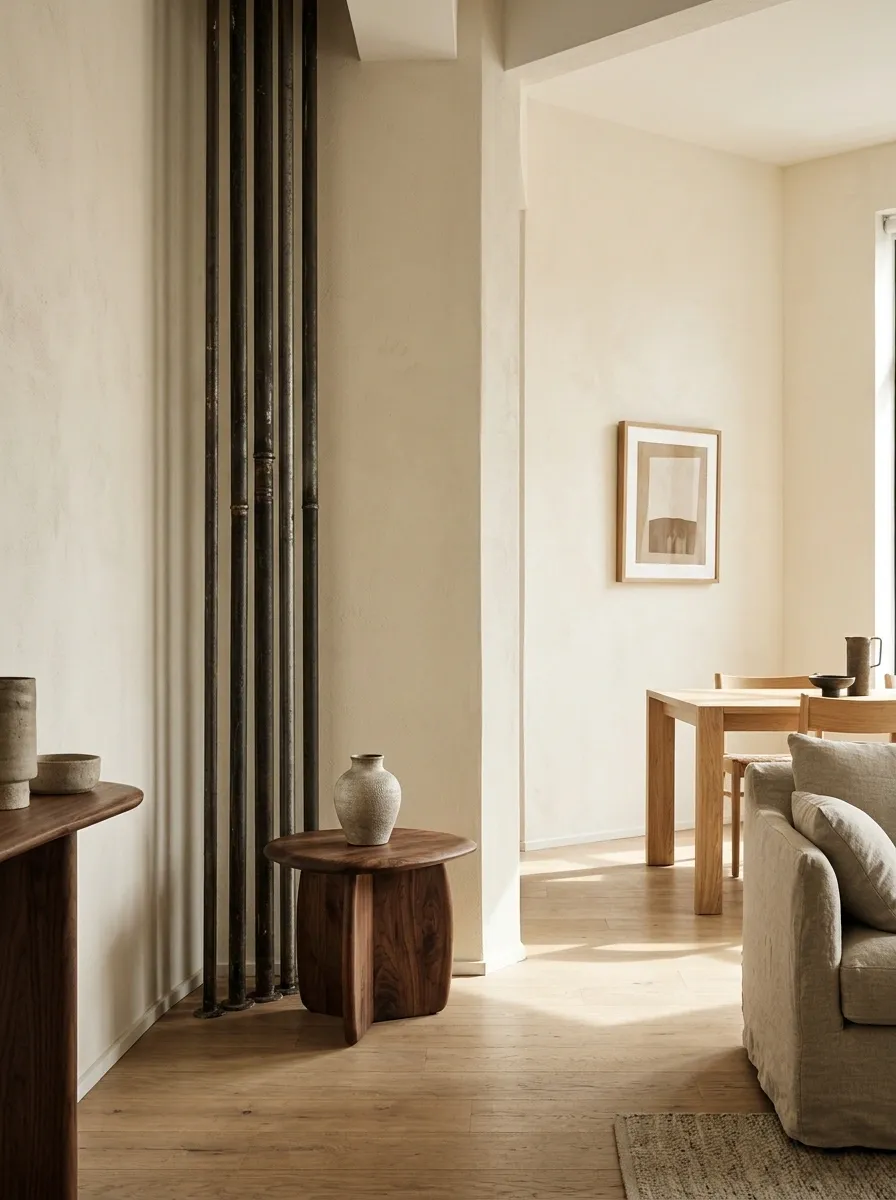
A wood-framed chair or small side table can connect a stark service corner to the rest of the room. Use a timber tone already present rather than introducing another almost-matching finish.
Keep timber furniture clear of pipes that heat up or collect condensation. Address the pipe’s condition separately if needed.
The wood adds visual warmth through material, not concealment. It is a useful choice when painting is not permitted and the room feels unfinished despite having perfectly adequate furniture everywhere else.
| Existing wood | Nearby repeat |
|---|---|
| Oak dining table | Oak-toned picture frame |
| Dark walnut desk | Small walnut side table |
| Painted timber joinery | Matching movable stool |
Use a Folding Screen Only Where the Service Allows It
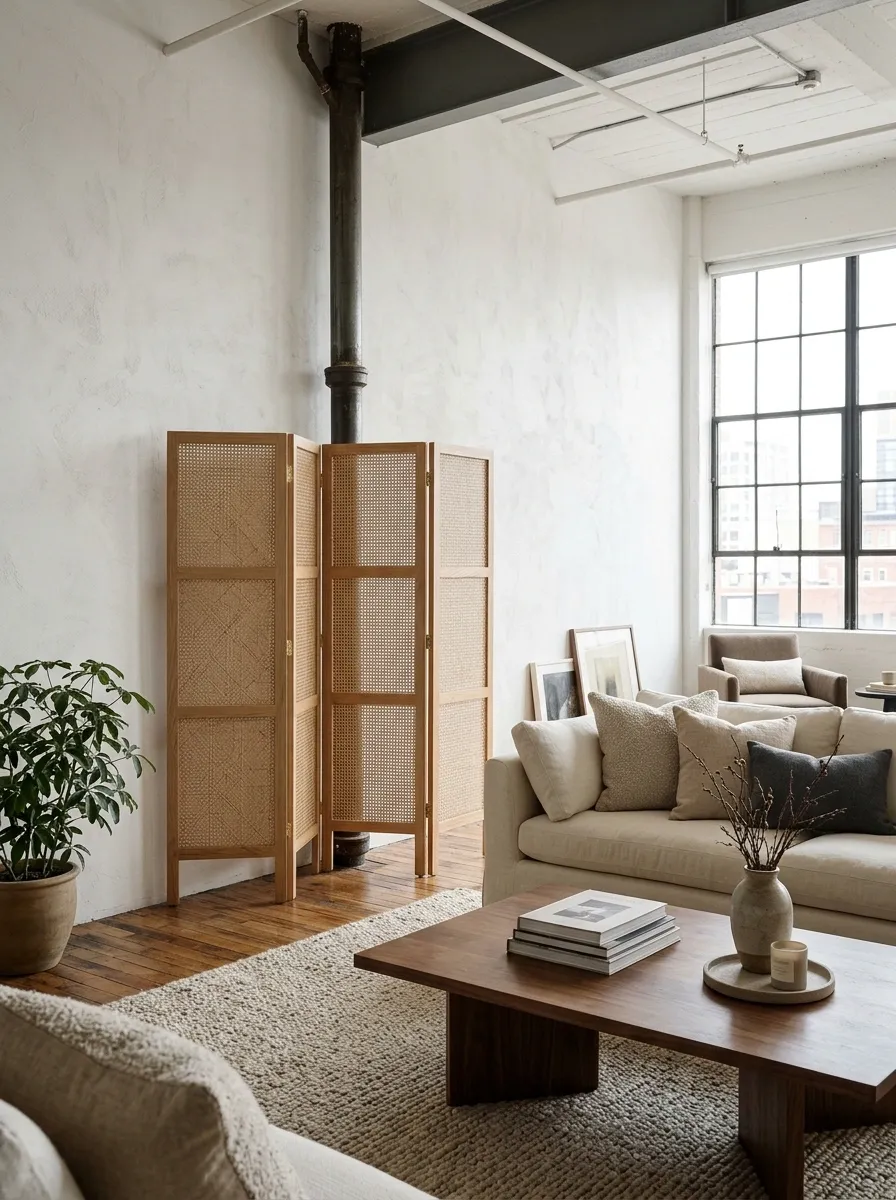
A freestanding screen can change the view of a pipe from the main seat. It needs a suitable location with no heat, ventilation, inspection, or access conflict, confirmed for the service involved.
Choose something stable and easy to move. Position it as a room element with open space around it, not a tightly fitted lid for the corner.
This is most useful for an awkward sightline rather than a hazardous or defective pipe. A screen can edit a view; it cannot repair what it hides.
Make the Pipe Wall the Quiet Side of the Room
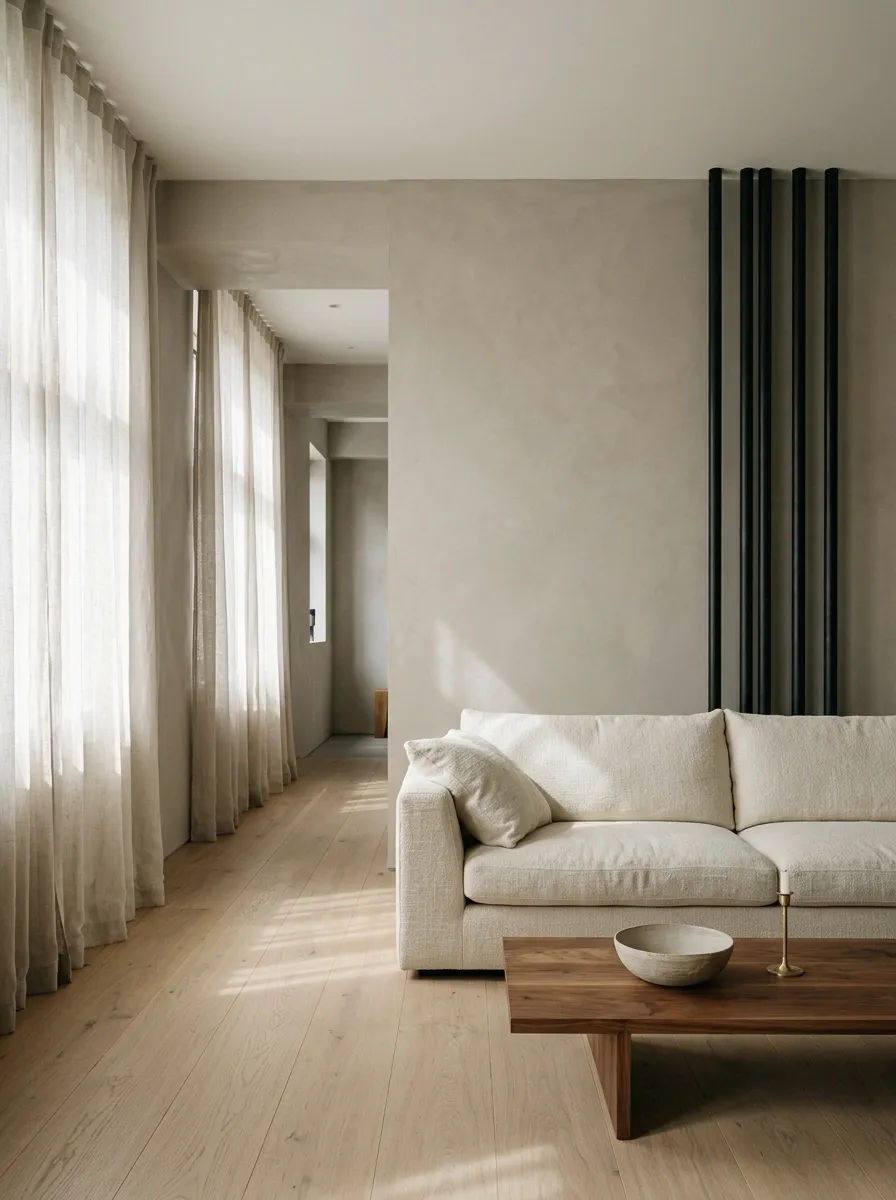
Arrange the main art, shelving, or statement furniture on a different wall. Let the pipe wall hold only what it needs.
This can be a particularly satisfying choice in a small room. Every wall does not require a feature, a vignette, and a strongly held opinion.
Check the arrangement from the entrance and the main seat. If the furniture grouping feels coherent and the service is accessible, an intentionally plain wall can do its job perfectly well without a cover-up project.
A useful omission: Leaving one wall undecorated can make the decorated walls feel more deliberate.
Keep Handsome Pipework Visible and Finish the Room Around It
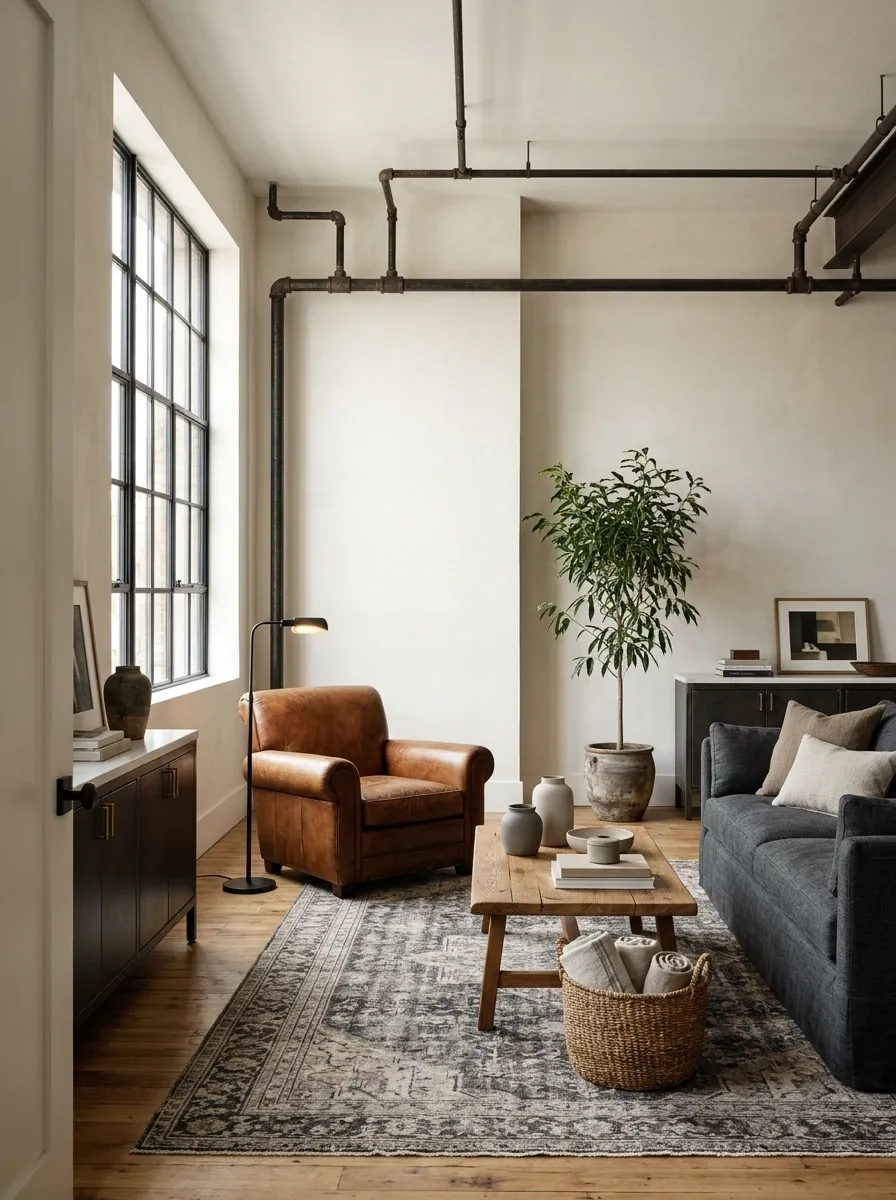
Sometimes the most convincing result is a room with exposed pipes, rather than a room performing elaborate tricks to deny them.
Repair the wall finish around the existing penetrations appropriately, clean accessible surrounding surfaces, and give the furniture a coherent arrangement. Seek qualified help for service defects or unsuitable finishes.
Spend your decorating budget where you touch and use the room: the chair, the lamp, the rug, the storage. A visible pipe is not automatically a design failure. A beautiful room that nobody can comfortably use is a much stronger candidate.
Stand in the doorway after the room is arranged. If you notice the comfortable seat, the light, and the things you actually like before you notice the pipe, the decorating has earned its keep.