
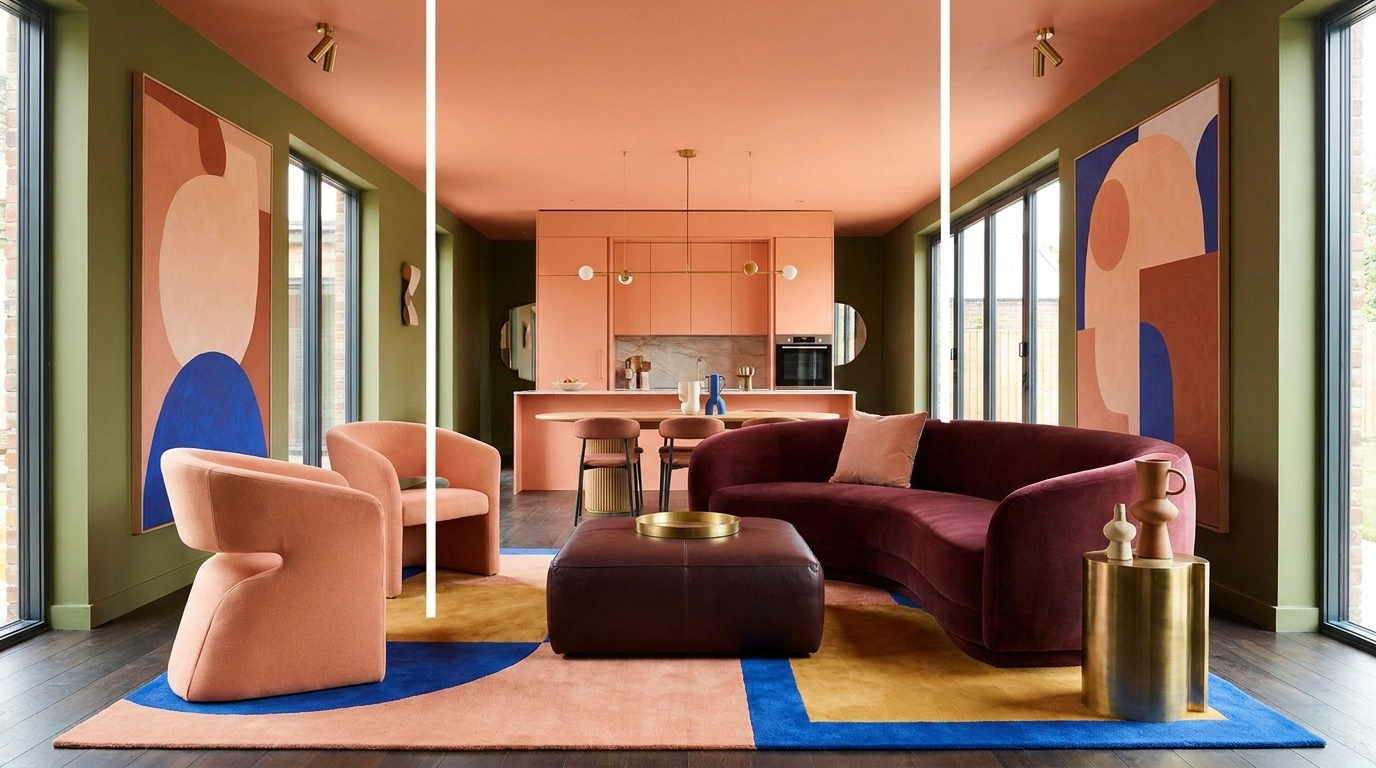
Gray floor tiles can look blue, green, violet, brown, or almost neutral. Calling all of them “gray” is convenient in exactly the way calling every drink “liquid” is convenient.
Before choosing a wall color, place a white card beside the floor and look at the tile in daylight and with the bathroom lights on. Include the grout, vanity, and existing white fixtures in your comparison. Those surfaces will still be there after the paint chart goes home.
The combinations below are starting points to sample in your room. Digital swatches illustrate relationships, not paint matches. For wider inspiration, Benjamin Moore’s bathroom color guide includes whites, greens, blues, and pinks; the particular combinations here are original suggestions.
Color Schemes to Try Beside Your Existing Gray Floor
Warm Wood Against Deep Slate
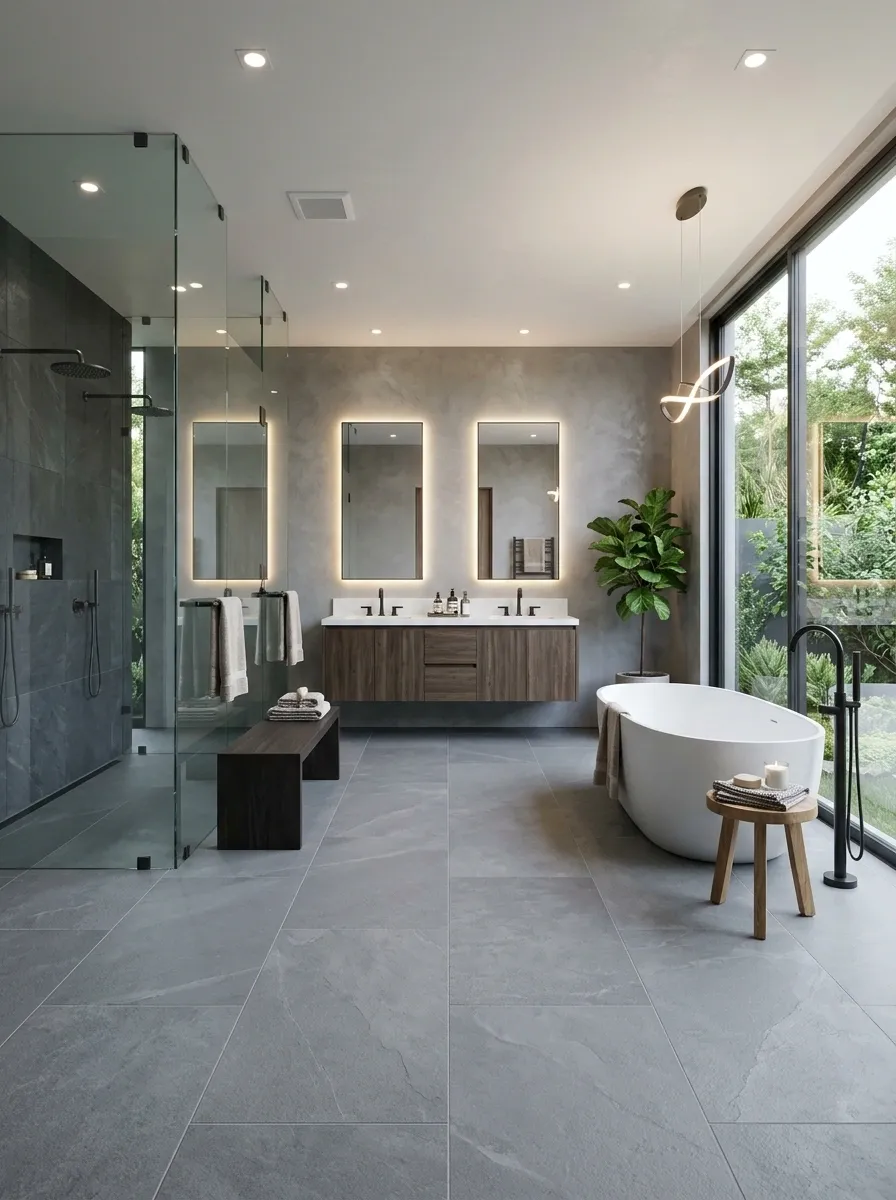
Introduce a floating timber vanity to break up expanses of dark slate tile without losing the room’s moody atmosphere. The natural grain brings necessary warmth to an otherwise cool palette.
Keep surrounding walls in a pale, neutral tone to bounce light around the shower enclosure. A stark white would fight the stone, so look for a creamy greige that bridges the gap.
Anchor the space with black hardware that mirrors the sleek lines of the drain and shower fixtures. It creates an intentional rhythm that feels curated rather than chaotic.
Soft White Walls With Pale Silver Tile
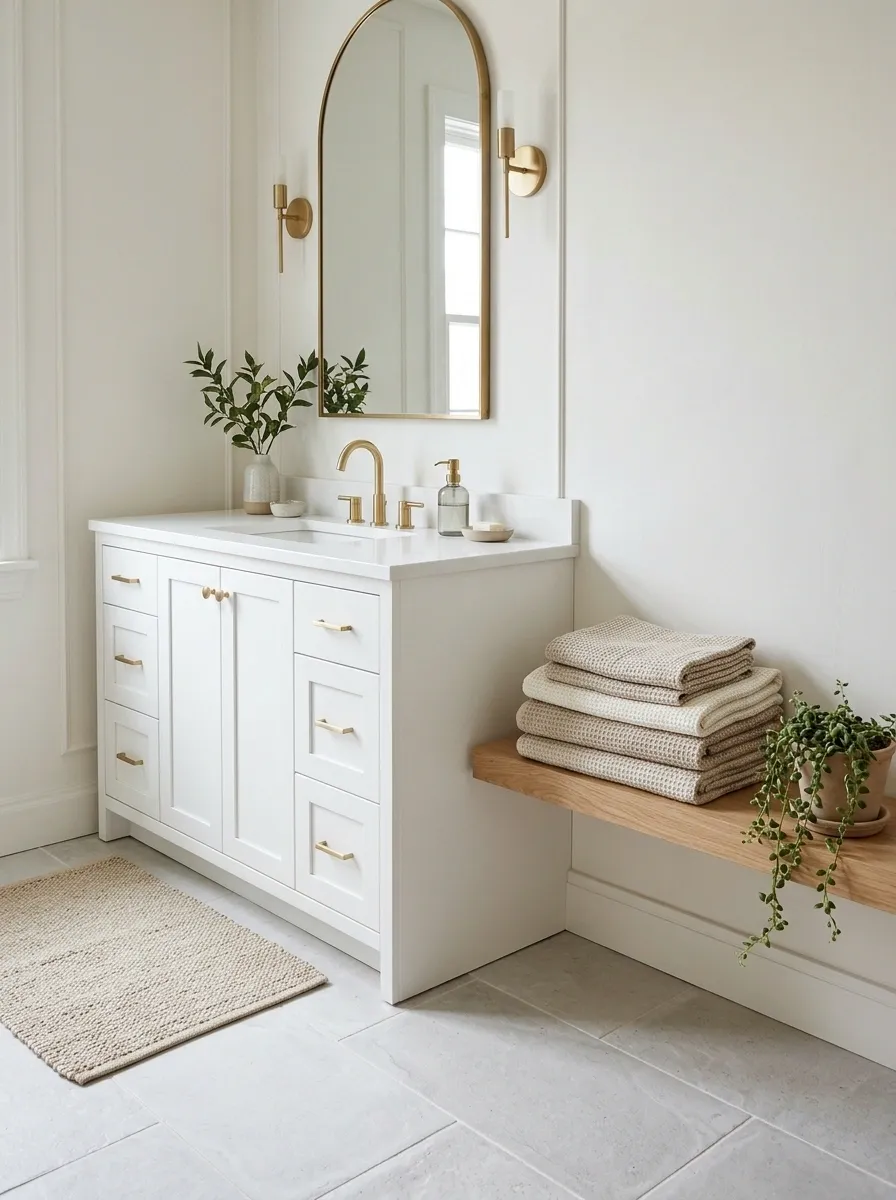
Use a restrained off-white when the tile is light and silvery and the fixtures already look clean rather than creamy. The slight softness keeps the room from feeling like a product testing chamber.
An off-white that looks elegant alone can look yellow beside a bright ceramic basin. Compare it at the actual junctions:
- Beside the basin.
- Against the floor and grout.
- Next to existing painted trim.
Bring in texture through towels and a simple bath mat instead of adding several more whites. Give each white a job, and the room feels layered rather than indecisive.
Honey Wood And Hexagon Tiles
Ground a sprawling bathroom with dark hexagonal floor tiles while keeping the upper walls light and breathable. The geometric pattern adds subtle movement underfoot without overwhelming the architecture.
Exposed wooden ceiling beams tie the dark flooring to the warm wood cabinetry below. Repeat this organic element with a simple wooden stool near the freestanding tub.
Layer in crisp white café curtains to filter natural daylight while maintaining privacy. The combination of rustic timber and polished fixtures keeps the design feeling grounded and timeless.
Patterned Floor Tiles With Neutral Walls
Embrace intricate patterned tiles in gray and white to create an instant focal point from the moment you step inside. Soft gray walls allow the busy floor to shine without competing for attention.
Mount a classic white vanity with clean lines to balance the decorative impact of the tilework. A matching framed mirror keeps the reflection light and expansive.
Suspend trailing greenery from high shelves to inject life into the vertical space. Natural textures like a linen hand towel complete the effortless transition from floor to ceiling.
Dusty Sage With Green-Gray Tile
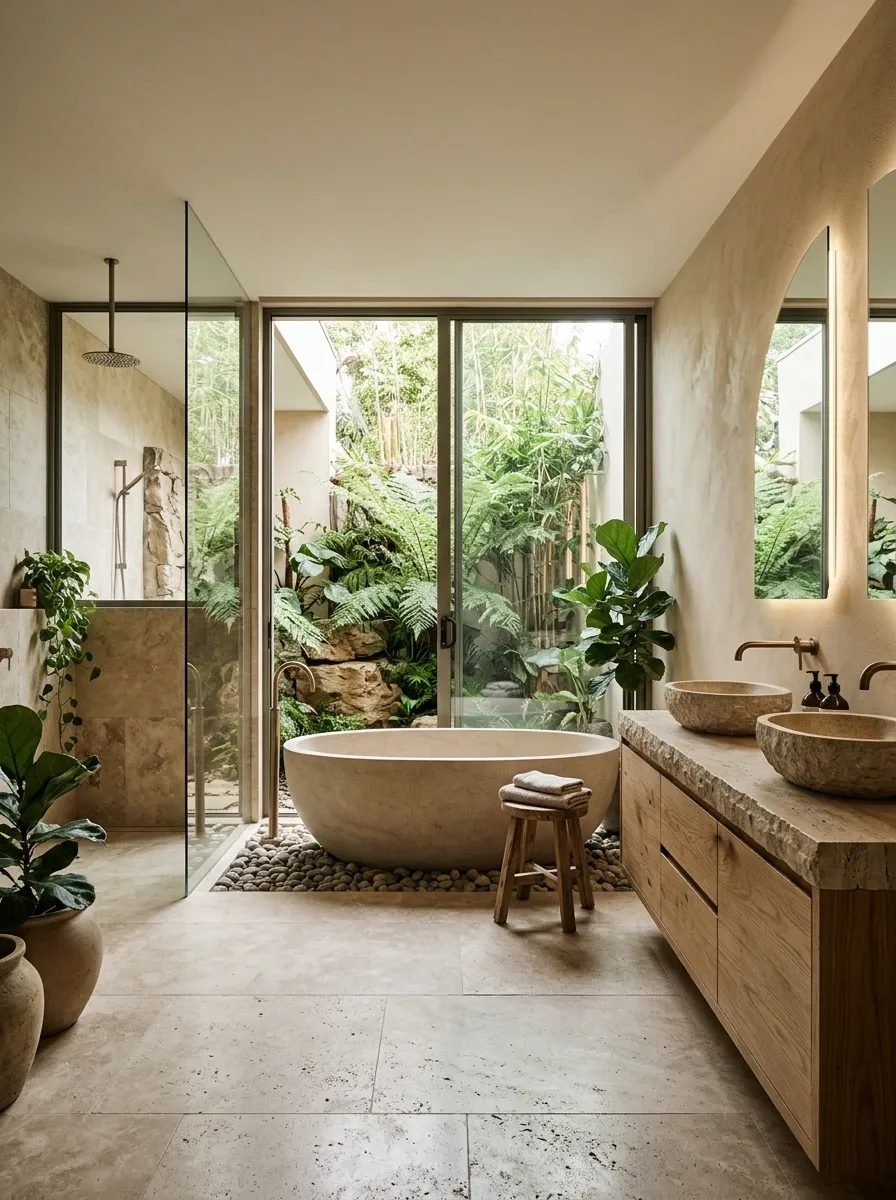
If the floor already has a green cast, dusty sage can turn that undertone into a deliberate part of the scheme. Choose a softened green rather than a bright herbal shade.
Keep the larger supporting surfaces quiet: a white shower curtain, pale towels, and natural wood give the green space to work.
A black mirror can provide definition if the floor is very pale. Use it sparingly; a heavy black frame, black taps, black shelves, and black accessories can pull attention away from the gentle color relationship you started with.
Powder Blue With a Charcoal Floor
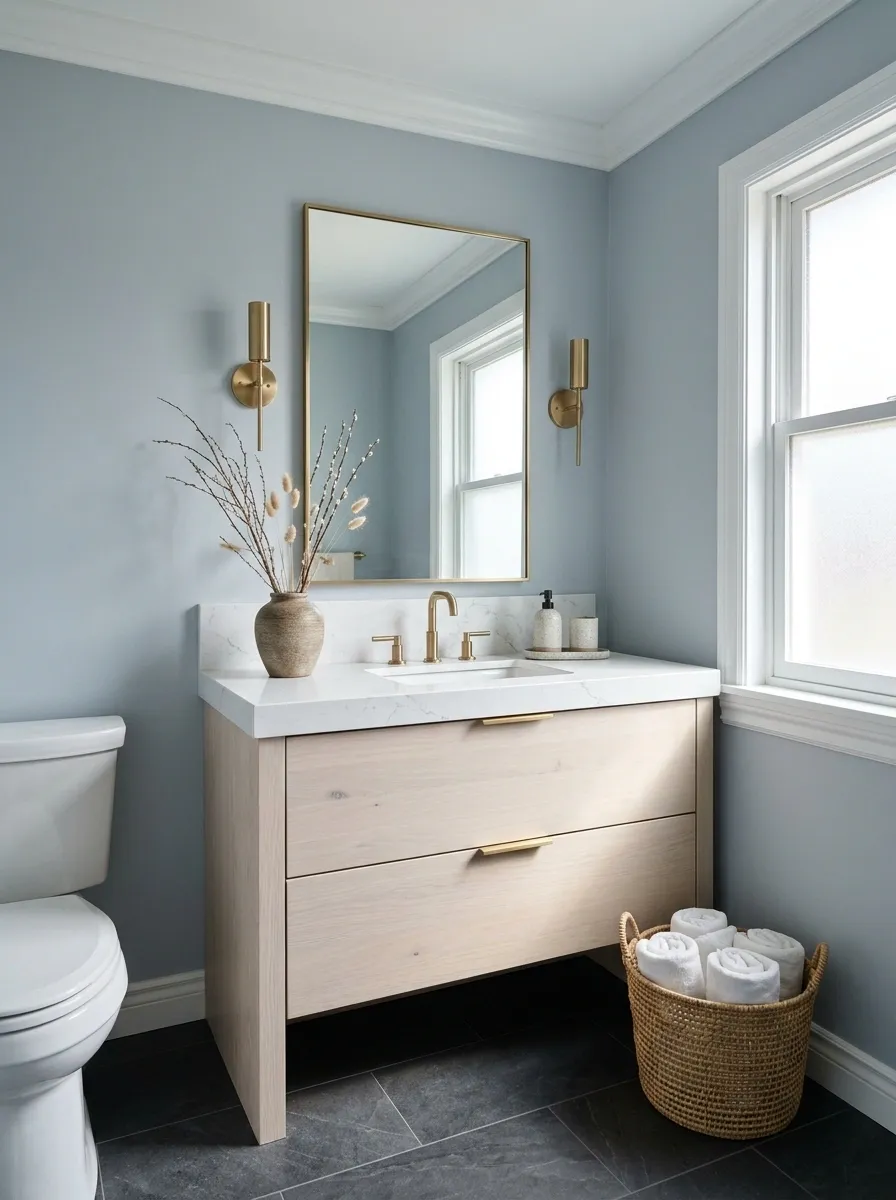
A soft blue wall can lift a dark floor while preserving a cool, composed feel. Keep enough white in the fittings or upper trim to separate the two colors clearly.
Choose a blue with some gray in it if the floor is strongly charcoal. Very sugary blue can make the darker tile feel heavier by comparison.
Try a pale wood vanity or woven basket on a dry, appropriate surface for warmth. The contrast comes from light and dark as much as from the hue itself.
Sample question: Does the blue still look gentle when the dark floor occupies most of your downward view?
Dusty Blush With Blue-Gray Tile
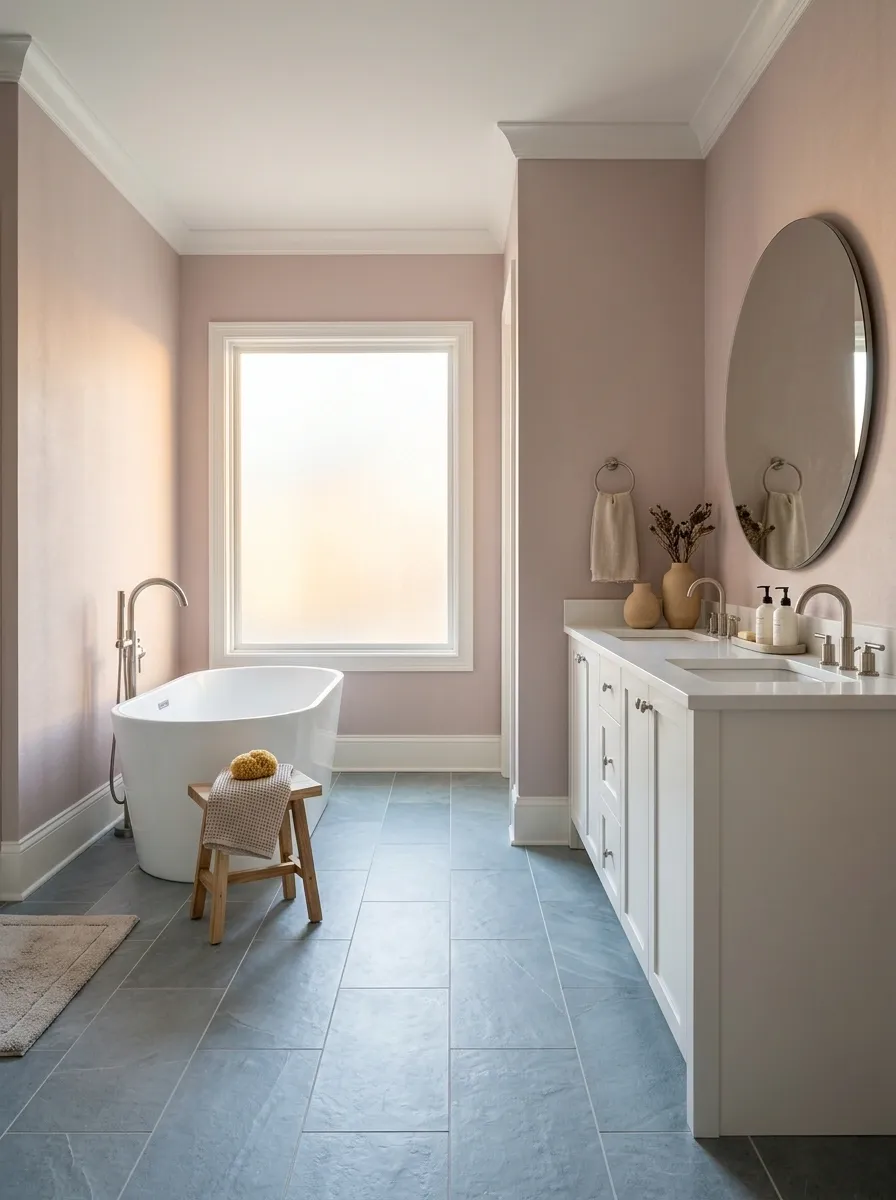
A muted pink can soften a floor that reads cool without trying to pretend the floor is beige. Keep the blush subdued, closer to faded fabric than bubblegum.
White fixtures provide a useful pause between wall and floor. Brushed nickel hardware can keep the metal finish connected to the cool tile.
Try the pink beside your actual light bulbs before committing. Some combinations become much peachier after dark, which may be welcome—or may feel like the bathroom changed its mind while you were brushing your teeth.
Deep Olive on the Vanity With Pale Gray Walls
A deep olive vanity can provide a grounded focal point when you want color without painting every wall. Keep the wall gray lighter and quieter than the floor so the cabinet remains distinct.
Check the vanity material and coating system before refinishing. A paint color is only useful if it stays attached.
Repeat the olive in one small textile detail if needed, then stop. The cabinet already carries enough color to establish the scheme, especially in a compact bathroom with limited uninterrupted wall space.
| Surface | Suggested role |
|---|---|
| Walls | Pale, low-contrast gray |
| Vanity | Deep muted olive |
| Fixtures | Existing white |
| Towels | Cream or quiet stone |
Inky Navy With Mid-Gray Flooring
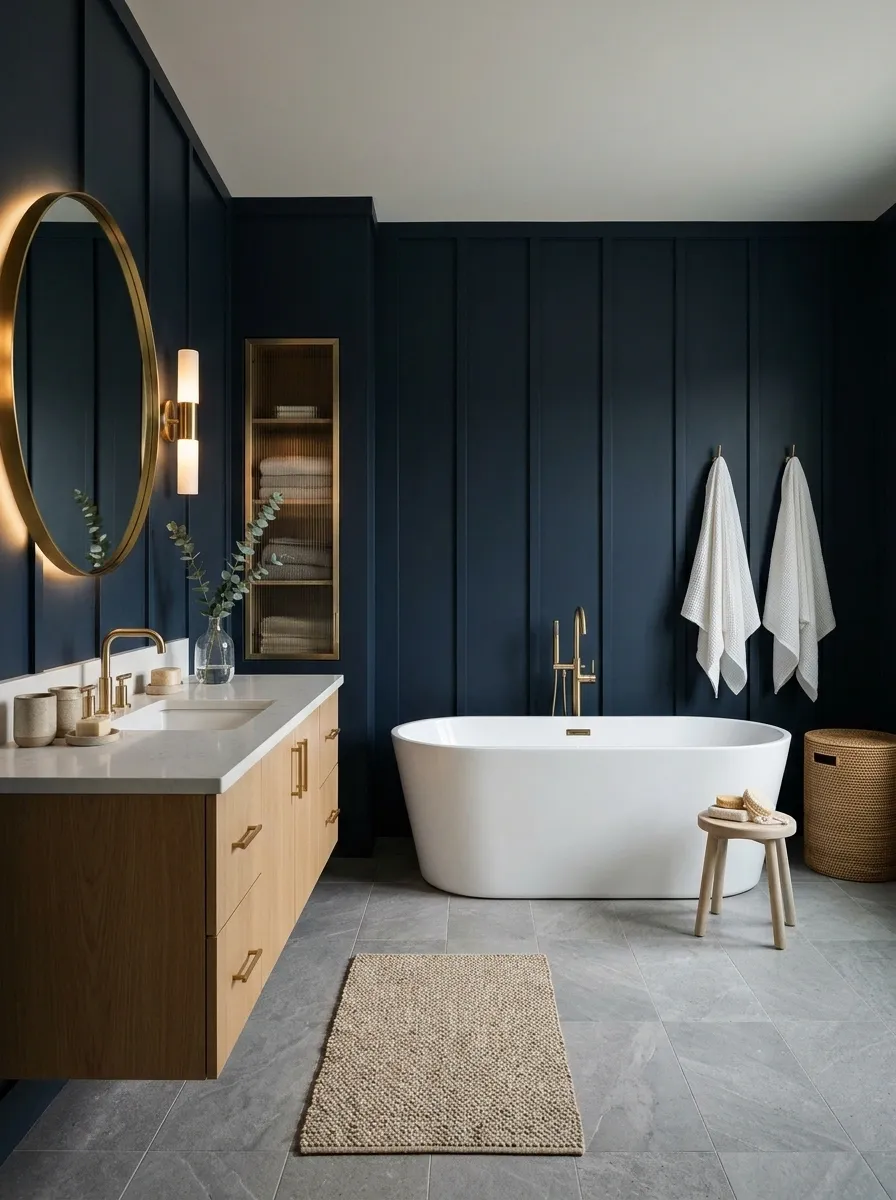
Navy walls can make a medium gray floor look crisp and deliberate. This works particularly well when pale fixtures provide strong outlines against the dark color.
Check the navy’s direction beside the tile. A greenish navy and a violet-gray floor may be less comfortable together than their separate samples suggest.
Use layered, suitable bathroom lighting to keep the mirror and shower areas usable. Dark walls are an aesthetic choice, not an agreement to shave by intuition. Let the lighting plan support the mood rather than sacrificing visibility for it.
Mushroom Walls With Taupe-Gray Tile
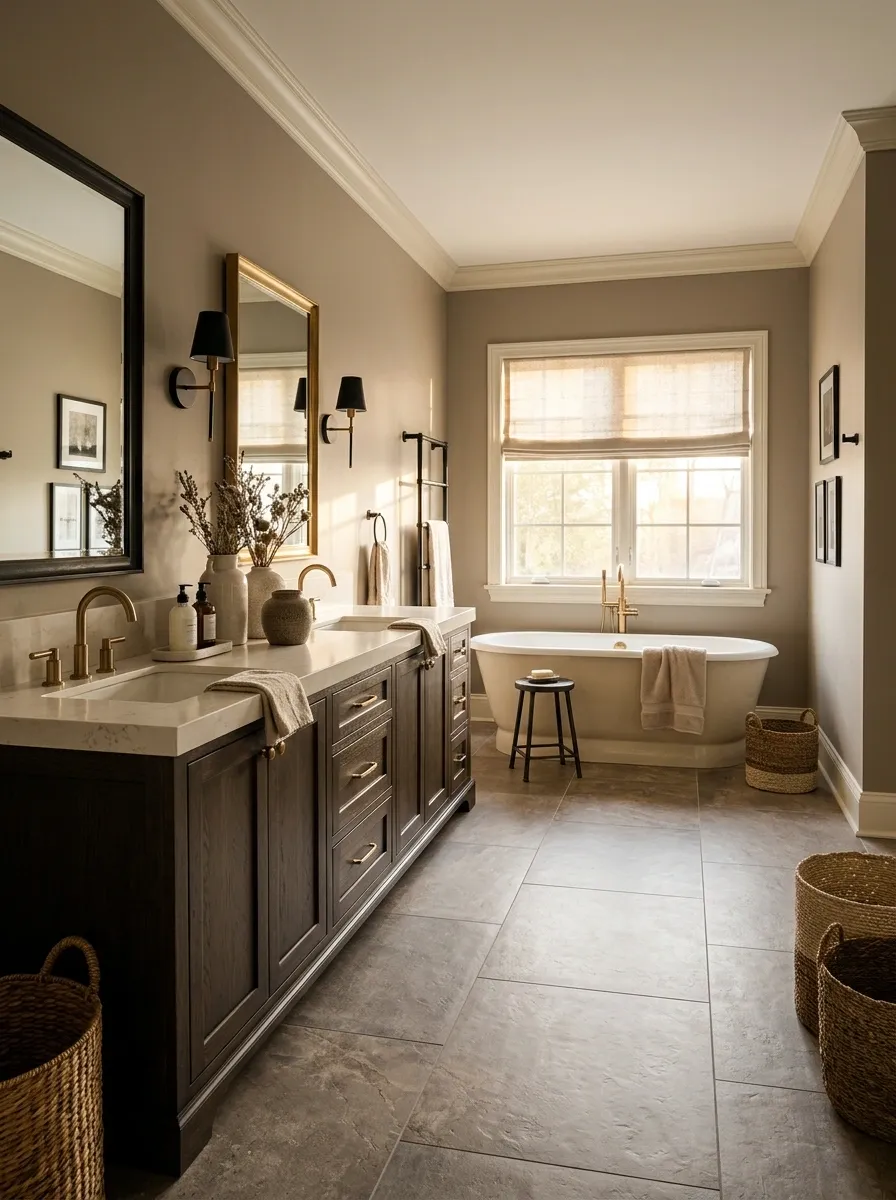
Mushroom sits comfortably between beige and gray when the floor carries brownish notes. It can be especially useful beside existing cream fittings that look too warm against a cooler gray paint.
Bring samples against both the bath and the tile. You are looking for a relationship that works across the whole room, not a perfect match to one fleck.
Add darker wood or a small black accent for definition. Without a little contrast, similar midtones can merge into a room that feels permanently lit by a cloudy afternoon.
Keep the contrast: A darker mirror frame or cabinet handle can give soft mushroom walls a clear edge.
Warm Ivory With Concrete-Look Tile
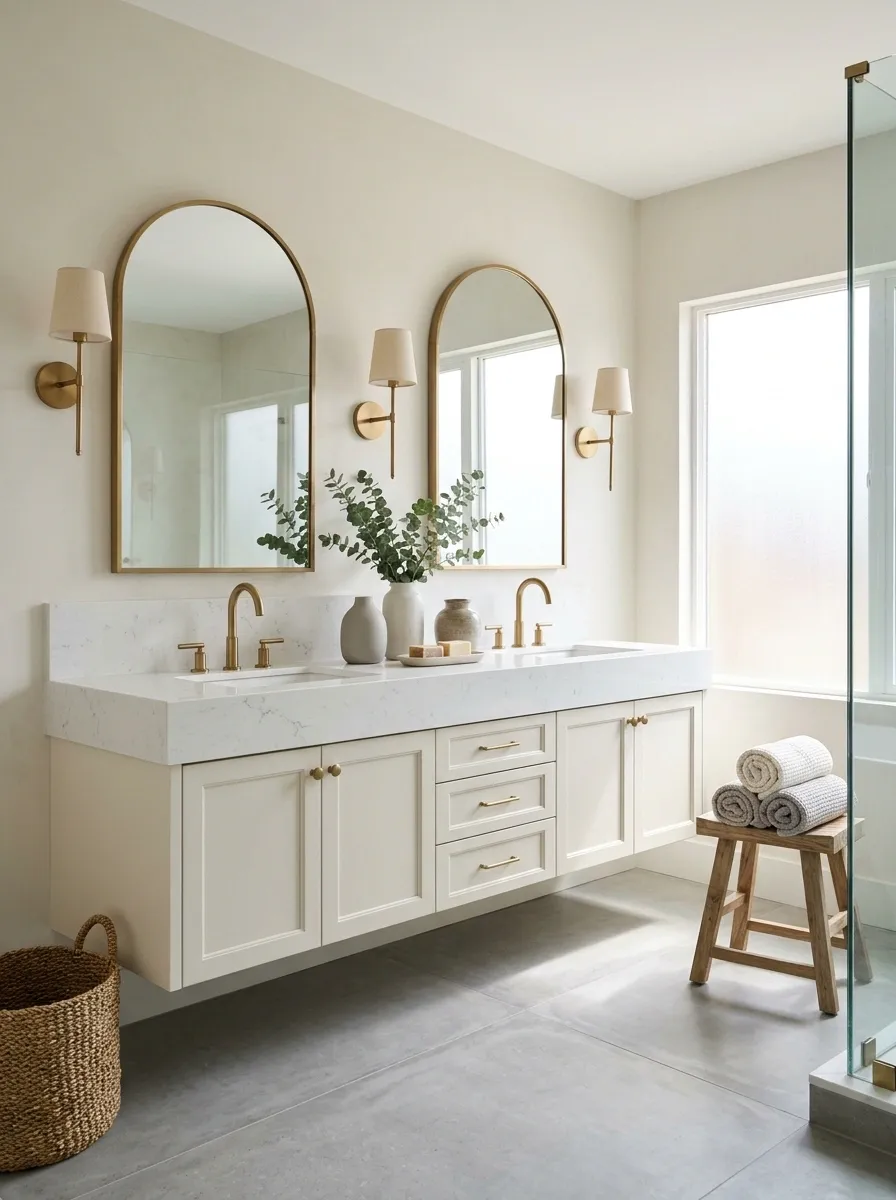
A restrained ivory can soften the visual hardness of concrete-look flooring. Keep it lightly warmed rather than strongly yellow if the tile leans blue.
Use natural texture in a dry-zone stool or basket to strengthen the material contrast. The ivory works best when it is one part of a tactile scheme, not the sole defense against a chilly floor.
Check the ivory against white sealant and sanitaryware. Small fixed details can expose an undertone mismatch more bluntly than a large vanity does, because they sit directly against the paint.
Smoky Teal With Slate Flooring
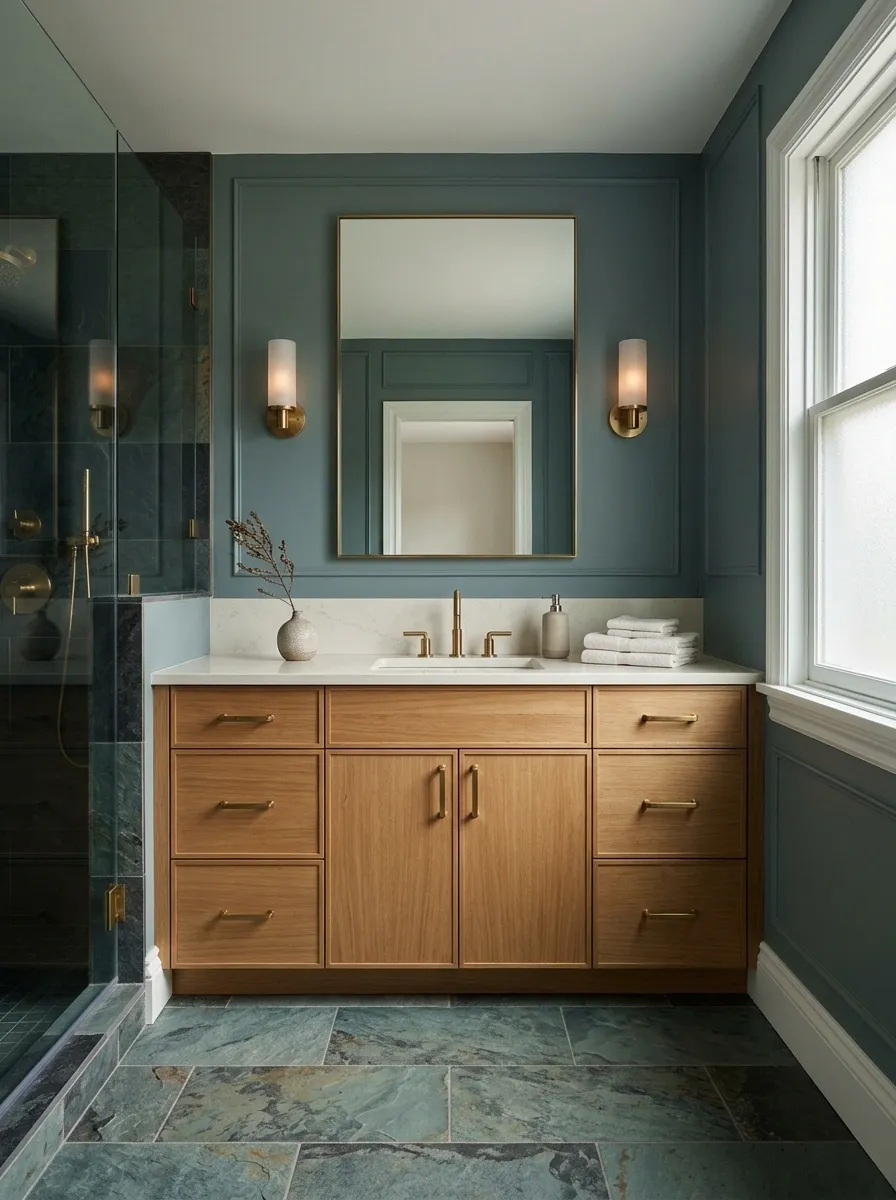
Smoky teal can echo blue-green variation in slate while giving the wall its own identity. Choose a muted version so the floor’s natural pattern remains visible.
Keep countertop accessories restrained and consider plain towels. Slate often supplies enough movement without assistance from a busy patterned shower curtain.
A warm timber vanity can bridge the cool colors, provided its finish suits the bathroom conditions. Look at all three samples together; evaluating the wall, floor, and wood separately is how a coordinated plan becomes a surprise collection.
| Element | Keep it working together |
|---|---|
| Slate variation | Let it remain visible |
| Teal walls | Muted rather than electric |
| Timber | One consistent warm tone |
Pale Lavender With Violet-Gray Tile
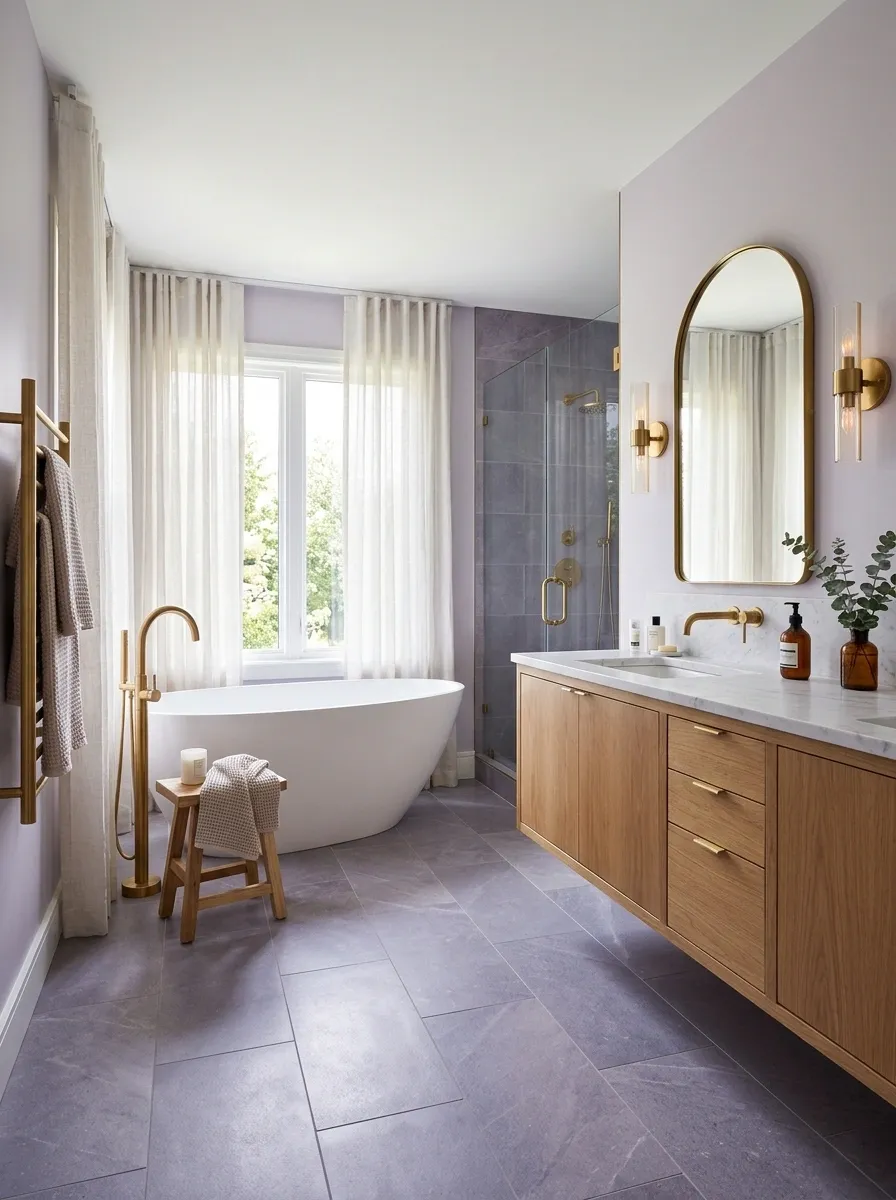
A gray floor with a violet undertone may look less awkward beside a gentle lavender than beside another supposedly neutral paint. The wall makes the existing undertone feel intentional.
Keep the lavender low in saturation and use simple white fixtures. Warm white textiles can soften the scheme, but compare them carefully with the floor.
Avoid adding several other pastel colors unless you want a more playful room. Lavender, mint, pink, and baby blue can quickly turn a focused bathroom scheme into a very well-equipped confectionery counter.
Charcoal Vanity With Pearl Walls
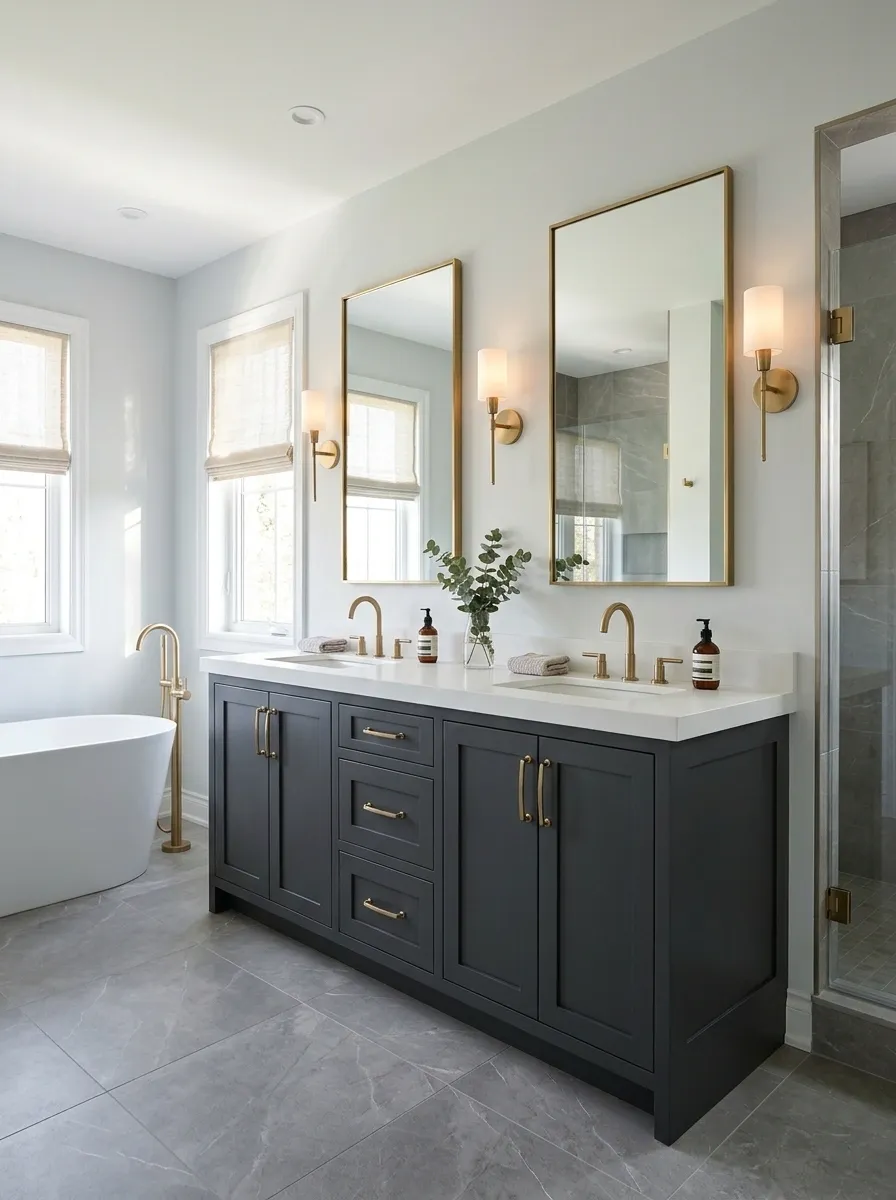
If you prefer a largely neutral room, use a darker vanity against pale pearl walls. The contrast gives gray flooring a clear hierarchy instead of surrounding it with more medium gray.
Choose a wall sample with an undertone compatible with the floor. Pearl can lean green, blue, or pink depending on the product.
Keep the countertop relatively simple if the floor has strong veining. A quieter surface lets the cabinet shape register without requiring every material in the room to deliver its own dramatic monologue.
Neutral hierarchy: Pale walls, medium floor, dark vanity. The difference in depth does much of the work.
Muted Terracotta With Warm Gray Tile
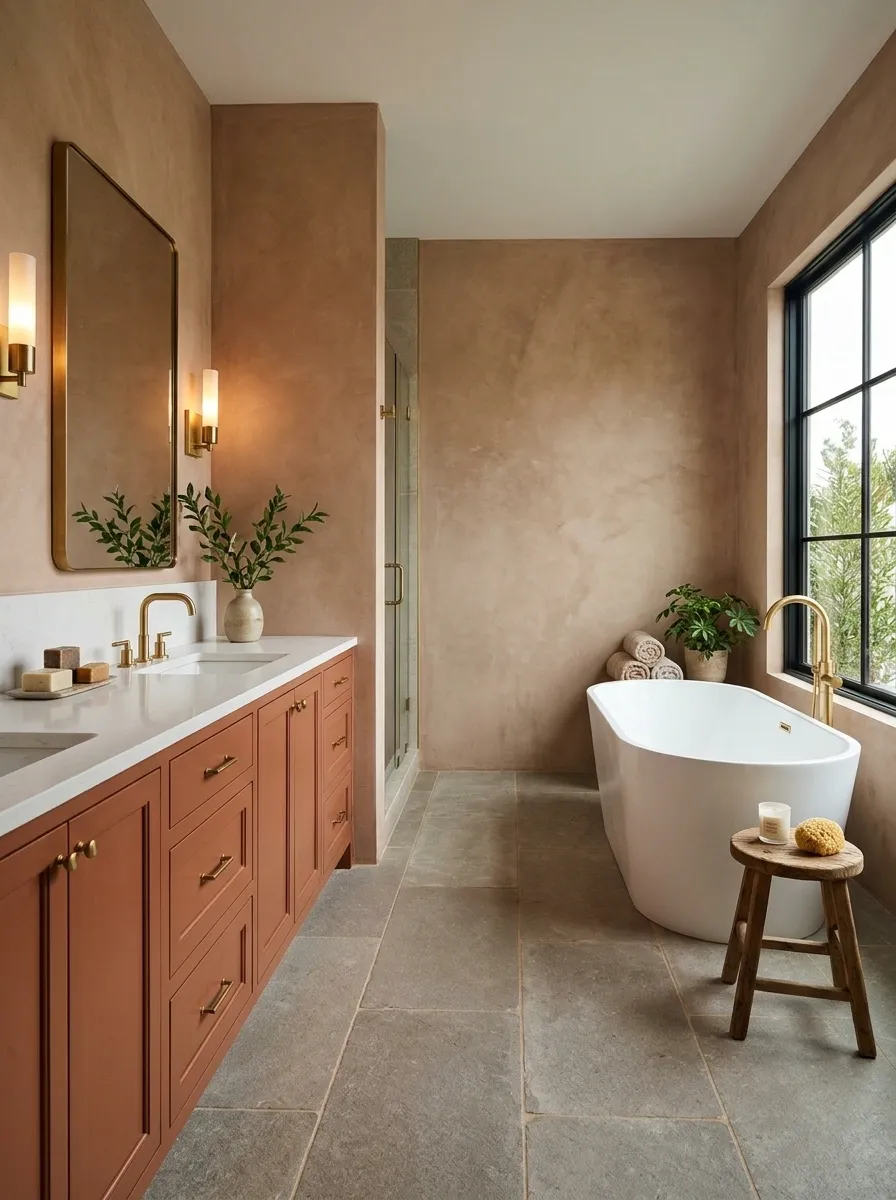
Earthy terracotta can warm a floor with brown or beige undertones. Use a softened version on walls or a more concentrated version on the vanity, depending on how much color you want.
A pale ceiling and white fixtures keep the scheme from feeling overly dense. Let towels sit in cream, stone, or a related quiet clay tone.
Check the sample against the grout as well as the tile. Warm grout can support terracotta, while bright white grout may make the contrast feel sharper than you expected.
Oyster Walls With a Black Vanity
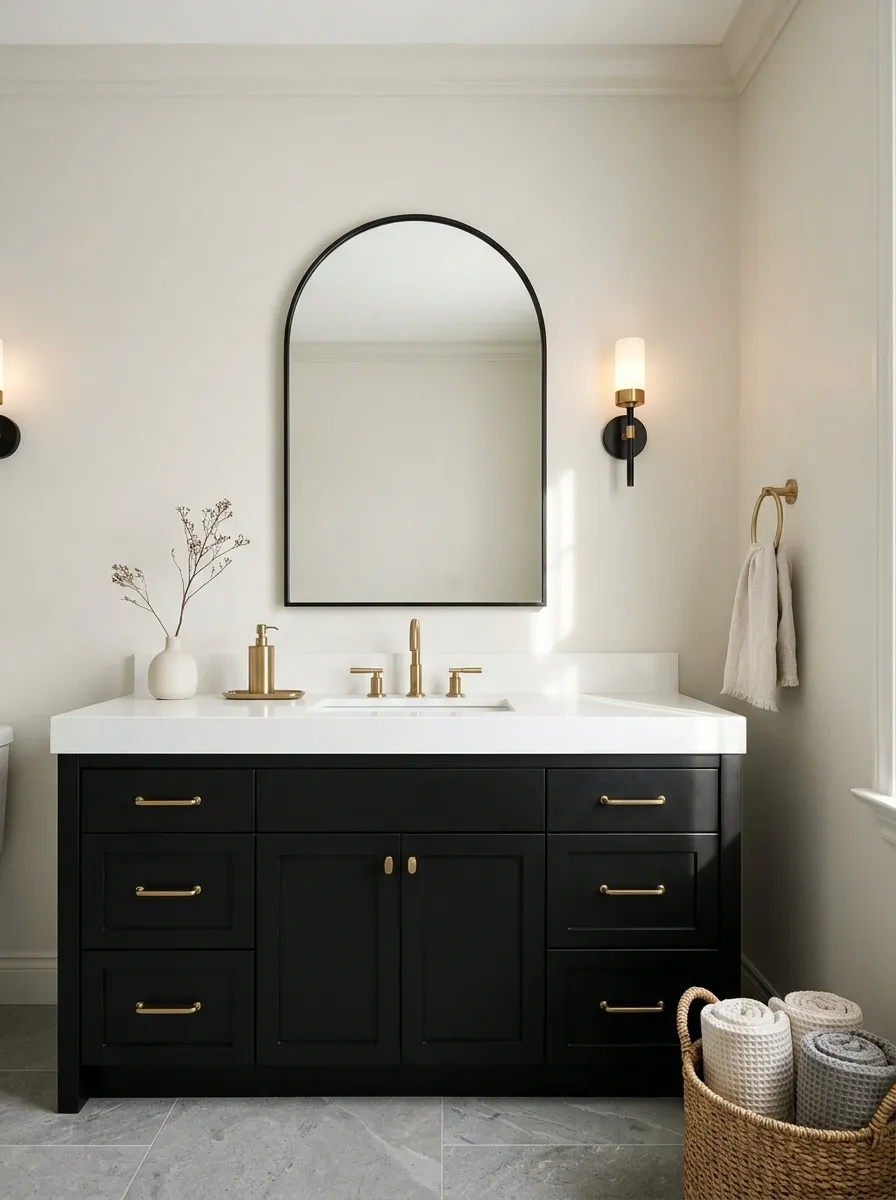
Oyster offers a softened pale backdrop when bright white looks too stark. Pair it with a black vanity to make the room feel defined rather than uniformly pale.
This combination suits a gray floor with restrained variation. If the tile contains strong green or violet notes, compare several oyster samples before settling.
Keep the black consistent across the largest dark element and any small repeats. Several almost-black finishes can work, but they should look intentional in the bathroom’s light rather than accidentally brown, blue, and gray all at once.
| Surface | Color direction |
|---|---|
| Wall | Soft oyster |
| Floor | Existing quiet gray |
| Vanity | Black with a compatible undertone |
| Textiles | Pale, textured, simple |
Pale Butter Yellow With Neutral Gray Tile
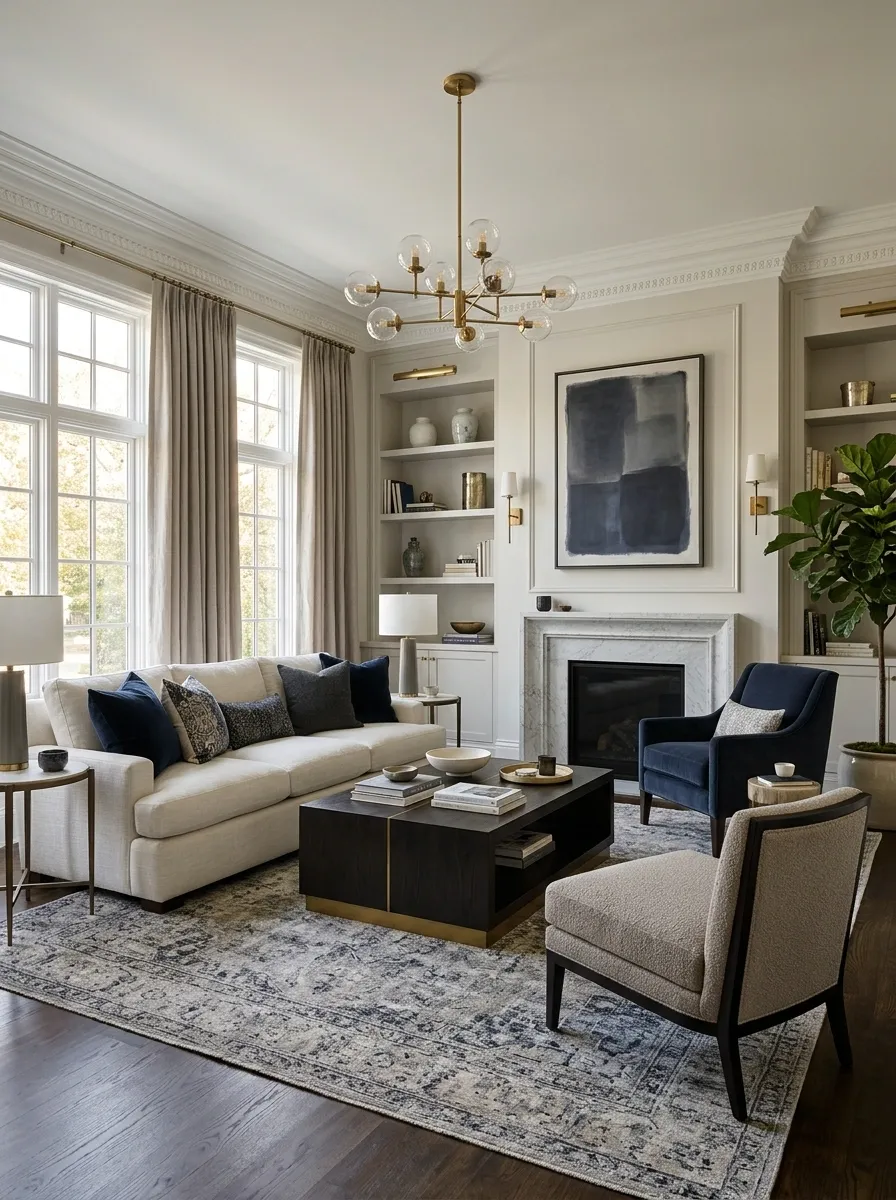
A lightly yellow wall can make a neutral gray bathroom feel sunnier without turning every surface golden. Look for a washed shade with enough softness to sit beside the tile.
Use clean white fixtures and a limited supporting palette. A patterned yellow bath mat, yellow towels, and yellow accessories are optional; the wall has already made the announcement.
Sample generously in a room with little daylight. Artificial lighting may intensify the warmth, and the cheerful shade from the paint store can become surprisingly buttery at midnight.
Dusty Rose on Joinery With White Walls
Painted storage or a vanity offers a contained way to try dusty rose beside cool gray tile. Leave the main walls white so the rose feels like a furniture choice rather than an all-over theme.
Choose a finish appropriate to the cabinet surface and bathroom use. Test near the countertop, where stone or laminate can influence the color.
Finish the cabinet simply:
- A practical brushed-metal handle.
- A countertop kept reasonably clear.
- A quiet wall color around it.
The existing soap dispenser can stay employed.
Good trial area: A removable cabinet door, prepared and sampled with the intended coating system.
Deep Forest With Light Gray Tile
Forest green can give pale gray flooring a more substantial setting. Keep the darkest color on a clear wall or vanity so its shape is easy to read.
White fittings and a light ceiling provide separation. If the room has a lot of dark grout or black framing already, account for that before adding more depth.
Choose the forest shade beside the tile in person. A very blue green may pull cool notes out of the floor, while an olive-leaning version can make the same tile look warmer.
Warm Greige With a White Oak Vanity
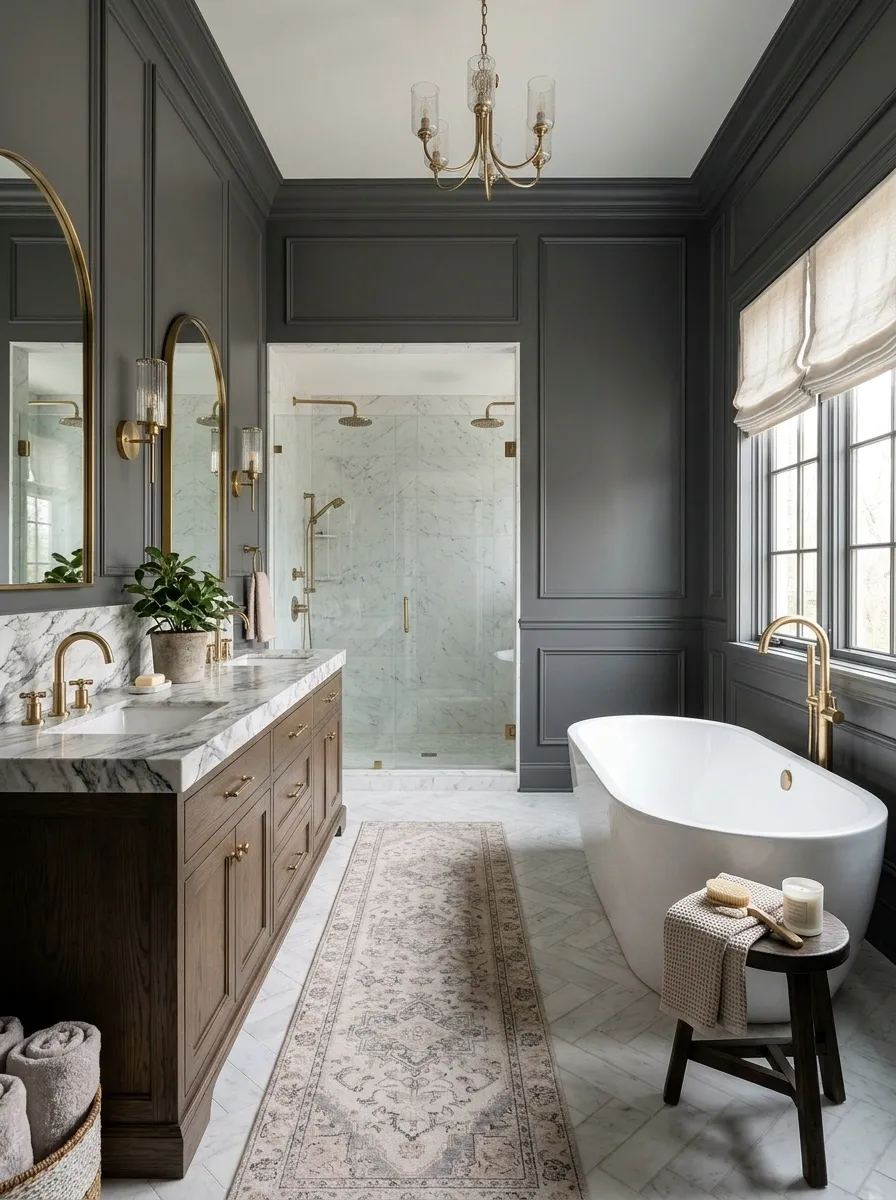
A warm greige can connect gray flooring and a pale oak cabinet when white walls feel disconnected from both. Keep the greige lighter than the floor for an airy relationship.
Lay the samples together: wall color, tile, oak, and countertop. Oak can lean pink, yellow, or more neutral; the label alone does not choose the paint.
Use a restrained metal finish and simple textiles to preserve the material focus. This is a useful scheme when you want warmth without introducing a clearly colorful wall.
| Compare | Look for |
|---|---|
| Greige and oak | Compatible warmth |
| Greige and tile | No unexpected green or pink clash |
| Greige and white fixtures | A deliberate soft contrast |
Aubergine With Graphite Flooring
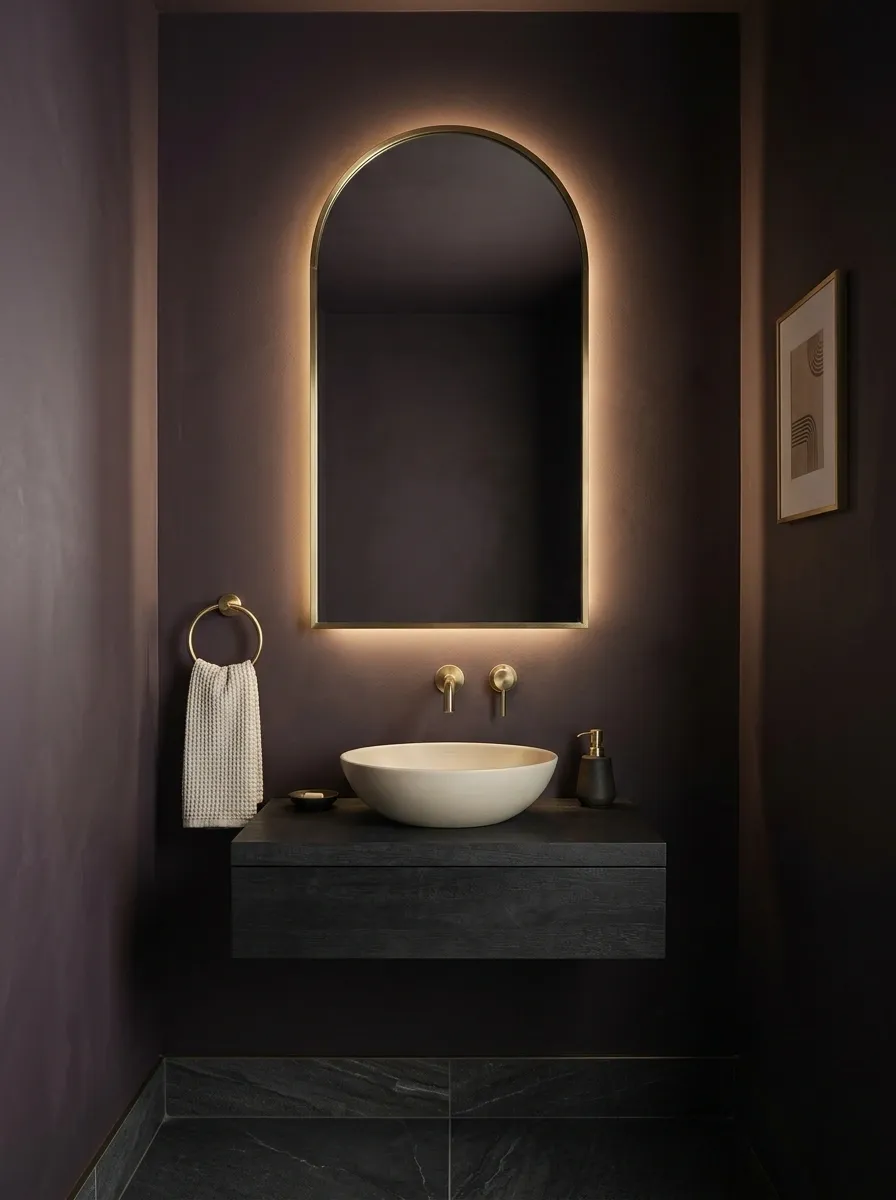
This one is for the powder room that wants some presence.
A deep, muted purple can give a dark gray floor a rich setting, especially where a more enveloping mood feels appropriate.
Balance the depth with a pale basin and useful mirror lighting. Test the color at night; some aubergines read nearly brown, while others retain a strong violet note.
Keep extra pattern controlled. An interesting mirror shape or a single small artwork can supply enough detail. The wall color is already doing more than a beige paint ever promised to do.
Sea-Glass Green With Pale Blue-Gray Tile
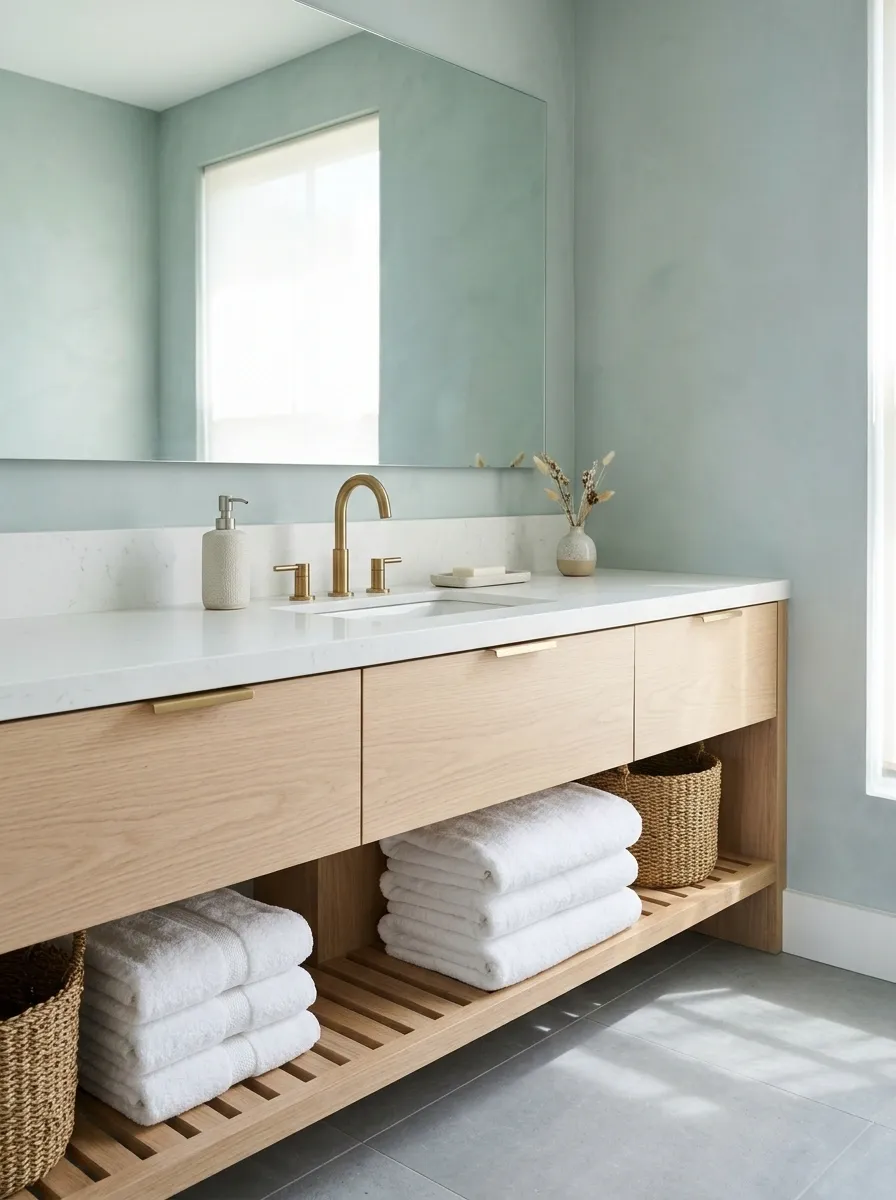
A washed blue-green can make cool flooring feel connected to a light, watery palette. Choose a quiet shade rather than a vivid turquoise.
Use plain white towels and perhaps a pale timber detail to keep the scheme clear. If the bathroom has an existing blue-gray vanity, make sure the new green looks intentionally different rather than like an unsuccessful match.
Try the sample on more than one wall. Light reflected from nearby tile can change how green or blue the paint appears, particularly close to the floor.
Avoid the near match: Either relate the wall clearly to the vanity or give it enough difference to read as a separate choice.
Cream Walls With a Slate-Blue Vanity
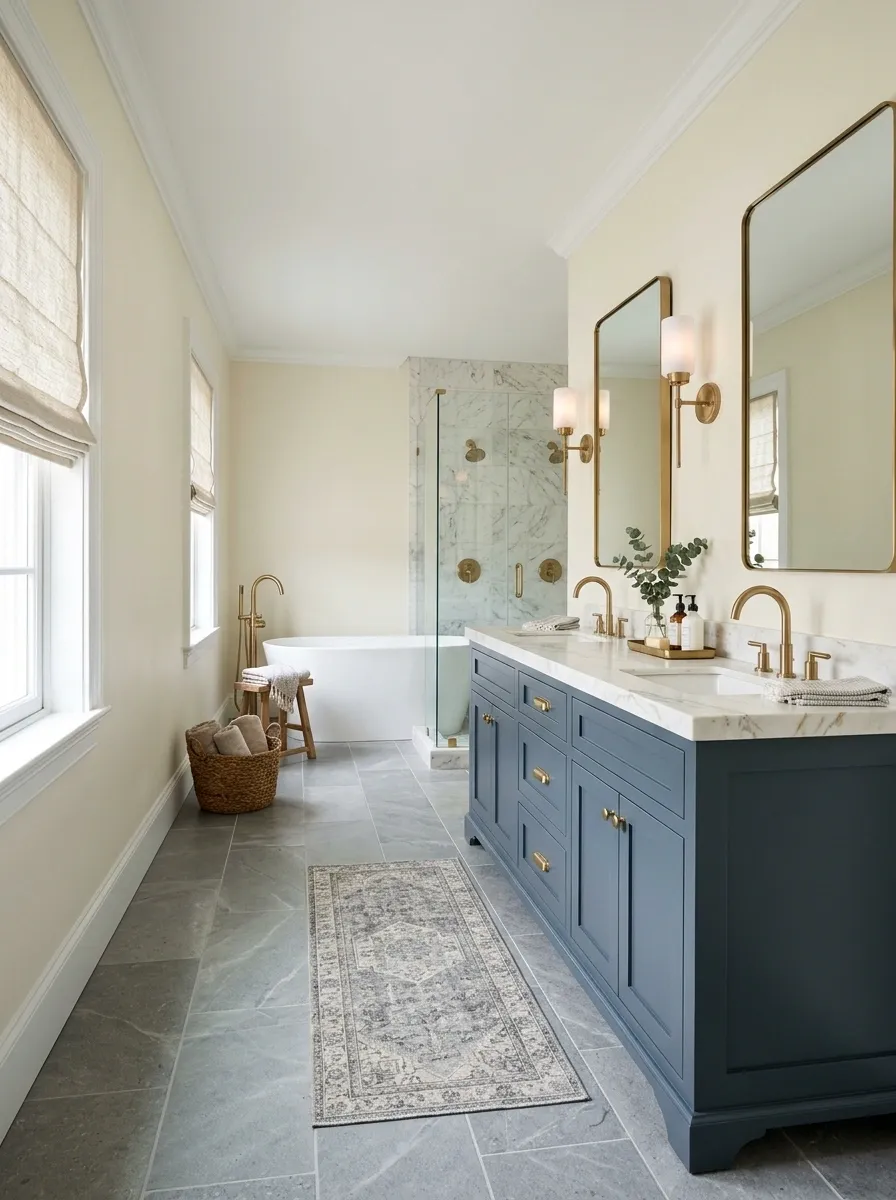
Cream can provide warmth above gray tile while a slate-blue vanity repeats the floor’s cooler side. It is a useful combination when an all-cool scheme feels too severe.
Keep the cream restrained and test beside existing sanitaryware. Strongly yellow walls may exaggerate a blue floor rather than balance it.
Let the vanity carry the blue, with only a small repeat if needed. A plain cream towel and neutral mat give the eye somewhere to rest between the cabinet and the patterned floor.
Soft Stone Walls With an Ochre Accent
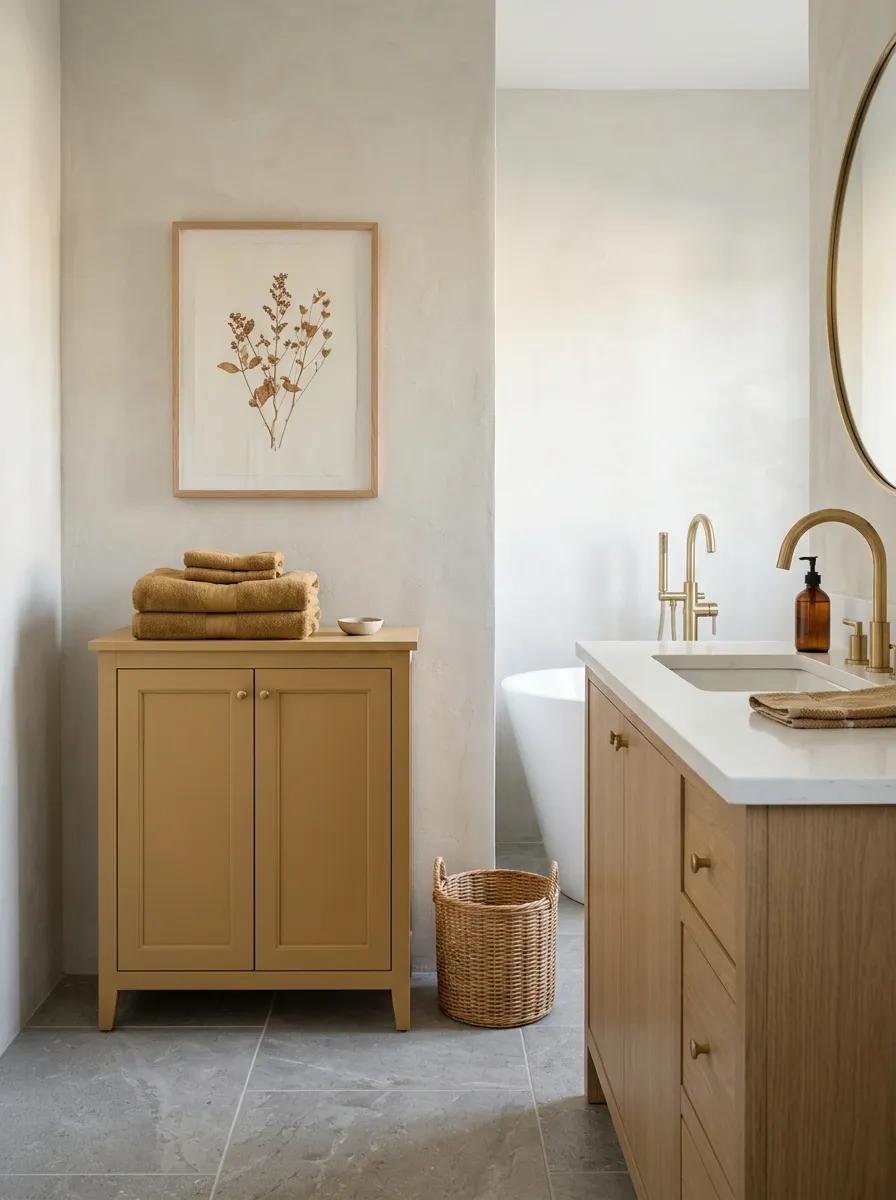
Keep the main wall color quiet and bring ochre through towels or a small painted storage piece. The gray floor becomes the stable base while the yellow-brown accent supplies warmth.
Choose a muted ochre that looks comfortable with the grout. Bright mustard may be more forceful than you want in a room already full of reflective surfaces.
This is a practical way to experiment before repainting. Live with the textile color through several days of use, including under the light you actually switch on in the morning.
| Keep permanent | Try in a changeable piece |
|---|---|
| Gray tile | Ochre towels |
| Stone-colored walls | Small colored basket |
| White fixtures | One warm-toned print |
Pale Peach With Silver-Gray Tile
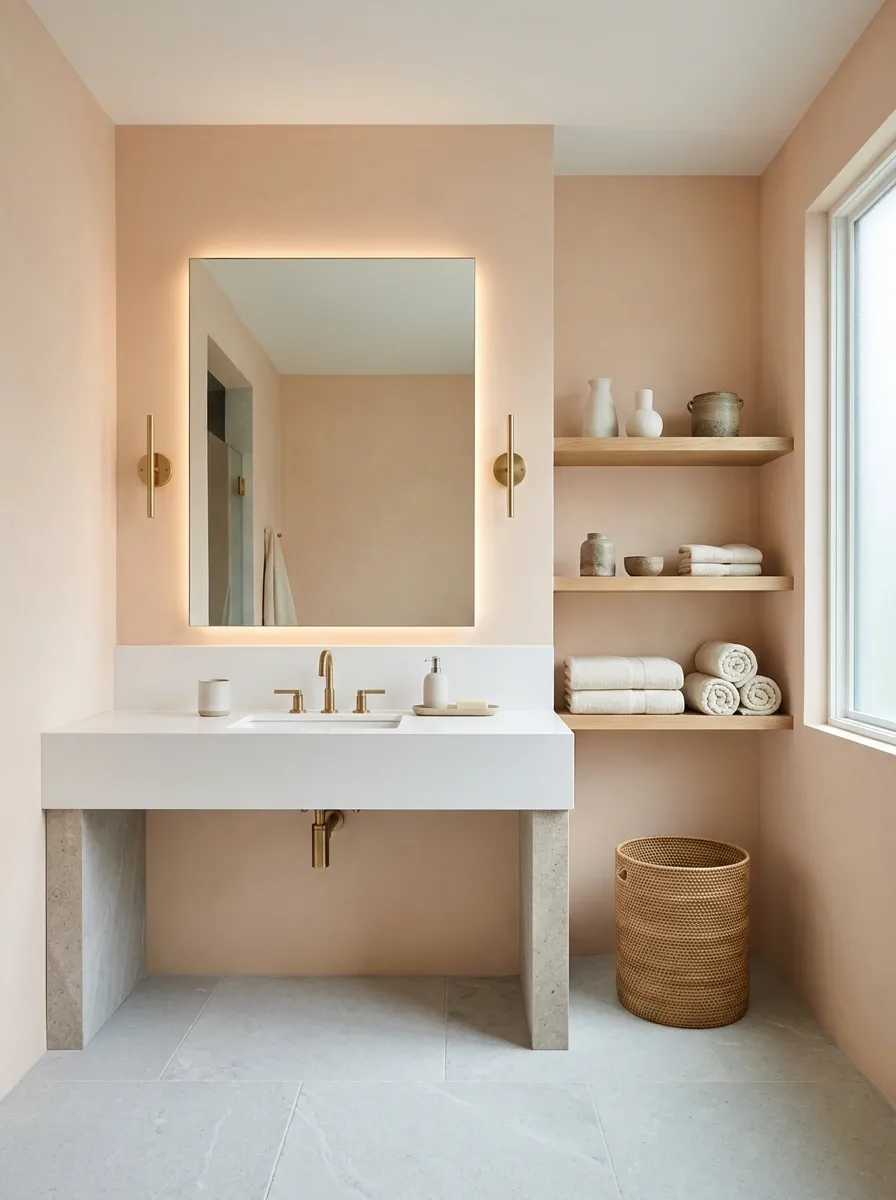
A subdued peach can warm a pale silver floor while keeping the bathroom light. Choose a shade with a little dustiness so the contrast feels soft.
Use white or light stone supporting surfaces and keep stronger orange out of the scheme unless you want a much bolder room.
Place the sample near your face at the mirror as well as beside the tile. Bathroom color is something you inhabit at close range, not just admire from a hallway, and your lighting deserves a vote.
Warm White Walls With an Espresso Vanity
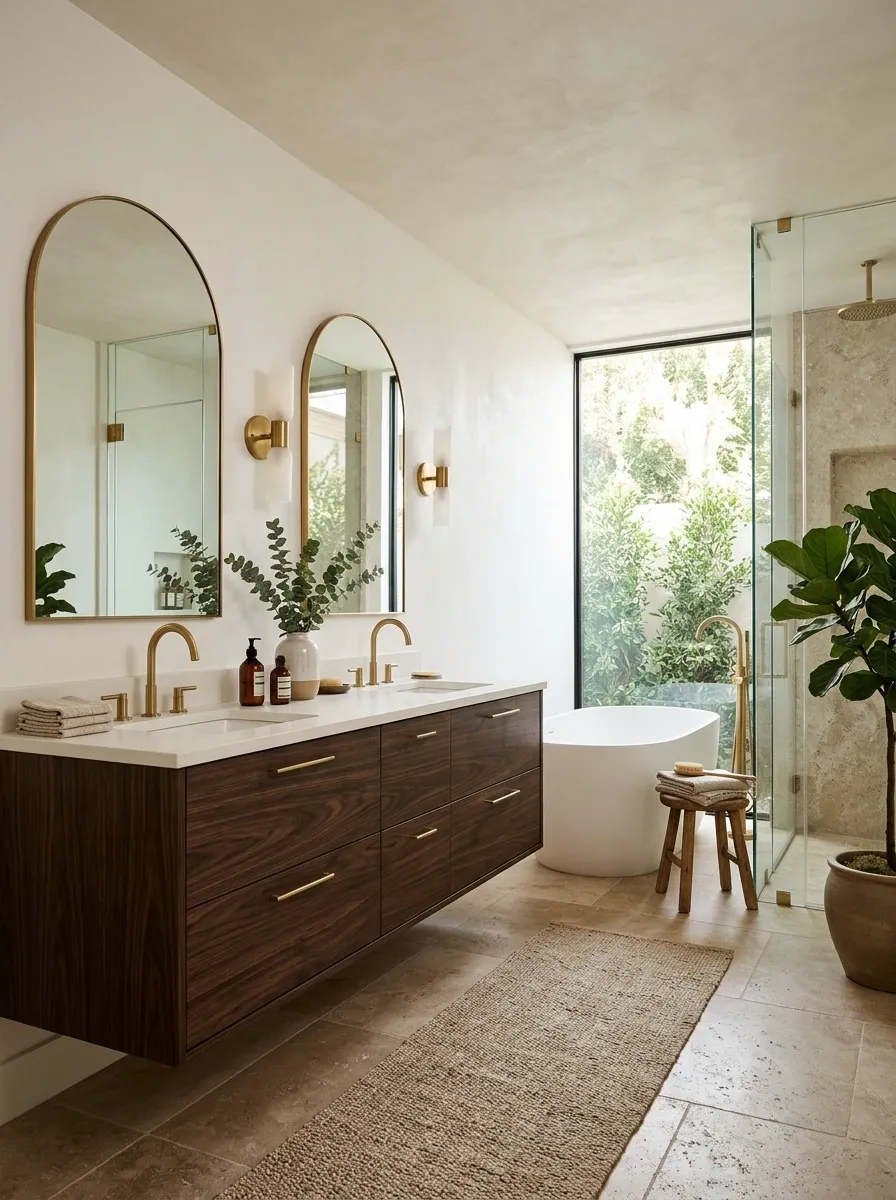
Espresso brown can make a gray floor feel more connected to wood and natural texture. Keep the wall a compatible warm white so the room has clear light and dark areas.
Look at the floor beside the actual cabinet finish. Some espresso finishes read red or purple, and those notes can be surprisingly assertive against green-gray tile.
Use plain towels and a simple mirror if the cabinet grain is strong. A dark wood vanity already provides substantial character; it does not need competing marble drama on every nearby surface.
Sample together: Espresso wood, gray tile, wall white, and the countertop belong in the same comparison.
A Tonal Gray Scheme With One Deliberately Warm Material
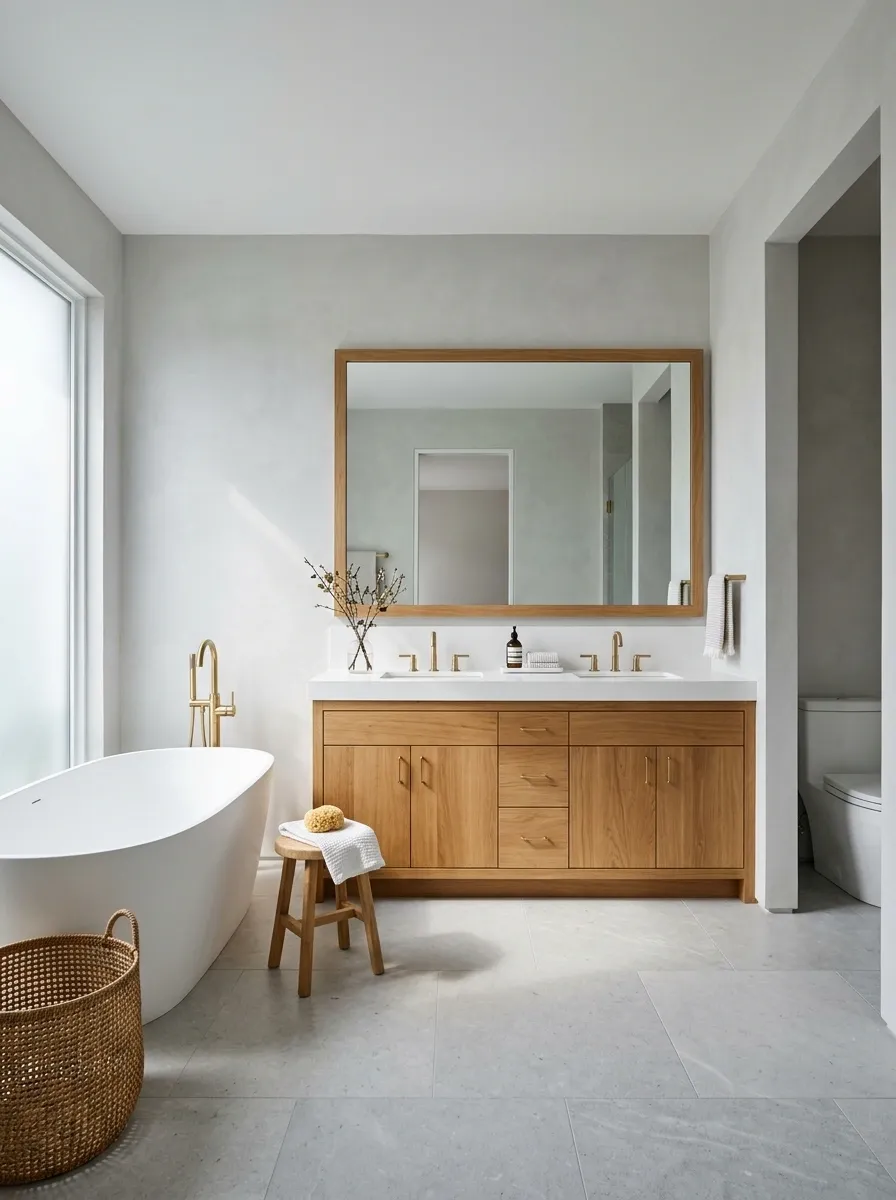
If you like gray, keep it. Choose a paler wall gray related to the floor, then add warmth with an appropriate timber vanity, a woven dry-zone basket, or a warm-toned mirror frame.
Vary texture and depth so the room does not become one uninterrupted middle value. White fixtures can sharpen the arrangement.
Make the warm material substantial enough to register. One tiny wooden toothbrush cup is a lot of responsibility for an object already occupied with toothbrushes.
Paint the samples before ordering the towels, vanity finish, and matching accessories. A gray floor is easier to work with when you listen to the particular gray you own, rather than the imaginary neutral gray everyone keeps describing online.