
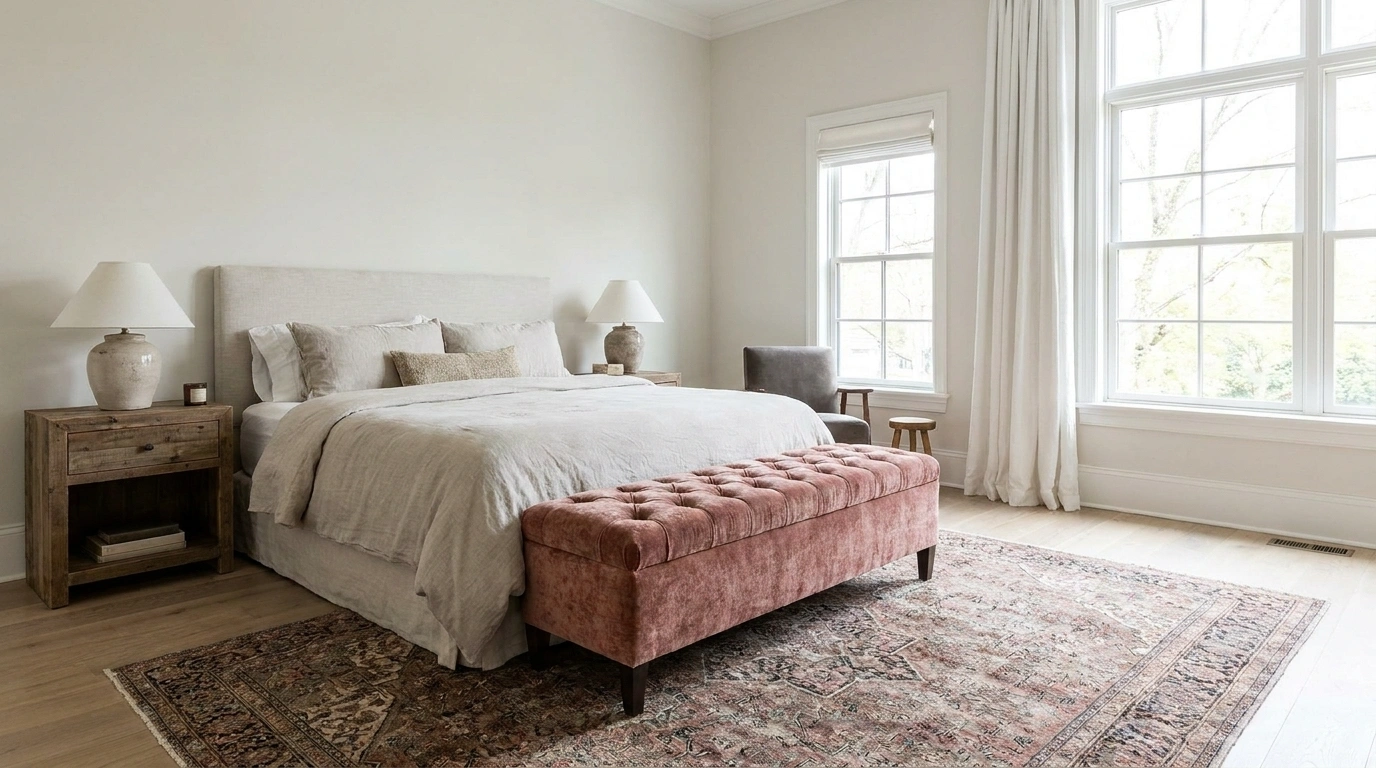
An ottoman can hold a blanket, give you somewhere to put on socks, or provide the exact surface on which your rejected outfits form a small government.
Its usefulness depends on where it goes. A generous bench looks lovely at the foot of a bed until you discover it has taken custody of the route to the wardrobe.
Measure the occupied room: open drawers, pulled-out chairs, swinging doors, and the path you use half asleep. Check a product’s dimensions, stability, intended use, and load rating before treating it as a seat. The appealing photograph rarely includes the moment somebody tries to get past it.
Ottoman Ideas for Different Bedroom Layouts and Everyday Needs
A Narrow Bench for a Compact Double Bedroom
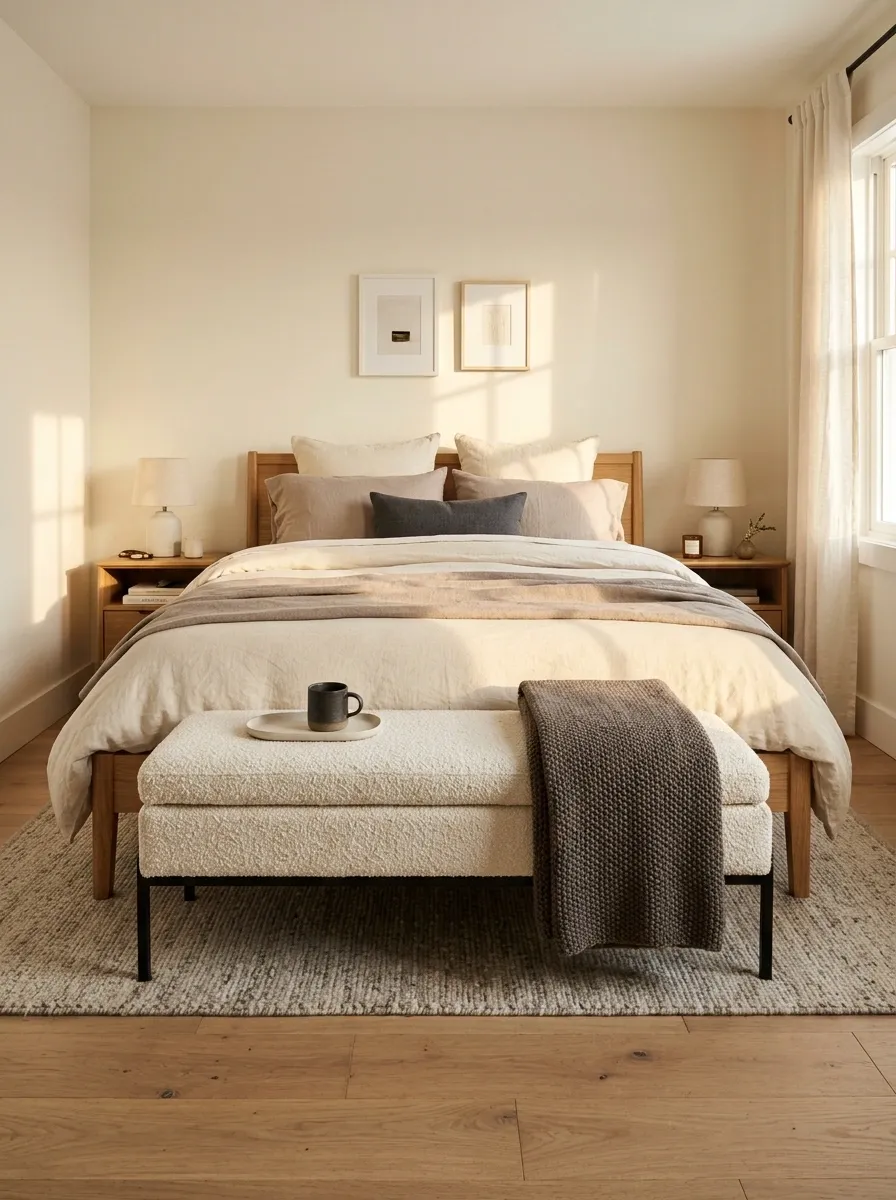
Choose a slim rectangular ottoman when you want a foot-of-bed perch without filling the entire remaining floor. Tape out its footprint before ordering, including space to stand in front of it.
Let the bench be visibly narrower than the bed so the ends feel contained. A bulky piece extending beyond both corners can make a small room feel even more congested.
Use it for dressing or a folded throw. If it must store bedding, check the internal dimensions; upholstery thickness can eat a surprising amount of the advertised size.
A slim bench with a clear route
Check the route around both bed corners and the opening space for drawers. Diagram is conceptual and not to scale; check the actual product dimensions and intended use.
A Round Ottoman Beside a Reading Chair
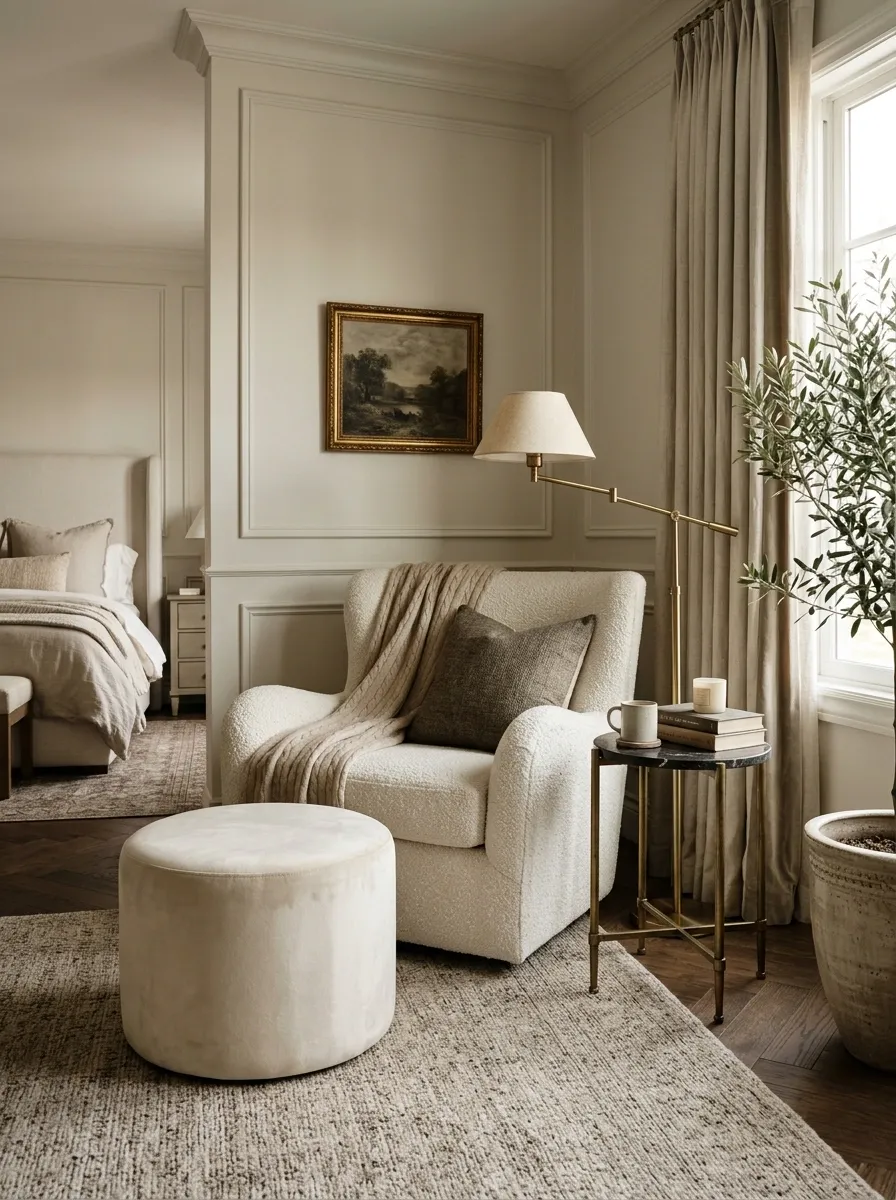
In a bedroom with a reading corner, a round ottoman can make the chair more comfortable while softening the arrangement’s edges. Match its height to the chair and your preferred resting position.
Try the relationship before buying if possible. A beautiful footrest that pushes your knees into an awkward angle has misunderstood the assignment.
Keep the pair close enough to use together, with a separate route around the seating area. The ottoman should belong to the chair rather than floating halfway toward the bed like an undecided planet.
Measure as a pair: Chair depth plus ottoman depth plus the gap your legs actually need.
A Small Upholstered Stool for a Dressing Table
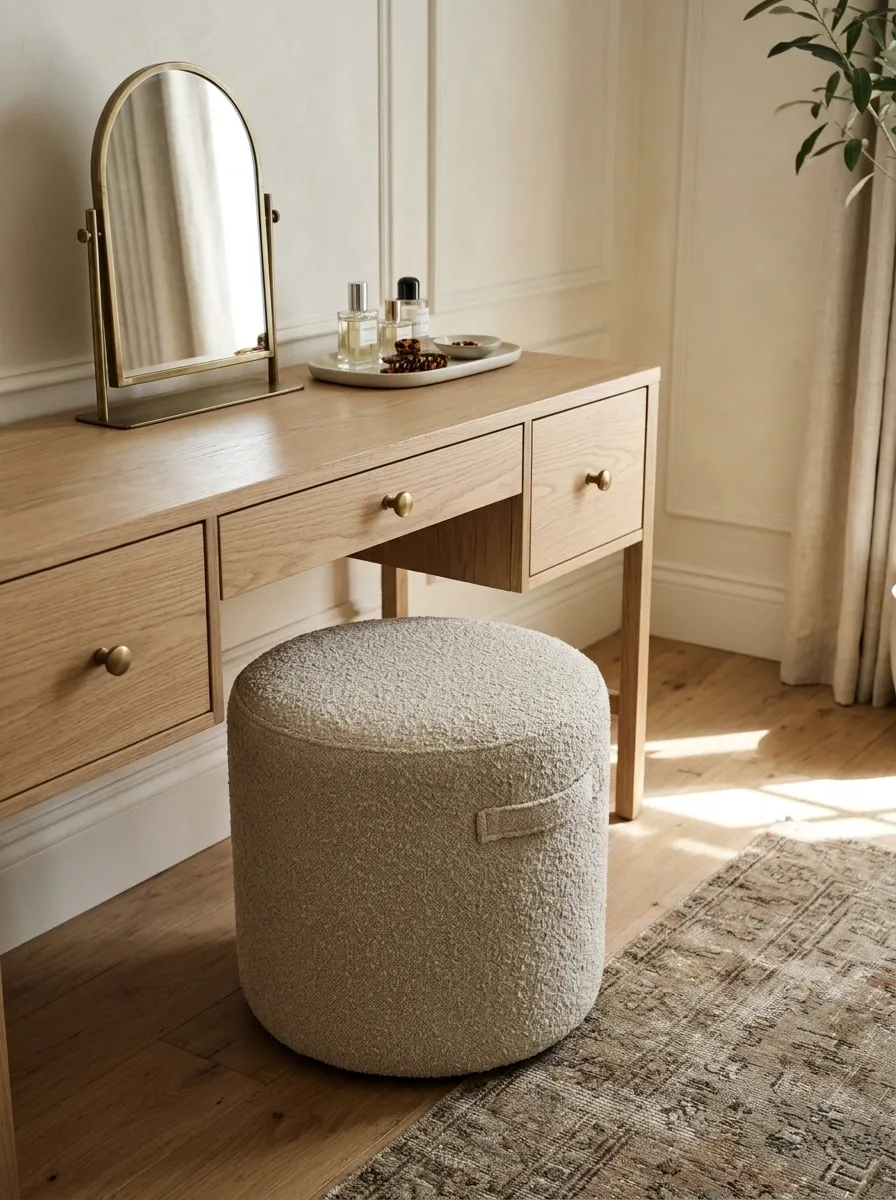
A compact ottoman can tuck beneath a dressing table when there is no room for a separate chair. Check the knee opening, underside clearance, and seat height together.
Choose something easy to pull out without dragging it across the floor. A recessed handhold or simply manageable weight makes a difference during daily use.
Use upholstery you can realistically maintain near cosmetics. Pale, delicate fabric beside foundation and hairspray is a lifestyle decision, and your future self deserves a say before the order is placed.
| Check | What you need |
|---|---|
| Tucked-away fit | Clears the table underside |
| Seated fit | Leaves comfortable knee space |
| Everyday use | Moves easily and suits cosmetic spills |
A Curved Ottoman for a Room Full of Sharp Lines
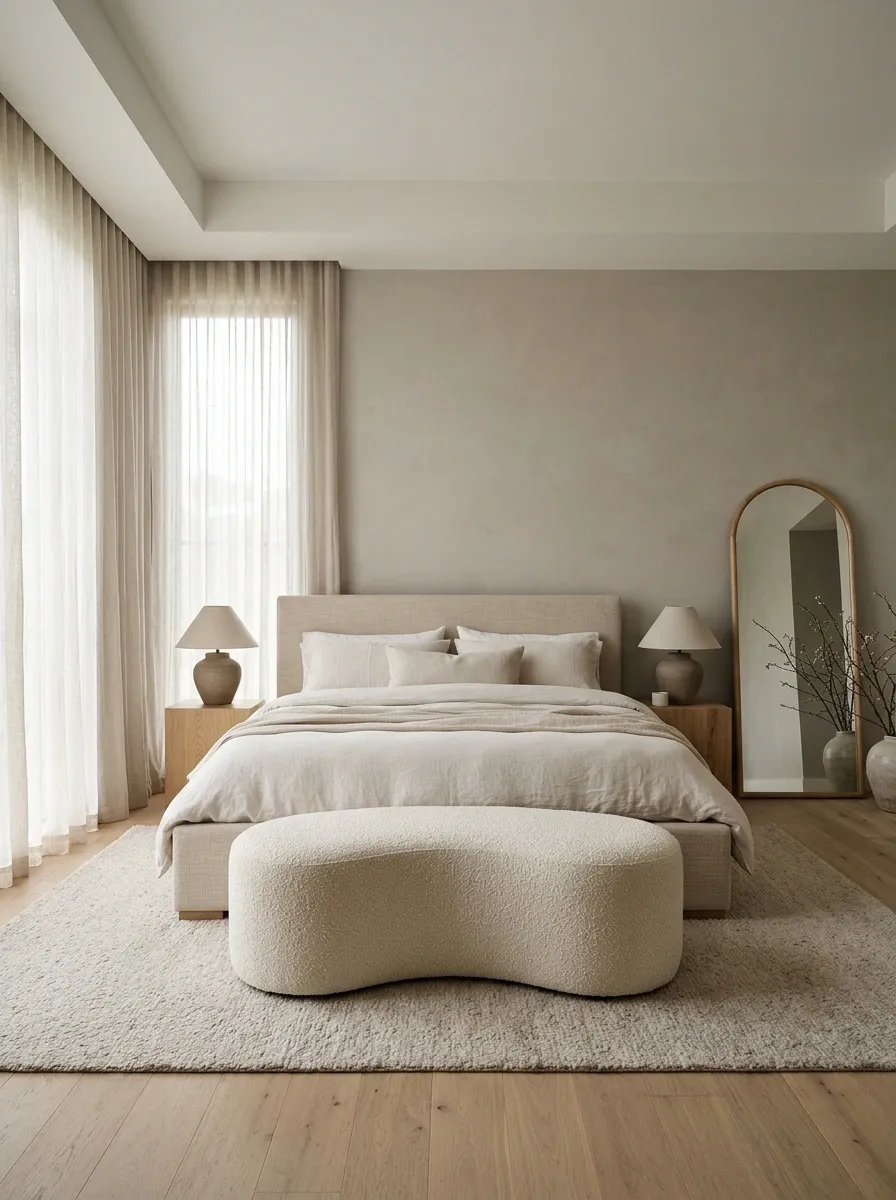
A rounded or kidney-shaped ottoman can soften a bedroom dominated by a rectangular bed, straight wardrobe fronts, and square nightstands.
Give the curve space to read. Cramming it into a tight gap usually hides the shape you paid extra for.
Repeat the softer line once through a mirror or lamp, then let the rest stay simple. The room needs a little variation, not a compulsory conversion to circles. Compare the widest footprint with a taped outline because curved furniture can occupy more usable space than it appears to.
Soften a boxy room
Leave enough open floor to see the curve and walk comfortably around it. Diagram is conceptual and not to scale; check the actual product dimensions and intended use.
A Pair of Small Ottomans for a Wide Bed
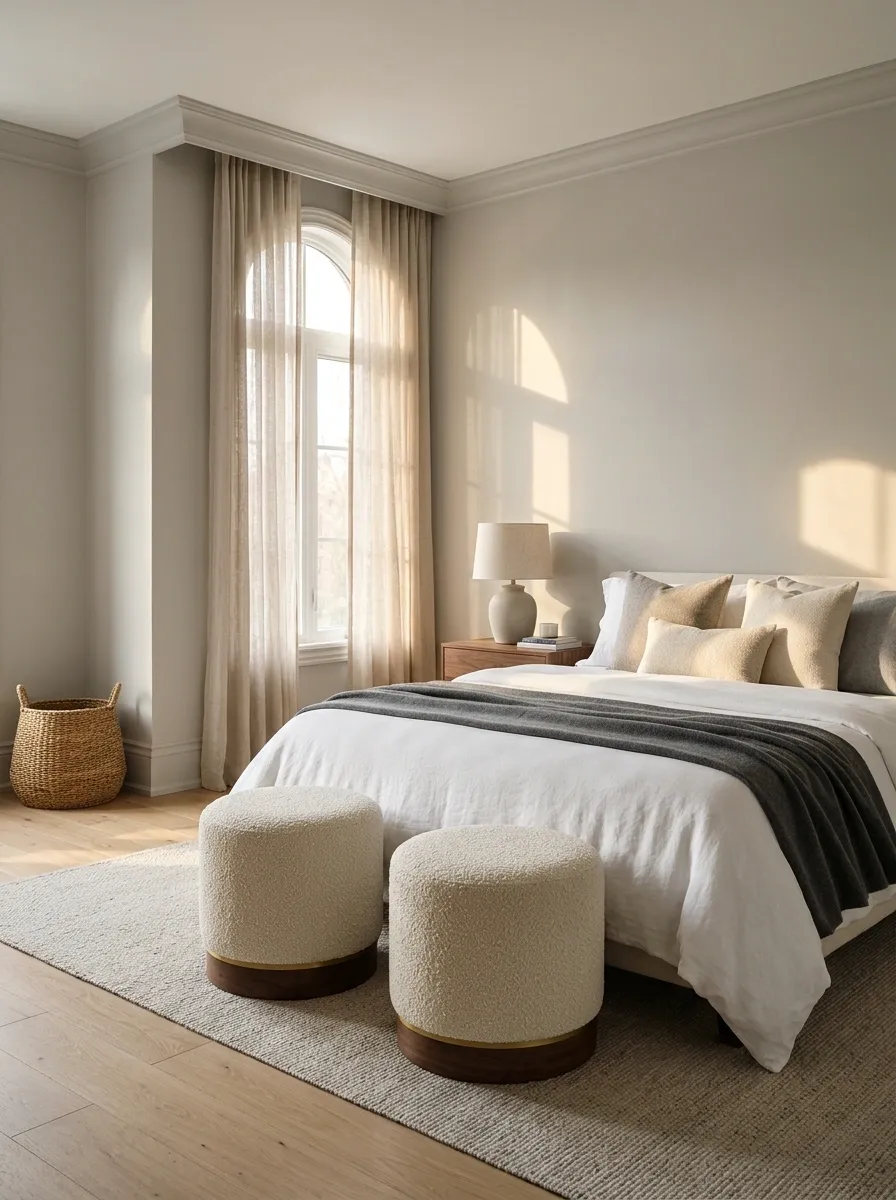
Two separate ottomans can look lighter than one long bench in a large bedroom. Place them with a modest gap and keep both within the visual width of the bed.
They can move independently for dressing, packing, or seating, provided the products are designed for those uses.
Choose related shapes and a shared finish so the pair feels deliberate. Different heights and unrelated fabrics can look like temporary furniture storage. Test the arrangement with boxes first; a pair creates more separate edges to navigate than one bench.
Useful when: You want flexible pieces that can move to different sides of the room.
A Low Ottoman for a Low Platform Bed
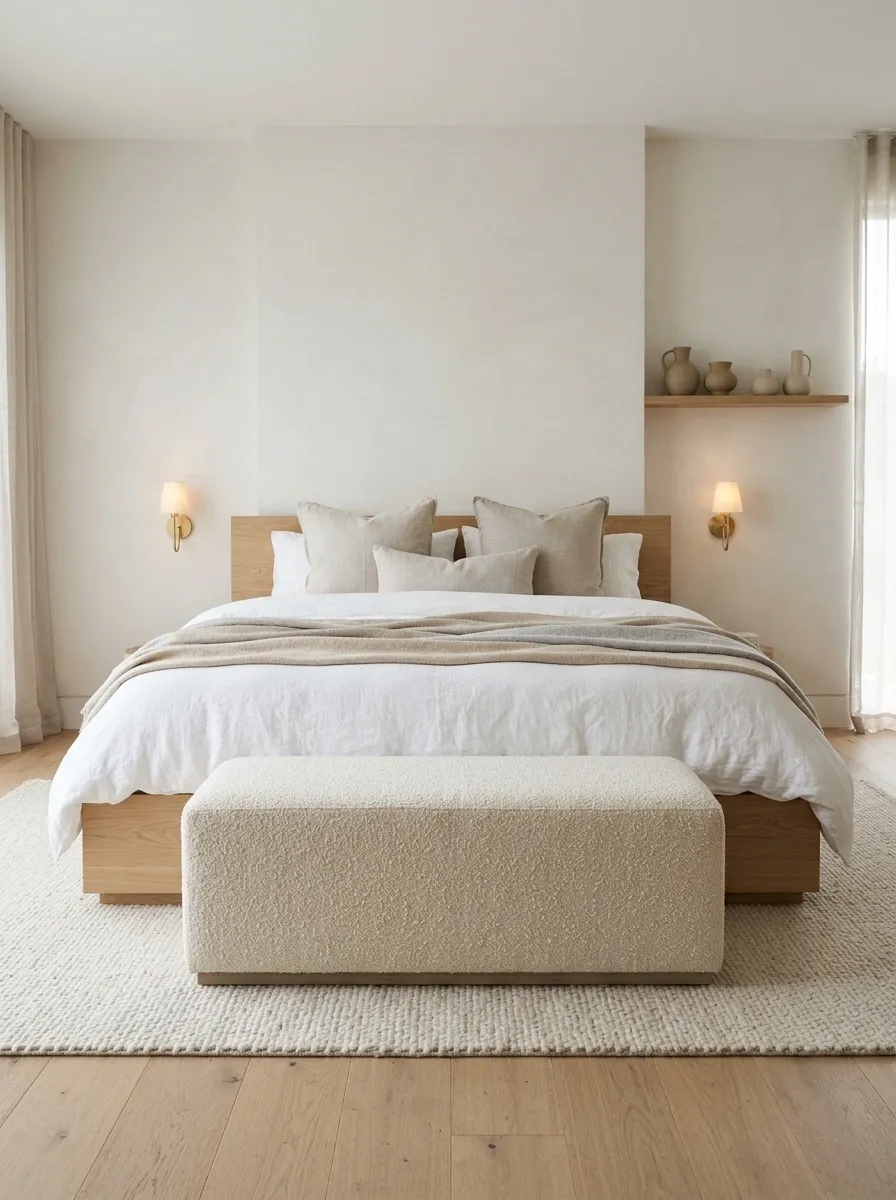
A low-profile ottoman can keep the foot of a platform bed visually open. Compare its height with the finished mattress height, including your usual bedding.
Choose the actual job before the silhouette:
- Footrest: Compare its height with the chair or bed position.
- Occasional perch: Check seating suitability and comfort.
- Storage: Check the useful interior, not just the exterior.
One product may not handle all three comfortably.
A simple fabric and restrained base often suit the low silhouette. Very tall legs or an oversized tufted top can make the ottoman feel unrelated to the bed’s quieter horizontal line.
Keep the low profile coherent
Compare with the finished mattress height, not the bare bed frame. Diagram is conceptual and not to scale; check the actual product dimensions and intended use.
A Leather-Look Ottoman in a Room With Pets
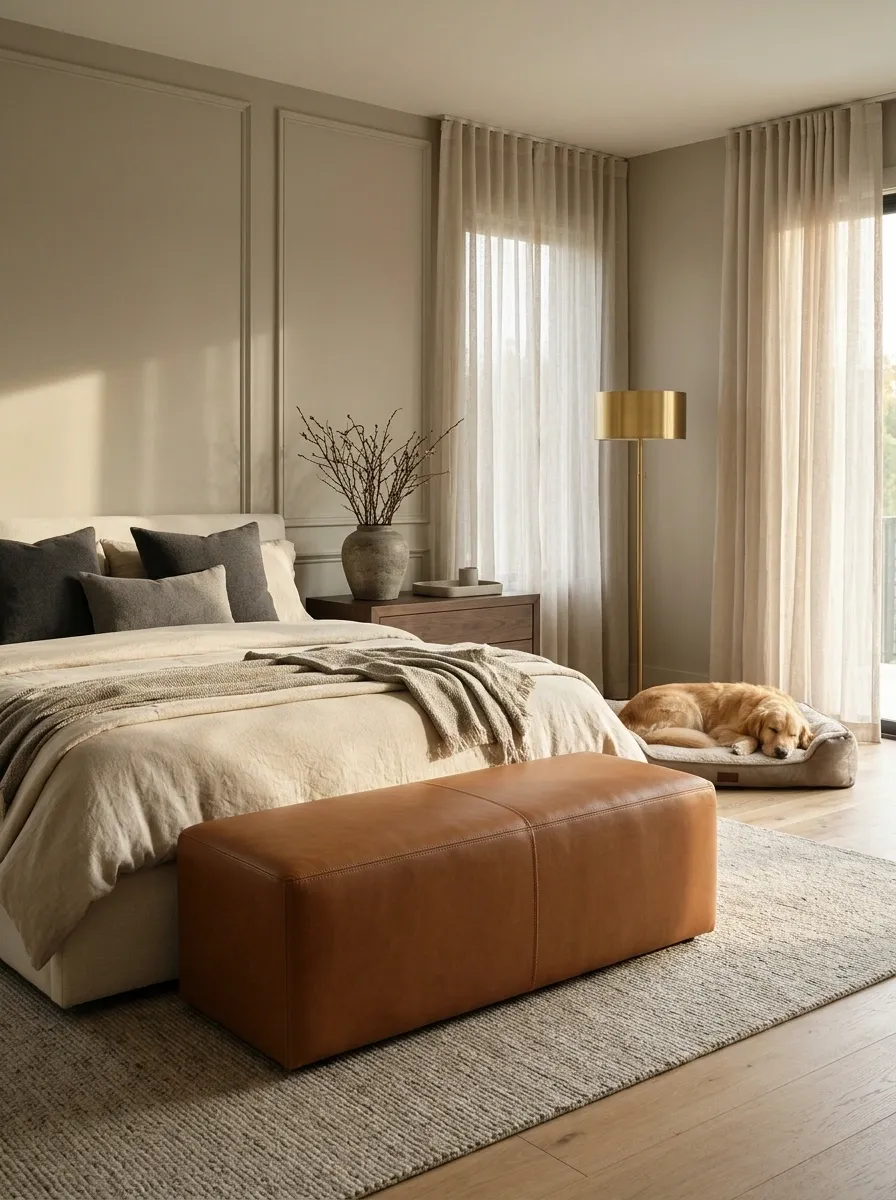
A smooth, appropriately durable upholstery can be easier to wipe than a heavily textured fabric, but check the manufacturer’s care instructions and the material’s limitations. No finish earns automatic immunity from claws.
Choose a color that sits comfortably with your pet’s usual shedding pattern if that matters to you. The most forgiving shade is not always the darkest one.
Use a removable washable cover if the shape allows it. A piece that works with the actual household is more successful than the spotless one maintained entirely through wishful thinking.
| Ask before buying | Why |
|---|---|
| What cleaning is allowed? | Materials tolerate different products |
| Is the cover replaceable? | Extends practical usefulness |
| Does the texture catch claws? | Smooth and looped fabrics behave differently |
A Patterned Ottoman in an Otherwise Plain Bedroom
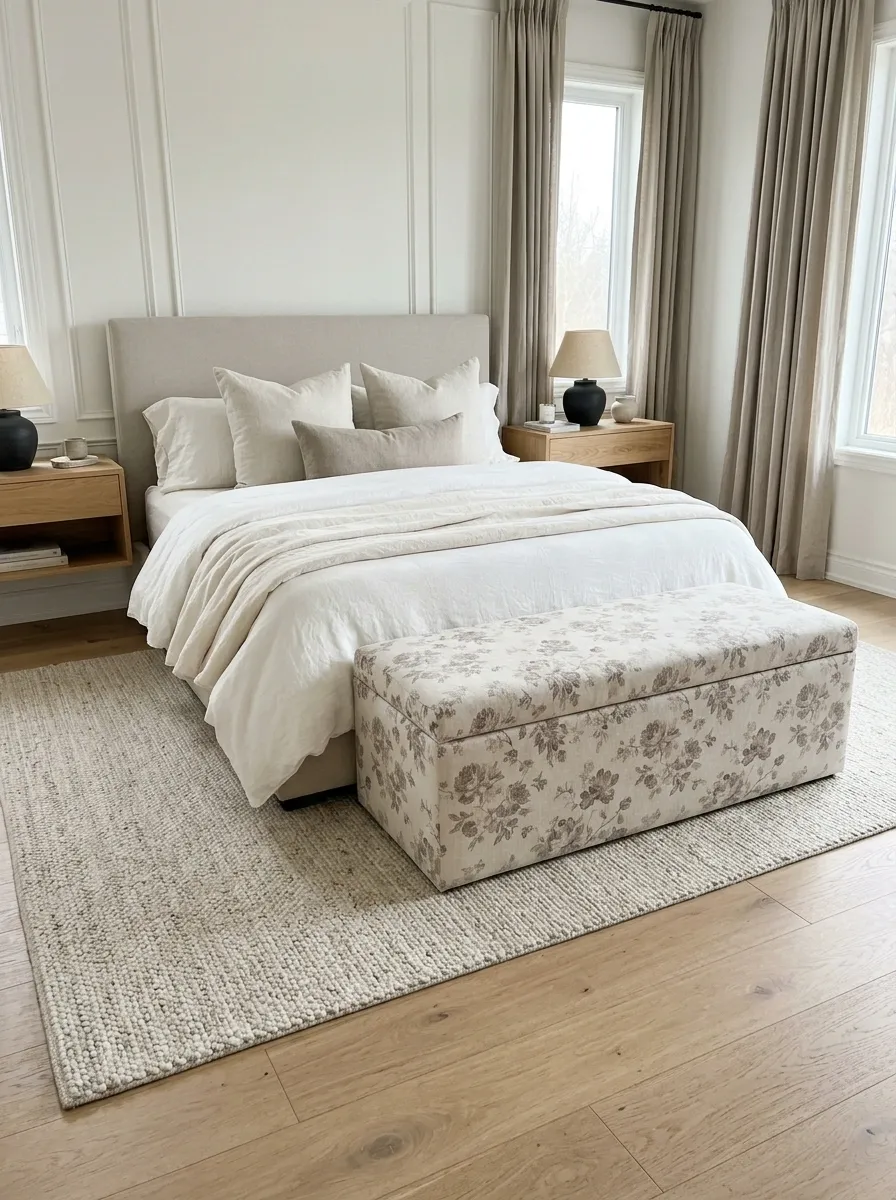
Let an ottoman carry the pattern when the bedding, curtains, and walls are mostly quiet. A stripe, small geometric, or faded floral can make the room feel more personal without committing an entire wall.
Pull one existing room color into the fabric. The other colors can introduce a little variation.
Request a sample large enough to show the repeat. A tiny swatch may look calm while the full piece looks enthusiastic enough to host its own parade. Check how the pattern will sit over seams and curved edges.
A Bouclé Ottoman in a Quiet Guest Bedroom
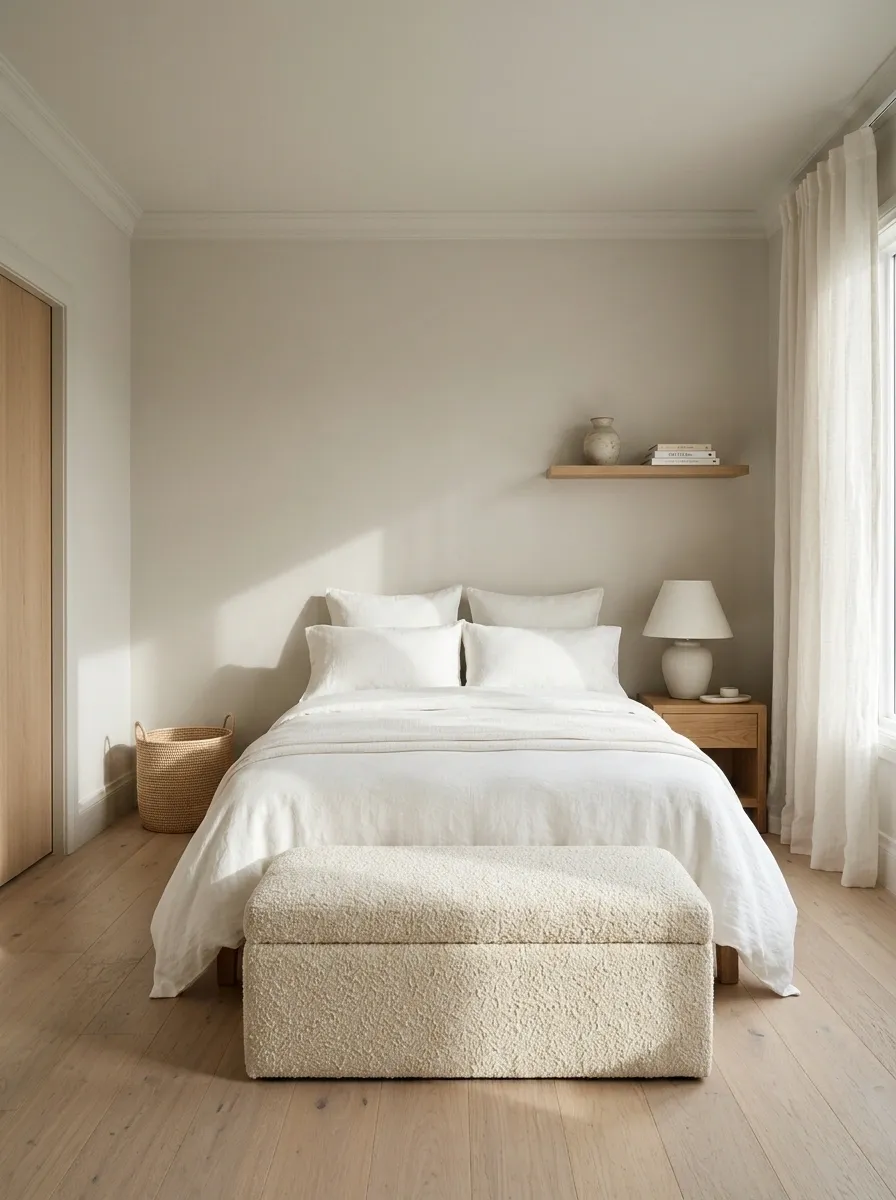
Bouclé can add texture to a guest room where the surrounding surfaces are smooth and simple. Choose it because you like the feel and can maintain it, rather than because every furniture page has agreed to use it simultaneously.
Keep the shape simple and compare the fabric with your bedding. Warm ivory bouclé can look quite yellow beside cool white sheets.
Check cleaning requirements before buying. For frequently used rooms, a removable or replaceable cover may be more useful than a particularly photogenic texture.
Guest-room priority: Somewhere to sit comfortably and a clear place for belongings matter more than a fashionable fabric.
A Bedside Ottoman in a Bedroom With No Foot Space
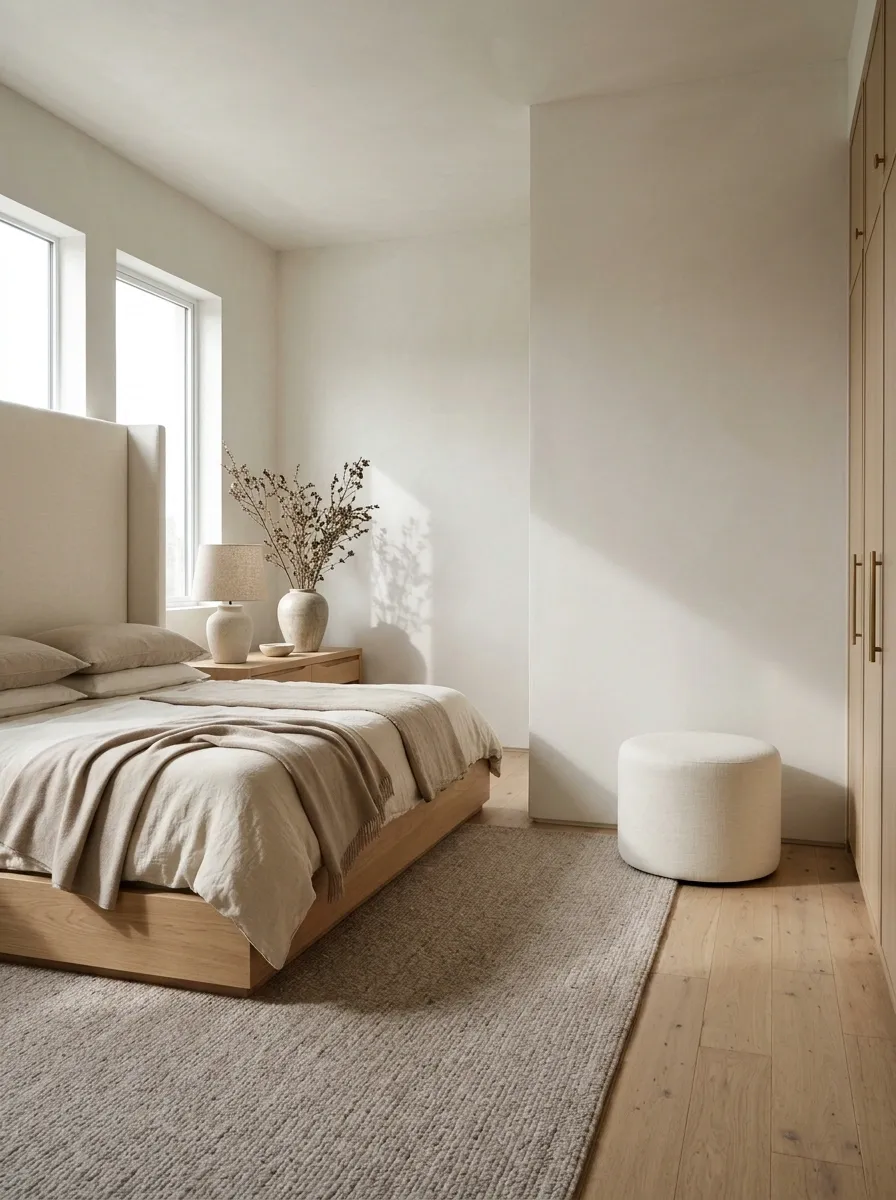
If the wardrobe faces the bed closely, skip the foot-of-bed arrangement. A small ottoman beside a clear section of wall can provide a dressing perch without narrowing the main route.
Keep it away from doors, sockets you need, and the standing space beside drawers. It does not have to touch the bed to belong in the bedroom.
Use a fabric connected to the headboard or curtains so the separate position feels intentional. A workable side location beats an elegant obstruction every morning of the week.
A Bench Ottoman in a Long, Narrow Bedroom
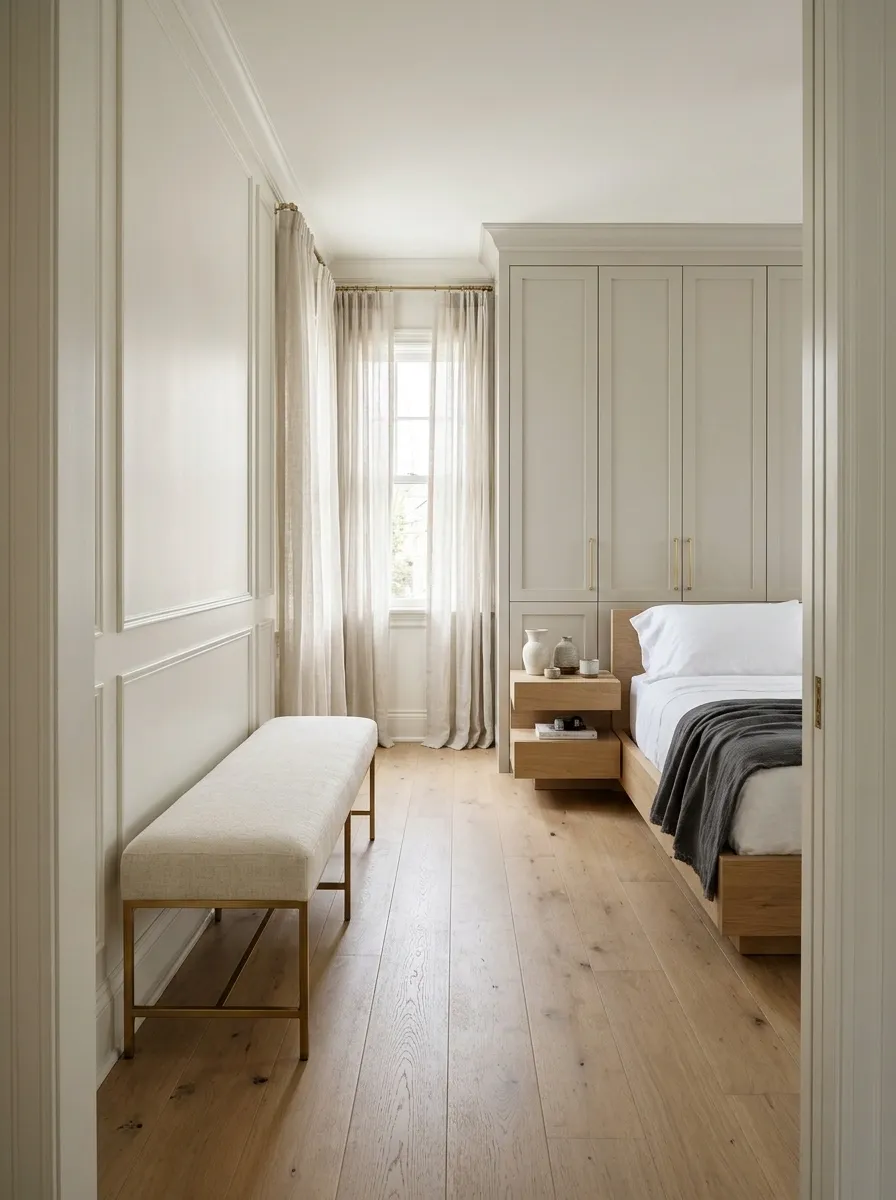
Place a long, shallow ottoman along a side wall when the room’s width makes a central bench awkward. It can create a dressing zone or hold clean folded bedding temporarily.
Check the relationship with the bed and the door swing. The piece should not make the room feel like a corridor with upholstery.
Use a lighter visual base if the walls are already lined with furniture. Open legs can reveal more floor, though the footprint still needs to work; seeing the floor is not the same as having room to walk on it.
| Better position | Check first |
|---|---|
| Along a clear long wall | Remaining walking space |
| Near the wardrobe | Door and drawer openings |
| Opposite a window | Whether curtains still hang freely |
A Lift-Top Ottoman for Off-Season Accessories
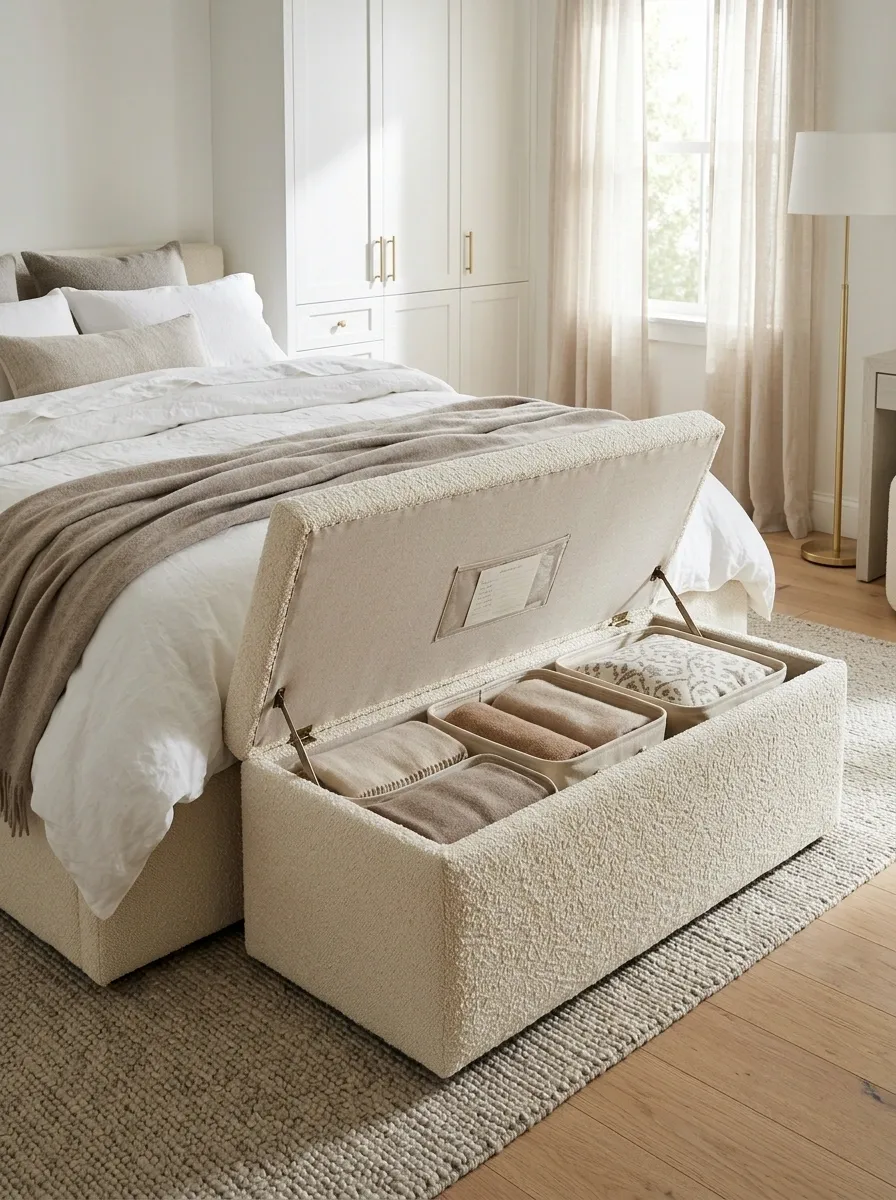
Use storage for clean scarves, spare cushion covers, or seasonal throws when the bedroom needs occasional overflow. Divide the interior with suitable fabric containers so smaller things do not disappear into a padded archaeological site.
Store only what the interior and conditions suit. Avoid putting damp items away or using a musty compartment for delicate textiles.
Keep a short inventory inside the lid if you tend to forget hidden belongings. Hidden storage is less useful when you purchase replacements for everything it has successfully hidden.
A Firm-Topped Ottoman for Folding Clothes
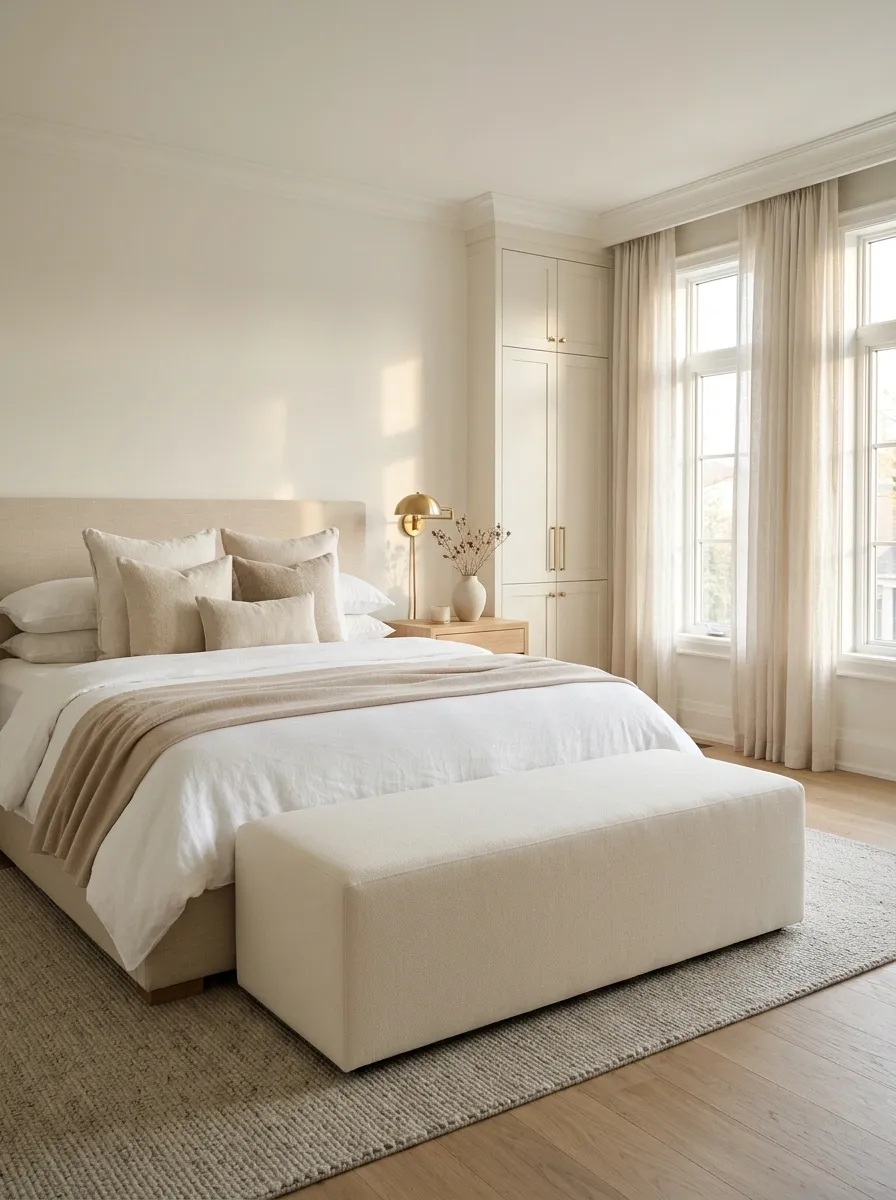
A broad, reasonably firm top can provide a temporary surface for folding clean laundry. Choose upholstery that will not catch on delicate fabrics and keep the surface clear enough to use.
Check the lid construction if the piece also has storage. A softly crowned top can make neat piles surprisingly unstable.
Treat folding as a temporary task, then put the clothes away. Otherwise the ottoman becomes a wardrobe with no doors and unusually low ambition. A defined use can be practical without becoming a permanent horizontal filing system.
Best fit: A room with enough clear floor to stand beside the ottoman while folding.
A Colorful Ottoman in a Mostly Neutral Room
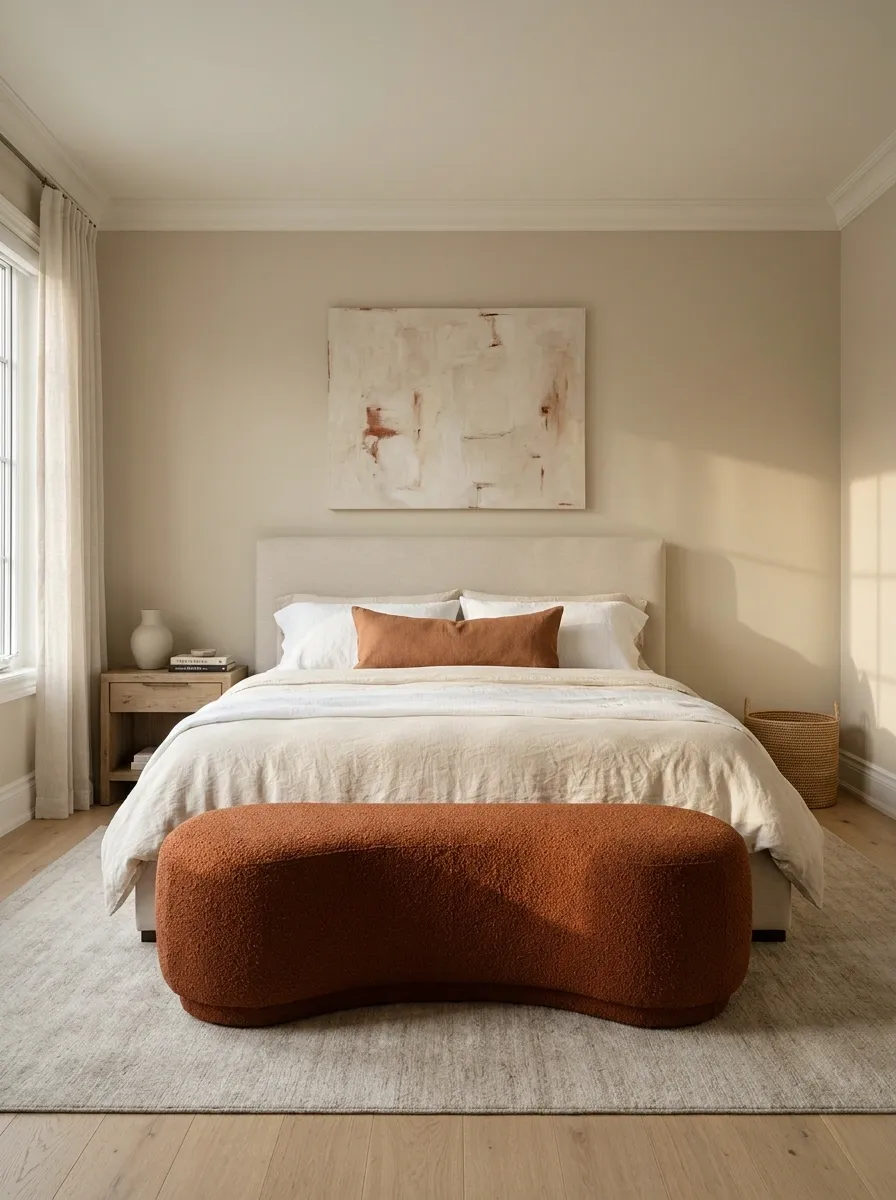
An ottoman can carry a saturated blue, rust, or olive without taking over the bedroom. Choose the color in relation to existing art or a textile you already enjoy.
Use a substantial solid fabric when the shape is sculptural. Both complex pattern and a complicated silhouette can compete for attention.
Repeat a small note of the color somewhere else if the piece feels isolated. It does not need matching cushions on every surface. A single related detail can make the choice feel connected while preserving the room’s quiet.
An Ottoman With Visible Legs for an Airier Room
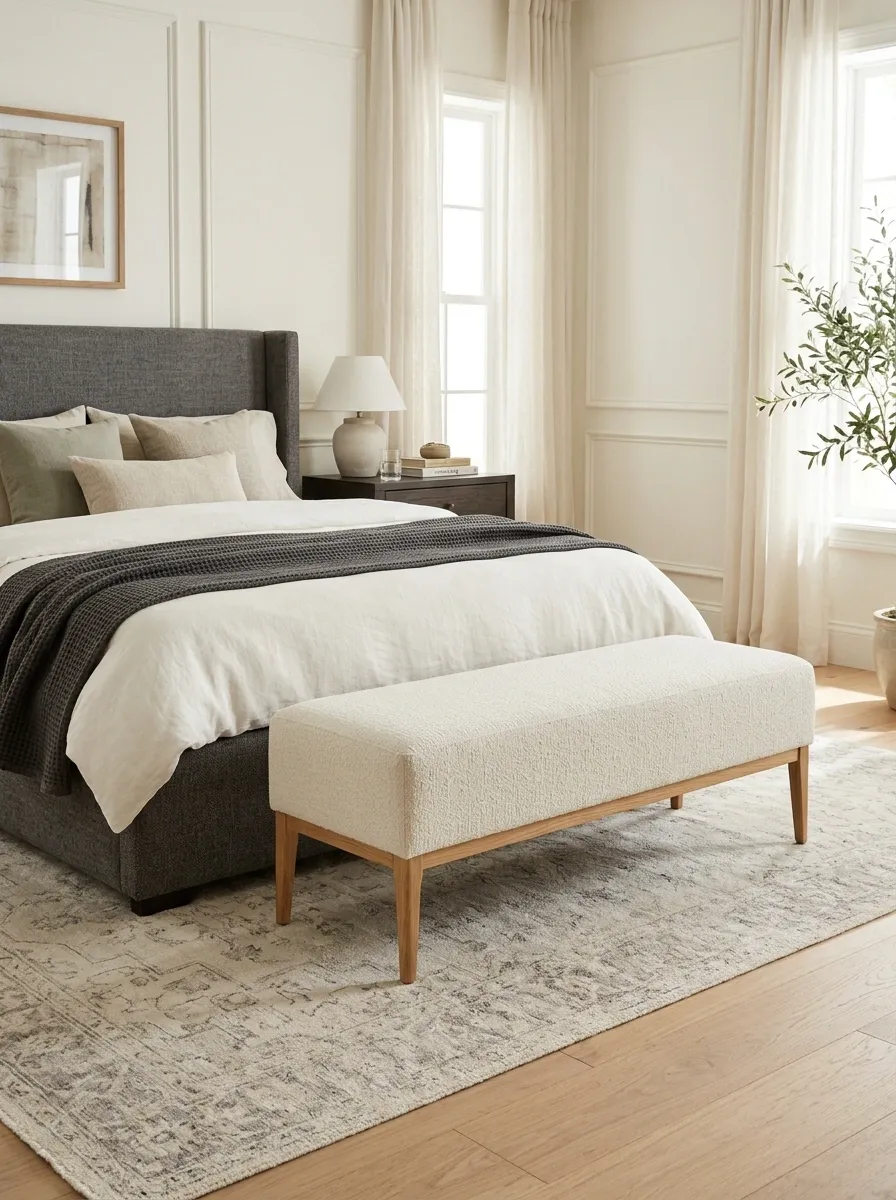
Raised legs can make a piece look less blocky, especially beside a heavy upholstered bed. Choose a base finish related to existing furniture rather than adding another unrelated metal or timber.
Check practical stability and floor protection. Slender-looking legs still need to support the use the manufacturer permits.
Allow access beneath it for the cleaning method you actually use. A frustratingly narrow gap that admits dust but excludes the vacuum is a design feature with a very specific sense of humor.
| Base detail | Practical check |
|---|---|
| Open legs | Stability and floor protection |
| Low clearance | Can you clean beneath it? |
| Timber or metal finish | Relation to existing furniture |
A Fully Upholstered Block for a Large, Sparse Room
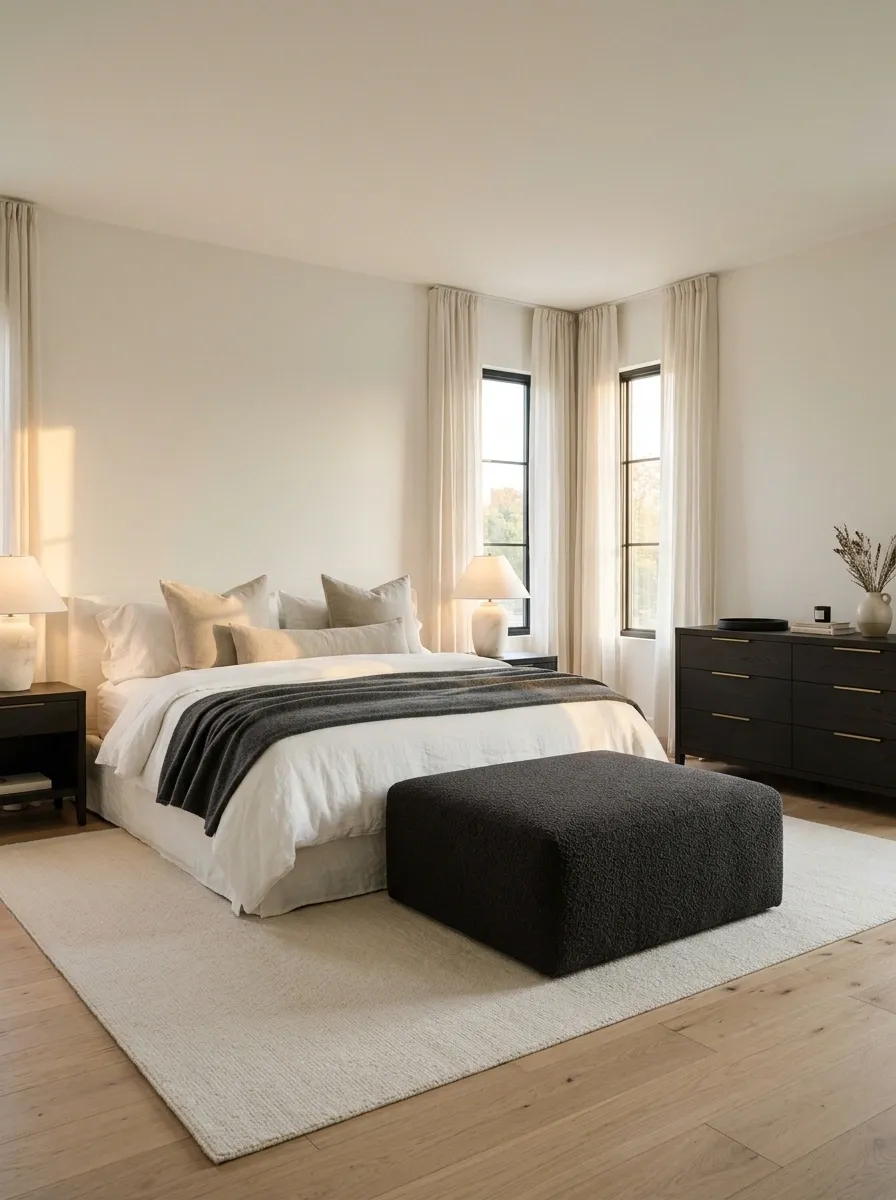
A substantial block ottoman can help anchor a bedroom that feels empty despite having a large bed. Use it within the sleeping arrangement rather than marooning it halfway across the floor.
Choose a fabric with enough texture to keep the broad surfaces interesting. A darker base color can add weight if the rest of the furniture is pale.
Give the substantial piece a practical check:
- Can you walk around it comfortably?
- Do doors and drawers still open?
- Can it move when cleaning requires it?
Square footage does not suspend ordinary logistics.
Give a large room an anchor
Let the ottoman strengthen the bed grouping without filling the circulation space. Diagram is conceptual and not to scale; check the actual product dimensions and intended use.
A Small Pouf for a Flexible Bedroom
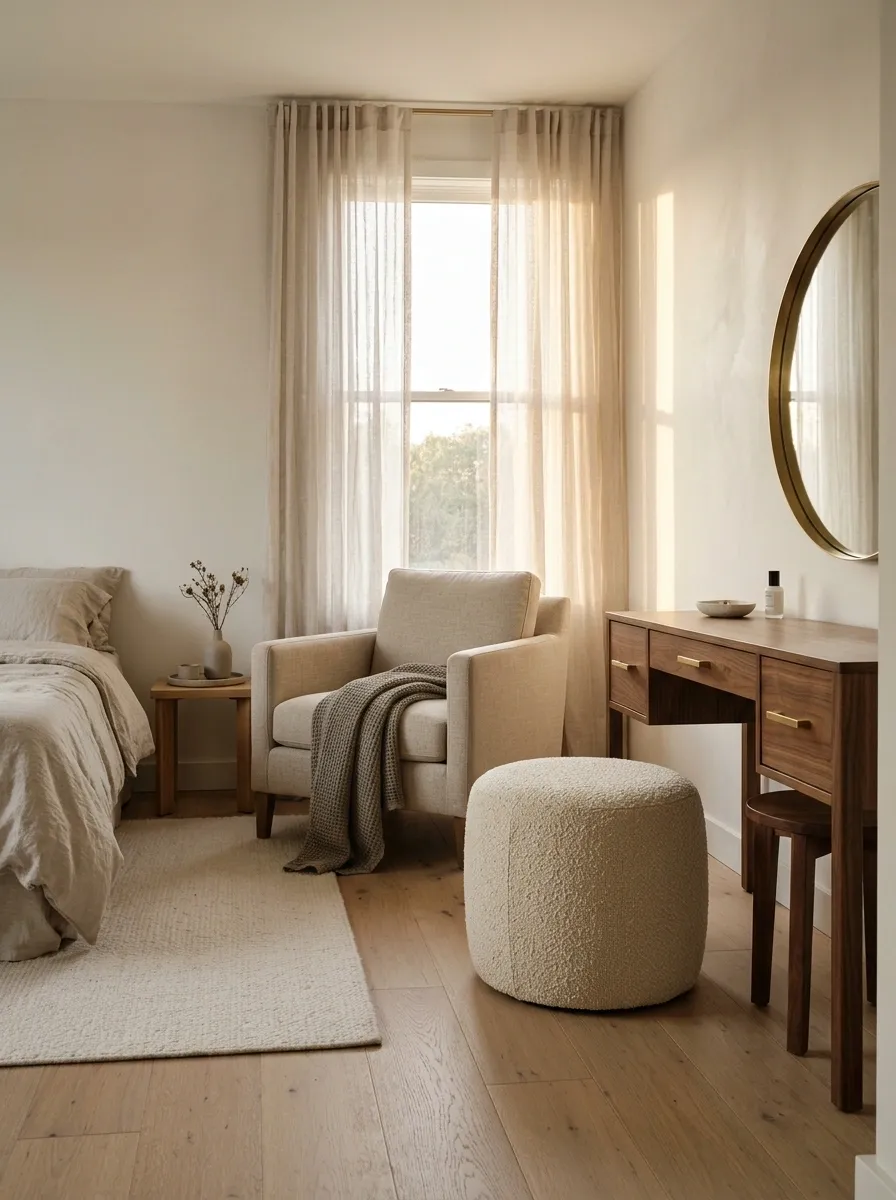
A light pouf can move between a reading chair and a dressing area when you need flexibility more than storage. Check whether the particular product is intended for seating, foot support, or decorative use.
Choose a reasonably structured piece if you want a predictable height. Very soft fills can compress considerably under use.
Give it a home when it is not needed so it does not drift into the night-time walking route. Flexible furniture is useful; surprise furniture underfoot after the lights go out is less charming.
Choose the role first: A decorative pouf, a footrest, and a stable seat are different purchases.
A Tailored Ottoman Beside an Antique Bed
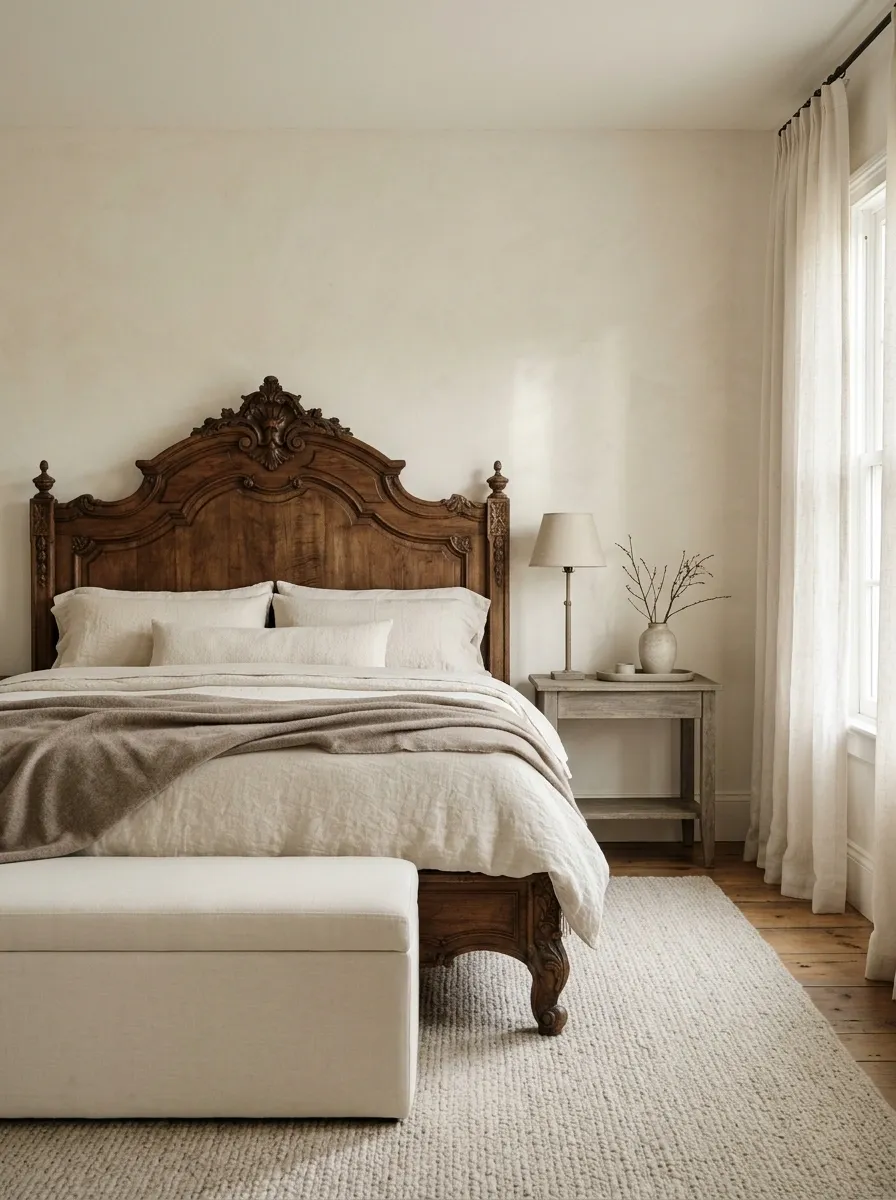
A plain, neatly upholstered ottoman can sit well beside an ornate antique bed. The quieter shape gives the bed’s carving or turned details room to remain the focus.
Pick up one timber tone in the base, or use a fully upholstered piece if matching the wood would be difficult. An almost-match can be more distracting than a deliberate difference.
Keep tufting and decorative trim restrained unless the room can comfortably support more ornament. An antique bed does not require an entourage of equally talkative furniture.
A Textured Ottoman in a Minimal Bedroom
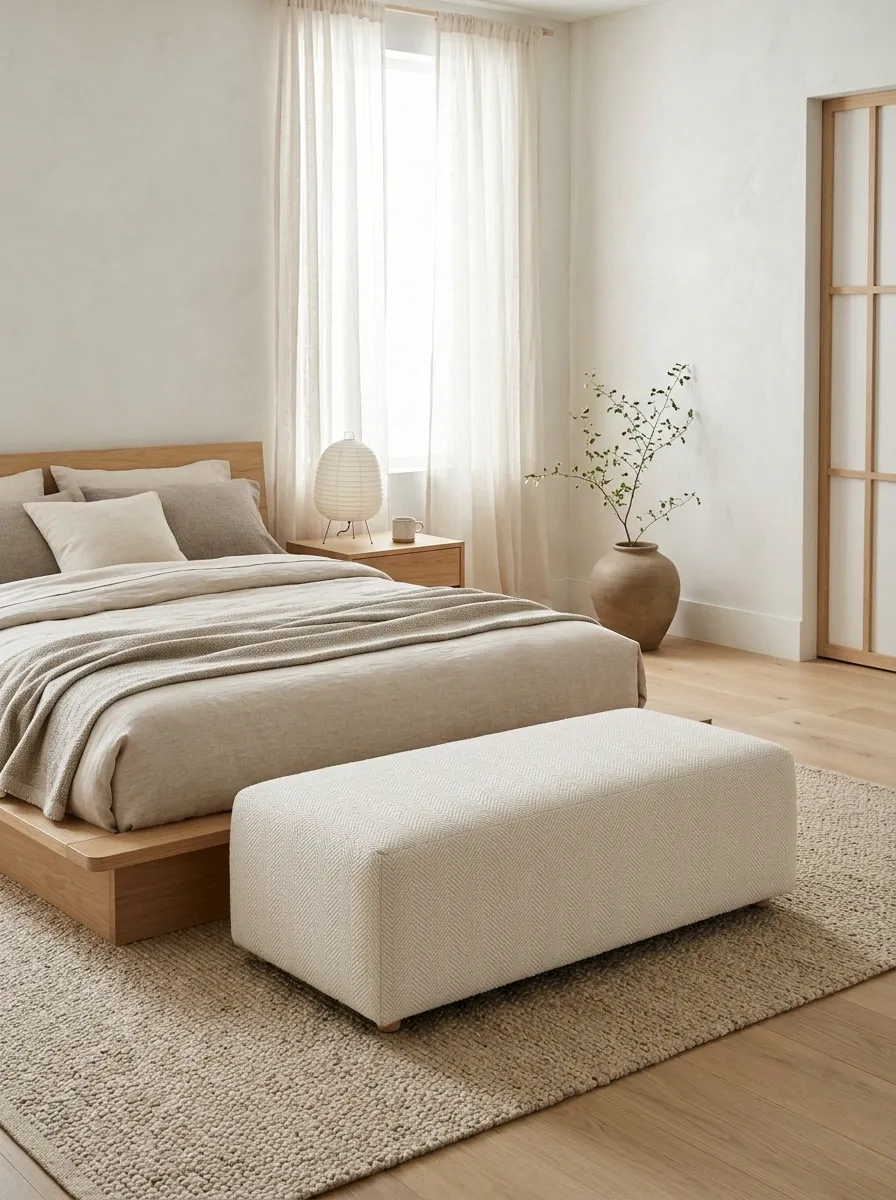
In a pared-back bedroom, texture can make an ottoman interesting without introducing another color. Try a linen-like weave, a subtle herringbone, or a tightly woven wool-look fabric suited to the use.
Compare the texture with the bedding and headboard. Too many similar fuzzy finishes can blur together rather than add depth.
Use a simple outline and place it purposefully. Minimal rooms expose awkward proportions because there is less visual noise to distract from them. Tape out the footprint and live with the outline before purchasing.
| Keep simple | Add interest through |
|---|---|
| Color | Weave and surface texture |
| Shape | Good proportions |
| Surroundings | One clearly defined position |
A Wipeable Ottoman Near a Workout Area
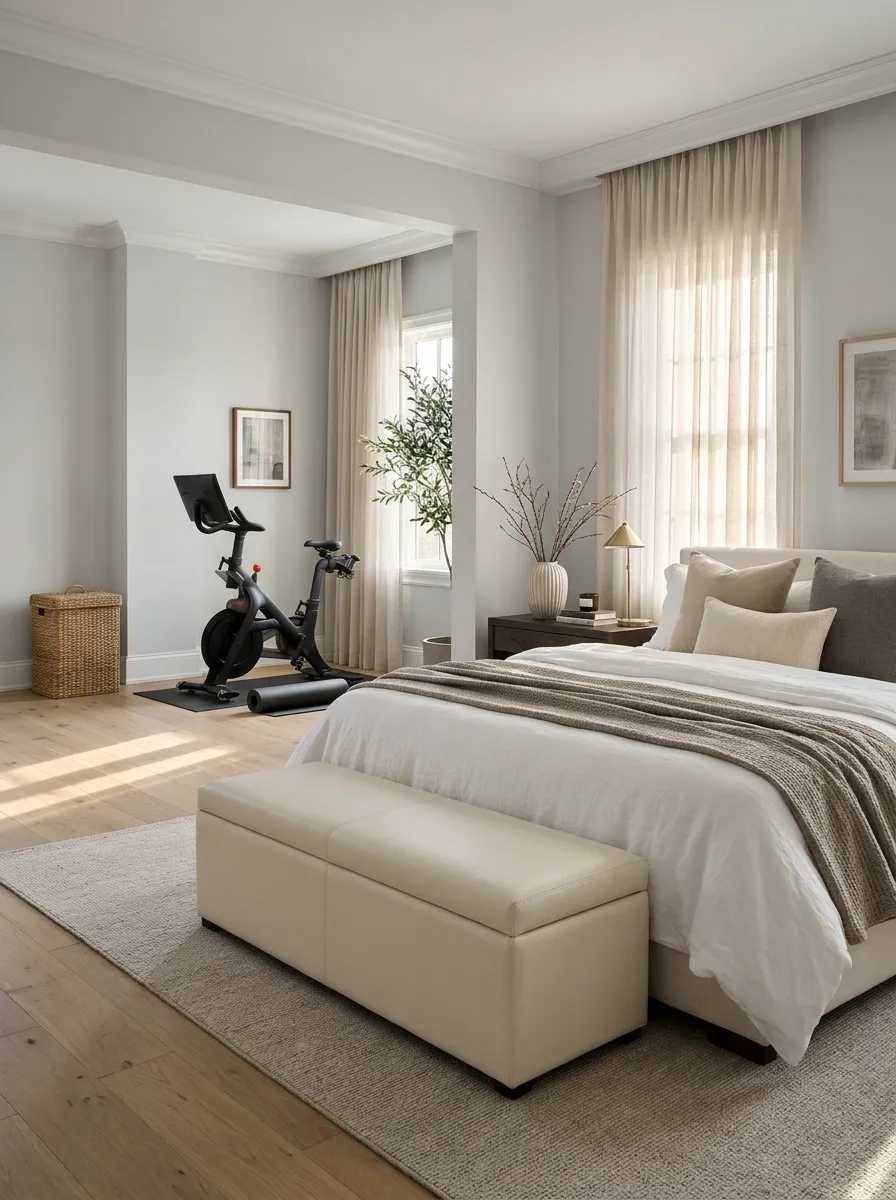
If your bedroom also holds exercise equipment, choose an ottoman with suitable easy-care upholstery and keep it outside the workout movement zone.
Use it as ordinary bedroom furniture, not as an exercise bench or step unless it is specifically designed and rated for that purpose. Upholstery does not confer athletic credentials.
Keep sweaty towels and damp clothing out of enclosed storage. A separate washable hamper is a better destination. The ottoman can still make the room feel comfortable after the equipment has been put away.
A Drawer Ottoman When a Lifting Lid Would Be Awkward
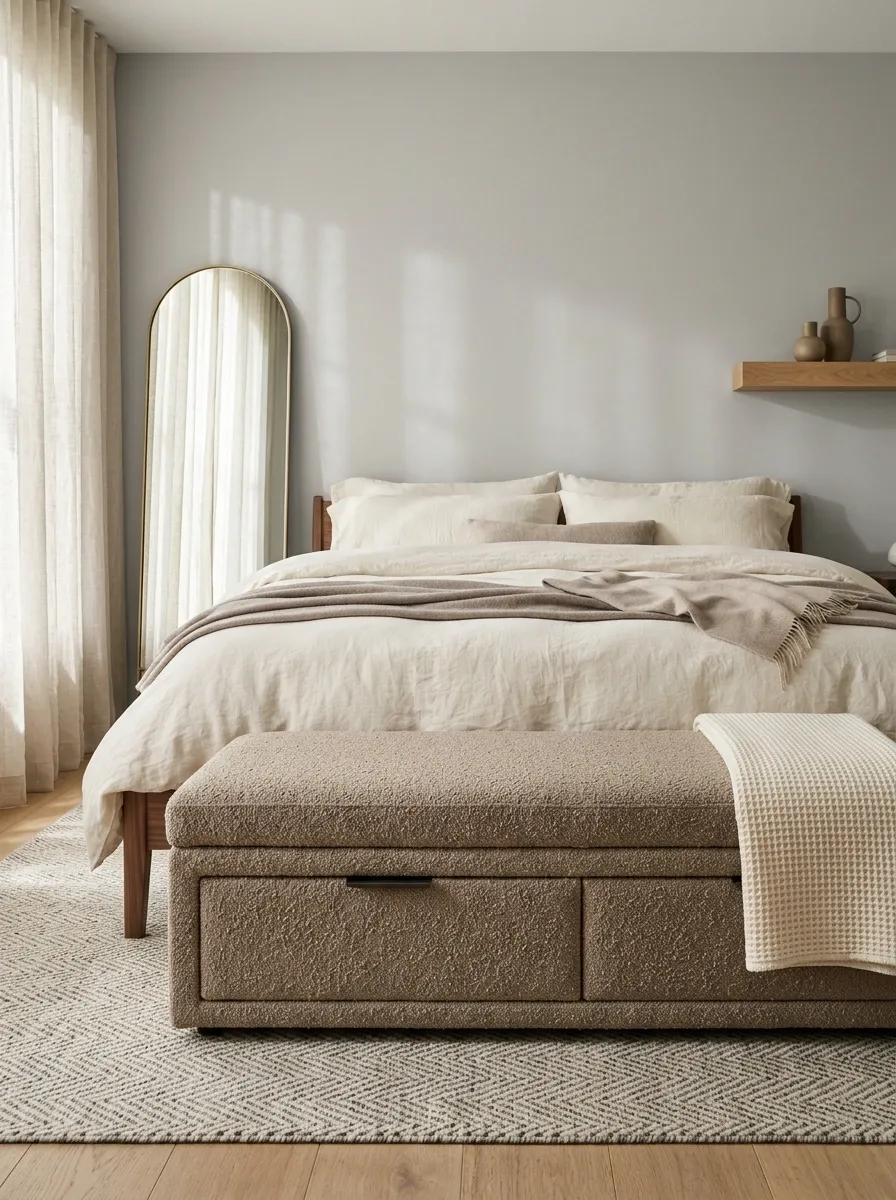
A lid is not the only option.
A drawer-style ottoman may suit a room where lifting a large top is inconvenient. Check that the drawer opens fully without meeting the bed frame or nearby furniture.
Consider how you will reach into it. Low storage may require more bending than you want, even if the top stays still.
Choose handles that will not catch clothing in a narrow route. A concealed pull or recessed detail can feel neater, provided it is comfortable for your hands. Try the mechanism when possible rather than choosing entirely by the exterior.
Opening test: Tape the drawer’s fully extended footprint onto the floor as well as the closed ottoman.
A Skirted Ottoman for a Soft, Traditional Bedroom
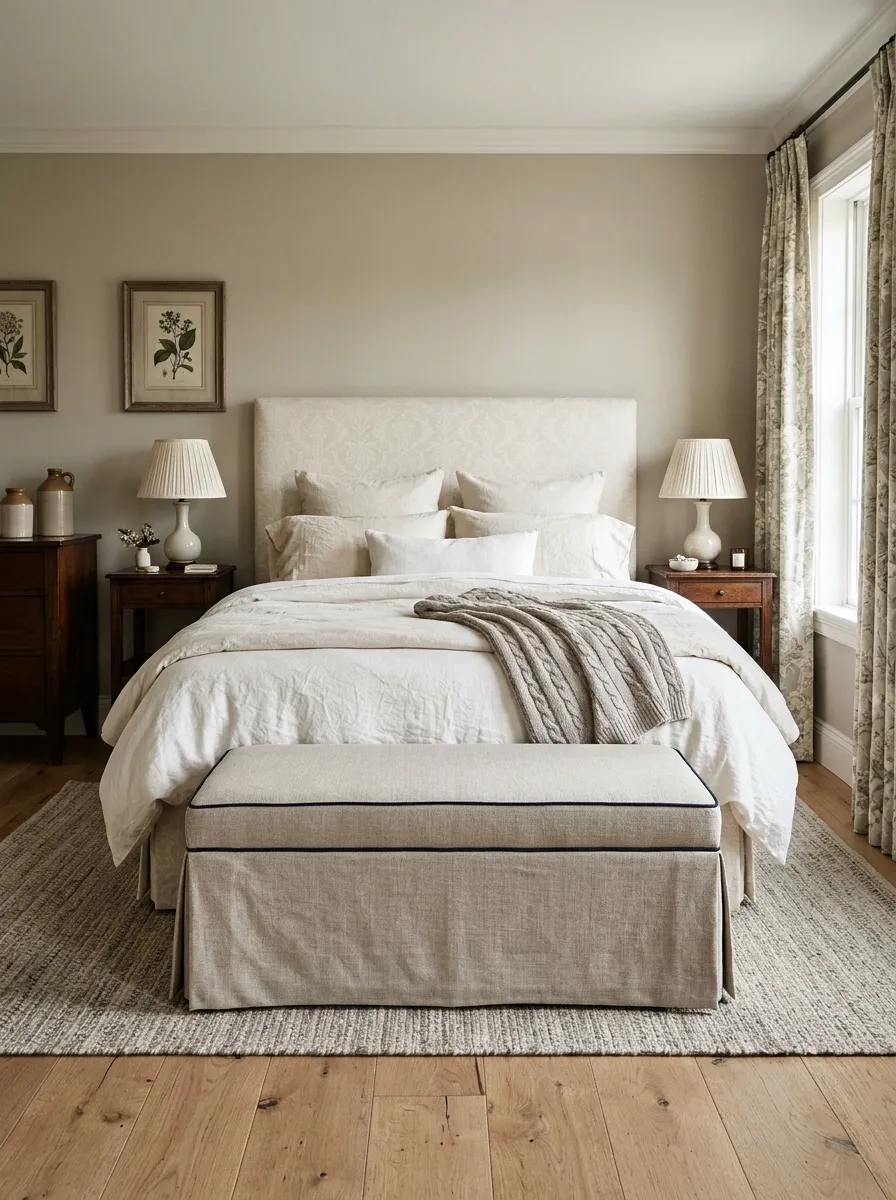
A tailored skirt can connect an ottoman to a traditional room with patterned curtains or an upholstered headboard. Keep the skirt clear of the floor so it does not sweep up everything the vacuum missed.
Choose a simpler fabric if the curtains already carry a strong pattern. A small contrasting trim can add definition without repeating the entire print.
Check how the skirt behaves around any storage lid or moving parts. Decorative fabric should not make the useful mechanism awkward, because the furniture still has to function after it has finished looking charming.
A softer traditional outline
Keep fabric clear of the floor and moving mechanisms. Diagram is conceptual and not to scale; check the actual product dimensions and intended use.
A Short Bench Near the Wardrobe for Shared Mornings
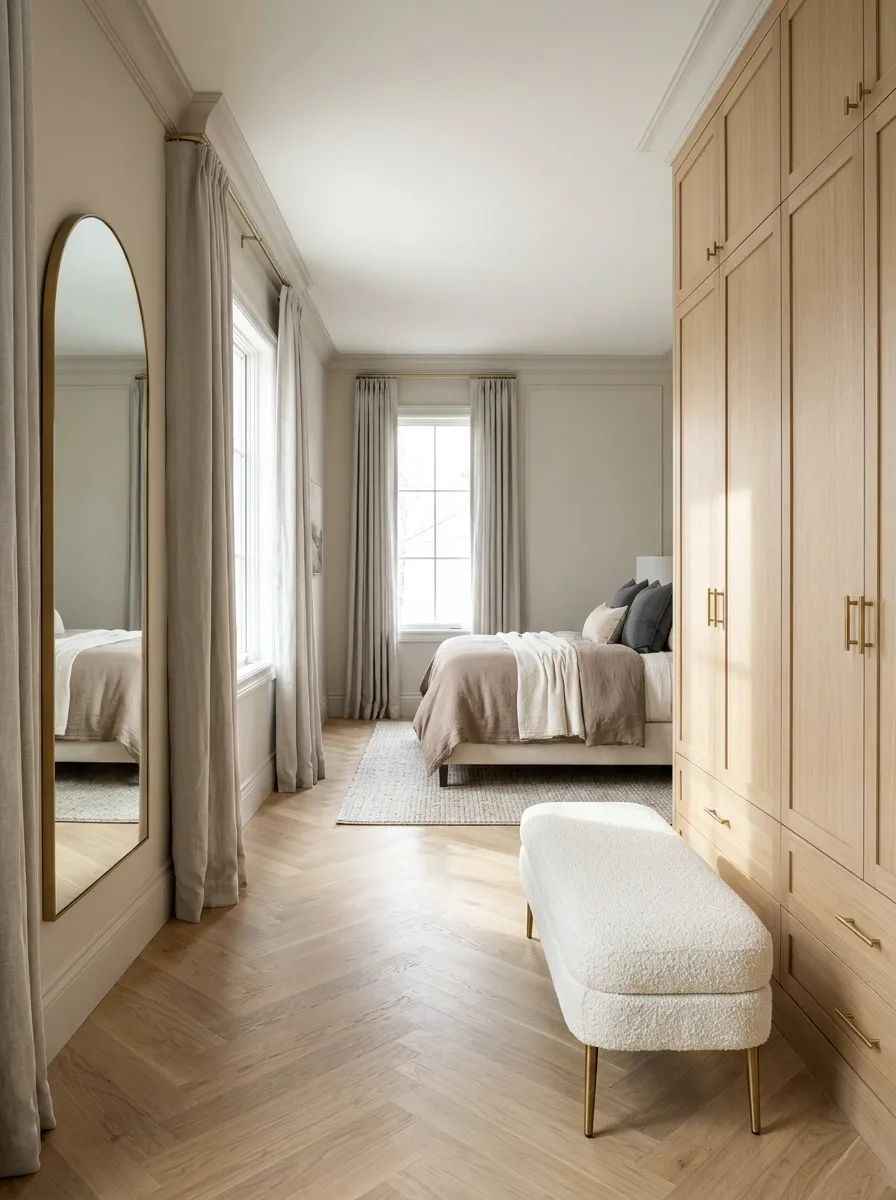
In a shared bedroom, a small seat near the wardrobe can reduce the traffic crossing the foot of the bed. Put it where someone can sit to dress without blocking another person’s drawers.
Test the layout with both people moving through the morning routine. A room can pass a measuring-tape test and still fail when two humans enter it.
Choose a clear top rather than styling it with permanent accessories. The point is an available seat, and decorative stacks are notoriously poor at graciously stepping aside.
| Test the moment | Keep available |
|---|---|
| One person sitting | Wardrobe access for the other |
| Drawers open | Main walking route |
| Both getting ready | Space to stand and turn |
No Ottoman at the Foot When the Room Cannot Spare It
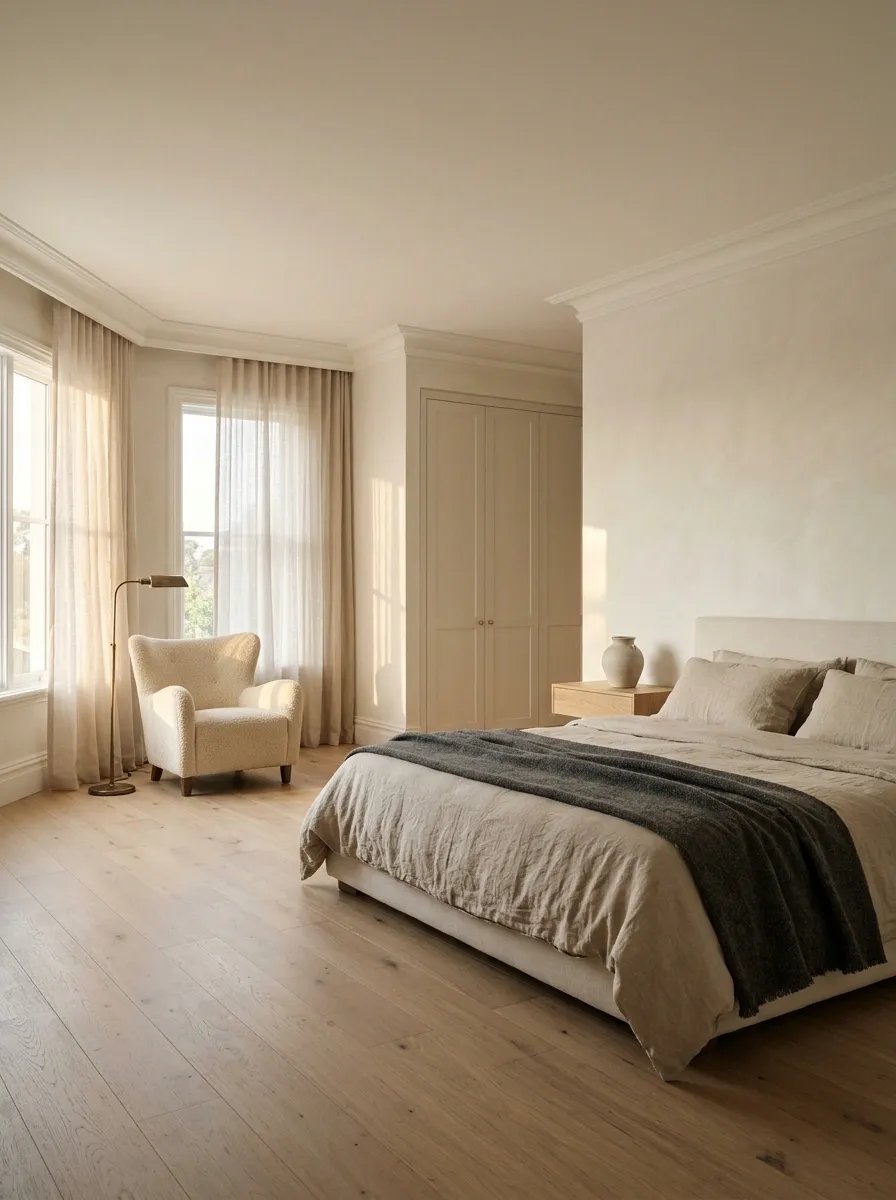
Sometimes the right bedroom ottoman is a smaller one beside a chair—or no extra piece at all. Remove a taped footprint if it forces you to shuffle around the bed.
A bedroom should support dressing, sleeping, storage, and movement before accommodating a photographically satisfying bench.
Use an existing chair or the bed edge if that meets your needs safely and comfortably. Buying less furniture can be a complete design decision. It just tends to receive less enthusiastic promotion from people selling furniture.
Do the tape test before the fabric test. Upholstery can solve a color problem; it cannot negotiate additional floor area into existence.