
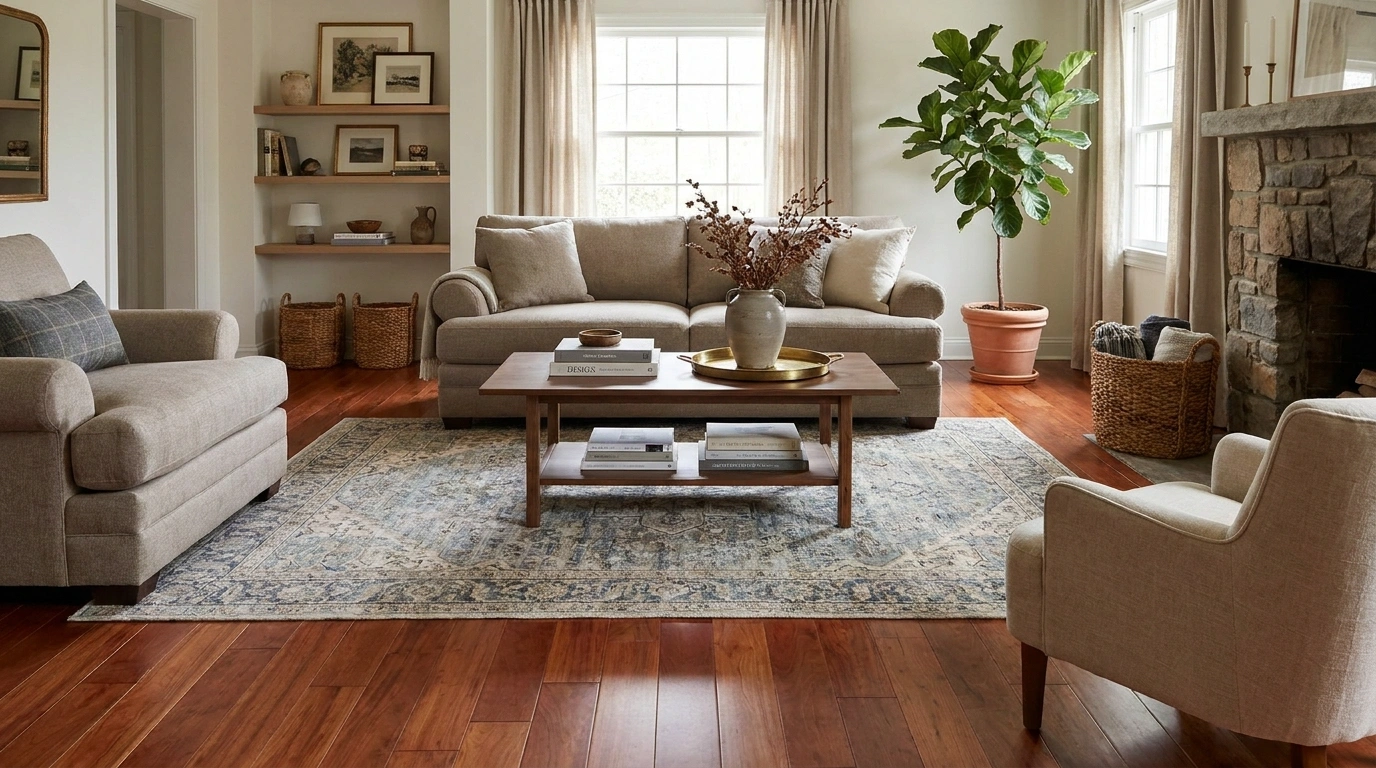
Cherry floors bring their own atmosphere: warm, substantial, occasionally a little too enthusiastic when the afternoon sun arrives. Furnish the room entirely in orange wood and suddenly you’re living inside a jewelry box.
You don’t have to bleach that character out of the room. A cherry floor can support pale upholstery, modern shapes, worn textiles, deep colors, and furniture that looks nothing like the dining set it was originally sold beside.
What matters is the relationship between the floor and everything above it. A room full of individually attractive brown objects can still end up looking like a committee meeting of sideboards.
Give the Wood a Role Before Adding More Furniture
First, look at your particular floor. Some cherry reads red-brown, some amber, and some almost mahogany. The finish may be reflective or subdued. Those differences affect how much visual activity the room already has.
Decide whether the floor will remain a large exposed feature or become the border around an area rug. Then choose your largest furniture item. It’s easier to build around a sofa you actually like than to find a sofa that negotiates with every tiny accessory you’ve bought.
These arrangements offer different ways to give cherry floors space without making the whole room about wood.
Living Rooms With Contrast and Breathing Space
An Ivory Sofa on a Large Faded Rug
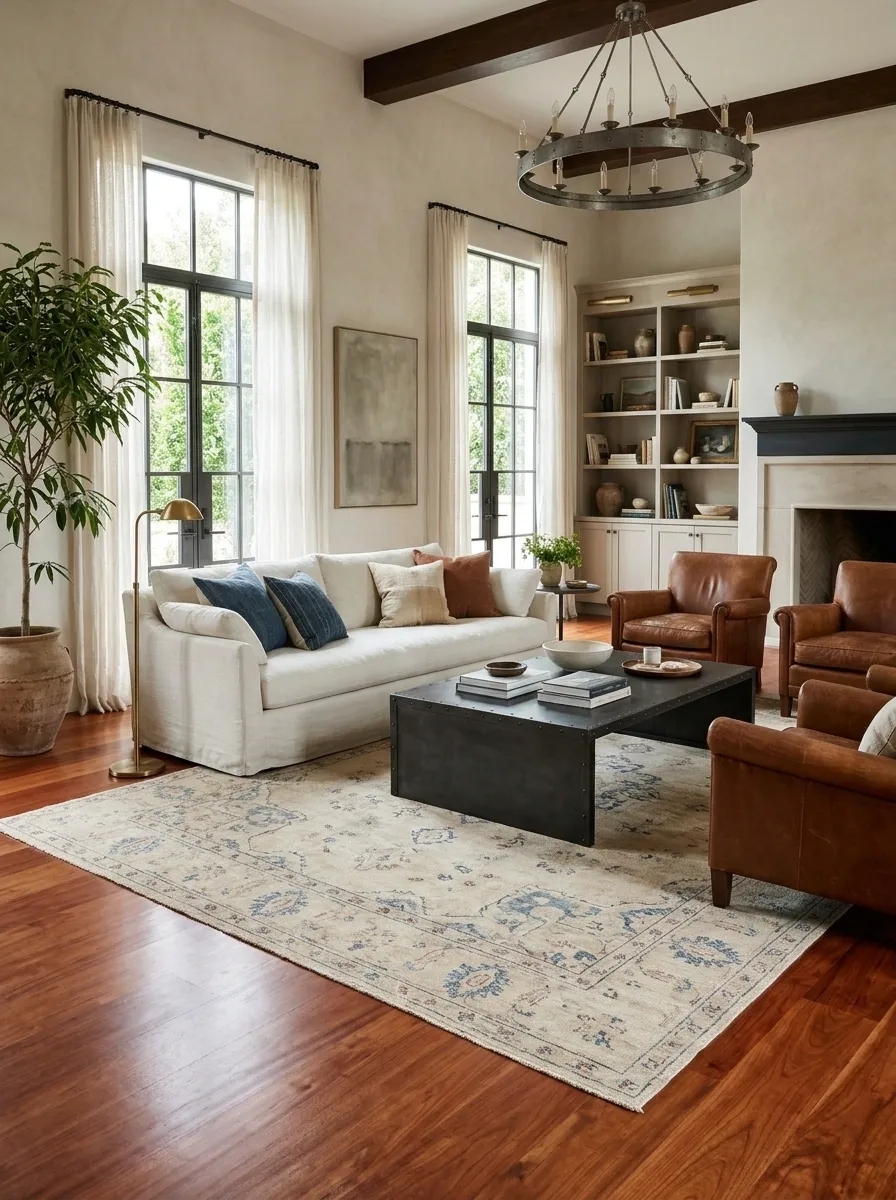
Place an ivory sofa on a faded rug with cream, muted blue, and a small amount of red-brown. Leave a visible perimeter of cherry around the seating area so the rug feels settled within the room rather than like a replacement floor.
Use a dark metal coffee table to avoid another broad wood surface. The rug’s red-brown connects to the floor, while its paler field separates the upholstery from it. Choose ivory upholstery according to how the household actually lives; a washable cover may be more persuasive than a lecture about keeping snacks off the sofa.
Placement note
The rug mediates between light upholstery and the darker exposed floor.
A Blue Sofa With a Pale Stone Coffee Table
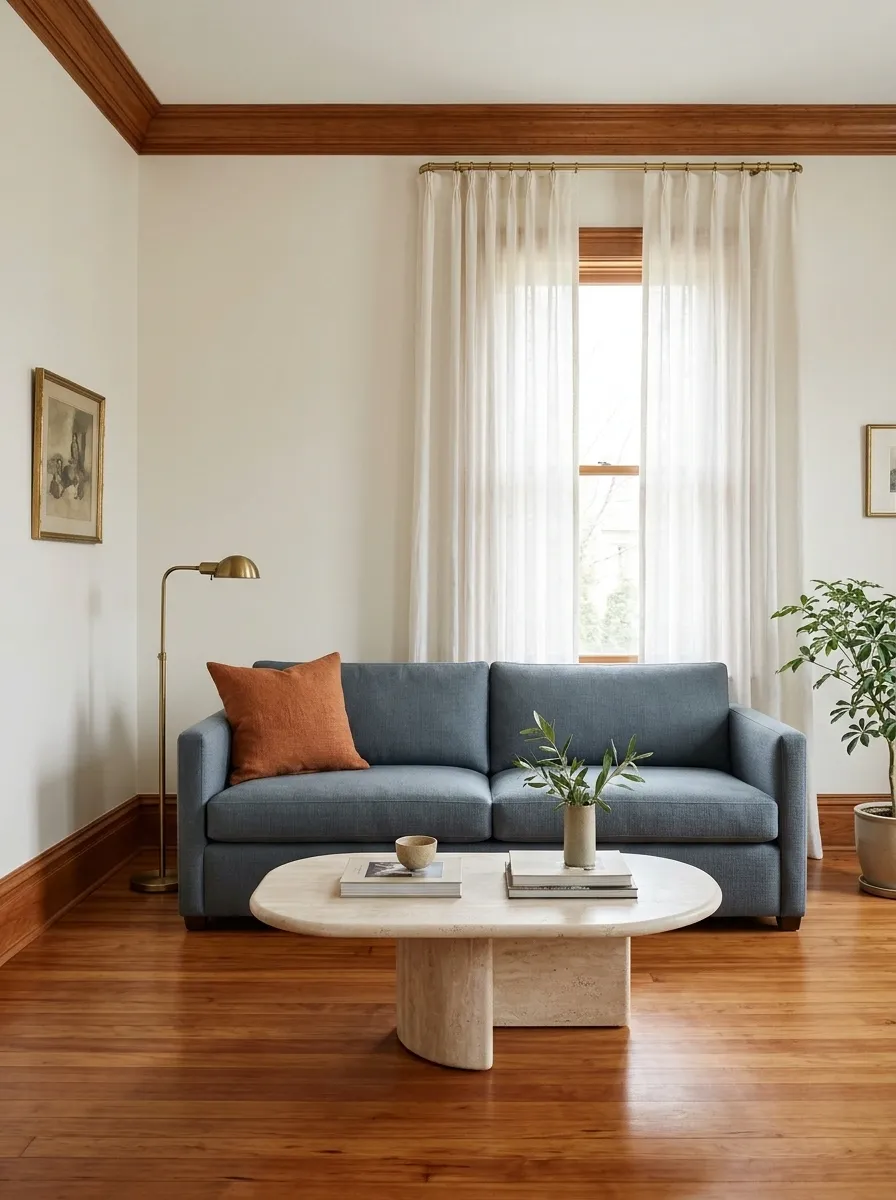
A muted denim or slate-blue sofa gives a cherry floor a clear contrasting surface. Pair it with a pale stone or stone-look coffee table, then add curtains in a quiet off-white.
Let the coffee table have a simple rounded shape if the room contains traditional wood trim. That change of geometry makes the space feel collected over time. Bring the wood’s warmth up to sofa height with one rust cushion, not a full coordinated cushion parade. Avoid picking a blue solely from a screen; view a fabric sample on the actual floor before committing.
Blue upholstery
Pale stone table
Cherry flooring
Placement note
Keep the table lighter than the floor to break up the central mass.
A Chocolate Sofa With Cream and Ink Textiles
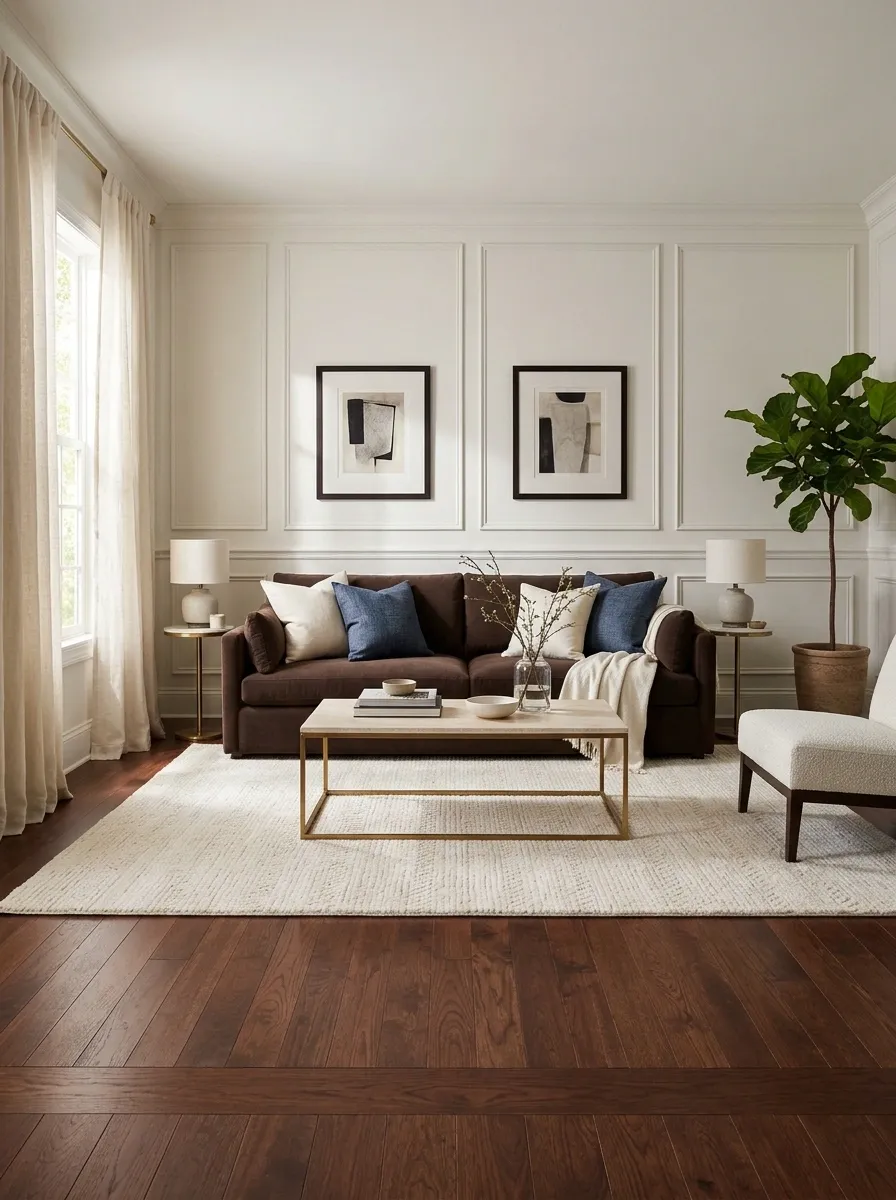
A chocolate sofa can look rich above cherry when a cream rug separates the two. Use cushions with cream and inky blue, and choose a coffee table with an open base rather than a heavy matching wood chest.
This is a good direction for a room that should feel shaded and comfortable. Keep at least one large light surface, such as the rug or curtains, to clarify the furniture silhouettes. Dark upholstery directly on dark reddish flooring can otherwise merge into a broad brown mass, however expensive each component was individually.
Placement note
The pale rug separates two dark surfaces without removing the room's warmth.
An Olive Armchair Beside a Linen Sofa

Use a linen sofa as the large neutral piece, then give an olive armchair its own reading corner. Place a small black side table between them and a warm white lamp beside the chair.
Olive can heighten the floor’s red notes, so choose this arrangement because you enjoy the contrast. A muted fabric generally feels calmer than a clear grassy green. Keep the rug mostly neutral, with perhaps a fine dark border. The room then has distinct layers: warm wood below, light upholstery in the middle, and one green seat that looks intentionally chosen.
Linen sofa
Olive chair
Small black table
Placement note
Sample the olive against the wood; its effect on the floor's redness is part of the design.
A Cream Modular Sofa With a Low Black Table
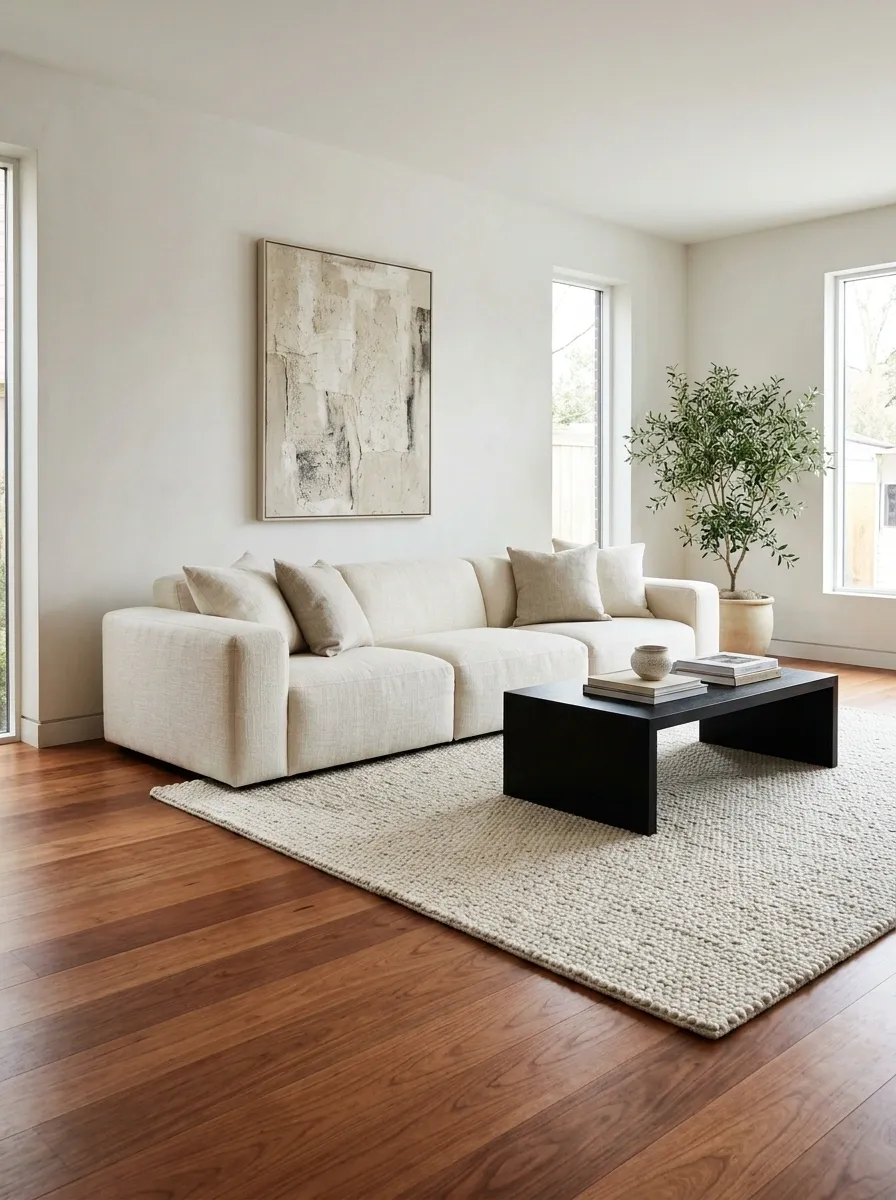
In a room with broad cherry boards and minimal trim, a cream modular sofa can make the floor feel contemporary. Use a low black coffee table with a solid, uncomplicated shape and a large textured rug.
Keep accessories generous and few: a wide ceramic bowl, one floor lamp, and a substantial artwork. A collection of tiny decorative objects would undo the calm geometry. The exposed cherry becomes the room’s warm continuous plane, while the furniture supplies a different visual language. You can keep a traditional material without furnishing around it like a period-room curator.
Placement note
Use simple furniture volumes to contrast with the floor's grain.
Dining Rooms That Don’t Require a Matching Wood Set
A Black Dining Table With Woven Chairs
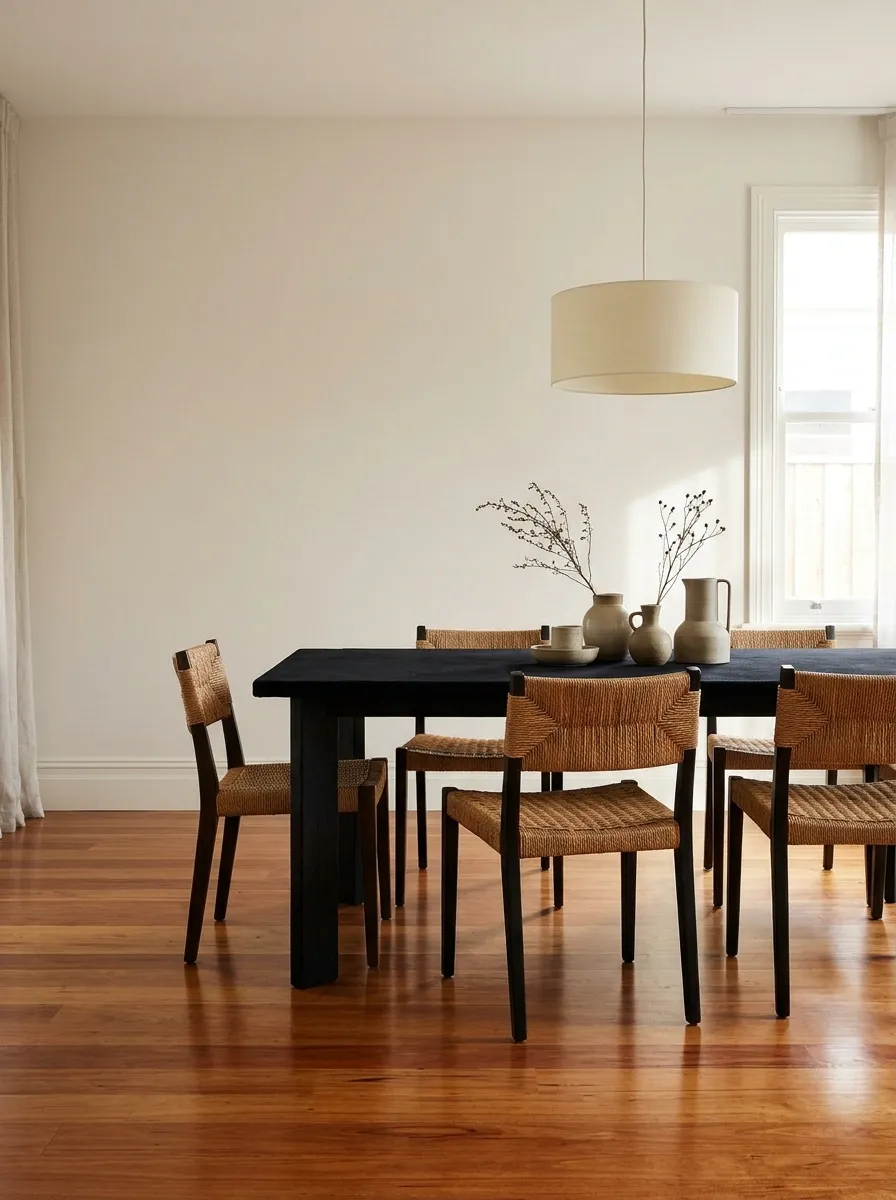
A black table gives reddish wood a decisive companion. Surround it with chairs that have woven seats or backs, then hang a simple pendant with a pale shade.
The woven material adds warmth at a different scale from the floorboards. Keep the table finish matte or softly satin if the floor is glossy; repeating high shine on every surface can feel rather showroom-adjacent. A neutral rug can soften the arrangement, but it isn’t mandatory. Without one, leave the area around the table uncluttered so the black form reads clearly against the cherry.
Black table
Woven chair seats
Cherry boards
Placement note
Black separates the table from the floor while woven seats retain a warm note.
A Pale Oak Table With Upholstered End Chairs
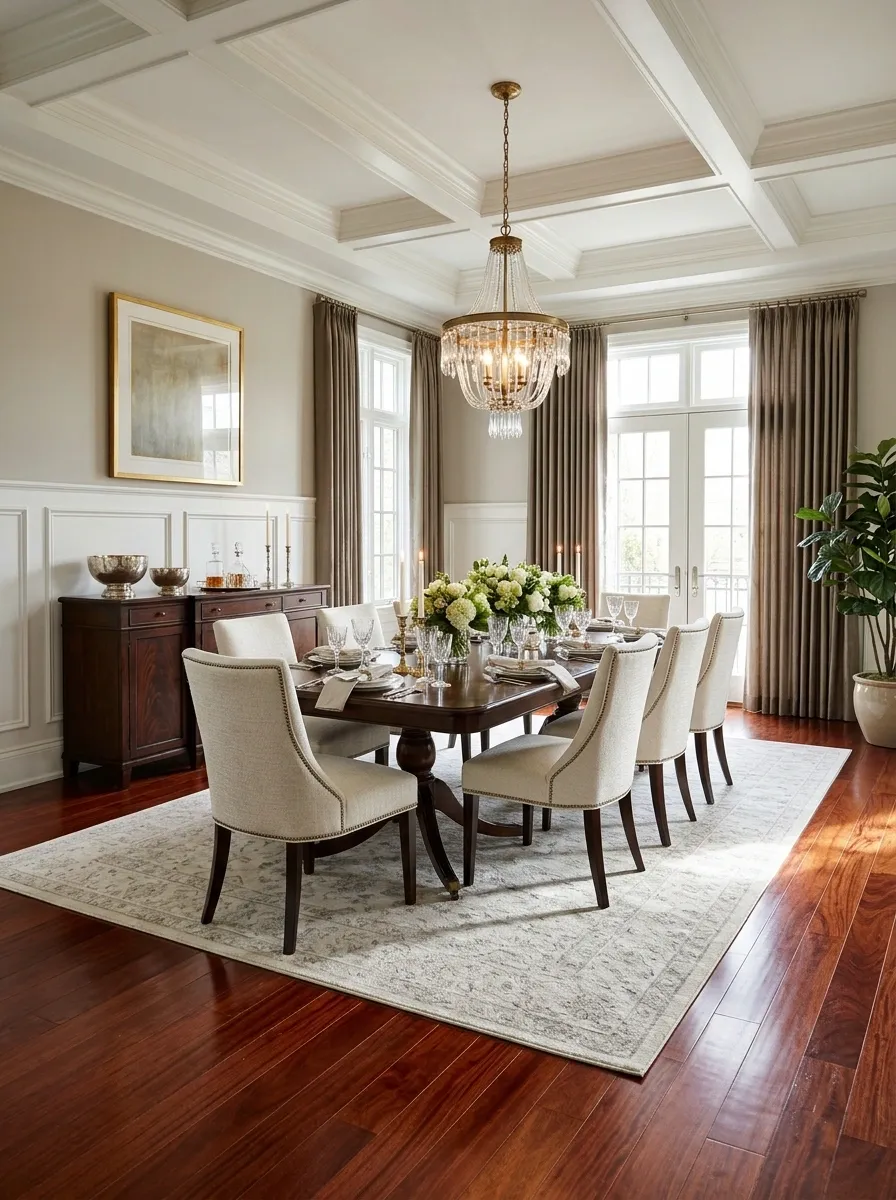
Choose a pale oak table noticeably lighter than the cherry floor. Add upholstered chairs at the ends and simpler wood chairs along the sides to make the mix feel deliberate.
A light rug beneath the entire dining arrangement can further distinguish the two woods. Avoid an oak stain that nearly matches the floor but misses by a shade; visible difference is easier to understand than an unsuccessful disguise. Keep the upholstered seats in oatmeal or muted blue, and use a dark pendant or frame to give the pale tabletop an outline.
Pale oak sits distinctly above the cherry.
A slightly different reddish stain can look like a failed set.
Placement note
Compare full samples in the room instead of trying to match names on furniture listings.
A Glass Table With Dark Sculptural Chairs
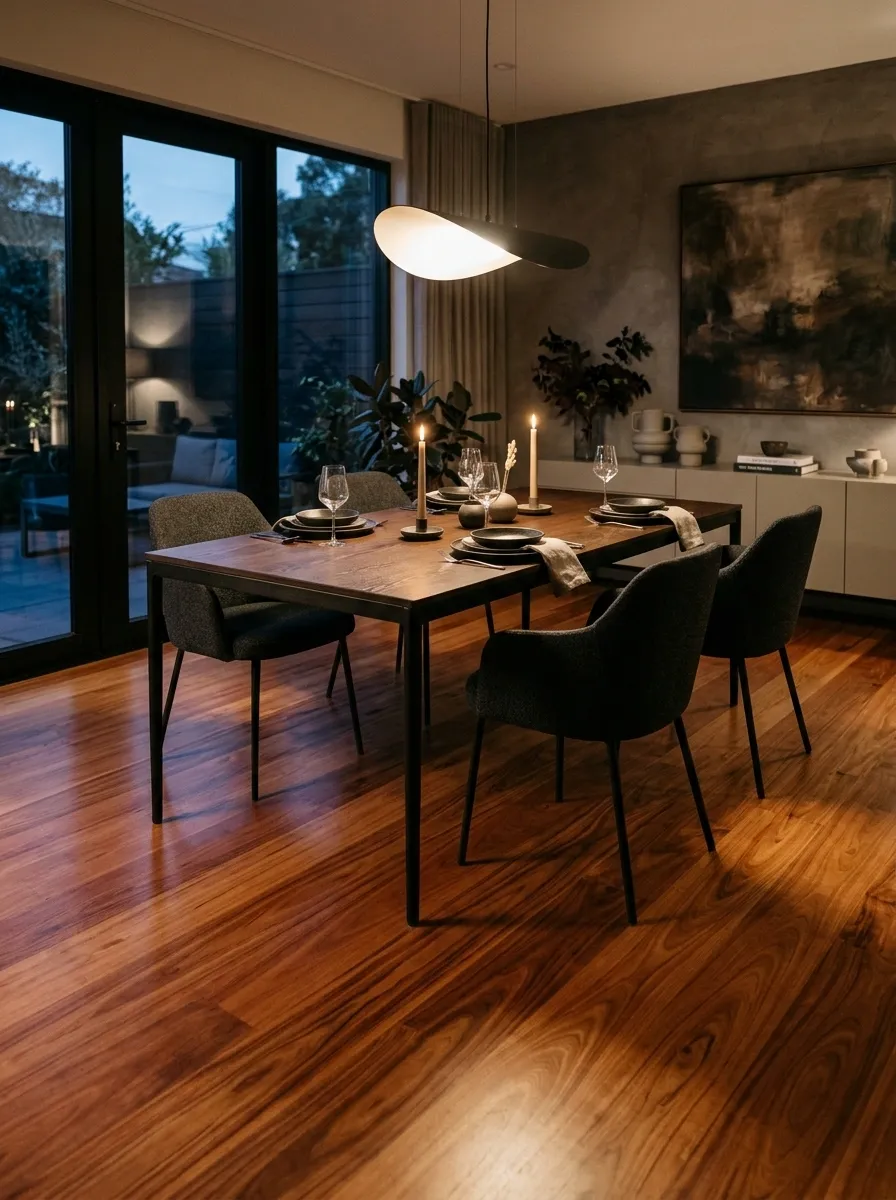
Where the floor has especially beautiful grain, a glass dining table allows more of it to remain visible. Choose dark chairs with a strong shape so the furniture doesn’t become a collection of barely visible outlines.
Keep the tabletop relatively clear. A low opaque bowl or broad vase gives the glass a visual center without covering it in miscellaneous objects. This arrangement works especially well in a smaller dining area where several solid wood pieces would crowd the view. Consider fingerprints and everyday cleaning before falling in love with the transparency. The table will not clean itself out of gratitude.
Clear glass table
Dark chairs
Visible cherry grain
Placement note
A transparent top needs substantial chair shapes to anchor the dining group.
A Painted Sideboard Under Oversized Art
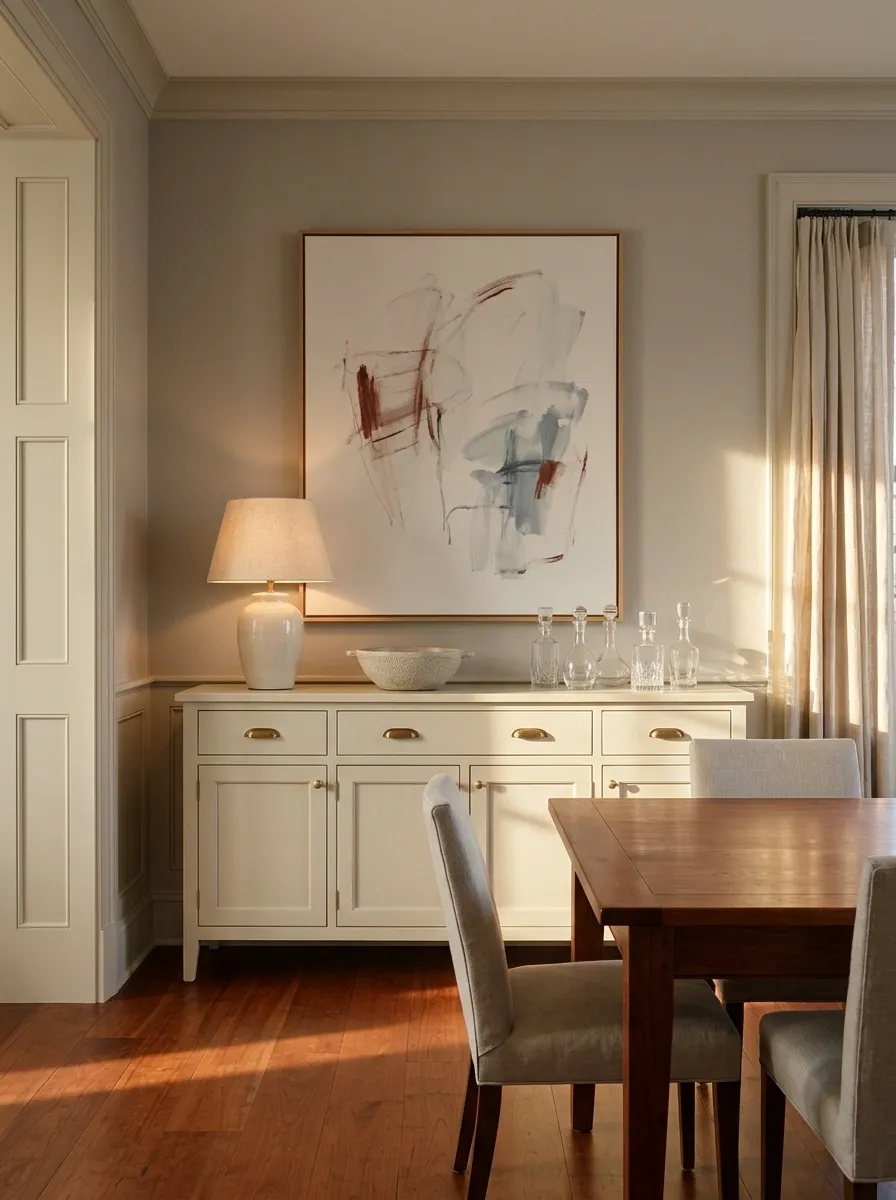
Use a muted blue-gray or cream sideboard against the dining wall instead of adding another large reddish cabinet. Hang one oversized artwork above it, with enough separation that each piece has a clear outline.
Pull a little red-brown into the artwork, then leave the sideboard surface simple. A lamp and serving bowl are useful; a staged row of empty decanters is optional theater. The painted cabinet breaks up the wood at eye level while the artwork connects the wall back to the floor. This is particularly useful if the dining table must remain cherry.
Painted sideboard
Art background
Existing wood
Placement note
A painted cabinet can interrupt a room full of matching wood without replacing the dining table.
Bedrooms With Warmth Underfoot
An Upholstered Headboard and Chalky Blue Walls
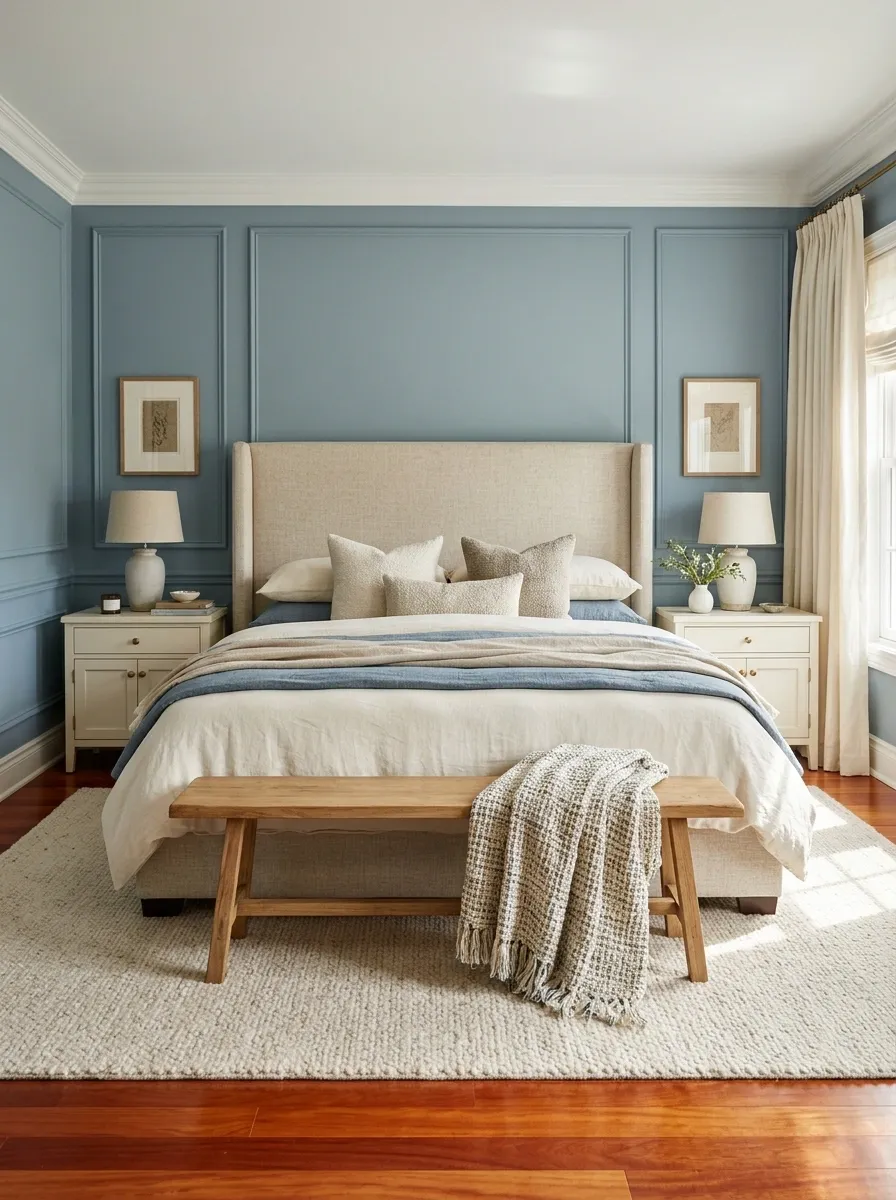
Choose a generous oatmeal headboard and chalky blue walls, with bedding in cream and faded denim. The upholstered surface creates a soft visual break above the cherry floor.
Use bedside tables that differ from the floor: painted cream, dark metal, or a visibly lighter wood. If the bed is already cherry, concentrate the textile contrast in a broad quilt and substantial pillows. A pair of tiny cushions won’t change the balance of a large wood bed. Keep the rug big enough to feel related to the bed rather than like a narrow decorative apology at its foot.
Placement note
Use upholstery to separate the bed silhouette from the wood below.
A Dark Painted Bed With Flax Bedding
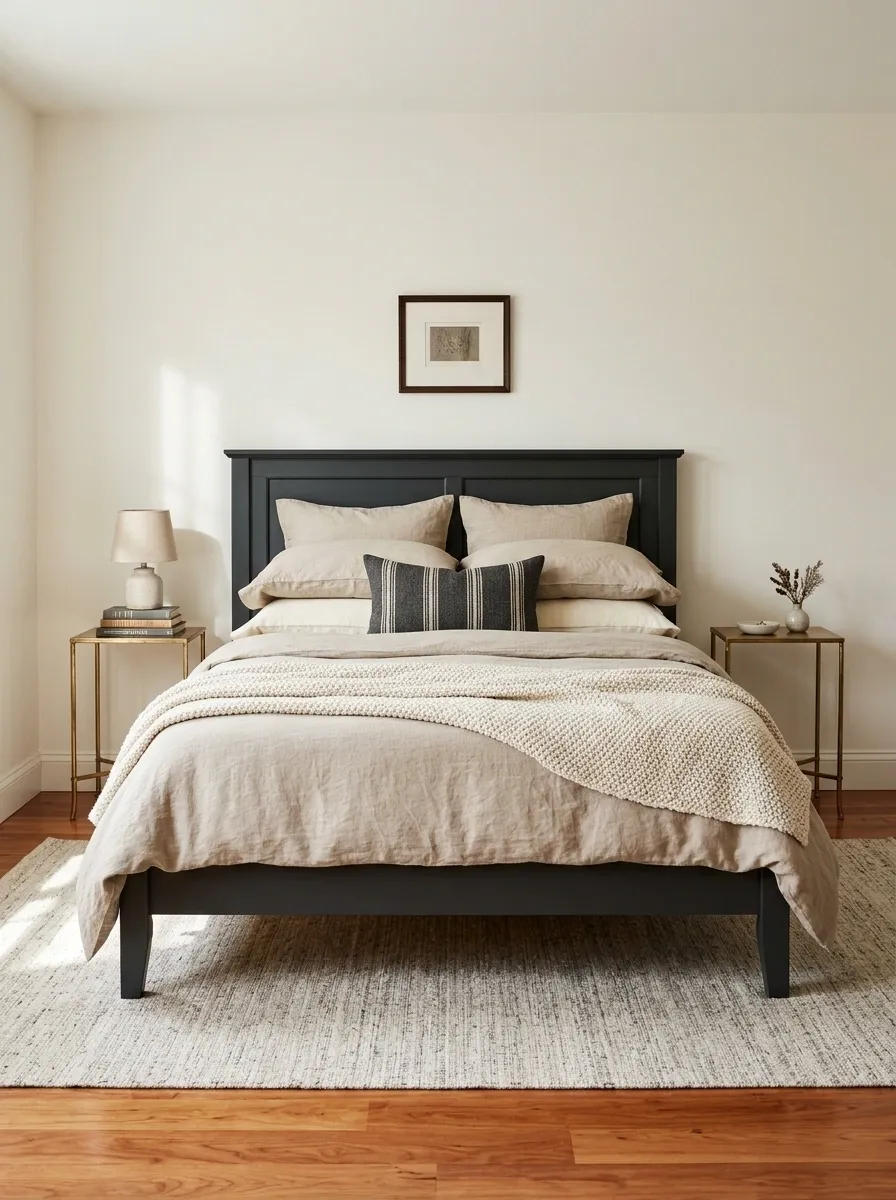
A charcoal or soft-black bed frame gives cherry flooring a crisp silhouette. Dress it in flax-colored bedding with a cream throw, and keep the walls in a warm off-white.
This arrangement can accommodate traditional bed shapes because the painted finish separates them from the floor. Choose small bedside pieces with open bases if the room is compact. A striped lumbar cushion in charcoal and cream repeats the frame without making every textile dark. The atmosphere should feel restful and grounded; resist adding black window trim, black lamps, and black doors merely because the bed introduced the color.
Placement note
Flax bedding keeps the dark frame from becoming the entire visual story.
A Dusty Pink Bedroom With Walnut Accents
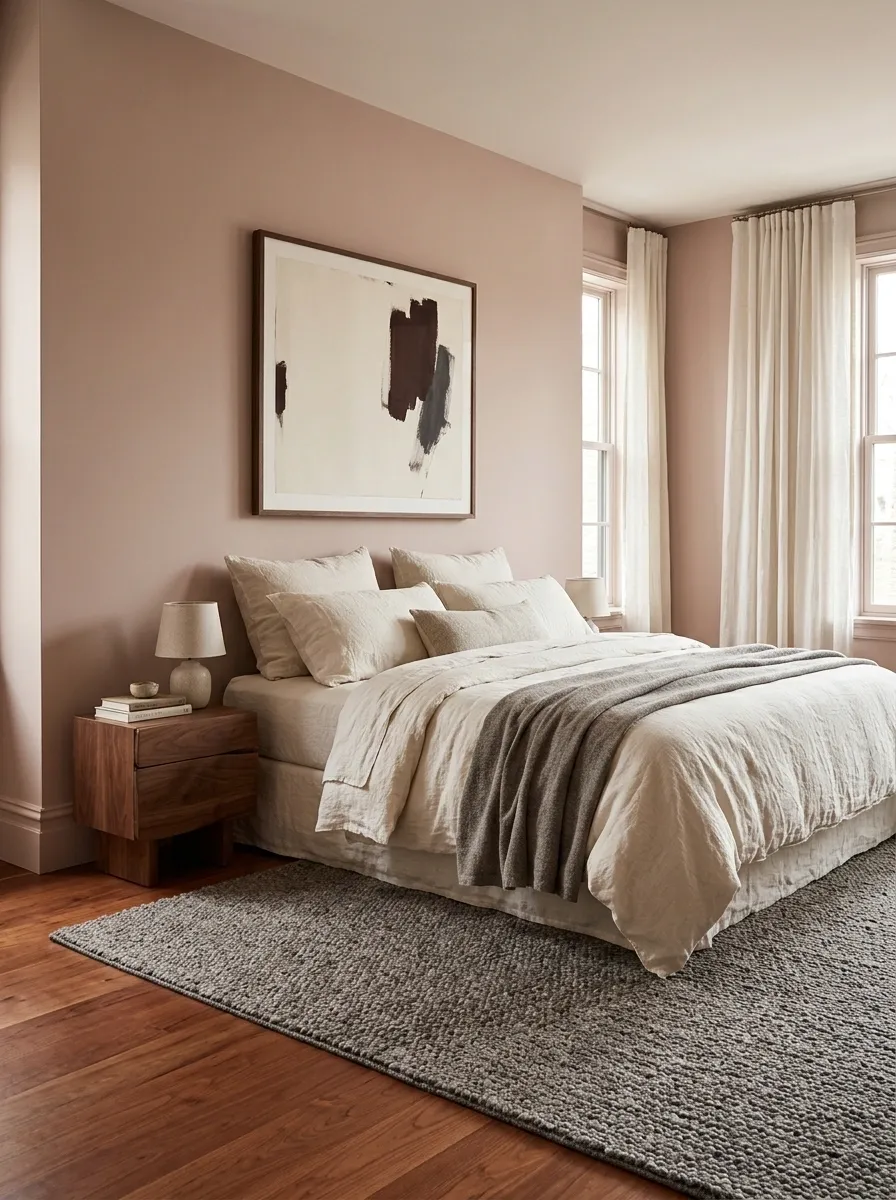
Use dusty pink walls, cream bedding, and a small walnut bedside chest for a bedroom that embraces warmth. The pink should be muted enough to sit beside the cherry without making the room feel uniformly red.
Add a gray-brown rug to interrupt the warm surfaces. Choose artwork with cream space and a few deeper brown marks. The walnut chest should have a different shape and finish from the flooring, rather than posing as its matching accessory. This is a deliberately warm scheme, best judged with actual samples; the appeal is the layered color, not the promise of making the floor disappear.
Dusty pink wall
Cream bedding
Gray-brown rug
Placement note
The quieter rug gives the warm wall and wood room to coexist.
A White Metal Bed With Indigo Patchwork
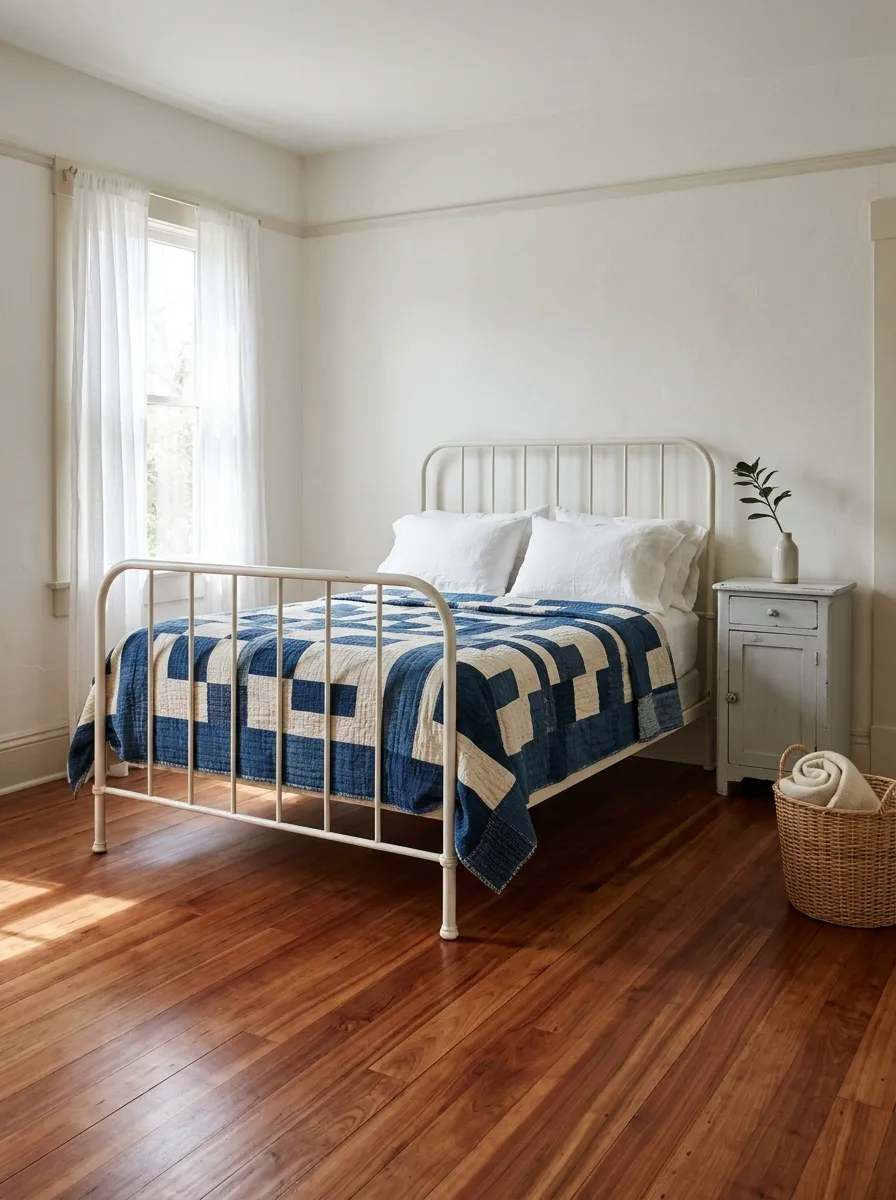
A white metal bed introduces slender lines above the substantial floor. Add an indigo-and-cream patchwork quilt, simple white curtains, and a painted bedside cupboard.
The patchwork brings pattern to the bed rather than adding more grain through furniture. Choose larger blocks if the floorboards have strong variation; tiny busy prints can make every surface chatter. A woven basket at the bedside can hold a spare blanket, but keep it away from the main walking route. This bedroom feels relaxed and assembled over time, without requiring a roomful of distressed furniture to prove that it is charming.
Placement note
Indigo bedding supplies the main pattern above the wood.
Small Arrangements That Change the Whole Impression
A Cream Hall Runner With a Narrow Dark Border
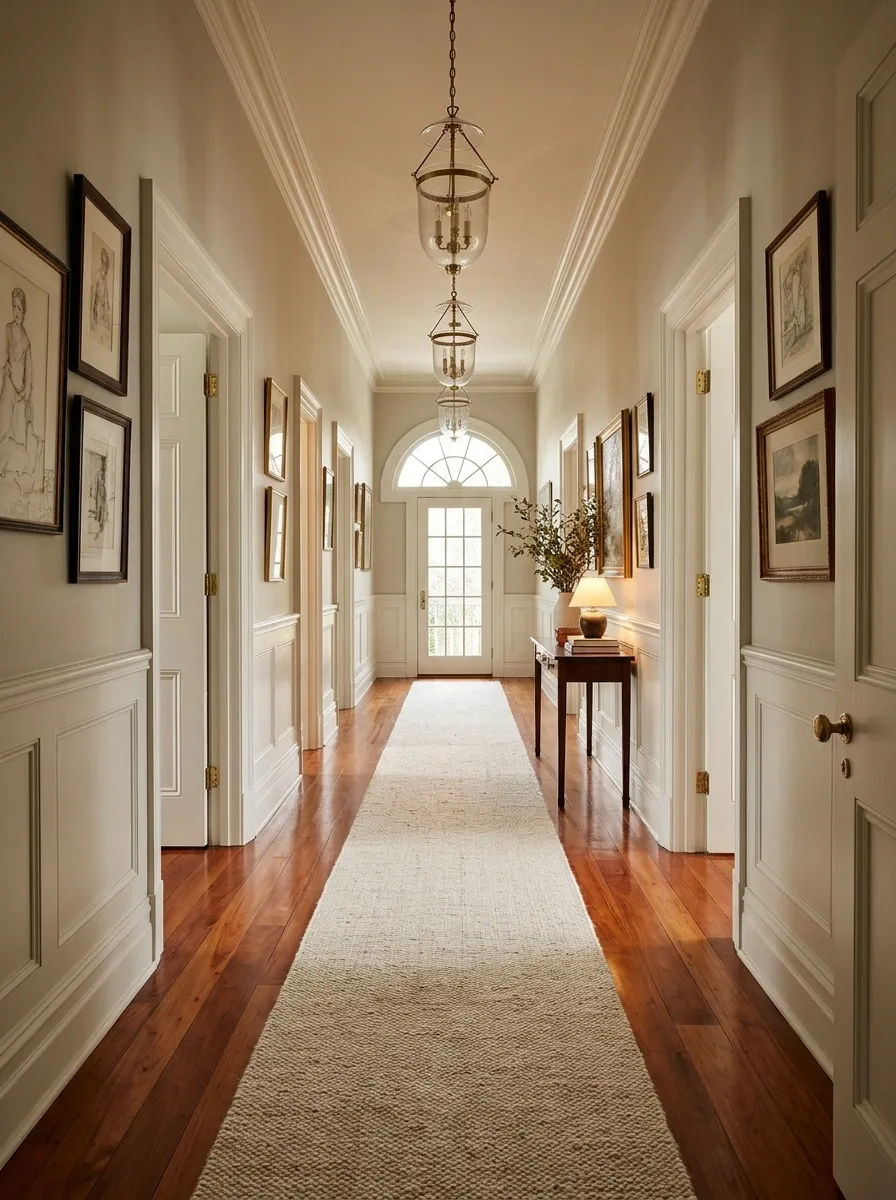
In a cherry-floored hallway, use a pale runner with a slim charcoal or brown border. The light center changes the view along the floor, while the border gives the textile a defined edge.
Choose a length that looks purposeful within the clear hall, and check door clearance and suitable rug backing for the finish. A narrow painted console with one lamp is enough furniture. The runner doesn’t need to cover every inch; exposed cherry at the sides is part of the composition. Let the textile establish the route instead of lining the hall with decorative obstacles.
Placement note
Keep the textile flat, stable, and clear of door movement.
A Writing Desk on a Blue Flatweave Rug
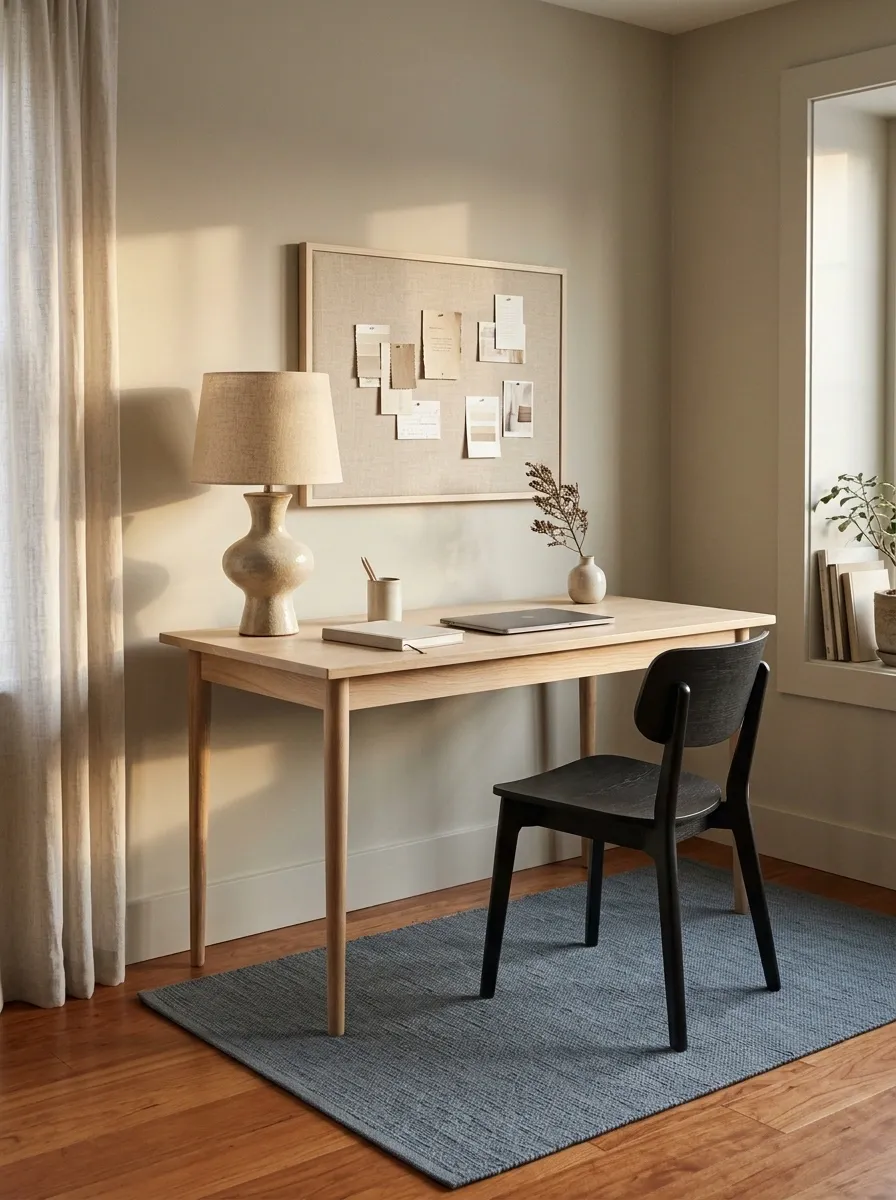
Set a simple cream or pale wood desk on a muted blue flatweave, with a dark desk chair. The rug makes a small working corner feel separate from the rest of a cherry-floored room.
Use a lamp with a visible shape rather than a cluster of desktop ornaments. A wall pinboard in natural linen can soften the space above the desk while staying useful. The blue belongs to a defined zone, so it needn’t spread across every cushion in the adjoining seating area. Choose a rug and chair combination that permits comfortable movement rather than catching the chair at every attempt to stand.
Blue flatweave
Pale desk
Dark chair
Placement note
Keep the work zone visually coherent without forcing its colors across the whole room.
A Reading Nook With a Camel Chair and Cream Curtains
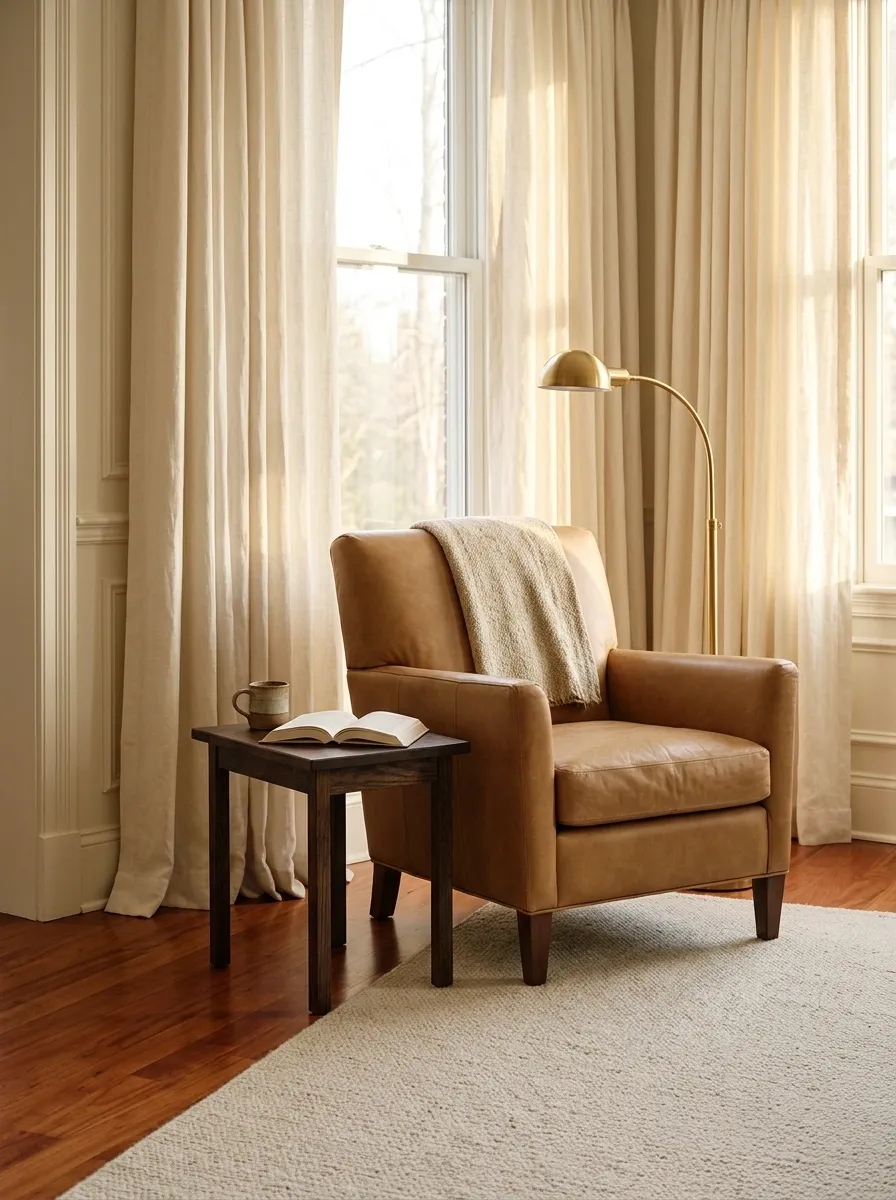
A camel chair can sit comfortably above cherry if a pale rug separates their similar warmth. Hang cream curtains behind or beside it, and add a small dark table for a book and drink.
Choose the chair by material as much as color. A softly textured fabric or matte leather looks different from the floor’s smooth boards. Keep the curtain generous enough to read as a vertical surface, not a thin strip apologizing beside the window. A floor lamp completes the arrangement; you don’t need a bookshelf, basket ladder, and decorative blanket mountain to certify it as a reading nook.
Placement note
A light textile between similarly warm materials helps each one remain distinct.
A White Bookcase With a Dark Interior Back
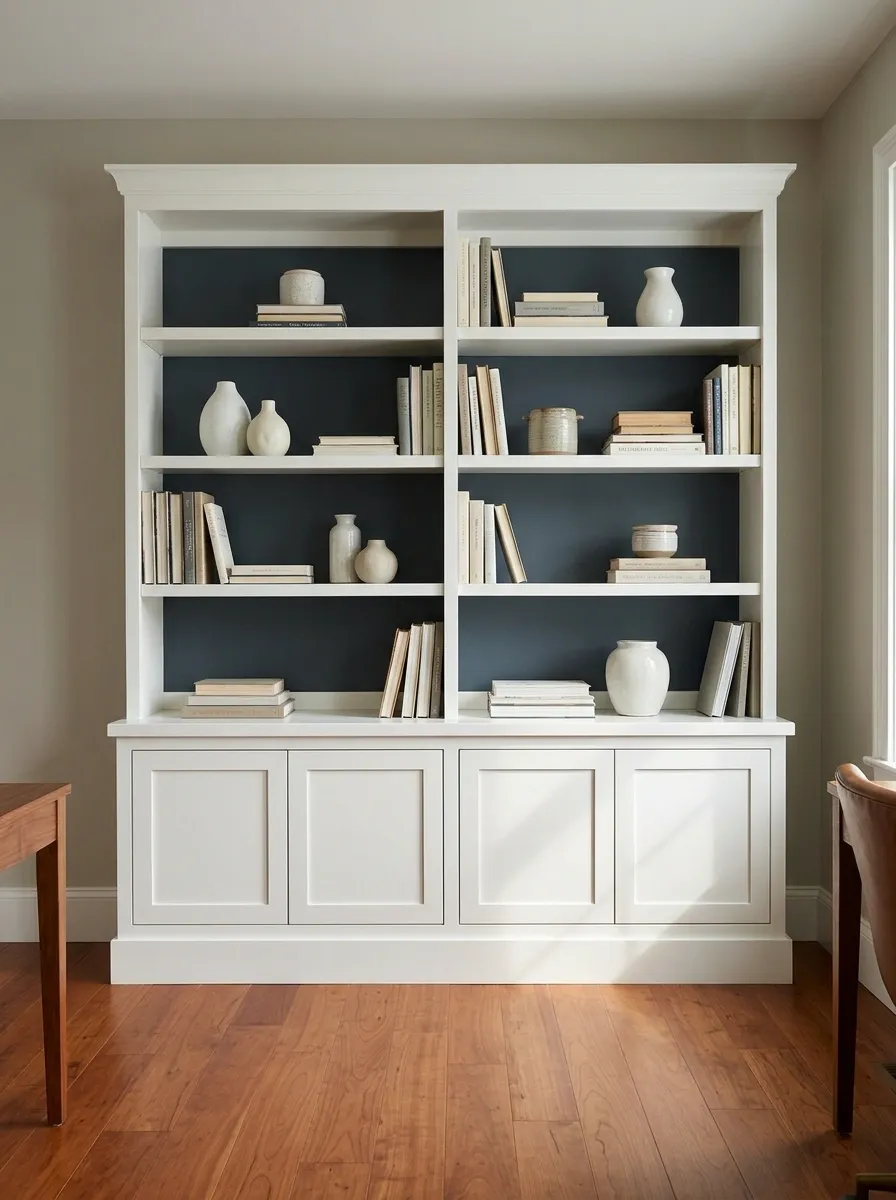
Place a white bookcase against a quiet wall and paint its interior back a deep blue-gray. The white framework lightens the room while the dark recess gives books and pale ceramics a clear setting.
Leave some shelves practical and full rather than arranging every book by decorative obligation. The floor already provides a rich material; the bookcase can supply structure and lighter surfaces. Keep the base area free of extra baskets if they crowd the floor line. This works particularly well when an existing cherry desk or cabinet must remain elsewhere in the room.
White framework
Dark shelf backs
Cherry floor
Placement note
Use the painted interior to give the shelving depth without adding another wood species.
Full-Length Flax Curtains Against Putty Walls

Putty walls and flax curtains create a soft background for cherry flooring. Use a putty sample that remains neutral beside the wood rather than turning distinctly pink or green.
The curtains add a broad matte surface, particularly useful when the floor has a reflective finish. Keep the curtain fabric visibly different from the wall through weave or depth. Pair with a sofa in cream, charcoal, or muted blue, depending on how much contrast you want. This approach can calm a room full of handsome existing furniture without asking you to replace everything or buy a fashionable object shaped like a pebble.
Putty wall
Flax curtain
Cherry boards
Placement note
Texture distinguishes close neutral shades when the floor carries most of the color.
A Painted Bench and a Striped Entry Cushion
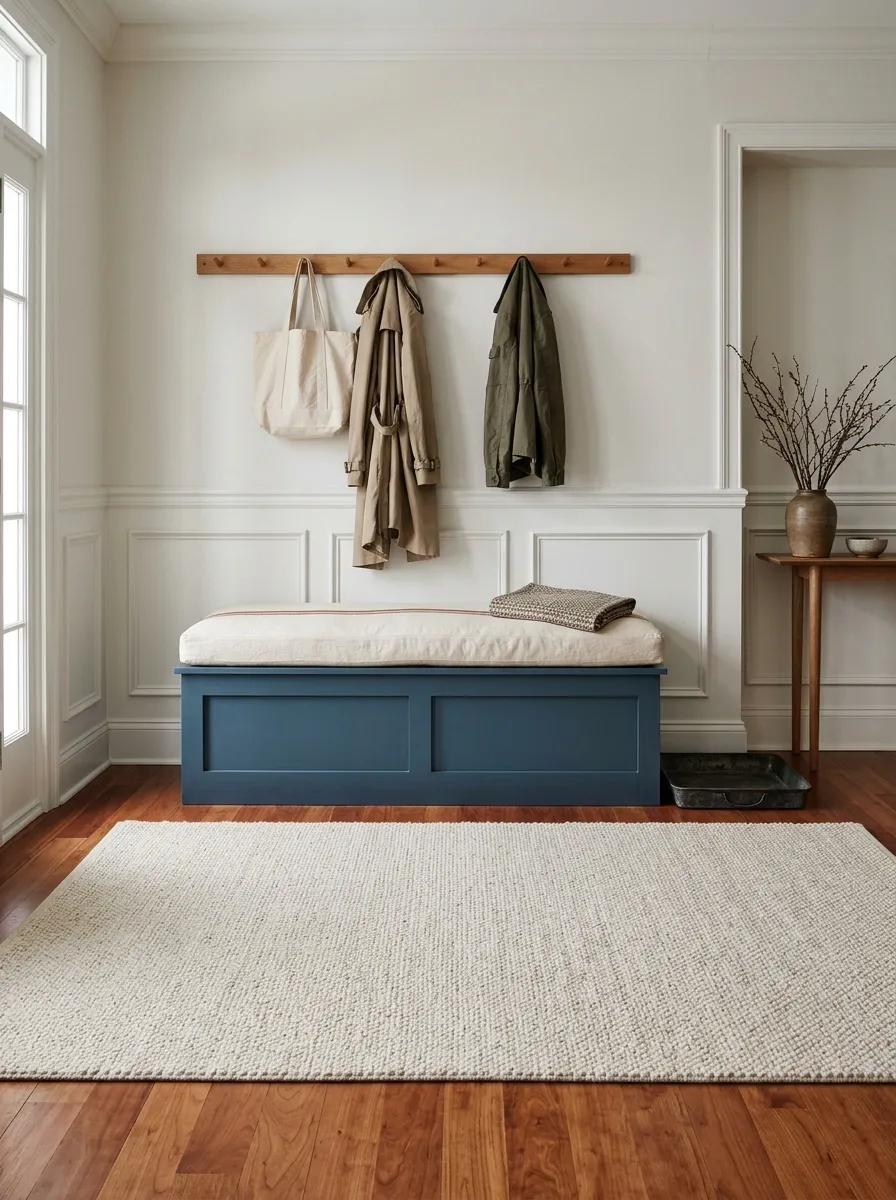
At the entry, place a deep blue painted bench against a light wall and add a cream cushion with a thin rust stripe. A small boot tray beside it gives the arrangement an everyday purpose.
The painted bench breaks the expectation that every wooden item must remain wood-colored. Use a simple wall hook rail above, with enough breathing space for actual coats. The rust stripe is a small connection to the floor; the bench provides contrast. Choose the bench depth around the available circulation space, because a beautiful seat you have to sidle past is a hallway grievance with legs.
Painted bench
Cream cushion
Rust stripe
Placement note
Let the furniture solve storage and seating before adding decorative extras.
Edit the Room Before Shopping Again
Take away one reddish wood item, one busy textile, and one small accessory cluster. Stand in the doorway. That quick edit often reveals whether you need a large pale rug, stronger furniture contrast, or simply fewer competing surfaces.
Cherry floors don’t demand a particular decorating era. They ask for some clear decisions about scale, lightness, and material. Keep the warmth you enjoy, interrupt the repetition you don’t, and let the furniture look like it belongs to the people living there.