
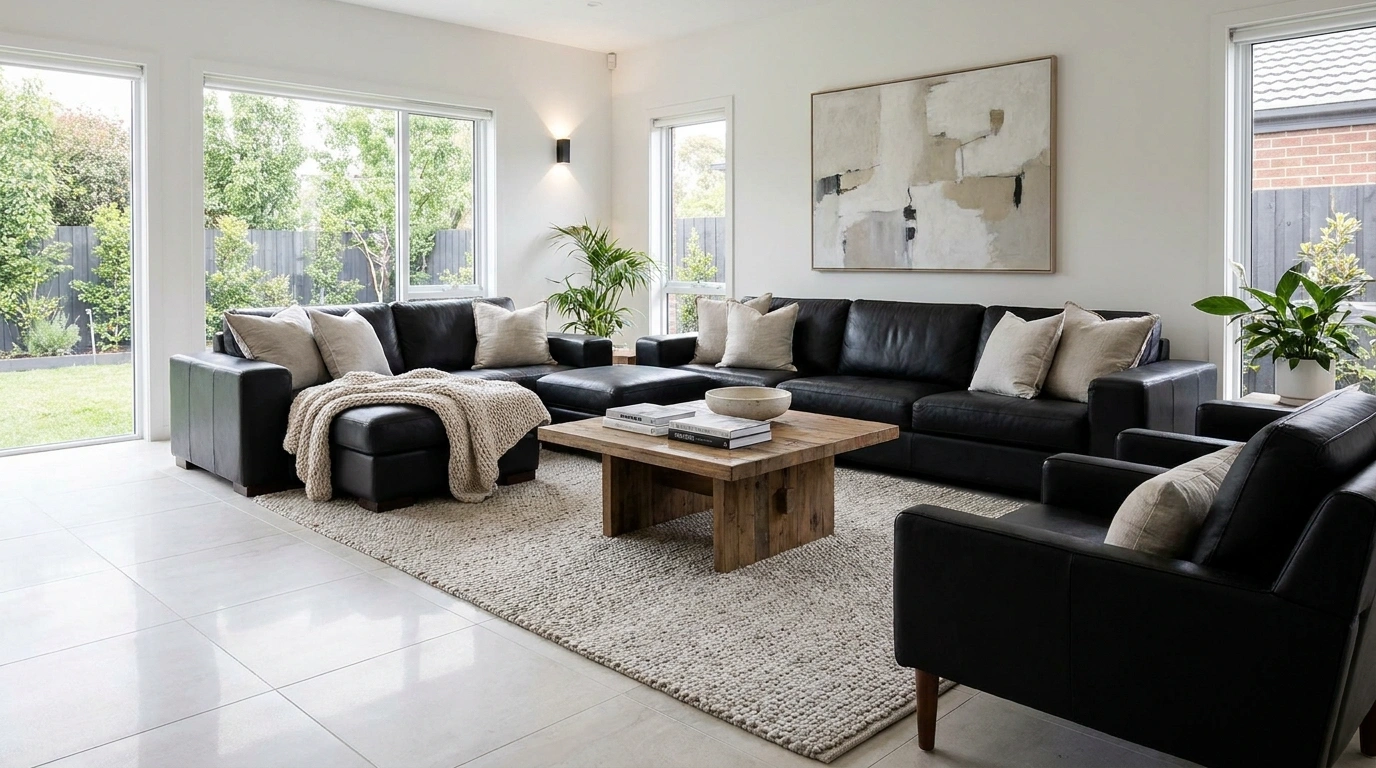
A black leather sofa on pale tile has a very clear outline. Sometimes that’s elegant. Sometimes the room looks like a waiting area where someone will shortly call your number.
The furniture and floor aren’t necessarily the problem. What is missing is often the middle: rugs, curtains, tables, lighting, and softer materials that connect the two extremes.
You can take this combination in several directions. It can feel warm and earthy, crisp and graphic, richly colored, or quietly traditional. There is no contractual obligation to finish the room with a chrome coffee table just because the sofa is black.
Build a Middle Layer Between the Sofa and the Floor
Pale tile may be creamy, gray, pinkish, or nearly white. Check that undertone before choosing a large rug. A bright white rug can make a cream floor look yellow; a warm beige rug can look unexpectedly peach beside cool gray tile.
Also look at the leather. Shiny, heavily padded seating has a different visual weight from a low matte sofa. Give substantial furniture enough surrounding space, and avoid squeezing small decorative tables into every remaining gap.
For rugs, confirm that the backing or underlay suits the tile and lies securely. Keep floor-level textiles and lamp cords out of the main routes through the room.
Warm Rooms Without Another Heavy Dark Surface
A Large Oatmeal Rug and an Oak Coffee Table
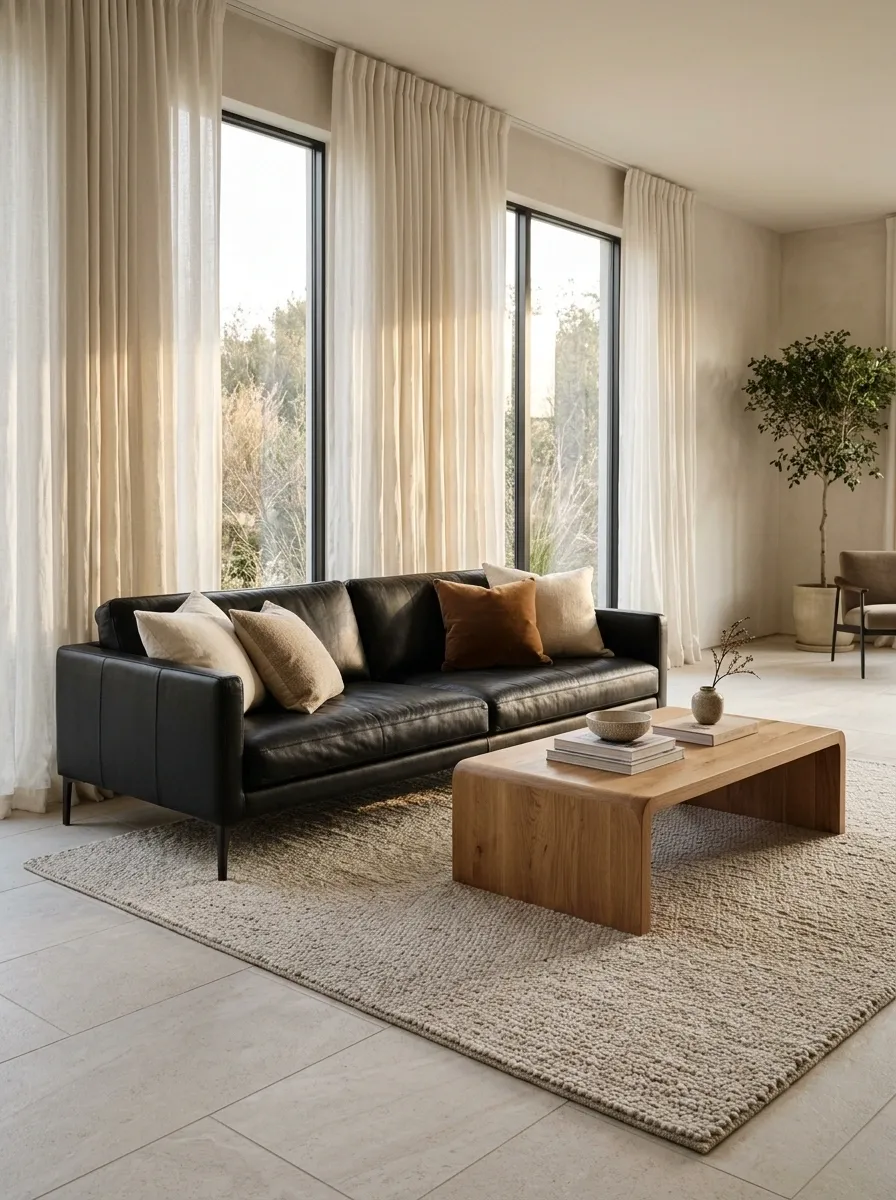
Set the black sofa on a generous oatmeal rug and place an oak coffee table in front of it. The rug creates a matte middle layer between the dark leather and pale tile, while the table adds a warmer material at seat height.
Choose a table whose shape leaves comfortable movement around the seating. Rounded corners can soften a room full of tile grids and rectangular furniture. Add off-white curtains and a few cushions in cream and tobacco. Keep the oak visible rather than covering it with a tray, stacked books, candles, and whatever decorative knot is currently demanding attention.
Placement note
Oak at table height adds warmth without creating another large dark block.
Flax Curtains Behind a Low Black Sectional
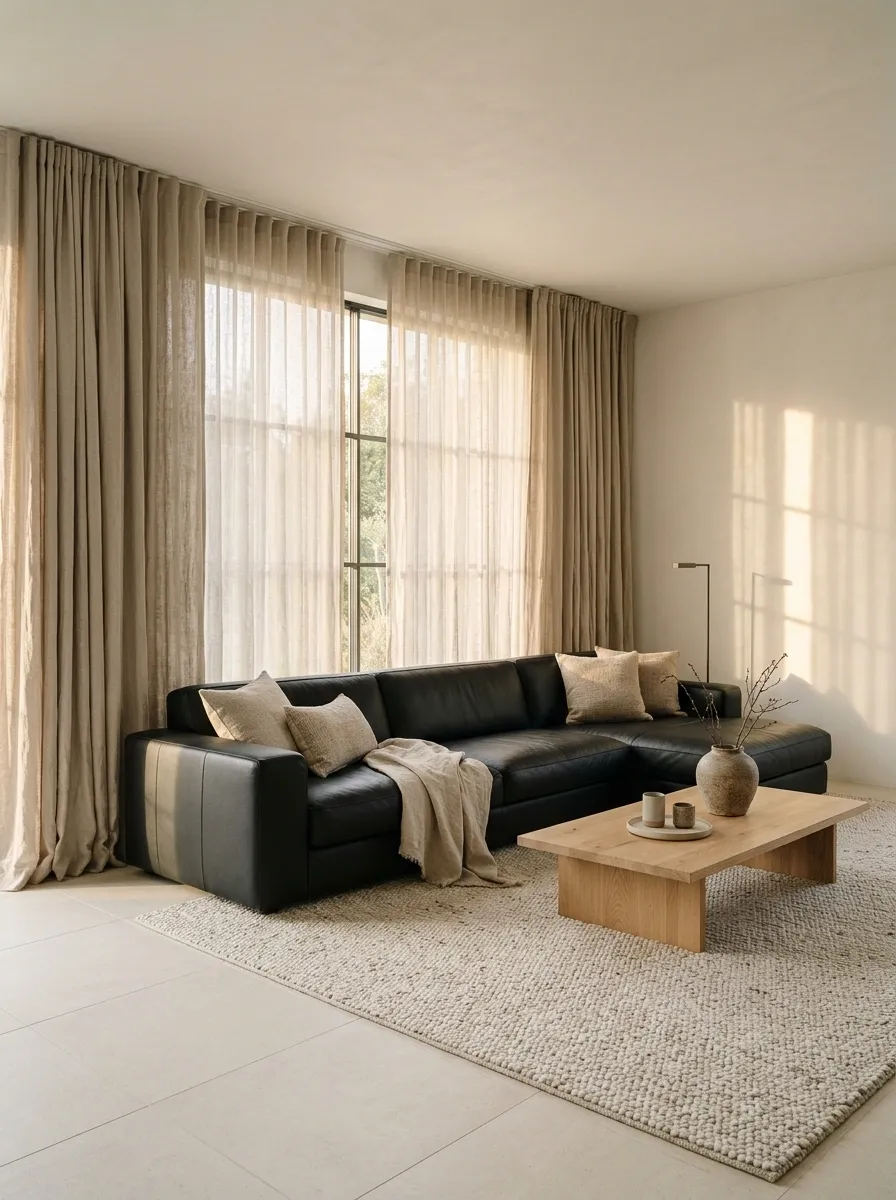
Hang flax-colored curtains across the window wall behind a low sectional. Use enough fabric to create a substantial soft surface when the curtains are open, rather than two thin panels disappearing beside the glass.
A broad pale rug and a low wood table complete the arrangement. The curtains bring warmth above the sofa, especially helpful where the tile and windows make the room feel visually hard.
Relative emphasis, not a fixed color formula.
Placement note
A generous textile surface balances the leather more effectively than several tiny cushions.
Choose a curtain color by holding the fabric beside both the floor and upholstery. Beige isn’t one color, however confidently the online product listing may insist otherwise.
A Terracotta Rug With Cream Walls

A muted terracotta rug can give black seating and pale tile a warm center. Keep the walls cream and use a light wood or pale stone table so the seating group doesn’t become uniformly dark.
Let the rug be the main warm color. A rust cushion and a ceramic bowl may be enough repetition. Add plants only where the room can actually support them; the color scheme does not require a distressed fern. This direction works particularly well when the tile itself has a creamy or sandy cast, because the floor and rug share warmth without needing to match.
Placement note
Keep the table light so the dark sofa remains a distinct silhouette.
Color That Gives the Leather a Different Character
Olive Walls With a Pale Wool-Look Rug
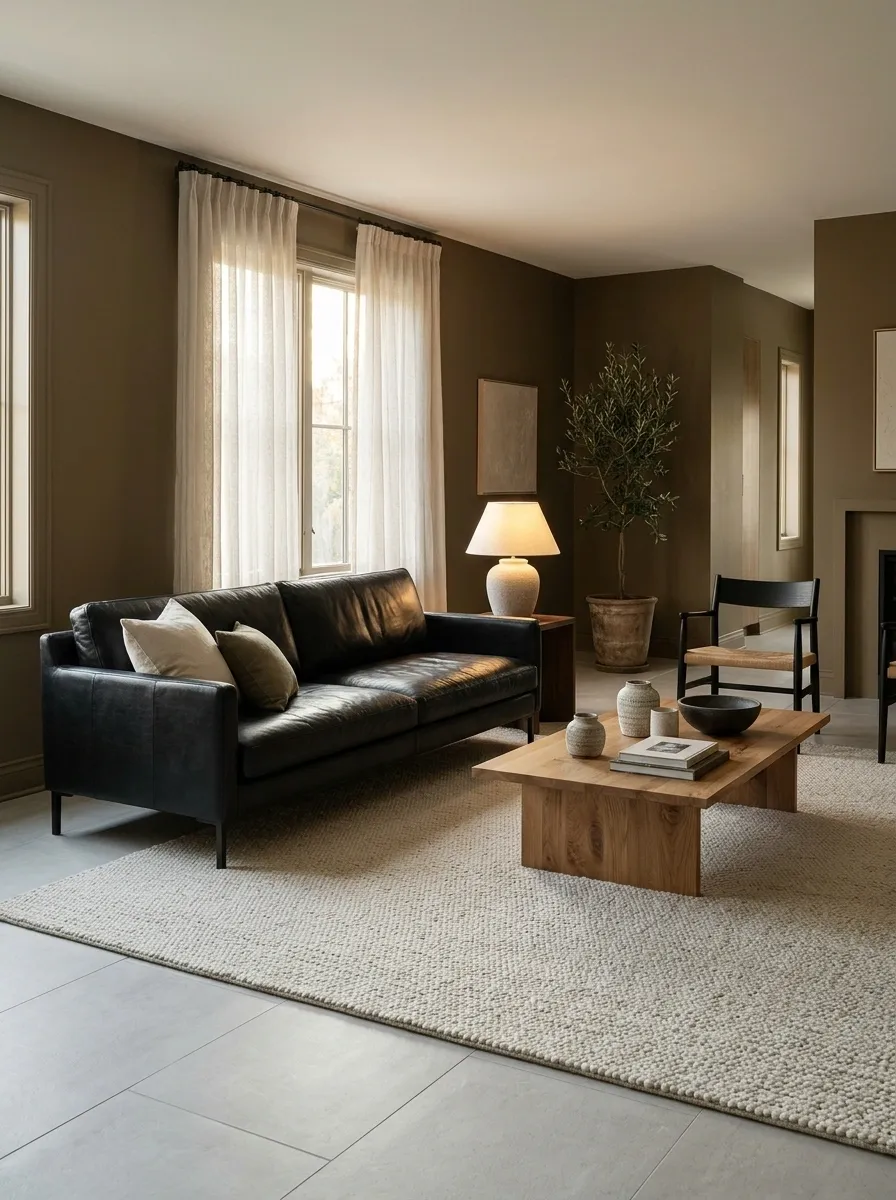
Olive walls can make black leather feel settled and residential. Use a pale, textured rug and light curtains to prevent the walls and furniture from merging into one dark envelope.
Choose the olive in the actual room. A brownish shade may feel earthy, while a clearer green can read more energetic. Add a wood coffee table and one cream-shaded lamp, then keep the accessories restrained. If the tile is cool gray, test whether the olive still feels comfortable beside it. The wall color should connect the room, not begin a fresh argument with the floor.
Placement note
Olive walls supply the color while the rug separates the dark seating from them.
A Dusty Blue Rug and Natural Linen Curtains
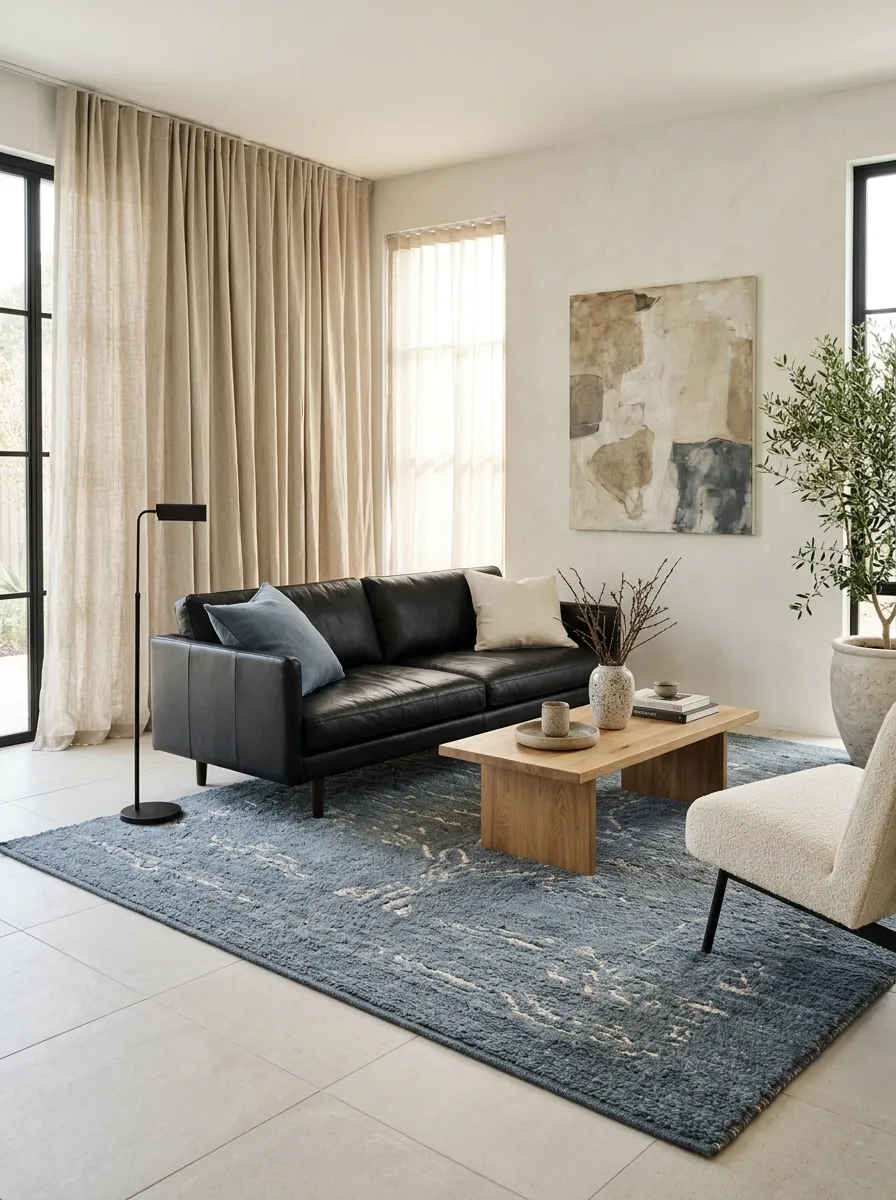
Use a dusty blue rug as the main color beneath the black sofa, with natural linen curtains and a warm wood table. This gives a cooler tile floor some company while keeping the room from feeling entirely cold.
Select a rug with cream or flax mixed into the pattern if the floor is warm white. Those lighter notes connect the rug to the perimeter. A blue cushion can sit at one end of the sofa; a plain cream cushion at the other is plenty. Perfectly mirrored cushions can make an ordinary sofa look as though it is awaiting a formal inspection.
Dusty blue rug
Natural linen
Wood table
Placement note
A warm material keeps the blue and pale tile from dominating the room's temperature.
Burgundy Cushions and a Faded Persian-Style Rug

A faded rug containing burgundy, ivory, and muted blue gives black leather a more layered, traditional context. Pull burgundy into a cushion and leave the curtains plain.
Choose the rug for the scale of its pattern, not just its colors. A larger central motif can hold its own beneath substantial leather seating; a tiny allover print may look busy beside large tile squares. Add a simple wood coffee table with visible legs. A dark antique chest could work, but if the room already feels heavy, a lighter open table gives the pattern more breathing room.
Ivory rug ground
Faded burgundy
Muted blue
Placement note
Repeat one rug color in a cushion and keep the larger surrounding textiles plain.
Peach Walls With Black Seating and Chalky Accents
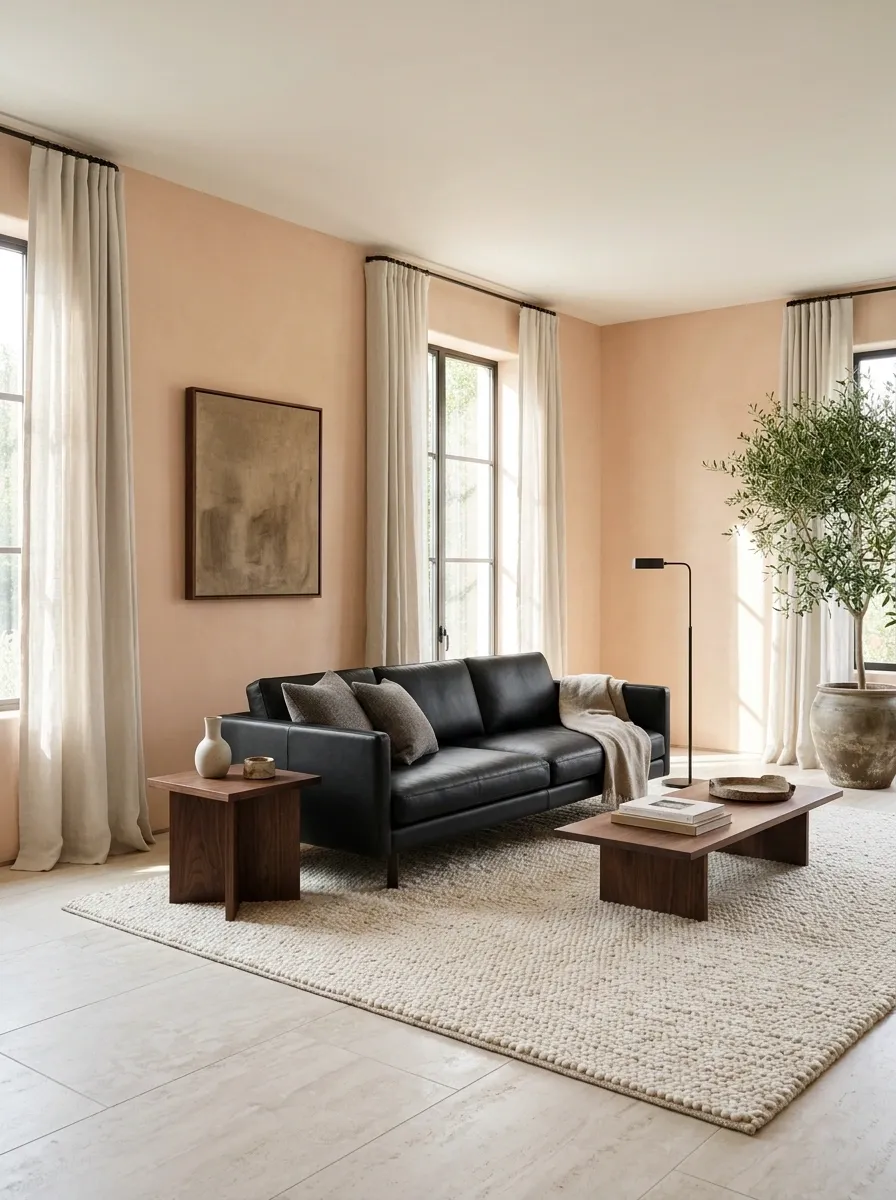
For a warmer, less expected room, try a muted peach wall with chalk-colored curtains and black seating. The peach needs enough softness to feel like a room color rather than a bright background for a product launch.
Use pale tile as a light base and bring in a gray-brown or cream rug. Add a small amount of dark wood through a side table. The black sofa supplies all the strong contrast you need, so the remaining furniture can be quieter. This scheme is especially appealing with matte leather and simple sofa shapes, where the wall color can take more attention.
Muted peach wall
Chalk textiles
Black leather
Placement note
Keep the peach subdued and let the seating supply the graphic edge.
Forest Green Chairs With a Black Sofa
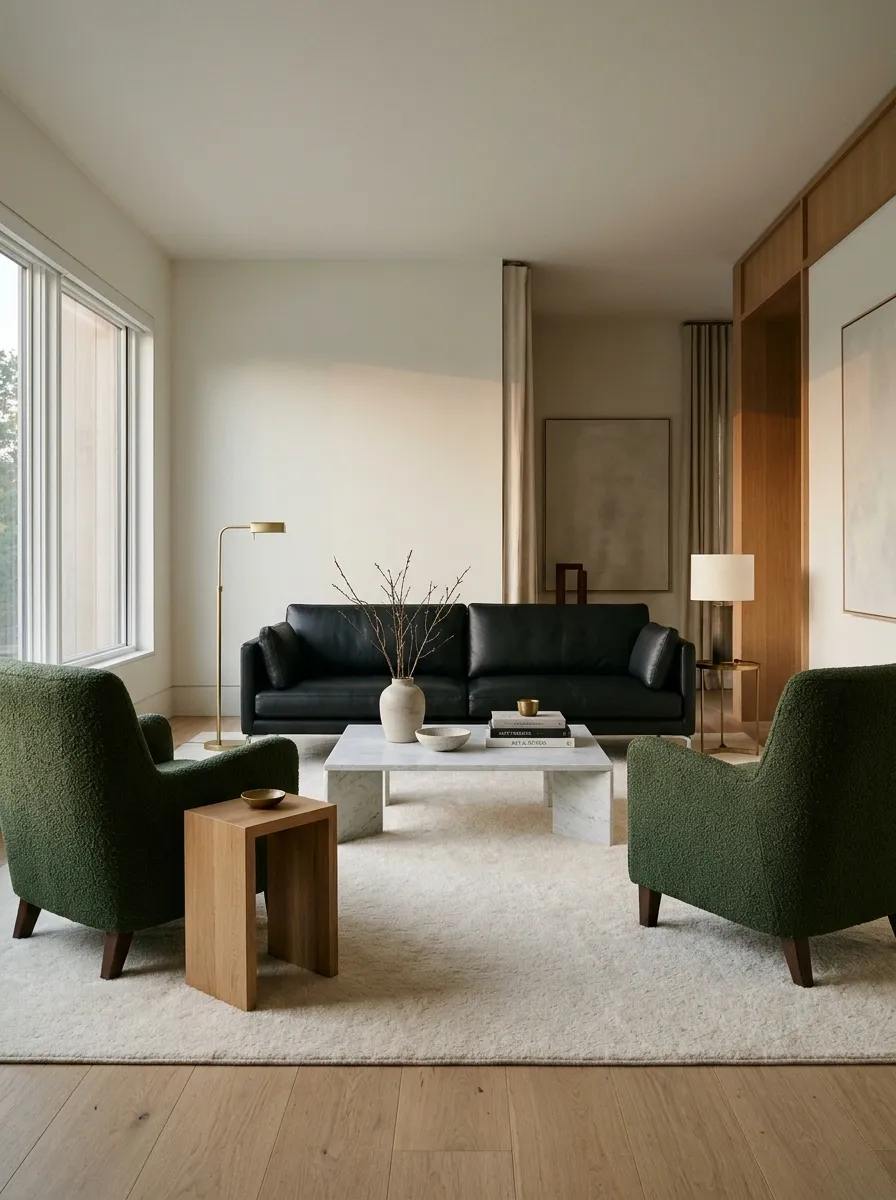
Add a pair of forest green upholstered chairs to a black sofa, arranged around a pale coffee table. Use a cream rug that brings all the seats into one group.
The green should be visibly different from the black, especially under evening light. A slightly lighter or more textured upholstery helps. Keep the walls pale and include a wood detail, perhaps a side table or cabinet. The chairs introduce color at the same scale as the sofa rather than relying on decorative cushions alone. This is useful in a larger room where all-black seating would create a heavy ring around the coffee table.
Black sofa
Green chairs
Pale coffee table
Placement note
Use a light rug to connect the seats while preserving the difference between black and green.
Graphic Rooms That Still Feel Comfortable
A Cream Rug With a Broad Black Border
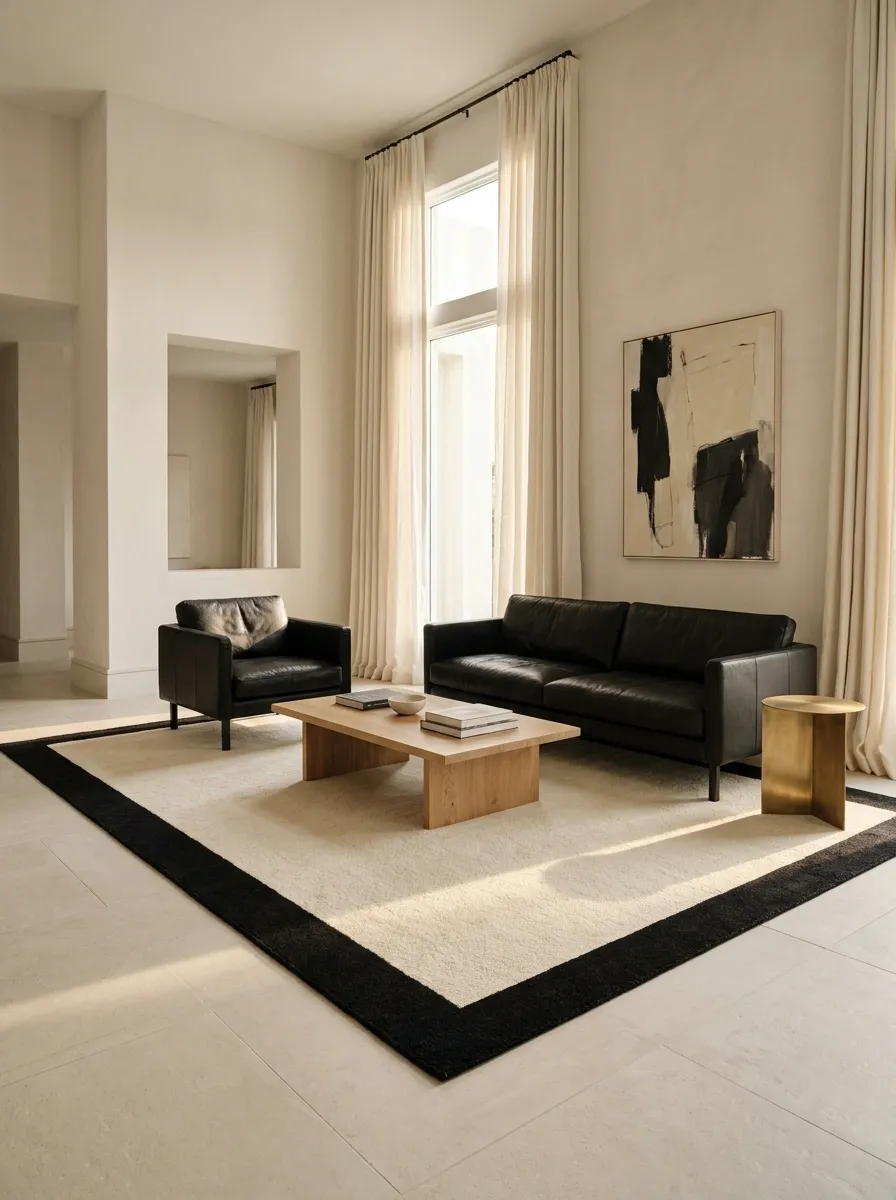
A pale rug with a broad black border connects the seating directly to the floor’s lightness. Use an oak coffee table or a warm metal side table to interrupt the monochrome.
Keep the border clear enough that it frames the group, rather than disappearing beneath every furniture piece. Plain cream curtains and one large artwork can complete the room. If the tile has a strong grid, avoid adding multiple striped objects as well. A controlled graphic scheme needs quiet areas, or it begins to resemble a collection of competing road markings.
Placement note
Let the rug provide the main graphic pattern and keep the curtains plain.
A Black Sofa With a Pale Rounded Coffee Table
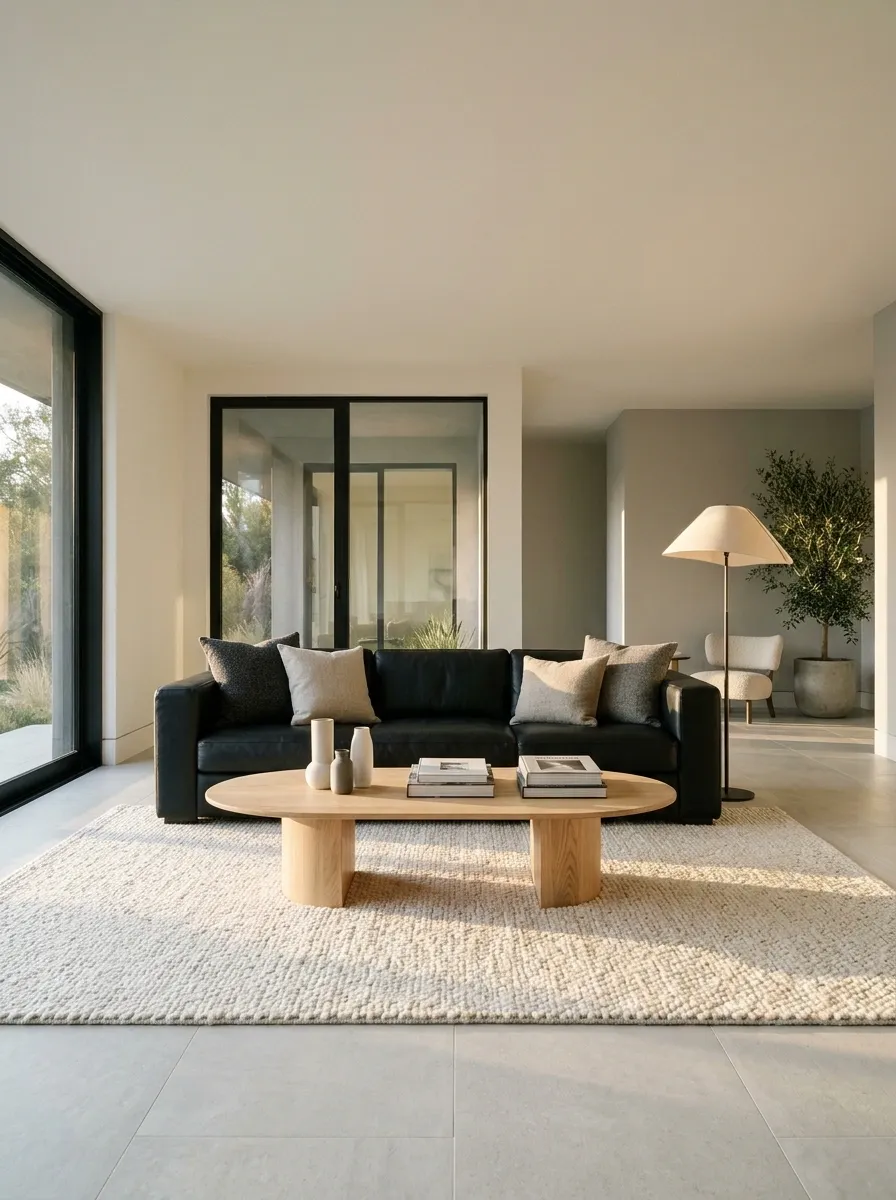
A broad round or oval table in pale wood or a suitable stone-look finish can soften the straight lines of black seating. Pair it with a textured neutral rug and a lamp with a curved shade.
The room doesn’t need every item to be rounded. Keep the sofa’s strong shape and use a few curves to change the rhythm. This is a particularly useful move when the floor has large rectangular tiles and the sofa is a substantial boxy design. Check the table’s height and reach from the actual seat; a beautiful sculptural table should still hold a drink without requiring a gymnastic commitment.
Rectangular black sofa
Pale curved table
Textured neutral rug
Placement note
A softer table outline changes the room without replacing the seating.
A Single Large Artwork Above the Sofa
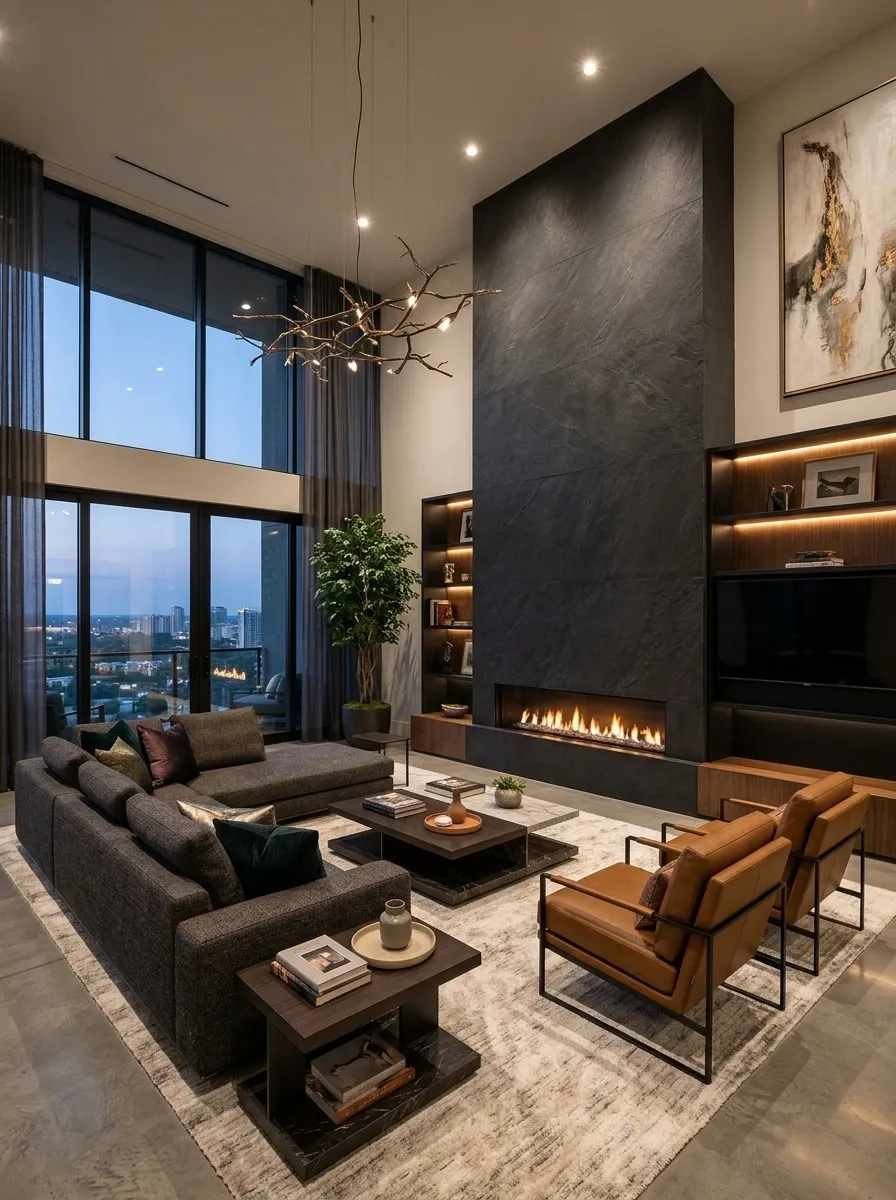
Hang one substantial artwork with an off-white field, black marks, and a restrained warm color above the sofa. Use a quiet rug so the wall becomes the main patterned surface.
The art should relate to the sofa’s overall width without looking squeezed between the ceiling and back cushions. A slim frame keeps the composition clear. Repeat the warm color once elsewhere, perhaps in a throw or ceramic vessel. This directs attention above the strong floor-to-sofa contrast and gives the room a personal focus beyond the television. Pick an artwork you want to live with; matching the cushion is a modest artistic achievement.
Relative emphasis, not a fixed color formula.
Placement note
A large quiet composition can carry the wall without adding a gallery of competing frames.
Warm White Walls With a Charcoal Media Cabinet
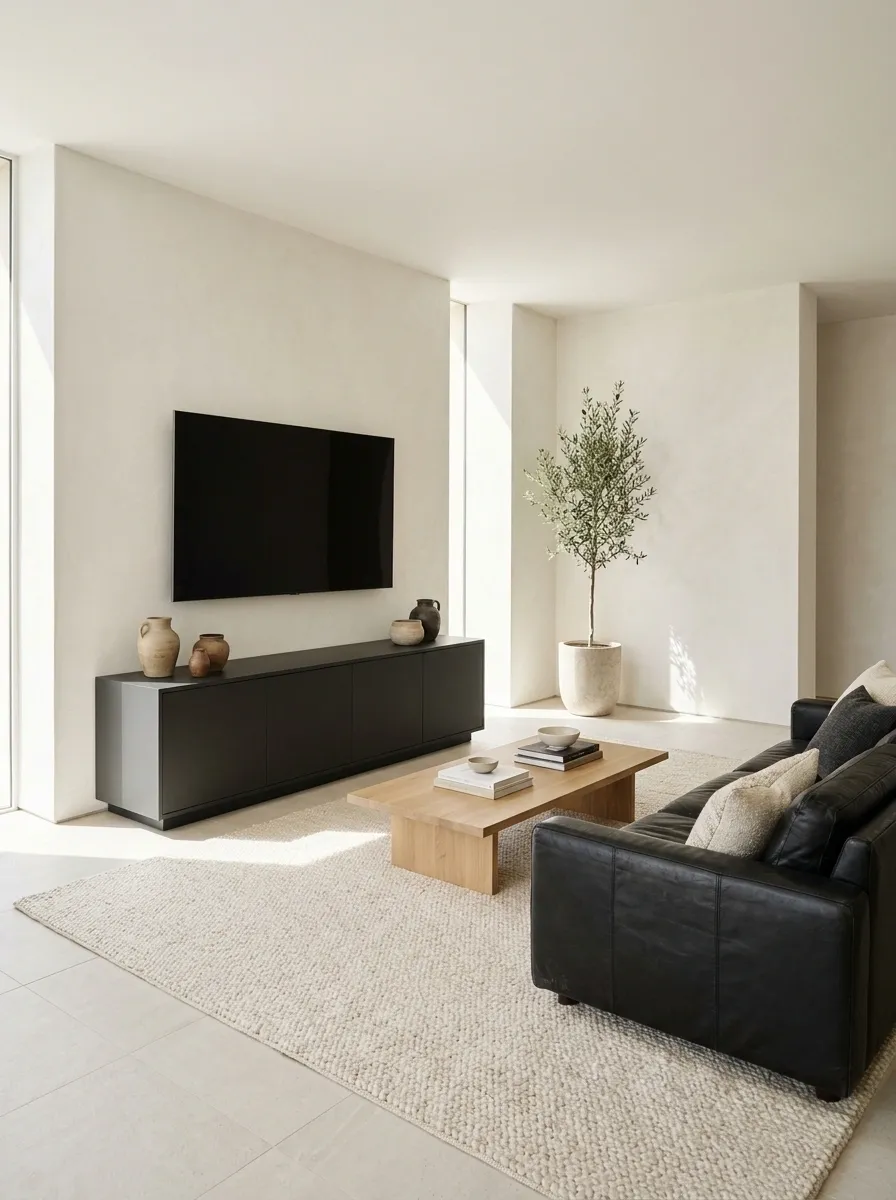
Use warm white walls and a low charcoal media cabinet opposite the sofa. A charcoal cabinet can relate to black leather while looking less stark than another glossy black surface.
Add a pale rug and a wood table between the two dark furniture pieces. Keep cables and small electronics organized so the cabinet reads as one clear shape. If the television wall already feels visually heavy, choose a lighter cabinet instead; repeating black is a tool, not a law. In this version, the dark furniture faces across a soft, light middle rather than creating isolated dark spots around the room.
Charcoal cabinet
Pale rug
Wood table
Placement note
Separate the two dark furniture masses with lighter, softer materials.
Arrangements for the Sofa You Already Own
A Black Leather Sectional With One Open Accent Chair
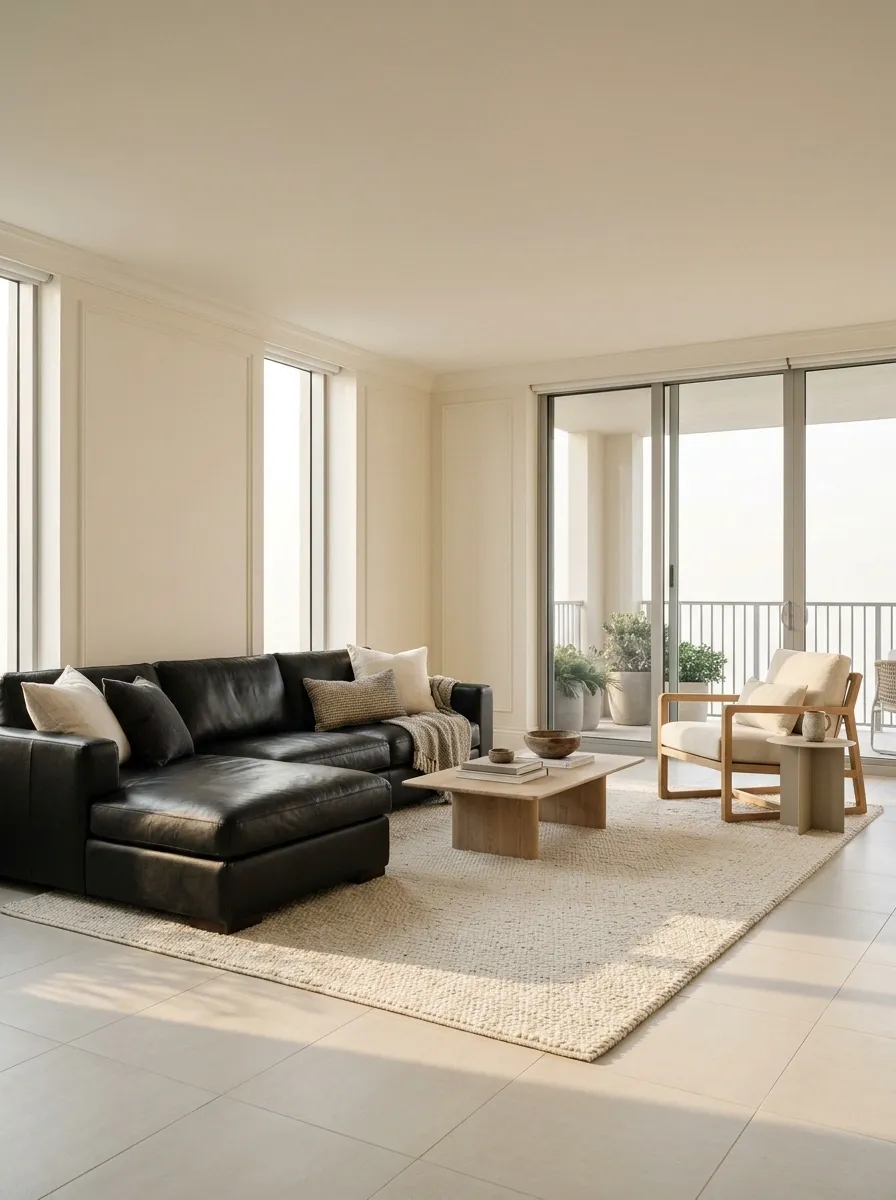
Place a light, open-framed accent chair opposite or diagonally across from a sectional, depending on the circulation. Use a pale rug to gather both pieces without filling the sectional’s open side with more bulky furniture.
Choose a compact side table where the chair needs a landing spot. A large coffee table is optional if the sectional already occupies much of the room. Let the open chair show some floor underneath; that visible lightness counterbalances the sectional’s broad base. Keep the route into the seating area clear, especially if the room doubles as the passage to a balcony or adjoining room.
Placement note
An open-framed chair can add a seat without repeating the sectional's mass.
Two Black Sofas Around a Light Central Rug
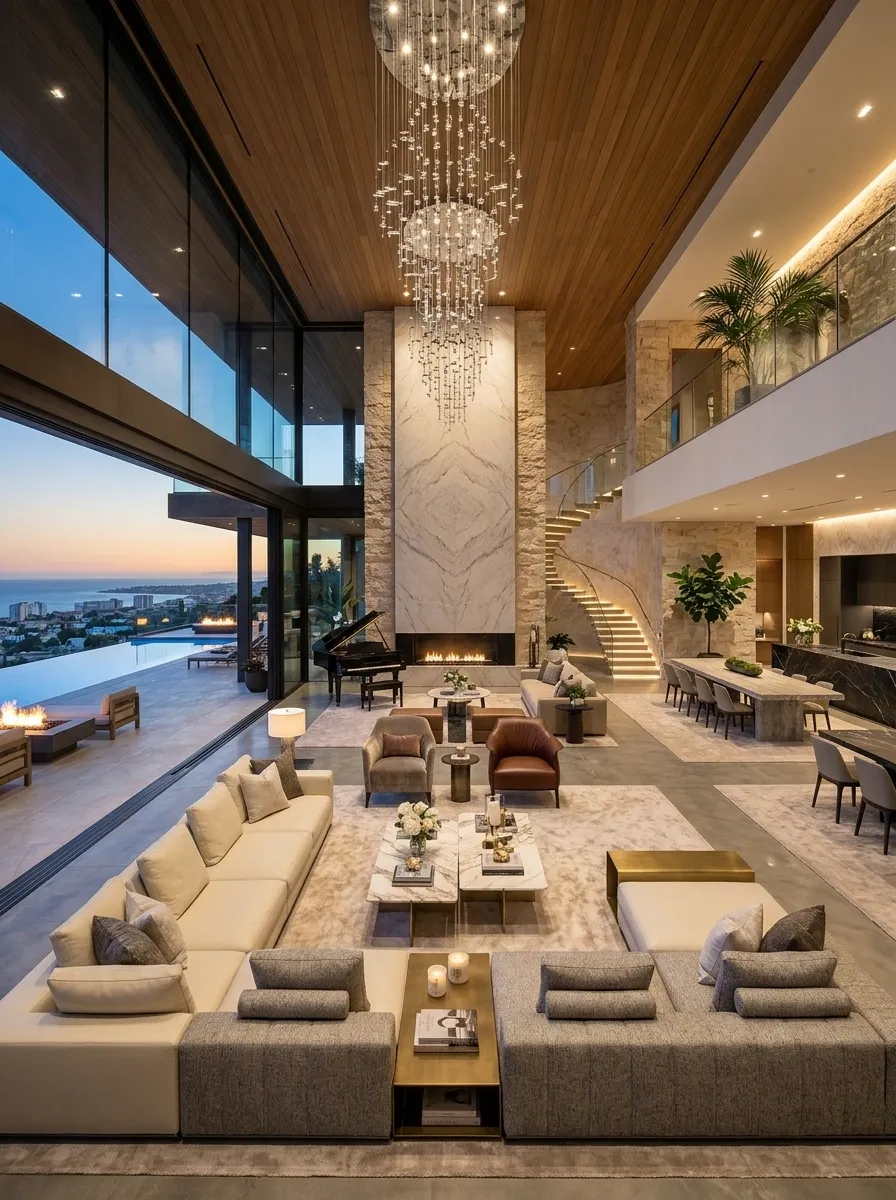
If you own two black leather sofas, face them across a large pale rug where the room’s width permits comfortable circulation. Use a lighter coffee table and keep the far wall simple.
The central light area is essential to the composition: it separates the dark pieces and makes the conversation area readable. Add warmth through curtains and a wood cabinet rather than squeezing extra furniture between the sofas.
Placement note
Two dark sofas face across a light rug rather than sitting as separate heavy blocks.
Check the layout with the actual sofa depths before buying the rug. A facing arrangement is sociable when there is room to move; in a narrow room it can feel like an unusually upholstered corridor.
A Recliner Group With Wood Side Tables
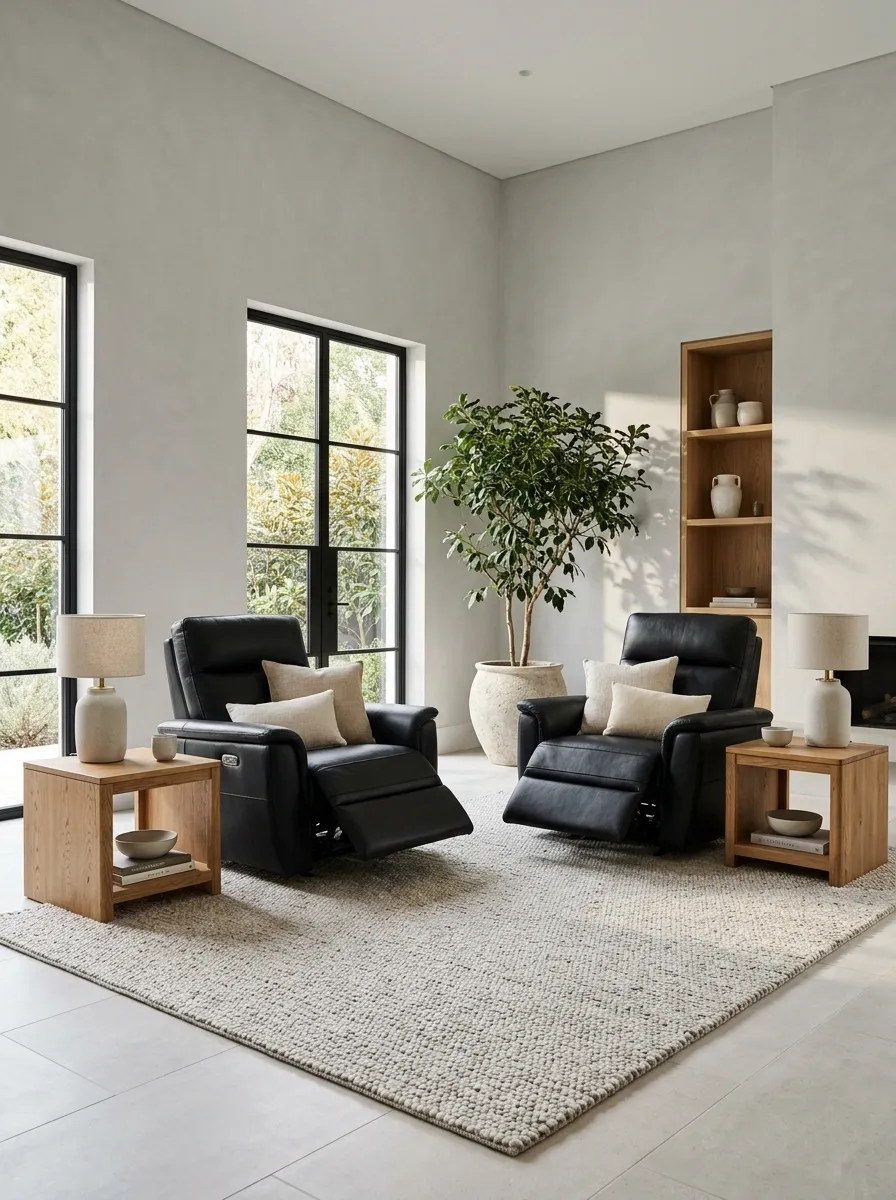
Give black leather recliners separate wood side tables and a pale shared rug. Let the chairs angle toward the main sofa or toward each other instead of placing them in an unwavering row against the wall.
Plan for their full movement using the manufacturer’s guidance, including wall clearance and any powered components. Keep lamps and tables outside that movement. Use plain woven cushions only if they remain comfortable and useful on the chairs. The wood tables and rug do most of the softening, leaving the seating free to perform the deeply glamorous task of letting someone put their feet up.
Black recliners
Wood side tables
Pale shared rug
Placement note
Keep tables and cords outside the chair's required operating space.
A Small Sofa With a Wall-Mounted Shelf Behind It
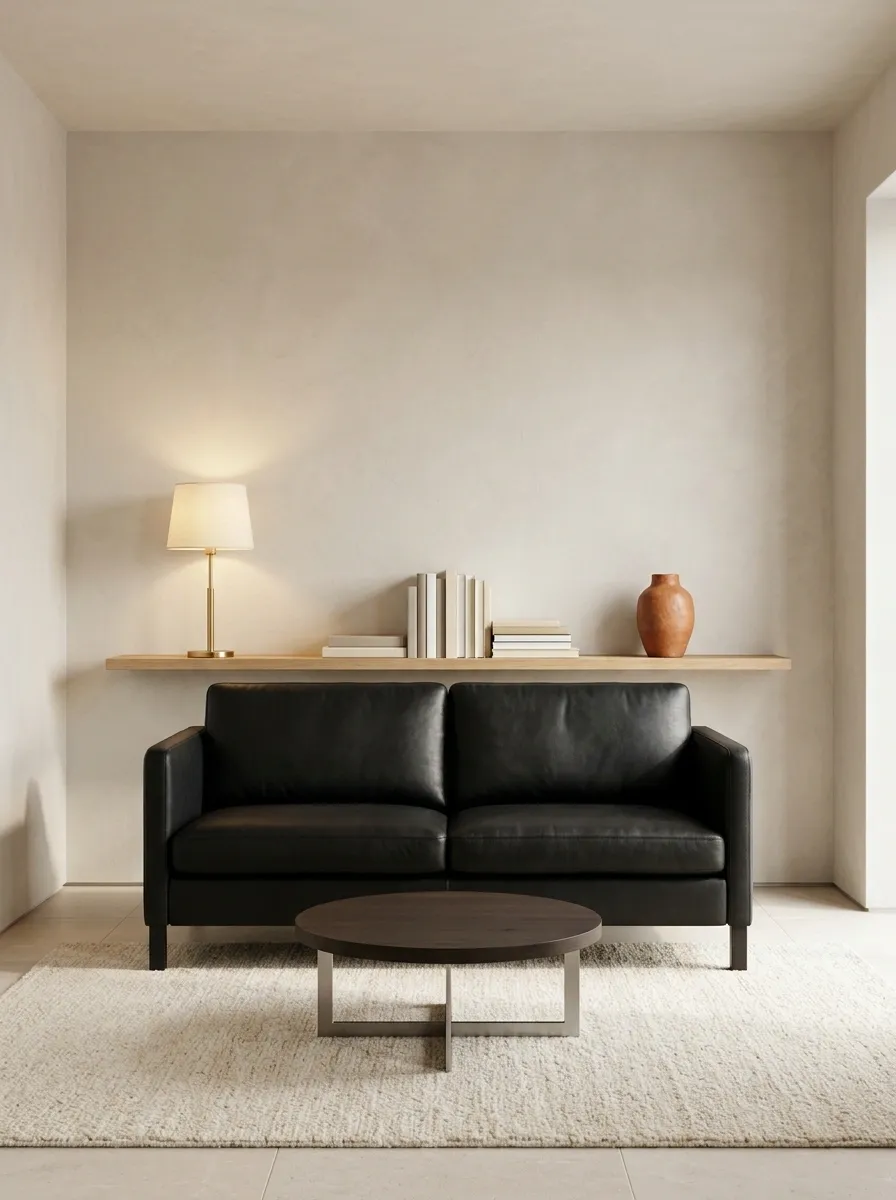
Where a sofa sits slightly away from the wall for practical reasons, a slim shelf behind it can hold a lamp, books, and one warm-toned object. Keep the shelf depth suited to the available space and installation appropriate to the wall and loads.
Use a pale rug and a compact coffee table in front. The shelf adds a horizontal layer above the black upholstery without requiring a full console footprint. Avoid placing fragile objects where heads, hands, or reclining parts could meet them. This is a useful arrangement for a fixed-back sofa; moving seating needs its clearances respected instead of decorated away.
Wood shelf
Light wall
Black upholstery
Placement note
Keep the shelf practical and clear of heads and any moving furniture parts.
A Black Sofa in Front of a Full Bookcase Wall
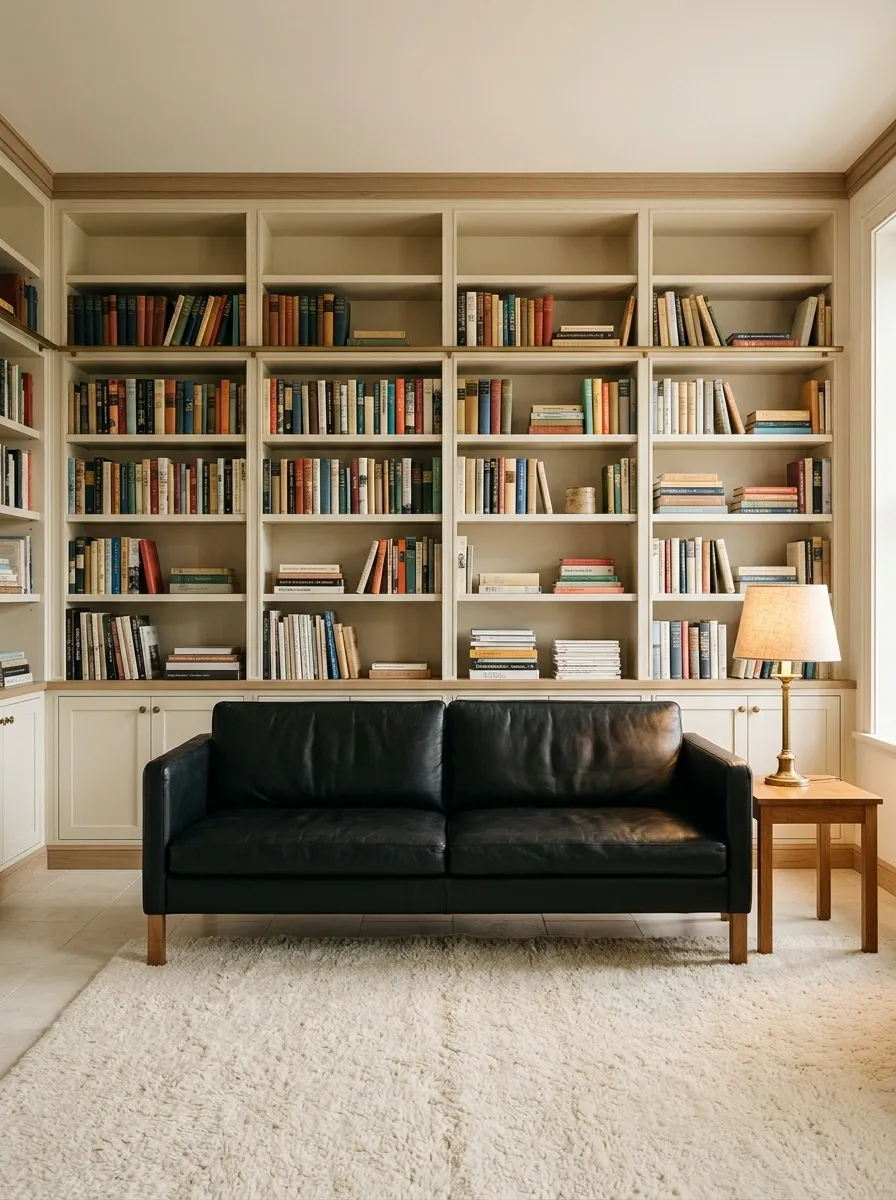
A wall of books can make black leather feel like part of a comfortable reading room. Use shelving in cream or muted wood, with a pale rug and a lamp close enough to serve the seat.
Leave the book arrangement useful. Some upright rows, a few horizontal stacks, and ordinary empty space will look more convincing than a shelf full of backward books pretending nobody reads. Keep the top of the sofa clear of fragile display pieces, and ensure the shelf installation suits the wall. The books bring color and texture at a larger scale, reducing the need for a large assortment of cushions.
Cream shelving
Wood details
Black sofa
Placement note
Books add varied texture while a pale rug keeps the lower half of the room open.
What to Change First
If the room currently feels harsh, start with the largest missing soft surface. That may be a rug, substantial curtains, or an upholstered chair. Buying more small accessories before addressing those gaps usually gives you a harsh room with more dusting.
Then view the seating under the lighting you use in the evening. A shaded lamp beside a chair can give the arrangement a warmer focus than relying entirely on overhead light.
You can keep the leather, keep the tile, and still change the room’s character considerably. The next purchase should connect those surfaces—and ideally be something you’ll enjoy using.