
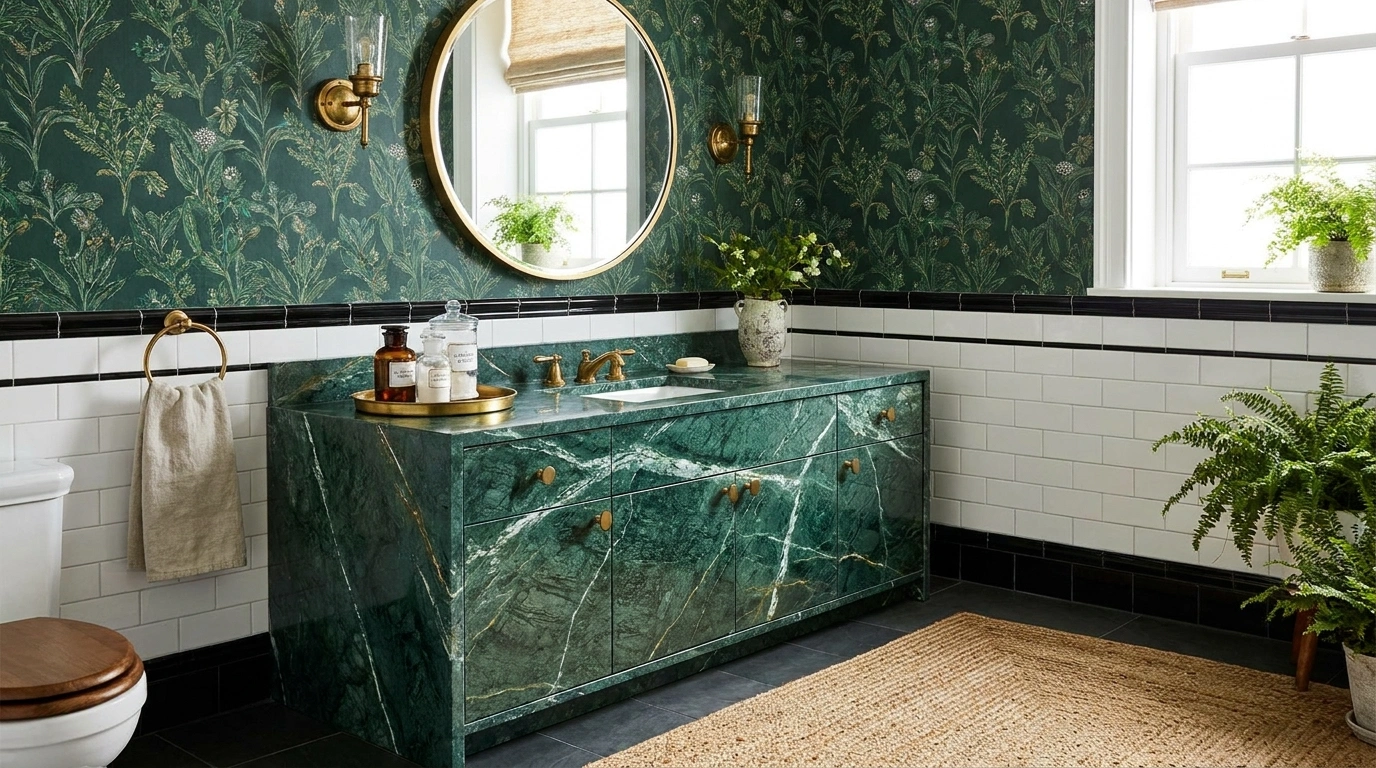
Before you buy a single matching green towel, look closely at the vanity. Is the top pale mint with fine gray lines, dark forest green with white veins, or a busy mix of olive, cream, and black?
Those are different decorating problems. Treating them all as simply “green marble” is how a perfectly good bathroom ends up with a collection of accessories that agree on nothing except their product descriptions.
The vanity may be the room's most distinctive feature. Give it surroundings that respond to its actual background, veining, and scale, and it can look chosen rather than inherited under protest.
Identify the Appearance and the Material Separately
“Marble-look” describes a visual effect. The surface might be natural stone, a manufactured composite, porcelain, laminate, or another material. Care instructions are not interchangeable.
Check the product information before cleaning or refinishing. For natural stone, the Natural Stone Institute's care guidance explains why composition matters and why acidic cleaners can damage acid-sensitive stone. Follow the actual surface manufacturer's instructions rather than applying a universal vinegar recipe.
For decorating, note three things: the dominant green, the lightest vein, and whether the pattern is quiet or busy. You can borrow a vein color without reproducing the whole pattern elsewhere.
If the top and basin are one molded piece, treat them as a single visual object. If the top sits on separate cabinetry, the cabinet offers another surface you may be able to change appropriately.
Pale Surroundings That Let the Vanity Speak
Warm White Walls With a Dark Green Top
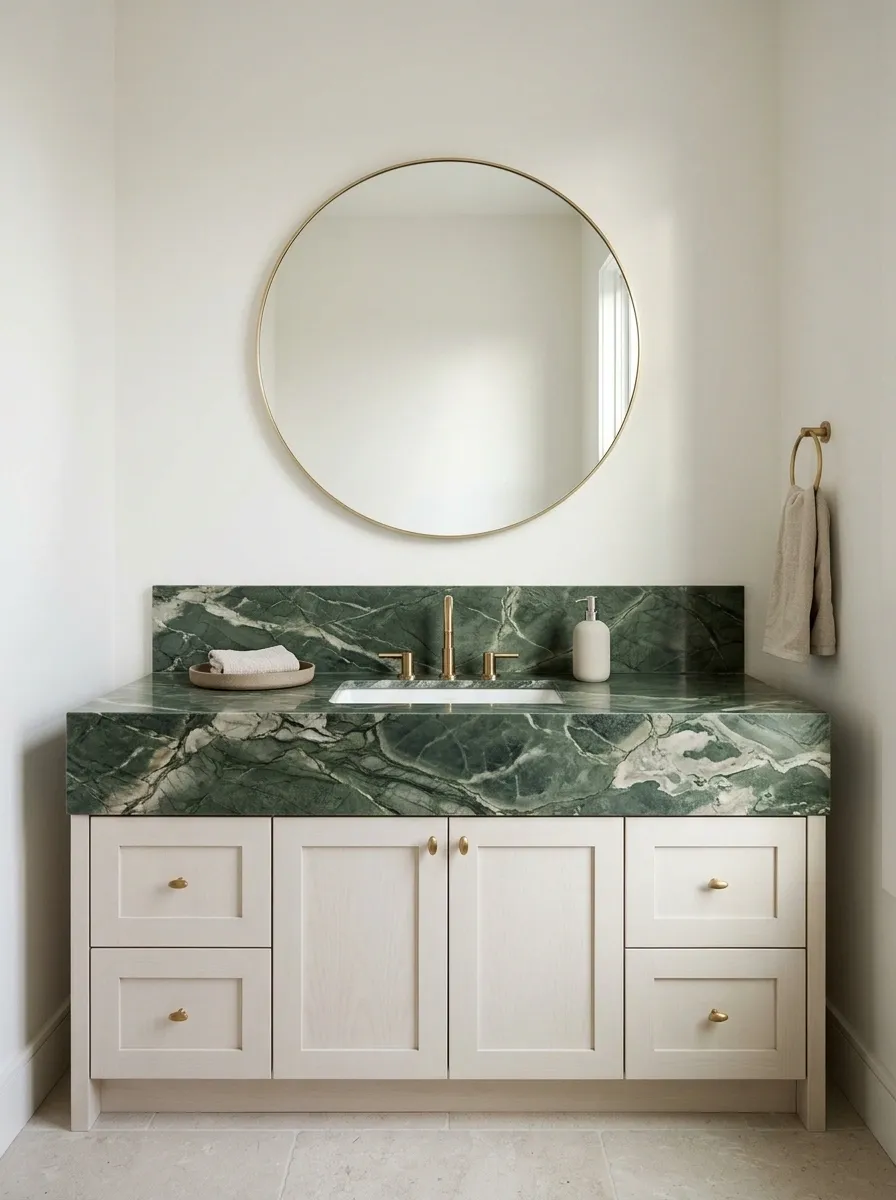
Surround a forest-green marble-look top with warm white walls, a simple white basin, and a pale cabinet. The white should sit comfortably with the top's light veining; compare samples directly rather than assuming any warm white will work.
Use a mirror with a thin frame and keep the counter nearly clear. A plain soap dispenser and one small dish are enough. If the veins are broad and dramatic, avoid repeating a stone pattern on the floor. The vanity already has movement; the surrounding room can provide a quiet frame without becoming lifeless.
Placement note
Let the green top carry the pattern while the wall and cabinet remain simple.
Pale Mint With Chalk Walls and Light Oak
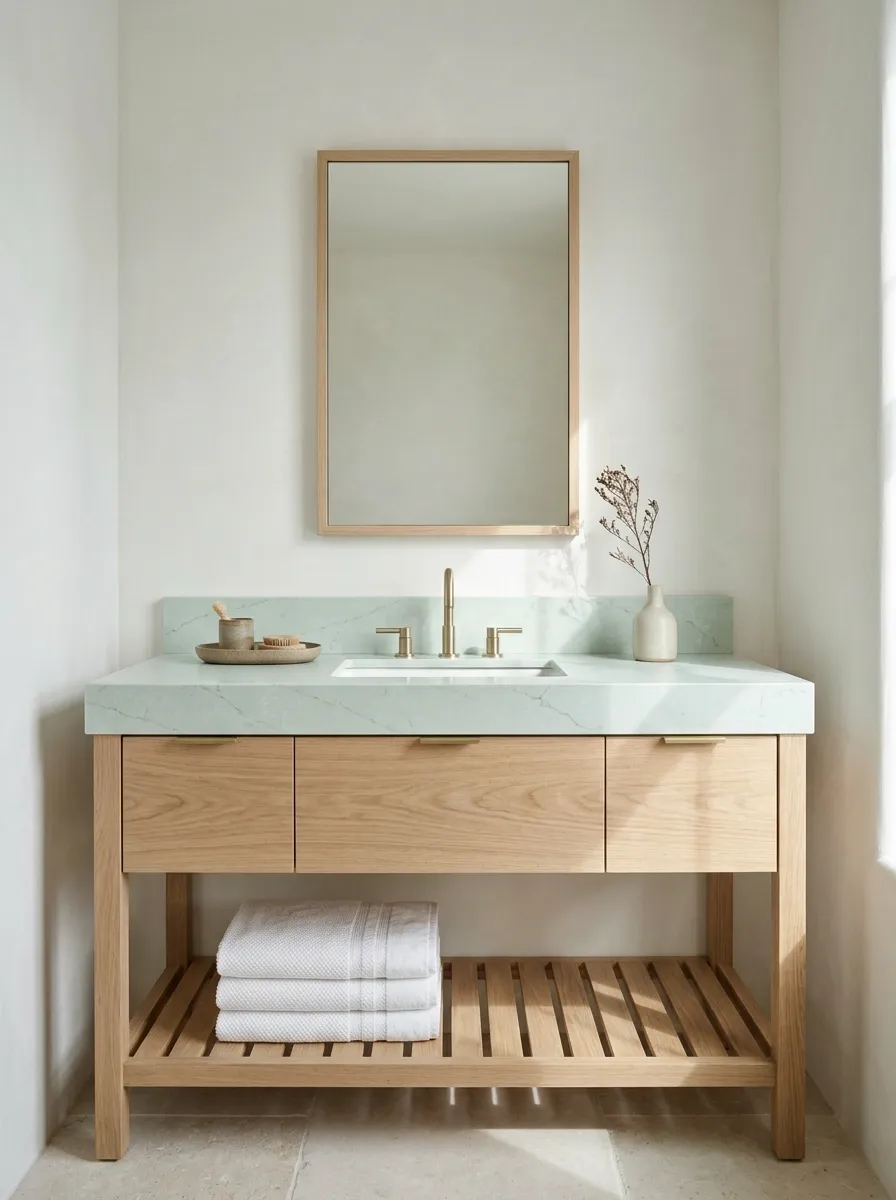
A pale mint top can look fresh with chalky off-white walls and a light oak cabinet or mirror. Keep the oak warm but not strongly orange, especially if the green has a cool gray cast.
Add white towels with a subtle woven texture. A small brushed metal detail can give the pale materials definition without overwhelming them. This arrangement suits a top with fine, delicate veining rather than a large dramatic pattern. The oak introduces enough warmth that you don't need to add beige to every other surface. Pale doesn't have to mean an entire room of identical off-white objects.
Pale mint top
Chalk wall
Light oak
Placement note
Keep the wood grain quiet if the top already contains fine lines.
Cream Walls and a Walnut Vanity Base
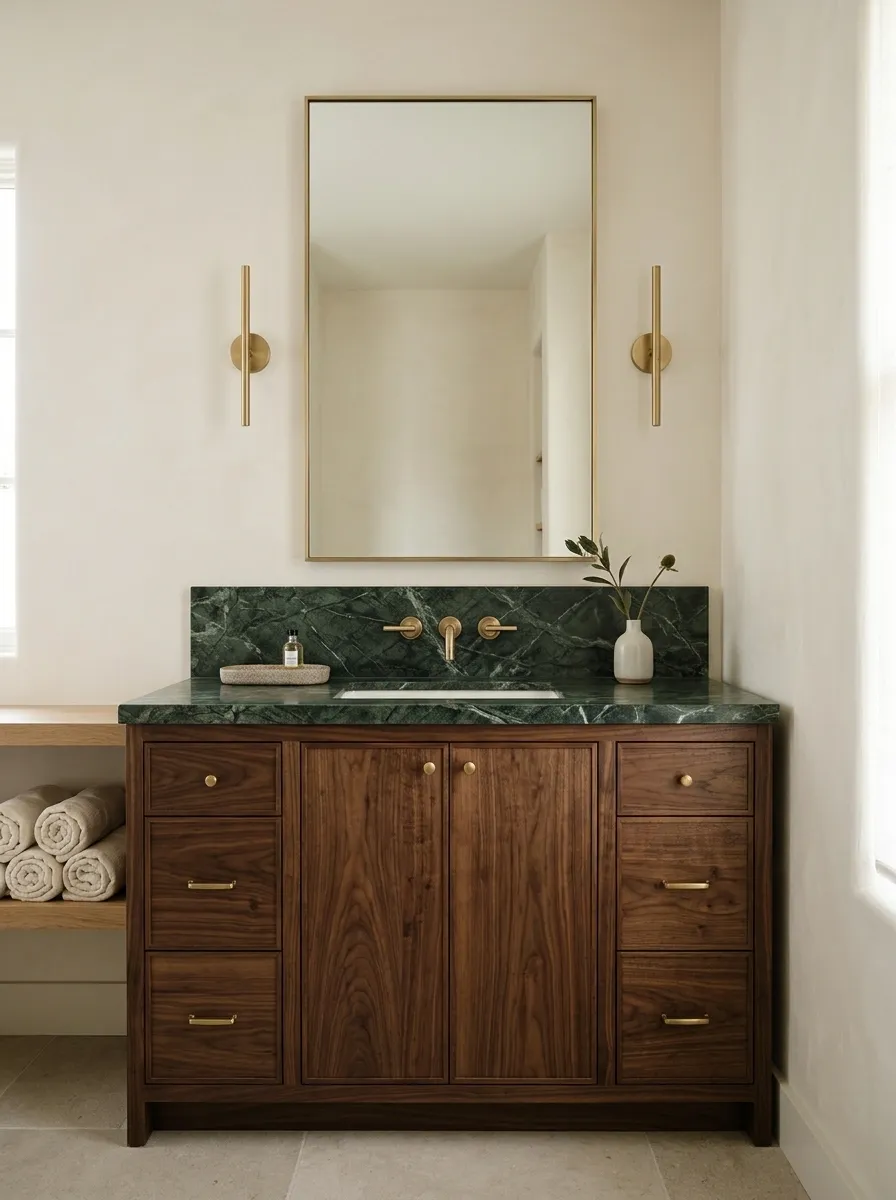
Pair a medium or dark green top with a walnut cabinet and cream walls for a room that feels substantial without going entirely dark. Use cream towels to repeat the wall's lighter tone.
The walnut needs to be visibly distinct from any brown veining in the top. An almost-match can look muddled, while a clear wood surface adds a different kind of texture. Choose a mirror frame in slim metal rather than adding more walnut around the basin. The cabinetry already supplies the wood; another broad matching frame can make the sink wall feel crowded.
Placement note
Use the wood below the top and a slim mirror frame above it to avoid a heavy stack.
White Walls With a Charcoal Cabinet

A charcoal cabinet gives a green top a firm base, particularly when the veining contains dark gray or black. Keep the walls white and use a light, plain floor treatment if you're choosing other finishes.
Select charcoal with the top beside it. Some shades look blue; others lean brown. A nearly black cabinet will emphasize the green, so keep towels and shower textiles light if you want a balanced room.
Relative emphasis, not a fixed color formula.
Placement note
The cabinet can borrow a dark vein color without making every surface dark.
A clear glass dispenser or white ceramic set stays unobtrusive. There is no need to order the entire bathroom in green merely because one slab started the conversation.
Colors That Relate Without Matching
Dusty Pink Walls Around Forest Green
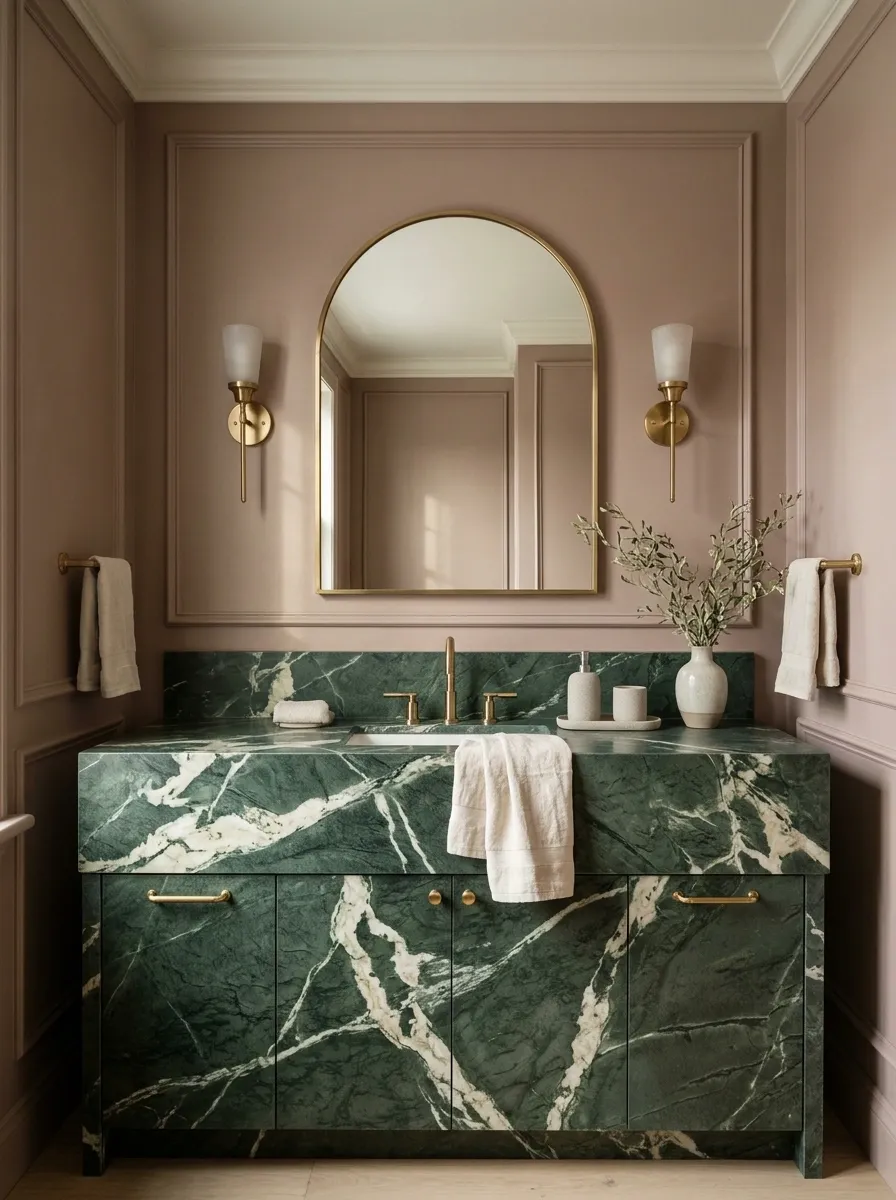
Dusty pink walls and a dark green vanity create a deliberately colorful bathroom. Choose a muted pink with some brown or gray in it, and keep the ceiling and larger textiles pale.
The pink doesn't neutralize the green; it gives it contrast. Let that be the point. Use simple warm metal details or existing chrome, depending on the room, and avoid introducing another major accent color. If the top has large white veins, repeat that pale tone in the towels and basin. The room will feel richer when the finishes have clear roles rather than all competing for equal attention.
Dusty pink wall
Forest green top
Light textiles
Placement note
Let the wall provide color and the top provide pattern.
Mushroom Walls With an Olive-Green Top
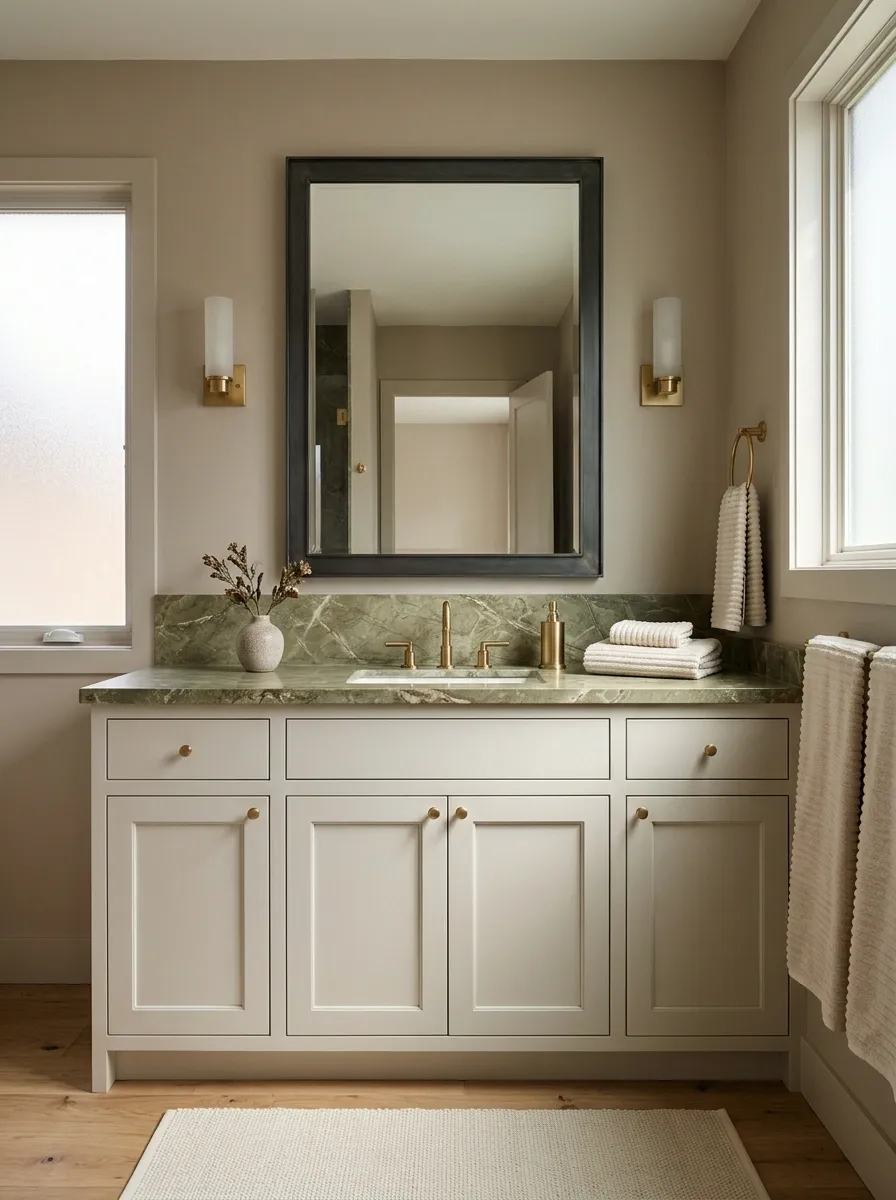
A mushroom wall color can work beside olive-green marble-look surfaces when its undertone sits comfortably with the top's cream or gray veins. Use a pale cabinet and a dark mirror frame to give the neutral room definition.
This scheme benefits from texture: ribbed towels, a matte painted cabinet, and a simple woven-looking bath mat suitable for the floor. Avoid adding a second mottled stone effect. A room can contain varied materials without every one of them having its own weather system. Test the mushroom under the bathroom lights, where it may look noticeably warmer or cooler than it did elsewhere.
Mushroom wall
Olive-green surface
Pale cabinet
Placement note
Use a dark outline at the mirror if the wall and cabinet are close in value.
Ink Blue Walls With a Pale Green Vanity

A pale green top can become surprisingly crisp against an inky blue vanity wall. Keep the cabinet light and repeat cream or white elsewhere so the top doesn't become a small floating pastel strip in a dark room.
Use the deep blue on a clearly defined wall plane rather than a random patch around the mirror. If the room is very small, view a large blue sample before committing. The contrast is intentionally strong, with the green acting as a lighter note. A simple nickel frame and plain towels keep the arrangement from becoming overly ornamental.
Placement note
Keep the cabinet pale so the light green top belongs to a larger light form.
Apricot Textiles With Warm Ivory Walls

Use warm ivory walls and apricot towels around a medium green top for a softer colorful scheme. Add the apricot through a bath mat or hand towel, not through a matching plastic parade across the counter.
Relative emphasis, not a fixed color formula.
Placement note
Keep the warm accent concentrated in replaceable textiles.
A wood mirror can add warmth if the cabinet is painted. If the cabinet is already wood, choose a thinner metal frame instead. The apricot should look related to any warm veins in the top without copying them exactly. This is a useful direction when you want the vanity to feel friendly rather than formal.
Give the Sink Wall a Stronger Shape
An Oval Mirror Over a Straight-Edged Vanity
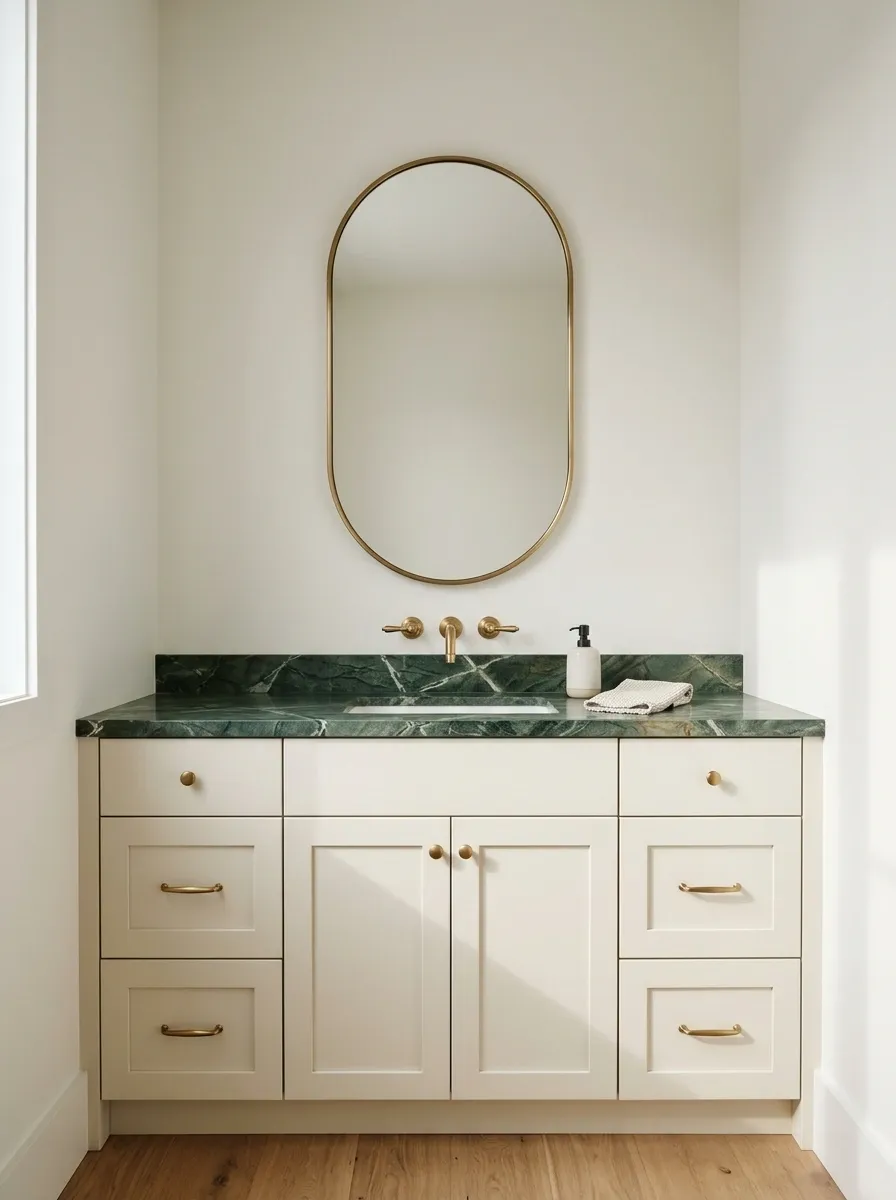
An oval mirror softens a rectangular green vanity, especially when the top has angular veining. Use a frame that relates to the existing hardware and keep the wall color plain.
Center the mirror according to the basin and how it will be used, rather than automatically centering it on the entire cabinet. The oval supplies the shape contrast; a pair of curvy sconces and a scalloped shelf may be unnecessary extra choreography. Choose mirror size with the faucet, lighting, and ceiling in mind. A mirror that looks graceful alone still needs to make sense within the assembled sink wall.
Placement note
Use one clear shape change rather than repeating curves in every accessory.
A Wide Rectangular Mirror With a Thin Dark Frame
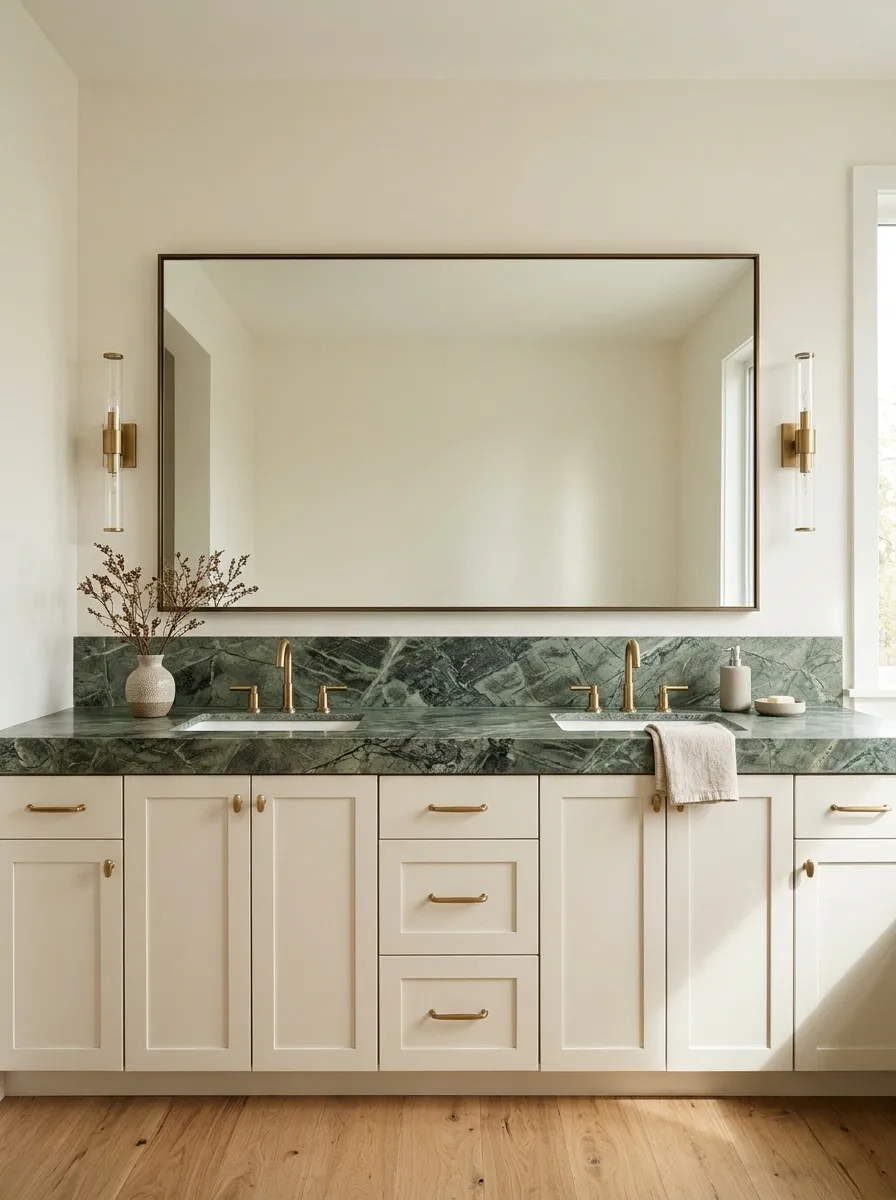
Above a broad vanity, a wide rectangular mirror can give a busy green top a calm horizontal companion. Use a narrow dark frame to echo the deepest veins, and keep the cabinet fronts simple.
Let the mirror stop short of adjacent walls or fixtures where appropriate to the actual layout. The margin gives the sink wall a finished outline. A plain cream wall works well if the green already contains several shades. Keep countertop objects low so the broad reflection remains open. This is a useful alternative to adding more decorative shapes when the surface pattern is already doing a considerable amount of work.
Placement note
Simple cabinetry and a broad mirror keep the patterned top from making the wall feel fragmented.
Pale Vertical Paneling Behind a Green Top
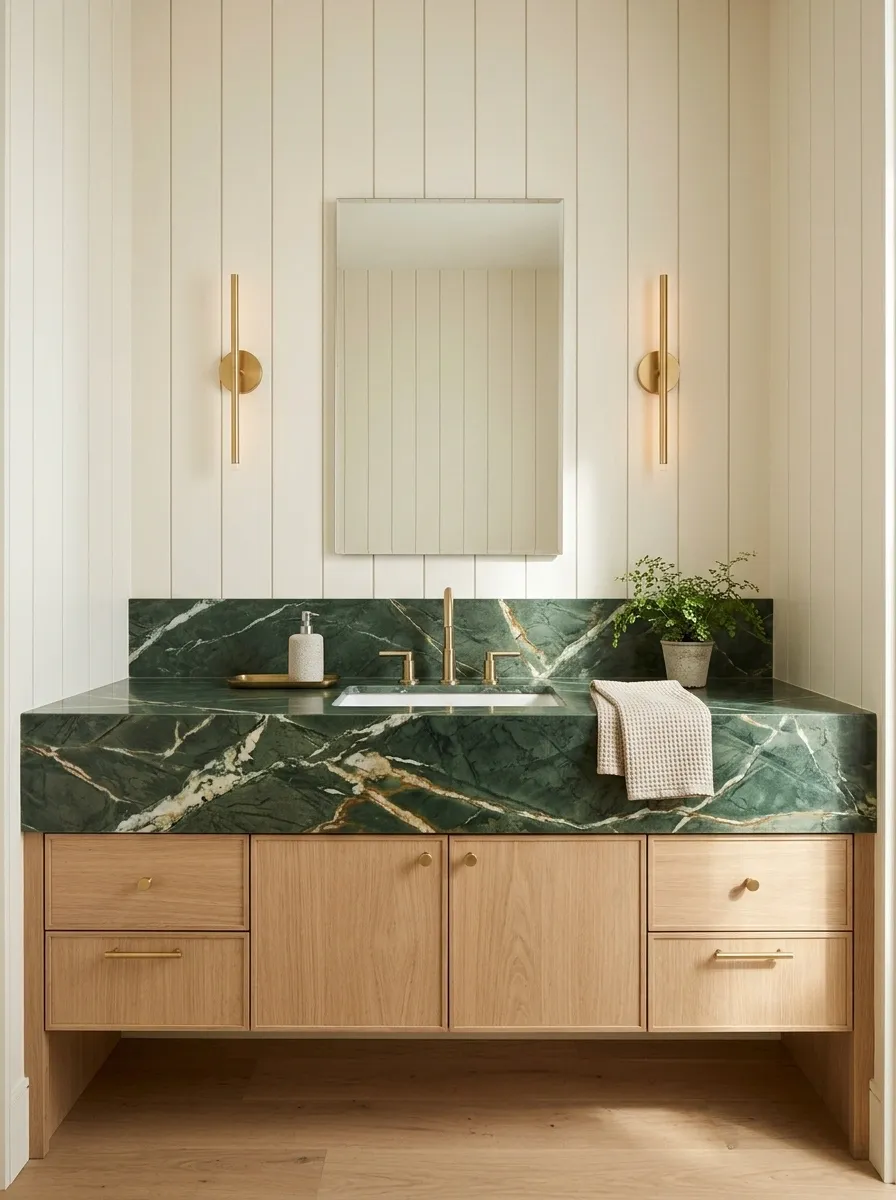
In a suitably dry sink-wall area, painted vertical paneling can introduce regular lines behind irregular stone-look veining. Use a bathroom-appropriate material and finish, with detailing suited to splash exposure.
Paint it a warm white or pale neutral taken from the top's lighter veins. A simple mirror and restrained lighting allow the regular rhythm to remain visible. Avoid a second fine-line pattern in towels or flooring. The appeal lies in the contrast between orderly verticals and the top's freer marks. If the existing top is especially busy, choose broader panel spacing so the wall doesn't become another dense pattern.
Pale paneling
Green surface
Small wood detail
Placement note
Keep the panel rhythm broad enough to remain calm beside the top.
A Green Vanity Beneath a Single Picture Ledge
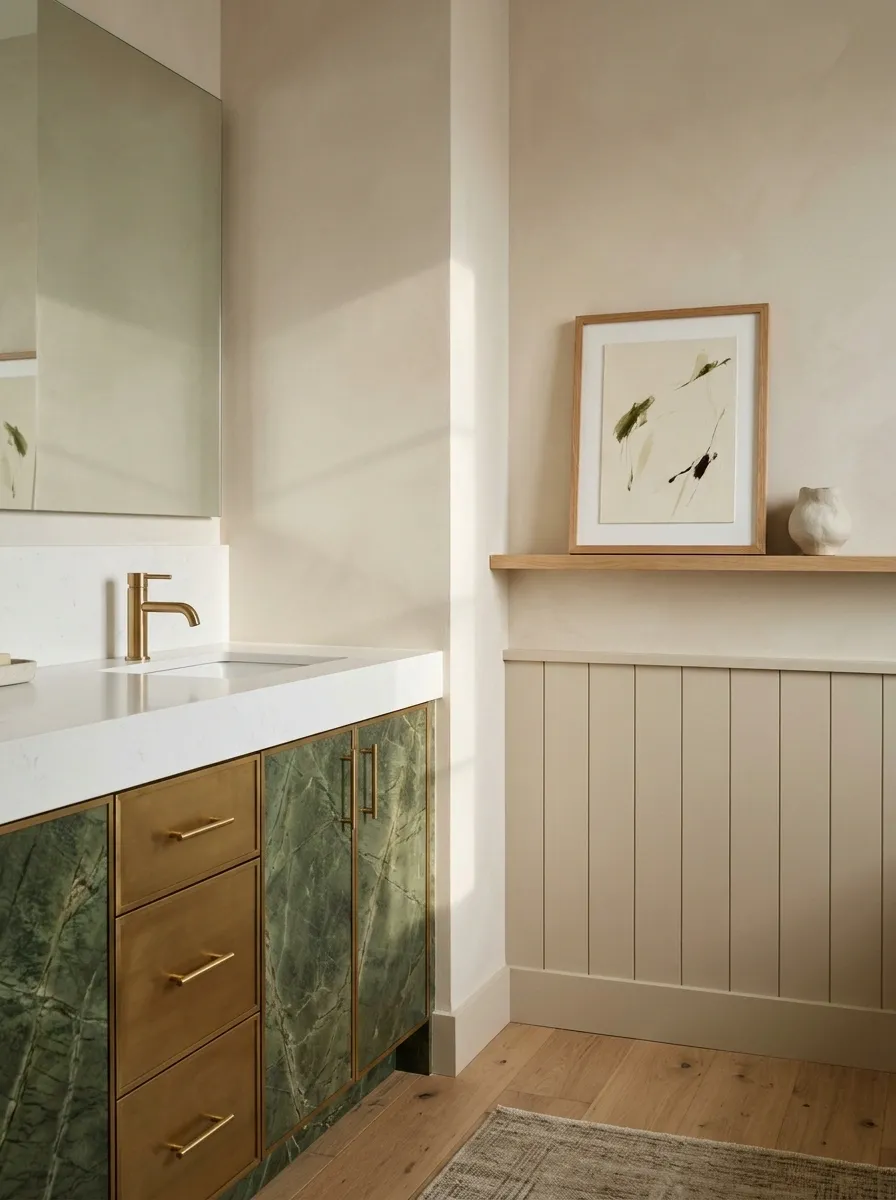
On a side wall in the dry part of the bathroom, use a slim picture ledge for one framed print and a small ceramic object. Keep the mirror wall itself clear.
Choose art with cream space and a little green or dark brown, rather than a literal marble print. The ledge provides a place for personality beyond the vanity without multiplying objects around the basin. Use fixings and materials suited to the wall and humidity, and keep the ledge out of the natural splash path. It should feel like a considered wall arrangement, not a shelf installed because the countertop ran out of room.
Slim wood ledge
Open art background
Small green art detail
Placement note
Keep the basin area clear and concentrate decorative objects on a suitable dry wall.
Rooms That Let Green Become the Main Event
Deep Green Walls With a Contrasting Pale Cabinet
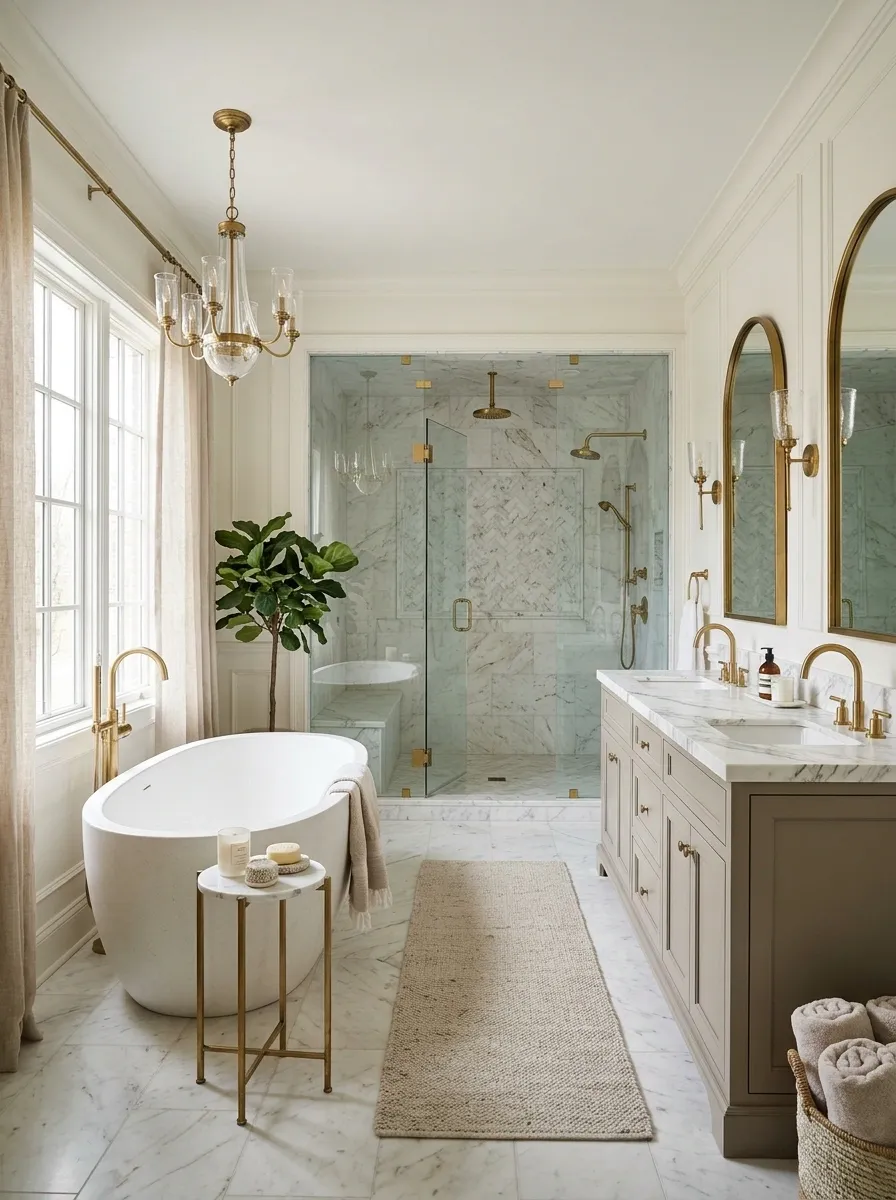
For a dramatic room, use deep green walls around a green marble-look top and keep the cabinet pale. The greens need to relate without pretending to be identical: take a broad sample to the vanity and check it in the actual light.
A pale basin, towels, and mirror surround create the necessary light forms. Let the top's veining supply pattern rather than introducing patterned wallpaper too. This approach works best when you enjoy a strong green atmosphere. If you merely tolerate the vanity, painting the entire room green is quite an ambitious commitment to tolerance.
Placement note
The cabinet and basin remain light so the patterned top does not vanish into the room.
Cream Tile With a Green Vanity and Black Details

Pair a green vanity with simple cream wall tile, then use black in a mirror frame and a small hardware detail. The tile grid supplies structure while the green surface supplies movement.
Keep grout close to the tile color if you want the wall to remain quiet. Strongly contrasting grout would add another graphic pattern. A cream towel and a single dark soap dispenser are enough on the practical side of the scheme. Where black hardware is already present, this is an easy way to connect it to a green top without introducing a completely new decorative theme.
Cream wall tile
Green surface
Black outlines
Placement note
Keep the tile joints quiet when the vanity already has active veining.
A Botanical Curtain With a Plain Sink Wall
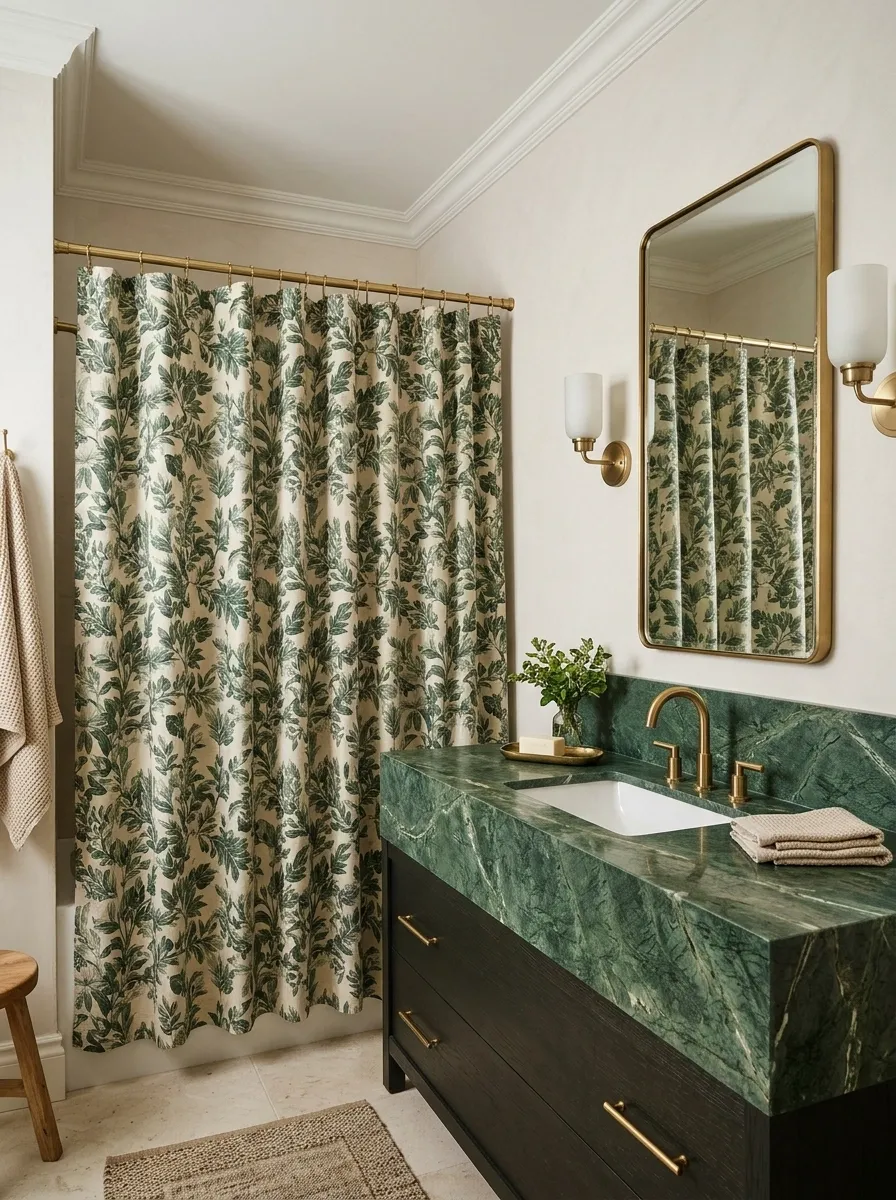
If the vanity shares a room with a tub, a botanical shower curtain can distribute green vertically. Choose a print with a background that relates to the walls and foliage that includes a believable version of the vanity color.
Leave the sink wall plain and choose towels from the print's quiet background. The curtain can be expressive without requiring themed accessories. No leaf-shaped soap dish is needed to confirm that plants were involved. This works particularly well when the top's own veining is subtle; with a very busy top, choose a larger, simpler botanical pattern or stay with a plain curtain.
Curtain background
Botanical foliage
Small warm print detail
Placement note
Choose a simpler print when the vanity surface is strongly patterned.
A Hotel-Like Sink Wall With Matching Pale Towels

For a quieter finish, organize the room around a clear mirror, a green vanity, and pale towels repeated at the sink and bath. Choose a simple dispenser and a low tray that leaves the working part of the top open.
The tray should be suitable for the surface beneath it and easy to move for cleaning. Avoid deep baskets that trap splashes around the basin. Add interest through towel weave and cabinet detailing rather than more colors. This arrangement can make an inherited patterned top feel deliberate through order and restraint, without turning the bathroom into a showroom where nobody is allowed to own toothpaste.
Relative emphasis, not a fixed color formula.
Placement note
Keep the usable countertop clear enough for ordinary daily routines.
Choose What You Want to Notice First
Stand in the doorway and decide whether you want the eye to go to the vanity, the mirror, or the room's wall color. Give that element the strongest visual role and simplify its nearest neighbors.
You don't need to repeat every vein color, match every metal, or add green to every textile. A green vanity can look at home with a few convincing relationships around it. Once those are established, leave enough space for the surface to be itself.