
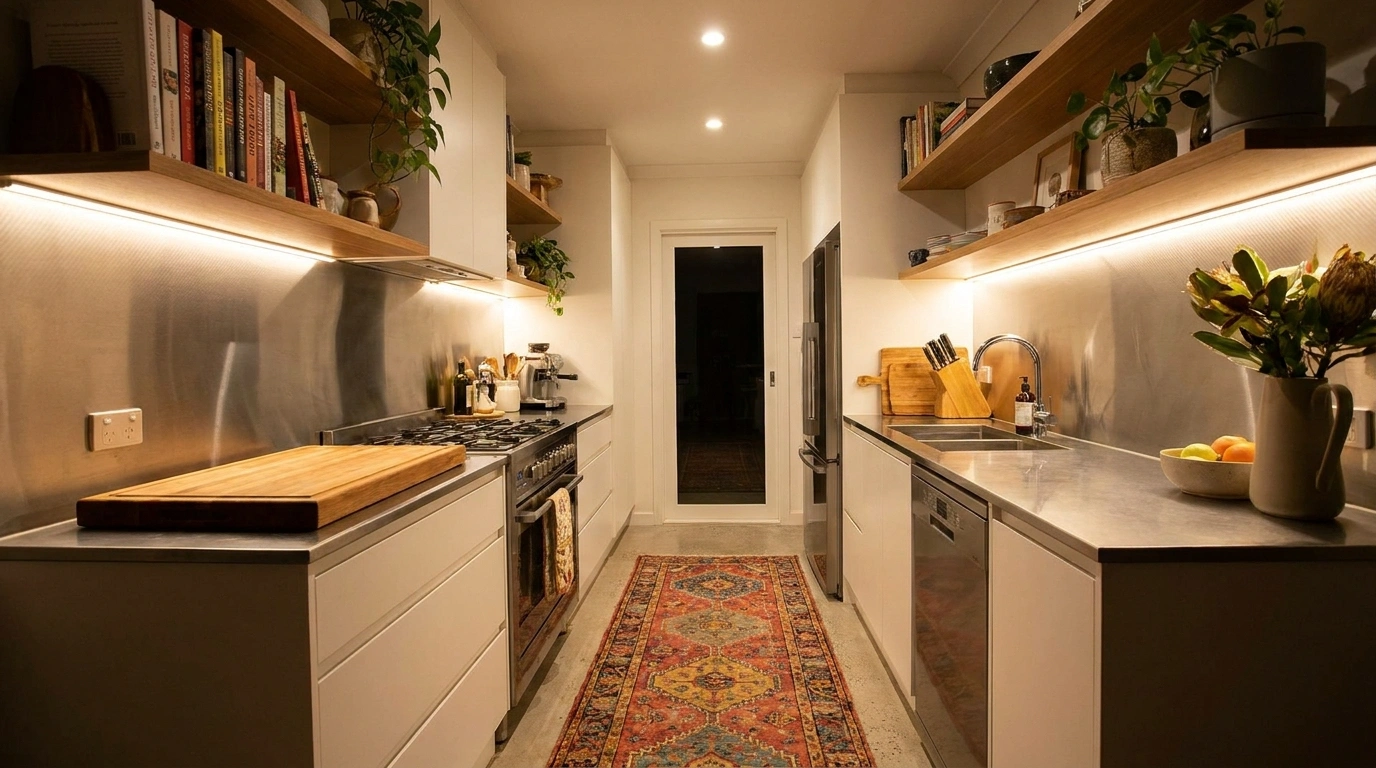
The stainless steel backsplash is excellent at looking ready for service. Your kitchen, however, may not need the emotional atmosphere of a restaurant after closing.
Keep the steel. It can be a useful, handsome part of the room. What often makes it feel severe is the combination around it: hard overhead light, several reflective finishes, bare windows, and no visible material that looks pleasant to touch.
Warmth can come from cabinet color, wood furniture, lighting, textiles, ceramics, or simply a more comfortable place to sit. Covering the backsplash isn't the only available plot twist.
Choose a Place for Warmth That Can Do Its Job
Separate the working backsplash from the rest of the room. Around cooking equipment, maintain the clearances and ventilation required by the appliance and installation. Don't add fabric, wood overlays, adhesive wallpaper, or decorative storage to a heat-exposed backsplash as a styling shortcut.
Use safer opportunities elsewhere: the dining end, cabinet fronts, windows away from cooking, an island face, or a dry counter corner. Choose materials suited to their actual exposure.
For maintenance, use the guidance for your particular steel finish. Franke's stainless steel care advice cautions against bleach and abrasive cleaning tools on its sinks. That is not permission to assume all steel products have identical care requirements; check the backsplash supplier before trying a new product or polishing method.
Change the Large Surfaces Around the Steel
Cream Cabinets With a Walnut Island
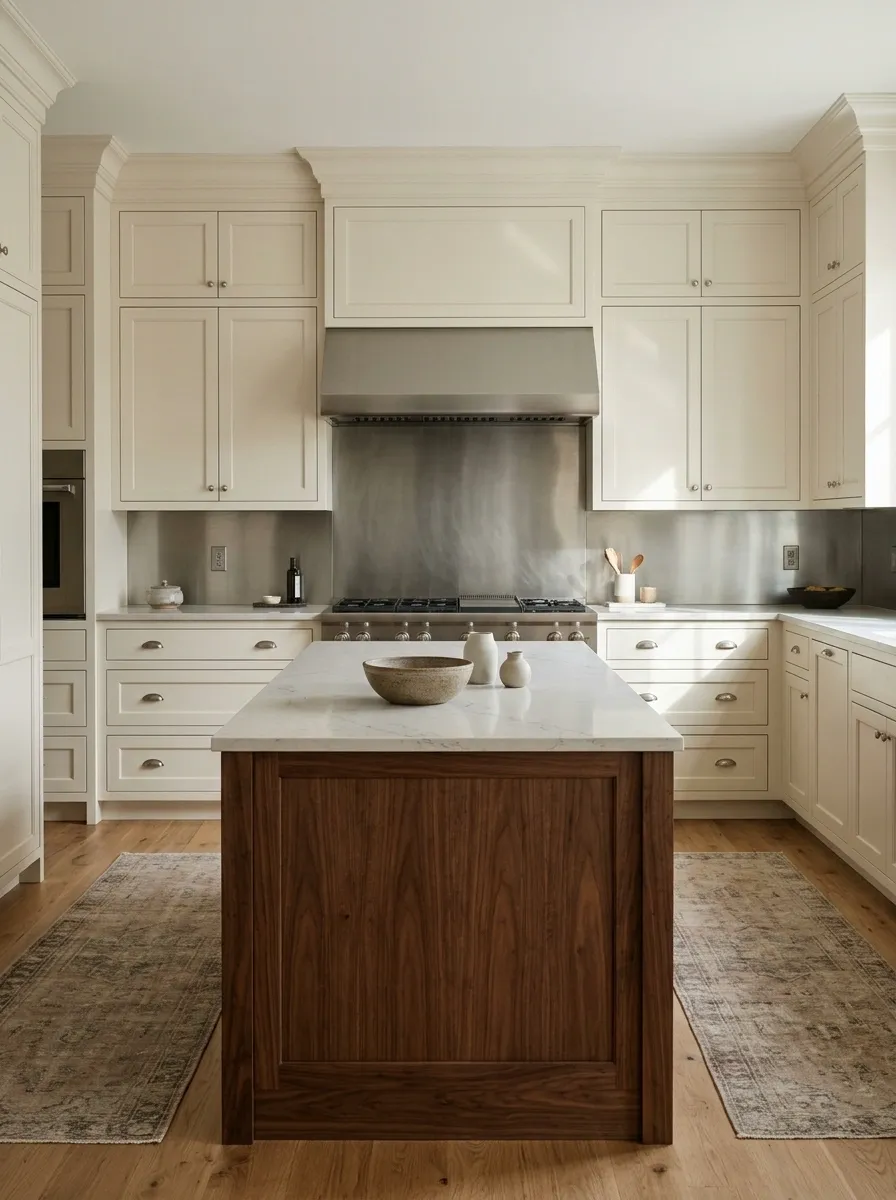
Cream perimeter cabinets soften the frame around a steel backsplash, while a walnut island brings a larger warm material into the center of the kitchen. Keep the countertop quiet so the room doesn't acquire another busy surface.
The cream should be sampled beside the steel and existing appliances. A strongly yellow shade may look more pronounced against cool metal than expected. Choose simple hardware that relates to the room's other fittings, then let the cabinet color and walnut do the work. There is no need to add brass to every drawer just to issue an official declaration of warmth.
Placement note
A walnut island adds a separate warm material beyond the working wall.
Olive Lower Cabinets With Pale Upper Cabinets
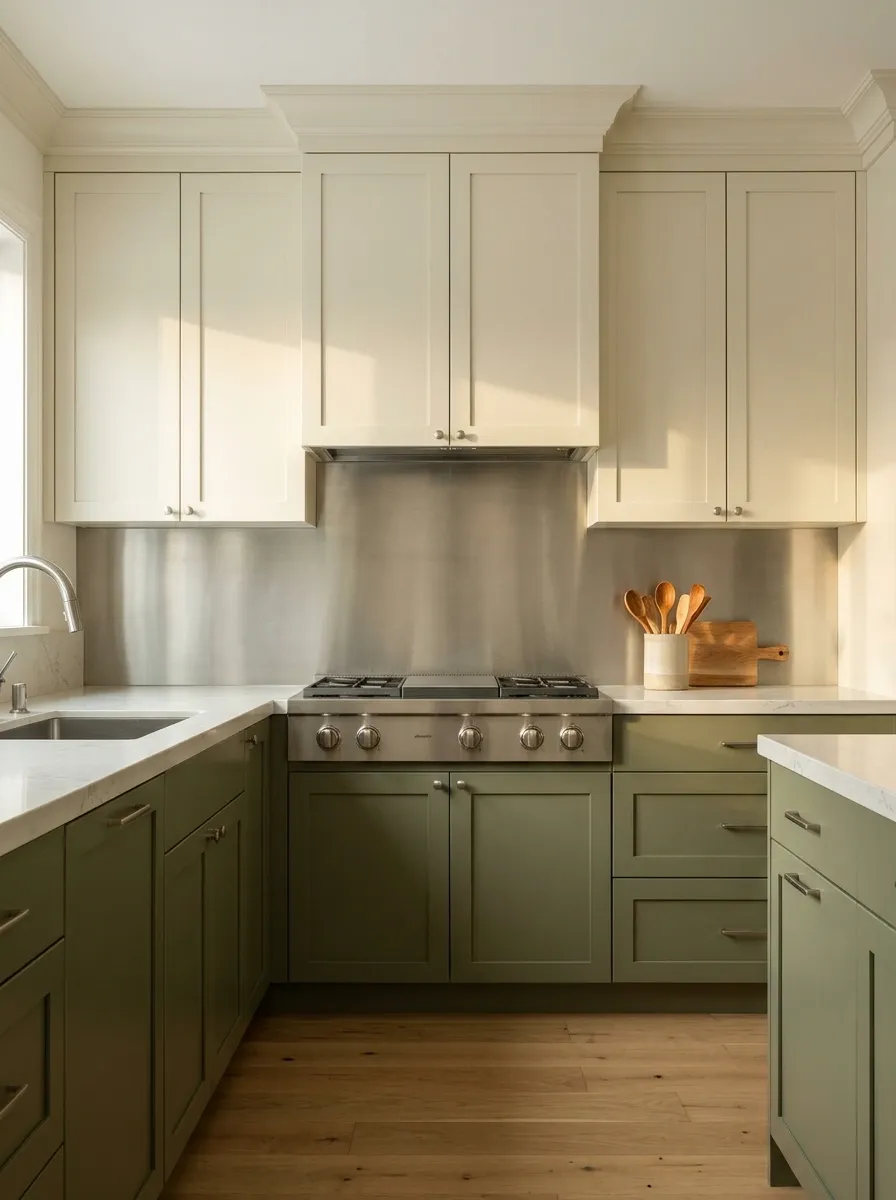
Use muted olive on the lower cabinets and a pale neutral above. The steel remains the middle band, framed by color below and lightness above.
Keep the olive muted enough to work with any existing gray appliances or flooring. A few wood utensils in a suitable holder on a safe prep counter can repeat the warmth, but the cabinet color should remain the main change. If replacing or refinishing cabinets, confirm the appropriate preparation and coating system for the existing surface. A beautiful color still needs to stay attached to the door after somebody makes dinner.
Placement note
Use olive lower fronts as the main color block rather than adding many small green accessories.
Putty Cabinetry With Dark Bronze Handles
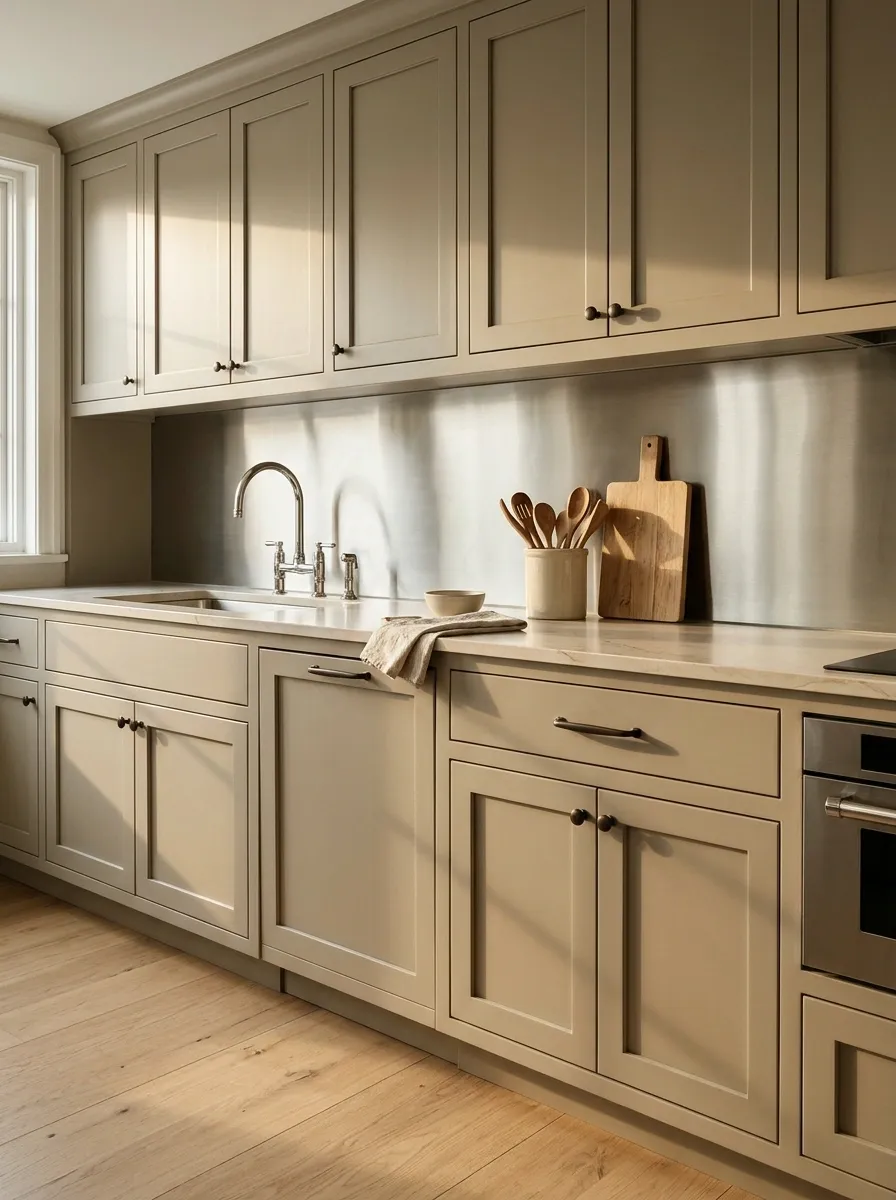
Putty cabinet fronts and dark bronze handles can give steel a quieter, earthier context. Choose a putty sample that sits comfortably with the countertop and floor as well as the metal.
The handles supply small dark outlines, while the steel remains the reflective surface. Keep other hardware changes selective; an existing chrome faucet can still belong to the functional metal group. Add a simple cream ceramic crock at a dry prep area. This combination suits a kitchen where you want subtle warmth without making a strong color statement or introducing a new wood grain across the entire room.
Putty cabinet fronts
Dark bronze handles
Steel backsplash
Placement note
Let the steel remain the main reflective surface while the cabinet finishes stay quieter.
Deep Blue Cabinets With Oak Stools
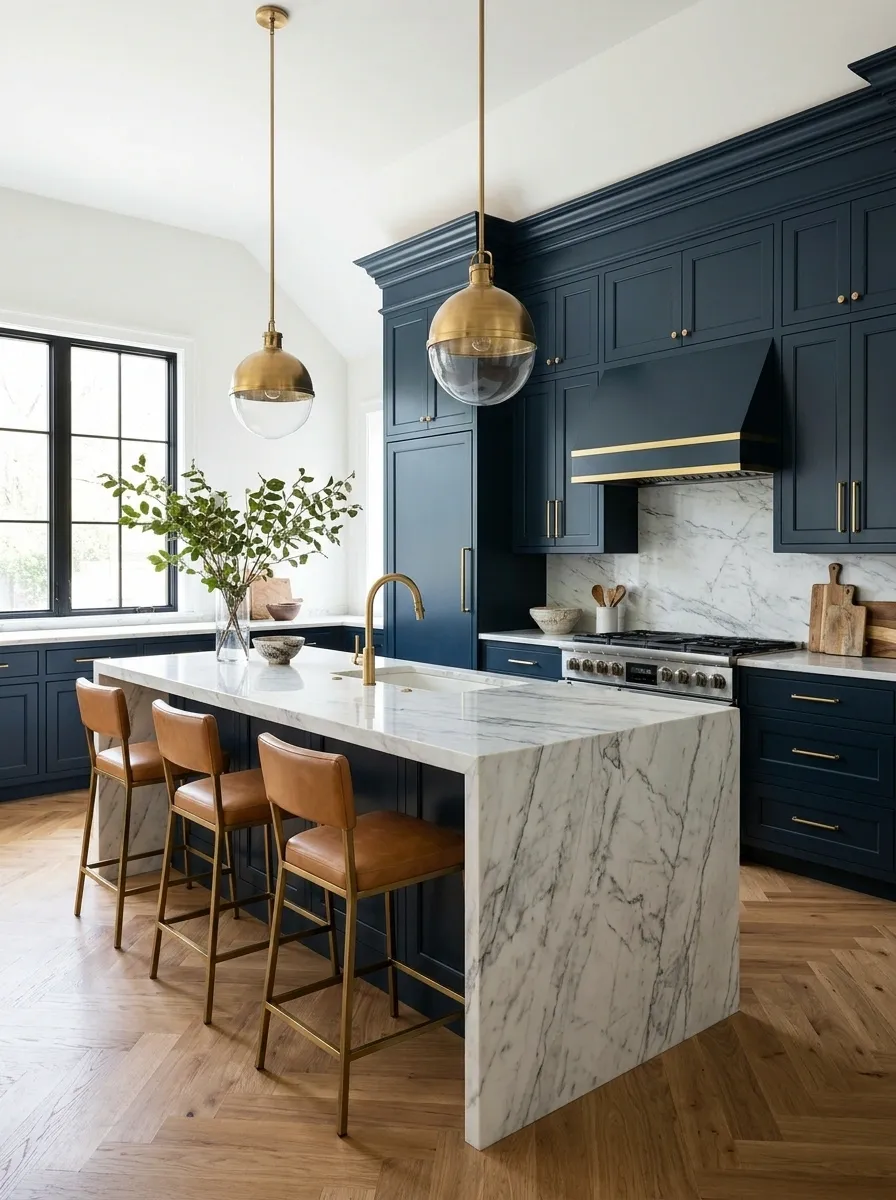
Deep blue cabinets can work with a steel backsplash when oak stools add a warm material in the seating zone. Use pale upholstery or woven seats if the stool design and kitchen conditions suit them.
The blue and steel form the cooler side of the palette; the oak provides the warmer contrast. Avoid adding another cool gray wood finish through the table or shelving unless you want a more restrained, cooler room. A cream wall at the dining end can help keep the kitchen from becoming entirely blue and silver. Judge the arrangement in the evening as well as daylight.
Deep blue cabinets
Oak stools
Stainless steel
Placement note
Keep the seating zone materially warmer than the working wall.
Add Wood Where It Remains Useful
A Freestanding Oak Prep Table
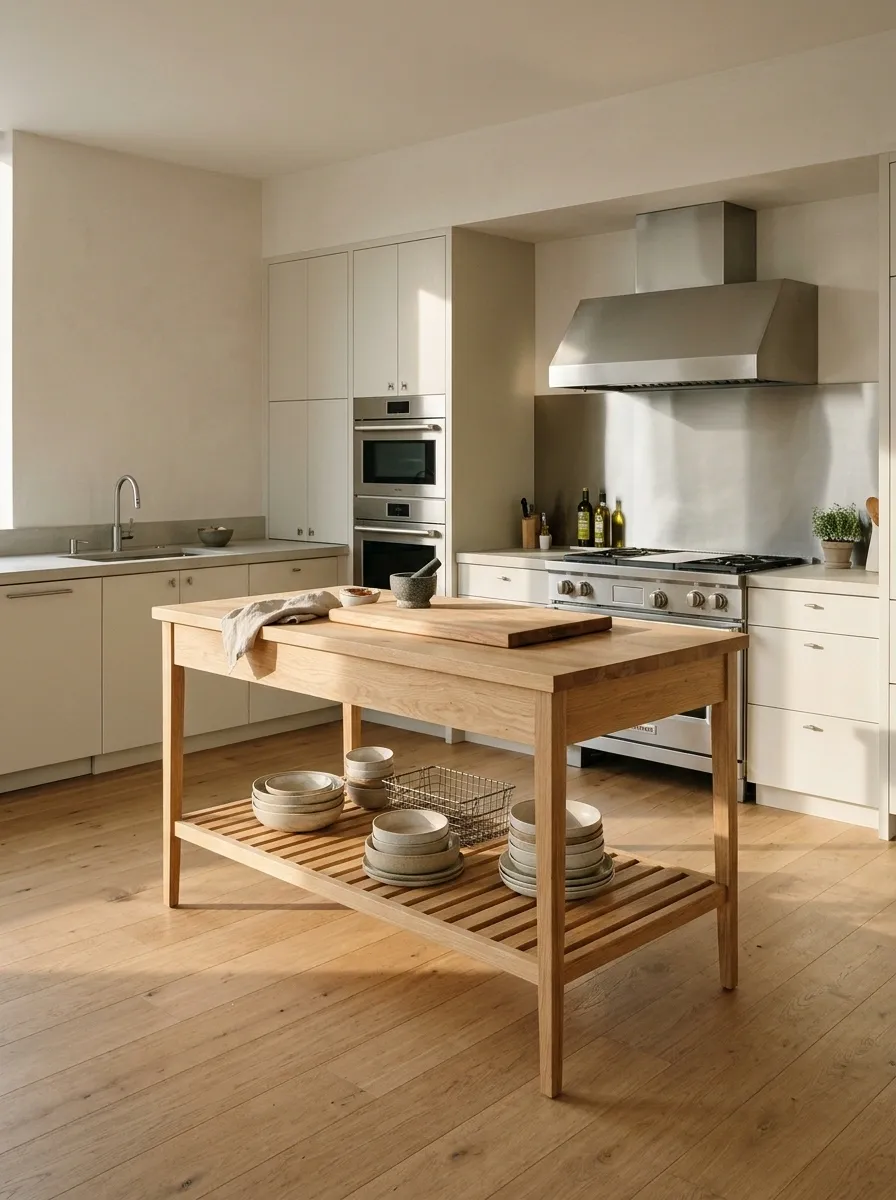
If the floor plan allows it, an oak prep table can bring warmth into a kitchen dominated by steel. Choose a size that preserves comfortable working routes and access to appliances.
A table with visible legs feels lighter than a solid block island. Its surface should suit the work you intend to do and receive appropriate care. Keep the lower shelf useful, perhaps for a few frequently used bowls, rather than packing it with decorative baskets. The table is most convincing when it has a real job. A kitchen centerpiece that nobody can walk around is a fairly demanding ornament.
Placement note
Check circulation and appliance access before choosing the furniture footprint.
A Wood Dining Table at the End of a Galley
Use a wood dining table at the open end of a steel-backed galley kitchen. Pair it with comfortable chairs and a quiet wall color so the eating area feels like a destination rather than an extension of the worktop.
A lamp or suitable pendant over the dining zone can reinforce that change of use. Keep the table clear enough to sit down without relocating a decorative installation. Repeat a little wood elsewhere, perhaps in stool seats or a cabinet detail, so the table relates to the kitchen. It doesn't have to match every other wood item exactly; a coherent difference is more interesting than a compulsory furniture set.
Wood dining table
Woven seat fabric
Quiet wall
Placement note
Let the dining area carry the softer materials while the backsplash stays practical.
Oak Shelving on an Adjacent Dry Wall
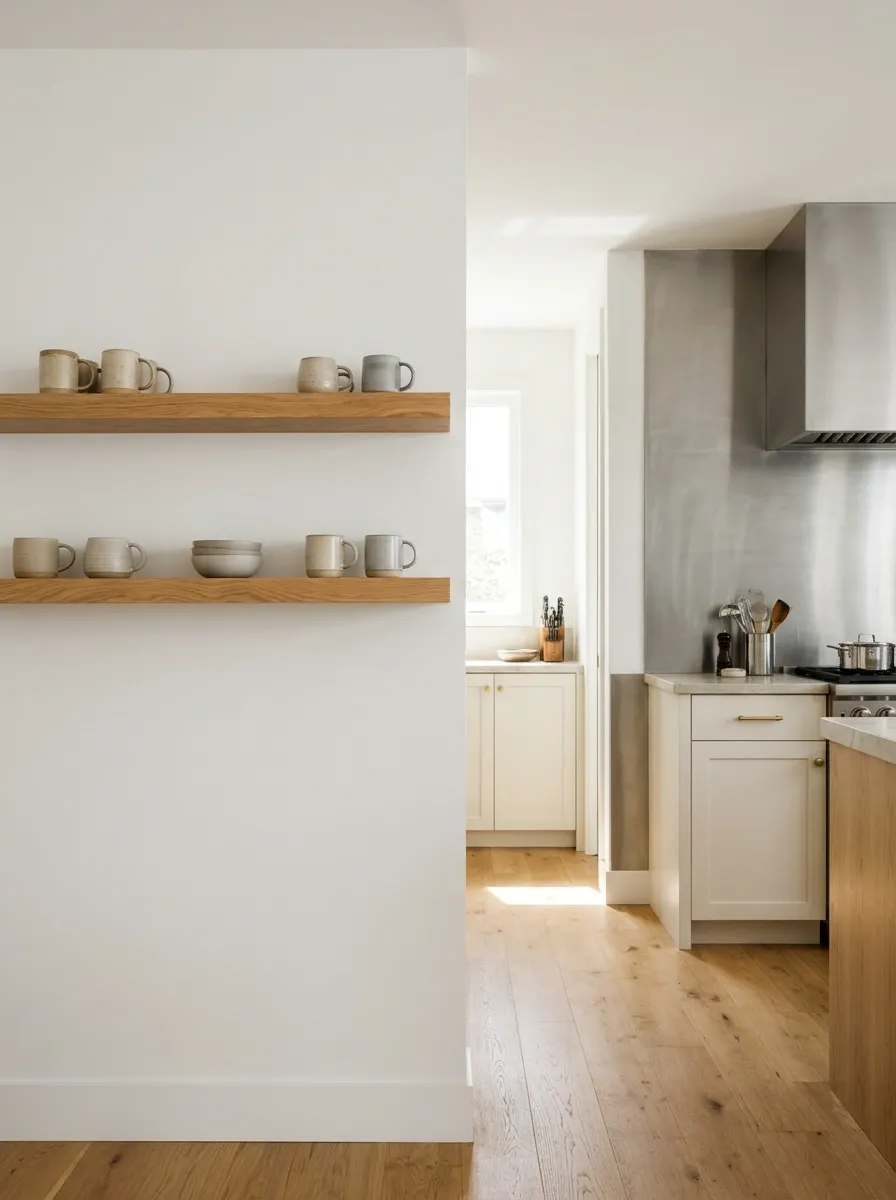
Install oak shelves on a suitable adjacent wall away from cooking heat and direct splash exposure. Use them for everyday mugs and a few ceramic bowls, with fixings appropriate to the wall and load.
The warm horizontal lines give the room a different rhythm from the steel sheet. Leave some wall visible between groups rather than filling the entire shelf edge to edge. A shelf loaded with rarely used objects may photograph well briefly, but its long-term contribution is mostly dust. Keep the functional steel wall intact and let the dry wall carry the more domestic material.
Oak shelf
Ceramic mugs
Existing steel
Placement note
Use the dry wall as the display area instead of attaching wood to the working backsplash.
A Walnut Island End Panel Facing the Living Room
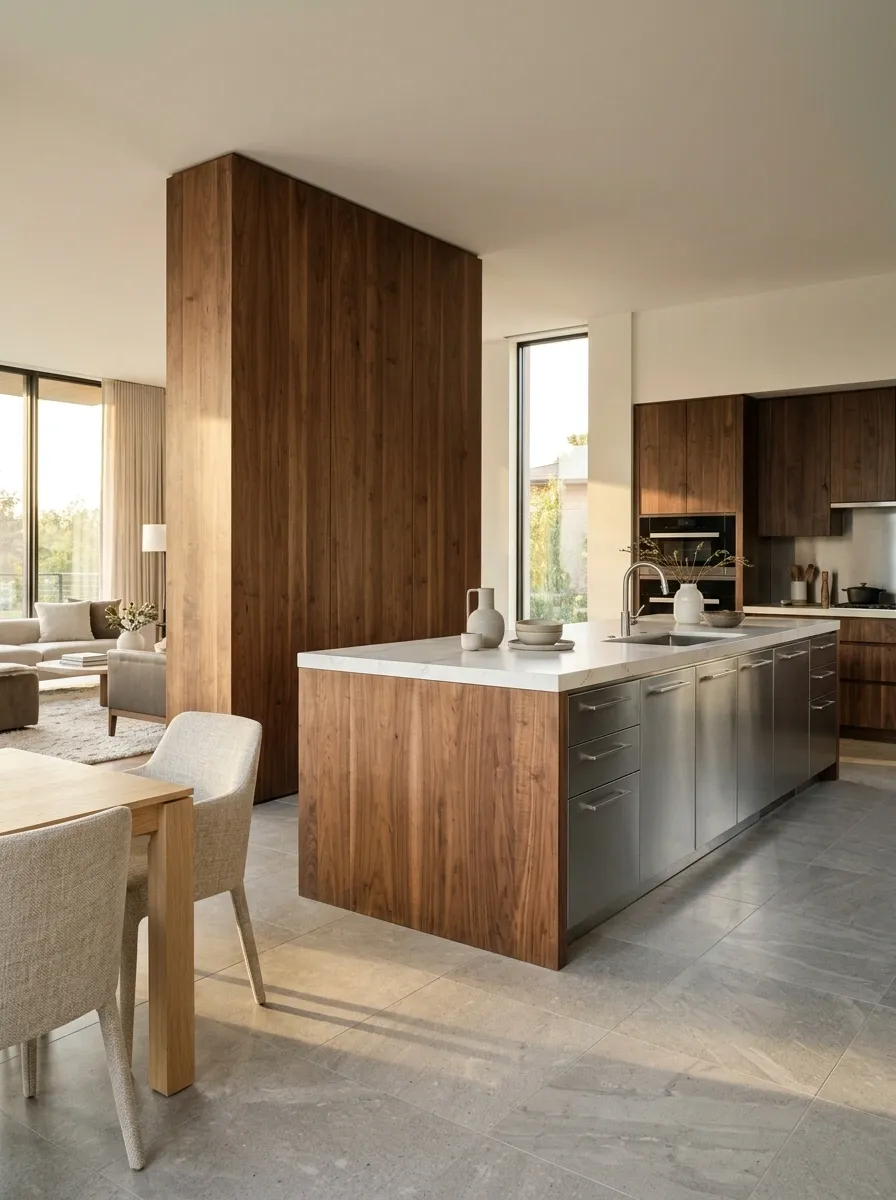
Where an island faces an open living area, a walnut end or back panel can connect the kitchen to adjoining furniture. Keep the working face practical and let the outward-facing surface provide warmth.
Use a simple grain direction and avoid adding too many competing grooves if the kitchen already has shaker doors or visible tile joints. The panel's value is its broad uninterrupted material. Connect it to a side table or dining chair elsewhere in the view. Any change to an island should account for its existing outlets, ventilation, and construction rather than concealing them behind an attractive sheet.
Walnut outward face
Quiet counter
Steel working wall
Placement note
Use the living-room sightline to decide where the wood will have the most effect.
Soften the Room Above Counter Height
A Linen Roman Shade Away From the Range
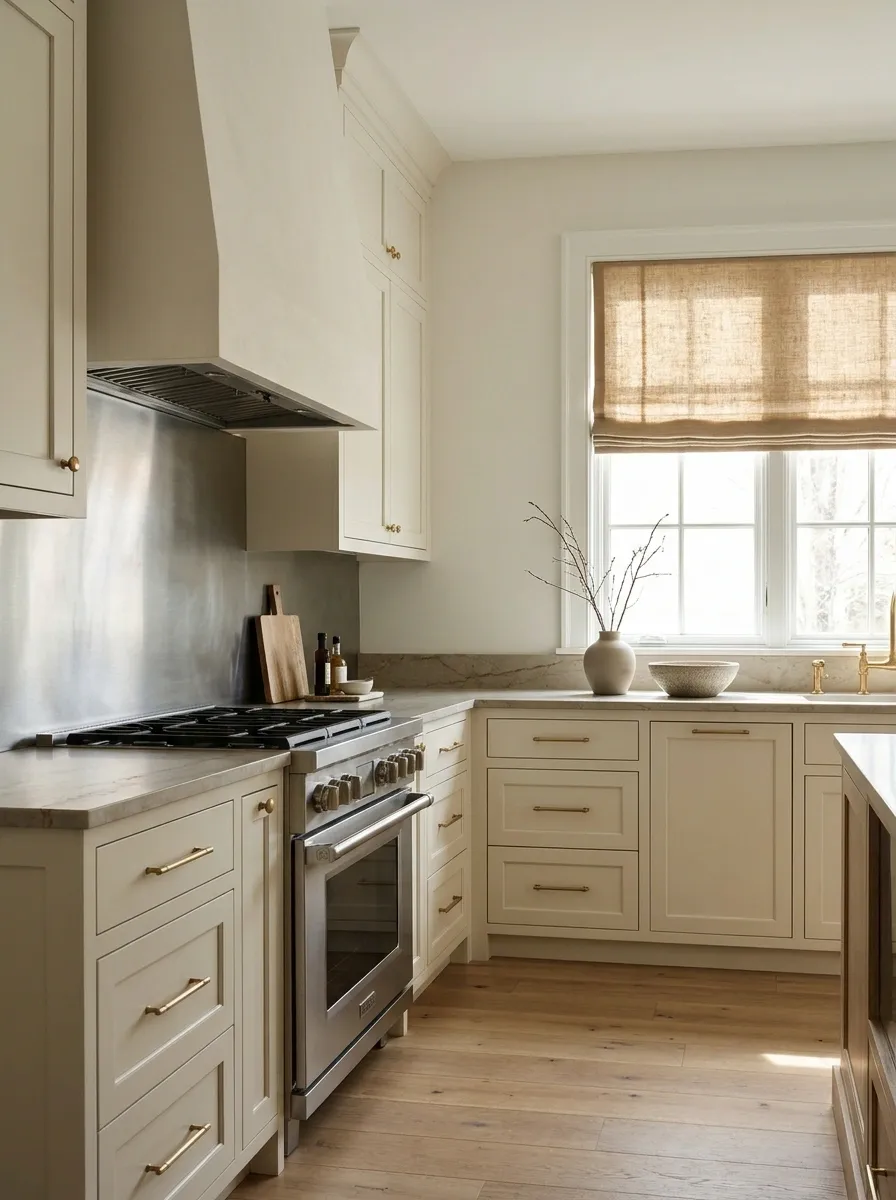
On a window safely away from cooking heat and splashes, a linen-look Roman shade can introduce a broad matte surface. Choose flax, warm white, or a muted stripe that relates to the cabinets.
Use a window treatment suitable for the kitchen location and follow its installation and cord-safety guidance. The shade should clear the window operation and any sink or counter fixtures. Its warmth comes from texture as much as color, so a simple weave can be enough. You don't need a heavily patterned fabric if the rest of the kitchen already contains several materials and strong cabinet lines.
Flax shade
Light wall
Steel backsplash
Placement note
Choose fabric for a suitable window location, with heat, splash, and operation considered.
A Warm Painted Dining Wall
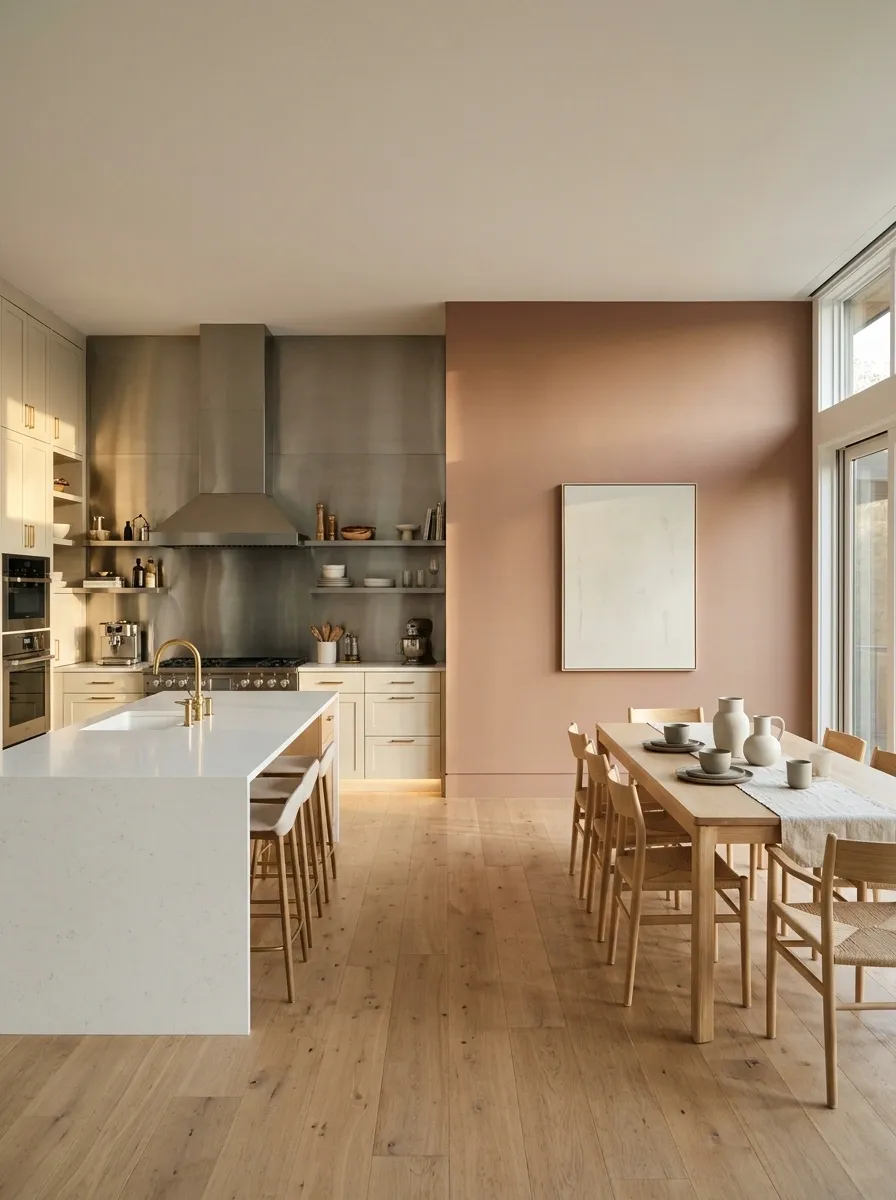
Paint the dining-end wall muted clay, warm pink-brown, or a soft earthy neutral while leaving the steel backsplash alone. This gives the kitchen a warm vertical surface without changing the working wall.
Choose a color that relates to the countertop and flooring. Add a wood table and simple art, keeping the painted wall broad and clear. A small accent patch behind a random appliance can look accidental; a full wall plane gives the color a useful architectural role. This is particularly effective in an open kitchen where you see the dining wall and the steel from the same doorway.
Relative emphasis, not a fixed color formula.
Placement note
Use a complete wall plane so the warmth looks part of the room rather than an isolated patch.
One Oversized Food Still Life on a Dry Wall
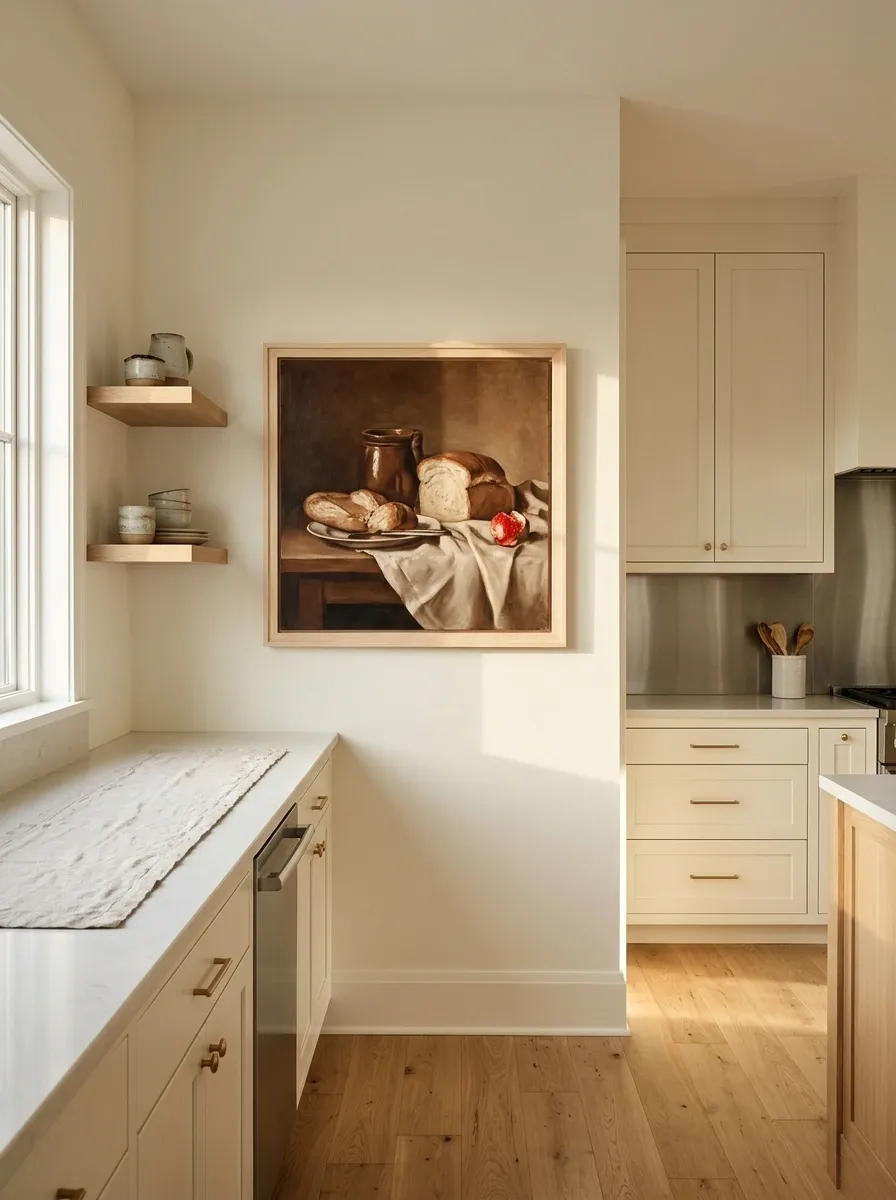
Hang a generous still life with warm browns, cream, and a little red or green on a suitable dry wall. Keep the frame simple and the surrounding wall relatively clear.
The artwork offers a softer, more personal focus than another metal rack. Choose it because you like the composition, not because a painted pear happens to match the cabinets. A large work can hold its own beside reflective steel where several small prints might disappear into visual clutter. Keep it clear of steam, grease, and heat exposure. The kitchen can accommodate art without asking the painting to serve as a washable backsplash.
Relative emphasis, not a fixed color formula.
Placement note
A larger composition can balance the metal wall without adding many small objects.
A Pale Ceiling With a Warm, Quiet Wall Color
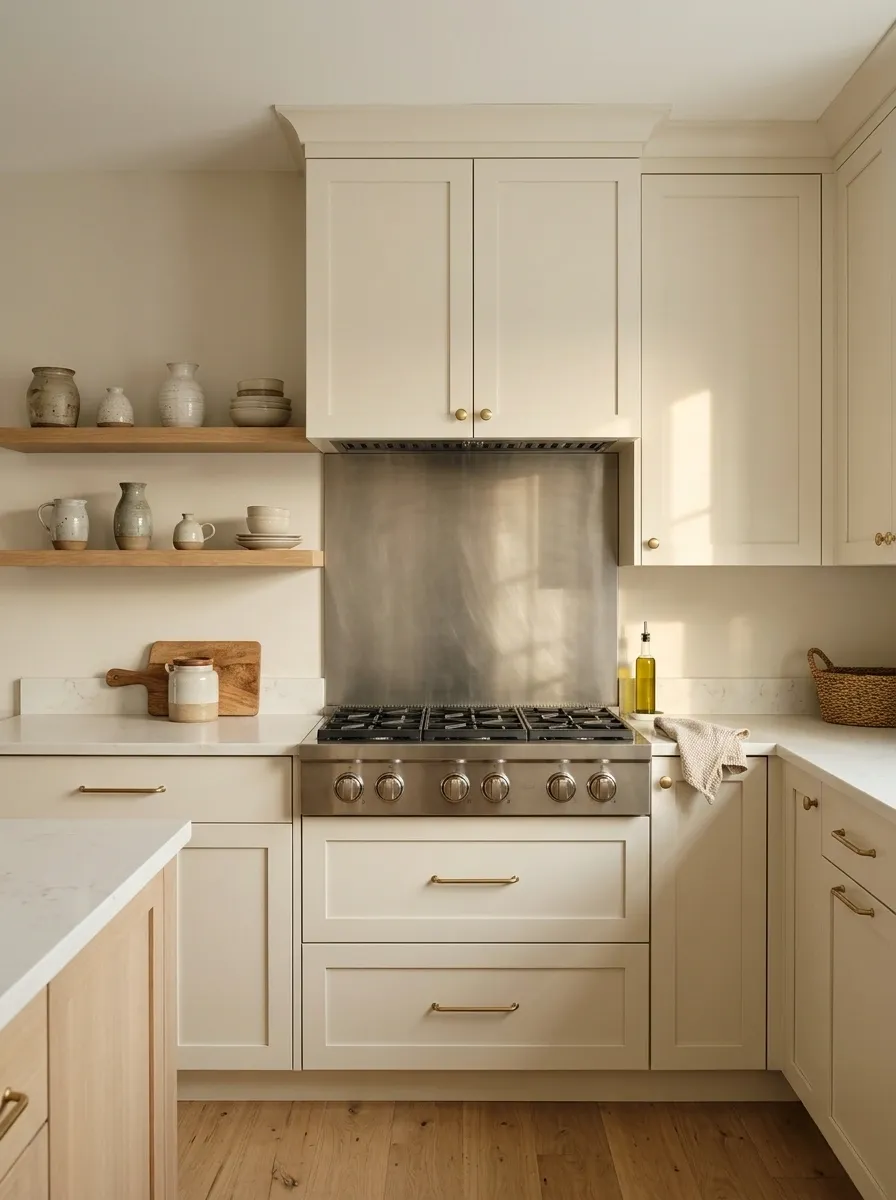
If the kitchen feels gray from top to bottom, a warm off-white or pale putty wall can change its atmosphere while the ceiling stays light. Sample the color where it meets the steel, cabinet, and countertop.
Avoid selecting the wall under temporary lighting that won't remain. A color that looks creamy in one lamp may appear muddy under another. Keep the ceiling shade related to the upper cabinets so the top of the room feels coherent. This is a low-drama scheme: the steel supplies shine, cabinetry supplies structure, and the wall supplies a little warmth without announcing an entirely new decorative personality.
Light ceiling
Warm neutral wall
Steel backsplash
Placement note
Judge the wall sample under the lighting that will remain in the kitchen.
Make the Working Surfaces Feel Lived In
Cream Ceramics in a Dry Coffee Corner
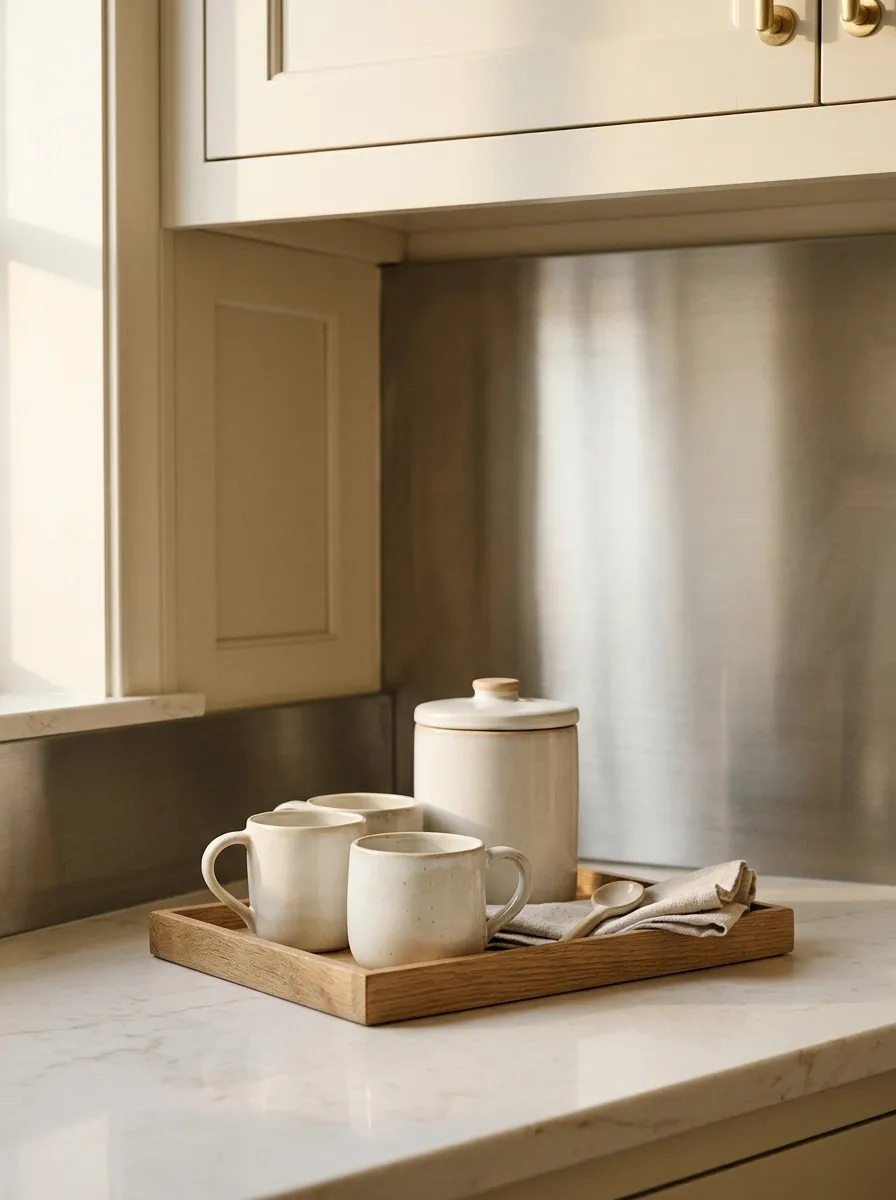
Group a few cream mugs and a ceramic coffee canister in a dry counter corner away from the cooking zone. Use one small tray if it makes the daily routine easier, leaving enough clear counter to prepare drinks.
Choose ceramics with a little variation in shape or glaze. They don't need to come from an identical coordinated set. The pale matte surfaces contrast with steel without adding a new loud color. Keep the coffee setup compact and practical; a corner containing twelve syrup bottles, three signs, and no room for a mug has wandered away from the original purpose.
Cream ceramics
Small wood detail
Steel backdrop
Placement note
Group only what supports the everyday coffee routine and preserve clear working space.
A Warm-Toned Fruit Bowl on the Dining Counter
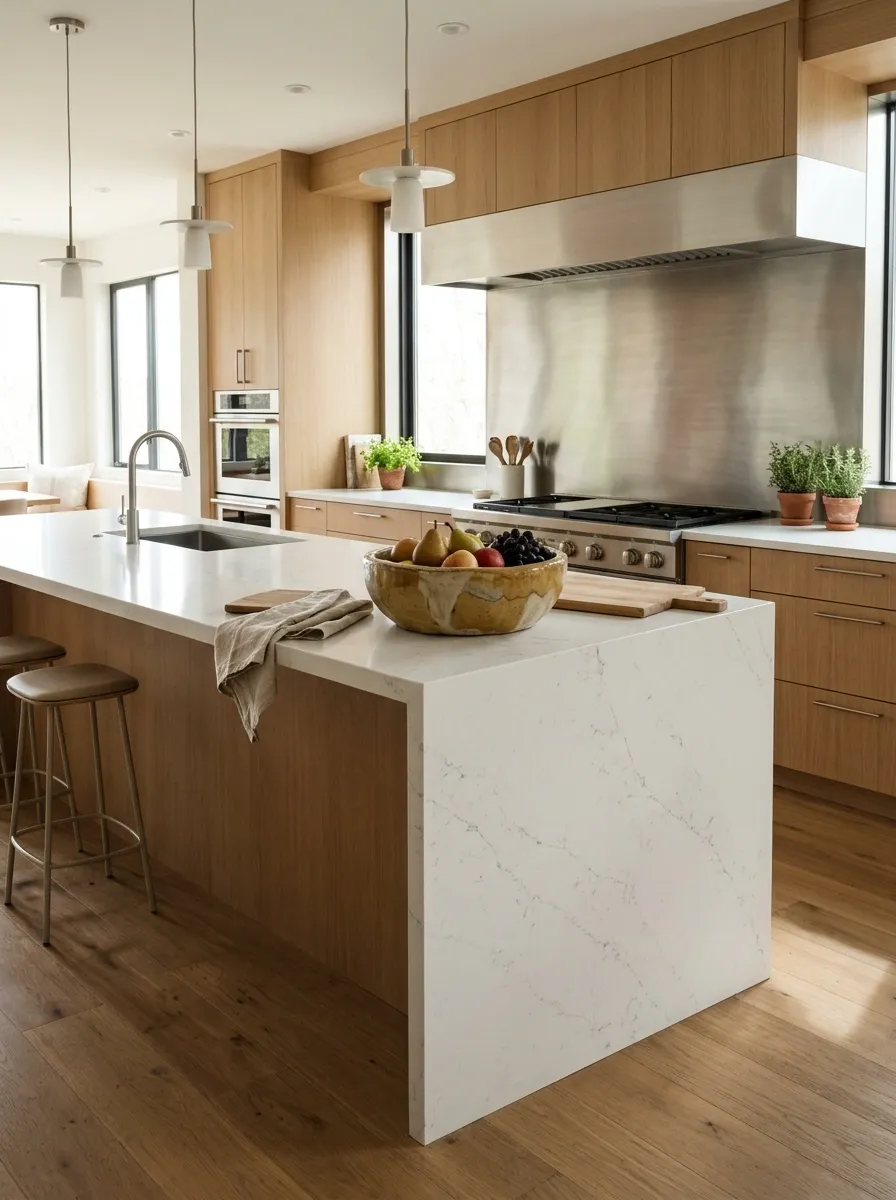
Place a substantial ceramic bowl on a dining counter or island area away from cooking and preparation needs. Choose a warm clay glaze, cream, or a muted ochre, then let ordinary fruit provide some changing color.
The bowl should be easy to move and proportionate to the available surface. It works as a broad matte shape against the steel's shine. You don't need several additional objects around it. A single useful bowl can make the kitchen feel occupied by humans without requiring a daily styling appointment. If the counter is already short of working space, put the bowl on the dining table instead.
Relative emphasis, not a fixed color formula.
Placement note
Use a single substantial piece where it will not reduce needed preparation space.
A Washable Patterned Runner Along a Clear Aisle
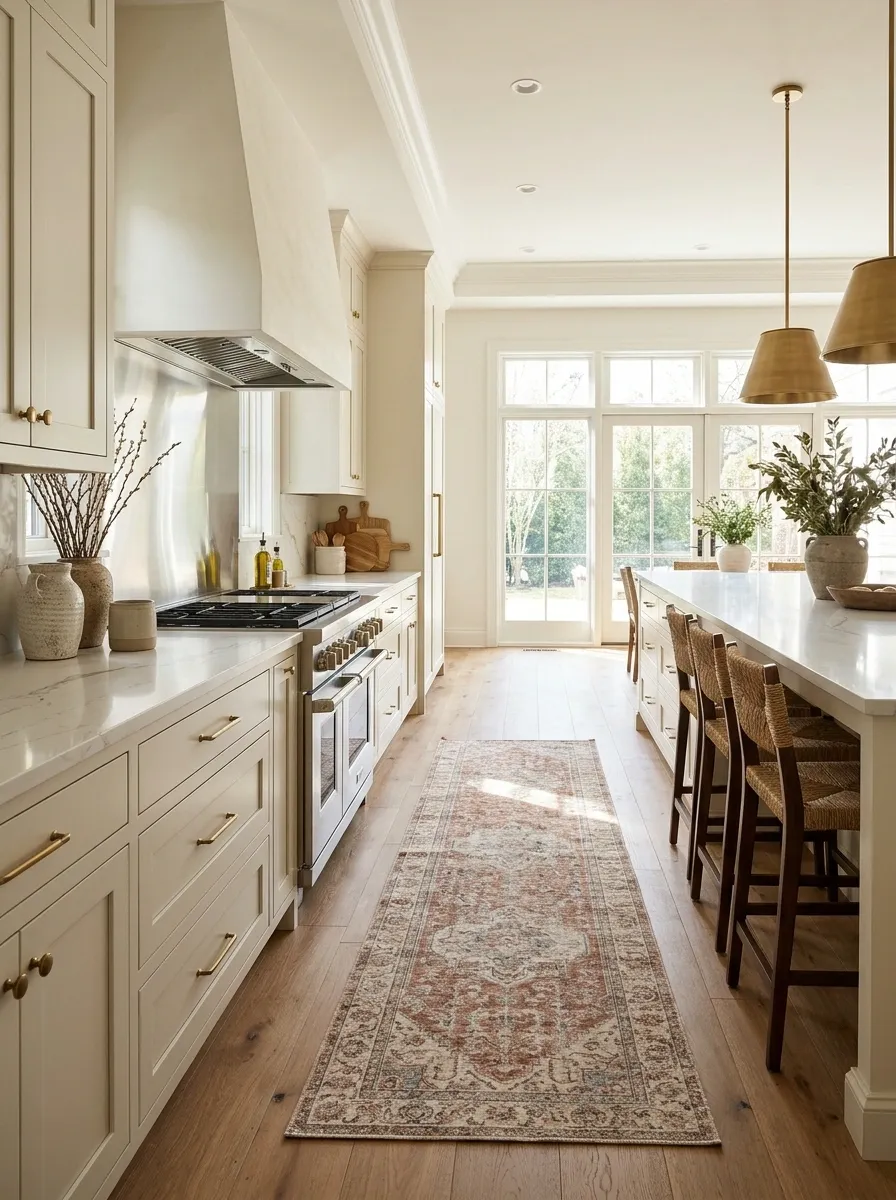
A kitchen-suitable washable runner with rust, cream, and muted blue can soften the view along a clear aisle. Check that its backing suits the floor and that it stays flat without obstructing doors or appliance access.
Choose a pattern with enough variation to live comfortably in a kitchen, but avoid a rug so busy that it fights patterned counters or strong wood grain. Keep the runner proportionate to the walking space rather than trying to cover every visible inch. If a textile on the floor creates more inconvenience than comfort in your household, use the color elsewhere. A decor idea is allowed to fail the practical audition.
Placement note
Use a stable rug and keep the aisle, doorways, and appliances fully usable.
Upholstered Dining Chairs Beside the Kitchen
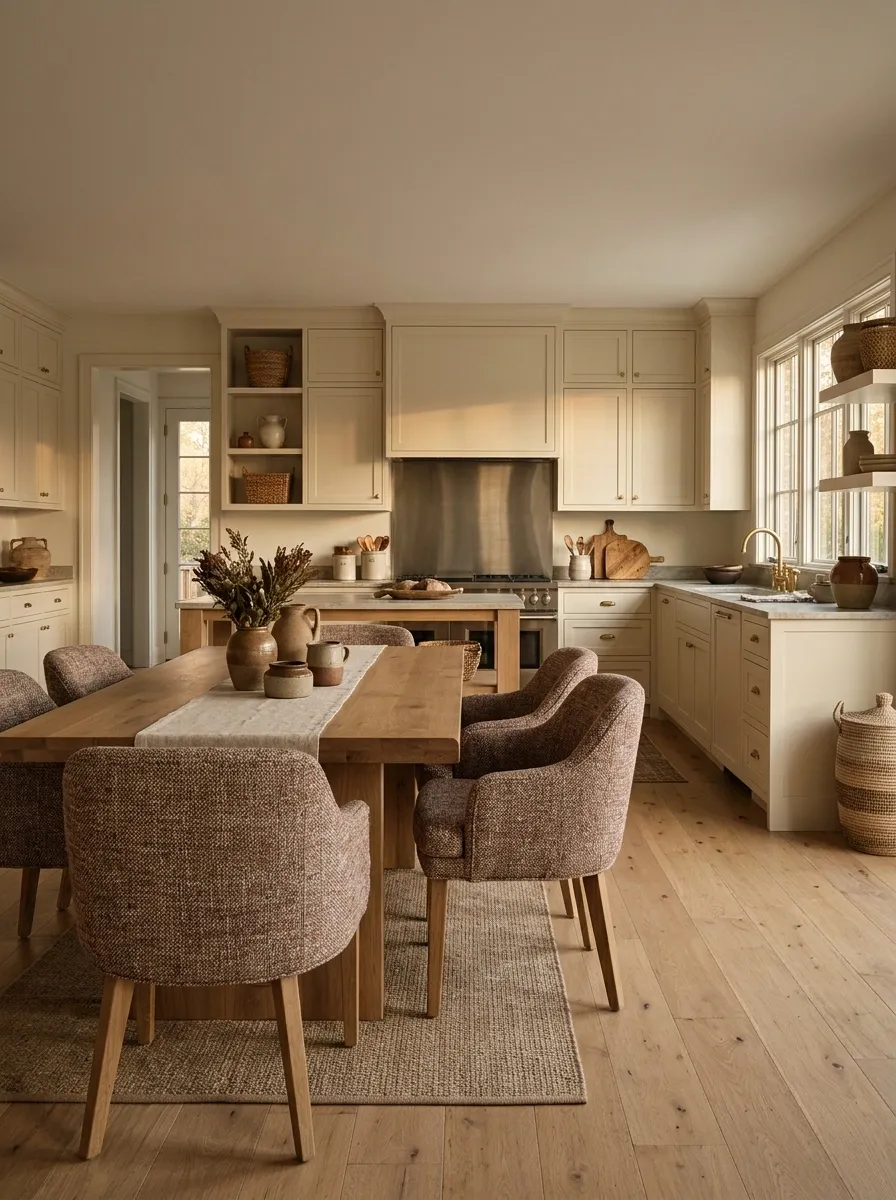
Introduce upholstered chairs at the nearby dining table rather than adding fabric to the working kitchen. A warm woven seat or back can soften the whole view while staying out of the cooking zone.
Choose upholstery suited to the household's cleaning needs. A textured neutral can provide warmth without adding a new color; a muted rust or olive gives the dining area more presence. Keep chair shapes comfortable and let them relate to the kitchen through wood or metal details. The visual change is substantial because seating occupies a real volume, rather than relying on tiny accessories scattered along the backsplash.
Warm woven upholstery
Table wood
Kitchen steel
Placement note
Bring softness into furniture that people use, beyond the working surfaces.
Lighting That Changes the Evening View
A Shaded Pendant Over the Dining Table
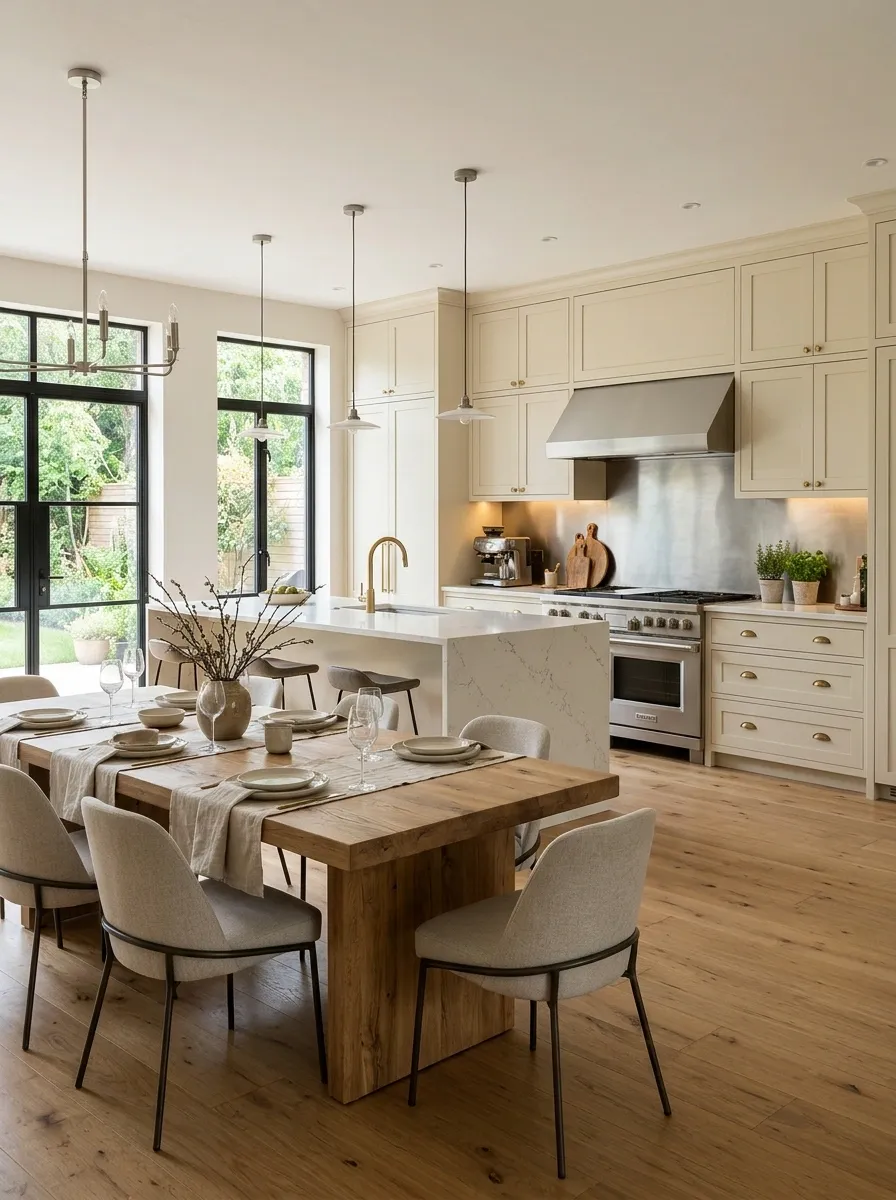
Use a shaded pendant suitable for the location over the dining table, where it can create a softer focus beyond the steel working wall. Choose a shade and fitting that suit the room, with installation handled appropriately.
The dining light and task lighting have different jobs. Keep adequate light at the counters while allowing the table to feel comfortable after cooking is finished. Check the lamp's actual color appearance with your cabinet and wall finishes. The word “warm” on a box doesn't guarantee that every finish will look better, and a dramatic golden glow isn't helpful if it makes the food look peculiar.
Placement note
Keep task lighting useful while giving the dining area its own gentler visual focus.
Even Counter Lighting Beneath the Upper Cabinets
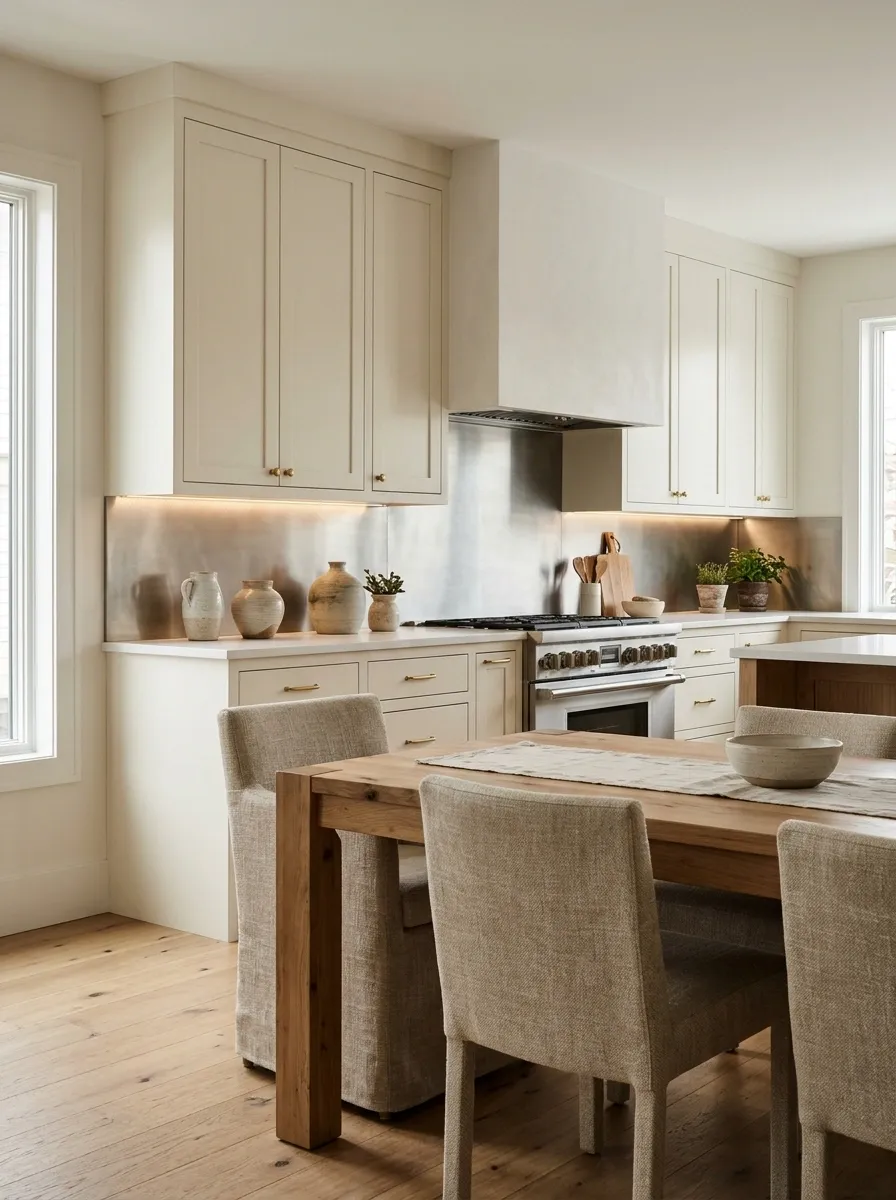
Well-planned under-cabinet lighting can make the worktop usable while reducing reliance on harsh overhead light. With a reflective backsplash, fitting position and shielding matter because visible glare can become part of the room's main view.
Ask the installer to consider the steel's reflections from normal standing and seated positions. Test the chosen light appearance with the actual finishes where possible. Keep the design simple rather than adding colored strips for decoration. A useful, even working light can help the kitchen feel more considered; it doesn't need to transform dinner preparation into a nightclub event.
Placement note
Assess the reflection from ordinary viewing positions before committing to the fitting position.
Keep the Warmth Where You'll Enjoy It
Choose the part of the room that currently feels most bare. If it's the window wall, fabric may help. If it's the eating area, comfortable chairs and a wood table will do more than another counter ornament. If the whole kitchen looks cold after dark, investigate the lighting before repainting every door.
The stainless steel can remain the efficient working surface it was meant to be. Give the surrounding room some color, texture, and ordinary comforts, and it will stop feeling as though someone is about to shout an order through a service hatch.