
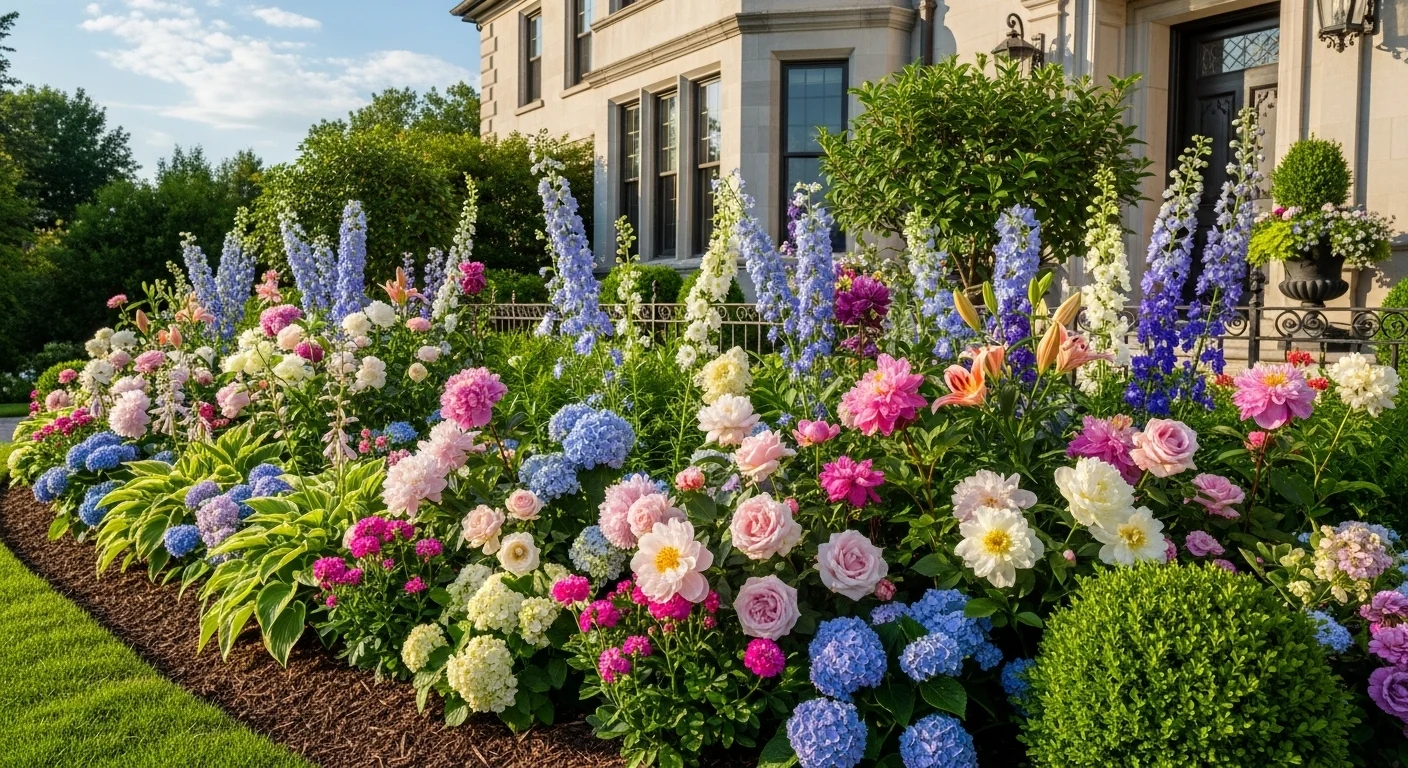
Raise your hand if your current flower bed is just a strip of sad mulch with three marigolds gasping for survival. You know the one — that half-hearted gesture toward “curb appeal” that fools absolutely nobody, least of all the neighbors who definitely noticed you planted it at 9pm on a Sunday before your HOA meeting.
Most front yards suffer from the same chronic condition: homeowners who treat flower beds like an afterthought rather than the main event. We dump in whatever was on sale at the garden center, shove it into the ground with zero plan, and then wonder why the whole thing looks like a clearance rack by July.
Here’s the thing nobody tells you: your flower bed is the first sentence of your home’s story. And right now, yours is opening with “It was a dark and stormy night” — except less interesting. The good news? You don’t need a landscape architecture degree or a trust fund to fix it. You just need to stop playing it safe and start being intentional about what you’re doing out there.
Whether you’re working with a skinny side yard, a flat front bed that’s begging for structure, or a porch situation that’s one more wind chime away from a personality crisis — these ideas will give you a real game plan. Ready to stop embarrassing your house?
What Your Flower Bed Is Actually Saying About You
Before we get into the good stuff, let’s have a quick honest conversation about why most flower beds fail — and it has nothing to do with your green thumb.
You Have No Anchor — A flower bed without structure is just organized chaos. Edging, borders, and a clear boundary between “garden” and “not garden” is what separates intentional design from “I found some dirt.”
You’re Scared of Color — Planting all-white everything because you don’t want to “clash” is not a design choice. It’s a fear response. Color combinations take thirty seconds of planning and zero courage once you know what you’re doing.
You’re Ignoring Levels — Flat beds are boring beds. Varying plant heights — tall at the back, low at the front — is the single easiest trick that makes every flower bed look like someone actually thought about it.
Stop Treating Your Garden Like a Chore
The best-looking yards you’ve ever driven past slowly weren’t accidents. They were just designed by people who stopped treating gardening like a maintenance task and started treating it like decoration.
Edging Is Non-Negotiable — The difference between a flower bed that looks designed and one that looks abandoned is almost always a clean edge. Crisp lines tell the eye where to look and make even basic plantings look intentional.
Mulch Is Your Best Friend — Dark mulch makes every flower color pop harder, retains moisture, and covers the bare soil that makes budget beds look cheap. It’s the eyeliner of landscaping.
Repetition Creates Rhythm — Planting one of everything looks like a plant hoarder’s yard sale. Repeating the same color or species in clusters creates the kind of visual flow that makes a bed look like it was actually designed.
6 Front Yard Flower Bed Ideas That Do Not Apologize
The “Everything’s Bigger in Texas” Porch Bed
Beautiful flower bed was actually done by my tenant.
by u/Similar-Run-7323 in landscaping
If your porch garden has a star, a fountain sculpture, Adirondack chairs painted the exact right shade of weathered grey, and still manages to look cohesive instead of cluttered — congratulations, you’ve cracked the code that most people give up on after hanging one sad wind chime. This Texas-proud setup works because the brick raised border does the heavy lifting structurally, giving the explosion of hot pink impatiens, yellow coleus, and boxwood globes a contained stage to perform on. The solar path lights anchoring the front aren’t trying to be fancy — they’re doing their job, and that’s exactly the point. The metal star on the wall could have been a disaster (and let’s be honest, it usually is on other houses), but here it reads as intentional because the whole composition commits to a regional identity rather than hedging with “neutral cottage.” Styling note: If you’re going to do themed, do it all the way. Half-committed themes just look like you found a sale bin.
The Window Box Overflow:
Most people treat window boxes and ground beds as separate decisions, which is exactly why most people’s yards look like two different people designed them on different days. This setup gets it right by treating the wall as one continuous canvas — window boxes dripping with hot pink petunias bleeding directly down into a ground bed packed with red, orange, yellow, and purple annuals, the whole thing layered so densely that the siding almost disappears behind a curtain of color. It shouldn’t work and yet it absolutely does, because the commitment is total. There’s no timid white border trying to calm things down — it’s all in, all summer, no apologies. The green lawn edge gives the eye a clean resting place so the riot of color reads as intentional rather than chaotic. Styling rule: If you’re going full color explosion, you need one element of restraint — here it’s the lawn, and it’s doing crucial work.
The Side Yard Strip-to-Showpiece:
Narrow side yards have exactly two fates in most homes: ignored strip of patchy grass, or storage zone for things you don’t want guests to see. This one chose violence — in the best possible way. Curved stone edging frames both sides of a lush grass center, with flower borders packed in marigolds, chrysanthemums, zinnias, and white alyssum staggered at slightly different heights so the whole thing has movement instead of that flat, catalog-photo stillness. The hanging baskets on the fence posts are the power move here — they pull the eye up and make the fence a design feature instead of just a boundary. What could have been a utilitarian corridor is now the most photogenic corner of the yard, which is honestly the kind of low-key flex that never gets old. Pro tip: That wavy lawn center only looks this good because the edging is crisp — don’t attempt this without committing to a clean border or it all falls apart.
Dark House, Dramatic Beds:
Whoever decided to paint this house near-black and then plant the most saturated flower bed imaginable in front of it deserves a quiet round of applause. The contrast is operating at full volume — hot pinks, deep reds, white alyssum, and glossy-leaved hostas punching hard against that charcoal siding in a way that would never work on a beige house but here is genuinely stunning. The black metal edging is the secret weapon: it blends into the dark mulch and makes the entire curved bed float against the stone path like it was professionally installed, which it looks like it was. Notice the layering — low white alyssum at the very front, mid-height impatiens and geraniums in the middle, and taller shrubs and architectural plants at the back hugging the foundation. This is not an accident. This is someone who understood that the house was the backdrop, not the competition. Styling rule: Dark houses need saturated color in the beds — pastels will disappear and you’ll have gone through all that trouble for nothing.
The White Pebble Hydrangea Arc
Here’s proof that you don’t need raised beds, custom steel edging, or a landscape designer on retainer to create something that looks genuinely polished. White river rock as a mulch substitute is doing almost all the heavy lifting here — it provides that crisp, clean border that makes the pink and white hydrangeas pop with the kind of contrast that dark mulch simply can’t match at this scale. The bed shape curves naturally along the house foundation in a gentle arc, which feels intentional without being overthought, and the wrought iron plant stand adds just enough vertical interest to keep the whole thing from reading flat. The gradient from white hydrangeas in the front to deep pink and crimson in the back is the kind of color planning that takes five minutes on paper and looks like it took hours in execution. One note: the pebbles only look this clean at the beginning — you’ll need to refresh them seasonally, because nothing kills the elevated look faster than weeds threading through your pristine white rocks.
The Wavy Cobblestone Border:
Whoever drew this bed edge with a garden hose and then committed to building a cobblestone border along every curve of it made one of the best decisions in residential landscaping, and we should talk about why. The serpentine shape breaks up what would otherwise be a long, monotonous side bed and creates visual rhythm that your eye actually wants to follow — from the yellow marigolds and white phlox at the front, through clusters of purple salvia and bold hostas, all the way to the ferns and pink impatiens near the house. Black mulch ties everything together and makes every single plant color look more saturated than it actually is, which is a cheat code that more people should be using. The stepping stone path leading to a timber bench in the background gives the whole setup a destination, turning the flower bed from decoration into an experience. The lesson here is that wavy edges require confident planting — try to play it safe with this shape and it’ll just look like you couldn’t decide where the bed ended.
Geometric Steel Flower Courtyard: Go Industrial, Ditch Basic

Want your garden to read more smart, less snooze? Go with sharp geometric raised beds framed by corten steel—don’t even try with plastic borders. Layer rectangles at different heights, then color block with lavender, peonies, and alliums for the kind of deliberate drama you won’t pull off in sweats. Kick those beds into charcoal slate tiles—trust, it’s sleek. Stash LED strips under the steel for instant dusk flex. If you can snag a natural limestone wall behind, you’ll look rich whether you are or not. Styling rule: Group by color, never random. Own that grid.
Terraced Timber Deck: Stop Ignoring Levels, Use Them

If you crave garden warmth and organic luxury but aren’t about drab old flower beds, build terraced plots cascading from a timber deck. Pale ash wood keeps it fresh (not yellow, not orange—get the right stuff). Fill the top deck with red dahlias, orchestrate blue delphiniums in the middle, and plant yellow coreopsis at the bottom, all squeezed in with shiny evergreen ground cover. Use ivory gravel paths between for those crisp lines everyone pretends they have. Don’t forget recessed deck lighting to fake golden hour all night. Pro tip: Never plant dull in every tier; go bold and contrast.
Marble-Chipped Circle: Your Water Feature Needs a Squad
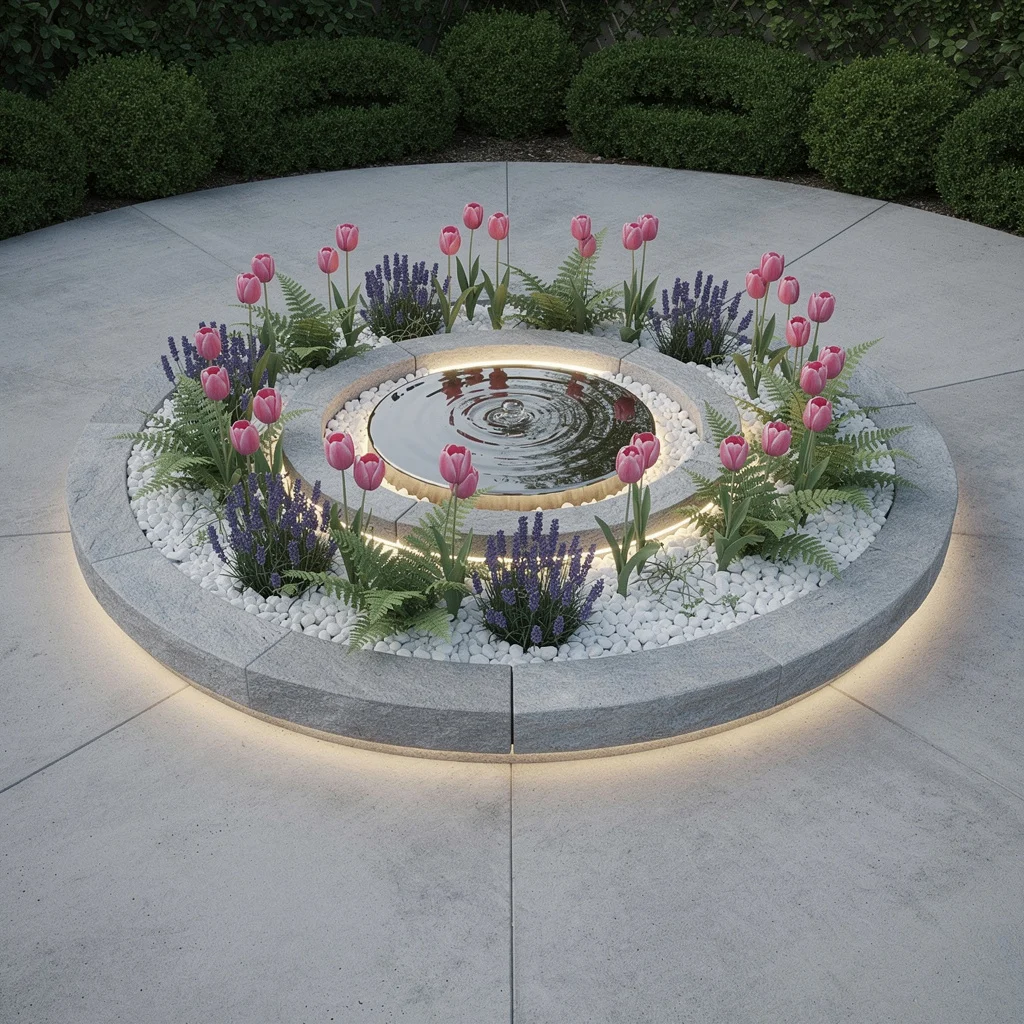
Want to scream ‘garden sophistication’ without the maintenance drama? Build a stone-edged circular bed around a minimalist water feature—yes, minimal is hot right now. Layer pink tulips, ferns, and lavender in clean arcs, then keep them separated with white marble chips for that ‘didn’t try but still gorgeous’ vibe. Drop underlighting in the circle so your flora doesn’t get lost after 6pm. Low sculpted hedges frame your drama and won’t block your showpiece. Rule: Water feature is central, everything else supports. Don’t overcrowd—let the plants breathe.
Linear Glass Sunroom Planter: Make Your Indoor-Outdoor Vibe Legit

Ready to blur outdoor and indoor lines and make your glass-walled sunroom the star of the neighborhood? Integrate a chunky charcoal raised planter right along the glass. Plant tall white foxgloves for height, mix in flowing ornamental grasses for movement, then anchor it all with deep green ferns. Hide warm white uplights at intervals; your flowers should cast epic shadows, not vanish in darkness. Handle the flooring transition with textured pavers outside and wood planks inside—match the grades for a seamless look. Styling hack: Repeat plant heights, stagger for depth. Tall, soft, glossy. Ignore one-note looks.
Concrete Block Mosaic: Modern Lines, Maxxed Out Color
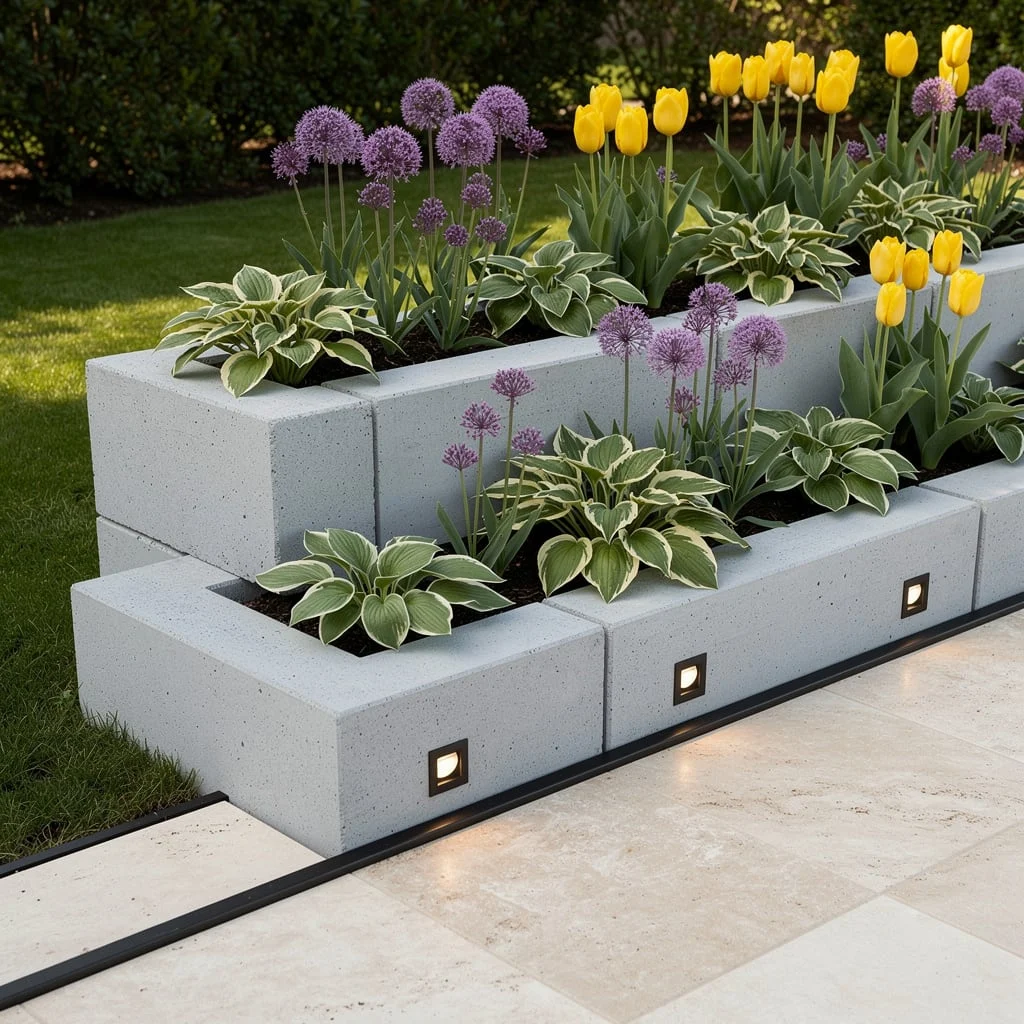
Stop planting everything in straight lines and start varying your bed elevations with staggered concrete blocks in cool grey. Use matte black metal for hard edges; nothing rounds here, thanks. Pack each block with yellow tulips, purple alliums, and variegated hostas—the palette is your flex, so don’t slip into muddy colors. Travertine walkways bring a luxe touch, especially when you drop some in-ground accent lights between tiers. Pro tip: Set lights at the lowest tier, so colors punch harder after sunset. Layer your beds bigger at the back, never tiny up front.
Sandstone Sunken Courtyard: Chill Out in Style, Not in Chaos

If garden contemplation sounds good but you’re stuck with a boxy yard, drop in a sunken courtyard. Use light sandstone for edges—don’t mess around with generic brick. Line stepped plantings toward a mosaic-tiled sitting nook; go white hydrangeas, coral roses, and silver-leaf artemisia for a lush, tactile vibe. Install flush linear lighting right in the stonework for chill evening hangs. Let narrow shadows hit your blooms and highlight your tilework, not your neighbor’s shoddy fence. Rule: Always frame your courtyard. If you don’t have boundary drama, make one.
Copper-Lined Elliptical Bed: Minimalist Focal, Maximum Sass

Add serious garden cred by installing a freestanding elliptical bed with burnished copper trim. No more wobbly wood or plastic. Plant flowing drifts of blue salvia, blush snapdragons, airy cosmos, and punctuate with low agaves for the architectural effect everyone wants but can’t describe. Surround with pale gravel to outline the shape and pop the colors. Drop in discrete spotlights for golden glow vibes at sunset. Don’t let the bed drown against your stucco; copper is your visual anchor. Styling rule: Keep shapes streamlined—ditch excessive ornaments and let the plants and metal do the flex.
Hexagonal Modular Mania: Pattern Is Power, Use It

If you’re living for modular style, interlock hexagonal corten steel planters across a herringbone walnut deck. Each hex gets its own flower fam—white ranunculus, coral peonies, bluebells—plus architectural grasses for structure that doesn’t flop. Line LED tubes along the bottom to make glowing pathways for epic night scrolls. Corten’s rusty patina next to walnut is a designer power move, so stop settling for brown mulch and mismatched pots. Pro tip: Use the hex grid as a guide; never plant randomly. Color-coordinate and space out for impact.
Split-Level Marble Gradient: Layer Your Luxe, Not Your Stress

Don’t be boring—build your flower bed on a split-level ivory marble retaining wall, interspersed with strips of slate for grown-up dimension. Plant a gradient: deep blue irises at the top, then fade to white lilies, with trailing pink petunias at the edge for softness. Drop recessed lighting in the marble wall to highlight veining and flower color—the dusk garden must be lit, not lost. Use seamless glass balustrades to overlook the layered depth and serve big, modern energy. Rule: Always grade your blooms vertically—never let irises mix randomly with lilies. Stack ‘em right.
Curved Bronze Border Beds: Make Your Path The Main Event

Your entry path deserves better than patchy grass and crumbly brick. Flank it with curved flower beds edged in powder-coated bronze metal. Combine blue globe thistles for edge, lemon dahlias for pop, and clusters of white alyssum to soften the drama. Sprinkle in mushroom-shaped bollard lights so your flowers actually show up after dark. Flex your walk with light-grey concrete underfoot and brass inset strips—details matter. Pro tip: Curve your beds big enough to actually frame the path, not just hint at it. Play with edges, skip straight lines.
Granite-Framed Sunken Drama: Go Bold or Go Home
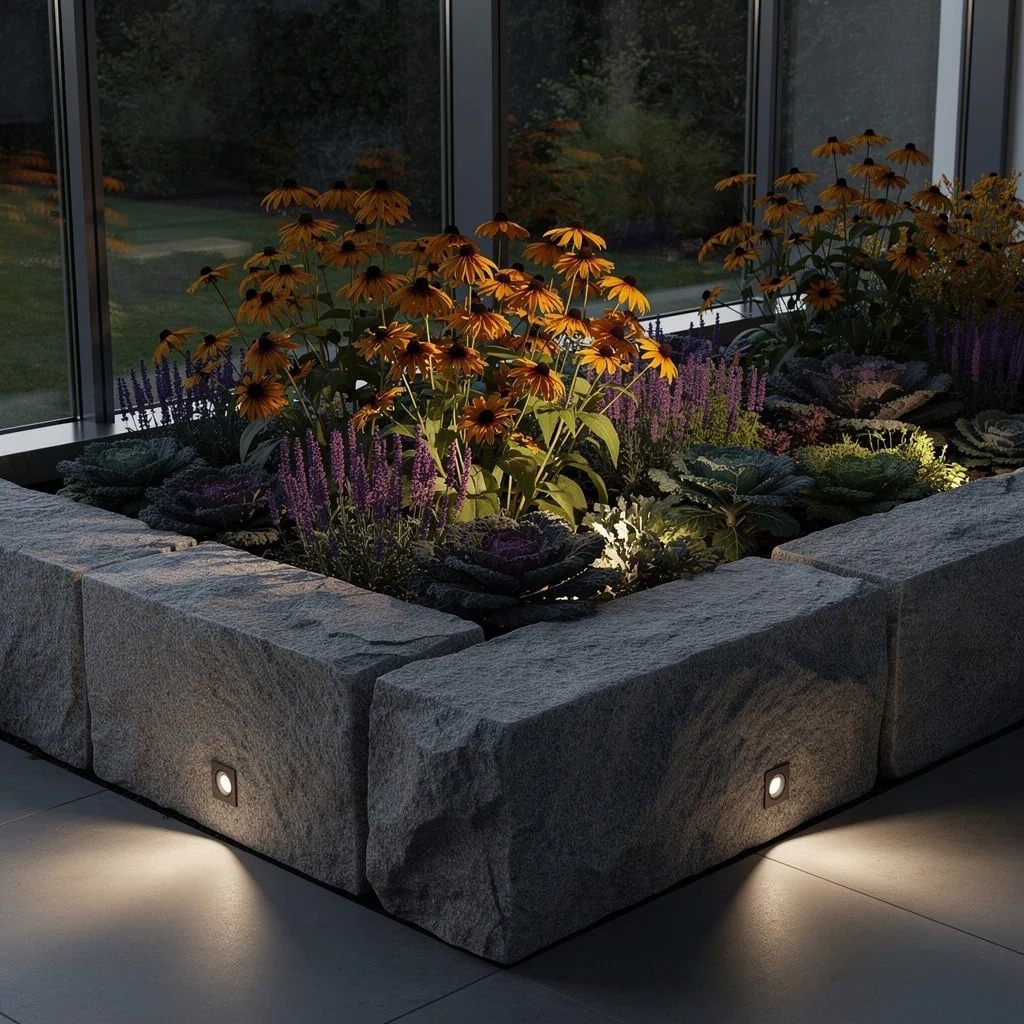
If subtle is not your personality, pack a sunken flower bed with rough-hewn granite slabs for next-level rugged texture. No pebbles, no border fluff. Fill it with tall amber rudbeckia, electric purple salvia, and some ornamental kale for punchy leaf texture. Hammer in anti-glare uplights in the corners for focused beams—stop blasting everything, spotlight shadow plays. If you have a floor-to-ceiling window nearby, bonus points. Rule: Match big stone energy with big blooms. Small, neat flowers will get lost. Go robust, go dramatic.
Stainless-Edged Linear Luxe: Float Your Path, Don’t Just Walk It

Float your walkway by lining it with super-slim matte stainless steel flower beds. Arrange banks of white calla lilies, lime-colored heuchera, and sculpted pittosporum, carefully graded for height like you know your stuff. Under-glow with hidden LEDs—the pathway gets an ethereal vibe and your flower bed is anything but basic. Every detail here is crisp; so ditch the rubber borders and fuzzy ground cover. Styling rule: Layer your blooms so tallest live at the back and everything steps down. Don’t mix heights; fake symmetry—your Insta will thank you.ta will thank you.
Final Thoughts
A great flower bed isn’t about spending more money, buying more plants, or copying exactly what you saw on Pinterest. It’s about making one clear decision — a shape, a color story, an edging material — and then following through on it without chickening out halfway and going back to random mixed annuals from the discount rack.
The yards that stop people in their tracks all have one thing in common: they look like someone actually thought about them. Not necessarily a professional, not necessarily someone with a big budget, but someone who picked a direction and committed to it fully instead of hedging with “safe” choices that end up being invisible.
Your front yard is the cover of a book people judge before they ever knock on your door. It doesn’t need to be a masterpiece — it just needs to look like you meant it. Pick your border, choose your palette, plant with intention, and for the love of all things green, edge your beds. The rest will take care of itself.