
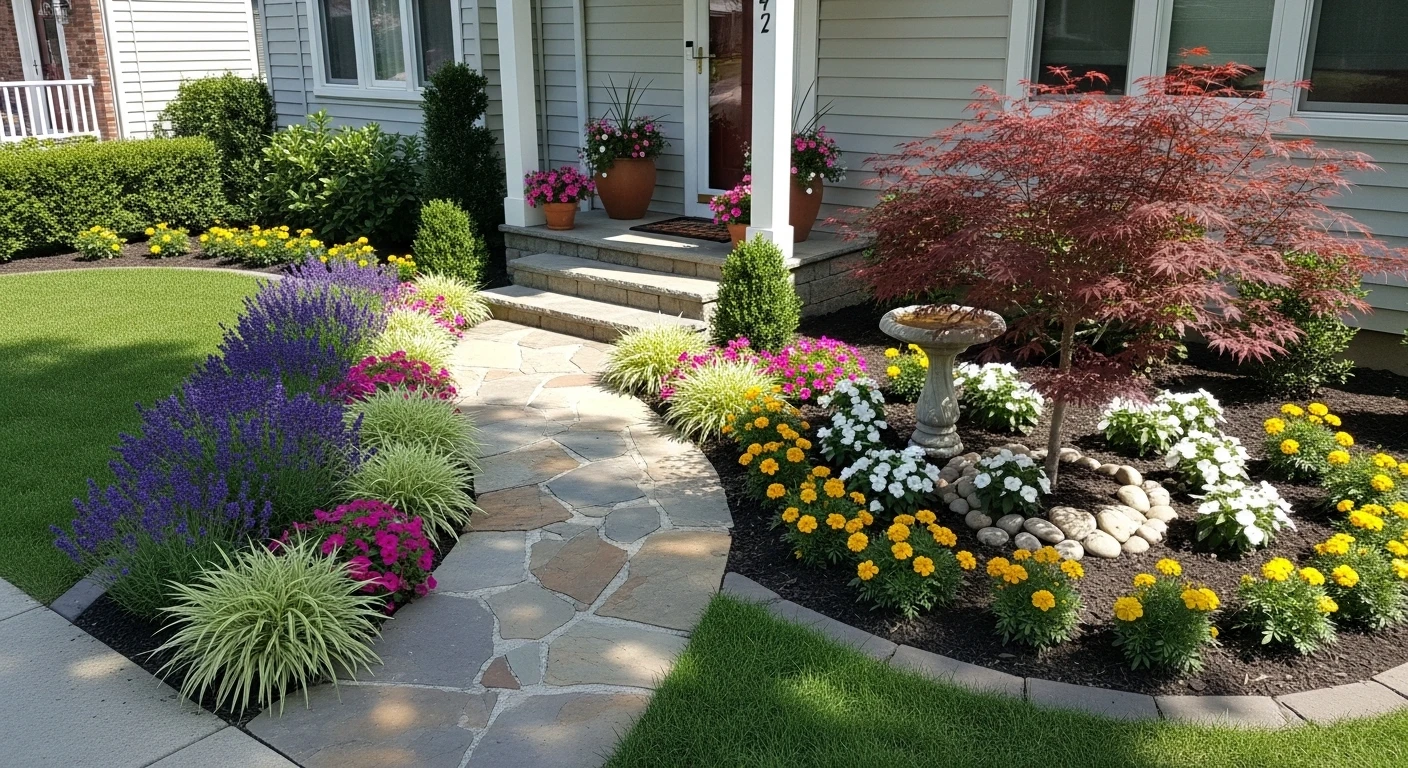
Somewhere along the way, small front yards became the design world’s most overlooked and most mistreated space. People with compact front yards have collectively decided that limited square footage means limited ambition, and the result is a nationwide epidemic of sad grass strips, one lonely shrub, and a mailbox that hasn’t been painted since the previous owners lived there. It’s a tragedy, and it’s entirely self-inflicted.
The cruel irony is that small front yards are actually easier to landscape well than large ones. Less ground to cover means every plant, every material, and every design decision carries more weight — and more weight means more impact per dollar spent. A single impressive planting bed in a compact front yard does more for curb appeal than three mediocre ones spread across a sprawling lawn. The math is genuinely on your side here and you’ve been ignoring it.
To put that math to the test, we built a Budget Builder game right below — $500, yard zones, and a score based on curb-appeal. Play it before you read the ideas, then come back and see if your instincts were right.
And if you make it to the end of the article, there’s a front yard style quiz waiting — seven questions that match you to one of the styles covered here, complete with a specific build guide for your result.
Why Small Front Yards Keep Looking Bad
The design failures happening in compact front yards across every neighborhood follow a depressingly predictable pattern, and identifying them is the first step toward not repeating them.
Grass as Default Is a Cop-Out – Lawn requires maintenance, delivers zero visual interest for eleven months of the year, and wastes the entire potential of a small space. When you have limited square footage, dedicating it to turf rather than intentional planting is choosing boring on purpose.
Scale Mismatches Kill Everything – One undersized pot next to a front door, one scraggly shrub in the middle of a bed, one lonely ornamental grass fighting for relevance — small yards get destroyed by objects that are too small for their context. Generous-scale plants and bold materials make compact spaces feel intentional. Timid choices make them feel neglected.
The Edges Are the Design – In a small front yard, the line between lawn and planting bed, between path and garden, between hardscape and softscape — these transitions are doing enormous design work. A crisp, clean edge between white pebble mulch and green lawn communicates control and intention. A ragged, undefined edge communicates indifference, which is never the goal when strangers are forming opinions about your home.
The Front Yard Rules Worth Actually Following
Garden design advice tends toward the vague and inspirational, which is useless when you’re standing in a six-foot-wide strip of dirt trying to figure out what to do with it. Here’s what genuinely matters.
Vertical Elements Save Small Spaces – When ground space is limited, growing upward is the obvious answer that most people fail to take. Columnar trees, tall grasses, climbing plants trained against a fence or wall — height creates visual drama without consuming additional square footage, and drama is exactly what small front yards need.
Mulch Is Not Decoration, It’s a Design Tool – The material covering bare soil between plants defines the visual character of a planting bed more than the plants themselves in many cases. Black mulch makes greenery pop with graphic intensity. White pebble gravel creates crisp contrast and reads as deliberate. Generic bark chips read as “I ran out of ideas at the garden center.”
A Path Should Be Worth Walking – The route from the street to your front door is an experience whether you design it or not. Designed well, it builds anticipation and creates a strong first impression. Left to default, it’s just concrete between two boring grass verges. The path is not a logistical necessity — it’s a design opportunity that most small front yards completely squander.
The Compact Front Yard
Stop choosing boring on purpose. The rules of exterior scale.
Grass is a cop-out
Dedicating limited square footage to turf wastes potential and delivers zero visual interest for eleven months of the year. Intentional planting always beats the default lawn.
Scale and crisp edges dictate control
Timid choices look neglected. Use generous-scale plants and establish sharp, defined transitions between hardscape and softscape to communicate absolute design control.
Vertical elements save small spaces
When ground space is limited, grow upward. Columnar trees, tall grasses, and trained climbers create massive visual drama without consuming additional square footage.
Paths and mulch are design tools
The route to your door is an experience. A designed path builds anticipation, while black mulch makes greenery pop with graphic intensity. Generic bark chips read as giving up.
Small Front Yard Landscaping Ideas
Timber Sleeper Path and Pea Gravel:
Whoever decided that a sleeper-and-gravel path against a charcoal dark house with a hanging rattan egg chair deserved to be someone’s front yard entry needs to be congratulated immediately, because this is genuinely one of the most effortlessly stylish compact entries in existence. Evenly spaced timber railway sleepers cross a bed of warm pea gravel in a rhythm that makes the walk to the front door feel considered and deliberate rather than just a means of getting inside, while wispy lavender and silver-leaved plants spill in from the right edge, softening the whole composition with exactly the right amount of organic looseness. The dark exterior paint does the heavy lifting as a dramatic backdrop, making the warm timber tones pop twice as hard, and the egg chair suspended from the porch ceiling is doing what one carefully chosen statement piece always does — communicating that someone with actual taste lives here. The genius of this entry is how much personality it generates from materials that cost almost nothing individually; it’s proof that composition beats budget every time.
Raised Timber Boardwalk and Black Mulch:
Most front entries treat the path as something you pass over without noticing. This one made the path the entire point, and everything else supports it. A rich warm-toned timber boardwalk rises slightly above the surrounding garden bed, creating a raised walkway flanked on both sides by black rubber mulch that makes every blade of grass and every freshly staked standard tree pop with the kind of contrast that stops you mid-stride. The young standards are planted at even intervals along the boardwalk like a boulevard in miniature, their clean single stems and fresh lime-green canopies giving the whole entry a structured, almost formal rhythm that feels proportionally perfect for the brick and timber facade behind them. Low clipped boxwood hedging at the base keeps the ground plane tidy, and the curve of green lawn visible at the edge reminds you this was once just a standard suburban front yard — and the distance between that and what it is now was achieved entirely through material choice and planting discipline.
White Pebble Curves, Mixed Planting, and Sheer Exuberance
This front garden corner decided that restraint was for people without opinions, and the result is a composition so densely layered and enthusiastically planted that it somehow avoids looking cluttered and lands squarely in charming instead. White pebble gravel fills the bed and flows in a curved shape that mirrors the arc of the adjacent lawn, creating a serpentine planting island packed with columnar conifers for height, blue fescue for graphic texture, flowering impatiens and iris for color, and terracotta pots tucked in at ground level for extra layering that tips the whole arrangement into something that feels genuinely personal. Natural stone pieces scattered through the pebble base add organic weight that keeps all that color from floating away visually, and small solar path lights placed at ground level provide the kind of subtle evening illumination that turns the bed from a daytime feature into an all-hours one. It’s maximalist, it’s European in sensibility, and it works because the white gravel is doing ruthless organizational work underneath all that abundance.
White Marble Pebbles, Bromeliads, and a Palm:
Clean, architectural, and quietly devastating in its confidence, this front yard planting bed proves that you can achieve resort-level impact in a strip of ground barely wider than a hallway. Crisp concrete edging carves a flowing curved form from the lawn, filled with large white marble rocks as a ground cover that immediately reads expensive and deliberate rather than merely practical. Within that bed, bromeliads in variegated yellow and green provide mid-level drama with their bold sculptural forms, a grey concrete bowl planter filled with black pebble and a single palm provides the vertical anchor that the whole composition needs, and tall grey rectangular planters at the house edge repeat the cool concrete tone with authority. Nothing in this design is accidental — the curve of the edging, the scale of the plants, the contrast of white rock against dark soil, all of it is working in deliberate coordination. This is the front yard equivalent of a capsule wardrobe: a small number of well-chosen things doing exactly what they’re supposed to do.
Curved White Pebble Edging and Hydrangeas:
Foundation planting along the front of a house is one of the oldest and most frequently botched landscaping conventions, and this one is a masterclass in doing it properly. A sweeping curved bed hugs the front of a grey clapboard house, edged in a clean line of white river pebbles that define the shape with crisp precision against the lawn, and within that bed an absolutely generous planting of hydrangeas in every shade from hot pink through pale lilac to white creates a flowering display that manages to look simultaneously lush and organized. Impatiens and white flowering annuals fill the front layer at ground level, creating a tiered arrangement where taller plants sit behind shorter ones with the kind of obvious-once-you-see-it logic that most amateur garden beds completely ignore. A window box of trailing chartreuse and pink blooms on the house facade above ties the vertical plane into the ground-level planting, making the bed feel like it continues upward rather than stopping at the foundation. The white pebble edging is the quiet hero here — without it, this would be a nice planting bed. With it, it’s a designed garden.
Unleash Cottagecore Chaos (Curved Paths Not Optional)
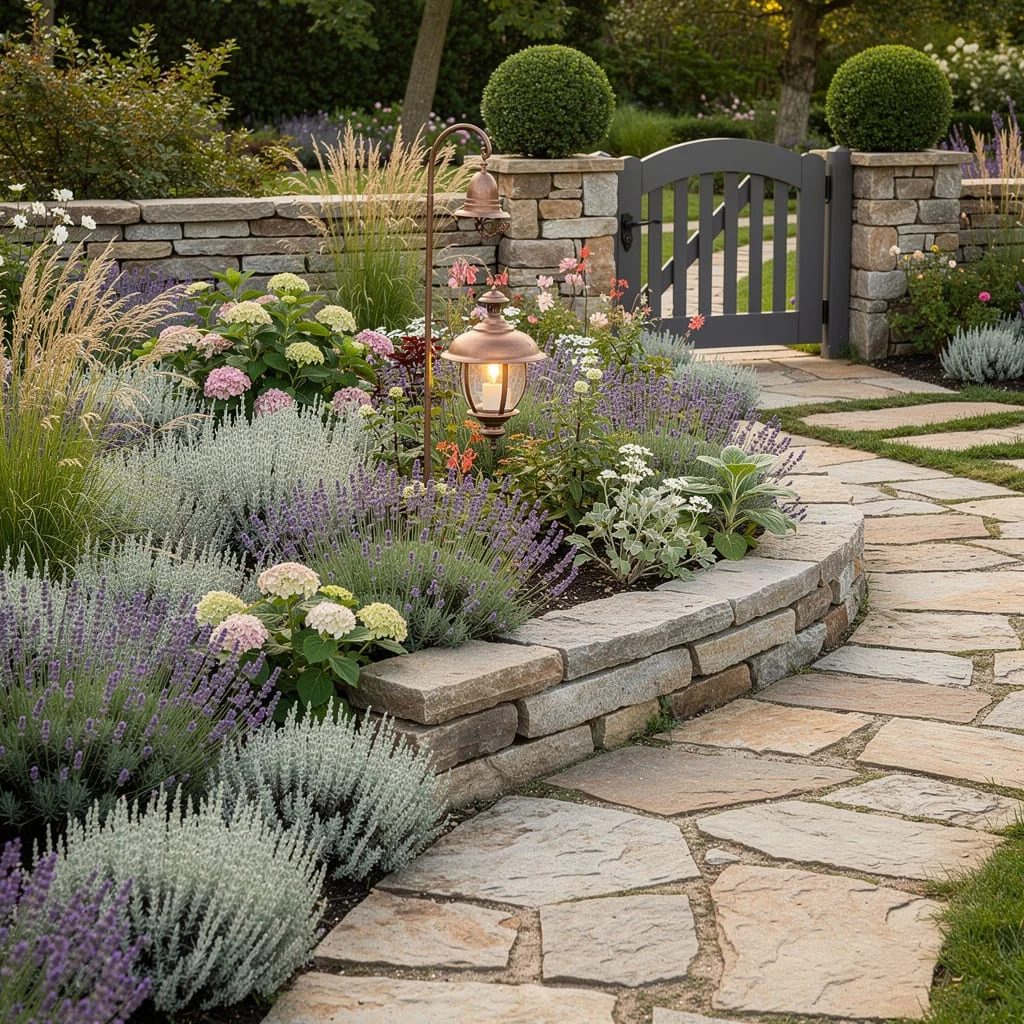
Ditch the rigid lines and go for lush drama that’s one part fairy tale, two parts rebellion. Install a curved flagstone path through clusters of lavender, heather, and dwarf hydrangea—the more swaying perennials and grasses, the merrier. Mark the garden beds with a dry-stacked stone wall for actual definition, and shove an antique bronze lantern among the flowers for the softest glow. Cap it all with a charcoal-gray entry gate surrounded by topiary spheres. Don’t just plant stuff randomly; cluster colors and textures for layers. Rule of thumb: Paths should curve, walls should be low, and lighting should make your flowers look magical 24/7.
Channel Geometry With Checkerboard Paths (Math, But Make It Chic)
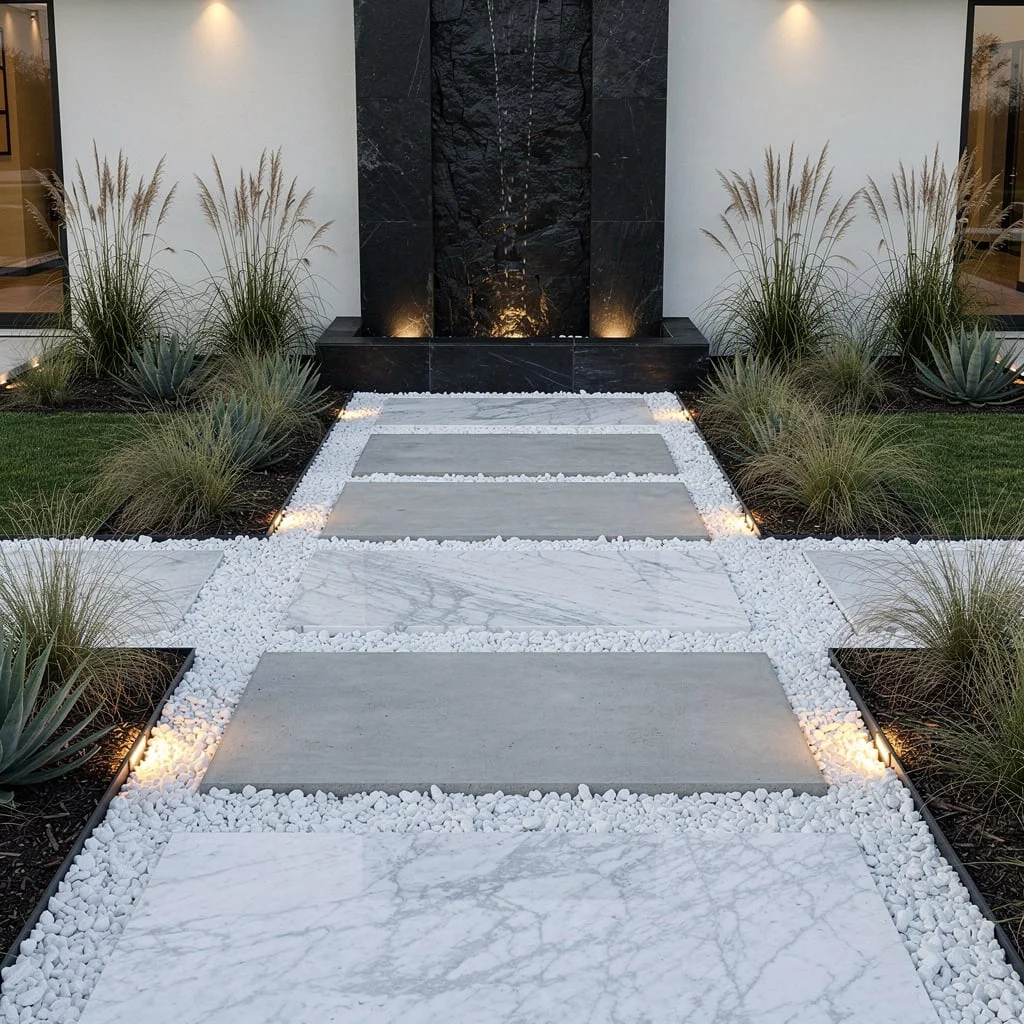
Ready to flex your Type-A side? Lay out square concrete slabs with polished white marble chips as gravel joints—yes, it’s a checkerboard, and yes, your neighbors will be jealous. Put feather reed grass and compact agaves in symmetrical beds beside the walk for structured green action. Drop a vertical water feature clad in black slate so you get ambience without needing a pond. LED lights in the path aren’t optional—they highlight those crisp lines after dark. Never let your pathways run wild; keep them straight and spacing tight to maintain graphic edge. Water features must be vertical, not horizontal—anything else feels lazy.
Desert Cool: Raked Sand and Zero Water Drama
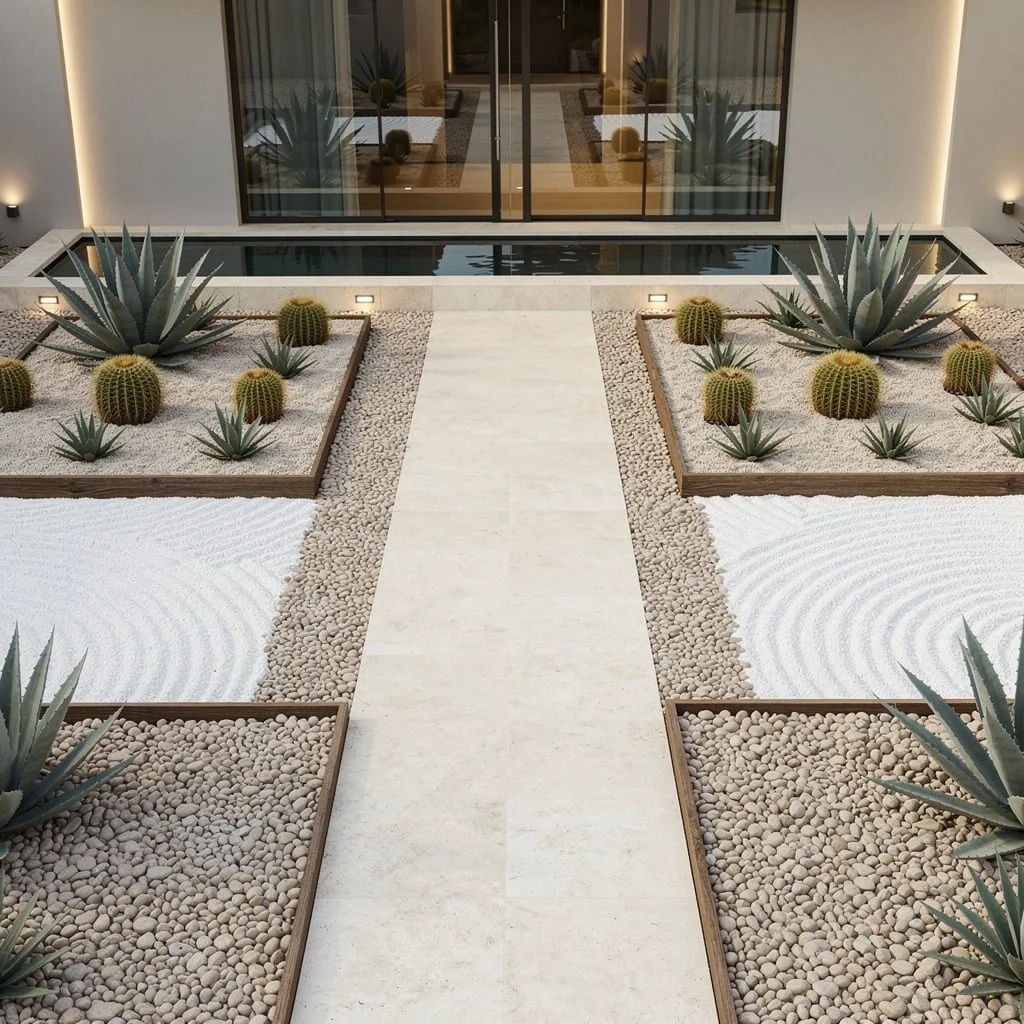
Got a small yard and hate maintenance? Go desert modern with raked white sand, taupe pebbles, and raised timber-edged planting grids loaded with agave, golden barrel cactus, and aloe clusters. Drop a reflecting pool lined with creamy limestone to mirror the facade—because reflecting pools make you seem way richer. Slim recessed pathway lights add serene glow, so the entry isn’t washed out or basic. Stick to grid layouts for planting, and never mix pebble colors unless you want it to look messy. Always keep sand raked—if it’s disturbed, it just screams ‘yard chaos.’
Woodland Luxe: Stepping Stones and Layered Green
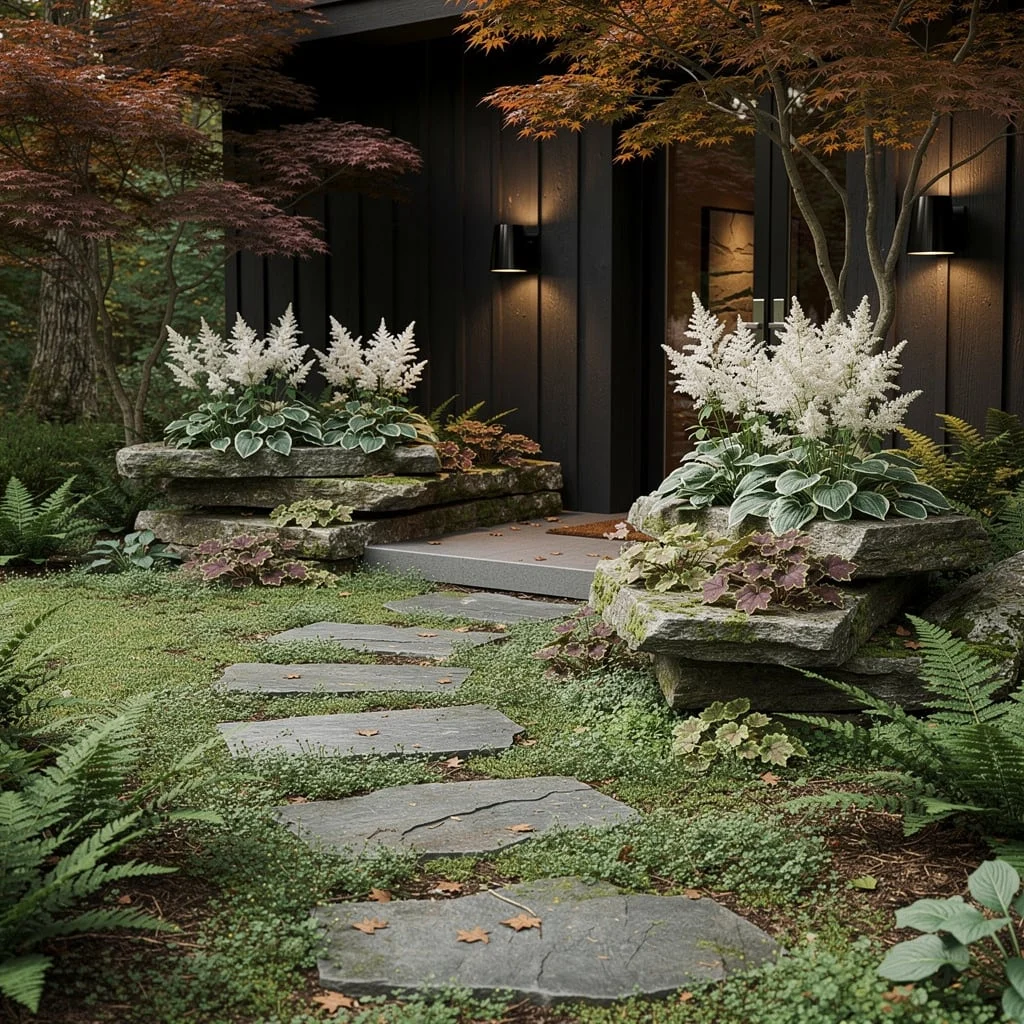
Want your entry to feel like it’s straight out of an enchanted forest? Lay slate stepping stones on lush ferns and thyme, then stack weathered stone planters overflowing with astilbe, hosta, and coral bells for riotous green vibes. Fix glossy black sconces to a timber wall so even at night, there’s moody illumination beneath Japanese maples. Rich layering beats boring: plant in tiers for depth, and stack stone planters for height. Don’t plop maples randomly—use them as a canopy to frame the entry point. Lighting should stay soft, so skip harsh LED spots that kill the magic.
Modern Tropical: Concrete and Drama (Without the Mosquitoes)
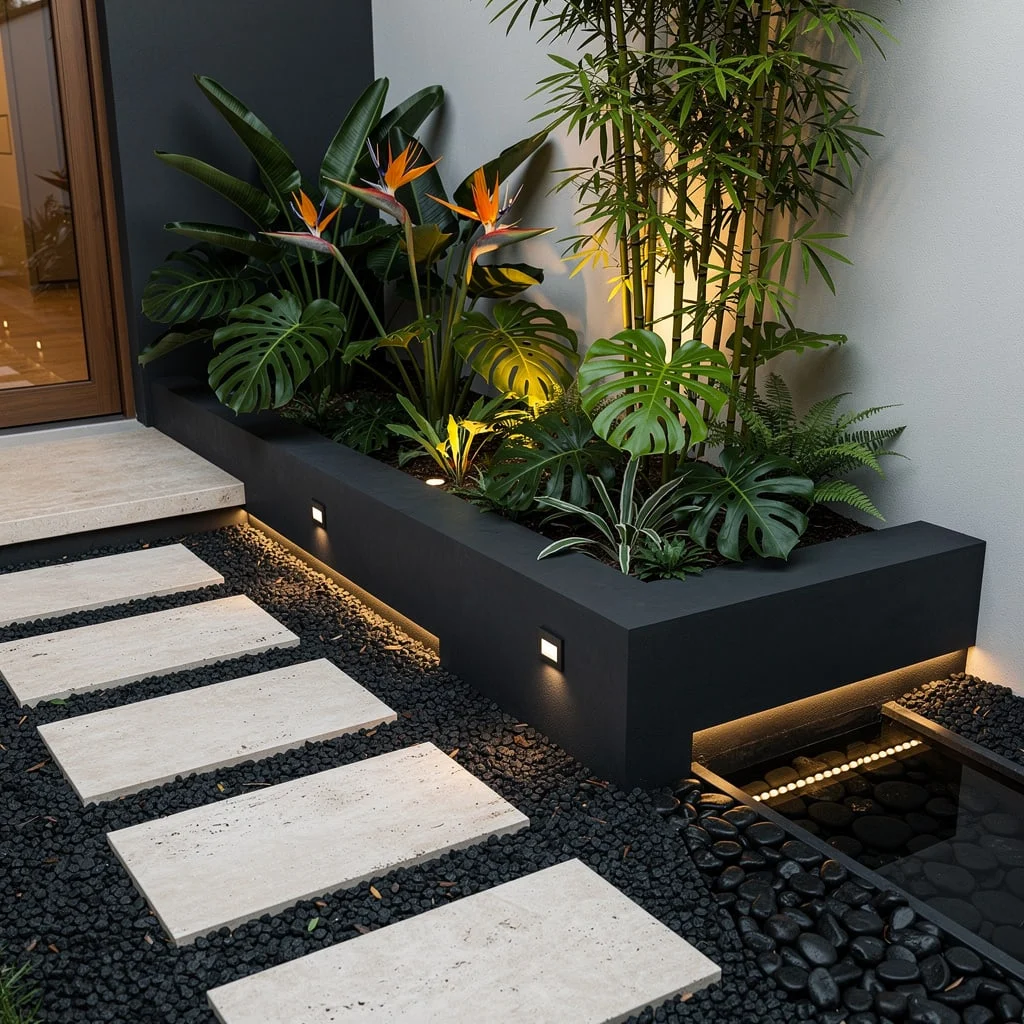
If hot-house vibes are your jam but actual maintenance isn’t, opt for a raised charcoal concrete planter stuffed with bird of paradise, monstera, and dwarf bamboo. Put pale travertine stepping pads in a bed of fine black gravel for contrast. Run a slender water rill lined with black river rocks along the path for visual edge and a hint of reflective drama. Stash LED strips under planter lips and discreet step lights—plant lighting is basically Instagram filters for your yard. Pro hack: Orient taller tropicals toward the back, small foliage up front, never vice versa. Keep watering systems hidden, or you’re basically broadcasting ‘I tried, but failed.’
Scandi Simplicity: Oak, Slate, and Order
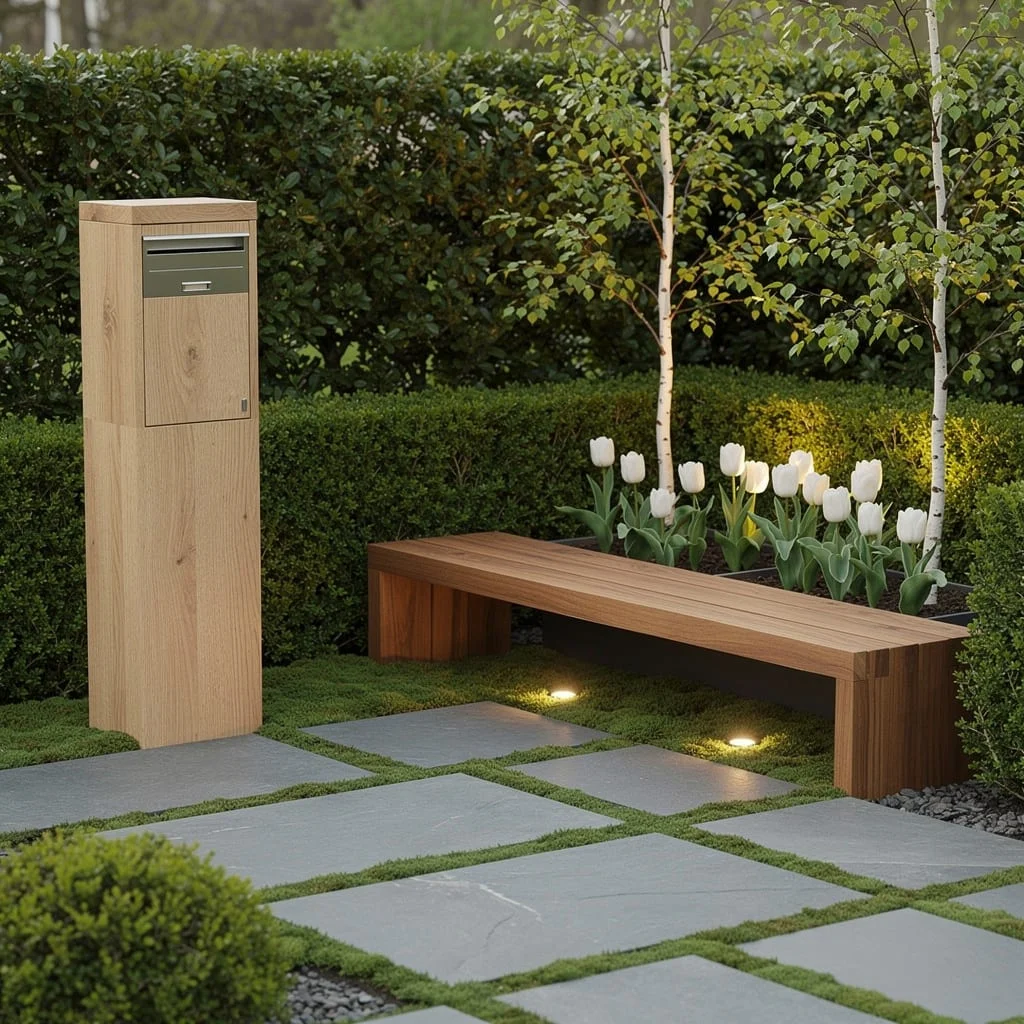
Obsessed with making tiny spaces look calm and intentional? Float rectangular slate pavers atop emerald moss to get serious Scandi vibes. Install neat hornbeam hedges for defined property boundaries, then pop an oak mailbox pillar and bench for useful accent. Pack planter boxes with white tulips and dwarf birch for color that doesn’t overwhelm. Go crazy with ground spotlights—light on foliage is calming, but only if you keep the palette tight. Here’s the deal: Never clutter the walkway with too many planters. The trick is symmetry and repetition; random placements are for lazy amateurs.
Luxe Urban Edge: Steel Canopy and Terrazzo Drama
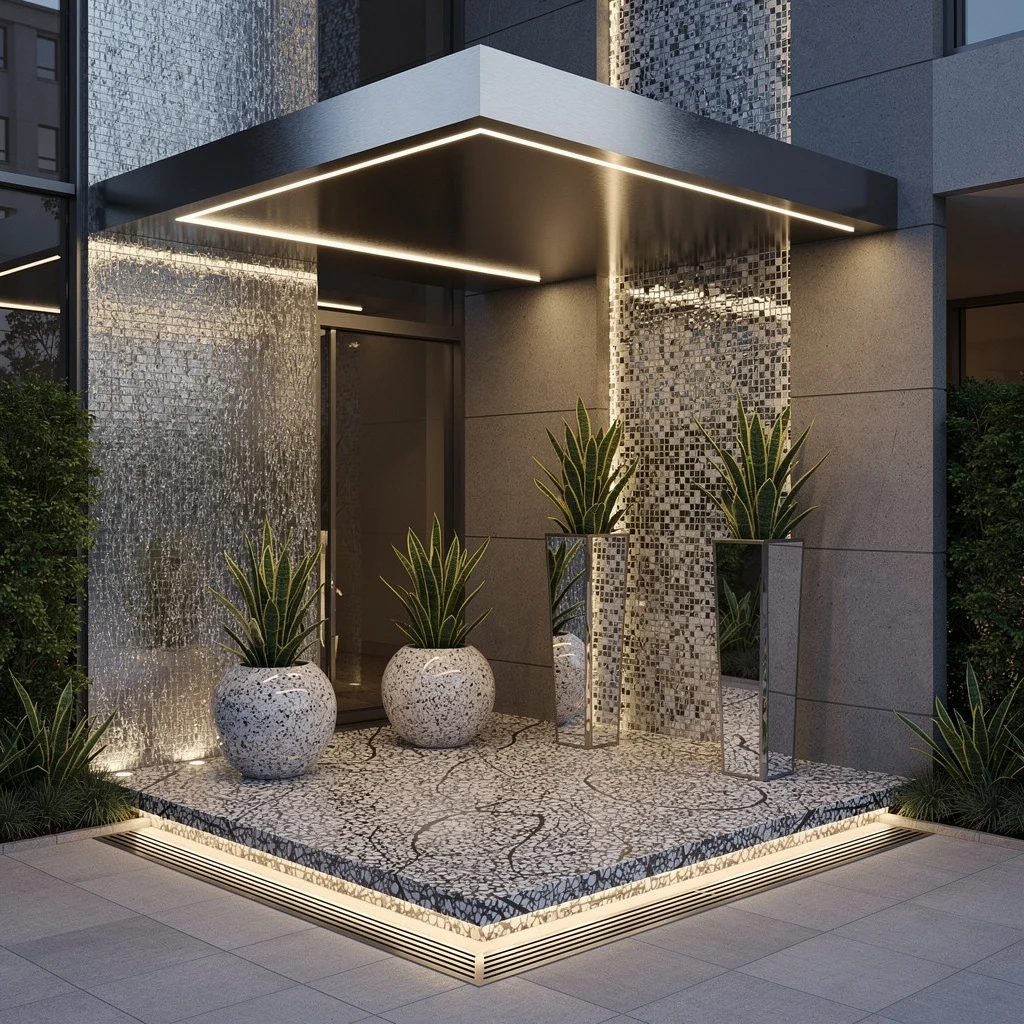
Ready to go full metropolitan? Don’t even think about boring concrete—install a cantilevered brushed-steel canopy and patterned terrazzo entry landing. Place granite spheres and mirrored planters with sansevieria for sculptural height. Drop a water cascade wall clad in shimmering mosaic for flex points. Inset LED lights in the canopy deliver evening drama. Linear drainage keeps surfaces pristine; if you skip it, you’re begging for grime. Never stack hardware on terrazzo—keep surfaces clean and let the materials do the talking. Planter arrangement: always vertical, never low or wide—vertical lines emphasize space, horizontal just wastes it.
Moss Garden Therapy: Slate Paths and Chill Vibes Only
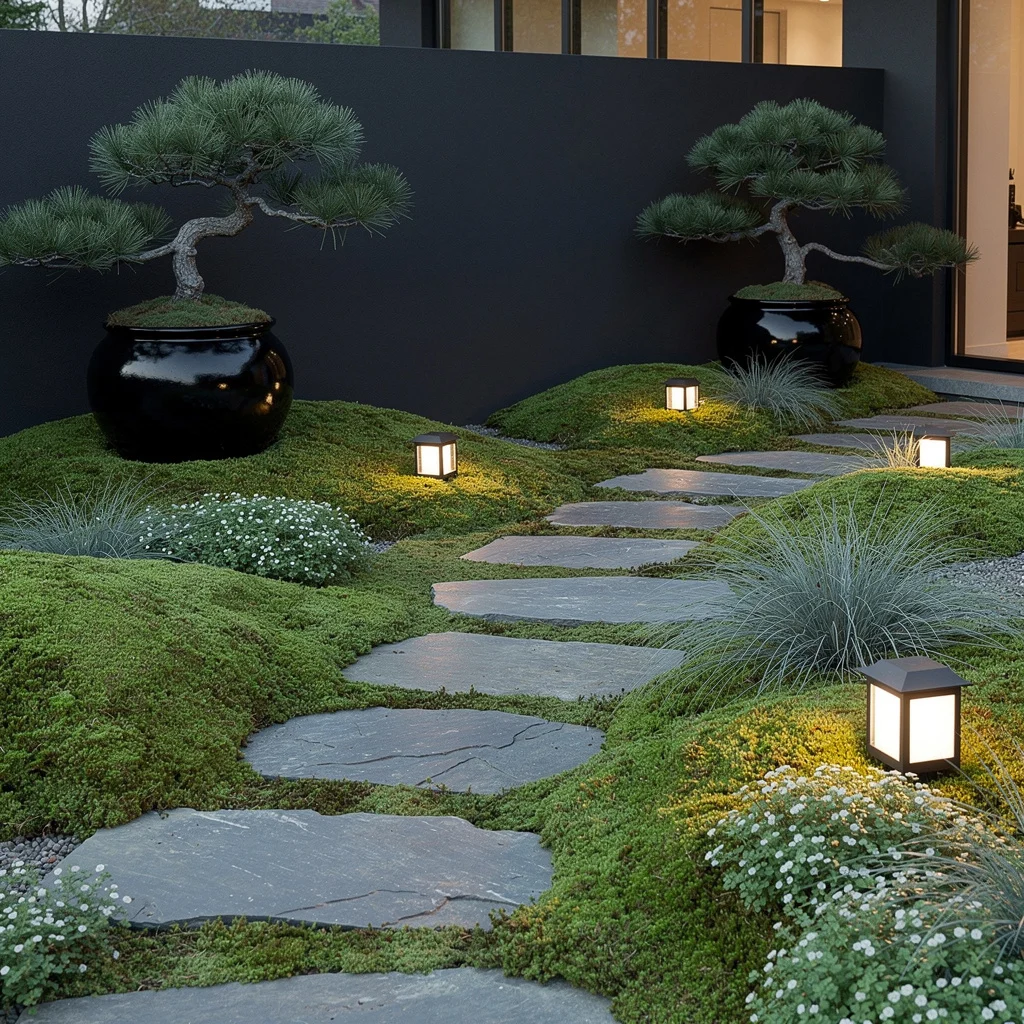
Feeling zen is good—shove a freeform slate stepping path through mounds of emerald moss and baby’s tears. Toss in glossy jet-black planters filled with dwarf pines and blue fescue for moody pops. Erect a charcoal stucco partition wall to carve out visual space (no one needs to see your neighbor’s trash cans). Lantern-style ground lights turn moss into evening art—skip overhead bulbs unless you want your yard to look like a parking lot. Critical rule: Don’t overcrowd moss, and keep paths curved for organic flow. Partition walls go low and smooth, not high and obnoxious.
Sculptural Minimal: Quartz Gravel and Floating Benches
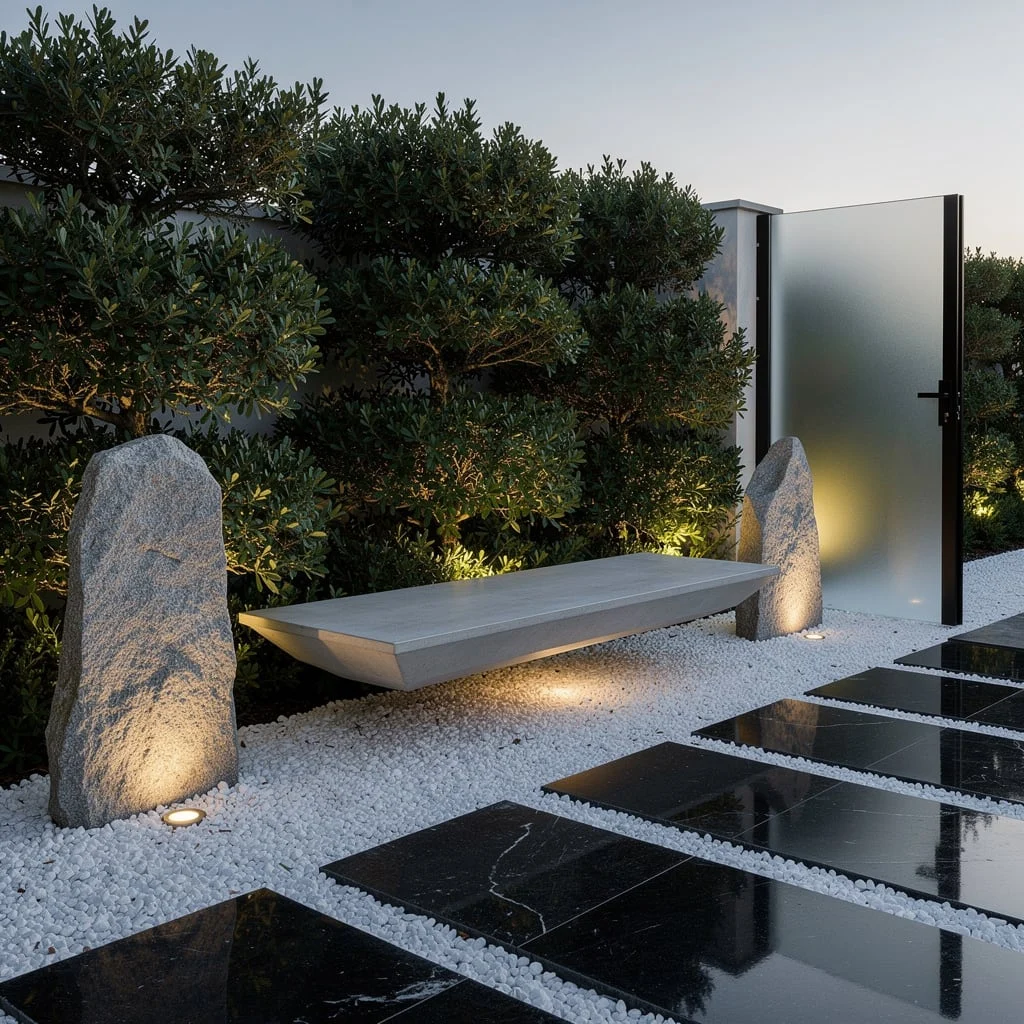
If you’re over crazy planting, anchor your yard with a floating concrete bench atop white quartz gravel. Frame with cloud-pruned myrtle and stone monoliths pushed right to the edge for max drama. Flush black pavers guide guests to a sandblasted glass gate—because nothing screams ‘design-forward’ like barely-there gates. Concealed LEDs blast upward for epic nighttime glow. Never scatter benches randomly—always float them above the ground to fake space. Cloud-prune your myrtle, and don’t let rocks lean like a bad art exhibit; keep them upright and intentionally arranged.
Play With Levels: Terraces, Corten Steel, and Native Greens
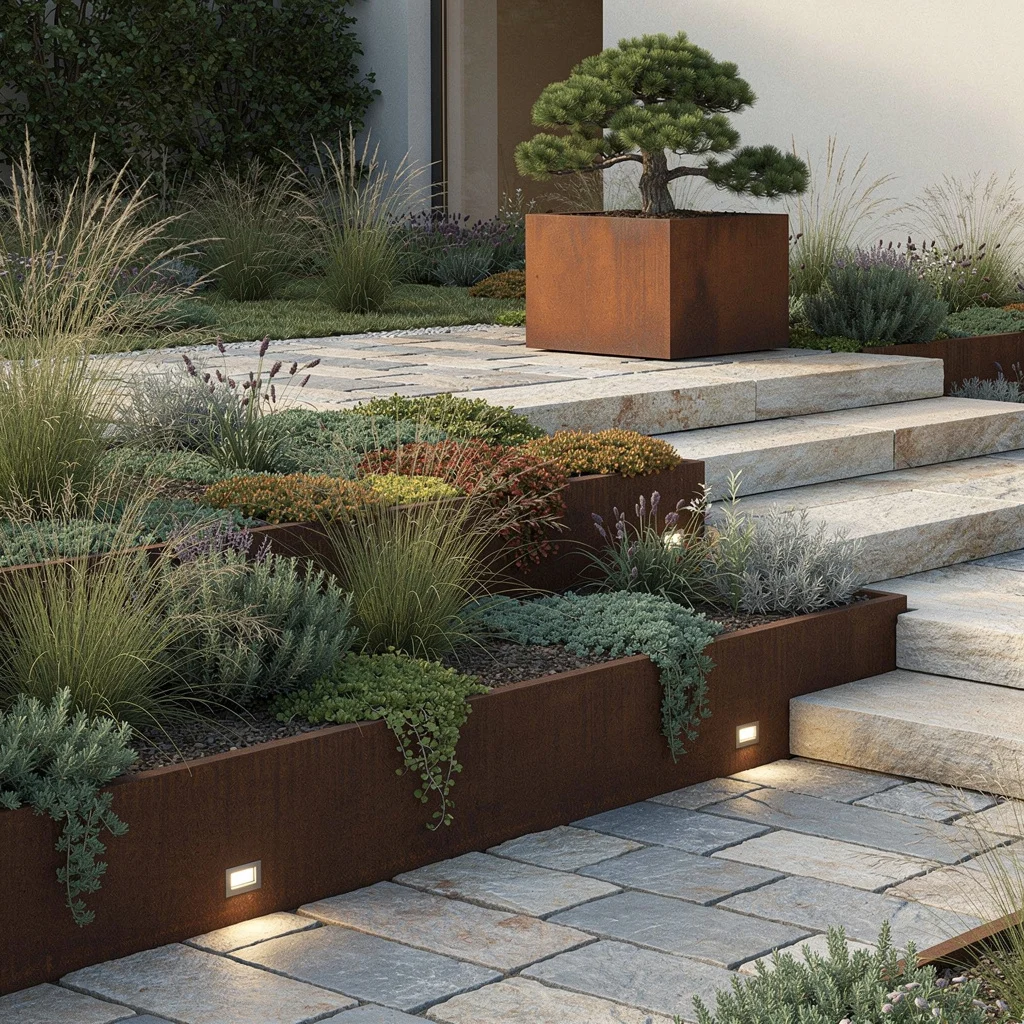
Split-level terraces are the secret to making micro yards feel endless. Lay limestone terraces edged with wide corten borders, then let native grasses, sedum, and rosemary spill over the edges for real, unruly movement. Install flat bluestone paths that cut clean across the terraces. Drop in a corten cube planter for a rare conifer as a flex. Step lights inside each level add dimension—if your lighting’s off, your yard looks short, not layered. Never let terraces slant—keep everything crisp or risk looking like you built it blindfolded. Contrasting textures make the geometry pop, so don’t be shy.
What Kind of Front Yard Designer Are You?
7 questions. No right answers. Find out which front yard style matches how you actually think about your home.
Final Thoughts
A small front yard has one job — to make a strong first impression with the square footage it has — and that job is entirely achievable once you stop treating compact space as an excuse for low ambition.
Every front yard here made peace with its dimensions and worked with them rather than apologizing for them. The timber sleeper path didn’t need more length to be impressive. The white pebble bed didn’t need more area to be beautifully designed. The boardwalk entry didn’t need more width to feel like a proper arrival sequence. Size was never the constraint — intention was. Get your intention sorted and the square footage stops being a conversation worth having.