
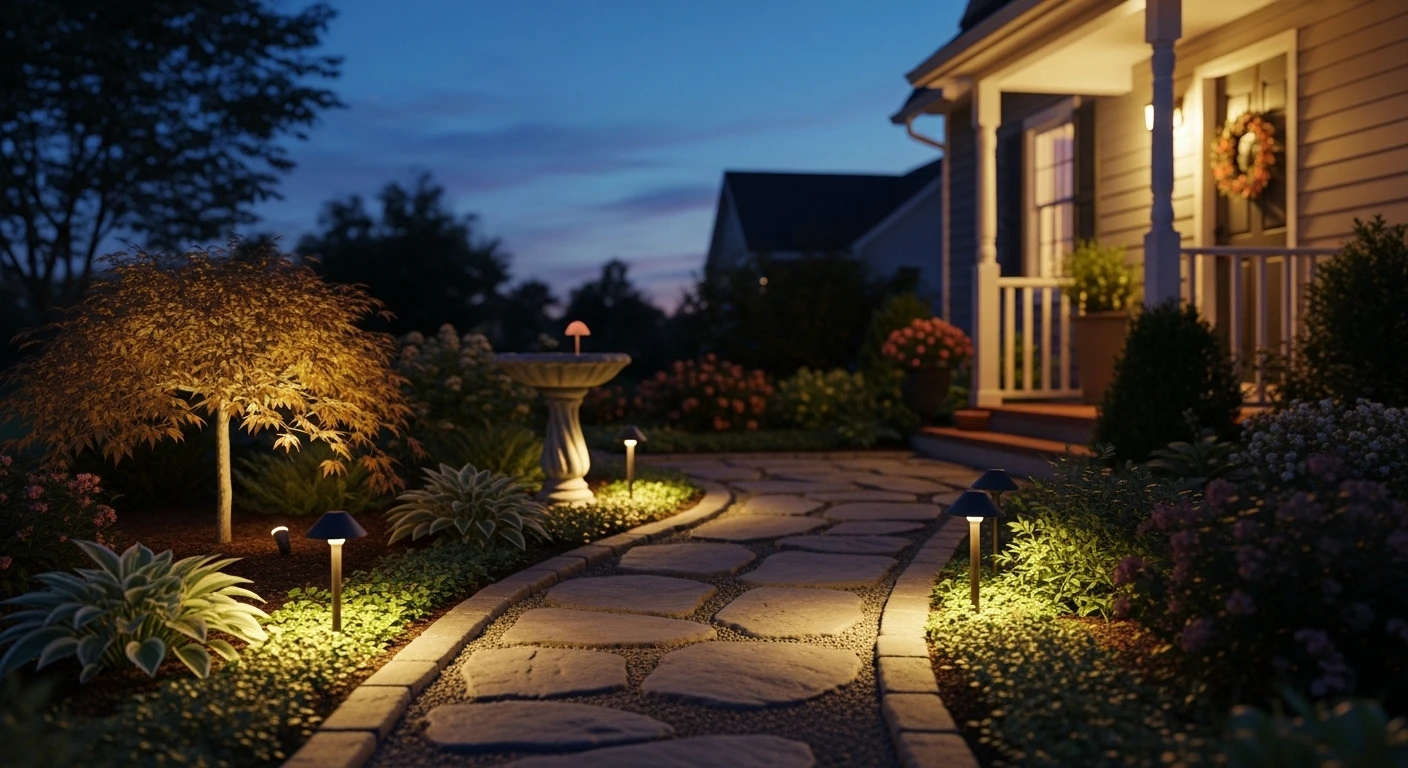
Your home has two design identities — the daytime version, which you’ve at least thought about, and the after-dark version, which is currently a single porch bulb doing its tragic best against the void. The sun goes down and your carefully maintained front yard disappears completely, replaced by a flat, shadowy nothing that communicates “nobody considered this” to every car that drives past. Which is a shame, because nighttime is actually when outdoor lighting can make an average front yard look genuinely extraordinary.
Good front yard lighting isn’t about visibility. It’s not about safety. Those are baseline requirements, not design goals. The kind of lighting that makes people slow their cars down is about atmosphere — the warm amber glow catching a planting bed at just the right angle, the subtle strip of light under a step tread that makes a staircase look like it’s floating, the way a single uplight aimed at a tree canopy turns something ordinary into something theatrical. None of that happens by accident, and none of it requires a massive budget. It requires understanding that light itself is a design material.
Why Your Current Lighting Situation Is Failing You
Most front yard lighting decisions get made at the end of a project, after the budget has been mostly spent and the energy mostly depleted, which explains why the average front yard after dark looks like an afterthought — because it was one.
One Source of Light Is Never Enough – A single overhead porch light creates one flat pool of illumination and leaves everything else in darkness. Layered lighting — ground level, mid-height, and overhead — creates depth and dimension that a single fixture physically cannot achieve regardless of its wattage.
Pointing Light in the Wrong Direction Is a Waste – Most people install lights that point down at the ground, which is fine for safety and useless for atmosphere. The most dramatic outdoor lighting effects come from lights aimed upward at plants, walls, and architectural features — the shadows they create do more design work than the light itself.
Warm vs. Cool Tone Is a Non-Negotiable Decision – Cool white outdoor lighting makes gardens look clinical and uninviting. Warm amber tones make planting look richer, materials look more luxurious, and the whole space feel genuinely welcoming. This is not a matter of preference — it’s a matter of what actually works outside.
The Lighting Layers Every Front Yard Actually Needs
Front yard lighting works on the same principle as interior lighting — no single source does everything, and the combination of sources is what creates the result.
Path and Ground Level – Lights that guide movement and define the edges of planting beds, steps, and pathways. These are functional first, atmospheric second, and they set the baseline from which everything else builds.
Plant and Feature Uplighting – Spike lights, well lights, and ground floods aimed upward at specimen plants, trees, and architectural elements. This is where drama happens. A plain ornamental grass looks fine in daylight. Uplighted from below at night, it becomes a glowing sculptural element.
Architectural Accent Lighting – Strip lighting under step treads, recessed lights in planter edges, wall washers on rendered surfaces. These are the details that separate a yard that’s been thoughtfully lit from one that just has lights in it.
The One Rule That Governs All Good Outdoor Lighting
Hide the source, show the effect. Every outdoor lighting scheme that reads as sophisticated shares this principle — you see the warm glow on the garden wall, the illuminated underside of a planter, the lit edge of a pathway, but you never see the actual fixture producing it. The moment a light source becomes visible and dominant, it stops being atmospheric and starts being a lamp sitting in your garden. Conceal the hardware, let the light do the work, and the result is always better for it.
Front Yard Lighting Ideas
Ground Spike Lights and Glazed Planters:
Large-format limestone pavers separated by dark river pebble fill make for a strong enough daytime composition, but after dark this front courtyard becomes something else entirely. Small ground-level spike lights tucked at the base of each planter cast warm amber uplight through the boxwood and clipped topiary foliage above, turning a collection of navy glazed ceramic pots into glowing focal points arranged across the space like a curated gallery installation. The textured stone planter in the foreground catches the light differently from the smooth ceramic glazing elsewhere, creating material variety that makes the whole scene richer and more layered than the daytime version suggests. The key detail here is that not a single fixture is visible — only the effect it produces on the planting above.
Floating Concrete Steps With LED Underbelly:
Somebody looked at a standard front path and staircase situation and decided that orange amber LED strips running under every single concrete tread was the correct decision, and they were absolutely right. The floating steps appear to hover above the grey decomposed granite ground cover, each tread edged in warm light that makes the whole staircase read as a designed object rather than just a way to get to the front door. Corten steel planter walls running parallel to the path pick up the same warm amber undertone, and blue-grey columnar conifers planted throughout the gravel bed provide the vertical structure that keeps the composition from being entirely about the light. After dark, this front yard is genuinely more impressive than its daytime version — which is the highest possible compliment a lighting scheme can receive.
Brick Path Edge Lights:
No elaborate fixtures, no dramatic uplighting, no statement hardware — just a row of small warm-toned ground lights placed at the junction between a brick herringbone path and a dense green hedge wall, and somehow the result is one of the most atmospheric garden path images imaginable. The lights skim horizontally across the brick surface, catching the texture of each individual paver and casting long warm shadows that give the path enormous depth and tactile richness that completely disappears in flat daylight. The dense ivy or hornbeam hedge running alongside absorbs and reflects the light simultaneously, creating a glowing green backdrop that makes the path feel enclosed and intimate rather than exposed. Sometimes the most restrained lighting decision produces the most memorable outcome, and this is the evidence.
Glowing Boulders and Stepping Stones:
Large irregular limestone stepping stones set in dark pebble gravel are a strong enough hardscape decision during the day. At night, with lit boulder specimens scattered between and alongside the path, the whole composition transforms into something that looks like it was borrowed from a five-star resort garden rather than someone’s suburban front yard. The boulders — hollowed or fitted with internal lighting — glow with a soft warm luminance that’s completely different from any directional fixture, creating the kind of organic light source that feels natural rather than installed. Ornamental grasses and flowering perennials catch the light from multiple angles as it scatters between stone and pebble, and the path itself disappears into a glowing distance that makes even a short garden walk feel like a proper journey.
LED Pathway Strip Lighting:
A gently curving stone paver path flanked by rich mixed perennial planting is a lovely daytime garden feature. Add a continuous warm LED strip running the full length of one path edge and it becomes something that people photograph and save to inspiration folders at 11pm. The strip light defines the curve of the path with absolute precision, making the sweep of the pathway visible and architectural in a way that daylight never quite achieves — during the day a curve is something you walk along; at night with edge lighting it’s a design element you actually see. Behind the path, a single tree is uplighted into the canopy, adding vertical drama that the low path strip alone couldn’t provide. Layered lighting, both horizontal and vertical, doing exactly what layered lighting is supposed to do.
Slate Stepping Discs and Lanterns on White Pebble:
Dark slate circular stepping stones arranged in a line across white pebble gravel along a dark stone-clad facade is a composition that works through contrast — every material is doing the opposite of what sits next to it, and the result is graphic and deliberate in the best possible way. Bronze lanterns placed at intervals between the stepping discs cast warm candlelit pools across the white pebble ground cover, and a wall-mounted sconce above a ceramic pot planter adds height to the lighting composition so it isn’t entirely ground-level. The dark stone facade behind the whole arrangement absorbs the ambient light and throws the warm lamp glow into sharp, beautiful relief — proof that dark architectural backdrops make garden lighting dramatically more effective than pale rendered walls ever could.
Hidden LED Strips: Serve the Luxe Nightclub Vibe
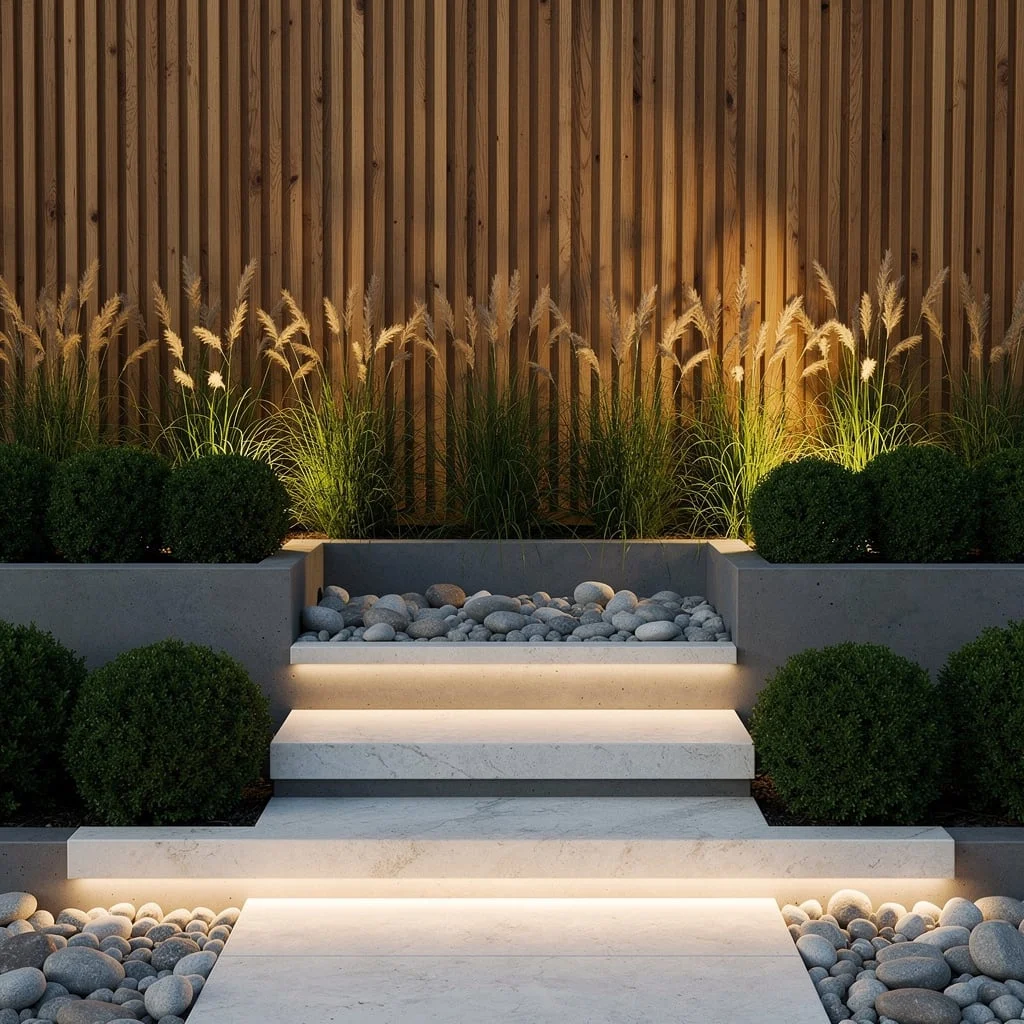
If your goal is to give everyone drive-by envy, ditch the basic porch light and flood your space with concealed linear LED strips under concrete planter edges. Set up geometric limestone steps and boxwood hedges for that killer symmetry, then let the LED glow amp up vertical cedar slats and tall ornamental grasses. Go for polished river stones to reflect the light—because if it’s not glimmering, why bother? Don’t cheap out: always conceal strips so you get vibe, not glare, and keep your lines crisp. Indoor serenity? Meet outdoor sophistication.
Matte Black Bollards: Guide Guests Like a Boss
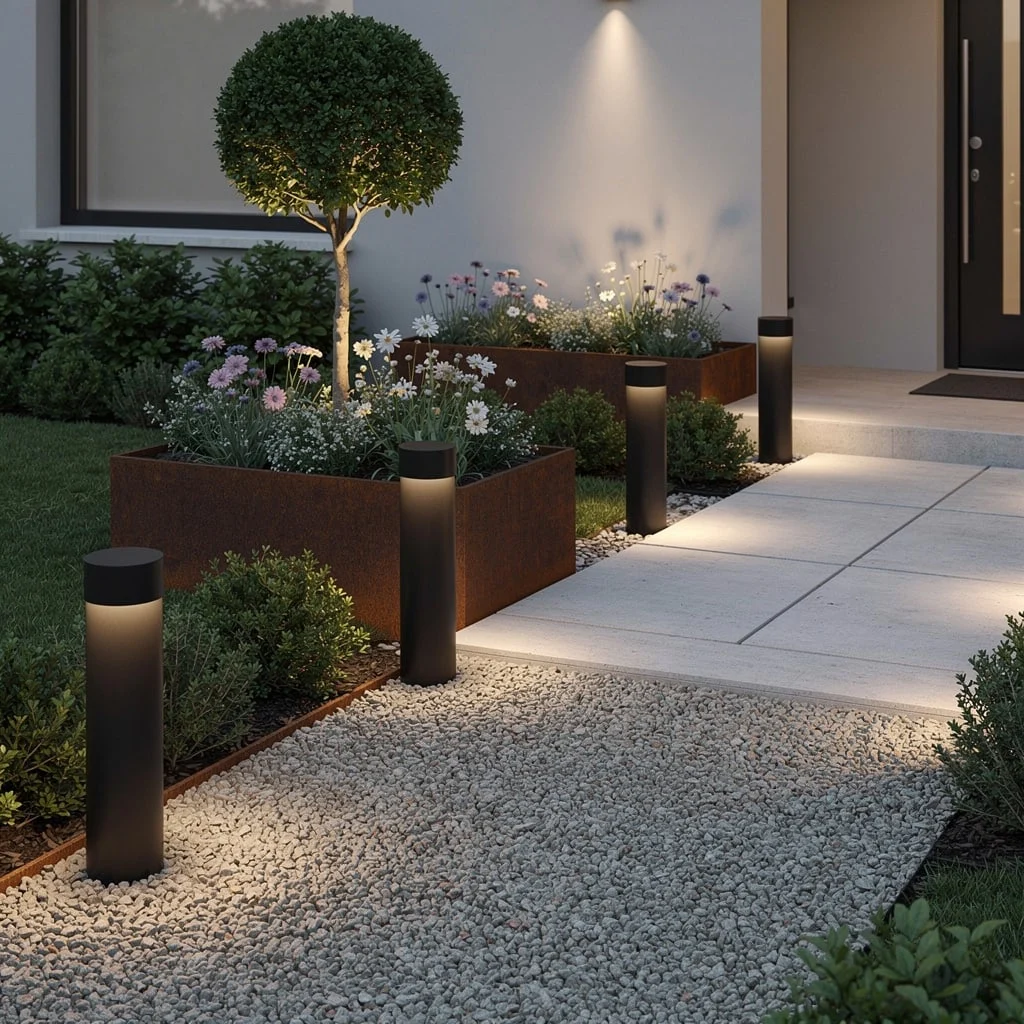
Stop relying on guesswork in the dark—install chic cylindrical bollard lights in matte black along a gravel path and get the drama right. Position them with military precision; spacing matters if you want ‘designer entry’ instead of ‘runway confusion.’ Pair corten steel planters with delicate perennials, and flank your pathway with a trimmed topiary. Use subtle, diffused lighting to highlight each planter, because ‘subtle’ beats ‘overkill’ every time. For ultimate flex, treat your ground cover like an Instagram background and never let one light outshine the others.
Timber Deck + Recessed Uplights: Float Into Chill
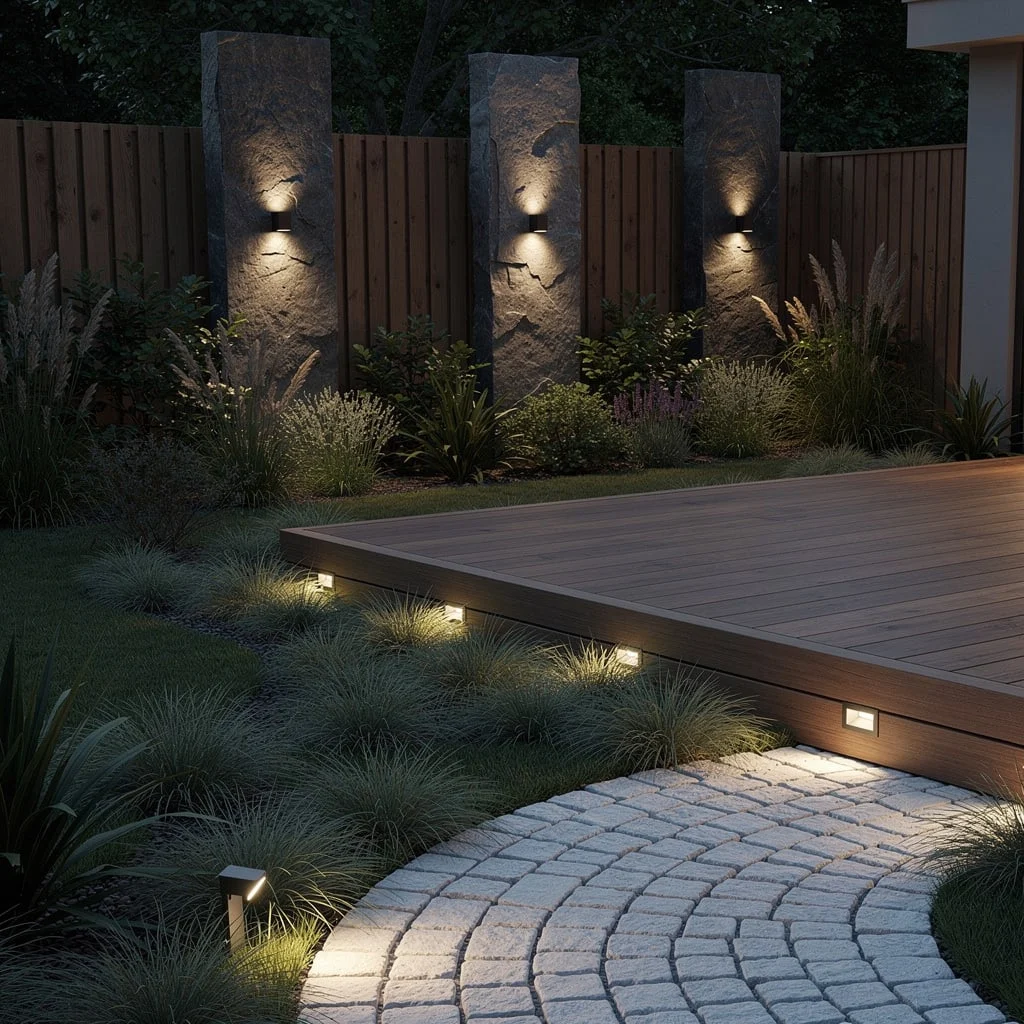
Want to make your neighbors mad jealous? Install a floating timber deck with ground-level recessed LED uplights. Sculpt a curved path with spotlights hugging fescue grass and limestone cobbles, then add tall slate stone elements for visual pop. Native plants and wooden fencing? Yes, please—designer entryway checked off. Lock warmth in by adjustable pin lights and don’t even think about skipping accent lighting; it’s the secret sauce for curb appeal. Always hide your deck lighting so your yard’s radiance comes from the plants, not the bulbs.
Cube In-Ground LEDs: Stealth Mode, Maximum Impact
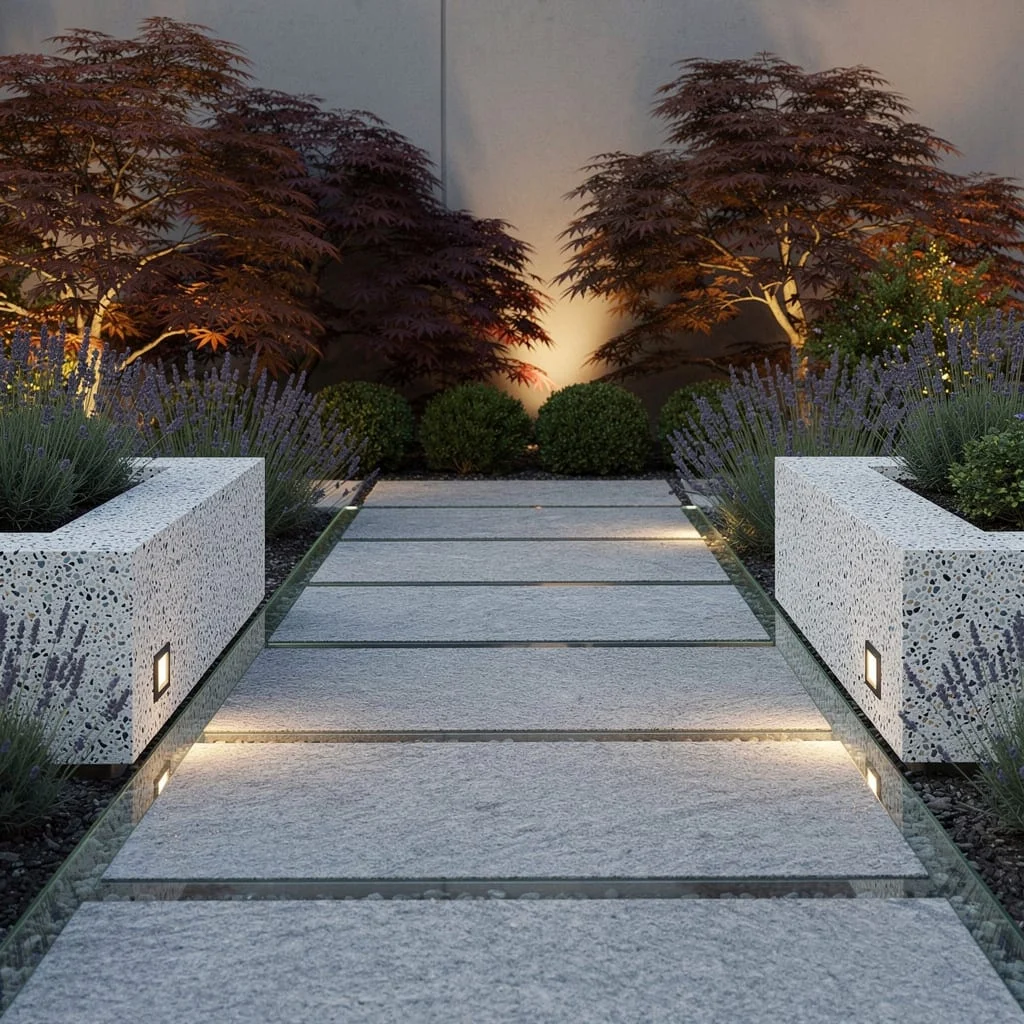
Ready to flex upscale without flashing neon signs? Embed cube-shaped LEDs right in the joints of rectilinear granite stepping stones. Go frameless with glass edging to reflect that glow and highlight Japanese maples and trimmed lavender. Terrazzo planters with sparkling aggregate? You bet. Under-canopy lighting makes your plants pop without putting them in the spotlight. Rule number one: never let your cube LEDs sit above the surface—you want seamless, not trippy. Layering light like a pro means your yard feels rich, not cluttered.
Wall-Washer Lights: Go Full Architectural Drama
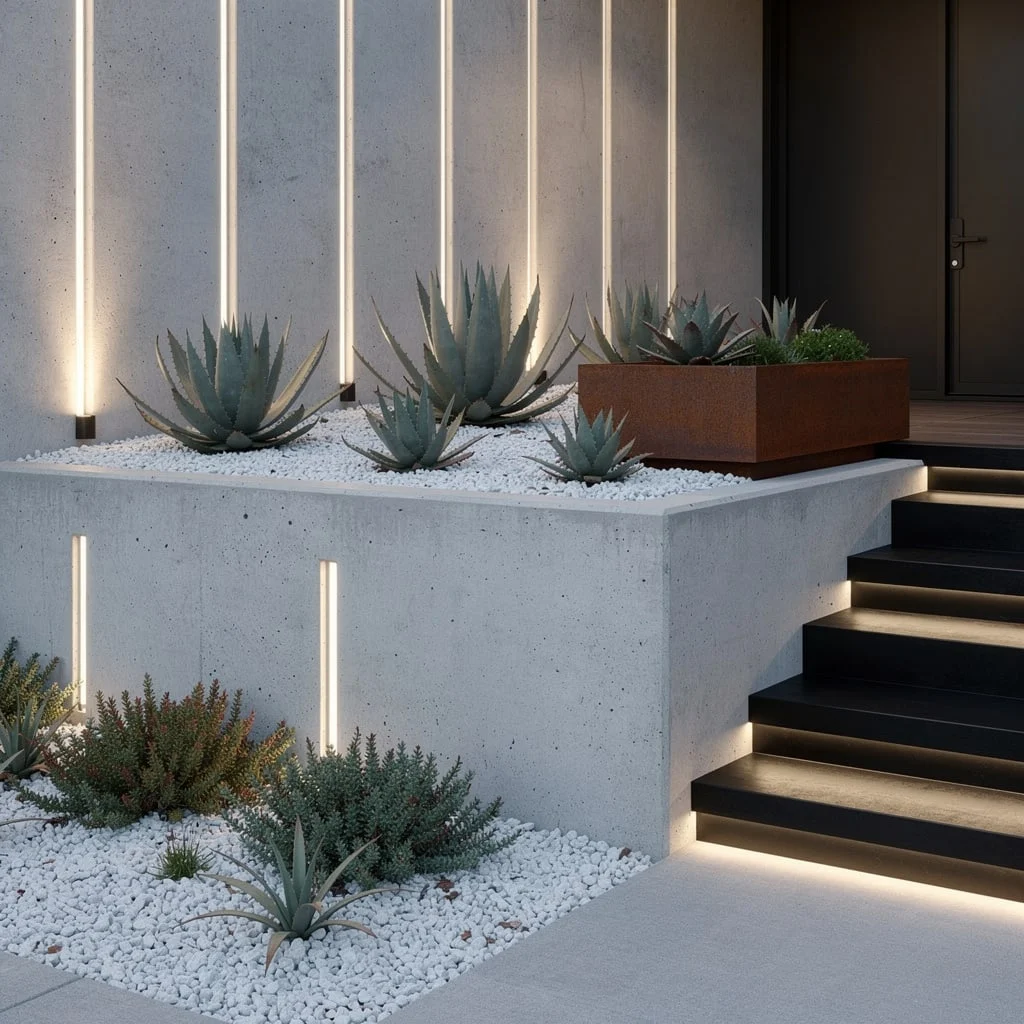
You want character? Get vertical wall-washer lights recessed in brushed concrete, spotlighting aloe vera and heaps of crushed gravel. Use blackened steel steps with inset tread lights—nobody needs a face-plant incident. Corten planters and sedum borders? Absolutely, it’s modern edge with a soft landing. Keep textures varied for visual interest but always let directed illumination call the shots; the wall-washer effect should guide the eye, not blind it. Always aim your fixture angles downward and keep your lights hidden for that critical shadow play.
Copper Spike Lights: Contrast That Pops
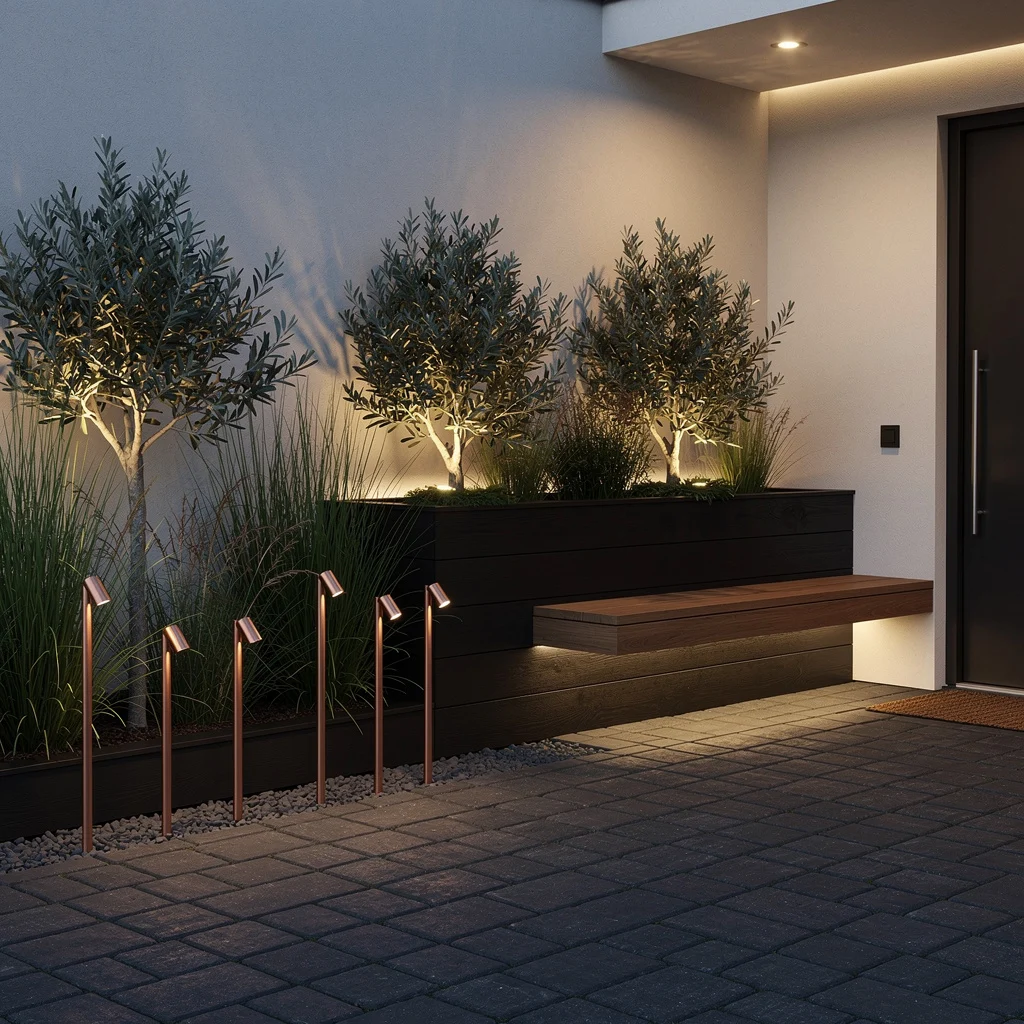
Ditch the one-tone snooze; lay down charcoal permeable pavers and fan out slim copper garden spike lights along the edge. Lift up those olive bushes in raised, black timber planters and add tall grasses—then hit them with warm spotlights for killer contrast. Integrate under-bench lighting beneath a floating hardwood seat to avoid dead corners. Halo recessed door lights nail the luxe entry. Pro tip: Make sure copper spikes are spaced evenly and always warm-toned; nothing ruins the vibe faster than hospital lighting outside your front door.
Micro LED Points: Magical Minimalism
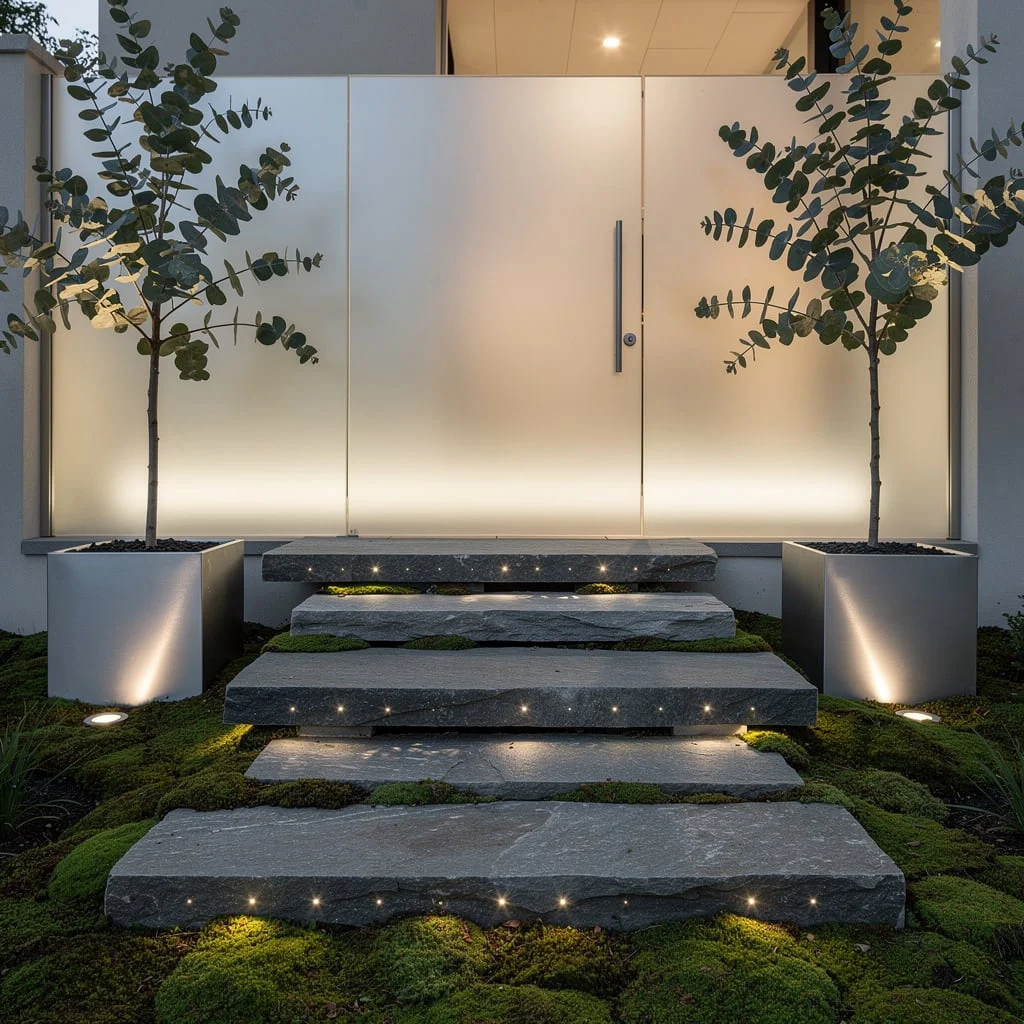
Make your walkway pop without looking like a Christmas tree—embed micro LED point lights in the joints of oversized flagstones floating on moss. Set up matte aluminum cube planters and highlight eucalyptus saplings using well lights for invisible drama. Install a frosted glass privacy screen backlit by gentle LEDs for soft glow and boundary magic. Always keep point lights tiny but plentiful—you want twinkle not blinding. Plant low to contrast the flagstones, and never use harsh white; go for gentle tones and let your magic walk the talk.
Lantern Bollards: Resort-Level Chill Incoming
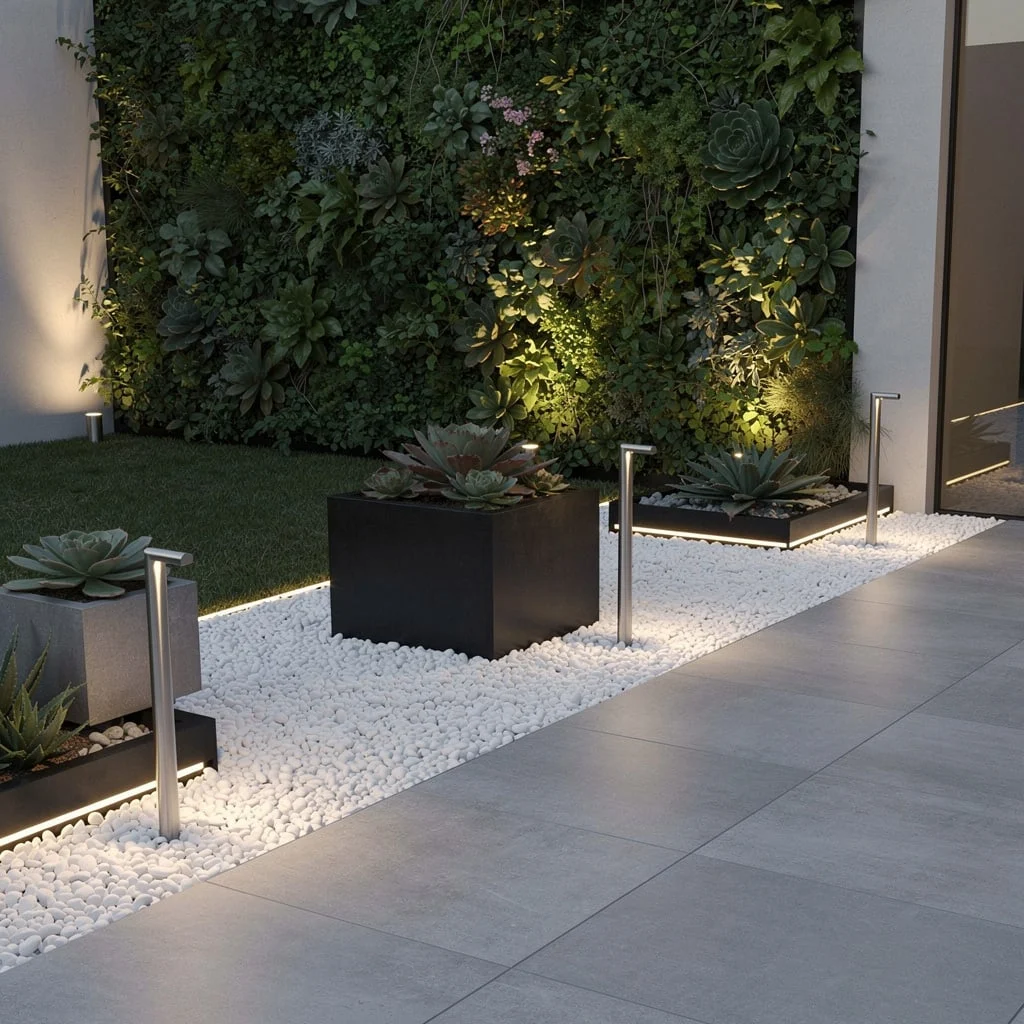
Bored of suburban snoozefests? Go for ultra-slim lantern bollards in brushed stainless, rising from a river of polished white pebbles. Frame with black concrete planters and architectural succulents, then light them from below using narrow uplights like you’re curating a gallery. Use concealed strip lighting to edge out matte ceramic tile paths, and slap up a green wall for backdrop drama. Here’s the pro move: never let the shadows eat your pathway, sequence your lighting for sculptural effects, and always focus on monochromatic, textural layers. Boom—private resort achieved.
Bronze Recessed Lights: Designer Foyer Fever
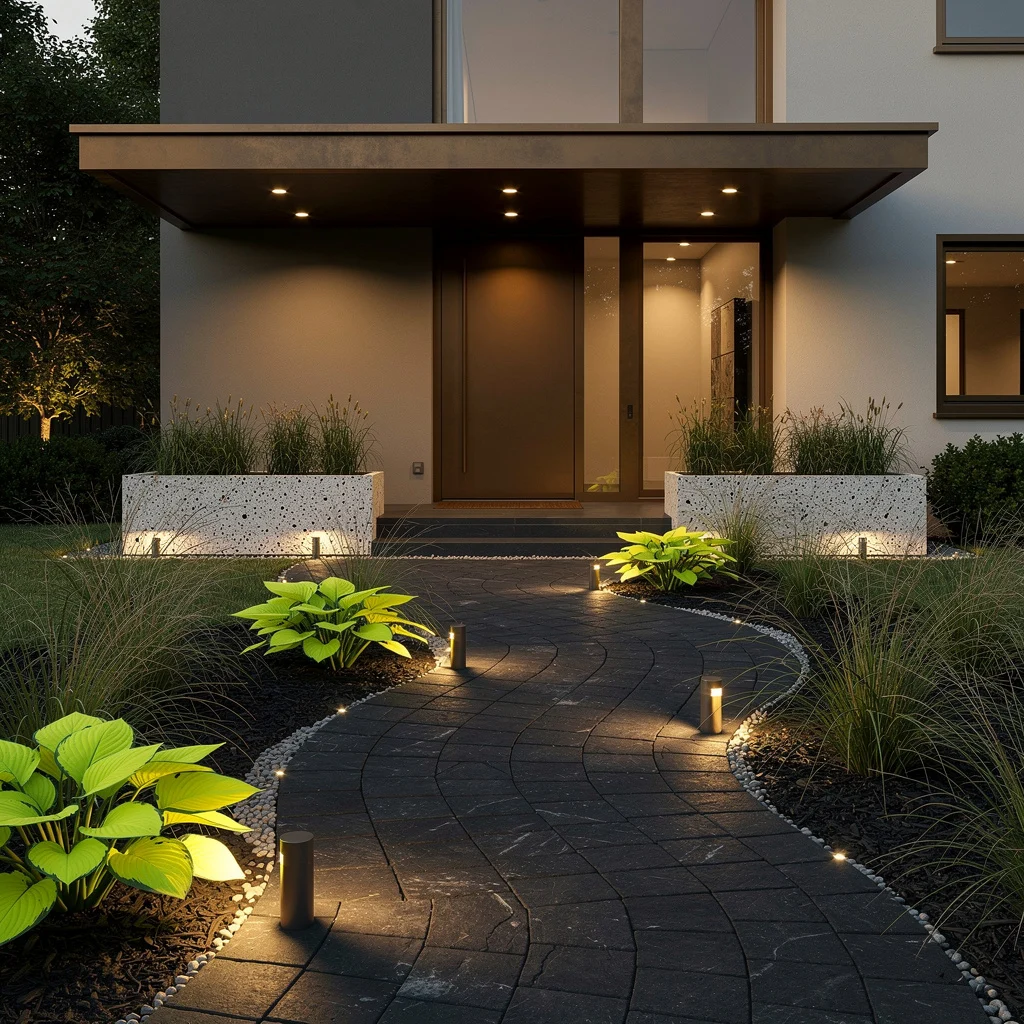
Want to make your front entry look stupidly expensive? Set bronze recessed lights flush in your cantilevered overhead. Wind basalt pavers through neon-green hostas and ornamental grasses, then trace the path edge with fairy lights (not those Christmas ones, please). Pale terrazzo rectangular planters line the walkway, each spotlighted for big impact. Focus your lighting to mimic architectural shadows so your entry feels intimate and vast at the same time. Don’t spotlight everything—choose drama over overwhelm, and make each hit of light intentional on the softscape.
Black Granite Steps: Floating Entry Goals
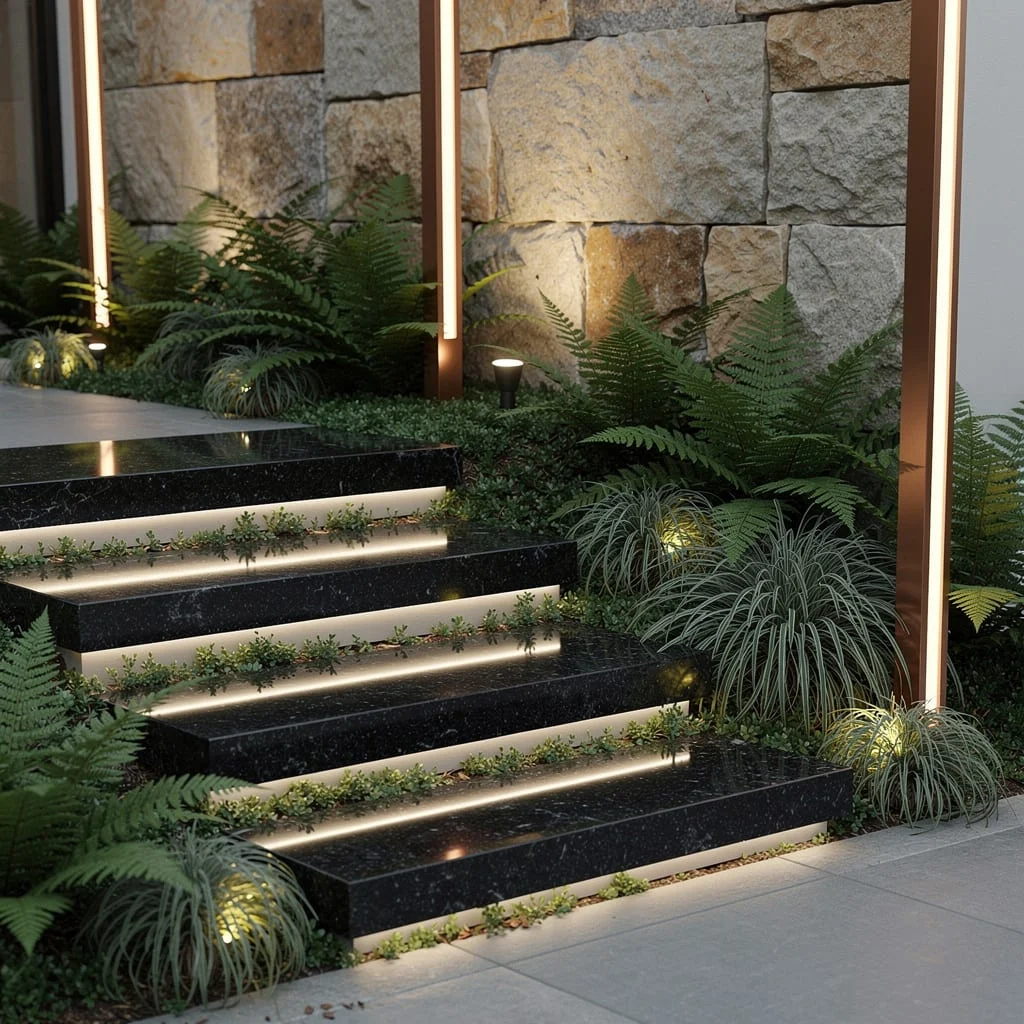
Take your tiny garden from ‘meh’ to ‘wow’ by laying polished black granite slab steps and pairing them with ground cover for movement. Integrate LED strip lighting under each tread; floating stairs are a visual flex, so don’t skimp on glow. Plant architectural ferns and bird’s nest greens, then slam in spike uplights for texture wars. Finish with vertical copper light columns—subtle highlights, big impact—against a sandstone wall. Never run LED strips directly facing guests; tuck the tape so the effect is magic, not migraine. Structured lushness is mandatory.
Curved Corten Walls: Organic With a Side of Drama
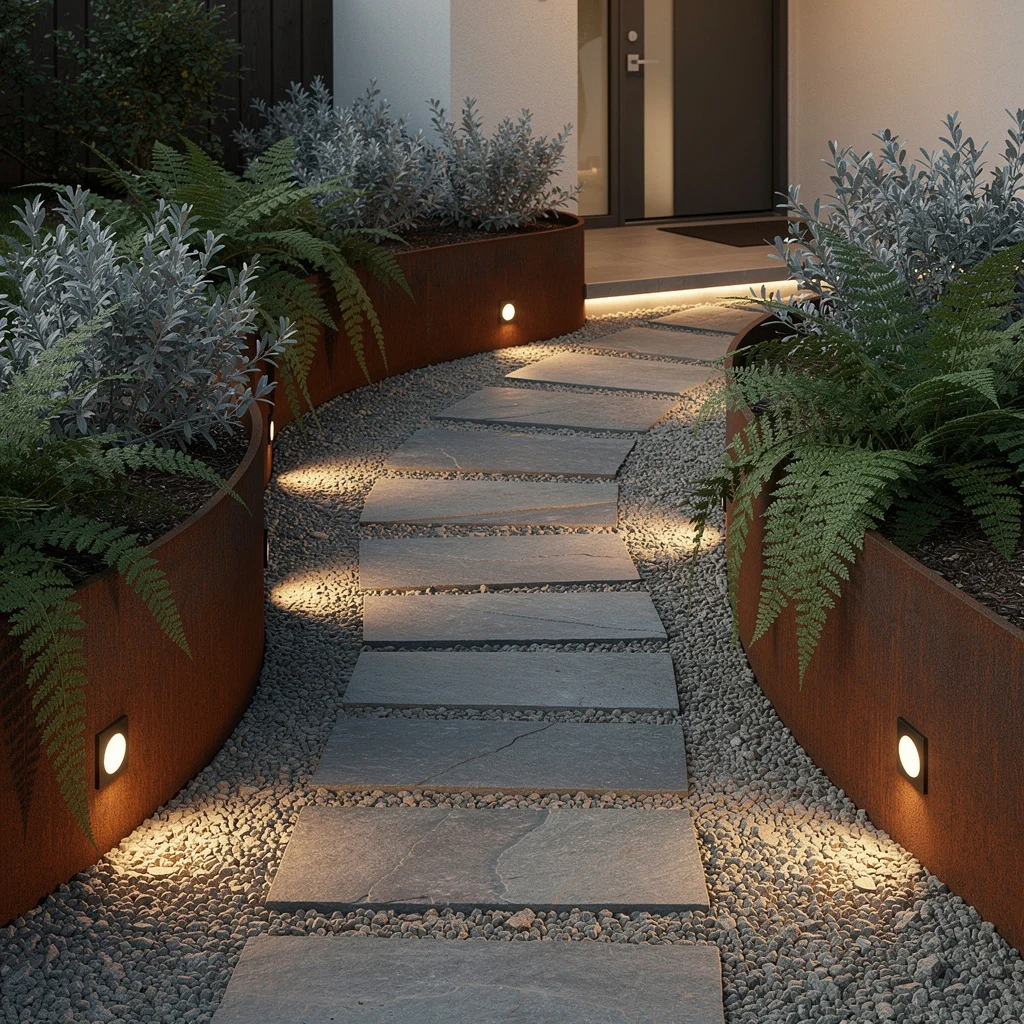
If you want to look like you hired an actual landscape architect, circle lush ferns and silvery shrubs with curved corten steel retaining walls. Hide grade-level LED floodlights in the gravel pathway and direct them upward to catch both the planting beds and corten texture. Lay bluestone pavers spaced wide, then install wafer-thin accent lights to glow each step. Seamless integration is your only goal: never let a fixture break the line, and always use earthy materials for organic sophistication. Pro tip? Let your lighting live in the shadows—tasteful beats tacky every single time.
Final Thoughts
A front yard that looks good in daylight and goes dark at 6pm is only doing half its job. Given that for a significant portion of the year, the hours when people actually see your home from the street — driving past after work, arriving for dinner, walking the dog at dusk — are the dark hours, a front yard that has no lighting strategy is a front yard that’s invisible for a large chunk of its existence.
None of the lighting schemes here required structural work or enormous investment. They required decisions — about where to place light sources, what direction to aim them, what color temperature to use, and crucially, how to hide the hardware while keeping the effect. Make those decisions deliberately and your front yard becomes something people comment on, which is really the whole point of caring about curb appeal in the first place.