
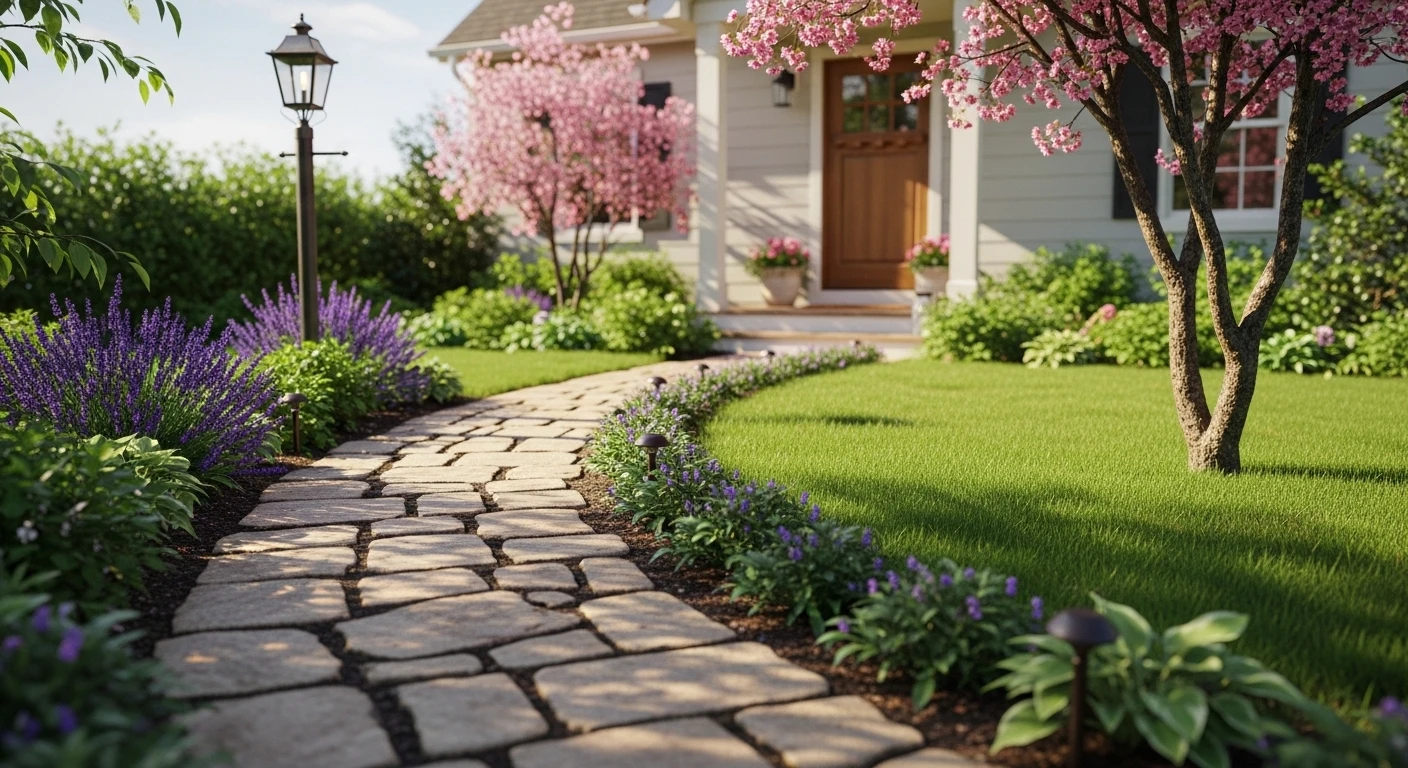
Nobody talks about front yard pathways until they’re standing in front of a truly great one, at which point it becomes impossible to talk about anything else. The path from street to front door is the most trafficked design surface on your entire property — every single person who has ever visited your home has walked it — and most homeowners treat it with roughly the same level of creative investment they apply to selecting a utility bill payment method.
A concrete slab poured in a straight line to the door is not a pathway. It’s a legal requirement dressed up as a design decision, and the fact that millions of homes are relying on it as their primary curb appeal contribution is either depressing or an enormous opportunity, depending on how you want to look at it.
The pathway sets the tone for the entire home before anyone reaches the front door. It communicates the personality of whoever lives there, the level of care applied to the property, and whether the arrival experience was designed or simply allowed to happen by default. A sweeping curve through lush planting tells a completely different story than a stamped concrete strip flanked by two bushes, and both stories start before you even knock.
Why Your Current Pathway Is Underperforming
Front yard pathways fail for reasons that are almost always preventable, which makes them particularly frustrating to look at.
Straight Lines Are the Path of Least Resistance and Maximum Boredom – A perfectly straight path from driveway to door is efficient and completely devoid of character. A gentle curve adds journey, builds anticipation, and makes the front yard feel larger by creating a sense of movement through the space rather than a direct shot across it.
The Path Material and the Surroundings Need Each Other – A beautiful herringbone paver path planted in bare soil is not a pathway design — it’s a nice material sitting in an unfinished context. The planting on either side, the edging treatment, and the ground cover between all work together with the paving itself to create the complete picture.
Width Matters More Than People Think – A path that’s too narrow for two people to walk side by side communicates, subconsciously, that guests aren’t particularly expected or welcome. Generous pathway widths feel luxurious and intentional; cramped ones feel like an afterthought.
The Details That Separate Good Pathways from Ones People Remember
There’s a specific quality that the most memorable front yard paths share, and it has nothing to do with the price of the materials used to build them.
Edging Creates Definition – The line where the pathway meets the planting bed is where most of the design character lives. A crisp, clean edge between paving and dark mulch, or paving and stone border, gives the whole composition a structured backbone that makes everything on either side look more intentional.
Lighting Transforms the Experience After Dark – A pathway that looks good in daylight and disappears at 8pm is missing half its potential. Step lighting, bollards, and ground spike lights aimed at adjacent planting turn a daytime feature into an evening atmosphere that changes the entire character of the front yard.
The Path Should Earn Its Length – Every foot of pathway between street and door is a design canvas. Fill it with planting that rewards close attention — varying heights, seasonal interest, fragrant plants at nose level, textural contrast — and the walk to the front door becomes the best part of arriving.
What Every Truly Great Front Yard Path Has in Common
It moves. Not literally, obviously, but visually — good pathway design creates a sense of progression and arrival rather than just connection between two points. The path draws the eye forward, the planting on either side frames the journey, and the front door at the end of it all feels earned rather than simply reached. That quality of designed arrival, where walking to someone’s front door feels like an experience rather than a task, is achievable at almost any budget. It just requires thinking about the path as a sequence rather than a surface.
Front Yard Pathway Ideas
Bollard Light, Stone Steppers, and River Pebble:
Made a Pathway and Garden Edging for Our Front Yard!
by u/Horror-Quantity3015 in DIY
What this front yard understands that most don’t is that the nighttime version of a pathway deserves as much attention as the daytime one. Large concrete stepping stones set in a wide river pebble bed are a clean enough daytime composition, but after dark the whole thing transforms — LED strip lighting runs the full length of the pebble border, casting warm amber across the stone surface in a continuous glow that makes the path edges sharply defined and genuinely dramatic. A single sculptural bollard with an internal crystal element anchors the composition with a vertical light source that gives the scene height without clutter. Downlights on the house facade complete the layered effect, turning a fairly standard suburban front yard into something that looks professionally designed specifically for its best hours.
Herringbone Bluestone Pavers With Curved Border:
Grey herringbone paver patterns are a reliable design choice, but what makes this particular path exceptional is the confident curve that sweeps from driveway to front steps with enough arc to create genuine visual movement through the space. The darker grey border pavers framing the herringbone field give the path clean, defined edges that read as deliberate from a distance, while black rubber mulch filling the surrounding planting beds makes every shrub and ornamental grass placement pop with graphic intensity. Rounded river stones scattered through the planting beds add organic texture that prevents the composition from feeling too rigid or corporate, and the mature evergreen shrubs flanking the path at varying heights create exactly the kind of layered arrival sequence that makes a front yard feel genuinely designed rather than just maintained.
Timber Sleepers and Pea Gravel:
Evenly spaced timber railway sleepers crossing a bed of warm pea gravel is one of those pathway ideas that sounds deceptively simple right up until you see it executed properly, at which point it becomes clear why this combination keeps showing up in design references. The rhythm of the sleepers creates a visual cadence that makes the walk to the door feel purposeful without being rigid, and the warm pea gravel between them provides a ground texture that shifts subtly underfoot in a way that feels tactile and considered rather than simply filled. Wispy lavender and silver-leaved cottage plants spilling in from the right edge soften the geometry with exactly the right amount of organic looseness, and the dark charcoal house exterior makes every warm material tone — timber, gravel, dried flower — read twice as rich by contrast.
White Gravel Stepping Stones, Timber Steps, and Zen Water Feature:
This front entry commits to a specific design language — clean modern architecture, natural warm materials, meditative garden elements — and executes it with enough confidence that the result feels inevitable rather than assembled. Large white rectangular stepping stones cut a path through cream pebble gravel toward wide floating timber steps that lead to a covered porch with recessed ceiling lighting overhead, and the material palette of white stone, warm hardwood, and black mulch accents is maintained so consistently throughout that nothing jars or competes. A circular water bowl planted with lily pads and black stones sits beside the path as a focal point that serves both as garden sculpture and quiet sound element, and tall architectural rush grass planted in a black mulch bed provides vertical punctuation that completes the composition without overloading it.
Curved Concrete Path Through Layered Flowering Beds:
From above, this front yard path looks like it was drawn freehand through a garden that got slightly out of control in the best possible way — a gentle concrete curve disappearing into planting beds so generously filled that the path feels discovered rather than installed. Japanese maples provide burgundy canopy color on one side, while the planting border running the full length of the path on both sides cycles through silver dusty miller, hot pink begonias, yellow marigolds, white flowering perennials, and clipped boxwood spheres in a continuous drift that ensures something is always in peak form regardless of season. A small stone birdbath fountain nestled into the planting adds water sound to a composition that already has everything else, and the overall effect is of a front yard that takes its planting seriously enough to make the path to the door genuinely worth walking slowly.
Flagstone Mosaic Path With Flowering Border:
Irregular flagstone paths in warm sandy tones are not a new idea, but this execution elevates the concept significantly through sheer commitment to scale and planting generosity. Wide flagstone pieces set in a casual mosaic pattern sweep in a broad curve from the lawn toward an arched stone entry with wrought iron door panels, and flanking both sides of that path is a flowering border so abundantly planted it borders on theatrical — hot pink geraniums, magenta roses, yellow and coral blooms in staggered drifts that shift in height from low ground-level annuals at the path edge to full shrubs and topiary forms further back. Classical urns at the entry steps with additional seasonal planting tie the pathway into the architecture, and the whole composition communicates the kind of unhurried, considered luxury that most front yards aim for and almost never achieve.
Go Jet-Black Modern: Basalt Stepping Stones and Cream Gravel
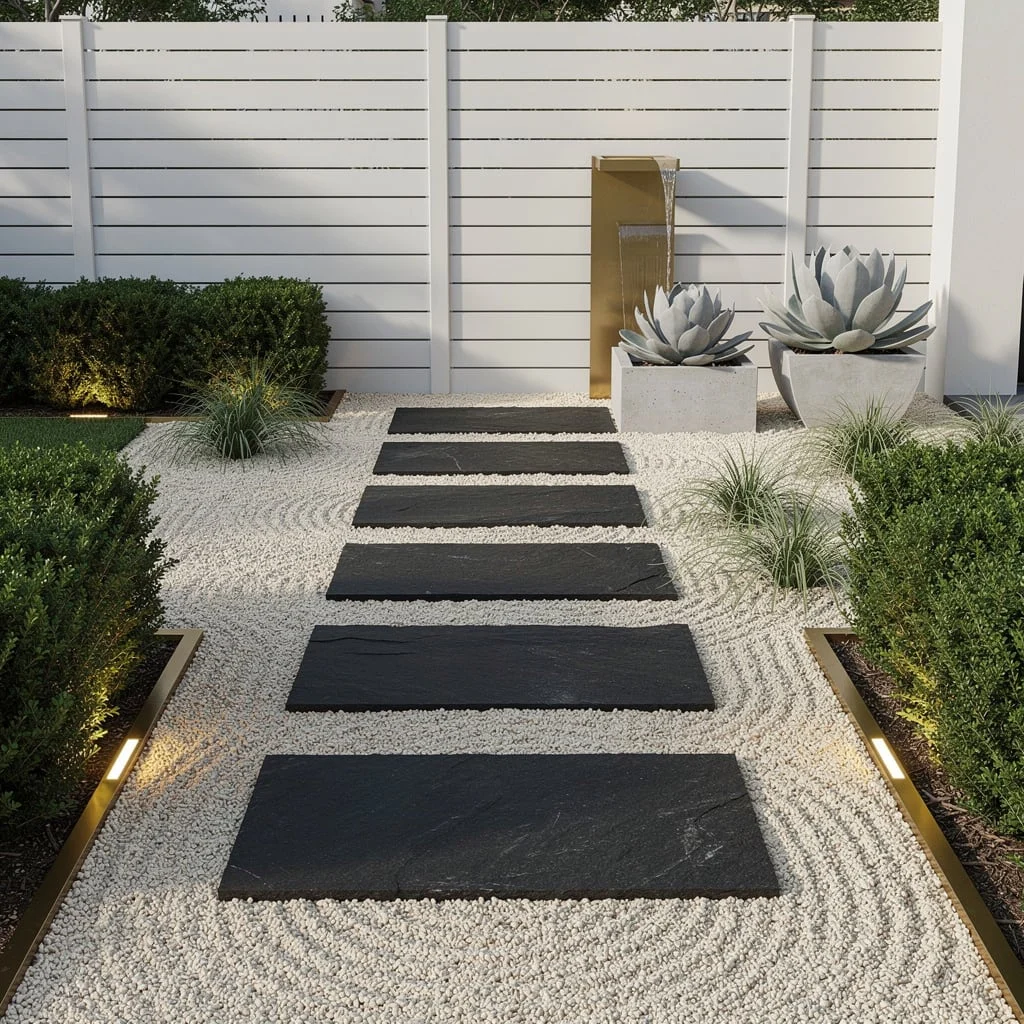
If you crave main-character energy right from the curb, you need the bold contrast of jet-black basalt stones paired with pale cream pea gravel—all about those monochrome vibes that say ‘I’m not here to play nice.’ Lay out oversized rectangles, rake your gravel like you’re prepping for a zen garden photo shoot, then edge with boxwood hedges and low ornamental grasses for controlled lushness. Toss brass linear uplights along the sides to keep it moody at night. Install a minimalist water feature and use polished concrete planters for sculptural succulents—because basic garden gnomes are banned. Fence it with horizontal white slats to keep the look crisp and exclusive. Don’t cheap out: always go for LED uplights and rake your gravel AGAIN after every rainstorm—maintenance is part of the vibe.
Terracotta Dreams: Antique Tiles and Creeping Thyme
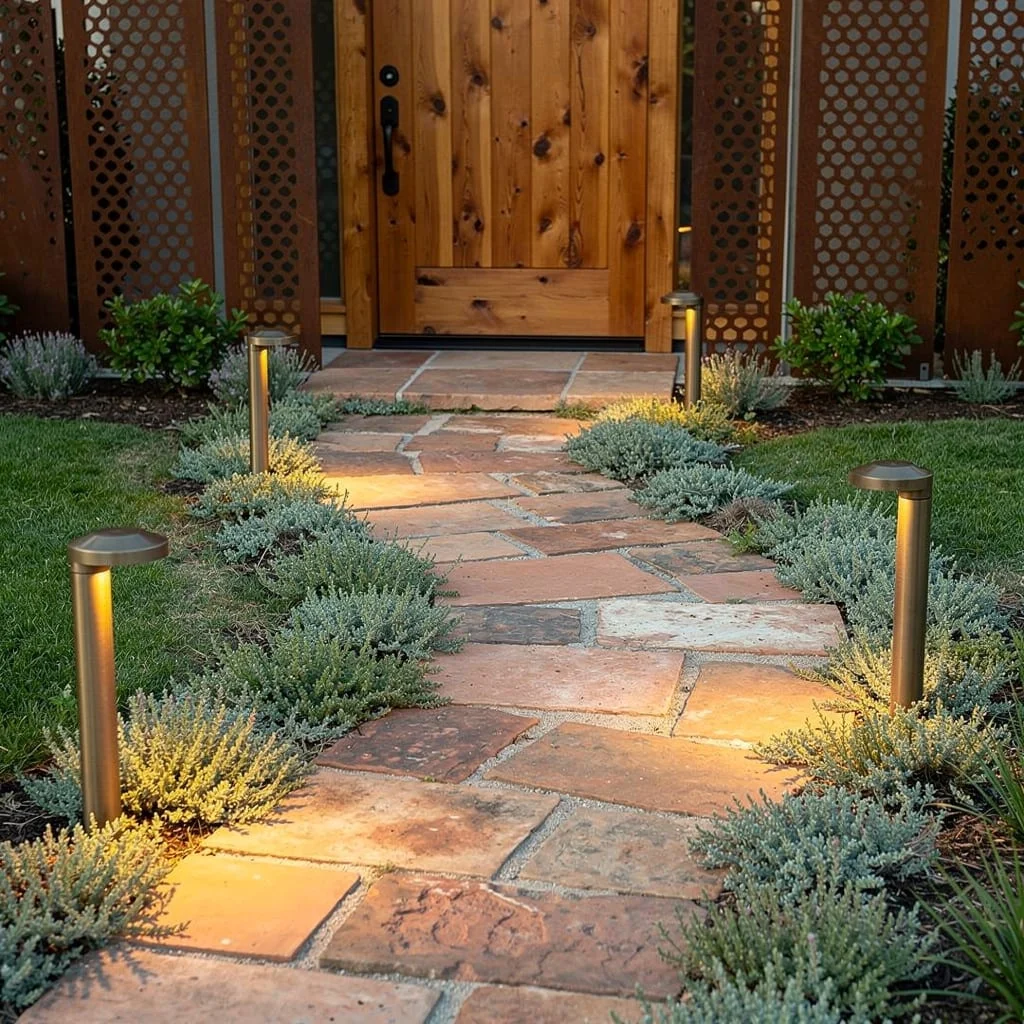
Want warm Euro charm with a splash of drama? Antique terracotta tiles, laid diagonally, serve up retro sophistication without veering into grandma territory. Source reclaimed pieces—don’t even think about buying new—and stagger them for that ‘effortless but expensive’ look. Let creeping thyme do its thing and spill onto the path; scented groundcover works harder than an air freshener (plus, bugs hate it). Hide micro-spotlights beneath slender bronze bollards for nighttime ‘oohs’ without tripping hazards. Segment your garden with corten steel screens sporting geometric cutouts; these are not just for privacy—they’re your artifact flex. When placing groundcover, always plant heavy along the edge and direct the spread away from driveways—brown crunchy patches? Not cute.
Bluestone Herringbone: Mix Japanese Maples and Glass Fences
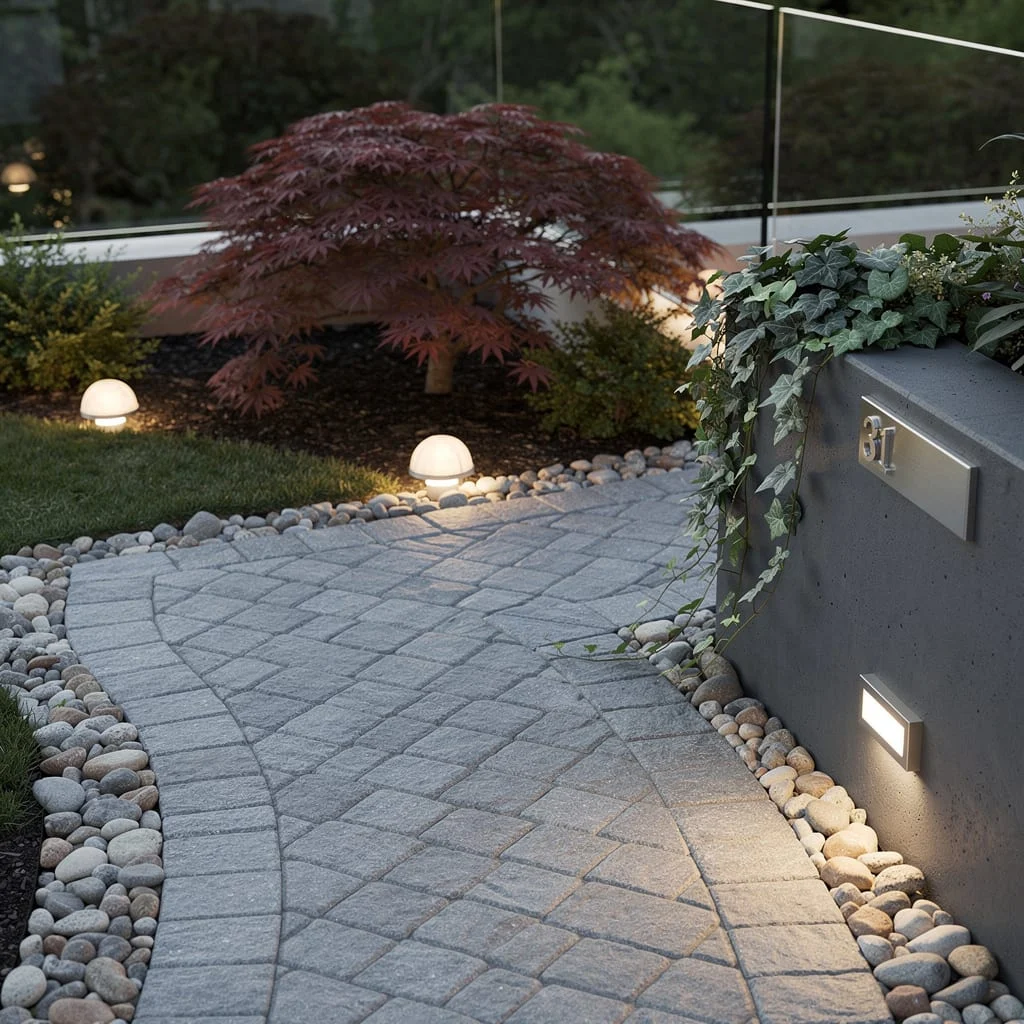
Chasing unbothered contemporary? Tightly pack smooth bluestone pavers in a herringbone pattern—yes, you need to measure twice and cut once, because wonky joints will absolutely haunt you. With natural river stones bordering the walkway, you get a subtle, organic edge that screams ‘designer touch.’ Sculpt Japanese maples low and drape ivy along one side to keep things lush but never messy. Integrated pathway lights with frosted domes help you glow up the path without an ugly light post. Flash those stainless address numbers on a charcoal planter—zero excuses for mail getting lost. Wrap the space in a low clear glass fence for unobstructed views, but keep it clean—smudges or chips are a public scandal. Always install the glass fence with hidden hardware; exposed brackets are a rookie mistake.
Resin Marble: The Minimalist Curves and Brass Details
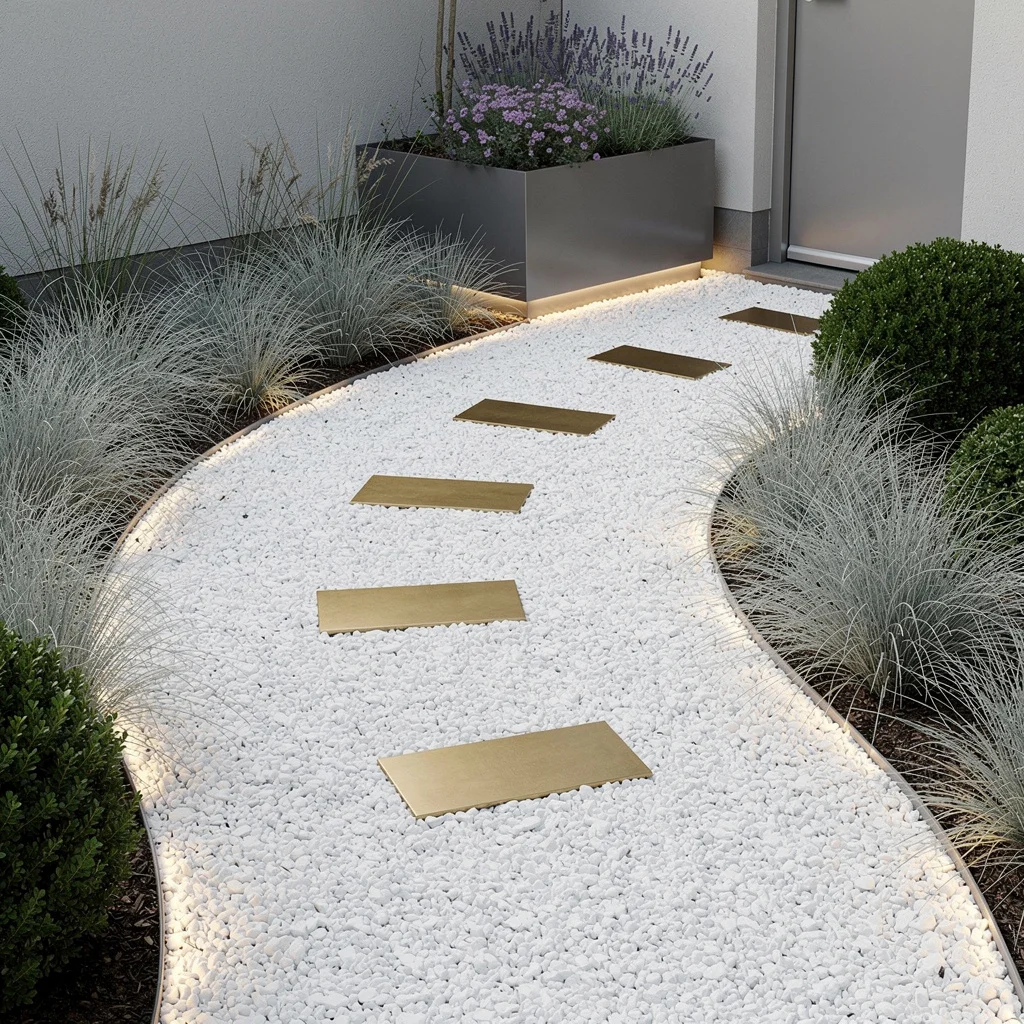
Got FOMO for minimalist luxury? Skip the basic rectangle and go for a winding pathway of tumbled white marble chips, sealed in resin so your shoes don’t come home dusty. Alternate beds of tall, silvery ornamental grasses with clipped yews; the contrast here is all about keeping the movement clean and architectural. Randomly add flat brass pavers—subtle bling without screaming Vegas. Conceal LED strip lighting at ground level so the edges glow quietly (and nobody sees your wiring). Plant lavender in a powder-coated steel planter right up front—fragrance is now mandatory for entry. Always install brass pavers flush and avoid spacing that creates ankle traps; nothing ruins a luxury pathway faster than literal trip hazards.
Slate and Corten: Custom Granitic Bands and Lantern Drama
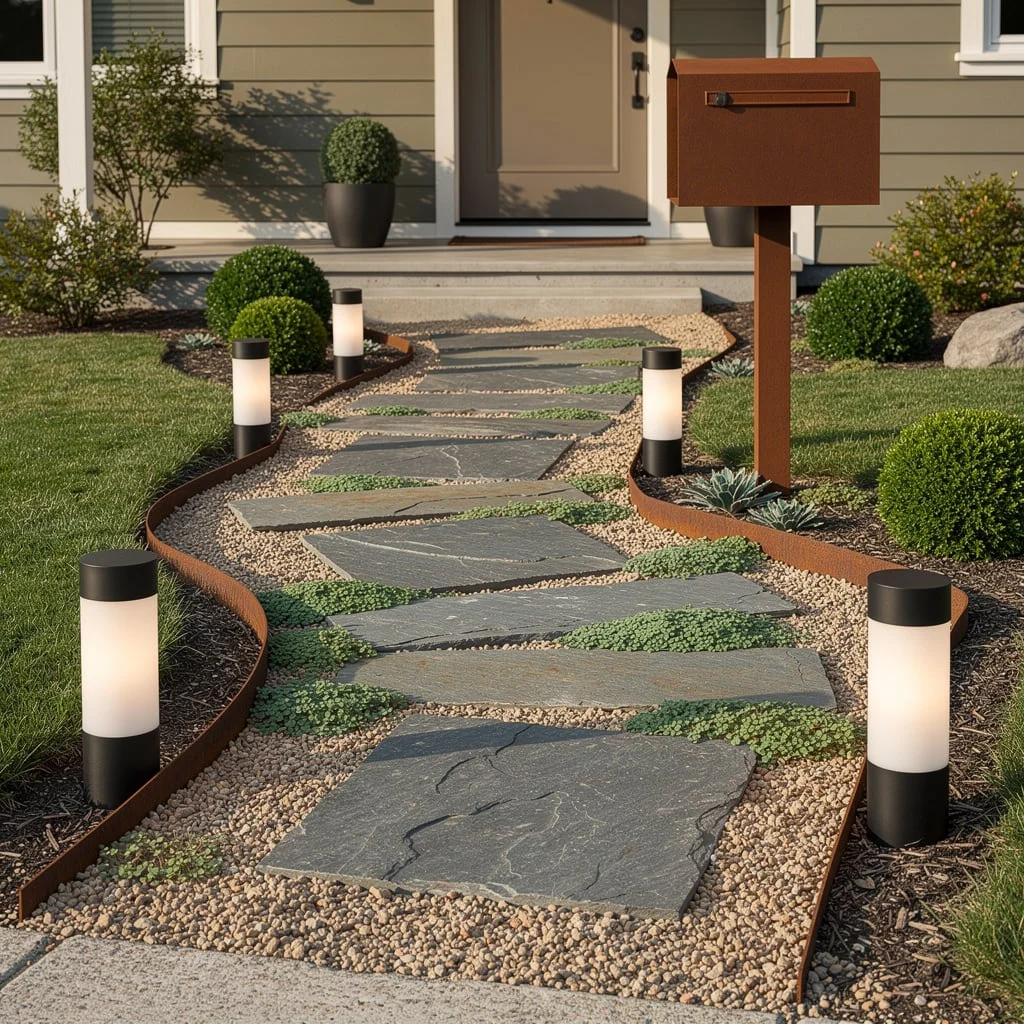
Ready for tailored vibes only? Cut slate tiles to custom sizes and alternate with bands of decomposed granite—no patience for uneven seams, so get a pro to measure if geometry isn’t your thing. Edge the path with sculptural corten steel for a rusted, rich trim that’s anything but random. Stagger matte black lanterns with frosted diffusers to serve up chic mood lighting (skip the solar plastic nonsense). Topiary spheres and creeping dichondra plug the gaps between pavers—bonus points for geometric repeat. Tie the look together with a floating corten mailbox to prove you DO care about curb appeal. Rule: always fill gaps with dichondra instead of letting weeds colonize; an untidy path is grounds for garden disinheritance.
Ultra-Modern Concrete: Moss, Agave, and Sandblasted Glass
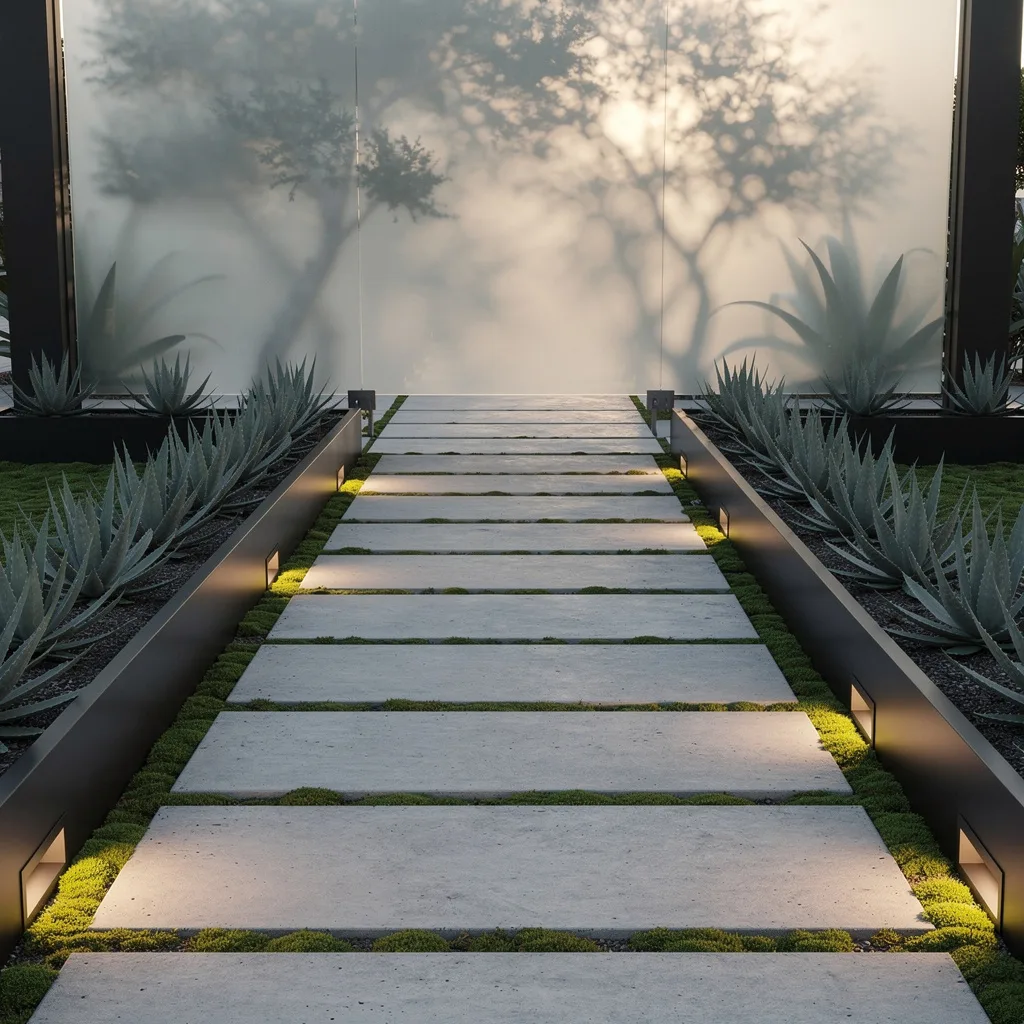
Hunting for luxury with no fluff? Pour large concrete panels for your path, interrupting with narrow strips of lush moss—no, not fake moss—and keep lines razor sharp. Flush-mount recessed pathway lights so they disappear at noon, and only show off at dusk. Jet-black steel planters line each side with compact agaves and aloe vera; think hard, angular foliage, not grandma’s rose bush. Sandblasted glass partitions up front cast wild shadows and double as sculptural privacy. Install these glass walls tall for extra drama, but let the hardware vanish—visible screws are tragic. Always clean moss weekly and check for rot; slimy green is not the vibe.
Limestone Split Levels: Hardwood, Ferns, and Gallery Sculpture
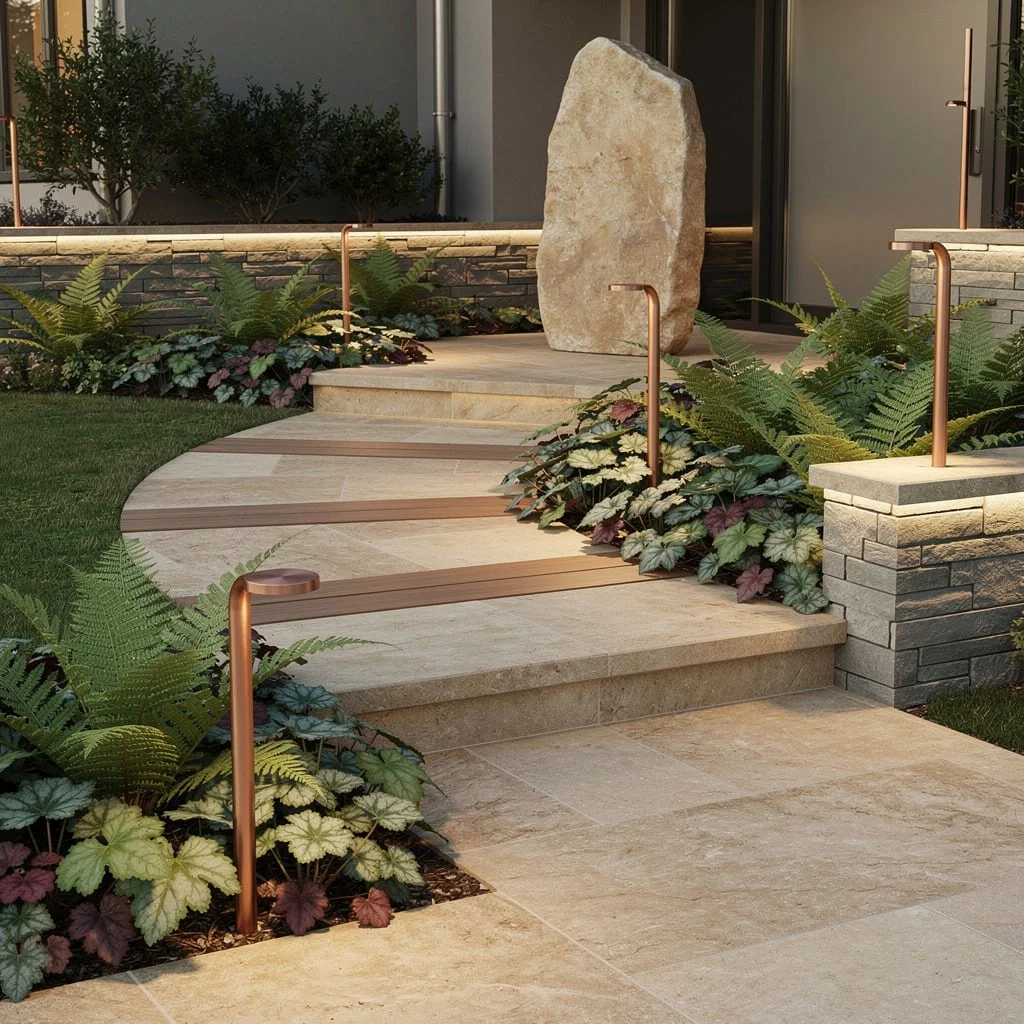
Want your front yard to flex on everyone who walks by? Try taupe-hued limestone steps, split levels, and slender hardwood planks—this is architectural luxury, not DIY deck. Set lush beds of cascading fern and heuchera along the steps, with copper stake lights to highlight every curve. Edges go contemporary with stacked stone walls capped by linear LED fixtures—keep those lines crisp, no wonky piles. Anchor your arrival area with a broad, upright monolithic stone sculpture—that’s how you say ‘this is art, not landscaping.’ Always leave space around sculptures for plant breathing room—crowding says you’ve run out of budget or taste.
Corten Plates and Gravel: Acrylic Address Flex
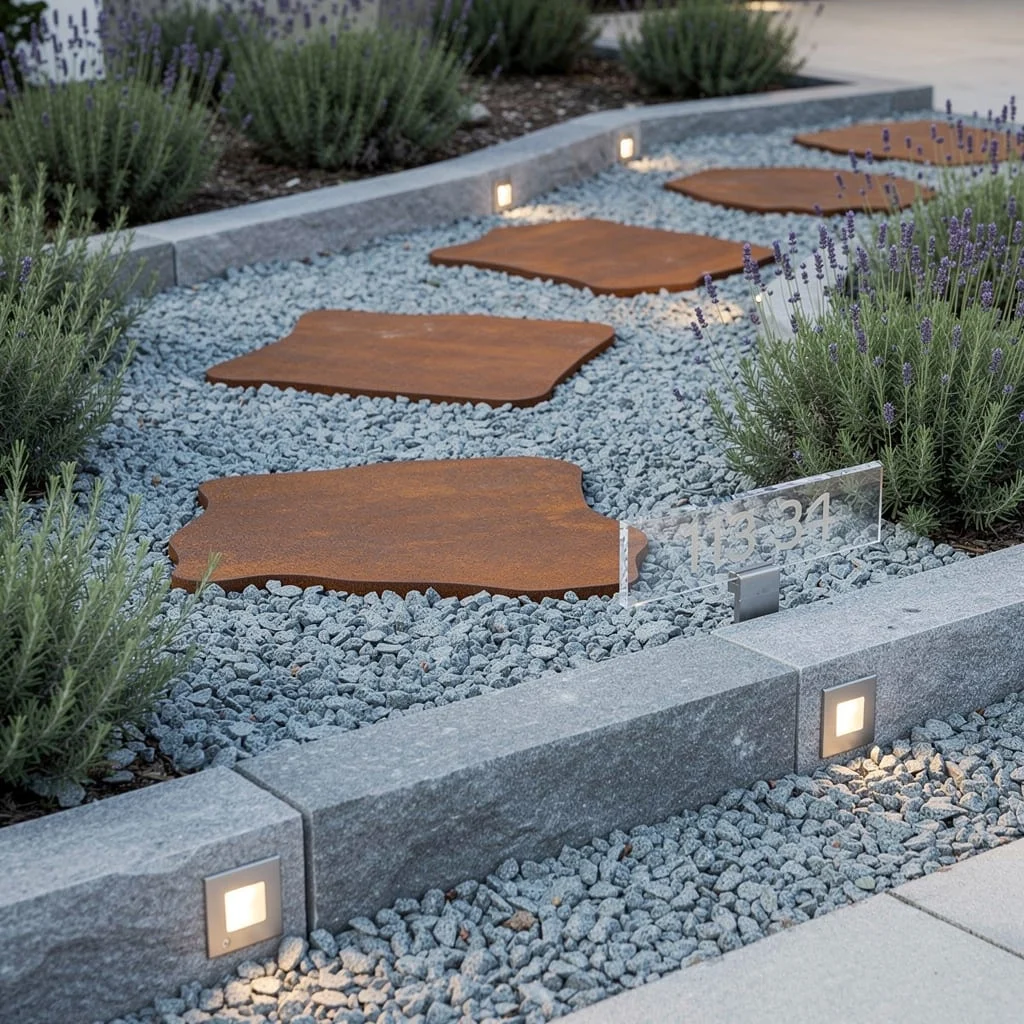
Want modern edge without going full dystopia? Use large, irregular corten steel plates for stepping stones over soft blue-grey gravel. Go for aromatic rosemary and lavender along the sides—nature’s diffuser, and absolutely better than scented candles. Hide mini-uplights to spotlight pathway and key plants; light up, don’t blind. Toss your address sign in sleek clear acrylic, emerging from gravel because boring on-the-house numbers are so last decade. Finish strong with clean, grey basalt retaining edges—structured look, zero sloppiness. Always group corten plates in easy-flowing lines; a zigzag telegraphs design confusion, and you’re aiming for intentional, not accidental.
Timber & Limestone Grid: Luxe Mail Slot and Winter Blooms
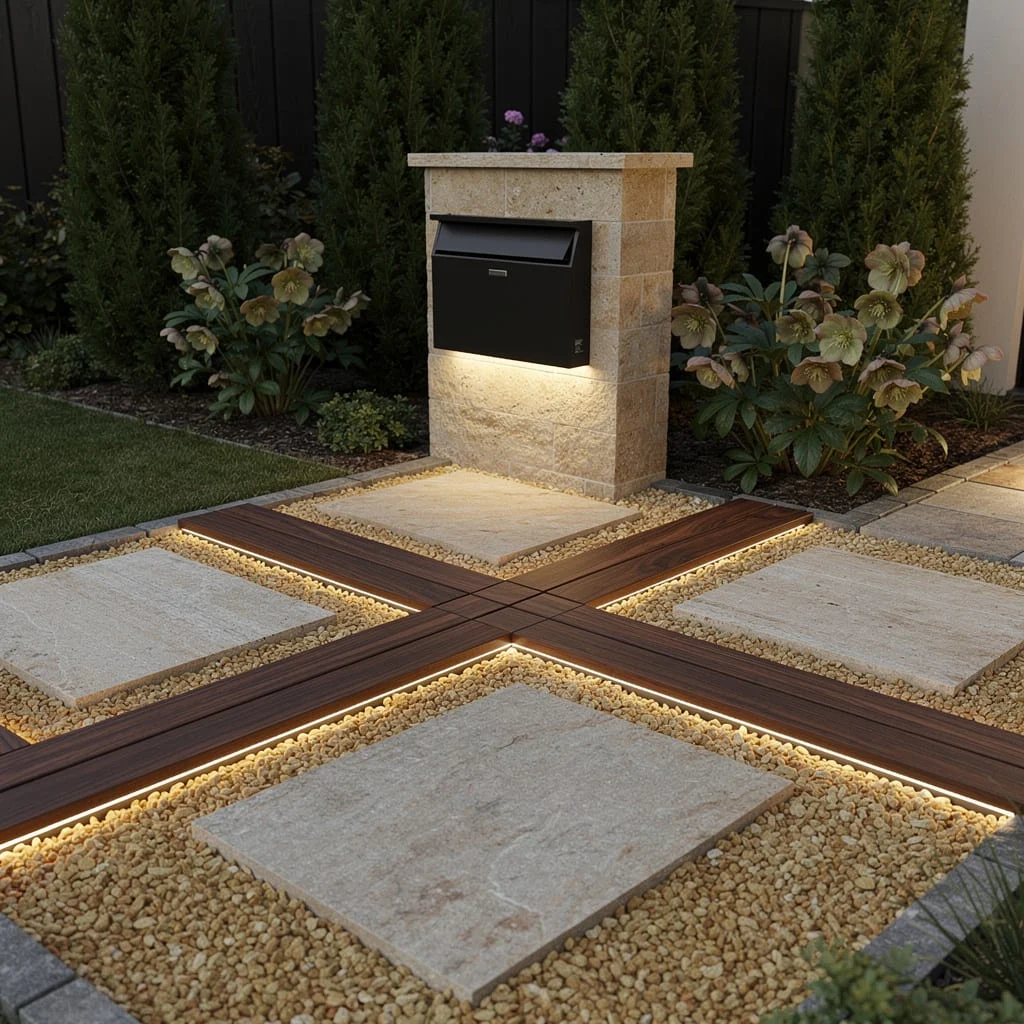
Tired of bland slabs? Alternate dark walnut timber slats and muted limestone in a geometric grid, then fill gaps with golden gravel for a lit contrast. Flank the walk with tall evergreens and clusters of winter-blooming hellebores—nature flexes, even in December. Embed a black powder-coated mail slot in a compact limestone wall; it screams ‘designer’ without trying. Hide strip lights beneath each grid edge to create floating visual effects at night, and keep those lights on a timer for max drama after dark. Always stagger grids evenly, and never let the timber get warped; uneven surface is instant pathway shame.
Pebble Mosaic: Fluted Planters and High-Design Button Lights
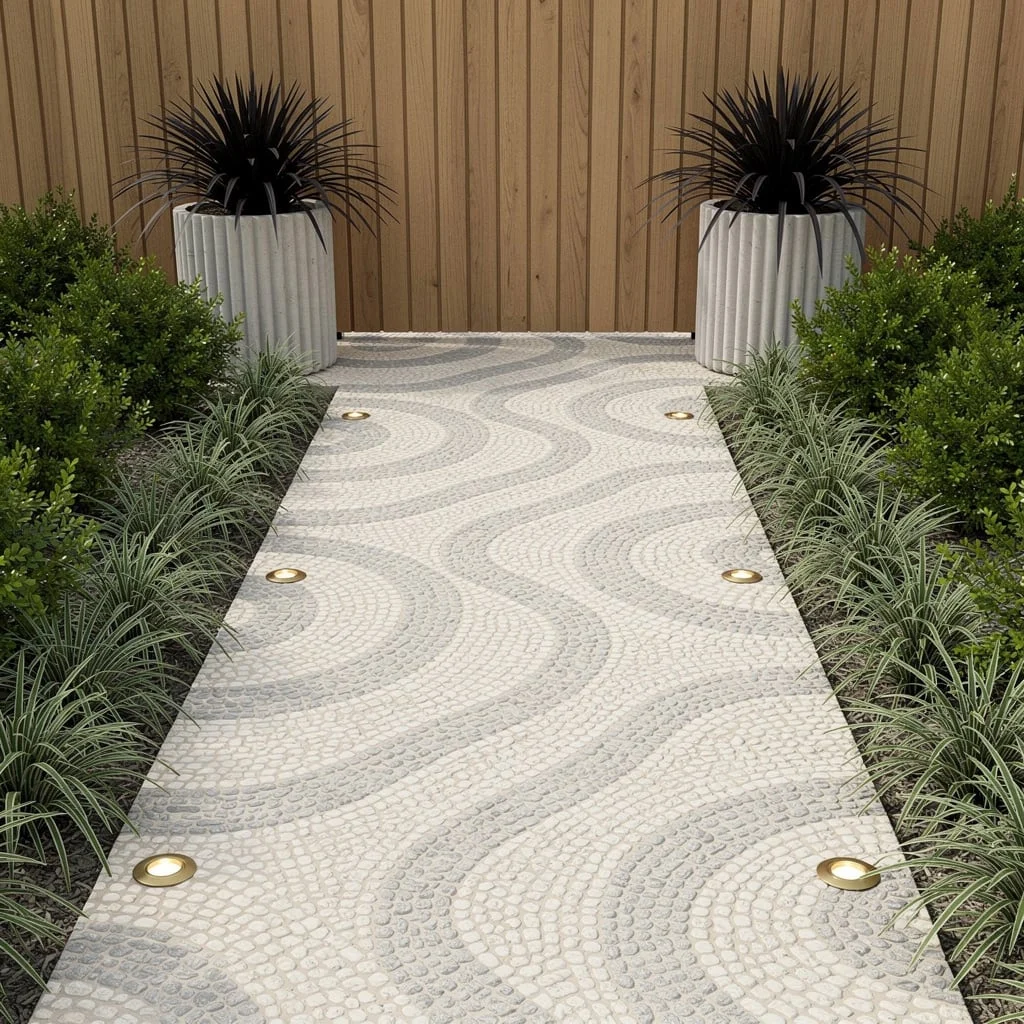
Ready to make your pathway the high-design highlight of the block? Use oversized pebble mosaic tiles with creamy linear patterns; install tight so they sing, not slip. Densely plant liriope and box honeysuckle in raised beds for texture overload, then integrate brass button lights directly into the mosaic surface for a celebrity entrance after sunset. Frame the entry with fluted concrete planter columns stuffed with black mondo grass; contrast is everything. Back it all up with a minimalist timber screen for privacy; yes, keep it low-profile. Styling rule: always keep mosaic grout clean—dirty lines are design disaster, not rustic chic.
Quartzite Stepping Slabs: Volcanic Gravel and Myrtle Spheres
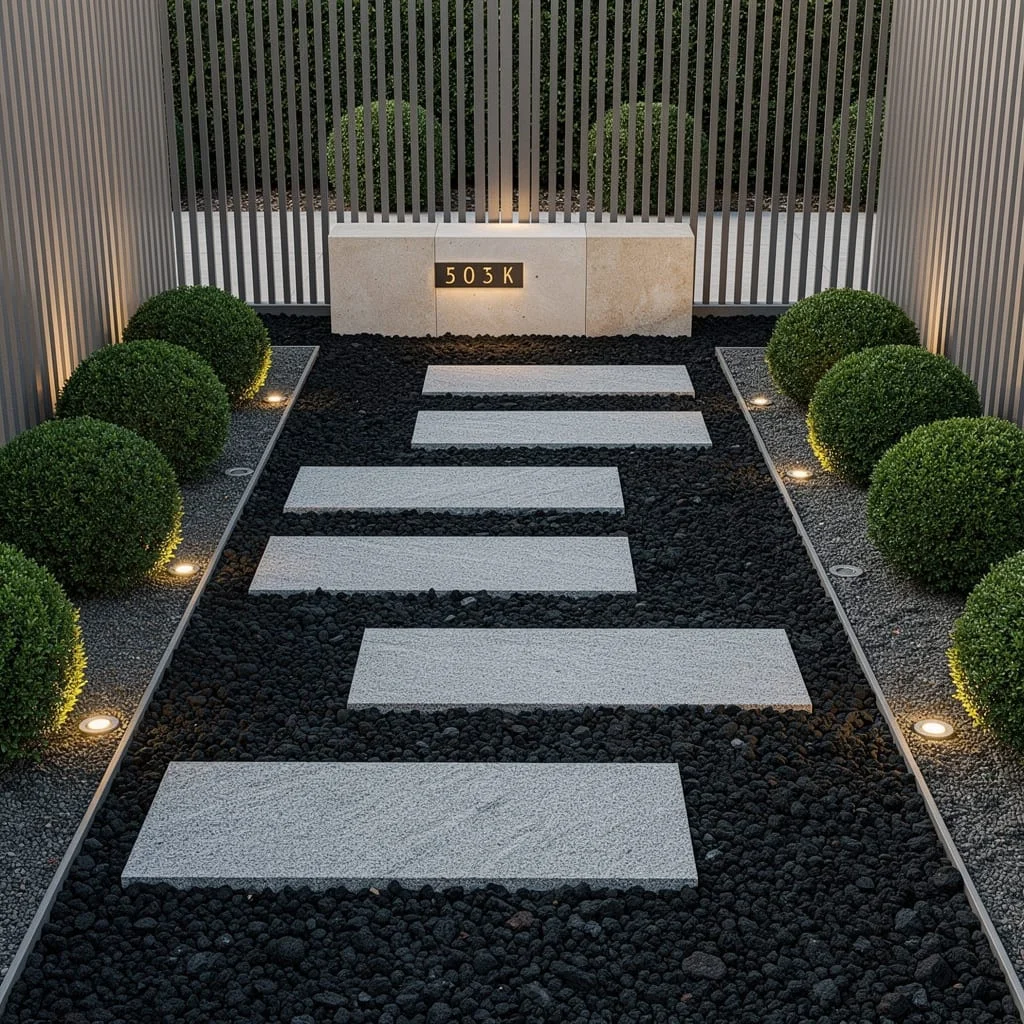
Want drama without going full fantasy garden? Lay sandblasted quartzite slabs diagonally through a grid of rich black volcanic gravel. Space sculptural myrtle spheres rhythmically along both edges and light them up with micro-LED uplights that actually adjust—spot, don’t flood. Embed frosted bronze address numbers into a stone plinth near the entrance for grown-up subtlety, not sticker shock. Fence everything with slender vertical aluminum slats; they deliver privacy and style with zero effort. Always place myrtle spheres evenly—random blobs read as ‘accidental landscaping,’ and you’re aiming for curated, not confused.
Final Thoughts
The path to your front door is the only part of your home’s exterior that everyone who visits experiences at close range, at walking pace, with time enough to actually notice what’s there. That makes it the highest-value design investment in your entire front yard, and also the one that most homeowners have been quietly neglecting for years.
Good pathway design isn’t about expensive materials or elaborate construction. It’s about choosing a direction — curving or straight, formal or naturalistic, abundant or restrained — and then executing every element of that direction with enough consistency that the result feels like a decision rather than an accumulation of random choices. Make that decision, follow it through from the street to your front step, and the walk to your door becomes the first thing people mention when they leave.