
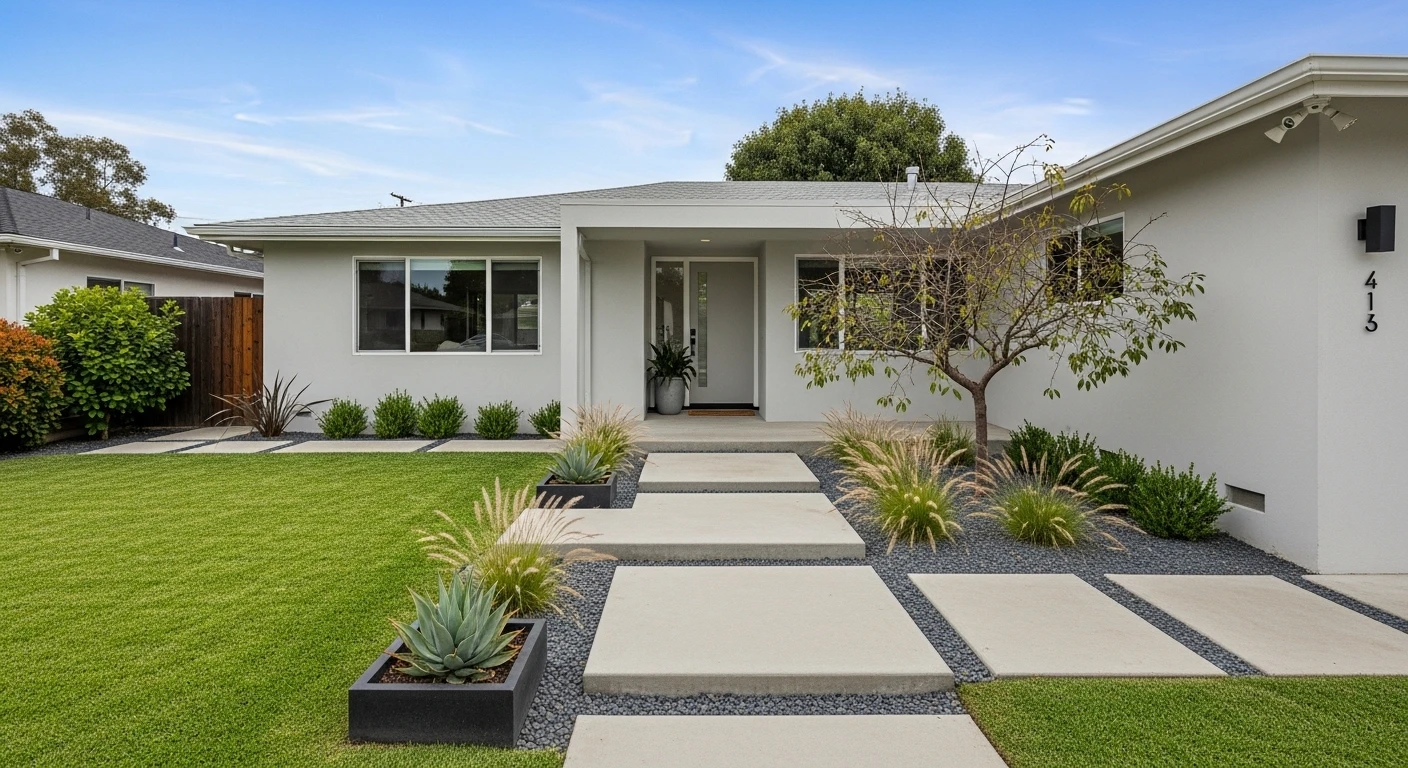
Minimalism has a reputation problem in the garden world. Mention it to most homeowners and they picture a joyless rectangle of gravel with one sad plant in the corner, which is the design equivalent of calling a meal “food” and considering the matter resolved. Real minimalist front yard landscaping isn’t about removing everything interesting — it’s about removing everything unnecessary, which turns out to be two very different things.
The front yards that execute minimalism well have a quality that’s immediately recognizable and frustratingly difficult to achieve by accident. They feel deliberate. Every material relates to every other material, every plant has been chosen for a reason, and the empty spaces between things are as considered as the things themselves. Nothing is there by default, and nothing is missing that should be there.
Getting to that result requires a different starting point than most landscaping projects use. Instead of asking what to add, the right question is what to keep — and then making sure everything that stays is earning its position completely.
The Minimalist Landscaping Mistakes That Produce Expensive-Looking Mediocrity
Minimalist front yards fail in ways that are distinct from maximalist ones, and understanding the specific failure modes saves a considerable amount of money spent on redoing things.
Confusing Empty With Considered – A front yard with no plants, flat gravel, and a straight path isn’t minimalist — it’s unfinished. True minimalism involves the same level of design intention as any other approach; it just applies that intention to fewer elements. Every surface, every material junction, and every plant placement should be a decision, not a default.
Choosing Materials That Don’t Age Well Together – Minimalist design has no decorative elements to distract from material quality, which means cheap pavers, inconsistent gravel grades, and off-the-shelf planters become the entire story. Investment in quality materials at the front yard scale pays returns disproportionate to the outlay because there’s nowhere for budget choices to hide.
Letting Maintenance Slip – A maximalist garden with a few weeds reads as lush and slightly wild. A minimalist front yard with a few weeds reads as neglected. The cleaner the design, the more rigorously it needs to be maintained, which is the part of the minimalist pitch that nobody leads with but everybody discovers eventually.
The Material Decisions That Make Minimalist Front Yards Actually Work
Minimalist landscaping succeeds or fails at the material selection stage, before a single plant goes in the ground or a single light gets installed.
Two Materials Maximum in the Ground Plane – Restraint in paving and ground cover material is the foundation of every successful minimalist front yard. One primary paving material — large format concrete, sandstone, bluestone — combined with one contrasting ground cover — crushed gravel, river pebble, black mulch — creates the kind of graphic clarity that makes compact front yards look significantly larger and more considered than they physically are.
Plant Selection Is Architecture, Not Decoration – In minimalist landscapes, plants function as structural elements rather than embellishments. Clipped boxwood spheres, columnar junipers, ornamental grasses, and single-specimen trees are chosen for their form and consistency of appearance across seasons rather than their flowering performance. A plant that looks interesting for three weeks and irrelevant for the other forty-nine is not a minimalist plant.
The Edge Detail Is Not a Minor Decision – Where paving meets gravel, where grass meets planting bed, where path meets lawn — these transitions define the crispness of the whole composition. A sharp, clean edge maintained consistently throughout a minimalist front yard does more for its overall quality than almost any individual material or plant choice.
What Every Successful Minimalist Front Yard Decides First
Before materials, before plants, before anything else — what is the relationship between the house facade and the landscaping going to be? Some minimalist front yards treat the house as backdrop and let the landscaping be the visual subject. Others treat the house as the subject and use landscaping to frame and support it. Most try to do both without deciding, which produces the indeterminate result that passes for acceptable in most suburban front yards. Make the call, design consistently toward it, and the rest of the decisions follow with relative ease.
Minimalist Front Yard Landscaping Ideas
Stamped Concrete and Established Shrubs:
Front walk restoration
by u/Mitcheson555 in landscaping
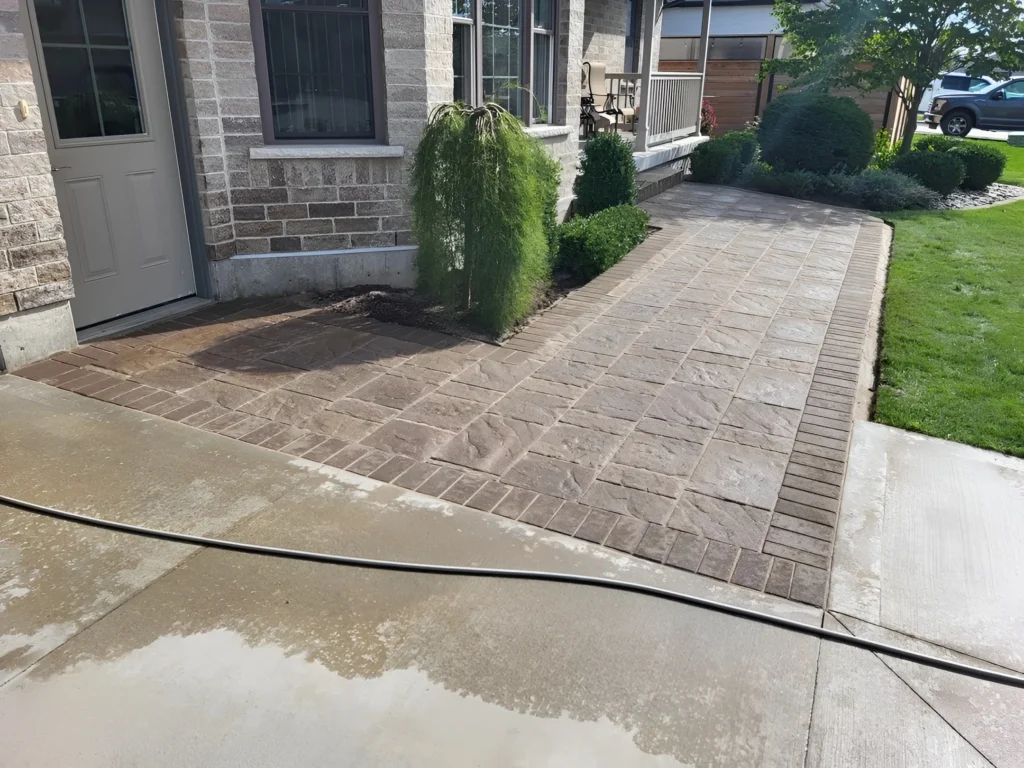
This front yard entry isn’t trying to be photographed, and that’s precisely what makes it worth photographing. Stamped concrete in a warm taupe tone extends generously from the driveway to the front door, with a subtle inset border pattern that adds interest without introducing a second material or a contrasting color. A weeping conifer specimen beside the entry provides the one moment of loose, organic form in an otherwise structured composition, while clipped boxwood balls and established hedge planting complete the frame. The stone facade behind everything keeps the material palette anchored in warm, earthy tones throughout, and the grey door pulls the eye to the entry point without competing with the landscaping below. Quiet, competent, and considerably more considered than it first appears.
White Stepping Stones and River Pebble:
Removing lawn from a front yard is a genuinely bold decision that most homeowners talk about and very few execute, and this one landed on the other side of that hesitation with excellent results. Oversized white concrete stepping stones are set into a generous bed of grey river pebble, edged in rust-toned steel that gives the whole composition a precise frame and prevents the pebble from migrating onto the driveway. Blue fescue and small succulent rosettes planted directly into the pebble bed at irregular intervals provide living texture without disrupting the graphic simplicity of stone against pebble, and warm cedar horizontal slatted fencing in the background provides exactly the right backdrop tone. The black mulch planting bed behind the stepping stones, planted with burgundy ornamental grasses, adds depth that makes the whole front garden read as layered despite its material restraint.
Tropical Desert Planting and Vertical Timber Door Surround:
This front entry treats the landscaping and the architecture as a single design project rather than two separate decisions made at different times, and the results justify the approach completely. Banana palms, agave, ornamental grasses, mondo grass mounds, and columnar cacti are planted in a generous gravel bed that runs the full width of the facade — a subtropical-meets-desert plant palette that suits the dark vertical cladding and natural stone wall above it in both scale and attitude. A white cube letterbox positioned with the same attention to placement as the plants makes even the mail look intentional, and the warm timber vertical slat door surround creates the entry focal point that pulls the whole composition together. Nothing here was chosen casually.
Brick Path, Symmetrical Borders, and a Black Door:
Symmetry is not the enemy of interesting design — lazy symmetry is — and this classic Colonial entry demonstrates the difference with considerable confidence. A brick herringbone path runs directly from the street to the front steps, flanked on both sides by generous planting borders that mix pink hydrangeas, purple salvia, yellow rudbeckia, and white flowering perennials in a drift-style arrangement that feels abundant without being chaotic. Two matching large grey planters with clipped boxwood topiary balls flank the black door, which is the colour decision holding the entire composition together — without it, the pale yellow siding and cream trim would read as gentle and pleasant. With it, the whole facade has an authority that makes the flowering borders look curated rather than merely colourful.
White Concrete Pavers Through Grey Gravel:
Rendering a modern farmhouse renovation tends to produce aspirational results that the finished project never quite delivers, and this front yard is the rare exception — the finished landscaping looks as considered as the plan suggested it would. Large format white rectangular pavers march in a single confident line through pale grey decomposed granite from the street to the entry gate, with low bollard path lights placed at intervals that feel like punctuation rather than decoration. Feathery ornamental grasses, sprawling drought-tolerant ground cover, and natural weathered boulders fill the surrounding ground plane in a composition that suggests the planting grew up around the path rather than being installed beside it. A multi-stem tree provides the canopy layer that connects the human-scale landscaping to the tree-scale neighbourhood beyond the fence.
Adirondack Chairs on Pavers and Gravel:
The space between a house and its front boundary is almost universally treated as a purely visual zone — something to look at from the street rather than to be in. This front yard made it livable instead, and the result is more interesting than any purely decorative arrangement could manage. Large format pale stone pavers are set into a carefully graded grey pea gravel bed, creating a ground plane that reads as clean and deliberate without the maintenance demands of lawn, and four dark Adirondack chairs are arranged around a white ceramic garden stool in a conversation grouping that faces outward toward the street rather than hiding around the back. Clipped boxwood balls at the corners of the paver arrangement and a charcoal planter of pink hydrangeas beside the door complete the composition without adding complexity. It is, in the best possible sense, a front yard that decided to be useful.
Sculptural Patio Flex: Porcelain, Pebbles, and One Epic Maple
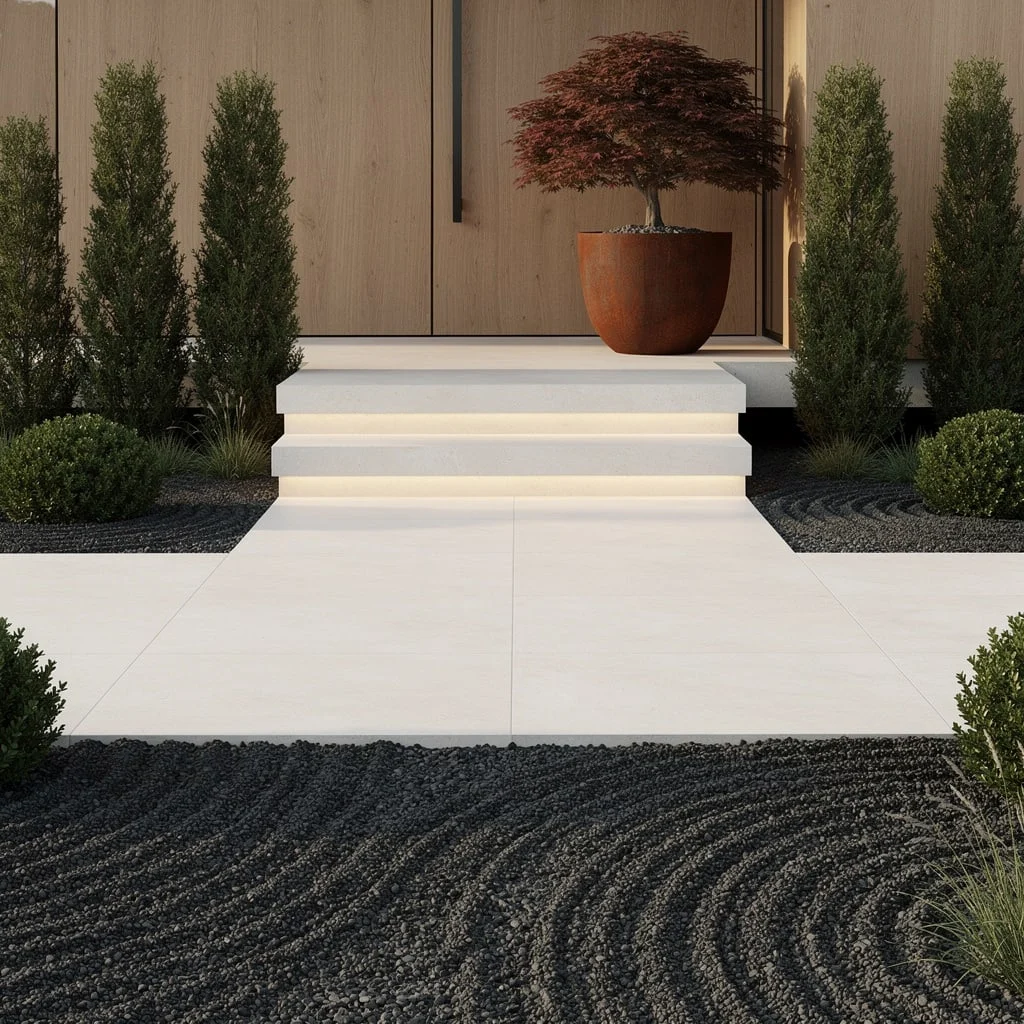
Stop fussing with flower beds and go for an off-white porcelain tile patio that gives major modern vibes. Float your entry stairs and hide soft step lights underneath so guests feel like they’re walking into the future. Pair stands of columnar boxwood next to the walkway for vertical spice, and drop one outsize corten steel planter with the most manicured Japanese maple you can find. Rake black pebbles into groovy lines for background texture; don’t let them get messy, or you missed the point. Keep the palette neutral and let that wood-clad wall do the heavy lifting. Lighting is everything—never skip it.
Courtyard Cool: Reflecting Pool and Terrazzo Pathways
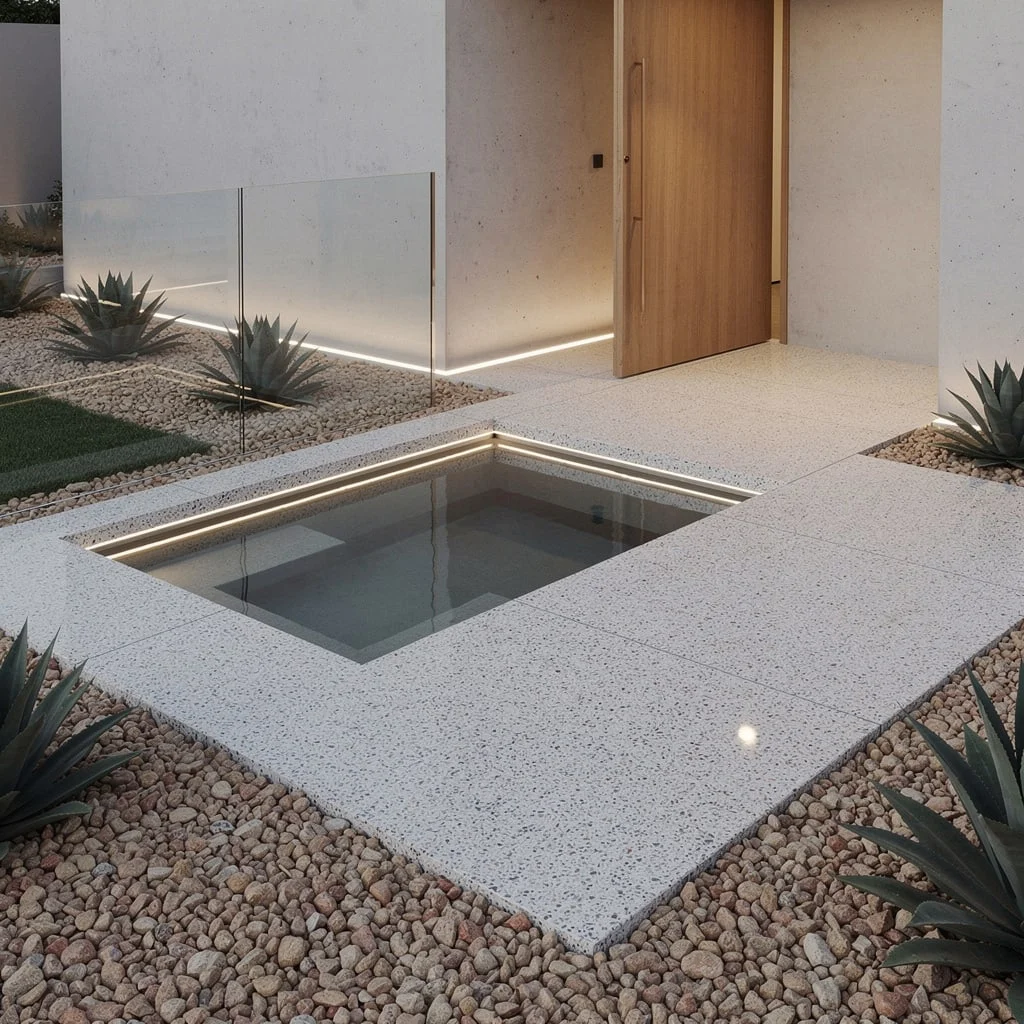
Want serenity with edge? Build a tight rectangular reflecting pool next to chunky terrazzo pavers—no mosaic madness, just clean lines. Ditch messy mulch and cover open patches with almond river rocks, then cluster architectural agave for that minimalist succulent swagger. Glass fencing puts boundaries on snooping neighbors without ruining sight lines, and embedded LED strips along the pool’s edge inject post-sunset sophistication. Don’t be shy—install a pivoting oak door flush in concrete and tell visitors, ‘Yes, I am THAT extra.’ Never let your pool lighting overpower the water; aim for moody reflections, not Las Vegas.
Bring the Zen: Char Basalt Paths and Faux-Random Pine Clusters
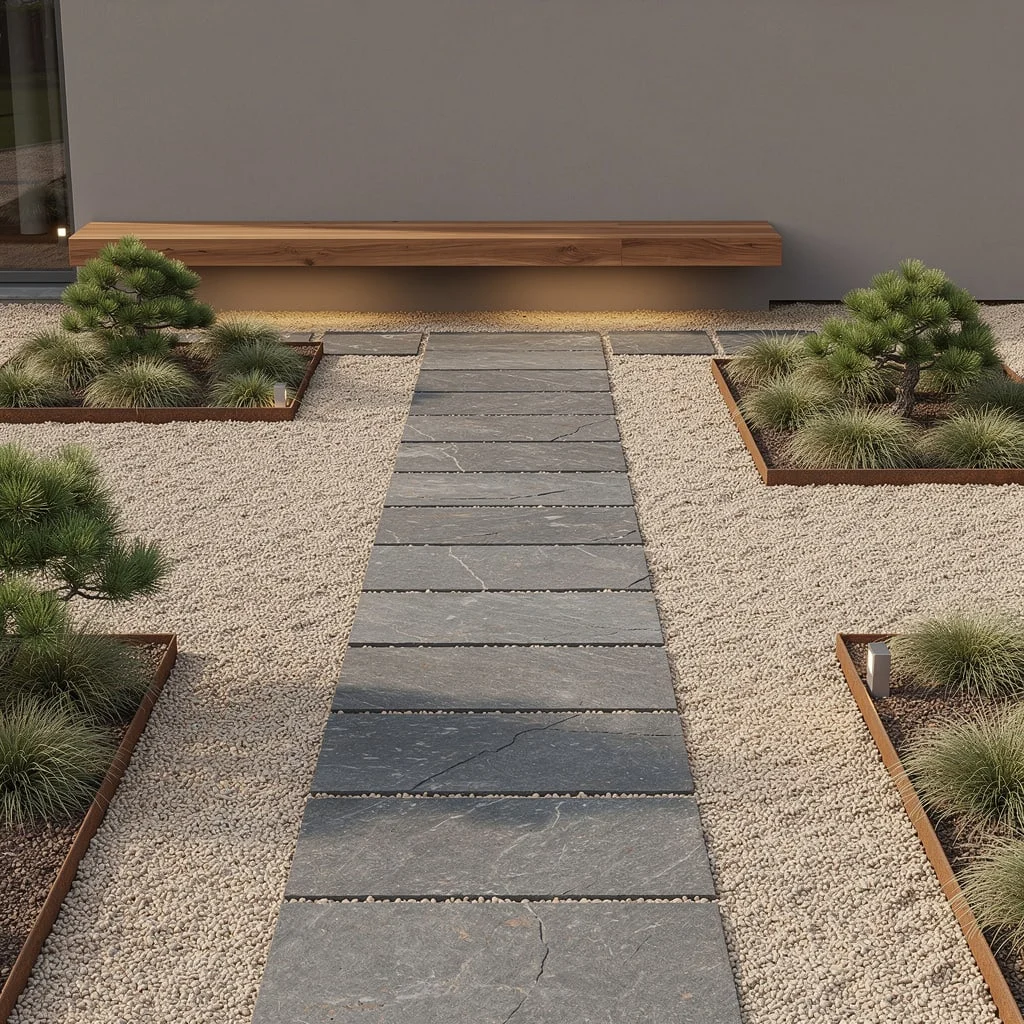
If you crave calm but don’t want more gravel, slice up your yard with wide basalt slabs set straight through char-hued pea gravel. Warm it up with built-in ipe benches—because who wants to stand outside forever? Raise narrow corten-edged beds and stuff them with low mounded fescue and miniature pine, spaced like you’re pretending to be random but are actually calculating every move. Subtle in-ground path lighting keeps things chill, not stadium-bright. Taupe facades keep attention on your landscaping, not your weird mailbox. Never overstuff the beds; less is always more, and patches of gravel are mandatory.
Monolithic Statement: Smooth Walls, Sculptural Palm, and Pebble Bands
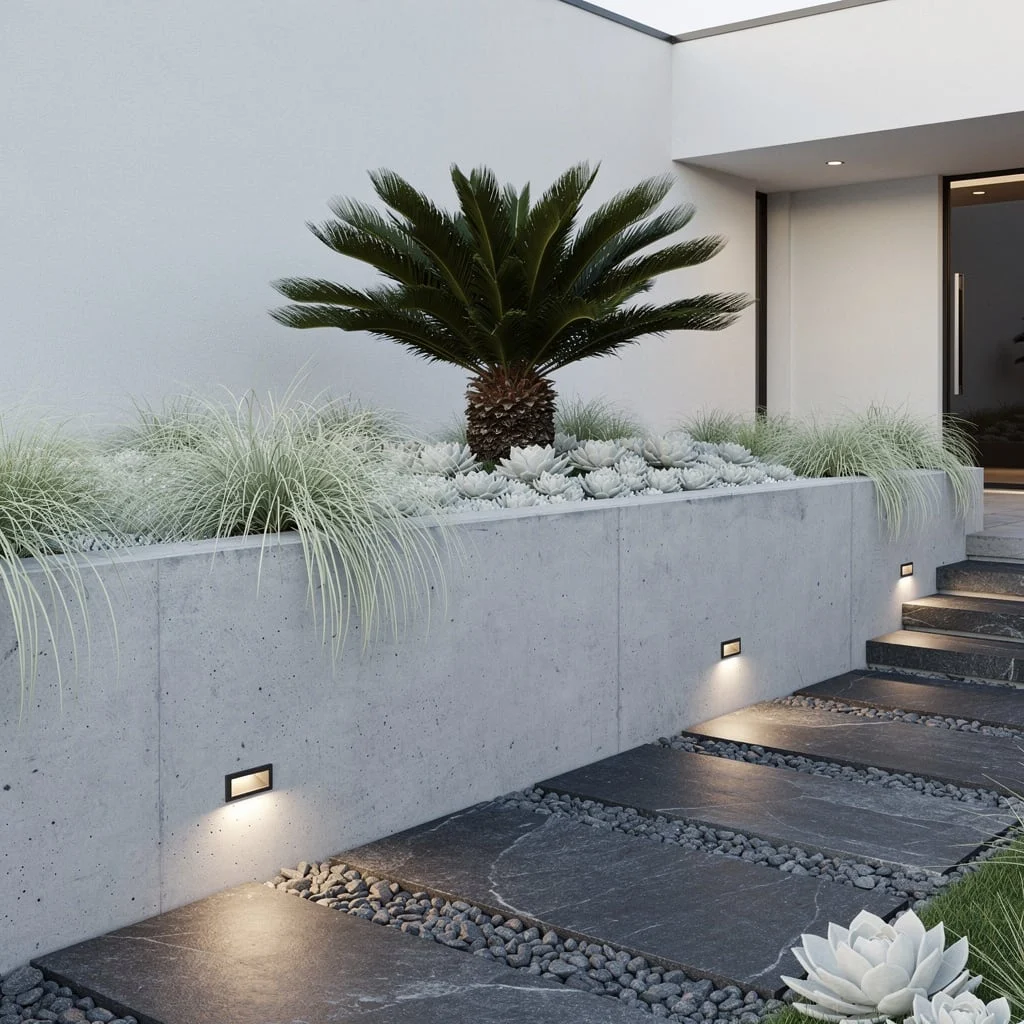
Minimalism craves drama, so run a massive concrete retaining wall parallel to your walkway. Top it with pale ornamental grasses to soften the cold edge. Build a path using rectilinear charcoal stone pavers separated by river pebble bands—it’s all about those texture swaps, baby. Anchor with a mature sago palm (like, don’t even THINK about planting multiple), surrounded by layers of white succulents. Recessed step lights are non-negotiable—if your wall isn’t glowing, you’re failing. Let your modern white house fade into the background so the landscaping gets all the attention. Limit your color palette to two: green and stone.
Lakeside Chill: Ripple Tiles, Simple Grasses, and Negative Space
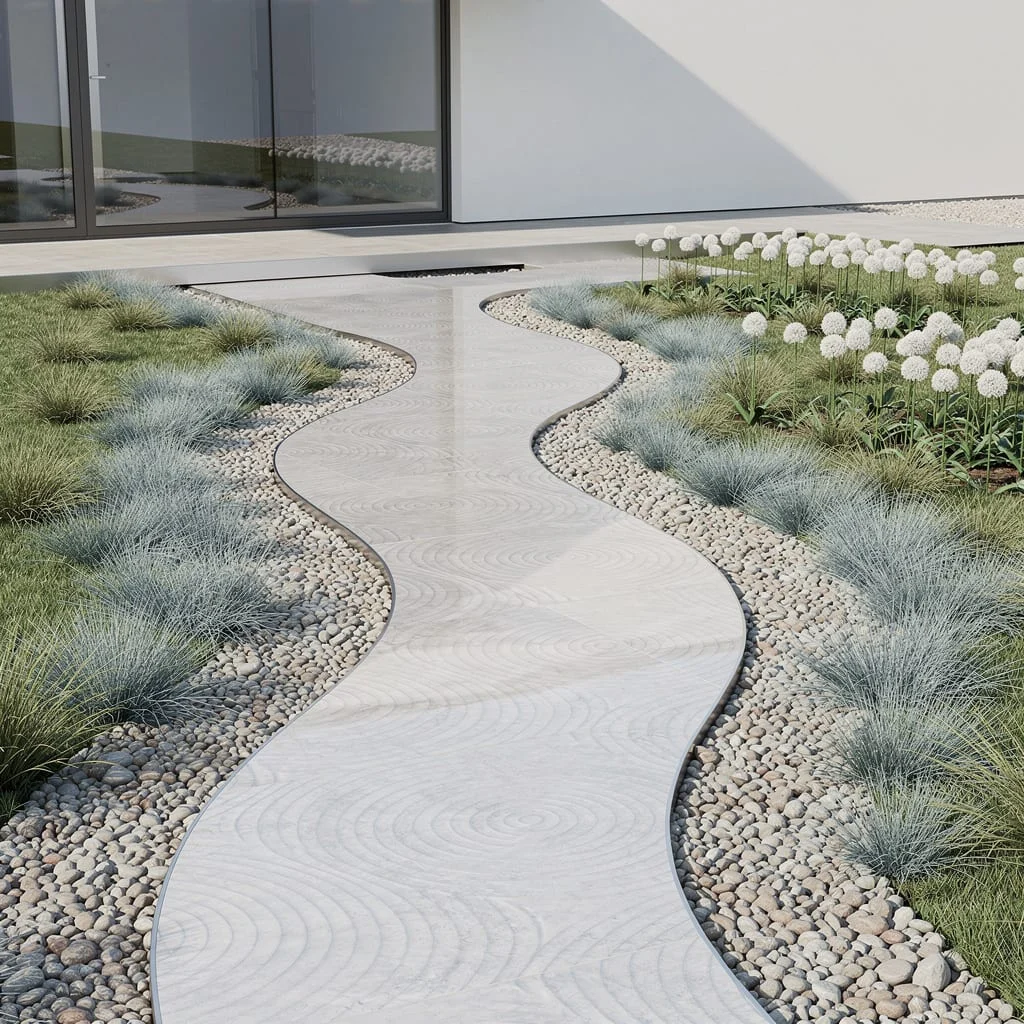
Want your yard to feel peaceful instead of crowded? Lay down ripple-patterned porcelain tiles that gently curve—straight lines are so last decade. Keep your landscape low and mounded, mixing beach pebbles with strips of fescue and blue oat grass. Run a brushed aluminum water channel alongside the path, because minimalist yards can still flex some shiny tech. Parallel planting strips of stark white allium bulbs give spring drama without adding chaos. Embrace negative space; don’t fill every inch or you’ll kill the vibe. Double check your plant placement—symmetry and rhythm are your secret weapons.
Float Your Steps: Concrete, River Rock, and Cloud Tree Power
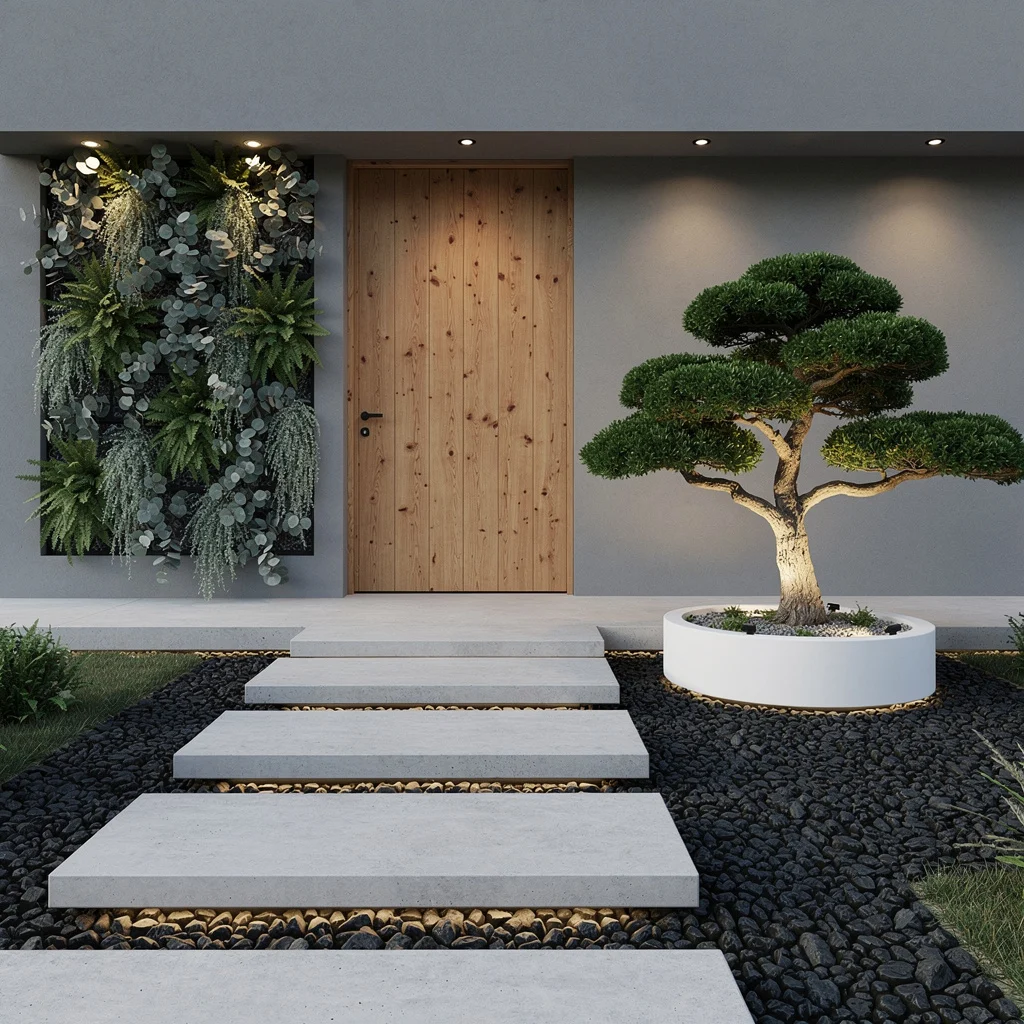
Ready for that high-end look? Install crisp floating concrete steps over a bed of jet-black river rocks. Drop a circular white planter with a topiary cloud tree on one side and build a wall-integrated vertical garden of trailing eucalyptus and ferns on the other. Lighting is everything, so hide uplights to highlight shapes and make silhouettes pop after dark. Use a natural cedar door to anchor the color scheme and never, ever let your facade get loud; muted gray is king. Don’t add garden art or unnecessary shrubbery—let the sculptural pieces do the talking.
Travertine Transition: Moss Groundcover and Corten Columns
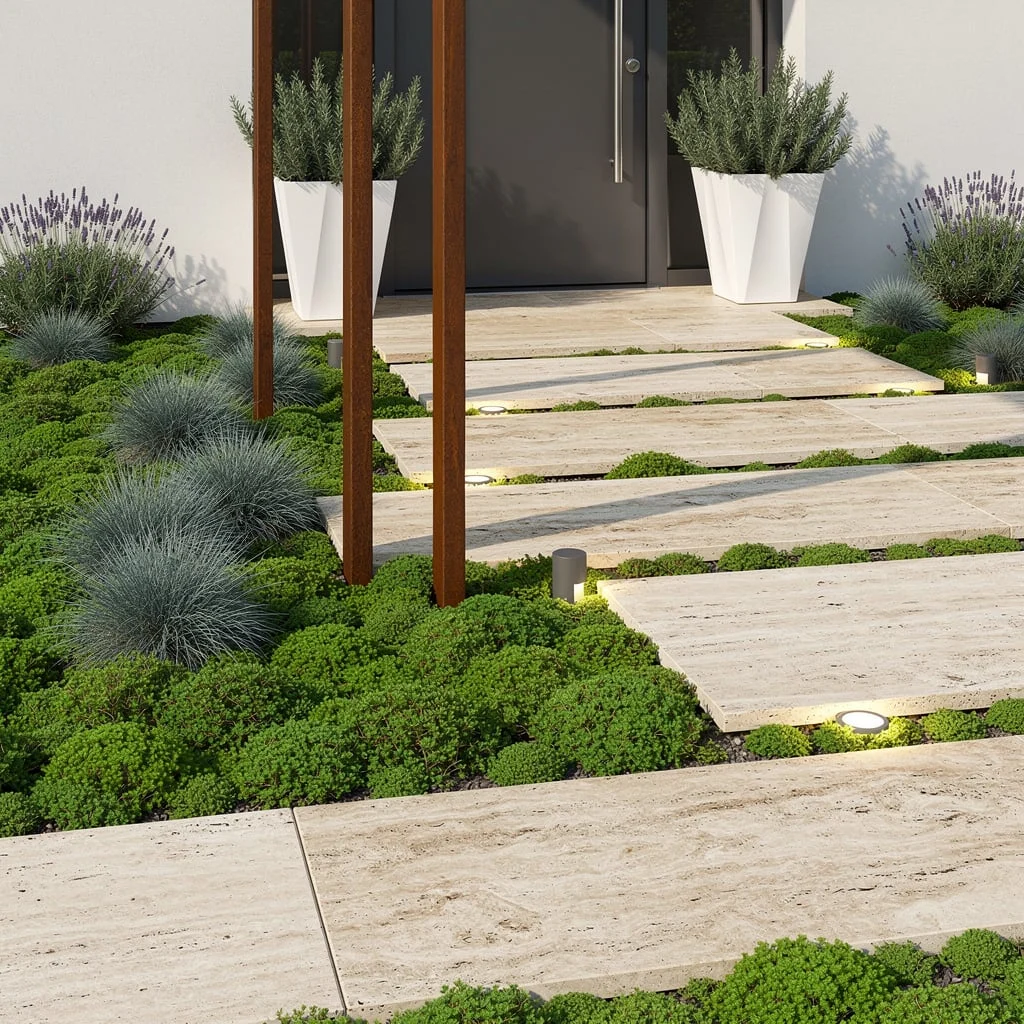
Stop pretending your driveway is untouchable and lay architectural travertine slabs right up to your entrance. Stuff gaps with Irish moss—a neon green carpet that stomps out boring grass. Line the path with three corten steel columns for art gallery vibes, and echo them by sticking dwarf blue fescue in clumps nearby. Use sharp-edged white planters for rosemary and lavender around the door so your yard smells as good as it looks. Never let wires or bulbs ruin your space; embed low-voltage lights flush to keep the path clean. Resort style means no clutter—so hide your hoses.
Desert Luxe: Sandstone, Agave, and Crushed Granite
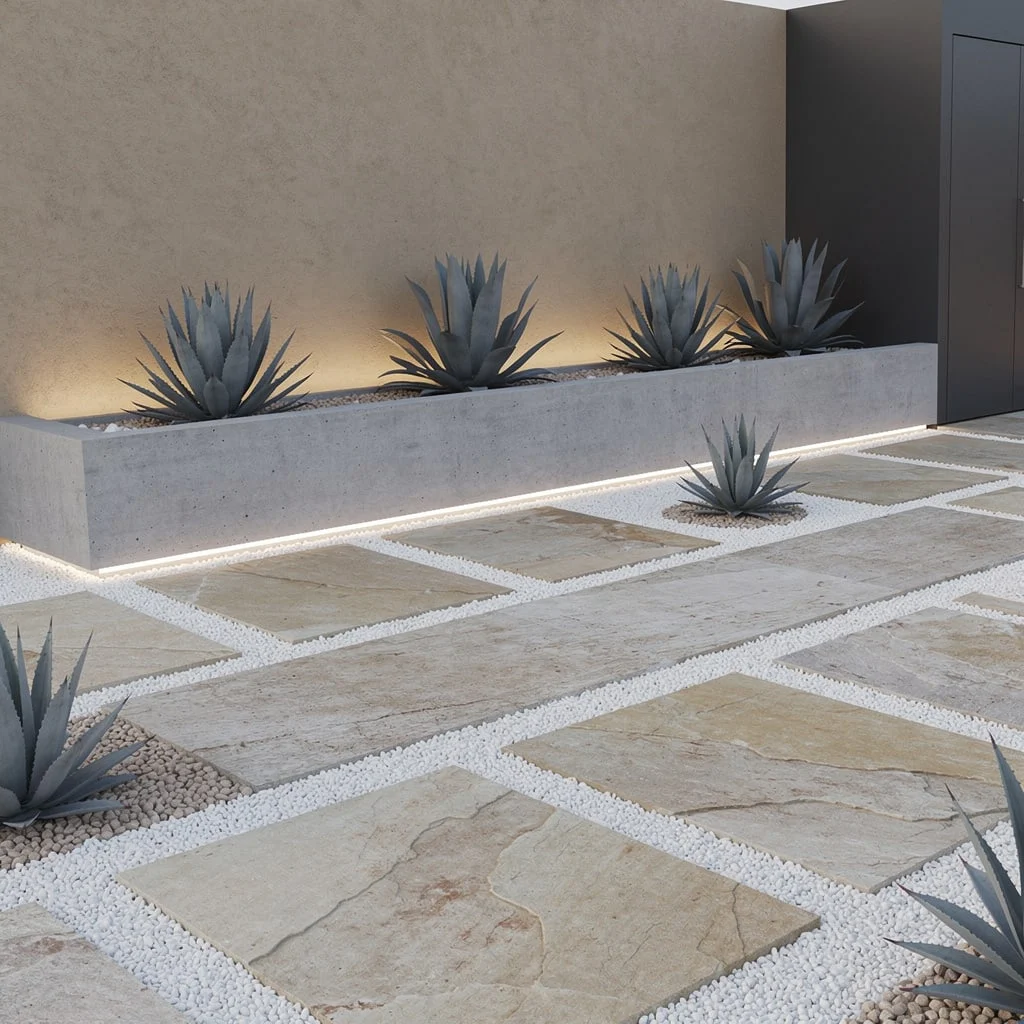
Ready to stop watering your yard every week? Go desert chic with oversized sandstone tiles alternating with white crushed granite for classic pattern play. Cluster blue agave and aloe in smooth linear concrete planters—no random cacti, only architectural shapes. Stick them against the house for a tight gradient; sandy stucco is your background, not your feature. Add an accent wall in graphite for modern punch, and wire soft LED strips into your planters to serve shadow play at night. Keep every edge clean; if anything is leaning, fix it. Minimalist desert means controlled chaos, not wild west tumbleweeds.
Timber Twins: Parallel Walkways and Boxwood Spheres
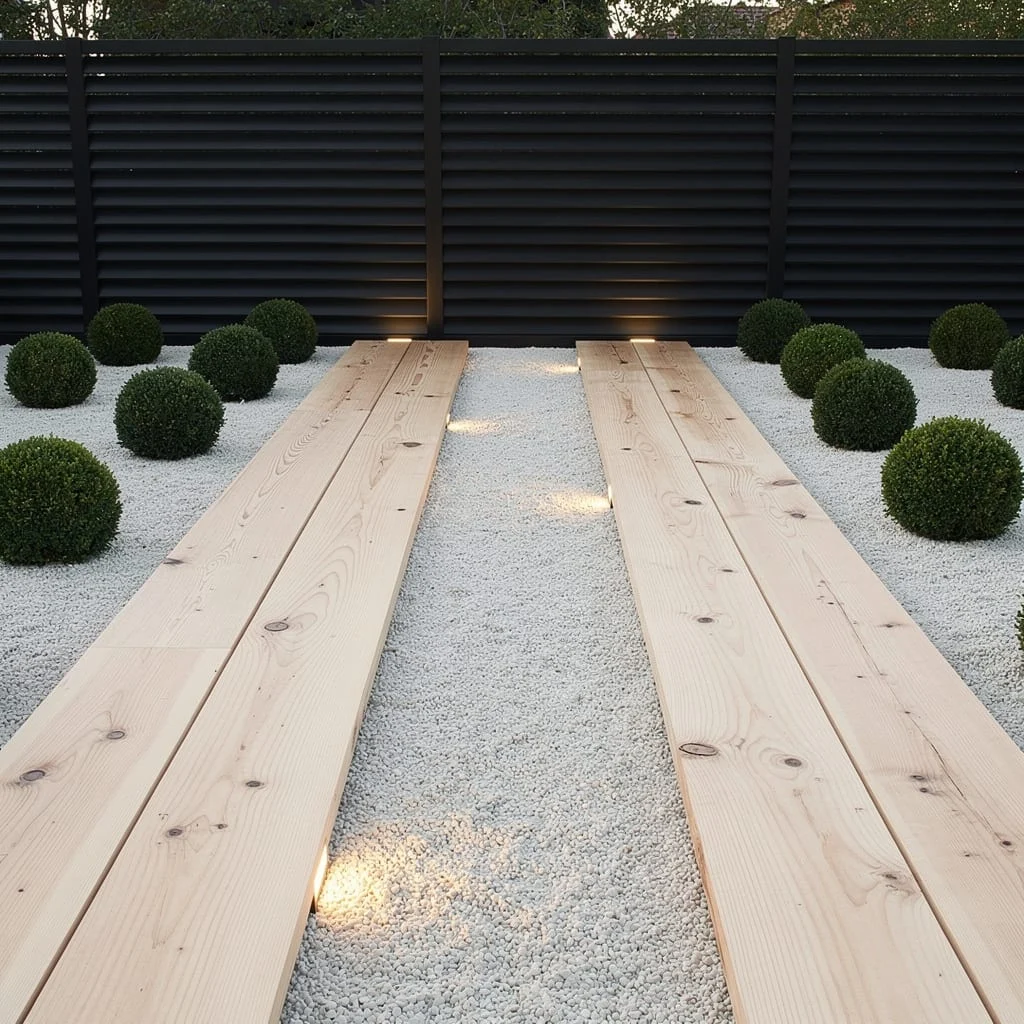
Ditch the one-walkway wonders and throw down twin parallel paths of bleached maple timbers, breaking ’em up with a wide pale gravel middle. Dot small spheres of clipped boxwood in rhythm along the strip—don’t butcher them into cubes, that’s just old school. Add a floating matte-black louvered fence for privacy; nothing says minimalist like hiding from nosy neighbors. Flush linear spotlights in the timber for nighttime drama—no ugly lanterns allowed. Plant geometry is EVERYTHING, so stagger those spheres with intention. Never crowd the paths; negative space is your actual friend here.
Courtyard Showoff: Floating White Stairs and Vertical Reed Troughs
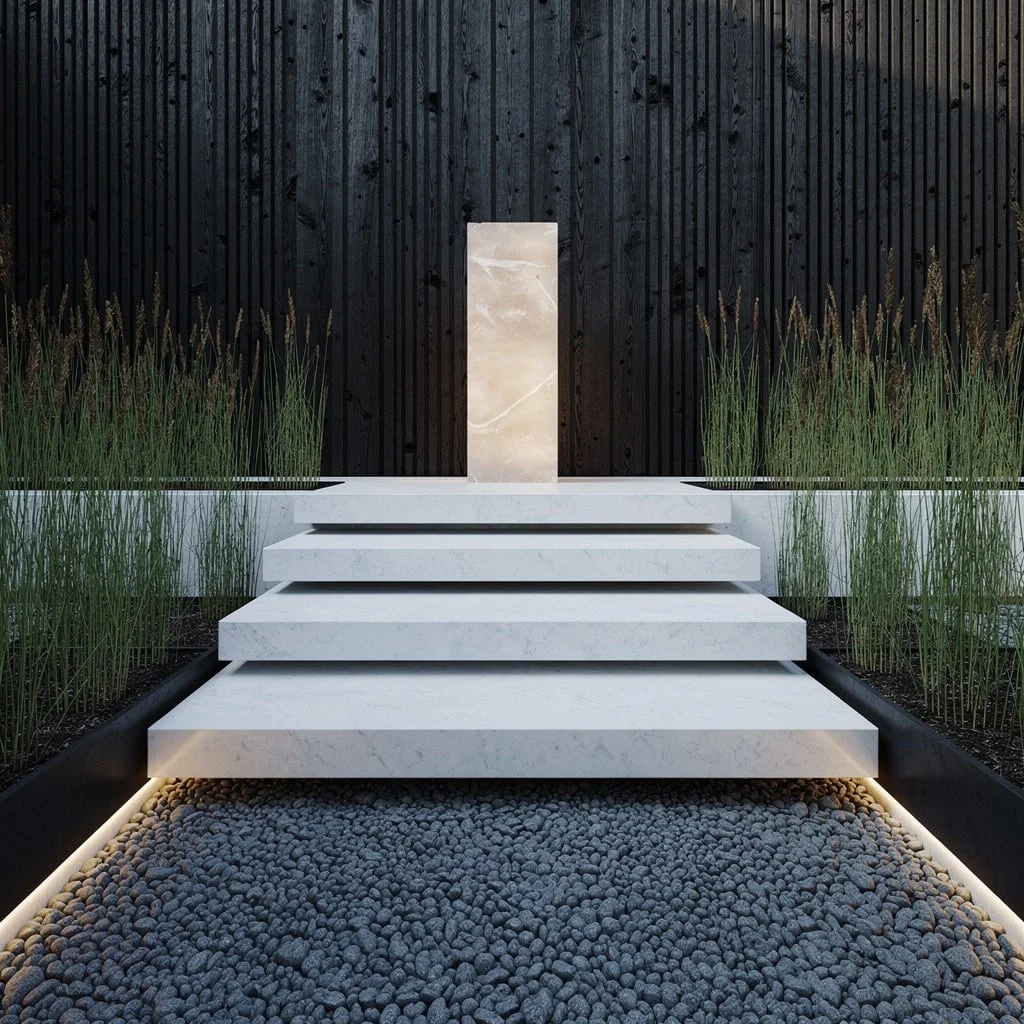
Step up your entry game with massive honed white concrete stairs floating over deep grey pebbles—if you don’t float ’em, you might as well give up. Narrow trough planters packed ONLY with vertical reeds add graphic punch; never clutter with mixed greens. Wrap your entrance wall in vertical charred timber slats for that bougie architectural flex, and drop a single rectangular translucent sculpture illuminated from within as your silent centerpiece. Ground-recessed lighting should lead the way, and geometric lines need to stay clean. Don’t let planters spill over—they’re rectangles for a reason.
Final Thoughts
Minimalist front yard landscaping doesn’t ask you to give up beauty, personality, or visual interest — it asks you to be specific about where those things come from and ruthless about what earns the right to be there. That specificity is harder than it sounds, which is why genuinely good minimalist front yards are rarer than the aesthetic would suggest they should be.
The yards here succeeded because their owners made actual design decisions — about material combinations, about plant form, about how many elements the space actually needed — and then stopped before adding the things that would have undermined those decisions. The empty space in a minimalist front yard is not a budget shortfall or a work in progress. It is the design. Treat it that way and everything else follows.