
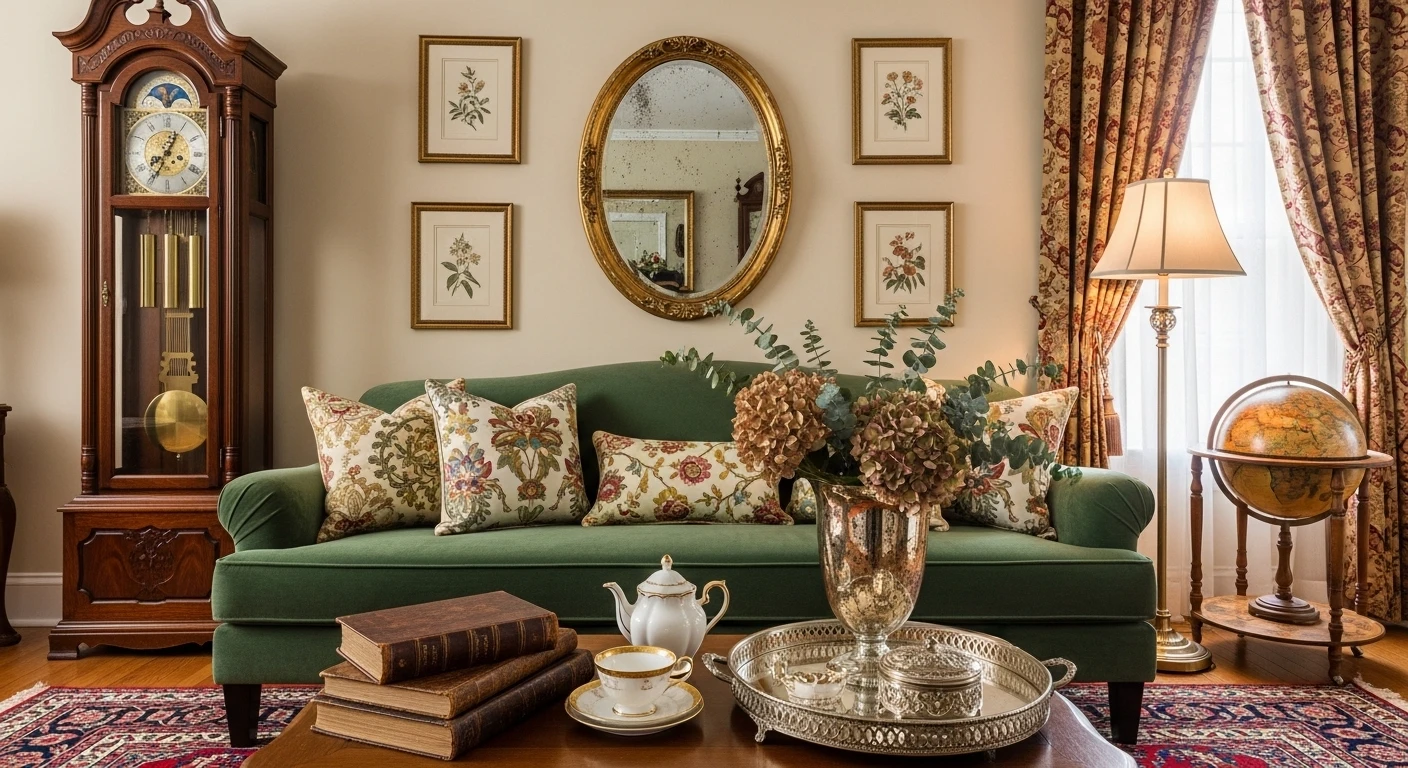
Modern interior design peaked the moment someone decided exposed concrete and a single houseplant counted as a personality. It went downhill from there.
There’s a reason people keep gravitating toward vintage aesthetics. It isn’t nostalgia. It isn’t irony. It’s the simple, observable fact that rooms built with real craft, layered over time, and filled with objects that have actual stories look better than rooms assembled from a single showroom visit.
Vintage home decor gets dismissed as cluttered. As old-fashioned. As something your grandmother would like, said by people whose living rooms contain a grey sofa and three identical candles.
Your grandmother had better taste than all of them.
The rooms in this list range from soft and garden-romantic to full gothic drama. What they share is a commitment to depth. To materials that age well. To the understanding that a room should feel like it was lived in before you arrived and will be worth living in long after you leave.
What Makes Vintage Design Actually Work
Vintage style fails when it becomes a costume. A collection of old-looking things arranged on shelves. A mood board executed without understanding why those rooms felt the way they did.
Real vintage interiors work because of principles. Not props.
Age Is a Material, Not a Problem
The cracked paint on a wooden chair. The foxing on an antique mirror. The worn spot on a Persian rug where someone always put their feet. These aren’t flaws to fix. They’re evidence of a life the object already had. Working with patina rather than against it is the single most important skill in vintage decorating.
Layers Are the Whole Point
A vintage room that works has at least four or five visual layers. The architecture. The large furniture. The textiles. The objects. The lighting. Remove any one of them and the room loses its depth. This is why vintage rooms feel so different from contemporary ones. Contemporary design often removes layers in the name of simplicity. Vintage design adds them in the name of richness.
Quality Over Quantity, Every Single Time
One genuinely good antique does more for a room than twenty decorative items bought because they looked old. A hand-carved mirror frame. A piece of transferware with actual history. A lamp with a proper weighted base and a silk shade. These things read differently in a room because they are different. You can feel the difference even before you understand it.
The Mistakes That Make Vintage Look Like a Theme Park
Vintage decorating has a specific way of going wrong. It’s worth knowing what it looks like before you spend money on it.
Faking Patina Instead of Finding It
Mass-produced “distressed” furniture looks exactly like what it is. A factory decided what ageing should look like and produced it at scale. Real aged pieces look different from each other. They have specific histories written into their surfaces. Charity shops, auction houses, estate sales, and antique markets are where vintage decorating actually begins. Not the high-street homeware section labelled “heritage.”
Collecting Without Editing
More is more in vintage decorating, right up until it isn’t. The point of layering is visual richness, not visual noise. Every object in a vintage room should earn its place. It should be genuinely beautiful, genuinely interesting, or genuinely useful. Preferably all three. Objects that are merely old don’t qualify.
Ignoring Scale and Proportion
A tiny ornate mirror above a large sofa. A grand chandelier in a low-ceilinged room. A single small painting on a very large wall. Scale errors are what make vintage rooms feel wrong even when the individual pieces are right. The architecture of the room has to be in conversation with everything inside it.
Getting the Foundation Right
Before you source a single piece, there are decisions that will determine whether your vintage room looks considered or collected.
Choose Your Era and Stick Reasonably Close to It
Victorian, Edwardian, 1920s French, English cottage, mid-century — these have distinct visual languages. They can be mixed with sophistication, but only if you understand each one well enough to know what you’re doing. Mixing randomly produces rooms that feel confused. Mixing deliberately produces rooms that feel collected.
Establish Your Colour Before Everything Else
Vintage interiors tend toward specific palettes. Deep jewel tones for Gothic and Victorian. Dusty florals for cottage and shabby chic. Warm ochres and navies for traditional English. Soft greys and golds for French country. Your colour choice sets the atmosphere before a single piece of furniture arrives. Get it right and everything else becomes easier.
Invest in Lighting Last, Not First
Vintage rooms live or die by their lighting. The right lamp — with the right shade, the right warmth, the right placement — transforms a room. Wrong lighting makes even beautiful antiques look flat and dead. Source your main furniture and textiles first. Then find lighting that makes all of it glow. This is the order that works.
Vintage Home Decor Ideas Worth Every Penny of the Hunt
The English Cottage Garden Tea Corner That Makes Going Outside Worth It
This only works if you actually commit to planting the garden behind it first.
Choose a wooden garden chair with some age on it — painted in sage green with chips and wear showing through. Don’t strip it. Don’t repaint it. The wear is the point.
Find a small round garden table. Cover it completely in a floor-length floral tablecloth in a soft Victorian rose pattern — sage greens, faded pinks, cream. The table disappears. The cloth becomes the furniture.
Add a floral cushion to the chair in a pattern that relates but doesn’t match the tablecloth. Set the table with a white porcelain teapot decorated with roses and a matching cup and saucer. One terracotta pot of geraniums beside it.
Plant the surrounding border with dahlias, rudbeckia, geraniums, and anything else that blooms at shoulder height. Let it grow dense and close. The corner should feel found rather than arranged.
The Romantic Garden Nook That Looks Like a Forgotten Fairy Tale
Find a mature tree with low horizontal branches or install a simple wooden pergola frame from rough-hewn timber.
Source antique lace tablecloths and curtain panels from charity shops and estate sales. Drape them from the branches or frame using small hooks and thin wire. Let them hang unevenly. Layer multiple pieces so the light catches them differently at different heights.
String copper fairy lights through the branches above the lace. Use warm amber bulbs, not white.
Place a weathered wooden bench underneath — the kind that looks like it has been sitting there for decades. Drape a heavy cream crochet throw across the seat. Arrange potted flowers on the ground around it: white daisies, lavender, small hydrangeas in aged terracotta and zinc pots. Add a vintage watering can beside the bench as a prop rather than a tool.
The key is density. More flowers than you think you need. More lace than seems reasonable. The excess is what makes it feel enchanted rather than styled.
The Dark Floral Bathroom That Chose Drama Over Everything
Wallpaper the entire upper portion of the bathroom walls in a large-scale dark floral — deep crimson or wine background with overscale botanical blooms in cream, blush, and forest green. The scale should be generous. Small-scale florals on dark backgrounds read as fussy. Large-scale reads as intentional.
Install black painted wainscoting below, running from skirting to chair-rail height. The contrast between the dark lower half and the dramatic wallpaper above creates a layered architectural quality.
Source a black cast iron clawfoot bath. This is non-negotiable for this look. Position it away from the wall slightly so it reads as a freestanding piece of sculpture.
Choose a vanity unit with dark painted cabinetry and gold hardware. Pair with a dark-veined marble countertop. Install an arched black-framed mirror above it.
Add wall-mounted sconces in an aged bronze or antique brass finish. Source a Persian or Turkish rug in deep rose and wine tones for the floor. Add one vase of deep red garden roses. Then stop. The room is doing the rest.
The Rustic Cottage Powder Room with a Stone Basin
Source a piece of reclaimed timber — the older and more characterful the better — and have it made into a simple vanity bench. It doesn’t need to be sealed to a high shine. The grain and texture should show clearly.
Set a bowl-shaped travertine or limestone vessel sink directly on top. Don’t undercut the stone with a cut-out — let it sit proud of the timber surface.
Install wall-mounted brass taps rather than deck-mounted. Position them above the basin at the right height for comfort. The exposed pipework in brass is part of the aesthetic.
Wallpaper the upper walls in a soft French toile or delicate botanical print — greige or warm taupe background with pale white or cream pattern. Install painted tongue-and-groove wainscoting below in the same warm neutral.
Hang a large carved wooden or distressed gilt mirror above the basin. Position brass candle sconces on either side rather than overhead lighting. Hang two small antique paintings in gold frames to the side of the mirror — maritime subjects, old maps, botanical studies, anything with a sepia quality.
Style the vanity surface with a small glass vase of dried or fresh wildflowers, one amber glass soap bottle, and a small ceramic dish. Nothing more.
The French Country Powder Room with the Ornate Mirror as Its Entire Argument
Find the most elaborate gilt oval or baroque-framed mirror you can source. Auction houses regularly sell these for less than you’d expect because most people think they’re too much. They are not too much. They are exactly enough.
Hang it centred above an ornate pedestal sink — the kind with moulded decoration on the basin and column rather than a plain modern shape. Pair with cross-head brass taps.
Wallpaper in a very fine-scale floral — almost tonal, barely there — in soft blue-grey or dove white. The wallpaper is the background, not the statement. The mirror is the statement.
Install paired brass wall sconces with white shades on either side of the mirror, positioned at eye level. Add white painted tongue-and-groove below.
Keep accessories minimal. A white ceramic vase with garden flowers. A woven basket on the floor for storage. A small framed print to one side. The whole room exists to frame that mirror. Let it.
The Gothic Dining Room That Makes Every Dinner Feel Consequential
Apply a faux or hand-applied multi-tone dark plaster finish to the walls in a deep burgundy, crimson, and charcoal blend. The finish should look aged and atmospheric — uneven in places, darker in corners, with a mottled quality that catches candlelight differently at different points in the room.
Source a long dark oak or walnut dining table — the older the better, the more worn the surface the better. Do not refinish it. Do not protect it with glass. The surface should look like it has hosted many dinners before yours.
Upholster dining chairs in deep crimson velvet. High-backed styles with turned wooden legs read best in this setting.
Hang black iron lantern-style pendants above the table rather than a chandelier. Position a large ornate gilt-framed mirror on the main wall — let the aged backing show through if it has it.
Light the table entirely with candles. A proper brass candelabra in the centre. Pillar candles at varying heights along the table. Hurricane lanterns on the floor beside the sideboard. No overhead lighting during dinner. The candlelight and the dark walls do everything.
The French Country Dining Room Built Around Blue and White China
Paint or source a large glazed china cabinet in a soft blue-grey — the blue of French shutters and Nordic painted furniture. Have the glazing bars highlighted in aged gold leaf or antique gold paint. This is the room’s hero piece.
Fill it with blue and white transferware, Chinese export porcelain, and willow pattern pieces. Mix patterns within the blue and white family — the consistency of colour unifies pieces that don’t literally match.
Install a crystal and gilt chandelier above the dining table. The crystal catches light and throws it across the room in a way no other fixture does.
Lay a black and white harlequin tile floor. The graphic quality of the floor grounds the softness of everything above it.
Cover the dining table in a blue and white floral or toile tablecloth. Choose chairs with carved frames in white or cream paint with striped or blue fabric seats. Keep flowers white — hydrangeas, white garden roses — in a simple glass vase. The blue and white story should run consistently through every layer.
The English Cottage Reading Corner That Nobody Wants to Leave
Find a large, generously proportioned armchair upholstered in a floral chintz or botanical fabric — cream background, cabbage roses, birds, trailing vines. It should be deep enough to curl up in and wide enough not to feel perched.
Position it in a corner with one window to its side. Natural light should fall across the seat during the day.
Place a small round occasional table directly beside it — dark wood, turned legs — at the right height for a teacup. Style it with a proper table lamp with a ceramic base decorated in transferware or painted flowers, a pleated fabric shade in warm cream.
Stack books on every surface within reach. Not arranged for display — actually used. Dog-eared. Some face-down. A reading corner without real books is a set, not a room.
Hang two landscape oil paintings — not prints, actual oils if possible — above a small bookcase behind the chair. The subject should be countryside, woodland, mountains. Frame them in warm gilt.
Add a brick or stone element to one wall if your architecture allows it. If not, a dark wood panelling detail gives similar warmth.
Bring in dried hydrangeas and fresh garden flowers in ceramic vases. Lay a richly patterned wool or Persian rug on the floor. Let the lamp be the only light source in the evening.
The Gothic Victorian Living Room That Smells Like Candle Wax and Good Decisions
Expose or apply a brick finish to the main feature wall. The texture of real or faux brick — warm red-brown, uneven, mortar-lined — creates the kind of physical depth that no flat wall treatment can match.
Source a deep red or crimson velvet Chesterfield sofa. Tufted, with rolled arms and turned wooden legs in dark wood. This is the room’s statement piece. Everything else justifies its existence in relation to it.
Hang a gallery of dark-framed paintings on the brick wall. Oils, not prints. Portraits, architectural subjects, dark landscapes. The frames should be ornate — carved wood, gilded, heavy. Mix sizes without strict grid logic.
Install a crystal and wrought iron chandelier above. Position iron wall sconces between paintings for additional candlelight-quality glow.
Add pillar candles and hurricane lanterns at multiple heights around the room. On the coffee table. On the floor. On side surfaces. This room runs on candlelight.
Layer a deep Persian rug over dark floorboards. Add a round dark wood coffee table with carved legs. Style it with a stack of books, a wine glass, and a small potted plant. Everything else in this room does the heavy lifting.
The Baroque Bedroom That Decided Restraint Was for Other People
Commission a ceiling fresco or use high-quality panoramic wallpaper applied to the ceiling — classical scenes, clouds and figures, anything in the grand European tradition. The ceiling is the room’s entire thesis statement. If you’re not painting it, you’re not doing this look.
Install plaster moulding or architectural panelling around the upper walls. Paint the panels in a soft grey-blue. Commission or source hand-painted floral murals within each panel — oversized blooms in the style of 18th-century botanical painting, in pinks, creams, yellows, and soft blues.
Source an ornately carved bed frame with a canopy — gilt details, scrolled headboard, curved footboard. Hang gold silk or damask draping from the canopy posts.
Lay a large black and white harlequin floor — either stone or high-quality vinyl for practicality. The graphic floor grounds the extraordinary amount of ornament happening above it.
Add a crystal chandelier. Position a carved gilt mirror above a decorative chest of drawers. Bring flowers — real ones, large arrangements — in white ceramic vases. The room should feel like sleeping inside a painting.
The Shabby Chic Bedroom Where Everything Is Slightly Coming Undone
Source a French provincial bed frame — the kind with a shaped headboard, curved footboard, carved moulding details — in cream or antique white with gold highlights. If you can find one hand-painted with roses directly on the wood panels, you’ve found the right one.
Do not match the bedroom furniture. The nightstand, the dresser, the chairs should all be in a related cream or ivory family but not identical. Shabby chic rooms look assembled rather than bought as a set.
Layer the bed in whites and blush pinks. Start with crisp white cotton. Add a textured white matelassé coverlet. Drape a blush knitted throw across the foot. Add lace — a vintage lace panel draped across the footboard and trailing to the floor. Layer pillows in embroidered cotton, velvet, and ticking stripe within the same pale palette.
Dress the dresser with fresh or dried garden roses in cream ceramic vases, gold candlesticks with tapered candles, a gilt mirror, small framed photographs in ornate frames. Keep every surface softly full rather than spare.
Lay a faded Persian or floral rug over stripped timber floorboards. Hang sheer white curtains that move slightly in a breeze. The room should look like it peaked about fifty years ago and has been perfectly comfortable with that ever since.
The Dark Romantic Living Room That Lives for Oil Paintings
Paint or panel all walls in a very deep tone — near black, charcoal, or dark slate. Use an eggshell or matte finish so the darkness absorbs light rather than reflecting it.
Source one very large oil painting — the scale matters enormously here — in an oversize ornate gilt or dark wood frame. The subject should be floral: a Dutch Golden Age still life arrangement with peonies, roses, and other blooms in a rich, almost theatrical palette. Commission a reproduction if an original is beyond budget. Size it to occupy the main wall from roughly mid-height to ceiling. This painting is the room’s reason for existing.
Position a charcoal or dark navy velvet Chesterfield sofa below it. Nailhead trim. Turned dark wooden legs. Deep tufting.
Add pendant Edison bulbs hanging at different heights on either side of the painting. The warm filament glow against the dark walls and the oil painting creates an atmosphere that no overhead lighting can touch.
Layer cushions in raspberry, dusty plum, and aged gold on the sofa. Bring in fresh garden flowers — peonies, garden roses, dahlias — in aged metal or ceramic vessels. Set them low so they read against the dark background rather than disappearing into it.
The Traditional Living Room That Let the Windows Win
If your room has good architectural bones — high ceilings, large arched or sash windows, proper coving — the first rule is simple. Don’t compete with them.
Paint the walls in warm cream or antique white. Install traditional skirting, architrave, and coving if they’re missing. These details are inexpensive and transformative.
Choose a cream or oatmeal linen sofa with clean lines and turned wooden feet. Position it to benefit from the window light rather than blocking it.
Upholster one armchair in a floral pattern — roses on cream, botanical birds on white — and position it at an angle to the sofa. This single patterned piece introduces warmth and age into the room without overwhelming it.
Add a dark wood occasional table beside the chair. Source a proper table lamp with a turned base and a pleated cream shade. The lamp should be on every evening.
Hang botanical prints or watercolour floral paintings in dark or gilt frames. Position them asymmetrically — some at eye level, one higher — rather than in a formal grid. Add a climbing or trailing plant near the window. Keep fresh flowers on every side surface. The room should look like it was here when the house was built, which is the highest compliment a traditional interior can receive.
Final Thoughts
Vintage home decor is patient work. You don’t assemble it in a weekend from a single source. You build it over years, from auctions and charity shops and inherited pieces and deliberate sourcing. From learning the difference between something that looks old and something that is old. From understanding that the best vintage rooms feel completely inevitable — like they couldn’t possibly look any other way.
Every room in this list took time. Every piece has a story.
That’s the thing about decorating with the past. The objects already know what they’re doing. Your job is just to find the right ones and give them a room worth being in.