
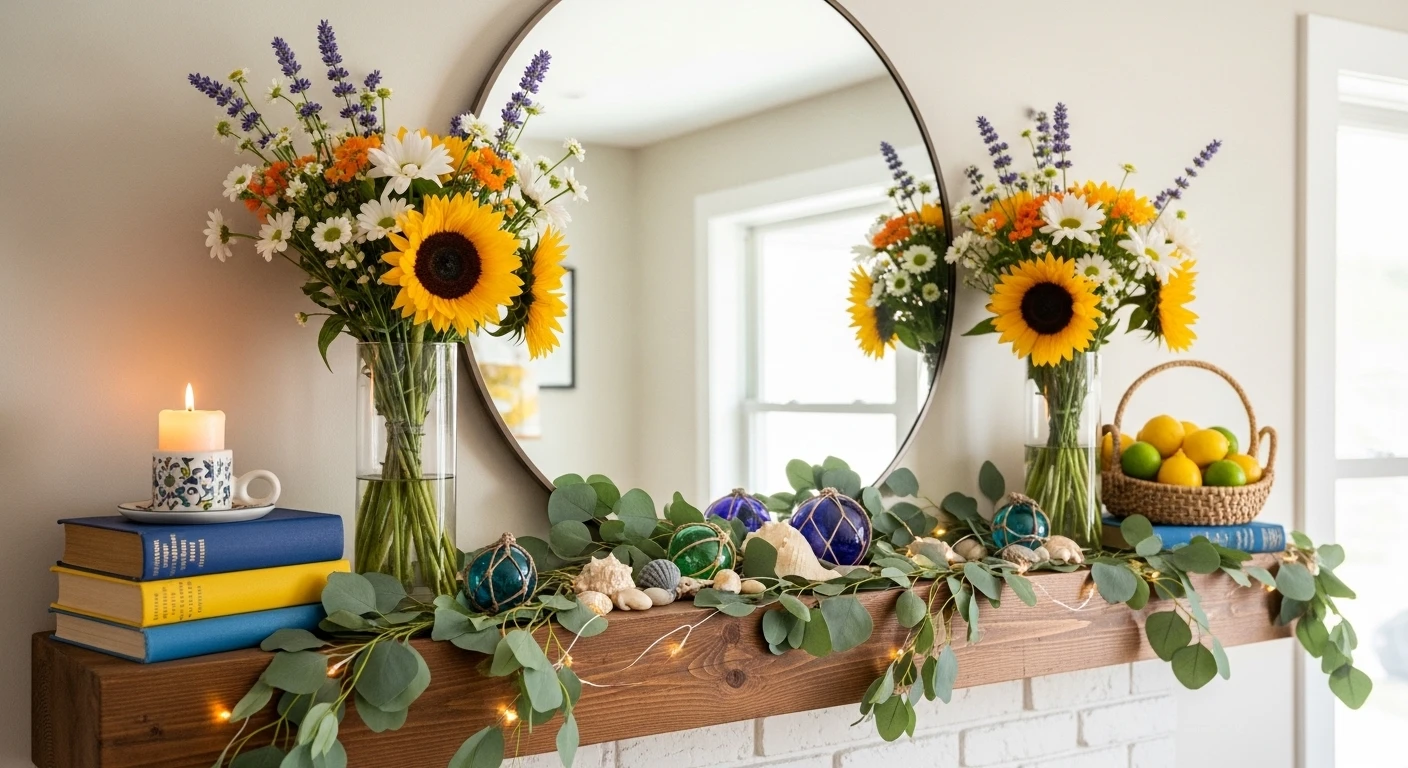
Your fireplace is the most architecturally significant thing in your room. It’s the natural focal point. The place every eye goes the moment someone walks in.
And you’ve put a clock on it. Maybe a candle. Possibly a framed print that came with the frame.
The mantle is the one surface in your home that has genuine structural importance — it’s built into the bones of the room, not just placed there. Which means whatever you put on it carries ten times the visual weight of anything sitting on a side table or a shelf. Get it right and the whole room clicks into place. Get it wrong and the most prominent surface in your living space is actively working against you.
Every mantle in this list made a deliberate choice. Some are seasonal. Some are permanent. Some are genuinely surprising. All of them understood that a fireplace deserves more than an afterthought.
Why Most Mantles Fail Before You’ve Even Started Decorating
The mantle mistakes people make aren’t usually about bad taste. They’re about not understanding what a mantle actually needs to function as a design element.
It’s a Stage, Not a Shelf
Most people style their mantle the way they’d style a bookshelf. A random collection of objects at varying heights with no particular relationship to each other or to the architecture behind them.
A mantle works differently. It’s framed by the surround below it and the wall above it. Whatever you place on it needs to fill that frame intentionally — not just sit in front of it.
Symmetry and Asymmetry Both Work, But Only When Committed To
A perfectly symmetrical mantle looks formal and considered. A deliberately asymmetrical one looks collected and interesting. A half-symmetrical one — where you started with matching objects on each side and then added things without thinking — looks like you ran out of ideas halfway through.
Decide which approach you’re taking before you place a single object.
Scale Is Everything
A mantle styled with objects that are all the same height looks flat. Objects that are all too small look lost. The eye needs contrast — something tall, something low, something with mass, something with negative space around it.
Get the scale relationship right and almost anything can work on a mantle. Get it wrong and even beautiful individual pieces will look wrong together.
The Rules Nobody Tells You About Seasonal Styling
Mantles reward seasonal updates more than any other surface in the home. The problem is most seasonal mantle styling follows the same tired formula regardless of the season.
Change the Atmosphere, Not Just the Objects
The difference between a mantle that feels genuinely seasonal and one that just has seasonal props on it is atmosphere. Summer doesn’t need a “SUMMER” banner to read as summer. It needs light, botanical freshness, and an absence of heaviness. Winter needs warmth, texture, and things that glow. Think about what the season feels like, then choose objects that create that feeling rather than objects that literally spell it out.
Your Surround and Wall Treatment Are Part of the Styling
The fireplace surround — whether it’s brick, tile, painted wood, or stone — is as much a part of the mantle styling as anything you place on the shelf. A beautiful encaustic tile surround does more work than anything you could put on the shelf above it. An exposed brick surround has a different quality from painted brick. These surfaces should inform what you put above them rather than being ignored as fixed background elements.
One Strong Element Beats Five Medium Ones
The mantles that work best in any season are usually built around one genuinely strong element. A large mirror with an interesting frame. An architectural object used as a backdrop. A single oversized botanical arrangement. One decision made with full commitment, then everything else supporting it rather than competing with it.
Getting Your Mantle Foundation Right
Before anything seasonal or decorative goes on your mantle, there are structural decisions that will determine whether your styling works at all.
Know Your Wall Treatment and Work With It
Shiplap behind a mantle reads as American farmhouse. Dark painted wall behind a white surround reads as contemporary drama. Bare plaster reads as aged European. Your wall treatment is communicating something specific already. Your mantle styling should speak the same language rather than starting a different conversation.
Sort Your Fireplace Screen First
An ugly or mismatched fire screen sitting in front of your firebox undermines everything above it. The screen is part of the composition. It should either disappear — being minimal and proportionally correct — or contribute actively to the look, as a decorative brass screen does in a traditional setting.
Decide Whether Your Firebox Is Active or Decorative
An unused fireplace has a completely different styling logic from a working one. An active firebox needs a proper screen and practical log storage. An unused one can be filled, painted, tiled, or turned into a display. These are different problems with different solutions. Know which one you have before you start.
Fireplace Mantle Ideas Worth the Effort
The Farmhouse Shiplap Mantle Built Around a Single Found Object
Install shiplap panelling on the chimney breast behind the mantle if your architecture allows it. Paint it the same white as the surrounding walls so the texture reads as architectural detail rather than applied decoration.
Source an old architectural salvage piece — a window frame, a door panel, a garden gate fragment — in weathered timber. It should have significant wear and genuine age. Lean it against the shiplap, centred above the mantle.
Hang a large magnolia leaf wreath on the salvage piece. Magnolia reads well in every season — it’s organic, structural, and doesn’t look specifically wintery or summery.
Style the mantle shelf with grouped objects rather than spread-out singles. A green glass demijohn with eucalyptus on one side. A pair of white wooden corbels as bookends in the centre. One small wooden sign with two or three words. A single white-painted candlestick with a topiary ball on the other side.
Lean a weathered timber ladder against the surround to one side. Place white lanterns of different heights at its base. Stack birch logs nearby, tied with a simple ribbon.
The trick is keeping every material in the same weathered, organic, natural family. Nothing polished. Nothing shiny. Everything worn.
The Quiet Modern Mantle That Does Less and Means More
Paint the chimney breast wall in the same colour as the surrounding room so the fireplace reads as architectural form rather than a feature wall. Keep the brick or surround white.
Install a raw timber beam as the mantle shelf rather than a painted wood surround. The warm grain against the white reads as contemporary without being cold.
Hang one arched mirror with a simple gold frame — the arch echoes the arch of the firebox below it. Centre it precisely.
Style the mantle with three groupings only. Left: two or three thin black taper candleholders at different heights. Centre: a small framed object or clock, low and horizontal. Right: one substantial vase — dark ceramic, matte finish — holding a generous arrangement of dried or fresh botanical stems.
Keep the coffee table styling in the same language as the mantle. A round dough bowl, a ceramic bud vase, a stack of two books. Nothing competing for attention. The mantle and the table should feel like they’re in a quiet conversation rather than a shouting match.
The Patriotic Cottage Mantle That Fully Commits to a Moment
This works because it treats the mantle as a complete narrative rather than a collection of objects. Every element is in service of one clear theme. The moment you start hedging — adding one neutral thing to “balance” it — the whole thing stops working.
Start with a green garland draped along the full length of the mantle front. This is the green that grounds everything above it.
Hang a bunting banner above the mirror — cut fabric flags in red, white, and blue, handmade or sourced from an independent maker.
Style the mantle shelf with white ceramic vases holding flowers in red, white, and blue. Add small framed photographs. Stack books with relevant spine colours. Place small folded flags throughout rather than in one location.
Below the mantle, on a vintage red metal table or trunk, arrange enamelware in red and blue with gingham fabric. Add a red camp lantern. A tall white taper candle.
The key is density. This kind of seasonal mantle works because there is no empty space. Every inch is telling the same story.
The Milk Glass and Encaustic Tile Mantle That Wins on Materials Alone
Install an encaustic cement tile surround on the firebox face — a repeating geometric in soft grey and white. This is the permanent foundation. Everything styled above it just needs to not compete with it.
Replace any painted wood mantle shelf with a raw oak or reclaimed timber beam. The warmth of the wood against the graphic tile creates the contrast that makes both elements read clearly.
Hang one large round mirror with a thin gold frame, centred and large enough to feel significant.
Install brass wall sconces on either side of the mirror — simple half-shade styles with white shades. The sconces add architectural symmetry and warm light.
Style the mantle shelf with milk glass. Collect it rather than buying a set — different shapes, same white glass quality. Fill each piece with a different herb or botanical stem: eucalyptus, wispy white flowers, small greenery. Line them up between the sconces in an informal row at varying heights.
Add one larger ceramic lantern or cage lantern on each end of the mantle for additional warm light. The entire look runs on restraint. Every surface breathing.
The Coastal Summer Mantle That Doesn’t Need to Say “SUMMER” to Feel Like It
Paint the brick fireplace surround white if it isn’t already. A painted brick surround reads as lighter and more relaxed than exposed dark brick and gives summer styling the right backdrop.
On the wall above the mantle, install three-dimensional wall art in a botanical or organic shape rather than a framed print. Large metal or resin succulents, floral wall sculptures, or botanical wall hangings work well because they add depth to the chimney breast without adding visual weight.
Place a sunflower-form metal mirror on the mantle rather than a traditional flat mirror. The open metalwork reads as light and graphic simultaneously.
Add a vertical painted wood sign to one side in a deep teal or navy — something with one short phrase. Position it off-centre so the mantle reads as asymmetric and casual rather than formally arranged.
Style the mantle shelf with one or two tall carved wooden figures or botanical objects. One trailing plant in a simple container at the centre.
Hang a simple burlap or cotton flag banner across the firebox front with one word. Keep it loose rather than taut.
Flank the fireplace with a pair of mid-century or bentwood chairs in an olive or sage green. Add ocean or botanical print cushions.
The British Victorian Mantle with Wavy Mirror and Velvet Bows
Keep the walls in a warm, slightly amber cream — the kind that glows rather than goes flat. This warm background is what makes the fireplace feel enveloped rather than isolated.
Install built-in alcove shelving flanking the chimney breast. Paint everything — shelves, surround, walls — in the same warm cream. Style the shelves with books spine-out, ceramic plates displayed vertically, and a small collection of objects in warm tones.
Source or commission a large rectangular mirror with a wavy or scalloped frame in black or dark charcoal. Hang it fitted into the chimney breast panel above the mantle. It should sit within the panel rather than overlapping onto the surrounding wall.
For a seasonal or festive moment, drape a gold tinsel fringe garland along the full mantle front edge. Then tie oversized satin bows in three different colours — dusty rose, rust, and dark forest — directly onto the garland at irregular intervals. The bows should be genuinely large, with long trailing ribbon ends.
Style the mantle shelf simply beneath the mirror. Candles in varying heights, small framed personal photographs, one substantial vase of eucalyptus or botanicals on one side.
The Dark-Walled White Georgian Mantle That Makes Flowers Look Like Art
Paint the chimney breast and surrounding walls in a very deep charcoal or near-black. Use a flat or matte finish.
Source or install a white painted Georgian-style fireplace surround with column details and proper moulding. The white against the dark wall creates the defining contrast that makes this look work.
Tile the firebox hearth in black and white geometric tiles — classic Victorian penny tile or harlequin pattern in small format.
Place a wood-burning stove inside the firebox rather than leaving it open. A simple black cast iron stove reads as both functional and architectural.
Hang one very large round mirror with a thin brass frame directly above the mantle, centred. The large scale is essential — it should feel close to the full width of the surround.
Style the mantle with fresh flowers only. Nothing dried, nothing artificial. Giant alliums on tall stems on the left. White gypsophila and garden flowers on the right in a marbled ceramic vase. A small row of mini bud vases in graduated colours at the centre. A large conch shell as a single sculptural object.
Add one large glass hurricane lantern with a pillar candle on the hearth floor to one side.
Change the flowers weekly. This mantle lives entirely on the freshness of its botanicals.
The Black Victorian Fireplace with Satin Bow Garland
This one works because the fireplace surround itself is beautiful enough not to need much above it. The approach is to decorate the surround rather than competing with it.
Source or uncover a black cast iron Victorian fireplace insert with original moulded detail. Clean and black-lead it so it looks deep and rich rather than dusty. The ironwork is the decoration.
Layer a fresh mixed greenery garland along the top of the insert and the mantle above it — use multiple varieties of cut greenery rather than a single type. Pine, cypress, eucalyptus, holly, ivy. Layer them loosely so the garland has an irregular, gathered quality rather than a neat manufactured look.
Set a brass five-arm candelabra at the centre of the garland. Fill it with hand-dipped or painted taper candles in a mix of pink tones — from deep fuchsia to pale blush — plus one or two plain white.
Tie four oversized satin bows directly to the fireplace surround at key points. Use four different but related colours: deep teal, red, hot pink, pale blush. The bows should be genuinely large with long trailing ends. Tie them loosely so they hang with weight rather than sitting stiffly.
Leave the wall completely bare. No mirror, no art. The bow-draped surround is the complete composition.
The Fireplace Turned Plant Sanctuary
This only works if you fully commit. A few token plants on a mantle look like you couldn’t decide. An entire botanical installation looks intentional and extraordinary.
Choose a fireplace with a significant dark surround — black marble, dark stone, or a deep charcoal painted surround. The dark frame is what makes the green of the plants read as intensely as it does.
Fill the firebox opening completely with plants. Not small succulents — substantial tropical houseplants in terracotta pots and wicker baskets. Monstera deliciosa, large-leaved philodendron, snake plant, rubber plant. They should feel as if they’ve grown into the space naturally rather than been arranged there.
Cover the mantle shelf entirely with trailing and potted plants too. Pothos, heartleaf philodendron, smaller variegated plants — let them spill over the front edge of the shelf. Place candle votives between them for evening warmth.
Position additional large plants on the floor immediately in front of and beside the fireplace surround. Rubber plants, fiddle leaf figs, tall monstera. They should partially obscure the lower portion of the surround so the whole composition reads as one lush botanical moment rather than a fireplace with plants near it.
The mantle shelf holds one gold-framed mirror pushed to the back, barely visible behind the foliage.
The Frame TV Mantle That Finally Made the Television Worth Looking At
Source a Samsung Frame TV or a similar display TV that sits flush to the wall and can display artwork when not in use. Have it professionally mounted above the mantle at the correct height so it reads as a framed painting rather than a television.
Find an ornate gold carved frame in an antique or reproduction style that is slightly larger than the TV itself. Mount it directly around the TV so the screen appears to be set within the picture frame. This transforms the television from a black rectangle into an architectural feature.
Select art for display that suits the scale and the room — an overscale Dutch Golden Age floral arrangement on a dark background works exceptionally well because it reads as a painting even at close distance.
Style the mantle shelf below the framed television with objects that relate in tone and material to the room rather than competing with the screen. Woven demijohns and rattan vessels on one end. A pair of tall decorative candlesticks in warm gold on the other. No objects that are too tall — the art above needs to remain the dominant visual element.
Find a decorative brass fire screen in an ornate style — scrolled metalwork, curved feet — and place it in front of the firebox. The ornate screen should relate to the ornate television frame above it.
Stack additional woven vessels and rustic jugs on the hearth floor on either side of the screen. The consistency of the warm, organic, woven materials throughout grounds what is essentially a technological element within a traditional decorating scheme.
Final Thoughts
A mantle is one of those rare surfaces where the architecture is already doing half the work for you. The structure is there. The focal point is there. The visual hierarchy is established before you’ve touched anything.
That should make it easier to style. Often it makes people more nervous, because the stakes feel higher.
They aren’t really. A mantle that looks wrong can be restyled in an afternoon. The objects can be swapped out, the mirror can come down, the vases can move. It costs less than most other design decisions and changes the room more than almost any of them.
The only actual rule is commitment. A half-styled mantle — where you’ve started making a decision and then stopped — reads as worse than a bare one. Find the idea that makes sense for your room, your surround, and your season. Then follow it all the way through.
Everything else is just editing.