
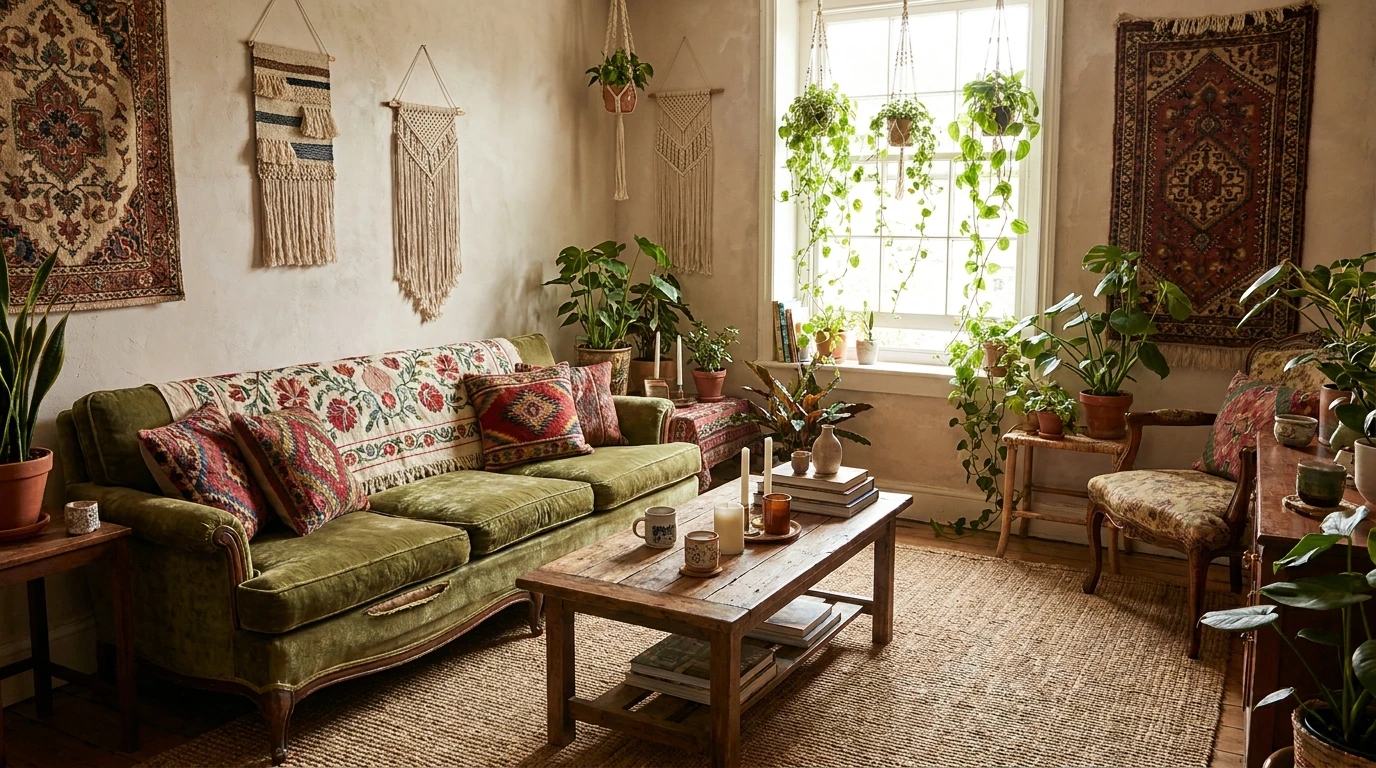
You can tell a lot about a person by their furniture. Not what it cost. What it says.
Bohemian furniture says something. It says that the person who chose it cared about texture, about warmth, about the way afternoon light hits a rattan weave. It says they found something at a market and knew immediately where it would go. It says they are not decorating for approval.
Most people never get there. They buy the safe sofa, the standard bookshelf, the matching bedroom set. Everything works together because everything is the same. Nothing surprises you. Nothing asks you to stop and look at it.
The pieces in this post ask you to look.
Rattan Is Not a Trend
Every few years, someone announces that rattan is having a moment. Rattan doesn’t care. It has been used in furniture for centuries and will be used in furniture long after whatever replaces linen curtains has also had its moment.
The reason rattan works so well in bohemian interiors has nothing to do with trend cycles. It works because it is genuinely beautiful. The weave catches light differently at different times of day. It ages well. It carries warmth in its colour and its texture simultaneously.
What Makes Rattan Read as Design, Not Craft Fair
The difference between rattan furniture that looks thoughtful and rattan furniture that looks like a 1970s garden centre is finish and proportion.
Natural honey rattan with clean, rounded joinery reads contemporary. Dark lacquered rattan with ornate construction reads dated. The frame shape matters as much as the material.
Pair rattan with linen, cotton, or stone. Avoid pairing it with chrome, glass, or anything that reads as cold. Rattan is a warm material. Put it next to cold ones and both lose.
You Don’t Have to Match It
A room full of matching rattan furniture is a showroom. A room with a rattan coffee table, a cane-back dresser, and a bamboo pendant shade is a home.
The pieces are related by material without being identical. That distinction is the whole game.
Old Furniture Is Better Than New Furniture (Usually)
There is a specific quality of warmth that only comes from furniture that has been somewhere before.
Scratches on a sideboard. Worn corners on a chest of drawers. Paint that has aged unevenly. These are not flaws to be corrected. They are evidence of a life.
Where to Find It
Markets, estate sales, second-hand platforms, charity shops in good neighbourhoods. The pieces are there. The barrier is patience, not scarcity.
Look for solid construction first. Good bones matter more than surface condition. A scratched solid-wood sideboard is infinitely more interesting than a perfect flat-pack substitute.
What to Do With It When You Find It
Clean it. Oil the wood if it’s dry. Replace the hardware if the originals are worn beyond character. Then stop.
Do not sand it back. Do not paint it white. Do not “refresh” it into something it was never meant to be. The age is the asset.
Bohemian Furniture Ideas
Dark Walls, Maximalist Nook
Paint a corner or alcove in deep charcoal grey or near-black, then dry-brush sections with colour — a wide, irregular sweep of deep saffron yellow, a patch of fuchsia or magenta, left rough and uneven so the dark base shows through.
Build or source a low wooden daybed or bench — rough-hewn hardwood with simple construction — and cover the surface with a heavily patterned textile in jewel tones: deep red, orange, green, and gold. On top, layer cushions in fuchsia velvet, orange satin, and a large embroidered patchwork cushion that carries multiple colours simultaneously.
Hang a large pierced-metal pendant or a globe lantern above. Mount one or two orange glass wall sconces beside the artwork. Frame a large piece of textile art — a Tibetan or Central Asian woven panel, or a hand-painted cloth — in a wide black frame and hang it on the painted wall. The nook should feel like it belongs to a different building from the rest of the room. That’s the goal.
Live-Edge Floating Shelves
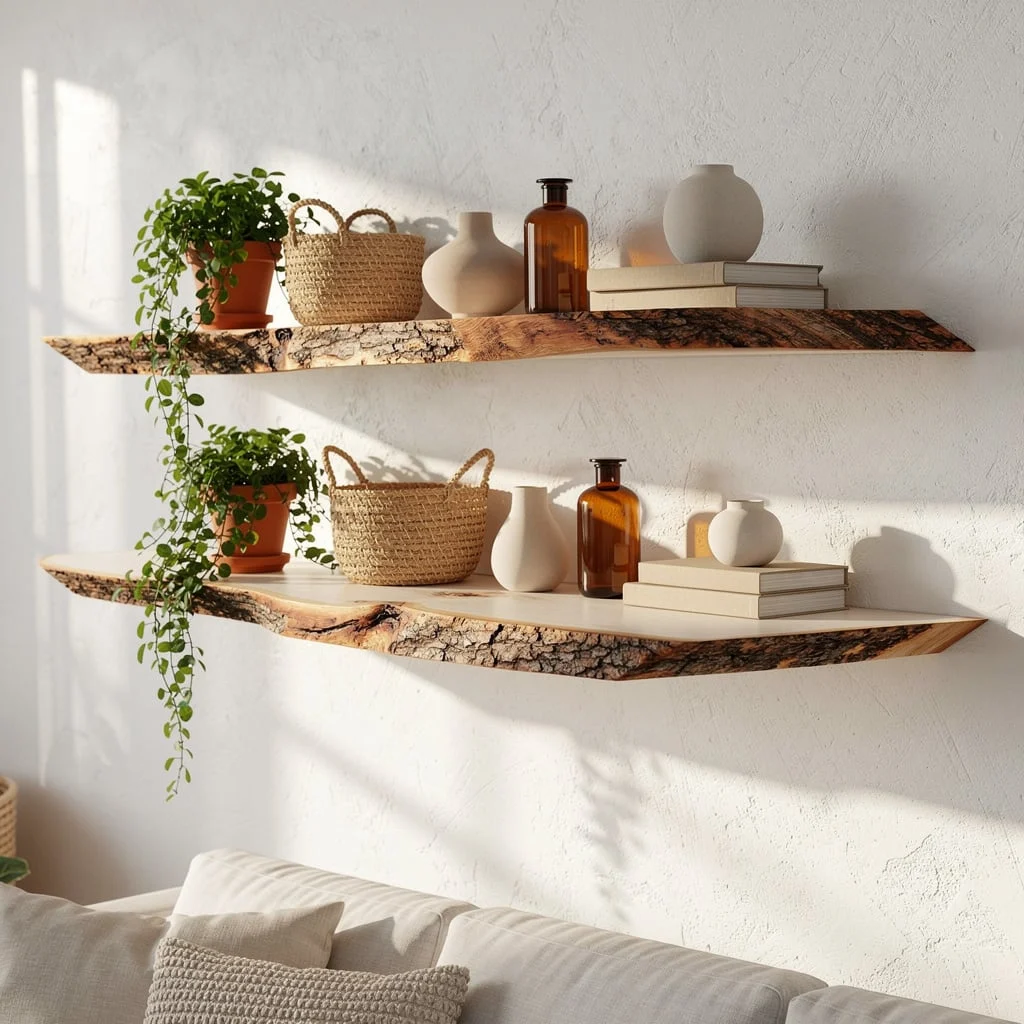
Source two or three live-edge timber slabs — pieces where the natural bark edge of the tree has been retained on one or both sides. The bark edge should be intact: rough, organic, irregular. This is the detail that makes the shelf a design object rather than a storage surface.
Mount them in a staggered arrangement at different heights, not aligned horizontally. Use hidden floating shelf brackets so no hardware is visible from the front. The slabs should appear to float off the wall, with shadow beneath them.
Style each shelf with the same objects in the same arrangement: a terracotta pot with a trailing plant on the left, a small wicker basket in the centre, and a cluster of ceramic vessels and an amber glass bottle on the right. Mirror the arrangement across all shelves — the repetition reads as intentional and gives the wall visual rhythm.
Vintage Rattan Desk, Eclectic Styling
Source a vintage rattan and bamboo writing desk — the kind with a flat rattan-tiled top surface, shallow drawer with decorative bamboo detailing, and oval or sunburst pattern inlaid into the door panels. These appear regularly at estate sales and vintage markets.
Style the surface above with a collected arrangement: a landscape oil painting in a dark frame leaned against the wall rather than hung, a large circular gilt sunburst mirror hung directly on the wall, a yellow ceramic vase with autumn foliage or red-berried branches, and a lotus-flower fabric table lamp with a sculptural base.
In front of the desk, place a dark lacquered or ceramic drum stool as a seat. The surface styling should feel genuinely accumulated — not curated, but gathered. Each object should have a story or an origin. Nothing should look like it was bought as a set.
Vintage Sideboard, Rattan Mirror
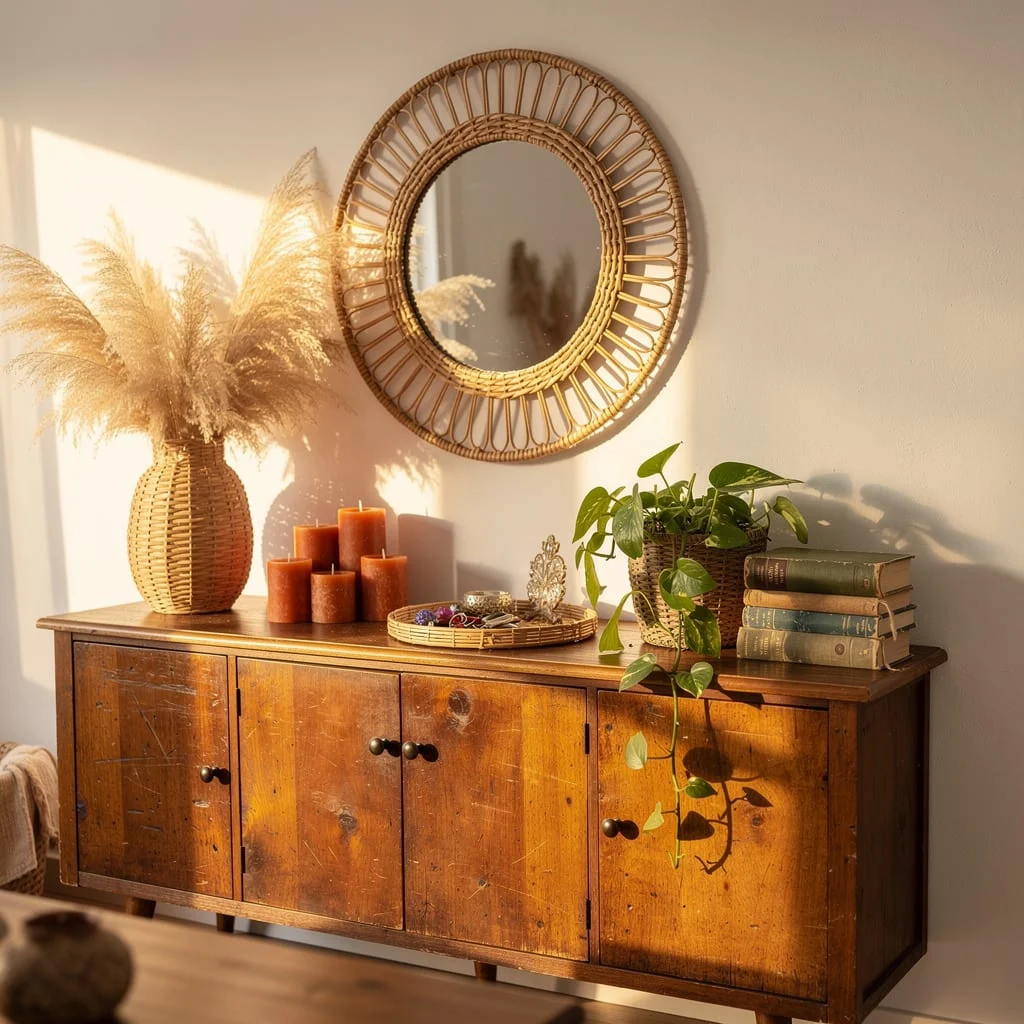
Find a solid-wood sideboard with aged patina, scratches, and honest wear. The piece should read as genuinely old — not distressed on purpose, but worn through years of actual use. Natural wood tones in amber, honey, or walnut all work. Avoid pieces that have been recently refinished.
Above it, hang a large round rattan-framed mirror — 60 to 80cm diameter, with a wide coiled or wrapped rattan surround. The mirror should be large enough to feel substantial above the sideboard width.
Style the sideboard surface with three distinct zones: a tall wicker vase with dried pampas grass on one end, a group of terracotta candles on a small woven tray in the centre, and a trailing pothos in a wicker pot with a stack of vintage hardback books on the other end. The surface reads as curated because each zone has a clear identity.
Painted Side Table, Bold Colour
Take a small side table with curved cabriole legs and a single drawer — vintage, thrifted, or plain wood — and paint it in a fully saturated jewel tone. Teal, cobalt, deep turquoise. Use chalk paint for a slightly matte finish and allow some of the original wood tone to show at the edges and leg curves where the paint naturally wears thin. This distressing should happen naturally through use, not be manufactured with sandpaper.
Add a tassel pull to the drawer — a triple-tiered silk or cotton tassel in a gradient from pale pink to deep fuchsia — hung from a small brass ring through the original knob hole.
On the surface, style with three objects that contrast intentionally with the bold colour: a tall canary yellow ceramic vase with a dried grass stem, a flat round woven basket leaned against the wall behind the table, and a small wooden bowl. Keep the objects warm and organic so the teal reads vivid but not jarring.
Rattan Coffee Table, Glass Top
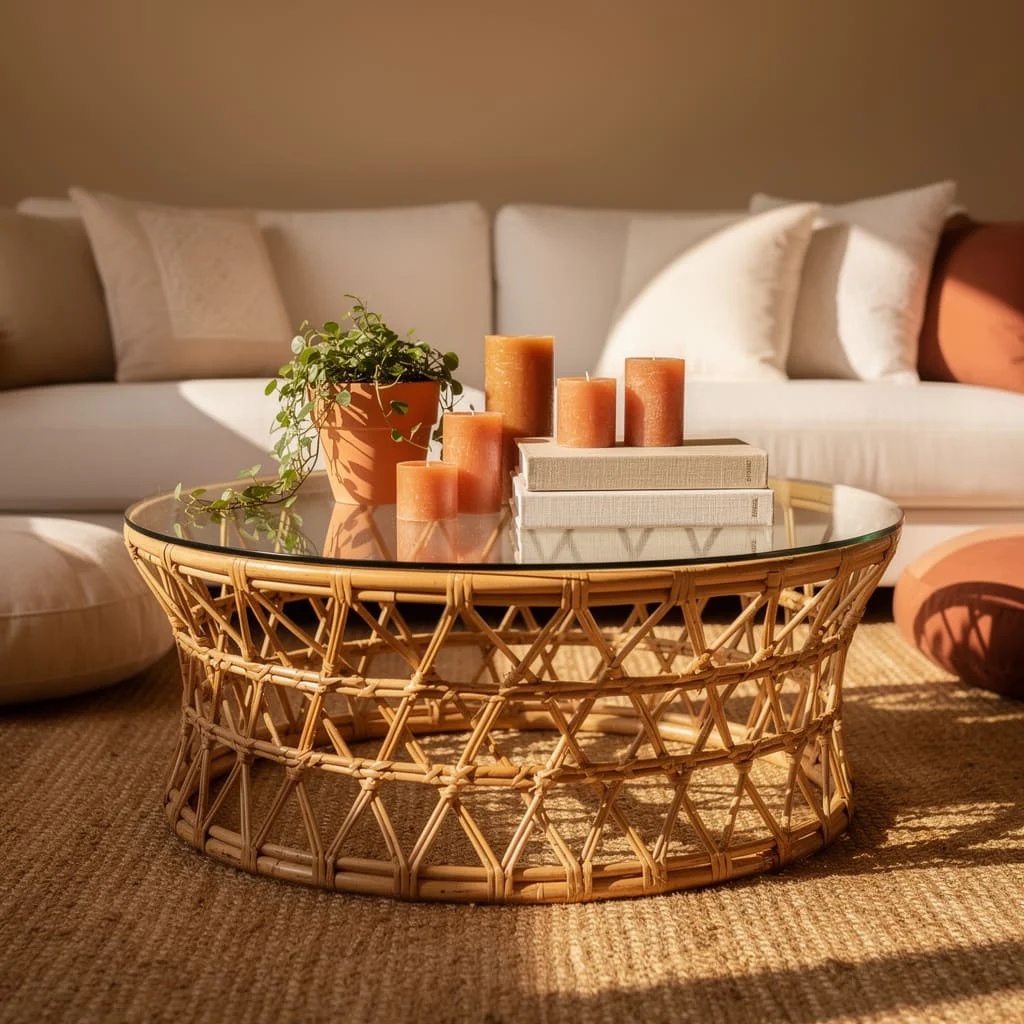
Source a round rattan coffee table with an open geometric weave base — the kind where the rattan is arranged in structural triangles or diamond formations rather than solid weave. The openwork base means the table reads as light despite its presence.
Have a circular glass top cut to fit, or buy a version that comes with one already fitted. The glass protects the rattan and creates a surface you can actually use, while keeping the woven structure fully visible from above.
On the glass top, style with deliberate restraint. A small terracotta pot with a trailing plant, a stack of two cloth-bound books, and three pillar candles in terracotta tones. The arrangement should use roughly one third of the surface. Leave the rest clear.
Macramé Hanging Chair, Porch
Install a heavy-duty ceiling hook rated for at least 150kg — use a structural ceiling joist, not plasterboard. The hook should be solid brass or black iron.
Source a large macramé hanging chair with a full dome canopy — the canopy should extend above and partially over the seat in a tent or bell shape, densely knotted in natural cotton cord. Choose one with long fringe at the base hem — at least 20cm — and diamond or geometric knotting across the canopy surface.
Fit a large round seat cushion inside in a muted dusty rose or terracotta tone. Add one smaller macramé cushion with a tassel fringe inside the chair. Beside the chair at floor level, place a large dark ceramic pot or black clay vessel. String café lights along the ceiling or structural beam above. The chair should feel like a private enclosed space within a larger outdoor room.
Warm Plaster Bedroom, Rattan Lamps
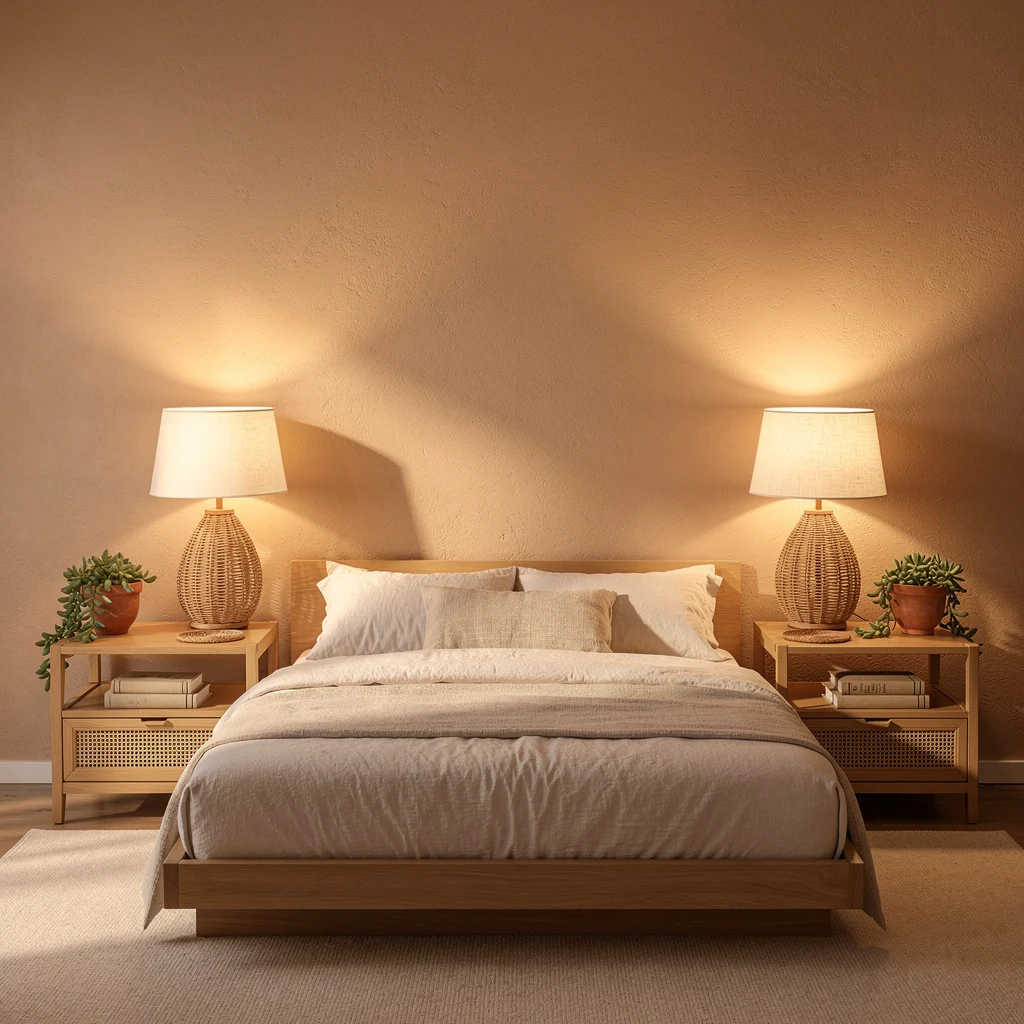
Paint or plaster the bedroom walls in a deep warm sand or camel tone — not beige, not grey-beige, but genuinely warm. The colour should look like adobe at golden hour.
Use a low platform bed in pale natural oak or ash, with a simple flat headboard. The bed should sit low — no more than 40cm at mattress height — so the proportions of the room feel generous rather than cramped.
Place matching rattan table lamps on cane-front bedside tables on each side of the bed. Use linen drum shades in natural or off-white. When lit, the rattan lamp bases cast small shadow patterns on the warm wall behind them. That shadow detail transforms the room after dark.
Boho Balcony with Rattan Sofa
Position a deep-seated woven rattan loveseat along the longest wall of the balcony. The frame should have a barrel or curved back — no sharp corners. Use a thick white or cream cushion pad on the seat. Add two geometric-print cushions in red, navy, and ochre on the sofa.
On the wall beside the sofa, mount three or four rope-suspended floating shelves at staggered heights and fill them with small terracotta pots of herbs and compact trailing plants. Beside the sofa, place one large dark glazed ceramic pot with a full bird of paradise or banana palm.
Hang a round woven flush-mount ceiling light above — the kind with a dense rattan or bamboo weave that casts patterned shadow on the ceiling when lit. On the floor at the sofa base, position a round pouffe in a kilim-printed fabric in the same warm geometric palette as the cushions. Hang several macramé plant hangers along the railing so plants trail outward.
Rattan Open Wardrobe
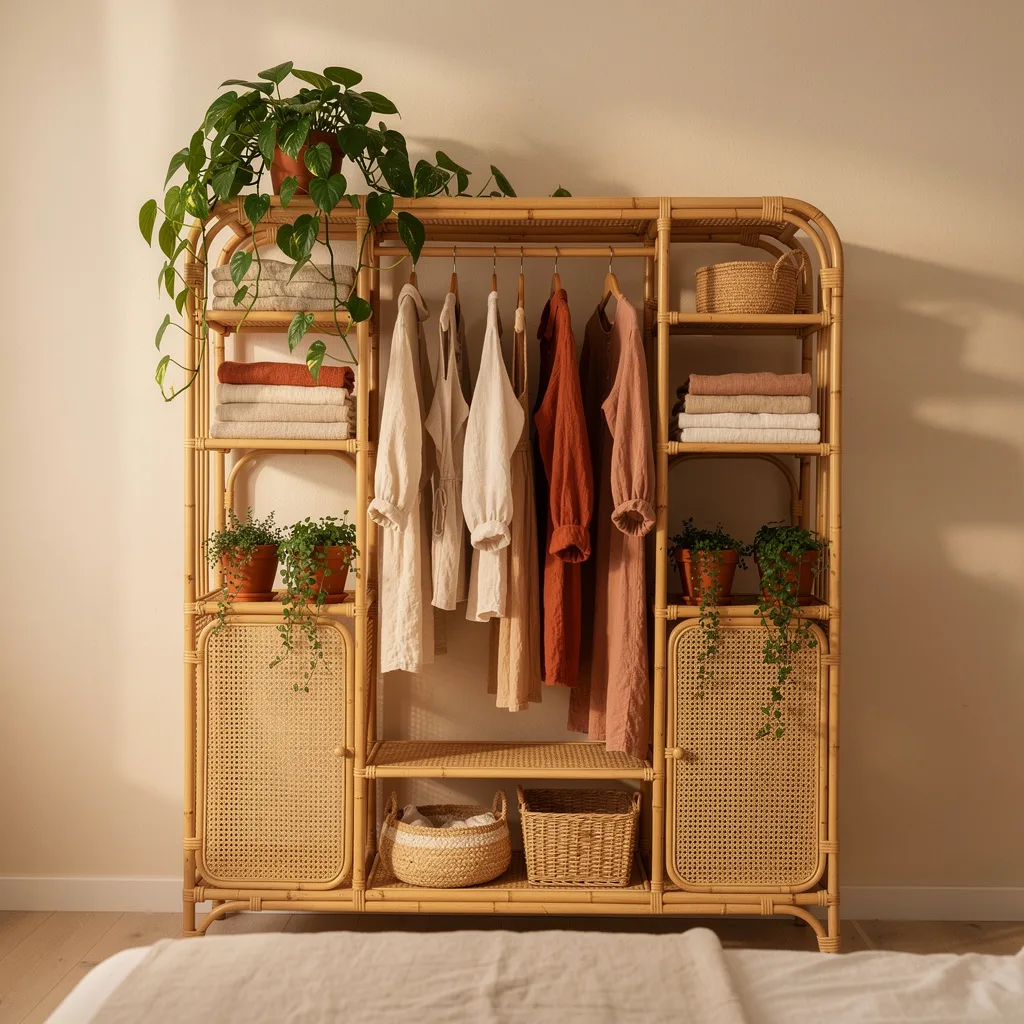
Source or commission an open rattan wardrobe unit — a freestanding frame structure with a central hanging rail, open shelves on either side, and cane-panel lower doors. The frame should be in natural honey rattan with rounded corners and visible binding joints.
Edit the hanging clothes down to a colour palette of natural tones: ivory, linen, dusty white, rust, and terracotta. Hanging clothes in a tonal palette turns the open wardrobe into a display rather than storage. Mix textures — linen, cotton gauze, soft jersey — while keeping the tones consistent.
On the shelves, fold items in the same tonal palette and stack them neatly. Use small wicker baskets on the lower shelves for items that don’t fold well. Add a small terracotta pot with a trailing plant to the top shelf on one side. The plant softens the structure and reinforces the natural material palette.
Cane-Front Dresser, Rattan Mirror
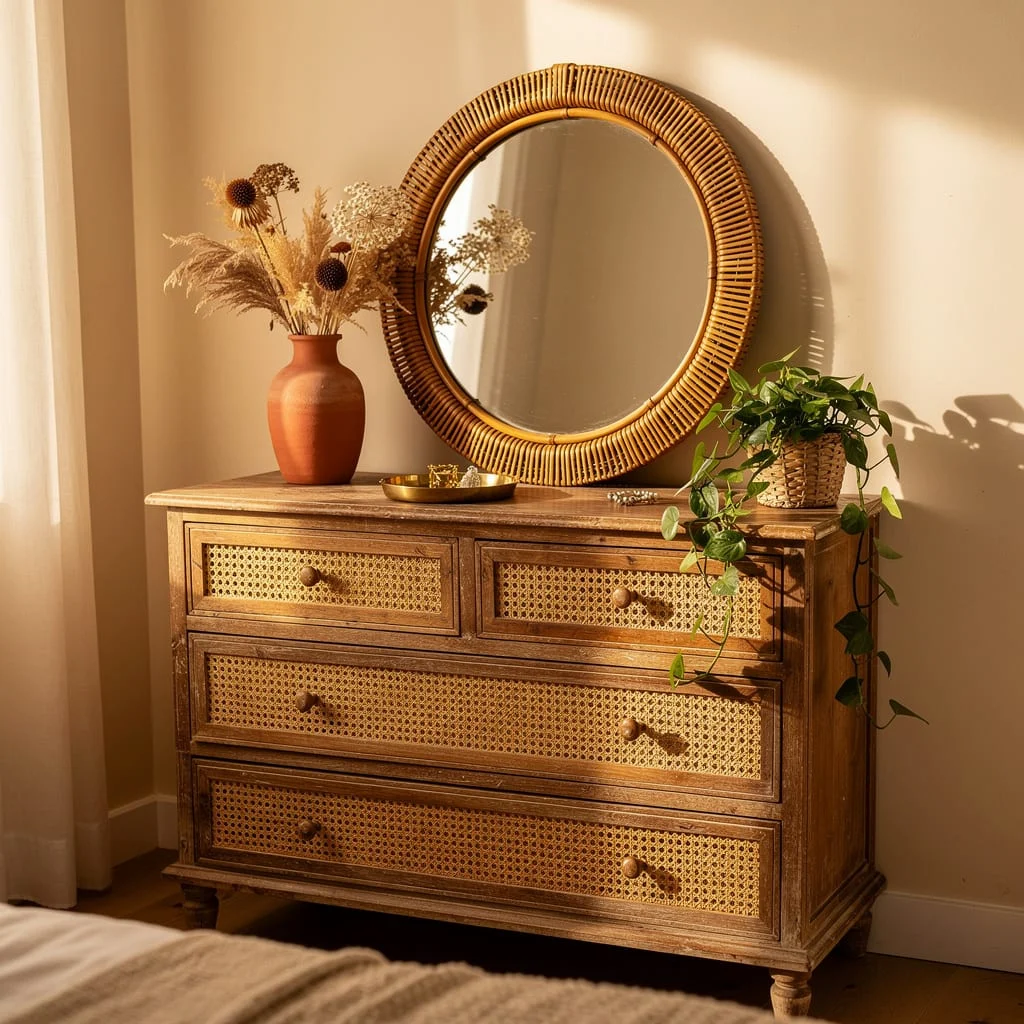
Choose a chest of drawers with a solid wood frame in warm walnut or medium-toned oak, with cane webbing inset into each drawer front. The cane should be natural and unvarnished — the raw honey tone of the cane against the darker wood frame creates a quiet textural contrast.
Replace the original drawer pulls with simple round wooden knobs in a slightly darker tone than the frame. They should sit flush and feel tactile rather than decorative.
On the dresser surface, lean a large round rattan mirror — slightly larger than feels necessary, so it extends above the dresser width. To the left of the mirror, place a tall terracotta vase with dried pampas and seed heads. To the right, a small wicker pot with a trailing pothos, a small brass tray with a ring dish, and a single glass vessel with a stem of dried botanicals.
Rattan Chairs, Sage Green Wall
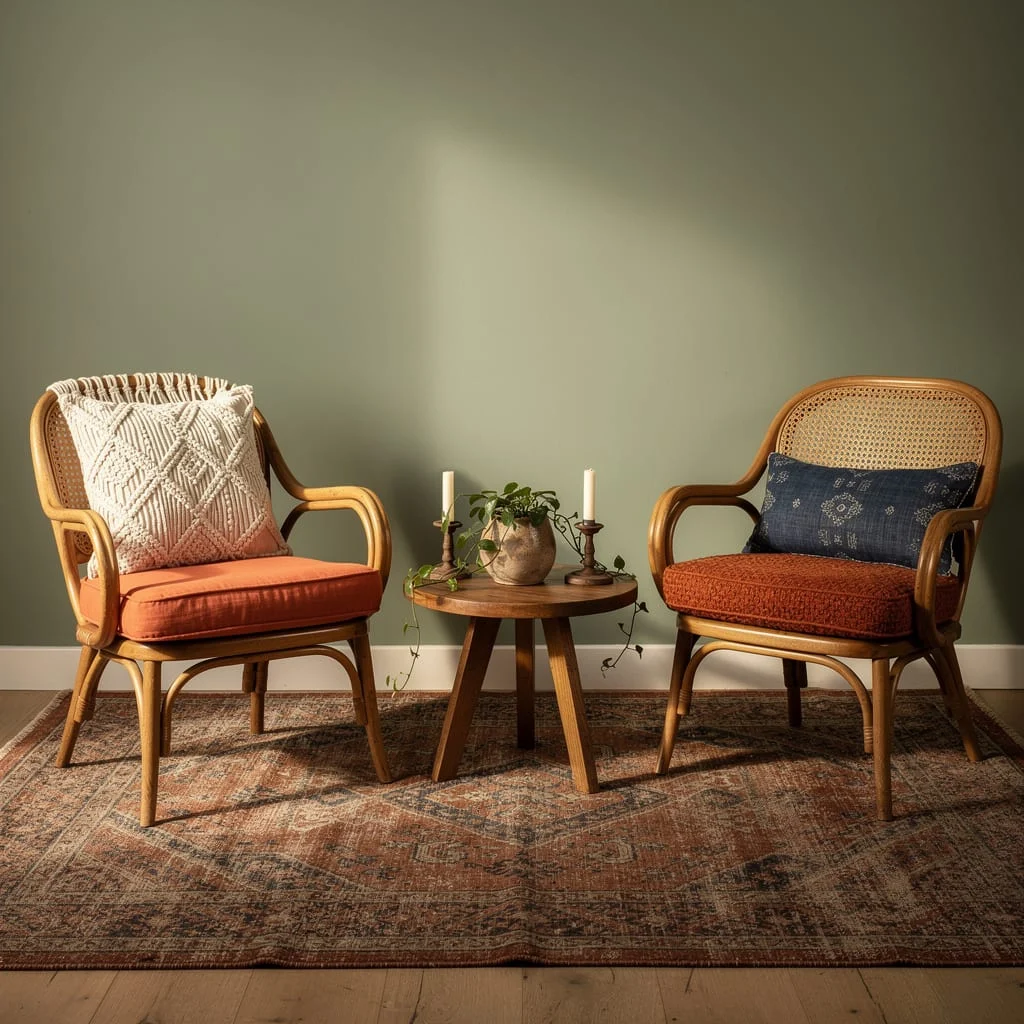
Paint one wall — or all walls — in a muted sage or grey-green. Flat finish, warm undertone, not too bright.
Place two cane-back rattan armchairs facing each other with a small round side table between them. The chairs should have visible rattan frames in warm honey tones and seat cushions in a deep terracotta or burnt orange. This colour contrast — cool sage against warm orange — is the room’s entire visual argument.
On the table between the chairs, arrange two taper candles in dark wooden candlesticks, a small ceramic pot with a trailing plant, and a shallow ceramic bowl. Keep the table surface quiet. On the vintage medallion rug beneath the chairs, allow the worn pattern to show — the more faded the better.
Live-Edge Dining Table, Rattan Chairs
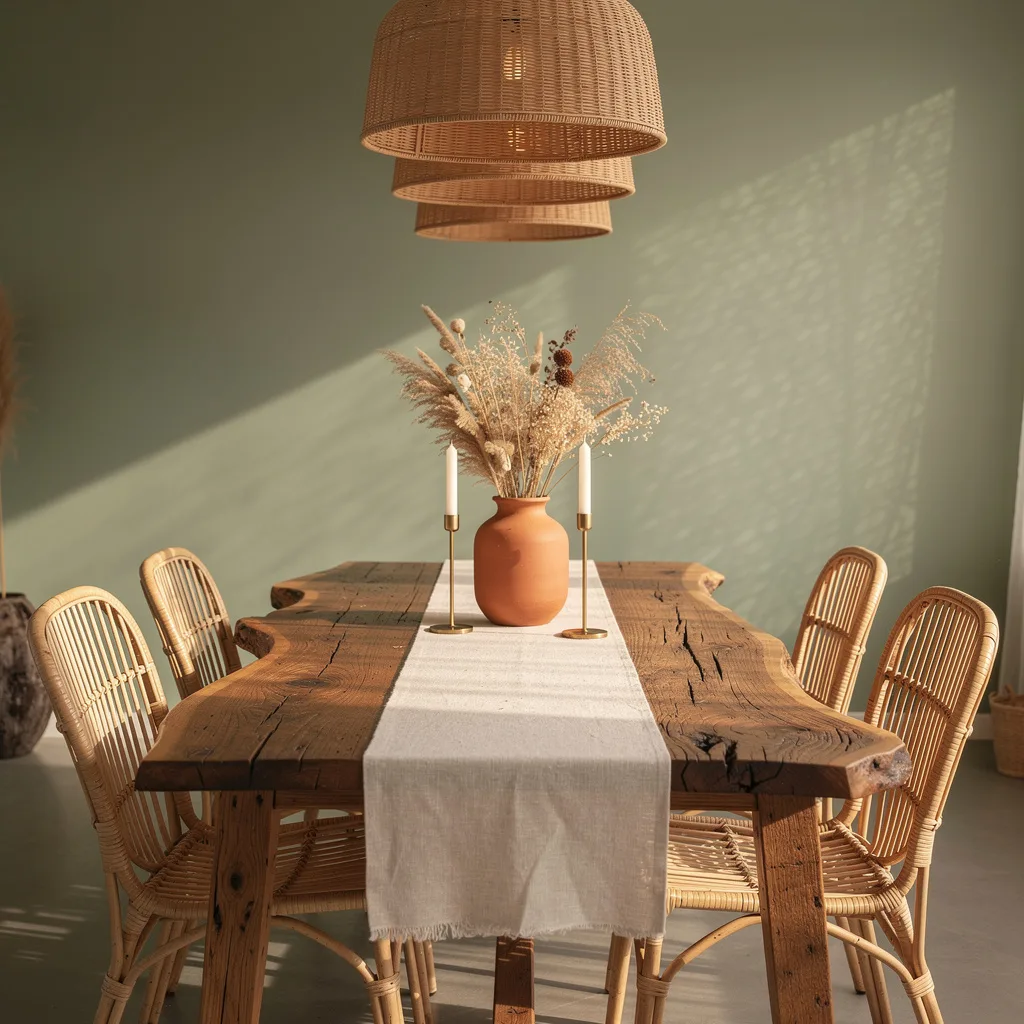
Source a live-edge dining table in dark reclaimed wood — the surface should show the natural grain pattern and any historic cracks or voids in the timber, which can be filled with black resin. Position it on a white or pale concrete floor so the dark wood reads with maximum contrast.
Surround it with rattan dining chairs in natural honey tone — the kind with a rounded back, curved arms, and visible rattan weave in the back panel. Six chairs around a table that seats six; no benches. The uniform chairs create rhythm and the rattan ties them visually to the bohemian palette without competing with the drama of the table.
Dress the table with a linen runner in natural undyed cotton, slightly off-centre so it doesn’t look like a tablecloth. In the centre, a terracotta vase with dried botanicals and two slim brass taper candlesticks. Above, a large tiered woven pendant shade — two or three concentric rattan rings — hung low enough to create intimacy over the table surface.
Woven Bench at Bed Foot
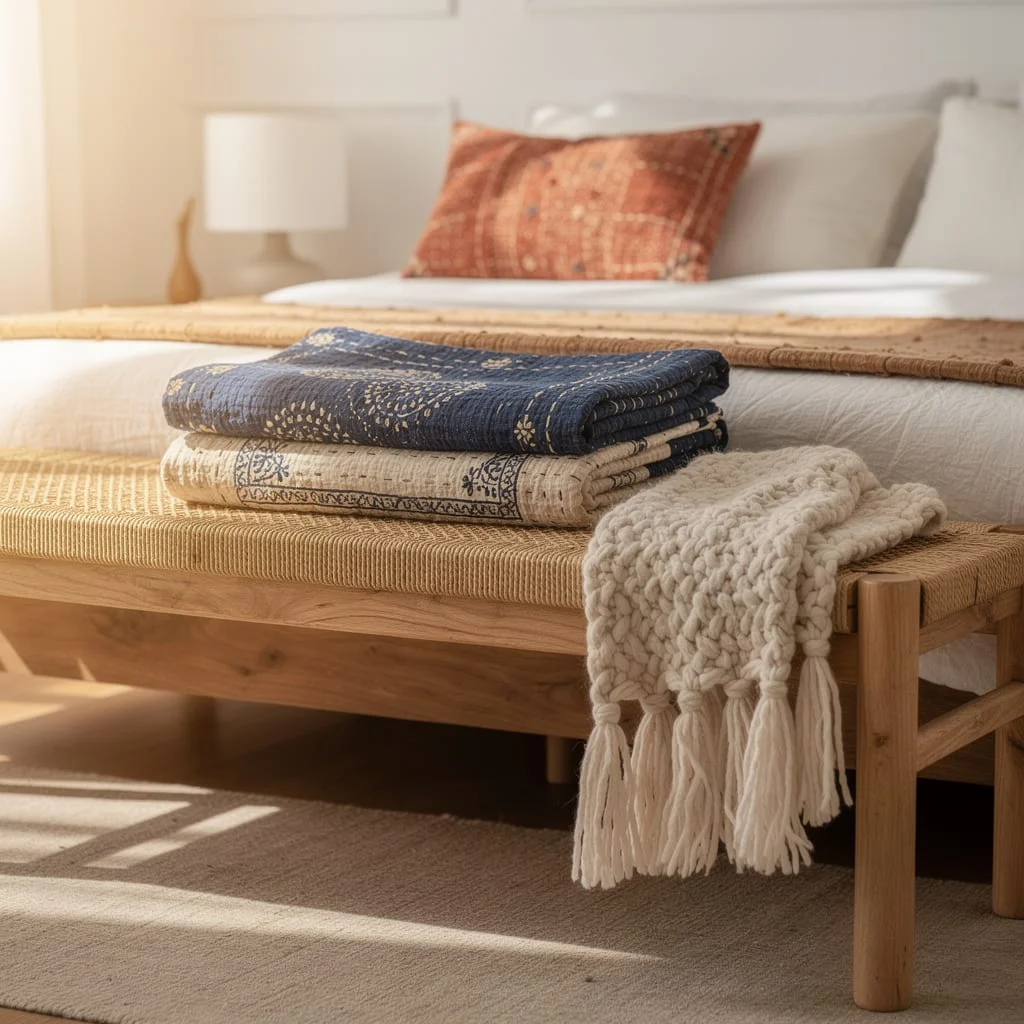
Source a low bench in solid natural oak or ash with a rush-woven seat — the kind with hand-twisted natural fibre woven tightly across the seat frame. The weave creates texture underfoot and a warmth that upholstered benches don’t carry.
Position it across the foot of the bed so it’s the first thing you step onto when you get up. Lay folded textiles across the surface: a block-printed cotton throw in deep indigo with a botanical print, a natural linen blanket with a woven border, and a loose chunky-knit throw draped casually over one end with a long tassel fringe hanging off the edge.
The arrangement should look uncontrived. The textiles are folded but not perfectly aligned. The chunky throw is draped rather than placed. This distinction — folded but not precious — is what separates a styled bench from a display.
Floor Mirror with Rattan Frame
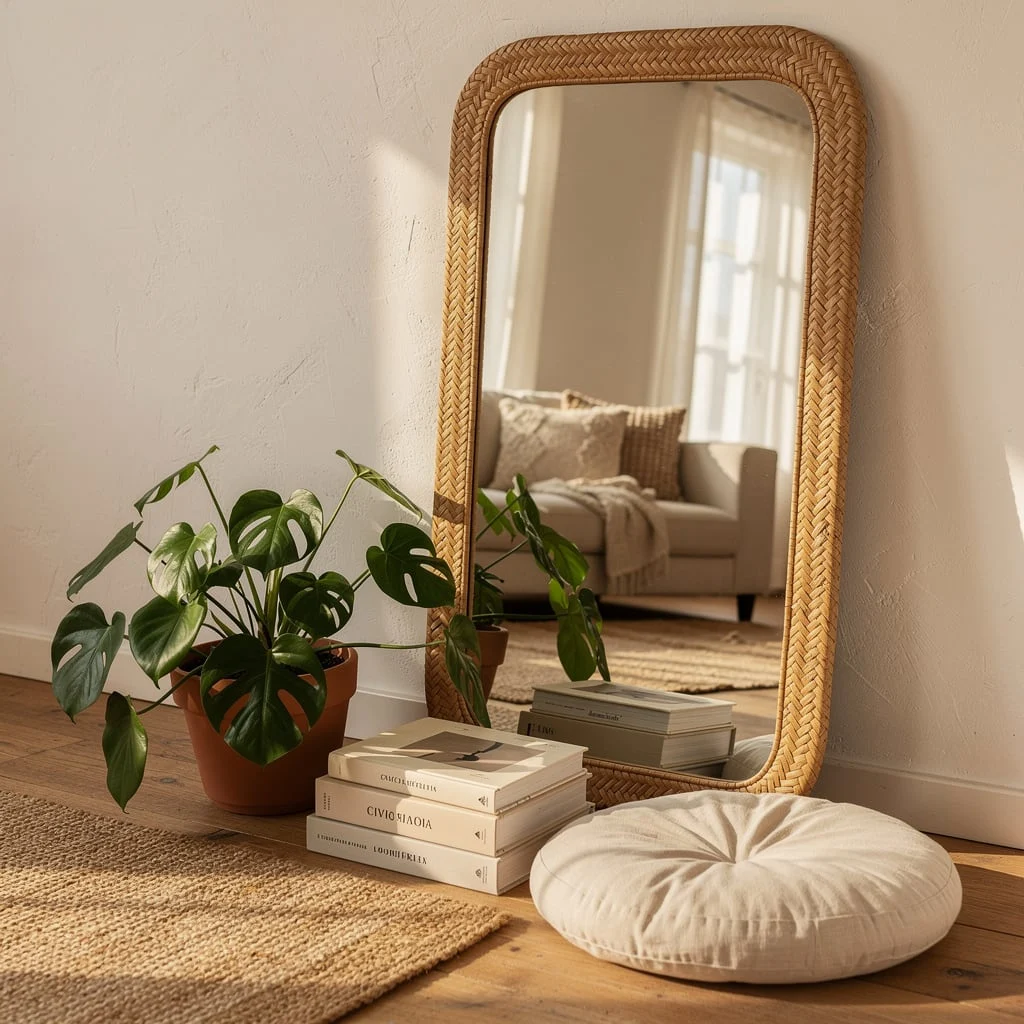
Source a full-length rectangular mirror with a thick woven rattan frame — the weave should be a herringbone or diagonal pattern rather than plain horizontal. The corners should be soft-rounded rather than sharp. The overall impression should be architectural rather than decorative.
Lean it against the wall rather than hanging it. Leaning reads more casual and more intentional simultaneously — it’s a statement about the mirror being an object in the room, not a fixture on the wall.
At the base of the mirror, place a small monstera in a terracotta pot to the left. In front of the mirror base, lay a stack of three large-format art books. To the right, a small round floor cushion in natural undyed cotton. On the jute rug beneath, allow the shadow the mirror frame casts in afternoon light to be part of the composition.
Pallet Bed, Cane Headboard
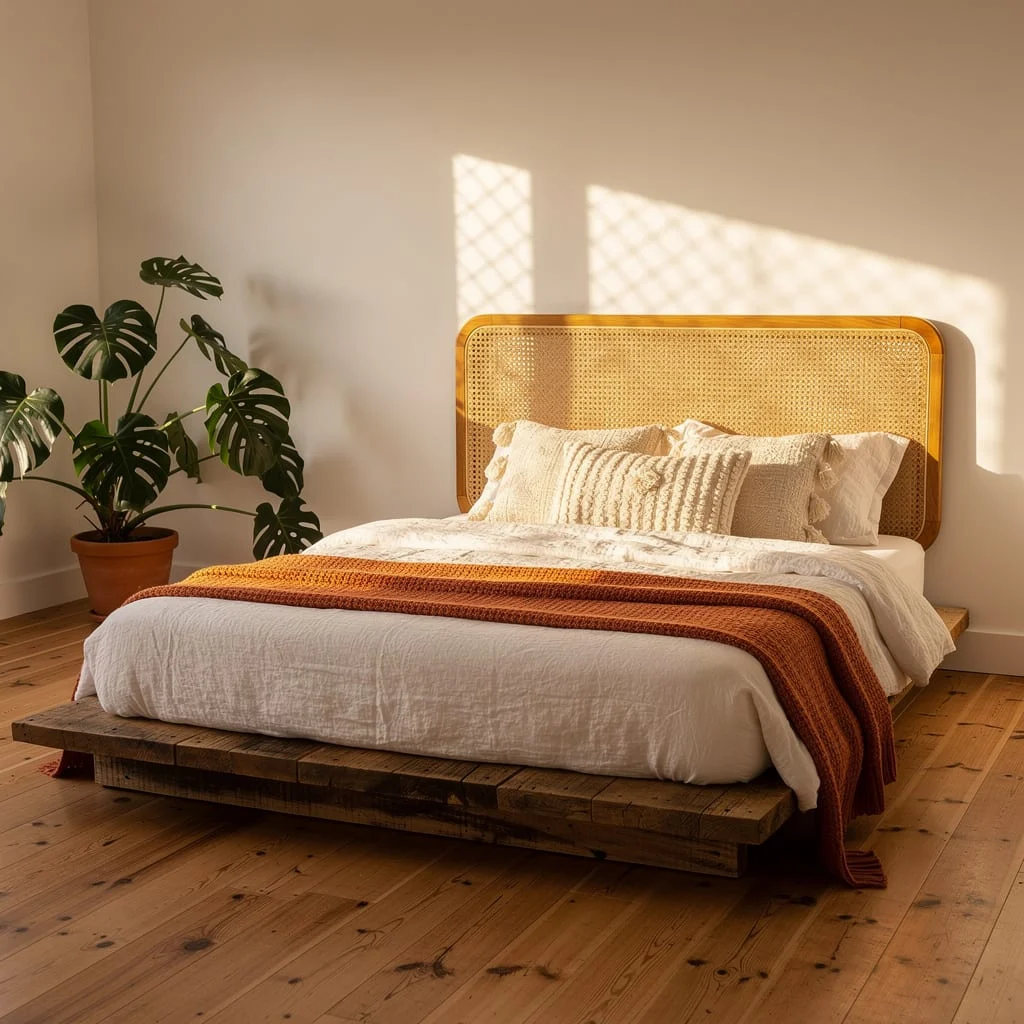
Build or source a bed platform from reclaimed wooden pallets — two or three layers high depending on desired mattress height. Leave the pallet structure visible and unfinished beyond a light sand to remove splinters. The raw timber character is the point.
Against this rough base, pair a headboard in natural cane or rattan in a warm honey tone with a clean rectangular profile and visible frame border. The contrast between the raw pallet base and the refined woven headboard is the design decision. The roughness of the base makes the craftsmanship of the headboard more visible.
Dress the bed in white or off-white linen — washed, slightly crumpled, never crisp. Layer a deep mustard knit throw at the foot of the bed and a terracotta waffle-weave blanket across the lower half. Add cushions in natural woven cotton with tufted or tassel details. One large monstera in a terracotta pot beside the bed completes the arrangement.
Peacock Chair, Terracotta Wall
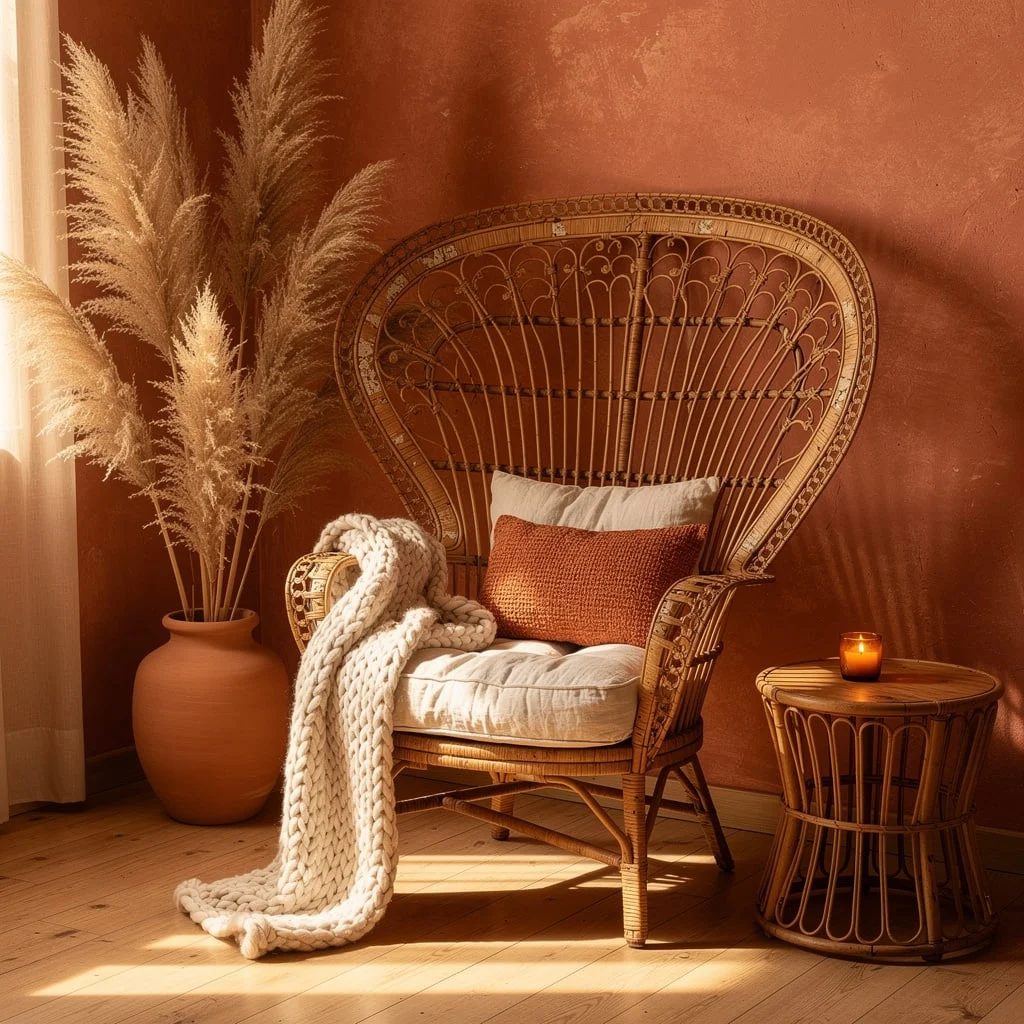
Paint the walls in a deep terracotta or Venetian clay — warm, saturated, matte. Apply it in a limewash technique if possible so the tone shifts slightly across the surface.
Place a full peacock chair against this wall — the kind with a high fan-shaped back, curved arms, and dense rattan weave throughout. The chair should be genuine vintage or vintage-style, not a miniature reproduction. The back should be at least 120cm tall.
Dress the chair with a white linen seat cushion and one deep terracotta or rust cushion in front of it. Drape a chunky hand-knit throw in natural cream over one arm. To the left of the chair, stand a tall terracotta pot with three stems of dried pampas grass reaching above the chair back. To the right, a small rattan drum side table with a single lit candle.
Rattan and Cane Bar Cart
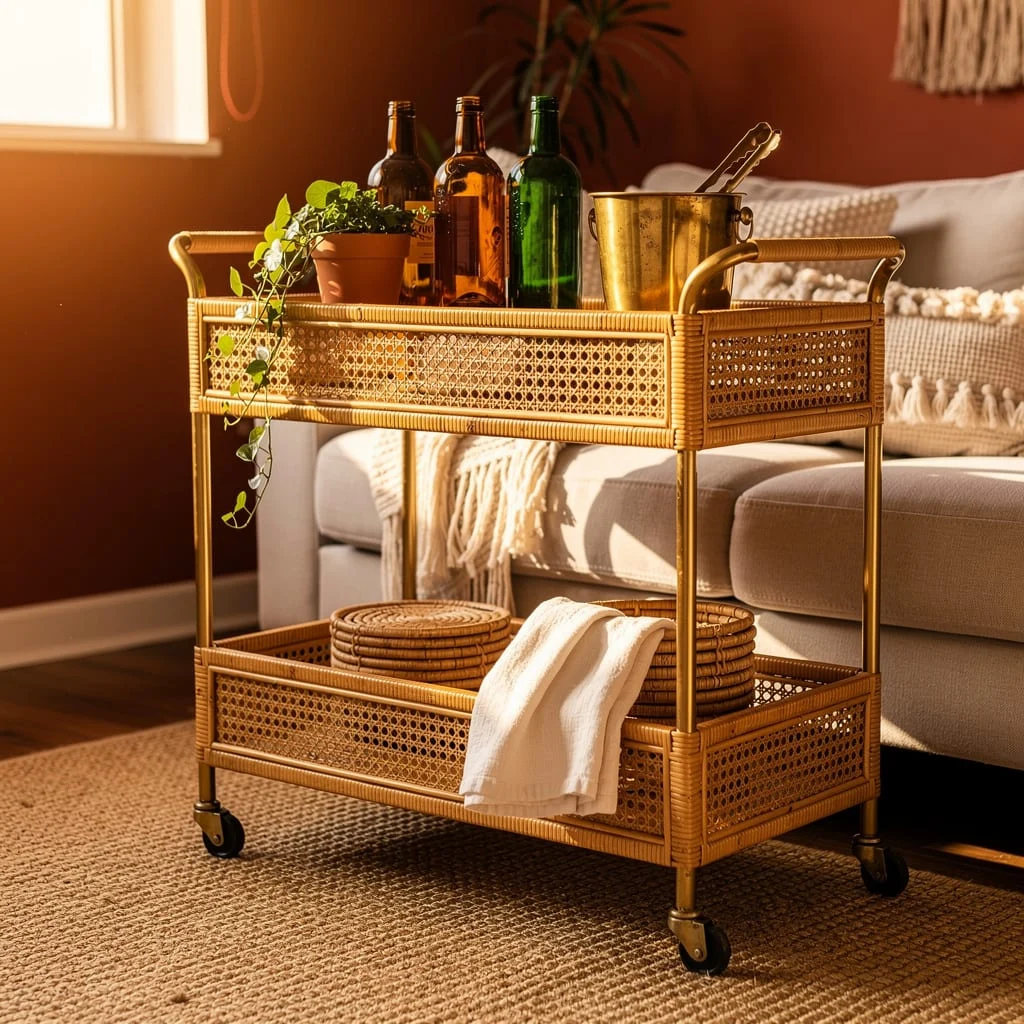
Source a two-tier bar cart with a brass or aged-gold frame and cane-panel sides — the cane web should be natural and visible through the frame openings. The brass wheels should be substantial rather than decorative.
On the top tier, arrange three to five glass or dark brown bottles in varying heights and shapes. Position a brass ice bucket at one end. Add a small terracotta pot with a trailing plant at the opposite end so its vines trail down over the cane panel. The green against the warm gold and natural cane is the detail that elevates this from storage to object.
On the lower tier, store items that add texture: a stack of rattan coasters, a folded linen napkin, a small wicker tray. Everything visible should be natural material. No plastic, no chrome-effect items. The consistency of material is what makes the cart read as designed rather than collected.
The Things That Last
Bohemian furniture ages better than almost any other design approach.
A worn vintage sideboard gets more interesting every year. A peacock chair develops character as the rattan shifts and settles. A hand-painted side table accumulates the small marks of a life lived around it.
Flat-pack furniture does the opposite. It starts as good as it’s ever going to be and deteriorates from there.
The investment in a piece with genuine material and genuine construction pays back over decades. You stop replacing things. You stop shopping. You stop settling.
You start choosing furniture that knows what it is. And a room full of things that know what they are is a room that finally feels like home.