
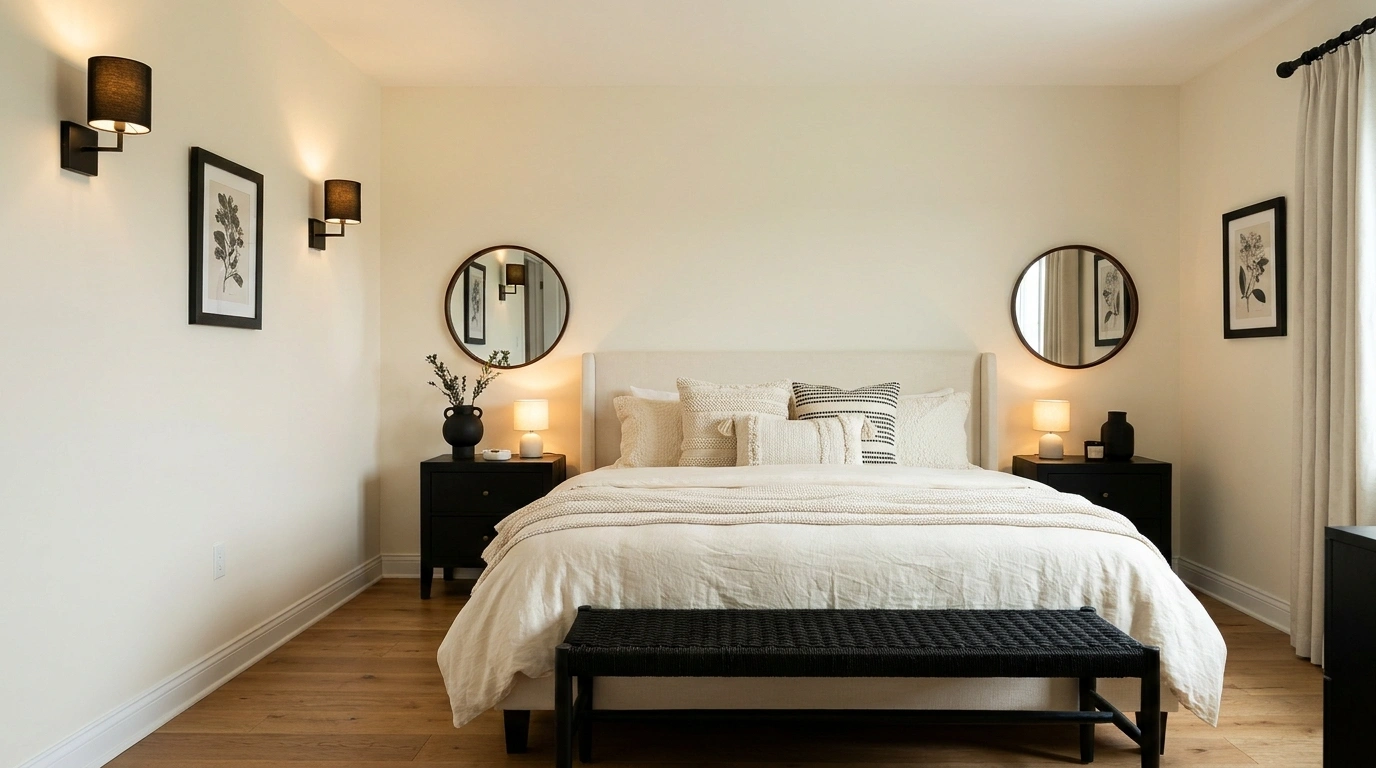
The easiest way to make black and cream look flat is to buy everything in black and cream.
A black bed, black tables, cream bedding, cream curtains, and several matching cushions may coordinate perfectly while leaving the room strangely lifeless. Color agreement is useful. It is not the whole arrangement.
The interest comes from how much of each color you use, where the contrast lands, and what changes between smooth, woven, upholstered, painted, and natural surfaces.
The linked inspiration uses dark-and-light contrast across several bedroom styles. The combinations below take that palette into complete room arrangements with different furniture, layouts, and material relationships. 2026
Choose Which Color Occupies the Larger Surfaces
A mostly cream room with dark outlines feels different from a dark room with a pale bed. Decide that relationship before collecting accessories.
Test creams against the floor, wall paint, and large textiles. Some lean yellow, some pink, and others look almost white. Check black finishes too; a softened charcoal-black and a cool blue-black can produce different effects.
Bedroom Combinations With Their Own Character
A Towering Black Headboard Under Dramatic Lighting
A tall black headboard provides serious architectural presence, allowing neutral bedding and drapery to soften the room’s overall mood.
Suspend a statement chandelier overhead and anchor the space with a textured rug to balance the heavier dark tones near the bed.
Keep styling intentional without cluttering the nightstands, letting the impressive vertical lines and contrasting textures do all the heavy lifting.
Cream Walls With a Black Wardrobe and a Timber Bed
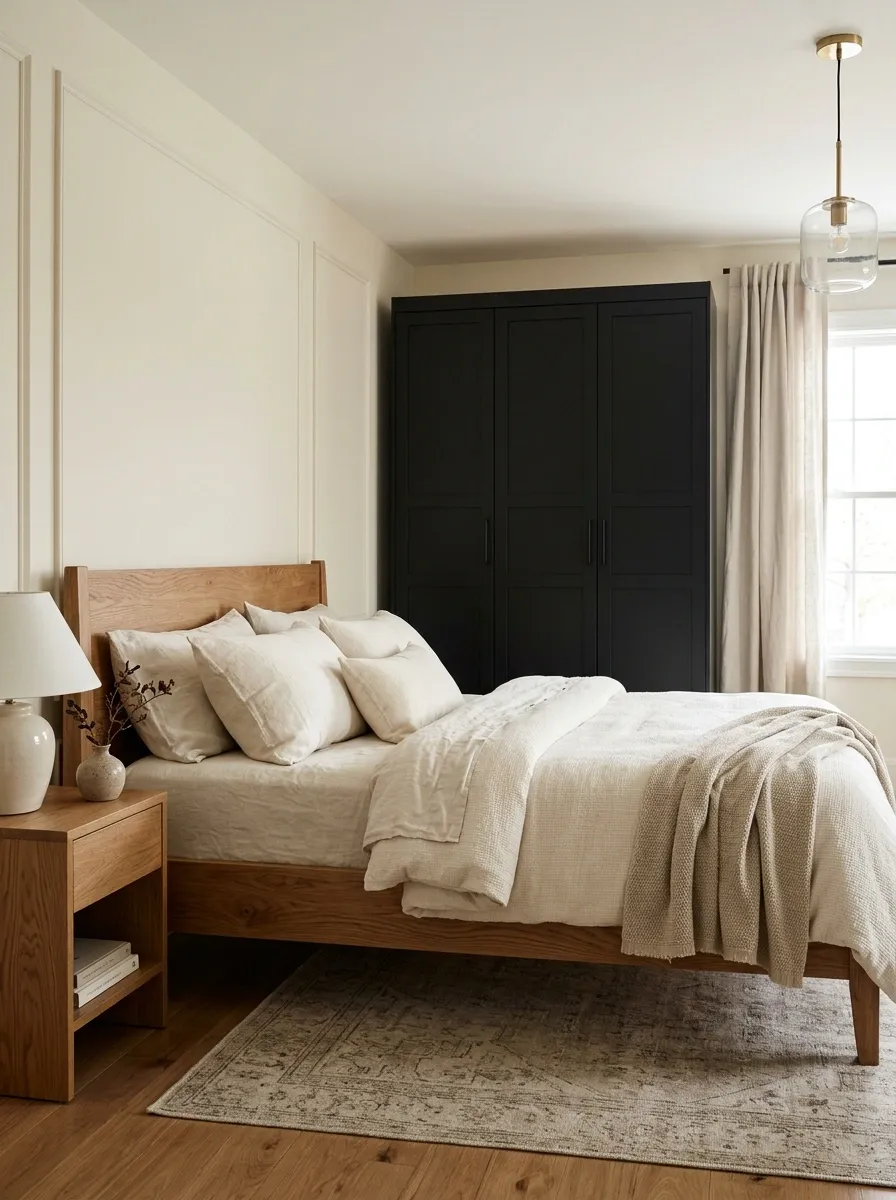
A black wardrobe can provide the main dark element while cream walls and a natural timber bed keep the room warmer.
Choose simple wardrobe fronts if the piece is large. Let the bed introduce a different material instead of matching every substantial object.
Keep bedding relatively quiet and leave the wardrobe’s opening space comfortable. The dark cabinet should anchor the room, not become a large obstacle everyone admires while walking around it sideways.
GIVE THE DARK COLOR ONE MAIN JOB
The principal anchor.
Cream walls and bedding remain the broader field.
A Cream Wingback Bed With Black Accents
A cream wingback bed introduces classic structure, while a black bench and matching nightstands ground the bright upholstery in sophisticated contrast.
Hang a bold black and white abstract artwork above the headboard to tie the color palette together without overwhelming the serene sleeping area.
Layer plush neutral linens and keep decorative pillows minimal to ensure the space remains inviting, comfortable, and effortlessly chic for everyday rest.
A Dark Bed Wall Behind a Curved Cream Headboard

A dark bed wall can make a cream upholstered headboard feel distinct. A curved outline softens the contrast without adding another pattern.
Keep bedside furniture proportionate and choose useful lighting that reveals the fabric rather than leaving the wall as a featureless dark plane.
The headboard already provides the focal point. You do not need several small artworks crowded above it to reassure everyone that the wall has been decorated.
| Main feature | Supporting choice |
|---|---|
| Curved cream headboard | Quiet bedding |
| Dark wall | Useful layered light |
| Strong silhouette | Restrained wall decoration |
A Statement Chandelier Over Neutral Linens
A multi-tiered crystal and black chandelier draws the eye upward, adding a touch of glamour to a calming cream and black bedroom design.
Pair the striking overhead lighting with matching black table lamps to create a warm, layered glow that highlights the room’s rich textures.
Ensure ceiling heights can accommodate the fixture comfortably, and keep surrounding window treatments simple so the lighting remains the undeniable star of the room.
Layer Cream Textures With Small Black Details

A mostly cream bedroom can gain depth through linen, quilting, a woven blanket, and upholstery with visibly different surfaces.
Use black in smaller details such as a lamp base, handle, or restrained bed-frame line. The dark accents should help define the room without taking over.
Choose comfortable bedding and realistic care requirements. A beautifully textured bed becomes less appealing if every layer requires specialist cleaning and everyone has been instructed not to sit on it.
DEPTH THROUGH SURFACE, NOT EXTRA COLORS
A Bold Black Wall With Warm Pendants
A deep black accent wall creates a dramatic backdrop for a cream upholstered bed, instantly adding depth and modern luxury to the bedroom.
Frame the headboard with symmetrical pendant lights and incorporate a rich burgundy throw blanket for a subtle, sophisticated pop of color.
Anchor the bold wall with a patterned graphic rug and keep bedside accessories streamlined so the contrasting color scheme feels curated rather than chaotic.
A Simple Black Iron Bed With Cream Cotton

A black iron bed can give cream bedding a clear outline without the bulk of a large upholstered frame.
Let the metalwork remain visible. Use plain cotton or a restrained stripe, with a timber bedside table adding warmth.
Check a secondhand frame for sound construction and appropriate mattress support. Vintage character should come from the shape and material, rather than a bed that provides an unsolicited soundtrack whenever someone turns over.
Keep the frame readable: Avoid piling cushions so high that the headboard disappears completely.
A Dark Ceiling Above Cream Walls
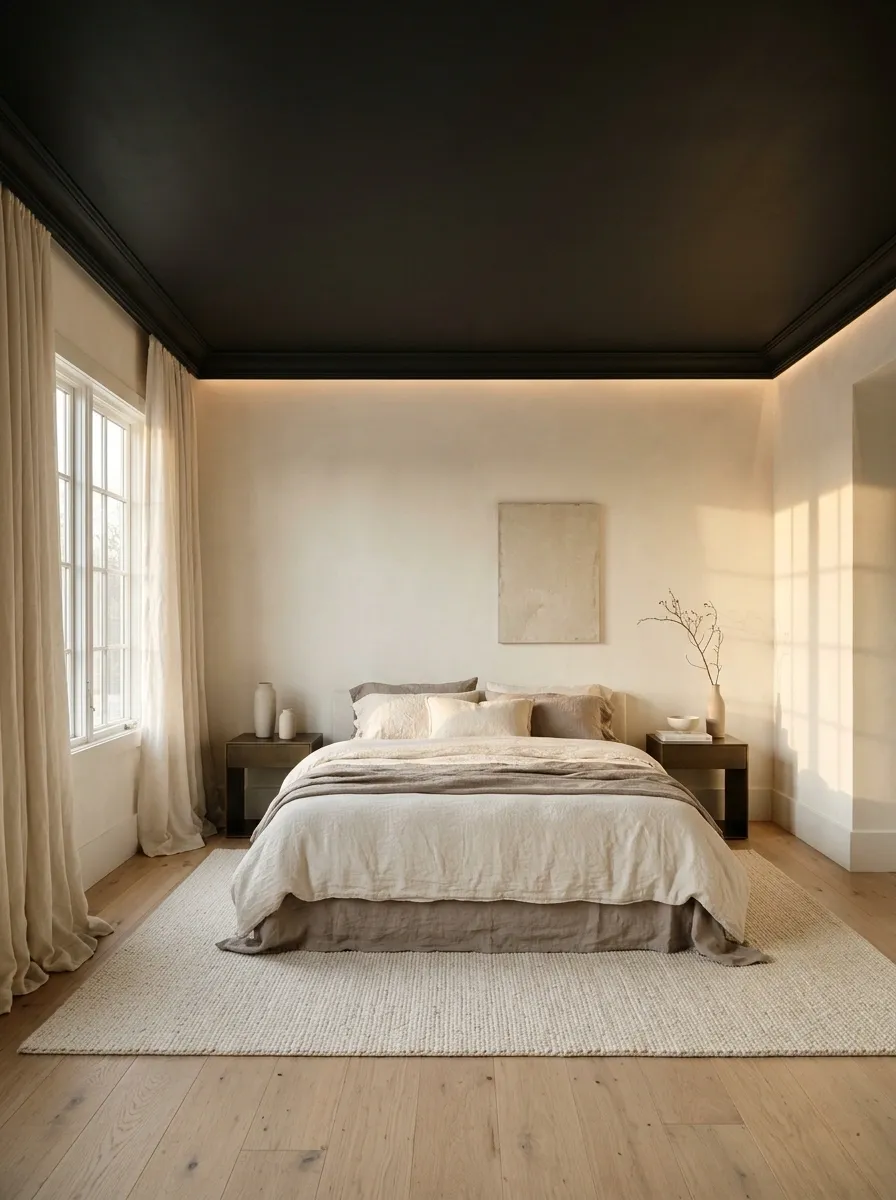
A dark ceiling can provide a different distribution of black while leaving the walls light. It works best as a deliberate part of the room’s architecture and lighting plan.
Test the color overhead before committing. The ceiling receives light differently from the walls.
Keep the bed and curtains quieter so the dark upper plane remains the principal gesture. You can make a strong design decision without requiring every other surface to make one too.
Keep the vertical surfaces quieter.
Test the overhead color and the evening lighting together.
Black Window Frames With Generous Cream Curtains

Black window frames can supply the room’s graphic detail, while cream curtains soften the opening.
Choose the curtain fabric for privacy, light control, and care as well as appearance. Allow the treatment to move freely and preserve the window’s required operation.
Keep nearby black details limited if the frame is prominent. The room can repeat a dark tone without outlining every object as though the furniture has been issued a uniform.
| Window element | Role |
|---|---|
| Dark frame | Architectural outline |
| Cream curtain | Softness and practical light control |
| Simple fitting | A quieter connection |
| Clear operation | Everyday usability |
Cream Wallpaper With a Restrained Black Pattern
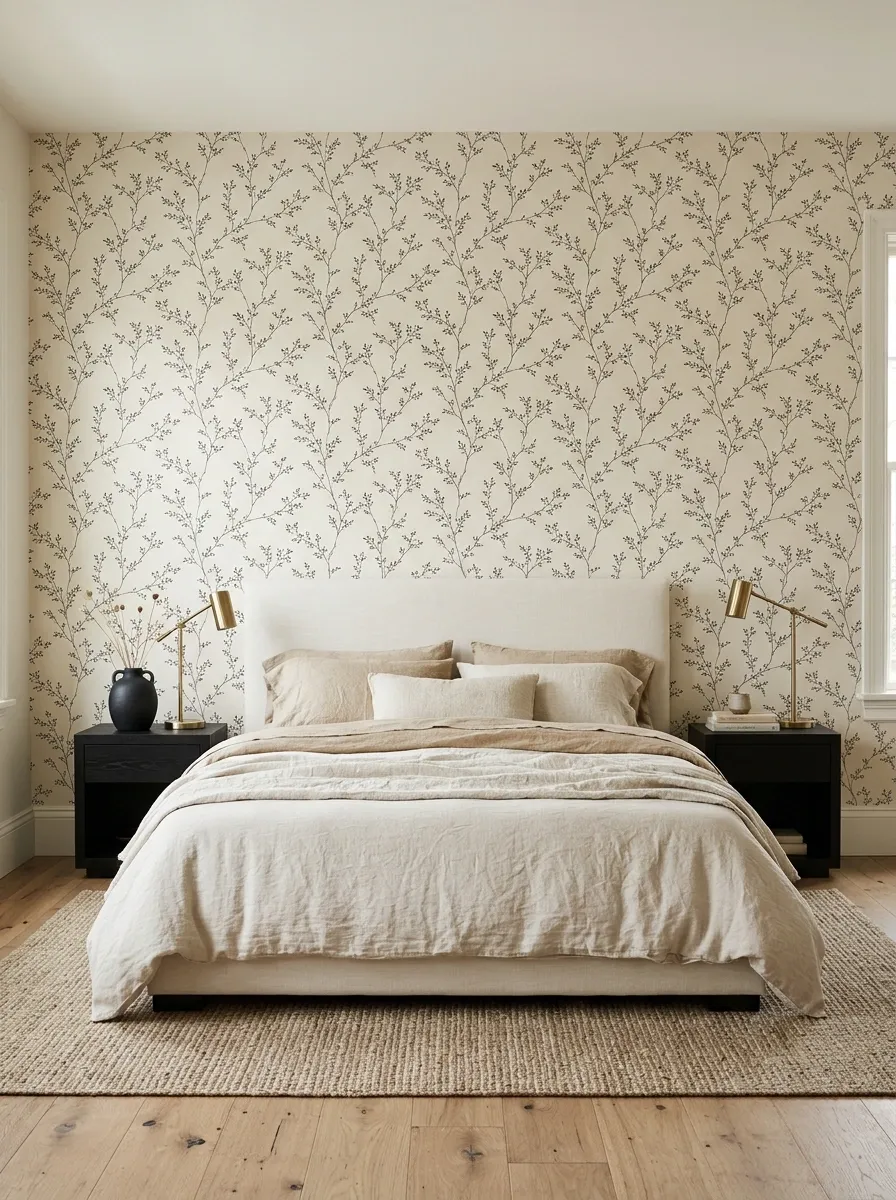
A cream-ground wallpaper with a fine black pattern can provide interest behind a simple bed. Choose a repeat with enough open background to remain readable.
Keep the headboard and bedding relatively plain. The wallpaper should not have to compete with several equally active textiles.
Inspect a large sample beside the room’s cream fabrics. A background that looks warm online may arrive noticeably different from your existing bedding, which is an avoidable argument between very similar neutrals.
The visible background is part of the pattern’s calmness.
Cream Checks With a Minimal Black Frame

A restrained cream-and-black check can give the bed a graphic identity. Pair it with a simple frame and quieter surrounding fabrics.
Choose the scale against the size of the bed. A tiny check reads differently from broad squares across a large duvet.
Avoid layering several other black-and-cream prints simply because they share colors. Coordination does not prevent patterns from arguing, and bedding has no obligation to resolve the dispute politely.
Let one pattern lead: Repeat the cream in plain pillowcases or a solid coverlet.
A Cream Upholstered Bed With One Dark Bedside Piece

A cream bed can remain the room’s soft center while one dark chest or bedside cabinet provides contrast.
Balance the arrangement through visual weight rather than demanding identical furniture on both sides. Lamps can relate through height or material without matching exactly.
Check that both sleeping positions remain practical. An asymmetrical scheme should not leave one person with generous storage while the other receives a tiny decorative perch and a lesson in compromise.
Balance appearance while keeping both sides useful.
A Low Black Platform Bed With Relaxed Cream Linen

A low black bed can suit a contemporary bedroom with cream linen and simple furniture. Keep the surrounding floor area clear so the lower profile feels deliberate.
Check that the bed height suits how you sit and stand. A low frame can look elegant and still be inconvenient for some people.
Use texture in the bedding rather than several decorative layers. The arrangement should feel relaxed enough to use without a nightly cushion-removal procedure.
| Keep low and simple | Add softness through |
|---|---|
| Bed frame | Comfortable linen or cotton |
| Bedside furniture | A restrained rug |
| Main silhouette | Useful curtains |
| Decoration | Varied fabric texture |
Cream Built-In Storage With Small Black Handles
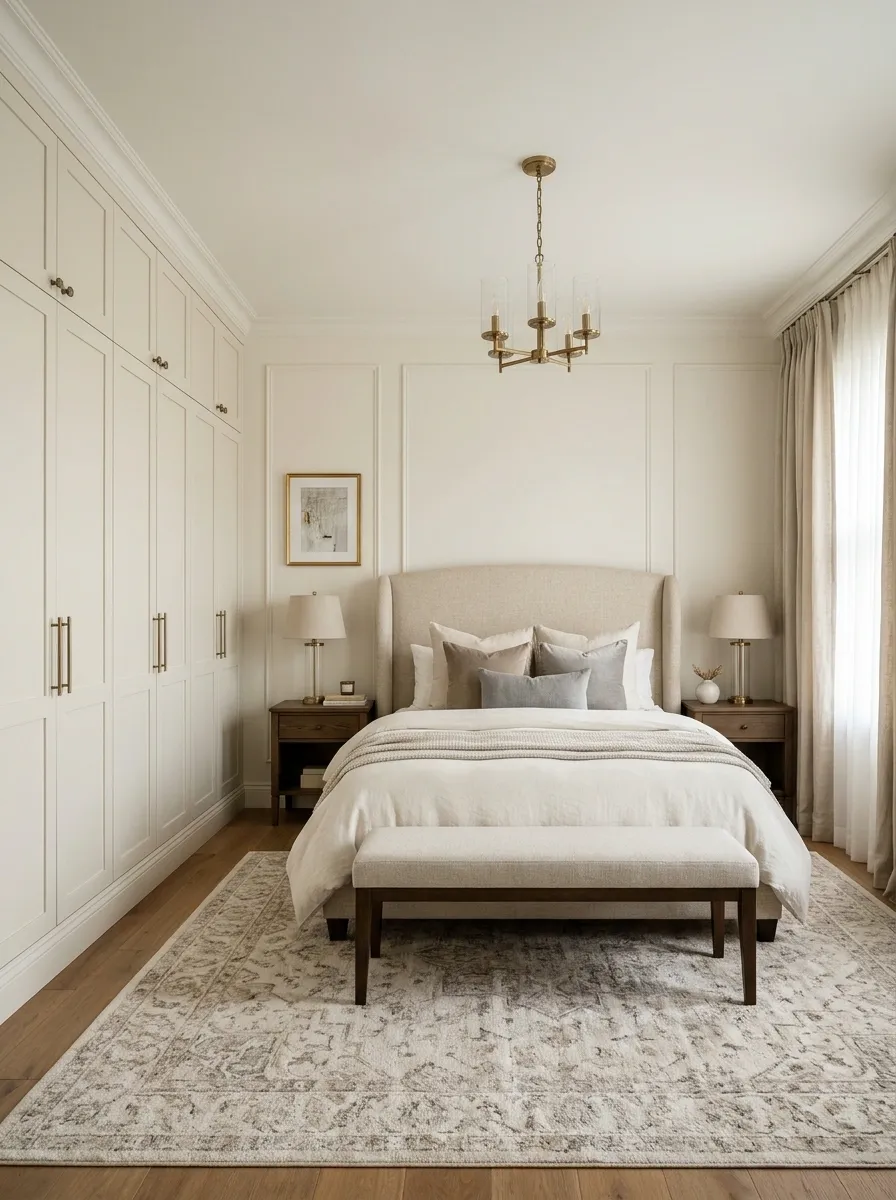
Cream storage can sit quietly against related walls, with black handles adding definition. This works well when a bedroom needs substantial cabinetry without making it the main feature.
Choose handle shape and projection for everyday use. Keep the door pattern simple if the storage occupies a large wall.
The small dark details can connect to a bed frame or lamp. You do not need black accessories on every shelf to prove the handles were selected intentionally.
Large pale field, smaller dark details. Keep the storage practical inside as well.
A Cream Reading Chair in a Darker Corner
A cream chair can bring a usable light-colored form into a room with darker walls or storage. Give it a reachable table and useful reading light.
Choose upholstery with realistic care needs and test the chair’s comfort. A bedroom seat should do more than hold a carefully arranged throw.
Keep the approach clear. A reading corner becomes less inviting when reaching it requires navigating between the bed, a planter, and furniture selected entirely for its photograph.
Complete the corner: Chair, light, reachable surface, and room to sit and rise.
A Black Storage Wall With a Pale Dressing Bench
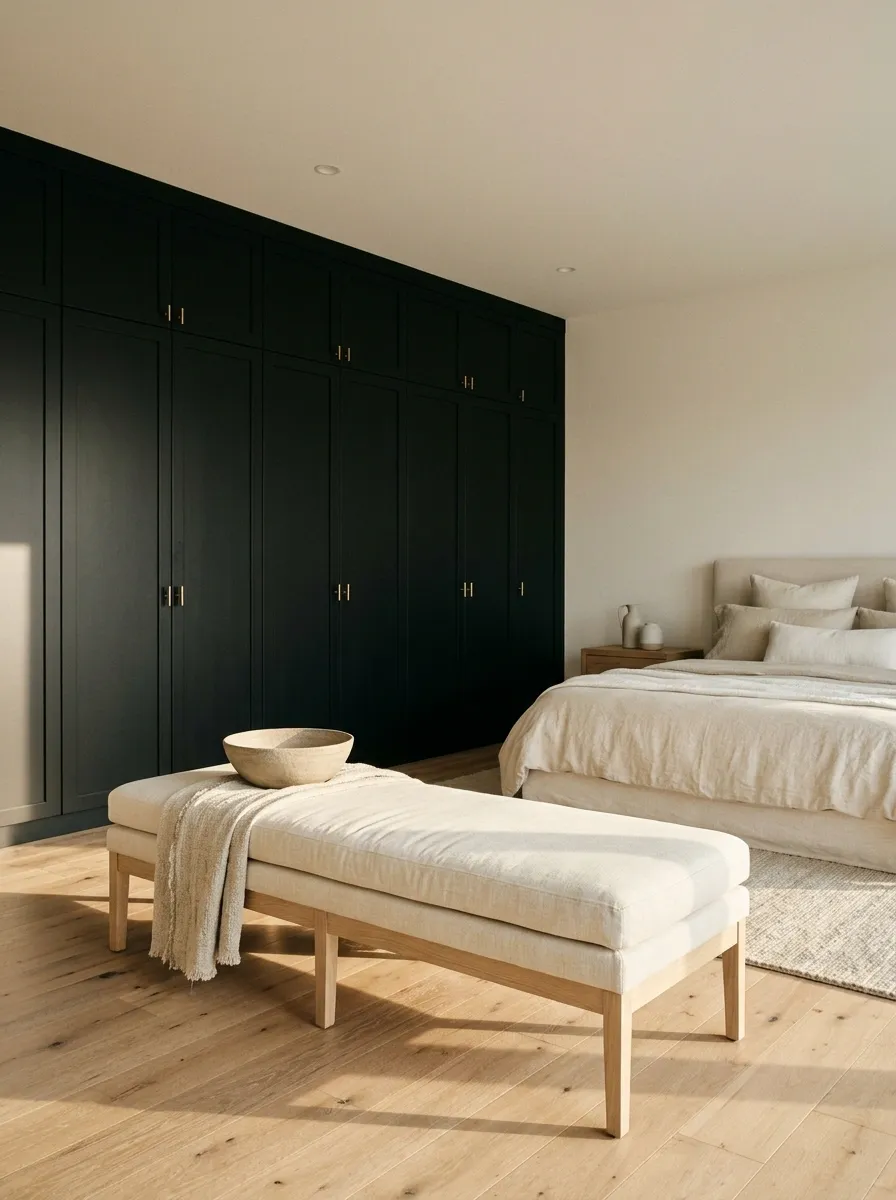
A large black storage run can feel intentional when a pale bench or seat softens the foreground and cream textiles balance the room.
Plan door movement and circulation before adding seating. The bench should remain usable rather than become a permanent display shelf.
Keep the storage fronts restrained so their scale does not become excessively busy. A large dark surface already has presence; it rarely needs elaborate handles and a separate decorative treatment on every door.
Keep opening space between storage and seating.
Twin Cream Beds With a Shared Black Chest
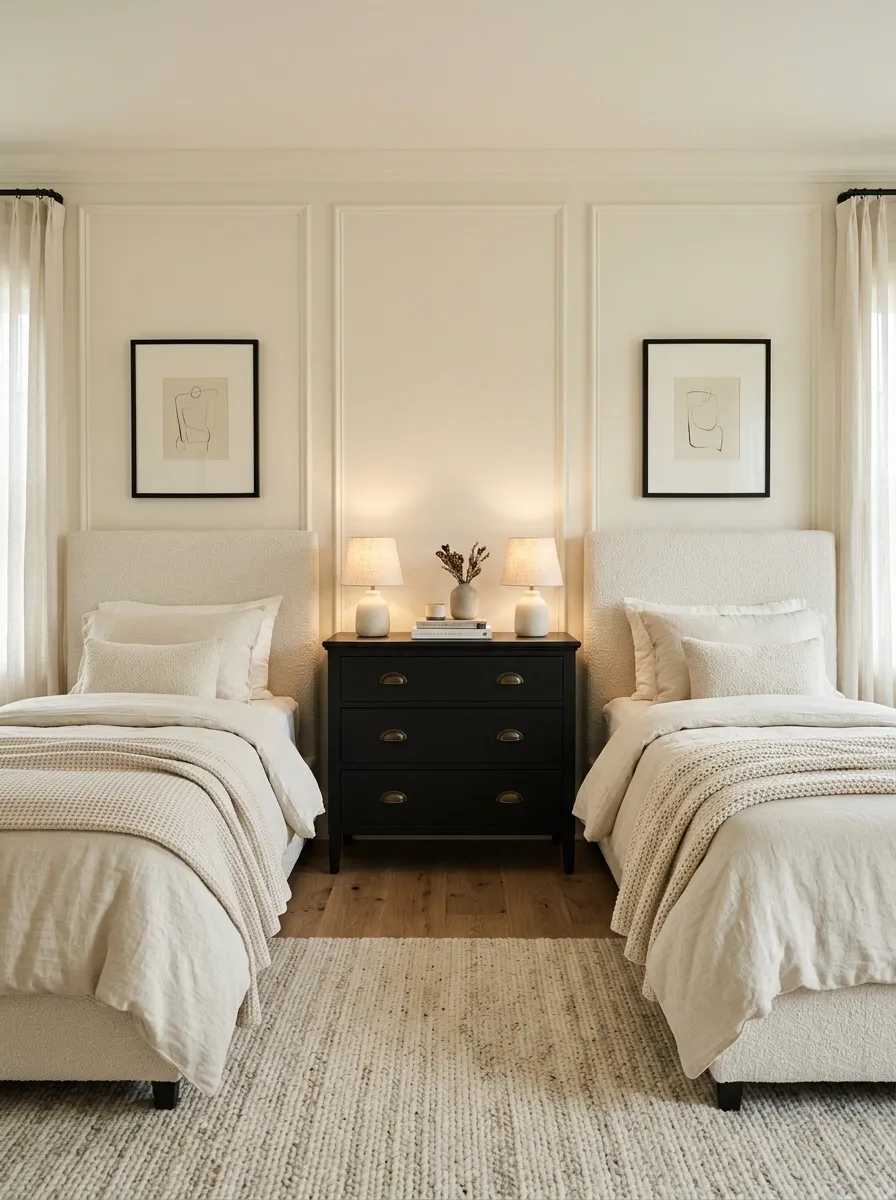
A shared black chest can connect two cream beds in a guest room where the dimensions allow a comfortable arrangement.
Give each bed useful light and personal space. Keep the bedding coordinated without making every textile identical.
Check the chest’s drawers with both beds in place. It should provide storage without requiring one guest to move a mattress before the other can retrieve their charger.
| Shared element | Individual needs |
|---|---|
| Central chest | Reachable surface |
| Related bedding | Comfortable bed |
| Coherent palette | Useful light |
| One main dark piece | Space for belongings |
A Black Upholstered Bed Against Warm Cream Walls
A black upholstered frame can provide depth without a black feature wall. Warm cream paint and lighter bedding keep the room from feeling visually heavy.
Choose the upholstery around comfort, texture, and cleaning requirements. A dark fabric can still show dust, lint, or pet hair.
Keep the bedside pieces simple. The bed’s larger dark shape already establishes the room’s focal point without requiring several smaller black objects to repeat the announcement.
Let the bed supply the main dark mass. Keep the walls warmer and quieter.
A Black Canopy Frame With Light Cream Curtains
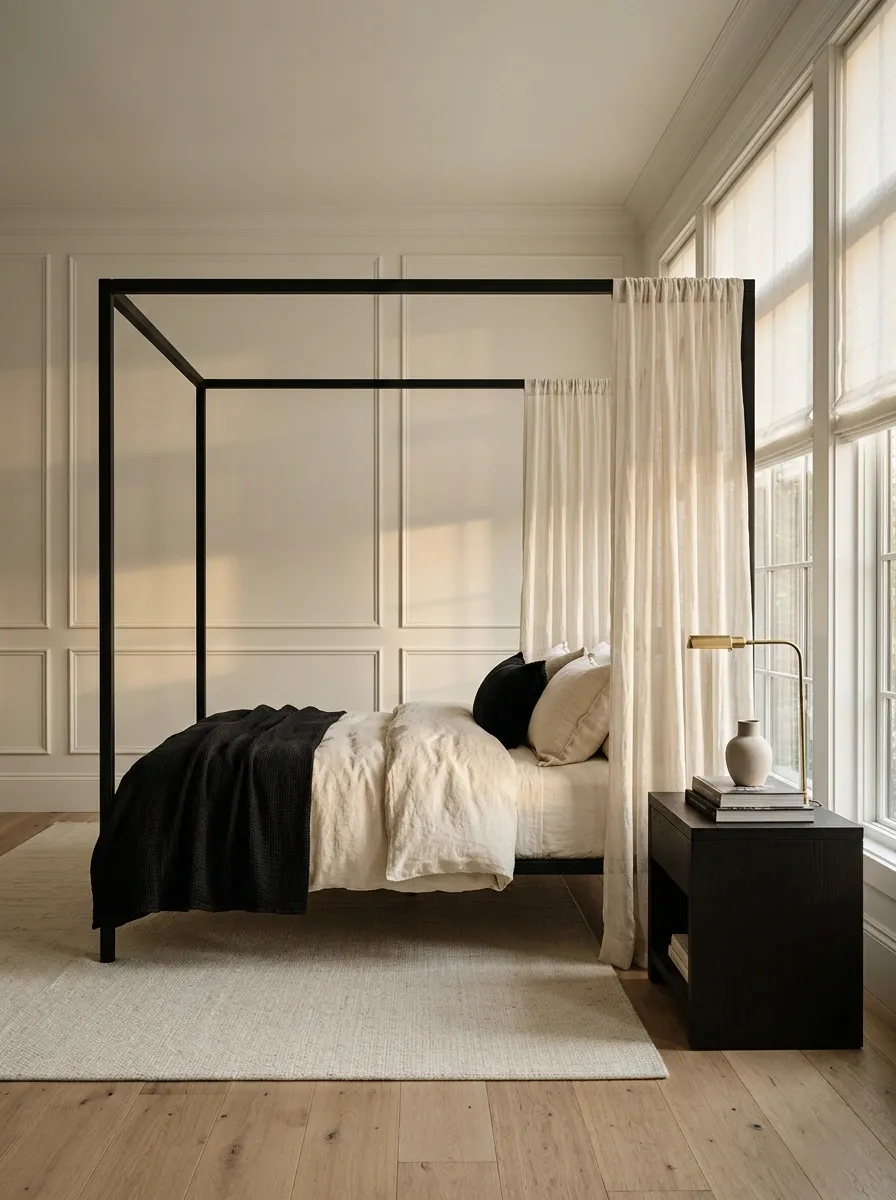
A simple canopy frame can provide architectural lines while light cream fabric softens the bed where the system and installation allow it.
Keep fabric safely clear of lighting, heaters, moving components, and access routes. Choose an arrangement that remains straightforward to clean and use.
The frame already creates a strong shape. Avoid excessive additional draping unless you genuinely enjoy navigating fabric before reaching the bedside table.
Keep access part of the design: The canopy should not complicate getting into bed, making it, or reaching a lamp.
Dark Curtains With Cream Walls and Bedding

Black or softened dark curtains can give a pale bedroom a strong vertical frame. Choose the fabric around practical light control, lining, and care.
Let the curtains hang and move properly without covering more of the window than intended.
Repeat the dark tone in a smaller existing element if the room needs a connection. The curtains can be the principal dark feature rather than the opening act for several additional dramatic surfaces.
Keep the treatment functional.
Dark fabric creates the outline; cream remains the broader room palette.
Cream Curtains Against a Dark Bedroom
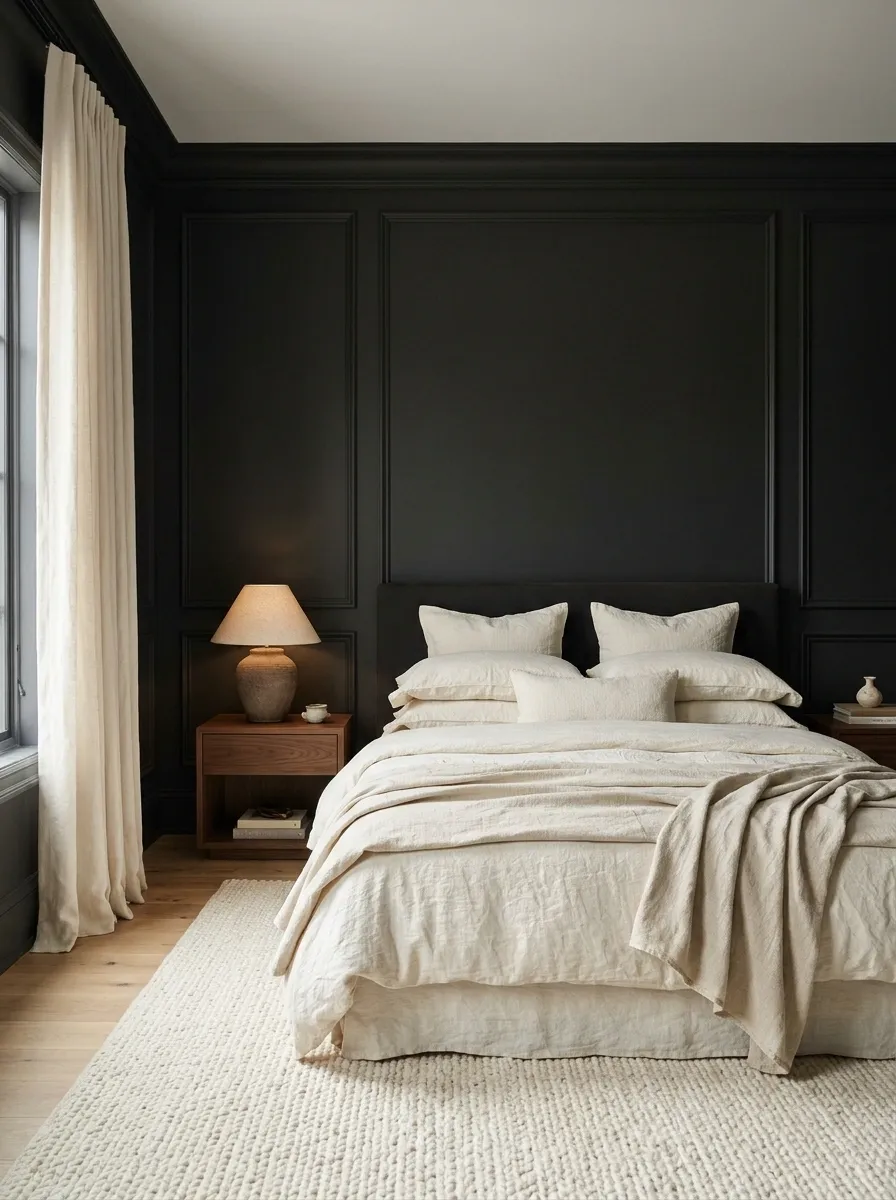
Cream curtains can create a softer light-colored area in a darker bedroom. Choose a shade that relates to the bedding without requiring an exact match.
Test how the fabric looks against the wall in daylight and with lamps on. Some creams become noticeably yellow beside cooler blacks.
Keep the curtain style straightforward. The contrast between dark wall and pale fabric can supply the detail without an elaborate valance joining the arrangement.
| Compare together | Notice |
|---|---|
| Curtain sample and wall | Undertone relationship |
| Curtain and bedding | Related warmth |
| Daylight and lamplight | Color changes |
| Fabric and window | Practical coverage |
A Black-and-Cream Rug With Plain Bedding
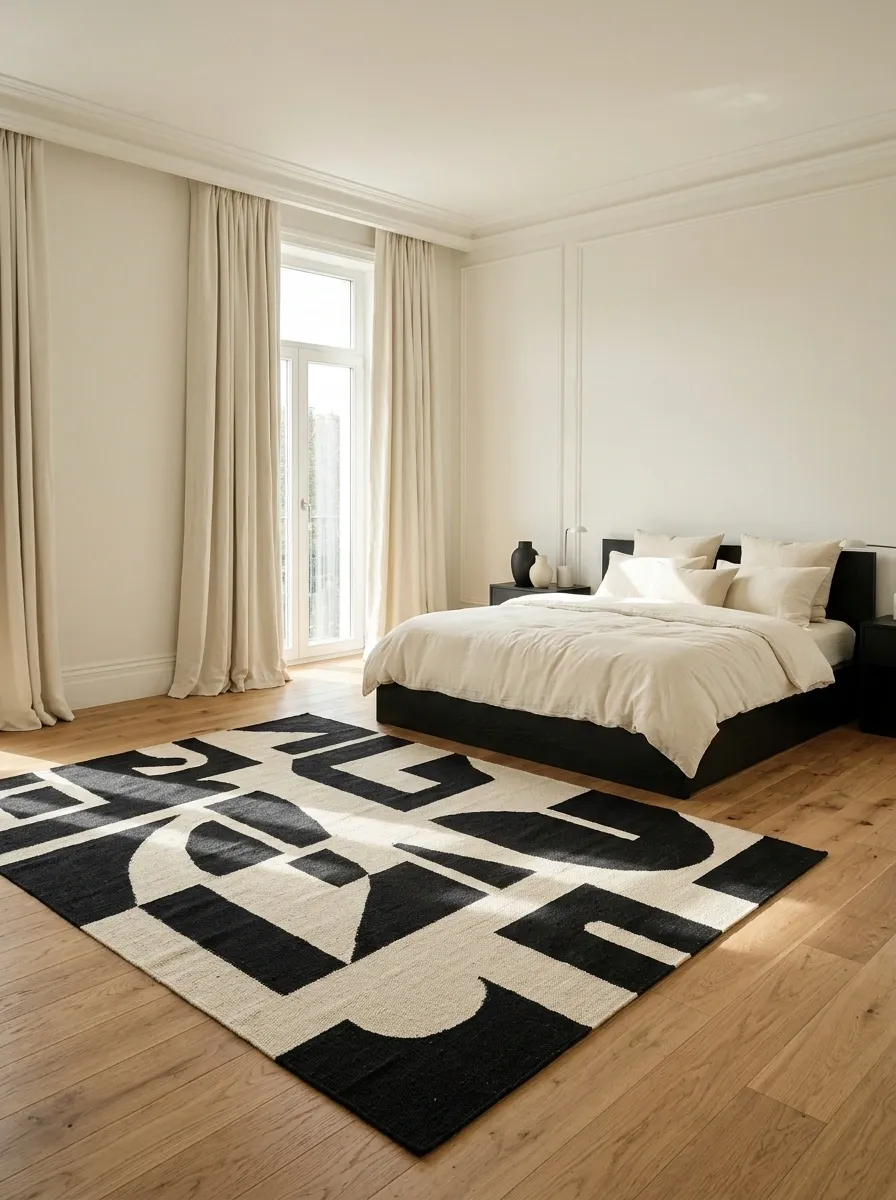
A patterned rug can supply the room’s graphic element while bedding and curtains stay relatively plain.
Choose a size that works with the bed and walking routes, using suitable measures to keep it secure. Check door clearance and cleaning needs.
A large pattern deserves enough visible floor to be appreciated. If almost the entire rug disappears under furniture, a quieter practical choice may make more sense than paying for a concealed design statement.
Let the rug carry the pattern while the bed remains quieter.
A Small Houndstooth Accent in a Plain Room

Houndstooth can give a black-and-cream bedroom a tailored detail through a cushion or occasional chair.
Use it selectively if the repeat is high contrast. Pair it with solid bedding and a simpler rug so the pattern remains clear.
Check the scale across the actual item. A small sample and a fully upholstered chair can produce different levels of visual activity, particularly in a compact bedroom.
Treat it as the main print: Sharing colors does not automatically make several other patterns quiet enough to add.
Black Linework Wallpaper With Cream Furniture
A fine black botanical or abstract line print can introduce detail behind cream furniture without a large dark wall.
Choose a background with enough open space and plan the repeat around the headboard or wardrobe.
Keep the remaining textiles mostly solid. The linework should feel readable from the doorway, rather than dissolve into a busy texture because every fabric has arrived with another small-scale pattern.
Fine wall detail needs quieter fabric surfaces nearby.
Low Matte-Black Furniture With Cream Wool-Look Texture

Low dark furniture can give a room a grounded outline, while a cream woven blanket or upholstered seat adds softness.
Choose textiles by actual feel and care requirements rather than appearance alone. A rustic-looking fabric is not automatically comfortable against skin.
Keep the wall decoration restrained so the furniture’s silhouette remains clear. This can work in a smaller room where you want depth without a large dark cabinet occupying the whole view.
| Dark elements | Softening elements |
|---|---|
| Lower furniture profiles | Cream textured bedding |
| Matte-looking surfaces | Warm wall color |
| Clear silhouettes | A suitable rug |
| Restrained hardware | Comfortable upholstery |
A Cream Desk Within a Dark Alcove
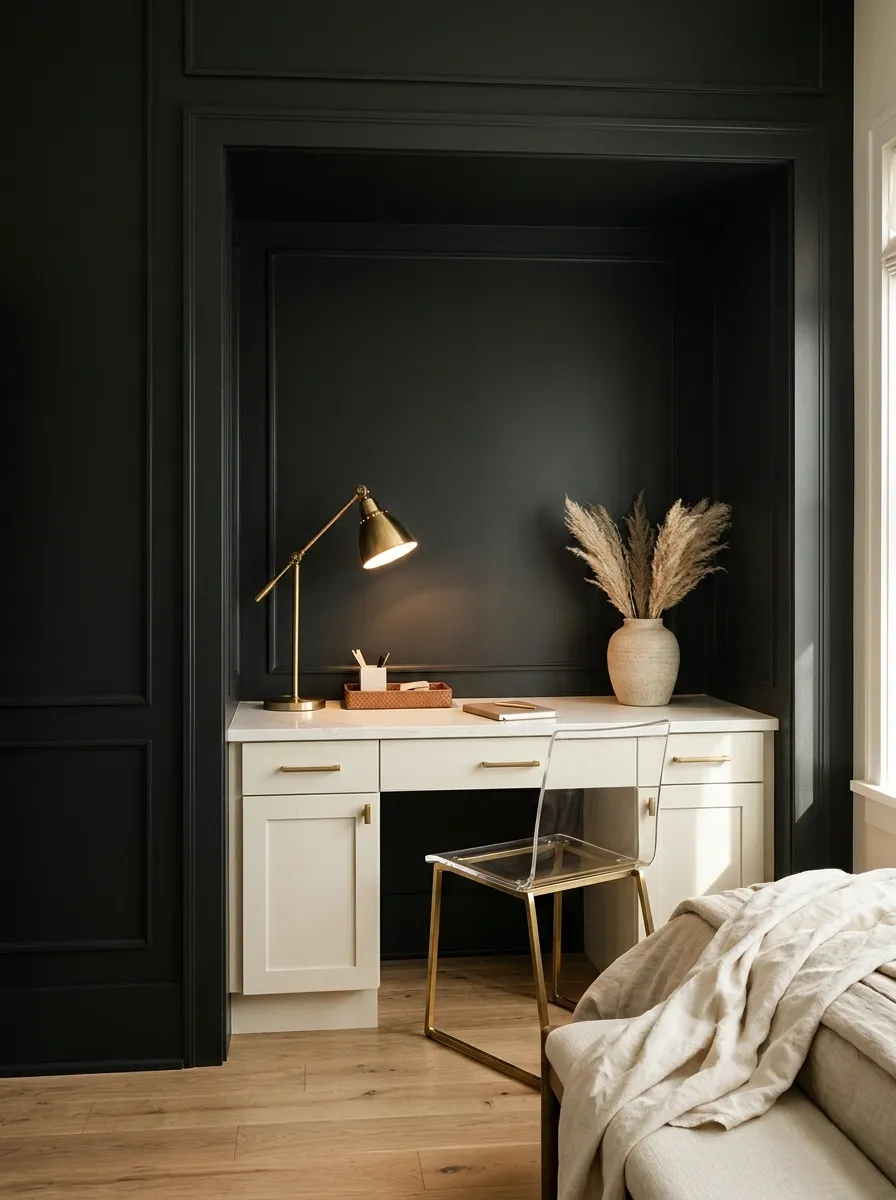
A dark alcove can define a small bedroom work area, with a cream desk making the surface easier to distinguish.
Check the chair, legroom, power, and lighting before choosing the paint. The alcove’s appearance should follow a usable working position.
Keep supplies contained so the room can return to a calmer sleeping arrangement. A bedroom desk should not turn into a permanently expanding paper installation merely because the color scheme looks sophisticated.
The alcove defines the zone; the desk still needs practical dimensions.
A Black-and-Cream Bedroom With One Vintage Timber Piece

A vintage timber chest or table can make the palette feel less rigid. Choose a piece with useful storage and a tone that sits comfortably beside the floor.
Keep the black and cream as the main relationship while the wood adds material variation.
Inspect condition and stability before buying. Character is welcome, but a drawer that refuses to open and a frame that leans noticeably are practical issues rather than complimentary evidence of age.
Let the timber be the variation: You do not need to introduce several additional accent colors at the same time.
A Rental Bedroom Updated Through Reversible Layers
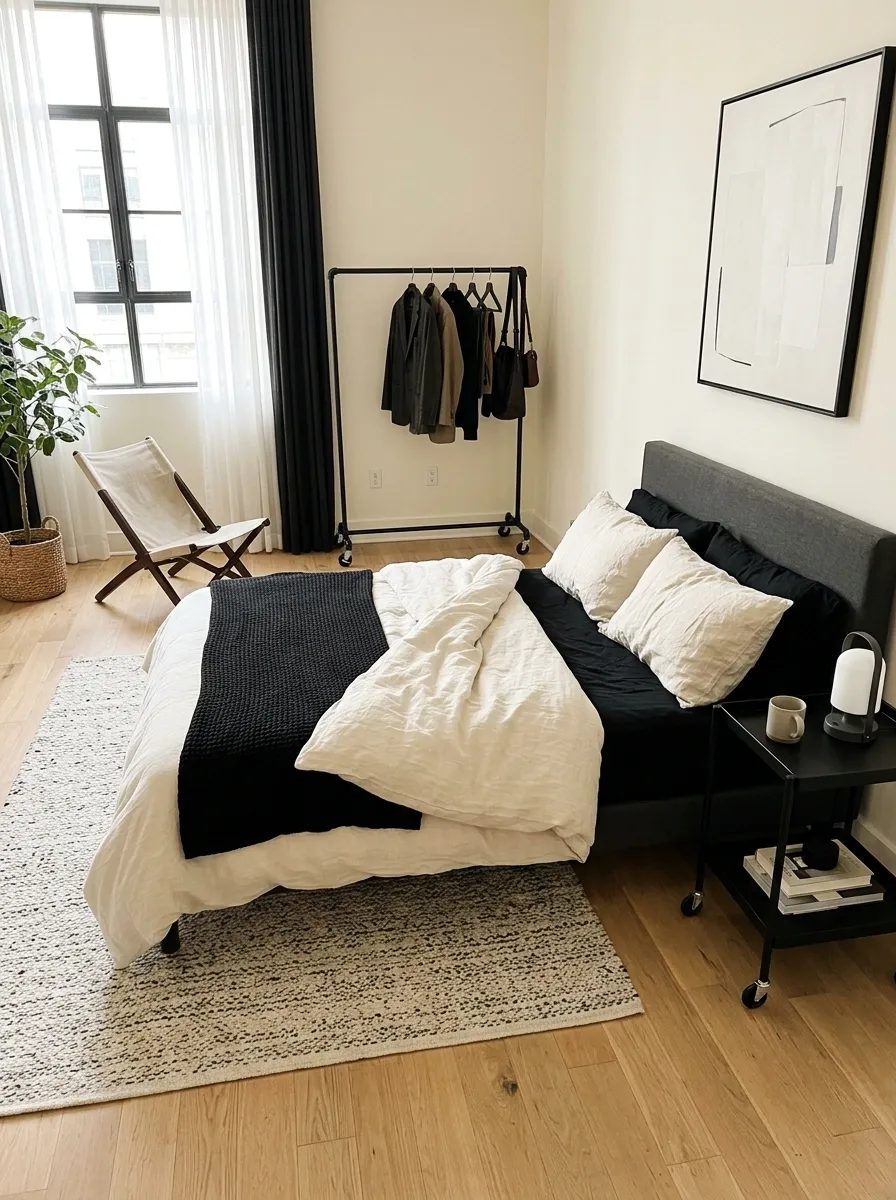
A rental room can take on the palette through bedding, curtains where permitted, suitable lamps, and movable furniture.
Keep the existing wall and floor finishes in the decision. Choose cream tones that relate to them, then add black where the contrast is useful.
Check permissions and installation requirements for anything attached. The room can feel coherent without painting a feature wall or covering surfaces with products whose removability has not been tested.
BUILD THE PALETTE THROUGH THE MOVABLE LAYERS
The larger pale field.
The darker outline.
The relationship to work with.
Look at the Room With the Bedding Turned Back
A bedroom spends much of its life partly used: curtains open, duvet folded back, chair occupied, bedside table carrying ordinary objects.
Check the scheme in that state.
If the room only looks convincing when every dark and pale surface is arranged precisely, simplify it. A good black-and-cream bedroom has enough material depth and practical comfort to survive the perfectly reasonable event of someone sleeping there.