
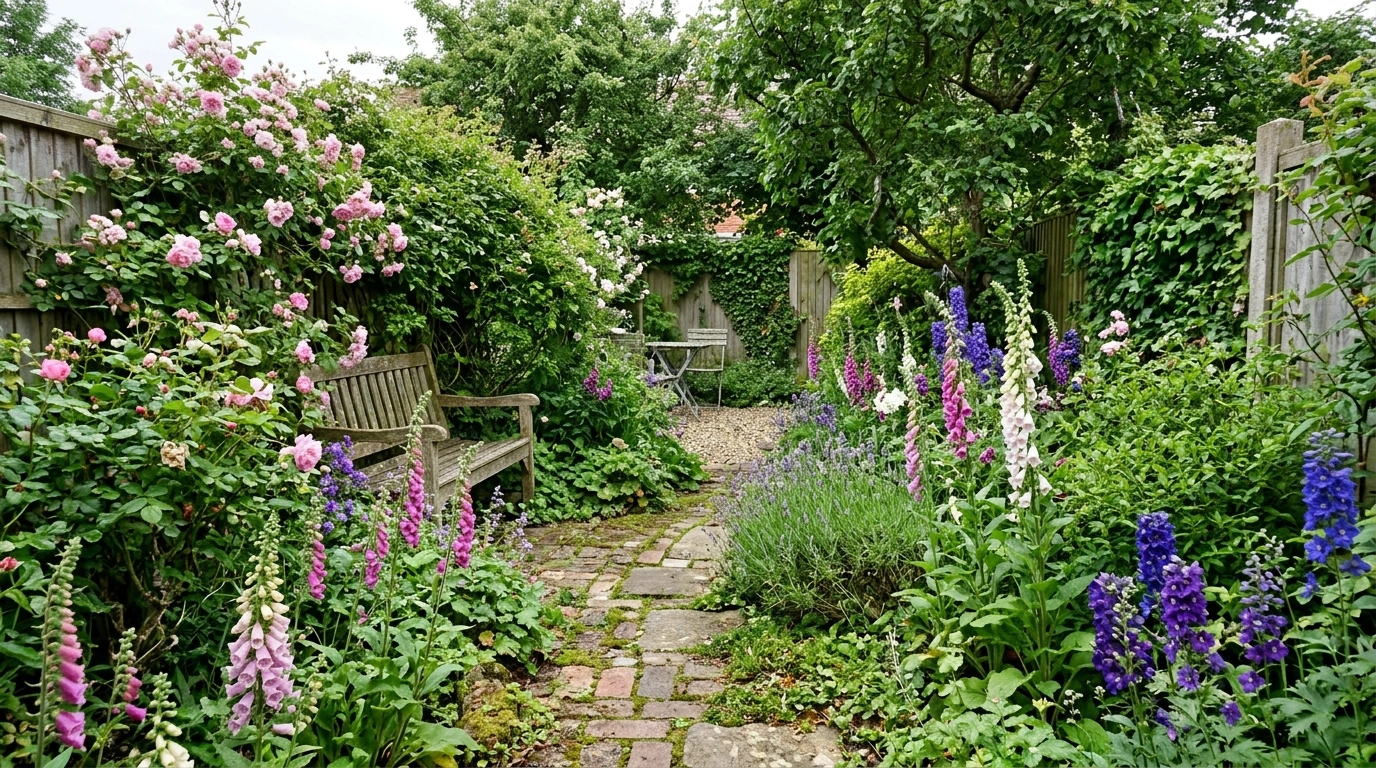
An English-style backyard is easy to imitate badly. Add a rose arch, scatter a few pots, and the garden may look romantic for a week while the overall layout still feels unfinished.
The most appealing gardens have an underlying structure: paths that lead somewhere, mixed borders arranged by height, planting that works across seasons, and a believable relationship to the house.
Choose according to your climate, water access, sunlight, and maintenance capacity. The photographs people save are only one moment of a living garden, so the best design is the one you can keep healthy through the year.
Give Romantic Planting a Clear Structure
English garden character often comes from the contrast between defined paths or hedges and abundant mixed planting. Start with circulation and the shape of beds. Then choose locally suitable plants by mature size, bloom time, drainage, and sun requirements rather than copying a British planting list unchanged.
Finished Concepts
Rose Arch Opening Into a Flower-Filled Lawn
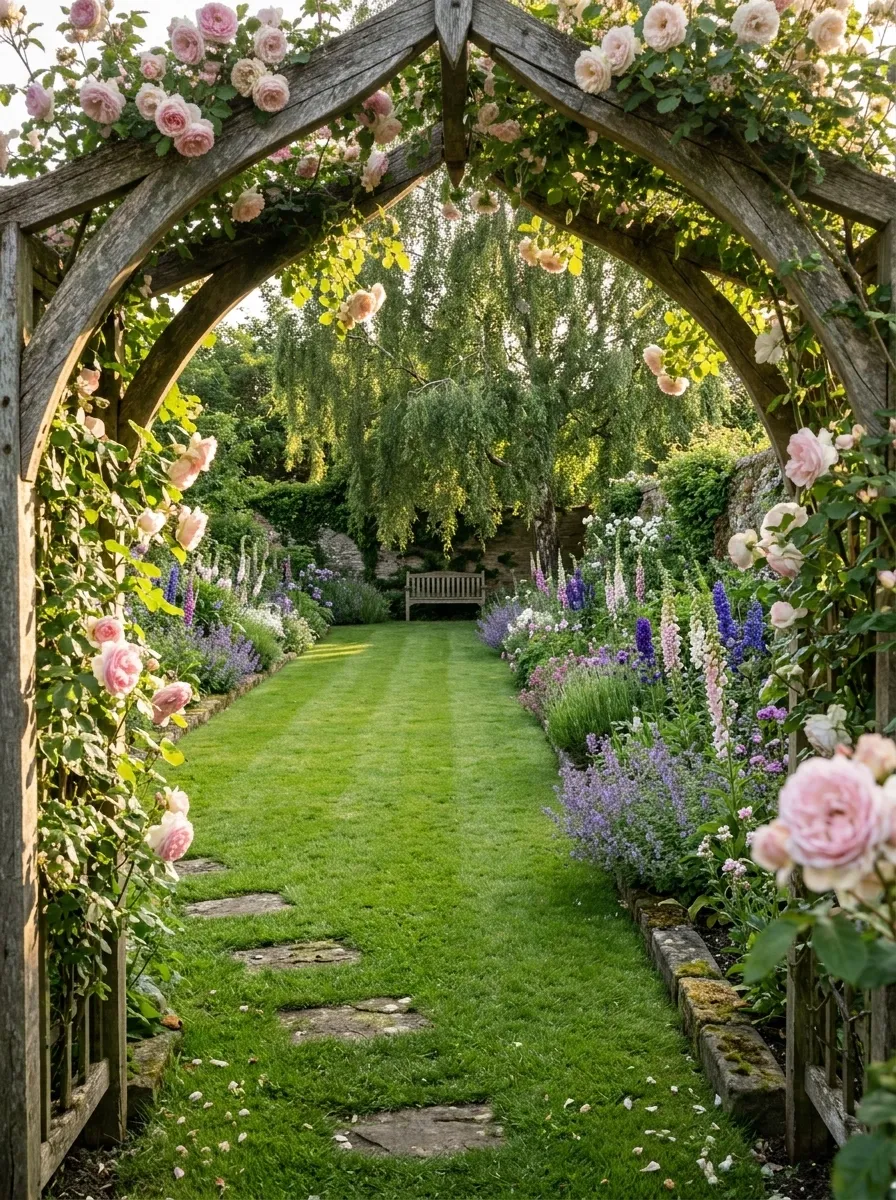
A timber rose arch frames the entrance to a rectangular lawn enclosed by deep herbaceous borders. A small weathered bench waits at the far end beneath a tree. The arch creates a destination and the lawn gives the dense planting a calm center. Repeated flowering colors lead the eye through the garden.
Choose climbing varieties suited to your climate and secure the arch properly.
Curving Gravel Path Through Cottage Borders
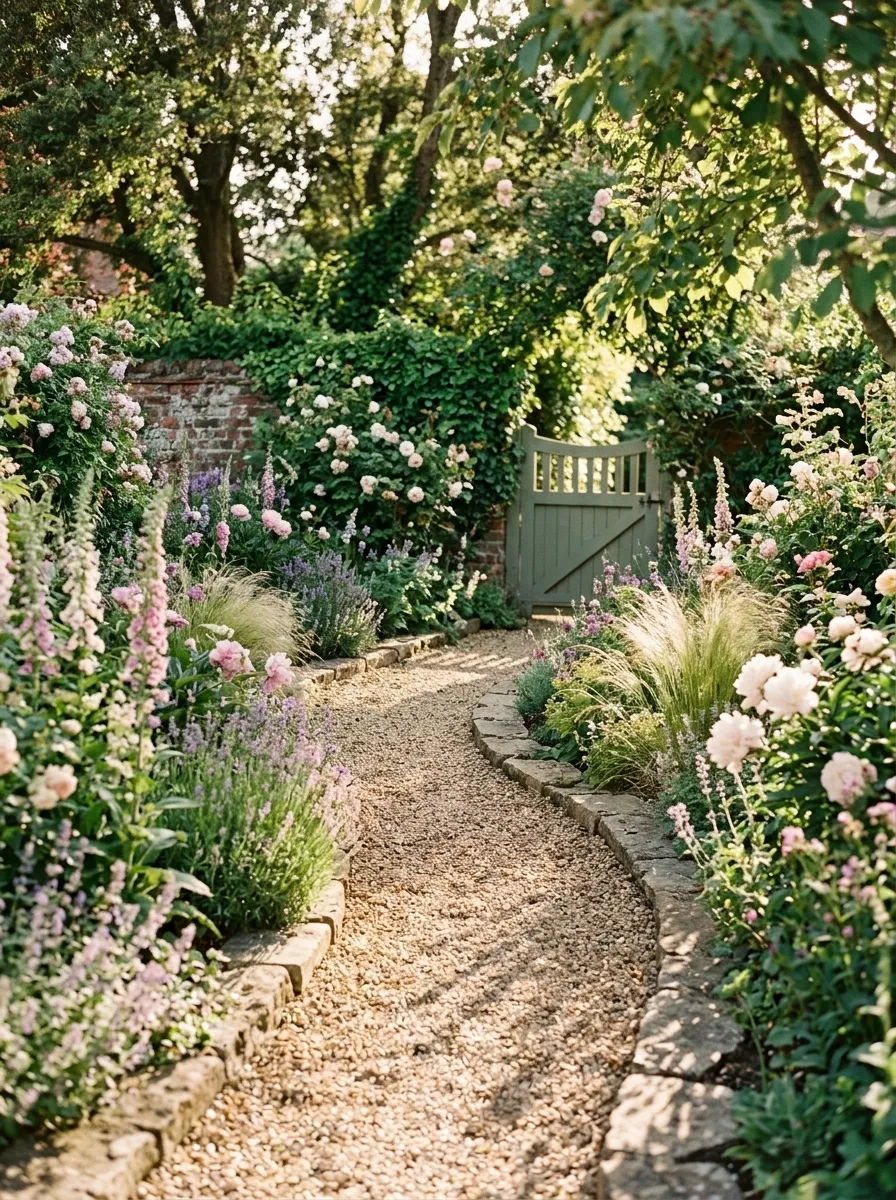
An irregular gravel path winds between densely planted beds of perennials, airy grasses, and flowering shrubs, leading to a little painted gate. The path makes a modest plot feel like a journey instead of a rectangle. Its curves are purposeful because they reveal new planting along the way.
Provide firm edging and an accessible walking surface where needed.
bend, planted reveal, destination gate.
Formal Box-Edged Garden With a Central Fountain
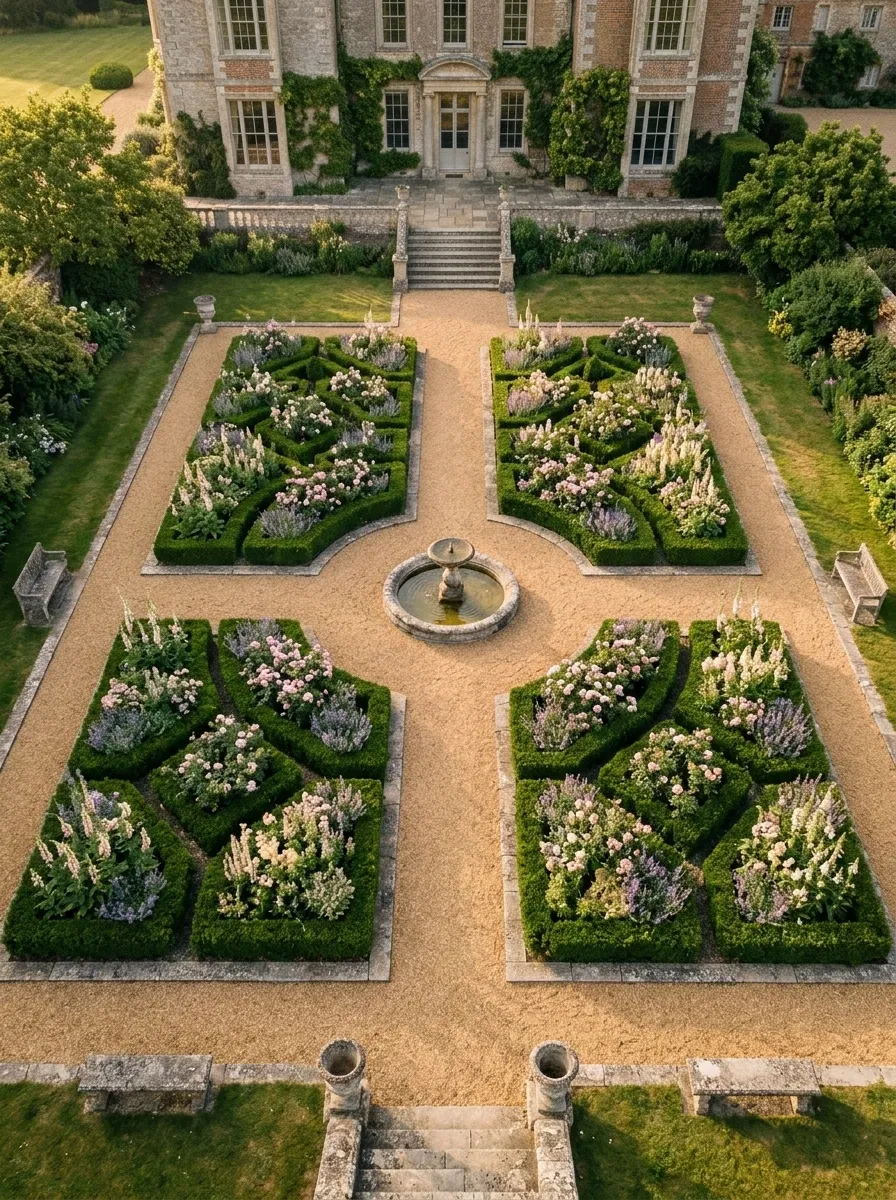
Four low hedged beds frame a modest fountain in a symmetrical garden, with clipped forms providing year-round structure and soft flowers adding seasonal color. The geometry gives an ordered frame to otherwise abundant planting. It suits a house with strong architectural symmetry.
Research disease-resistant hedge alternatives appropriate to your region.
Walled Kitchen Garden With Raised Vegetable Beds
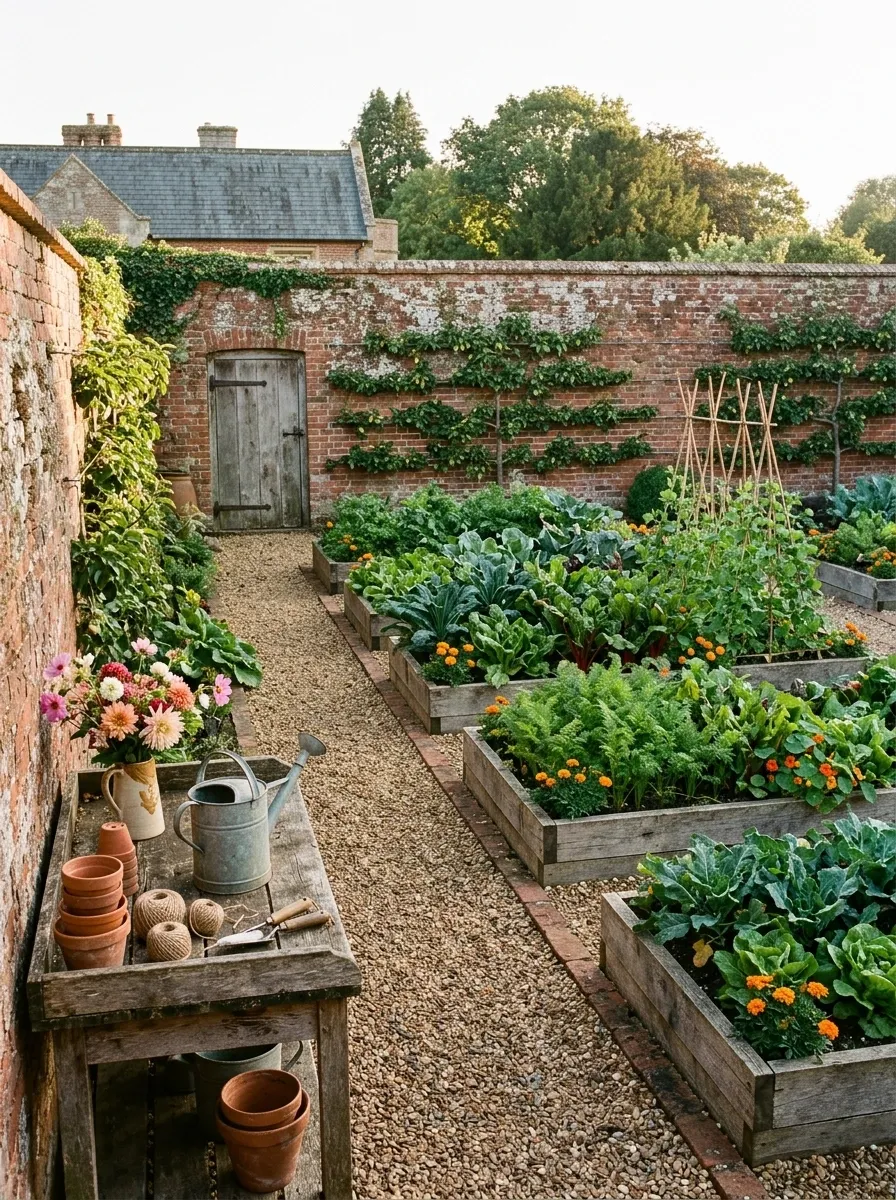
Brick walls enclose raised vegetable beds in tidy rows, with espalier fruit along the boundary, simple gravel paths, and an outdoor potting bench. Edible growing becomes visually attractive when paths, bed edges, and vertical planting are composed together.
Plan crop rotation, irrigation, and soil quality before constructing beds.
Small Courtyard With Climbing Roses and Bistro Seating

A compact brick courtyard combines a two-seat iron table, climbing roses on trellis, narrow lavender-edged beds, and soft wall lighting. The walls become vertical garden space while the clear central paving keeps the courtyard usable.
Choose plants that tolerate the actual light and heat reflected by walls.
Long Mixed Borders Against a Dark Fence
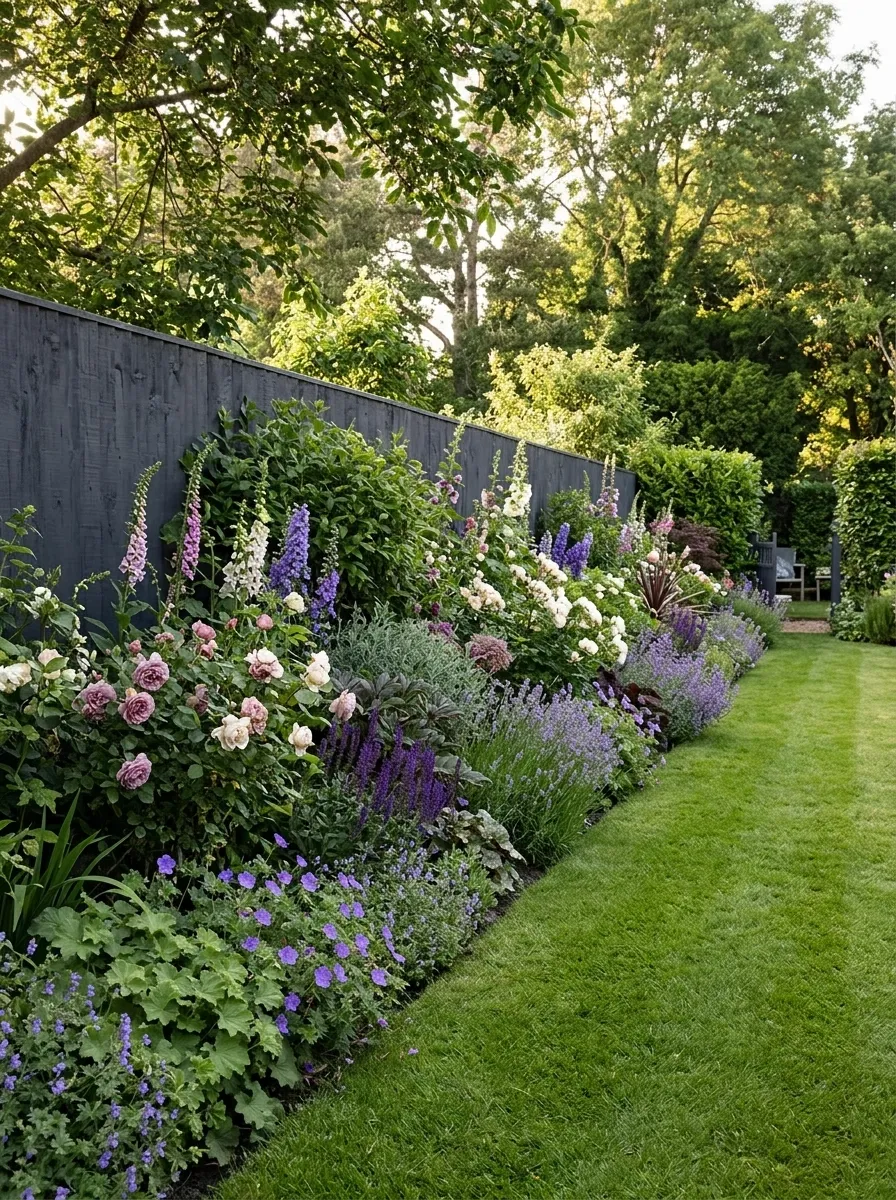
A dark painted fence backs generous borders of shrubs, tall flowering perennials, middle-height plants, and low edging. A narrow lawn provides space to enjoy the display. The dark boundary visually recedes behind the flowers, while layered heights create depth in an otherwise ordinary rectangular garden.
Select heights using mature plant dimensions, not nursery pot size.
tall rear, mixed middle, low edge.
Wildflower Meadow and Mown Garden Path
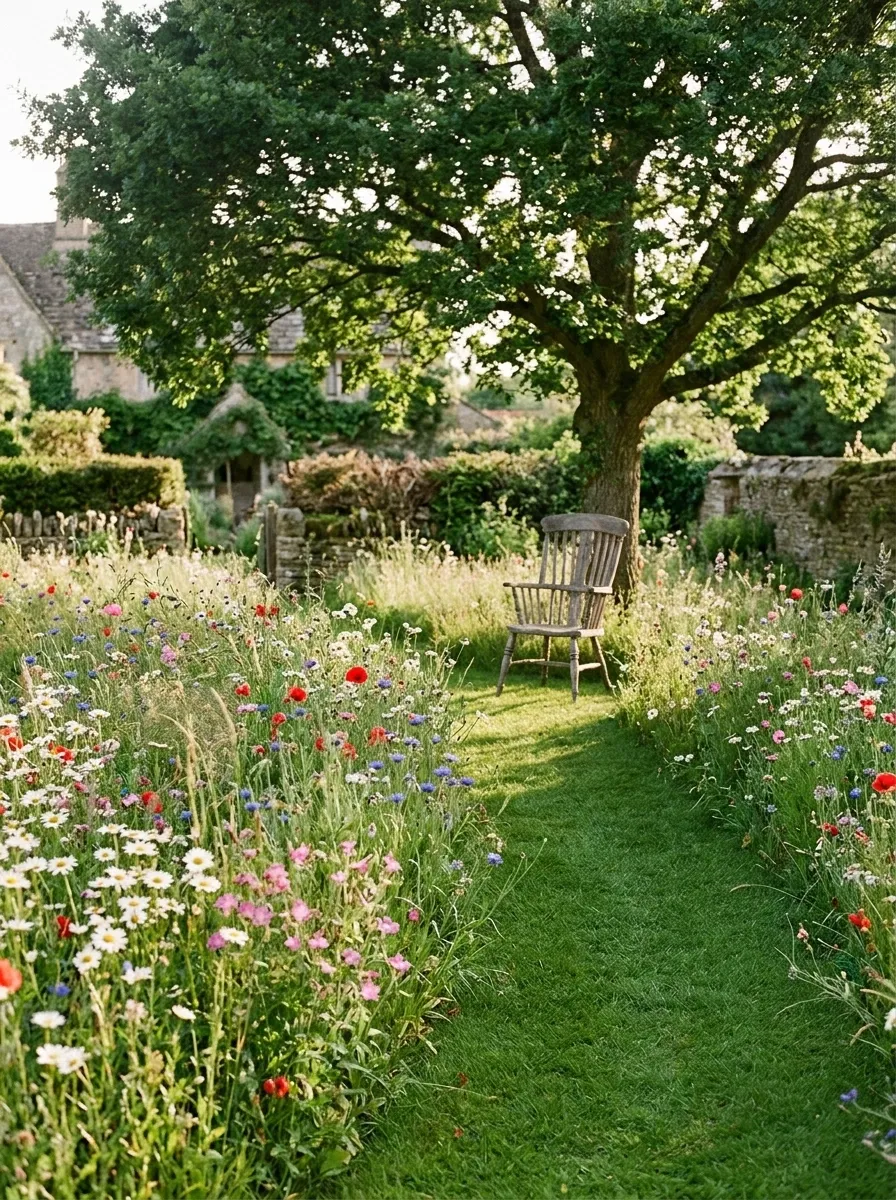
A small meadow area is allowed to grow within a larger naturalistic backyard, with a clearly mown path leading to a wooden chair under a tree. The contrast between loose planting and a deliberate walking line makes the meadow feel designed rather than neglected.
Use native or locally suitable species and manage seasonal cutting.
White Garden Around a Stone Bench
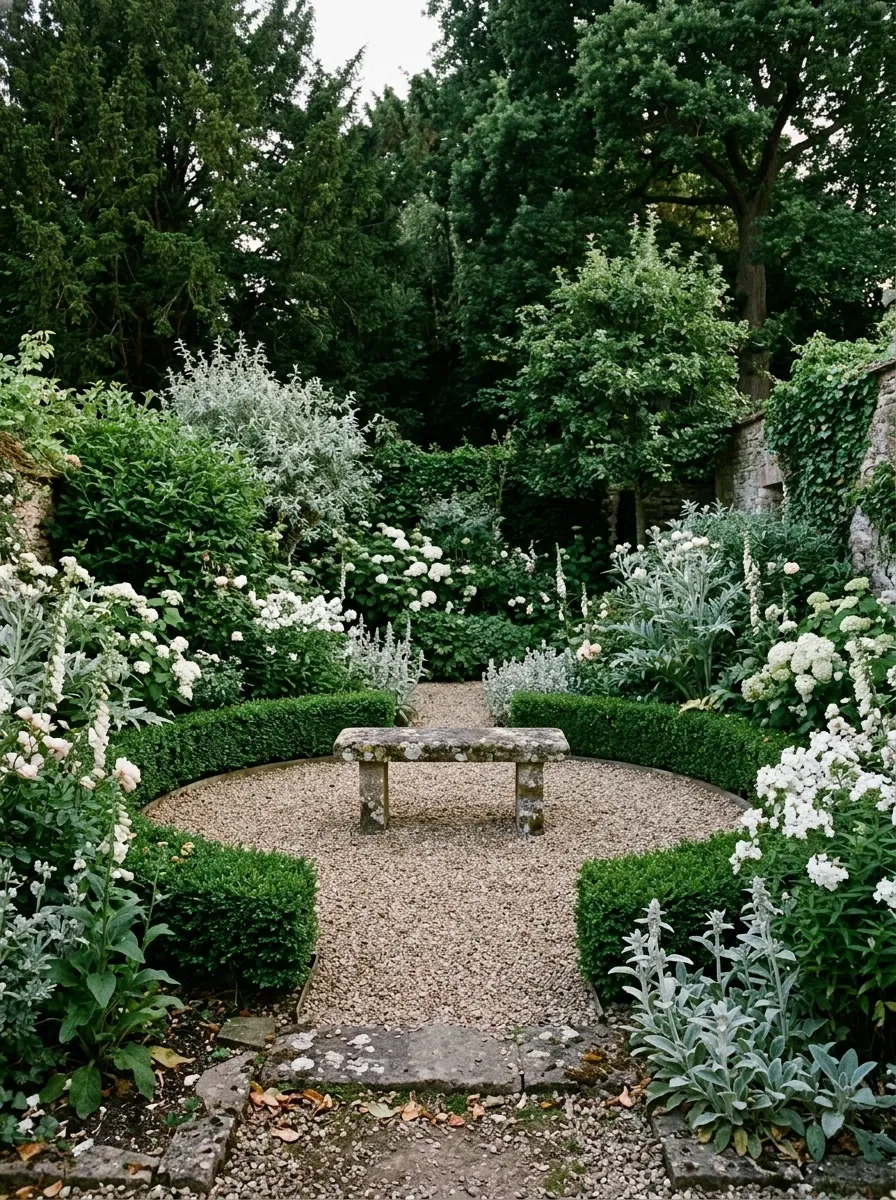
White flowering shrubs, pale perennials, silvery foliage, and a modest stone bench surround a gravel circle enclosed by clipped greenery. Restricting flower color highlights shapes and textures, particularly in evening light. The green structure prevents the scene from washing out.
Mix bloom times so the garden is not empty after one flowering season.
English Country Garden With a Pergola Dining Area
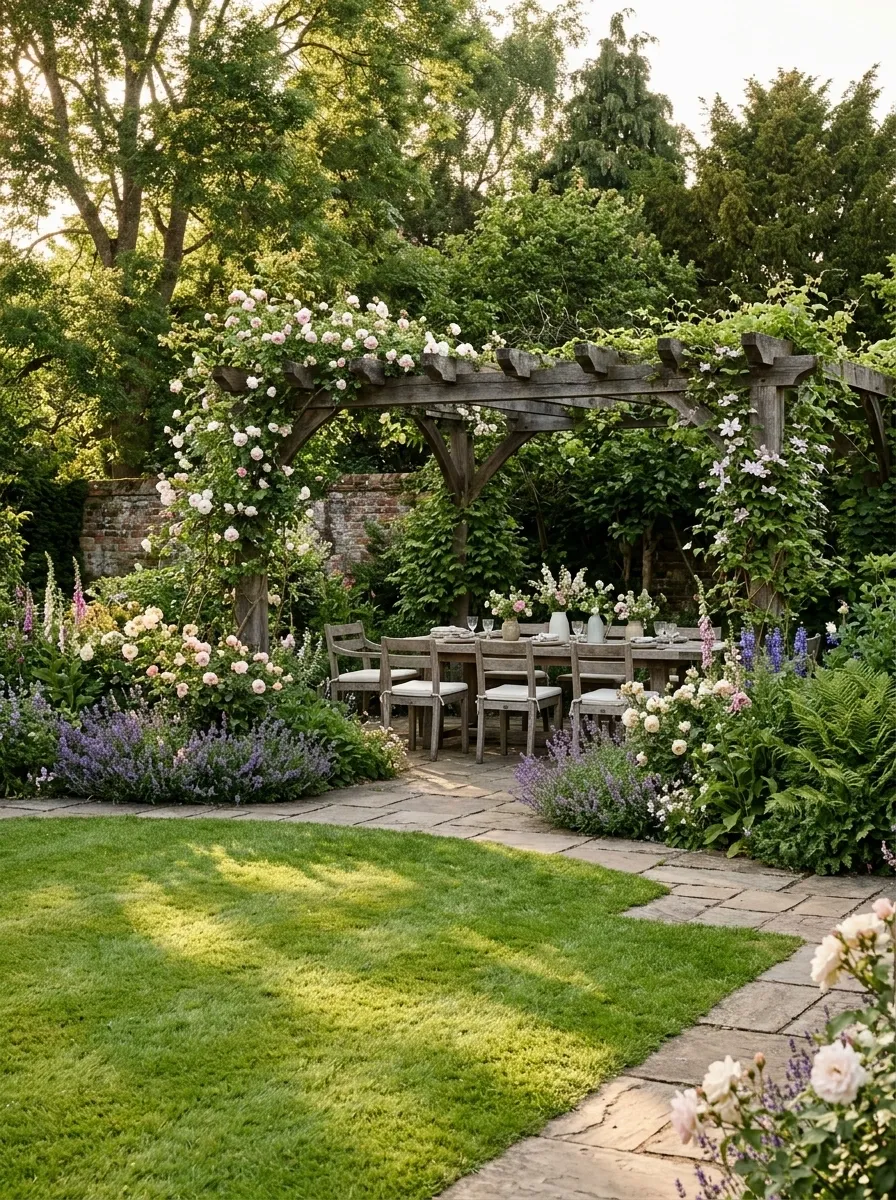
A timber pergola frames a dining table at the back of a lawn, with climbing flowers and deep beds connecting the structure to the garden. The outdoor dining room feels like a destination rather than furniture abandoned on grass. Planting softens the timber without hiding its shape.
Choose a durable pergola and maintain clear headroom and footing.
Brick Path Through a Herb Garden
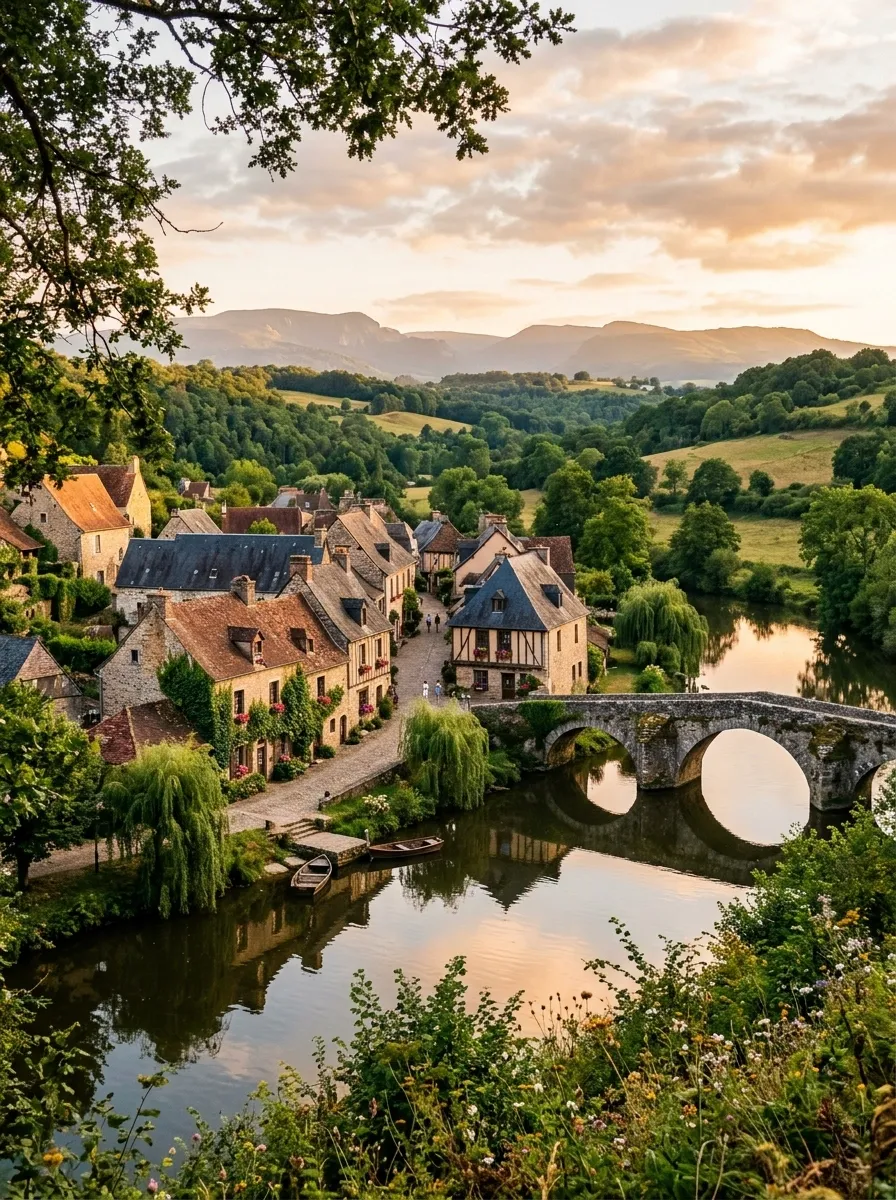
A narrow herringbone brick path runs between clipped herb beds and flowering perennials, ending at a small greenhouse. Terracotta pots line the greenhouse wall. The fragrant planting makes everyday trips through the garden sensory, while brick provides durable structure.
Check slipping risk on shaded or mossy bricks.
Pond Garden With Irises and Informal Planting
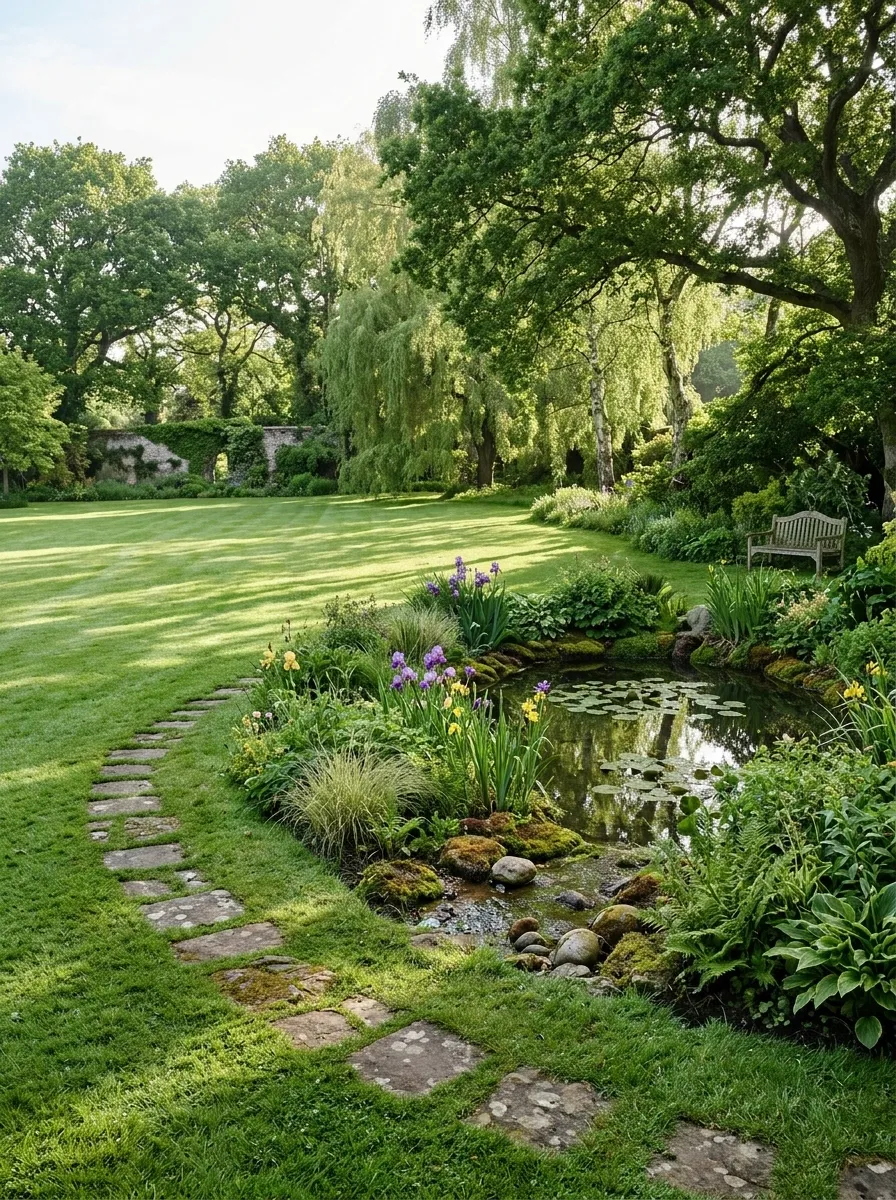
A small naturalistic pond is edged with moisture-tolerant plants, irises, grasses, and stepping stones, set within a broader lawn and shaded seating area. Water becomes part of the landscape rather than a decorative bowl placed in a corner. The soft edges help the feature feel established.
Use child-safe design, appropriate barriers, and local wildlife guidance.
Cottage Greenhouse and Flower Cutting Beds
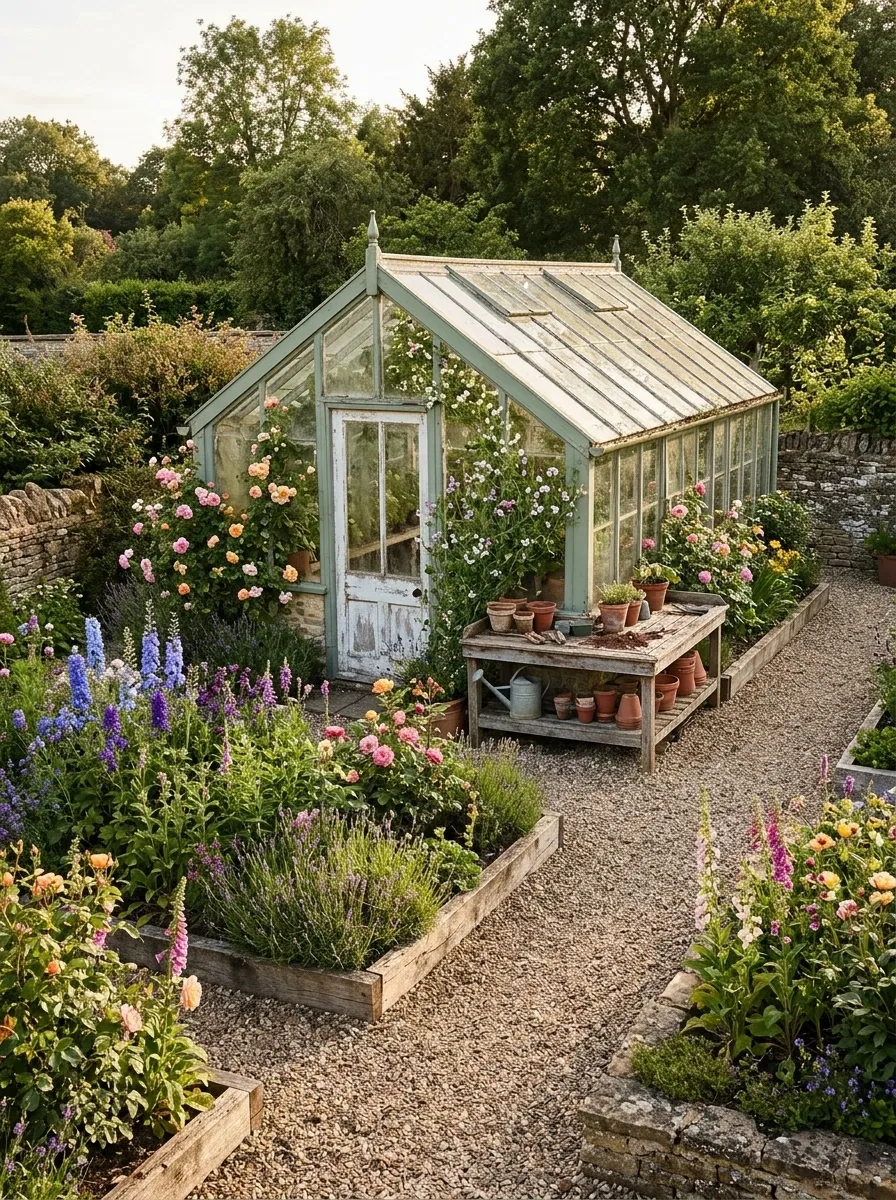
A small painted greenhouse sits among rectangular cutting beds with a broad gravel path and a low potting table. Flowering climbers soften the greenhouse entrance. The greenhouse anchors the composition, while orderly beds give the abundance a working purpose.
Site the greenhouse for sunlight, ventilation, and safe access.
greenhouse, harvesting rows, potting station.
Shaded Woodland Border Under Mature Trees
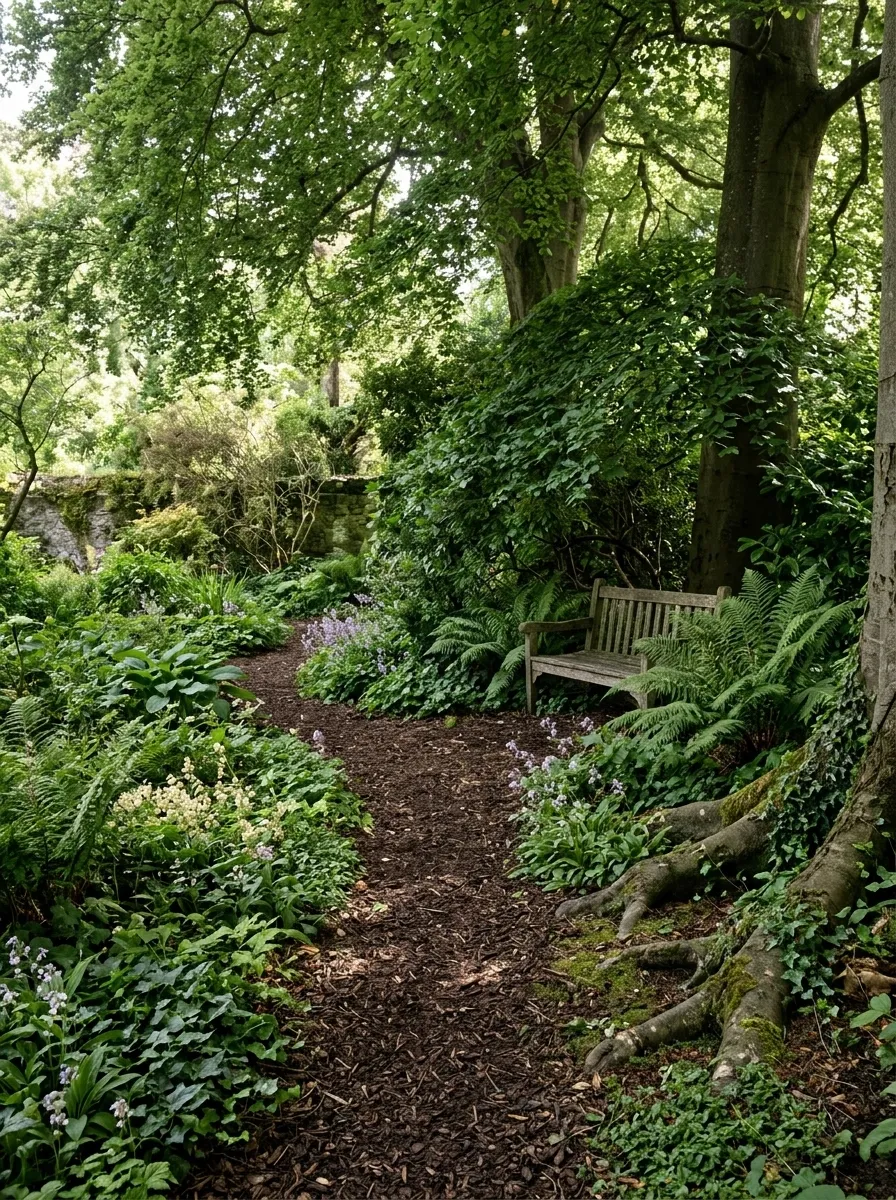
A winding bark-mulch path moves beneath mature trees past ferns, shade-tolerant flowers, woodland groundcovers, and a secluded wooden bench. Dappled shade becomes the garden’s defining quality rather than a problem to disguise. Repeated foliage shapes carry the interest.
Avoid disturbing major tree roots and match plants to dry shade conditions.
Formal Parterre With Lavender and Gravel
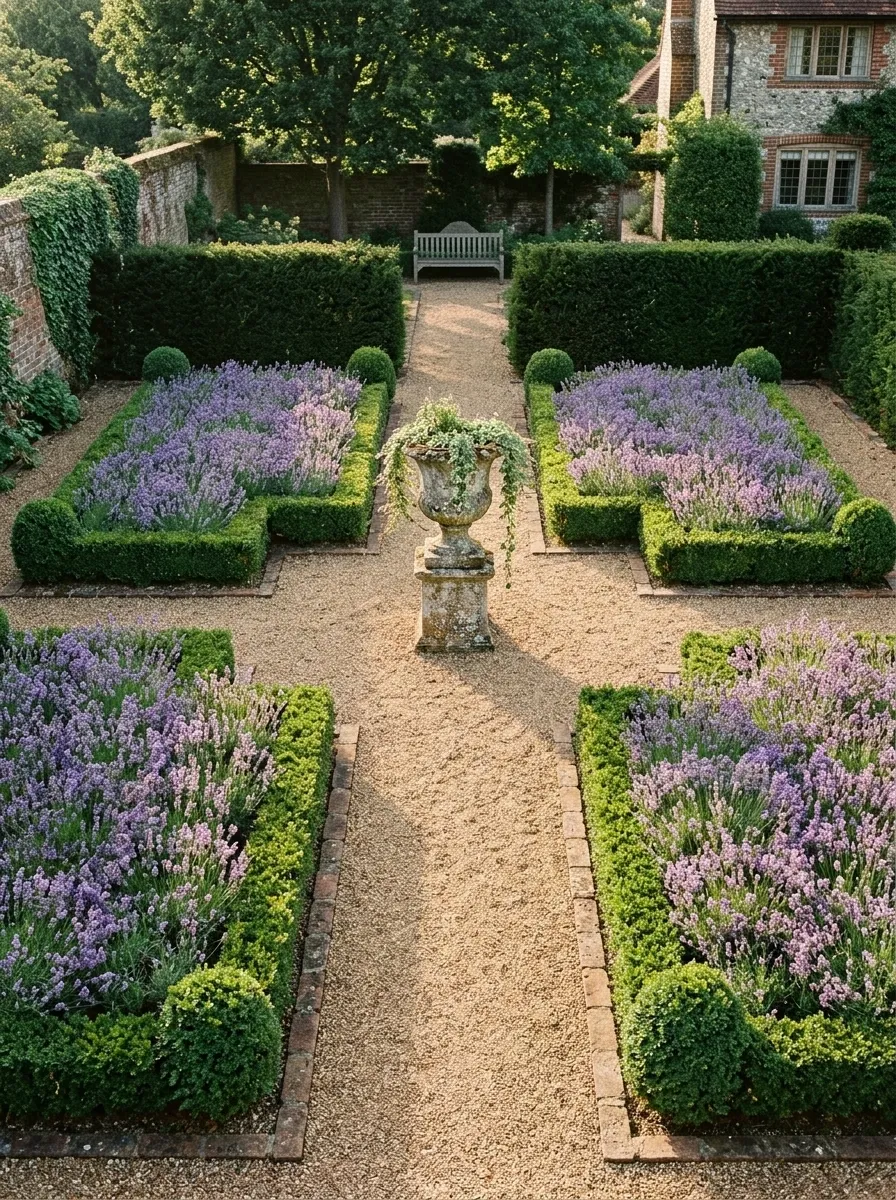
A simple cross-shaped gravel path divides low lavender-edged planting beds, with a stone urn at the center and a clipped hedge perimeter. Even a small formal plan feels complete when every path line connects to a destination. The lavender softens its geometry.
Choose alternatives where lavender dislikes local soil or humidity.
Aged Stone Terrace Overlooking Deep Flower Beds
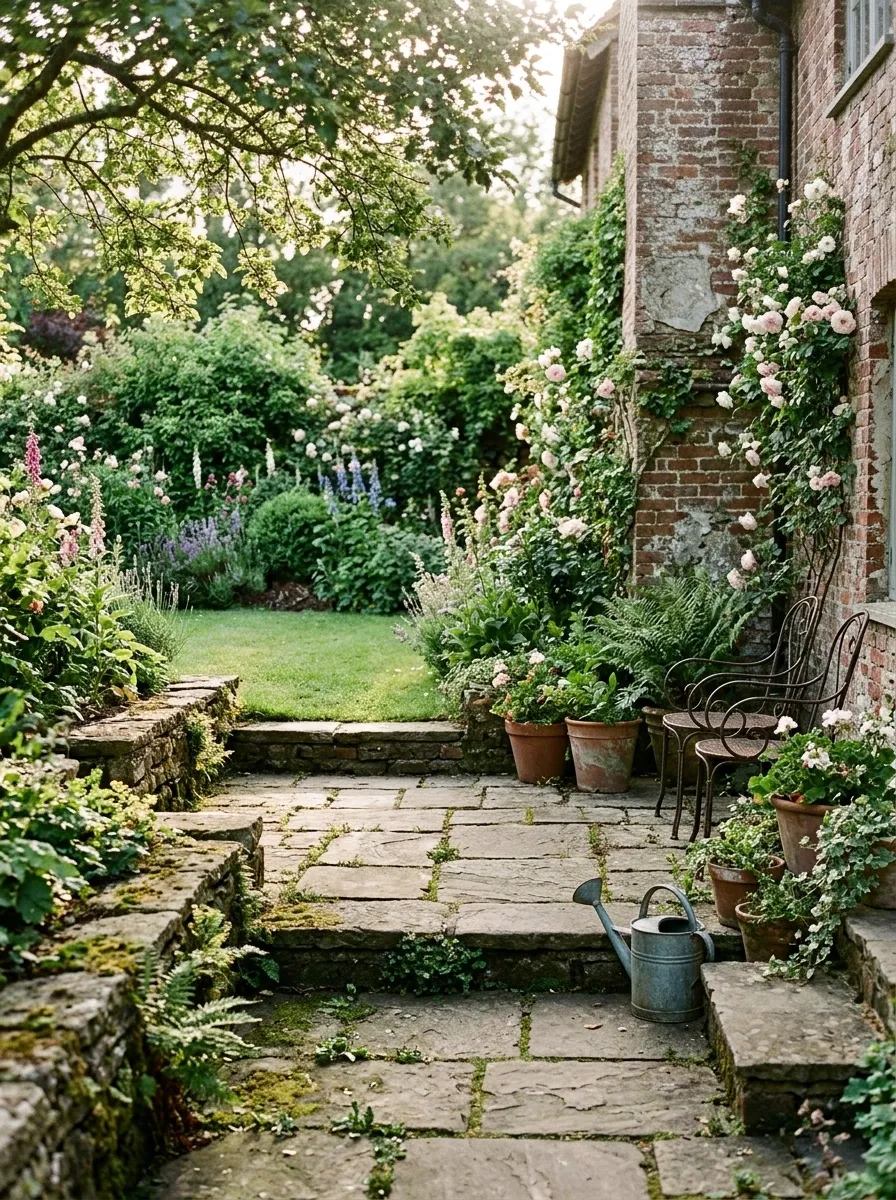
A worn stone terrace steps down to generous mixed borders and a modest lawn, with outdoor chairs near the house and climbing plants against masonry. The level change creates a convincing transition from architecture to garden. Planting feels lush because the stone gives it definition.
Ensure steps and retaining edges are safe and well drained.
Secret Seating Nook Behind Tall Planting
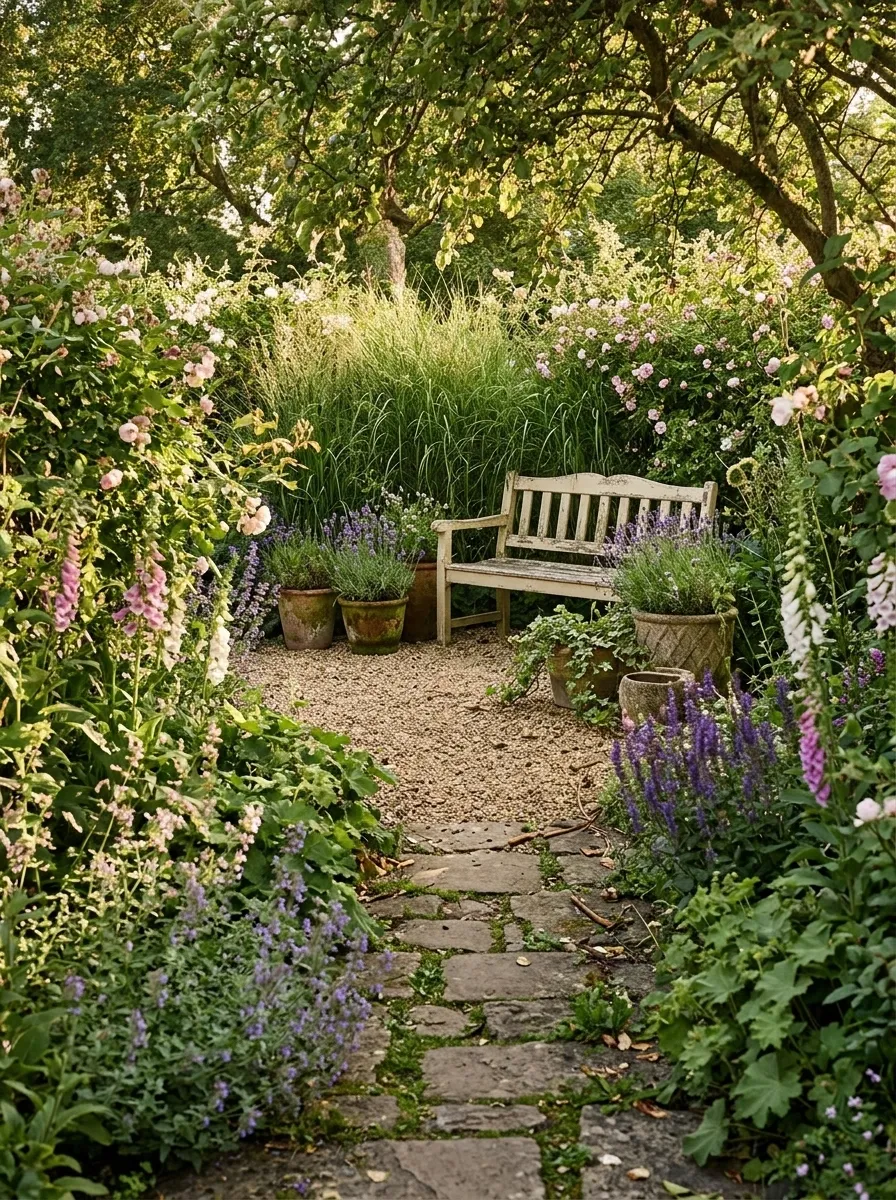
A circular gravel clearing with a painted bench is hidden behind high grasses and flowering shrubs, reached along a narrow side path. The sense of discovery makes a small garden more interesting than an open rectangle viewed all at once.
Keep the route wide enough for comfortable passage and seasonal pruning.
narrow path, tall screen, small seating circle.
Pastel Cottage Border Along a Picket Fence
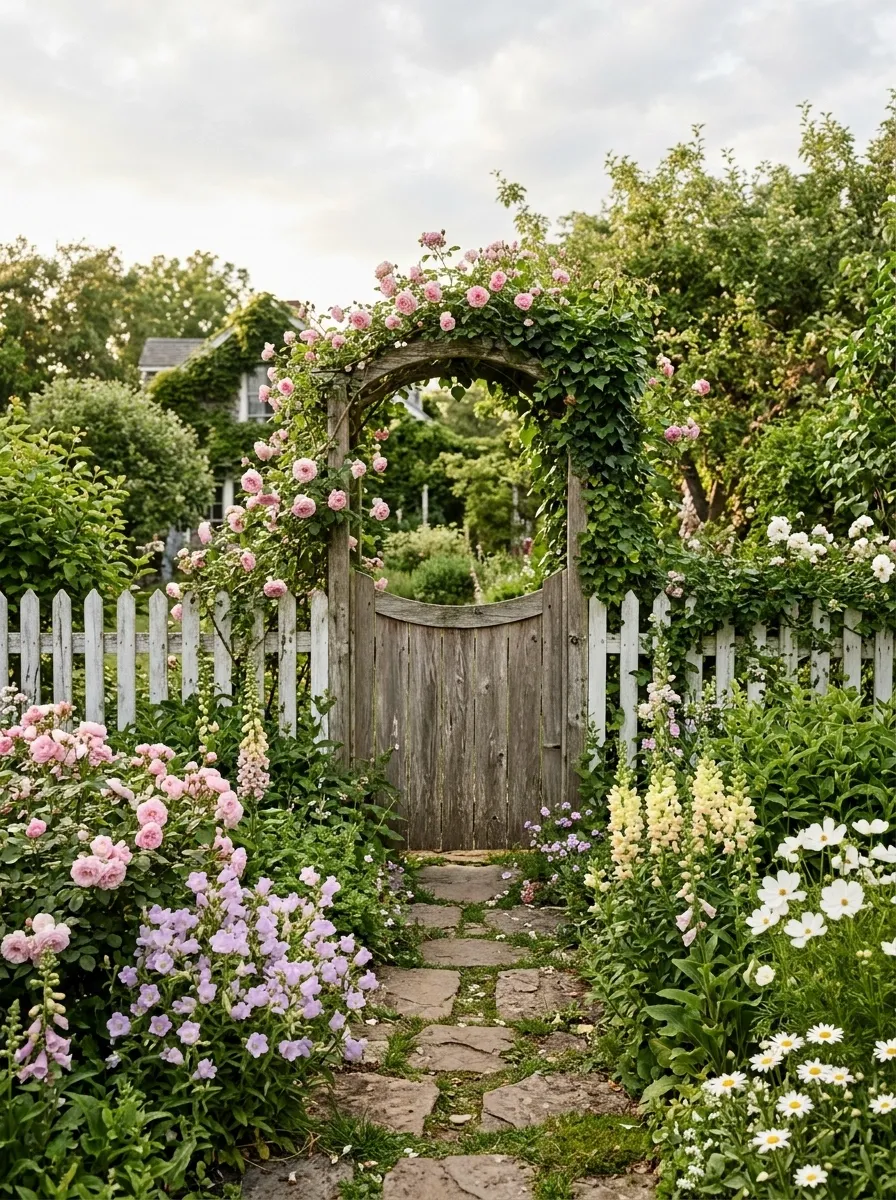
A white picket fence stands behind drifts of pink, lilac, and pale yellow flowers, with roses and climbing plants framing a central gate. The fence and gate turn the soft planting into an identifiable entrance rather than an unbroken flower strip.
Plan for flowering succession and ongoing deadheading where necessary.
Family Lawn With English Borders and Play Space
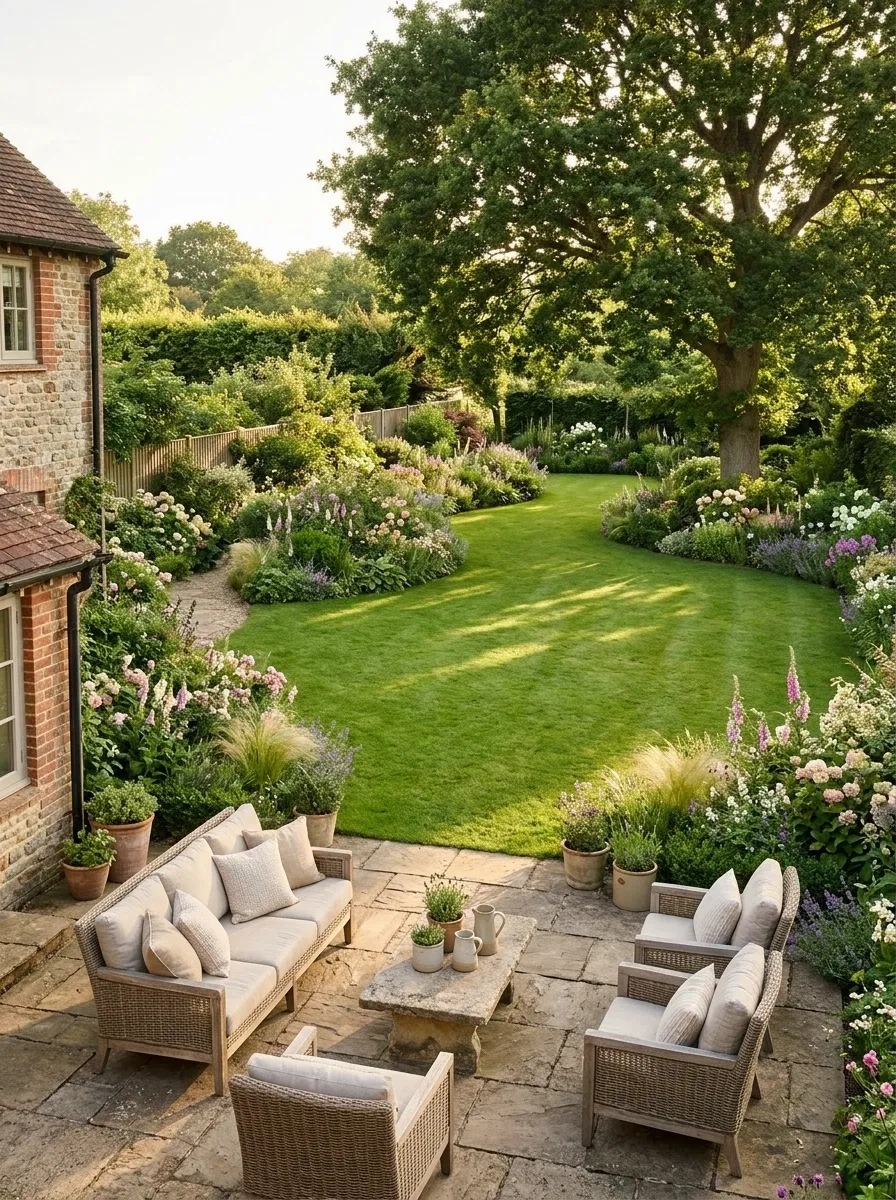
A practical central lawn is surrounded by wide mixed borders and one mature shade tree, while seating occupies a paved corner near the house. This layout preserves room for children and everyday use without losing the lush English-garden character.
Avoid thorny plants beside active play routes and maintain visibility.
Fruit Tree Orchard With a Grass Walk
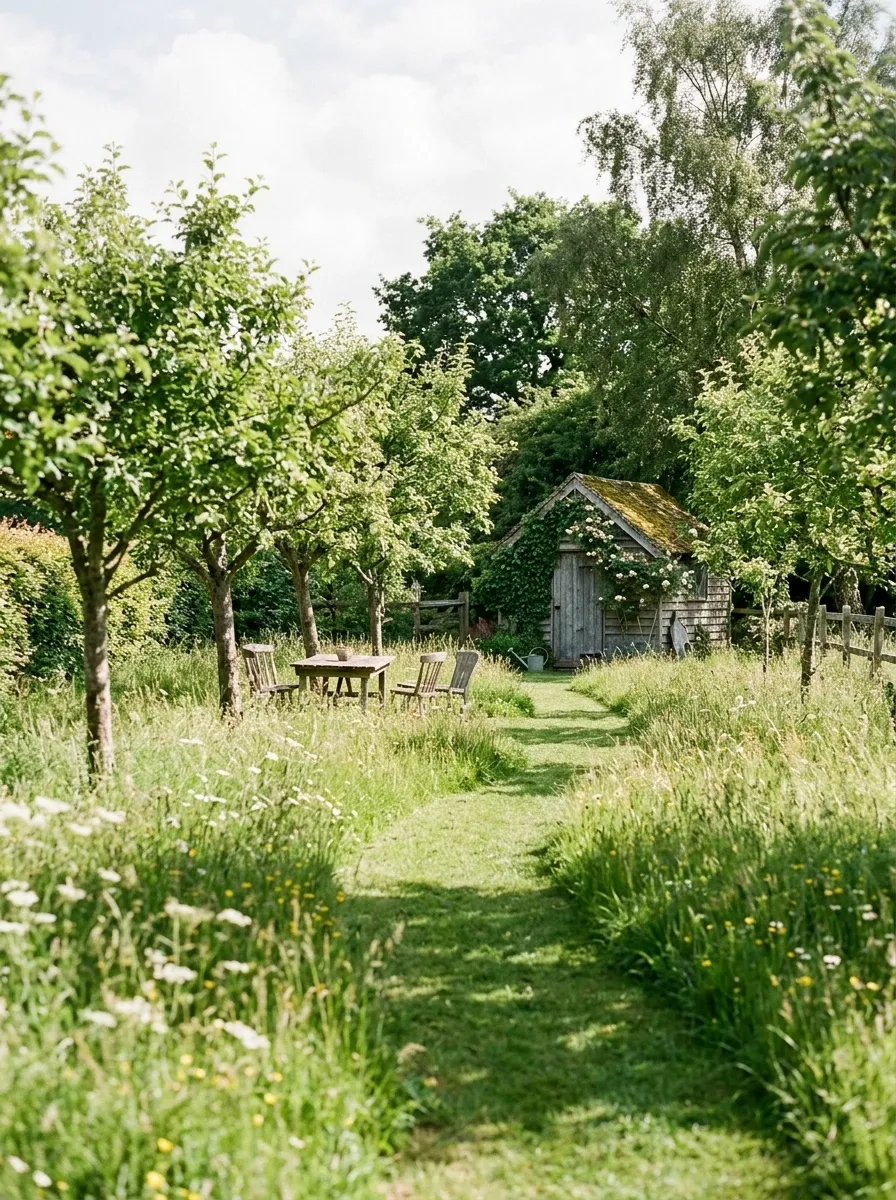
Several small fruit trees stand within meadow-like grass, connected by a mown walking strip toward a rustic table and shed. The orchard provides a loose pastoral mood without overdesigning the space. Repetition of trunks gives the area order.
Choose fruit trees suitable for local chill hours, soil, and pollination.
Climbing Hydrangea Wall Beside a Dining Patio
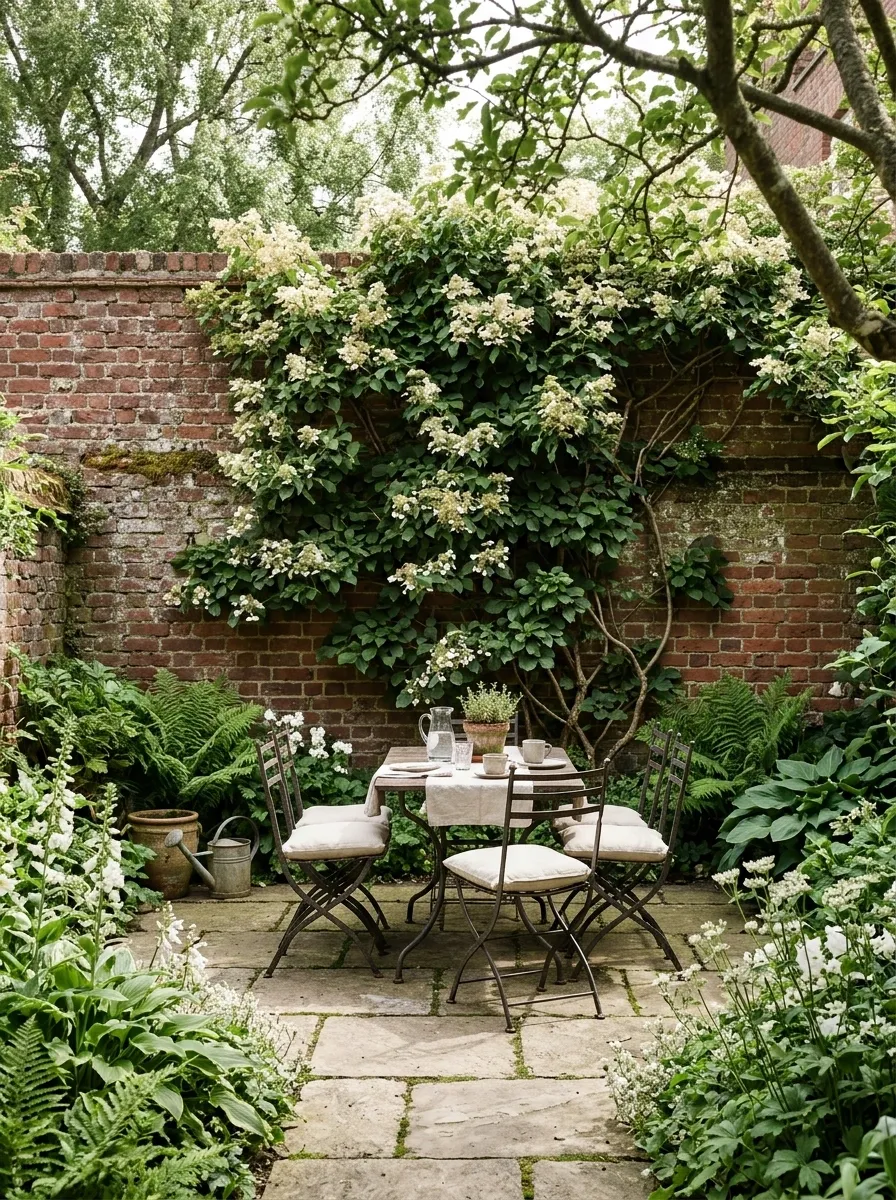
A shaded brick boundary carries a climbing hydrangea above a stone patio with simple furniture. Ferns and white flowering perennials fill the narrow edges. Greenery turns the wall into a living backdrop, making the dining area feel enclosed and peaceful.
Confirm the wall and climber can support mature growth.
Colorful Border With a Sculptural Obelisk
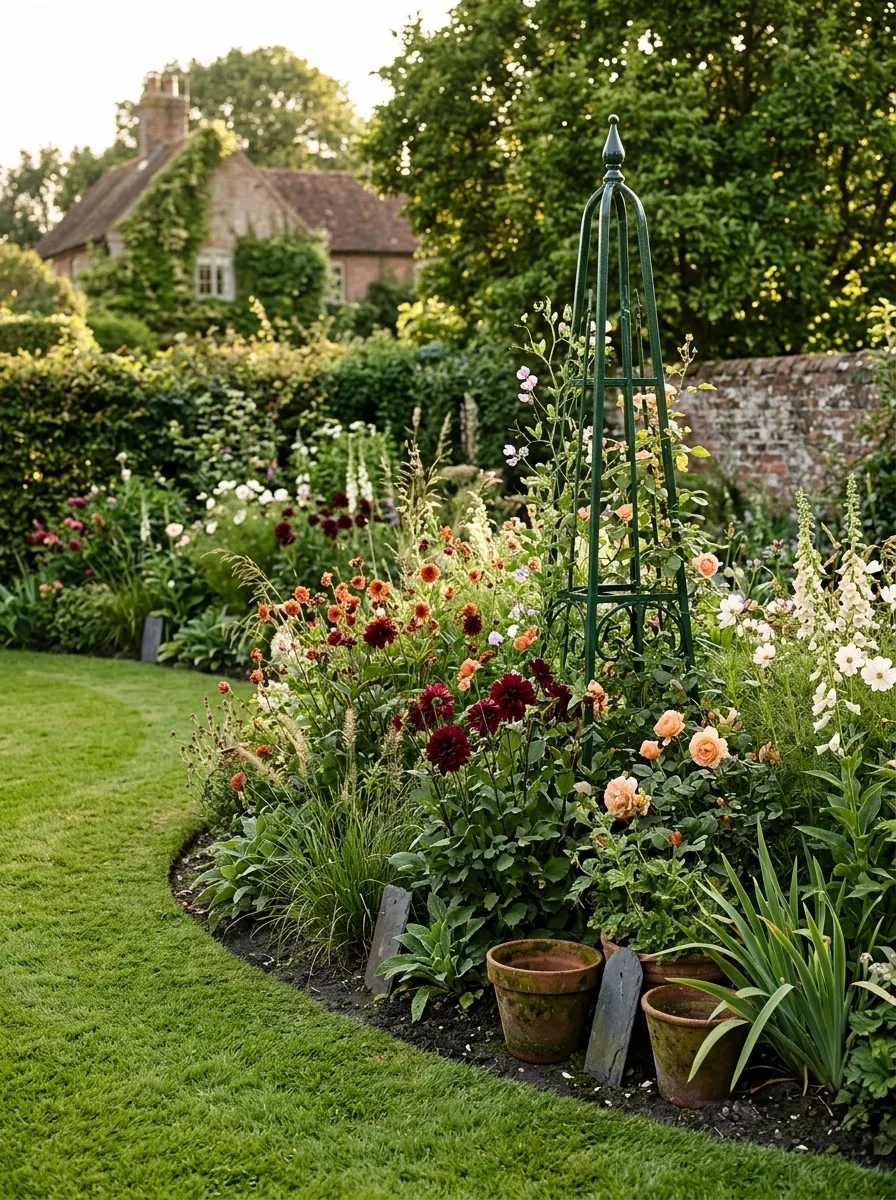
A painted metal plant obelisk rises through layered flowers beside a curving lawn edge, with repeated burgundy and orange accents through the beds. A single vertical structure gives the exuberant planting a visual point of reference.
Select sturdy supports before climbers become heavy.
Gravel Courtyard With Pleached Trees
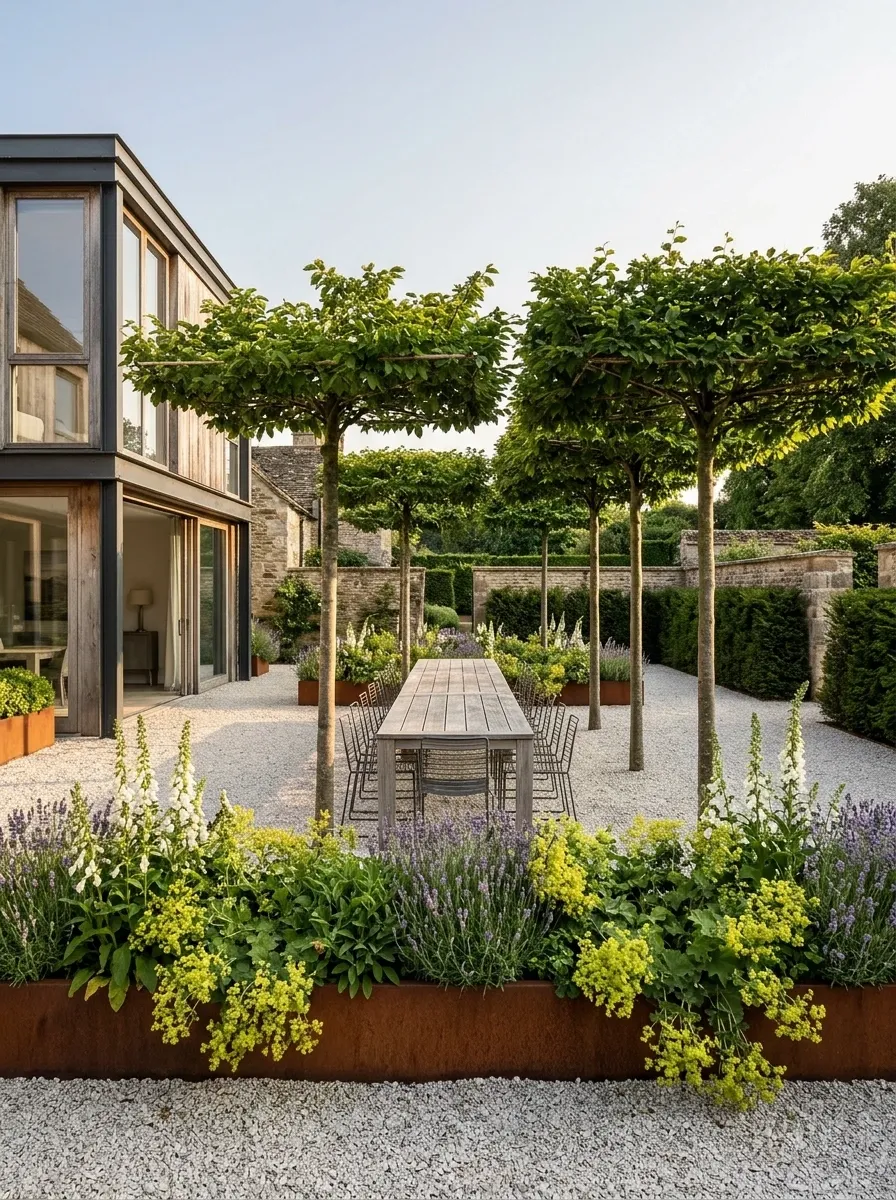
A formal gravel courtyard uses evenly spaced pleached trees, long planters of soft perennial flowers, and a central outdoor table. The trained trees establish architectural rhythm while lower planting loosens the look. It suits a contemporary house wanting an English influence.
Pleached trees need knowledgeable pruning and suitable spacing.
repeated trunks above, soft flowering base below.
Rustic Gate and Stone Path to a Potting Shed
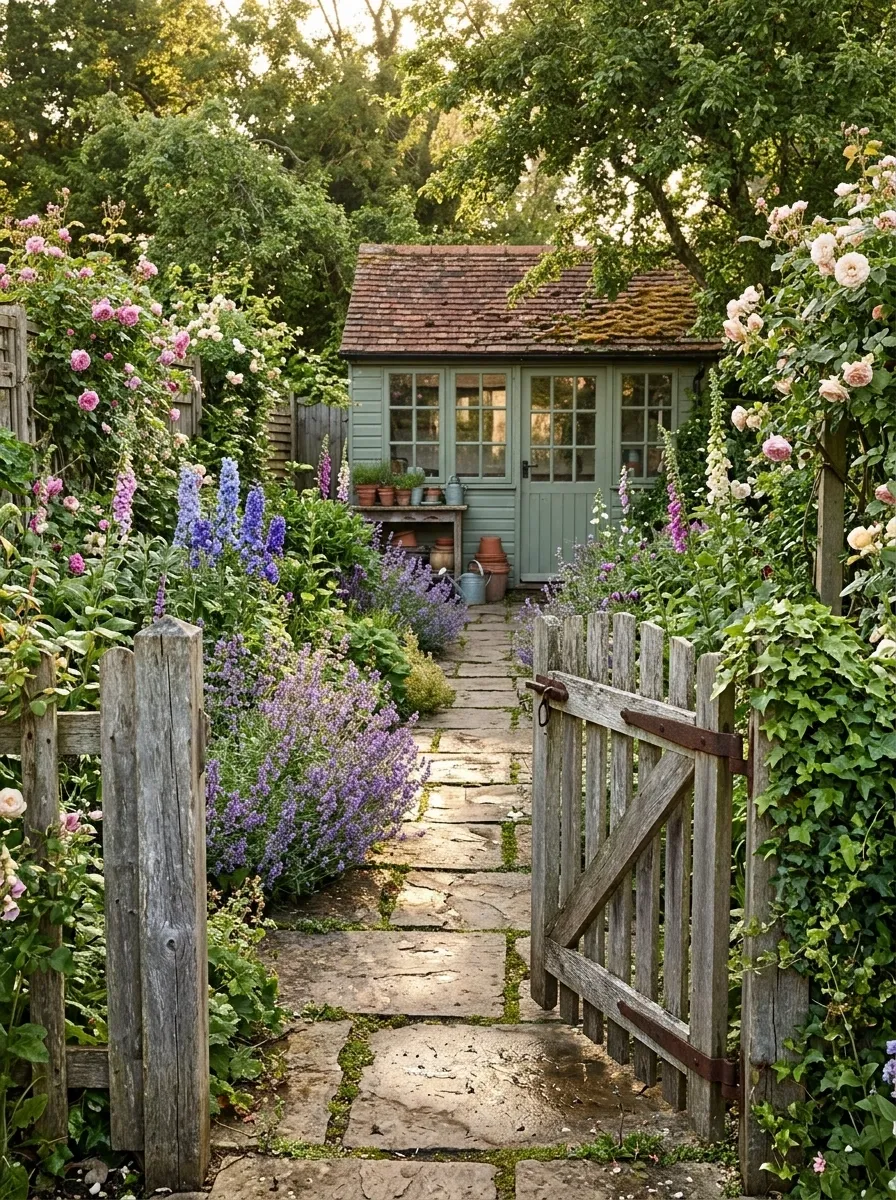
A weathered wooden gate opens onto an irregular stone path with billowing flower borders leading to a painted potting shed. Every part of the scene serves the route, so even an ordinary utility shed becomes a destination worth seeing.
Use stable, slip-resistant path construction and allow wheelbarrow access.
Terraced English Garden on a Sloped Backyard
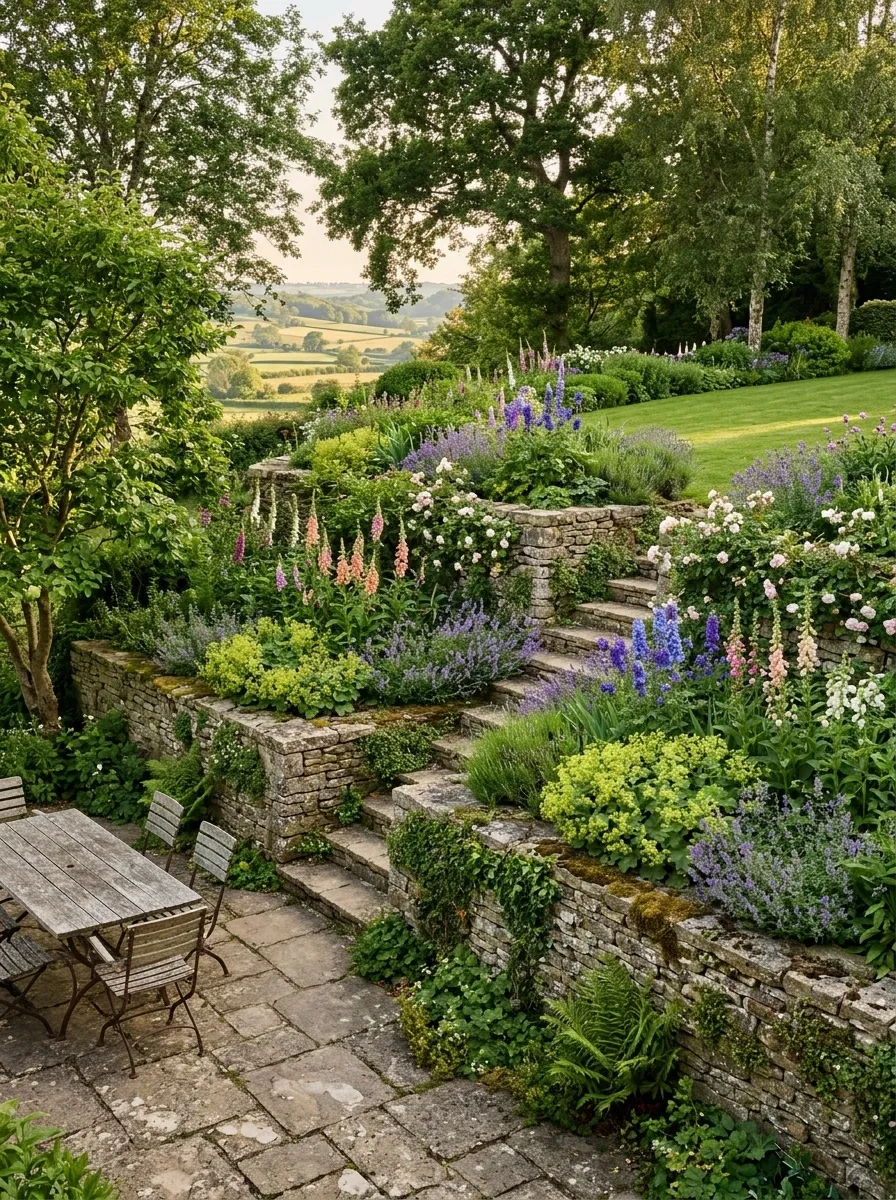
Low stone retaining walls divide a hillside into a dining terrace, deep flowering border, and upper lawn, with stairs aligned toward a distant view. Terracing makes the slope usable while giving planting dramatic levels. The walls provide permanence to the soft garden shapes.
Retaining walls, stairs, and drainage warrant professional assessment.
Winter-Structured Garden With Evergreen Bones
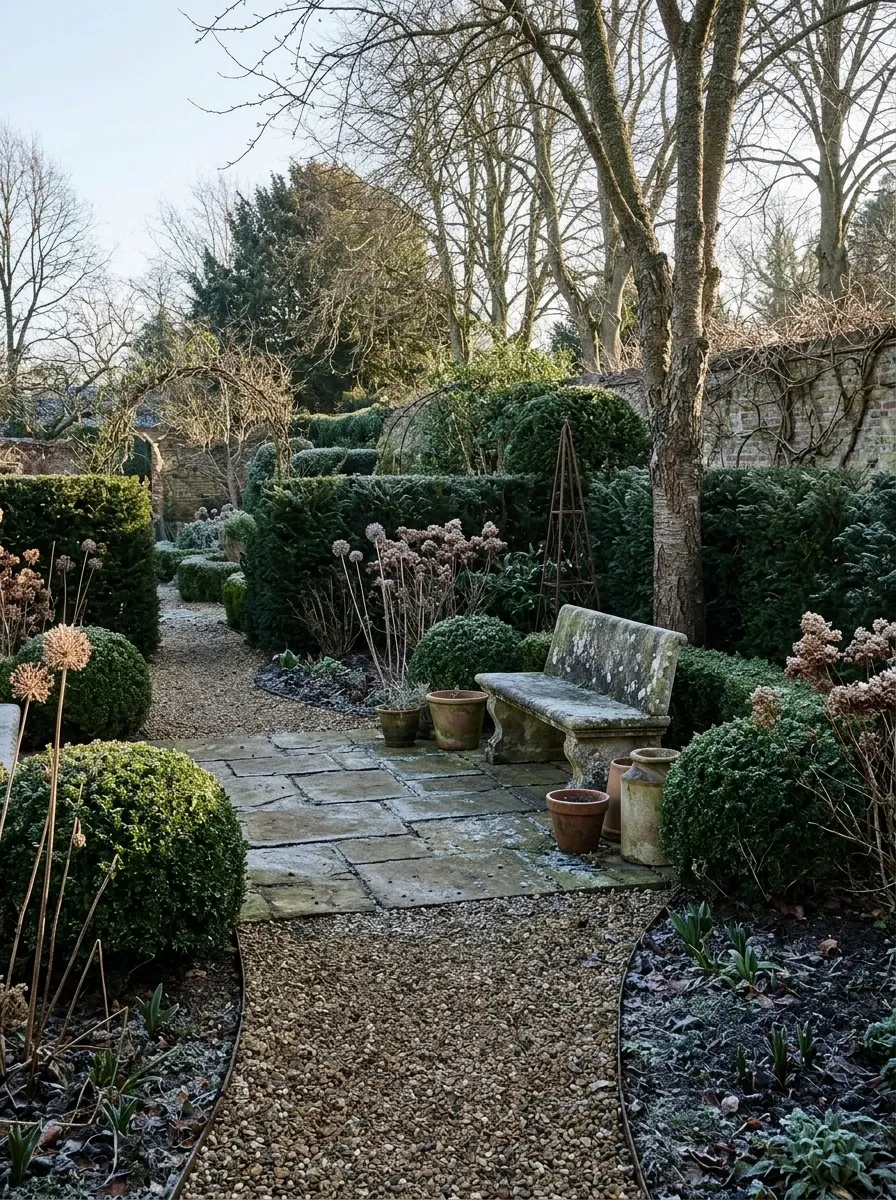
Clipped evergreen shrubs, textured bark, seed heads, and a stone bench give a traditional garden character even when few flowers bloom. Spring bulbs are planned beneath the shrubs. A strong winter framework makes summer abundance feel more intentional and keeps the space interesting year-round.
Choose evergreens adapted to the region instead of copying a single UK palette.