
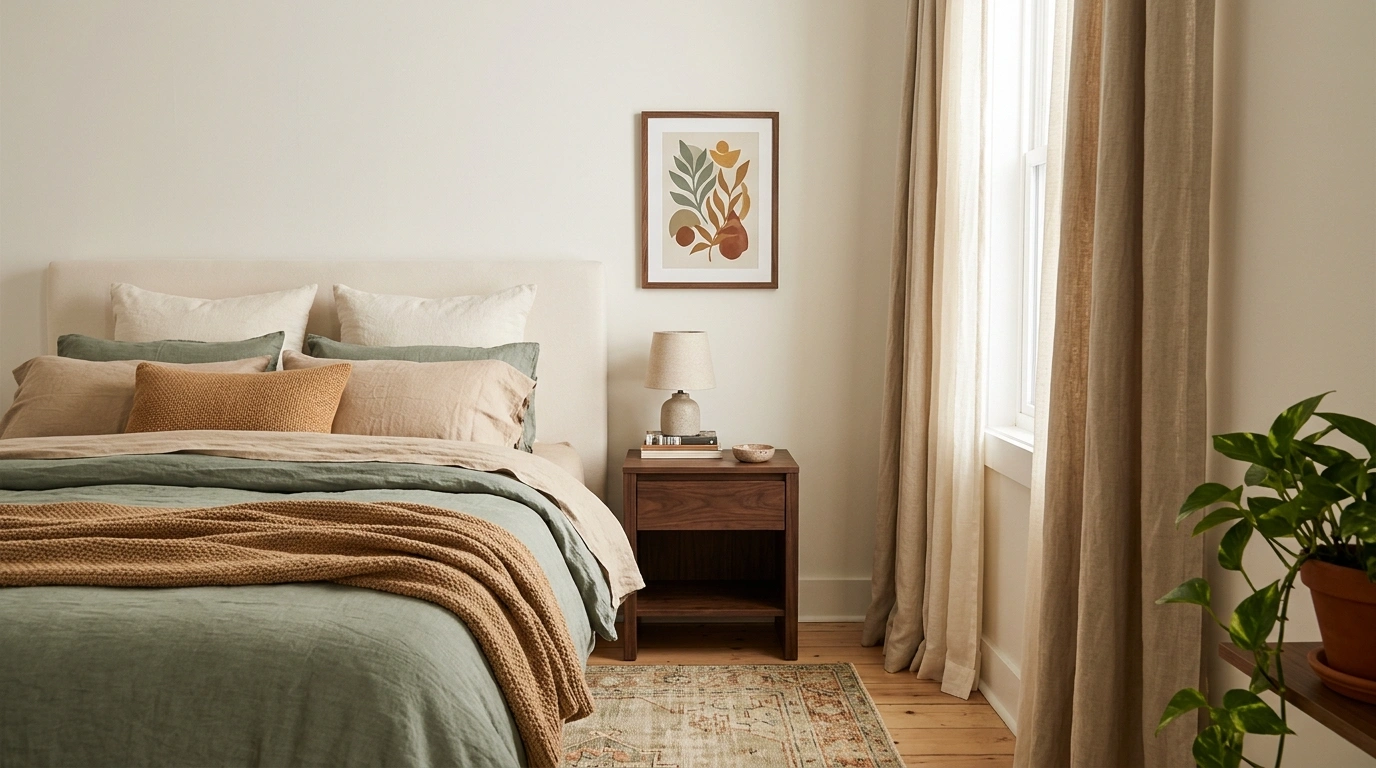
A bedroom can contain all the soft pillows in the world and still feel strangely cold. Often the problem is the color relationship: stark white walls with cool grey bedding, dark furniture without a balancing light tone, or several fashionable colors that don’t belong in the same room. A good pairing needs a complete setting to work.
These cozy bedroom color pairings show finished room concepts rather than disconnected paint swatches. Each combines wall color, furniture, bedding, flooring, window treatments, and lighting into one understandable direction. Some are deep and cocooning; others feel airy but warm. A small north-facing room and a sunny bedroom won’t handle color identically, so there isn’t one universal answer.
Look at where each color appears, not just the names. Two shades can be lovely together on paper and feel awkward if they’re distributed badly across the room.
Think in Color Proportions, Not Just Paint Names
Choose a main background tone, a supporting furniture or textile color, and a smaller accent. Check samples in the room during daylight and under the actual lamps you use at night. Texture also matters: wool, linen, wood, and velvet can make a limited palette feel layered.
Finished Design Concepts
Chocolate Brown and Warm Cream Bedroom
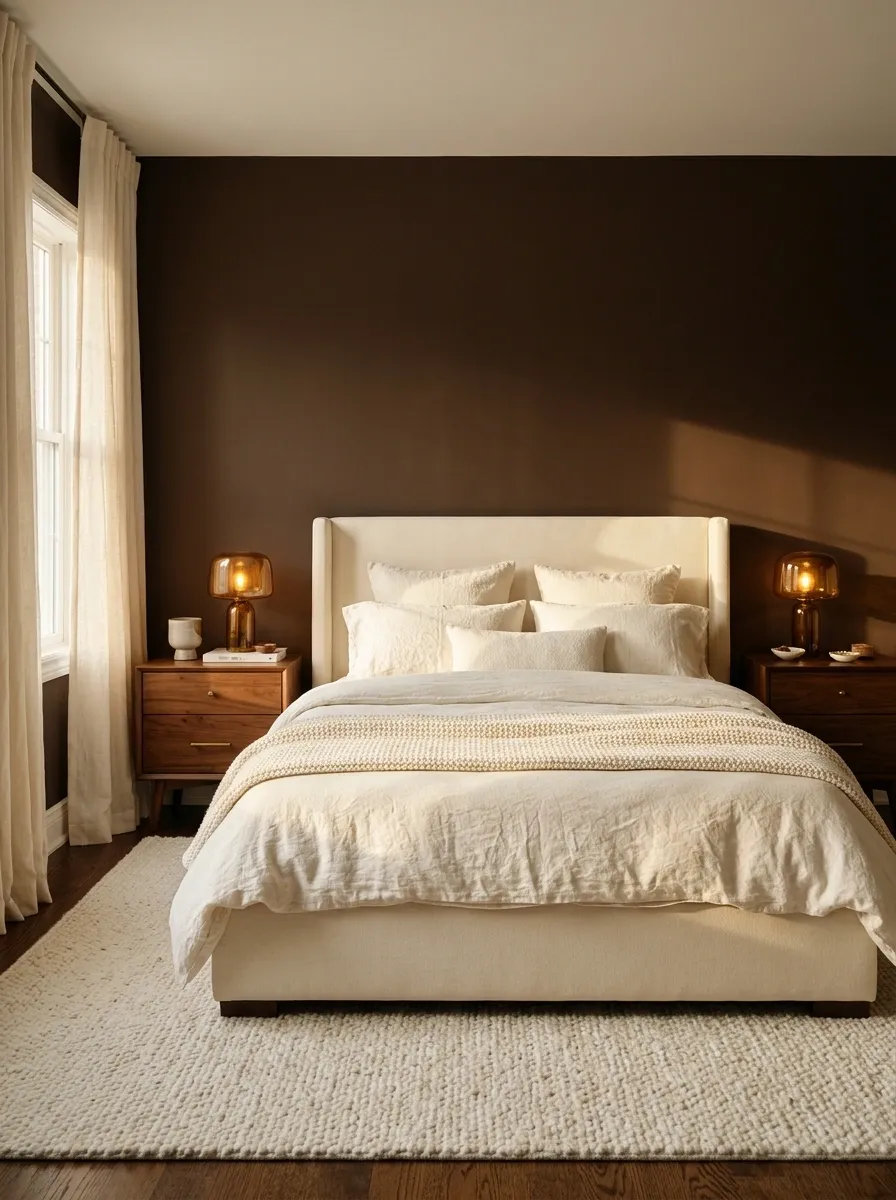
Chocolate walls surround a cream upholstered bed with ivory linen, walnut nightstands, and amber bedside lamps. A pale textured rug lightens the floor. The deep walls create enclosure, while the pale bed remains visually inviting. The balance keeps the brown rich rather than gloomy.
Repeat cream at the window and on the bed for continuity.
Sage Green and Soft Oatmeal Retreat
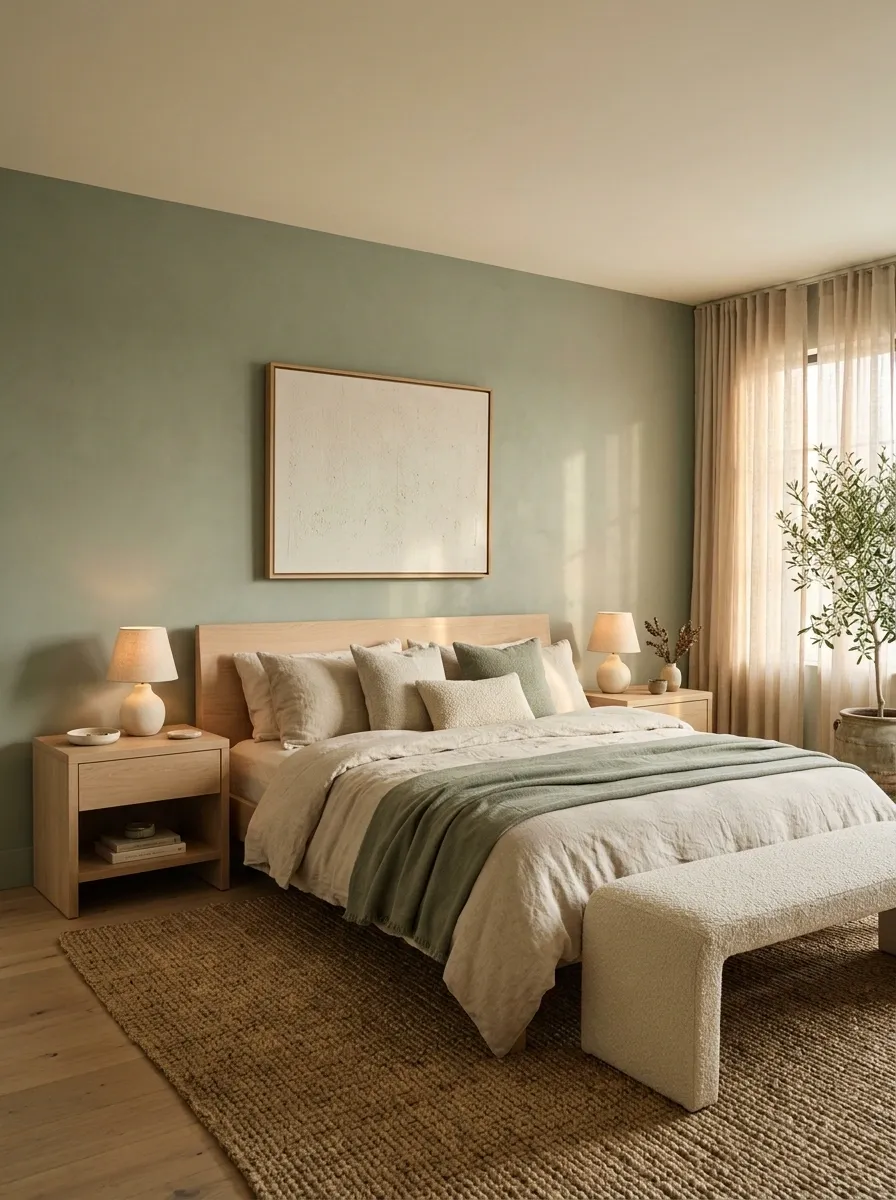
Muted sage walls meet oatmeal linen bedding, pale oak furniture, and a warm woven rug. Small cream lamps glow beside the bed. The pairing feels calm because both shades are slightly softened and connected by natural textures.
Use a warm off-white ceiling rather than a sharp blue-white one.
sage backdrop, oatmeal textiles, oak accents.
Dusty Blue and Caramel Bedroom
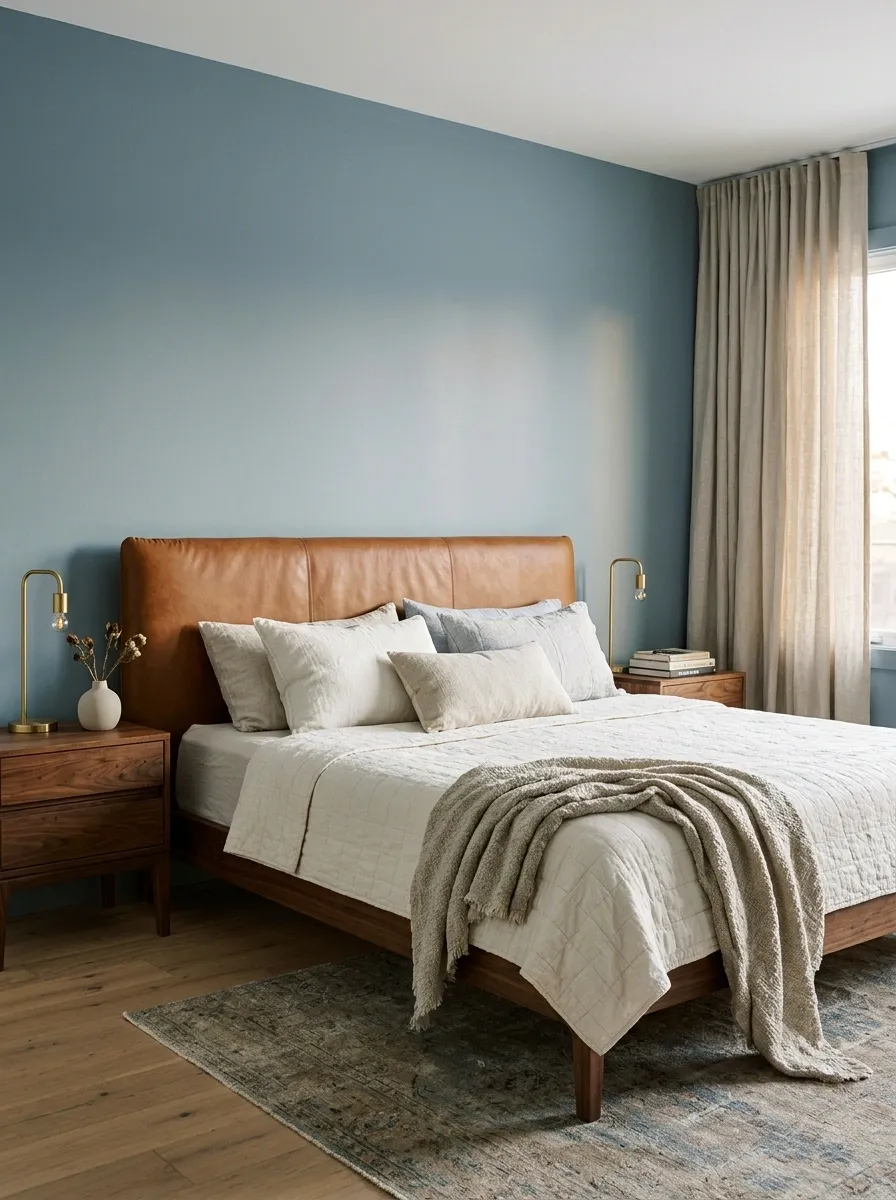
Dusty blue walls frame a caramel leather headboard, ivory quilt, walnut furniture, and natural flax curtains. Caramel brings warmth to the cool blue, making the overall room restful rather than chilly.
Choose blue with enough grey in it to work against brown furniture.
Burgundy and Blush Vintage Bedroom
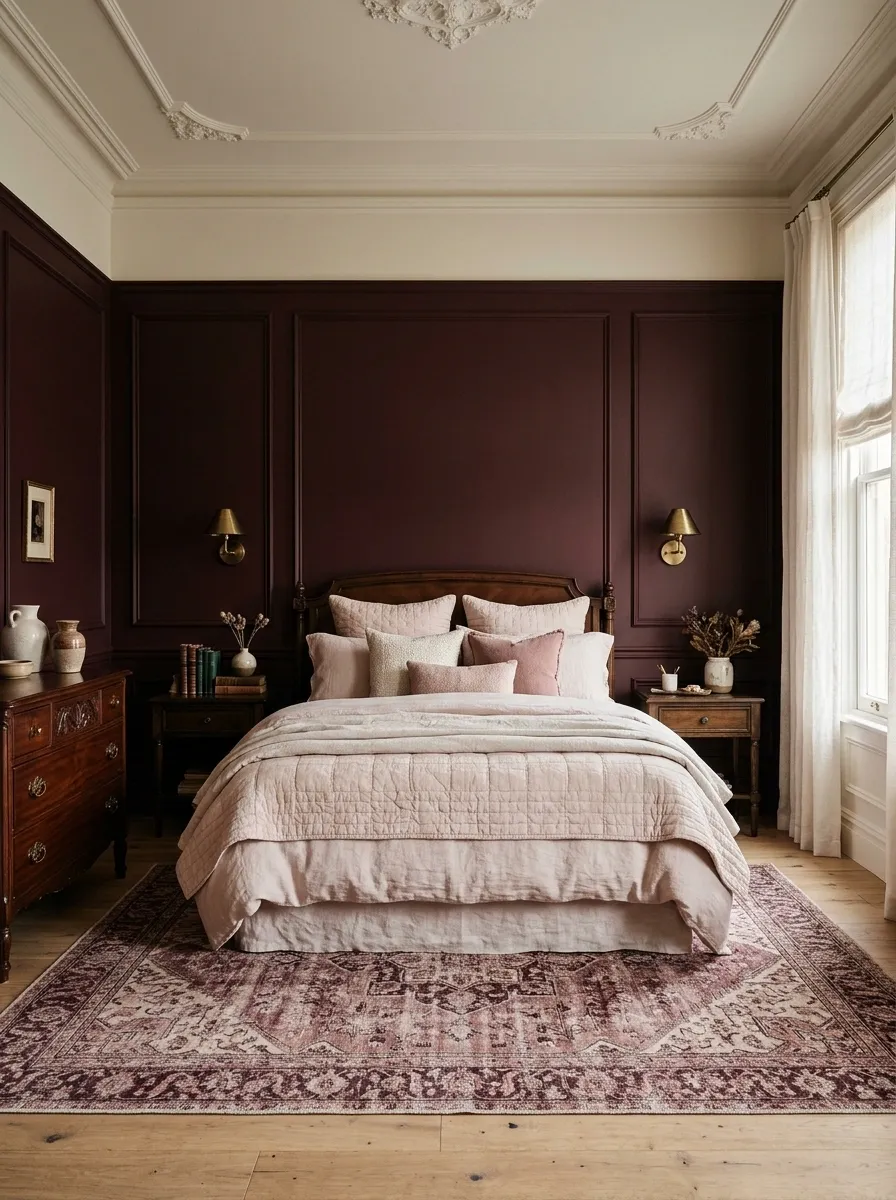
Deep burgundy walls sit behind a pale blush quilted bed, aged brass sconces, and vintage dark wood furniture. A patterned rug combines the two colors. The blush lightens the moody walls without becoming sugary, while brass adds a soft glow.
Keep other large surfaces neutral to avoid overloading the palette.
Terracotta and Olive Earthy Bedroom
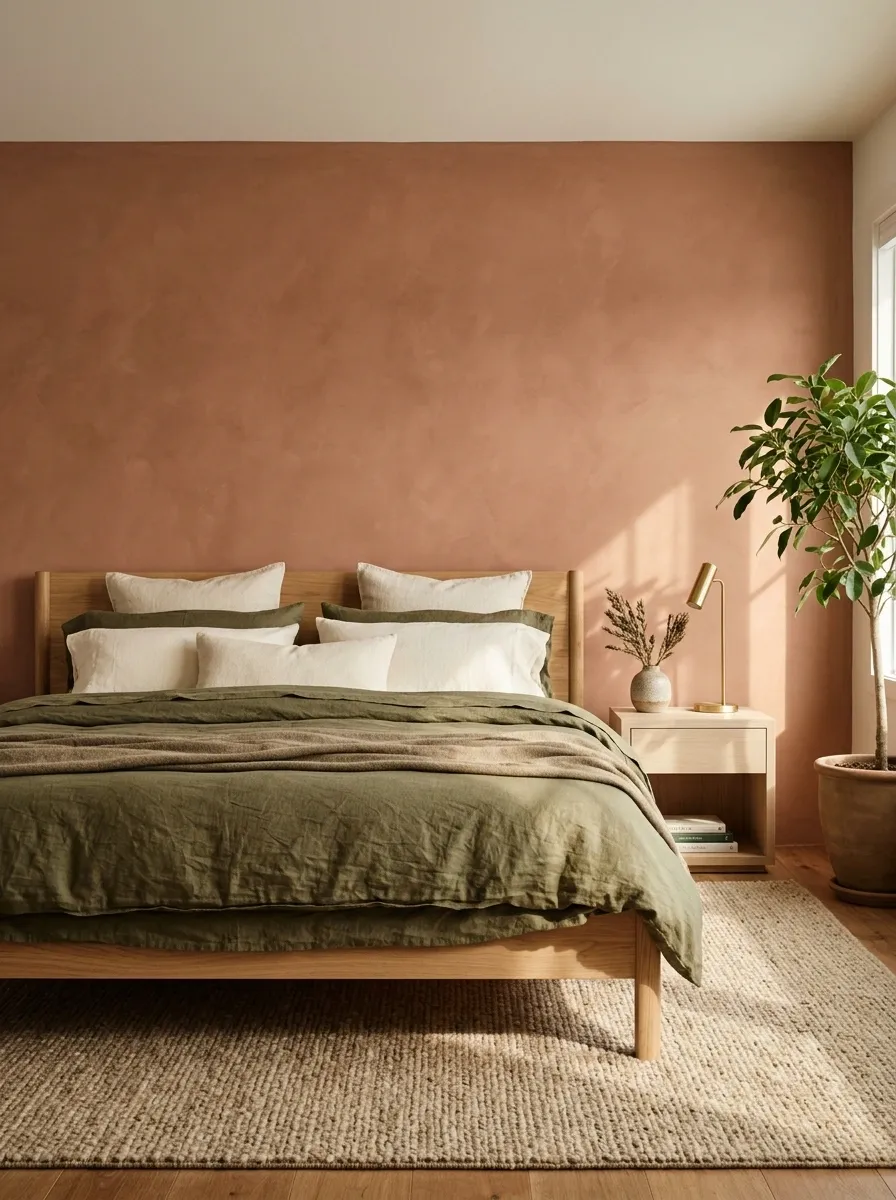
A muted terracotta accent wall complements olive linen bedding, oak furniture, and a warm beige floor covering. The two earthy colors feel grounded because neither is overly saturated. Cream pillows keep the bed from looking flat.
Use terracotta as a wall or rug color, not on every surface.
Navy and Cognac Tailored Bedroom
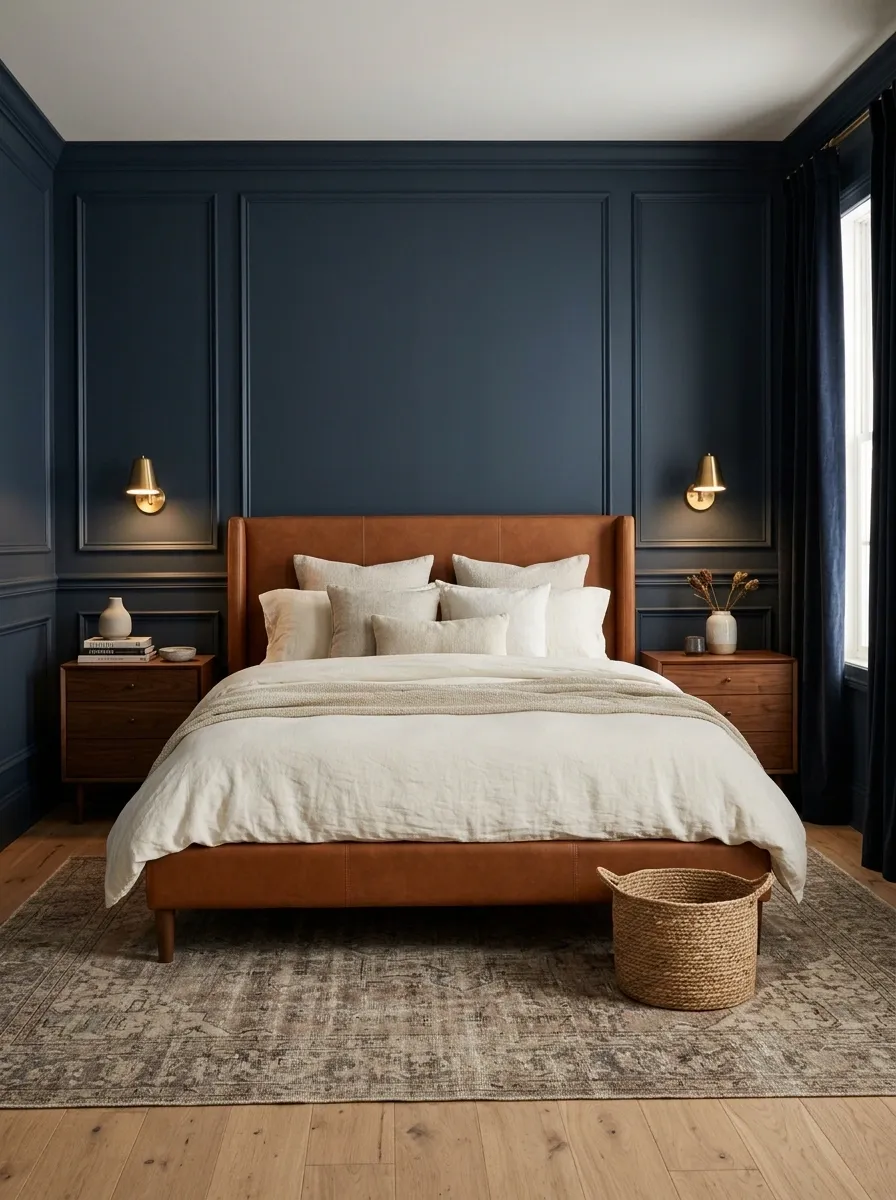
Navy walls wrap a room with a cognac leather bed, crisp ivory bedding, walnut drawers, and brass reading lamps. The clean contrast produces a strong, traditional mood while the leather prevents blue from feeling severe.
Add enough warm task lighting for the darker surfaces.
navy large, cognac medium, brass small.
Mushroom Taupe and Ivory Minimal Bedroom
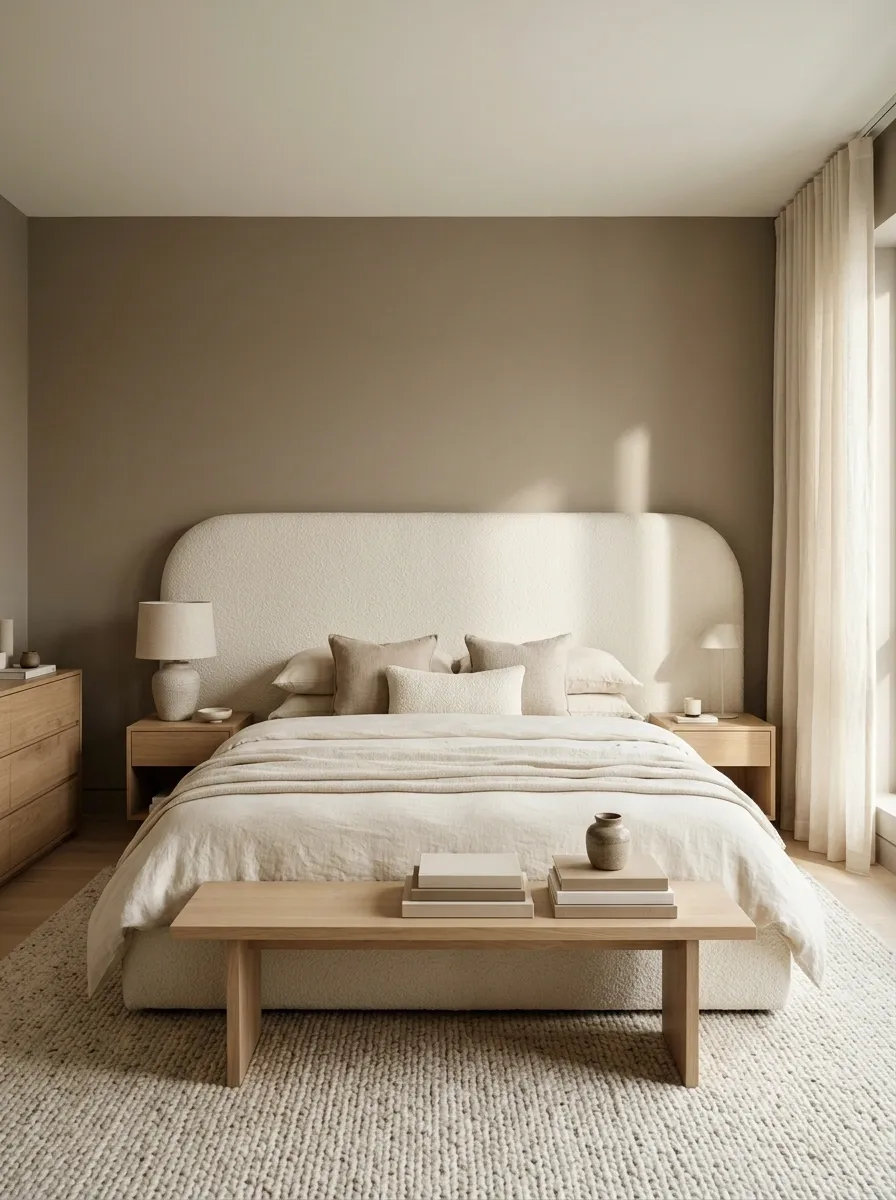
Mushroom-colored walls, ivory boucle upholstery, creamy linen curtains, and pale oak furniture form a gentle neutral room. The shades are close enough for calm but differ enough in warmth and texture to remain interesting.
Test taupe samples in your lighting so they don’t turn purple or grey.
Plum and Warm Grey Romantic Bedroom
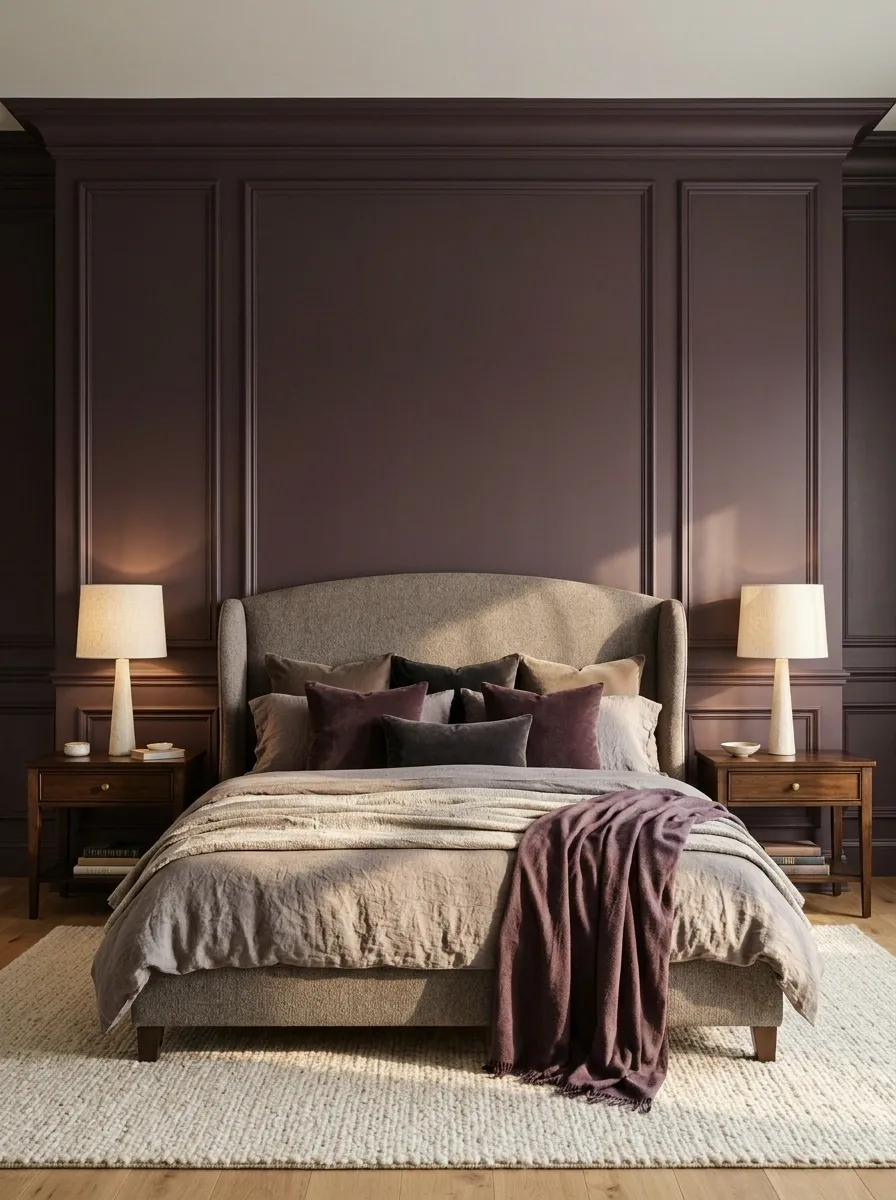
Muted plum paneling rises behind a warm grey bed, with velvet cushions, dark wood side tables, and cream lampshades. Grey gives the purple room balance while the velvet brings in softness. The palette feels grown-up rather than theatrical.
Use a warm grey, not a blue-steel shade.
Forest Green and Mustard Bedroom
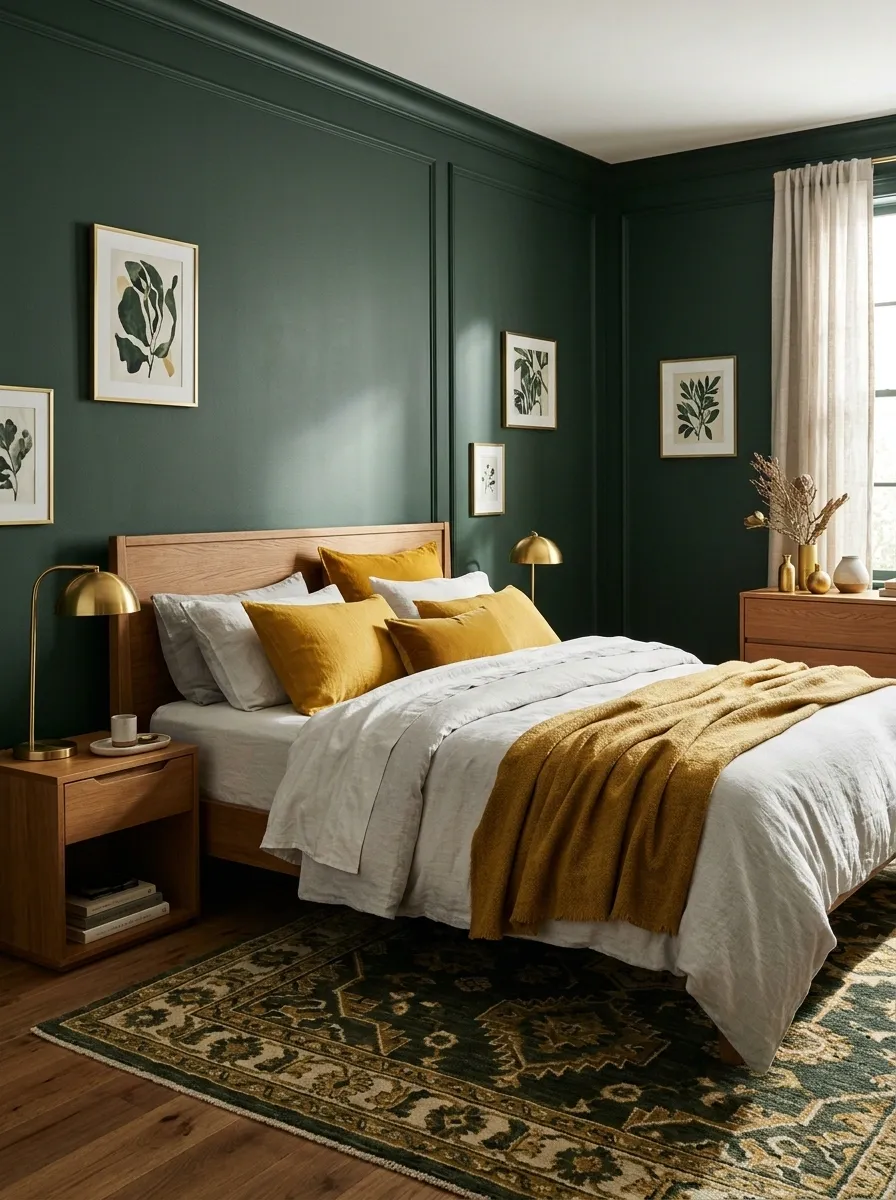
Forest-green walls meet mustard linen cushions, medium oak furniture, a patterned wool rug, and warm brass lights. The mustard creates a lively focal point against deep green without needing bright white everywhere.
Keep mustard to cushions, art, or a throw rather than a second wall.
Clay Pink and Cocoa Bedroom
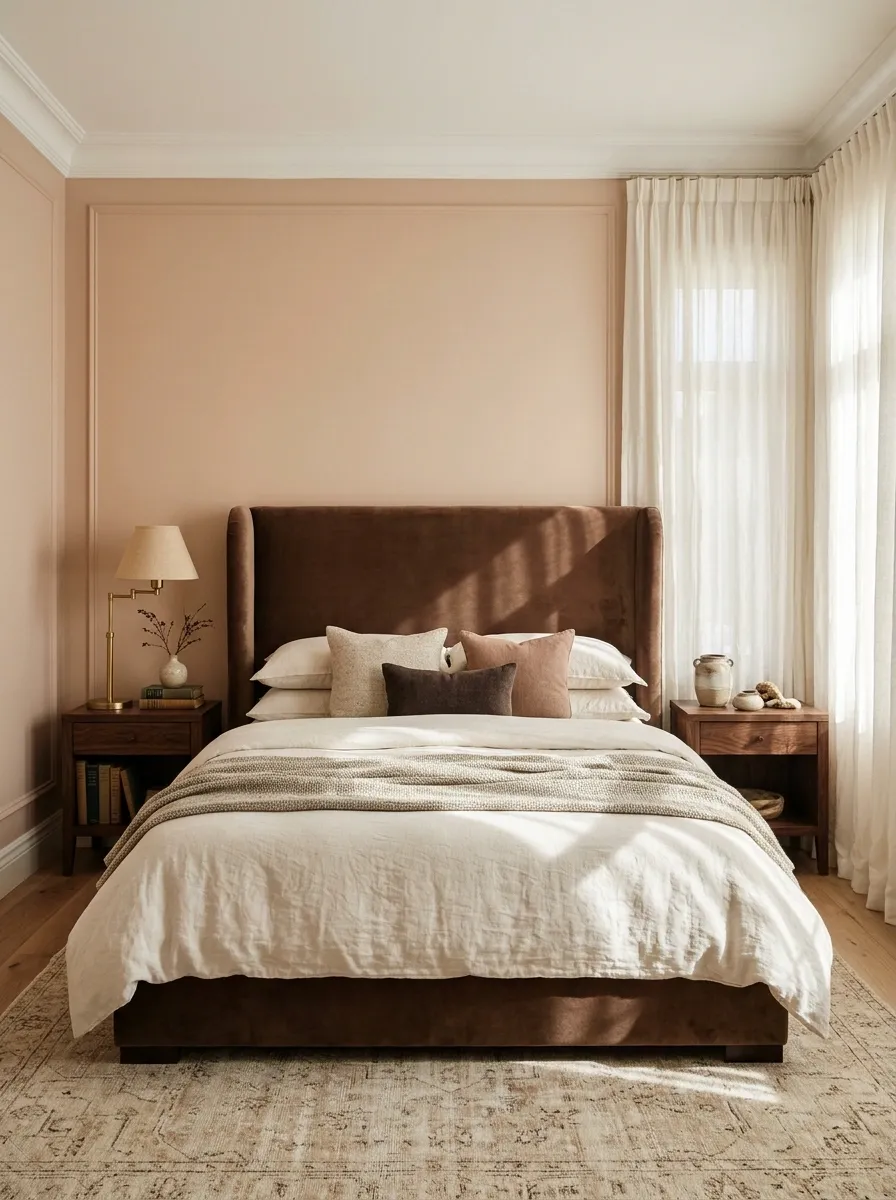
Soft clay-pink walls frame a cocoa upholstered headboard, ivory bedding, and dark walnut nightstands. The brown cuts the sweetness of pink, while the clay undertone connects naturally to wood.
Choose a muted pink with brown or peach undertones.
Charcoal and Camel Modern Bedroom
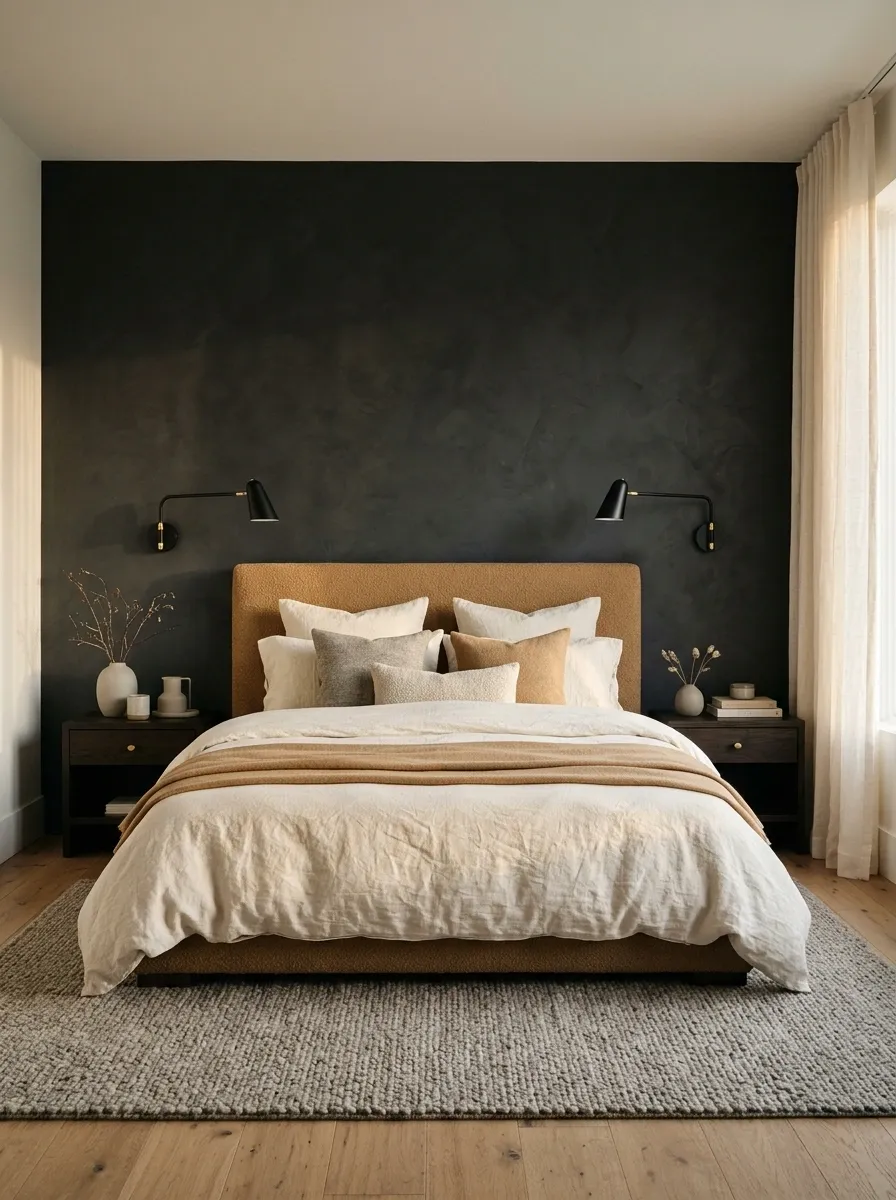
Charcoal wall paint sits behind a camel fabric bed, with black reading lights, warm-white bedding, and a large greige rug. Camel warms the dark architecture while the white bed linen keeps the room clear and practical.
Limit glossy black surfaces so the space stays soft.
Soft Yellow and Mushroom Country Bedroom
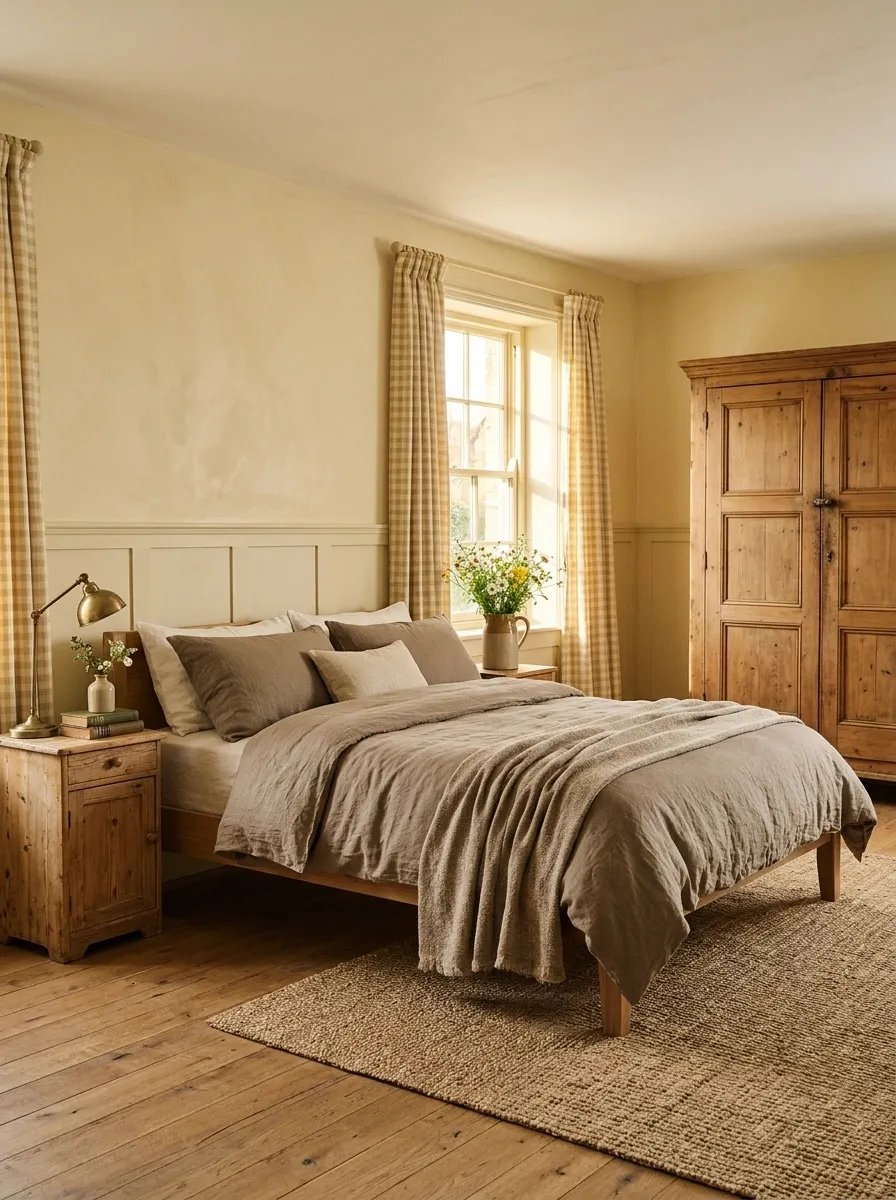
Buttery pale yellow walls surround mushroom linen bedding, antique pine furniture, checked curtains, and a woven rug. The warm yellow feels gentle because the textiles are muted and the furniture carries natural color variation.
Use gentle yellow rather than saturated lemon.
soft yellow, earthy mushroom, aged pine.
Deep Teal and Copper Bedroom
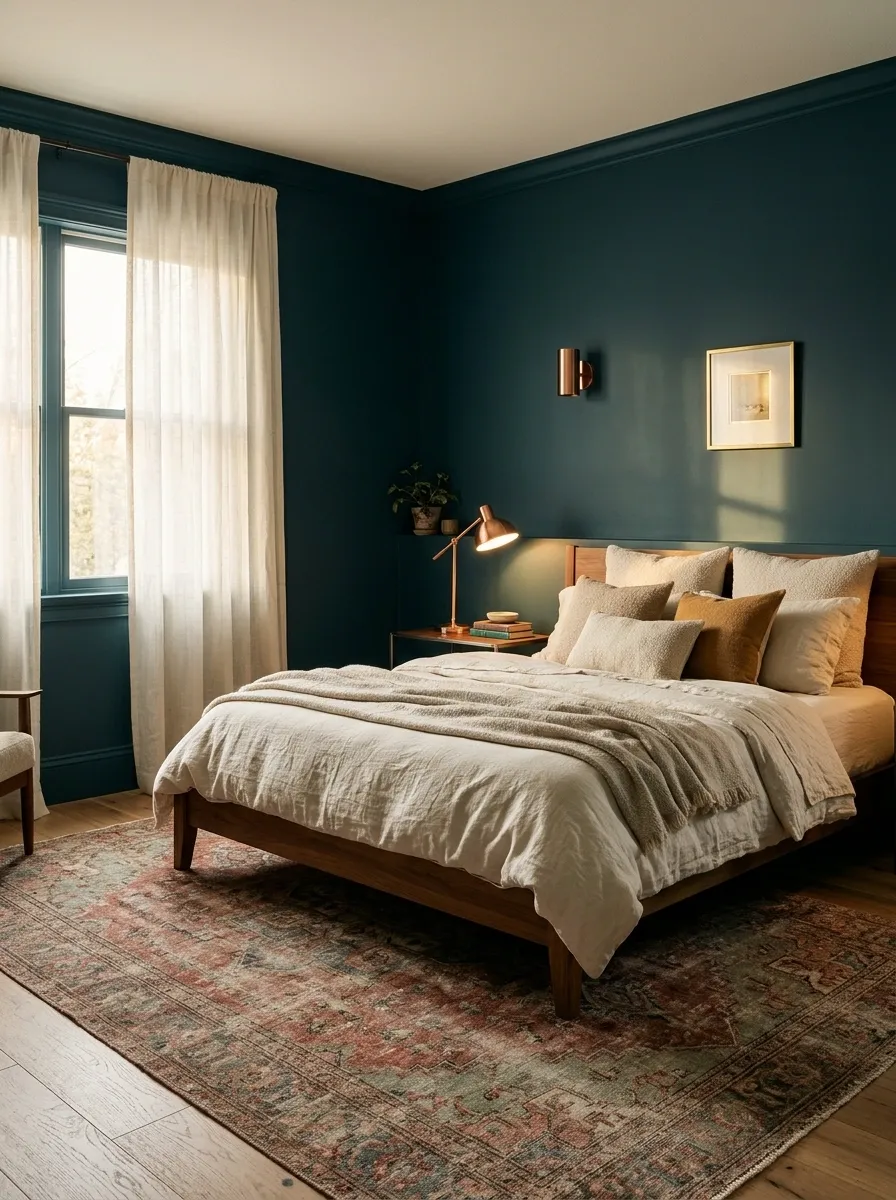
Deep teal walls are balanced by copper-toned lamps, a warm wooden bed, cream bedding, and a faded patterned rug. Copper becomes especially luminous against teal, while the worn rug adds history.
Keep metal accents selective so the space doesn’t become flashy.
Warm White and Natural Walnut Bedroom

Creamy white walls and bedding surround a walnut bed frame, taupe curtains, and woven floor texture. Warm sconces complete the room. The wood grain is the feature, so there is no need for a bold accent wall. It feels cozy through material depth.
Choose warm bulbs and avoid overly cool white fabrics.
Lavender Grey and Soft Linen Bedroom
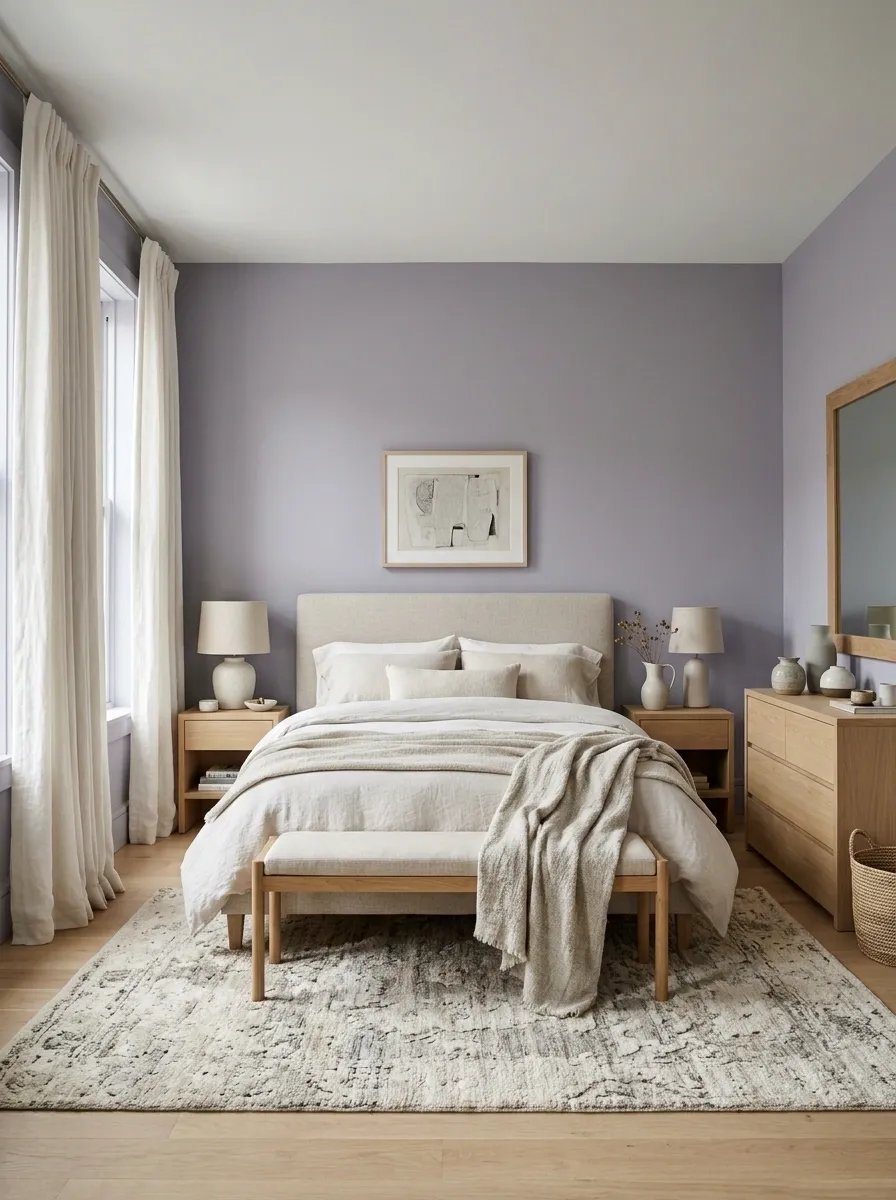
Muted lavender-grey walls meet natural linen bedding, light oak pieces, and off-white curtains. The color is subtle enough to act like a neutral but adds a gentle cool note against warm fabrics.
Sample the wall shade in morning and evening light.
Brick Red and Sand Bedroom
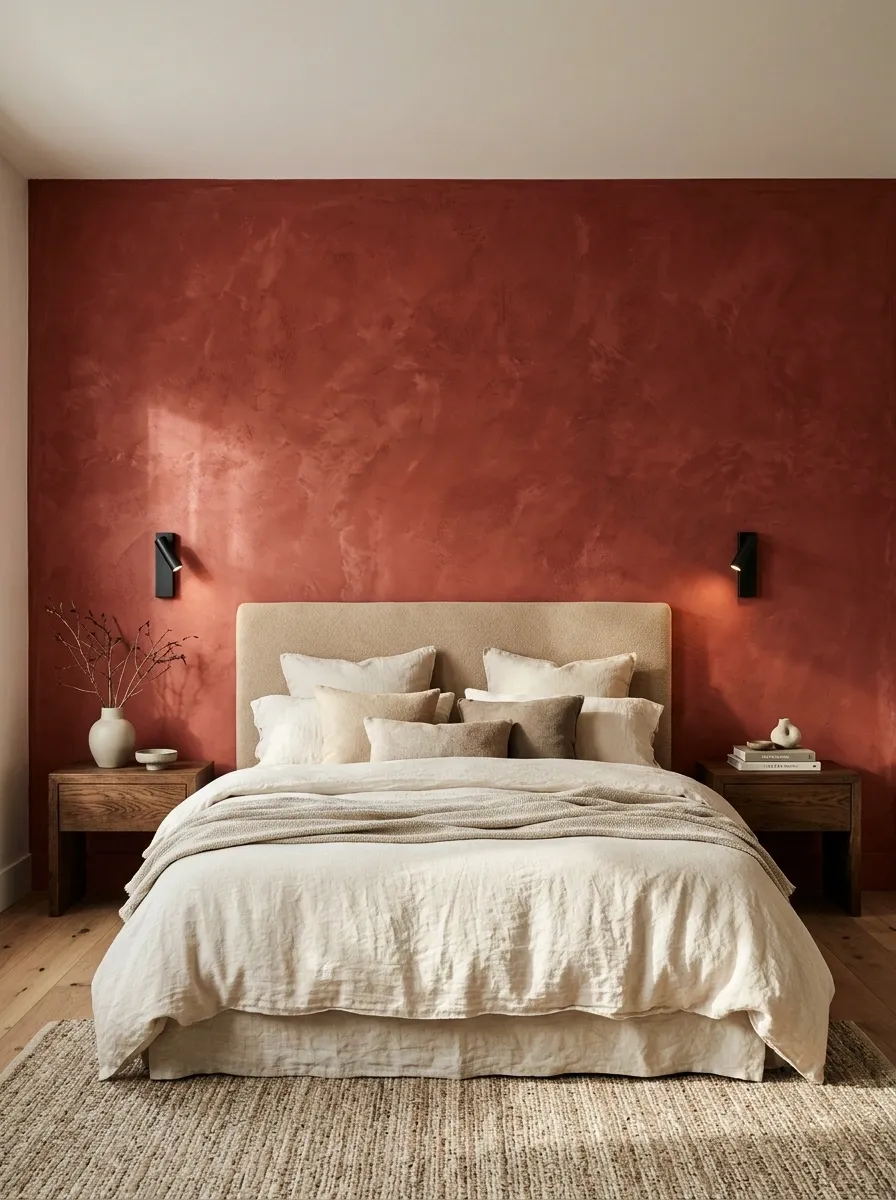
A brick-red plaster-look wall sits behind a sand-colored bed with cream textiles, dark oak furniture, and black reading sconces. Sand dilutes the strength of the red, making it feel architectural rather than overpowering.
Use one saturated red wall or lower wall section.
brick statement, sand upholstery, cream relief.
Pale Blue and Warm Beige Bedroom
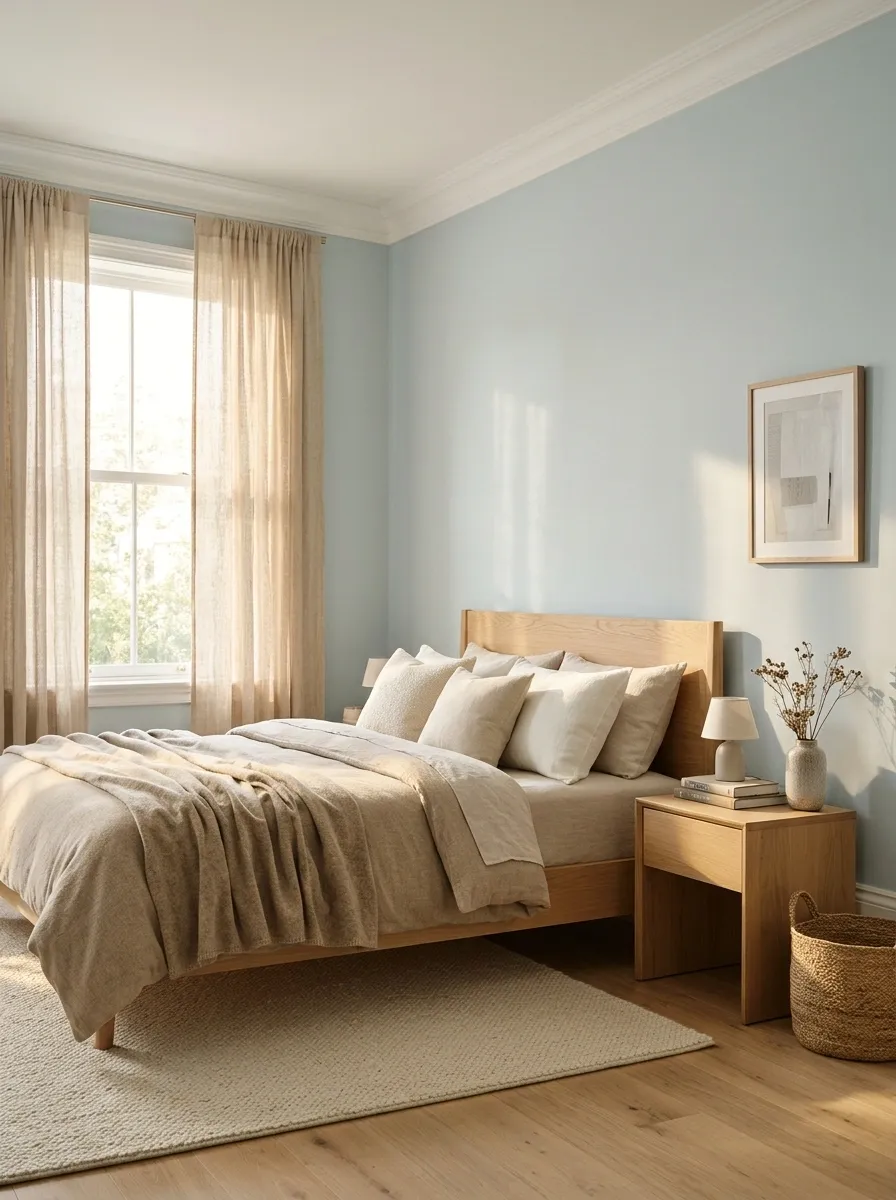
Pale misty-blue walls combine with beige wool bedding, light oak furniture, flax curtains, and ivory cushions. The beige and wood give the airy blue room warmth without losing its lightness.
Avoid extremely icy blue paint if the room receives little sun.
Emerald and Antique Brass Bedroom
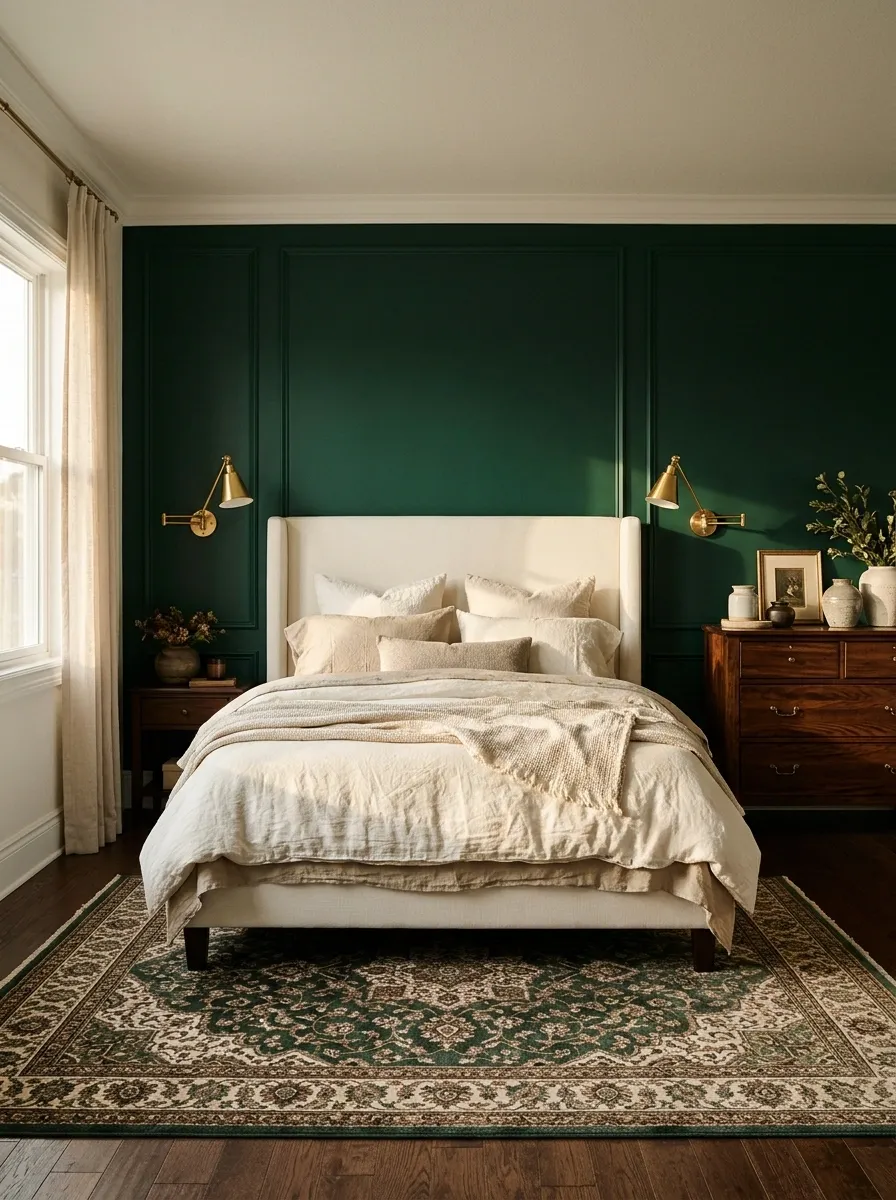
A rich emerald headboard wall frames an ivory bed, dark wood dresser, antique brass sconces, and a classic Persian-style rug. The dark green creates drama, while the traditional materials make it feel established rather than trendy.
Use the patterned rug to connect green, cream, and wood tones.
Apricot and Warm White Bedroom
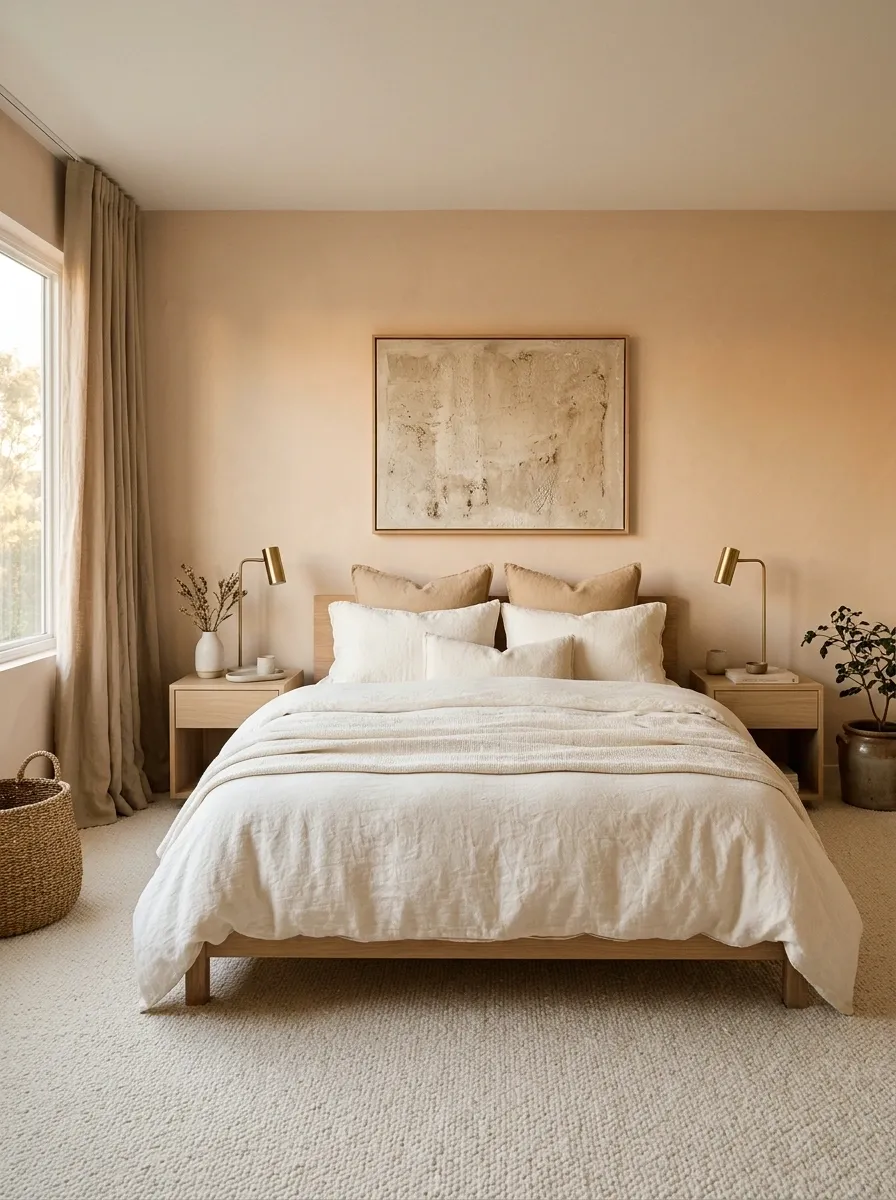
Gentle apricot walls meet a warm-white linen bed, ash wood nightstands, soft tan curtains, and textured ivory carpet. The peach warmth makes the room glow without heavy brown or red surfaces.
Keep apricot dusty rather than neon or saturated.
Black and Oatmeal Bedroom
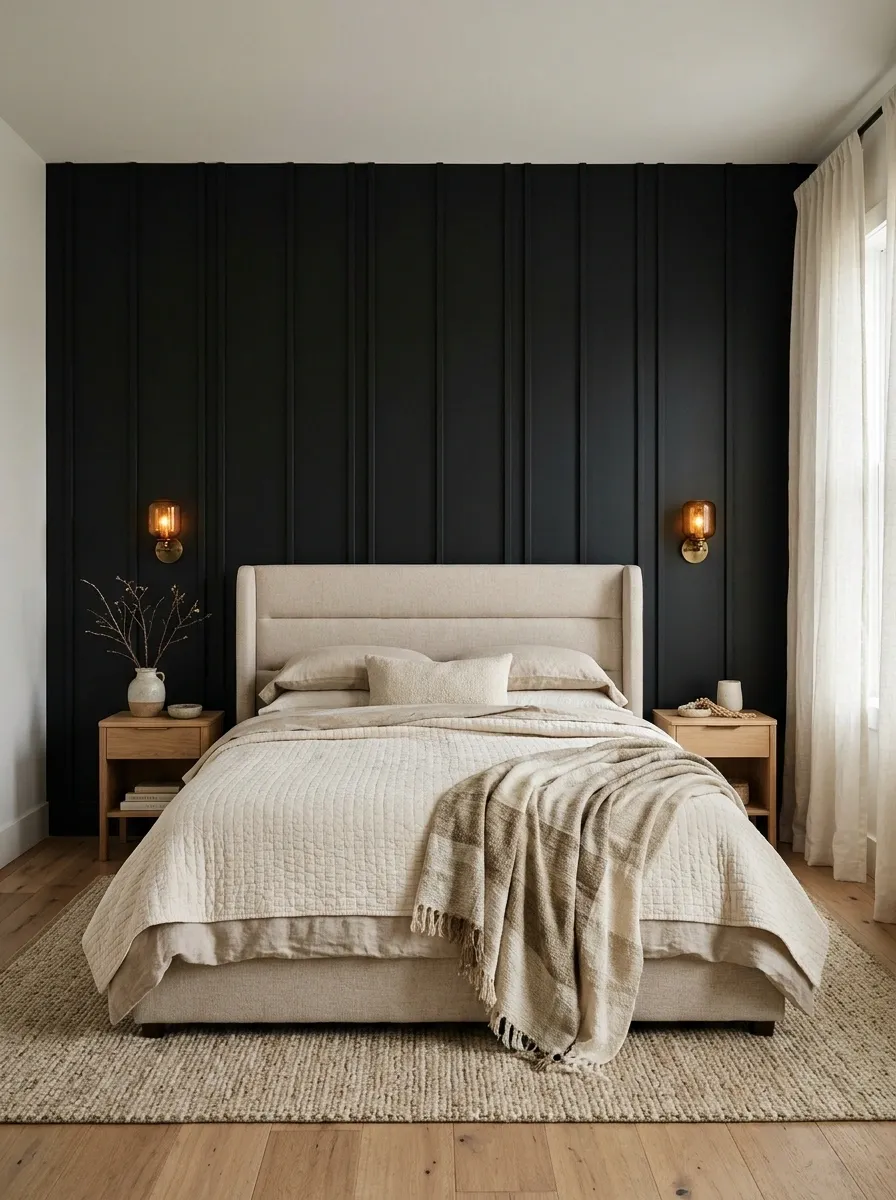
A matte-black paneled wall backs an oatmeal upholstered bed, cream quilt, warm wood floor, and small amber sconces. The pale textures prevent black from dominating, and the dark wall gives the bed a defined silhouette.
Reserve black for one major surface if the room lacks daylight.
Raspberry Mauve and Mushroom Bedroom
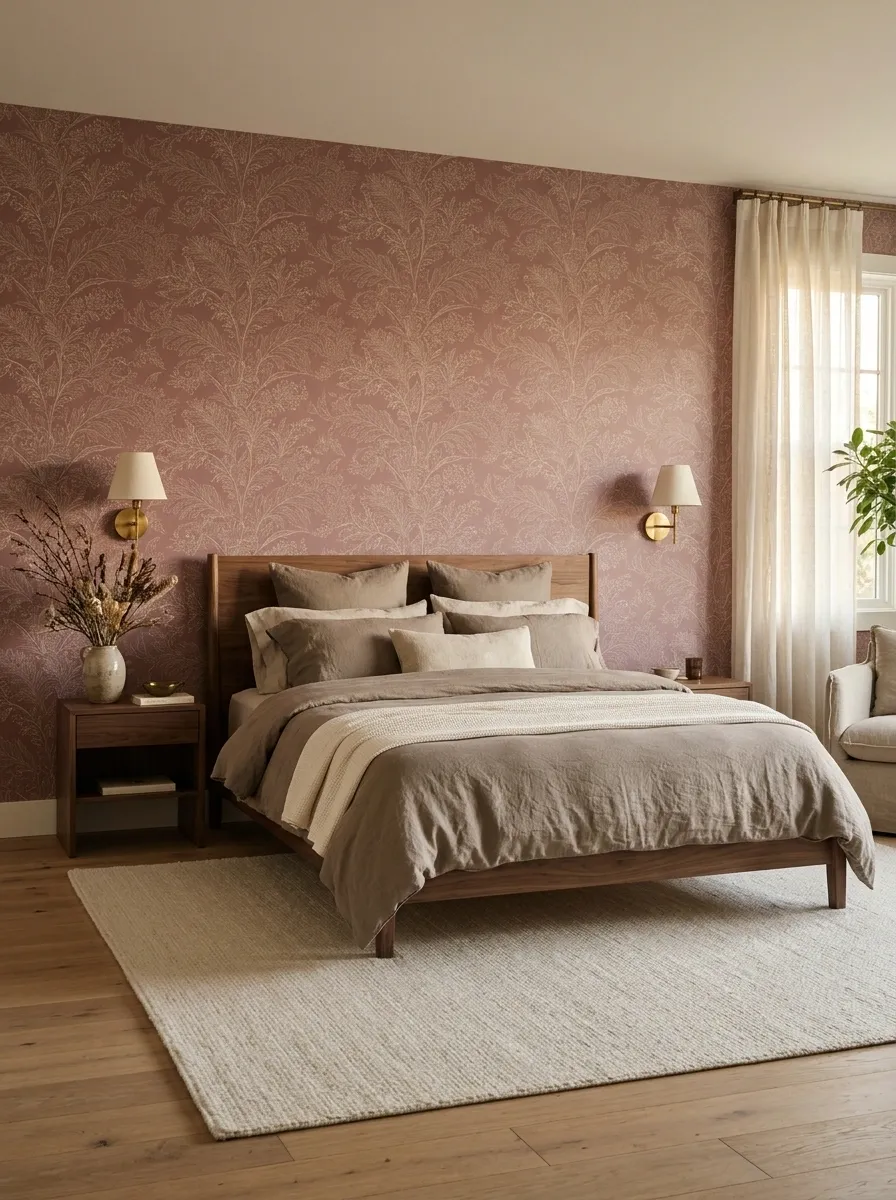
Muted raspberry-mauve wallpaper meets mushroom-colored bedding, a walnut bed, and aged brass accessories. A little cream in the pattern lightens the look. The pattern reads intimate rather than busy because the larger furniture pieces are quiet.
Select wallpaper at full scale and test under room lighting.
Pine Green and Stone Grey Bedroom
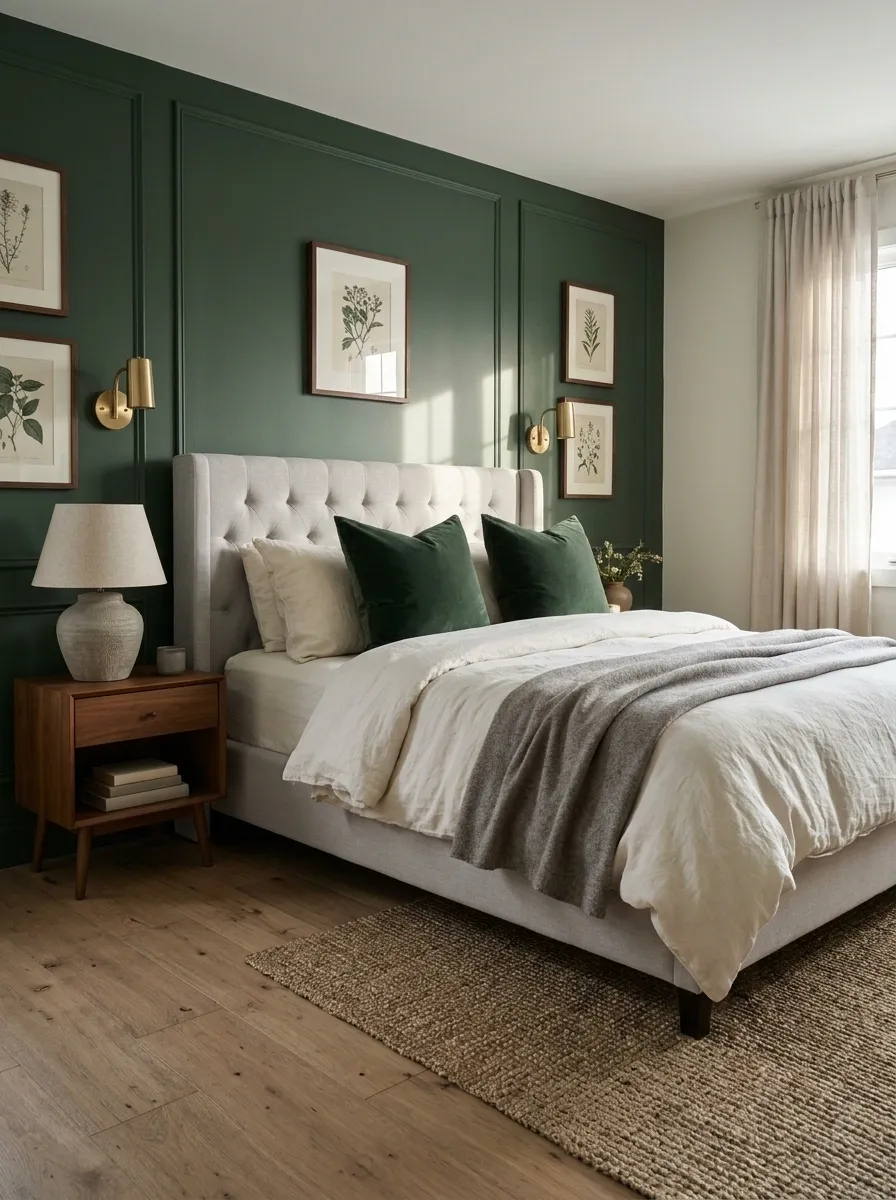
Pine-green walls surround a pale stone-grey upholstered bed, natural oak floor, and wool throws in a slightly warmer grey. The lighter upholstery gives structure to the dark walls while wood keeps the room from turning cold.
Use layered lamps to avoid a flat dark room.
deep green, pale grey, medium warm wood.
Copper Rust and Pale Denim Bedroom
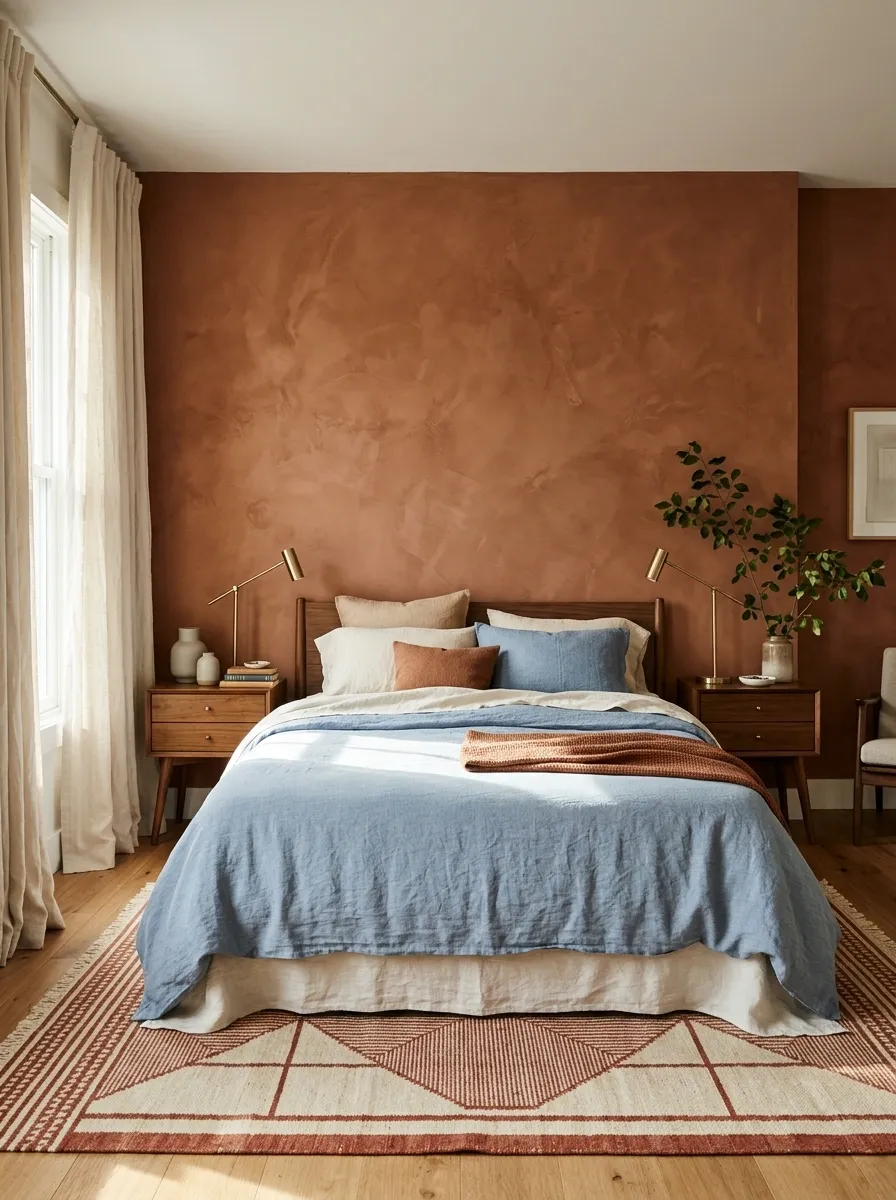
A pale denim-blue bedspread meets copper-rust walls, cream curtains, walnut nightstands, and a geometric woven rug. The cool bedding stops the room’s warm paint from becoming overwhelming. The colors feel collected instead of matchy.
Keep one major surface pale for balance.
Mocha and Powder Blue Bedroom
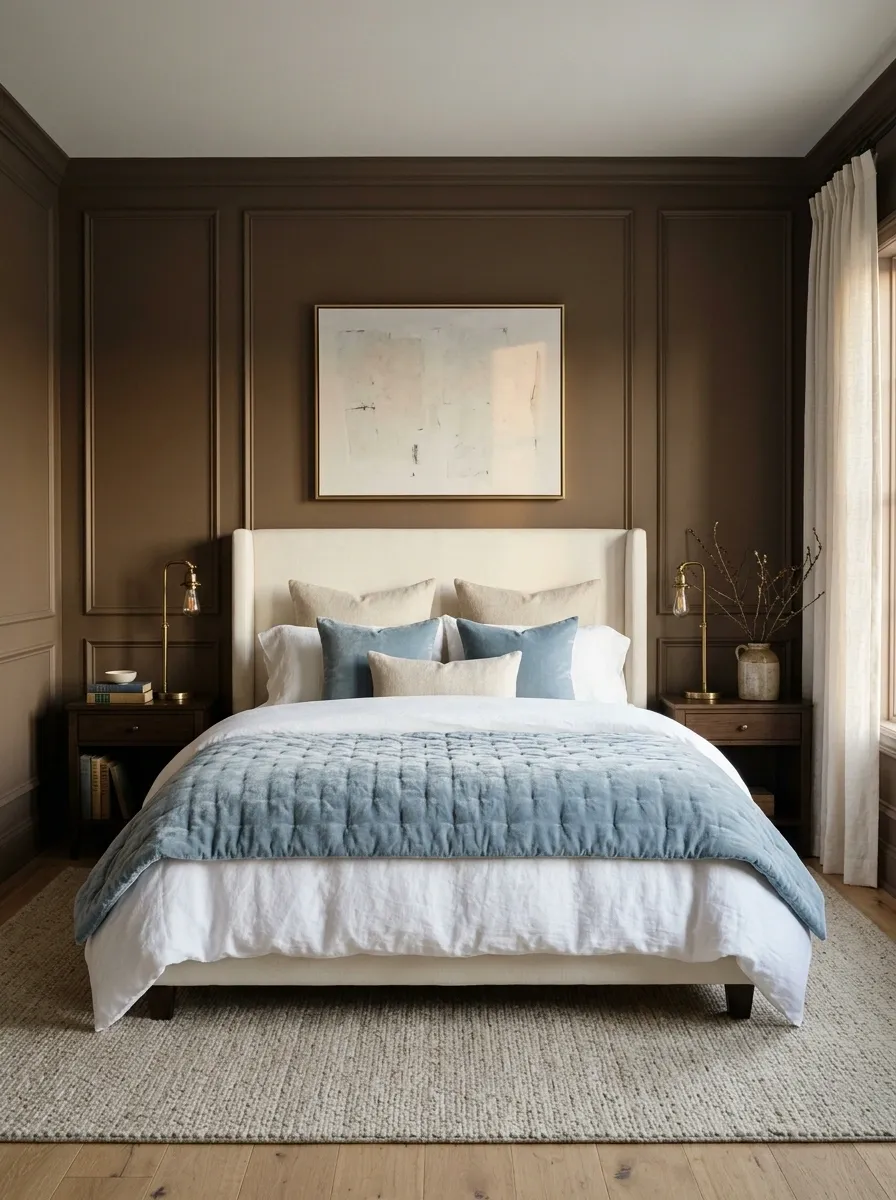
Mocha walls combine with a powder-blue quilt, ivory upholstered bed, and vintage brass lamps. The pale blue is unexpected against chocolatey walls, adding freshness without sacrificing warmth.
Use a muted blue, not a bright primary shade.
Greige and Muted Ochre Bedroom
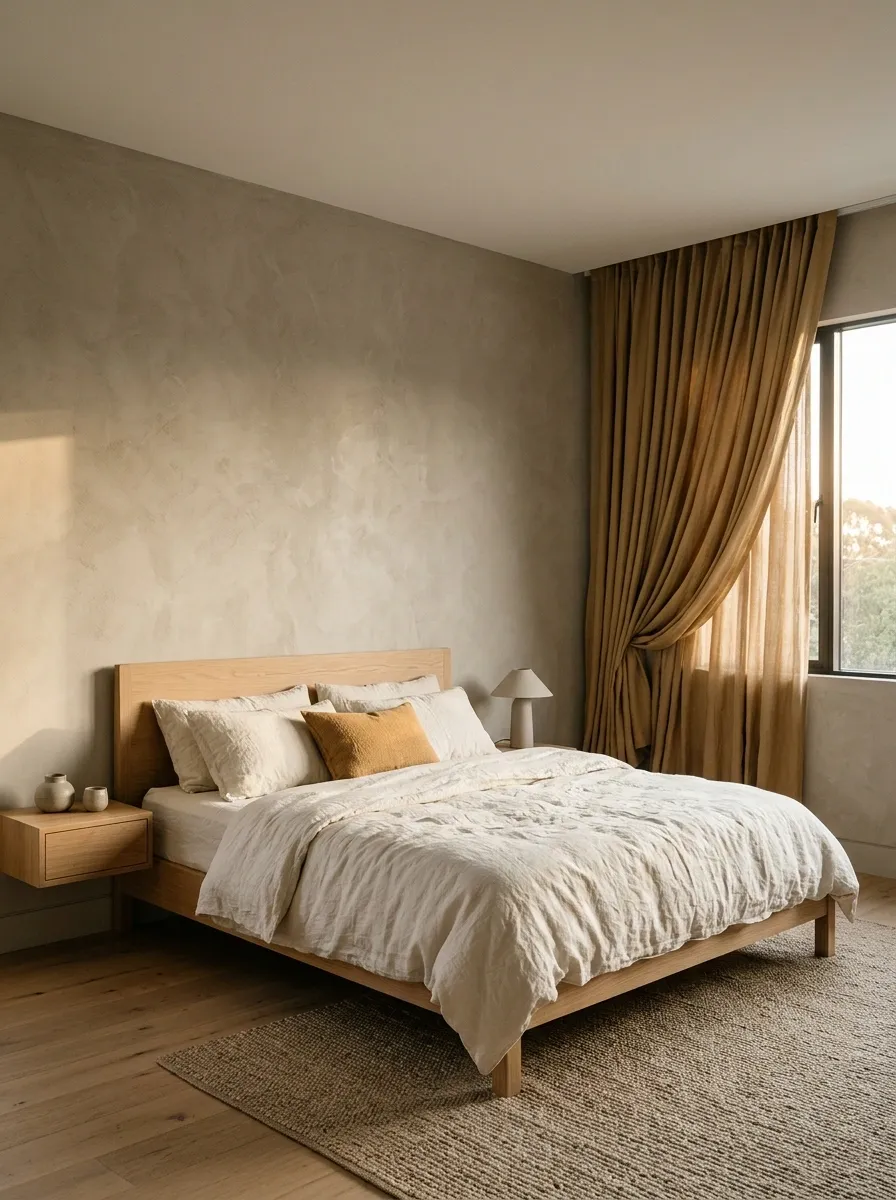
Greige plaster walls, a light oak bed, ivory bedding, and muted ochre curtains create a warm contemporary bedroom. The ochre frames the windows and gives the quiet neutrals a clear point of interest.
Repeat ochre once in a small cushion to connect the curtains.