
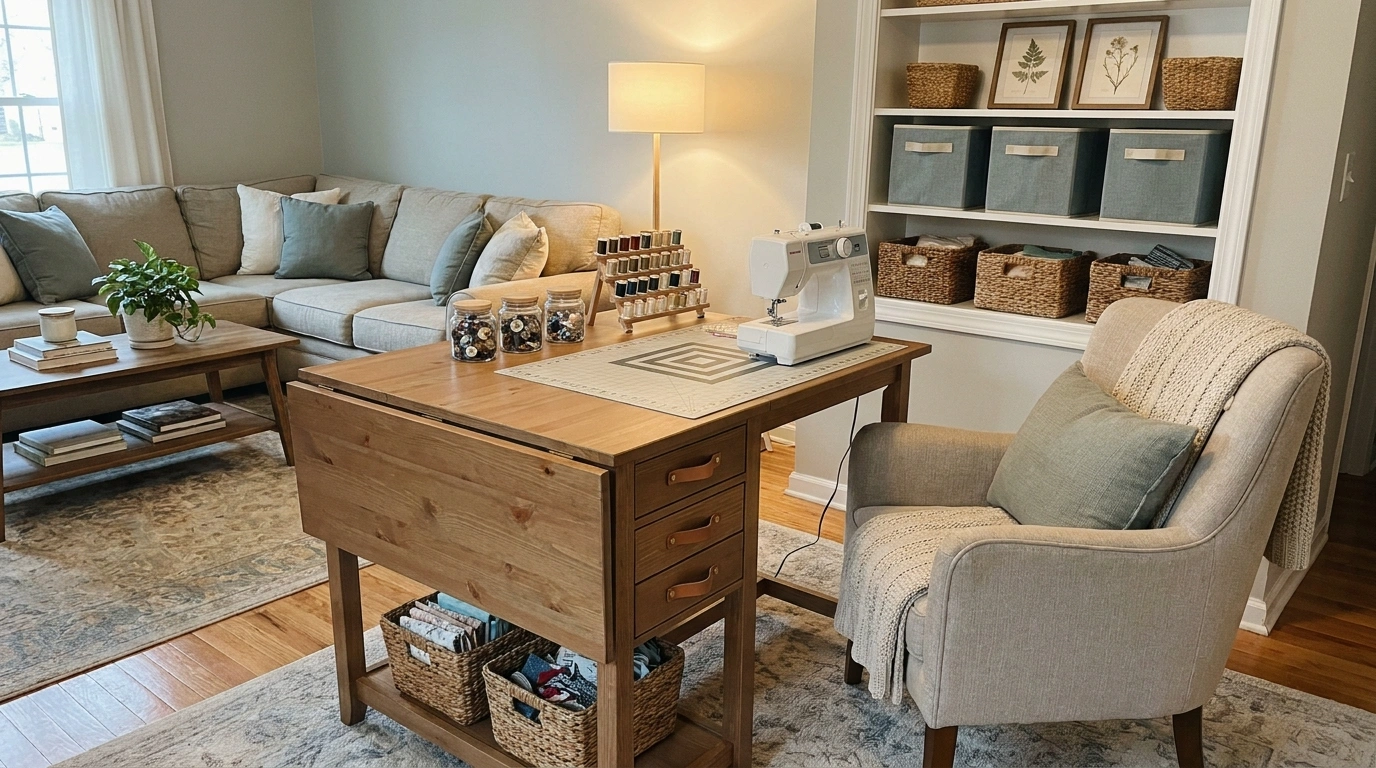
A living-room craft table needs more than a handsome chair and a basket labeled “creativity.” It needs somewhere for the project, somewhere for the materials, and a believable plan for what happens when people arrive.
That doesn't mean packing everything away after every session. It means deciding what can remain visible, what can move as one useful group, and which parts of the room guests still need to use.
A good arrangement supports making things without asking the rest of the household to perch around a permanent field of scissors.
Plan the Change Between Making and Hosting
List what the craft actually involves: cutting space, water, heat, tools, small parts, electrical equipment, drying time, or a project that cannot be moved yet. The table and storage need to suit those conditions.
Then identify the guest setup you actually want. Drinks with a few friends require a different reset from a meal or an overnight stay. Keep exits, furniture movement, equipment ventilation, and cable routes clear in both states.
Use suitable stable furniture and follow the intended operation of folding, extending, or moving pieces. Heavy tools and equipment need appropriate support. A protective mat can help with a compatible surface, but it doesn't make every dining table suitable for every craft process.
Tables That Belong to the Room All Day
A Small Dining-Style Craft Table Beside the Sofa Group
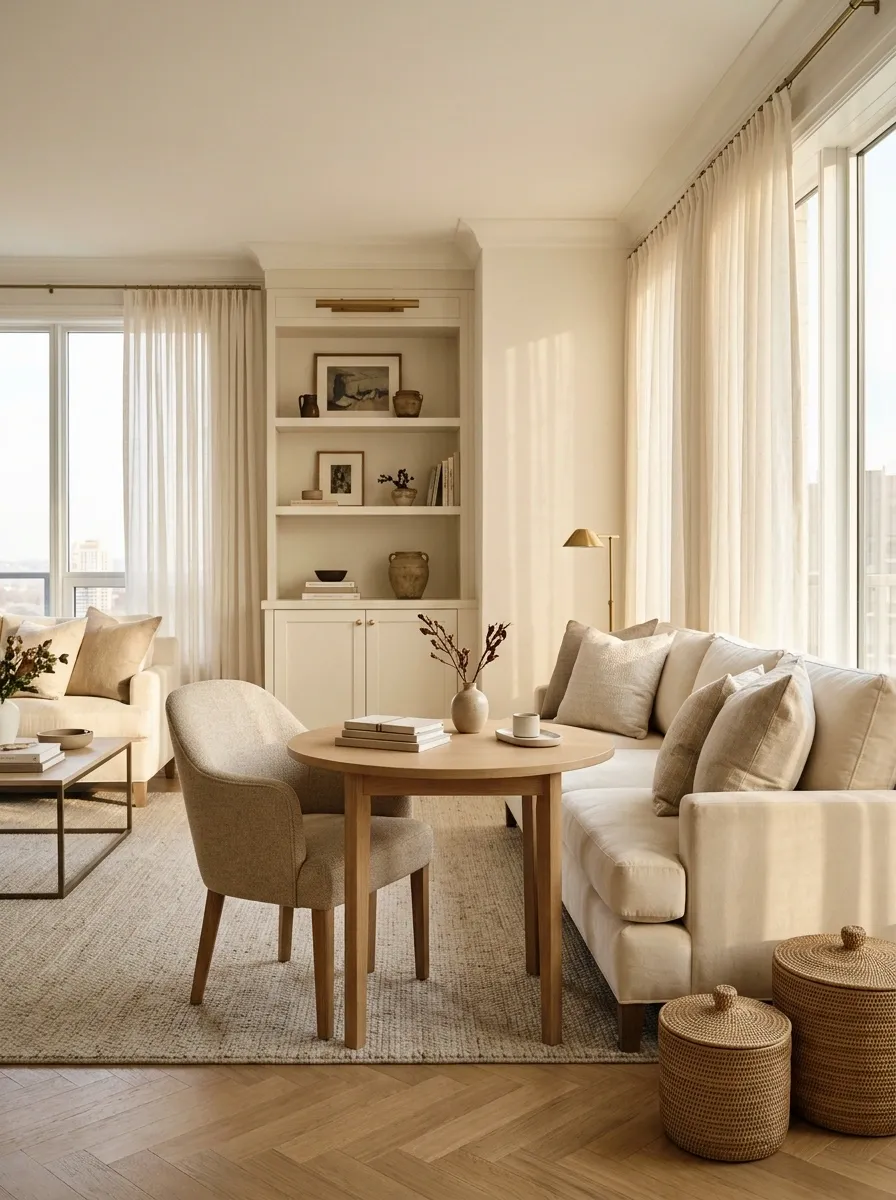
Place a suitable small table beside the main seating group, with enough room for a comfortable working chair. The table can serve craft work during ordinary days and a useful guest surface after an appropriate cleanup.
Choose a shape that leaves circulation clear. A round table may soften the arrangement, while a rectangle can provide a more defined working edge.
Choose the table for the actual craft loads and the guest use, not its appearance alone.
Keep everyday materials in nearby suitable storage rather than scattered across every room surface. The table looks more convincing when it is a real piece of living-room furniture with a practical second use, not a workbench temporarily dressed for inspection.
A Writing Desk on a Solid Wall
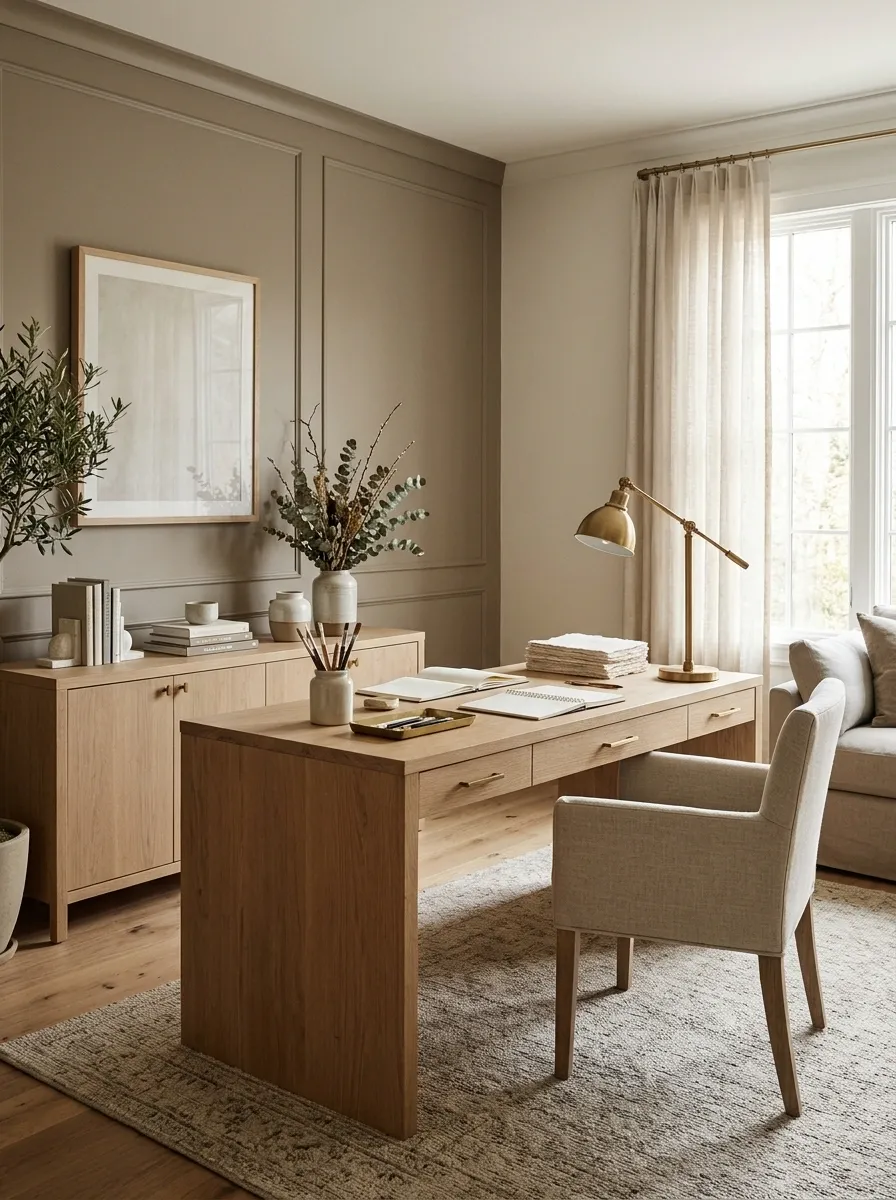
Use a suitable writing desk on a solid wall for crafts that fit its working depth and construction. Give it a comfortable chair and useful light, with materials stored in drawers or a nearby cabinet.
The wall position can keep the work area distinct from the sofa group. A plain desk front and quiet storage help it remain visually settled while guests use the room.
Check working depth, equipment support, lighting, and cable access.
Don't choose a narrow console and call it a desk if it doesn't give your hands, tools, and knees enough space. A little more depth can be more useful than an exceptionally elegant surface that only accommodates the idea of a project.
A Broad Table Behind a Fixed Sofa
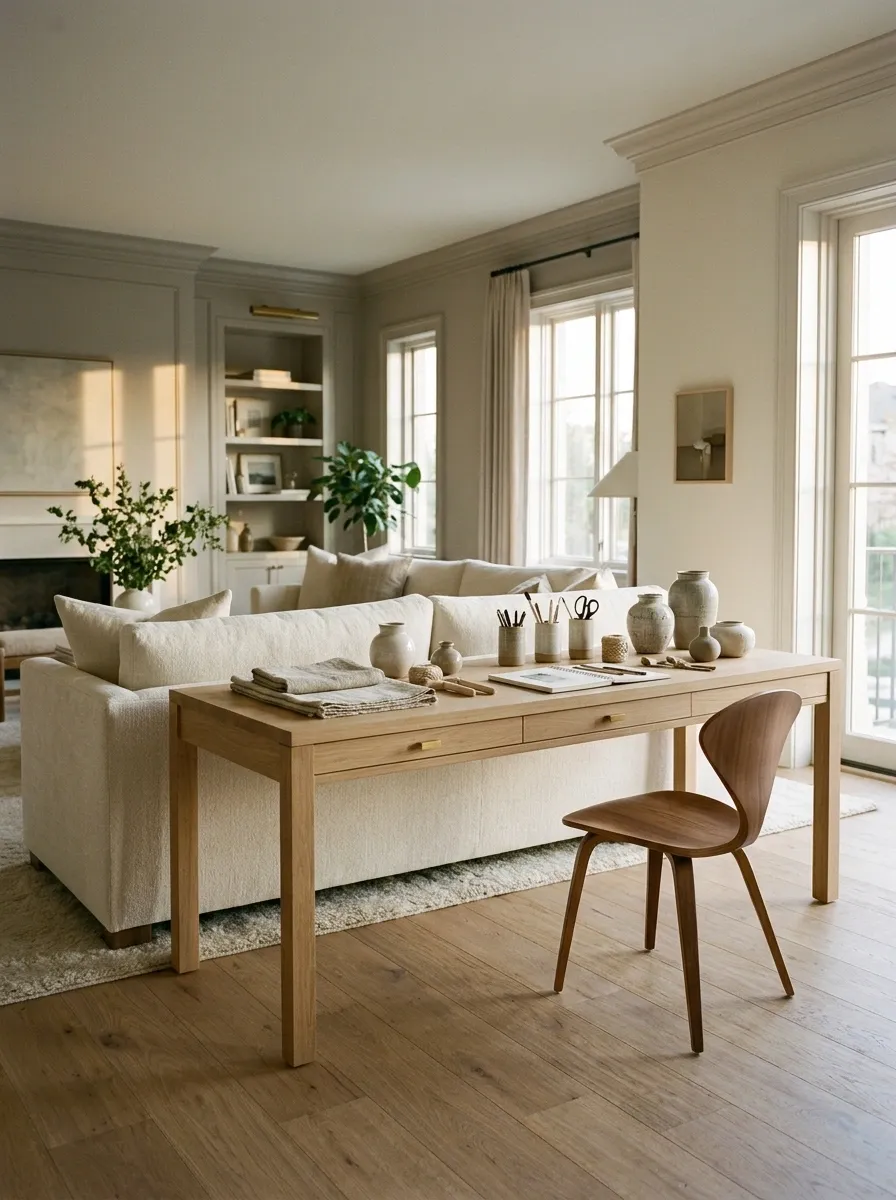
Where the room has enough depth, place a suitable craft table behind a fixed sofa. The sofa gives the work area a partial visual boundary without enclosing it.
Allow the working chair to pull out fully and keep the route around the sofa clear. A table that fits behind the back may still leave no room to sit at it.
Keep frequently used materials within the work area rather than building shelves over the sofa solely to compensate for insufficient storage. The arrangement is most useful when both sides function independently: people can sit and talk while the maker has a proper surface. It shouldn't require a room-wide pause every time someone wants to leave their chair.
Test chair movement and all walking routes with both sides occupied.
A Craft Table Tucked Into a Deep Window Bay
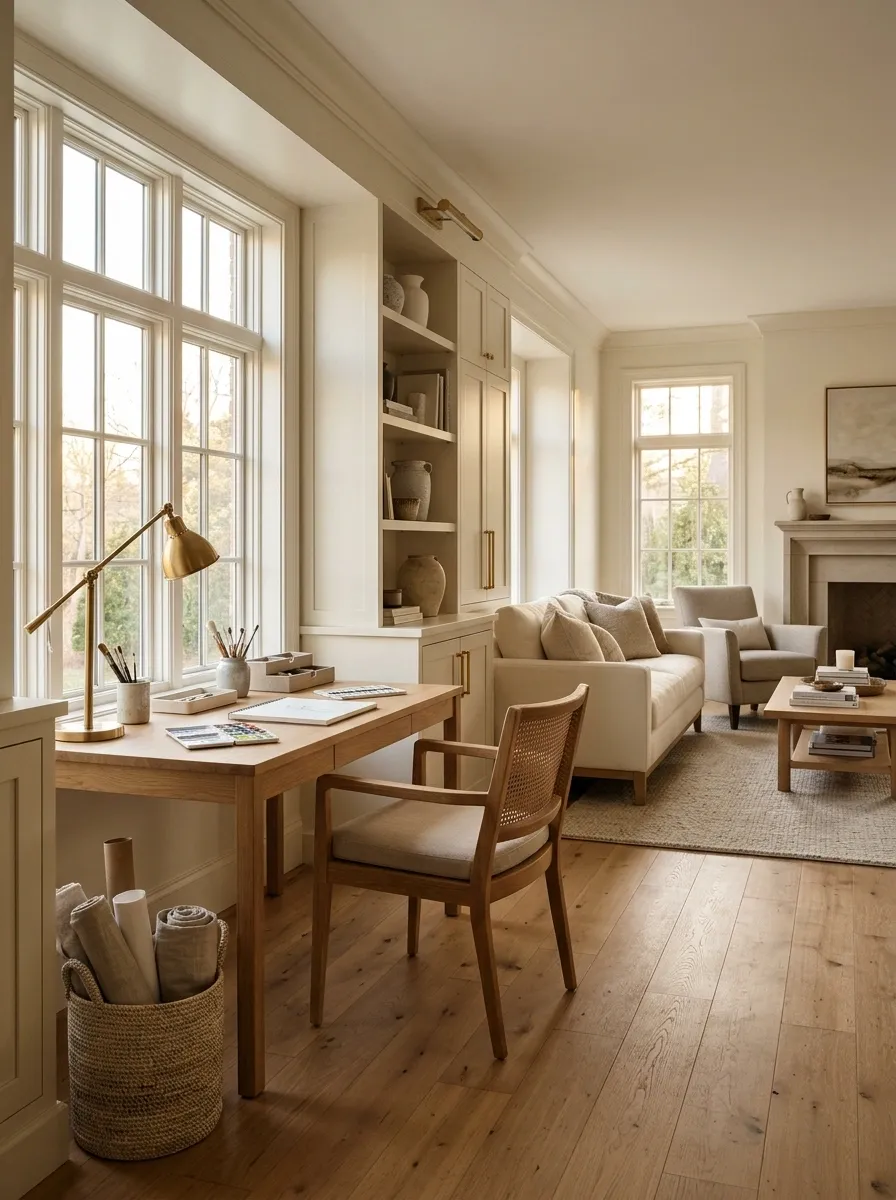
A suitable table can use a generous bay where it leaves window access, heating, and required routes clear. The shape should respond to usable space rather than filling every inch of the recess.
Choose window coverings for actual glare and privacy needs. Daylight can be useful, but the table also needs appropriate light when used after dark.
Keep the window and any heating fully accessible and choose safe furniture placement for the household.
The rest of the living room can remain a clear social arrangement. This works only where the bay genuinely accommodates the working setup; a chair squeezed between glass and table doesn't become comfortable simply because the view is pleasant.
Furniture With a Clear Open and Closed State
A Purpose-Designed Fold-Down Work Surface
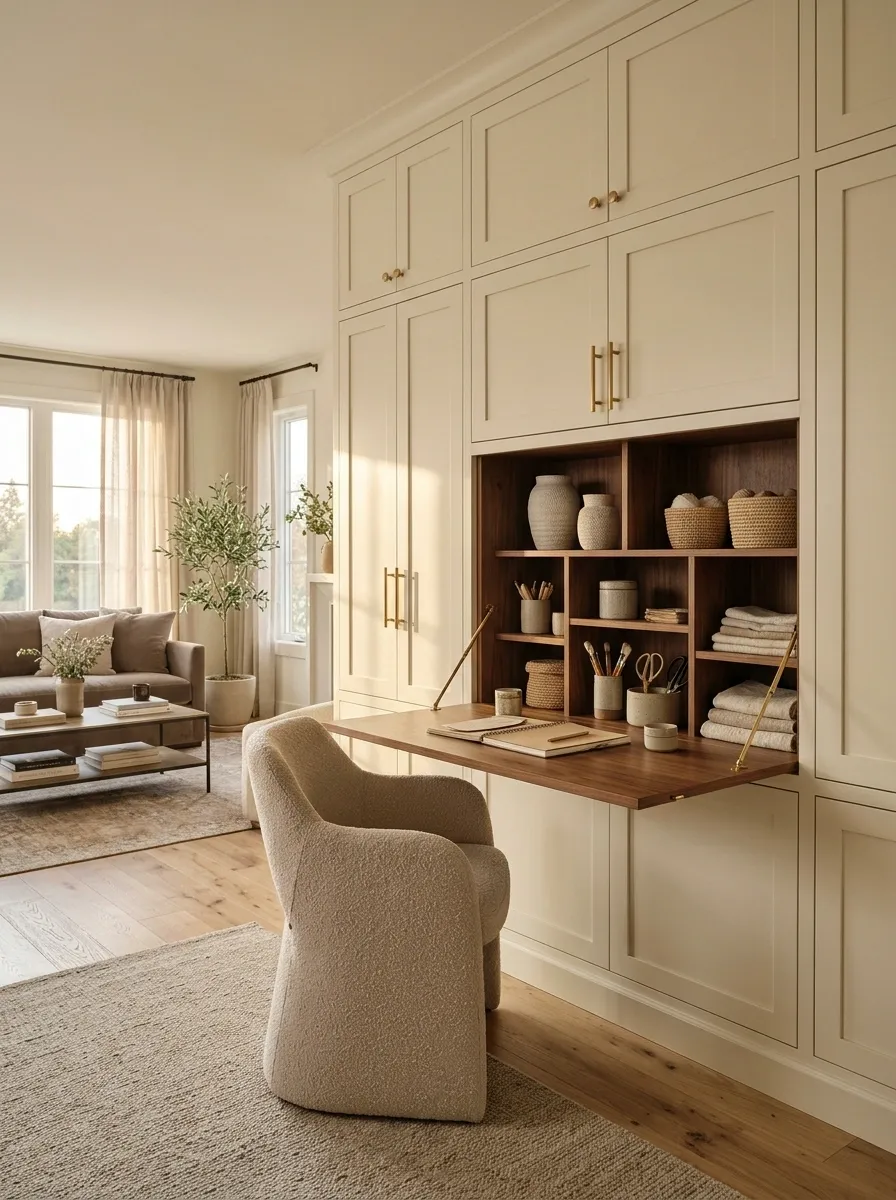
A suitable fold-down surface can provide a working area that closes when not needed. Use a complete system intended for the wall, loads, installation, and intended use.
Keep the folding and support mechanism clear. The open surface needs room for the user and chair, while the closed state needs its own tidy material-storage plan.
Check the guest-ready state
Put tools and materials in their intended storage, then open the seating and walking routes. An unfinished project needs a protected place of its own.
Use the manufacturer's complete support and operation requirements.
This is best for projects that can actually be moved or stored. If the craft involves work that must remain flat and untouched for days, a folding table may create more disruption than benefit. The furniture mechanism cannot negotiate with wet glue on your behalf.
An Extendable Table Kept Compact Between Sessions
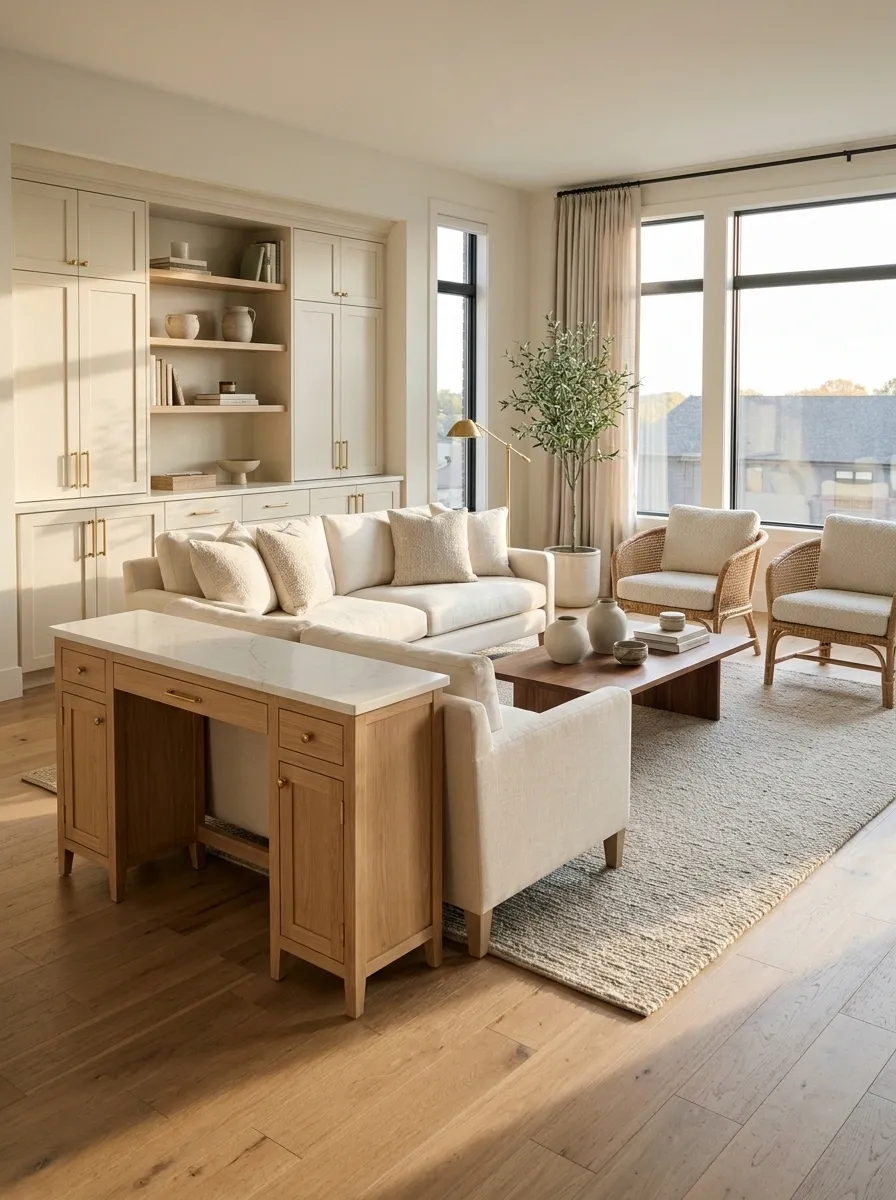
A table with a manufacturer-designed extension can stay compact for ordinary living-room use and open for a larger project when the room permits. Follow its complete support and operating instructions.
Keep storage close enough that expanding the table doesn't mean carrying every material through the sofa group. The chairs and surrounding furniture need usable positions in both states.
Test the full extended footprint and all required supports.
Choose this because the different sizes suit your routine. A table that spends its life fully extended and permanently crowded may be perfectly useful, but it isn't providing the compact guest-ready state you were expecting from its product description.
A Folding Craft Table Beside Dedicated Supply Storage
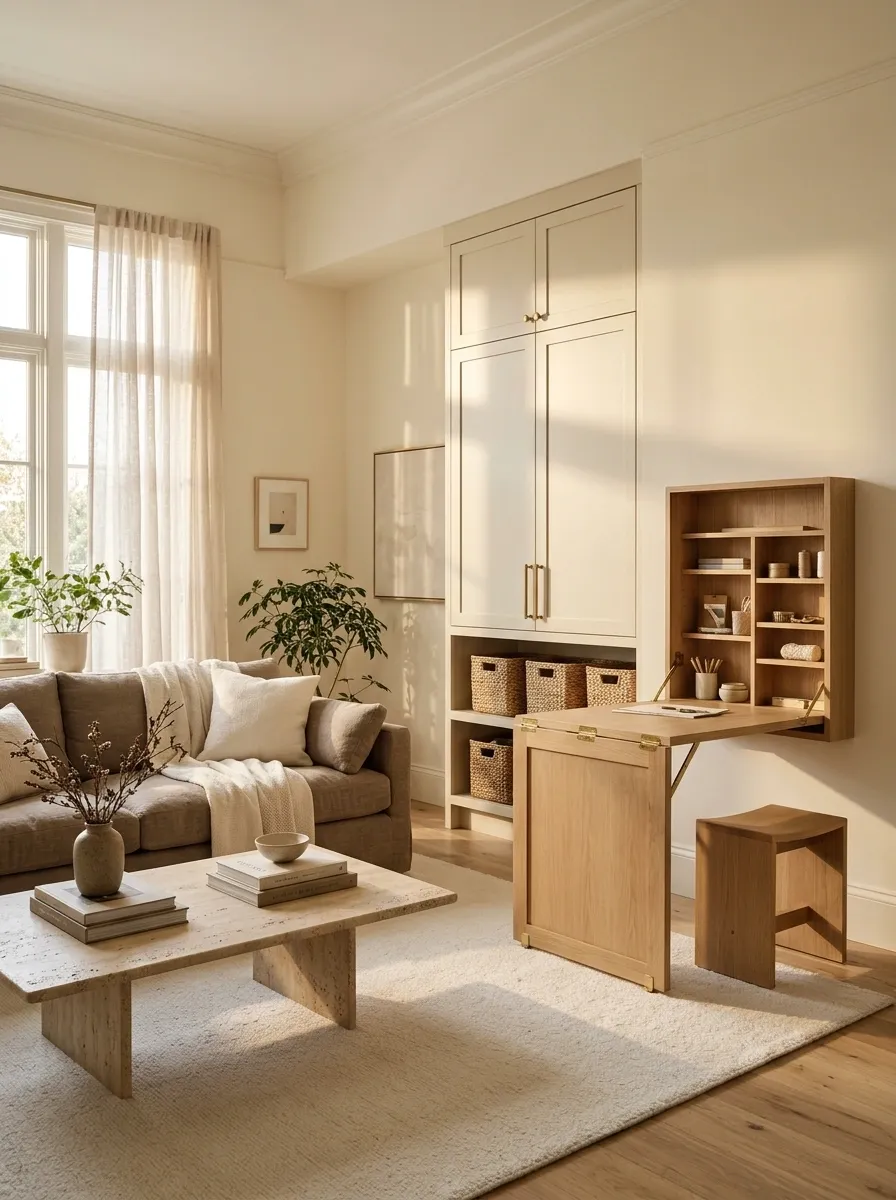
A properly designed folding table can support occasional craft work if its construction and load rating suit the activity. Give it a genuine storage position when closed, with materials in a separate suitable cabinet.
Keep the setup sequence simple and follow the table's locking and handling instructions. The floor and working position need to remain stable.
A folding surface is most convincing when it is easy to put away safely and the room still works during the project. Don't choose a large table that only fits after the sofa moves and the door becomes inaccessible. Occasional furniture should make the occasional activity easier, rather than require an opening ceremony involving the entire living room.
Choose the table and storage arrangement for the actual activity and safe operation.
A Craft Cart Parked Beside a Separate Worktable
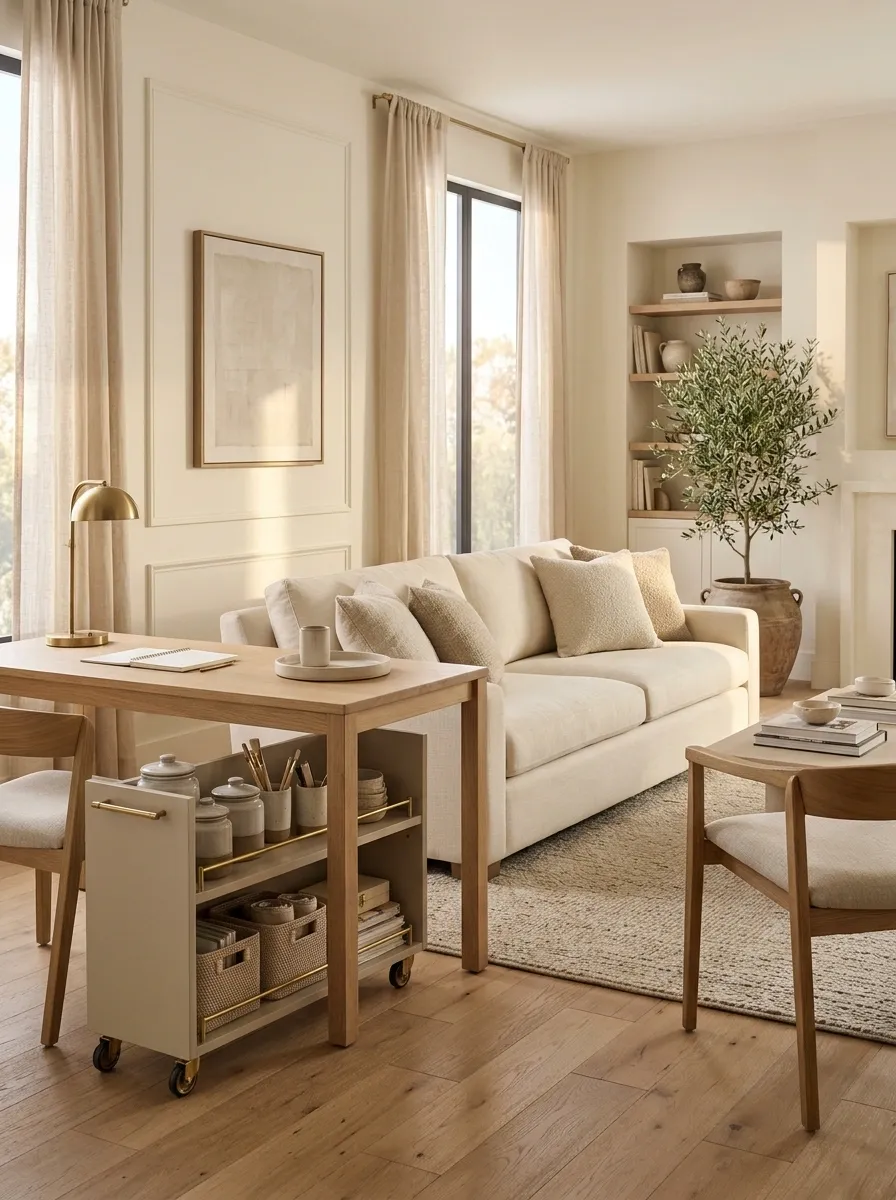
Use a suitable cart for materials while the working table remains a separate stable surface. The cart can move to appropriate storage when guests arrive, following its intended loads and handling.
Keep tools and small parts in containers that suit them. A cart full of open cups and projecting tools is harder to move than a neat photograph suggests.
Use a cart suited to the contents and keep its parked position out of circulation.
This can reduce the reset to a few coherent actions instead of many small trips. The cart shouldn't become another permanent obstacle beside the table; give it a place where its usefulness continues after the craft session ends.
Keep Projects Manageable Without Pretending They Vanish
A Table With a Removable Project Board
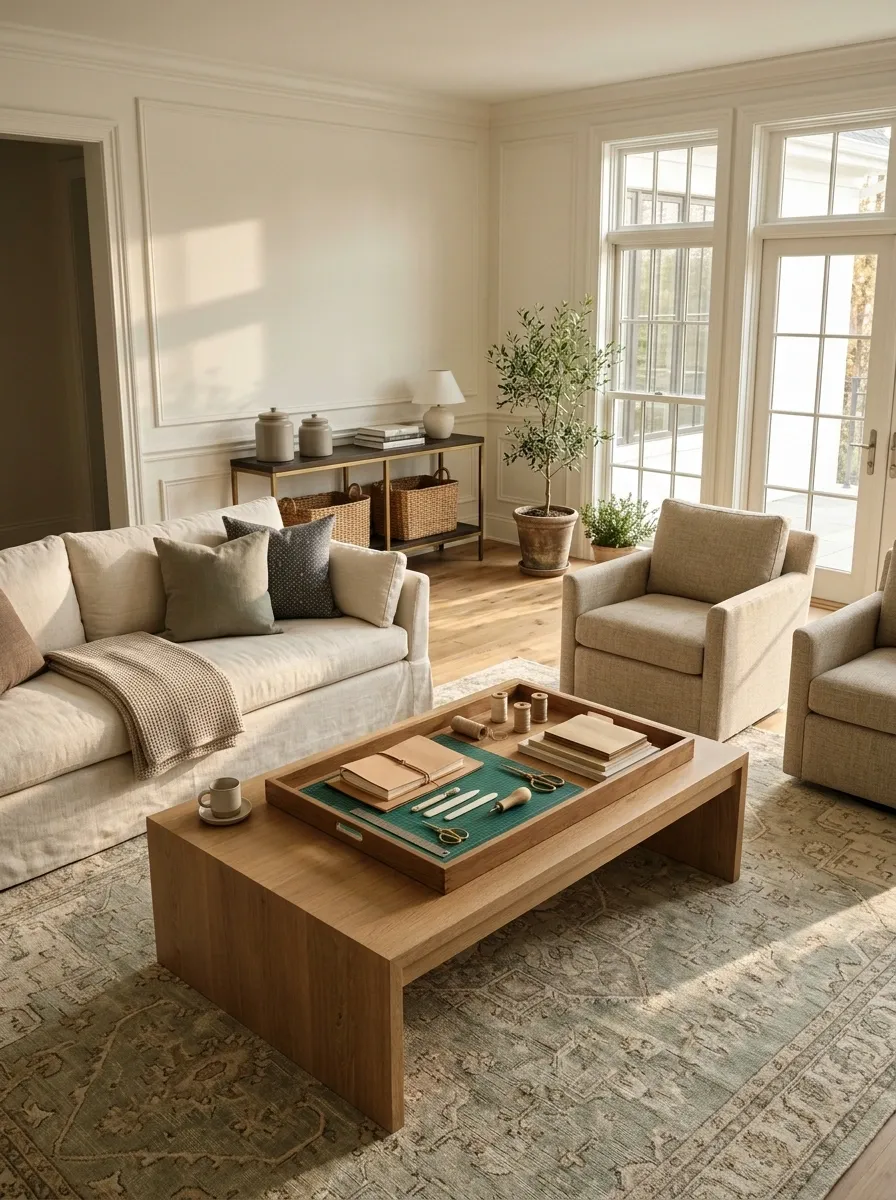
For suitable crafts, a properly supported removable board or tray can let the project move as one unit. Choose it for the materials, size, stability, and safe handling involved.
Plan the board's resting place before relying on it. It needs a suitable clear surface where the project can remain undisturbed, not the sofa seat guests are about to use.
Check the guest-ready state
Put tools and materials in their intended storage, then open the seating and walking routes. An unfinished project needs a protected place of its own.
Use only where the project and board can be moved safely without damage or unsuitable loading.
This works particularly well for projects that don't need every tool to remain in position. The board gives continuity to the work, while the table can return to guest use after any appropriate cleaning and reset.
A Quiet Cabinet Beside an Open Craft Surface
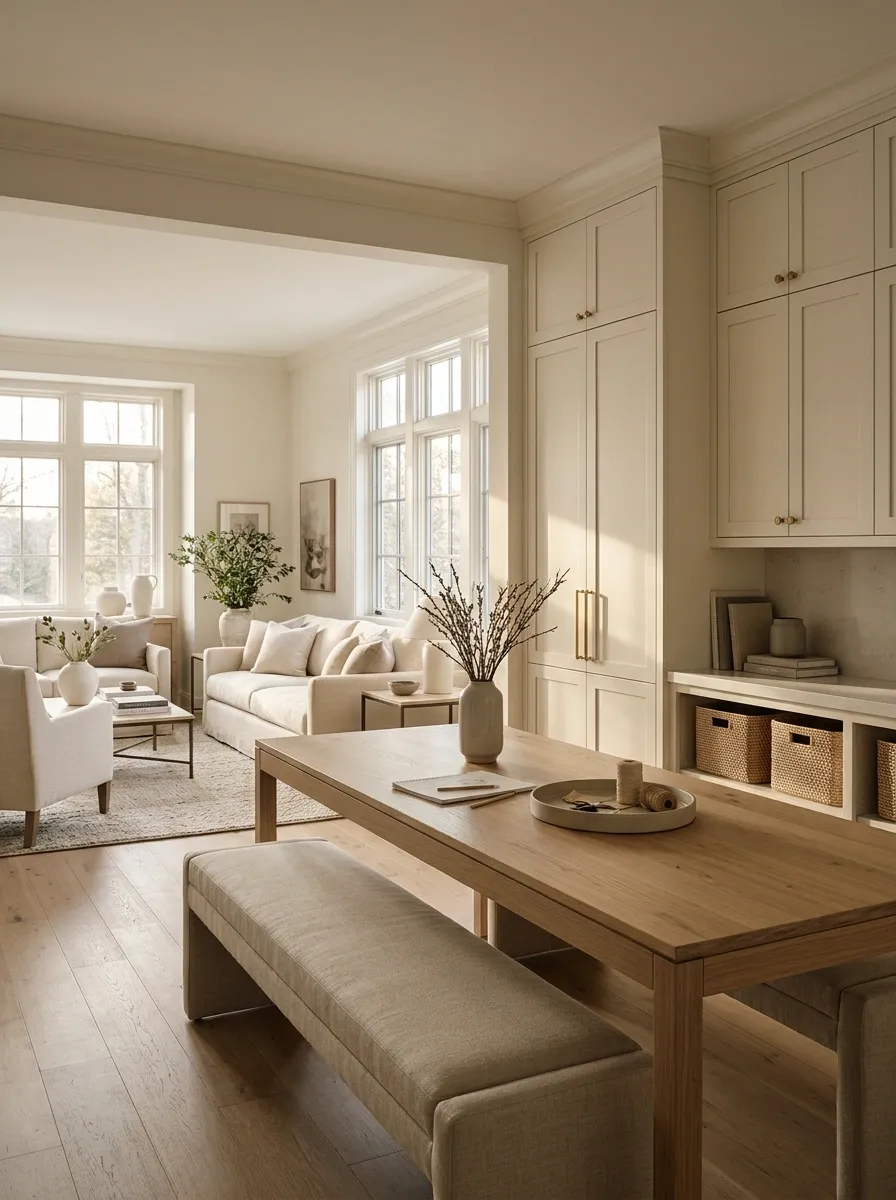
Keep the table visually simple and let a suitable nearby cabinet hold materials behind closed fronts. The cabinet can relate to the room's other furniture without announcing its contents.
Organize the interior for the actual craft: flat storage for paper where appropriate, secure tool storage, and containers suited to small items. Keep any hazardous or child-inappropriate materials stored correctly.
The open table remains the useful working surface, and the closed cabinet supplies the quieter guest view. Choose storage that is easy enough to use during a project. A beautiful cupboard with no practical place for the materials will not become better organized simply because its doors photograph well.
Check the guest-ready state
Put tools and materials in their intended storage, then open the seating and walking routes. An unfinished project needs a protected place of its own.
Choose secure appropriate storage for the actual tools and materials.
A Long Table With Separate Work and Guest Ends
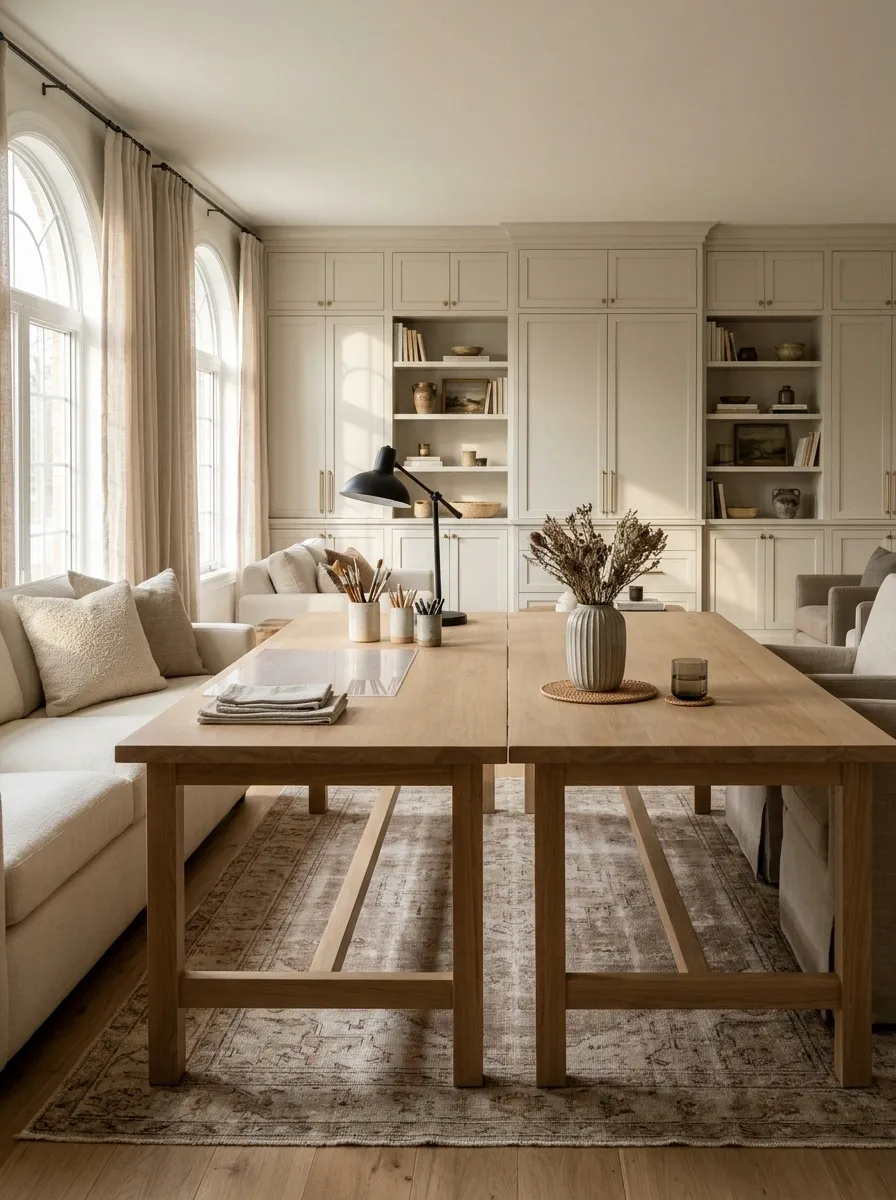
Where a sufficiently large suitable table fits, keep one end for craft work and leave another usable for ordinary household tasks. The division should be practical, with enough clear space between incompatible uses.
Use suitable containers and a clear working mat if appropriate, rather than spreading materials across the whole surface. Food and craft substances need separate safe handling and cleanup.
Choose this only where the table and activity allow the uses to coexist appropriately.
This can suit someone who makes things regularly but still wants a place for a guest to put down a drink or sit nearby. The arrangement should reflect the actual craft, not assume that every process can politely remain on its assigned half.
A Craft Desk With a Clean Guest-Facing Side
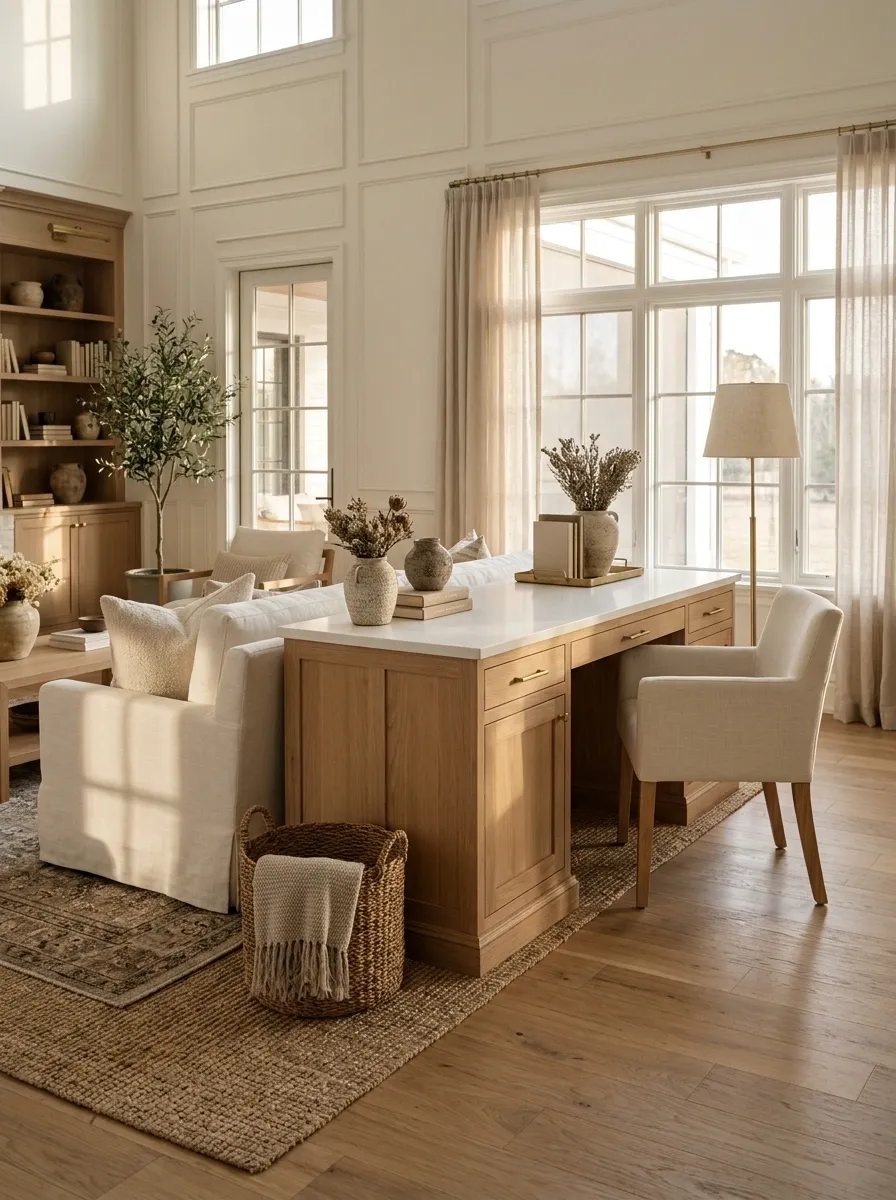
Position a suitable desk so its guest-facing side remains simple while tools and storage are organized on the working side. The room can acknowledge the craft area without displaying every supply from every angle.
Choose furniture that looks finished from the exposed side. Keep chair movement and the route around the desk comfortable.
A plain back or side panel can be more useful than a decorative screen that has to be moved each time someone works. This is a good approach in an open room where the desk's position can't be hidden. The craft area becomes a complete furniture group rather than a collection of shelves apologizing for the table in front of them.
Choose a desk finished for the exposed view and preserve working and guest access.
Make the Guest Arrangement a Real One
A Craft Table Beside a Complete Conversation Group
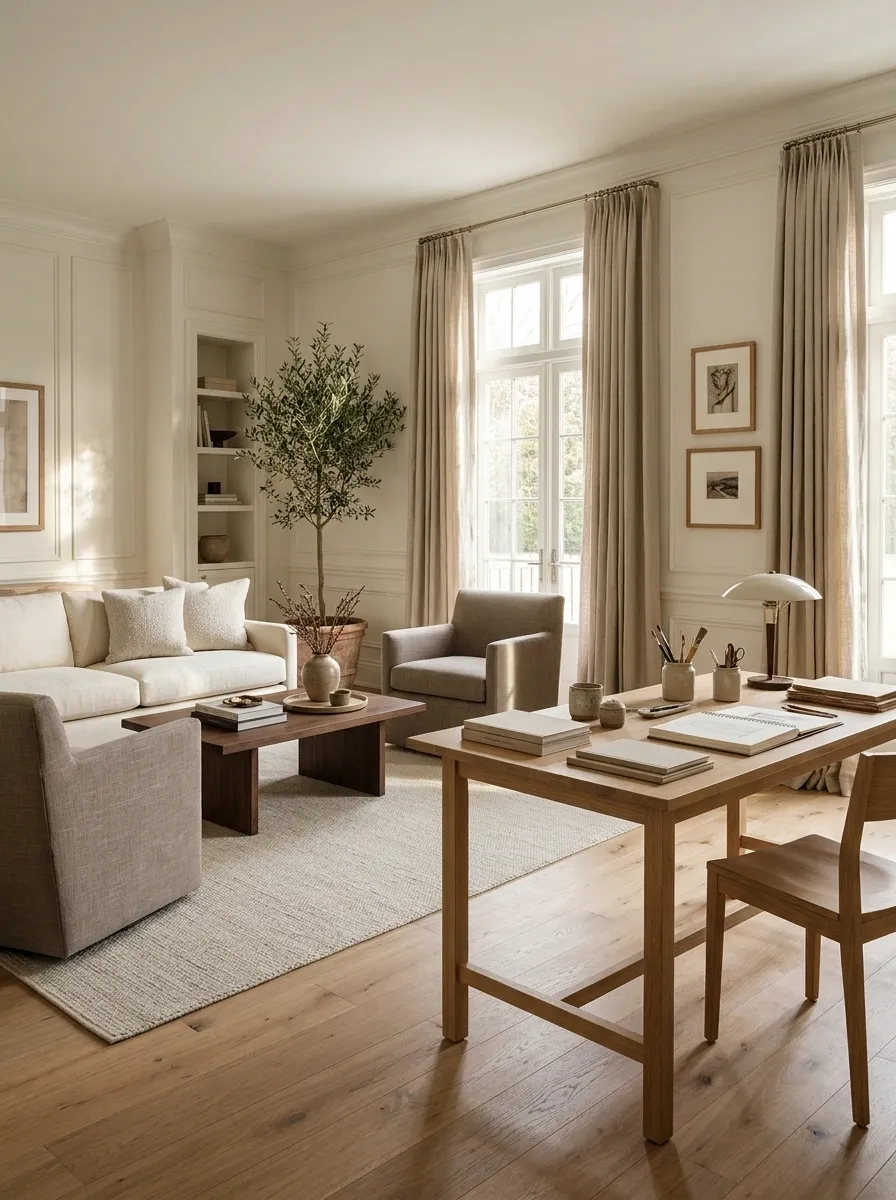
Keep the sofa, chairs, and useful guest tables organized as a complete seating group, with the craft table positioned alongside rather than in its center. The activities can share the room without competing for the same surface.
Connect them through a related wood tone or quiet textile color. The craft table can remain visibly a work area while the guest seats are ready to use.
Test the room with people sitting and the craft project in its ordinary state.
This is useful when projects often remain underway. Guests shouldn't need every material cleared before they have somewhere comfortable to sit. If the room cannot support both groups, choose a more flexible table arrangement rather than compressing all the furniture together.
A Dining-Height Craft Table That Becomes the Hosting Table
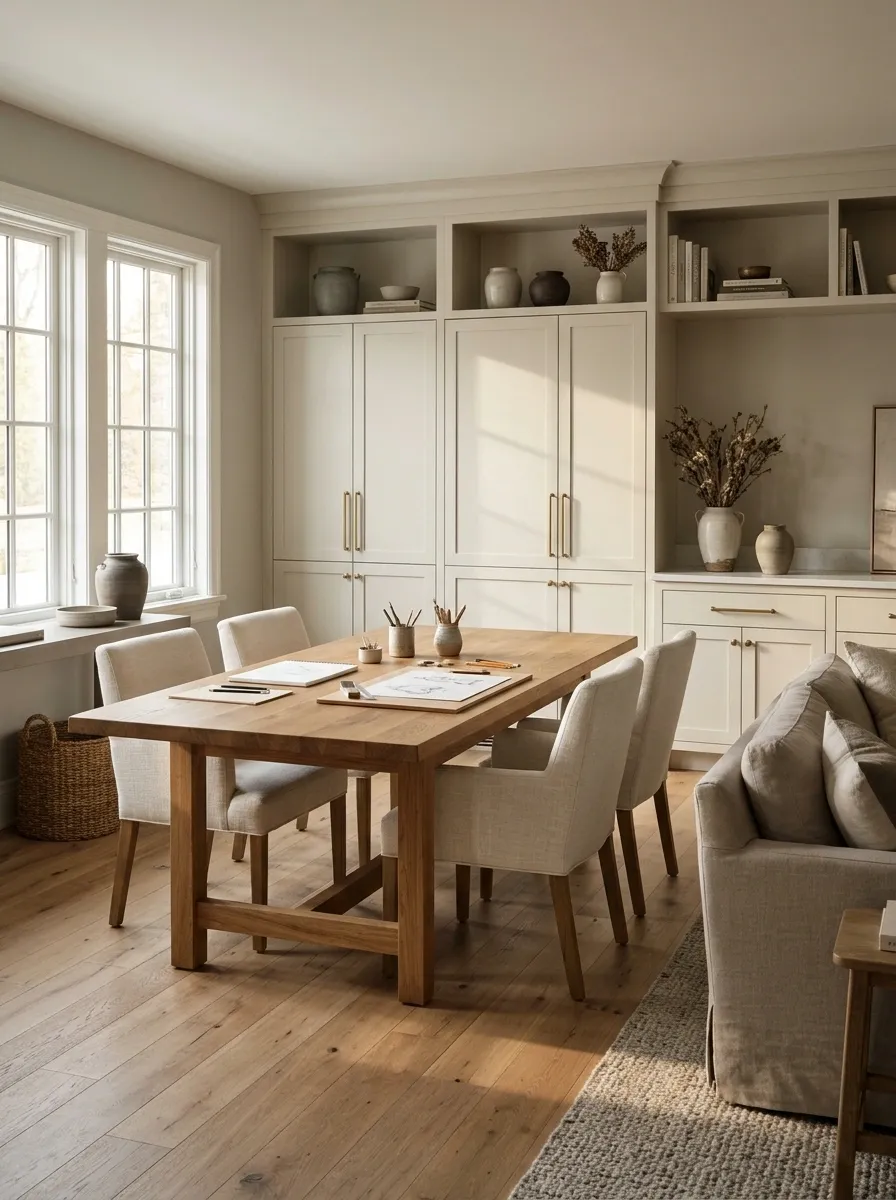
Use one suitable table for both craft and hosting when the material, activity, and cleanup allow. Choose comfortable guest chairs as well as a workable making position.
Keep craft storage close enough that the surface can be reset without hiding supplies on the floor. A plain cloth or serving arrangement can follow only after the table is appropriately clean and ready for its other use.
The shared table can be the room's honest center: making during the week, gathering when needed. It doesn't need to look untouched all the time. It needs a realistic transition that protects the project, the furniture, and the people using it, rather than a blanket thrown over the evidence ten minutes before the doorbell.
Check the guest-ready state
Put tools and materials in their intended storage, then open the seating and walking routes. An unfinished project needs a protected place of its own.
Make the transition appropriate to the craft materials, surface, and hosting use.
Try the Reset Once Before Buying More Storage
Work at the table, leave a normal project in progress, and then put the room into its guest arrangement. Notice what actually needs a better home.
You may need a project board, one useful cabinet, a different chair, or simply a clearer division between the two activities. The goal is a living room where making things belongs—and visitors don't have to ask which objects they are allowed to move before sitting down.