
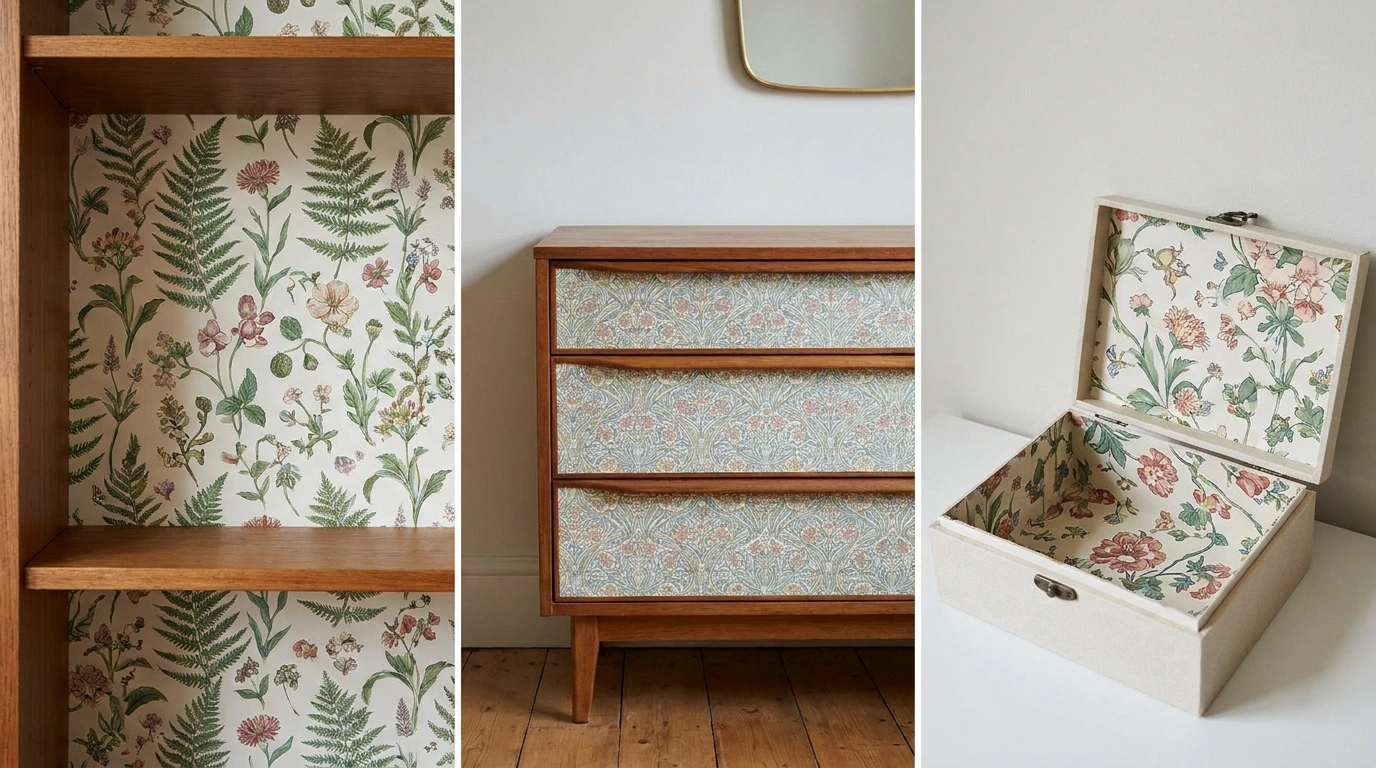
Unroll the leftovers before deciding they belong in a frame. A long narrow strip, a nearly complete repeat, and a few small pieces offer different possibilities.
The useful project is the one that fits the paper you have. A small geometric can work on a box; a large botanical may need a bookcase back or cabinet panel to show what made you like it in the first place.
Give the offcut a job, a finished edge, and a suitable surface. Then stop saving every fragment as though the roll is going to reconstruct itself through optimism.
Sort by Size, Repeat, and Surface
Lay the pieces flat and identify what each one can cover without awkward joins. Note the pattern direction and any complete motifs you want to preserve.
Wallpaper isn’t automatically suitable for every furniture finish, heat source, wet area, food-contact surface, or heavily handled object. Choose compatible adhesive and any protective finish for the actual paper, substrate, and use. Test them together; a clear coating can alter appearance.
Keep paper and adhesive off hardware, electrical fittings, moving parts, and required safety components. The ideas below suit appropriate dry decorative locations unless the specific products and construction are designed otherwise.
Make Storage More Interesting From the Inside
A Patterned Back Inside a Plain Bookcase
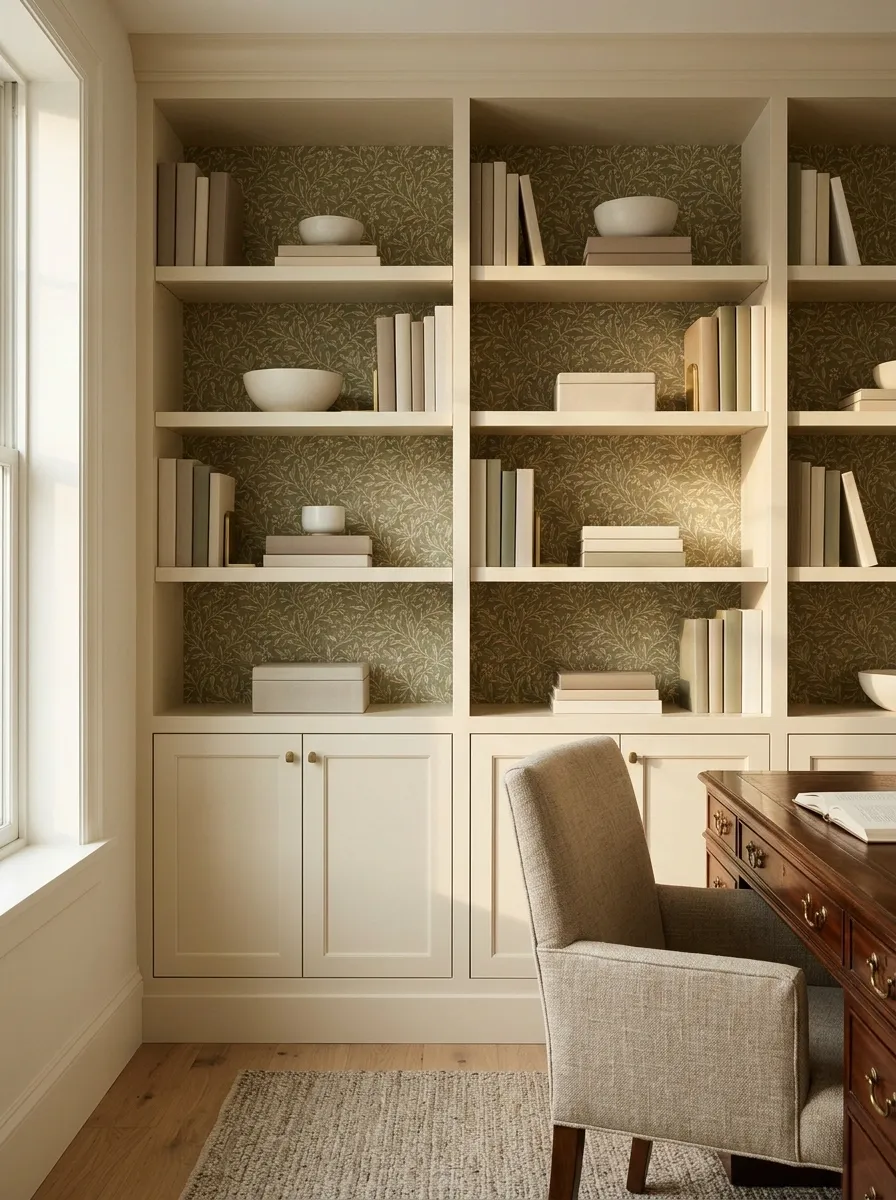
Paper the back of a suitable bookcase with an offcut large enough to show a convincing repeat. Keep the shelf fronts plain so the pattern remains a background rather than a second framework.
Choose the shelf contents with some breathing space. Solid-colored books, bowls, and boxes can sit comfortably against a botanical or geometric field.
Placement and scale study. Use the actual paper and a compatible construction for the intended object.
Test the paper and adhesive on the actual backing material before covering it.
The pattern doesn’t need to remain visible in every compartment. A few clear glimpses between useful objects can feel more natural than arranging the whole collection around exposing the wallpaper at all costs.
Removable Paper Liners in Bedroom Drawers
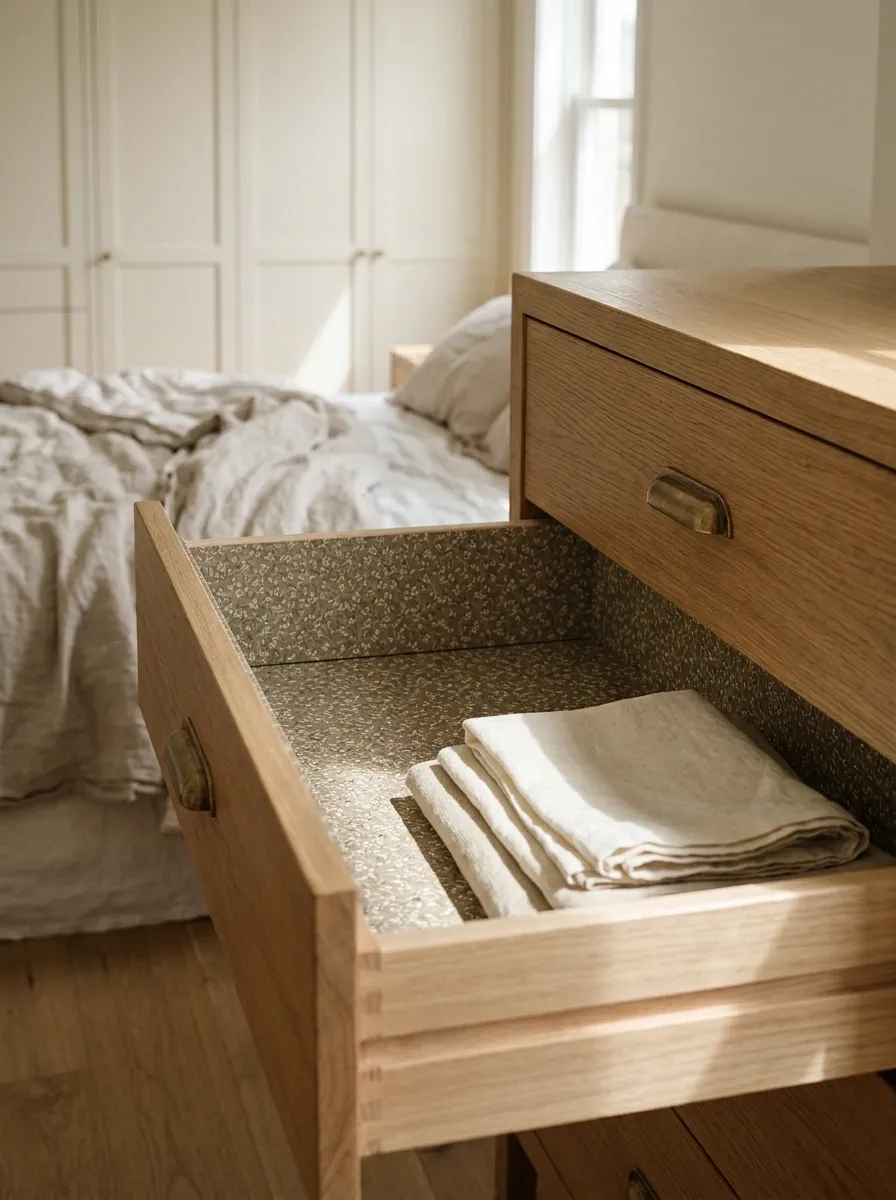
Cut suitable offcuts to fit drawer interiors, using a compatible removable approach where appropriate. Keep the paper flat and clear of runners, hinges, and edges where it could catch.
Placement and scale study. Use the actual paper and a compatible construction for the intended object.
Keep the liner flat, suitable for its contents, and clear of the moving mechanism.
A small repeat often works well because only part of the liner will be visible beneath stored items. Choose a paper and construction suited to contact with the contents.
This is a private decorative detail that can make everyday storage feel more considered. It doesn’t need to match the drawer front. The useful connection may be a color repeated in the bedroom, while the inside of the drawer gets its own quieter little pattern.
Wallpaper on the Inner Faces of Cupboard Doors
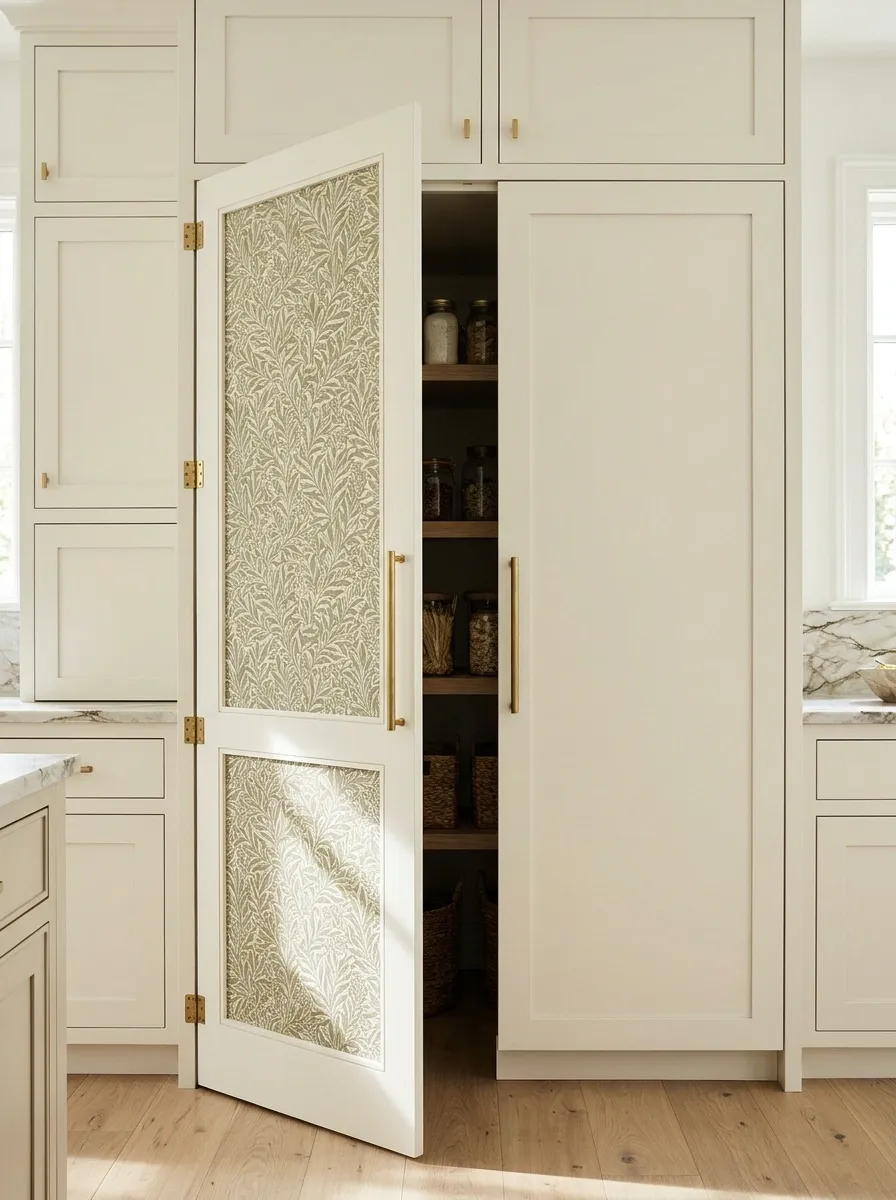
Use a contained offcut on the inside face of a suitable cupboard door. Leave a clear margin around fittings and moving edges so the detail looks finished when the door opens.
Choose a motif that reads within the door’s actual panel shape. A large flower can be beautiful if there is room for it; a sliced fragment may look less deliberate.
Placement and scale study. Use the actual paper and a compatible construction for the intended object.
Before choosing the detail
Finish each door independently and preserve every fitting and clearance.
The exterior can remain plain, which is useful in a quiet kitchen or bedroom. Pattern becomes a small daily discovery rather than a demand on the room’s whole color scheme.
A Patterned Panel Inside a Wardrobe
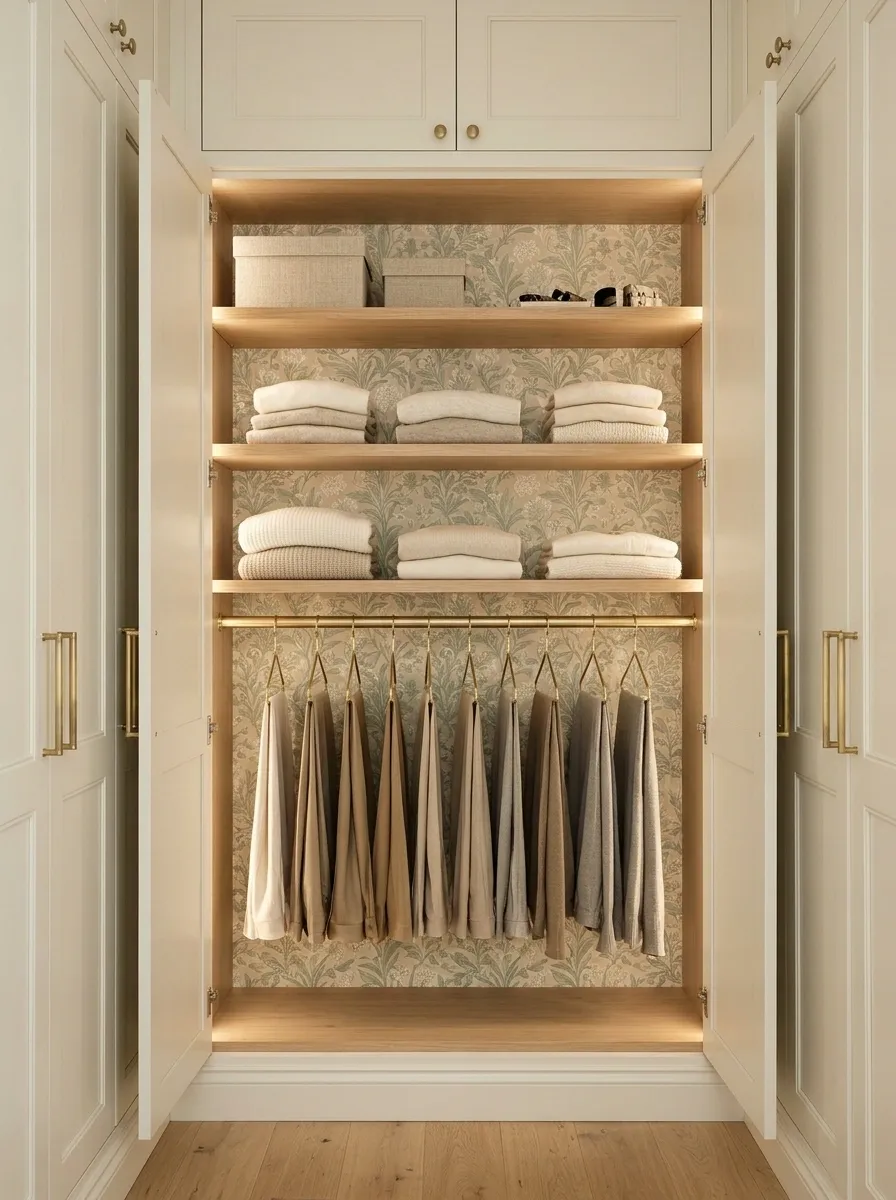
Paper a suitable wardrobe’s inner back or a contained panel where clothing won’t rub constantly against it. Choose the actual paper and finish for the dry location and expected contact.
Placement and scale study. Use the actual paper and a compatible construction for the intended object.
Use an area suited to the paper and keep clothing, rails, and fittings functioning normally.
A muted pattern can give pale storage a little depth. Keep the shelf fronts and rails plain so the interior remains easy to use and visually organized.
The paper doesn’t need to match the bedding or wardrobe exterior exactly. A related background color can connect it to the room while allowing the pattern to be different. This is an opportunity to use a favorite repeat without turning a large wardrobe into the bedroom’s dominant patterned wall.
A Covered Box for Spare Linens
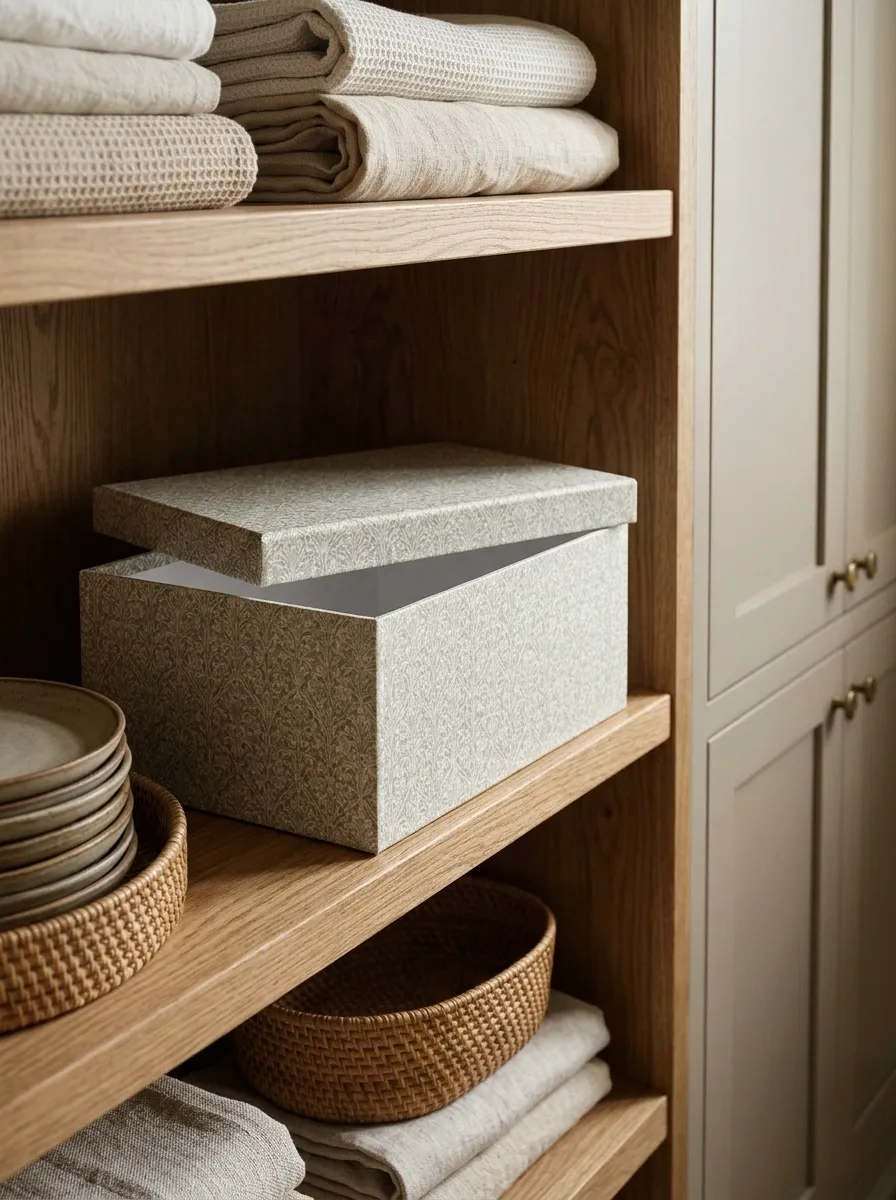
Use a suitable paper offcut to cover a plain storage box for spare linens in a dry cupboard. Plan the lid and corner folds so the pattern looks intentional when the box is removed.
Keep the lining and contact surfaces appropriate for the contents. The decorative paper can remain on the exterior while the box’s practical interior stays unchanged.
Placement and scale study. Use the actual paper and a compatible construction for the intended object.
Check that the lid still fits and the finished box remains easy to handle.
Choose a pattern with a scale that suits the box. A small repeat often looks clearer than one enormous motif chopped across every corner in pursuit of using the last available piece.
Patterned Magazine Files on a Plain Shelf
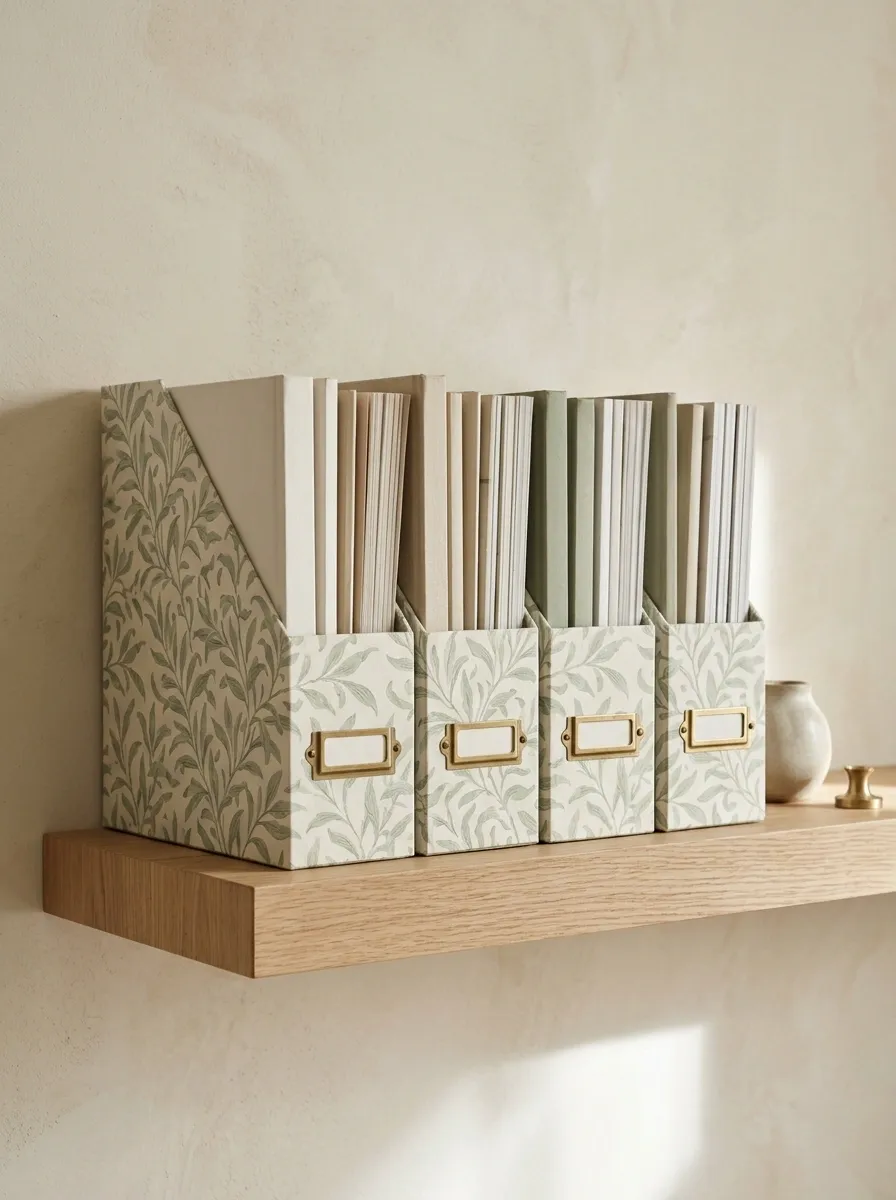
Cover suitable magazine-file exteriors with related offcuts, keeping the front edges and labeling areas clear. Use the same background color or motif family to connect different pieces.
Placement and scale study. Use the actual paper and a compatible construction for the intended object.
Before choosing the detail
Preserve the files' strength, labels, and easy handling while decorating their exteriors.
Give the files something to do. Store actual papers, manuals, or magazines rather than simply filling shelf space. Plain shelf fronts give the pattern a quiet setting.
Keep the number of different papers restrained. Several files in one repeat can look coherent; a collection of unrelated scraps may make ordinary paperwork feel even more visually demanding. The point is to make storage easier to enjoy, not to require a recovery period after looking for the appliance manual.
Put the Pattern on Furniture Details
A Wallpaper Inset Within Plain Cabinet Doors
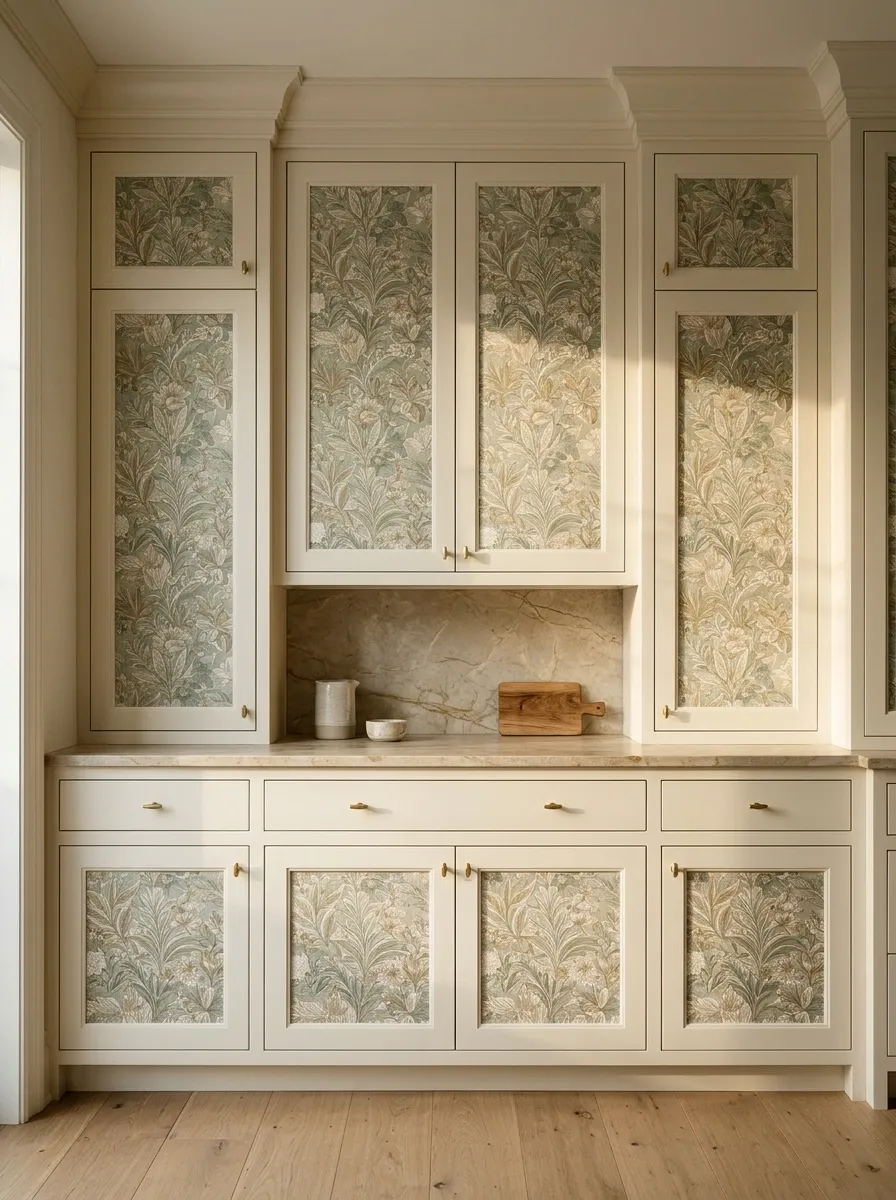
Use an offcut within an existing suitable inset panel, leaving the surrounding door frame painted. The panel gives the paper a natural boundary and protects the visual composition from drifting across the whole piece.
Plan the repeat with the door closed and open. Each panel should look complete on its own, especially when a motif spans more than one door.
Placement and scale study. Use the actual paper and a compatible construction for the intended object.
Use compatible materials and keep paper clear of door edges and hardware.
Keep the handles simple. The paper supplies the detail, and the plain frame makes it legible. Additional decorative borders may be unnecessary unless the paper itself is very quiet.
Wallpapered Drawer Sides on a Plain Chest
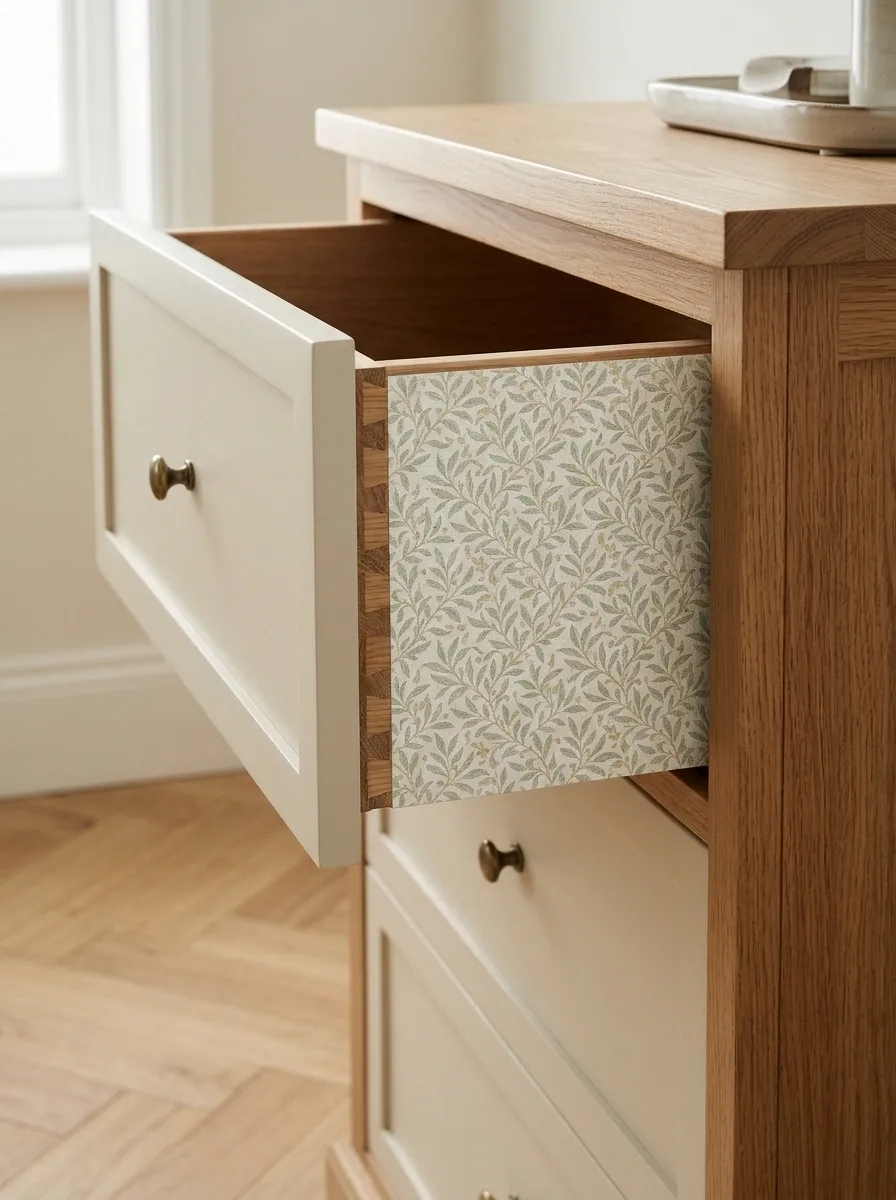
Paper suitable visible drawer sides, keeping the fronts plain and the runners and clearances completely unobstructed. The pattern appears only when a drawer opens.
Placement and scale study. Use the actual paper and a compatible construction for the intended object.
Do not add thickness where it interferes with runners, clearances, or normal drawer movement.
Choose a smaller repeat that reads clearly on the shallow side surface. A quiet geometric or fine botanical can make the detail feel deliberate.
This needs a compatible surface and enough clearance for the finished paper without affecting movement. If the drawer construction doesn’t allow it, use an interior liner instead. The decorative surprise should not announce itself through a sticking drawer, which is a much less charming form of furniture personality.
A Papered Side Panel on a Bedside Cabinet
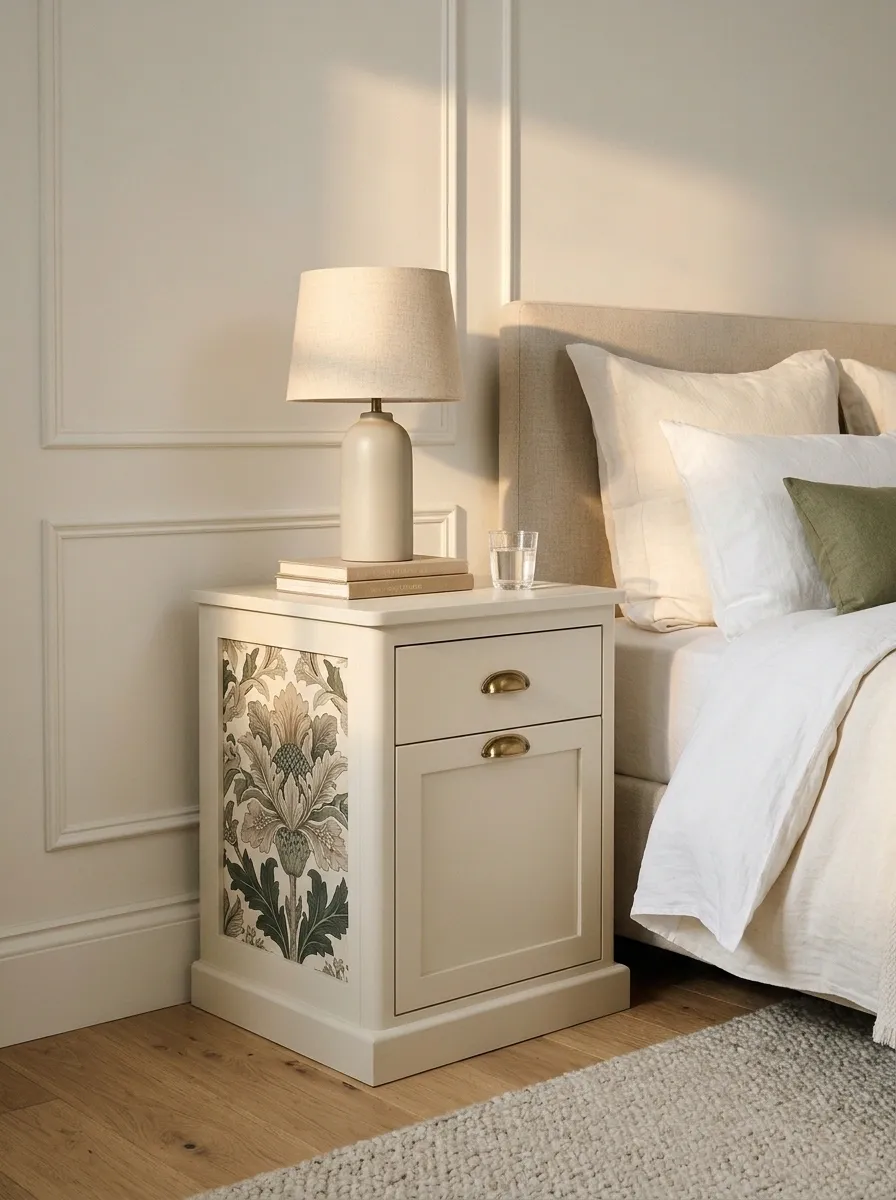
Decorate the visible side of a suitable bedside cabinet while keeping the front and top plain. Choose the side seen from the doorway or normal approach to the bed.
A larger motif can work here if the panel gives it enough room. Let the surrounding painted frame or neat edge finish contain the pattern.
Placement and scale study. Use the actual paper and a compatible construction for the intended object.
Before choosing the detail
Choose the visible approach angle before cutting the motif.
The pattern can connect to one bedding color without copying the full print. A quiet top leaves room for a lamp, book, and water glass without making the whole bedside arrangement visually crowded.
A Patterned Strip Beneath a Console Top
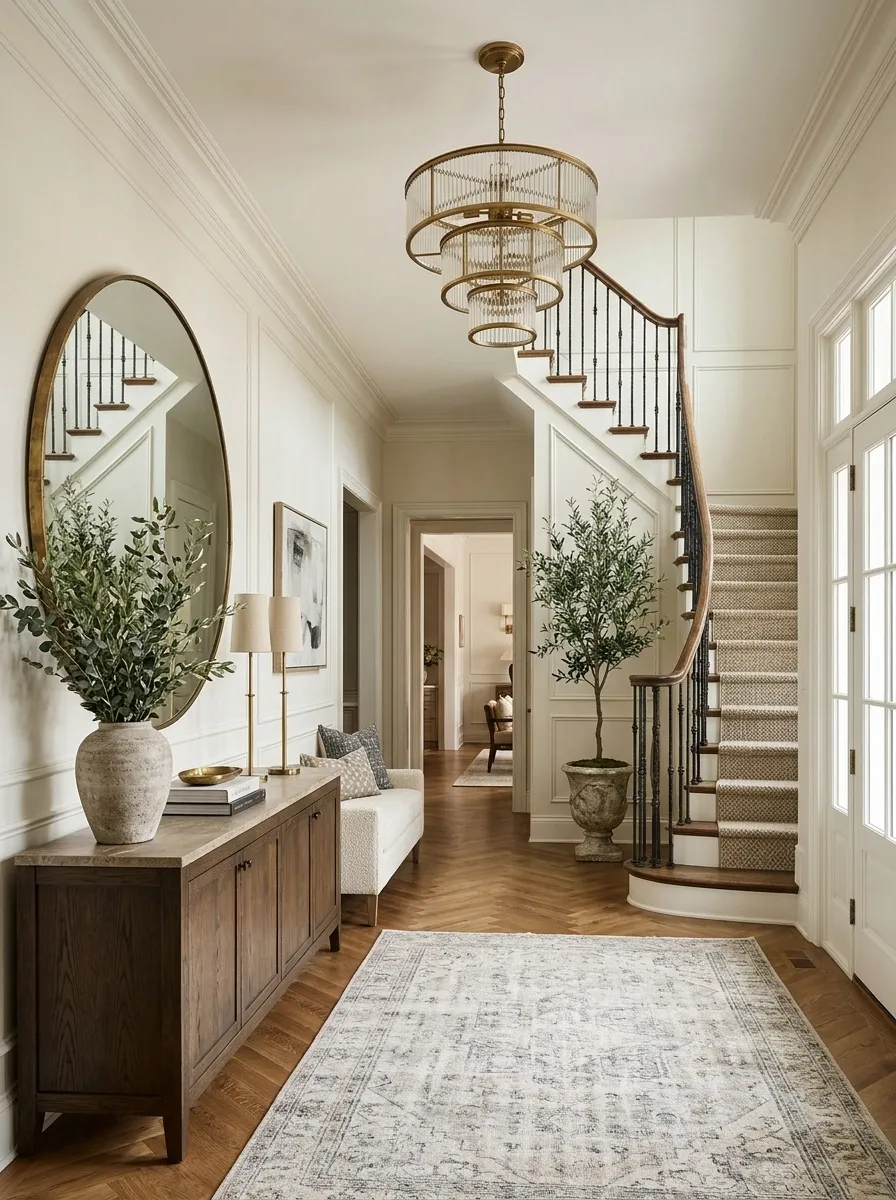
A narrow offcut can decorate a suitable flat console apron, leaving the top and legs plain. Choose a small repeat or a carefully cropped section that remains recognizable at the available height.
Placement and scale study. Use the actual paper and a compatible construction for the intended object.
Check the full strip and corner terminations before fixing it.
The paper needs a compatible adhesive and finish for the material and expected handling. Keep it clear of drawers and fittings.
This is a good use for a long strip that would be awkward as a full panel. It gives the furniture a small repeated rhythm below a useful plain surface. Don’t force a large botanical into the band if it becomes an unexplained sequence of partial leaves and disappointed stems.
Wallpaper on the Underside of an Open Shelf
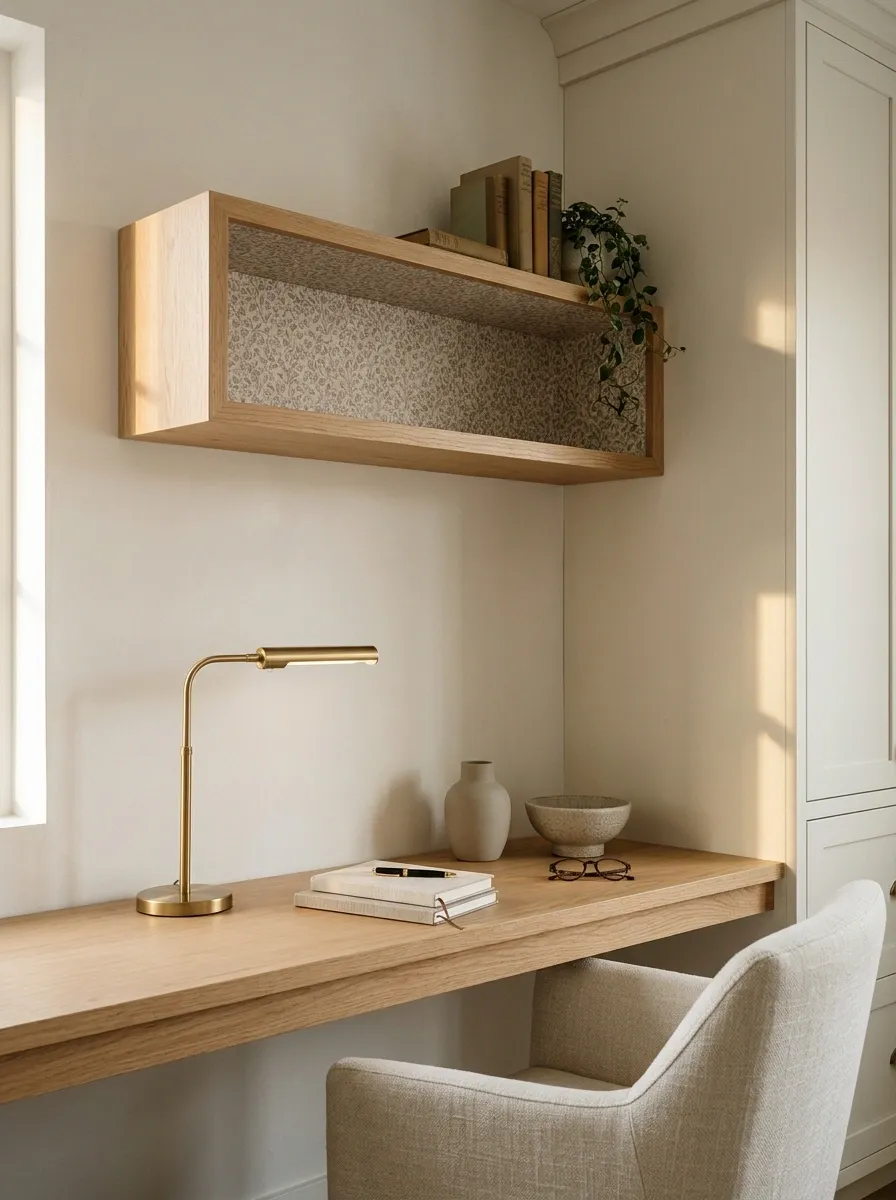
In a suitable dry location, paper the underside of a shelf that is visible from a seated or lower viewpoint. Keep the top, front edge, supports, and fittings plain and functional.
A small repeated pattern can add an unexpected detail without dominating the wall. Choose the paper around the angle from which it will actually be seen.
Placement and scale study. Use the actual paper and a compatible construction for the intended object.
Use a suitable dry surface and keep supports and any electrical components clear.
This is particularly effective where a shelf sits above a desk or reading seat. Avoid treating an unseen underside simply because there is paper available; a useful project should have a viewer as well as a leftover.
A Patterned Back Panel in an Open Side Table
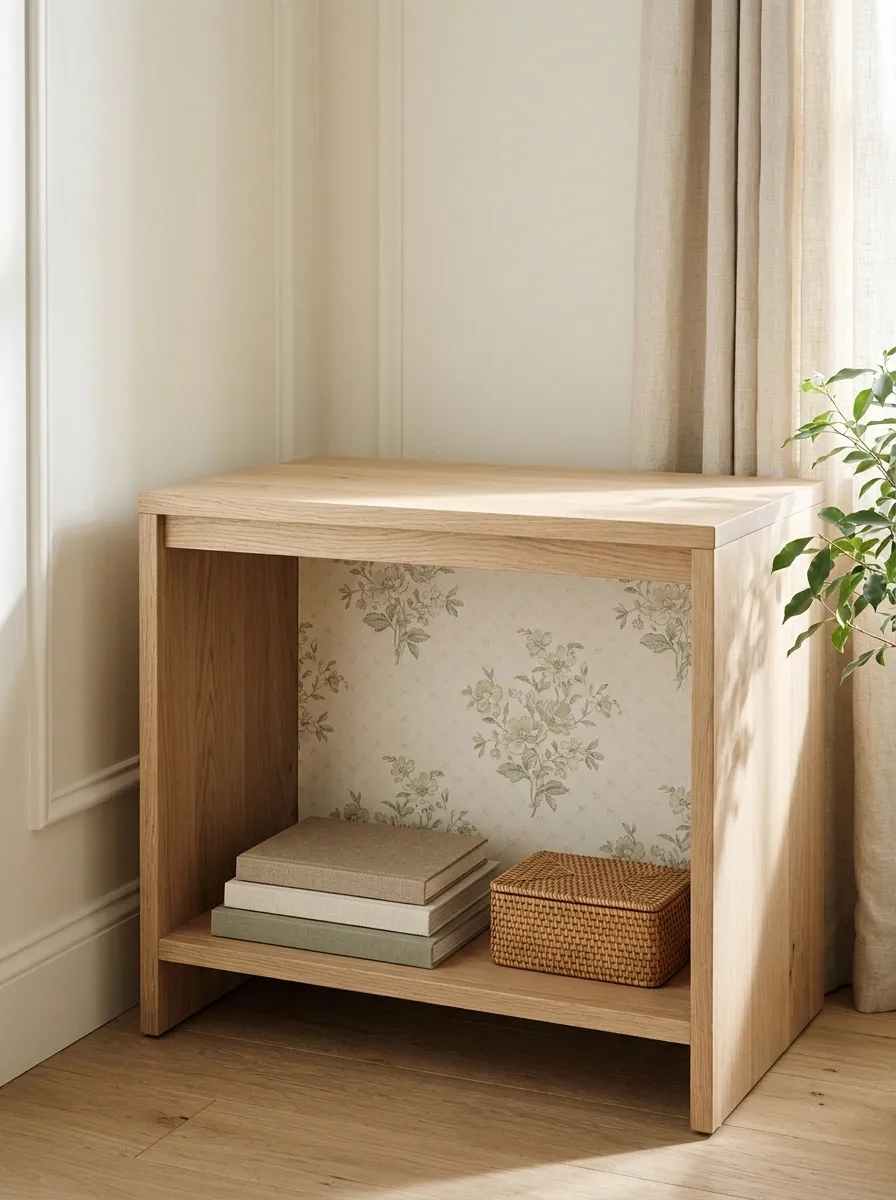
An open side table with a suitable solid back can hold a small wallpaper panel behind books or a storage box. Leave the tabletop plain for everyday use.
Choose a motif with enough open background to remain readable around the table’s contents. A small floral or geometric can give the piece depth without covering its exterior.
The detail works best when the open compartment isn’t stuffed full. Keep the useful storage, but leave a little visible paper around it. This makes the pattern feel like part of the furniture rather than a surface that disappeared immediately after the makeover photograph was taken.
Placement and scale study. Use the actual paper and a compatible construction for the intended object.
Before choosing the detail
Choose a compatible backing surface and leave enough pattern visible to justify the project.
Smaller Objects That Earn Their Space
A Lined Decorative Tray for Dry Everyday Objects
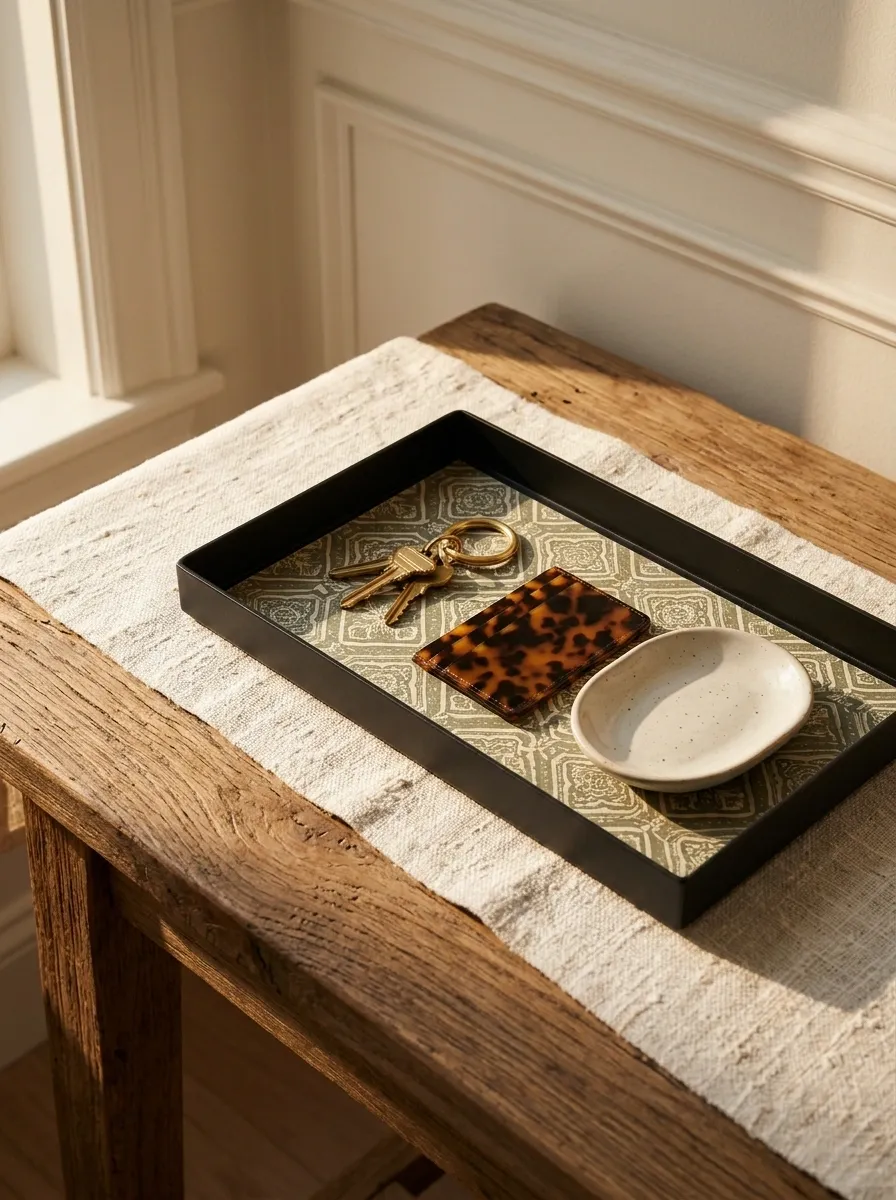
Use an offcut within a suitable tray for dry items such as keys or small accessories. Keep the paper neatly contained within the tray’s edge and choose a compatible protective system if needed.
This isn’t automatically a food-contact or wet-serving surface. Match the construction to the actual use instead of assuming a clear coating makes every application suitable.
Placement and scale study. Use the actual paper and a compatible construction for the intended object.
Choose the finish for the tray's actual use and keep unsuitable moisture away.
A geometric repeat often works well because part of it remains clear beneath the objects. Leave the tray lightly filled so the pattern doesn’t become an invisible reward for occasionally tidying up.
A Wallpaper-Wrapped Tissue Box Cover
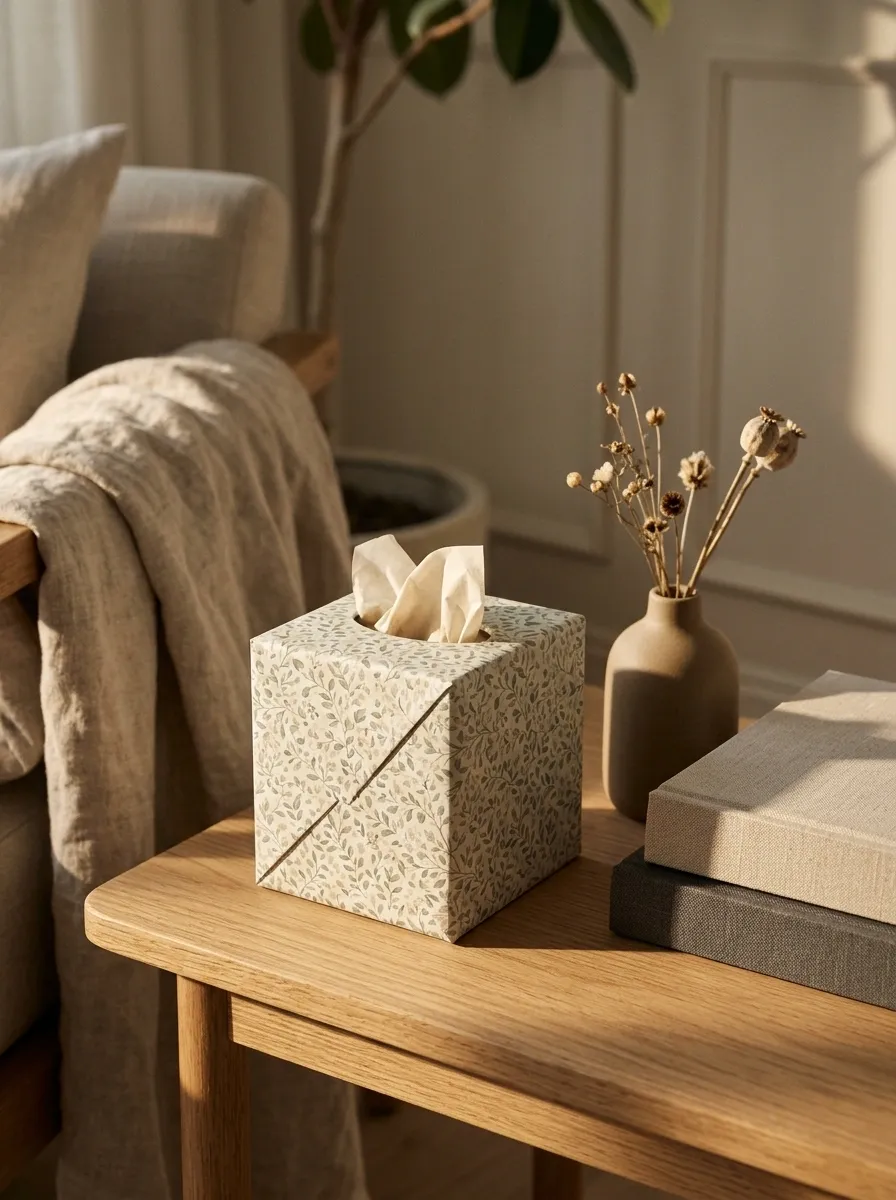
A plain tissue box cover can carry a suitable offcut, with the opening and lid kept neat. Choose a smaller repeat so the pattern remains legible on each side.
Placement and scale study. Use the actual paper and a compatible construction for the intended object.
Keep the opening, removable parts, and handling practical.
Keep the inner working surfaces appropriate to their use and the cover easy to remove. A dry bedside or living-room location is generally a more sensible setting than somewhere repeatedly splashed.
The pattern can relate to a cushion or curtain without matching it exactly. This is a small enough object to enjoy a stronger print, but it should still look useful rather than as though the tissue supply has been promoted to the room’s principal decorative feature.
A Patterned Exterior on a Dry Wastepaper Bin
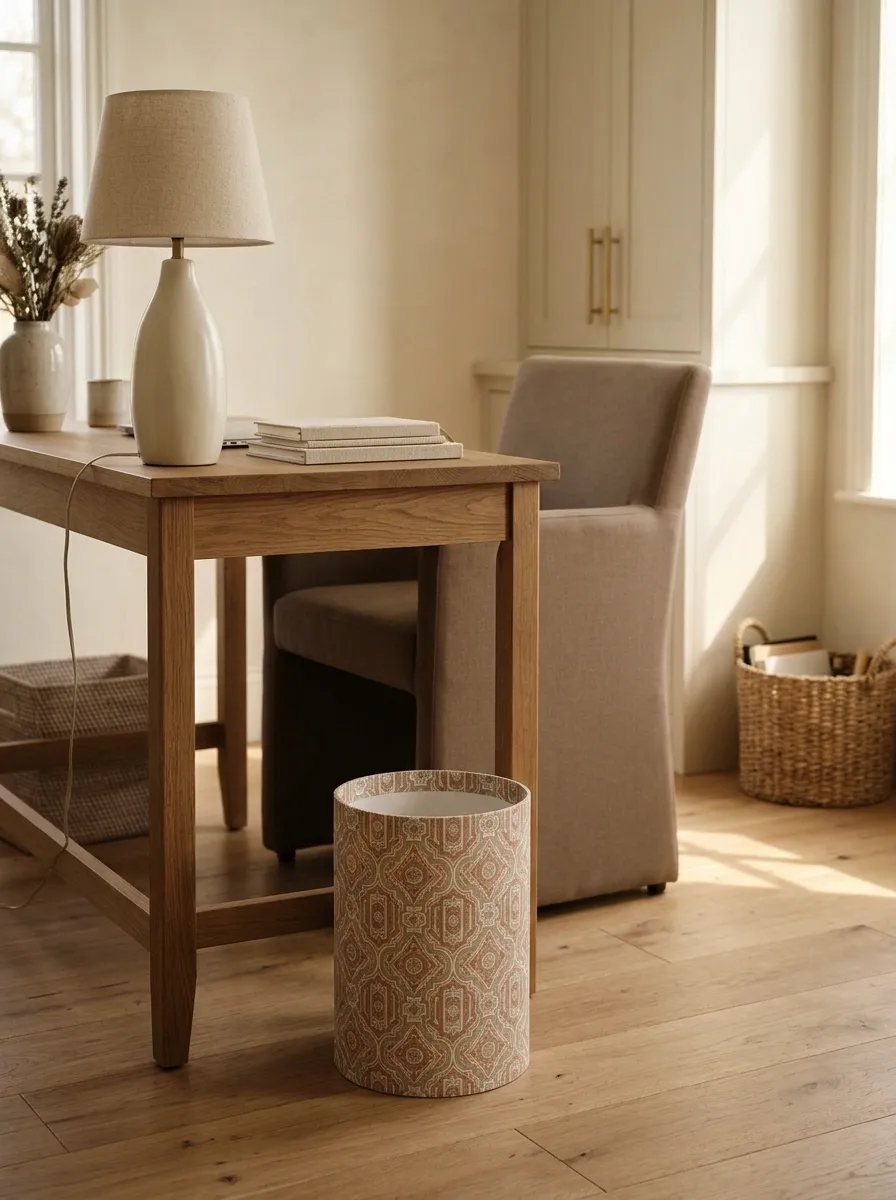
Cover a suitable dry wastepaper bin exterior with an offcut, keeping the interior and rim appropriate to the bin’s actual use. Choose a pattern that can repeat around the form without awkward distortion.
A simple geometric can work well on straight sides. A taper may require more careful planning, and the finish needs to tolerate the expected handling.
Placement and scale study. Use the actual paper and a compatible construction for the intended object.
Before choosing the detail
Use only a compatible dry-use object and preserve its practical interior and edges.
This can make a home-office corner feel more personal. Keep the desk and storage calmer if the bin carries a conspicuous print; useful objects are allowed to provide some of the decoration.
Matching Notebook Covers From Related Offcuts
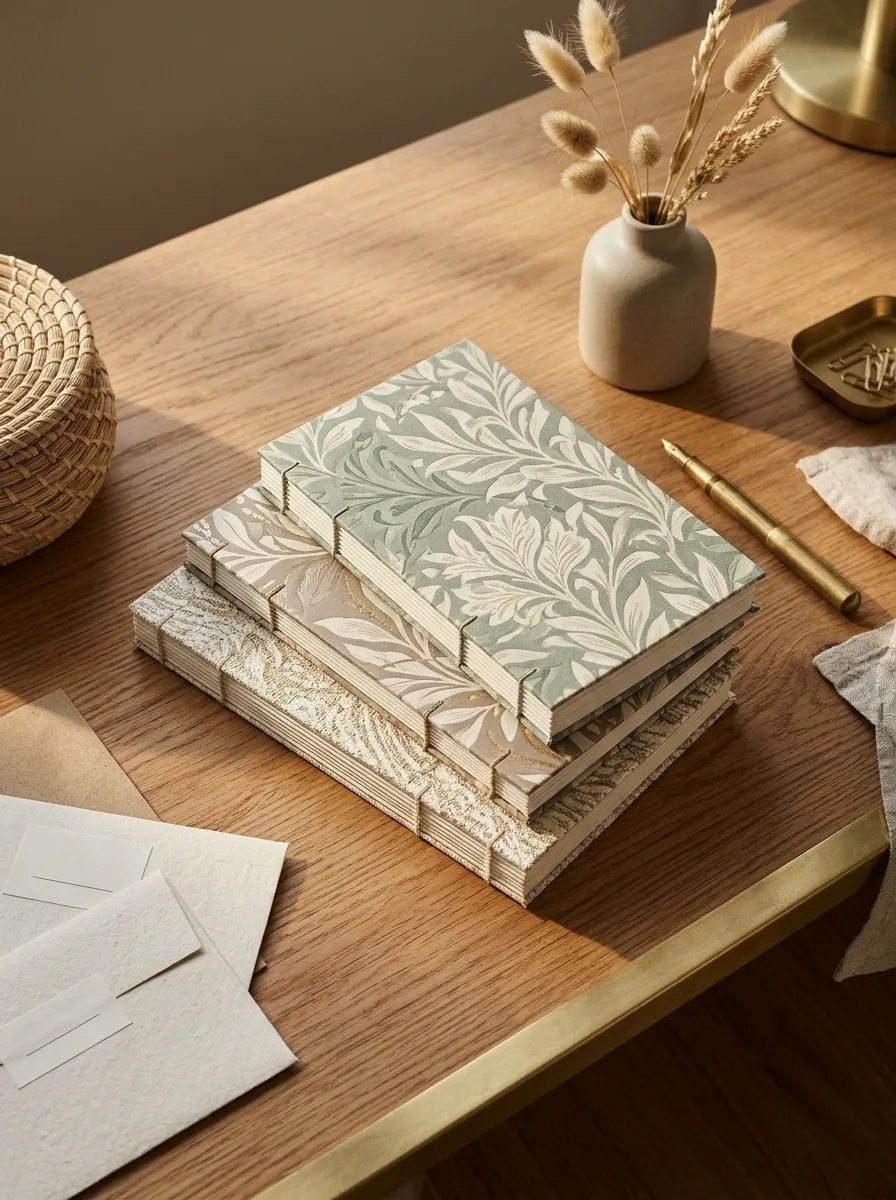
Use suitable pieces to cover plain notebooks or removable notebook jackets, keeping the binding and opening movement comfortable. Plan the motif around the front cover rather than relying on whatever fragment happens to land there.
Placement and scale study. Use the actual paper and a compatible construction for the intended object.
Preserve the binding, opening action, and comfortable handling.
Related papers can create a loose set through background color, even when the patterns differ. Keep labels simple and usable.
This is a good application for smaller pieces that can’t cover furniture. The notebooks can live on a desk or open shelf and be used normally. A beautiful cover that makes the book difficult to open has placed a rather strict limit on how much writing it is prepared to support.
A Covered Box Lid on a Plain Storage Base
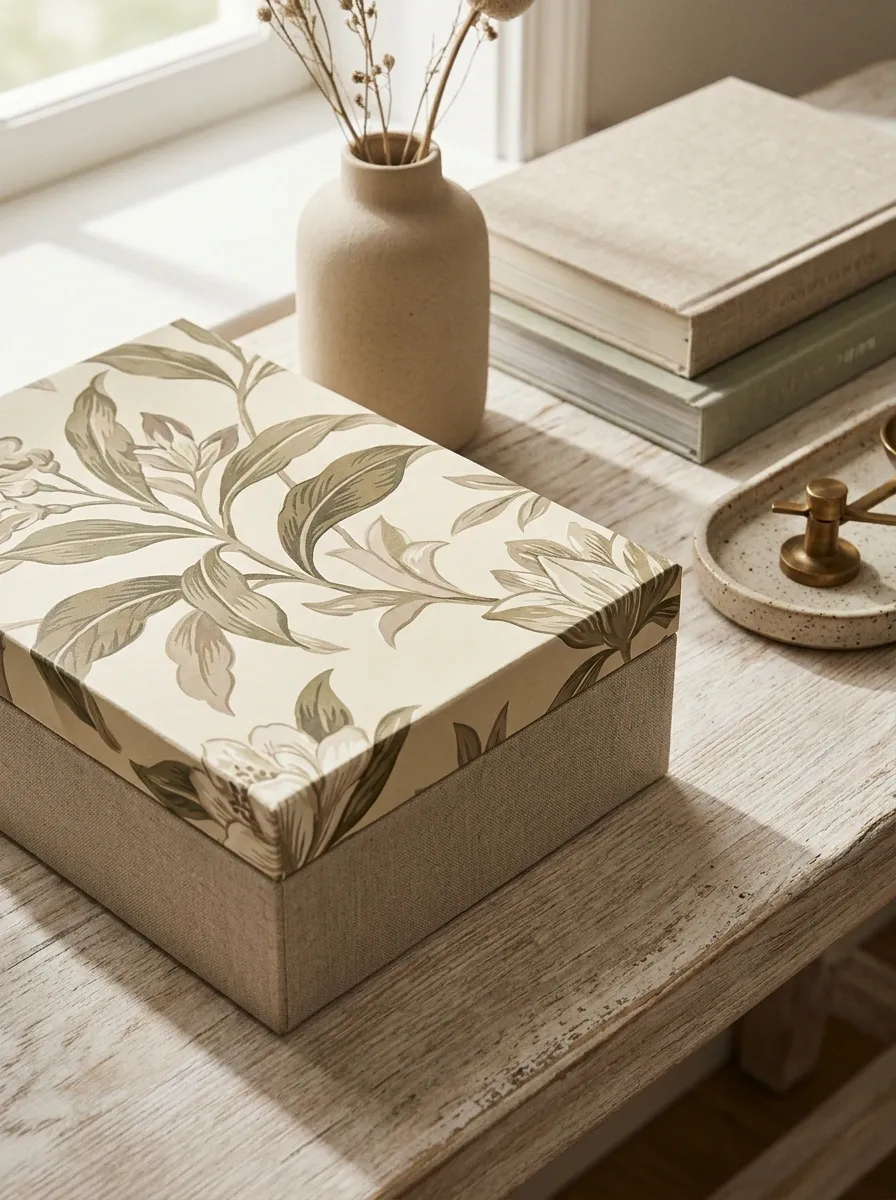
Paper only the lid of a suitable plain storage box, leaving the base quiet. The contrast can make one complete motif feel more deliberate than covering every side with chopped fragments.
Choose a piece large enough for the lid and its intended edge treatment. Check that the finished lid still fits properly.
Placement and scale study. Use the actual paper and a compatible construction for the intended object.
Plan the edges and fit before applying the paper.
A larger botanical can work well if the lid gives it room.
Let the motif have a clear center or off-center placement, rather than assuming exact symmetry is always the most attractive arrangement.
A Patterned Pinboard Surround With a Plain Working Center
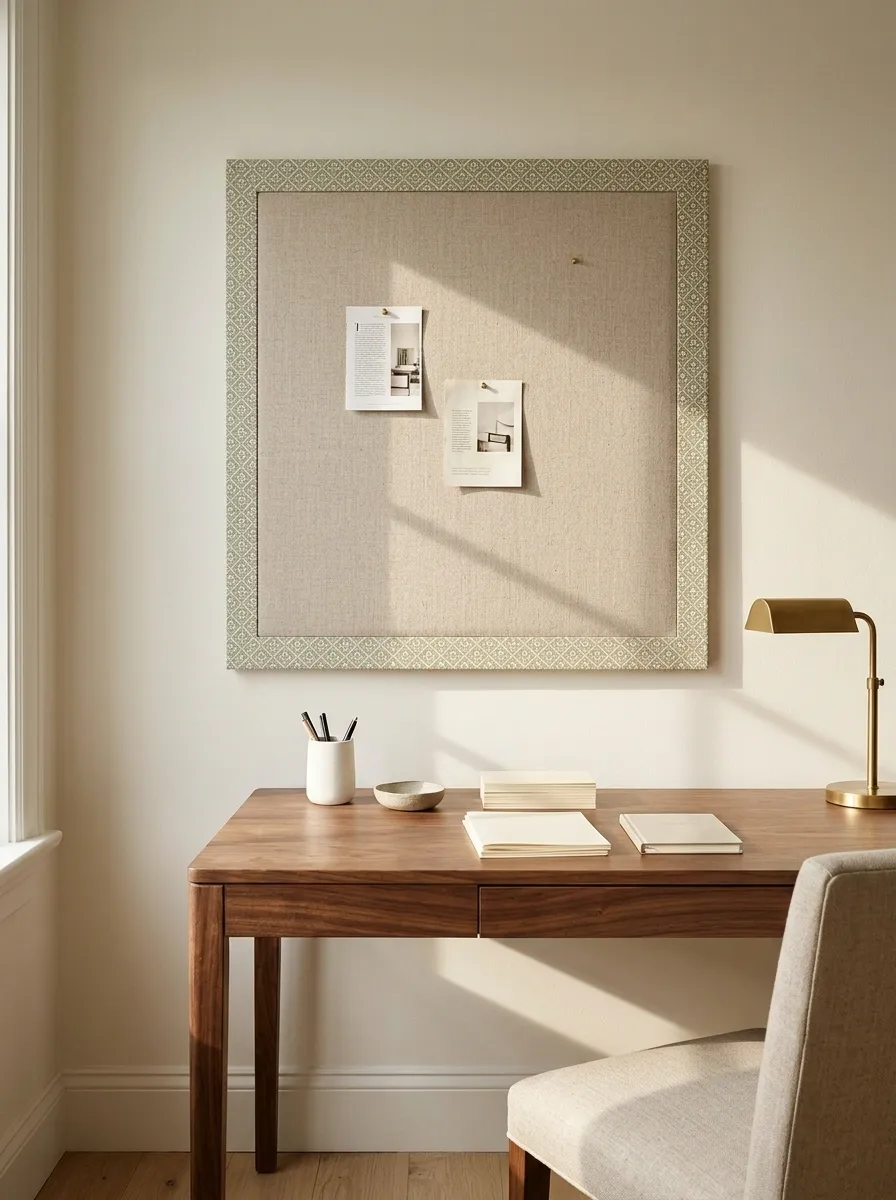
Use a wallpaper offcut on a suitable frame or surround around a plain pinboard. Keep the working center clear for notes, photographs, or current papers.
The pattern can connect the board to the room without interfering with its practical surface. A small repeat often feels clearer on a narrow frame than a large floral.
Choose compatible materials and secure construction appropriate to the board. This isn’t simply framing a wallpaper sample: the paper becomes the border around something useful. Keep the nearby desk objects quieter if the surround is lively, so ordinary notes don’t become lost in a small administrative jungle.
Placement and scale study. Use the actual paper and a compatible construction for the intended object.
Before choosing the detail
Keep the board's fixing and usable pinning area appropriate to its construction.
Architectural Details in Suitable Dry Areas
A Papered Back in a Shallow Wall Niche
Use a suitable offcut on the back of a dry wall niche, keeping the returns plain. One simple object can sit in front if the niche is designed to hold it.
Choose the motif around the visible niche shape. A centered branch or broad geometric may work better than a dense tiny print.
Placement and scale study. Use the actual paper and a compatible construction for the intended object.
Use a suitable dry surface and keep the display restrained.
The plain returns provide a frame through depth and shadow, so an extra decorative border may be unnecessary. Let the niche look like a small finished part of the room rather than an opportunity to display every remaining offcut at once.
A Narrow Frieze Along One Plain Wall
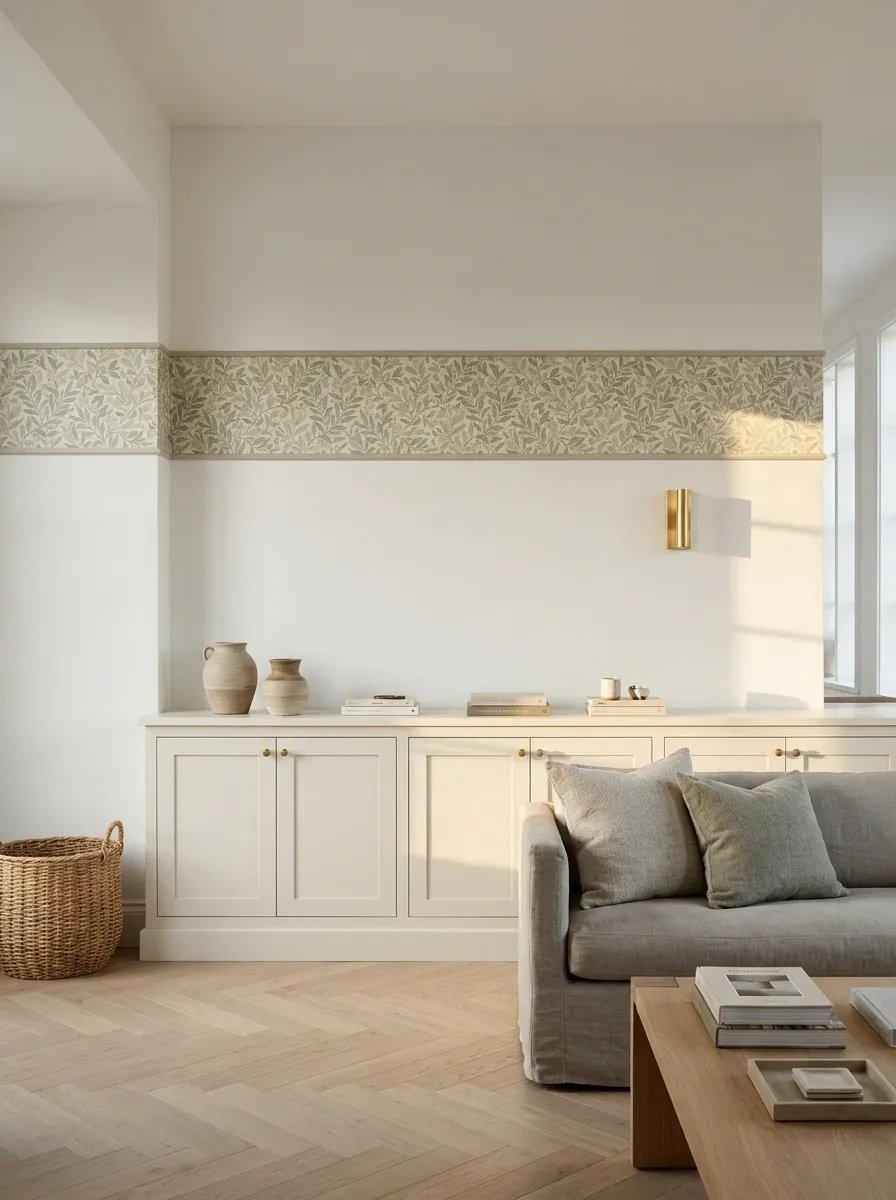
A long offcut can create a restrained frieze on a suitable plain wall. Choose a complete motif or geometric sequence that works at the available strip height.
Placement and scale study. Use the actual paper and a compatible construction for the intended object.
Choose a clear beginning and ending rather than stretching a short strip too far.
Plan the terminations and corners before fixing the paper. A frieze can end at a clear architectural boundary rather than needing to circle the whole room.
Keep the lower wall and nearby textiles quieter. This makes a small amount of favorite wallpaper feel deliberate and architectural, while preserving most of the room as plain space. The strip should look selected for that location, not like a remnant installed wherever the tape measure finally stopped objecting.
A Small Ceiling Panel Within Existing Trim
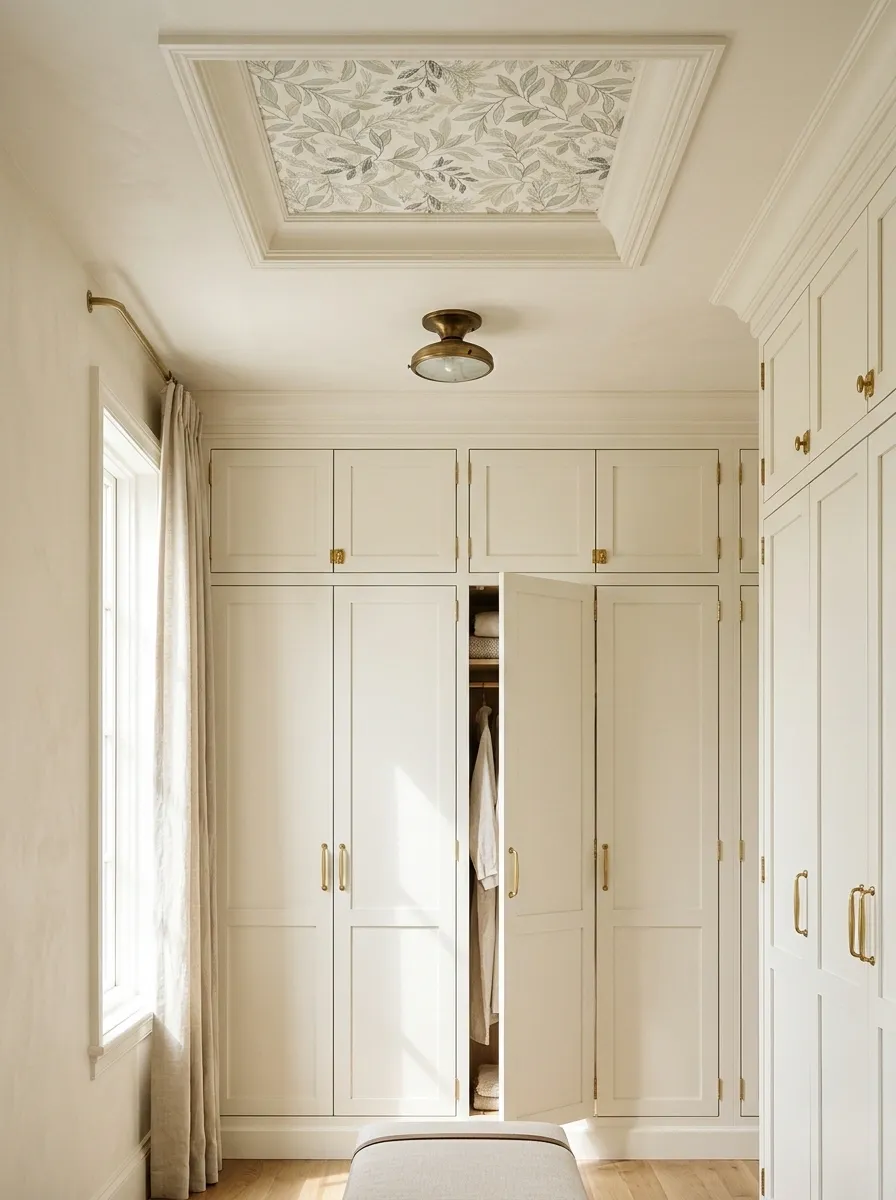
Where an existing suitable ceiling panel or trim-defined area provides a natural boundary, a wallpaper offcut can add an overhead detail. Use a compatible product and installation for the actual surface and location.
Choose a motif that reads from below, not only when held at arm’s length. Keep surrounding walls and larger fabrics simpler if the ceiling becomes patterned.
Placement and scale study. Use the actual paper and a compatible construction for the intended object.
Before choosing the detail
Use suitable installation and assess the pattern from the room's normal viewpoints.
This is a small architectural finish project rather than an improvised hanging panel. The paper needs to be properly adhered and finished, with all fixtures and required access preserved.
A Patterned Backboard Behind a Hook Rail
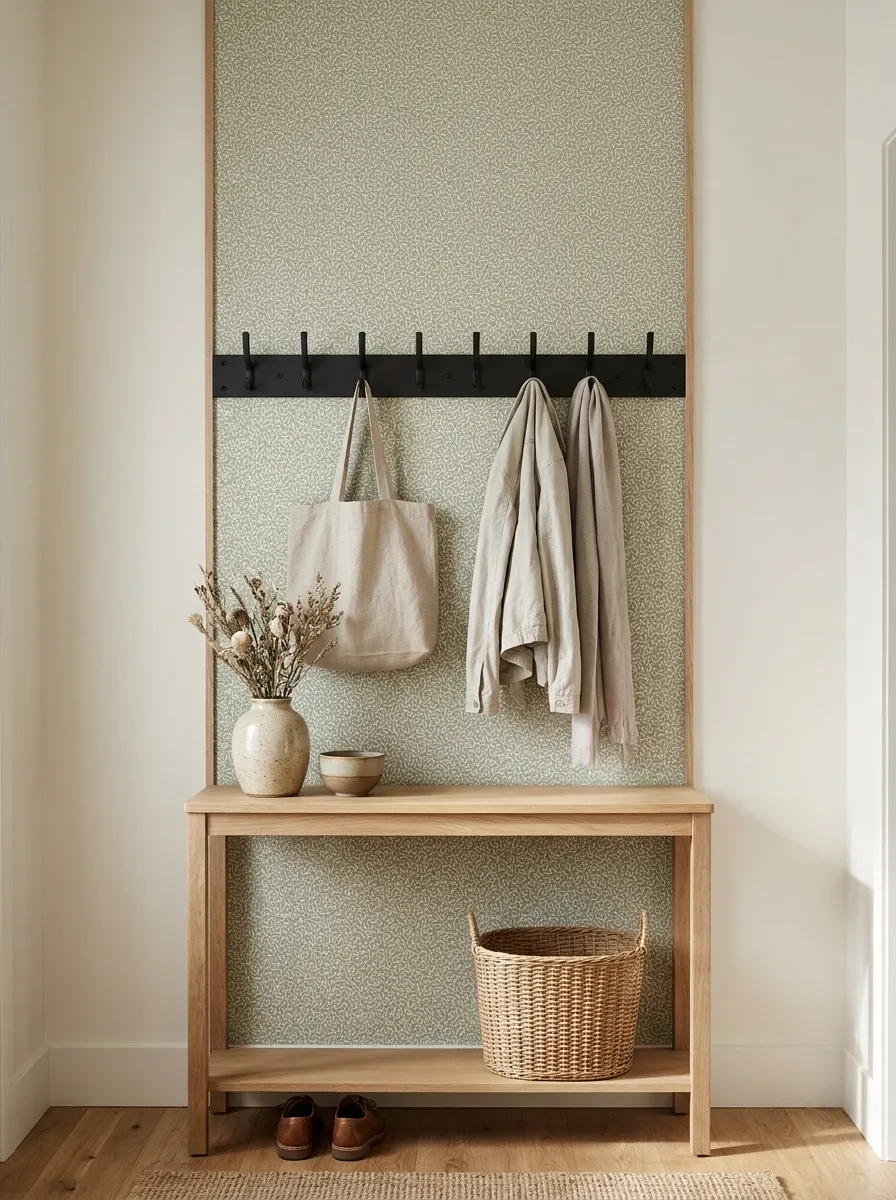
Paper a suitable decorative backboard behind a properly supported hook rail, keeping the hooks and their structural fixings independent of the paper. Choose a smaller repeat that remains visible around coats and bags.
A quiet wall and plain rail can give the pattern a clear boundary. Use a compatible surface and finish for the expected handling and keep edges neatly contained.
Placement and scale study. Use the actual paper and a compatible construction for the intended object.
The hook system must be properly supported by the actual structure, not the decorative paper.
The pattern can make an ordinary entry detail feel more personal.
It should remain easy to maintain, because coats and bags will treat the wall with much less ceremony than the makeover photograph does.
A Papered Back in a Small Display Cabinet
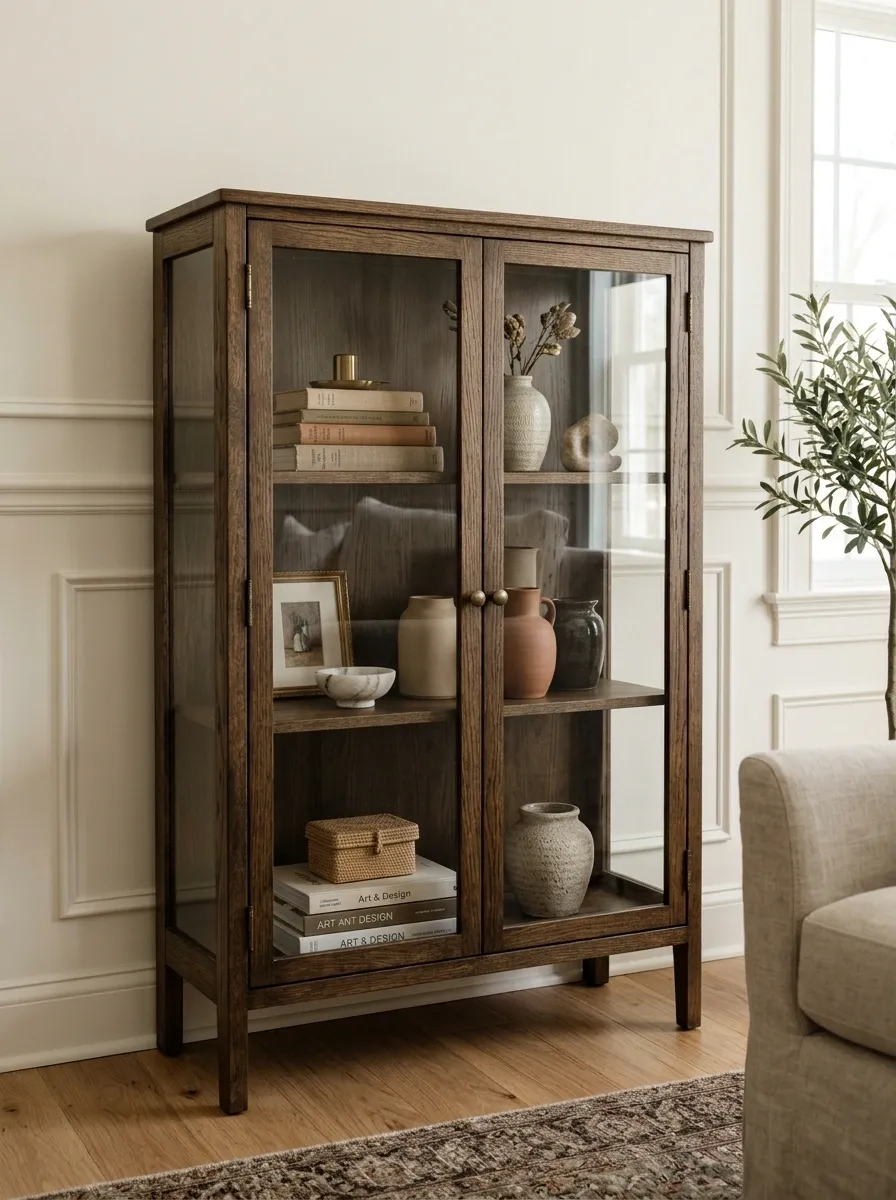
Use a complete offcut as the backdrop inside a suitable display cabinet, leaving its frame and shelves plain. Choose a pattern that gives the collection contrast without obscuring it.
Light ceramics can sit against a deeper botanical; dark objects may need a paler field. Test with the actual collection before fixing the paper.
Placement and scale study. Use the actual paper and a compatible construction for the intended object.
Before choosing the detail
Check the paper with the collection in place rather than as an empty cabinet makeover.
A backdrop should help you enjoy the things you already own. If every object disappears into the pattern, choose a quieter section of paper or keep that cabinet plain and use the offcut somewhere else.
Use the Good Piece Where It Can Be Seen
Choose the offcut with the strongest complete motif for the project that gives it enough space. Use the smaller remnants on genuinely useful details, and let unsuitable scraps go.
A leftover doesn’t need to become an heirloom simply because the original roll was expensive. One well-finished project is a better use of the paper than several objects whose main achievement is proving that nothing was thrown away.