
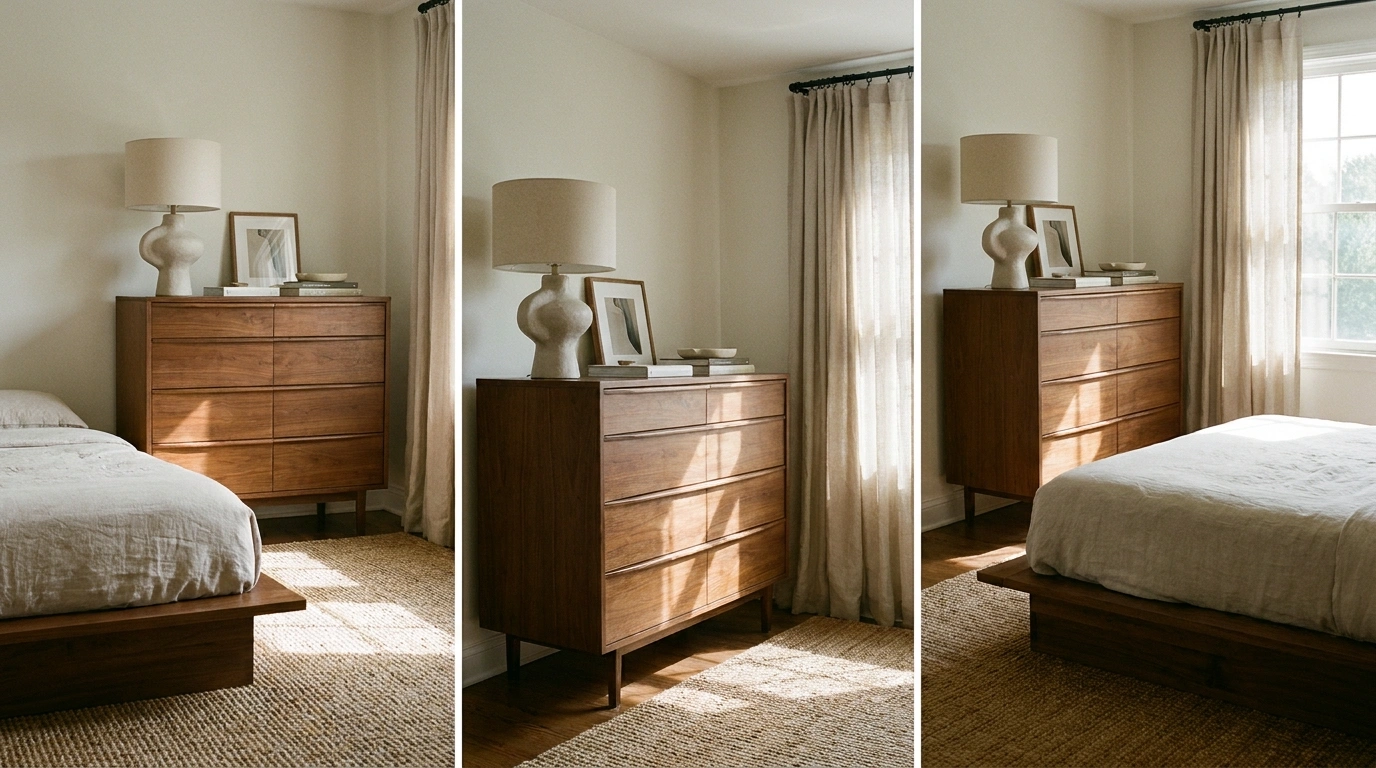
The chest is good storage. The bed is comfortable. Together, however, they make reaching for a glass of water feel like collecting something from a shelf above your seat.
You don’t automatically need to replace either piece. Decide whether the chest can genuinely serve as the bedside surface, whether it needs a separate lower landing spot, or whether it belongs somewhere else in the bedroom.
Useful storage and comfortable bedside reach are different jobs. One piece can do both, but it isn’t obliged to.
Keep the Chest and Add a Useful Lower Surface
A Wall-Mounted Shelf at a Comfortable Bedside Position
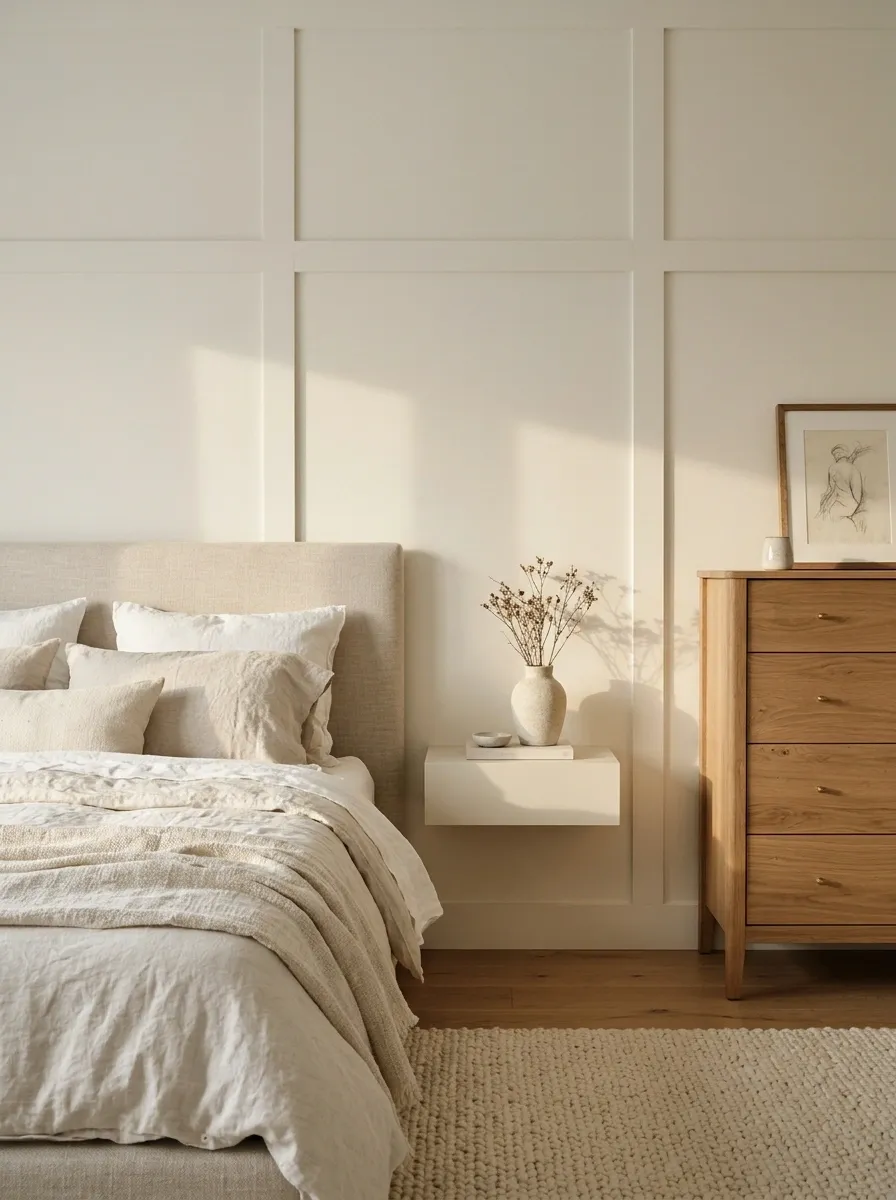
Use a suitably installed small shelf beside the bed while the taller chest remains nearby. Choose its position around actual reach and the room’s construction, with support appropriate to the intended load.
Keep the shelf modest and free of unnecessary objects. It should not become a storage ledge over the sleeping area or interfere with the headboard and bedding.
Relative-height study only. Test real bedside reach, drawer movement, and the route out of bed.
Specify the shelf for the wall, loads, safe position, and intended everyday reach.
A quiet painted shelf can relate to the wall, leaving the chest as the main wood piece. The furniture heights remain different, but the bedside routine gets its own appropriately placed surface.
A Small Lower Table at the Open Outer Side of the Bed
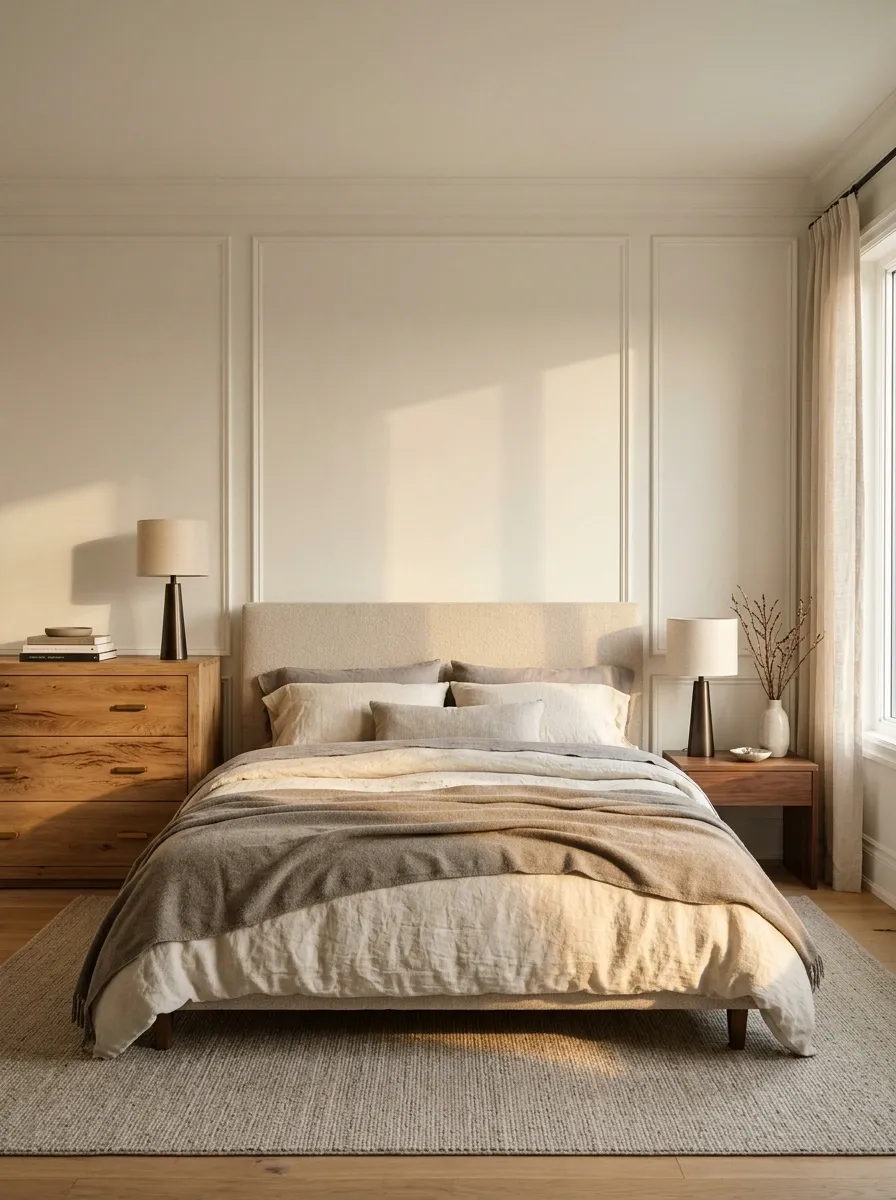
If the chest occupies one side and the room allows a different entry arrangement, place a lower table at the bed’s open side. Keep the chest for less frequently accessed storage rather than daily bedside items.
Relative-height study only. Test real bedside reach, drawer movement, and the route out of bed.
Check this in your room
Choose the arrangement around the people using the bed, not symmetry alone.
This works only if the person who needs the lower surface can use it comfortably from their normal position. A convenient table on the wrong side of a shared bed isn’t a universal solution.
Keep both sides’ movement and storage access clear. The asymmetrical arrangement can feel deliberate when the two pieces relate through finish or a shared lamp style elsewhere. Matching bedside furniture is optional; a workable nightly routine is rather less negotiable.
A Designed Headboard With Integrated Bedside Shelves
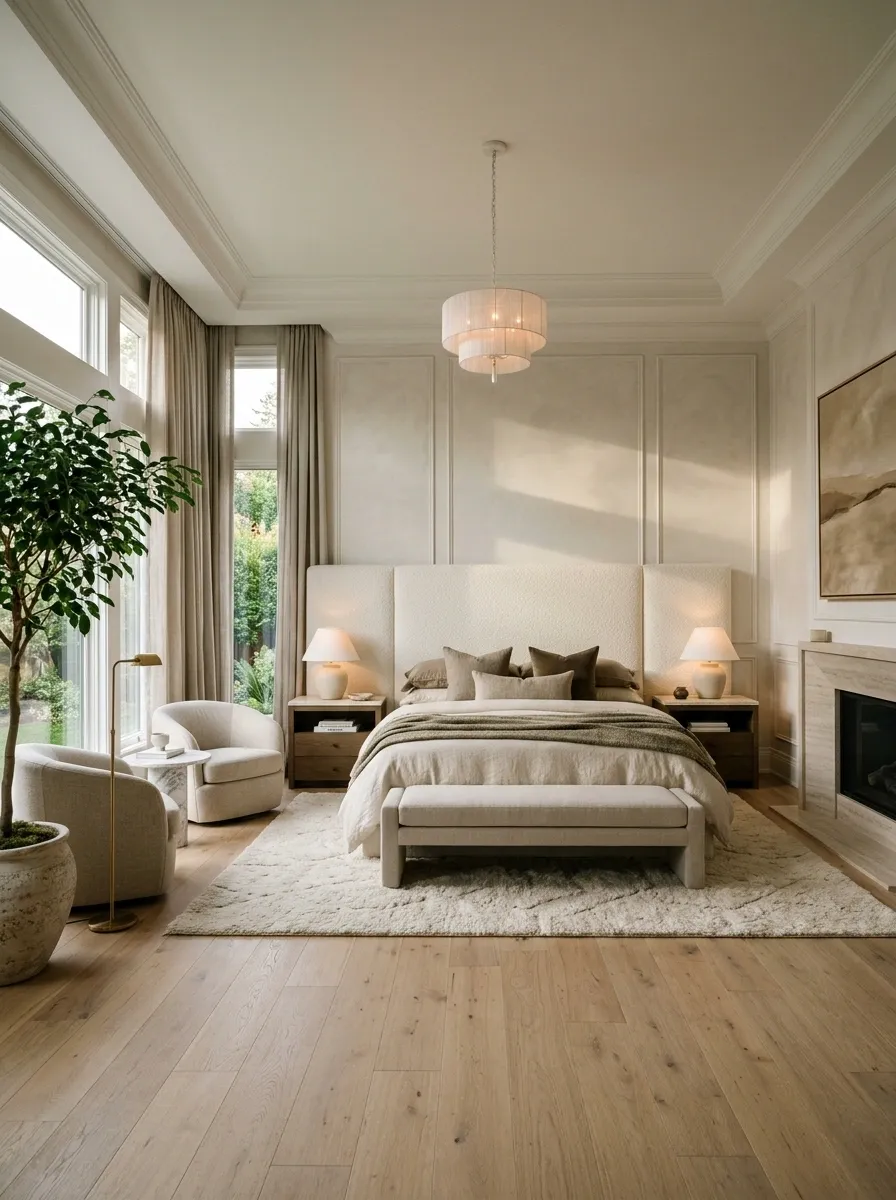
A headboard system with properly designed integrated shelves can provide usable bedside surfaces while the tall chest stays as separate storage. Check the system’s intended loads, attachment, and compatibility with the bed.
Relative-height study only. Test real bedside reach, drawer movement, and the route out of bed.
Use a complete suitable system and test its position with the actual mattress and pillows.
Keep the shelves clear enough for the usual small items and select the system around real reach. A shelf that looks convenient in a product photograph may sit too high or too far behind your actual pillows.
The integrated shelves don’t need to match the chest exactly. A pale painted headboard and wood storage can look connected through the room’s larger palette, while each piece performs a clearly different task.
Separate Lighting From the Chest Top
A Suitable Wall Light With Reachable Controls
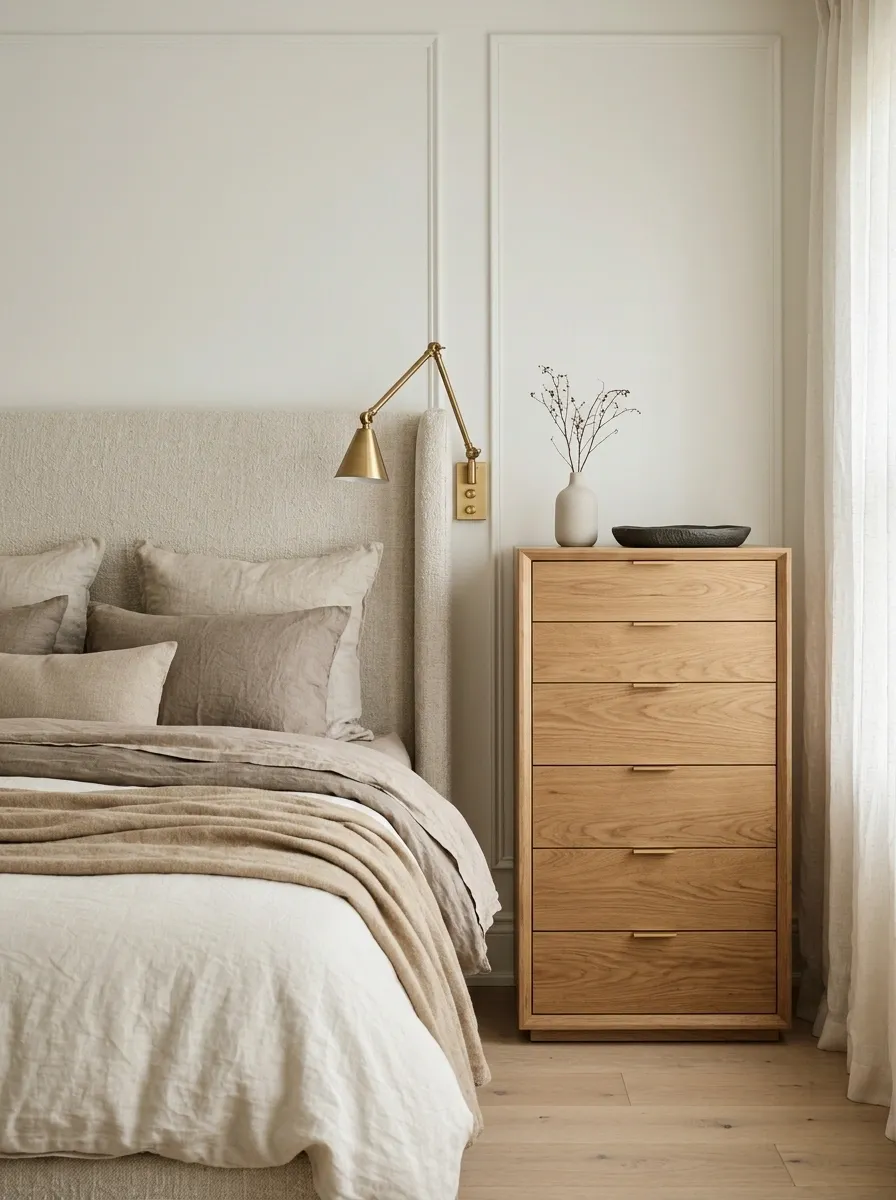
A wall light can provide bedside illumination without depending on a lamp standing on the high chest. Have it positioned and installed appropriately for the room and the intended use.
Check the control location from the bed. The fixture should provide useful light without forcing you to reach over the chest or behind the headboard.
Relative-height study only. Test real bedside reach, drawer movement, and the route out of bed.
Use suitable installation and check the actual light and control positions while seated and lying down.
Keep the chest top simpler once it no longer carries the lamp. One low object may be enough, or leave it clear. The room gains a more deliberate division between storage and lighting rather than asking a tall surface to handle every bedside function.
A Floor Lamp Outside the Bedside Walking Route
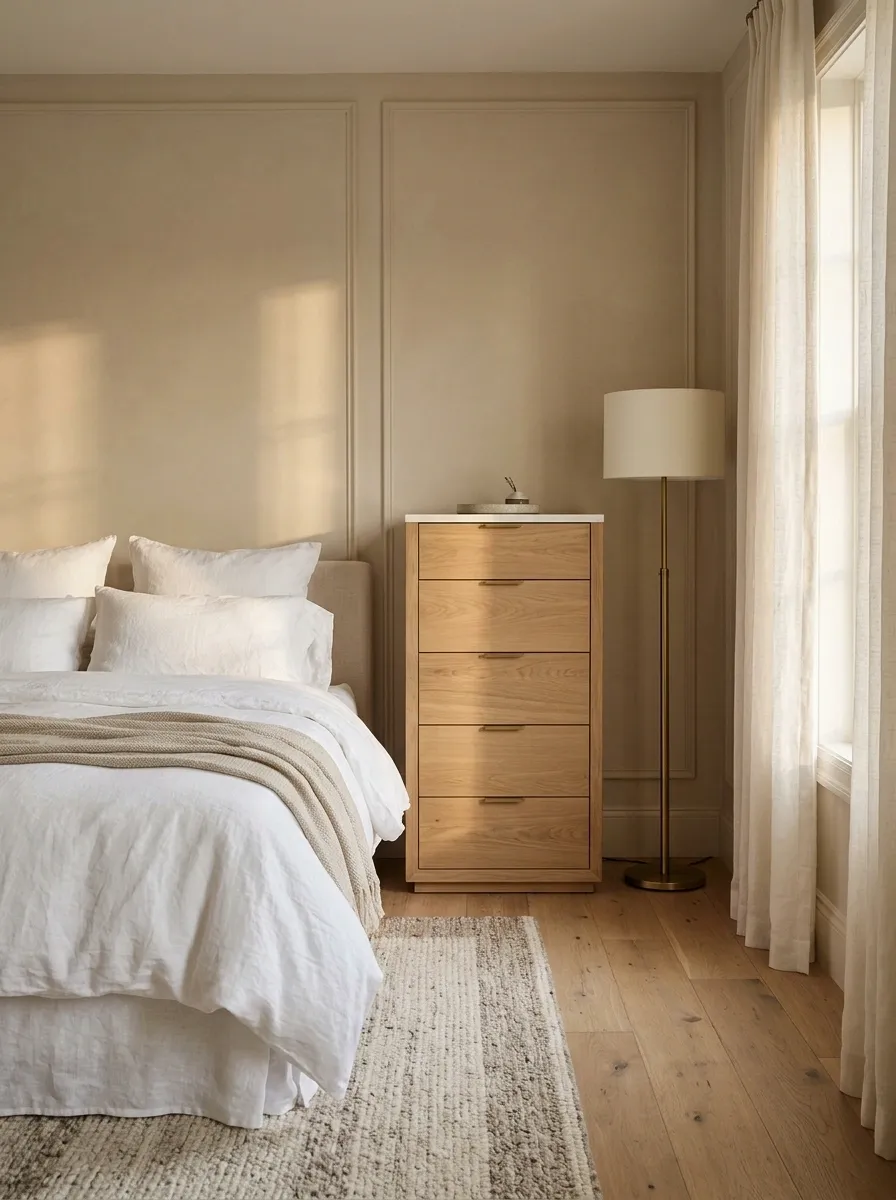
A suitable floor lamp can serve the bed or a nearby reading position while the tall chest remains storage. Choose its base and position so it is stable and clear of the route out of bed.
Relative-height study only. Test real bedside reach, drawer movement, and the route out of bed.
Check this in your room
Check base position, cable routing, control access, and stability in the real room.
The cable needs a practical safe route, and the controls must be reachable for the intended use. A lamp that must be unplugged by crawling behind the chest hasn’t improved the arrangement.
A plain shade can soften the corner without adding another strong shape above the chest. Keep the surrounding objects restrained so the furniture and light have separate clear outlines.
A Chest Top Reserved for a Suitable Lamp and Little Else
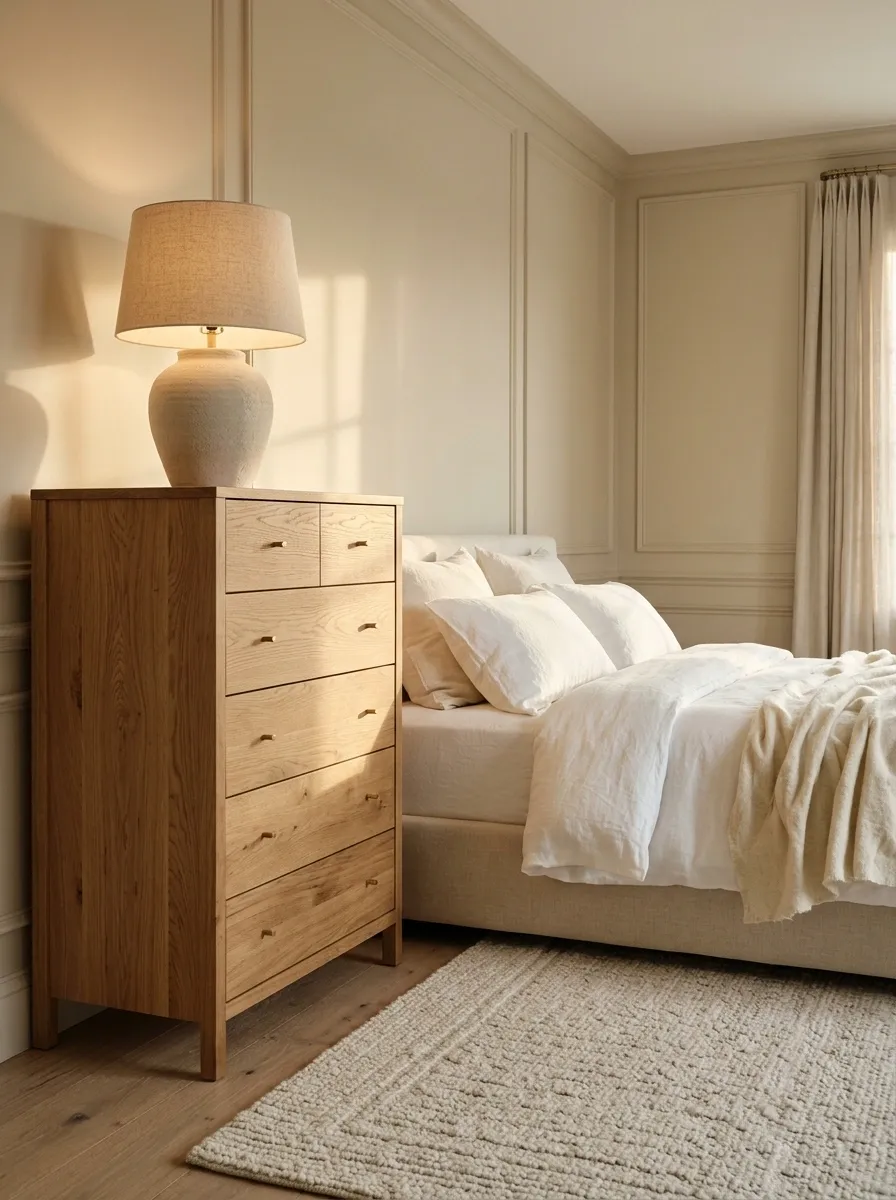
If the high chest is comfortable for its intended limited use, it can hold a suitable stable lamp while a separate lower surface serves nightly essentials. Keep the lamp’s controls accessible by an appropriate arrangement.
Choose the lamp around the chest width and the room’s light needs. A small lamp may look lost; a broad heavy-looking one can crowd the top and make the corner feel imposing.
Relative-height study only. Test real bedside reach, drawer movement, and the route out of bed.
Use a lamp and control arrangement suited to the actual surface and bedside routine.
Don’t add tall vases, stacked books, and fragile objects around it just to fill the space. The practical win is giving the high surface fewer jobs, with the lower bedside area remaining clear and useful.
Make the Unequal Heights Look Intentional
A Tall Upholstered Headboard Beside the Chest
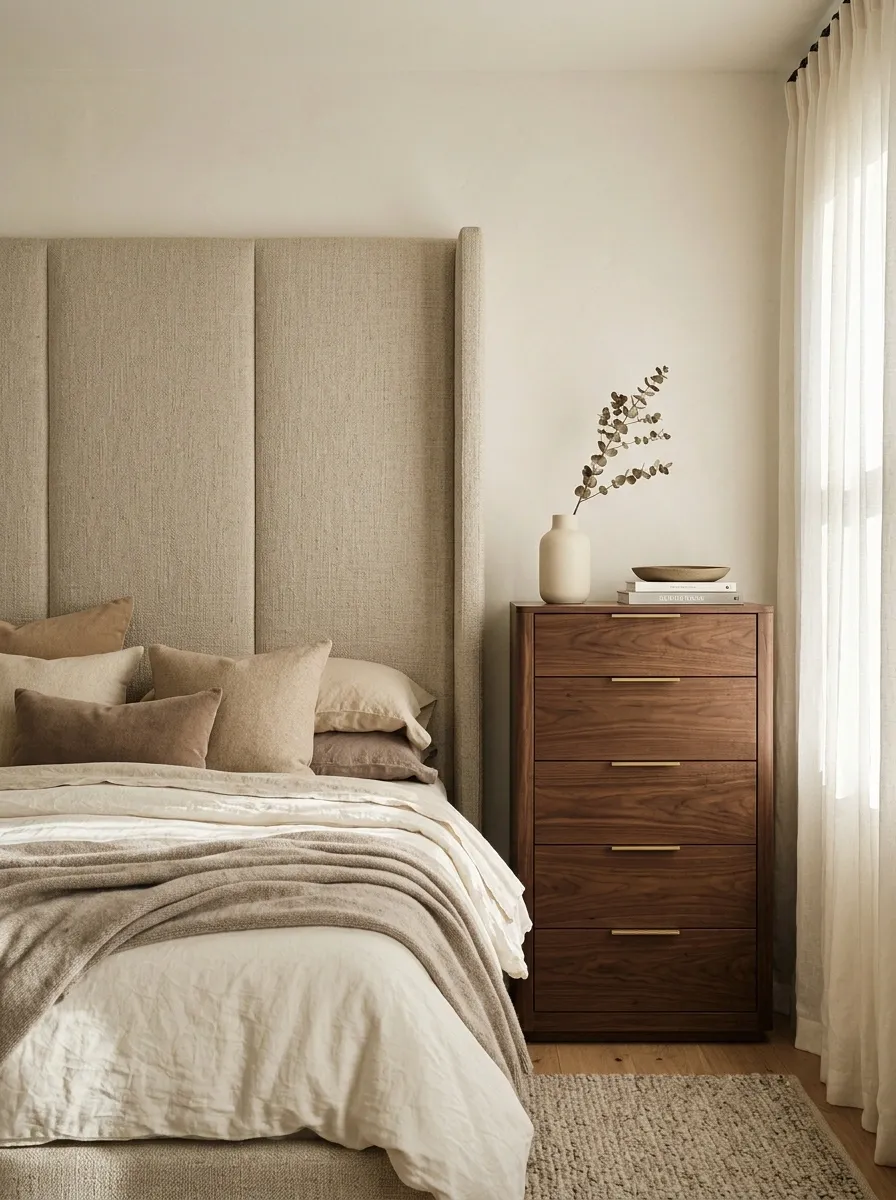
A generous upholstered headboard can give a tall chest a more comfortable visual neighbor. Its height provides a clear background above the mattress, so the chest no longer appears to tower over an otherwise low composition.
Choose a quiet fabric that relates to the bedding. The chest can remain wood or painted, with its top restrained.
Relative-height study only. Test real bedside reach, drawer movement, and the route out of bed.
Use this to improve appearance only after comfortable bedside reach has been solved.
This changes the visual balance, not the reach. Keep a separate lower landing spot if needed. A well-proportioned headboard can make the room feel more settled without pretending that the mattress has risen to meet the chest.
A Wall-Colored Chest Beside a Contrasting Bed Frame
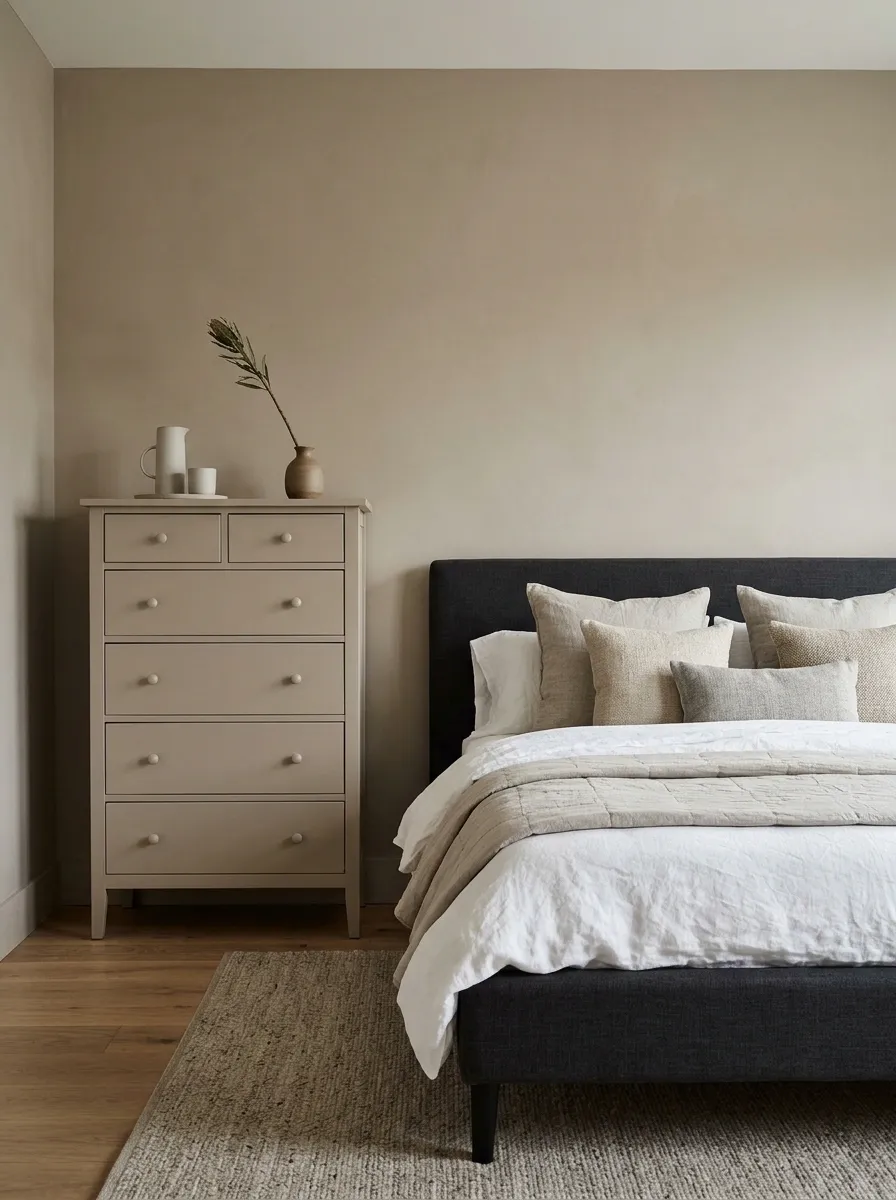
Where the chest is suitable for refinishing, a wall-related color can make its height less visually dominant. A contrasting bed frame then supplies the clearer outline.
Color can reduce visual dominance but doesn't alter the chest's height or reach.
Use compatible preparation and coatings for the actual chest material. A close paint color can still look different on furniture and wall because of light and finish, so compare samples in place.
Keep the bedside function addressed separately. This is useful when you like the storage and want it quieter in the room, not when the only problem is an uncomfortable place to put down a glass.
Paired Tall Chests With Separate Low Bedside Shelves
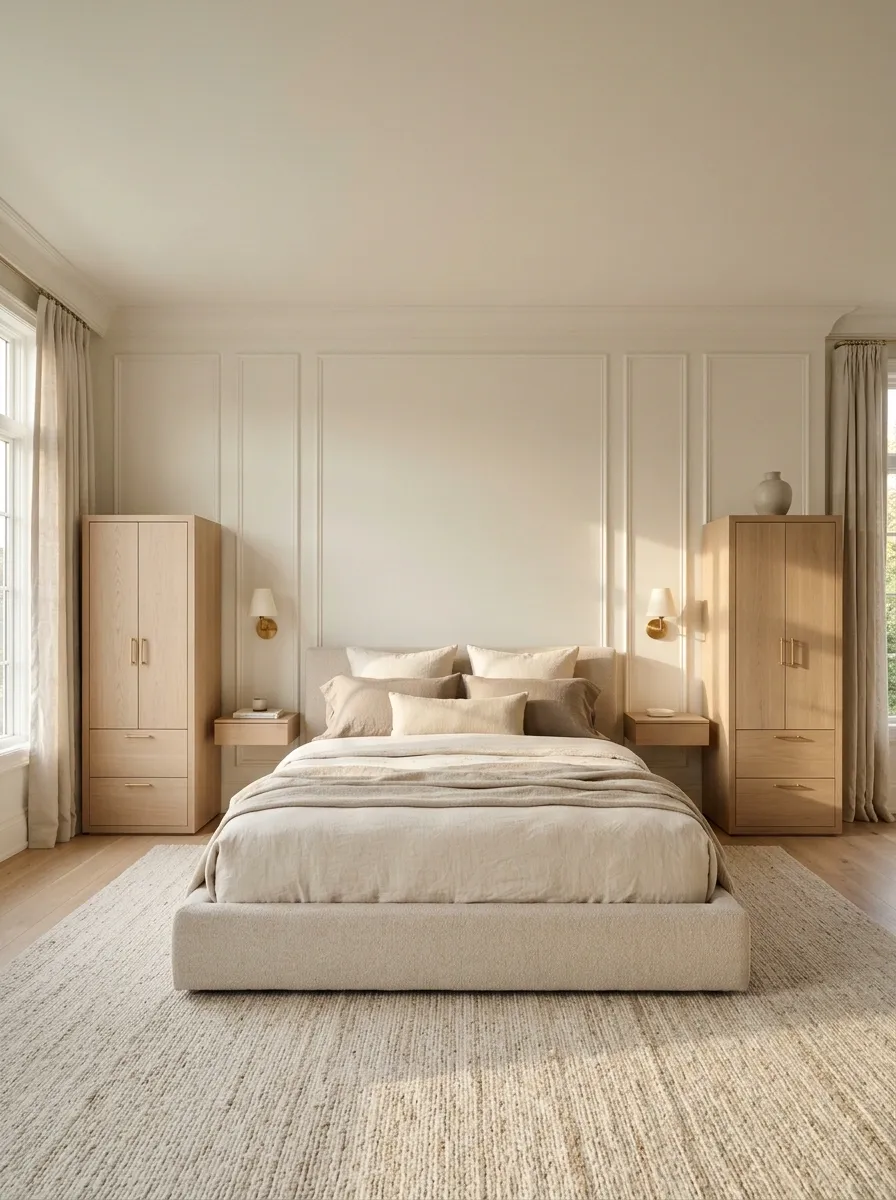
A pair of tall chests can frame the bed visually while separate appropriately installed lower shelves provide the actual bedside landing spots. Plan each shelf for its wall, intended loads, safe position, and the person using that side of the bed.
Keep the chest tops quiet so the whole wall doesn’t become a row of objects above the mattress. Related chest finishes can provide the symmetry without requiring identical lamps at an inconvenient height.
Relative-height study only. Test real bedside reach, drawer movement, and the route out of bed.
Test both users' reach and exits, and preserve drawer access and proper furniture securing.
This arrangement needs enough room for the chests, bed, shelves, and circulation together. If it crowds the bed or makes the lower shelves awkward, use less furniture. A symmetrical wall is a modest achievement when everyone has to squeeze sideways to use it.
Move the Chest Where Its Height Makes More Sense
A Tall Chest on the Opposite Solid Wall
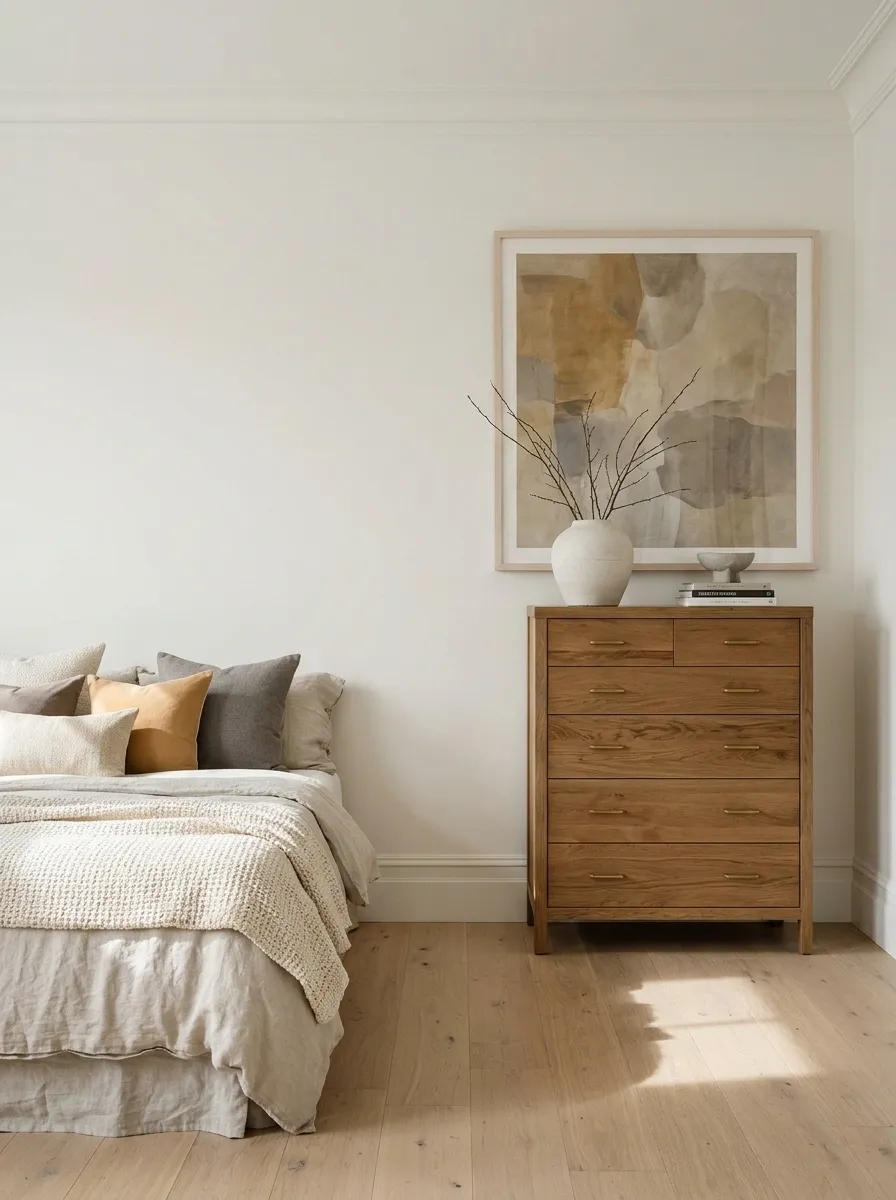
Move the chest to a suitable solid wall away from the bedside if the room allows. Give the bed a more comfortable surface, and let the chest become a complete storage composition in its own position.
A mirror or artwork above can relate to the chest without being centered on the bed. Keep the top useful or restrained and preserve drawer-opening space.
Relative-height study only. Test real bedside reach, drawer movement, and the route out of bed.
Check anchoring, drawer access, and room circulation in the new position.
This can be the simplest answer when the furniture is genuinely too high for bedside use. Keeping a good chest doesn’t require keeping it in the one location where its strongest feature—storage height—becomes a daily inconvenience.
A Tall Chest Within a Separate Dressing Corner
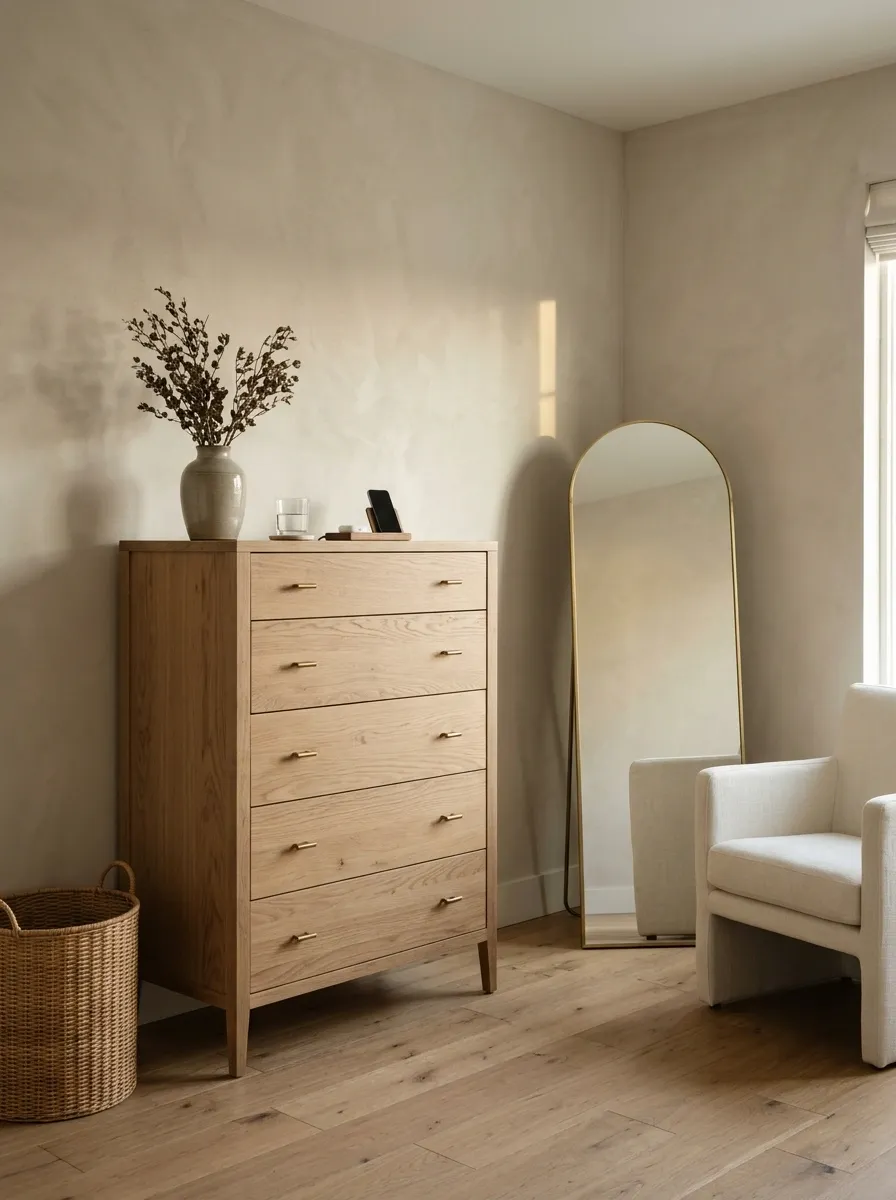
Use the chest as part of a dressing corner with a suitable mirror and useful clear floor space. The bedside can then remain simpler, with a surface chosen for reach rather than storage volume.
Keep the mirror independently supported or secured as required, and follow the chest’s anchoring instructions. The corner needs enough space to use drawers comfortably.
Relative-height study only. Test real bedside reach, drawer movement, and the route out of bed.
Check this in your room
Plan safe furniture support, mirror fixing, drawer use, and circulation together.
A chair or basket is optional if the room has space and a genuine use for it. The chest already has a clear role. It doesn’t need a collection of additional furniture to justify moving away from the mattress.
Put Nightly Items Where They Are Actually Used
Sort the objects currently on the chest into two groups: things needed from bed and things that can remain storage or decoration.
- Glasses and a phone need a stable, comfortable landing spot.
- Light controls need to be usable without reaching over a high edge.
- A charger needs an appropriate cable route that doesn't catch on drawers or cross the exit from bed.
- Books and decorative objects can often live somewhere else entirely.
Keep the useful lower surface clear enough for those tasks. Adding a shelf or small table won’t help if it immediately fills with the objects displaced from the chest top. The advantage comes from giving the bedside routine a better position, not merely increasing the number of surfaces available for clutter.
Keep the Good Storage, Solve the Nightly Routine
Place the things you normally use beside the bed in their proposed positions and test the arrangement through ordinary evenings. Keep the route out clear and the useful surface easy to reach.
If the chest works, let it remain. If it doesn’t, separate its storage role from the bedside tasks or move it. A bedroom can look coherent without matching tops, and a glass of water shouldn’t require an impressive overhead retrieval technique.