
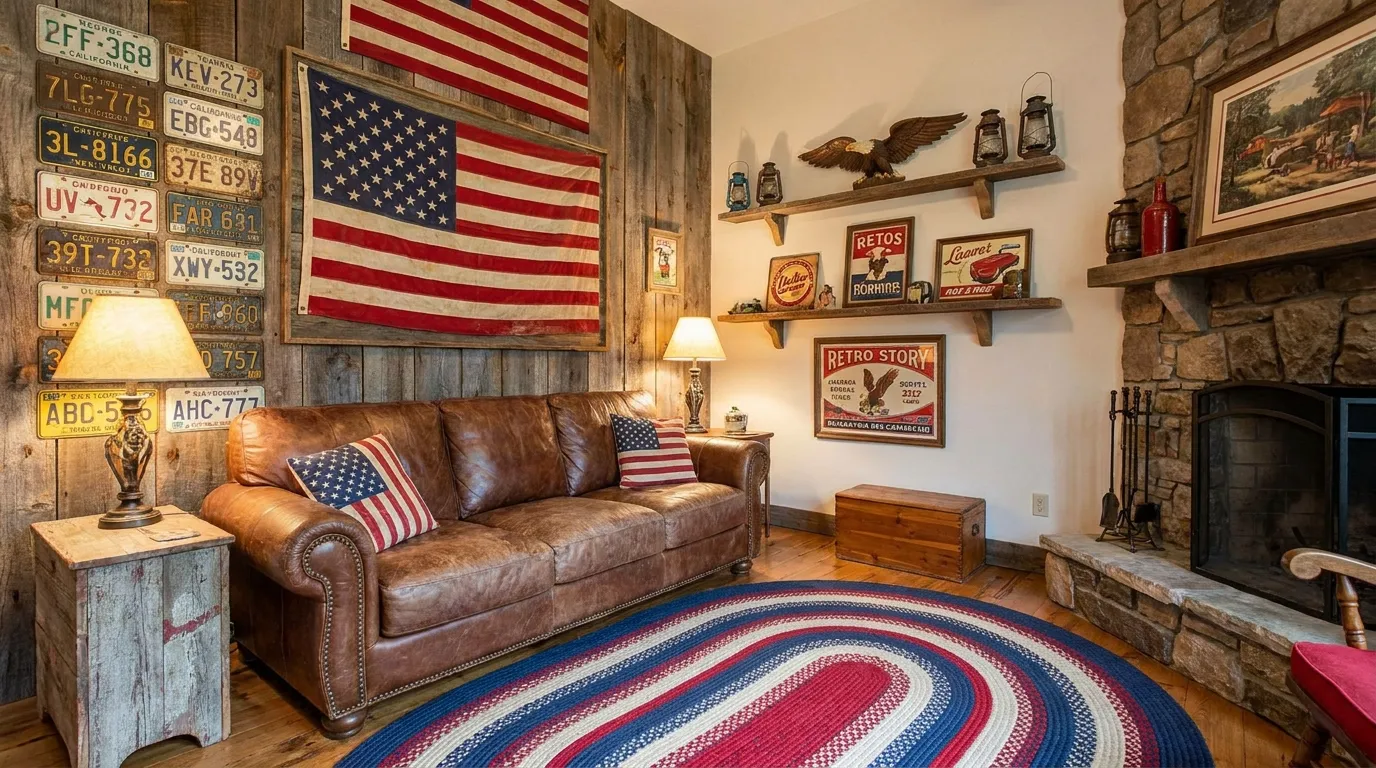
There is a version of Americana decor that looks like a gift shop at a rest stop. You’ve seen it. Foam stars hot-glued to a wreath. A sign that says “Home Sweet Home” in Comic Sans. Red, white, and blue everything, all screaming at you from every surface with the subtlety of a parade float.
And then there’s the version that looks like it was assembled over decades by someone who actually cared — worn flag quilts, amber apothecary bottles, galvanized milk cans, a brass telescope on a side table, books stacked next to a lantern that hasn’t been replaced with an LED bulb.
That second version is what this post is about.
Vintage Americana isn’t a holiday look. It’s a philosophy. It says that things made to last deserve to be displayed. That imperfection is more interesting than perfection. That a red enamel breadbox with chips and rust marks around the handle tells a better story than a brand-new one ordered off a website.
These rooms and spaces understand that. All of them. Here’s how to build your own.
What Separates Vintage Americana From Patriotic Clutter
The difference is age. Not chronological age — though that helps — but the visual language of age. Surfaces that have been touched. Objects with a purpose. Nothing that exists purely to signal a theme.
Objects That Earned Their Place
A galvanized metal star on a barn wall earned its place by being on a barn for fifty years. A reproduction version of the same star, still glossy from the factory, hasn’t earned anything. The patina is not the point. The history the patina suggests is the point.
When you’re building a vintage Americana space, ask of every object: does this look like it did something before it became decor? A worn leather saddlebag on a reclaimed shelf: yes. A leather-look vinyl bag from a seasonal home goods store: no. The difference is in the surface, the weight, and the honesty of the material.
Color Without Volume
Vintage Americana rooms are not quiet about color. They use red, navy, cream, warm wood tones, and amber glass in real quantity. What they don’t do is shout. The red comes from a enamelware kettle, not a painted wall. The navy comes from a velvet wingback chair, not a graphic print. The color earns its presence by being attached to something with mass and texture.
This is the rule: color through objects, not through paint or pattern. When the color lives in the things rather than the surfaces, it feels collected rather than coordinated.
Mixing Old and Older
The rooms in this post don’t have a consistent era. A Victorian iron bed frame. A mid-century striped chaise. Depression-era canning jars. An Edwardian brass telescope. They all coexist because they share a material DNA: metal, glass, aged wood, worn fabric. The era doesn’t matter. The material story does.
Building the Material Foundation
Before any object goes into a vintage Americana space, the surfaces need to be right. The wrong surfaces make the right objects look wrong.
Wood That Has Lived
Reclaimed wood shelving, rough-hewn barn beams, and aged hardwood floors are doing heavy lifting in every room on this list. They’re not decorations. They’re the surface everything else reads against.
You can install reclaimed wood floating shelves using standard bracket hardware — the key is sourcing actual reclaimed wood rather than the manufactured “distressed” versions. Real reclaimed wood has grain variations, saw marks, nail holes, and inconsistencies that no factory finish replicates. Buy it from salvage yards, lumber reclamation companies, or old barns being demolished.
White Walls as Backdrop, Not Statement
Every room on this list uses white — shiplap, painted brick, subway tile, plaster — as the background that makes aged objects read clearly. White is not a design choice here. It’s a decision to step back and let the objects do the work.
Shiplap installs horizontally with a quarter-inch gap between boards. Painted brick should be flat white, not eggshell — the sheen on eggshell competes with the texture of the brick. Simple white subway tile with dark grout lets aged metal objects and warm wood read as warm rather than muddy.
Letting the Floor Be Honest
Dark-stained hardwood, gray weathered decking, and original wide-plank flooring appear throughout these rooms because they’re honest materials. A braided oval rug in muted red, navy, and cream softens without obscuring the floor. A jute rug adds texture without color. The floor is not supposed to be invisible.
Vintage Americana Decor Ideas
Toile Room, Flag in the Window
Hang a full-size American flag in a window — not mounted on a wall, but hung so light passes through the fabric and illuminates the stripes from behind. This is the specific effect that aged cotton flags achieve: the stripes become translucent, the colors warm gold and deep crimson rather than flat red and white. Use a simple curtain rod at the top of the window frame.
The room around it needs to be dense and personal. Plaid club chairs in muted green and cream. Toile curtain panels in red and cream. A bamboo tray table with stacked books and a decorative plate on top. A green-glazed garden seat as an occasional table. A tall lamp with a pleated shade for warm pooled light. A curio cabinet filled with small objects: figurines, bottles, miniature books, found objects.
The flag in the window anchors everything else to a specific American identity without trying. The density of the surrounding room gives it something to anchor.
Shiplap Bedroom, Quilt, Barn Star
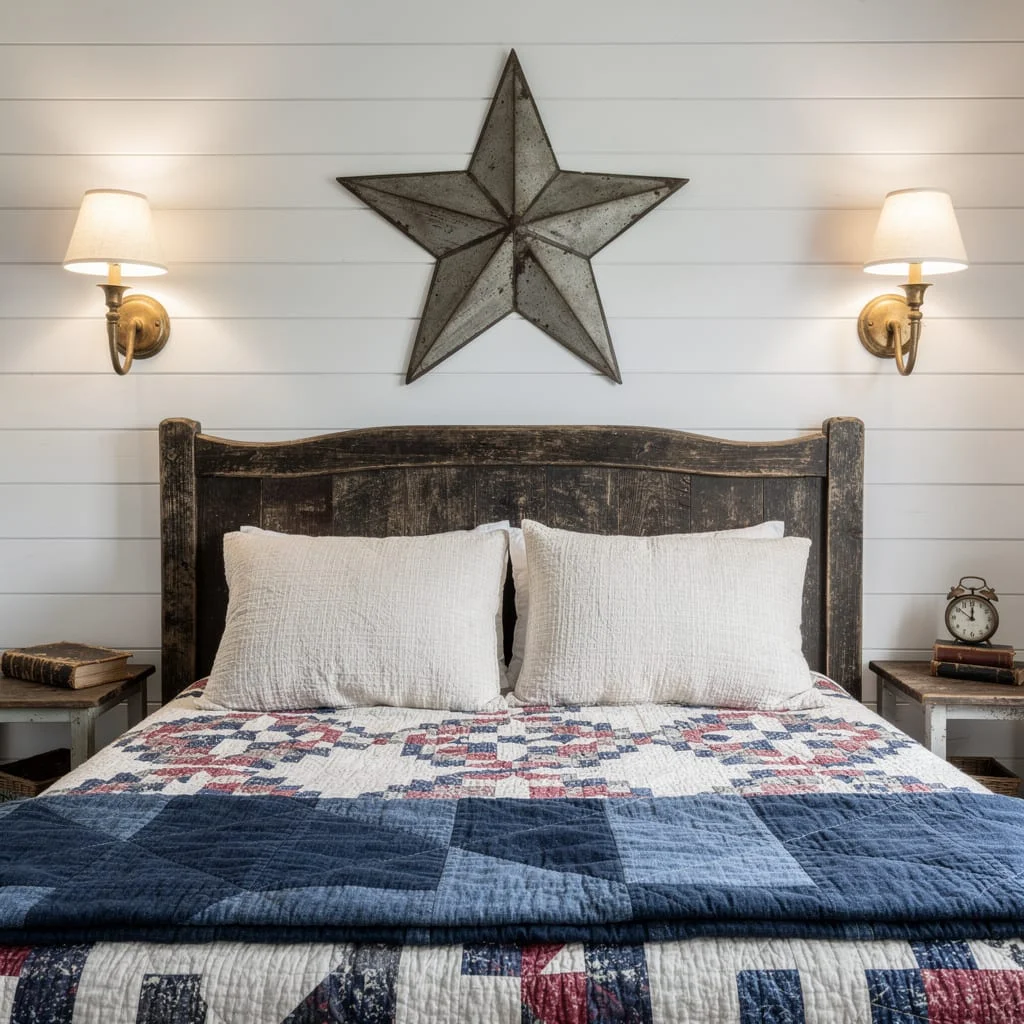
Paint or install horizontal shiplap on the wall behind the bed. Keep it flat white with no sheen. Mount a pair of brass wall sconces at equal heights on either side of where the headboard will sit, wired for hardwired or plug-in operation. The sconce shade should be cream linen or off-white paper — not white glass.
Source a dark-stained reclaimed wood headboard — the kind built from wide planks with visible grain and wear. The headboard should be slightly too large for the frame, visually. Dress the bed with a patchwork quilt in red, white, and navy — a genuine vintage pattern works best, but reproduction quilts with traditional block patterns are acceptable if the fabric is pre-washed and soft.
Dress the nightstands simply: a stack of two or three hardcover books on one side, a small alarm clock on the other. Hang a large galvanized barn star on the shiplap between the sconces, centered above the headboard at a height that creates visual balance without touching the top of the headboard.
Ironstone and Flags Sideboard
Pull together every piece of white ironstone and cream stoneware you own — pitchers of varying heights, crocks in graduated sizes, small mugs, small pitchers, a gravy boat. Group them on an antique white sideboard or hutch with enough density that the pieces overlap slightly and the white mass reads as one collected object rather than individual pieces.
Among the ironstone pieces, press American flags of varying sizes — standard cotton flags, not miniature plastic ones — into the crocks and pitchers at different angles. The flags should be spread throughout the collection, not clustered in one spot.
Add two to three distressed white candlestick holders at varying heights, each with a white pillar candle. In front of the largest piece at the center, place a small cast metal eagle figurine. Let an aged, tea-colored flag drape across the front edge of the sideboard, hanging down over the cabinet doors, pooling slightly at the base. The combination of white ironstone, aged flag, and small flags in the crocks is a single material story told in three tones.
Vintage Kitchen Counter Vignette
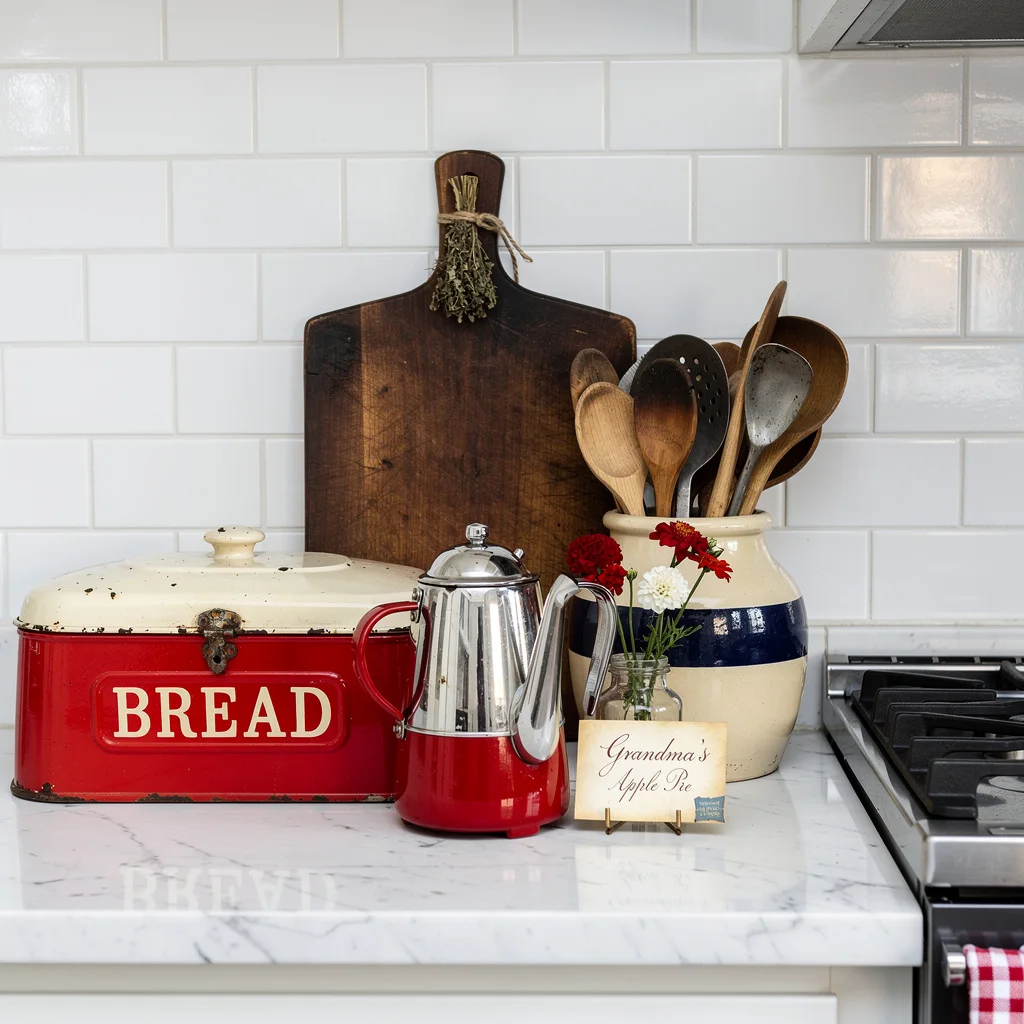
On a white marble or white painted counter against a subway tile backsplash, build a kitchen vignette that works as both function and display. Start by leaning a large dark wood cutting board against the backsplash — not a decorative board, a well-used one with knife marks and oil stains. Tie a small bundle of dried herbs to its handle with jute twine.
Set a vintage red enamel bread box at the left of the board — the chunky rectangular kind with cream-painted lid trim and a stamped “BREAD” label on the front. In front of the bread box, place a small stainless or enamel percolator in red. Beside the board on the right, set a large stoneware crock with a navy stripe around its middle and fill it with wooden spoons, spatulas, and a ladle. Tuck a small glass jar with a few stems of red and white flowers between the crock and the percolator. Prop a small recipe card or vintage card on a tiny brass stand beside the jar.
Patriotic Wreath on a Barn Door
Source or build a grapevine or eucalyptus base wreath, eighteen to twenty-four inches in diameter. The base should be full and three-dimensional — not flat. Wire in clusters of blue silk hydrangea heads at the three o’clock and nine o’clock positions, distributing them evenly around the lower half of the wreath.
Fill the remaining base with eucalyptus stems, red berry picks, and filler greenery until the wreath is dense with no wire or base material showing. Press two full-size American flags on wooden dowels into the upper section of the wreath, crossing them at an angle so both flags are visible. The flag poles should extend above the wreath top by at least twelve inches.
At the center bottom of the wreath, tie a large layered bow using two to three ribbon types: a wide natural burlap ribbon as the base loop, a red-and-white striped narrower ribbon in the middle, and a stars-and-stripes print ribbon as the top layer. The bow should have at least three loops on each side and tails of at least eight inches. Hang the wreath on a weathered red barn door or antique door panel with visible wear and peeling paint. The worn door surface is the element that makes the wreath look found rather than made.
Reclaimed Flag Art, Leather Bench, Boot Row
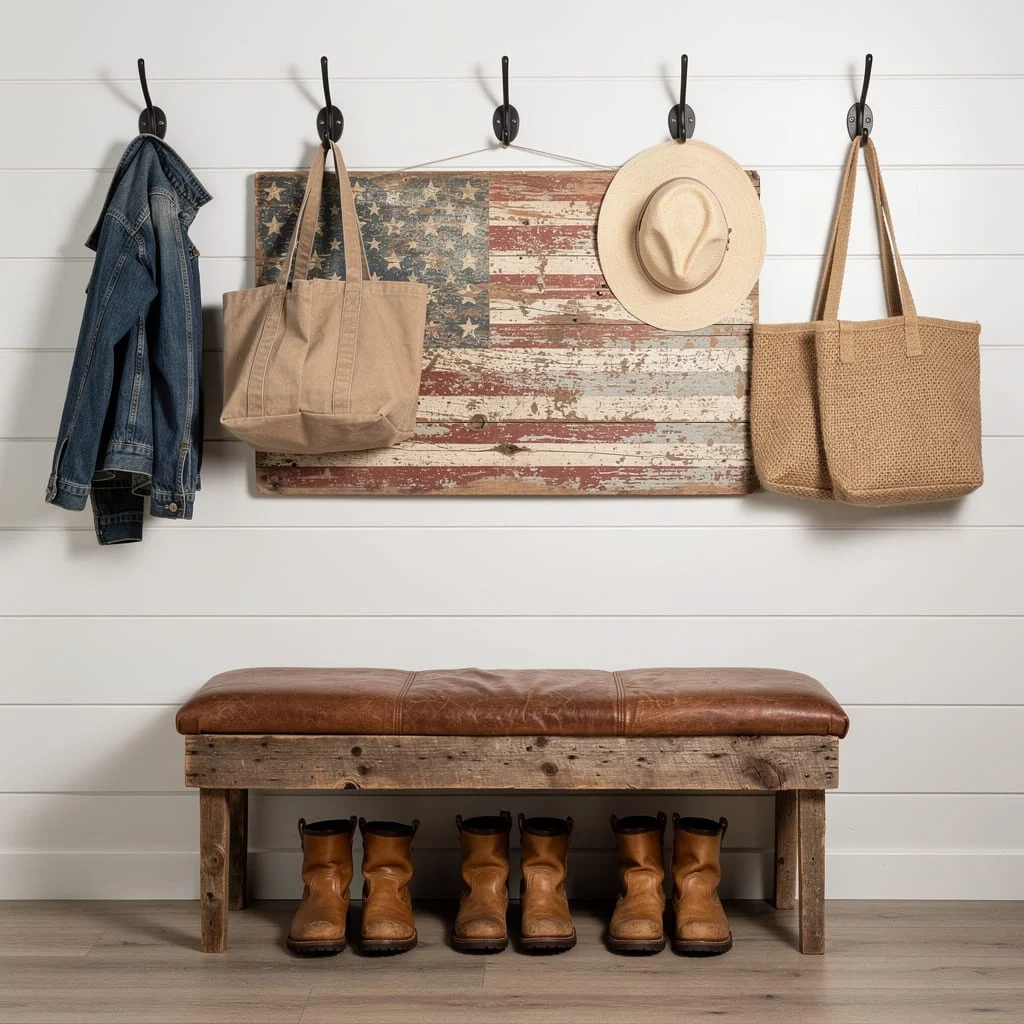
This is a mudroom or entryway setup. Mount five to six black cast-iron single hooks in a horizontal row directly on white shiplap at coat-hanging height. Among the hooks, hang a large reclaimed wood American flag panel — roughly twenty-four by sixteen inches — from its own small hook at center. The flag should be painted in muted, aged tones: washed-out red, grayed blue, cream rather than white.
Below the hook row, position a low bench with a reclaimed wood base and a leather-upholstered top — the leather should be distressed brown, not new-looking. The bench legs should be left rough.
Underneath the bench, line up three pairs of brown leather work boots or western boots in a neat row, toes pointing out. Hang a canvas tote bag on a hook to the left, a straw or felt hat on the center hook above the flag panel, and a woven jute tote to the right. Nothing else. Restraint in a mudroom is respect for the space.
Flag Quilt Bedroom, Wall Basket, Red Lantern
Dress an iron or metal bed frame with a white quilt as the base layer — textured, not smooth — with a large flag-print quilt draped over it. The flag quilt should show the full flag design across the bed surface, stars in the upper left corner, stripes running the length of the bed. Add a navy ticking stripe pillow sham and a standard white pillow sham layered in front of it.
On the wall above the headboard, mount a flat-backed woven basket containing trailing greenery and a small American flag pressed into the soil of a hidden pot inside. Add a carved wood star above the basket on the same wall.
Beside the bed, use a small round wood stool as a side table. Set a wicker basket with white flowers on top and a red-painted metal lantern with a white pillar candle on the floor beside it. Use a distressed gray-green painted nightstand on the opposite side with a beaded wood garland and a small potted green plant. Against one wall, lean or hang a large reclaimed wood flag panel in a simple wood frame. A large wicker trunk at the foot of the bed provides storage and grounds the composition.
Rocking Chair, Crate, Sign Corner
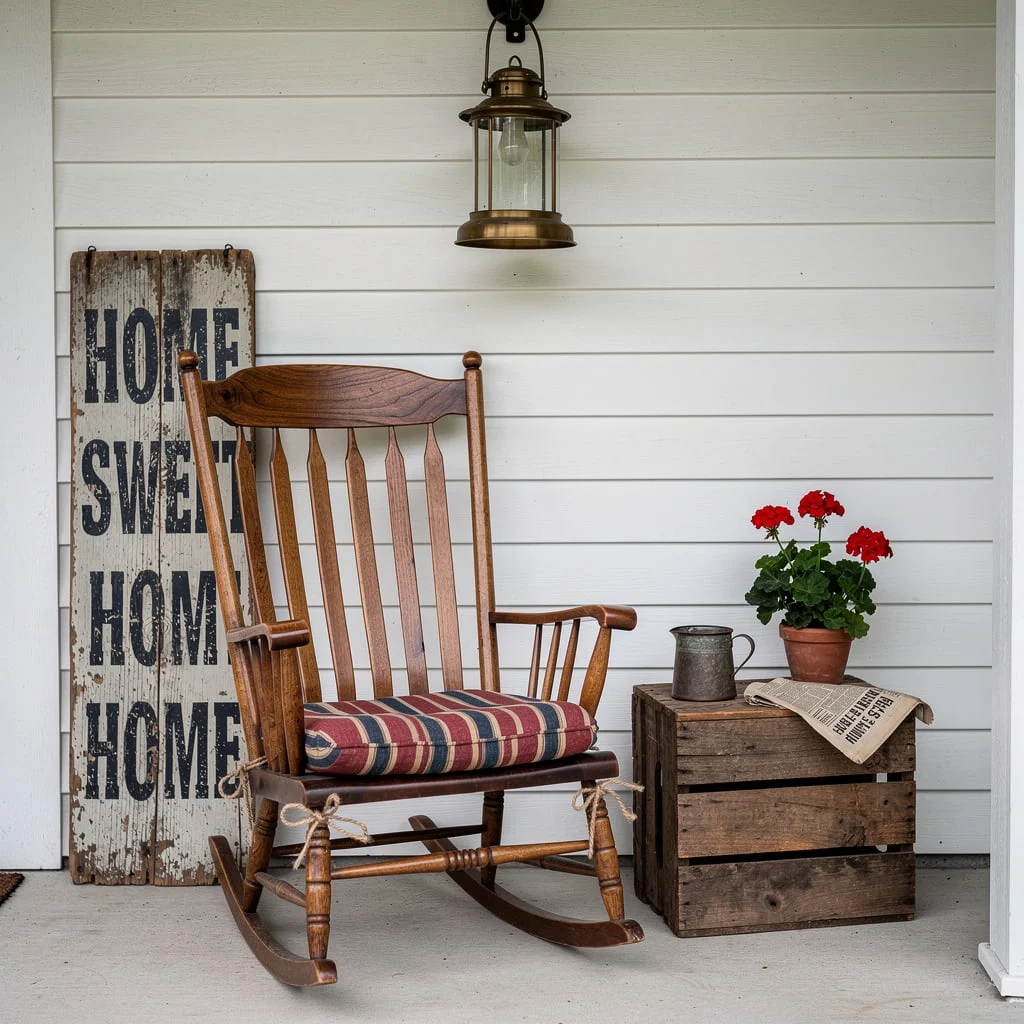
Find a solid wood rocking chair with turned legs and arms — an older one, not a reproduction. If the finish is worn through in places, leave it. Add a flat seat cushion covered in striped fabric: red, navy, and cream ticking stripe, tied to the chair rungs with jute twine at each corner.
Beside the rocker, place a stacked wooden apple crate or milk crate as a side table. Set a galvanized metal mug, a folded newspaper, and a small terracotta pot with red geraniums on top. Lean a tall reclaimed wood sign — roughly two feet wide and four feet tall — against the wall at an angle behind the chair. The sign text should be painted in aged block letters in navy or charcoal on a whitewashed surface.
Hang a single aged brass lantern fixture directly above, wired or battery-operated. That combination — rocker, crate, sign, lantern — is a complete vignette that needs nothing else.
Maximalist Junk Porch
This porch doesn’t apologize for anything. White-painted rocking chairs in mismatched styles — one pressed-back, one spindle-back — angled toward each other on a worn wood plank floor. A navy outdoor rug with a cream geometric border underneath. A small antique table between the chairs holding a red tin lantern.
String a long pennant banner — canvas or cotton flags, not plastic — from one porch pillar to the other, sagging generously in the middle. Against the house wall, group a small vintage dresser, a wooden crate end table, a painted lantern, and a wire plant stand with terracotta pots of geraniums in a loose cluster that reads as a single composition.
Drape a navy star print throw across the back of one chair. Set a flag-motif throw pillow in the seat of the other. The key is that nothing matches, nothing was purchased as a set, and every object looks like it has a history that predates this porch. The porch looks full because it is full — with things that were kept because they were good, not displayed because they were chosen.
Reclaimed Shelf Americana Collection
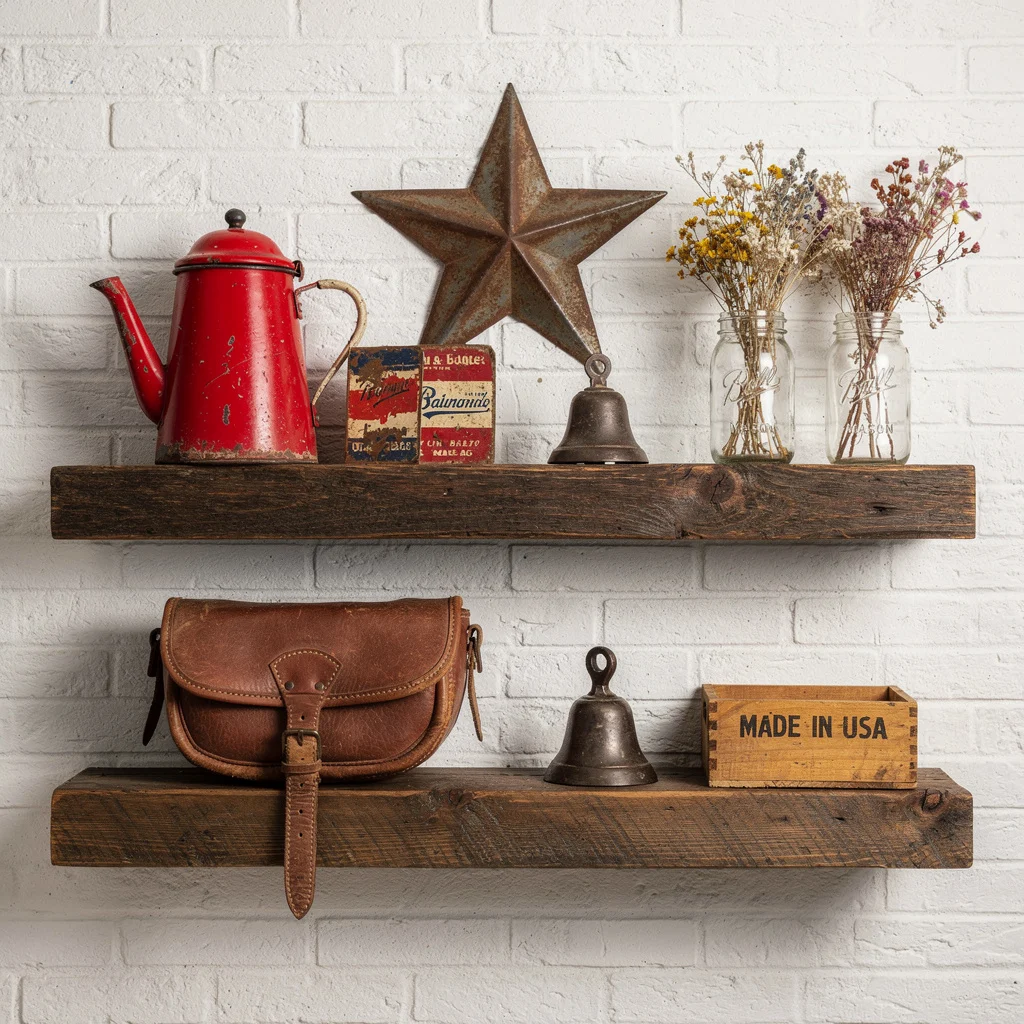
Install two floating shelves made from thick reclaimed wood — at least two inches thick — with three to four inches of depth difference between them, the upper one deeper than the lower. Mount them on a painted white brick wall using heavy black iron brackets.
On the upper shelf, group a red enamel percolator or coffeepot at one end, a small rusty barn star at center-left, an antique tin box with worn label graphics, a school bell or farm bell on a small stand, and two Ball mason jars filled with dried wildflowers — billy buttons, dried statice, and strawflowers — at the right end.
On the lower shelf, let one object overhang the shelf front: a worn leather satchel or saddlebag draped casually. Behind it, place a second brass bell and a small wooden crate stenciled with “MADE IN USA.” The lower shelf should look like it was set down, not arranged.
Navy Velvet Chair, Globe, Barn Star
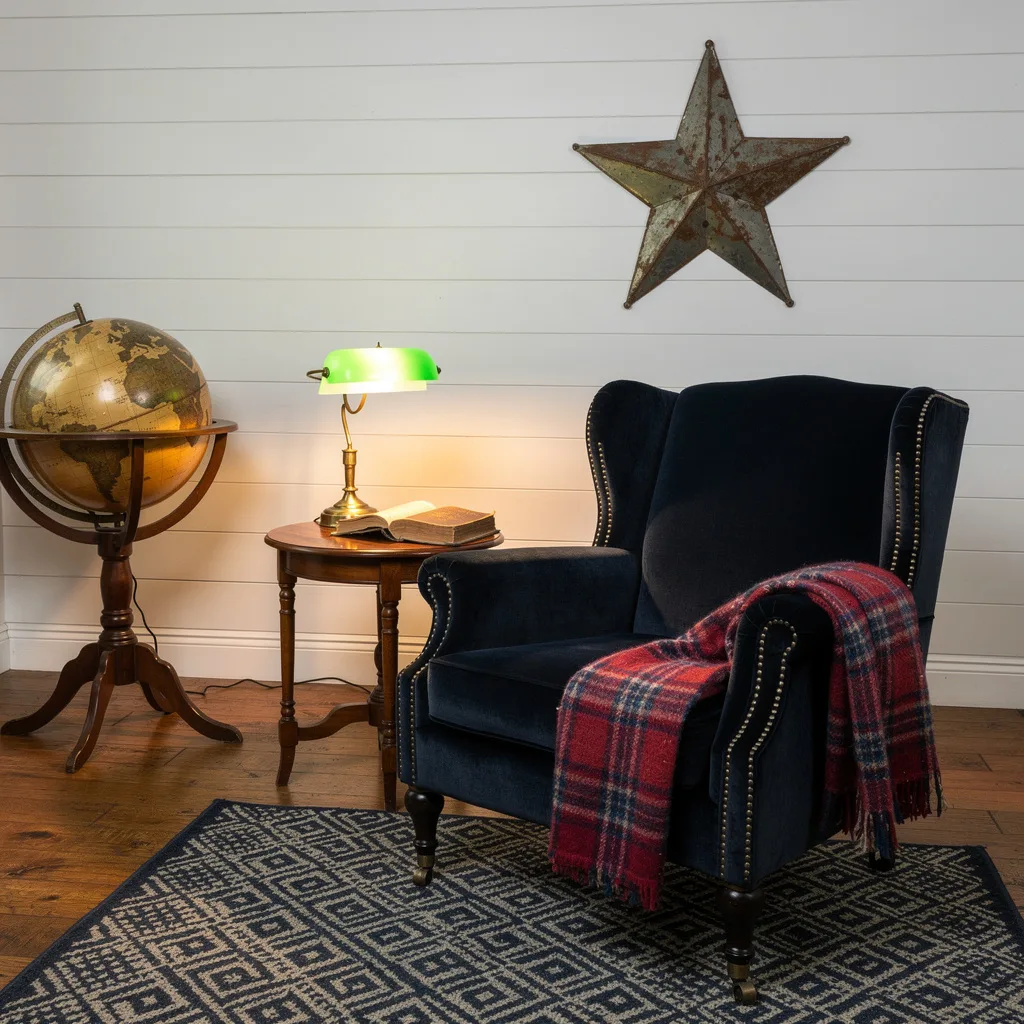
Source a wingback or club chair upholstered in deep navy blue velvet — nailhead trim along the arms and back adds the right period detail. Place it on a navy geometric wool rug with a cream pattern. Set it at a slight angle to the wall rather than flush against it.
On a small antique side table beside the chair, place a brass banker’s lamp with a green glass shade, turned on, with two or three hardcover books stacked open or face-down beneath it. On the opposite side, position a large floor-standing globe on a turned wood base — the older and more worn the cartography the better.
On the wall directly above and slightly to one side of the chair, mount a large galvanized tin barn star, at least twenty-four inches across, with genuine rust and patina across its surface. Drape a red tartan wool blanket over one arm of the chair, letting it bunch rather than fold neatly. The green lamp against the navy chair is the color combination that makes this corner feel like a room from a century ago that still works today.
Dried Flowers, Mason Jars, Burlap Runner
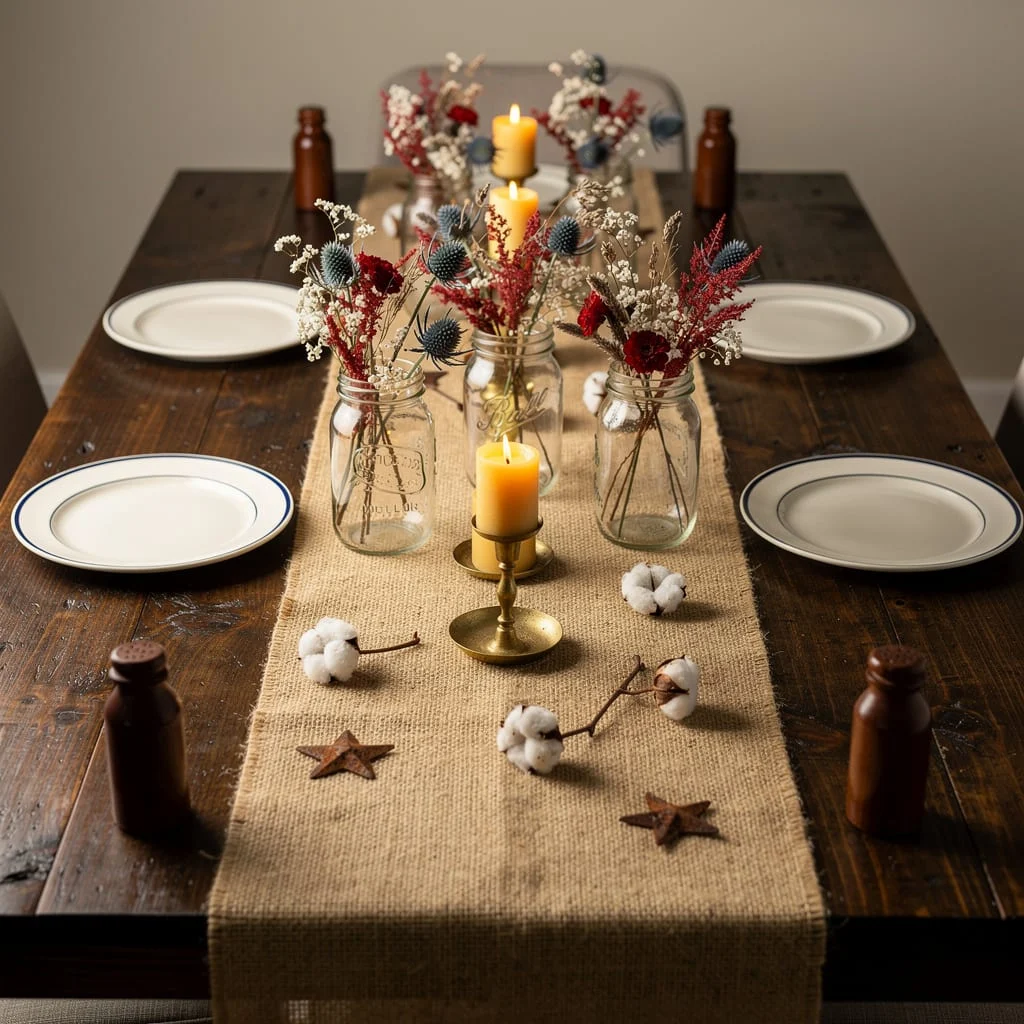
Lay a wide natural burlap runner down the center of a dark wood farmhouse table, letting it hang eight to ten inches off each end. The burlap should have a raw, fraying edge — do not hem it.
Along the runner, arrange three to five quart-sized Ball mason jars in a loose cluster at the center. Fill each with a different combination of dried flowers and botanicals: dried red amaranth, blue-dyed thistles or sea holly, white baby’s breath, dried pampas grass tips. The arrangements should be loose and airy, not packed. Between the jars, place a small brass candlestick with a beeswax pillar candle in warm amber.
Scatter loose cotton bolls and small rusty metal stars along the runner between the jars. At each place setting, use a wide cream-rimmed plate with a thin navy line and a simple linen napkin folded once and set directly on the plate. Wooden-handled silverware completes each setting.
Apothecary Bathroom Shelves
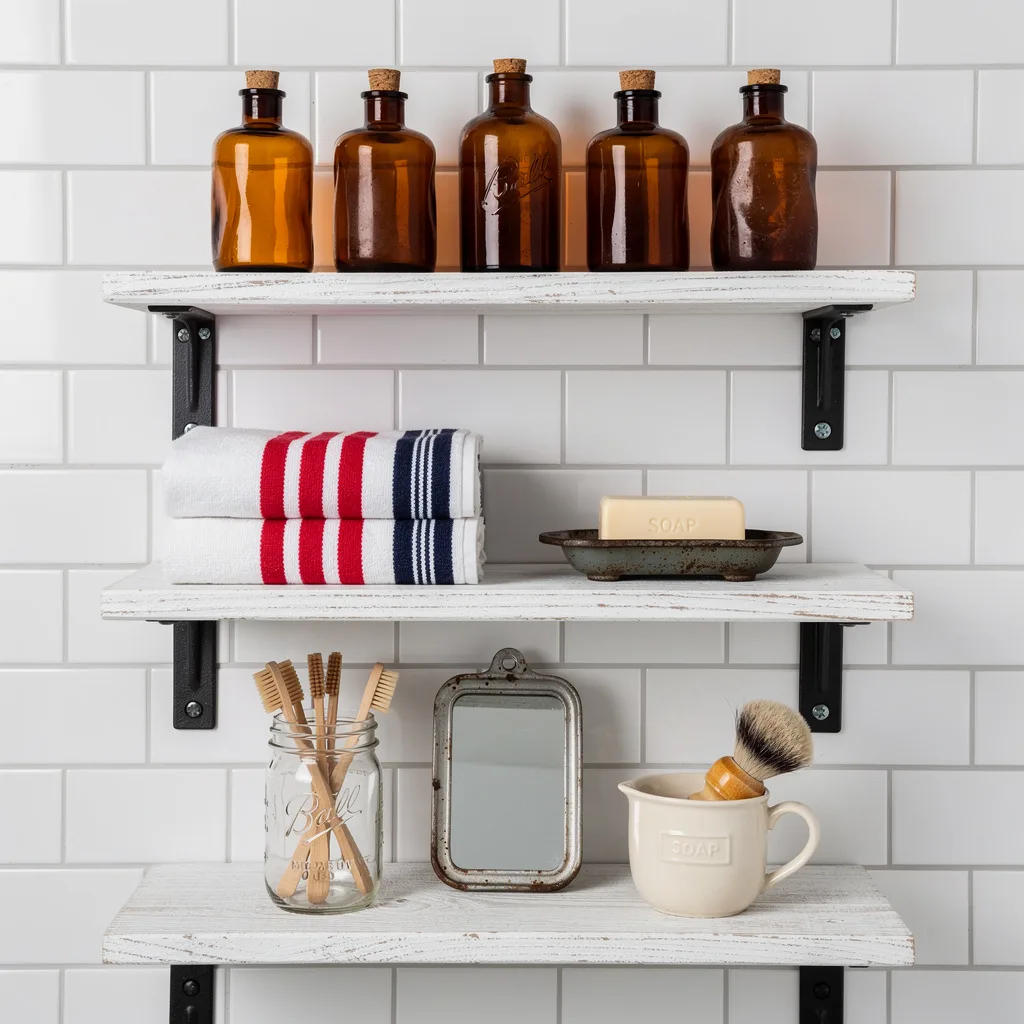
Install three distressed white wood shelves — the kind with raw edges and chipped paint — on black iron flat-bar brackets against white subway tile. The combination of weathered white and matte black is the specific contrast that makes this work.
On the top shelf, line up five to six amber glass apothecary bottles with cork stoppers, all the same style but varying slightly in height — as if collected rather than purchased as a set. Leave one or two uncorked with the cork set beside the bottle.
On the middle shelf, stack two folded hand towels with red and navy candy stripes against one end. Beside them, set a worn cast-iron soap dish holding a rectangular block of natural soap, unlabeled or wrapped in plain paper.
On the bottom shelf, place a Ball mason jar holding three to four bamboo toothbrushes. Center a small vintage tin mirror with a worn chrome frame. Set a cream ceramic shaving mug with a natural bristle brush beside it. Every object is either functional or looks like it used to be.
Navy Sign, Laundry Hook Rail, Wicker Baskets
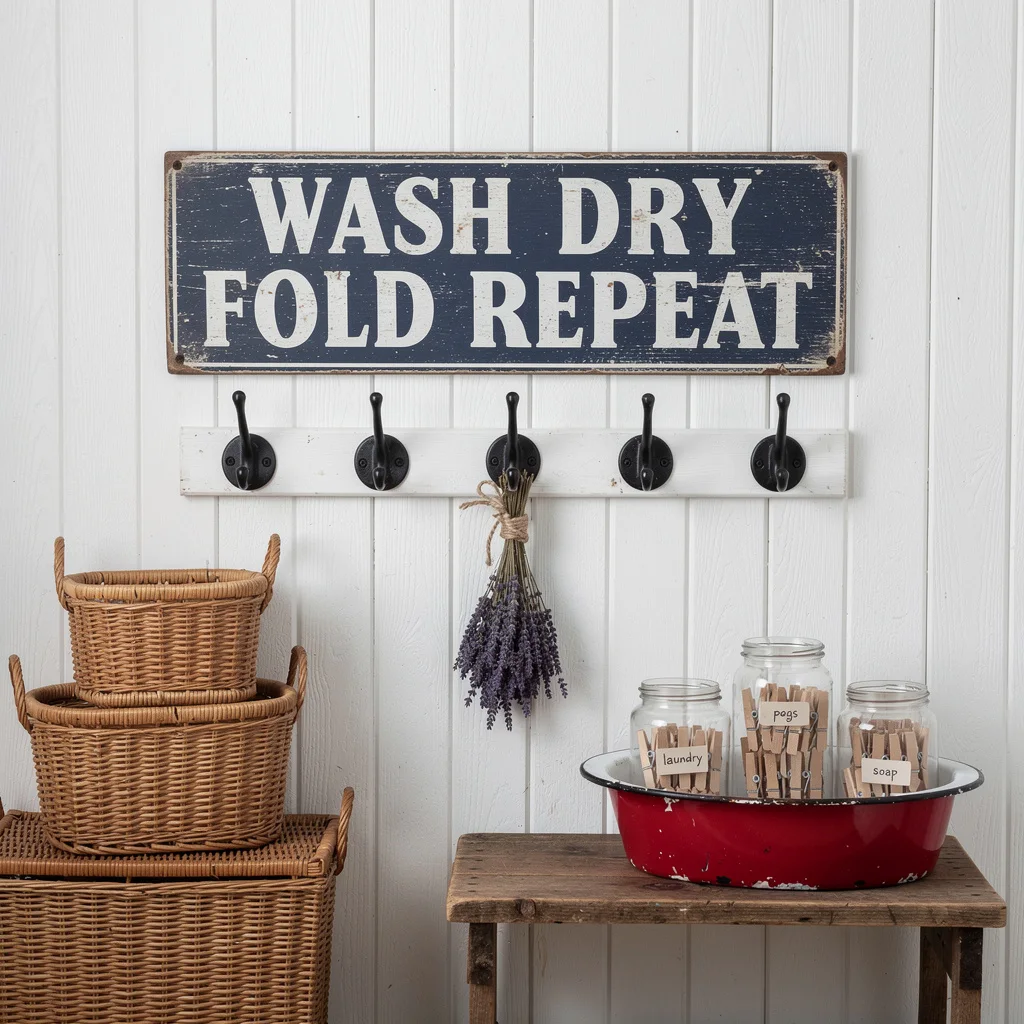
Mount a wide distressed navy metal sign with white block lettering above a hook rail — a painted white wooden strip with five or six black cast-iron double hooks evenly spaced. The sign and rail should be mounted as one unit: sign above, hook rail directly below with a one-inch gap.
Hang a small bunch of dried lavender tied with jute twine from the center hook. Leave the outer hooks intentionally empty. Stack two to three round or rectangular wicker baskets of graduating sizes to the left of the hook rail — the weave should be natural, unsealed wicker.
On a small rough-hewn wood table or bench to the right, set a large red-painted enamel basin or tray with two to three wide-mouth mason jars inside it. Label each jar with handwritten cardboard tags: “laundry,” “pegs,” “soap.” Fill them accordingly. The basin makes the mason jars look like they belong in a utility space rather than a craft room.
Vintage Craft Room Pegboard
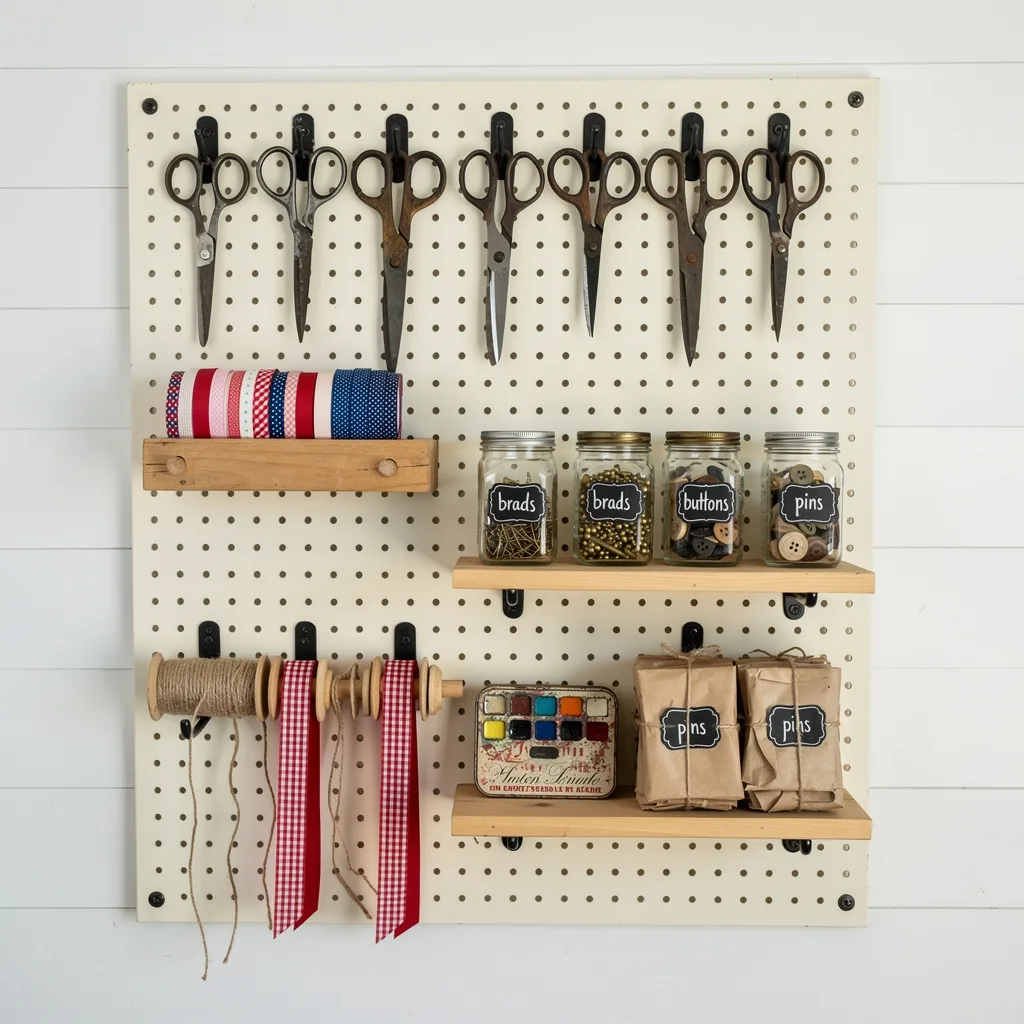
Mount a large cream-colored pegboard — the real perforated hardboard kind, not a decorative version — directly on a shiplap wall. Install small wood ledge shelves at varying heights using pegboard-compatible hooks and brackets.
At the top of the board, hang a row of six to eight antique scissors — the kind with worn black handles and mismatched patinas — from individual hooks. Their similarity in form and variety in age creates the visual rhythm that makes this display work.
On one small ledge, place a narrow wood box holding ribbon spools: red gingham, red-and-white stripe, navy polka dot. On a second ledge, set four matching mason jars with metal lids, each filled with a different small supply — brads, buttons, pins, paper clips — and labeled with small chalkboard tags. On the lower portion of the board, hang a wooden thread spool and a ribbon spool from horizontal rods, letting lengths of red and white ribbon fall loose.
Milk Can Centerpiece, Bench Table
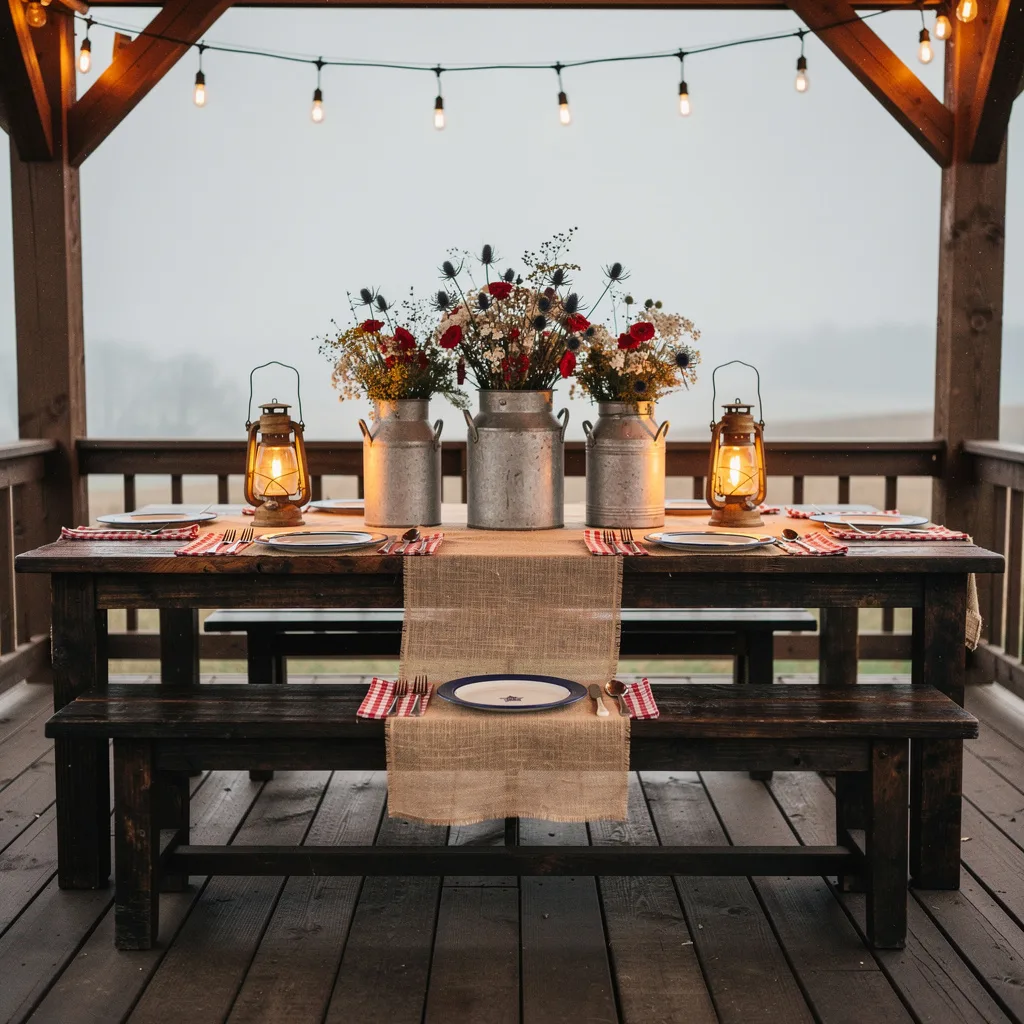
For a covered outdoor table set for a summer dinner, use a dark-stained farm table with matching bench seating. Lay a wide natural burlap runner centered on the table surface.
For the centerpiece, group two to three galvanized steel milk cans at the center of the runner — a larger one flanked by two smaller ones. Fill each loosely with dried wildflower arrangements in warm tones: red poppies or dried red globe amaranth, white yarrow or baby’s breath, blue sea holly or dried delphinium. The flowers should overflow the can rims generously.
On either side of the milk cans, place a small vintage railroad lantern with an amber globe, lit. Set red and white gingham cloth napkins folded flat at each place setting, with copper-toned silverware laid across each. Hang a single strand of Edison bulb string lights across the beams above the table, sagging slightly in the center.
Wicker Chaise, Bottles, Brass Telescope
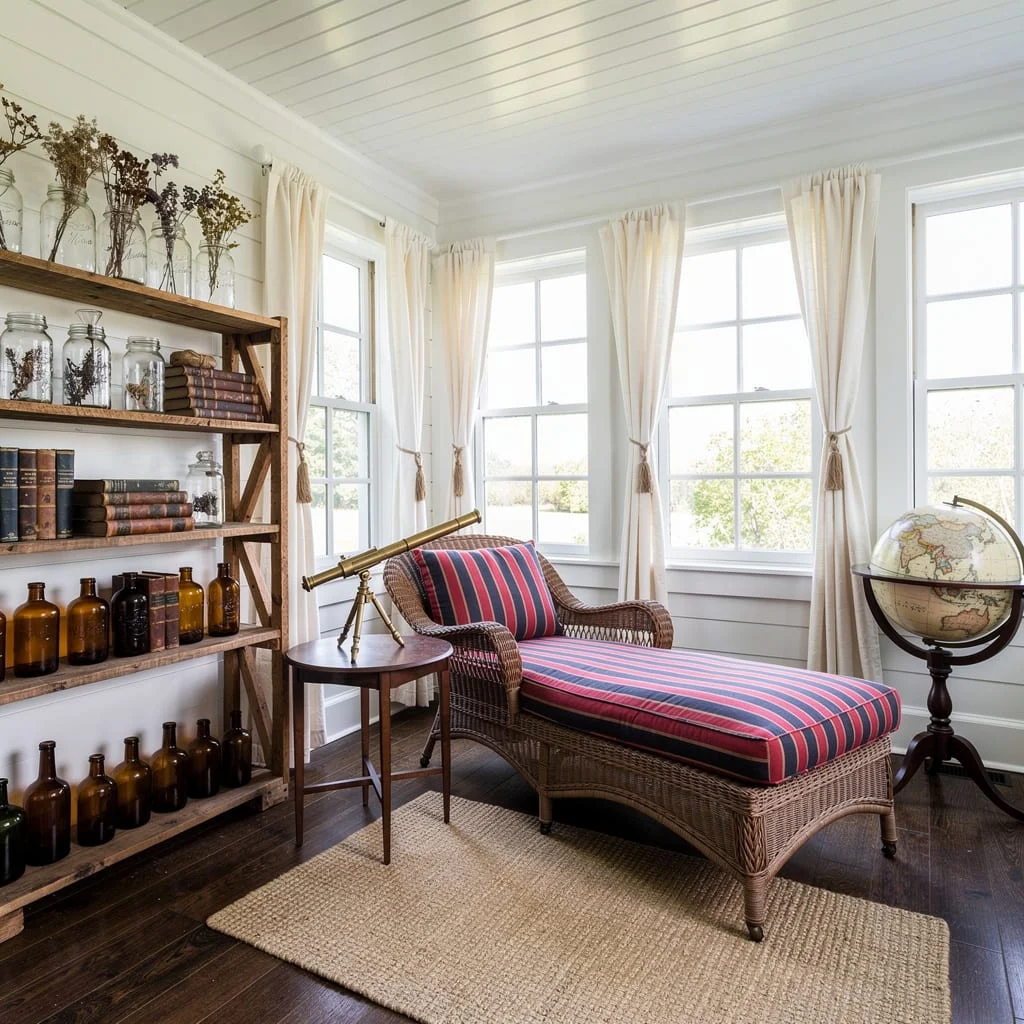
The sunroom or reading room version of vintage Americana is built around a wicker chaise longue with a striped cushion in red and navy. The weave of the wicker and the stripes of the cushion do enough visual work that the rest of the room can be quieter.
Against one wall, install or place a tall freestanding wooden bookshelf — the open kind, with visible cross-bracing at the back. On the upper shelves, line amber glass bottles of varying sizes. Mix in stacks of old leather-bound books and a few mason jars containing dried botanical specimens. The amber bottles and the warm leather spines create a color palette that is essentially one tone — warm brown-amber — which feels rich rather than busy.
On a small round side table beside the chaise, place a brass telescope on a tabletop tripod at a slight angle, as if someone just set it down. Add a single book, open and face-down, beside the telescope. In the corner, position a vintage floor-standing globe on a turned mahogany base. Hang floor-length cream linen curtains with tassel tiebacks at the windows, and let them pool slightly on the floor.
Iron Bed, Aged Flag, Oil Lamp Bedroom
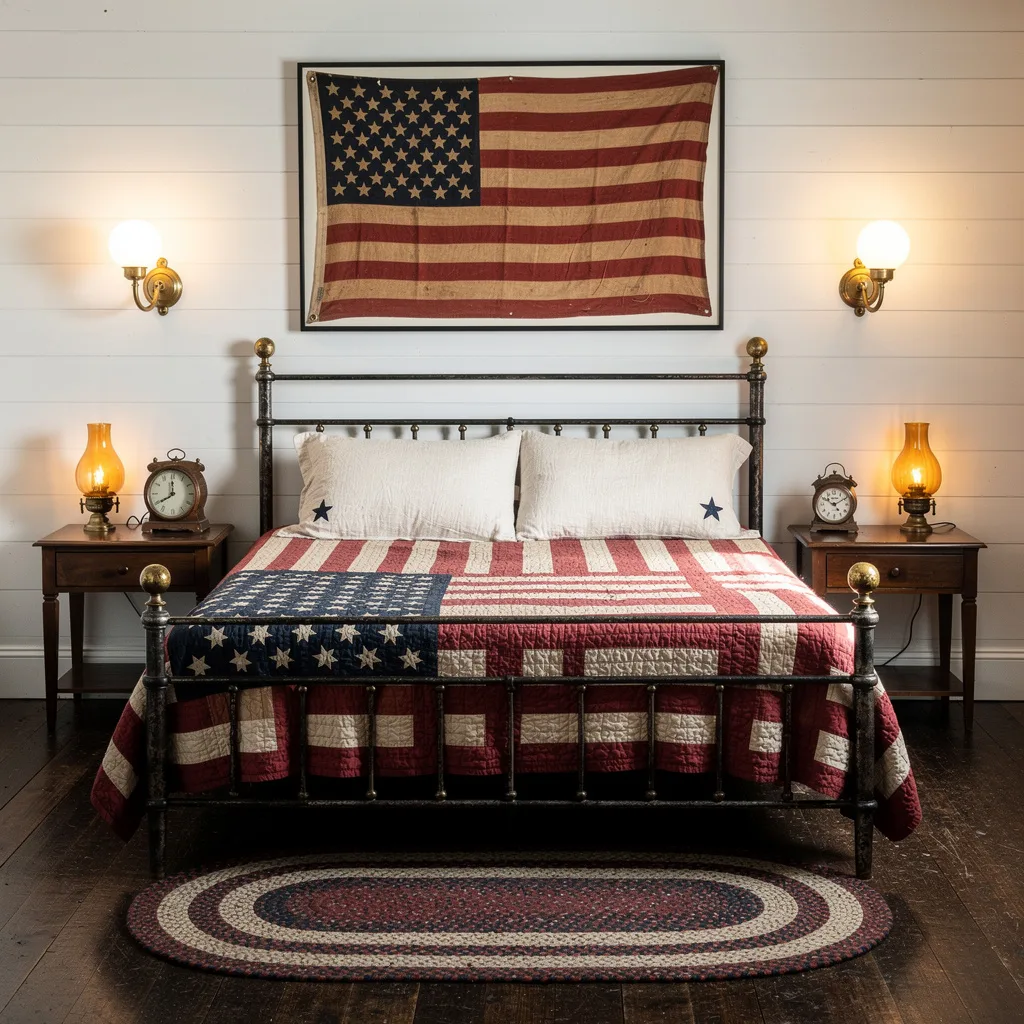
Mount a genuine aged flag — linen or cotton, with tea-colored stripes and cream rather than white stars — in a simple flat frame above the headboard of a black iron bed. The frame should be minimal: thin wood or thin black metal, nothing ornate. The flag should fill most of the frame.
Dress the bed with white or cream pillowcases — muslin or linen, not bright white — and a large flag-pattern quilt with pieced red-and-cream stripe sections and a navy star field panel. The quilt should drape to the floor on both sides. Add no other decorative pillows.
On matching dark wood nightstands, set a small antique alarm clock on each. Add an amber glass oil-style table lamp with a warm bulb on each side — the kind with a round amber globe and brass fittings. On the floor in front of the bed, lay a braided oval rug in muted red, cream, and navy. The rug should be slightly too small for the bed’s footprint, which creates the visual impression that the room has been lived in and the rug predates the bed.
Porch Swing, Edison Lights, Dusk Setup
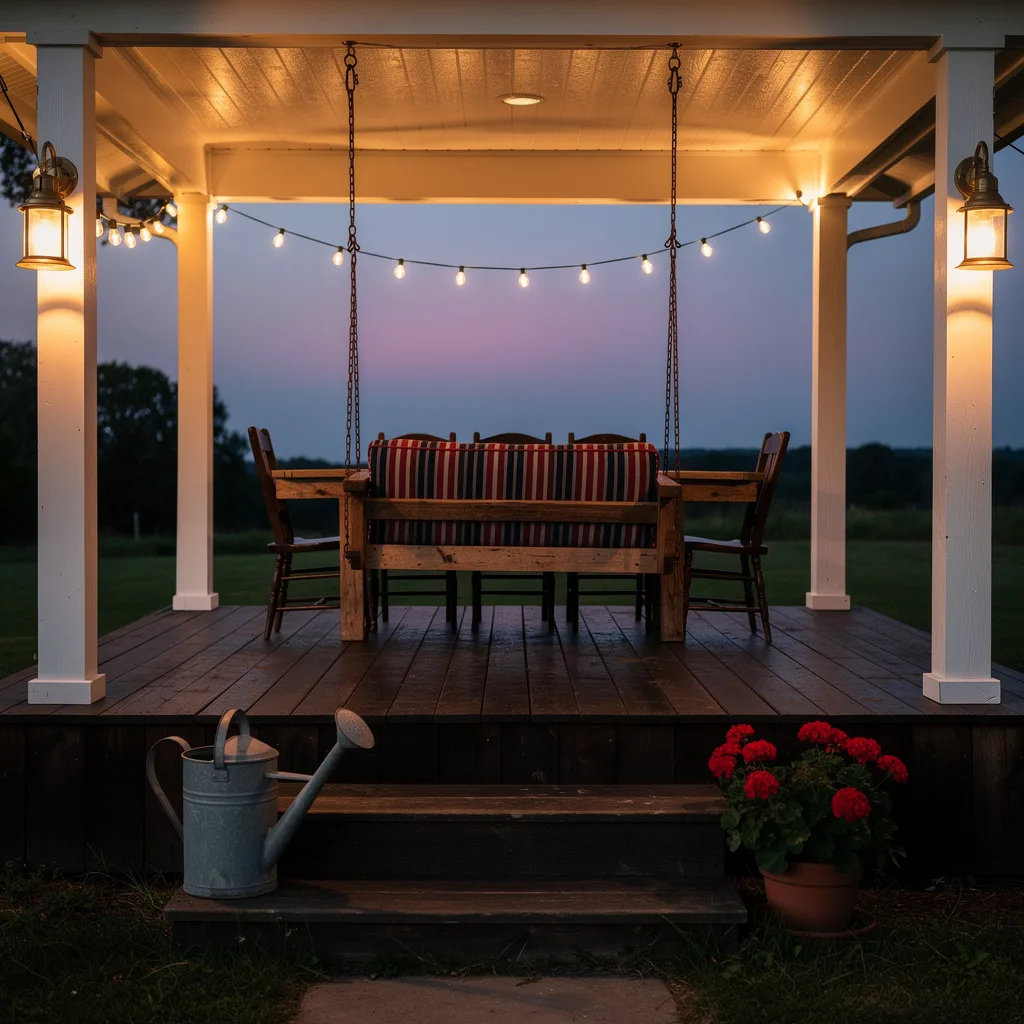
On a covered wood-deck porch, hang a porch swing from two heavy chain lengths bolted to the ceiling joists. The swing seat and back should be raw or lightly stained wood. Dress it with two or three cushions in red and navy stripe — the cushions don’t need to match perfectly.
String a single run of exposed Edison bulb string lights from one beam to another across the width of the porch, letting the strand sag gently. Use warm-toned bulbs — 2200K or lower — not cool white. Mount two aged brass or galvanized wall sconces on the porch columns, one on each side, at shoulder height.
At the bottom of the porch steps, place a galvanized metal watering can and a terracotta pot of red geraniums. Set one dining chair on either side of the swing as occasional seating. Leave the porch otherwise empty. The Edison lights at dusk are the entire decoration — everything else exists to support them.
What Vintage Americana Is Actually Saying
These rooms aren’t nostalgic. That’s the wrong word.
Nostalgia reaches backward with a soft focus and a wish that things were simpler. Vintage Americana is more honest than that. It keeps old things not because the past was better, but because the things themselves were made better. An iron bed frame from 1910 is not sentimental. It’s structural. It will outlast the person sleeping in it.
The best rooms in this collection understand that. They’re not recreating anything. They’re just refusing to throw away what works.
That’s a different thing entirely. And it looks like this.