
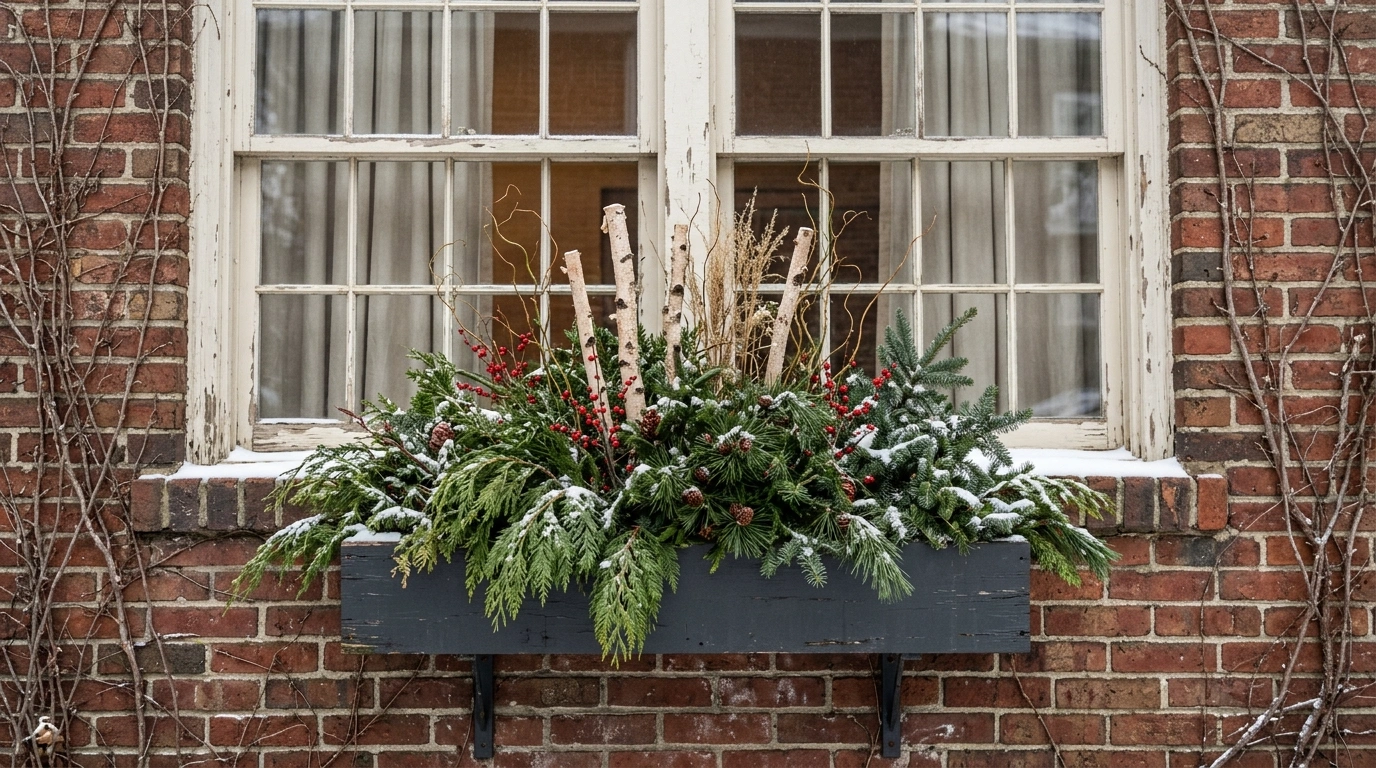
An empty window box is unusually good at making a house look as though it has forgotten part of its outfit.
Winter does not require it to remain bare. The long, shallow shape can hold a cut-green arrangement, suitable living plants, or a restrained combination chosen for the actual conditions.
The difference from a porch pot is the viewpoint. A window box needs to work across a horizontal surface, from the street, and sometimes from inside the room. Tall decoration that looks dramatic outside may become a daily collection of sticks across your view.
Start with the box and the window. The plants come afterward.
Check the Installation Before Filling the Box
Confirm that the box, liner, brackets, and fixings are sound and suitable for the fully loaded arrangement, including wet growing medium and any additional winter load. Use appropriate professional help if the installation is uncertain.
Keep window operation, required escape openings, drains, and ventilation clear. Manage runoff so it does not damage the building or create problems below.
For cut displays, Illinois Extension describes using evergreen material at different angles to build a winter arrangement. That is a decorative approach, separate from growing plants through winter. Illinois
Living window boxes need locally appropriate plants and continuing care. Exposed roots, limited soil volume, wind, and the box’s actual light conditions matter.
Window Box Arrangements With a Clear Structure
Mixed Cut Evergreens With a Low, Full Outline
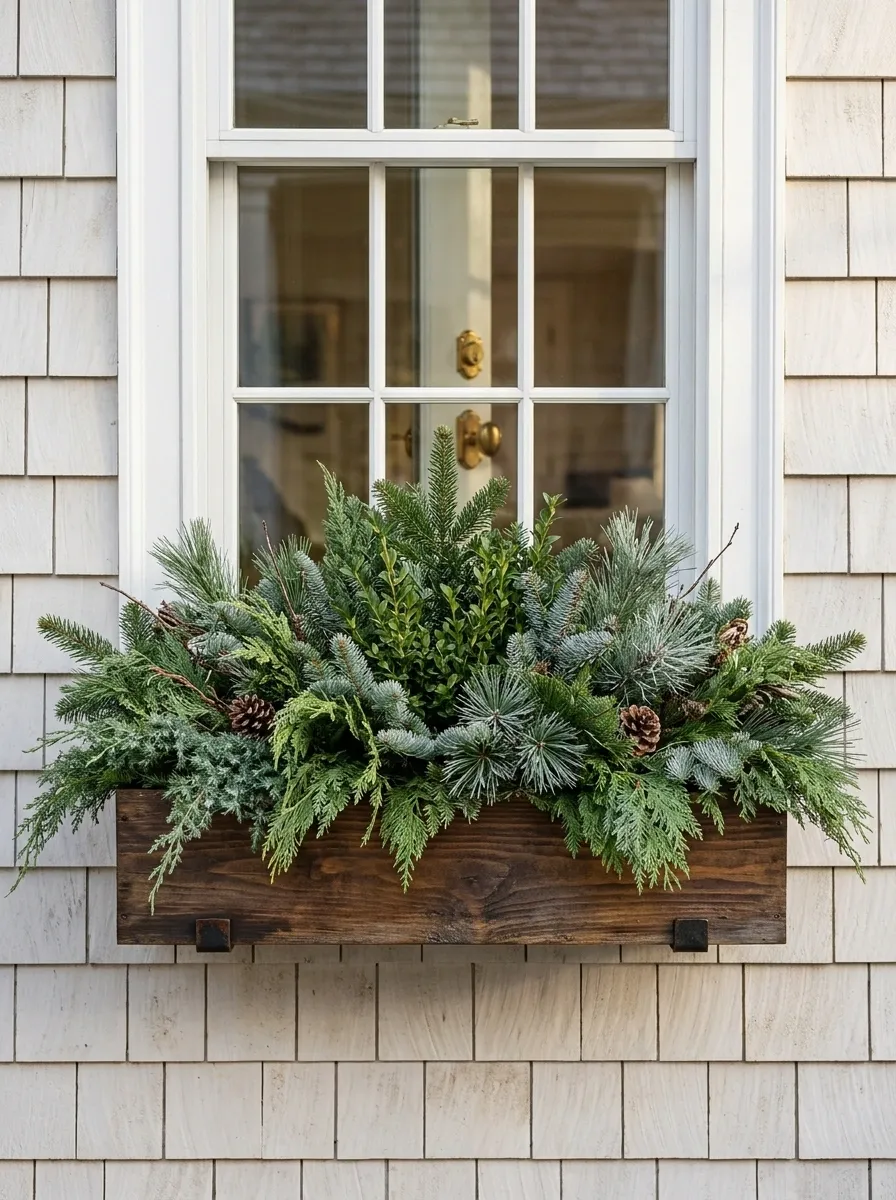
A low mixture of cut evergreens can give a bare box a substantial winter appearance. Combine upright, outward-facing, and softer edge material while keeping the window itself usable.
Step back before adding extra height. The box should create a horizontal base for the opening rather than compete with it.
Use texture differences to provide interest. Several foliage forms can look rich without introducing decorations that require a separate explanation.
Keep the finished height below the view and opening space you need.
Pine Branches With a Few Natural Cones
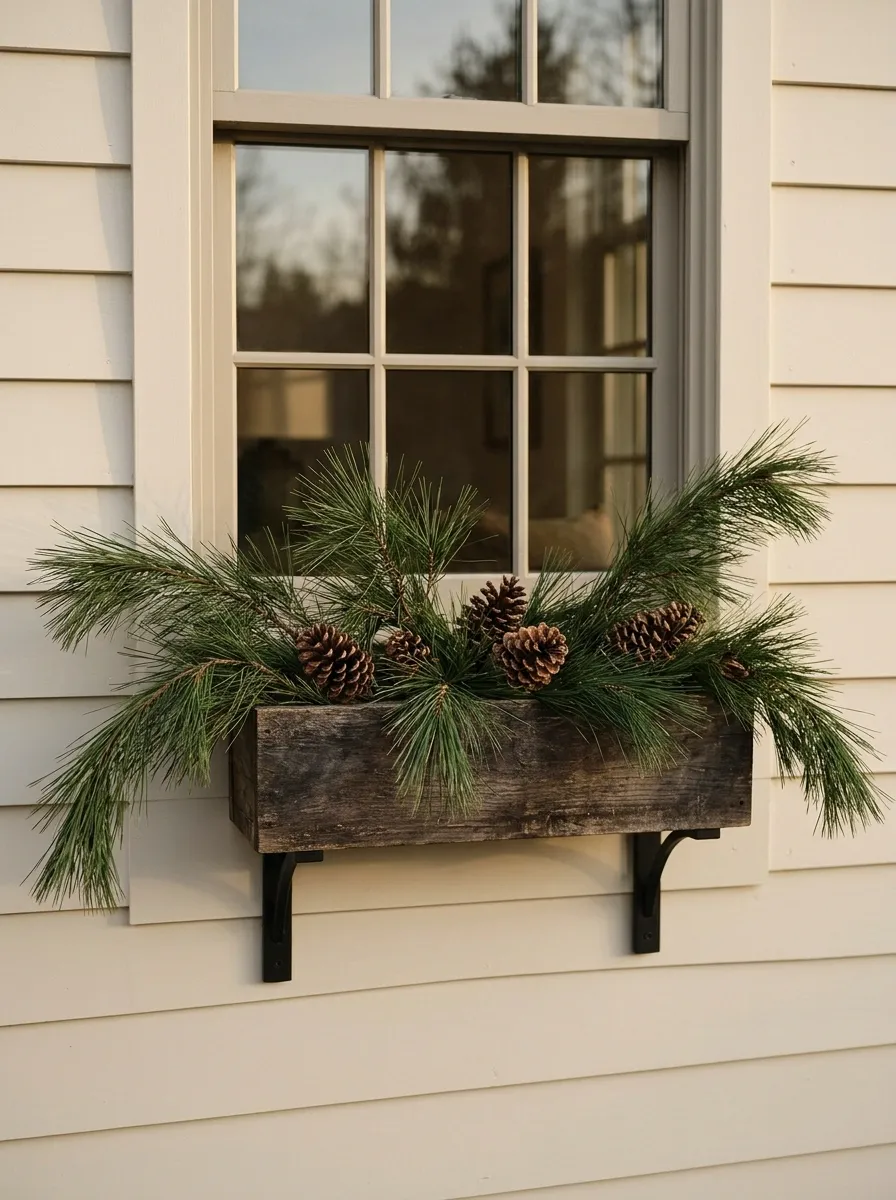
Pine branches can create a looser arrangement than dense short foliage. Add a restrained number of cones where they can be secured appropriately.
Let the branches extend in deliberate directions instead of forming one undifferentiated mound. Keep sharp or projecting stems away from windows and passing people below.
The cones should read as part of the material palette. You do not need to cover the entire surface until the window box resembles a display from a woodland souvenir shop.
Use restraint: Softer pine texture, a clear outline, and a few securely placed cones.
Red Twigs Above a Shallow Green Base
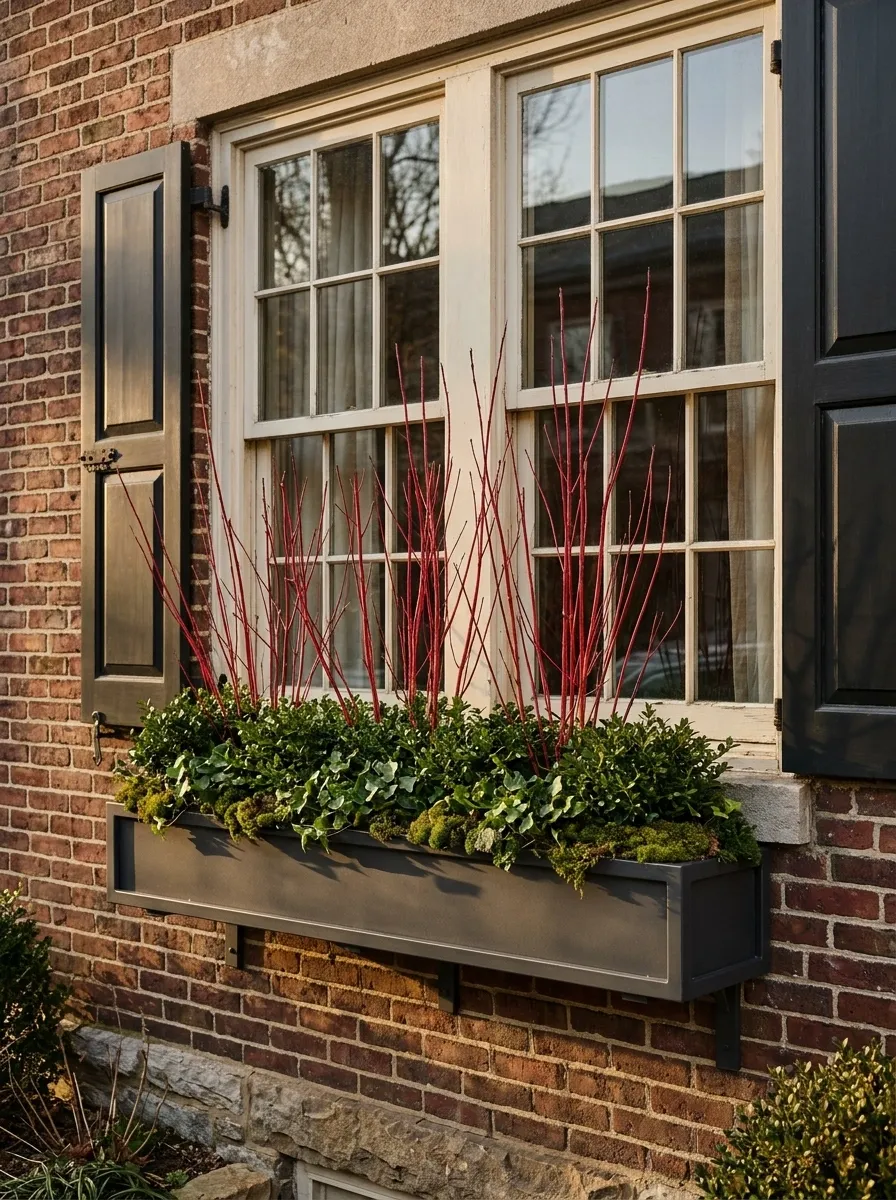
A small group of red twigs can give a window box color and height without flowers. Keep the green base lower so the stems remain visible.
Position the tallest material where it will not interfere with the window’s operation or important indoor views. Check the overall shape from the street.
The red should provide one clear accent. Adding several other strong colors can make a narrow box look crowded surprisingly quickly.
Slender Pale Branches Against a Dark Window Frame
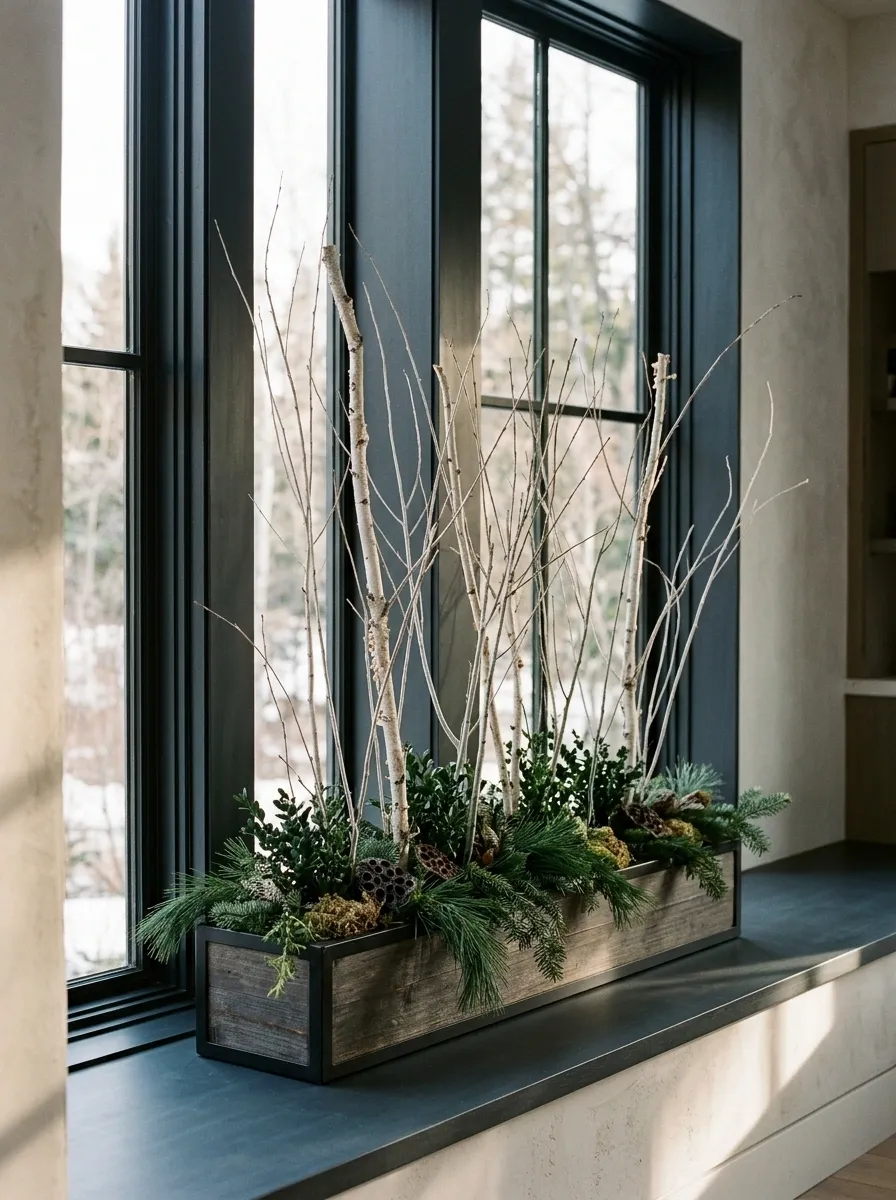
Thin pale branches can stand out against a charcoal or black frame. Use manageable stems rather than heavy decorative logs.
Keep their spacing open enough to preserve the window’s outline. A darker green base connects the pale material to the box without adding another feature.
Check the loaded arrangement and secure placement appropriately. The visual effect should come from contrast, not from asking an uncertain bracket to demonstrate its strength through the rest of winter.
| Visual role | Material direction |
|---|---|
| Pale accent | Slender, manageable branches |
| Darker base | Restrained greenery |
| Background | A visible dark window frame |
Magnolia Leaves With Warm Brown Undersides
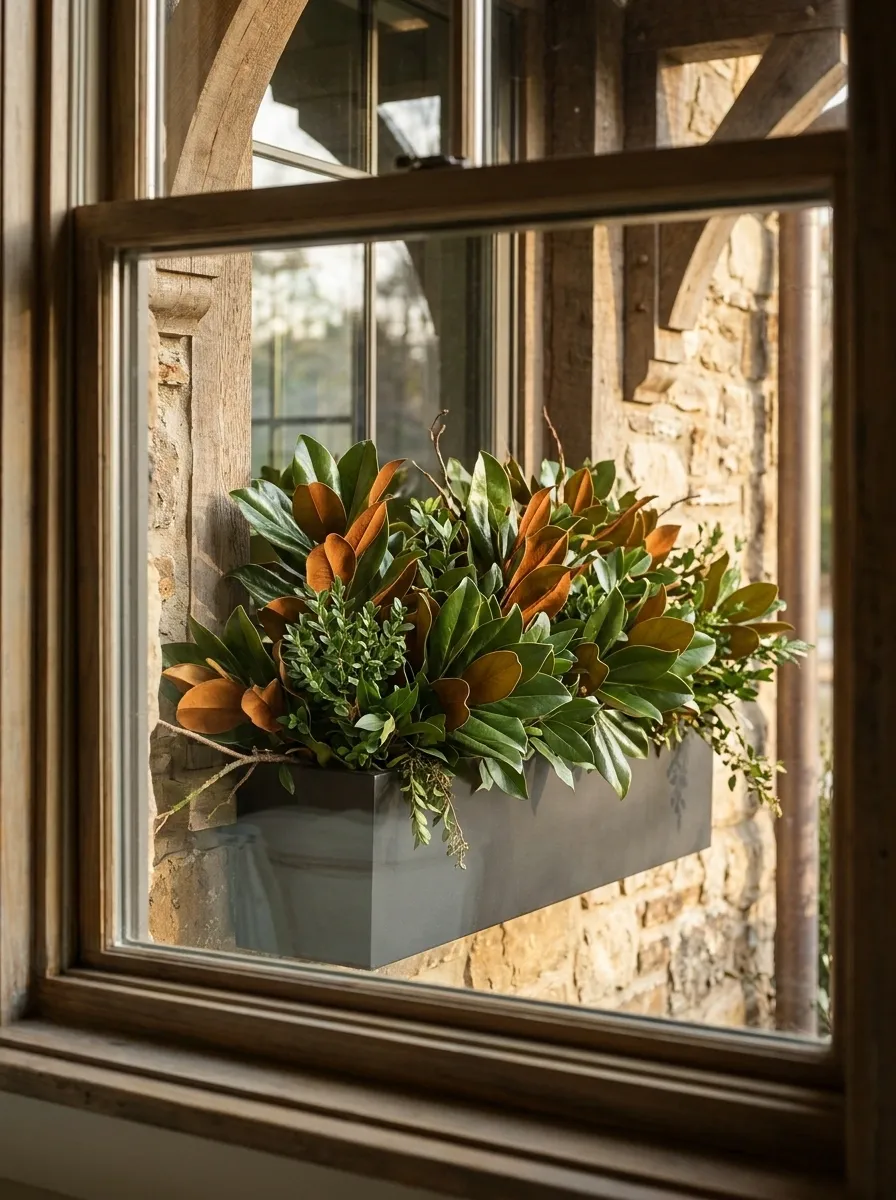
Cut magnolia leaves can bring warmth to a long box through their contrasting surfaces. Turn enough leaves to reveal the brown undersides without making every stem identical.
Pair them with one simpler green material so the leaf shape stays readable. This suits brick, warm stone, or timber details particularly well.
Keep the arrangement low enough to appreciate from indoors if the box sits near eye level. A good street view should not come at the cost of your own.
Silver-Green Foliage in a Charcoal Box
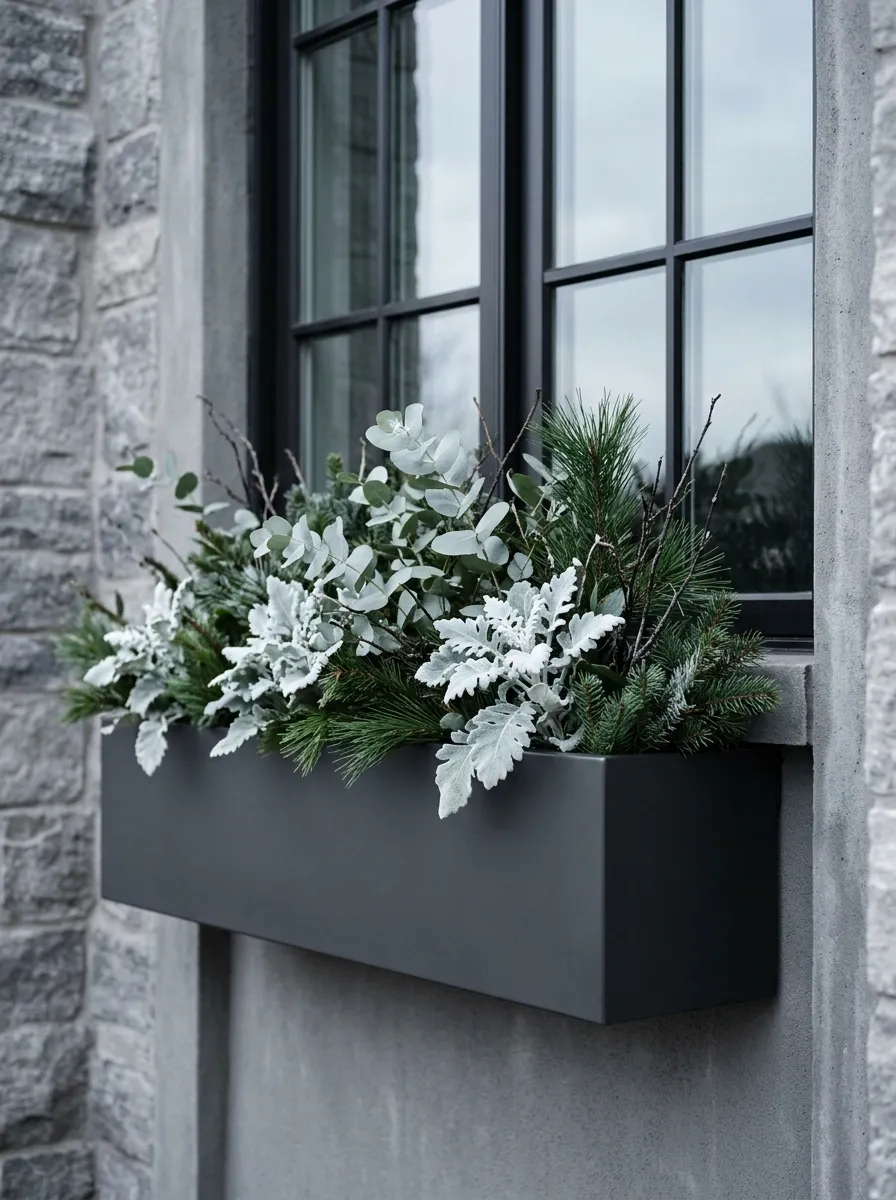
Silver-green cut material can create a restrained winter palette against a charcoal container. Choose foliage suitable for the exposure and expect its appearance to change as it ages.
Keep the outline relatively simple so the pale tones remain the main feature. A little darker greenery can add depth without introducing another bright color.
Check against the house materials. Cool silver foliage can look excellent beside some grays and oddly disconnected beside others.
Compare in place: Foliage, box color, window frame, and the wall behind them.
An All-Green Box With Three Distinct Textures
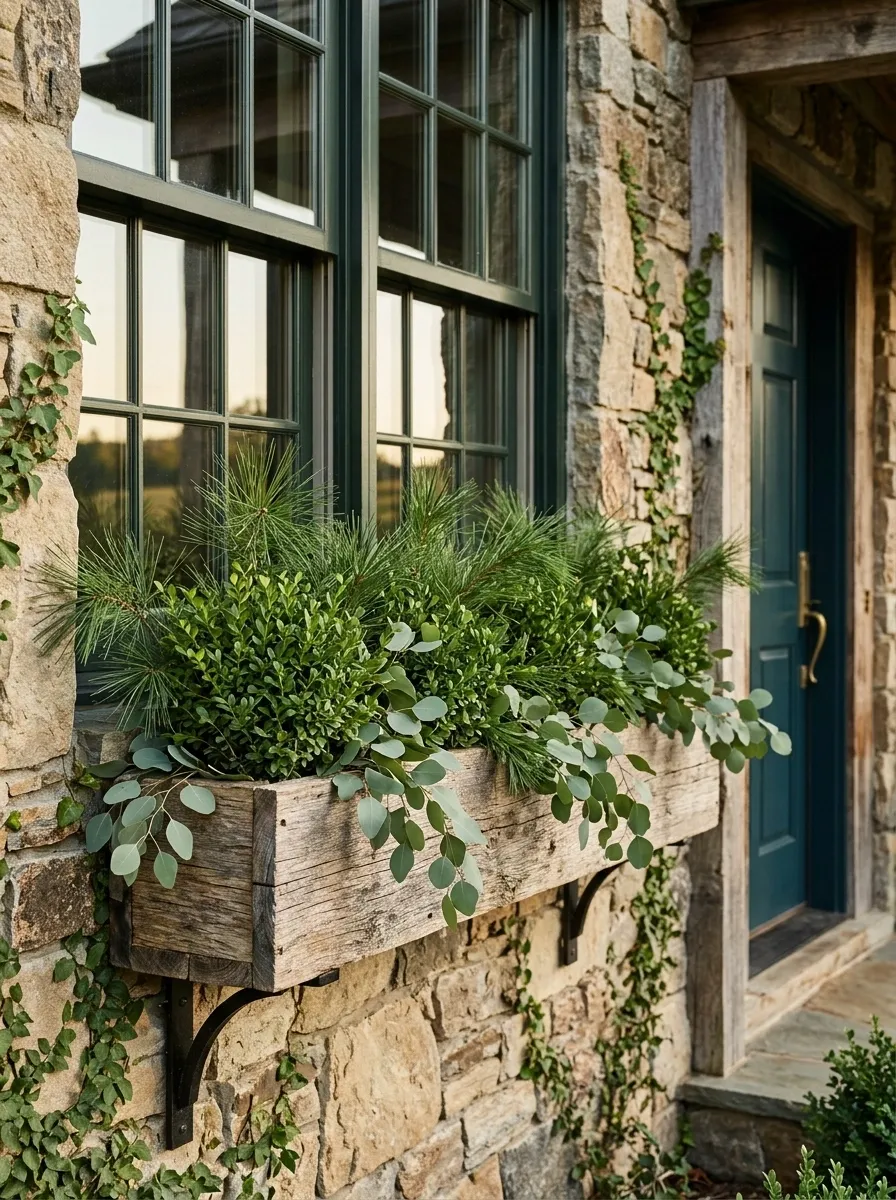
An all-green arrangement can still look varied when the material includes clearly different forms: dense short foliage, longer needles, and a softer edge.
Repeat the combination across the box so the horizontal length feels connected. Avoid packing every gap so tightly that all three textures disappear.
This is a useful approach when the house already has a colored door or strong exterior materials. The box contributes interest without arriving with a competing palette and a list of demands.
Short foliage.
Longer needles.
A looser edge.
Dark Heuchera Foliage With Pale Seasonal Accents
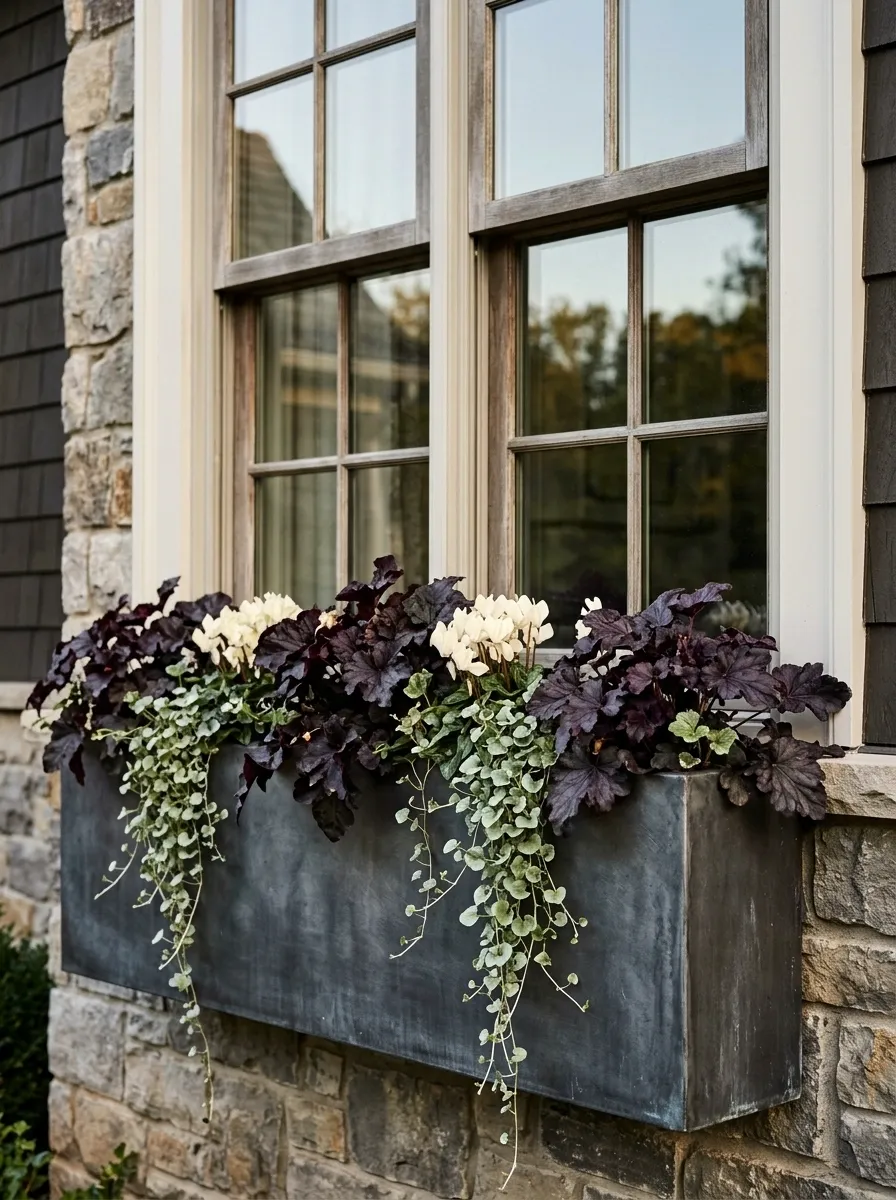
A suitable heuchera variety can bring dark foliage to a living window box where the root space, hardiness, and exposure are appropriate.
Use pale companions only when their requirements are compatible. Alternatively, let the box’s lighter edge provide the contrast without adding another plant.
Plan for the mature foliage rather than treating every nursery pot as a permanent miniature. A narrow box does not become more accommodating because the plants looked small on the sales bench.
| Living-box check | Question |
|---|---|
| Root space | Is the box deep and large enough? |
| Climate | Can the selected variety overwinter here? |
| Companions | Do their growing needs match? |
Violas in a Sheltered Mild-Winter Box
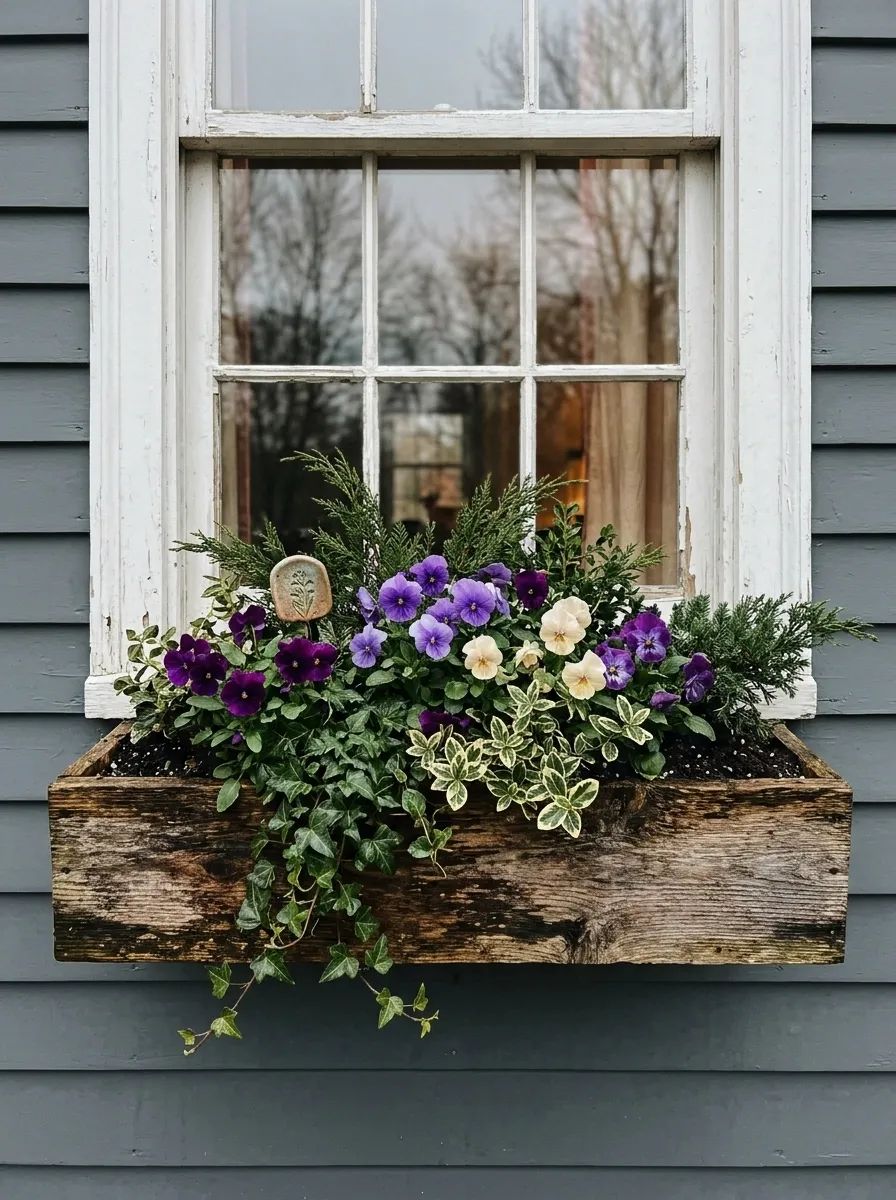
Violas can bring flowers to a suitable sheltered box during milder winter periods. Let foliage and the overall planting shape carry the display when blooming pauses.
Choose colors that relate to the window frame or house rather than selecting every available flower shade. A restrained mix often reads more clearly from a distance.
Monitor the planting instead of assuming winter rain reaches every part. A roof overhang can create surprisingly dry conditions immediately beside a wet garden.
Compact Conifers in a Deep, Properly Sized Box
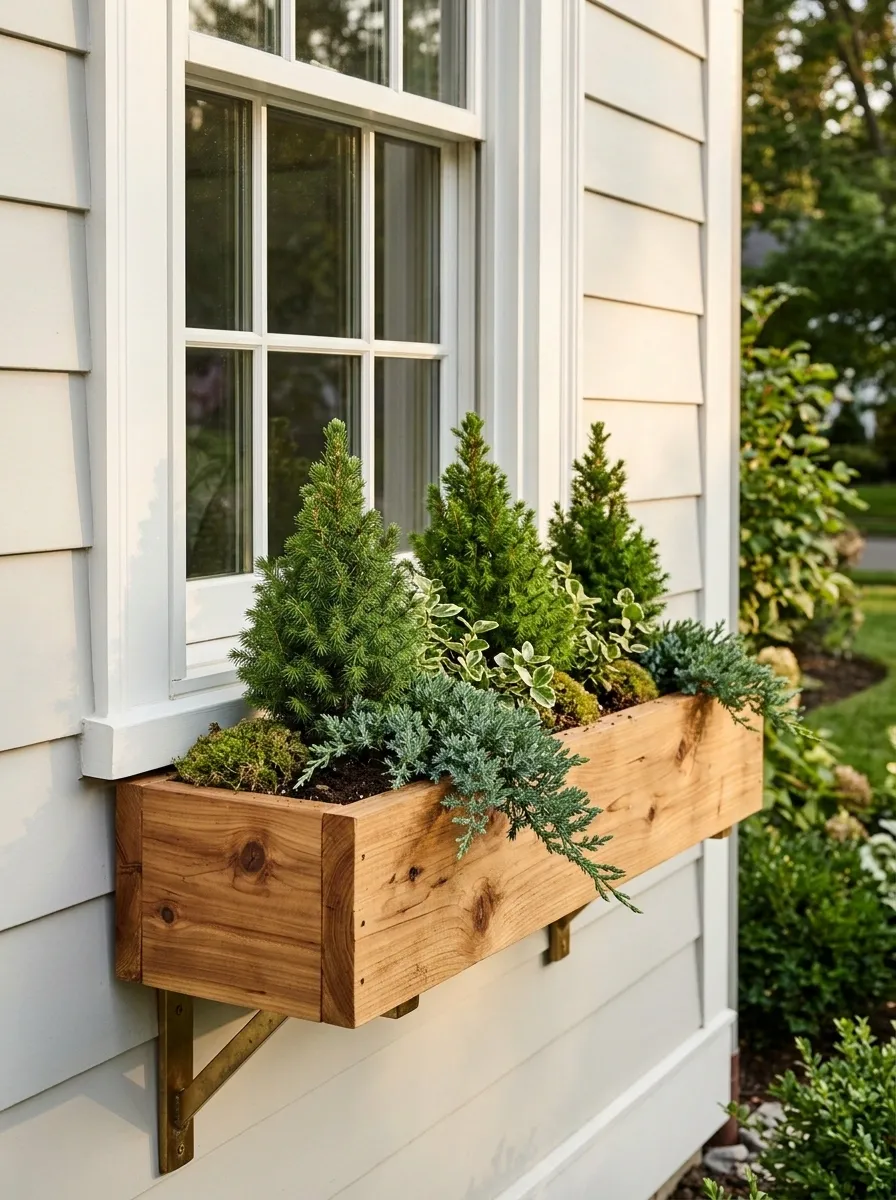
Small conifers can create a structured living display when the box genuinely offers adequate growing space and winter protection for the selected plants.
Choose varieties around their mature behavior, not just their current height. Keep the design open enough for each form to remain visible.
This arrangement may need a substantial box rather than a shallow decorative trough. The plants’ roots do not become smaller simply because you would prefer the container to look discreet.
Choose the box around the plants: Mature size, root space, drainage, exposure, and winter conditions all belong in the decision.
Evergreen Ferns for a Suitable Shaded Position
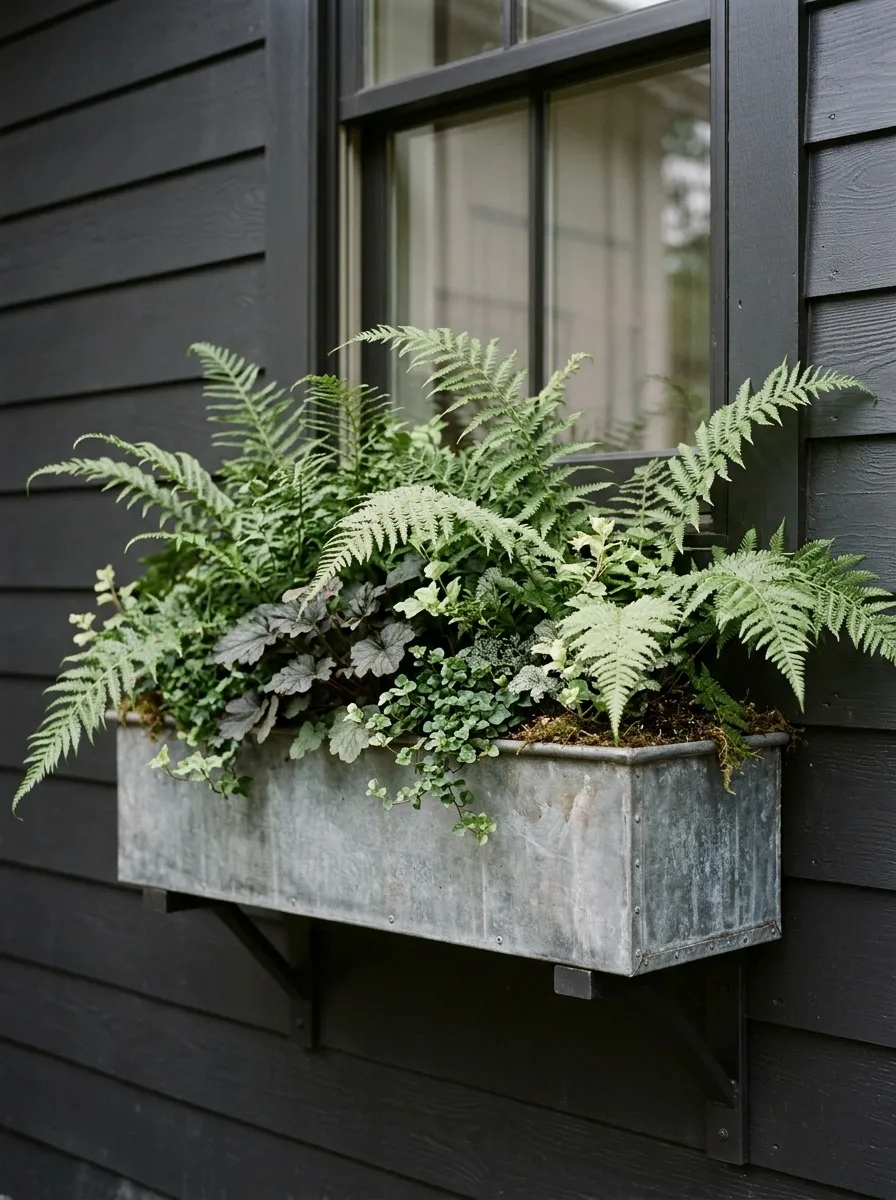
A locally appropriate evergreen fern can give a shaded window box a softer, more natural appearance. Match the species to the actual exposure and container conditions.
Let the fronds provide the shape, with a simple box and restrained companions. Avoid mixing in plants that need a completely different watering or light arrangement.
The position may look beautifully sheltered while receiving very little useful daylight. Choose for what the site provides rather than what the room’s decorating plan would prefer.
A suitable shaded position, compatible planting, and a simple container.
Heather in Repeated Low Groups
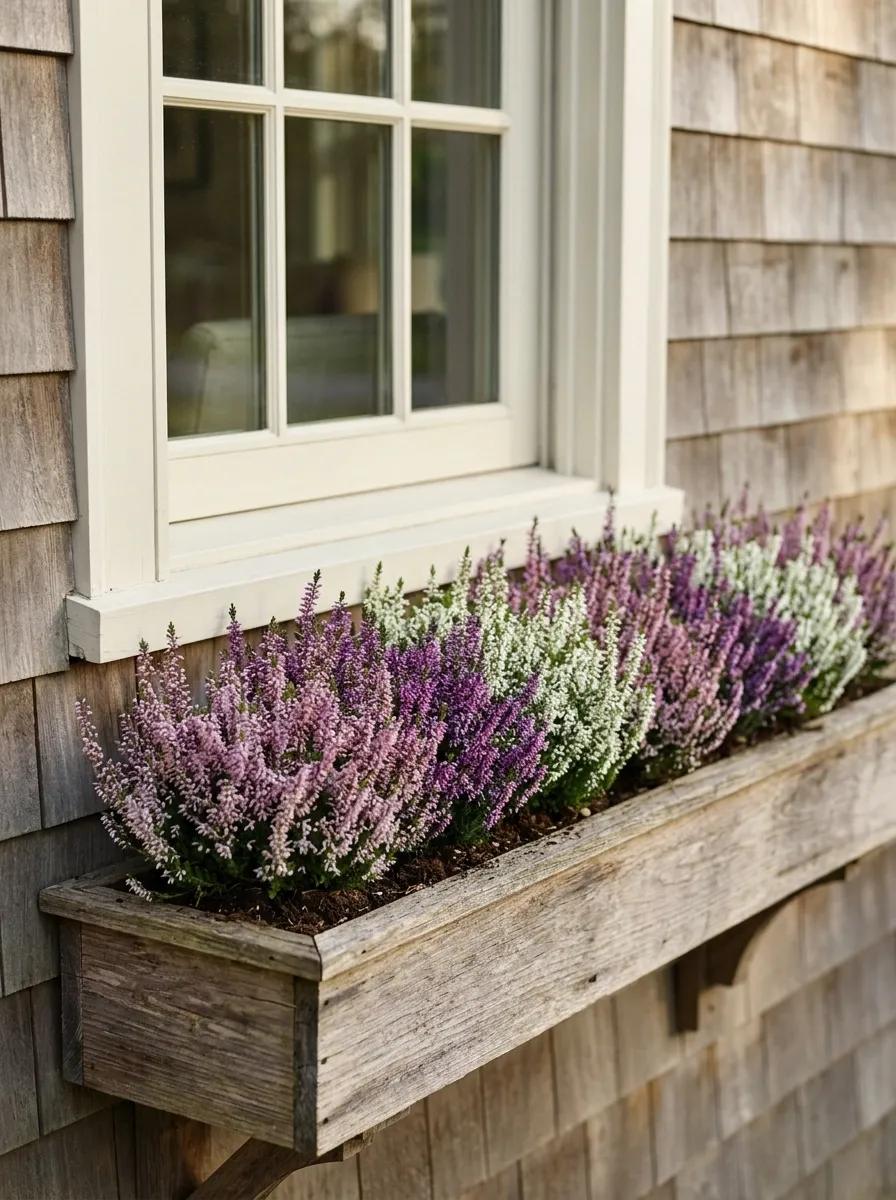
Suitable heather varieties can create a repeated low texture across a window box. Confirm the variety’s growing-medium requirements and local winter suitability before planting.
Keep the grouping simple so it reads as a deliberate horizontal composition. Different colors can work, but the palette should remain coherent.
Use separate compatible arrangements if the plants’ needs do not match. A decorative partnership is less successful when one half requires conditions the other half strongly objects to.
| Design choice | Practical check |
|---|---|
| Repeated low groups | Enough space for the selected plants |
| Restrained color | Readable from the street |
| Shared container | Compatible growing requirements |
A Broadleaf Evergreen in a Generous Window Box
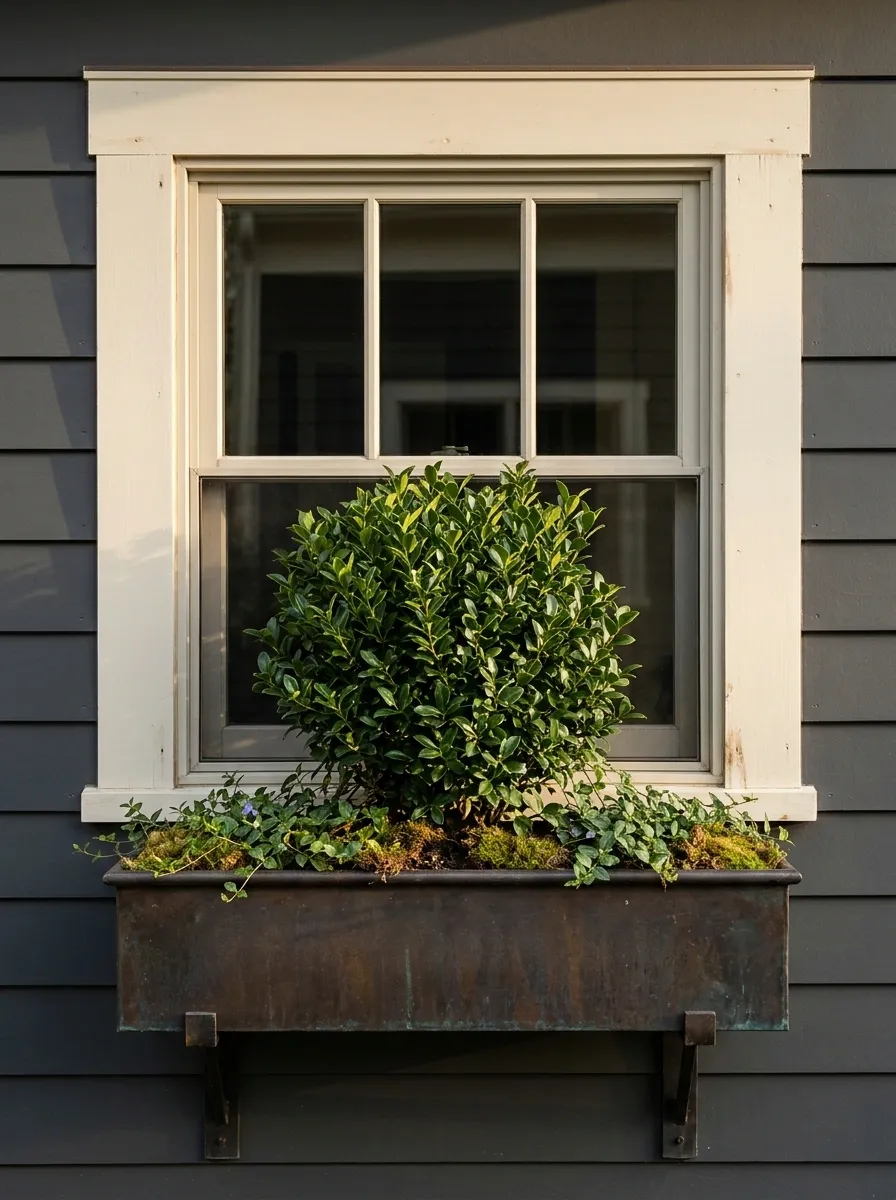
A suitable compact broadleaf evergreen can provide structure in a deeper box. Use its leaf shape as the main detail and keep the rest of the planting relatively quiet.
Check mature dimensions, light needs, and container hardiness. Leave the window operation unobstructed.
Do not rely on a plant label showing berries or flowers without confirming what the specific variety and local conditions can provide. Attractive packaging is not a maintenance agreement signed by the plant.
Give roots and foliage the room they need.
Ornamental Kale With a Quiet Evergreen Background
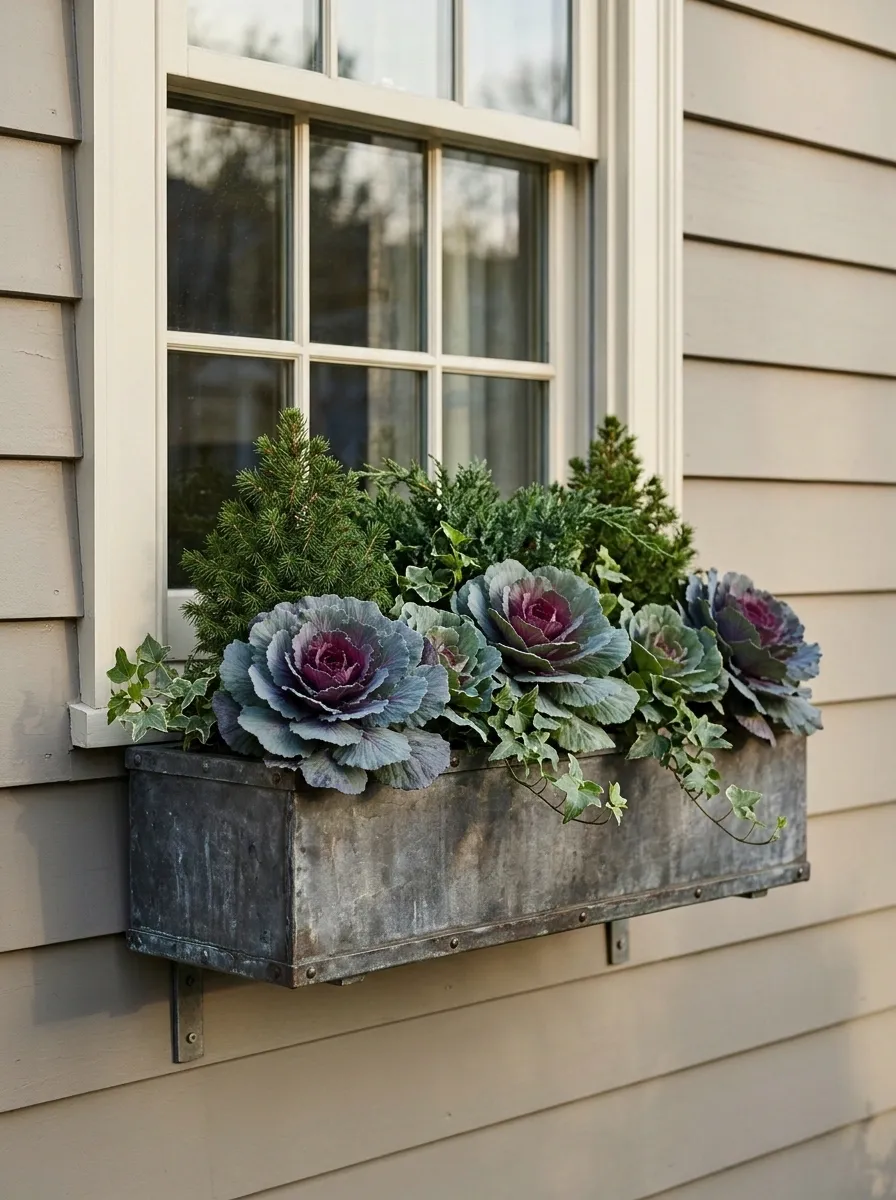
Ornamental kale can add a strong rosette shape to a suitable cool-season box. Keep the background low and restrained so the leaves remain visible.
Repeat the form deliberately rather than filling every remaining gap with another plant type. Check spacing as the foliage develops.
Choose plants intended for the location and treat them as ornamental unless their production and suitability for eating are known. Their presence in a box beside the kitchen does not automatically make them lunch.
Shape hierarchy: Clear rosettes in front, a quieter supporting background, and space between the main forms.
Hardy Cyclamen Where the Species and Site Suit
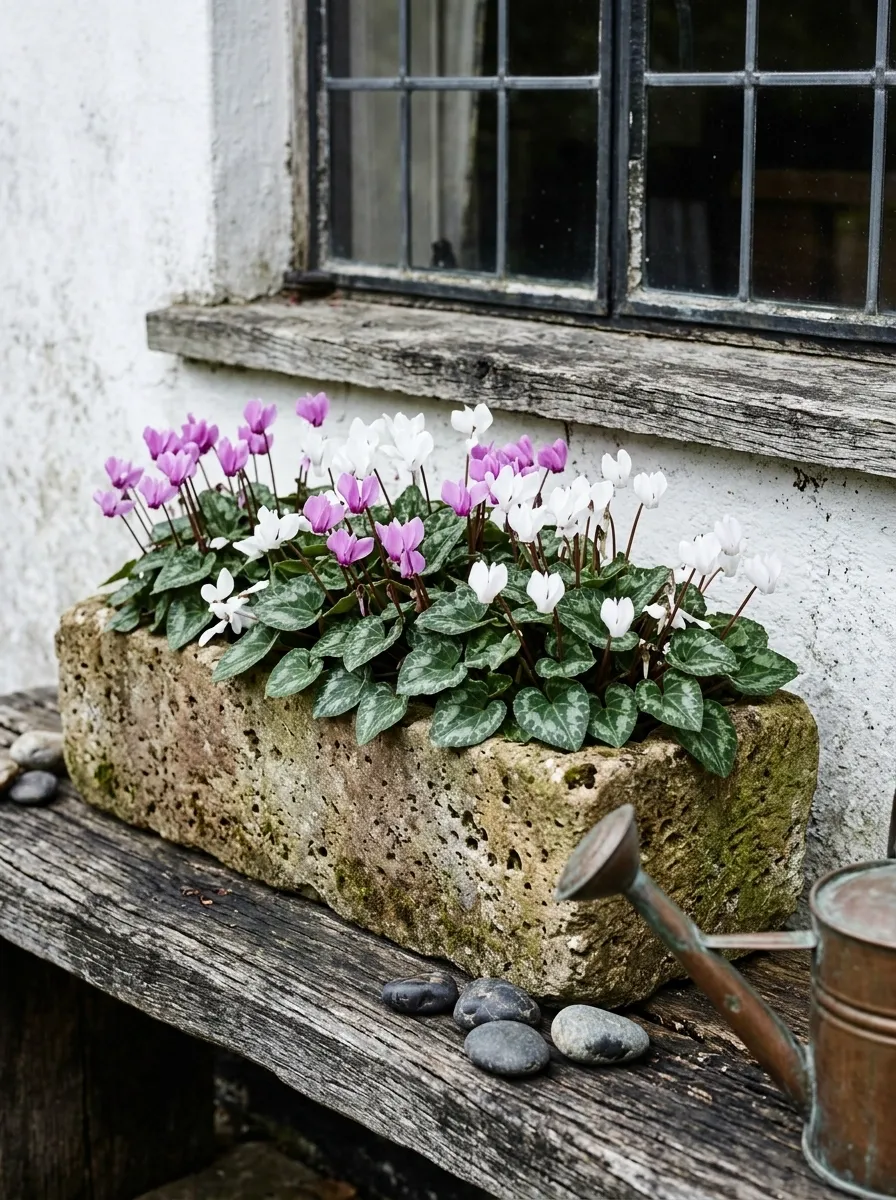
Suitable hardy cyclamen can offer a delicate alternative to larger bedding plants. Confirm the species, container requirements, and local conditions before choosing them.
Do not assume a florist’s potted cyclamen is interchangeable with a hardy garden species. The shared name conceals some rather important differences.
Keep the box low and simple so foliage and flowers can be appreciated. A sheltered position may help the composition visually, but it still needs to meet the plants’ actual growing requirements.
Winter-Flowering Heath in a Restrained Color Palette

Where suitable, a winter-flowering heath can provide color across a low box. Choose the flowering period and variety deliberately rather than assuming all similar-looking plants bloom at the same time.
Keep nearby foliage quiet and let the small flowers form the main texture. A pale box can make darker foliage more visible.
Check growing requirements and locally appropriate care. A display becomes easier to maintain when its plants agree about the conditions they are expected to share.
| Choose for | Check |
|---|---|
| Winter interest | Actual flowering period |
| Container growing | Medium, space, and drainage |
| Shared planting | Compatible care requirements |
Dried Sedum-Style Flower Heads With a Dark Base
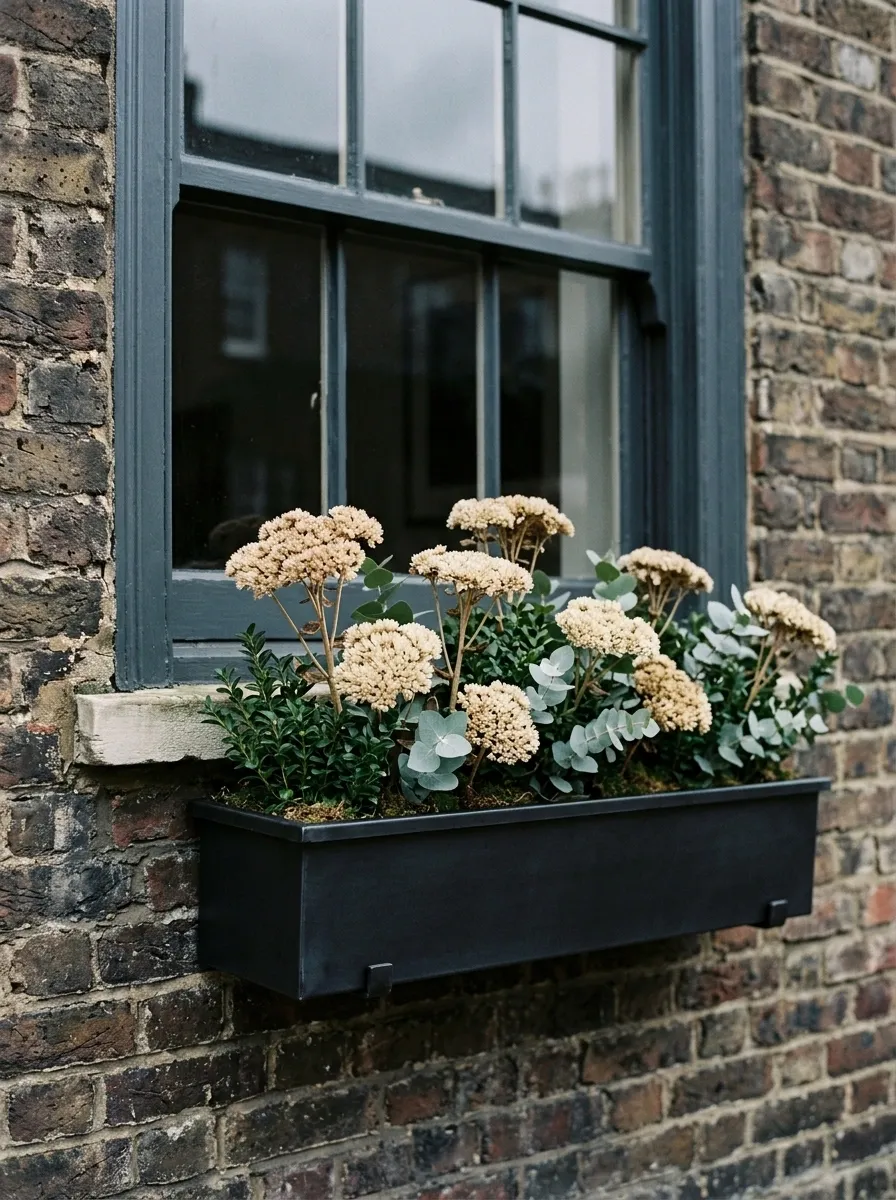
Sturdy dried flower heads can create a restrained cut-material box where the stems are suitable and responsibly obtained. Their flat or clustered outlines contrast with softer greenery.
Keep the number limited enough for the shapes to remain distinct. Use a sheltered position if the material is brittle and replace damaged pieces promptly.
A darker container can emphasize the pale dried forms. The effect should feel like a considered winter garden detail rather than a collection of stems that nobody quite got around to removing.
Keep the shapes distinct and replace weather-damaged material.
Dried Hydrangea Heads in a Sparse Arrangement
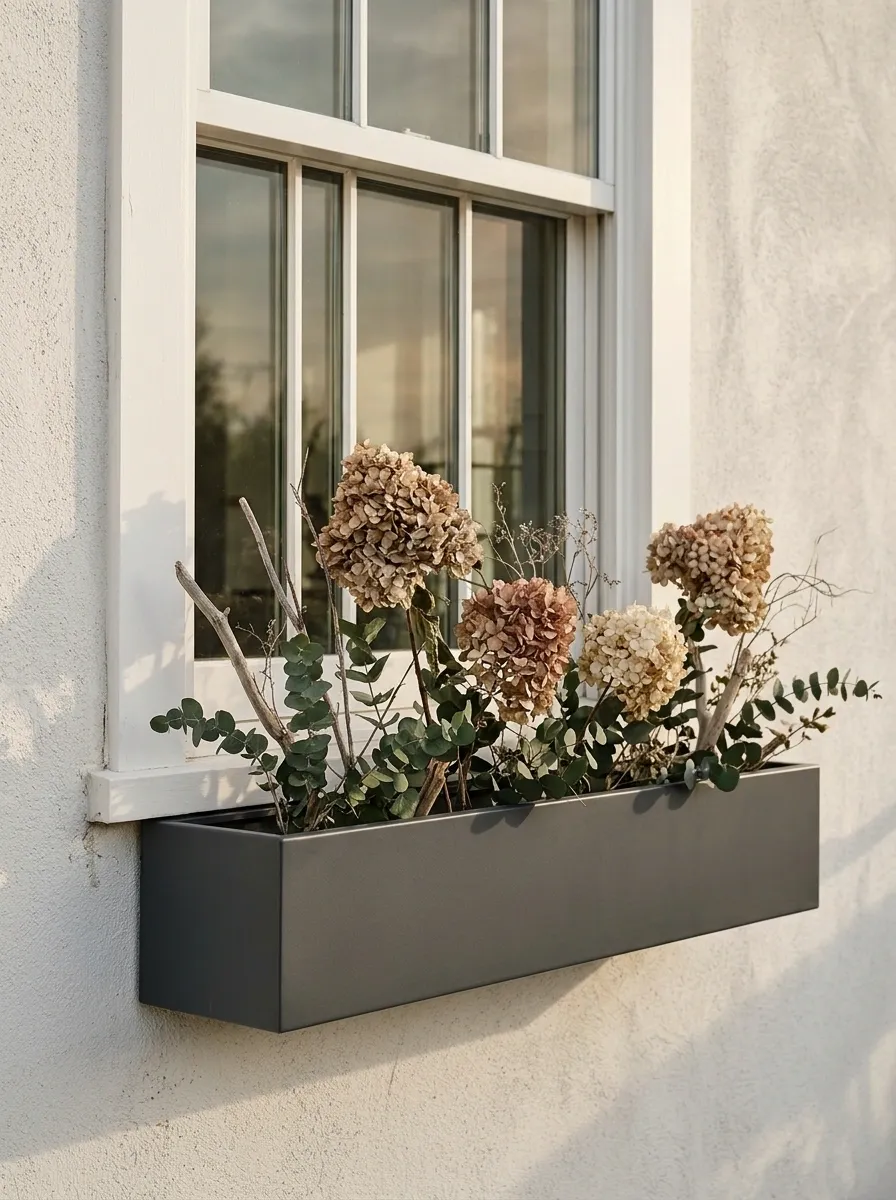
A few dried hydrangea heads can soften a long box without making it visually dense. Pair them with lower cut greenery and leave deliberate gaps.
Choose a position where the material is likely to hold up, and expect maintenance as the weather changes. Sparse does not mean unfinished when the spacing is considered.
This approach suits a window where a heavy display would block too much of the view. The box contributes texture while allowing the building to remain visible.
Leave breathing room: A few clear flower-head shapes can read better than a continuous pale mound.
Local Seedheads With Tawny Winter Color
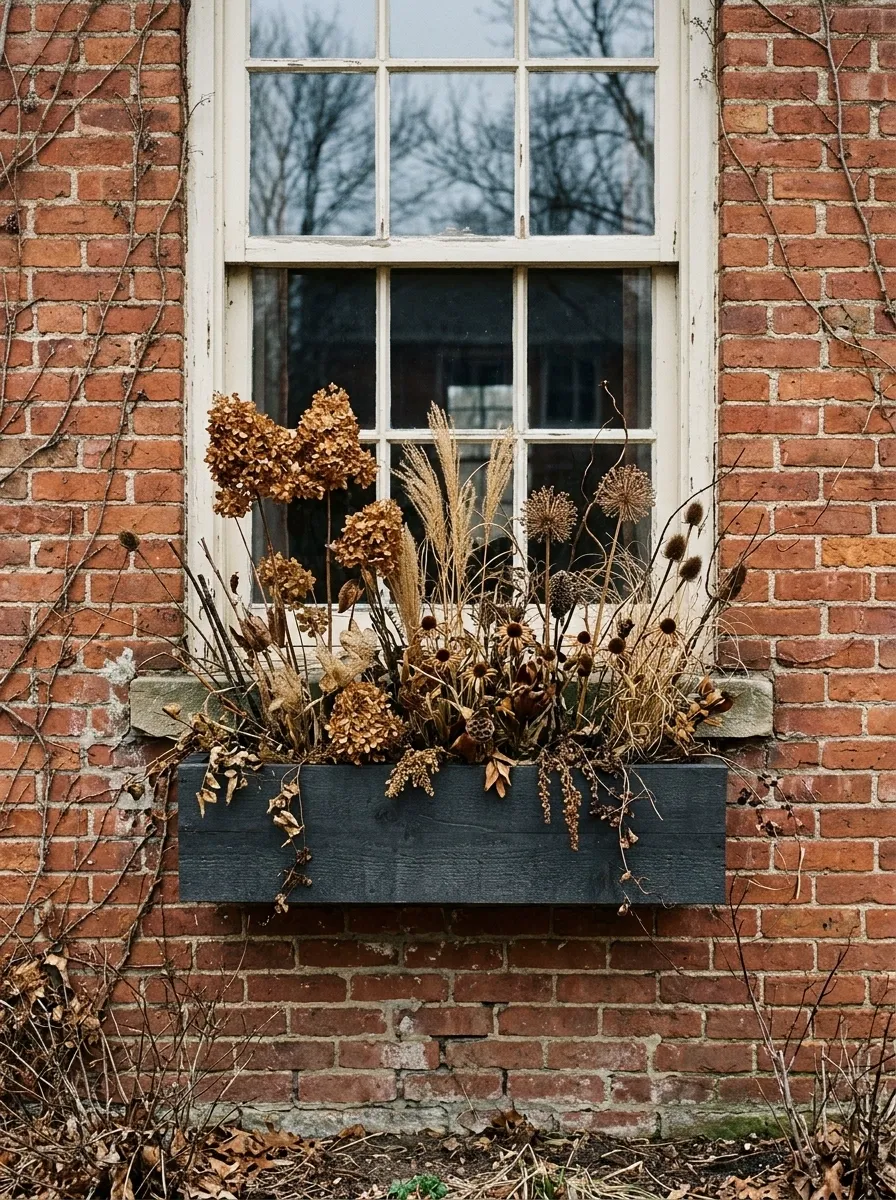
Tawny seedheads can connect a window box to the surrounding garden. Use noninvasive, responsibly sourced material that is sturdy enough for the exposure.
Build a lower dark base so the stems remain readable. Keep height modest near opening windows.
This works well beside warm brick or stone because the natural browns relate to the building. You do not need additional seasonal objects to tell the viewer that the arrangement belongs to winter.
Clear seasonal texture.
A restrained foundation.
A Suitable Sedge With Simple Evergreen Companions
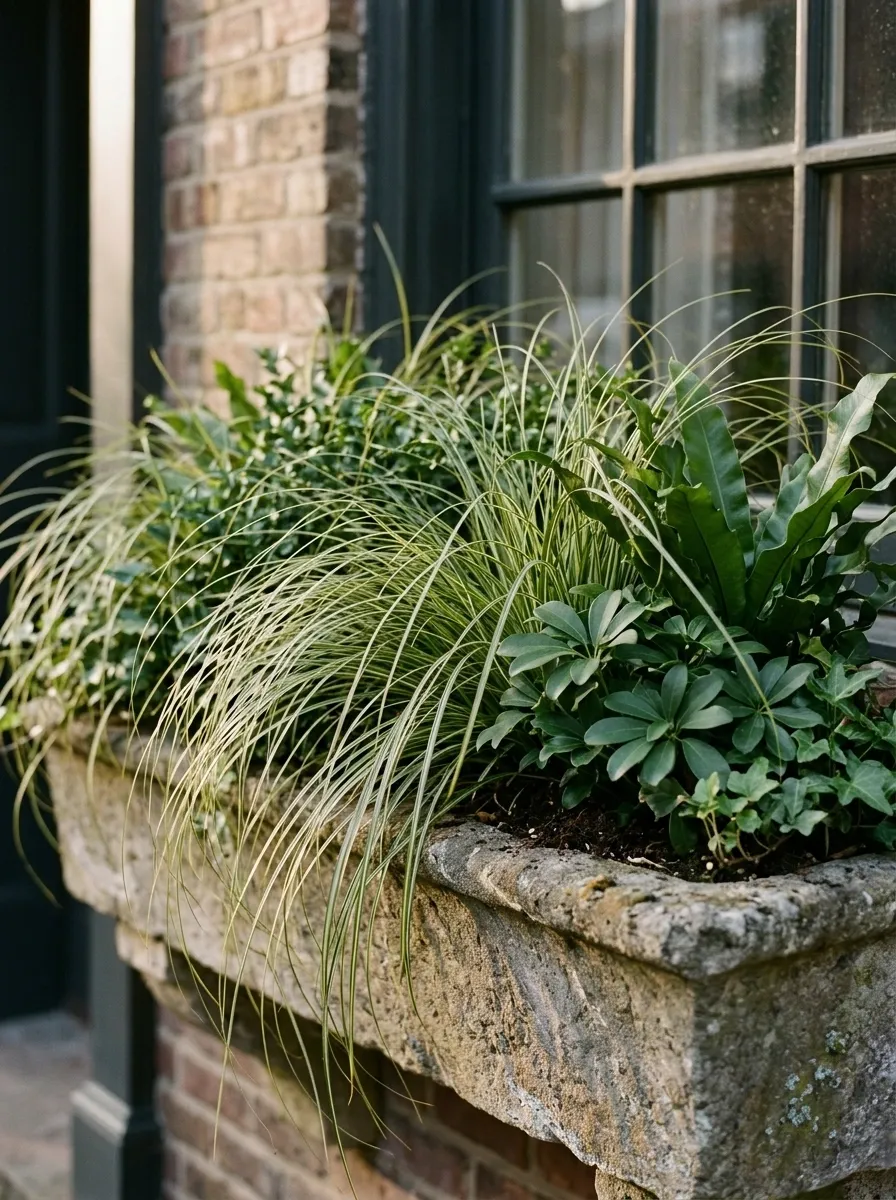
A suitable sedge can bring fine, arching texture to a living window box. Choose a variety for the climate and container rather than assuming every grass-like plant remains attractive through winter.
Keep companions compatible and leave room for the foliage to move without obstructing the window.
A simple palette lets the contrast between narrow blades and broader leaves provide interest. The box does not need flowers, branches, cones, and decorative lights simultaneously to qualify as designed.
| Plant role | Visual effect |
|---|---|
| Suitable sedge | Fine, arching movement |
| Compatible broad foliage | A steadier contrasting form |
| Quiet container | A clear horizontal base |
A Low Arrangement Designed for the Indoor View
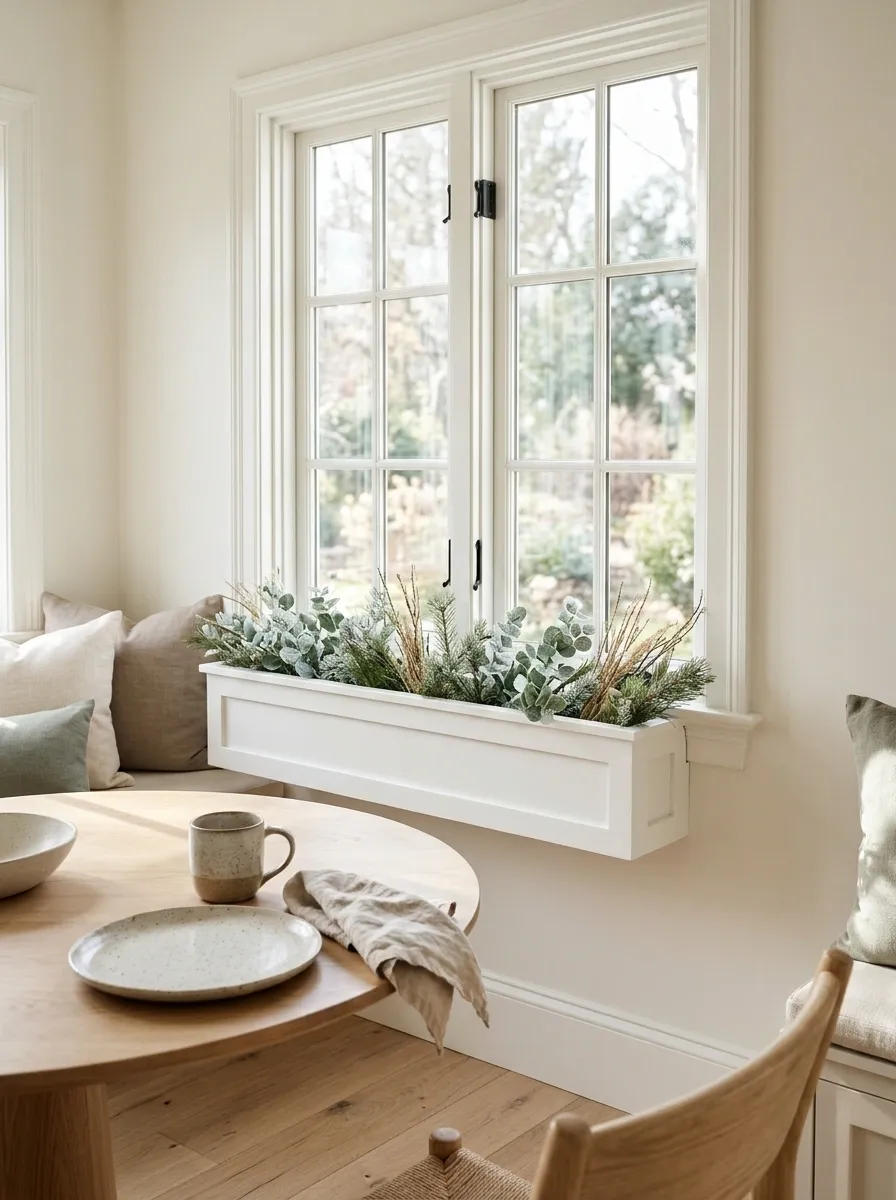
Some window boxes are seen more often from the breakfast table than from the street. Keep the main material low enough to preserve daylight and a useful outlook.
Check the arrangement while seated inside before finishing. Include the full window-opening movement in the test.
A little foliage visible along the bottom of the glass can feel inviting. An impressive forest across the entire pane may be less enjoyable once you realize the garden has disappeared behind your own decorative enthusiasm.
A Pale-and-Green Box Against Warm Brick
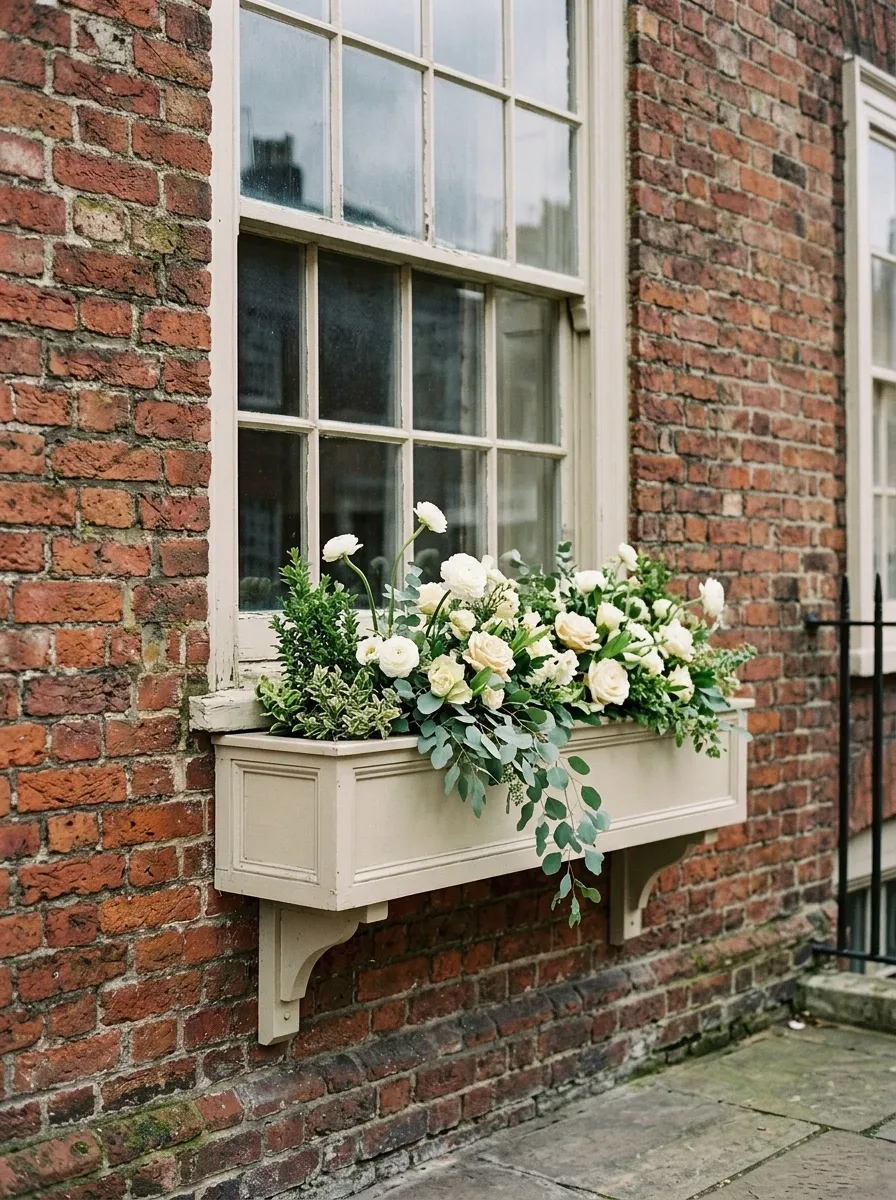
A restrained mix of pale cut stems and green foliage can stand out against brick without competing with its texture.
Keep the container finish connected to the window frame or another existing detail. Avoid introducing several new warm shades when the wall already supplies them.
Judge from the pavement or normal approach. Fine details may disappear at that distance, so a clear outline and controlled contrast are often more useful than a large number of tiny decorative additions.
Distance test: Check whether the silhouette and contrast remain clear from the place people actually see the house.
A Long Box With Repeated Foliage Groups
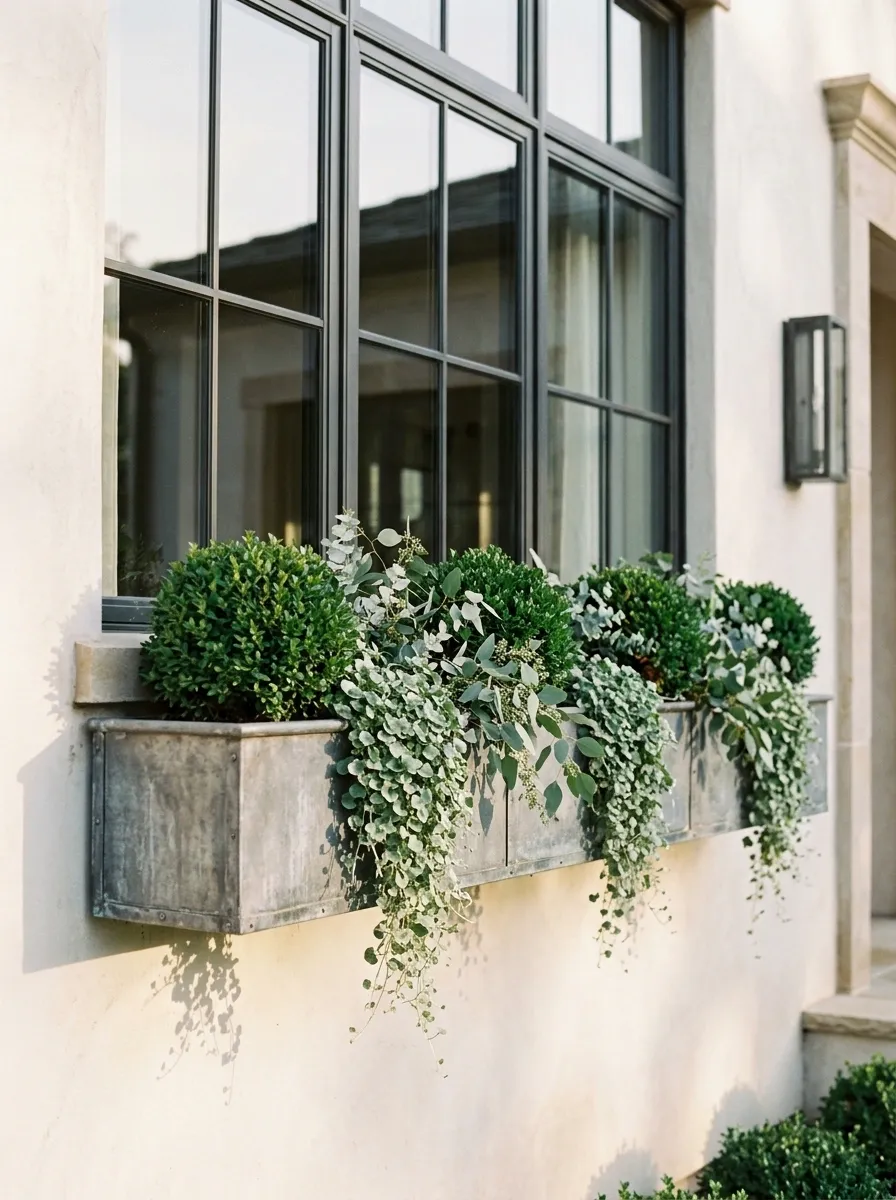
Repeating a small set of foliage types across a long box creates rhythm. Let the groups overlap enough to connect without erasing their differences.
This can look calmer than a different feature at every point. Choose a principal material and a supporting one, then repeat the relationship.
Keep the height controlled along the window. The display should belong to one long container rather than resemble several small arrangements that have been seated together without an introduction.
An Asymmetrical Arrangement With One Taller End
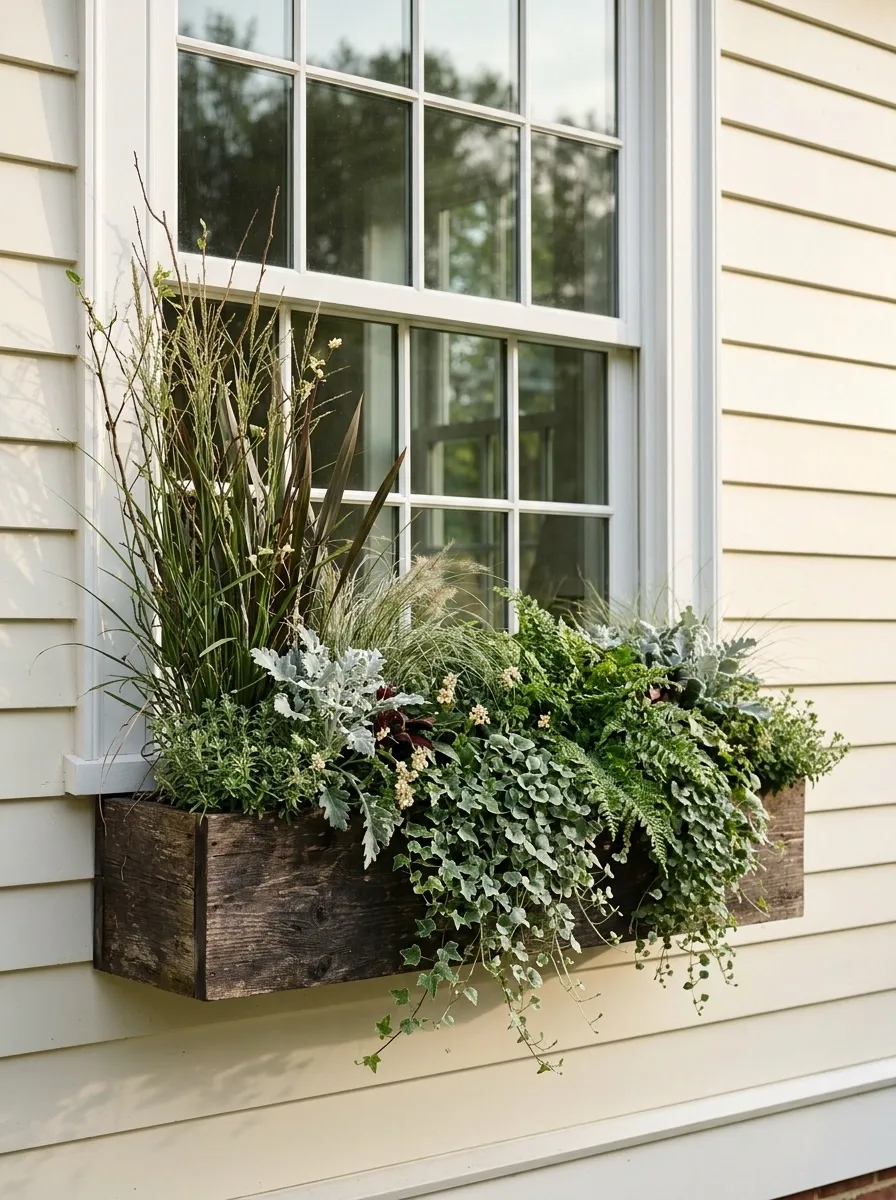
A taller cluster at one end can make a window box feel less formal. Balance it with a lower, fuller spread rather than adding an equally tall feature opposite.
Choose the high end around the window’s operation and indoor view. Keep material secure for the exposure.
Use one repeated texture through both sections so the asymmetry remains connected. “Informal” should look like a choice, not like half the box was completed before the gardener received a phone call.
| Area | Role |
|---|---|
| One end | A restrained taller accent |
| Remaining length | Lower connecting foliage |
| Entire box | One shared material or color |
Removable Planting Modules for Easier Seasonal Changes
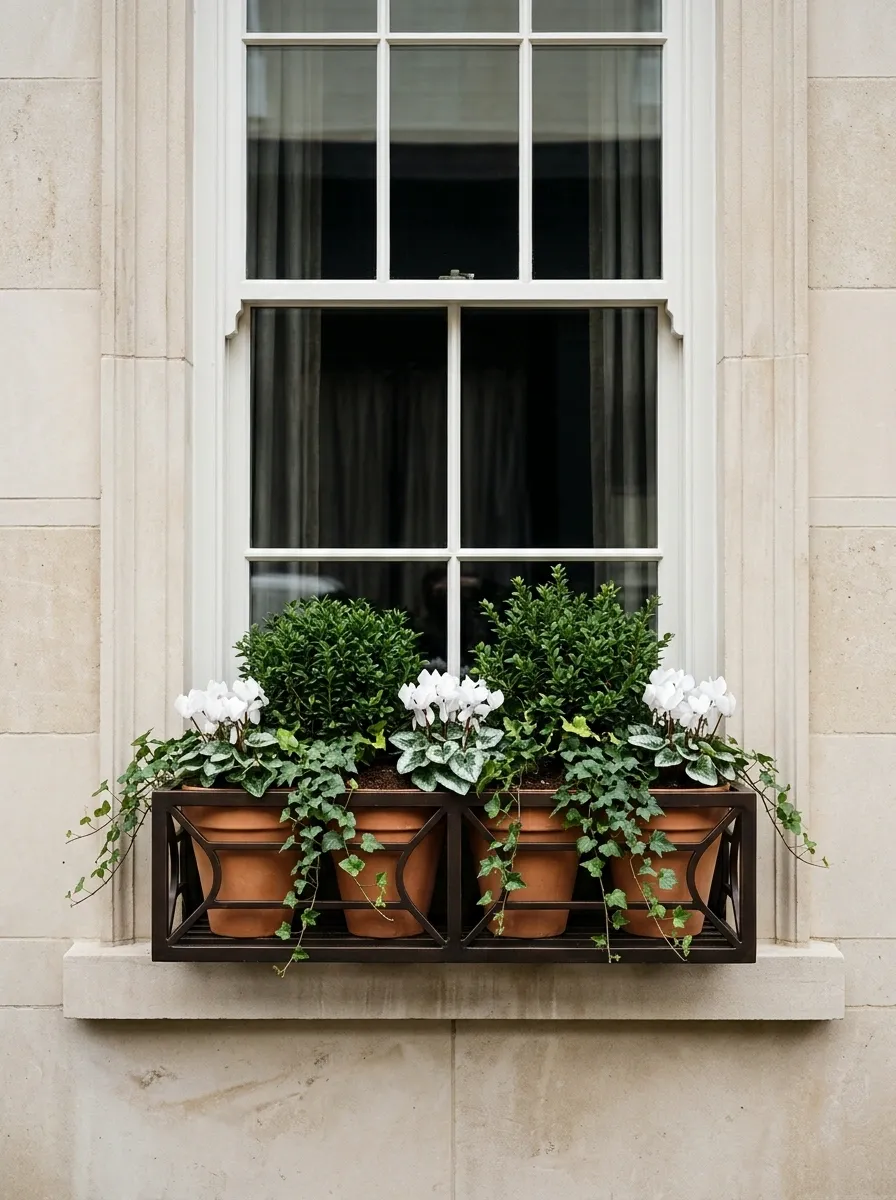
A suitable liner or arrangement of compatible removable pots can make maintenance more manageable where the box design allows it.
Check drainage, stability, total weight, and enough space for the plants. Do not let an outer container conceal standing water around inner pots.
This approach can help replace one tired plant without dismantling everything. It is most useful when the system remains simple; a window box does not need so many nested containers that watering becomes a small administrative process.
A Winter Box Planned to Hand Over to Spring
A winter display can be designed with its next stage in mind. Keep the principal structure simple and choose how cut material or seasonal planting will be removed.
Where suitable bulbs or living plants are included, plan around their actual care and timing rather than expecting every element to perform together indefinitely.
Leave yourself a manageable transition. By the end of winter, you may appreciate a display that comes apart sensibly more than one assembled with the permanent commitment of a small building project.
Plan the exit: Know which elements stay, which come out, and how you will reach them safely.
Look Through the Window Before Calling It Done
Stand outside, then go indoors and sit where you normally sit. Open the window where appropriate and check the route of any moving parts.
If the arrangement works from both sides, it has done more than improve a photograph.
Keep an eye on weathering, plant condition, drainage, and fixings through the season. A winter window box should give the house a considered detail while leaving you free to enjoy the view beyond it.