
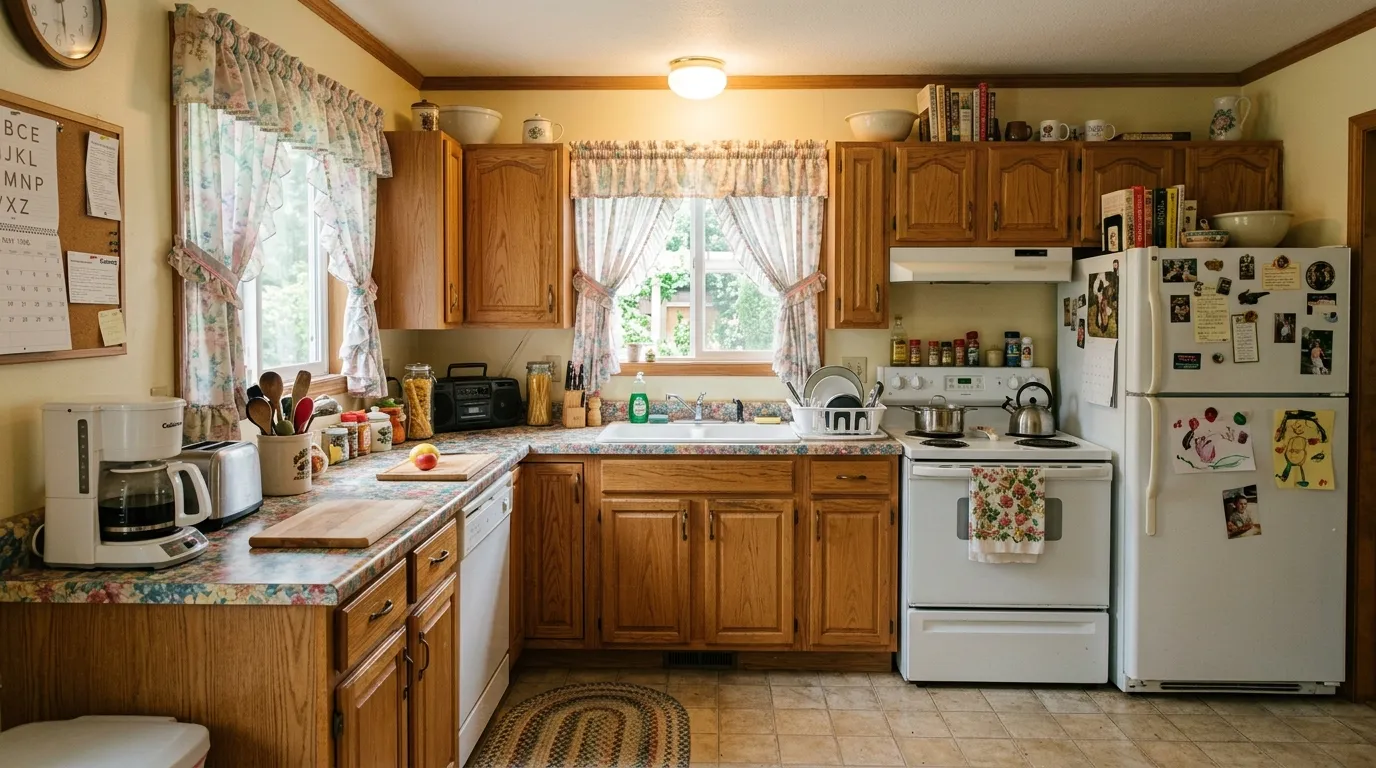
The 90s kitchen gets mocked constantly. The oak cabinets. The mauve tile. The rooster figurine on the counter. The wallpaper border running around the top of the room like a crown of ivy no one asked for.
Here’s the thing, though. Every era gets mocked by the one that follows it. The 70s were avocado green and harvest gold, and now those colours are back in boutique restaurants charging forty dollars for a salad. The 80s were brass and glass block, and now unlacquered brass is the most coveted finish in a kitchen renovation.
The 90s are next. They’re already here if you’re paying attention — the checkerboard floors, the warm wood tones, the maximalist collections of themed ceramics. What looked dated ten years ago is starting to look intentional. What looked embarrassing looks charming.
This blog is for people who either have a 90s kitchen they’re not ready to gut, or people who are actively chasing the aesthetic. Both are valid. Here’s how to do it right.
What the 90s Got Right That Nobody Wants to Admit
The decade made some genuinely good calls that the design world is quietly revisiting.
Warm Wood Tones Were Always the Right Answer
The 2010s told everyone to paint their oak cabinets white. Millions of people did. And now those same people are repainting — or removing the paint entirely — because it turns out warm wood in a kitchen is deeply pleasant to cook in, and a cold white kitchen is a very beautiful thing to photograph and a slightly exhausting thing to live inside.
The 90s were right about this. Warm wood ages better than trends. It looks lived-in rather than clinical. It doesn’t show every fingerprint. It doesn’t require styling to feel finished.
Collecting Was a Form of Design
The 90s kitchen was a biographical space. You could walk in and know that this person had been to Tuscany, or loved sunflowers, or had a grandmother who collected blue-and-white china. The collections weren’t curated for Instagram. They were curated for the person who lived there.
That is not a design failure. That is a design philosophy. The minimalist kitchen aesthetic that followed stripped out all of that personality and replaced it with surfaces. Perfectly styled, entirely legible, completely impersonal.
The Wallpaper Border Was Doing Important Work
This sounds like a defence of something indefensible. Stay with it. The wallpaper border running around the top of the kitchen wall was performing the same function as crown moulding — it defined the ceiling line, added a layer of visual interest at height, and gave the room a sense of being finished. When it was removed in the 2000s renovation wave, the top of the wall just became an awkward gap between cabinet and ceiling that nobody knew what to do with.
The execution was often poor. The grape vine and ivy patterns aged quickly. But the instinct to do something decorative at ceiling height was architecturally sound. It’s why modern kitchens now do the same thing with a different material — shiplap, a painted accent strip, tiles run to the ceiling.
90’s Kitchen Ideas
Dusty Mauve Tile Moment
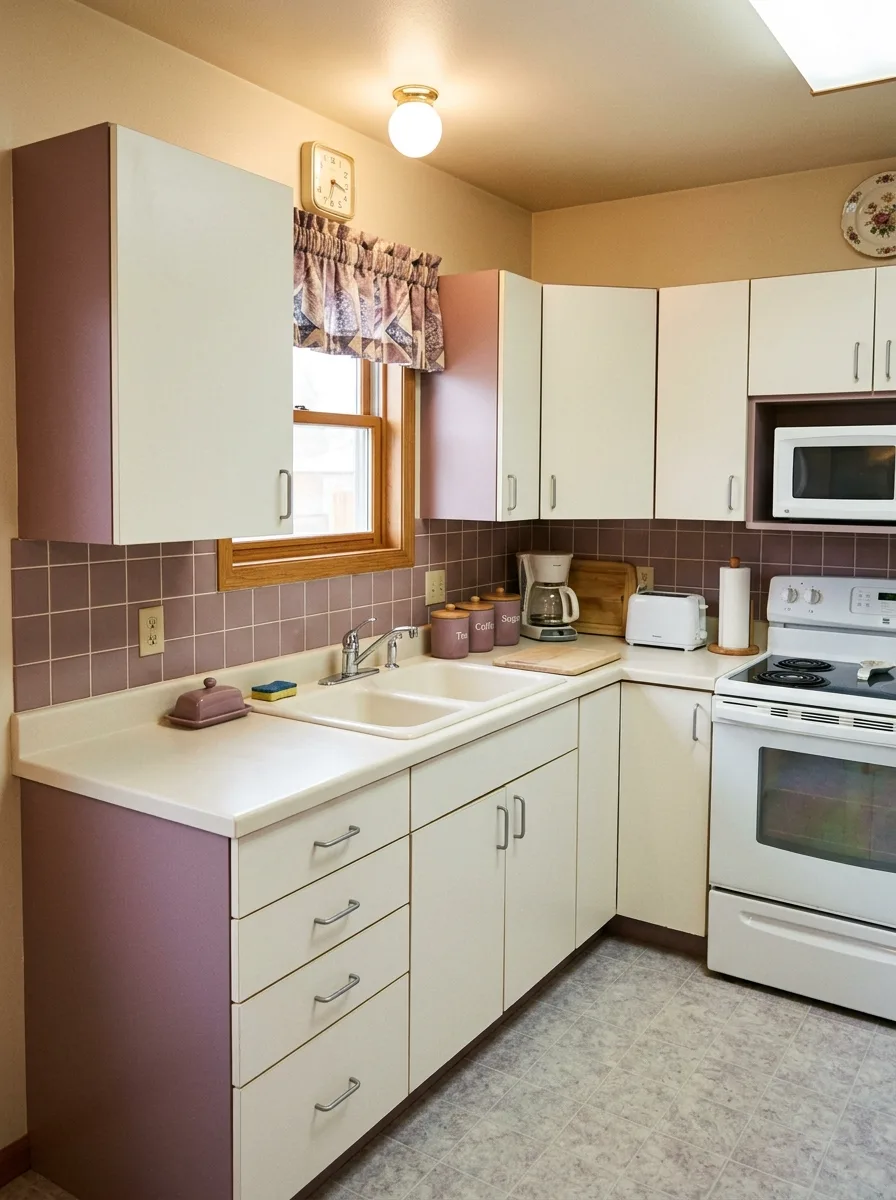
Take the existing mauve backsplash tile and lean into it rather than fighting it. The error is pairing mauve tile with mauve countertop and mauve canister set — everything in the same muted pink-purple at once. Instead, keep the mauve tile as the single saturated note and strip everything else back. Paint the cabinets a clean off-white — not bright white, something slightly warmer. Swap the countertop for plain white laminate or white quartz. Replace the chrome hardware with brushed silver cup pulls. Hang a simple white curtain at the window rather than a patterned valance. Let the tile do one thing, loudly, and let everything else get out of its way.
Teal Cabinets Checkerboard Floor
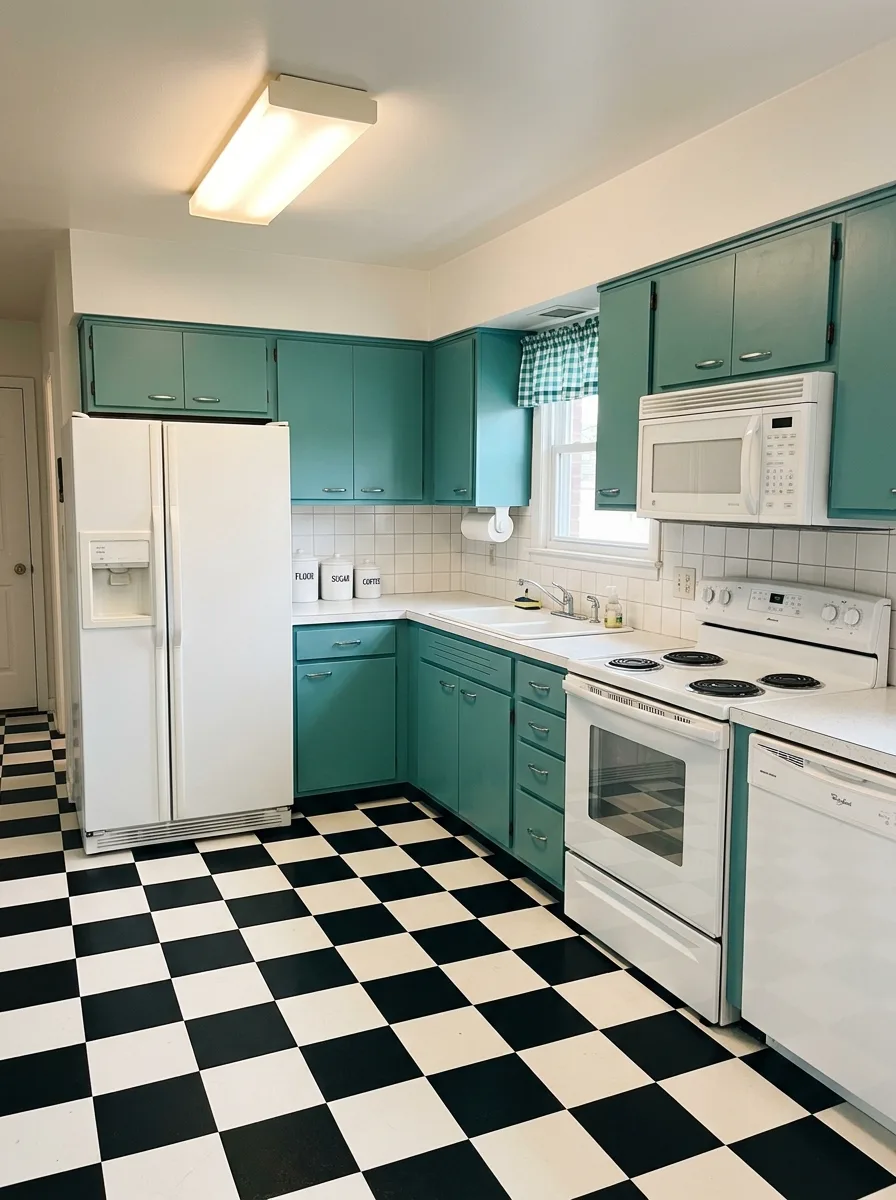
Paint flat-front or shaker cabinets in a saturated teal — the kind of teal that reads as genuinely green in daylight and genuinely blue at night. Pair with a black and white checkerboard floor in large diamond format — forty-five centimetre tiles rather than small mosaic. Keep the backsplash in plain white square tile with white grout so the eye has somewhere to rest between the teal and the floor.
Use white appliances throughout — fridge, range, microwave. Set three white ceramic canisters on the counter with black lettering. Add a green and white gingham curtain at the window. The checkerboard and the teal are both loud; they work together because they’re both committed to a graphic contrast rather than competing for complexity.
Cream Raised Panel Black Appliances
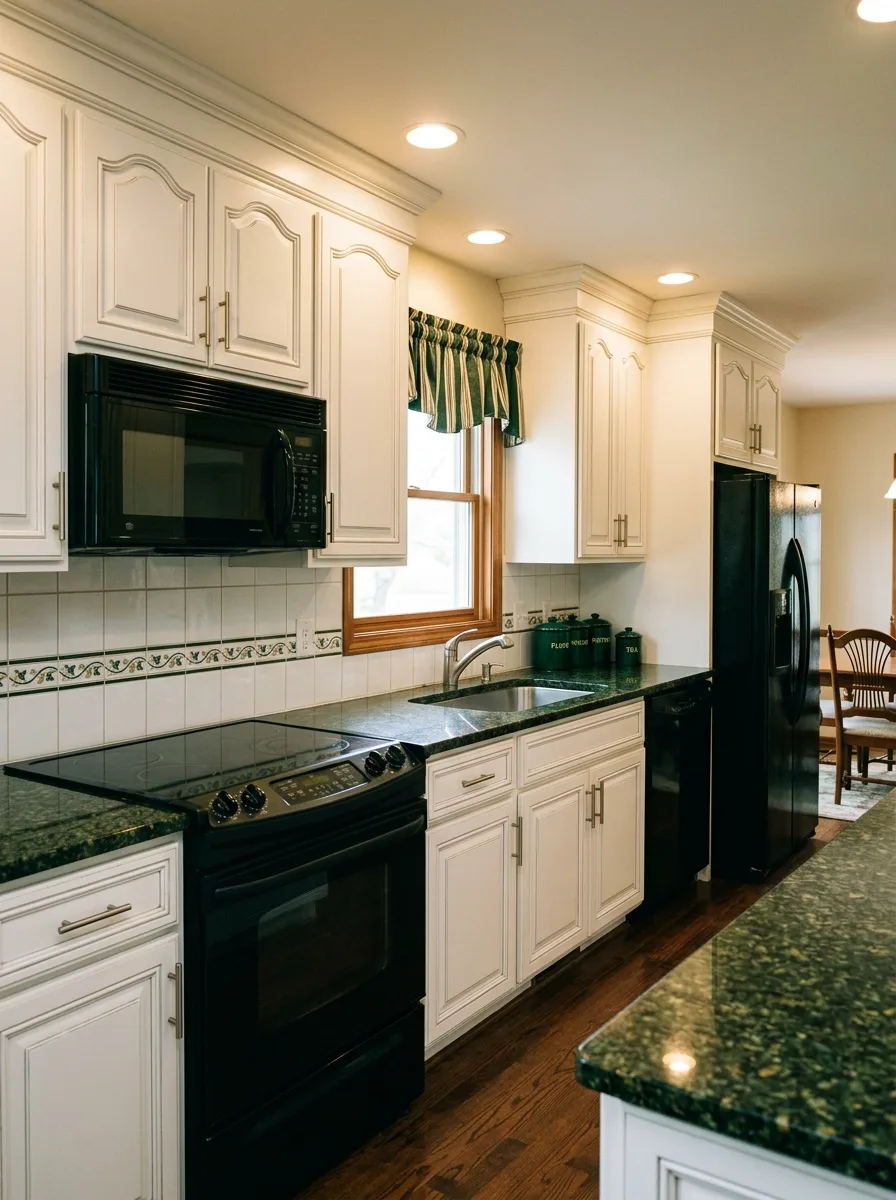
Install or retain raised-panel cabinets in a cream or antique white — the kind with decorative arched detailing on the upper cabinet doors. Pair with black appliances: black range, black refrigerator, black over-the-range microwave. Add a dark green granite or engineered stone countertop. Run white square tile backsplash with a single decorative border tile in a botanical pattern at mid-height — one row only, running the full length of the kitchen.
Add four dark green ceramic canisters on the counter. Hang a green and white striped valance at the window. The raised panel detailing, the botanical border tile, and the dark green accents are all distinctly 90s. Together they read as deliberate rather than accidental because every element is repeating the same palette.
Honey Oak U-Shape Classic
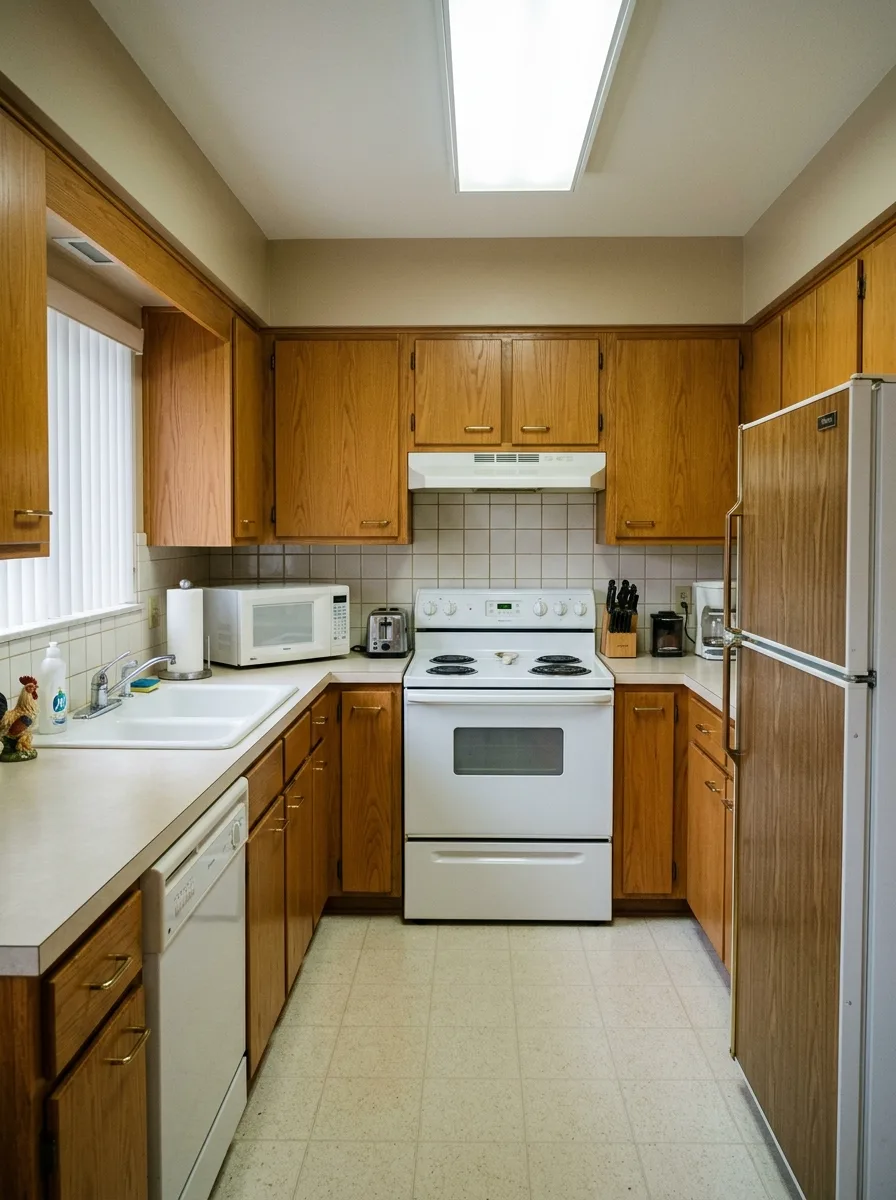
In a U-shaped kitchen with honey oak cabinets, the intervention is not to paint them. The oak is the asset. Instead, replace the laminate countertop with white or very light grey quartz — something that gives the warm wood a clean counterpoint. Swap the gold hardware for brushed nickel bar pulls. Replace the vertical blind at the window with a simple white Roman blind. Remove the rooster collection from the counter and consolidate it to one shelf, one figurine, one small plant.
The oak reads as warm and intentional rather than dated when it has a light-coloured counter, neutral hardware, and a clean white backsplash tile. It’s the same kitchen. It just stopped apologising for itself.
Tuscan Faux-Finish Copper Pot Kitchen
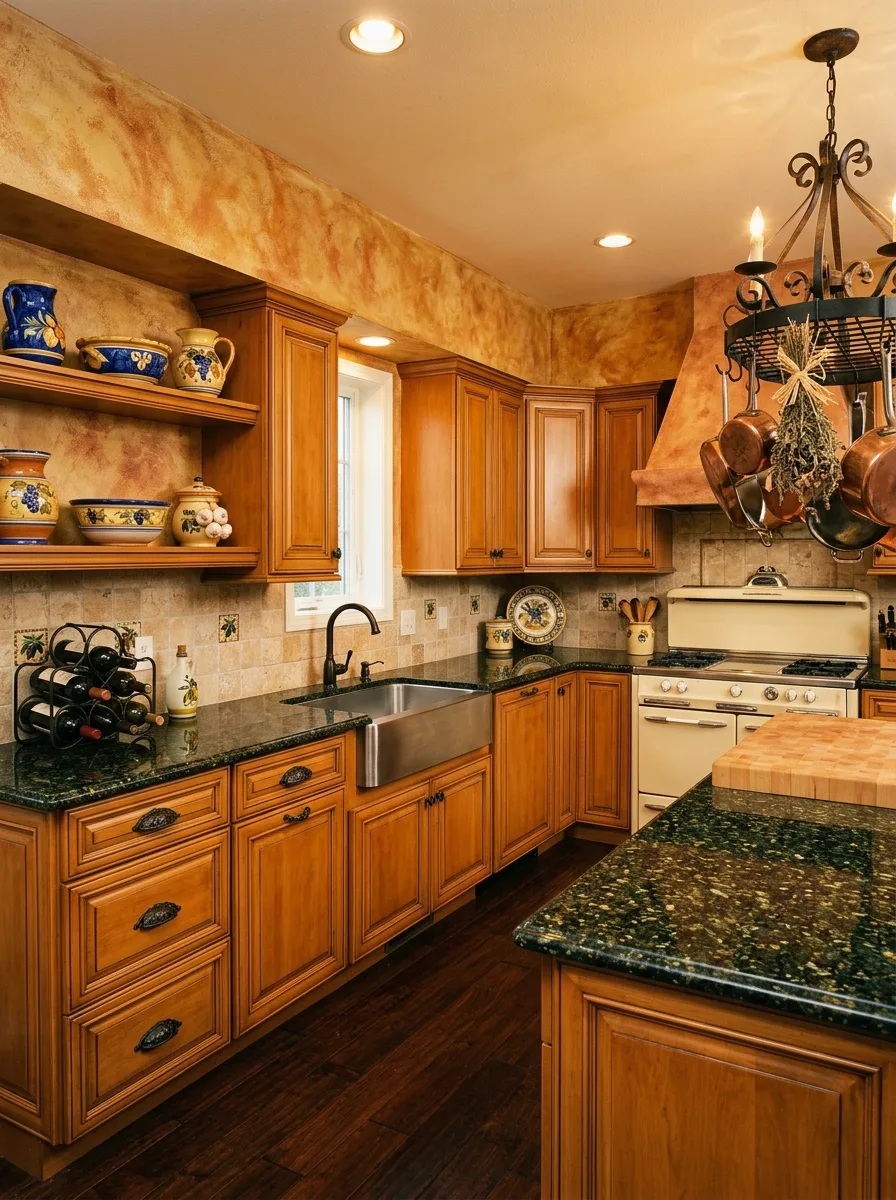
Apply a warm ochre or sienna faux finish to the plaster walls — the sponged or ragged technique that was everywhere in 90s Tuscan-themed kitchens. This is not dated; it’s the same technique used in high-end Italian restaurant design. The key is keeping it warm and uneven rather than flat, so the texture reads as artisanal rather than stencilled.
Pair with honey oak raised-panel cabinets and a dark green granite countertop. Hang a wrought iron pot rack from the ceiling with chains and load it with copper cookware — the copper against the warm ochre walls is the visual payoff. Add an open shelf with hand-painted Majolica ceramics in blue and yellow. Keep a vintage-style cream range at the cooking wall. This kitchen makes no apology for loving Tuscany, and it’s better for it.
Sunflower Yellow Farmhouse Sink
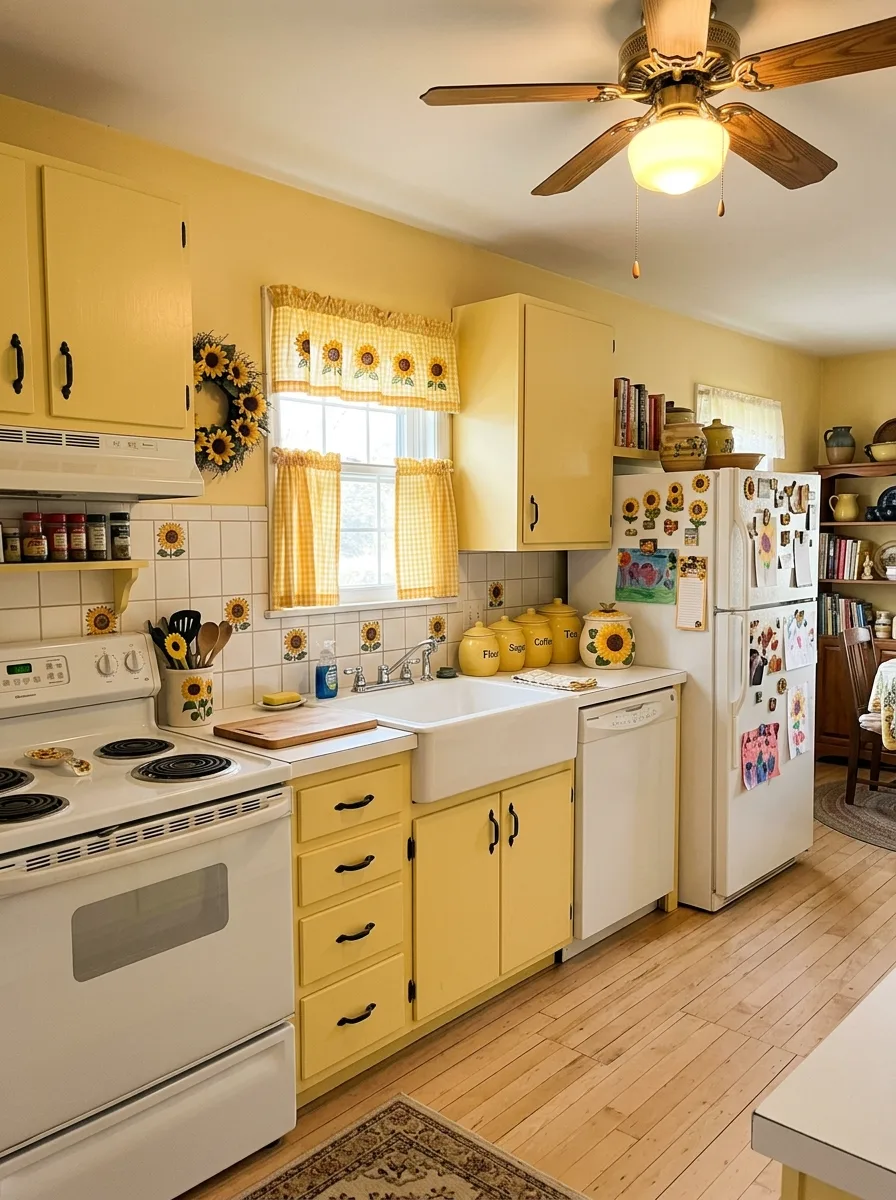
Paint all cabinets in a warm butter yellow — not quite sunflower, not quite cream, something between them. Keep white appliances. Install or retain a white farmhouse apron-front sink. Hang yellow and white gingham curtains at the window. Set sunflower-print accent tiles into the backsplash at regular intervals — not every tile, one every fourth or fifth tile so they read as punctuation rather than wallpaper.
Stack sunflower ceramic canisters on the counter. Hang a sunflower wreath on the wall beside the window. Add a ceiling fan with a brass fixture — the kind with a light kit built in. Lay a worn Persian rug at the kitchen entrance. This kitchen is fully committed to its sunflower theme and earns its conviction by extending it to the architecture — the cabinet colour, the curtains, the sink — not just the accessories.
Oak U-Shape Ivy Garland Chandelier
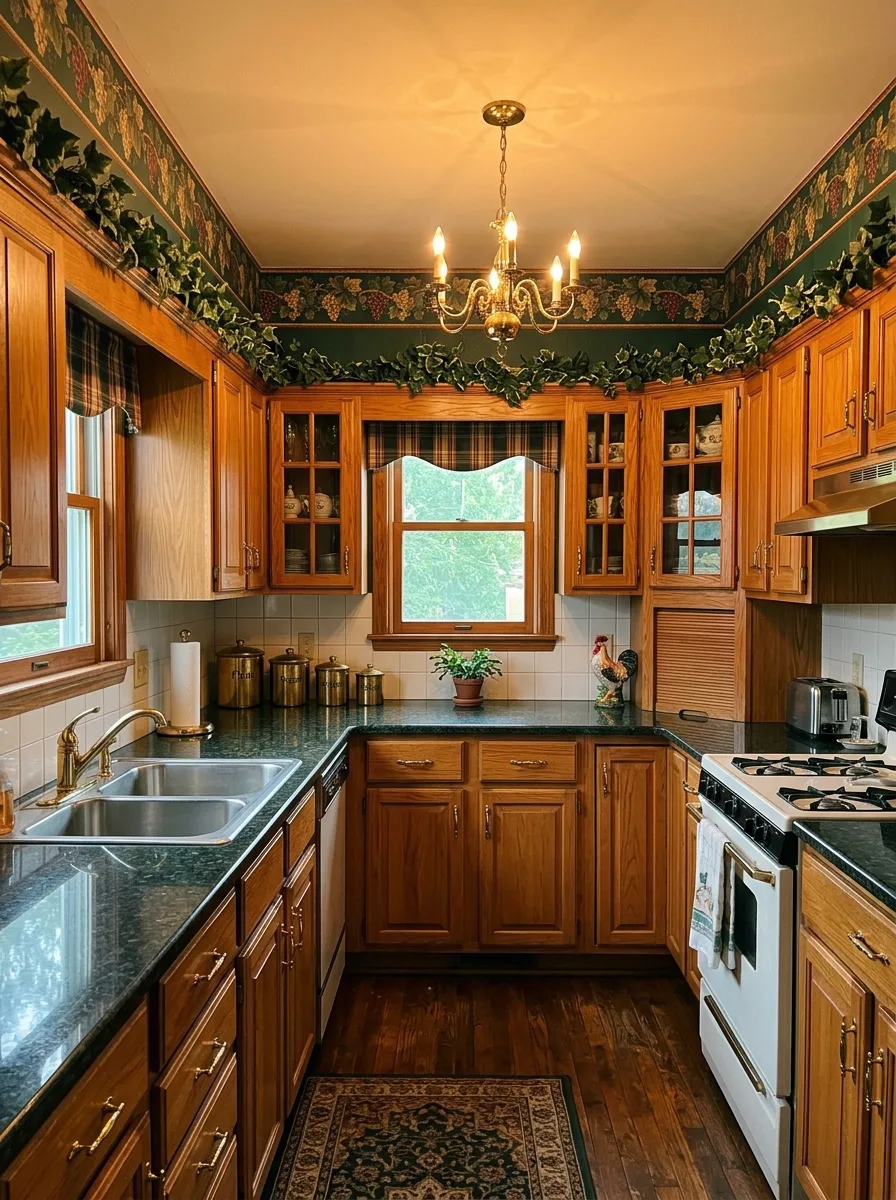
In a U-shaped oak kitchen, run a grape vine or ivy wallpaper border at the very top of the wall where it meets the ceiling — the traditional 90s placement. Add a faux ivy garland along the top of the upper cabinets, draped naturally. Hang a brass candelabra chandelier at the centre of the ceiling.
Install glass-front upper cabinet doors on the corner cabinets to break up the solid oak wall. Keep a dark green granite countertop. Set brass canisters on the counter and a small potted plant on the windowsill. Lay a dark patterned rug at the sink. The garland and the wallpaper border are the most self-consciously 90s elements; the chandelier and the glass-front cabinets elevate them into something with genuine presence.
Blue and White Transferware Display Kitchen
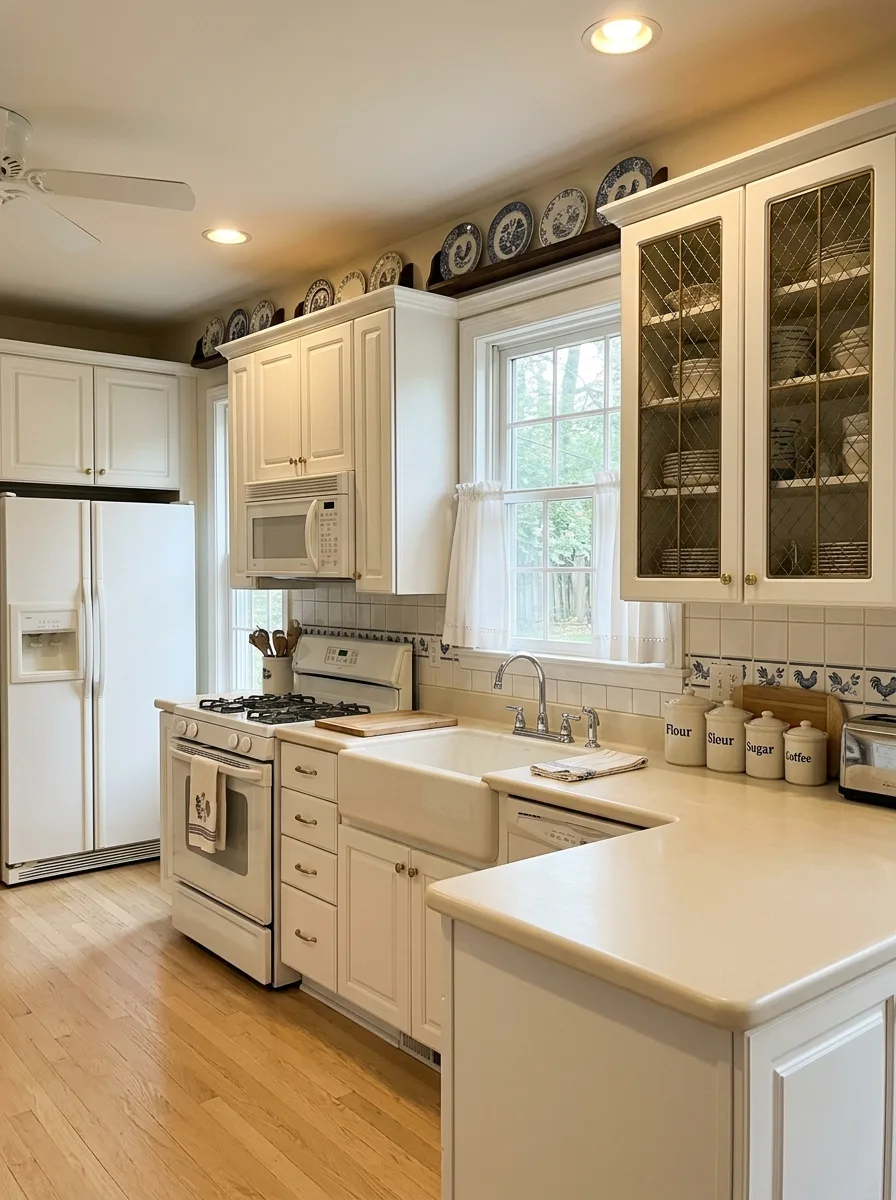
Keep cream or off-white raised-panel cabinets. Install leaded glass panels on two or three upper cabinet doors — the diamond grid pattern rather than flat glass. Line the wall ledge above the upper cabinets with blue and white transferware plates, propped on a narrow display shelf, running the full perimeter of the kitchen.
Set white ceramic canisters labelled in simple black script on the counter — Flour, Sugar, Coffee, Tea. Add a white farmhouse sink. Hang a sheer curtain at the window rather than a valance. Keep all appliances white. The blue and white plate display is the entire personality of this kitchen and it earns that responsibility because the rest of the room is quiet enough to let it speak.
Memphis Design Maximalist Kitchen
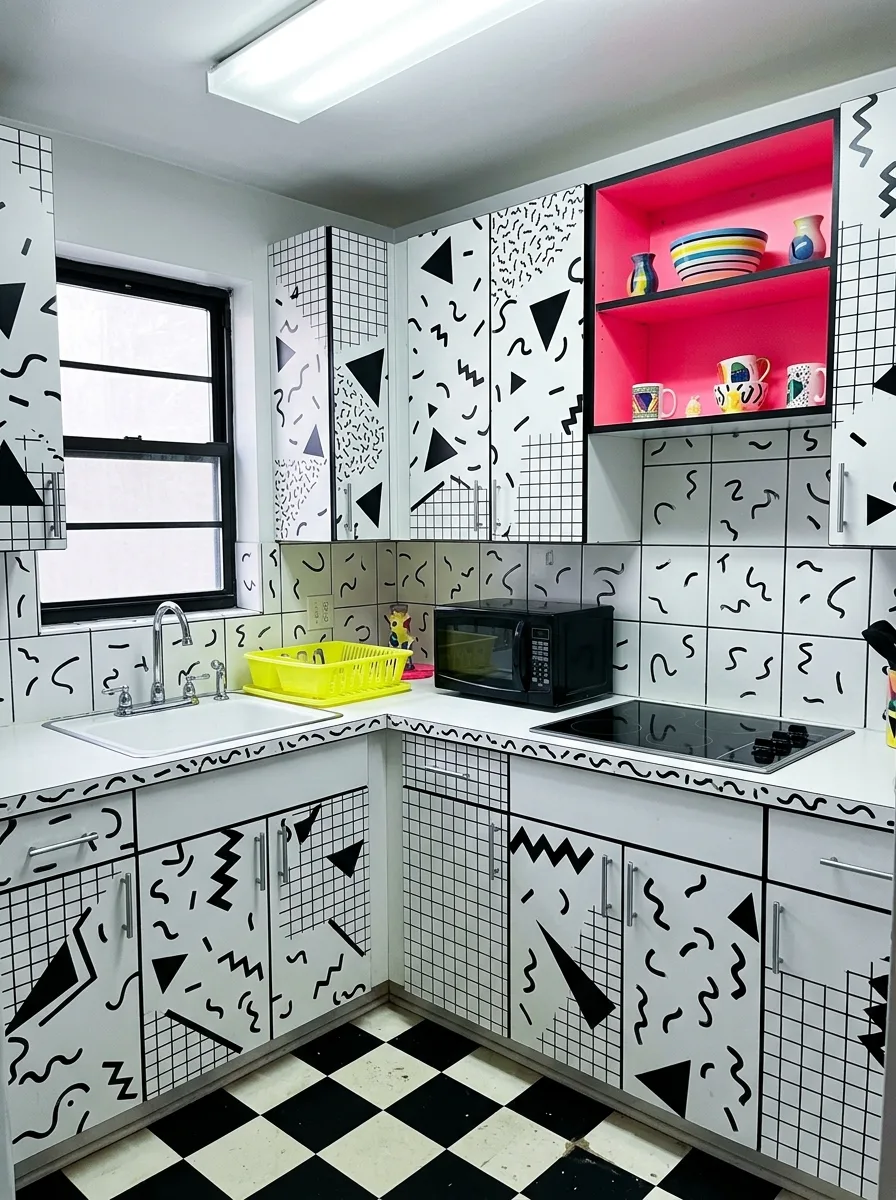
Apply Memphis-style graphic contact paper or cabinet wraps to every flat surface — cabinets, backsplash tile, counter face. The Memphis pattern is black and white with geometric shapes: triangles, squiggles, grid lines, lightning bolts. Every panel gets a different pattern from the same black and white family.
Paint one interior open shelf cabinet in hot pink and fill it with brightly coloured vintage ceramics — rainbow-striped bowls, multicoloured mugs. Keep the floor in black and white checkerboard. Set a neon yellow dish rack at the sink as the single functional colour note. This kitchen is not trying to be subtle and the refusal to try is what makes it work. Half-committed Memphis is excruciating. Fully committed Memphis is a personality.
Cherry Wood Stainless Steel Transition
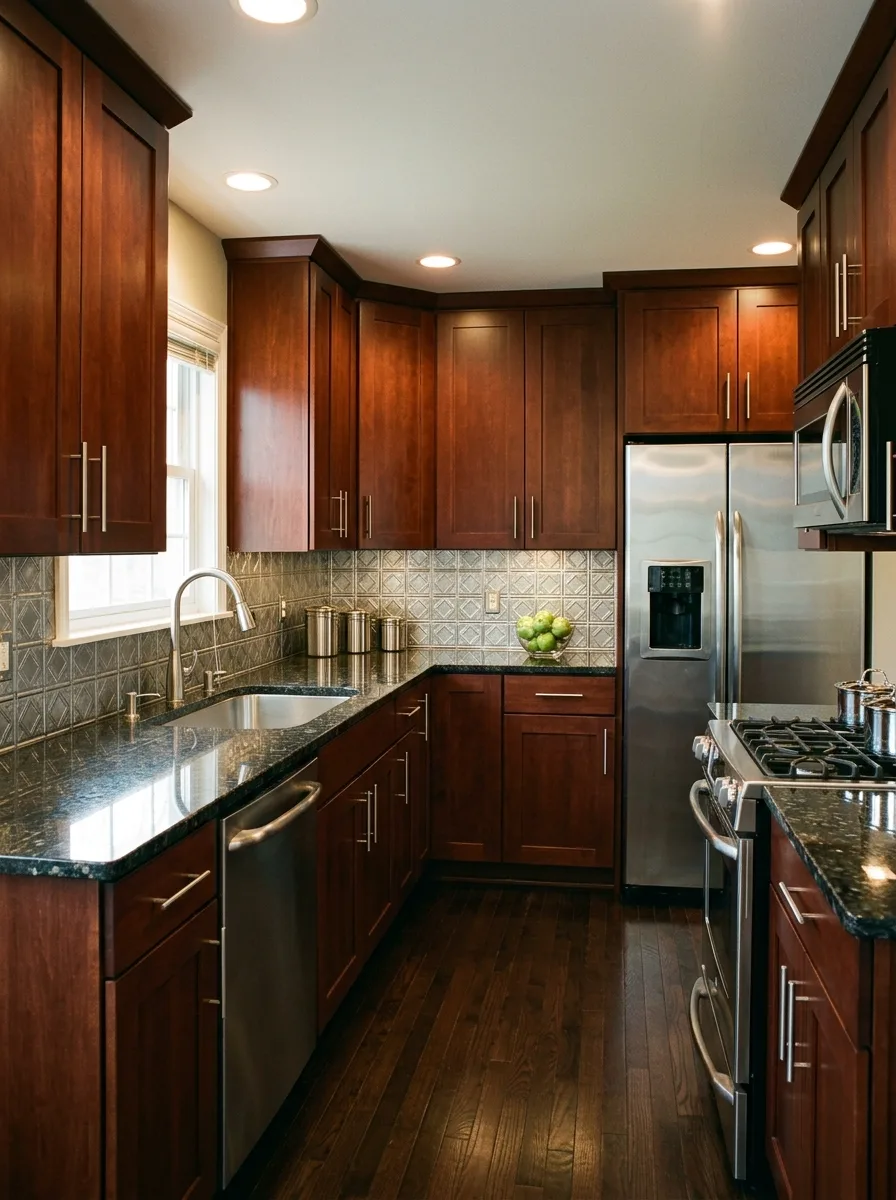
Install cherry wood shaker cabinets — a warm reddish-brown with a tight grain — and pair them with dark blue-black granite countertops and stainless steel appliances. Use a diamond-pattern metal tile or a subtle textured silver tile for the backsplash. Choose brushed nickel bar hardware throughout.
This is the 90s kitchen that was trying to be modern and mostly succeeded. The cherry and the dark granite sit in the same warm-cool contrast that makes kitchens feel rich rather than heavy. Add a bowl of green apples on the counter as the single colour accent. Keep the counter clear otherwise. The stainless appliances date this to the mid-to-late 90s renovation era, and in the right context that specificity reads as considered rather than leftover.
Cream Cottage Beadboard Plaster Kitchen
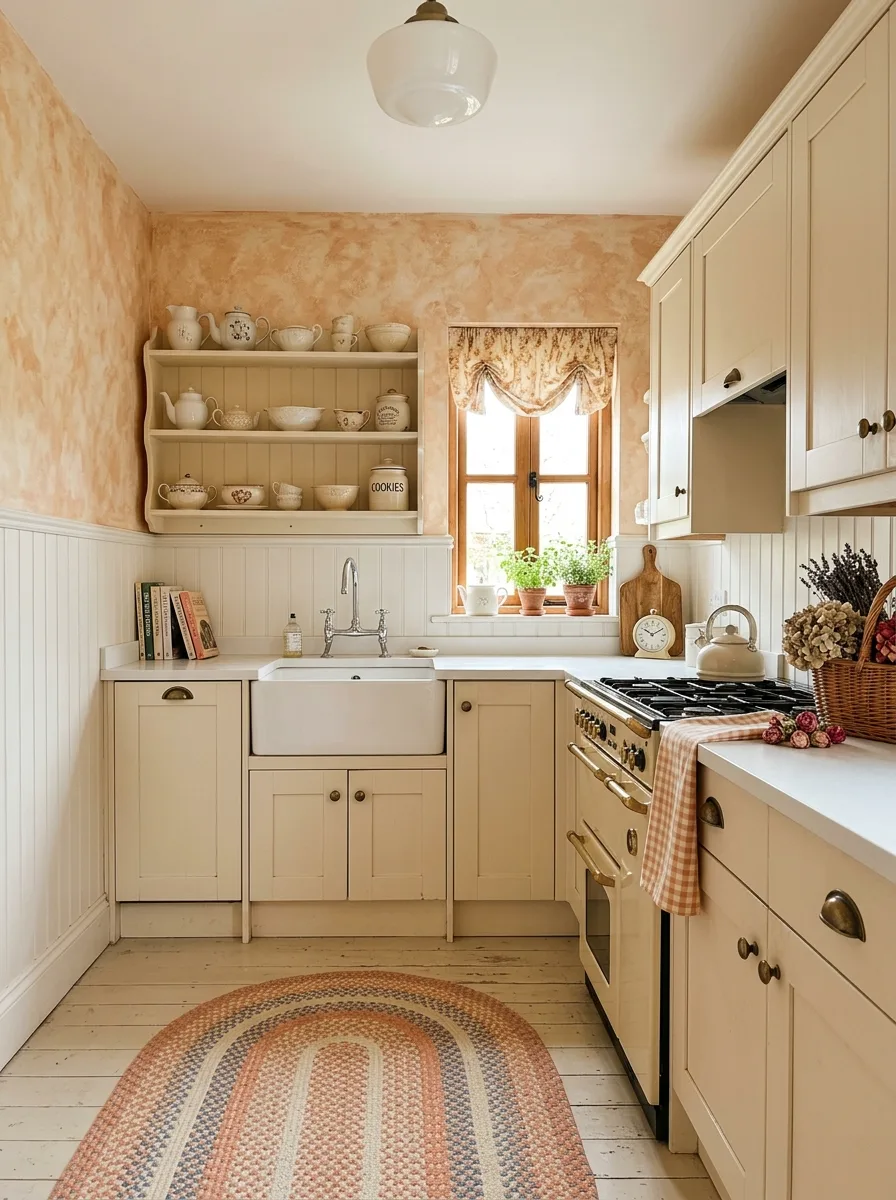
Install white beadboard wainscoting on the lower half of the kitchen walls — running from floor to counter height on any wall not occupied by cabinets. Apply a warm terracotta or peach plaster finish to the upper wall above the wainscoting. Mount a cream plate rail shelf on the plaster wall and fill it with white and floral china — teapots, jugs, bowls, a labelled cookie jar.
Choose cream shaker cabinets with brass cup pulls. Install a white farmhouse sink. Hang a floral gathered valance at the window. Add a vintage-style range with brass knobs. Lay a braided oval rug in the kitchen centre. This kitchen is deeply specific — it knows exactly what it is, which is an English cottage kitchen transplanted intact to wherever you happen to live.
Periwinkle Blue Ruffled Curtain Kitchen
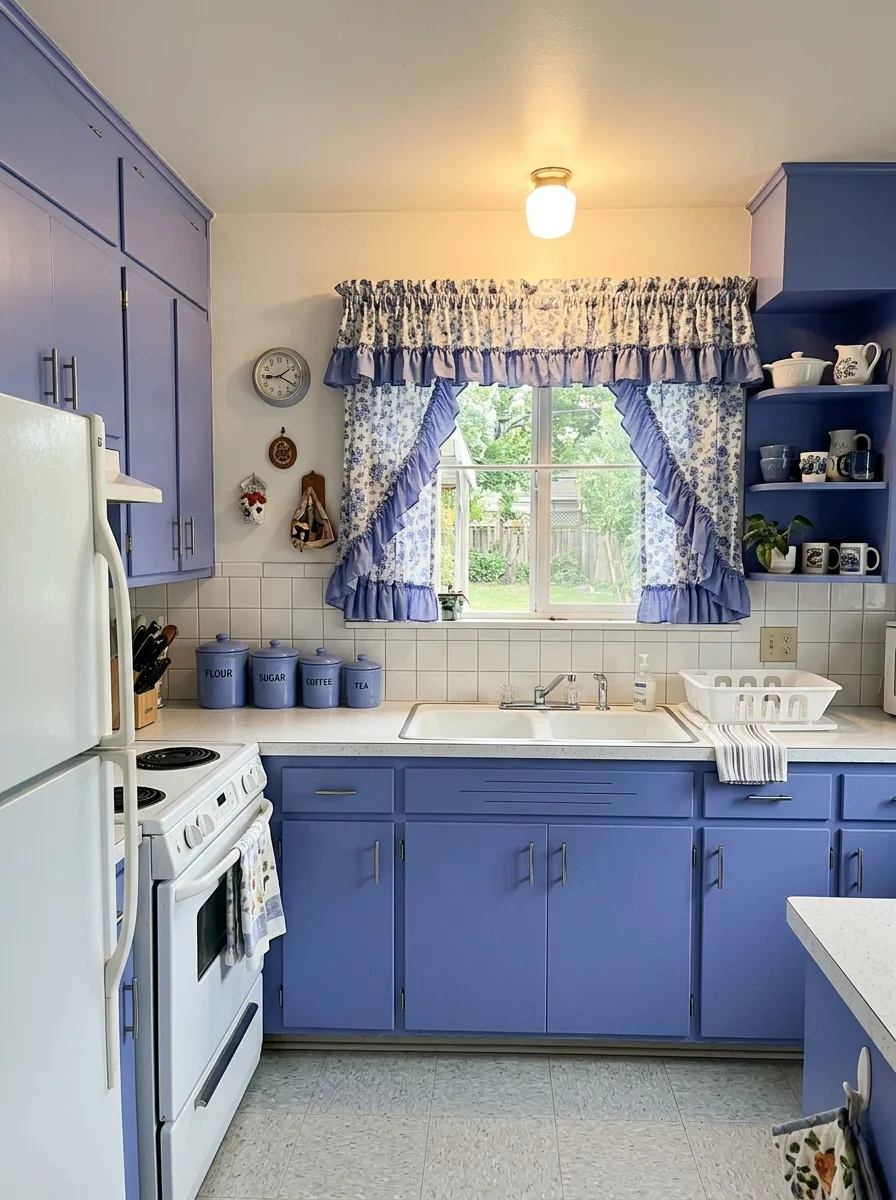
Paint all cabinetry in a medium periwinkle blue — somewhere between lavender and cornflower, without too much grey in it. Keep white appliances and a white counter. Hang a blue and white floral curtain with a ruffled valance and ruffled side panels tied back at the window. Mount open corner shelves in periwinkle and fill them with blue ceramics — pitchers, mugs, a teapot.
Set a matching blue canister set on the counter. Hang a small round clock on the wall in a compatible colour. Add a small plant. Lay a vinyl or linoleum floor in a pale speckled pattern. The ruffled curtain is doing significant visual work here — it’s the most overtly 90s element and it earns its place because everything else in the kitchen is aligned with it rather than fighting it.
Dark Appliance All-Black Nineties Bachelor
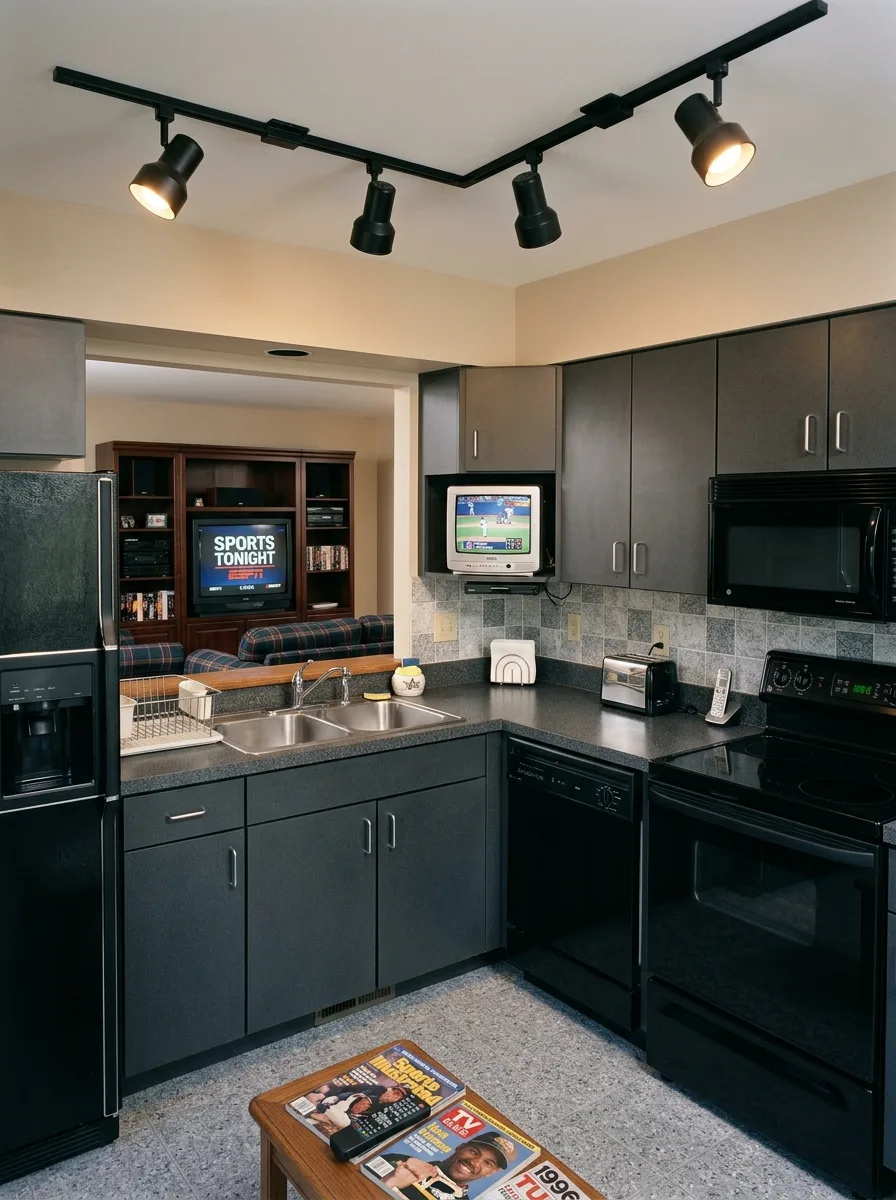
Install grey-brown laminate cabinets — the kind with a slightly textured surface and minimal hardware. Choose black appliances throughout: black refrigerator, black range, black dishwasher, black microwave. Use a dark speckled granite laminate countertop. Tile the backsplash in small stone-effect square tiles in grey and taupe.
Mount a black track lighting system on the ceiling with multiple adjustable spot heads — pointed at the counter and at the living room aperture. Mount a small television under the upper cabinet at eye level. Keep the counter entirely clear except for a toaster and a soap dispenser. This is the 90s kitchen that was designed by someone who watched a lot of ESPN and had very specific ideas about function.
Pink Pig Collector’s Kitchen
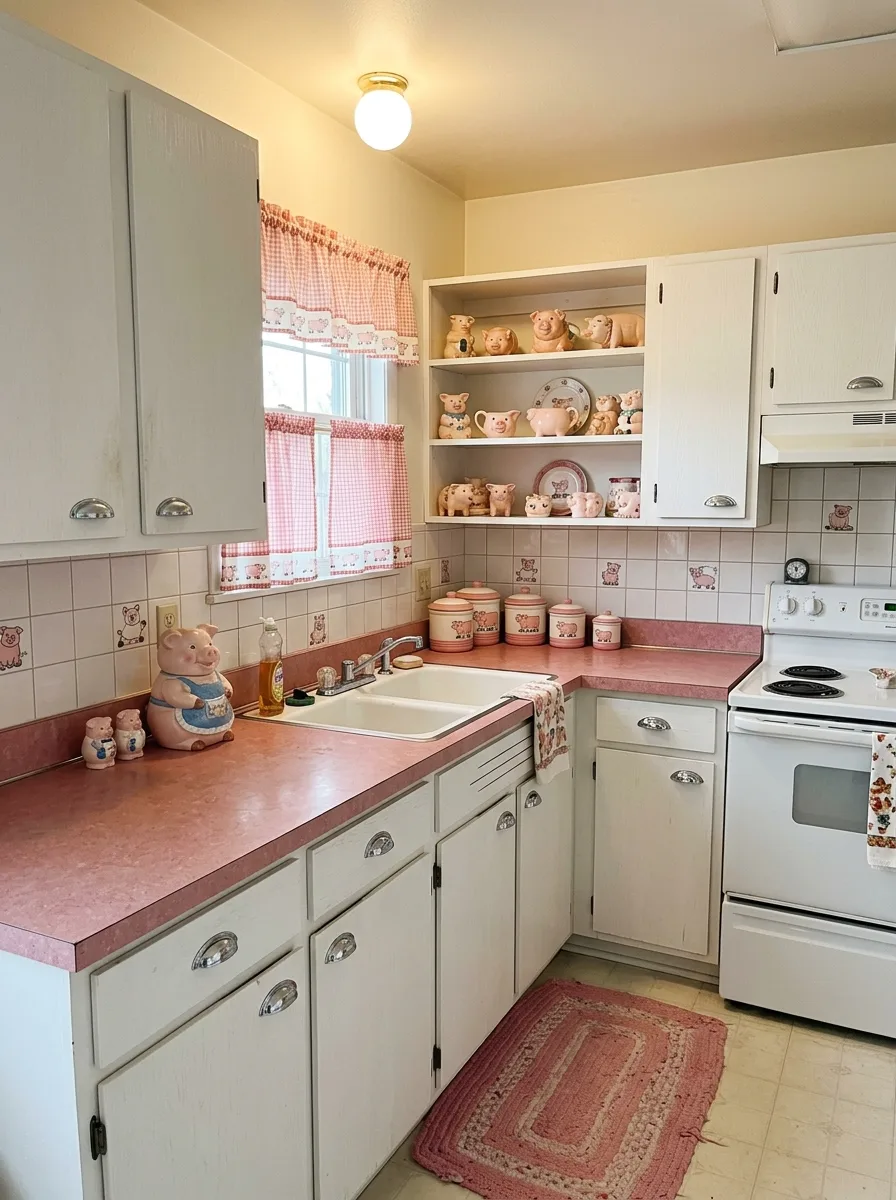
Set up the open cabinet shelves above the counter as a dedicated display for a pig figurine collection — stoneware pigs, ceramic pigs, painted pigs, salt and pepper pig sets, pig-decorated plates. The collection is the art. The shelves are the gallery.
Keep the cabinets in plain off-white with chrome cup pulls. Retain or install a pink laminate countertop — the kind with a slight speckle or grain pattern. Use square white tile with pig-print accent tiles at regular intervals on the backsplash. Hang a pink and white gingham café curtain at the window. Add matching pink ceramic canisters. Lay a braided pink rug at the sink. This kitchen is a shrine to a specific enthusiasm and it makes no apology. That commitment to one beloved thing is what makes it warm rather than cluttered.
Oak Brick Dried Herb Farmhouse
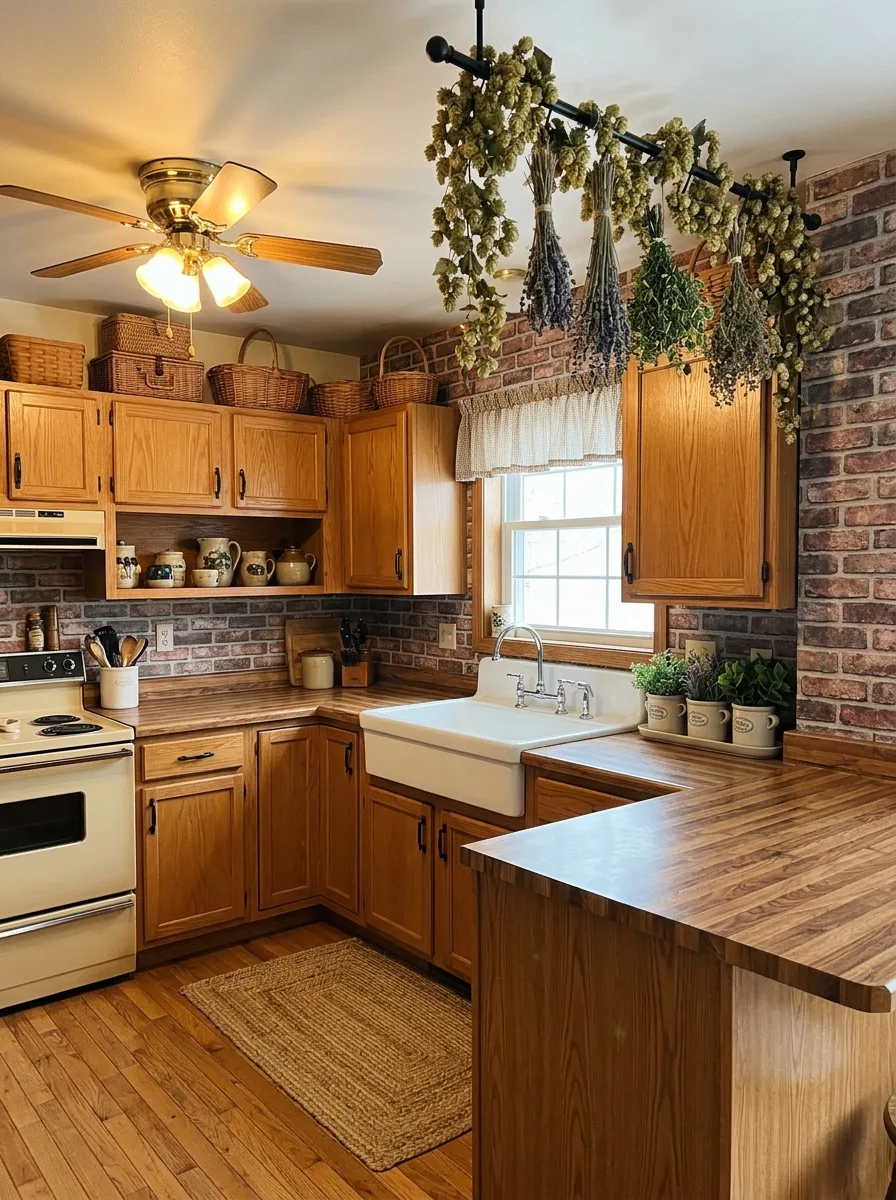
Clad one kitchen wall — or a full chimney breast behind the range — in exposed brick, either original or brick-effect tile. Set honey oak cabinets against the brick. Install butcher block countertops. Mount a white apron-front sink with chrome bridge faucets.
Suspend a ceiling rod above the kitchen island or peninsula and hang bundles of dried herbs and hops from it — lavender, chamomile, rosemary, dried flowers. Stack wicker baskets on top of the upper cabinets. Set stoneware crocks and jugs on the open shelf above the range. Add a braided jute rug at the sink. Place small green plants on the windowsill. This is a 90s homesteading kitchen — warm, purposeful, and more contemporary than it appears because the dried herb ceiling installation is exactly what boutique kitchens are doing now.
Sage Green Ivy Border Coordinated Kitchen
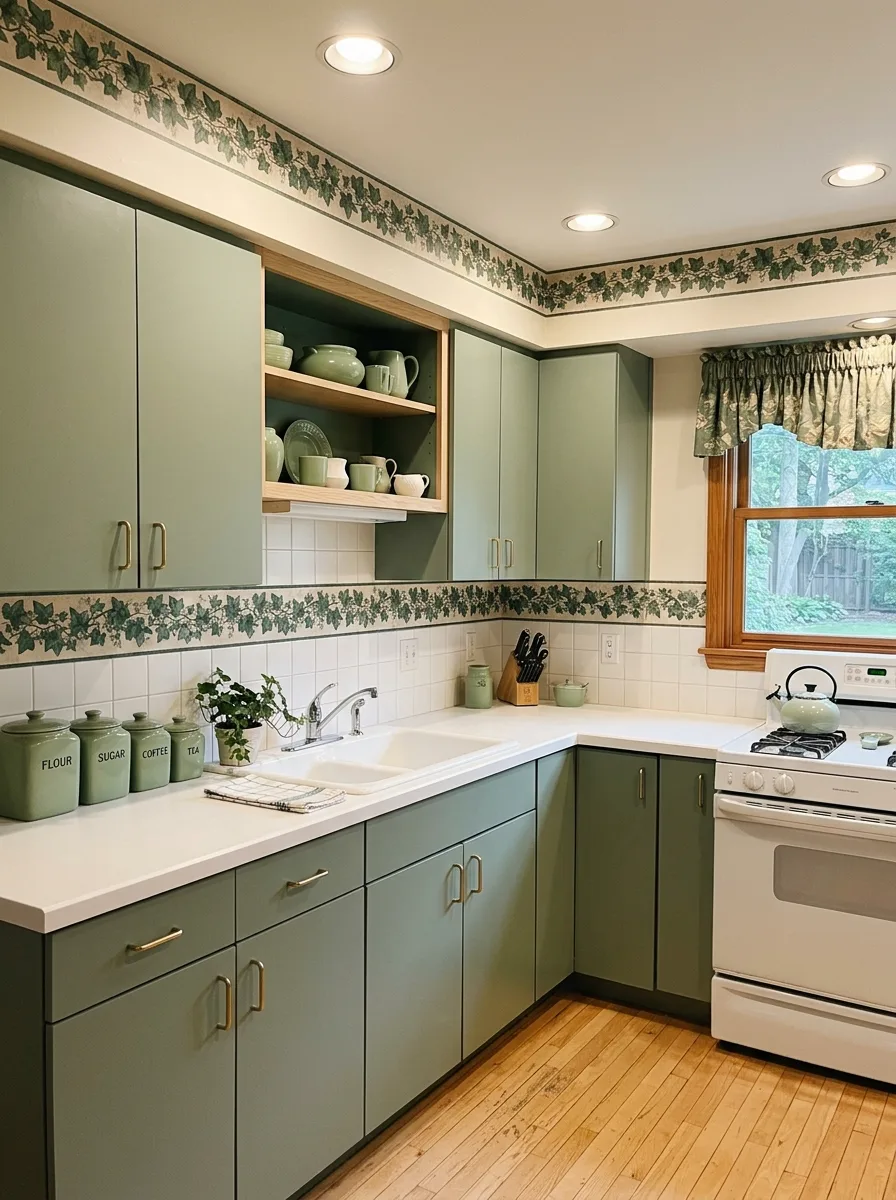
Paint flat-front or very simple shaker cabinets in a sage green — the slightly grey-toned, dusty version rather than bright. Run an ivy pattern wallpaper border at the very top of the walls where they meet the ceiling, all the way around the room. Hang an ivy or botanical print gathered valance at the window.
Open one upper cabinet and leave it without a door, painting the interior the same sage green. Fill the open cabinet with sage green ceramics — plates, jugs, mugs — so the display reads as coordinated. Set four sage green canisters on the counter. Add a sage green teakettle on the stove. Use white tile backsplash with a coordinating ivy border tile at mid-height — one row. The key to this kitchen is that every green object is the same green. No mixing of tones. The consistency is what elevates coordination to design.
Cherry Wood Under-Cabinet Glow
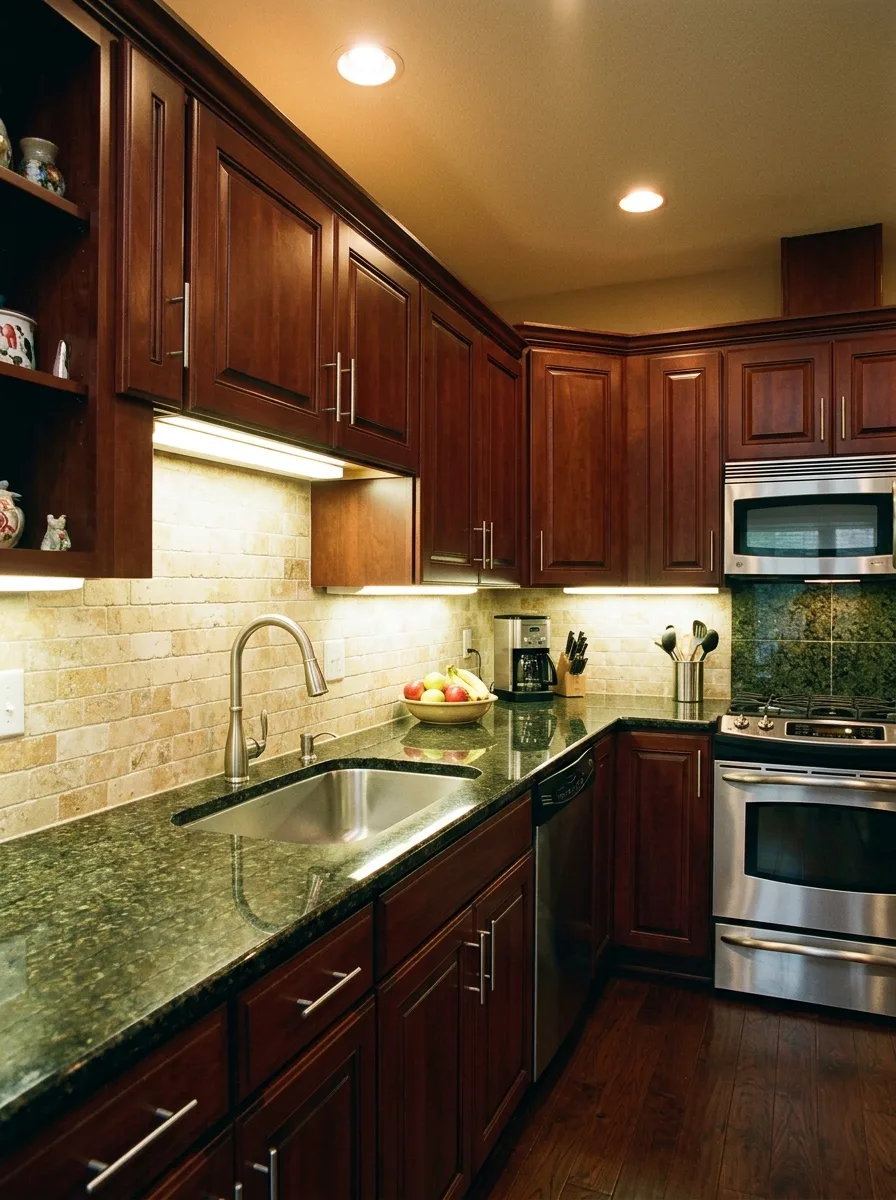
Install cherry wood raised-panel cabinets in a warm reddish-brown and take them to ceiling height. Use a dark green mottled granite countertop. Tile the backsplash in a warm travertine subway tile — the irregular natural stone rather than a manufactured version. Run LED or fluorescent under-cabinet lighting along the full counter run.
The under-cabinet lighting is the decision that lifts this kitchen. It illuminates the travertine tile and the granite simultaneously, creating a warm amber glow across the entire work surface that makes the cherry wood look intentionally warm rather than heavy. Add a bowl of seasonal fruit on the counter. Keep a crock of wooden spoons at the range. Set a small decorative piece on the one open shelf. The lighting is doing thirty percent of the design work.
Peach Floral Valance Corner Kitchen
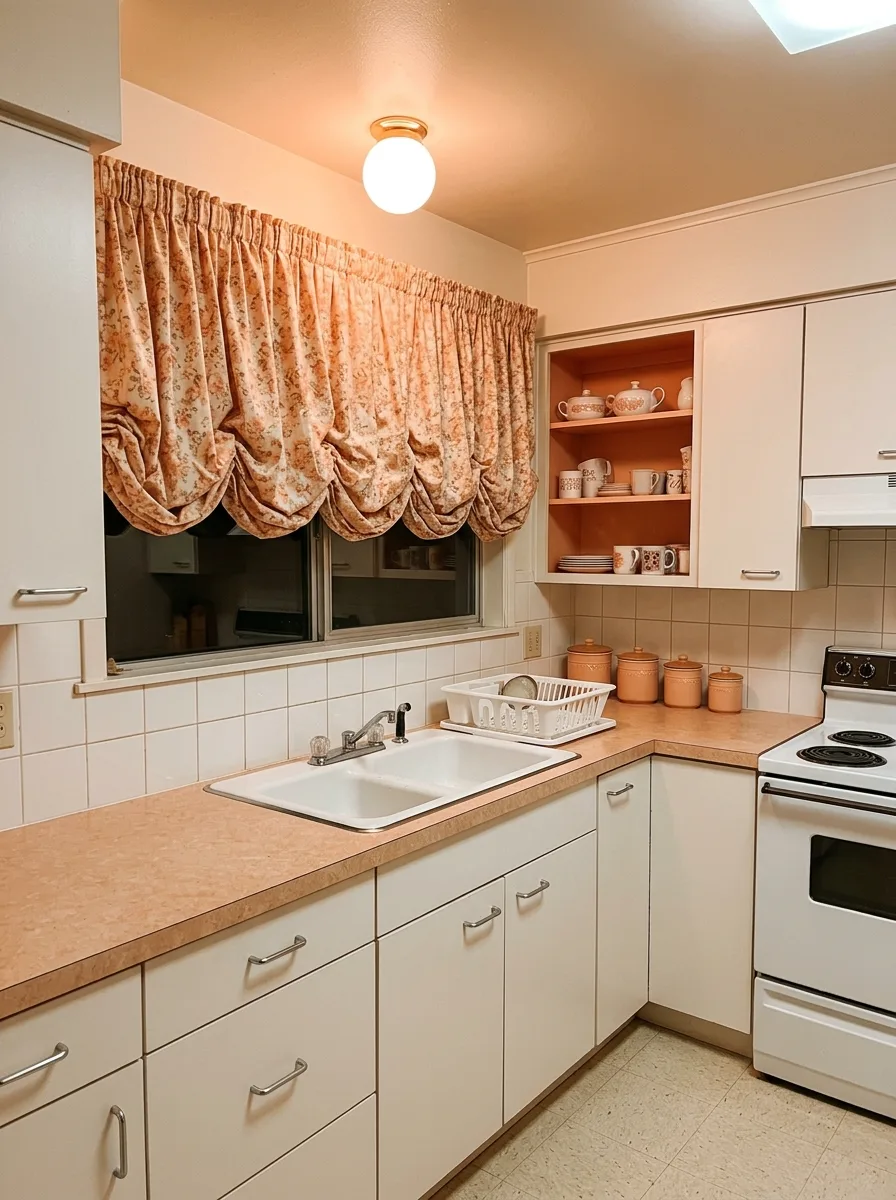
In an L-shaped kitchen with flat-front white or cream cabinets, paint the interior of one open upper cabinet in a warm terracotta or peach — leaving the doors off or having removed them. Fill the peach interior with copper-toned ceramics and patterned mugs and plates in warm tones.
Hang a full gathered balloon valance in a peach floral fabric — generous fabric, properly gathered, falling to windowsill height. Match the countertop in a warm peach or light terracotta laminate. Set peach ceramic canisters on the counter. Keep the tile backsplash in plain white square tiles. Add a globe ceiling fixture with a brass surround. This kitchen is a study in one warm accent colour — peach — applied to four surfaces with restraint, creating cohesion rather than overload.
Emerald Green Brass Pot Rack Kitchen
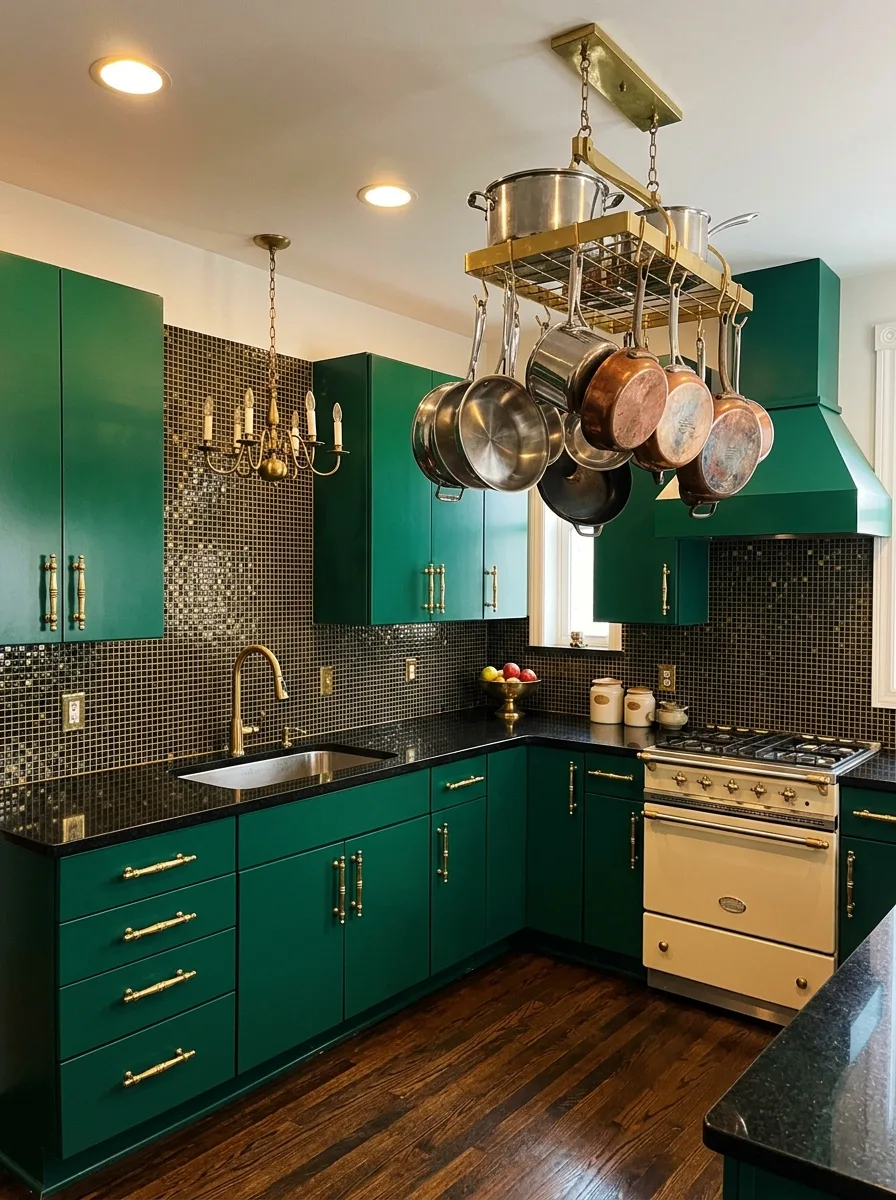
Paint all cabinetry in a deep, saturated emerald green — lacquer or high-gloss finish rather than matte, so the colour has depth and light interaction. Install long brass bar handles on every cabinet and drawer. Choose a black granite countertop. Tile the backsplash floor-to-ceiling in a small dark mosaic — black and gold mixed, so the tile reads as textured rather than flat.
Hang a rectangular brass pot rack from the ceiling on chains and load it with copper and stainless cookware. Add a brass candelabra chandelier to one side. Position a cream vintage-style range at the cooking wall. The copper pots against the emerald cabinets is the photograph. Everything else — the black countertop, the dark mosaic tile, the brass hardware — is building to that payoff.
Cherry Shaker Travertine Hood Kitchen
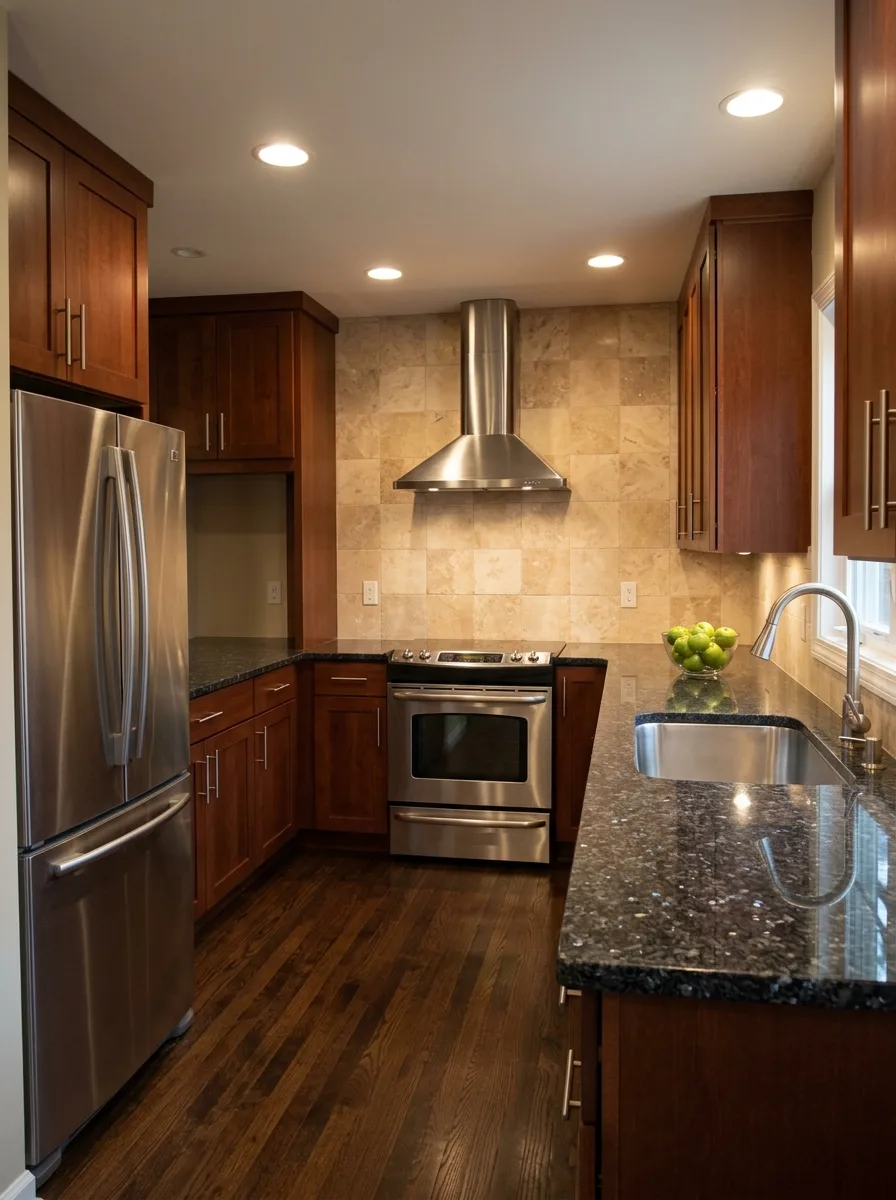
Install cherry shaker cabinets with brushed nickel bar hardware and take them to ceiling height in the corner. Choose a dark blue-black speckled granite for the countertops. Tile the range wall floor-to-ceiling in large format travertine — the warm cream and sand coloured natural stone — and position a stainless chimney hood against it as the centrepiece.
Use stainless steel appliances throughout. Set a bowl of green limes or apples on the counter at the sink as the single colour accent. Keep the counter otherwise clear. This is the 90s kitchen that was trying to gesture toward something more architectural and mostly got there. The travertine range wall and the stainless hood are genuinely strong design moves that outlasted the decade they were built in. The cherry cabinets give it its timestamp, and right now that timestamp is starting to look vintage rather than tired.
Final Thoughts
The 90s kitchen never actually left. Millions of people are cooking in one every single day. The question was never whether it was worth keeping — it was whether it was worth understanding.
Every look in this list works for the same reason. Someone made a decision and followed it through. The sunflower kitchen decided it loved sunflowers. The pig kitchen decided pigs were worth celebrating. The emerald and brass kitchen decided it wanted to feel like a jewel box. None of them apologised for their choices, and none of them should.
The kitchen that looks dated is not the one with oak cabinets or a wallpaper border. It’s the one that never quite decided what it wanted to be. That’s a timeless problem, and the 90s had nothing to do with it.