
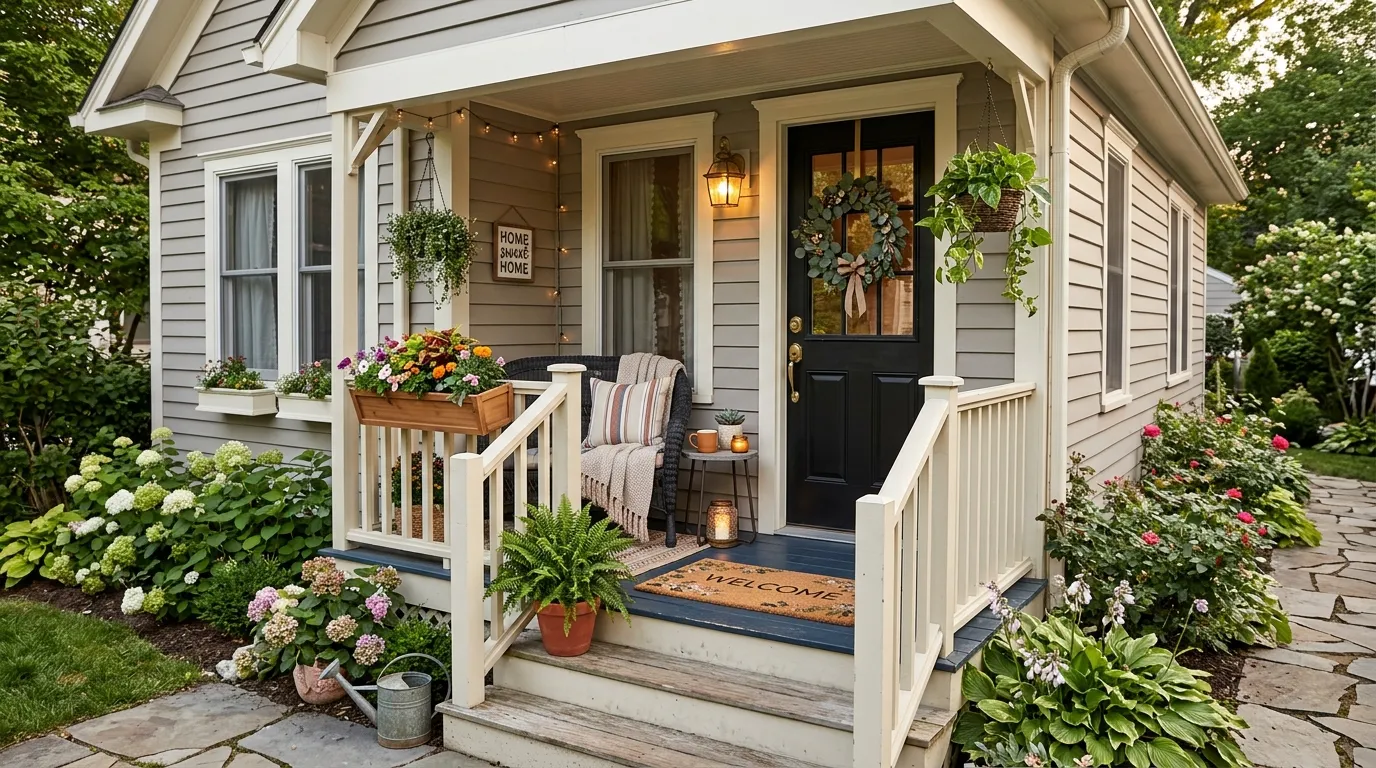
Your front porch is the sentence your house opens with. Most houses open with something like “um.” A plastic welcome mat, a single mum in October, maybe a light fixture installed by the previous owner in 1997 and never replaced. The house is fine. The porch is not pulling its weight.
The good news is that a small front porch is not a design limitation. It is a constraint, and constraints force decisions. When you have twenty square feet of covered entry, you cannot decorate your way out of a bad plan. You have to commit to something specific and execute it well. That specificity is exactly what makes small porches memorable.
Every porch in this collection is working with modest square footage. None of them feel modest. The difference is not space. It is conviction.
The Design Principles That Make Small Porches Look Complete
Plants Are Structure, Not Decoration
On a small front porch, plants are not an afterthought. They are architectural. A large terracotta urn flanking each side of the door creates symmetry and mass. A hanging basket with generous trailing foliage draws the eye upward and makes the porch feel taller. A collection of pots in varying heights at the steps creates a threshold, a planted entrance that frames the approach.
The scale of the plants matters as much as the plants themselves. One large pot reads as intentional. Three small pots in a row reads as indecisive. When in doubt, go bigger. A single oversized planting that dominates the porch is more memorable than five medium ones competing for attention.
Match the plant species to the mood of the porch. Boston ferns on a Southern porch. Lavender and rosemary on a French cottage front. Boxwood topiaries on a formal colonial entry. Seasonal mums and ornamental kale on a cabin porch in fall. The plant is not generic background. It is a character in the composition.
Architectural Details Earn Their Keep
The gingerbread trim on a Victorian porch, the wrought iron columns on a New Orleans shotgun, the stone piers on a Craftsman bungalow, the ogee tracery on a Gothic Revival entry: these are not decorations. They are the identity of the porch. When these details are present, the design job is to stop adding things and let the architecture speak.
When these details are absent, the design job is harder. A plain builder porch with no architectural detail needs the door color, the lighting, and the plant strategy to carry all the character. This is achievable. But it requires those three elements to be deliberate rather than default.
Symmetry Is the Shortcut That Always Works
Two matching planters flanking the door. Two matching lanterns at equal height on either side. Two matching rocking chairs. Two identical window boxes at identical heights on a railing. Symmetry communicates intention with no effort. The eye reads symmetry as designed rather than assembled.
This is particularly valuable on a small porch where there is limited room for the eye to wander. Symmetry gives it somewhere to go and somewhere to rest.
Small Front Porch Ideas
Black Board-and-Batten She-Shed Entry
Paint the entire exterior structure in a deep matte black, including the board-and-batten siding, the trim, and the porch ceiling. The black exterior should be applied in a flat or very low-sheen finish so it absorbs light rather than reflecting it. The contrast with the surrounding greenery is the entire composition.
Paint the door in a soft sage green or aged mint, so light it reads almost as a neutral but provides a clear focal point against the black structure. The door is the only element that departs from the dark palette. Mount a single cage-style pendant light in an aged brass or bronze finish directly above the door.
In front of the porch, lay a black and white geometric outdoor rug. Flank the door with simple wooden planter boxes or a vintage bench styled with black lanterns, wicker vessels, and buffalo check pillows. The restraint of the accessories against the strong exterior color is what makes this work. Do not overdecorate it.
English Cottage Rose Wreath Porch
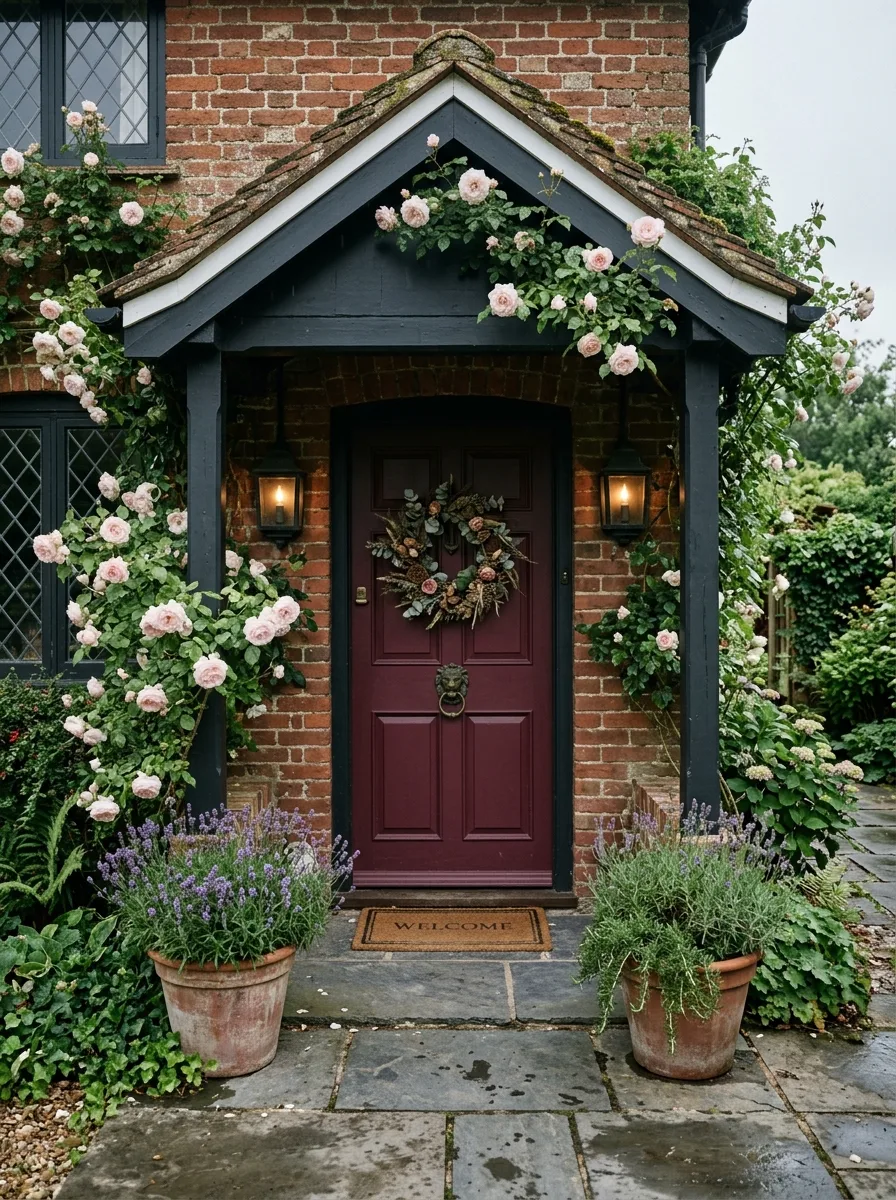
The door is painted in a rich plum or burgundy, a deep jewel tone that reads as warm from the street. Against aged brick, this color does not compete with the material. It settles into it.
Train climbing roses directly up the wall on either side of the door entry using stainless steel eye bolts and galvanized wire strung horizontally at 12-inch intervals. Choose a repeat-blooming variety in blush, cream, or pale pink. The roses will cover both the wall and eventually the porch gable over two to three seasons.
Mount a pair of black iron wall lanterns at identical heights on either side of the door. Place two large terracotta pots of lavender flanking the door on the stone or slate porch floor. Hang a dried botanical wreath rather than a seasonal or artificial one on the door itself. The dried wreath will hold its shape for a full season and reads as more organic and intentional than a synthetic alternative.
New Orleans Plant Explosion Stair Entry
The staircase is part of the porch on a raised shotgun or Creole cottage entry. Treat each step as a planting surface. Place a terracotta pot on every other step alternating heights, starting with the largest at the bottom and stepping down in size toward the porch level. Mix colors, mix species, mix sizes of pots. Geraniums, ferns, marigolds, trailing lobelia, caladium.
Hang an oversized Boston fern from the porch ceiling directly above the top of the stair. It should be generous enough to read from the street. Add a second smaller hanging basket on the opposite side. The effect is a planted arch that frames the entry from below as you climb.
Paint the stairs in a dark charcoal or the same black as the trim. The painted stairs against the vivid pot colors is the contrast that makes the planting strategy read as bold rather than chaotic.
Victorian Painted Lady Porch
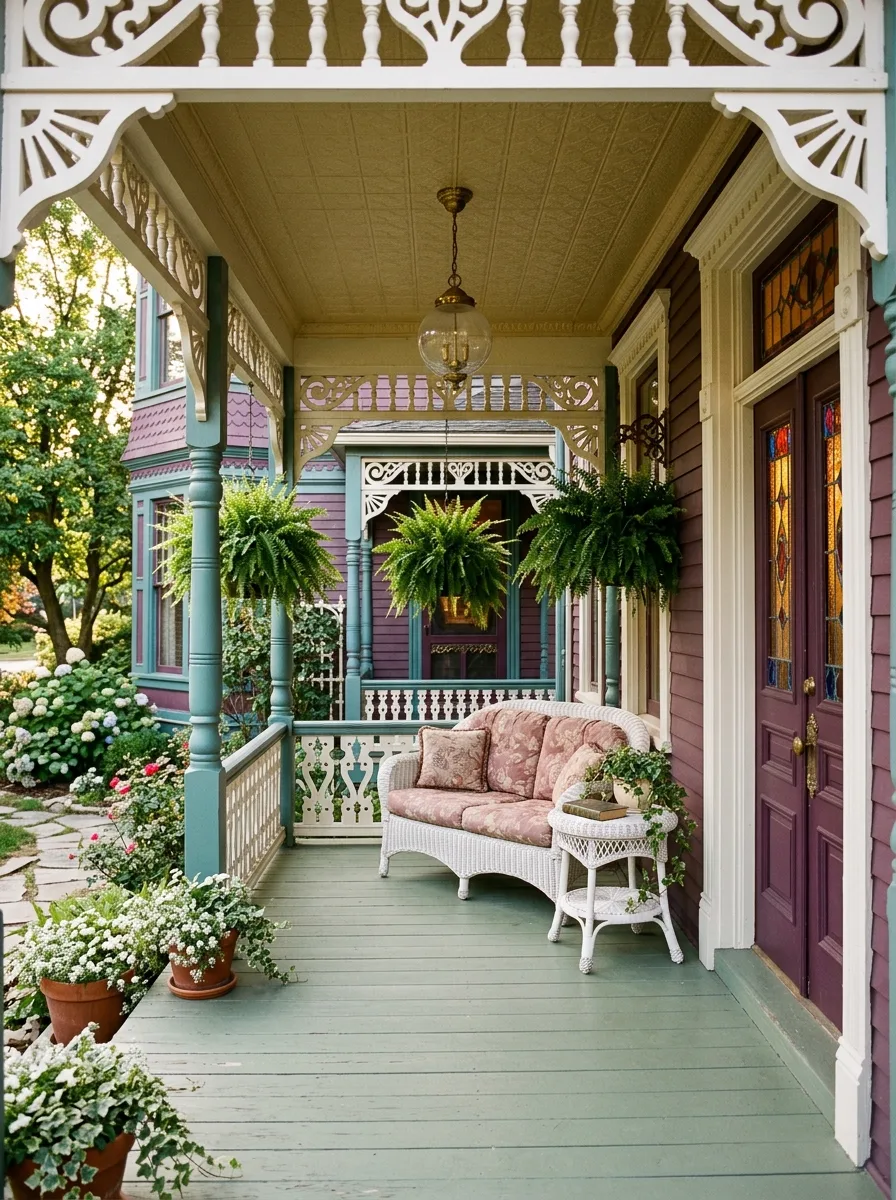
Paint the columns in a dusty teal or sage blue. Paint the porch floor in a weathered sage green. Let the house siding remain in its original color, which on a Victorian should be a deep jewel tone: plum, forest green, slate blue, or terracotta. Do not try to coordinate. The Victorian color tradition is deliberate contrast between structural elements, not tonal coherence.
Hang a brass globe pendant at the porch ceiling center. It should be clear glass with a visible antique-style filament bulb. Two or three large hanging ferns at bracket-mounted hooks between the columns. A white wicker loveseat with dusty rose floral cushions directly in front of the house wall.
Add two or three terracotta pots of trailing plants at the base of the columns. Place a vintage ceramic vase or pitcher with fresh garden flowers on a small wicker side table. The porch ceiling should be in a cream or gold tone rather than white. It reads warmer and more historically accurate.
Pink Cottage Door Floral Arch
Paint the door in a soft blush pink, not a hot pink, but the pale barely-there pink that reads as creamy in shade and clearly pink in sun. Paint the porch floor the same blush tone, one shade lighter than the door, so the two surfaces read as the same palette family from the street.
Train climbing roses or install a floral garland across the porch beam directly above the door opening and extending to both columns. If using real roses, this takes two to three growing seasons and requires attaching horizontal wires to the structure for the canes to follow. If using preserved or silk florals, secure them with UV-stabilized zip ties along the beam and disguise the attachment with additional foliage.
Flank the door with matching light gray ceramic or stone planters filled with blush pink hydrangeas or garden roses. Place a white painted bench on one side with a single pink cushion. Hang simple brass lantern sconces at symmetrical heights on either side of the door. Add string lights along the beam above the flowers for evening warmth.
Dual Pendant Lantern Farmhouse Entry
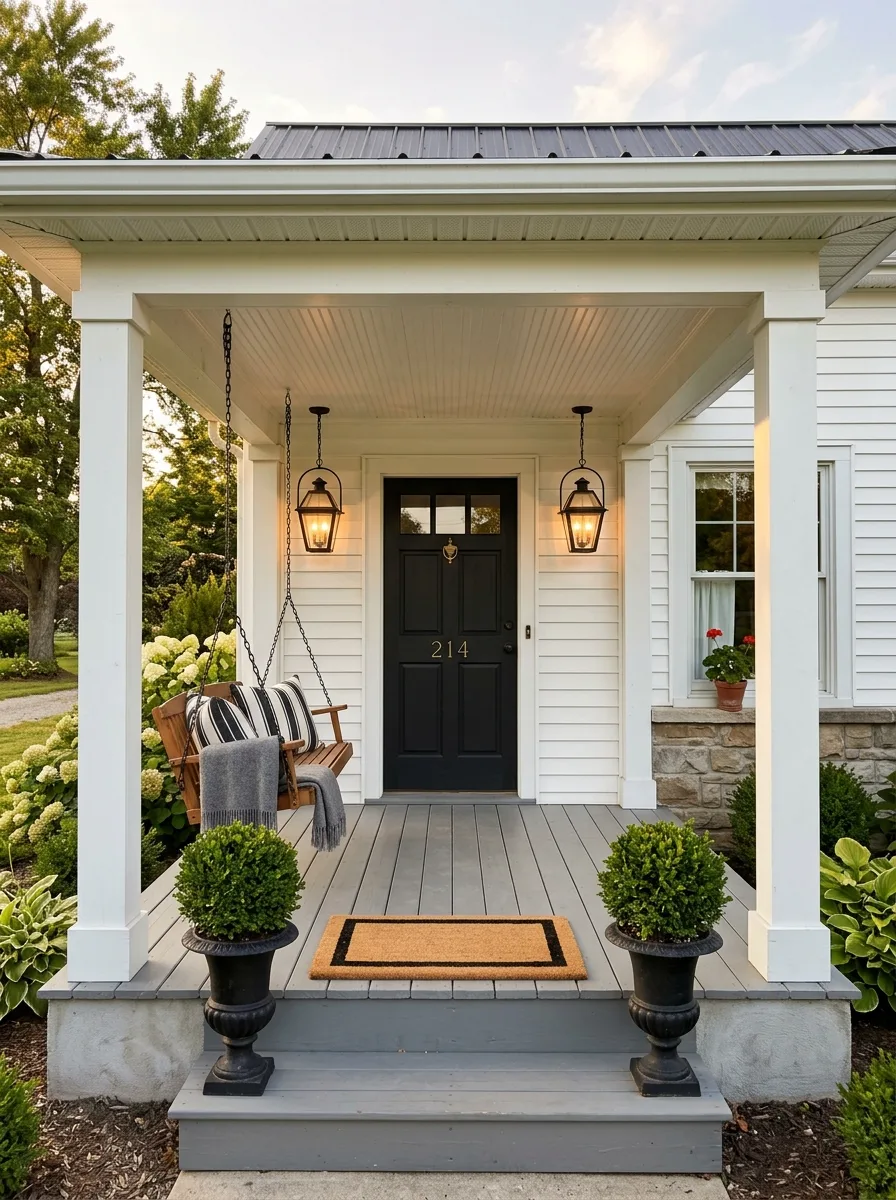
The defining move is paired pendant lanterns hanging from the porch ceiling on either side of the door, not wall-mounted sconces flanking the door, but ceiling-hung lanterns suspended on chains at roughly door-frame height on each side. The difference between a sconce and a pendant lantern hung from the ceiling reads as architecturally considered rather than builder-default.
Choose a black iron lantern with clear glass panels and a candelabra-style bulb. Hang each one from the ceiling at the same height. Make sure the chains are the same length. The symmetry has to be exact.
Paint the door in a flat matte black to match the lanterns. Plant two matching boxwood topiaries in black cast-iron urns at the base of the porch steps. Lay a natural coir doormat with a black border. The entire palette is black, white, and greenery. Resist the impulse to add a wreath, a seasonal flag, or a welcome sign. The restraint is the point.
Rattan Rope Swing Southern Porch
On a white brick or white-painted colonial porch with classical columns, hang a single oval rattan swing from two robust ceiling hooks using thick natural fiber rope. The rope should be at least one inch in diameter, twisted rather than braided, and long enough that the swing seat sits at a comfortable height with the rope visible at full length above it.
Cushion the swing in a deep indigo or cobalt blue solid and add graphic print pillows in a matching blue and white pattern. Below the swing, place a large floor cushion or low pouf in a bold stripe that shares the same blue. Add a single vintage metal stool as a side table with a small vase of cut flowers.
The white everything else and the deep blue upholstery is the only color conversation happening on this porch. Do not introduce a third color.
Black Steel Modern Entry Topiaries
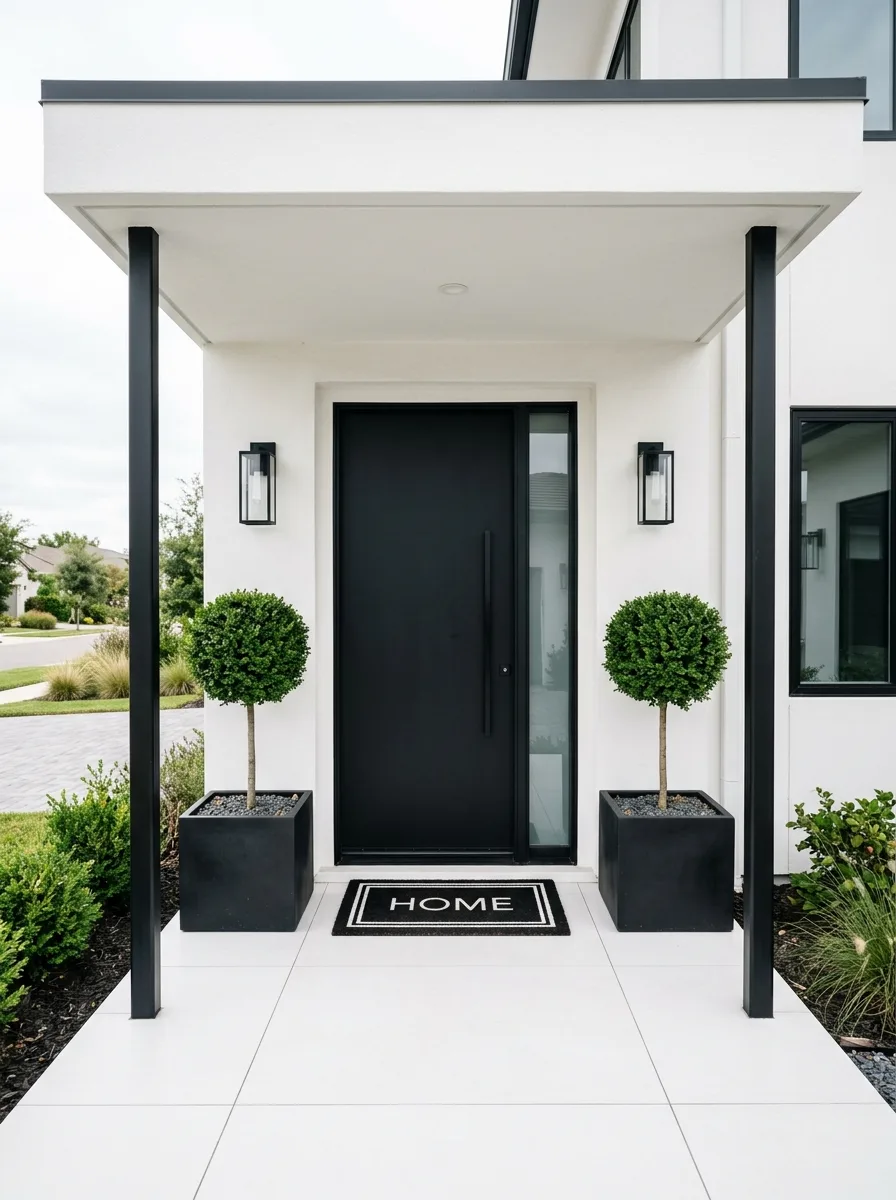
Use the architecture as the design. A flat-roofed modern entry with black steel square posts and a white stucco surface needs almost nothing. Two matching matte black rectangular planters, one on each side of the door, each containing a single ball-shaped lollipop topiary. The topiaries should be identical in species, identical in clipping shape, and identical in pot height.
Choose a door that is matte black with a full-height single panel and a slab-style bar handle. No visible frame around the glass sidelight. Clean lines.
Install two black rectangular wall sconces at matching heights on either side of the door. Use LED bulbs in a warm color temperature. Place a single charcoal or black mat at the door. That is the entire design. Everything is accounted for. Adding anything else to this entry would be incorrect.
Cedar Ceiling Boho Herb Garden Porch
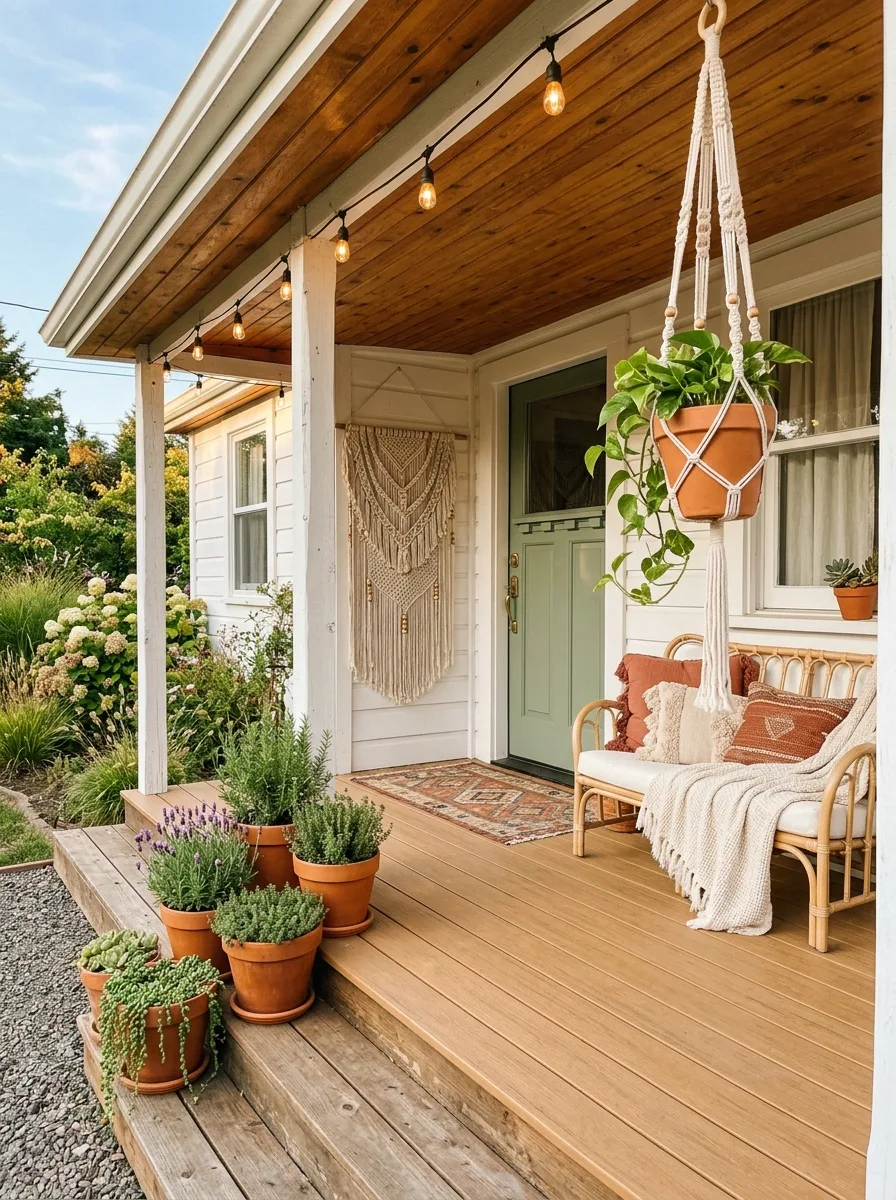
Leave the cedar porch ceiling unfinished or apply a clear matte sealer to prevent graying. Install a single run of Edison string lights along the length of the porch from the house wall to the outer edge. Run them in a straight line, not looped.
Place a large macrame wall hanging on the house wall beside the door. It should be at least 20 inches wide and proportionate to the wall height. Hang a single macrame plant hanger from the porch ceiling holding a generous trailing pothos in a terracotta pot.
Arrange a collection of terracotta herb pots along the front edge of the porch floor: lavender, rosemary, thyme, sage. Label them if you grow them for use in the kitchen. Add a rattan loveseat or two-seater bench with rust-orange and cream cushions against the house wall. Place a vintage kilim-style outdoor rug beneath the seating. Paint the door in sage or eucalyptus green.
Red Door Colonial Topiary Entry
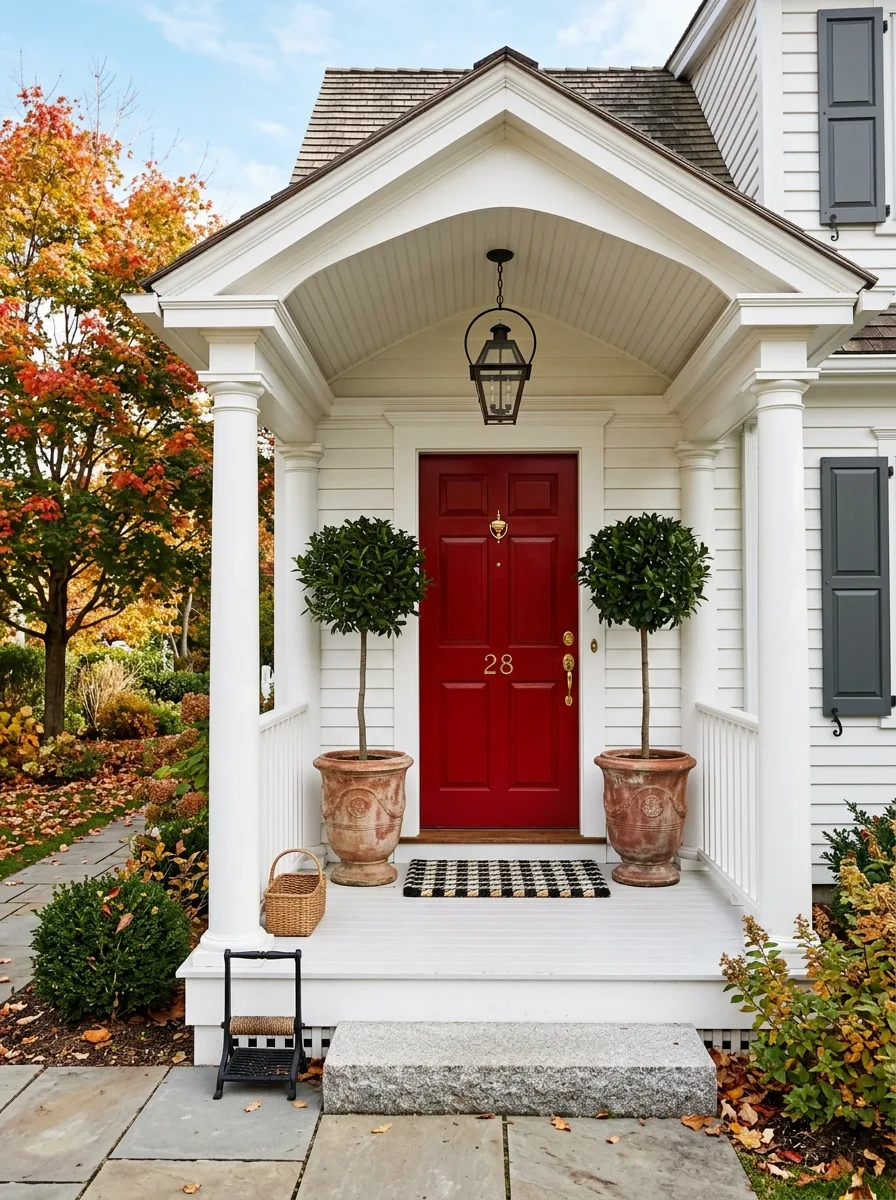
The entire entry equation is: red door, two matching terracotta urns, two identical bay topiaries, one black iron lantern. Nothing else. This is a porch that works through restraint and proportion, and adding a third element breaks it.
The door should be painted in a true red, not a brick red or a coral, but the clear lacquered red that reads confidently from across the street. Choose a color in the family of Farrow and Ball’s Blazer or Benjamin Moore’s Million Dollar Red. Apply it in an exterior semi-gloss for sheen that reads as architectural rather than painted.
The terracotta urns should be proper aged terracotta, not plastic or painted concrete, with a classic relief pattern on the body. The topiaries should be standard bay or Ficus trees clipped into a sphere at the top. Each one the same. Mount a single black iron lantern with an antique brass chain above the door at the center of the porch ceiling. A brass door knocker. A houndstooth or checked coir doormat. Done.
Teal Door New Orleans Ironwork Porch
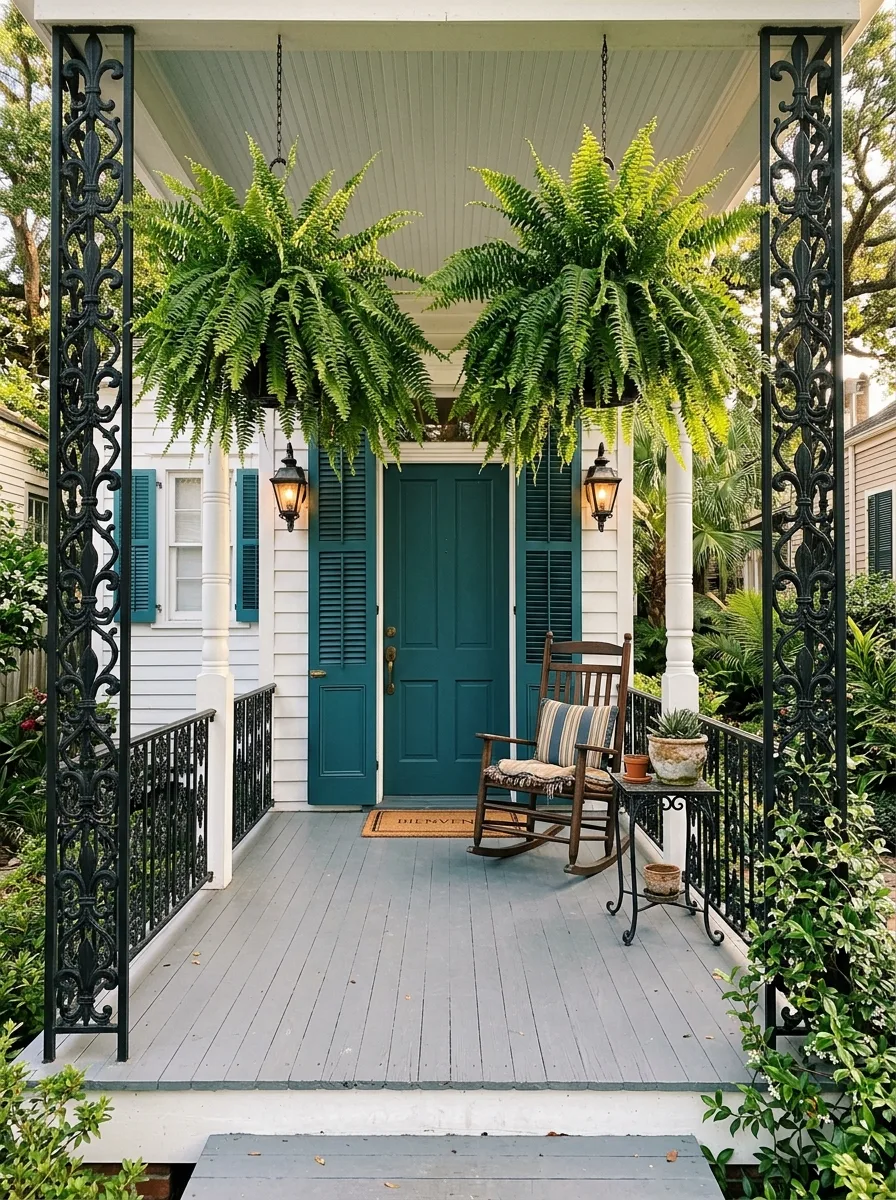
The ironwork columns are the architecture. Do not remove them, do not paint them, do not disguise them. They are the identity of this porch. Paint the railing and column ironwork in a single flat black and ensure the paint is full-coverage with no rust showing through.
Paint the door in a deep teal, not a seafoam, not an aqua, but the specific saturated teal that holds its color in shade and reads as jewel-like in direct sun. Mount matching antique-style iron wall lanterns at the same height on either side of the door.
Hang two or three full Boston ferns from ceiling hooks between the ironwork columns. They should be at the same height, generously sized, and watered regularly enough to prevent browning on the outer fronds. Place a single wooden rocking chair to one side, a small iron side table beside it, and one small potted plant on the table. The asymmetry of the single chair on one side of a formal symmetrical porch entry is a choice that reads as lived-in rather than staged.
White Cube Scandinavian Entry
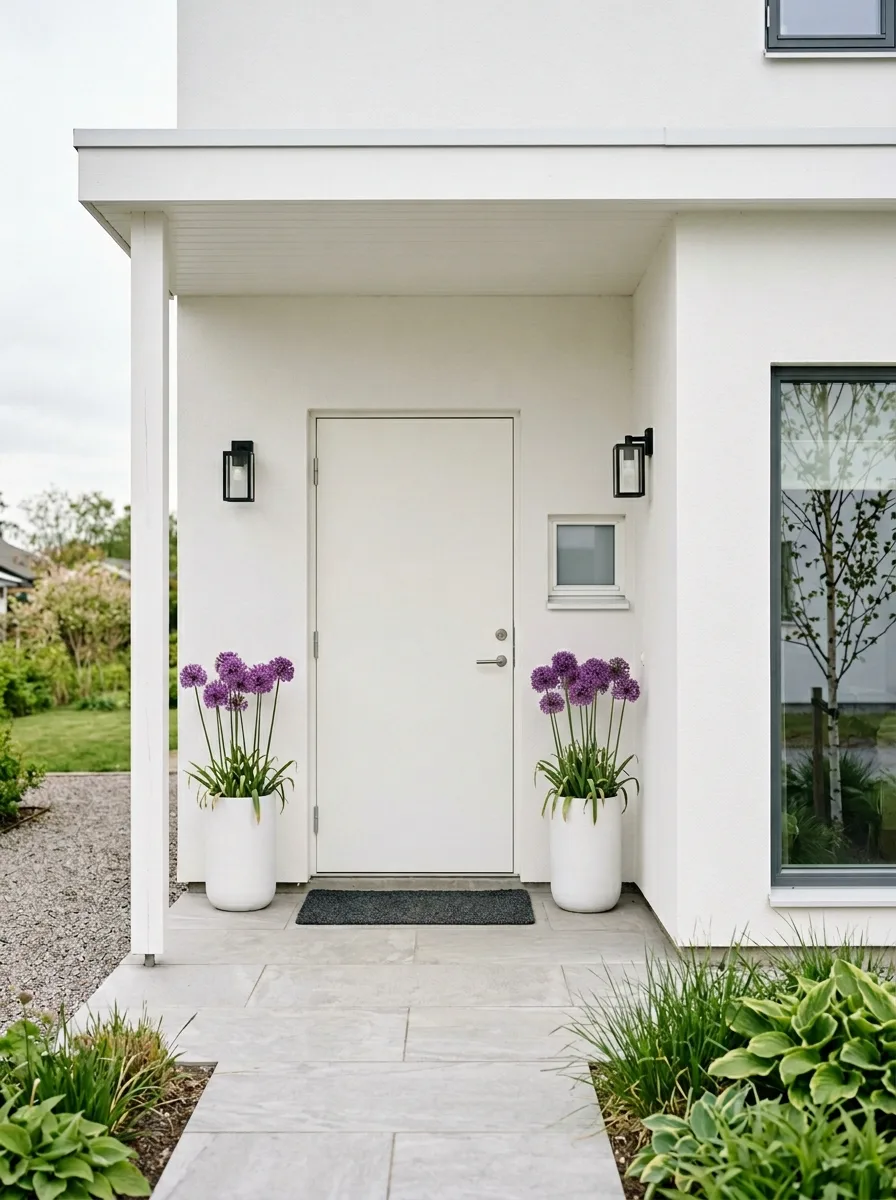
The palette is white on white with one accent. The house exterior is white render or white cladding. The door is white or a near-white warm grey. The porch ceiling is white. The paving is white or pale grey large-format porcelain tile. Two tall white cylindrical planters in a matte fiber-reinforced concrete hold a single flowering specimen each.
The specific accent color is the plant: purple allium or blue agapanthus in season, followed by white cyclamen in cooler months, followed by a chartreuse grass in summer. The planting changes with the season. The pots and the house do not. The single color pop is all the porch needs.
Install two black rectangular wall sconces at precise symmetrical heights. No overhang lantern. No hanging element. No seasonal decoration. The integrity of this porch depends on nothing extra being added.
Log Cabin Fall Harvest Entry
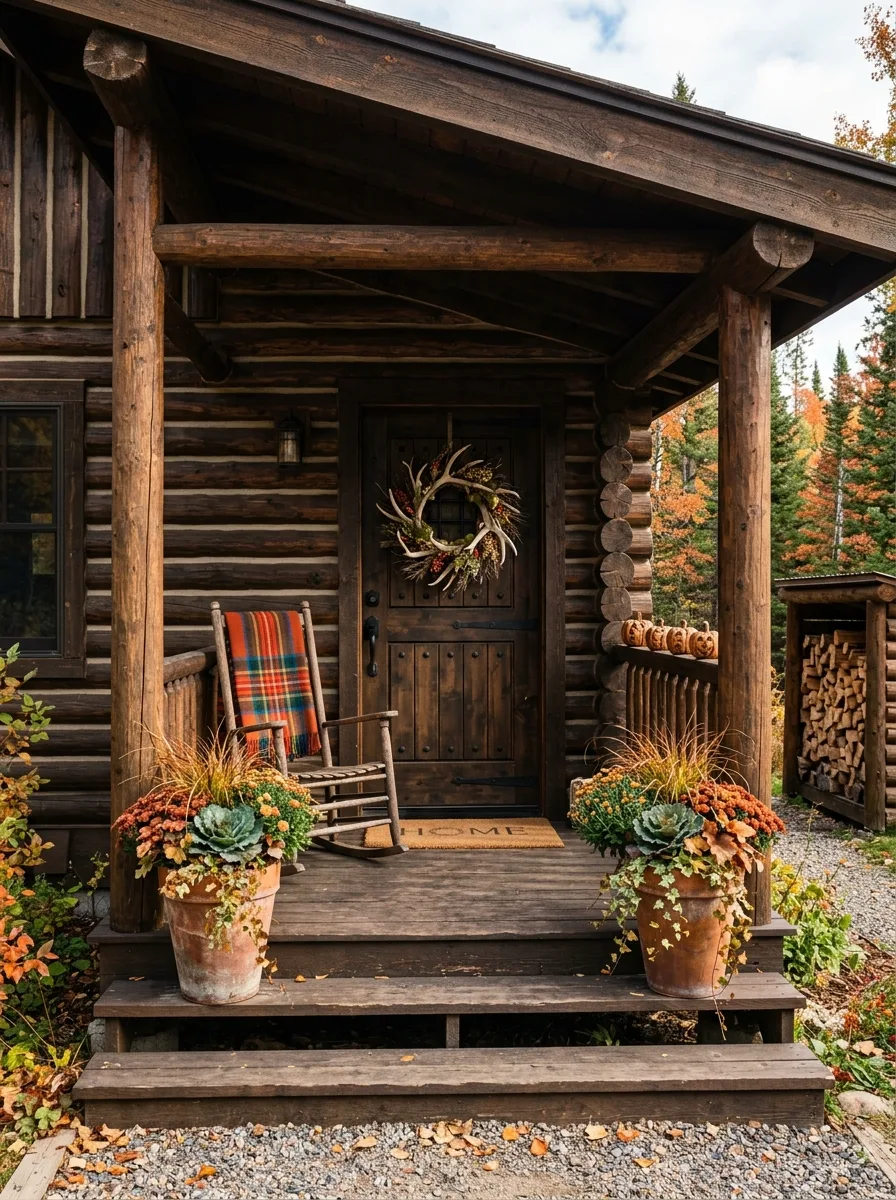
Apply a dark walnut stain to the cabin logs if they have faded, or allow them to silver naturally over time. The goal is a rich, consistent dark wood tone. The door should be stained or painted to match the logs, not contrast with them. On a log cabin, door and structure in the same material family reads as architecturally honest.
Hang an antler-and-berry wreath on the door for fall. A real wreath made from foraged materials will last six to eight weeks in cool weather. A preserved version with dried berries, seed pods, and small cones holds longer.
Place two large terracotta pots on the porch floor, one on each side of the door, planted with a combination of fall mums, ornamental kale or cabbage, trailing ivy, and ornamental grasses. The massing of multiple plant types in a single pot is the key. Choose colors in amber, rust, burgundy, and green.
Add one wooden rocking chair to one side of the door with a wool plaid throw draped over it. Stack split firewood in an organized pile visible from the approach. A simple coir mat at the door.
Red White Blue Americana Entry
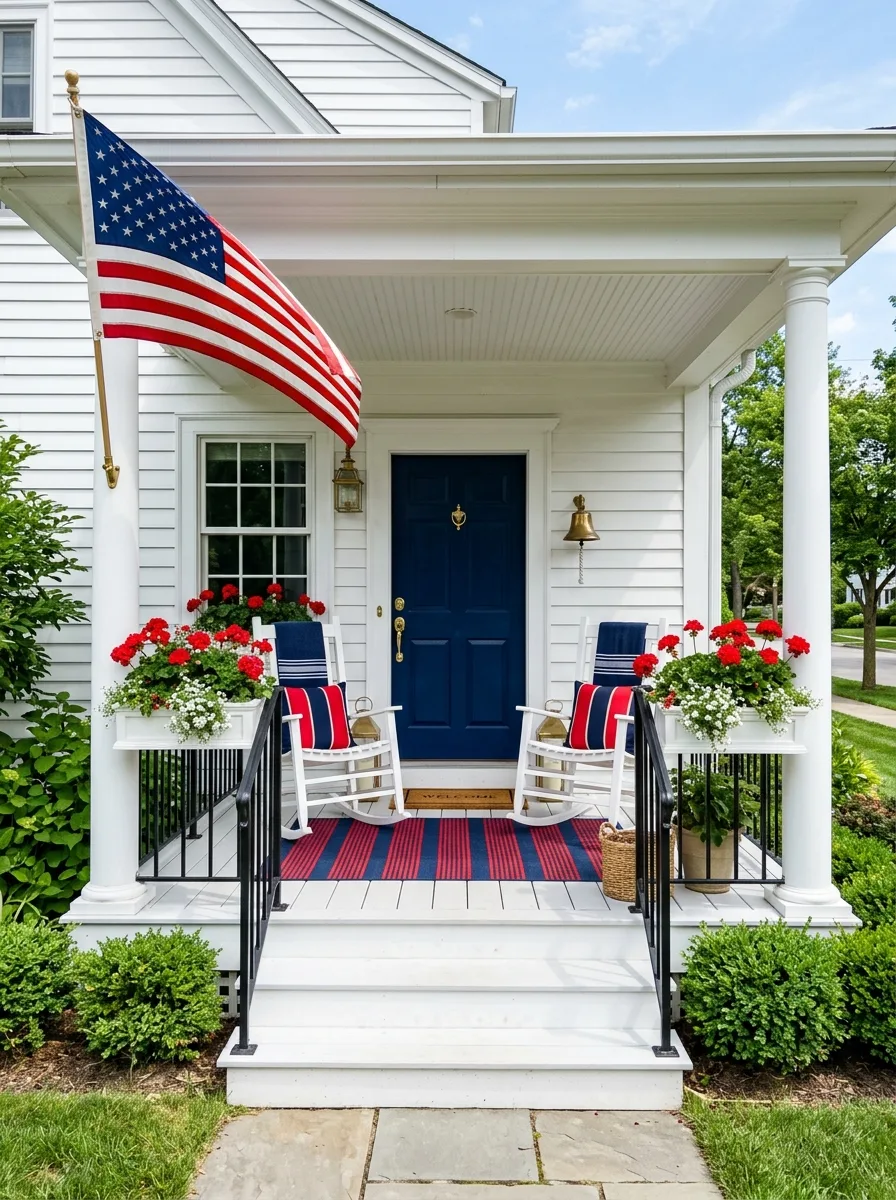
Two white rocking chairs, positioned symmetrically facing the street. Red and navy striped cushions on each. A navy and red horizontal-stripe rug between the chairs and the door. A navy painted door. A flag mounted at the correct angle from the house wall, above and to the left of the door.
The window boxes are the detail that elevates the entire entry. Mount matching white wooden window boxes on the railing at equal heights on each side of the steps. Plant them in a combination of red geraniums, white million bells, and trailing blue lobelia. This planting combination is the American flag in botanical form. It is not subtle. It does not need to be.
Mount a single brass wall lantern beside the door. Add a brass ship’s bell on the other side. The brass adds warmth to what is otherwise a very high-contrast red, white, and blue palette.
Craftsman Stone Pier Mum Entry
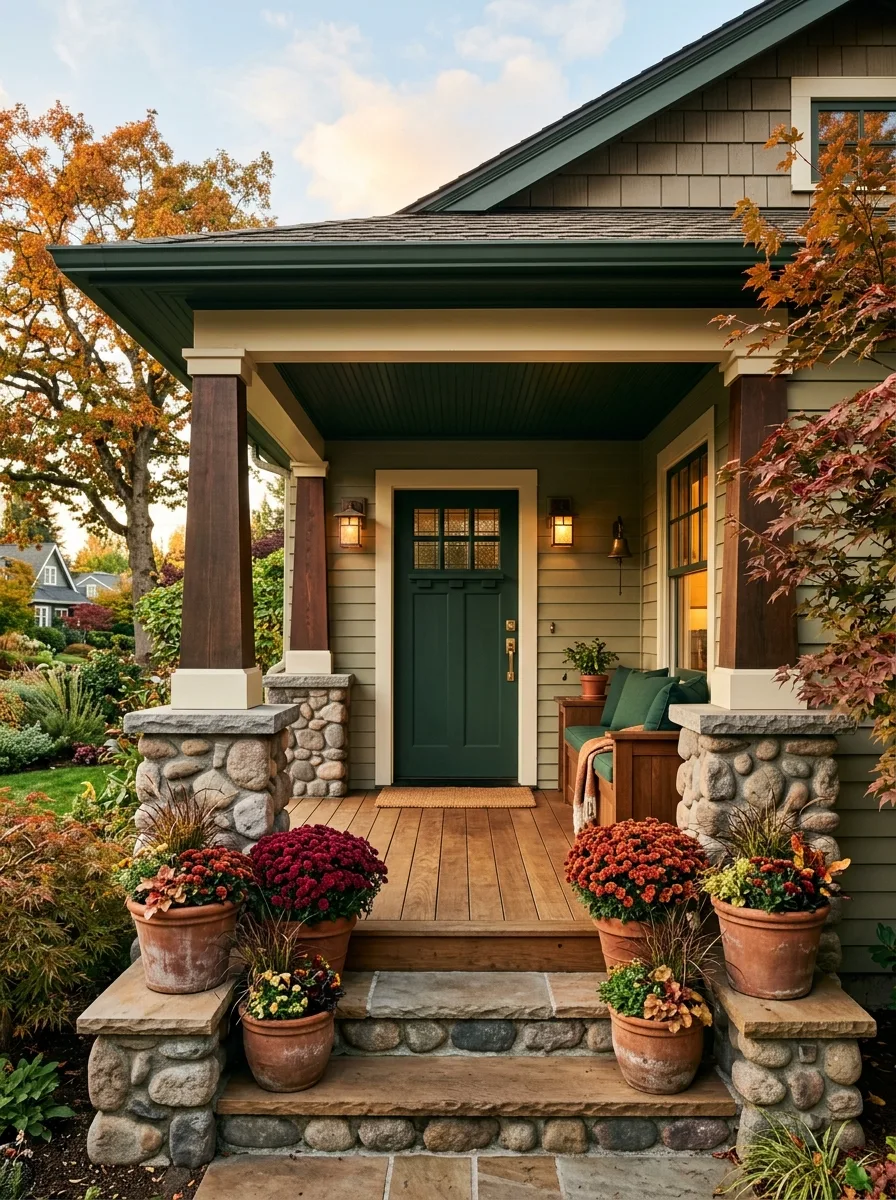
The stone piers are the architecture. Everything else should support them. Use the same stone as a base for the planters: stone-effect or natural stone containers placed at the base of each pier.
Fill them with the Craftsman palette of seasonal planting: deep burgundy or rust-colored mums, ornamental grasses in amber tones, trailing ivy, and ornamental kale for late season. The containers should be terracotta, not plastic. The stone and the terracotta read as compatible natural materials.
Paint the door in a deep forest green. Install Craftsman-style wall sconces in an oil-rubbed bronze or dark walnut finish, the square-paneled style with amber glass rather than clear. Place a single bench or wooden storage settle against the house wall with a green cushion to match the door.
The porch ceiling should be painted to match the soffit: a warm cream or khaki, not white. The warmth reads as intentional in the context of the warm stone and the dark green door.
English Cottage Rose Arch Arched Entry
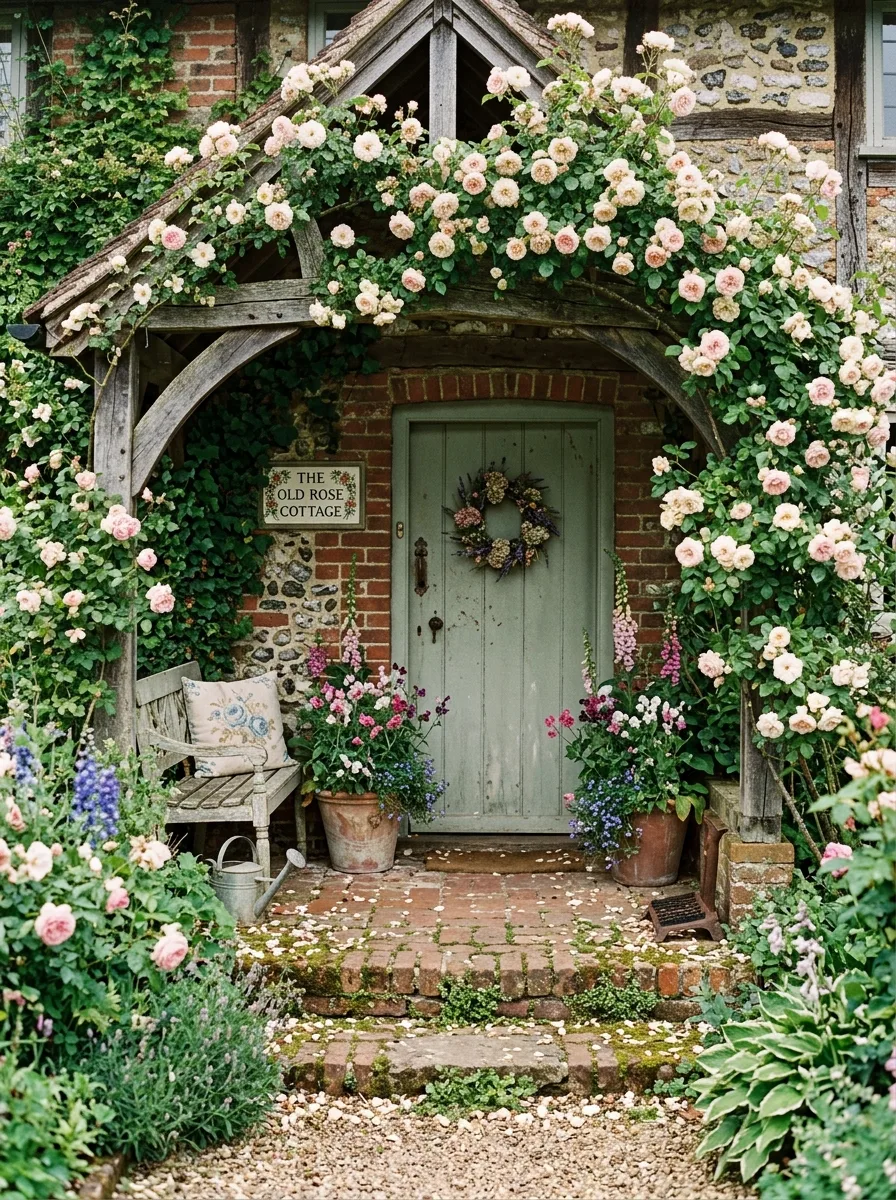
Build or restore the timber porch arch in a simple A-frame shape using natural weathered oak or Douglas fir. The wood should be left unfinished or sealed only with a clear penetrating oil. No paint, no stain that changes the color significantly.
Train a climbing rose up each post of the arch, tying the new canes loosely to eye bolts screwed into the wood at 12-inch intervals. Choose a variety that blooms once but abundantly, like ‘Bobbie James’ or ‘Alberic Barbier’, for a full seasonal flush. The roses will cover the arch entirely within three years.
Paint the door in sage green. Hang a wreath of dried hydrangeas and lavender on the door itself. Place a weathered wooden garden bench to one side with a floral print cushion. Add a vintage watering can beside the bench. Lay vintage brick pavers or reclaimed stone for the path and porch floor. The material continuity between the path and the porch surface is as important as anything placed on it.
Gothic Navy Stone Entry
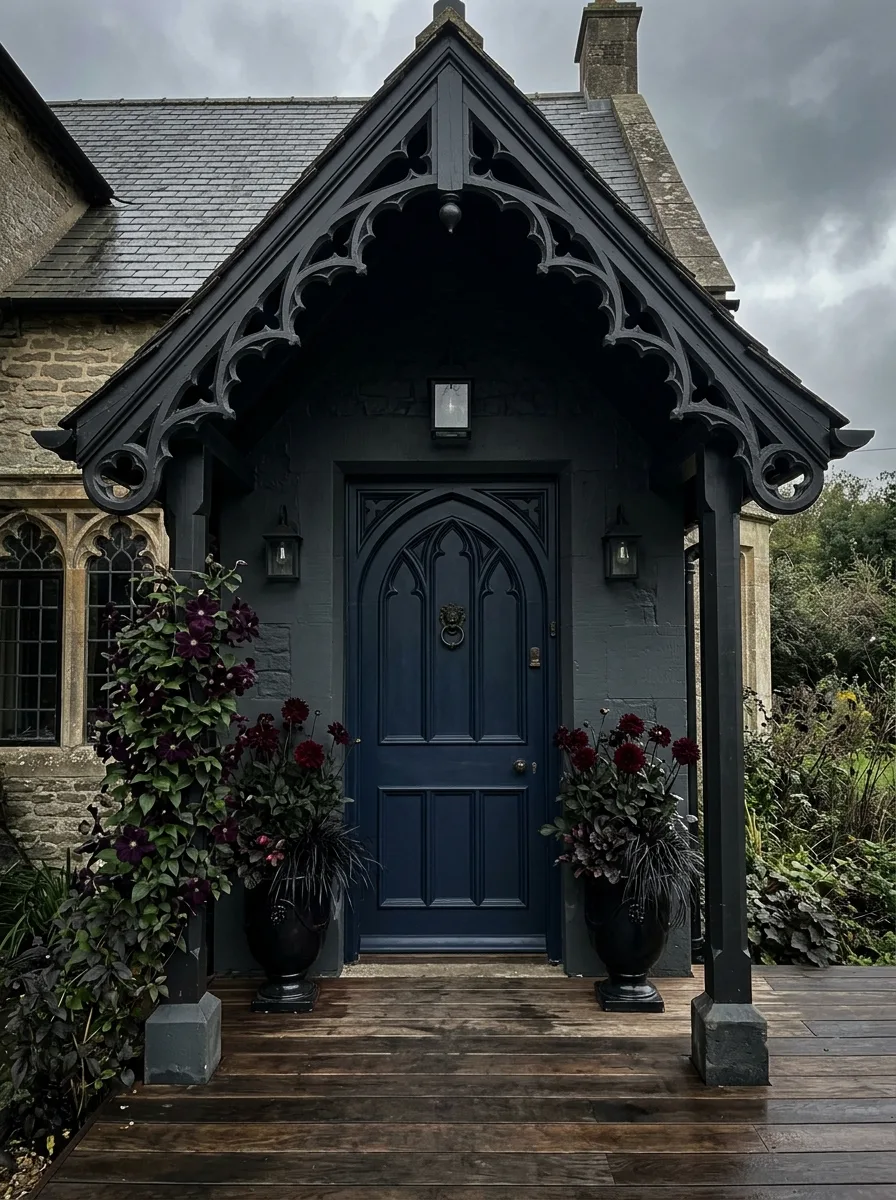
Paint the porch gable ornament, the columns, and all trim in a flat or matte near-black navy. The navy should read as almost black in overcast light and reveal itself as dark blue in direct sun. Farrow and Ball’s Hague Blue or Railings are reference points.
The door should be painted in the same color as the trim. Not a contrasting color. The entire porch structure, including door, is one unified dark tone. This is the specific move that makes a gothic porch work: the envelope reads as a single sculptural element rather than a door with framing around it.
Place two large matte black or very dark glazed ceramic urns on the porch floor, one on each side of the door. Plant them with deep burgundy dahlias, dark clematis, or black mondo grass. The plants should be in the darkest possible tones to maintain the palette.
Mount two small iron wall lanterns with cage or industrial-style housings, positioned low at either side of the door rather than high. Low-mounted lanterns at eye level flank the door and create intimacy. High-mounted lanterns read as safety lighting.
Driftwood Wreath Beachside Entry
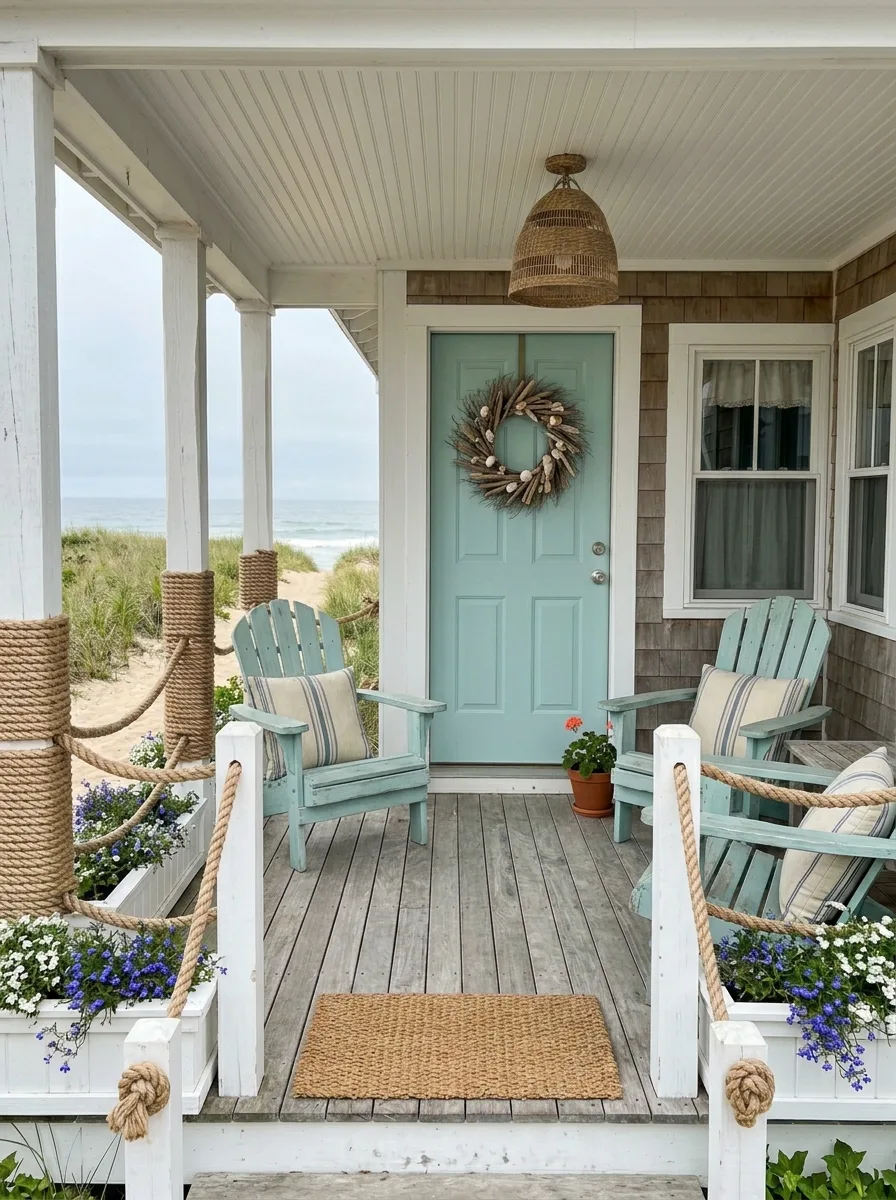
Paint the Adirondack chairs in a soft aqua or seafoam paint. Use a chalk-style exterior paint that dries to a slightly matte surface with the faint texture of something that has been outdoors a long time. Two chairs facing the water or the street, placed symmetrically on either side of the door.
Mount a woven rattan or wicker flush-mount light at the porch ceiling center. This is a casual light fixture that reads as beachy without being themed. Install window boxes on the porch railing and plant them in alternating blue lobelia and white alyssum.
Hang a driftwood and shell wreath on the door. Make it yourself or source one from a coastal artisan. Wrap the porch railing posts in natural rope, tied at the top and knotted at the bottom. The rope rail detail is the signature move of this entry. It replaces or supplements a standard railing and makes the material language of the porch consistent with the coastal setting.
Bougainvillea Blue Mediterranean Entry
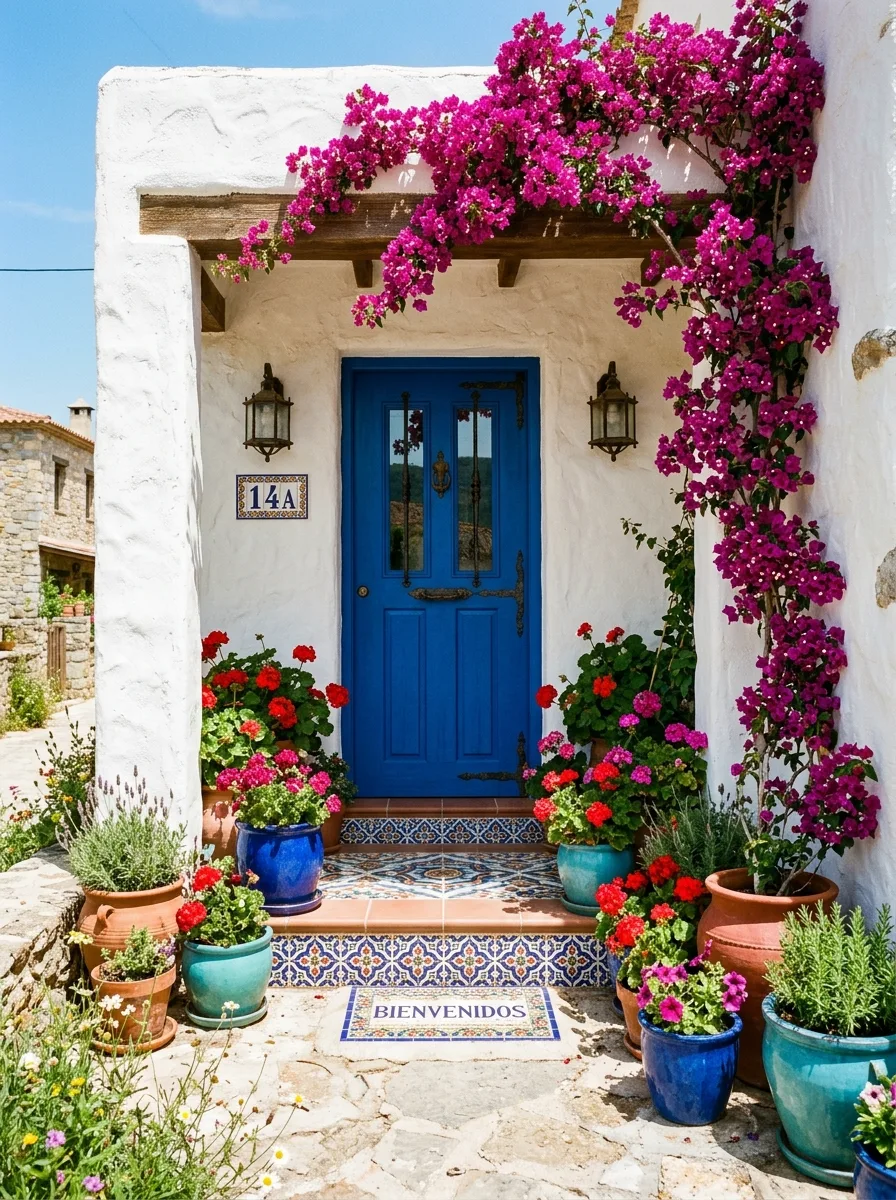
The bougainvillea is the architecture. Train it up the porch column or door frame starting with a rooted cutting planted in the ground beside the column, staked to the structure with galvanized wire. In a warm climate zone 9 or above, it will achieve substantial coverage within two seasons. In cooler climates, grow it in a large container and bring it inside or to a frost-free location over winter.
Paint the door in a clear cobalt blue, the blue of Greek island shutters. Install a pair of antique-style brass or bronze lanterns at symmetrical heights. Number the house in hand-painted Talavera-style tile.
Replace the standard entry mat with hand-painted or manufactured Talavera or encaustic cement tile on the porch floor or the threshold step. The patterned tile can cover just the step riser rather than the full floor area. That single tile element carries the entire Mediterranean identity of the entry.
Fill the remaining floor space with terracotta, blue glazed, and turquoise pots in varying sizes, planted with red geraniums, trailing rosemary, lavender, and any currently-blooming flowering species. The abundance of pots is the point. This entry does not edit. It fills, and fills intentionally.
Conclusion
The front porch is the only part of your home that the entire street is invited to have an opinion about. This is either pressure or opportunity, depending on how you look at it.
Every porch in this collection decided it was an opportunity. The Gothic stone entry leaned into darkness and made it magnetic. The rose-covered cottage arch earned its beauty over three patient seasons. The minimal Scandinavian entry decided that two purple flowers in white pots was a complete composition and resisted the urge to add anything else.
Scale does not determine significance. What your porch says when someone walks toward it is entirely up to the decisions you make before they get there.
Make them on purpose.