
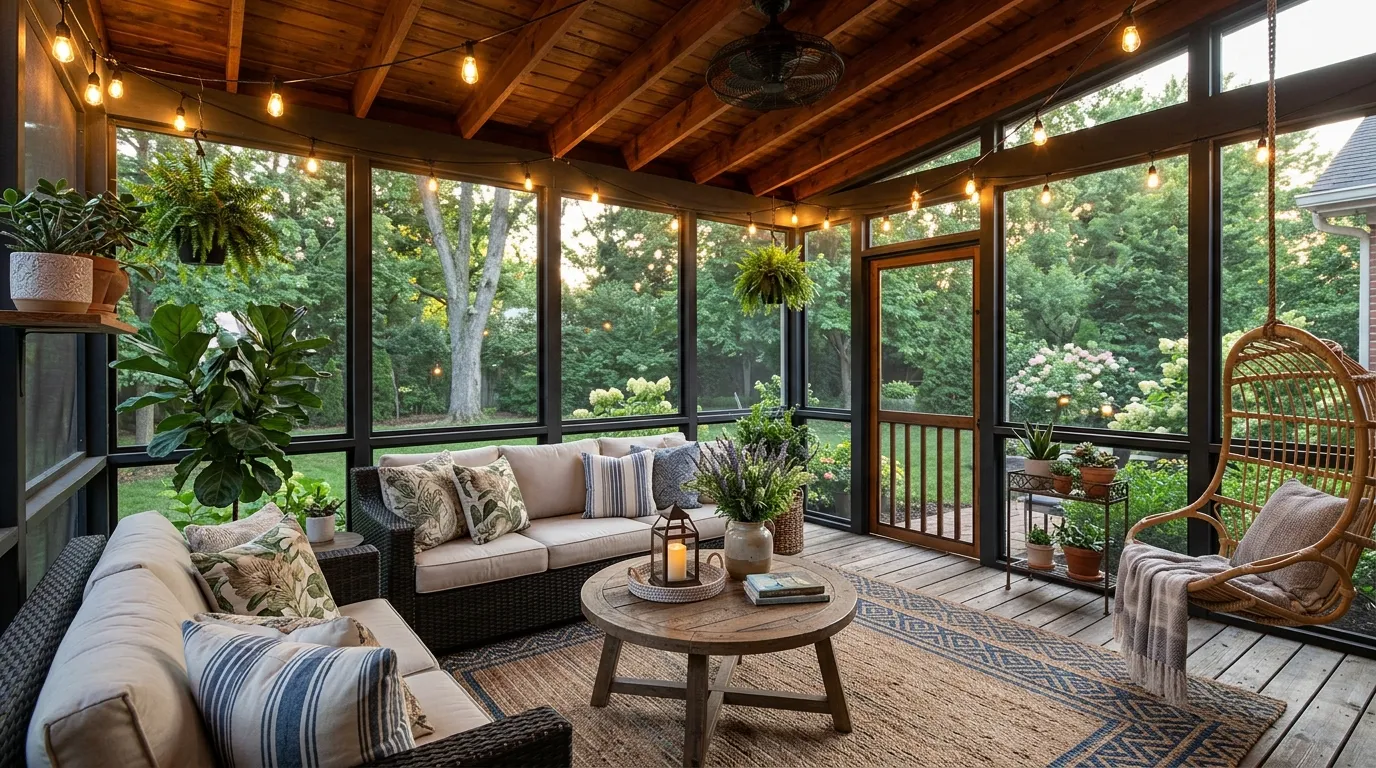
There’s a version of the screened porch that exists in every suburban neighborhood. Plastic furniture. A ceiling fan installed crooked. Maybe a rug that’s been rained on enough times that it’s no longer a rug so much as a suggestion of a rug. Everyone has been on this porch. Nobody wants to stay there.
The screen is not the design. It’s the permission slip. It says: you can bring sofas out here. You can hang art. You can put down a real rug and keep it there through October. The screen handles the mosquitoes. You handle everything else.
Most people stop at the screen. The rooms in these images didn’t.
What separates a screened porch that works from one that doesn’t has almost nothing to do with budget. It has everything to do with whether someone made deliberate decisions about ceiling material, furniture scale, and focal point — and then followed through. A dark green ceiling with cage pendants and candlelight is a decision. A builder-beige ceiling with a plastic table is also a decision. They just don’t feel equally considered.
Every one of these twenty spaces made a call. Here’s how to steal it.
Why Screened Porches Feel Like Finished Projects That Aren’t
You Furnished It Like a Patio, Not a Room
The screen creates enclosure. That is an interior condition. An enclosed space needs interior design logic — a rug large enough to anchor the furniture, seating at consistent heights, a defined focal point — not the scattered, fend-for-itself approach of an open patio.
When people furnish a screened porch as if it were still exposed to the elements, the result is a room that feels unfinished. The pieces float. Nothing speaks to anything else. The space has no center of gravity. You sit in it and feel vaguely restless because the room hasn’t told you what to do.
A screened porch that feels like a room has at least one sofa-height piece, a coffee surface within reach, a defined seating zone on a rug, and some kind of anchor — a fireplace, a view, a statement light fixture — that gives the eye somewhere to land and the body a reason to orient toward it.
You Treated the Ceiling and Walls as Finished Surfaces
They are not finished. They are canvases. The ceiling of a screened porch is often the most visible surface in the room, more noticed than the floor, more impactful than the walls. And on most porches it gets one coat of white paint and a ceiling fan installed with mild optimism.
The spaces that read as designed are the ones where someone looked up and made a decision. Cedar or redwood tongue-and-groove. Dark green paint with exposed beams. Cedar stained honey-gold. Bamboo cladding. Beadboard. None of these are expensive in the context of a renovation. All of them transform the character of the space entirely.
The walls — particularly the house-side wall that is often painted a default exterior color — can absorb wallpaper, shiplap, wood cladding, or paint in a color that creates interior warmth. That wall is the one most people sit facing. It should not look like the outside of a house.
You Underlit It, Which Meant You Abandoned It After Dark
A screened porch with a single overhead fixture goes dark after sunset in the most uninviting way possible. The one light sources the floor and creates shadow on every face. There is no atmosphere. There is only a lit floor and the dark pressing in from every screen panel.
Good lighting on a screened porch layers. A statement pendant or lantern at the ceiling for ambient light. Sconces or string lights along the perimeter for warmth. A table lamp or two where sitting areas need intimacy. Candles on surfaces within reach. These sources operate at different heights, and together they make the porch usable and genuinely pleasurable from dusk through midnight.
Screened-In Porch Ideas
Green Linen Modern Screened Porch
Choose a green that is quiet rather than dramatic — sage, eucalyptus, or olive rather than hunter or forest. Use it for the upholstery accent pillows on an all-white or all-cream furniture scheme. The teak-framed sofa and the rattan accent chairs carry cream cushions; the green appears only in the pillows and in the planted elements.
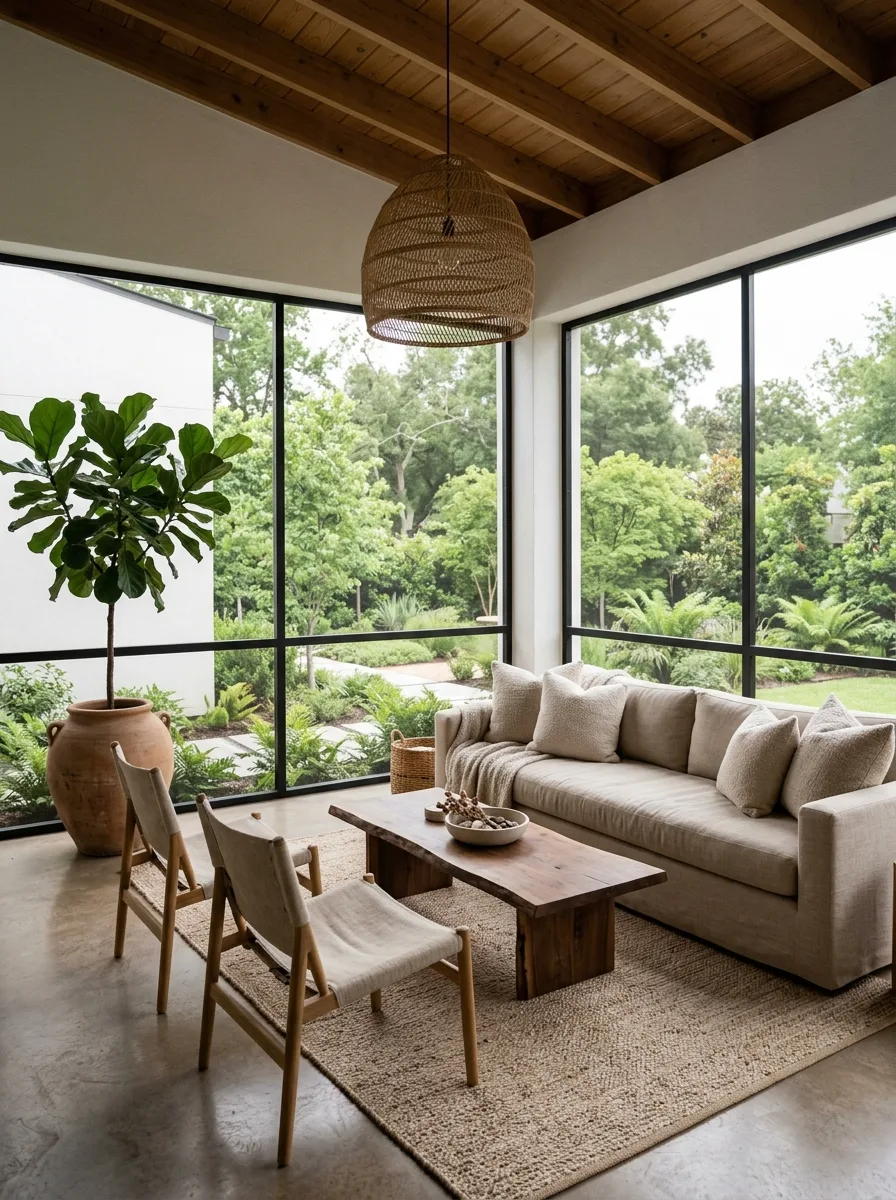
Use a concrete drum — a solid concrete cylinder approximately 24 inches in diameter and 16 inches tall — as the central coffee table. Concrete tables in this form are available from several outdoor furniture manufacturers and they ground the space with a material heaviness that contrasts with the lightness of the teak framing.
Place two large white ceramic pots — faceted geometric shape, matte finish — with a Majesty palm and a large-leaf tropical at the open end of the porch. The white pots against the green plants against the screened view of outdoor greenery creates a layered composition where interior and exterior green blend into a continuous field.
Farmhouse Swing Screened Porch
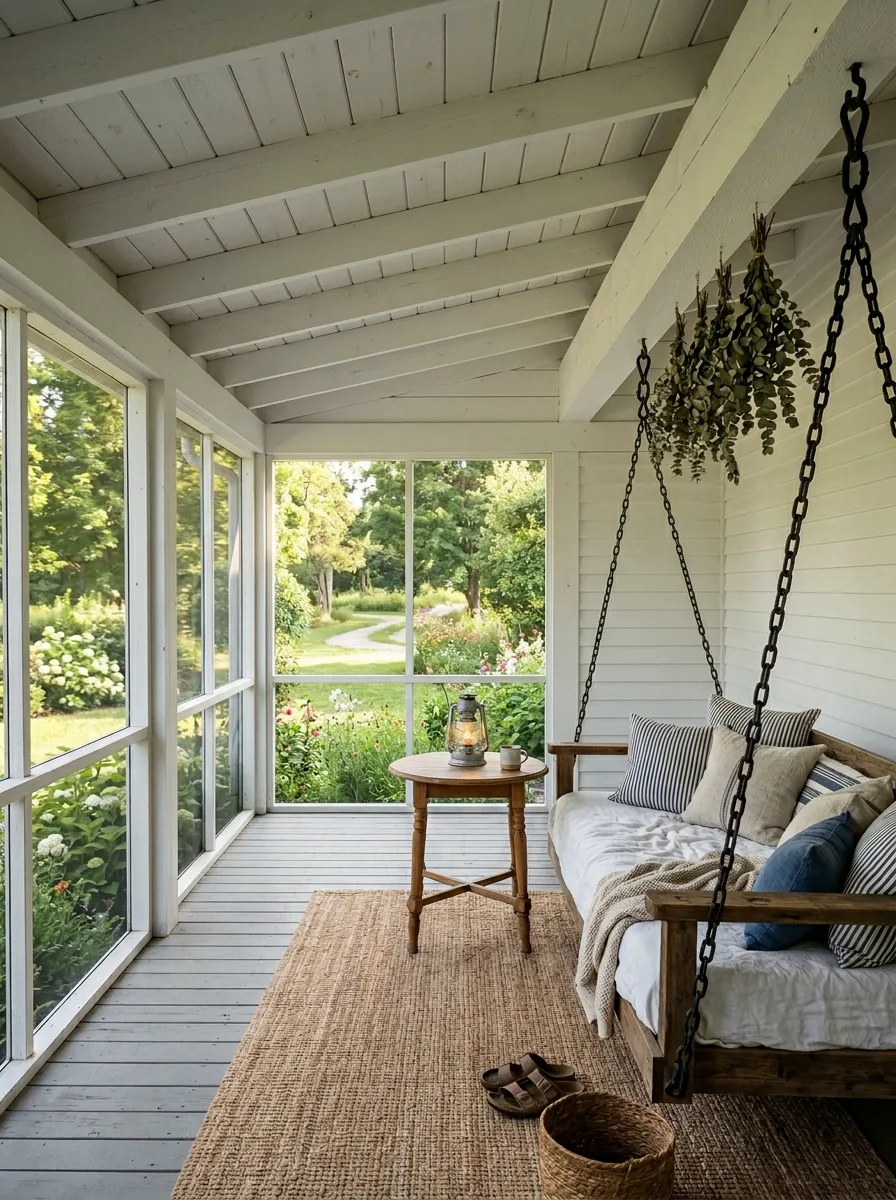
On a white-structure screened porch with exposed beams, the focus is the hanging bed swing rather than any decorative element. Install it correctly: find the structural beam, use properly rated ceiling hooks with a minimum 500-pound working load, and hang the swing with heavy black chain rather than rope or twine. The chain communicates weight and durability.
The swing frame should be solid wood — poplar or oak — finished in a natural stain. Fit it with a full platform mattress, not individual seat cushions. Dress it in white linen with navy ticking stripe pillows and a waffled cotton throw. The look is casual and unpretentious.
Pair the swing with a single round antique-style side table — turned legs, distressed finish — placed within easy reach. A vintage oil lamp or small lantern on the table. A jute rug filling most of the floor area. Hang dried eucalyptus from one of the swing hooks, positioned above and behind the headboard end, so it scents the porch without requiring maintenance.
Second-Story Black Frame Screen Addition
The structural decision for a second-story addition is the most important thing about it. Engage a structural engineer. The ledger attachment to the house, the post footings, the beam sizing — these are not improvisation territories. Once the structure is sound, the aesthetic choices are straightforward: black aluminum framing reads as more architecturally intentional than white on a grey or dark house exterior. Let the structure be the design. The interior will follow.
Build the stair with a black metal rail that matches the screen framing. Use a warm wood tread — a composite in a cedar or redwood tone — for contrast with the black metal. The stair should read as designed, not as an afterthought attached to the structure.
The interior of a second-story screened room has better sightlines than ground level by definition. Orient all furniture toward the dominant view and resist the temptation to add more than the space requires. The elevation is the feature.
Cedar Boho Macramé Screened Porch
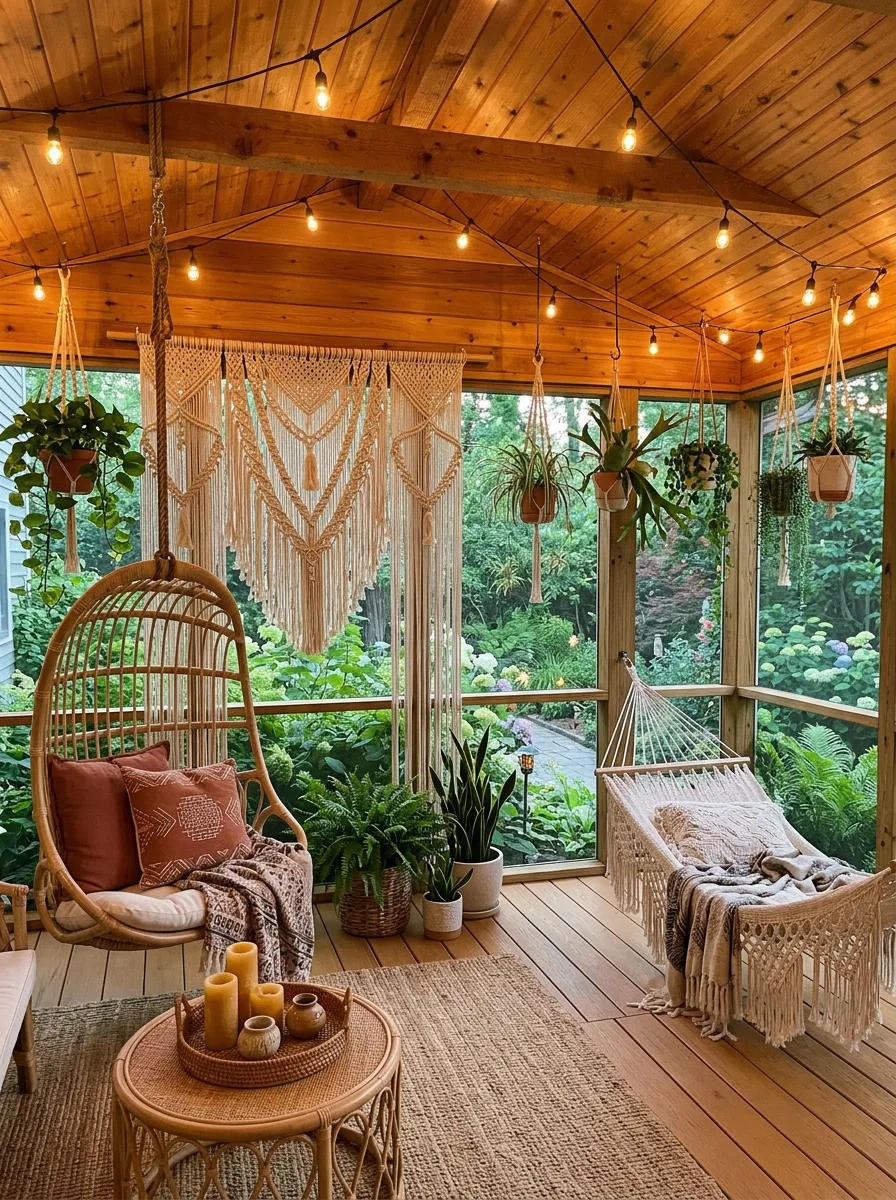
Leave the cedar ceiling completely natural and unsealed — or seal it with a clear matte finish to prevent weathering — and let it warm the room from above. Cedar does not need color. It provides it already.
Install Edison string lights along the underside of each ceiling beam in a converging spoke pattern — all lines leading toward a central hanging point at the peak. The effect is like light radiating from the center, which is warmer and more interesting than parallel runs.
Hang a macramé wall piece — at least 24 inches wide and proportionally long — from a ceiling hook in the center of the back wall, between the screens. It should be large enough to read as art, not textile. Pair it with a rattan egg chair and a knotted hammock chair, both hung from structural beams rather than placed on the floor. Add a round rattan coffee table on a jute rug.
Keep plants in macramé hangers at ceiling height: pothos, string of pearls, spider plants. Species that trail down rather than growing up work best here because they add vertical interest without blocking the view through the screens.
Coastal Waterfront Screened Dining Room
A screened porch with a waterfront view is not a porch. It is a dining room with exceptional natural air conditioning. Treat it accordingly.
Install a proper large-scale dining table — eight seats, teak or weathered grey mahogany — centered on the view. The chairs should be director-style or sling-back teak chairs with white canvas slings. These are marine-influenced chairs that read correct in coastal water contexts and require minimal maintenance.
Set the table as you would for a dinner party. Cloth napkins. Real glasses. A low arrangement of greenery — trailing ivy in a white ceramic bowl — at the center. The screened waterfront dining room is meant to be used ceremonially, not just casually, and the table setting communicates that expectation.
Keep the porch structure white and uncluttered. Nothing on the walls. No accent furniture that competes with the view or the table. A ceiling fan in the same white as the ceiling, rated for wet locations. This is a room that works entirely because of what it frames. Do not apologize for its simplicity.
Dark Green Cage Pendant Porch
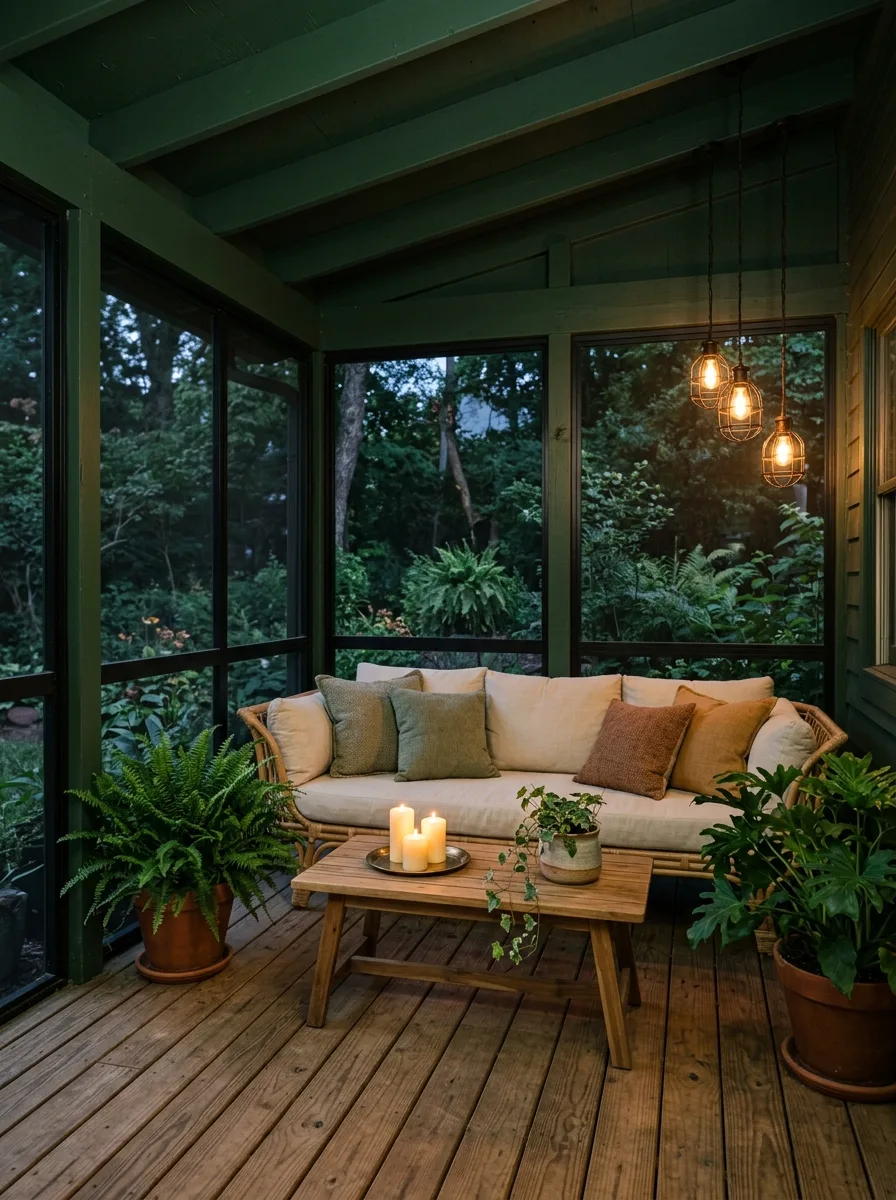
Paint your screened porch ceiling and the enclosed structural elements — beams, headers, any house-side wall framing — in a deep forest green. The right tone is olive-dark rather than jewel-green. Benjamin Moore’s Tarrytown Green or Sherwin-Williams’ Jasper are reference points. Let the bare wood floor and the natural rattan sofa bring warmth against the dark ceiling.
Hang three iron cage pendant lights from the same ceiling hook at staggered lengths — 6, 12, and 18 inches below the junction point — so they read as a cluster rather than separate fixtures. Use warm-filament Edison bulbs. Place pillar candles on a low wooden tray on the coffee table. At night, this combination creates depth and warmth against the dark green that no single overhead fixture can produce.
Furnish with a rattan sofa, cream cushions, and terracotta and sage accent pillows. Place terracotta pot plants at both ends of the sofa and beside the coffee table. The ferns and trailing vines soften the dark structure without fighting it.
Natural Wood Afternoon Sun Porch
This is the porch for the person who has a view worth protecting and the self-discipline not to clutter it. Two chairs — painted green wicker, an unusual and specific choice that reads somewhere between outdoor garden chair and interior accent piece — placed on either side of a small antique farmhouse table. Not a matching set. A table that looks like it came from someone’s kitchen.
The table holds a small collection of flowering plants in terracotta pots. Nothing more. No tablecloth, no runner, no centerpiece arrangement. The plants are the centerpiece. Add a simple string of Edison bulbs along the top screen frame — not draped, not looped, just a clean run of lights that disappears in daytime and illuminates the view at night.
Leave the composite deck floor and the screen framing natural. This porch does not aspire to magazine-level production. It aspires to be usable and pleasant and honest. There is a specific kind of confidence in not trying too hard.
Coastal Blue Linen Oceanfront Porch
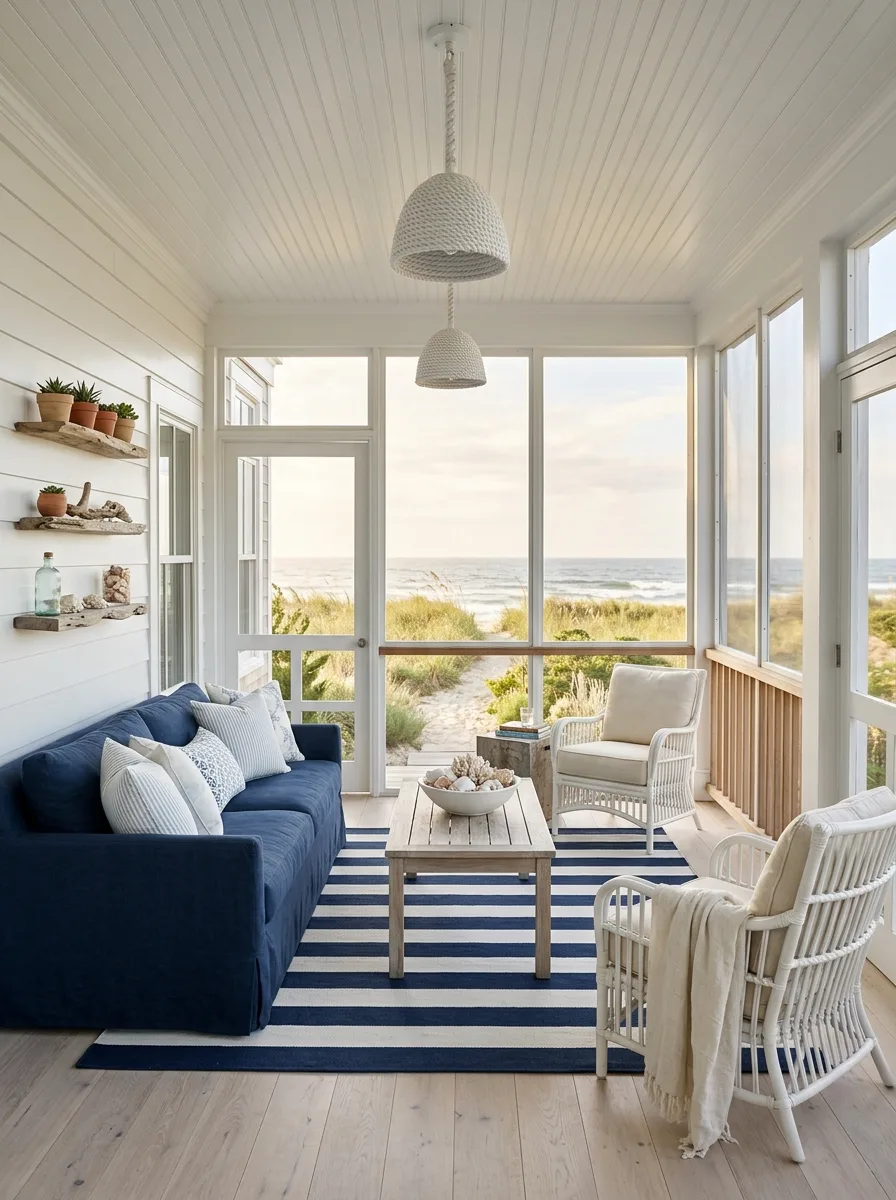
Start with a white-everything shell — beadboard ceiling, white-painted or white-washed floor planks, white screen framing. The white has to be complete. Any unpainted wood or off-white element breaks the coastal palette.
Choose a full-size slipcovered sofa in deep navy linen — not outdoor fabric that mimics linen, but a performance linen that is actually rated for covered exterior use. Pair it with two white rattan armchairs with cream cushions, positioned at 45 degrees to create conversation without blocking the view.
Lay a navy and white horizontal-stripe rug large enough that all furniture legs sit on it. Add a weathered teak coffee table centered on the rug. For the house wall, install two or three small wooden bracket shelves and style them with terracotta pots, driftwood, sea glass bottles, and small succulents. The shelves give the otherwise plain interior wall some texture and personality without competing with the view through the screens.
Hang a rope-wrapped pendant from the ceiling — not a lantern, not a rattan dome, but specifically the woven rope style that reads nautical without being cartoonish.
Cedar Screen Build with Natural Railing
The decision to leave cedar framing unstained — to let it weather — needs to be made before any sealer is applied. Once cedar is stained or sealed, it is committed to that color. Unsealed cedar will silver over two to three seasons into a natural grey that is genuinely attractive. The silver-grey cedar against the warm honey-stained decking is a contrast that no artificial finish replicates.
Pair natural cedar framing with a traditional wood railing — balusters and top rail — in a matching natural cedar rather than painted. The cohesion of material throughout the structure is what gives the build its architectural quality. A cedar frame with a white-painted railing is a mixed-message that looks like an unfinished decision.
Plan the gutter drainage before the build is closed. A downspout that drains water away from the foundation matters more than any decorative choice made inside the porch.
Modern Organic Japanese-Influenced Porch
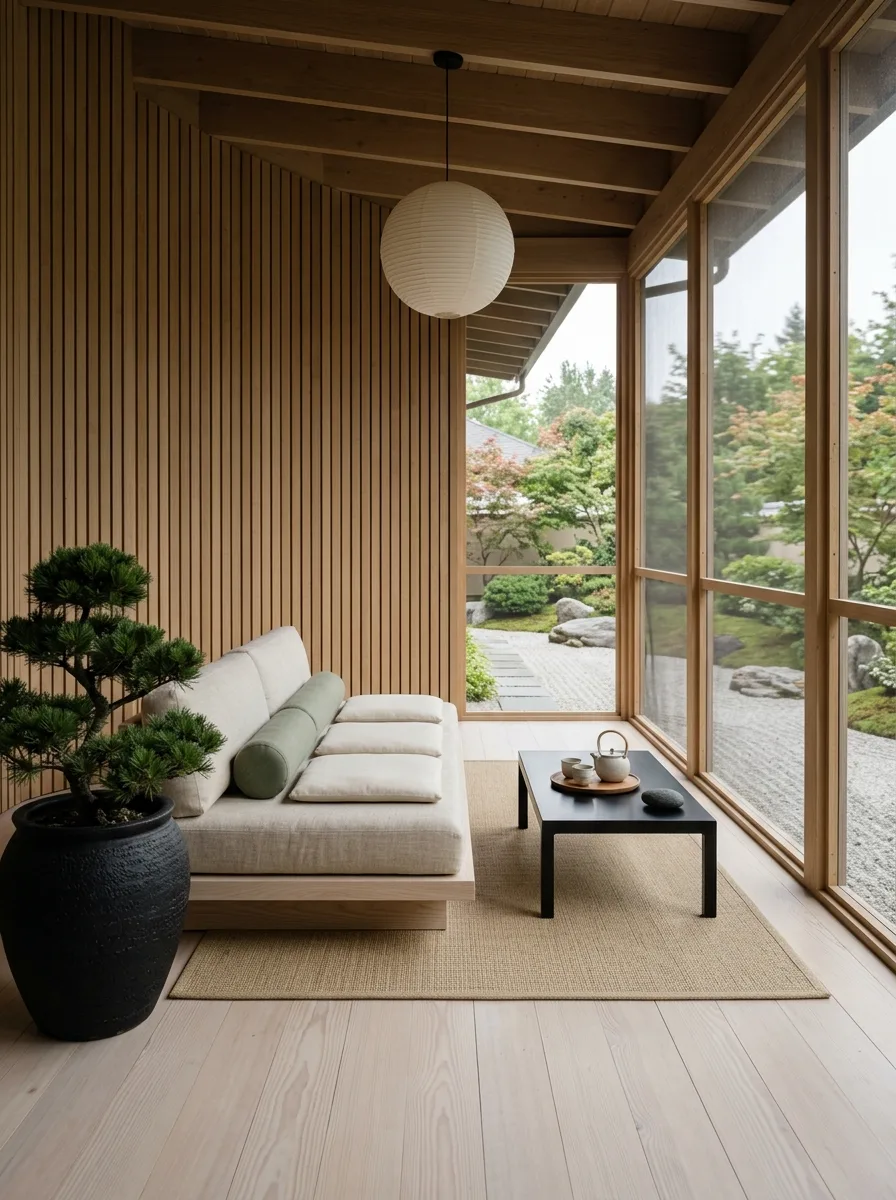
Install vertical wood slat panels — also called shou sugi ban or simply slatted wood cladding — across the entire house-side wall of the screen porch from floor to ceiling. Use natural light wood, not stained, not painted. The grain and the shadow lines created by the slats are the point.
Choose a platform sofa — one that sits very low to the ground, with a seat height of 14 to 16 inches rather than the standard 18 — in a neutral cream performance fabric. Platform sofas on screened porches read as deliberate and architecturally serious rather than furniture-store predictable. Pair it with a low black steel coffee table holding a ceramic tea set tray and two smooth stones.
Place a large bonsai or cloud-pruned specimen plant in a matte black ceramic pot beside the sofa. Use a natural sisal rug. Hang a single white paper globe pendant from the ceiling. The globe pendant is the only light source needed. Everything else about this porch operates through material quality and negative space, not decoration.
Victorian Gingerbread Screened Porch
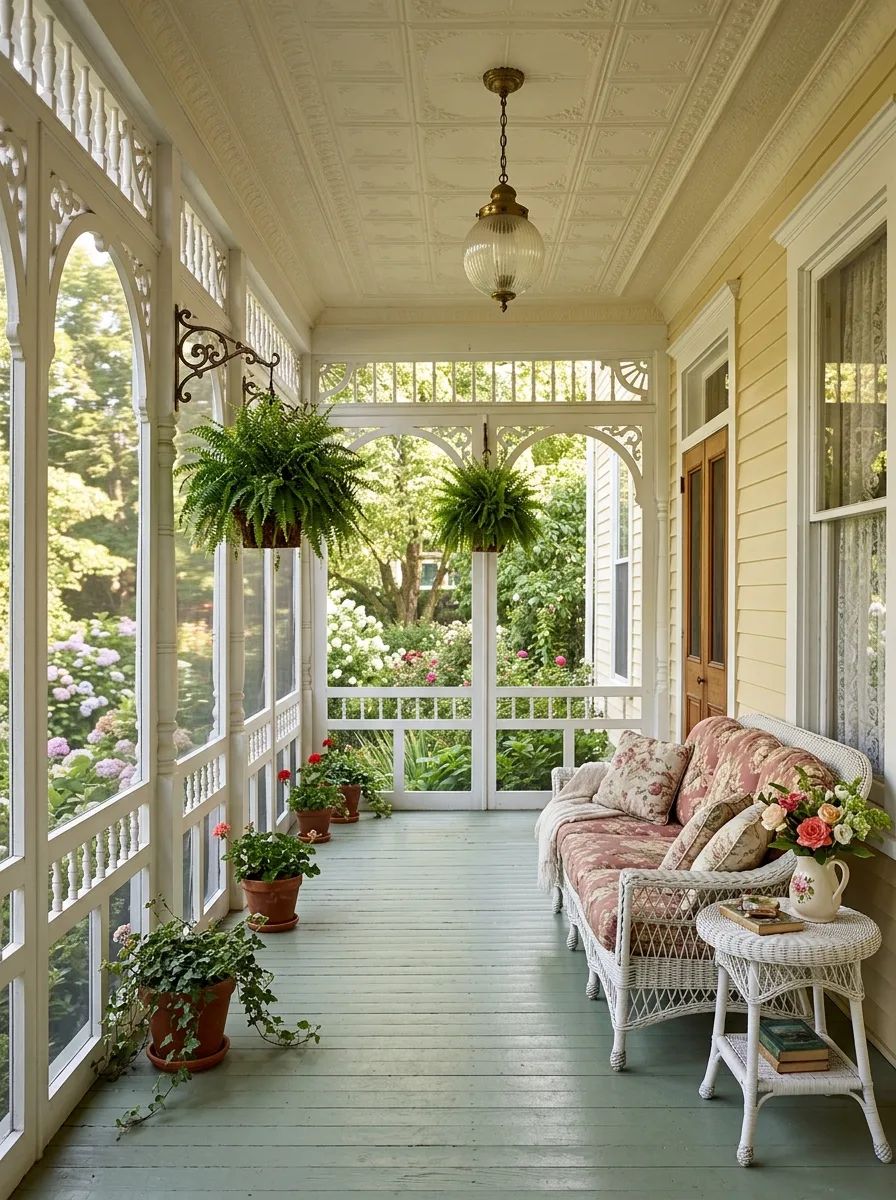
The structural ornament is the design. Restore or install white-painted gingerbread trim — the scrollwork brackets, the spandrels, the turned balusters — and paint everything supporting it the same white. Add a pressed tin ceiling panel if the porch is original Victorian or close to it; it reads as historically appropriate and adds genuine architectural interest that beadboard cannot replicate.
Hang Boston ferns from wrought-iron swing-arm wall brackets mounted between each decorative arch. These are not hooks — they are decorative brackets that extend out from the wall, allowing the fern to hang free. Choose ferns with generous drape and keep them watered. They work harder than any other plant in this context.
Furnish with a white wicker loveseat upholstered in a pink and cream English-garden floral print. A matching white wicker side table. A ceramic pitcher with garden roses. The floor should be painted sage green — a full coverage paint, not a stain. The painted floor ties the entire room to the garden outside through shared color.
Install a single clear globe pendant with a visible Edison filament from a brass ceiling plate. The antique brass reads correct in this context. No ceiling fan. The ferns move enough air.
Zen Garden Screened Porch
The key constraint for this look is strict material limitation: natural light wood, matte black metal, cream linen, and a bonsai. Nothing else is allowed in. No additional colors, no patterned textiles, no additional plant species.
Finish the floor in wide-plank white oak, unsealed or lightly oiled. The natural color variation in white oak is the texture. Install floor-to-ceiling wood-frame screen panels — not aluminum frame, wood — in the same light tone as the floor. The continuity of material between floor and screen frame makes the interior feel like a single unified element.
Choose a low platform sofa in cream linen with a single sage green bolster pillow. The single accent color prevents the room from reading as purely white-on-white while still maintaining calm. Place the bonsai — a juniper or Japanese black pine specimen in a proper training pot — on a low display stand at sofa height. It sits where another person would sit. It is that important to the composition.
Arts and Crafts Dining Porch
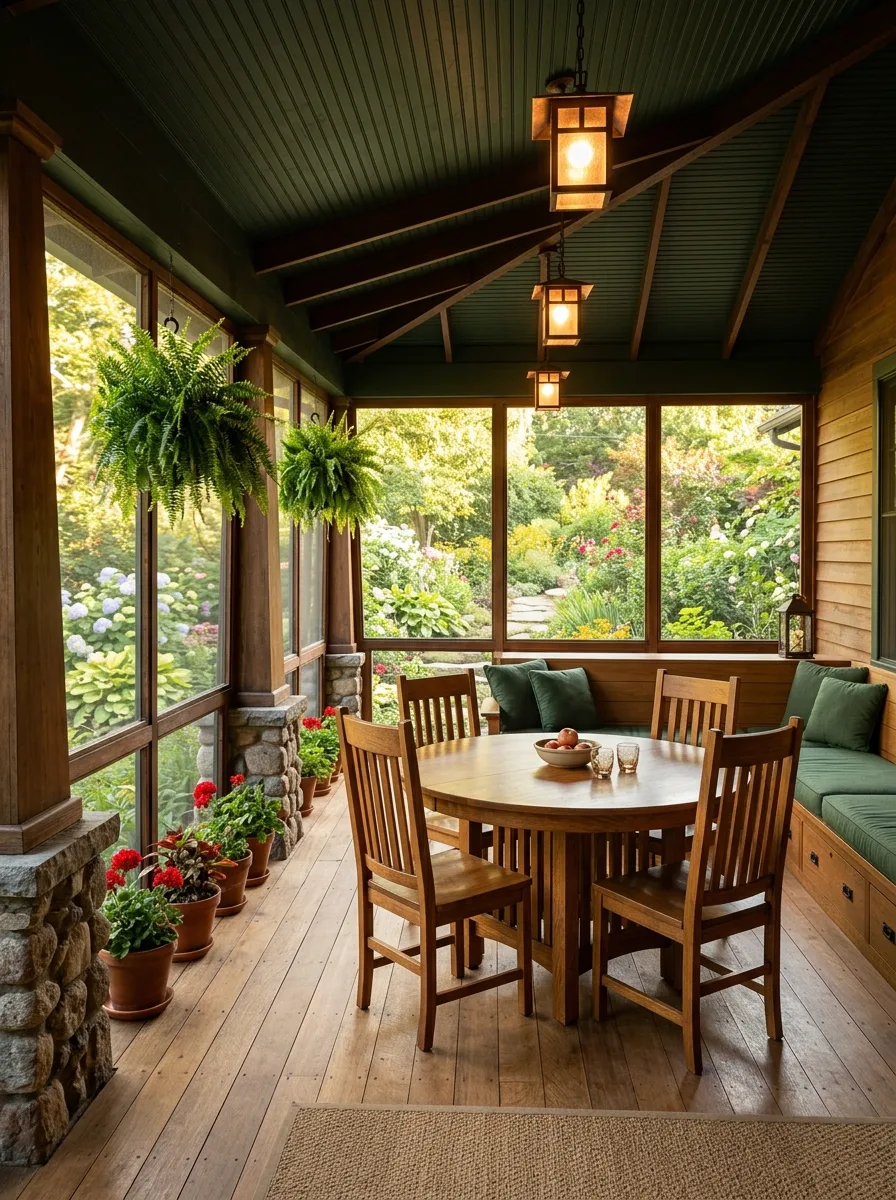
Choose a dark hunter green — almost black-green — for the porch ceiling and paint it in a flat or matte finish so it doesn’t reflect light back harshly. Install dark walnut-stained structural beams across the ceiling at regular intervals. The contrast between the green ceiling and the walnut beams is the central aesthetic statement.
Hang mission-style lanterns — the square, Craftsman-era pendant with amber glass panels — at two points along the ceiling ridge. These are not flush mounts. They drop on chains and the amber glass throws a warm stained-glass quality of light onto the table below.
Furnish with a round solid oak dining table and four Craftsman-style slat-back chairs in a matching honey oak stain. Build or source a banquette along one wall upholstered in deep hunter green performance cushions. The banquette can double as storage if it is built with a hinged lid. Place a single hanging Boston fern from a ceiling hook at one corner. Terracotta pots of red geraniums along the stone base of the screen framing outside.
Navy Cape Cod Porch
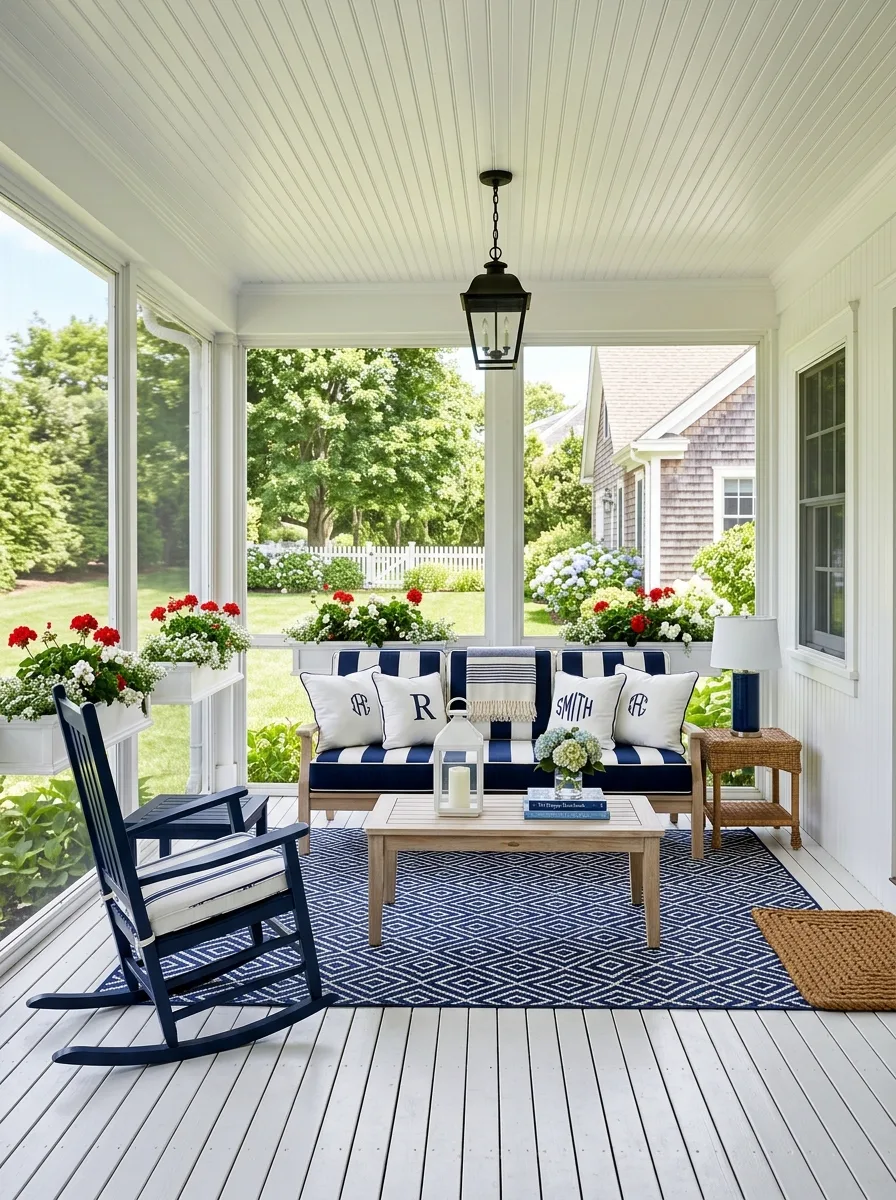
The palette here is strict: white painted floor, white painted ceiling, white painted structural elements, navy as the accent, and no third color. Any third color — even a neutral — breaks the crispness that makes this work.
Choose a wood-frame outdoor sofa with navy and white wide-stripe cushions. Place a single navy rocking chair perpendicular to the sofa, angled toward the seating group rather than facing the yard. This is an important distinction — a rocking chair facing outward creates isolation; angled inward, it becomes part of the conversation group.
Hang a simple black lantern pendant from the ceiling center — the Nantucket style with a clear glass panel. Install window box planters on the exterior railings with alternating red geraniums and white petunias. This is the only place color beyond the navy-and-white palette is permitted, and it works because it is outside the screened enclosure, not in it.
Lay a navy diamond-pattern outdoor rug large enough to fill most of the floor. Place a weathered teak coffee table at the center. Two lanterns on the table with white pillar candles.
Dark Wood Hunter’s Lodge Porch
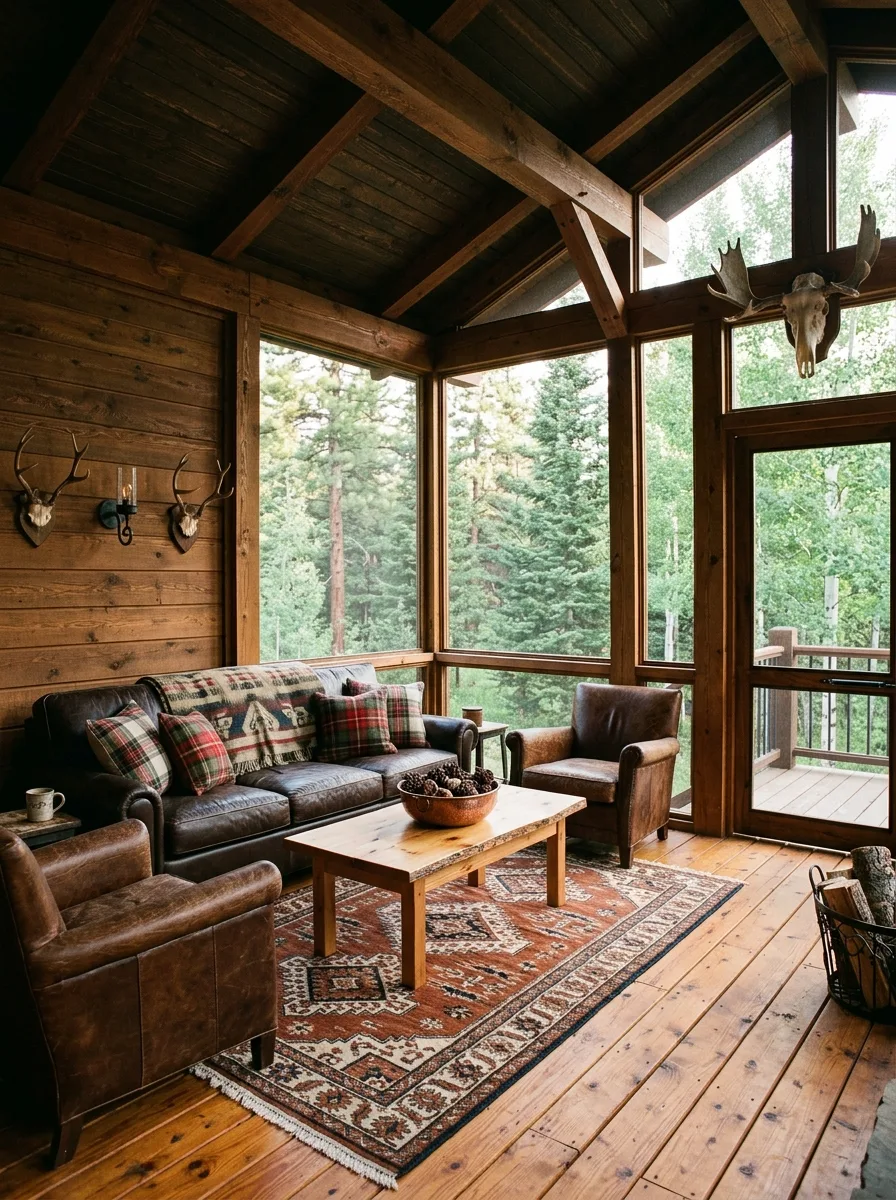
This porch is built, not designed. Leave every structural element — the ceiling planks, the wall planks, the beams — in dark stained or naturally aged wood, and do not introduce anything that fights it.
Choose dark leather — chocolate or cognac — for the seating. Two leather club chairs and a full leather sofa, arranged around a raw-edge wood slab coffee table. The leather will develop patina; this is intentional and correct, not a maintenance problem.
Lay a Navajo or Oushak-style wool rug in rust, cream, and brown tones beneath the furniture. Place a wooden bowl filled with pine cones on the coffee table. Hang antler-style wall decor on the house-side wall between two wall sconces. The wall sconces should be iron with amber glass.
Keep the plant selection to a single category: potted herbs or low-growing evergreen specimens. Anything tropical or colorful would read as an intrusion. This porch has a personality. Do not argue with it.
Pink Cottage Rose Swing Porch
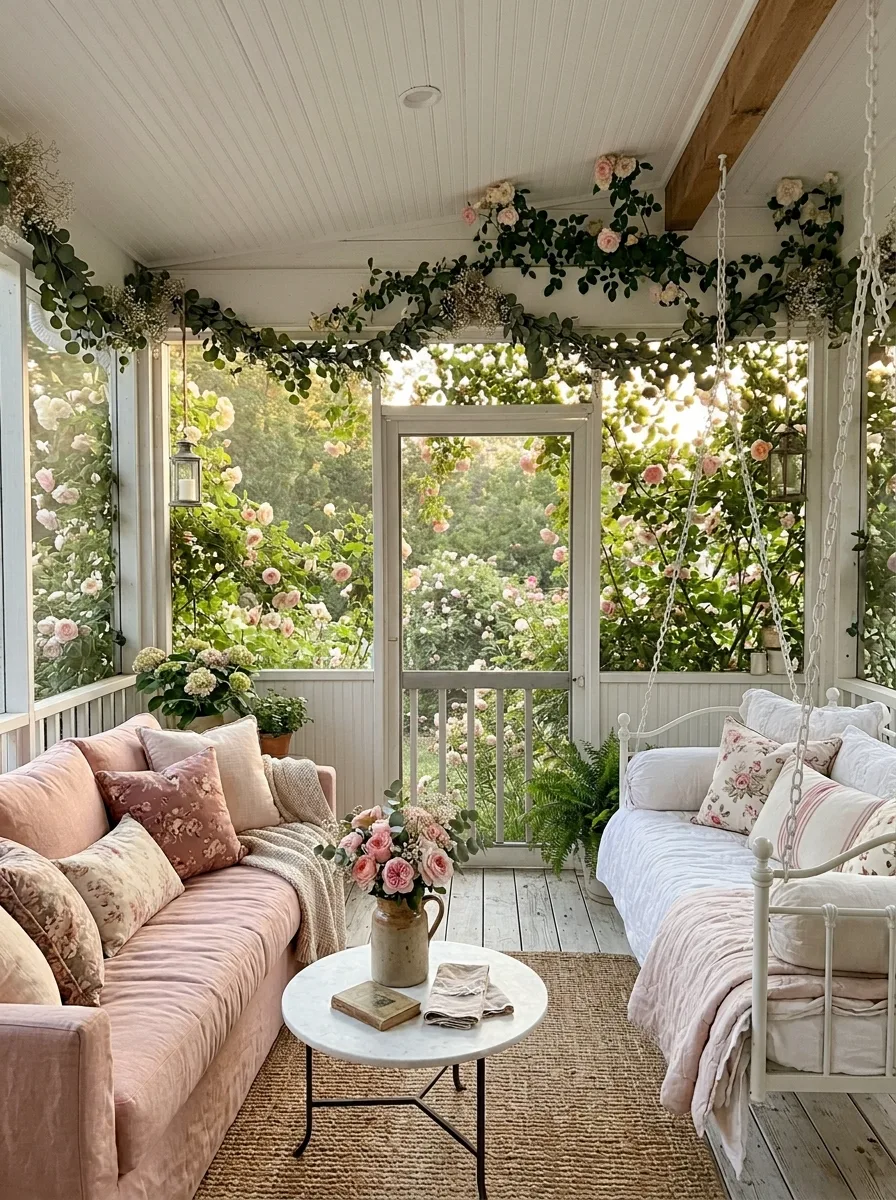
The roses are the architecture of this porch. Start there. Train a climbing repeat-blooming rose — David Austin’s ‘The Generous Gardener’ or ‘Blush Noisette’ for a blush-pink variety that thrives in most temperate zones — up and across the beams of the porch exterior. Thread garlands of preserved or fresh eucalyptus through the interior beams. Give it two seasons. Plan the room around what it will become, not what it is in year one.
Install a white wrought-iron bed-swing — not a wood swing, specifically a metal bed frame suspended on white painted chain. Dress it in white quilted bedding, pink floral cushions, and a loose linen throw. The bed-swing reads as romantic and slightly impractical, which is exactly the point.
Pair it with a blush pink linen sofa on a jute rug. A small marble-top bistro table between them. A stoneware crock of cut roses or peonies on the table. The ceiling should be beadboard, painted white, with one visible natural wood beam left unpainted as a deliberate contrast element.
Toile French Country Porch
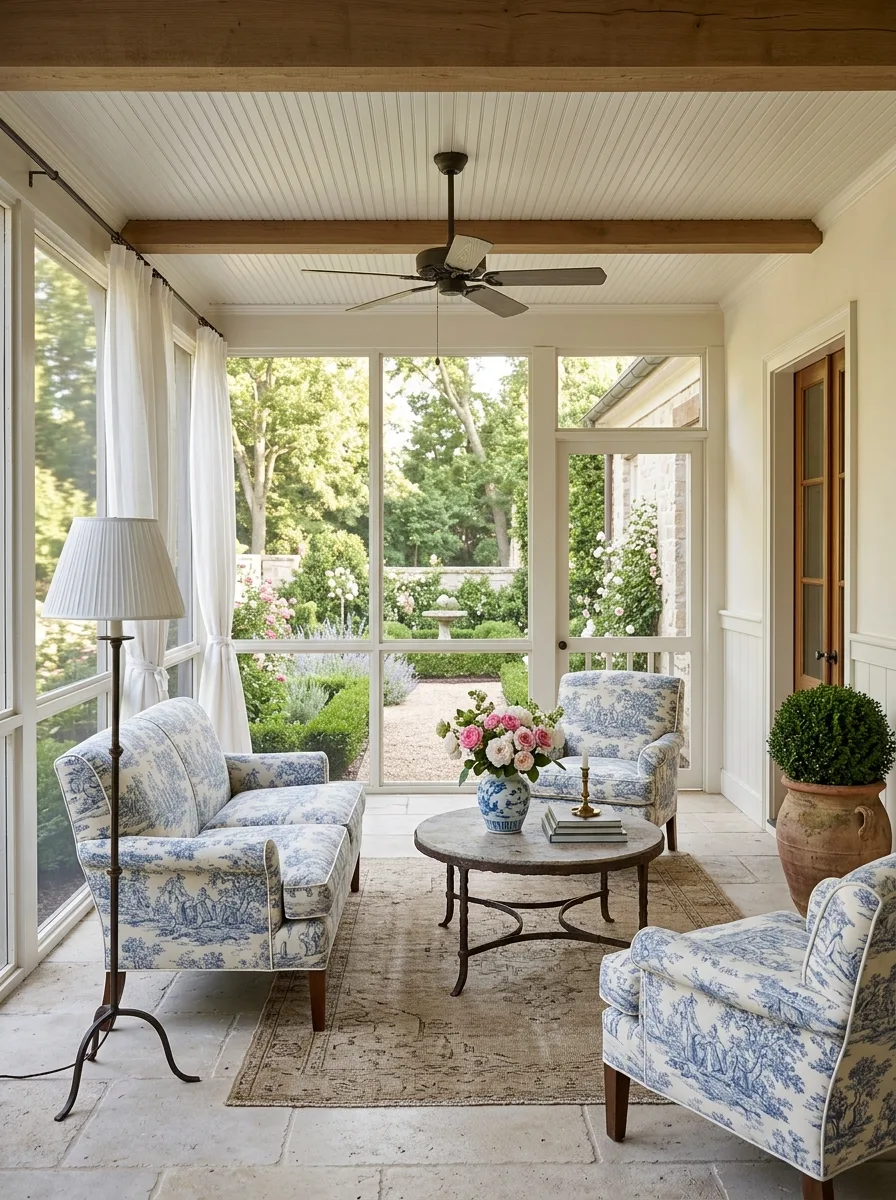
Choose one fabric and commit to it. Toile de Jouy — specifically the blue and white pastoral print — in a performance version rated for outdoor use. Upholster every chair in it. Every chair. A sofa, two armchairs, an additional side chair if the space allows. The repetition of a single bold pattern across multiple pieces is what makes this room work. One toile chair among neutral pieces is a failed attempt. Four toile chairs is a room.
The floor is limestone or large-format concrete pavers set on a slight sand base. It should look cold and European, not warm. The coldness of the floor creates contrast with the richness of the fabric and the warmth of the garden outside.
Place a round wrought-iron cocktail table at the center with a vintage woven texture — paint it dark bronze or black, not the builder-standard polished brass. Add a china blue vase of garden roses. Install sheer white linen curtains on the open side of the porch, tied back with a simple cord when not in use. A pleated floor lamp in the corner for evening reading.
Balinese Bamboo Tropical Porch
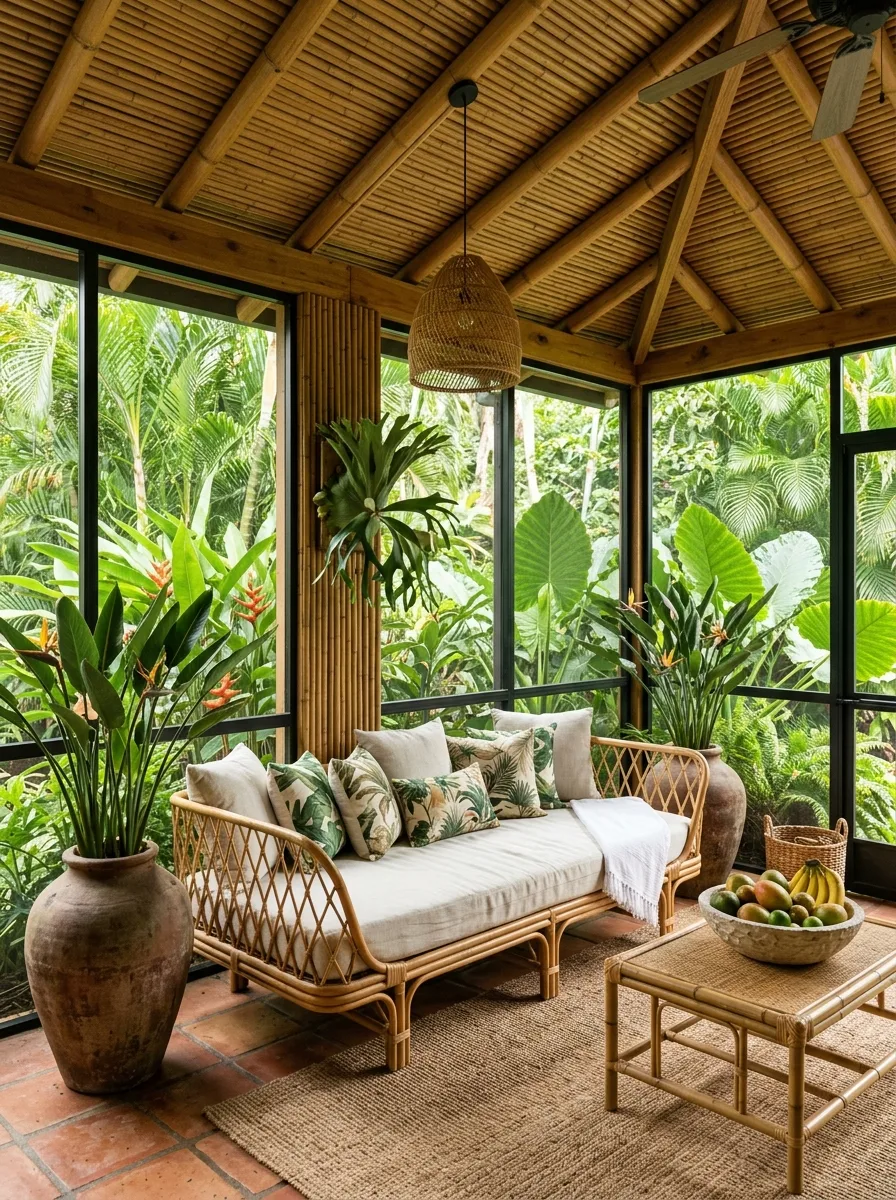
Clad the ceiling entirely in bamboo planks installed in a herringbone or parallel-laid pattern, stained or left in their natural warm gold. This is a structural decision made with a contractor before the porch ceiling is closed. Bamboo ceiling installation requires specific backing and moisture treatment; do not improvise.
Choose rattan furniture with a diamond lattice pattern in the frames rather than the solid weave or wrapped style. The lattice rattan has a more refined, deliberately crafted quality. Cushion it in white with botanical-print accent pillows in green and cream.
Place two oversized terracotta urns — the tall narrow ones that look Roman or Balinese, not the wide decorative garden variety — flanking the main seating area. Fill them with large-leafed tropical plants: elephant ear, bird of paradise, or Monstera deliciosa. Add a bamboo side table. Place a wooden bowl of seasonal fruit on the coffee table instead of a floral arrangement. The bamboo ceiling and the large terracotta urns carry the entire room.
Eclectic Botanical Gallery Wall Porch
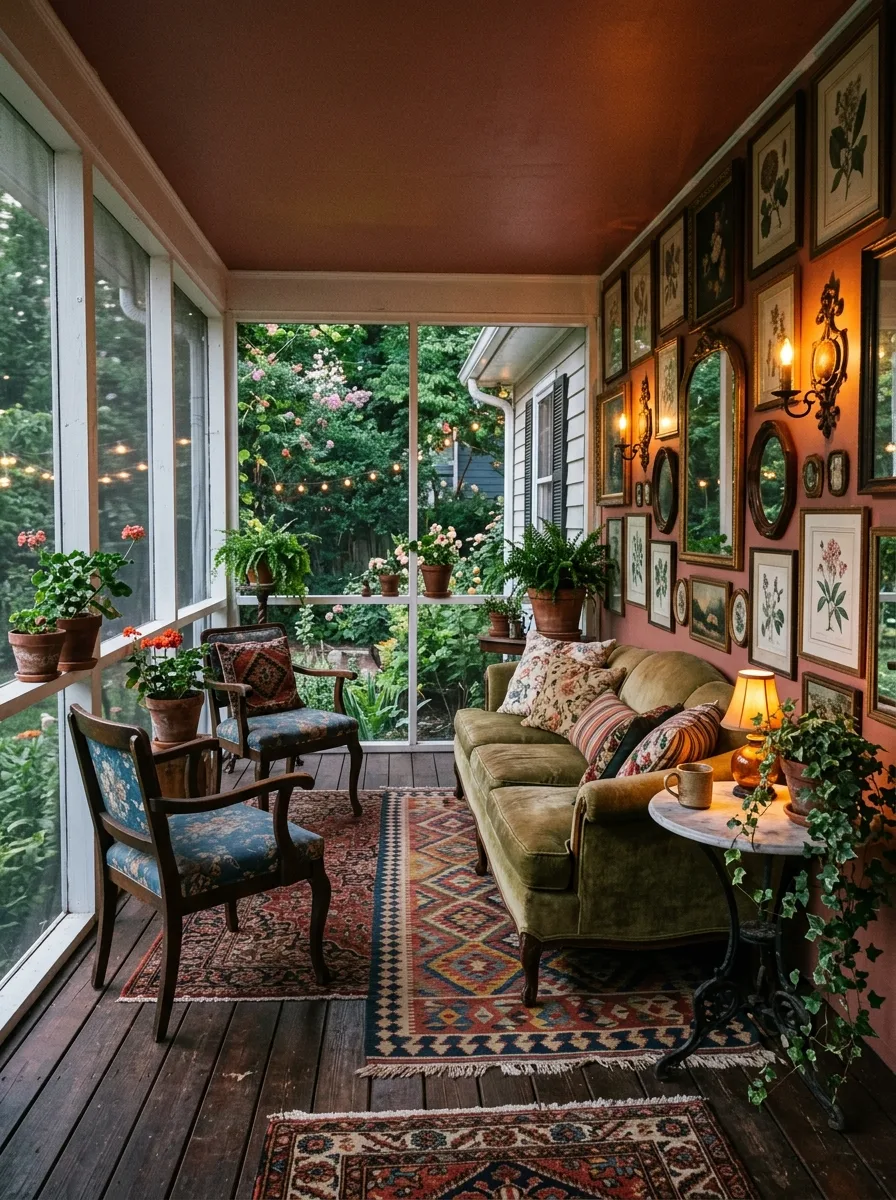
Paint the house-side wall a terracotta or warm-toned brick red — not an orange, not a rust, but the specific dusty warm terracotta that reads as antique plaster. Paint the ceiling in the same color to create a warm enclosed envelope on that half of the room.
Install a gallery wall — framed botanical prints, oval mirrors, a wall sconce or two — covering the entire painted wall in a dense but organized arrangement. Use gold or tarnished brass frames for the prints. Oval mirrors in carved wood frames. The collection should look accumulated over time, not purchased as a set.
Choose a velvet sofa in olive or sage green — performance velvet exists for outdoor covered use — and pair it with two upholstered side chairs in a floral or ikat pattern. Lay multiple rugs: a larger kilim-style rug as the base, a smaller antique-looking rug layered on top at an angle. The layered rug treatment is the specific move that pushes this from curated to genuinely interesting.
Cottage Wicker Garden Porch
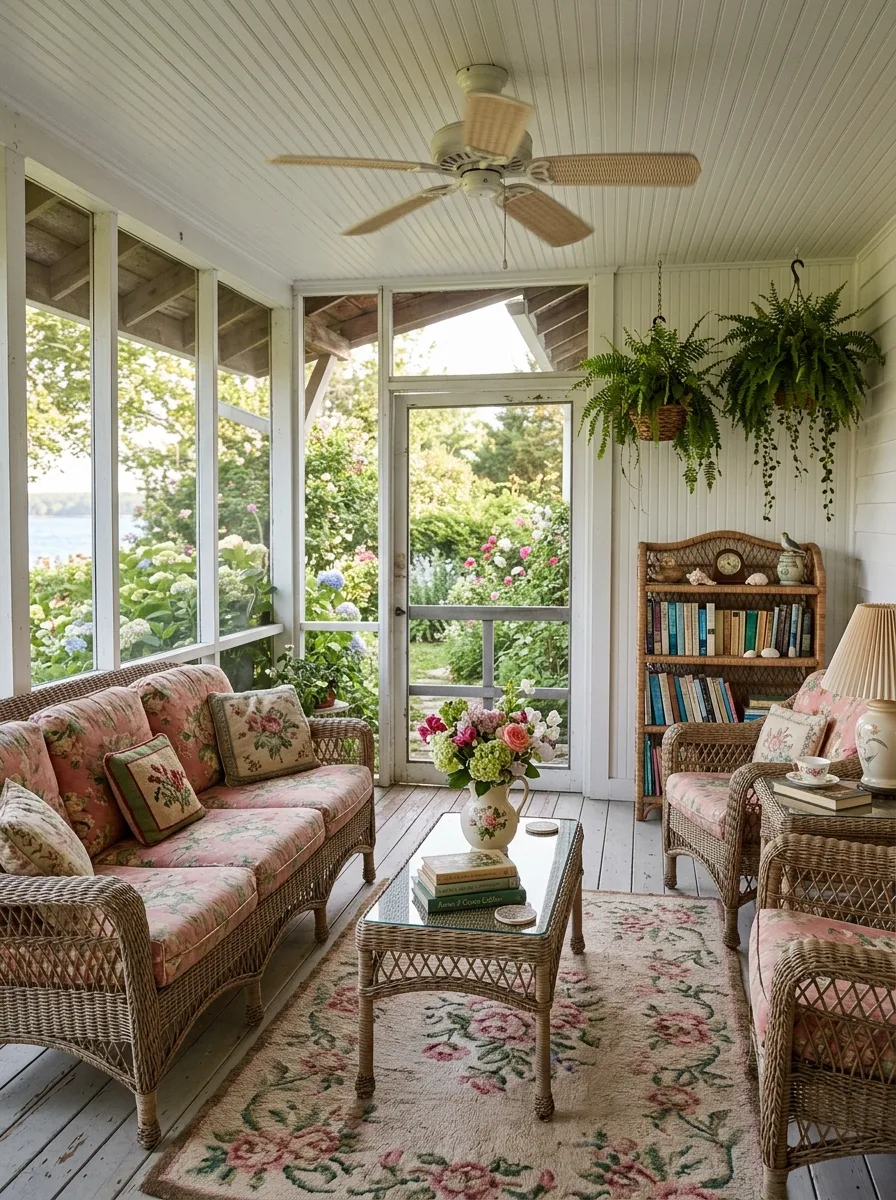
Source an unmatched but coherent set of honey wicker furniture — not a set from a single manufacturer, but pieces that share the same warm natural tone and a similar looseness of weave. Three or four pieces: a loveseat, an armchair, another chair of slightly different scale. The mismatched quality is the point. It should look like these pieces were collected, not purchased together.
Cushion everything in pink and cream English rose floral chintz. This is a period-appropriate fabric in the cottage tradition and requires no apology. Add a floral hooked rug — the kind with large rose motifs on a cream or sage ground — to the floor. The rug and the cushion fabric do not need to match; they should just share a color family.
Add a wicker bookcase against the house wall, filled with an actual library of paperbacks and hardcovers — nothing decorative, actual books that get read on this porch. Place a hanging fern from a hook in the ceiling corner and a ceramic pitcher with garden flowers on the glass-topped wicker coffee table.
Conclusion
A screened porch is a permanent commitment in a way that an open deck is not. You are choosing to enclose something. You are choosing what that enclosure will feel like from inside.
Every room in this list made that choice decisively. The hunter’s lodge chose darkness and leather and did not apologize for it. The coastal dining room chose white restraint and an unobstructed view. The rose-covered cottage swing porch chose romance with a patience to match — it takes two growing seasons to look the way it’s supposed to look, and someone chose to wait.
The worst screened porches are the ones that chose nothing. They enclosed the space and then failed to inhabit it.
The screen keeps the bugs out. That part is done. Now you have a room. Design it like one.