
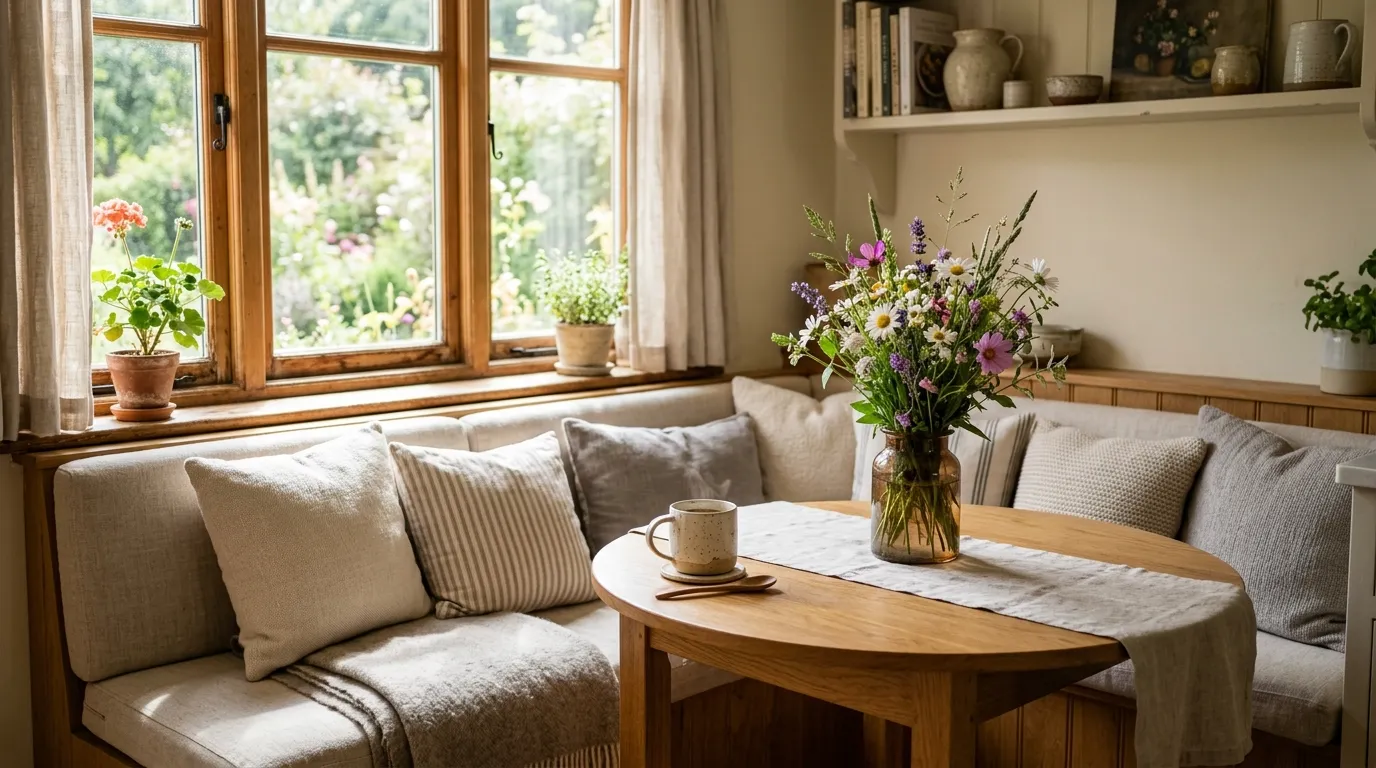
A breakfast nook is not a kitchen table near a window. It’s a kitchen table built into a window, with a bench that doesn’t exist anywhere else in the house and walls close enough to actually lean back into.
That distinction matters more than people think. A nook works because it’s small on purpose, not because the room ran out of space for anything bigger. The corner gets claimed, the bench gets built in, and the result is a spot in the house that does one job extremely well instead of trying to be flexible.
Twenty nooks below take that one job in twenty different directions: black and white checkerboard, wallpapered jungle, art deco velvet, scuffed farmhouse pine. All of them understand the same basic rule.
None of them are an afterthought corner with a table shoved into it. Every single one is clearly the most deliberate seat in the house.
Why most breakfast nooks never get built
A lot of “breakfast nooks” aren’t nooks at all. They’re a table that happens to be near a window.
A Table Pushed Into a Corner
A small table and two chairs angled into a corner is a seating arrangement. It is not a nook.
The difference isn’t subtle once you see it. A nook has an architectural commitment: a bench, a built structure, walls that wrap the space. A table dropped into leftover floor space has none of that, no matter how nice the chairs are.
This is the single most common reason a “nook” idea falls flat when someone tries to copy it. They copied the table and the view and skipped the one element that actually made it a nook.
Skipping the Built-In Bench
A built-in bench is a construction project, not a furniture purchase, and that’s exactly why it works. It can’t be returned, swapped out, or rearranged next year, which forces every other decision in the space to commit just as hard.
Freestanding bench seating, the kind you can buy and slide into place, almost never reads the same way. It looks like a bench in a kitchen rather than a kitchen built around a bench.
If the budget or the rental situation rules out actual construction, that’s a real constraint worth respecting honestly, rather than faking permanence with furniture that’s pretending to be built-in.
Breakfast Nook Ideas
Wood Beam Wire Pendants
Install a substantial reclaimed wood beam across the ceiling directly above the nook, treating it as a structural statement rather than a decorative add-on.
Hang three wire cage pendants with exposed bulbs at staggered heights beneath the beam, choosing a rustic, slightly tarnished metal finish rather than anything polished.
Cushion a long built-in leather bench in a mix of cream and charcoal pillows, and pair it with a thick reclaimed-wood table on black hairpin legs, plus a couple of low stools for extra seating.
Choose black-framed windows looking out onto the actual landscape, snow, trees, mountains, letting the view outside reinforce the lodge feeling the wood and metal are already building indoors.
Bay Window Striped Banquette
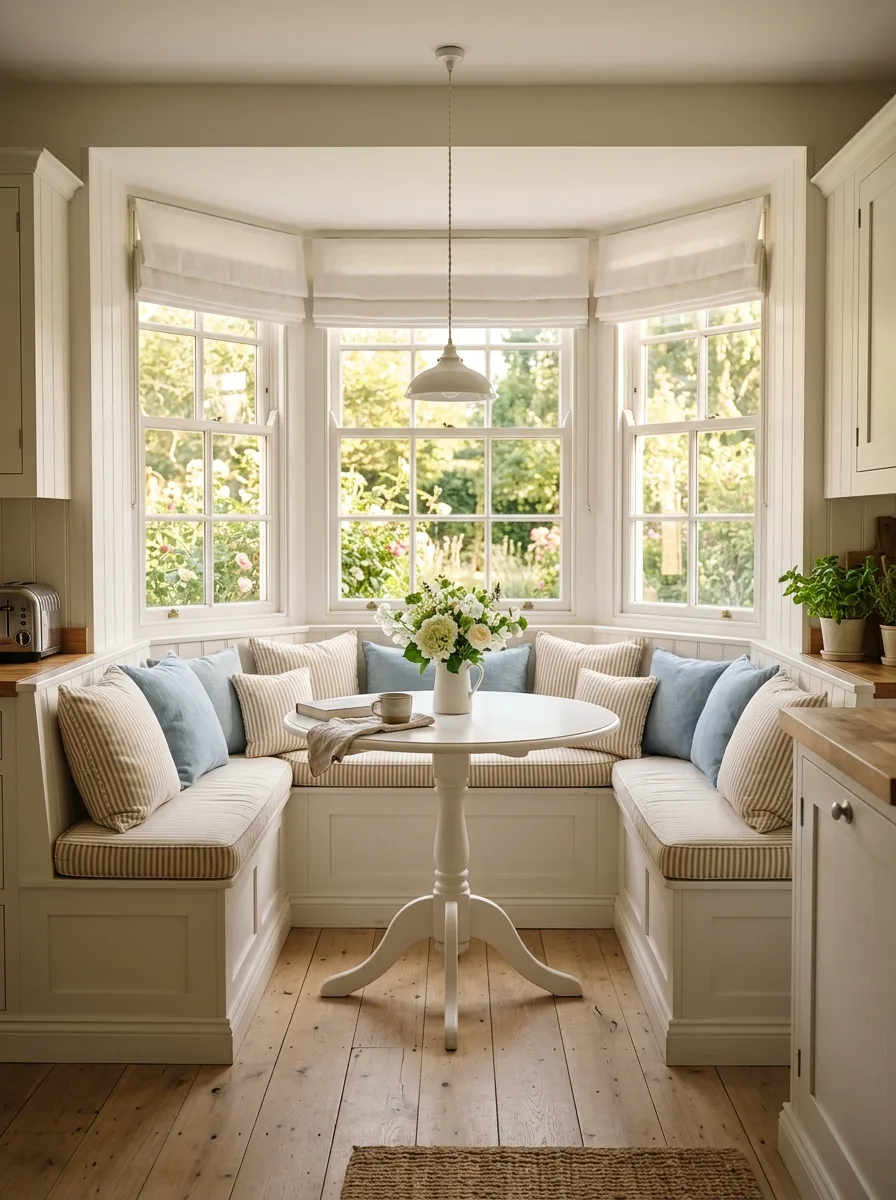
Build an L-shaped or U-shaped bench directly into a bay window, following the angle of the window wall rather than squaring it off, so the seating wraps the actual architecture instead of sitting in front of it.
Cushion the bench in a classic blue-and-cream ticking stripe, choosing a pattern narrow enough to read as texture from across the room rather than a bold graphic statement.
Hang simple linen Roman shades at each window pane rather than full-length curtains, keeping the window treatment unobtrusive enough that the garden view stays the actual focal point.
Center a round pedestal table in white, painted to match the surrounding trim, so the table disappears into the woodwork and the striped cushions stay the only real color decision in the room.
Slate Blue Paneled Chintz
Panel the walls in raised wood molding and paint every surface, walls, trim, and ceiling, in the same muted slate blue, so the room reads as one continuous architectural envelope.
Cushion the built-in bench in a rose chintz print, and use the same fabric for the window’s scalloped Roman shade, so the pattern repeats in exactly two places rather than scattering across multiple different prints.
Install glass-front cabinetry nearby to display white and blue china, and hang small equestrian or botanical prints on the paneled wall in simple frames.
Finish with a round pedestal table in dark wood or brass, and a single scalloped rattan pendant shade overhead. This is a classic, English-leaning look, and it depends on the paneling and the chintz print doing all the work while everything else stays restrained.
Emerald Velvet Brass Pendant
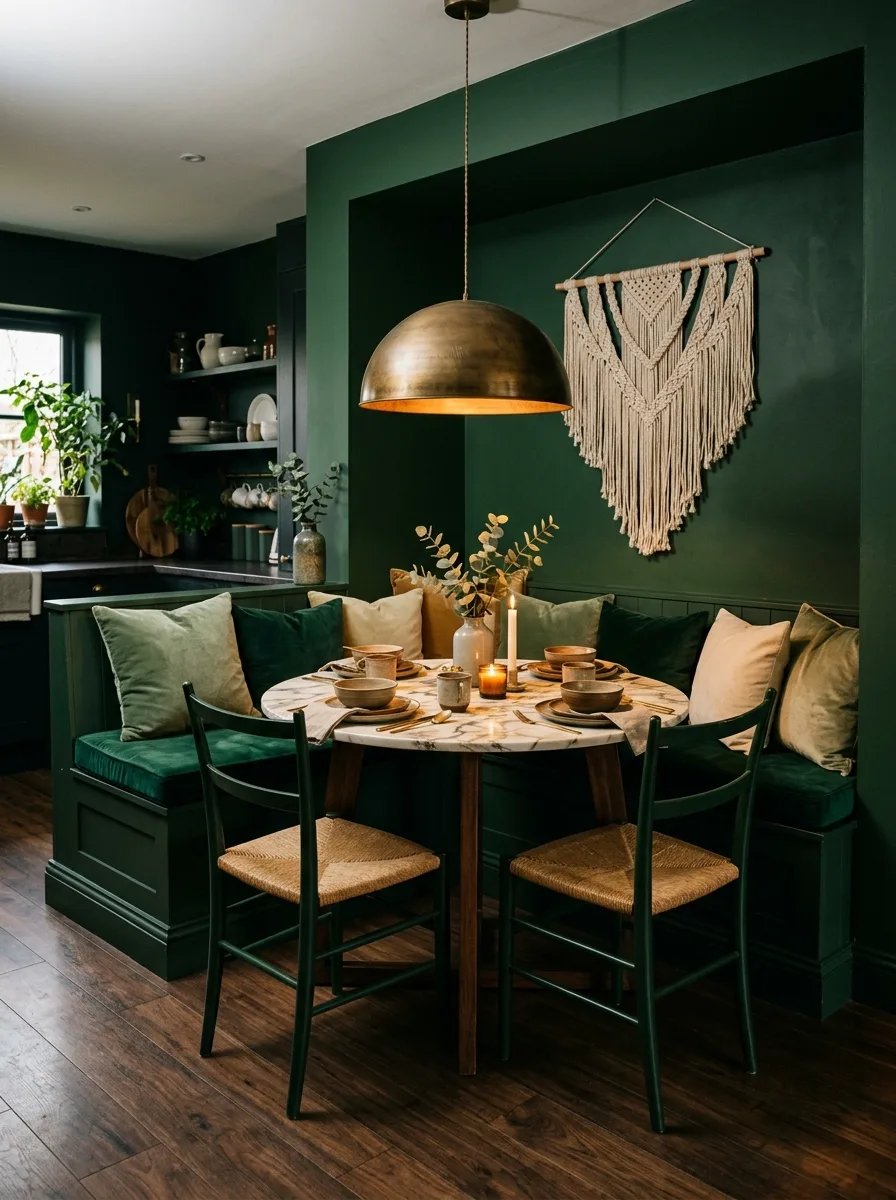
Paint the walls and surrounding millwork in a deep, glossy emerald green, treating the color as a backdrop for warm brass and candlelight rather than something meant to read crisp and bright.
Cushion the built-in bench in emerald velvet, several shades darker or lighter than the wall paint rather than an exact match, so the bench reads as a distinct object rather than disappearing into the wall behind it.
Hang an oversized brass dome pendant directly over the table, sized large enough to feel slightly dramatic for the scale of the room. This fixture is doing as much work as the green paint in setting the mood.
Add a macrame wall hanging and real candles on the table rather than electric lighting alone. This look depends on warmth and a little romance, and overhead light alone won’t deliver either.
Bench Built Into Island
Attach a built-in bench directly to the side of a kitchen island rather than building it against a wall, painting the bench in the same saturated navy as the island cabinetry so the two read as a single piece of millwork.
Cushion the bench in plain cream fabric with one graphic navy-and-white patterned pillow, letting the simple cushion play a supporting role to the bold cabinet color surrounding it.
Pair it with an oval marble table on slim brass legs, positioned close enough to the island that the nook feels like a natural extension of the kitchen rather than a separate room.
Hang a brass lantern pendant overhead and add a single dramatic stem of orchids on the table. A nook built directly into an island works because it borrows the kitchen’s own materials instead of introducing a competing palette.
Black Ticking Stripe Farmhouse
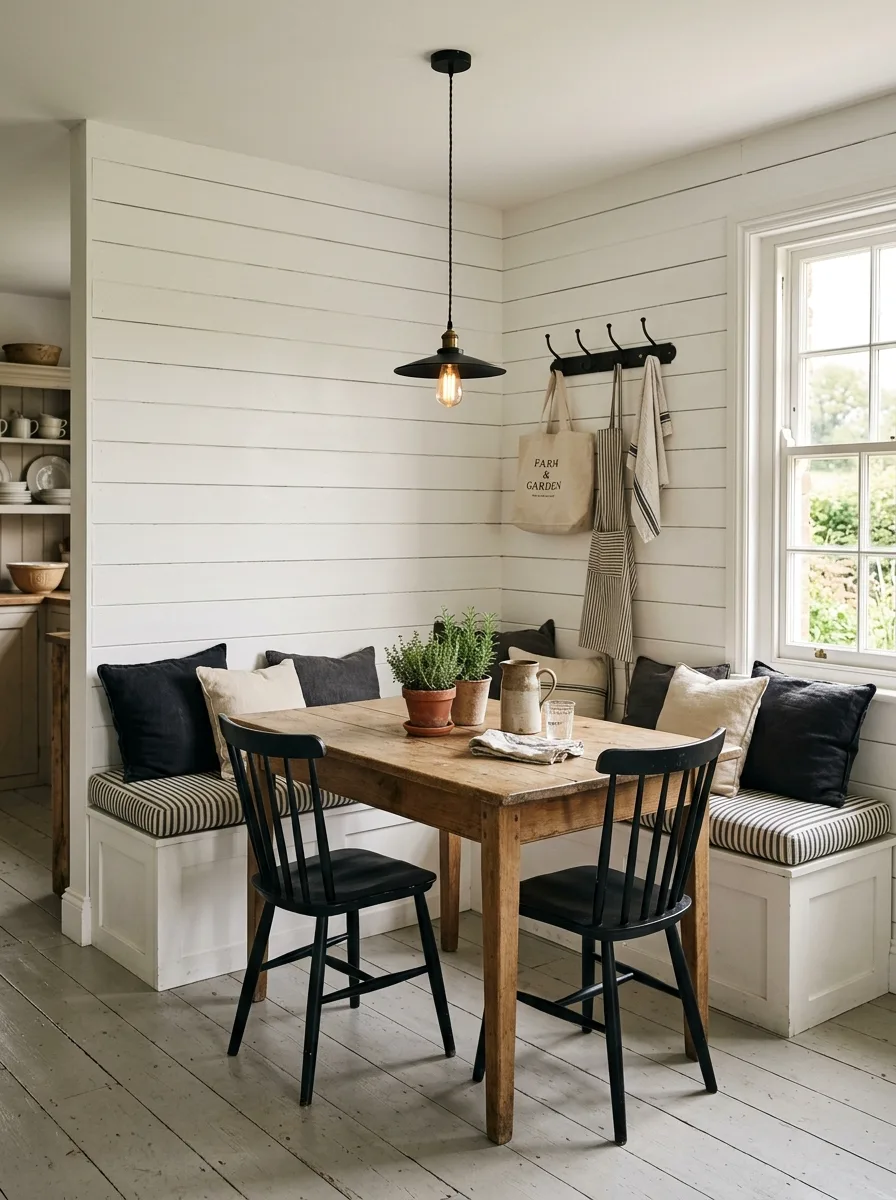
Panel the surrounding walls in white shiplap, running the boards horizontally, and keep the trim and ceiling in the same crisp white so the room reads as one continuous, textured backdrop.
Cushion the built-in bench in a black-and-white ticking stripe, choosing a narrow, even stripe rather than a wide block pattern. This print is doing the only real decorative work in an otherwise plain room.
Pair the bench with a worn, unfinished wood farm table and simple black spindle chairs rather than anything upholstered. The contrast between raw wood and crisp white paint is the foundation of this entire look.
Hang a row of black iron hooks nearby for aprons and tote bags, treating the nook as a genuinely working corner of the kitchen rather than a separate, precious space.
Tufted Button-Back Bow Window
Build a curved bench to follow the exact shape of a bow window, upholstering it in a button-tufted cream fabric that wraps the entire curve in one continuous, buttoned surface.
Leave the surrounding plasterwork, corbels, and ceiling detail fully exposed and unpainted in their natural cream tone, letting the architectural ornament read as the room’s secondary decorative layer.
Hang a modern, sculptural bubble-form chandelier rather than a traditional crystal fixture, deliberately pairing a contemporary lighting choice with historic millwork instead of matching the eras exactly.
Center a black oval pedestal table in the curve, and furnish the open side with simple, pale modern chairs. The contrast between the ornate architecture and the spare, modern furniture is what keeps this room from reading as a period piece.
Low Platform Paper Lantern
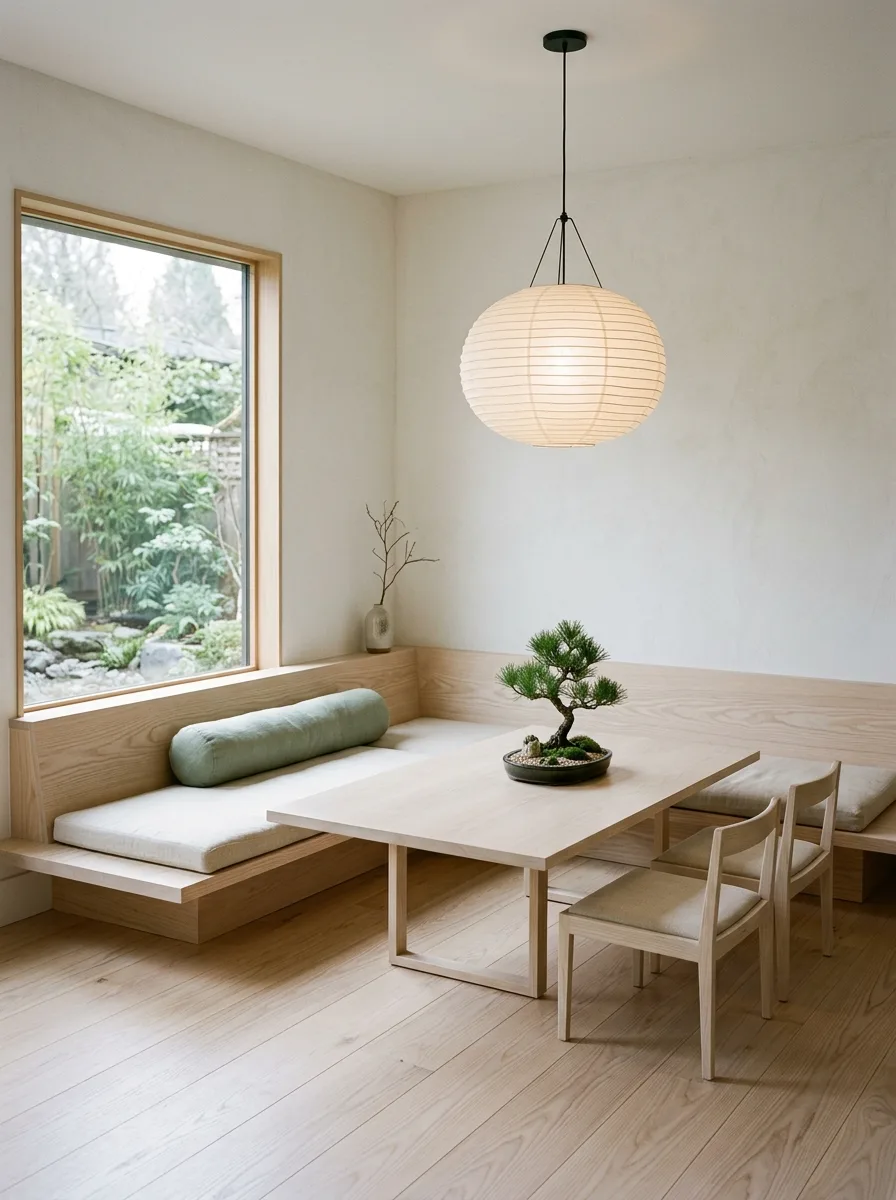
Build a low, wide wood platform bench directly into the wall at a height closer to a floor cushion than a standard chair, using pale, unfinished blonde wood throughout.
Hang a large round paper lantern pendant as the room’s only light fixture, choosing one with a warm bulb and a soft, diffused glow rather than anything bright or directional.
Keep the table low to match the bench height, in the same pale wood, and position a single bonsai tree or small potted plant as the table’s only centerpiece.
Limit the cushions to one or two solid colors, a soft sage or stone tone, rather than a pattern. This look depends on restraint and negative space; a printed cushion would undo the calm the rest of the room is built around.
Jungle Wallpaper Rattan Globe
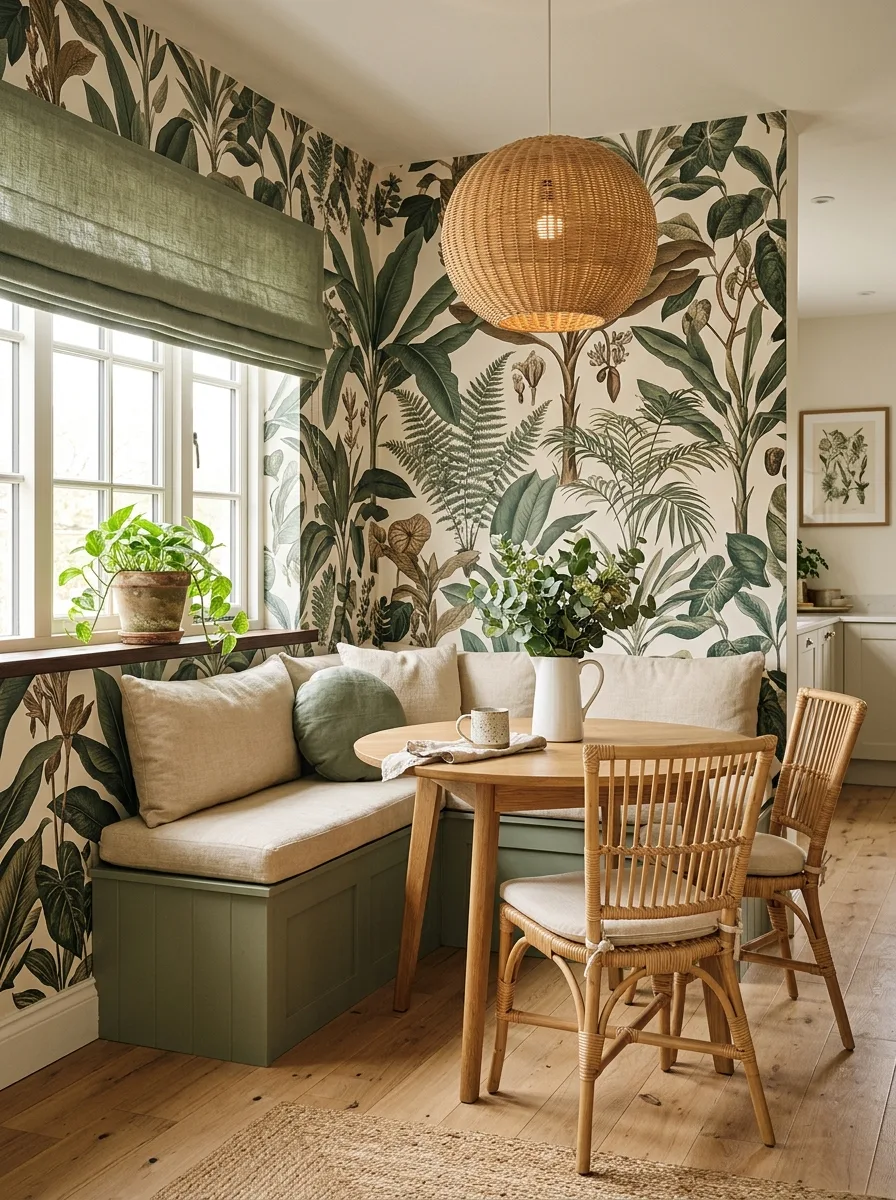
Wrap the nook’s walls in a botanical jungle-print wallpaper, running it floor to ceiling and into the corner without a break, so the pattern reads as an immersive environment rather than a single decorated wall.
Build the bench base in a solid color pulled from the wallpaper’s deepest green, and cushion it in a plain, unpatterned linen. With a wallpaper this detailed, the cushions need to disappear rather than compete.
Hang a generously sized woven rattan pendant directly over the table, choosing a globe or drum shape that echoes the organic, natural feeling of the wallpaper around it.
Bring in one or two real potted plants on the windowsill, choosing varieties that visually rhyme with the wallpaper’s printed leaves. The real and the printed greenery should feel like they belong to the same garden.
Ocean View Navy Stripes
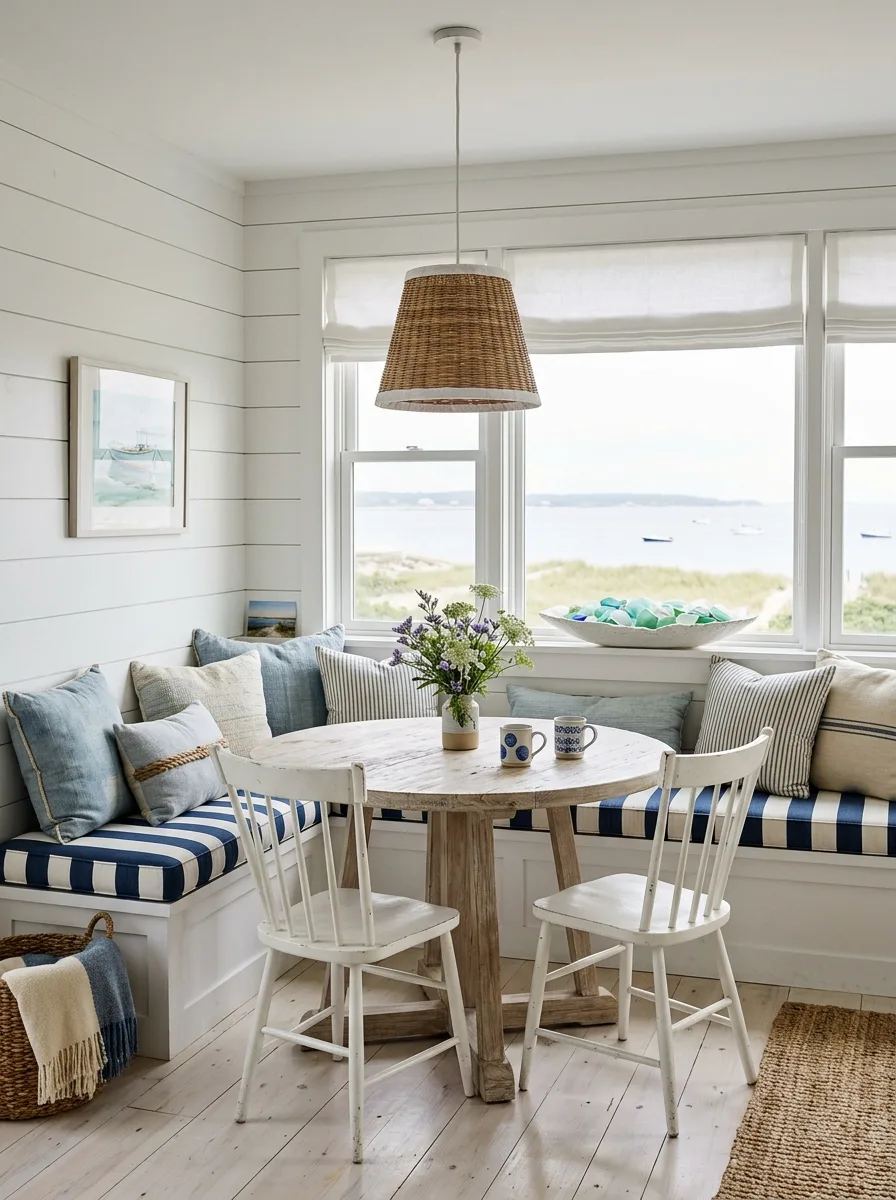
Position the bench to directly face the water, treating the view as the room’s actual centerpiece and orienting the entire layout around that sightline rather than around the kitchen behind it.
Panel the surrounding walls in white shiplap and cushion the built-in bench in a bold navy-and-white stripe, choosing a wide, confident stripe rather than a narrow ticking pattern.
Hang a woven rattan drum pendant over a round, whitewashed wood table, choosing a finish worn enough to look sun-bleached rather than freshly painted.
Fill a low white bowl with collected sea glass or smooth beach stones as the table’s centerpiece, swapping fresh flowers in occasionally rather than relying on a permanent arrangement.
All-Black Box Checkerboard Floor
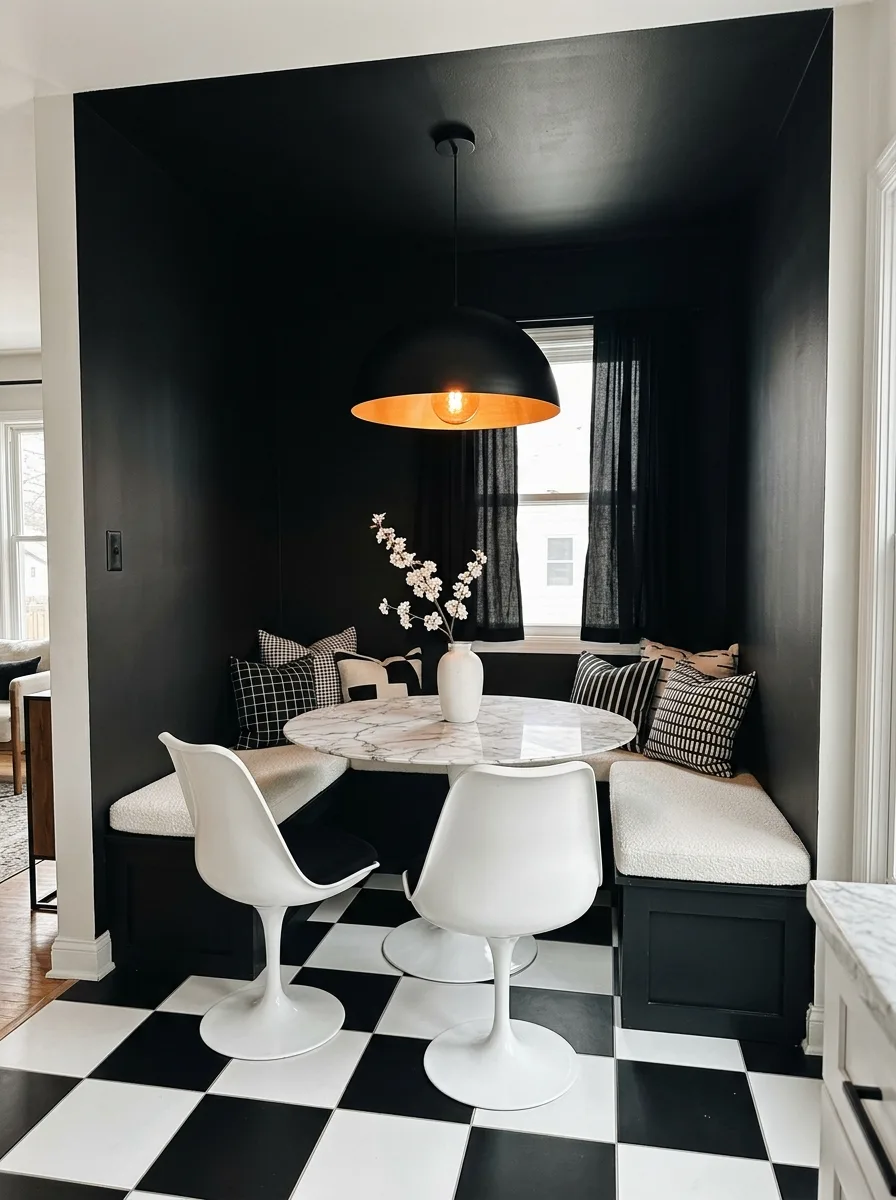
Paint every surface of the nook, walls and ceiling both, in the same matte black, treating the entire alcove as one continuous dark volume rather than four walls with a lighter ceiling.
Lay a black-and-white checkerboard floor at the base of the nook, using large-format tile squares rather than small ones, so the graphic pattern reads clearly even from across the room.
Hang a black dome pendant with a warm brass or gold interior, positioned to throw light downward and create real contrast against the dark walls surrounding it.
Furnish with white molded chairs and a white marble-topped table, keeping every seating piece in the same bright white. The stark contrast between the black room and white furniture is the entire visual strategy here.
Rose Wallpaper Crystal Chandelier
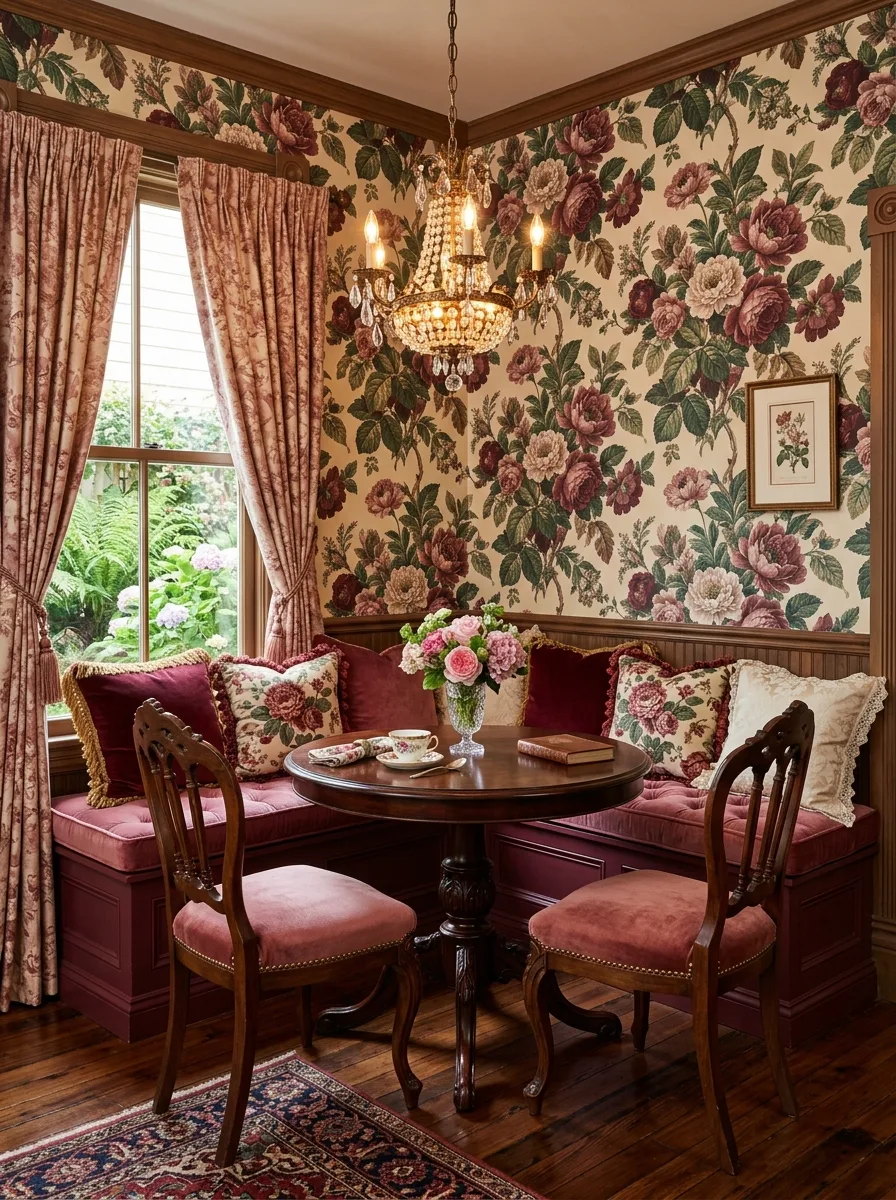
Wrap every wall in a dense, large-scale rose wallpaper, choosing a pattern busy enough that it reads as one continuous garden rather than a repeating print someone could trace.
Cushion the built-in bench in a deep burgundy or wine velvet, pulling the darkest tone directly from the wallpaper’s flowers rather than introducing an unrelated color.
Hang a genuine crystal chandelier rather than a simpler pendant, choosing one with visible glass drops that catch and scatter light across the patterned walls.
Pair with dark, carved wood furniture and heavy floral curtains in a coordinating but not identical print. This is a maximalist, layered look, and it depends on every fabric and surface contributing to the same dense, romantic effect.
Mismatched Teacup Display Shelf
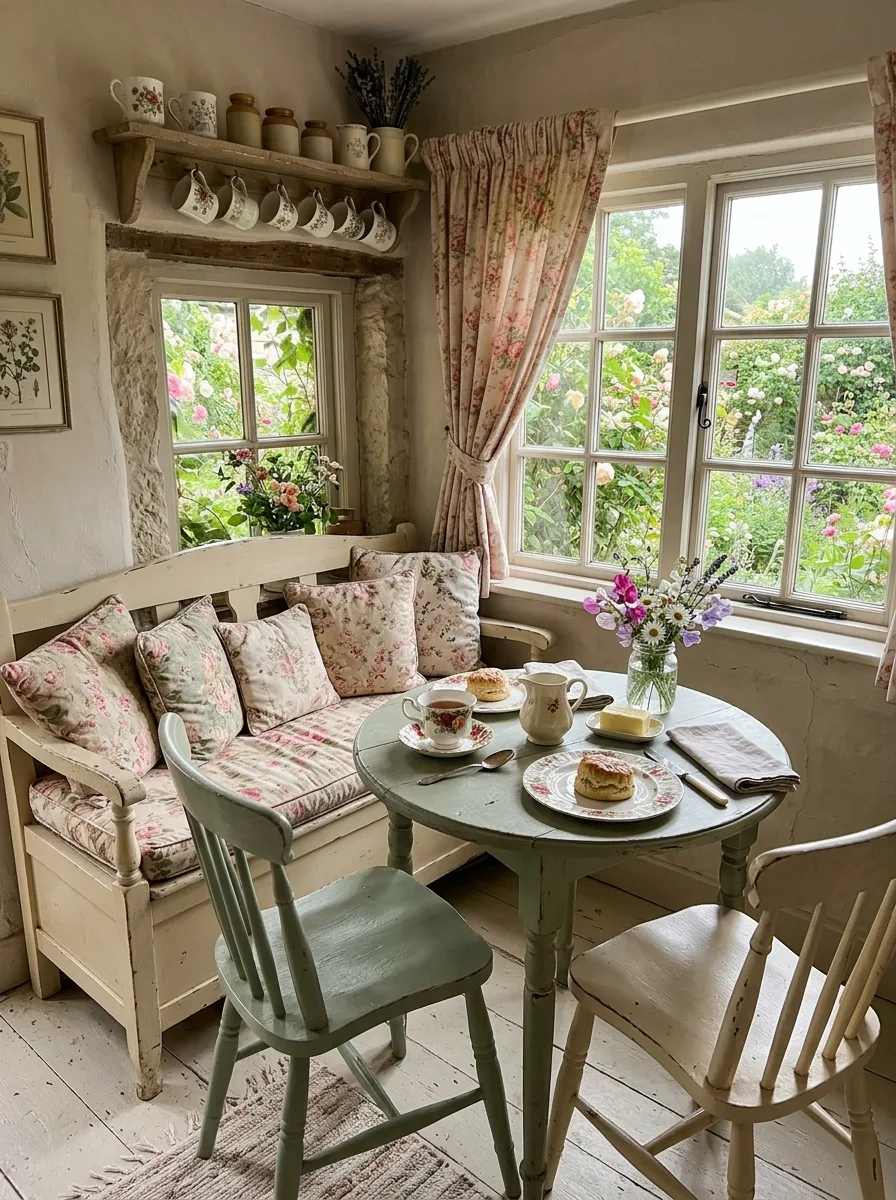
Mount a single narrow wood shelf above the bench and line it with mismatched vintage teacups, hung by their handles on small hooks rather than stacked or stored away.
Cushion a distressed wood bench and chairs in a faded floral chintz, choosing pieces that look collected over years rather than purchased as a coordinated set.
Hang floral curtains in a print that relates to, but doesn’t exactly match, the cushion fabric, tying them back loosely to let in as much garden light as possible.
Set the table with a real tea service, mismatched china, a flowered teapot, scones on a plate, rather than styling it as a static display. This nook is meant to actually be used for tea, and it should look like it just was.
Gold Fan Wallpaper Banquette
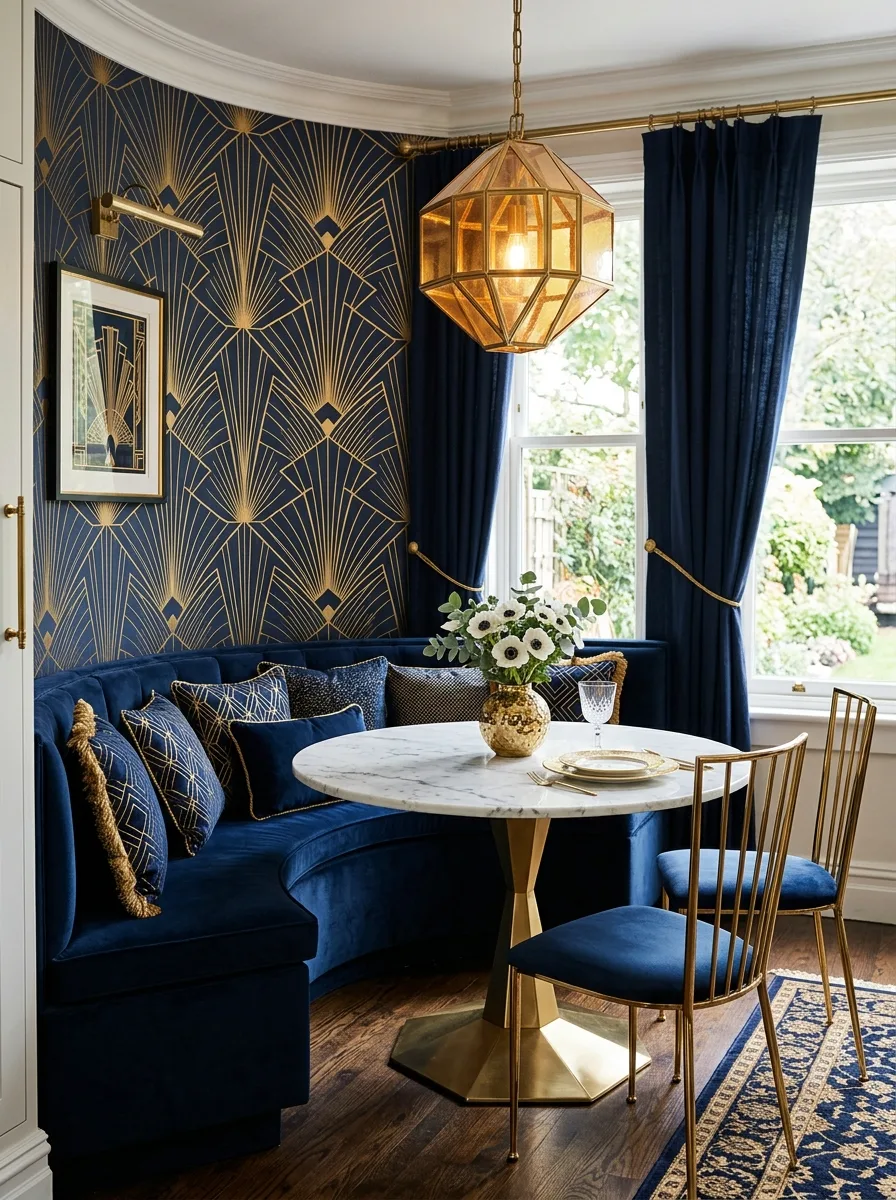
Wrap the walls in a metallic gold fan-pattern wallpaper on a dark navy ground, choosing a print with enough repeat and shine to read as genuinely art deco rather than simply geometric.
Build a curved, tufted banquette to match the bay or alcove shape, upholstering it in navy velvet with deep button-tufting rather than a plain or pleated cushion.
Hang a brass or gold geometric pendant with a faceted, jewel-like shape, positioned low enough over the table to feel intimate rather than purely functional.
Top a marble table on a brass pedestal base with gold-rimmed glassware and a single dramatic floral arrangement in white. This look depends on metallic finishes repeating throughout, table base, pendant, hardware, rather than appearing only once.
Multicolor Painted Spindle Chairs
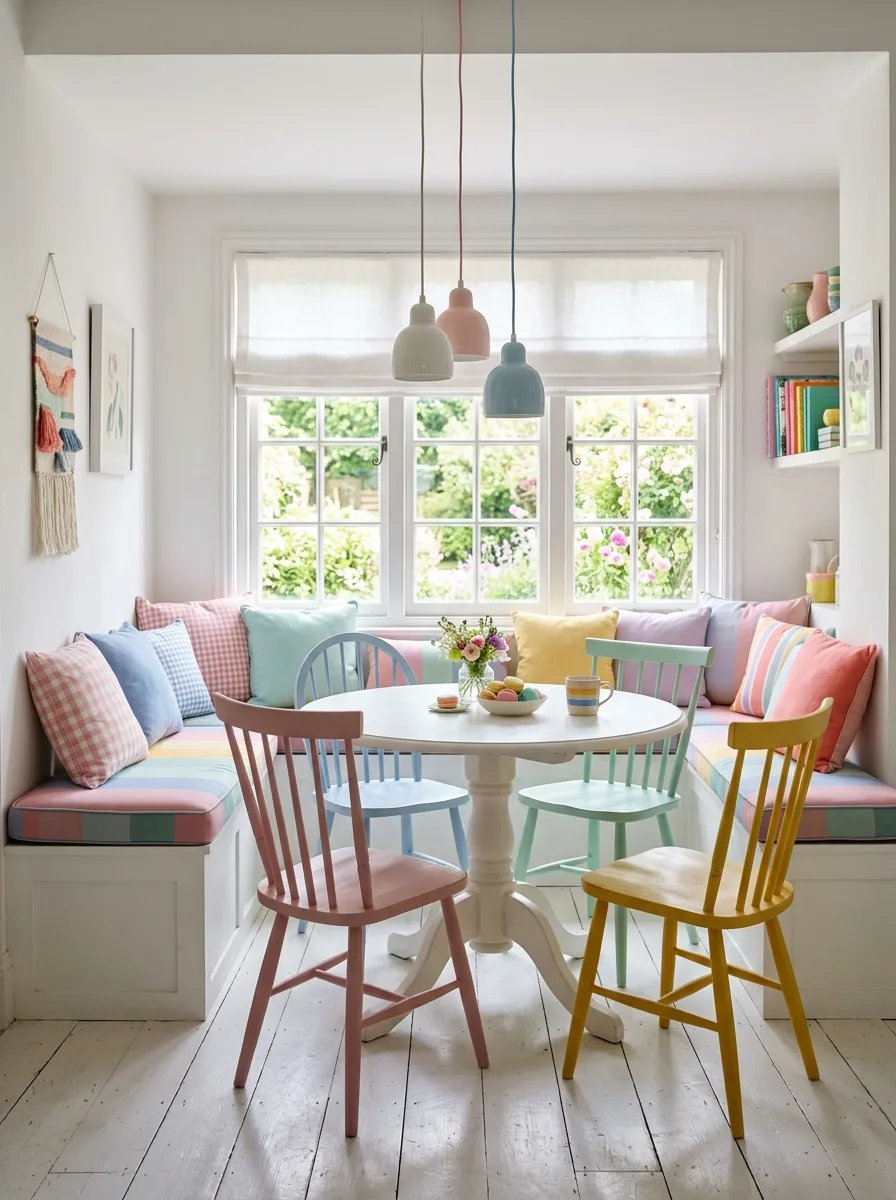
Paint each spindle-back chair around the table in a different pastel, pink, blue, mint, yellow, rather than choosing one color for the whole set. The mismatch is the entire design strategy.
Cushion the built-in bench in coordinating pastel stripes and gingham checks, mixing patterns freely as long as they all stay within the same soft, candy-colored palette.
Hang two or three pendant lights in different pastel shades rather than a single fixture, letting them cluster together at slightly different heights over the table.
Keep the walls and woodwork in plain white. A room with this many colors already in the chairs, cushions, and lighting needs at least one completely neutral surface, or the palette stops feeling playful and starts feeling chaotic.
Exposed Brick Steel Windows
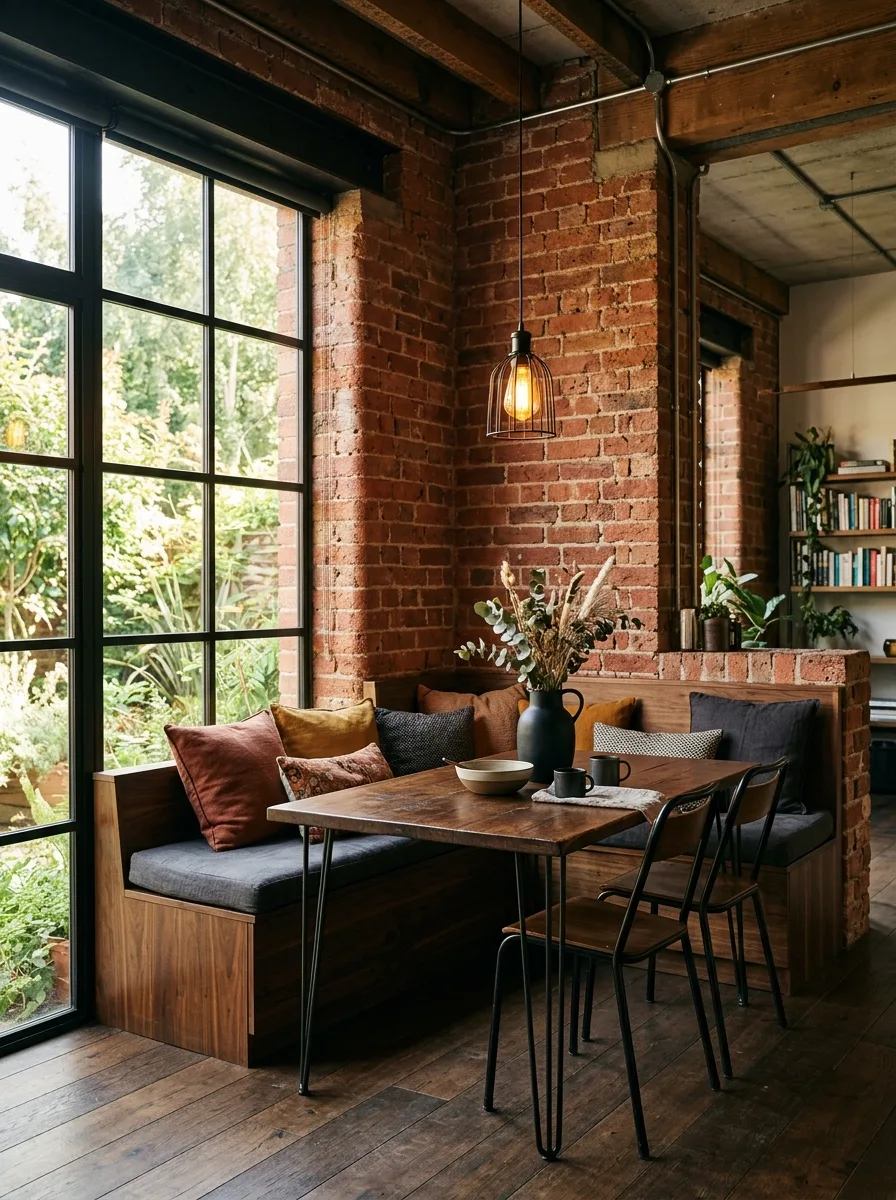
Leave the nook’s brick wall fully exposed and unpainted, letting the natural variation in color and texture from brick to brick show through completely.
Specify black steel-framed windows along the brightest wall, choosing a grid pattern with multiple panes rather than a single large sheet of glass. The black grid against red brick is the room’s main architectural statement.
Build the bench and table from reclaimed or rough-sawn wood, finished simply rather than lacquered, and pair it with black metal chairs that echo the window frames.
Cushion the bench in a mix of jewel-toned velvet pillows, rust, mustard, deep teal, layered without a strict pattern. The rich color of the textiles is what keeps a room this industrial from feeling cold.
Cognac Leather L-Bench
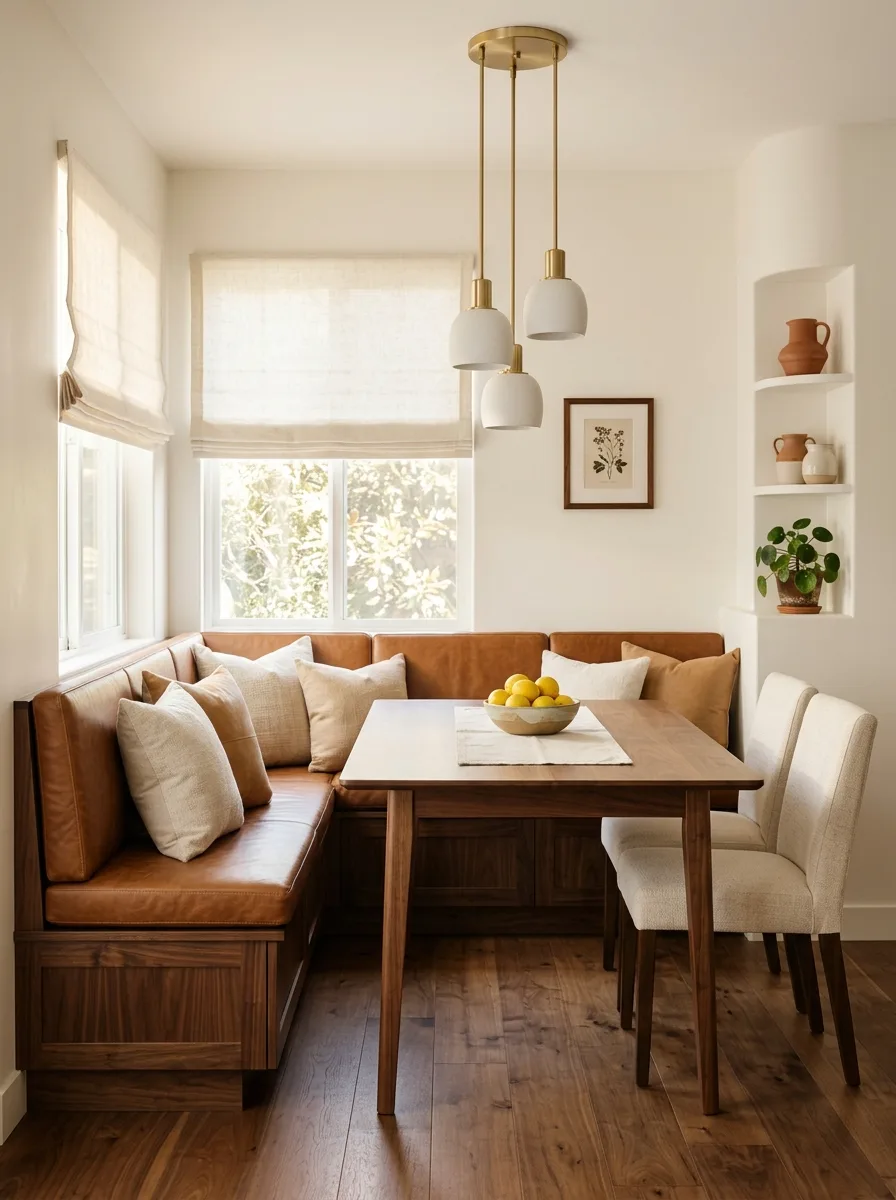
Build an L-shaped bench into the corner and upholster it entirely in cognac leather rather than fabric, choosing a finish with some natural grain and variation rather than a uniform, flat color.
Pair it with a walnut table in a mid-century leg style, and cushion the opposite seating in cream boucle chairs rather than a second leather piece, so the two materials sit in conversation rather than competition.
Hang a cluster of three brass pendants at staggered heights directly over the table, rather than a single central fixture, to fill the visual space above a bench this substantial.
Style the table simply, a bowl of citrus, a single piece of pottery, rather than a layered centerpiece. The leather and the wood are already carrying plenty of visual weight on their own.
Cast-Iron Bistro Table Corner
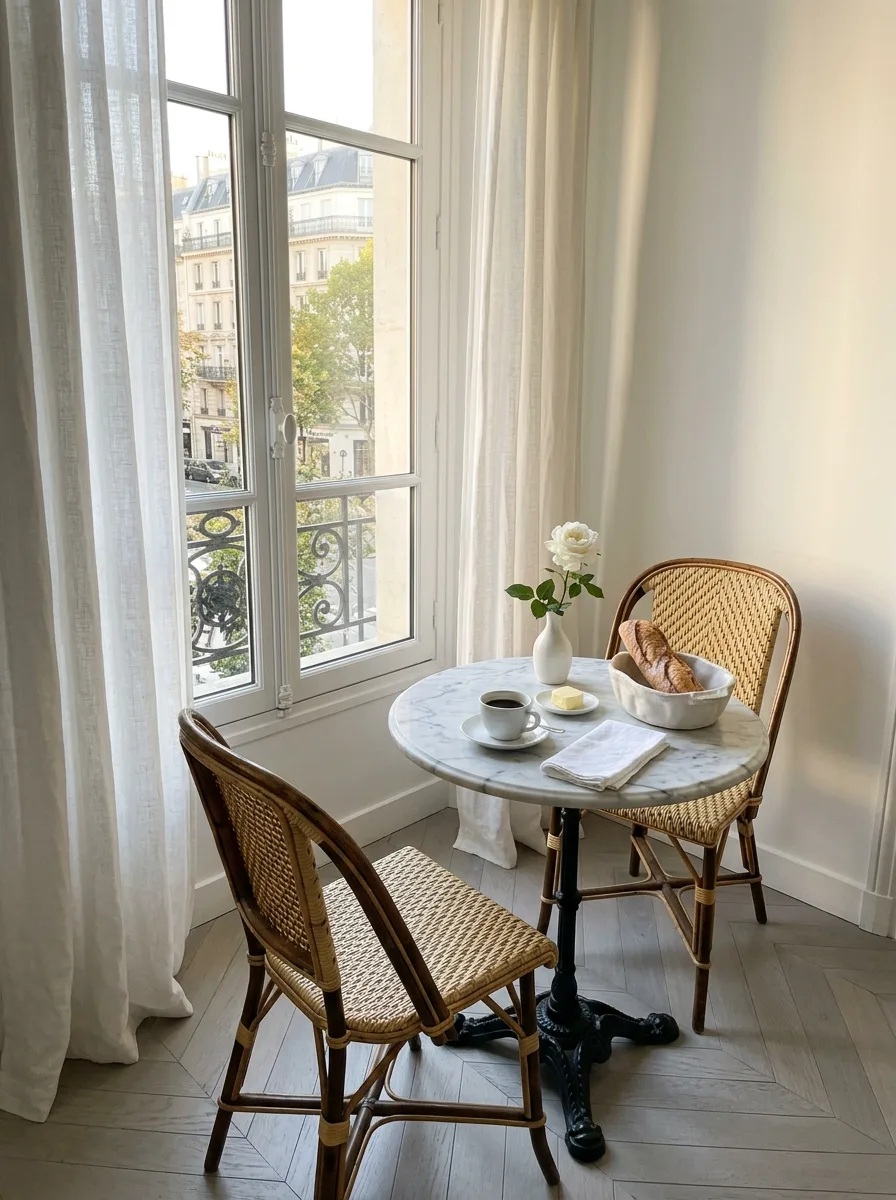
Skip the built-in bench entirely for this one and use a small marble-topped bistro table on a cast-iron pedestal base instead, positioned directly in front of the best window in the room.
Pair it with two woven rattan bistro chairs in a classic French café style, rather than upholstered seating, keeping the whole footprint small enough to fit into a genuinely tight corner.
Hang sheer linen curtains the full height of the window, letting them puddle slightly on the floor, and skip any additional window treatment that would block the view outside.
Style the table with real, simple food, coffee, a baguette, a single rose in a small vase, rather than decorative objects. This corner works because it looks like breakfast is actually happening, not staged.
Tied-Back Floral Curtains
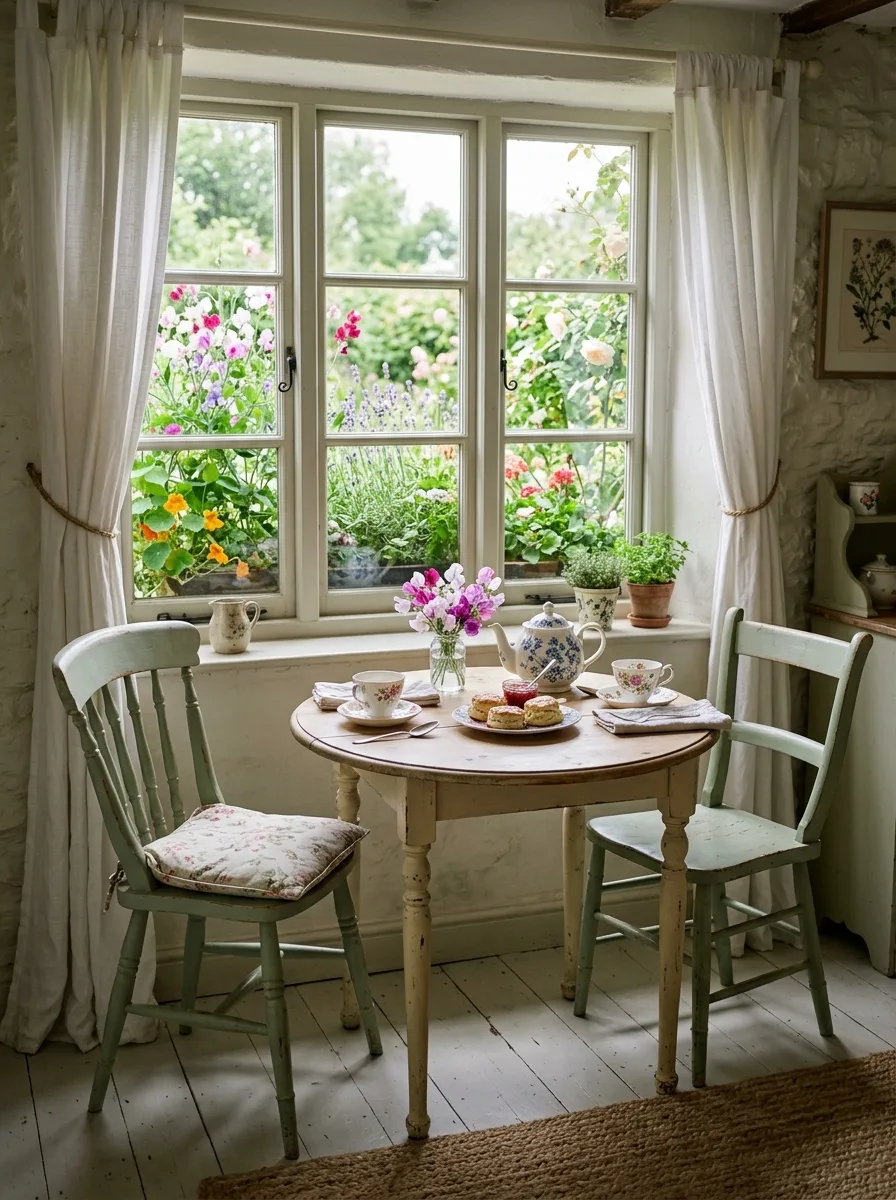
Hang floral curtains at the window in a pattern that echoes the actual garden visible outside, tying them back loosely with simple fabric ties rather than ornate hardware.
Cushion a distressed cream bench and mismatched painted chairs in a soft floral print, choosing pieces in slightly different but harmonious colors rather than a matched set.
Set the table with a real flower arrangement cut from the same garden visible through the window, alongside a mismatched tea set, so the indoor styling directly echoes the outdoor view.
Leave the surrounding walls in a soft, plain stone or cream tone. With this much pattern already happening in the curtains, cushions, and table styling, the walls need to stay completely quiet.
Curved Cream Alcove Nook
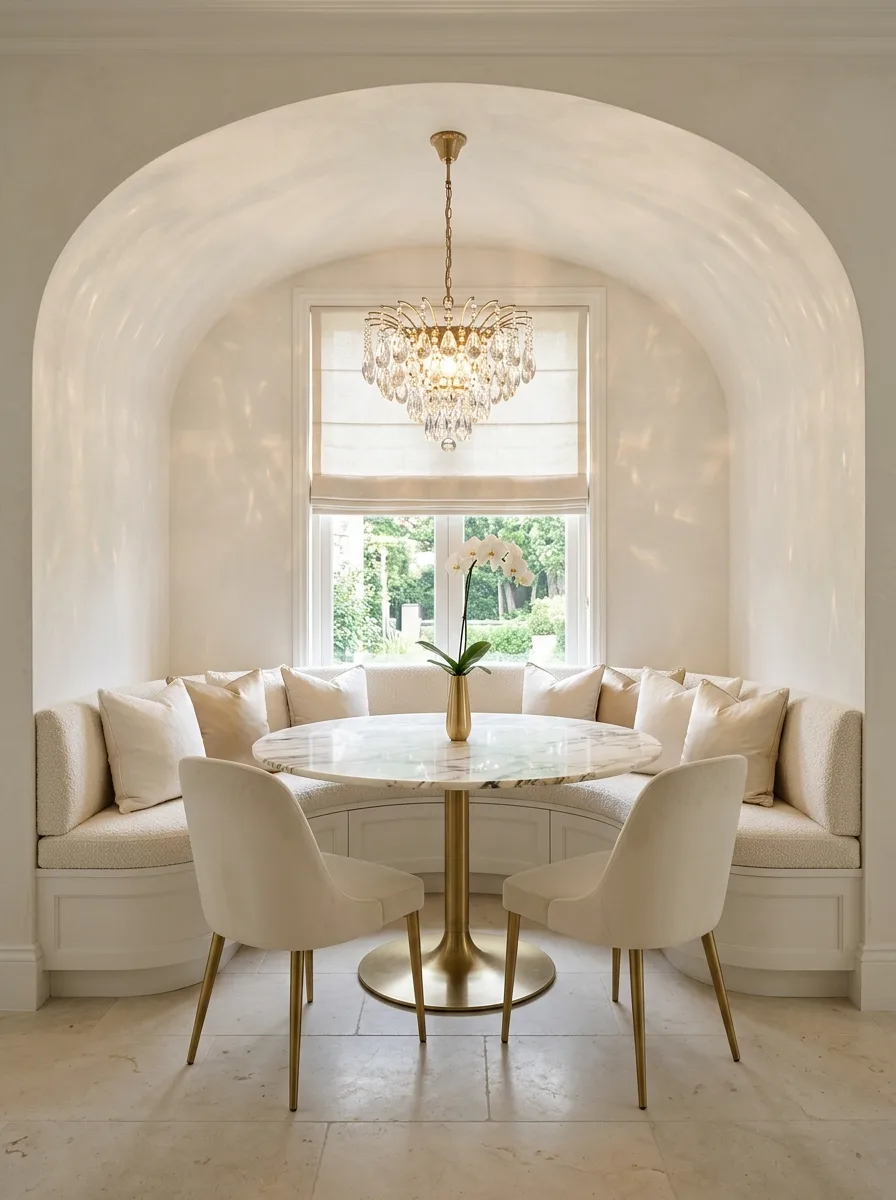
Build a curved, barrel-vaulted plaster alcove around the nook, allowing the architecture itself to introduce drama before a single piece of furniture goes in.
Cushion a curved built-in bench in cream boucle, following the exact curve of the alcove walls so the seating reads as poured into the space rather than fitted afterward.
Hang a genuine crystal chandelier at the center of the curve, choosing a fixture ornate enough to match the formality of the plasterwork surrounding it.
Top a round marble table on a brass pedestal with a single orchid, and finish the floor in pale limestone. This is a formal, luxurious take on a nook, and it depends on every material reading as genuinely high quality rather than approximating one.
Final Thoughts
Every nook on this list made the same quiet bet: that a small, deliberately built space beats a slightly bigger, undecided one.
None of them are flexible. A curved velvet banquette can’t become a home office next year. A wallpapered jungle corner can’t easily turn neutral if someone gets tired of green. That permanence is exactly the point. A nook commits to being exactly one thing, used for exactly one purpose, and that commitment is what makes it feel special instead of incidental.
The corner in your own kitchen that currently holds a table nobody plans around is not a failed nook. It just hasn’t been built yet. The bench, the cushions, the one pattern that gets to be the whole point, those are decisions, not accidents, and they’re available to anyone willing to actually make them.
Stop eating cereal at the counter. Go build the bench.