
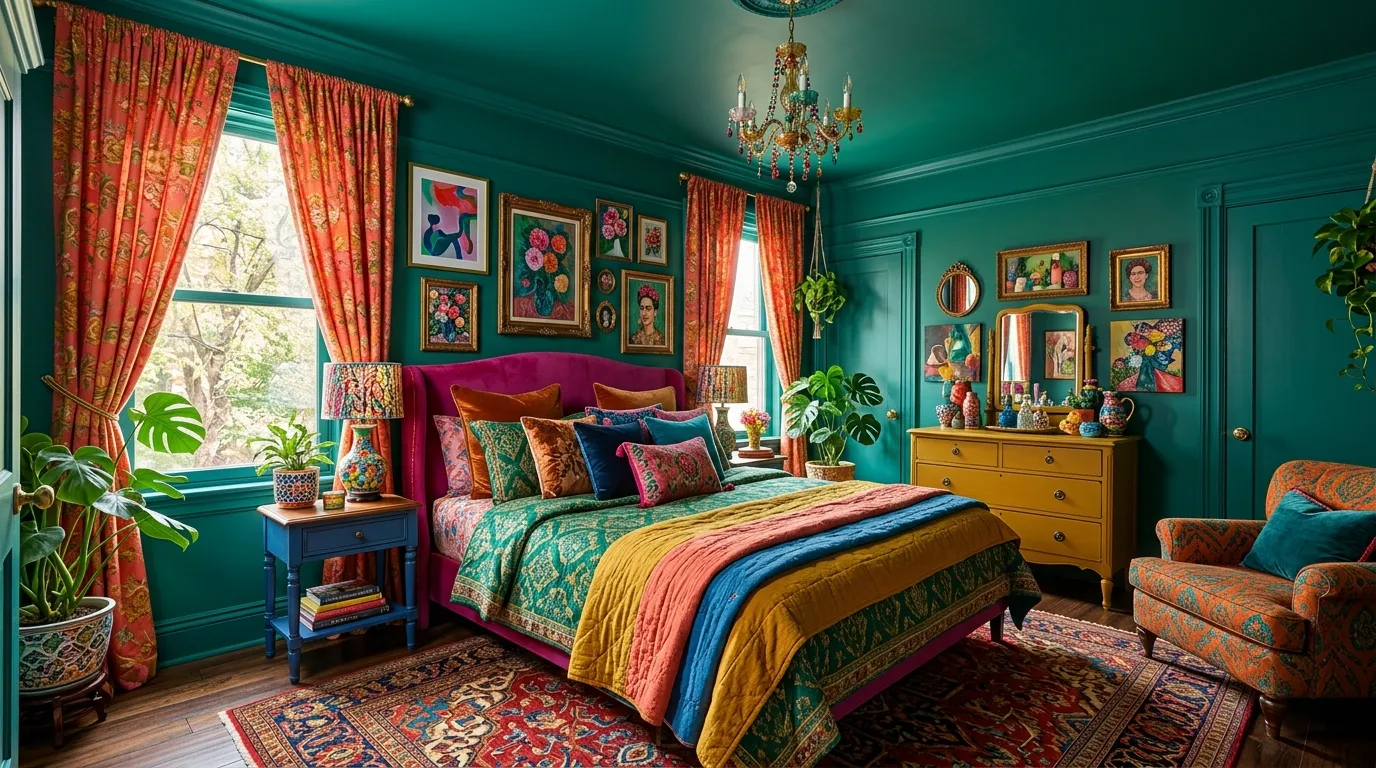
You spend a third of your life unconscious in this room, and somehow it’s the one space you decorated like you might need to return it.
Color drenching treats a bedroom like a mood instead of a neutral box: one color carried across walls, ceiling, trim, sometimes furniture, until the room stops feeling like a place you sleep and starts feeling like a place you’d choose to be awake in too.
It also happens to be the easiest room in the house to get away with it. Nobody else has to live with your bedroom’s opinions but you.
Decisions To Make Before The Paint Goes On
Before any of this gets fun, a handful of boring decisions need to happen first, the same way they do in a bathroom, just with different stakes, because this is the room you can’t avoid using every single day.
Pick The Headboard Before The Paint
The headboard is usually the single largest object in a bedroom, and it gets chosen last, almost as an afterthought once the walls are already finished.
Flip that order. Decide whether the headboard is going to blend into the wall color or contrast against it — leather against olive, rattan against blue, tufted velvet against plum — and then have the paint matched or chosen around that material.
A headboard picked after the fact, in whatever was available, is how rooms end up with a wall color and a piece of furniture that technically share a room but don’t actually relate to each other.
Get a sample of the headboard fabric or material into the room before committing to a final paint color, the same way you’d bring in a tile sample for a bathroom.
Build Light At Lamp Height, Not Overhead
A single overhead fixture, switched on in a saturated bedroom at night, turns the whole room flat and a little clinical — exactly the opposite of what the color was supposed to do.
Every well-lit room in this list relies on light at bed height: table lamps on the nightstands, sconces flanking the headboard, or pendants hung low on either side.
Plan the electrical for this before the walls close up. Sconces and pendants need wiring run to specific points, not just an outlet wherever a nightstand happens to end up.
If you only get one lighting upgrade in the whole project, make it light sources at bed height instead of one more recessed can in the ceiling.
Match The Saturation To The Room’s Light
A north-facing bedroom with one small window can carry an almost-black color and lean fully into it, the way a couple of rooms in this list do.
A bedroom that floods with daylight all morning will read that exact same dark color completely differently, often brighter than you’d expect, but it’s worth knowing in advance rather than discovering it after the paint dries.
Getting this backwards is how people end up disappointed: a saturated color picked for drama in a dim room that just reads dingy, or a pale, gentle color in a bright room that ends up looking washed out instead of soft on purpose.
Sit in the actual room at the time of day and time of year you’ll mostly use it, and let that decide how dark you’re willing to go before you decide which color family to commit to.
Color-Drenched Bedroom Ideas
Green Curtains Matching Wall Color
Paint walls and ceiling a deep hunter green, and hang curtains floor to ceiling in the exact same shade so the windows disappear into the walls when closed.
Add an antique tapestry-upholstered armchair as a statement piece, plus narrow brass wall sconces mounted vertically on either side of the window.
Style built-in shelving with a small, curated set of objects, a dark vase, a carved bowl, one ceramic piece, rather than a fully packed bookshelf.
Don’t skip rug layering. A faded vintage rug under a flatter dhurrie gives the floor the same sense of collected history as the furniture.
Hang one crystal chandelier overhead as the room’s single glamorous note, and keep every other fixture simple so it has room to stand out.
Beadboard Ceiling Same Blue Tone
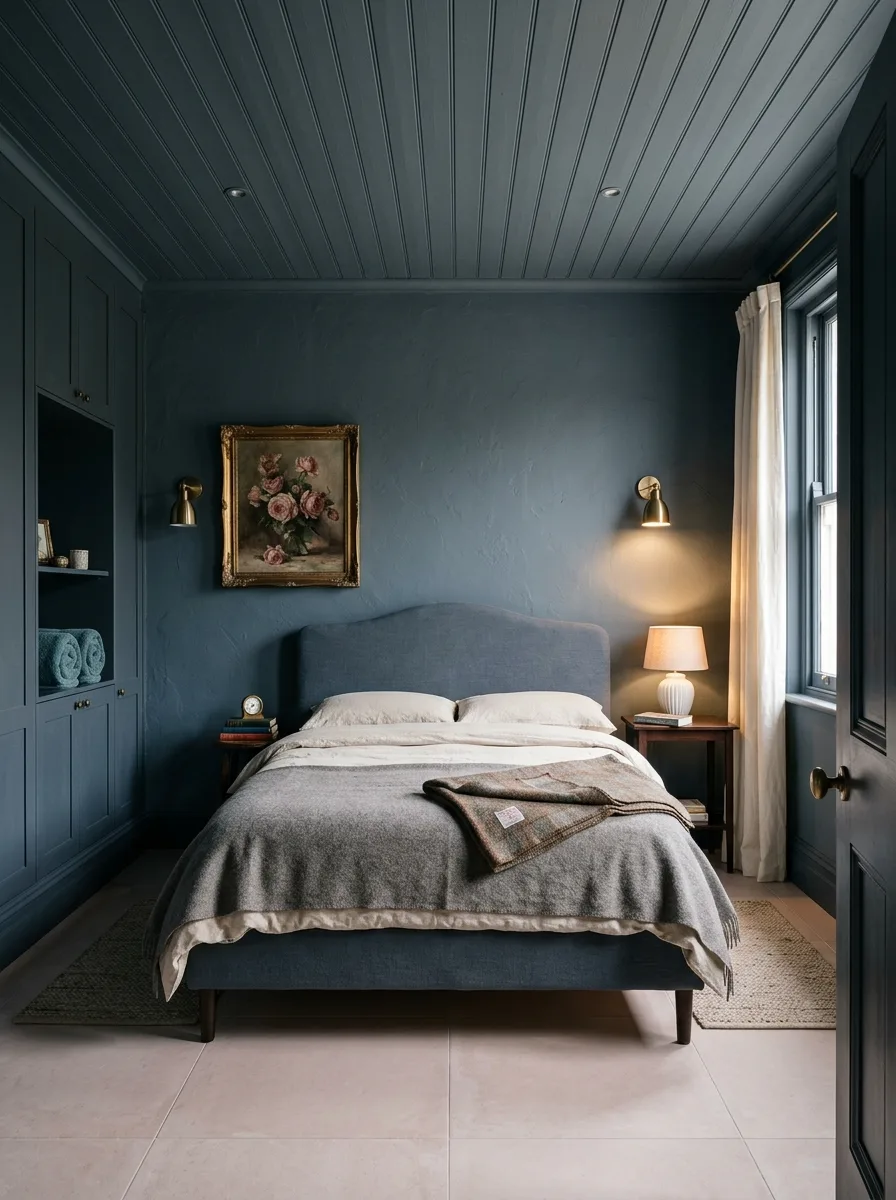
Paint tongue-and-groove paneling on the ceiling the exact same slate blue as the walls, and carry that color into any built-in cabinetry in the room as well.
Skip table lamps in favor of brass swing-arm sconces flanking the headboard, which frees the nightstands for books and a glass of water instead.
Hang a vintage-style floral oil painting in a gilt frame to give the cool blue some warmth without breaking the palette.
Keep the floor in pale stone rather than matching it to the walls. That’s the one contrast this room needs; matching it all the way down would tip the mood from moody into oppressive.
Dress the bed in cream and oatmeal tones rather than blue. The walls are doing the color work, so the bed should stay quiet.
Neon Ceiling Feature Magenta Drench
Start with black walls and ceiling as the base, then build circular neon lighting into the ceiling itself as a literal light fixture rather than a painted detail.
Choose a scalloped, shell-shaped upholstered headboard in dark velvet, paired with a faux fur throw and a round shag rug in the same magenta as the neon.
Stick to a single consistent LED color temperature rather than mixing warm and cool neon tones; that’s what keeps a maximalist room like this designed instead of chaotic.
Don’t add white or natural wood anywhere. This look depends on every surface staying within the black-and-magenta family, including the furniture.
Keep accessories sparse: one accent chair, one rug, one throw. A room already doing this much with color and light doesn’t need more objects competing for attention.
Velvet Curtains And Headboard Drench
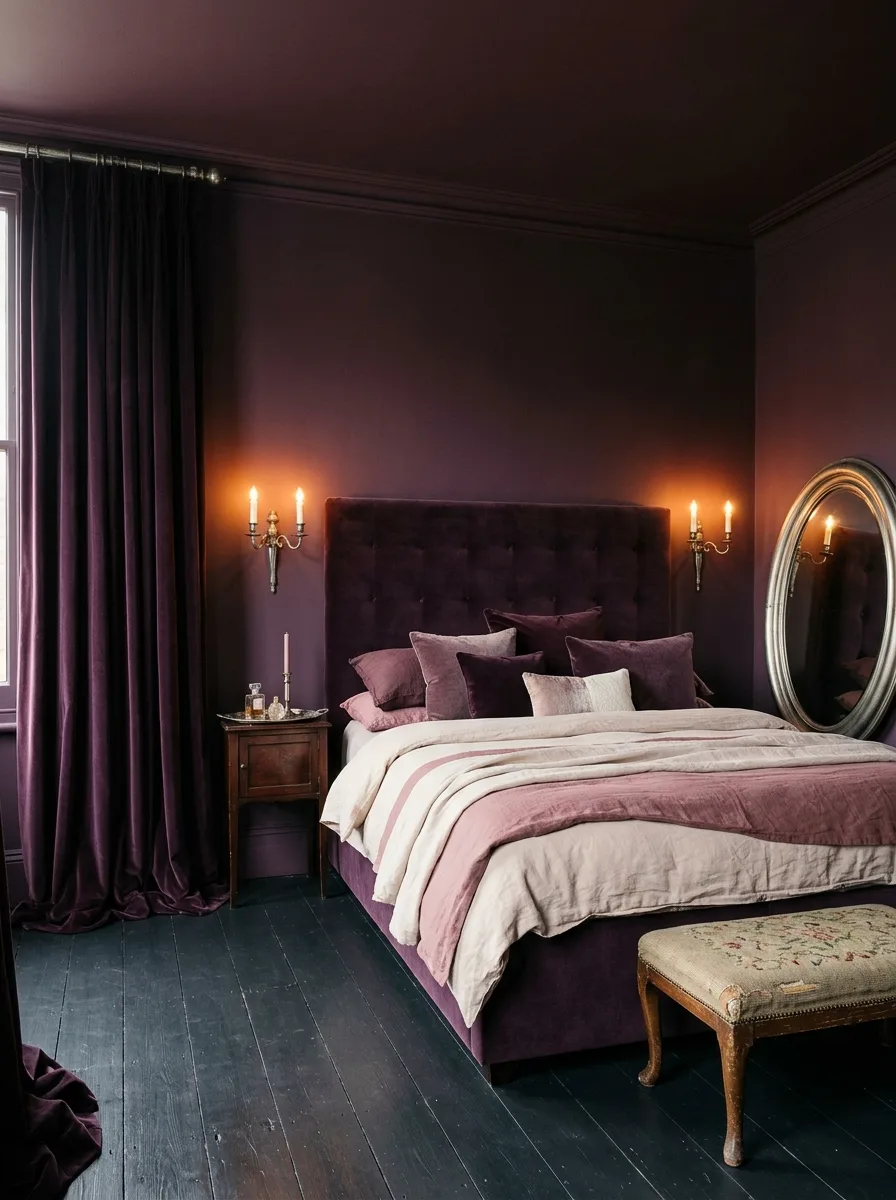
Paint walls and ceiling a deep aubergine, then hang floor-to-ceiling velvet curtains in the exact same tone from a rod that runs wall to wall rather than just window width.
Add a tufted velvet headboard in the same plum family, plus real candle wall sconces on either side of the bed instead of electric ones.
Choose a dark-stained or original wood floor. A pale floor under this much velvet and paint reads as an interruption rather than a finish.
Skip matching plum bedding. Bring in blush and cream linens instead, so the room has one place that’s allowed to be soft and light.
Reupholster an antique stool or bench in a faded floral and set it at the foot of the bed for the one bit of pattern this dark room can carry.
Two-Tone Paneling Bedside Pendants
Paint raised panel wall moulding in a deep oxblood that gradually shifts toward black across the back wall, rather than one flat, uniform color.
Hang pendant lights from the ceiling on either side of the bed instead of table lamps, freeing the nightstands entirely for a more architectural, hotel-suite feel.
Choose bedding in the same oxblood family as the walls, rather than a contrasting neutral, to lean into the tonal effect instead of breaking it.
Skip a dark rug. A pale, almost-white rug is the one bright contrast this moody room needs underfoot.
Add a small arrangement of dried pampas grass on the nightstand to soften the hard, dark edges without introducing another color to track.
Lime-Washed Walls Raw Plaster Ceiling
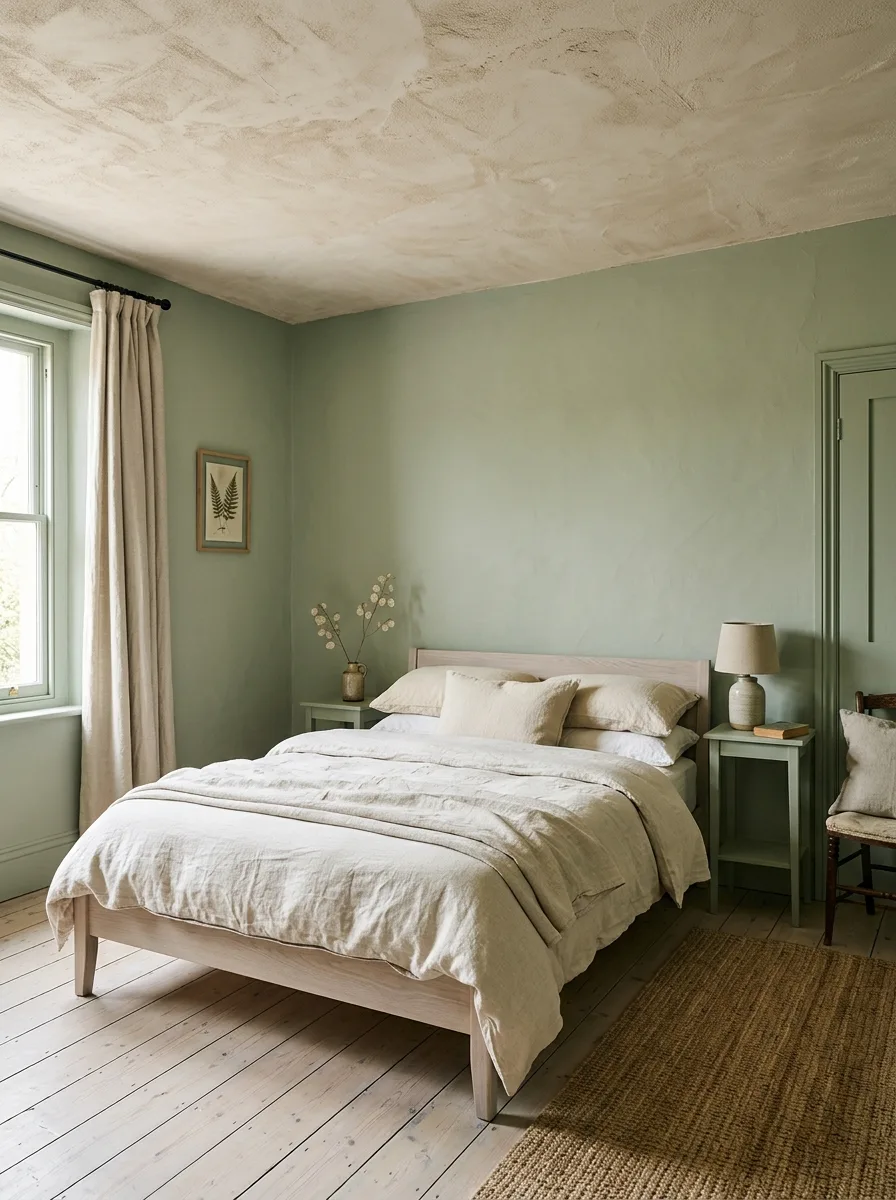
Finish the walls in a lime-washed or textured plaster in soft sage, left deliberately uneven rather than rolled flat.
Paint the door and nightstands to match the sage, but leave the ceiling in its raw, white plaster finish. This is one of the few drenches that works specifically because the ceiling stays out of it.
Furnish with pale, unfinished oak and plain linen bedding, since this look depends on appearing almost accidental rather than designed.
Skip brass or gold entirely. Any polish at all undercuts the deliberately raw, lived-in finish this room is going for.
Finish with a jute rug and a single botanical print. That’s the only decoration this room is allowed.
Terracotta Drench Brass Wall Hooks
Paint walls and ceiling a warm, matte terracotta, carrying the same color into any sloped ceiling section rather than stopping it at the wall line.
Mount a row of ornate brass wall hooks to display bags and a small trailing plant instead of hiding them in a closet.
Choose bedding in a contrasting mustard linen rather than terracotta, so the bed doesn’t disappear into the wall color behind it.
Skip generic art. A weathered still-life painting in a worn gilt frame suits this warm, lived-in palette far better than anything new or glossy.
Add a pleated paper lamp shade and a single round velvet pillow. Small details, but they’re the ones that keep this room from reading as a plain paint job.
Cream Paneling Exposed Wood Beam
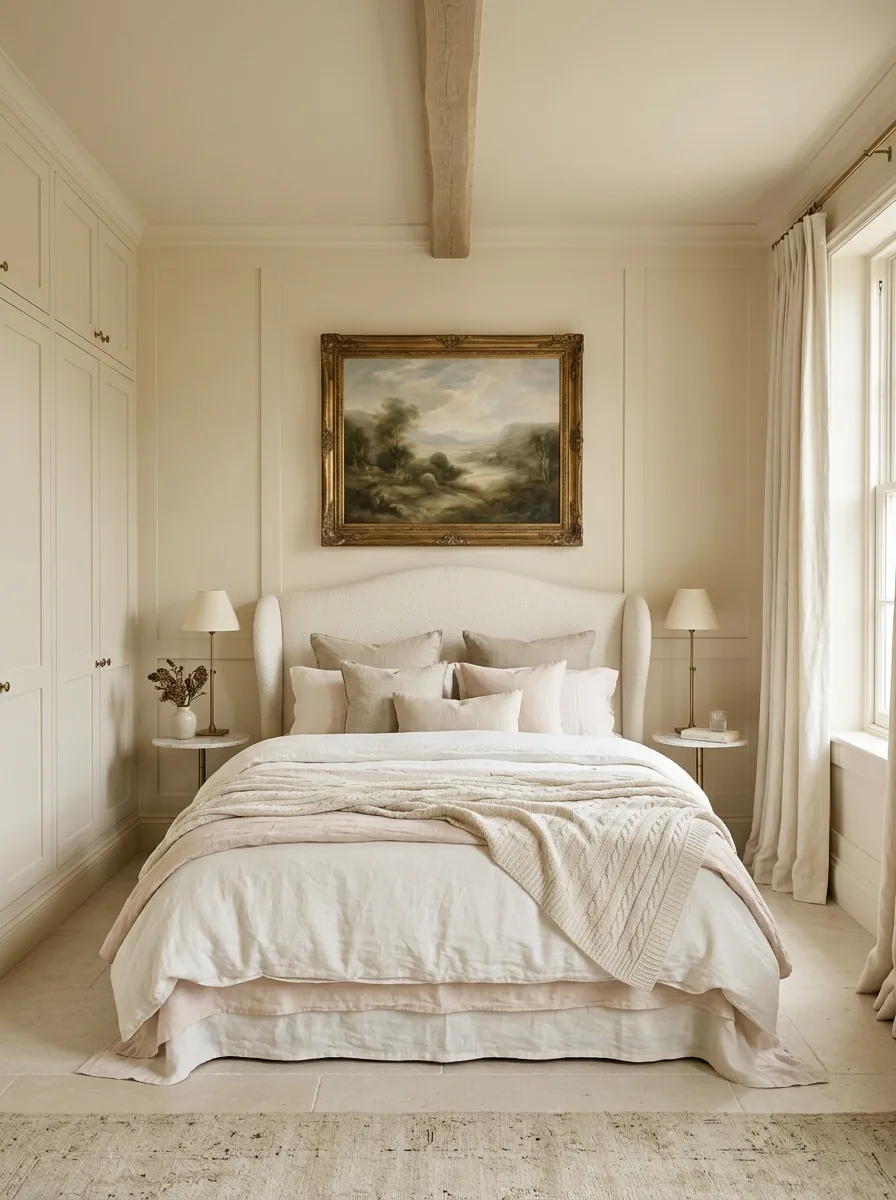
Panel the walls floor to ceiling in a soft cream, then leave one structural wood beam exposed and unpainted as the room’s single material break.
Choose an upholstered scalloped headboard in boucle, flanked by small round marble side tables instead of standard nightstands.
Hang a gilt-framed landscape painting dead-center above the bed for the room’s one moment of color and detail.
Don’t paint over the beam to match the walls. The contrast of raw wood against painted paneling is the entire reason this look doesn’t read as just another white bedroom.
Layer the bed in at least three textures of white and cream — linen, knit, boucle — so the monochrome room still has depth.
Damask Wallpaper Wraps The Ceiling
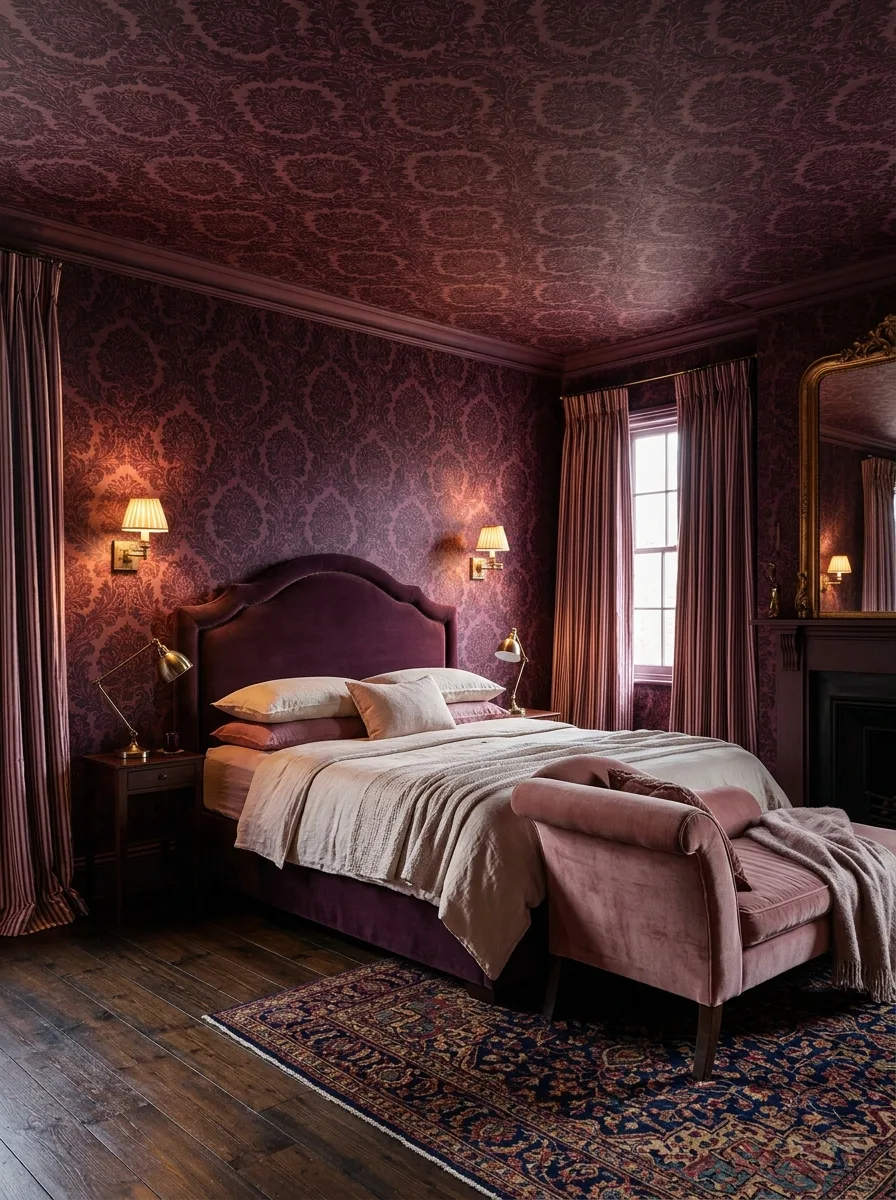
Apply a deep maroon damask wallpaper to the walls and continue it, uninterrupted, across the ceiling.
Add a tufted velvet headboard in a complementary plum, plus brass picture-light-style sconces mounted directly to the wallpaper above each nightstand.
Order extra wallpaper rolls before starting. Pattern-matching across a ceiling line eats far more paper than a flat-wall estimate accounts for.
Don’t break the pattern at the ceiling line with a painted border or molding. The wallpaper needs to read as one continuous envelope, not wallpaper with a ceiling stuck on top.
Ground the pattern with a worn vintage rug in overlapping reds and blues rather than fighting it with something plainer.
Rattan Headboard Matching Blue Walls
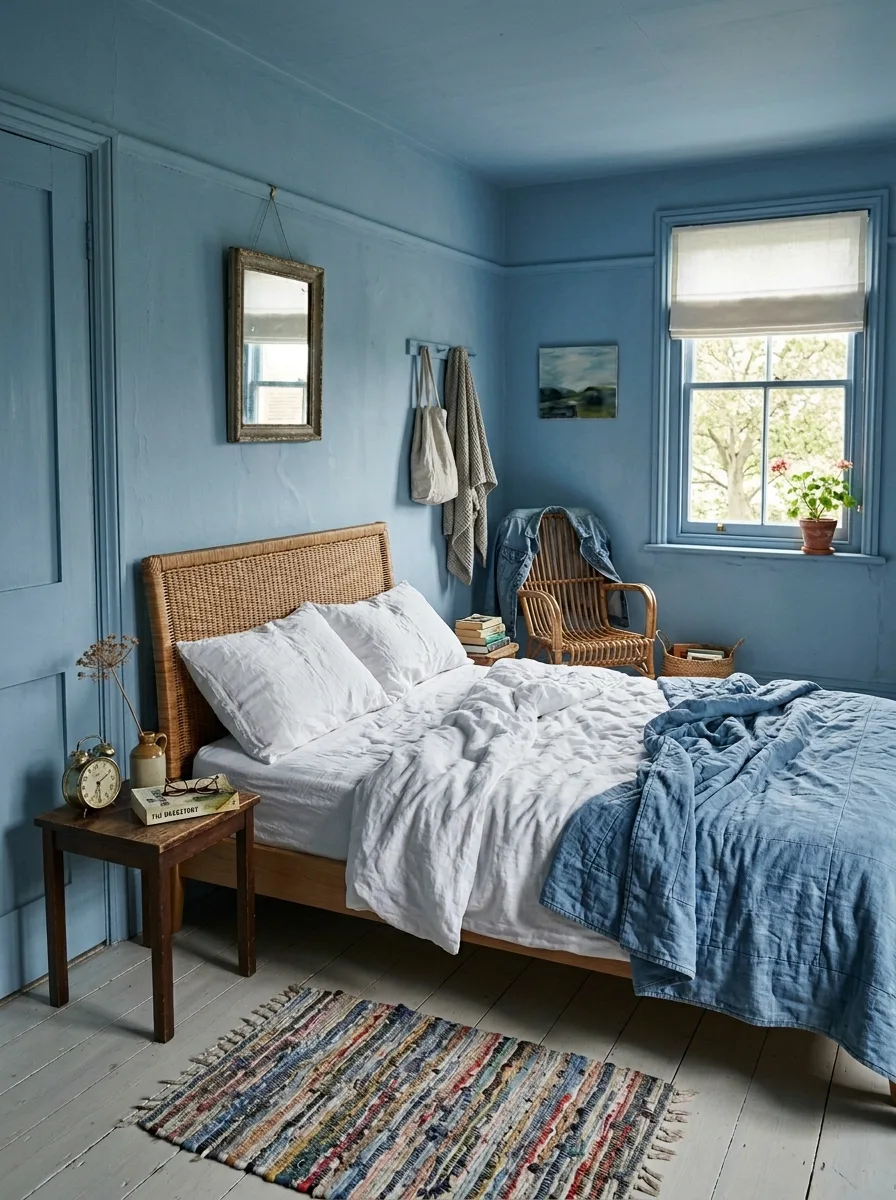
Paint walls, ceiling, and door a soft, dusty blue, and carry the same color onto a wood side table for full coverage.
Choose a woven rattan headboard instead of upholstery. The natural texture is what keeps this much flat color from feeling cold.
Lay a handwoven rag rug in mismatched scraps rather than a patterned area rug; the irregularity matches the room’s relaxed, lived-in feel.
Skip matchy bedding. White linen with a single chambray quilt thrown over it is the right amount of contrast; full blue bedding would erase the depth the walls are creating.
Leave a denim jacket or canvas bag hanging on a wall hook. This look depends on looking inhabited, not staged.
Espresso Drench Open Clothing Rack
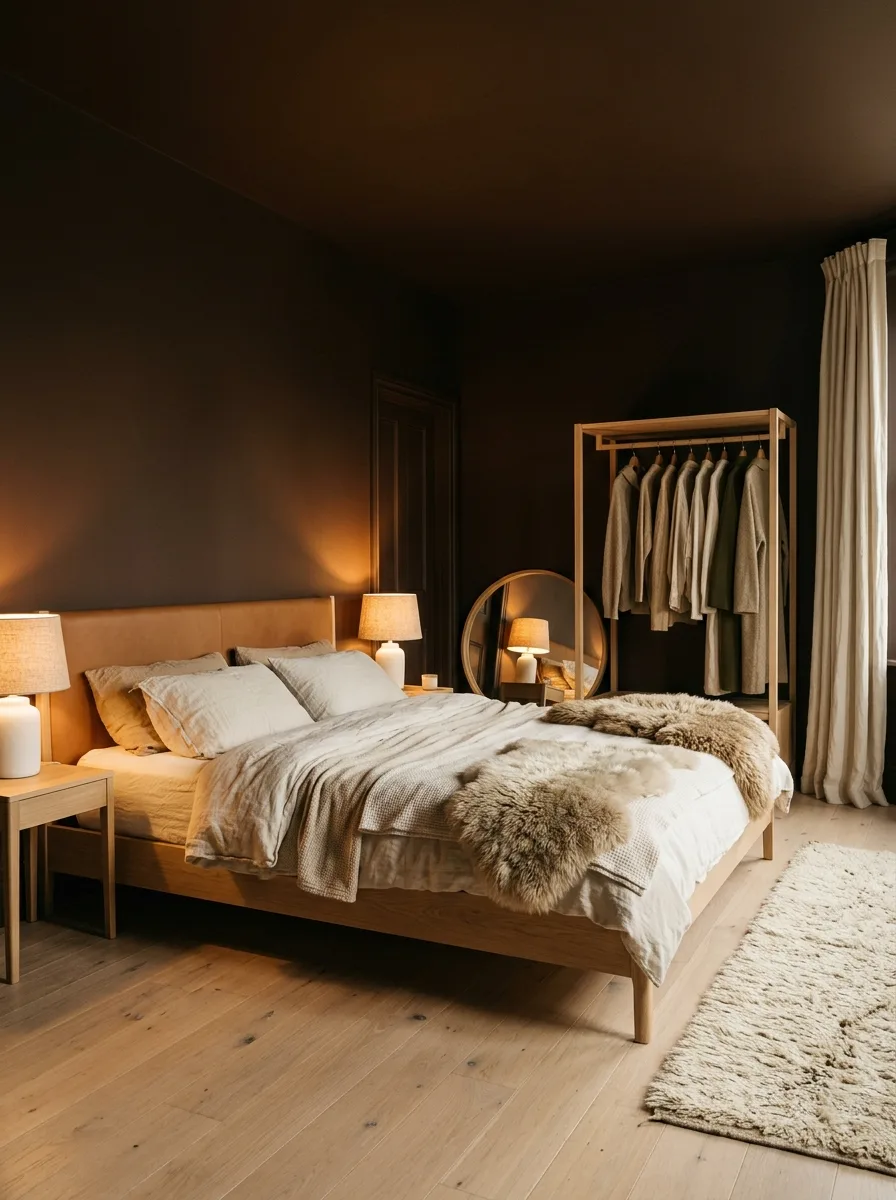
Paint walls and ceiling a deep, near-black espresso, and leave warm honey-toned oak flooring bare underneath.
Add a tan leather headboard, then swap a closed closet for an open wood clothing rack used as visible storage. In a dark room, the clothes themselves become part of the palette.
Layer at least two sheepskin throws across the foot of the bed. The texture keeps this much dark paint feeling cozy instead of cave-like.
Don’t rely on overhead lighting. Warm table lamps on both nightstands are doing the real work of making the room feel inviting after dark.
Lean a round mirror against the wall rather than hanging it, to keep the styling feeling casual and unfinished in the right way.
Beadboard Walls Ironstone Display Shelf
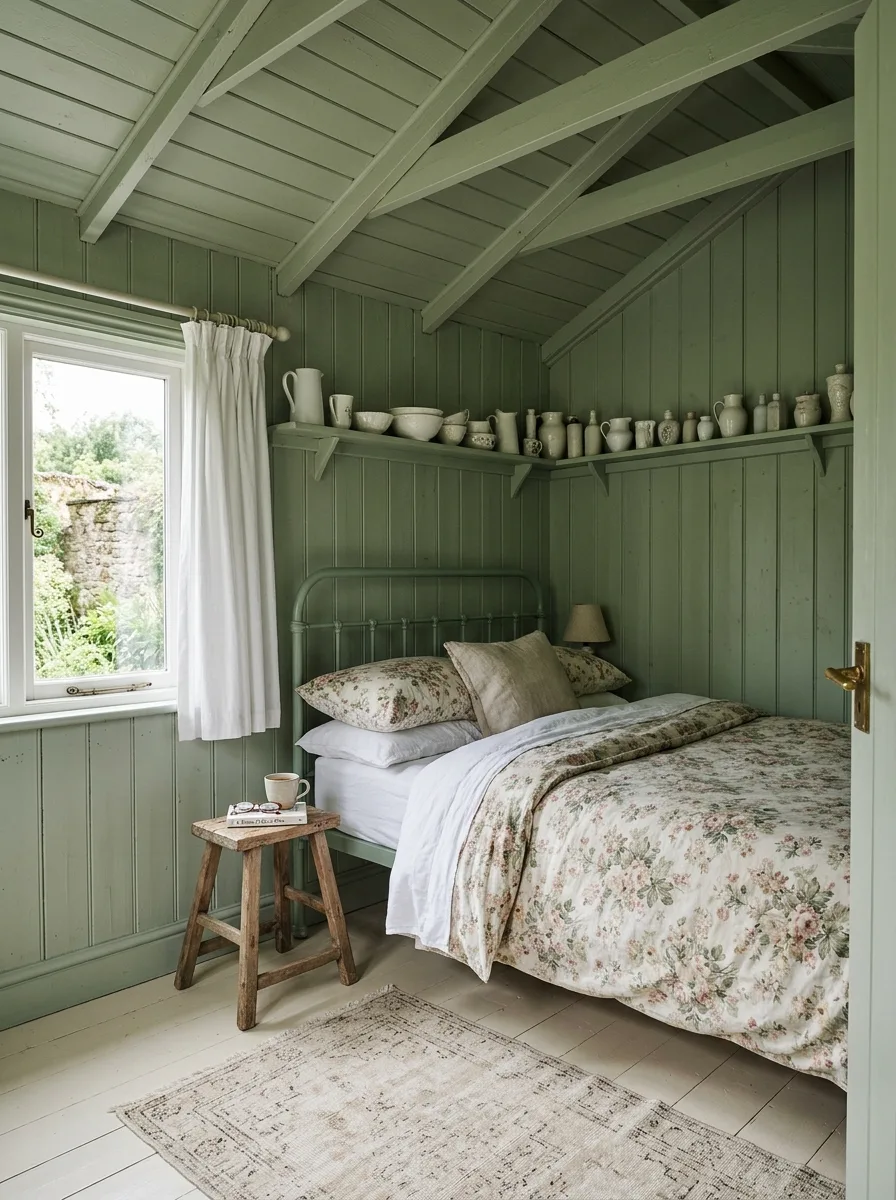
Run tongue-and-groove paneling up the walls and across the angled ceiling and beams, all in the same muted sage.
Add a single open shelf the width of the room, styled with a collection of white ironstone pitchers and bowls. The white pieces become the room’s contrast against all that green.
Paint an iron bed frame to match the walls exactly, rather than leaving it in its original black or white finish.
Don’t buy new pottery for the shelf. A collected, mismatched set of vintage white pieces makes the styling feel earned rather than purchased as a set.
Keep pattern to a floral quilt and a gingham curtain, and leave everything else solid.
Slatted Wood Wall Dark Ceiling
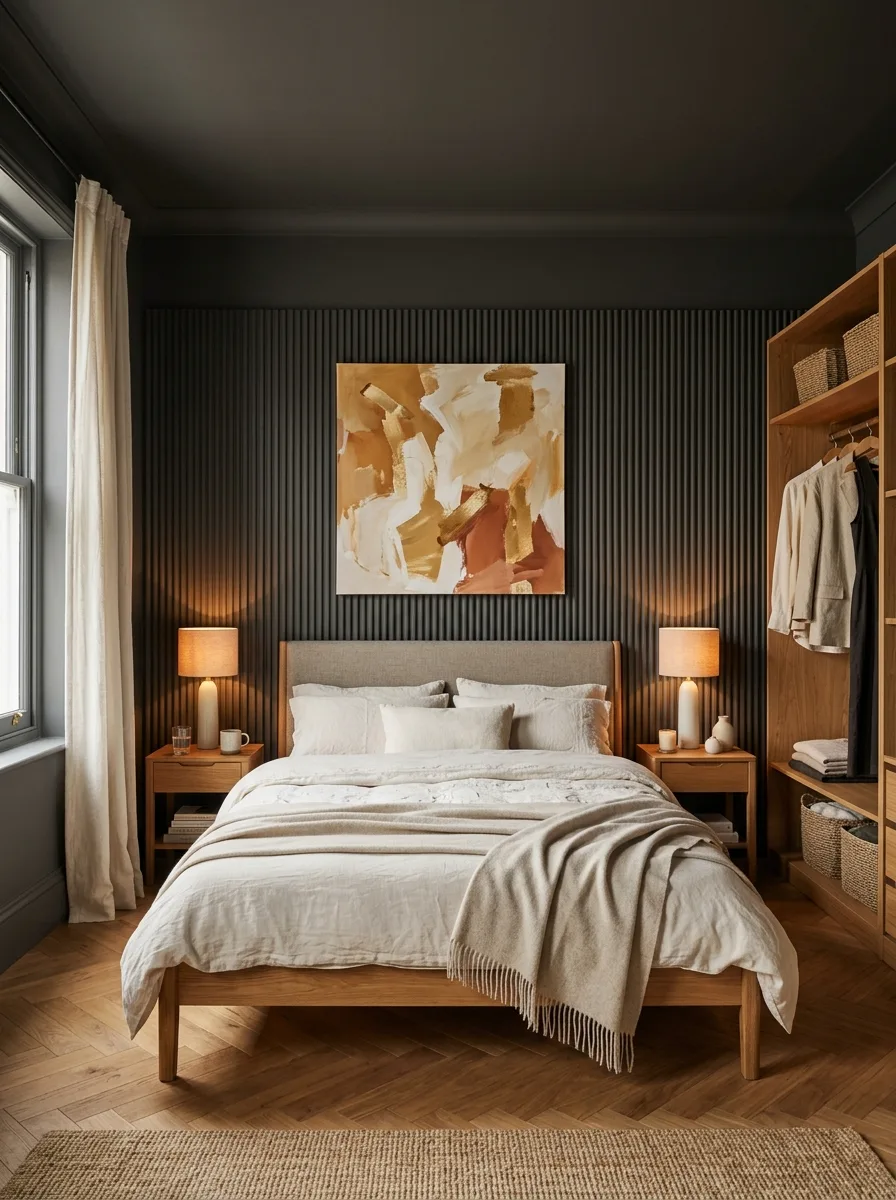
Install vertical slatted wood paneling on the headboard wall, painted a deep charcoal, with the ceiling painted to match exactly.
Hang a single abstract painting in warm gold and rust tones above the bed. Against this much charcoal, one piece of art with real color is enough to anchor the room.
Choose a herringbone wood floor in medium oak to keep the room from feeling too cold despite the dark wall and ceiling.
Don’t enclose the wardrobe behind solid doors. An open or slatted closet, visible from the bed, keeps a small dark room from feeling sealed off.
Add a jute rug at the foot of the bed and stop there. Anything busier would compete with the slatted wall.
Mustard Drench Painted Wainscoting Panel
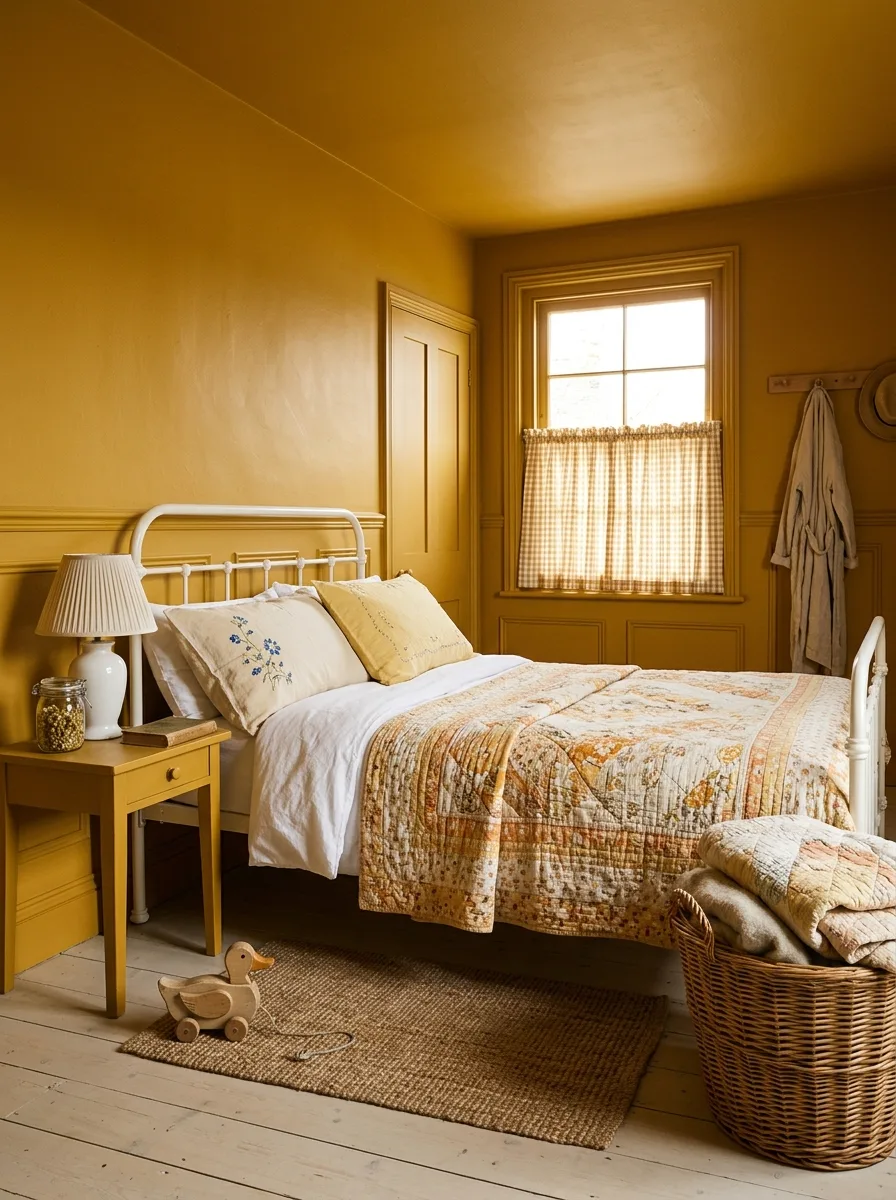
Paint walls, ceiling, and a paneled wainscoting detail below the chair rail in the same rich mustard.
Leave the bed frame in white iron, unpainted. It’s the one piece of furniture that gives the room contrast instead of letting it become a single block of color.
Bring in pattern through gingham café curtains and a patchwork quilt, without introducing a second color family.
Don’t paint the door a different trim color for definition. Carrying the mustard onto the door is what makes the room feel cohesive rather than cut off at the doorway.
Leave a wicker laundry basket in the corner, slightly overflowing with folded blankets, to finish the room with almost no styling effort.
Floral Wallpaper Matching Pink Ceiling
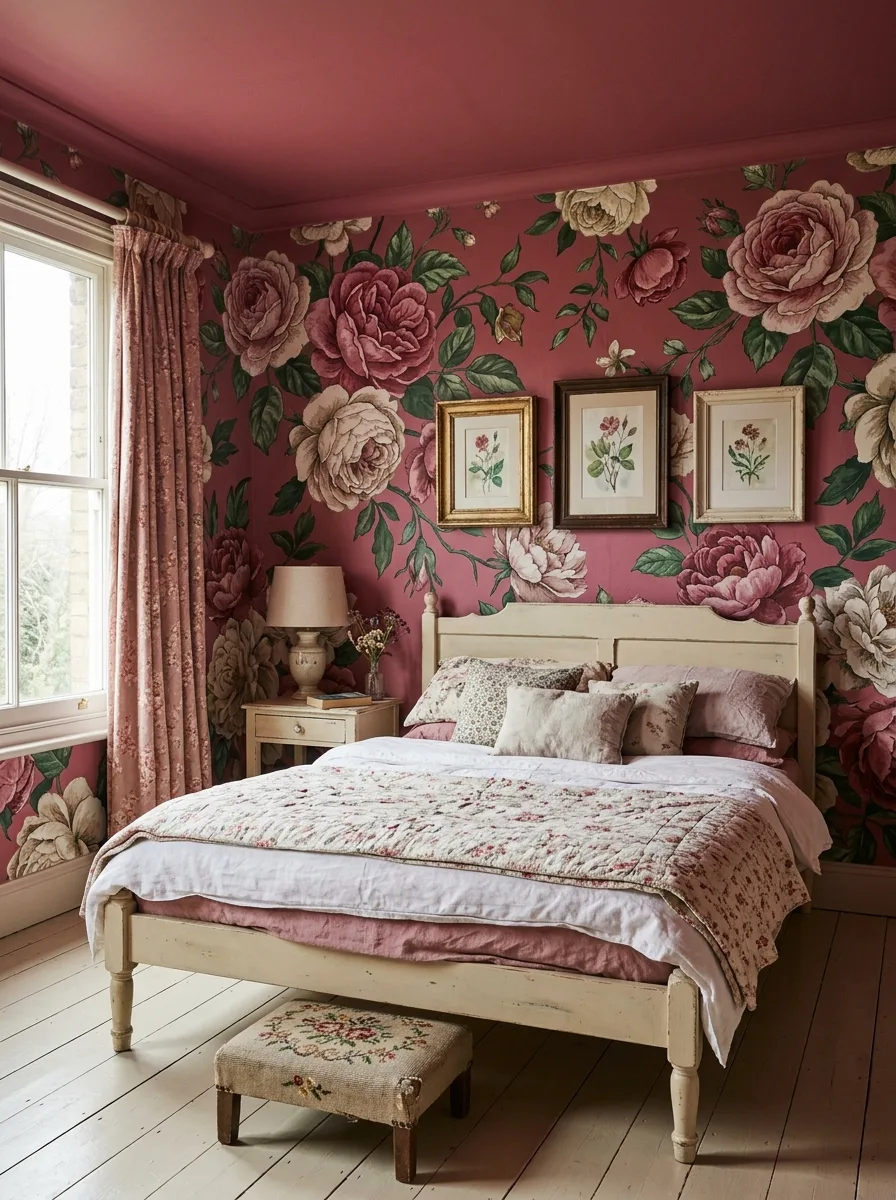
Cover every wall in an oversized floral wallpaper in dusty rose, and paint the ceiling to match the wallpaper’s background color exactly rather than leaving it white.
Layer two or three small botanical prints directly over the wallpaper, close together, as if they were hung before the wallpaper went up rather than after.
Choose an antique cream-painted bed frame so the furniture doesn’t compete with the wall pattern; anything heavily stained or dark would fight the floral’s softness.
Don’t add a second pattern in the curtains or bedding. The wallpaper is loud enough alone; everything else should stay solid or only subtly patterned.
Leave the floorboards pale and bare, or barely rugged, so the busiest wall in the house doesn’t feel overwhelming underfoot too.
Navy Paneling Reveal Line Detail
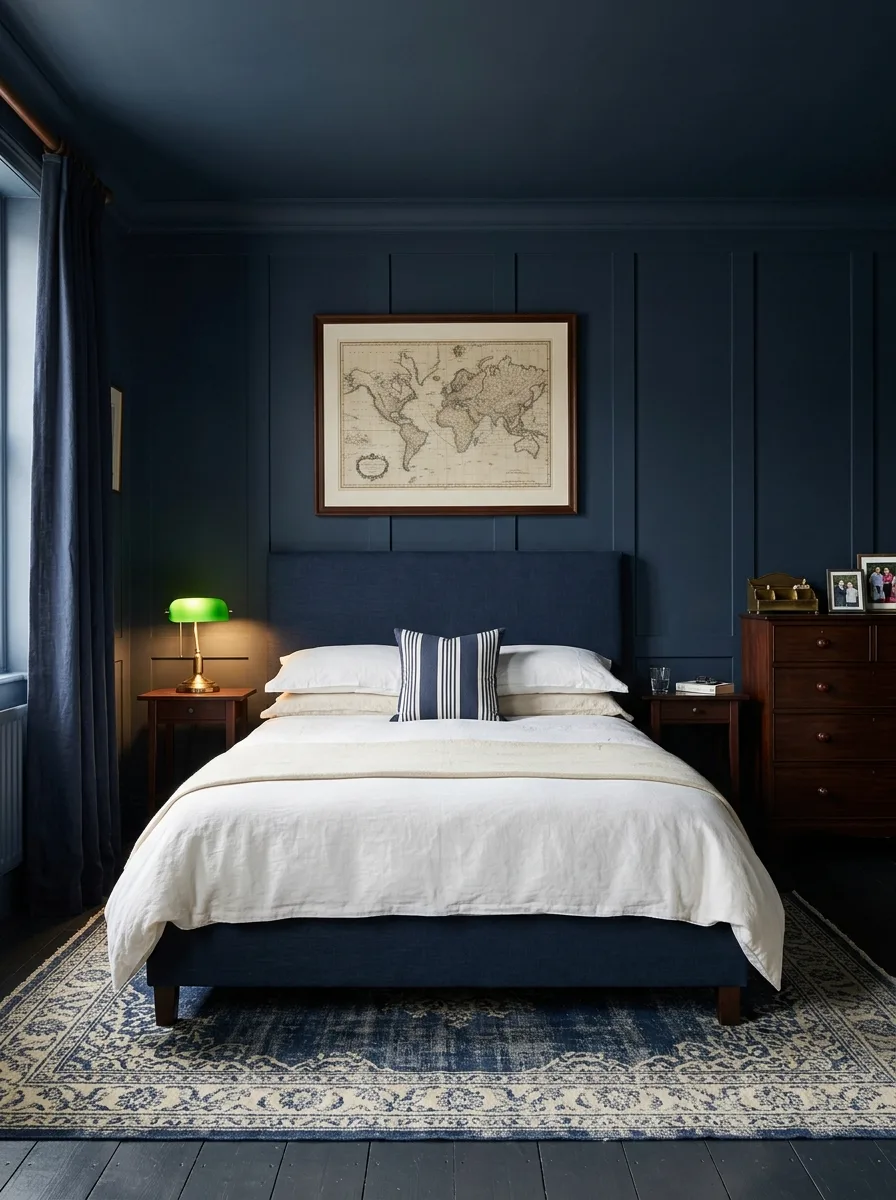
Paint walls and ceiling a deep navy, and route thin reveal lines into the wall to suggest paneling without the cost of full millwork.
Add a vintage mahogany dresser and a banker’s lamp with a green glass shade. The warm wood and the unexpected green lamp keep this much navy from feeling corporate.
Tie the floor back into the wall color with a worn vintage rug in navy and cream, rather than matching it exactly.
Skip generic art. A framed antique map or print with some age to it suits this navy-library mood far better than anything contemporary.
Keep the bedding crisp white. Against this much navy, white linens read as fresh rather than plain.
Draped Fabric Canopy Ceiling
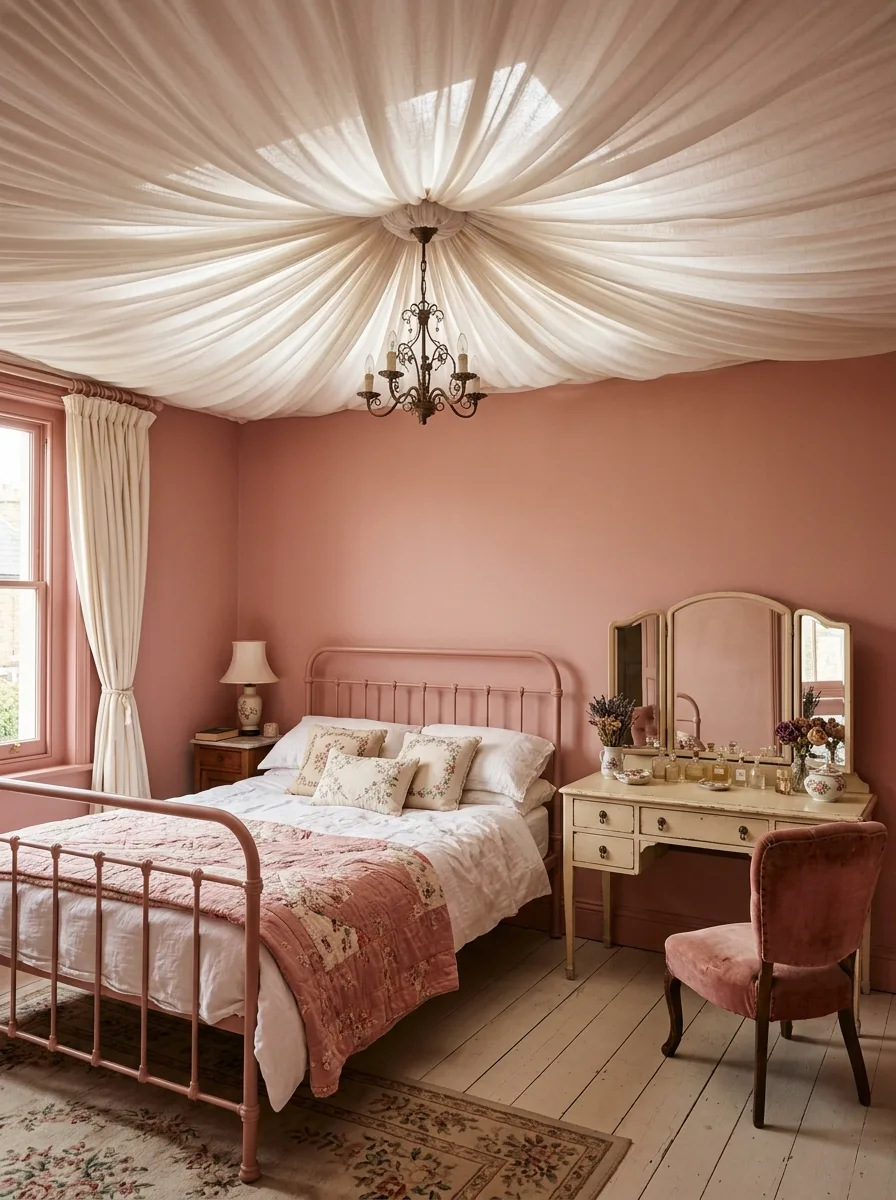
Paint the walls a dusty rose, then dress the ceiling in draped fabric gathered from a central point like a tent, with a small chandelier hung through the center.
Choose a vintage iron bed frame painted to match the walls, and place an antique dressing table with its own tri-fold mirror against the opposite wall.
Order more fabric than seems necessary for the canopy. A sparse, flat drape looks like a mistake; a generously gathered one looks like a decision.
Don’t skip the chandelier at the center point. Without a light source pulling the eye upward, the draped ceiling loses its focal point and just looks like loose fabric.
Finish with a floral rug and a velvet slipper chair at the vanity, for a room built entirely around softness.
Teal Painted Exposed Beam Ceiling
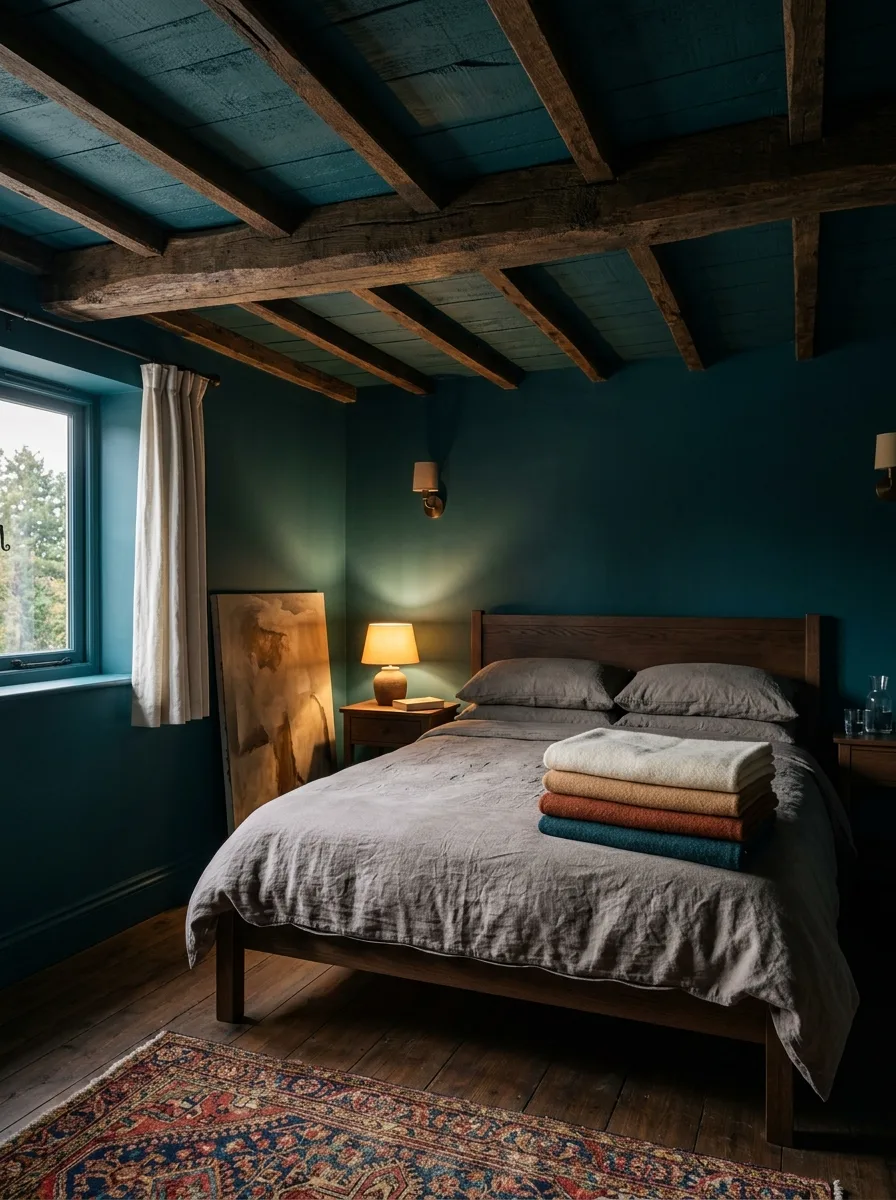
Carry a deep teal paint up onto an exposed wood-beamed ceiling, leaving the beams themselves in natural wood as the one material break.
Keep a single warm table lamp by the bed, dimmed low, so the saturated walls read as moody rather than cold.
Ground the cool teal with a worn kilim or Persian-style rug in warm reds and blues.
Don’t paint the beams to match. Leaving the original wood exposed against the painted teal is what keeps the room from feeling like a fully enclosed paint job.
Fold two or three wool blankets in contrasting colors at the foot of the bed. In a dark, textural room like this, a small stack of color does a lot of work.
Olive Drench Tan Leather Headboard
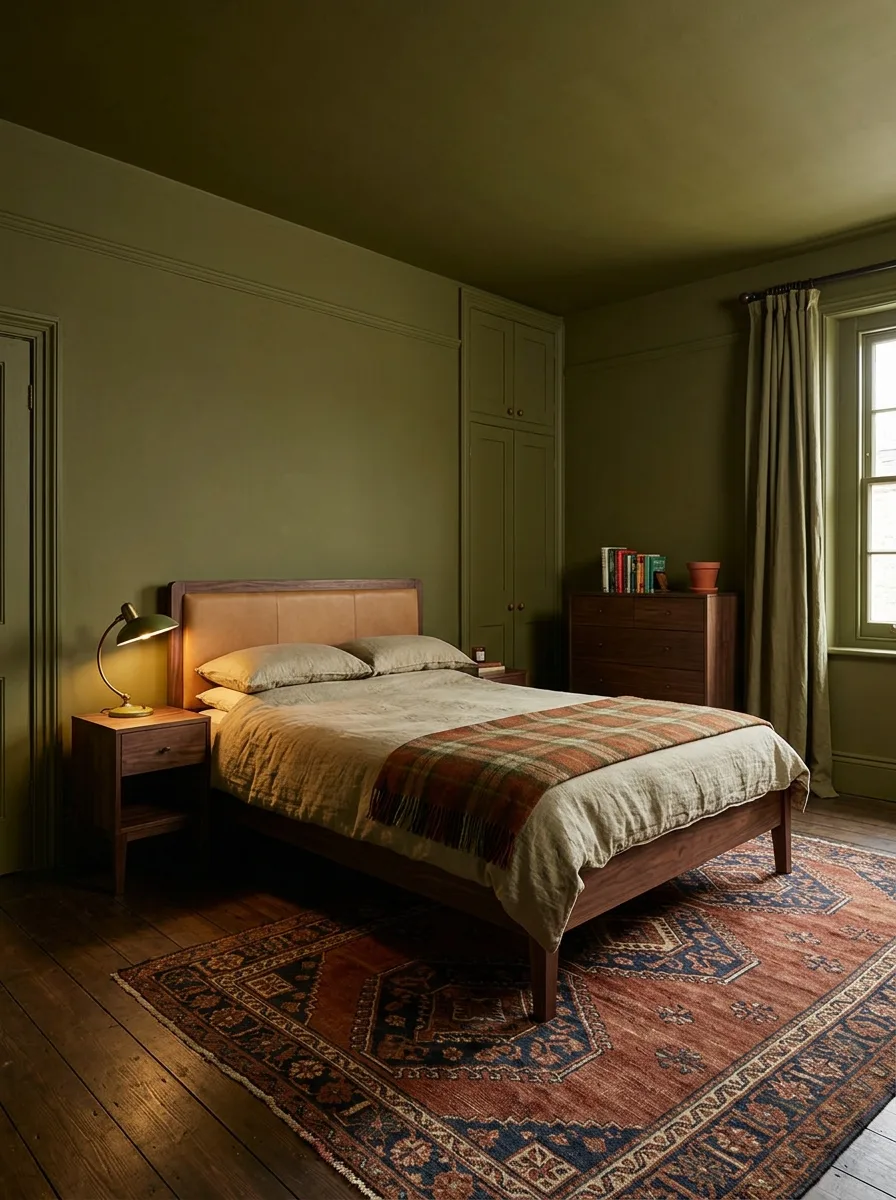
Paint walls and ceiling a deep olive, and pick out the original wall molding in the same color rather than leaving it white.
Add a tan leather headboard and a mahogany dresser, both warm-toned, to keep this particular green from reading flat or institutional.
Spend the budget on a vintage Persian-style rug in rust and navy if you spend it anywhere; it does more for the room’s warmth than any other single object.
Skip cool-toned metal lamps. A banker’s lamp with a warm brass base and a colored glass shade fits the room far better than anything in chrome or nickel.
Set a few terracotta pots on the dresser, even empty, to finish the look for almost nothing.
Lilac Drench Matching Painted Wardrobe
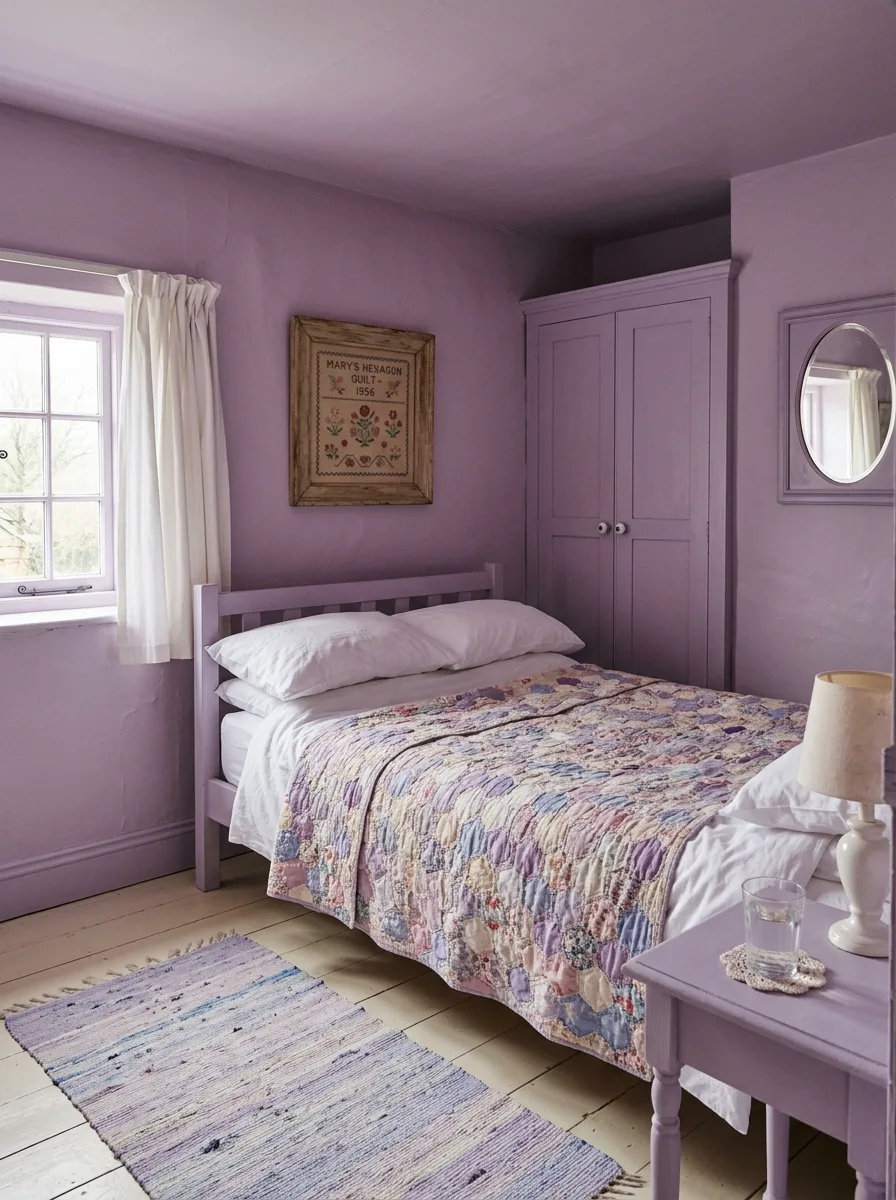
Paint walls, ceiling, the wardrobe, and the bed frame itself the same soft lilac, so every built piece of furniture answers to the wall color, not just the walls.
Dress the bed in a hand-pieced patchwork quilt in coordinating pastels, with plain white pillows underneath for some contrast.
Frame a piece of vintage needlework or a sampler for the wall. Handmade, slightly imperfect pieces suit this cottage-soft palette far better than anything printed.
Don’t introduce a second wood tone. Paint the wardrobe rather than leaving it natural; an unpainted piece here reads as unfinished rather than intentional.
Finish the floor with a woven rag rug in soft, faded stripes that won’t compete with the patchwork on the bed.
Final Thoughts
Every one of these twenty bedrooms made the ceiling, the trim, and usually the furniture answer to the same decision the walls did. None of them stopped at the easy part.
That’s possible here in a way it isn’t in most other rooms, because nobody but you actually has to live with your bedroom’s choices. No guest rates it. No appraiser walks through it. The only opinion that matters is the one you wake up to.
Most beige bedrooms aren’t restful. They’re just unfinished — a color was never actually chosen, so nothing was ever actually finished. A confident wrong color, fully committed to, reads better than an indecisive safe one every time.
Pick the shade. Paint the ceiling. Choose the headboard material before the paint goes on, not after. Twenty very different rooms just proved the rest follows.