
At some point, someone decided that kitchens should be tasteful. Neutral. Timeless. Safe enough that future buyers wouldn’t flinch.
Those people have boring kitchens.
The kitchens in this collection made different choices. Someone painted strawberries on the ceiling. Someone else covered every wall with antique clocks and then put a clock face on the table too, just to be sure. One person turned their kitchen into an apothecary. Another into a library you can also cook in.
None of these rooms will appeal to everyone. That’s the entire point. A room that tries to appeal to everyone appeals to no one, and the people who live in these spaces clearly made peace with that a long time ago.
Here’s what they did, and how you can do it too.
Why Your Kitchen Has No Personality
The average kitchen renovation follows a predictable script. White or grey cabinets. Subway tile. Quartz counters. Pendant lights over the island in a finish that coordinates with the hardware. The result is a kitchen that looks exactly like every other kitchen renovated in the same decade, expressing nothing about the person who lives in it.
This is not a design failure. It’s a courage failure.
Playing It Safe Is Its Own Risk
People choose neutral kitchens because they’re afraid of committing to something they’ll tire of. The irony is that the “timeless” neutral kitchen becomes dated the moment the trend shifts, while the room decorated around a genuine obsession — clocks, honey, pressed flowers, world maps — remains interesting indefinitely because it isn’t following a trend at all.
A room built around something you actually care about has a staying power that a carefully coordinated palette never achieves. You don’t tire of your own interests. You tire of other people’s aesthetic choices you borrowed to seem safe.
The Fear of Too Much
Most people stop one decision short of something great. They’ll paint the walls a colour but keep the cabinets white. They’ll add one interesting object but not twenty. They’ll try the botanical print but buy it framed and hang it straight rather than painting it directly on the wall in a twelve-foot mural.
The rooms in this collection that work — that genuinely stop you — went all the way. The map kitchen covered every surface. The jam kitchen filled every shelf. The clock kitchen left no wall untouched. The commitment is what makes it work. Halfway whimsy just looks like someone who started something and lost their nerve.
Confusing Whimsy with Clutter
Whimsical is not the same as chaotic. Every kitchen here that succeeds has an internal logic — a single defining obsession or material or colour decision that everything else serves. The mushroom kitchen is deeply, specifically about mushrooms. The honey kitchen is entirely, unapologetically amber and gold. The pressed flower kitchen has a collection that is curated with genuine care.
The difference between a room that looks eccentric and one that looks unhinged is the presence of a governing idea. Find yours before you start buying things.
Whimsical Kitchen Ideas
Dark Stone Candelabra Kitchen
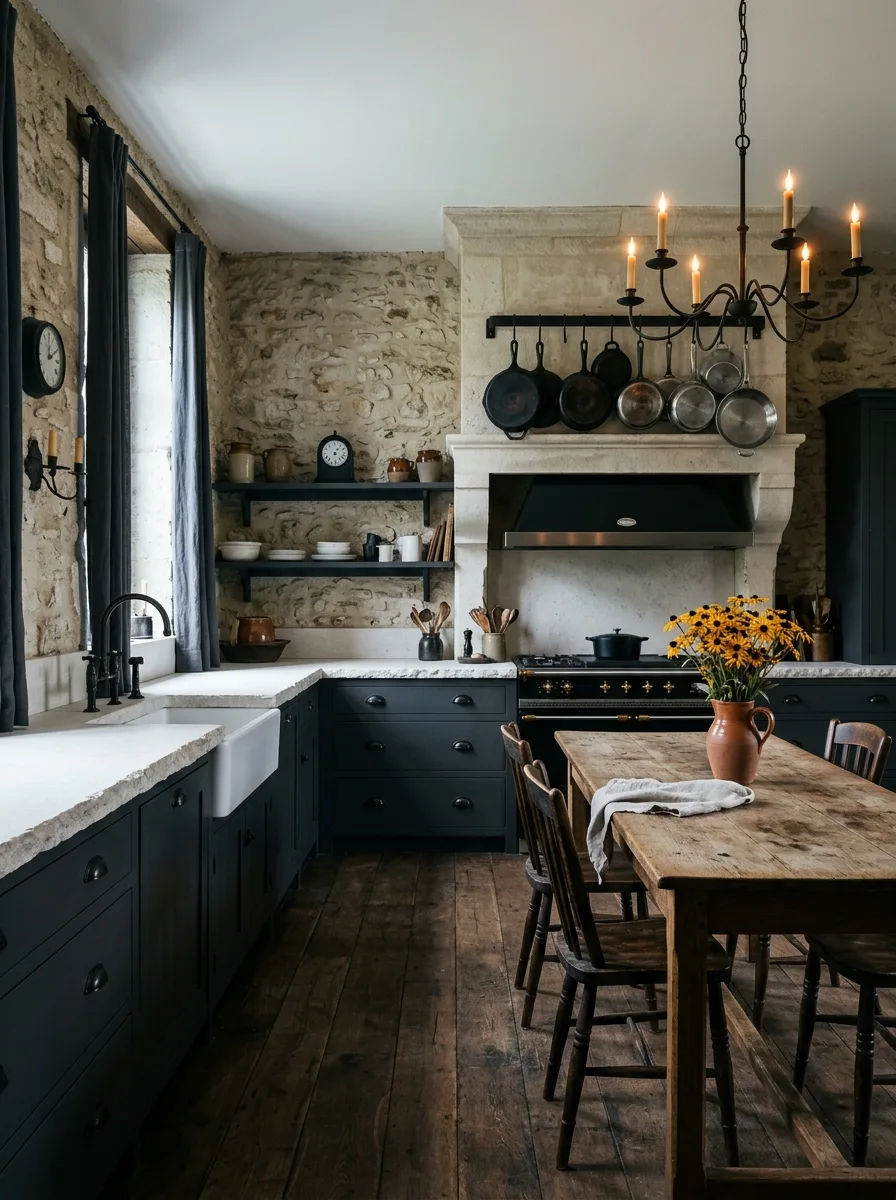
Paint all cabinetry in a near-black charcoal — Farrow & Ball’s Off-Black or Railings — and install a proper iron candelabra chandelier above the kitchen table on a chain, sized generously for the room. The candelabra should hold real candles and be lit at dinner. This is not decorative ambiance. It is the primary evening light source.
Leave the walls in raw exposed limestone or rough plaster in a pale natural tone. The contrast between the dark painted cabinetry and the pale ancient-looking wall surface is the room’s texture. Mount a simple iron pot rail above the range hood and hang a collection of cast iron and stainless pans in mixed sizes. A heavy raw oak farmhouse table in the centre. Black iron curtain rods with slate linen panels. Add yellow wildflowers in a terracotta jug as the only warm colour note.
Dusty Rose Patisserie Cake Kitchen
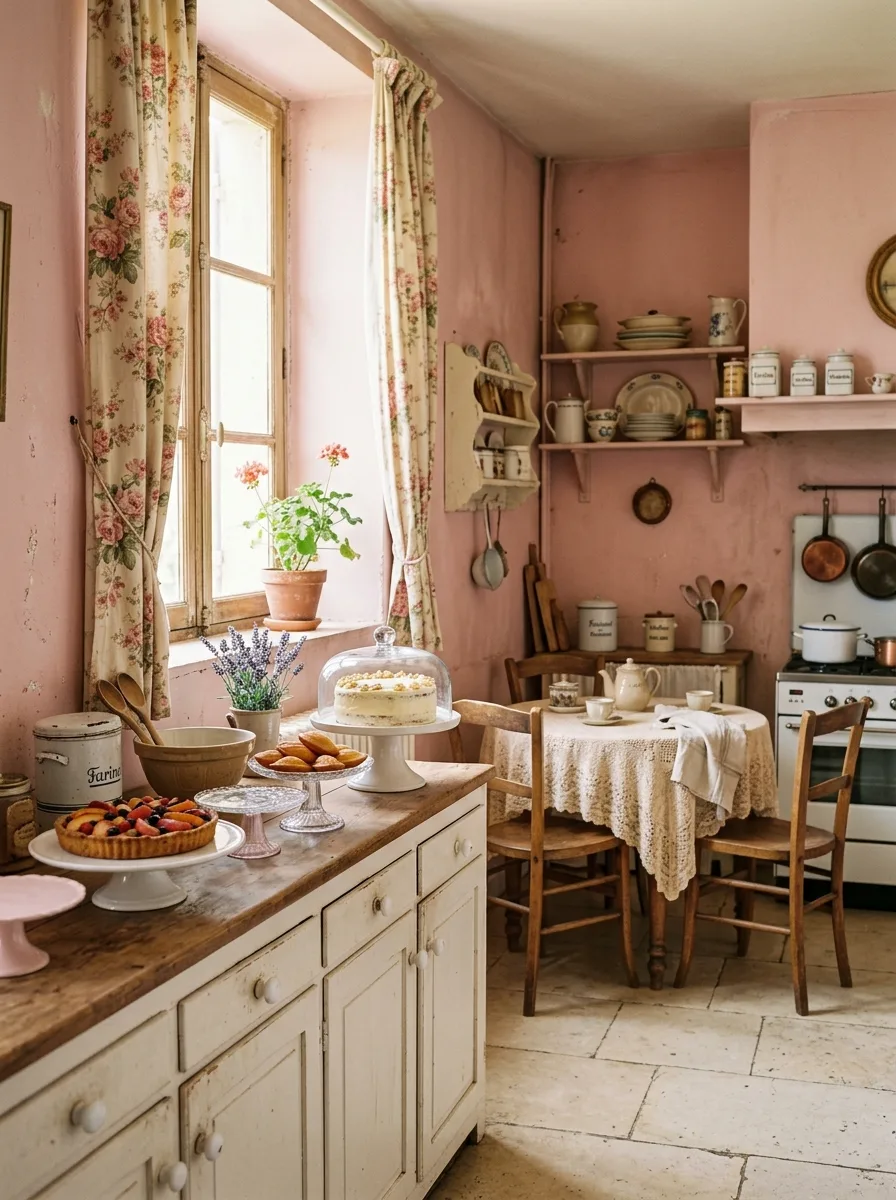
Paint all four walls in a chalky, faded rose — Farrow & Ball’s Calamine or Setting Plaster in dead flat — and load every available counter surface with baking in progress. A cake under a glass cloche. A tart on a ceramic stand. A tray of madeleines beside a pink cake stand. The counter should look like someone is permanently mid-bake.
Hang full-length floral curtains in a faded chintz pattern — roses on cream — from ceiling to floor at every window. Keep the cabinetry in white or very pale cream and the counters in worn butcher block or scrubbed pine. Use a round table with a lace cloth rather than a tablecloth. Mismatched rush-seat chairs. Enamel flour and sugar canisters in cream with handwritten labels. The room should smell of butter and vanilla and look like a boulangerie someone decided to live in.
Strawberry Jam Ceiling Kitchen
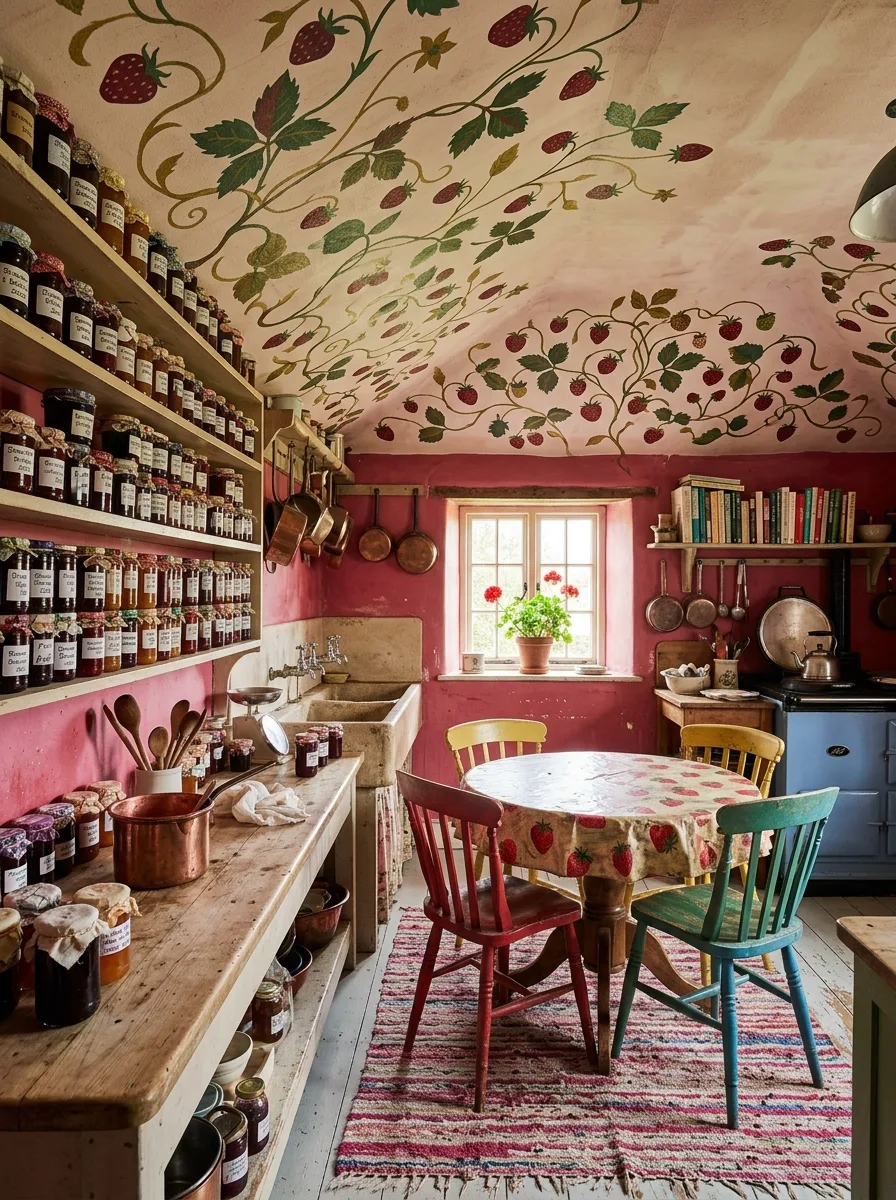
Commission or paint a hand-applied botanical mural on the ceiling — strawberry vines in full fruit, painted in a folksy illustrative style rather than photorealistic. The ceiling should be covered completely: trailing vines, leaves, flowers, and fruit repeated across the entire surface in red, green, and cream on a warm pink ground.
Bring the colour down to the walls in a saturated raspberry or rose and fill every wall shelf with labelled jam jars. Not a few jars — every jar you have ever made, dozens of them, in amber and ruby and deep plum. A painted round table in the centre with a strawberry print cloth. Mismatched Windsor chairs in red, yellow, and teal. A long scrubbed pine work counter running the length of the room. Copper pans on a wall rail. The room is the obsession made architectural.
Dark Forest Mushroom Kitchen
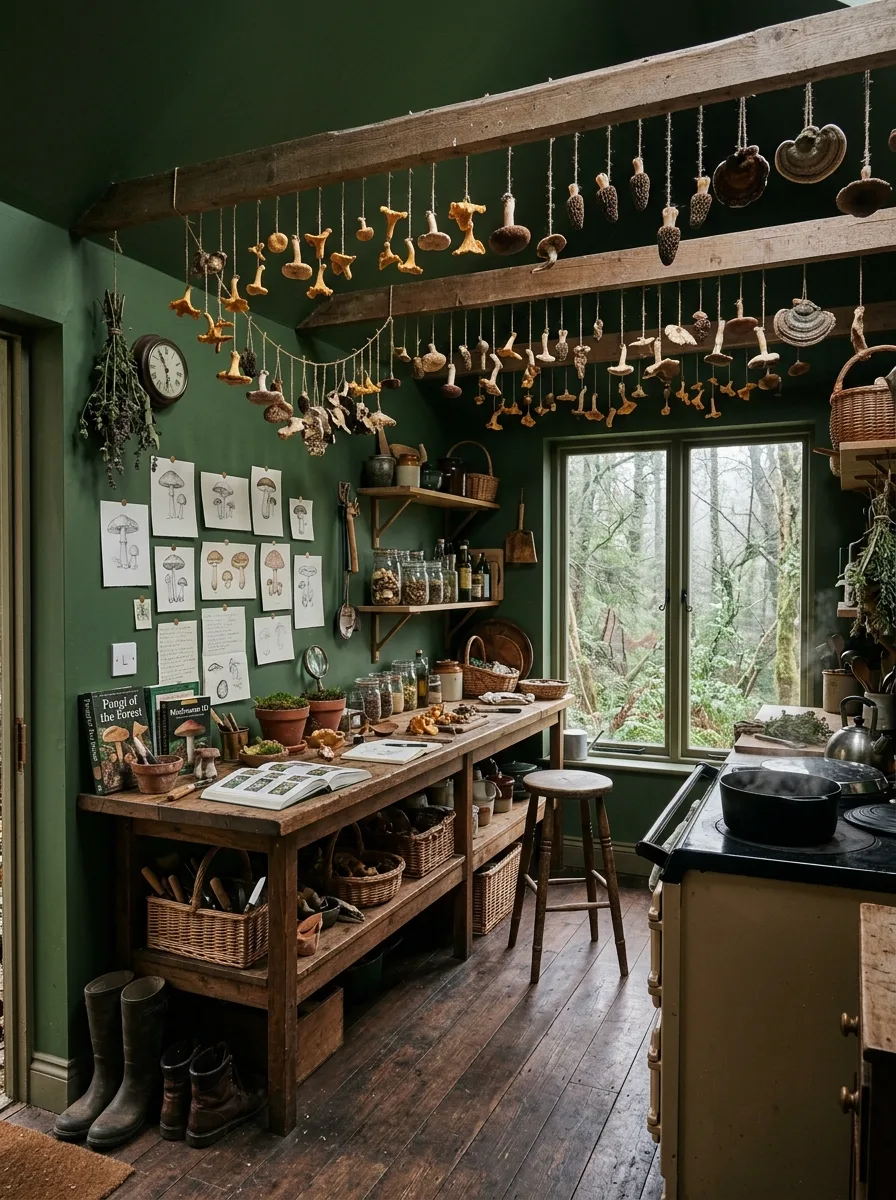
Paint the walls in a deep forest green — Farrow & Ball’s Studio Green or Sherwood — and string dried mushrooms on thread from the ceiling beams in long rows. Source the mushrooms from a specialist supplier or dry them yourself: chanterelles, porcini, shiitake, reishi, hen of the woods. String them individually rather than in bunches so the shapes read clearly overhead.
Cover one wall with botanical identification prints of mushrooms — hand-drawn illustrations in the style of nineteenth-century field guides, framed simply in dark wood or tacked directly to the wall with brass pins. A long narrow worktable in raw oak below them, loaded with foraging equipment: wicker baskets, a field guide or two left open, small terracotta pots of soil and growing fungi, glass jars of dried varieties. Wicker baskets for storage on the under-shelf. Dark oak floors. An Aga in cream.
Midnight Blue Pie Kitchen
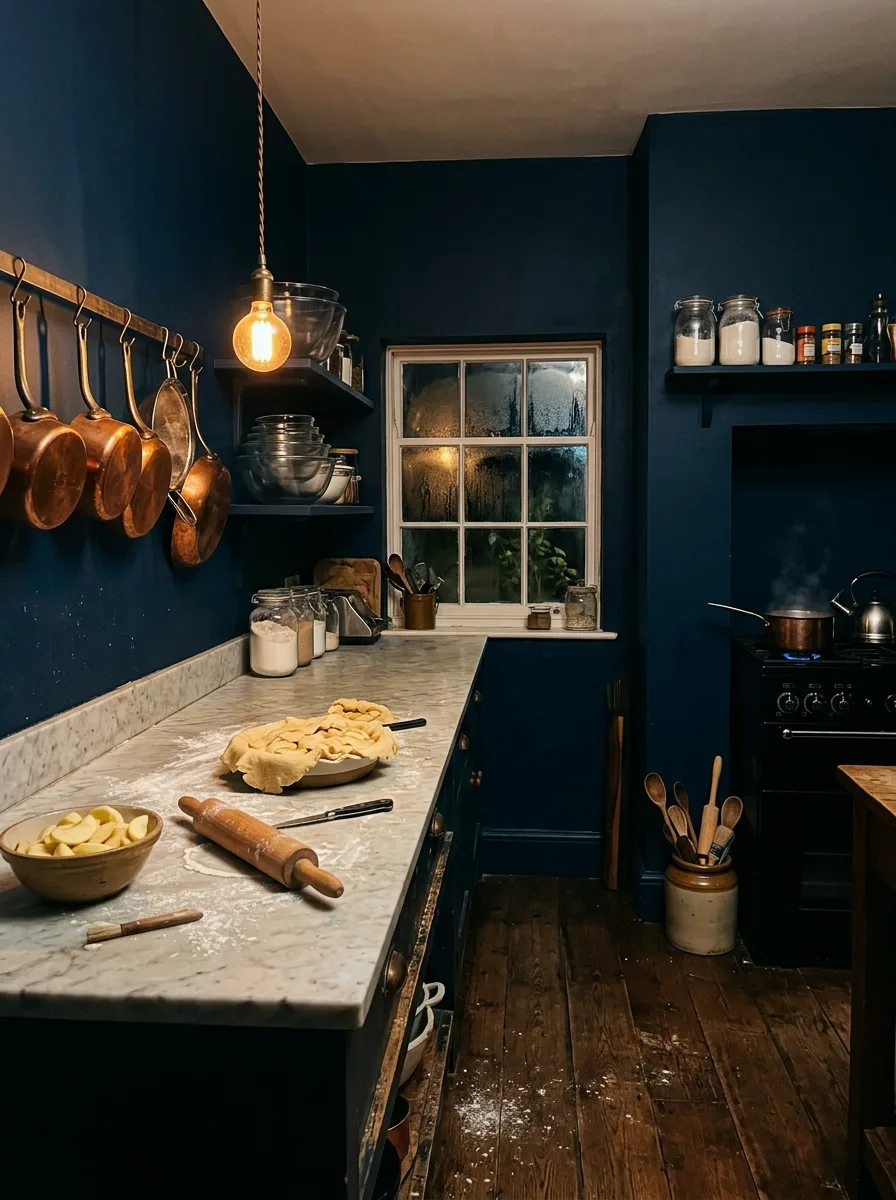
Paint all four walls — including above the cabinets to the ceiling — in a deep midnight navy. Farrow & Ball’s Hague Blue or Stiffkey Blue. Leave the ceiling white so the room doesn’t close in completely. Install a single Edison bulb pendant on a twisted cord above the counter for the evening light.
Keep the cabinetry in the same deep blue as the walls so the room reads as one dark envelope with white marble surfaces floating in it. Mount a simple iron pot rail along the back wall and hang every copper pan you own in a horizontal row. Leave the counter in mid-use: a floured marble surface, a rolling pin, pastry in progress, a bowl of sliced apples, a crock of wooden spoons. This kitchen looks best when it is actively being cooked in, and the mise en scène should reflect that permanently.
Victorian Greenhouse Kitchen
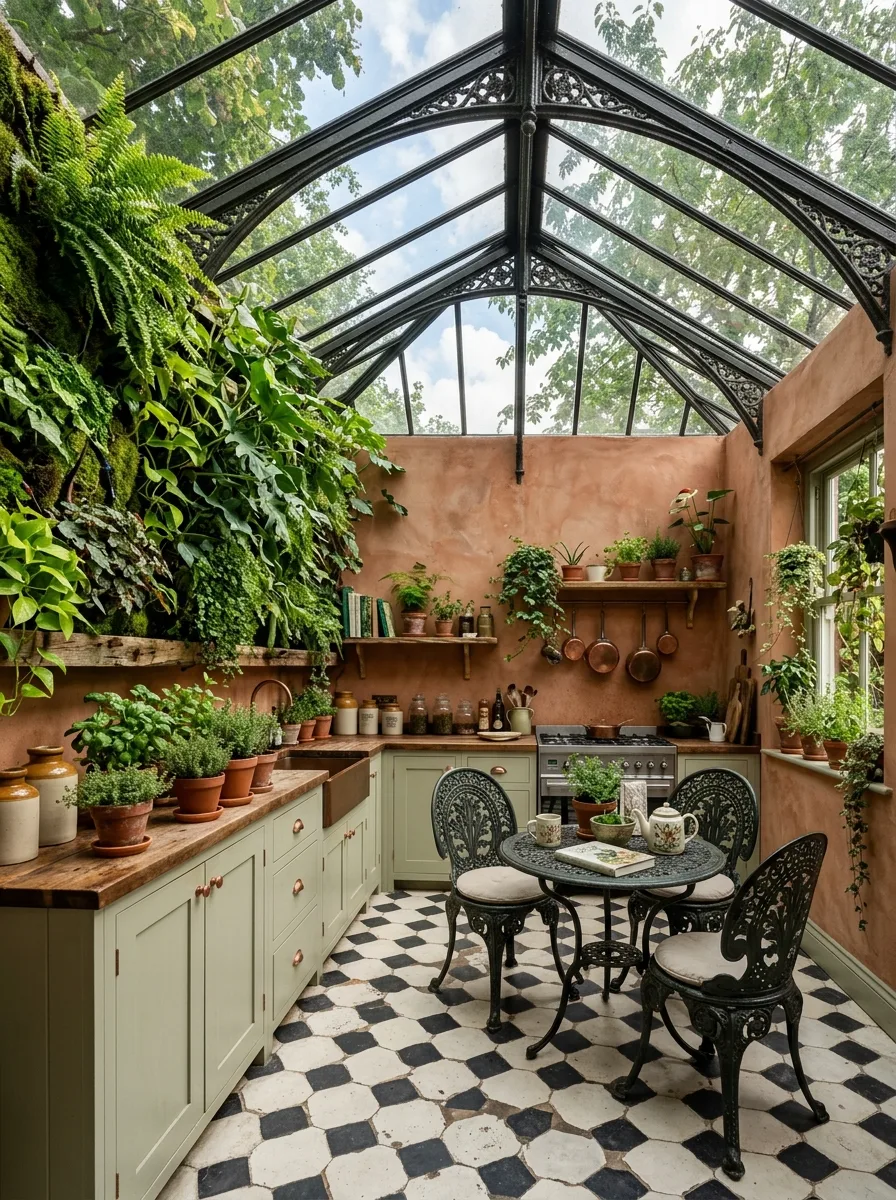
Construct or install a full Victorian-style glass conservatory structure as the kitchen’s primary volume — a pitched glass roof on decorative iron framing, with ornate cast iron ridge detailing in black. This is not a lean-to extension but a proper Victorian glasshouse structure, proportioned generously so the space can contain a kitchen and a dining table comfortably.
Plant one full wall as a living vertical garden — moss, ferns, pothos, ivy, begonia — installed on a modular hydroponic wall frame. Terracotta pots of herbs on every horizontal surface. Keep the cabinetry in sage green with aged copper hardware. Use a black and white Victorian checkerboard floor in worn ceramic tile. A cast iron garden table with ornate chairs inside the glass space. Let the line between indoors and garden collapse entirely.
Moroccan Patchwork Tile Kitchen
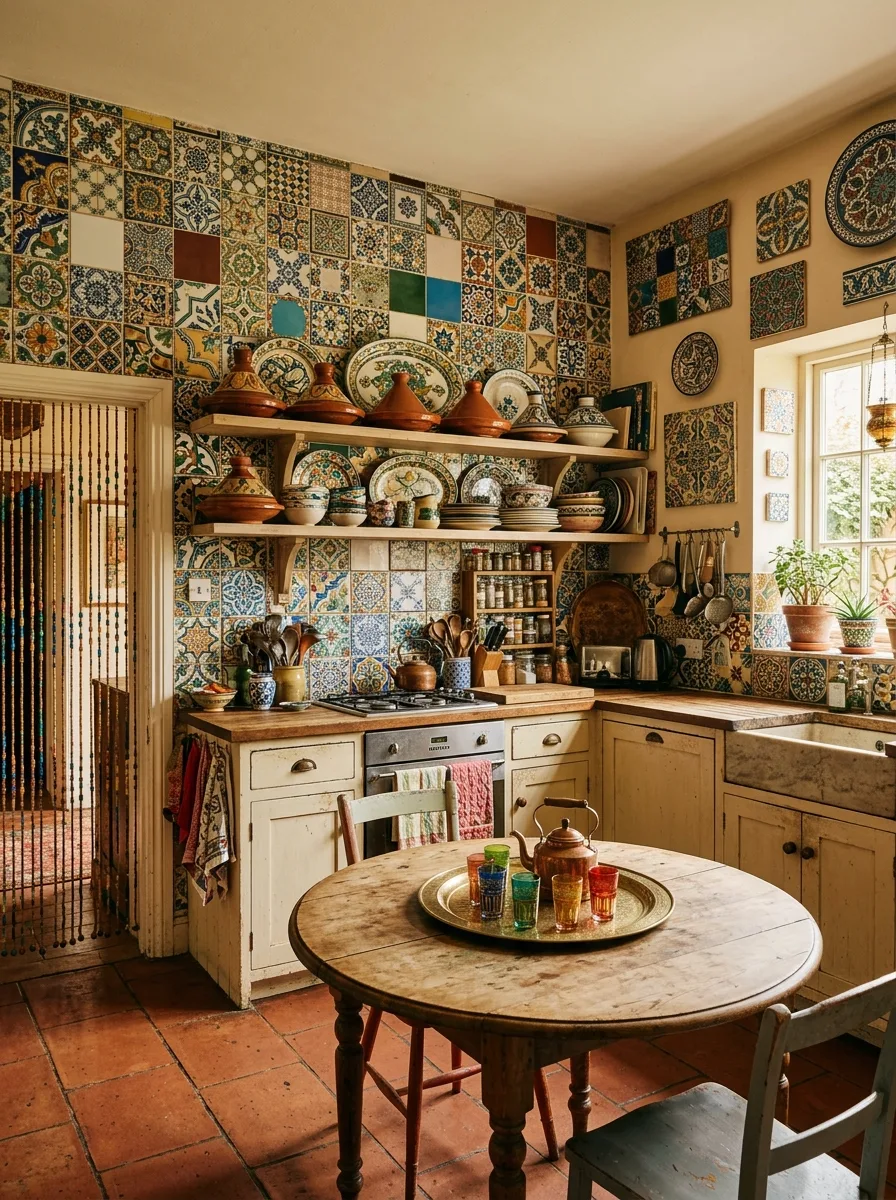
Cover every wall surface — backsplash, dado, entire walls — in hand-painted Moroccan zellige or encaustic cement tiles in a deliberate patchwork of different patterns in the same colour family: blues, greens, ochres, and warm whites. Do not use the same tile throughout. Mix patterns deliberately, varying scale and motif across adjacent tiles. Source from different batches so the colours vary slightly.
Set a collection of terracotta tagines on the open shelving as the primary display object. Three or four tagines of different sizes in the same warm terracotta, arranged without excessive organisation. Use white-painted cabinetry in the simplest possible profile so the tiles carry the room entirely. A round pine table with a brass tea tray set for mint tea. A beaded curtain at the doorway rather than a door. Terracotta tile floor.
English Cottage Wildflower Mural Kitchen
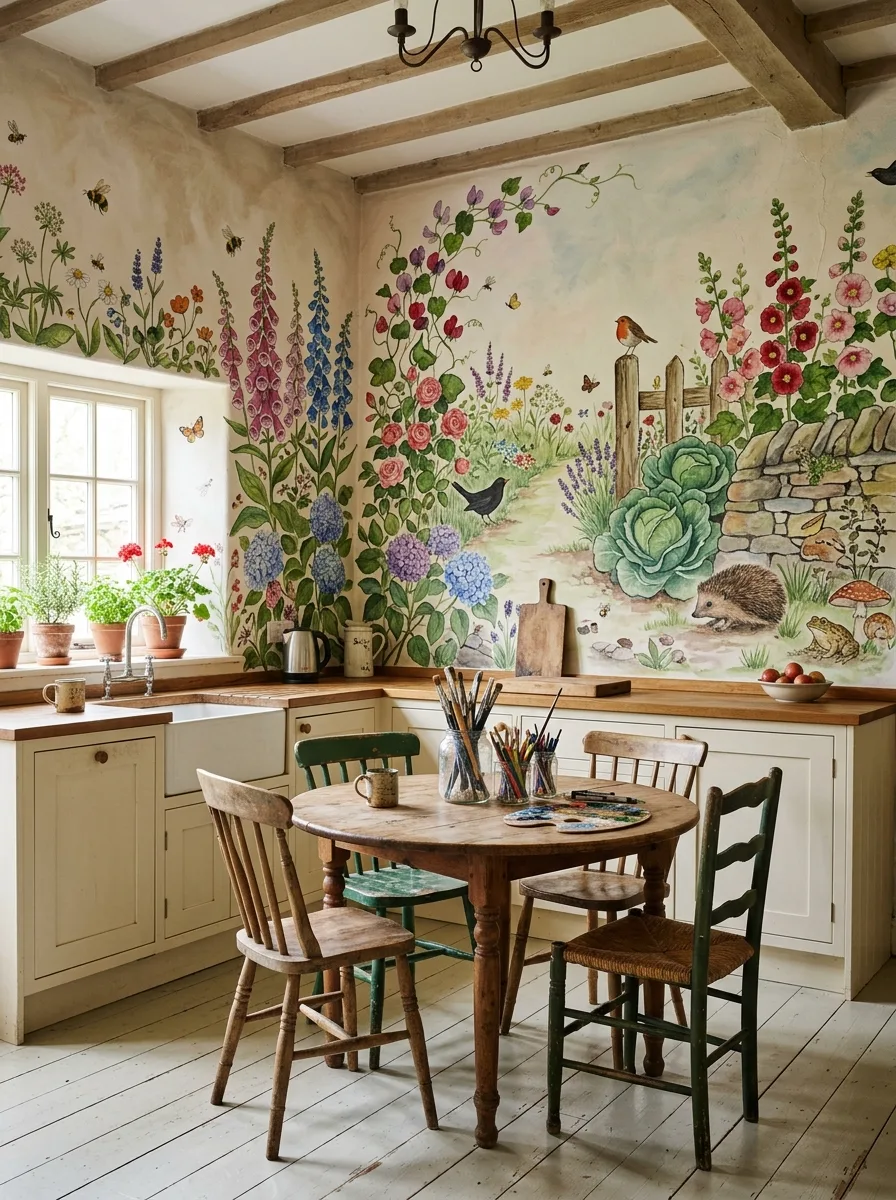
Commission a local artist — or do it yourself with reference images and a steady hand — to paint a floor-to-ceiling botanical mural on the two walls that flank the kitchen table. The mural should depict a specific English cottage garden: foxgloves, hollyhocks, roses, hydrangeas, lavender, sweet peas, dahlias. Include bees, butterflies, a blackbird, a robin, a hedgehog. Paint it in a watercolour illustration style rather than trompe l’oeil — naive and joyful rather than realistic.
Keep all other surfaces completely neutral: white painted cabinetry, pale floorboards, plain farmhouse sink. Leave the ceiling and the non-mural wall in bare plaster or warm cream. Use a round unfinished pine table with mismatched Windsor chairs in natural wood and pale painted green. The mural is the room. The rest is the frame.
Pressed Flower Herbarium Kitchen
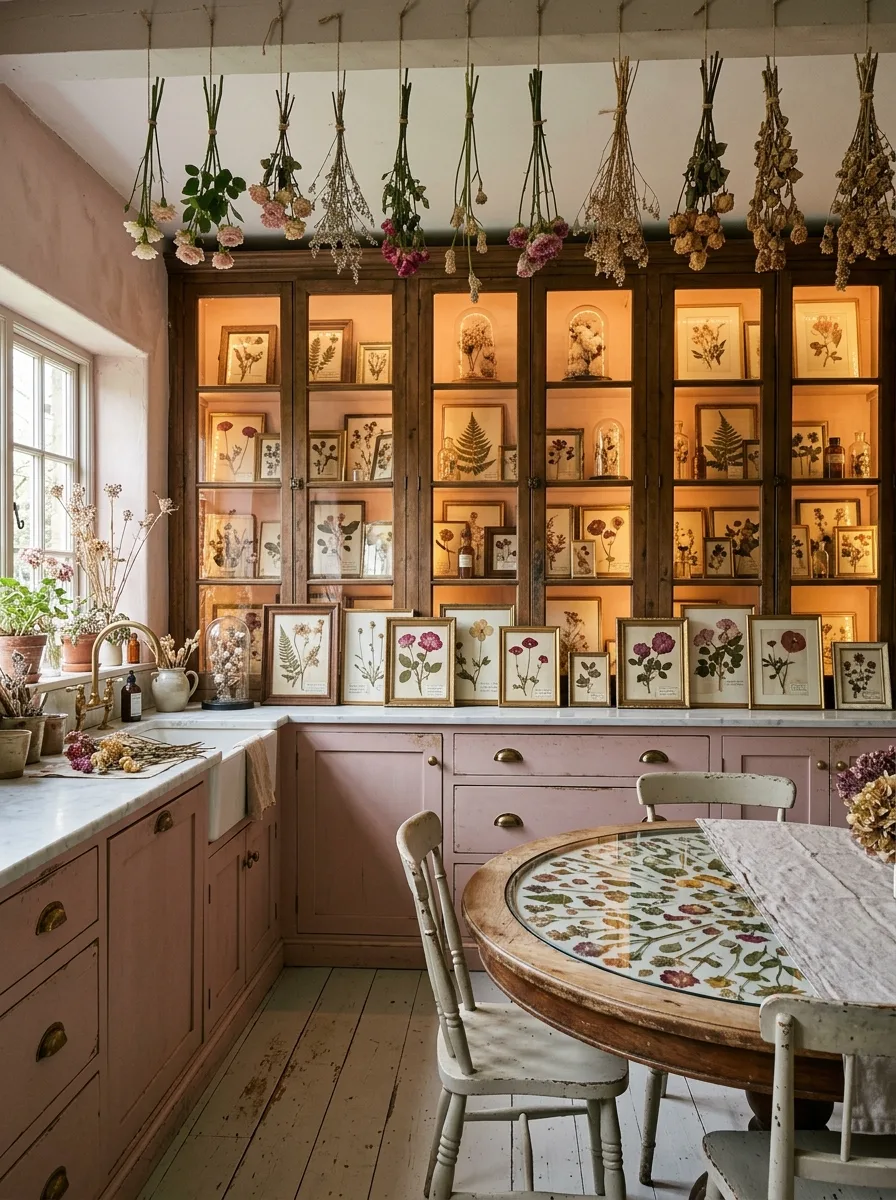
Install a full wall of deep glazed display cabinets — the kind used in natural history museums, with warm interior lighting and multiple shelves — backlit in warm amber. Fill them entirely with framed pressed botanicals: flowers, leaves, ferns, seedheads. Mix sizes from small specimen frames to large A3 botanical prints. Line the counter in front of the cabinets with additional framed pieces.
Paint the cabinetry in a muted dusty mauve or antique rose — Farrow & Ball’s Mallow or Peignoir — with aged brass hardware. Hang dried flower bundles upside down from hooks in the ceiling — not from beams but from the plain ceiling, irregularly spaced so they read as an installation rather than a decorative gesture. Use a round pedestal table with a glazed surface protecting a pressed flower arrangement embedded beneath the glass. Everything in this room is about preservation and beauty in the moment of drying.
Potter’s Studio Kitchen
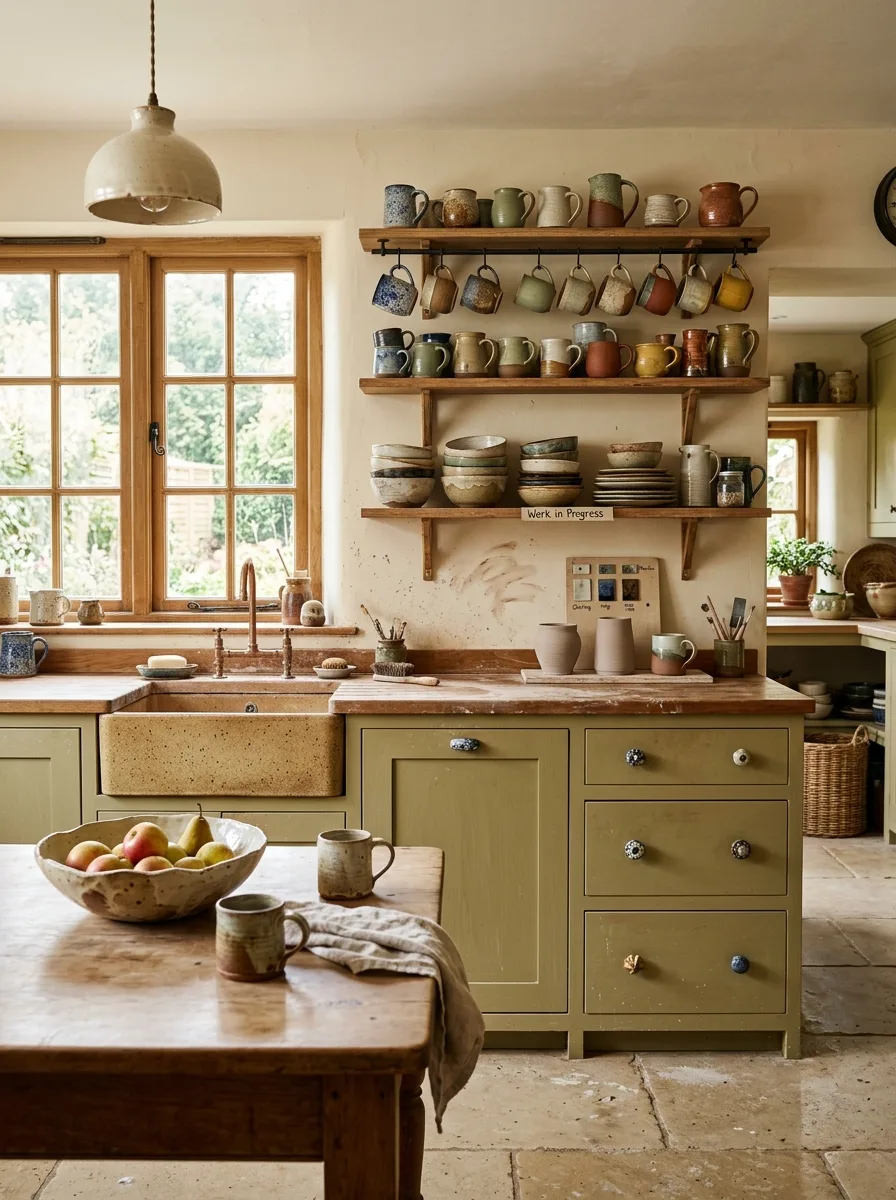
This kitchen belongs to someone who makes ceramics and doesn’t pretend otherwise. The shelves carry a full personal collection — handmade mugs in every glaze the maker has tried, stacked bowls in earthy speckled stoneware, small vessels in progress, a colour-test tile propped against the backsplash. The sink is a proper stone or concrete trough rather than a kitchen sink. The counters are in reclaimed wood with visible use.
Paint the cabinetry in a warm olive — the colour of dried lichen — and use mismatched ceramic knobs rather than consistent hardware. Fit a large casement window with a view of greenery and leave the sill crowded with small terracotta pots of herbs and drying clay pieces. A hanging pendant in a simple ceramic shade. A farmhouse table for throwing and for eating, dusted with clay and set with mismatched handmade place settings. The distinction between studio and kitchen is deliberately unclear.
Primary Colour Storybook Kitchen
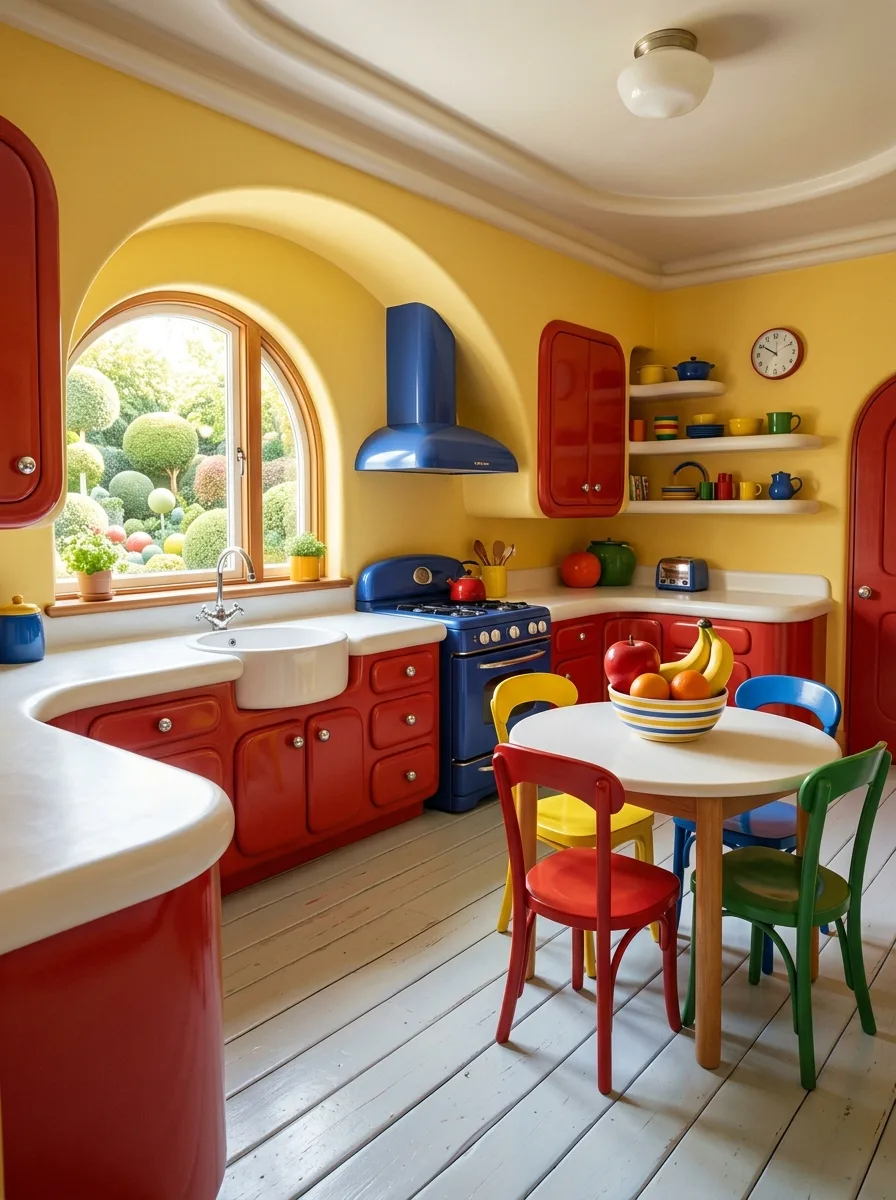
Commit completely to primary colours: red cabinets, blue range cooker, yellow walls, with rounded cabinet edges and arched doorways that make the architecture feel drawn rather than built. Every surface should have the quality of an illustrated children’s book — the red should be bright, the blue should be true, the yellow should be the yellow of a sunflower.
Install the arched window in warm natural wood rather than white so it reads as an organic element among all the saturated colour. Use a white round table with four differently coloured chairs — red, blue, yellow, green. Keep the counter surfaces in white or light cream so there is visual rest. A fruit bowl in the centre of the table with a selection of brightly coloured fruit. A simple globe pendant in white. The room should look like you walked into the kitchen from a picture book you loved at six years old and have missed ever since.
Avocado Green 1967 Kitchen
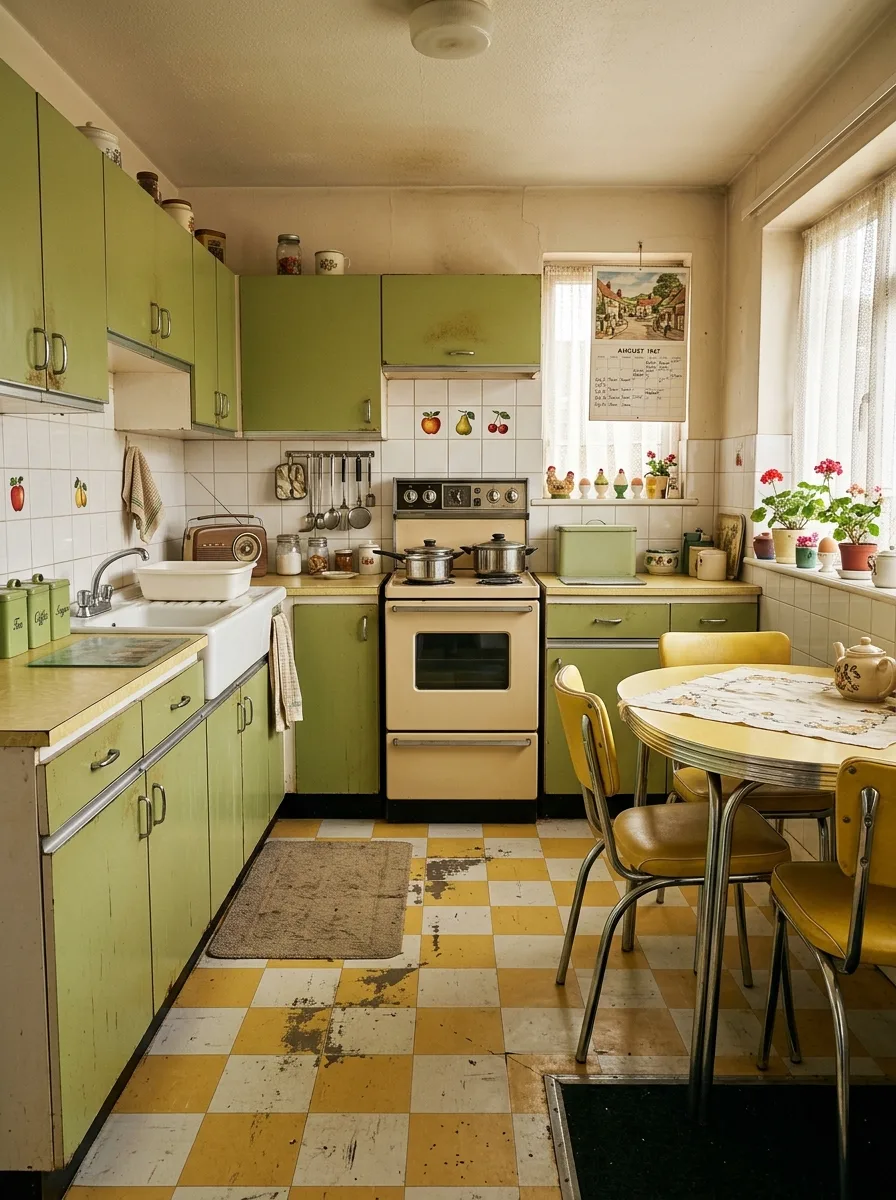
Source or commission a faithful reproduction of a late-1960s kitchen — avocado green metal-faced flat-front cabinets with chrome recessed pulls, a cream freestanding range with analogue dials, yellow linoleum tile flooring in a worn checkerboard, white ceramic square backsplash tiles. The period fidelity is the point. No contemporary upgrades, no “nods to the era.” A room that commits to 1967 without apology.
Install a small transistor radio on the counter tuned to something appropriately vintage. Use a Formica table with chrome legs and yellow vinyl chairs. Hang a wall calendar from the correct decade. The kitchen should look as though it has not been touched since it was installed and is in continuous use. The charm is entirely in the specificity of the commitment.
Dark Velvet Candlelit Kitchen
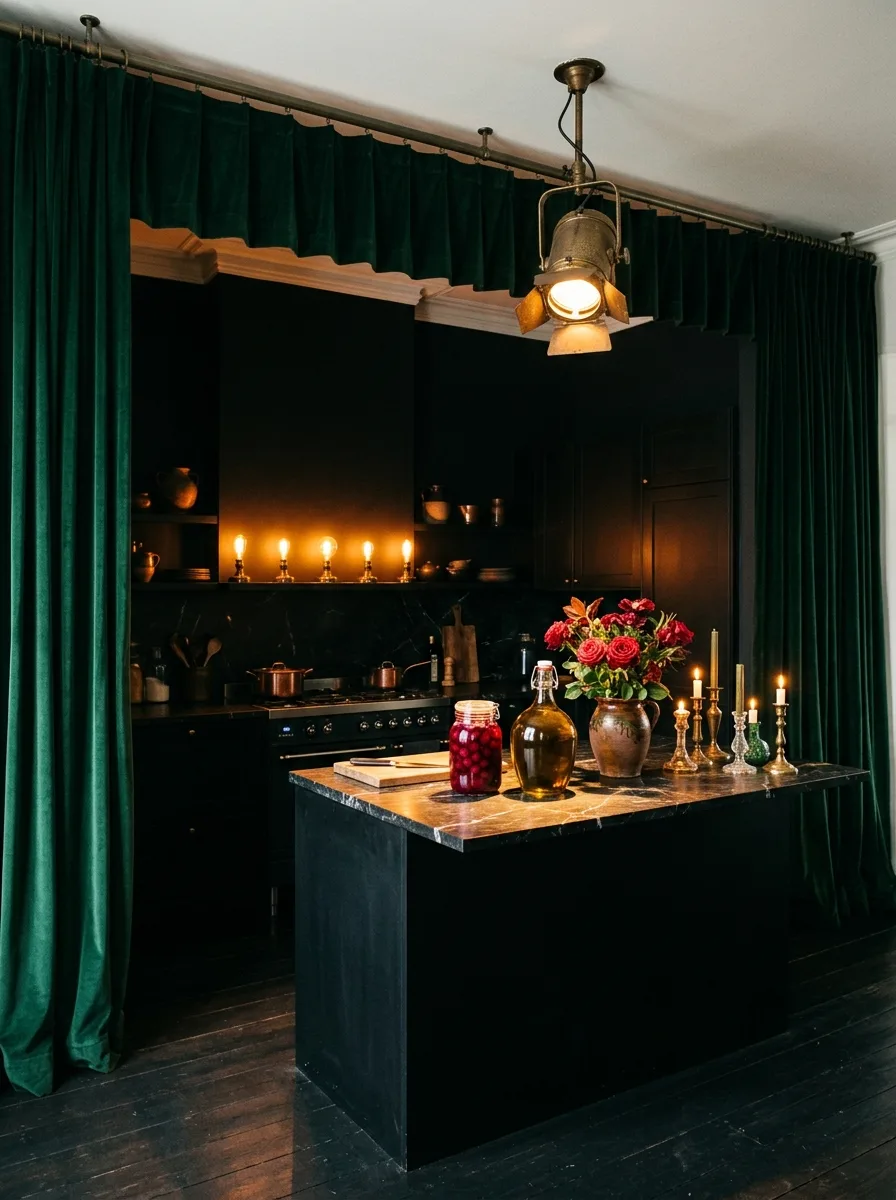
Divide the kitchen from the rest of the space with floor-to-ceiling velvet curtains in deep forest green, hung from a ceiling-mounted track. The curtains close around the kitchen entirely so that entering it is a theatrical act — you push through the velvet and arrive somewhere.
Inside: matte black cabinetry from floor to ceiling with no handles, a black marble island top with amber and gold veining, and Edison filament bulbs on simple brass fittings along one shelf providing warm light at counter level rather than overhead. A collection of brass candlesticks in varying heights on the island with actual candles lit for evening cooking. Dark red roses in an antique urn. Pickled things in glass jars. A bottle of something amber-coloured. This kitchen is for a person who considers cooking a serious, sensory, slightly theatrical act.
Storm Cloud Weather Obsessive Kitchen
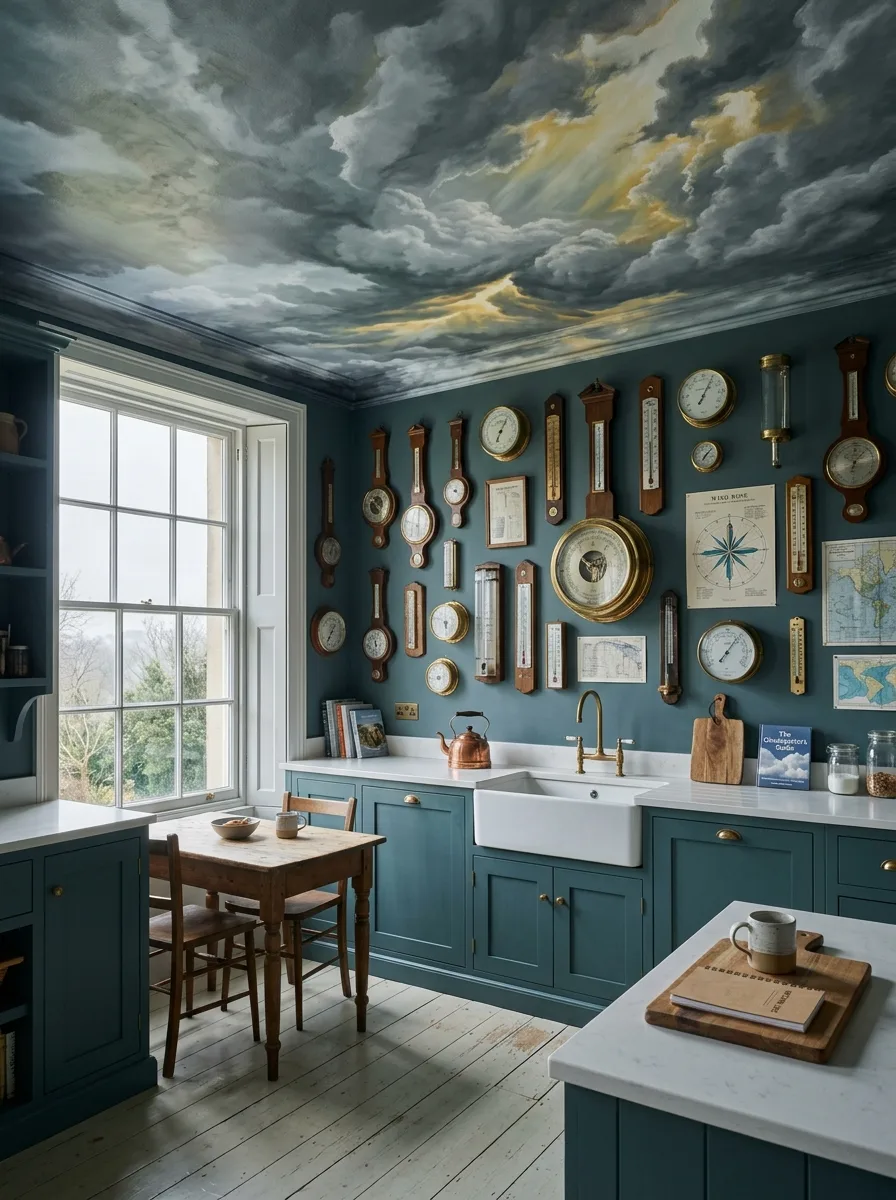
Commission a dramatic painted ceiling mural of storm clouds — not decorative, but genuinely threatening: dark grey cumulus, shafts of gold light breaking through, the kind of sky that means something is about to happen. Use oil paint or high-quality mineral paint applied by a skilled muralist who can handle the tonal complexity of a proper stormy sky.
Cover one full wall with antique weather instruments: barometers in mahogany cases, mercury thermometers in brass fittings, aneroid barometers in various sizes, hygrometers, a large ship’s compass, weather charts and wind rose diagrams in simple frames. Paint the cabinetry in a deep teal-blue — the colour of the sea before a storm — and keep all other surfaces clean. A small pine table with two chairs beside the window so the person sitting there can watch the actual sky and compare it to the instruments.
Cartographer’s Map Kitchen
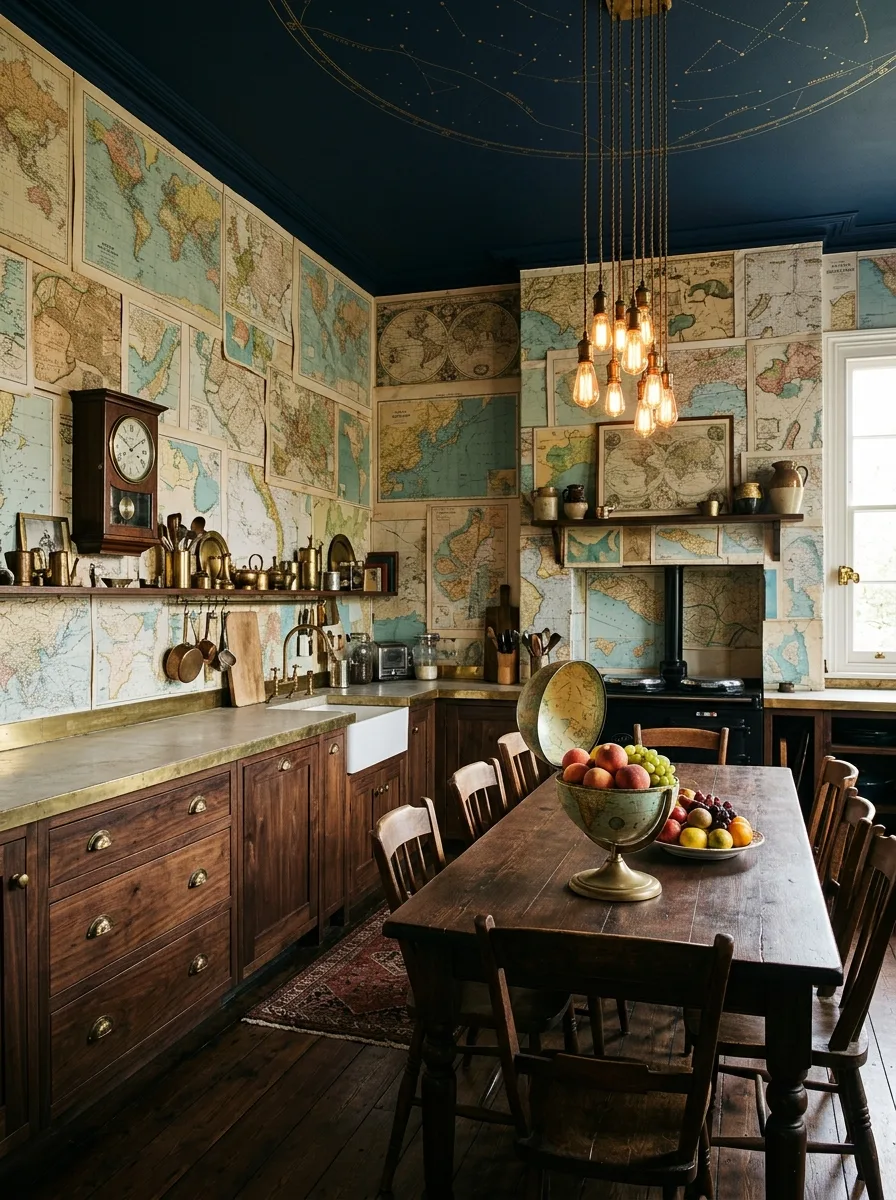
Cover every wall surface — from skirting board to cornice — with vintage maps, overlapping and butted edge to edge with no gaps. Use genuine antique maps from a specialist dealer or high-quality reproductions: world maps, regional maps, nautical charts, topographic surveys. Vary the scale and orientation so the walls read as an accumulation rather than a pattern.
Install the ceiling in deep navy and paint or gild constellation lines directly onto it in gold leaf. An Edison bulb cluster pendant on twisted brass cable hanging from the centre. Walnut cabinetry with heavy brass cup pulls — dark wood against the map wallpaper rather than white, which would read as too clean. A long refectory table with a globe as the centrepiece. A collection of brass navigation instruments on the shelves. This is the kitchen of someone who has been everywhere and is thinking about where to go next.
Floor-to-Ceiling Book Kitchen
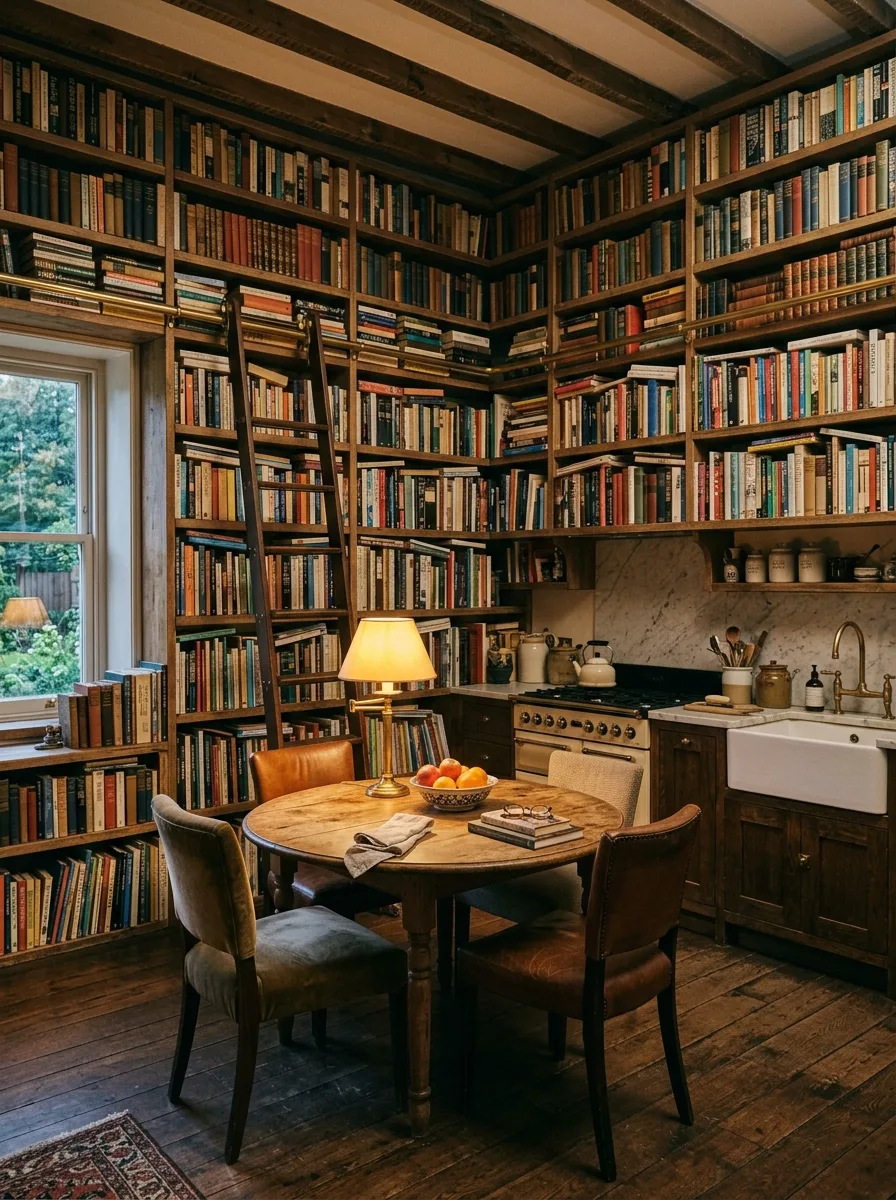
Line three walls from floor to ceiling with proper built-in bookshelves — structural, fixed, densely packed with real books in every category the person reads. Install a rolling library ladder on a brass rail running the length of the longest wall. The kitchen elements occupy one wall only: a range in cream, a farmhouse sink, a marble counter, a brass tap.
Light the table with a single table lamp in brass with a warm shade — a pool of reading light rather than kitchen lighting. A round oak table with velvet-seated dining chairs that are comfortable enough for a long evening. Oranges in a bowl on the table, spectacles and a newspaper left open, a coffee cup. The kitchen is an excuse to be surrounded by books. The books are not a backdrop to the kitchen.
Recipe Wall Handwritten Kitchen
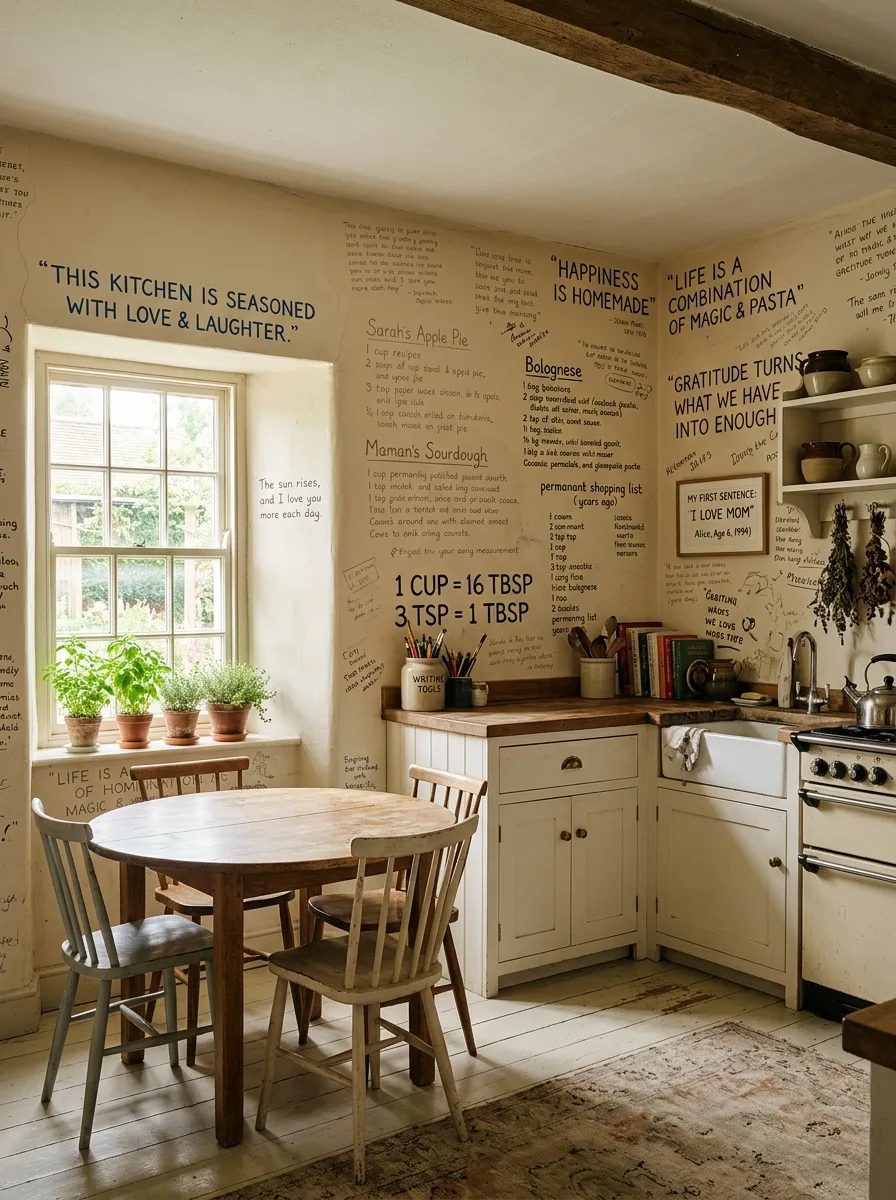
Apply a coat of pale cream limewash to all four walls and then write directly on the surfaces in pencil, ink, or brushed paint: family recipes in full, favourite quotes, children’s early writing, measurement conversions, shopping lists, notes from important meals, the name of a wine you loved. Let the walls accumulate writing over years rather than staging the final effect in a single session.
The writing is permanent. That is the commitment. Keep everything else in the kitchen simple and forgiving: white painted cabinetry, a scrubbed pine table, a farmhouse sink, a view of a window with a pot of growing herbs on the sill. The walls are the family archive. The room exists to hold them.
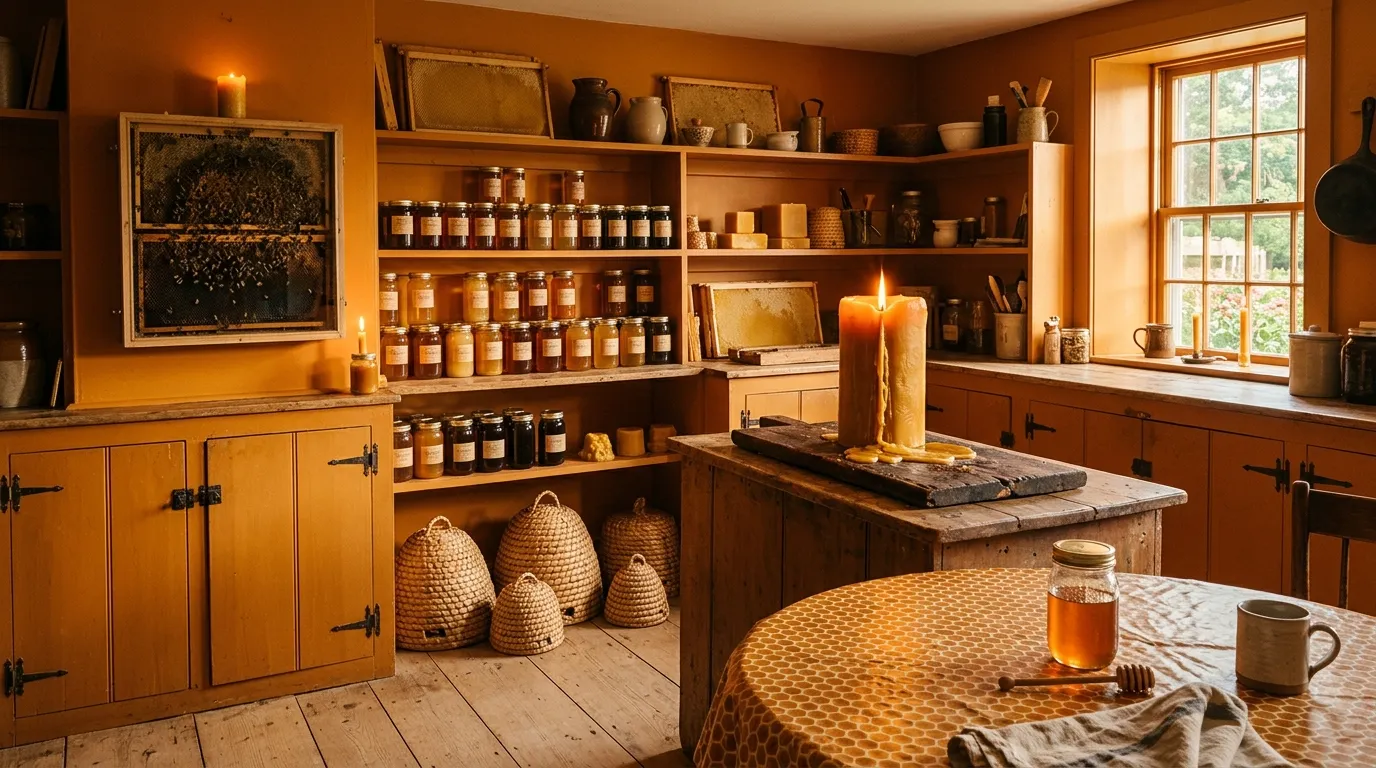
Beekeeper’s Honey Kitchen
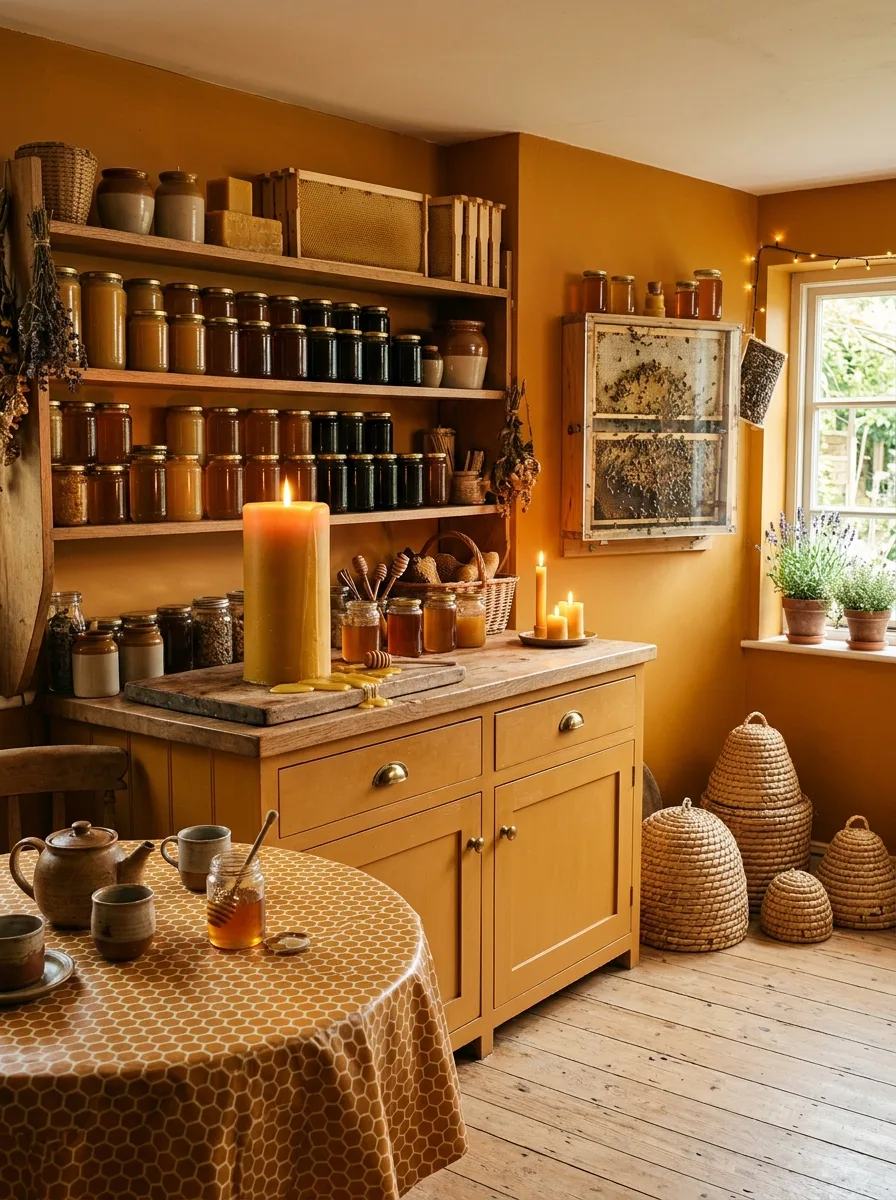
Paint everything in amber and gold — the walls in a deep warm ochre, the cabinetry in mustard yellow, the floor in pale honey pine. Fill every shelf with honey jars in amber glass, varying in shade from pale acacia to deep buckwheat. Display an actual honeycomb frame in a simple wall-mounted case as the room’s central artwork.
Arrange a collection of skep-style wicker baskets on the floor in graduated sizes. Burn beeswax candles rather than using overhead lighting in the evenings. Use a honeycomb-patterned tablecloth on the round table. Set out honey dipper sticks, a mortar of beeswax, a jar of propolis tincture on the counter beside a single terracotta pot of lavender. The room should smell of warm wax and wildflower honey. This kitchen doesn’t just reference bees — it belongs to someone who keeps them.
Antique Clock Collector Kitchen
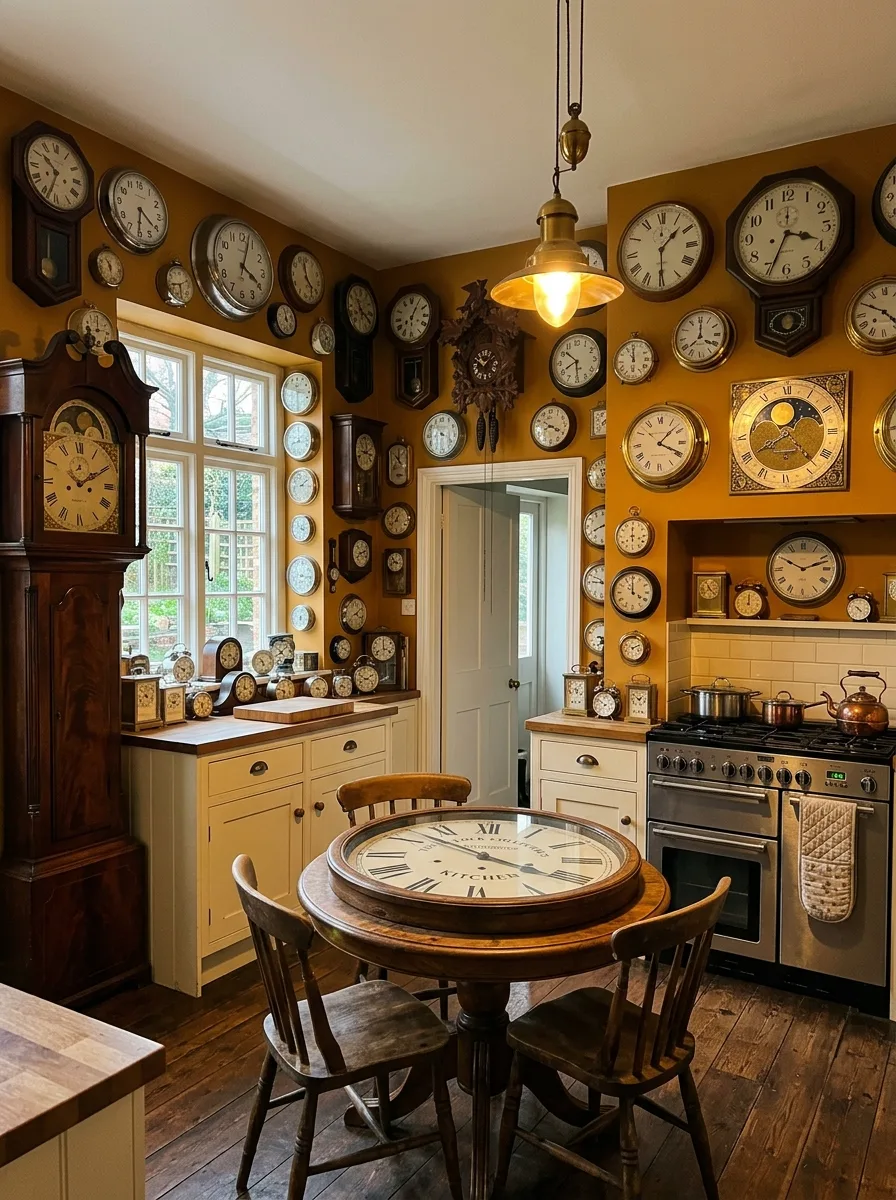
Cover every wall surface with antique clocks. Not a collection of three or four statement pieces but a genuine obsession: forty, fifty, sixty clocks of different types, sizes, and eras. Grandfather clocks flanking the window. Ship’s clocks. Schoolroom clocks. Carriage clocks on the counter. A cuckoo clock above the door. A clock face set under glass in the centre of the kitchen table.
Paint the walls behind the clocks in a warm golden amber so the dark wood cases read as a warm collection rather than an imposing one. Keep the cabinetry in clean cream with simple cup pulls. Use a gas range with a copper kettle permanently on the hob. The clocks do not all need to show the correct time. Several of them have probably stopped, which is fine. The room is about time as an obsession, not as a utility.
Copper Alembic Apothecary Kitchen
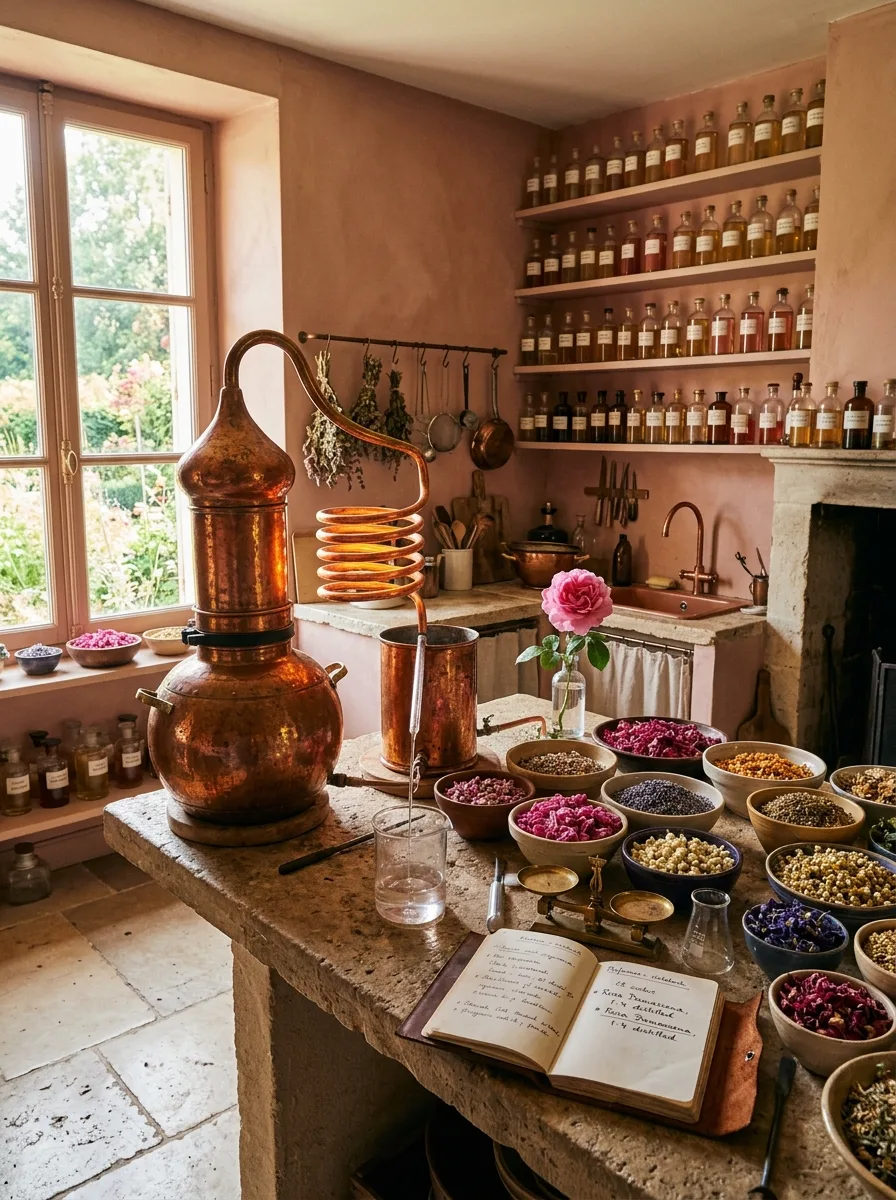
Install a genuine copper alembic still as the room’s centrepiece — on a heavy stone or concrete worktop, surrounded by bowls of dried botanicals: rose petals, lavender, chamomile, elderflower, spices, seedheads. Shelve every bottle you have distilled or infused along the back wall in uniform amber glass with handwritten labels: rose hydrosol, lavender water, elderflower cordial, herb-infused oils.
Paint the walls in a washed terracotta-pink — the colour of old apothecary labels — and keep the shelving in pale plaster or natural stone rather than painted wood. Use a stone sink with a copper tap rather than a farmhouse basin. An open notebook on the work surface recording the current distillation recipe. A single fresh rose in a slim glass vase beside the still. The room is a laboratory and a pantry and a kitchen simultaneously, and that ambiguity is the point.
Why These Kitchens Work When Yours Doesn’t
There is no such thing as a neutral decision in a room. Choosing white cabinets and subway tile is still a choice — it just happens to be the same choice thirty million other people made in the same decade for the same reasons.
The kitchens in this collection made different choices. Harder ones. Choices that required committing to something specific enough to be wrong for most people.
That is precisely what makes them right for the people who live in them.
A room built around your genuine obsession — the thing you would collect whether or not it was considered good design — is a room that will never bore you. You cannot exhaust your own interests. You cannot age out of caring about the things you actually care about.
The only question worth asking before you start is not “will this look good in five years” but “will I still find this interesting in five years.” The answer, for the things that genuinely matter to you, is almost always yes.
Stop designing for future buyers. Start designing for the life you’re actually living.