
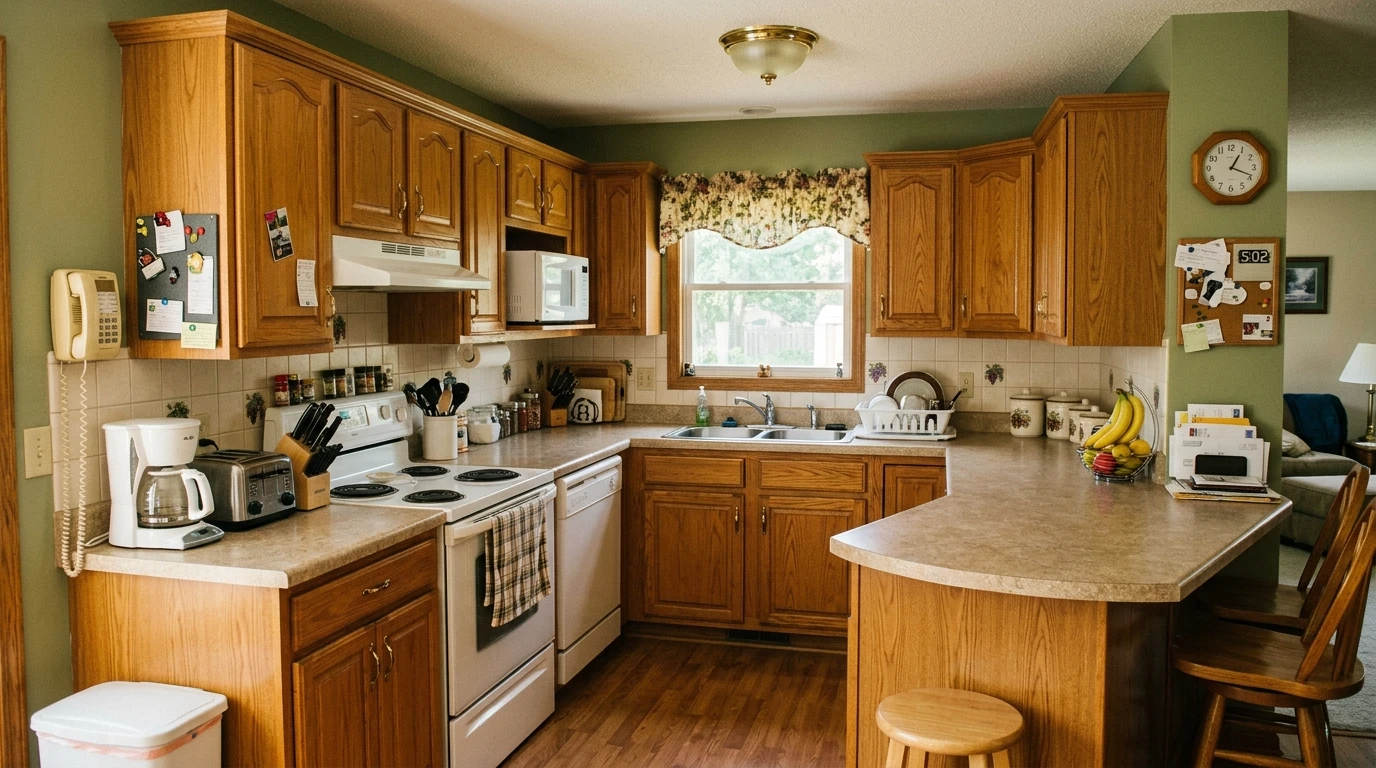
Every era hands down a kitchen. Avocado appliances were the seventies’ contribution. Honey oak and good intentions were the nineties’. The two-thousands gave us granite, and it gave us a lot of granite.
Cherry cabinets, speckled countertops, glass mosaic backsplashes, and a wallpaper border running the full perimeter of nearly every room in the house — this was a decade with a uniform, and most of America bought it. Add a themed accent or two, rooster or grape or hibiscus, and the look was complete.
It’s easy to laugh at now. It’s also, quietly, coming back. Warm wood tones, stone counters, and pattern that isn’t afraid of itself are all having a moment again, just edited down from six decisions to one or two.
This is twenty kitchens from the height of that era, and what it would actually take to bring each look back on purpose.
Why Every 2000s Kitchen Looks the Same
Three habits show up in nearly every kitchen from this decade, repeated so consistently they stopped being a style and became a default.
The Cherry-and-Granite Default
Cherry-stained cabinets and a speckled granite counter were the kitchen equivalent of a school uniform. Almost nobody chose them out of obsession with cherry wood specifically — they chose them because every showroom, every renovation show, and every neighbor’s kitchen said this was what an upgraded kitchen looked like.
The combination wasn’t wrong. It photographed warm, sold houses, and held up structurally for decades. It just got chosen so universally that an entire generation of kitchens became interchangeable.
Borders Instead of Statement Walls
Before accent walls, there were borders — a strip of patterned wallpaper running at the ceiling line, sometimes repeated again above the backsplash. It was pattern in moderation, a way to add personality without committing to color on every wall.
It also meant the pattern showed up in nearly the same spot, at nearly the same height, in nearly every kitchen that had one. The restraint was the trend, and the restraint looked identical from house to house.
A Theme for Every Wall
Roosters, grapes, sunflowers, tropical leaves — pick a motif and it would show up on the curtains, the canisters, the dish towels, and the wallpaper border, all at once. This wasn’t subtle theming. It was full commitment, applied to every surface that could hold a print.
It worked because it was cohesive. It dated badly because cohesive, applied to six different objects at the same intensity, eventually reads as a costume rather than a kitchen.
2000s Kitchen Trends
Cherry Cabinets, Green Granite
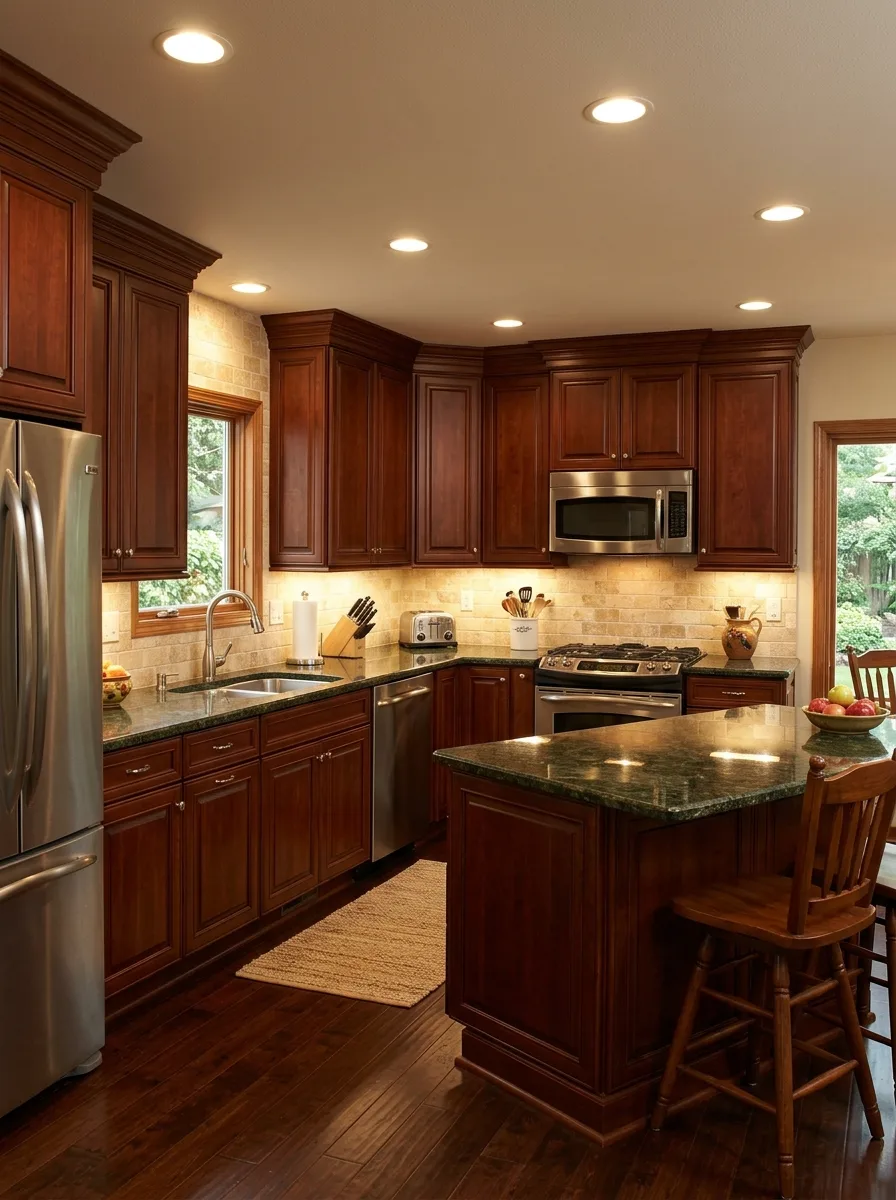
Install cherry-stained raised-panel cabinets in a deep reddish-brown finish, the darker the better, and pair them with a green-toned granite counter — something with enough movement and fleck that it reads as natural stone, not paint.
Run a tumbled travertine backsplash in a soft beige, set in a loose brick pattern, the same material used on most counters of the era so the kitchen feels continuous rather than assembled from leftover samples.
Finish the floor in a dark stained hardwood, several shades darker than the cabinets, so the wood tones layer instead of match exactly.
Anchor the room with an island in the same granite, stainless appliances throughout, and a jute rug underfoot. This combination was the default for a reason — it photographed well in real estate listings for a solid decade.
Leaded Glass Plate Rail
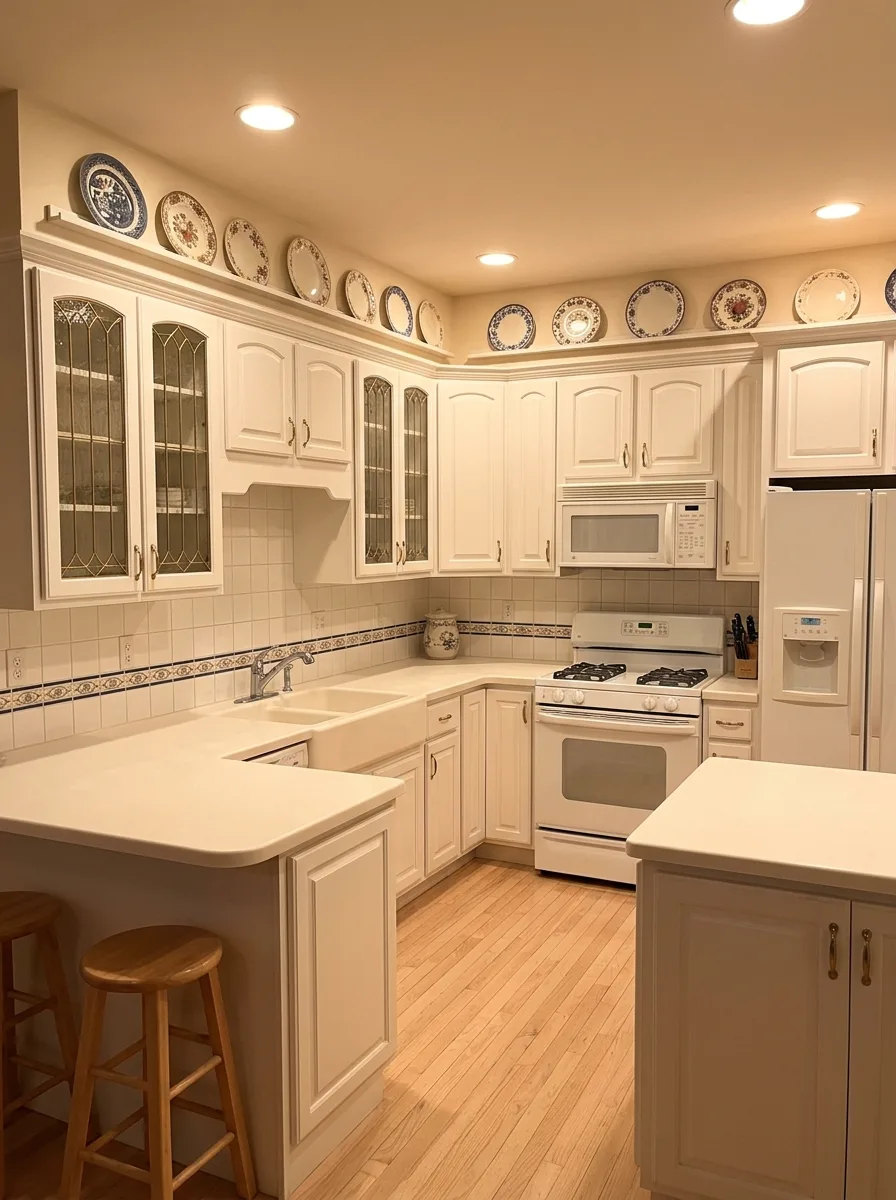
Top a run of white raised-panel cabinets with a continuous ledge, then fill it with decorative plates leaned shoulder to shoulder, blue-and-white transferware mixed with floral patterns.
Swap a few upper cabinet doors for leaded glass insets, diamond or scalloped pattern, so the collection inside gets a second moment of display behind glass.
Tile the backsplash in plain white with a single decorative border strip running through it at counter height, picking up the blue tones from the plates above.
Keep the appliances white to match the cabinetry. This was the look of a kitchen that wanted you to notice the china before you noticed the stove.
Blue Glass Mosaic Backsplash
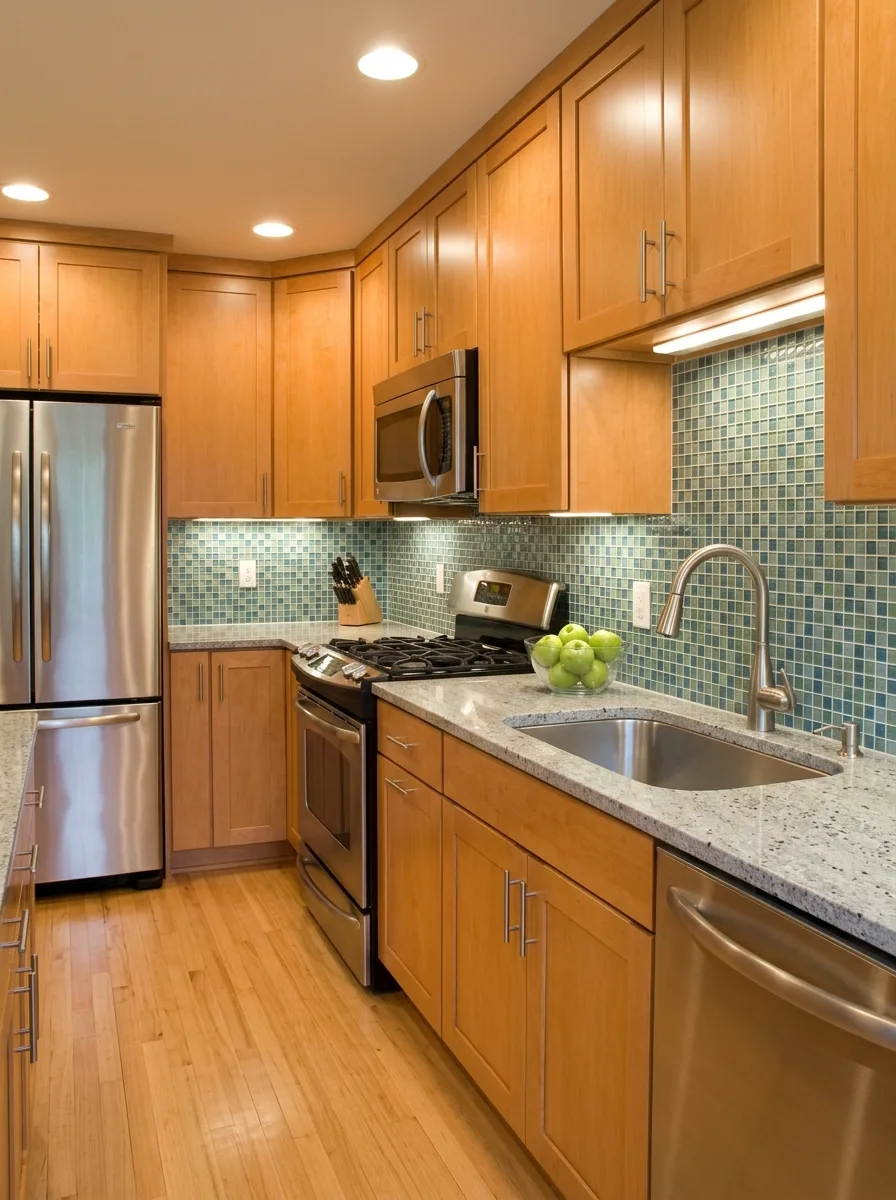
Choose honey-toned shaker cabinets in maple or birch, light enough to read as fresh rather than heavy, and let a blue-green glass mosaic backsplash do all the color work in the room.
Run the mosaic in a small-format tile, quarter-inch to inch-square pieces, with enough tonal variation in the blues and greens that it shimmers rather than reading as one flat color.
Pair it with a speckled granite counter in warm grays and creams, pulling tone from both the tile and the cabinets without matching either exactly.
Finish with a light oak floor and stainless appliances. The mosaic backsplash was the one place this era let color in, and it made every other surface neutral on purpose.
Tropical Wallpaper Border Trend
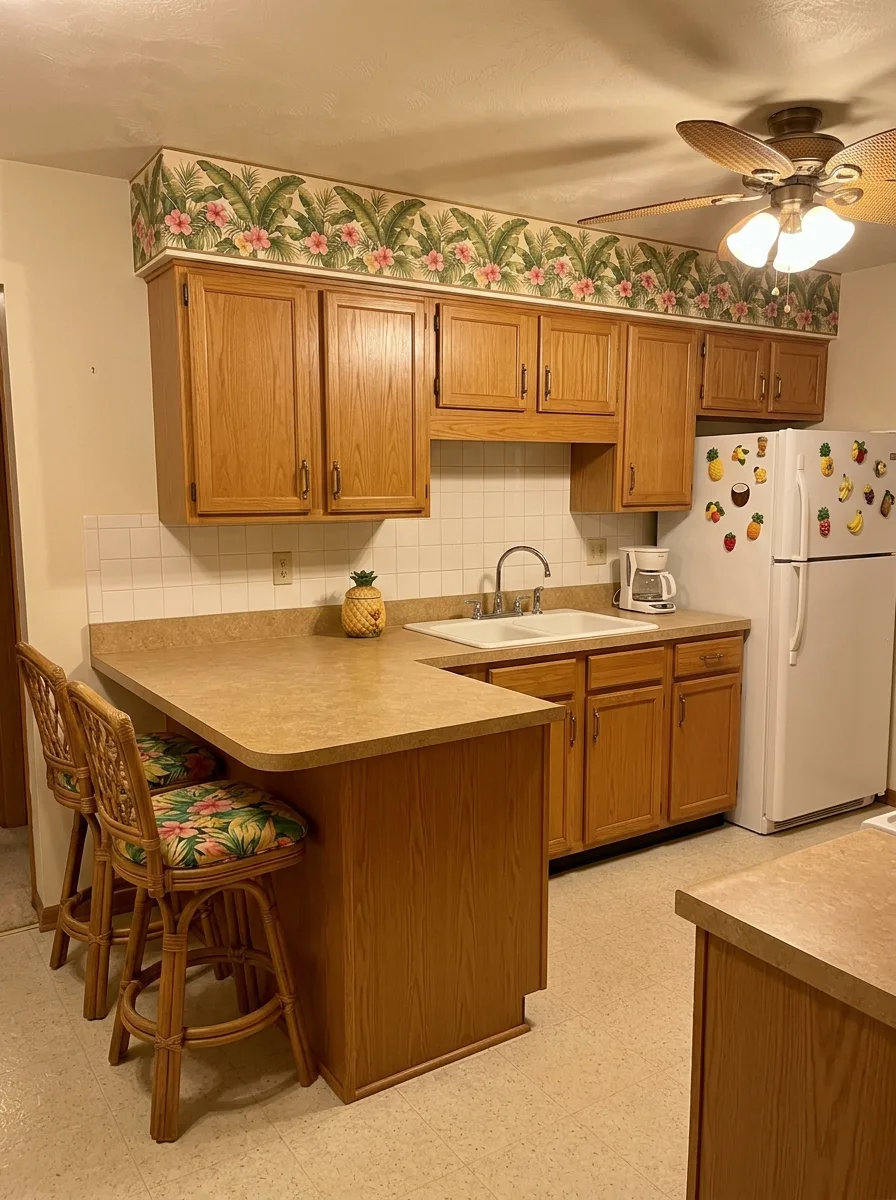
Run a wide wallpaper border just below the ceiling line, printed with banana leaves and hibiscus flowers, wrapping the kitchen perimeter above honey oak cabinets.
Stick to plain white tile below it, kept deliberately quiet so the border has nowhere to compete for attention.
Add a peninsula with rattan stools cushioned in a matching tropical print, and hang a wicker-bladed ceiling fan dead center for the full effect.
Cover the fridge in souvenir magnets, pineapples and palm trees, anything picked up on vacation. This was a kitchen built entirely around a vacation feeling nobody wanted to leave behind.
All-Black Cabinets, Metallic Tile
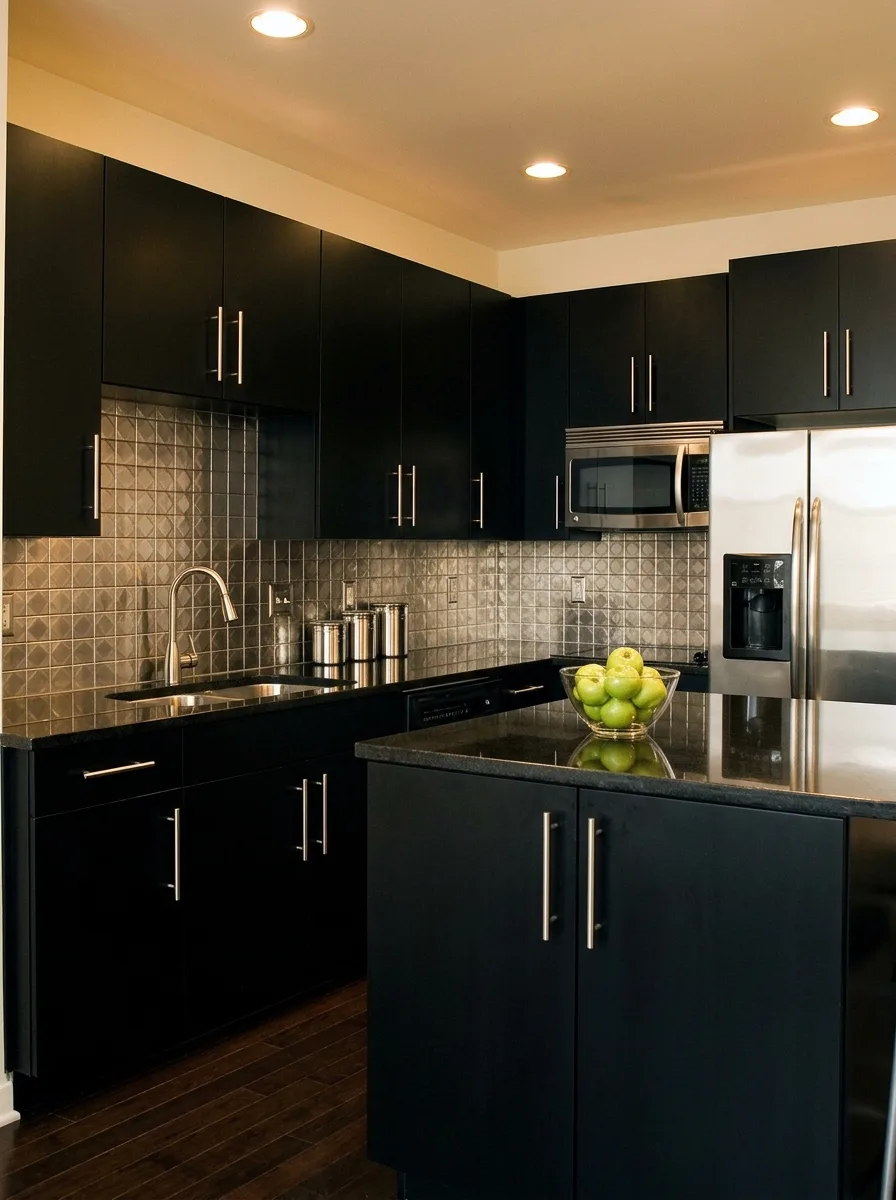
Run full-height slab cabinets in matte black, upper and lower, with no visible grain or panel detail, and pair them with a stainless steel mosaic backsplash set in a basket-weave pattern.
Choose a black granite counter with minimal fleck, long thin stainless bar pulls, and keep every appliance in matching stainless steel for a unified metallic-on-black palette.
Skip warm wood entirely. This look depends on cool tones throughout, dark floor included, so nothing pulls the eye back toward anything traditional.
Let a single bowl of green apples do the only color work in the room. This was the kitchen trying hardest to look like the future, and for about five years, it did.
Toile Wallpaper Copper Rack
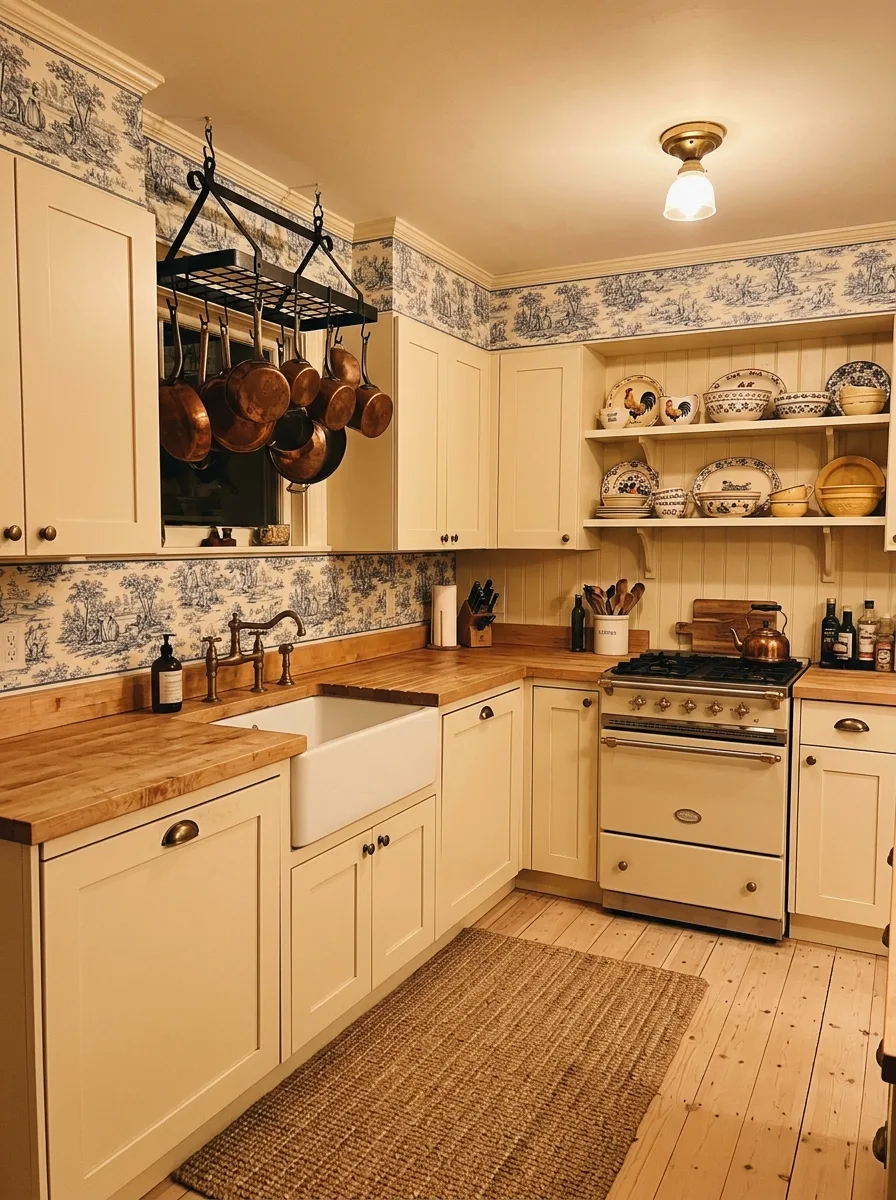
Paper the upper third of the kitchen walls in a classic blue-and-white toile print, pastoral scenes repeating endlessly, above cream shaker cabinets and butcher block counters.
Hang a wrought iron pot rack from the ceiling and load it with copper cookware, polished enough to catch the light, positioned over the sink as the room’s clear focal point.
Install a farmhouse apron sink in white, paired with a bridge faucet in an aged brass finish, and leave a run of open shelving nearby stacked with blue-and-white china.
Finish the floor in pale, wide-plank pine and lay a jute runner in front of the sink. This was French country at its most committed, copper pots included.
Faux-Finish Walls, Slate Floor
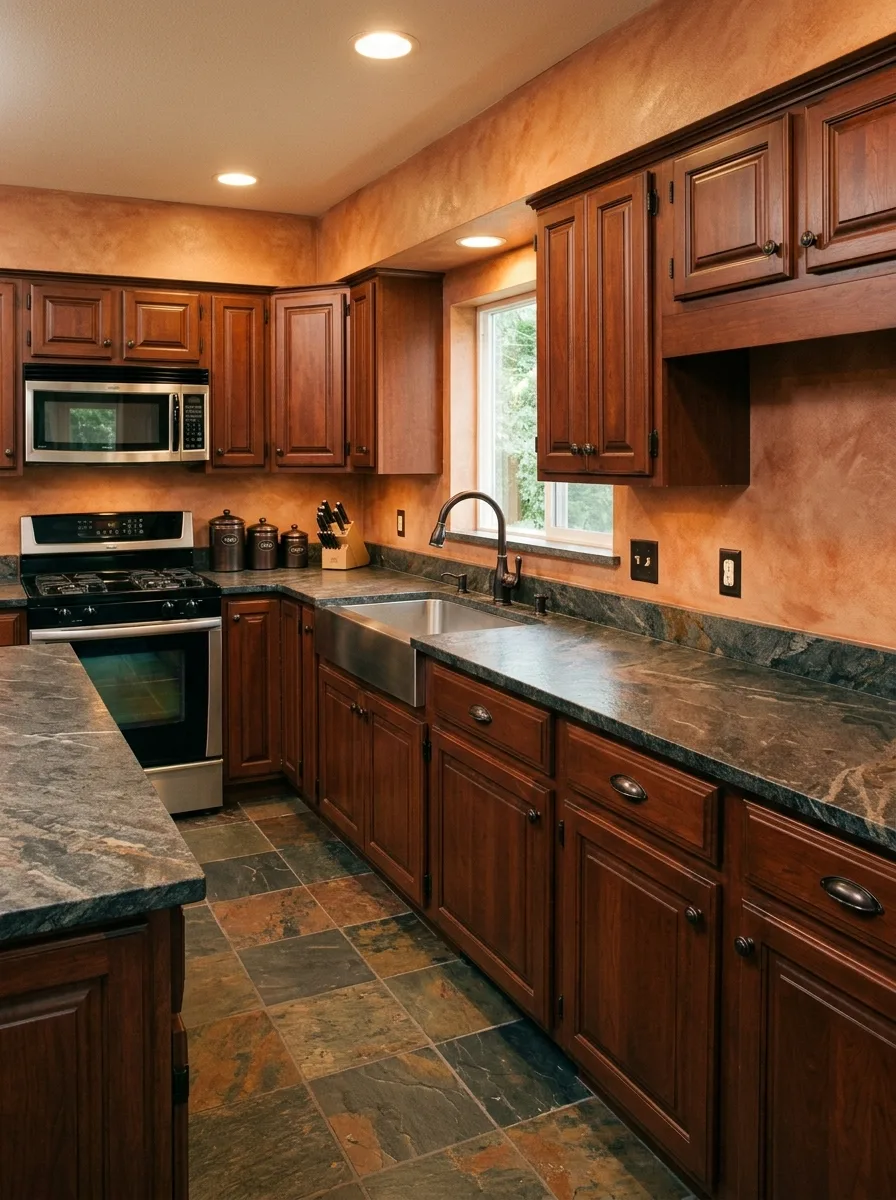
Sponge-paint the walls in layered rust and amber tones, blending two or three shades by hand so the texture reads as aged plaster rather than flat paint.
Pair the walls with cherry cabinets in a deep red-brown stain and a dark granite counter with heavy movement, something that looks almost like flowing water when the light hits it.
Tile the floor in irregular slate squares in mixed earth tones, grouted wide enough that the texture reads from across the room.
Add a stainless apron sink and a stainless gas range for contrast against all that warmth. This combination treated the kitchen walls like a canvas, and for a few years, every wall got the same treatment.
Cobalt Glass Tile Backsplash
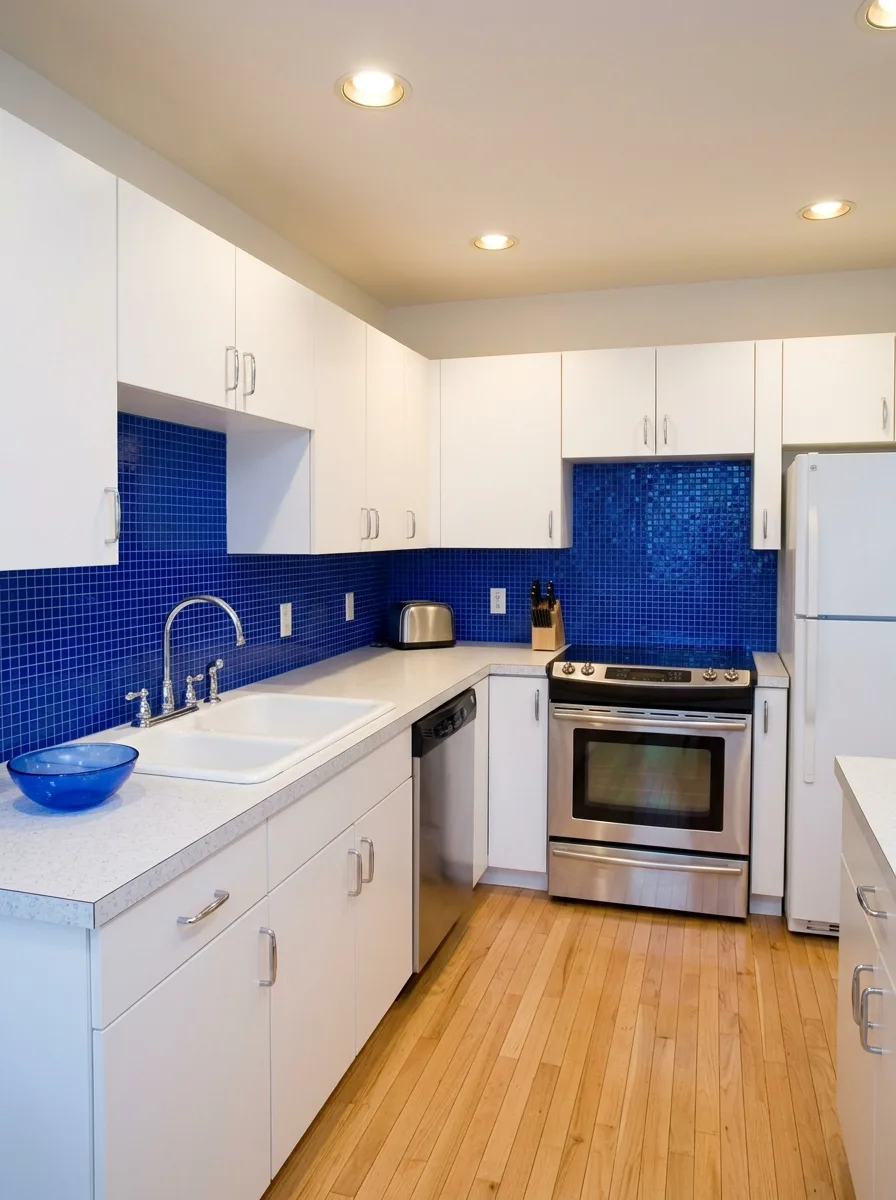
Keep the cabinets flat-front and white, no ornamentation, and let a cobalt blue glass tile backsplash run the full height between counter and upper cabinets — the boldest single color choice this era regularly made.
Use a small mosaic format in a saturated, uniform blue, with enough glass shine that the tile reflects light rather than absorbing it.
Pair it with a plain white solid-surface counter, kept deliberately simple, and a single blue glass bowl left out to echo the backsplash.
Finish the floor in light oak and keep every appliance stainless or white. This was a kitchen with exactly one loud decision, made on purpose, and left alone after that.
Ivy Border, Sage Cabinets
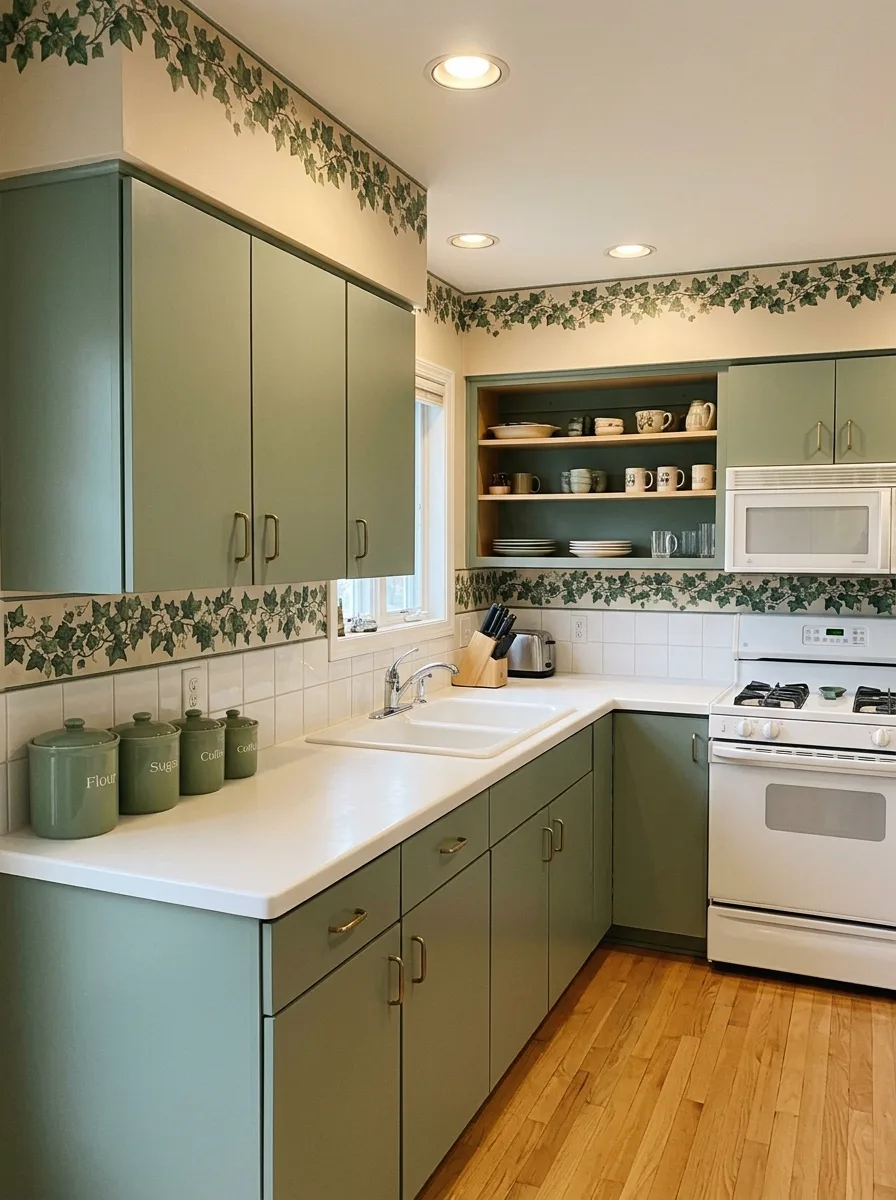
Paint cabinets a muted sage green, flat front, simple hardware, and run a printed ivy-vine wallpaper border at both the ceiling line and again above the backsplash tile.
Tile the lower walls in plain white four-inch squares, letting the ivy border do the only patterned work in the room.
Open up one run of upper cabinets into display shelving, painted the same sage as the doors, and fill it with white dishware and mismatched mugs.
Match a set of canisters, flour, sugar, coffee, tea, to the cabinet color and line them up on the counter by the stove. This kitchen wanted you to feel like you were already somewhere cozy.
Peach Laminate, Balloon Valance
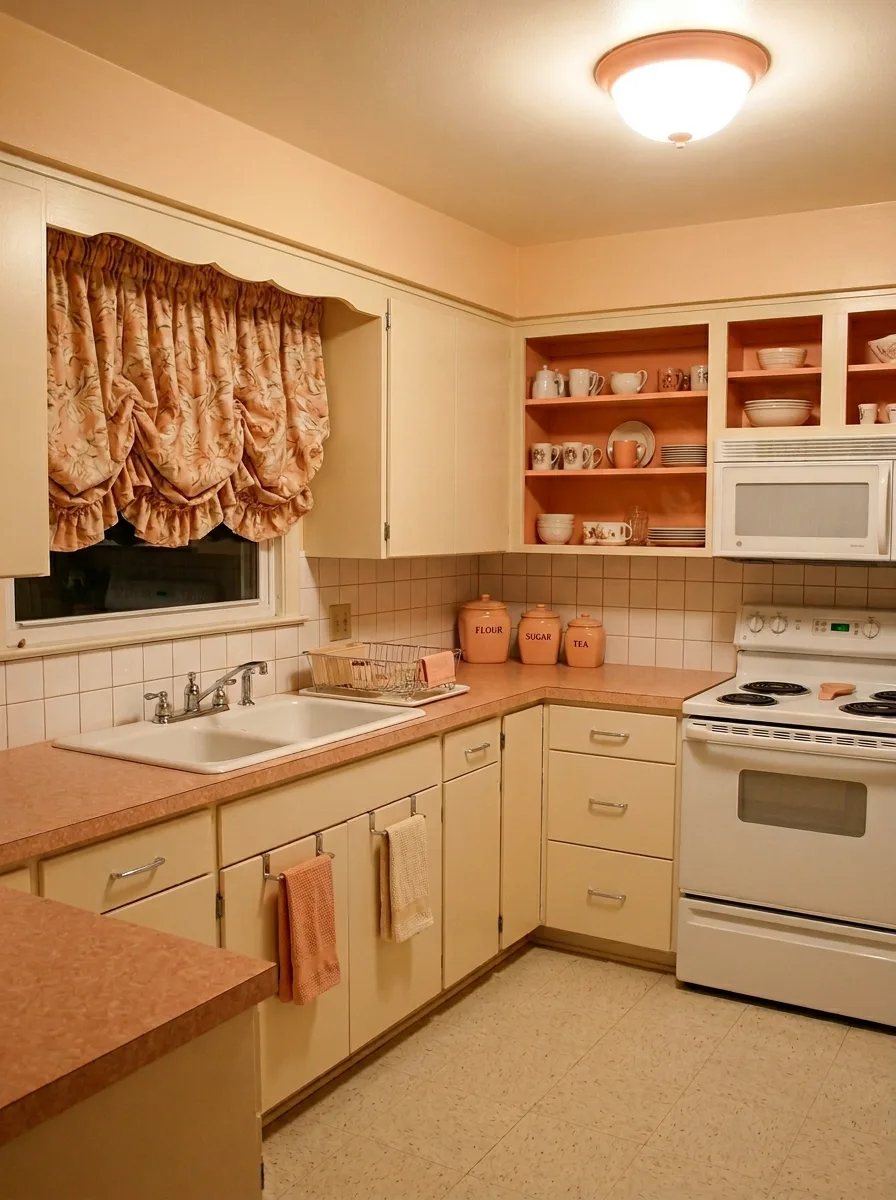
Run cream cabinets with simple bar pulls against a peach-toned laminate counter, the same color picked up again in the open shelving interiors above.
Hang a floral balloon valance over the window, gathered and ruffled, in a print that pulls the same peach and cream tones together.
Tile the backsplash in plain white four-inch squares and stock the open shelving with peach-and-white dishware, stacked neatly behind the open cabinet fronts.
Set out matching canisters labeled flour, sugar, and tea on the counter, and hang a coordinating dish towel from a cabinet pull. This was warmth built entirely out of laminate and matching textiles, and it worked.
Arched Niche, Wine Lattice
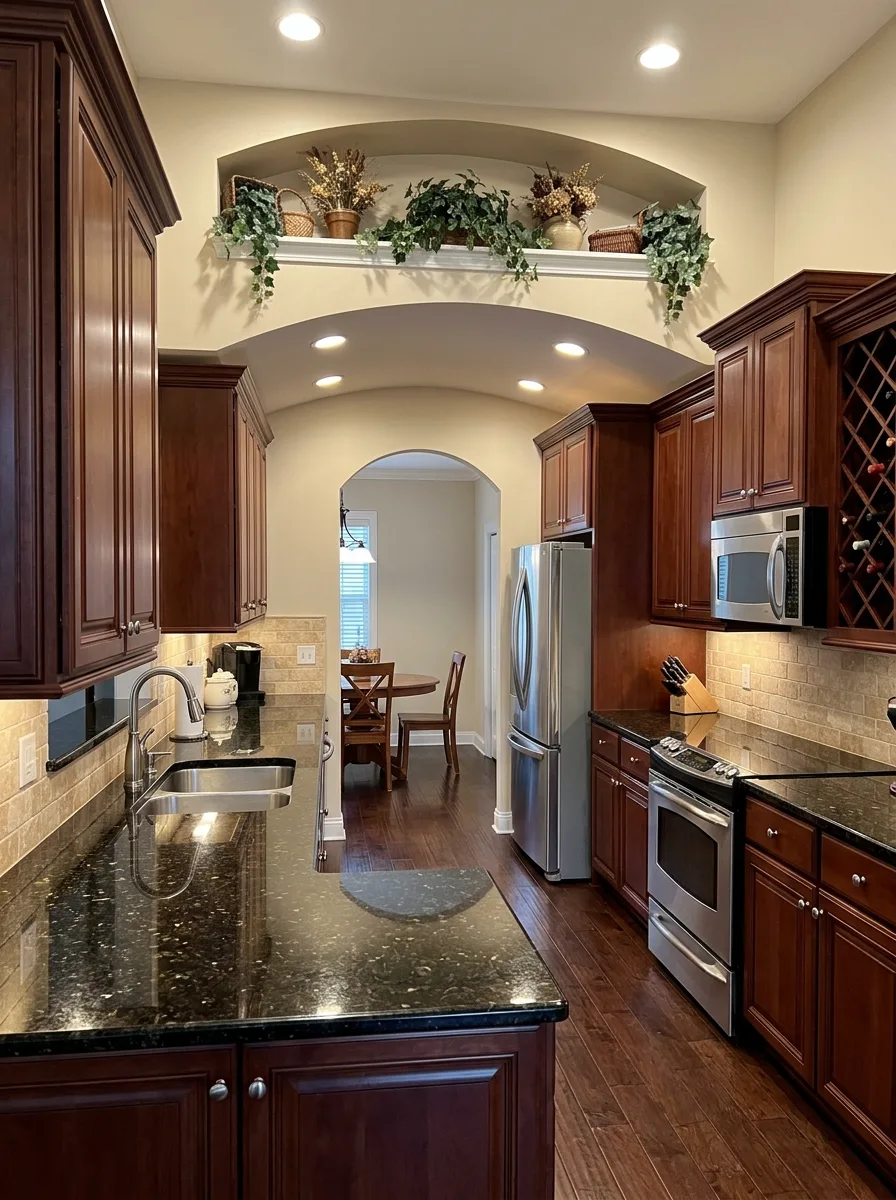
Cut an arched display niche into the wall above a doorway or passage, deep enough for a single shelf, and fill it with faux greenery, dried florals, and a couple of woven baskets.
Build a diamond-lattice wine rack directly into a run of cherry cabinetry nearby, sized to hold a dozen or so bottles on display rather than tucked away.
Run a dark, heavily flecked granite counter throughout, paired with a travertine backsplash in the same warm beige used across most of this decade’s kitchens.
Keep the cherry cabinets glossy and deeply stained, with simple brass hardware. This was a kitchen built to show off architectural extras — the niche and the wine rack both existed purely to be looked at.
Diamond Wine Rack Island
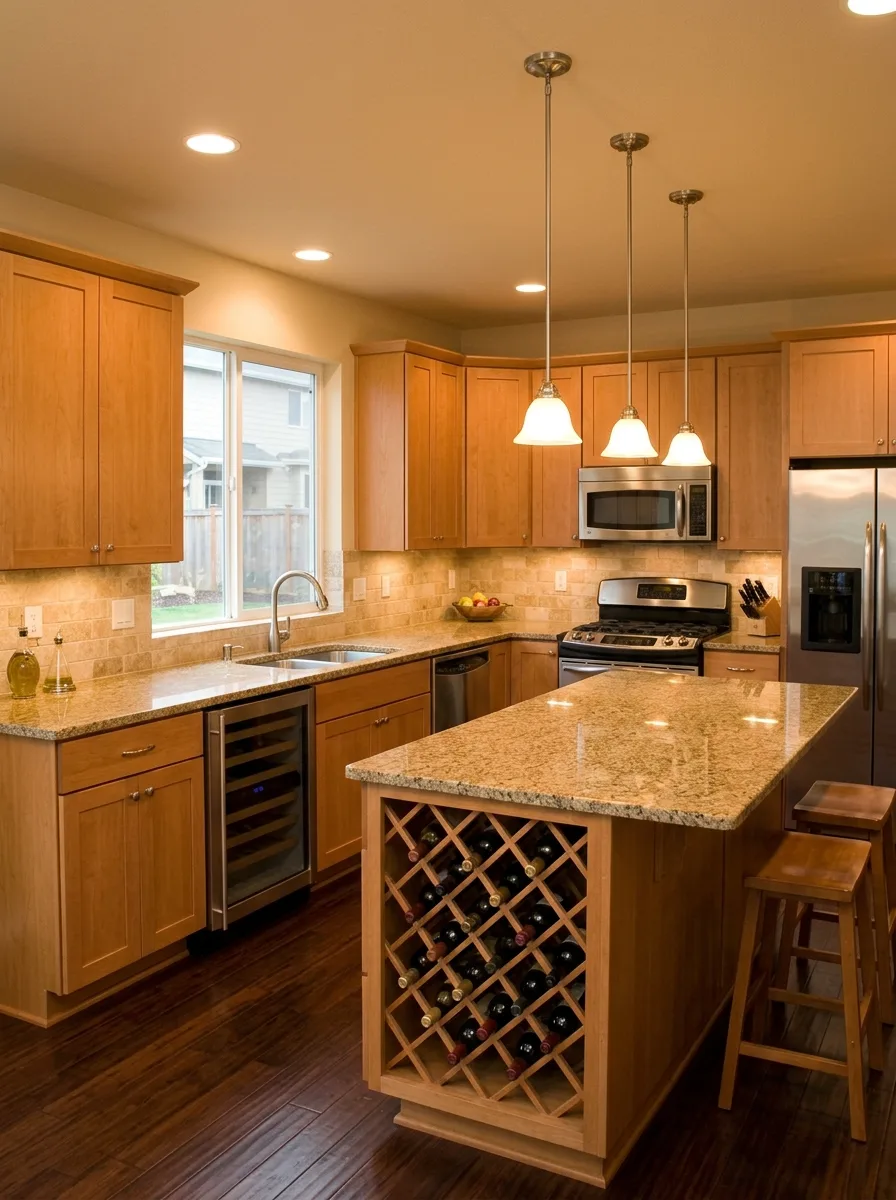
Build a diamond-lattice wine rack directly into the end of your kitchen island, exposed rather than behind a door, sized to hold a full case of bottles on display.
Pair honey oak cabinets with a speckled granite counter and a travertine tile backsplash, the same warm trio used across most of this decade’s kitchens.
Hang three matching bell-shaped pendant lights over the island in a row, brushed nickel finish, evenly spaced.
Add a stainless wine fridge nearby if you’re going all in. This was the kitchen of someone who wanted you to know they hosted dinner parties, whether or not they actually did.
Painted Fruit Tile Mural
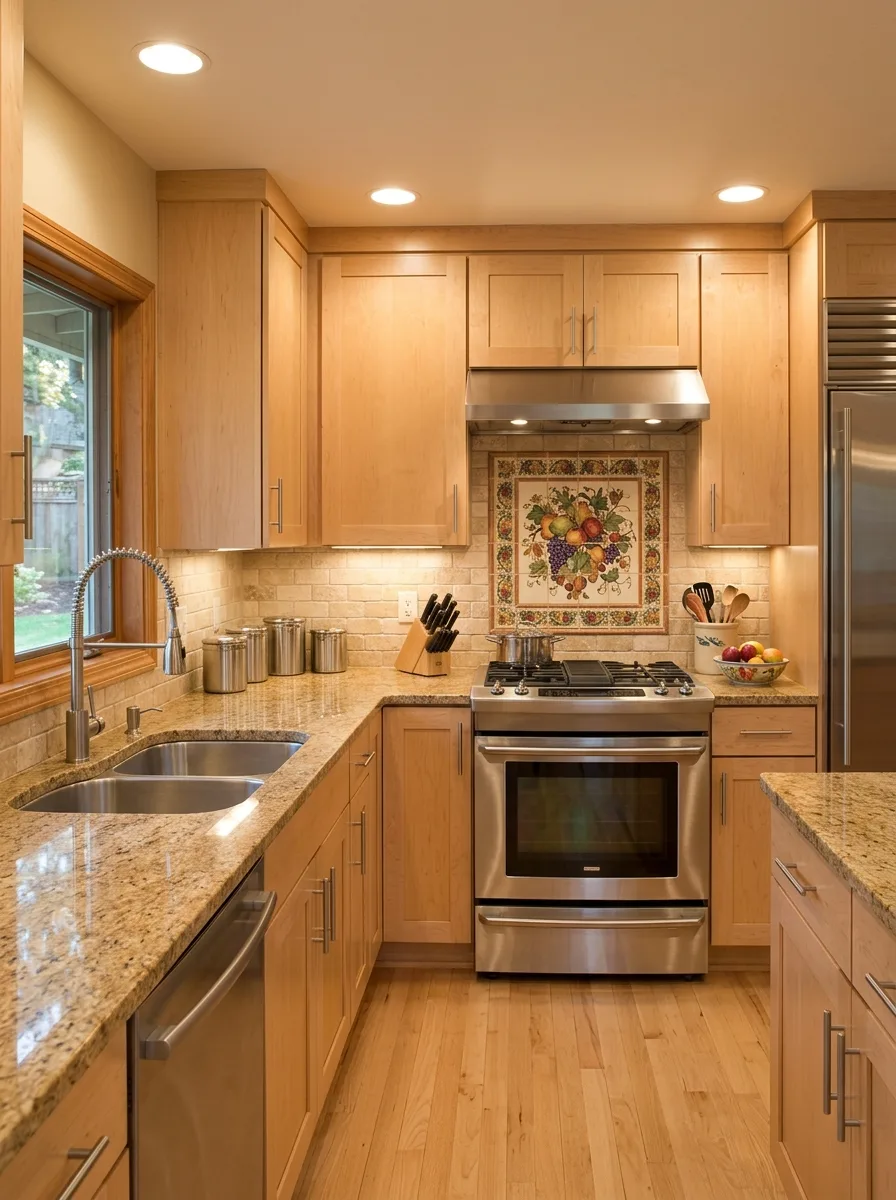
Center a hand-painted tile mural above the range, a basket of grapes and pears rendered in a folk-art style, framed by a stainless range hood and flanked by plain tumbled stone tile.
Choose honey maple cabinets and a speckled granite counter to keep the rest of the kitchen quiet enough that the mural reads as the room’s one intentional art piece.
Match the mural’s warm reds and greens with a bowl of real fruit left out nearby, echoing the painted version with the actual thing.
Keep everything else, hardware, lighting, appliances, simple and stainless. This was a kitchen that bought exactly one piece of art and built the whole backsplash around it.
Tuscan Checkerboard Terracotta Floor
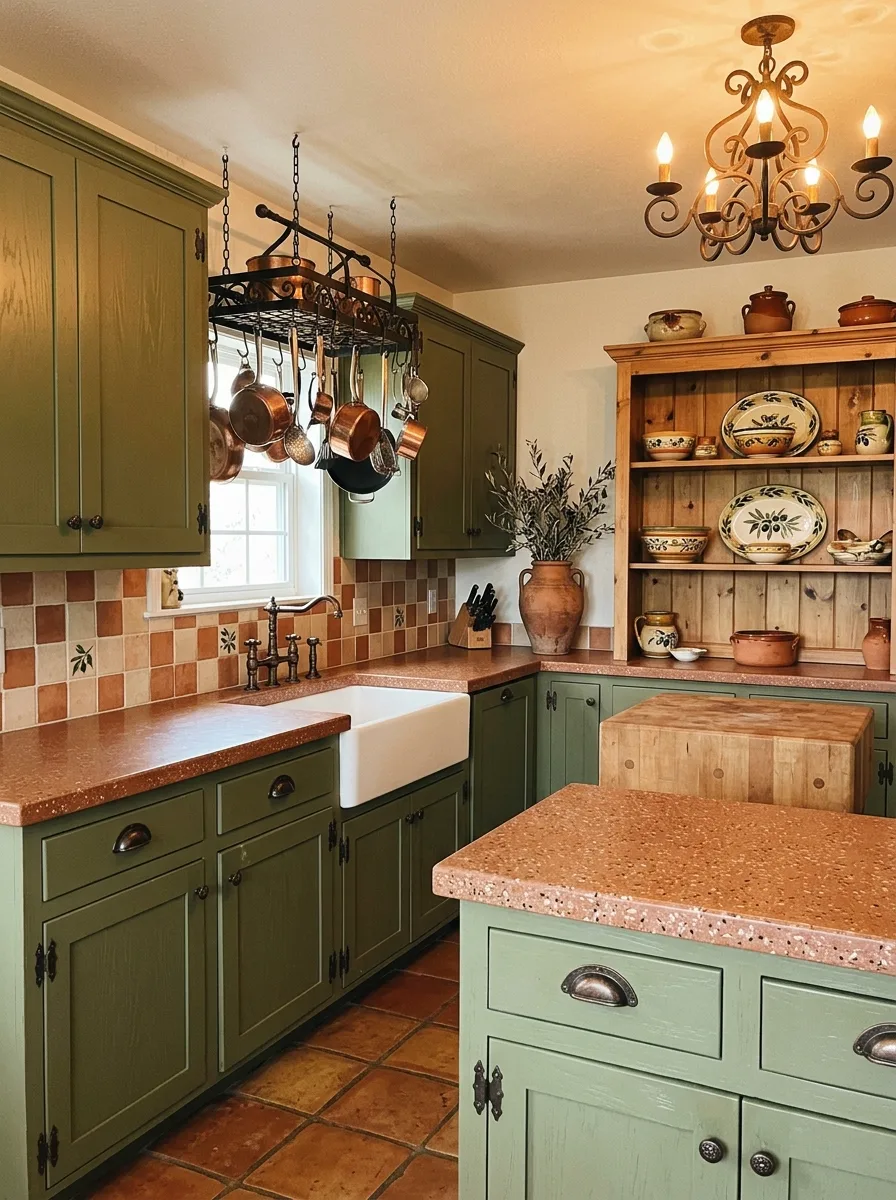
Lay a terracotta tile floor throughout, warm and matte, and pair it with a checkerboard backsplash mixing terracotta and cream tiles in alternating squares.
Paint cabinets an aged olive green with a distressed glaze in the corners, and pair them with a speckled terra-cotta-toned solid-surface counter that echoes the floor tile.
Hang a wrought iron pot rack loaded with copper cookware from the ceiling, and install a wrought iron chandelier nearby for matching metal tones.
Finish with a pine plate rack stocked with hand-painted ceramics in the same warm palette. This was Tuscany as imagined from a suburban kitchen, and it committed fully to the bit.
Espresso Cabinets, Light Granite
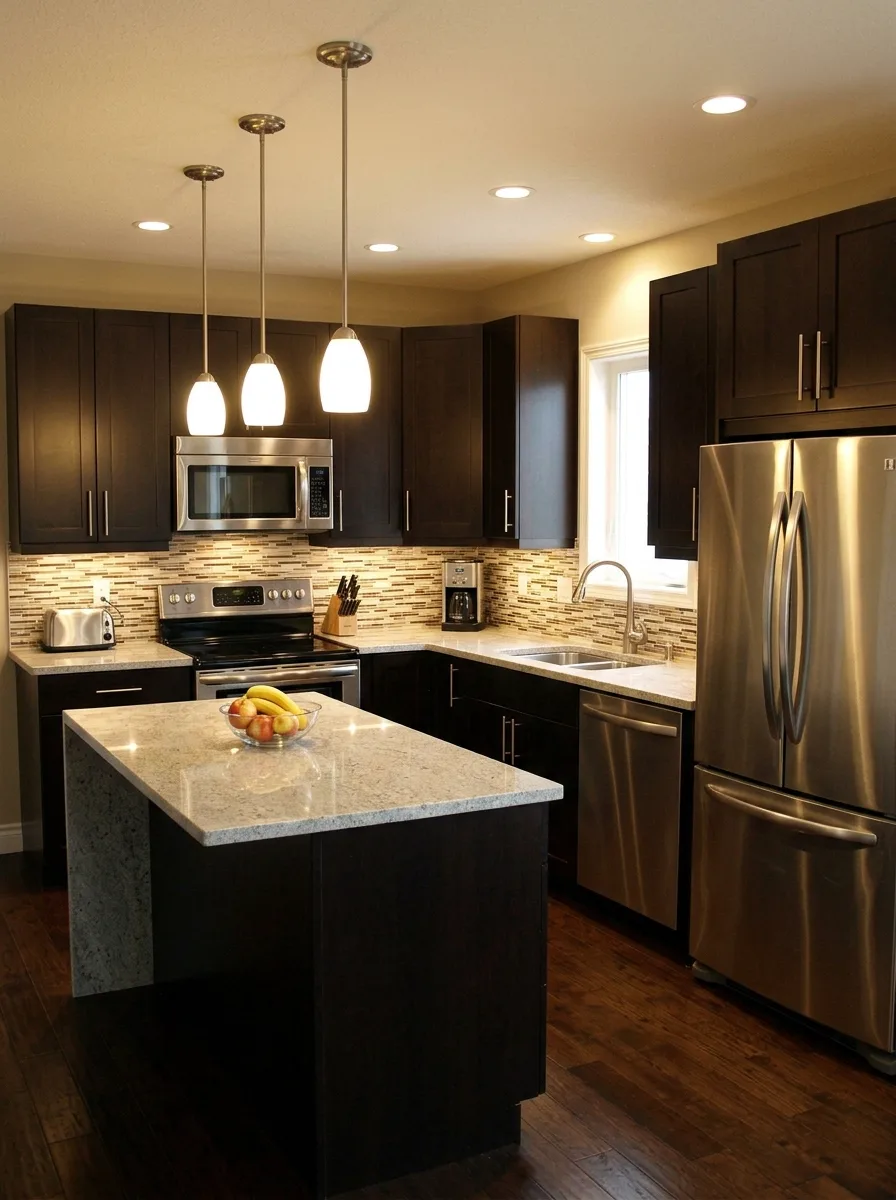
Run cabinets in a deep espresso stain, flat-front or simple shaker, and contrast them hard against a light, busy granite counter, pale background with heavy black and gray fleck.
Tile the backsplash in a glass-and-stone blend mosaic, mixing small squares of warm beige stone with strips of glass tile for texture.
Hang a trio of small pendant lights over the island in a matching brushed finish, and keep the island itself in the same dark espresso tone as the perimeter cabinets.
Finish with dark hardwood floors and stainless appliances throughout. This pairing, the darkest possible cabinet against the lightest possible counter, was this decade’s answer to drama, and it’s aged better than most of its peers.
Open-Concept Breakfast Bar
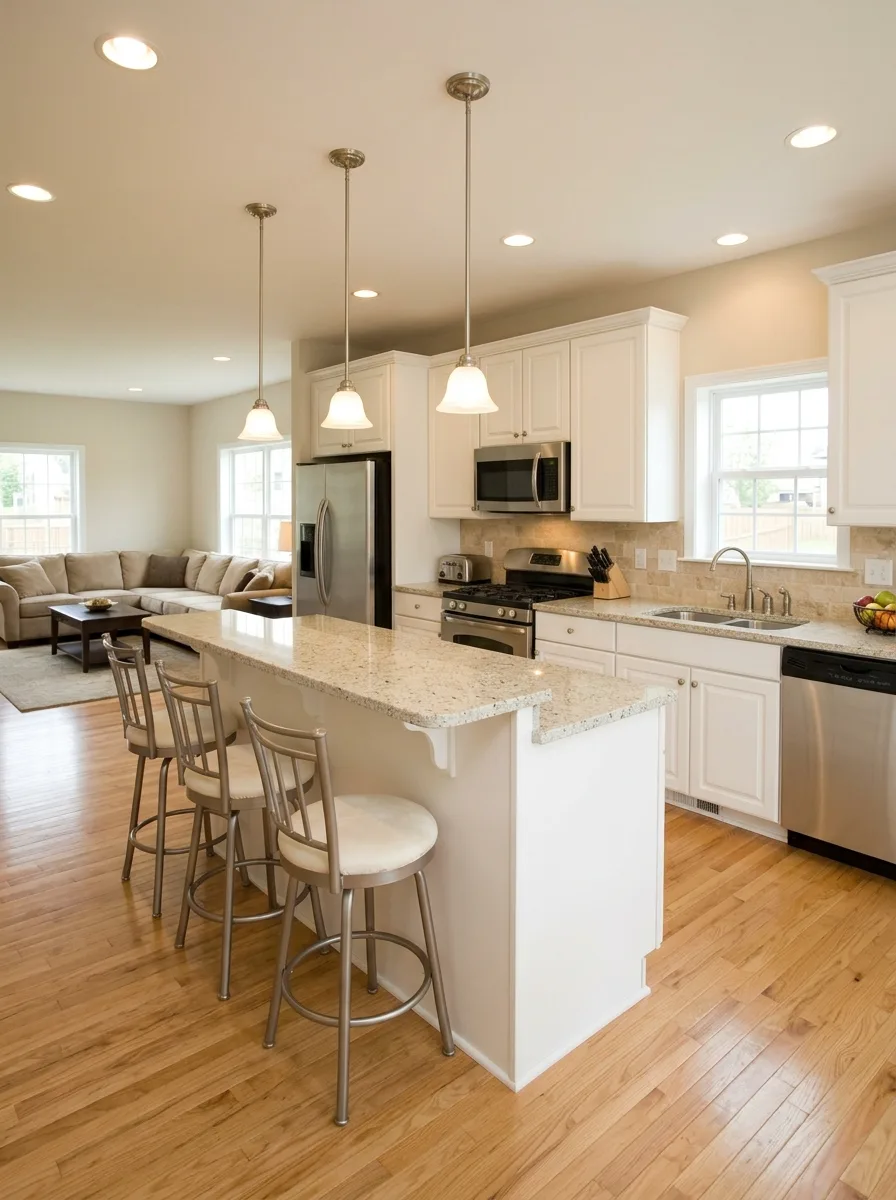
Open the kitchen fully into the adjoining living space, separated only by a peninsula counter with a raised breakfast bar ledge on turned wood corbels.
Run white raised-panel cabinets and a light speckled granite counter throughout, with a travertine tile backsplash to tie the kitchen back to the same warm neutral palette as the rest of the house.
Hang a trio of simple bell-shaped pendants over the bar, and line up a few barstools with woven or upholstered seats facing into the living room.
Keep sightlines clear from the stove straight through to the sofa. This was the layout that convinced an entire generation they needed an open floor plan, and the conviction stuck.
Ornate Stone Corbel Hood
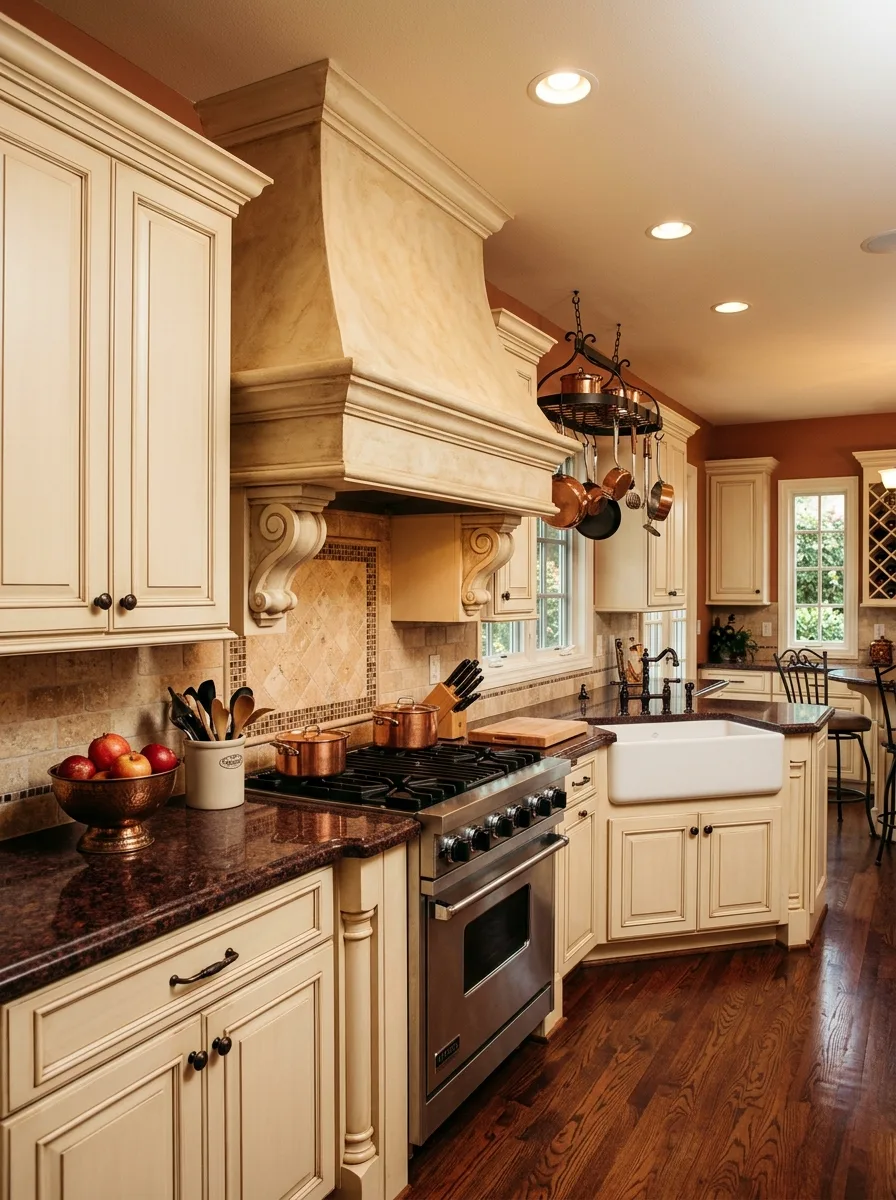
Build an oversized plaster or stone range hood with carved corbel supports on either side, finished in a warm aged cream that matches the surrounding cabinetry.
Pair it with a dark, richly veined granite counter, a farmhouse apron sink, and a hanging copper pot rack positioned just off to the side of the hood.
Tile the backsplash in travertine with a small diamond accent inset, and paint the walls a warm terracotta to play off the copper and stone tones.
Finish with cream raised-panel cabinets and bronze hardware throughout. This hood wasn’t just ventilation, it was the kitchen’s architecture, built to look like it had always been there.
Rooster Country Kitchen Decor
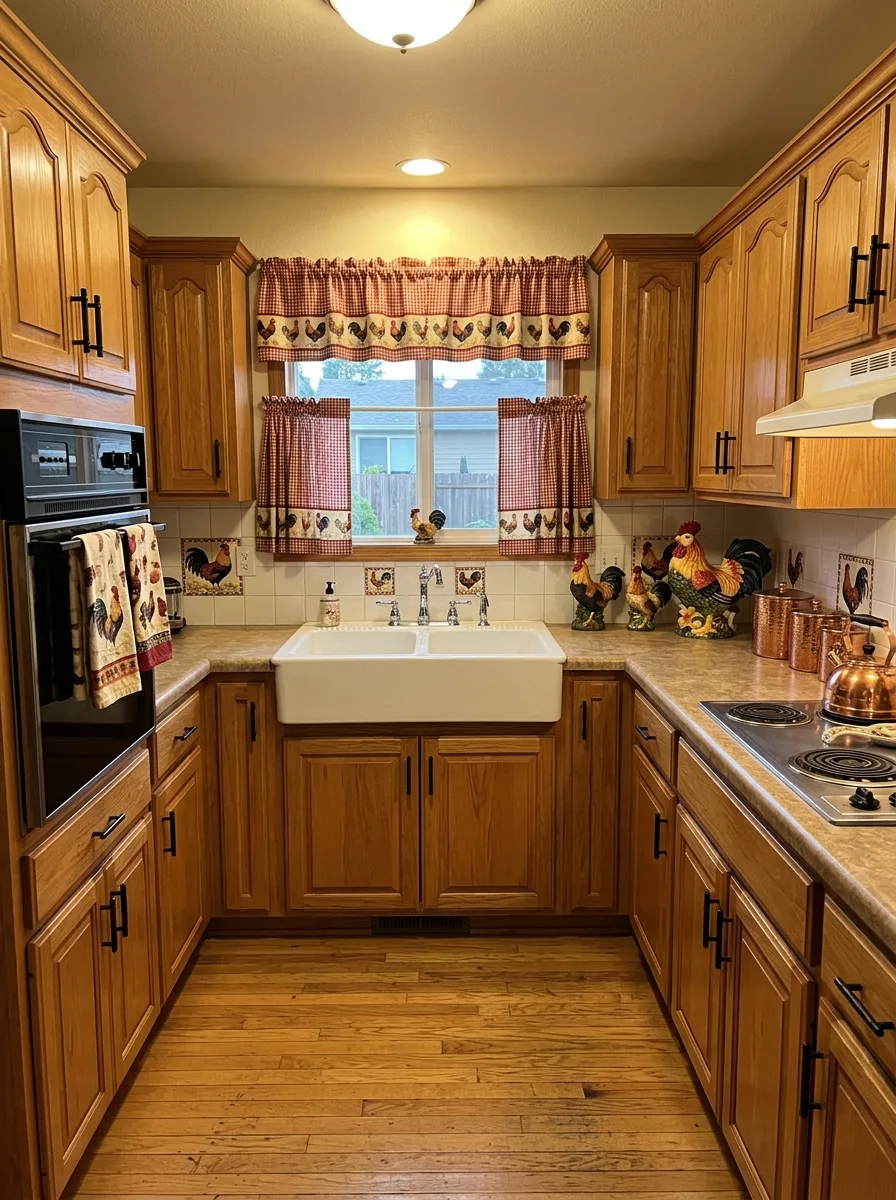
Commit to a rooster theme across every textile in the room, checked valances, matching tier curtains, a coordinating towel on the oven handle, all in the same red gingham print.
Line the windowsill and counters with ceramic rooster figurines in varying sizes, and inset a few hand-painted rooster tiles directly into the backsplash near the stove.
Keep the cabinets honey oak and the counters laminate, simple enough that the rooster collection has nowhere to hide.
Set a copper kettle on the stove as the final note. This was a theme kitchen in the truest sense — every object in the room was there to reinforce the bit, and it never broke character.
Glass Tile Accent Strip
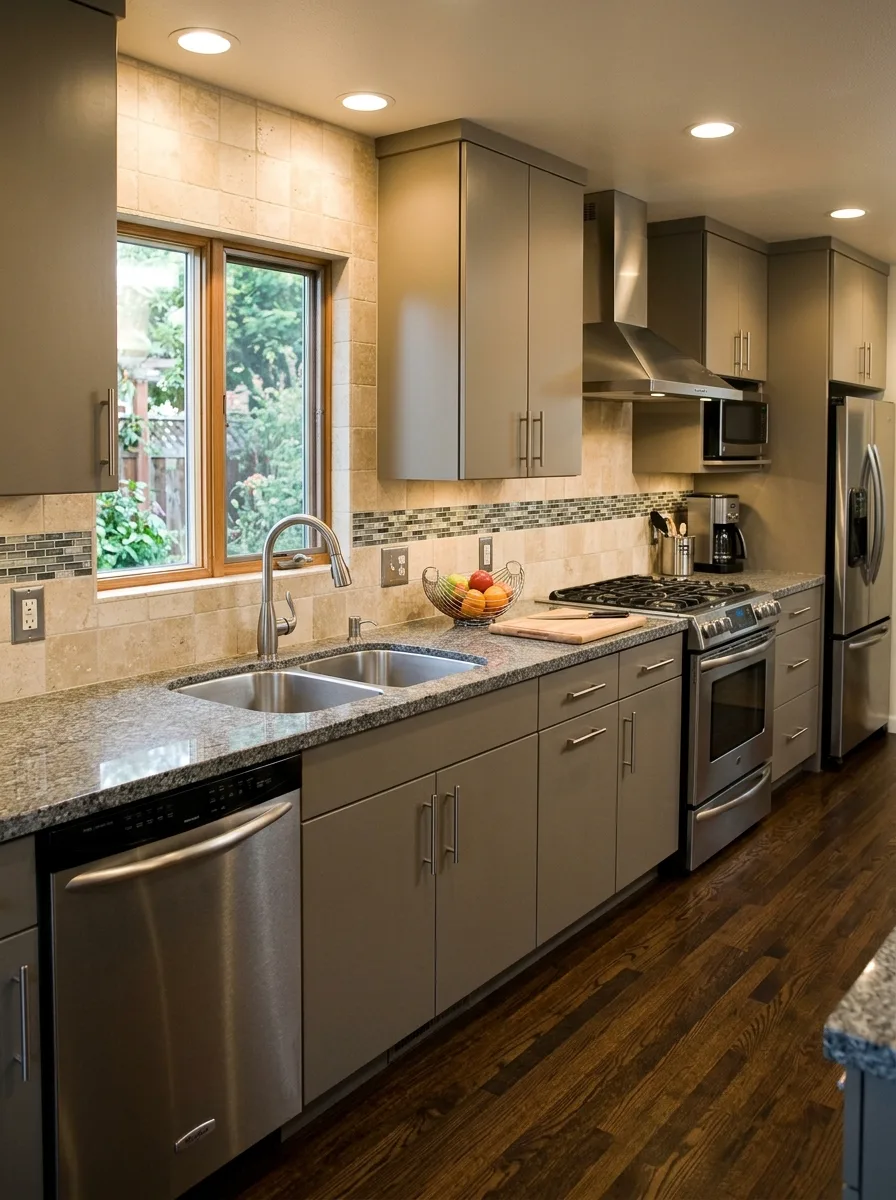
Run gray-toned cabinets, flat and simple, with a speckled granite counter and a plain travertine backsplash, then break up the neutral field with a single horizontal strip of glass mosaic tile running the length of the counter.
Choose a multi-tone glass strip mixing beige, green, and amber pieces, just an inch or two tall, positioned at the midpoint of the backsplash rather than the top or bottom.
Install a stainless chimney-style range hood as the room’s other clear focal point, and finish with stainless appliances throughout.
Keep the dark wood floor and warm window trim doing the only other color work in the room. This was restraint, 2000s-style: one accent strip, and not a single tile more.
Grape Border, Plate Display
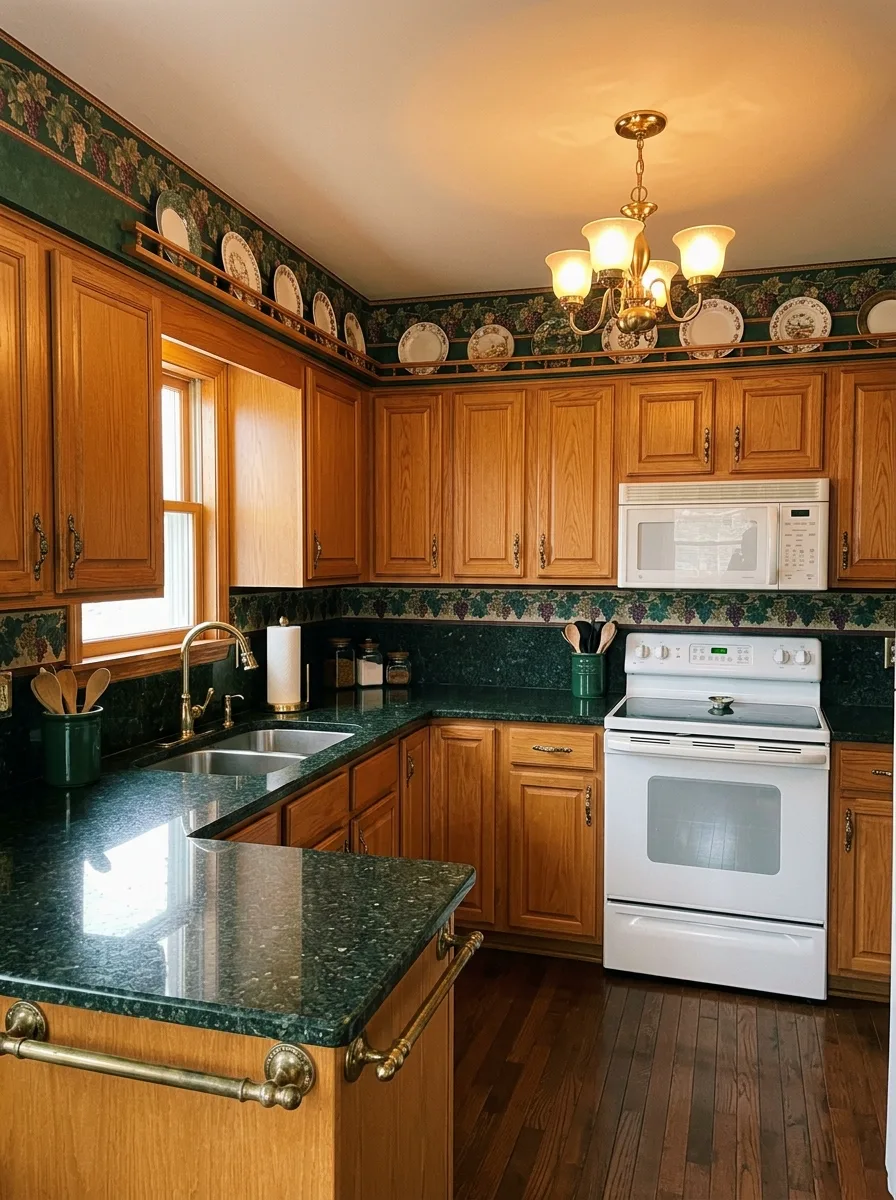
Run a grape-and-leaf wallpaper border at the ceiling line, wrapping the full kitchen perimeter above honey oak cabinets, and repeat a narrower version of the same print again above the backsplash.
Top the cabinets with a continuous ledge and fill it with decorative plates, mixing fruit motifs and floral patterns to echo the grape theme below.
Hang a brass chandelier with frosted glass shades over the island, and pair it with a dark green speckled granite counter for contrast against all that honey-toned wood.
Finish with a brass towel bar on the island and white appliances throughout. This was a kitchen that picked a motif and then found it a home on every available surface — the wallpaper, the plates, even the light fixture glass.
Final Thoughts
Every one of these kitchens was somebody’s dream kitchen once. That’s worth remembering before the eye-rolling starts — granite counters and cherry cabinets weren’t a mistake the decade made by accident, they were a genuine upgrade from whatever came before, chosen on purpose by people who saved for them.
The thing that actually dates a kitchen is rarely the materials. Granite is still granite. Cherry wood still looks like cherry wood. What dates a room is the sheer number of decisions made the same way, on every surface, all at once — the matching valance, the matching canister set, the matching plate collection, all pulling from the same trend report in the same year.
If any of this looks good to you now, and plenty of it should, the lesson isn’t to avoid cherry wood or glass tile. It’s to use one strong move instead of six. The 2000s kitchen committed completely; the trick to bringing any of it back is committing to less of it at once.
Twenty years from now, somebody will write this exact piece about whatever we’re doing today. Quartz, white oak, and brass hardware will look exactly as of-its-moment as honey oak and granite do right now. Enjoy it while it’s current.