
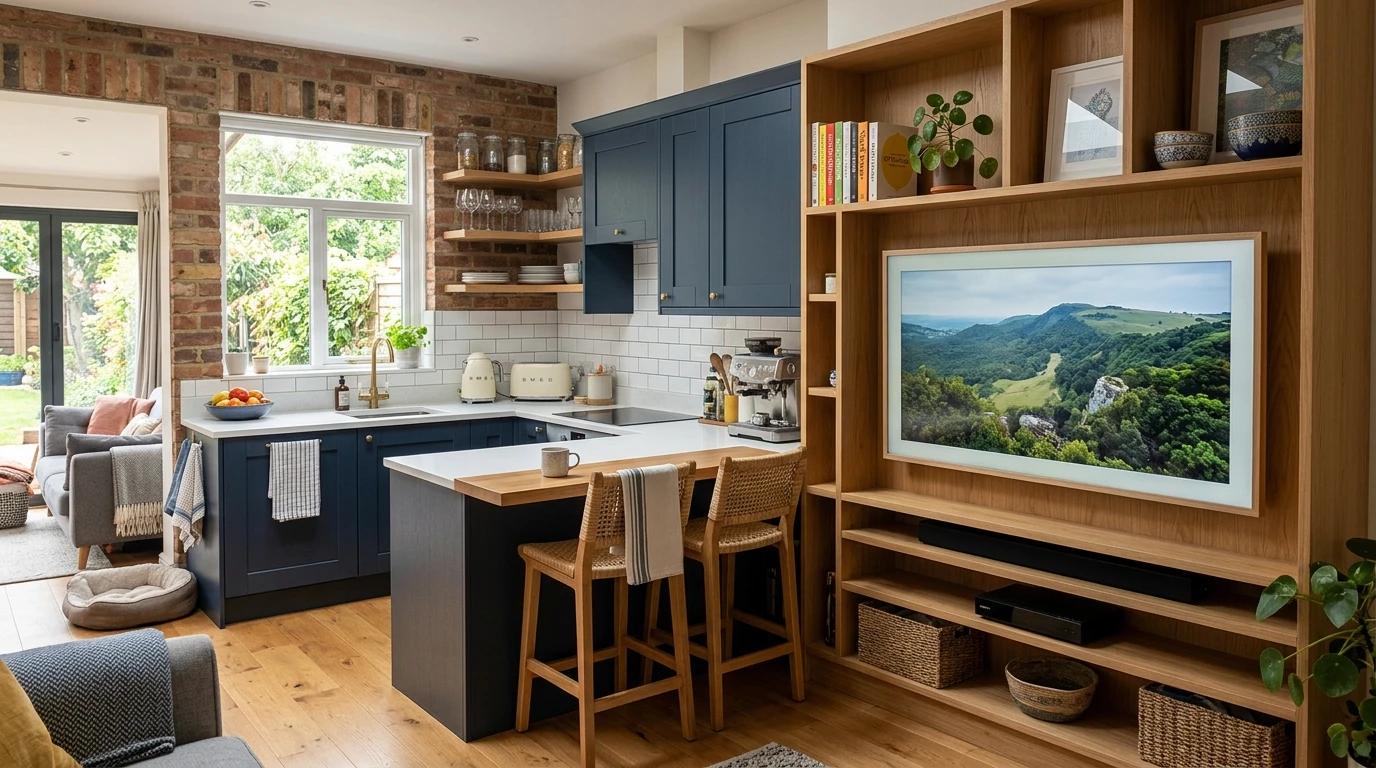
A kitchen with a television in it is not a design failure. A kitchen with a television badly mounted on an exposed bracket above the fridge is the failure.
Most kitchen design content pretends this problem doesn’t exist. The glossy spreads show islands and brass faucets and absolutely no televisions, because televisions are apparently unphotogenic and the people taking these photos have never actually cooked dinner while needing to know if it’s still raining.
You watch television in your kitchen. Everyone does. The only real decision is whether you’re going to hide that fact entirely or build it into the room with the same care as everything else.
Kitchen TV Ideas
Stone Slab Niche Shelf
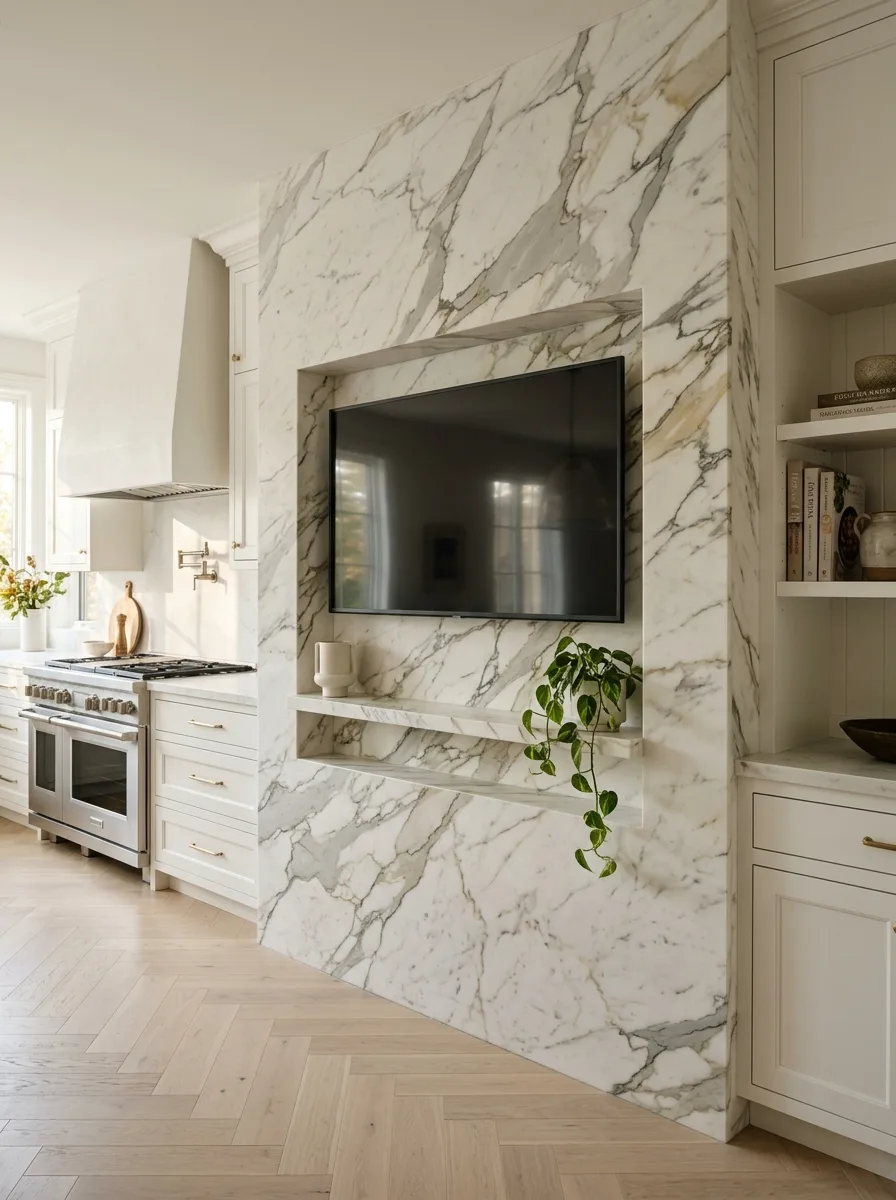
Carry your countertop stone straight up the wall, full height, and cut a rectangular niche into it at TV height. The television sits recessed rather than mounted proud, so the slab reads as one continuous architectural gesture instead of a stone wall with an appliance bolted to it.
Source the slab as a single run if your fabricator can manage it — book-matched veining across a niche this size is what sells the look. A patchwork of smaller pieces around the cutout breaks the illusion immediately.
Add a thin shelf at the base of the niche, cut from the same stone, deep enough to hold a small plant and a single object. Let one trailing vine spill over the edge. It softens a slab this dramatic without competing with it.
Skip anything else on that shelf. One plant, one object, full stop — the stone is already the statement, and clutter undercuts it.
Ceiling Swing-Arm Island TV
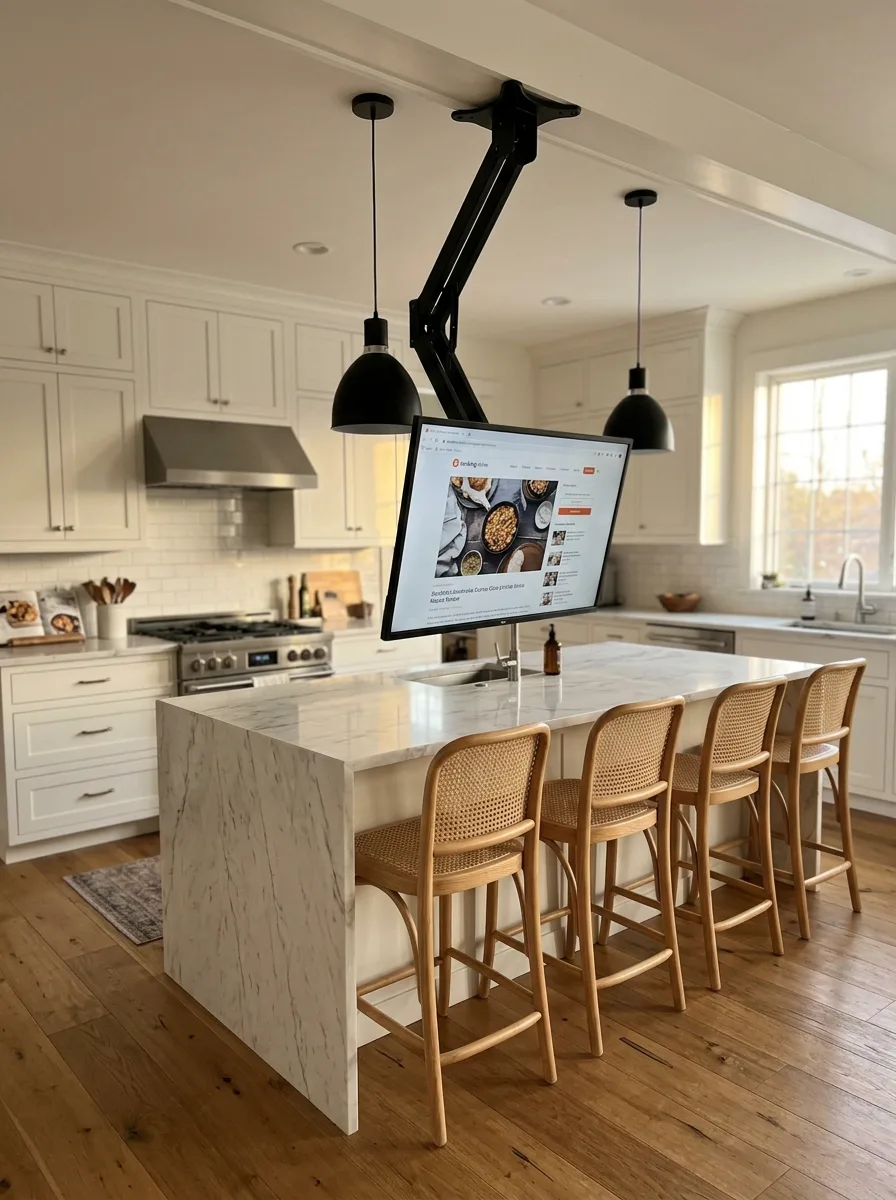
Mount the television on a heavy-duty articulating arm bolted directly into ceiling joists above your island, not into drywall alone. This frees up every wall in the kitchen and puts the screen exactly where island seating actually faces.
Choose a finish for the arm that matches your pendant hardware rather than trying to hide it — black with brass, or all black, whatever your lighting already commits to. The arm is visible, so let it look like part of the lighting plan instead of an apology.
Hang it at a height where it clears head room for anyone walking past but still drops low enough to read clearly from the stools. Too high and you’ve built a neck-strain machine.
Use the swing function for real. Angle it toward the stove during cooking, swing it back toward the island for dinner. A fixed version of this same mount wastes the entire point of building it.
Brass Framed Mirror Trick
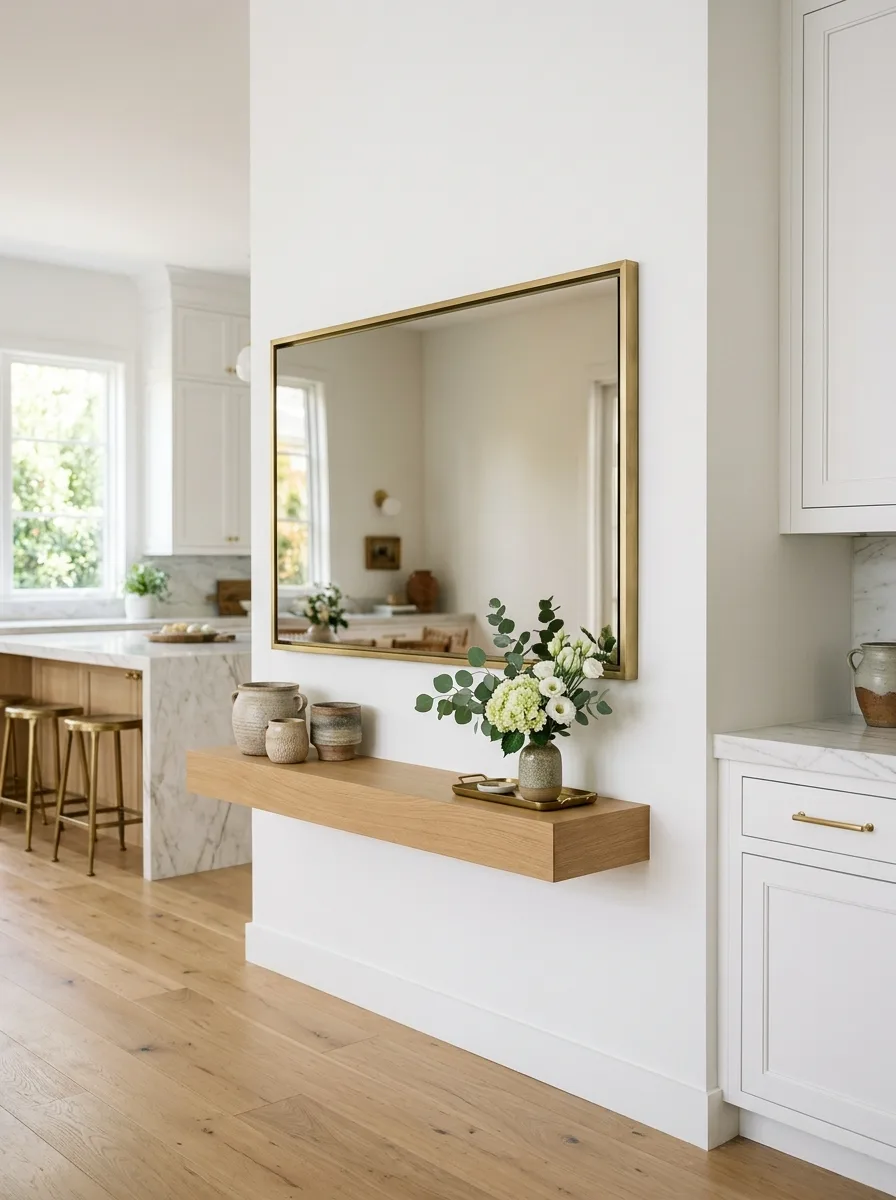
Frame your television the way you’d frame a mirror, in a thin brass or warm-metal surround, and hang it on an otherwise plain wall the same way you’d hang any piece of furniture-adjacent decor. When it’s off, it reads as art before anyone clocks it as a screen.
Source a frame-style TV or build a slim brass surround that mounts flush around an existing set. The frame needs to be substantial enough to read as intentional — a hairline bezel disappears into the screen and defeats the purpose.
Add a floating wood shelf directly beneath it, same warm tone as your floors, and style it the way you’d style a console table. Ceramic vessels, a single stem of greenery, nothing plastic, nothing branded.
Keep the wall around it empty. This trick works because the frame and the shelf are doing all the talking — more decoration competes with the disguise instead of completing it.
Color-Drenched Recessed Nook
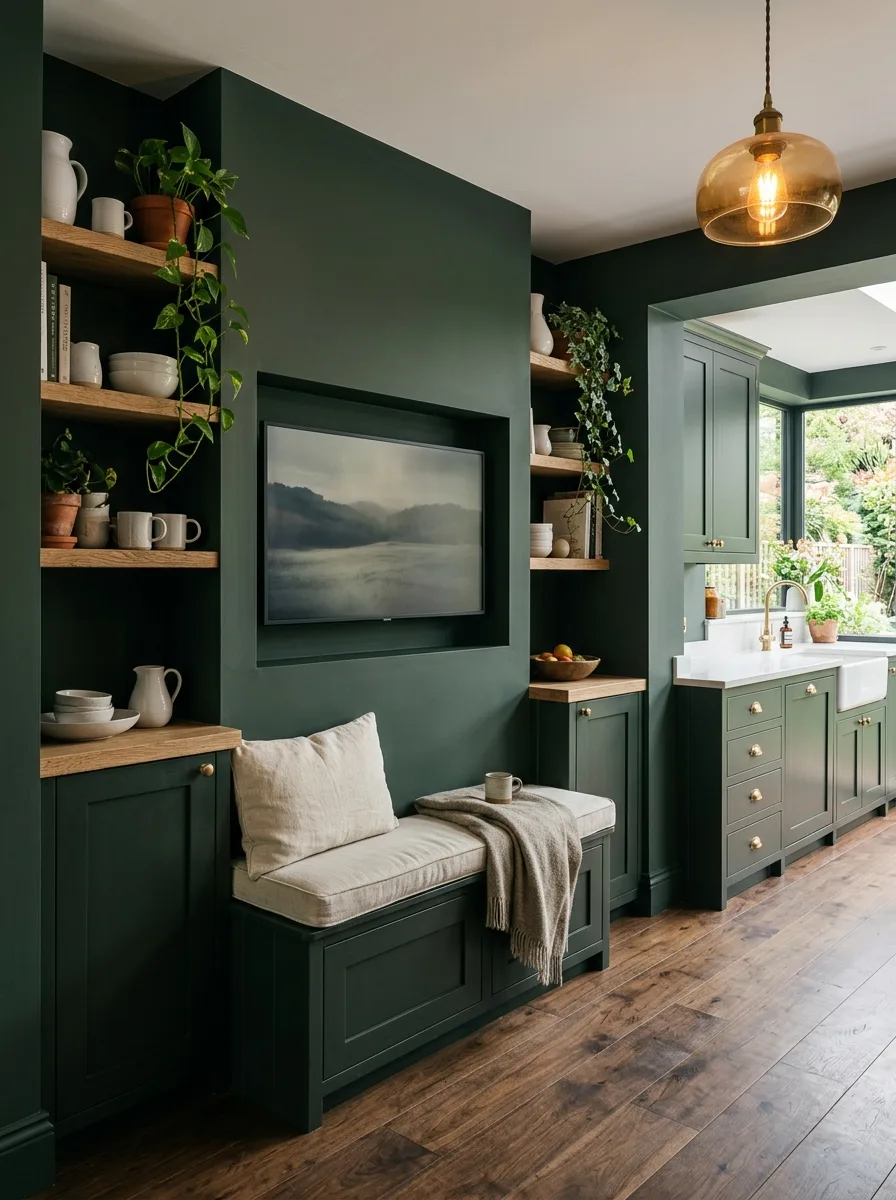
Paint the entire wall, including the recessed TV niche itself, the same deep, saturated color — forest green, ink navy, whatever you’ve already drenched the cabinetry in. The television stops looking like a hole in the wall because the wall around it has nowhere lighter to contrast against.
Build the niche the same depth as your open shelving on either side, so the whole composition reads as one continuous millwork wall rather than a TV with shelves as an afterthought.
Fill the flanking shelves with warm wood, ceramics, and at least one plant left to trail unapologetically. The greenery against the dark paint is what keeps this from feeling like a cave.
Add a bench seat below the screen, upholstered in undyed linen, and let the cushion color be the one note of contrast in the whole wall. This is the payoff for committing to the dark color in the first place — a reading nook nobody expects in a kitchen.
Vanishing Lift-Up TV
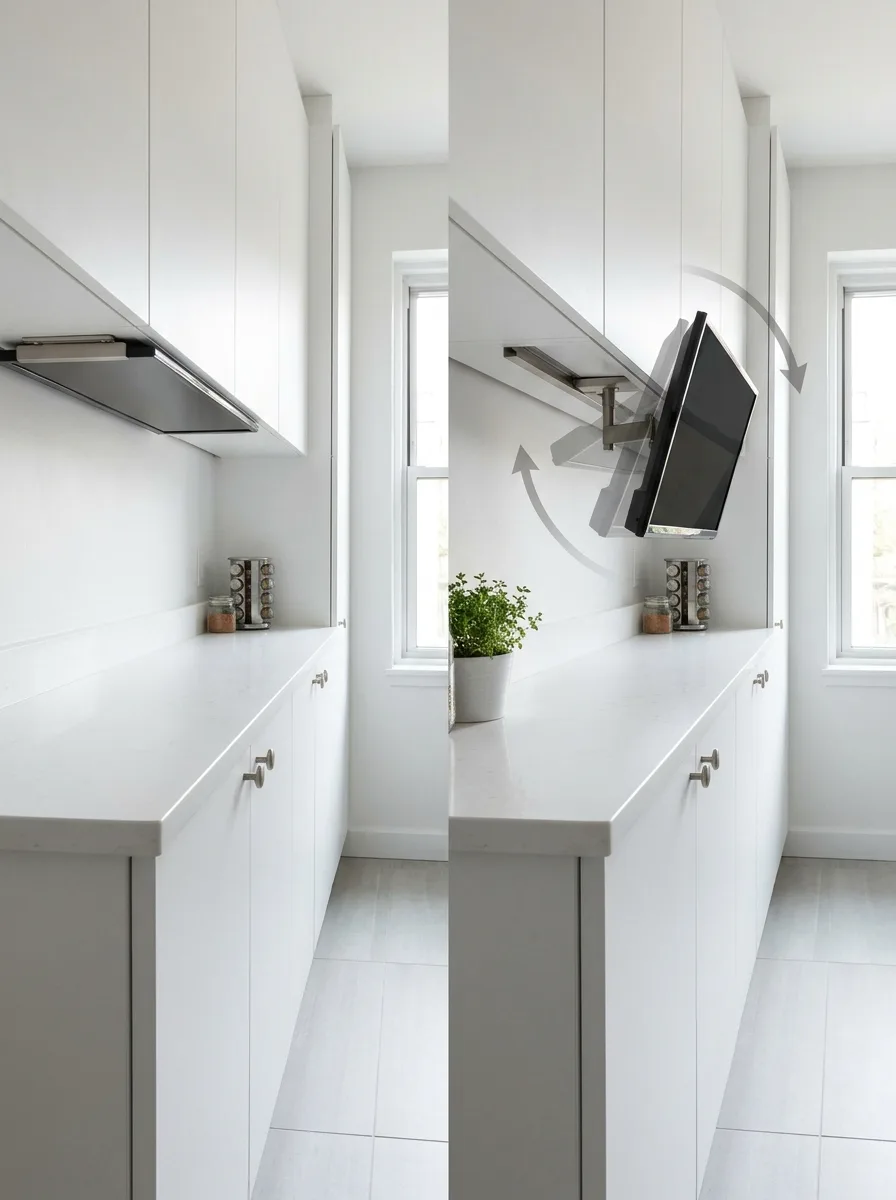
Build a wall-mounted bracket on a hinge inside the upper cabinet line, positioned so the television tucks flush beneath the cabinet when not in use and tilts down and out when you need it. From a few feet away, a closed unit reads as nothing more than an under-cabinet panel.
This only works with a slim profile TV and a mount rated for the screen’s actual weight — check the hinge spec before buying either component, because an underpowered bracket will sag within a year.
Position the mount where it clears the backsplash and counter below by a generous margin when fully extended. Measure the swing arc on paper before you drill anything.
Leave the counter beneath it completely clear when the TV is stowed. The entire point of this setup is a kitchen that looks like it has no television at all until you decide otherwise.
Book-Matched Fireplace Wall
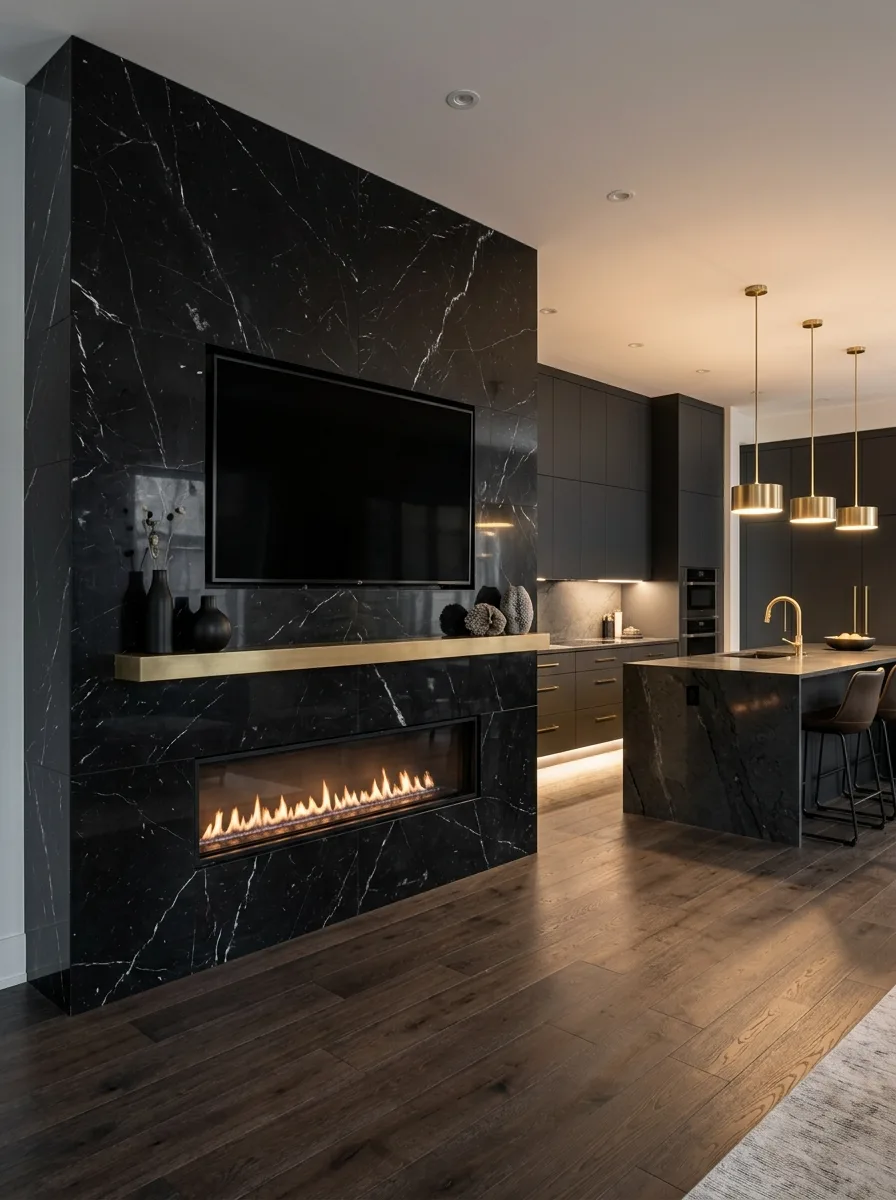
Pair your kitchen TV with a linear gas fireplace on the same dramatic stone wall, television mounted directly above the firebox with a single floating ledge between the two. The fire becomes the visual anchor, and the screen above it reads as part of one composed feature wall rather than a separate appliance.
Specify book-matched slab for this wall specifically — veining that mirrors across the centerline is what makes a wall this large look deliberate instead of accidental. A single unmatched panel will read as a mistake at this scale.
Run a slim brass or bronze ledge across the wall between the fireplace and the screen, wide enough to hold a few low, dark objects. Keep everything on it under the height of the TV bezel so nothing interrupts the screen.
Use warm, low lighting in the surrounding kitchen rather than overheads aimed directly at this wall. The fireplace should be doing the lighting work here, not a recessed can.
Barn Door TV Hutch
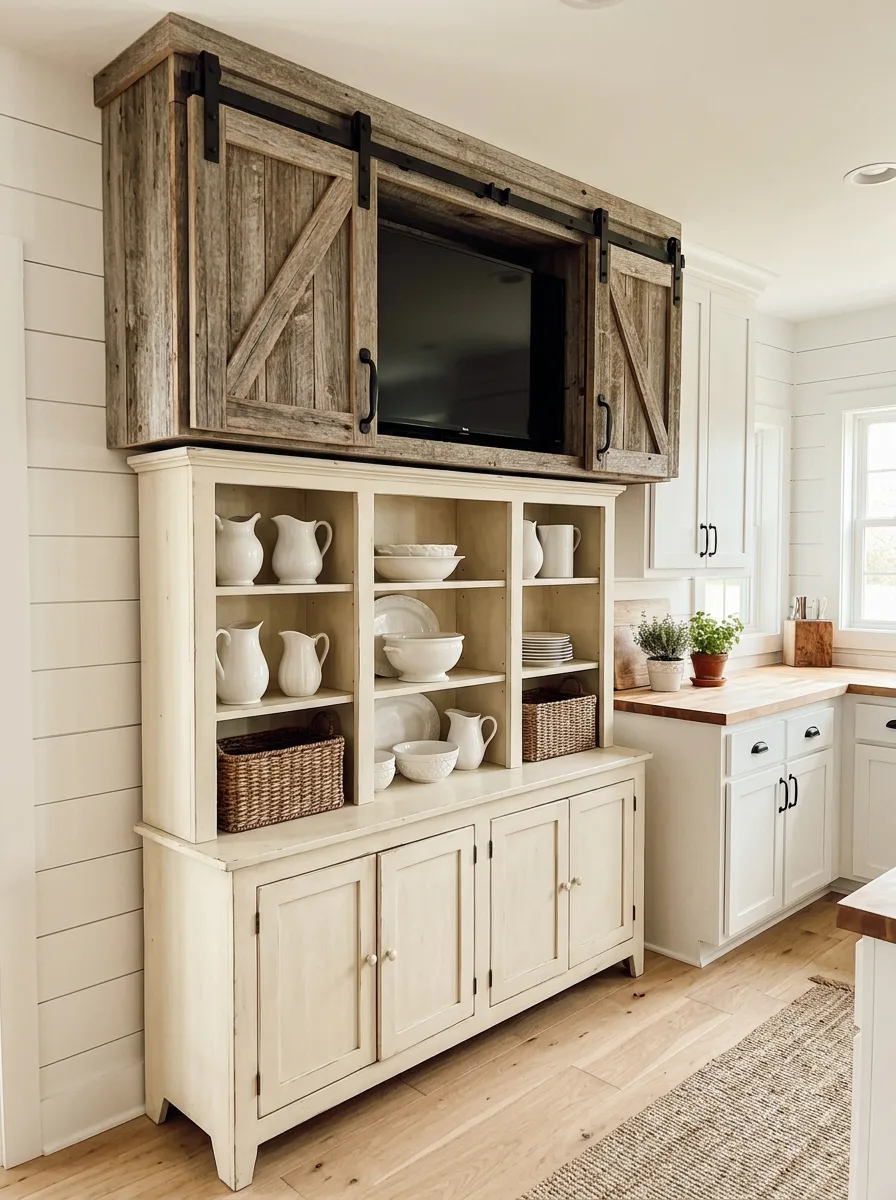
Build or buy a freestanding cabinet sized to sit on top of a sideboard or hutch, fronted with two sliding barn doors on exposed black hardware. The television lives behind the doors and disappears completely when they’re closed.
Reclaimed or rough-sawn wood reads better here than anything finished — the contrast between weathered barn doors and a clean white hutch below is the whole appeal. Distress the wood yourself if you can’t source it already aged.
Stock the open shelving of the hutch below with white ironstone pitchers, stacked bowls, and a basket or two for visual weight at the bottom. This grounds the piece and keeps the eye moving past the TV cabinet rather than fixating on it.
Slide the doors shut the moment you’re done watching. A barn door cabinet left permanently open is just a worse-looking version of a regular TV mount.
Backlit Wood Slat Wall
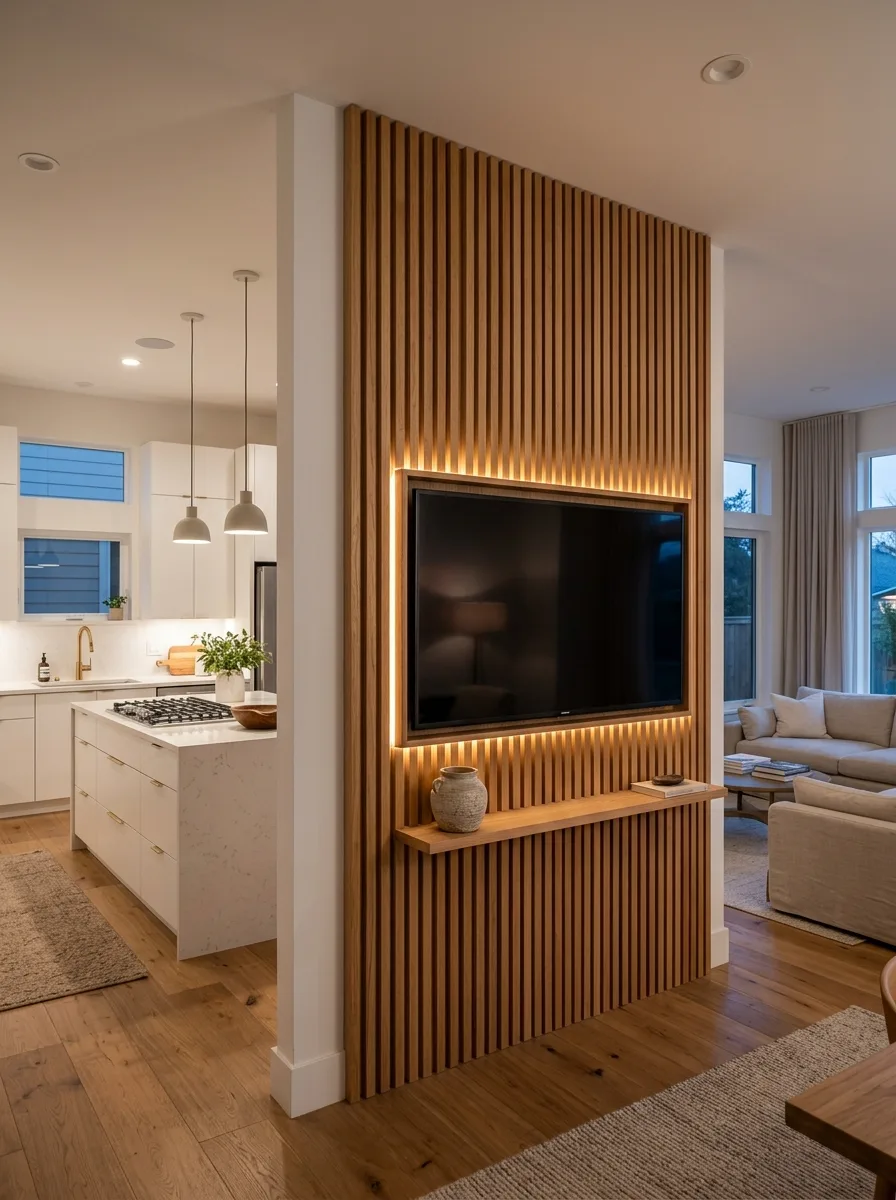
Build a full-height vertical slat wall — thin wood fins spaced evenly with small gaps between them — and cut a rectangular opening for the television dead center. Run an LED strip behind the slats around the TV opening so the wall glows at the edges when the lights are low.
Use the same wood tone as your floors for the slats so the wall reads as an extension of the architecture rather than a separate accent feature. Mismatched wood tones are the fastest way to make this look like a kit rather than a build.
Add a single floating shelf at the base of the opening, holding one ceramic vessel and nothing else. Let the backlighting do the rest of the visual work.
Dim the strip lighting to a warm, low glow rather than running it bright. This wall is built to feel like ambient lighting with a TV in it, not a TV with some lights stapled on.
Shiplap Banquette Wall Mount
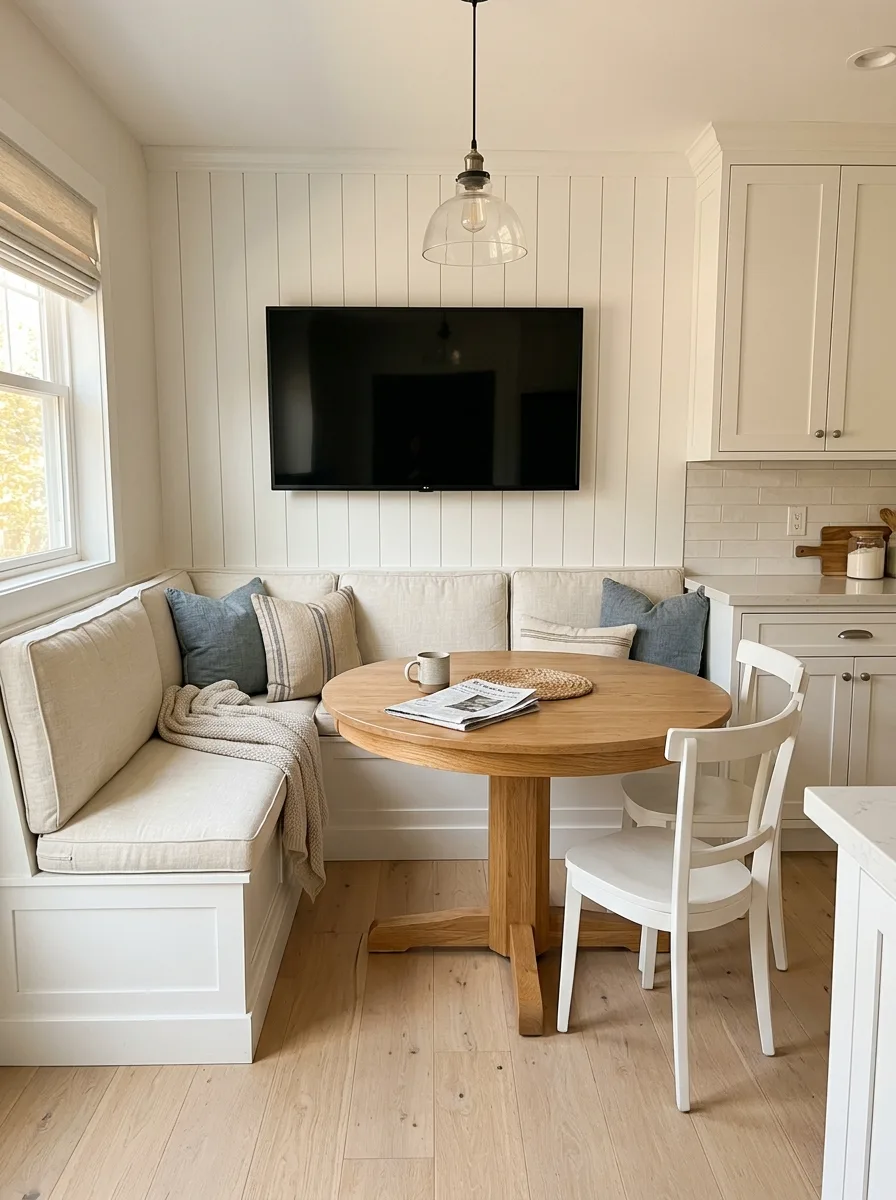
Run vertical shiplap or tongue-and-groove paneling on the wall behind your breakfast nook banquette, painted the same warm white as the cabinetry, and mount the television flush against it at bench-seated eye level. The grooved paneling gives the flat screen some texture to sit against instead of bare drywall.
Keep the mount low and the screen modestly sized — this is a nook for casual breakfast viewing, not a home theater, and an oversized screen will dominate a small seating area.
Layer the bench with linen cushions and a mix of striped and solid pillows in muted blue and oatmeal tones. The textiles are doing the warmth work that the hard paneling and screen can’t.
Hang one simple glass pendant directly over the table, not over the TV. Keep the light source focused on where people eat, not on the screen.
Pocket Door TV Cabinet
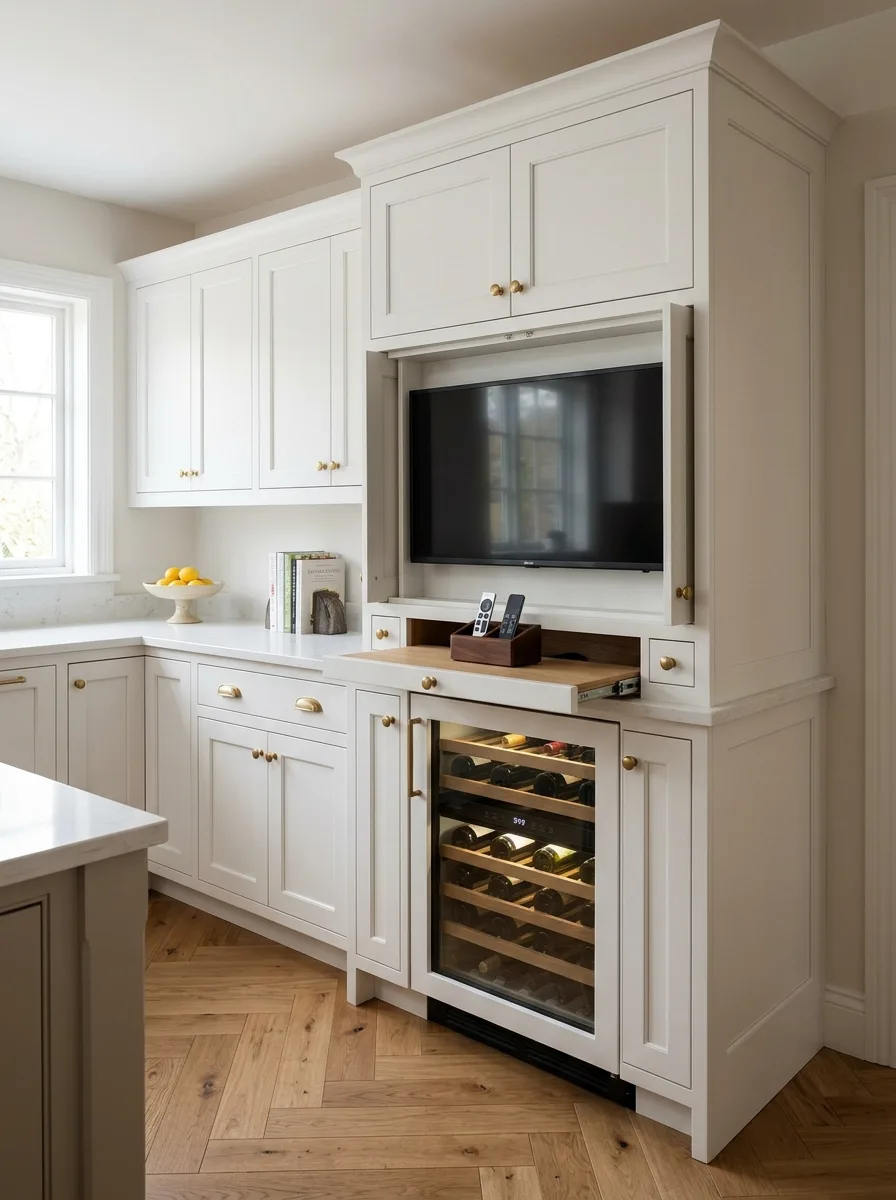
Build a tall cabinet column with a single panel door on a pocket or pivot hinge that swings open to reveal the television and a slide-out shelf below it for remotes. Closed, the column reads as identical to every other tall cabinet in the run.
Match the door’s panel detail and hardware exactly to the surrounding cabinetry — paint color, knob style, reveal lines, all of it. Any inconsistency gives away which cabinet is hiding something.
Add a wine fridge or other small appliance directly below the TV cabinet to justify the column’s depth and give the whole unit a reason to exist beyond hiding a screen.
Build in a shallow pull-out shelf at remote height, just below the screen, so the only objects ever visible in this cabinet are the ones you intend to see.
Pergola-Mounted Outdoor TV
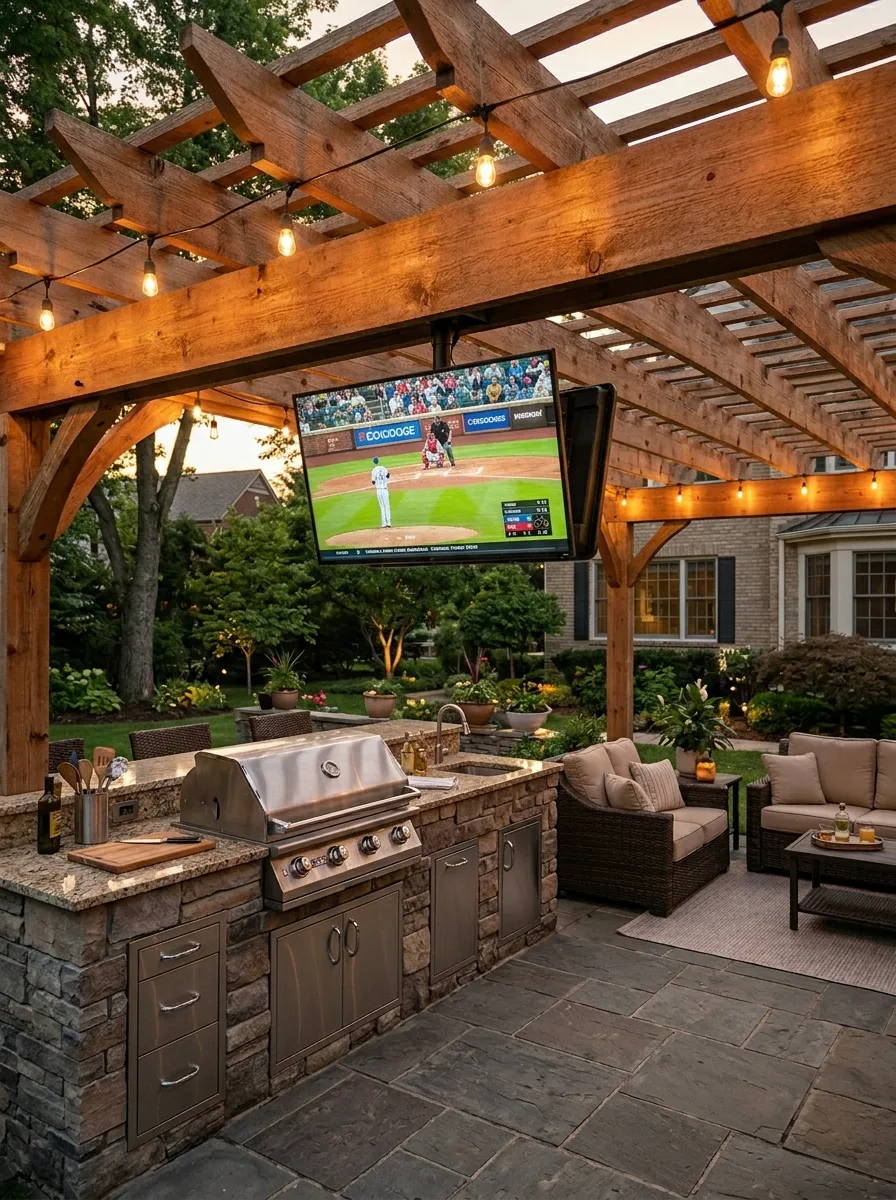
Hang a weatherproof television from a heavy-duty articulating arm bolted into a pergola beam, positioned to swing toward your outdoor seating without blocking the view from the grill. Rated outdoor mounts and screens are non-negotiable here — anything else corrodes within a season.
Run the cable and power through conduit inside the pergola post rather than along the surface. An exposed cord run is the fastest way to make an otherwise built-in feature look like a rigged-up extension cord situation.
Position the screen high enough to clear anyone standing at the grill below, and angle it down slightly so it’s still readable from the seating cluster rather than aimed flat at the sky.
String warm bulb lighting through the pergola beams around the mount so the TV isn’t the only thing drawing the eye after dark. A glowing screen alone in a dark pergola looks like a sports bar. A few strings of light around it looks like a backyard.
Zellige Tile Backdrop Mount
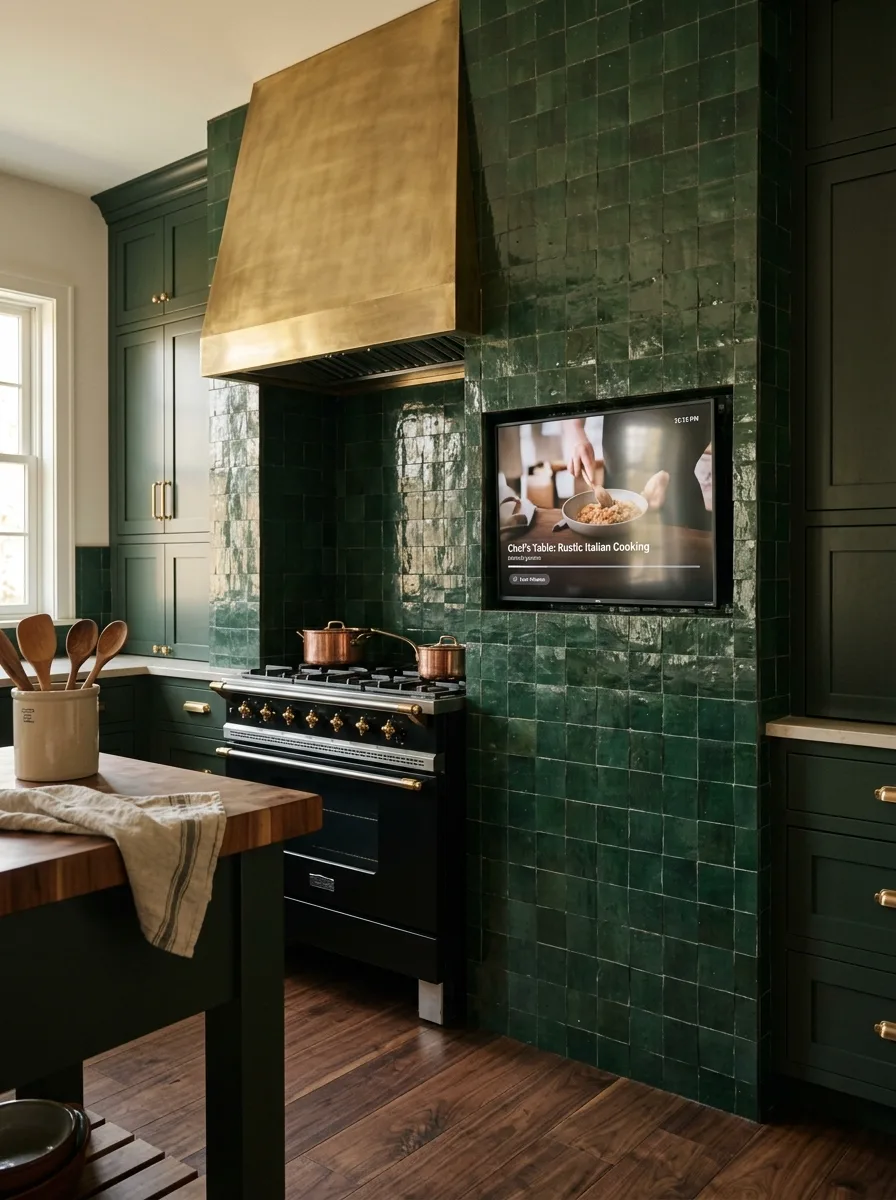
Tile the entire stove wall in handmade zellige, floor to cabinet, in a deep saturated color, and mount the television directly onto the tile beside the range hood rather than carving out a separate spot for it. The irregular, glossy tile gives the screen a backdrop with enough texture and color that it stops reading as a flat black void.
Choose a tile color that’s already doing work elsewhere in the kitchen — matching cabinetry, for instance — so the wall and the cabinets read as one continuous palette with the TV simply living inside it.
Pair the tile with an oversized metal range hood in a contrasting warm metal. The hood becomes the dominant object on the wall, and the television settles into a secondary, almost incidental position beside it.
Keep the area around the screen tile-only, no shelf, no frame. The pattern and color of the zellige is the entire decorative strategy here — anything added on top dilutes it.
Articulating Galley Wall Arm
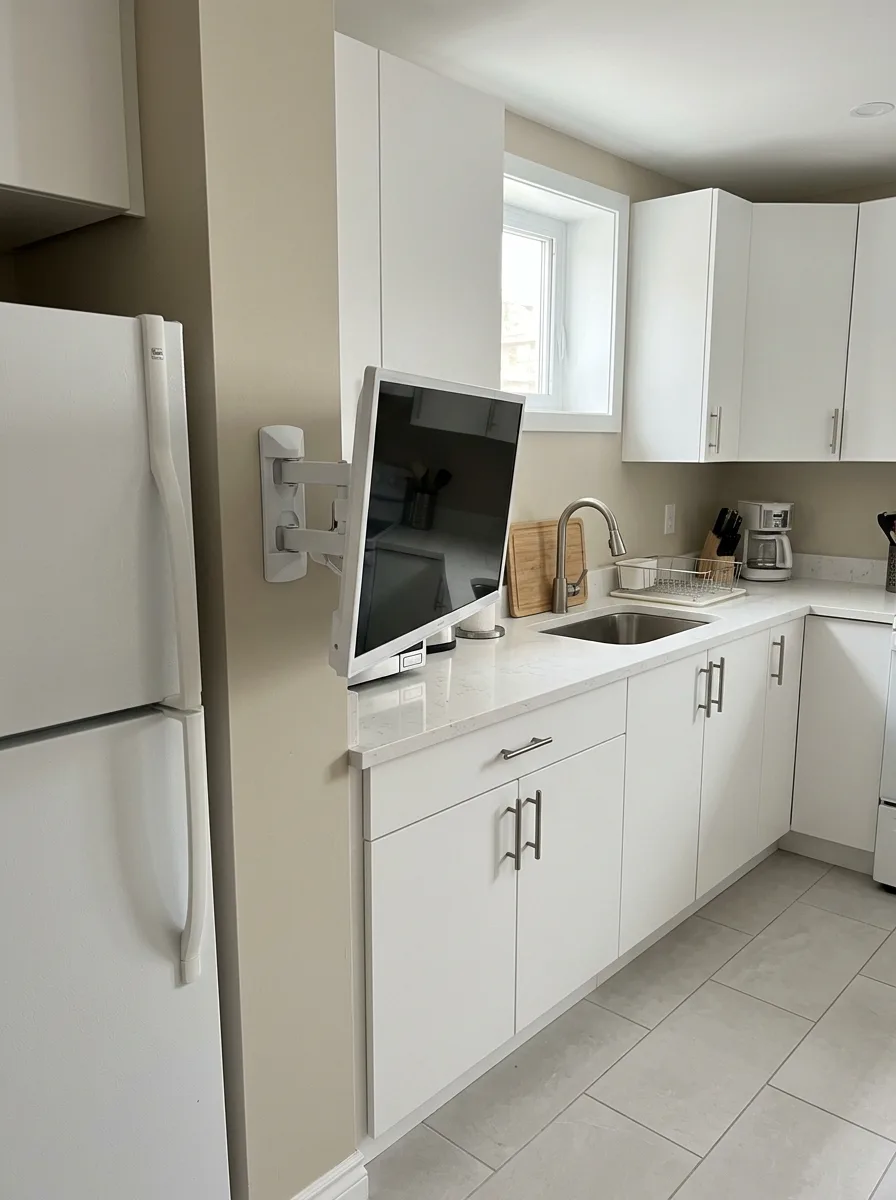
In a narrow galley kitchen, mount the television on a fully articulating arm on the one available stretch of wall between the fridge and the window, positioned so it can pivot to face either the sink or the far end of the room. Tight kitchens rarely have a wall that works from every angle, so let the mount do the work a fixed bracket can’t.
Choose a compact arm with a tight folding profile — in a narrow space, a bulky mount eats into walking clearance even when the TV is folded flat against the wall.
Mount at a height that clears the counter backsplash but still sits low enough to read from a standing position at the sink. In small kitchens, eye level changes more than you’d think depending on exactly where you’re standing.
Fold the arm flat against the wall the moment you’re done using it. In a tight galley, a permanently extended TV arm becomes the thing everyone bumps into.
Twin Arch Plaster Niche
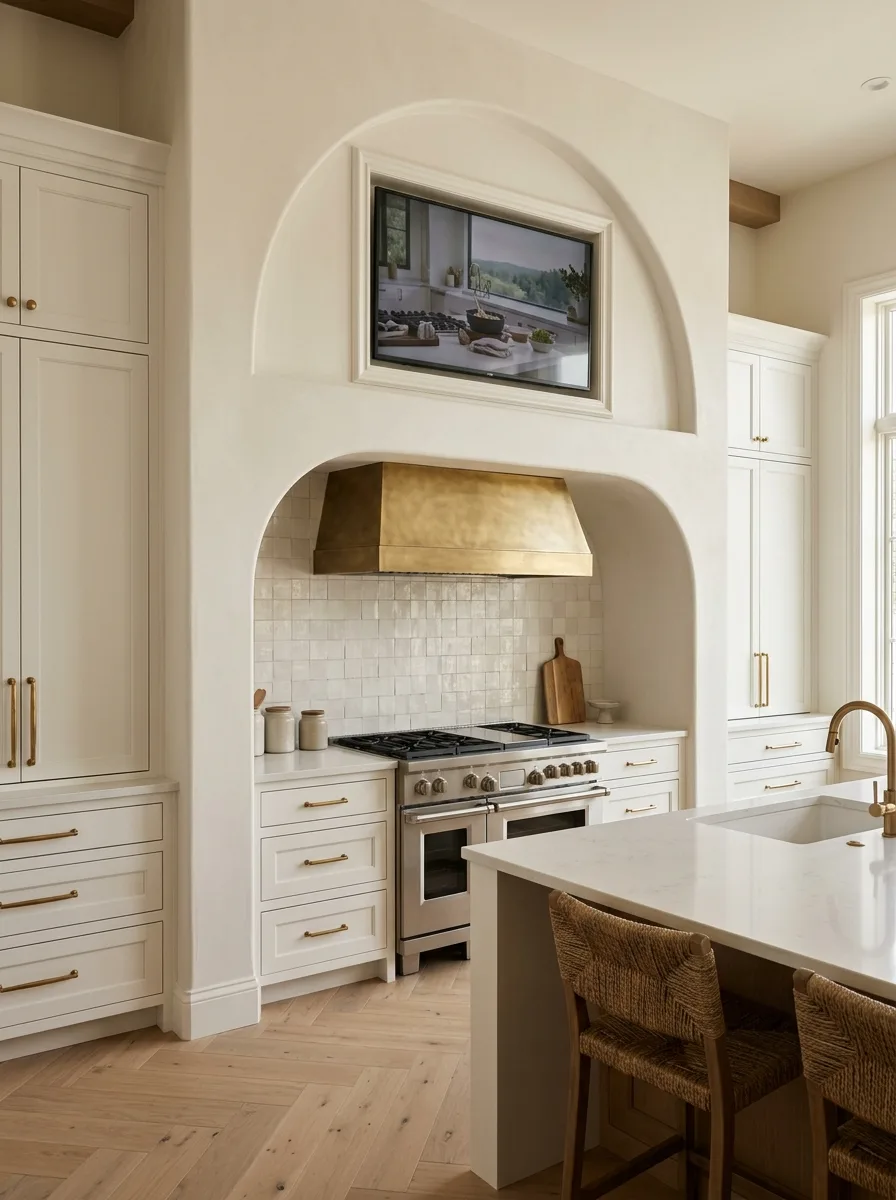
Carve an arched television niche into a plastered wall directly above an arched stove alcove, so the two openings echo each other and the whole composition reads as one piece of intentional architecture rather than a TV randomly placed near a stove.
Specify the same plaster finish and the same arch radius for both openings. Mismatched curves between the two niches is the single fastest way to make this look like two unrelated decisions instead of one designed wall.
Frame the TV niche with a simple painted trim, slightly recessed from the plaster face, so the screen sits flush and shadowed rather than proud of the wall.
Keep the cooking alcove below doing the material heavy lifting — a striking range hood, patterned tile — so the TV niche above can stay quiet and architectural by comparison.
Floating Partition Wall TV
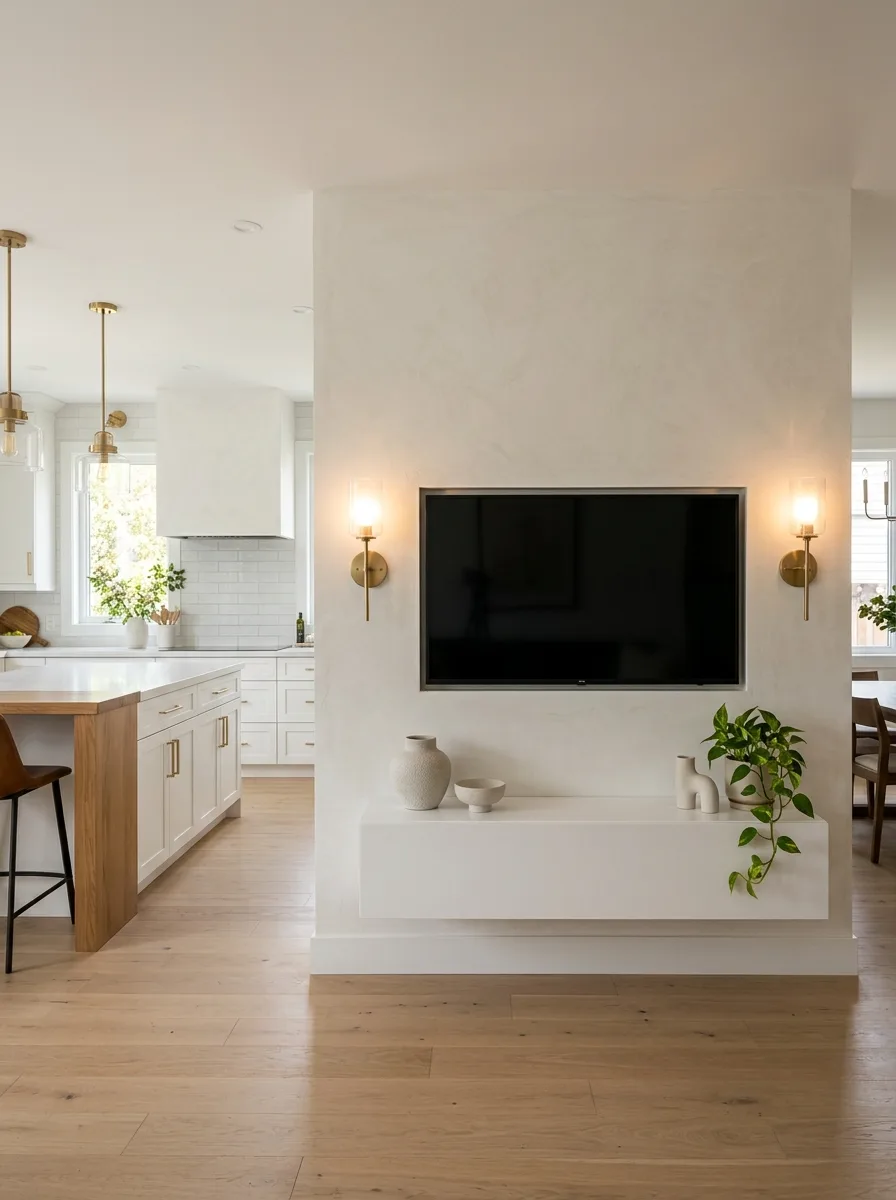
Build a freestanding plaster partition wall that doesn’t reach the ceiling, positioned to divide kitchen from dining without fully closing off either space, and mount the television in the center of it at a height visible from both sides. The wall becomes a piece of furniture in its own right, not just a surface to hang something on.
Finish the partition in a soft lime-wash or Venetian plaster texture rather than flat drywall paint — the texture is what makes a freestanding wall this size look intentional instead of like an unfinished construction detail.
Flank the screen with two simple wall sconces, mounted at the same height on either side, to give the wall symmetry and a reason to glow after dark.
Add a floating shelf beneath the screen, same finish as the wall, and let one trailing plant spill from one end. The asymmetry of a single plant against a perfectly symmetrical sconce setup keeps the wall from feeling too formal.
Stone Wall Swivel Mount
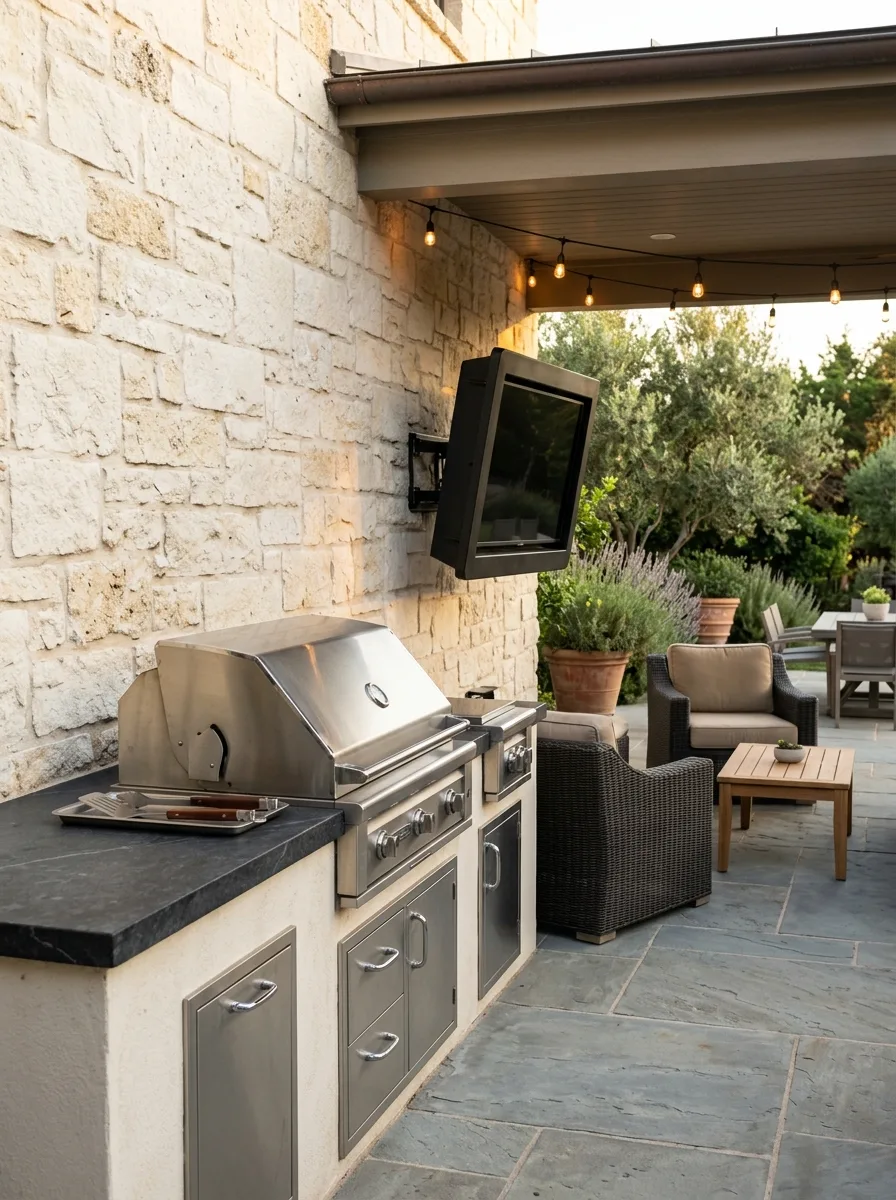
Bolt a heavy-duty swivel bracket directly into a natural stone exterior wall beside your outdoor kitchen, positioned to rotate toward the seating area rather than facing flat out at nobody. Stone walls hold mounting hardware extremely well, but confirm your mount’s anchor type is rated for masonry before drilling.
Choose a weatherproof outdoor television specifically — an indoor screen in direct exposure will fail within months regardless of how sheltered the spot looks.
Run all cabling through a surface-mounted conduit painted to match the stone’s mortar color, rather than leaving it exposed against the lighter stone face. It’s a small detail that keeps the whole installation looking finished.
Swivel the screen back flush against the wall when it’s not in use. Left permanently angled outward, it reads as a TV nobody bothered to adjust rather than a deliberate, flexible setup.
Library Wall Built-In TV
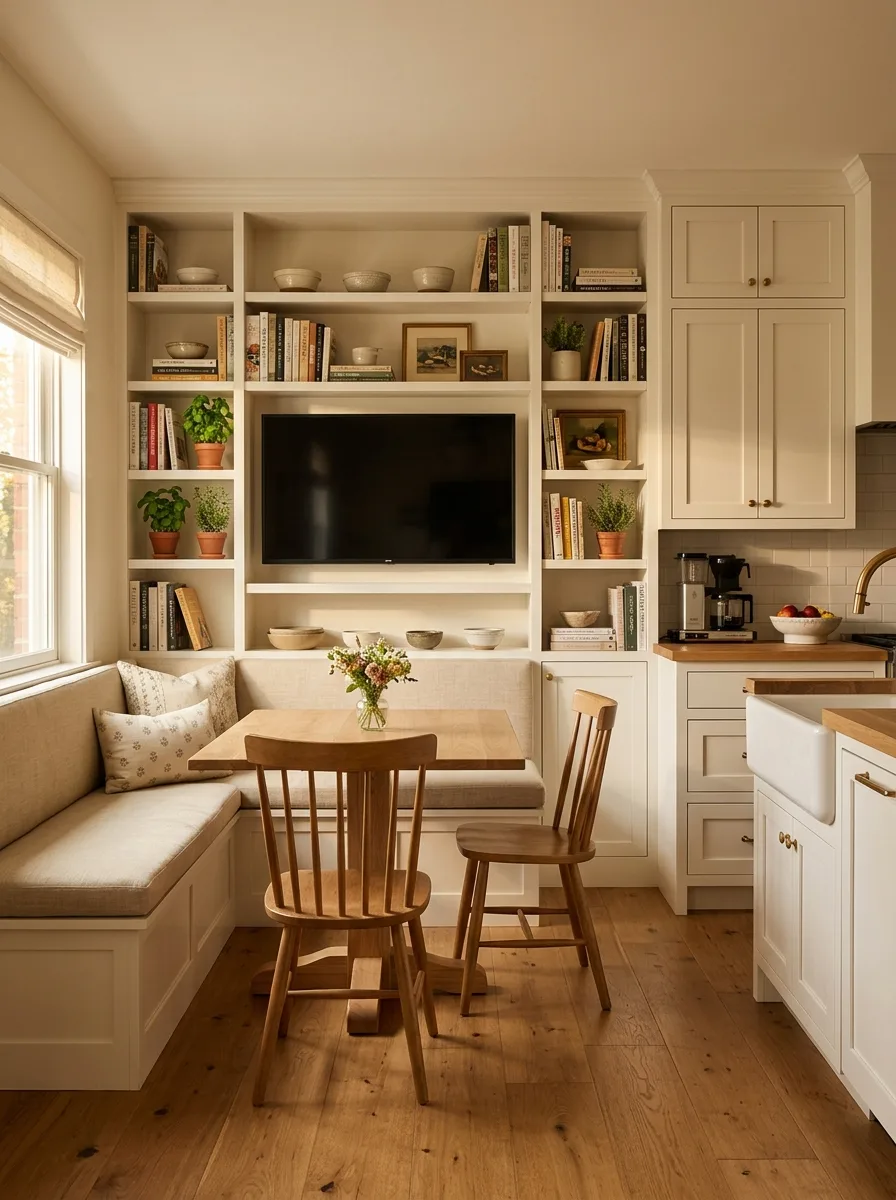
Build a full wall of open shelving in a single warm cabinetry tone, with a flush-mounted television recessed into the center bay so it sits at the same depth as the shelves around it. Books, bowls, and small potted plants on every surrounding shelf do the work of disguising the screen as just one more object in a wall full of them.
Keep the shelf spacing and depth consistent across the entire wall, TV bay included, so the recess doesn’t read as a different module bolted into an otherwise uniform built-in.
Style the surrounding shelves with a real mix — hardback spines at varying heights, a few framed prints leaned rather than hung, small potted herbs near the window light. Uniform, evenly spaced styling gives away that it’s staged around a TV rather than genuinely lived-in.
Add a built-in bench seat below the entire wall, same cabinetry tone, with a small breakfast table in front of it. The TV becomes one feature in a room built around reading, eating, and sitting, not the other way around.
Countertop Pop-Up TV
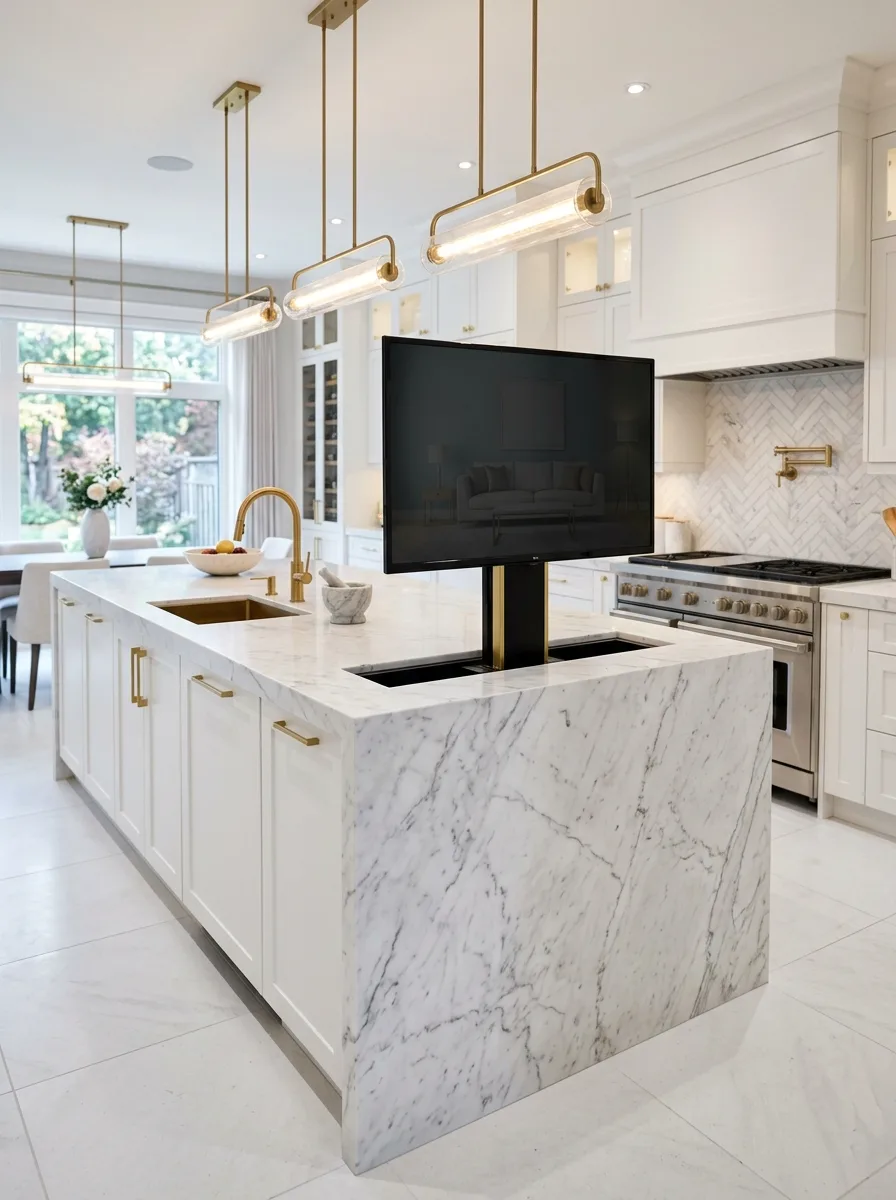
Install a motorized lift mechanism inside your kitchen island, positioned so the television rises flush out of the countertop on demand and retreats completely below the stone surface when you’re done. From any normal vantage point, the island looks like a slab of marble with nothing hiding inside it.
This requires real cavity space below the counter — confirm with your cabinet maker early, because retrofitting a lift mechanism into an island that wasn’t built for one usually means losing storage you were counting on.
Specify a slim-profile screen and a lift mechanism rated for the exact weight, since underpowered mechanisms either stall mid-rise or wear out within a couple of years of daily use.
Lower the screen the second you’re finished. The entire value of this setup is a kitchen island that looks untouched by electronics ninety percent of the time — leaving the screen up defeats the one thing that makes it worth the cost.
Final Thoughts
None of these eighteen kitchens solved the same problem the same way, and that’s the actual lesson. There’s no single correct answer to where a television belongs in a kitchen — there’s only the question of whether you made the decision on purpose.
The kitchens that work share one thing that has nothing to do with stone or wood or brass hardware. Someone decided, early, whether the screen would hide or show, and then built every other choice around that decision instead of working around the TV after the fact.
Most rooms fail not because of bad taste but because of sequence — the television showed up last, wedged into whatever wall happened to be empty. Decide where it lives before you decide what the wall is made of, and the rest tends to follow.
A kitchen is one of the only rooms in the house that has to do everything at once — cook, eat, gather, occasionally babysit a football game. A television that’s been planned for, instead of apologized for, is what lets it actually do all of that without looking like it’s hiding something.