
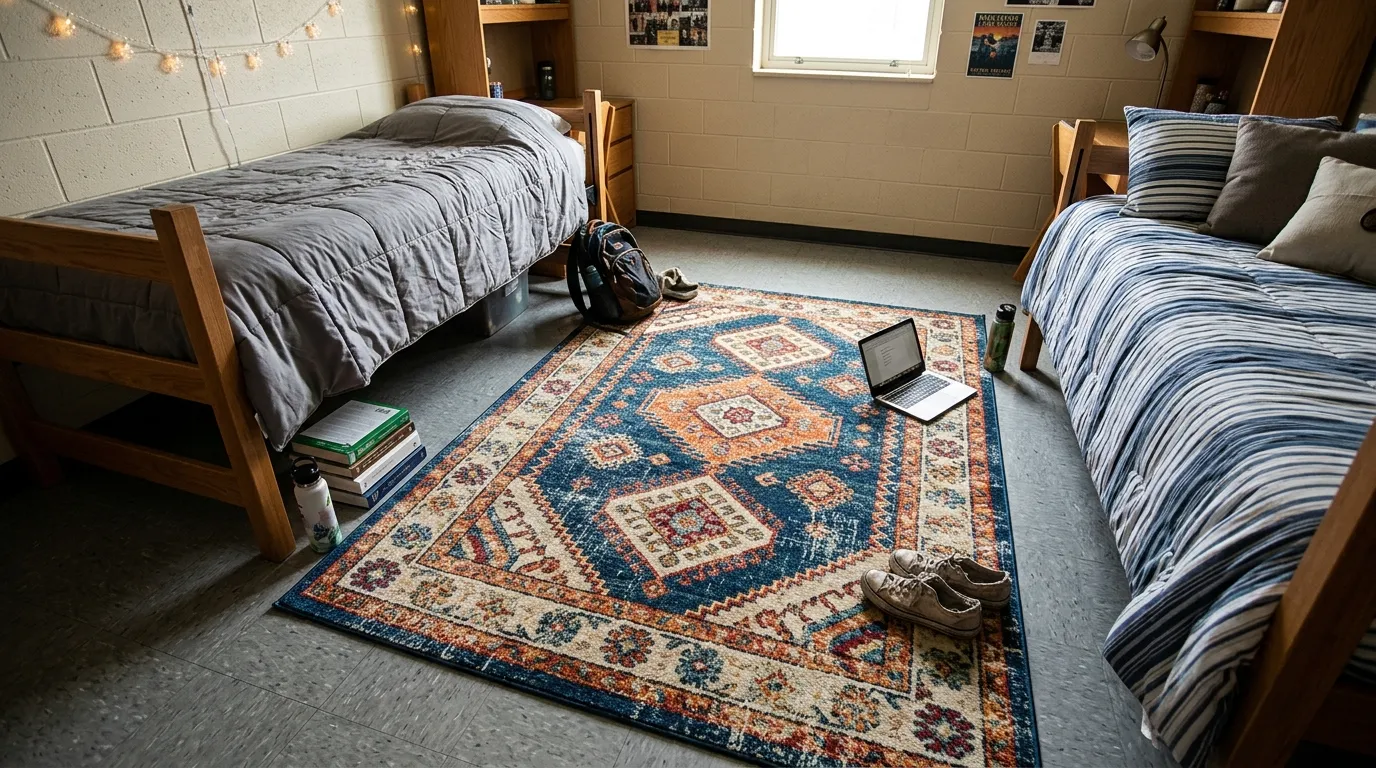
The floor is the first thing you step on every morning. It’s the surface where you sit when the desk feels suffocating and the bed is too far. It sets the temperature of the entire room — literally and aesthetically. And most people pick their dorm rug last, for twenty dollars, from a shelf at the nearest big-box store, without thinking about it at all.
That explains a lot of dorm rooms.
A rug isn’t a finishing touch. It’s a foundation. It determines whether your furniture looks placed or just parked. It decides whether your room feels like a space someone lives in or a space someone is temporarily storing themselves in. It’s doing more work than your bedding, your wall art, and your lighting combined — and it’s the thing you’re most likely to underinvest in.
Dorm Room Rug Ideas
Tufted Bow Bath Mat Accent
Source a shaped tufted rug in the form of a bow — they’re widely available from bedroom and novelty home decor retailers. The rug should be in a two-tone colorway: a pale pink ground with a deeper rose or fuchsia for the bow detail, or ivory with a champagne bow for a more neutral version. Place it not in front of the bed but in front of your vanity, dresser, or closet — wherever you stand most while getting ready. This rug is not trying to cover floor space. It’s a decorative object that happens to be a rug.
The room around it should be in the same pink and white palette: blush bedding, gold hardware on the dresser, clear acrylic accessories. The rug reads as part of the vanity setup rather than a floor covering, which is the distinction that makes it look intentional rather than random.
Black and White Offset Stripe Flatweave
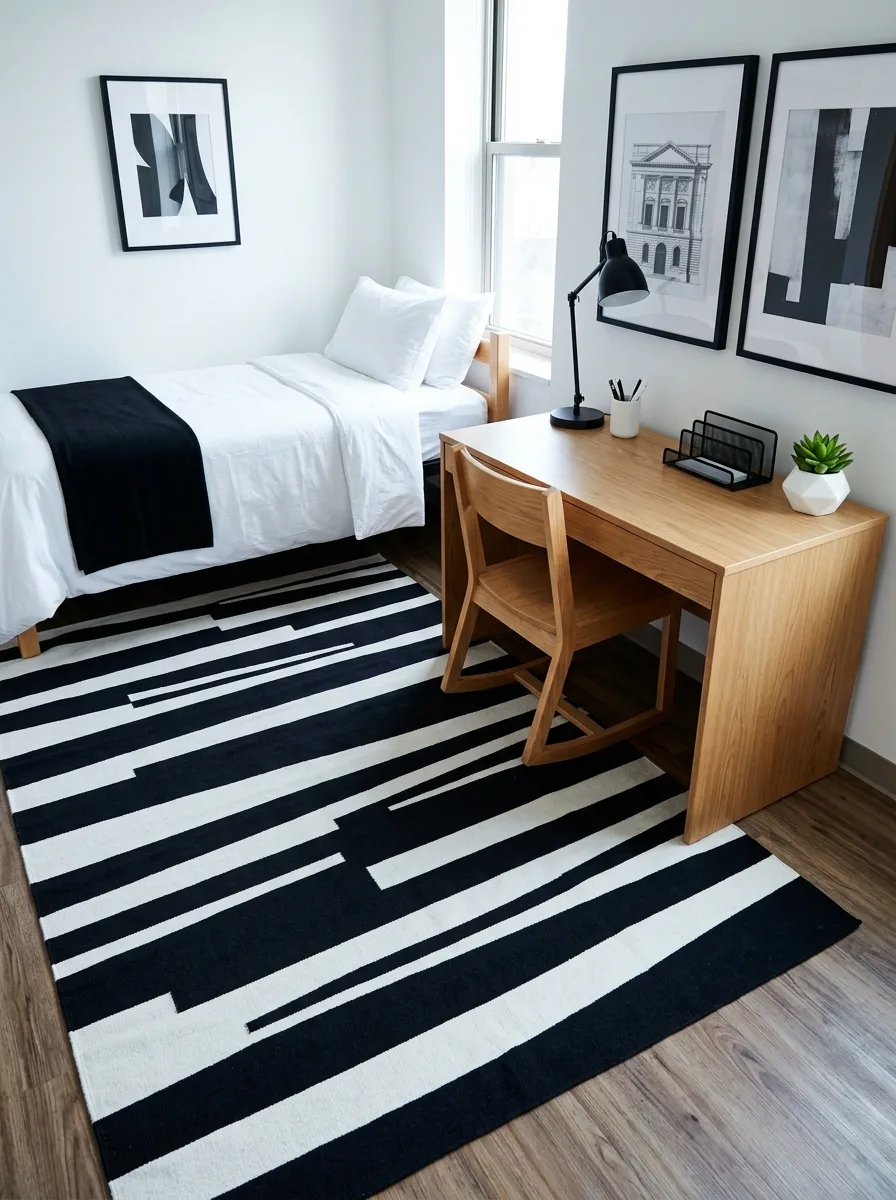
A large rectangular rug in bold black and white horizontal stripes — with the stripes offset or staggered rather than running in perfect parallel lines — is the right choice for a room where everything else is clean, simple, and graphic. Lay it so it covers the entire floor space between the bed and the desk, with the front legs of the desk chair sitting on the rug.
The rug’s graphic quality means the wall art above can be simple black-framed black-and-white prints, the desk setup can be monochrome, and the bedding can be white with a single black accent. In a room with warm oak furniture, the black and white rug provides the contrast that makes the wood tones readable rather than muddy.
Wavy Organic Outline Cream Runner
Choose an oversized rectangular rug with an organic, wavy outline rather than straight edges — the border of the rug itself undulates, and inside it, a single continuous wavy line runs parallel to the outer edge in a slightly deeper tone. In cream or oatmeal, this rug functions as a neutral that doesn’t read as boring. Lay it with the long edge running alongside the bed so it extends from under the bed frame to slightly past the foot of the bed.
The organic outline softens the hard lines of the bed frame and the desk. Because the rug itself has movement in its shape, the room around it can be extremely simple: plain linen bedding, warm wood furniture, one plant. The rug does enough on its own.
Green Shag Boho Floor Lounge
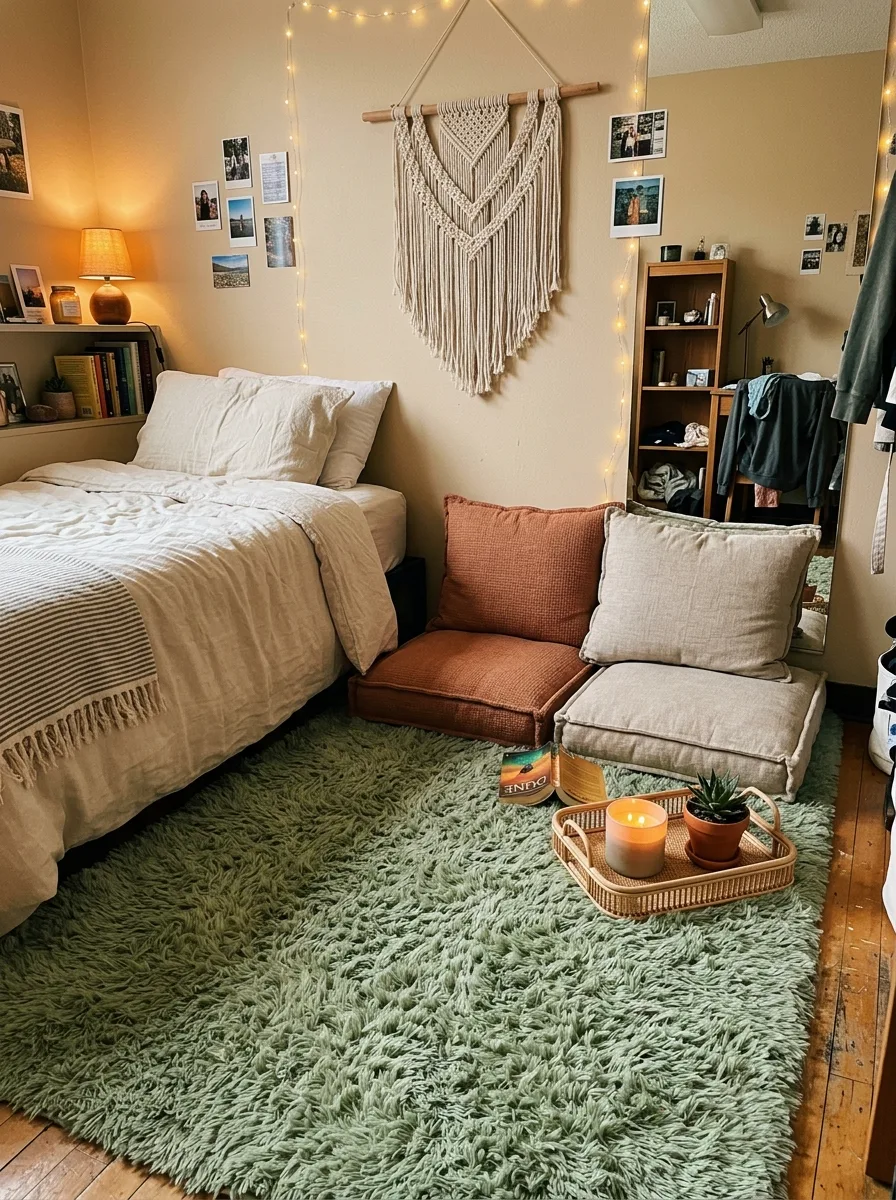
A large sage or moss green high-pile shag rug serves a specific function: it turns the floor into a sitting room. Place it to cover the zone between the foot of the bed and the opposite wall. On top of it, arrange two or three oversized floor cushions or low-profile floor chairs in rust and cream, and add a low rattan tray in the center with a candle, a book, and a small plant.
The shag provides the comfort that makes floor sitting a real choice rather than a fallback. Because the shag itself provides so much visual texture, the bedding above it should be relatively smooth — plain white or natural linen. A macramé wall hanging above the bed and warm globe fairy lights along the ceiling perimeter complete the aesthetic without adding more visual complexity at floor level.
Warped Checkerboard Statement Piece
Find a shaped rug — organic blob or cloud outline — with a warped or twisted black and white checkerboard pattern on it. The warp should be significant enough that the grid distorts toward a central spiral point. This rug is an optical illusion and a statement object simultaneously. Place it in the open floor space at the foot of the bed where it’s fully visible from the door.
Keep everything above it extremely quiet: grey and white bedding, white or pale walls, minimal accessories. The rug is the design. A leaning full-length mirror nearby doubles the visual interest by reflecting the pattern back from a different angle. Do not put furniture on top of this rug — it needs to be fully visible to work.
Scrap Fabric Patchwork Floor Piece
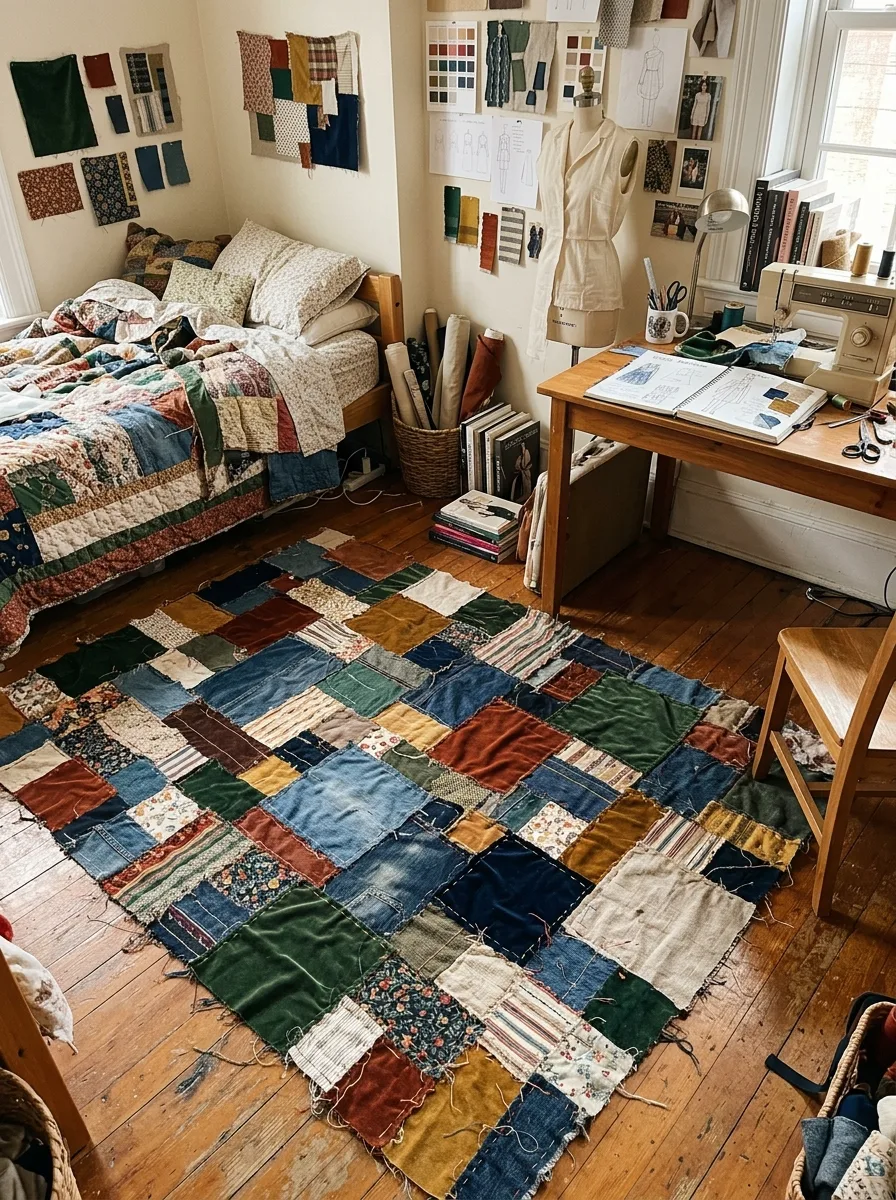
Cut fabric remnants — denim, velvet, cotton florals, corduroy, linen, striped shirting — into twelve-inch squares and sew them together in a patchwork grid large enough to cover the main floor area. The seams can be left slightly raw for a deliberate ragged-edge quality. Use fabric from the same general color family rather than completely random: navy, forest green, terracotta, cream, and muted florals make a coherent palette even in patchwork form.
This is the most personal rug in the list and the hardest to make — but in a room where the desk is a sewing machine and the wall is covered in color swatches and pattern samples, the patchwork rug is the room’s thesis statement. It demonstrates the same skill and sensibility as everything else in the room. The matching patchwork quilt on the bed reinforces that this is a design decision, not just a craft accident.
Round Berber Diamond Neutral
Choose a large round rug in ivory with a grey or charcoal hand-drawn diamond and triangle pattern — something that reads as Berber or Moroccan-inspired without being a literal Moroccan motif. The round shape is the key decision here. Position it so it overlaps both the bed zone and a floor seating area, with the center of the circle sitting equidistant from both.
A low floor couch or oversized cushion placed on the rug’s edge becomes the seating. The round rug creates a gathering space within the dorm room that the rectangular furniture around it can’t. In grey-on-cream, the palette stays entirely neutral so the rug coordinates with anything.
World Map Statement Floor
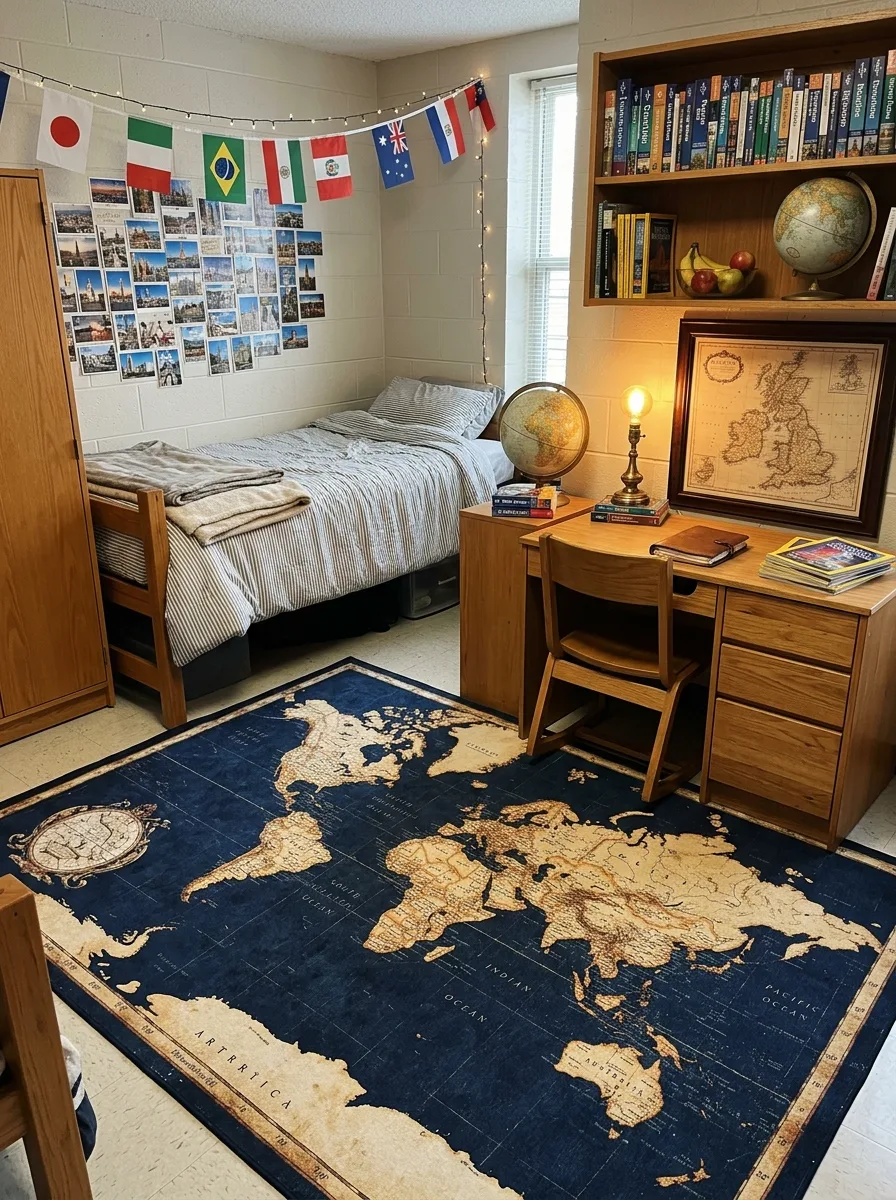
A large rectangular rug printed with a vintage-style cartographic world map — deep navy ground, antiqued cream for the land masses and latitude lines, with visible compass roses and ocean labels — makes the floor itself a conversation piece. Lay it so it fills the main floor zone entirely, from under the bed to the desk chair’s front legs.
Above it, the room’s theme extends upward: a globe on the desk, international flag bunting strung across the corner, a wall of destination postcards, a framed antique map. The rug anchors the theme at floor level so every other element reads as part of a coherent world rather than a random collection.
White Faux Fur Sheepskin Accent
A faux sheepskin rug in off-white is a texture decision more than a color or pattern decision. Its irregular, organic shape fits in front of a dressing table or alongside a bed as a bedside landing rug. In a room with wallpaper texture, neon accents, or metallic furniture, the faux sheepskin provides the one soft, irregular surface that makes everything else look less clinical.
Keep the rest of the floor treatment simple — either bare floor or a large flat neutral beneath — and let the sheepskin serve as an accent rather than the primary floor covering. It’s the rug equivalent of a throw pillow: not load-bearing, but the thing that makes the room feel finished.
Kilim Flatweave Room Anchor
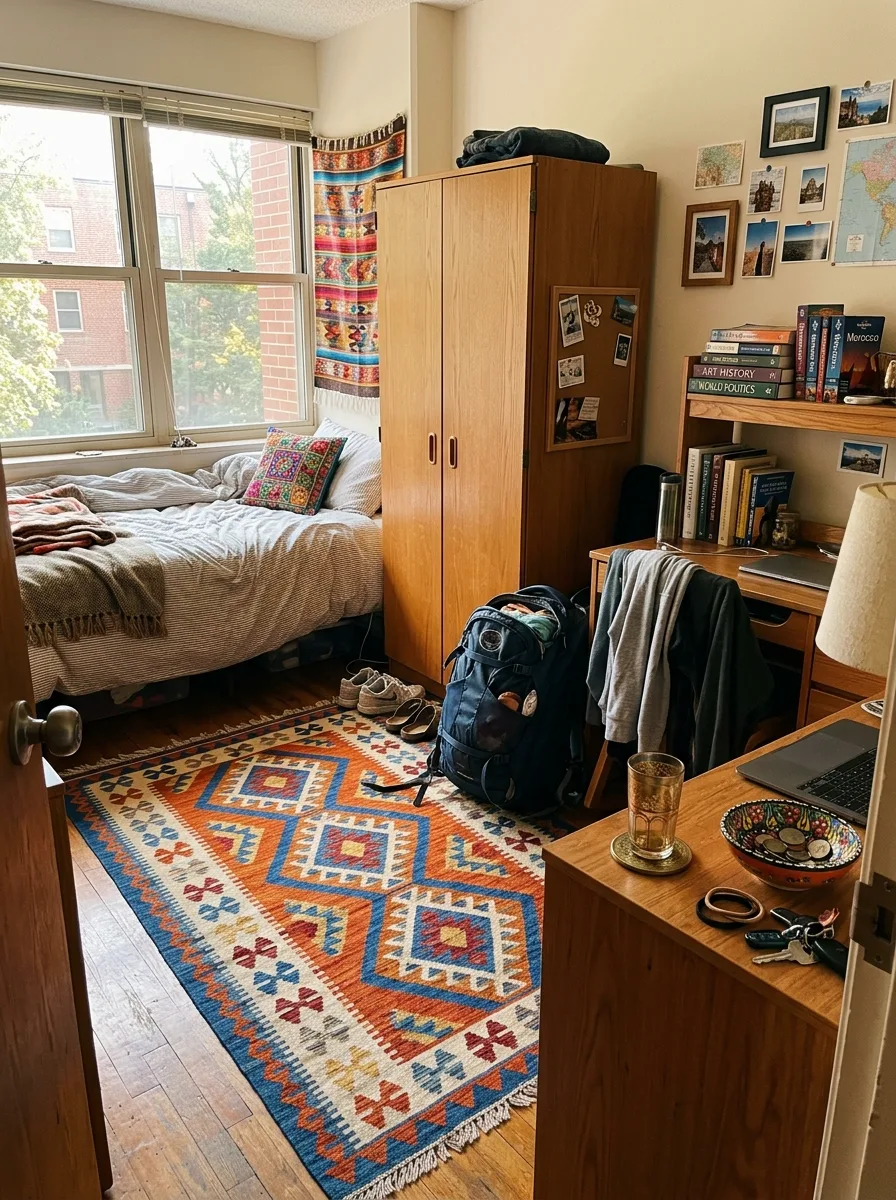
A flat-weave kilim in orange, red, blue, and cream with a geometric diamond pattern is one of the most practical and versatile rugs for a dorm room with hardwood floors and warm-toned wood furniture. The low pile means it lies flat, doesn’t curl at the edges, and cleans easily by shaking it out. The saturated geometric pattern means it works as an anchor for an eclectic, well-traveled room: a Peruvian textile hung on the wall, stacks of travel guides, a Moroccan tea glass on the desk.
Because the rug’s pattern already contains multiple colors, the rest of the room can stay relatively restrained. Ticking-stripe bedding, a plain wardrobe, warm wood. The rug carries the room’s sense of character so the furniture doesn’t have to.
Round Jute Braided Sitting Zone
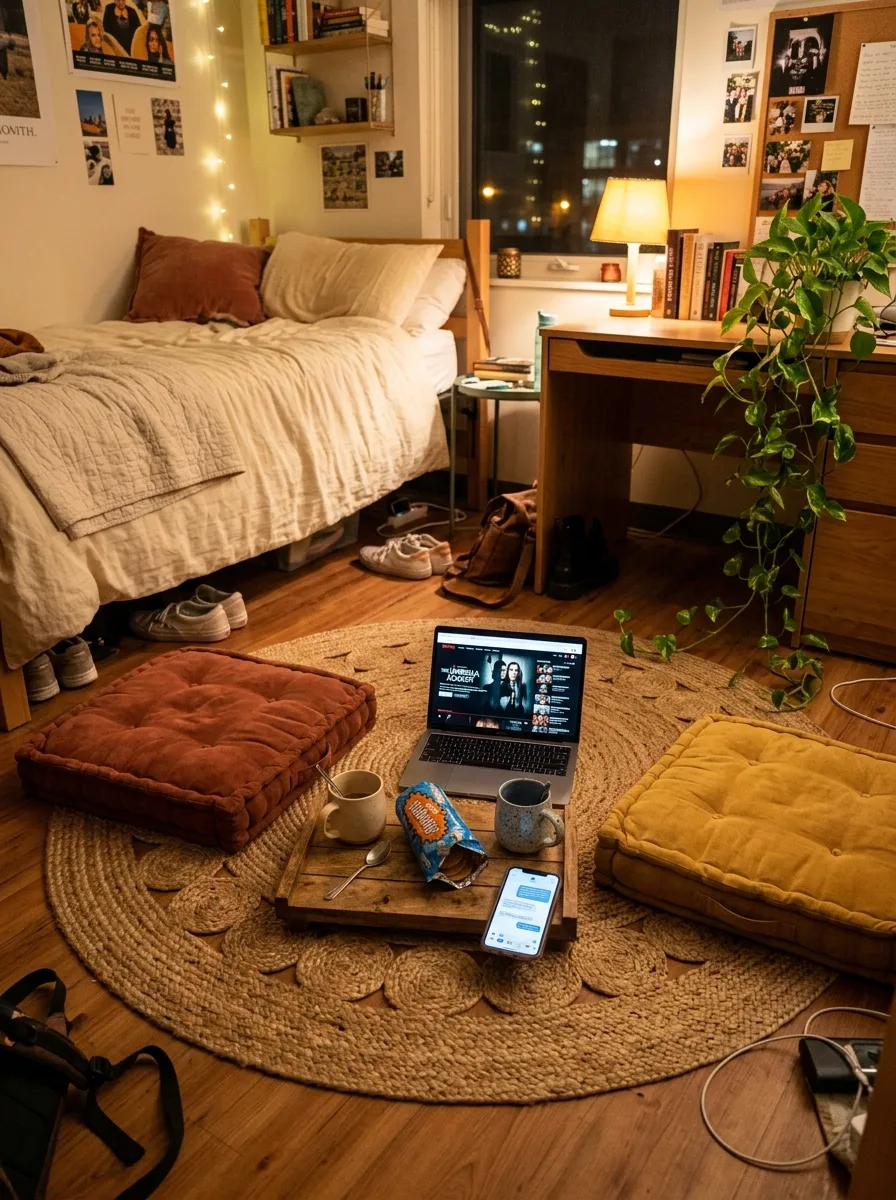
A large round rug in natural braided jute — the woven rings of the braid creating their own subtle circular pattern — defines a floor living zone in the center of the room independent of the furniture. Position it so two velvet floor cushions in terracotta and mustard sit on its surface, with a small wood slat tray in the center for a laptop or drinks.
The jute’s natural tan color sits comfortably between warm wood furniture and cream walls without introducing a new color. The round shape tells visitors that this area of the floor is intentional social space. The rug performs the function of a coffee table and area rug simultaneously: it defines the zone and provides the surface.
Vintage Persian Deep Crimson
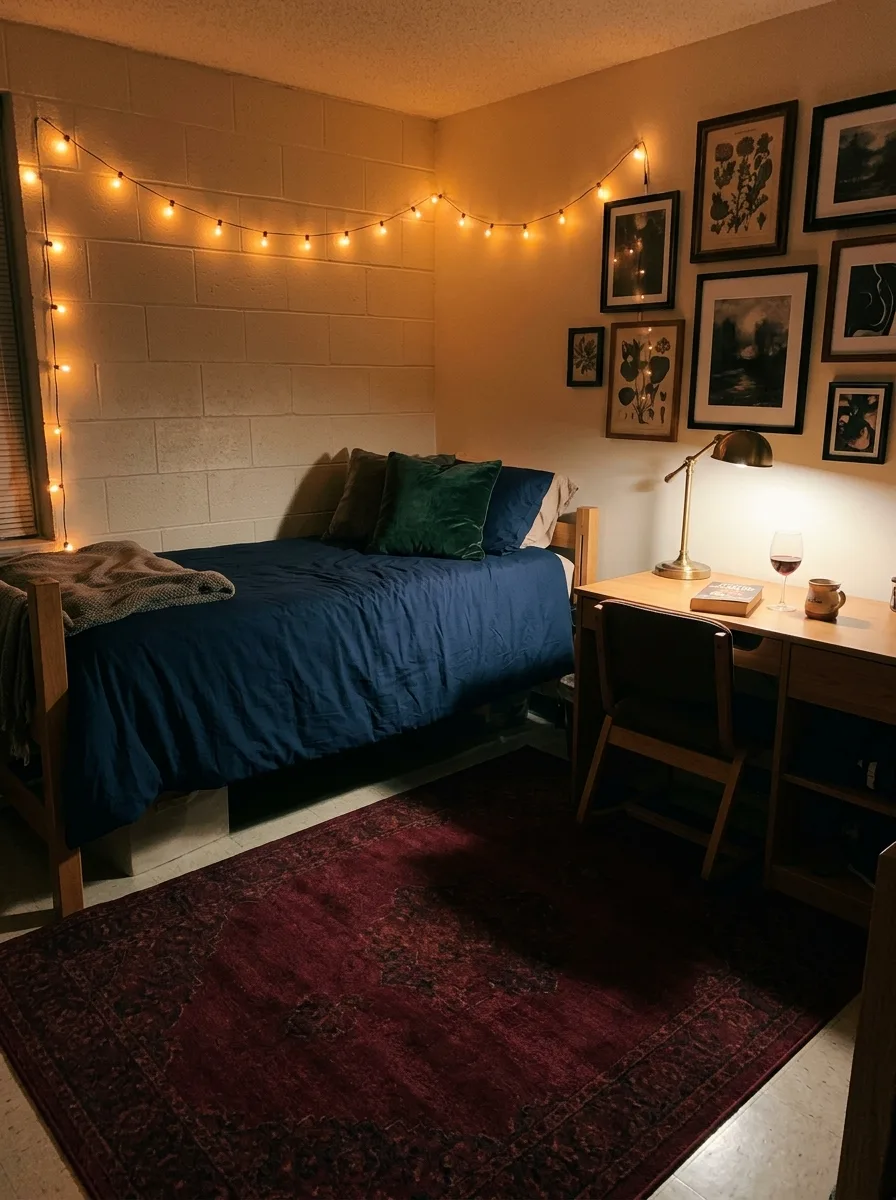
A vintage or vintage-style Persian rug in deep crimson, burgundy, and navy is the single highest-impact floor choice for a dorm room where the aesthetic goal is rich, warm, and lived-in. The pattern density of a traditional Persian medallion design means the rug works against bare cinder block walls — it brings enough visual complexity that the walls don’t need to do much. Lay it so it covers the central floor area, running from under the bed frame to beneath the front legs of the desk.
Above it, keep the palette complementary: navy bedding, a green velvet accent pillow, a brass banker’s lamp, and a framed gallery of dark-toned botanical prints. String warm globe lights horizontally along the wall rather than twinkling fairy lights — the globe lights read as more intentional in a room this grown-up.
Braided Jute Rectangle Slow Living
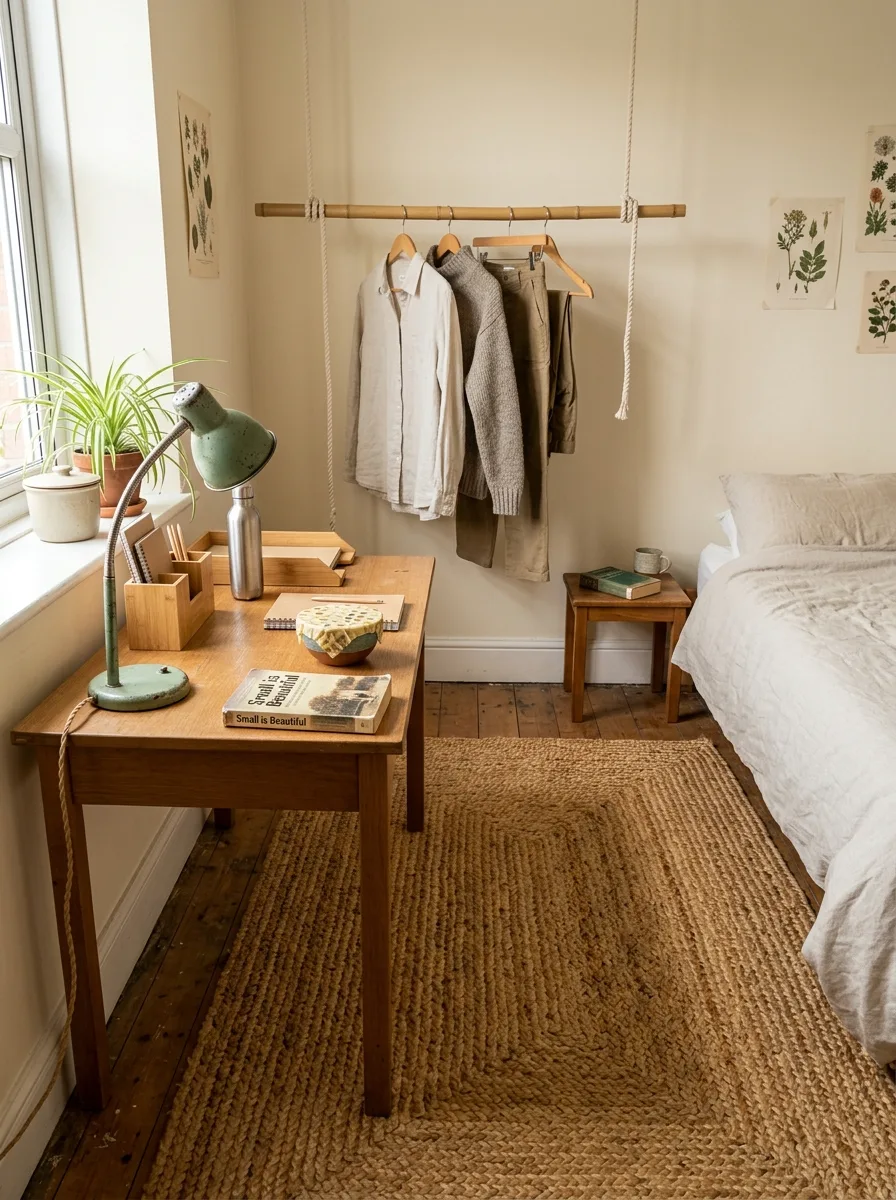
A flat rectangular jute rug in a tight braided weave — the kind with concentric rectangular rings rather than a round shape — is the defining floor piece for a slow, quiet, intentionally sparse dorm room. It reads as natural, grounded, and unhurried. Lay it so it covers the space between the bed and the desk, with the bed legs sitting just outside the rug’s edge.
Against warm wood furniture, white linen bedding, and a sage green vintage-style desk lamp, the jute pulls everything together without adding a color of its own. A suspended bamboo clothing rail above the space introduces another natural material that reinforces the palette. Botanical prints on the walls, a spider plant on the windowsill, one ceramic bowl on the desk. Nothing fights the rug because the rug isn’t fighting anything.
Cream High-Pile Shag Room Anchor
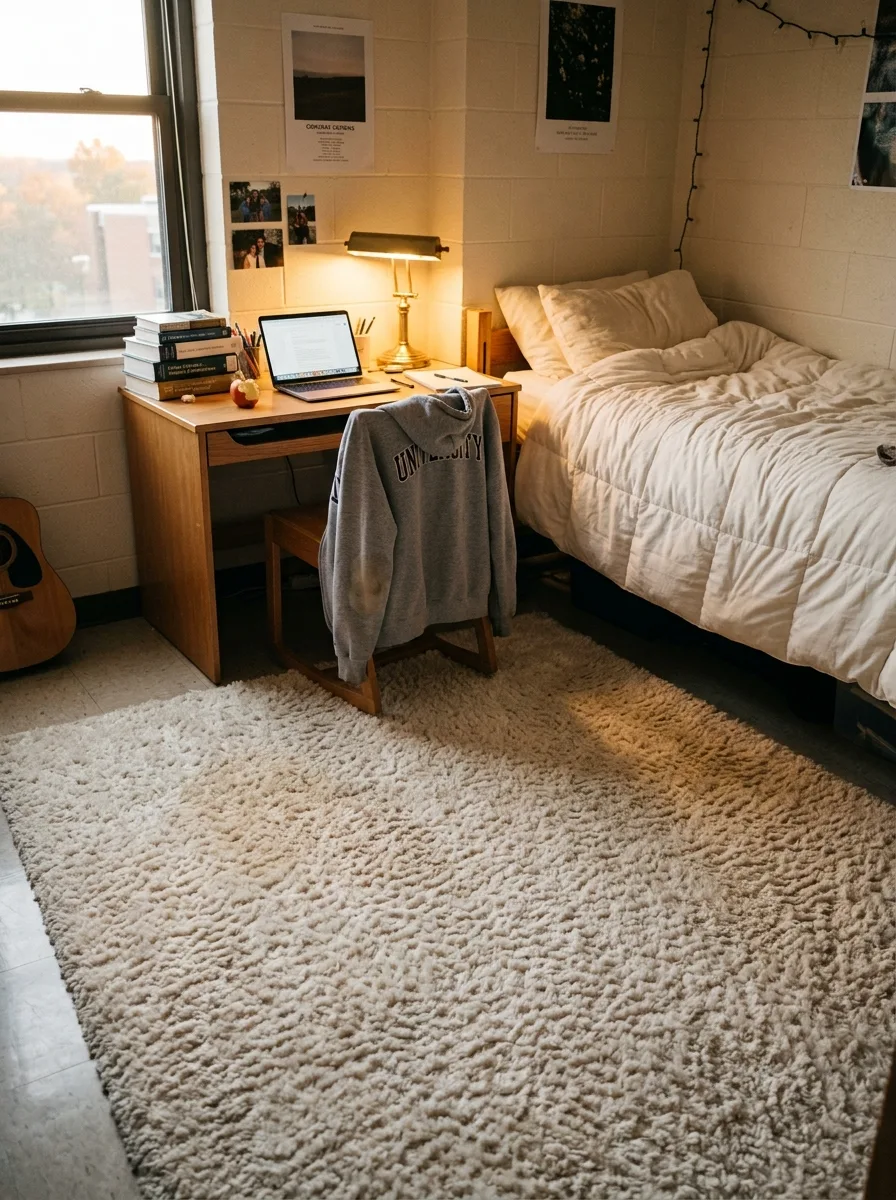
A large cream or ivory high-pile shag rug is the most forgiving choice in the list. It coordinates with every bedding color, reads as warm in winter and neutral in summer, and photographs well under both natural and artificial light. Lay it so it covers the full floor zone between the bed and the desk chair, with the front legs of both the bed and the desk sitting on the rug.
The visual effect of a cream shag is to unify the floor as a single soft surface rather than a hard plane with objects sitting on it. Against warm wood furniture and a brass lamp, the cream shag glows. The one limitation: it shows footprints and needs vacuuming or shaking out weekly to maintain its appearance. Worth it.
Bold Black and White Geometric
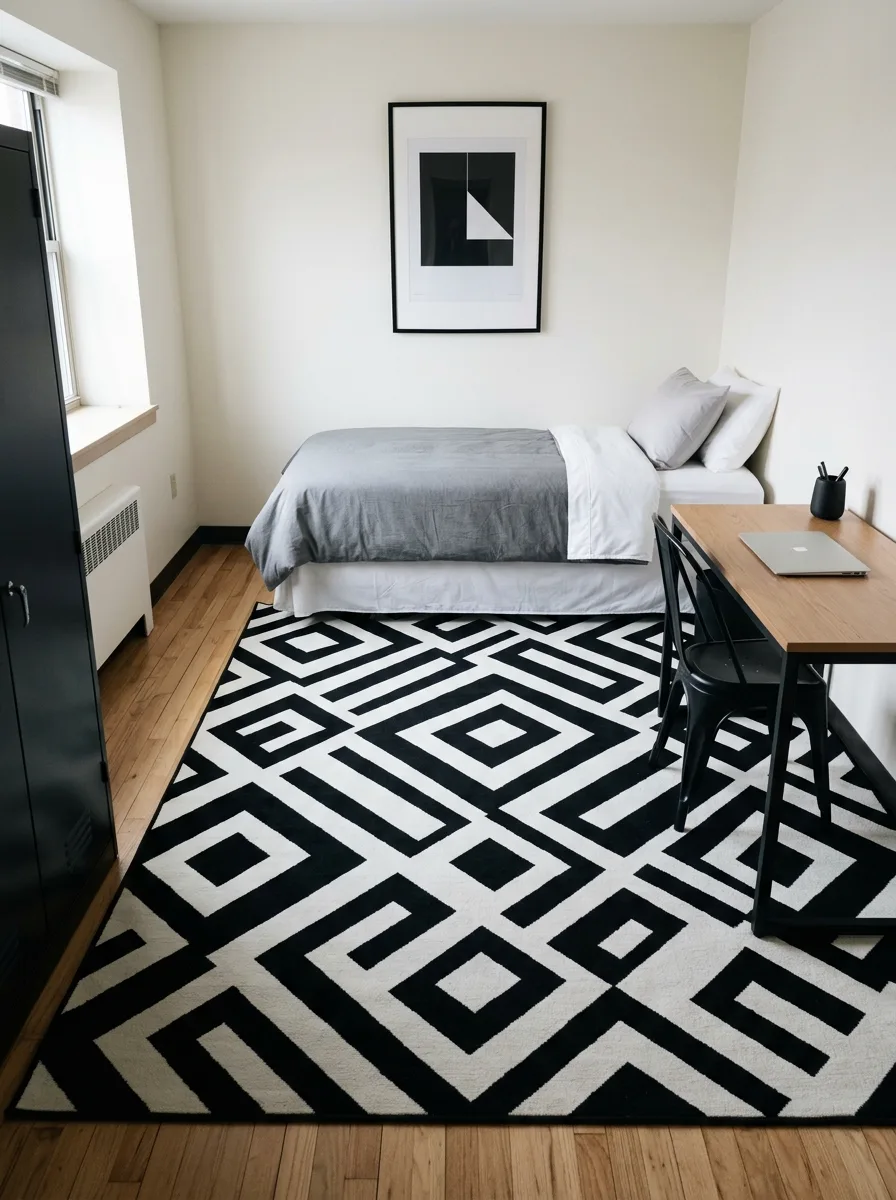
A large rectangular rug in a bold two-color geometric pattern — nested squares, meander keys, or interlocking maze-like forms in black and white — makes the room look deliberate from the doorway. The pattern density means the floor commands attention before the eye moves to the furniture or the walls. In a room with grey and white bedding, black metal furniture legs, and a single black-framed geometric print above the bed, this rug functions as the design anchor.
No other pattern in the room is needed. The one technical requirement: the rug needs to be large enough that the pattern has room to read at full scale. A small version of a large geometric repeat just looks confused.
Pastel Rainbow Stripe Tufted
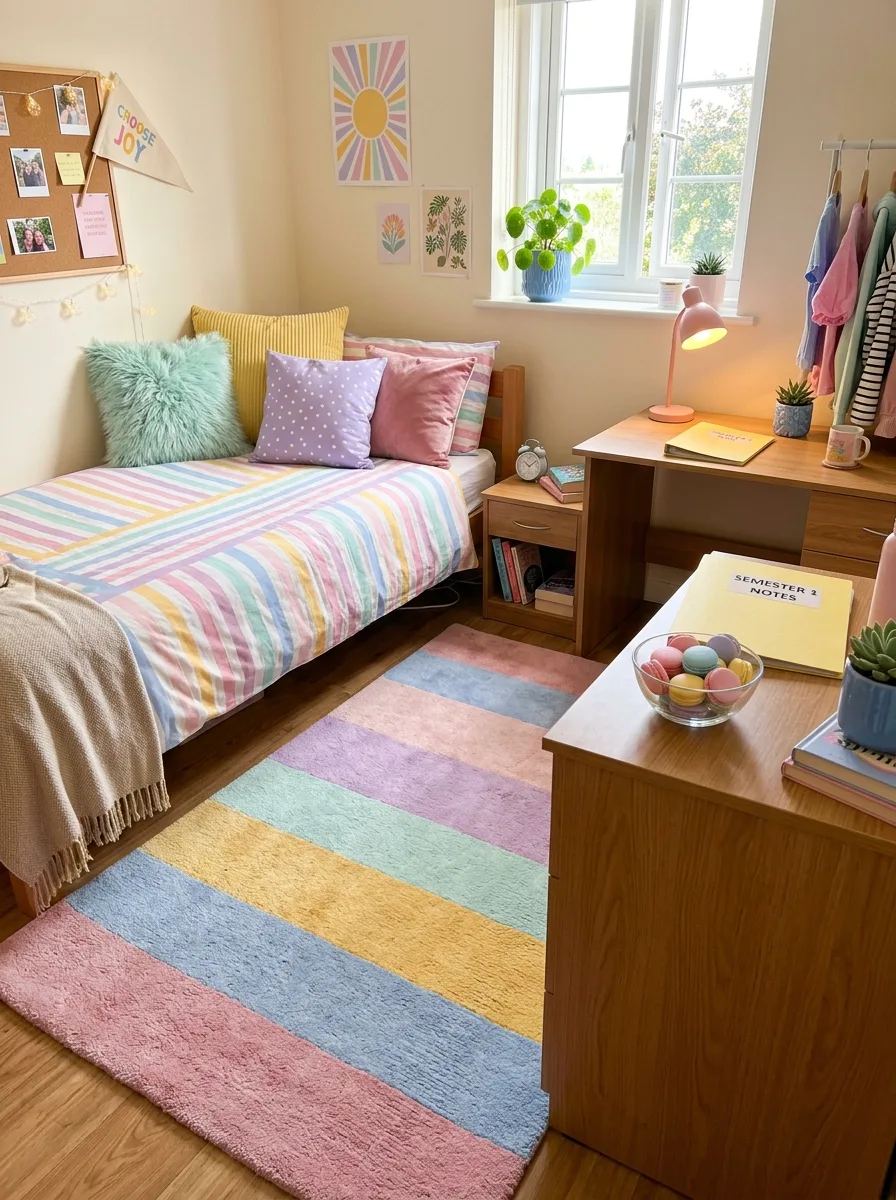
A tufted rug in horizontal pastel stripes — the bands running in the full spectrum from pink through lavender, mint, yellow, and blue — is the right choice for a room where the design intention is joyful, light, and maximally cheerful. The rug’s color story dictates the room’s: use the same pastel range in the bedding, the throw pillows, the desk accessories, and the wall art.
A rainbow stripe duvet and a set of mismatched pastel throw pillows above the rug lock the connection. Because the rug already contains every pastel, any individual item from that range coordinates automatically. The room becomes self-referencing — everything talks to everything else because they share the same source palette. A pink task lamp and a small plant in a blue pot are sufficient desk accessories.
Mustard Shag Warm Tone Anchor
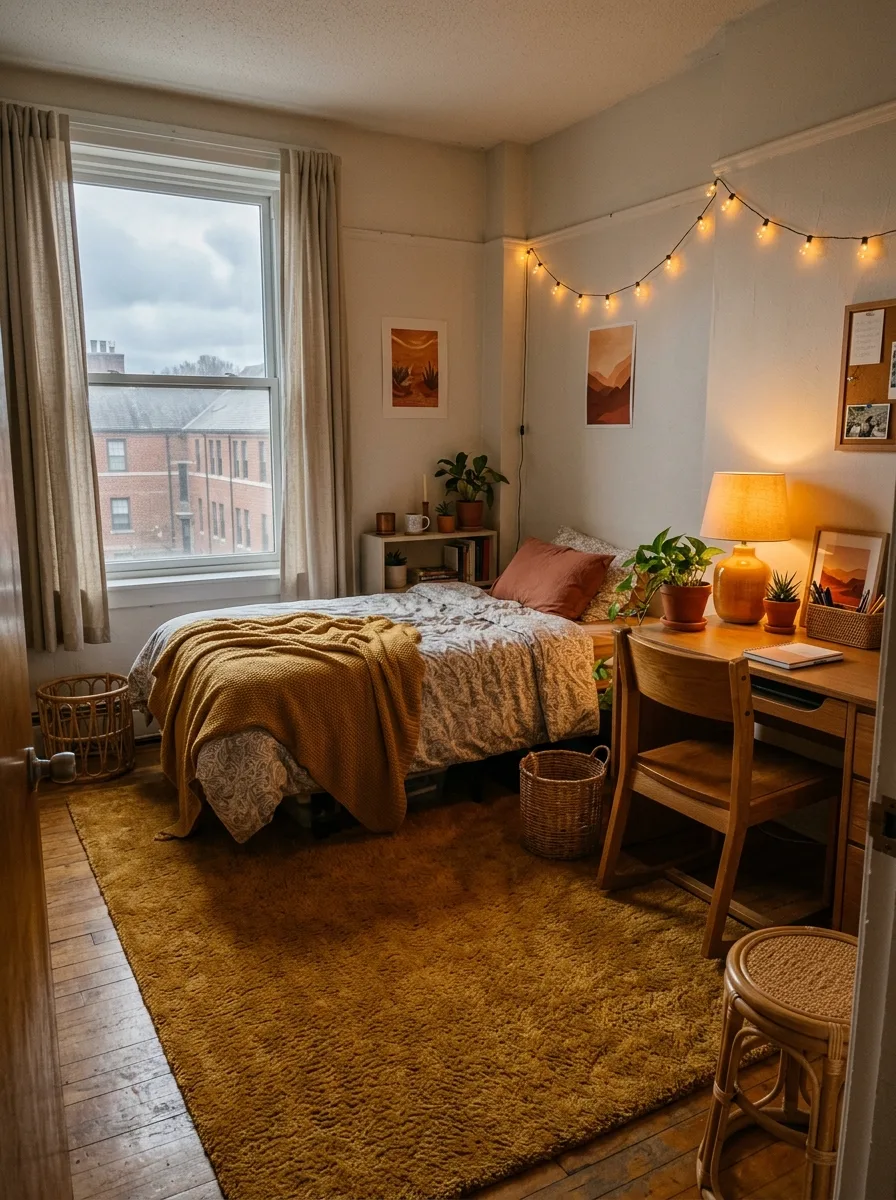
A deep mustard or golden yellow high-pile shag rug is the most temperature-transforming rug in the list. Under warm globe string lights and next to honey-toned wood furniture, it turns the entire room amber. In a room with terracotta and rust accent colors, warm-toned landscape prints on the wall, and a ceramic amber lamp base, the mustard shag creates the sense that the room has been bathed in late afternoon light regardless of the actual time.
Choose this rug if warmth and coziness are the primary design goal. Everything else in the room should reinforce that goal: rattan accessories, warm wood, candles, plants. Nothing cold or metallic. Nothing grey or blue.
Faux Sheepskin Nightside Rug
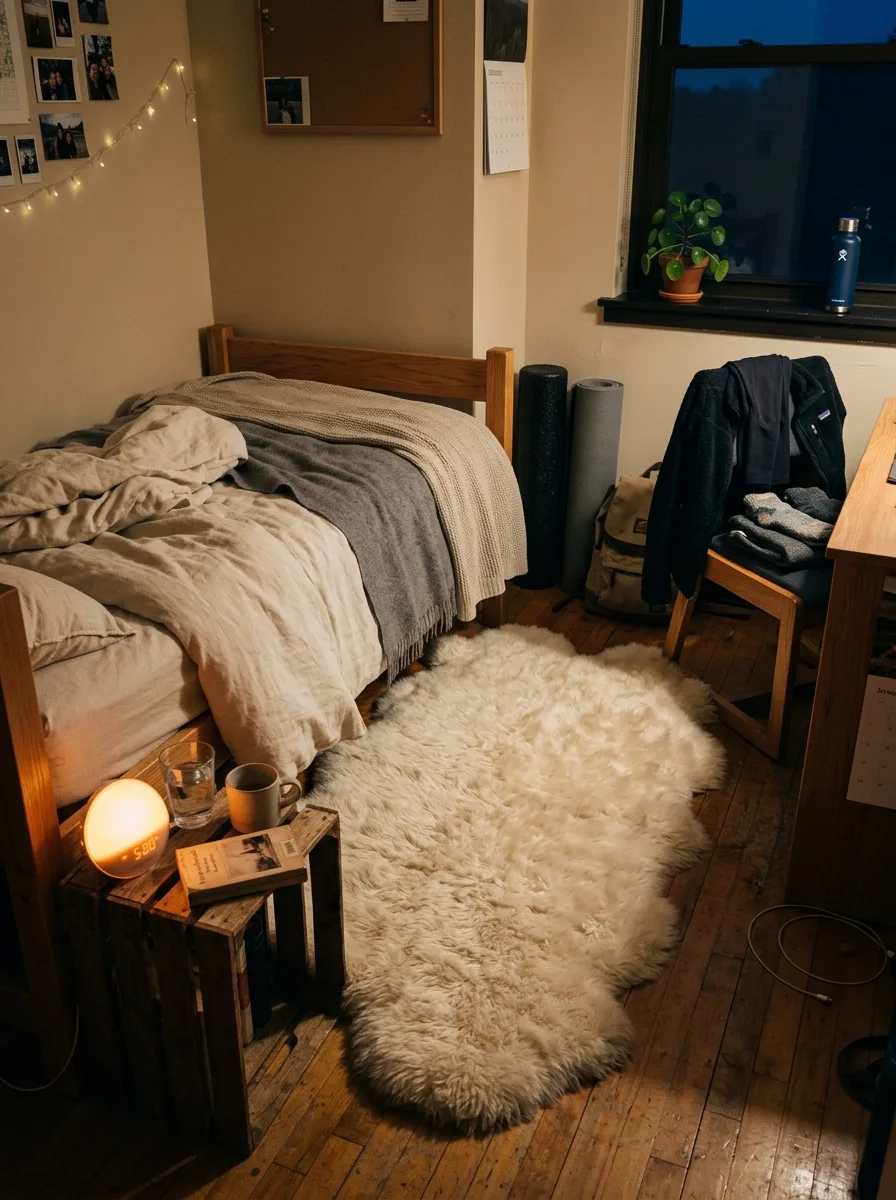
Position a single faux sheepskin rug — ivory, medium length pile, organic irregular shape — immediately beside the bed on the side you exit from every morning. It should run from the foot of the bed frame to slightly beyond the headboard, with a width just enough to take two or three steps on. This is a specific-purpose rug: its job is to be the first soft thing your feet touch.
In a room with hardwood floors and minimal other textile on the floor, this single sheepskin provides enough warmth and visual softness to make the room feel cared for without committing to a large rug. Under warm lamp light at night, the long pile reflects back a soft glow that the rest of the room responds to.
Forest Green Solid Shag Scholar Setup
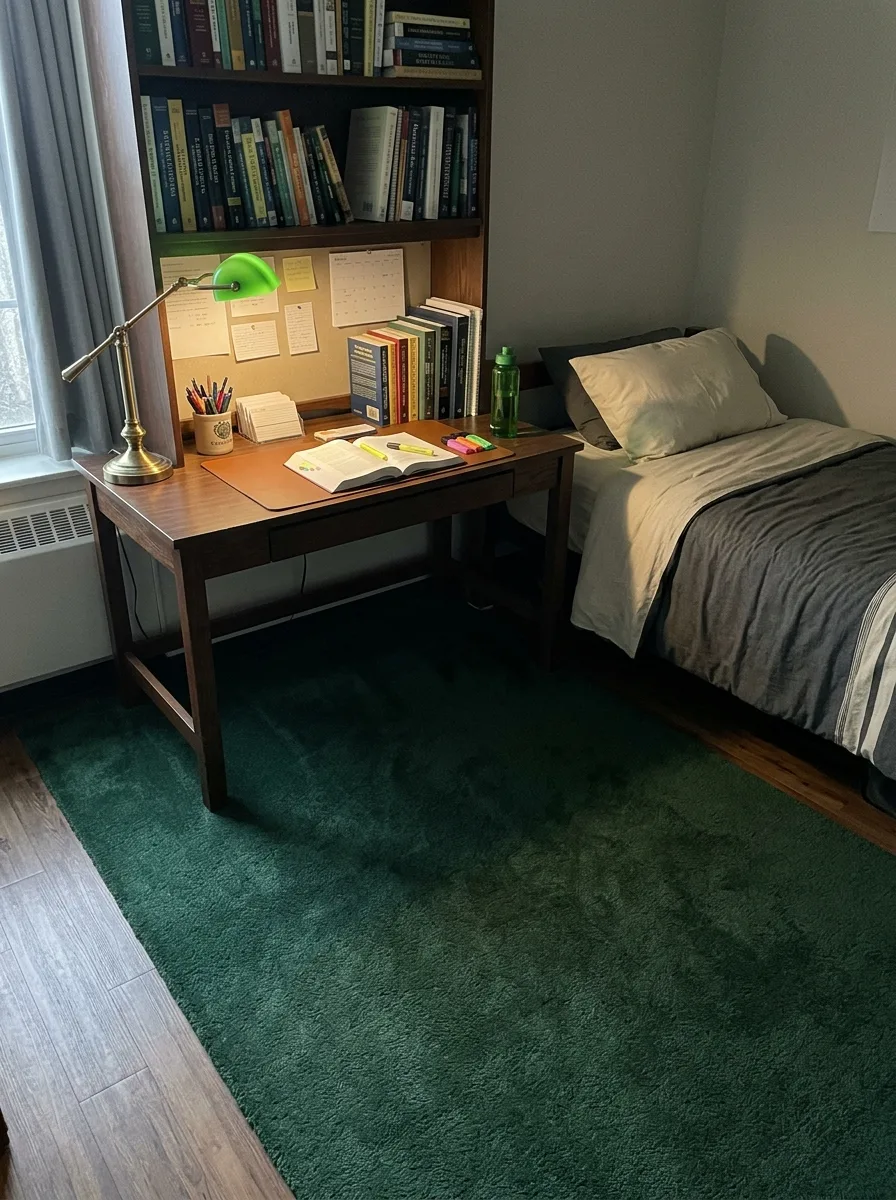
A dense, deep forest green shag rug across the floor between the desk and the bed sets the tone for a room built for serious work. Against dark walnut desk furniture and a brass banker’s lamp with a green shade, the forest green floor reads as academic in the best possible sense — the color of old libraries, rolling lawns, and reading in natural light.
Because the green is so saturated and the shag so thick, the rug visually grounds everything in the room. The bedding above it can be simple: grey and white ticking stripe, one plain grey throw. The bookshelves above should be full. A green water bottle on the desk is the only accent. The rug makes the room look like someone who reads.
Carpet Tile Color-Block Grid
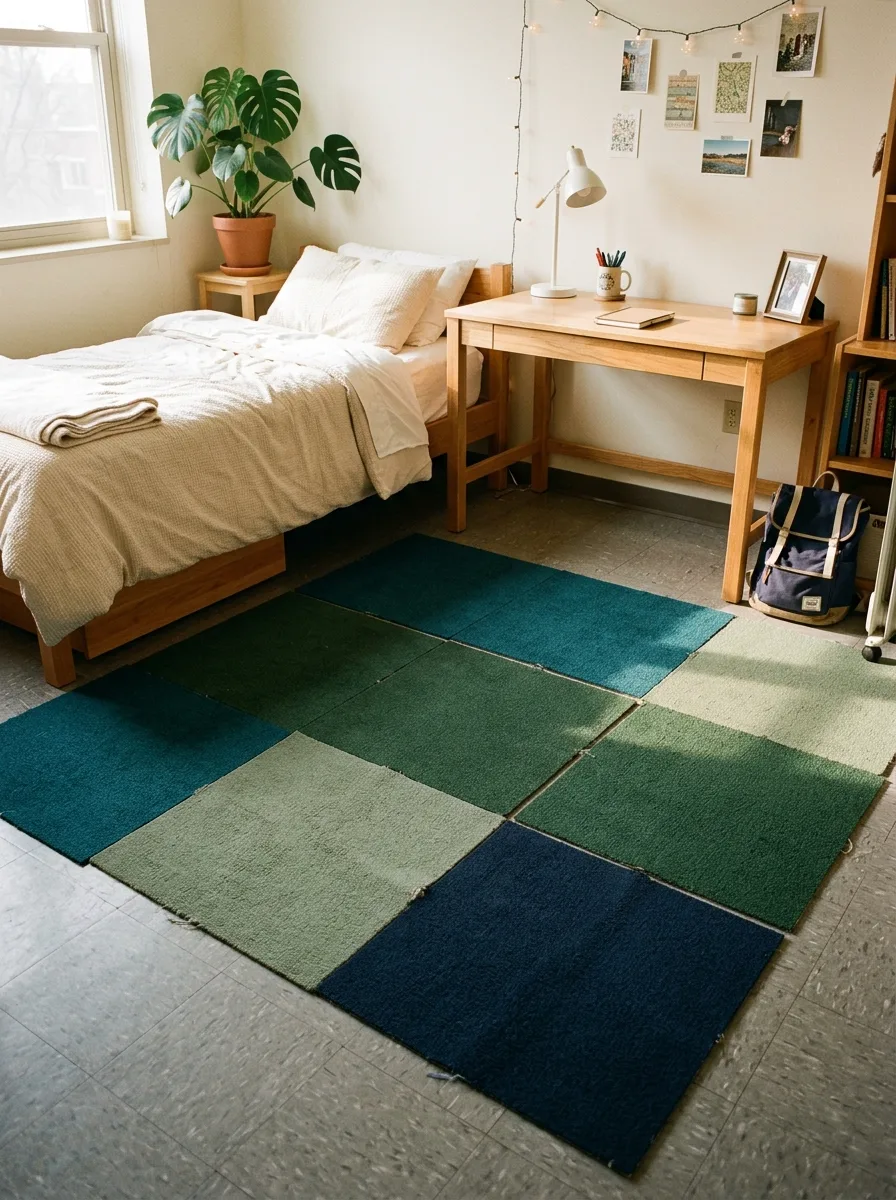
Buy individual carpet tiles in four to six shades within one color family — teal, sage, forest green, navy, and pale seafoam, for example — and arrange them in a grid pattern on the dorm floor. The tiles lock together or simply butt up against each other, creating a patchwork floor surface. Choose tiles from the same color family so the color-block reads as intentional rather than random, with each shade occupying roughly one or two tiles in the grid and no pattern repeating row to row.
This is one of the most budget-efficient large floor-coverage options available, and the most customizable: tiles can be replaced individually if one is damaged, and the configuration can be rearranged entirely. Against pale furniture and white bedding, the blue-green color block grid reads as modern and considered.
What All These Rooms Have in Common That Nobody Mentions
Every room in this set that works — that looks like somewhere a person actually lives — has one thing in common. The rug is big enough to matter and positioned to do something specific.
Not centered under nothing. Not floating between furniture pieces. Not shoved against one wall because the room ran out of space. Placed with intent.
A rug is the cheapest way to make a dorm room feel like a home rather than temporary housing. It’s not about the pattern or the pile or the color, though all of those things matter. It’s about the decision behind it.
Make one. Put it somewhere specific. Let the floor do its job.