
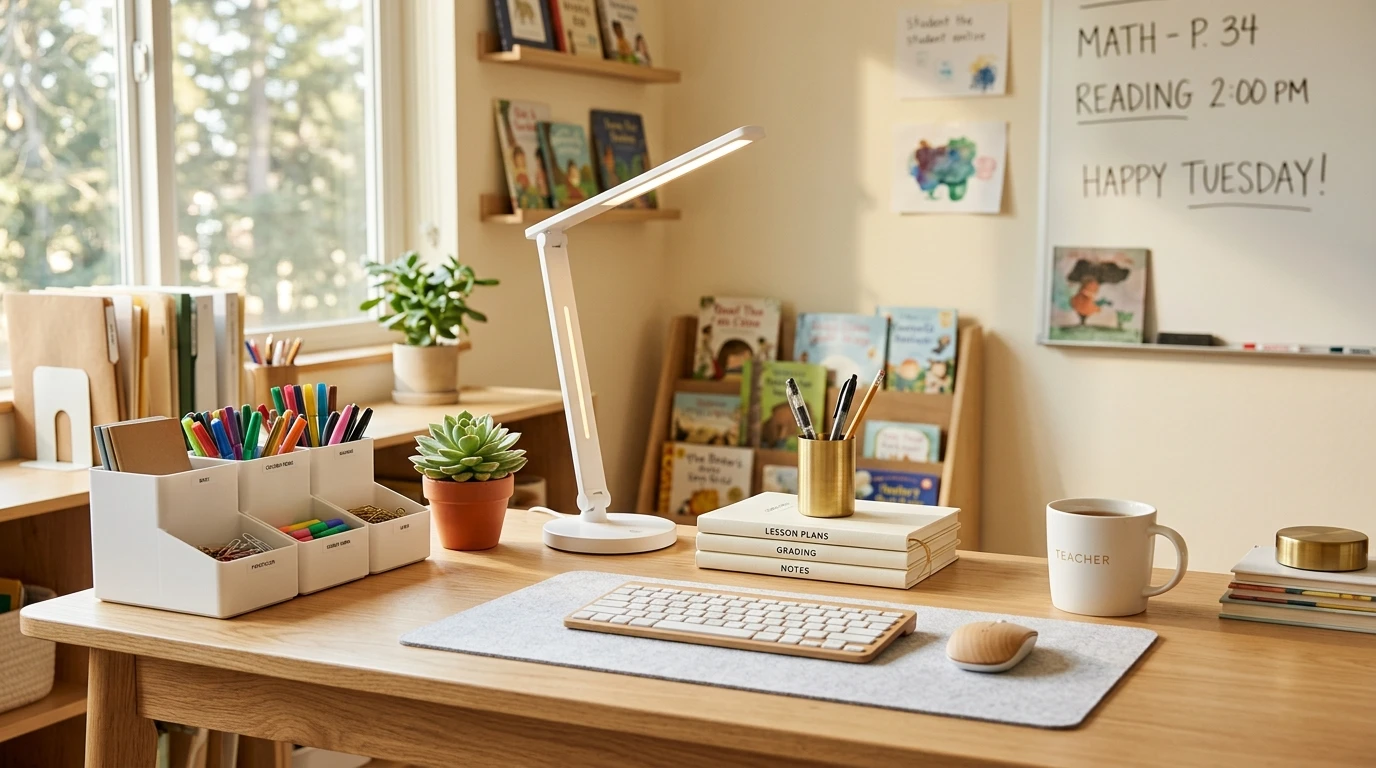
By the second week of September, every teacher desk in America looks the same: a landfill of permission slips with a coffee mug balanced on top like a flag planted on a losing battle.
That’s not a personality flaw. It’s a design flaw. Nobody hands you a system when they hand you a classroom — you’re expected to invent one in the three days before open house, using whatever’s left in the supply closet.
The desks that actually survive a full school year didn’t get there by accident. Someone decided, early and on purpose, exactly where the ungraded quizzes live and exactly where they don’t.
Steal the decisions. Skip the trial and error
Teacher Desk Makeover Ideas
Pink Floral Desk Mat
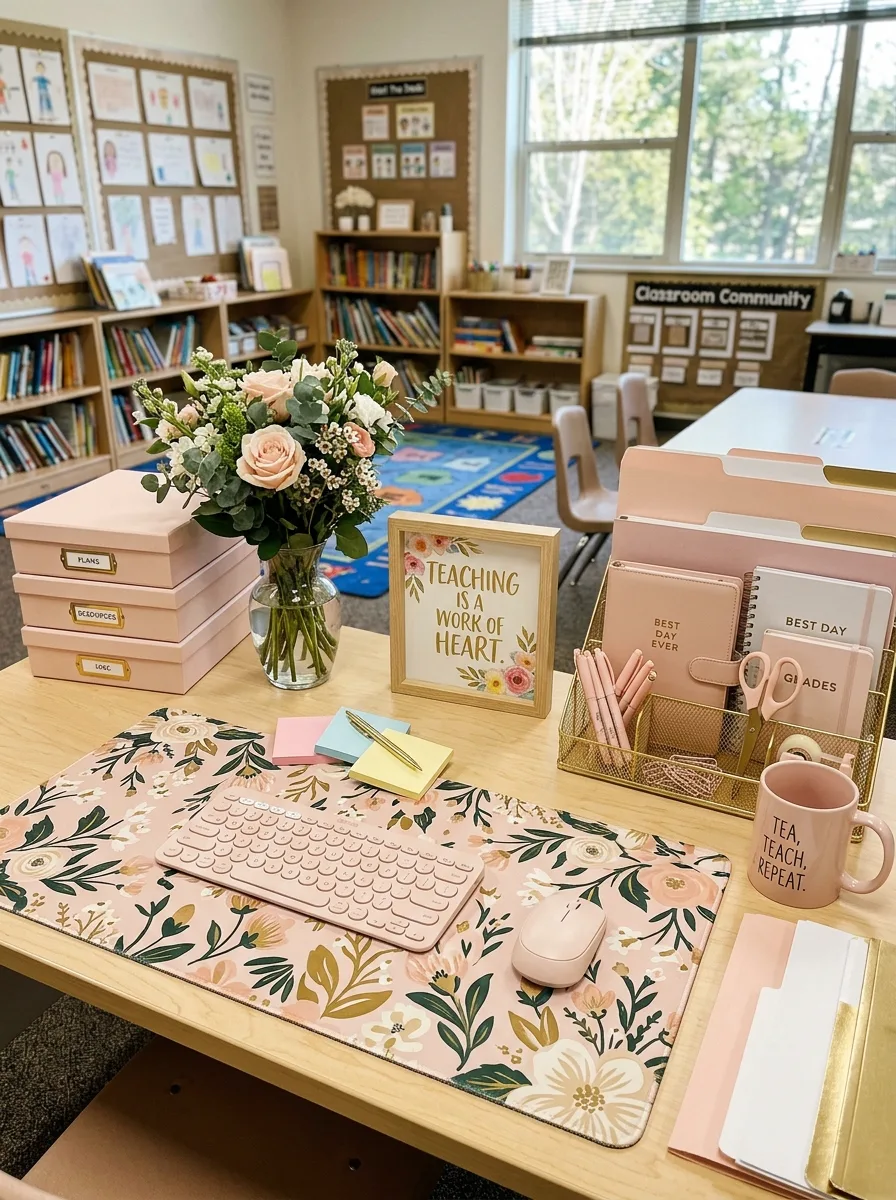
A patterned desk mat does more visual work than almost any other single item on a teacher’s desk, since it’s the surface you’re looking at for six hours a day. Pick one that matches your folder and box colors, and let it set the palette for everything else on the desk.
Stack labeled boxes — plans, resources, logs — in a column beside the monitor rather than spreading them across the desk. Vertical stacking keeps the footprint small in a desk that’s often shared with a computer, a phone stand, and a mug all fighting for the same six inches.
A small framed quote facing the chair gives you something to glance at on the rough days, and fresh flowers in a simple vase do more for the mood of a desk than any amount of matching stationery.
Keep the mesh organizer holding daily-use items only — pens, tape, scissors — since a desk with too many matching accessories starts to look staged instead of used.
Pink Aesthetic Desktop Setup
A matching pink keyboard, mouse, and laptop skin turn a standard-issue school laptop into something that actually feels like yours, especially in a district that doesn’t let you choose the hardware itself. A custom desktop background with an encouraging phrase is a free, five-minute upgrade that changes what you see every time you sit down.
Group pens, markers, and highlighters by color in a single clear cup rather than several small ones — one organized rainbow reads as intentional, while three half-full cups read as leftover clutter.
A small insulated tumbler in a matching tone and a single vase of faux flowers finish the desk without requiring anything elaborate. The color story is doing the styling work here; the objects themselves can stay simple.
Skip anything that doesn’t serve a purpose beyond decoration. A themed desk stays coherent when every pink object is also something you’d actually use during the day.
Plaid Bin Fall Theme
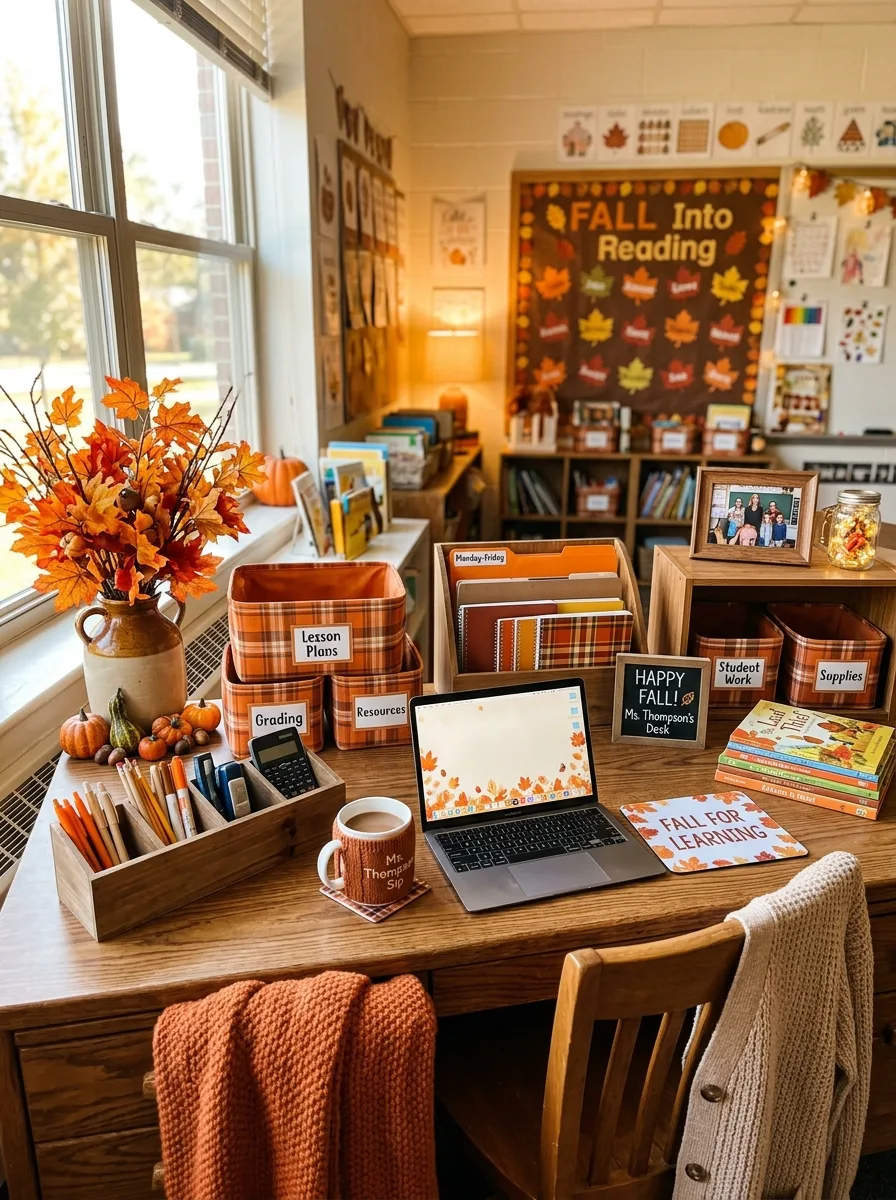
A seasonal color story — plaid, orange, warm brown — works because it’s temporary by design. Commit fully for the season: matching plaid bins labeled lesson plans, grading, and resources, a themed mug, a coordinating mouse pad, and let it all rotate out when the season changes.
A tiered wood organizer holds pens, a calculator, and sticky notes at the front of the desk, keeping small tools within reach without cluttering the main surface. Behind it, a mail-style sorter labeled Monday through Friday keeps the week’s handouts pre-sorted and ready to go.
Fresh seasonal branches in a simple stoneware vase do more for the mood of the desk than almost any purchased decor item, and they cost less than a single themed accessory.
A framed family photo earns its spot on a desk this full of function — one personal object, clearly placed, doesn’t compete with the organizational system around it.
Colorful Stool Round Table
A round table at the center of a classroom workspace does something rectangular desks can’t: it makes small-group work feel like a gathering instead of a lineup. Surround it with mismatched stools in a shared color family — jewel tones work well against a neutral floor — so the seating itself becomes part of the room’s personality.
Label black filing cabinets by subject in bold lettering, stacked along the back wall where they’re visible but not in the walking path. A small appliance like a microwave can share that same wall without looking out of place if it’s grouped with matching black hardware.
Hang a small collection of vintage-style oval frames above the storage as a quiet decorative moment in an otherwise fully functional room. A patterned rug underneath the round table grounds the whole seating area and signals it as a distinct zone from the rest of the classroom.
Keep a rolling cart nearby stocked with daily supplies, so the round table itself stays clear for whatever activity is happening on it that period.
Pegboard Wire Basket Wall
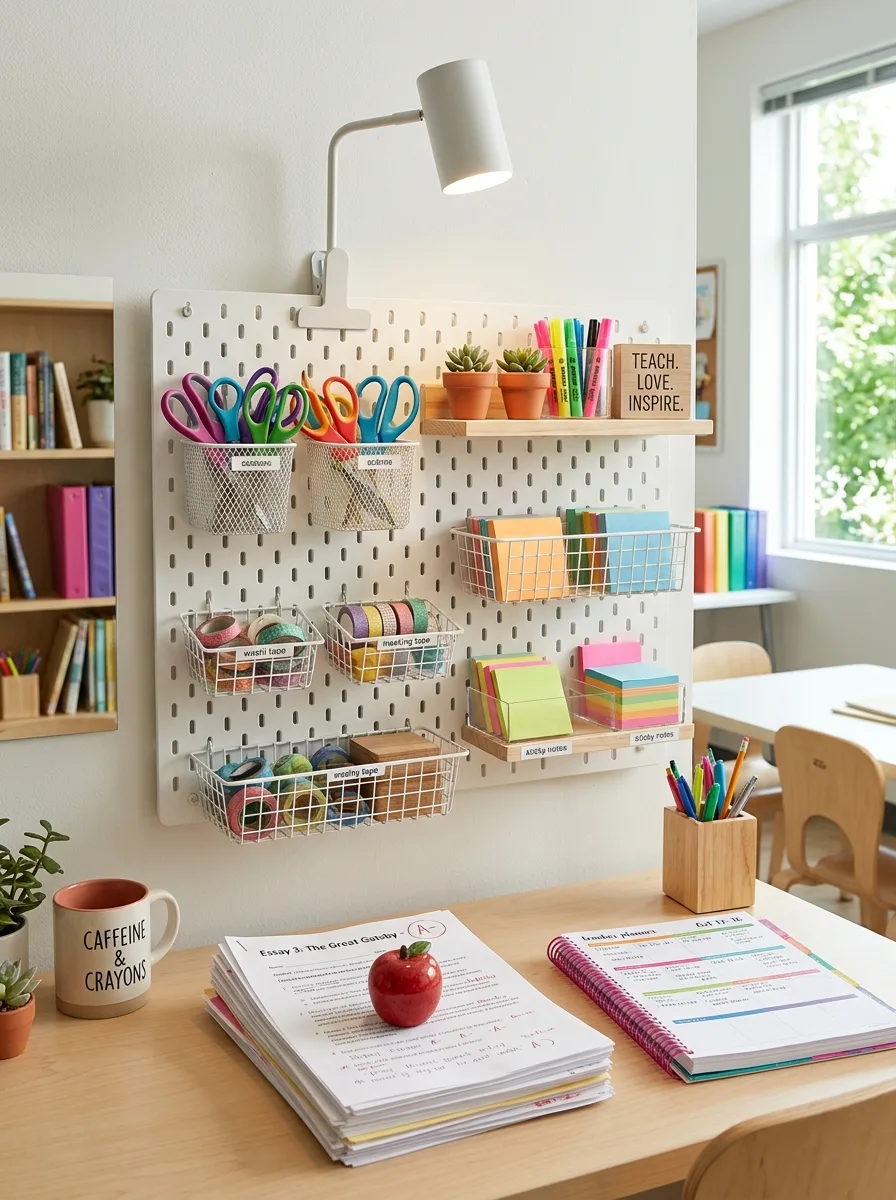
Mount a white pegboard directly above or beside the desk and hang wire baskets from it for anything that doesn’t need to live flat — scissors, washi tape, sticky notes, small supplies. This single change frees more usable desk surface than almost any drawer reorganization could, since it moves clutter off the horizontal plane entirely.
Add a small clip-on lamp directly to the pegboard rather than a separate desk lamp. It saves the one remaining inch of desk space a traditional lamp base would otherwise claim.
Group baskets by task, not by object type — a “cutting and taping” basket, a “sticky notes and labels” basket — so retrieving a whole task’s worth of supplies takes one motion instead of three.
A small wood block sign and two potted succulents on the top shelf are the only decor this wall needs. The baskets themselves, in bright organized rows, are already doing plenty of visual work.
Polka Dot Drawer Labels
A bold black-and-white polka dot fabric skirt or valance instantly upgrades a plain school desk without requiring any actual furniture replacement — it’s fabric, a staple gun, and an afternoon. Pair it with a matching chevron border on the nearby bulletin board so the pattern reads as a cohesive theme rather than a single decorated corner.
Label a stacked drawer unit by subject — reading, writing, spelling, language, math — so every worksheet and resource has an obvious, single home. This kind of subject-based labeling matters most in elementary classrooms juggling five or six distinct subjects a day.
A bright accent wall color, like the turquoise here, gives the whole desk area a mood that a standard cinderblock classroom wall never could on its own. Framed motivational posters nearby reinforce the color story without needing to match the polka dots exactly.
Keep a small tray of daily tools — tape, scissors, pens — on a rolling cart beside the desk instead of directly on it. In a desk this visually busy, an uncluttered surface is what keeps the whole setup from tipping into chaos.
Raised Monitor Cart System
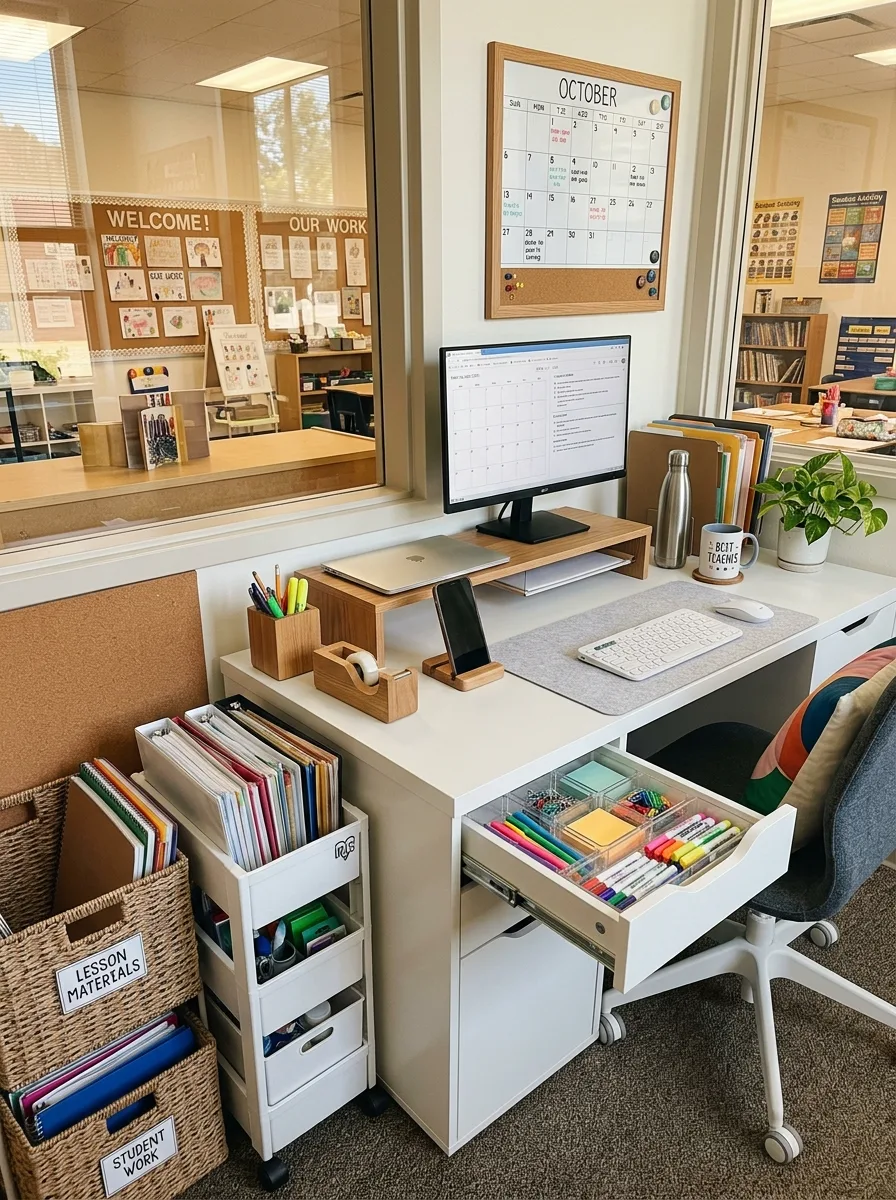
Set the monitor on a wood riser instead of directly on the desk, and slide a laptop underneath it in the freed-up space. This single change reclaims more desk surface than almost any other adjustment on this list, since a flat monitor base eats real estate you actually need for grading.
Pull in a rolling cart with drawers for supplies that don’t need to live on the desktop — extra pens, sticky notes, spare folders — and label each drawer by contents so nothing gets buried by week three.
Two labeled woven baskets on the floor beside the desk catch lesson materials and student work separately. Keep the labels legible from standing height, not just from the chair, since you’ll often be grabbing these mid-lesson while students are still in the room.
A small potted plant and a water bottle are the only purely personal objects this setup needs. Everything else on the desk should be able to justify its spot with a function.
Minimalist White Corner Desk
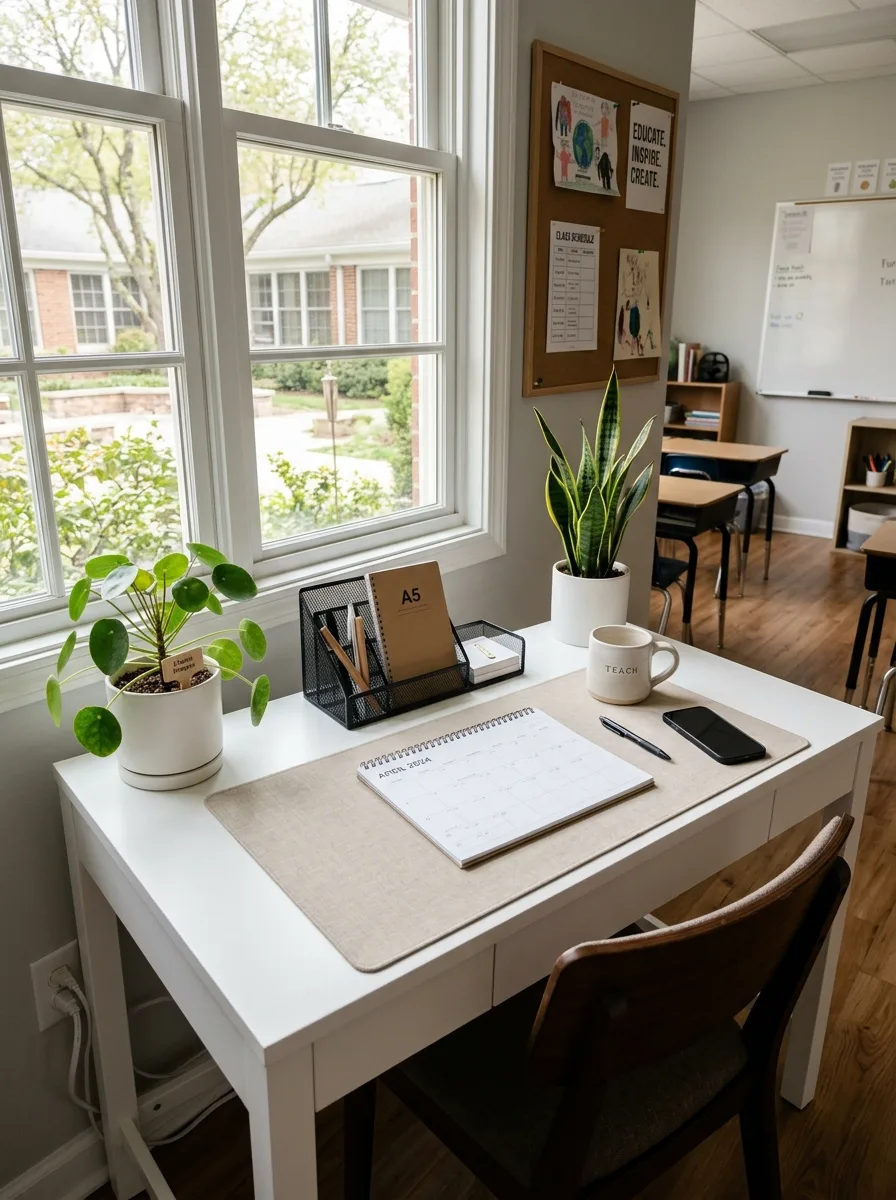
A plain white desk tucked into a window corner works because it does one thing extremely well: it gets out of the way. Skip decorative trim and ornate hardware entirely, and let the window light do the visual work instead.
A single mesh desktop organizer holds pens, a notepad, and business cards in fixed compartments — no loose pile, no digging. Pair it with a stack of two low-maintenance plants, a pothos or snake plant, positioned where they catch the window light without blocking your sightline to the room.
Keep a printed monthly calendar as the only paper on the desk surface at any given time. Everything else — lesson materials, files, the class roster — belongs in the shelving nearby, not in front of you while you’re working.
One ceramic mug with a short, plain phrase on it is the only piece of personality this desk needs. Minimalist doesn’t mean personality-free — it means personality gets exactly one object instead of ten.
Vintage Wood Letterboard Desk
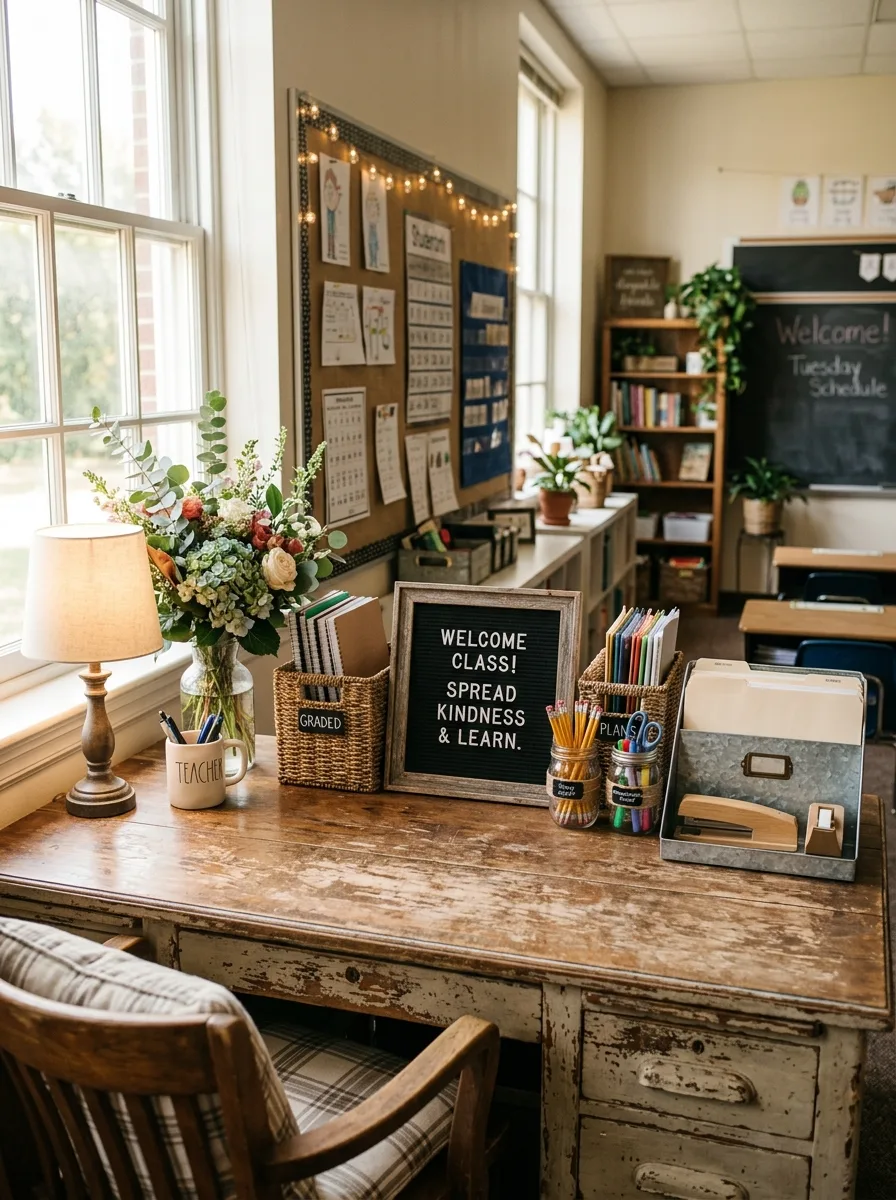
A weathered wood desk with visible wear is doing more character work than any new furniture piece could. Don’t refinish it — the chipped paint and worn edges are the whole appeal, especially against a room full of standard-issue school furniture.
A small letterboard with a rotating message — “Welcome Class! Spread Kindness & Learn.” this week, something else next month — gives the desk a living element that changes with the season instead of a static sign bolted in place.
String lights framing the bulletin board behind the desk turn a normal cork surface into something warmer, especially in a classroom with fluorescent overheads working against you all day. Two woven baskets, labeled simply, hold graded work and student folders side by side.
A fresh bouquet in a mason jar and a “Teacher” mug round out the personal touches. Keep the desk itself relatively spare — the wood and the wear are already carrying the aesthetic.
Macrame Wall Name Nook
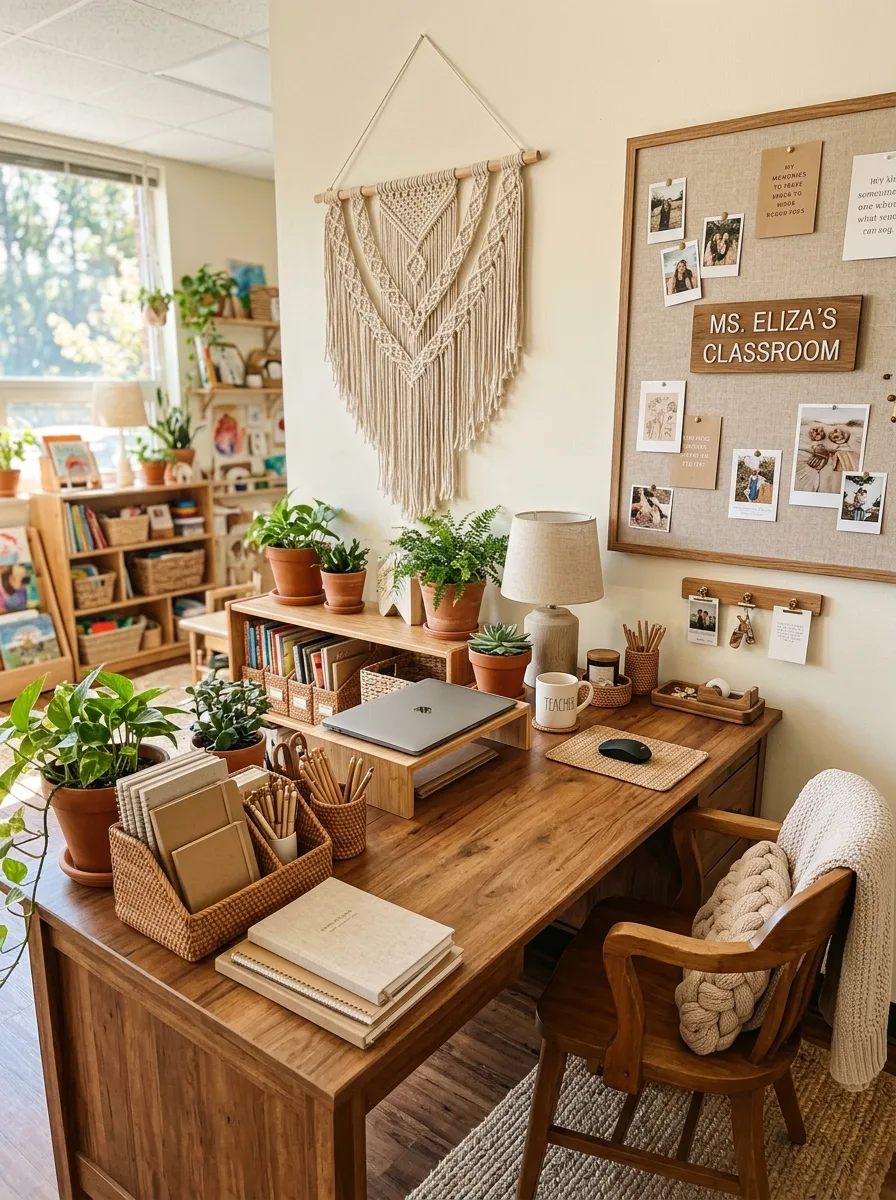
Hang a macrame wall piece directly above the desk to give an otherwise plain wall texture without adding a single shelf. It’s a one-time purchase that does more for the room’s warmth than almost any other wall decor option available to a teacher on a budget.
Mount a fabric pinboard beside it with a wood nameplate sign reading “Ms. [Name]’s Classroom” pinned at the center, surrounded by photos and small notes. This is the single most effective way to make a shared room read as unmistakably yours the moment someone walks in.
Layer plants at two different heights on an open shelf beside the desk — taller varieties in the back, trailing pothos in front — so the corner reads as green and lived-in rather than sparsely decorated.
Keep the desk surface itself warm-toned wood with minimal added color; the wall behind it is already doing the personality work, and the desk just needs to stay functional underneath it.
Framed Quote Binder Wall
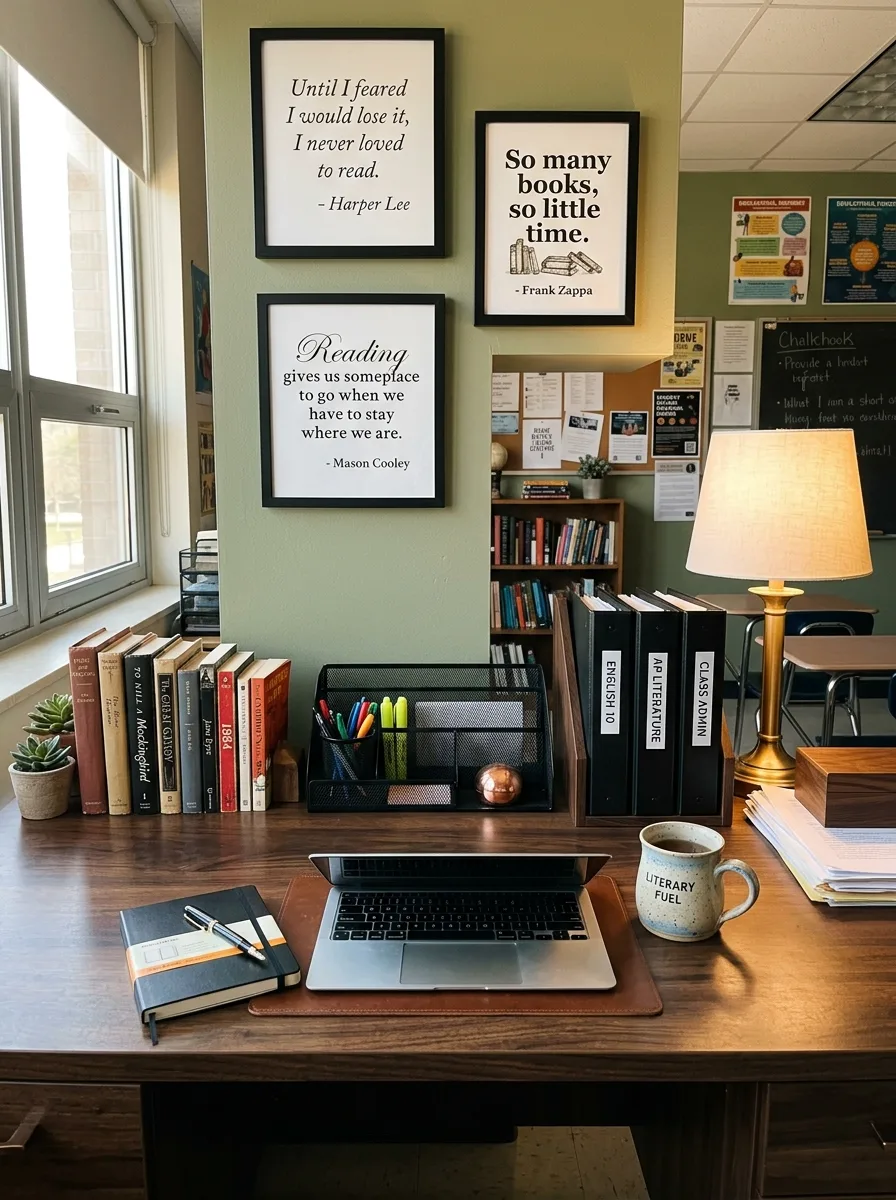
Frame two or three short literary quotes and hang them directly above eye level at the desk, where you’ll actually see them during a rough grading session. Choose quotes that mean something to you specifically rather than generic classroom decor — this only works as a personal touch if it’s genuinely personal.
Label binders by subject and stand them upright in a wood file organizer rather than stacking them flat. Upright labeled binders are legible from across the room, which matters when you need “AP Literature” in your hand in the next thirty seconds, not after digging through a stack.
A leather desk mat under the laptop gives the whole setup a slightly more polished, less classroom-supply-closet feel, and it’s inexpensive enough to justify even on a teacher’s budget.
Keep a short stack of well-loved books, spines visible, near the edge of the desk. A shelf of books you’ve actually read signals more about the room than any poster could.
Lavender Accent Binder Row
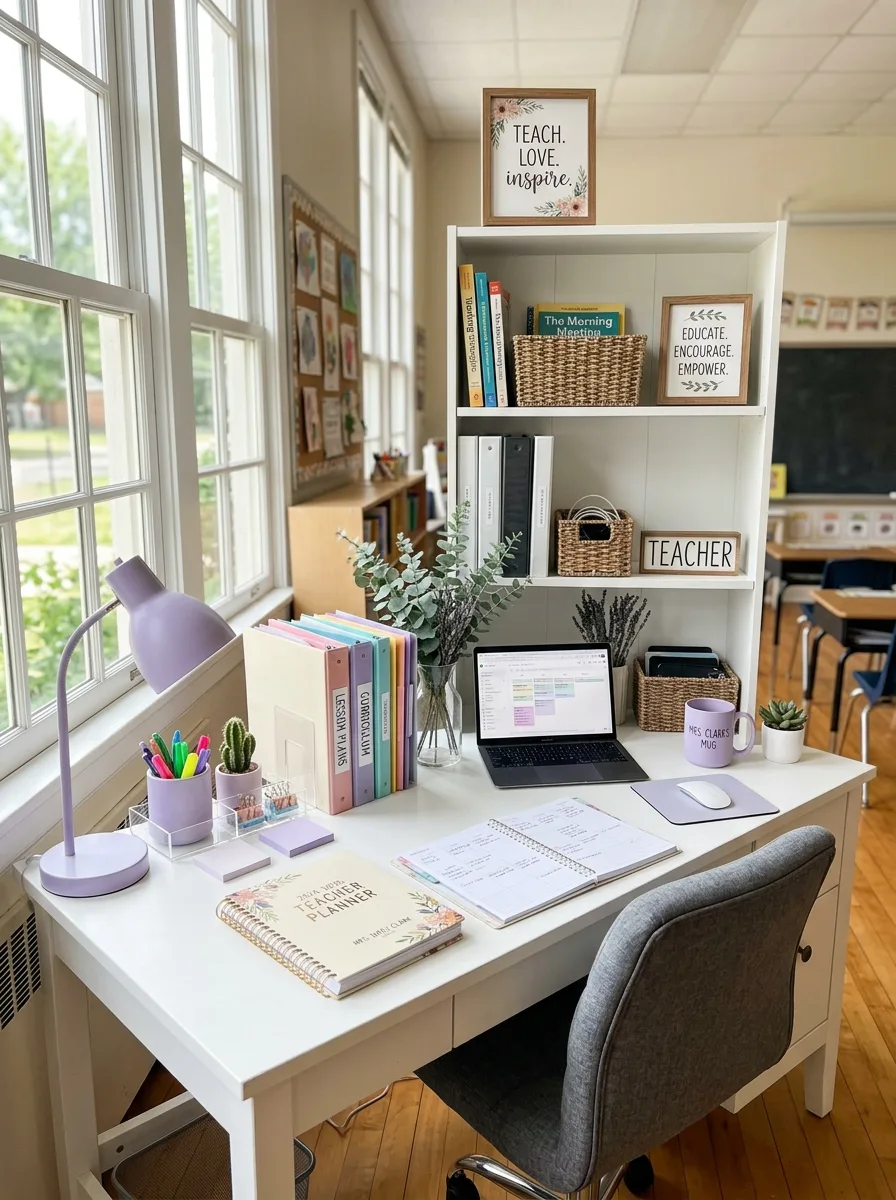
Pick one saturated accent color and repeat it everywhere small: the lamp, the pen cups, the mouse, the sticky notes. A lavender teacher desk works because the color shows up in six small places instead of one big one, which reads as intentional rather than themed.
Stand color-coded, labeled binders upright along the back edge of the desk — lesson plans, curriculum, and beyond — so the most-referenced documents are always in the same visual row, never buried in a drawer.
A small vase of eucalyptus beside the laptop softens all the plastic and metal office supplies with one organic element. Keep a woven basket on the shelf above for anything that doesn’t have a binder home yet — headphones, chargers, extra supplies.
A framed sign with a short teaching mantra sits above the shelf, facing the desk rather than the room, since its real job is reminding you, not impressing visitors.
Linen Pinboard Nameplate Wall
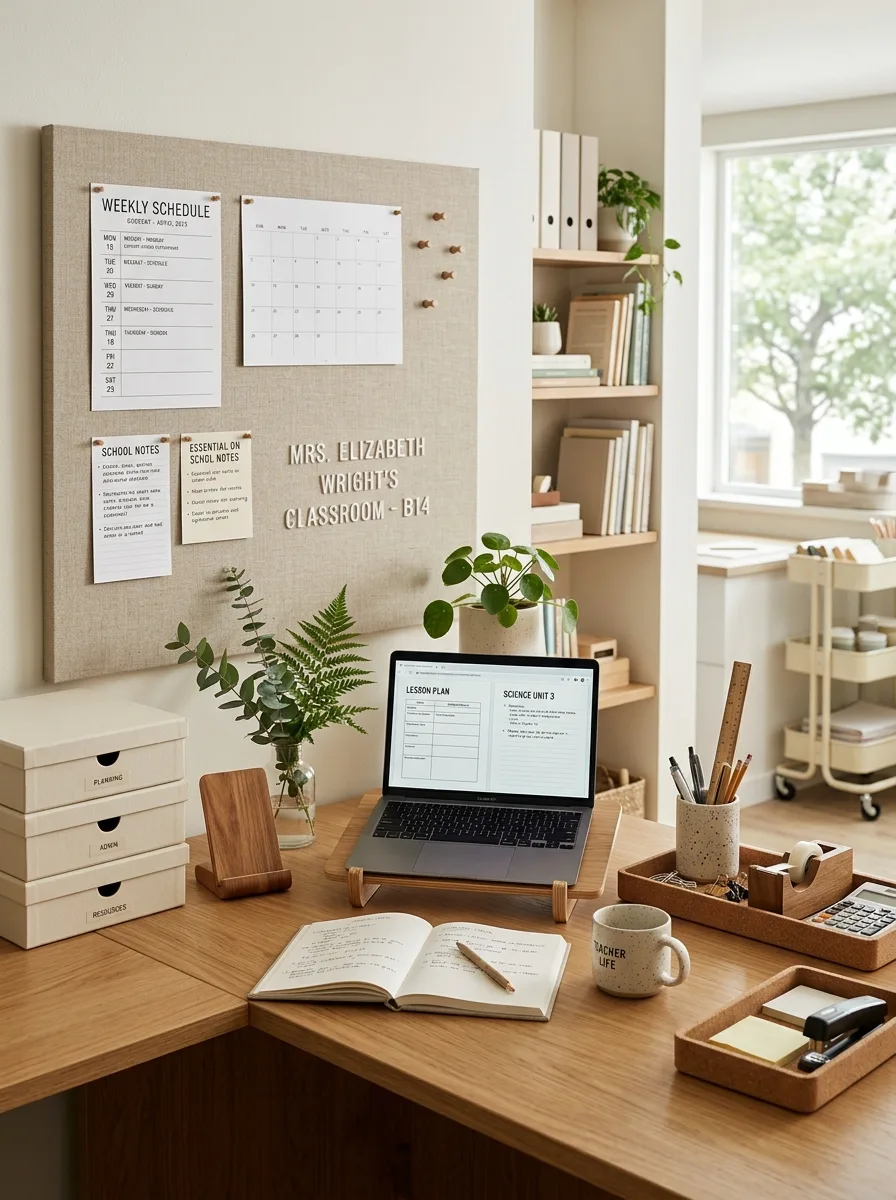
A fabric-covered pinboard in a neutral linen tone gives a desk wall texture without adding any actual clutter — it’s a soft, quiet backdrop for a weekly schedule, a calendar, and a few handwritten notes pinned directly to the fabric.
Spell your name and room number out in small dimensional letters mounted directly to the board rather than printed on paper. It costs a little more upfront and looks permanent in a way a paper sign never quite manages.
A trio of matching wood organizers on the desk — one for the phone stand, one for pens, one for tape and clips — keeps small tools grouped without a single loose item rolling around the surface. A wood laptop stand elevates the screen to eye level, which matters for anyone spending hours a day looking at it.
Stack labeled storage boxes on the floor beside the desk for planning, admin, and resources. Keeping them off the desk surface and at floor level frees the entire desktop for actual daily work.
Labeled Clear Drawer Stack
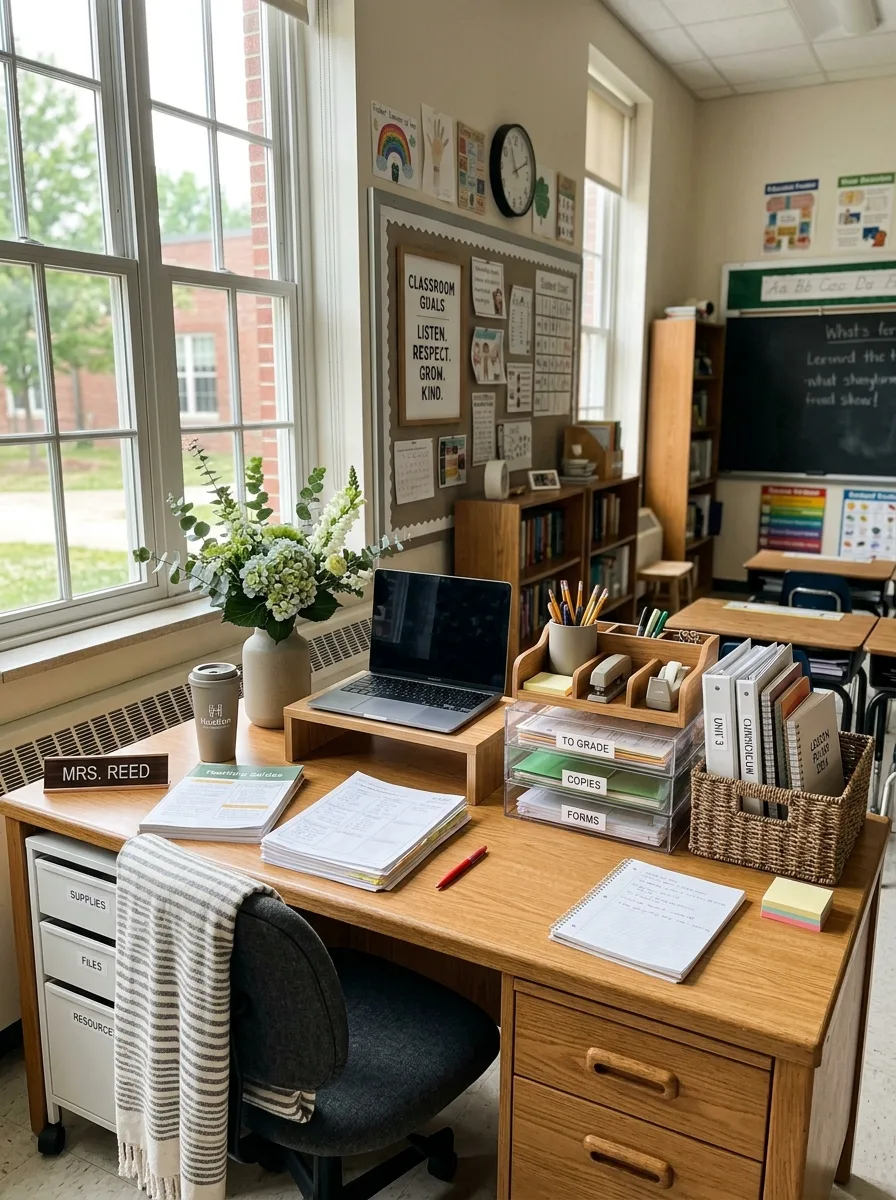
A stacked set of clear drawers, each labeled by content — to grade, copies, forms — solves the single biggest failure point of a teacher desk: papers that are almost sorted but not quite. Clear drawers remove the guessing entirely, since you can see what’s inside without opening anything.
A wood mail-style organizer beside it holds pens, a stapler, and tape in fixed slots, keeping daily tools from drifting into the paper drawers below. A woven basket on the desk corner catches the current unit’s materials, ready to grab without digging through a filing cabinet.
A wood nameplate sign at the desk’s edge does the same job it always does — making a shared classroom desk unmistakably someone’s. Position it facing the door, not the chair, so it’s the first thing anyone entering the room actually sees.
Keep flowers in a simple ceramic vase rather than anything elaborate. In a desk this functionally organized, an elaborate centerpiece competes with the system instead of complementing it.
Turn In To Grade Trays
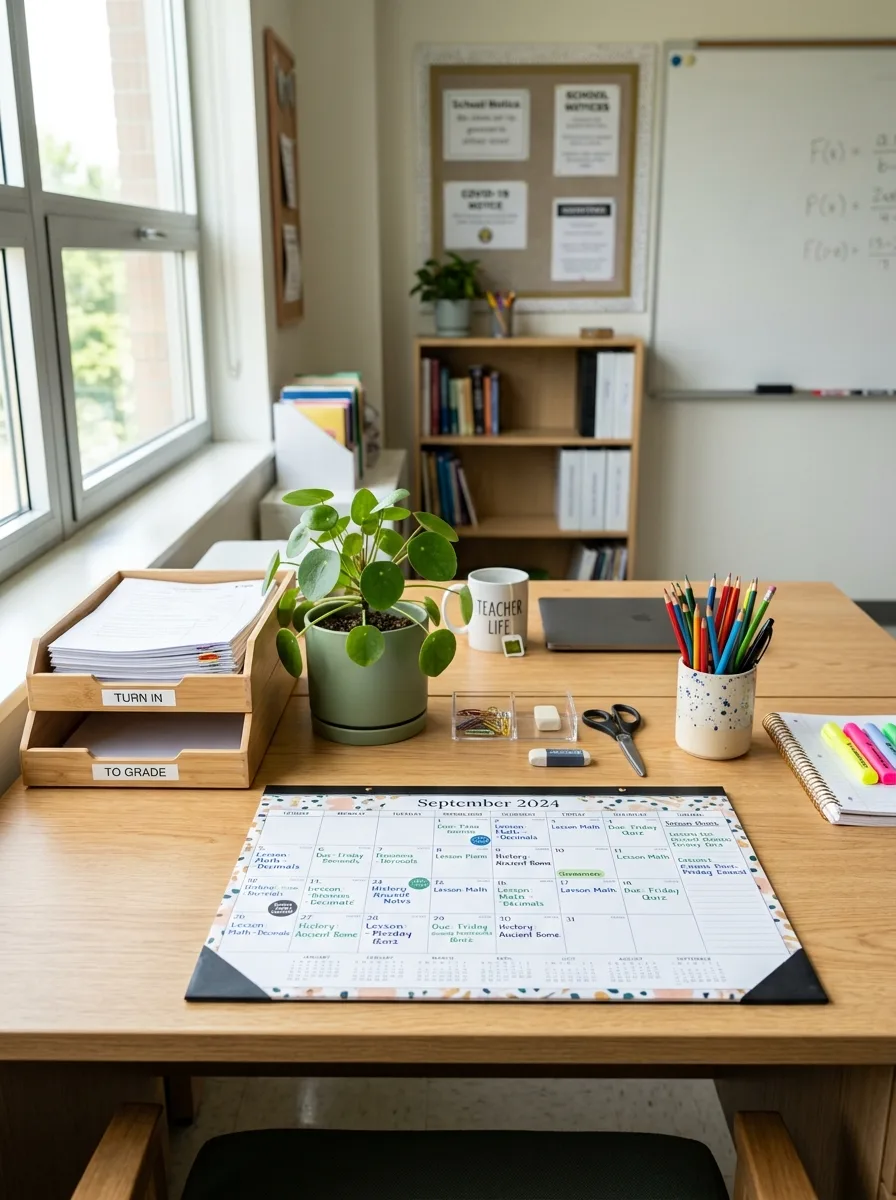
Two labeled wood trays, stacked directly on the desk and marked simply “turn in” and “to grade,” solve the single most common teacher desk failure: a growing pile of student work with no clear next step. The labels alone do most of the organizing — you don’t need a complicated system, you need two clearly different boxes.
A patterned desk calendar mat underneath the laptop keeps the month’s schedule visible at all times without requiring a separate wall calendar glance. Color-code entries by subject directly on the mat for an at-a-glance week overview.
A small cup of colored pencils and a potted plant round out the desk without adding clutter — both are functional, and neither competes with the tray system for attention.
Keep a small tray of paperclips and a whiteboard eraser at arm’s reach beside the trays. Small tools that get used constantly should never require opening a drawer.
Hanging Hook Desk Side
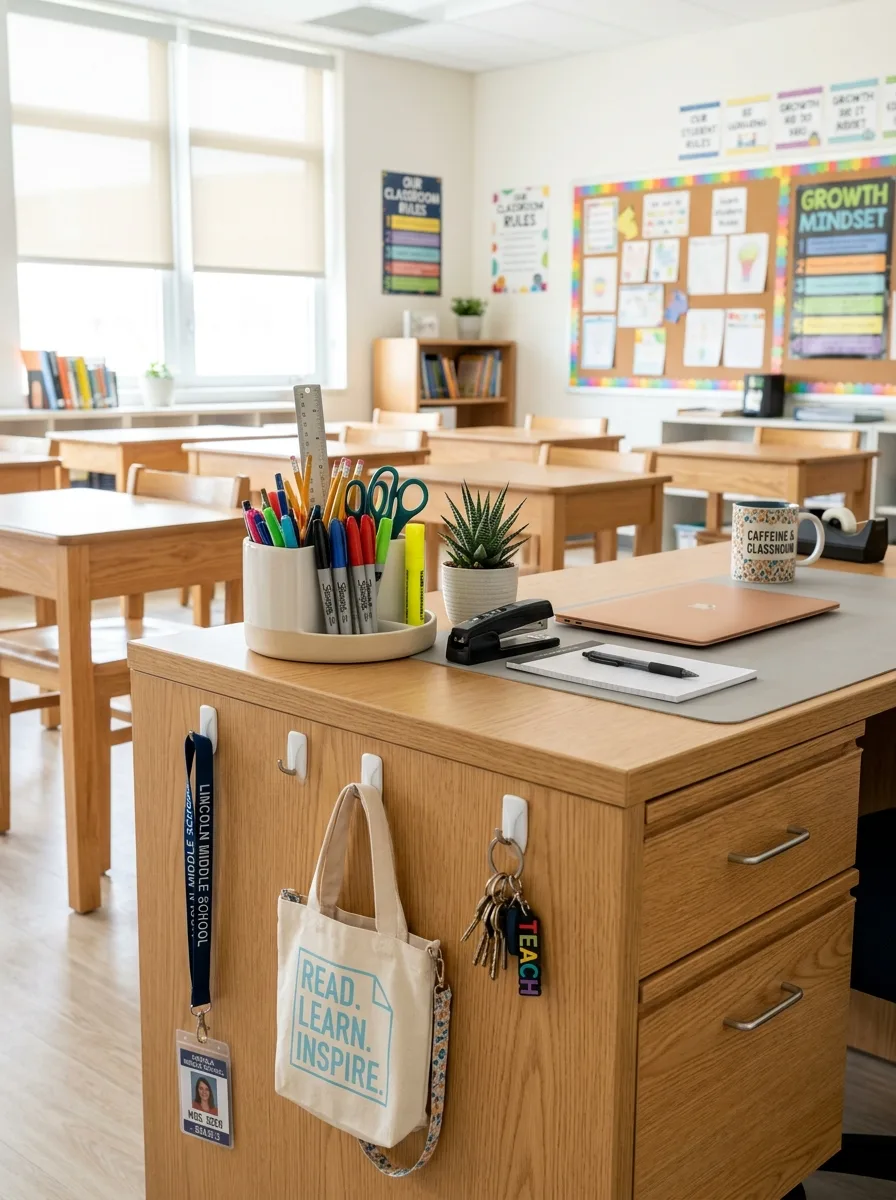
Mount a short row of hooks directly to the side panel of the desk for a lanyard, a tote bag, and keys — items that would otherwise end up looped over a chair back or lost in a bag on the floor. This is the single most overlooked storage surface in most classrooms: the vertical side of the desk itself.
A round pen cup holding a mix of markers, scissors, and highlighters sits at the desk’s front corner, within reach without requiring you to stand. A small potted succulent beside it softens what’s otherwise a fairly utilitarian corner.
Keep a stapler and a notepad as the only other objects on this section of the desk. The hooks are doing the storage work here — the surface itself should stay clear enough to actually use.
A canvas tote with a short, readable phrase hung at eye level does double duty as both storage and the kind of small personal statement that makes a shared desk feel like yours.
Weekday File Sorter
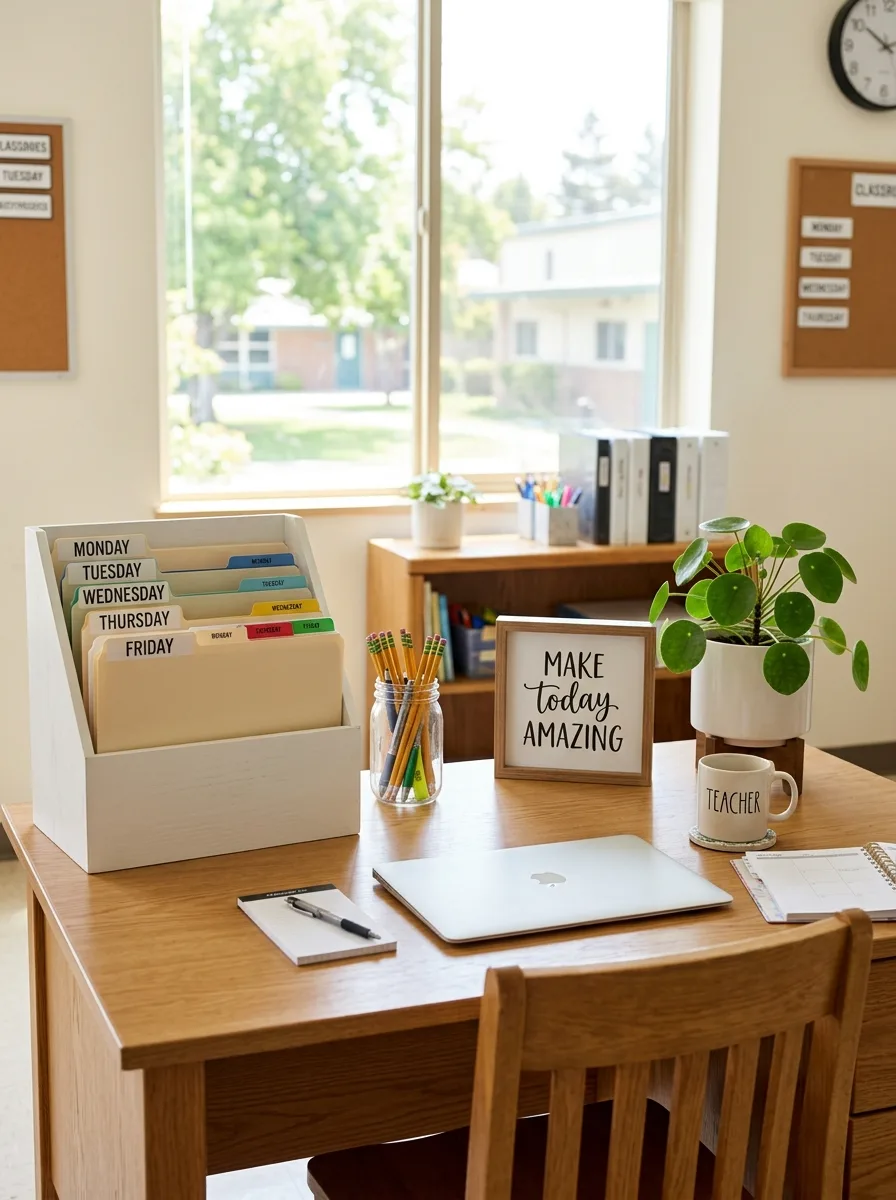
A file sorter with five labeled slots — Monday through Friday — turns weekly planning into a physical, visible system instead of a mental one you’re trying to hold together. Load each day’s handouts and materials into its slot at the start of the week, and the desk resets itself automatically no matter how chaotic any single day gets.
A small framed sign with a short, positive phrase sits beside the sorter, facing you rather than the room — a five-second read on the way to grab Thursday’s folder is a small thing that adds up over a school year.
Keep a jar of pencils and a single potted plant as the desk’s only other objects. A weekday sorter this functional doesn’t need competing decor; it needs a clear path to the next folder.
A ceramic mug with your role printed plainly on it — nothing elaborate — finishes the desk without adding anything you’d need to dust around.
Mesh Bin Grading Station
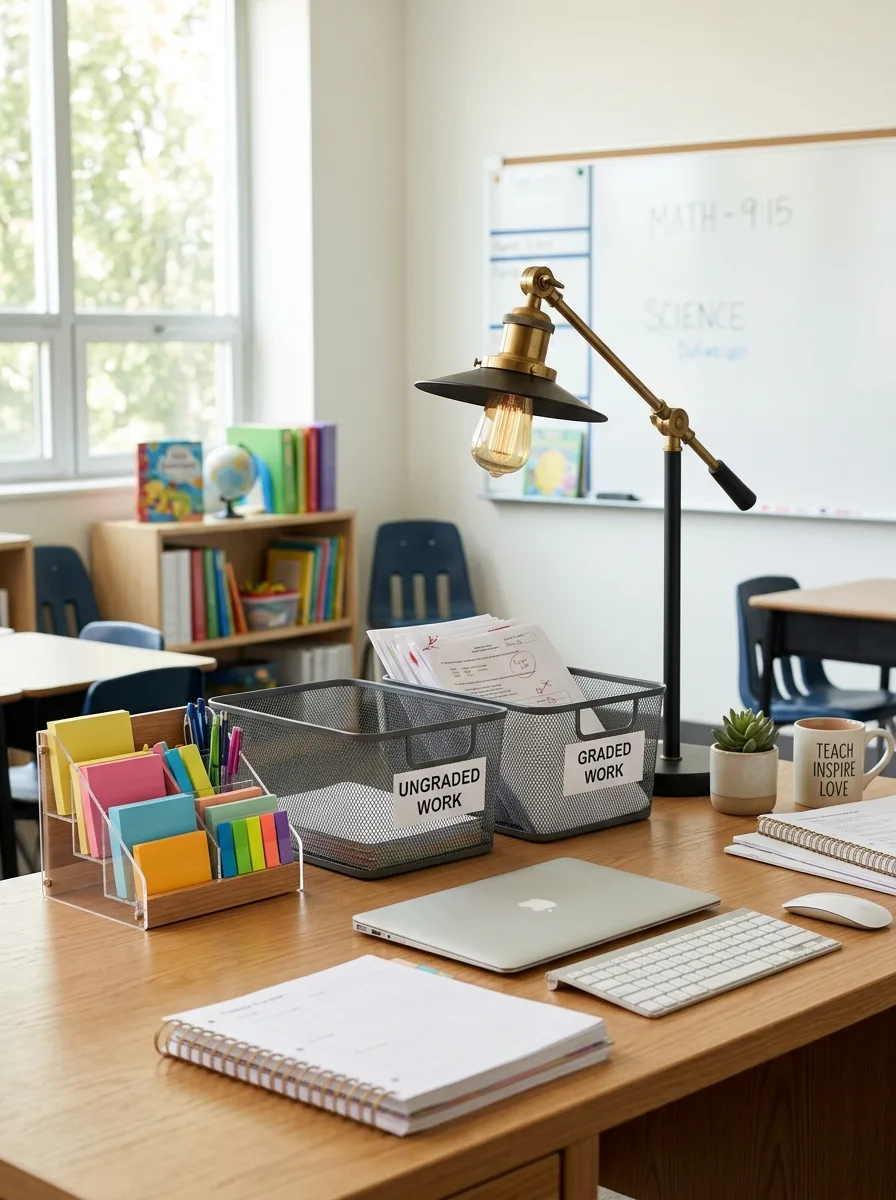
Two mesh bins, labeled “ungraded work” and “graded work” in plain block letters, sit side by side and solve the single most common teacher desk failure with almost no effort: a stack of student work that’s neither obviously done nor obviously pending.
An adjustable brass task lamp positioned to swing directly over the bins gives this specific corner its own light source, independent from the room’s overhead fluorescents — useful for grading sessions that run past when natural light fades.
A small acrylic organizer with color-coded sticky note pads sits within arm’s reach, so flagging a paper for follow-up takes one motion instead of a trip across the room for supplies.
Keep a small potted succulent and a plain mug as the only personal touches at this station. A grading corner works best when it stays visually quiet — the two labeled bins are the whole point.
Named Student Mail Cubby
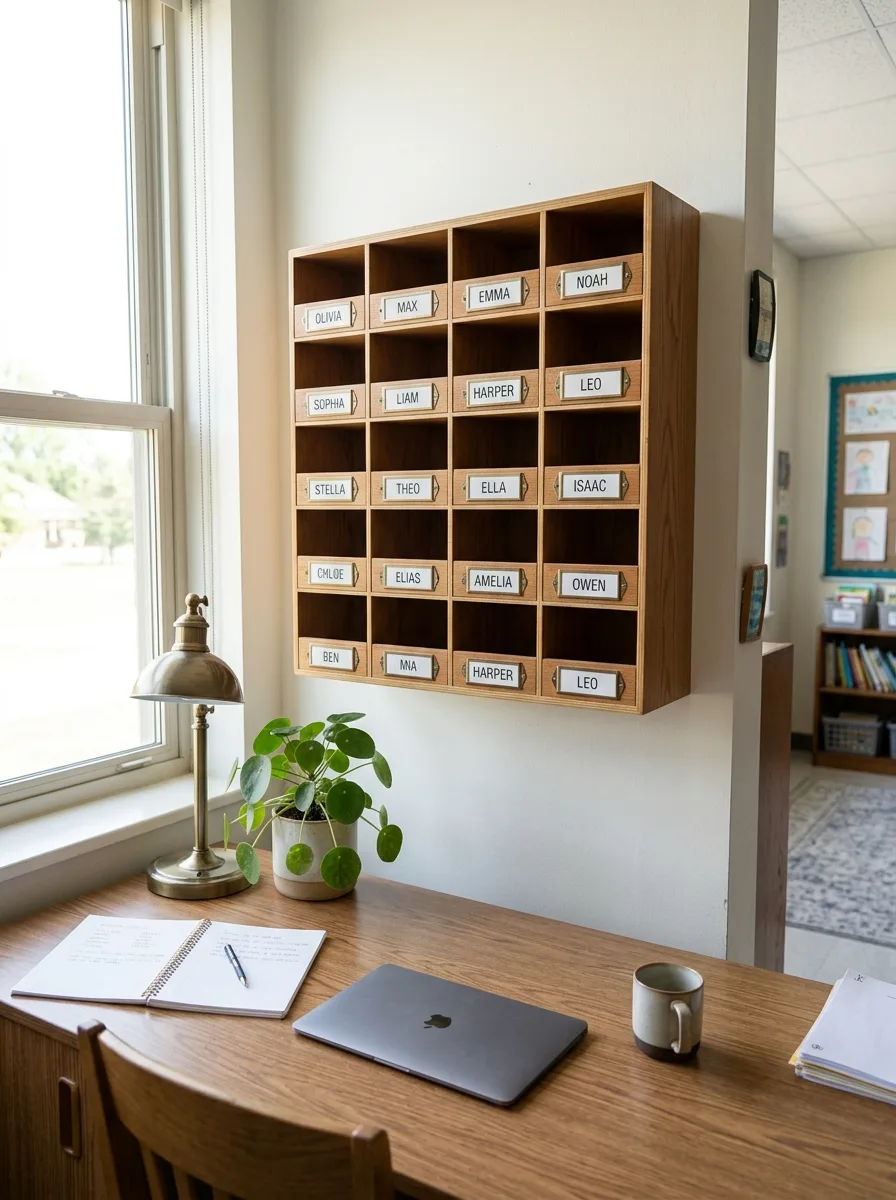
A wall-mounted wood cubby system with a labeled slot for every student’s name turns handout distribution and returned work into a five-second task instead of calling names one at a time. Mount it at a height students can reach themselves if you want them retrieving their own folders.
Use printed label holders rather than handwritten tags — they’re swappable at the start of each year without repainting or relabeling the whole unit, which matters when the names change every September.
A brass desk lamp and a single potted plant on the desk below keep the area functional without competing with the cubby wall, which is already doing plenty of visual work with twenty-plus labeled slots.
Keep a notebook and pen at the desk directly below the cubbies for quick notes about which folders still need filling. The system only works if restocking it stays a five-minute task, not a scavenger hunt.
Final Thoughts
None of these desks got organized in a single weekend, and none of them stayed perfect through June without upkeep.
What they have in common isn’t taste. It’s that somebody decided, before the first day of school, exactly where a graded quiz goes and exactly where an ungraded one doesn’t. Everything else — the plaid bins, the pegboard, the color-coded binders — is just that one decision, repeated in a dozen small forms.
A teacher desk isn’t a display. It’s the busiest six square feet in the building, and it deserves a system built for the volume, not a Pinterest board built for a photo.
Pick two labels. Start there. The rest of the makeover follows from that one small decision.