
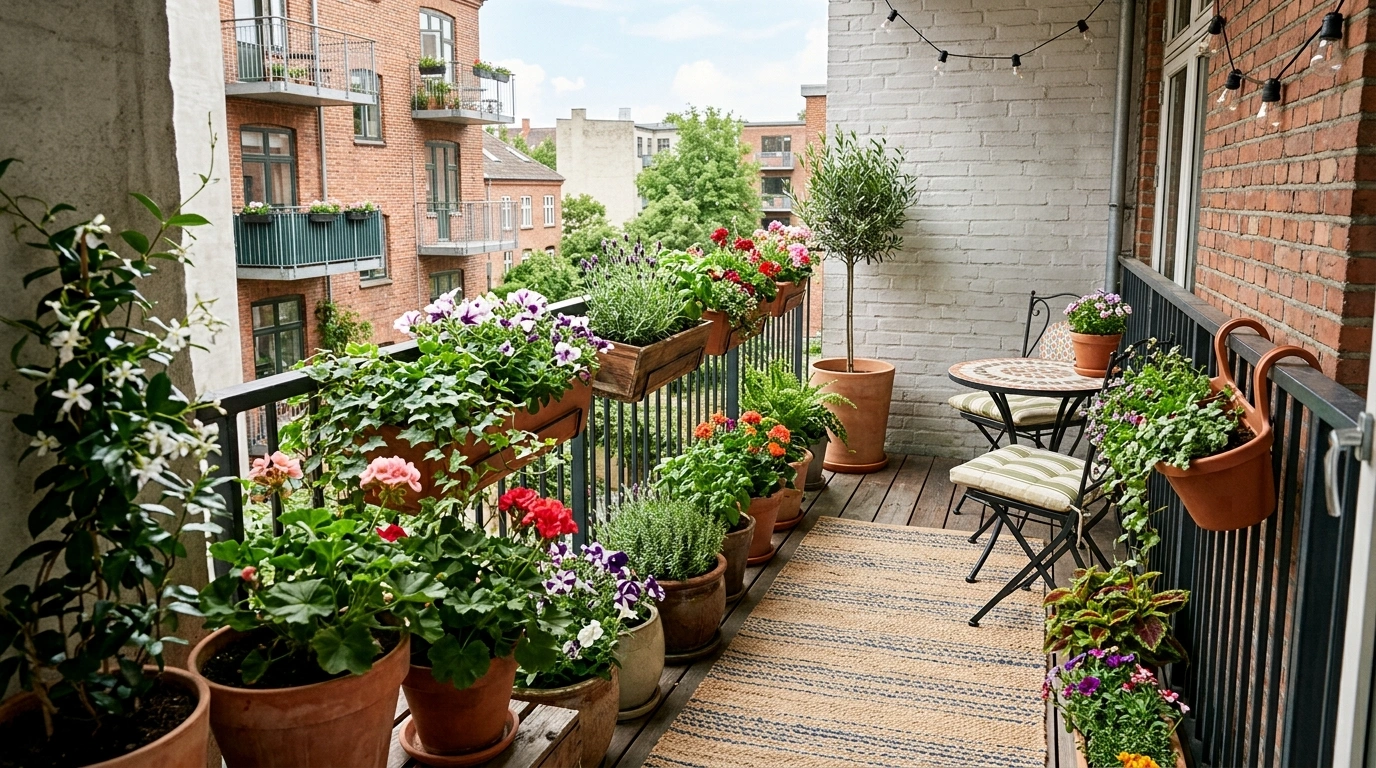
A balcony can have beautiful plants and still look strangely unfinished. The problem usually isn’t the plants themselves. It’s what happens when every pot is chosen separately, every corner gets filled, and the furniture gets squeezed into whatever space survives.
That is where most balcony planter ideas fall short. Seeing a pretty planter by itself doesn’t tell you what the rest of the balcony should look like. A finished outdoor space needs a relationship between the greenery, containers, furniture, flooring, privacy, color, and the bits of empty space that stop everything from feeling cramped.
The designs below take a different approach. Each one is a complete balcony composition with its own visual language. Some are lush and layered, some are quiet and architectural, and some make a tiny footprint work surprisingly hard. The goal isn’t to collect more pots. It’s to find a finished look that makes the whole balcony finally feel like it had a plan.
The Balcony Test
Balcony Planter Ideas
Hanging Rail Mason Jar Garden
When floor space is an absolute zero, look straight up at the railing. Hanging clear mason jars with twine creates a transparent, floating herb line that captures the light without stealing an inch of legroom.
The secret is keeping the plantings light and functional. Fresh basil and rosemary double as kitchen essentials and delicate green fringe, proving that tiny jars can pack a serious aesthetic punch.
Just remember to leave enough space between each hanging vessel so the arrangement breathes. A neat row of suspended greenery turns an ordinary black metal railing into a custom botanical display.
Slim Mediterranean Balcony With Terracotta Floor Planters
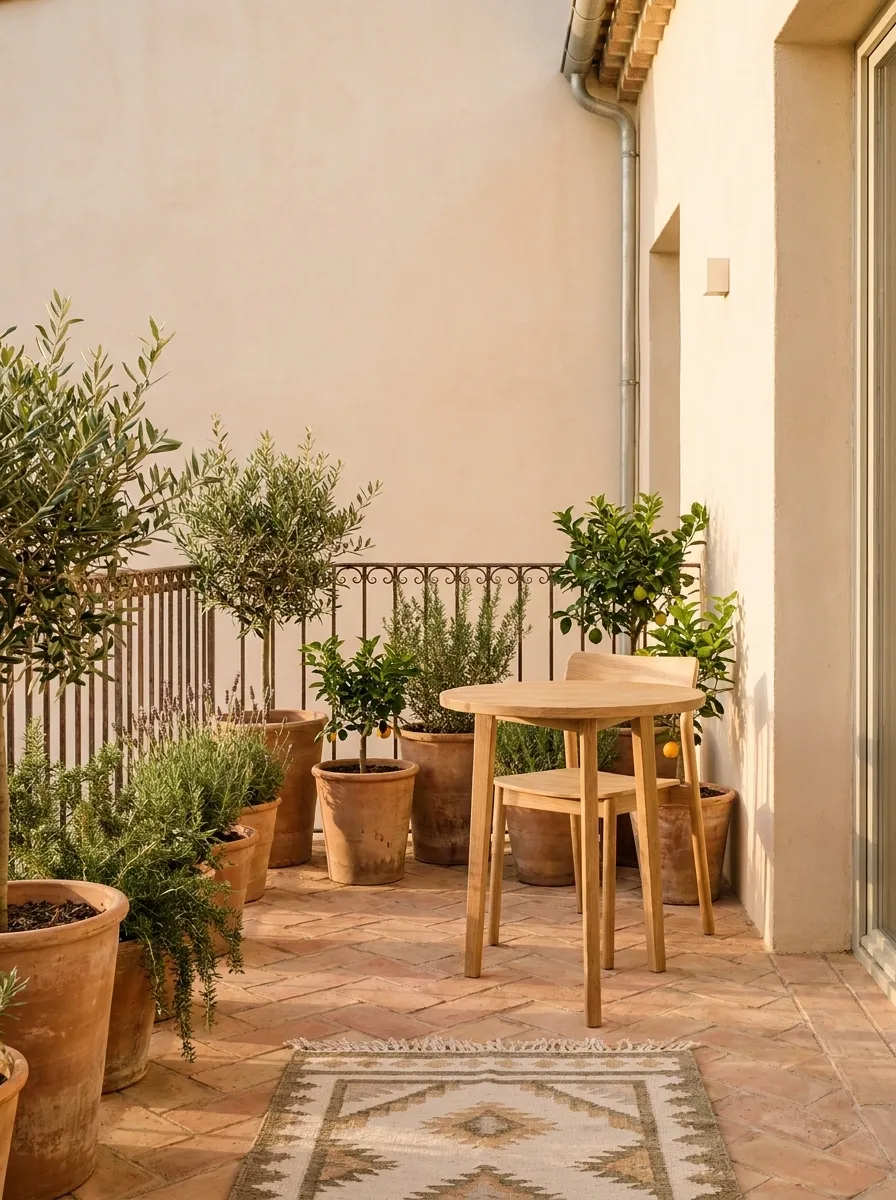
Terracotta, pale walls, olive-toned greenery, and a tiny café table give this balcony a warm Mediterranean character without turning the floor into a maze of pots. The containers stay concentrated along the outer edge, leaving the center open enough for a chair, a table, and an actual human being.
The softness comes from the mix of clay, natural wood, and leafy greens. A small patterned outdoor rug adds another layer, but the pattern stays restrained so the planters remain the stars.
The important part is the repetition. Similar terracotta tones make several separate containers read as one visual border.
Vertical Ladder Planter Oasis
Maximizing vertical square footage changes everything for a narrow balcony. A multi-tiered wooden shelf structure packs an astonishing amount of greenery into a single footprint, turning a dead wall into a flourishing multi-level garden.
The composition works because it plays with depth and height. Trailing vines, potted shrubs, and climbing blooms share the space without feeling crowded, while rustic wood tones add instant warmth against neutral exterior walls.
Keep a cozy chair and classic gardening tools nearby to complete the look. It transforms a compact outdoor corner into an immersive, living room-style sanctuary where plants take center stage.
Lush Green Balcony Framed by Tall Corner Planters
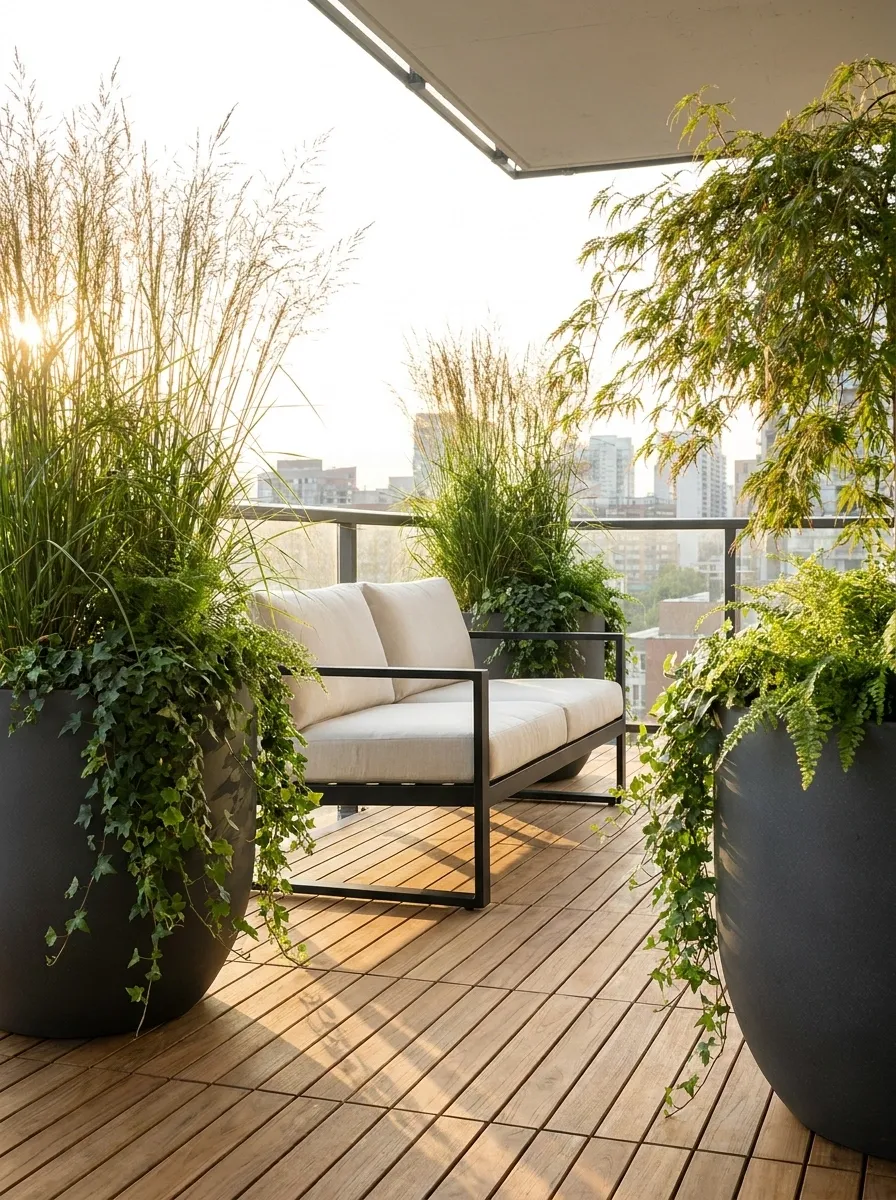
Two tall planters at opposite corners change the whole feeling of a small balcony. Instead of placing greenery in a line and calling it done, the plants create a frame around the seating area. The middle stays intentionally quieter.
The taller foliage should rise above the furniture, while shorter plants fill the lower level around the corners. That change in height makes the space feel deeper and gives the balcony a garden-room quality without filling every available inch.
This works especially well when the view is open but the sides feel exposed. The planting creates definition without building a solid wall. And importantly, the center remains usable. Revolutionary concept: being able to walk across your own balcony.
Textured Terrazzo Balcony Planters
Speckled terrazzo long planters bring a sophisticated, modern edge to an open-air balcony. The subtle texture catches the afternoon sun while substantial tropical foliage and vibrant colorful accents pop against the clean, pale containers.
Positioning these substantial boxes along the perimeter creates a defined boundary that feels structured yet completely natural. The sturdy shapes anchor the composition so the vibrant plants can sprawl upward and outward freely.
Pairing these sleek troughs with a minimal color palette ensures the space looks intentional. The result is a crisp, high-end hotel vibe achieved in a surprisingly compact footprint.
Modern Black Planters With Warm Wood Seating
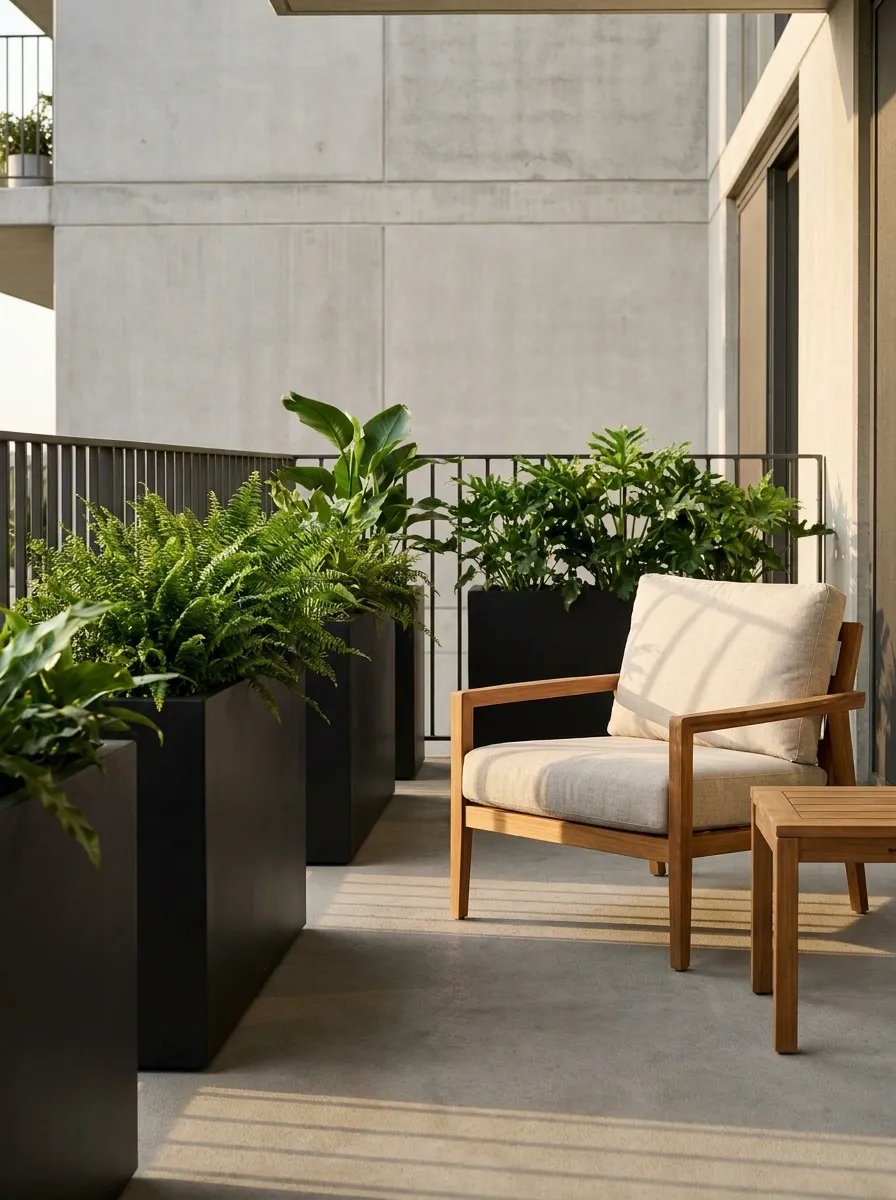
Matte black rectangular planters bring a crisp architectural line to this balcony, while warm wood furniture stops the composition from feeling cold. The planting stays leafy and relatively simple, allowing the container shape to reinforce the clean structure of the space.
The best part of this direction is the contrast. Black gives the balcony definition, wood introduces warmth, and greenery softens both. Beige or oatmeal cushions add another quiet layer without competing with the materials.
Keep the furniture visually light. A slim chair and compact table work better than oversized outdoor pieces here. The entire point is that the balcony feels deliberate, not like a black planter showroom with a chair squeezed into the leftover corner.
Cozy Bohemian Pot Cluster
This balcony embraces an eclectic mix of styles by clustering varied ceramic pots right on the floor. Bold vertical flowers, trailing foliage, and compact green shrubs share the space with a striking graphic rug and a sleek black privacy screen overhead.
The magic lies in the sheer variety of heights and leaf shapes. Instead of matching everything, the arrangement relies on a cohesive earthy color palette to keep the collection looking curated rather than chaotic.
It is all about creating a lush, jungle-like atmosphere where every square inch tells a story. Just keep a clear walking path so the collection feels abundant instead of trapping you in your own living green maze.
Bohemian Balcony Garden With Mixed Ceramic Containers
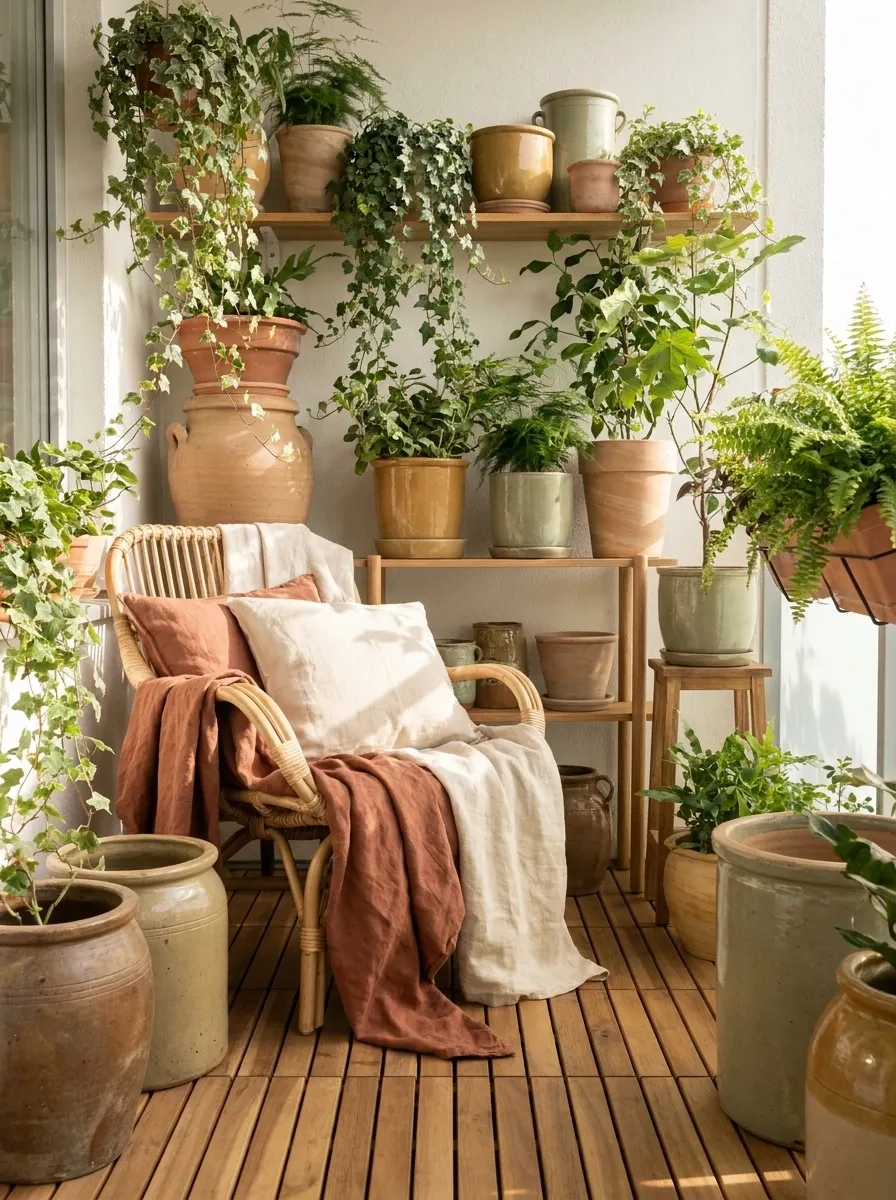
This balcony leans into variation instead of fighting it. Earthy ceramic containers in slightly different shapes surround a low lounge chair, while trailing greenery softens the edges and woven textures fill in the warm, relaxed character.
The composition feels collected rather than overly matched, but there is still a visual thread running through everything. The ceramics stay within a narrow earthy range, the furniture stays natural, and the plants provide most of the color.
The secret is knowing where to stop. A bohemian balcony can handle more variation than a minimalist one, but every surface does not need a new object. Once the floor starts looking like a flea market checkout line, the edit is overdue.
Illuminated Vertical Plant Stand
A curved wooden plant stand with integrated lighting turns a dark corner into the absolute star of the balcony. Tiered shelves hold everything from trailing ferns to bold snake plants, while warm LED strips make the entire green wall glow after dark.
Pairing this stunning living display with a chic woven lounge chair and a tiny accent table creates an irresistible evening reading nook. The lighting gives the greenery an effortless, high-end gallery feel.
The layout proves that you do not need a massive yard to build a layered garden room. Every plant has its designated illuminated spot, leaving the center of the balcony completely open and breezy.
Tiny Balcony With a Continuous Green Rail Edge
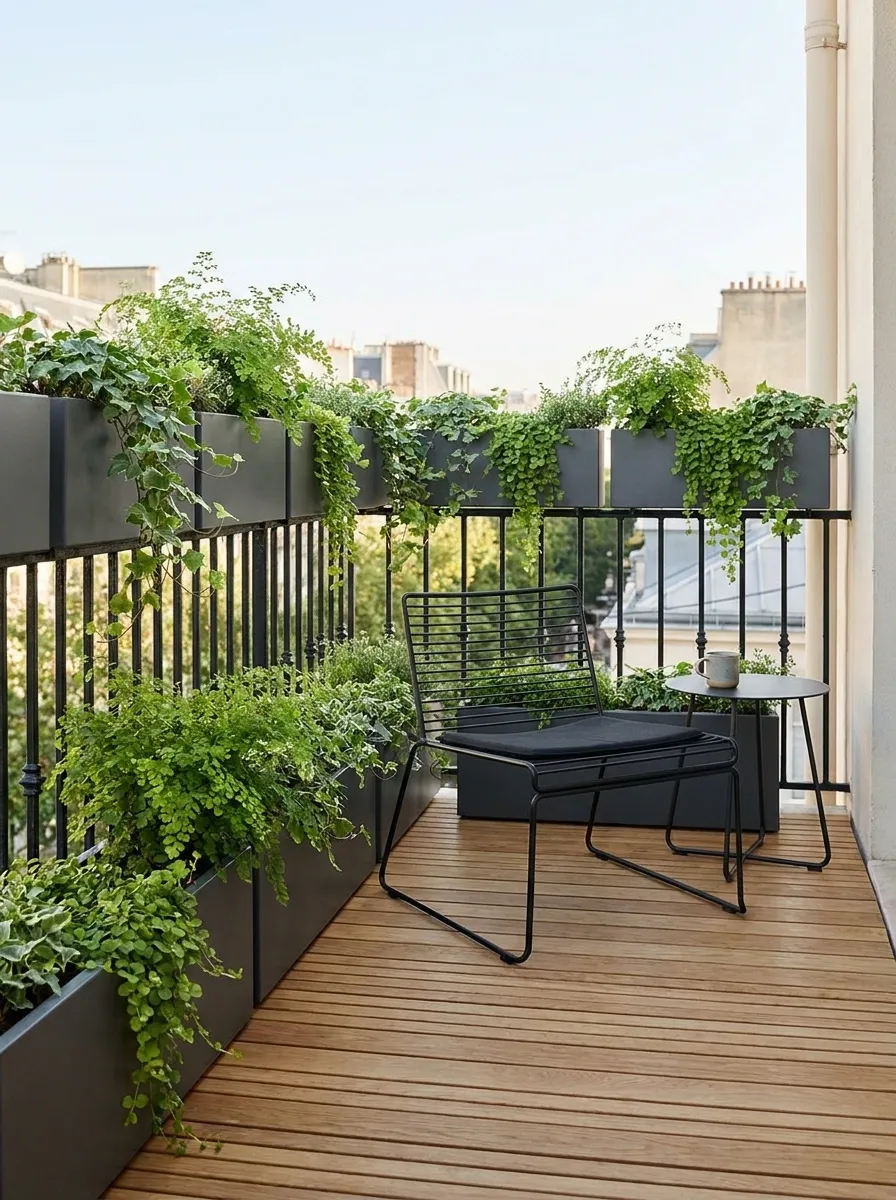
When floor space is painfully limited, moving the planting to the balcony perimeter changes everything. Matching rail planters create one continuous green edge, while a slim chair and tiny side table stay comfortably inside the remaining footprint.
The visual trick is consistency. Instead of five unrelated containers sitting at random heights, the repeated rail planting reads almost like one long garden border. That makes the balcony feel wider and more finished.
The open floor matters just as much as the greenery. Tiny spaces need somewhere for the eye to rest, and somewhere for feet to exist. Revolutionary, apparently.
Choose plants that create a soft, full edge without becoming so dense that the railing feels visually heavy. The goal is a green frame around the balcony, not a hedge with a chair trapped behind it.
White Balcony With Lavender and Pale Stone Planters
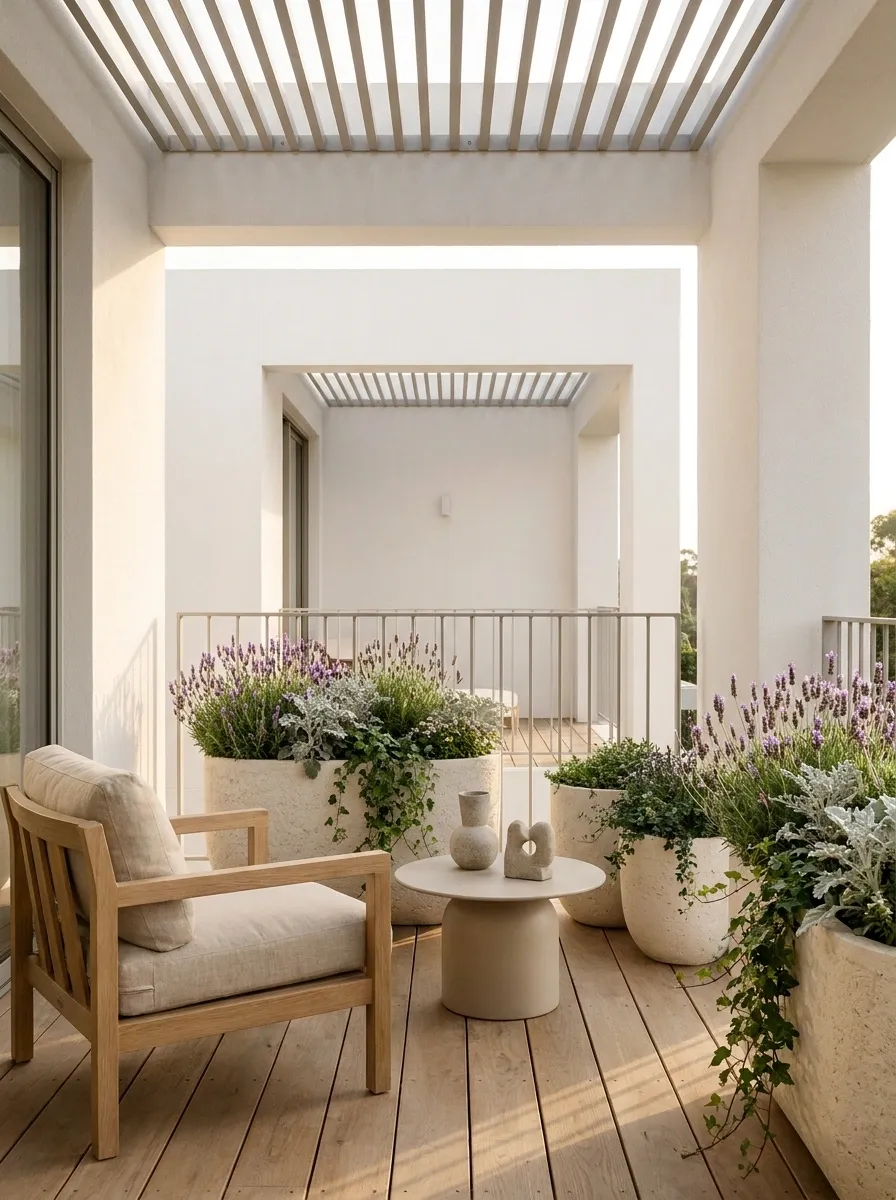
A white balcony can easily drift into “nice, but where is the personality?” territory. Pale stone-look planters filled with lavender, silvery foliage, and soft green plants solve that without piling on decoration.
The containers stay substantial and simple, while a light wood chair and linen-toned cushion bring warmth against the bright surfaces. Lavender adds a little color without turning the balcony into a flower explosion.
The important relationship is between the cool white architecture and the warmer natural materials. Keep the floor mostly clear and let the plants provide the texture. Once every available surface gets decorated, the calm disappears faster than a phone battery at 2%.
Stone container: quiet structure
Lavender + foliage: color and texture
Urban Balcony Screened With Tall Grasses
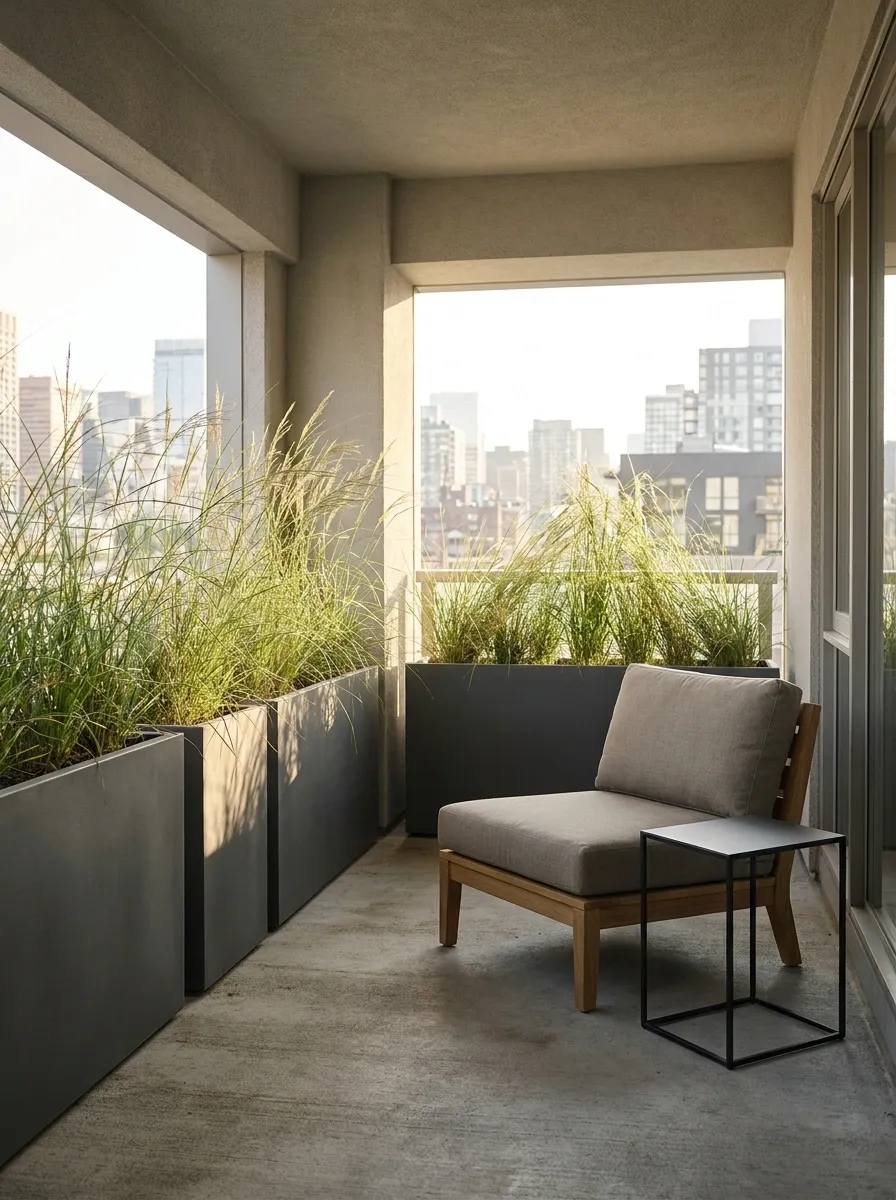
Tall ornamental grasses turn an exposed balcony into a more sheltered outdoor room without creating the hard visual wall that a solid privacy screen can produce. Long rectangular planters sit along the open edge, with the grasses rising above a compact lounge chair.
The furniture stays simple because the planting already creates plenty of movement. Warm neutral cushions and a small side table keep the scene comfortable without competing with the soft vertical shapes.
The smartest part of this composition is that the planting works as architecture. The tall grasses define the edge, create a sense of enclosure, and give the balcony a stronger backdrop.
Just keep the densest planting where privacy is actually needed. Covering every side turns “garden retreat” into “indoor jungle with WiFi.”
Open center: keeps the room feeling spacious.
Long planters: make separate plants read as one edge.
Narrow Balcony With Built-In-Looking Planter Benches
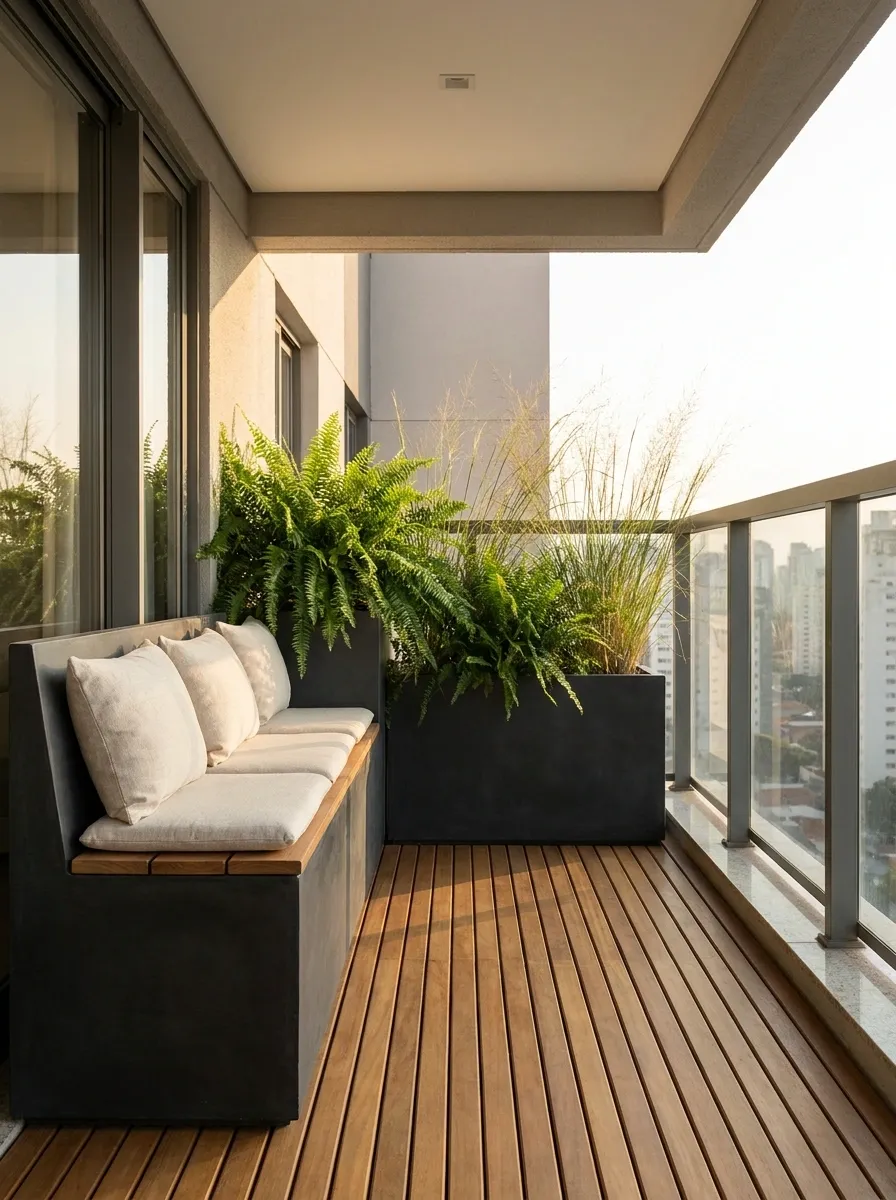
Long planter boxes and a slim bench create the illusion of a custom-built balcony even when the space is actually quite ordinary. The planters run along one side, with greenery rising behind the bench and a clear strip left through the middle.
This composition works because everything follows the length of the balcony. Instead of interrupting the narrow shape with pots sticking into the walkway, the planting reinforces it.
Use one repeated container finish throughout the run. That visual continuity makes several pieces feel like one architectural element. Add loose cushions rather than bulky outdoor furniture and let the greenery provide the softer shapes.
The goal is simple: make the balcony look intentional from end to end. Random pots wandering around the perimeter do not count as architectural planning, sadly.
Coastal Balcony With Whitewashed Planters and Soft Grasses
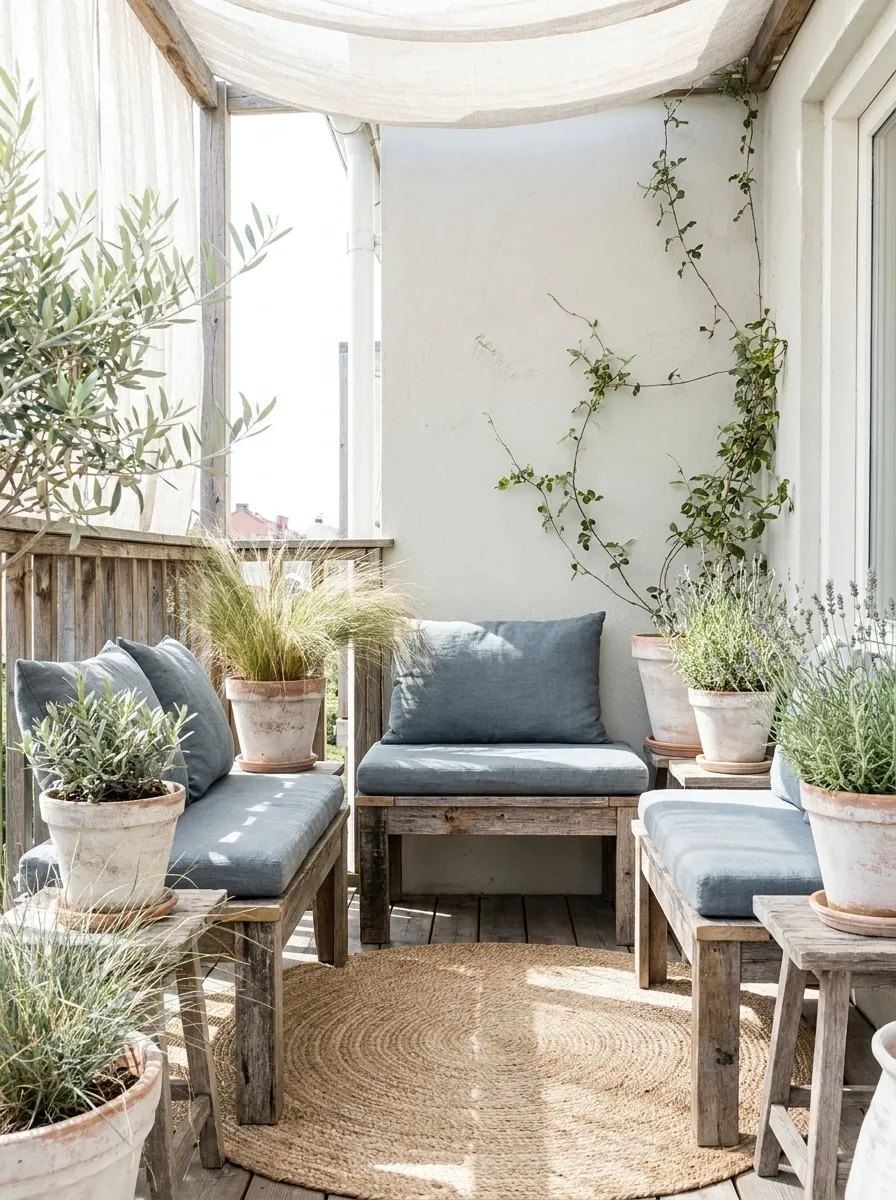
This coastal composition skips the predictable seashell situation and builds the look through pale colors, weathered textures, and movement. Whitewashed planters hold soft grasses and airy greenery, while weathered wood furniture adds just enough warmth.
Blue-gray cushions echo the cooler tones without becoming the main event. A simple woven mat or rug grounds the furniture and keeps the pale surfaces from looking flat.
The planting should stay loose and slightly windswept rather than clipped into perfect shapes. That small imperfection is what keeps the balcony from looking like a furniture catalog.
Stick to a narrow palette and let texture do the work. The balcony does not need twelve shades of blue to convince anyone it has seen the ocean.
Dark Balcony With Deep Green Foliage and Charcoal Pots
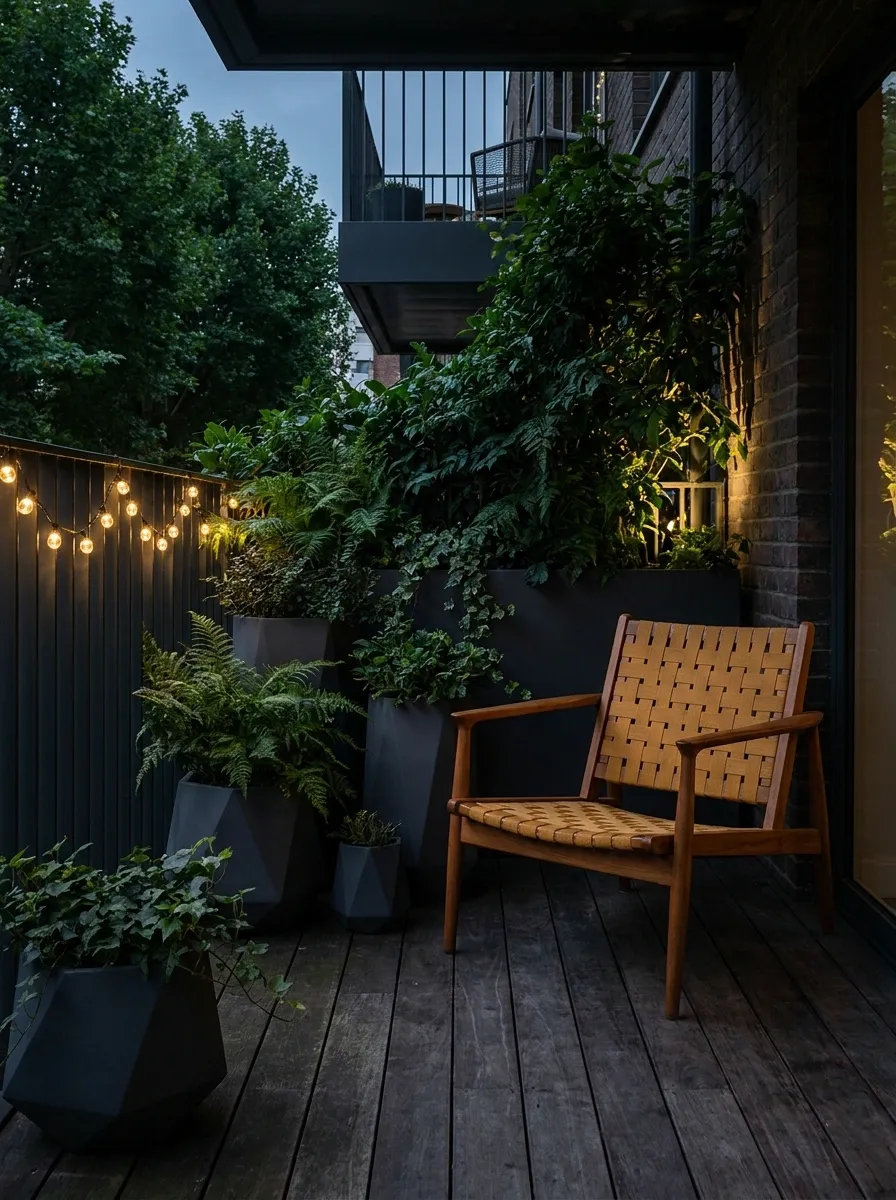
Dark flooring, charcoal planters, and deep green foliage create a moody balcony that looks especially strong in evening light. Rather than fighting the darker surroundings, the planting blends into them and becomes a rich layer of texture.
The containers should have simple silhouettes so the leaves can carry the visual weight. A warm wood chair or small table introduces just enough contrast to keep the composition from becoming one giant dark rectangle.
Lighting matters here. Warm, low-level illumination around the seating area can reveal the foliage without blasting the entire balcony with bright white light.
The restraint is what makes this one work. Dark does not mean every single object needs to be black. That is less “moody garden” and more “the balcony has entered its villain era.”
Deep foliage: primary texture
Warm wood: small contrast that keeps the scene alive
Compact Balcony Dining Corner Wrapped in Herb Planters
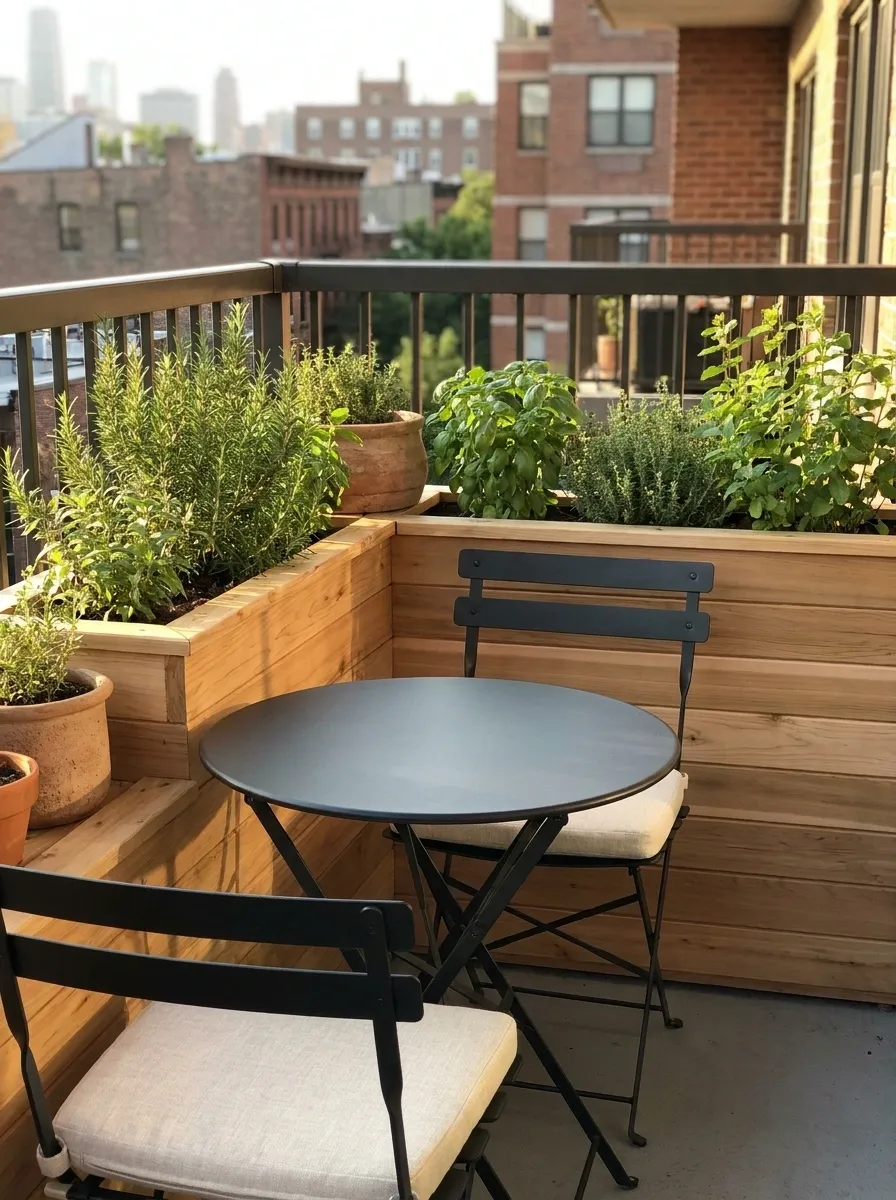
This balcony turns planting into part of the dining area instead of parking a few herbs around the edges and hoping everyone gets the concept. Rectangular planters frame a small café table, with compact edible plants close enough to feel connected to the seating zone.
The furniture stays simple, leaving the greenery to create most of the visual interest. Herbs also bring a useful texture mix, with upright stems, softer leaves, and slightly different shades of green breaking up the straight planter lines.
Keep the taller plants toward the outer edge and the lower herbs closer to the table. That creates a layered backdrop without putting foliage directly in everyone’s face during dinner.
The overall effect feels intentional because the planting has a job. It frames the dining spot instead of just existing nearby.
Vintage Balcony With Aged Terracotta and Climbing Greenery
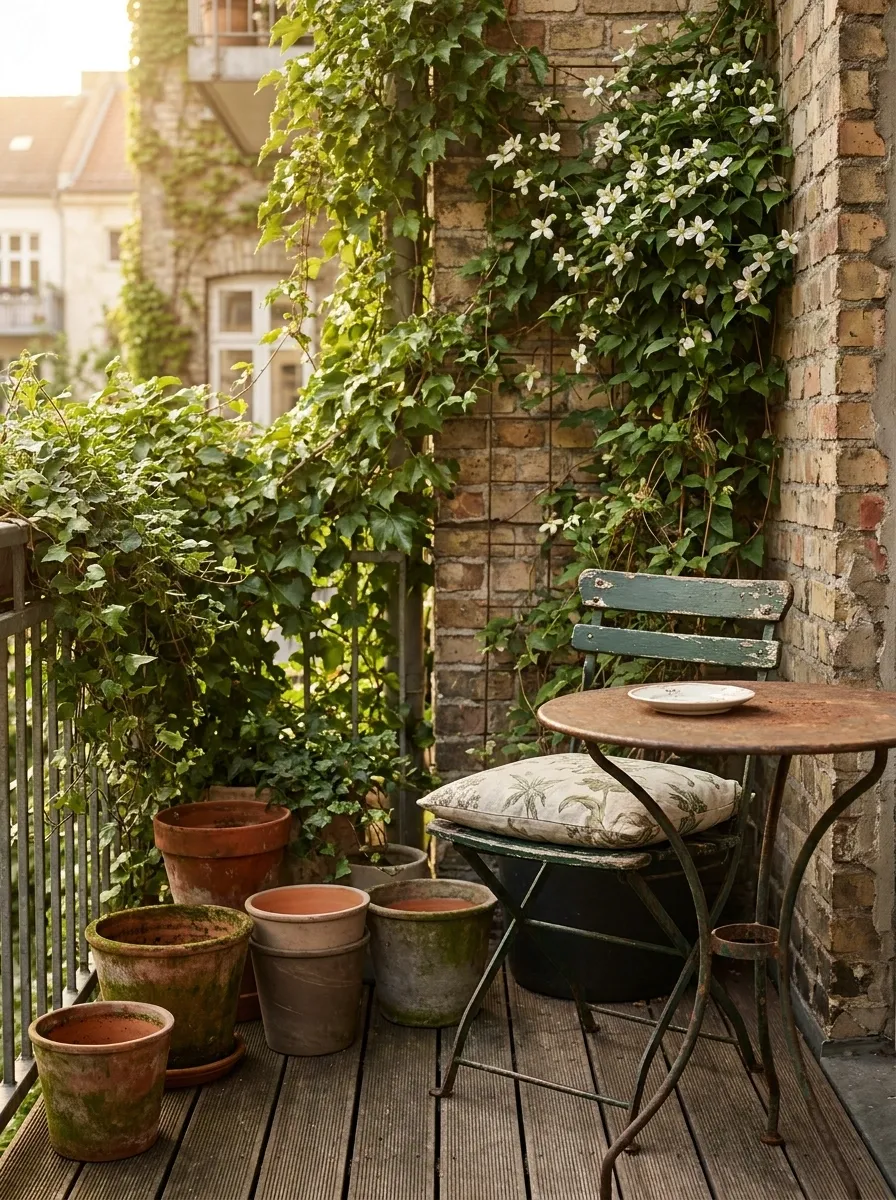
Weathered terracotta, climbing plants, an old-fashioned metal chair, and a few natural textures give this balcony the feel of a garden that has been there for years. Nothing looks overly matched, but the earthy materials keep the scene from becoming visually random.
The climbing greenery becomes the vertical element, while aged pots provide weight along the floor. A small round table and one patterned cushion finish the setting without trying to make it look newly purchased.
The charm comes from variation in surface and age. Slightly different terracotta tones actually help here, especially when the plants share similar greens.
The line to watch is between “collected” and “someone cleaned out the garage.” Keep the furniture limited and let the aged materials carry the personality.
Skip: adding ten more “vintage” objects just because the shelf looked empty.
Minimal Balcony With Three Oversized Matching Planters
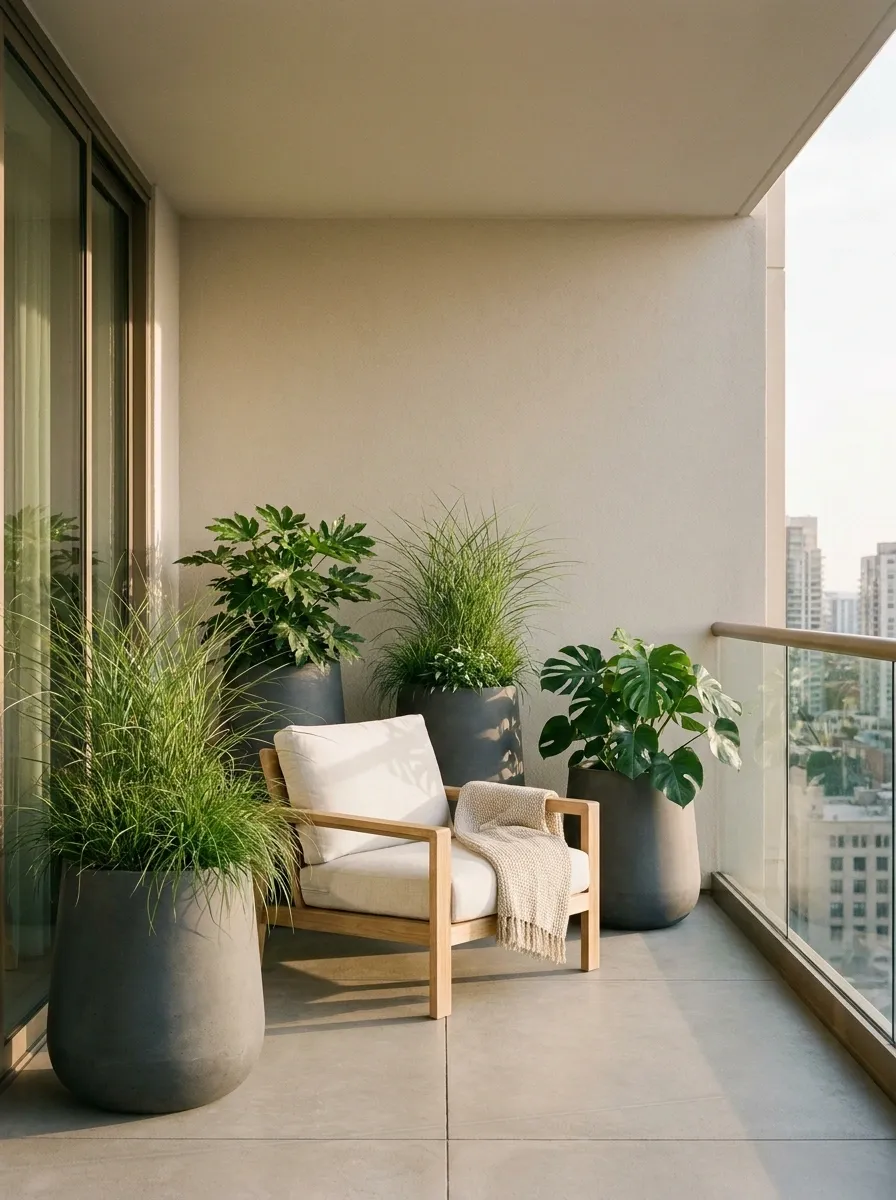
Three large matching planters create a much stronger composition than a collection of tiny pots spread across every spare inch. Each container gets enough breathing room to read as a major architectural element, with restrained greenery rising around a single lounge chair.
The palette stays quiet: one planter finish, one chair material, and mostly green foliage. That simplicity makes the balcony feel larger because the eye isn’t constantly stopping at a new object.
Spacing matters more than quantity here. The planters should feel related without forming a solid wall, while the furniture sits comfortably between them.
This is the balcony equivalent of deleting 47 apps from the phone instead of downloading another productivity app. Fewer things. More clarity.
beats a floor full of tiny decisions
Railing Planters With a Soft Cottage-Garden Mix
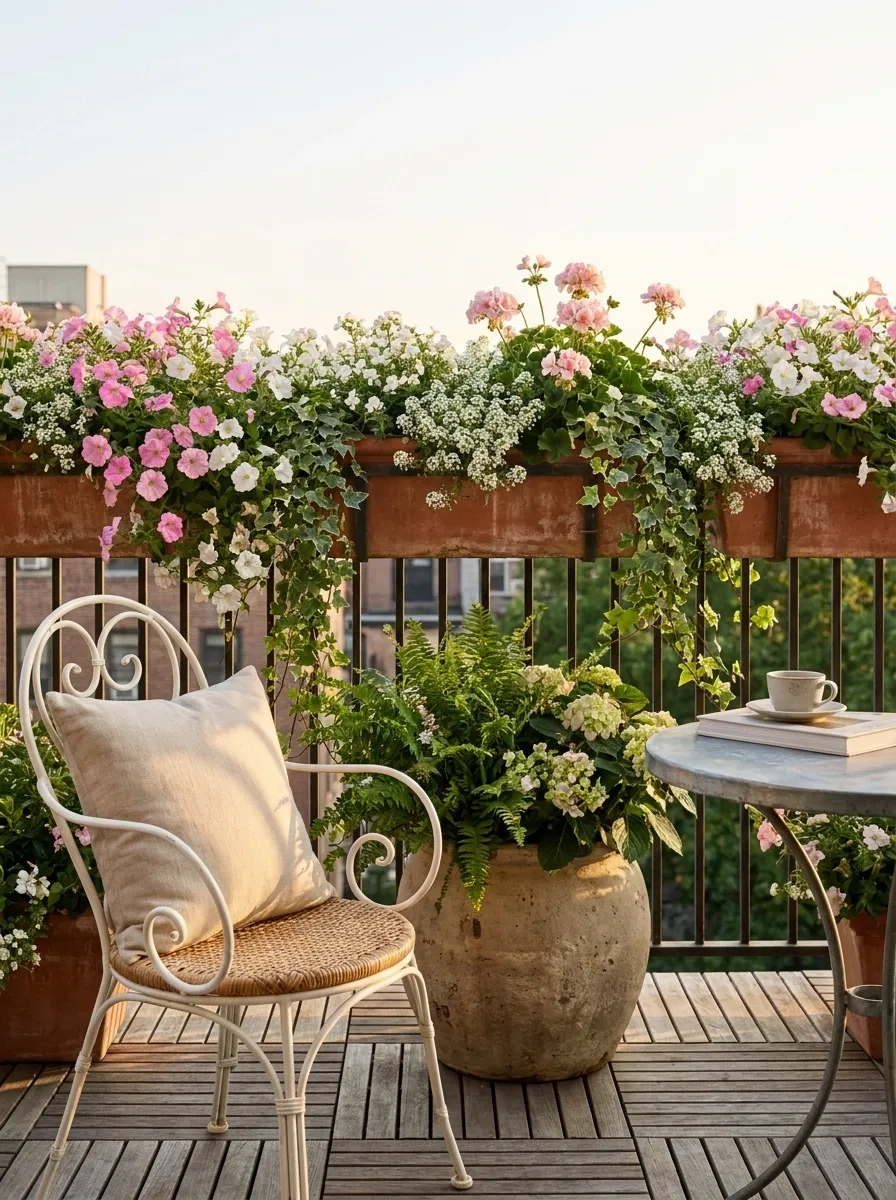
Flowers spilling over the railing become the main event in this balcony, creating a soft cottage-garden edge while the floor remains surprisingly uncluttered. Matching or closely related railing containers keep the planting visually continuous rather than making every section look like its own little garden.
The flowers can vary in form and height, but the overall color family should stay connected. A small floor planter near the chair gives the composition a lower anchor, while a compact round table fills the opposite side.
The beauty here comes from the relationship between the overflowing plants and the simple furniture. The greenery looks abundant, but the actual layout stays disciplined.
Basically, the flowers are allowed to be dramatic because everything else knows when to sit down.
Warm Neutral Balcony With Sand-Colored Concrete Planters
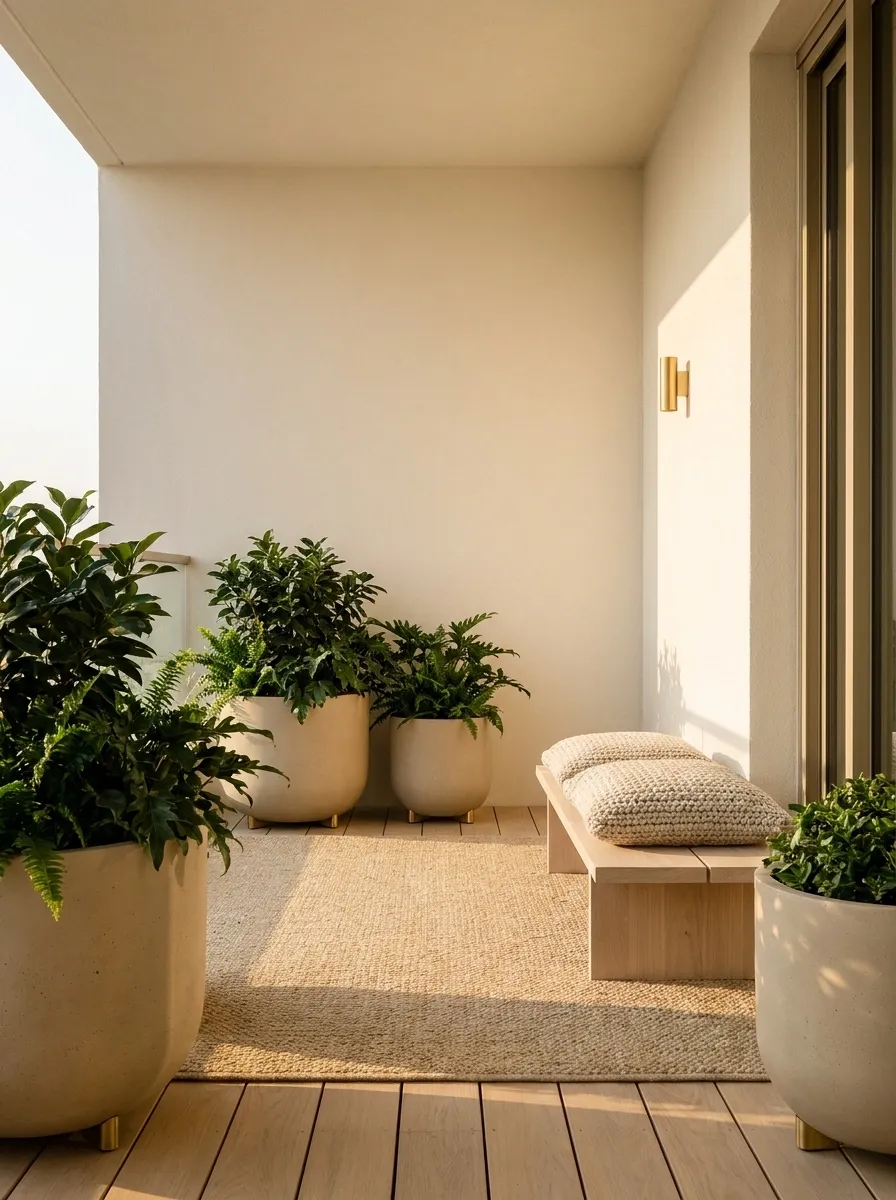
Sand, cream, muted green, and pale wood create a contemporary balcony that feels calm without becoming bland. Large concrete-look planters sit around simple outdoor seating, giving the space enough visual weight to feel finished while the palette stays intentionally quiet.
The planting provides most of the texture. Instead of adding patterned accessories everywhere, use leafy forms against the smooth planters and pale architecture. A woven cushion or rug can introduce another tactile layer without changing the restrained color story.
This design works because the materials have different visual surfaces even though the colors are close. Smooth concrete, natural wood, soft fabric, and foliage keep the monochrome palette from falling asleep halfway through the sentence.
Small Apartment Balcony With Vertical Planter Wall
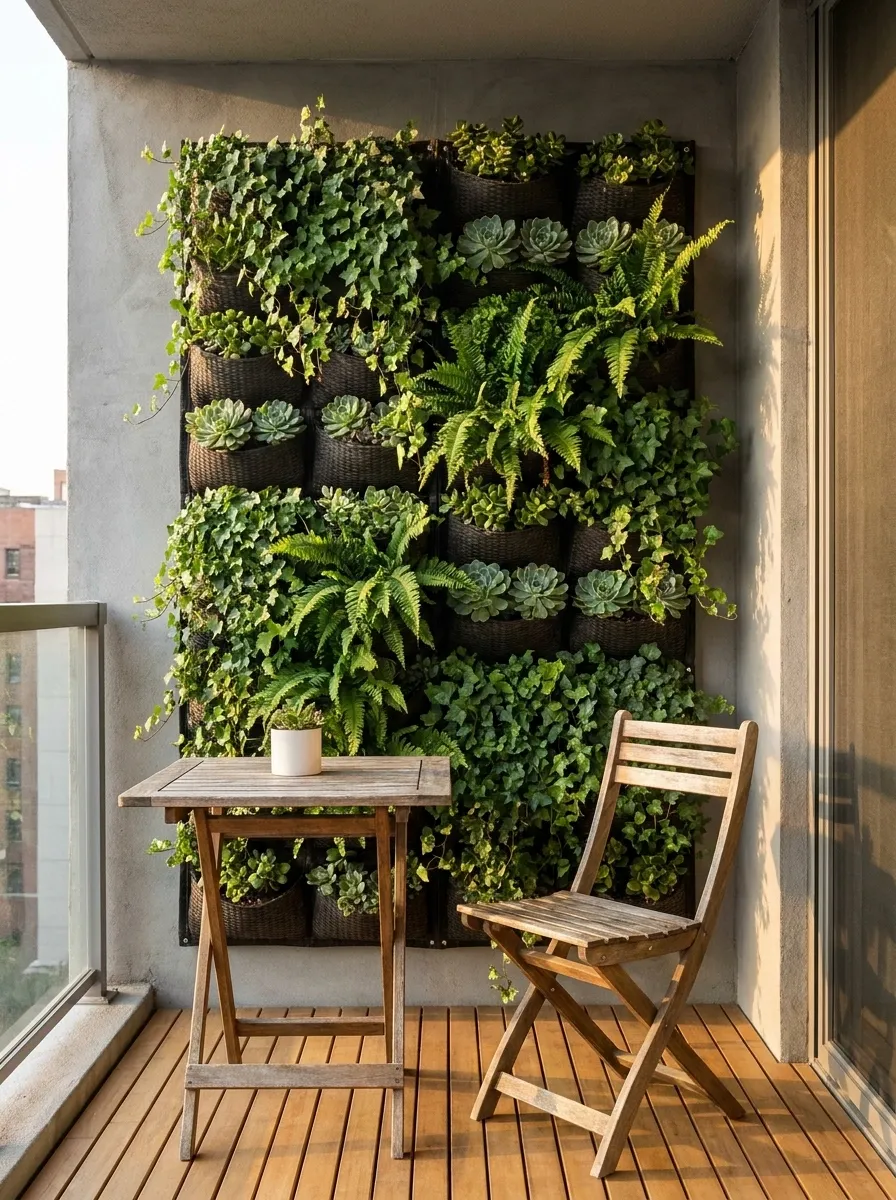
A narrow apartment balcony does not need more floor space to become greener. This design sends the planting upward, using a slim vertical planter wall as the backdrop for a folding chair and tiny café table.
The wall becomes the main visual feature, with different leaf shapes creating depth against the otherwise simple architecture. Because the planting rises instead of spreading across the floor, the seating area can stay compact without looking abandoned.
Keep the vertical garden fairly controlled in shape. A little variation in foliage gives it life, but letting every plant grow in a different direction can make the wall look less like a composition and more like it has stopped obeying instructions.
PLANTING
SEATING
FLOOR
Colorful Balcony With Coral Planters and Flowering Plants
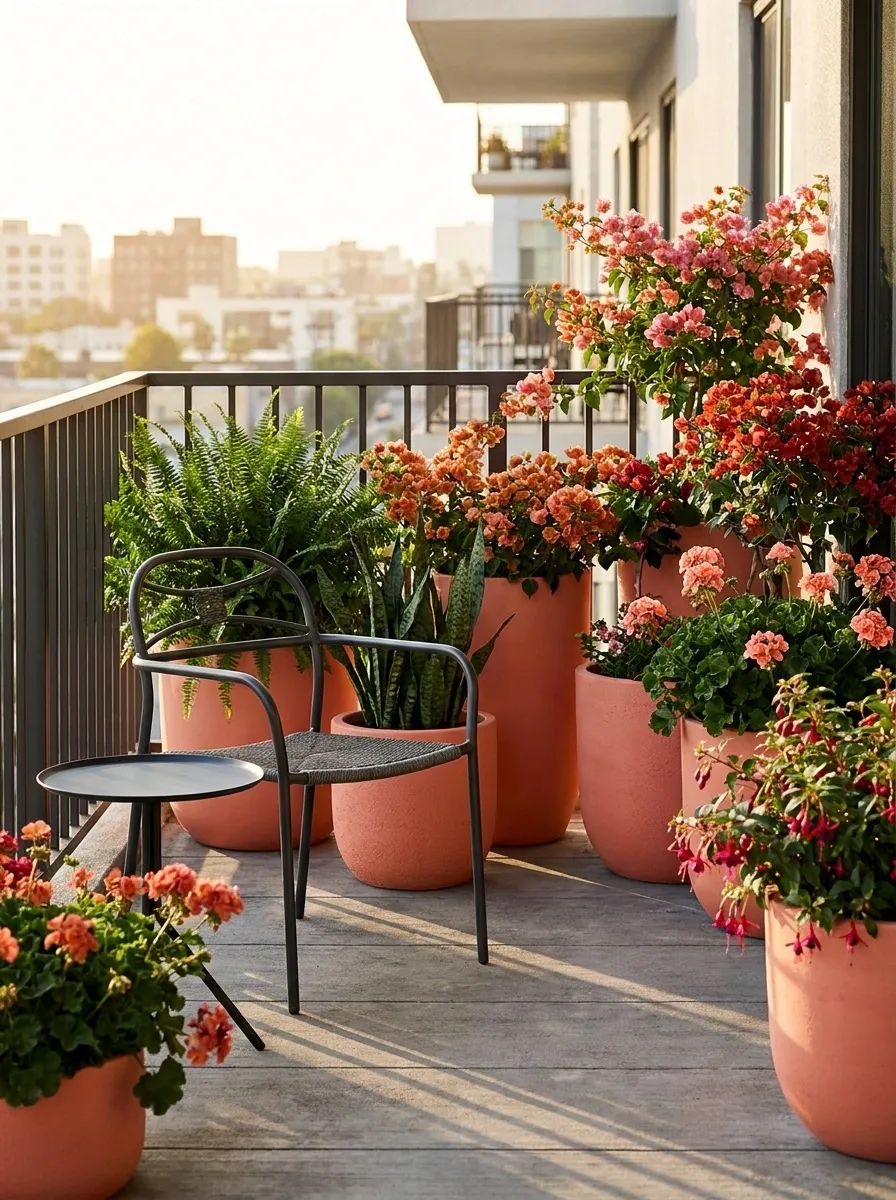
Coral planters give this balcony a proper personality, with flowering plants picking up the warm color while deep greenery keeps the palette grounded. A simple chair and small table sit against the brighter planting, so the space feels cheerful rather than visually frantic.
The trick is to let coral repeat instead of introducing a completely new color with every flower. Pink, orange, and warm red tones can work together when the containers create a clear anchor.
Keep the architecture quiet and the furniture neutral. The planters are already doing enough talking.
This is the balcony for anyone who looked at neutral outdoor spaces and thought, respectfully, “Could we maybe have some color around here?”
Green: visual counterweight
Flower colors: stay near the same warm family
Japandi-Inspired Balcony With Stone Planters and Sculptural Foliage
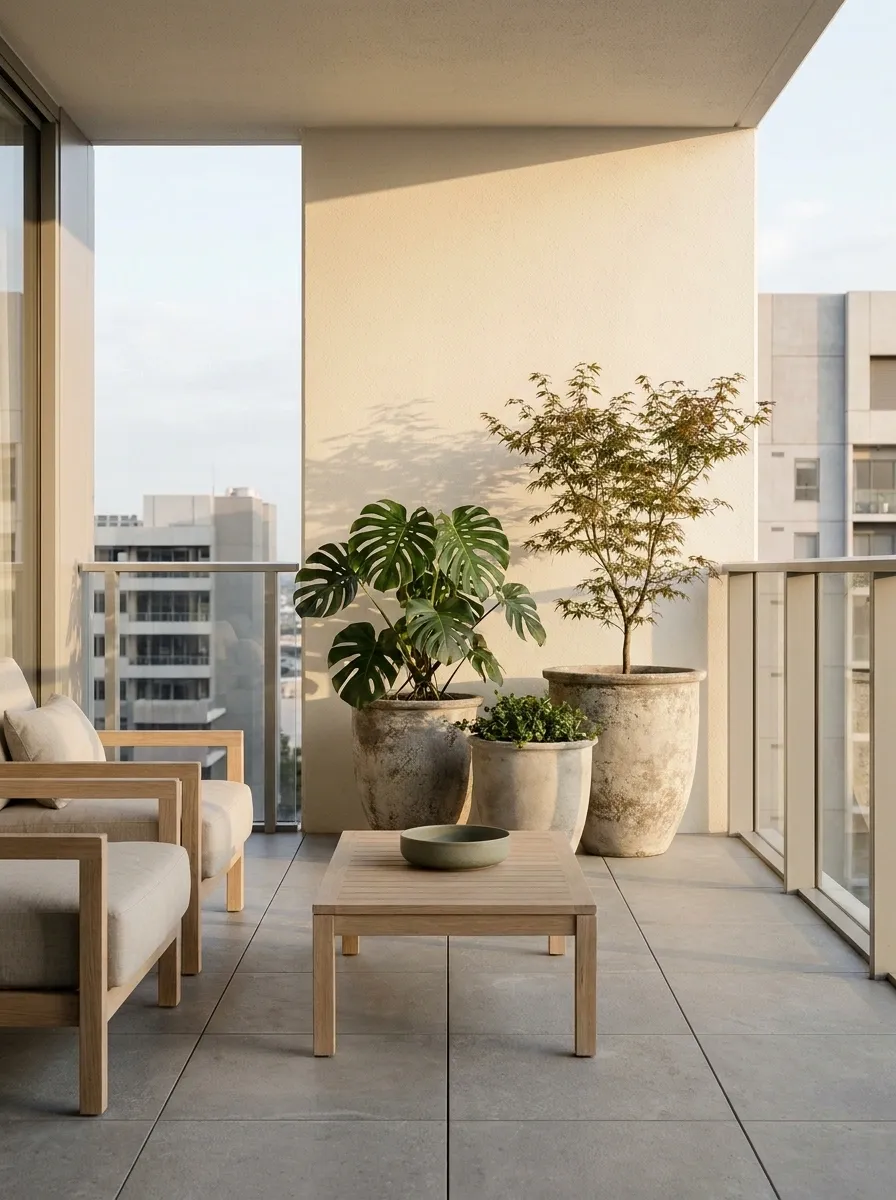
This balcony takes the quiet route. Oversized stone-look planters hold sculptural foliage around low timber furniture, with plenty of open floor and a restrained palette of warm cream, pale wood, muted green, and soft gray.
There is very little decorative clutter, so shape becomes important. Broad leaves, rounded containers, straight furniture lines, and the open floor create the visual rhythm.
The empty spaces are doing real work here. They separate the major forms and let each one register clearly instead of making everything compete at once.
A design this restrained can expose every bad proportion, though. That is the catch. Cheap-looking containers or furniture that is too bulky will stand out immediately because there is nowhere for them to hide.
Balcony Breakfast Nook Surrounded by Citrus Trees
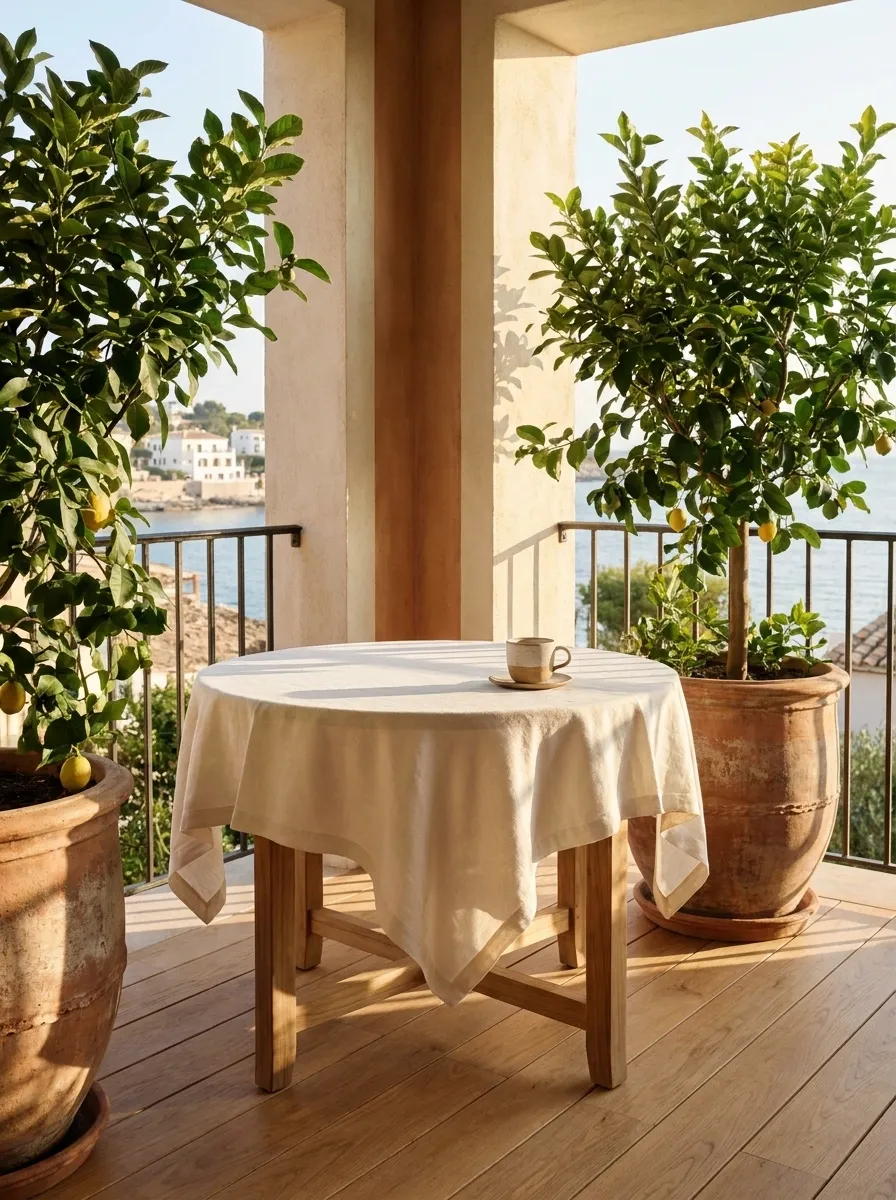
Small citrus trees in substantial containers frame a tiny breakfast table, bringing greenery up to eye level and giving the balcony a softer sense of enclosure. The trees sit toward the outer edges, while the table remains centered and easy to approach.
The combination of rounded foliage, warm wood, and pale textiles gives the space a fresh morning feel without adding decorative clutter. A simple table setting is enough because the planting provides the visual backdrop.
The tree height matters more than the number of containers. Two well-placed trees can create a stronger composition than a row of smaller pots scattered along the railing.
And yes, the balcony gets to look charming before the coffee has even happened. That’s part of the deal.
Table height: stays low and central.
Result: the greenery frames rather than blocks the space.
Rental-Friendly Balcony With Coordinated Freestanding Planters
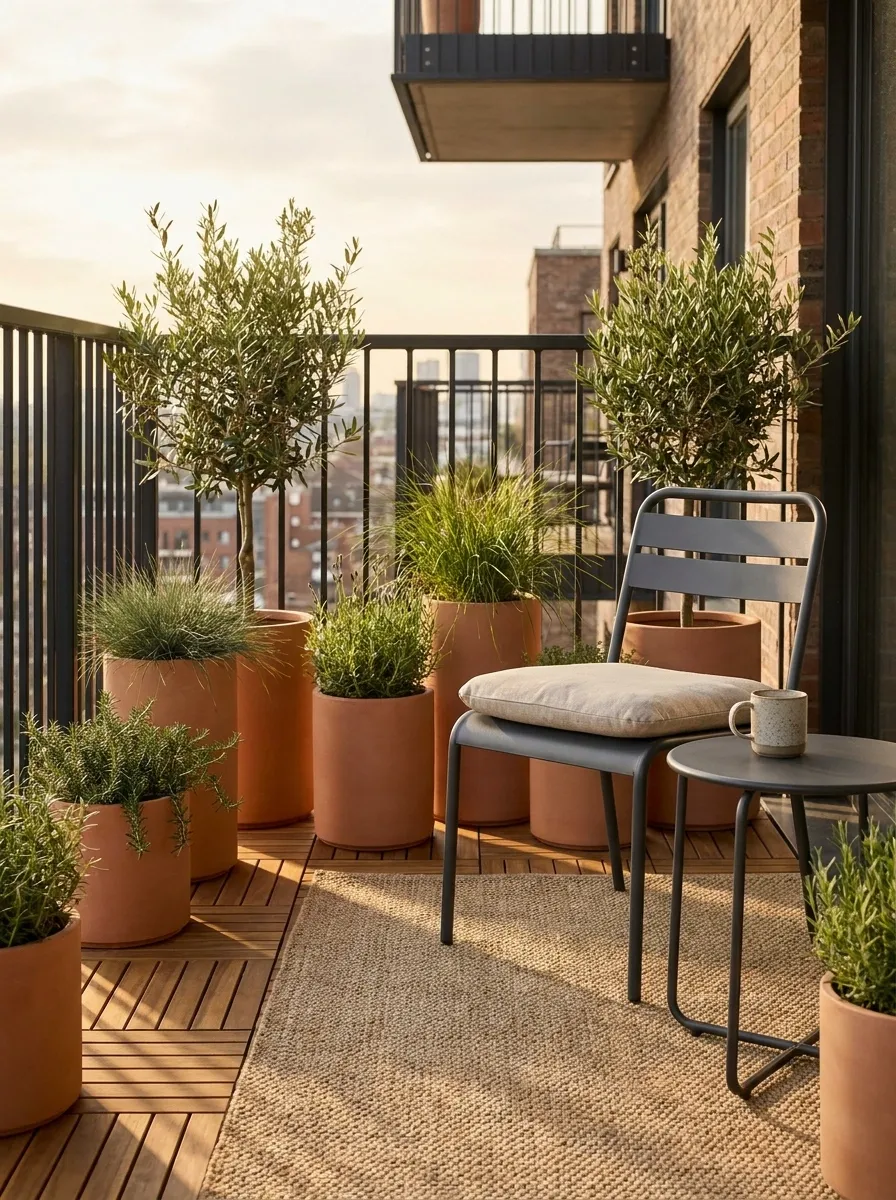
This balcony gets a finished garden-room feeling without relying on permanent wall attachments or built-in construction. Matching freestanding planters line the outer edge, while movable furniture and a simple outdoor rug make the whole arrangement easy to shift.
The containers provide the structure that built-in planters normally would. Repeating their finish makes the balcony feel cohesive, even though every element can technically pick up and leave with the lease.
Use a mix of planter heights, but keep the shapes related. The variation gives the edge dimension while the repeated material keeps it visually controlled.
Basically, the balcony looks custom without asking the landlord for a 14-page permission form. Everybody wins.
Long Balcony With Repeated Rectangular Planters as a Green Border
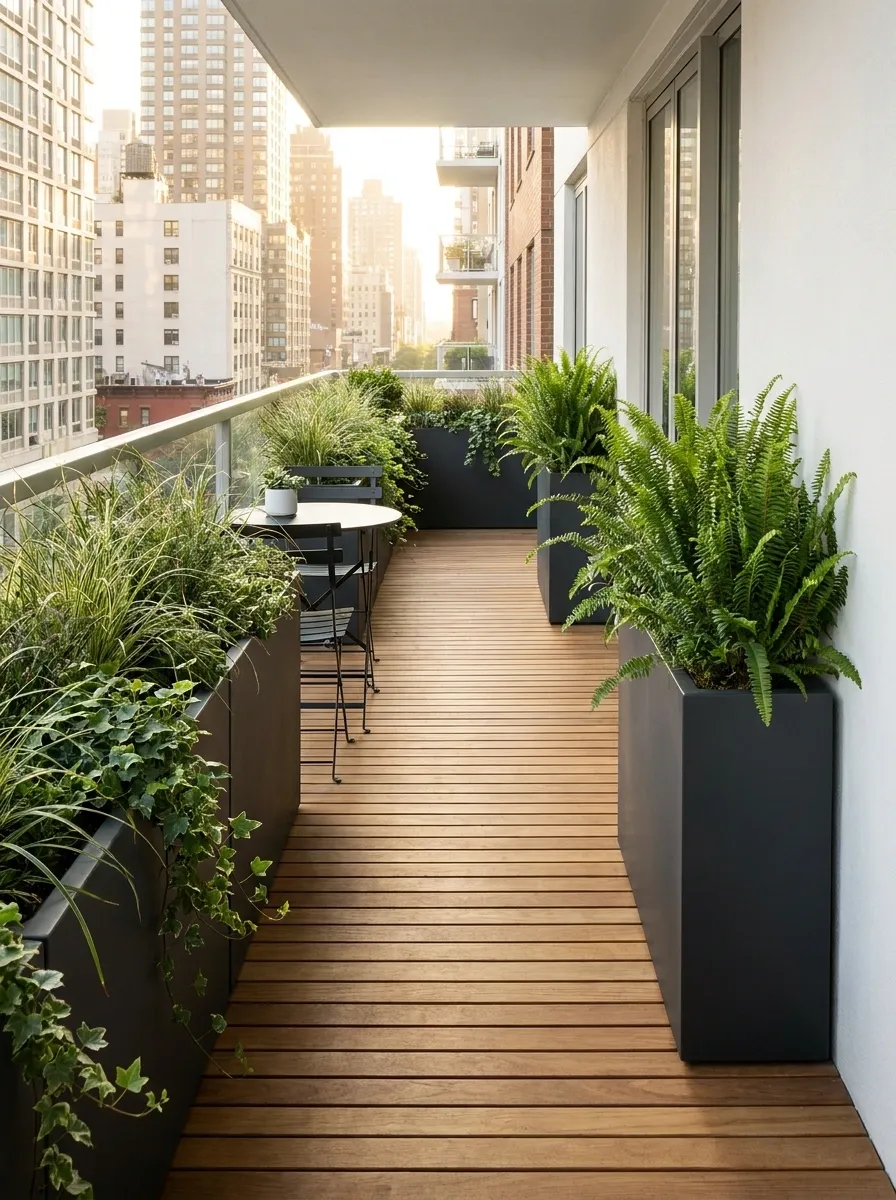
A long balcony benefits from a strong horizontal line, and repeated rectangular planters create exactly that. Instead of interrupting the narrow shape with individual pots, a continuous green border runs along the outer edge while the center remains open for seating and movement.
The repetition makes the balcony feel longer and more organized. Slim outdoor furniture sits inside the planting line, creating a clear separation between the garden edge and the living area.
Keep the planter shapes consistent and let the plants provide the variation. Different leaf forms can add interest without breaking the clean geometry.
The key is refusing to fill the middle. A long balcony already has enough going on spatially. It does not need twenty pots scattered around like they’re waiting for boarding.
Center: stays available for seating and circulation.
Petite Romantic Balcony With Flower-Filled Window Boxes
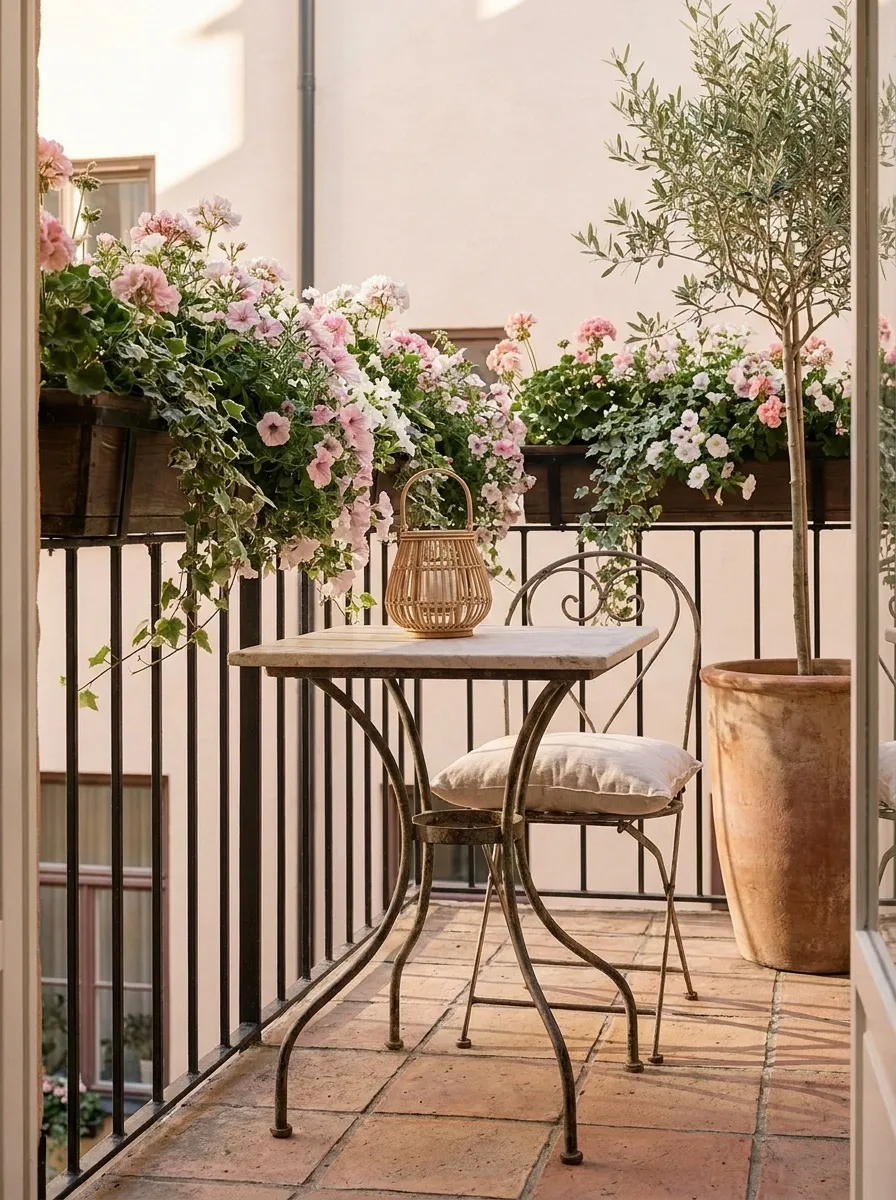
Flower-filled window boxes along the railing give this tiny balcony an overflowing garden feel without sacrificing much floor space. A petite round table, one comfortable chair, and a single floor planter are enough to complete the composition.
The flowers provide the softness, while the furniture stays deliberately simple. A pale cushion and a little woven texture make the seating area feel connected to the planting rather than dropped into it afterward.
The most effective part of the arrangement is the difference in levels. Flowers spill from the railing, a lower planter anchors the floor, and the table sits between them.
The balcony gets to be romantic without becoming a wedding venue. That distinction is doing some serious work here.
flower layer
seating layer
one anchor
Industrial Balcony With Galvanized Planters and Oversized Greenery
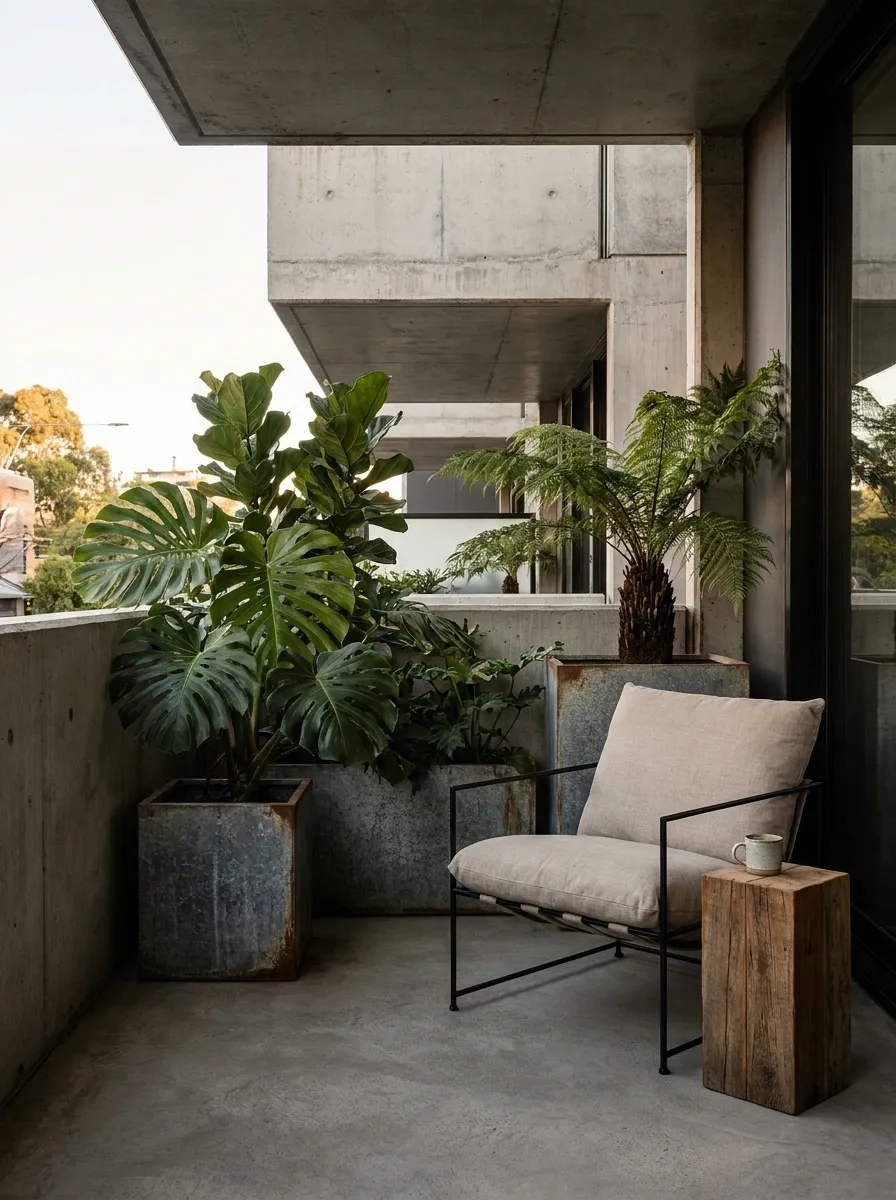
Concrete, dark metal furniture, galvanized planters, and oversized leafy plants give this balcony a strong industrial character without making it feel like a loading dock with cushions.
The metallic planters bring a slightly weathered finish that works naturally with concrete and black steel. Large green leaves then introduce the softness the hard materials are missing.
Furniture should stay simple and structural. A black-framed lounge chair, a narrow timber side table, and neutral cushions are enough to make the balcony comfortable while keeping the material story clear.
Don’t over-polish the space. A few visible variations in the metal and concrete actually help. Industrial design starts looking confused when every surface suddenly wants to be a luxury showroom.
Tropical Balcony With Layered Palms and Broad-Leaf Plants
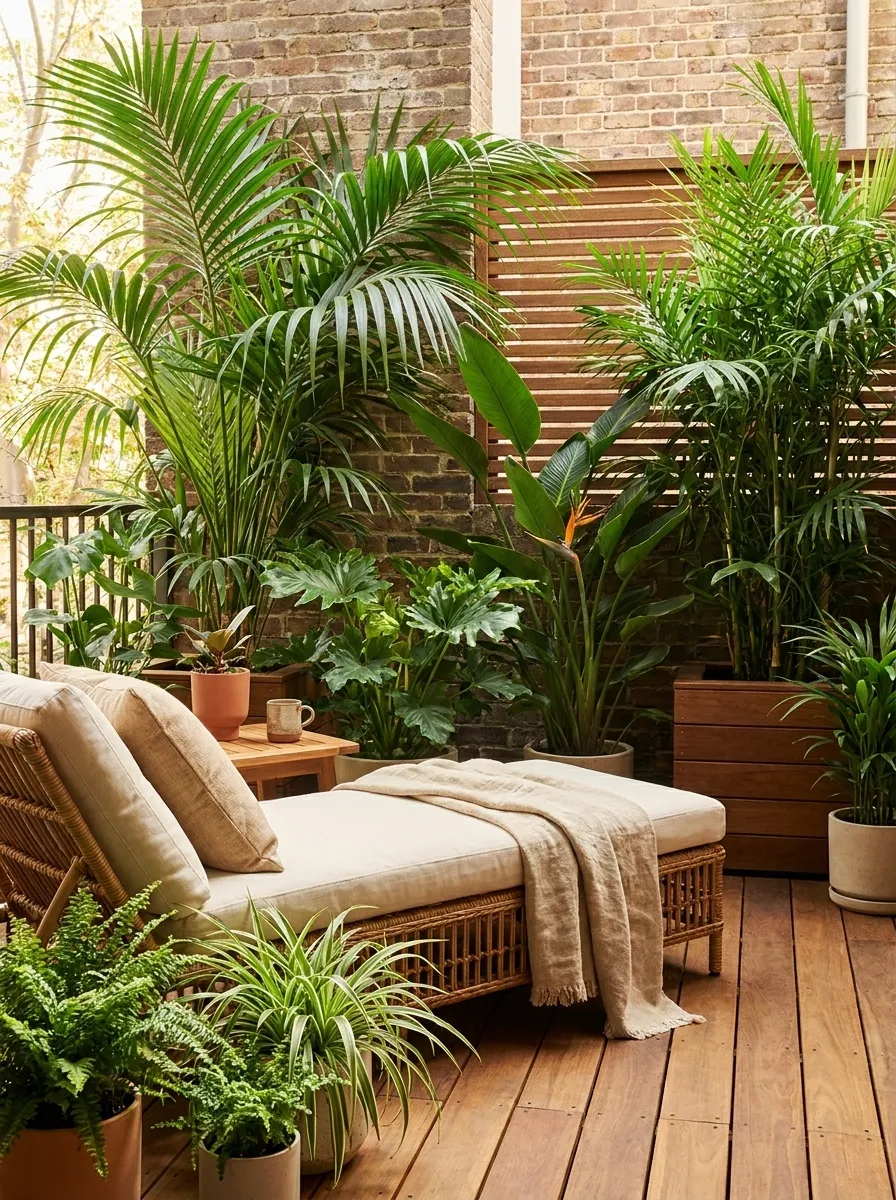
Large palms and broad-leaf plants turn this balcony into a compact tropical retreat, with the tallest greenery pushed toward the corners and back edge. A woven lounge chair and warm timber details keep the planting grounded in a believable outdoor setting.
The layering matters more than plant count. A few large leaves in the foreground, medium foliage through the middle, and taller palms behind them create depth that a flat row of identical plants simply cannot produce.
Leave some wall and floor visible. Tropical does not have to mean every centimeter is green. A little empty space makes the larger leaves feel more dramatic.
The goal is tropical garden, not “someone opened a garden center and started carrying everything upstairs.”
foreground texture
middle layer
dramatic backdrop
Balcony Garden With a Soft Green and Cream Palette
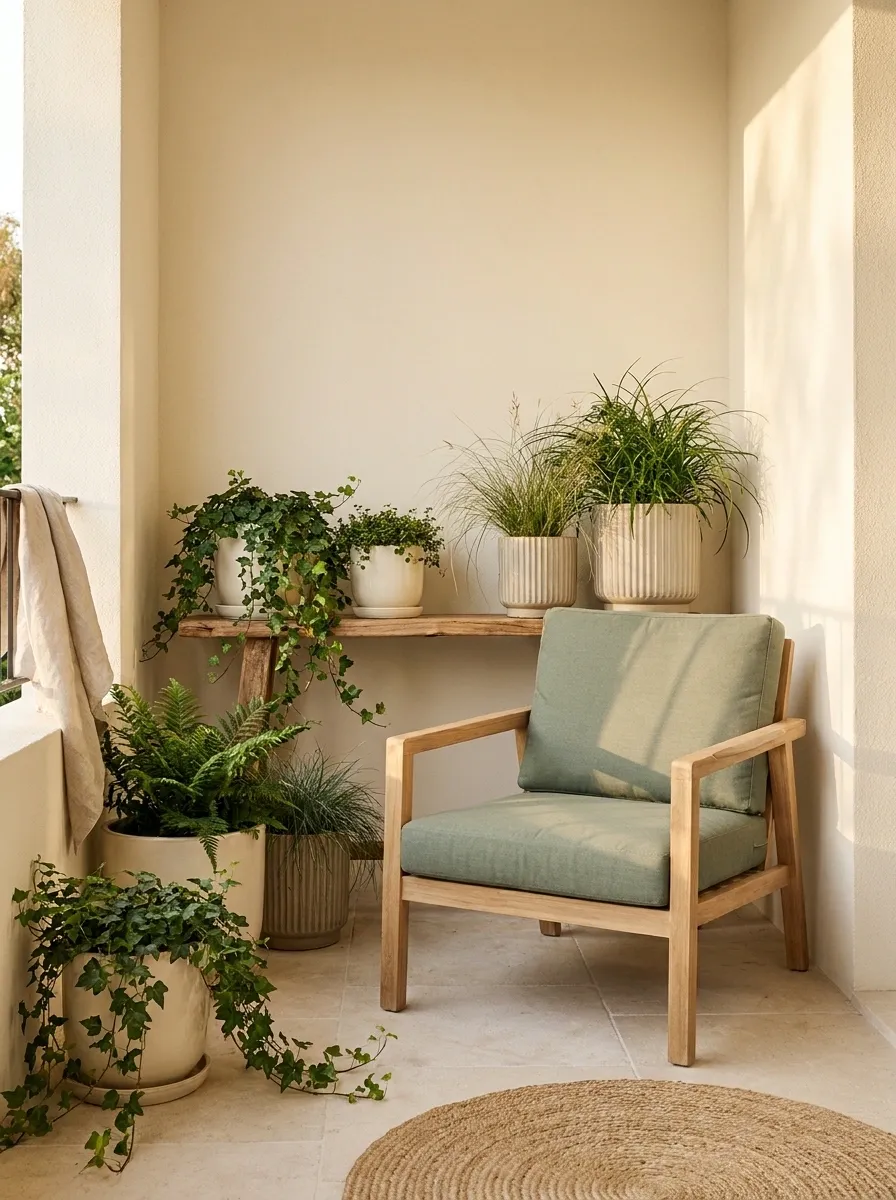
Cream containers, pale flooring, muted green cushions, and layered foliage create a balcony where greenery provides most of the color. The result feels calm without falling into the trap of making every object beige and calling it sophistication.
The planters should vary slightly in size while staying within the same cream family. That keeps the arrangement connected while allowing the plants to create movement.
A simple wood chair and soft outdoor cushion complete the seating zone. Avoid adding strong accent colors because the entire point of this design is the contrast between warm cream surfaces and different shades of green.
This is a good reminder that a quiet palette does not have to mean a boring balcony. Sometimes the leaves are carrying the entire conversation, and honestly, they have plenty to say.
Green: foliage, cushions, visual texture
Narrow Balcony With Hanging Planters Above a Clear Floor
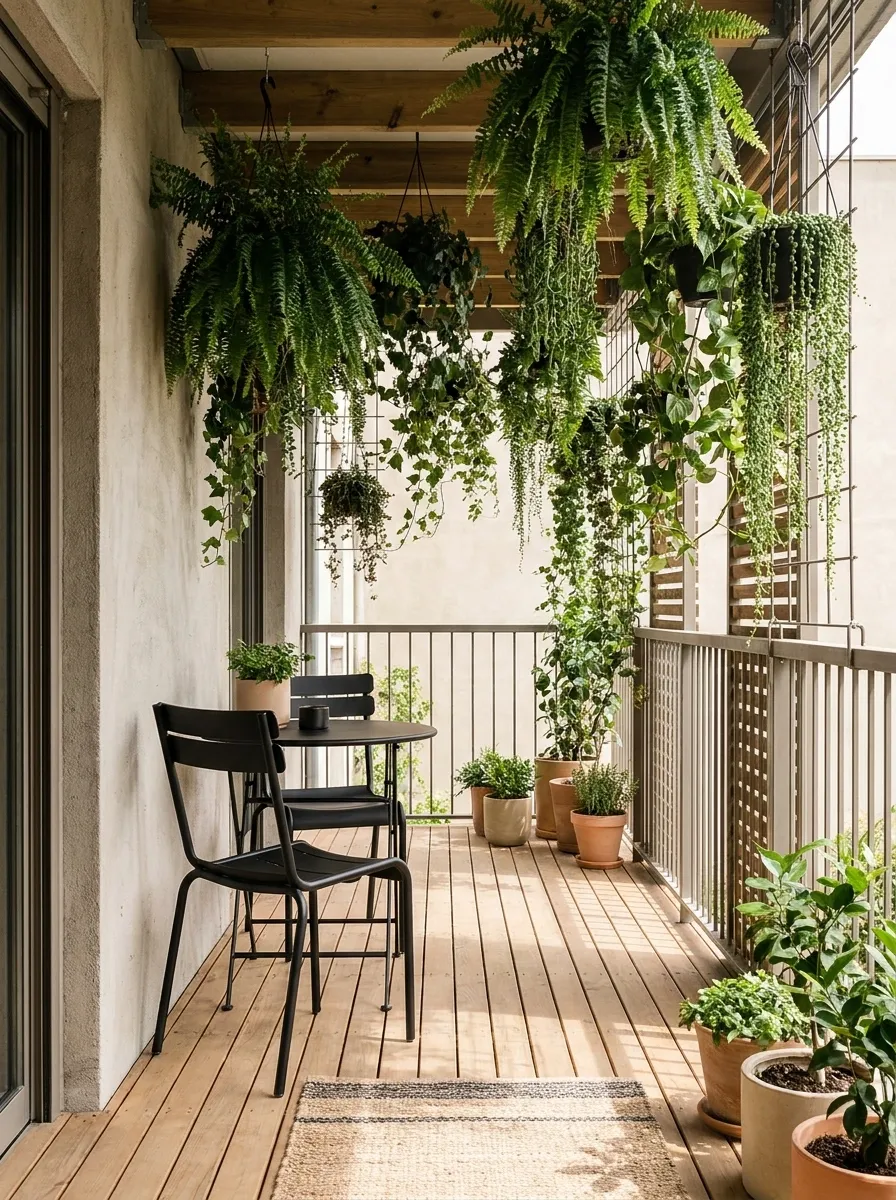
This narrow balcony pushes the greenery upward, using hanging planters to create a layered canopy while keeping most of the floor completely clear. A slim chair and narrow table sit underneath, giving the space a proper seating zone without forcing the furniture to compete with floor-level pots.
The hanging plants should sit at different heights rather than forming a perfectly straight row. That variation gives the composition a softer, more natural shape and makes the ceiling area feel connected to the balcony below.
Keep the lower half visually simple. The whole trick depends on the contrast between greenery overhead and open floor beneath it.
Basically, the plants get the upper level and the chair gets the floor. Nobody needs to fight over territory.
greenery and visual depth
clear floor and usable seating
Rustic Balcony With Wooden Crates and Herb Containers
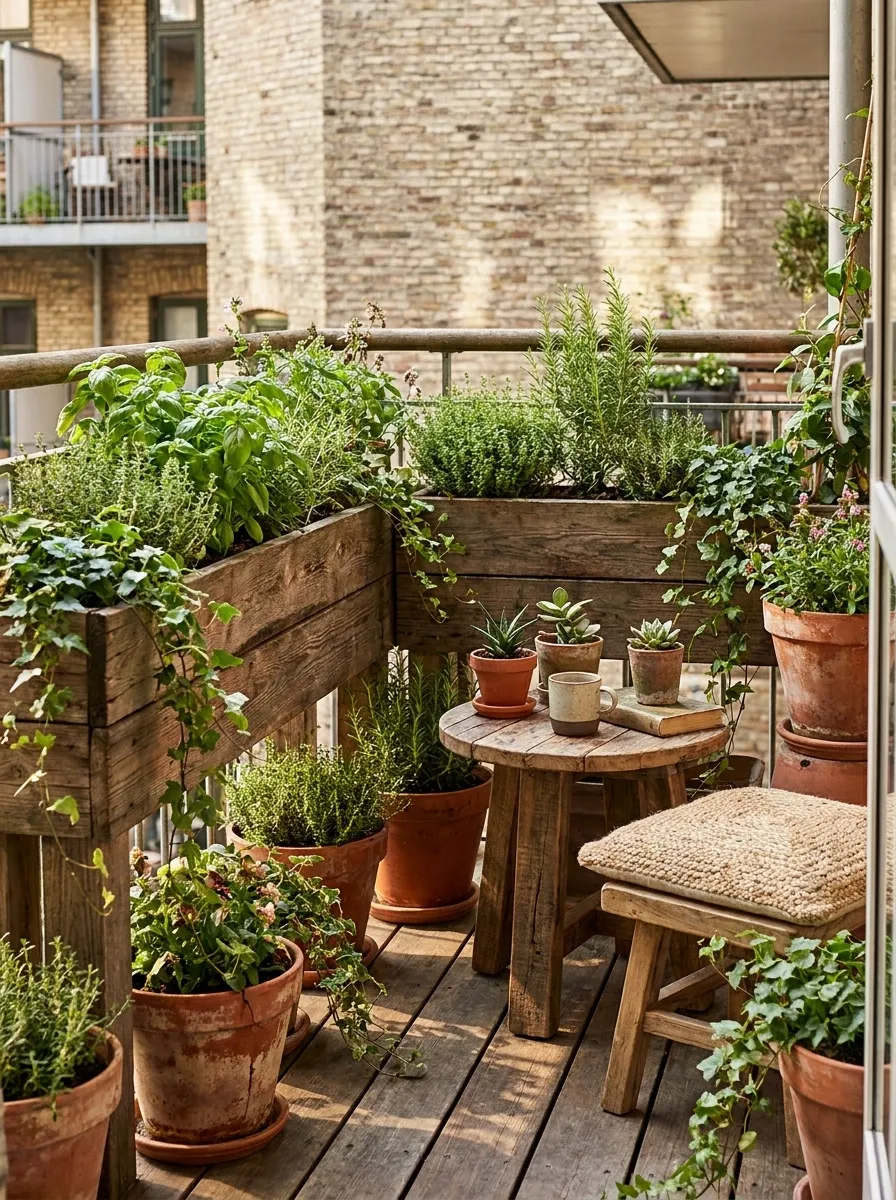
Rough wood planter boxes, terracotta containers, herbs, and simple timber furniture give this balcony the relaxed character of a little home garden. The materials are intentionally ordinary, which is exactly why the finished composition feels believable.
The wooden boxes create a strong horizontal base while individual herb pots break up the shape with smaller forms. Fresh greenery brings the color, so the rest of the palette can stay warm and earthy.
A woven seat cushion and simple side table finish the scene without introducing glossy or overly polished finishes. Small variations in the wood and terracotta make the arrangement feel collected over time.
This one works because it looks like people actually use it. No suspiciously perfect balcony where nobody is allowed to put down a coffee.
Provides the structural base.
Adds warm variation.
Supplies the strongest color.
Elegant Balcony With Tall Sculptural Planters and Boxwood Shapes
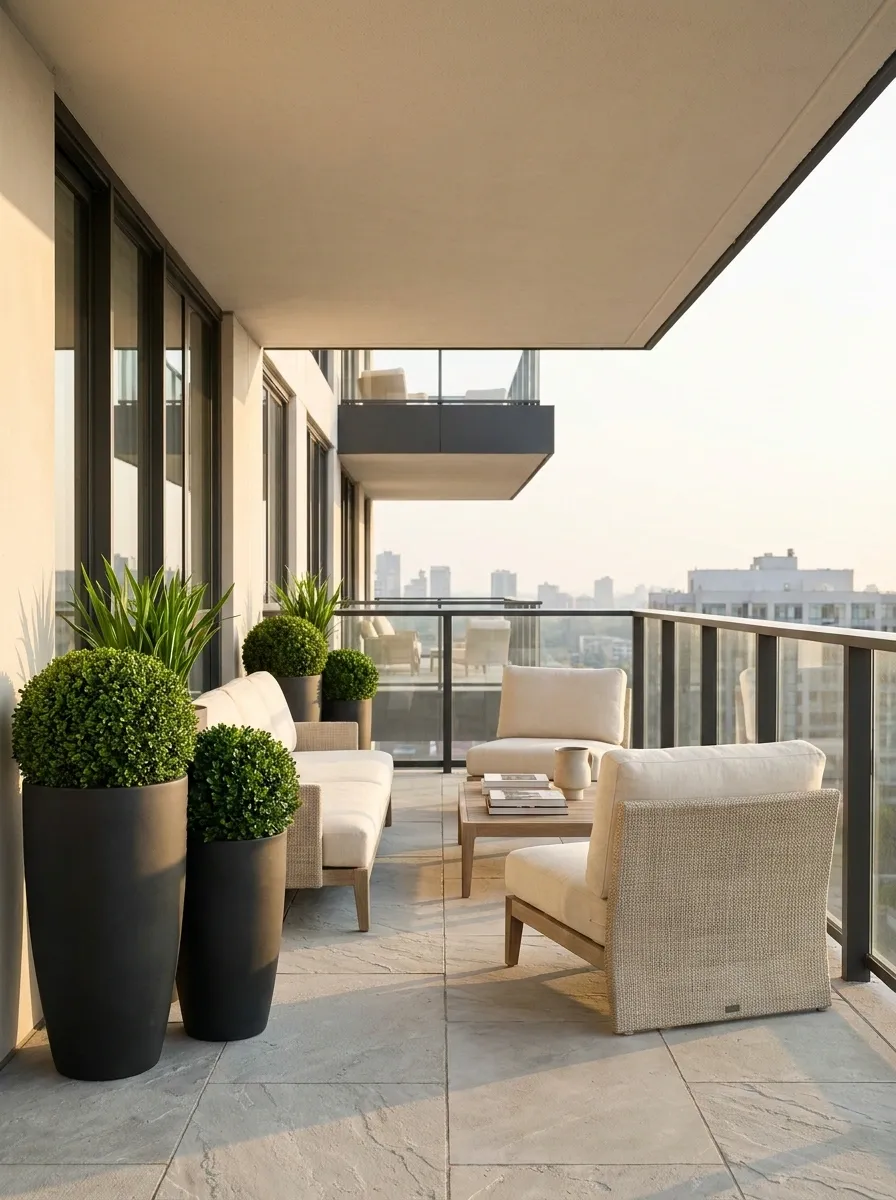
Tall streamlined planters give this balcony a much more architectural feel, especially when filled with structured greenery such as clipped forms or dense, upright foliage. The arrangement is formal without needing elaborate decoration.
The planters should sit at strategic points around the seating area rather than form a solid wall. Their height creates strong vertical lines, while the low furniture introduces a contrasting horizontal shape.
Keep the surrounding palette restrained. Cream upholstery, pale stone, and dark green planting allow the geometry to stay visible.
This is the balcony for anyone who wants “garden” but has absolutely no interest in looking like the local garden center emptied itself onto the floor.
Autumn Balcony With Rust Planters, Ornamental Grasses, and Seasonal Color
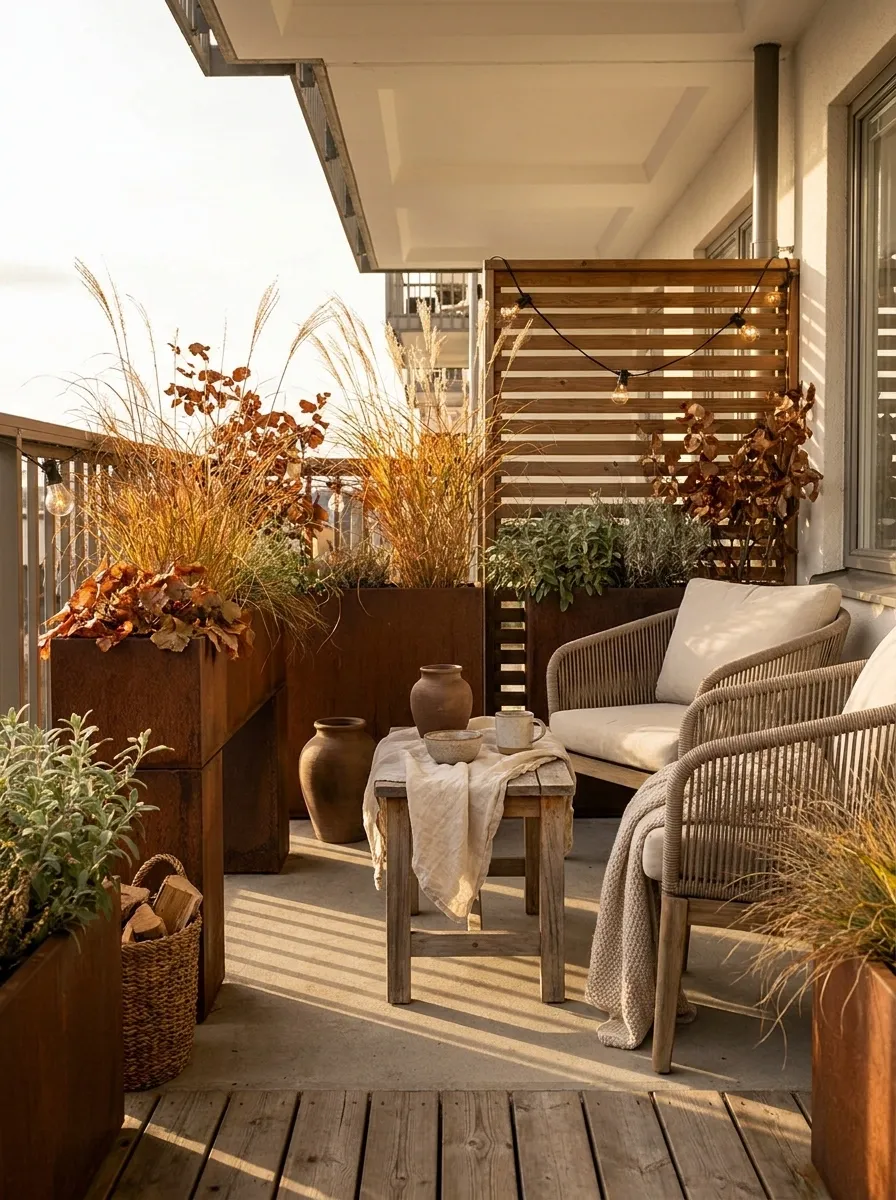
Rust-colored planters, amber grasses, muted foliage, and warm cream textiles turn this balcony into a distinctly autumnal outdoor room without covering it in pumpkins and shouting “SEASONAL DECOR” from every corner.
The planting provides the seasonal identity. Rust containers echo the warm tones in the grasses, while the neutral furniture keeps the palette from becoming too orange-heavy.
Mix upright grasses with softer foliage so the arrangement has movement at several heights. A small wood table and textured throw complete the setting without taking attention away from the plants.
The result feels seasonal but still like a real balcony. That matters because the best seasonal spaces can survive the end of October without needing a complete personality transplant.
container anchor
grass and seasonal warmth
keeps the palette grounded
prevents visual overload
Tiny Balcony Garden With One Dramatic Corner Composition
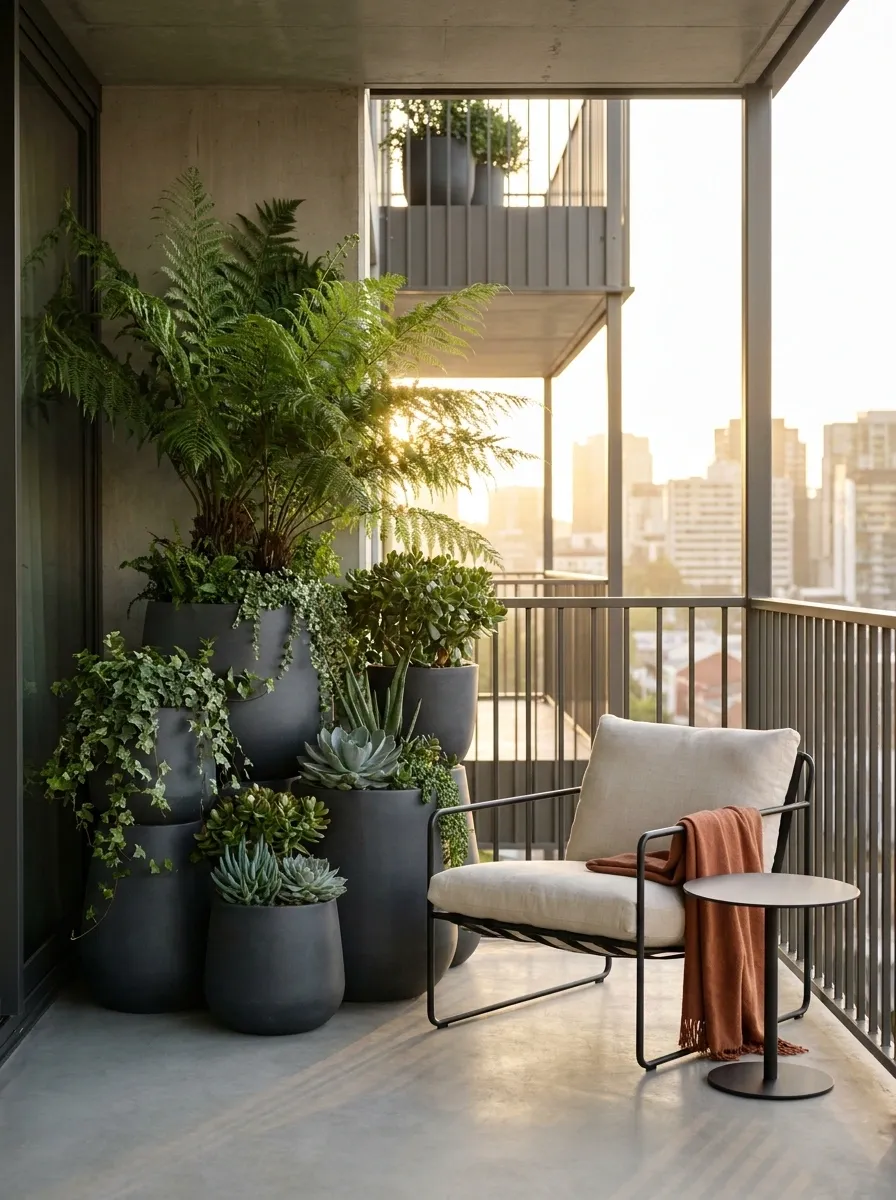
Instead of trying to distribute plants evenly across a tiny balcony, this design gives one corner almost all the visual drama. A large planter arrangement combines different plant heights and textures, while a single chair occupies the quieter half of the space.
That imbalance is exactly what makes the balcony interesting. The eye gets one obvious focal point, then the open floor gives the rest of the scene somewhere to breathe.
The furniture stays deliberately simple because the planting has enough presence already. A small side table and one soft cushion are all the seating zone needs.
This is proof that a tiny balcony doesn’t need more stuff. It needs a better decision about where the stuff goes.
Main visual focus, layered planting, greater height.
One chair, open floor, visual breathing room.
Make the Balcony Feel Like One Design
A balcony starts looking finished when the pieces stop behaving like separate purchases. The same planter finish appears again. The greenery has a clear height pattern. The furniture sits where the space actually allows it to sit. A quiet patch of floor is left alone because the composition needs it.
That is the real difference between a balcony covered in plants and a balcony that feels designed. Pick the larger direction first, then make the containers, foliage, furniture, and colors support it. The details become much easier once the big picture has somewhere to go.
Save the designs that instantly make you want to rearrange your own balcony. Those are usually the ones worth coming back to when you’re ready to build the look.