
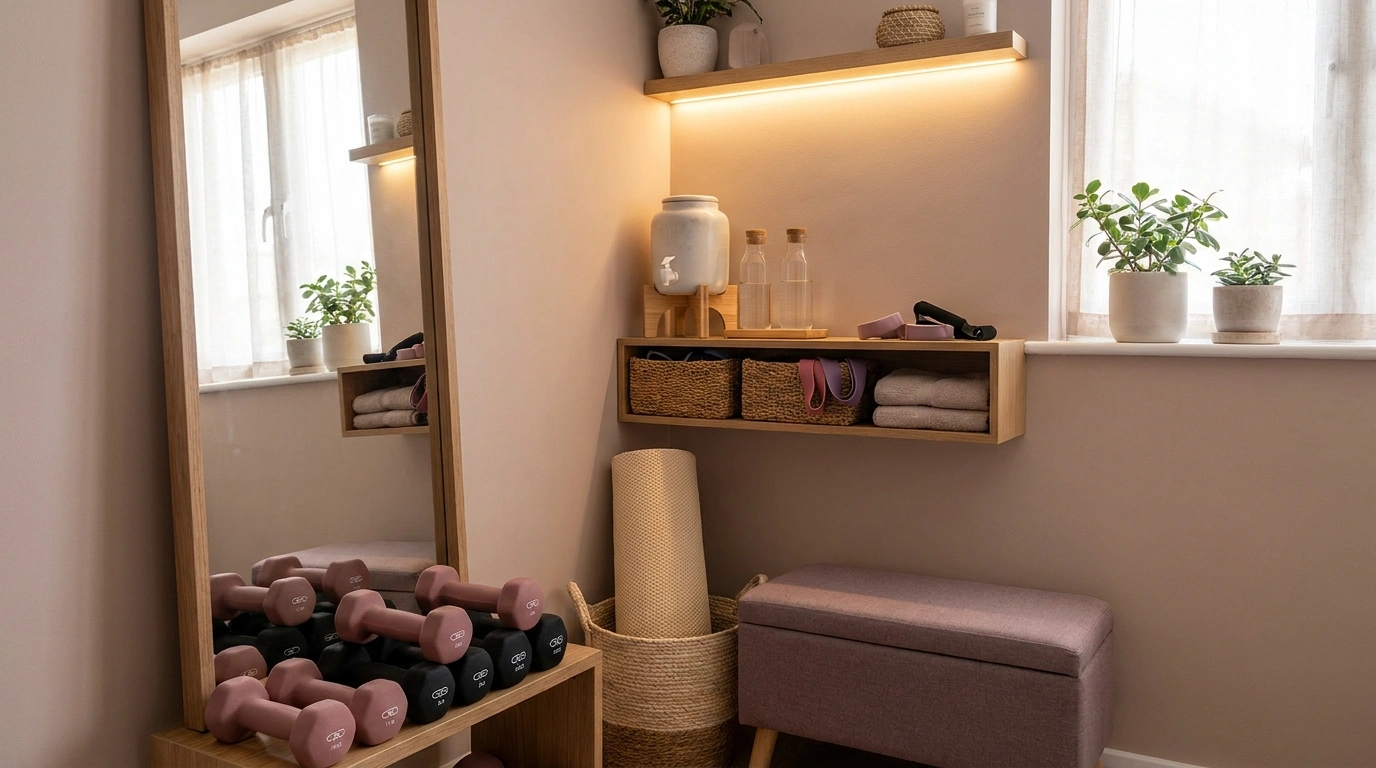
Pink is allowed. So are black rubber floors, heavy weights, a plain exercise mat, and an absolute lack of inspirational typography.
A women’s home gym doesn’t need a separate category of equipment pretending to know her goals from the color of the packaging. It needs to fit the way she trains, the room available, and the amount of setup she will tolerate before getting on with it.
That might be a compact strength room with substantial storage. It might be a clear studio for Pilates and floor work, a cycling corner, or a spare room that switches use without becoming a furniture-moving workout first. None of those choices requires soft colors, and none becomes less serious because the walls happen to be soft colors.
Fit the Person and the Activity
Equipment adjustment ranges, working clearances, reach, and storage access matter more than a “women’s” label. Check the actual product and the room’s suitability.
Use appropriate floor protection, stable equipment storage, and properly specified mounting where required. Plan privacy and lighting to your preferences. No exercise program is being prescribed here; these are room layouts for the training you choose.
Different Rooms for Different Ways of Training
A Compact Strength Room With a Low Storage Wall
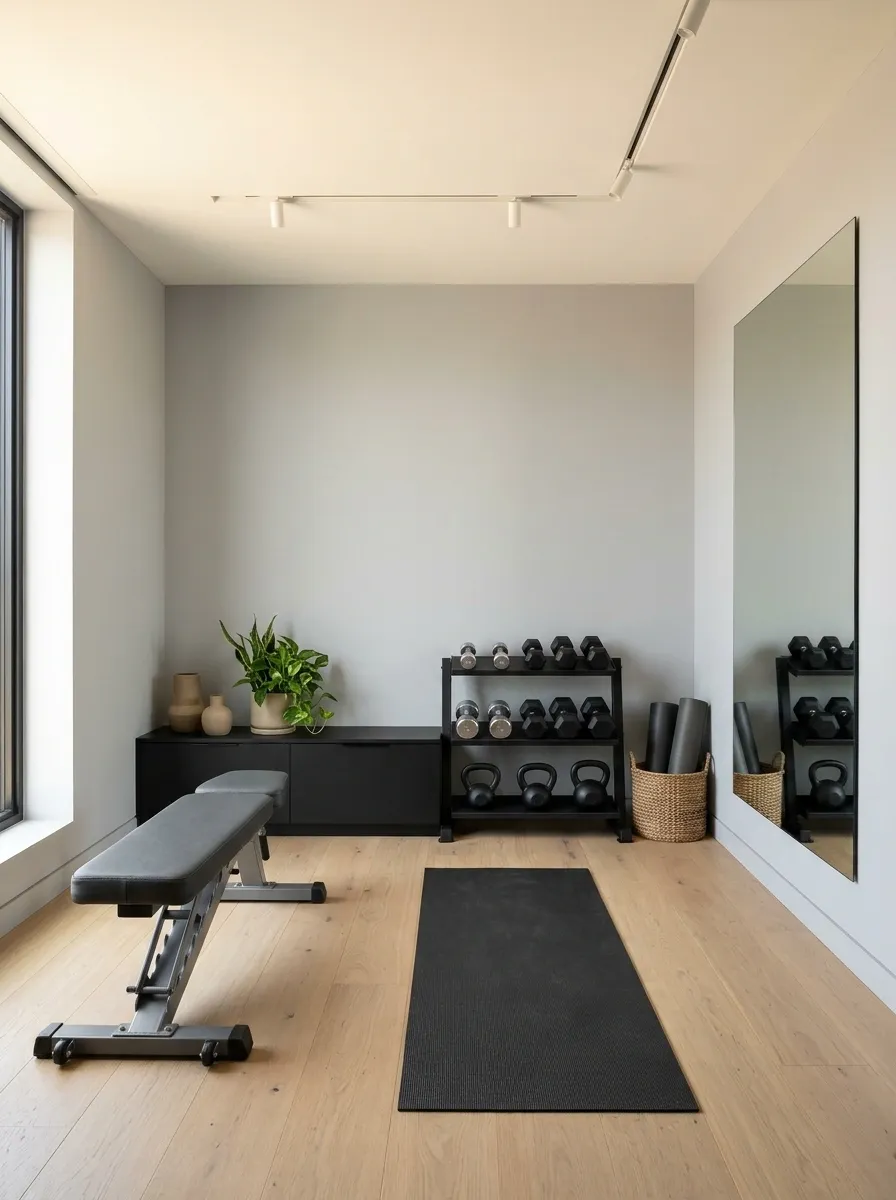
A suitable bench, organized weight storage, and a clear working floor can make a small room feel purposeful. Keep storage low where practical, use plain walls, and provide clear lighting without filling the ceiling with decorative fittings.
Choose equipment around your training and its actual adjustment range. The bench and weights need room in use, not merely room to pose together. Keep the main route free of loose accessories. A serious strength setup doesn’t require aggressive wall slogans; the equipment already has a job and doesn’t need a motivational supervisor.
Your training sets the brief.
Equipment fit, working space, stable storage.
Color, mirrors, display, and how visible the gym feels.
A Pilates Mat Studio With Full-Length Closed Storage
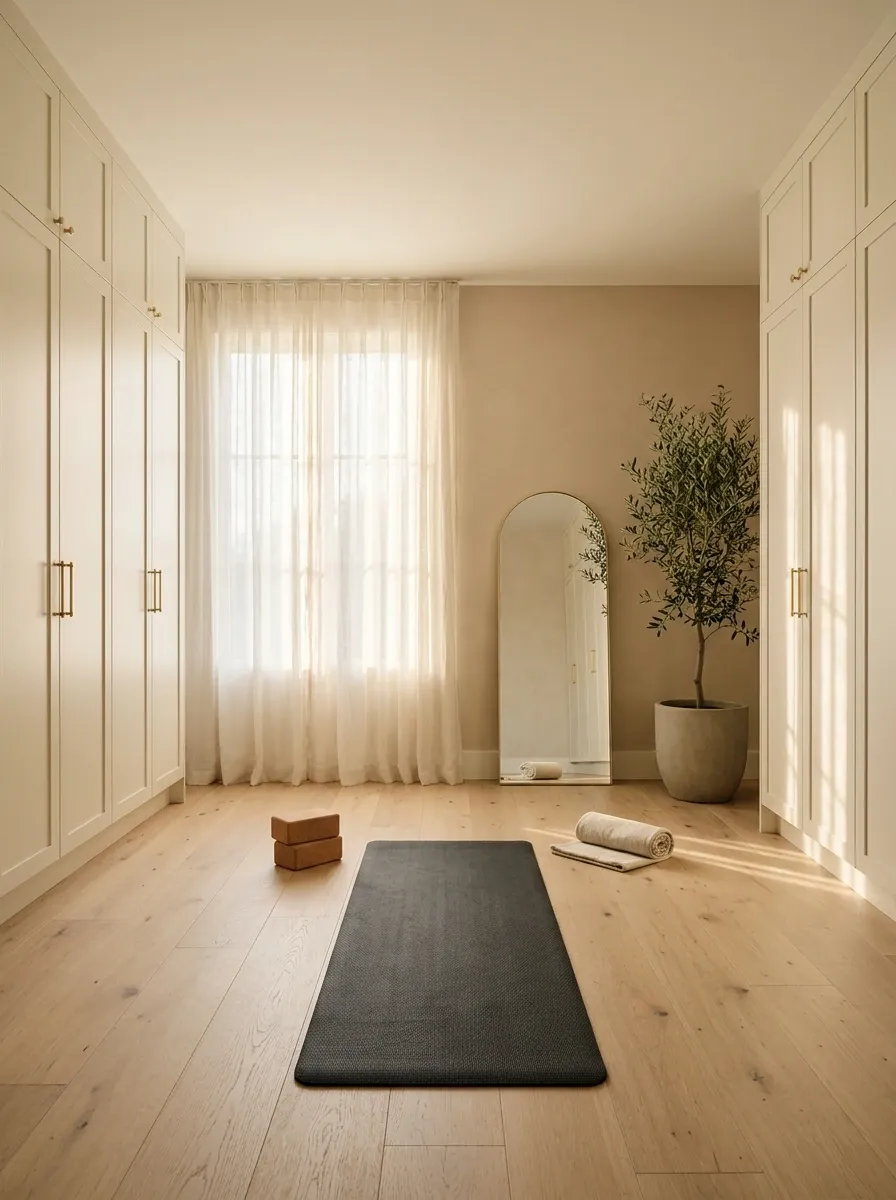
A clear mat area and full-length closed storage can give a small Pilates-focused room a calm outline. Use a plain wall color, suitable lighting, and a simple window treatment so the floor remains the main working surface.
Store accessories by the way you use them rather than by how attractive they look on an open shelf. Keep the movement area clear in every direction needed for your practice. A studio can feel personal through fabric and color without adding floor baskets to every corner. The mat needs the space more than the baskets do.
Plan accessories at the perimeter and test the full movement area before adding furniture.
A Cycling Corner With Privacy and a Clear Side Approach
A stationary bike can occupy a dedicated corner with a useful screen position, towel shelf, and suitable floor surface. Use the window treatment to provide your preferred privacy and manage glare, keeping the approach beside the bike clear.
Check adjustment, mounting, dismounting, and maintenance requirements for the actual equipment. A bike that fits the room but not the rider is an expensive stationary sculpture. Keep accessory storage within comfortable reach without obstructing operation. The corner can feel finished through a few well-placed elements rather than a whole wall of branded merchandise.
Adjustment and comfortable operation.
Working clearances and side access.
A Spare Bedroom With a Hidden Mat-and-Weights Zone
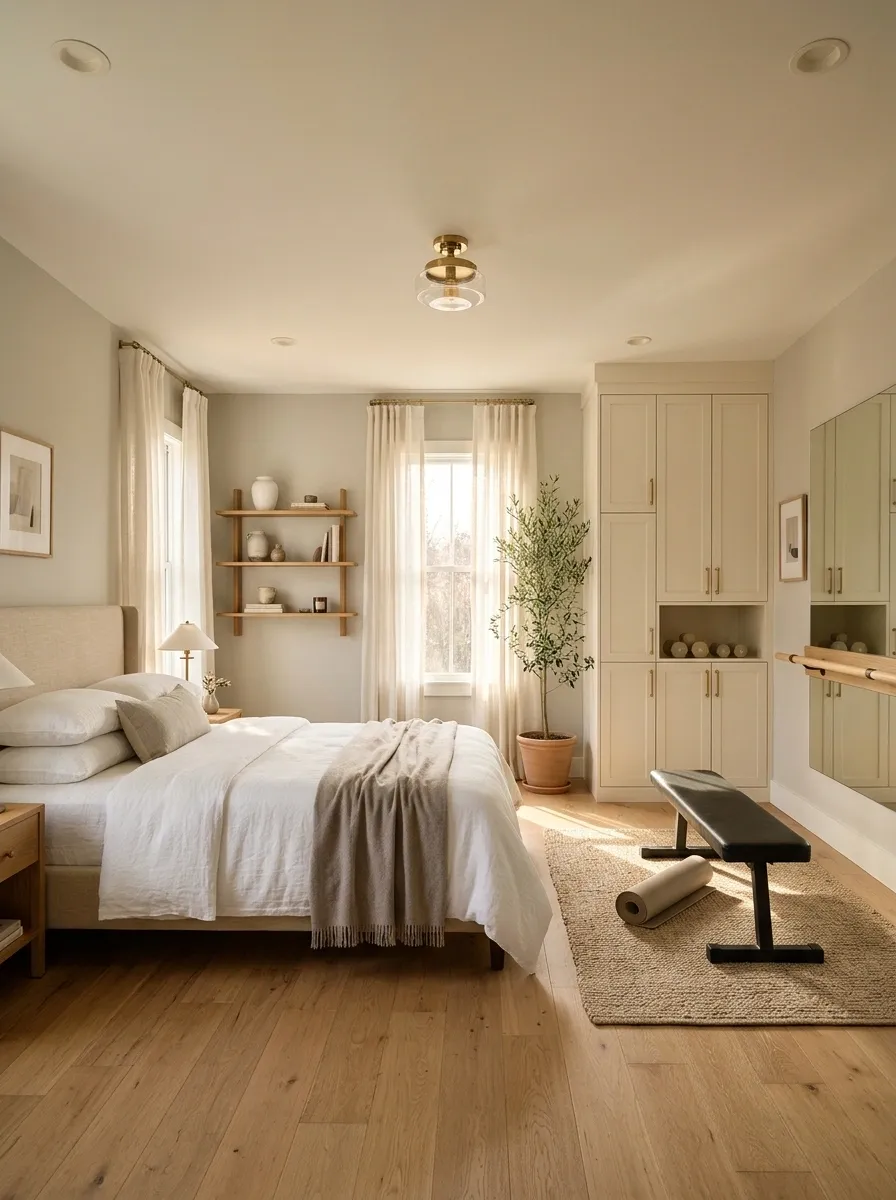
A spare bedroom can support suitable compact equipment when it has a proper storage position and a clear training area. Keep heavier items in verified storage, use closed cupboards for light accessories, and leave the bed approach usable.
The room should change purpose through a manageable sequence rather than a full reset of its identity. Plot the training area with doors open and furniture in its normal place. If the only way to exercise is moving the bed, choose a different setup. The warm-up should not be a domestic logistics qualification.
How does the room change modes?
List the items moved, their parking places, and the reset. Remove unnecessary steps before adding equipment.
A Soft-Colored Strength Gym With Proper Equipment Capacity
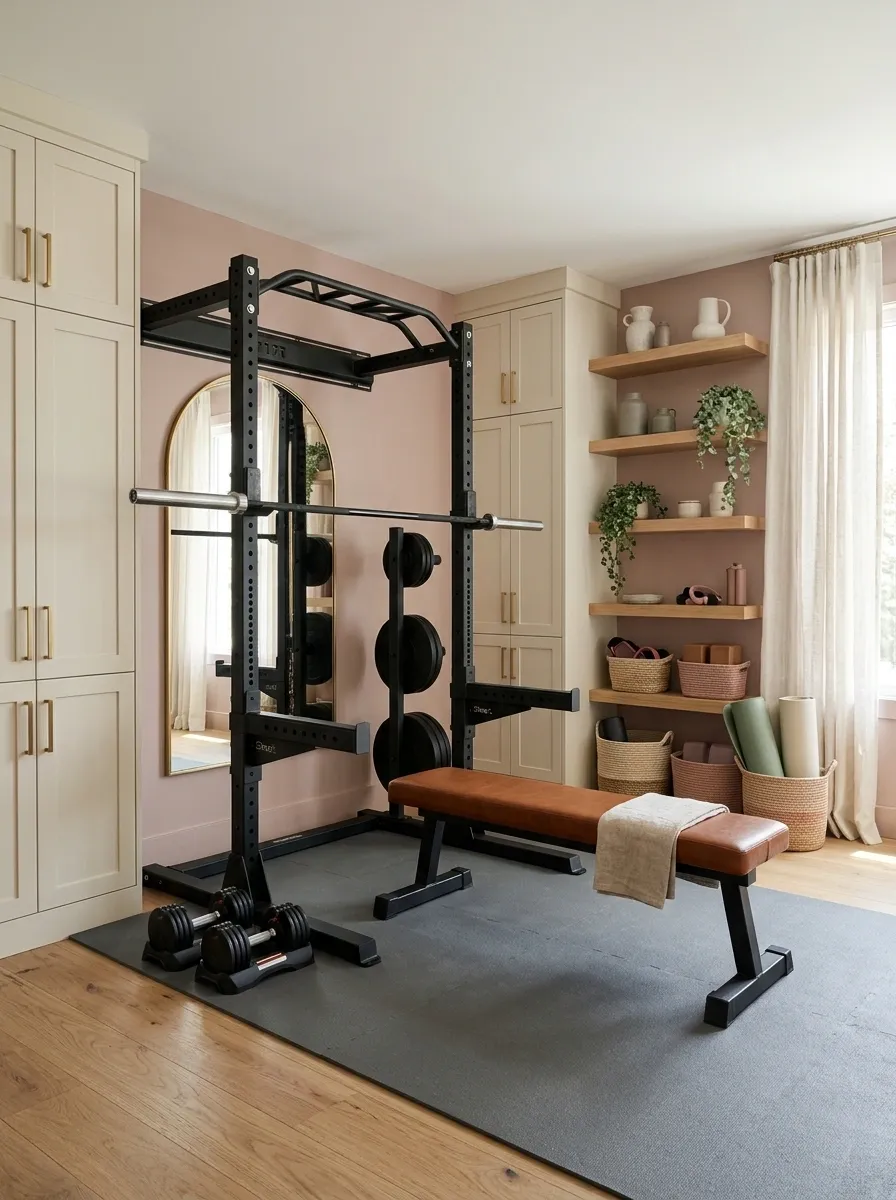
Muted rose, sage, or warm cream walls can sit comfortably beside substantial training equipment. Keep the floor and storage suitable for the activity, with plain cabinets and clear lighting preserving a practical outline.
The color doesn’t decide how serious the room is. Choose the palette because you enjoy it, and choose equipment from its function and specification. Small accessories can repeat the wall color without requiring every training item to match. A gym is allowed to be attractive without apologizing, and it is equally allowed to ignore the prevailing opinion about which shades look sufficiently athletic.
Keep the decorative palette separate from decisions about capacity, stability, and equipment fit.
A Dark Training Room With Light Equipment Labels
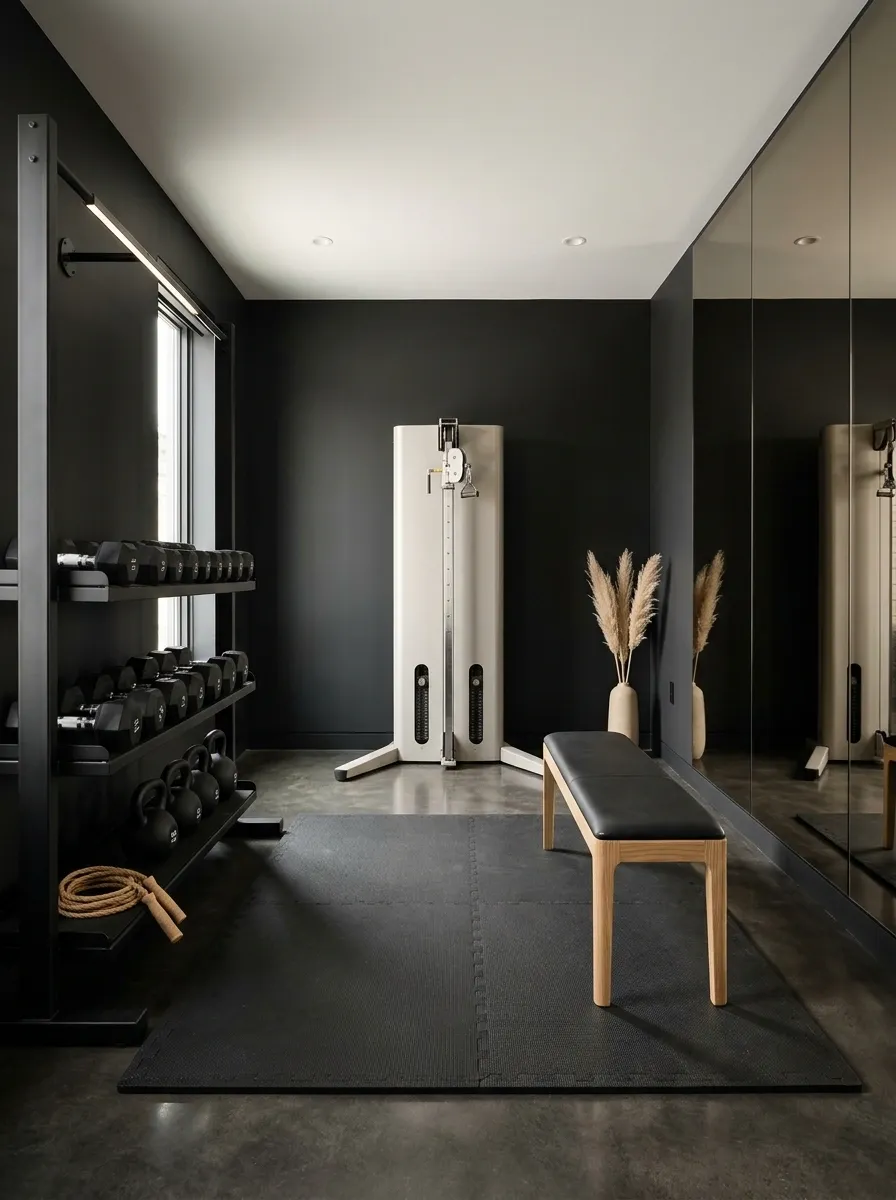
Dark walls can make a small strength room feel contained, with clear overhead and task lighting keeping the working area readable. Use organized storage and visible equipment identification rather than letting every object disappear into the same dark background.
The lighting needs to support actual use and cleaning, not just dramatic shadows. Keep the floor distinct enough to see loose items and equipment edges. A dark gym can be comfortable without looking like a trailer for an unnecessarily intense fitness documentary. Let the room feel focused, with enough visual clarity to remain practical.
Equipment edges, floor objects, controls, and storage labels should remain easy to see.
A Barre-Focused Room With a Purpose-Designed Rail
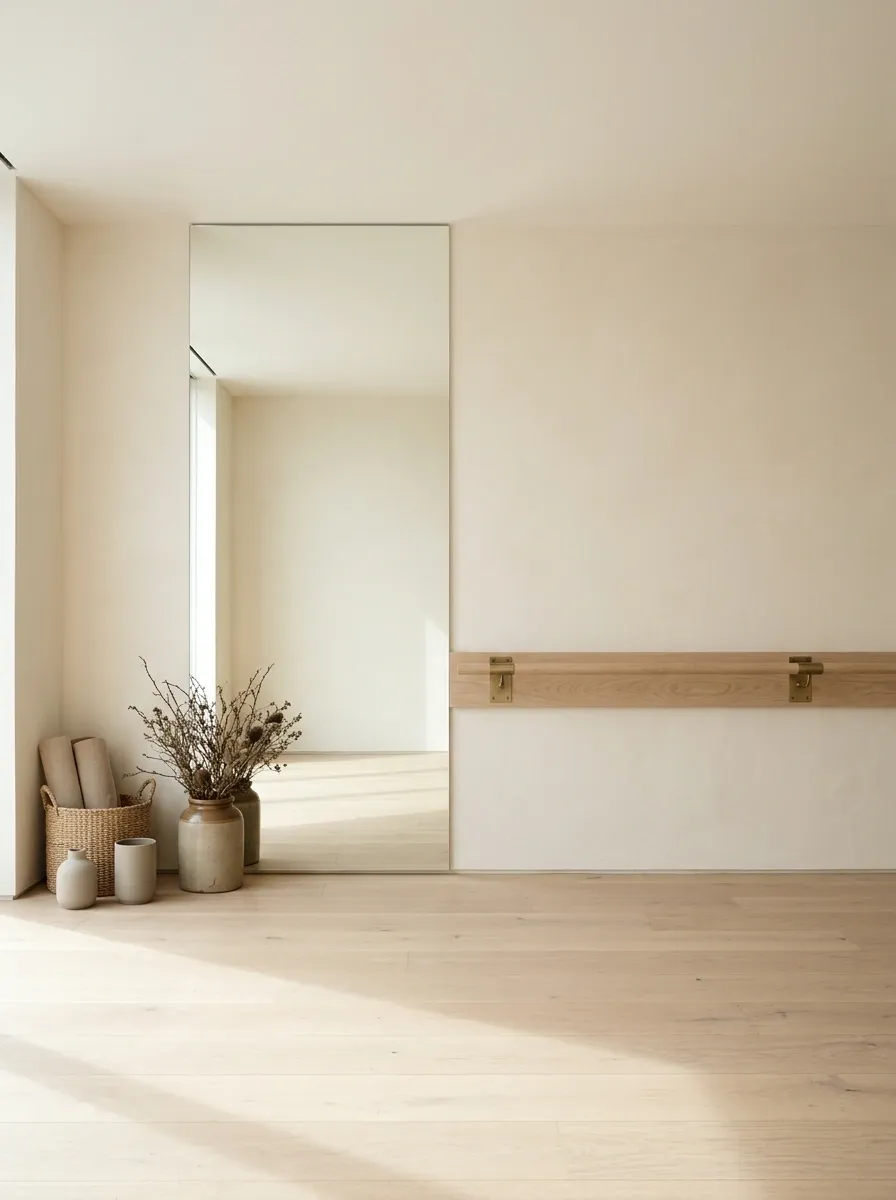
A barre-focused studio can use a properly specified rail, a clear floor, and restrained accessory storage. Plain walls and a suitable mirror installation, if wanted, give the room a complete setting without occupying more floor.
Choose the rail and its support for the intended use; a decorative curtain pole hasn’t become exercise equipment through a change in branding. Keep surrounding furniture and projecting shelves out of the working area. The room can remain visually light while the important hardware is appropriately substantial. Useful support is a better design feature than a delicate-looking fixture that makes you cautious about touching it.
Intended use, mounting, loads, wall construction, and working clearance belong in the decision.
A Mirror-Free Movement Room With a Calm Wall
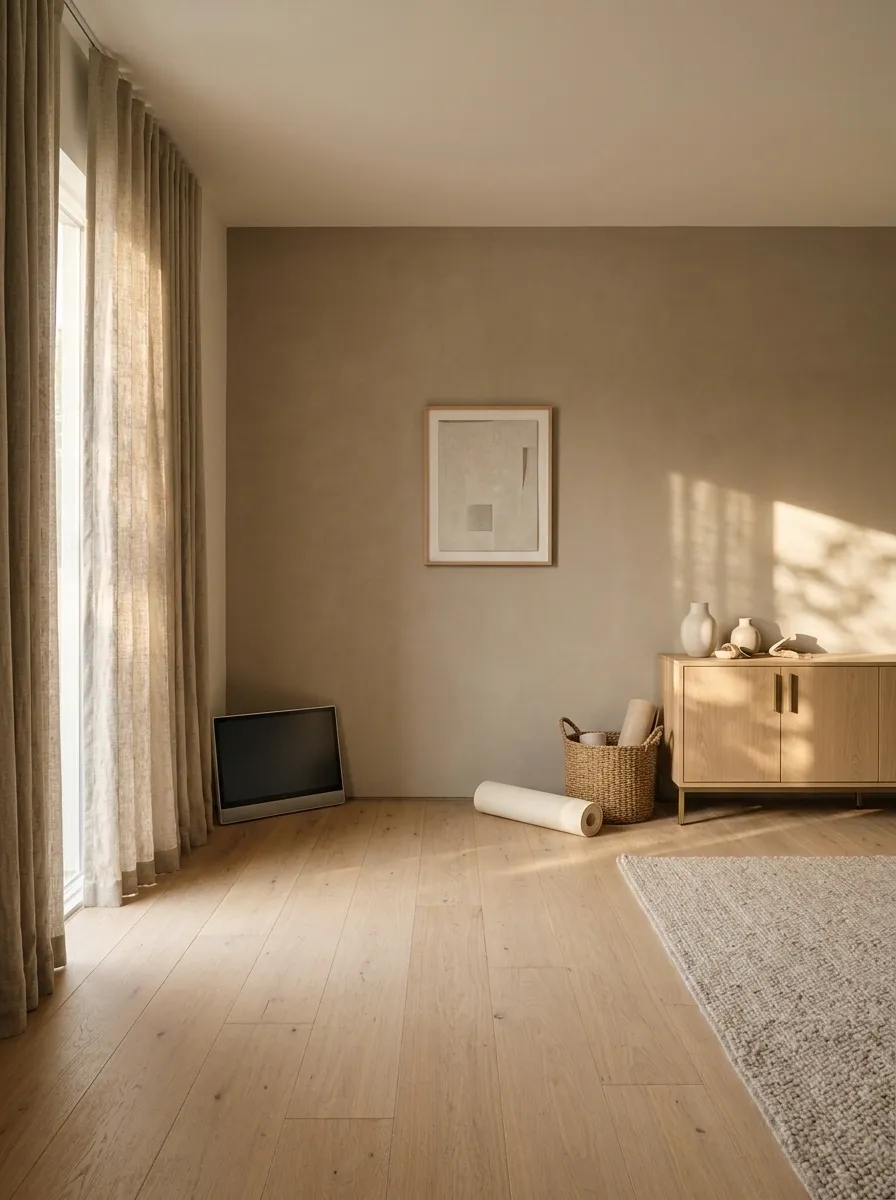
A movement room doesn’t need mirrors if they aren’t useful or welcome in your practice. A plain wall, clear floor, suitable lighting, and closed accessory storage can create a complete setting.
Put any screen or instruction source where it supports comfortable use rather than making the room revolve around a display. A small artwork can give the wall character without turning it into another visual task. The room’s usefulness isn’t measured by how many reflections it produces. Choose the feedback and atmosphere that suit you, then leave enough floor for the activity itself.
Mirror, screen, plain wall, or a combination, based on your use, not a gym-decoration checklist.
A Small Gym With a Dedicated Changing Corner
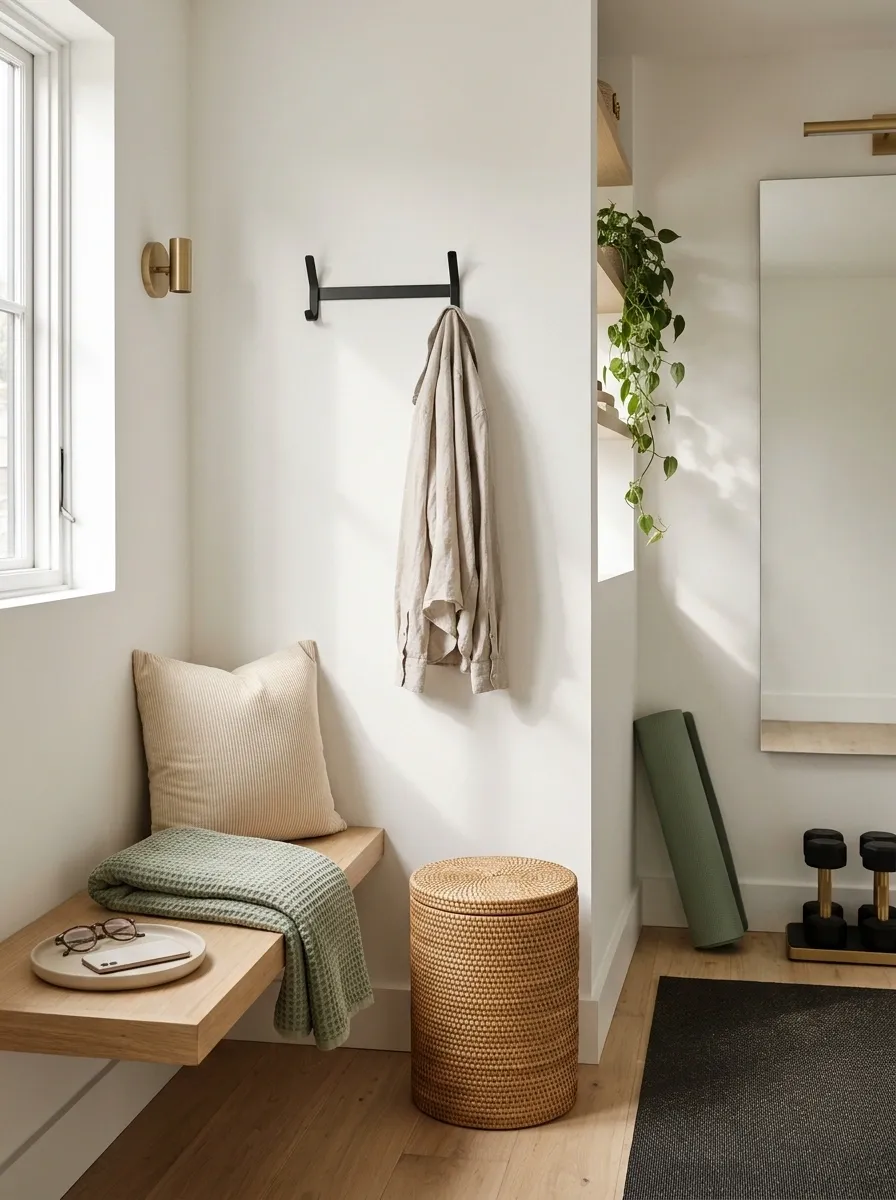
A compact training room can include a small changing corner when storage and movement are carefully separated. Use closed personal storage, a clear place for a towel, and a modest seat only where the footprint allows.
The changing area should not steal the clearance the equipment requires. Keep personal items contained rather than spreading them across the training bench. A small private room can feel more comfortable when its ordinary routines are acknowledged. You still need somewhere for glasses, a phone, and clothes; apparently humans continue owning belongings even after entering a gym.
Equipment and movement.
Clothes, towel, phone, glasses.
A Home Office With an Exercise Floor That Opens Quickly
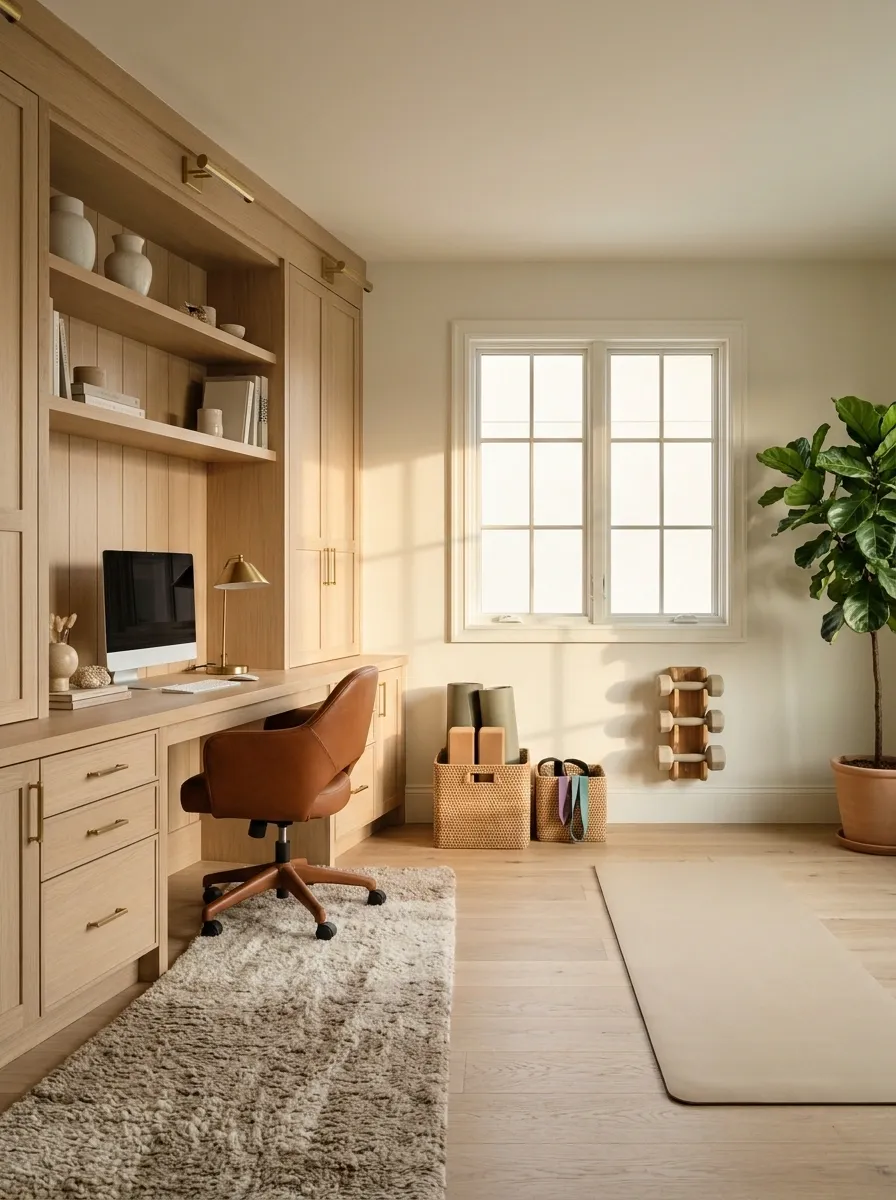
A desk room can share space with a mat-based gym when the chair parks cleanly and cables stay contained. Use light accessory storage beside the desk and keep the exercise surface straightforward.
The room should switch functions without unplugging the workstation or stacking furniture in the doorway. Test the changeover before choosing additional equipment. A small room can support two useful activities when each has a clear footprint. It doesn’t need to look like a completely different room after every switch, which is fortunate because most people already have enough unpaid household tasks.
That should open the floor without dismantling the office.
A Reformer Room With Clear Side Access
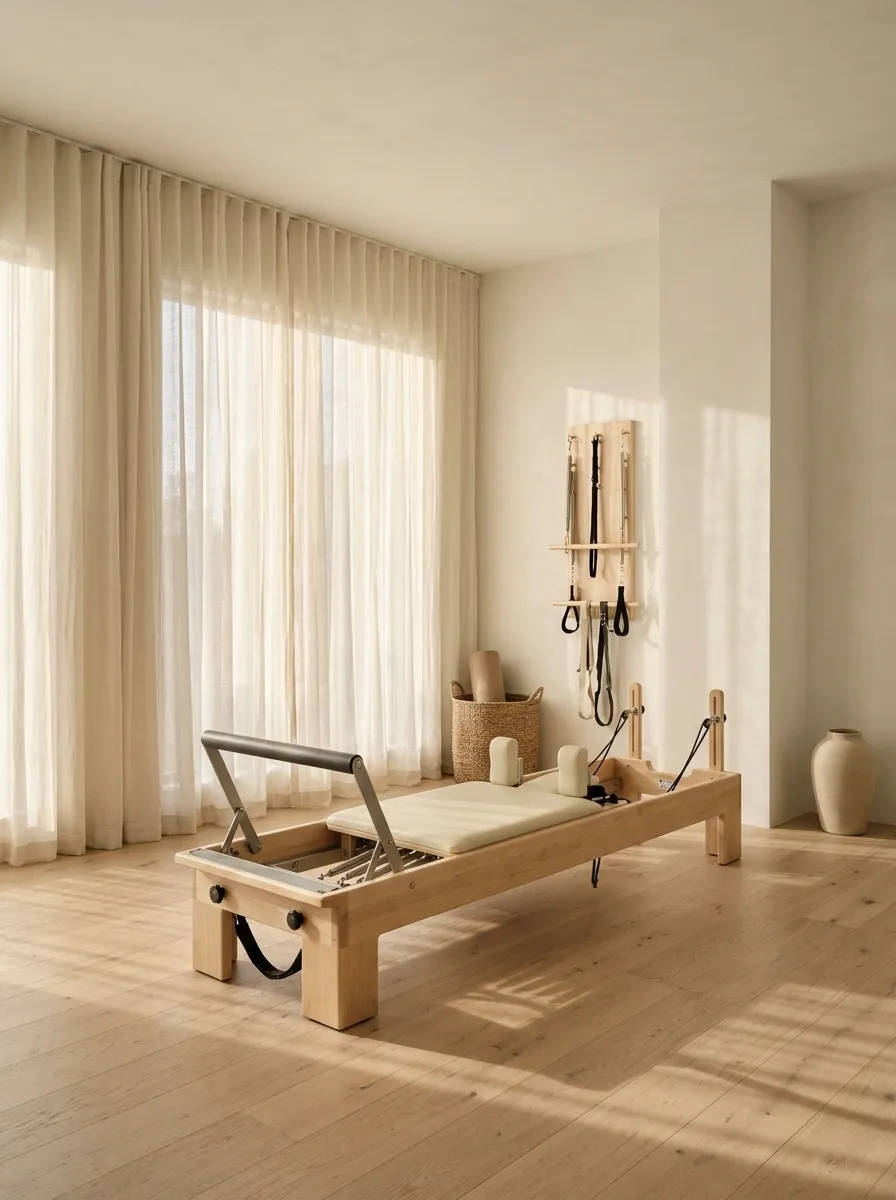
A compact reformer-focused room needs the machine’s full working envelope, suitable access, and nearby accessory storage. Keep walls and curtains plain so the equipment doesn’t feel wedged into decorative furniture.
Use the exact product requirements and your intended practice to plan the layout. The machine’s overall dimensions alone don’t establish the space needed around it. Avoid adding a bench or display cabinet just because the corners look empty. Those corners may be doing useful work when the equipment is in use. A clear room is a finished room when movement is its purpose.
Include access, moving parts, accessories, and the stated operating clearances before furnishing the edges.
A Quiet Apartment Gym for Controlled Movement
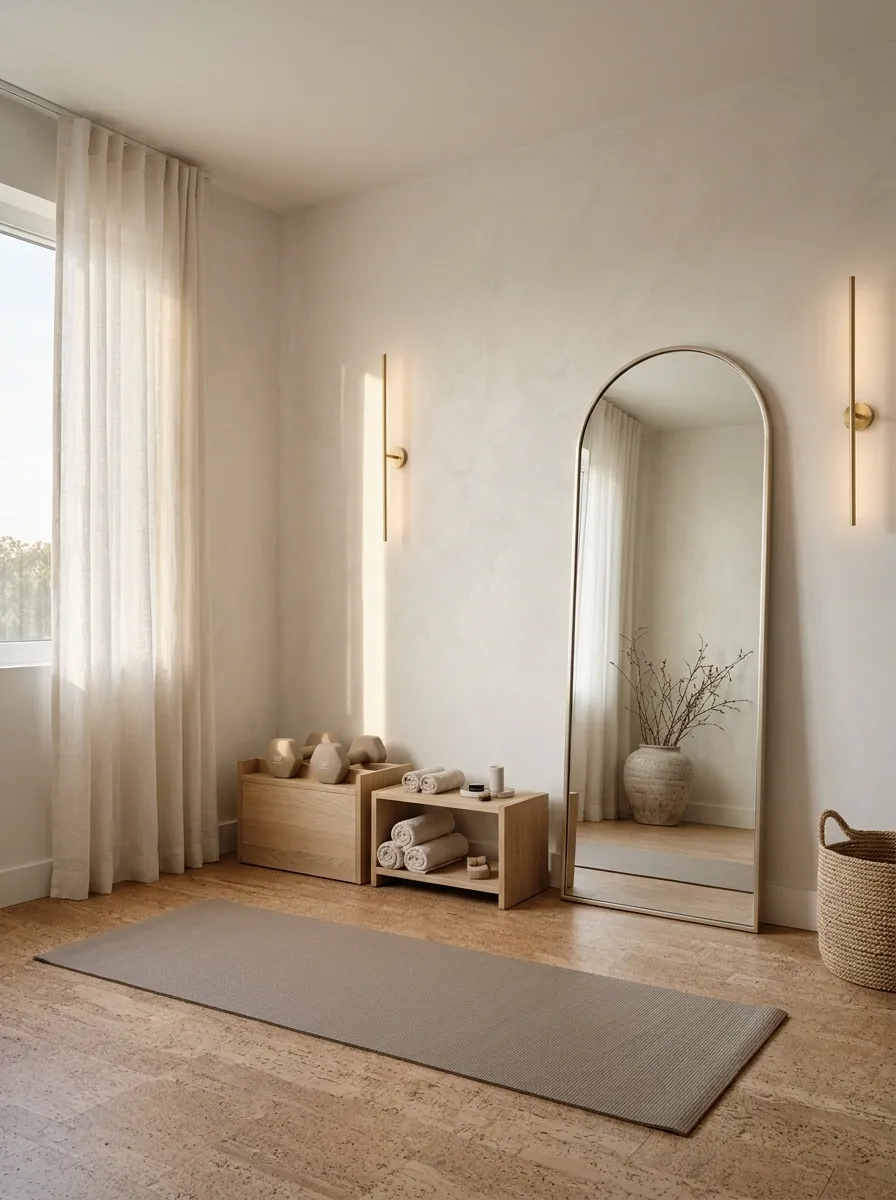
An apartment gym can prioritize activities and equipment appropriate to the floor, building, and neighbors. Use a suitable surface, compact storage, and a clear movement zone rather than assuming a thick mat solves every sound and impact issue.
Choose the setup around what the room can reasonably support. Keep equipment handling controlled and check relevant building rules where applicable. The room can feel dedicated through lighting and organization without becoming a miniature commercial floor. A lower-impact layout is a design choice, not a lesser version of someone else’s much larger garage.
Separate the questions.
A Garage Strength Bay With Personal Storage
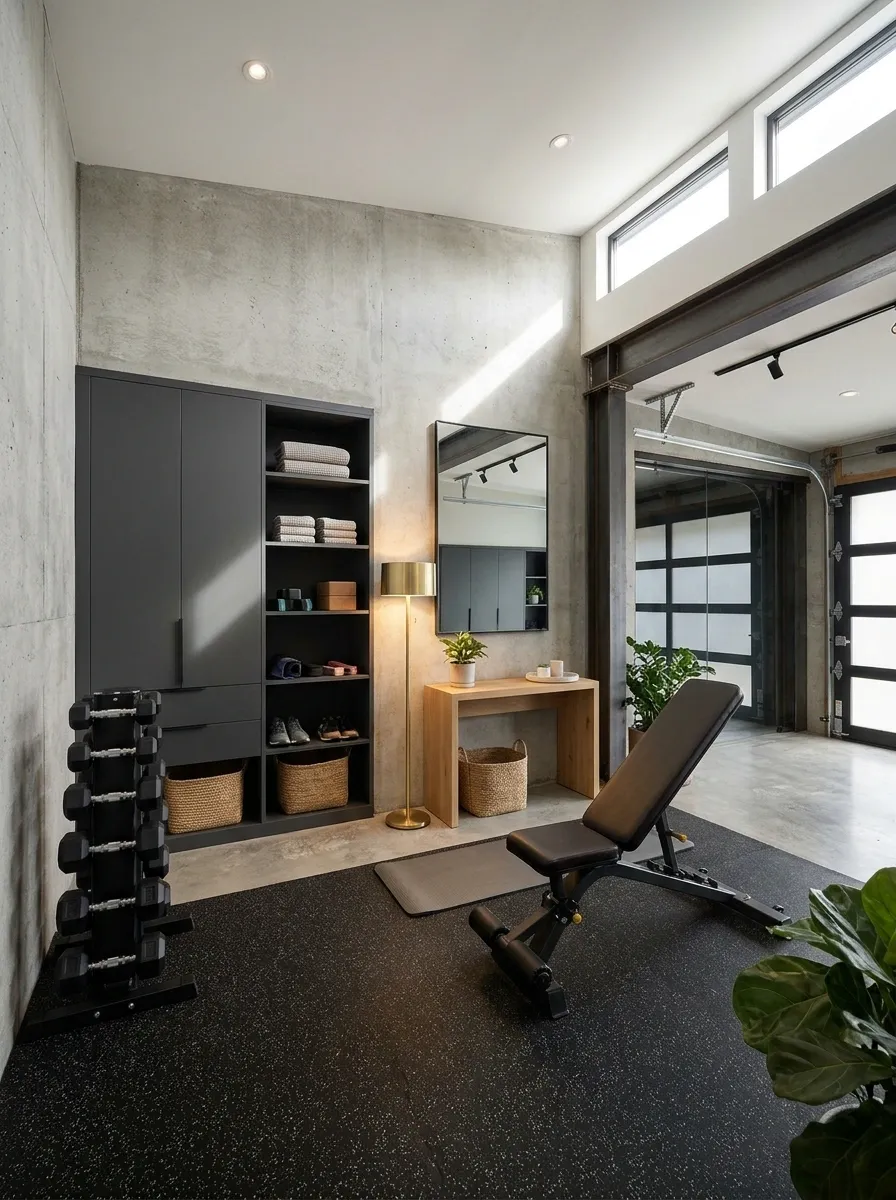
A defined garage bay can support strength training with appropriate equipment, suitable lighting, and clear separation from vehicle and tool use. Add a personal storage cupboard so shoes, towels, and small accessories have a consistent place.
Resolve ventilation, environment, floor suitability, and services before decorating. Keep chemicals and running vehicles out of the training situation. The room can have a personal palette without hiding its practical setting. A garage gym doesn’t need to imitate a gritty advertisement to be legitimate; it needs to work comfortably and keep its ordinary hazards outside the session.
Training, vehicle access, tools, and household storage need deliberate separation.
A Low-Storage Gym With Reachable Everyday Equipment
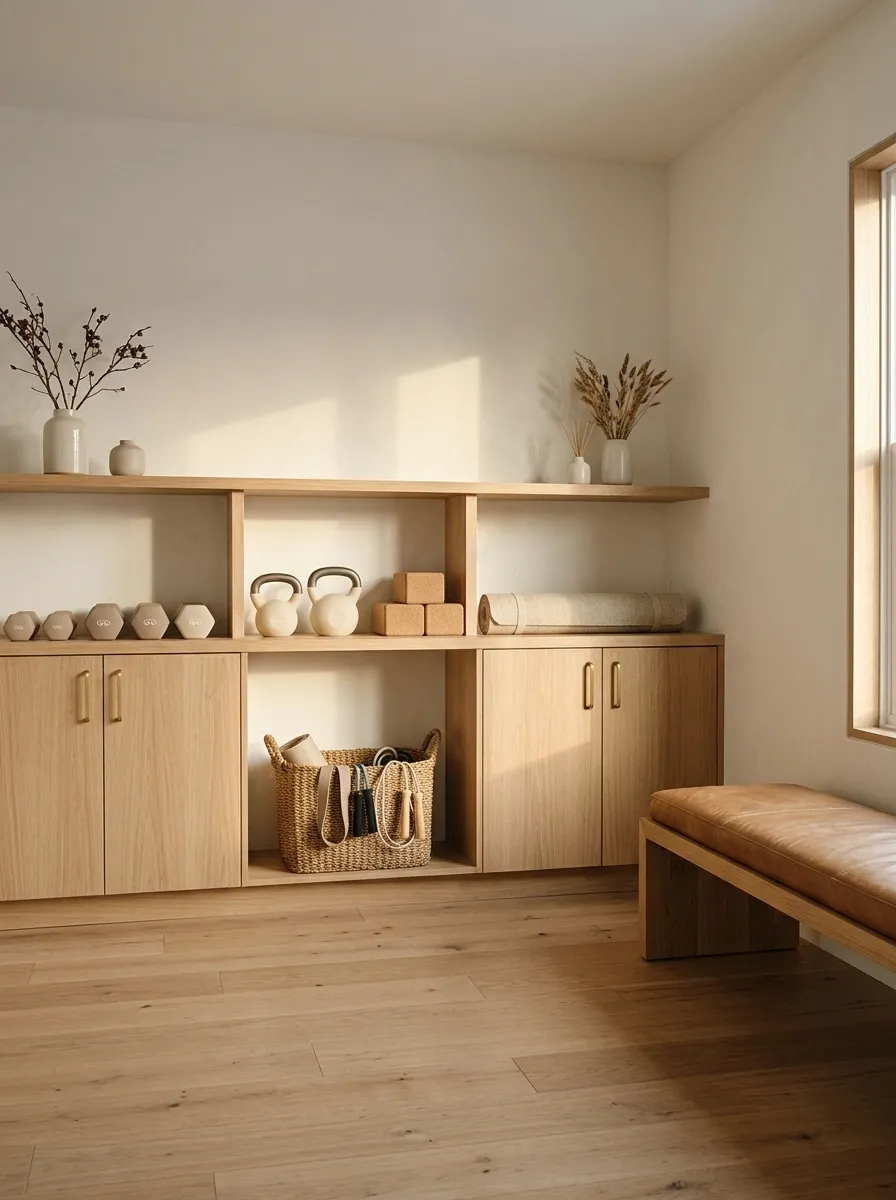
Low, properly specified storage can make a small gym easier to reset, with frequently used equipment accessible without awkward overhead handling. Plain walls and a clear floor keep the room readable.
Set storage heights around your actual reach and the equipment weight. A shelf placed where it looks balanced may be a poor place to lift something heavy. Keep small items grouped and reserve the easiest positions for regular use. The finished room should reduce friction rather than celebrate storage that looks impressive while requiring a small negotiation with gravity.
Test lifting, returning, and hand clearance before fixing storage heights.
A Shared Gym With Adjustable Equipment and Separate Accessory Bins
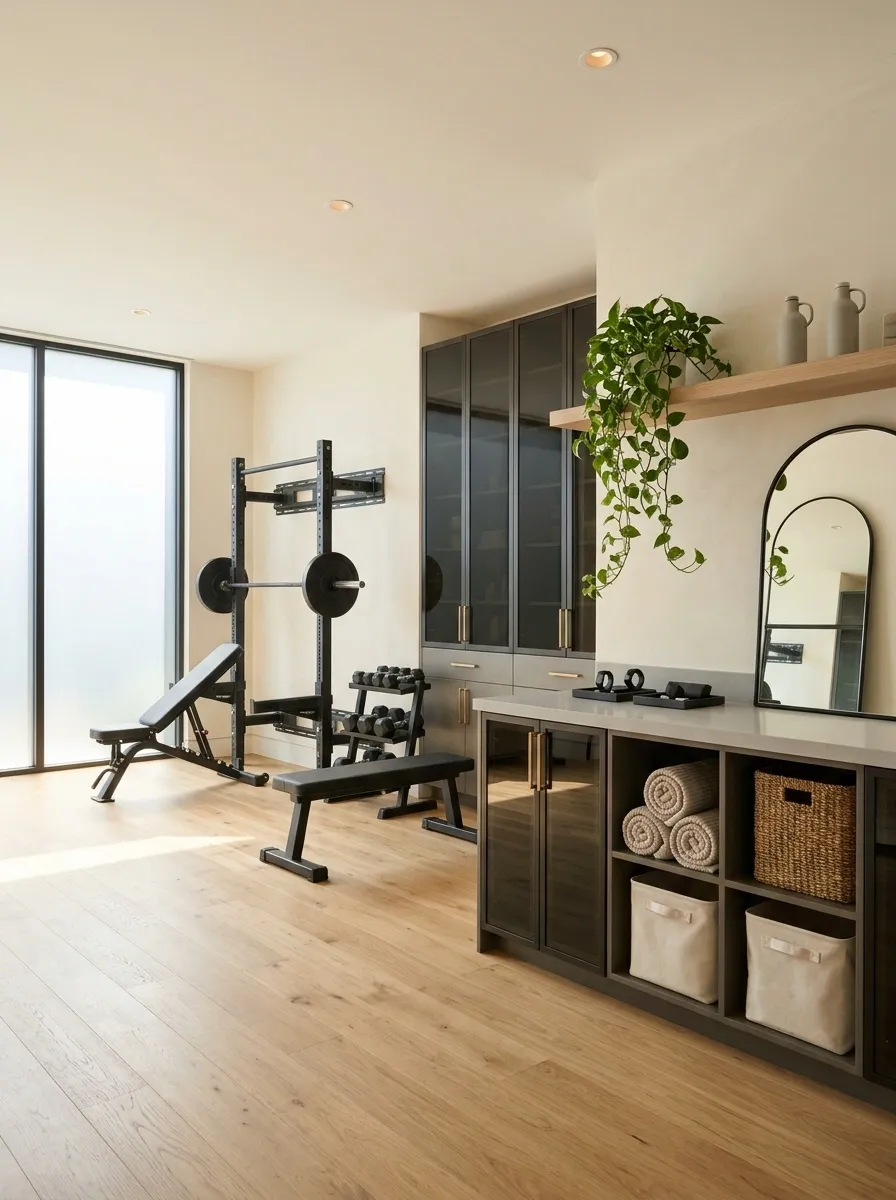
A shared small gym can use equipment that suits each user, with clearly separated accessory bins and a common clear training zone. Keep adjustment instructions and settings easy to access rather than relying on memory.
The layout should accommodate the people using it, not simply the tallest or most enthusiastic shopper. Check product adjustment ranges and the space needed to change settings. Separate storage can help the room stay orderly without duplicating every object. Sharing equipment is easier when one person’s setup doesn’t become everyone else’s permanent default.
Settings and personal accessories.
Own fit and setup.
Clear and ready to use.
A Window-Facing Cardio Room With Adjustable Privacy
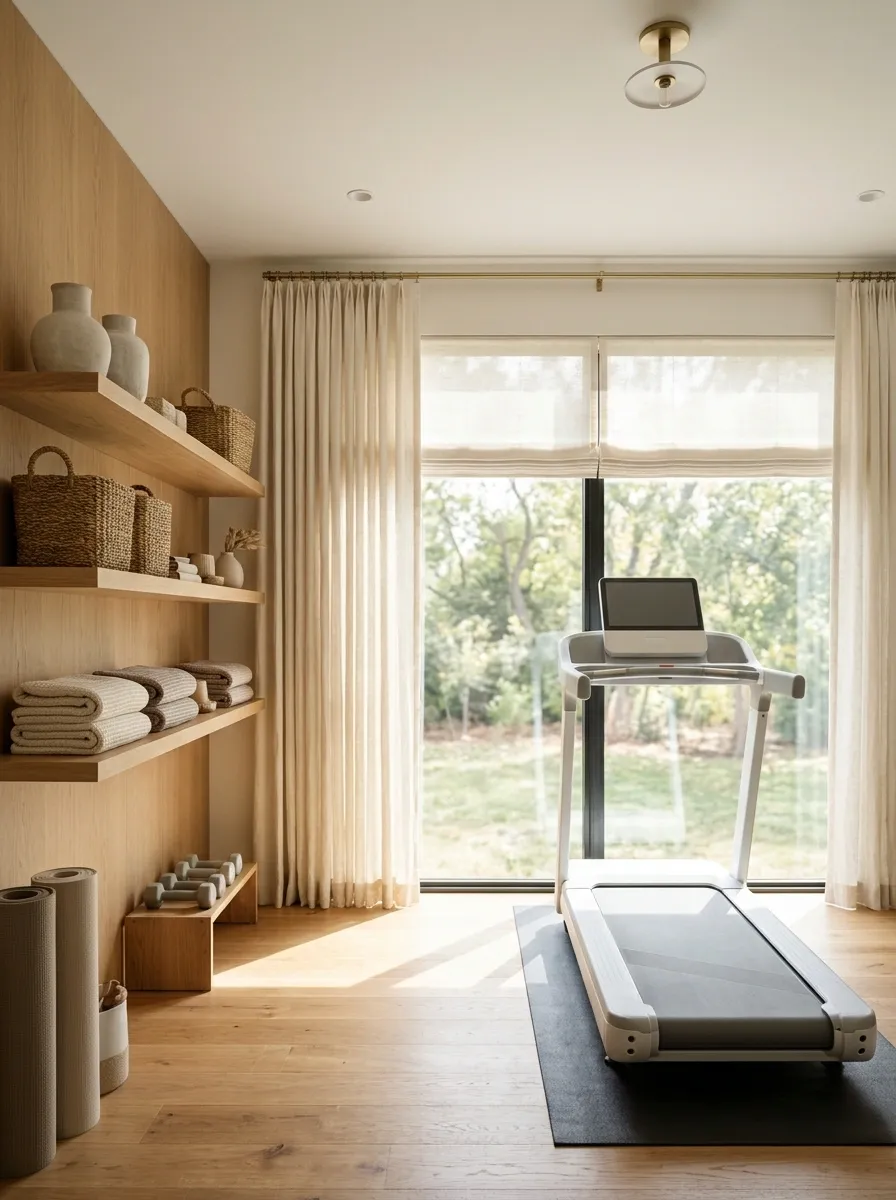
A window-facing cardio setup can feel open without making the room a display case. Use a covering that manages the relevant sightlines, keep the machine within its clearances, and place storage on the solid side wall.
Test privacy under both daylight and evening interior lighting. A sheer curtain is not automatically a solution once the room is lit after dark. Keep screen glare and equipment controls in mind when choosing the position. The room can provide a view and personal comfort together, rather than asking you to choose between daylight and feeling watched.
A Narrow Room With One Equipment Wall
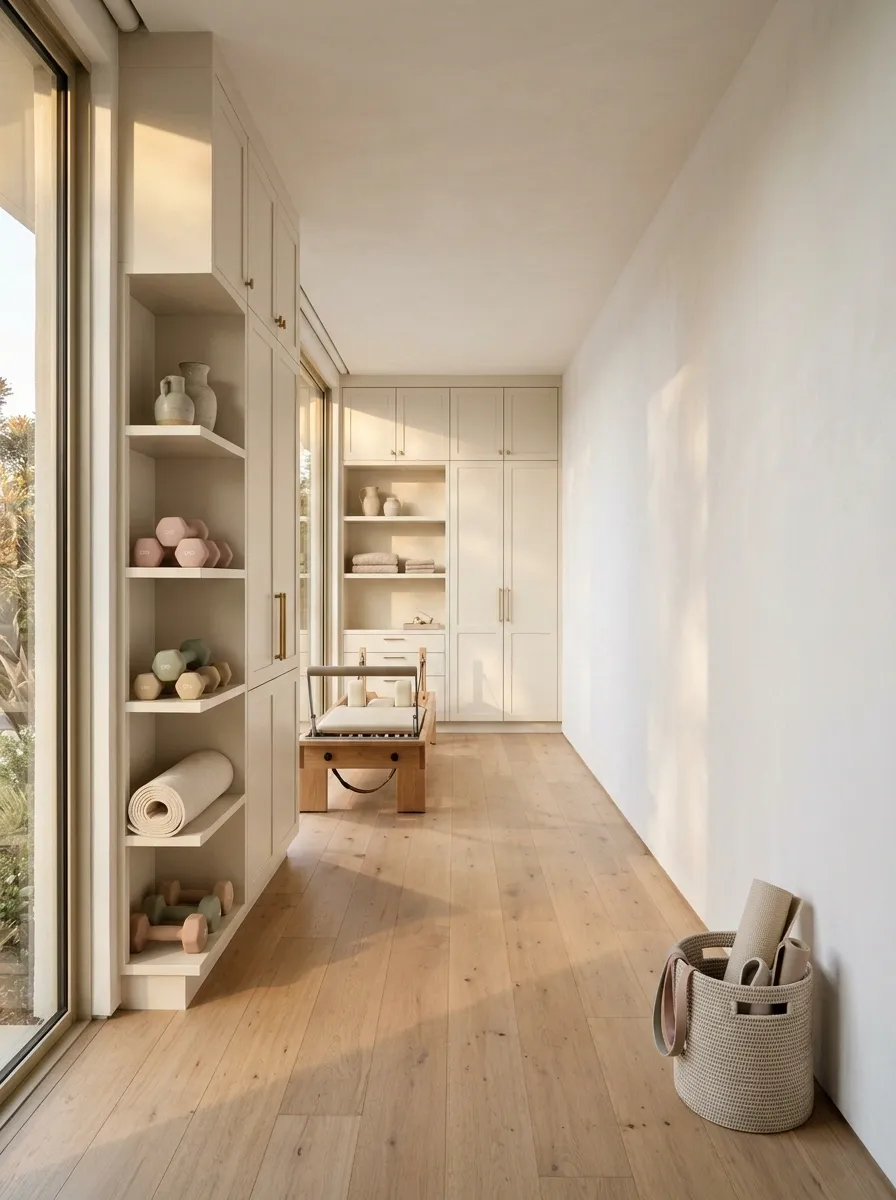
A narrow gym can keep storage and equipment along one side, leaving a clear working route and activity area beside it. Use a plain wall finish and a limited equipment set so the room doesn’t become a corridor between machines.
Choose the activities around the actual width available, including your movement and the equipment’s requirements. The opposite wall doesn’t need furniture merely because it is empty. Let it remain a useful boundary. A narrow room improves when its plan becomes simpler, not when every available surface is recruited into a storage campaign.
Suitable storage
Use the full movement and access needs to judge the layout.
A Soft-Lit Mobility Corner With a Clear Floor
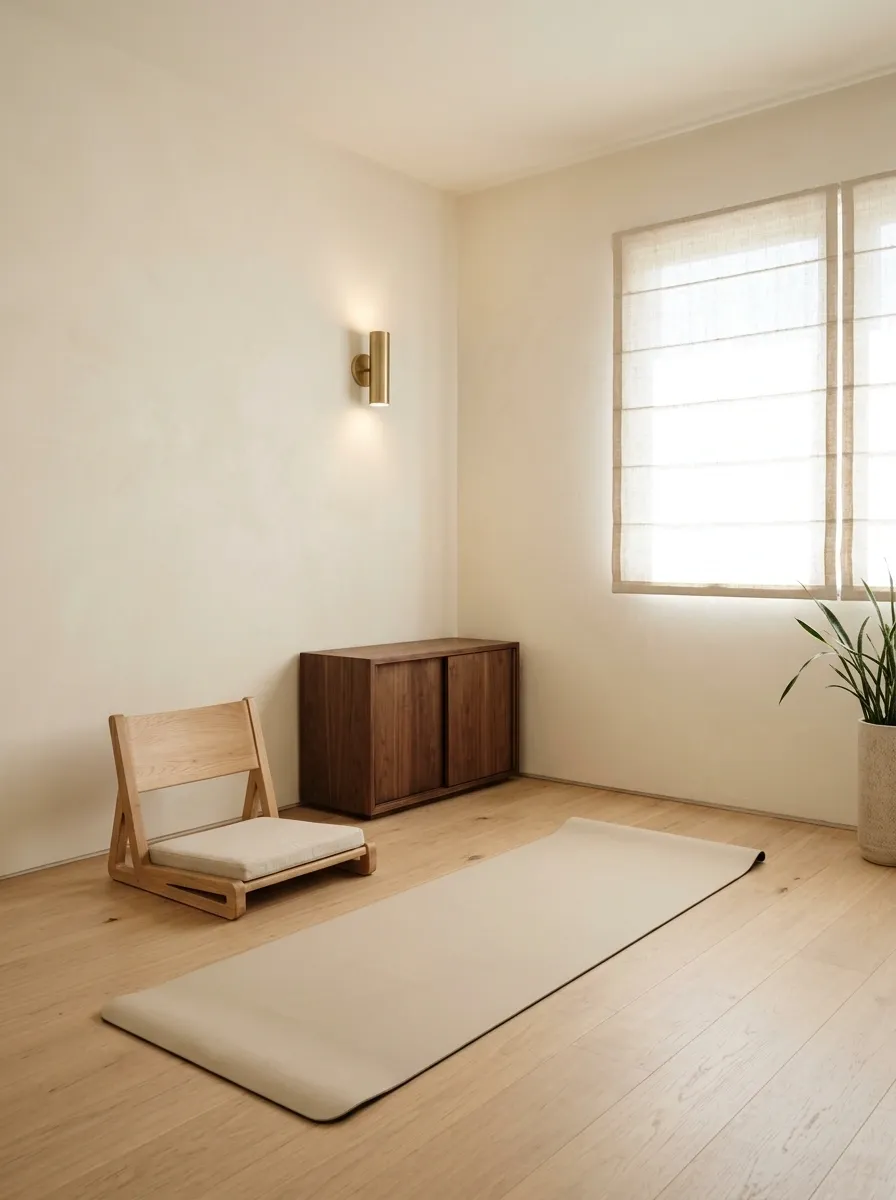
A mobility-focused corner can use a plain mat area, comfortable lighting, and small closed accessory storage. Keep the furniture low and the window treatment simple so the corner feels settled without visual clutter.
Choose enough light for clear use rather than relying on decorative dimness. If a chair or support is part of your practice, select and position it appropriately rather than borrowing an unstable stool for the look. The room can feel quiet without becoming a collection of candles, baskets, and objects occupying exactly where your legs need to go.
Keep the floor, equipment, and support surfaces clearly visible even in a softer lighting scheme.
A Training Room With a Small Recovery Seat
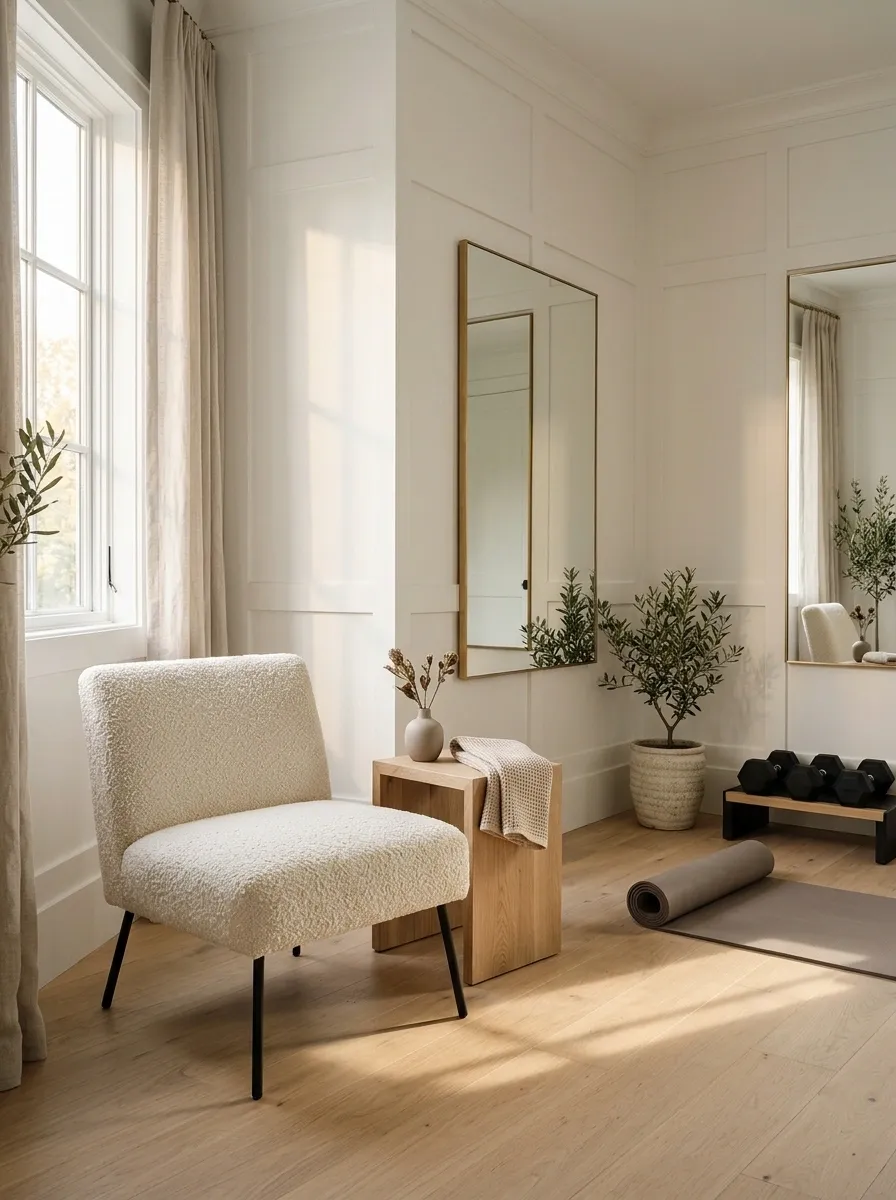
A compact chair can give a gym a useful place to sit, change shoes, or pause when the room has enough space beyond the active area. Keep the seat simple and place a small personal landing surface nearby.
The chair should not occupy equipment clearance or become permanent clothing storage. Decide what it does before adding it. A comfortable room can acknowledge the ordinary moments around training without turning into a lounge full of unused furniture. If there isn’t room for the chair, keep the floor; the gym doesn’t need to qualify as a sitting room to feel finished.
Include legs, standing space, and the route around it before deciding the corner is spare.
A Small Room With One Primary Training Style
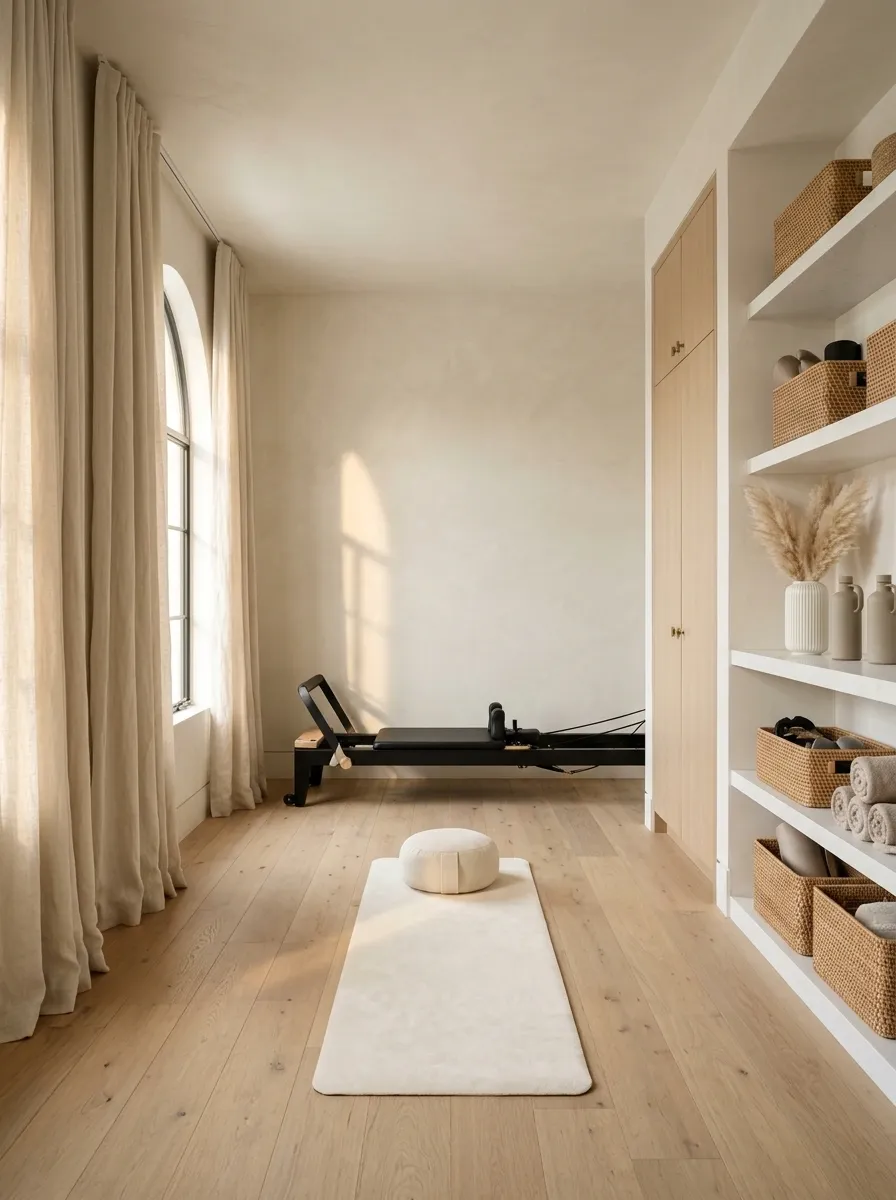
A focused room can work better than a crowded all-purpose gym. Choose the main activity, give its equipment or mat area enough space, and store only the accessories that support it.
The other activities can happen elsewhere or use a temporary arrangement if appropriate. This is a realistic response to a small footprint, not a lack of ambition. Keep the room visually coherent through simple finishes and useful storage. Owning several training options is less impressive when none can be used without moving the others into the doorway.
Give one activity the full room it needs.
A Gym With Storage Organized by Session
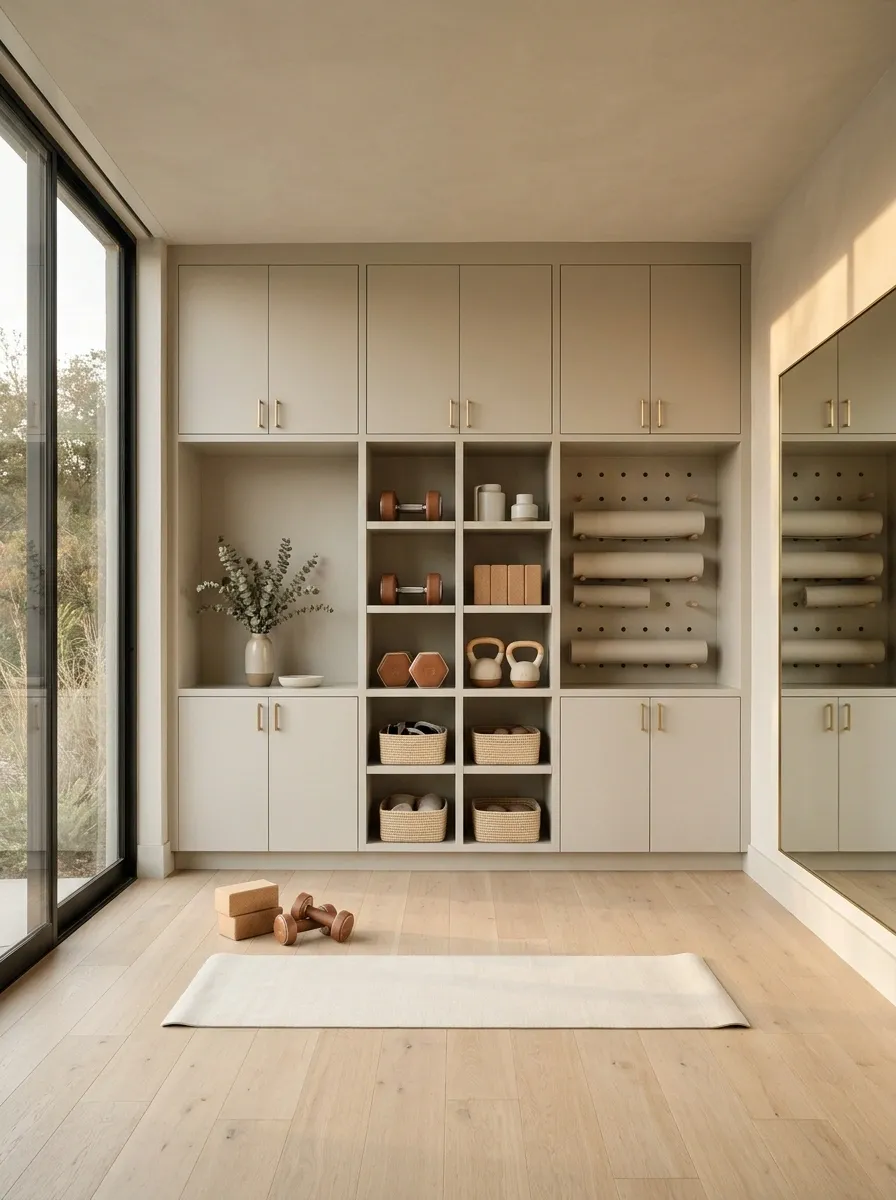
Group accessories by the way you train, with suitable storage for heavier equipment and shallow containers for small items. Keep the room’s floor clear and the cabinet finish related to the walls.
This layout works when the main frustration is setup rather than lack of equipment. A clear label and a consistent storage place can be more useful than another decorative shelf. Avoid grouping everything by color if that separates objects used together. The room is not a stationery display; its organization should make the next session easier to start and easier to put away.
Session grouping can reduce searching without adding more furniture to the room.
A Private Garden Studio With a Modest Equipment Set
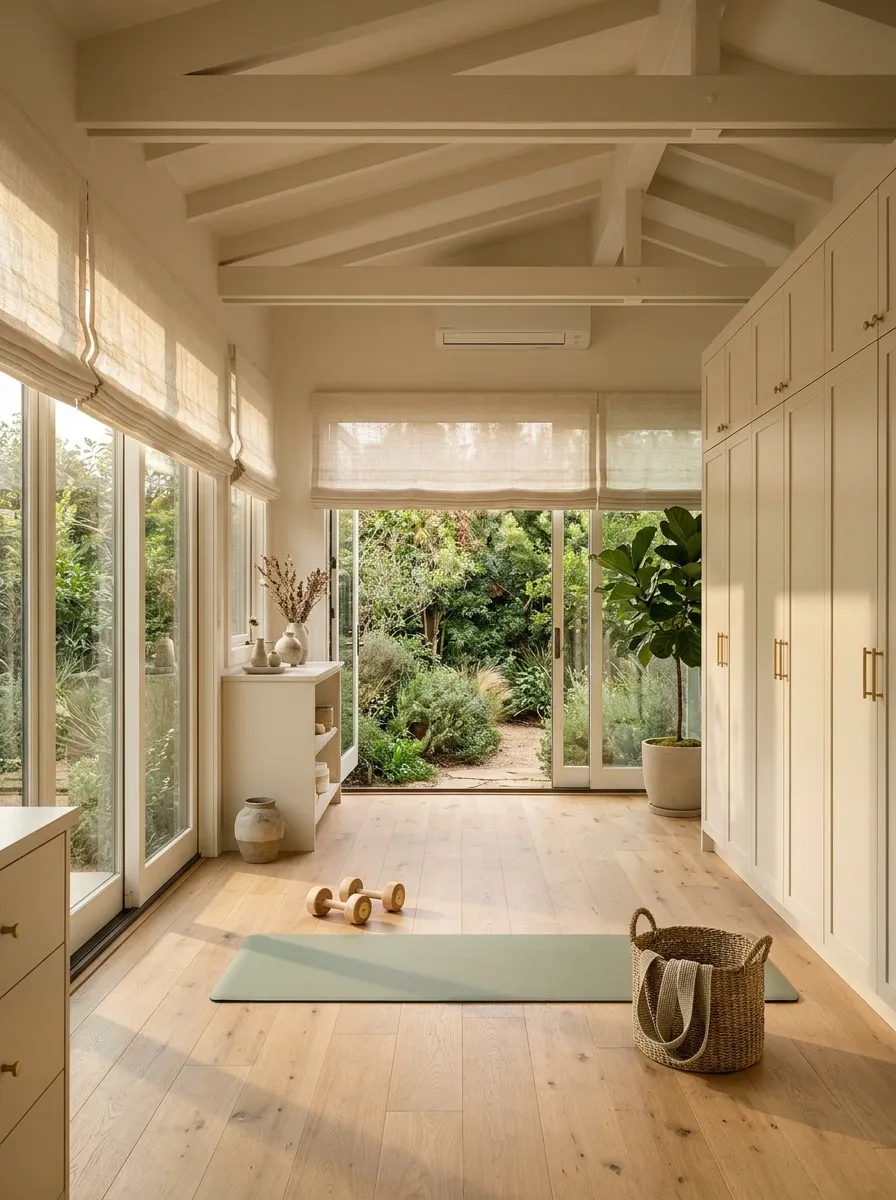
A suitable garden studio can give training a separate location, with appropriate environmental conditions, services, and a clear entrance. Keep equipment modest enough for the floor and room, using closed storage and a simple window treatment.
The building needs to support the intended activity before the gym moves in. Check structure, moisture, ventilation, temperature, and electrical requirements with appropriate advice. Once those are resolved, the room can feel personal through restrained finishes rather than a large equipment collection. A separate gym is enjoyable when it is comfortable to use beyond the flattering season in which it was photographed.
Structure, environment, services, and access determine the usable training brief.
A Small Gym That Leaves Room to Change Your Mind
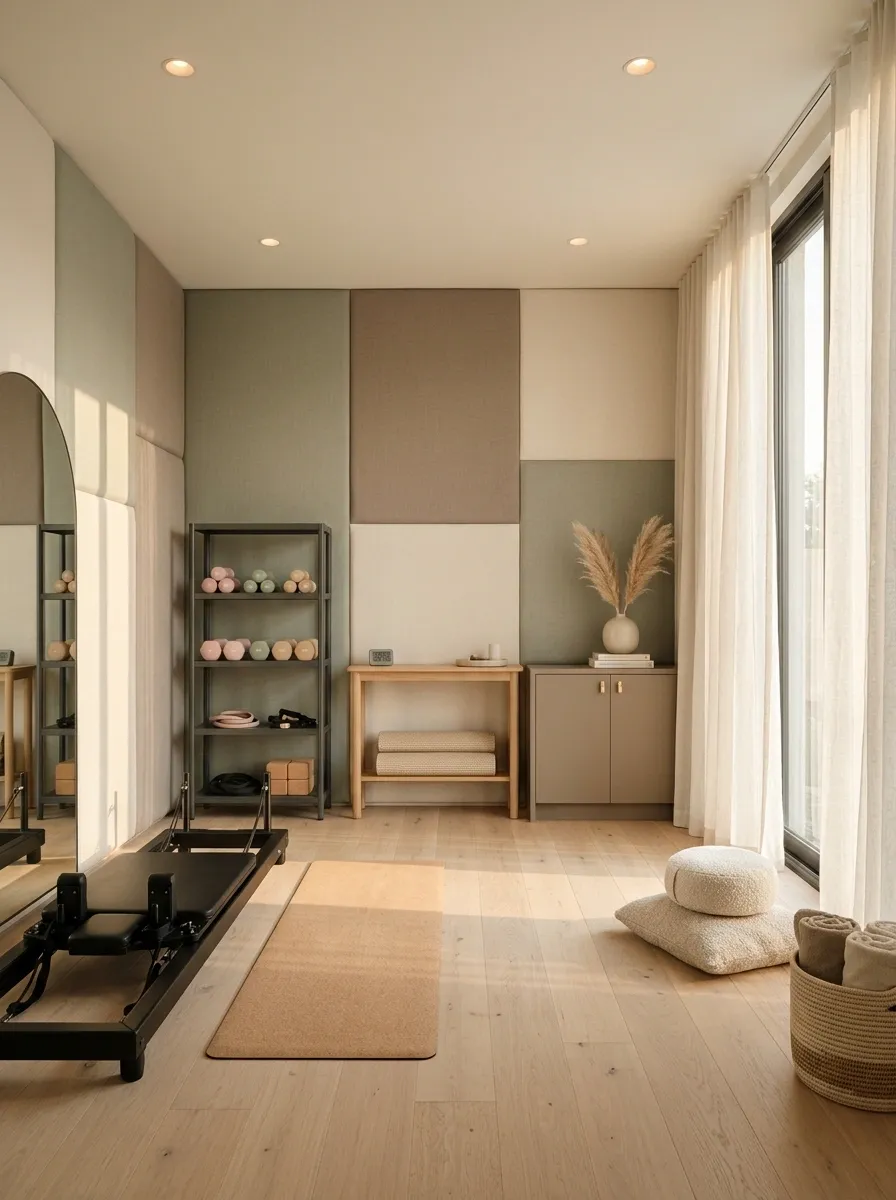
Start with a flexible floor, useful lighting, and storage that doesn’t occupy every wall. Give the current training setup a complete place while leaving future decisions open.
Avoid building custom storage around equipment you haven’t established a reason to use. The room can evolve as preferences change without needing a full decorative reset. Keep major alterations tied to actual requirements and let portable accessories provide flexibility. A home gym should adapt to the person using it, rather than becoming a permanent monument to one particularly enthusiastic shopping weekend.
Floor, light, environment, access.
Equipment mix, portable storage, decor.
Write Your Own Equipment Brief
Finish these sentences before buying another item: “I use this room for…” and “I need the setup to…” The answers may involve lifting, privacy, quiet, quick storage, or simply enough room to stretch without hitting the wardrobe.
Those answers deserve more influence than a gendered product label or a room tour with an implausibly empty house around it. Keep the equipment that fits, choose finishes you enjoy, and remove anything that makes starting unnecessarily complicated.
Put your preferred layout beside the actual room measurements. You don’t need permission to make the space softer, tougher, simpler, or less photogenic than the example. It is your gym.