
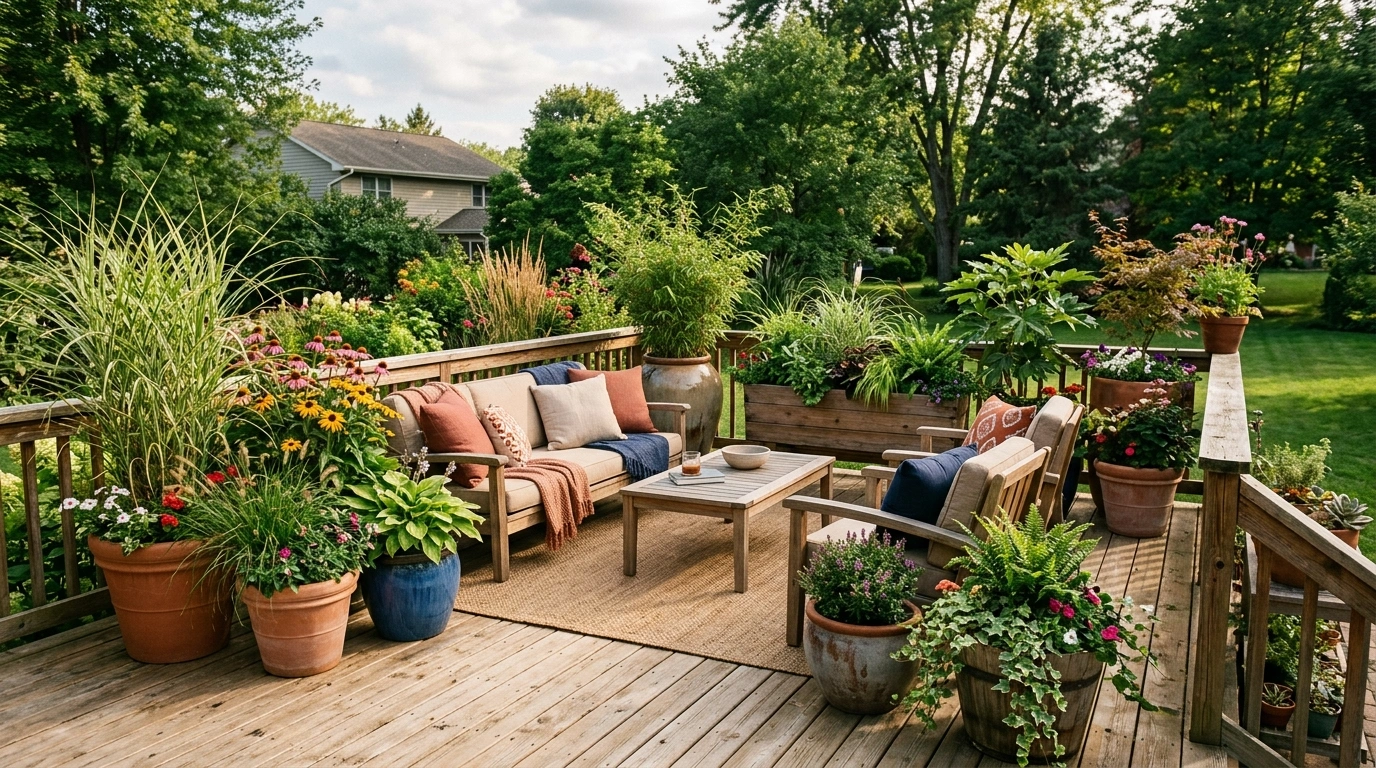
A deck can have great furniture, decent flooring, and a perfectly good view, then somehow still look like the patio section of a hardware store exploded on it.
Usually, the problem isn’t that there aren’t enough plants. It’s that the planters feel disconnected from everything around them.
The container is only one piece of the picture. Its size changes how the furniture feels. Its color changes how the decking reads. The height of the planting can either frame the space or eat half the view. Even an ordinary deck starts looking far more polished when those choices work together.
Deck Planter Ideas
Mobile Planter Dividers For Flexible Spaces
Rolling metal planter boxes filled with lush climbing roses on decorative trellises offer an effortless way to divide a patio without permanent construction. These mobile green walls add instant height, romance, and privacy right where you need it.
The casters make rearranging the layout remarkably easy, allowing you to shift the screens as the sun moves or when you need a wide-open entertaining space. The dark metal finish grounds the bright blooms, keeping the floral display looking modern rather than overly cottage-core.
Pairing these rolling dividers with sleek contemporary seating creates a polished zone that feels entirely custom. It is a brilliant trick for breaking up a flat paved area with vertical interest that moves on demand.
Warm Cedar Deck With Oversized Terracotta Planters and Mediterranean Planting
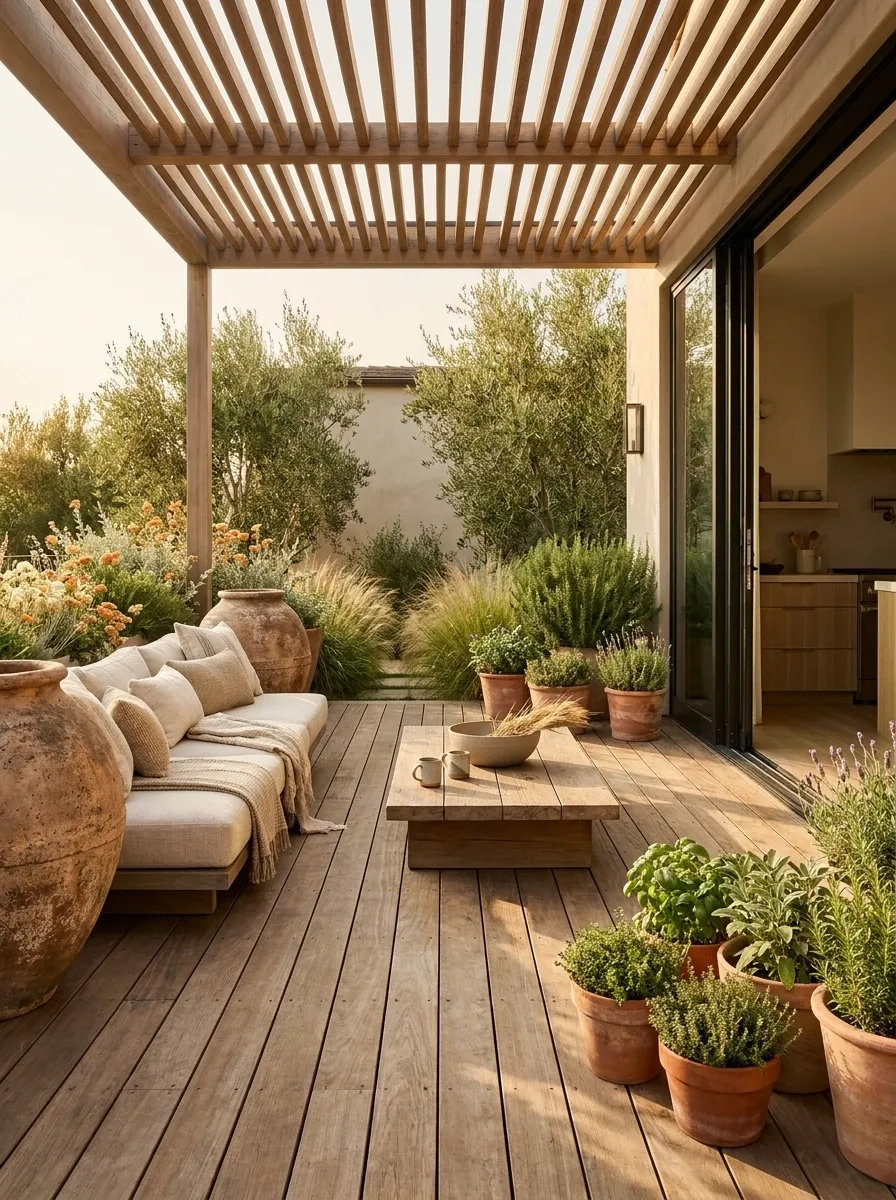
Warm cedar decking and oversized terracotta vessels create a deck that feels relaxed without looking overly themed. Two large pots anchor the seating area, while smaller herb-filled containers sit closer to the kitchen door. Olive-toned foliage, airy grasses, rosemary, and muted flowering plants keep the palette earthy.
The important part is the scale. These aren’t tiny decorative pots scattered around the furniture. The larger vessels have enough visual weight to hold their own against the deck boards and sofa.
The terracotta also gives the warm wood something to play against. Add too many bright flowers, and the composition starts looking like a garden center display. Keep the planting mostly green with a few restrained blooms, and suddenly the whole thing looks considerably more expensive.
Multi-Tiered Cedar Pergola Planter Station
A cedar pergola planter station brings serious architectural presence to a deck by combining vertical climbing structures with dedicated shelf space. The warm wood tones frame a collection of hanging baskets and potted greens, turning a simple railing area into a lush focal point.
The staggered heights allow trailing flowers to cascade from the top while herbs and compact foliage sit comfortably within reach on the middle tiers. It creates an entire ecosystem of plants without cluttering the precious floor space.
Using matching wooden boxes ties the whole multi-level unit together, making the arrangement look intentionally built-in rather than slapped together. It provides just enough overhead definition to make an open deck feel like an outdoor room.
Black Deck Planters Framing a Crisp Modern Outdoor Lounge
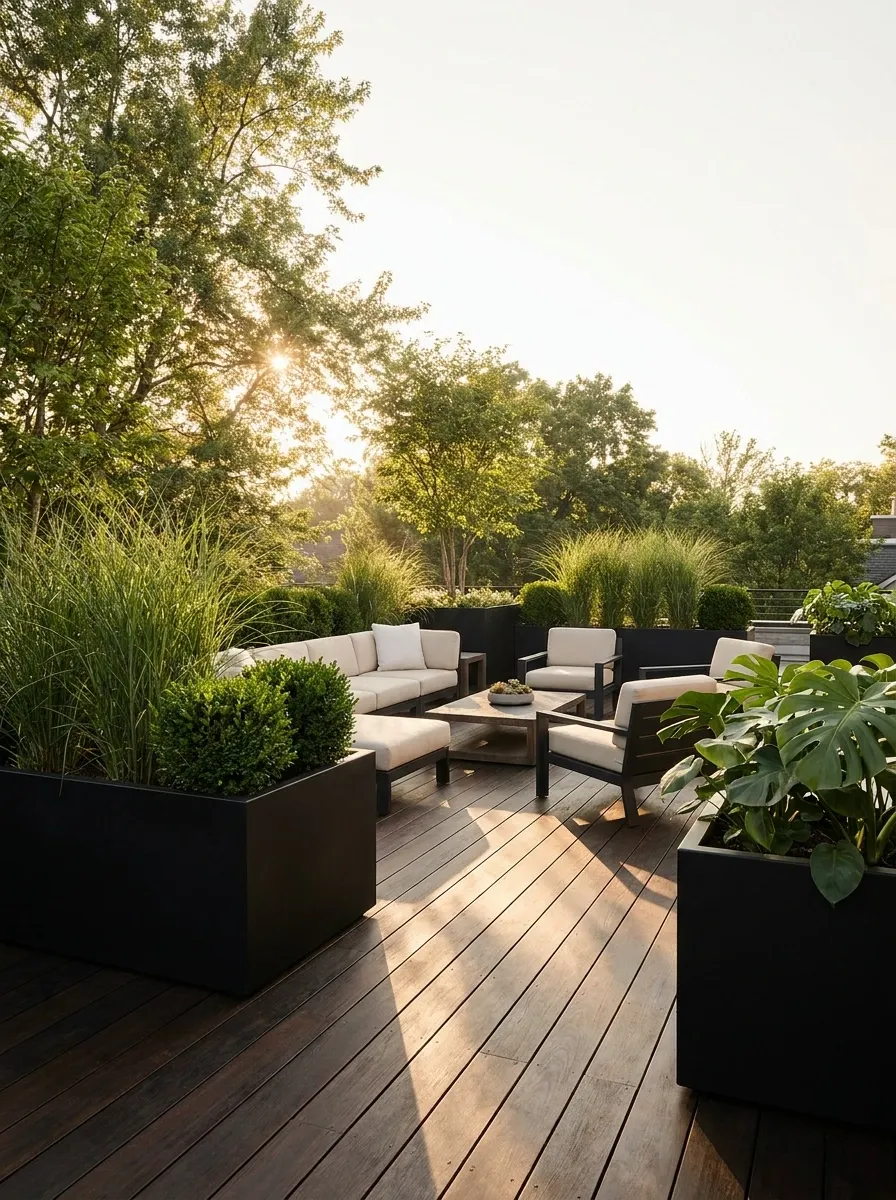
A dark-stained deck looks especially sharp with tall matte-black rectangular planters placed around the outer edge of a light upholstered lounge. Instead of filling every corner with greenery, the planting stays architectural: upright grasses, clipped shrubs, and broad green leaves with strong silhouettes.
The contrast does most of the work. Pale cushions keep the seating from disappearing into the dark deck, while the black planters visually connect with the railings or door frames.
The planters should feel substantial enough to frame the furniture. Skinny little containers would get lost here, and nobody wants a dramatic modern deck brought down by pots that look like they came free with a basil plant.
Classic Wooden Railing Flower Boxes
Long wooden railing boxes instantly upgrade a basic deck perimeter by bringing trailing blooms and textural greenery up to eye level. Tucking these natural wood troughs securely along the top rail frames the surrounding landscape without stealing a single square inch of walking space.
The rich wood grain plays nicely against white pickets or dark posts, while the overflow of soft petals and dark foliage softens the hard lines of the railing. It is a classic move that adds instant curb appeal from both inside and outside the home.
Keep the planting balanced so the boxes don’t become top-heavy or block the view beyond the deck. A simple mix of cascading vines and upright interest will make the whole perimeter look established and thoroughly finished.
Long Narrow Deck With a Continuous Green Planter Border
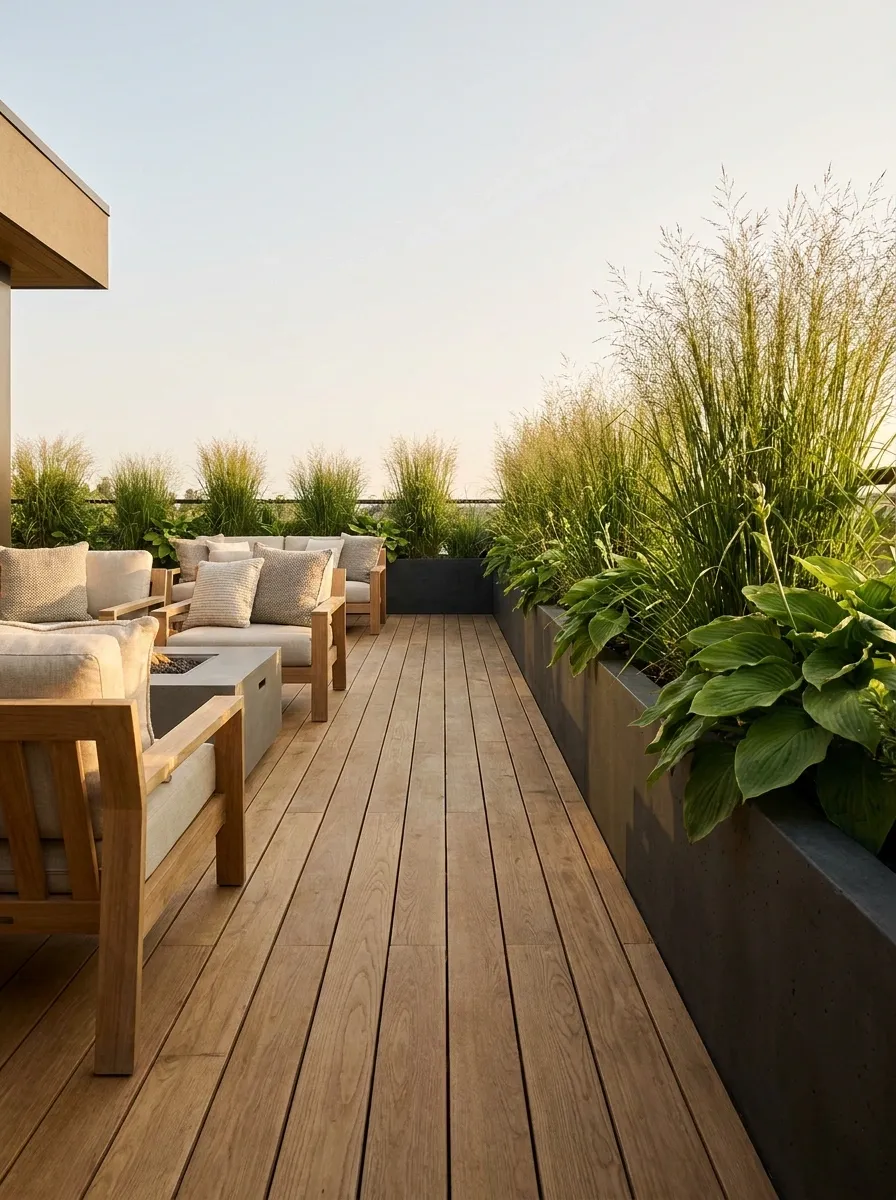
Long, narrow decks can start feeling like outdoor hallways when furniture and planters are placed without a clear plan. This composition fixes that by turning one entire edge into a continuous green border.
A long trough or sequence of visually related containers runs along the far side, while the furniture sits opposite it. The central walking route stays open from one end to the other, making the deck feel longer rather than more crowded.
The planting can stay fairly simple because the repetition creates its own visual rhythm. Soft grasses mixed with broad foliage keep the border from becoming a flat wall of green.
The trick is resisting the urge to fill both edges. One strong planted line is doing the job of six scattered pots, and it isn’t blocking anyone’s knees.
planter border
or dining zone
Woven Basket Planters and Olive Trees
Grouping natural wicker baskets filled with white blooms, lavender, and a striking potted olive tree creates a casually luxurious patio lounge. The varied basket textures bring warmth and organic charm, making the seating area feel immediately lived-in and welcoming.
Mixing heights is key here, pairing a tall statement tree with lower, bushier baskets of white flowers and silvery foliage. This layered approach draws the eye around the space, giving the container garden depth and a curated boutique feel.
The neutral woven tones blend effortlessly with light outdoor upholstery and rustic wood decking. It proves you don’t need complicated hardscaping to achieve a high-end designer look—just great pots and restrained, elegant planting.
Small Apartment Deck With Compact Corner Planter Grouping
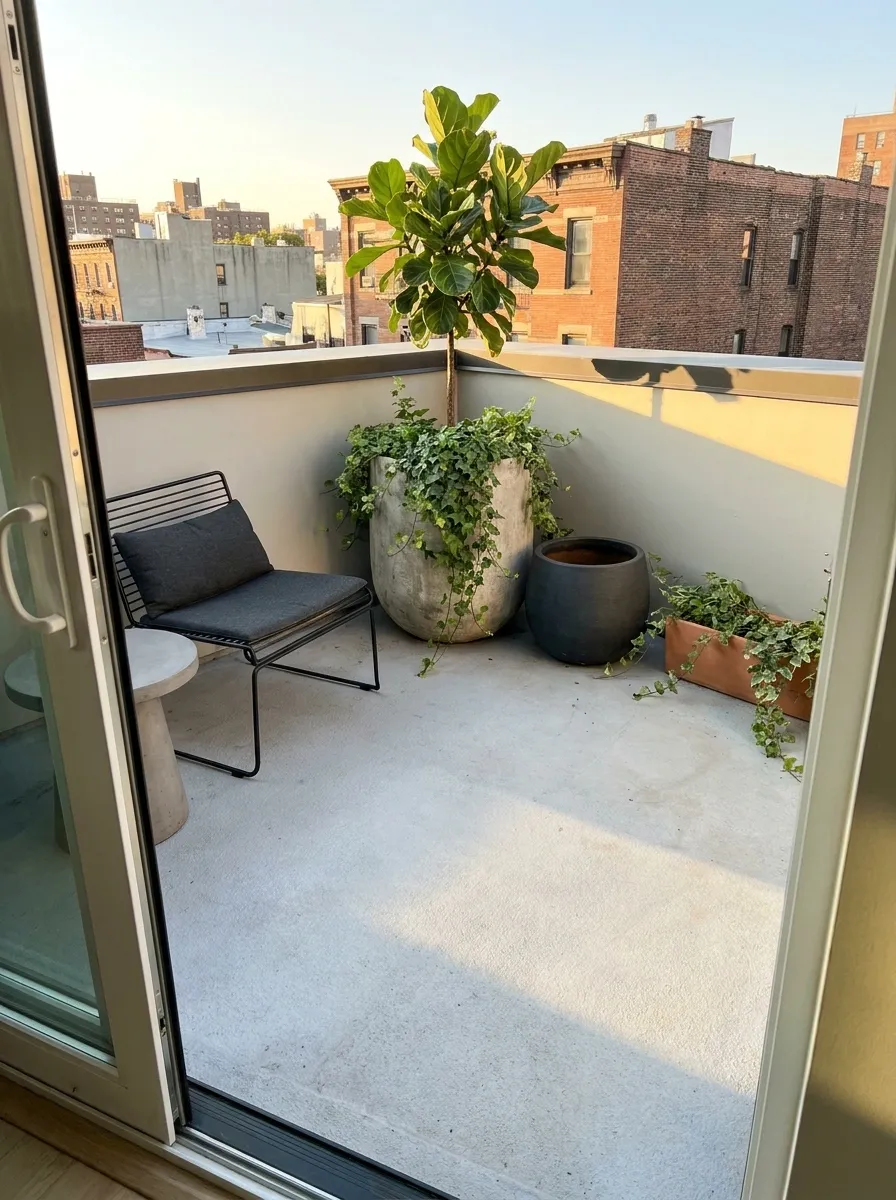
Tiny decks don’t need to become tiny jungles. A better approach is to concentrate the greenery in one or two corners and keep the center almost completely open.
This version uses one substantial corner planter, a second slightly smaller vessel beside it, and one narrow container tucked along the wall. The seating stays compact, with a slim chair and little round table occupying the clearest section of floor.
The layered grouping makes the corner feel intentional without stealing valuable space from the seating area. Trailing greenery can soften the edges, while one taller plant gives the arrangement enough height to be visible from inside the apartment.
The visual win here is mostly empty floor. On a small deck, empty space is doing actual work. It is not wasted space just because it isn’t holding a pot.
Built-In Deck Bench With Raised Planter Ends
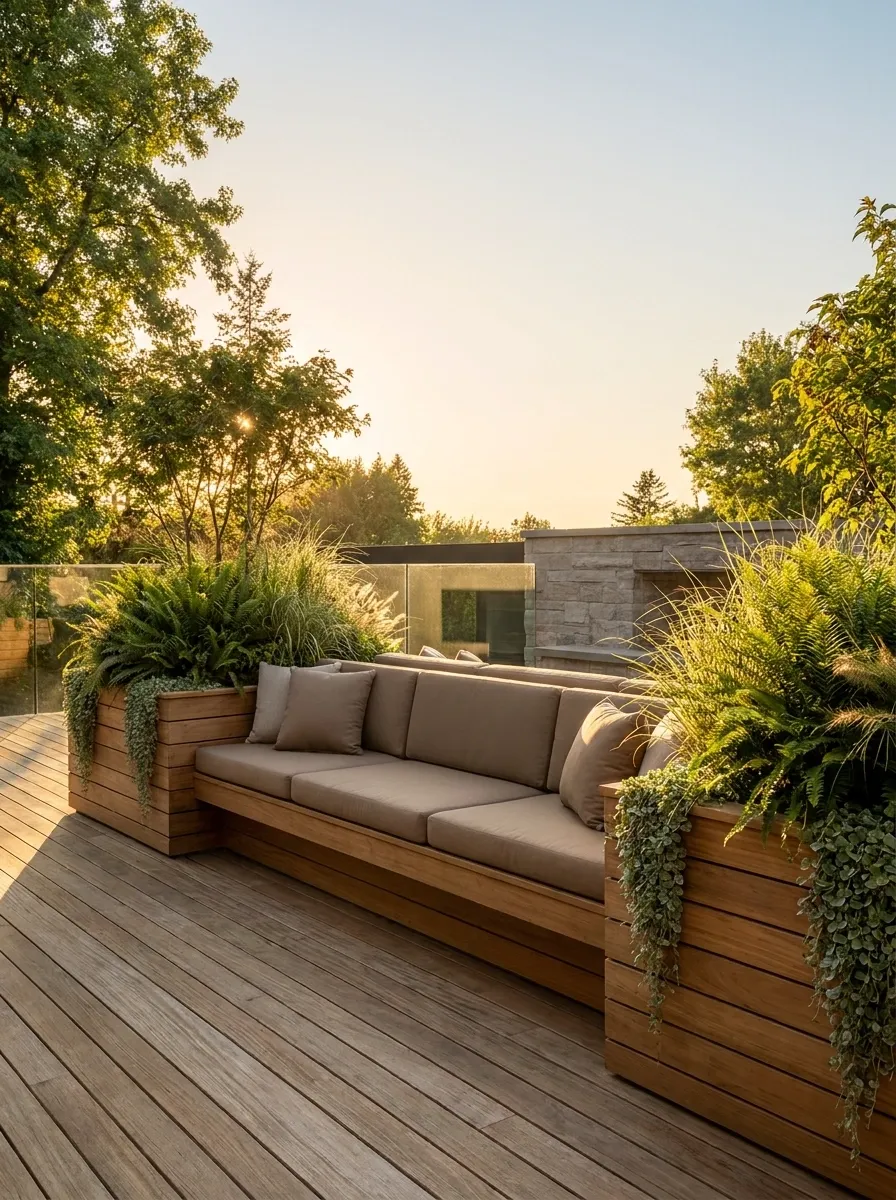
A long built-in bench becomes much more interesting when raised planters are integrated into both ends. The greenery frames the seating instead of floating around it, giving the entire side of the deck one strong architectural composition.
Use the same wood family for the bench and planter structure, then let the plants create the contrast. Fuller foliage at the ends softens the hard lines of the bench while leaving the middle open for cushions and people.
This arrangement works because the planters aren’t fighting for attention. They’re finishing the shape of the seating zone.
Keep the planting height controlled around the seat itself. Once everything grows taller than the people sitting there, conversation starts happening behind a hedge. Lovely for privacy, slightly weird for dinner.
Coastal Deck With Weathered White Planters and Airy Grasses
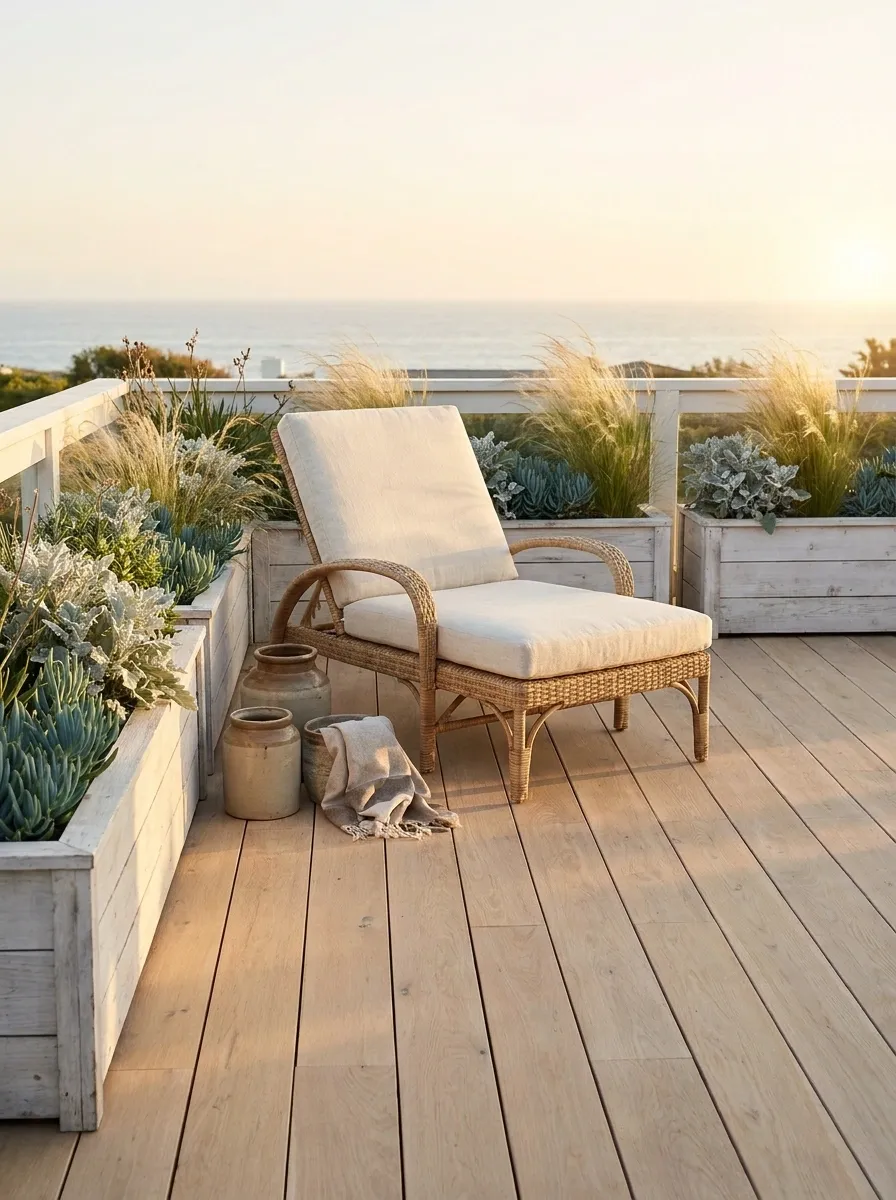
Pale decking, weathered white containers, blue-green foliage, and airy ornamental grasses give this deck a relaxed coastal feel without turning it into a beach souvenir shop. A simple woven lounge sits toward the center, while the planters gather mostly around the perimeter.
The grasses are important because they keep the composition moving. Their thin stems soften the straight lines of the deck boards and furniture, while the white containers echo the lighter finishes around the home.
Keep the plant palette mostly green and silvery rather than adding every possible blue flower. Too many literal coastal cues and the deck starts looking like it sells seashells by the door.
Skip: excessive navy accents, themed accessories, and a dozen different flower colors competing for attention
Deep Green Deck With Rust-Colored Planters and Moody Foliage
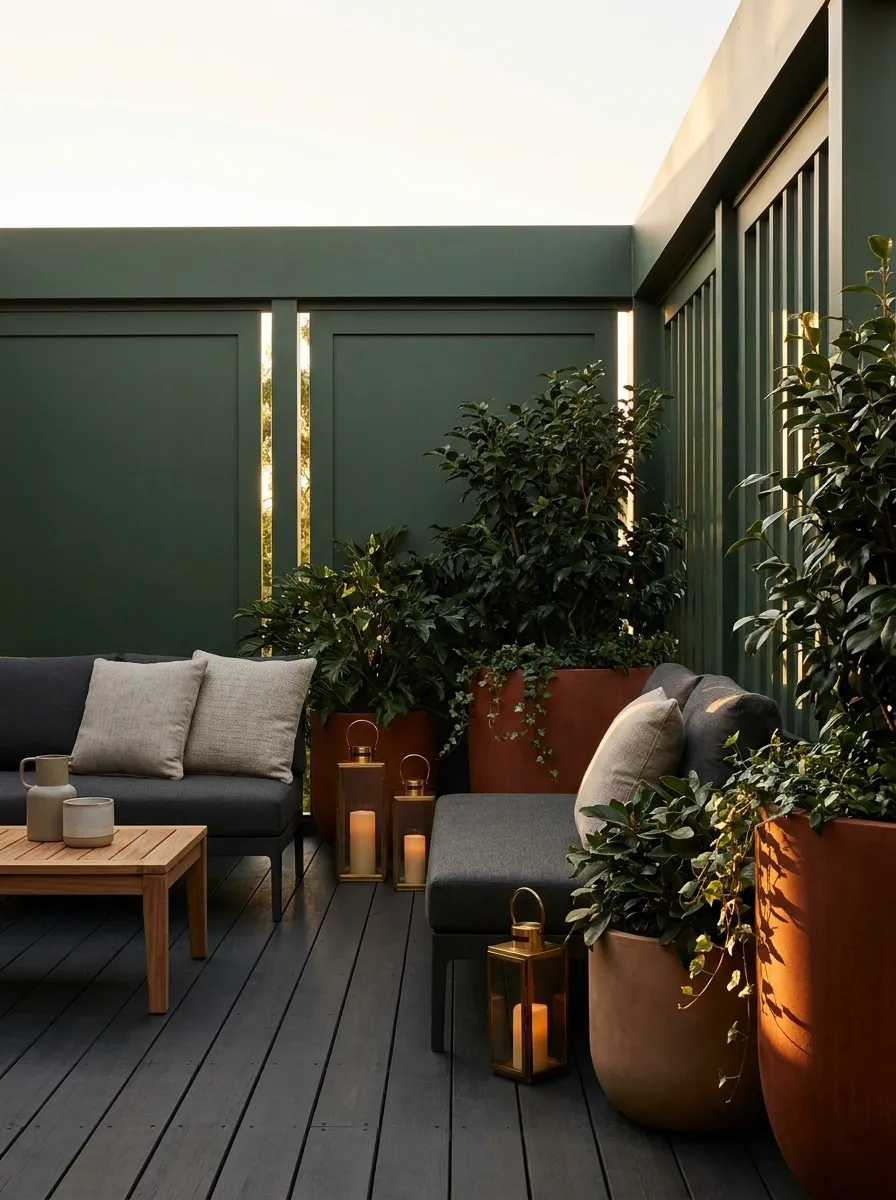
A dark green or charcoal-stained deck can carry richer color without needing much extra decoration. Rust-colored and clay-toned planters create a warm contrast against the darker background, while deep green foliage keeps the entire composition grounded.
The furniture stays simple here. A low outdoor sofa, a small wood table, and warm lighting are enough because the containers already bring strong visual weight to the scene.
This arrangement is especially striking in late afternoon or evening light, when the warm containers begin to glow against the darker deck.
The secret is restraint. Once the cushions, pots, flowers, lanterns, and accessories all start shouting at once, the deck has officially lost the plot.
Deck Entrance Framed by Matching Tall Planters
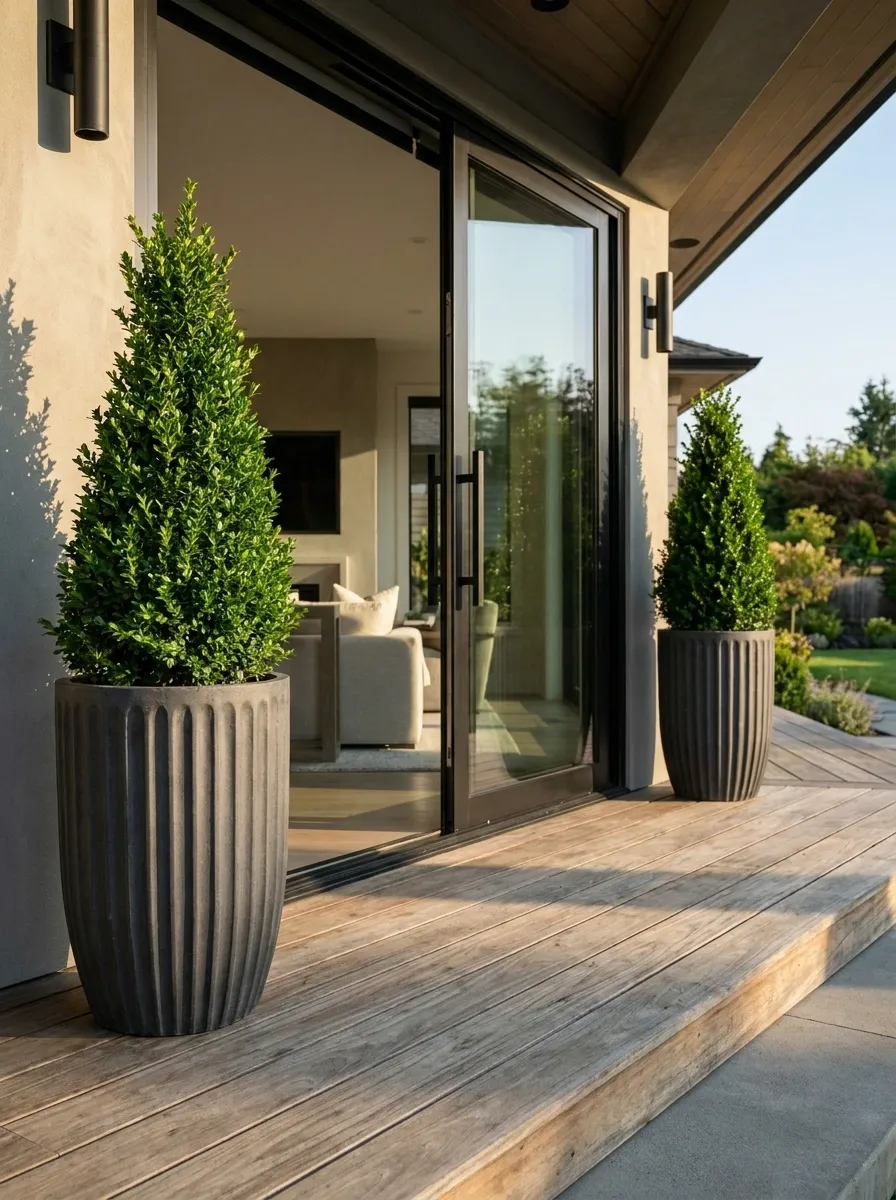
Some decks feel unfinished simply because the transition from the house to the outdoor space has no visual definition. Two tall matching planters can solve that instantly by framing the doorway and creating a proper entrance moment.
Place one container on each side of the door, keeping enough clearance for the door swing and normal foot traffic. The plants should have a strong upright shape so the pair reads as architecture rather than decoration.
From inside the house, the greenery becomes part of the view. From the deck, the planters establish the starting point of the outdoor room.
And yes, matching containers are allowed here. This is one of those rare moments when symmetry actually knows what it’s doing.
PLANTER
PLANTER
Layered Railing Planters With a Full, Garden-Like Deck Edge
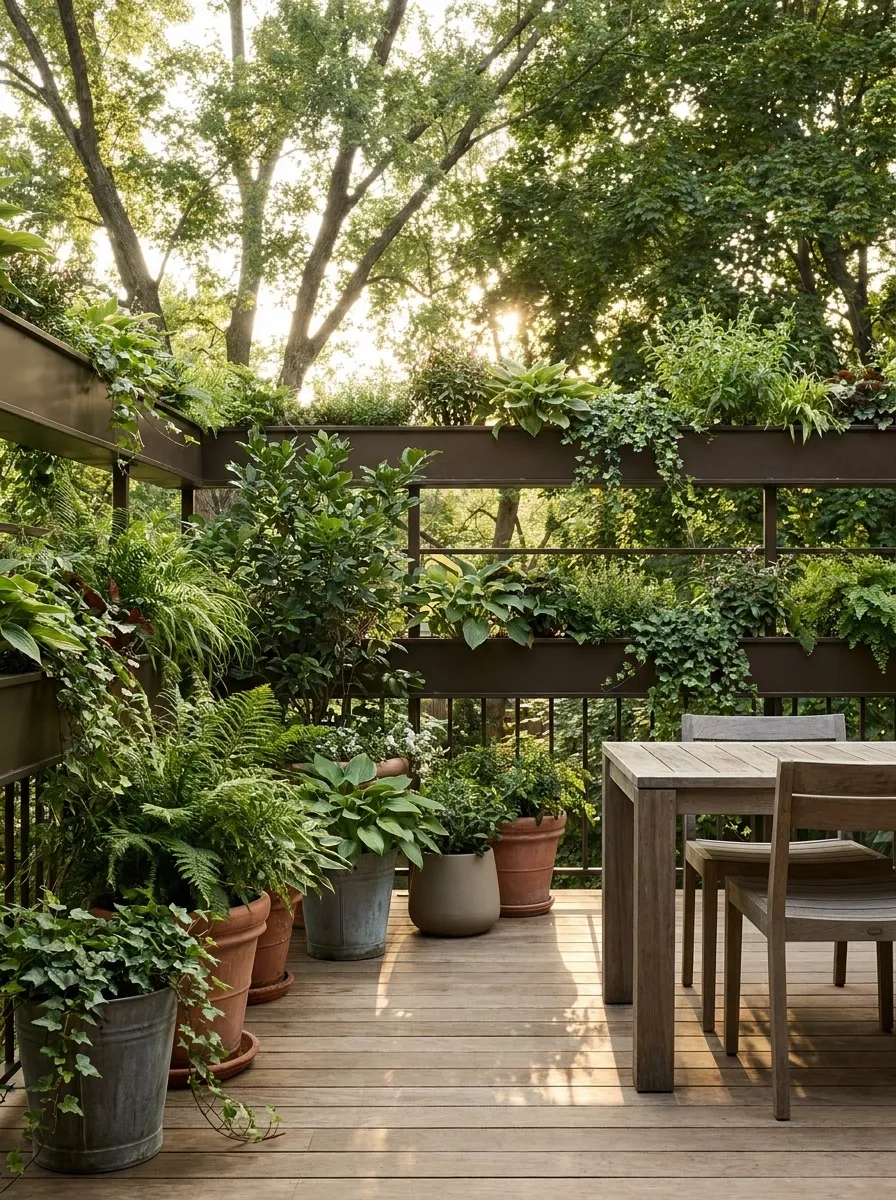
A railing can become much more than a safety feature when planting is layered along it. This deck uses coordinated containers at different heights, with fuller foliage behind and trailing growth spilling toward the outside edge.
Because the planting stays mostly on the perimeter, the furniture below remains visually light. A compact dining table and a couple of chairs can sit comfortably without fighting the greenery.
The finished effect is closer to a balcony garden than a row of individual pots because the plants overlap visually.
That overlap is doing the heavy lifting. Ten completely separate little blobs of greenery would look busy. A connected green edge feels intentional.
Oversized Concrete Planters Around a Large Contemporary Deck
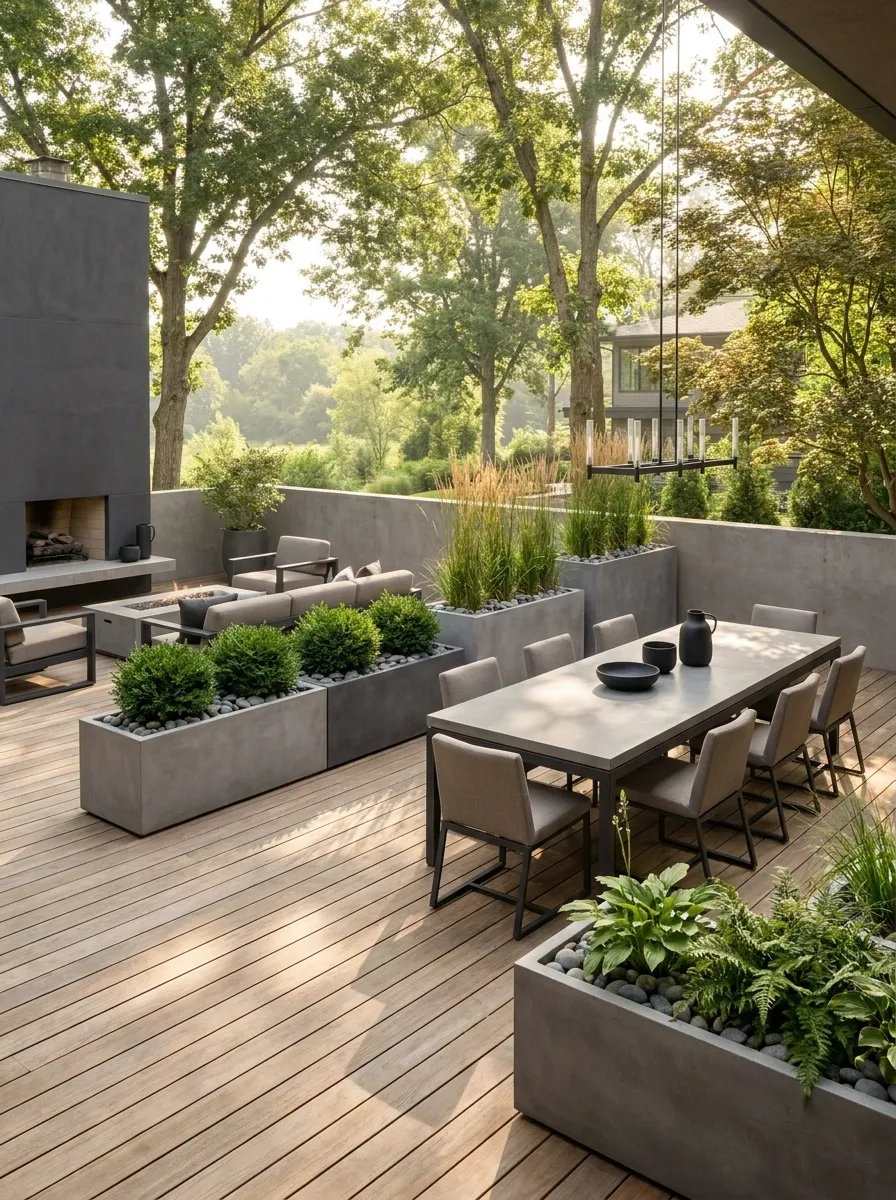
Large contemporary decks often have the opposite problem from tiny ones: there is so much floor area that the furniture can look like it’s floating in the middle of nowhere. Oversized concrete planters bring enough weight to divide that space visually.
Use broad rectangular vessels around the edges of a dining area or beside the lounge rather than pushing them into the walking route. Structured shrubs, architectural grasses, or restrained leafy planting maintain the modern character.
The beauty here is the relationship between hard surfaces and soft greenery. Concrete makes the arrangement feel architectural, while plants stop it from becoming one giant slab of gray.
Go large or go home, basically. Tiny pots would disappear into this much decking.
Rustic Deck With Reclaimed Wood Planter Boxes and Cottage Planting
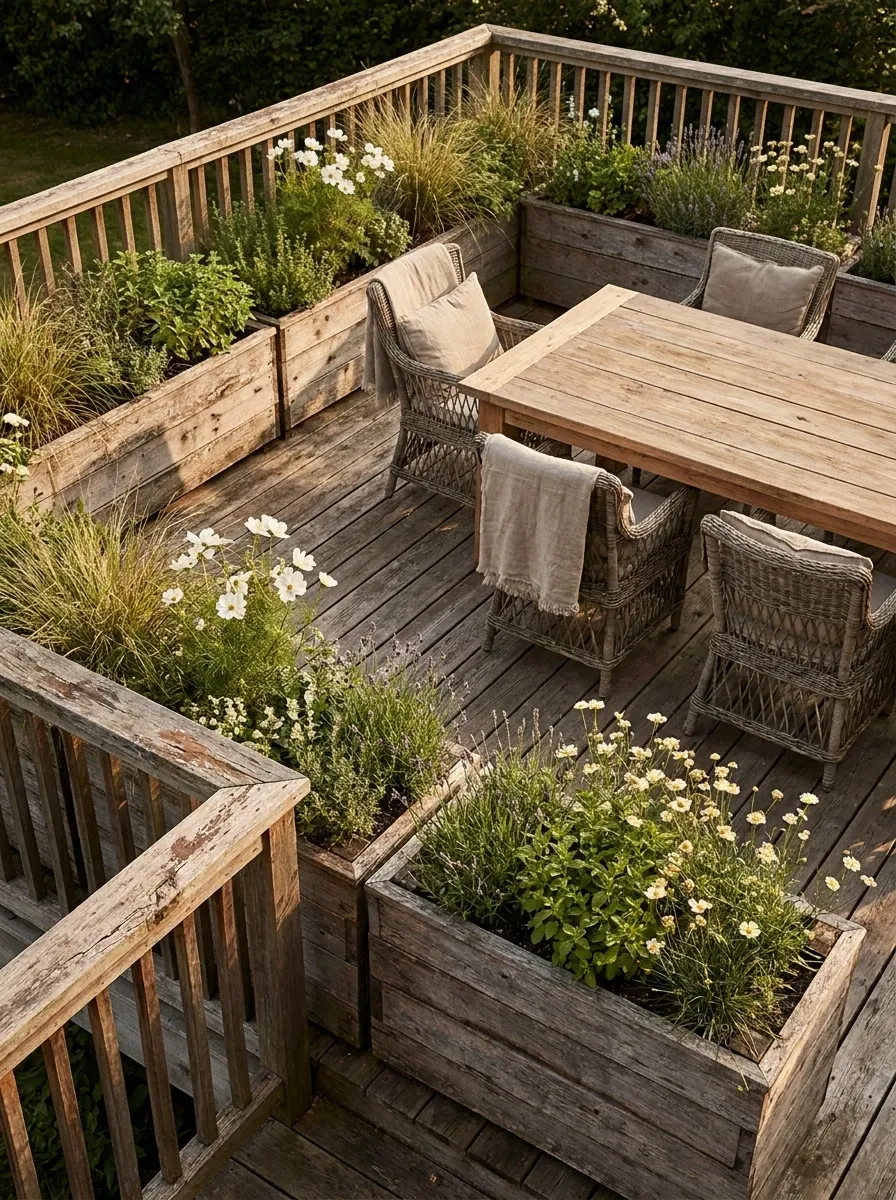
A rustic timber deck pairs naturally with planter boxes that look as though they belong to the structure itself. Reclaimed or weathered wood containers line selected sections of the deck, filled with loose cottage-style planting that mixes leafy greens, small flowers, and soft grasses.
The composition should feel slightly imperfect. Varying plant heights and a few irregular shapes keep the deck from looking overly arranged, while repeating the same wood tone ties everything together.
A simple farmhouse table, worn outdoor chairs, and understated textiles complete the scene without competing with the planting.
The charm comes from restraint. Rustic does not mean every available object gets dragged outside.
Minimalist Gray Deck With a Single Sculptural Planter Focal Point
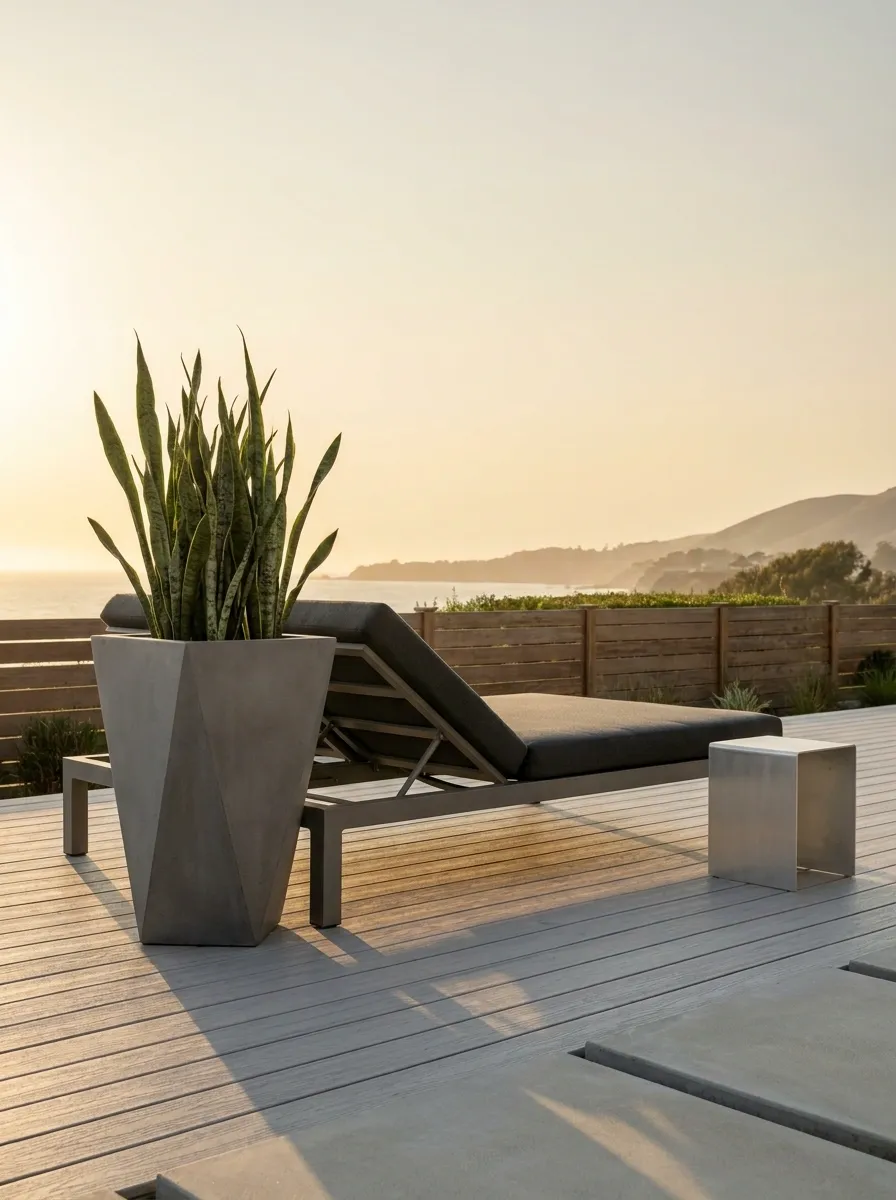
Not every deck needs a botanical collection. A quiet gray deck can look far more intentional with one oversized sculptural planter positioned beside a low lounge or at the end of the seating area.
Choose a container with a strong geometric form, then give the plant inside it enough shape and scale to hold the entire corner. A restrained green plant with tall, clean lines works especially well against pale gray decking and simple outdoor furniture.
Everything else stays deliberately quiet. No matching army of pots. No decorative clutter. No desperate attempt to fill every empty inch.
The empty space is part of the design, and here it gives the focal planter much more authority.
L-Shaped Deck With Planters Defining Two Separate Outdoor Rooms
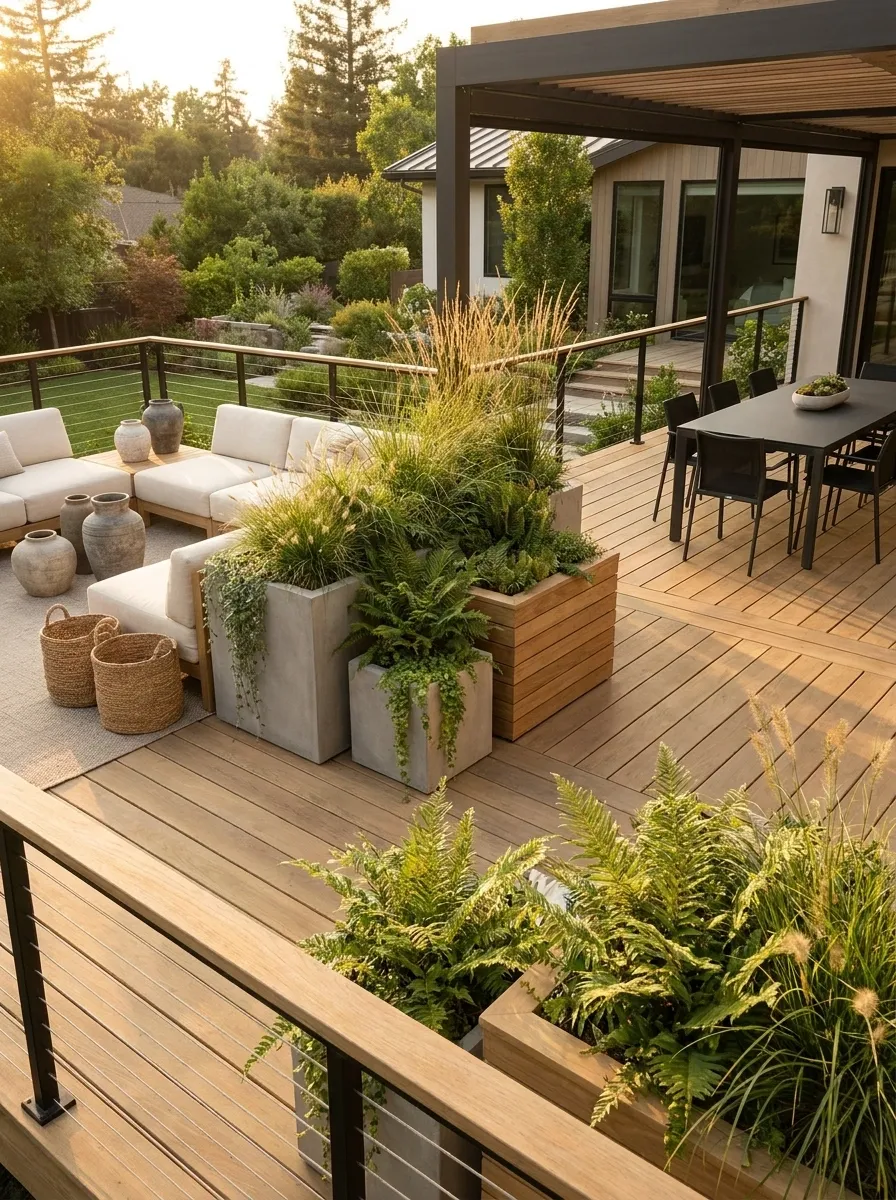
An L-shaped deck already gives a natural opportunity to create separate zones, and the right planter placement can make those zones feel much more deliberate. One arm becomes the dining area while the other holds a relaxed lounge.
Planters sit at the point where the two sections meet, creating a soft boundary without visually closing either side. Continue one or two containers along the outer edges to connect the planting throughout the shape.
The key is keeping the corner useful. A planter placed directly in the busiest turning point will become an obstacle with excellent foliage.
Let the containers define the spaces, but leave the route between them obvious.
Pergola Deck With Planters Repeating the Structure’s Vertical Rhythm
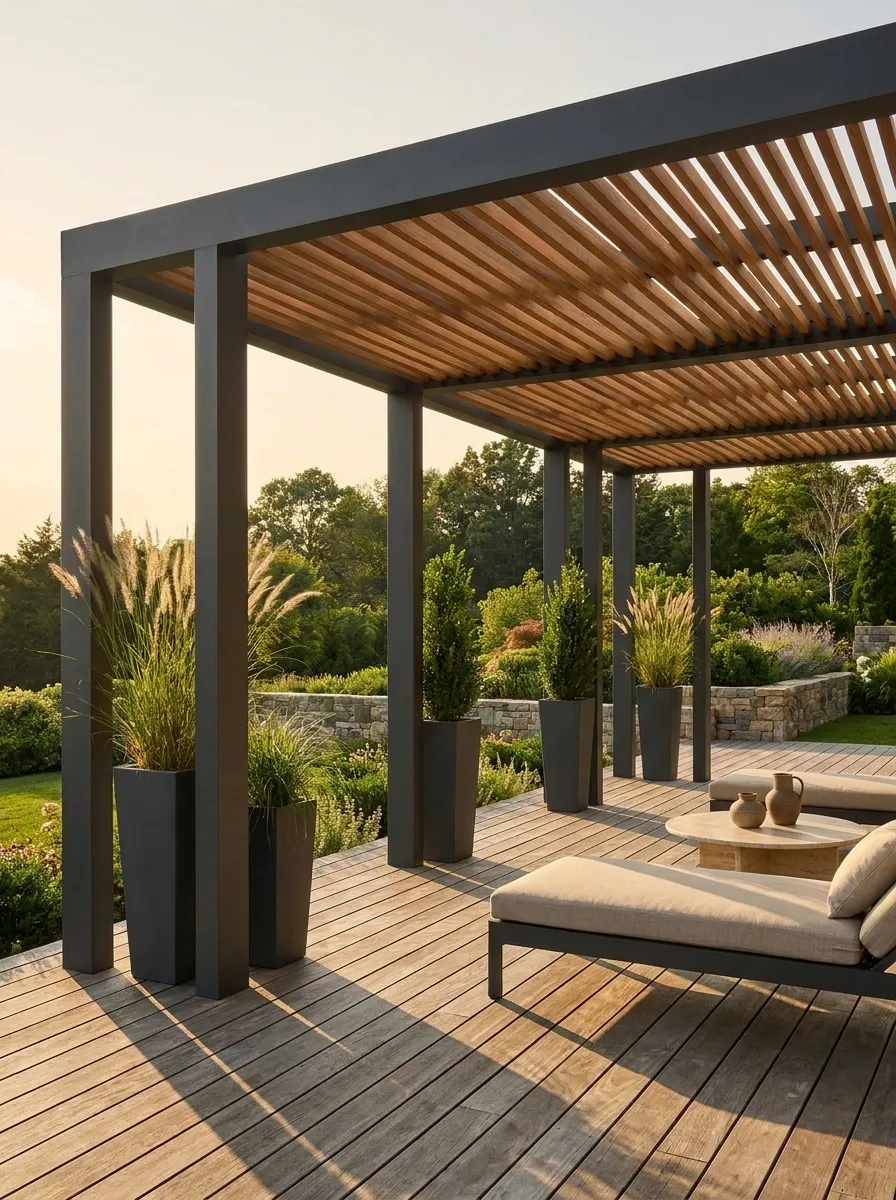
A pergola already gives a deck a strong architectural rhythm. Tall planters can reinforce that rhythm by sitting beneath selected posts, creating a visual connection between the overhead structure and the planting below.
Choose narrow containers with upright greenery rather than wide, sprawling plants. Their vertical silhouettes should echo the pergola posts without completely hiding them.
The repetition is what makes this composition feel polished. A planter under every possible post may be technically committed, but it can also look like the pergola is being slowly swallowed by a hedge.
Leave some structural posts visible so the architecture remains part of the design.
Long Farmhouse Deck With Mixed Galvanized Planters and Herb-Filled Containers
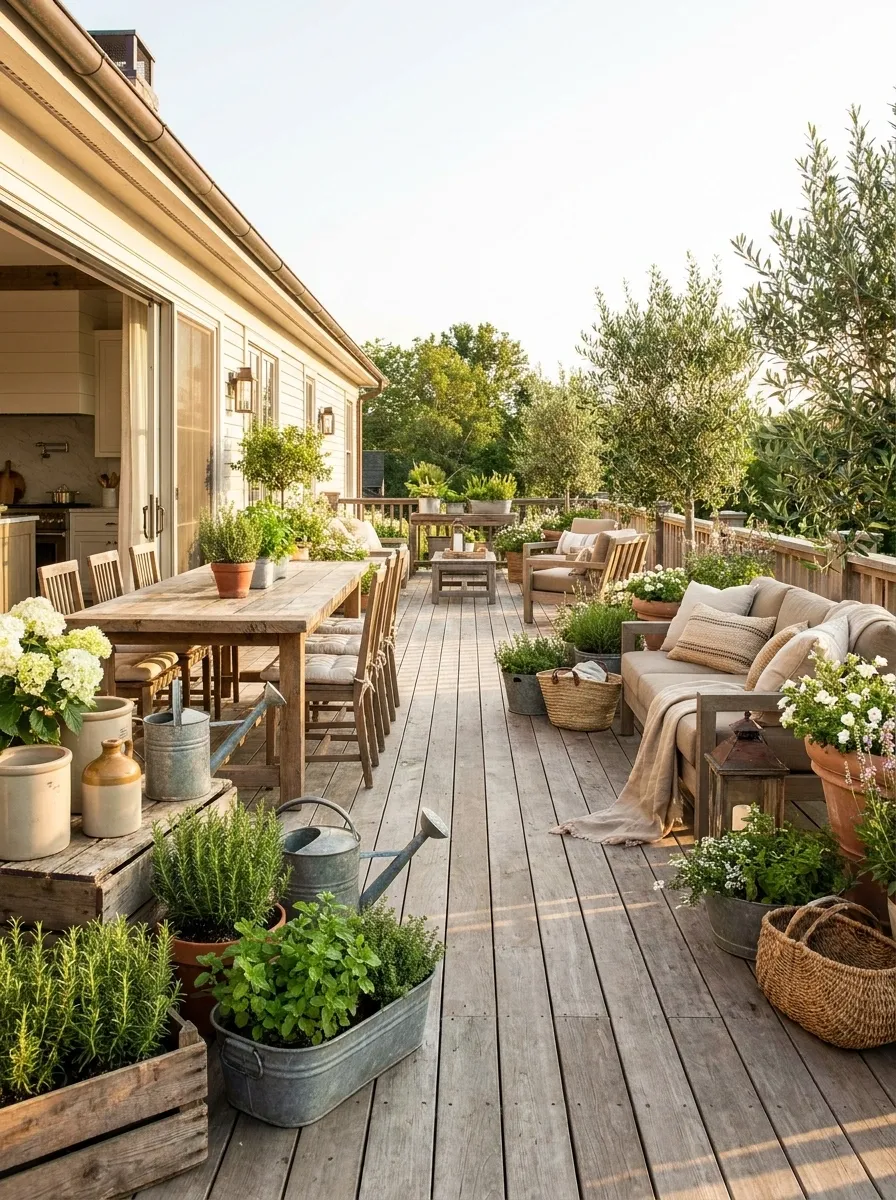
A wide farmhouse deck benefits from a more relaxed planting arrangement, especially when the deck connects directly to the kitchen or dining area. Galvanized containers work beautifully here because their soft metallic finish sits comfortably beside weathered wood and natural greenery.
Place herb-filled vessels closest to the kitchen door, larger containers around the dining area, and softer flowering pots farther toward the sitting zone. The planting then changes naturally as the deck moves from practical to decorative.
The varied containers shouldn’t be completely random. Repeating galvanized metal, wood, and green foliage keeps the whole arrangement connected.
It has that wonderfully casual farmhouse look, which is basically code for “organized enough to look intentional, relaxed enough to pretend nobody planned it.”
Privacy-Focused Deck With Tall Planters and Dense Evergreen Screening
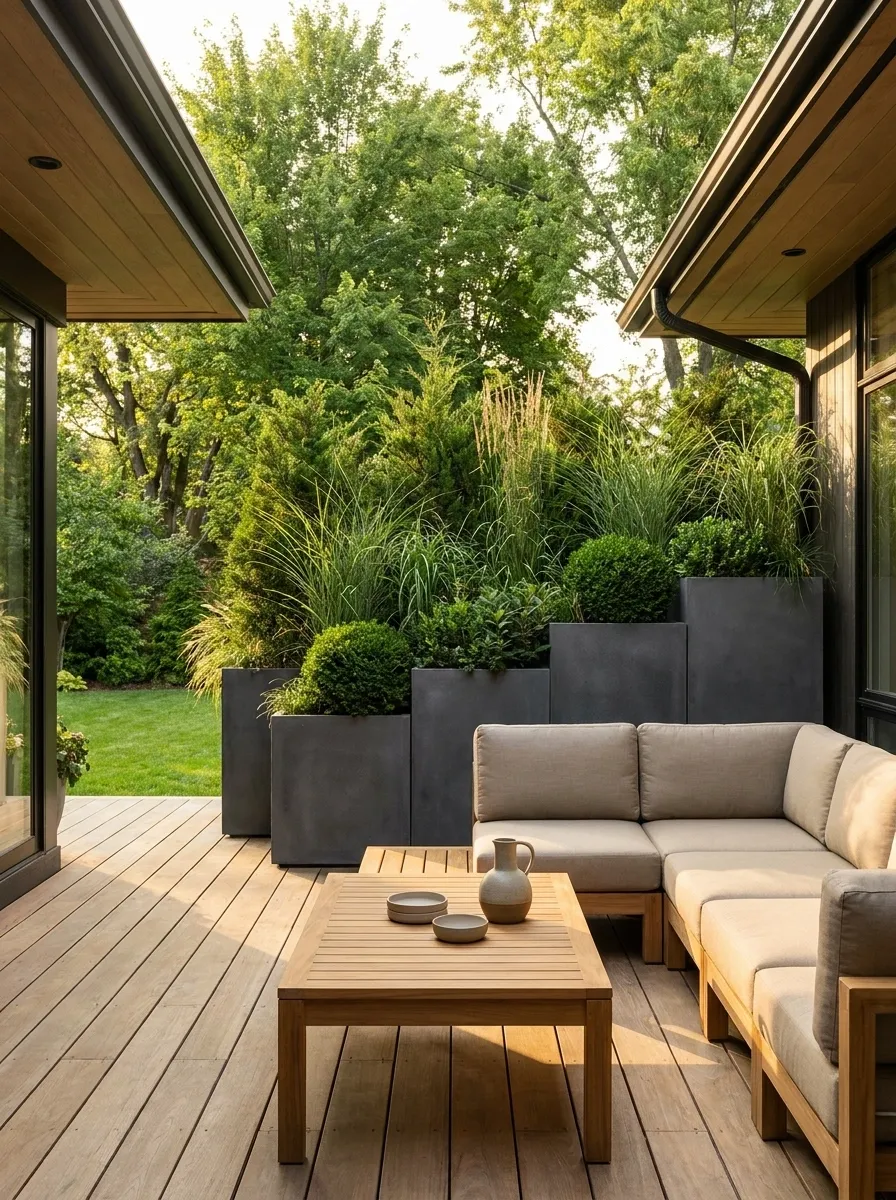
An exposed deck doesn’t need a solid privacy wall to feel tucked away. A row of tall planters filled with dense evergreen-style foliage can create a softer screen behind the seating while keeping the deck visually connected to the yard.
The tallest plants sit toward the back, with shorter greenery stepping down toward the lounge. That layered profile prevents the screen from looking like one giant green rectangle.
Use a few substantial containers rather than a long parade of tiny ones. The goal is a believable planted backdrop, not thirty-seven individual decisions staring back from the railing.
A low sofa, warm wood table, and limited accessories let the greenery provide the privacy and the visual structure at the same time.
PLANTING
FOLIAGE
EVERGREEN SCREEN
Bright Modern Deck With White Containers and Architectural Greenery
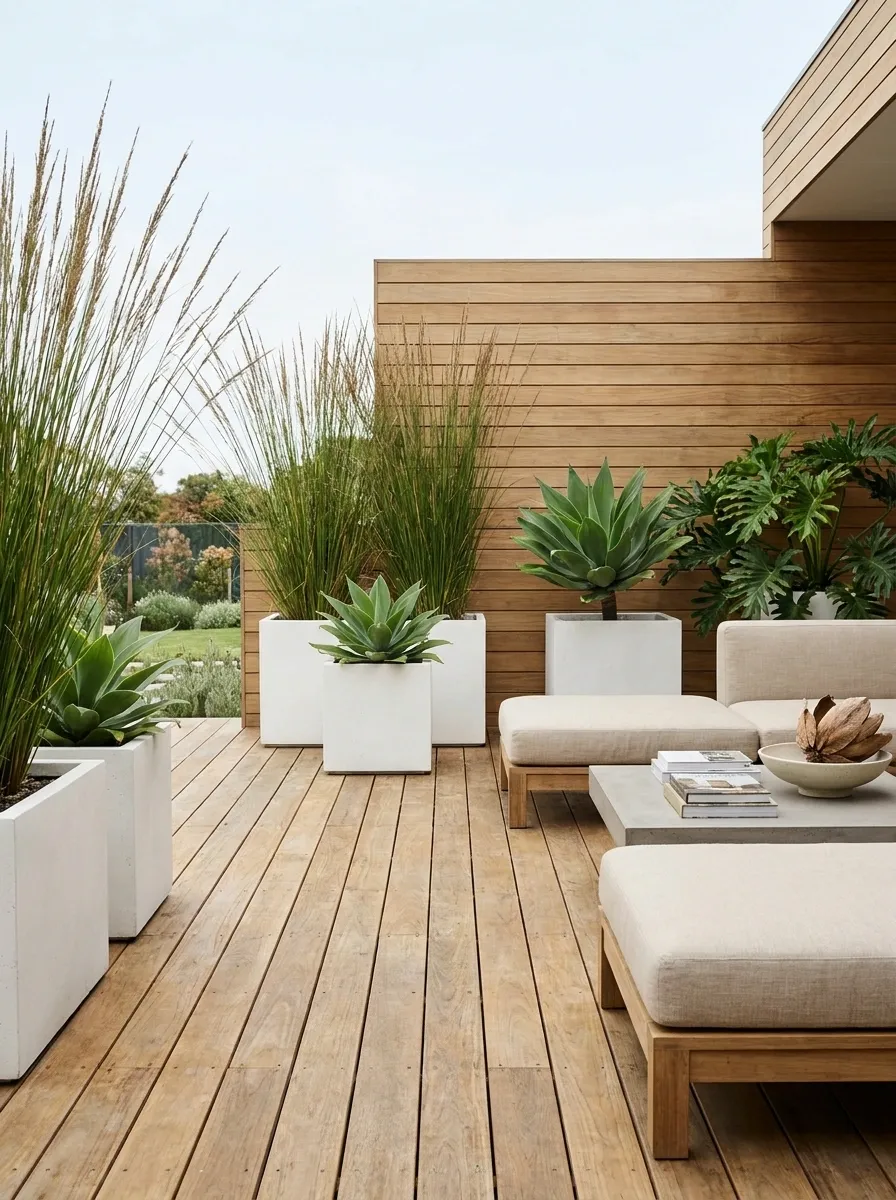
White containers against warm decking create a crisp modern composition without making the deck feel cold. Keep the vessels geometric, then fill them with plants that have equally strong shapes, such as upright grasses, compact shrubs, or broad sculptural foliage.
The furniture should stay simple and low, with neutral cushions that repeat the pale tone of the planters. That repetition is what ties the scene together.
Instead of adding colorful flowers everywhere, let shape do the decorating. The clean silhouette of the containers against the softer greenery is interesting enough.
This is where restraint wins. Once every surface gets a decorative object, the modern look starts auditioning for a completely different design style.
Bohemian Deck With Mismatched Pottery and Layered Container Planting
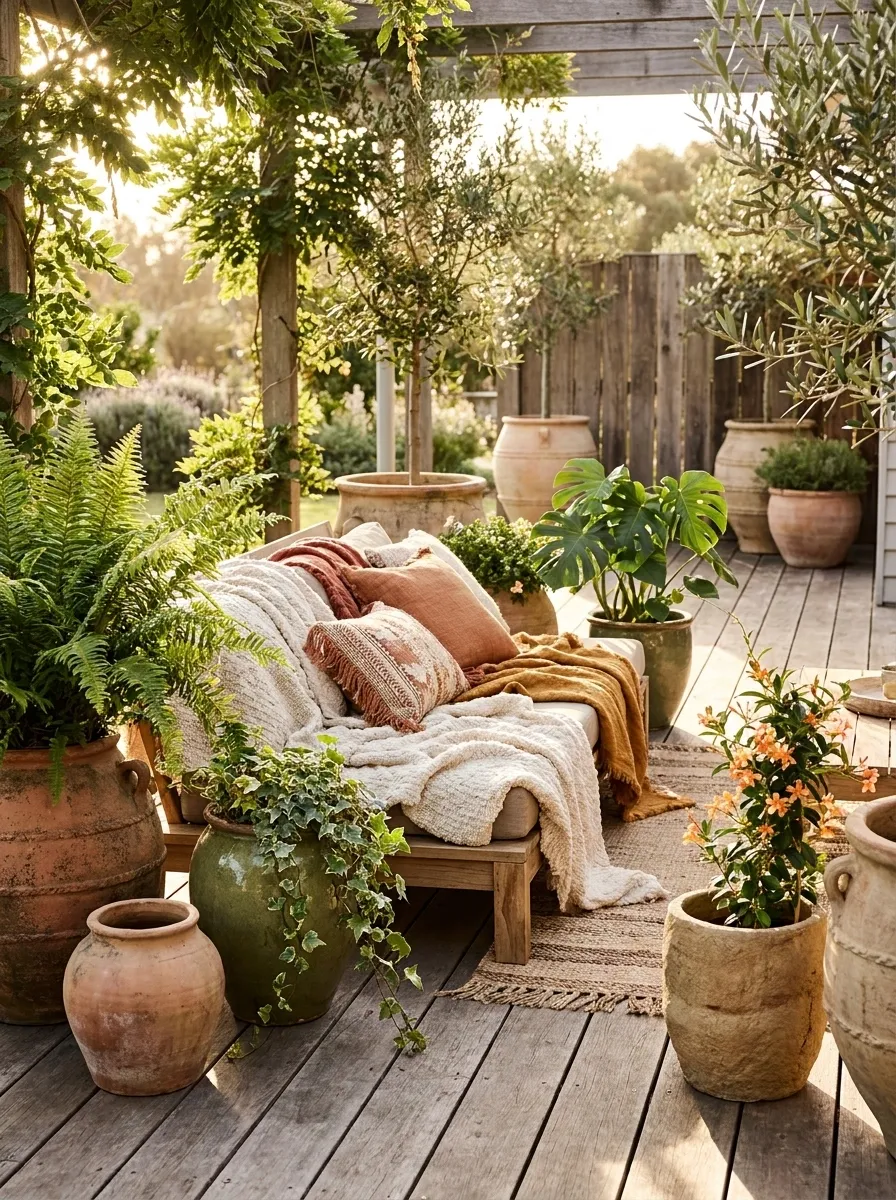
A bohemian deck looks better when the containers feel collected rather than purchased as one matching set. Use several pottery finishes in earthy tones, then build layers around a low lounge with trailing plants, broad foliage, and a few flowering accents.
The trick is giving the mismatched pieces something in common. Keep the colors within the same warm family, repeat one or two plant textures, and vary the container sizes significantly.
Place the largest vessels close to the back of the seating area, medium pots around the sides, and smaller pieces where they won’t interfere with feet or movement.
It should feel collected, not chaotic. There is a difference between “eclectic” and “the patio clearance aisle won.”
size, shape, finish
earthy tones, foliage, texture
clear walking space
Narrow Side Deck With Planter Wall and Slim Bistro Seating
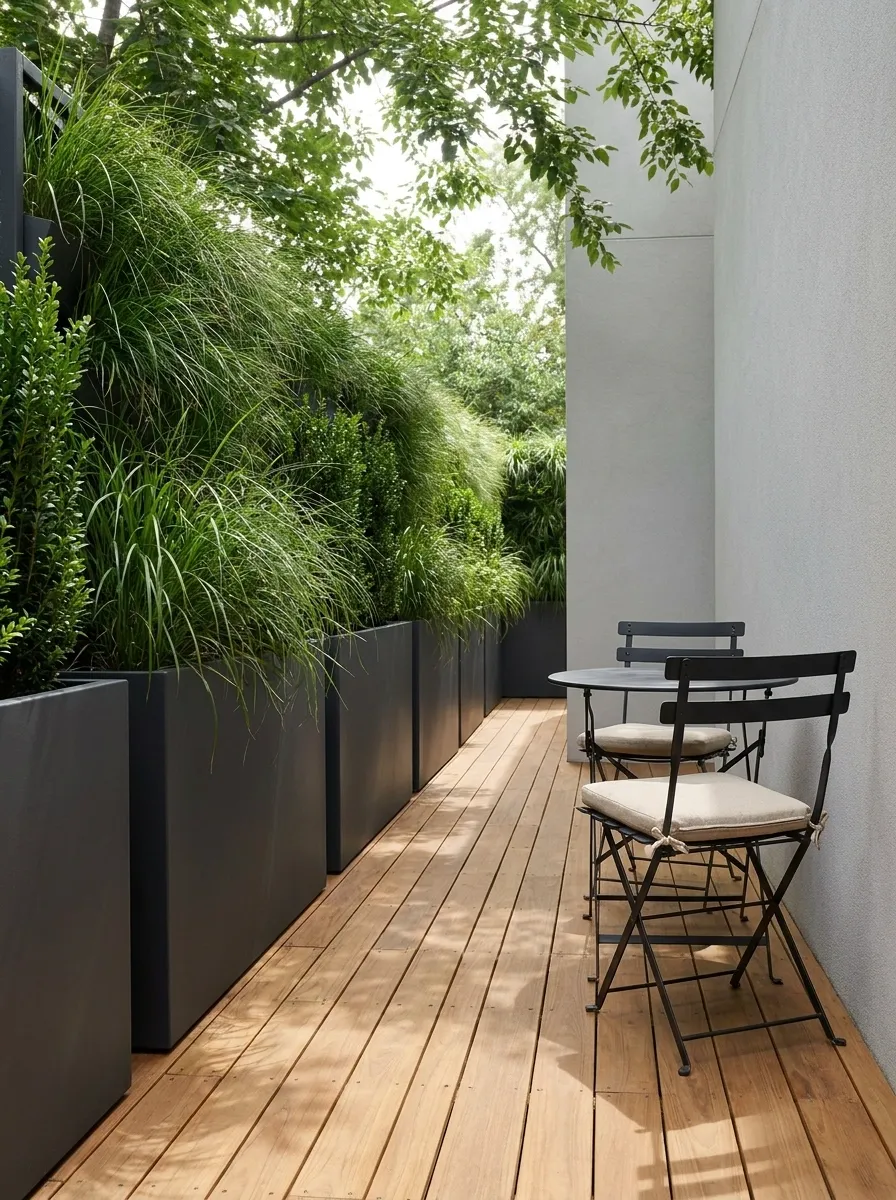
A narrow side deck can be awkward because every piece of furniture seems determined to make the walkway narrower. This design pushes the planting against one boundary and leaves the opposite side available for a slim bistro table and chairs.
Use narrow rectangular planters that form a continuous visual wall without taking up a huge footprint. The greenery should be relatively upright, with enough fullness to soften the boundary but not enough to spill into the path.
The furniture stays visually light, ideally with a small round or compact square table rather than a bulky dining setup.
This arrangement makes the side deck feel like an intentional outdoor room instead of a hallway where somebody happened to place a chair.
Deck Stairs Framed With Stepped Planters at Multiple Heights
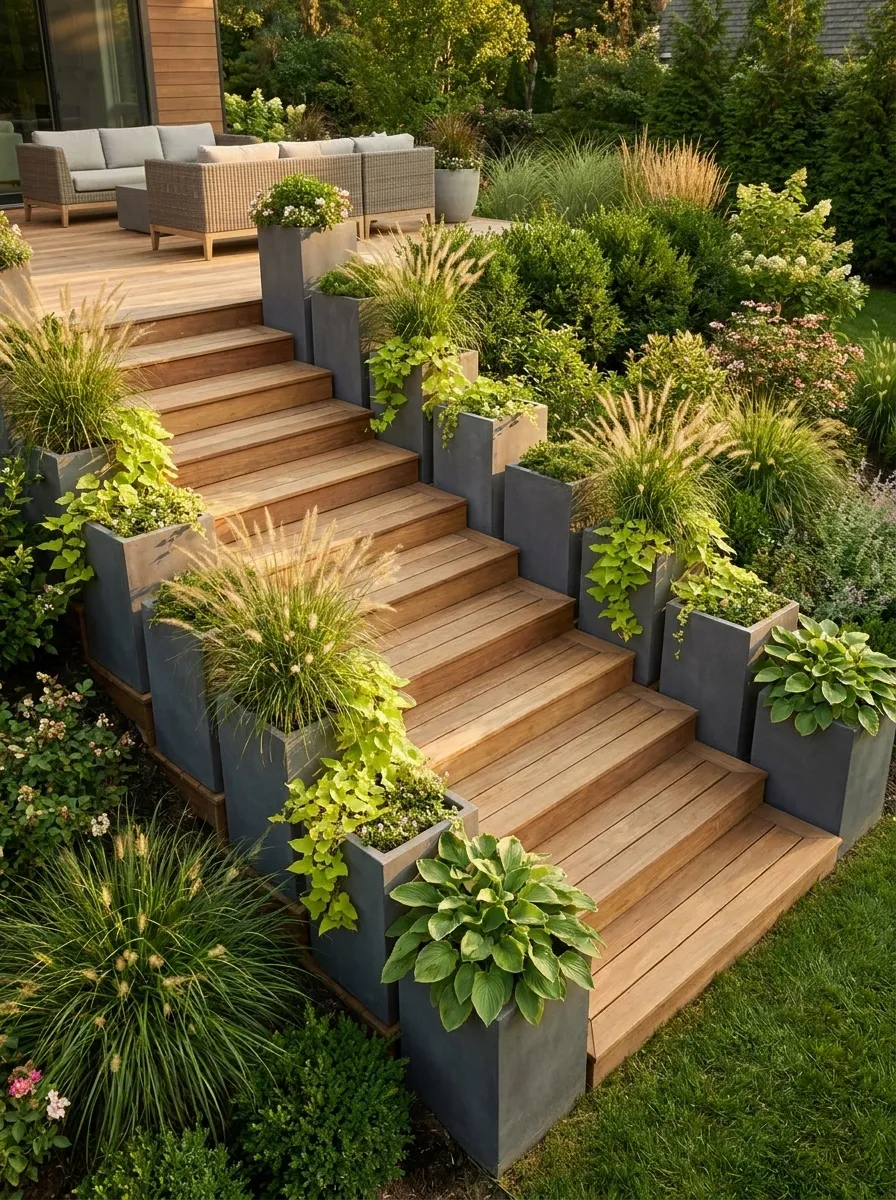
Planters can make the awkward transition between an elevated deck and the yard feel intentional. Instead of placing matching pots randomly around the stairs, use containers at different heights that follow the descending shape of the steps.
The tallest planter begins near the deck, with progressively shorter containers moving toward the yard. The planting creates a visual bridge between the two levels and makes the staircase feel connected to the landscape.
Keep the actual stair path completely clear. The containers should frame the route, not squeeze it from both sides.
This is one of those arrangements where the geometry does the heavy lifting. The plants just happen to look fantastic while doing it.
Natural Woodland Deck With Stone Planters and Soft Green Foliage
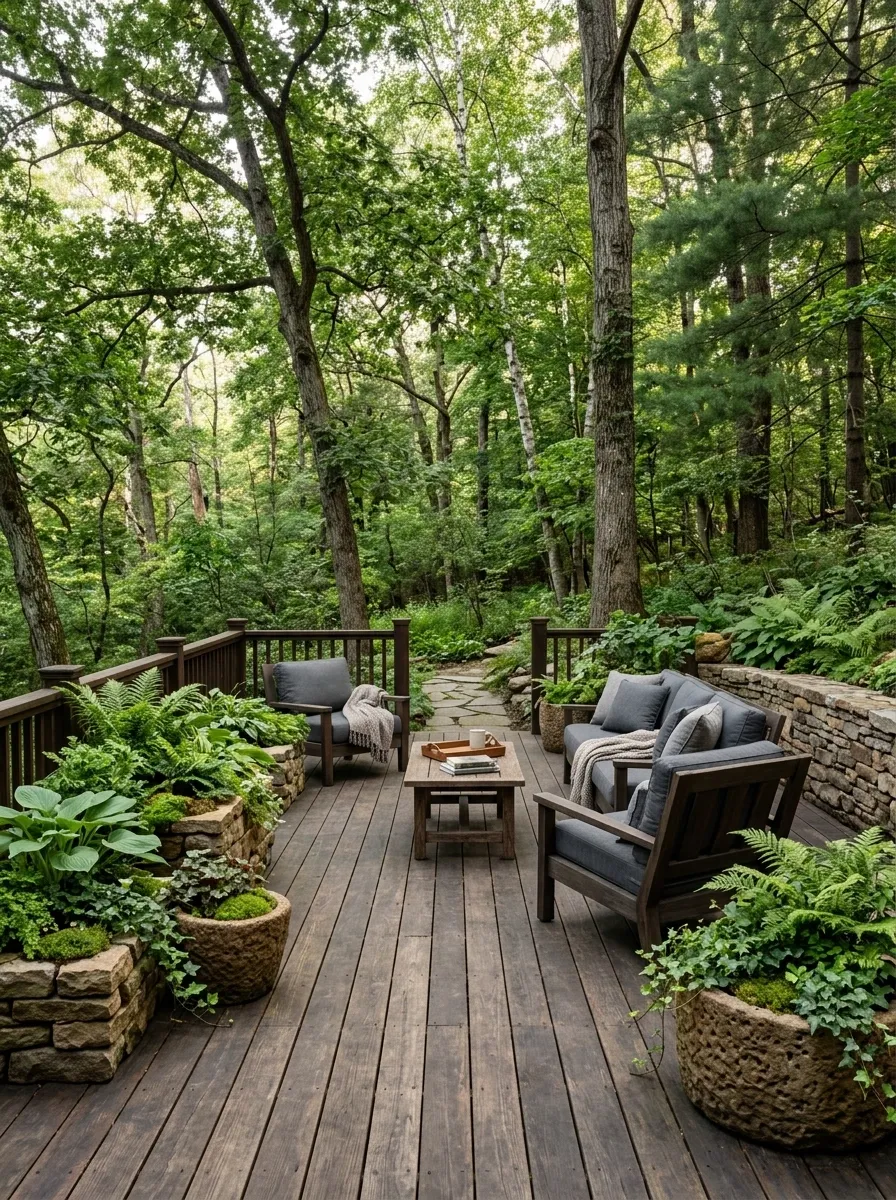
A shaded deck surrounded by trees calls for planting that looks like it belongs there. Stone-textured planters, ferns, broad green leaves, and mossy foliage create a woodland feel without making the deck look like a miniature forest took over.
The containers stay in muted gray and earthy tones so the greenery becomes the main color story. Dark wood furniture and soft outdoor cushions reinforce the deeper palette, while the planting is arranged mostly around the perimeter.
This works especially well when the yard already has mature trees. Fighting the setting with bright tropical containers would look strangely disconnected.
Let the shade do its thing. Not every deck needs to pretend it lives in permanent noon sunshine.
Sunny Southern-Style Deck With Terracotta Pots and Flowering Layers
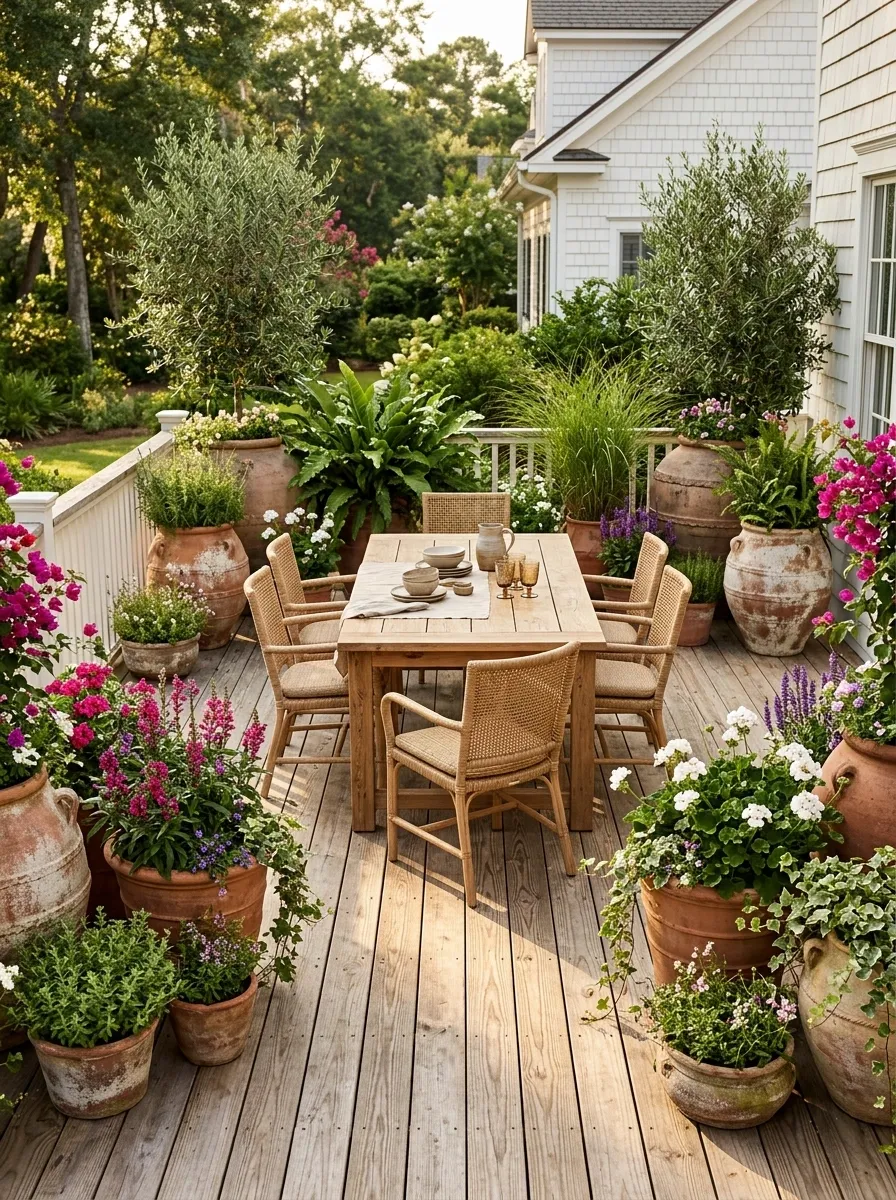
A sun-filled deck can carry much more color, and this arrangement makes the most of it with oversized terracotta pots, fuller flowering containers, and plenty of green foliage around a central dining table.
The largest vessels sit toward the back and corners, while medium containers move closer to the dining area. A few lower pots soften the edge without interfering with chairs or foot traffic.
Terracotta gives the whole scene a warm base, so even stronger flower colors feel connected. Keep the furniture simple, with natural wood or woven finishes that don’t compete with the planting.
The flowers can be expressive. The furniture doesn’t need to join their group chat.
Deck Corner Garden With a Tree-Size Planter as the Main Anchor
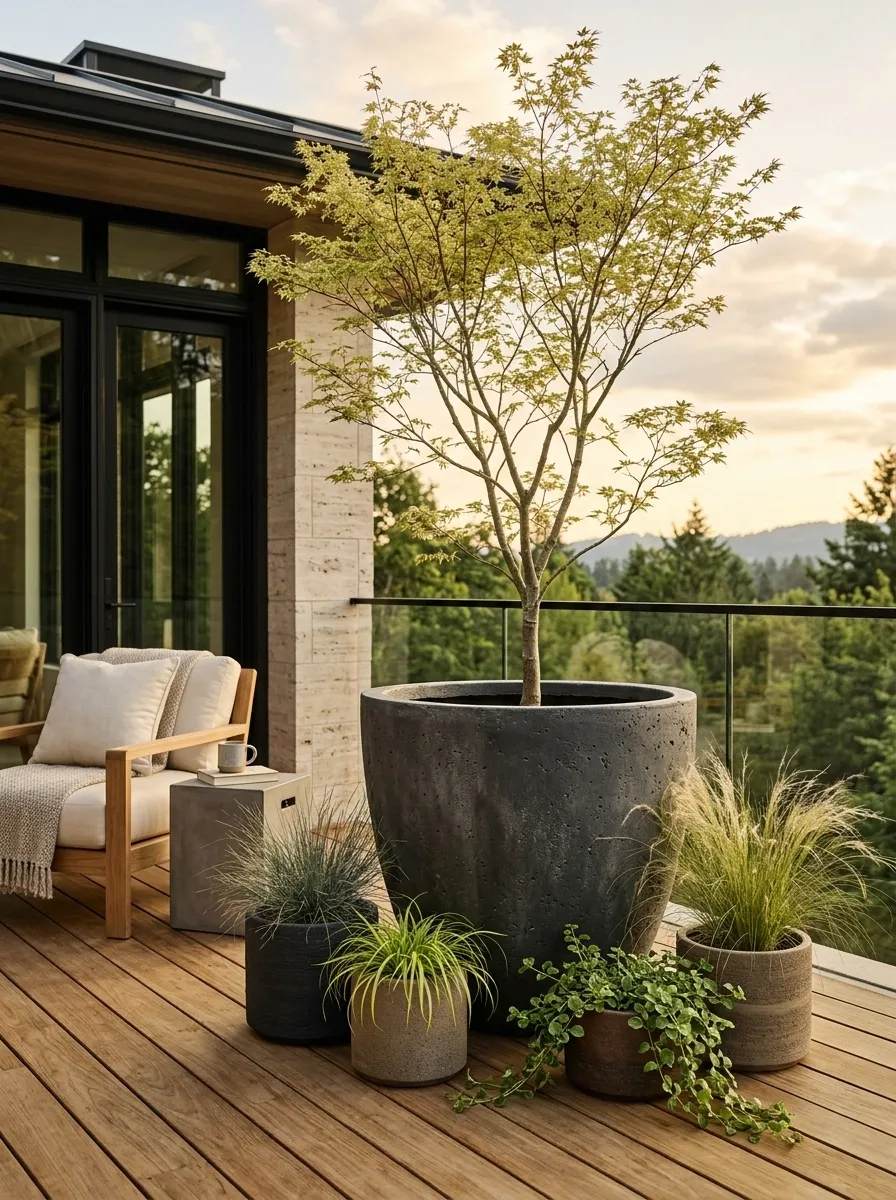
One oversized planter can turn an empty deck corner into the focal point of the entire outdoor space. A small ornamental tree or substantial upright plant rises from the center, with lower containers gathered around its base.
The scale is what makes this composition special. The large planter gives the corner enough weight to balance a sofa, dining area, or wide stretch of decking without requiring lots of smaller containers.
Use a simple palette around the main vessel. A couple of low planters, soft grasses, and restrained foliage are enough to create a layered garden effect.
The oversized container gets to be dramatic because everything around it understands the assignment.
Screened Deck With Planter Clusters Around the Perimeter
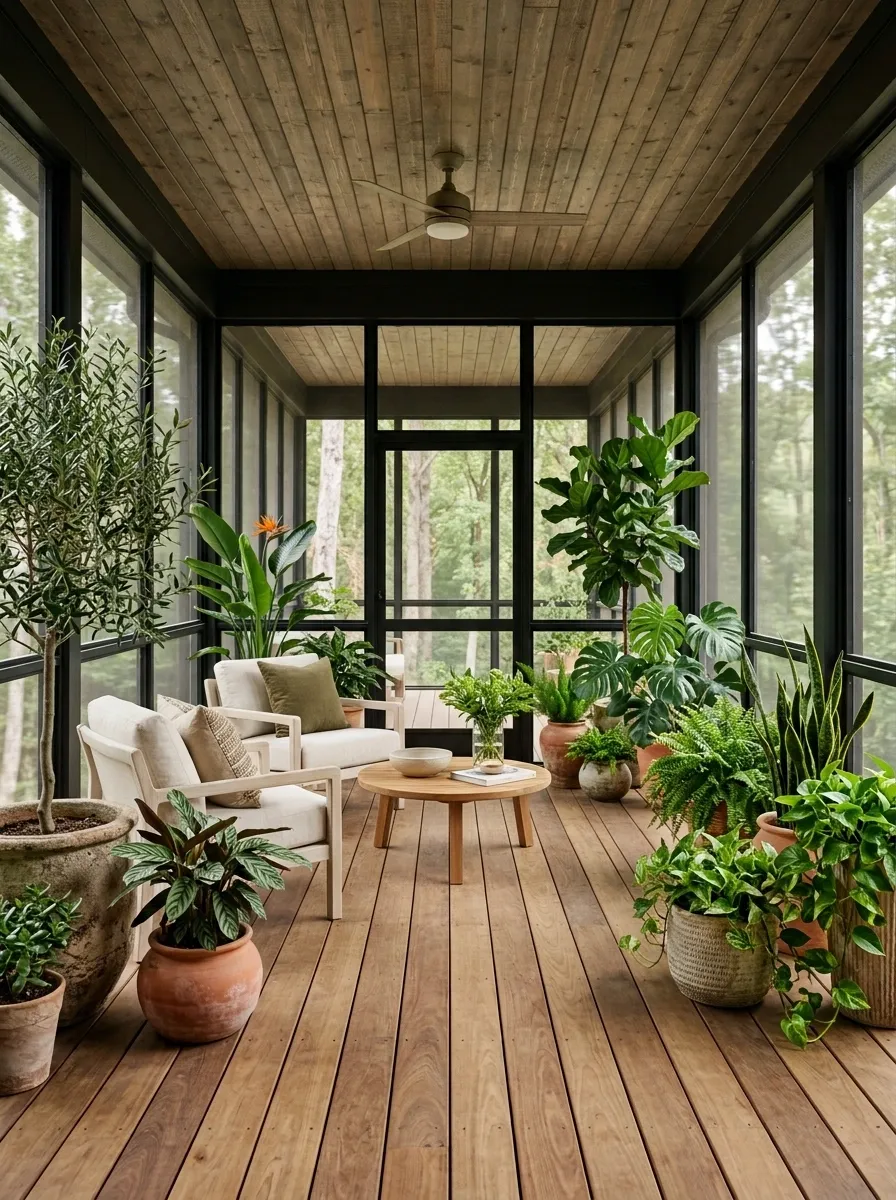
A screened deck can feel wonderfully private, but all that enclosure can also make the room feel boxed in. Grouped planters around the perimeter soften the structure while leaving the center open for comfortable seating.
Instead of placing one pot at every possible gap, build small clusters near corners and along selected sections of the screen. Combine one taller plant with two lower forms so the greenery creates a varied silhouette.
A simple seating arrangement in the middle keeps the room functional and easy to move through. The planting becomes the background rather than another thing people have to dodge.
The middle of the deck gets to breathe. Revolutionary concept, apparently.
Scandinavian-Inspired Deck With Pale Wood, Stone Containers, and Soft Grasses
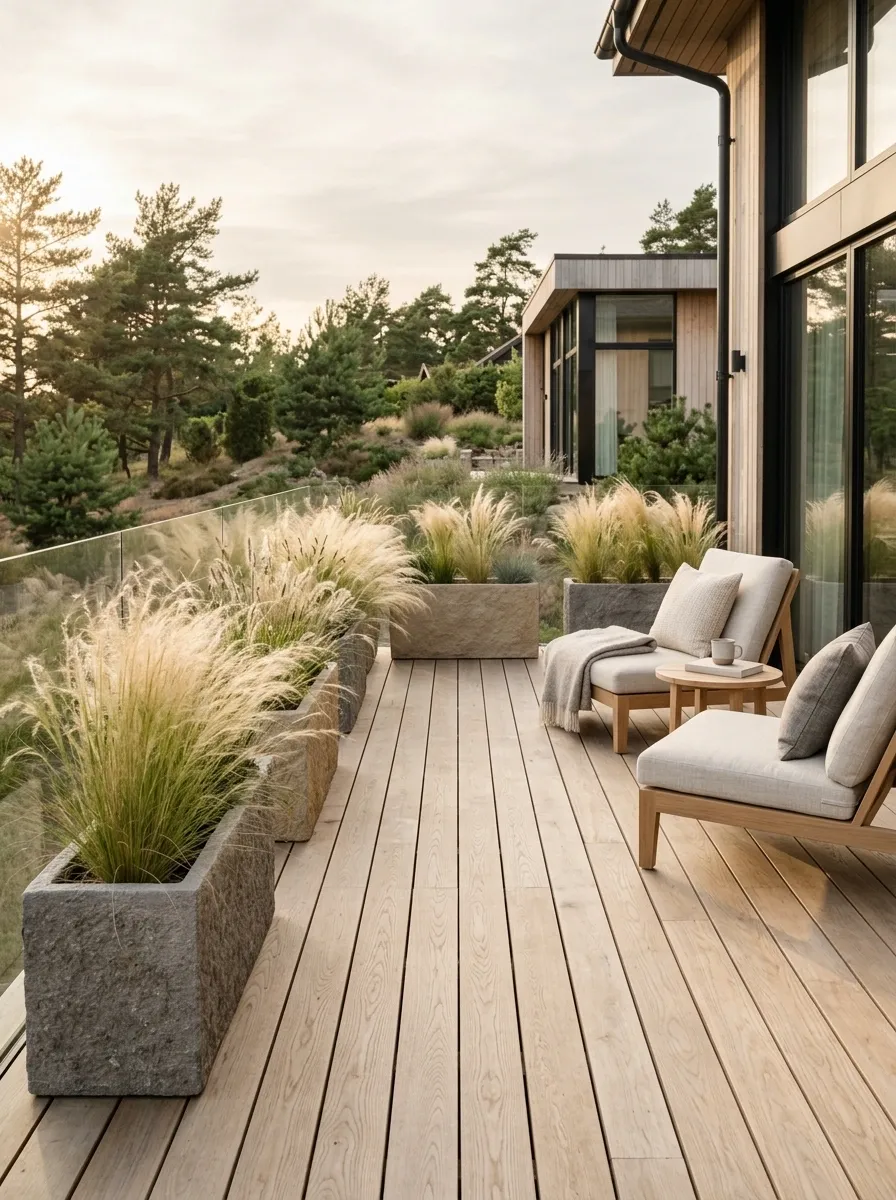
Pale decking, simple stone-textured planters, soft green grasses, and restrained outdoor furniture create a Scandinavian-inspired deck that feels calm without becoming stark.
Keep the material palette narrow. Pale wood forms the base, stone-toned containers add weight, and muted greenery provides the natural contrast. Furniture in soft gray, cream, or natural timber can sit comfortably within that palette.
The plants should have gentle movement rather than dense, complicated shapes. A few airy grasses can make the straight deck boards feel softer without overwhelming the architecture.
There is no need to decorate every surface. This design gets its character from proportion, texture, and a very limited color story. Basically, the deck has decided to stop trying so hard, and good for it.
Colorful Eclectic Deck With Jewel-Toned Containers and Rich Planting
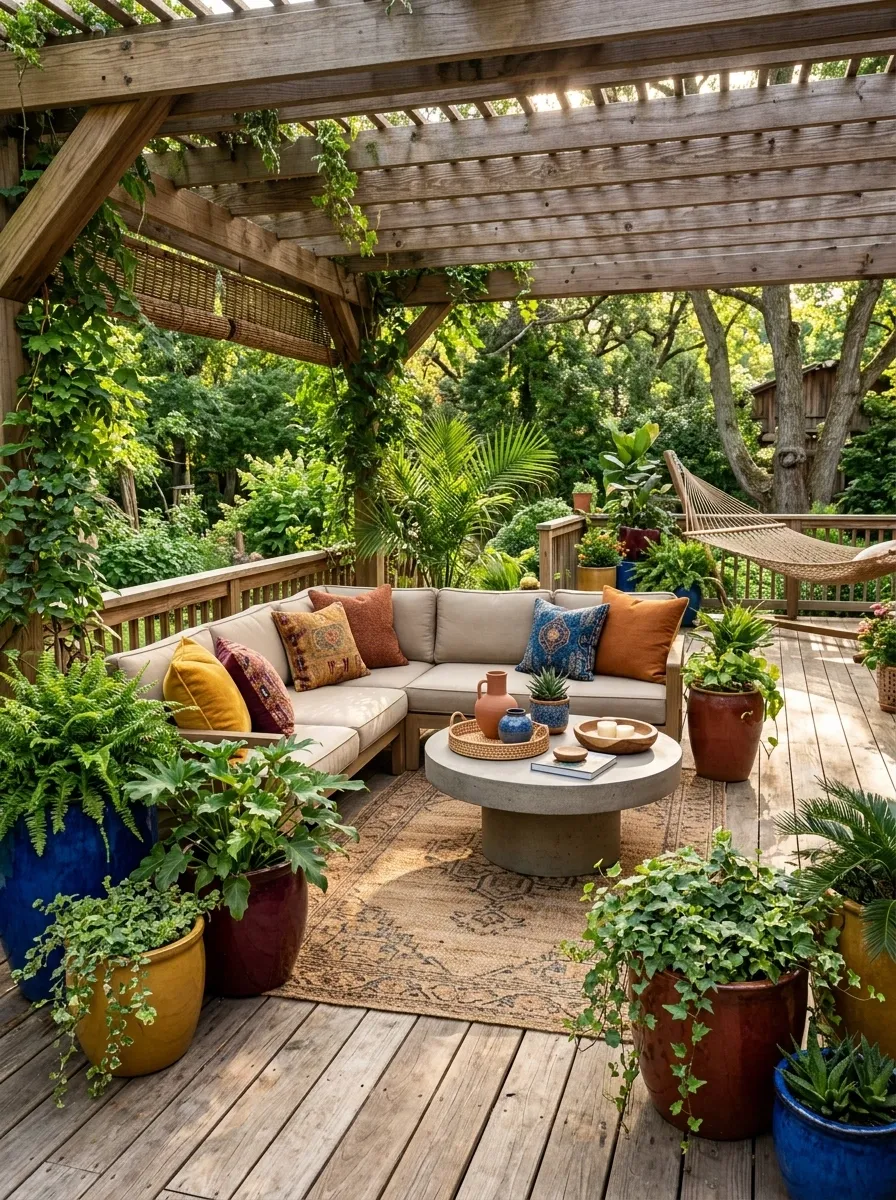
A colorful deck can handle stronger planter finishes when the colors are repeated with some intention. Deep blue, burgundy, mustard, and rust-toned containers sit among rich green foliage, creating a lively composition around a relaxed outdoor lounge.
The furniture stays relatively neutral so the containers become the obvious color story. Repeat one or two planter shades in cushions or small textiles, then let the plants provide the softer transition between all those stronger tones.
The result should feel expressive without becoming visually exhausting. A little color drama is fun. Having every single pot scream for attention is how the patio ends up looking like it has unresolved feelings.
Low-Maintenance Contemporary Deck With Structured Planters and Simple Greenery
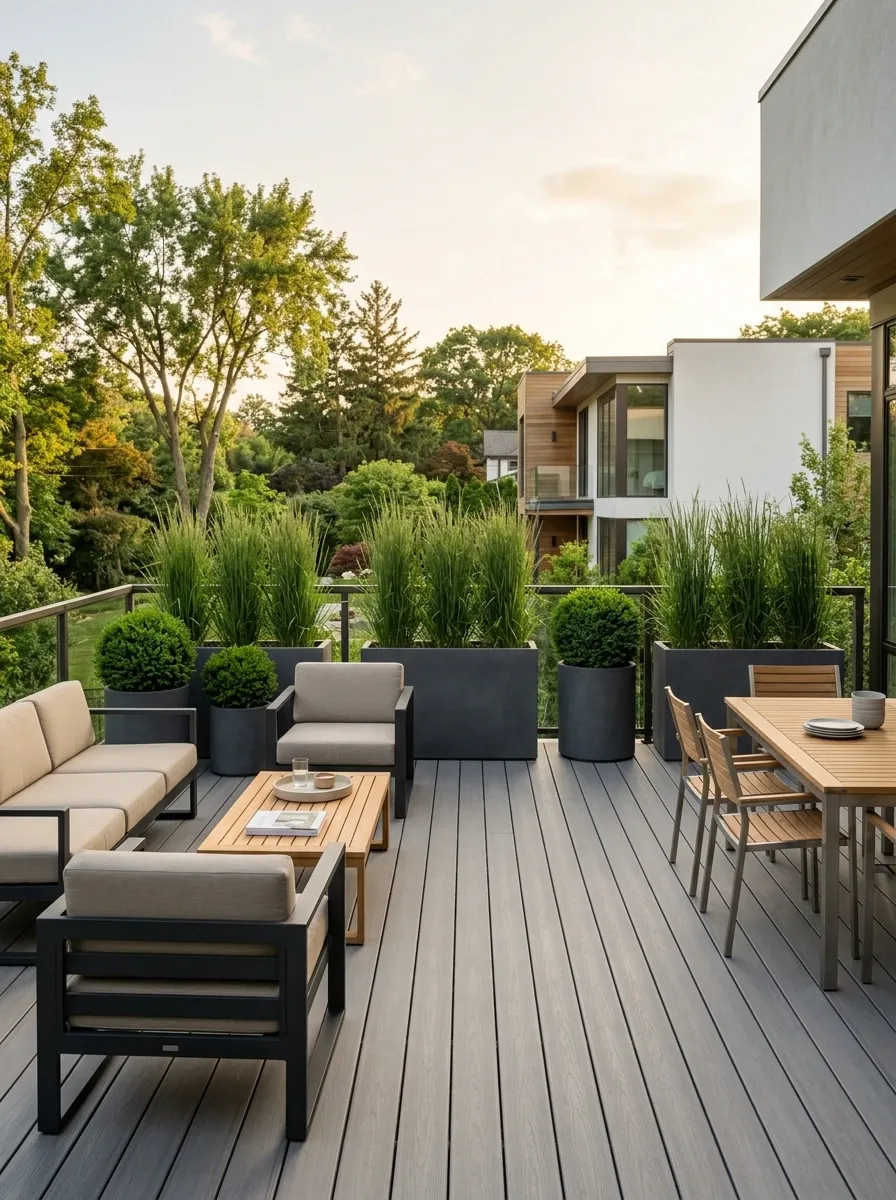
A contemporary deck can look finished without requiring a complicated collection of plants. This version uses a small number of large matching containers with structured greenery, leaving the rest of the space intentionally quiet.
The planters have clean rectangular or cylindrical forms, while the planting stays neat and architectural. Place them around the far edge of a dining or lounge zone so they create a clear backdrop without interfering with circulation.
The furniture uses simple silhouettes and a limited neutral palette. That allows the containers to become part of the architecture rather than looking like decorative add-ons.
The goal is visual order with less fuss. For anyone who enjoys plants but does not want a second full-time job supervising the patio, this one’s speaking loudly.
Deck Dining Area Wrapped in Planters for a Garden Restaurant Feel
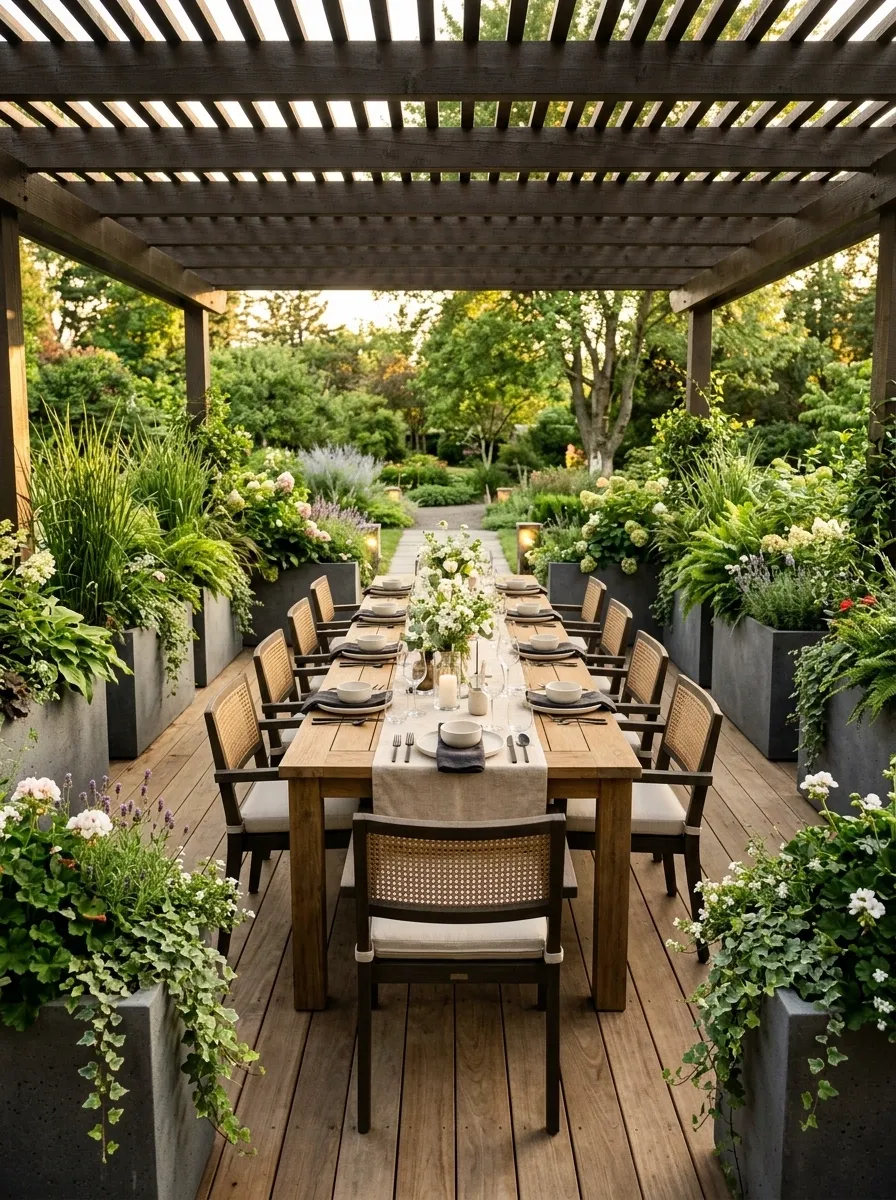
A long outdoor dining table feels especially inviting when planters loosely surround it and create the feeling of a separate garden room. Instead of putting greenery directly against the chairs, place larger containers around the outer edges of the dining zone.
The arrangement can use a mix of upright foliage, flowering plants, and softer trailing forms, with open access points at each end of the table. That keeps the dining area defined without making it feel trapped.
Warm wood furniture and simple table styling keep the scene relaxed. The plants become the walls, but very polite walls that still let everyone leave the table without climbing over a shrub.
This composition works particularly well on large decks where a dining set needs more visual grounding.
Tiny Deck With Vertical Planters and One Compact Seating Nook
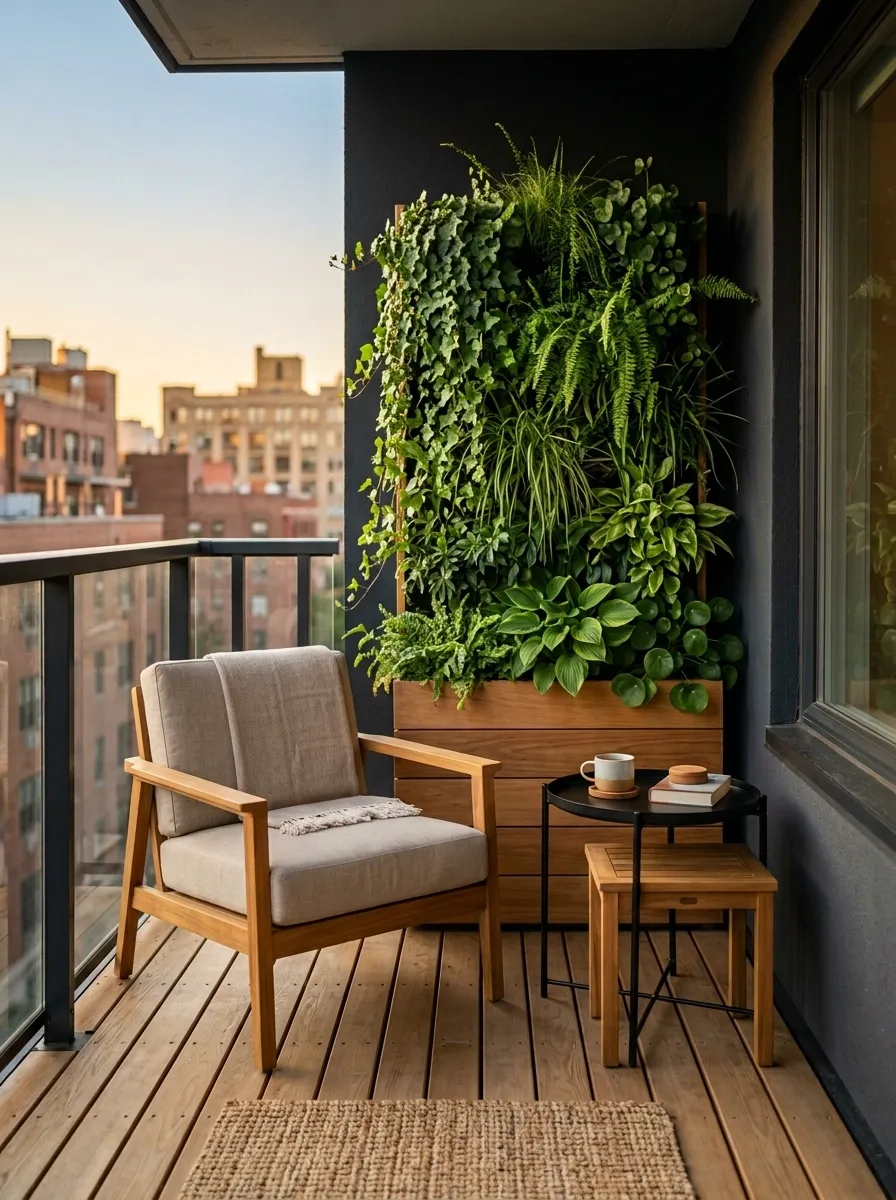
When floor space is extremely limited, the planting can move upward. Tall, narrow planters line one wall or corner, creating a strong green backdrop while leaving most of the deck floor open.
A single compact seating nook sits opposite the planting, with one chair, a tiny side table, and perhaps a small stool that can be moved when needed. The arrangement is simple, but the vertical greenery gives the deck much more visual presence than its footprint suggests.
Use planters that are narrow enough to preserve circulation. The greenery should rise rather than spread aggressively into the seating area.
This is the tiny-deck version of working smarter, not harder. There simply isn’t enough floor space for a botanical convention.
Layered Evening Deck With Planters, Warm Lighting, and a Lush Green Backdrop
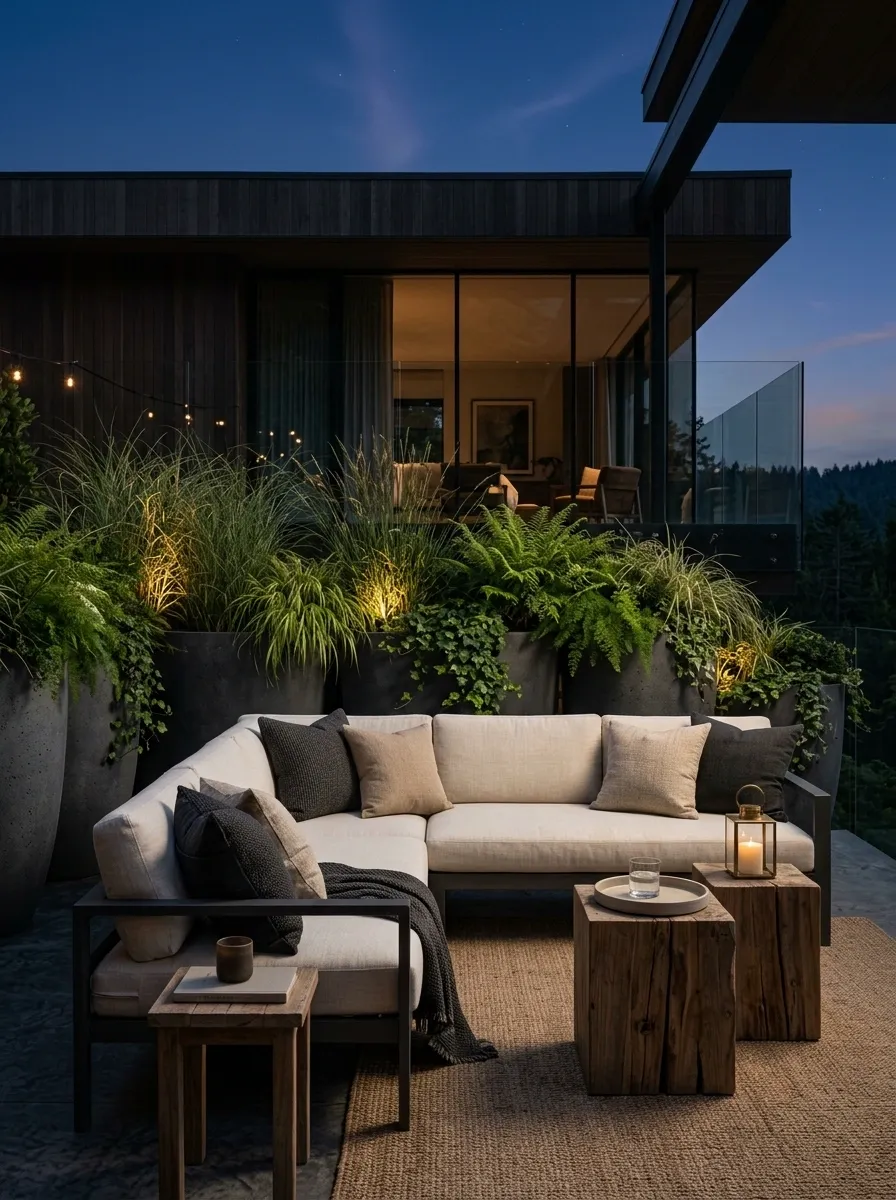
A deck can look completely different after sunset, and this final composition is built around that transition. Large planters form a loose backdrop behind the seating, while warm lighting picks up the edges of the furniture, planting, and nearby architecture.
The greenery should have enough variation to create soft silhouettes against the darker background. A few taller plants provide height, while lower foliage fills the spaces around the sofa and side tables.
Keep the lighting warm and selective. The goal is a gentle glow around the living area, not enough illumination to make the deck feel like a parking lot.
This design works because the planters aren’t just daytime decoration. They become part of the evening atmosphere too, which is exactly the kind of double duty worth saving.
Let the Planters Belong to the Deck
The easiest way to make a deck look more expensive isn’t to keep adding things to it. It’s to make the things already there feel connected.
A large planter should relate to the scale of the deck. A colorful container should have somewhere else for that color to make sense. A privacy screen should still leave the seating comfortable. Even a tiny deck can look considered when the greenery is concentrated instead of scattered across every spare inch.
Start with the overall composition, not the shopping cart. Decide where the visual weight belongs, where people need to walk, and which part of the deck should catch the eye first. Then choose the containers and planting around that decision.