
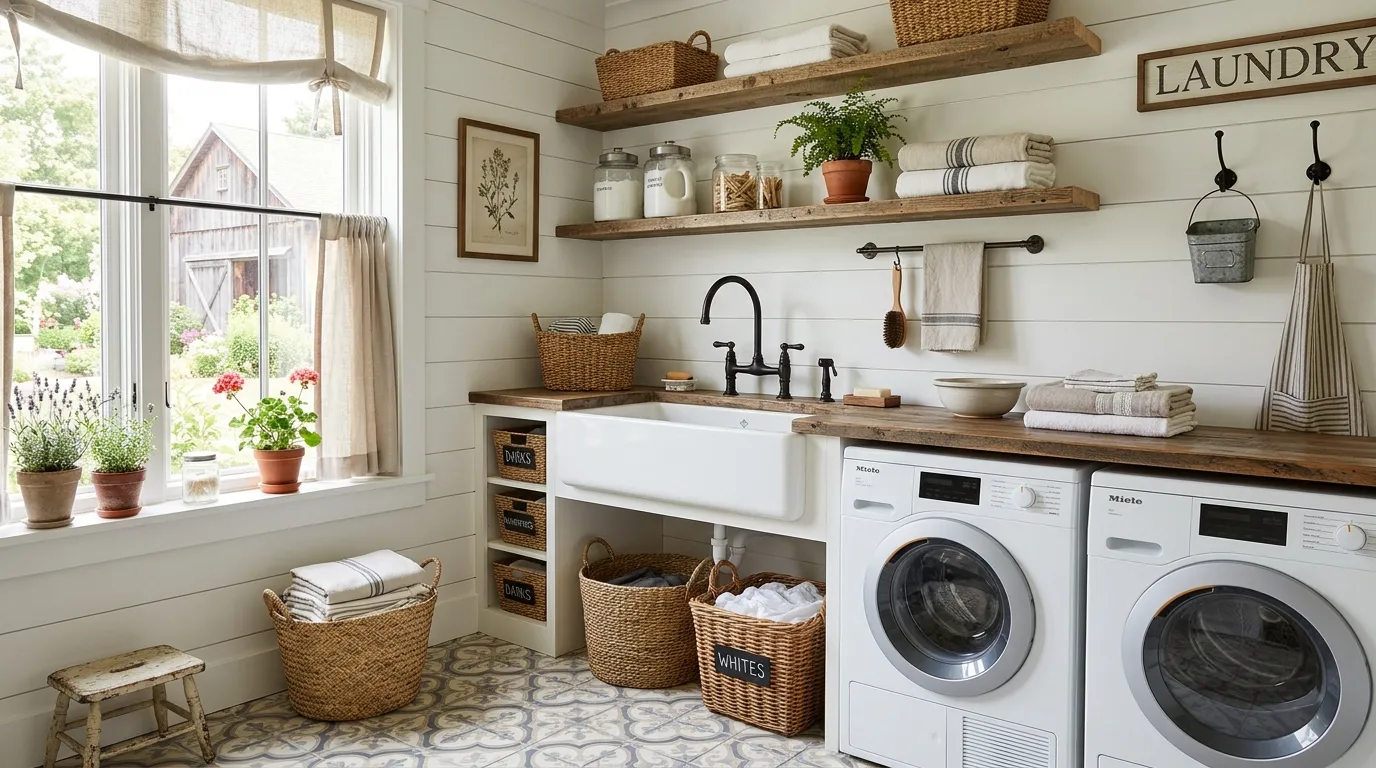
Nobody plans their house around the laundry room. It’s the leftover space. The one behind the kitchen, next to the garage, wherever the plumbing happened to land.
And it shows. Most laundry rooms look like a machine was delivered and everyone just walked away.
Farmhouse style is the one aesthetic that refuses to accept this. It insists that the room where you fight stains and mismatched socks deserves a faucet with some personality, a shelf that isn’t sagging particle board, and maybe — controversially — a color that isn’t beige.
This is not about spending a fortune. It’s about treating a working room like it’s still allowed to be a room.
Farmhouse Laundry Room Ideas
Botanical Prints Over the Machines
Hang a pair of matching botanical or floral prints in gold frames directly above your washer and dryer, at a height where they’re visible even with a plant or lamp on the counter below.
Choose black-and-white or sepia-toned prints rather than full color — they read as vintage rather than decorative filler.
Add a wicker-based lamp on the counter beside them for warmth after dark, since most laundry rooms rely on one harsh overhead fixture and nothing else.
Skip anything glossy or modern in the frame — a simple wood or gold-toned frame keeps the botanicals from looking like they were bought yesterday.
Charcoal Cabinetry With Brass Hardware
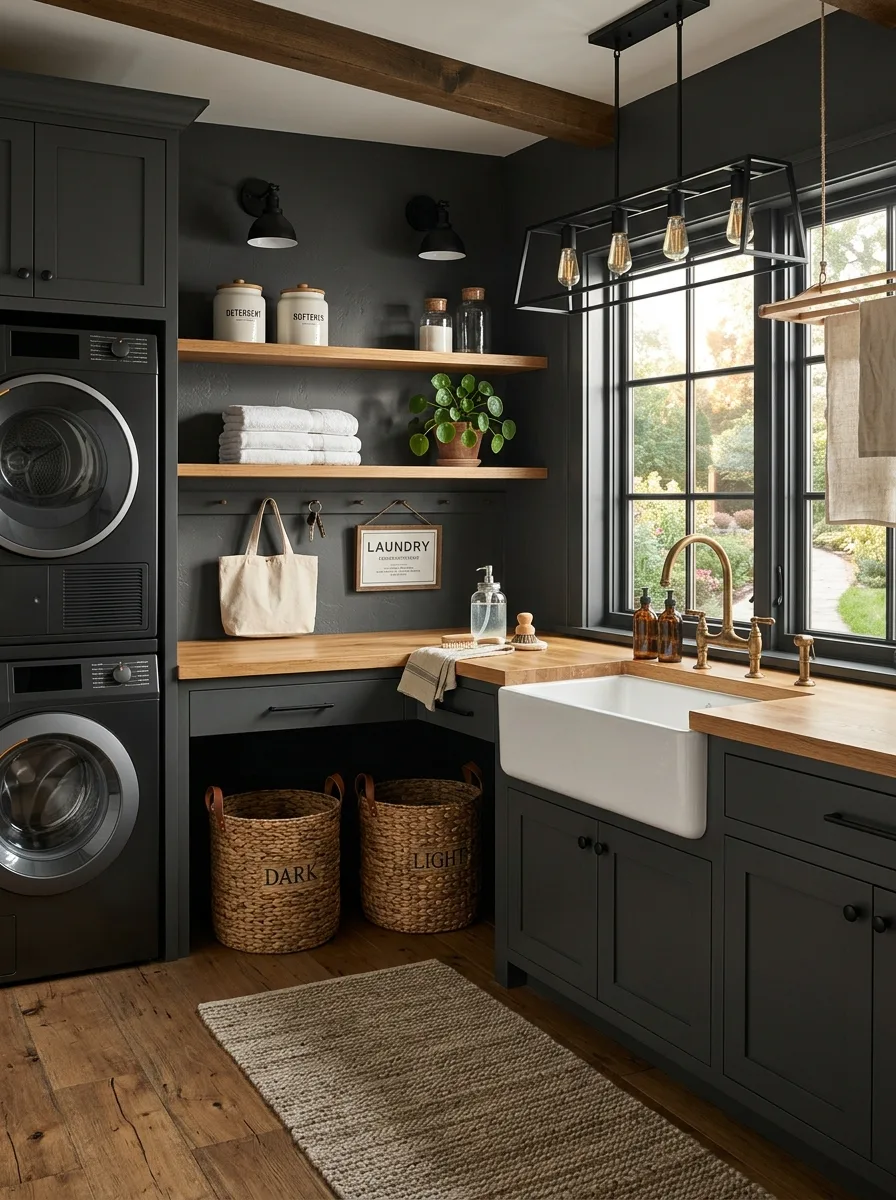
Paint the full run of laundry cabinetry a deep charcoal or near-black, and pair it with unlacquered brass hardware and a brass bridge faucet for contrast.
Choose a geometric black pendant or linear fixture over the sink rather than a single bulb. Dark cabinetry needs a light fixture with enough presence to hold its own.
Label a pair of woven baskets “Dark” and “Light” and tuck them into the open lower cabinet, letting the sorting system double as part of the room’s visual rhythm.
Keep the countertop in warm, honey-toned wood rather than anything cool or gray. Against charcoal cabinets, the wood is what keeps the room from feeling cold.
Cedar Barn Door Room Divider
Install a full-height sliding barn door in diagonal-plank cedar or pine to close off the laundry area from an adjoining hallway or mudroom.
Use black iron hardware for the track and handle — the contrast between raw wood and matte black metal is what makes the door look intentional rather than accidental.
Behind the door, keep open shelving simple: a few baskets, a single plant on a stool, nothing crowded.
The door doesn’t need to close completely to work. Half-open, it still frames the room like a piece of furniture rather than an afterthought.
Beadboard Boot Bench With Cubby Storage
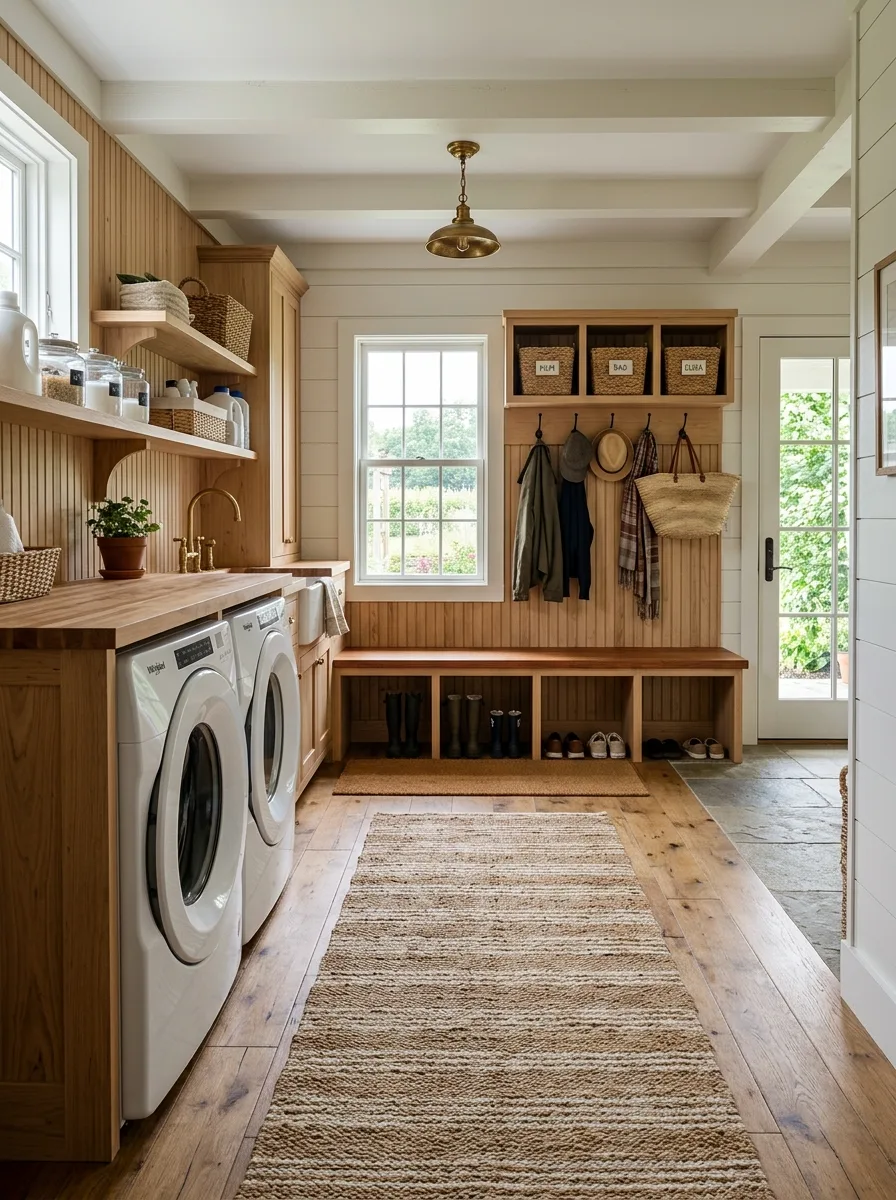
Line the lower half of one wall in vertical beadboard paneling and build a bench with open shoe cubbies running beneath a row of coat hooks.
Leave every cubby without a door. Visible shoes and boots, lined up in a row, look intentional — hidden behind cabinetry, they just look like clutter you’re avoiding.
Add labeled baskets on a shelf above the hooks for hats, bags, and gloves, so the vertical space above the coats is doing work too.
Finish the space with a single brass pendant light rather than a flush-mount fixture. It’s a small change that makes a utility hallway feel like a real room.
Vintage Wallpaper Behind the Washer
Choose a small-scale vintage floral or vine wallpaper and apply it only on the wall directly behind or beside the machines, leaving the rest of the room in plain shiplap or paint.
This contains the pattern to a small enough area that it never overwhelms a small room, while still giving the space real personality.
Pair it with a warm wood countertop over the machines rather than anything painted white, so the whole corner feels collected rather than papered-in.
Finish with framed pastoral paintings nearby — cows, fields, laundry lines — that echo the wallpaper’s era without matching it exactly.
Swing-Arm Sconces Over Open Shelving
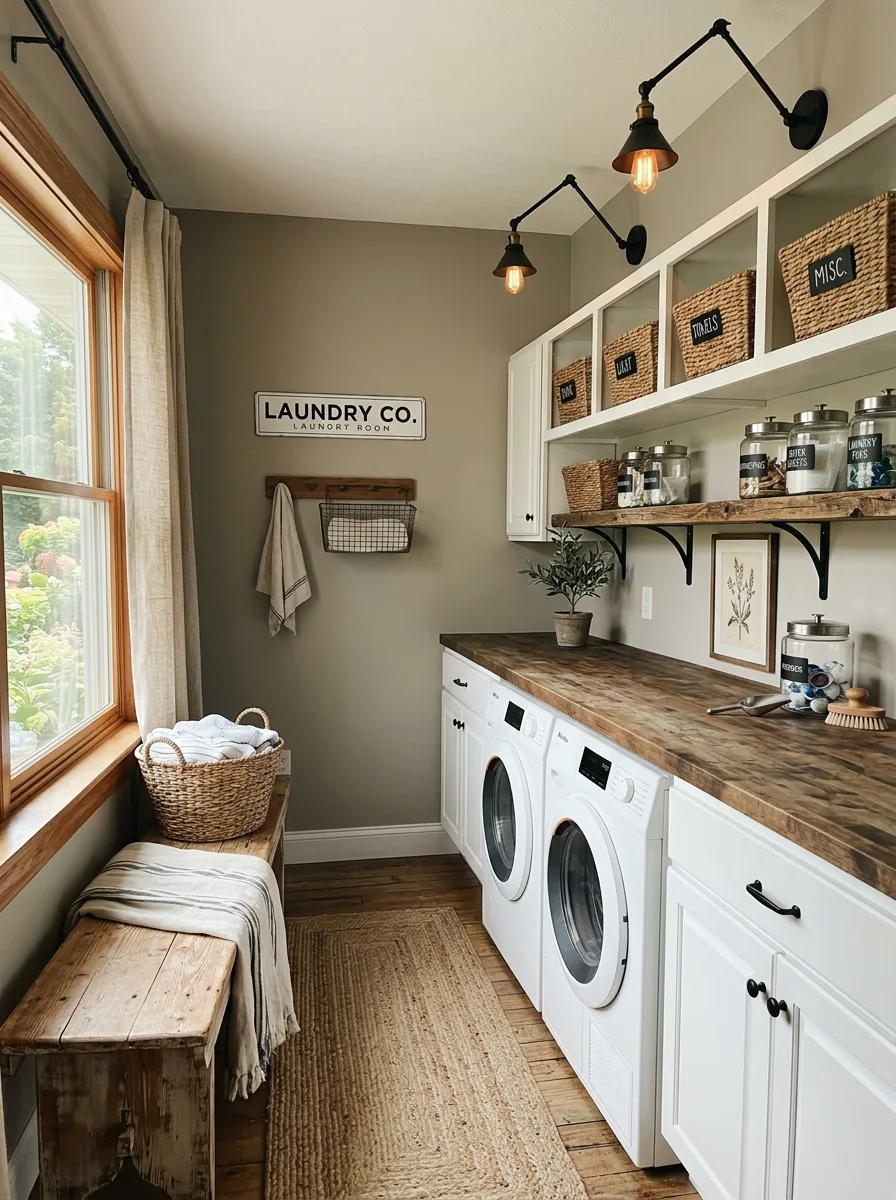
Mount two black swing-arm sconces with exposed bulbs directly above your open shelving, angled down to actually light the counter instead of just the ceiling.
Fill the shelving below with labeled wicker baskets and glass jars in a tight, organized grid — this is a layout where a little visual repetition looks deliberate rather than boring.
Pair the black fixtures with a taupe or greige wall color rather than white, so the black hardware has something to stand out against.
Add a low wooden bench under the window for folding or setting down a hamper, since a room this narrow needs every surface doing double duty.
Antique Hutch as a Laundry Cabinet
Mount a genuinely antique wall cabinet — the kind with glass-front doors and small drawers — directly above your machines instead of installing new upper cabinets.
Fill the glass-front sections with a few curated objects rather than everyday supplies, and reserve the open shelf below and the drawers for the practical stuff.
Source one from an estate sale or antique shop rather than a reproduction. The slightly mismatched hardware and worn finish are the entire point.
Hang a woven basket or bundle of dried flowers beside it to soften the hard edges of the old wood.
Patterned Cement Tile Underfoot
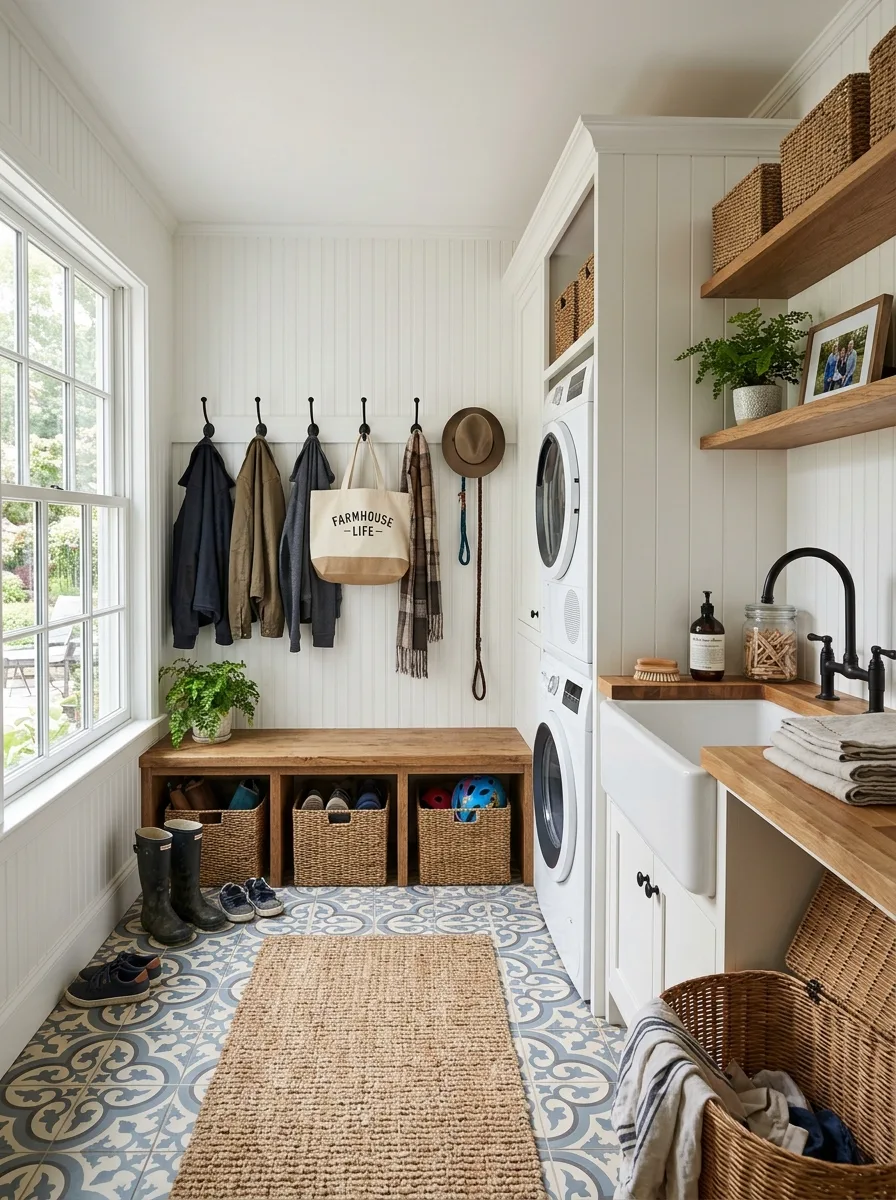
Lay a bold blue-and-white patterned cement or ceramic tile across the floor of your laundry-slash-mudroom, and let it be the loudest element in the room.
Keep every other surface — cabinets, walls, hardware — deliberately quiet. White beadboard, white hooks, plain wood shelving. The floor needs the rest of the room to stay out of its way.
Layer a plain jute runner over part of the tile near the entry. It softens the transition and gives boots and bare feet something forgiving to land on.
Choose a farmhouse apron sink in matte black hardware to anchor the far end of the room, so the eye has a second stopping point besides the floor.
Reclaimed Wood Barn Door Nook
Frame your entire laundry nook in salvaged barn wood, using two sliding panel doors that push back to reveal open shelving stacked with baskets.
Leave the shelves open rather than closed — the visual texture of stacked towels and woven baskets against rough wood is the look, and closing it off hides it.
Use a mix of basket sizes rather than uniform ones. Uneven, slightly imperfect storage reads as gathered-over-time instead of purchased-in-a-set.
Keep the surrounding wall simple and neutral so the reclaimed wood stays the visual anchor of the room.
Black-Framed Glass Upper Cabinets
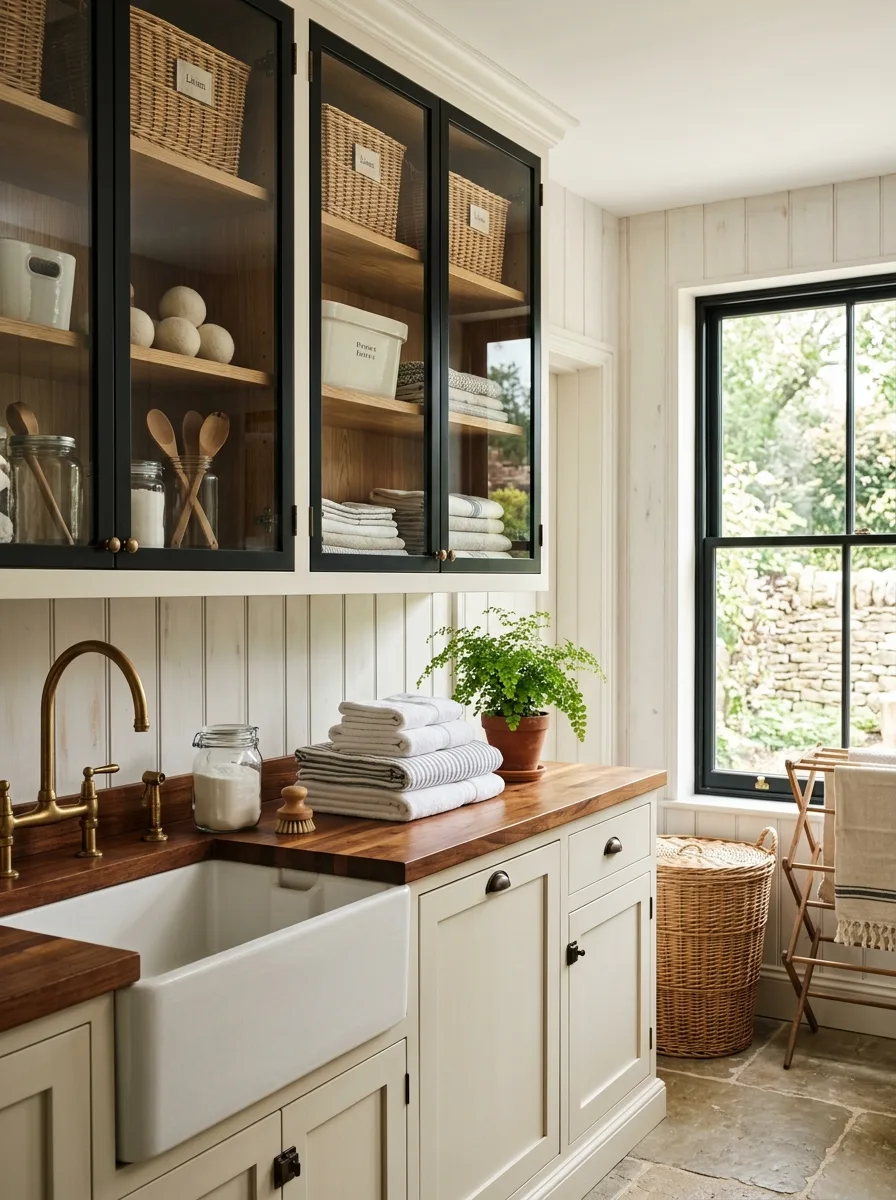
Install upper cabinets with black-framed glass doors instead of solid wood fronts, and use them to display labeled baskets and folded linens rather than hiding them.
Paint the cabinet boxes a soft cream or off-white so the black frames read as a deliberate accent, not the dominant color.
Add a butcher block counter and a brass gooseneck faucet below — the warmth of the wood and brass keeps the black trim from feeling cold.
Label everything visible behind the glass. Since the doors don’t hide anything, the labels are doing the organizing work that a closed cabinet usually would.
Wash Day Canvas and Burlap Wall Display
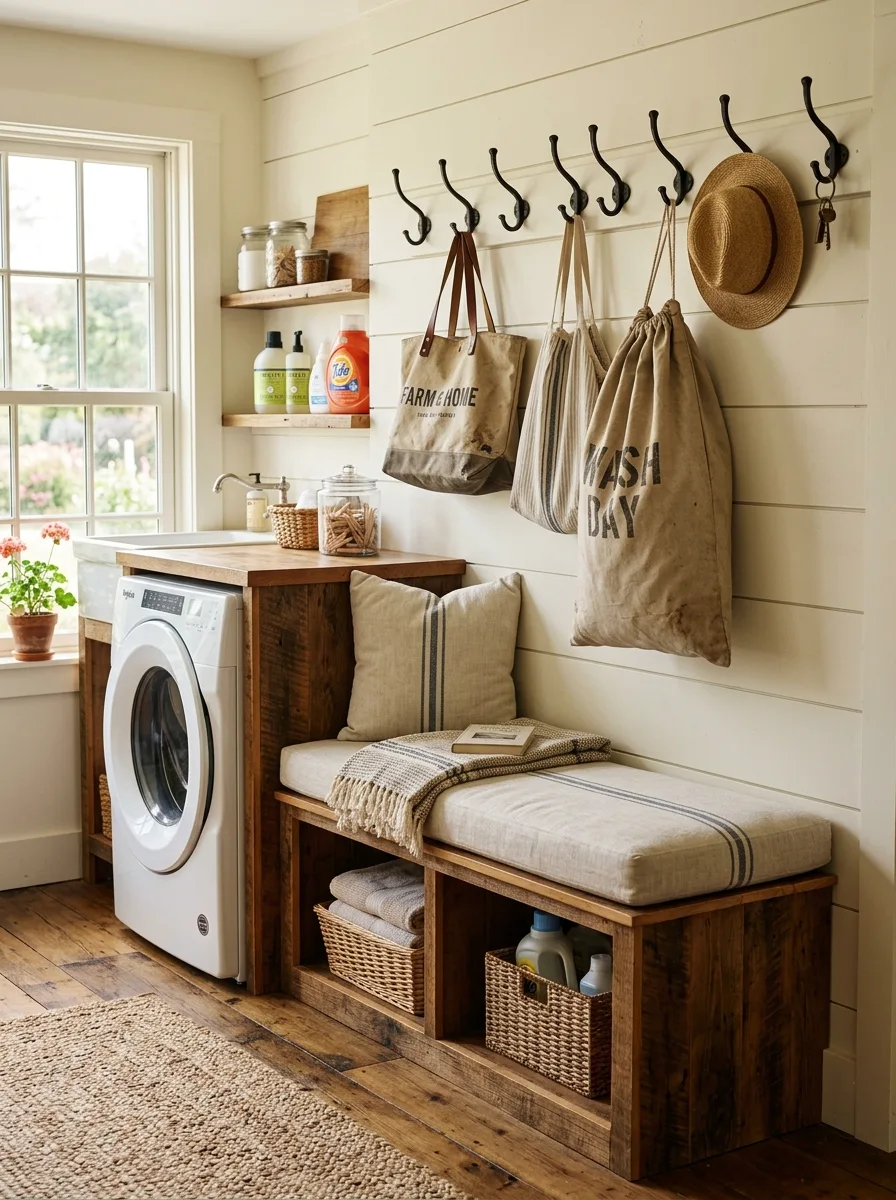
Hang a row of iron hooks and load them with vintage-style canvas totes and a burlap sack stenciled with something like “Wash Day,” alongside a straw sun hat.
Choose bags with visible wear, stenciled type, or faded lettering over anything that looks brand new — the point is that they look like they’ve done actual work.
Add a low bench beneath the hooks with a striped cushion, so the wall becomes both storage and a place to sit while pulling on boots.
Keep the number of hooks generous. A wall with six or seven hooks looks purposeful; a wall with two looks like you ran out of ideas.
Sage Green Cabinets With a Farmhouse Sink
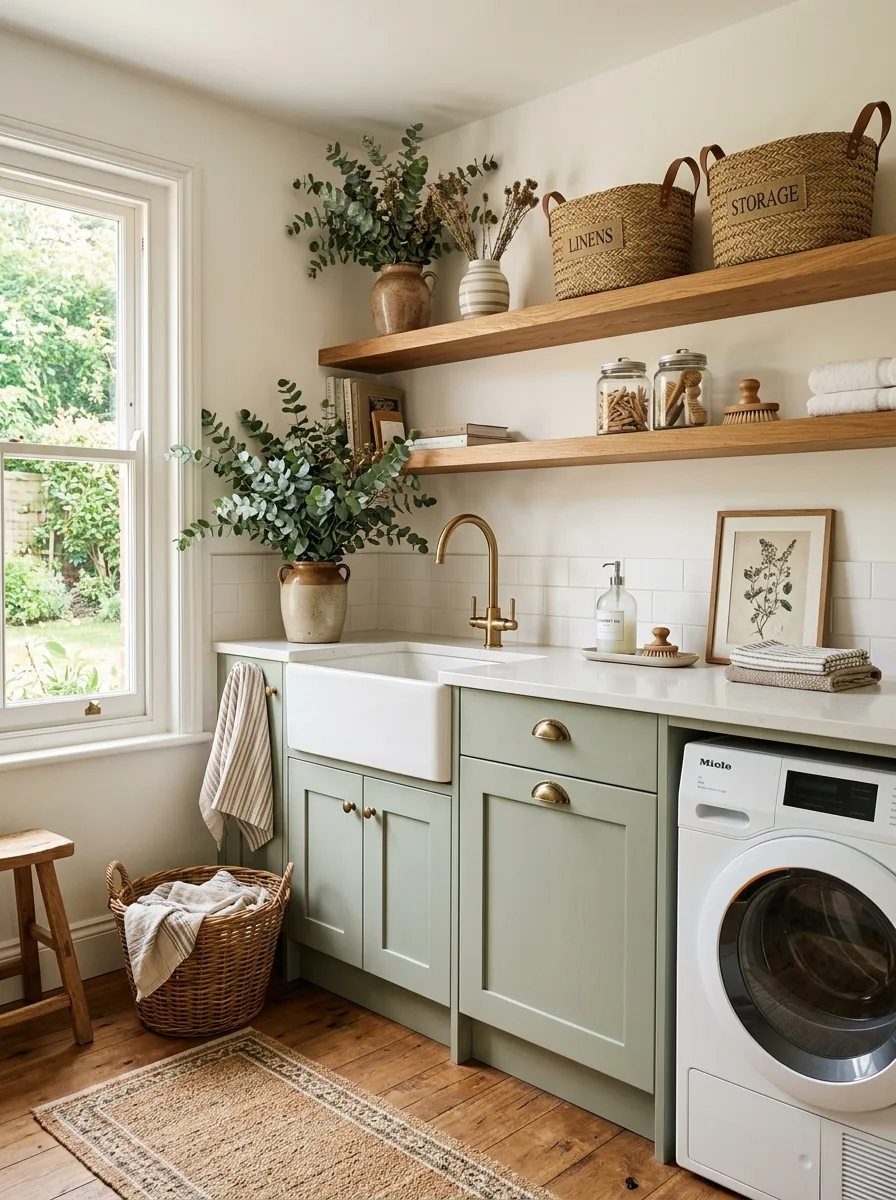
Paint your laundry room cabinetry a muted sage or moss green rather than defaulting to white, and pair it with a deep white farmhouse sink and brass gooseneck faucet.
Keep the countertop a light, plain surface — white quartz or a pale stone — so the green cabinets read as the statement rather than competing with a busy counter.
Add open shelving above in a warm, unfinished wood tone. The contrast between the painted green below and the raw wood above is what keeps the palette from feeling flat.
Bring in real greenery on the counter, not silk. A room already built around a green palette needs the plants to be doing actual, visible growing.
Farm Crate Storage With Vintage Signage
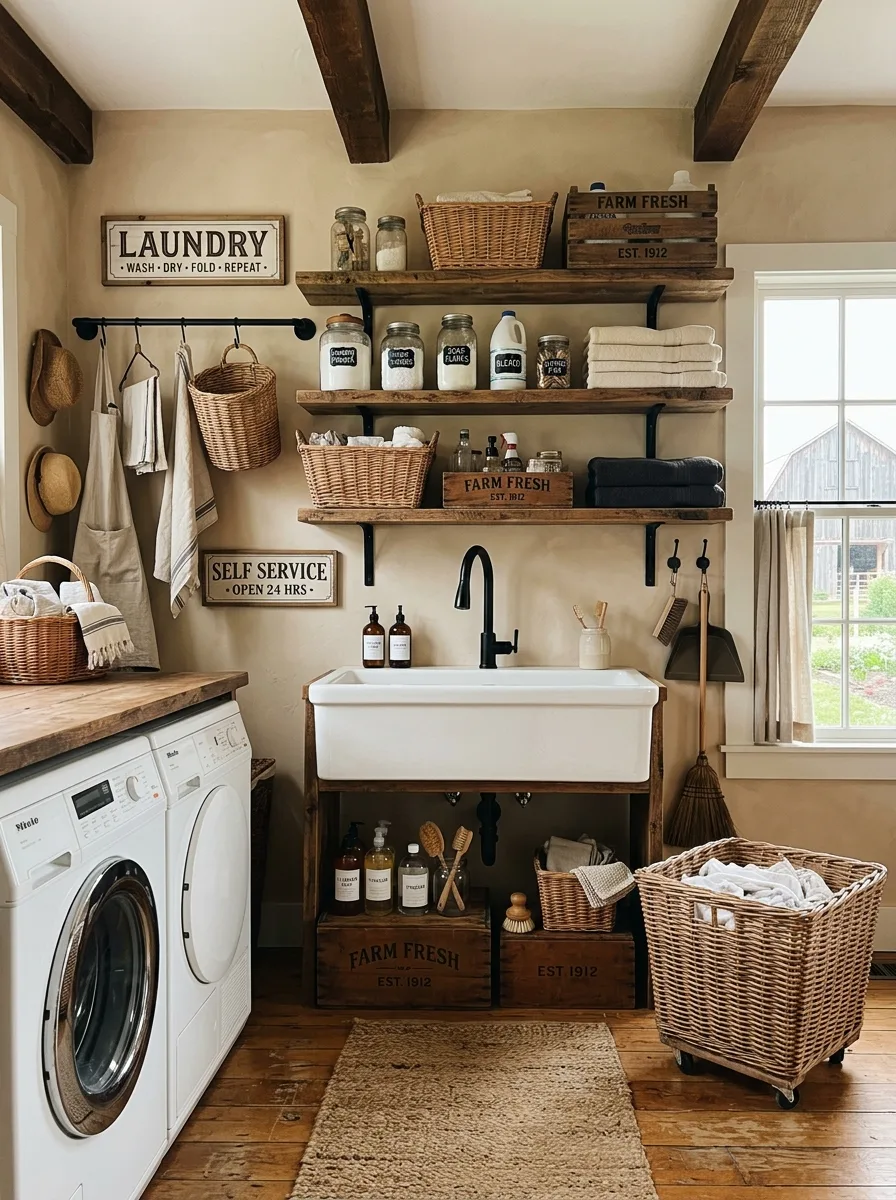
Stack reclaimed wooden crates stamped with something like “Farm Fresh, Est. 1912” underneath open shelving, and use them as bins for detergent bottles and brushes instead of buying matching storage bins.
Hang a hand-painted sign reading something like “Laundry: Wash, Dry, Fold, Repeat” directly above the shelving as the room’s focal point.
Choose a stone or apron sink set into a raw wood stand rather than built-in cabinetry — the exposed legs are what make the whole setup feel like reclaimed farm furniture rather than a retail fixture.
Add a rolling wicker hamper on casters nearby. It solves the actual problem of moving laundry around while still looking like it belongs in the scene.
Olive Cabinetry With a Tall Stacked Unit
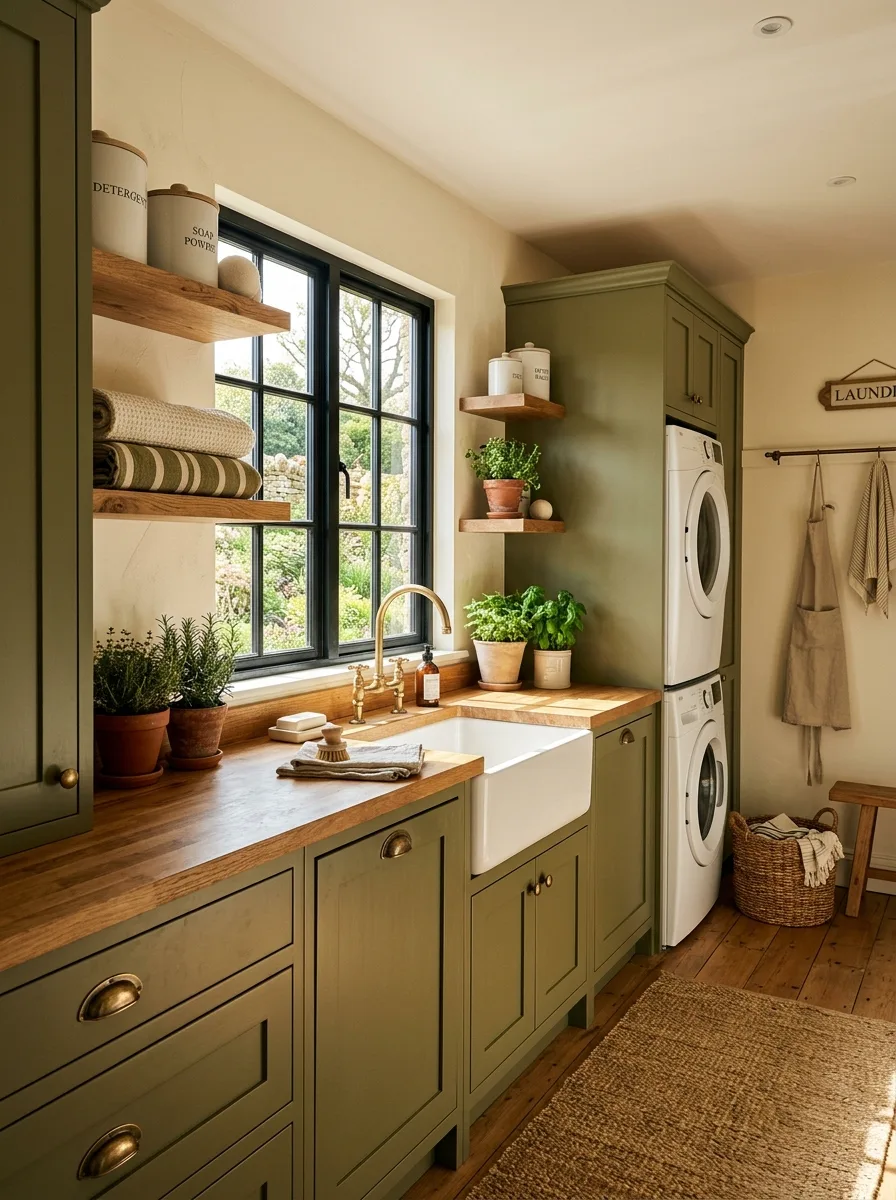
Paint your cabinetry a deep olive rather than sage, and build a tall enclosed unit specifically to stack a front-load washer and dryer vertically, freeing up floor space for everything else.
Use the vertical space you’ve gained for open shelving and a proper counter, rather than leaving it empty just because the machines used to occupy it.
Add brass cup pulls and a matching brass faucet. Olive is a darker, more serious green than sage, and it needs a warm metal to keep it from reading heavy.
Tuck a small potted herb garden on the windowsill. A corner window near stacked machines is often wasted space, and a few pots of rosemary or basil put it to use.
Cream Cabinetry With Exposed Subway Tile
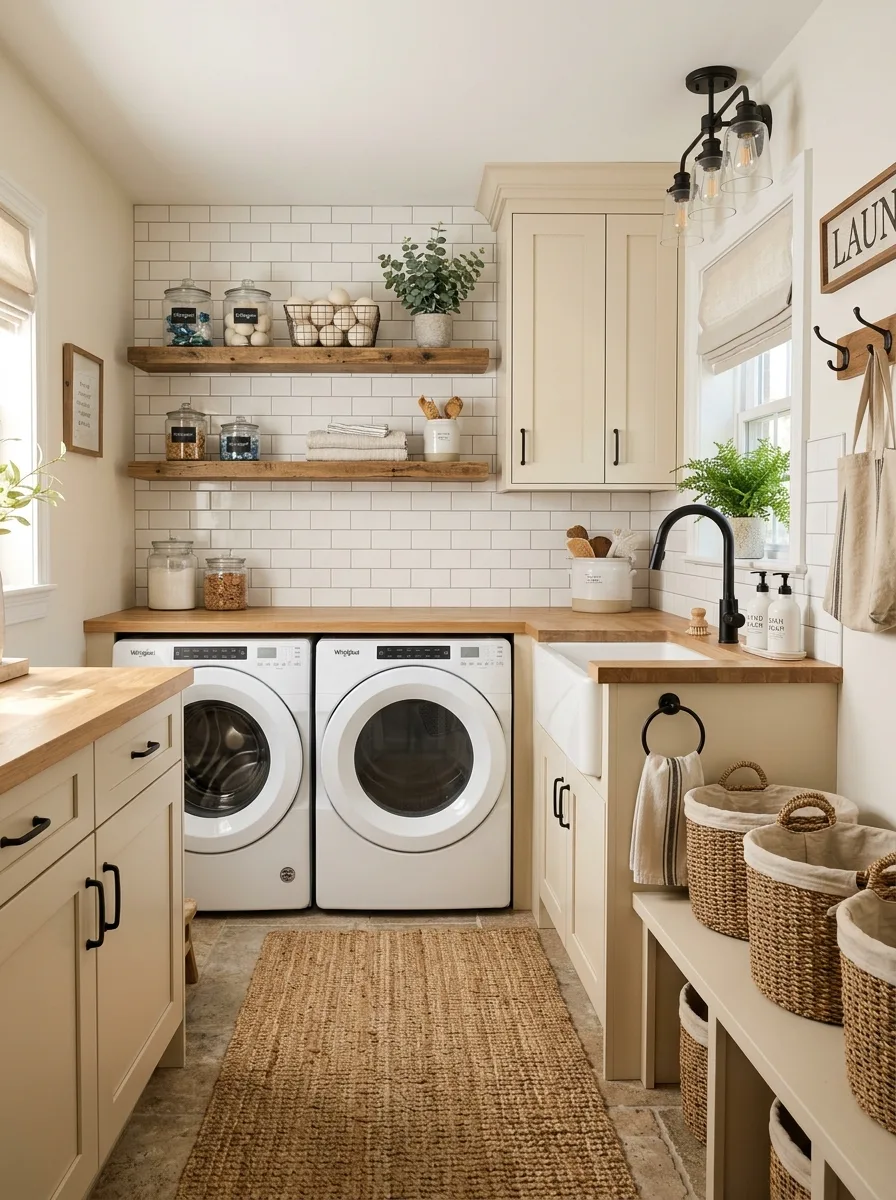
Run white subway tile as a full backsplash behind open wood shelving, and pair it with soft cream shaker cabinetry below rather than stark white.
Let the tile grout lines do the pattern work — keep everything else on the shelves simple, with just a few glass jars and one plant, so the tile doesn’t get visually crowded out.
Add a matte black faucet as the single dark element in an otherwise light room. One dark fixture in a pale space reads as a choice, not an oversight.
Finish with a chunky jute rug running the length of the counter run. It’s the detail that keeps a tile-and-cabinet room from feeling like a showroom display.
Galvanized Tin Canister Labels
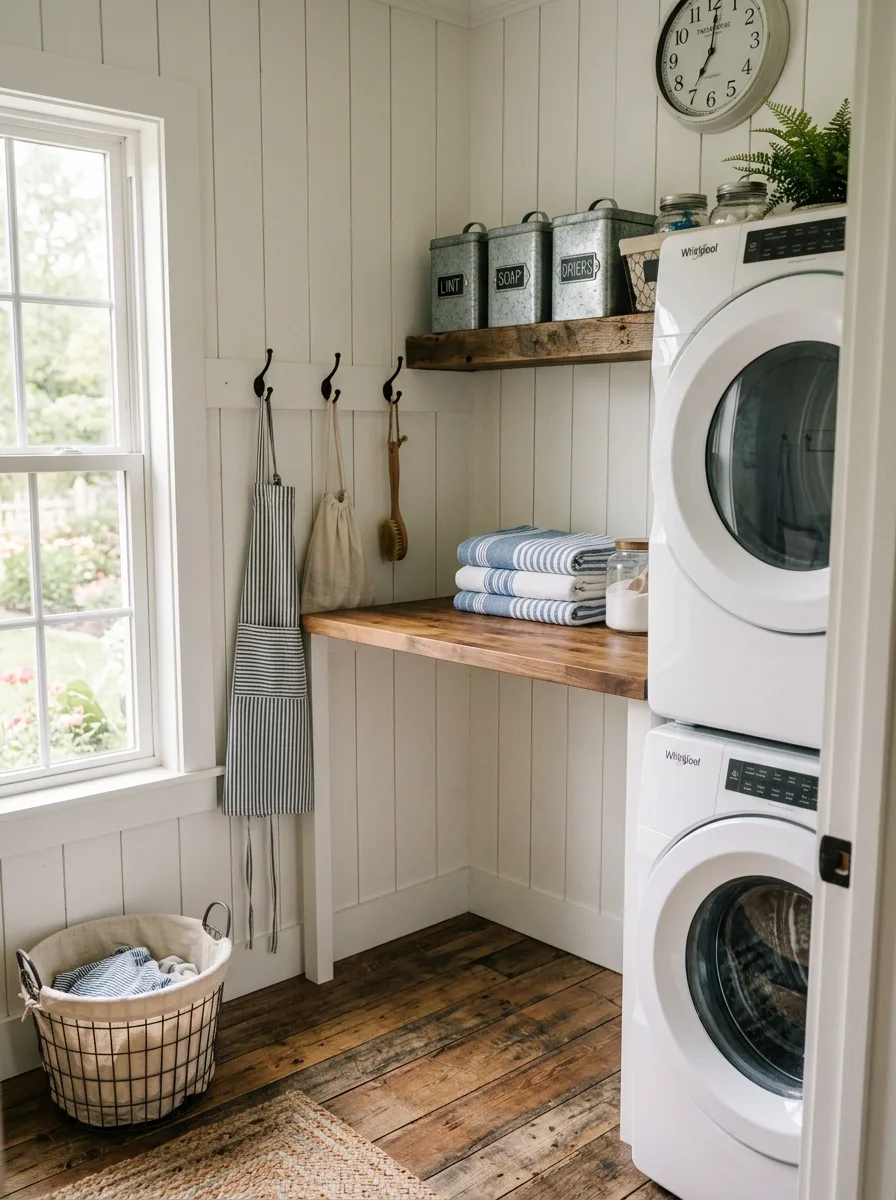
Mount a single reclaimed wood shelf and line it with matching galvanized tin canisters labeled “Lint,” “Soap,” and “Driers” in place of anything plastic.
Choose canisters with a slightly aged, matte metal finish rather than shiny new tin — the worn look is what sells the farmhouse story.
Hang a vintage-style wall clock nearby. It’s a strange detail to prioritize in a laundry room, but it’s exactly the kind of unnecessary touch that makes a utility space feel considered.
Keep a striped apron and a boar-bristle brush on a hook beside the shelf, visible rather than stored away — tools on display read as lived-with, not left out.
William Morris Wallpaper Statement Wall
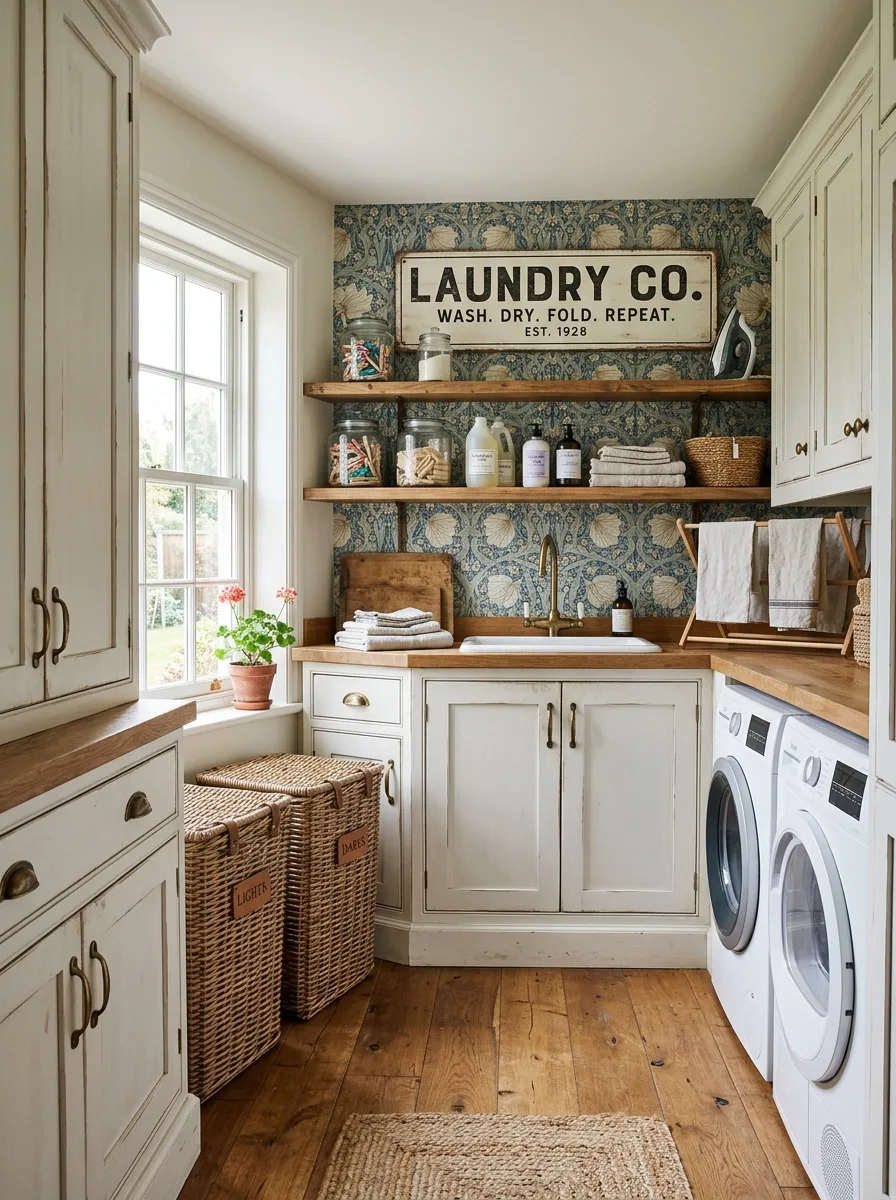
Choose a densely patterned William Morris-style floral wallpaper and apply it to the single wall behind your open shelving, leaving the rest of the room in a plain, muted cream.
Add a hand-lettered “Laundry Co.” sign directly over the wallpaper. Pattern-on-pattern works here because the sign is a solid, simple shape sitting on top of a busy background.
Choose two matching wicker hampers labeled “Lights” and “Darks” rather than a single generic bin — the pair reads as furniture, not laundry equipment.
Keep the cabinetry below in a soft, slightly distressed cream rather than crisp white, so it doesn’t compete with how saturated the wallpaper already is.
Marble Counters With Labeled Bin Drawers
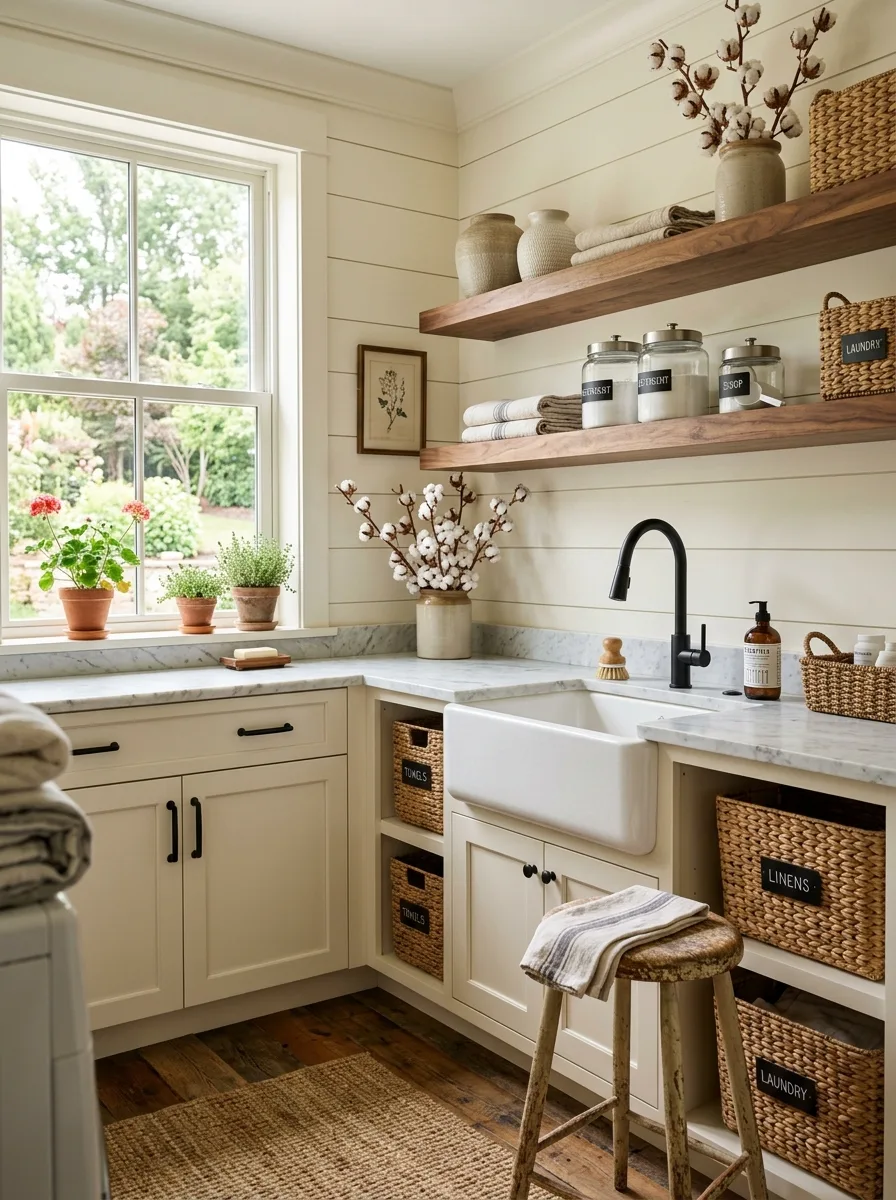
Top your lower cabinets in a soft gray marble or marble-look stone, and build in open-face drawers lined with labeled wicker bins for towels, linens, and laundry supplies.
Choose black cabinet hardware against the pale marble and cream cabinetry. It’s a small contrast, but it keeps the whole counter from reading as one flat, pale block.
Add a few dried cotton stems in a stoneware vase on the counter. Cotton branches reference the fabric itself in a way that feels specific to a laundry room rather than generic farmhouse decor.
Finish with a worn wooden stool tucked under the counter. It doesn’t need a function beyond existing — it just needs to look like it’s always been there.
Powder Blue Walls With Floral Curtains
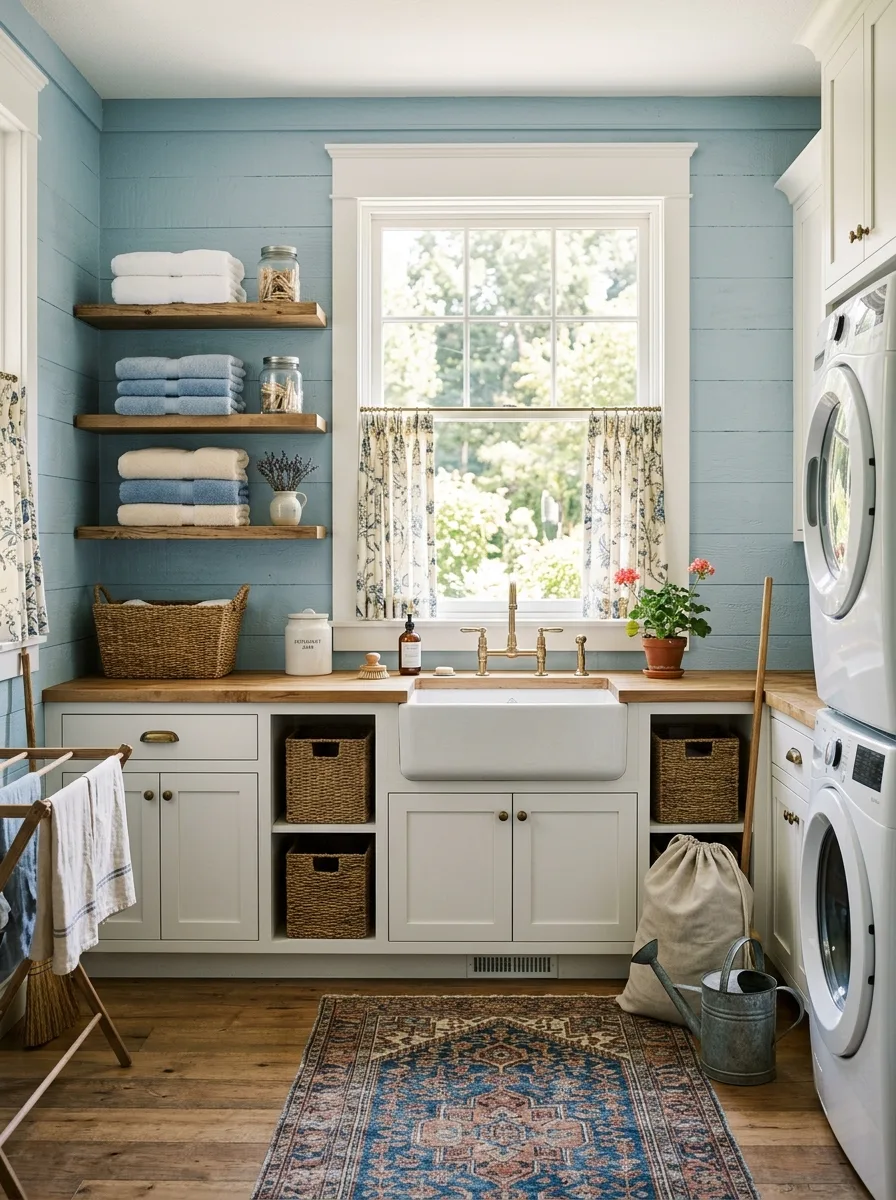
Paint the laundry room walls a soft, dusty powder blue rather than white or cream, and pair it with a small floral curtain on cafe rods across the window.
Add three floating wood shelves stacked with folded towels in coordinating blues and whites, so the room’s palette carries all the way up the wall.
Set a vintage-patterned rug in blues and rust tones on the floor. It grounds the pastel wall color with something richer and prevents the room from feeling too soft.
Keep a galvanized watering can and a broom leaning in the corner near the machines. Small, unstyled utility objects like these are what keep a colorful room from feeling staged.
Vintage Rug Over Stone Tile
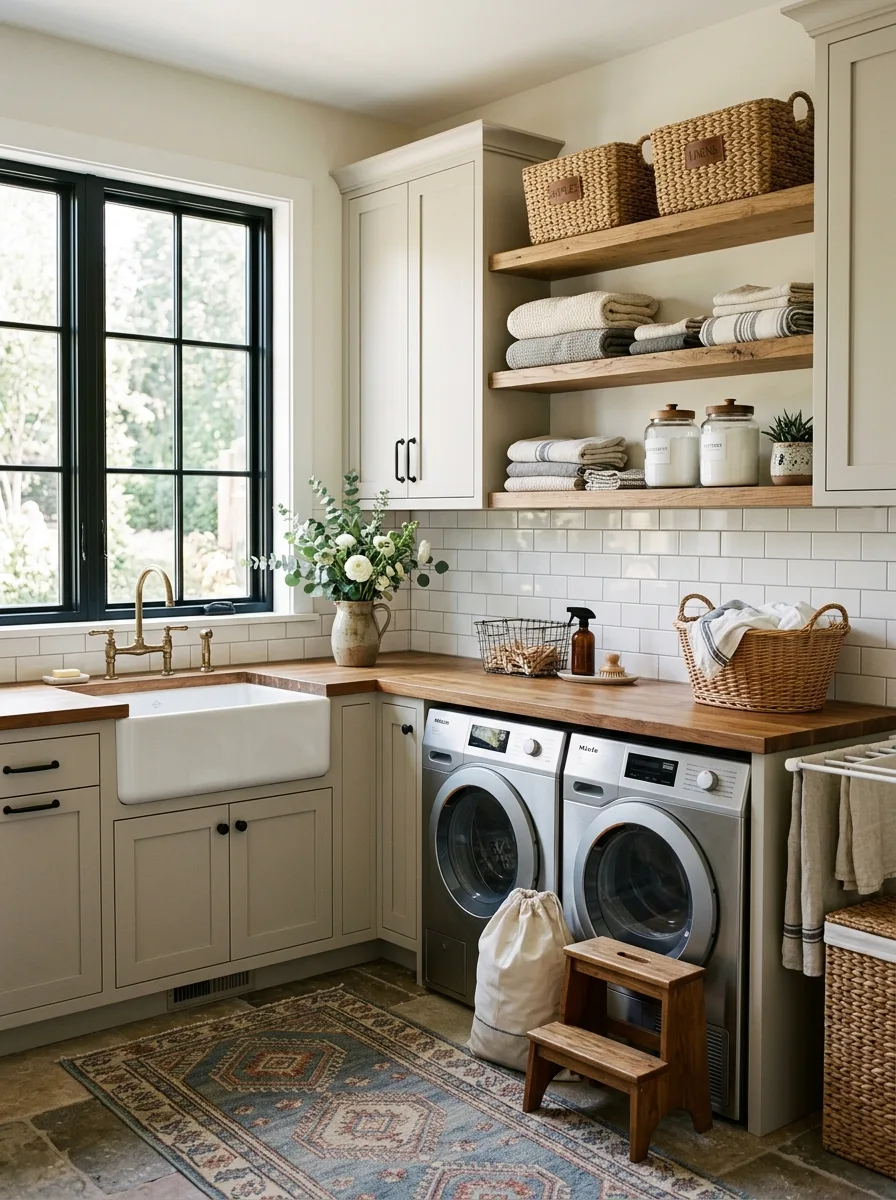
Lay a faded, Persian-style vintage rug over a natural stone or travertine tile floor, letting the pattern and worn edges do the aesthetic work in an otherwise simple, cream-toned room.
Choose black window frames as the only dark element in the space, against soft cream cabinetry and warm wood counters.
Add a small wooden step stool near the machines rather than storing it out of sight — it’s a practical object that also reads as an intentional styling choice.
Finish with a single ceramic vase of eucalyptus or seasonal blooms on the counter. One good stem arrangement does more for a room like this than a whole shelf of accessories.
Final Thoughts
Every example here shares one thing: somebody decided a utility room still deserved actual decisions. A color. A sign. A hutch someone’s grandmother might have owned. None of it was required. All of it changes how the room feels to walk into at seven in the morning with a basket under your arm.
The machines don’t care what color the cabinets are. You do.
That’s the whole argument. A room you’re in every single day, doing a chore nobody enjoys, is exactly the room worth making a little more interesting than it needs to be.