
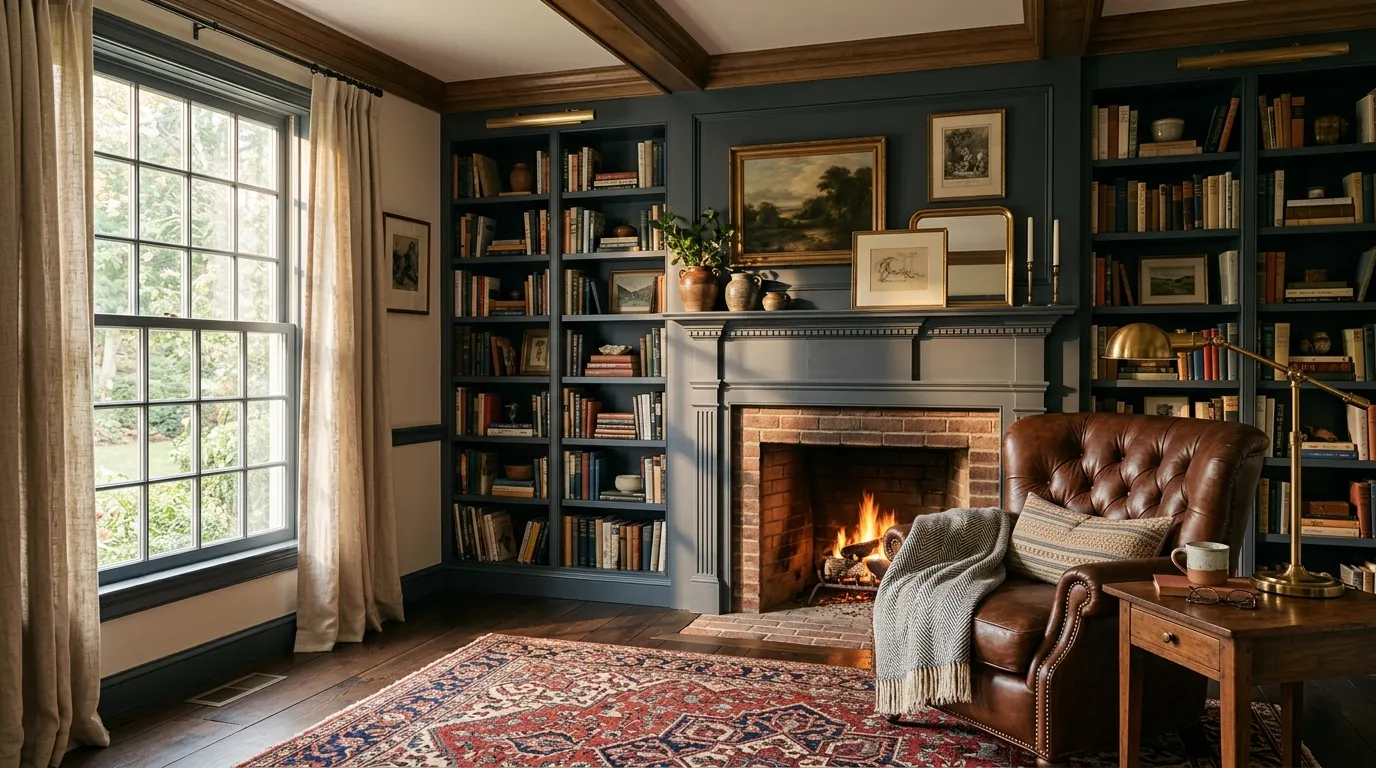
Colonial architecture comes with good bones. Tall ceilings, generous moldings, staircases that actually deserve to be looked at.
And then, so often, somebody paints the whole thing the color of a hospital waiting room.
Modern colonial design is the correction. It keeps the paneling, the proportions, the sense of occasion in a front hall. It just refuses to let all of that architecture sit under a coat of paint with no opinion.
This isn’t a rulebook about crown molding. It’s about what happens when a house built with real formality gets furnished like someone actually lives there.
Paint Color Is Not Optional in a Colonial House
A colonial house has architecture other styles have to fake. Panel walls, deep trim, tall proportions. That kind of structure can carry a color other rooms would find overwhelming.
Leaving it all white isn’t restraint. It’s wasted structure.
Pick a Saturated Color and Commit to the Whole Room
Navy, deep green, near-black charcoal — these only work when they cover walls, trim, and ceiling together, not just an accent wall. A half-painted room looks unfinished; a fully saturated one looks intentional.
The darker the color, the more the architectural detail actually shows up, because shadow and molding profile do more visual work than a light color ever will.
Let White Trim Do the Contrast Instead of the Whole Room
In hallways and stairwells, keep the walls in a warm off-white and let the millwork, stair rail, and window casings carry all the contrast in dark stained wood or black paint.
This is the version of the style that reads as quietly formal instead of moody. Same architectural bones, opposite mood.
Reserve Pure White for the Rooms That Need to Breathe
Bedrooms, sunrooms, and nurseries can stay pale while the den or the library goes dark. A colonial house works because it contains both moods under one roof, not because every room commits to the same one.
The transition between a dark, clubby room and a soft white one is what makes each color choice feel deliberate rather than default.
Modern Colonial Ideas Worth Stealing Room by Room
Crystal Chandelier Over a Dark Staircase
Hang an oversized crystal chandelier at the center of a double-height stairwell, sized generously enough to fill the vertical space rather than looking lost in it.
Pair it with a dark stained wood staircase and railing rather than painted white — the contrast between the sparkle of the chandelier and the heaviness of the wood is what gives the space its formality.
Furnish the landing below with a low seating arrangement in muted colors, so the eye travels up to the fixture and stair instead of competing with a busy furniture grouping.
Keep wall art small and framed in gold or dark wood, positioned at a height that works from both the ground floor and the stair landing.
Arched Window Landing With a Black Bench
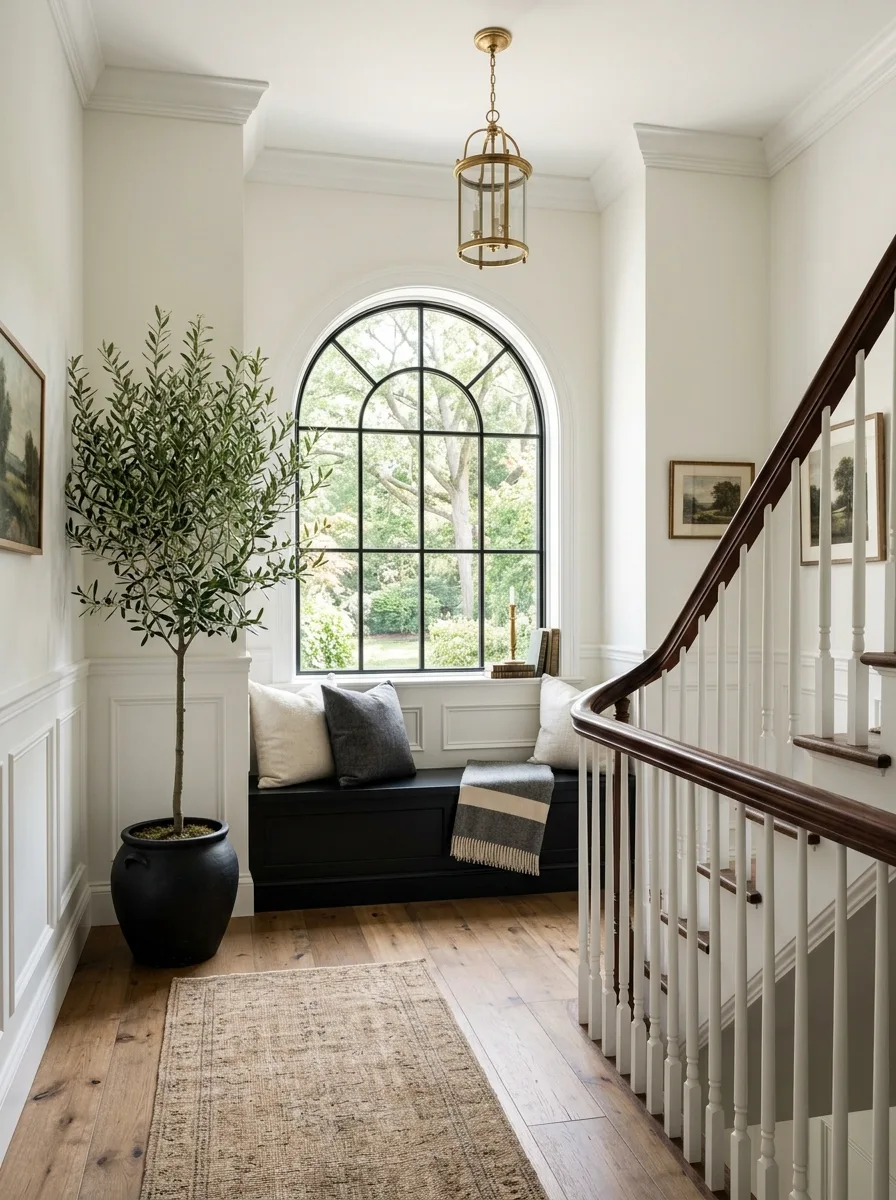
Build a bench seat into a stair landing beneath a tall arched window, upholstered or painted in matte black to anchor the light-filled space.
Add a large potted olive tree in a black ceramic urn beside the bench, using its height and shape to balance the verticality of the arched window.
Hang a single brass lantern pendant from the landing ceiling, choosing a classic cage-style fixture that echoes the ironwork feel of a genuine colonial entry.
Keep the surrounding walls in soft white paneling with simple molding, letting the arch, the bench, and the tree do all the visual work without added pattern.
Moorish Archway Framing a Marble Floor
Cut or highlight an arched, scalloped doorway between two rooms and paint the arch itself in a deep, glossy black to give it real architectural presence.
Lay a black-and-white checkerboard marble floor in the connecting space, and keep it large-format rather than small tile — bigger squares read as intentional, not busy.
Add a black marble fireplace surround nearby to echo the arch’s color, and hang a piece of framed text-based or abstract art above it rather than a traditional painting.
Finish with a single oversized vase of greenery near the archway. In a room this architectural, one strong plant does more than a cluttered console table.
Garden-View Breakfast Nook With Windsor Chairs
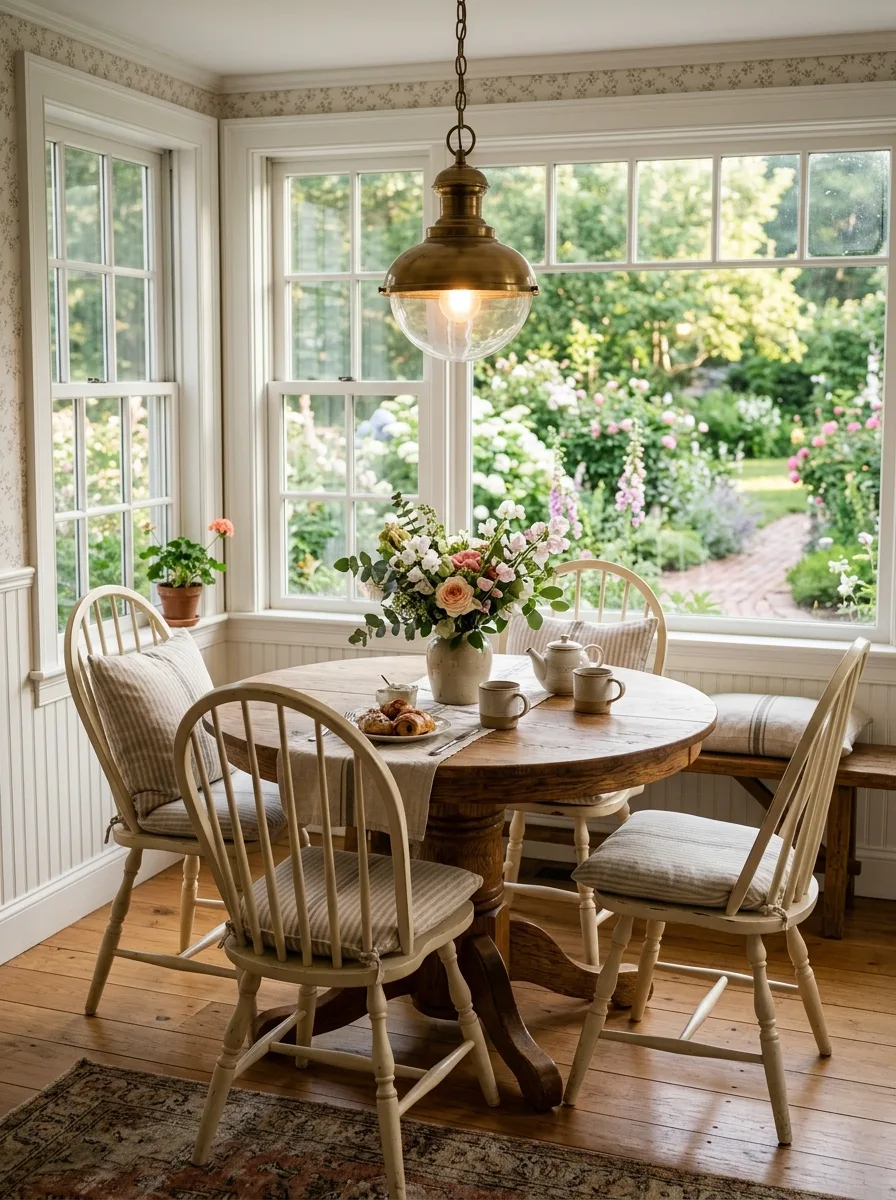
Set a round pedestal table into a corner with windows on two sides, surrounded by classic Windsor-style chairs in a mix of painted and natural wood finishes.
Hang a single oversized brass schoolhouse pendant directly over the table, sized large enough to anchor the seating area from across the room.
Dress the table with a simple linen runner and a loose garden-style floral arrangement rather than a formal centerpiece — the nook’s whole point is informality next to a formal house.
Keep window treatments minimal or absent. A nook built around a garden view works better without curtains competing with what’s outside the glass.
Glossy Navy Archway Into a Chinoiserie Nook
Paint a curved archway and its surrounding trim in a high-gloss navy, and use it to frame a small sitting nook finished in green chinoiserie wallpaper on the far wall.
Hang a pair of matching glass lantern pendants down the connecting hallway, spaced evenly, rather than a single central fixture — repetition reads as more formal in a long, narrow space.
Layer an antique-style rug with warm, faded tones underfoot, and let it run the length of the hall rather than stopping short.
Add a single upholstered bench in a small-scale floral print at the base of the stairs, choosing a fabric that echoes the wallpaper’s palette without matching it exactly.
Navy Powder Room With a Pedestal Sink
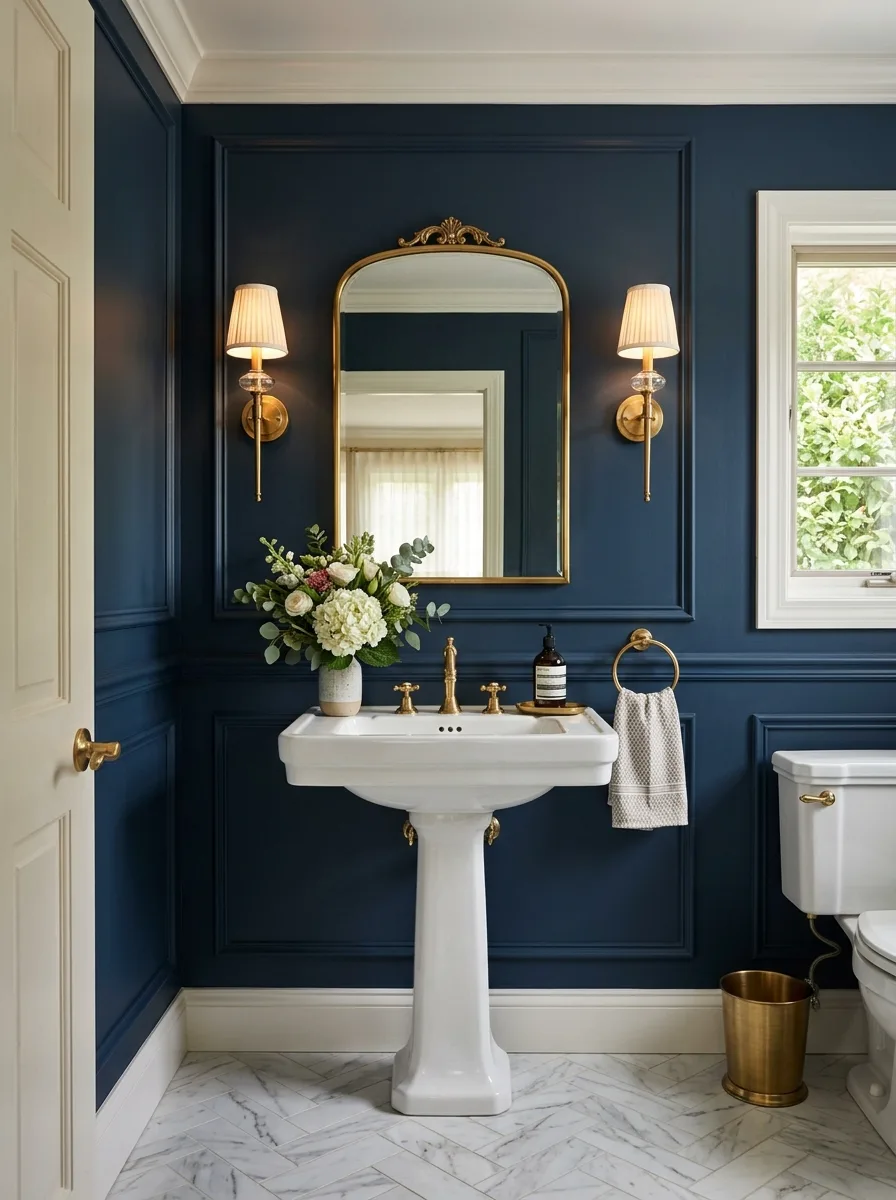
Paint a small powder room’s walls and paneling in a deep navy from floor to ceiling, including the door itself, so the small space reads as fully committed rather than partially decorated.
Choose a classic white pedestal sink with brass fixtures rather than a vanity — in a tight space, the pedestal’s open base keeps the room from feeling cramped.
Hang an arched brass mirror flanked by two matching brass sconces directly above the sink, sized to fill the wall space between the paneling and ceiling.
Lay a herringbone marble tile floor underfoot. It’s a small room, which makes it the right place to spend on a floor detail you couldn’t justify anywhere larger.
Ink-Dark Den With a Brass Sputnik Chandelier
Paint an entire den — walls, trim, and ceiling — in a deep charcoal-navy, and hang a brass globe or sputnik-style chandelier as the one bright, reflective element in the room.
Build in floor-to-ceiling bookshelves in the same dark paint color as the walls, so they recede rather than compete, and let the books and objects on them provide the color instead.
Add one boldly upholstered chair — a mustard or gold velvet wingback works well — as the single saturated color note against all that dark paint.
Include a small home bar setup on open shelving with a mirrored back panel. The mirror catches light in a room that otherwise absorbs it, and it’s a detail that makes a dark room feel finished rather than just dark.
Curved Staircase With a Patterned Runner
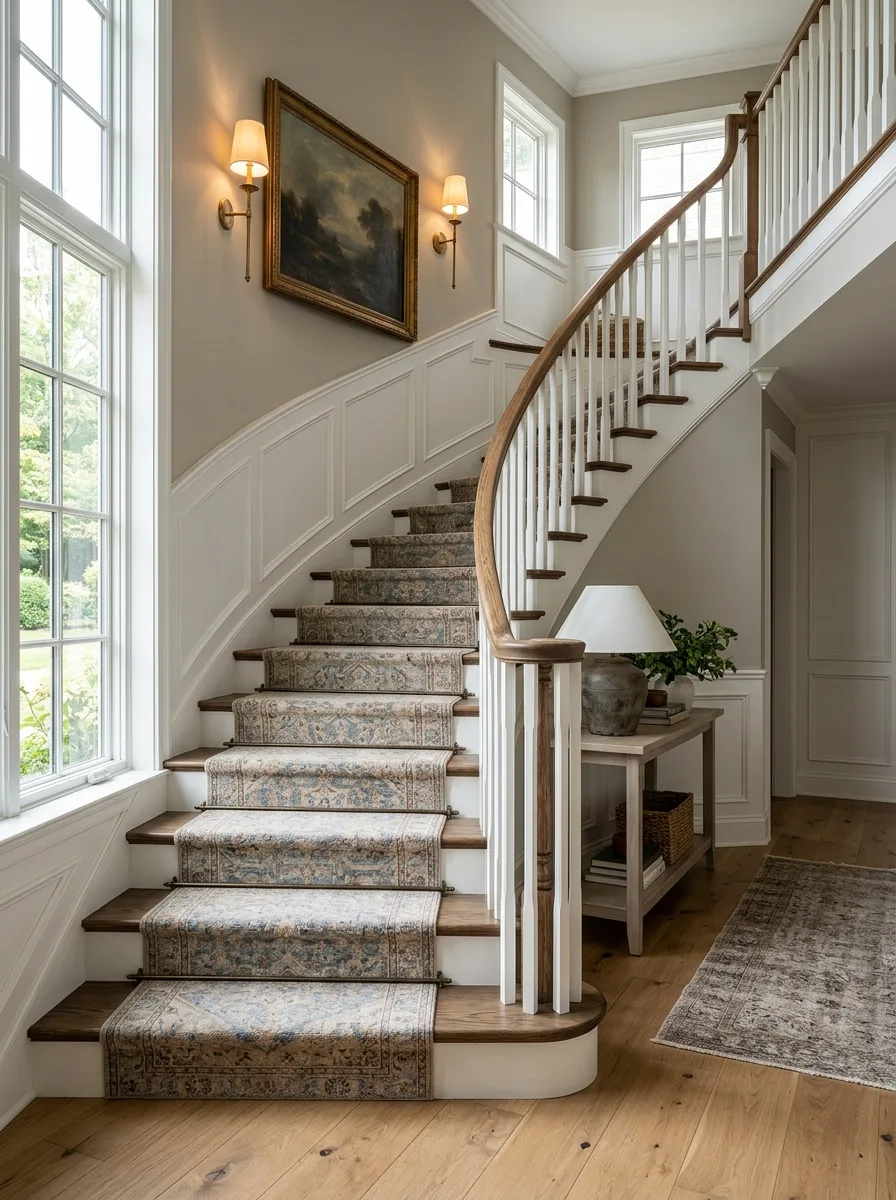
Install a gently curved staircase with white painted balusters and a warm wood handrail and treads, and dress it with a richly patterned runner secured by brass stair rods.
Choose a runner in muted blues and creams rather than high-contrast colors, so the pattern reads as traditional rather than busy against the white wainscoting.
Hang a single large oil painting on the stairwell wall, lit by two wall sconces flanking it, rather than a gallery of smaller frames that would compete with the curve of the stair.
Add a console table at the base with a simple lamp and a plant. It gives the eye a place to land at the bottom of the curve instead of stopping abruptly at the newel post.
Reclaimed Beam Kitchen With Schoolhouse Pendants
Install a rough, reclaimed wood ceiling beam directly above a kitchen island, left unfinished and slightly weathered rather than stained to match the cabinetry.
Hang two oil-rubbed bronze schoolhouse pendants below the beam, sized generously enough to anchor a long island visually.
Choose a dark, almost black stain for the island itself, set against lighter perimeter cabinetry, so the island reads as a piece of furniture rather than built-in casework.
Finish with woven rush-seat stools in a warm wood tone. Their texture against the dark island wood is what keeps the kitchen from feeling too formal for actual cooking.
Formal Dining Room With Wainscoting and a Layered Rug
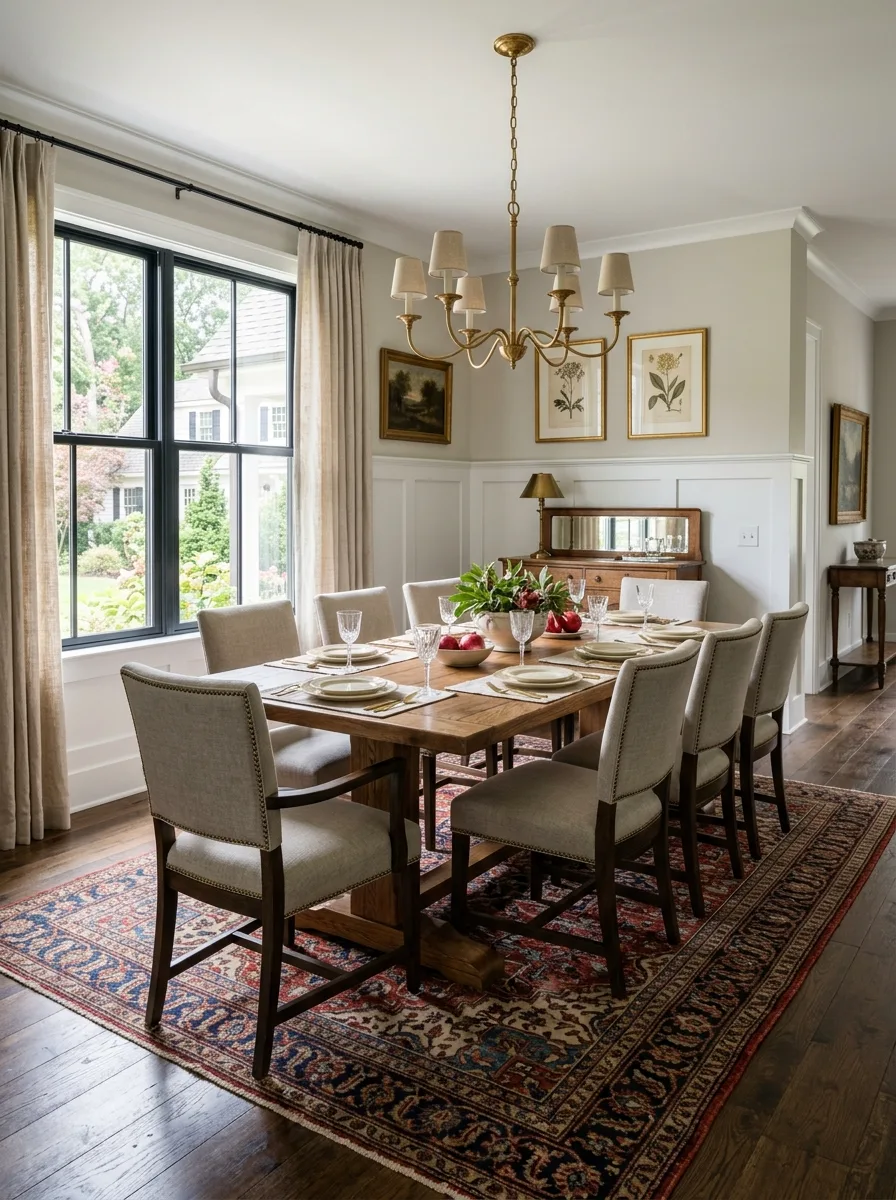
Install picture-frame wainscoting up to chair-rail height around the entire dining room, painted a crisp white against a soft greige wall above.
Hang a brass chandelier with fabric shades rather than exposed bulbs — the soft light reads as more traditional and flatters a room meant for evening use.
Layer a large antique-style Persian rug under the full table and chair set, choosing one with red or navy tones that pick up a color elsewhere in the room.
Group small framed botanical prints above the wainscoting in a tight horizontal row rather than one large piece — a run of small frames reads as more collected than a single statement artwork.
Black Front Door With a Brass Round Mirror
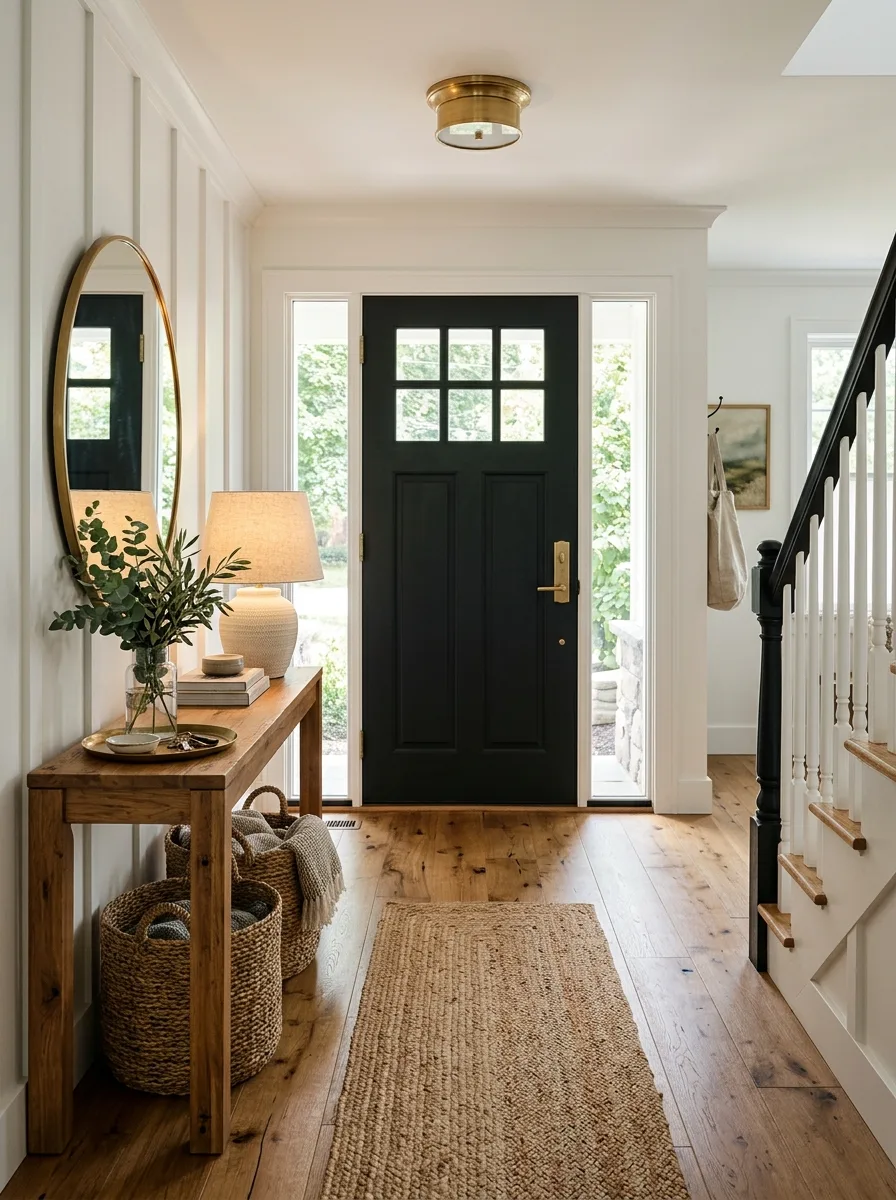
Paint the front door and its interior trim a deep matte black, and pair it with an oversized round brass mirror on the wall opposite for immediate visual balance.
Add a narrow wood console table beneath the mirror, choosing a warm, slightly rustic wood tone rather than anything painted, to soften the black door’s formality.
Tuck two woven baskets under the console for everyday overflow — mail, shoes, a folded throw — so the entry stays functional without needing closed storage.
Run a simple jute runner from the door inward. It’s inexpensive, and it keeps the wood floor protected without introducing a competing pattern.
Serene Bedroom With Paneled Walls
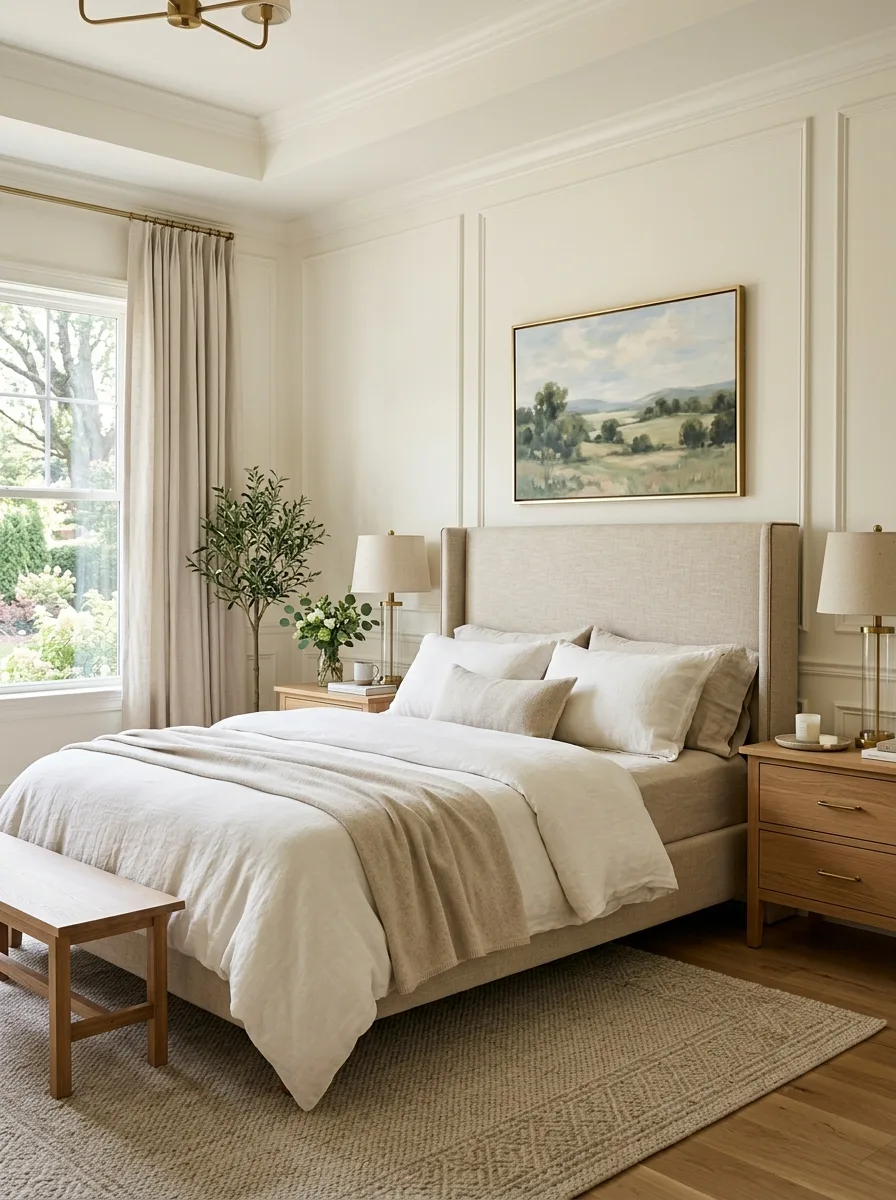
Install picture-frame wall paneling behind the bed, painted the same soft cream as the rest of the room so it reads as texture rather than contrast.
Choose a neutral upholstered headboard in linen or a similar nubby texture, letting the wall paneling behind it be the more architectural element rather than an elaborate headboard design.
Hang one large-scale landscape painting centered above the bed, framed simply in gold, as the room’s single focal point.
Add brass table lamps on matching nightstands in a warm wood tone. In a room this quiet, matched lighting does more to create calm than almost any other single decision.
Reading Corner With Built-In Shelves and a Tufted Chair
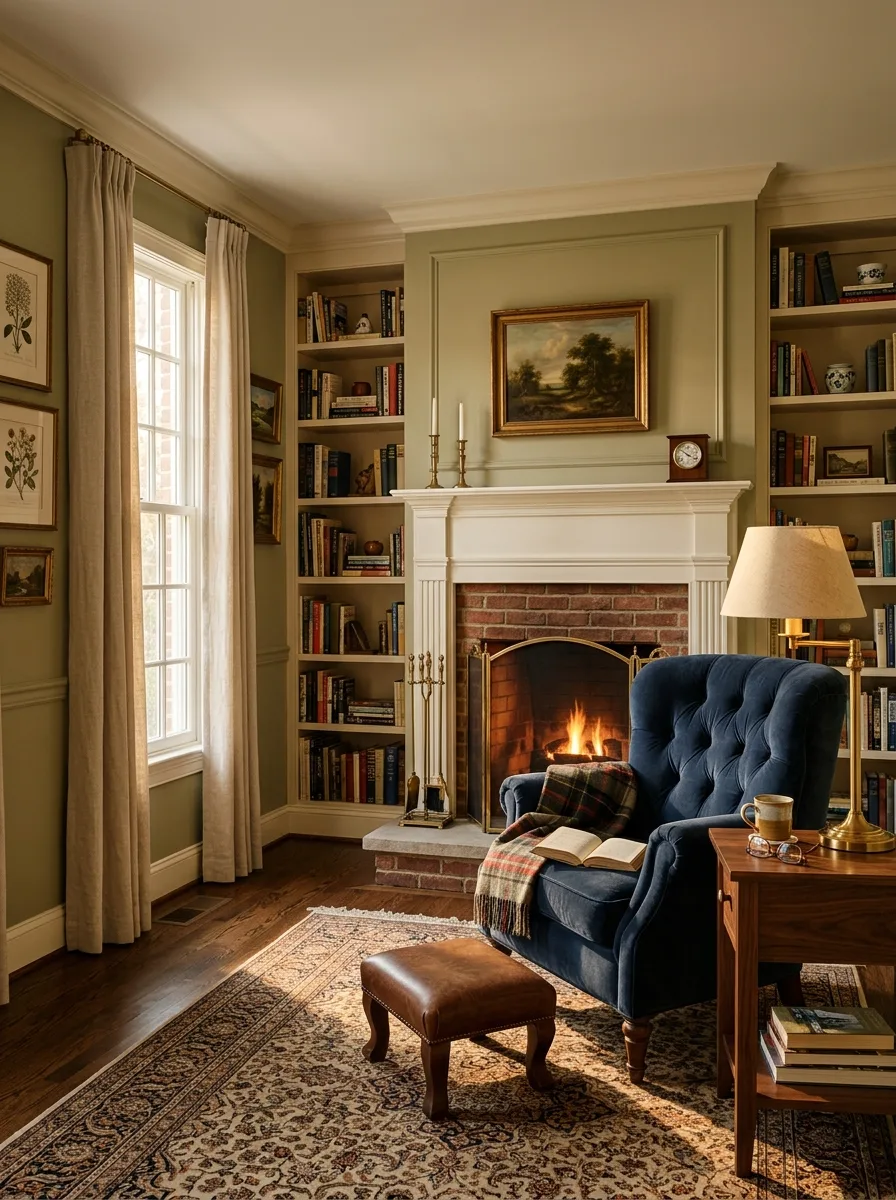
Paint a reading nook’s walls a muted sage or olive green, and flank the fireplace with floor-to-ceiling built-in bookshelves in a matching or slightly darker tone.
Center a deep-buttoned navy velvet wingback chair facing the fire, paired with a leather ottoman and a brass floor lamp positioned to actually read by, not just for show.
Fill the shelves with a real mix of book spines and a few objects — a clock, a small painting, a ceramic piece — rather than color-coded or styled-to-death shelving.
Add a plaid throw draped over the chair arm. It’s a small, unstyled detail, and it’s the one that makes the corner look used rather than photographed once and never sat in.
Coffered Sunroom With Potted Olive Trees
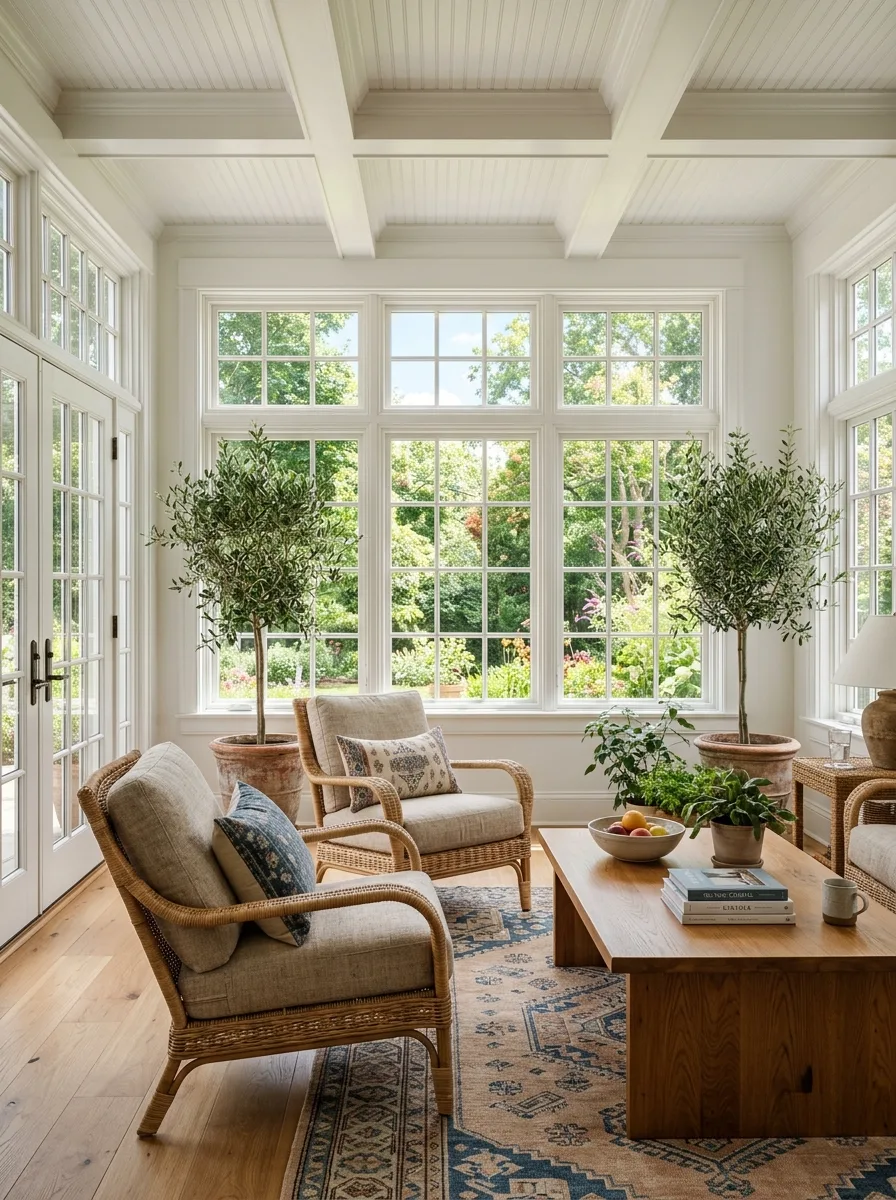
Build a coffered or beadboard ceiling into a sunroom with wall-to-wall windows and French doors, painting the entire structure a crisp white to maximize the light.
Furnish with woven rattan armchairs in a natural finish rather than painted wicker — the texture reads as more current and less overtly “cottage.”
Place two matching potted olive trees in aged terracotta pots flanking the window wall, sized tall enough to interact with the room’s height rather than getting lost under it.
Layer a faded vintage-style rug in blue and tan tones underfoot, and keep the coffee table low and simple in plain wood, so it doesn’t compete with the room’s real focal point — the windows.
Floral Wallpaper Nursery With Wood Furniture
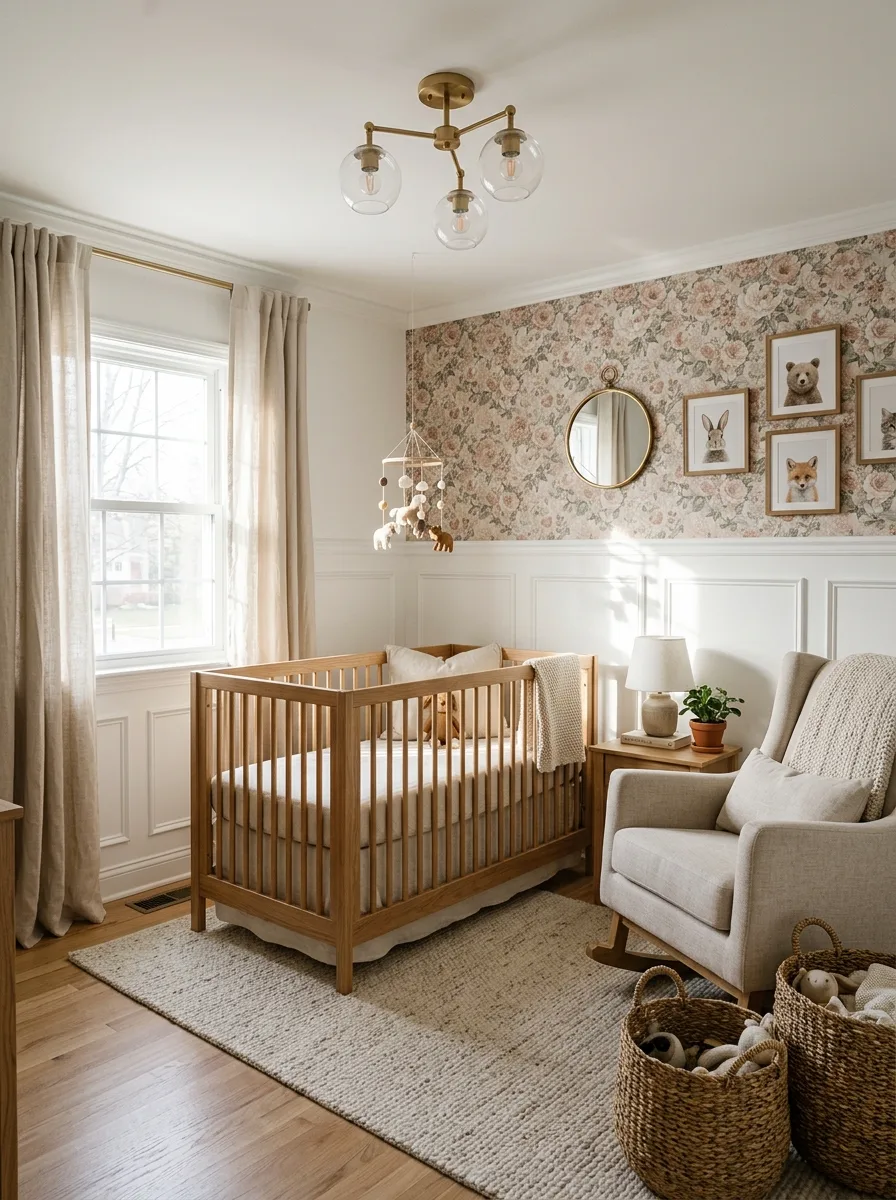
Paper the upper half of a nursery wall in a soft vintage-style floral print, stopping at a painted white wainscoting line rather than covering the room floor to ceiling.
Choose a natural, unfinished wood crib and matching furniture rather than painted white pieces — the warm wood tone keeps the floral wallpaper from feeling overly sweet.
Hang a small round mirror at the center of the wallpapered wall, flanked by simple framed animal illustrations in matching thin frames.
Add woven baskets on the floor for toy storage instead of a plastic bin. It’s a detail that keeps the room consistent with the rest of a colonial-style house instead of looking like a separate, disconnected space.
Black-and-White Checkerboard Entry With a Sculptural Table
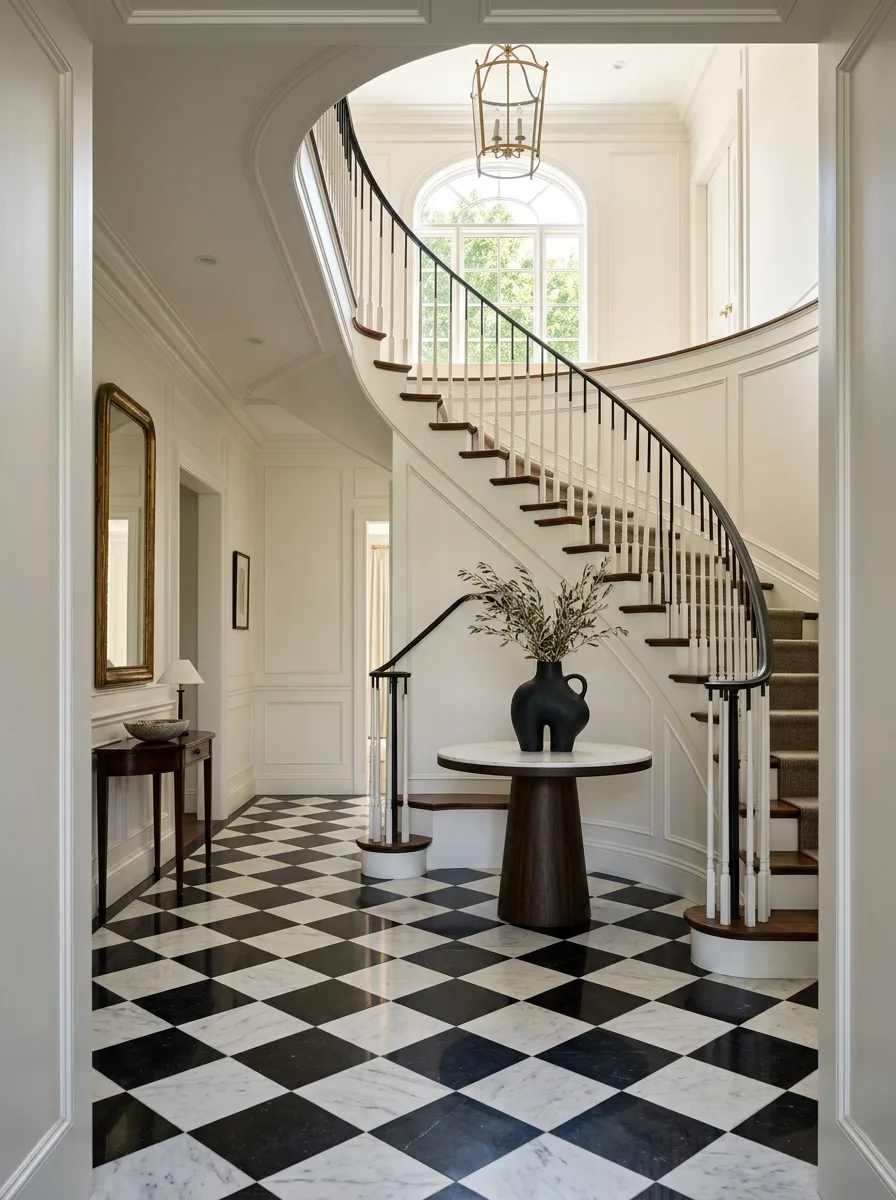
Lay a black-and-white checkerboard marble floor through the entry and stairwell, choosing a large-format tile so the pattern reads as grand rather than busy underfoot.
Center a round pedestal table with a sculptural, curved base in the middle of the space, topped with a single oversized ceramic vase rather than a cluttered arrangement.
Pair a curved white staircase with slim black balusters, letting the black metal echo the floor’s dark squares without needing to match it exactly.
Keep the surrounding walls in a soft, unpainted white with simple picture-frame molding, so the floor and staircase stay the undisputed focal points of the room.
Board-and-Batten Hallway With a Cage Pendant
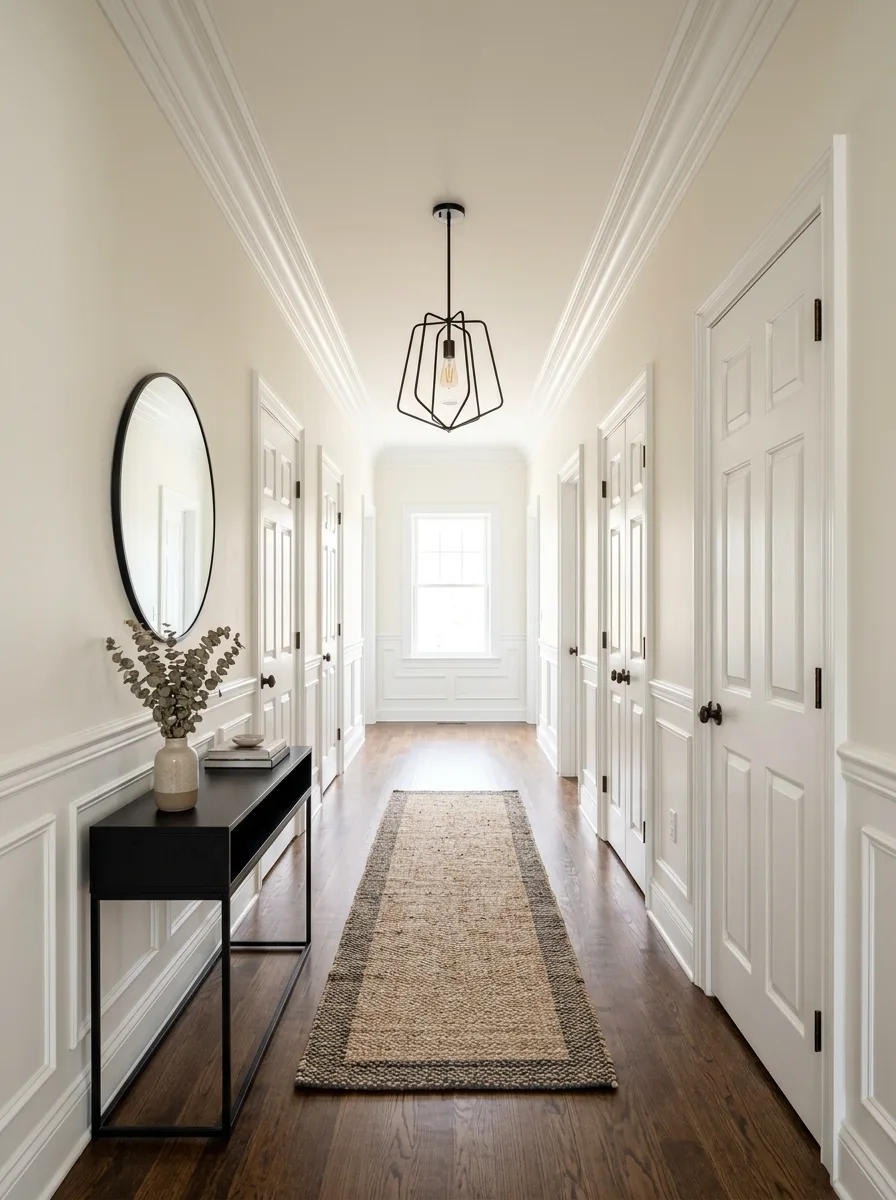
Run vertical board-and-batten paneling the full length of a hallway, painted a warm off-white rather than stark white to keep the space from feeling clinical.
Hang a black geometric cage pendant at the hallway’s midpoint, choosing an exposed-bulb style that reads as more current than a traditional flush-mount fixture.
Add a slim black console table against one wall with a large round mirror above it, positioned to bounce light down the length of the corridor.
Run a bordered jute runner underfoot rather than a patterned rug. In a long, narrow hallway, a simple runner keeps the paneling as the visual star.
Dark Green Wainscoted Powder Room
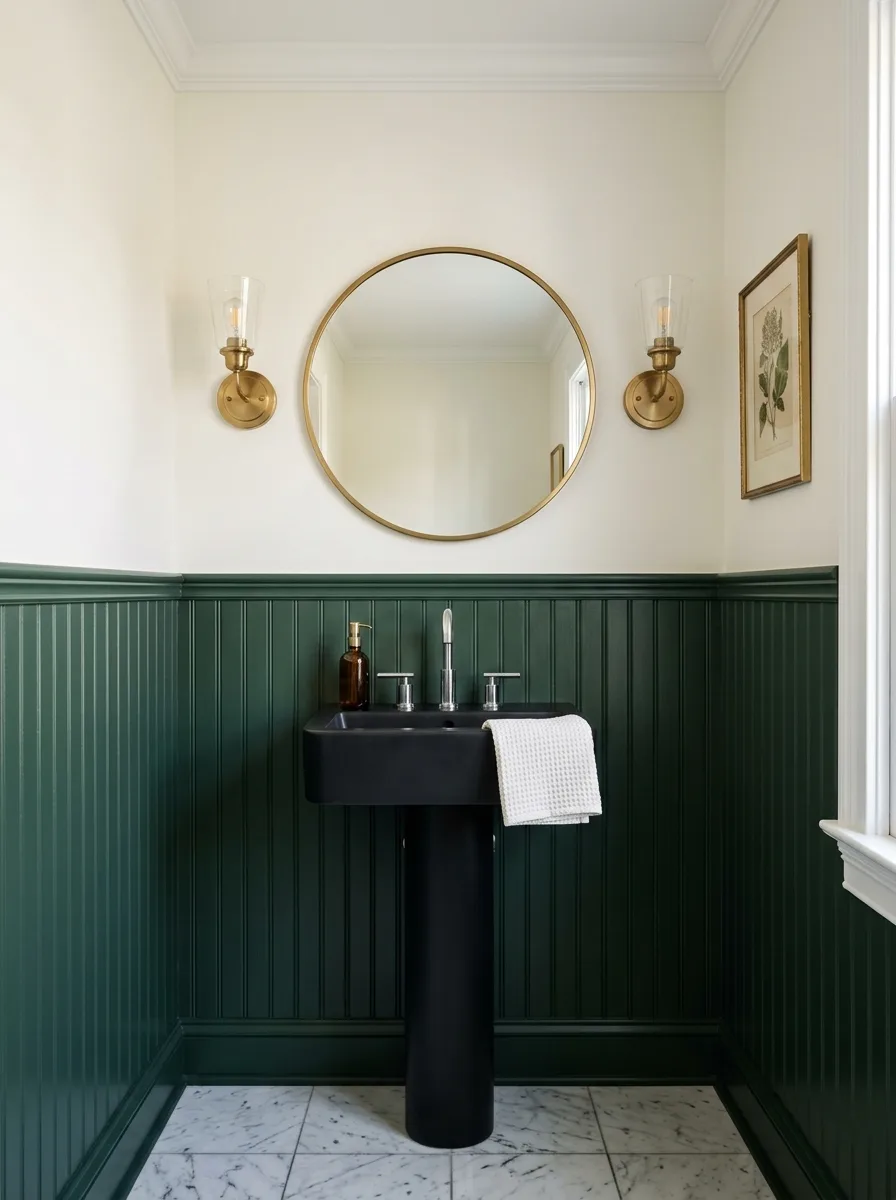
Paint the lower half of a small powder room in a deep forest green beadboard wainscoting, capped with a simple white chair rail against a warm white upper wall.
Choose a matte black pedestal or wall-mount sink to contrast against the green, rather than white porcelain, which would read as too soft against the saturated wall color.
Hang a round brass-framed mirror centered above the sink, flanked by two brass sconces with clear glass shades for warm, flattering light.
Add one small framed botanical print beside the mirror rather than a full gallery wall — in a room this size, one piece of art is enough to finish it.
Navy Library With a Rolling Brass Ladder
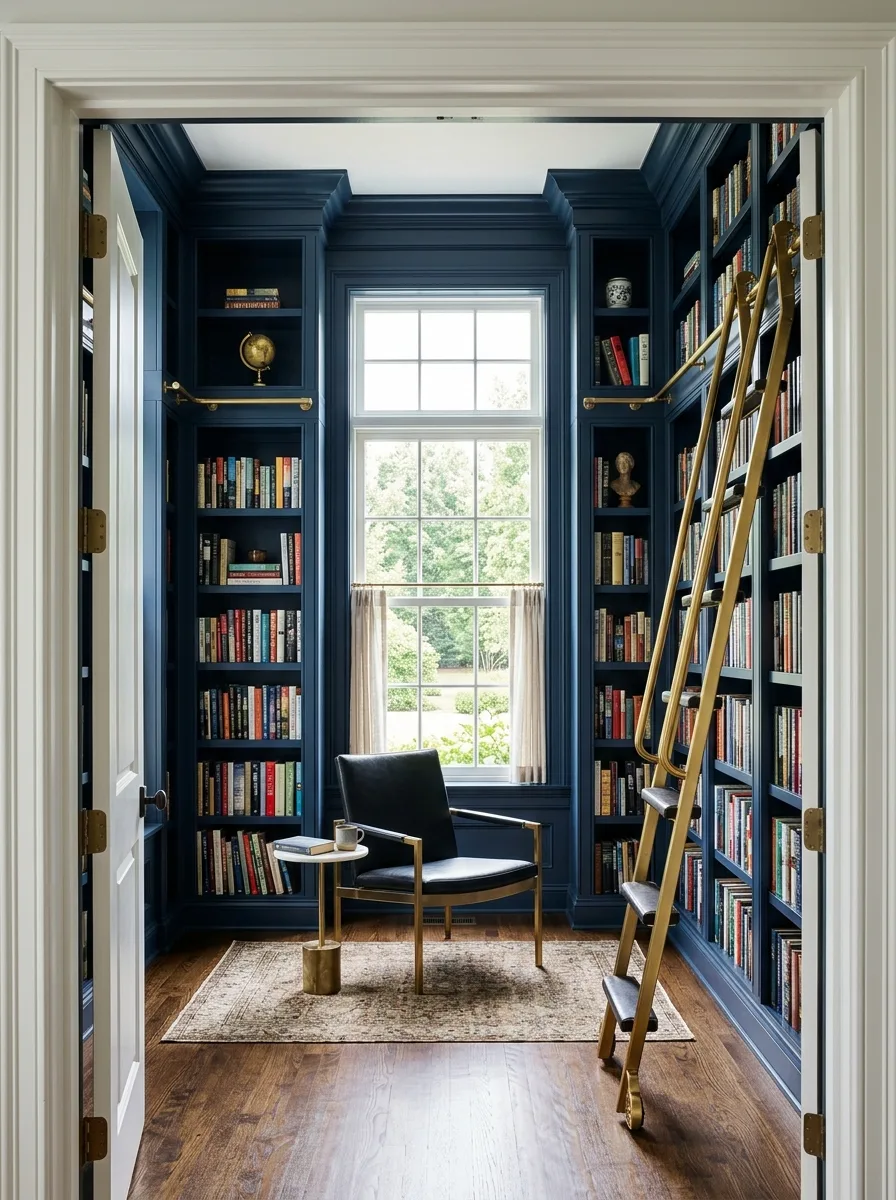
Build floor-to-ceiling bookshelves around all four walls of a small room, painted the same deep navy as the walls and trim so the whole room reads as one continuous surface.
Install a brass rolling ladder on a brass rail, chosen specifically for the warm metal contrast against the dark blue backdrop.
Furnish sparingly — a single leather-and-brass chair and a small round side table are enough in a room this size, since the shelving itself is the room’s real content.
Leave the window uncurtained or dressed in the simplest possible linen panel. A saturated room like this needs the one window to stay as a clean source of contrast.
Minimalist Line-Art Gallery Wall
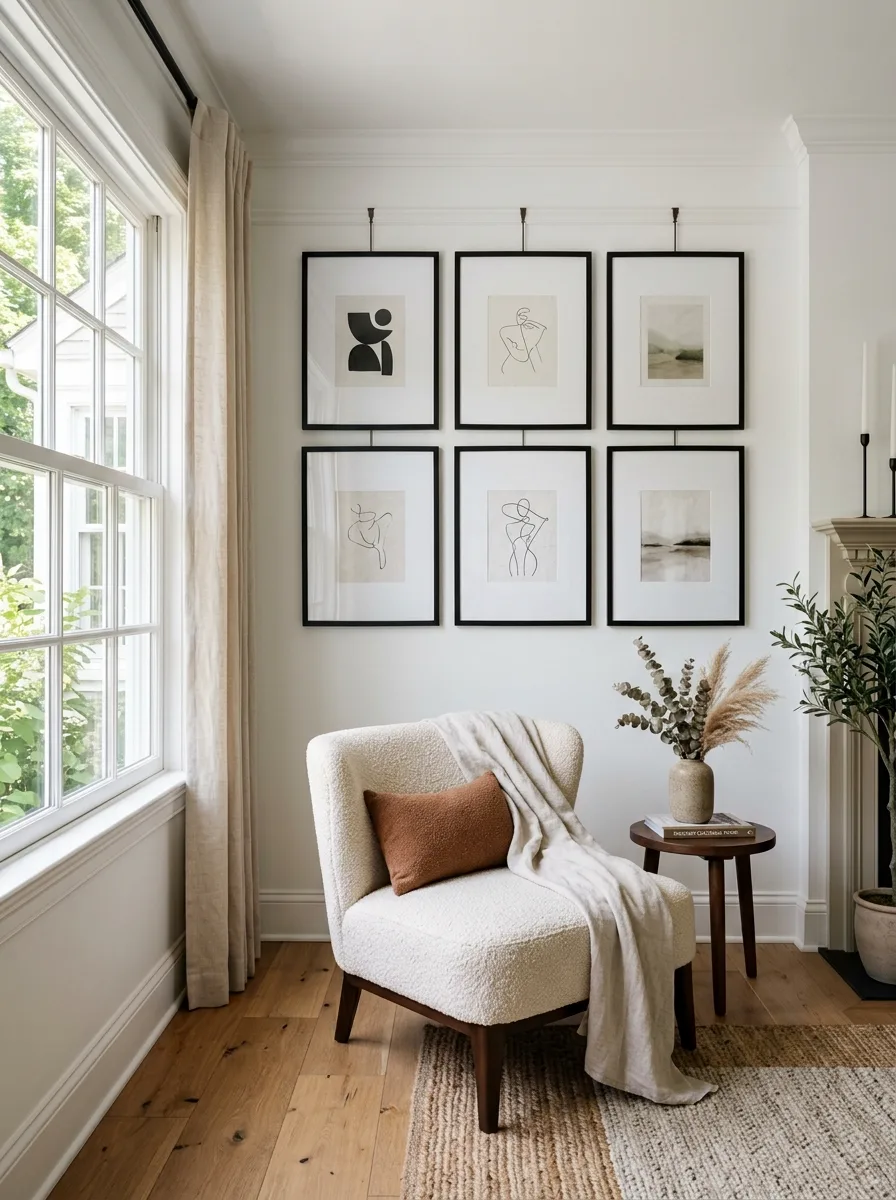
Hang a grid of simple black-framed prints — a mix of abstract shapes, line drawings, and soft landscape tones — in two even rows above a small seating area.
Choose a boucle or textured upholstered chair in warm white rather than a traditional wingback, letting the furniture’s simplicity contrast with the room’s classic proportions.
Add a low wood side table with a stack of books and a textural vase of dried grasses or eucalyptus, keeping the styling minimal rather than layered.
Leave generous wall space around the grid rather than crowding it edge to edge. In an older, more formal house, restraint in a single vignette reads as confidence, not emptiness.
Final Thoughts
The houses that get this right never look like they’re trying to prove they’re historic. They just happen to be standing in rooms built before anyone alive today was born, furnished with things nobody’s grandmother owned.
What ties every one of these rooms together isn’t a rule about crown molding or a specific shade of navy. It’s a willingness to let old architecture and new furniture disagree a little, instead of forcing everything into one matching era.
A house this formal was never going to feel casual. The goal isn’t to fight that. It’s to give the formality something honest to react against.
That tension — old bones, new choices — is the whole style. Everything else is just paint.