
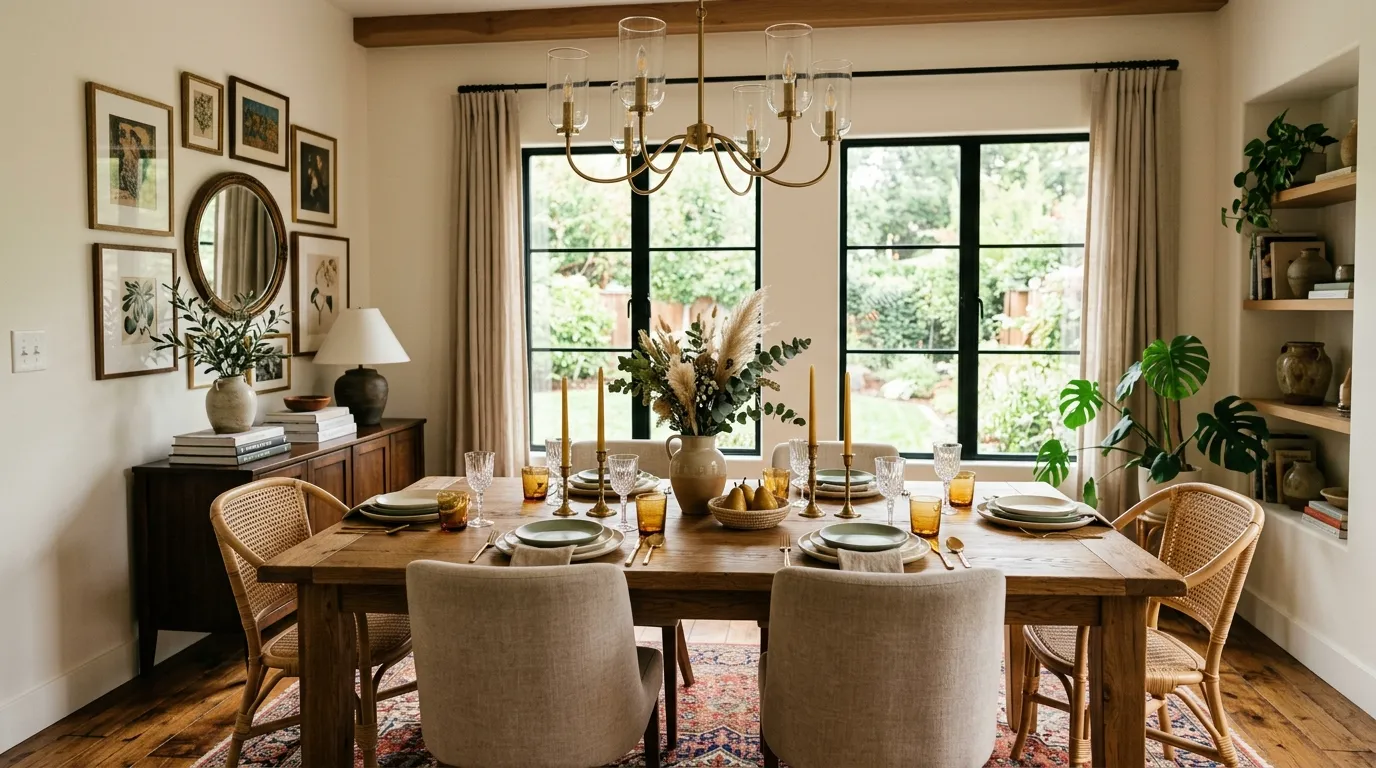
A table and four chairs is furniture. A dining room is a decision about how you want people to feel for the ninety minutes they’re sitting in it.
Most people stop at the furniture. They buy a table, match some chairs to it, and consider the room finished — then wonder why it feels like a showroom display instead of somewhere anyone wants to linger over a second glass of wine.
The rooms that actually work understood that a dining room lives or dies on three things most people treat as afterthoughts: what’s hanging over the table, what’s sitting against the wall, and what’s covering the wall behind that.
Here’s what separates a room people eat in from a room people actually stay in.
The Chandelier Isn’t Decoration, It’s the Layout
Every genuinely memorable dining room on this list built the entire space around its light fixture first. The chandelier or pendant isn’t the last thing chosen — it’s the thing that decides how formal, how warm, or how strange everything underneath gets to be.
Scale Up Further Than Feels Comfortable
A fixture that looks correctly sized from the furniture store floor almost always looks undersized once it’s hanging over an actual table. The rooms that read as intentional consistently chose a chandelier or pendant cluster with more visual weight than instinct suggested.
Measure your table width and aim for a fixture roughly two-thirds that length, not half. A too-small fixture floats awkwardly above the table instead of anchoring it.
Branching, multi-bulb designs are the most forgiving option for getting this scale right, since the spread of arms fills space a single-shade pendant can’t.
Let the Fixture Set the Style, Not Follow It
A sputnik with walnut spokes announces mid-century before anyone reads a single other object in the room. A beaded crystal empire chandelier announces traditional glam just as fast. Choose the fixture first, and the rest of the room’s decisions get dramatically easier.
Don’t fight the fixture’s instinct with contradicting furniture. A brass candelabra chandelier over a stark, ultra-modern glass table creates confusion, not contrast.
If the space already has a strong architectural feature — exposed beams, arched windows, ornate crown molding — pick a fixture style era that agrees with it rather than one that argues.
Dining Room Ideas
Branching Bubble Chandelier Mirror
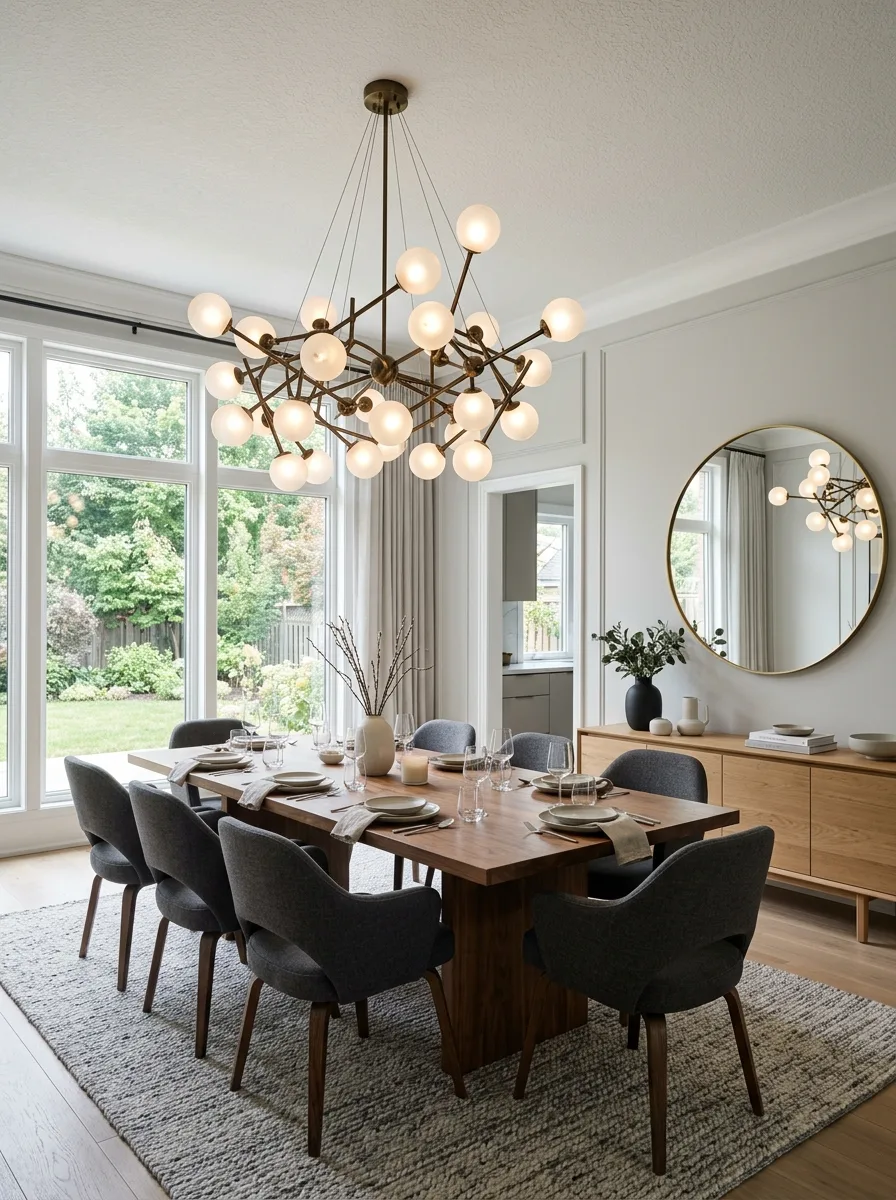
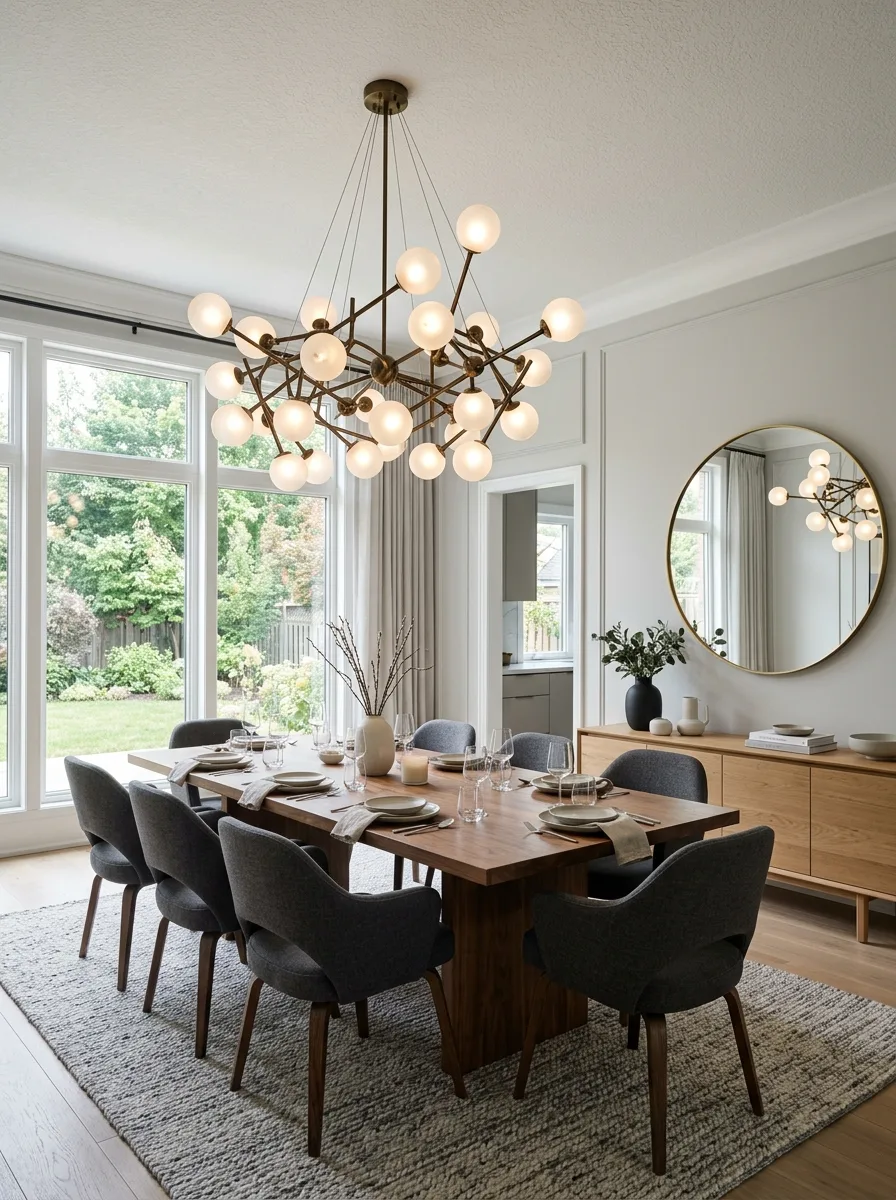
Choose a large branching chandelier with staggered glass globes at varying heights — the irregular branch pattern reads as sculptural rather than symmetrical, and it fills far more visual space than a single-tier fixture would.
Add a round gold-framed mirror on the adjacent wall, angled to catch the chandelier’s reflection from a second point in the room. This doubles the perceived light without adding another fixture.
Keep the table and chairs simple and dark-toned underneath — a substantial wood table with upholstered dark chairs lets the ceiling do the visual heavy lifting instead of competing with it.
Triple Globe Pendant Cluster
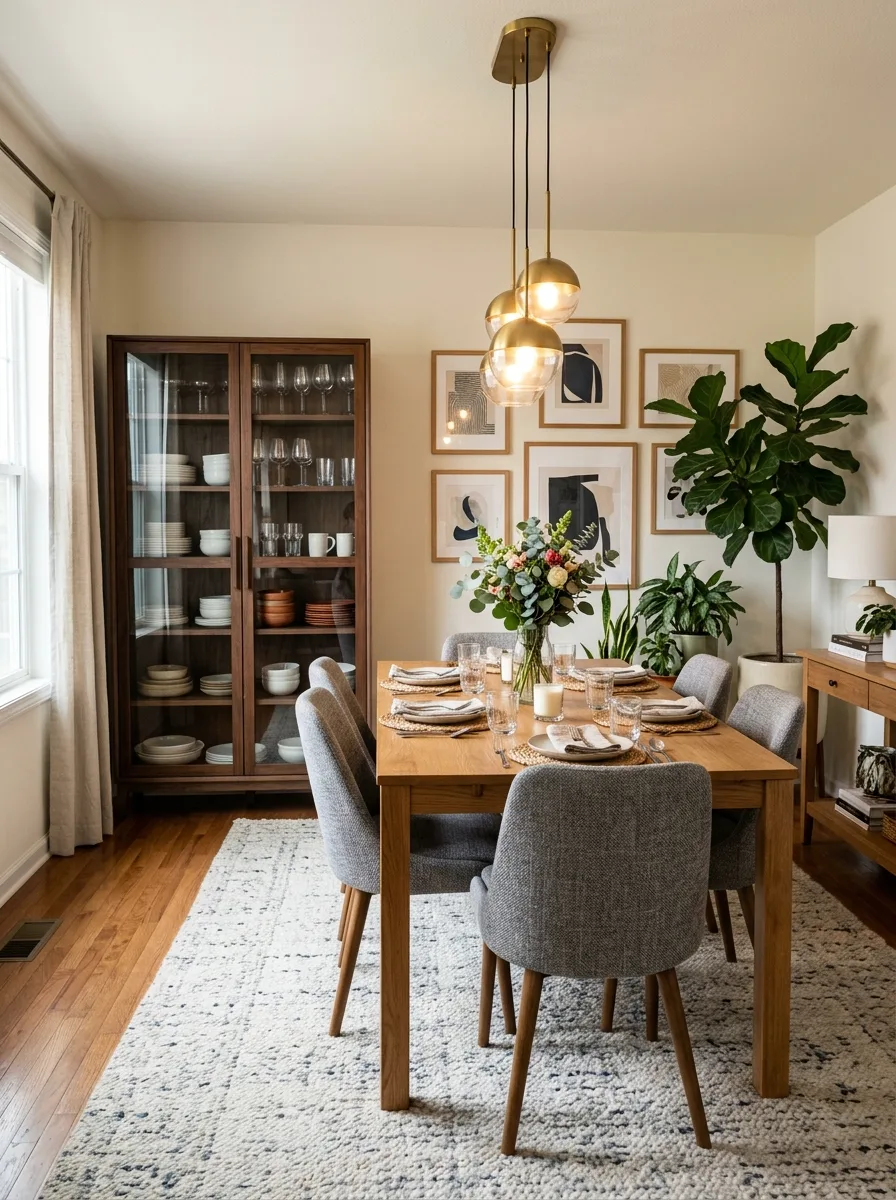
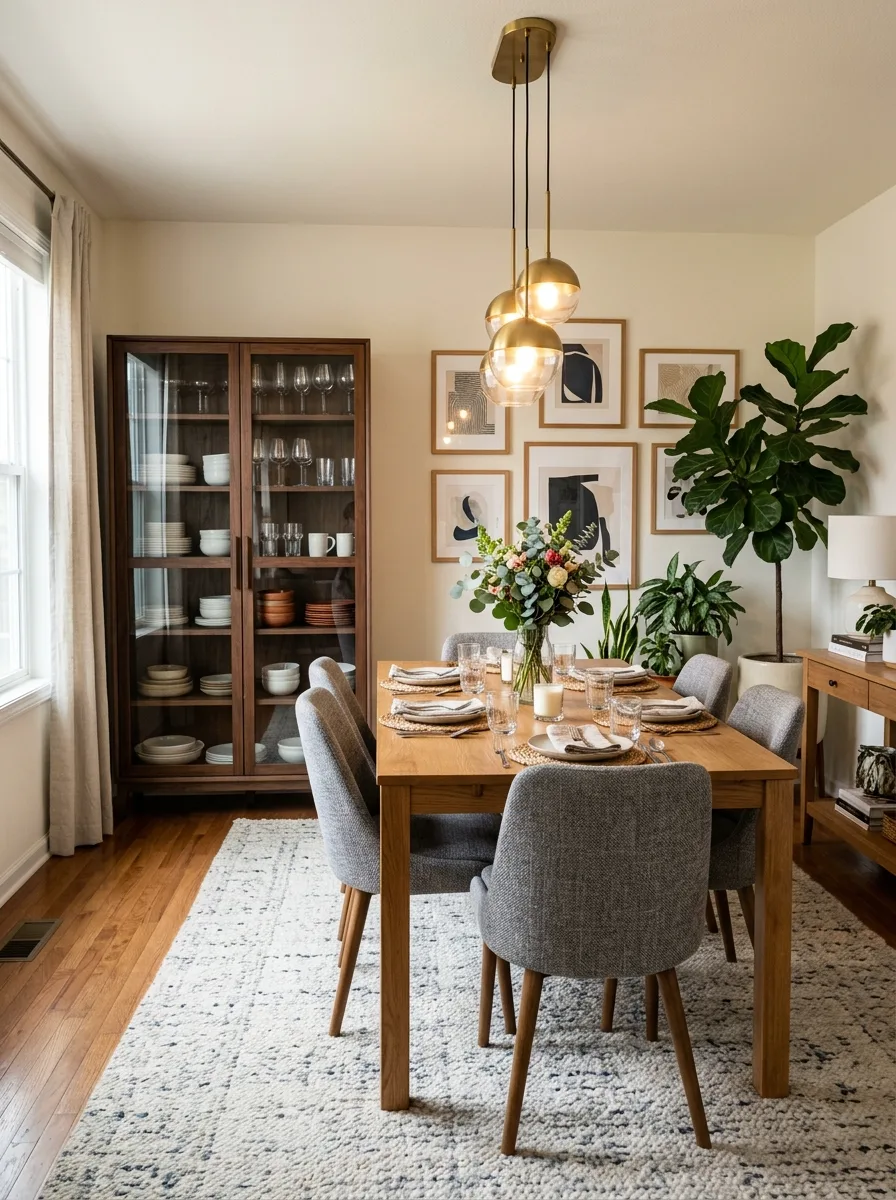
Hang three glass globe pendants at slightly staggered heights over the center of the table, using a cluster fixture rather than three separate cords for a more intentional, gathered look.
Build a gallery wall of mixed abstract prints on the adjacent wall, keeping the frame tones warm and wood-based to match the table below. A glass-front curio cabinet on the opposite wall displays dishware as part of the room’s decor, not just storage.
Add one substantial fiddle-leaf or similar tall plant in the corner. In a room this layered with pattern and frames, one piece of real greenery keeps everything from feeling too composed.
Empire Crystal City Skyline
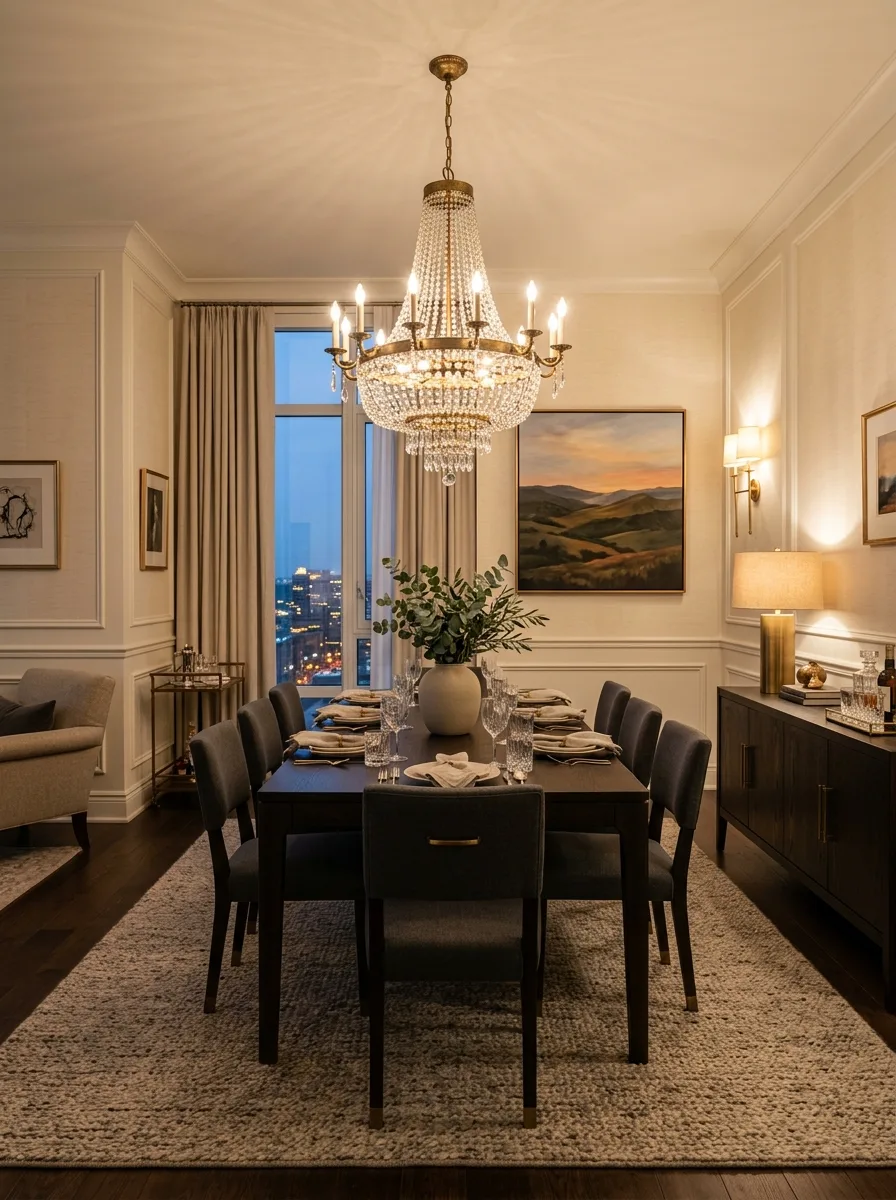
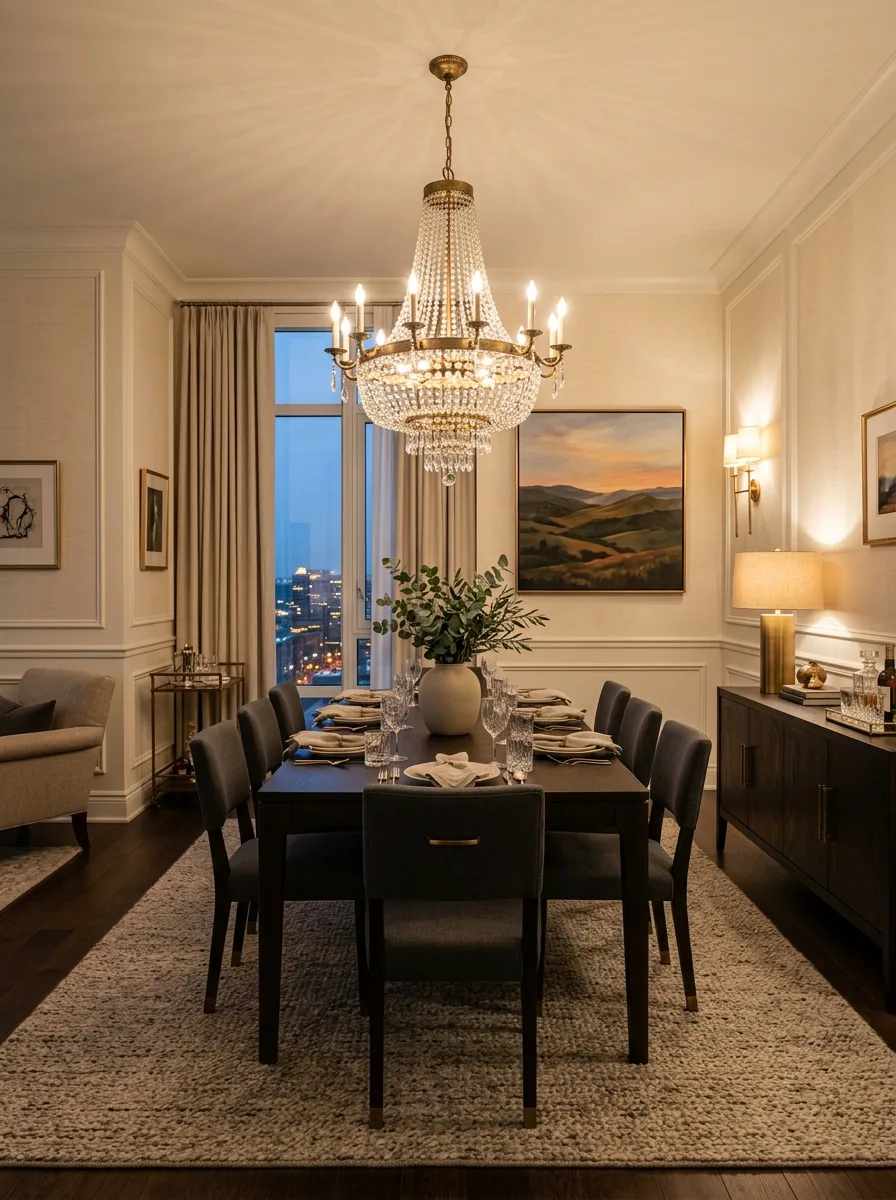
An empire-style crystal chandelier with cascading strands works especially well in a room with a skyline or night view — the crystals catch and scatter whatever light comes through the windows after dark.
Choose dark, substantial dining chairs in charcoal or espresso tones rather than anything pale. Against floor-to-ceiling windows and city lights, darker furniture reads as intentional rather than getting washed out.
Add a warm table lamp on a nearby bar cart or console at seated eye level. The chandelier alone can feel a little cold at night; a secondary warm light source softens it considerably.
Navy Wall Gallery Pendant
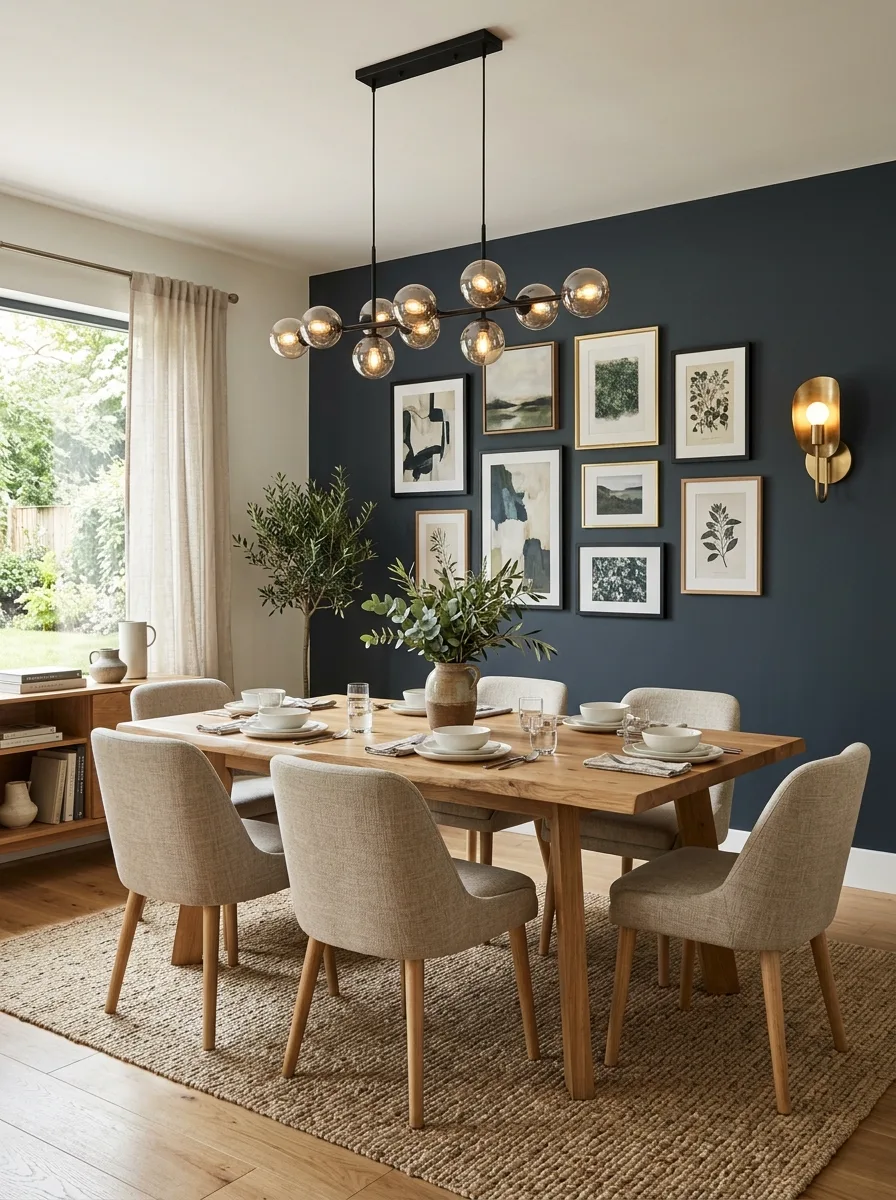
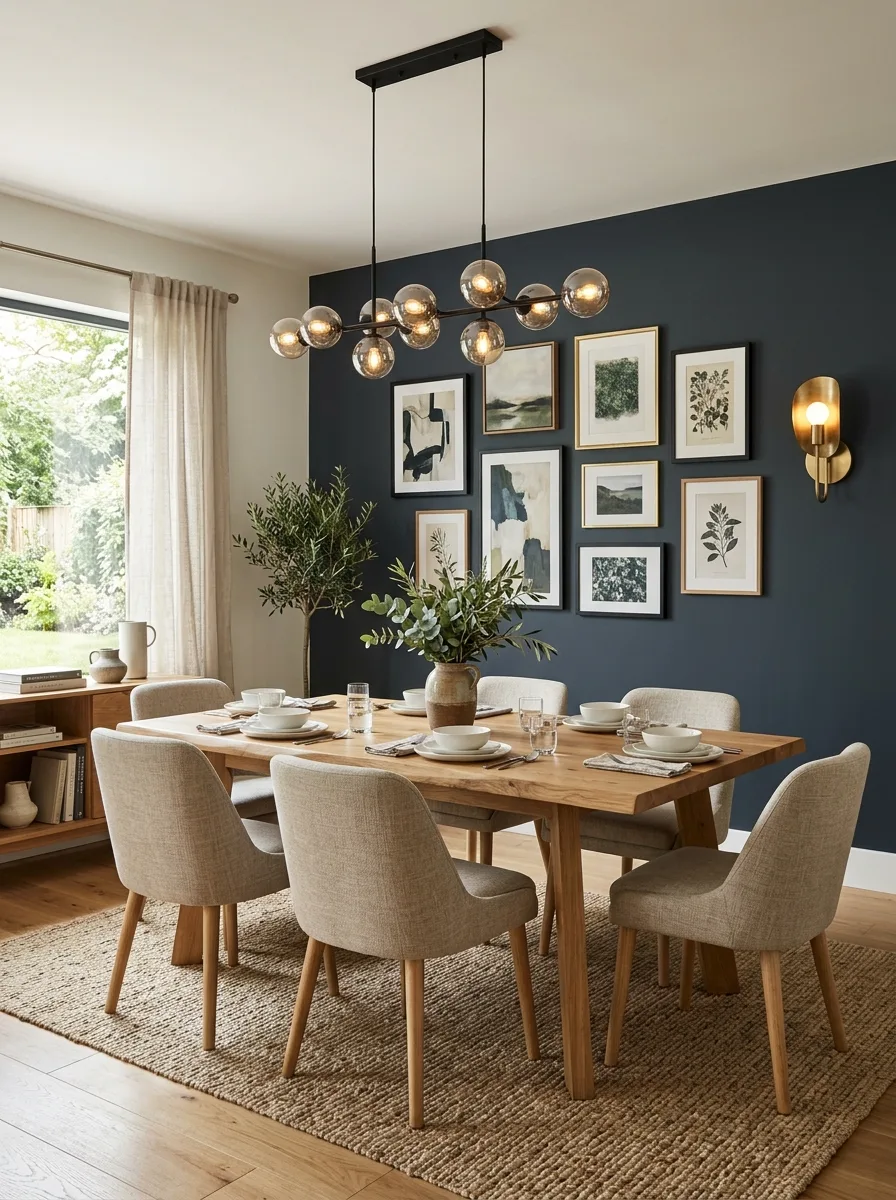
Paint one wall in a deep navy or charcoal and build a dense gallery wall of mixed botanical and abstract prints directly on top of it — the dark background makes lighter mat boards and frames pop far more than a white wall would.
Choose a linear multi-globe pendant in black metal and warm glass, hung perpendicular to the table’s length rather than centered as a single point. The horizontal spread echoes the gallery wall’s grid shape.
Keep the table itself in light, natural wood and pair it with neutral upholstered chairs. The navy wall and gallery are already doing the heavy visual lifting — the furniture underneath should stay quiet.
Doubled Chandelier Mirror Trick
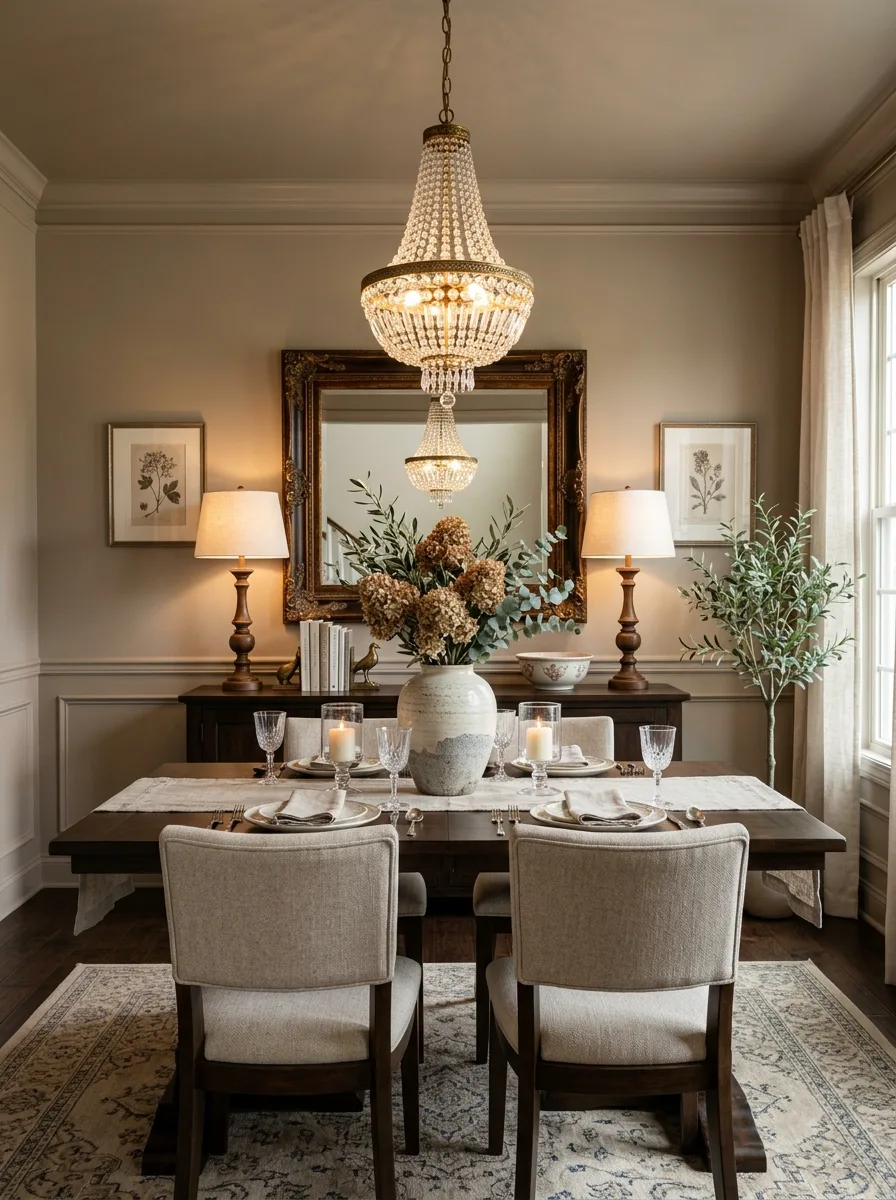
Hang one crystal chandelier over the table, then position a large ornate mirror on the wall behind the sideboard so it reflects a second, phantom chandelier deeper into the room.
Style the sideboard beneath the mirror with a pair of matching table lamps, a large vase of seasonal blooms, and a stack of books — symmetry here reinforces the doubled-chandelier illusion rather than fighting it.
Choose warm beige or taupe walls rather than white. The softer backdrop makes the crystal read as warm and inviting instead of stark and formal.
Brass Globe Cluster Sage
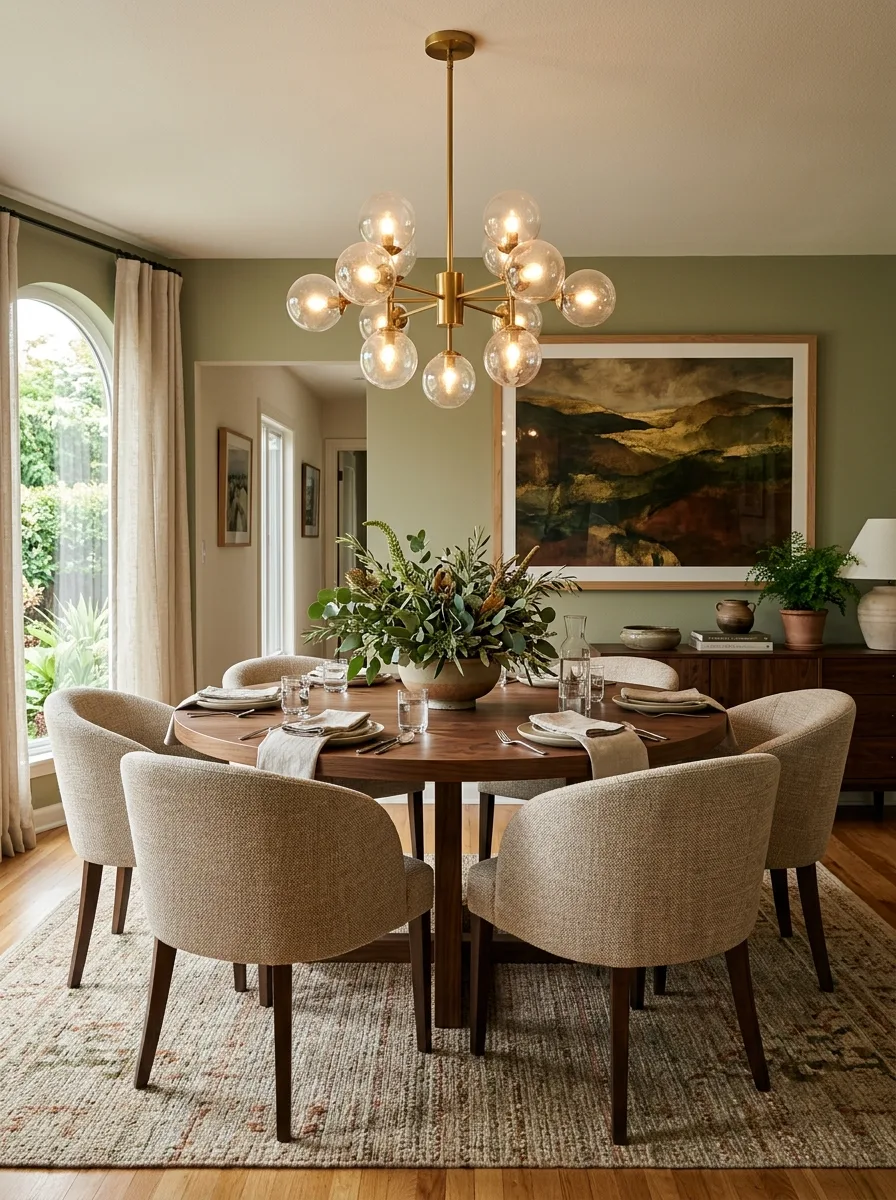
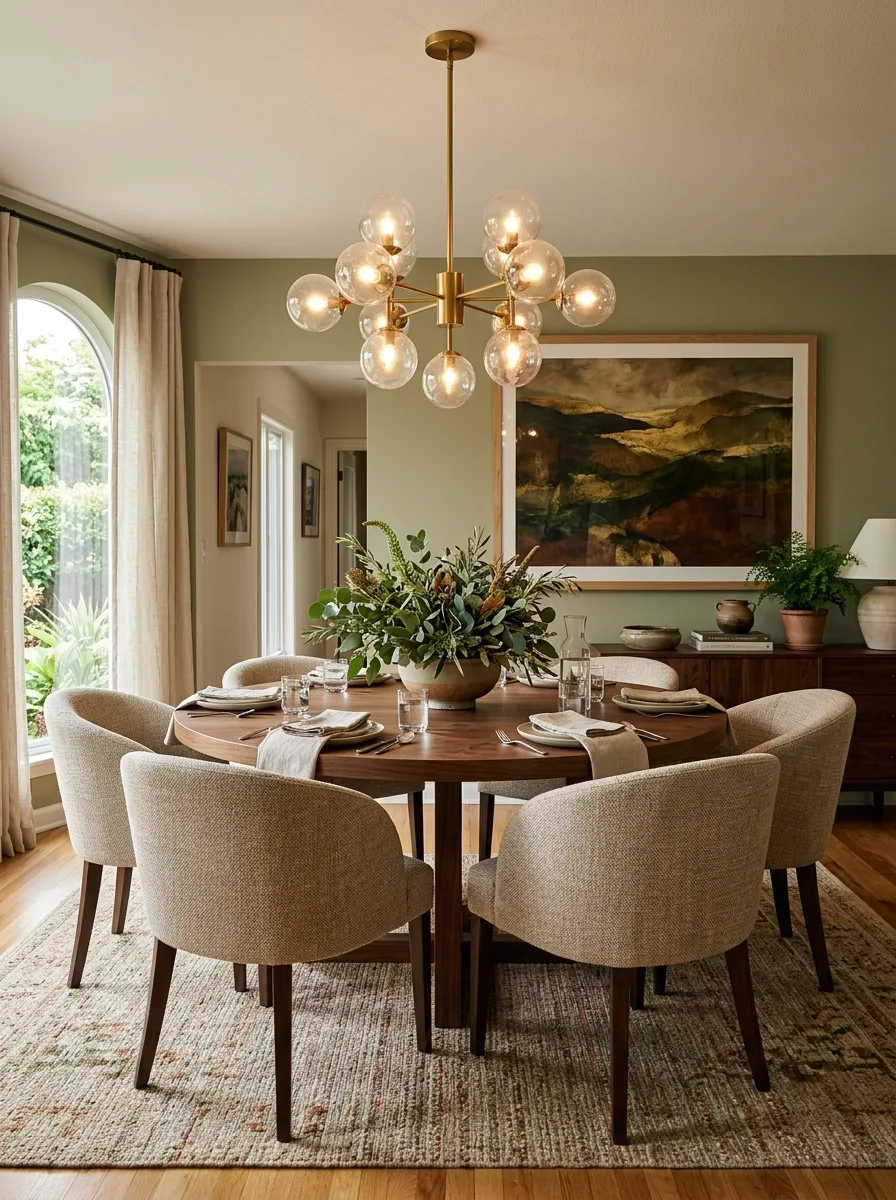
Paint the walls a muted sage or olive green, then hang a brass sputnik-style fixture with clear glass globes as the contrast point — warm metal against a cool, earthy wall color is the whole trick.
Choose a round table over a rectangular one if the room allows it. Round tables soften a room already leaning organic and earthy, and they photograph better under a centered branching fixture.
Add one large framed landscape or abstract art print in muted tones on the sideboard wall, and let a low, wide floral arrangement anchor the table’s center rather than a tall one that blocks sightlines.
Beaded Chandelier Tufted Bench
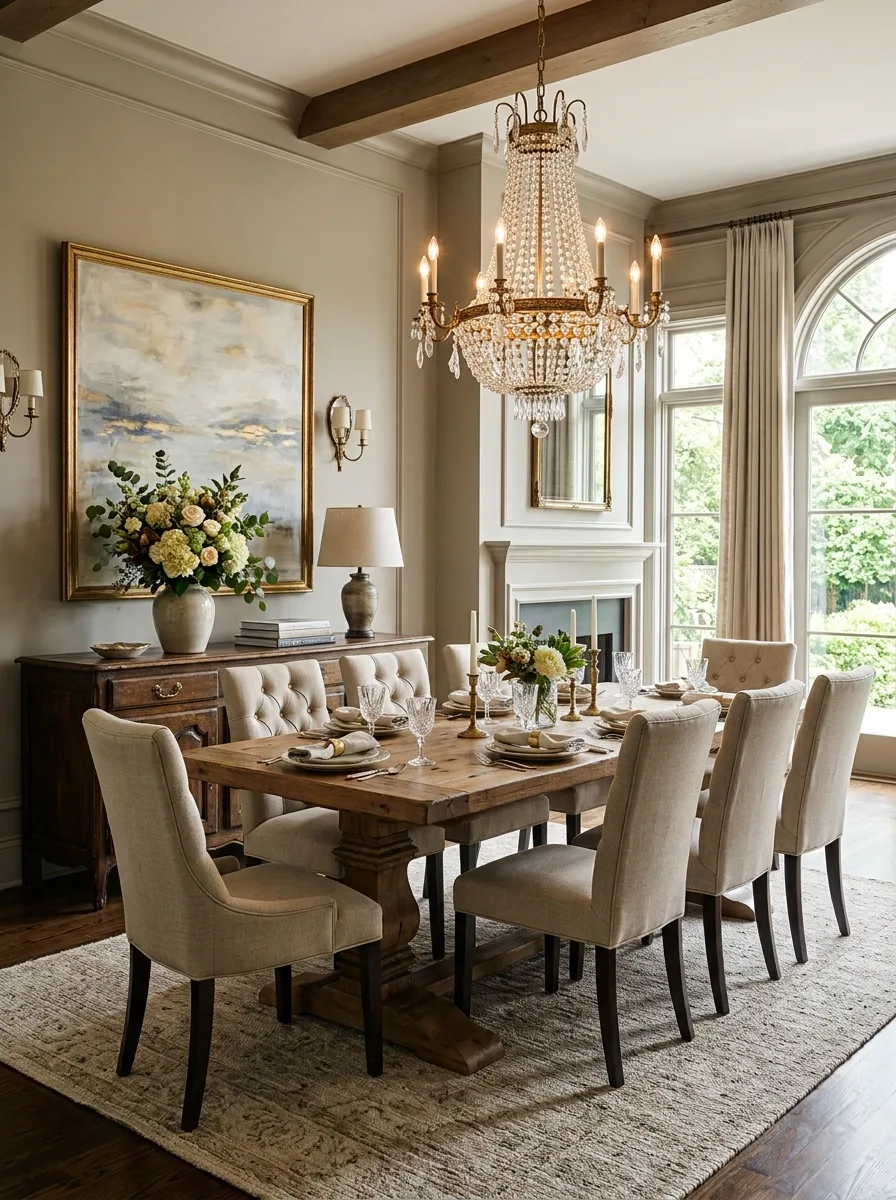
A beaded crystal chandelier with a scalloped bowl shape sets a soft, formal tone — pair it with a substantial trestle-base wood table that can visually hold its own underneath that much sparkle.
Add a tufted upholstered bench along one side of the table instead of chairs on every side. It’s a small deviation from the expected seating arrangement that keeps a traditional room from feeling stiff.
Style the sideboard with a large floral arrangement flanked by matching table lamps, and let taper candles run down the table’s centerline for evenings when the chandelier alone feels like too much light.
Oversized Mirror Small Pendant
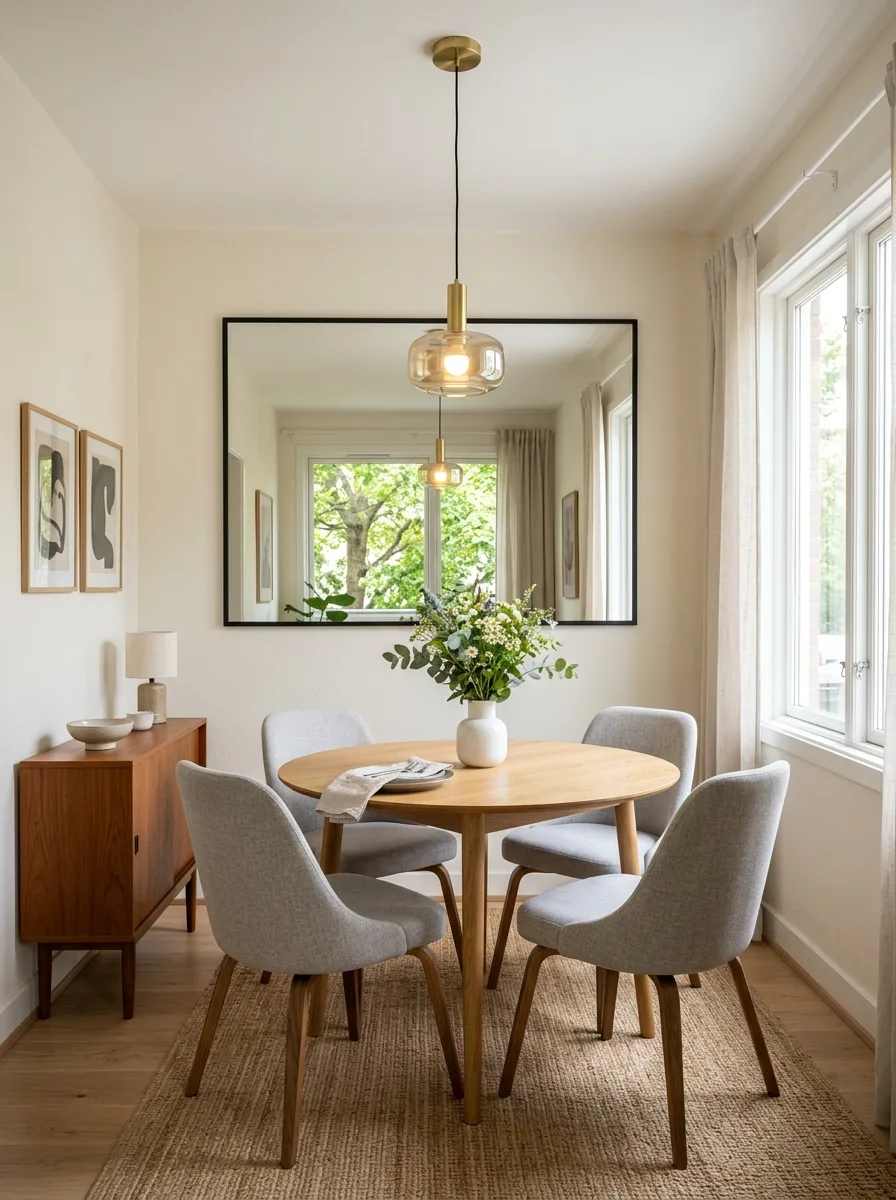
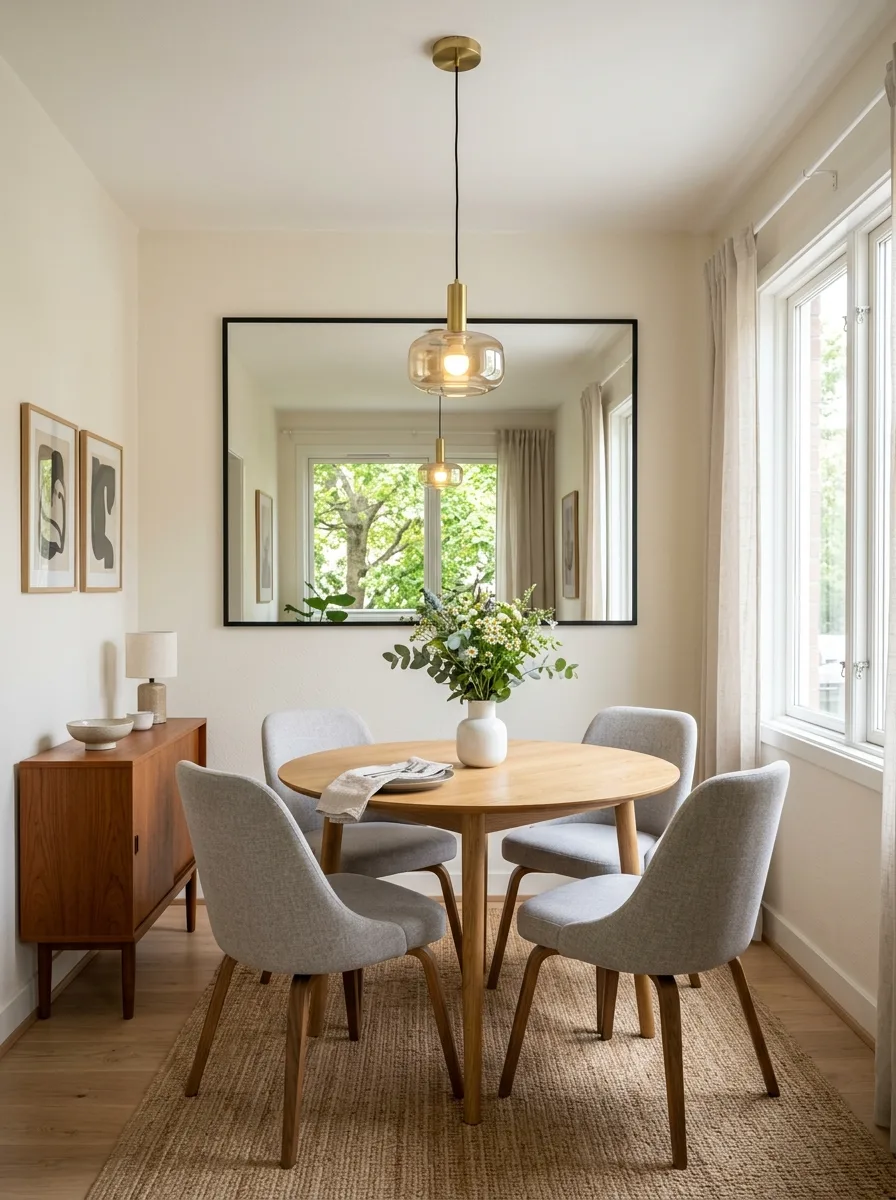
In a smaller or narrower dining space, hang one modest single pendant rather than a full chandelier, then let an oversized square mirror on the facing wall do the work of making the room feel bigger.
Choose a round table with slim, light wood legs — in a tight footprint, visual weight matters more than usual, and a round table with thin legs takes up less perceived space than a rectangular one.
Add a small abstract gallery grouping beside the mirror rather than above the table itself. Keeping art off the ceiling-adjacent wall leaves the pendant room to be the only thing happening overhead.
Arched Mirror Candle Chandelier
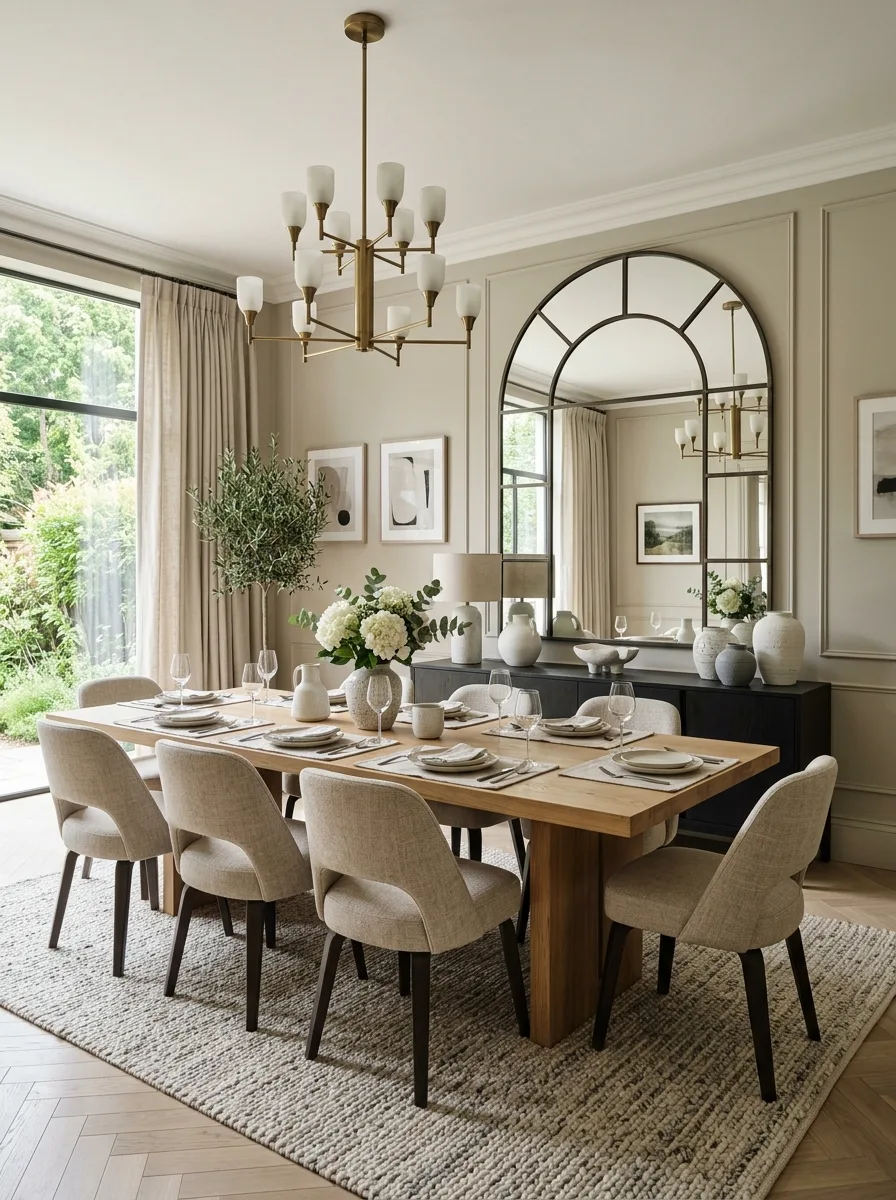
An arched, gold-framed mirror leaned or mounted against an ornate wall instantly reads as European and layered — pair it with a smaller brass candle-style chandelier rather than anything oversized, so the mirror stays the room’s focal point.
Choose a marble-top table with a sculptural brass base for a material contrast against all the plaster detailing and paneled walls typical of this style. Boucle or textured upholstered chairs soften the room’s formality.
Add a single tall taper candle on each side of the centerpiece rather than a cluster. In a room this ornate, restraint in the small details matters as much as boldness in the big ones.
Wood Spoke Sputnik Fixture
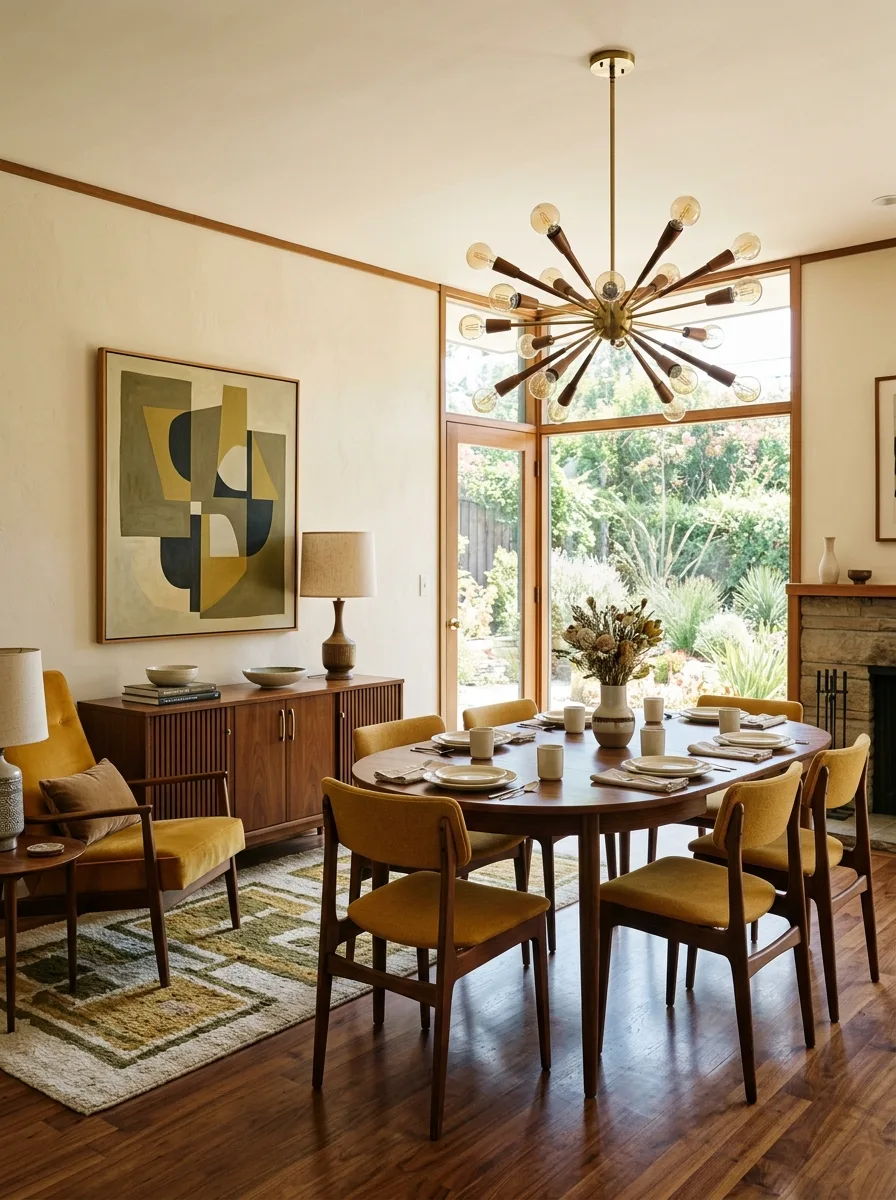
A sputnik chandelier with walnut-wrapped arms and exposed bulbs sets a confident mid-century tone — hang it low enough that the individual arms are clearly visible from a seated position, not tucked up near the ceiling.
Pair it with an oval walnut table and chairs upholstered in a warm mustard or ochre tone. The fixture’s wood spokes should match the table’s finish closely enough to feel like one continuous material story.
Add a large geometric abstract art piece on the credenza wall in colors pulled directly from the chair upholstery. A rug with a bold graphic pattern underneath completes the era without tipping into costume.
Gold Mirror Herringbone Floor
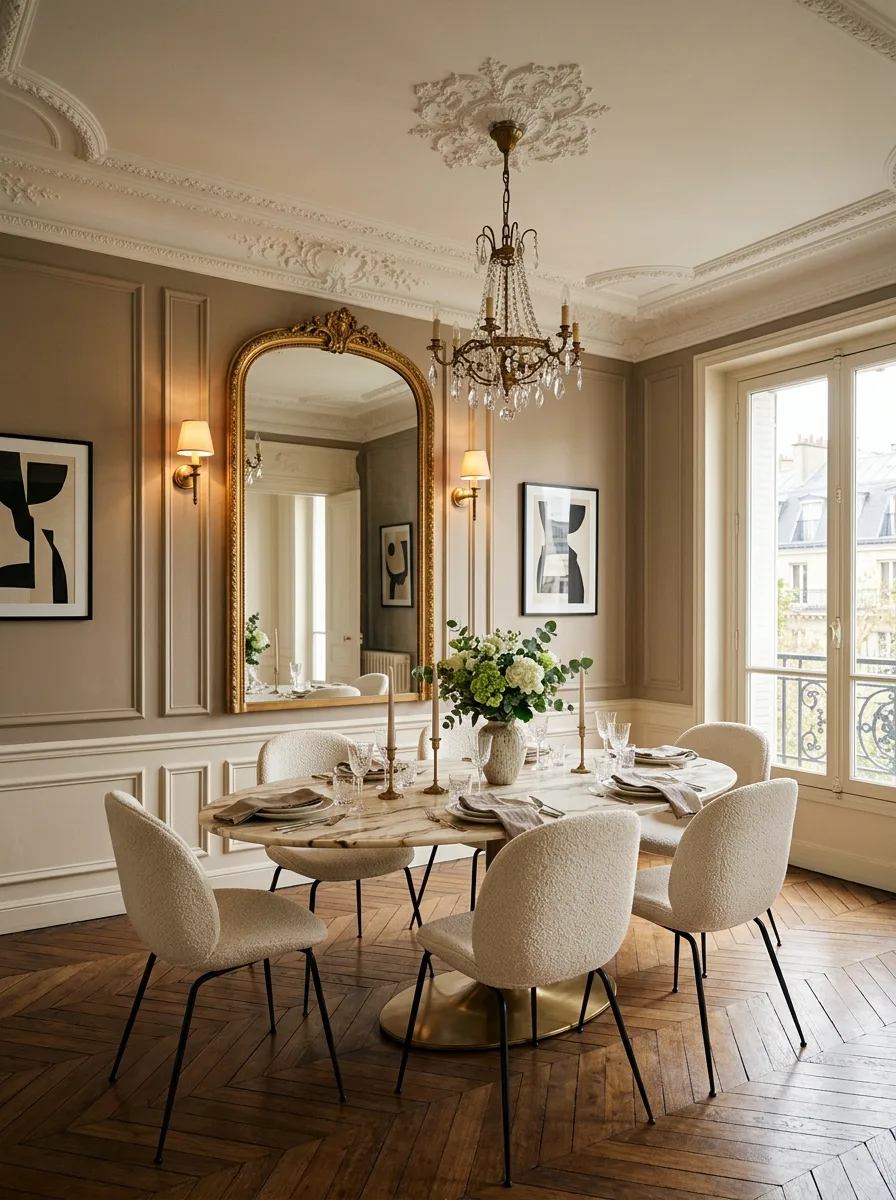
A tall, ornately framed gold mirror leaned against a paneled wall brings instant French apartment energy — let it lean rather than mount flush for a slightly undone, collected-over-time feel.
Choose a marble-top pedestal table with a brass base, paired with boucle or curved-back chairs in cream. The soft texture of the chairs against the cold marble tabletop is the material contrast doing most of the work.
If the floor allows it, herringbone hardwood left unrugged shows off the pattern fully — a rug here would just compete with a floor that’s already doing plenty.
Woven Dome Pendant Minimalism
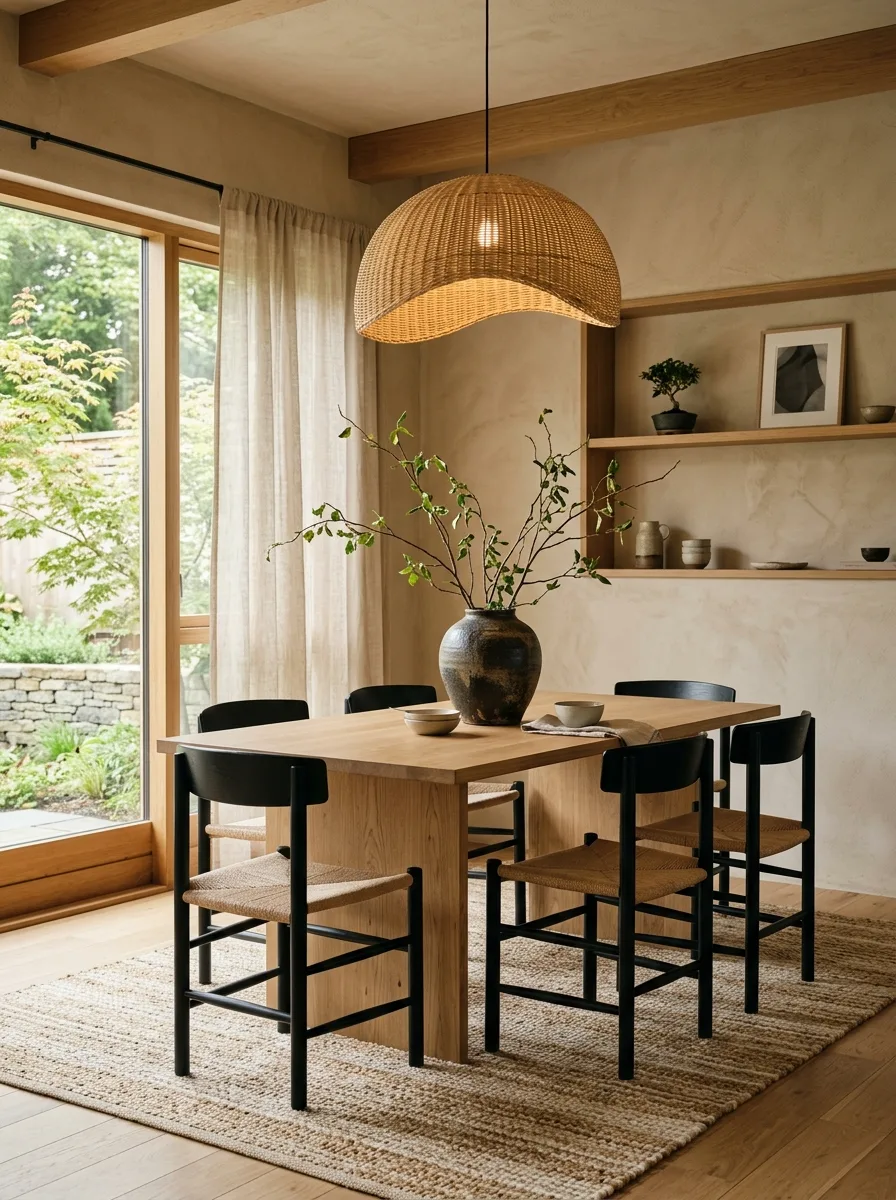
A dome-shaped woven pendant in natural rattan or wicker brings warmth to an otherwise minimal, plaster-toned room — let it hang low and slightly off-center over one end of the table rather than dead center.
Choose a solid wood table with visible joinery and black-frame chairs with woven rush seats. The mix of natural wood, black metal, and woven texture is the entire palette — resist adding a fourth material.
Style the adjacent open shelving with just a few objects: one small plant, one framed print, one or two ceramic pieces. This look depends on restraint holding steady across the whole room, not just the table.
Floral Wallpaper Dresser Display
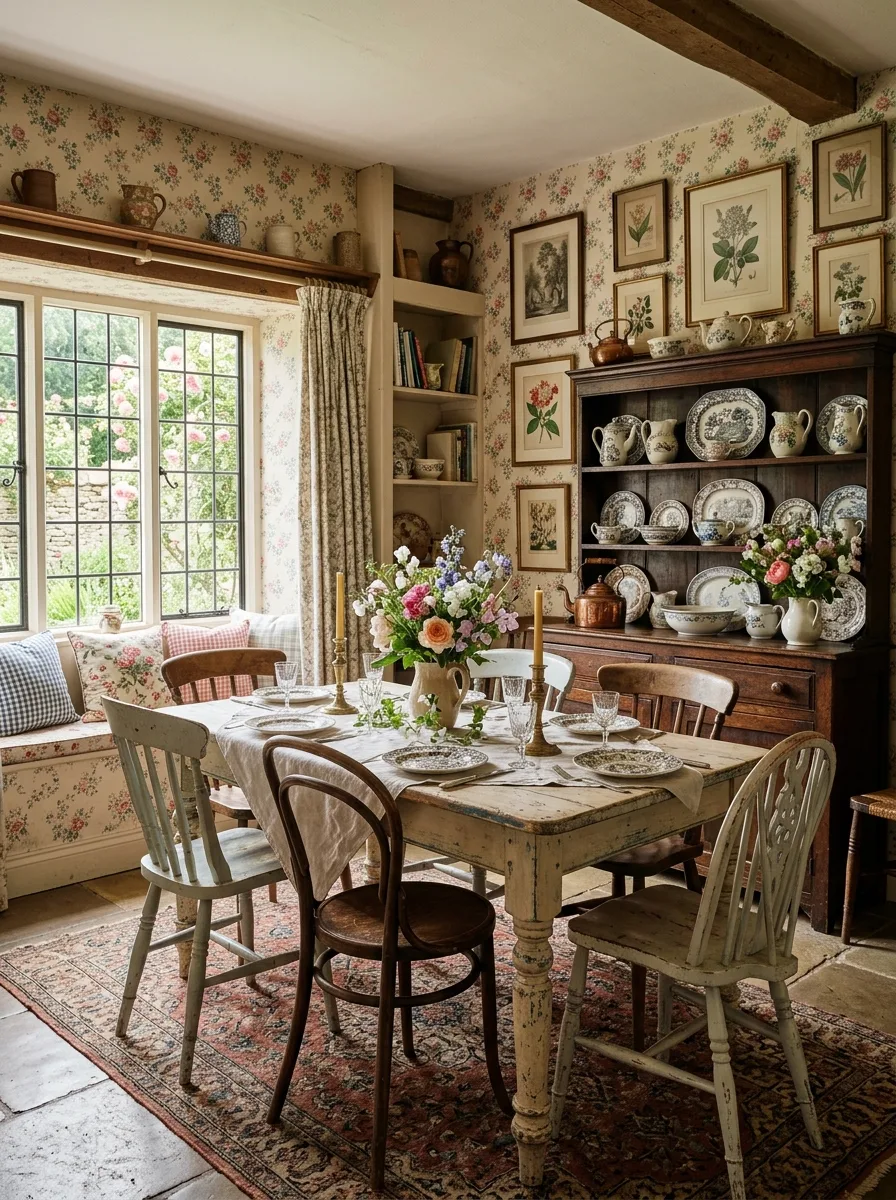
Full floral wallpaper across every wall is the boldest move on this list, so commit completely rather than stopping at a single accent wall — the density of pattern is what makes this cottage style work instead of reading as busy.
Choose a mismatched set of painted wooden chairs in soft, worn tones rather than a matching set. A uniform chair set would fight the collected-over-generations feeling the wallpaper is already establishing.
Fill an open dresser or hutch with mismatched patterned china displayed openly, not tucked behind closed doors. The dishware becomes part of the wall decor, echoing the floral wallpaper in a different material.
Candlelit Runner Wicker Pendant
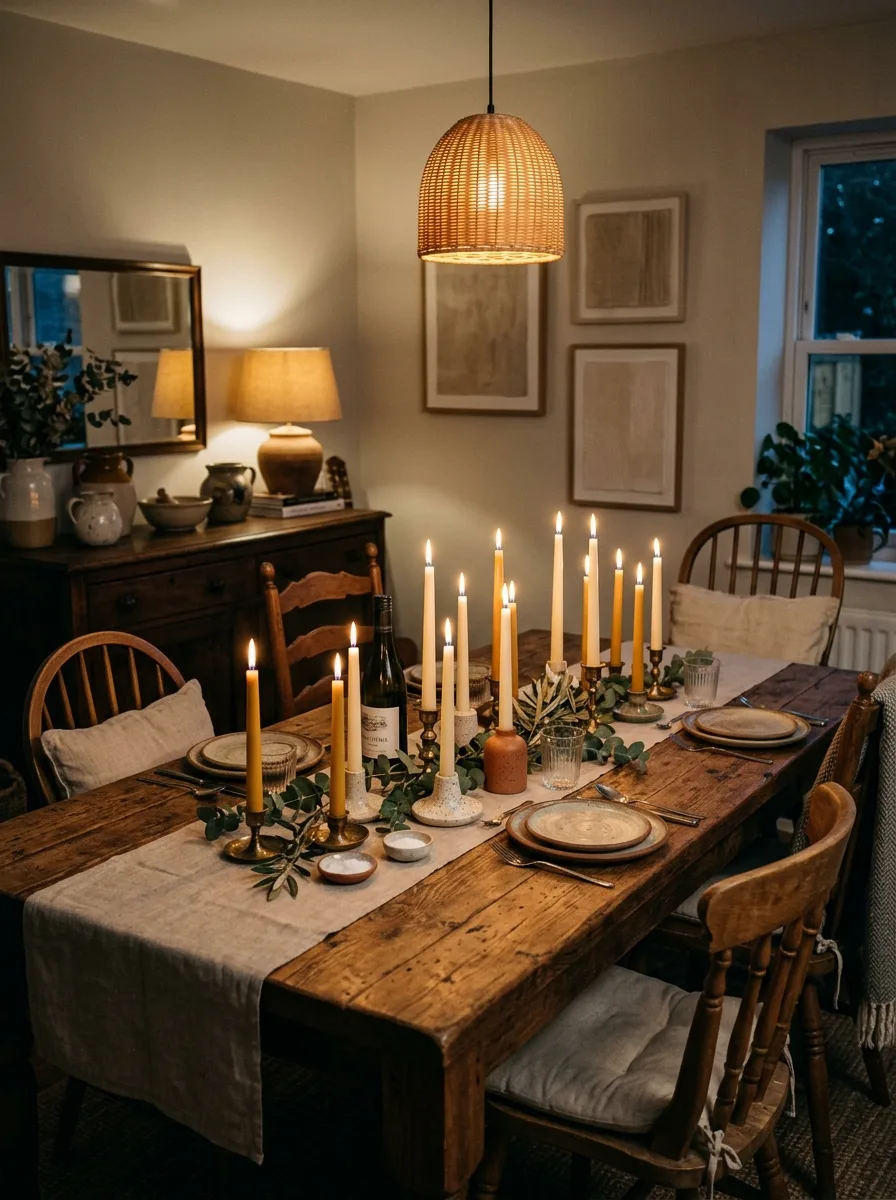
Run a plain linen table runner down the center of a dark, weathered wood table, and cluster taper candles at uneven heights along its length rather than spacing them evenly — the irregular height is what makes it look gathered rather than staged.
Hang a woven wicker dome pendant above for daytime use, but let the candles carry the room once evening comes. This look depends on the fixture and the candlelight doing separate jobs at separate times.
Add loose eucalyptus or olive branches tucked between the candles rather than in a formal vase. Untethered greenery photographs more casually than anything arranged and contained.
Oversized Mixed Frame Gallery
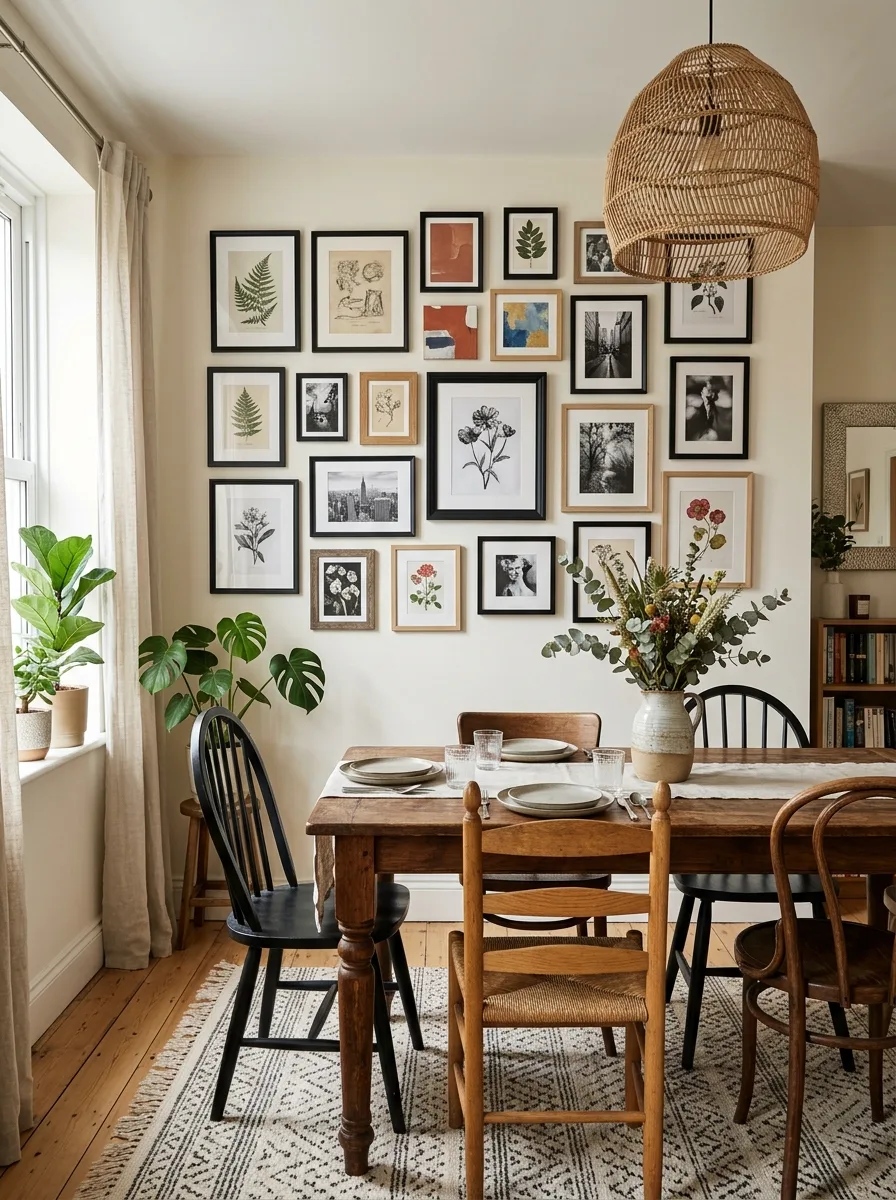
Build a dense, asymmetrical gallery wall combining botanical prints, black-and-white photography, and small abstract pieces in a genuine mix of frame colors and sizes — this is the most maximalist gallery approach on the list, and it depends on real density to work.
Keep the table and chairs underneath completely simple: plain wood, mismatched black and natural finishes, nothing upholstered or ornate. The wall needs a quiet floor-level counterpart to stay legible.
Add a woven pendant light positioned to one side rather than dead center over the table, echoing the gallery wall’s own asymmetry instead of fighting it with a perfectly centered fixture.
Banquette Bench Storage
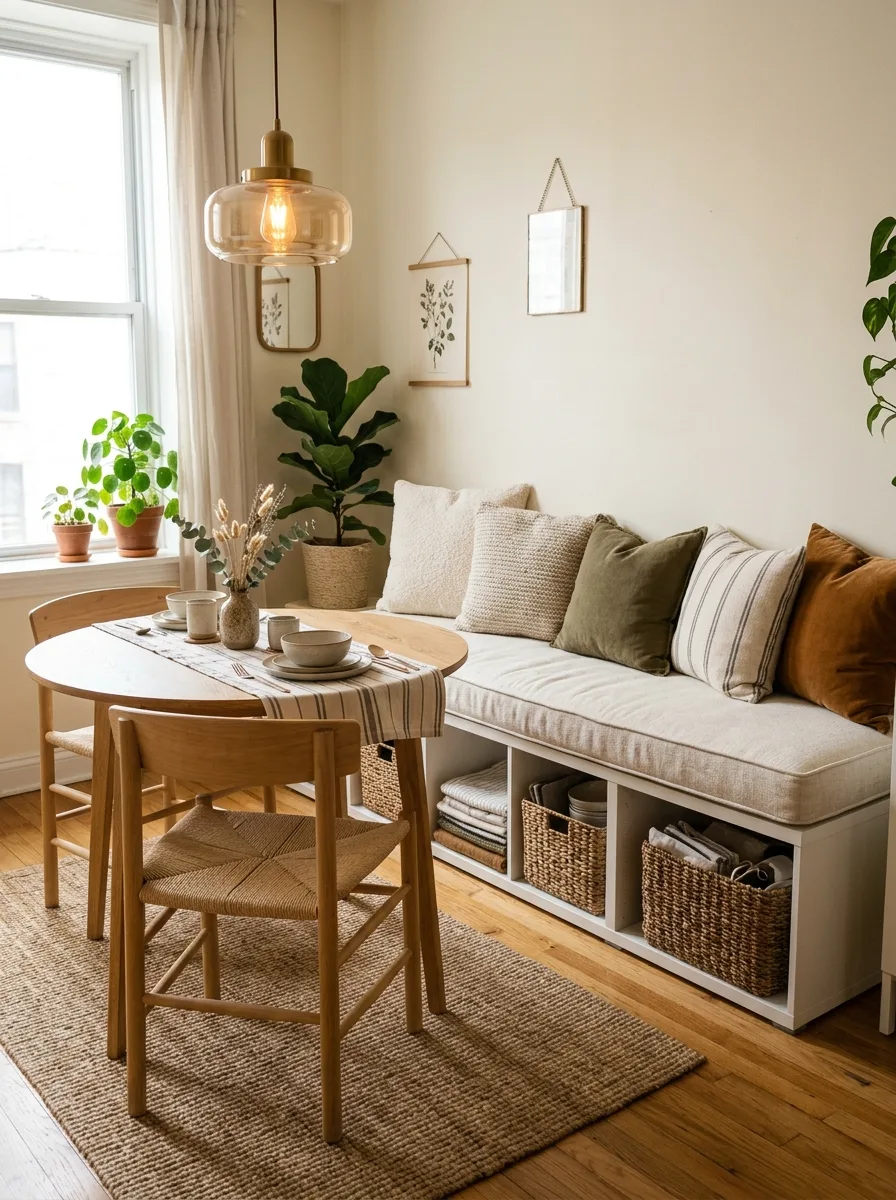
Build or buy a built-in bench with storage cubbies underneath, and layer it with pillows in three or four different warm textures — velvet, linen, knit, striped cotton — rather than a matching set.
Pair the bench with a small round table and just one or two chairs on the opposite side, since the bench itself is providing most of the seating. This configuration works especially well in tight apartment dining nooks.
Fill the storage cubbies with woven baskets holding table linens or extra place settings. The storage should be visible and textural, not hidden behind solid doors.
Paneled Wall Framed Botanicals
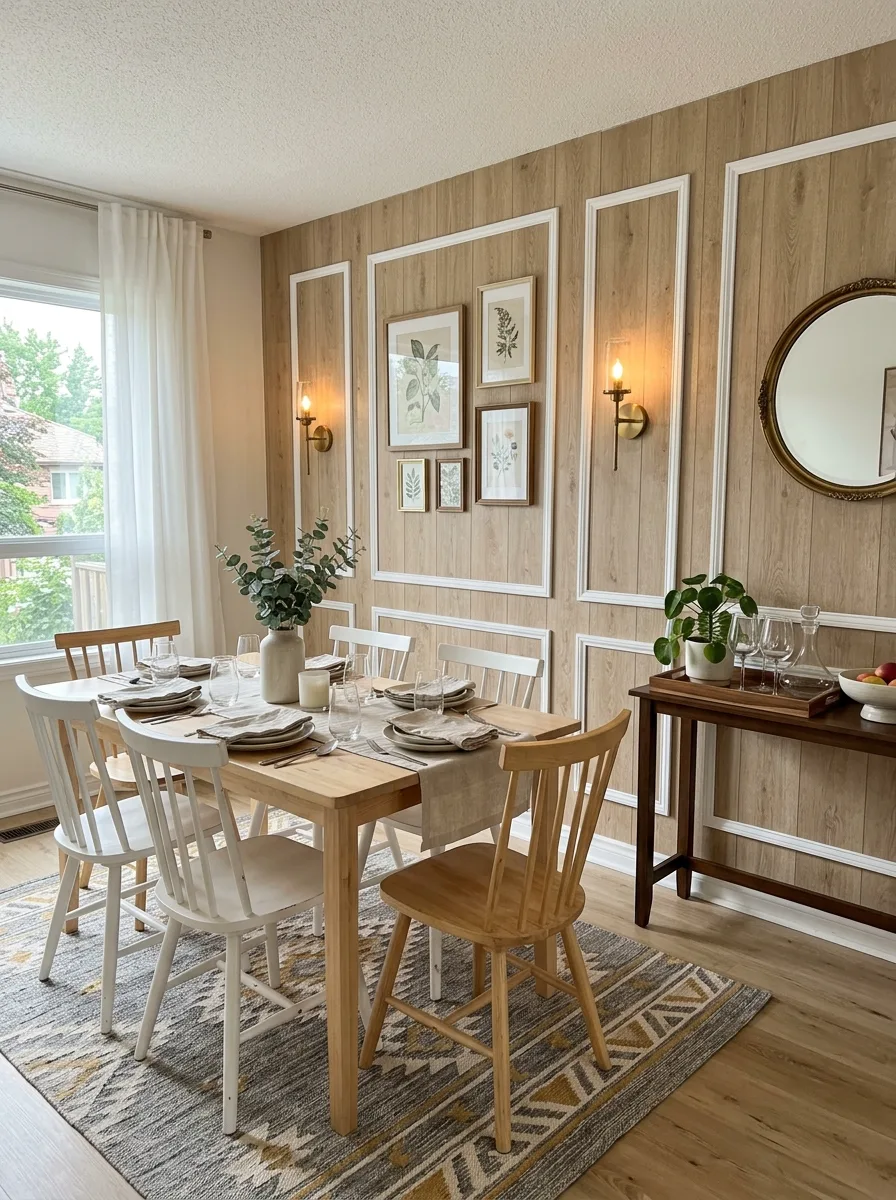
Install wood board-and-batten paneling with a painted trim detail across one wall, then hang a small, tightly grouped cluster of botanical prints inside one of the panel sections rather than spanning the whole wall.
Add wall sconces flanking the print cluster at eye height when seated. The sconces give the paneled wall a second light source independent from the overhead fixture, useful for a room that also doubles as an evening space.
Choose a mixed seating approach — painted white chairs on one side, natural wood on the other — to keep the paneling from feeling like the only design decision in the room.
Paper Lantern Candlelit Table
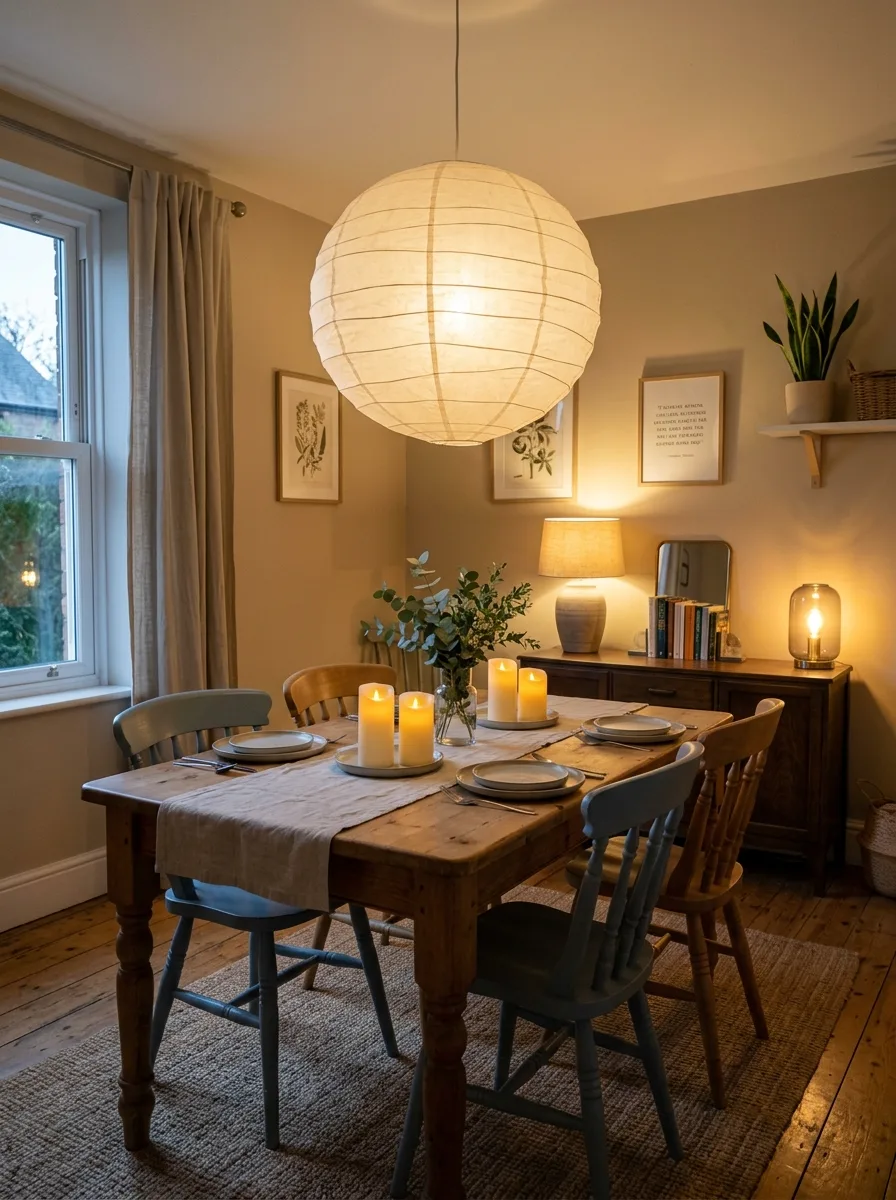
Hang an oversized paper lantern pendant as the primary fixture — its diffused glow is intentionally soft and a little imperfect, which suits a room leaning cozy and lived-in rather than polished.
Layer taper candles and pillar candles together down the table’s center at the same time the lantern is lit, rather than relying on the lantern alone. The mixed light sources are what keep the room from feeling like it’s lit by a single flat glow.
Add a small framed quote or print alongside botanical art on the sideboard wall. A little text mixed into an otherwise visual gallery gives the eye somewhere unexpected to land.
Plate-Filled Farmhouse Dresser
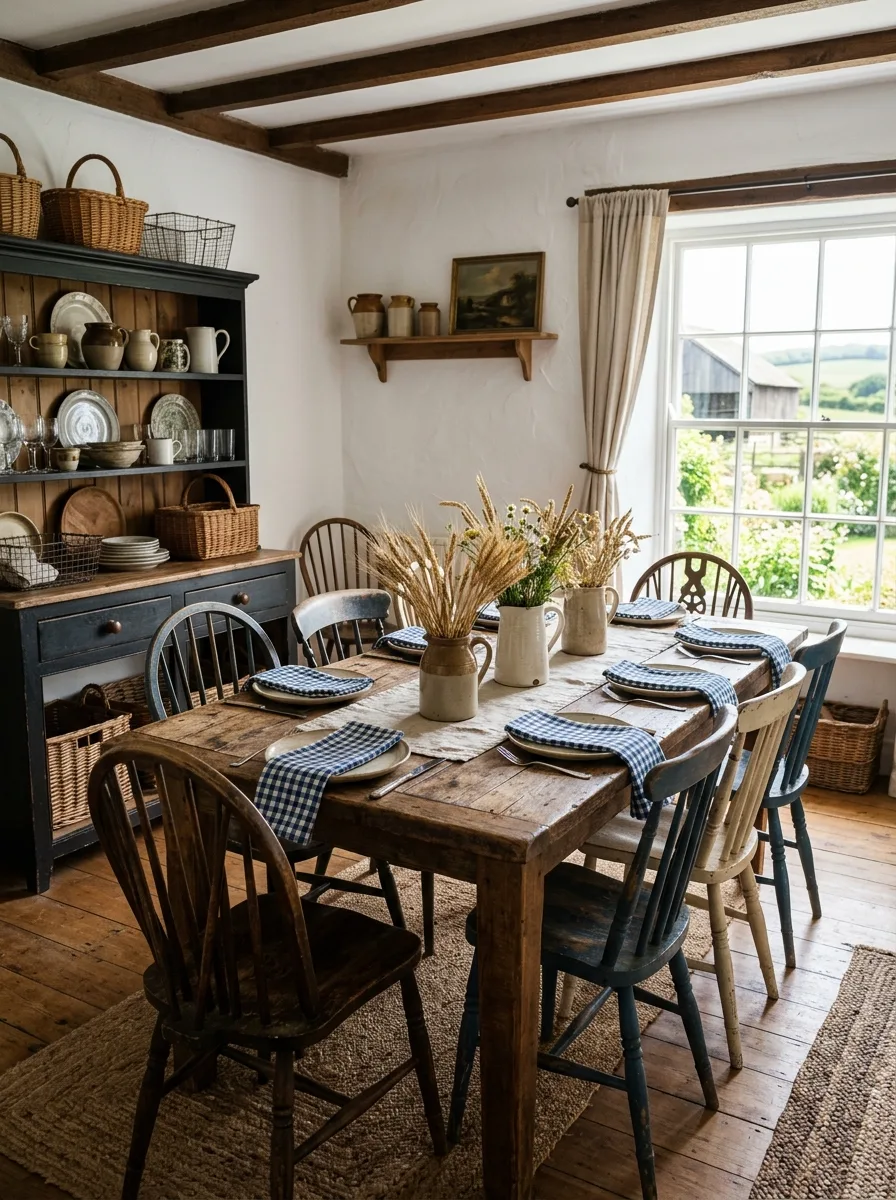
Fill an open farmhouse dresser or hutch with an actual working collection of plates, jugs, and pitchers, displayed by size and shape rather than color-matched — genuine collections read more authentic than curated ones.
Choose a long, worn wood table and mix chair styles freely across it — ladder-back, spindle, painted, and stained can all coexist as long as the wood tones stay in a similar family.
Add fresh-cut wildflowers or dried wheat in mismatched jugs and pitchers rather than a single formal vase. Repetition of the same vessel type used for storage above and flowers below ties the whole room together.
Patterned Wall Arched Mirror
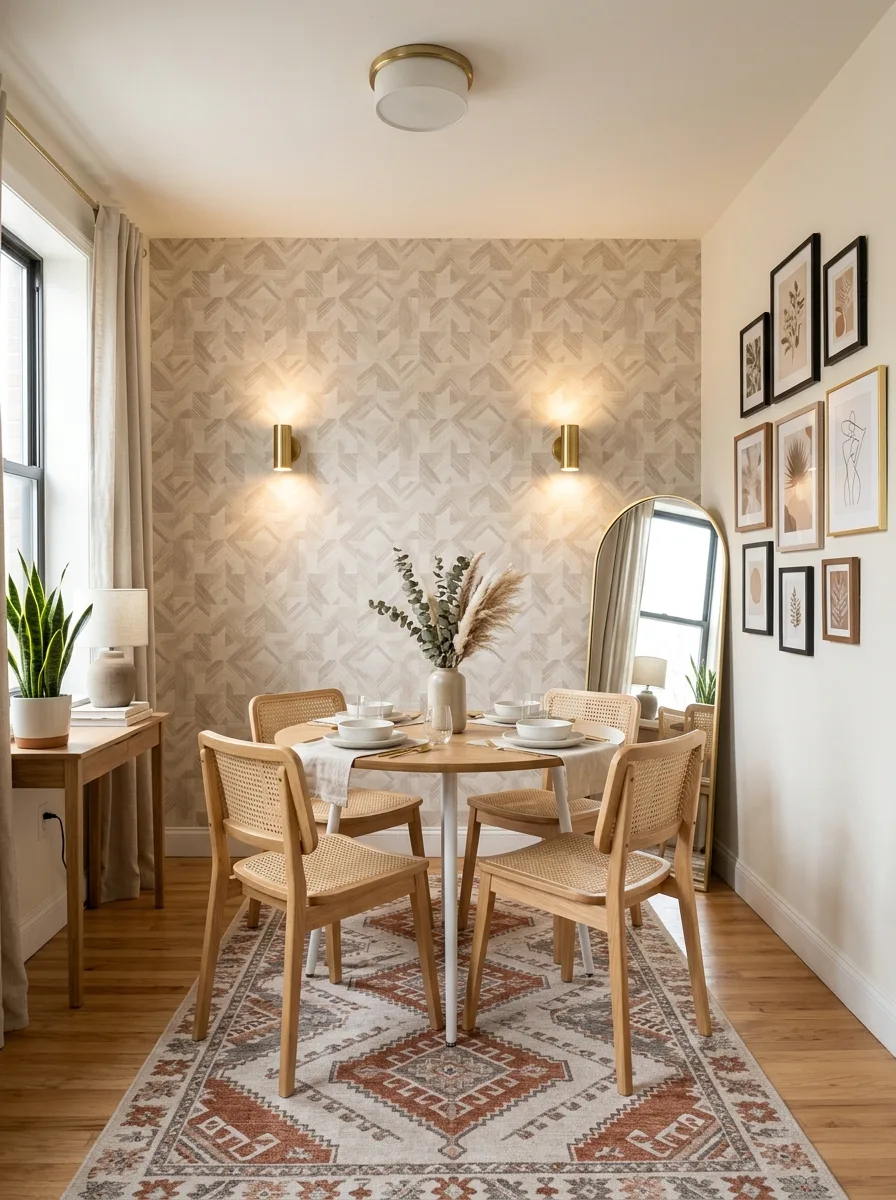
Choose a subtle geometric or textured wallpaper in tone-on-tone neutrals for an accent wall, then flank it with two brass wall sconces positioned symmetrically on either side of the room’s center line.
Add a tall arched mirror leaned in the corner rather than hung flush on the wall — the slight lean and the arch shape both soften what could otherwise be a fairly graphic, pattern-heavy room.
Build a gallery wall on the adjacent plain wall using a mix of botanical prints and abstract line drawings in varied frame tones. Two different wall treatments in one small room work because each one gets its own dedicated surface rather than competing on the same plane.
Final Thoughts
A dining room succeeds or fails on the parts nobody notices until they’re done well: what’s overhead, what’s against the wall, and what’s on the wall behind that.
Every style represented here, from the crumbling cottage kitchen to the glass-and-skyline high-rise, is chasing the same outcome. Not a beautiful photograph of a table. A room someone doesn’t want to leave once the plates are empty.
That’s the actual test. Not whether the chandelier photographs well alone, but whether the room still feels good three hours in, after the candles have burned halfway down and nobody’s checked their phone.
Buy the table last if you have to. Get the light right first.