
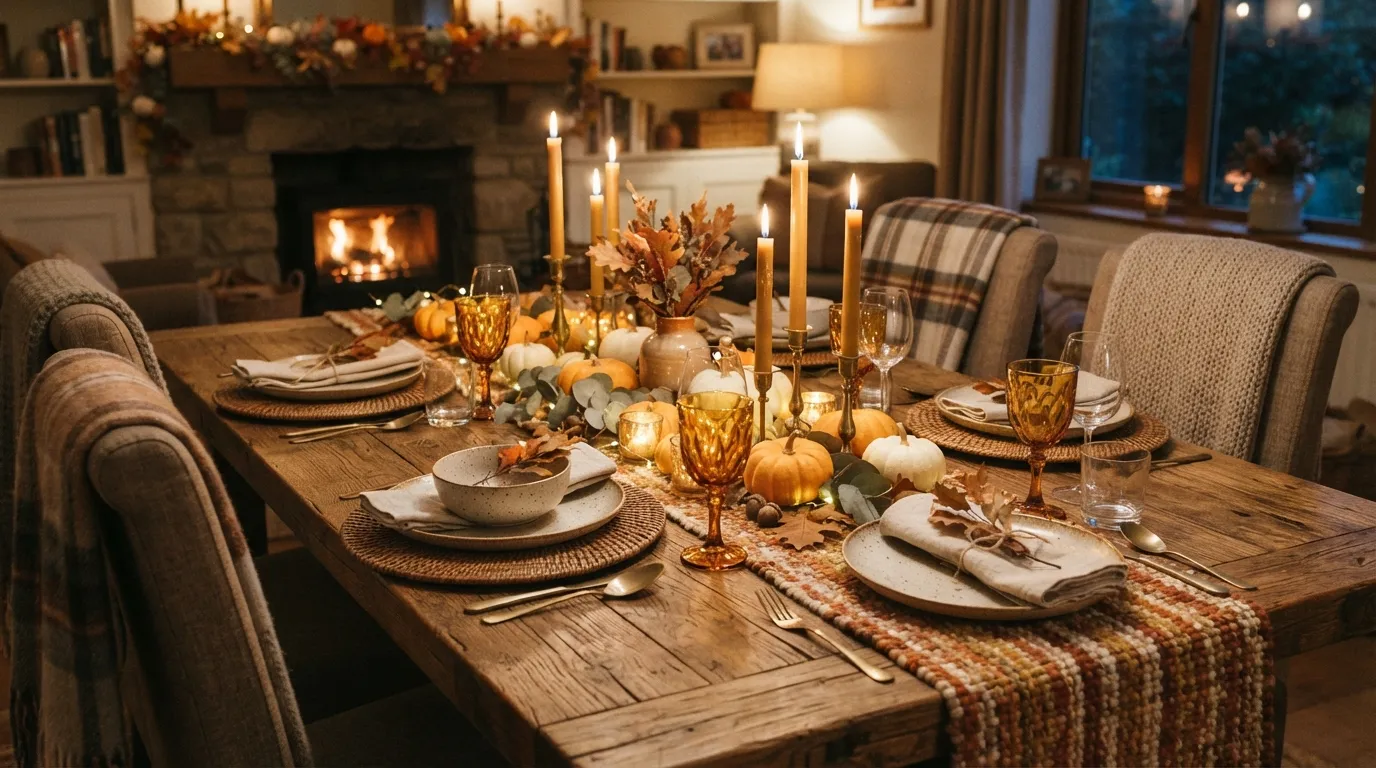
Nobody wants their home to look like a seasonal aisle at a craft store just because fall arrived. Yet that’s exactly where many autumn decorating attempts go wrong. A few pumpkins become a dozen, every surface gets covered in orange accents, and suddenly the room feels more themed than thoughtfully decorated.
The better approach is much simpler. Modern fall decor ideas work best when they change the feeling of a room without taking over its personality. Think warmer materials, deeper natural colors, better lighting, and seasonal details that actually belong with the furniture you already own.
You don’t need to replace your entire living room or cover the dining table in decorations. A few smart changes can make a neutral home feel warmer, richer, and more inviting for the season. These ideas focus on the details that actually matter, from sculptural pumpkins and aged wood to soft linen, natural stone, and strategically placed lighting.
Why Modern Fall Decor Often Looks Too Busy
Fall decorating has a habit of becoming cluttered fast. The problem usually isn’t the individual pieces. It’s the number of them competing for attention.
Seasonal Decor Should Support the Room
The room’s existing architecture, furniture, and materials should still lead the design. Seasonal pieces work best when they reinforce what’s already there rather than forcing the room into a completely different style.
A modern living room with clean lines doesn’t suddenly need rustic signs and oversized plaid everything. A few warmer textures and one deeper accent color can shift the atmosphere without fighting the room.
Think of fall decor as a layer, not a replacement.
Warmth Comes From More Than Colo
Orange isn’t the only way to make a room feel like fall. In fact, relying too heavily on orange can make a modern space look predictable.
Warmth also comes from:
- Rough wood
- Woven materials
- Linen
- Aged metal
- Ceramic
- Natural stone
- Low, warm lighting
These materials give the room depth while keeping the overall look sophisticated.
The Best Seasonal Rooms Still Feel Livable
A dining table covered with decorative objects isn’t useful. A coffee table with no space for a mug isn’t practical. A sofa buried under pillows isn’t comfortable.
The smartest fall decorating choices work around real life.
Leave room for people to sit, eat, walk, and put things down. When the decor doesn’t interfere with everyday use, the room automatically feels more intentional.
Now let’s get into the ideas that make the biggest difference.
Modern Fall Decor Ideas
The Pumpkin Horde Method
There is a fine line between festive decor and simply opening a produce stand on your front steps. If you must insist on covering every square inch of your porch in gourds, at least try to group them by size.
Staring at a singular, lonely pumpkin is sad, but creating a suffocating wall of orange squashes that makes neighbors trip on their way to your door is the pinnacle of seasonal overcompensation.
Keep the arrangement anchored to the railings so it feels slightly deliberate, rather than like you accidentally dropped a delivery from a pumpkin farm down your stairs.
Layer Muted Rust Into a Neutral Living Room
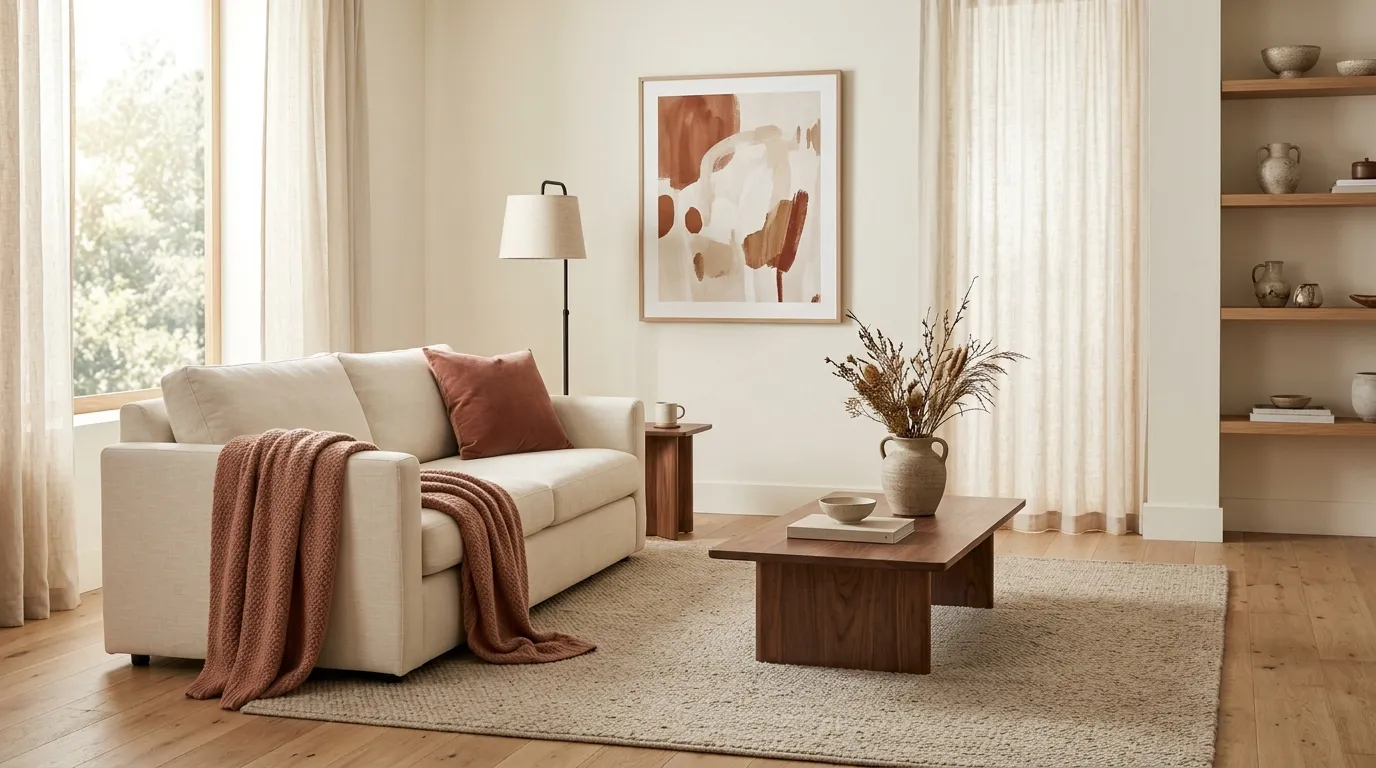
Neutral rooms don’t need to stay pale all season.
Muted rust is one of the easiest ways to introduce fall color without making the room feel overly themed. Add it through a single cushion, a small throw, or one piece of artwork.
The trick is to keep the shade slightly dusty rather than intensely orange. It works beautifully with cream, beige, warm white, walnut, and natural linen.
Start small: Pick one rust-colored accent, then repeat the tone once somewhere else in the room.
That second connection is what makes the color feel intentional instead of randomly added.
Choose one rust accent.
Echo the color once nearby.
Keep the rest of the palette quiet.
Use an Oversized Dried Branch Arrangement
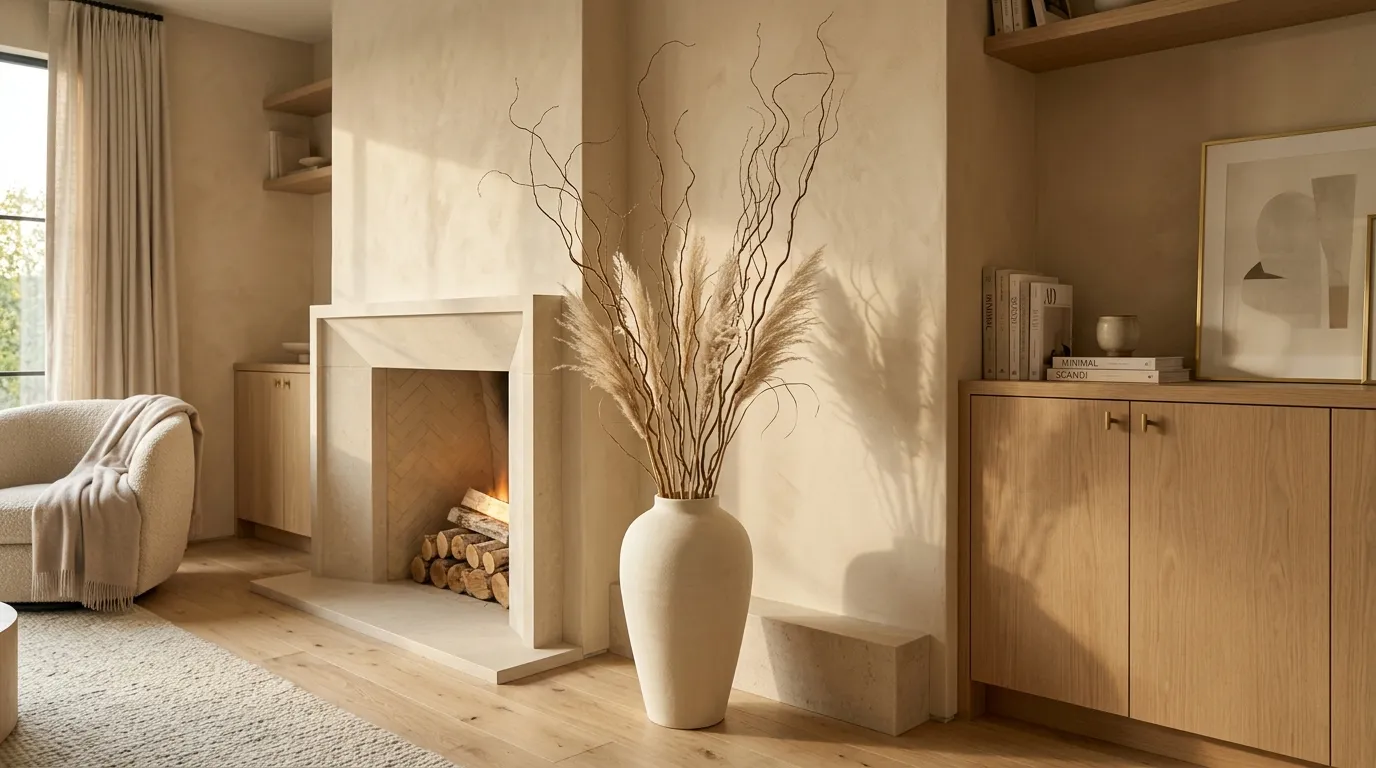
One oversized arrangement can do more than a dozen tiny seasonal decorations.
Choose a tall ceramic vase with a simple silhouette and fill it with dried branches, curly willow, pampas stems, or another architectural natural element. Place it where the height helps balance the room, such as beside a fireplace, in an empty corner, or near a console.
The branches should have enough room to spread naturally. Don’t cram them into a tiny container.
The goal is height and movement, not volume.
A sparse arrangement often looks more expensive because the eye can actually see each branch.
Keep the arrangement loose so the natural shape remains visible.
Make the Coffee Table Centerpiece the Main Event
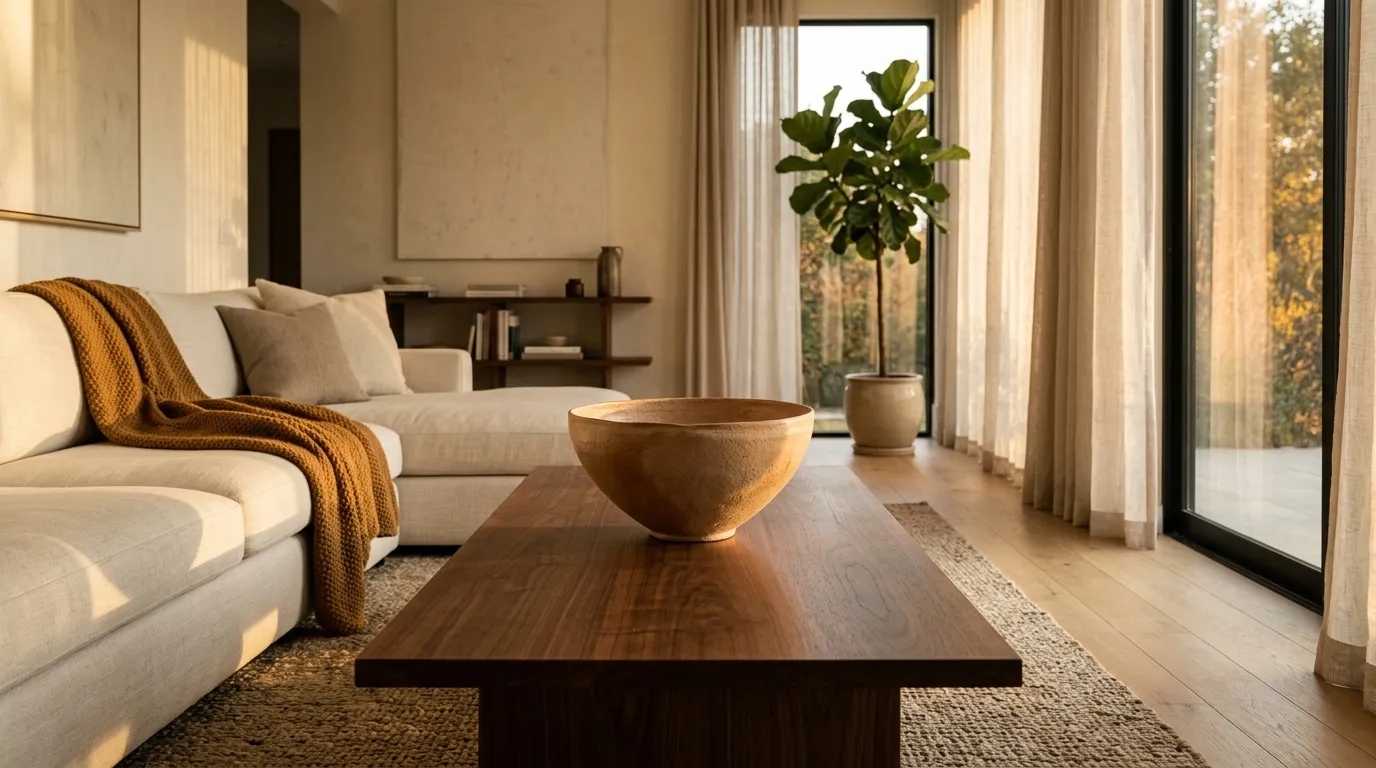
A coffee table doesn’t need five decorative clusters competing with the sofa.
Choose one strong centerpiece and build around it. A large ceramic bowl, sculptural vessel, or low arrangement of seasonal fruit can anchor the entire table.
Keep the surrounding area mostly clear.
The best centerpiece has presence without blocking the room.
Low objects work especially well because they preserve sightlines across the seating area. If your coffee table is small, skip the tray entirely and use one substantial object instead.
A single confident choice always beats a collection of tiny fillers.
Warm Up a Neutral Sofa With Layered Texture
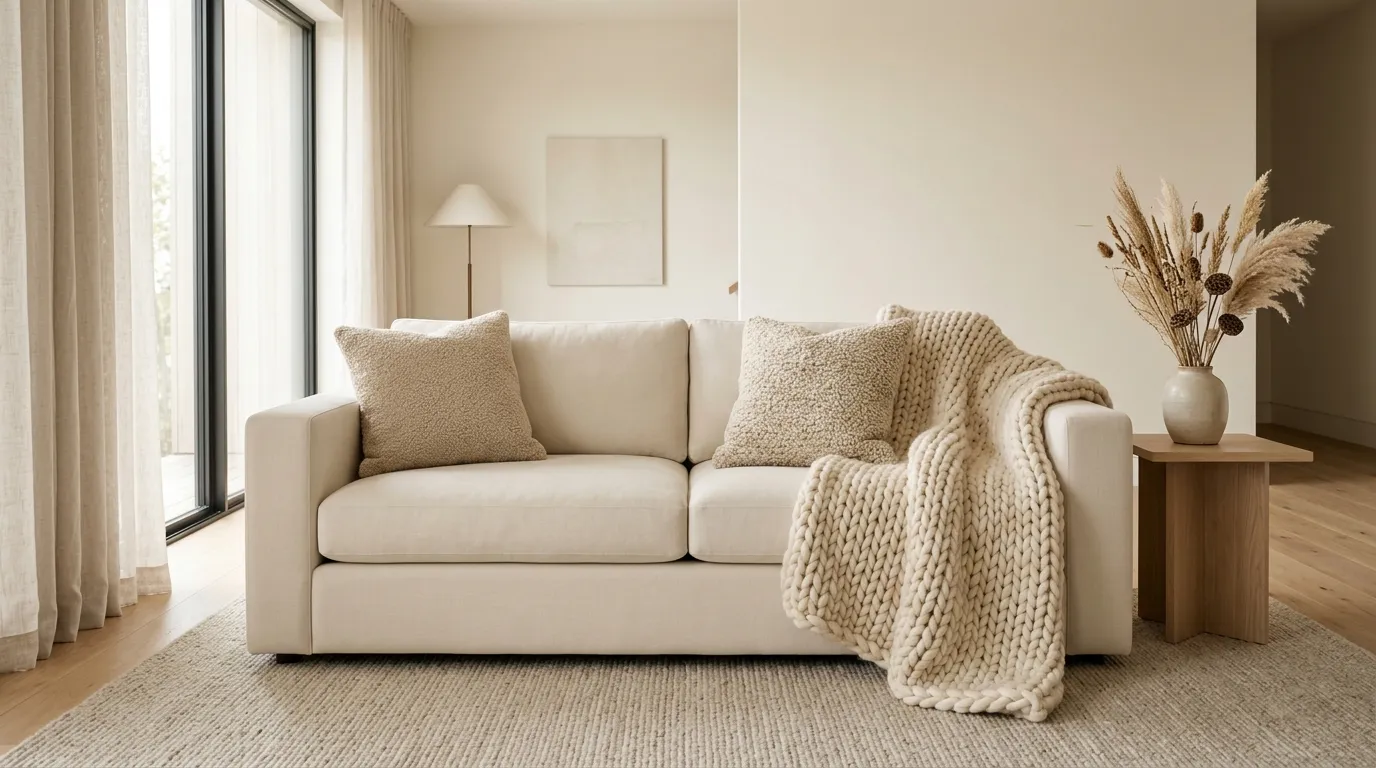
You don’t need to buy a new sofa for fall.
Start with what you already have. Add one chunky woven throw, a textured cushion, or a nubby wool accent. The difference should come from the feel of the materials rather than a pile of extra color.
A smooth sofa looks richer when paired with something visibly tactile.
Mix textures, not just shades.
Try linen against boucle, wool against cotton, or a woven throw against smooth leather. The contrast creates depth while keeping the palette calm.
This works especially well in rooms where the furniture is mostly cream, beige, or soft gray.
Smooth upholstery
Woven or chunky throw
One tactile cushion
Keep the Front Door Minimal With Natural Materials
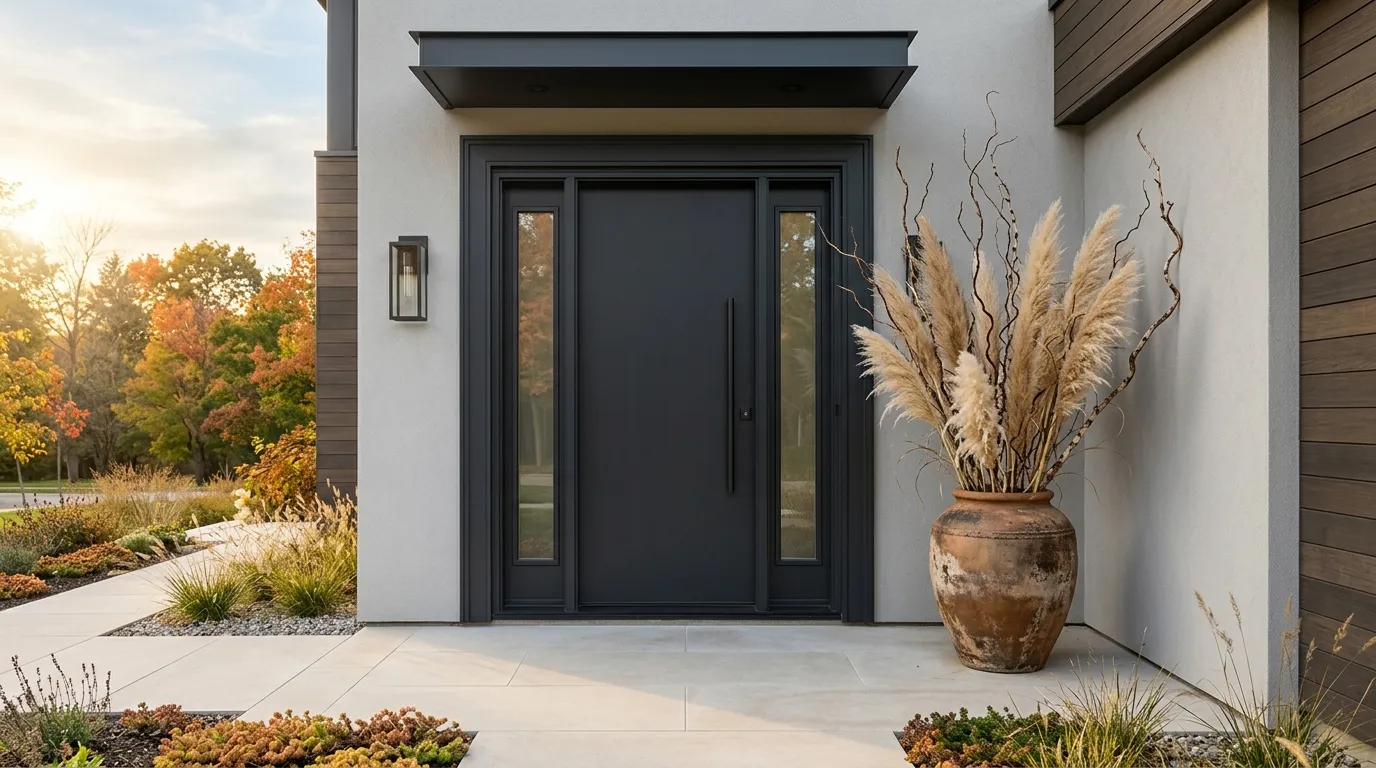
The front door is often where fall decorating gets excessive. Giant wreaths, oversized signs, artificial leaves, and multiple pumpkins can quickly overwhelm a clean exterior.
Take a quieter approach.
Use one large planter with dried branches, ornamental grasses, or another seasonal natural element. Keep the container simple and let the material do the work.
One strong vertical element is enough.
If you have a wide entry, add a second planter for balance. Otherwise, let the architecture stay visible. A clean doorway with one thoughtful seasonal detail looks far more modern than a collection of unrelated decorations.
Choose one focal point. Let its height and texture create the seasonal effect.
Give the Entryway One Strong Fall Focal Point
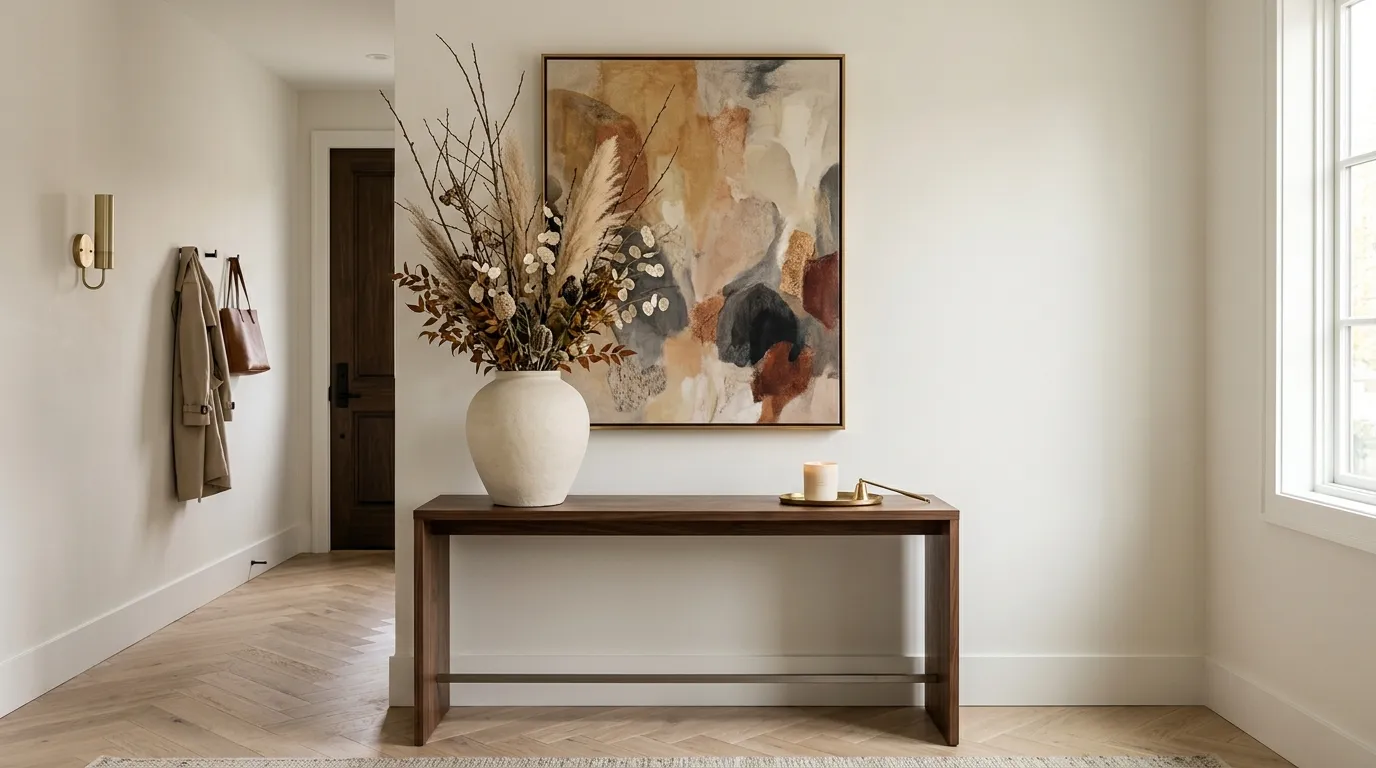
The entryway sets the tone before anyone reaches the living room.
Instead of scattering small seasonal objects across the console, create one clear focal point. A large ceramic vase filled with dried stems works well, especially when paired with one oversized piece of artwork above it.
Leave the rest of the console relatively empty.
The empty space is doing real work here.
It gives the main arrangement room to breathe and keeps the entrance from feeling like a storage area for decorative objects.
This is especially effective in narrow hallways where visual clutter can make the space feel even tighter.
One oversized artwork
One tall sculptural arrangement
Plenty of breathing room
Swap Seasonal Decor for Fall-Toned Artwork
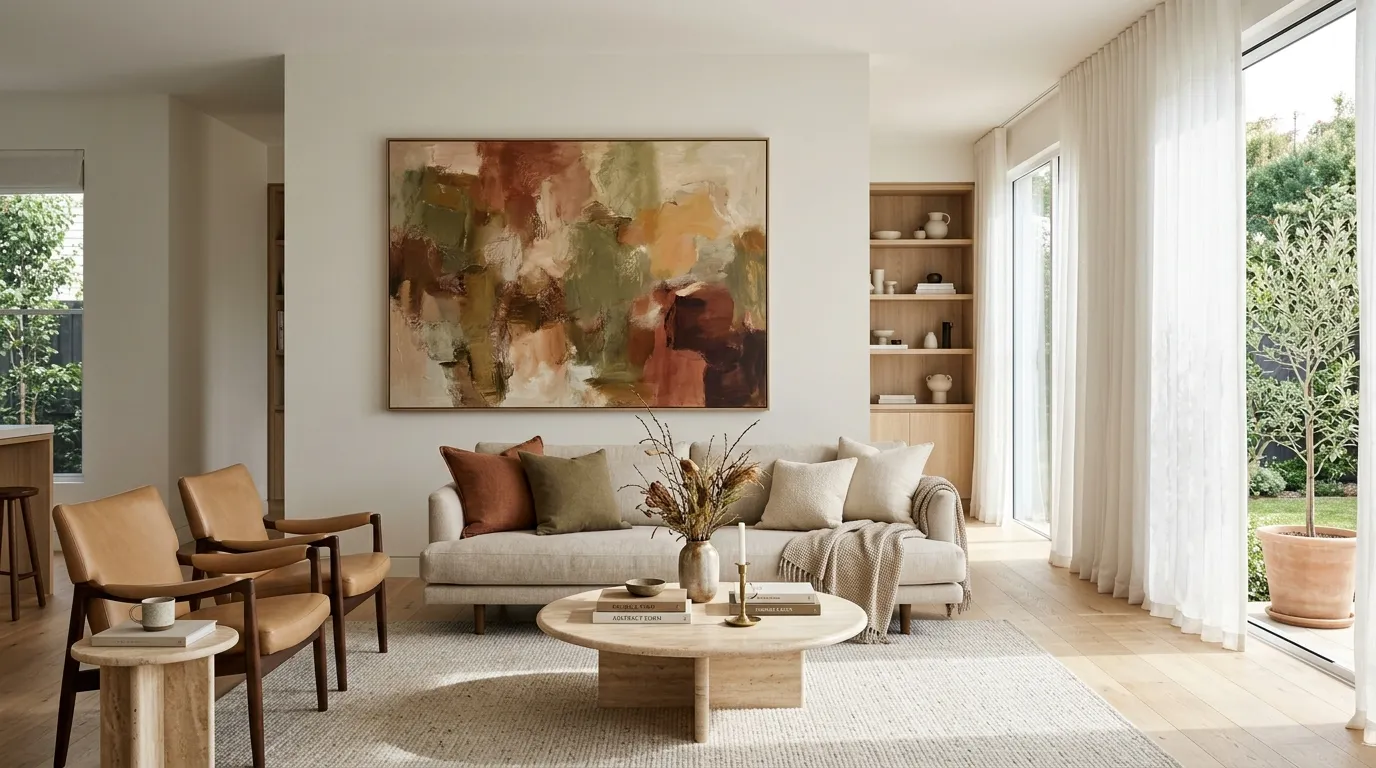
Sometimes the easiest way to make a room feel seasonal is to change what’s hanging on the wall.
Look for artwork that naturally carries fall colors, such as muted rust, olive, brown, ochre, or warm cream. An abstract painting or vintage landscape can shift the room’s mood without adding physical clutter.
This is especially smart for small homes.
You get a strong seasonal change without taking up floor space or covering surfaces with objects.
Choose artwork that still works with your furniture after the season ends. The best piece won’t scream “fall.” It will simply make the room feel warmer.
Add One Plaid Textile, Not a Whole Collection
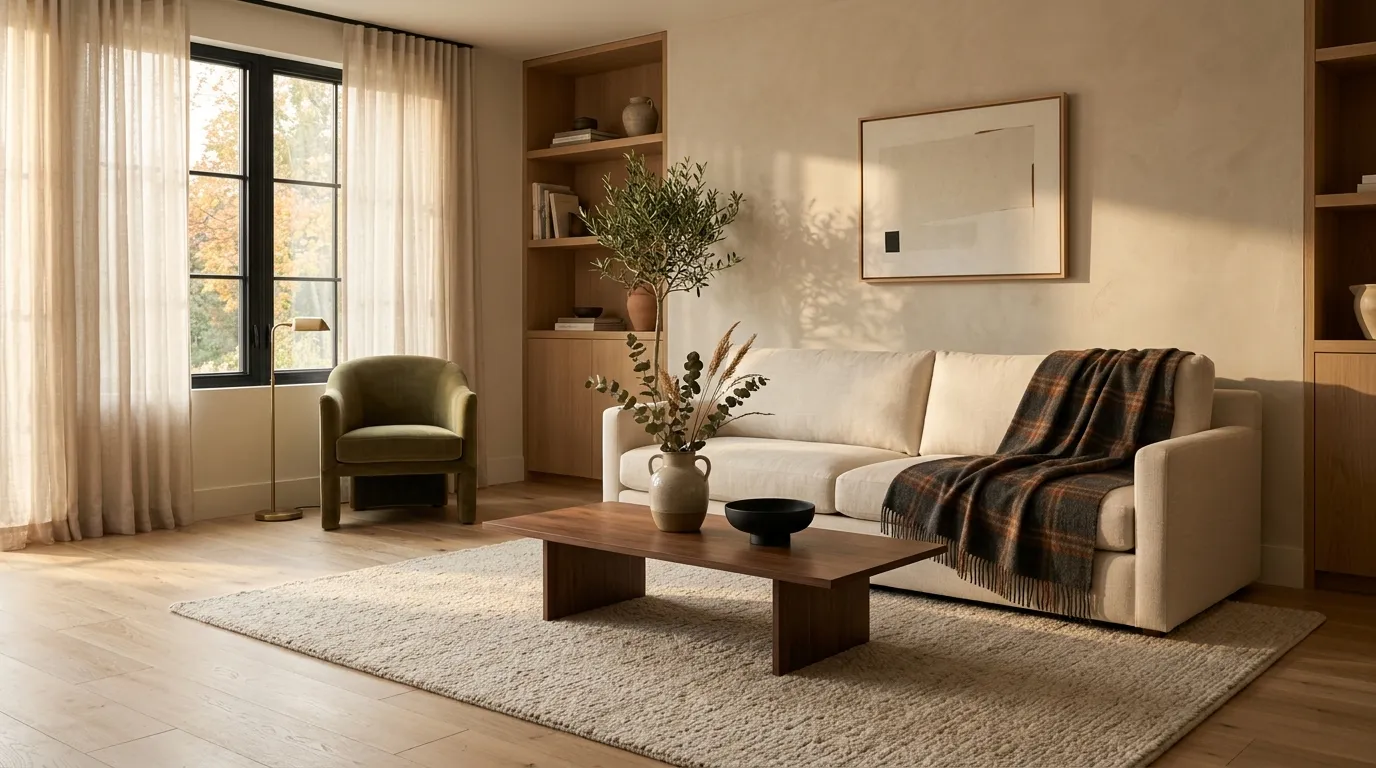
Plaid can make a room feel instantly autumnal, but it gets overwhelming fast.
The solution is simple: use it once.
A single plaid wool throw over the arm of a sofa or lounge chair is enough to introduce the pattern. Keep the rest of the room quiet and let the textile become the seasonal accent.
Don’t repeat the same pattern on cushions, curtains, and blankets.
Choose a plaid with muted colors that already exist in the room. Charcoal, cream, rust, olive, and brown are easy combinations.
One well-placed textile looks intentional. Five matching patterns look like a theme.
One throw or one cushion.
Colors already found in the room.
Repeating plaid across multiple surfaces.
Layer Warm Lighting for Early Fall Evenings
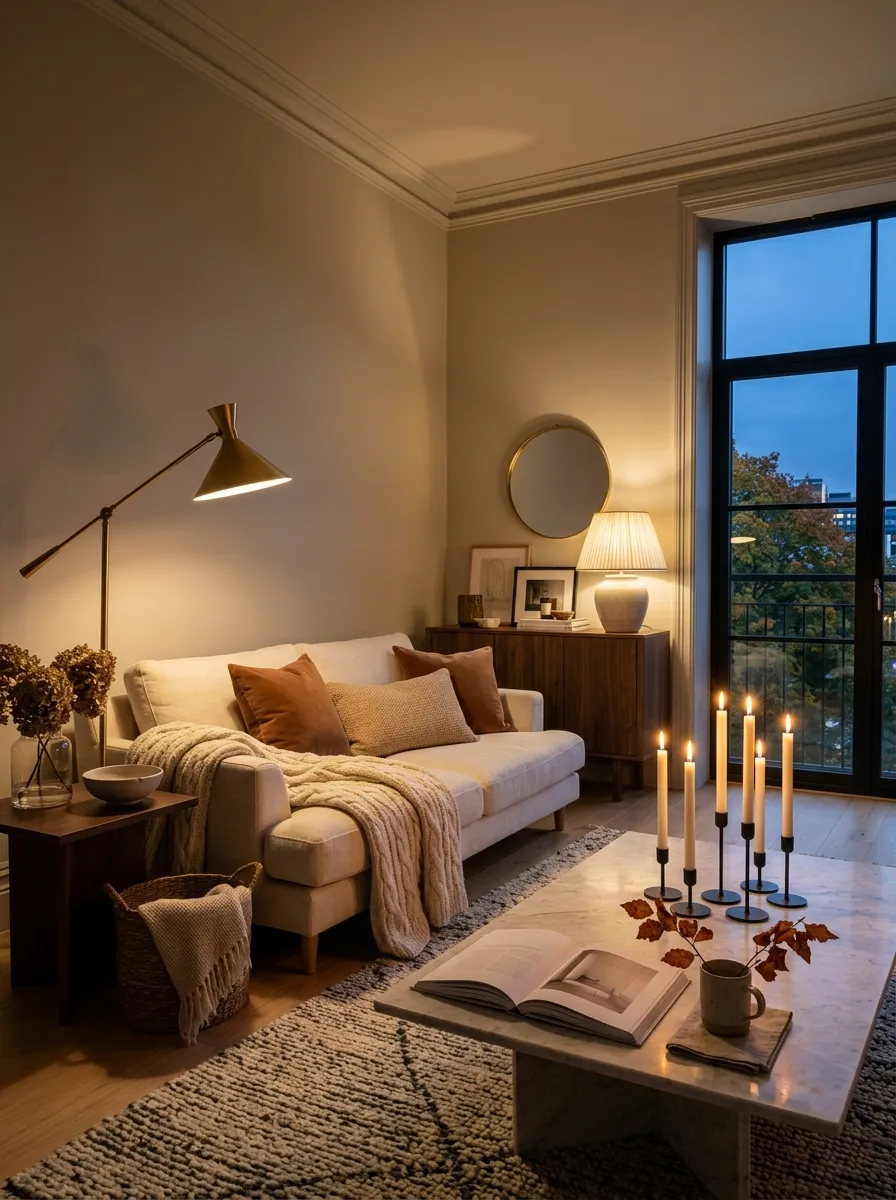
Fall rooms often look flat during the hours between afternoon and bedtime. The solution isn’t more decor. It’s better lighting.
Turn off the harsh overhead light and build the room from several lower sources. A table lamp beside the sofa, a small lamp on a console, and a few candles can create a much warmer evening setting.
Use this order:
- Switch on the lowest lamps first.
- Add a secondary light across the room.
- Finish with candlelight where it makes sense.
The room should still feel comfortable when the sun disappears. That’s when the warmer fall palette really starts working.
Table or floor lamp
Secondary lamp across the room
Candlelight for a soft finish
Use Ceramic Vessels Instead of Seasonal Figurines
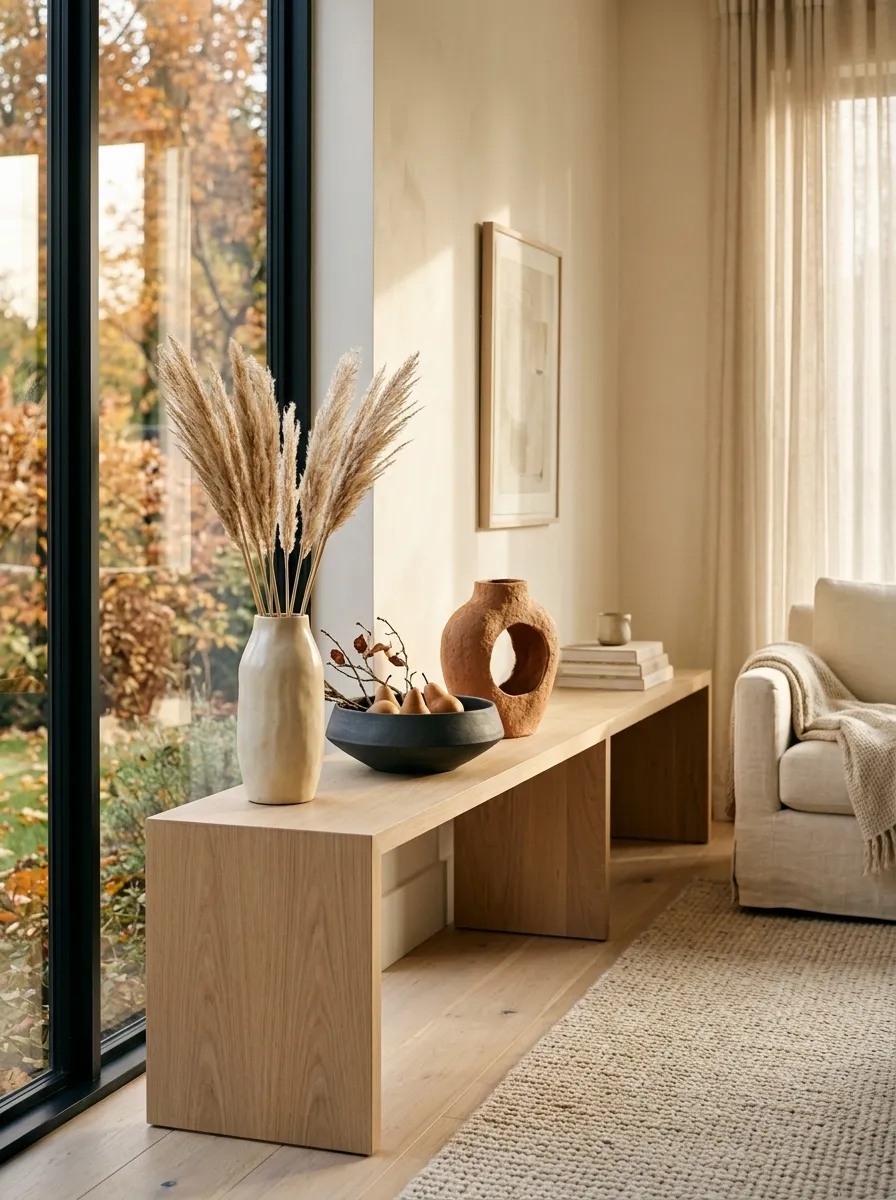
Seasonal figurines tend to have a short decorating life. A good ceramic vessel doesn’t.
Choose pieces with irregular shapes, matte finishes, or subtle earthy colors. Fill one with dried stems, leave another empty, and use a third as a bowl for fruit or small objects.
The result feels seasonal because of the materials and colors, not because the object literally depicts fall.
The smartest part: when the season changes, you won’t need to pack everything away. Move the vessels around, change what’s inside them, and they still work.
Does the silhouette look interesting without anything inside?
Does the surface feel natural and substantial?
Can you style it differently after fall?
Bring Fall Texture to the Bedroom With Linen
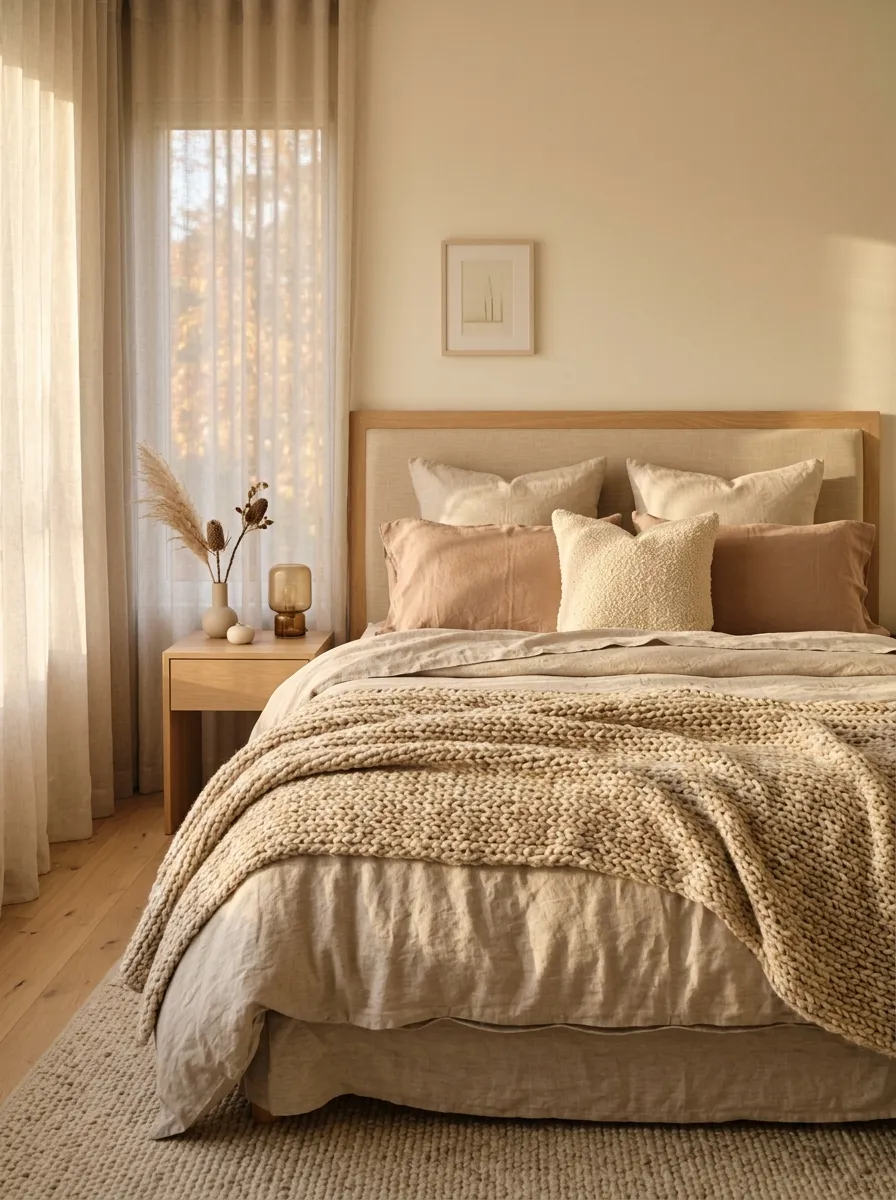
The bedroom doesn’t need obvious seasonal decorations to feel warmer. Texture does the job quietly.
Start with washed linen bedding in cream, oatmeal, clay, or a soft brown. Layer a heavier quilt or woven blanket at the foot of the bed, then add one cushion with a visibly different texture.
Keep the color palette restrained.
The contrast between smooth sheets, rumpled linen, and a heavier woven layer creates the depth that makes a bedroom feel ready for cooler nights. There’s no need for pumpkin prints or seasonal signs.
The bed should still look inviting when December arrives.
Washed linen bedding
Woven quilt or coverlet
One tactile cushion
Make the Dining Table Feel Seasonal Without Clutter
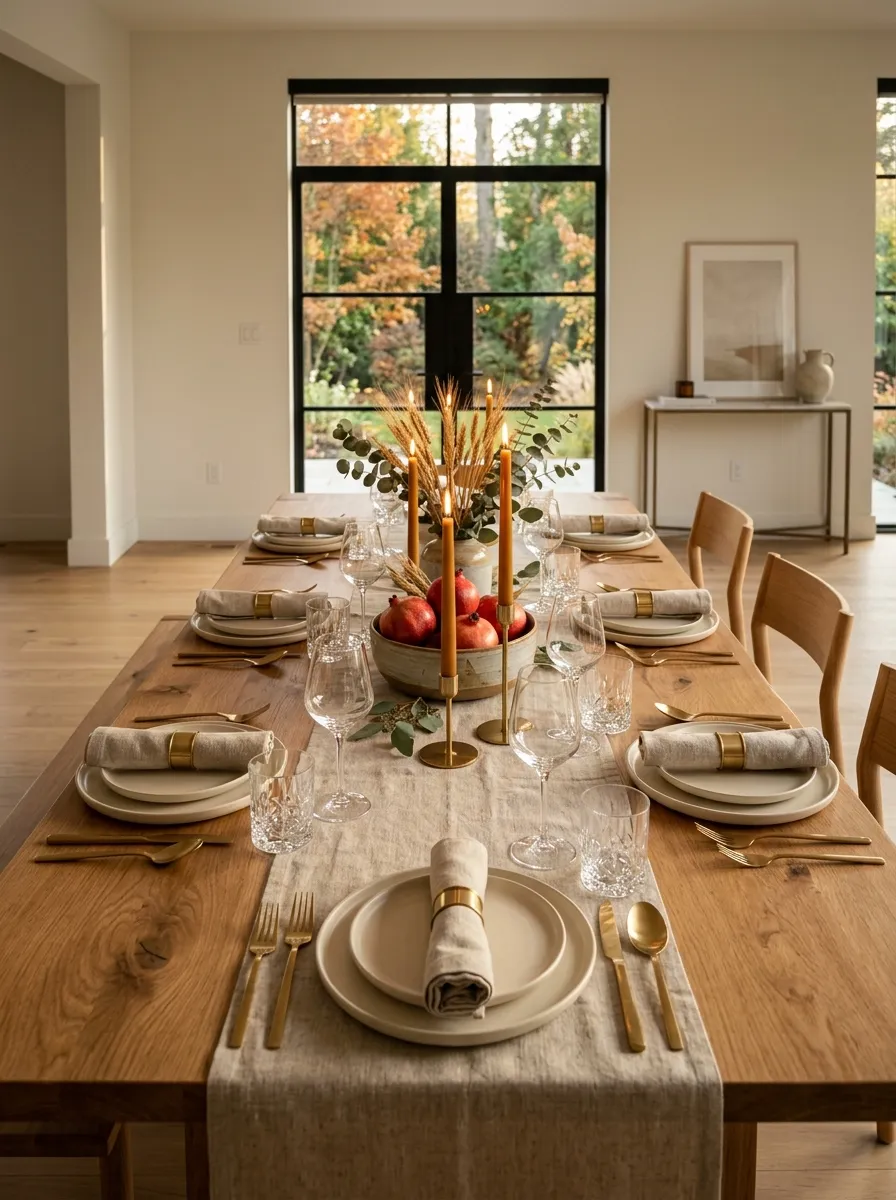
A dining table should be ready for dinner first and decoration second. That’s especially important in fall, when candles, serving dishes, and warm drinks already take up valuable space.
Start with the table itself. Let beautiful wood, stone, or a simple linen runner provide the foundation. Then add a low arrangement of seasonal fruit or dried stems.
Use matching place settings instead of filling the table with decorative objects.
Before guests arrive, remove anything that blocks conversation.
The best fall dining setup feels warm when people sit down, but it doesn’t make them work around the decor.
Add Warmth With Aged Wood and Woven Textures
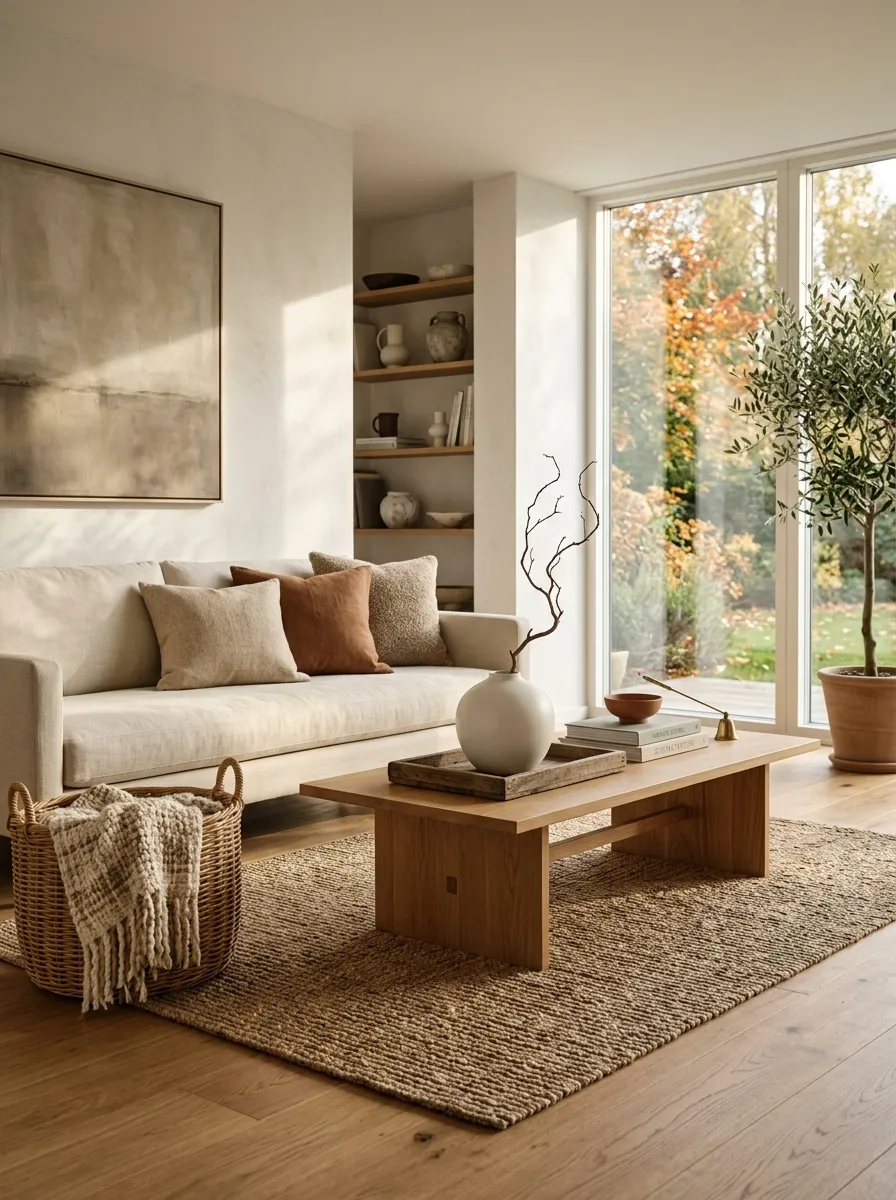
Fall doesn’t need to arrive through color alone. Sometimes the better move is to change what the room feels like under your hands.
Bring in a woven basket, rough wood stool, cane tray, or chunky natural fiber piece. These materials add depth without making the room look seasonally decorated.
A simple rule works here: mix one rough texture with one smooth surface.
Place a woven basket beside a sleek sofa. Pair an aged wood tray with a smooth ceramic vase. The contrast keeps the room interesting and stops all the textures from blending into one soft blur.
Aged wood
Matte ceramic
Natural fiber basket
Washed linen
Create a Modern Fall Bathroom With Small Changes
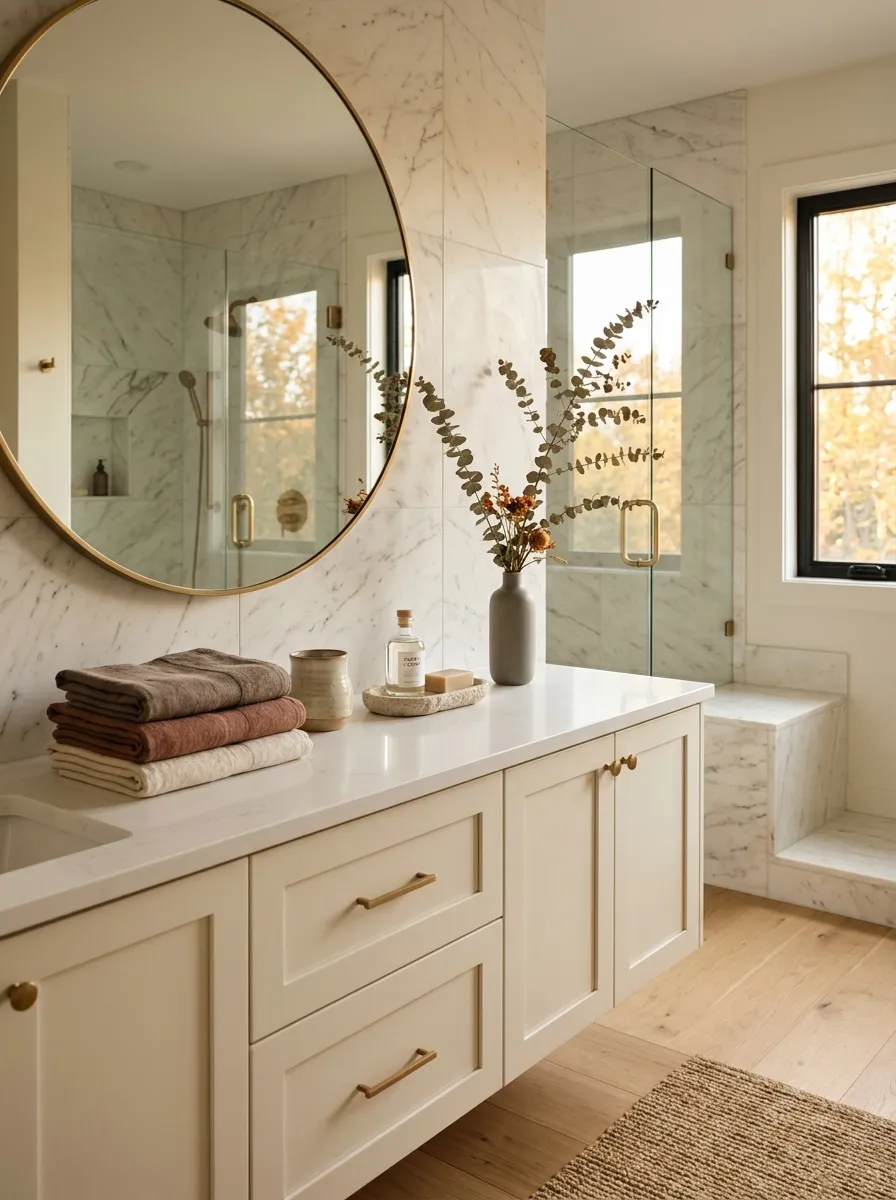
Bathrooms don’t need a full seasonal makeover. In fact, replacing too many everyday items can make the space feel more cluttered.
Start with the textiles. Swap bright summer towels for warm cream, muted brown, or dusty rust. Add a small stone tray or ceramic vessel, then bring in one natural detail such as dried eucalyptus or a simple branch.
That’s enough.
Skip the seasonal signs and novelty accessories. The bathroom already has plenty of hard surfaces, so focus on adding warmth through fabric and natural materials.
A good fall bathroom should feel like the same room, just a little warmer.
Use Candles to Add Fall Atmosphere Without Theme Decor
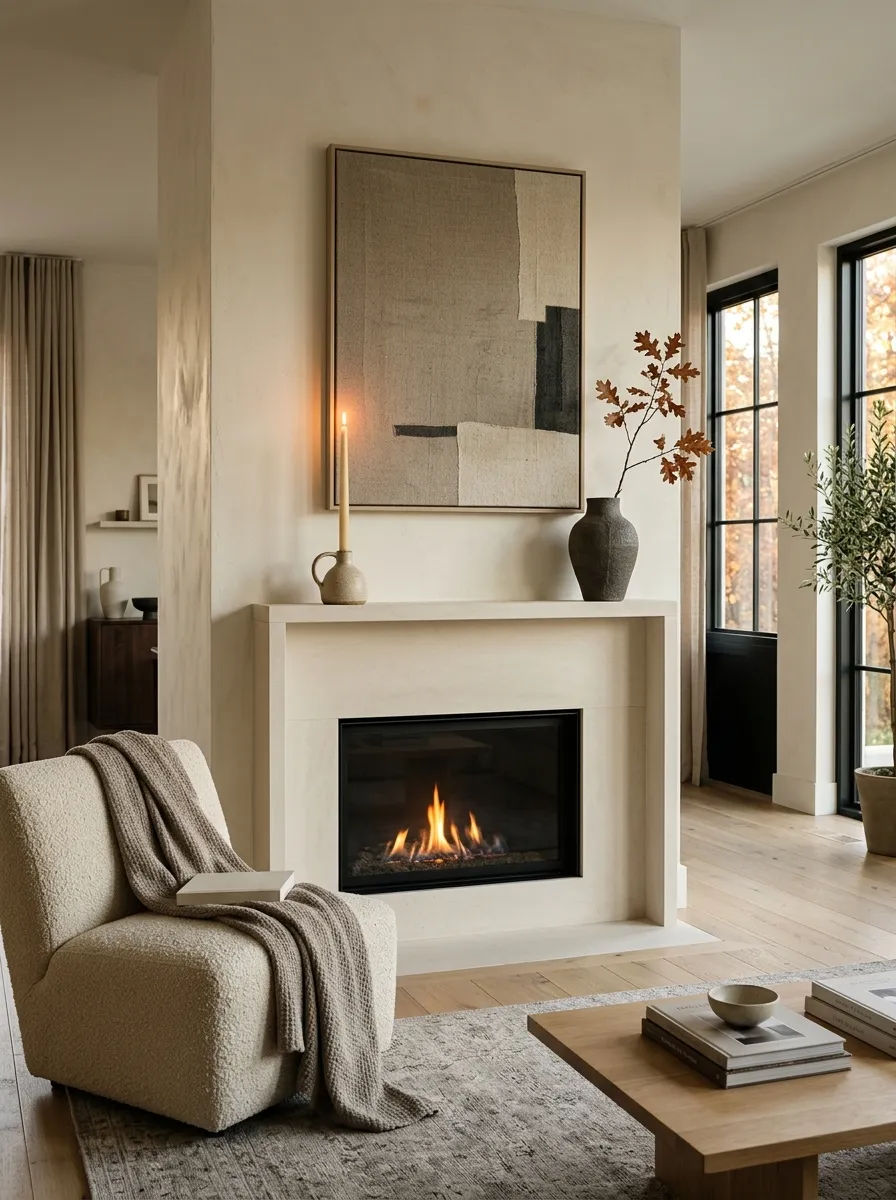
Candles are one of the easiest ways to change the mood of a room, but you don’t need a collection of seasonal labels and pumpkin-shaped jars.
Choose simple vessels in ceramic, glass, or aged metal. Place one or two where the light will actually be noticed, such as on a dining table, fireplace mantel, or sideboard.
Warm light matters more than seasonal packaging.
A simple candle beside a textured vase will feel more sophisticated than a shelf full of novelty fall candles. If you like fragrance, choose notes that suit the room rather than filling every corner with competing scents.
Keep the display restrained. The glow should be the feature.
Keep candles low enough for conversation.
Place near seating for visible glow.
Use a single candle as a quiet welcome.
Conclusion
Modern fall decor doesn’t need to cover every surface or rely on the same orange pumpkins and plaid patterns. The strongest rooms use a quieter approach. Warm up the materials, deepen the color in a few places, add better lighting, and give each seasonal detail enough space to matter. That’s what makes modern fall decor ideas feel intentional instead of temporary. Start with one room and make one change at a time. You don’t need to redecorate the whole house to make it feel ready for autumn. Save this list for the next time you want to refresh your home for fall without filling it with seasonal clutter.